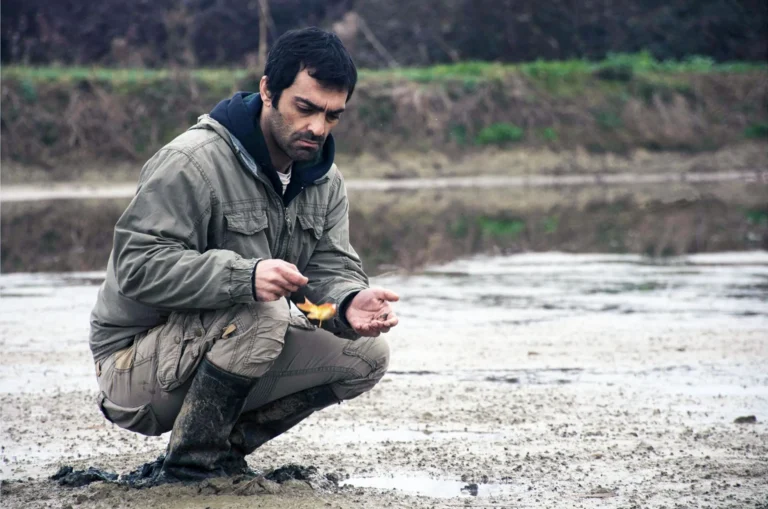
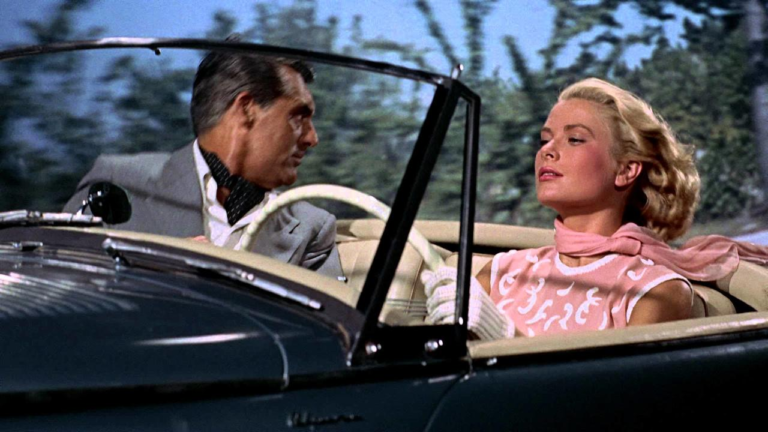
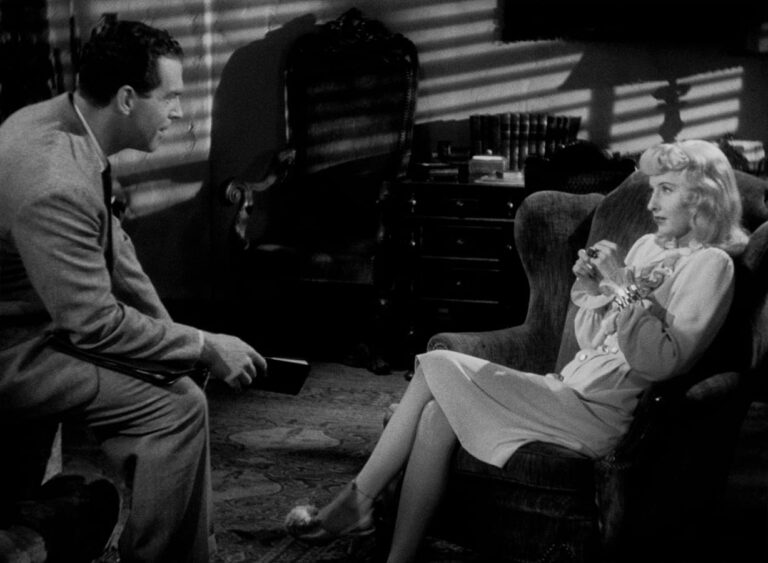
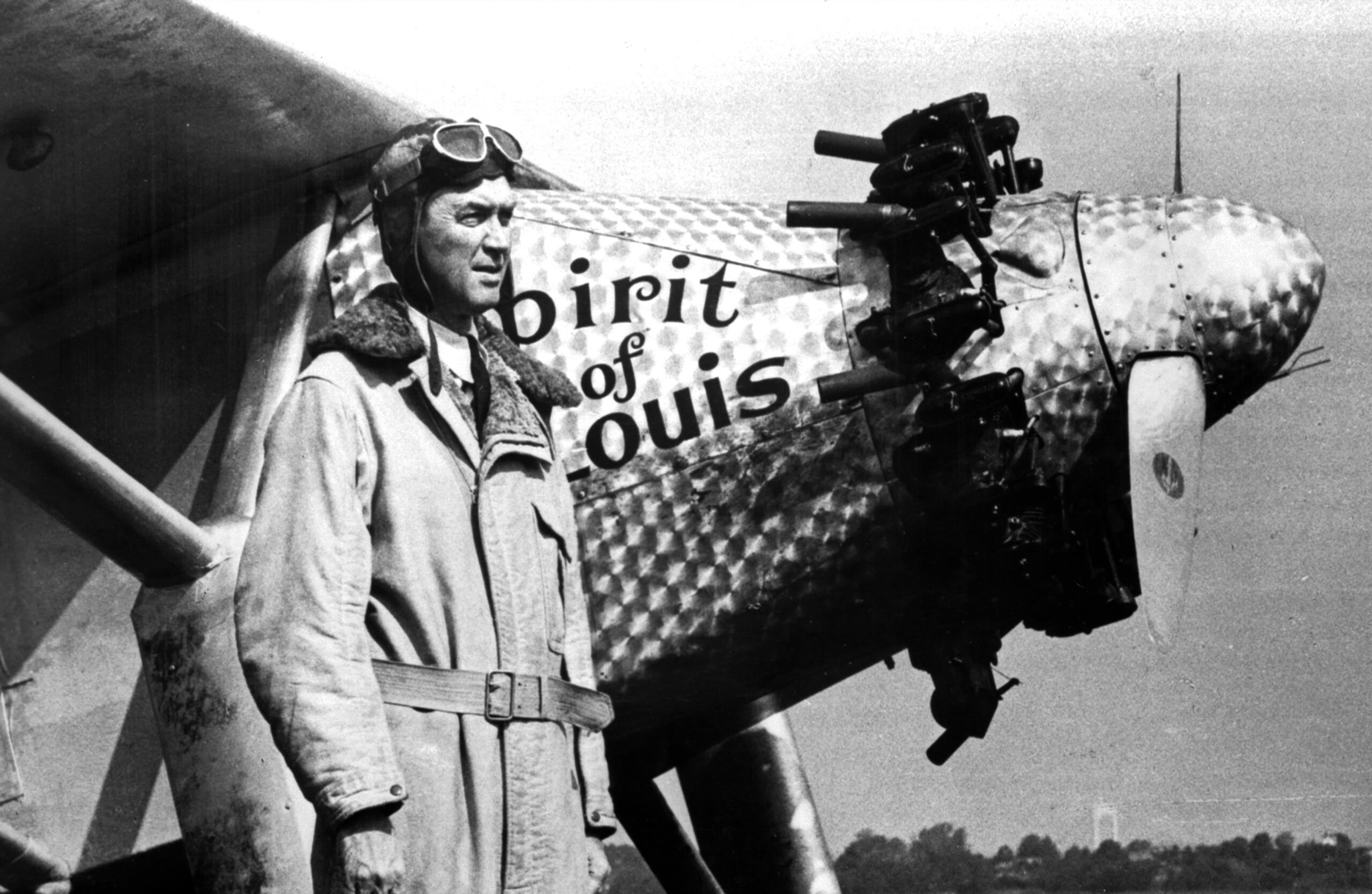
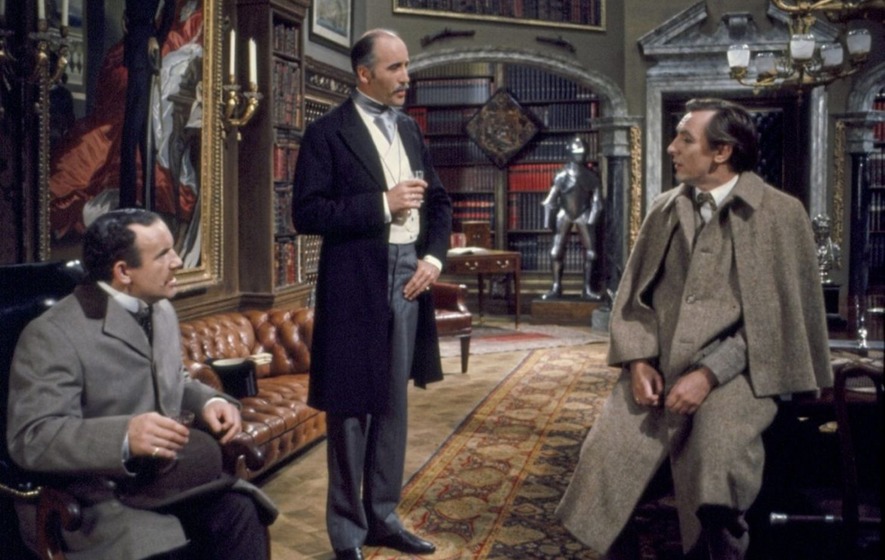
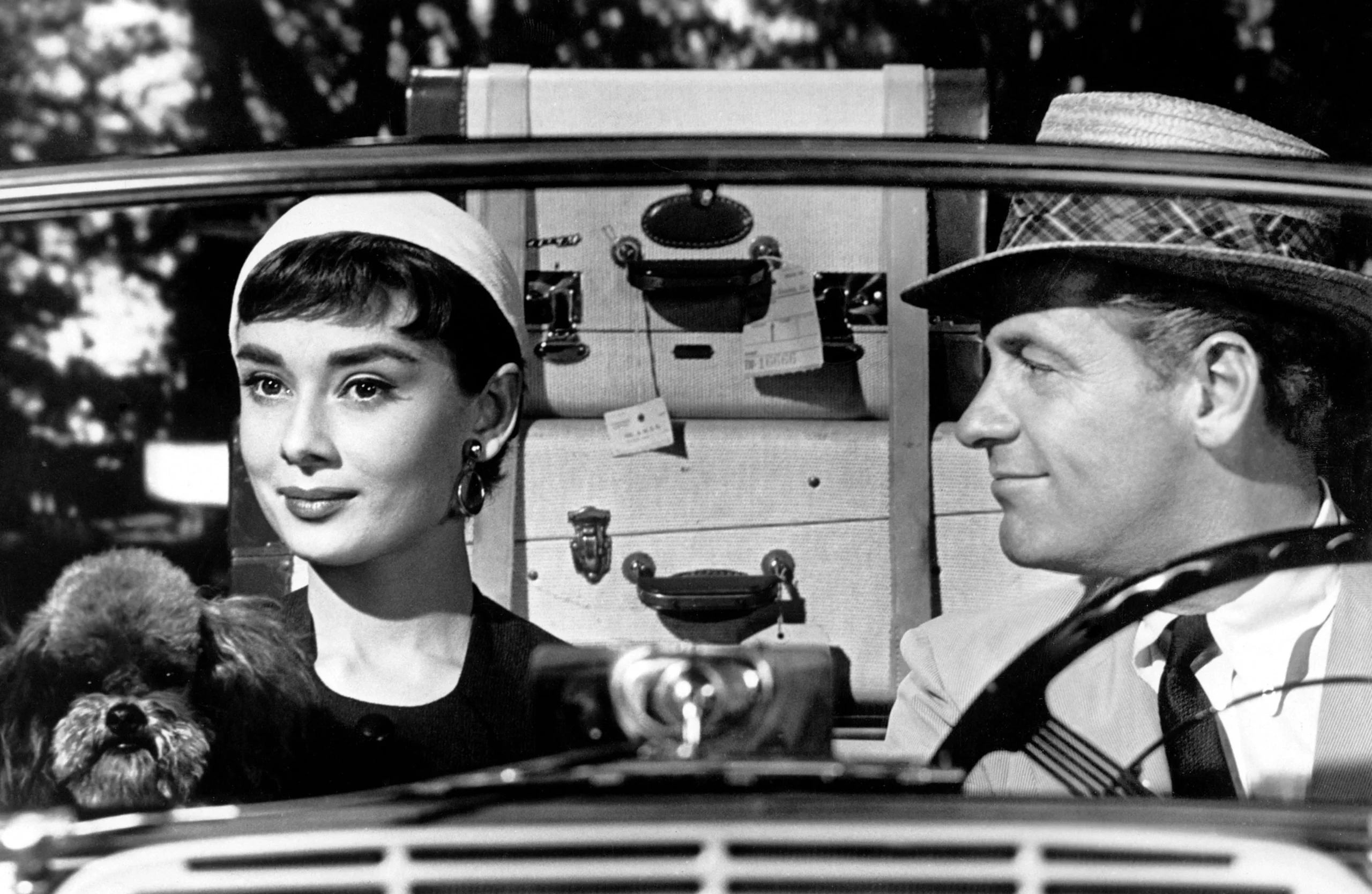
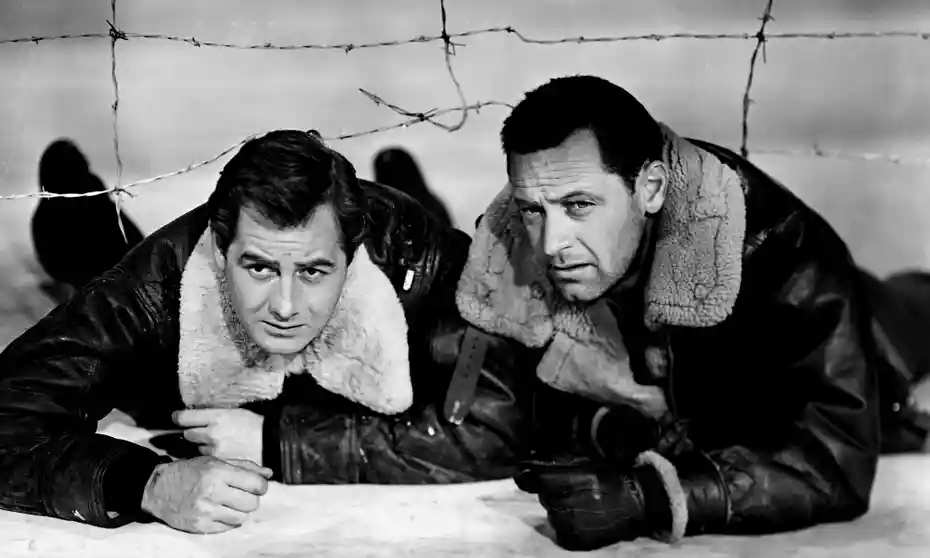
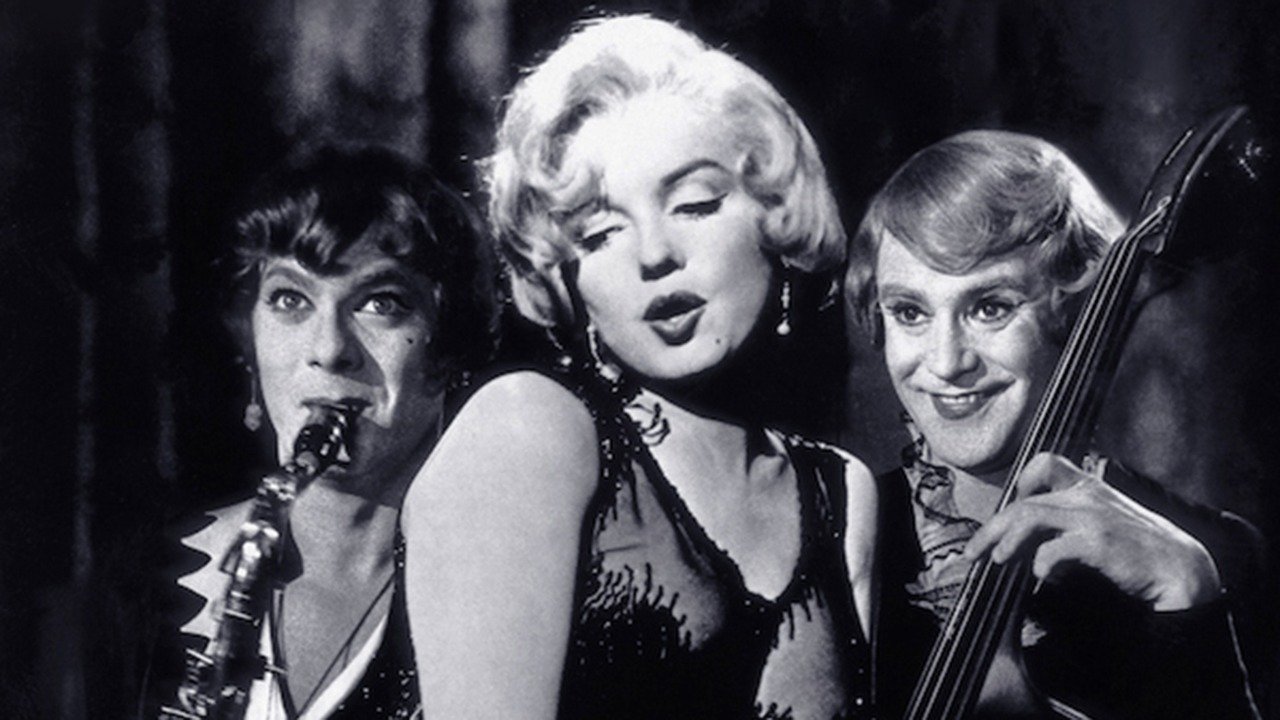
Queerness has always been a part of motion pictures, only the ways in which it has historically been portrayed has varied from decade-to-decade over the past 130 years. Those with insight to the pre-1927 silent film era will know that queer characters, be that homosexuals or “cross-dressers” served as subjects of amusement in American cinema, while being given actual dramatic stories across the pond in Europe. For a few years in the late 1920s and early 1930s, gay male characters were a constant presence on screen in the form of the “Sissy” archetype, that is: effeminate, non-sexual, and non-threatening. Soon, even this meager representation would go the way of the Silents. Once the Hays Code, a series of rules set to establish “upstanding moral values” in American cinema, banned any instance of overtly homosexual characters, queers on screen were offered one alternative: a life of crime.
The Hays code could not ban the actions of queer people behind the scenes, and many writers, directors, and even actors, would devise ways to present a queer sensibility on film, whether through aesthetics or characters. Unfortunately, those characters were forced into the dark corners of society, threatening our clean-cut heroes and the heteronormative way of life, as the only way they were allowed to exist on screen is if they were portrayed as outright villains, destined for retribution by the film’s end. Queer-coded characters of this sort were often portrayed as social cast-outs, overly concerned with their appearance, and tricky in their actions and dialogue. Male queer characters often had an air of snobbery, and would sometimes obsess over a female character as if to covet their unattainable femininity (Waldo Lydecker, Laura; Joel Cairo, The Maltese Falcon; Addison DeWitt, All About Eve). Lesbian coded characters would similarly desire to “obtain” a female protagonist in an almost psychosexual manner, and would dress and present themselves completely outside the norm of female sexuality (Mrs. Danvers, Rebecca; Eve Harrington, All About Eve; Miss Holloway, The Uninvited).
Once the Hays Code lost most of its power by the early 1960s, film directors were able to make direct allusions to homosexuality, though still in reflection of audience’s ignorance and fear. While some underground queer filmmakers explored the complexities of gay living in the latter half of the 20th century, the mainstream still presented gay, lesbian, or transgender characters either continued being social deviants, or were subject to immense tragedy (The Crying Game, Cruising, The Boys in the Band, Dressed to Kill, Midnight Cowboy).
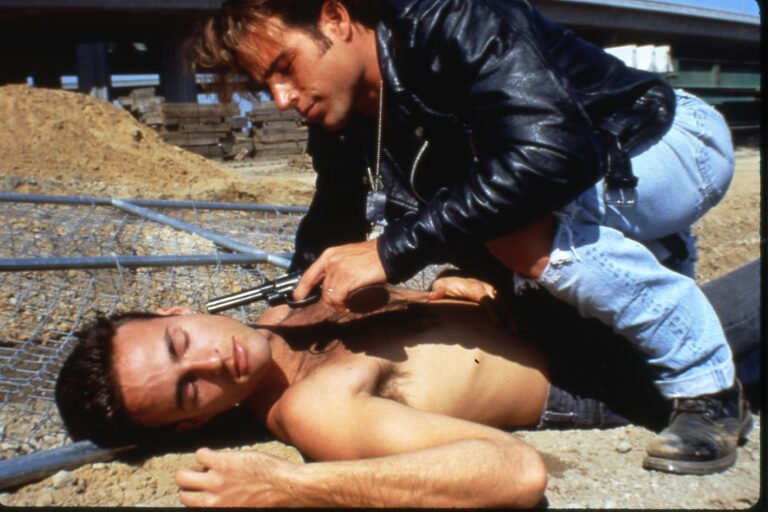
By the late 1980s, when the AIDS crisis was gripping America and setting hostility towards gay people at an all-time high, queer filmmakers decided to take their own stories into their own hands. Film critics B. Ruby Rich first coined the term “New Queer Cinema” in Sight & Sound in 1992, referring to a newfound trend of independent gay cinema sweeping American film festivals. Many of these films existed in conversation with the past century of queer portrayals on film, turning the last century of gay-villainy on its head by directly linking their character’s sexuality to their criminal behaviour as a sort of meta-commentary on Hollywood’s complicated relationship with its gay characters and audiences. In her article, Rich refers to two films, Swoon and The Living End, which represent a central tenet of New Queer Cinema: be gay, do crime.
Both Swoon and The Living End have obvious historic cinematic influence. In 1924, the murder trial of Nathan Leopold and Richard Loeb gripped the nation for its depravity and intrigue. While the basis in 1948 for Alfred Hitchcock’s Rope (based on the 1929 play of the same name), the true story of the grisly murder of a young boy in Chicago is far more gruesome (though I’ll spare you the details). Filmed in black and white, director Tom Kalin blends the aesthetics of the 1920s with an atemporal feeling of modernity. In addition to the obsession of planning “the perfect murder” Halin focuses on the boys’ obsession with one another, which took the form of a bizarre master/servant relationship that allowed the two men to egg each other on into this horrific crime. The real life, highly publicized trial exposed much of America to a type of psychological criminality, and sexuality, that they had never before witnessed. This would only contribute to the false, widely-held notion that queer people are inherently villainous, containing overt parallels to the AIDS crisis during which the film was made, when queer persons, especially gay men, were made villains by their mere existence.
Departing from the world of the aesthete, the educated, the refined, we have Gregg Araki’s gay criminal road trip movie: The Living End, starring Mike Dytri and Craig Gilmore as two very different men, one law-abiding and one a rebel, each with a recent HIV diagnosis, and both with their own societal frustrations. The third feature film from Araki, it contains heavy influence from 1960s exploitation films with the directors signature nihilistic touch. Like Swoon, it recognizes the type casting of queer persons as villains, and turns it up to eleven. Frustrated by their lot in life, the two men decide if society is going to see them as a pair of villains, then they might as well become one. The film, and the characters, disregard the natural order of things, leading to eighty minutes of chaos, anger, and raising hell.
Four years after Rich’s original article, the Wachowski sisters became a part of the NQC trend (although with decidedly more mainstream distribution) with the neo-noir Bound, starring Jennifer Tilly as Violet, a mob moll and Gina Gershon as Corky, a tough ex-convict, who team up to scam Violet’s boyfriend out of a couple million dollars. Taking a hint from film noirs of the 1940s and 1950s, the film is shadowy, sexy, messy, and intentionally confusing. Violet and Corky see one another as an escape from their less than stellar situations. In this case, like Thelma & Louise flying off of a cliff to escape the grips of the patriarchy, Violet and Corky’s queerness is their liberation.
These three films, as well as a great deal of other queer cinema titles, demonstrate through self-awareness and unconventional cinematic techniques the paradoxical queer desire to acclimate to normative society while being systematically eliminated by it. Given that during Hollywood’s heyday, being gay was a crime in itself, the conscious portrayal of queer criminality by queer directors the opportunity to reconstruct a narrative of oppression and invited audiences to reconsider a century of nostalgia.
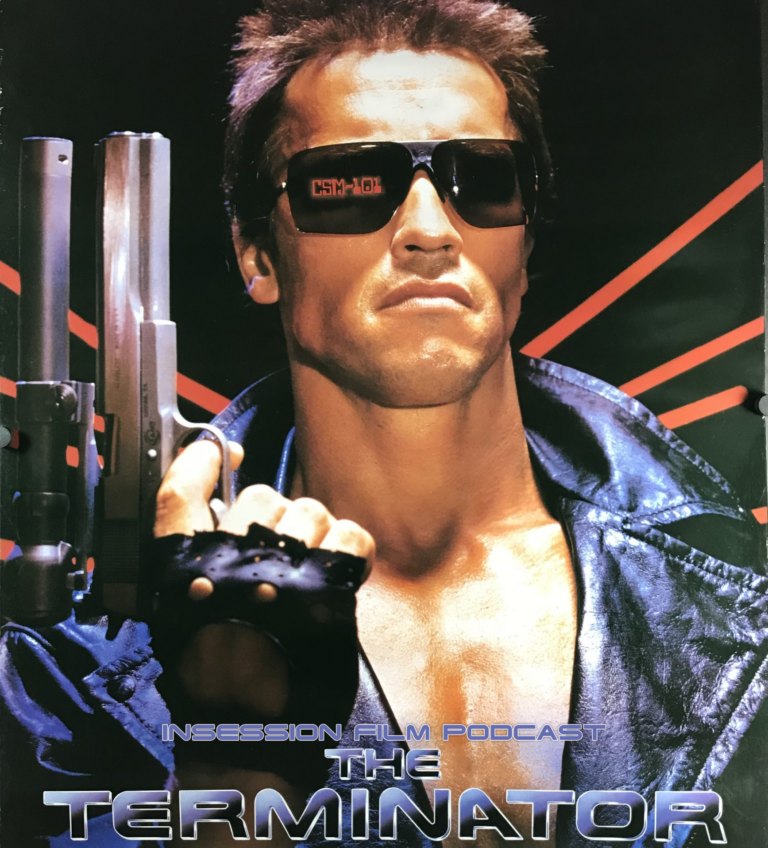
This week on the Extra Film Podcast, Ryan and Jay begin their James Cameron Movie Series with his classic film The Terminator and also review Scott Derrickson’s latest horror film The Black Phone!
The time has come. We’ve been looking forward to this for a long time. For anyone that knows Ryan, you’ll know that he’s been a long time critic of Cameron. And that’s putting it mildly. Despite that, however, the boys have decided to jump into the depths to see what makes Cameron’s movies so successful. So buckle up, it’s going to be a wild journey. Their review of The Terminator is already full of surprises, and it’s really fun to listen to as they dive into the movie and its legendary status.
On that note, check out this week’s show and let us know what you think in the comment section. Thanks for listening and for supporting the InSession Film Podcast!
– Movie Review: The Terminator (6:31) Director: James Cameron Writers: James Cameron, Gale Anne Hurd Stars: Arnold Schwarzenegger, Michael Biehn, Linda Hamilton, Paul Winfield
– Movie Review: The Black Phone (1:06:36) Director: Scott Derrickson Writers: Scott Derrickson, C. Robert Cargill Stars: Mason Thames, Madeleine McGraw, Jeremy Davies, Ethan Hawke
To hear this Extra Film episode and everything else we do, download our apps on the Amazon Market for Android and the Podcast Source app on IOS devices. The mobile app covers all of our main shows, bonus podcasts and everything else relating to the InSession Film Podcast. Thanks for your wonderful support and for listening to our show. It means the world to us.
One of two re-releases from Criterion, the last film before David Lean went into his epic film phase was a colorful romantic comedy starring the great Katherine Hepburn as an American tourist who visits Italy and soon falls for a charming native (Rossano Brazzi). Hepburn is a single woman breaking out of her dull life in Ohio, yet is fearful of changing her ways and the Italianness of it all. In the middle of Venice, Lean shot the film on location, providing as authentic an Italian setting as can be, and Lean himself later bought a home in the city. It’s not the traditional formula for a romance film, but Lean does not desire to make it traditional.
Raging Bull (1980)
Martin Scorsese came out of a near-fatal drug overdose with a film he thought would be his last, the 4th ranked film from AFI’s Top 100 (2007) movies in American history. He did not know anything about boxing but was convinced by Robert DeNiro to make a movie from Jake LaMotta’s biography in which the former middleweight champion tells of his turbulent life with his brother/manager (Joe Pesci) and his wife, Vicky (Cathy Moriarty). It was as violent outside the ring as it was in it with legendary battles against Sugar Ray Robertson and Marcel Cerdan, giving us a portrait of a man whose whole life was built around brutality.
Devil In A Blue Dress (1995)
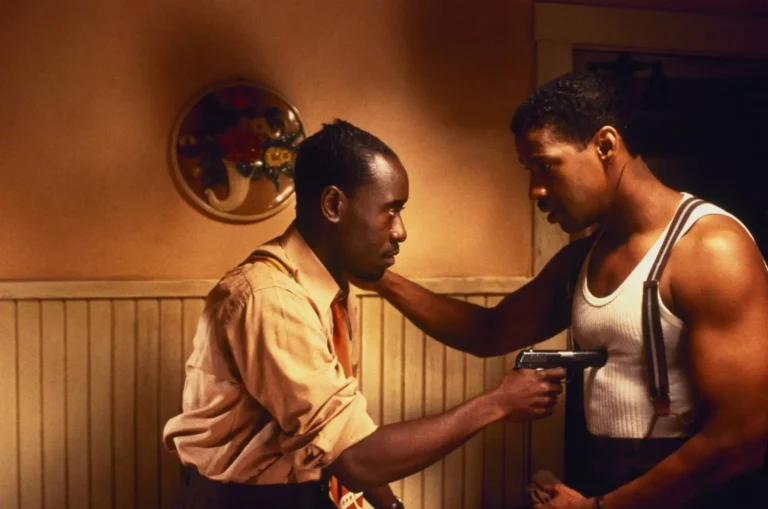
Denzel Washington plays Easy Rawlins, an unemployed WWII vet who gets hired to search for a woman (Jennifer Beals) that is involved with a gangster. Now as an improvised private eye, Rawlins needs to know what this woman is doing and what happened to her friend later found murdered. Carl Franklin’s neo-noir is hard-boiled and filled with moods of disillusionment in Los Angeles, especially for a man of color in a society still socially segregated; yet the implications Rawlins discovers cross those boundaries. This movie also was the breakout for Don Cheadle in his scene-stealing role as Rowlins’ sidekick Mouse.
The Virgin Suicides (1999)
Getting a re-release in 4K is Sofia Coppola’s debut feature about teenage suburbia in the 70s when a group of boys becomes fascinated with a family of all daughters, the eldest being played by Kristen Dunst. After the suicide of one daughter, the girls are kept in isolation from engaging with others, making them mysterious yet seductive from afar. It was a tone-setter for Coppola in paving her own path as a director, putting down her own style later seen in Lost In Translation, Somewhere, and The Beguiled.
Okja (2017)
Before Parasite, Bong Joon-ho had his Netflix effort in this fantasy-adventure film about a South Korean girl and her super pig, the source of a GMO experiment. When it is taken away from her to the United States, she sets out to save it, with the help of an animal rights organization and its rambling leader (Paul Dano). In true Bong form, it’s a dark satire mixed with action; targeting big industries and meat packaging. Tilda Swinton is great as the eccentric CEO who wants to use the super pig for her own profits while Jake Gyllenhaal is the crazed zoologist by her side.
Drive My Car (2021)
Our recent Oscar winner for Best International Feature, Ryusuke Hamaguchi’s three-hour drama of Chekov and the difficulties of human connection did not miss connecting with audiences and critics. The relationship between a stage director (Hidetoshi Nishijima), his leading actor (Masaki Okada), and his personal driver (Toko Miura) is told with care and without judgment of their own frailties as people. Like in Uncle Vanya, the theme of unrequited feelings haunts the leads, reflecting the line at the play’s end, “You’ve had no joy in your life, but wait… We shall rest.”
Shudder is not just a strong proponent of horror classics and “undead” gems. They are also champions of fresh voices within the genre. Every month, they add a few new features to the platform.
Here’s what’s coming to Shudder in July 2022:
July 7
Shudder Exclusive: On the 3rd Day (Al 3er día)
Director: Daniel de la Vega
Starring: Mariana Anghileri, Diego Cremonesi, Arturo Bonín, Lautaro Delgado & Gerardo Romano
Celia and her young son get into a car accident while on a trip. Three days later, she has no memory of what happened and her son has disappeared. Her impassioned search to figure out what is going on leads her to a religious fanatic on a twisted mission of his own. Lead actress Mariana Anghileri won the Best Actress prize at the Horrorant Film Festival in Athens, Greece for her portrayal of Celia.
July 14
Shudder Original: Good Madam (Mlungu Wam)
Director: Jenna Cato Bass
Starring: Chumisa Cosa, Nosipho Mtebe, Kamvalethu Jonas Raziya, Sanda Shandu & Khanyiso Kenqa
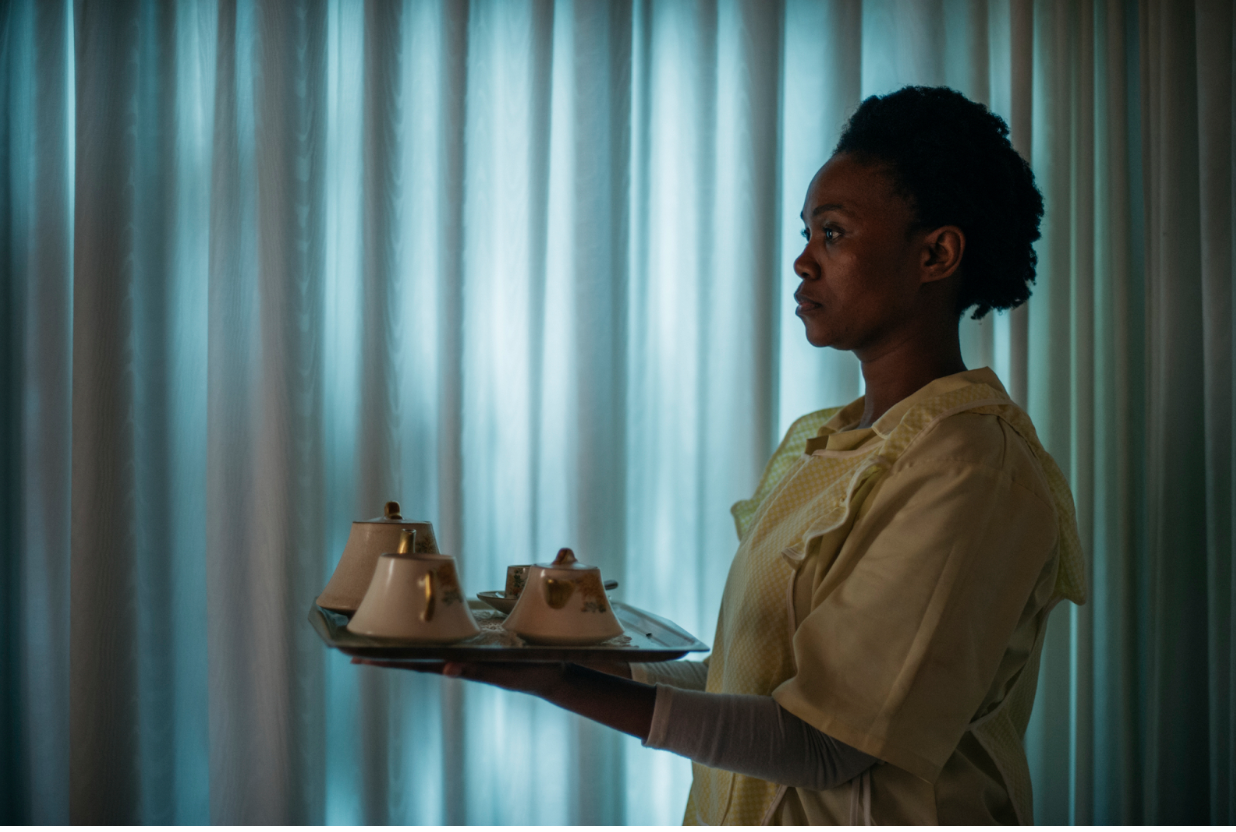
The specter of South African apartheid lurks behind every corner in this film that screened as part of the Official Selection at the Toronto International Film Festival. Chumisa Cosa stars as Tsidi, a single mother forced to move in with her own estranged mother, who works as a live-in domestic servant to “Madam,” a catatonic white woman. The production of Good Madam was so collaborative that ten of the cast members share co-writing credit with director Jenna Cato Bass, who was nominated for the Platform Prize at TIFF.
July 21
Shudder Original: Moloch
Director: Nico van den Brink
Starring: Sallie Harmsen, Markoesa Hamer, Alexandre Willaume & Jack Wouterse
One night, Betriek and her family, who live at the edge of a peat bog, are attacked by a random stranger. Betriek sets out to find an explanation for the violence they experienced. Her search for answers leads her to believe that she is being hunted by an ancient presence. Director Nico van den Brinkleans into Dutch folklore to weave this atmospheric and hair-raising tale.
Shudder Exclusive: This Is GWAR
Director: Scott Barber
Starring: Alex Winter, Thomas Lennon, Weird Al Yankovic, Slymenstra Hymen & Dave Brockie
GWAR is an iconic heavy metal group made up of barbarian interplanetary warriors that shoot bodily fluids at their audience while they rock out. They have been performing for more than thirty years and this documentary tells their long and journeyed story. This Is GWAR features band members both past and present, as well as other artists with ties to or admiration for the “art collective” known throughout the universe as GWAR.
July 29
Shudder Exclusive: The Reef: Stalked
Director: Andrew Traucki
Starring: Teressa Liane, Ann Truong, Saskia Archer, Kate Lister & Tim Ross
Nic recently witnessed her sister’s horrific murder. In an effort to heal, she embarks on what was supposed to be a therapeutic trip to a remote island in the Pacific for some kayaking and diving. To help keep her mind at bay, Nic brings along two of her closest friends and her other sister, Annie. Mere hours after arriving, however, the women become the obsession of a vindictive Great White shark. When it attacks, Nic is forced to confront her post-traumatic stress and face her fears if she is going to defeat the beast and save her loved ones.
Director: Scott Derrickson Writer: Scott Derrickson and C. Robert Cargill Stars: Mason Thames, Madeleine McGraw, and Ethan Hawke
Synopsis: After being abducted by a child killer and locked in a soundproof basement, a 13-year-old boy starts receiving calls on a disconnected phone from the killer’s previous victims.
The Black Phone marks the third feature-length team-up between Writer C. Robert Cargill and Writer-Director Scott Derrickson. After parting ways with Marvel on Dr. Strange 2, The Black Phone became the project that kept these 2 horror nerds working together. This love letter to the 80’s abduction horror flick was born out of the creative passion for scaring, and to that end, The Black Phone is a triumph. It’s a true send-up of the 80s horror flick, with brilliant child performances, Americana vibes, and simple villainous characters.
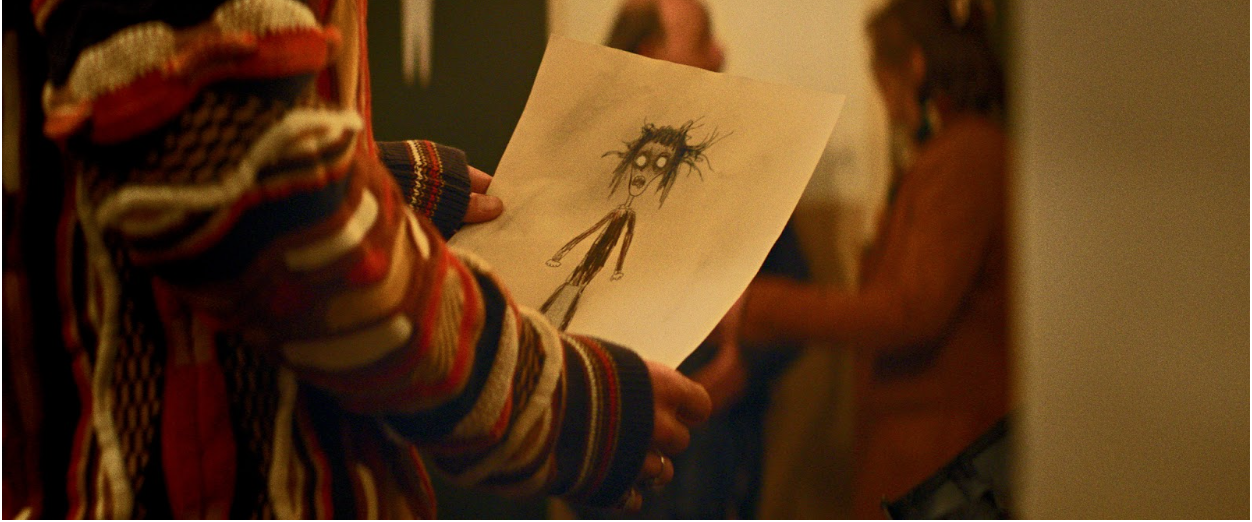
Set in 1979 suburban Denver, The Black Phone is a tense tale of resilience and growth through impossible situations. As children begin to disappear, all of the suburbian neighborhoods begin to live in fear of “The Grabber.” Finney (Mason Thames) and Gwen (Madeleine McGraw) are two siblings living with an abusive, alcoholic father (Jeremy Davies), who wants nothing to do with the world. And when Gwen begins to have dreams of The Grabber (Ethan Hawke), her father scolds her for it. Finney doesn’t fare much better in this world, as he is too scared to stand up for his sister at home or to stand up to the bullies at school. Only when Finney gets abducted by The Grabber is he forced to fight for himself or succumb to dying alone in a basement with a black phone that seems inhabited by the spirits of those who died before him.
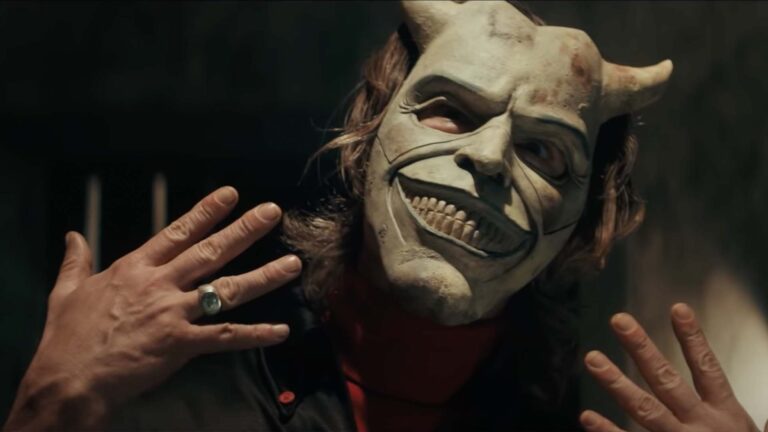
What Derrickson and Cargill’s script lacks in charisma, the brilliant cast brings in spades. Ethan Hawke fleshes out The Grabber into a ticking time bomb of nervous anxiety, and that tension is felt throughout the entire film. It’s the smallest gestures that make Hawke’s performance truly unnerving, as his mask keeps us emotionally distant from The Grabber. His haunting delivery of lines lacks any sort of temporal rhythm which accompanies the mask perfectly. It’s a ghostly, unexpected performance that will knock you off your rhythm at every opportunity.
But Ethan Hawke isn’t the star of this film; rather, newcomers Mason Thames and Madeleine McGraw steal the show as Finney and Gwen respectively. These two child actors are phenomenal, each bringing in the charisma and empathy required to get the audience to care about their plights. Thames brings to life a terrified Finney in every moment he can. Whether it’s through his screams for help, or his stiff emotional wall keeping others away, Thames never struggles to capture the mood and tone of this film. And McGraw plays off of this perfectly, giving Gwen the charisma and screen presence required to care about her. The moments of stupid courage or genuine fear and uncertainty that pertain to Gwen are furthered by her performance, and it elevates these simple characters to new heights.
However, what impresses me most about The Black Phone is the work of Patti Podesta. Her production design perfectly captures the essence of Americana suburbia. The outdoors feel expansive, inviting adventures around the neighborhood, while the indoors promise the reprieve of television and movies. A doll house isn’t just a toy, but a storage space for a young girl to store things she no longer uses regularly. In this world, toys, couches, bear cans and cluttered spaces provide a safety net from the terrors lurking around outside. But nothing is as truly terrifying as the empty room, a place that is both too large and too small simultaneously. There is no safety in a mattress lying on the floor, no hope in a phone that’s been disconnected for years. These are the elements of Podesta’s production that carry the most weight, being terrifying in their timeliness. Adding to this is the Grabber’s mask, built by Jason Baker. His talents shine through, as the mask’s shifting nature is yet another uncertain element constantly amping up the tension throughout the film.
Adding to all this is Mark Korven’s stellar score. Like every other facet of The Black Phone, it exists to pull you off the edge of your seat. Its unbalanced, synthesized tones are the shards of glass that keep you unsure of what may happen. It’s a score that doesn’t stay in one place too long, and its ever-changing, upbeat tempo juxtaposes the longer shot lengths perfectly. However, there is a cost to creating this non-rhythm. While The Black Phone is a terrifying theatrical experience, its over-tightened story leaves a lot to be desired. 100 minutes breezes by with The Black Phone and not all of that is for the best.
To begin with, the structural editing is often extremely jarring, especially in the first act of this film. While jarring edits can be used to build tension and keep audiences from getting too comfortable; here, it contrasts heavily with the scenes that follow. The editing that occurs during any scene is often restrained and conventional, but it has a tight focus that keeps the tension palpable to the audience. This is juxtaposed with the loose structural editing pervasive throughout the first act. There are time jumps and scene changes that happen too quickly, giving little room for the audience to construct an idea of what is happening. And while this has an anxiety-inducing effect, it’s also jarring and occasionally hard to follow.
This is further enhanced by the second half of the film, which seems to have run out of time to develop the two subplots running concurrent to Finney’s abduction. Gwen’s character journey with spirituality and the supernatural is the larger subplot, but it isn’t given enough time to truly settle with the audience. The few scenes given to Gwen are amazing, largely due to McGraw’s screen presence, but they aren’t enough to make her journey mean something bigger. The supernatural events stick out as underdeveloped because of this. The other minor subplot has to do with the detectives on The Grabber case. They have the bare minimum of scenes, and thus the case appears to wrap up exceptionally quickly once we reach the third act. This subplot alone could have been a 90-minute film, so it’s astounding to me that it was kept to a handful of scenes.
There are a lot of smaller characters and character beats that are missing from The Black Phone. It’s a fast-moving movie, and it places a lot of emphasis on the abductee, and not those left behind. And for that, it’s a massive success for Derrickson and Cargill. It’s the type of horror movie we don’t see anymore; it’s a B-movie abduction flick centered in the 80s that values simplicity over complexity. And ultimately, The Black Phone is a theatrical experience that is sure to get your blood pumping.
For those who listen to the InSession Film Podcast, you’ll know we recently concluded our Steven Spielberg Movie Series. For those who didn’t listen, for context, the series was mostly focused on the “lesser talked” movies in his filmography. However, we did end it with Jurassic Park and E.T. given the release of Jurassic World: Dominion and E.T. celebrating its 40th anniversary this year. So, we felt it would be okay to lump them in the series even if they’ve been talked about to death over the years. It was an incredible journey. We all know and love his “bigger” films, but he has some great gems in his canon that aren’t necessarily on the same pedestal as the Jaws and Indiana Jones.
With that said, we watched all of Spielberg’s feature films over the last few months and I’ll be ranking them. Prepare your comments now. Whether you agree or disagree, we all have specific thoughts on his filmography and I’m certain you’ll have something to say as we go. So, without further ado, here is my ranking of Steven Spielberg as it stands right now.
33. 1941
1941 is arguably the only film in Spielberg’s canon that has no redeeming qualities (okay that’s not necessarily true, the camerawork is very good in places and John Williams’s score isn’t bad). We love Spielberg, but there almost seems to be no direction to the movie. It meanders without any sense of purpose and to say that it’s a tonal mess is putting it mildly. It tries way too hard to be funny, but it seems to have no comedic bone in its body. Which is really unfortunate given the extensive, yet phenomenal cast that it has. I mean, it has Toshirō Mifune for crying out loud. Sadly though, 1941 is just a poorly conceived, terribly written, and exhausting effort that leaves everything to be desired.
[divider]
32. Indiana Jones and the Kingdom of the Crystal Skull
Indiana Jones and the Kingdom of the Crystal Skull is by far the worst of the Indiana Jones movies. Its absurdity makes its predecessors seem like documentaries by comparison. These are heightened adventure movies, I get it, but in this case it goes a couple of degrees too far. There’s no chemistry between Harrison Ford and Shia Labeouf, sadly. As great as they are individually outside of this film. Which is, obviously, not ideal given the nature of their relationship. On the whole, this film lacks the same vigor and fun as the previous installments. Temple of Doom and The Last Crusade have their faults as well, but they still maintain the spirit of what makes that original trilogy thrilling. Some of the action scenes are well staged though and John Williams comes to play. It’s not the disaster that is 1941, but it’s still far from good.
[divider]
31. The BFG
The BFG is one of Spielberg’s lesser movies, but it has its heart in the right place. There’s a heartwarming center to it that is infectious. I’m not familiar with the source material, but felt as if Spielberg and the late-great Melissa Mathison struggled to find a cohesive vision for the narrative. Their previous work together (oh just wait, we’ll get to it) was nothing short of masterful, so it’s unfortunate that The BFG struggled to find any footing. There’s certainly an imaginative undercurrent to the film that’s compelling, and its ideas on acceptance and open-mindedness are affable, however, it’s too uneven and unengaging for there to be any meaningful impact.
[divider]
30. The Lost World: Jurassic Park
There’s an argument to be made that this should sit lower on this list, but there are components too, and scenes in, The Lost World: Jurassic Park that I do really like quite a bit. For one, the film aims to examine further the idea of playing god, and while it doesn’t always work, there are parts of it that I find complimentary to its predecessor. It’s also hard for me to ignore Spielberg’s craftsmanship and how he renders terror. There’s still a visceral suspense at times that I do find effective, even if those moments arrive at the hands of a weak and plot-holey script. Also, Jeff Goldblum is great. Love him in these movies.
[divider]
29. Amistad
We talked about this quite a bit on the podcast during our review of it for the series, but Amistad is a film that feels as if Spielberg was just a director for hire. Which makes sense since Debbie Allen was really the driving force behind it coming to fruition. The story itself is captivating and worth telling on screen, I’m just not convinced Spielberg was the guy to do it. But when he does flex here, it’s quite good. The opening sequence is masterful. The moment where Cinqué stands up in the middle of courtroom proceedings is phenomenal. There are some good things here. But mostly it’s a courtroom drama that doesn’t take advantage of Spielberg’s strengths as a filmmaker, and narratively it becomes more concerned with its investigative elements than it does the Mende people. I will say, though, despite the film being made almost 25 years ago, there is a lot about it that still resonates in 2022. Specifically, as it relates to how race and politics are intrinsically interwoven despite the clear moral implications. So in some ways, it’s aged very well, sadly, even if on the whole the film is a mixed bag.
[divider]
28. The Terminal
The Terminal would easily fall apart if it was in the hands of a lesser filmmaker and lead actor. The entire film takes place within a single location, specifically an airport, so there was potential for mundanity to set in quickly. But I don’t think it’s mundane at all. There’s a tender charm to this story that keeps it together and the results are very endearing in execution. Perhaps at times it’s one of Spielberg’s most schmaltzy movies, but I still like its heart. And Tom Hanks is great.
[divider]
27. The Sugarland Express
The Sugarland Express is arguably Spielberg’s least talked about movie, and on the whole, it’s understandable. The narrative, for one, gets too bogged down in being a “chase” movie that it gets redundant and slightly banal at times. There are also missed opportunities to give further perspective into why these characters do what they do, especially from the police side of things. However, the film does a great job of eliciting this fascinating juxtaposition between reality and desperation in our central couple. They constantly teeter on that line and it renders complicated characters that are always alluring, even when the plot stifled momentum. Spielberg’s filmmaking is quite wonderful as well. The cinematography and editing in particular are noteworthy. I can’t forget these great performances or John Williams’ score either. People may forget about The Sugarland Express, but if you’re interested in the history of Spielberg, I do urge people to check it out. Between this and Duel, you 1000% see the seeds of who Spielberg would become.
[divider]
26. Always
I find it difficult to actively dislike Always given its affable nature, but like The Sugarland Express, you do see its missed opportunities. The film still features a few of those mind-blowing images and moments that have come to define Spielberg, such as that opening shot or the final few sequences of the movie. The cast is very good. And there are some compelling things here about grief and closure, which is good (even if derivative) when it’s focused on Pete, Dorinda and Al. However, the competitive spirit and muddled inclusion of Ted comes off as shoehorned and uninspired. Again, it’s the duality of Spielberg’s direction and the script he’s working with here. There’s no denying the visual allure and cinematic flourishes of the film. But the script leaves something to be desired at times, despite its endearing and lovable spirit. Despite that, the good outweighs the bad in the end.
[divider]
25. The Adventures of Tintin
The Adventures of Tintin is a weird concoction of Spielberg’s eye and vision for great action and fun, but it also comes with a script full of contrivances and derivative plotting. The amount of well-timed conveniences is kind of staggering. Given the nature of this film, there’s of course going to be some of that (which is fine), but there’s no characterization or emotion to balance out those glaring flaws. So they become a little tedious by the end. That aside though, there’s plenty to love here regarding the way Spielberg moves the camera and how he crafts the action sequences. The flashback scene of the pirates fighting each other is truly wonderful. On the whole, it’s middle-tier Spielberg, but there is much to appreciate.
[divider]
24. The Color Purple
It’s been well documented that Spielberg was initially hesitant to make The Color Purple when Quincy Jones approached him to direct it, and I do think those reservations come through in the final product. The film is often sanitized and cloy, with a sprinkle of schmaltz as a cherry on top. Not to mention some of the tonal extremes here regarding the abuse we see in some scenes and the slapstick comedy it becomes in others. I’m not sure if Spielberg was trepidatious while making the film, but there is an aura of prudency that heavily cloaks this experience. However, at the same time, there’s a palpable compassion toward these characters that’s sincere and endlessly endearing. If this was a conventional slave movie I think Spielberg’s concerns would have been even more warranted, but instead The Color Purple is more about abuse and gender politics, and the deep effect that has on individuals over time. And that gives way to Spielberg’s strengths as a filmmaker as he can home in on those broader emotions and how these women (especially Celie) find strength in their affection for each other when the men around them incessantly tear them down. The hope and redemption these characters find is exactly the kind of thing Spielberg is known for, so despite his reservations, I get why Jones would do what he did.
[divider]
23. Ready Player One
I’m honestly curious how people will respond to this film being where it is on my list. It’s not super high, but my instinct is that I’m higher on it than many others. Perhaps context is part it, as Ready Player One is the most fun I’ve had with Spielberg since at least Catch Me If You Can. As mentioned above, he tried to capture the same magic with The BFG and Tintin, but for me it wasn’t quite there with those movies. Ready Player One isn’t working on any level other than pure adrenaline and vigor. Its goals are simple and concise. It doesn’t have the depth of a Jurassic Park or Raiders of the Lost Ark (although to be fair, how many films can say they do?), but I do think there’s a lot of fun to be had.
[divider]
22. Indiana Jones and the Temple of Doom
Similarly to Ready Player One, Indiana Jones and the Temple of Doom has a lot of problems but damn if it isn’t one hell of a good time. The action and choreography are technically immaculate. The camera moves in this film are absolutely wild at times. The art direction is staggering. And I just love the crazy places it’s willing to go with its set pieces and banter, even though admittedly some of it is problematic by 2022 standards. But we experience everything from secret passages to cults to volcanic activity, to voodoo and bodies with the hearts ripped out and everything else in between. And no I’m not just saying this because of the success of Everything Everywhere All at Once, I’ve always been fond of Short Round and his dynamic with Indiana. There’s an innocence to Short Round that I admire and Ke Huy Quan is charming as all get out.
[divider]
21. Hook
Okay, so, I know a lot of people do not like this movie. In fact, for awhile I was one of those people. I first saw Hook when I was a kid back in the mid 90s and there was something about it that didn’t connect with me. After revisiting the film for our series, you come to realize that it’s probably because it’s a movie that’s mostly aimed at adults. Peter is an absent father who forgot why he left Neverland, and not only does he attempt to regain his childhood, the epiphany of why he did leave is something that kids will not relate to. There’s also the great irony regarding the lore of Peter Pan/Neverland in how it’s marketed as a “children’s story,” yet as kids we’re often too eager to grow up. The idea of staying a child forever stems from adults who realize that growing older is overrated and mostly what we do is yearn for is our childhoods again. Perhaps that’s just my theory, but there’s something about the idea of cherishing our childhoods forever because of its innocence and playfulness that I find quite profound. Which is to say, there’s not much about Hook that appealed to me as a six-year-old outside of the sword fighting and Lost Boys food fight. But now, I’m a father myself. One who is drawn toward the idea of Neverland and childhood imagination. So yeah, I think this is one of those movies that becomes better with age (and maybe more so if you’re lucky enough to become a parent). The storytelling is still choppy and uneven, but Spielberg’s sincerity makes a big difference. The film’s notions on fatherhood are derivative, however that doesn’t make the lesson less meaningful. Especially in a world with social media and incessant distractions around us all the time. Perhaps it’s just Robin Williams, who gives a very moving performance, but he brings those emotions out in Peter very well. Contrived as it may be because of the messy narrative, those emotions in Peter I do feel.
[divider]
20. Empire of the Sun
Empire of the Sun is a film that continues to resonate with me the more and more as I grapple with it. There are tonal shifts that are jarring, and I’m not convinced they all work, but Spielberg seems to be very intentionally tip toeing this line of harrow and whimsy. And that makes sense given that the film is from a child’s perspective. So despite it being a little uneven, there’s something about Jim’s youthful innocence blending with the horror around him that’s fascinating. It’s especially notable when coupled with the great art direction and cinematography of the film. Additionally, there are some compelling ideas here on identity, jingoism, and how Jim demonstrates honor without aligning with nationality. He’s British, obviously, but has never set foot on British soil. He currently lives in China, but he reveres Japanese pilots more than anything else. Eventually, they become his captors and yet, that never dissipates. The scene in which he honors Kamikaze pilots by singing the Japanese National Anthem is really telling about how he views bravery and the Japanese Zero. Which is captivating when immediately after a group of P-51 Mustangs show up and destroy the camp, only for Jim’s allegiance to swing completely the other way. He becomes enamored by their elite prowess and airmanship. There’s not a single moment where Jim’s identity co-exists with jingoism. To him, war is one singular experience and he simply reveres these spectacular war machines that are dogfighter aircraft. Not that national pride is a bad thing (although it certainly can be), but it’s interesting to me how Jim’s ignorance of it, because of his adolescent point of view, renders his identity a bit murky. John Williams’ music is quite good and the sound design to Empire is noteworthy, as well. There is a lot to really like about the film even if it’s a little jumbled in places.
[divider]
19. Minority Report
This is where I’m going to lose many of you. Minority Report is top-tier Spielberg to a lot of people. So let me be clear that I do really like the film on the whole. There’s no denying Spielberg’s craft and storytelling. Tom Cruise’s performance is excellent. The action is riveting and inventive. I want to love Minority Report, but I’m just not overly fond of its script. It’s a little disjointed for me, and a missed opportunity. Its premise is compelling, but the film doesn’t really wrestle with the moralities it presents until it’s too late. And even then, it’s pretty one-sided. Perhaps part of my frustration is that Minority Report could have been Arrival before Arrival. Coming off the heels of A.I., it would have been interesting to see Minority Report as the reversal, depicting father seeking the love of a lost child in a futuristic hellscape. When the film focuses on that specifically, it’s blistering. But there’s only two scenes dedicated to it before the pivotal scene John has in the apartment as it relates to his grief and choice. Ultimately it’s effective because of Cruise’s stellar performance, but it’s not as fully realized as it could’ve been. Minority Report is sill a good movie. I do like it, just not as much as the films listed below.
[divider]
18. The Post
This is just a gut feeling, but I wonder if The Post is maybe a little underrated? The discourse around it suggests that it may be. There isn’t anything flashy about this film, but it aptly and potently reflects the times we live in today (and especially in 2017 when it was released). The questions it evokes around journalistic integrity, and why it’s important to maintain that integrity despite the consequences, is striking. Especially given the Kay character and how she must overcome her own timidity. Meryl Streep has been nominated for a million Oscars, and some of them as of late are simply because of her legacy, but her nominated performance here is well earned. Admittedly, it’s a little conventional in terms of narrative structure, yet thanks to its gripping plot mechanics and Spielberg’s incisive direction, it’s still riveting. I love that the film doesn’t spend time on the hustle and bustle of everyday journalism. Instead, it focuses more on creating an atmosphere that allows for the weight of what’s at stake to be felt and there is a big payoff to that in the end.
[divider]
17. Indiana Jones and the Last Crusade
Indiana Jones and the Last Crusade is arguably Spielberg’s funniest film to date. This is a romp of a movie. Spielberg’s direction is great as always, but there’s something about the dynamic of these characters that makes it singular. Especially when coupled with the adventure and story here, which is more James Bond-esque than its brethren (obviously that makes sense given the casting). It’s also interesting to me as well because it goes out of its way to demonstrate that Indy is indeed human. He has weaknesses, he contradicts himself. His evolution here is not only different for Indiana Jones, but it’s perfect in the context of a father-son relationship. And it’s what makes Harrison Ford forever synonymous with the character. The way he taps into Indy’s vulnerabilities while also carrying that same bravado is incredible. Especially when coupled with his remarkable chemistry with Sean Connery. No doubt that Raiders is the better movie, but I don’t think Crusade is too far behind honestly.
[divider]
16. War of the Worlds
Okay, before you start yelling at me, allow me to explain myself. Trust me, I understand that having War of the Worlds higher than Minority Report will provoke some to get their pitch forks, but I…kinda love it. It’s not without its flaws, however I’m endlessly compelled by Spielberg’s use of the camera, the film’s grimy aesthetics, the special effects (which are incredible), the great performances by this cast and John Williams’ haunting score. The 9/11 allegory is obvious, but Spielberg does a great job of not overtly emphasizing it and mostly letting the premise sit in the backdrop. At its core, War of the Worlds is primarily a family drama. It’s a distant father coming to terms with his own arrogance and wrestling with his selfishness in unexpected ways. One of the best scenes is when Ray’s son openly discusses what we all know to be true, that he’s taking them to Boston, but not for safety reasons. Ray’s taking them to their mom so he doesn’t have to be responsible for them anymore. It’s the apocalypse and yet, Ray’s concerns are still for himself. Eventually he has to confront that within himself and he does come to care for Rachel genuinely. Yet, at the end of the film, it’s not as if he’s a functioning part of this family. We don’t really know and it’s possible Ray is still very much on the outside looking in, and I love that Spielberg is willing to let us wallow in that ambiguity. Beyond that, Dakota Fanning is excellent. The scene in which she asks Ray to sing her a lullaby is one of my favorite Spielberg moments given the context at play and the performances there.
[divider]
15. Bridge of Spies
Bridge of Spies is another underrated film in Spielberg’s canon. Like The Post, there’s a simplicity to its narrative structure that may seem modest on the surface, but I think that’s mostly because Spielberg makes everything look effortless. It’s almost as if he’s showing off in how he can tell the simplest story and still make it feel bigger than what it really is and it’s fascinating to watch. Bridge of Spies is methodically paced, but it’s never dull. Perhaps that’s because the cinematography here is ridiculous for a political thriller. To me, that is the difference between this and The Post and why it’s slightly higher on my list. The camerawork in this film is truly fantastic. Tom Hanks is very good, but Mark Rylance is the stand out and deserving of his Oscar (even if he wasn’t my personal pick). His comedic timing and delivery is brilliant. There’s a tinge of sentimentality to his performance that’s moving, as well.
[divider]
14. Munich
It’s really interesting how doing a movie series can change your perspective on films sometimes. Sometimes your thoughts on certain films doesn’t change, but as noted in some of the films above, this exercise did sway me on some of them. In the case of Minority Report, I came down slightly, but in the case of Munich, it was the antithesis. I revisited Munich for the first time since its release a few years ago for our 2005 retrospective, and that time there was something about its final act that rubbed me the wrong way. However, in the context of our series, Spielberg’s cynicism was more potent and thus the shoe never dropped for me like it did before. Additionally, I love how the script is chock full of terminology and political tension that’s never explained. Perhaps on a first viewing it is overwhelming, however, on further re-watches you come to see incredible detail within the dialogue and Spielberg’s direction that makes sense of everything regarding who the players are and why they’re involved. Of course, it becomes even more nuanced as you unpack it as a post 9-11 examination on revenge and the hollow cycle created by incessant violence. The psychological and emotional texture inside that idea in this film is pretty powerful. The duality of death and life around Avner hovers in every scene and it culminates in a (maybe excessive, but unforgettable) moment of intimacy at the end of the film. As always with Spielberg, the cinematography and period aesthetics are excellent. The 70s lenses are appropriate and there’s a murkiness to the imagery that compliments the film’s moral ambiguity really well. Eric Bana’s best performance? Certainly in that conversation.
[divider]
13. West Side Story
There’s a very good chance that West Side Story climbs higher on this list in time. It’s easily Spielberg’s best film since Lincoln and arguably better than its Oscar-winning predecessor. The cinematography, its evocative aesthetic, its energy and dazzle, the art direction, everything Spielberg touches here is incredible. He really is the star of the show in how he reinvigorates this material. We all know the story, we understand its themes and intent, and Spielberg doesn’t do much to reinvent the wheel narratively or thematically, but what he does do is breathe new life into it. Don’t get me wrong, the performances (Ansel Elgort aside) are really great and I love the music as well. The addition of Valentina is really compelling and adds a texture that wasn’t here before. But on the whole, it’s Spielberg doing what Spielberg does best, and again, he makes it seem so effortless. In particular, it’s interesting how so much of the film is full of color and vibrancy, only for that to devolve as the story unfolds and it becomes more stark. The level of detail in Spielberg’s direction is spellbinding, but we wouldn’t expect anything less from one of the GOATs.
[divider]
12. Duel
It’s just not fair how talented and mature Steven Spielberg was at age 25. In a few of the above paragraphs, I’ve talked about the narrative simplicity that Spielberg sometimes works with, and where he balances that out with visual allure and an attention to detail within his filmmaking. Well, that all started with Duel. The story here had potential for redundancy as its just a guy driving down the road in his car, and yet it’s one of the more riveting monster movies you’ll ever see. The design of the truck elicits menace and it gives credence to David’s constant anxiety throughout the film. Something that is heightened further by the editing and camerawork. The way Spielberg uses mirrors to capture tension is just astonishing for this little movie. It’s also interesting how progressive its ideas are on masculinity as David is forced to wrestle with his integrity as the truck driver goads him into responding with some sort of machismo, contradicting his natural sensibilities. And that ending…*chef’s kiss.* No explosion. No fancy effect. Just a truck doing what a truck would, and capturing the aftermath.
[divider]
11. War Horse
Before doing our series, I’d say this was the biggest outlier on my list compared to the discourse, but some of the responses I’ve seen to our review of War Horse seems to suggest that’s not necessarily true. Maybe people like this film more than I thought? Or perhaps it’s just a few people agreeing with me. Which is to say, I’m curious as to how our lovely readers will respond to War Horse being this high, but I love it. As I noted on the podcast, my working theory is that its reputation was a result of the awards season discourse and the aim people have taken at its Best Picture nomination. However, if people are reconsidering the film as we have, maybe that reputation is changing. And it should because it’s one of Spielberg’s bleakest movies. Do not let the bookends of it fool you. There is a sentimentality to the film’s opening and closing sequences, but everything in between is harrowing and uncompromising. In each sequence, Joey and his friend Topthorn offer up some sort of hope and promise, only for that to be stripped away in exchange for brutality and heartache. Starting with Albert and the bond he forms with Joey, only for that to be taken away as Joey is sold to the army and leaving him heartbroken. Then to Loki and Doctor Strange, who see these horses as comrades who will carry them to glorious victory…nope that’s undermined in one moment of myopic warfare (gotta love the conviction of Spielberg as cuts to the wide shot of the carnage and horses all over the field) . Next Joey and Topthorn give hope to Gunther and Michael, two brothers hoping to escape the horrors of war, and…nope, that’s once again stripped away for another moment of sever ramifications. Next is Emilie, who has been orphaned as a result of the war, and heightening the hope she feels when she finds Joey and Topthorn. The end of her segment? A German soldier steals them and brazenly tells her that these horses will be worked to death, and to just accept that fact. Private Henglemann does his damnest to care for the horses, but it’s a losing effort (in some of the film’s most devastating sequences). And if that wasn’t bleak enough, there’s Joey getting trapped in No Man’s Land – a place known for its death and hellish existence.
Say what you will about War Horse and its vignette-style storytelling, but there is a thematic throughline that is utterly heartbreaking at every turn. The ending to the film wants to posit this idea of honoring Joey and the brave horses used in war, but as affable as that is, it’s simultaneously a red herring. While gloomy, I think Spielberg is just as interested in the apathy of men and our relationship to these majestic animals. Horses are smart, courageous, loving, hard working animals, and the tragic irony is that humanity has mostly used them as cannon fodder. For all of the honor that the film evokes, it also wonders where our empathy has been. And those questions here are profoundly stirring. Which is why I think the bookends of the film, and that Spielberg sentimentality, is kind of a ruse. War Horse is one of his most cynical movies and it’s not an easy watch at all.
[divider]
10. Catch Me If You Can
Catch Me If You Can is a fascinating film because it’s not afraid to lean into the lore surrounding its story. It’s based on “true events,” but to what extent? How much of it is exaggerated? It’s likely that most of it, if not all of it, was embellished, but that ambiguity is something Spielberg utilizes to his advantage. As a result, what we see is a wild journey full of uncompromising twists that feel as if they’re from a fairy tale. We may not be convinced of Frank’s tales, but it sure is fun to watch. And there is a lot of fun to be had, but the film isn’t without nuance or characterization. Some of the best moments are more sobering as Frank realizes that his father, who he idolizes, isn’t behind his exploits. Additionally, his relationship to xxx becomes corrupted as his entanglements become more compilated. Spielberg’s playfulness in Catch Me If You Can is among his most diverting work, but he never forgoes the humanity underneath and that’s ultimately what makes it one of his best.
[divider]
9. Schindler’s List
Schindler’s List is certainly among Spielberg’s most personal films, and it comes through palpably in the final product. Shot in black and white, its gloomy aesthetic dissolves with the film’s tonally impeccability and renders one of the best visual payoffs we’ve ever seen in cinema. A red coat cloaked around a young child amidst the worst horrors of the 20th century is quintessentially Spielbergian. With all of the devastation and inhumanity at the center of that film, it’s stunning how one image offers something so profound. This is why I admire Spielberg’s willingness to to be bleak. He doesn’t shy away from the harrowing reality of that time. And of course, it’s done with great diligence and remarkable craft. The cinematography and editing is among Spielberg’s best work. John Williams’ score is magnificent. And the performances are very good. For those who have this higher on their list, I don’t blame you.
[divider]
8. Lincoln
Lincoln is simply one of Spielberg’s best movies of the last twenty years. Partially because it’s a film that narratively is just about getting votes in congress. That’s not exactly an enticing premise, and yet everything about it is riveting. Somehow Spielberg (and Tony Kushner) transforms politics and turning votes into a mesmerizing experience that keeps you on edge. And there’s something about the verbal sparring here between politicians that’s not only exquisite, but it needs to be a thing in today’s landscape. I want someone on Capitol Hill to look across the aisle and call someone a “fatuous nincompoop.” Lincoln also thrives because it’s not concerned with being a traditional biopic. It’s more of a movie about the 13th amendment than it is about the man himself, but the title is still appropriate because we learn so much about him. We learn that he desperately wants to end the war. He believes wholeheartedly in this amendment and that it will cure the country from slavery. In fact, he’s so deeply involved that he overlooks his older son whom he hasn’t seen in over a year. We learn that because of his work he never got a chance to grieve the death of his son, which has created a hefty strain on his relationship with Mary Todd. We learn of a great irony that even though he believes in ending slavery, he actually has an ignorance toward the black community. And, of course, we learn of his great storytelling abilities and how likable he is as a result. The plot may revolve around getting votes, but Abe the man; the flawed, but affable human being is just as vital to the film’s success. And what can you say about Daniel Day-Lewis. Dude is a legend for a reason.
[divider]
7. Saving Private Ryan
One trend in modern criticism that I don’t subscribe to is coming down on popular movies just because it’s “cool” or whatever. Perhaps that’s my own cynicism coming through, but it does seem as if that’s the case sometimes, and unfortunately Saving Private Ryan has come into those crosshairs over the last few years. I’m not exactly sure how or why either. The opening sequence is harrowing, and without question one of the most visceral war sequences ever put to film, but it’s not the movies be all end all. Saving Private Ryan‘s greatness tethers more to what happens beyond those first 20 minutes as a film about reflection. One example is how these characters reflect back on their lives away from war as a coping mechanism, such as the scene of Captain Miller talking about his home life with Private Ryan (easily one of the best scenes of the film). Or more broadly speaking, the film’s narrative structure is Ryan reflecting on the courage of those who risked their lives to find him. The action is thrilling, and Spielberg’s direction is immersive, but it’s the characters and themes inside the film’s war setting that’s much more impactful. The undermining of that within the discourse is something I’ll never comprehend.
[divider]
6. Raiders of the Lost Ark
Some will claim that I have Raiders too low, and that’s fair, but either way its legacy is without question. The art direction and storytelling is immaculate. The nuanced cinematography and sharp editing is astounding. John Williams’ legendary score is among his best work. Harrison Ford was the perfect choice for Indiana. Everything about Raiders is excellent. It’s Spielberg merging his sophisticated craftsmanship with his fun, playful sensibilities and the results are that we get melting Nazi faces. There’s nothing more I can say here that you don’t know already or haven’t heard before, so I’ll just reiterate that Raiders of the Lost Ark will always be the quintessential adventure film.
[divider]
5. Jurassic Park
Jurassic Park is phenomenal for many reasons, but perhaps most astonishingly is how well the visual effects hold up. Despite how advanced CGI has become over the last thirty years, the visuals here are arguably better than its sequels and many other modern blockbusters. Spielberg smartly combines practical effects with said CGI to make the experience all the more immersive, which was very effective for the 90s, but again, it’s still effective now. And even when the CGI looks slightly outdated, it’s masked by remarkable storytelling, tension, and pure majesty. “Welcome to Jurassic Park” is still a moment of breathtaking awe, heightened by one of John Williams’ best musical cues. Yet, for all of its spectacle, what makes Jurassic Park unique is that it’s Spielberg’s horror film. And boy, is it thrilling. Whether it’s the introduction of the T-Rex (an iconic moment), the velociraptors in the kitchen, or Laura Dern finding Samuel L. Jackson’s arm (one of the best jump scares in cinema), the gripping tension of the film is visceral. Especially if you’re on the toilet. It’s well composed and those horror elements come through wonderfully. But it’s also the characters and the crisp storytelling. Jeff Goldblum is especially great. However, the whole cast is wonderful and have great chemistry. Everything about it works and it makes for a mesmerizing experience.
[divider]
4. Jaws
Most you probably know that Jaws is a miracle. The production was littered with adversity that Spielberg and his team had to constantly overcome, but my god, did that render some of the best magic we’ve ever seen in cinema. In fact, it directly led to what could arguably be the best score of all-time because John Williams’ cue for the shark is an actual character, and a menacing one at that. It’s so vital to the film’s success despite it being a rather simple sequence of notes, and yet its impact is transcendent. The cinematography is iconic in its own right, as well. There are, obviously, many shots from this film that injected itself heavily in the zeitgeist. The performances are great. The way Spielberg builds stakes and tension is once again effortless. Jaws is also fascinating in the context of our movie series because you can absolutely see the seeds of who he would become in those first few films. In some ways it works as an ocean/shark remake of Duel. Spielberg likely set out to showcase the shark more, but because of its production issues, he ended up going back to the same technique he used for the truck in Duel in how he’s able to capture tension and fear without actually showing us the “real” character. At any rate, it’s a masterpiece of a film and it says a lot about Spielberg that it’s at #4 on my list.
[divider]
3. A.I. Artificial Intelligence
No doubt this will be controversial for some, but A.I. Artificial Intelligence is absolutely top tier Steven Spielberg. It’s a truly devastating, but beautiful film about humanity and longing for love. There’s been a lot of conversation of whose vision this film is, and how much Kubrick’s thumbprint is here, but I’d argue that both Spielberg and Kubrick’s DNA is all over it. It’s very thoughtful and analytical like Kubrick and it’s immensely poignant, which we all know is a major strength of Spielberg. Yet, ironically, it was Spielberg who introduced many of the film’s bleaker elements while Kubrick’s vision was more sentimental (including the last 20 minutes and the Teddy character). The beautiful thing though is that regardless of whose vision is in each scene, the film does a masterful job of sifting through the bleakness and finding deep, profound truths about humanity. Death and love are symbiotic in A.I., and what we get as a result is an absolutely devastating, but rewarding work of art that touches on our desires for love and to be loved, no matter the cost.
[divider]
2. E.T. the Extra-Terrestrial
E.T. is arguably Spielberg’s best directed movie. Melissa Mathison’s writing is captivating on every level, but boy does Spielberg come to play with his direction. Its visual effects, sound editing, sound design, original score, cinematography, and editing were all nominated for Oscars, along with Spielberg himself. In fact, it’s kind of wild to me that he lost. Bot to mention the art direction, puppeteering, and performances, which are all excellent as well. In fact, I would argue that Henry Thomas’ performance is among the best child performances of all-time. The emotional conviction he gives Elliot is very moving, especially in that final scene, but let’s not forget the playfulness of Thomas either. There’s a lot about E.T. that’s very funny and the credit should go to Thomas for how he’s able to amplify the film’s humor as well as its pathos. E.T. is an interesting film too because of how personal it is to Spielberg, given his own childhood. As a kid who had to grapple with his parents’ divorce, it’s amazing how arresting this film is as an allegory on coping with divorce or a missing parent (regardless of circumstance). The parallels of Elliot and E.T. as characters who are lost and finding healing through each other, symbolically and also literally, is incredible to me. For as entertaining and magical as E.T. is as a work of cinema, you can simply watch it as a thematic exercise and it works immaculately in that regard, too. Simply, it’s one of the best movies ever made.
[divider]
1. Close Encounters of the Third Kind
There are many films to love on this list, but for me, the king of them all is Close Encounters of the Third Kind. It’s a movie about wonder and awe. It’s about obsession and yearning for something beyond ourselves. It’s a film whose central character is equal parts endearing and mysterious, but also selfish and flawed. Roy’s impulses render this craving for something he doesn’t understand. But he’s compelled by the unknown and is willing to embrace the mystery, regardless of the consequences. In fact, his zombie-like nature almost suggests he’s unaware of them. Yes, he does abandon his family and that makes him a complicated character, but that’s a strength of the movie. It says something about him that he’s willing to forgo our natural world in pursuit of the cosmos. His choice raises some fascinating questions for us to wrestle with as it relates to our own ambitions and pursuits. It’s heartbreaking, but Roy’s desires to understand something beyond him is innate in all of us. Or, at least I think that’s what film is getting at fundamentally. And to me that defines what cinema is all about. We watch movies because we want to experience something magical and other-worldly. Then there’s Spielberg’s craftsmanhip, which is among his very best work. Everything from the cinematography, to its stunning aesthetics, to its visual effects, to its sound design and once again how he uses John Williams’ remarkable score as a function of the narrative is masterful. Close Encounters of the Third Kind isn’t a “feel-good” movie where we’re all happy at the end. And that complexity make it the best for me.
Well that’s it. That’s my ranking. I know many of you disagree, so let me know what you think. Hit us up on Facebook, Twitter or Instagram. Email me at [email protected]. Let’s all have fun with Dune (Part 1) this weekend!
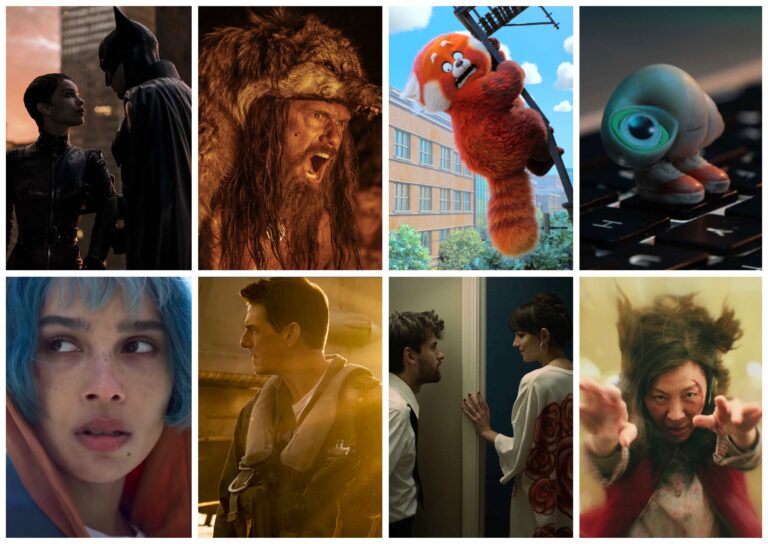
Where did the time go? In the span of just six months we have seen a new Caped Crusader, a biopic on the literal King of Rock & Roll, Nicolas Cage playing Nicolas Cage, the returning of David Cronenberg, two Pixar films, at least three legacy sequels (one of which just hit crossed the billion dollar mark!), two multiversal extravaganzas, and a talking shell. It seems safe to say that movies are officially back. The year has given us plenty to celebrate already, so let’s, well, celebrate!
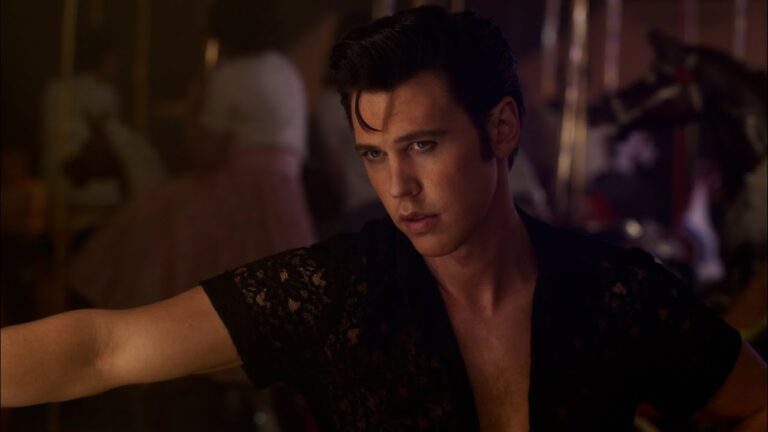
This week on Episode 488 of the InSession Film Podcast, inspired by our review of Elvis, we discuss our favorite Baz Luhrmann scenes. Luhrmann is one of the most unique filmmakers working today. His movies may lack narrative coherency at times, but there’s no denying his visual and creative flair. He uses every tool imaginable to make the cinematic experience engaging and riveting. He’s only done six movies over the course of thirty years, but because of his creative lens, there’s plenty of great moments to choose from. And as we noted above, he’s a filmmaker that we’ve come to adore and is even a little nostalgic for us, so this was an especially fun exercise. That said, here are our lists:
(Note: Please keep in mind that we each had different criteria for our selections)
JD
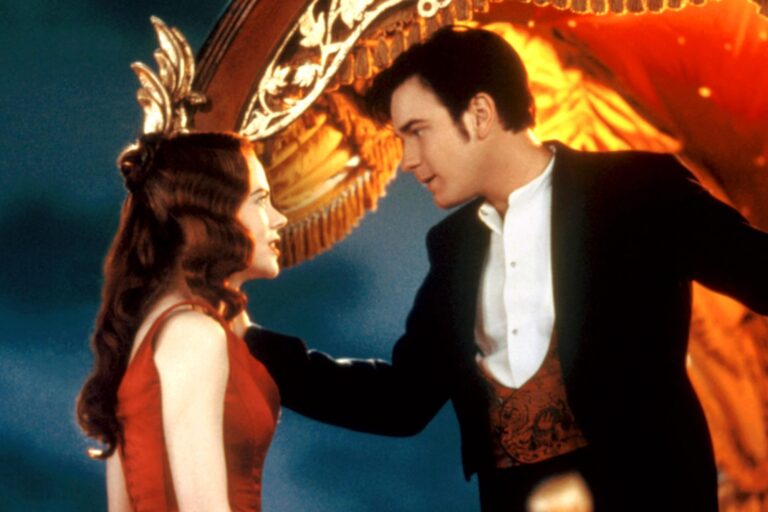
1) Elephant Medley – Moulin Rouge!
2) I’m Kissing You – Romeo & Juliet
3) Gatsby Meets Daisy / “Young & Beautiful” Scene – The Great Gatsby
Brendan
1) Prepping for Tea – The Great Gatsby
2) Opening Prologue – Romeo & Juliet
3) Final Dance Scene – Strictly Ballroom
Will
1) El tango de Roxanne – Moulin Rouge!
2) Finale – The Great Gatsby
3) First Immersion Into Night Club – Moulin Rouge!
Honorable Mentions (Combined)
Various scenes and moments from Strictly Ballroom, Romeo & Juliet, Moulin Rouge!, The Great Gatsby and Elvis
Hopefully you guys enjoyed our lists and if you agree or disagree with us, let us know in the comment section below. There are certainly many more revenge movies that are eligible for your lists. That being said, what would be your Top 3? Leave a comment in the comment section or email us at [email protected].
Director: Kyle Balda Writer: Matthew Fogel Stars: Steve Carell, Taraji P. Henson, Michelle Yeoh, RZA, Jean-Claude Van Damme, Julie Anderws
Synopsis: The untold story of one twelve-year-old’s dream to become the world’s greatest supervillain.
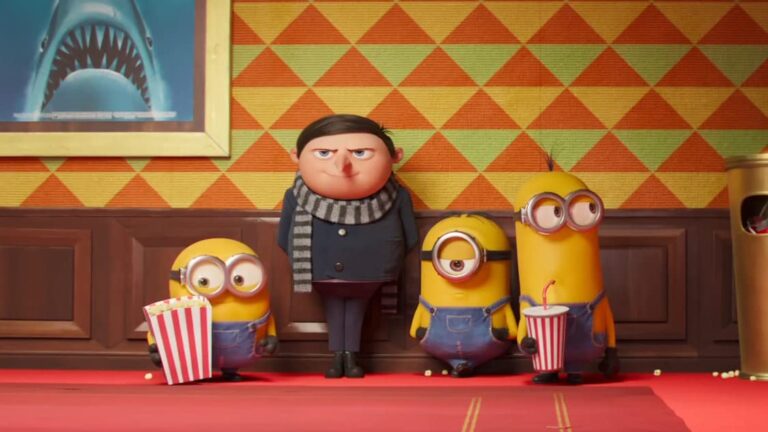
Since the dawn of computer animation, much value has been placed on photorealism – how much can a computer generate something that looks like the real thing? While some larger studios put all of their considerable resources into achieving that kind of wondrous beauty in their animated features, Illumination has always gone in the opposite direction. Instead of trying to create a world and characters that look better than if they had been filmed live, the studio prefers to use its computers to create the most elastic, anarchic cartoons that it can. They harness the whiz-bang potential of computer animation for the silliest ends possible, and while they don’t always hit the mark, Minions: The Rise of Gru is a bullseye.
The film is exactly what it says on the tin: Everyone’s favorite gibberish-speaking, banana-loving little yellow guys have found their “Mini Boss”, a middle schooler named Gru (Steve Carell) – who we know from the Despicable Me movies grows up to be a supervillain with a heart of gold – and, in 1976, they help him rise to prominence. Along the way, they travel to San Francisco, learn kung fu from a master teacher-turned-acupuncturist (Michelle Yeoh), and do battle with the biggest bad guys of the time, The Vicious Six. Right from the start, it’s clear that the time period is not going to be an incidental detail, with disco and funk needle drops abound, and the first character we meet is an animated ‘Foxxy Brown’ type named Belle Bottom (Taraji P. Henson), who turns out to be just one of the cleverly named Vicious Six. She is alongside the aging biker Wild Knuckles (Alan Arkin), the hammer-handed Stronghold (Danny Trejo), half-man-half-lobster Jean-Clawed (Jean-Claude Van Damme), Viking roller skater Svengeance (Dolph Lundgren), and Nun-Chuck (Lucy Lawless), a nun who practices martial arts.
If none of that tickles your funny bone, then this may not be the movie for you, as the opening with the Vicious Six establishes a pretty good baseline for the film’s humor. This is a deeply silly film, and the laughs are all impact-based. There is no social satire, no witty wordplay, and not a single joke that could possibly be classified as a “thinker”. Puns and slapstick rule the day, and visual gags involving the Minions are as clever as it gets. But this isn’t a sophisticated comedy for adults. It’s a children’s film, the fifth entry in a franchise that is now over a decade old. And yet, the majority of the comedy here feels fresh, even somewhat inspired. It’s not every children’s film that takes place so far in the past, and while it may indeed be a shameless ploy for the extra ticket money of parents who got dragged to the theater by their young kids, at least the most groan-worthy references are presented in a wink-wink, “here’s what you were expecting” manner that comes across as gleeful fun as opposed to smug attention-seeking. Just like its title characters, Minions: The Rise of Gru just wants to please everyone, and that quality manifests itself in a near-constant stream of jokes with a very strong hit rate, even for adults.
Mostly, though, this is a film that is as fun to watch as a Saturday morning cartoon. Like the Looney Tunes of yore, the Minions are wonderfully rubbery figures, constantly stretching and squashing and bending in impossible ways that only dial up the sense of silly play that is so important to good children’s entertainment. The world surrounding them reflects that sense of play, too, exaggerating the hilly streets of San Francisco to hilariously vertiginous effect and putting the Minions in charge of an airplane in a sequence that gives Top Gun: Maverick a run for its money in the airborne thrills department. No, there’s no real depth of character or theme here, nor is there anything interesting happening on a plot level – even the callbacks to Despicable Me that ostensibly give this prequel its reason for being are all coincidences and contrivances, nothing that adds anything more than a chuckle of recognition. Oh, that’s how Gru met the mad scientist Nefario (Russell Brand)! Oh, there’s Gru’s incredibly-bad-for-the-environment vehicle! Oh, before he had the freeze ray, he used a cheese ray! Because it rhymes!
Yes, this is the level of jokes that Minions: The Rise of Gru has to offer. It’s certainly not anything new, nor is it anything particularly smart. But it is lots of fun, something that has been in shockingly short supply when it comes to theatrically-released children’s films this summer. It’s very simple in its aims, but since it doesn’t have to bend over backwards to justify its existence, it just gets right down to the business of entertaining its audience, as most Illumination features have always done. This is not a film to gaze at in awe, it’s something to laugh at with your kids as you escape the heat and haze of summer. In times so dark that even children’s entertainment seemingly feels the need to deal with mature themes like aging and generational trauma, leave it to the folks at Illumination to brighten up the summer with this candy-coated blast of pure cartoon silliness. Let your guard down and meet the movie where it’s at, and you’ll enjoy it almost as much as your kids.
First of all, a big thanks to Will for joining us once again. He’s always a great guest and we had a blast talking Elvis and the Baz with him. Also, this was a nostalgic trip for JD as Baz Luhrmann was our first ever Movie Series back in 2013. It was a great time, but as is the case with Luhrmann, he took quite some time in between The Great Gatsby and Elvis. This was his first film since Gatsby in 2013, so we haven’t had a chance to talk about him since our inaugural year. Despite how you feel about The Baz, you’ll at least hear some passion on this show and hopefully that makes for some fun listening.
On that note, check out this week’s show and let us know what you think in the comment section. Thanks for listening and for supporting the InSession Film Podcast!
– Movie Review: Elvis (6:21) Director: Baz Luhrmann Writers: Baz Luhrmann, Sam Bromell, Craig Pearce, Jeremy Doner Stars: Austin Butler, Tom Hanks
– Notes / Discussion (1:22:48)
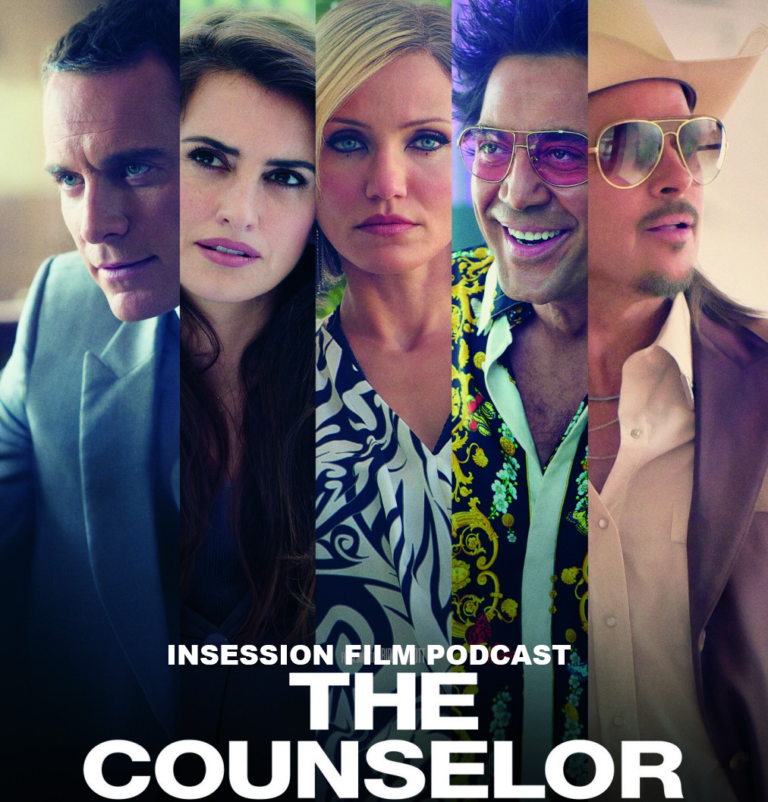
This week for our break segment, we had to talk about Ryan and Jay’s review of The Counselor on their most recent Extra Film episode given their response to it. Long time listener’s of the podcast will know that JD is not a fan of that movie at all, and Brendan isn’t quite as fond of it either. So it made for an interesting conversation as we’re all over the place on that film. We also had to take some time to say the biggest “thank you” we ever could This last week we crossed over 1,000,000 downloads and we could not be more grateful to everyone who’s listened and supported us through the years.
– Top 3 Baz Luhrmann Scenes (1:36:53)
Baz Luhrmann is one of the most unique filmmakers working today. His movies may lack narrative coherency at times, but there’s no denying his visual and creative flair. He uses every tool imaginable to make the cinematic experience engaging and riveting. He’s only done six movies over the course of thirty years, but because of his creative lens, there’s plenty of great moments to choose from. And as we noted above, he’s a filmmaker that we’ve come to adore and is even a little nostalgic for us, so this was an especially fun exercise. That said, what would be your top 3?
Review: Good Luck to You, Leo Grande
Top 5: Movies of 2022 (so far)
[divider]
Help Support The InSession Film Podcast
If you want to help support us, there are several ways you can help us and we’d absolutely appreciate it. Every penny goes directly back into supporting the show and we are truly honored and grateful. Thanks for your support and for listening to the InSession Film Podcast!
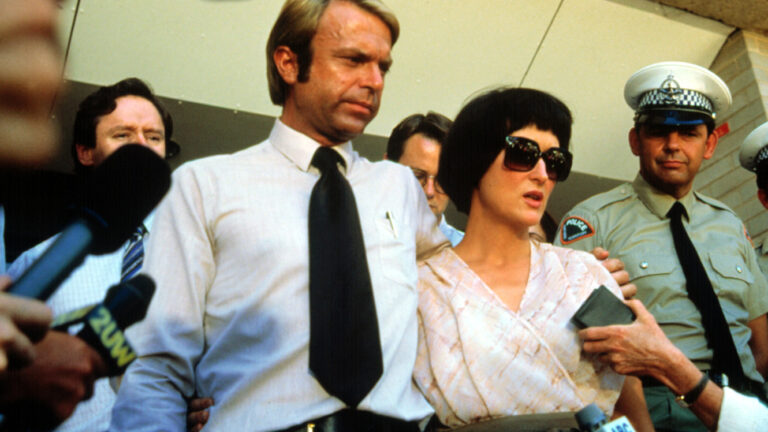
Popular culture is a funny thing. When something joins the cultural consciousness, one can never tell what impact it will have on the art in of itself. If a movie quotation, or moment gains access to those who have not yet seen it, you cannot help but be affected. Whether it be Ezekiel 25:17 from Pulp Fiction or “No more wire hangers” from Mommie Dearest, after hearing these out of context, it is impossible to separate that from your viewing experience. And this brings us to A Cry in the Dark, or as it was known to some audiences, Evil Angels. If you don’t recognize that name, don’t feel bad, it is a plot point and not a title that has become infamous, especially to signs of the uber popular sitcom, Seinfeld. Once you hear Elaine Benes shout “maybe the dingo ate your bay-bay” in a horrific Australian accent, you are forever changed.
As you might guess from this seminal sitcom moment, A Cry in the Dark is about a young couple whose baby is murdered/eaten by a dingo as they are camping in the wilderness. Stop laughing. A Cry in the Dark, directed by Fred Schepisi, was attempting to capitalize on a zeitgeisty moment in time. This is based on true events and there was a famous court case in order to determine if a dingo did actually eat their baby, or if the parents were actually child murderers. Given our current state of publicity and the court of public opinion, it does come off a bit prescient for 1988.
Sometimes, a movie is greater than the sum of its parts. A Cry in the Dark is absolutely not that kind of movie. If you are going to enjoy it, it is down to two things. Meryl Streep and Sam Neill, and nothing in between. It reeks of tv movie quality, especially given the courtroom sequences. The cinematography from Ian Baker (also known for aesthetic classics like Roxanne and Mr. Baseball) is listless and boring. To be completely fair, he and Schepisi are given a tough needle to thread in the introduction. Is it tasteless to make the death of a child action-driven? Probably. But if you avoid that, you must build suspense. And there is none to be found here, nor anywhere else in the screenplay from Robert Caswell and Fred Schepisi. They make an interesting, albeit misguided decision to never allow any doubt about the innocence of the parents. The only moments that make us focus on the innocence or guilt are the opinions of the general populace, but we saw exactly what happened from the first five minutes of film.
This lack of beauty and originality makes the acting performances all the more impressive. Michael (Neill) and Lindy Chamberlain (Streep) react to losing their daughter, Azaria, in quite different ways. Streep, using an absolutely pitch perfect Australian accent, begins the film highly stressed and never becomes more likable throughout the picture. And yet, it works. It is an abrasive choice, but given her acknowledged innocence, her attitude becomes more acceptable. With a lesser actress, Lindy is completely unlikable and we turn on her, much like the general populace. Of course, none of this is a surprise. It is Meryl, after all. The real surprise is Sam Neill. Now, this is not meant in any way to denigrate his talent. He is beloved for a reason. But this is acting against the greatest actress of her generation. And Neill not only holds his own but goes toe to toe and is very effective emotionally. In many ways, due to her difficult nature, Michael is the emotional core. As their relationship fractures, we understand it through his pained stare and frustrated sighs. Lindy barrels through, hardly noticing, except to berate him a little bit more.
Once the viewers get past their memories of mockery via television, there is a lot to engage with in A Cry in the Dark. As a relationship drama, the film truly flies. It feels that this is what the director and writers are most interested in, as well. There are numerous scenes that are nothing more than Neill and Streep in a room, struggling to make a failing relationship work. It is when the film zooms out, to attempt a cultural criticism that it fails. The idea of a culture that judges parents comes off, frankly, very tired and repetitive. Most of this emotion could have been accomplished in about half the time. This, combined with the television-like quality of the landscapes, keep A Cry in the Dark from becoming anything truly great.
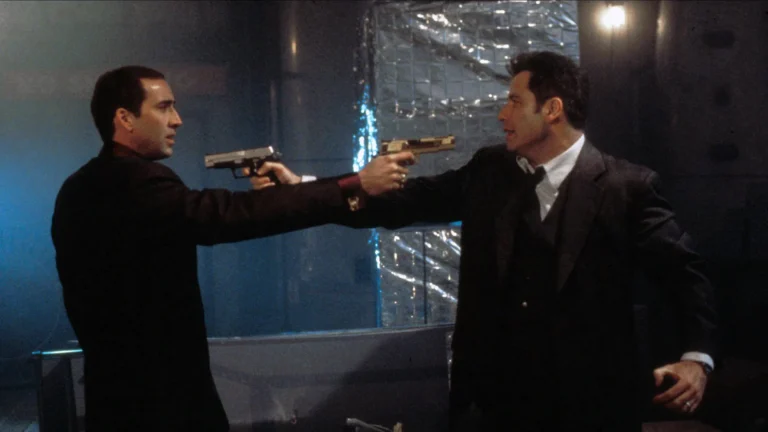
Starring: John Travolta, Nicolas Cage, Joan Allen, Gina Gershon
Synopsis: To foil a terrorist plot, an FBI agent undergoes facial transplant surgery to assume the identity of the criminal mastermind who murdered his only son, but the criminal wakes up prematurely and seeks revenge.
The summer of 1997 gave audiences an extravagant action movie almost every weekend, some good—Men in Black, Air Force One—and some not-so-good (Speed 2: Cruise Control, Batman & Robin). Although many of these films have faded from memory, I would argue the one that offers the most genuine thrills to this day is the sublimely fun Face/Off, starring John Travolta and Nicolas Cage and directed by John Woo. Although the premise remains absurdly silly, the strong execution of the plot, character development, and exciting set pieces continue to pull the viewer through.
Face/Off was made at the perfect time, right when both Travolta and Cage were at their peaks as both giant movie stars and respected action icons. Travolta’s Oscar nomination for Pulp Fiction put him back on the A-list, and after the box office hit Get Shorty in 1995, he flirted with the action movie genre with 1996’s Broken Arrow, also directed by John Woo, and then Face/Off. Cage went full steam into the genre after winning his Oscar for Leaving Las Vegas, appearing in 1996’s The Rock and then starring in two action movies released in June 1997, not only Face/Off but also Con Air. The idea to pair the two in a movie was an inspired one, one that allows unpredictable and electric performances, particularly from Travolta who gets to emulate the wild antics of Cage for most of the running time.
This film also marked the height of John Woo’s status in Hollywood, too, who after 2000’s Mission Impossible II found less and less success with his theatrical releases in America. A talented Hong Kong director who proved his gift for directing action with movies like The Killer and Hard Boiled, he flopped hard with his first American movie, Hard Target, in 1993 but then bounced back with one of my ultimate guilty pleasures, Broken Arrow, which saw Travolta play a villain and Christian Slater the hero in a crazily outlandish desert-set spectacle from the screenwriter of Speed. The narrative of Broken Arrow flounders a bit here and there, and what makes Face/Off my favorite American film directed by Woo is that it features all the stylish directorial flourishes we’ve come to expect from him while also providing an absorbing narrative about family, trust, and grief that doesn’t peter out toward the end.
The action truly is spectacular throughout, starting with a frenetic chase after an airplane that ends with Cage being launched with fire down a tunnel. At the opposite end of the movie is a rousing speedboat chase that beat any kind of set piece we saw in theaters that summer, the slow-motion shot of a boat crashing through another exploding boat gave a major thrill. But nothing was more indicative of Woo’s inventiveness as an action director than the stunning house shoot-out sequence, dozens of characters being shot to pieces and the stakes rising every second, played in part from the point-of-view of a child listening to “Over the Rainbow” over their headphones.
Some of the great joy in the film goes beyond the action with Nicolas Cage’s diabolical Castor Troy now with the face of John Travolta’s Sean Archer, so when wife Eve (Joan Allen) and daughter Jamie (Dominique Swain) see their beloved Sean, they’re interacting instead with Castor, who’s always scheming and loving every second of getting to hide behind a mask. The many scenes of dramatic irony make the viewing experience fun, as well as seeing Travolta relish in every second of giving his version of the Cage persona and the dastardly sensibilities of Castor. Unfortunately it’s Cage who doesn’t get to have as much fun after his character’s capture; he plays Sean as if he’s been stripped of many of the characteristics that make Cage interesting as a performer. His best moments come when interacting with Travolta, their chemistry as mortal enemies always electric throughout.
Since Face/Off was never part of a franchise, it might not have had the staying power throughout the decades like The Lost World: Jurassic Park or Men in Black, but it made its mark on the action genre in a major way in 1997, receiving terrific reviews from critics, an Oscar nomination, and nearly 250 million dollars worldwide. Richard Corliss of Time said that Face/Off “isn’t just a thrill ride, it’s a rocket into the thrilling past, when directors could scare you with how much emotion they packed into a movie.” I feel this sentiment holds true to this day, the movie more than just pure spectacle, the tremendous cast and engaging story putting Face/Off a couple of notches above your typical 1990s action fare.
Director: Baz Luhrmann Writers: Baz Luhrmann, Sam Bromell, and Craig Pearce Stars: Austin Butler, Tom Hanks, and Olivia DeJonge
Synopsis: From his childhood in Tupelo, Mississippi to his rise to stardom starting in Memphis, Tennessee and his conquering of Las Vegas, Nevada, Elvis Presley becomes the first rock ‘n roll star and changes the world with his music.
If there is one thing that Baz Luhrmann doesn’t do, it’s the art of subtlety. He doesn’t need to. It’s not his style. His career is as lavish and vibrant as humanly possible; with huge costumes, big characters, and don’t forget a song or two (or 15). Elvis Presley’s character is shrouded in mythology, and it can be difficult to look past the “King of Rock and Roll’s” epic showmanship. The automatic choice for any director of this film is to be bold and brash, Luhrmann especially, doesn’t know any different. It’s his maximalist style, the man is an auteur for films that have the potential to cause sensory overload, but in Elvis – the biopic about the career of the man himself – the usual Luhrmann glamour and madness becomes tedious, chaotic, unfaithful, and completely unneeded.
The film seems very unsure about what it wants to be; a very straightforward story has been given the Luhrmann effect, and it fell at most of its glittery hurdles. This is a biopic, right? So why does it pull the wool over our eyes so much that it is, at times, unwatchable? It stems from some of the most bizarre editing I have seen in recent years; laden with rapid cuts, dizzying zooms, and an unnecessary number of flashbacks that become integrated into the scenes of the present – and that’s just the first half. Truthful biopic it is not, but an overworked action thriller? Possibly. To be in the mind of Luhrmann as he storyboarded this film would have been too much to handle.
This maddening approach to portraying the life of Elvis Presley is saved by a career-defining performance from Austin Butler, who not only nails the look, the famous swagger, and his thousand-yard stare completed with overbearing sex appeal, but his singing performance deserves merit too – even if he did only sing a third of the film’s songs. Every time the character steps onto that stage you can feel the buzz in the audience and among his peers, and the cinematography is key to this; it pauses time – even if it’s just for a second – the electricity begins to build, and with a handful of crotch shots and a focus on the almighty roar of sexually charged women, it explodes throughout the room. The rise from starry-eyed Memphis boy into a worldwide phenomenon seems unexpected, but Elvis was destined for stardom regardless. He could use a little help though (if you can call it that), and he gets it from his typically slimy music manager, Colonel Tom Parker (Tom Hanks), who assists Elvis to achieve legendary status quicker than a speeding bullet.
Contrasting to Butler’s enigmatic performance is an extremely questionable one from Hanks – how many times have we said that in his illustrious career? Each version of Parker is as bad as the other; the younger model (just about) with his ridiculous fat suit and fake nose, and a menagerie of dodgy accents – a hint of Irish maybe, possibly some German, who even knows. And then we have the narrating older version; a poor man’s Goldmember missing both smoke and pancake – it doesn’t half take the sting out of the desired effect. Tom Hanks as the pantomime villain? Maybe that’s why it’s bizarre. Whatever it was, it felt majorly off-key.
The representation of this dysfunctional relationship between the two men is key though, as it certainly was in real life. There is clearly some truth in it; Parker was a bloodsucking, shady businessman, digging his claws into his naïve money maker, but there’s a tyrannical, maniac vibe being forced upon us by the two men involved in portraying the character – personal feelings should be left at the door maybe?
Elvis seems to be the work of an adopted Elvis fan; it champions the man as an almighty figure, someone who is a blueprint for the innocent little blue-eyed American boy, one who has the world at his feet but still goes home on a Sunday for his mother’s home cooking. Elvis was a great showman, maybe even the best, but one thing he was not, was an angel. Painting him as a saint among men seems oddly misguided, but labeling him as a civil rights activist (something the film seems hellbent on representing) because he grew up in a predominantly black neighborhood seems downright wrong – this version of Elvis is the ideal fabrication of a self-confessed fan, it completely disguises his traditional Republican views.
Even though Elvis does possess a few good qualities; Butler’s acting is fantastic, the musical numbers are electrifying, and the costumes are fabulously sparkling. The second half is undoubtedly stronger than the first but the film really is a mess. Elvis has no fixed style, so it throws a truckload of ideas at the wall and prays that a few will stick, but they all end up stepping on the other idea’s toes. Too much effort was used in trying to make it unique and completely dissociate itself from previous musical biopics, and the outcome feels like a Baz Luhrmann showcase with a “hey, look at what I can do” mentality.
This week on the Extra Film Podcast, Ryan and Jay conclude their Ridley Scott Movie Series with his 2013 film The Counselor and they also review the latest on Netflix in Spiderhead!
Ridley Scott has seen some mixed responses to his films over the years, but The Counselor arguably sits above the rest as his most divisive. We reviewed it all the back on Episode 36 during our first year in 2013, and at the time Main Show host JD was *not* a fan of it at all. However, as you’ll hear, that wasn’t necessarily the case for Ryan and Jay. It was a very different, yet compelling, conversation about the film and why it’s become such a polarized subject within Scott’s filmography. We also had a good time talking Joseph Kosinski, whose had a great year with Top Gun: Maverick, despite whatever Spiderhead was trying to be.
On that note, check out this week’s show and let us know what you think in the comment section. Thanks for listening and for supporting the InSession Film Podcast!
– Movie Review: The Counselor (4:11) Director: Ridley Scott Writers: Cormac McCarthy Stars: Michael Fassbender, Penélope Cruz, Cameron Diaz, Javier Bardem, Brad Pitt
– Movie Review: Spiderhead (1:00:02) Director: Joseph Kosinski Writers: Rhett Reese, Paul Wernick Stars: Chris Hemsworth, Miles Teller, Jurnee Smollett
To hear this Extra Film episode and everything else we do, download our apps on the Amazon Market for Android and the Podcast Source app on IOS devices. The mobile app covers all of our main shows, bonus podcasts and everything else relating to the InSession Film Podcast. Thanks for your wonderful support and for listening to our show. It means the world to us.
Synopsis: A goldfish farmer in a small Iranian village faces financial ruin when his river-sourced water supply is cut off.
First released in 2017 as part of the Un Certain Regard selection of the Cannes Film Festival, A Man of Integrity, Mohammad Rasoulof’s penultimate film, is finally being released in the United States.
The movie, with its incisive message about Iranian society, proved to be too critical for the local government, prosecuting Rasoulof for “promoting propaganda against the system”. These charges are all too familiar for the director, having faced them every time he works in a new film since 2010. His determination to talk about his country offers moral dilemmas and inconclusive points of view about a society that is too corrupted and immersed in its own vices to strive for a rapid change (a characteristic practically applicable to any other country in the world).
Rasoulof is famous for tackling social themes and avoiding judgmental conclusions. His films invite reflection and debate. As a perfect example, we have his most recent effort, This Is No Evil. The 2020 production is vital viewing for those interested in capital punishment, the way it affects a whole community and its levels of immersion in the Iranian social fabric. Through separate stories, Rasoulof weaves enough doubts and points of view to at least unsettle those who still support this cruel practice.
Similarly, A Man of Integrity tackles dense themes and the way they affect a whole community: the weight of corruption and the conditioned response according to personal principles. How much can someone bear in the name of their ideals? When is it necessary to play the game of others and “relinquish” to the practices they swore to never entertain? These dilemmas are addressed through Reza’s (Reza Akhlaghirad) story, a man with strong moral beliefs who left his life in Tehran to settle down in an isolated town with his wife Hadis (Soudabeh Beizaee) and their only son. Soon it becomes clear that Reza enjoys his solitude and doesn’t appreciate the corrupt systems that define societal involvement, instead preferring to spend his days tending his goldfish in his aquatic farm (a quiet and gentle trade that contrasts with the emotional upheaval he faces when dealing with the outside world).
When Reza starts having problems with his neighbor, things spin out of control until they reach a point of no return. Will he give up his life and start anew somewhere else or will he play the game that he despises to claim back his life and peace of mind? Rasoulof explores Reza’s resoluteness as both a virtue and a toxic trait that soon enough poisons everything within him and his safe circle, just as the toxicity of his adversary poisons everything around him. The film is a discreet exhibition of toxic masculinity, often unveiled through the eyes of Hadis, who is too rational to see the cold war that is taking place between her husband and the other man, and who appeals to reason to solve a problem that mainly exists because of bravado and emotion.
Presented as a slow burn thriller, A Man of Integrity thrives in its silence and naturalistic sounds. It is not until the final scene (one of the best endings of the year) and the end credits that we hear the sole melody that appears in the film, one marked by melancholy and fatality, as we face the result of one man’s crusade against a whole system. Whether it is Reza finding solace in the silence of a cave, observing the people he must convince to do the right thing, or becoming stern when things become too intense or dealing with violence once things get out of control, the film relies heavily in the surrounding sounds or plain silence, giving it a realistic, documentary-like feeling.
Still, the main reason for the film’s effectiveness is the pair at the center: Reza Akhlaghirad and Soudabeh Beizaee. Akhlaghirad presents an introverted man who feels too much but doesn’t know how to convey his anger and emotions. While apparently angry all the time, the gentle moments presented on screen are clues to his tenderness and vulnerability. We witness the tragic story of a man that is desperate to catch a break, but the system around him is designed to make him lose hope. While it can be easy to rely on sentimentalism or melodrama, Rasoulof maintains his story in the realm of reality. As for Beizaee, her intensity and eloquence contrast with Akhlaghirad’s stoicism. Resourceful, compassionate, and pragmatic, Beizaee’s character shows an agency and determination that makes her husband wake up and look beyond himself. Each represents different sides of the same coin as they deal with a threat that is too obstructive and exhausting for their innocent minds.
A Man of Integrity can easily be compared to Asghar Farhadi’s A Hero, a film where the main character faces a nightmare as the community around him becomes an obstacle instead of a support system. Nevertheless, the most effective comparison would be Mounia Akl’s Costa Brava, Lebanon¸ a fantastic film that represents the problematic bond between a family and their home city, and the desperate measures they take to leave it behind. In A Man of Integrity, Rasoulof’s main character tries to start afresh in a new home only to find himself immersed in the vices from which he was running. The film becomes a fable too honest and evidently comes from a man who is constantly harassed by the system he seems to know very well.
A small nation-state within France and a place where the rich come to live and avoid paying taxes. For Hollywood, Monaco is immediately associated with Princess Grace Kelly who went from winning an Oscar for The Country Girl to marrying Prince Rainer III in 1956. Even before Grace Kelly, Monaco was known as an enclave surrounded by the Mediterranean and the cliffs where Europe’s wealthiest come to hide. Bond legend, Sir Roger Moore, had a home in Monaco and was buried there at his request alongside Lewis Gilbert who directed him on The Spy Who Loved Me and Moonraker. Everything there is expensive, but it’s clean and very safe. Also, full of tax exiles from around the world, but I digress.
Monaco is a place that is a perfect setting when describing affluence and a French paradise as French is the dominant language. Of course, numerous films have been shot on location with the streets, the casino, the line of yachts, and all sorts of people within this very tight section of land. Some of them are very noteworthy to be placed within the French Riviera. Off the bat, viewers will think of Ocean’s Twelve, Iron Man 2, GoldenEye, and that fraudulent biopic about Grace Kelly starring Nicole Kidman. But, no, here are five other notable films that utilize some of Monaco’s famous scenery.
Confessions Of A Cheat (1936)
French comic writer-director Sacha Guitry played the older version of the unnamed grifter who gets lucky and makes his way to a job as an elevator operator in the fancy Hotel de Paris Monte-Carlo. The unnamed cheat then becomes a croupier in one of their casinos en route to being a professional card shark who tries to break the house. The Hotel de Paris first opened all the way back in 1864 and has constantly gone under renovations to continue business even through times of war. A $280 million renovation was completed in 2019 and remains a place for several Monaco-set films to shoot from, or, in the case of Madagascar 3: Europe’s Most Wanted, animated.
The Red Shoes (1948)
The film was shot mostly in Paris and London, but some location shooting was done in the neighborhood of Monte Carlo. The Opera de Monte-Carlo is in the Salle Garnier, which opened in the 1870s and remains in use today. Being a story about ballet and the rivalry between two creative forces over the same woman and the tour going to Europe’s finest opera houses, the wealth and glamour of Monte-Carlo made it a great place to shoot part of the movie in full Technicolor. Scenes were also shot across the street at the aforementioned Hotel de Paris.
To Catch A Thief (1955)
Against the backdrop of the French Riviera, Alfred Hitchcock’s romantic caper follows Cary Grant, a former burglar, who is suspected of a string of burglaries that are similar to his previous moves. He must catch a copycat who certainly will target the most expensive jewelry owners, one of them being an American tourist played by Grace Kelly prior to becoming Princess of Monaco. The interiors were filmed on the Paramount backlot, but exteriors were done along the French coast and into Monaco for their authenticity. They include the gardens and some streets where they stroll, part of Monaco’s charm outside of obvious locations the world already knew.
A Man And A Woman (1966)
Claude Lelouch’s love drama was a triumph at Cannes where it won the Palme d’Or and at the Oscars where it won Best International Feature and Best Original Screenplay. Following two widowed people who fall in love, the story traces their path as Jean-Louis Trintignant plays a racing driver who meets a film script supervisor in Anouk Aimee and enjoy each other’s company. Part of the story includes the Monte Carlo Rally and scenes set in the Monte Carlo Casino that were actually shot there in a rare instance of cameras being allowed inside; Ocean’s Twelve would also be lucky to shoot inside.
Grand Prix (1966)
Speaking of racing in Monaco, I’ve mentioned this film in a previous piece, but I bring it up again because of how on-site they shot the first part of it. It is the Monaco Grand Prix and actual scenes were shot on the tight, twisting streets. Cars begin on Boulevard Albert 1er, turn right, drive uphill, and then go left and right through Casino Square passing the Monte Carlo Casino and Hotel de Paris. The cars go downhill slowly passing hotels that overlook them before reaching level ground parallel to the harbor; however, in 1966, the original train station in Monaco was still present. After screaming through the tunnel, drivers continue along the harbor, around the public swimming pool and passing lines of yachts, and one long, tight bend that takes drivers back to Boulevard Albert 1er.
We’ve done a lot of Movie Series’ over the years and this is among the most daunting. Steven Spielberg is one of the GOAT’s of cinema, obviously, and he’s been studied to death for decades now. So how do we differentiate ourselves while diving into Spielberg’s filmography? Well, instead of focusing on his most popular and successful movies, this series will be dedicated to his lesser known and least talked about films. Duel, Empire of the Sun, Munich and A.I. may not have the vast fanbase that Jaws and Indiana Jones has, but that doesn’t mean they aren’t good movies or worth dissecting. It’s still the same director after all. We may get into those popular works in bonus content, but for the main part of this series, we’ll be reviewing the films that tend to fly under the radar when someone mentions the name Spielberg. It’s going to be fun and we hope you enjoy the ride as we will.
Note: We will make an exception for E.T. at the very end of this series as the film is celebrating its 40th anniversary this year, so we felt it would be an appropriate coda to this journey.
Duel, 1971
Listen to our review below as heard on Episode 470.
The Sugarland Express, 1974
Listen to our review below as heard on Episode 471.
The Color Purple, 1985
Listen to our review below as heard on Episode 473.
Empire of the Sun, 1987
Listen to our review below as heard on Episode 474.
Always, 1989
Listen to our review below as heard on Episode 475.
Hook, 1991
Listen to our review below as heard on Episode 476.
Amistad, 1997
Listen to our review below as heard on Episode 477.
A.I. Artificial Intelligence, 2001
Listen to our review below as heard on Episode 478.
Minority Report, 2002
Listen to our review below as heard on Episode 479.
Catch Me If You Can, 2002
Listen to our review below as heard on Episode 480.
War of the Worlds, 2005
Listen to our review below as heard on Episode 481.
Munich, 2005
Listen to our review below as heard on Episode 482.
The Adventures of Tintin, 2011
Listen to our review below as heard on Episode 483.
War Horse, 2011
Listen to our review below as heard on Episode 484.
Lincoln, 2012
Listen to our review below as heard on Episode 485.
Jurassic Park, 1993
Listen to our review below as heard on Episode 486.
E.T. the Extra-Terrestrial, 1982
Listen to our review below as heard on Episode 487.
[divider]
Other Steven Spielberg Reviews
Below are other reviews we’ve done over the years. Some are the films he’s released since we’ve started the show, while others are retrospectives and anniversaries that we’ve covered. Also note that some of these are from very early on in the podcast’s history, and the audio may be rough as we hadn’t formed our identity yet as a show. Which could be a great reason to revisit some of these down the road. At any rate, please check out these reviews as well and enjoy!
Jaws, 1975
Listen to our review below as heard on Extra Film.
Close Encounters of the Third Kind, 1977
Listen to our review below as heard on Episode 237.
Indiana Jones and the Raiders of the Lost Ark, 1981
Listen to our review below as heard on Extra Film.
Indiana Jones and the Temple of Doom, 1984
Listen to our review below as heard on Extra Film.
Indiana Jones and the Last Crusade, 1989
Listen to our review below as heard on Extra Film.
Schindler’s List, 1993
Listen to our review below as heard on Extra Film.
Saving Private Ryan, 1998
Listen to our review below as heard on Extra Film.
Indiana Jones and the Kingdom of the Crystal Skull, 2008
Listen to our review below as heard on Extra Film.
Bridge of Spies, 2015
Listen to our review below as heard on Episode 139.
The BFG, 2016
Listen to our review below as heard on Episode 175.
The Post, 2017
Listen to our review below as heard on Episode 251.
Ready Player One, 2018
Listen to our review below as heard on Episode 267.
West Side Story, 2021
Listen to our review below as heard on Episode 460.
Be sure to leave any feedback in the comment section below or hit us up on social media!
Billy Wilder was a director with an extensive color palette. Ask a number of Old Hollywood enthusiasts what his defining trait as a filmmaker is and you will get a myriad of answers. Is it his knack for farce? Is it his biting cynicism? Perhaps it is his clever, rat-a-tat dialogue? You can’t go wrong with any of those answers or a number of others. The Polish-born Wilder’s Hollywood directorial career spanned nearly fifty years and saw him become one of the most celebrated and lauded filmmakers of his era. He is one of only a handful of filmmakers to have directed multiple Best Picture winners and he piled up a total of seven Oscars over the course of his career, which is probably selling him short when you look back at his competition. His career had its bumps, to be sure, but there are far more gargantuan hits than misses and the upper echelon of his filmography can stand toe-to-toe with just about any competition. WIthout further ado, here are the films of Billy Wilder, from worst to best:
The Emperor Waltz
In Billy Wilder’s own words, “I have no talent for a musical, because I can’t get it into my head that people break into a song for no reason, whatsoever.” That is incredibly apparent in The Emperor Waltz, which is a musical that seems to resent that it has to be a musical. It is not completely devoid of cleverness, but Bing Crosby overwhelms the entire film with his apparent need to make it “A Bing Crosby Picture”, first and foremost. Crosby plays a traveling gramophone salesman in Vienna and the story is about as interesting as that high-level synopsis implies. The Emperor Waltz is nothing more than a curio in Wilder’s filmography; notable for its attempt at something different, but the least successful film that the great filmmaker ever put together.
The Spirit of St. Louis
At a glacial two-hours-and-fifteen minutes, The Spirit of St. Louis is one of Wilder’s longest films. The retelling of Charles Lindbergh’s history-making flight across the Atlantic Ocean does not seem, on the surface, to be tailor-made for Wilder’s sensibilities, but Wilder was a personal friend of Lindbergh. As it turns out, Wilder was not, in fact, the correct filmmaker for the material. The film indulges in the grueling process of preparing for the flight in an attempt to emphasize Lindbergh overcoming the odds, but the tension never sticks. Not even Jimmy Stewart has enough charisma to keep the film from becoming a downright slog.
Love In the Afternoon
Perhaps a sweeping romance starring Audrey Hepburn and a 15-years-younger Gary Cooper could have been one for the ages, but the 27-year-old Hepburn and 55-year-old Cooper have the chemistry of a pair of 2×4’s set five feet apart. Cooper sulks and mutters through the entire endeavor in one of the least convincing romantic lead performances from a star of his caliber in the Classic Hollywood era. It is a real shame, because the lavish production and Hepburn’s magnetic performance deserved so much better. By 1957, Wilder had become one of the most effective creators of black-and-white images in Hollywood and Love In the Afternoon is full of striking, romantic compositions. If only it was in service of a film that created any sort of spark…
The Major and the Minor
Wilder’s first American production (he co-directed a French film almost a decade earlier), The Major and the Minor is a relatively entertaining film that simply does not sit right in 2021. In the film, Ginger Rogers’ Susan pretends to be a 12-year-old girl in order to get a discounted train ticket to return home after a disappointing attempt at life in the big city. It is a delightful romp for most of the film. Then, it turns into a love story between Susan and Army Major Phillip Kirby (Ray Milland). The implication is that Kirby must repress feelings of attraction he has for a 12-year-old girl. The film then wants the audience to swoon when she reveals she is an adult and the two kiss at a train station. Rogers and Milland are absolutely fantastic in the film, but not even they can talk me into getting behind a relationship built on the back of that particular lie.
Fedora
It is always difficult to see a past-their-prime artist attempt to replicate one of their masterpieces. With Fedora, Wilder wanted to create the same lighting in a bottle magic he did with Sunset Boulevard. Fedora’s first two acts are structured almost identically to those of Sunset and even sees the return of William Holden, one of the main players in that earlier film, to Wilder’s oeuvre. When the film’s final act diverges a bit from his previous work, it devolves into an exposition dump. Wilder’s previously colorful, beautiful narration becomes derivative and dull. It is one of the rare instances of plot overtaking character in a Wilder film. Additionally, Wilder never seemed to fully conquer the challenge of color cinematography. Fedora is all browns and beiges, a drab affair from one of the masters of black-and-white. Fedora is, perhaps, the saddest Wilder film to watch, as the retread makes it feel like the sun has set on his reign as a revolutionary.
The Private Life of Sherlock Holmes
Wilder’s comedic take on the world’s greatest detective tackles Sherlock’s drug use and sexuality to mixed results. The film’s lasting legacy is coding Holmes as queer, an interesting idea that never pays off. The film is overlong and becomes a very generic Sherlock story in the latter half, but the first half is undeniably engaging. It is intimate and patient in its character development, portraying one of pop culture’s most storied characters as he has never been portrayed before. When it becomes just another mystery, not even Christopher Lee as Mycroft Holmes can keep it afloat. A valiant effort, but one that ultimately can’t completely crack the case.
Buddy Buddy
Released in 1981, Buddy Buddy was Billy Wilder’s final film and his third time working with The Odd Couple, Walter Matthau and Jack Lemmon. This is the least successful film the trio put together, but it is not without its moments. Matthau’s typically grumpy, foul-mouthed assassin is the driving force behind the situational comedy and Klaus Kinski gives a wonderfully demented performance (shocking, I know) as a sex guru who has wooed Jack Lemmon’s estranged wife. It takes far too long for Matthau and Lemmon to team up, but there are a handful of witty scenes in the middle of the convoluted plot. It is mostly a half-baked plot used as a bridge to get from one set of hijinks to another. For many, that will be enough.
Irma la Douce
Wilder was a director capable of making films that feel incredibly contemporary, despite being decades old. He was also capable of films that feel beyond antiquated in the year 2021. Irma la Douce is one of the latter. An incredible Shirley MacLaine performance is not enough to overcome the occasionally gross ideas the film posits on relationships and gender politics. MacLaine plays the titular Irma, a popular call girl who Jack Lemmon’s Nestor Patou quickly falls in love with. Unfortunately, Irma is given little to no agency. Lemmon is at his zaniest, to a fault, getting to play multiple characters, indulge in pratfalls galore, and generally act like a goof. On the positive side, Irma la Douce is, perhaps, Wilder’s best-looking color film, featuring a wonderful Parisian set with bright colors and patrons clothed in beautiful garments. There is a great movie tucked away somewhere in Irma la Douce, but it is not revealed in the end product.
Sabrina
What an odd beast Sabrina is, considered by many to be a stone cold classic. Cinematographer Charles Lang is at his absolute best, establishing a sense of elegance and discovery with a wonderful blend of wide shots and close-ups, helping to frame Audrey Hepburn like the movie star she was meant to be. This was not Hepburn’s “A Star Is Born” moment, but it was a crucial step in the evolution of her persona. She is incredibly winning as the vivacious Sabrina and WIlliam Holden is equally wonderful as the second corner of the film’s love triangle, David Larrabee. However, the film’s Achilles’ heel is legendary actor Humphrey Bogart, who plays David’s brother, Linus. The same flaws that plague Love In the Afternoon turn Sabrina from a great film to one that is merely average. Sabrina and Linus never make sense together. Bogart is so low-energy and uninteresting. It is unfathomable that an audience would get to the end of the film, see Hepburn and Bogart (who was 30 years her senior) embrace, and leave the theater yearning for a love story like the one they went through in Sabrina.
The Front Page
The Front Page features some of the best dialogue I.A.L. Diamond and Billy Wilder created as a team in their storied partnership. The film’s zaniness is very much its strength, while its plot is its great weakness. Jack Lemmon’s exasperated Hildebrand Johnson (Wilder always had a knack for great names) and Walter Matthau’s Walter Burns do their typical oil and vinegar schtick to solid effect. Based on Charles MacArthur’s play, the story revolves around a series of heightened attempts to catch a death row inmate who escaped prison. Wilder unleashes some pretty wild political swings and some more questionable sexual politics in the film. In the end, the film is a seesaw of terrific scenes and dull ones, ultimately becoming a satisfying, clever film with gaping holes in its center.
The Lost Weekend
Wilder’s first best picture winner is admirable in its ambition and probably hit very hard in 1945, but its depiction of addiction has aged like a fine milk. In short, the film posits that addiction can be overcome by the power of love. As powerful as the depictions of Don Birnam’s addiction can be, the finale undercuts all of the good that came before. Ray Milland gives a heartbreaking performance and Wilder flexes his technical muscles in many scenes of drinking that feel like they were stripped from a horror film. Addiction is a demon whose shadow shrouds every scene of the film and it operates as an effective tale of sadness and a sense of worthlessness for the large majority of the run time, but that ending… it’s just fundamentally destructive to what came before it. It was a different era and this was a film that was revolutionary at the time, but The Lost Weekend is one of Wilder’s most dated films, albeit one with great intentions and real craft.
The Fortune Cookie
The final Lemmon/Matthau joint on this list, The Fortune Cookie is a largely cynical film that really understands the power of the dynamic between its two leads. The film opens with a very fun scene in which Lemmon’s character, a photographer, is run over by a member of the Cleveland Browns. His injuries are fairly mild in nature, but Matthau’s slip and fall lawyer bursts into the film like the devil on Lemmon’s shoulder, telling him to milk his injury for all its worth. The film largely takes place in a hospital room, but the snappy dialogue provides a great deal of humor and snark. The real standout of the film, though, is Ron Rich as Luther ‘Boom Boom’ Jackson, the running back who injured Lemmon’s character. His sincerity and empathy pulses throughout the entire film and the ending of the film is downright heartwarming, largely because of his character arc. Boom Boom Jackson is the best of us.
Five Graves to Cairo
Five Graves to Cairo is one of those hidden gems that make a deep-dive into a director’s filmography worth it. It is one of Bill Wilder’s lesser-known films, but the action-adventure film is a downright blast. Comparisons to the Indiana Jones franchise are unavoidable, despite its smaller scale and direct grappling with the events of World War II. Released in 1943, the film is one of the better propaganda pictures of its time. At the end of the day, it is an inherently pro-American movie, but it certainly asks questions about the underlying morality of America’s goals in the war. Billy Wilder certainly could have had a career as a director of classical adventure movies, but his swerve into the lane of comedy and prestige makes Five Graves to Cairo a fun pit stop in his wonderful career.
Stalag 17
What propelled Billy Wilder to make a comedy about World War II POWs? That is a very valid question. How did Billy Wilder make a comedy about World War II POWs? That is an equally valid, even more difficult to answer question. Stalag 17 is, first and foremost, a star vehicle for WIlliam Holden, one of Wilder’s greatest collaborators. His hijinks stem from the tedium of life in the camp. His character has become a downright misanthrope in the face of men’s worst impulses and that misanthropy drives both the comedy and drama in the film. One has to wonder what kind of impression this film had on Robert Altman, whose breakout film, M*A*S*H, shares much of Stalag 17’s DNA. Stalag 17 is not the game changer that Altman’s film was, but it is always entertaining and never lets the horrors of war completely disappear from the story.
A Foreign Affair
A biting social commentary disguised as a quirky romance, A Foreign Affair is the beginning of Wilder’s best traits. Even when the film is subversive and dark, the dialogue and editing add levity and a level of absurdity. In the film, a U.S. Army captain is caught in a love triangle with an ex-Nazi and an American congresswoman. The film’s moral quandaries create a sort of highwire act of choosing sides. The film’s plot twists and turns with an added sense of artfulness provided by cleverly repeated visual motifs and a sense of true sensuality. This is not the sort of propaganda you would have seen made just a few years earlier. Released in 1948, after the war ended but its memory still firmly at the front of the American mindset, there are no clear-cut “good” and “bad” characters. A Foreign Affair is a wonderful intersection of Wilder’s sharp wit and his biting cynicism.
Kiss Me, Stupid
This forgotten gem was one of Dean Martin’s handful of bites at the apple of movie stardom and, perhaps, the film that best utilizes his persona with wonderful meta-commentary. The hijinks of late Wilder are all there, but this film has a sexually explicit center that surely ruffled feathers in the 60s. The sexual repression teeming from co-star Ray Walston’s performance makes for fertile comedic soil and Dean Martin as “Dino” (so, yeah, some version of himself) is wonderfully self-aware. He is as pathetic, in private, as he is charming, in public.
The film grapples with sexuality in ways that some modern films would even be afraid to. Kim Novak gives a layered performance as a call girl yearning for… well, she isn’t quite sure, but that makes her so relatable and so funny. It is a great, atypical performance from Novak as the disruptive force of sexuality. Everybody sleeps with everybody else, but it isn’t treated like the Salem Witch Trials. Some of the film’s ideals are antiquated (to be kind) but it remains a challenging, provocative piece of work.
7. The Seven Year Itch
It feels like The Seven Year Itch has been increasingly dismissed over time by discerning film fans for its treatment of Marilyn Monroe’s character (simply credited as “The Girl”). The Girl is a bit dense, a bit submissive, and very much some kind of male fantasy. However, that male power fantasy is the point. It is pretty clear that this movie wants to be more lurid than it is, but the chaste depictions of infidelity only make the power fantasy even more palpable. It allows Tom Ewell’s Richard to maintain a sense of moral superiority throughout. What a big, strong man he is, rejecting the nameless Girl’s advances. With a more biting ending, this could have been absolutely fantastic. As it stands, this was tremendously entertaining and wonderfully tongue-in-cheek. Marilyn Monroe gives a pitch perfect performance in the film. She was a truly special performer with the right material.
Avanti!
Avanti! is a film of contradictions. It is one of Wilder’s meanest films but also one of his funniest. Jack Lemmon has never been more agitated but he is also incredibly charming. Wilder embraces the sensibilities of New Hollywood with Old Hollywood aesthetic panache. The film, released in 1972, feels like Wilder’s meta-acknowledgement of the dawn of a new era of filmmaking. The story revolves around the death of Jack Lemmon’s character’s father who, unbeknownst to Lemmon, had a longstanding affair with a young woman. The mistress is played wonderfully by Juliet Mills who, despite occasionally being treated cruelly in the film, presents one of most intriguing, well-rounded female leads in the Wilder canon.
Avanti! is also a visual feast, taking full advantage of the film’s Italian setting. Wilder was not always the best stylist when it came to the use of color photography (which might be why he stuck with black-and-white after color had become the standard) but this is his most effective use of the newer medium.
Witness for the Prosecution
Witness for the Prosecution is a testament to the power of a great ending. The rest of the film, a legal drama with a healthy dose of interpersonal melodrama, is good but falls short of great. However, the film’s final fifteen minutes, anchored by Merlene Dietrich and Charles Laughton, are downright devastating. It is one of the prime examples of a slow burn leading to a powder keg finale. The film is yet another of Wilder’s backdoor reflections on the Holocaust and World War II, as it is peppered with allusions to World War II and the Soviet occupation zone of Germany. As a reflection on that period, it is appropriately bleak and dour. It is Wilder’s most claustrophobic film, featuring some wonderful flourishes of design and use of shadow. Come for the Agatha Christie turns, but make sure you stay for the film’s very grand finale.
Some Like It Hot
Most would consider Some Like It Hot Billy Wilder’s definitive work of farce and it is easy to see why. It is just so much fun. It may not have the bite of something like The Apartment but Wilder and I.A.L. Diamond wove a near-perfect tapestry of pure entertainment. The hijinks and humor never relent. You can feel the actors trying to one-up each other in every scene. The film is zany, sharp, and, unlike many of Wilder’s films, fascinatingly modern. The few stumbles that the film does fall prey to occur in its more plot-heavy stages, concluding in a mildly unsatisfying way, but the characters are too good to let that spoil the endeavor, as a whole. There is an odd sweetness to Some Like It Hot, making it a bit of an oddity in Wilder’s filmography full of liars and schemers. Much of that sweetness comes from the performance of Marilyn Monroe, which conveys a sense of world weariness and a desire for something more. It makes you forget about the plot problems and occasional dive into slightly more generic elements. After all, nobody’s perfect…
Double Indemnity
Film noir was firmly entrenched as one of the go-to studio genres by 1944, but Billy Wilder gave it a shot in the arm with Double Indemnity. The film is sleeker, sexier, and more violent than just about all of its counterparts of the time. Wilder has said that he considers this his greatest film, and while I disagree, it is a hard argument to combat. It feels like a bit of a Rosetta Stone for film noir, a film that you can watch and attain a broad understanding of what film noir feels like and means with just one watch. Raymond Chandler, who co-wrote the screenplay, has a knack for hard-nosed crime thrillers and his sensibilities meshed perfectly with the witty cynicism of Wilder. Rather than taking a “whodunnit” approach, the film’s opening sequence gets the “who” out the way in favor of a “how and why” narrative. Even with the content restrictions of the Production Code of the time preventing Wilder from adapting the dark ending of the source material, the film manages to be one of Wilder’s bleakest and saddest films. Of course, it always helps when you have performers with the natural gravitas of Fred MacMurray, Barbara Stanwyck, and Edward G. Robinson.
One, Two, Three
This is far from Wilder’s most anonymous film, but it is the closest thing to a diamond in the rough that he has ever made. One, Two, Three is an absolute spitfire of a movie, oozing with wit and possessing a violent bite in the age of the Cold War. Billy Wilder and I.A.L. Diamond dive headfirst into madcap zaniness with this film and James Cagney has never been better. Commentating on the Cold War through the through of capitalistic red tape gives the film a long runway to fire off a barrage of gags and bits playing up the ridiculousness of the entire situation. Some might call putting One, Two, Three above Some Like It Hot on Wilder’s screwball hierarchy sacreligious, but its social lens sets it apart. Every time Cagney’s C.R. MacNamara clears one comedic hurdle, he is presented with one even taller, and lets you know how frustrated he is with mile-a-minute dialogue and pratfalls caused by an intense sense of frustration. It is a performance that very few are capable of pulling off and without it the film would completely fall apart. One, Two, Three is a comedic bullet train full of colorful characters, great physical comedy, and enough sociopolitical curiosity to keep any viewer on the edge of their seat.
The Apartment
The Apartment has the sharpest and most subversive comedic wit of any Billy Wilder film but its greatest asset is the sadness brought to screen by both Jack Lemmon and Shirley MacLaine. Through this hilarious, sexy romp, Wilder comments on corporatism and the dehumanization of climbing the ladder. The premise of the film often inspires squirming and the idiocy of the adulterers using Lemmon’s character’s apartment is a deep comedic well. It all culminates with a recognition of the machine’s cogs, by which he is being manipulated, with a cathartic finale of this very sad story.
The film, the second Wilder film to win the Academy Award for Best Picture, also features elaborate production design (the endless of sea of desks that that occupy the office of an insurance company that feels at once crowded and lonely remains one of the indelible images in American cinema) and a wonderful score composed by Adolph Deutsch. Leave it to Billy Wilder to come up with a film based on the guy who lets Celia Johnson and Trevor Howard hook up in his apartment and leave it to Billy Wilder to somehow take that concept and weave one of the premier Best Picture winners in history.
Ace In the Hole
This is one cynical piece of work. You could pluck Ace in the Hole out of 1951, release it in 2022, and it would still be culturally potent. In fact, we have seen pale imitators of Ace in the Hole (I’m looking at you, Nightcrawler). Kirk Douglas’ movie star allure is so key to the film’s effectiveness. His movie star persona is on full display and it keeps you on the hook, no matter how despicable his behavior becomes. However, he really stretches himself as an actor here, digging into his darkest tendencies and his willingness to go there in this film is admirable. There is never a moment where it feels like the film can have anything resembling a happy ending, as the bulk of the film’s tension is derived from one man’s attempt to deceive the mass media at the expense of a man trapped in a cave. This is Wilder’s meanest film and also his most thematically direct. The implications of the story being told are vast, as Wilder theorizes that people love stories and love unifying over tragic situations… as long as they can keep the “characters” of the situation at arm’s length. The rescue attempt – or lack thereof – becomes a literal carnival, an excuse for people to escape from the mundanity of their day-to-day lives. No one has a better idea of the distinctions between a screenwriter and a journalist than Billy Wilder, who began his career as the latter, and Ace in the Hole brilliantly blurs the line between the two and deals with the cultural aftershock of that confusion. The film’s finale is so dark, so daring, and features one of Wilder’s best final lines, which is saying a lot if you are a Wilder completist.
Sunset Boulevard
It almost feels as though putting Sunset Boulevard at the top of a Wilder ranking is the only logical conclusion before you even start the exercise. For many, it has become a cornerstone of American cinema, exploring the messy corners of Hollywood sexism and exploitation. Gloria Swanson is dazzling as the film’s de facto Miss Havisham, a terribly wealthy and even more terribly lonely fading star. The film’s visual brilliance driven by its extravagant sets and wonderful black-and-white cinematography from John F. Seitz helps make it one of the definitive films of Classical Hollywood. Turning this story of Hollywood dreams into an ostensible film noir by presenting a murder in the film’s opening scene was a brilliant touch that adds a dread to every element of the film. The fog of pending doom shrouds the events on screen in wonderful ways. The dialogue in the film often burns through the characters like acid, as everyone is confronted with their own shortcomings. Especially potent is the narration, which is far more focused on the inner-workings of the mind than the film’s plot. Wilder is one of the greatest utilizers of narration and this is his greatest achievement with the tool that is so often misused by others. In an era in which toeing the line was the status quo, Wilder and co. pushed back on the dismissal of once-great Hollywood legends by showing the human beings being dismissed. For Hollywood executives, “talent” is little more than cattle to them, to be controlled and disposed of when their usefulness has expired. Nearly as good as Swanson are William Holden and Erich von Stroheim, who represent two sides of the controlling coin; they wish to push Norma Desmond on different tracks, but do not be fooled, they are both motivated by goals that benefit themselves as much as anyone else. It all culminates in a breathtaking, unimpeachable moment that will live in movie culture for the rest of time. It is a moment speaking directly to the audience, daring them to confront their relationship with the movies and the people involved with their creation. It is brilliant in a dozen different ways and it makes Sunset Boulevard Billy Wilder’s ultimate masterpiece.
Synopsis: Maurice Flitcroft, a dreamer and unrelenting optimist, managed to gain entry to The British Open Golf Championship Qualifying in 1976 and subsequently shot the worst round in Open history, becoming a folk hero in the process.
Sweet, inspirational, relatively low-stakes sports films will always have a place in the movie landscape, from pop culture staples like Rudy and Hoosiers to more recent fare like Fighting With My Family and King Richard, the moviegoing public has always carved out a place in its heart for the underdog athlete. The latest entry in this storied subgenre is The Phantom of the Open, a warm hug of a film whose screenplay was written by the man who wrote just about the warmest hug of a film from the last decade, Paddington 2. The sweet, gentle sensibilities of that film ooze into every nook and cranny of The Phantom of the Open, creating a product that is almost always fun and entertaining, while also feeling traditional (and perhaps tired) enough to keep itself from greatness.
The film revolves around Maurice Flitcroft, a shipyard crane operator who, having barely played golf in his life, successfully applies to participate in the 1976 Open Championship. The only problem with him participating in Britain’s most illustrious tournament is that he is, at least in the context of the pros he finds himself playing with and against, inconceivably bad at golf. Flitcroft is played in the film by Mark Rylance, who remains one of the most interesting, captivating actors working. His performance in The Phantom of the Open is the film’s greatest asset, as his dry, distant demeanor adds an inherent, omnipresent level of humor to the whole affair. The light, jaunty tone of the film is magnified by Maurice’s obliviousness to the whole endeavor. He does not realize that he is not supposed to play in this tournament, at least in the eyes of the gatekeepers trying to keep the game accessible only to a certain kind of person.
It is this “snobs versus slobs” conflict that makes it impossible not to root for Flitcroft and his family. You can understand why someone would be annoyed with this neophyte falling through the cracks and slowing down the quality and pace of play at a tournament this big and important, but the sniveling, judgmental elitists that look down on him more for his social status than his golf game are broadly unappealing enough to root against them at every turn. As effective as that breadth is when it comes to painting a villain, though, all of our “good guys”, outside of Maurice, are similarly thin, which drags the movie down whenever Rylance isn’t on the screen. Most underserved in the film is the great Sally Hawkins, who plays Maurice’s wife. Her character is incredibly perfunctory, used almost exclusively as a way to move the plot forward or react to Maurice’s antics. Sadly, the thinly-drawn wife character has become as much a staple of these types of films as the training montage.
The Phantom of the Open is directed by Craig Roberts, who most would recognize from his acting roles in movies like Submarine, 22 Jump Street, and Neighbors. Roberts brings a level of craftsmanship that you usually wouldn’t expect from a film like this. He, along with cinematographer Kit Fraser, manages to create a great deal of striking images that capture Maurice’s sense of being trapped by expectations and his desire to stand out from the crowd. The film’s editing and score are always lively enough to keep the rote story mechanics from feeling entirely stale, smartly mixing in snappy montages as well as scenes that really breathe and allow Rylance to show off his experience as a masterful stage performer. His ability to make his inherently goofy character feel so full of human desire and raw emotion is a testament to his greatness and uniqueness as a performer. He is making bold choices as Maurice and they all pay off.
It is pretty much impossible to argue that The Phantom of the Open will sustain the public consciousness as some sort of unsung masterpiece, but as a populist piece of family entertainment, it more than does its job. There is much joy to be found in the familial bonds found between the members of the Flintcroft family and the growth achieved by Maurice’s eldest son, Michael, who learns to embrace his blue collar family and care less about what others think about him. The Phantom of the Open recommends embracing your oddities and defying expectations. The one trick that this film plays in comparison to the films that you could easily compare it to, is that Maurice never becomes a good golfer. He is an underdog in that he isn’t supposed to be anywhere near professional golf to begin with. The idea of winning is never even considered. When the gold establishment turns its nose up at him, it only encourages him to become a hilarious trickster, aggravating them at any and every turn. Mark Rylance captures the joy of playfully prodding those who look down on him with a great deal of whimsy and really emphasizes just how committed Maurice is to everything he does. It is Rylance’s effort that props The Phantom of the Open up. You have seen films like this many times before, but the little details separate it from the pack.
Roll the red curtains, Baz Luhrmann has a new film coming out! It has been nearly a decade since The Great Gatsby, and this weekend Hollywood’s biggest (and arguably most fashionable) Bohemian returns with his latest film Elvis. For many movie lovers, you either love or hate his unapologetically grand and operatic style, but what you can’t deny is the uniqueness in his iconography, as a single image from any one of his films is enough to scream “Baz!”
So out of the only six films he has directed, what is your favorite Baz Luhrmann film?