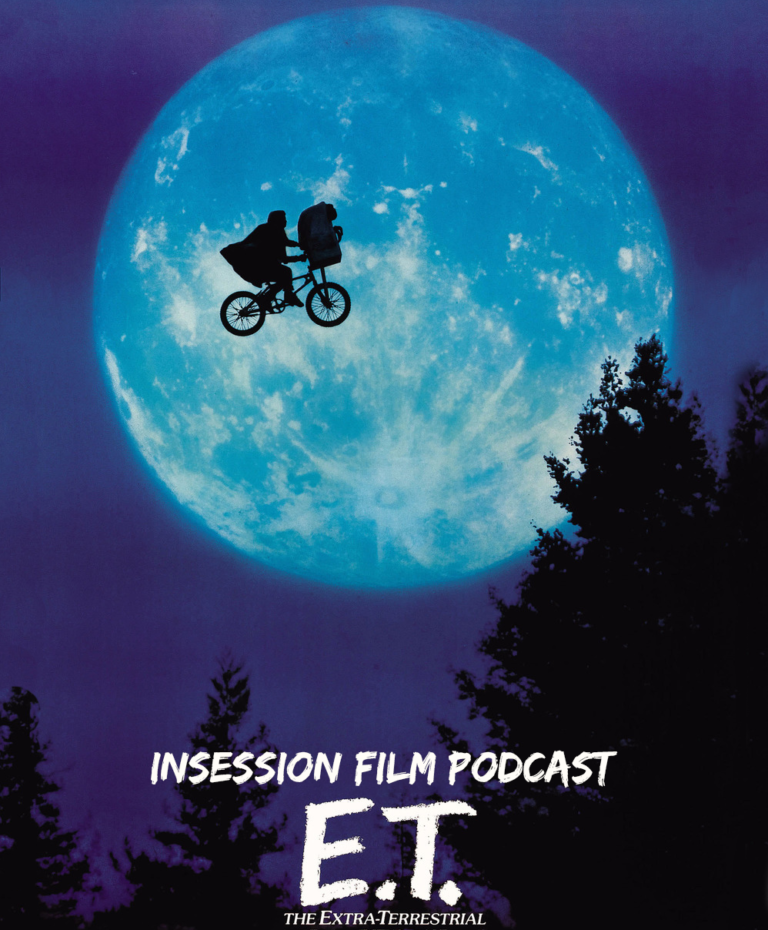
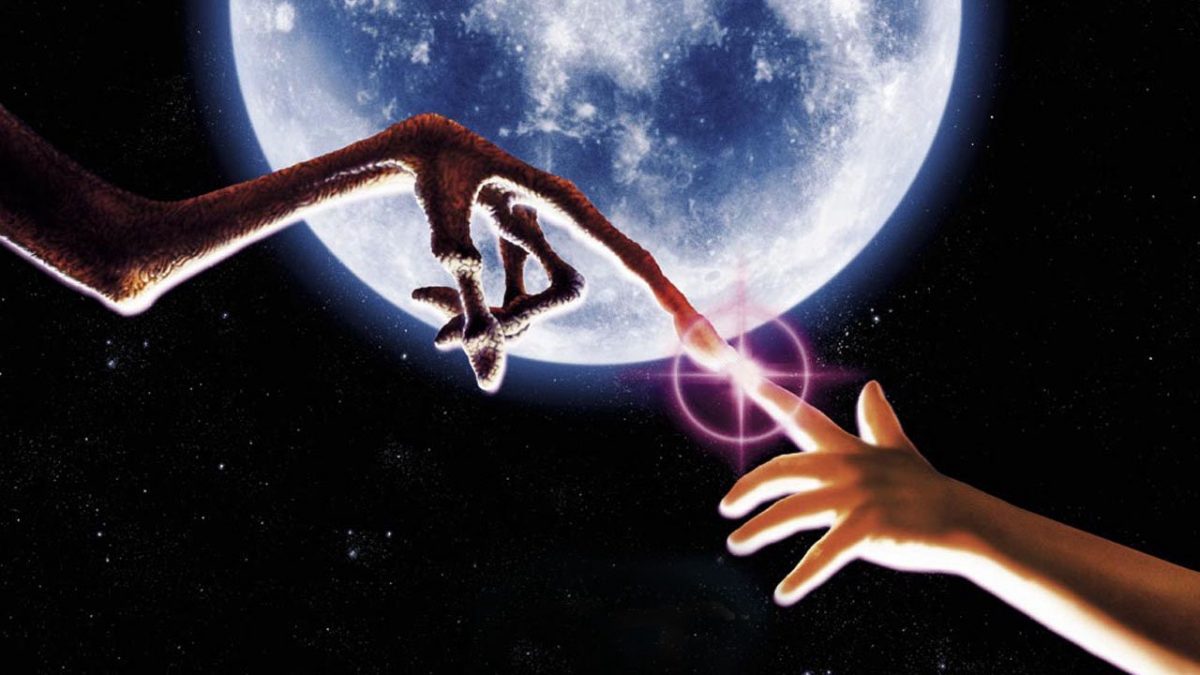
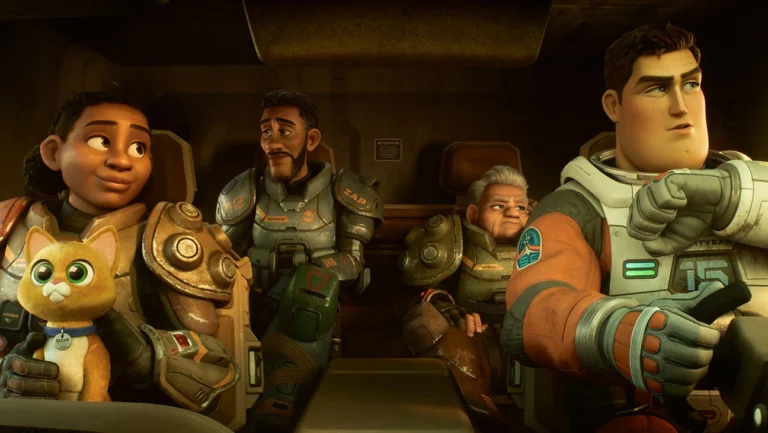
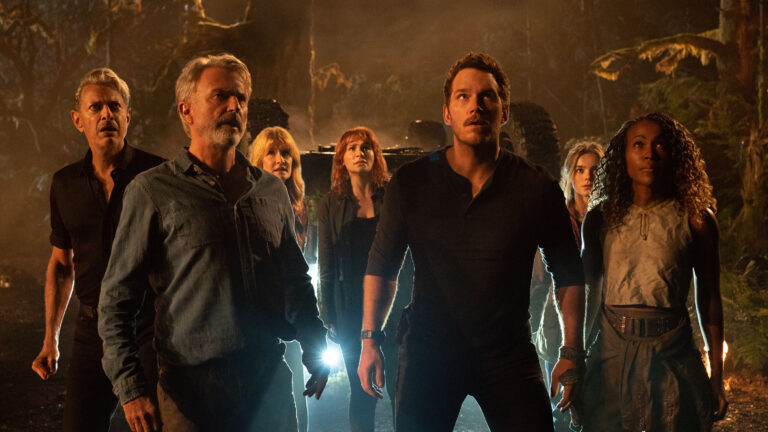
This week on the InSession Film Podcast, we discuss Steven Spielberg’s E.T. for its 40th anniversary and also Pixar’s latest film in Lightyear! Plus, JD gives his thoughts on Jurassic World: Dominion.
Our review of E.T. is technically our second discussion of it on the podcast as we did briefly talk about it on an Extra Film episode all the way back in 2013. We’re not sure if we recommend you going back to listen to that show as we were just young Padawan’s back then, but it’s there if you want to listen to us in our OG-form. At any rate, we had a lot of fun revisiting the film and talking through it once more. It’s always interesting to dive back into the world of Pixar as well.
On that note, check out this week’s show and let us know what you think in the comment section. Thanks for listening and for supporting the InSession Film Podcast!
– Movie Review: E.T. (7:31) Director: Steven Spielberg Writers: Melissa Mathison Stars: Henry Thomas, Drew Barrymore, Dee Wallace
– Notes / Discussion (1:04:24)
This week for our break segment, after missing out on the conversation last week, JD offers up his thoughts on Jurassic World: Dominion and why it’s not necessarily the dumpster fire that social media would have you believe. We also briefly discuss the Sundance winner Cha Cha Real Smooth after the boys discussed it on Extra Film this last week.
If you want to help support us, there are several ways you can help us and we’d absolutely appreciate it. Every penny goes directly back into supporting the show and we are truly honored and grateful. Thanks for your support and for listening to the InSession Film Podcast!
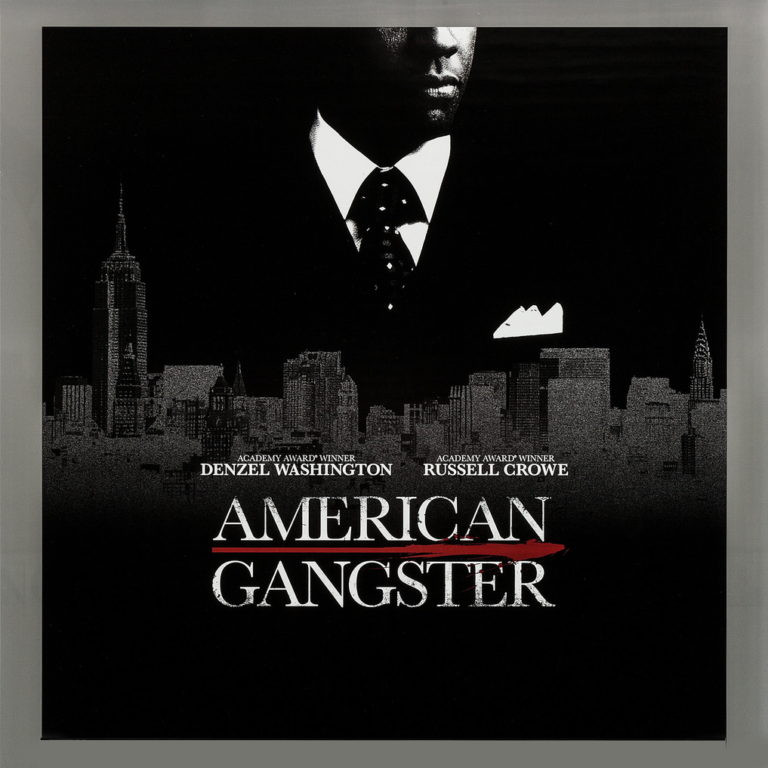
This week on the Extra Film Podcast, Ryan and Jay continue their Ridley Scott Movie Series with American Gangster, and also review the latest from Cooper Raiff with Cha Cha Real Smooth!
American Gangster is such an interesting outlier in the Riddler’s filmography as it’s the only film of its type. Transitioning from sci-fi and giant epics to the gangster genre was, and still is, an interesting turn for him and it arguably comes with mixed results. The responses to it have been varied and our review of it this week is very indicative of that. We also had a great time talking another Sundance winner in Cha Cha Real Smooth.
On that note, check out this week’s show and let us know what you think in the comment section. Thanks for listening and for supporting the InSession Film Podcast!
– Movie Review: American Gangster (4:11) Director: Ridley Scott Writers: Steven Zaillian Stars: Russell Crowe Denzel Washington Chiwetel Ejiofor
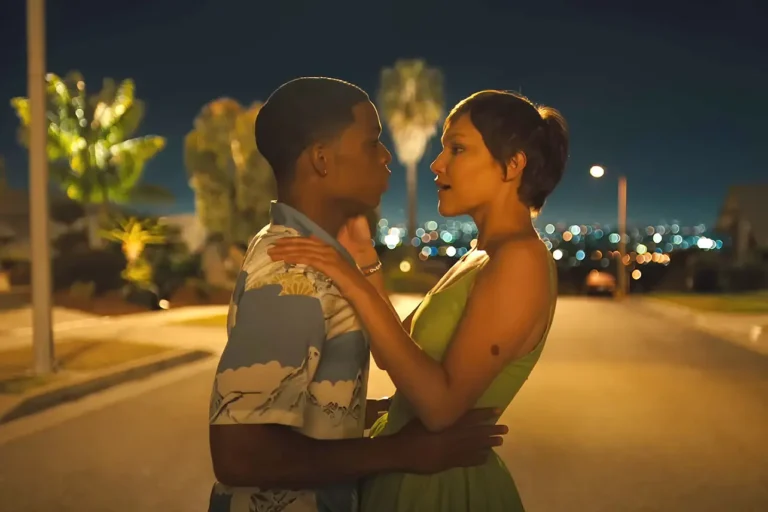
– Movie Review: Cha Cha Real Smooth (1:00:02) Director: Cooper Raiff Writers: Cooper Raiff Stars: Cooper Raiff, Dakota Johnson
To hear this Extra Film episode and everything else we do, download our apps on the Amazon Market for Android and the Podcast Source app on IOS devices. The mobile app covers all of our main shows, bonus podcasts and everything else relating to the InSession Film Podcast. Thanks for your wonderful support and for listening to our show. It means the world to us.
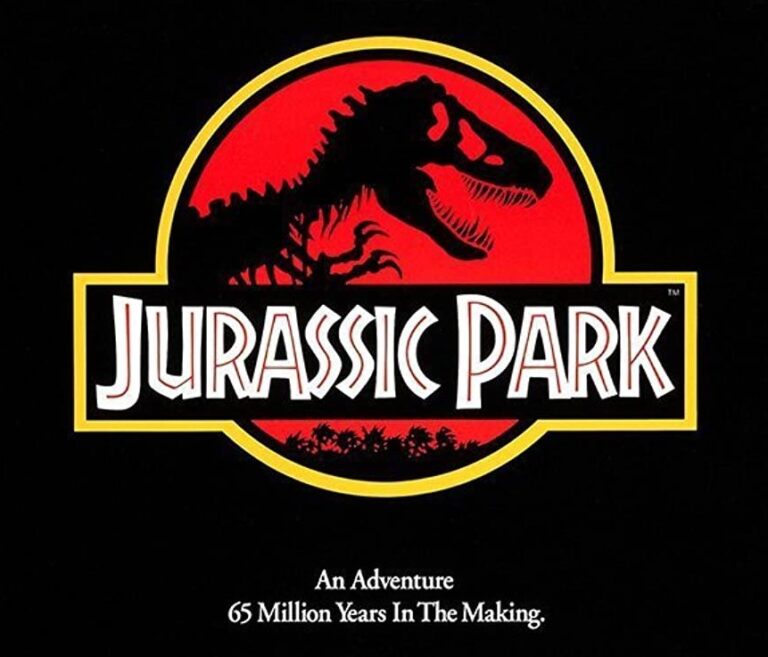
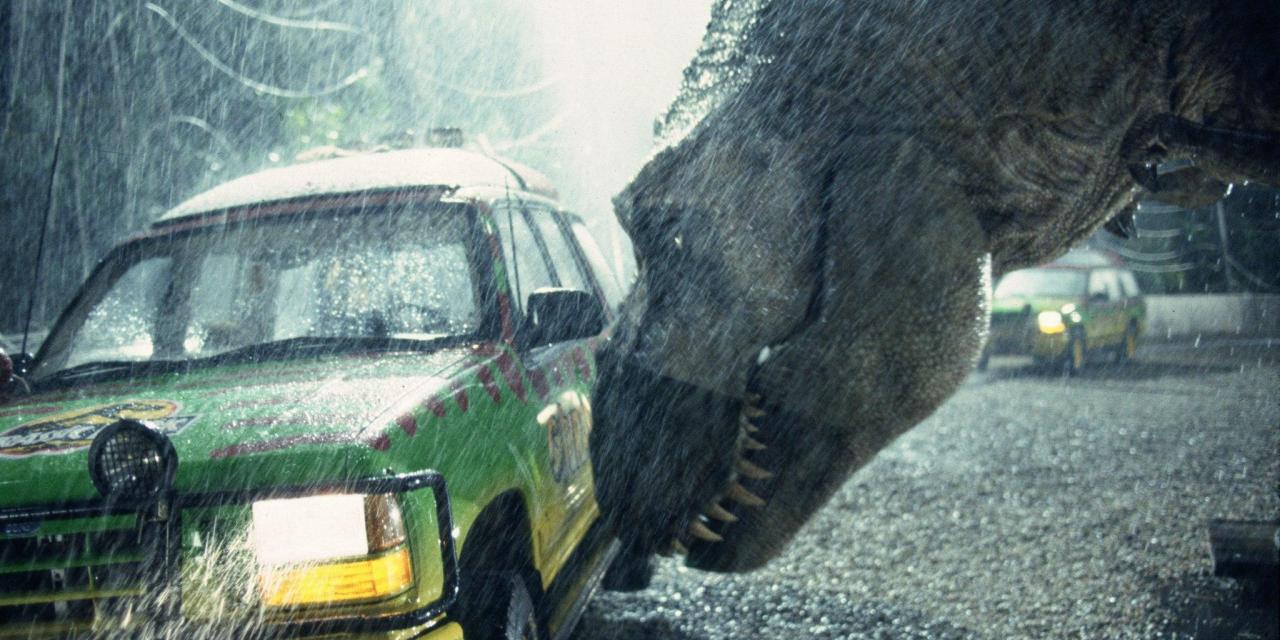
This week on the InSession Film Podcast, Ryan fills in for JD to review Steven Spielberg’s 1993 classic Jurassic Park, and we follow that with the latest in this never-ending saga Jurassic World Dominion!
We technically concluded our Spielberg movie series with Lincoln last weekend, but given that the original Jurassic film was helmed by Spielberg (and is considered one of his most popular movies), we of course had to throw it on here as part of the series. Ryan and Brendan had a great conversation dissecting why the film still holds up today, and why its sequels…haven’t. This also pertains to Jurassic World Dominion, sadly.
On that note, check out this week’s show and let us know what you think in the comment section. Thanks for listening and for supporting the InSession Film Podcast!
– Steven Spielberg Movie Series: Jurassic Park (7:05) Director: Steven Spielberg Writers: David Koepp Stars: Sam Neill, Laura Dern, Jeff Goldblum, Richard Attenborough, Bob Peck, BD Wong, Joseph Mazzello, Ariana Richards, Samuel L. Jackson, Wayne Knight
– Notes / Discussion (57:55)
This week for our break segment, as we were briefly talking about Extra Film, Ryan talked briefly about Lincoln and why the ending just doesn’t quite work for him. Brendan also laid down his thoughts on Top Gun: Maverick, which he FINALLY got to see.
– Movie Review: Jurassic World Dominion (1:29:48) Director: Colin Trevorrow Writers: Emily Carmichael, Colin Trevorrow, Derek Connolly Stars: Daniel Day-Lewis, Sally Field, David Strathairn, Joseph Gordon-Levitt, Tommy Lee Jones
Steven Spielberg Movie Series: E.T. the Extra-Terrestrial
Review: Lightyear
[divider]
Help Support The InSession Film Podcast
If you want to help support us, there are several ways you can help us and we’d absolutely appreciate it. Every penny goes directly back into supporting the show and we are truly honored and grateful. Thanks for your support and for listening to the InSession Film Podcast!
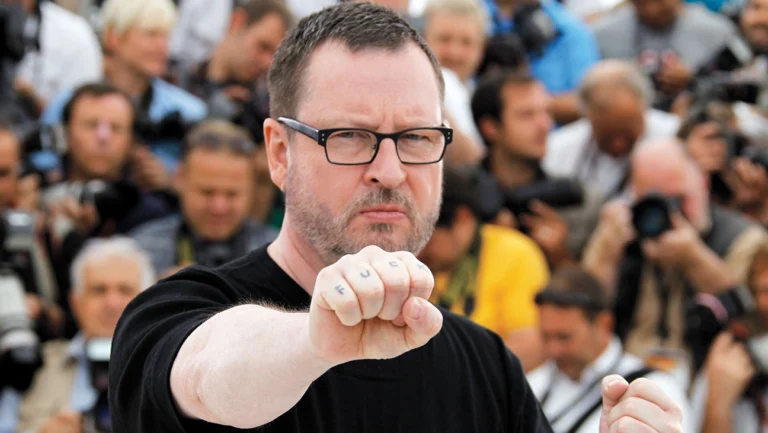
There is no middle ground when it comes to Lars Von Trier’s films. You either love them or hate them. His films have always provoked a strong reaction with many defending his radical style of storytelling and others condemning the Danish director who is perceived as openly exploitative of violence and misogynistic in tone. But the fury and supernatural power he brings is in another dimension and worth the price of admission. From his roots, Von Trier had the ability to make whole original stories and mold them against the grain of traditional storytelling.
Lars Trier – the “von” was added in homage to directors Erich von Stroheim and Josef von Sternberg – was born in 1956. In a moment that would change his views of the world, Lars learned from his dying mother that his father was not his actual biological father, but a former politician she worked for named Fritz Michael Hartmann. The reason for this was because Hartmann’s family were former musicians and writers and she wanted her son to take in their “artistic genes.” Trier grew up in a bohemian household that was left-wing, nudist, and with almost no rules to follow.
Trier attended the National Film School of Denmark and his 1982 graduation film, Images of Liberation, was given a regular theatrical release, the first movie to be bestowed such a privilege. In 1984, he would make his international breakthrough with The Element of Crime, a neo-noir set in Egypt in which a detective moves to Cairo while reminiscing of his past cases; tracking a serial killer back home, which is a Europe that is crumbling all over. It was the first of his “Europa Trilogy,” which also included Epidemic (1987) and Europa (1991), all being dark and dystopian, a mood that would carry into his 21st-century films.
But to Trier, he wanted to try something radical, something new in a growingly technological world. Digital cameras were brand new and Trier, along with fellow filmmaker Thomas Vinterberg, decided to create a movement called Dogme 95. The rules followed a stripped-down production list: shot on location, handheld camera, in color with regular lights, no genre involved, and no superficial action – all must be depicted as real. It lasted into the late 90s and early 2000s, but it was forced creativity that other directors around the world tried to emulate. Trier’s first film under Dogme 95 was The Idiots, about a group of friends who experiment with acting without any recognition of their behavior as if they were intellectually disabled.
Trier’s work for the last twenty years remains tied to some of these elements but has made alterations to tailor toward a mainstream look. This has allowed him to bring in major names to work with him including Nicole Kidman, Kristen Dunst, Willem Dafoe, Uma Thurman, and Matt Dillon. His work, including Dogville, Antichrist, Melancholia, and Nymphomaniac, was all shot on digital film and with continuous movement. He was his own cameraman, like Steven Soderbergh, and always writes and re-writes his scripts to the point where there is no final draft for the actors to follow.
However, Trier has gotten into trouble thanks to his desire for graphic depictions of sex and violence, as well as the controversy of his own remarks. Trier’s approach to actors is working them into the raw emotions he wants from them, but sometimes crossing a line that makes the production troublesome. Both Kidman and Bjork (Dancer In The Dark) have both spoken negatively about how he treated them, although Dunst and Charlotte Gainsbourg have defended him. Trier, who has openly struggled with his mental health issues, has been prone to deep depressive fits and his fear of flying forces all of his movies to be shot in Denmark. He said about himself, “Basically, I’m afraid of everything in life, except filmmaking.”
Despite the controversies, there is no question regarding how effective Trier’s works have been on viewers and other filmmakers. He is fearless and willing to provoke anger and disgust but always brings the artistic style to his movies. It all can be summed up by the two words spoken by a fox in Antichrist: “Chaos reigns.” Lars von Trier loves to create chaos in simple situations and it is his mind he pours out on the screen for people to usurp up – and then vomit it back.
Stars: Adam Sandler, Kenny Smith, Anthony Edwards, and Juancho Hernangómez
Synopsis: A basketball scout discovers a phenomenal street ball player while in Spain and sees the prospect as his opportunity to get back into the NBA.
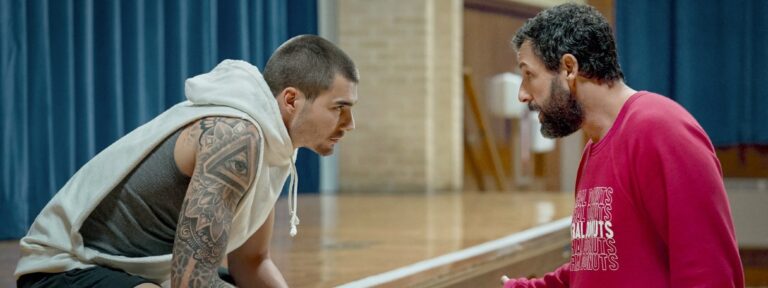
Adam Sandler is often seen as acting marmite; there is no doubting this man’s talent when the brightest spotlight has shone upon him for all to see, delivering a handful of incredibly memorable performances in the thick weeds of comedic hits and misses. Sandler is often tarred with the joker paintbrush – which is fair seeing as his career consists of crude comedy after crude comedy – but this brush is what also makes us forget that this man can deliver when called upon. His serious roles are few and far between; he surprised us all in Punch Drunk Love, he mesmerized us in Uncut Gems, and now we have Hustle, a film that might just be the most authentic and believable role of his career.
How often does the term “rags-to-riches” surface when describing a heartfelt film about a true underdog? Well, there really isn’t another way to describe Hustle, seeing as Sandler’s protegee is wearing literal rags when we find him, and finds himself on the brink of an NBA career – I hear they make quite the salary in the NBA. The difference between this rags-to-riches sports film is that we are focused on two characters equally; two underdogs fighting against all the odds hoping that their two-man team gets them to the finals. There is no doubt about it though, Sandler is the shining light, and without him, it wouldn’t be as effective. His love for basketball obviously plays a huge role because it makes his character truly credible, and the way he seamlessly incorporates his jester side into the persona takes a lot of skill that not many people possess.
I’ll tell you what though, yes Sandler is the undoubted MVP, but Hustle is filled with All-Star caliber amateur actors too, and it’s such a breath of fresh air. Who’d have thought it, several sports stars who can actually act instead of being typically one-dimensional robots? Kenny “The Jet” Smith, as a talent agent, is loose and charming; this performance alone eclipses anything his Inside the NBA co-workers have ever accomplished – sorry Shaq, but Kazaam just didn’t quite cut it. Minnesota Timberwolves star Anthony Edwards is another who thrives by just being… well, himself, it seems. He’s loving the label of the pantomime villain, and who knows, an acting career could develop for this future All-Star. But the array of basketball talent is spearheaded by the very surprising turn from Utah Jazz forward Juancho Hernangómez, who not only entertains with his assured basketball skills (where were they when you played for the Celtics?) but also delivers a delicate performance for someone so raw and inexperienced.
Jeremiah Zagar’s new film focuses on the disheveled Stanley Sugerman (Sandler), beaten down by his excessive traveling around the world working as a scout for the Philadelphia 76ers. A man who hasn’t been home for his daughter’s birthday for nine years and is constantly locking horns with Vince Merrick (Ben Foster), son of the franchise owner. Stanley’s dream finally comes true when he is promoted to assistant coach by the owner, Rex Merrick (Robert Duvall), whose words of wisdom echo through the rest of the film: “never back down”. After an untimely death forces Stanley back on the road and into the sights of Vince again, who is now doing his best Lex Luthor impression, complete with a spinning chair and bulbous head, Stanley must find the missing ingredient for the 76ers title aspirations.
His search takes him to Spain where, after a failed scouting assignment, Stanley stumbles on a street game where a talented hustler called Bo Cruz (Juancho) is showcasing his talent, all while wearing his work boots. After convincing Cruz to travel with him to Philadelphia, Stanley must now turn this raw but gifted young man into a future NBA superstar, so both men can achieve their dreams. It all sounds very formulaic and predictable, which it kind of is, and like any film in this mold, it is full of cliches, laden with messages of hope and self-belief and overcoming the odds against adversity. It’s an age-old narrative tool, but with a few minor tweaks here and there, and a much-welcomed modernization, it nearly becomes unique for the genre.
This is a sports film after all, and the basketball and training scenes are a cut above the rest (and there are a lot of them). The talent is real, which makes the sequences more authentic – it’s as if we’re watching real pick-up games at times. But Zak Mulligan’s cinematography is great at elevating these segments; the framing is taken straight out of a western as the camera locks in on the eyes of the two dueling NBA stars – who is going to blink first? And this is Philadelphia, let’s not forget, and it wouldn’t be Philly without a typically intense training montage weaved into it somewhere, one that Rocky Balboa would be proud of. However, the unconventional camera angles, the framing, and the rapid jump cuts work together like a perfectly oiled machine and are essential ingredients for success – like an old Nike commercial on performance enhancers.
Hustle doesn’t reinvent the wheel, but it is a highly enjoyable film that offers a great experience and one that NBA fans will love. Sandler is so assured in his role, that it’s the most comfortable he’s ever been in a film, which can likely be chalked up to his love of the sport. He could even be portraying a version of himself and he’s enjoying every second of it. This is now the debate with Sandler: should he hang up his clown shoes and squirty cream (the films that have paid him so well over the years) and fully concentrate on heart-warmingly raw dramas, or are the fleeting appearances in such films what makes them memorable when they do come about?
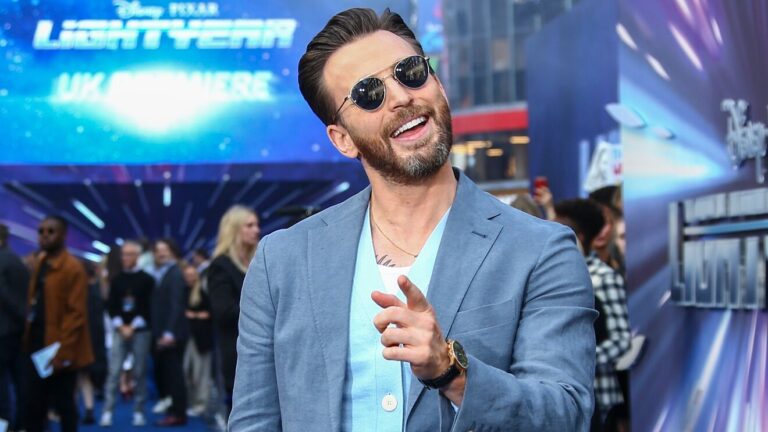
Happy belated birthday Chris! We have two reasons to celebrate Hollywood’s most charming man this week; along with his birthday, we will also hear his sultry voice in Pixar’s Lightyear as the titular space ranger. We all associate Captain America as Evans’s defining role, but the man has branched out way beyond that, even working with great directors like Bong Jooh-ho and Rian Johnson. If we remove the shield-yielding hero from his list, we still have a string of cult favorites that rank among Evans’s best work as an actor.
So what is your favorite Chris Evans performance that is NOT Steve Rogers?
The Criterion Channel has a certain reputation. With a few exceptions, most movies in their original collection can be described as classics (if you’re being a kind cinephile) or pretentious (if you want to be a jerk about it). But the streaming service is different, or at least can be. Because of the large number of movies being added to and removed constantly, there is a much greater variety. As a matter of fact, some movies (like recently, Yentl) that have been covered here when they are exiting the service, are now back! But the point is really that even if you find movies in the collection a little too rich for your blood, with a bit of searching, you can find accessible delights. One of these is a romantic comedy that most have missed, Alice Wu’s lovely Saving Face.
Saving Face features the story of Wilhelmina Ping (Michelle Krusiec), who goes by Wil. Wil is a young Chinese-American woman who struggles through the normal ups and downs of young life; job stress (she is a doctor), difficulty relating to her mother, social awkwardness, and girl trouble. I think some viewers might feel that a lesbian rom-com focused on Asian-Americans might be limiting or unrelatable (see horrific reviews of Pixar’s Seeing Red for examples of this nonsense), but frankly, the opposite is true. Saving Face is one of the most connected, relatable romantic comedies I have seen in years. My only regret is not seeing it sooner.
Anyone who has ever had a challenging relationship with their mother, especially combined with a stuttered coming-out story, will feel deeply for Wil almost immediately. To add to the chaos, Wil’s mother, Hwei-Lan Go (Joan Chen), years after the death of her husband is suddenly, mysteriously pregnant. This has caused great upset in their small, relatively insular (read: gossipy) community. Chen’s reserve, combined with slight moments where her mask slips, makes for a stunning portrayal that is equal parts hilarious, heartbreaking, and, in moments, enraging. Wu’s choices to keep her camera tight on the faces of her actors in arguments and misunderstandings borders on uncomfortable and evokes memories of difficult conversations with our own family members.
Due to these moments, forced by Ma moving in with Wil, it is easy to forget that Saving Face is a pure romantic comedy at heart. Wil “meets” Vivian (Lynn Chen) at “Planet China”, a gathering at a local restaurant designed to set her up with men. But the two immediately connect and we become aware that Wil defended Vivian from bullies as a child before sharing their first kiss (and immediately running away). This becomes a common theme through the beginning of their actual romantic relationship, with Wil being terrified to come out and proclaim their love to anyone, let alone her mother, who knows that her daughter is gay, but still wishes for her to be married as it reflects upon her own worth as a mother.
The scenes between Wil and Vivian are sweet, but that is not what makes them truly work. The genuineness and intimacy between them nearly warms the screen and we instantly root for them. As is the hallmark of great movie romances, even when they fight, we understand both sides completely. Yes, Wil should be honest with the world both about their relationship and who she truly is, but her difficulty is both understandable and felt. And conversely, Vivian’s need to be desired and shown to Wil’s world is possibly the oldest romantic story, but that is for good reason. This is a testament to both actresses’ work, but especially Lynn Chen.
As she is not the protagonist of our story, she must be wildly efficient and effective in each moment. We have to understand her wants, her relationship with her father, and her motivations regarding her career; all while building a romantic relationship that can stand the test of disapproval and fear of the unknown. But she manages this, seemingly without effort, which, of course, takes a great deal of said effort. Wu, as a director, really shines in the small, loving moments between Wil and Vivian. Their scenes together are sexy without being overly sexualized, and this is owed to specific angles chosen by Wu, as well as the script (also written by Wu) which favors moments of giddy joy, paired with difficult conversations about the future.
It should not be surprising, given the possible convolution of plot mechanics involving Hwei-Lan Go, that hilarity ensues at the climax of the film. But possibly the greatest gift of Saving Face is that it continues past this point. After we find out the father of the child, credits do not roll. After Wil’s declaration of love (at an airport, of course), the credits still do not roll. There is happiness to be found, but our characters must work for it. They must grow past their awkwardness and their ignorance. The romantic comedy has long been maligned for being over the top and unrealistic. Saving Face never suffers from this. Wu’s characters feel real and true, and I am glad to have gotten to know them.
Writer: Mariano Cohn, Andres Duprat, and Gastón Duprat
Stars: Penélope Cruz, Antonio Banderas, and Oscar Martinez
Synopsis: A wealthy businessman hires a famous filmmaker to help make a smash hit film.
Official Competition is a hilarious satire that showcases actors and directors’ self-importance and arrogance through well-executed comedic set pieces and fiery performances by its leading trio.
Arrogance and ego are hard things to deal with when you are working in the vast medium of the visual arts, whether it be writers, directing, producers, or actors. There are many creators and artists that are basking in pretentiousness for no particular reason, just to seem wise and savvy in front of the audience watching. Some have the work to back it up, while others not so much. However, that doesn’t excuse their behavior. So why do they act in that fashion? One possibility may be to resolve their mentally, and emotionally distressing questions of “how do people see me” and “how will they remember me”. It’s a question that causes stress and existential angst to many in the industry since most want their name up in the stars. Nonetheless, I think most people will end up questioning themselves about those same concerns, even if we don’t have big names like filmmakers or actors.
That’s how directing duo Gastón Duprat and Mariano Cohn’s latest film, the absurdist satire Official Competition, begins. A pharmaceutical industry millionaire named Humberto (José Luis Gómez) celebrates his 80th birthday. Well… sort of. He’s mostly reflecting on his legacy and moping about what will be his next move. Humberto wants to have his name on the books – mentioned with the likes of Rockefeller or Vanderbilt. He has everything in the world in the palm of his hands, and he could make anything happen, yet he feels like it isn’t sufficient. One of the film’s first shots is a pile of birthday presents stacked up, one on top of the other, ranging from a signed soccer jersey to a rifle, yet he still seems unhappy. Humberto wants to create something that will last forever. Thanks to his wealth, something of the sort is achievable. He decides to finance a film, as he says: “I want to be the maker. So that people know I’m behind it.”
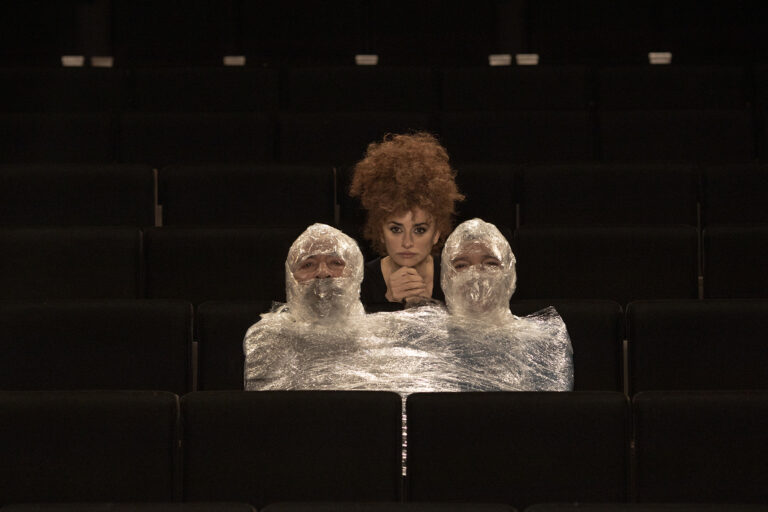
He sets up his team and disappears into the background. The rest of the story revolves around the crew he has chosen: Palme d’Or-winning director Lola Cuevas (Penélope Cruz, who has a great wig with red curls, just like Alma Har’el), Volpi Cup-winner Félix Rivero (Antonio Banderas), and method actor Iván Torres (Oscar Martínez). A lot of money has been spent getting the rights for the Nobel Prize-winning novel Rivalry, so it’s up to the trio of majestic talent to deliver so that it is a success. Through Cuevas’ different bonding and rehearsals methods, which may vary from destroying their own trophies (Golden Globe, Golden Bear, Premios Max, etc) to berating each other until one laughs or breaks out in anger, the audience gets to know what each of these characters represents in the current state of cinema.
There’s the director who will stop at nothing to get the performances she wants, the actor who wins all of the awards and has a massive ego because of it, and the classic method actor, who’s relatively restrained from all of the ludicrous shenanigans he is put through, albeit pompous to the core. You have three different, satirically exaggerated, sides of some of cinema’s most arrogant and self-centered people. The prosopopeia of such personas is meant to cause a stir and mock them. And, much to my initial surprise, it’s compelling from beginning to end. This type of satire is hard to manage, mainly because they can quickly switch gears and cause your emotions to switch from laughter to annoyance. There are a fair share of successful pictures that criticize the industry in different decades with great mockery and irony, like Robert Altman’s The Player and Preston Sturges’ Sullivan’s Travels. However, to equal measure, there are ones that don’t (For Your Consideration, 2006).
Gastón Duprat and Mariano Cohn’s direction in the several satirical set-pieces has the right amount of clever irony to be long-standing. Unfortunately, some of its quips are treated like running gags (the mime-like appearances by Irene Escolar, which includes a Tik-Tok dance sequence, and the talk about awards and creating a masterpiece), which hurt the viewing experience a bit. Nevertheless, its screenplay has enough comedic heft to be contained as such. It all adds to the theme of industry people having enormous egos. Still, some could have been managed differently – I did enjoy Escolar’s brief appearances, as I think she’s a fascinating actress. But, like most modern satires, it starts to run out of steam once it reaches the halfway point. The directors don’t seem to perfectly align the dramatic scenes with the sly gimmicks. Nevertheless, the directors manage to pick it up in its last act as its ending is hilarious and unexpected.
It would catch you off guard, even if it was slightly foreshadowed by the description of the novel when you think about it afterward. It’s a good way to end this rivalrous narrative because it showcases that the acting world is a dog-eat-dog one – a place where there is space for everyone, but nobody treats it like such. Everyone just puts on a mask during moments where they are supposed to “bond” or connect with one another, yet their own arrogance and self-importance get the better of them. But, of course, this is a satire, and it doesn’t reflect the true-to-life connections other people may have in that industry. However, from the various stories and articles that arise from time to time, you could say that something of the sort is always at the table. Even when Official Competition starts to feel like it’s slowing down for a couple of short segments, Duprat and Cohn manage to engage you by throwing well-executed comedic set pieces.
There have been many comparisons with Ruben Ostlund’s Palme d’Or-winning The Square due to dealing with a specific art form and trying to reinvent it through existential questioning. The comparisons are acceptable up to a certain point. But unlike Ostlund’s feature, Official Competition doesn’t have an imperative social commentary on the critiqued craft. Yet, it does have some fiery performances by its leading trio, just like Claes Bang, Terry Notary, Elisabeth Moss, and Annica Liljeblad did in the aforementioned film. Oscar Martínez and Antonio Banderas have great chemistry that showcases their rivalry and the fake versus real bonding moments. Meanwhile, Penélope Cruz acts like the outrageous medium between the two, in a way that you just want to see what crazy stunt she pulls next. These are actors and directors who love and care deeply about their work, even if their ego gets the better of them for a large part of their respective careers.
Yet, what’s fascinating about Official Competition, is that it also shows a sense of fondness for all three. We know, and on the inside, they know as well, that they would be struggling if it wasn’t for cinema. And the film treats them in a way that, although they might be ridiculous and egocentric, they also want this to work out one way or another. After seeing a clip of Cruz flossing, I went into this film with low expectations, but it managed to exceed them, even if it doesn’t have something to say that has great heft. It’s tightly constructed, and its sharp, witty script elevates the already fascinating and dedicated performances. Official Competition is a fiery satire and one of the funniest films I have seen this year so far.
Synopsis: While spending years attempting to return home, marooned Space Ranger Buzz Lightyear encounters an army of ruthless robots commanded by Zurg who are attempting to steal his fuel source.
In 1995, with the release of the original Toy Story, we saw a young kid transition from cowboys and the wild west to space rangers and astronauts. It is never fully explained why this abrupt shift happened, and it is ultimately assumed that it’s all just a part of his growing up process. However, as Lightyear begins, it comes with a message telling the audience that the Buzz Lightyear toy that Andy received was actually based on his favorite movie, and this was that movie.
After Buzz Lightyear (Chris Evans) crashes on a mysterious and dangerous planet, destroying the only hyperdrive crystal on board, he, alongside his crew, does everything they can to finish the mission. They begin to rebuild on this new planet using the resources they have available, and, in no time, they are ready to test the next hyperdrive formula to see if it works. While completing one of his tests, Buzz realizes the world he comes back to is not the one he left, and instead a world that is 4 years into the future.
He continues his missions, and what seems like a year for him winds up being decades for his friends on the planet. After completing one of his tests, Buzz returns to the planet in danger. The people are trapped and surrounded by a robotic villain named Zurg. It is up to Buzz and his new crew to stop the evil Zurg and save everyone on the planet.
Knowing that this was the film that Andy would have seen that sparked his interest in Buzz Lightyear helps allow for expectations to be tempered quite a bit. Director Angus MacLane, directing his first solo feature after co-directing Pixar’s Finding Dory, delivers one of the more action heavy Pixar outings. This kind of film dives away from the normal Pixar structure in a way, and is a purely action genre based film, and this works quite well in that context. The scenes are shot beautifully, clearly taking inspiration from Star Wars for their space, and many of the action scenes are exciting and intense, pulling the audience into the fights and creating a real feeling of peril for the heroes.
But, aside from the action, the heart of this story is never fully explored. The best aspect was the idea that Buzz was so set on finishing the mission, fixing the problem he created, that he never took the time to look around and see that people on this planet were happy, and they were living their lives. This idea is only briefly touched on, but never fully fleshed out. Pixar is known for giving big emotional punches, and it felt as though they were setting up for one here, but the underuse of this concept never gave it the chance to truly land the emotional aspect.
The characters themselves felt underutilized as well. Izzy (Keke Palmer), who desperately wants to take up the mantle of her grandmother Alisha (Uzo Aduba), was well used as the granddaughter to Buzz’s best friend and partner. However, they still barely scratch the surface of the interesting dynamic that could have come from Buzz and Izzy. For how protective Buzz was of the suit and of the title of “Space Ranger,” it seemed odd that there wasn’t more of a fight with Izzy regarding her Alisha. The rest of the cast of side characters all felt extremely one note, including Emperor Zurg (James Brolin), whose character took a turn that I honestly still am not sure how I feel about it.
Luckily, they aren’t the ones fans will come to the theater for. That would of course be the titualr character Buzz Lightyear, and when it comes to Buzz’s character, it is easy to see the similarities between this Buzz Lightyear and the toy Buzz Lightyear from the Toy Story series. Throughout, they do a wonderful job of displaying similar characteristics that audiences have come to know from the toy’s long tenure. It might not have captured on the emotion, but it got all of the nostalgia pieces down well, including showing how Buzz slowly assembles his iconic suit. Also, the addition of SOX the robot cat might be one of the best Pixar “animal characters” in their storied history.
While Buzz and crew might never fully blast off to infinity and beyond, Lightyear still makes for a fun Pixar action film. Clearly geared more for kids, this is meant to be watched through the eyes of a young Andy who is about to have his life changed forever. I’m not quite sure if this movie will have the same impact for younger viewers today, but for fans of Toy Story, and especially of Buzz Lightyear, it’ll do the trick well enough.
Stars: Chris Pratt, Bryce Dallas Howard, and Isabella Sermon
Synopsis: Four years after the destruction of Isla Nublar, dinosaurs now live–and hunt–alongside humans all over the world. This fragile balance will reshape the future and determine, once and for all, whether human beings are to remain the apex predators on a planet they now share with history’s most fearsome creatures in a New Era.
Sequel trilogies have a reputation for being uninspired, and more times than not, they are unable to carry the magic, originality, and form of storytelling that made the original properties popular in the first place. As much as I do agree with that statement, I will admit that it’s challenging to create sequel films that cater well to veteran and new fans simultaneously. You can’t make a sequel too identical to what came before because you’ll get heckled for being unoriginal. And you can’t stray too far from the path or else you’ll lose your core audience. It’s a fine line that needs to be drawn for both parties (veterans and newcomers) and some films have this foresight, such as Top Gun: Maverick and Ghostbusters: Afterlife. Both films were able to successfully pass the baton while keeping the core audience engaged. Sadly, Jurassic World Dominion does not succeed in this way.
I’ll be the first to admit it. I was looking forward to this film. I have always been a big fan of dinosaurs for as long as I can remember. The thought of these majestic creatures roaming the earth for around 165 million years is fascinating. I even prepped myself by watching the previous installments (Jurassic World and Jurassic World: The Lost Kingdom) before watching the conclusion of this trilogy and I wanted to give this Jurassic journey a chance. Unfortunately, I left this film feeling desensitized and fatigued. The main theme of this movie was cohabitation between humans and dinosaurs, with a few side plots involving the legacy characters of Ellie Sattler (Laura Dern), Alan Grant (Sam Neill), and Ian Malcolm (Jeff Goldblum), which I thought was a great touch. I adore it when actors come back to play iconic characters. Some might call it fan service, but when done properly, legacy characters can be influential role models for new characters and push the narrative in an organic way that fits into the franchise at hand. With that being said, I think Jurassic World Dominion falls short when it comes to its legacy characters. You’ll get some hilarious moments with Ian Malcolm and the old flame of love narrative with Ellie Sattler and Alan Grant . But outside of that, this movie doesn’t push their journeys to new territory. They have a few interactions with the newer members of the cast (Chris Pratt, Bryce Dallas Howard, and Isabella Sermon). But other than a few insightful moments, it feels as though they were brought back to put butts in seats.
The dinosaurs in the film have never looked better. I appreciate the use of computer-generated and practical effects when it came to the original rulers of the earth. The roar of a T-Rex still sends a terrifying wave down my spine, and the film does a great job of addressing how the world would respond to these prehistoric creatures if they did roam the earth in today’s time. I think this film shines the most when it comes to characters introduced in the new trilogy, Owen Grady (Chris Pratt), Claire Dearing (Bryce Dallas Howard) and Isabella Sermon (Maisie Lockwood). You can tell that the relationships this trio shares are organic, and shows the trials and tribulations that come with being a family. Bryce Dallas Howard steals the show with her performance and is perhaps the most well written character in the Jurassic World trilogy. Her chemistry with Chris Pratt always bleeds through on screen and it is a joy to watch her journey unfold.
Jurassic World Dominion is the perfect family outing film, even though it left me feeling desensitized and fatigued. I have always admired the sense of urgency and danger this franchise was able to bring to the table. Unfortunately this uninspired sequel has overstayed its welcome due to its overdrawn runtime. The return of the original trio is a welcomed sight, but their storylines felt more like side quests that rarely contributed to the conclusion of this trilogy. I wish the formula of the Jurassic movies would have changed, but it seems like we’ve been given the same situation with different characters time after time, and it never feels properly fleshed out.
More people worldwide have spent money on seeing Top Gun: Maverick in a movie theater than the combined world grosses of Moonfall, Dog, The Lost City, Ambulance, The Northman, The Unbearable Weight of Massive Talent, and Everything Everywhere All at Once.* Even with the wonky math of not wanting to “take a chance on something,” that people use when choosing to go out to the movies, this is a staggering figure for a film with a 36 year gap from the original film to this sequel. We could easily imagine a world in which Top Gun: Maverick could have come to theaters with a groan and not a tearful welcome. In the universe where COVID-19 hadn’t ravaged the world, Top Gun: Maverick would have been directly competing with Pixar’s Soul and the bold, beautiful musical, In the Heights. It would have been competing with a still in theaters Wonder Woman 1984, F9 and likely No Time to Die, with Tenet ready and waiting to snatch away any fourth week promise.
Paramount delayed Top Gun: Maverick multiple times rather than shunting it to its streaming service. The studio kept the campaign alive and found a great, holiday weekend slot that followed up with a weekend without another major competing release. Paramount banked on the idea, and likely their own data from streams on their service, that the last two and a half years of people’s media consumption has been for comfort, for the familiar, for nostalgia and a simpler time. People have emerged from lockdowns, both self-imposed and mandated by authoritative bodies, with a new interest in old news. We went back to the theater and we saw new versions of Ghostbusters, The Matrix, Scream, and Tobey Maguire in a spider suit. We came out of our endless stream and found a new world filled with legacyquels.
Legacyquels are not a new concept even if we now have an eye-rollingly new portmanteau for them. They date back to at least the ’80s when, now king of the legacyquels, Tom Cruise took on Paul Newman in The Color of Money, a sequel to Newman’s slick pool hall drama of the ’60s, The Hustler. Though, if 2020 had proceeded as something of a normal year, it would have had more of them than in many of the previous years. As they all see the light of day at nearly the same time with Jurassic World: Dominion following only two weeks after Top Gun: Maverick, we’re seeing that studios have found something new to exploit in us. Now they’ll not just snatch up intellectual properties, but mine their vaults for already existing intellectual property to reformat into a new legacyquel franchise. It’s likely that before too long, we may be staring down the barrel of summer with Back to the Future, Porky’s, Legally Blonde, and Police Academy stealing eyes from indie darlings and the latest Wickian action film.
The coming of more legacyquels is inevitable. It’s an avalanche we’ve all decided to take a selfie with rather than run away from and, if we’re to be buried, might we ask that we be buried under quality? Is it really so much to ask that these movies have something more to offer than familiar, albeit older, faces? What follows is what I require of future legacyquels if they’re to earn my trust and money. I hope you’ll agree it’s the least these studios can accomplish with the ungodly amounts of money and time they’re putting into these projects.
Do Right By The Original Actresses
I like Jennifer Connelly a lot, she’s a terrific, talented actress and a relatively age appropriate love interest for Tom Cruise. Though, the fact that there’s no mention of Kelly McGillis, the love she and Maverick shared, or the way she took his breath away is startling. Also, you make Rooster an orphan with one line about how his mother died years ago? You killed Meg Ryan off screen? MEG. RYAN. This is almost as bad as Blade Runner 2049 choosing to blow Rachael’s head off without her uttering a word. It’s great that filmmakers on these legacyquels are interested in creating new, meatier roles for women in these franchises. I’m glad for Robin Wright’s Lieutenant Joshi and Monica Barbaro’s Phoenix, but come on. If you’re making it more modern, giving a story more meaning, include those that, probably, suffered being underwritten or were archetypes rather than whole characters. At least in The Force Awakens, Leia is a general and in The Matrix Resurrections, Trinity evolves into a goddess. Do better.
Have Actual Stakes
One of the things that makes the Scream franchise so compelling is that it knows what it is. The characters in the film understand more about what’s going on and what may happen to them at any given moment than any character in most movies. The trick is making sure we don’t know what’s going to happen. My main criticism with most legacyquels is that they’re too predictable. You have to kill Han Solo. You have to have everyone on multiple Earths forget Peter Parker. You have to upend the status quo and move the narrative forward if this is going to become something else entirely and evolve beyond, “Hey remember how much you love that first movie, well…”
Story First, Fan Service Last.
The Last Jedi is the perfect example of what a legacyquel can strive to be. The film pushes the ongoing story forward, builds in new ideas about old concepts, and shows us where the story could go if it moved a few more steps away from the past. It’s in the silly portmanteau that a legacyquel has a depth built into it. It has a text, a subtext, and a metatext; but that doesn’t mean it can’t be something that goes beyond everything that came before. It doesn’t mean that a filmmaker can’t create a great new story that exists in the same space as what came before it if they’re willing to add that history in only when necessary and not interrupt their entire narrative in order to make us gasp at a prop, place, or person from the original films. There are a lot of reasons I wish Solo had been better, but the top of that list is the over emphasis on a throwaway prop from the original film that is never mentioned or referenced as having any significance until this retconning of Han Solo’s story.
Legacyquels, shared universes, streaming service mini series spin offs for memorable characters; all of these things are coalescing into an endless cycle of distraction, nostalgia, and familiarity. I won’t get on my soapbox about how originality is dying or that films made only for adults are being shunted away from the theater experience. What I will say is that if we’re stuck with this for the next several years, just make them good, fresh, satisfying, and, for the love of all that’s holy, under two hours in length.
* These are films made from an original script idea and not based on a previous intellectual property. Though, one could argue Nicolas Cage’s persona is an intellectual property unto itself.
This week on the Extra Film Podcast, Ryan and Jay continue their Ridley Scott Movie Series with Kingdom of Heaven and they also review the latest indie drama Great Freedom!
Coming off the heals of their Black Hawk Down, Ryan and Jay set off to find the Riddler taking on the crusades in epic fashion. In a movie with so much spectacle, the boys end up talking about how much better it could’ve been if there was a better actor in the leading role.
On that note, check out this week’s show and let us know what you think in the comment section. Thanks for listening and for supporting the InSession Film Podcast!
– Movie Review: Kingdom of Heaven (5:12) Director: Ridley Scott Writers: William Monahan Stars: Orlando Bloom, Eva Green, Jeremy Irons, David Thewlis, Edward Norton
– Movie Review: Great Freedom (1:01:45) Director: Sebastian Meise Writers: Thomas Reider, Sebastian Meise Stars: Franz Rogowski, Georg Friedrich, Anton von Lucke
To hear this Extra Film episode and everything else we do, download our apps on the Amazon Market for Android and the Podcast Source app on IOS devices. The mobile app covers all of our main shows, bonus podcasts and everything else relating to the InSession Film Podcast. Thanks for your wonderful support and for listening to our show. It means the world to us.
Pedro Almodóvar announced he will be shooting his first full-length English language feature (The Human Voice is a short film) this year starring Cate Blanchett. It has been rumored to be with Almodóvar for a long time, becoming the next great international director to take a shot in this language. Some have been successful, others have not, so there is anticipation for this feature. Hopefully, it will be one that translates better than others as their first English-speaking film. Other great directing masters have also shuttled abroad to do their first film with mixed results.
Swamp Water (1941)
French legend Jean Renoir was forced to move to the United States after France was invaded by Nazi Germany in 1941. He would make a string of Hollywood films throughout the 1940s, starting with this crime drama starring Walter Brennan and Walter Huston. This Southern Gothic crime drama was a bit of a hassle for Renoir shooting on location and dealing with the cantankerous producer Darryl Zanuck, who Renoir claimed fired him and rehired him on the same day. It received good reviews and did well at the box office, allowing Renoir to settle in.
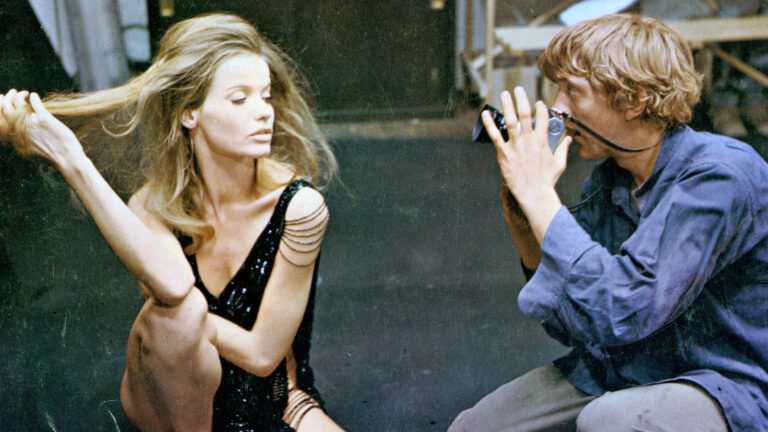
Blow-Up (1966)
Michelangelo Antonioni was a sensation with his slow-pacing, mysterious, Swinging Sixties drama about a photographer who accidentally captures a murder in progress. It’s the best use of color he ever managed and perfectly utilizes silence and imagery to get the most out of experimental techniques, which could be polarizing at times. For Antonioni, being that it was the expression that was more important than the dialogue, it was no problem for the Italian in changing languages and he was able to produce more English-speaking work in Zabriskie Point and The Passenger.
Fahrenheit 451 (1966)
Ray Bradbury’s best-selling novel was bought by Universal, who then hired French auteur Francois Truffaut to make the film, even though he spoke almost no English. Starring Julie Christie and Oskar Werner, it is one of the most read novels of dystopia and a critique of censorship. The script was written in French and then translated, but it was a positive experience for Truffaut in trying out Hollywood productions as he sought to be like his idols who influenced him, even though the film itself wasn’t that special.
The Touch (1971)
Ingmar Bergman finally got his chance to make a film for Hollywood but got to make it in his native Sweden anyway. A married woman (Bibi Andersson) falls for an American archaeologist visiting (Elliot Gould) and the two share a passionate affair troubled by his own family past that haunts him. Paul Newman, Robert Redford, and Dustin Hoffman were considered before the role went to Gould, who was honored yet concerned if it could possibly hurt his career. The film is one of Bergman’s most negatively critiqued films because many saw it as a dull version of other human affairs dramas, but it has its champions from the late film critics Gene Siskel and Richard Schickel who found The Touch as one of Bergman’s more mature works heading into the 1970s.
Snowpiercer (2013)
Bong Joon-ho’s first English-language film is this incredible world about class, global warming, and the price of freedom. Besides his battle with Harvey Weinstein over the cut of the film (the fish gutting scene which Bong kept by lying to him about it being a tribute to his dad), Bong was able to put out this dystopian world that fit his own vision. Chris Evans, Song Kang-ho, Ed Harris, Tilda Swinton, and John Hurt are part of a great ensemble that carries the train from the inside and is pushing to the front, their right to live equally with the rest in an already collapsed setting.
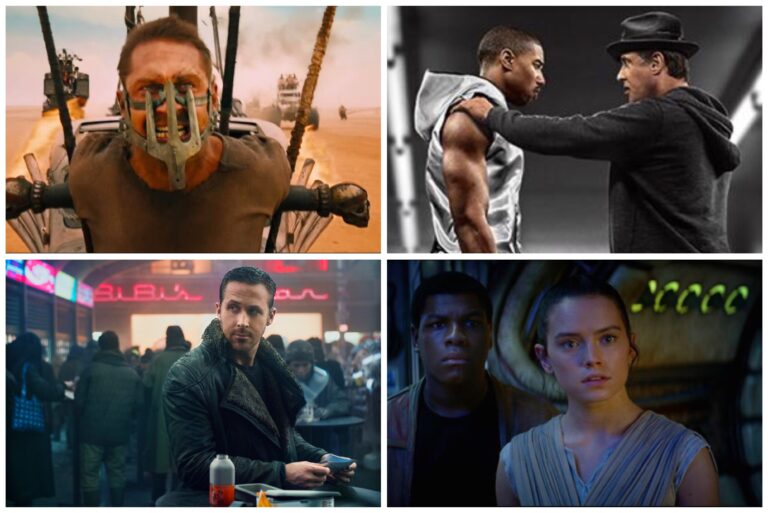
The legacy sequel is Hollywood’s new favorite child. Sometimes straddling the line between sequel and reboot, the “legacyquel” has become Hollywood’s newest way to continue popular franchises while expanding on them with new characters, themes, and a sugary dose of nostalgia. Often taking place in the same timeline but many years later, some legacy sequels also function as purely “long-awaited sequels”, making the term all the more confusing. This weekend’s Jurassic World Dominion, and the return of that franchise’s legacy characters, has prompted us to look at the best in a line of long-awaited sequels, many of whom have had varied critical responses.
So with that said, what do you think is the best legacy sequel?
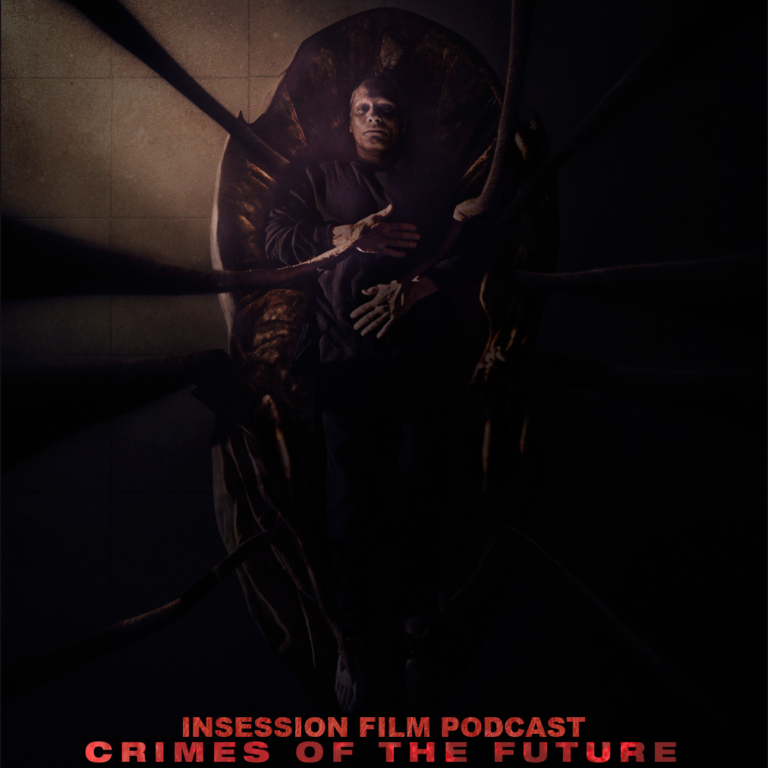
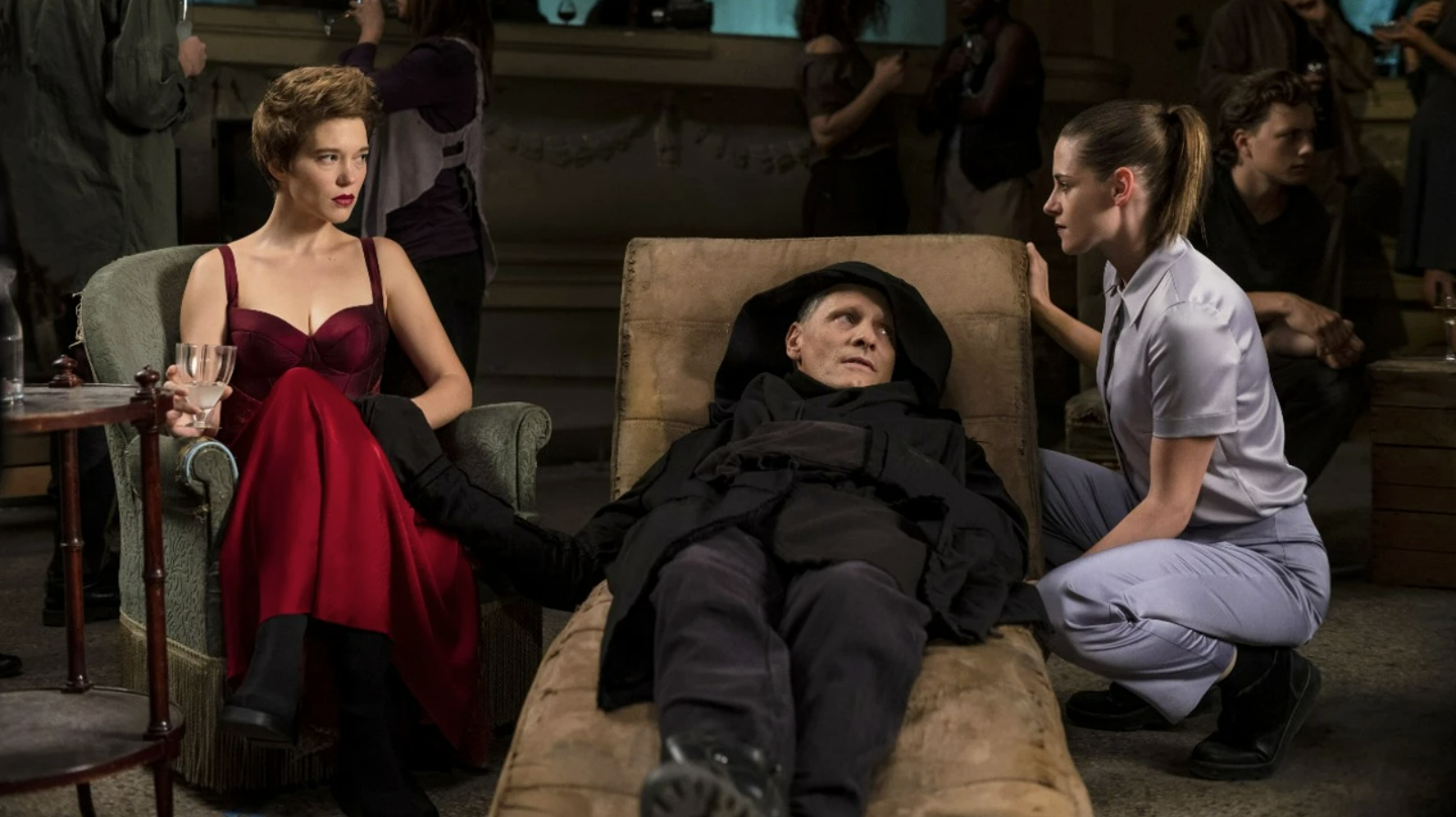
This week on the InSession Film Podcast, we discuss David Cronenberg’s latest movie Crimes of the Future and continue our Steven Spielberg Movie Series with his 2012 film Lincoln!
One of the fun things about doing our Movie Series’ is that sometimes it creates strange pairings like these two movies. They may not have much in common, but both do a great job of fostering thoughtful conversation. We did our best to sift through all of the symbolism and themes of Crimes of the Future, and if you’ve seen the film, you’ll know there was a lot to examine. Lincoln is a very different movie, but it equally has lots to discuss and we had a great time breaking it all down.
On that note, check out this week’s show and let us know what you think in the comment section. Thanks for listening and for supporting the InSession Film Podcast!
– Movie Review: Crimes of the Future (7:57) Director: David Cronenberg Writers: David Cronenberg Stars: Viggo Mortensen, Léa Seydoux, Kristen Stewart
– Notes / Discussion (1:19:57)
This week for our break segment, as we were briefly talking about Extra Film, we talked briefly about Black Hawk Down and why we’re big fans of the movie. Ryan, Jay and Robert had a great conversation about it on the podcast, and we felt inspired to discuss why we are slightly higher on it then they were.
– Steven Spielberg Movie Series: Lincoln (1:38:00) Director: Steven Spielberg Writers: Tony Kushner Stars: Daniel Day-Lewis, Sally Field, David Strathairn, Joseph Gordon-Levitt, Tommy Lee Jones
Review: Jurassic World: Dominion
Steven Spielberg Movie Series: Jurassic Park
[divider]
Help Support The InSession Film Podcast
If you want to help support us, there are several ways you can help us and we’d absolutely appreciate it. Every penny goes directly back into supporting the show and we are truly honored and grateful. Thanks for your support and for listening to the InSession Film Podcast!
Stars: Grace VanderWaal, Elijah Richardson, Judy Greer, Al Madrigal, Uma Thurman, and Judd Hirsch
Synopsis: Join Stargirl Caraway as she journeys out of Mica into a bigger world of music, dreams, and possibility.
Stargirl was a surprise hit for Disney+ since it was released during the first few days when COVID-19 was declared a global pandemic and stay-at-home orders took over the world. With everyone cooped up in their homes and trying to distract themselves from the gloom and doom that the pandemic brought to us, everyone watched Stargirl. But its critical reception was mixed, with some finding it awe-inspiring, and others (like me) who thought it was a slog to get through, barely touching upon the themes it would present. Disney still greenlit a sequel, and here we are with Hollywood Stargirl, two years into the COVID pandemic. Director Julia Hart’s films, Fast Color and I’m Your Woman, were both terrific, but the Stargirl pictures have been consistently dull. Sure, the second one is marginally better, but that doesn’t make it a worthwhile watch.
The marginal difference is due to the talent the film brings to the screen is incredible. For instance, Judy Greer replaces Sara Arrington as Stargirl (Grace VanderWaal)’s mother from the first film. To be perfectly honest, the first movie was so forgettable that I legitimately thought Greer played her mother in that movie, and the film followed that up with them going to Los Angeles, as Ana (Greer) gets a new job as a costume designer for a big movie. But no, it’s a completely different cast for the sequel, with only VanderWaal returning as the film’s titular character, off on another adventure to L.A. in the hopes of meeting new, real friends in the process. She quickly does and is thwarted in the production of a sizzle reel with her new friend Evan (Elijah Richardson) and his brother Terrell (Tyrel Jackson Williams).
Greer is terrific as Stargirl’s mother, bringing an important layer of emotional levity to the movie that we didn’t see in the first installment. One particularly heartbreaking scene near the end of the movie is a highlight for me and showcases why she took over the role since she is able to deftly balance many emotional spectrums inside that sequence.
The film also adds Uma Thurman and Judd Hirsch to the mix, whose characters are more compelling than the main protagonist, even if their screen time is vastly limited. Thurman plays Roxanne Martel, a one-hit singer whose tape, Miracle Mile, changed Stargirl’s life. Of course, she beat-for-beat plays Bono’s character in Sing 2, one who’s reluctant to appear in public again, and spends her life in Iggy (Al Madrigal)’s bar, hoping she’ll hear the next great singer. And, well, the next great singer is Stargirl, Roxanne will become her mentor and you know the drill by now. Hirsch plays Mr. Mitchell, Stargirl’s cranky neighbor, who was once a film producer. It’s the closest the movie will get to a commentary on filmmaking, even if it keeps talking about films ad nauseam because Hirsch’s character is a relic of a bygone era where “pictures” were made on film.
The movie likes to show lots of flashy elements of moviemaking (going so far as to shoot a La La Land-esque scene on an iPhone with a DJI Osmo Mobile 3 Steadicam), but says nothing of note on them, aside from the clichéd “movies are like dreams” or “whenever we watched movies we felt like we could plow through anything” lines. As much as Hollywood Stargirl wants to show the magic of filmmaking, how shooting on your phone can lead to breaking out in Hollywood and becoming the director of a million-dollar project, it barely scratches the surface of why the characters want to make a movie so bad. “We’ve always wanted to make movies” is the most surface-level, and boring, character motivation to bring to the table.
And then it shoehorns in a commentary on toxic filmmakers and set conditions, but it gets dropped halfway through the movie as if that entire arc didn’t happen, even though Ana keeps complaining about her director being a manipulative tool, and the works. It’s only when Hirsch reminds Stargirl how motion pictures were once made, with a Bolex 16mm camera, that the movie says something meaningful about the art of moviemaking, and the endless creativity making a movie can bring to someone longing for meaning in their life. But the rest of the movie is as dull as the first one, with half-baked commentaries plaguing most of the story. Uma Thurman’s character is a cliché, but she’s performed so well that you’d love to see more of her arc, instead of the movie trying to figure out which platitude to talk about and drop two scenes later, never hearing about it again.
Let’s be honest: no one asked for Hollywood Stargirl. The first film had very little emotional attachment and depth to hold the audience’s interest, and the same can be said for the sequel, even if the acting talents are much better this time around than in the first movie. Every time it has the opportunity to say something meaningful about the themes it presents, it never does and almost forgets about them as the next scene rolls along. Even if Uma Thurman and Judd Hirsch are great additions to the cast and make the most of their limited screen time, I feel that the film has wasted their talents when they could’ve been integral parts of Stargirl’s new adventure. It’s criminal to have two incredible actors giving their all, but underusing them this much. It’s a good thing I’ll likely forget about it after writing this, hoping that there won’t be a third one and that Stargirl’s cinematic journey ends in Hollywood…
This week on the InSession Film Podcast, Ryan and Jay are joined by Robert Daniels as they continue their Ridley Scott Movie Series with Black Hawk Down and they also review the latest smash from S.S. Rajamouli in RRR!
A huge thanks to Robert for joining us on the show this week. He’s one of the most prolific critics working today and we were honored to have him on to talk The Riddler and how Black Hawk Down holds up.
On that note, check out this week’s show and let us know what you think in the comment section. Thanks for listening and for supporting the InSession Film Podcast!
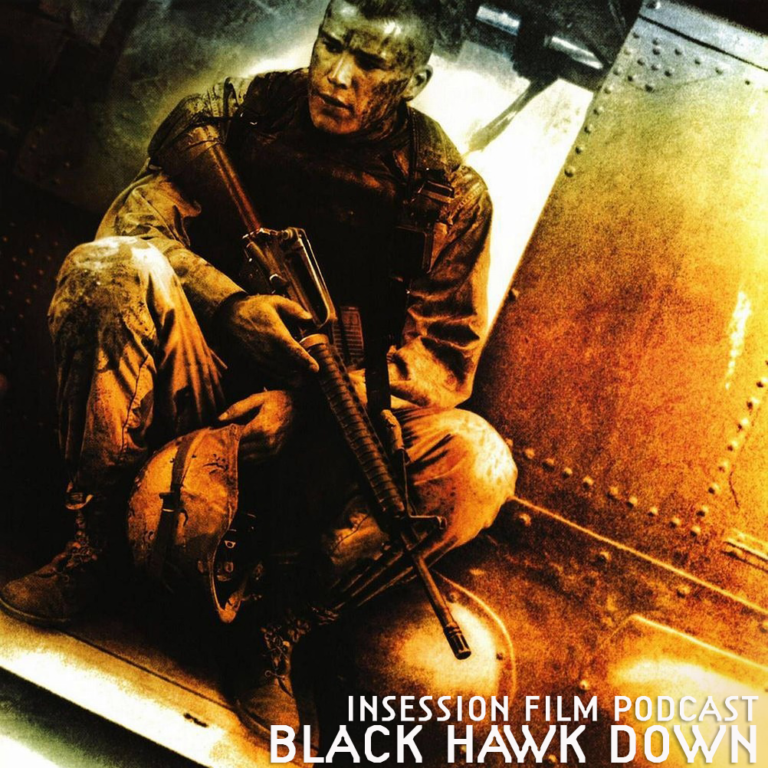
– Movie Review: Black Hawk Down (4:19) Director: Ridley Scott Writers: Ken Nolan Stars: Josh Hartnett, Eric Bana, Ewan McGregor, Tom Sizemore, William Fichtner, Sam Shepard
– Movie Review: RRR (1:07:29) Director: S. S. Rajamouli Writers: S. S. Rajamouli Stars: N. T. Rama Rao Jr., Ram Charan, Ajay Devgn, Alia Bhatt
To hear this Extra Film episode and everything else we do, download our apps on the Amazon Market for Android and the Podcast Source app on IOS devices. The mobile app covers all of our main shows, bonus podcasts and everything else relating to the InSession Film Podcast. Thanks for your wonderful support and for listening to our show. It means the world to us.
Through the first five months, I’ve been on a tri-weekly dose of films from the Criterion Channel as it has reached three full years of business. Still finding new films to watch and getting reacquainted with many others, the continuing themes every month diversify the taste buds of how great this streamer is regarding international films. As I currently make my list based on what I have seen so far, here are some works that have already impressed me through the first third of the year.
Harvey (1950)
I never thought I would be so delighted to watch a film about a man and his friend, the invisible six-foot-tall rabbit named Harvey. James Stewart has the charm to sell this idea to people, even though they look at him as delusional and funny in the head, but it really works. Yet, his kindness and eccentricity make him not the problem, but the ideal person in a world full of worry where someone who is normal will turn into a stinker of a person. I’d be curious how this film would be made today.
High And Low (1963)
I completely forgot about this movie and what a steady hand Akira Kurosawa has when it comes to modern noir. It’s an incredibly high stakes game when the son of a chauffeur who drives around a wealthy corporate executive is kidnapped and the executive is forced into paying the ransom. The film is cut into two halves: the kidnapping and the manhunt by detectives to find who could have been so daring to do this. It isn’t without flash or a score that keeps playing throughout. Kurosawa likes it natural and in its normal state, which makes the suspense all so real.
General Idi Amin Dada: A Self Portrait (1974)
Director Barbet Schroeder and his cameraman Nestor Almendros went to Uganda to interview the notorious despot at the height of his power. Schroeder asks questions, Amin gives his answers, and Amin tells them to film his life; whether it be a cabinet meeting or a planned exercise for the “invasion” of Israel. (He orders the camera to film the flying helicopter above them and complies.) Amin on the surface looks like a buffoon, a cartoon character like Chaplin in The Great Dictator, but the evil he brought is undeniable. In fact, when he asked Schroeder to cut over two minutes of film he disapproved of and Schroeder said no, Amin rounded up all the French visitors and kept them as ransom until those minutes were cut. Schroeder obliged.
The Vanishing (1988)
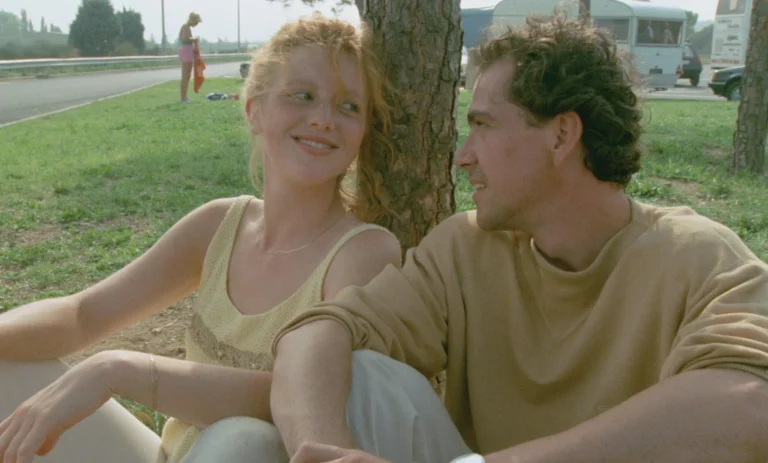
It is not a whodunit, but a whydunit and what the fate was for the missing woman in this psychological thriller from the late George Sluizer. The story surrounds a young Dutch couple who drive to France on vacation and stop at a rest area. The woman goes into the gas station…and does not return. With no witnesses who say they saw her, time passes, and the boyfriend becomes deeply obsessed with her disappearance, while another man who knows what happened decides to play mind games with the anguished lover. The ending itself fulfills its pledge as one of the most terrifying films ever made – and it’s done without any blood spilled.
The Celebration (1998)
The first film from the Danish Dogme 95 movement, Thomas Vinterberg’s dark comedy-drama stripped down any signs of a vast production – natural lighting, digital film, hand-held camera, on-location shooting – and put all its energy into a family’s scandalous accusation and the strong performances that come with it. When a patriarch turns 60 following the suicide of his daughter, the weekend feast is upended by the eldest son’s claim that he and his deceased sister were abused by him. Vinterberg is able to work with the shocking claim and the farce of familial gatherings and personal faults in one of the more refreshing movies of the time.
The Lives Of Others (2006)
Winner for Best International Feature at the Oscars in 2007, the German Cold War drama by Florian Henckel von Donnersmarck opens the chapter of the East German Secret Police – the Stasi – in its final years. A high-ranking officer (Ulrich Muhe) is ordered by the Minister of Culture to spy on a writer because the Minister seeks to have the writer’s girlfriend all to himself. Loyalty to the state is tested as the officer must do his job while trying to help the writer without exposing himself. It is an exceptional piece of intrigue in the deepest shades of gray in which the culture of fear of being spied on was deeply heightened, up there with other great Cold War spy dramas like Tinker Tailor Soldier Spy and The Spy Who Came In From The Cold.
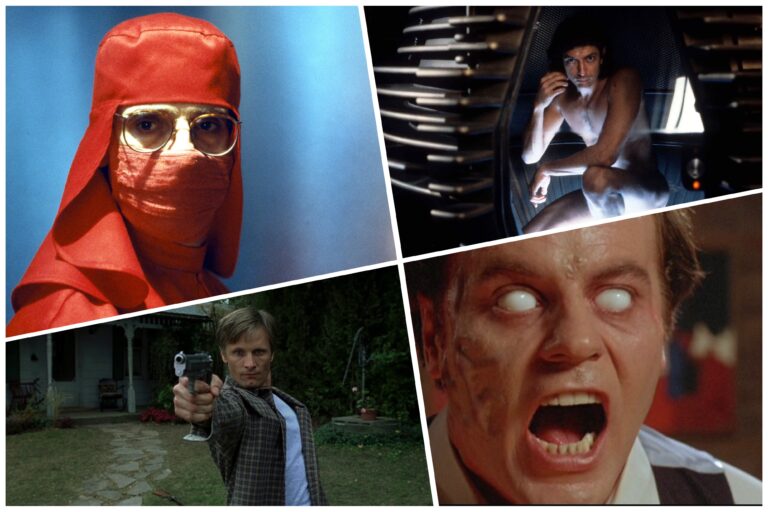
David Cronenberg is cinema’s most delectably disgusting director. Whether he’s working in body horror, crime thriller, or a car crash of sexual awakenings, Cronenberg has always had a beguiling knack at blending the grotesque with the sophisticated. His films are transgressive, fetishistic, and gross, yet they still richly tap into the psychology of the human mind, as if these are things we’ve thought about ourselves but have been too afraid to admit. With his latest Crimes of the Future opening this weekend, we take a look at his best and fleshiest works.
So don’t be afraid, what do you think is David Cronenberg’s best film?
This week on the InSession Film Podcast, Aaron White from Feelin’ Film joins us to discuss Tom Cruise in Top Gun: Maverick and we continue our Steven Spielberg Movie Series with his 2011 film War Horse!
You’ll have to forgive the length of the podcast this week as we were very passionate about both of these films. Top Gun: Maverick has been one of our most anticipated movies for some time now and boy did it deliver in a big way. There is obviously a ton to mine out of it and we spent a good hour or so breaking it down and having fun with Maverick’s latest adventure. As for War Horse, it has a certain reputation that we feel isn’t quite warranted, and we go to bat hard for it.
On that note, check out this week’s show and let us know what you think in the comment section. Thanks for listening and for supporting the InSession Film Podcast!
– Movie Review: Top Gun: Maverick (7:57) Director: Joseph Kosinski Writers: Ehren Kruger, Eric Warren Singer, Christopher McQuarrie Stars: Tom Cruise, Miles Teller, Jennifer Connelly, Jon Hamm, Glen Powell
– Notes / Discussion (1:19:57)
This week for our break segment, as we were briefly talking about Extra Film, we had some thoughts on Gladiator and Black Hawk Down. As mentioned above, we also have some fun promos to give away as well.
– Steven Spielberg Movie Series: War Horse (1:38:00) Director: Steven Spielberg Writers: Lee Hall, Richard Curtis Stars: Emily Watson, David Thewlis, Peter Mullan, Niels Arestrup, Jeremy Irvine
Review: Crimes of the Future
Steven Spielberg Movie Series: Lincoln
[divider]
Help Support The InSession Film Podcast
If you want to help support us, there are several ways you can help us and we’d absolutely appreciate it. Every penny goes directly back into supporting the show and we are truly honored and grateful. Thanks for your support and for listening to the InSession Film Podcast!