


Home Blog Page 172

Movie Review: ‘Ron’s Gone Wrong’ Is One Of The Best Animated Films of the Year


Director: Sarah Smith, Jean-Philippe Vine, and Octavio E. Rodriguez
Writer: Peter Baynham and Sarah Smith
Stars: Zach Galifianakis, Jack Dylan Grazer, Olivia Colman, Ed Helms, Justice Smith, and Rob Delaney.

Synopsis: The story of Barney, an awkward middle-schooler and Ron, his new walking, talking, digitally-connected device. Ron’s malfunctions set against the backdrop of the social media age launch them on a journey to learn about true friendship.

[/info]

After Disney closed Blue Sky Studios earlier this year, there was a lot of skepticism about whether or not the studio would openly embrace animated films under the “20th century” banner. Spies in Disguise was Disney’s first animated film released under the Fox banner, but the movie was already being made before The Mouse bought it–and it, unfortunately, would be the last Blue Sky would ever release. So it’s even sadder when you realize that Disney is currently developing an Ice Age film for their streaming service, Disney+, and will not even work with the studio that brought these characters to life in the first place. So what are the plans for Disney’s future with 20th Century Animation? For now, they are still left in the dust, but at least we can hold on to Ron’s Gone Wrong, one of the most charming animated films of the year.

Easy comparisons will be made with Sony Pictures Animation’s The Mitchells vs. The Machines, as it not only stars Olivia Colman, who was in both films, but draws on the same theme of humankind’s relationship to screens. And while The Mitchells vs. The Machines was more vivid and entertaining, Ron’s Gone Wrong is equally as heartwarming and could make you shed some tears during the end. The gist is simple: virtually everyone is “connected” through B-bots, which are solar-powered devices designed to become the user’s friend (and life, but more on that later). The only one in the world that seemingly doesn’t have this device is Barney (Jack Dylan Grazer), a middle-schooler who has a hard time fitting in due to his awkward family (Ed Helms and Olivia Colman) and every other kid not bothering to talk to him since they have a legitimate “social” life with a B-bot.

When his father (Helms) finally caves in and gives Barney the B-bot he has always wanted, Ron, the robot (Zach Galifianakis), starts to malfunction and become even more awkward than Barney himself. Meanwhile, the Bubble company, which created the B-bots, are at heads with one another, with the CEO (Justice Smith) wanting to know more about Ron, whereas its COO (Rob Delaney) wants to take over Bubble and make kids addicted to their B-bots until they no longer sleep.

By the end of the film, Barney will start to develop a genuine friendship with Ron and rekindle with some of his childhood friends as they begin to “unplug” from their virtual worlds to the real ones. Of course, that’s entirely predictable, especially if you’ve seen The Mitchells vs. The Machines, but it’s Barney and Ron’s journey that gives the film’s its completely human core. The comedic timing between Grazer and Galifianakis is terrific, with the latter actor being the star of the film. Once Barney turns Ron on, the film becomes an absolute laugh-riot from beginning to end. The animators use Ron’s eyes as the principal drive for its facial expressions and physical comedy, and there isn’t a single moment wasted with the premise of a broken robotic device. Ron’s emotionless laughs exacerbate the tension and awkwardness of a situation Barney becomes thwarted every time Ron decides to anthropomorphize his robotic personality and learn more about what it means to be a “friend” rather than being fed an algorithm. But it’s that connection that differentiates Ron from other B-bots and makes him more fun to be with than any other B-bot who will make up their friendship through a pre-conceived formula and will never be as genuine and human, first and foremost, as a real friend. Galifianakis has an absolute ball, and he’s joined by a star-studded cast that aids him in becoming one of the most memorable animated characters of the year.

Ron is the closest thing Barney will have as a real friend since the kid is forced to ultimately nurture him and make him learn about the natural world without an algorithm that will make a child addicted to a screen. And while the movie’s commentary on social media and influencer culture are fairly surface-level and clichéd, they’re more than essential and need to be addressed. Anybody that tells you they can function perfectly well without social media may be lying, as it’s become a critical part of our everyday life for many work and academic-related purposes. And for film critics, it’s an incremental tool if you hope to get the word out and make sure your writing is seen by the masses who may or may not click past a headline. But the platforms pose a real danger to children, who may want to model influencers or become exposed to dangerous conspiracy theories early, without them knowing what constitutes legitimate or misleading news. So it’s excellent that animated films address the problem head-on and teach children that the outside world is far better than anything the virtual one may have in store for you.

I speak from experience, as someone who at a (too) young age got exposed to YouTube and could easily spend the entire day on the platform consuming content from days on end, which unfortunately made me addicted to the web and carried its boatload of academic problems. With an intervention that legitimately saved my academic prospects, I was able to get out of this spiral and care about my academic future.  So anytime a film talks about Internet addiction, I know exactly the effects it can have on impressionable tweens and teens. The worldwide web is vast, with so much to consume, and you can get easily lost in the swirl of it all, but nothing compares to legitimate human connections. Ron’s Gone Wrong makes sure to tell children (and adults) that Internet Friends and “followers” will never compare to the bond you forge with someone that’s right in front of you.

Ron and Barney’s relationship isn’t fake, compared to everyone else with their B-bots. As they try to escape Bubble security guards who want to crush Ron for his erratic behavior, Ron starts to exercise legitimate feelings towards Barney, while Barney learns that there’s more to life than a B-bot. If everyone had the same “bot” like him, humans would learn to live collectively again and not compete with one another on “likes” and “views.”

As accessible as the Internet can be, and with your popularity rising in an instant, don’t forget that it takes one mistake for everything you’ve built to go away practically. Unfortunately, the Internet is a vicious place, and Ron’s Gone Wrong doesn’t shy away from addressing cyberbullying and online harassment issues as one aspiring influencer becomes the world’s literal laughingstock. It’s a hard scene to watch, but if you’re going to explore the theme of influencer culture, it needs to be addressed, and the film does it in such a mature way that you can’t help but admire everything it wants to talk about even if some of it feels a tad clichéd.

As many animated films want to take children away in whimsical adventures, few want to address complex subjects for kids to re-think their place in this world. Still, whenever an animated film decides to go in that route, it’s always the most rewarding type of film for kids. Think of Coco, which delved deep on the theme of death with such grace and maturity it became a life-affirming experience for both kids and adults.  Or Toy Story 3 taught us that it’s OK to move on as children become adults and their imaginative bubble starts to pop. These films mainly worked because it wasn’t afraid of diving deep into themes that kids will eventually have to confront with and do it in a way that will prepare them for their life bubble never to be the same again.

Cinema is the most approachable art form out there, one that breaks all language barriers and has the power to unite us over one single movie. Directors should never, ever shy away from dealing with mature themes in animated films if it means vulgarizing it in a way that kids will be compelled at and learn something from it, absolutely go for it. Ron’s Gone Wrong does that and more through detailed animation, memorable characters, and humor so contagious it will automatically put a giant grin on your face as soon as Ron opens his eyes.

I never expected it to like it this much, as the trailers made it look like it was too familiar for me. But I quickly became hypnotized by Ron’s unintentional deadpan physical and verbal comedy and started to be moved at how human Barney and Ron’s friendship was. And as the credits rolled, I couldn’t believe that a movie like this would dare come out after a year where all of us were forced to be virtually connected due to COVID-19. Ron’s Gone Wrong acted as a potent reminder that the world is much better once we’re together in person and not through our screens, and it’s something we all desperately need to be reminded of. And if this will be the type of animated films Disney will embrace for their 20th-century banner, then sign me up.

Grade: A-
 

Podcast: Spike Lee Movie Series

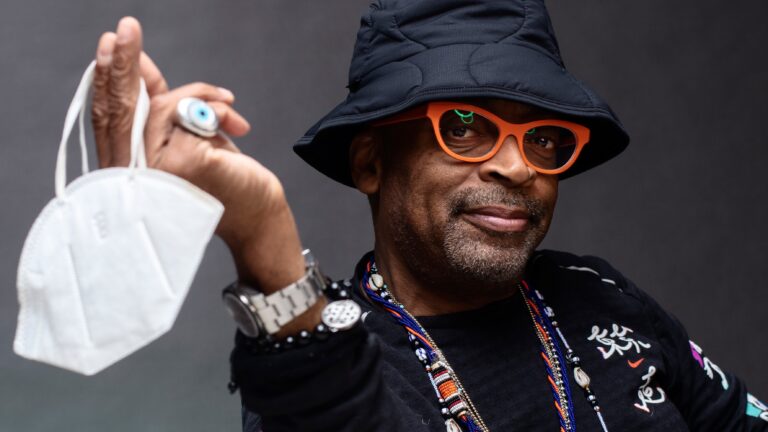
When you think of some of the greatest modern filmmakers alive, one of the names at the top of the list is Spike Lee. The New York City based director is known for his deeply personal, passionate films that deal with race, sex, historical figures, politics, and tragedy, sometimes even all within the same film. He’s the most successful African American filmmaker of all time, leading the way for generations of talented male and female black artists to carry on what he has started, which was a true change in Hollywood. Brash yet rootable, there is no question to just how important Spike Lee is to the story of movies, and the Extra Film boys take note of this as they talk about a selection of his films below, with many guests to help them along the way. Spike is one of Ryan’s favorite directors and this series is a bit of a blindspot for Jay, thus making all of their conversations in this series absolutely fascinating.

She’s Gotta Have It, 1986

Listen to our review below as heard on Extra Film.

Do The Right Thing, 1989

Listen to our review below as heard on Extra Film.

Mo Better Blues, 1990

Listen to our review below as heard on Extra Film.

Malcolm X, 1992

Listen to our review below as heard on Extra Film.

He Got Game, 1998

Listen to our review below as heard on Extra Film.

Bamboozled, 2000

Listen to our review below as heard on Extra Film.

25th Hour, 2002

Listen to our review below as heard on Extra Film.

Inside Man, 2006

Listen to our review below as heard on Extra Film.

Movie Review: ‘The Hand Of God’ is Paolo Sorrentino’s Beautiful Childhood Memory Brought to Life


Director: Paolo Sorrentino
Writer: Paolo Sorrentino
Stars: Filippo Scotti, Toni Servillo, Teresa Saponangelo, Marlon Joubert, Luisa Ranieri

Synopsis: In 1980s Naples, Italy, a young man experiences heartbreak and liberation after he’s inadvertently saved from a freak accident by soccer legend Diego Maradona.


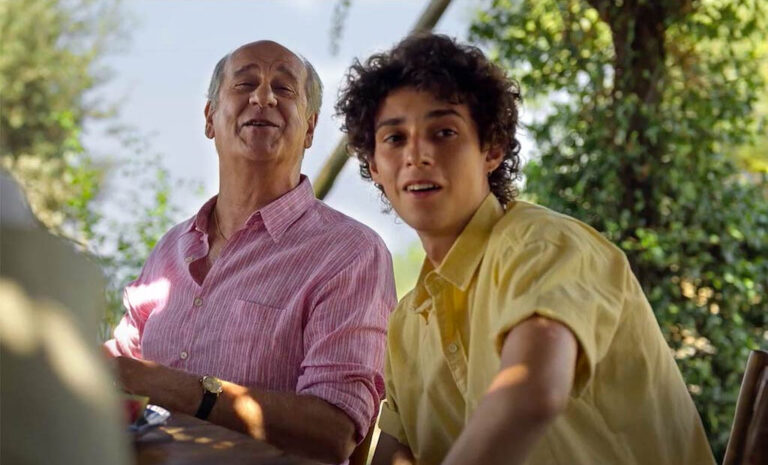
In Oscar winner Paolo Sorrentino’s (The Great Beauty) latest film, he changes his tone from the visually intoxicating to a straightforward story based on his own life. Newcomer Filippo Scotti plays Fabietto, a sixteen-year-old Napolitian boy living with his loving family and soaking up his love for Diego Maradona (“the best soccer player of all time,” as stated in the beginning) when he suddenly comes to the local club Napoli. The film’s title refers to a controversial goal by the late soccer legend in the 1986 World Cup that cemented Maradona’s holy status. This is the mid-80s, where Fabietto is living a beautiful life while he struggles to decide what he wants to do as an adult. However, he figures he has time while still enjoying his youth.

There’s his older brother Marchino (Marlon Joubert), an aspiring actor who is all about his upcoming audition in a Federico Fellini film, and sister Daniela who is always in the bathroom, never seen on screen. Sorrentino regular Toni Servillo plays their communist father who, ironically, works in a bank because communists need money too but will never use a remote control to change the channel. Mom Maria (Teresa Saponangelo) is always up for a prank, while the family always stares at the beautiful Patrizia (Luisa Ranieri) and her naked body who struggles with infertility and has an angry husband. Top it off with the fat, mozzarella-eating grandmother who always wears fur, even under the hot sun, and an obese relative who shows her new lover, a seventy-year-old former police officer who speaks with a robotic voice box, and the family celebration is a complete picture.

The first half is a happy-go-lucky trip for all until the midpoint when an unexpected tragedy befalls Fabietto. For those who know Sorrentino’s life, then you will know what happened, and now Fabietto is forced to become an adult earlier than expected. The second half of the film then becomes him trying to straighten out his path now that it has been wrecked and the weakness of the movie is how Sorrentino presents bit-by-bit Fabietto’s climb to moving forward. It is one step at a time, but it just doesn’t feel smooth transitioning scene-to-scene. You do see the seeds of Fabietto’s future being dropped steadily, the same path Sorrentino took to be where he is today. 

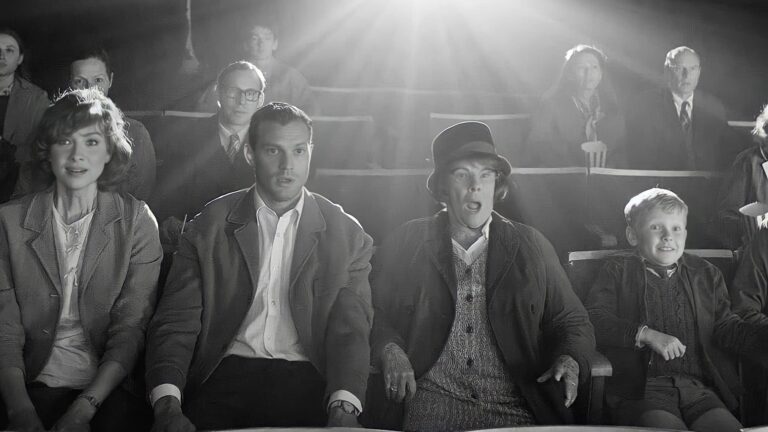
This is a childhood memory film (like Kenneth Branagh’s Belfast) that allows itself to breathe and touch the values of establishing your roots and never forgetting where you came from. He explores various moments and random encounters that are part of the road to growing up. A pivotal scene towards the last fifteen minutes where Fabietto meets one of his favorite directors who demands him to explain how he really feels and what does he really wants to say (“Then spit it out!”) is Sorrentino in real-life turning on that imaginary light bulb. It’s the one that created The Consequences Of Love, Il Divo, and The Young Pope. For this labor of love, it is good to see Sorrentino get his story and where he started out there in its naked exposition.

Grade: B

Follow me on Twitter: @bsusbielles (Cine-A-Man)

Podcast: A Fistful of Dollars – Extra Film

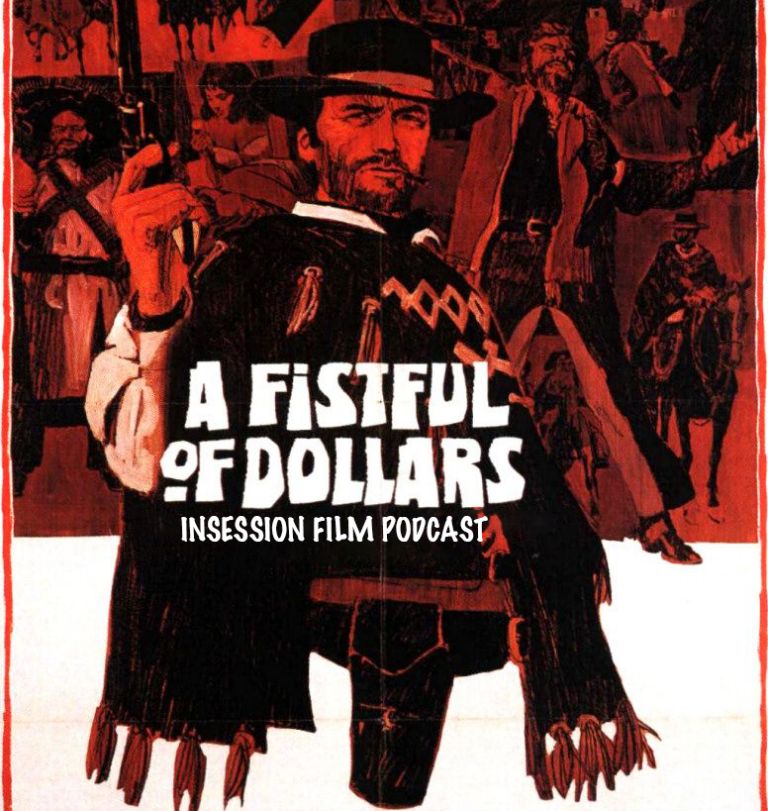
This week on Extra Film, Ryan and Jay begin their Sergio Leone Movie Series with A Fistful of Dollars!

Another Movie Series has begun at Extra Film, as the boys have moved on from the great Spike Lee to the legendary Sergio Leone. In introducing one of the greatest cinematic heroes of all time, Leone started the process of reinventing the western genre and making a style that’s his own. With an iconic score from Ennio Morricone and the talented Eastwood by his side, Leone made a fantastic film to start this Movie Series.

Thanks for listening!

– Movie Review: A Fistful of Dollars (3:33)
Director: Sergio Leone
Screenplay: Sergio Leone
Stars: Clint Eastwood, Marianne Koch, Josef Egger, Wolfgang Lukschy

– Music

Titoli (from A Fistful Of Dollars) – Ennio Morricone
The Return of the Eagle – Atli Örvarsson

We try to make this the best movie podcast we possibly can and we hope you enjoy them. Subscribe today on iTunes, Spotify, or Stitcher, and please leave us a review on iTunes. You can also find us on Soundcloud, PlayerFM, and TuneIn Radio as well. We really appreciate all your support of the InSession Film Podcast.

Subscribe to our Podcasts RSS
Subscribe to our Podcasts on iTunes
Listen on Spotify
Listen on Stitcher
A Fistful of Dollars – Extra Film

[divider]

To hear this Extra Film episode and everything else we do, download our apps on the Amazon Market for Android and the Podcast Source app on IOS devices. The mobile app covers all of our main shows, bonus podcasts and everything else relating to the InSession Film Podcast. Thanks for your wonderful support and for listening to our show. It means the world to us.

Criterion Collection: November 2021

Talk about a reveal this month. The list from the Criterion Collection is a knockout one after another with its list that will empty the pockets of many. AFI #1 American movie of all time, an Italian husband/wife combination that created tears, a slate of Hong Kong cinema’s most recognizable kung fu series, a stunning hood film from another set of brothers, and one of the most anticipated Criterion releases in recent history with one of the most exhilarating dramas in recent years. Perfect time for a holiday gift with any of these magnificent films.

Citizen Kane (1941)

I don’t think I need to do any introduction about this film. You know how Orson Welles got the job at RKO. You know the fight about the script, courtesy of David Fincher’s Mank, as well as the long battle with Wiliam Randolph Hearst, who tried to buy the film and destroy it. But for its 80th anniversary, the big K – that cover, in my opinion, is perfect – is FINALLY get the Criterion treatment on Blu-ray, DVD, and 4K UHD. Technically, it’s a re-release; the movie was first on Criterion’s LaserDiscs in the 1980s, but later fell to Warner Brothers for later home releases. Still, the ultimate Welles film is with Criterion and all for us to take back home.

La Strada (1954)

https://www.youtube.com/watch?v=ySeHJep7vSg

Federico Fellini’s beautiful story of a woman (played by Fellini’s own wife, Giulietta Masina) hired to be the clown of a brute strongman (Broderick Crawford) is getting its long-awaited re-release on Criterion. Fellini wanted Humphrey Bogart for the strongman role, but he was ill with cancer that would kill him. Crawford’s drinking and Fellini’s mental breakdown during the shoot caused problems, but the final product would be the ultimate breakthrough for Fellini as an international director, even as it wasn’t a hit in Italy, but won the Oscar for Best International Film.

Once Upon a Time in China: The Complete Films (1991-94)

In the middle of Hong Kong’s golden age of cinema, five movies starring Jet Li and Vincent Zhao portrayed folk hero martial artist Wong Fei-hung in 19th/20th century China as their culture is threatened by foreign influencers. Each film moves up in the timeline as Li/Zhao faces various challenges with a modern China forming as the old lifestyle is fading away, making Wong a rarity. With it is the themes of Chinese nationalism, something very appealing to the region, along with the continuation of stylized fighting going back to the Hong Kong new wave of the 70s where Bruce Lee made martial arts on film highly popular.

Menace II Society (1993)

Albert and Allen Hughes made an impressive debut with a graphic hood film on the streets of Watts, Los Angeles, following a young man who grows up and is engulfed in gang life. Tyrin Turner, Jada Pinkett Smith, Larenz Tate, Samuel L. Jackson, and Bill Duke (who directed the Criterion released Deep Cover a year earlier) star in this authentic urban tale of survival and the massage directed at youth who, by no fault of their own, are raised in such a hostile environment. A lot like Boyz N Da Hood released two years earlier, it is a bleak picture and captures lightning in a bottle in which the city was still fuming from the Rodney King riots.

Mulholland Drive (2001)

Getting its own re-release for the purpose of going on 4K UHD, David Lynch’s mysterious, hypnotic drama of an aspiring actress, an amnesiac woman, and a director fighting unmovable people for his own movie. What was a TV pilot made in the same vein as Twin Peaks, it was turned down and Lynch created an atmospheric story which made it even better than it would have been on TV. What does it all mean? Lynch, unsurprisingly, will not tell. But by bringing in Naomi Watts, Justin Theroux, and Laura Harring, one of the most critically analyzed films this new century, ranking #1 on BBC’s 100 Greatest Films of the 21st Century.

Uncut Gems (2018)

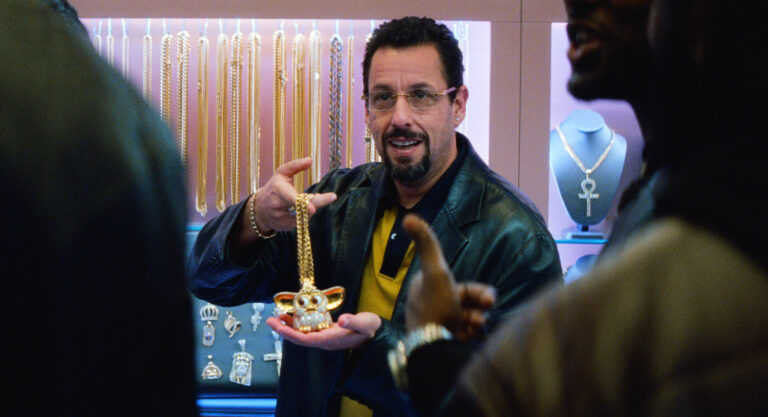
THIS is what we’ve been waiting for, especially after its release date was bumped back one month to get a 4K UHD release with an alternative cover. Adam Sandler had one film given the treatment (Paul Thomas Anderson’s Punch Drunk Love) and to get a second one, it had to top that performance. His portrayal as Howard, the degenerate gambler and jewelry man, makes us garble anxiety with his high energy running around to pay off debts while playing footsie with Kevin Garnett over a stunningly large opal. And Idina Menzel is no longer the gorgeous voice in Frozen, but Howard’s soon-to-be-ex who is profane and cannot deal with his behavior, even over Passover. Shout out to Julia Fox and Lakeith Stanfield also, plus the Safdie brothers for their incredible work.

Follow me on Twitter: @brian_cine (Cine-A-Man)

Classic Movie Review: ‘The French Connection’- 50 Years On And Still As Exciting As Ever


Director: William Friedkin
Writer: Ernest Tidyman
Stars: Gene Hackman, Roy Scheider and Fernando Rey.

Synopsis: New York City cop Doyle and his partner are trying to bust a drug cartel based in France. Albeit short-tempered, Doyle is a dedicated cop whose nemesis, Alain Charnier, is too polished for a criminal.


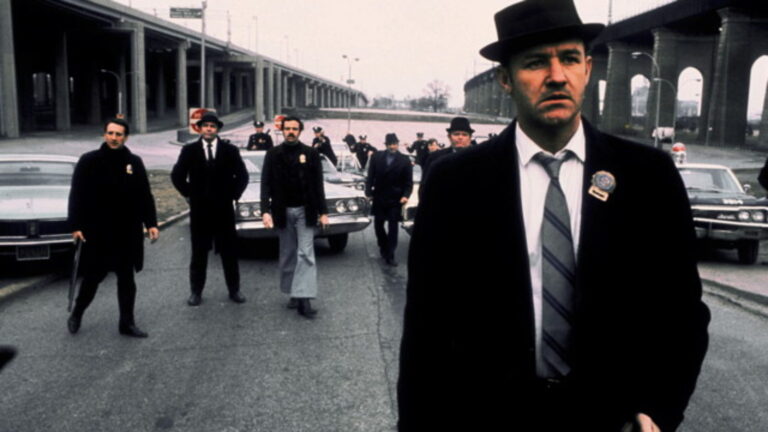
There is something magical that happens when you look back at classic cinema years after its release, the way they age over time only adds to their brilliance. I was excited about looking back at this film 50 years on because it is a technical joy and more exciting than any film I’ve watched in the past 20 years. Hailing from 1971 (the 70s had such good cinema) Hackman delivers with one of his most memorable roles – the first of his two Oscar wins – as the dedicated, albeit brash, New York detective Jimmy “Popeye” Doyle – nicknames don’t get much better. Hackman is surely one of the greatest actors of all time (no bias by any means), mastering the many gimmicks that contribute to a member of law enforcement – he is electric in this film. Roy Scheider is also superb as his partner (his finest role next to Jaws), more level-headed than the uncouth Doyle, but still very stern and effective.

To say this film was a success would be an understatement, it swept multiple awards at that year’s Oscars, including best director for William Friedkin. However, the travesty for me was that it didn’t win best cinematography, it is the standout of many standouts. There are certain scenes and certain framing techniques where you just sit back and admire its art form – simple yet stunning – as well as that rough and extremely edgy camera work that adds to the grittiness of the story and the characters.

In a star-studded career littered with iconic films and performances, surely this is Hackman’s most defining role? The Conversation, The Poseidon Adventure, Unforgiven, are just some of the memorable roles Hackman has graced us with, but Popeye is him and Hackman is Popeye, they are one of the same, manifesting as one of cinemas greatest pairings. I’ll tell you one thing as well; this was my Grandad’s favorite film from his favorite actor – I can tell the old man had taste – no wonder I hold The French Connection in such high esteem.

The French Connection revolves around New York City cop “Popeye” Doyle and his partner “Cloudy” Russo (Schneider) as they are trying to uncover a drug cartel in France that has been supplying heroin to the city. Doyle is short tempered but incredibly dedicated at tracking down the mastermind behind the imported drugs, one Alain Charnier (Fernando Rey), Doyle’s self-titled nemesis and a man as slick as they come. Doyle and Russo spend weeks following various leads, establishing wire taps, just trying to discover where the drugs are coming in and who is involved locally. There is an intense noir feel attached to the film, with a cold blue color palate featuring quite predominantly throughout.

The film’s action consists of various games of cat and mouse; incredibly intense tailing segments all played out at walking pace – I couldn’t get enough of it. The way in which the framing accelerates these sequences is exhilarating; with the cops hiding behind every corner, jostling for different places of concealment, it is so fluid and natural. Never has a film sequence involving a man following another man been so exceptional, so lively, so exciting, and that is down to Owen Roizman’s cinematography skills. The score is sharp as well at times, providing an intense build-up and then a soothing exit and then on to the next scene – this really is a film ahead of its time.

Doyle and Russo begin to close in on Charnier (or so they think) before Charnier’s hitman takes it upon himself to have a pop at old Popeye, which leads to one of the most famous car chase sequences in cinema history, filmed on a very busy street as well by all accounts – the idea of which wouldn’t even be considered today. It has it all: gunshots, bad driving, train crashes, and a climactic ending – I’ve got hot sweats just thinking about it. With the police chief breathing down their necks, Doyle and Russo must salvage any information they have and attempt one final bust on Charnier, will they capture the elusive Frenchman, or has time ran out for the crime fighting duo, the ending is one we should all know by now.

Man, I just love classic cinema like this, it can be even more special when watching it from a present-day point of view; you appreciate its art form more, its robustness, and how it contrasts to today’s cinema. The French Connection is rightly in many a list of the greatest films ever made; it is an era defining film and a stylistic anomaly, from the acting to the camera work, to the editing (I didn’t even mention the brilliant editing) this film has a little bit of everything, it is grittier than a freshly tarmacked road and will leave you wanting more – it is a good job they did make a sequel, and not a bad one either by the way. They just don’t make cinema like this anymore, which is a travesty – take me back to that golden era of film, the magical 70s.

Grade: A+

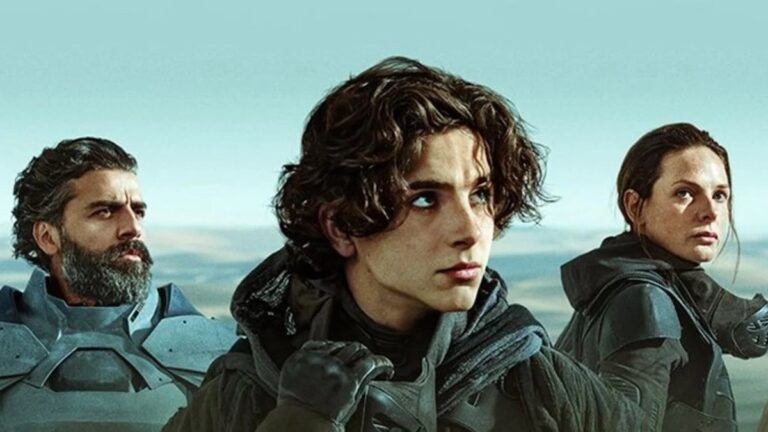
Movie Review: ‘Dune’ is Not Just the Cinematic Event of 2021, But Ranks as One of the Best of the Millennium


Director: Denis Villeneuve
Writer: Jon Spaihts, Denis Villeneuve, Eric Roth
Stars: Timothée Chalamet, Rebecca Ferguson, Oscar Isaac, Josh Brolin, Stellan Skarsgård, Dave Bautista, Zendaya

Synopsis: The feature adaptation of Frank Herbert’s science fiction novel, about the son of a noble family entrusted with the protection of the most valuable asset and most vital element in the galaxy.


When it comes to blockbuster spectacles, this past year has been filled with them due to several lockdowns worldwide preventing them from releasing in 2020. It seems like many companies from Disney to Universal are trying to make their voices the loudest in this competition, and yet it has been Warner Bros. who have created the most buzz throughout this past year. Whether their strategy to trying to be the first with Tenet or having a day-and-date release plan with HBO Max worked or not, their blockbusters become staples for the film community. Denis Villeneuve’s Dune is certainly no exception to that rule.

It may be intimidating thinking of entering the fictional world of Arrakis in the form of a feature-length film, but Villeneuve takes steps to make sure that the film is accessible to any film fan. It does not matter whether you have read the source material or not, the information given in this adaptation is easy to process and engaging to follow along with. Part of that comes to the choice of splitting the book up, with this film being Part One of what will hopefully be a series to come. This choice gives the film plenty of time to breathe and digest the world around us.

Villeneuve is known for his incredible sense of world-building and Dune is no exception. Not only are the visuals stunning, but the set of characters all help establish the landscape and political state of this time. Following Paul Atreides (played by Timothée Chalamet), the son of a Duke and someone who at a young age is coming to terms with the power his family holds and the religious and political stance his mother follows, the audience is eased into the exposition alongside Paul as we see him go on an epic journey. The visions that Paul has throughout, seeing his meeting with Chani (played by Zendaya) and a ritual duel he must face, the audience is immersed into this world and the stakes that are at play throughout.

Even though this is available to watch on HBO Max in the US, there is no better way to see this film than on the biggest screen you can. When the camera pans over the mass amount of desert, the vibrant colors light up the screen as the scope of the landscape becomes clear. It is not just the huge showcase scenes that are impressive though as cinematographer Greig Fraser is able to capture the more intimate moments, particularly with Paul and his mother Lady Jessica (played by Rebecca Ferguson), beautifully and showcase the more vulnerable moments on screen.

It would be enough of a cinematic experience with just the visuals, but the technical elements within the sound are award-worthy. The sound design is balanced incredibly well, something that most major blockbusters struggle to do. The dialogue is clear and easy to understand, and yet it does not take away from the roaring of the aircrafts and the action that takes place. Not only that but this film is accompanied by the best score of the year, of course, done by the one and only Hans Zimmer. The blend of orchestral music and the vocal choir creates a range of tones that helps accentuate any moment on the screen, leaving shocks going through your body. In particular, the track “Ripples in the Sand”, used as one of the leading songs in the promotional material for the film, highlights just how good this score really is.

For some people, this film may feel anti-climactic and unfulfilling as of this moment due to it being the first part. There is no clear resolution as the journey has only just begun, but the structure of the film does help answer a lot of questions and the choice of where to cut the film does feel perfect in its own way. Villeneuve has managed to create a cinematic masterpiece that makes 155 minutes fly right by, whilst also begging for another three hours to complete the rest of the story. It has been a long time since I have been this excited about a cinematic experience, and I hope everyone else goes out to support it as well.

Grade: A+

Ranking: Denis Villeneuve Films (as of October 2021)

0

With Dune coming out in theaters this weekend, we thought it would be fun to look back on the career of Denis Villeneuve thus far. In some ways, this exercise is futile as he has yet to miss if you ask me. In fact, taking it a step further, every feature length film we’ve seen from Villeneuve ranges from very good to absolutely incredible. In the case of his Top 3 (as seen below), I think they’re some of the best films we’ve seen in the last decade. He’s easily one of the best and most immersive filmmakers working today. There’s a tangibility to his movies that are unique in today’s blockbuster landscape. But even if you remove aesthetics and sound design, his characters are compelling and the stories are engrossing, which is enough in many respects. Not to put him on a pedestal, he still has plenty to prove, but so far he’s done enough to be among my favorites right now.

With all of that said, let’s dive in. Here is my ranking of Denis Villeneuve as it stands right now.

9. Maelström

I will admit, I haven’t seen Maelström in awhile and it’s the film least cogent in my mind when it comes to Villeneuve. It’s possible that after a re-watch it sits higher on this list. However, Maelström is still a worthy debut. It features a director that’s full of ideas and vision. You can sense his passion for the craft in every scene. I mean, the film is narrated by a fish awaiting to be butchered for crying out loud. That’s a director who is willing to take risks. Even if the film is sometimes uneven, there’s some great stuff here about death, blame and remorse. Perhaps you could argue that its messiness is a benefit to the film given its emotion and characterization. That might be a stretch, but either way, Maelström is Villeneuve letting us know that he’s a filmmaker to look out for.

[divider]

8. Prisoners

Prisoners was Villeneuve’s first foray into Hollywood filmmaking, and at times it does show, but on the whole it still has that Denis flavor. There’s an intensity to the film, particularly within the performances, that make it a riveting experience. The mystery and suspense at the heart of the story is pulsating. And while it may not work for everyone (looking at Brendan), the ambiguity of the final scene was very effective for me. I’m not sure how attached Villeneuve was to this material (especially when compared to his later works when it’s clear he has a vested interest), but it’s good. Prisoners is more than a quality entry into the Denis-verse.

Listen to our review here.

[divider]

7. Polytechnique

Not for the faint of heart, but Polytechnique is an equally poignant and more concise version of Gus Van Sant’s Elephant. The latter is an affable attempt, but Polytechnique has a more determined emphasis on pathology, and this dichotomy that recognizes a reality that’s gray vs. a main event that is morally conspicuous. This makes the film emotionally complex, especially when considering Villeneuve’s storytelling and his shifts in perspective. Arrival is certainly among Denis’ most affecting films, but there’s no denying the visceral power of Polytechnique. The closing sequences in particular are a gut punch. Villeneuve’s craft is also excellent. I love the black and white cinematography and the performances are quite great. Don’t be fooled by where this ranks, it’s hard to watch, but it’s a very good movie.

[divider]

6. Enemy

Look, I’d be lying if I didn’t admit that I’m still trying to figure out Enemy. What do the spider’s mean!? Especially the last shot of this film, what the hell is going on? Who knows, but I loved it. The one thing I do know is that Jake Gyllenhaal is fantastic in two distinct performances. Adam is more reserved and quiet, while Anthony is more energetic and boisterous, and those contrasting traits are fully realized thanks to Gyllenhaal’s attention to detail. Some of Enemy‘s symbolism may be hard to decipher, but there’s clearly something going on as it relates to masculinity and femininity, pride and identity, and ultimately how the variances between the two characters – inside those ideas – thread together a web of provocative ambiguity.

Listen to our review here.

[divider]

5. Dune

I can already hear the “it’s too low” crowd yelling at me. Look, I love Dune. It’s arguably Villeneuve’s best directed film to date, but I need to sit on for some time first before I can claim that personally. It’s very possible that in another year Dune climbs up a spot or two. The only thing holding it back for me right now is that it’s an unfinished product narratively. There is clearly more to come soon. And when that happens, perhaps it’ll make Part 1 even better than what it already is. As it stands, though, this is a visual treat. Villeneuve’s world building and immersive filmmaking is stunning. The film’s transportive aesthetics and design is maybe the best we’ve seen since Mad Max: Fury Road. Additionally, the sound design here is among the best we’ve heard in some years as well. And despite where it ends narratively, the characters and story here is quite captivating. There’s a dreamlike quality to it at times that’s great. The performances are very good. A lot to love with Dune.

Listen to our review on Episode 453, coming soon.

[divider]

4. Incendies

Let me clear, Incendies excellent, and it’s as good as any film in the Top 3. In fact, the next few are very interchangeable as far as I’m concerned. And in a weird way, Incendies is a mixture of Sicario and Arrival in that it’s both haunting and emotional. It’s a gripping film about family and consequences, standing up for your beliefs and fighting for what you love. Much of it may not sting in the moment, but this is a movie that lingers with you long after you watched it. The performances are great. I love the film’s structure and how balanced it is as the pieces start to fall into place. If anyone else has Incendies as their favorite Villeneuve, you’ll get no pushback from me.

Some more thoughts here.

[divider]

3. Blade Runner 2049

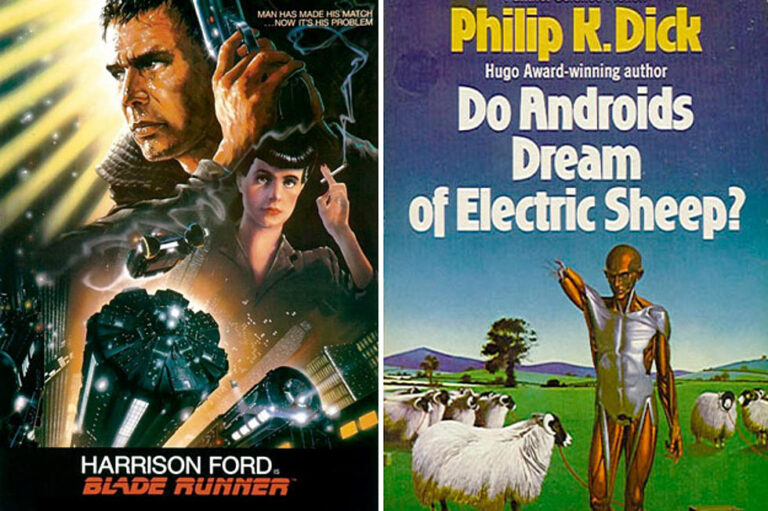
It’s never not astonishing to me how Villeneuve talked a major studio into making this film. Blade Runner 2049 is more or less a big budget indie film. There’s not much about it that’s accessible to a wide audience, even if its predecessor is a beloved cult classic (that bombed at the box office in its day as well). Despite its failure financially, however, it’s one of the more exquisite and astute sequels we’ve seen in the last thirty years. Particularly in how it flips the script from Blade Runner and that K is very aware of his replicant status. That’s not a mystery. That is, until he finds out that one of his “childhood memories,” something he perceived to be fake, may actually not be after all. And then all of a sudden his identity is in question with conflicting outside voices making things more hazy for him. I absolutely love that juxtaposition. Then throw in the film’s visual layout, its neon texture and evocative imagery, its symbolism, the score from Hans Zimmer, and the experience becomes all the more absorbing.

Listen to our review here.

[divider]

2. Sicario

As noted above, this may change, but at this point I still think Sicario is Villeneuve’s best directed film. His storytelling is remarkably sharp. The editing in this film is really great (and yes, that includes its one perspective change, which I think is warranted). Roger Deakins could have (maybe should have?) won the Oscar for Best Cinematography. The stark imagery of Sicario does a great job of complimenting its palpable tension and grave tone. And boy, is this a tense movie. That ending sequence especially had me gripping my seat hard. Benicio Del Toro has never been more intimidating. Beyond it’s cinematic qualities, though, is a movie about this idea of needing to know, a notion that becomes a coping mechanism for Kate’s moral challenges. Which I find riveting in the film. Emily Blunt is really great in the leading role and brings all of that alive in her character. Sicario may not get the same love from other people, but to me, it’s a thematically textured film and Villeneuve’s control over everything is remarkable.

Listen to our review here.

[divider]

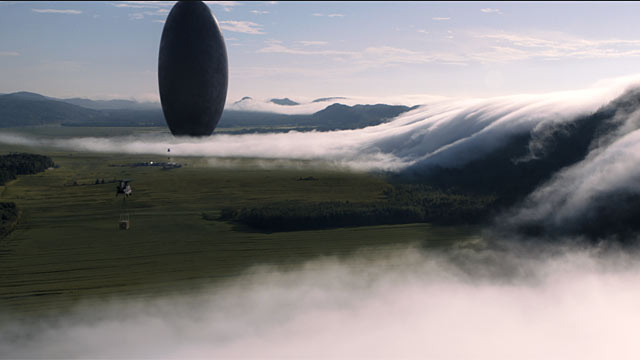
1. Arrival

Arrival is without question one of Villeneuve’s more beloved films, and for great reason. It’s incredibly well directed. The acting is phenomenal (Amy Adams should have won the Oscar, and no, I will not let that go). The music by Jóhann Jóhannsson is sublime, as well as the use of Max Richter’s “On the Nature of Daylight.” And it’s one of the best films to decode the overwhelming weight of grief on a parent. Arrival‘s ability to simultaneously weave Louise’s emotional evolution into the its main narrative is nothing short of brilliant. On a first watch especially, how it unfolds in both real time and in hindsight of knowing what is about to happen is a magic trick that still astonishes. To me, that’s not just clever storytelling just for the sake of it, but it heightens the potent emotion that comes when we realize the plight of Louise. Fully aware of what will happen, would you choose to experience a brief moment of bliss despite the heartache that’s around the corner? A question that will haunt me forever.

Listen to our review here.

Well that’s it. That’s my ranking. I know many of you disagree, so let me know what you think. Hit us up on Facebook, Twitter or Intagram. Email me at [email protected]. Let’s all have fun with Dune (Part 1) this weekend!

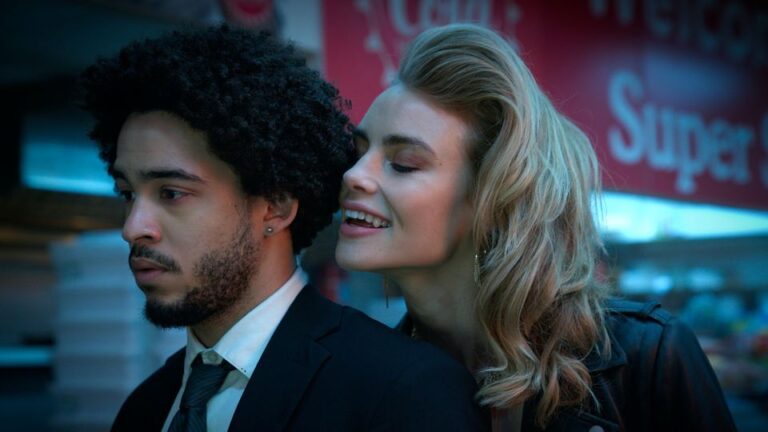
Movie Review: ‘Night Teeth’ is a vampire tale without any real bite


Director: Adam Randall
Writer: Brent Dillon
Stars: Jorge Lendeborg Jr., Debby Ryan, Lucy Fry, Raúl Castillo, Alfie Allen, Marlene Forte, Alexander Ludwig, Sydney Sweeney, Megan Fox

Synopsis: A college student moonlighting as a chauffeur picks up two mysterious women for a night of party-hopping across LA. But when he uncovers their bloodthirsty intentions – and their dangerous, shadowy underworld – he must fight to stay alive.

[/info]

There are a lot of vampire movies, which means the odds of seeing something wholly new and unique is slim. Night Teeth doesn’t create something new with these creatures of the night, but is a sometimes enjoyable mashup of genres. The film is a supernatural gangster picture with a small amount of coming of age mixed in. It’s a little like Collateral, but with vampires.

Where the film fails to keep its intrigue is in its lore. The voiceover at the beginning sets up the rules of the Los Angeles vampire/human truce, but after that the ideas, groups and concepts can get hazy. Though, there’s little to distract from the haziness. There aren’t cool fight scenes or chases. Most of the fight scenes take place in the background of shots or not on screen at all. Some of this could be ascribed to budget or because the filmmakers were trying to put their own spin on it, but it also makes for a bit of a snooze. Monster films are only as good as their kills and this film avoids a lot of the messiness.

It would be interesting if the avoidance of messiness were in service of a dynamite character building subplot, but that’s not what happens. The romantic angle falls very flat. Jorge Lendeborg Jr. does his very best as Benny. He adapts that boyish, Hugh Grant stutter with accompanying foot in mouth disease, but when it’s played against Debby Ryan’s Blaire, it feels as if Benny’s trying to impress a brick wall. Brent Dillon certainly wrote it as if Benny is falling for the manic pixie dream girl, but what Ryan brings to the role is a different interpretation that completely clashes with any attempts at a charming romance. It would be laughable if the idea of that romance made you feel anything.

This isn’t to say Night Teeth is completely without merit, though. There are a handful of scenes created by director Adam Randall and cinematographer Eben Bolter that are visually engaging. They do employ a lot of neon saturated colors as is typical of today’s action/thrillers and they do often keep the camera stagnant and let the action happen within the frame. One of the funniest scenes is as Victor, played blandly by Alfie Allen, and Zoe, played by Lucy Fry who really sinks her teeth into the role, are on a phone call check in. During Victor’s half of the call, the camera is in a wide shot so we see Victor’s trunk open and a man in pain flop out. We watch the man crawl away from the car. Casually, and still conversing, Victor walks over to the crawling man as the camera pans with him and he drags the man back to the car like he was nothing. It’s a fun scene that reminds us how powerful vampires are supposed to be.

Night Teeth fails the show don’t tell test on a lot of occasions. If the filmmakers could have gotten out of their own heads about creating something new and just created something cool, they could have had something. Night Teeth could have used more snarky Megan Fox. It could have used a couple sentences to explain the special knives. It could have used an explanation as to why Jay, Benny’s half brother, knows about vampires, keeps the truce with vampires, has been passed down all knowledge of vampires, but Benny has no idea about any of it. It could have used a moment, any moment to explain how Victor came to be the most powerful vampire, able to take down two others in one go. It could have even used a few more moments with the Night Legion who could have actually added to the lore and world building. It could have actually built a solid foundation for its world first instead of letting it fade in and out uninterestingly. Night Teeth could have been a pretty decent vampire/gangster mashup, but the convoluted nature of the world and the lackluster love plot sink it faster than a vamp can sink its teeth into a willing neck.

Grade: D

Movie Review (London Film Festival): Olivia Colman gives a powerhouse performance in Maggie Gyllenhaal’s hypnotic The Lost Daughter


Director: Maggie Gyllenhaal
Writer: Maggie Gyllenhaal
Stars: Olivia Colman, Dakota Johnson, Jessie Buckley, Peter Sarsgaard, Ed Harris

Synopsis: A woman, while on a summer holiday, finds herself becoming obsessed with another woman and her daughter, prompting memories of her own early motherhood to come back and unravel her.

[/info]

Academy Award nominee Maggie Gyllenhaal has long been a champion of complex female representation, as seen in her stunning performances in features like The Kindergarten Teacher and Crazy Heart, as well as the television series The Honorurable Woman. Now in her directorial feature debut, Gyllenhaal is able to craft not just one but several strong and complicated women all at once, resulting in a hypnotic and beautifully crafted suspense drama.

Based on Elena Ferrante’s novel of the same name, the main narrative of The Lost Daughter takes place on a beach vacation, where Leda, (portrayed by Olivia Colman), a professor, is away on a much-needed summer break. While on holiday she meets a variety of characters whom she forms bonds with, none more so than Nina (Dakota Johnson) who Leda often watches struggle to meet the needs and demands of her young daughter.

Leda can see the struggles of Nina from afar before they even strike up a conversation, with the acting between Colman and Johnson in these moments exquisite as they share such intimate exchanges with nothing more than their eyes. Leda can see the burden that Nina’s daughter is having on her, and as the narrative progresses we learn that this is something all too relatable for Leda.

Intertwining with the present day scenes are flashbacks of Leda’s younger days, where Jessie Buckley does an expert job at imitating Colman’s mannerisms and voice. The attention to detail that these two actors put in to ensure that both of these characters feel like the same person is close to perfection and only adds more weight to the unfolding unpredictable story.

To spoil or even hint at any of the big reveals in The Lost Daughter would be a disservice, but it’s important to at least recognize the near-impeccable work that Maggie Gyllenhaal creates in regards to these complex, emotional characters. Nothing is as it appears, and trying to guess where the story is headed will only throw you further off track, with Gyllenhaal using audience expectation to craft unexpected twists and nuances that only the book readers will have seen coming.

The film’s biggest strength is its lead Colman, who is once again Oscar-worthy as she so often is these days. She captures the present day character of Leda with extraordinary amounts of charisma and realism, while Buckley doesn’t quite get to have as much as freedom with the character in the flashback scenes (although this is clearly intentional from Gyllenhaal and is meant as a strength of the film and a testament to Buckley’s brilliant ability to play the character in this way).

The film’s other MVP is Johnson, who is simply sublime in every meaning of the word. Her ability to convey dissatisfaction and discontent with nothing more than her eyes is wonderful to watch, and the chemistry she and Colman have together elevates the film to the highest possible level.

While the performances can be raved about all day, the woman that brings out such quality in her actors is of course Maggie Gyllenhaal and it’s unbelievable to think that this is her debut directorial feature. She doesn’t waste a frame or a moment, with every scene integral to adding layers on to each of her characters and furthering the unpredictable roads that the narrative contends with. It’s an assured display of confidence and a film that makes many think that Gyllenhaal will become an actor’s director, one that will shine in her ability to bring the very best out of everyone she’s working with.

It’s not just those in front of the camera that produce career-best work under Gyllenhaal’s leadership, but those behind it too. Musician Dickson Hinchcliffe produces a wonderful score, replicating almost perfectly note-for-note the kind of unpredictability and suspense that the pictures themselves are displaying. Editor Affonso Gonçalves works well alongside Gyllenhaal ensuring that not a single scene is wasted or deemed replaceable.

To find flaws in the movie serves only to do so for the sake of it. Perhaps at times, The Lost Daughter can feel a little too heavy or unsettling in its uncertainty, but that Gyllenhaal is able to create this kind of emotion intentionally in her first directed film is commendable. The flashback scenes are undoubtedly the least enjoyable and perhaps there are too many of them, but that speaks more to the performance of Colman and how we wish she could be in every single frame.

The Lost Daughter is an expertly crafted, suspenseful drama that not only proves that Gyllenhaal is a filmmaker for the future, but that she’s a filmmaker for the present too.

Grade A

Chicago IFF 2021 Dispatch: ‘Paris, 13th District’, ‘The Gravedigger’s Wife’ & ‘Nobody Has to Know’

The 2021 Chicago International Film Festival offers a rich and vast array of quality international cinema, and for this dispatch of reviews, we are going to take a look into three films centered around love. One is sexy, one is tender, and one is highly emotional.

We start with Jacques Audiard’s Paris, 13th District, which intertwines three lives in one erotic package. Emilie (Lucie Zhang) is an abrasive Taiwanese Parisian who, after a week of sex, falls in love with her new egocentric roommate Camille (Makita Samba). There’s one problem: he’s not interested. Next, we meet Nora (Noémie Merlant), an optimistic 32-year-old woman who’s just arrived in Paris to pursue a law degree and escape a difficult past. However, her classmates somehow mistake her with a cam girl called Amber Sweet (Jehnny Beth) and push her to drop out which eventually leads her to resume real estate work with none other than Camille.

One could argue that this is a quartet love story, but the development of Beth’s Amber Sweet isn’t anywhere near the level of the other three, which have a lot of screen time to become sympathetic, compelling, and flawed characters. Although the story ultimately doesn’t provide any deep or meaningful love lesson, the writing team of Audiard, Céline Sciamma, and Léa Mysius do a good job of establishing interesting relationships and exploring the complexities of dating without forgetting the technological element of it all; there’s no ideal romance on sight, but desire, messy emotions, a hunger for reconciliation with oneself, and a lot of sex.

Anchored by three excellent performances from Zhang, Samba, and Merlant, as well as stunning black and white cinematography and use of color by DP Paul Guilhaume, Paris, 13th District is a satisfying and easy watch brimming with honesty and eroticism.

Grade: B

Next, we land in Africa with Khadar Ayderus Ahmed’s feature debut The Gravedigger’s Wife, a superb love story that also happens to be the first Somalian Oscar submission in history. There’s a lot going on in the race, but I’ll be cheering for this one to get far.

Guled (Omar Abdi) is a 45-year-old gravedigger in desperate need of money to finance a life-saving operation for his ill wife Nasra (Yasmin Warsame). Both live in relative poverty with their son Mahad (Kadar Abdoul-Aziz Ibrahim) but love each other intensely, and this love is the engine of the story.

In every embrace, you can feel the emotion and deep love between Guled and Nasra. A charming scene involving a party warms your heart because of Nasra’s bravado to sneak into it as well as Guled’s happiness watching her dance, only to suddenly break it when she starts feeling sick. The outstanding performances and chemistry between Warsame and Abdi create an authentic connection which is then translated into an immediate emotional immersion into the film. 

When Guled goes on a journey to save Nasra, you will be cheering for him. Every roadblock adds to the tension of this deeply intimate story, so when a little hope comes by, it feels like a lighthouse in the middle of a storm. Help from friends and Mahad’s charming attempts at raising money almost make my soul explode in hope.

Spoken entirely in Somali and featuring a Somali-only cast, The Gravedigger’s Wife is a film brimming with authenticity that, supported by three riveting performances, highlights how love and family fuel us, and it does so without the need of being overly dramatic. Ahmed achieves a perfect, loving balance.

Grade: A-

Finally, we go to a Scottish isle to explore romance and loneliness in Bouli Lanners’ tender and tranquil love story, Nobody Has to Know.

The director himself plays Phil, a farmer suffering from amnesia as a result of a stroke. Millie (Michelle Fairley), daughter of his boss, soon comes along to help him recover his memories. But eventually, longing eyes become words as Millie reveals to Phil that, before his amnesia, they were lovers. Although Phil doesn’t seem too reluctant to question this revelation, what should we, as the audience, do?

The film uses its setting to explain the personality of the characters. The landscapes are vast and beautiful, but also quite empty and austere. There’s no modernity in sight which is a reflection of Mill’s life in a small community next to a religious family. Despite the extension of her surroundings, there’s nowhere to escape from the oppression of tradition. Just like Phil, a foreigner who doesn’t seem to fit that well into this town, she’s lonely and both the amnesia and the love offering is a chance for them to create a happy story, get rid of isolation, and just be swept away by their emotions. In the center of this heartfelt romance is the enormous chemistry between Fairley and Lanners who deliver warming performances that subtlety transform as love grows between them. 

Nobody Has to Know runs along quietly, carefully building drama, immersion into life in this small town, and romantic tension. And just when you think you’ve figured out what Lanners is doing, the devastating ending hits you like a truck.

Grade: B-

Paris, 13th District, The Gravedigger’s Wife, and Nobody Has to Know are screening In-Person and virtually as part of the 2021 Chicago International Film Festival which runs from October 13 to 24.

Cover images courtesy of the Chicago International Film Festival.

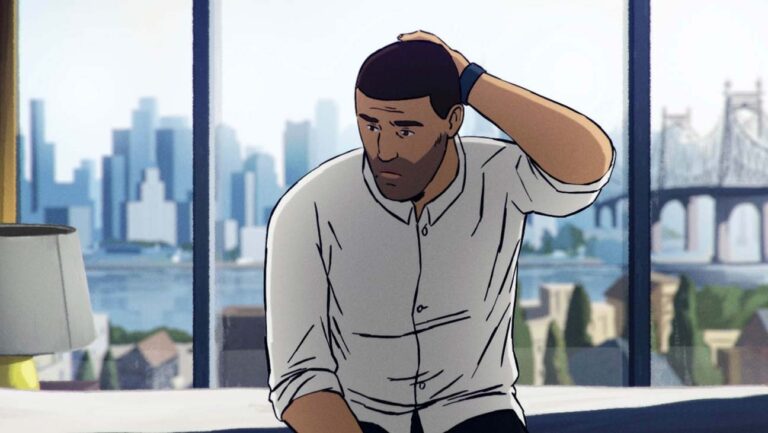
Movie Review (Middleburg Film Festival): With Wonderful Animation and a Compelling Story, ‘Flee’ is One of the Best Films of 2021.


Director: Jonas Poher Rasmussen

Synopsis: On the verge of marriage to his long-time boyfriend, a successful academic in Denmark is confronted with a secret from his past.


The crisis of Afghanistan has been tragically a neverending one. It has been a country under siege from abroad and within for decades with too many stories to count. Jonas Poher Rasmussen’s Flee is another one of these stories, but this is a very different one. The background of the main figure is different and how it is told is another thick layer to the presentation which adds another form of realism to the screen. How the subject and Rasmussen are close to each other is part of a trust that allows this tale to come out naturally and not fraudulently.

The story is about a man named Amin (we are told that real names were altered to protect the real identity), an Afghan-born man who is living a happy life in Denmark and about to marry his husband. Before he does that, however, he finally tells his story to Rasmussen, a high school friend who himself is learning the full truth of Amin’s life. In a series of interviews, Amin talks about how he fled Afghanistan as a refugee in the early 1990s as the government fought the Taliban; it should be noted this documentary was made well prior to the Taliban’s return to power this year, but how directly similar this story makes it even more disturbingly coincidental.

Amin’s childhood is at first one of happiness, dancing to Western music while wearing his sister’s nightgown, unaware of what the word homosexuality meant (or as Amin says, “homosexuals didn’t exist”) and how it was seen in the strict Muslim country. This is quickly disrupted when the Soviet Union invaded Afghanistan to protect the communist government and his father is taken away, never to be seen or heard of again. Once the Soviet Union collapsed and a power vacuum between opposite sides tries to fill the void, it is obvious that Amin and his family cannot stay. How he gets from Afghanistan to Denmark is one story of torment, heartbreak, horror, and sacrifice.

The sequences in bouncing from country to country, with Amin and his family doing almost anything to get as far away as possible, is daunting. The opening words by Amin tell how much he felt not at home, even in Afghanistan, because he was never safe and could never stay in one place. Denmark finally became the safe home, although his arrival there was by accident. How Rasmussen depicts Amin’s story using his own voiceover is another dimension in storytelling with a feeling of filming the filming of the documentary, especially with the animation filling in where a camera would be. It is shown that Rasmussen, even as Amin’s friend, speaks to him almost as a psychologist while Amin is laying down trying to relax.  You can tell that, even as an adult, Amin hasn’t found his peace and accepted himself for who he is.

Documentaries are made to be informative, to tell non-fiction directly to the viewer. Archive footage, camera to the interviewee, and establishing shots of the location in question. What Rasmussen does instead converts it into an animated portrait that does not make viewers imagine what the subject is saying. It is now depicted to us in detail based on the subject’s memories, putting us on the ground and through their eyes of what they were going through in such harsh conditions. Amin’s story is harsh and brutal and we can even feel it in its 90 minutes.

Grade: A+

Follow me on Twitter: @bsusbielles (Cine-A-Man)

Movie Review (Middleburg Film Festival): ‘Red Rocket’ is a Hilarious, Sharp Effort by the great Sean Baker


Director: Sean Baker
Writer: Chris Bergoch, Sean Baker
Stars: Simon Rex, Bree Elrod, Suzanna Son

Synopsis: A washed-up porn star clashes with his estranged wife after returning to his hometown in Texas.


The films of Sean Baker are something to behold. He takes each of his stories to a different setting with a variety of characters that come off the street, sometimes literally with his creative casting in getting the right people he needs for every part. This time, Baker sets off to a poor town in Texas where Mikey Saber, a washed-up porn star, returns home after two decades away to regroup, except no one, not even his estranged wife, wants him to be around. While working in the form of selling marijuana, Mikey finds himself attracted to a seventeen-year-old girl working at a donut shop; despite the age difference, at age 17 in Texas, Mikey says she is, “legal as an eagle.”

Mikey is a narcissist and somebody no one would root for, but Simon Rex, who himself dabbled in porn before becoming an actor and MTV VJ, really hits the nail on the head as the sex-bragging Mikey. He arrives in town with a bruised face, having been scared out of California and taking the bus all the way to the one place he knows, a tiny house where his wife, Lexi, lives with her mother. Bree Elrod as Lexi and Brenda Deiss as Lexi’s mother are both suspicious and cynical when Mikey says he wants to restart his life. It’s understandable because Mikey had previously sworn he’d never return to Texas, but now he is back and still in his sex-driven ways.

As we follow Mikey using his charm to plead and deal through his way to making money for the return to California, he finds his romantic getaway in Strawberry, played pruriently by newcomer Suzanna Son. She goes to school, makes her money in this random donut shop, but also likes the older Mikey rather than the random boy she sleeps with. Their love and lust are equal, and even when Strawberry finds out about Mikey’s past, she still thinks of him as an attractive figure to be with. Even the gullible Lonnie, played by Ethan Darbonne, really likes Mikey and wants to really be his friend, but that turns into something of a mess as the film progresses.

In the trailer, we hear “Bye Bye Bye” by ‘NSync and the song is used throughout the movie, reflecting a time when Mikey was young and buff when beginning his porn career. This is in total contrast to the film’s setting in 2016 when Lexi and her mother are heard watching both the Republican and Democrat National Conventions with the voices of both then-candidates Donald Trump and Hilary Clinton being heard. Even the reference of Lexi’s mother using marijuana because her doctor cut down her painkiller medication explores the area’s rough surroundings; we even learn Lexi has engaged in prostitution to survive, showing how desperate it has become. And shows why Mikey left in the first place.

Yet, there are plenty of funny moments, those chunks of humor in the dialogue that Baker and his writing partner, Chris Bergoch, have consistently laid on with their blend of characters. In fact, this can be argued that it is Baker’s most daring project because of the strong sexual content and manner he made the film, shooting discreetly under COVID protocols and calling Simon Rex out of the blue (Rex says his sister became friends with Baker’s sister and exchanged numbers) to improvise an audition for the part. What you get is the high-standard character study that Sean Baker has always succeeded in bringing with unusual people in common struggles from daily life.

Grade: A

Follow me on Twitter: @bsusbielles (Cine-A-Man)

Movie Review (Middleburg Film Festival): With ‘Belfast,’ Kenneth Branagh Deliveries a Deeply Personal Crowd Pleaser for All


Director: Kenneth Branagh
Writer: Kenneth Branagh
Stars: Caitríona Balfe, Judi Dench, Jamie Dornan, Ciarán Hinds, Jude Hill

Synopsis: A semi-autobiographical film that chronicles the life of a working class family and their young son’s childhood during The Troubles in Belfast, Northern Ireland in the late 1960s.


Since its debut, the critics have hailed Sir Kenneth Branagh’s semi-autobiographical story as the front runner for Oscar glory. It’s something that hasn’t been attached to Branagh as a director since his four-hour epic version of Hamlet in 1996. After his last nomination for his performance in My Week With Marilyn, Branaugh has moved into starring and directing action-oriented films with the exception of the underseen All Is True as William Shakespeare himself. Now, Branaugh has taken his next film into the personal realm and away from the commercial side, he’s been doing the last decade with his hometown and The Troubles surrounding it.

Buddy, Branagh’s composite character, is played by newcomer Jude Hill, an innocent nine-year-old living with his parents and grandparents on a street that is suddenly disturbed one August day in 1969 by a riot between Catholics and Protestants. This is the beginning of a violent streak that lasts thirty years between the two religious factions, but people did not know this would be the norm in Belfast in 1969. Buddy’s home street is barricaded and he goes on as normal attending school, having his first crush, and engaging in hijinx with friends. Meanwhile, his father (Jamie Dornan) is working to pay off debts in London and contemplates with Buddy’s mother (Caitriona Balfe) of leaving Belfast with the dark clouds getting darker over the sectarian violence. Buddy’s mother is struggling with her husband away for a long time while working to shield the family from the chaos outside.

Buddy’s grandparents, played by Ciarán Hinds and Judi Dench, are the wit and wisdom of the film, talking to Buddy, who cannot and does not want to leave the only city he’s known. Both Hinds and Dench are the strongest performances, timely speaking amongst themselves as the cute elderly couple who still remember the old times before modernity came in. This is a family that is clearly a tight-knit group that stays and prays together, avoiding the politics outside of their home, although they are very aware of it with the news being shown on TV. Instead, they watch movies, exploring the sentimental feelings of movies like High Noon and Chitty Chitty Bang Bang when they were the moral tales of heroism or the escape they want from what is happening.

The sounds of Belfast in 1969 are authenticated by extensive sounds of ordinary life the characters walk through, as well as Belfast native Van Morrison’s two original sings being played at the beginning and the end of the film. Branagh even contrasts the city of then from now with an opening travelogue of shots in color before moving to black-and-white, courtesy of long-time cinematographer Haris Zambarloukos. They are snapshots captured in real-time and even watching an interview of the British Prime Minister being asked about the violence is not being copy-and-pasted onto the screen. The music is vivid, the charm is around them, and life can remain exciting regardless of the rumbling in other neighborhoods of the city.

With the childhood memory genre, directors who write stories based on their own lives are showing the audience their background and where they came from. Whether it’s Alfonso Cuaron’s Roma or John Boorman’s Hope And Glory, they are putting out their souls for us to explore because it’s these moments that make them into the person they are. For better or worse, this is what they are. However, instead of a deep exploration of the past, Branaugh gives us a postcard’s worth of plot in just 97 minutes and he does not put one foot wrong. The hype is real. This is the best film of the year so far.

Grade: A+

Follow me on Twitter: @bsusbielles (Cine-A-Man)

Poll: What is your favorite film based on a classic sci-fi novel or story?

When one thinks about Dune, it’s hard not to think about sand, worms, David Lynch, and now Denis Villeneuve. But considering where that story first came from, that seems unfair to the mind and influence of one Frank Herbert. We realize this isn’t a book site, but it feels wrong not to praise classic science fiction film without acknowledging the likes of Frank Herbert, Arthur C. Clarke, Philip K. Dick, Robert A. Heinlein, and H.G. Wells. Their works rank among the greatest in all of sci-fi, and some even served as the basis for many of the greatest film adaptations in the genre.

With that said, what is your favorite film based on a classic science fiction novel or story?


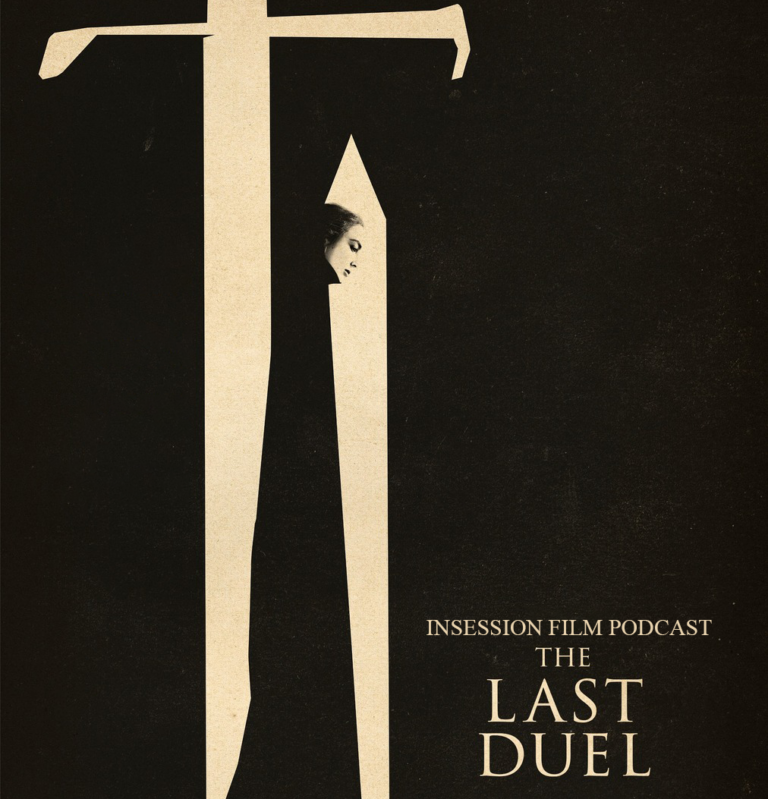
Podcast: The Last Duel / Lamb – Episode 452

This week’s episode is brought to you by Patreon and our awesome listener’s like you. Sign up today to support the show and get fun rewards!

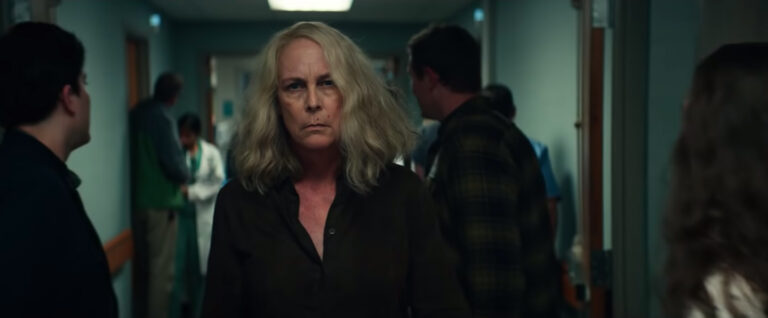
This week on the InSession Film Podcast, we discuss Ridley Scott’s Medieval film The Last Duel and also A24’s latest “horror” film from Valdimar Jóhannsson in Lamb! Plus, Brendan offers his thoughts on David Gordon Green’s Halloween Kills.

As you listen to the episode, you’ll have to forgive some of the oddball wording and phrasing. Given our more-than-usual busy schedules, we had little time to prepare and we’re running on fumes. Perhaps at times our fatigue got the best of us, but the discussion was still a ton of fun. Scott may be in his eighties, but the man is still making great movies. And say what you will about A24, but Lamb is unique among a cannon of films known for their singularities. So, we did our best to move past our tired brains because we had so much to talk about.

On that note, check out this week’s show and let us know what you think in the comment section. Thanks for listening and for supporting the InSession Film Podcast!

– Movie Review: The Last Duel (6:12)
Director: Ridley Scott
Writers: Nicole Holofcener, Ben Affleck, Matt Damon
Stars: Jodie Comer, Matt Damon, Adam Driver, Ben Affleck

– Notes / Discussion (1:00:56)

For our break segment this week, Brendan dives into the latest Halloween film Halloween Kills, a film sparking all kinds of conversation on social media. We also preview Dune and ready ourselves for a big show next week. Also, in case you missed it, our latest Patreon Bonus Content episode is now live for all to hear! Be sure to check it out as we discuss Malignant, Annette, The Guilty and more!

[divider]

RELATED: Listen to Episode 423 of the InSession Film Podcast where we discussed The Tree of Life!

[divider]

Movie Review: Lamb (1:22:21)
Director: Valdimar Jóhannsson
Writers: Sjón, Valdimar Jóhannsson
Stars: Noomi Rapace, Hilmir Snær Guðnason, Björn Hlynur Haraldsson, Ingvar Eggert Sigurðsson

Show Sponsor: First Time Watchers Podcast

– Music

The Duel – Harry Gregson-Williams
The Aftermath – Harry Gregson-Williams
DÝRIÐ – Tóti Guðnason
The Return of the Eagle – Atli Örvarsson

Subscribe to our Podcasts RSS
Subscribe to our Podcasts on iTunes
Listen on Spotify
Listen on Stitcher
InSession Film Podcast – Episode 452

[divider]

Next week on the show:

Review: Dune
Top 3: N/A

[divider]

Help Support The InSession Film Podcast

If you want to help support us, there are several ways you can help us and we’d absolutely appreciate it. Every penny goes directly back into supporting the show and we are truly honored and grateful. Thanks for your support and for listening to the InSession Film Podcast!

VISIT OUR DONATE PAGE HERE

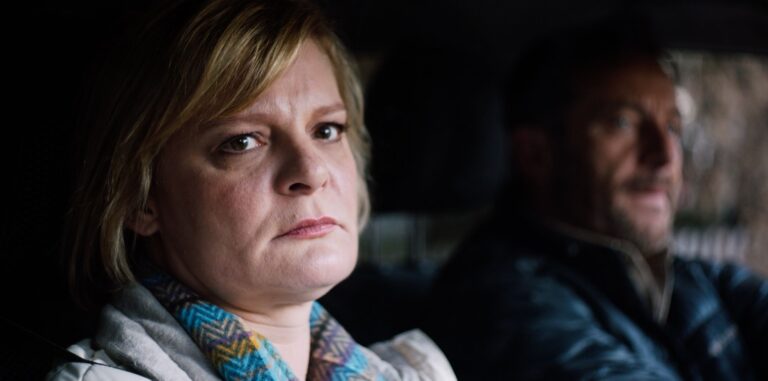
Interview: A Conversation with Martha Plimpton (Mass)

As I get the email from her publicist on that Wednesday afternoon saying “we’re gonna head into the zoom now, we’re running early” my hands get sweaty, my nerves start making my sweat even more than usual. I’m nervous and yet so ready to talk to Martha.

Doing some research on her and the film, I found out that we had a mutual friend, yup, turns out I am 1-degree of Martha Plimpton. I enter the zoom and the first face I see is Martha’s with a smile, her deep red glasses, and her short hair which is now a cool auburn with a gorgeous white streak in it instantly made me feel welcomed. (If they were going to cast a Sally Jessy Raphael biopic in that exact moment, winner winner chicken dinner) We greet each other with “Hello’s” and I mention before we start who our mutual is and the mood becomes even lighter and more welcoming, for a first-time press junket interview for myself, I’ve hit the jackpot. 

Mass tells the story of two couples who are bound for life due to a tragedy that one of the couple’s sons committed on the other’s son, amongst other victims. One couple birthed the killer of a mass shooting, the other birthed a victim. This is the first time that either of the couples have been face-to-face to discuss what happened. Martha plays “Gail” who from moment one of meeting her feels like a tea kettle ready to burst at any second, she is able to take a full gambit of emotions that get bottled up and then let them go slowly as the fire burns inside her. 

As Martha and I sat face to face separated by our cameras and despite this being our first time meeting the conversation flowed like two old friends catching up and it was just a joyous meeting. From giving all the (well-deserved credit) of her work here to the film’s writer/director Fran Kranz to blushing when I brought up the buzz her role is getting for an Oscar nomination, one that if nominated would be the purest definition of being earned by merit. My favorite moment of the conversation ties in with that last part there- upon mentioning that she is an Oscar Legacy already due to her father who won for 1975’s Nashville- Best Original Song and if she won she would join the rare feat of being on a list of father/daughter Oscar winners like Jane and Henry Fonda, Anjelica and John Huston, and Angelina Jolie and Jon Voigt she was left speechless trying to even imagine that idea. 

Talking with Martha Plimpton was truly a delight and I urge you to be able to check out the film when you have a chance, it is an experience that will linger in your mind for days after.

REVIEW (DXIFF21): ‘Attica’ Is a Visceral and Skillfull Retelling of an Historic Uprising


Director: Traci A. Curry and Stanley Nelson

Synopsis: Stanley Nelson examines the largest prison uprising in US history, conducting dozens of new interviews with inmates, journalists, and other witnesses.


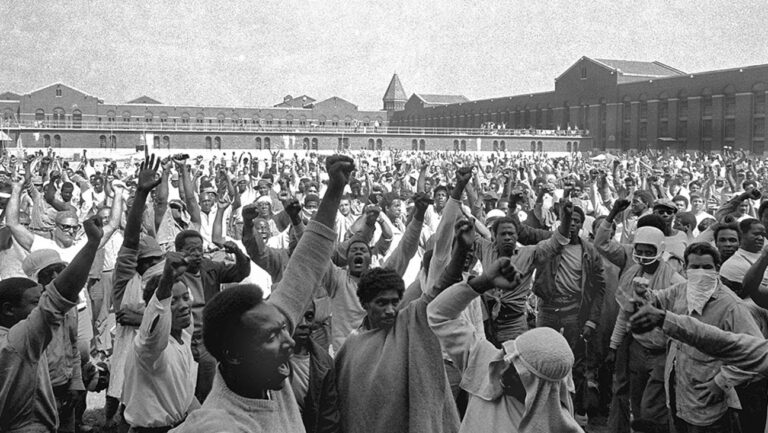
The phrase “It didn’t have to be that way” lands like a savage blow to your guts in Stanley Nelson and Traci A. Curry’s harrowing documentary Attica centered around the largest prison uprising in the history of the United States; a rebellion that ended in bloodshed.

Using interviews with ex-inmate survivors, journalists, and family members of prison guards, Attica sets the record straight and refuses to let time forget about a highly relevant event in the history of a country still fighting with racial inequity and police brutality.

The documentary drops you right at the start of the uprising, which saw 1200 inmates taking over the New York prison, hostages included. By doing this, the filmmakers grab your attention from minute one and never let you go. Gradually, the reasons for the rebellion are explained by survivors: Inhuman treatment, racism, no religious freedom, police beatings. “Fear… they ran the prison with fear,” one of them explains to the camera. Unfortunately, it’s what you would expect out of an American prison operated by white guards only, and whose inmate population was composed of around 70% Black and Brown people. The subhuman conditions, abuse, the rebellious attitude of new generations, the death of Black Panther George Jackson were all sparks that started the fire of an unavoidable conflict.

The prisoners demanded basic human treatment like showers, toilet paper, more time outside their cells, but the State didn’t like one key demand: Amnesty. In a bid for support, they requested the presence of an “Observer Committee” comprised of influential figures and civil rights activists such as Clarence Jones, William Kunstler, and John Dunne. Attica assembled a group of living members of this Committee which provide crucial and, at times bone-chilling, insight into the whole scene.

The documentary skillfully intertwines the interviews with powerful archival and surveillance footage that takes you right into the tension of the conflict while giving a glimpse into the hunger for humanity inside Attica. You see hundreds of inmates covering their faces, setting up tents, and digging a trench to use as a toilet. They raise their fists in defiance and, at one point, you manage to see the hope on their faces. However, there’s always eerie footage of armed guards watching over them from the rooftops.

Aided by Aljernon Tunsil’s excellent editing, a subtle score by Tom Phillips that smartly and slowly builds dread, and a frightening sound design, Nelson and Curry build the documentary like a timebomb. It all starts with the presentation of the white town surrounding the prison, then you hear about how people could only see the prisoners as animals — with casual racism thrown in the mix —, you learn that New York Governor Nelson D. Rockefeller was refusing to answer calls and show up to the prison. The increasing desperation of the inmates as negotiations stall and Observer Committee members talking about the somber feeling in the air are the last warnings of the bloodbath to come, which the directors don’t hesitate to show, sometimes in full color. The torture and humiliation of prisoners being dragged through excrement is a contrast to the glee of white guards leaving the prison after the assault. These are scenes that could very well belong to a concentration camp, but were in fact perpetrated on US soil by US forces by indirect mandate of the US president. “Who were the true criminals?” seems to ask Attica.

During a panel at the 2021 DXIFF symposium, Stanley Nelson explained that most of the former inmates interviewed for this film hadn’t had a chance to truly speak about their story. Nobody asked them. By giving them a voice, Attica brings a new perspective to the event and corrects the white narrative created by the failure of the media, which is steadily emphasized throughout the doc. Even though the inmates asked for specific trustworthy and objective journalists to be present during the negotiations, we learn that the rest of American coverage wasn’t interested in portraying the struggles or needs of the prisoners, rather paint them in a negative light and spread false rumors about how they were torturing hostages. Later on, we learn that these news outlets falsely reported that the death of the hostages was a product of slash-throating instead of bullets shot by white policemen assaulting the prison. This narrative is the one that permeated throughout time.

Attica is a visceral, relevant, and skillfully directed portrait of how a State failed to provide basic humanity to its citizens, turning to their most violent impulses instead; impulses pushed by prejudice and racism that cannot be and will not be forgotten by history.

Grade: B

Movie Review: With “Bergman Island,” Mia Hansen-Løve creates her most intimate and fantastic work yet


Director: Mia Hansen-Løve.
Writer: Mia Hansen-Løve.
Stars: Vicky Krieps, Tim Roth, Mia Wasikowska, Anders Danielsen Lie.

Synopsis: Two filmmakers retreat to Fårö island for the summer and hope to find inspiration where Ingmar Bergman shot his most celebrated films. As the days pass by, the lines between fantasy and reality begin to blur, and the couple is torn apart.


Even though filmmaker Chris (Vicky Krieps) travelled to Fårö Island to get the inspiration to write her latest film, she is struggling with writer’s block. This place, famously known as Ingmar Bergman’s island because of its significance in the Swedish filmmaker’s movies and private life, is now seen as a safe haven for artists that use it as a way to explore their ideas and create new pieces of art.

It seems that Tony (Tim Roth), Chris’s partner and fellow filmmaker, has found its secret. While he thrives writing his latest oeuvre, giving masterclasses around the place, and getting never-ending compliments from fans, Chris can’t go past her outline. “I’m afraid that it’s like stuff already done,” Chris tells Tony during one of her outbursts, “We spend all our lives saying the same thing.” The key, Tony says, is the perspective of who says it.

This snippet of dialogue is also the key to appreciate Mia Hansen-Løve’s filmography, one that is focused on the ordinary and the simplicity of life, and yet provokes strong reactions. In Goodbye First Love (2011), she made us suffer the despair of the first heartbreak, in Eden (2014), the uncertainty of following our passions, and in Father of My Children (2009), the suffocation of depression. Now, in Bergman Island, her most personal film to date, Hansen-Løve offers a peek into the tortured mind of an artist and the secrets and restlessness that live inside of her.

Bergman Island starts with Chris and Tony arriving at Fårö island, a secluded peninsula in Sweden that is an odyssey to arrive to. Nevertheless, the pay-off is immediate: these filmmakers start experiencing the life and context that inspired the mind behind works of art such as Through a Glass Darkly (1961), Persona (1966), and Scenes from a Marriage (1973). Being there inspires Chris to deal with Bergman’s dichotomy as an artist, man, and parent.

How is it possible that such a beautiful place – surrounded by evident peace and simplicity – could be the setting for the tortured stories created by Bergman? Could a family man have created such a body of work or is it justifiable that Bergman neglected his nine children in the name of his art? These questions follow Chris around as she faces her own inability to write. As she struggles, Tony flourishes.

While the story seems simple – just as with other Mia Hansen-Løve films – the depth of its complexity resides in the discreet changes in the looks, unspoken interactions, and reveries shared by Chris and Tony. They arrived happily to the island, but soon they start to drift apart as they find themselves in opposite sides of the creative process. In this meta-story, it is impossible not to think about Mia Hansen-Løve’s life and the way Chris and Tony reflect her own past relationship with French director, Olivier Assayas.

Divided in two storylines, Bergman Island is mysterious and hard to define. Its freedom and rejection to an easy characterization allows for the formulation of theories and subjective interpretations. Just as with Bergman’s films, this movie can be interpreted in different and contrasting ways. The possibilities are endless and any one of them can be satisfying.

Sometime in the middle, a second love story is presented: Amy (a heart-breaking Mia Wasikowska) and Joseph (an irresistibly unreadable Anders Danielsen Lie), two ex-lovers, reunite for a friend’s wedding in Fårö island. With a physical appearance and background that are eerie similar to Chris (and consequently to Mia Hansen-Løve), Amy gets entangled in a love affair with the man that broke her heart years before (this section could easily be a Goodbye, First Love sequel).

How are these two stories connected? It is for the audience to discover it and create its own conclusions. Are we seeing the present, the past or the future? What is fantasy and reality? Hansen-Løve leaves everything open to interpretation. In this regard, and considering how meta and philosophical the film is, Bergman Island flirts with Persona’s complexity and Clouds of Sils Maria’s existentialism.

Such a dense-but-disguised-as-a-simple story is highly digestible because of its technical mastery. Mia Hansen-Løve makes it look simple and natural, proving her wisdom and sensibility. The peaceful and dreamlike landscapes contrast with the torment of the lost artist. The friendly sounds contrast with Chris’s creative turmoil and Amy’s shattered illusions. Just because something looks peaceful and beautiful, it doesn’t mean that it can’t be shattering and tumultuous.

Bergman Island is the recognition of a bigger than life artist by a fellow writer; it is the examination of the creative process; and it is the use of art as a way of emotional expression. Is it valid to use past experiences to create a fictional story? Is it okay to say something that you could never say to your partner through the safety of fiction? In this story, Chris finds solace in Fårö island, but also in the writing process itself. The exact thing that causes her pain is also the one that sets her free.

Deeply personal, but ambiguous enough to offer comfort to the audience, Bergman Island is equally inventive as it is mundane. It invites us to dive into our past, fantasies, and plans to explore our buried emotions. While it is accompanied by the playful rhythm of ABBA’s The Winner Takes It All or Tina Charles’s I Love to Love it slowly breaks your heart by setting loose the freedom of your imagination.

Grade: A


Movie Review: ‘Halloween Kills’ is a series high for the iconic horror franchise.


Director: David Gordon Green
Screenwriter: Scott Teems, Danny McBride, David Gordon Green
Stars: Jamie Lee Curtis, Judy Greer, Andi Matichak

Synopsis: The saga of Michael Myers and Laurie Strode continues in the next thrilling chapter of the Halloween series.


We all have a film franchise that we love, some that when talking about them we get nothing but butterflies and we talk a thousand miles an hour. When you’re a horror fan you especially have to be on your A-game because fans know the series better than the creative teams behind it. For many, including myself, that franchise is Halloween

As a fan, when the announcement of 2018’s film happened I was ecstatic. It had been a long time since Michael had graced our screens and I was pumped, only to be absolutely devastated at the outcome. This great battle of all battles was truly underwhelming, and yes, a part of it was the promotion behind the film. So even as a major fan of the series, I didn’t like the 2018 film, and really wasn’t all that pumped for Halloween Kills, that was until I was. In February of 2020 my sources were able to not only get me a copy of the shooting script for the film but I was able to see the film and was I SOLD, and then Covid hit. 

Knowing what was ahead with over a year-long delay, I was extremely satisfied with Halloween Kills, a vast improvement over the first one, not only in the mythos and story of Michael Myers, but an overall improvement on the type of response that happens from a traumatic event. This film beautifully blends both the 1978 and 2018 films into a horror wet dream that never lifts its foot off the neck of the viewer. An enticing next chapter into a 43 year-long franchise that easily could have been stale by now. The film is able to pick up where the last one left off while also giving us answers from the original in the on screen telling of flashbacks that are truly impressive. I also really want to tip my hat to the writers and director of this film because they were able to close some pretty big plot holes that were opened in the 2018’s version. As an official “Halloween 3” for the series, it’s literally defying the idea that the third movie always sucks. In fact, I rate it higher than part 2 and part 1. This has easily become my personal favorite in the series. Between balancing a storyline that works for the series in a present day setting, to the absolute brutality of the kills that lets the title of the film live up to its name, Halloween Kills becomes a thrill ride that you wanna keep riding again and again. 

As usual, the score work from John Carpenter, Cody Carpenter, and Daniel Davies is an absolute delight that continues to impress as the movie chugs along, and never sounds stale. The score itself actually feels like its own character to the point that when nothing is playing, you actually miss it, like an old friend. 

When it comes to the performances, there’s definitely some good, some bad, and some ugly- Starting with Jamie Lee Curtis, this is the best work she has done since True Lies. Period. This is Oscar-worthy work from Jamie Lee that fully deserves the support from not only the fans, but the Academy. What she’s able to pull off in her section of the movie brings the character of Laurie Strode to new depths that haven’t been there since Laurie, 1978. A Supporting Actress nomination should happen and not only would it be welcomed by many in the community but it would be the icing on the cake for the role that made her. Make no mistake though, this is Judy Greer’s film. When it comes to the three Strode women, she’s able to work with what’s here but unfortunately, she’s massively underwritten. Andi Matichak is much lot better here than she was in 2018, and that’s because we’re able to appreciate her more, as her character is written well. Kyle Richards returning as Lindsay Wallace is a treat that many thought would be a trick. She is delightful as Lindsay and I,  for one, would welcome Richards back in a heartbeat. Diva Taylor as Sondra is absolutely magnificent and terrifying in her role that she’s reprising from the 2018 film, as is Carmela McNeal as Vanessa who also comes back from a blink and miss it cameo in 2018. 

The weaker aspects of the film come from the performances of Charles Cyphers, Nancy Stephens, and Anthony Michael Hall; and that’s mainly because of weak writing. Neither Cyphers nor Stephens are needed for the story and Halls delivers dialogue oddly. It isn’t a bad performance, but he does not seem to fit with the other actors, likely because of their shared history in the franchise. Even though they may not be needed for the story, having them there is an absolute blast and still, I’m here for it. 

In the end, this is a perfect middle piece of this trilogy that is made for the fans and it delivered in not only a near perfect Halloween film, but makes this fan excited for Halloween Ends, and from there, wherever Malek Akkad allows the stories to go. GO see this movie on a big screen, grab a bucket of popcorn, and enjoy the hell out of this fun ride!

Grade: A-