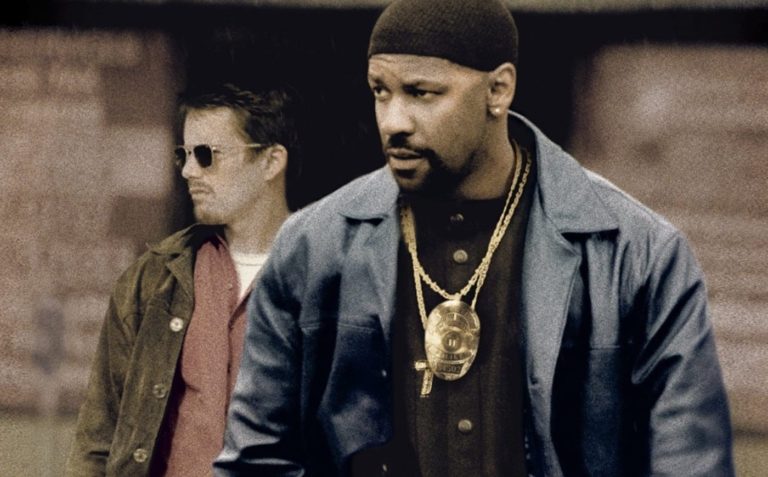
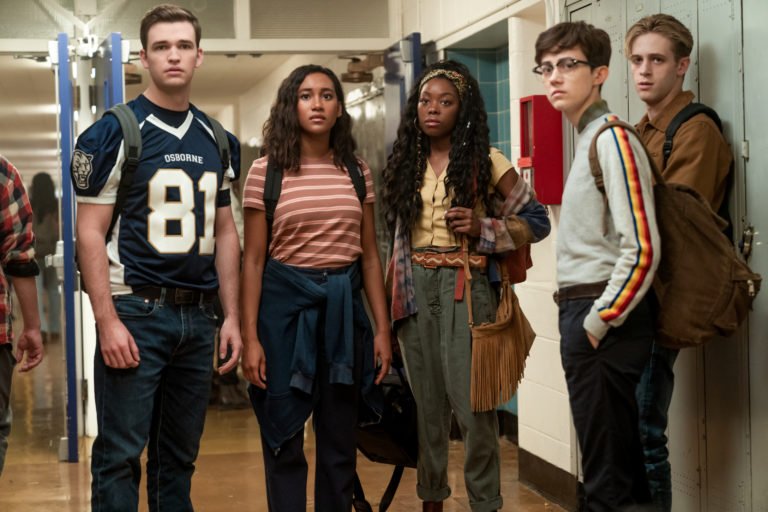
This week on Extra Film, Ryan and Jay conclude their Spike Lee Movie Series with Inside Man and they also review the Fran Kranz film Mass!
Spike Lee has had his ups and downs over the years, but there’s no denying his importance to cinema. This series has been incredibly rewarding and it ends on a great note with Inside Man. It’s a great and entertaining film that continues to demonstrate Spike’s capabilities as a filmmaker. Mass, on the other hand, is a powerful study in emotional vulnerability and trying to find closure. It’s an Oscar contender and one of the more compelling films we’ll see this fall season.
On that note, check out this week’s show and thanks for listening to the InSession Film Podcast!
– Movie Review: Inside Man (5:52) Director: Spike Lee Screenplay: Russell Gewirtz Stars: Denzel Washington, Clive Owen, Jodie Foster, Christopher Plummer, Willem Dafoe, Chiwetel Ejiofor
– Movie Review: Mass (1:01:21) Director: Fran Kranz Screenplay: Fran Kranz Stars: Reed Birney, Ann Dowd, Jason Isaacs, Martha Plimpton
We try to make this the best movie podcast we possibly can and we hope you enjoy them. Subscribe today on iTunes, Spotify, or Stitcher, and please leave us a review on iTunes. You can also find us on Soundcloud, PlayerFM, and TuneIn Radio as well. We really appreciate all your support of the InSession Film Podcast.
To hear this Extra Film episode and everything else we do, download our apps on the Amazon Market for Android and the Podcast Source app on IOS devices. The mobile app covers all of our main shows, bonus podcasts and everything else relating to the InSession Film Podcast. Thanks for your wonderful support and for listening to our show. It means the world to us.
I will be watching and reviewing all of the films included on AFI’s 100 Years…100 Passions list. The list contains the 100 greatest love stories in American cinema and I plan to consider how our views on romance and social issues have changed over the years as well as judge whether the romances in these films actually made me swoon. As a fan of the romance genre, I expect to love each and every one of the nominees but I also don’t know if I would consider all of them romantic.
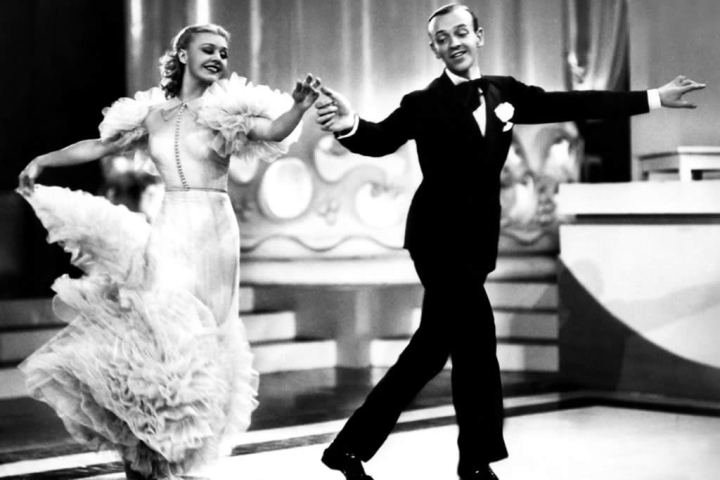
I think that you might struggle to find people who don’t understand the appeal of Fred Astaire and Ginger Rogers’s double act. Not everybody is a diehard fun and some will complain that their films seem terribly old fashioned but I’ve never encountered somebody who won’t concede that they were both extraordinarily skilled dancers. When they launch into one of their routines and that delicious clickety-clack sound can be heard, it is impossible not to be won over. Even contrarians find it hard to question Astaire’s status as one of the all time greats. Their talent and chemistry is undeniable – it explodes off of the screen. This is what allowed them to make so many films that were essentially just an excuse to stitch together a few song and dance numbers. Out of all their collaborations, Swing Time (1936) is typically viewed as their Magnum Opus. It uses the same old formula, but has the distinction of featuring some of their best dancing. This made it a box office smash in 1936, and it still has people grinning happily today.
The secrets to its success aren’t all that surprising. People like to see pretty, glamorous people hoofing like there’s no tomorrow. However, it is important to consider the fact that there is a thin plot and quite a few dialogue scenes sandwiched in between the singing and the dancing. All of this is usually just employed as a basic foundation that allows the director to get the ball rolling, before getting down to the good stuff. Swing Time is unusual in that there are lengthy intervals in which Rogers and Astaire are expected to conjure up jokes out of thin air. It keeps stopping and starting, thereby failing to build up momentum. After performing an exhilarating dance number, Astaire and Rogers will spend fifteen minutes trading mildly amusing one-liners while standing out in the snow. This means that the audience slowly begins to feel as though they will constantly be met with disappointment. Even after a scene that had me whooping in delight, I knew that the film was immediately going to get bogged down in cutesy dialogue that I didn’t care for. I suppose these lulls were meant to build up anticipation for the next dance scene and give us time to to get to know the characters. These rest periods stretched on for far too long and extended a light piece of entertainment that should have been about 70 minutes long.
The thing with these films is that they are aren’t meant to provide you with three-dimensional, well-rounded characters. In that regard, Swing Time is similar to all of the other Astaire and Rogers collaborations. In fact, one of the only ways in which it deviates from the formula is in its inclusion of the “Bojangles of Harlem” musical number. It holds the unfortunate distinction of featuring Astaire in blackface. The scene is full of offensive racial stereotypes and horrific ‘jokes’ that trade on the idea that African-Americans are inherently stupid and worthy of mockery. This is one of those moments that really has not aged well and I can’t understand why people seem so willing to sweep this moment under the rug. When you consider the fact that there are so many other Astaire-Rogers films that don’t feature racist content, it seems odd that Swing Time gets all the praise. Surely critics aren’t blind to the fact that the scene does manage to tarnish a significant portion of the film.
There are so many points where the screenwriters and the director made missteps, so it does become easy to forget the fact that Astaire and Rogers still show up and do their thing. Blackface number aside, Astaire hits most of the right notes and appears as suave and smooth as ever. There’s something hypnotic about the way that he glides and swirls around a dance floor. He really does look like he’s floating on air and doesn’t have a care in the world. He successfully creates the illusion that dancing that well could be effortless. Even though we all know that it would take weeks of effort to perfect any complicated dance routine, we want to believe that we could step out onto the dance floor and spontaneously come up with a sequence of 65 different dance moves. Astaire gives us that fantasy and looks good while doing it. Rogers succeeds in bringing spunk and passion to so much of the choreography. She doesn’t possess Astaire’s silky smooth grace and she smartly chooses to lean on the fact that she can convey so much personality through her movements. She ends up coming across as the more boisterous, vibrant dancer and holds her own without fully taking our attention away from Astaire’s precision and technique. They really do make a good pairing and, even though I happen to prefer Astaire’s work with Rita Hayworth, I can understand why fans lost their minds over Fred and Ginger.
The real issue here is that Swing Time just doesn’t stand out from the rest of the pack. When it does deviate from the formula, it presents us with racist stereotypes and slow pacing. This is just another fun dance movie. Nothing more, nothing less. This means that its enduring appeal is slightly confusing. There are better Astaire-Roger collaborations out there, so why is this the one that gets the lion’s share of the praise? The dances aren’t that good.
The Double Exposure Investigative Film Festival is not only a showcase of powerful nonfiction filmmaking but a highly useful opportunity to hone your journalism skills and learn from some of the best filmmakers out there. This is because the event has a film program selection and a Symposium. Let’s take a look at both components of DXIFF21 which will run in a hybrid format from October 13 through 17.
The Films
Since its inception in 2015, DXIFF has always boasted an impressive line-up of documentary films. In fact, except for 2017, every edition has featured at least one eventual Oscar nominee: The Mole Agent and Collective in 2020, The Cave in 2019, Of Fathers and Sons in 2018, Fire at Sea in 2016, and Cartel Land in 2015.
This year will most probably continue the tradition with the inclusion of two of the best documentaries of 2021: Elizabeth Chai Vasarhelyi and Jimmy Chin’s The Rescue and Jonas Poher Rasmussen’s Flee. The former just won the TIFF Documentary People’s Choice Award and follows the 2018 rescue attempts of a soccer team trapped in a cave in Thailand; the latter won the Jury Prize at Sundance 2021 and, through the art of animation, tells the life story of a gay Afghan immigrant now living in Denmark. Both are currently sitting at 100% in Rotten Tomatoes.
The Opening Night film is Sonia Kennebeck’s United States vs. Reality Winner, the story of Reality Leigh Winner, an NSA contractor who disclosed information about Russia’s involvement in the 2016 United States elections. This is another documentary with a perfect score on Rotten Tomatoes.
Another must-see film at DXIFF21 is Writing With Fire. Directed by Sushmit Ghosh and Rintu Thomas, this Indian documentary follows the journalists of a newspaper run by Dalit women, the lowest caste in India. It’s an inspiring doc that follows the tireless work of admirable and passionate women fighting to generate a positive impact in their community through the power of journalism. It won the Audience Award and Impact for Change awards at Sundance 2021, as well as numerous prizes throughout the year in events such as the Krakow Film Festival, Docs Ireland, Dokufest, and Blackstar Film Festival.
Stanley Nelson’s Attica also gathered a lot of positive buzz during TIFF 2021 and will surely be one of DXIFF21 standouts. This film tells the story of the 1971 Attica Prison riot, the bloodiest in the history of the United States.
Be on the lookout for Eva Orner’s Burning, a traditional yet highly effective and heartbreaking documentary about the Australian Black Summer; Paola Calvo and Patrick Jasim’s Luchadoras, about a group of female Lucha libre wrestlers living in dangerous Ciudad Juárez; and Lake Storm, a lovely documentary which follows a local newspaper in Storm Lake, Iowa fighting to survive.
Don’t sleep on the Short Films program. DXIFF21 has an outstanding selection of shorts that include Águilas, about volunteer searchers of missing migrants in the Arizona desert; Day of Rage, a 40-minute investigative film about the attack on the U.S. Capitol; The Vet Van, a film that follows a New York City mobile veterinary clinic that provides crucial and affordable help to struggling households; The Facility, filmed with cameras attached inside detention center cell-blocks to chronicle the struggles of detainees as they demand protection during the pandemic; and What You’ll Remember, an intimate love poem in which two parents recall and recast their time living in a car with their children.
Check out the full DXIFF21 program and get your tickets here. All the films will be available virtually in the United States.
The Symposium
This year’s Double Exposure Symposium is composed of panels, workshops, talks, and masterclasses imparted by award-winning filmmakers, writers, and journalists on subjects such as storytelling, hybrid nonfiction filmmaking, journalism protection, ethics, podcasting, and more.
In “The Surveillance Trilogy” panel, director Sonia Kennebeck will talk about United States vs. Reality Winner, Enemies of the State, and National Bird, her three films centered around whistleblowers and surveillance, and how to approach government agencies, protect your sources, and other subjects.
Filmmakers such as Jiayan Shi (Finding Yingying), Elizabeth Lo (Stray), and Leslye Davis (Father Soldier Son) will talk about how to transition from short-form to feature-length nonfiction filmmakers in the “The Short to Feature Pipeline” panel. A must for young filmmakers.
The “Fact-Checking for Filmmakers” workshop will aim at teaching participants how to efficiently and independently fact-check their work. In “Student Pitch”, Judith Helfland (Blue Vinyl) will teach you how to pitch your documentary. The Columbia Dart Center for Journalism and Trauma will impart a workshop about witnessing trauma and its toll on filmmakers and journalists.
In “Deep Fakery and Satire”, members of Human Rights organization WITNESS and Co-Creation Studio at MIT Open Documentary Lab team up to talk about the rising problem of deepfakes, accountability, and distinctions between deceits and attacks.
Featuring leading attorneys in copyright, whistleblower protection, and intellectual property will be on hand for the “Promo Bono Legal Clinic,” an opportunity for journalists and filmmakers to connect with experts, talk and even get counsel on a pro bono basis.
And this is just a sample of the rich training and information available at the Symposium. You can check the full program here.
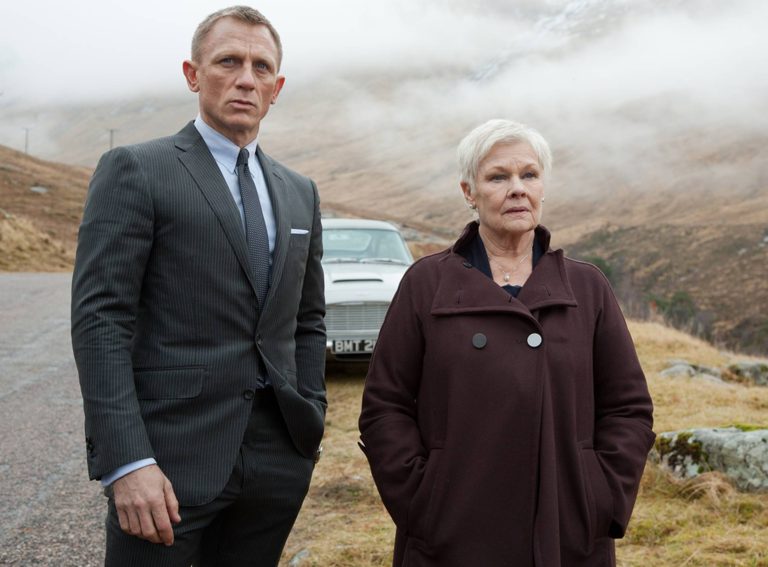
This week on Episode 451 of the InSession Film Podcast, inspired by our review of No Time to Die, we discussed our favorite Daniel Craig James Bond scenes in film. Before the Bryan Singer X-Men films, and especially Christopher Nolan’s The Dark Knight trilogy, the superhero genre didn’t have the greatest reputation. Most of the films also had a very different tone and approach than what we see today. It’s in that where Venom: Let There Be Carnage is very refreshing. The self-seriousness that many superhero films carry today is certainly noteworthy and there’s plenty to love, but like many of its predecessors of yesteryear, Venom leaned more into playful camp. And boy oh boy are there some great superhero scenes loaded with cheese. And we had a great time dissecting the one’s that made us squeal with glee. That said, here are our lists:
(Note: Please keep in mind that we each had different criteria for our selections)
JD
1) M’s Death – Skyfall
2) Vesper/Bond Shower Scene – Casino Royale
3) Ending Goodbye – No Time to Die
Brendan
1) Opening Chase Sequence – Casino Royale
2) Madeleine/Bond Train Scene – Spectre
3) M’s Death – Skyfall
Honorable Mentions (Combined)
Interrogation – Casino Royale
Vesper’s Death – Casino Royale
Martini Gag – Casino Royale
Bond Meets Vesper – Casino Royale
Bond Wins Final Hand – Casino Royale
Every Kill By Bond – Quantum of Solace
Fields’ Death – Quantum of Solace
His Plutonic Kiss/Goodbye with Camille – Quantum of Solace
First Meet Silva – Skyfall
Opening Chase Scene – Skyfall
Preparing for Attack on Skyfall – Skyfall
Martini Gag – Skyfall
Opening Sequence / One Shot – Spectre
Helicopter Sequence – Spectre
Snow Chase – Spectre
Mr. White Scene – Spectre
Felix/Boat Scene – No Time to Die
Forest Chase – No Time to Die
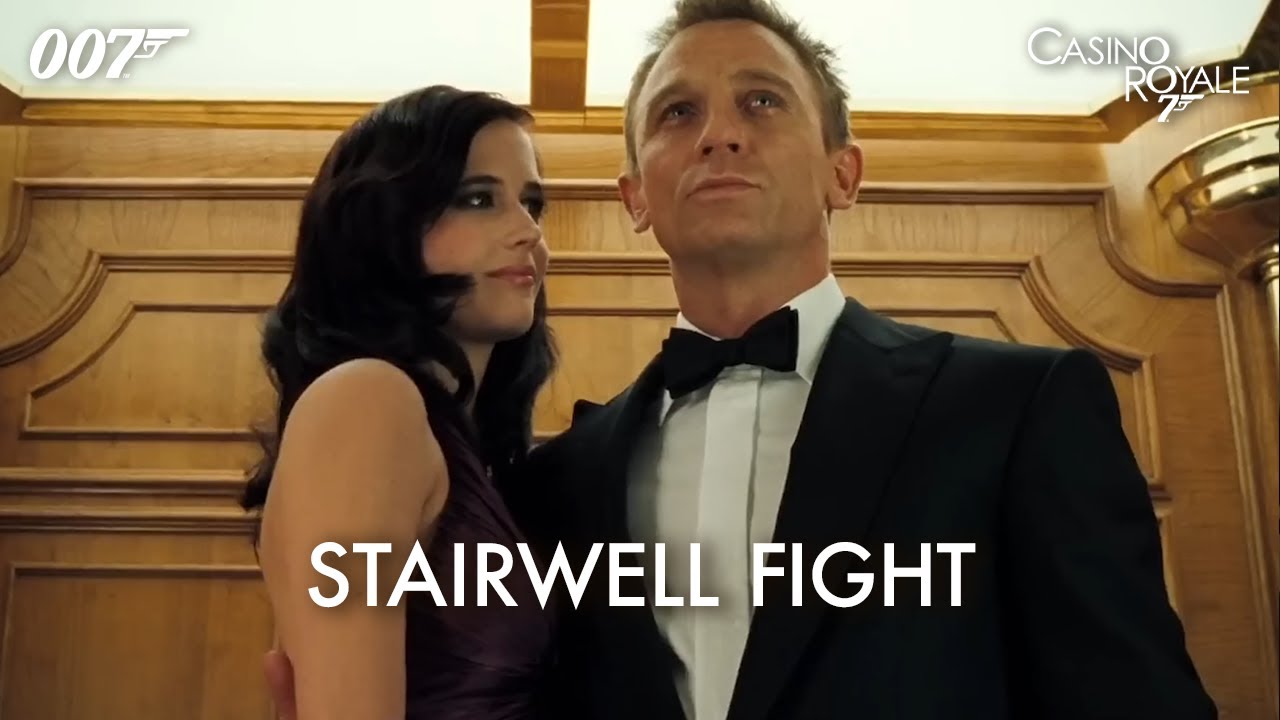
Stairwell Fight – No Time to Die
Cuba Sequence – No Time to Die
Vesper Grave Scene – No Time to Die
Hopefully you guys enjoyed our lists and if you agree or disagree with us, let us know in the comment section below. There are many great scenes in the Daniel Craig era of James Bond, and perhaps your list is different than ours depending on your criteria. That being said, what would be your Top 3? Leave a comment in the comment section or email us at [email protected].
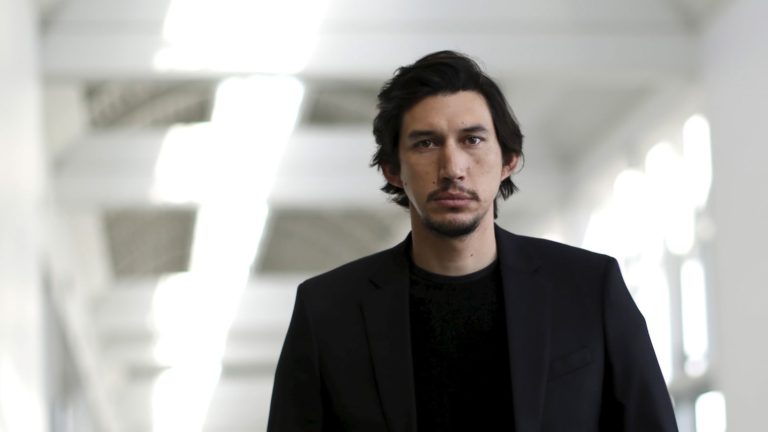
If you heard his TED Talk back in 2016, you would know that Adam Driver’s rise to stardom is one of Hollywood’s most interesting; he enlisted in the United States Marine Corps after September 11, only to attend Julliard after two years of service. Since then, he has seemingly made it his personal goal to become the most interesting actor working today, equal parts confident, sincere, dry, and idiosyncratic. His filmography would certainly suggest that, and The Last Duel seemingly continues that trend.
With that said, what do you think is Adam Driver’s best performance?
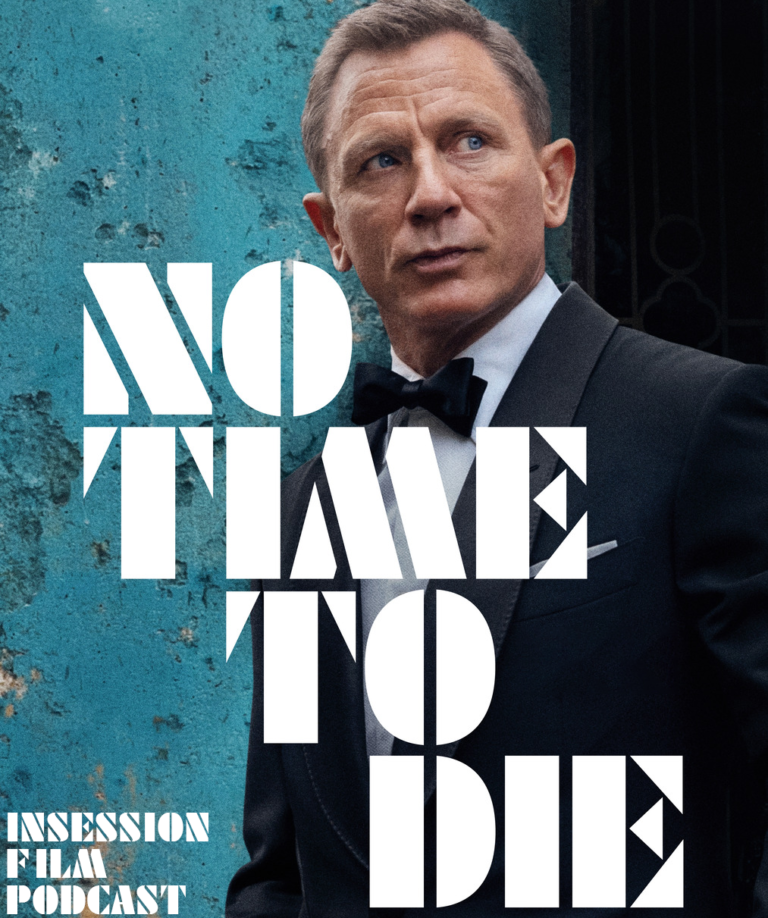
This week on the InSession Film Podcast, we discuss the latest James Bond film in No Time to Die and our Top 3 Daniel Craig Bond scenes! Plus, JD gives a few thoughts on the Palme d’Or winner Titane.
The Daniel Craig Bond era may have been slightly inconsistent for many audiences, however, it also features two of the best Bond films to date. And there’s no denying Craig’s performances, which feature the expected charm and screen presence, but there’s a level of grit that we haven’t really experienced before with the character. It’s one thing to see the connective tissue of his films, but the humanity behind Craig’s portrayal has been emotionally enthralling. So, it’s sad to see it all come to an end with No Time to Die, but we had a blast talking about the film and Craig’s best scenes as the iconic character.
On that note, check out this week’s show and let us know what you think in the comment section. Thanks for listening and for supporting the InSession Film Podcast!
– Movie Review: No Time to Die (5:56) Director: Cary Joji Fukunaga Writers: Neal Purvis, Robert Wade, Cary Joji Fukunaga, Phoebe Waller-Bridge Stars: Daniel Craig, Rami Malek, Léa Seydoux, Lashana Lynch
– Top 3 Daniel Craig Bond Scenes (1:26:34)
Depending on who you ask, Daniel Craig very well may be the best James Bond we’ve seen to date. He was charming, funny, a little provocative, and the most emotionally complex Bond yet. He was great in the film’s action sequences and drama. His chemistry with his co-stars was felt in every scene. He delivered in every way and more. So, narrowing this list down to three was a challenging task, but we’d be lying if we said it wasn’t rewarding. That said, what would be your top 3?
If you want to help support us, there are several ways you can help us and we’d absolutely appreciate it. Every penny goes directly back into supporting the show and we are truly honored and grateful. Thanks for your support and for listening to the InSession Film Podcast!
Having recently released his last two movies through HBO Max, Steven Soderbergh continues to have a very creative period going all the way back to his Oscar-winning days with Traffic and Erin Brockovich. No Sudden Move is another sleek crime thriller matching his other crime tale, Out Of Sight (1998). Being the first of many collaborations with George Clooney was great, but so was having a hit to bring back confidence to the studios that Soderbergh could direct a good movie. Before then, Soderbergh was seen as a one-hit-wonder with multiple flops to his name. The 90s were unkind to him as you will see in his resume during this time.
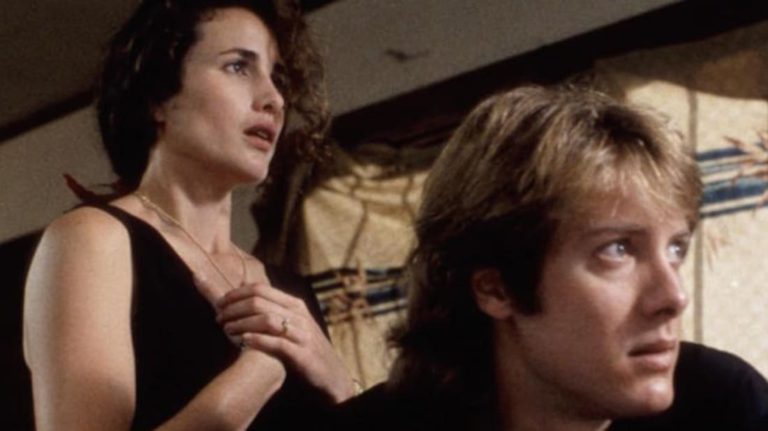
Steven Soderbergh was raised in Baton Rouge, Louisiana, before moving to Los Angeles after high school to follow his dream of being a director. He worked on TV shows holding cue cards and was a freelance editor before getting his first directing job, the concert film 9012Live for the band Yes in 1985. Soderbergh would receive a Grammy nomination for his work, but he would move back to Baton Rouge. During his road trip, he came up with the story of what would be his major entrance onto the cinema stage, sex, lies, and videotape. Starring James Spader, Andie McDowell, and Peter Gallagher, the film was a smash at its debut at Sundance in 1989. It then won the Palme d’Or at Cannes and Soderbergh would get an Oscar nomination for Best Original Screenplay at only 26 years old Today, the film is widely recognized as the beginning of independent cinema during the 1990s and put Sundance on the map.
Soderbergh then met writer Lem Dobbs and began the first of few collaborations with him by directing his sophomoric effort, Kafka (1991). A loose biopic on the famous titled author starring Jeremy Irons, Joel Grey, and Alec Guinness, the film, released by Miramax (who also bought the rights to distribute videotape), only drew back $1.1 million and was received with mixed reviews. It was forgotten until recently when Soderbergh announced he got back the media rights and did some rewrites with Dobbs, shot inserts, and had the dialogue dubbed in German. The film will be renamed as Mr. Kneff and is expected to be re-released as a box set with other films by Soderbergh.
The chance to redeem himself came when he adapted A.E. Hotchner’s memoir, King Of The Hill (1993) in which he intended to work with Robert Redford on the project. But Redford decided to move on from it and go straight to Quiz Show instead; in a case of awkwardness, Redford wanted to see the cut Soderbergh had made as he was technically a producer, but he never made the trip to visit Soderbergh and reportedly said he didn’t like it. Still, Soderbergh directed a solidly underrated film starring Jesse Bradford, Jeroen Krabbe, and Karen Allen, set during the Depression following Hotchner as a boy after he’s left alone when his parents leave. Despite the positive reviews, the film flopped at the box office again and the next film was only going to be worse. The Underneath (1995), a noir remake of the film Cris Cross (1949), was made for cheap $6.5 million, yet only grossed a lowly $536,000. Soderbergh himself says the film was terrible and that his heart was not in it when it was time to shoot the picture.
After three misses and six years removed from the acclaim of videotape, many wondered if, “the poster boy of the Sundance generation,” as Roger Ebert described him, was a total fluke. Soderbergh saw his string of failures as his chance to get creative on his own and filmed the surrealist movie Schizopolis (1996), in which Soderbergh himself acted in dual roles, cast friends to play different parts, and shot with a skeleton crew borrowed from people who worked with fellow indie director Richard Linklater. It’s a deconstruction of his life following a writer who starts to work with a cult, his wife who has an affair (played by Soderbergh’s ex-wife, as they divorced one year prior), a dentist who stands between them, and an exterminator who has a knack for photographing his genitals with every camera he finds at every house. Many had thought he had lost his mind when it was released in Cannes, but today, critics see Schizoplis as a self-critiquing view of modern life, lack of communication, and rupturing conformity he’d been stuck in. It is certainly his version of a David Lynch movie.
The lowest of low, maybe even below everything for him, was in 1997, when Soderbergh was helping out in the production of Gary Ross’s Pleasantville. Still looking for a distributor for both Schizopolis and his concert film Grey’s Anatomy starring Spalding Gray, he was invited by director Anthony Minghella to the Miramax Oscar party following the resounding victory for The English Patient. As Soderbergh later stated to Peter Biskind in his book “Down And Dirty Pictures,”
I got to the Miramax bash, circulated for a while, but couldn’t fight Minghella. Then I saw him through the glass in the special VIP section. The security guy wouldn’t let me in. I said, ‘There’s the person who invited me.’ He said, ‘I don’t care.’ He was telling me there was no fucking way I was getting in that room, and literally, on a forty-two-inch screen behind his head insider the VIP room they were playing Miramax trailers from all their past films, and I was watching the trailer for sex, lies!
The saving grace came when Casey Silver, the CEO of Universal, offered Soderbergh, who he really liked, the chance to do Out Of Sight. Soderbergh took the job and reinvented himself as a director with an appeal to major studios. The film failed to make back its budget, but with the critical acclaim and two Oscar nominations attached to it, Universal hired Soderbergh to direct Erin Brockovich and then USA Films (now Focus Features), a subsidiary of Universal, picked him to work on Traffic. As 2000 was the year that reintroduced Soderbergh as one of Hollywood’s top directorial talents, it was a rough ride he had to go through before re-attaining that global recognition he had doing sex, lies, and videotape. The period was about not selling out, a fear of all independent directors, and keeping things true to form. But it wasn’t worth the constant failure and Soderbergh, needing to not be self-serving, chose to play the game a little bit with the studios. Look what he’s done since.
Synopsis: Karen, an American housewife living in Tokyo, gets peer pressured into playing the Kokkuri-san (a Japanese version of Ouija) and in doing so accidentally angers a deity who demands retribution in the form of bloodshed.
If you go in blind, Ouija Japan will likely not be what you think it is. I went in knowing very little, presuming that I would be getting a Japanese spin on a film like Mike Flanagan’s Ouija: Origin of Evil or the Tawny Kitaen-vehicle Witchboard. And while I am admittedly somewhat disappointed that this movie is not quite either of those, Ouija Japan at least manages to be an amusing alternative. Please note, however, that I’m using “amusing” generously. I mean, did I smirk merrily on occasion? Yeah. Was I entertained every now and again? Sure. Because the movie lets itself have fun, which is fine. But that’s just it. The movie is simply… fine.
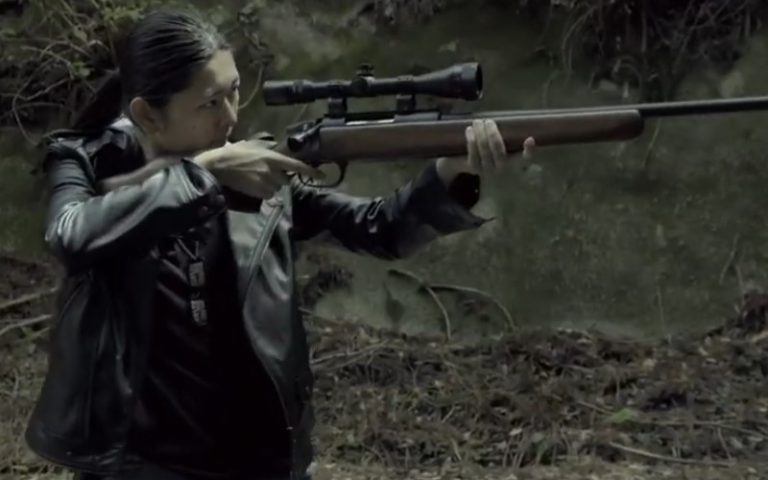
As a title, Ouija Japan is pretty misleading. For the record, yes, there is in fact a Ouija-adjacent activity played (known as Kokkuri-san in Japan), but after the inciting incident in which Karen (Ariel Sekiya) and some other housewives unwittingly awaken a local fox deity, the game itself has very little to do with how the rest of the story goes. Instead, we’re given another contest of sorts. The fox deity appears as a game on the women’s phones in the form of an app. The housewives are then pitted against each other and must kill one another until only one is left alive. Where do they get their weapons, you ask? Simple, they can purchase them in the app and they will just materialize in their hands. Swords, baseball bats, guns—it’s all a matter of how much money you’re willing to pay the disrespected deity. Sounds kinda fun, right?
Well, the film, unfortunately, suffers from having a passive leading performance. For the majority of the runtime, Ariel Sekiya’s Karen is just too meek to carry the story. On the one hand, the choice makes narrative sense since she’s meant to be a timid fish out of water. As an American who’s only been living in Japan for six months, Karen understandably does not yet have a firm grasp of the language. This gives the meaner members of the group plenty of opportunities to mock and bully her, causing the frequently humiliated Karen to naturally turn inward, which puts Sekiya in a tricky situation as an actor. Making a docile character captivating to watch can be done, but by playing into Karen’s reticence (and not much else) a bit too much, Sekiya renders her an uncompelling protagonist.
It’s too bad that she’s so uninteresting because the action around her is such a fun flavor of ridiculous. Director Masaya Kato stages the combat like he’s designing a live Capcom video game. A lot of the fighting is done in profile like we’re viewing a Street Fighter match unfold, and we’re even given a little metric in the corner of the screen so we can monitor the tournament’s progress. These sequences are fairly enjoyable. It’s not every day that you get to watch a group of Maxxinistas slash, bash, and shoot each other dead. Some of the women are downright vicious, which inadvertently makes Karen all the more boring by comparison. Luckily, as Karen manages to somehow keep surviving the melee, she incrementally levels up and becomes more dynamic. The film gives her a slow and steady build, but by the time Karen reaches her final rank, I had regrettably already checked out.
Director: Antoine Fuqua Writer: David Ayer Stars: Denzel Washington and Ethan Hawke.
Synopsis: Detective Alonzo, a senior narcotics officer, must train Jake Hoyt during the course of a day. However, Hoyt learns that Alonzo’s methods are not ethical and he soon realizes that he is being trapped.
A surprising success all those years ago, Washington is electrifying, Hawke is brilliant also. Let’s look back at what makes this film great.
“King Kong ain’t got s**t on me”, this man’s ego is almost as big as his dept, but what a memorably vicious and corrupt character Alonzo Harris truly was – like a wicked villain from a Shakespeare play. Training Day is a landmark cop drama, it produced something different and was effective in showing the effectiveness of both sides of the law – corrupt cop films of old like Bad Lieutenant started to look tame in comparison – Harris is the epitome of greed and selfishness. Washington is intoxicating and well deserving of his Oscar win that year (in an absolutely stacked year as well may I add), forget Glory, Man on Fire, American Gangster (although he is brilliant in them all), Training Day is the film he has the most fun with, this is a performance of grand proportion and a joy to experience.
From minute one this film becomes more intense and only gets darker and more thrilling, to think this is all happened in one day is incredible – almost unbelievable – but exciting, nonetheless. Directed by Antoine Fuqua – an inconsistent director for the most part – who loves a cop drama, but this is easily his best film in a largely underwhelming filmography. David Ayer (writer of the script) works well with Fuqua to deliver this exhilarating showpiece – this was an established member of my top 10 films for a long time may I just say.
The little-known fact about Training Day is that it was kind of based off the Rampart Scandal in the late 1990s, although corruption in L.A.’s C.R.A.S.H unit was yet to be exposed, the mutterings of such unlawful acts were what aided to the resolution of the film. Washington even grew a beard (method or what) to replicate his look on one Rafael Pérez, a narcotics officer who was caught up in a variety of scandals over the years.
The film shows you both sides of the law, the corruption that is rife throughout law enforcement in L.A., and how these keepers of peace integrate themselves with figures from those mean streets for greed and power, contrasting to the honest side that try and combat against it all. Detective Alonzo Harris, a senior narcotics agent and living legend must train Jake Hoyt (portrayed brilliantly by Ethan Hawke) during the length of a day. Hoyt soon learns that Alonzo operates within his own methods, which blurs what is ethical or not. Alonzo is corrupt as they come, introducing Hoyte to a whole host of criminals and questionable neighborhoods, he is an urban legend around the streets, the bogeyman of sorts. Hoyte is the perfect foil to combat against his teacher for the day – the naïve and scared rookie cop desperate to make a name for himself, but will he cross that line, even when tempted?
Alonzo thinks of himself as a prophet, a figure from the mystic realm, handing out life lessons to his rookie partner, his akimbo guns represent swords of justice, and he is God almighty. The interrogation scenes are fierce, we experience both faces of those swords, the effectiveness of Alonzo’s methods to get what he wants, and like he says, “To protect the sheep you gotta catch the wolf, and it takes a wolf to catch a wolf”, trying to justify his crooked techniques as best he can it seems. On top of that, and the constant struggle between was it good and evil, we witness a great kinetic energy between the two characters, it is gripping, you cannot take your eyes off it. The blossoming friendship, the corruption, the “policework”, it all leads to a climactic showdown between the two men, a fight for justice, who will win?
Training Day is such a compelling and exciting crime thriller, it just grips you straight away during the first meeting of the characters, and when we do first meet Alonzo, there is a sense of his character straight away, full of dynamite and ready to explode. This film is a great character study; they both have harsh moral dilemmas to deal with, the way they resolve them shows us a lot about their individuality and mindset. The two are constantly pitting their wits against one another, with one expertly manipulating the other, Mauro Fiore’s cinematography highlights this with his framing and camera work, aiding to the pace of the film and often separating the two men as well – they are on opposite sides of the moral compass.
This brings me to the one minor downfall of the film, and it surrounds those final 20 minutes which just seemed to be rushed, they spent so long laying the foundations and establishing story and character, that they then finished rather abruptly, the plausibility and the dimensions became askew leaving us with a thought of how and why. However, 85% of the film is brilliant in my eyes, which allows such an ending to be acceptable – I’ll let you get away with it this time. Let us all remember as well, “This s**t is chess it ain’t checkers” a quote I have used once or twice in my life.
Director: Denis Villeneuve Writer: Jon Spaihts, Denis Villeneuve, Eric Roth Cast: Timothée Chalamet, Rebecca Ferguson, Oscar Isaac, Josh Brolin, Stellan Skarsgård, Dave Bautista, Zendaya, Jason Momoa, Javier Bardem
Synopsys: Feature adaptation of Frank Herbert’s science fiction novel, about the son of a noble family entrusted with the protection of the most valuable asset and most vital element in the galaxy.
Denis Villeneuve is a visionary director unlike any other working today, whether it is a tale about questioning your life after a traumatic abortion like in Maelström (2000) or the pulsing chain-of-events caused by a government task force to stop a Mexican drug cartel in Sicario (2015). Although most recent works dwell in the sci-fi genre, all his pieces deal with the search for identity and center on a character who feels lost in his environment. For his next project, Villeneuve wants to tackle Dune, the Frank Herbert odyssey that many describe as “unfilmable.”
Paul Atreides (Timothée Chalamet) is a gifted young man destined for many great things beyond his understanding. He must travel to one of the most dangerous planets in the universe, Arrakis (also known as Dune), to secure the future of the Atreides heir, Lady Jessica (Rebecca Ferguson) and Duke Leto Atreides (Oscar Isaac), and his people. However, the Atreides aren’t the only ones trying to conquer the planet. The malicious Baron Vladimir Harkonnen (Stellan Skarsgård) wants a war for the planet’s supply of one of the most valuable resources in existence: melange, better known as “spice.
Herbert’s novel has influenced many auteurs to create their visions or franchises, notably George Lucas with Star Wars. A long time has passed since Dune got published, and there have been multiple stories like this: a young hero is destined to save the world with his unique abilities. That storyline of the “chosen one” or “the messiah” has been refurbished many times; some films go in a more original route, while others just stick to the regular formula and fail. In this case, you feel Villeneuve’s passion for the source material; nevertheless, his vision arrives lifeless and lackluster. His adaptation is divided into two separate parts, and it is evident that this is indeed a segment of the narrative because it feels incomplete in structure.
It’s not the literature as a whole but the core of Villeneuve’s vision. It feels like an extended prologue before going over to part two if it even happens. It is the opening crawl from Star Wars, a prelude to what may be considered “the good stuff.” One of the reasons Alejandro Jodorowsky never got to make his version, and David Lynch’s ended up like that is because of the material. It is too large in scope and oeuvre that it would take over three pictures with a 3-hour runtime or a 9-hour romp to cover it with fulfillment. And for a person who hasn’t read the book, like me, you won’t understand much of what’s going on. Its narrative is concocted by stone-wall scripture that is impenetrable to get through if you aren’t familiar with it.
There is also an issue regarding the characters and their development in this grandiose tale. Since the writers skimmed over some of their arcs and went with a drier route, you don’t have any emotional devotion to them whatsoever. You don’t empathize with any nor get reasons to care for them if they get into sticky situations. Not even the resplendent all-star cast could elevate their galactic trooper personas. Some deliver a good performance, most notably Rebecca Ferguson as the elegant Lady Jessica and Jason Momoa as the wild uncle Duncan Idaho. I wish I had seen more from Stellan Skarsgård as Baron Vladimir Harkonnen. All caked-up in make-up with black oil covering his body, playing his villain with a pantomime and egregious demeanor like Ian McDiarmid as Palpatine.
On a more positive note, there are some impressive technical aspects in this film that are amusing to the eye. The tactility of the atmosphere is strong, making you feel the sands of Arrakis brushing through the cinema. Unlike other sci-fi displays, you don’t question the artificiality of this fantasy world. The costumes and production design are lavish, and the cinematography, although it lacks a bit of color, is nice to look at. However, when it comes to the visual effects, I feel somewhat mixed about them. Not that it seems shoddy or creaky, but at times, you can sense the green-screen mechanics in the background, taking you out of the experience for a quick second.
As the clock ticks to the grand finale, an unnecessary cascade of explosions and slaughter meshes into the story. You just wish it would amount to something great in the end; a piece of cinema that truly captures what the sci-fi and fantasy genres can bring to the table when executed astonishingly, for example, Lord of the Rings: Return of the King (2003) or Star Wars: The Last Jedi (2017). Villeneuve can build spectacle and innovative tales because we have seen him do it before, but his rendition of Dune isn’t one of them. Finally, the spice opera ends, and the only question in your mind is if that was really it. I guess we’ll just have to wait to piece the puzzle together because these 155-minutes served as a curtain-raiser. And remember: “this is only the beginning.”
Director: Pedro Almodóvar Writer: Pedro Almodóvar Cast: Penélope Cruz, Aitana Sánchez-Gijón, Milena Smit, Israel Elejalde, Julieta Serrano, and Rossy de Palma
Synopsys: Two single women meet in a hospital room where they are both going to give birth. One is middle-aged and doesn’t regret it, while the other is adolescent and scared. The two women form a strong bond with one another as they both confront motherhood.
Janis (Penélope Cruz) is an editorial photographer approaching her 40s who befriends a forensic anthropologist, Arturo (Israel Elejalde), after a photoshoot. Janis asks Arturo a special request: help her exhume the bodies of some men, including her grandfather, lost after the Spanish Civil War (1936-1939) at the rural town she grew up in. Arturo shares her political beliefs and decides to help her. Between the two the relationship evolves into something more passional, a love that cannot happen in its full form. After all, Arturo is married and his wife has cancer. But something happens: Janis becomes pregnant. She understands Arturo’s position and tells him she wants to keep the baby without compromising him to be the father. She’ll be a single mother like her mom and grandmother, and Janis ends their relationship for good.
Months later, at the hospital, Janis meets Ana (Milena Smit), a teenage girl who is in labor at the same time. Ana is nervous, her pregnancy was an “accident” too, but not one she’s happy or excited about. Besides the obvious dread, she can experience while having a baby at her young age, we deduce there’s something more. Janis tries to calm her and while they wait for their babies’ arrival, a bond between the two single mothers —despite the age gap— is created. After they leave the hospital, the two women keep in touch and share their experiences as first-time mothers.
Arturo takes the courage to call Janis and tells her he’s in Madrid and he wants to meet the baby. Janis agrees and invites him to her place. When Arturo meets the baby, he remarks how “dark-skinned” the baby is and asks Janis about her family ethnicity —she tells him she didn’t meet her father but he was supposedly a dark skin Venezuelan with slanted eyes—; and all of a sudden, he says he has to go but tells Janis he is staying at the same hotel as always if she wants to talk with him. Janis knows something bothered him and looks for him the day after. Arturo confesses to her that he didn’t feel like the baby was his child when he met her, so he wants to take a paternity test. Janis gets mad, he was the only man she was with at the time she got pregnant. Back at home, she still feels uneasy after her fight with Arturo and decides to find the answer that can change her life.
If you’re familiar with Pedro Almodóvar’s work, you are warned that everything will be deeper than what it looks like on the surface, and there can be lots of things happening at the same time. Parallel Mothers (original title: Madres Paralelas) is not the exception. His most recent film starts off as a family drama of two single mothers going against the odds, but as it moves forward it turns into a thriller, then returns to the family drama again, and it also has a political plot going around. And of course, his characteristic red is everywhere and brighter than ever.
Almodóvar is also known for his takes on motherhood. This is not the first time Penélope Cruz takes the role of mother in one of his films, she even played a version of his own mother in Pain and Glory (2019, Dolor y Gloria), but in Parallel Mothers is where she gives the best performance yet in their collaborations. Some people are even calling this the performance of her life and I can’t disagree with them. She takes Janis’ role with so much respect and understanding, it seems like it was made for her only. Not nominating her performance in the next awards season should be taken as an offense. Milena Smit is a rising star, her chemistry with Cruz is undeniable; she balances the naivety a young girl might have with the toughness of someone who has been through a lot.
I was surprised at how fast the time passes in this 120-minute-long film. The first and second acts are the master class you would expect from someone like Almodóvar, but the third act feels a little bit lose. It sets aside the main plot for a side story we left at the beginning. In other situations, this wouldn’t be such a problem if the resolution of the main plot didn’t feel pressured and with a couple of questions still waiting to be answered.
Overall I enjoyed the movie. I wouldn’t call Parallel Mothers Almodovar’s best work to this date, but it’s fantastic and an exciting ride of finding the motivation to move on without letting the historical memory —or an individual’s past— die, as they can make us understand our present. It’s more of a personal journey than a story about motherhood, which is one of the biggest twists this movie has. Parallel Mothers doesn’t disappoint, it deserves to be one of the most anticipated films of 2021 and the wait will be totally worth it.
This week on Extra Film, Ryan and Jay are joined by Mitchell Beaupre of Letterboxd.com to discuss 25th Hour as part of their Spike Lee Movie Series and they also review the 2021 Palme d’Or winner Titane!
After the dark satire Bamboozled, Spike Lee returned with what might be his most personal film about New York City. Following the attacks of 9/11, Lee encompassed the anxiety and uncertainty that followed the tragic events with a morality tale about a man’s last day before he is sent to prison. Through a stellar script collaboration and spectacle performances, 25th Hour is Lee’s 21st century masterpiece.
In the second review, Mitchell sticks around to review Titane with the Extra Film boys. Noted as the premier film of the year so far, Titane is the outrageous, tender return to the big screen for Director Julia Ducournau. Centered around a serial killer and a lonely firefighter, you won’t see another film like it this year, and sets the stage for a new master of cinema, as Ducournau gives us a heart pounding film that will leave you cringing and speechless. This is one of the best conversations of the year on Extra Film, so please give it a listen.
On that note, check out this week’s show and thanks for listening to the InSession Film Podcast!
– Movie Review: 25th Hour (6:25) Director: Spike Lee Screenplay: David Benioff Stars: Edward Norton, Philip Seymour Hoffman, Barry Pepper, Rosario Dawson, Anna Paquin, Brian Cox
– Movie Review: Titane (1:13:04) Director: Julia Ducournau Screenplay: Julia Ducournau Stars: Agathe Rousselle, Vincent Lindon, Garance Marillier
We try to make this the best movie podcast we possibly can and we hope you enjoy them. Subscribe today on iTunes, Spotify, or Stitcher, and please leave us a review on iTunes. You can also find us on Soundcloud, PlayerFM, and TuneIn Radio as well. We really appreciate all your support of the InSession Film Podcast.
To hear this Extra Film episode and everything else we do, download our apps on the Amazon Market for Android and the Podcast Source app on IOS devices. The mobile app covers all of our main shows, bonus podcasts and everything else relating to the InSession Film Podcast. Thanks for your wonderful support and for listening to our show. It means the world to us.
Director: Patrick Brice Screenwriter: Henry Gayden Stars: Sydney Park, Theodore Pellerin, Diego Josef, Jesse LaTourette, Asjha Cooper
Synopsis:The graduating class at Osborne High is being targeted by a masked assailant, intent on exposing the darkest secret of each victim, and only a group of misfit outsiders can stop the killings.
[/info]
There’s someone inside your house watching horror movies in October, and that person is probably you, am I right? It most certainly is me, as I look for the latest and greatest terror tales, movies, or television. It can be slow burn horror, kinetic horror, horror sequels, and reimaginings galore. And then of course there’s an old favorite—the teen slasher, which came back with a vengeance this past summer with the Fear Street trilogy, which was only partially successful.
So many filmmakers have been trying to replicate the wit, tone, and success of Scream for the past twenty-five years that it’s become routine to expect the obvious in teen slasher movies: a slick and well-paced opening kill, lots of references to modern technology, a likable heroine with a sordid past, and a killer with a specific agenda that’s revealed in detail by the end. Yes, we’ve seen most of There’s Someone Inside Your House before, and although the film has its share of entertaining moments and features a creepy villain, there are too many forgettable characters, long lulls between kill scenes, and laughable moments in the screenplay that completely defy logic.
Based on the bestselling novel by Stephanie Perkins, the new horror film, now available on Netflix, features a killer who wears not only one mask but several, always with the face of the victim about to be slaughtered. The killer is exposing the secrets of flawed individuals in a small Nebraska town, which is bad news for Makani (Sydney Park), a high school senior who made a single tragic mistake and has been paying the price ever since. She’s been trying to find normalcy after moving from Hawaii to live with her grandmother, but soon her friends are being picked off one by one, and she sets out to save her life and theirs, and stop the massacre.
Director Patrick Brice (Creep) wisely wastes no time with an opening suspense scene where the first victim is not only disposed of in an absurdly painful way but also sees the errors of his past that can now never be atoned. At his scheduled celebration of life at a local church, a second high school student is brutally murdered right before the mourners step inside the building—cue the mostly throwaway characters who now fear they’ll be next.
Not every teen slasher movie needs to be a wild ride with lots of humor and endless jump scares, but most of There’s Someone Inside Your House could be more fun. Good young actors like Diego Josef, Jesse LaTourette, Asjha Cooper, and Burkely Duffield do what they can with the material, but screenwriter Henry Gayden, who wrote the more tongue-in-cheek Shazam, presents the material completely straight, despite how silly the proceedings become after a while, like how little these people learn how to stay safe with a killer on the loose (and just wait until a car filled with people plows straight into a blazing corn-maze).
The film works as well as it does for the occasionally frightening moments and the terrific performances by Park in the lead role and Theodore Pellerin as Ollie, a mysterious loner she ultimately falls for. If you’ve come for the kills, there are scenes to like here, one teenager after another trying to escape the murderer in increasingly ridiculous ways. And Park and Pellerin develop a nice, unusual chemistry that gives some of the quieter moments some power.
Unfortunately, There’s Someone Inside Your House never finds any significant momentum in its pacing or energy, giving little variety in its use of settings, the friendships between characters rarely feeling natural. Something feels off for most of the narrative, and the big problem overall is that outside of Makani, you rarely care too much about the characters and their outcomes. Sure, there are lots of strong horror movies where you don’t care about the characters, but without much style or substance elsewhere in this film, there’s little to keep you invested in what happens next. And the reveal of the villain, along with the motivations behind the kills, also leaves you disappointed at the end.
When the film reached its closing credits, I immediately put on the first episode of Midnight Mass, also on Netflix, and was immediately sucked into a mysterious world of chills and secrets, with characters and a place that grip you from the start. In minutes I could feel myself in the hands of a master storyteller, and in that opening hour I could see what great horror can do, and what serviceable horror wants to live up to. At ninety minutes, There’s Someone Inside Your House is a viable option for your October horror needs, but it’s no Midnight Mass—and it’s certainly no Scream.
Synopsis: A childless couple, María and Ingvar discover a mysterious newborn on their farm in Iceland. The unexpected prospect of family life brings them much joy, before ultimately destroying them.
A24 is no stranger to unique and inventive horror films, but even so, Valdimar Jóhannsson’s Lamb is arguably their most mystifying to date. To say that it’s bizarre is putting it mildly. Jóhannsson, who mostly worked as a special effects technician in Hollywood, has crafted a bold and evocative film that is without question a peculiar experience, but it works wonderfully on its own terms by embracing its surreal premise and treating it with sincerity.
We live in a world today where spoilers are abound, and sometimes even a synopsis or a trailer can give away more than what is needed, leaving audiences with expectations going into the film. It’s something we’ve become accustomed to and yet we still walk away satisfied much of the time. However, Lamb is one of those singular experiences that works best if you know nothing about it. You need to go in cold. So, before I go any further into any sort of detail, a fair warning that some of Lamb will be spoiled for those who haven’t seen it yet. While I won’t give away the ending, there are some things that need to be revealed to discuss it properly, and again, it’s best to see Lamb as cold as possible.
With that said, Lamb is about a couple, Maria (Noomi Rapace) and Ingvar (Hilmir Snaer Guònason), who live on a farm in remote Iceland. They attend to their sheep daily. They plow the land for harvest. They have a small, but cozy house with a nice view of the mountainous landscape around them. A few of their sheep are about to give birth as mating season is coming to a close. Maria and Ingvar are quiet and somewhat distant from each other – physically and emotionally. There doesn’t seem to be any sort of contention between them, however, there’s an unknown wedge that we aren’t sure of initially.
This is where things become strange, to say the least. One of lamb’s that are born is…wait for it…half sheep, half human. Specifically, the body is of human nature while the head and right arm is fully lamb. Maria and Ingvar are disturbed and unsure of what they are seeing, but they don’t act with disgust or trepidation. Instead, Maria wraps up the creature and takes it into the house, away from the sheep mother. They build a crib for the lamb and even give her a name, Ada. It doesn’t take very long for Maria and Ingvar to accept Ada as one of their own, never questioning how Ada came to be. They develop a genuine love for the creature that deliberately, and mesmerizingly, juxtaposes the absurdity of the underlying concept.
Which gets even weirder when Pétar (Björn Hlynur Haraldsson), Ingvar’s brother, stumbles in randomly halfway through the film. Ada, who by this point is around four or five-years-old, comes to the dinner table to meet Pétar for the first time, and the befuddled look on his face is pure gold. Honestly one of the funniest moments of the year so far, but it’s subtle and quiet enough to not be tonally jarring. And let’s be honest, anyone in his position would have a “WTF” moment.
As things progress, we learn more about Pétar and his murky history. He’s a former musician. His feelings toward Maria are questionable. However, Jóhannsson and co-screenwriter Sjón (an Icelandic novelist who also scripted Robert Eggers’ The Northman) do a great job of never letting Pétar becoming too much of a distraction. Lamb could have easily detoured into an unnecessary love triangle, but it never comes close to that. The film refuses to accept melodrama. Instead, it’s Pétar’s evolution toward Eda that becomes part of the crux at the emotional core. There are a few shots with Pétar and Eda that are phenomenally endearing.
This transition in Pétar is important because we do learn that Maria and Ingvar are grieving. Their marriage has been marred by tragedy, but Eda has given them hope. Hope that transforms into unconditional love and royal compassion, despite the uncanny nature of how it came to be. This is what gives the film’s metaphor power. While *very* different tonally and stylistically to Julia Ducournau’s Titane (that is also in theaters currently), the two have eerily similar thematic structures. The unnatural biology of Eda does not to Maria and Ingvar. They happily pretend that nothing is weird. Eda has given them a blissful moment of peace in the middle of their grief. Something we see that is deeply meaningful to both Maria and Ingvar.
One of the best scenes of Lamb involves a drunken celebration as Maria and Ingvar indulge in their new found love for each other. Pétar is off with Eda fishing (a charming visual shot on its own), and when they get back to the house the drinking continues with Pétar as well. When Ingvar gives into the alcohol, and decides to take a nap, he asks Eda to come cuddle him as he falls asleep. She does, and it demonstrates evocatively Ingvar’s deep paternal love for Eda. Maria’s maternal instincts are more vivid and perhaps more often, but it shouldn’t be lost that Ingvar equally cares. The healing they are experiencing is shared, and potent on screen.
This brings me to Jóhannsson and his confident direction. Lamb is audacious and distinct, but what gives it an extra heft is the restraint that Jóhannsson shows in his filmmaking. This is an extremely patient and introspective film. A slow burn with a heavy focus on stillness and subtle emotional complexity. The tone is mostly grim and brooding, but with a few moments of precise levity to maintain organic humanity. Jóhannsson’s use of the supernatural is also deftly handled. We understand that something is awry, something that Lamb teases on occasion, but Jóhannsson waits. And he waits. And he waits. Until the time is right. And when things are revealed at the end, boy does it jolt.
So much of the film’s visceral nature is in Jóhannsson’s tone management, but also in Pórarinn Guõnason’s stunning cinematography. The visuals here are redolent and beautiful, while also giving the experience an ominous, looming quality that keeps us wondering what’s around the corner. Rapace gives one of the better performances of the year that will have zero impact on awards season. She’s really great in this film. Guònason is also very good and vitally gives credence to Ingvar’s fatherly tenderness.
Lamb will be a struggle for audiences who aren’t willing to ride the film’s methodical pace. There’s also very little drama and conflict. At least externally. Most of the film’s nuance is in character reaction. The love they display. The grief they are experiencing and the relief in Eda. Those ideas will also challenge audiences given what plays out in the final scene. As far as I’m concerned, this is one of A24’s better horror films of late. It can’t be overstated how understated it is, and how much that works in this context. It’s brazenly weird, but with poignant purpose. I say to A24, please give us more Lamb‘s.
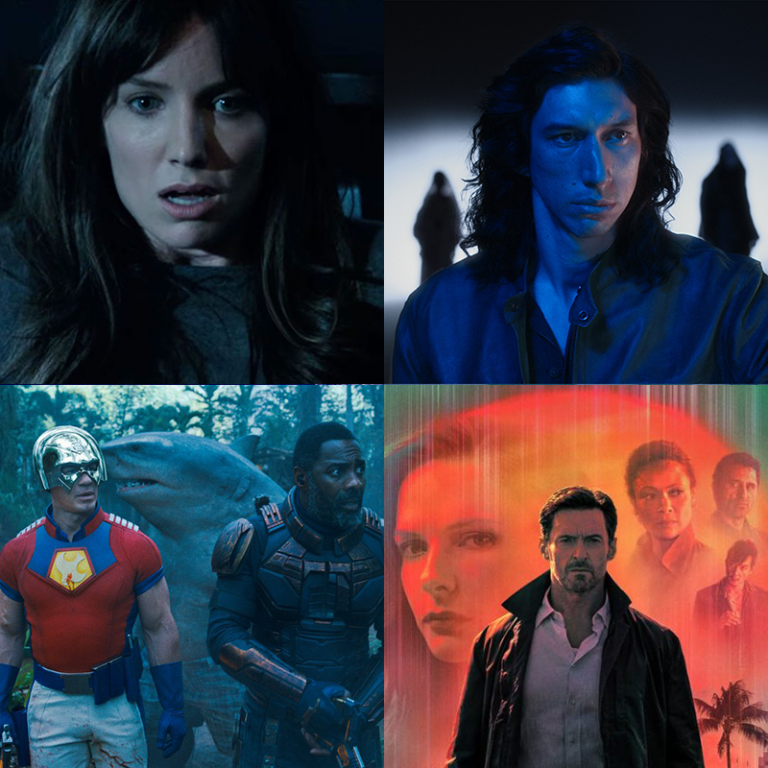
For those who have listened to the Main Show in recent weeks, you may have noticed that between our Lord of the Rings Movie Series, our 2003 Retrospective and recent iTunes campaign, we haven’t had much space to offer up our thoughts on all the other 2021 movies that we’ve caught up with. So we dedicated this show to doing just that. The only crossover on this episode is James Wan’s Malignant, as both Brendan and JD give their thoughts on the film. Individually though, Brendan finally gives us his perspective on James Gunn’s The Suicide Squad and the strange but brilliant musical Annette. JD, on the other hand, offers up his thoughts on Reminiscence, Kate, Worth, The Guilty and The Little Things.
Stay tuned as we have more films to discuss in Part 2, coming soon!
To hear our bonus content episodes early, subscribe now on Patreon. In many cases, though, we offer our bonus content for free after a certain period of time and we do encourage (and very much appreciate) a small donation of $0.99 as a way to help support the show if signing up on Patreon isn’t for you. Click on the PayPal button below to donate and thanks so much for your support. You can also hear much of our Bonus Content via our mobile apps. See the information at the bottom of the post for more details.
[divider]
Mobile Apps!
Listen to all of our bonus content on our apps for just a one-time fee! Whether you have an iPhone, Android or Windows phone, our apps are available in many different ways that is convenient for you. With our mobile app, not only can you listen to all of our bonus content, but our main shows and our Extra Film podcasts as well. Click here for more info!
If you don’t want to purchase our bonus content, but still want to support us, there are other you can help us out. Click here for more info.
I will be watching and reviewing all of the films included on AFI’s 100 Years…100 Passions list. The list contains the 100 greatest love stories in American cinema and I plan to consider how our views on romance and social issues have changed over the years as well as judge whether the romances in these films actually made me swoon. As a fan of the romance genre, I expect to love each and every one of the nominees but I also don’t know if I would consider all of them romantic.
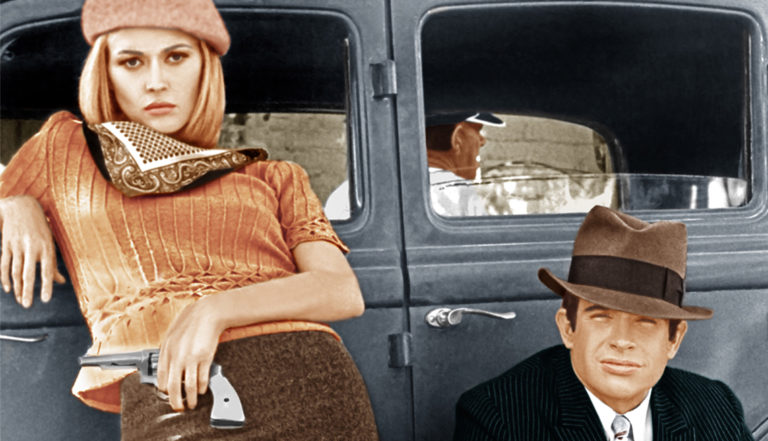
Bonnie and Clyde (1967) is famous for changing the landscape of American cinema. Slightly snooty cinephiles might note that it ‘stole’ a lot of editing techniques from foreign films and featured sexual content and violence that had been commonplace in European cinema for years. I also think that it’s fair to say that aspects of Bonnie and Clyde have dated poorly and it no longer looks quite as gutsy as other landmark films from the late-1960s. When you see it today, it looks relatively quaint and seems like a relic of its time. I say all of this because it seems rather unfortunate that many people watch it with the expectation that it will shock and titillate them. I don’t think that there was ever a time when the film’s best moments involved Faye Dunaway fellating a glass bottle or Warren Beatty shooting at an innocent bank teller. It endures as a classic because it produces a monstrous anti-heroine who attracts your sympathy, even as she repulses you with her behavior.
Even though the title and the advertising would suggest that this film is about a relationship between two criminals, this is really Bonnie Parker’s story. She’s just a beautiful small town girl when she comes across Clyde Barrow (Warren Beatty) stealing her car. She’s bored with her life, attracted to Barrow’s air of danger, and desperate to experience some excitement. In no time at all, the two of them are off on a crime spree and relish the fact that they become infamous celebrities who attract attention from the mainstream press. The police are on their trail but Parker chooses to tease and provoke the cops that come into contact with them. Barrow’s brother Buck (Gene Hackman) and his sister-in-law Blanche (Estelle Parsons) become part of the gang, along with the naive C.W. Moss (Michael J. Pollard). As time goes on, Parker becomes more and more aware of her own mortality and begins to realise that they will inevitably be caught and killed by the police.
Parker’s evolution from trigger happy, fame hungry sexpot to fatalistic cynic becomes the center of the narrative. The film’s best scene features the gang having one last picnic with Parker’s mother. She has come back to her small town as a legendary outlaw and it is clear that her mother disapproves of her daughter’s actions. Parker’s intentions and motivations are highly ambiguous. She herself doesn’t seem to know what she’s chasing after. Through use of montage, we have seen how life as a robber has gone from being glamorous and thrilling, to being legitimately scary and frustratingly routine. She returns home in order to experience a change of pace and seems to have decided that the comforts of an ordinary life could console her during this difficult period. Returning back home and reuniting with her mother appears to leave her feeling disappointed and hollow. She had idealized her previous life and attempted to forget the fact that it was so dull and uneventful. Rather than feeling a rush of warmth upon returning to safety, she comes to understand that there is nowhere to run and the glory days have passed her by.
The scene works so well because the screenplay sows seeds of doubt in our minds about the degree to which Parker is truly happy with her life. You also can’t get past the fact that Dunaway was a goddamn movie star and gave everything that she had to this role. She’s certainly sexy and charming but she is so intense that it makes sense when she cruelly mocks a police officer. She convinces us that Parker isn’t just an airhead who desperately wants to have sex with Barrow. He is a means to an end and she fully embraces his lifestyle. As the shine begins to wear off, Dunaway channels more and more desperation. She doesn’t try to build Parker up to be a woman of great intellect, but she makes her confusion interesting. Parker can’t comprehend why she is so dissatisfied with her life and Dunaway can handle her complicated emotions. It’s easy to see why she became the hottest star in Hollywood after playing a role that gave her so much to work with. It’s one of the few performances that deserves to be called iconic.
I have mixed feelings about some of the content that surrounds Parker’s character arc. Parsons’s shrieking, pantomime-y turn has aged poorly. It might have had everybody in the theatre yukking it up in 1967 but it goes over like a lead balloon today. Beatty is also as bland and vacant as ever. He is forever screwing up eyes and gazing off into the distance like a boy who can’t understand a question in maths class. There seems to be nothing going on behind his eyes and beyond his square-jawed good looks, it’s difficult to see why he ever succeeded as a leading man in Hollywood. With the exception of McCabe and Mrs. Miller (1971), he is a fantastically un-engaging screen presence.
Even if it isn’t the crème de la crème of New Hollywood classics, it is still captivating as a showcase for a thrillingly original character. You might also notice that it isn’t a terribly romantic picture. The chemistry between Beatty and Dunway is not the focus of the film and Parker is a more interesting character when she’s out on her own. Yes, it’s famous as a film about young lovers who kill, but the criminal lifestyle is more important than their romance. That means that AFI voters made yet another baffling choice and selected an acclaimed classic without considering whether it fit the criteria that they set for themselves.
Director: Rhayne Vermette Writer: Rhayne Vermette Cast: Rhayne Vermette, Isabelle d’Eschambault, Dolorès Gosselin, Valerie Marion, Jack Theis and Roger Vermette
Synopsis: As a party wanders into the night, word arrives that Renée has emerged from obscurity. This cataclysmic moment ignites Modeste’s awkward reunion with his older sibling. Renée has been missing for years and her presence unsettles the family, which also includes her own daughter, Athene. As Renée begins to form her dreams from fragments of her past, ominous premonitions disrupt the land.
Renée (Rhayne Vermette) is a woman who suddenly returns home in her indigenous —Métis— community after being M.I.A. for four years. She has to mend everything she left behind when she left, including the relationship with her eight-year-old daughter, Athene (Isabelle d’Eschambault), who’s living with Renée’s brother, Modeste (Jack Theis), and his wife, Elenore (Valerie Marion). It won’t be easy, and she knows it. She tries her best to get back all the time she lost with Athene and for her actions to be understood by the people from Ste. Anne, but in order to get that she has to open some wounds she isn’t willing to unlock so easily.
The more people understand about life, the more they understand that home and territory aren’t always physical spaces. This film, written and directed by Rhayne Vermette (who also stars in it) as her narrative feature debut, works like a metaphorical journey of reconciliation and reclaiming one’s territory. A theme —a collective experience they all go through after colonization— that has been frequently interpreted by indigenous storytellers across the continent. Ste. Anne has a simple plot, yet it’s very profound and spiritual. The execution feels so natural that it makes it hard to believe we’re not watching a documentary instead of a fictional story.
Besides the plot and performances, other elements reassure the realism of the narrative. Shot with 16mm, the movie took 14 months to finish; some scenes were scripted and others were impromptu, which made the film look like we were watching footage from a family video camera. This isn’t far from reality: many members of Vemette’s family worked on this production. The design and photography are very dreamlike, to the extent of feeling as an experimental film that mixes well with the plotline.
Renée’s story is accompanied by ambiance shots with textures, atmospheric tones, and an interesting use of light and colors that serve as a mystical secondary character of their own. Ste. Anne is character driven, and the drama intensifies in slow motion. It isn’t cathartic, it is reconciliatory. You can’t expect a big plot with lots of sentimental twists, but you’ll definitely feel your heart warm after it has finished.
I never thought about it, but this movie made me realize that if there are coffee table books —visually stunning and aesthetic books that you display in common areas of your house—, there are also films that you wish you could display in your living room as any other piece of art. This movie is one of them. In some ways, it reminded me of Chloé Zhao’s films but with an experimental allure.
Ste. Anne won’t be a movie for everyone. Its intimacy isn’t for the general public, especially if they’re looking for a title with more action and repercussions. It is a short film that isn’t a short film (it lasts 80 minutes) that will work for you if you’re looking for a peaceful and fairy-esque story about a realistic family affair. Also, it’s always great to watch different perspectives and interpretations of what it is like to belong to an indigenous community, and this movie provides an interesting vision.
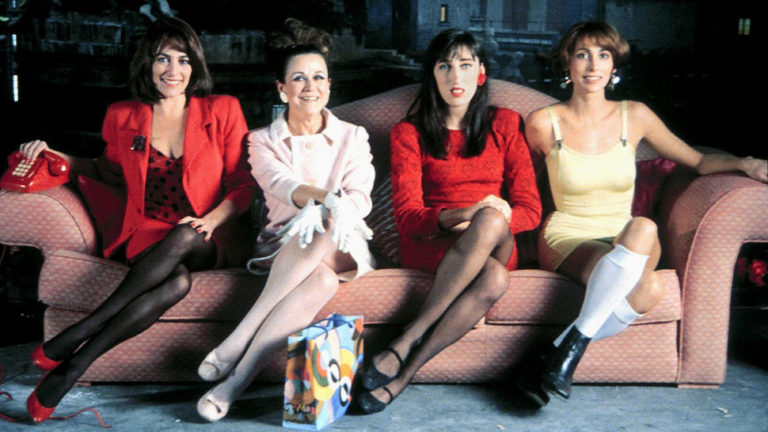
I am here to tell you that no, you have not seen it all before. When you watch a lot of movies, it is easy to feel like you have seen all the stories you can. After all, much has been made in literary circles regarding the fact that there are only seven basic plots. But filmmaking as an art is not just plot. How you tell the story matters just as much as the story you are telling. It is, after all, a visual medium. And that brings us to the work of Pedro Almodóvar. One of his most critically acclaimed films, Women On The Verge Of A Nervous Breakdown, is leaving the Criterion Channel streaming service in just a few short weeks. Here is your (and my) opportunity to experience this film and talk about it here.
In terms of stylistic, visual choices, Almodóvar sets the bar nearly to the ceiling from the opening credits. His use of color, music, and pop art sensibility sets the tone for a film unlike any standard set by your experience thus far. This continues throughout the film. Color, specifically creates numerous shortcuts and messages throughout the film. The introduction of Ivan (Fernando Guillén) is filmed first in black and white, connecting him to both the past and a sense of style and nostalgia. Women On The Verge Of A Nervous Breakdown quickly morphs into color, and bright ones at that. Red plays a large role for our heroine, Pepa Marcos (Carmen Maura). This choice of color from the director incited both passion and regret as we explore her relationship with Ivan. These colors are just one example of Almodóvar working on a different level than most directors. Additionally, with the assistance of cinematographer, José Luis Alcaine, many impressive (and creative) compositions are blasted into our eyes. In particular, one-shot showing a prone Pepa through her glasses on the floor after she has collapsed is wildly effective in capturing our attention. It should come as no surprise that this film catapulted him into international stardom and was highly recognized on the awards circuit.
Women On The Verge Of A Nervous Breakdown is the story of Pepa, who has just been dumped by her boyfriend, Ivan. It is loosely based on a play written by Jean Cocteau, entitled “The Human Voice” and this is actually the first of two versions from Almodóvar. The second is a short film starring Tilda Swinton, which was released in 2020. In this first version, Pepa is also visited by numerous side characters, many of them women with their own problems, both separated and connected to her. Maura’s balance of emotionality, exhaustion and near cynical pettiness towards the other characters are a true gift. The challenge of this balance would be around most actors, but she manages this all and somehow remains a character that we both love and admire.
The film really takes off as many of these storylines converge. Specifically, her interactions with Carlos (Antonio Banderas) and Marisa (Rossy de Palma) lift Women On The Verge Of A Nervous Breakdown into another level entirely. The eccentric couple are touring apartments to rent, but Pepa smartly discovers that Carlos is Ivan’s son, from a previous relationship. Maura’s strong, aggressive performance, paired with Banderas’s shy, reserved actions pair perfectly. This, in addition to Marisa’s decision to drink drugged gazpacho, create hilarious moments throughout. The screenplay, also penned by Pedro Almodóvar, perfectly combines the high drama of relationships ending with situation comedy style misunderstandings. His ability to balance between these two poles demands much of the script itself, as well as the actors. Luckily, there are few, if any, missteps and despite drugs, suicide attempts, and screaming, the script remains surprisingly light and, dare I say it, fun.
Women On The Verge Of A Nervous Breakdown is, surprisingly, a bit of a message film. Pepa spends the entire film looking for a way to get Ivan back but finally learns her worth just before the final frames. Sure, it takes terrorism, a murder plot, random acts of violence, and moments of loss of sanity, but that doesn’t change the facts. When Ivan apologizes to Pepa for the way he has treated her, the film could easily go in two different directions. Almodóvar’s decision to empower Pepa, by having her shut down Ivan, even in the face of everything she stated that she wanted, makes the movie empowering instead of wholly depressing. Sometimes, it just goes to show that what we want is nowhere near as important as what we need. Pepa needs, and is able, to stand on her own, her head held high, walking away from toxic Ivan.
Every film that I am introduced to that is directed by Almodóvar solidifies him, not only as an artist but as a true great. He is unafraid and unflinching. This is true regardless of tone and genre. Almodóvar is willing to look both internally and externally. This enables him to find sadness, comedy, and room for growth all in the process of a single narrative. Add in his eye for visual flair and 99% of directors seem boring and drab in comparison. We should count ourselves lucky to be watching film during his long, wonderful career. I defy you to watch Women On The Verge Of A Nervous Breakdown and The Human Voice (remember, based on the same source material, but 32 years apart) and dare to find a lack of passion, craft, or ability. Almodóvar shows all of these and continues to throughout his entire filmography.
Next time, we will take a look at Clockwatchers, from director Jill Sprecher
“Bond. James Bond.” We’ve heard those iconic words time and time again. Even if you haven’t seen a James Bond film, you know who he is. The British secret agent looking to stop the evil organization, Spectre — or any world organizations that may be launching nuclear missiles that day — while also cuddling up to the foreign young women he may come across in his travels. In our current social climate, Bond may not be the most kosher fictional character, but I will say he’s gotten better, especially during Daniel Craig’s time. Whether you love him, or love to hate him, here are the Top 10 James Bond movies.
10. The Spy Who Loved Me (1977)
In my opinion, Roger Moore put an unusual goofy spin on Bond, which didn’t always work in the overall vision. However, The Spy Who Loved Me is likely his best film that only shows glimpses of how truly outrageous his era can get. Moore, unlike previous Bond films, introduces more action with greater explosions and a flare for the daredevil stunts. The added brilliance of fantastical gadgets, like the new underwater car, is a nice bonus. But what thrills me most is Richard Kiel as Jaws, an evil metal mouth set to stop Bond at all cost. Even if you haven’t seen the movie I’m sure you’ll recognize the face. Every Bond, good or bad, has his high moments and this is Moore’s.
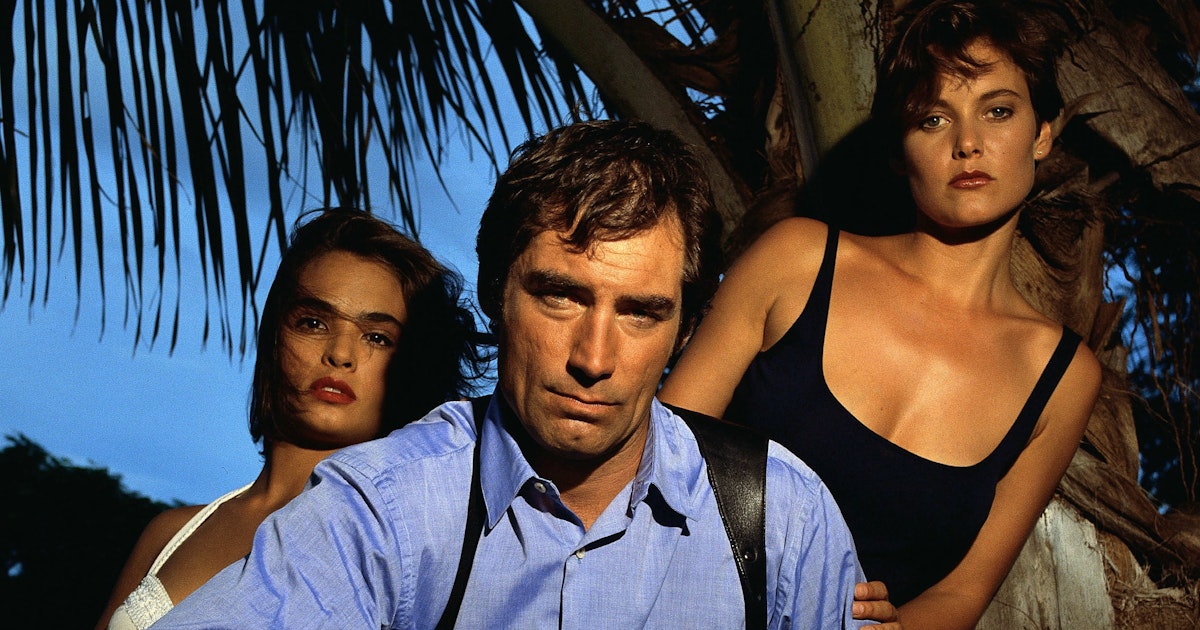
9. License to Kill (1989)
Timothy Dalton’s second, and last, outing as Bond is an extremely dark look for the franchise. Where Bond always has a lighter touch, with its heavy punches here and there, License to Kill takes Bond on a revenge-driven mission, with him losing his license to kill along the way. Audience members may cringe at the sound of “different,” and perhaps they weren’t ready for a no–mercy–type Bond. Since its release, however, fans have taken to Dalton in a movie that works. Many may have forgotten Dalton’s time as the iconic agent, but whether you remember him or not, it’s worth sinking your teeth into.
8. From Russia with Love (1963)
From Russia with Love is Sean Connery’s second Bond film, often recognized as one of his most memorable. Bond is sent on a mission to find a Russian decoding machine, or Lektor. In the
usual Bond fashion, he falls in love with a Soviet Spy named Tatiana Romanova. Connery becomes a bit stronger within the role, even though a bit stubborn at times — a frustrating trait that is smoothed out by his next film. The situations that unfold force Romanova to choose: love or country? It’s obvious that the film reflects the United States’ anxiety with Russia at that time. The Cold War story is utterly fun even if the action is on the cheesy side.
7. Spectre (2015)
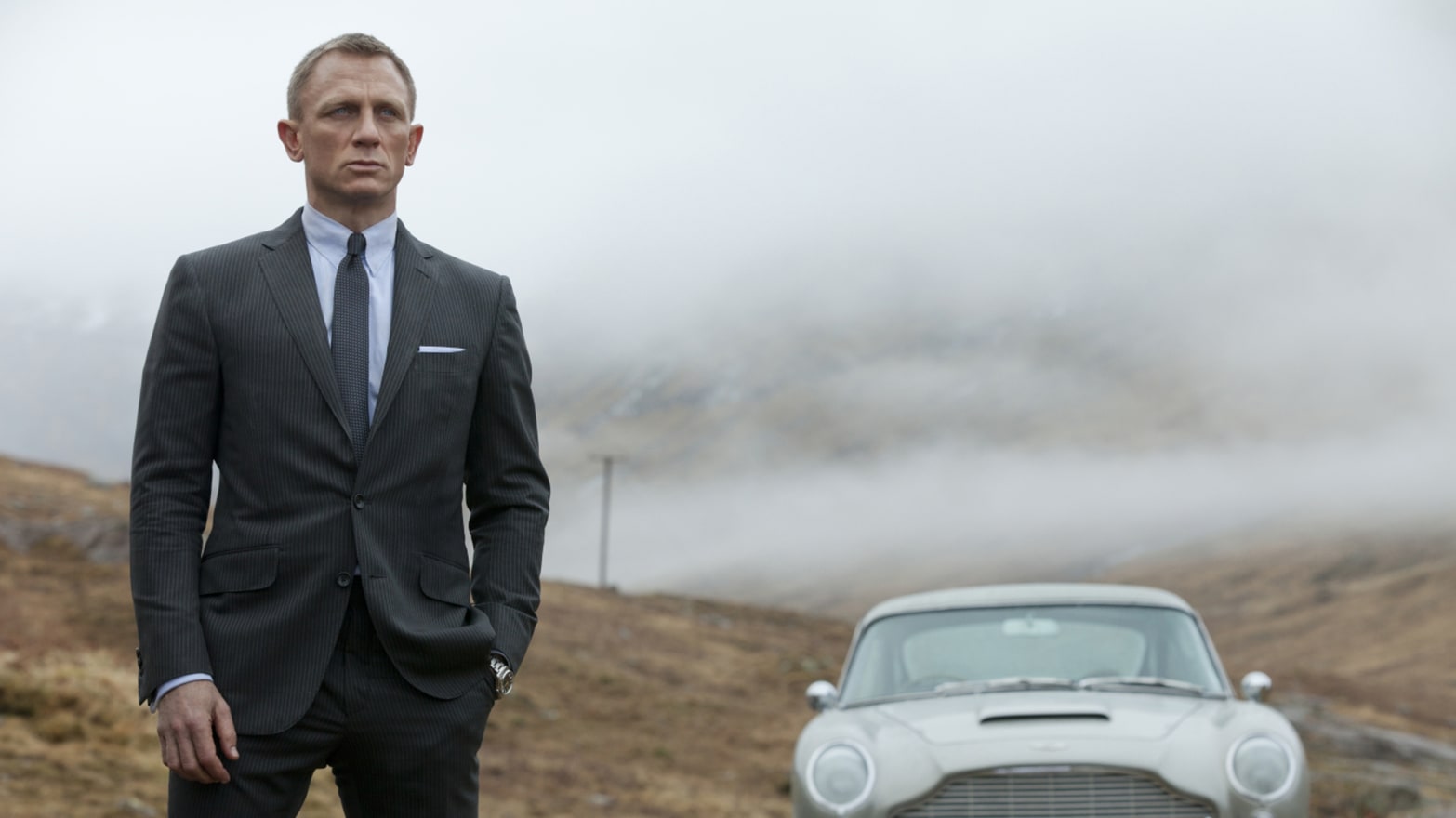
This is Daniel Craig’s last film before No Time to Die, and it’s about time that Spectre gets their self-titled film. After years and years, Bond learns Spectre is the organization behind the criminals Bond has fought over the years–not to mention the personal trauma they’ve caused him. Christoph Waltz’s portrayal of the ultimate villain, Blofeld, is exceptional. The way Waltz is introduced in the film, a man who has lingered in the shadows for so long, slowly making his appearance… it’s beautiful! The film is action-heavy as it leaves audiences with some of the best action sequences of any Bond film. It was believed at the time that this was to be Craig’s last Bond, and there are heavy signs to feed that speculation. But like Connery, it’s hard to say goodbye to such an iconic character.
6. Dr. No (1962)
Dr. No is our first introduction to the Bond franchise. This time he’s led to a mysterious island in
Jamaica while having to fight off a “fire breathing dragon,” assassins, and poisonous tarantulas. And like clockwork, Spectre is involved. While the franchise works out the stiffness of the Bond character from here on out, there’s something to love about the simplicity here. There’s a Batman: The Movie vibe with Dr. No and it’s goofy fight scenes and evil island headquarters. It’s is a great way to get the franchise off the ground and who better to do it than Sean Connery. It may be a little predictable with the storytelling, but it’s pure fun.
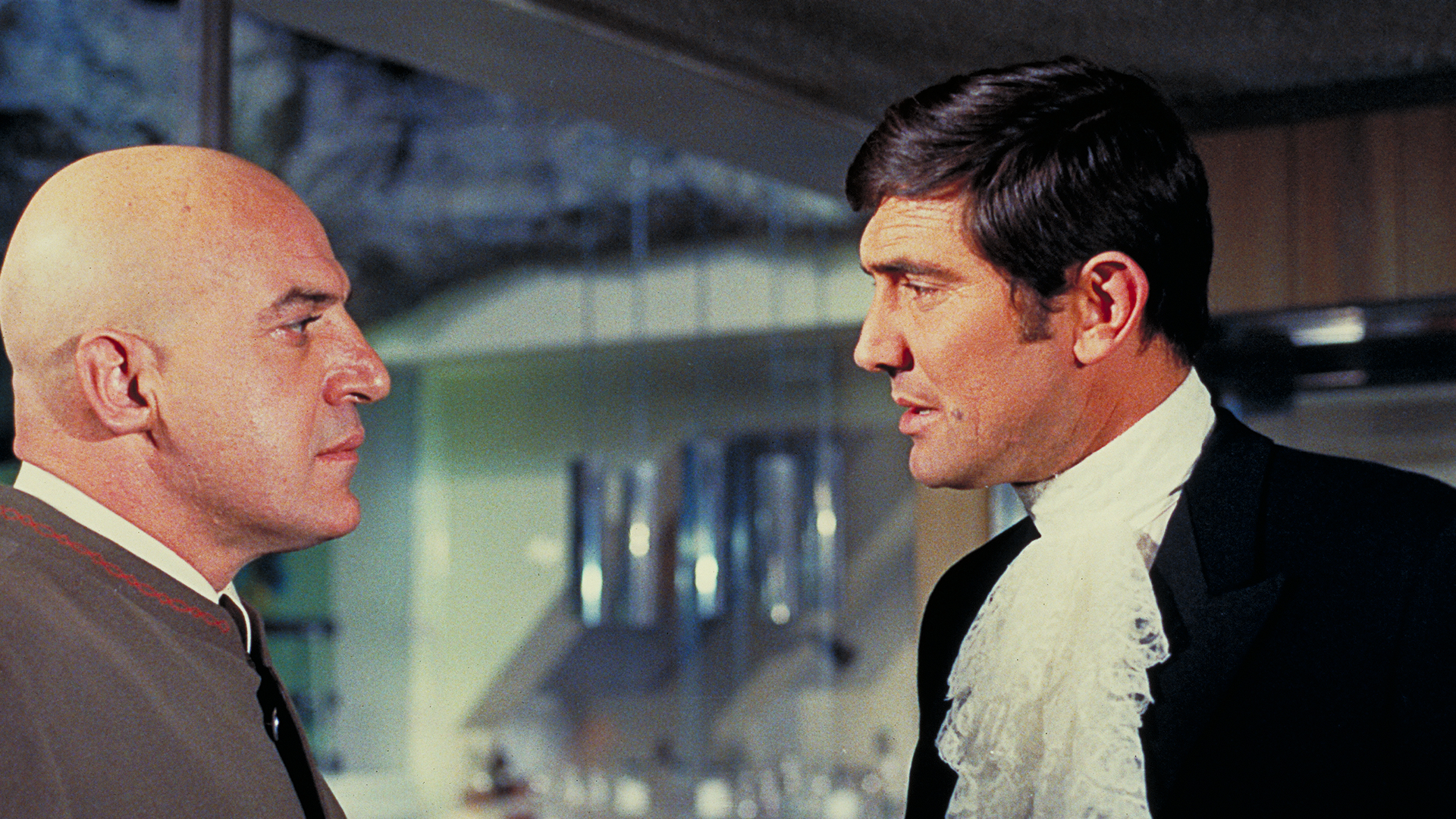
5. On Her Majesty’s Secret Service (1969)
There were definitely some huge shoes to fill when George Lazenby stepped in for Sean Connery. For so long audiences were privy to the life of this secret agent, no connections, with different girls in various countries. On Her Majesty’s Secret Service aims to change Bond’s usual tough guy persona by giving our hero a heart. Next to Lazenby’s side is Diana Rigg as Tracy, a rebellious woman who’s gotten mixed up in the wrong crowd more than a few times. Rigg is one of the best Bond girls as she’s able to handle herself next to Lazenby in more than a few action sequences along the snowy Swiss Alps. On Her Majesty’s Secret Service balances both romance and action well by showing a more human side to Bond. It’s a shame that this is Lazenby’s first and only time as Bond, because I think he may have been one of the best.
4. Goldeneye (1995)
The best of the Pierce Brosnan era, Goldeneye has a big nostalgia factor. The story focuses on Bond having to fight against a villain who is none other than a rouge 00 agent — leaving him to feel as though he is always one step behind his foe. Goldeneye is well shot with amazing cinematography by Phil Meheux and incredible direction by Martin Campbell, a familiar director who would later transfer to the Daniel Craig series. With the introduction of Judi Dench as M, it added another element to it, not only in a strong female, but in a character that the story continued to glaze over in the series up until now. This new era of Brosnan films became a little campy as time went on, but Goldeneye stands out among the rest.
3. Skyfall (2012)
Skyfall is more M’s movie than anything as her methods are brought into question as agents lives are in jeopardy and more are lost on her watch. Author Ian Fleming never intended for M to be female, but when the film cast Judi Dench in the role, the character took on another form. M and Bond’s relationship goes beyond their working relationship and highlights why Bond is who he is. It’s probably the darkest film in the Craig era as Javier Bardem’s, Silva, lurks in the shadows hunting the Mi6 agents. It’s also the first time we see Sam Mendes in the director’s chair and cinematographer Roger Deakins enter the franchise to create this stunning film.
2. Goldfinger (1964)
I don’t need to go on and say that Goldfinger is a must-see for any Bond fan. Apart from Sean Connery’s first two films, this film changed with each character. Bond is grittier in this action role while still holding on to his sleek and handsome charm. But more importantly, the Bond girls change, definitely for the better. Before this, especially in From Russia with Love, they were only objects to be dragged, slapped, and shaken during his mission. Sure there’s no escaping the male gaze in the Bond films, but in Goldfinger, Honor Blackman is intelligent and calculated as Pussy Galore — take the name as you will. The story is engaging. The action will put you on the edge of your seat. Goldfinger is without a doubt Connery at his best!
1. Casino Royale (2006)
With Daniel Craig at the helm, Casino Royale exploded onscreen for a new generation of fans. Bond aims to take down a private banker looking to fund a group of terrorists with the winnings of a high stakes poker game. It’s an ultimate origin story that the franchise never really receives before now — delving deep into why Bond is the way he is. The preceding films show Bond’s skills in combat, with only sporadic times of logic. Casino Royale almost showcases the intuitive nature of Bond’s intellectual capacity. A cast of true talent, a Bond girl that can finally tangle with him in smarts, and action that will please even the harshest critics. If you were going to watch only one Bond film, I’d put Casino Royale above all the rest.
This week on Episode 450 of the InSession Film Podcast, inspired by our review of Venom: Let There Be Carnage, we discussed our favorite campy superhero scenes in film. Before the Bryan Singer X-Men films, and especially Christopher Nolan’s The Dark Knight trilogy, the superhero genre didn’t have the greatest reputation. Most of the films also had a very different tone and approach than what we see today. It’s in that where Venom: Let There Be Carnage is very refreshing. The self-seriousness that many superhero films carry today is certainly noteworthy and there’s plenty to love, but like many of its predecessors of yesteryear, Venom leaned more into playful camp. And boy oh boy are there some great superhero scenes loaded with cheese. And we had a great time dissecting the one’s that made us squeal with glee. That said, here are our lists:
(Note: Please keep in mind that we each had different criteria for our selections)
JD
1) Destroying Bat Cave – Batman Forever
2) Trevor’s Planet of the Apes Story – Shang-Chi and the Legend of the Ten Rings
3) Hit-Girl Learning To Take A Bullet – Kick_Ass
Brendan
1) Peyton Trying To Win A Pink Elephant – Darkman
2) Superhero Auditions – Mystery Men
3) Stanley Transforming Into The Mask – The Mask
Honorable Mentions (Combined)
Various other scenes in Venom: Let There Be Carnage, Hellboy, The Guardians of the Galaxy, Ant-Man, Iron Man 3, Thor, Thor: Ragnarok, The Avengers, Avengers: Endgame, Spider-Man, Spider-Man 3, Batman, Batman Returns, Batman & Robin, The Dark Knight, Hancock, The Mask of Zorro, The Rocketeer, Superman, Aquaman, Deadpool, Deadpool 2, X-Men: First Class, Scott Pilgrim vs the World
Hopefully you guys enjoyed our lists and if you agree or disagree with us, let us know in the comment section below. There are many great scenes in the superhero genre that is full of camp, and perhaps your list is different than ours depending on your criteria. That being said, what would be your Top 3? Leave a comment in the comment section or email us at [email protected].