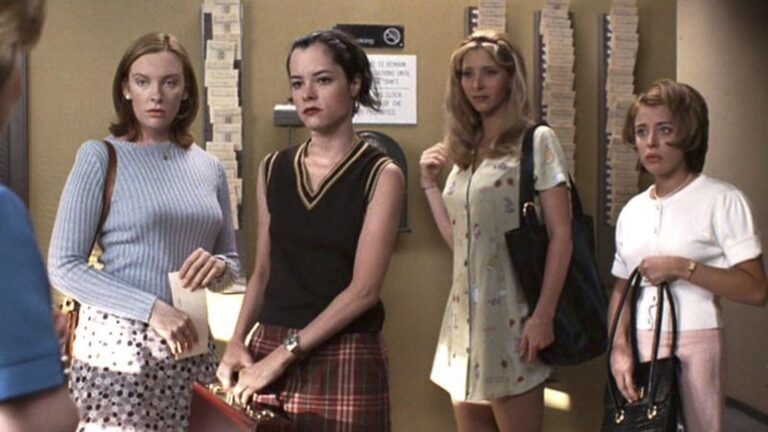
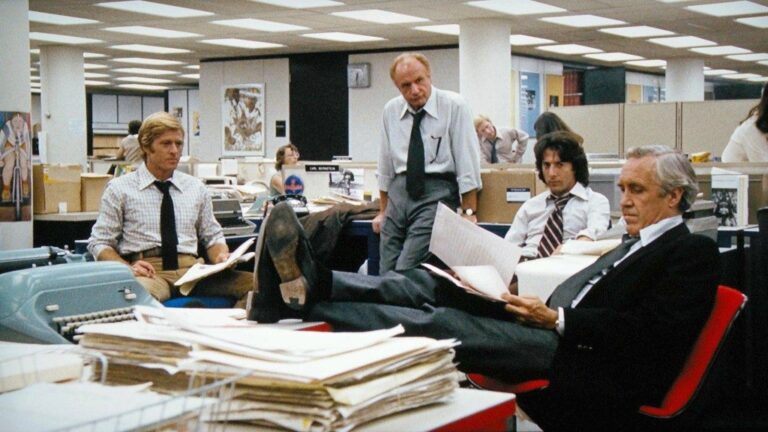
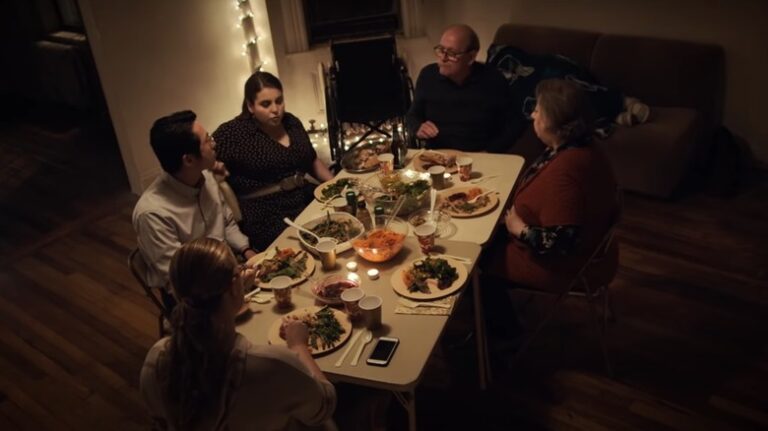
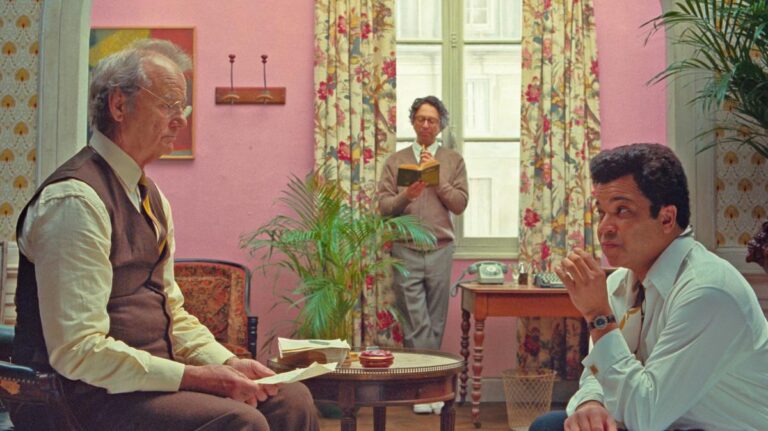
This week on the InSession Film Podcast, it’s a double feature as we discuss Edgar Wright’s latest film Last Night in Soho and Wes Anderson’s The French Dispatch! Plus, Brendan gives his thoughts on Dune while JD offers up a few sentiments on Halloween Kills.
You’ll have to forgive us, it’s one again a bit of a longer show, but there’s plenty to discuss with both Soho and The French Dispatch. It’s always a great time when we get to talk about directors we admire, and in one weekend we were blessed with new films from Edgar Wright and Wes Anderson. Distinct in style and energy, we can’t help but love both of these guys, so we had a great time with this show.
On that note, check out this week’s show and let us know what you think in the comment section. Thanks for listening and for supporting the InSession Film Podcast!
– Movie Review: Last Night in Soho (6:54) Director: Edgar Wright Writers: Edgar Wright (story by), Krysty Wilson-Cairns (screenplay by) Stars: Thomasin McKenzie, Anya Taylor-Joy, Matt Smith
– Notes / Discussion (59:36)
For our break segment this week, Brendan offers up his thoughts on Denis Villeneuve’s Dune after missing out on Episode 453. Meanwhile, after hearing all of the discussion on Halloween Kills, JD’s curiosity got the best of him and he talks about how it’s lesser Halloween.
– Movie Review: The French Dispatch(1:28:48) Director: Wes Anderson Writers: Wes Anderson (screenplay by), Roman Coppola (story by), Hugo Guinness (story by) Stars: Benicio Del Toro, Léa Seydoux, Timothée Chalamet, Jeffrey Wright
If you want to help support us, there are several ways you can help us and we’d absolutely appreciate it. Every penny goes directly back into supporting the show and we are truly honored and grateful. Thanks for your support and for listening to the InSession Film Podcast!
Director: Jeymes Samuel Writers: Jeymes Samuel and Boaz Yakin Stars: Jonathan Majors, Zazie Beetz, and RJ Cyler
Synopsis: When an outlaw discovers his enemy is being released from prison, he reunites his gang to seek revenge in this Western.
[/info]
Western-styled films have always held a special place in my heart. From films like True Grit (2010), News of The World, and D’Jango Unchained. It seems like an eternity has passed by since we’ve received a wholesome western film. Between The Harder They Fall and Concrete Cowboy, I’d say that 2021 is becoming one of the best years of black westerns we’ve seen in decades. This project has been on my radar for briefly due to so many many films and series sprouting from the ground. I do admit that I was afraid this film was going to slip through my fingers and float into my endless backlog of series and movies that I’ll get to “eventually” but thankfully it didn’t. The black representation in The Harder They Fall is something out of this world and I am beyond excited that Jeymes Samuel decided to create an all-black western not only for representation purposes but to remind viewers that the old west had a little more color than most would care to admit. From start to finish this film captures the essence of the old west while planting historical figures in an original story.
If you haven’t figured it out by now. Westerns have always held a special place in my heart. There’s something about the old west that creates some of the finest and engaging stories ever told. And The Harder They Fall takes such a simple narrative and amplifies it ten times over. The story is straightforward. Nat Love, played by Jonathan Majors crosses paths with his old archenemy due to some unfinished business with Rufus Buck played by Idris Elba. I’ve never heard Idris portray a western American accent before and I must say, I was impressed. Rufus and Nat have a lot of history with each other which makes for a compelling dynamic as the story unfolds. The rest of the cast is in rare form with phenomenal performances by Edi Gathegi, Zazie Beetz, Regina King, and Danielle Deadwyler. This is the first time I have seen Regina King and Lakeith Stanfield play a villainous role and I must say they knock it out of the park. Especially Regina. I never knew she could be that menacing as Trudy Smith. It sent chills down my spine.
The costume design and set pieces were incredible. From what I could tell this film was done with all practical effects which make for a bloody good time (literally). Even though this story is fiction the characters feel real and you can definitely tell that everyone on set was giving it their A-game. Jeymes Samuel does a fantastic job with the aesthetic design and letting this story feel as old and vintage as the old west itself. And the camera work is very clever especially with the ability to play around with a lot of first-person camera work mixed in with the gorgeous scenery of Chama and Sante Fe, New Mexico. The writing in this film was cleverly balanced between humor and the drama of the old west. There is a plentiful amount of jokes, heartfelt moments, and serious dialogue in this tale of western outlaws.
Now we all know a good old fashion western film is nothing without its soundtrack and the music is something that’s not necessarily new but it works with the scale and theme of the story. Mulitple artists from Koffee, CeeLo Green, and Kid Cudi make an appearance on the soundtrack. It’s always great to see an artist create original songs for films that help expand the representation of their culture. There is a lot of western hip hop track in the film that fit wonderfully. There seems to be a new wave of style in which composers blend modern music into period pieces. You see this in shows like Dickinson where most of their soundtrack has a modern feel to it even though the story takes place in a different age. This is one of those things where if done right the payoff could be well received and in this case, it does.
The Harder They Fall is a love letter to the old west. And belongs to be ranked among the best westerns to ever appear on your TV screen. There are plenty of old west representation stories to be told within different communities. This film was made with love and care to those whose names might have been forgotten in the sands of time and is a must-watch to Netflix bingers across the globe.
I will be watching and reviewing all of the films included on AFI’s 100 Years…100 Passions list. The list contains the 100 greatest love stories in American cinema and I plan to consider how our views on romance and social issues have changed over the years as well as judge whether the romances in these films actually made me swoon. As a fan of the romance genre, I expect to love each and every one of the nominees but I also don’t know if I would consider all of them romantic.
When Nora Ephron first broke through as a screenwriter of romantic comedies, she was treated like an ersatz Woody Allen. While this seems like a peculiar assessment when you consider Ephron’s filmography from a modern standpoint, critics in the 1980s and 1990s didn’t seem to grasp some of the subtle touches that she brought to her acclaimed screenplays. She and Allen came from very different backgrounds and while Allen was an unrepentant Ingmar Bergman fanboy, Ephron wasn’t afraid to show some love to classic Hollywood melodramas. Her career as the Queen of romantic comedies was years in the making and by the time she published the screenplay for When Harry Met Sally… (1989), she was already one of America’s most famous wits. This was the woman who wrote “A Few Words About Breasts” in 1972 and put together the screenplay for Silkwood (1983), a Meryl Streep vehicle about radiation poisoning. When she stepped into the role that she is now most famous for, it didn’t necessarily seem like a natural fit.
Ephron was seen as a scabrous, cynical writer during her time as a member of the New York intelligentsia, so her decision to write films about boys and girls falling in and out of love was disappointing to some. Her early efforts took on a light, humorous tone and typically ended on a positive note. There was little of the rage that seeped into Heartburn (1986) or the harsh self-deprecation that came through in her television interviews. It took some time for people to accept the idea that Ephron’s romantic comedies deserved to be taken seriously. It was with her second directorial effort, Sleepless in Seattle (1993), that she began to solidify her reputation as an auteur within the genre. She took inspiration from Leo McCarey’s Love Affair (1939) and its more famous remake, An Affair to Remember (1957), but put her own spin on a tale that was often criticized for being too sentimental and mushy. She blended droll observations on mundane aspects of everyday life with an intense belief in the almost mystical power of love. When the film became a box office smash success and permanently cemented Tom Hanks and Meg Ryan as America’s favorite on-screen couple, Ephron fully hit her stride and gained enough clout to command big budgets and a high degree of artistic freedom.
She co-wrote the screenplay with David S. Arch and Jeff Arch, and they managed to successfully streamline a story that could have become overly convoluted. The story opens with grieving architect Sam Baldwin (Tom Hanks) being reluctantly drawn into a discussion with a radio talk show host. Following his wife’s death, he and his son Jonah (Ross Malinger) relocated to Seattle from Chicago, but he still struggles to accept the loss of his one true love. He describes his romance with his wife to the talk show host and thousands of female listeners are deeply moved by his honest display of emotion. Journalist Annie Reed (Meg Ryan) feels as though she can relate to his feelings and impulsively writes a letter to him. She doesn’t mail it but her friend ends up sending it for her and Jonah is enchanted by the idea of Reed. Baldwin and Reed end up in relationships with other people but find themselves skirting around one another for several months and appear to have a spiritual bond that can overcome the obstacles that stand in their way.
It is impossible to imagine this film working without the powerful chemistry between Hanks and Ryan. When they see one another for a just moment, you need to be knocked over by the strength and force of their shared emotional bond. If Ryan and Hanks didn’t invest their characters with a painful level of sincerity, this scene would be laughably stupid and the film’s delicate center would break into a million little pieces. Rather than leaving you questioning why two people who have barely communicated are passionately in love, they use this moment to sell you on the idea that these people have to be together. From that point on, the suspense becomes almost unbearable and Ryan and Hanks have us weeping into our tissues. They know how to play our emotions like a fiddle and you find yourself thanking them for it. Emotional manipulation is a talent and, like the best con-men, Ryan and Hanks never let you in on the fact that it’s all an act.
The producers also went to the effort of plunging real money into this film and hiring the best of the best to handle the technical aspects of the production. The vaunted cinematographer Sven Nykvist brought his trademark tastefulness and simplicity to every shot. Nykvist doesn’t do anything flashy but he doesn’t have to. His guiding hand ensures that the film looks more carefully planned out than 90% of major romantic comedies. It takes you back to the 1940s, when respectable editors, cinematographers, and composers were regularly contracted to work on one of Preston Sturges’s madcap farces. Sleepless in Seattle looks polished and sleek in a way that He’s All That (2021) doesn’t. Highly accomplished industry professionals shouldn’t have to be ashamed of working on romantic comedies. If producers regularly forked out the money to hire the Sven Nykvists of the 2020s, romantic comedies wouldn’t look so worryingly bland.
There is also the issue of nobody really being able to step up to the plate and fill the gaping hole that Ephron left after her untimely passing. Some have tried to controversially argue that Nancy Meyers is the successor to Ephron but I think it’s ludicrous to imply that Meyers is even in the same league as Ephron. She carved out her own little niche in Hollywood and critics came to understand that every writer who tells stories about nebbishy New Yorkers with complicated love lives isn’t just ripping off the Woody Allen formula. Ephron’s unique voice had a real influence on other writers and it is a sign of her genius that others have failed to successfully conjure up the spontaneous joyfulness that could be found in so much of her writing.
Ephron is one of those writer-directors who worked on multiple entries on the list and I can happily say that the admiration for her work is completely justified. Sleepless in Seattle fully embraces romantic melodrama and Ephron cleverly exploits the insane chemistry that Hanks and Ryan share. Its greatness is undisputed and the list just wouldn’t be complete without it.
Here’s my rule of thumb: actors who want to get involved in politics should try to run for office. That’s a controversial hot take, but I think the reason people have been revolted by the actor-activist is that they come off as snobbish and holier than art thou. They talk about in their award speeches, which they have the right to speak at if they want, but people, in general, want to get away from the subject for three hours. I’ll at least give credit to Cynthia Nixon challenging the now-disgraced Andrew Cuomo for the governorship in New York back in 2018. She’s been laughing it up since his downfall, for sure. Conservative or liberal, it doesn’t matter, here are some screen actors who made the transition to politician seamlessly.
Melina Mercouri (Member of the Hellenic Parliament, 1977-94)
One of Greece’s most famous actresses worldwide, Mercouri married American director Jules Dassin and he would direct her in the romantic comedy Never On Sunday (1960), winning Best Actress at the Cannes Film Festival and later received an Oscar nomination. This opened her to more international roles on stage and screen; while in New York, a coup d’etat took place by the Greek military and she became an activist in condemning the junta. When democracy was reestablished in 1974, she joined the centre-left PASOK and was elected to Parliament in 1977. Mercouri was natural to become Minister of Culture and among her accomplishments, she promoted government funding in Greek cinema and remained active until her death in 1994.
Ronald Reagan (U.S. President, 1981-89)
Reagan was a middle-of-the-road Hollywood actor from the 1930s to the 50s, even serving as President of the Screen Actors Guild during this time. His most famous performance was in the Best Picture-nominated Kings Row, playing a mild-mannered young man in a small town whose life is upended by betrayal and tragedy. Reagan, a New Deal Democrat, soon converted to being a conservative Republican, making his mark with his “A Time For Choosing” speech in 1964, and was elected governor of California in 1966 for two consecutive terms. After missing out on the Republican nomination for President in 1976, he would win in a landslide four years later against Jimmy Carter, starting a new period of conservative rule that remains controversial to this day.
Glenda Jackson (UK Member of Parliament, 1992-2015)
Glenda Jackson did something Reagan never did: win not one, but two Academy Awards. Both for Best Actress, she first won for Women In Love (1969) and then for A Touch Of Class (1974). She put her activism for the Labour Party to the test when she won a seat in the House of Commons – Britain’s seat of government – in the general election of 1992. For a time, she served in the cabinet of Prime Minister Tony Blair in the 1990s but became a critic of Blair for his actions in sending the country to Iraq and Afghanistan in the 2000s. After Jackson retired in 2015, Jackson successfully returned to acting, playing the titular role in King Lear in 2016 and winning a Tony for her performance in Three Tall Women in 2018.
Arnold Schwarzenegger (Governor of California, 2003-2011)
Before this recent recall election, there was another one in 2003. Schwarzenegger had shown his support for the Republican party since the 1980s while also being married to a known Democrat, Maria Shriver. But his first step towards running for office was the successful recall against the highly unpopular Democrat Gray Davis. Schwarzenegger won with 48.6% of the vote and was re-elected in 2006, cementing his time as the “Governator” in a solidly Democratic state. As a moderate, he was the opposite of then-President George W. Bush’s style of conservatism and received some support from Democrats, but left office unpopular as voters were ready to go back to their Democrat stronghold.
Beppe Grillo (Co-Founder Of Five Star Movement, 2009-Present)
Grillo first became known as a standup comedian in the 1970s and was a household name in the 1980s for his stinging political satire. His work was so offensive to politicians that they were able to ban Grillo from the country’s dominant, publically-owned station, RAI. Yet, he remained very popular for his anti-establishment views, constantly calling out the blatant corruption amongst the media that carried into the 2000s when he decided to put his words into action with the establishment of the populist, syncretic-viewed Five Star Movement party. He continues to direct the party’s success in government, even as head of state with Giuseppe Conte as Prime Minister from 2018 to 2021.
This week on Extra Film, Ryan and Jay continue their Sergio Leone Movie Series with For a Few Dollars More and then they discuss the new Mia Hansen-Løve’s flick, Bergman Island!
Following last week’s conversation of A Fistful of Dollars, the Extra Film boys tackle the second, less talked about film in the Dollars Trilogy. With a darker story and bigger budget, Leone was able to elevate this project from his last and make one of the greatest westerns of all time, and a movie Ryan and Jay absolutely gushed about.
In the back half of the episode, the guy’s review Bergman Island. With so many films coming out from the film festivals very soon, in comes one from the Cannes Film Festival that is an ode to the classic director Ingmar Bergman, his work, the island he worked on, and the creation of movies and stories. Led by two wonderful female performances, this is one of those gems you need to see asap.
Thanks for listening!
– Movie Review: For a Few Dollars More (5:35) Director: Sergio Leone Screenplay: Luciano Vincenzoni, Sergio Leone, Sergio Donati Stars: Clint Eastwood, Lee Van Cleef, Gian Maria Volonté, Mara Krup, Luigi Pistilli
– Movie Review: Bergman Island (53:57) Director: Mia Hansen-Løve Screenplay: Mia Hansen-Løve Stars: Vicky Krieps, Tim Roth, Mia Wasikowska, Anders Danielsen Lie
We try to make this the best movie podcast we possibly can and we hope you enjoy them. Subscribe today on iTunes, Spotify, or Stitcher, and please leave us a review on iTunes. You can also find us on Soundcloud, PlayerFM, and TuneIn Radio as well. We really appreciate all your support of the InSession Film Podcast.
To hear this Extra Film episode and everything else we do, download our apps on the Amazon Market for Android and the Podcast Source app on IOS devices. The mobile app covers all of our main shows, bonus podcasts and everything else relating to the InSession Film Podcast. Thanks for your wonderful support and for listening to our show. It means the world to us.
I will be watching and reviewing all of the films included on AFI’s 100 Years…100 Passions list. The list contains the 100 greatest love stories in American cinema and I plan to consider how our views on romance and social issues have changed over the years as well as judge whether the romances in these films actually made me swoon. As a fan of the romance genre, I expect to love each and every one of the nominees but I also don’t know if I would consider all of them romantic.
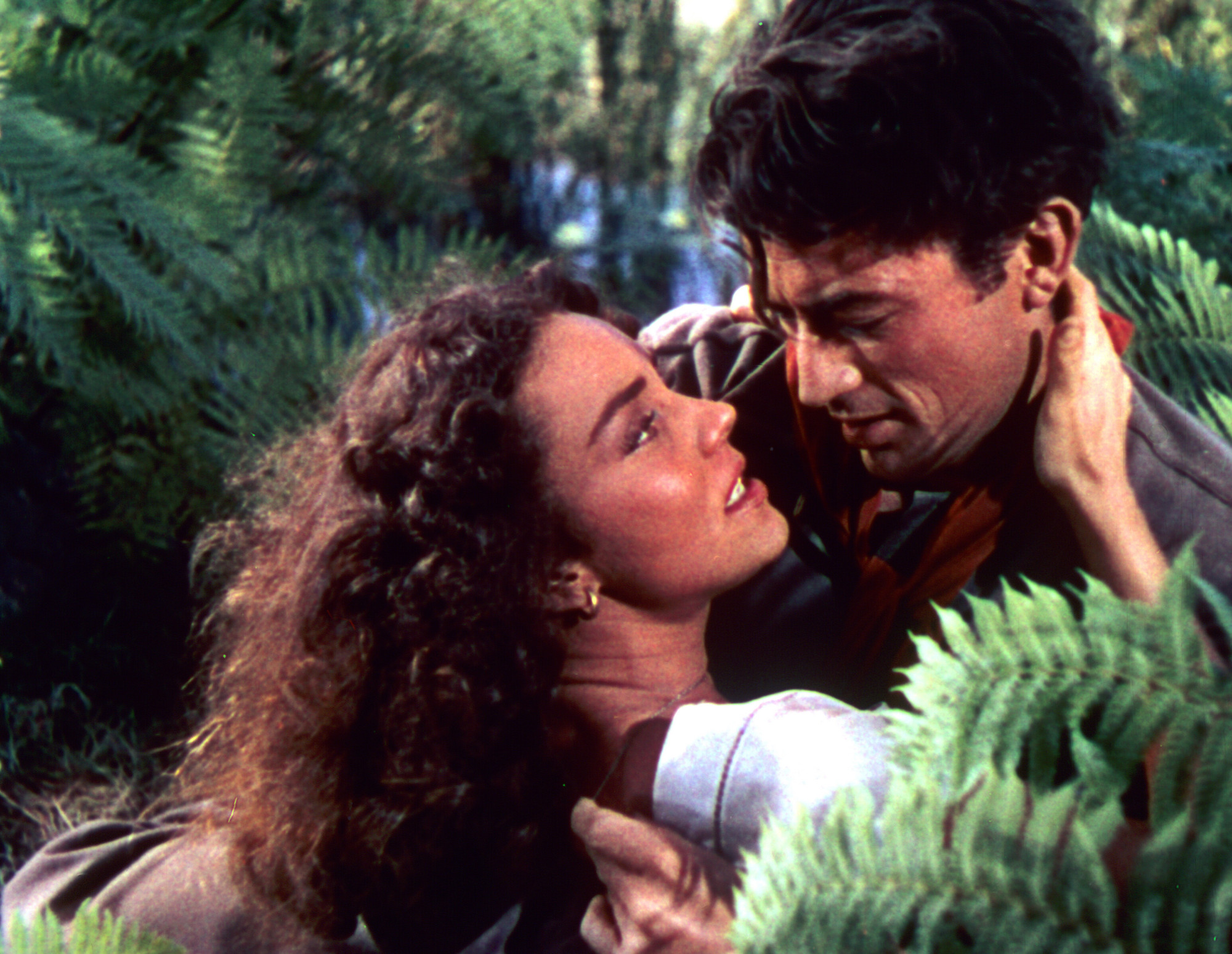
I might look upon William Wyler’s perfectly respectable adaptation of Emily Brontë’s ‘Wuthering Heights’ more favorably if it didn’t seem to fundamentally misunderstand the point of the book. It tries to twist a disturbing family tragedy about jealousy, greedy people who are obsessed with the British class system, into a dreamy romantic fantasy about a pretty girl who is torn between a bad boy and an upper class stiff. This reshaping of the narrative could have been successful if the screenwriters had made fundamental changes to the motivations of the characters. Rather than doing that, they kept in all of the unpleasant aspects of Cathy’s personality and refused to acknowledge the fact that she is in thrall to a classist system that severely disadvantages the man that she claims to love. In the novel, she is a complex character who struggles with all of the contradictions that come with being a wealthy British woman. In the film, she is a fuzzily drawn tart who messes around with two different for men for reasons that are never explained, before eventually becoming a suffering martyr. It makes no sense.
Charles MacArthur and Ben Hecht’s screenplay streamlines a story that is arguably at its most powerful when dealing with the trauma that the troubled relationship between Heathcliff and Cathy has wrought on their ancestors. MacArthur and Hecht choose to cut Catherine Linton out of the narrative and introduce a happy ending into a story that is so beloved because it presents such a bleak view of British society. As MacArthur and Hecht tell it, Cathy Earnshaw (Merle Oberon) is a sweet, beautiful upper class young woman who grew up at the Wuthering Heights estate. She grows up alongside her classist brother Hindley (Hugh Williams) and her adopted brother Heathcliff (Laurence Olivier). She develops strong feelings for her adopted brother and is excited by the dangerous, enigmatic air that follows him around. When she comes into contact with the wealthy Edgar Linton (David Niven), she is comforted by the idea of marrying somebody within her own social class. Heathcliff is the victim of classist taunts and Earnshaw would lose her social standing if she chose to marry him. Heathcliff leaves the estate after she chooses to marry Linton and unexpectedly returns several years later as a wealthy man. He attacks and mocks Earnshaw for many years but declares that he loves her when she falls ill and suddenly dies. Her ghost haunts him until the end of his days and they are finally reunited when he passes away as an old man.
The screenwriters reconfigured the story to strip it of most of its depth and ended up endorsing the classist ideas that the novel rejects. This version of the story is a female fantasy about being desired. Earnshaw is the prettiest girl around and every man in the area wants to marry her. She gets to entertain the affections of various suitors without being accused of being promiscuous or slutty. These men are driven wild by her innate sensuality and aggressively pursue her. This was a plot device that would have been very successful at the time, as the sexually repressed young girls that this film targeted would have been subconsciously thrilled by the concept of having multiple sexual or romantic partners. In the real world, they would have been judged for dating more than three young men before getting hitched and committing to a loveless marriage.
In the world of the film, Cathy is a peculiar mash-up between the Madonna and the whore. On one hand, she is as pure as the driven snow and sacrifices her own happiness by refraining from having an affair with Heathcliff. On the other hand, the film cleverly exploits the fact that Heathcliff is a rape fantasy come to life. American women in the 1930s were conditioned to believe that sexual desire was sinful and they were wrong to take an active role in initiating a sexual encounter. This might have been what led to the creation of the ‘rape fantasy’, a somewhat disturbing sexual fantasy that made sexually repressed individuals feel comfortable with the idea of having sex. If their sexual partner was the one who initiated sexual contact, by forcing themselves onto a woman and leaving her completely powerless and helpless, the women would not have to admit responsibility for their sexual desires. Heathcliff is depicted as a violent man who is ruled by his intense, passionate emotions and he often looms above Earnshaw, which makes him appear to be an overpowering figure. Olivier is made up to look like the villain in a German Expressionist horror movie, with his thickly applied mascara and caked on foundation. The film lets people in the audience flirt with the idea of danger, whilst absolving them of any ‘guilt’ for wanting to have sex with somebody who isn’t as bland as David Niven. It’s a problematic trope and it likely stopped women in the audience from interrogating the social conditioning that caused them to feel so afraid of sex.
It also fails to properly address the class-based themes that stand at the center of the novel. Brontë suggested that obsession with the British class system could destroy people and turn them into heartless individuals who were incapable of loving one another. Heathcliff realizes that Earnshaw is essentially a Capitalist creature who will always look down on him because he is not wealthy. When she rejects him in order to marry another upper classman, he is disgusted by her and turns her into an object in his mind. He believes that he can possess her if he becomes wealthy but he has lost the pure love that he felt for her before she abandoned him in favor of another suitor. If he did marry her, they would have an empty marriage that wasn’t built on the passionate emotions that marked the beginning of his infatuation with her. When he does become wealthy, he doesn’t even experience the hollow victory of winning her. The members of the upper class still view him as a nouveau riche loser who doesn’t deserve their respect. This makes him even more resentful and hateful and he descends into madness as he is forced to contend with the fact that a person simply can’t win if they are not born into wealth in British society.
The film seems less comfortable with the idea of criticizing classism. This is partly because, like so many others film from this time period, it admires the pomp and the pageantry of upper-class Britons. American filmmakers used British Imperialism and snobbery as a representation of glamour. Working class Ohioans were meant to aspire to act like a British nobleman, before ultimately accepting their place as lower-class plebs who would have to admire jewel-laden toffs from afar. Actively criticizing Britain’s unfair class system would shatter the sheen of glamour that Hollywood was so desperate to preserve. In almost every frame of Wuthering Heights (1939), you can feel the camera asks you to lick your lips over the sight of all of the expensive items that the Earnshaws and Lintons own. The film never really takes a hatchet to their way of life or their political beliefs. It is especially when abhorrent when the film encourages the audience to see the nouveau riche, Heathcliff, as a monstrous figure who doesn’t possess the refinement or class of the families that have generational wealth behind them. Rather than seeing through the classist myth and pointing out that people aren’t special for being born into a wealthy family, it believes in the myths propagated by the upper class. This means that its ‘message’ feels incredibly muddled. You are supposed to want Earnshaw to be with Heathcliff but, on some level, you are also meant to admire the class system that keeps them apart.
I know that many consider it unfair to penalize a film for being a poor adaptation of the novel that it is based on. Some believe that evaluation and analysis of literary adaptations should not involve comparisons to the source material because film is its own medium. I think that it is fair to argue that many literary adaptations are improved as a result of their deviations from the novels that they were based on. However, I think that the film version of Wuthering Heights feels poorly written and structured as a result of the changes that Hecht and MacArthur made. You can always sense that there’s something missing when it comes to Earnshaw’s characterization and you can never really understand the thought process behind the decisions that she makes. The film would have been so much better if it had embraced the fact that the characters are unlikeable and morally corrupt. As a soppy romantic drama about a physically ill dimwit who has to live without the man she loves, it doesn’t entirely work.
The screenplay is easily the film’s biggest flaw but it is so exceptional in other regards that it makes a case for itself as a production that is less than the sum of its parts. Gregg Toland’s extraordinary black and white cinematography creates a haunting, poignant effect. He understands the gothic spirit of the novel and hints at the darkness that lies at the heart of this story. Even when the score is insisting that this is just a run of the mill story about ill-fated lovers, Toland is able to convey the madness and hysteria of the characters. Olivier also succeeds in crafting a credible version of Heathcliff. His performance launched him into cinema superstardom and established him as one of the top male sex symbols of his day. He is suitably Byronic and handsome in the role but brings a level of intensity to his performance that is sorely needed. When compared to Oberon, who has all the charisma of a dead fish, he looks like the greatest movie star of all time. All of these elements combine to turn the film into a solid piece of entertainment. You still find yourself wistfully imagining what this could have been, but it never qualifies as a hot mess.
Director: Spencer King Screenplay: Spencer King Stars: Eleanor Lambert, Claudia Black, Xxavier Polk
Synopsis: A young woman returns to her home city of Detroit to mourn the sudden passing of her twin brother. Upon meeting his eclectic group of friends, she discovers that his death is not what it seems and sets out to find the truth.
Whether it was intentional or not, Time Now seems to adopt the glumness of its characters. As a movie, it trudges along as if in a state of depression. In a way, this makes sense: A beloved person has died and this family is reuniting to mourn his abrupt passing. The directorial choice to cinematically mirror the mindset of one’s grieving protagonist is apt, definitely. It becomes a problem, however, once it’s clear that we aren’t going to be keeping up visually with the growth of the performances. The filmmaking remains stagnant and a smidge dull while the actors on screen begin sparking. Time Now is a mystery, yes, but labeling it a thriller is a far cry. Layers are peeled back and clues are discovered, sure, but the plotting is too torpid for its own good. The prize at the bottom of this Crack Jack box is the undoubtedly principal cast.
As Jenny, Eleanor Lambert is a steady force. Driven by the determination to solve her brother’s death, Lambert weaves a perceptible doggedness into Jenny’s grief. Emotionally wounded and riddled with regret, Jenny harnesses her pain and utilizes it to propel her forward into the dark underbelly of her hometown. But she’s far from bulletproof. Lambert tactfully identifies which quick beats to reveal the increasing number of chips in Jenny’s façade. With each successive checkpoint on her journey, she unfurls a bit little more and makes us wonder if/when she will pass a point of no return. Lambert commands more of the screen with each subsequent scene. The film concludes with an extended, devastating medium-close shot of Lambert that calls to mind the finales of Portrait of a Lady on Fire or Dangerous Liaisons, and she so thoroughly owns every square inch of the frame that it’s nearly impossible to glance away. Eleanor Lambert demonstrates that she’s a fervent actor with a deep well of soul to draw from.
Supporting Jenny’s story are two standout performers. First and foremost, we have Aussie genre goddess Claudia Black. Sci-fi fans know her best for playing Aeryn Sun on Farscape and Vala Mal Doran on Stargate SG-1, so seeing her play an earthling here in Time Now is quite a treat. As Jenny’s offbeat aunt Joan, Black offers a mix of much-needed charm and sagely wisdom. With her magnetic presence, she grounds the story in the effortless manner that only a seasoned thespian can. Then, acting as a dramatic foil to Jenny, we have Xxavier Polk’s mysterious Kash, a close friend of Jenny’s dead brother. Kash is character who may know more than he lets on at times and can therefore be intentionally difficult to read. Polk manages to communicate volumes with just a look and some prolonged stillness. He speaks of course, but Polk truly shines in the moments between the lines. These three performances at the center of the film help bolster the competent though sometimes apprehensive filmmaking.
Time Now repeatedly doubles down on one of my biggest indie pet peeves: the conscientious effort of turning every brand name product all the way around so as to quell a producer’s phobia of getting sued for any potentially unlicensed placement. Labels, of course, do not need to fully face the camera all the time; that would be equally off-putting. And I understand rotating a product in an actor’s hand in order to avoid “featuring” it. But when a scene is set in a bar—a business that sustains itself on the sale of alcohol—and every single bottle behind the bar in a wide shot (that does not highlight anything in particular) is backwards, the decision draws attention to itself in a bad way. Like, how are these characters, as consumers, supposed to know how to order a hypothetical drink? Situations like this tend to fall under “fair use” and are usually acceptable. However, I can conceive of why novice narrative film producers would feel the need to do this. (Greeking labels or just simply making your own are also valid options!)
As a whole, the filmmaking could’ve used a little more oomph. In a brief nightmarish sequence, we get a taste of what that could’ve looked like. Via Jenny’s unconscious psyche, we get a borderline demonic rendering of her guilt. Fantastic makeup effects dish out an aperitif for a meal that we’re ultimately not served. Whether this was due to budget/time restraints or rewrites I’m not sure, but I found myself waiting for the movie to return to that macabre place, and unfortunately it never really does. Spencer King does a perfectly okay job of telling this story, but if I’m being honest the reason to watch Time Now is for the actors. The unbothered pacing has a deliberately incremental build (as if they, the filmmakers, actively wanted the film to be called a “slow burn”), which has a tendency to test the patience of the audience. But the plot is not the main event here, anyway. The craft of Eleanor Lambert, Claudia Black, and Xxavier Polk are infinitely more arresting than the script they’re working with.
Director: Pablo Larraín
Writers: Steven Knight
Stars: Kristen Stewart, Timothy Spall, Sally Hawkins
Synopsis: While spending Christmas with the royal family, Princess Diana comes to terms with her own fragility and makes a crucial decision in order to save herself.
[/info]
As humans, we are inherently drawn to tragedy. From the ancient Greeks to the evening news, the one thing that always lures us in is a story of another human enduring unfathomable pain, a result of circumstances or events that are too horrific to ponder. Perhaps the only thing that could compete with our love for a tragic story is our love for one with a happy ending, especially if it comes wrapped in a fairy tale or fantasy. Our ordinary, average lives long to live vicariously in these extremes, either the most dire or the most wonderful, so that the lack of catharsis in our everyday lives can be satiated by their drama. And the best dramas to watch are the ones that could either never happen to us (i.e. the fairy tale) or we would never WANT to happen to us (tragedy). And when that rare example in real life comes along that somehow encompasses both fairy tale and tragedy, it becomes undeniably compelling—even better than Hollywood could have itself scripted.
For anyone over forty, there has been no greater tragic/fairy tale figure in our lives than Princess Diana. From the day she burst into the public eye in 1981 to that fateful day in August 1997, Princess Diana was the most famous human on the planet, the most photographed, the most beloved, the most envied, and the most misunderstood. But what we knew—or thought we knew—about the extraordinary young girl plucked from obscurity and thrust into the blinding spotlight by way of being the future Queen of England, mother to the future King, came nothing close to the reality of this young woman’s lonely, sad and quite un-fairy tale real life. As her fame has morphed into legend in the twenty-four years since her untimely death, dramatizations of her life have become their own cottage industry, from musicals to books to television series and movies. So it is understandable to be wary of yet another film about Diana that arrives now, just when Diana fever seems to have reached an all-time high, but trust me when I say there is something completely different about director Pablo Larraín’s new film, Spencer, starring Kristen Stewart, and it is not only unmissable, it is necessary.
Despite the temptation to write off this film as a gimmick, with one of the most famous American actresses, herself a celebrity with her own legacy of being a paparazzi magnet, playing the most famous British princess, Larraín’s film is the absolute opposite, a grounded, serious and significant examination of one woman’s quiet desperation, played by one seriously talented actress. For those not paying attention, Stewart has left her Twilight days far behind, having worked hard to establish legitimate credibility as a serious actress, and her performance in Spencer is not only a culmination of hard work but a testament to some serious skills, skills that very likely will be rewarded many times over this awards season.
And perhaps there is no actress better suited to play Diana than Stewart, a young woman who also found fame at a young age, and often found it to be crippling, or at least overwhelming at times. Stewart channels all of that understanding and recognition into her performance as Diana, a powerful, enigmatic, deeply textured, and layered characterization that is devastating and empowering, sorrowful and hopeful. She takes on the challenge of playing the most famous woman in the world with a fearlessness, owning every moment, making it her own, and yet bringing us the closest we have ever felt to this figure we all thought we knew.
Spencer focuses on one weekend in December in the early ‘90s, as Diana spends the Christmas holidays with the royal family at their sprawling estate in England. By limiting the scope of the story to just three days, screenwriter Steven Knight is able to dive deeply into Diana’s state of mind during this troubled period of Diana’s life, when she was at her most unhappy in her marriage and her life. Pair the lean and focused screenplay with Larraín’s moody visuals and composer Jonny Greenwood’s evocative and haunting score, and Spencer plays much more like a horror film than a historical biopic. And that’s why it is such a compelling experience.
It may not seem like it, but Spencer is a horror film, in every way. There is a deep tension that continues to tighten throughout the film, beginning with the opening shot, and never lets up. Larraín and Knight make full use of our familiarity with the characters and storylines of the royal family, allowing conflict to emerge wordlessly between characters with simple glances or gestures, each one carrying heavy meaning. The trappings of royal life are literally that for Diana, as we experience her gasping for air, desperate for a way out, shouting into the empty void, all the while surrounded by exquisite beauty and living history.
Larraín has created a masterpiece of juxtaposition in Spencer, the horror story existing within the beautiful fairy tale. The gorgeous costumes by Jacqueline Durran and production design by Guy Hendrix Dyas are countered by Claire Mathon’s harrowing cinematography, allowing the atmosphere of England in December to seep into every corner of every shot, the fog and mud and overcast skies looming like a suffocating blanket.
And yet, despite her misery, there was a reason Diana stayed: her sons. The beauty and true sorrow of Diana’s life was the fact that she chose to endure as much pain and humiliation as she did because of the love she had for her sons, and vice versa. She felt she was the only connection to reality for her children, and was determined to keep them from becoming fully enmeshed in the soul-crushing traditions and expectations of royal life. Larraín masterfully depicts Diana’s mixed emotions and brings the audience into her anguish. She chose to stay, in order to stay close to her sons, but at what cost?
Spencer is a gorgeous, evocative, and hauntingly poetic glimpse into a woman’s mind at its most panic-stricken, its most fearful, its most empowered. Stewart is beyond magnificent, her performance as Diana by far the best performance yet of her career, one that will stay with you long after the credits roll. But it is the entire film, from the score to the cinematography, to the direction, that all work together to create a masterpiece of introspection, a harrowing glimpse into a life we all think we would have wanted. Diana’s life was the fairy tale…until it wasn’t. And there has been no better dramatization of this dichotomy than Spencer. And, may I add, a film that features one of the most cathartic and satisfying endings of any film, seen in context of the current plight of one of her sons and his desire to protect his own young wife from his mother’s fate, makes it even more contextual, poetic and beautiful.
Ask just about any enthusiast if they think they could survive a horror movie and watch them lie to themselves. They’ll probably claim they would end up being the final person because they know every trick in the book from never looking back when a slasher is chasing you to “don’t say you’ll be right back because you’re not coming back.”
Many think they would survive a demon-possessed doll terrorizing them or a serial killer cat-and-mouse chase because they’ve watched Annabelle and Halloween a dozen times. But most horror films take place in uniquely specific settings and situations, mind you.
Similar to how zombie movie experts know to aim for the head, horror movie fanatics have taken note of every stupid, horrific decision made by characters enough to think their fate would somehow turn out differently. While avoiding driving on the highway behind a logging truck (Final Destination 2) may prove itself useful, it’d be absurd to think that apartments can’t also be haunted, or that you can only be hunted by masked maniacs if you live alone in the woods.
The goal for every auteur in the genre is to give audiences nightmares, but there is usually a loophole, key under the mat, or safety net that will put minds at ease when you can’t sleep at night. There’s no way Michael Myers can get you because he only slashes the throats of people in Haddonfield, Illinois. Samara Morgan can’t harm anybody since most of us don’t even own VCRs anymore. Freddy Krueger terrorizes the children of the people who burned him alive. No one is forcing you to buy your kids a creepy, talking red-headed doll with denim overalls. And believe it or not, you can actually go on a trip to a foreign land and not bring back strange relics and talismans the villagers warned you about touching. These are details that serve as comforting reminders when we’re too scared to run to the bathroom in the middle of the night. Here are 13 more ways horror fanatics have convinced themselves they’d stay alive when in reality that sense of security only stems from cliches:
You don’t live in an old house with a sketchy history.
You’ve never played with and won’t ever play with an Ouija board.
You aren’t crazy enough to say “Candyman”in the mirror five times.
You would never sleep in a cemetery overnight or trek through a forbidden, abandoned area (at least not with only one random guy you just met who is the only person on the tour that knows their way around the place).
You would never think your pet was “losing it” if they sensed something strange.
You wouldn’t dare let a stranger into your home in the middle of the night.
Considering most people are terrified of clowns, do you really have to worry about them?
You would always carry a phone charger. Or at least a car charger.
You pay a lot for your cellphone plan. There better be a strong signal.
I’d hope you check the blueprints and require every door to be unlocked before buying a house.
Who hasn’t already shattered their creepy medicine cabinet mirrors?
You know to lock your doors.
Overkill, make sure killer isn’t breathing, overkill some more.
Most horror movies, whether subjectively done well or not, lean on cliches. Therefore, if we base our safety and peace of mind on the fact that we will never find ourselves in these situations, who are we fooling?
That’s why it is the hidden gems and underrated horror credits that are the most unsettling – the ones where you question if the house is really haunted or if the main character is just tormented by their demons, ones used as vehicles for deeper social commentary, and ones where the protagonist is distrusting from the get-go. If you want to use horror movies as a way to prepare for the unthinkable, don’t watch the ones that give you adrenaline rushes. Watch the ones that make you uncomfortable, the ones that will follow you home and stay with you for days on end.
I will be watching and reviewing all of the films included on AFI’s 100 Years…100 Passions list. The list contains the 100 greatest love stories in American cinema and I plan to consider how our views on romance and social issues have changed over the years as well as judge whether the romances in these films actually made me swoon. As a fan of the romance genre, I expect to love each and every one of the nominees but I also don’t know if I would consider all of them romantic.
For millennials, Victor Hugo’s The Hunchback of Notre Dame is actually a jaunty animated musical that featured the vocal talents of Demi Moore and Jason Alexander. Disney brought the story to life in glorious, vivid color and packaged their product as a cultural event that would educate children on the importance of studying 19th century French literature. It was one of their least financially successful 1990s musicals but it remains the best known adaptation of Hugo’s vaunted novel. It committed the sin of sweetening a story that was much darker on the page, and it lost some of the cynicism that made it such a powerful plea for tolerance and understanding.
Some would be surprised to learn that Hugo’s novel was adapted into a major motion picture back in 1939. This was the third time that Hollywood had decided to bring the story to the big screen and in the late 1930s when studios were basing most of their major productions off of bestsellers, it made sense to bring the story back to the big screen. RKO Pictures enlisted their best and brightest to work on the film and ended up producing a lively tragedy that is infused with William Dieterle’s personal vision and Joseph H. August’s extraordinary imagery. Rather than being a staid literary adaptation that seems desperate to prove that it deserves to be taken seriously, it is energetic and completely assured of itself.
Sonya Levien and Bruno Frank’s screenplay does streamline the story, but keeps all of the basic framework in place. It is still set in a dangerous, gothic version of 15th century France in which gypsies face discrimination and poor treatment. Esmeralda (Maureen O’Hara), is a young gypsy girl who plans to improve the public reputation of her people when she moves to Paris and begins working as a street performer. Her beauty and spirited personality capture the attention of several male admirers and this causes all sorts of problems for her. She only has eyes for the dashing Phebus (Alan Marshal), but she ends up getting framed for his murder. The hypocritical and prejudiced Frollo (Cedric Hardwicke) was horrified when he became sexually attracted to her and chose to ruin her life in an effort to prevent himself from feeling anything for her. He murders Phebus and then attempts to turn the public against Esmeralda and all gypsies. She fights to stay alive and receives support from several of her allies. Quasimodo (Charles Laughton), a physically deformed hunchback, is particularly bewitched by her and is willing to do whatever it takes to see her go free.
Much of its power is derived from the specificity of the location design and the brilliant evocation of a puritanical society in which people are unwilling to let go of their prejudices. From the very beginning, Dieterle visually references German Expressionist classics. As in The Cabinet of Doctor Caligari (1920), it presents the city as a sprawling residential area that seems to stretch on forever. Esmeralda has fuzzy memories of the life she lead before moving to Paris and her fate is determined by the judgment of Parisian townsfolk. We are asked to imagine them as a unified body, rather than viewing them as individuals with differing thoughts and feelings. They travel in flocks and their opinions are easily swayed by church and government leaders. They will arrive like a Greek chorus and decry anybody who dares to step out of line. Their unmoving rigidity and refusal to acknowledge nuance is contrasted with the oddly shaped structures that dot the city. Esmeralda inhabits a morally ambiguous world in which nobody can ever become the sort of model citizen that local Parisians would idolize. It fully immerses you in the gothic Parisian environment and frequently succeeds at making its point through visuals alone. When the script occasionally becomes overly literal and didactic, the film can fall back on its visuals to retain an air of subtlety.
William Hamilton and Robert Wise’s editing also contributes to the sorrowful, anguished tone of several scenes. They keep the film moving along at a nice clip, without ever rushing through the fairly complicated plot. It isn’t nearly as creaky as other 1930s literary adaptations and the film does not feature overly flashy scene transitions. The invisible editing pairs nicely with Dieterle’s direction, as it brings out some of the finer details of Dieterle’s vision.
It might be a wonderful film, but it is more difficult to see why it is viewed as an iconic romantic drama. Alfred Newman’s florid musical compositions and O’Hara’s kitschy costumes would have you believe that this was a campy, old-fashioned romance. In reality, nothing could be further from the truth. Esmeralda and Quasimodo fall passionately in love with people who don’t feel anything for them, but love does not play a central role in the narrative. Political corruption and moral principles end up taking precedent over the powerful emotions that Esmeralda feels. Part of the point of the story is that campaigning and weaponizing the support of the public is more important than the will of a determined individual. This was one of the more inspired choices that AFI voters made, as the film is not very popular in the 21st century, but it isn’t exactly a love story. This is just one of many examples of AFI voters being unable to follow the criteria that they set for themselves.
Everyone has a favorite horror movie franchise. Some side with Friday the 13th, A Nightmare on Elm Street, Saw, or Insidious. But the horror franchise for me has always been Halloween, even with a handful of godawful turkeys—and don’t get me started on the two Rob Zombie installments, which you will not see discussed below. Yes, Michael’s mask awkwardly changes from film to film, and yes, the countless timelines are confusing enough to make you go crazy. But the iconic characters of Sam Loomis, Laurie Strode, and Michael Myers, along with the always powerful seasonal tone, will always make this franchise hard to beat.
10. Halloween 5: The Revenge of Michael Myers (1989)
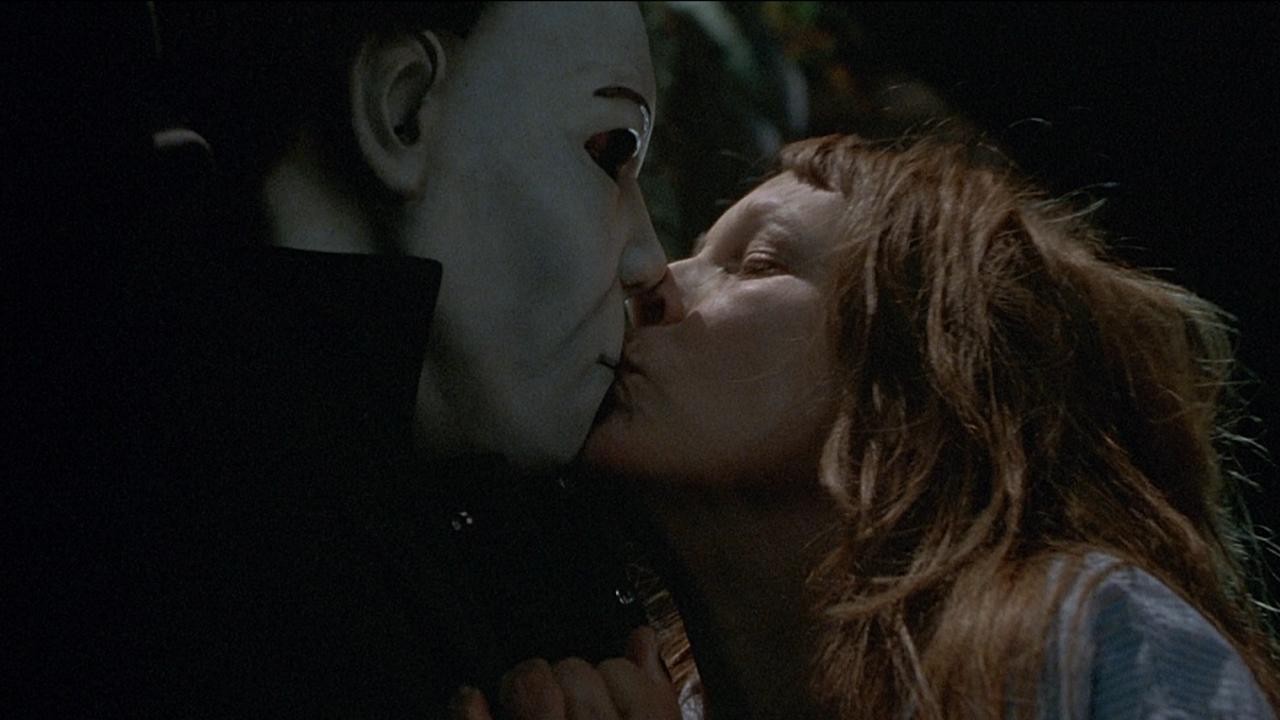
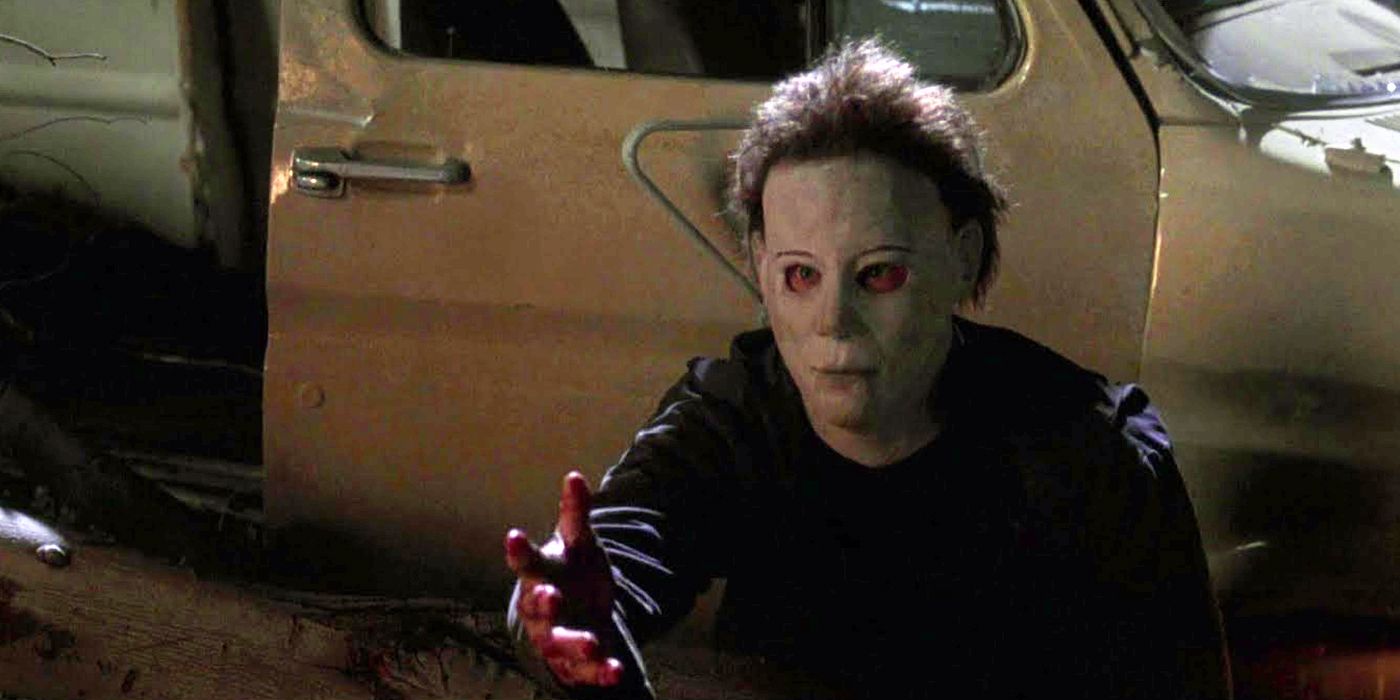
Outside of the abysmal, mean-spirited, overly violent Rob Zombie films, the franchise has three other movies that add little to the Michael Myers lore and only find themselves on this list because the franchise to date has twelve films and so a top ten has to pull from what we’ve got. The big plus of Halloween 5 is the presence of Donald Pleasance, who always brings a special quality to the films lacking from some of the later entries, but outside of him, this forgettable entry is an unholy mess of one-dimensional characters, aimless directions, and the worst Myers mask of all. The ending of Halloween 4 is a chilling classic scene in the franchise that gets a severely underwhelming payoff in this fifth installment.
9. Halloween: Resurrection (2002)
Here’s another entry that can be completely wiped from existence, and everybody would be better off. The film opens with the death of Laurie Strode—a decent sequence with some worthwhile atmosphere that’s sadly lessened by a ridiculous explanation of how Myers survived the last movie, and the absurd manner in which Strode is disposed of—and then the film gets worse from there. If Busta Rhymes cracking foul jokes in front of Michael is your jam, then by all means, have at it. The opening is a disappointment, and the rest of Halloween: Resurrection is a pointless mess that gives us a set-up for yet another sequel, thankfully one that was never to be.
8. Halloween: The Curse of Michael Myers (1995)
Here’s an installment in the Halloween franchise with two vastly different versions—and they’re both bad. I prefer the infamous Producer’s Cut because we get a lot more Donald Pleasance, including a disturbing final scene with the actor you can’t see in the Producer’s Cut. Either version you watch is a complete mess, but some of the over-the-top kill scenes are fun, and the cast, which also includes a young Paul Rudd, is better than average for a 1990s horror sequel. It’s on the lesser end of the franchise, but trust me, you can do far worse than Curse. (And if you’ve never seen the Producer’s Cut, it’s absolutely worth a look.)
7. Halloween III: Season of the Witch (1982)
When they finished their work writing and producing Halloween II, Debra Hill, and John Carpenter decided to take the Halloween franchise into a new direction, and thus we have the movie without Michael Myers that is interesting, certainly, if not altogether successful. The film has its share of creepy and memorable moments, like a child’s face melting from inside a pumpkin mask as he watches an ad play on the TV. Tommy Lee Wallace’s directorial debut has some effective atmosphere, a solid cast led by the great Tom Atkins, and a fantastic final scene, but it’s also overlong and too slow at times.
6. Halloween (2018)
We never thought Jamie Lee Curtis would ever return for another Halloween movie after her character’s clumsy death in Halloween: Resurrection, but along came this mini-miracle of bringing her back as Laurie Strode in an entry that did away with every other installment past the original and continued the franchise with an entertaining if highly imperfect forty-years-later sequel. Curtis is dynamite in this film, especially in the second half, but other touches in the film haven’t aged well in the past three years, particularly all the material with the true-crime podcasters in the early scenes as well as the storyline about Michael’s crazed psychiatrist. The nods to the original film are fun, though, and the performances are excellent, with James Jude Courtney by far the best actor to play Michael Myers since Nick Castle in the original. Ultimately the great attention paid to artistry and atmosphere can’t be denied.
5. Halloween Kills (2021)
The latest installment in the Halloween franchise has two unavoidable problems—it doesn’t really have a beginning or an ending, and Jamie Lee Curtis’ performance amounts to little more than a cameo (seriously, she’s in this one only slightly more than Resurrection!)—but it also does a lot really well, and in many ways this is the most gloriously ambitious of all the sequels, not only bringing back a lot of legacy characters like Tommy Doyle, Lindsay Wallace, and Leigh Brackett but also diving deeper into the lore of the Haddonfield murders of 1978, with amazing cinematography that closely resembles that of the original film. There’s almost no humor in this one, with the focus on one brutal moment of violence after another while Laurie rests up in the hospital, many of Haddonfield’s inhabitants coming together like a large mob to take down Michael once and for all. I enjoyed the hell out of the new film, but it also in some ways feels like filler to get us to the upcoming final installment Halloween Ends, and the final surprise kill before we cut to the end credits is a bit of a letdown, too. If you’re a Halloween fan, however, you’ll likely have a blast with this one, especially with all its Easter eggs, callback moments, hardcore violence, and superb atmosphere throughout.
4. Halloween: H20 (1998)
Call me crazy if you must, but despite plenty of great scenes and a high level of craft on display in the new David Gordon Green sequels, I still (slightly) prefer the sometimes narratively shaky but ultra-entertaining anniversary sequel Halloween: H20, which gives a more realistic portrayal of Laurie Strode’s PTSD and offers an incredible battle-to-the-death that beats anything in the other sequels. Yes, you have to erase the existence of Halloween: Resurrection to truly enjoy that final applause-worthy moment, but so much still works great in H20, like the opening kill sequence, the lovely moment between Curtis and her mother Janet Leigh, and the final showdown that is still such a blast. And you know what? Honestly, when it comes to the sequels, I prefer Laurie being Michael’s sister because it raises the stakes and heightens the emotion, especially when her life is on the line.
3. Halloween 4: The Return of Michael Myers (1988)
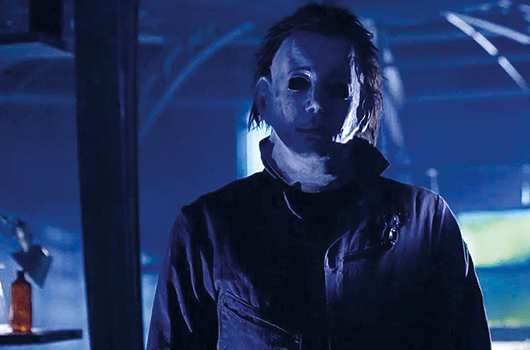
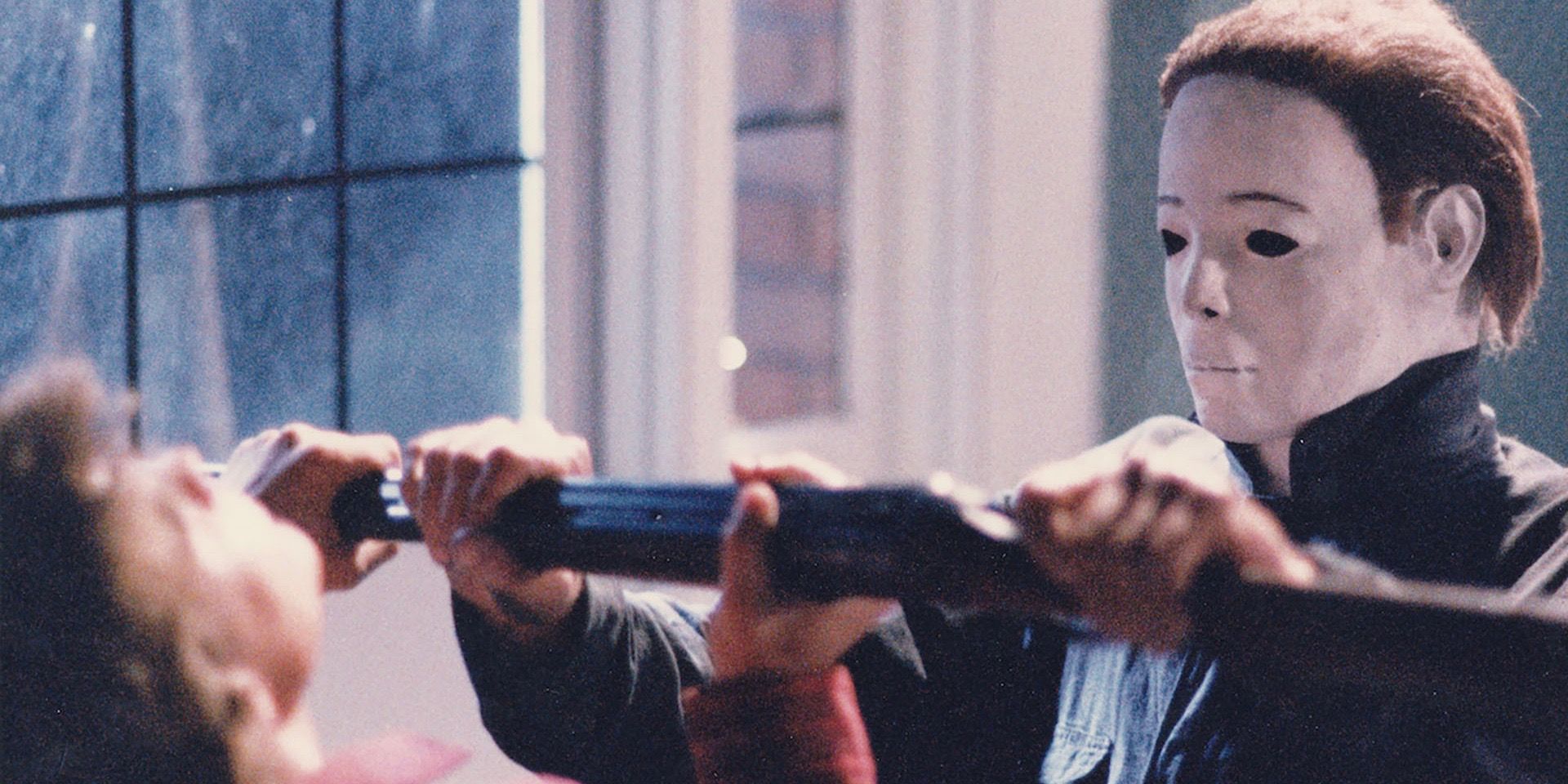
The best of the sequels sans Jamie Lee Curtis is the 1988 installment that brought Michael Myers back to movie screens after a seven-year absence and gave us Laurie Strode’s daughter Jamie (a terrific Danielle Harris) as the masked villain’s new target, along with Donald Pleasence’s return as Sam Loomis still on the hunt for Michael. The opening titles are Halloween perfection, and almost everything that comes afterward is a total delight, with big scares, awesome chases, and one of the most chilling endings in the franchise’s history. Sure, the mask doesn’t look great, and some of the supporting characters are pretty one-note, but Halloween 4: The Return of Michael Myers remains one of the finest of the franchise’s many sequels, a nostalgic classic that will never get old.
2. Halloween II (1981)
Although it’s a significant step down from the original, with one too many overly violent death scenes and Jamie Lee Curtis given little to do as Laurie Strode recovers in the hospital (hey, it’s like Halloween Kills!), the first sequel remains the best of the sequels because of the gorgeous continuity between films, most of the same cast and crew returning, Dean Cundey’s cinematography matching the original with the soft, eerie tones, with an emphasis on silence and dread. Debra Hill and John Carpenter could have gone a hundred different terrible ways with their screenplay, but their decision to continue the night was a great one (hey, another similarity to Halloween Kills!), and the dark hospital gives the film a spooky, unsettling quality. Curtis and Donald Pleasence reuniting at the end always fills me with joy, as does the explosive final scene that feels so beautifully definitive.
1. Halloween (1978)
There’s nothing like John Carpenter’s original. It’s my favorite horror movie, has always been my favorite horror movie, will always be my favorite horror movie. Halloween is iconic from one end to the other in every way, from its masterful opening shot to the terrifying use of voyeurism in the daytime, to Jamie Lee Curtis’ natural performance that brings to life one of the best final girls ever, to Donald Pleasence masterfully playing a doctor who will stop at nothing to capture his most dangerous patient. The violent moments are still so striking in their simplicity and lack of blood, and Laurie Strode’s long fateful walk to the house across the street remains a masterclass in suspense more than forty years later. Pump out another ten sequels if you must, wring every last dollar out of my hands, but nothing any talented filmmaker can do today or decades from now will ever match the magic Carpenter created in this little indie film in 1978 that has brought more delight to my life than almost any other movie ever made.
I won’t beat around the bush and pretend that I love westerns as much as other people do. I would never identify the genre as one of my personal favorites and I tend to roll my eyes when John Wayne jumps up onto his horse or slaps around Maureen O’Hara. There are tropes that I dislike and times when I wish that I could see more significant female characters on screen, but I’m not willing to write off the genre as a whole. There are a couple of westerns that happen to tickle my fancy and because I spent my Winter trying to make my way through classics of the genre, I thought I would put a ranking together.
10. Stagecoach
This problematic John Ford classic has not aged well in many regards. The treatment of Native Americans is horrific and the historical revisionism on display was very much a product of its time. People remember the film fondly because of its influence on future ‘Noah’s Ark’ pictures. It united a rag tag team of outsiders who have to learn to get along, threw in a bit of romance and forced the team to face off against various threats. By today’s standards, the script looks formulaic, but when a film essentially invented the formula, you have to give it credit. Ford directs with characteristic reserve and passion for capturing the beauty of the natural world, and his dramatic camerawork helped to make this a landmark entry in the genre.
9. Yellow Sky
Yellow Sky is surprisingly underrated for a Shakespeare adaptation that doubles as a taut, suspenseful thriller. It also happens to feature an incredible opening sequence that serves as a reminder of how punishing the desert can be. We watch heroic cowboys facing off against the elements and witness them as they are reduced down to panting little boys who are desperate to find some water. The script patterns itself on The Tempest, but it never falls into pretentious territory. It unfussily deconstructs the myth of the great American cowboy and considers the flawed nature of autocratic leadership. A lot of screenwriters could take a leaf out of Lamar Trotti’s book when it comes to deconstructing genre tropes. So many anti-westerns are far too pompous and trump up the fact that they are making edgy statements about ideas that aren’t all that popular these days. Yellow Sky holds the distinction of doing it during a period when the Western was highly popular and avoiding the temptation to build itself up too much.
8. Duel in the Sun
This campy, melodramatic western was envisioned as a follow-up to Gone with the Wind for super producer David O. Selznick. It was meant to become the highest grossing film of 1946, sweep the Academy Awards and turn saintly Jennifer Jones into a sex symbol. Rather than going the way of other Gone with the Wind wannabes, which tended to be long, stately, and dull, Duel in the Sun turned out to be a wild fever dream of a movie. Every scene is drenched in sex, Jones is giving an unhinged star turn and King Vidor is happy to let the Freudian psychological issues take center stage. The delirious, extravagant final scene elevates Duel in the Sun into the stratosphere of the greats. Two lovers who can’t live with each other, and can’t live without one another, end up engaging in a stand-off that ends with each of them fatally shooting the other. In their final moments, they crawl towards one another and have one final kiss. If that isn’t cinema, I don’t know what is.
7. Johnny Guitar
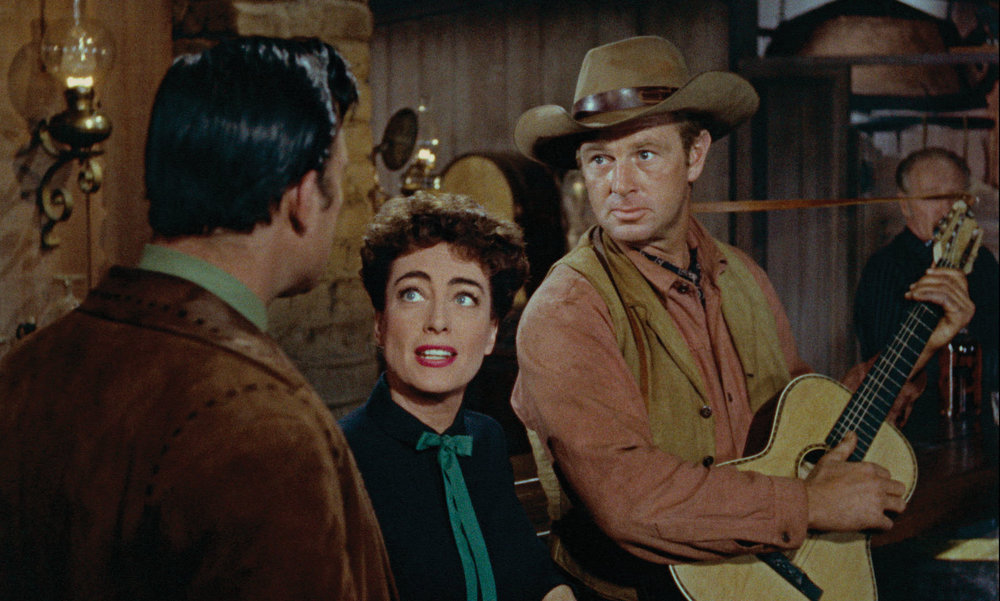
Johnny Guitar has the benefit of featuring a performance from the greatest movie star of all time. Whenever Joan Crawford shows up in a film, you know that she is going to command your attention and Nicholas Ray seems to be aware of the fact. He composes shots that remind you of what a singular presence she is. When she defiantly plays the piano in front of a shockingly red rock-face, it becomes impossible to turn away from what you are witnessing. The film constantly rides the line between being completely ridiculous and utterly brilliant. It takes more risks in its first ten minutes than most films take throughout their running time. If you’re looking for a western that breaks from convention and dares to do something fresh and new, this will satisfy your craving for originality.
6. Hud
Hud isn’t a traditional western, in the sense that it feels more like a domestic drama than a fable about white boys riding horses and learning about the honorable way to kill other people. It very much feels like a literary adaptation and the crackling dialogue and spellbinding performances set it apart from some of its predecessors. Its hero is an immoral, dangerously charismatic young man who causes problems for the people around him. Paul Newman gives one of his finest performances in a role that allows him to weaponize his physical beauty and natural charm. He is matched by Melvyn Douglas and Patricia Neal, who are scarily convincing as victims of his character’s cruelty. The great James Wong Howe paints Texas as a harsh, unforgiving environment that breaks down emotionally sensitive, gentle-spirited human beings. It becomes a land of contrasts and while Newman looks at home on a ranch, his friends and family members are ill at ease in a place that asks them to lose all sense of moral uncertainty. It’s a beautifully constructed western that proved that the genre could evolve beyond gunfights and female characters who were barely able to speak.
5. The Ox-Bow Incident
The Ox-Bow Incident is a classic morality tale and makes a strong statement against lynching and convicting people of crimes without evidence. It could have been a self-aggrandizing, heavy-handed prestige picture that was obviously hungry for Oscars. Fortunately, it was put together by William A. Wellman and he crafted a tight, fast-paced drama that doesn’t seem to exist purely so that the lead actors can pat themselves on the back for taking an interest in social justice issues. Henry Fonda gives a searing performance in the lead role, but never overshadows the other aspects of the production. Sometimes understatement and simplicity can make a point more effectively than bombast and histrionic screaming.
4. The Wind
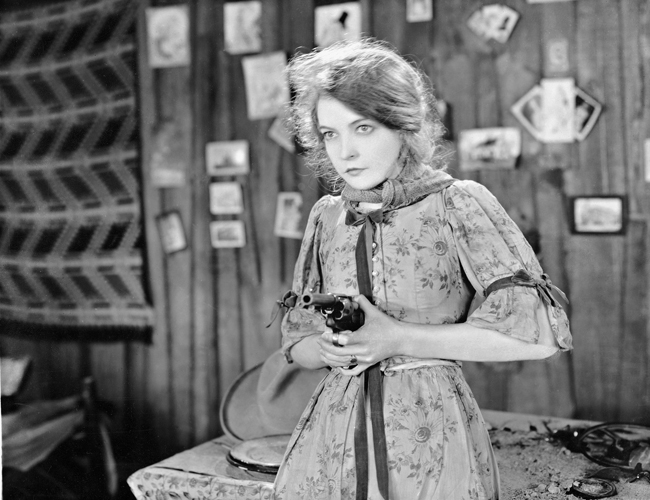
The Wind is a fascinating blend between an old-fashioned woman’s picture, a film noir and a western. Lillian Gish holds it all together with her canny, daring performance and Victor Sjöstrom’s direction allows the story to move beyond mere allegory. It moves at a slow, deliberate pace but once the intensity picks up, it is impossible to tear your eyes away from the screen. It plays around with genre conventions without seeming like a simple filmmaking exercise and it provides Gish with a role that allowed her to prove that she wasn’t just a touchingly naive ingenue. In a genre that isn’t known for providing actresses with meaty roles, The Wind stands out as an anomaly of sorts.
3. The Good, the Bad and the Ugly
Some might balk at the fact that I don’t have this universally beloved classic ranked higher on the list. I was just as captivated by its blend of black comedy, beautifully staged action scenes, and epic storytelling as everyone else. It makes a case for Sergio Leone as a true artist and it slowly reveals itself to have real emotional heft when you begin considering some of the ambitious themes that Leone tackles. The Ennio Morricone score hasn’t aged a day and the stylized violence likely inspired scores of directors to produce similarly over the top action scenes. I can understand why it is held in such high regard and I count myself among its fans, but there are still a couple of Westerns that I admire more than it.
2. The New Land
This Swedish literary adaptation serves as a sequel to The Emigrants, which is a masterpiece in its own right. Jan Troell and Bengt Forslund had their work cut out for them when producing a follow-up to a film with a towering reputation. They managed to succeed where so many other sequels fail. In terms of character development, Malickian focus on natural environments and experimentation with tone, it is almost unparalleled. It finds a way to explore new territory without alienating fans of the first entry in the series. It takes its time as it introduces you to sections of the United States that seem far too tranquil and idyllic to feature in a Western. If you’re like me and you can do without all the bloodshed and aggression, this one might be for you.
1. McCabe and Mrs. Miller
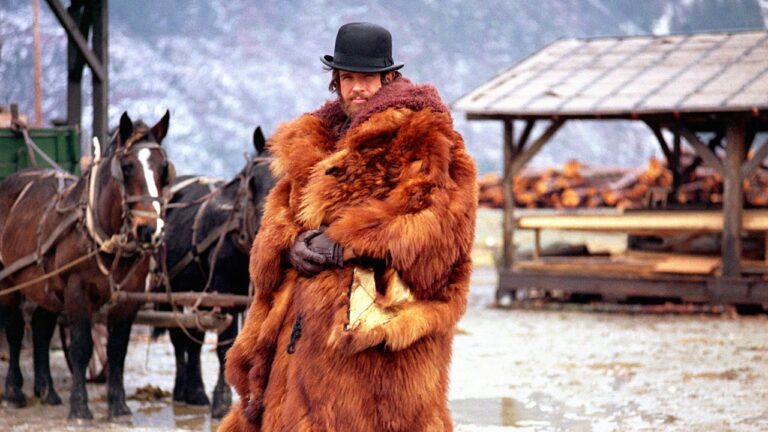
Robert Altman gave us a revisionist western which reimagines a manipulative, blandly handsome gambler as a dope who is in awe of crafty Julie Christie and unable to stand up against a mining company. McCabe and Mrs. Miller deconstruct the myth of the lone gunman who is capable of taking down scores of hired hands on his own. Big business will always triumph over an idealist who wants to go it alone and the most successful individuals are those who are always able to retain an air of mystery and an ability to adapt to societal changes. This is a western that goes all the way in tearing down myths about the idealism of the Old West and the supposedly honorable manner in which people treated one another. High Noon wimps out and lets its audience pretend that victims of McCarthyism would have been able to continue working in Hollywood if they shot down all of their enemies like Gary Cooper. McCabe and Mrs. Miller sticks to its guns and resists the temptation to turn Warren Beatty into a traditional hero.
DOC NYC 2021, the largest documentary film festival in America, has revealed its influential Short List of films that has a very good track history of predicting the eventual Best Documentary Feature Oscar nominees and the Academy shortlist. But before analyzing the 2021 Short List, let’s take a closer look at the track record of DOC NYC’s predictions.
The track record of DOC NYC
Every year, DOC NYC reveals a list of 15 titles predicted to be strong horses in the Oscar race. This “tradition” started in 2012 with only 10 titles and expanded to 15 in 2014.
Since 2012, the DOC NYC Short List has predicted 37 out of the 45 eventual Best Documentary Feature nominees. Plus, the list has always included the eventual Oscar winner except for last year’s which is yet more proof of how unprecedented, unexpected, and organic the My Octopus Teacher win came to be.
Also, the DOC NYC Short List is a great predictor of the Academy’s 15 films shortlist. In the last five years, DOC NYC has predicted 47 out of the 75 films that ended up in the Academy’s Best Documentary shortlist. In its nine-year existence, DOC NYC has predicted an average of 9 shortlisted titles; its lowest accurate prediction was 7 in 2012 and the highest is 11 in 2019.
So, yeah. It’s clear that the DOC NYC Short List is highly influential as being there gives and being projected in the festival itself gives a definite boost of visibility to any potential contender. Now, let’s take a look at this year’s list.
The 2021 DOC NYC Short List
The following is not only an analysis of each shortlisted title and its possibilities in the race, but an encouragement for you, dear reader, to seek out these wonderful films. I haven’t seen all of them, but there’s a lot of good stuff to learn about our world here.
Featuring breathtaking cinematography and masterful direction, this Best Documentary winner at Tribeca 2021 is an immersive exploration of the Chinese workplace culture. It’s nominated in the 2021 Gotham Awards and co-leads the Critics Choice Documentary Awards (CCDA) with six mentions.
I wasn’t sure Ascension was going to be a strong contender due to its impressionistic nature, but MTV Films has done a tremendous job of getting it out there. This is one I can see in the Academy shortlist and eventual nominee list.
ATTICA, Dir.: Stanley Nelson, Traci A. Curry (SHOWTIME)
Currently sitting at 100% in Rotten Tomatoes, Attica is a visceral and relevant film about the largest (and bloodiest) prison uprising in the history of the United States.
An important subject matter, skillful directing, critical praise, and key noms in the CCDAs. Despite its weird exclusion from the IDA Award shortlist, this is another one that looks to have its place secure in the Academy’s shortlist.
Besides retelling the career of a legendary adventurer and filmmaker Jacques Cousteau (Palme D’Or winner!), Becoming Cousteau is a crowd-pleaser with an important environmentalism message. It’s both a tribute, a redemption, and a warning assembled through smart editing.
There’s a lot of archival footage here, which, as we know, isn’t exactly loved by the Documentary branch. However, Becoming Cousteau has the heart, the message, and the subject to get far in the race. I agree with this prediction.
BRING YOUR OWN BRIGADE, Dir.: Lucy Walker (CBS/Paramount)
A documentary that premiered at this year’s Sundance festival, Bring Your Own Brigade follows the aftermath of Camp Fire, the deadliest wildfire in California’s history that burned 153,336 acres, destroyed 18,804 buildings, displaced and killed thousands of animals, and killed 85 people.
The film had a strong critical and audience reception and is directed by two-time Oscar nominee Lucy Walker (Waste Land), however, it has little buzz coming into the race and was snubbed by IDA and the CCDA. Definitely, one to keep your eyes on, but don’t get your hopes up.
FAYA DAYI, Dir.: Jessica Beshir (Janus Films)
I love this pick, but I have serious doubts about its real Oscar chances. Directed by Mexican Ethiopian filmmaker Jessica Beshir, Faya Dayi is a contemplative and hallucinogenic documentary that subtly explores the migration crisis in Africa while following the trade of khat, a psychotropic stimulant widely used in Ethiopia. Here’s the wonderful thing about this doc: through its artistic merits and storytelling structure, it tries to emulate the intoxicating effect of khat.
The film was nominated in the Gotham Awards, picked a Best First Feature nom in the CCDA, and it’s on the IDA shortlist. This DOC NYC mention is key in its aspirations to make it far in the race. However, its experimental nature will be a hard pill to swallow for many, so at this point, I have serious doubts about its nomination possibilities.
FLEE, Dir.: Jonas Poher Rasmussen (NEON)
An animated documentary about the harrowing tale of an Afgan homosexual migrant. This is Denmark’s Oscar submission and could be the first documentary to earn a Best Picture nomination. It’s a beloved film (currently sitting at 97% on RT) that could greatly benefit from a strong audience reaction (and ticket sales) to get that final push in the race. Despite its shocking exclusion from the IDA Awards shortlist, Flee is one of the two docs to beat in the race.
HOMEROOM, Dir.: Peter Nicks (Hulu)
The last film in Peter Nicks’ documentary trilogy about Oakland’s public institutions follows a group of students during their final high school year. It’s a portrait of young adulthood among a sea of change; a portion of this doc takes place during the COVID-19 pandemic and the George Floyd protests.
Right now, I can’t see Homeroom making it into the Academy shortlist. Despite its subject matter (delves into the unsettling power of America’s police force) and good critical reception, it has barely any buzz and Hulu doesn’t have the best track record of pushing Oscar hopefuls.
IN THE SAME BREATH, Dir.: Nanfu Wang (HBO)
In my Sundance review, I described In the Same Breath as “peak documentary filmmaking” and I still stand by that. After being snubbed for the excellent One Child Nation, Nanfu Wang returns with a masterful work of investigative journalism that explores how the Chinese government covered up the COVID-19 outbreak and successfully turned it into a tool to exalt their political system. And Wang does this while always highlighting the human cost of it all.
In the Same Breath is a tricky one. I think it should be a shoe-in for nomination, but it has had trouble gaining buzz. And it’s been that way since its Sundance premiere when it was overshadowed by Flee, Summer of Soul, and CODA (all premiering the same night). Fortunately, it won the Audience Award at SXSW. Then it was silently dropped on HBO Max in August. I might be very wrong here, but I feel that audiences are stirring away from any COVID-19 related film. Would that be of any influence on the Documentary branch? Right now, the doc is nowhere to be seen in the CCDA nominations, but it’s on the IDA shortlist. This DOC NYC mention is a huge boost in its chances.
The winner of the Special Jury Award at SXSW 2021 follows actress Selma Blair as she tries to adapt to life with multiple sclerosis. It currently has a perfect score on Rotten Tomatoes and has been effusively praised as moving and very honest.
Introducing, Selma Blair isn’t being talked about much and recently dropped to Discovery+ with little noise. It’s not on the IDA shortlist but it’s nominated in the Best Documentary and Best First Documentary at the CCDA. My gut tells me that this won’t make it to the shortlist though as its distribution won’t be of much help.
From an awards campaign perspective, this one is very interesting. With the captivating The Lost Leonardo being snubbed by DOC NYC and IDA shortlist, should Sony Pictures Classic drop it altogether and focus its entire attention on Julia? I haven’t seen this portrait of famous American television chef Julia Child, but it seems to be an endearing crowd pleaser. Critics loved it and audiences will have a chance to react on November 5.
This might not be a popular choice with the very international Documentary branch at the Academy though. I might be very wrong here, but just like the famously snubbed Won’t You Be My Neighbor, Julia feels like a film for Americans about a famous American. However, that won’t stop it from getting into the shortlist.
PROCESSION, Dir.: Robert Greene (Netflix)
Although Procession has only been screened at a couple of film festivals (Telluride among them), it already has some positive buzz. The film follows six men who, during childhood, suffered sexual abuse at the hands of Catholic priests; they try to find peace through an experiment involving fictionalized scenes.
We’ll have to wait for November 19 for a full reading of this film’s chances in the race, but as of right now, it sounds like a powerful contender. Keep your eyes on this one.
THE RESCUE, Dir.: E. Chai Vasarhelyi, Jimmy Chin (National Geographic)
Earlier on, I mentioned that Flee was one of the two documentaries to beat. The Rescue is the other one. After winning the Oscar for Free Solo, E. Chai Vasarhelyi and Jimmy Chin turn their heads toward another incredible feat: the rescue of a soccer team trapped in a flooded cave in Thailand. This isn’t a simple retelling though. The Rescue features never before seen footage, as well as incredible recreations, shot in a tank during the pandemic, of the rescue itself that are masterfully edited into the film. This is a documentary that exhibits impressive directing and artistry; it’s full of little but very important decisions that enhance the storytelling and create drama while never losing focus of its underdog narrative by highlighting the personalities of the divers involved.
The Rescue won the important TIFF People’s Choice Documentary Award (beating Flee) and had strong ticket sales, earning the best opening per-screen average for a non-fiction film in over two years. People seem to love it too and NatGeo has done a very good job of creating buzz around it. It should be an Oscar nominee.
ROADRUNNER: A FILM ABOUT ANTHONY BOURDAIN, Dir.: Morgan Neville (Focus Features)
The documentary about the life and career of Anthony Bourdain was all over social media, first because, well, the subject was a huge star, and then, because of a controversy involving the use of AI to emulate Bourdain’s voice, a fact that was unethically revealed and hand-waived by director Morgan Neville during an interview.
My first impulse is to say that Roadrunner doesn’t stand a chance in the race as it was hugely overshadowed by the controversy. However, Anthony Bourdain is such a popular and beloved figure that I’m sure many voters will attempt to watch the doc. Rotten Tomatoes gives more proof of this film’s popularity: As of this writing, it has 139 submitted critic reviews and 250+ audience reviews. Only one documentary in this list has more review, and that’s…
SUMMER OF SOUL (…OR, WHEN THE REVOLUTION COULD NOT BE TELEVISED), Dir.: Ahmir “Questlove” Thompson (Searchlight Pictures / Hulu)
By unearthing, rescuing, and exploring never-before-seen footage from the 1969 Harlem Cultural Festival, Questlove has created a special documentary that connected with critics and audiences alike. It won the Grand Jury Prize and Audience Award at Sundance 2021, it co-leads the CCDA with 6 noms, it is nominated in the Gotham Awards, and shortlisted by IDA.
Summer of Soul will be on the Academy’s shortlist, but will it be nominated? It has lots of archival footage and the fact that most of its running time consists of concerts might cause issues in many voters. We’ll see.
THE VELVET UNDERGROUND, Dir.: Todd Haynes (Apple TV+)
Apple TV+ will try to earn its first-ever Best Documentary Feature Oscar nomination with Todd Haynes’ documentary about the highly influential American rock band. Critics loved it and the Cannes stamp of approval should give it a little push, but omissions from the CCDA Best Documentary category and the IDA shortlist could hamper its chances.
Additional contenders and predictions
According to DOC NYC, these 15 titles are the strongest contender. But, what else should we keep an eye on? Look out for Paraguay’s Oscar submission Nothing but the Sun, a powerful examination of the consequences of colonization; The First Wave, which follows an NYC hospital during the early days of COVID-19; Amazon’s My Name Is Pauli Murray, about the legendary lawyer and women’s rights activist; Val, the vibrant self-portrait of Val Kilmer; Fauci, about the famous epidemiologist; Not Going Quietly, the story of how Ady Barkan started an activist campaign after being diagnosed with terminal Lou Gehrig’s disease; The Lost Leonardo, the tremendous story behind the Salvator Mundi painting; Edgar Wright’s The Spark Brothers, a delightful doc about the underappreciated band; A Cop Movie, a Berlinale winner and highly creative hybrid of fiction and non-fiction about police life in Mexico City; the award-winning Writing With Fire, about a female-led newspaper in India; and Rebel Hearts, about a group of progressive nuns that fought for women’s rights.
Having said all that and taking into account DOC NYC’s shortlist, here’s my initial predictions of the Best Documentary Feature shortlist
A Cop Movie
Ascension
Attica
Becoming Cousteau
Flee
In the Same Breath
Introducing, Selma Blair
Julia
The Lost Leonardo
Procession
Rebel Hearts
The Rescue
The Sparks Brothers
Summer of Soul (…Or, When The Revolution Could Not Be Televised)
The Velvet Underground
You can visit DOC NYC to find out more about where and when to watch the shortlisted features, as well as 120-plus other films. The festival will run in-person from November 10 to 18, and virtually from November 10 to 28.
When you spend your time watching a lot of movies (like I’m sure you do), you learn to appreciate the unexpected, regardless of film quality. As I scour the films leaving the Criterion Channel every month, the real glory is finding something new. This month, I found exactly that, but in an unexpected way. As most of you know, if possible, I try to find works by non-male directors to engage my own viewing in a more broad way. So, when I did minor research on Clockwatchers, I was expecting a “female version of Office Space, and boy, did I not get that!
In Clockwatchers, directed by the criminally under hired Jill Sprecher, we see the story of female temporary workers in the office setting. And yes, the comparisons between this and Office Space would be very simple, but she is telling a drastically different story here. I certainly did not expect a hidden treatise on class and gender in this hidden package. It just goes to show you that one should never make judgments, even when it is tempting, before sitting down and experiencing the movie.
Clockwatchers follows Iris (Toni Collette) as a painfully shy temporary worker. So shy in fact, that, in a nearly perfect opening scene, she sits for more than an hour rather than make herself known to begin her workday. The director, along with her sister, Karen Sprecher, make several smart decisions regarding their protagonist. One of the challenges of such a reserved character is that it can be hard for the audience to relate. To combat this, they use, however sparingly, voiceover narration from Iris to allow us entry, not only into her thoughts but into the person she will become by the end of the film. Additionally, they slowly build her character, both through interactions with the other women, but with a reveal that shows us that she may have other options regarding her employment.
Despite what may be your expectations of small-budget independent film in the late 1990s, Sprecher also makes interesting choices in set design, dialogue, and shot selection (aided by cinematographer Jim Denault). The starkness of the office environment combines another unique challenge for the filmmaker. How do you make a film that is engaging to look at, while staying true to the soul-crushing blandness of temp work? Sprecher chooses to show this blandness not only through the camera but through the reactions of the women who work there. Of particular note is 90’s it girl, Parker Posey. Her characterization of Margaret is integral both to the plot and to the growth of Iris. She is a fairly obvious foil for the lead, practically being her exact opposite. The flair of both her costume design and her performance are nearly deafening when compared to Collette’s nearly mute performance in the first act.
But because of this relationship, and her relationship with the two other women, Paula (Lisa Kudrow) and Jane (Alanna Ubach), Iris expands internally and externally. She slowly becomes a woman who takes up space and has an opinion. Of course, this is mostly only true within this small group. Iris, along with all of the other temps, is limited in her scope. Clockwatchers, despite being a deadpan comedy, is shockingly focused on issues of both gender disparity and class. This hidden lesson begins when items begin to come up missing from the office. With this plot device, more permanent and powerful figures in the office begin to finally notice these women.
As their eyes, and accusations begin to shift towards the temporary workers, everything begins to change. Their desks, in another wonderful directorial decision, are moved front and center so all can see their movements. But because of their powerlessness, all four are terrified and cannot really fight this decision. Margaret complains but still remains at her desk and in this job. It is only when they leave the premises for the day that the explosion can occur. In a brilliant moment, while the other three walk with heads down, Posey practically screams that they are treated like “corporate orphans” and “call girls.” Although this is played to the hilt, Sprecher makes the loudest woman a soothsayer instead of a shrieking madwoman. Looking back at how they are treated, you cannot argue against her point. They are ignored, forced to view random female nudity, chastised, and talked down to by other employees. In what world are they treated any better than orphans or call girls? In a perfect, even if unsurprising twist, the thief is a permanent employee who also refuses to speak to them. But at this point, it is too late as the group has already splintered.
Clockwatchers, given its expectations, is surprisingly bittersweet and heartfelt. It certainly helps that the cast, especially Collette, Kudrow, and Posey, is filled to the brim with unrealized talent. But it is not merely carried by nostalgic star power. Sprecher clearly has a wealth of experience in the mistreatment of the underpowered and delivers her message effectively, even within the story constraints of a workplace comedy. It truly is a shame that her filmography is limited to only three films. Clockwatchers is more than a 1990’s time capsule, it is worth watching as it defies those pesky expectations and becomes something powerful and thought provoking, a blatant attack on overwhelmingly white and male power structures.
In our current climate, some may associate journalism and news as “clickbait”. While that may be true for some outlets, that connotation is disingenuous to those that still exemplify what journalism has been and should always be – integrity. Whether it be investigative, political, cultural, or artistic, the movies have rarely shied away of what makes movies about journalists so compelling – they’re honor, goodwill, and just simply being damn good at their jobs. Wes Anderson’s latest The French Dispatch seems to paint a more playful portrait of this world (despite being loosely inspired by The New Yorker), but it did prompt us to look back at the best examples of journalism in the movies.
With that said, what do you think is the best journalism film?
This week on the InSession Film Podcast, JD is joined by Ryan McQuade and Jay Ledbetter to discuss Denis Villeneuve’s latest film Dune! We also talk more about Dune, and just in case you wanted more, there’s further conversation about Dune.
That’s right. No Top 3 on this episode. No other films to review. It’s just one big, epic conversation on Villeneuve’s vision for the film, his understated approach and how it packs more emotional nuance than some give it credit for. We go fully in-depth on this one and it was a ton of fun. Also, huge thanks to Ryan and Jay for filling in as co-hosts this week.
On that note, check out this week’s show and let us know what you think in the comment section. Thanks for listening and for supporting the InSession Film Podcast!
– Movie Review: Dune(3:57) Director: Denis Villeneuve Writers: Jon Spaihts, Denis Villeneuve, Eric Roth Stars: Timothée Chalamet Rebecca Ferguson, Oscar Isaac, Josh Brolin, Stellan Skarsgård, Zendaya
– Notes / Discussion (1:11:12)
For our break segment this week, we briefly plug the new Movie Series that Extra Film is doing on Sergio Leone and urge everyone to keep leaving us those iTunes reviews! We keep it rather short since we still had so much more Dune to discuss.
– More Dune! (1:24:58)
In this segment, while many things are discussed, the biggest topic of conversation surrounds the film’s empathy and how it counters one of the narratives around Dune in that it’s “cold and distant” emotionally. The film doesn’t wear its emotions on its sleeves, so it’s understandable how some audiences would feel that way, but we offer some arguments that maybe the film actually does have significant emotional heft.
Review: Last Night in Soho
Top 3: N/A
Review: The French Dispatch
[divider]
Help Support The InSession Film Podcast
If you want to help support us, there are several ways you can help us and we’d absolutely appreciate it. Every penny goes directly back into supporting the show and we are truly honored and grateful. Thanks for your support and for listening to the InSession Film Podcast!
In 1930, Ruth Chatterton earned an Oscar nomination for Best Actress in a Leading Role for Sarah and Son. In doing so, director Dorothy Azner made history as the first female director to direct an Oscar-nominated performance. In just three short years of history, the Academy showed their willingness to recognize performances directed by women.
It wouldn’t happen again for 42 years.
When Elaine May’s The Heartbreak Kid earned a pair of Supporting nominations in 1972, Hollywood had changed. The puritanical Hays Code had been abandoned in favor of the MPAA ratings system. Women were finally being recognized behind the camera.
Four years later, Lena Wertmuller earned the first female Best Director nomination for Seven Beauties, accompanied with a Best Actor nomination for Giancarlo Giannini. That nomination was the first Best Actor notice for a female-directed film.
The emergence of female directors continued into the 80s with the films of Barbra Streisand, Penny Marshall and Randa Haines, while the 90s brought Jane Campion and Nancy Meyers. The turn of the century found Niki Caro and Sofia Coppola in the spotlight and more recently Greta Gerwig, Marielle Heller and Chloe Zhao have had their time in the sun.
2021 looks to add more names to the 39 female directors who have directed 61 performances to Oscar nominations.
Campion already was already in a four-way tie for third most female-directed nominations going into this year, but rave reviews from The Power of the Dog could give her the outright lead. Actress-turned-director Rebecca Hall is looking to break into the conversation with her racial-identity drama Passing (debuting in October), while Maggie Gyllenhaal looks to do the same thing with The Lost Daughter (in festivals now, to the public in December). Sian Heder’s CODA and Janicza Bravo’s Zola could also find themselves in the conversation if the buzz can last until awards season.
Streisand and Gerwig currently share the lead in female-directed acting nominations, both with four (but no wins). Campion’s three nominations are tied with Haines, Heller, and Caro, but Campion’s dual wins in 1993 for The Piano are the most among all directors.
As far as wins, only seven female-directed performances have ever won the Oscar. Marlee Matlin’s Best Actress win for Haines’ Children of a Lesser God in 1986 was the first, followed seven years later by Holly Hunter and Anna Paquin. Kimberly Peirce, Patty Jenkins, Phyllida Lloyd, and just last year Zhao all directed Best Actress wins for their films.
In 2006, Valerie Faris became the first female director to direct a male performance to an Oscar win with Alan Arkin’s Best Supporting Actor statue in Little Miss Sunshine. Of the 61 acting nominations directed by women, 17 have been in Best Actor (eight) or Supporting Actor (nine). Of the 17 nominations, Tom Hanks is the only actor with multiple nominations directed by a woman.
Only four Black women have directed an Oscar-nominated performance: Euzhan Palcy in 1989, Dee Rees in 2017, Kasi Lemmons in 2019, and Regina King last year. Frances McDormand’s win for Zhao’s Nomadland last year was the first Oscar win directed by a woman of color.
The totality of female-directed Oscar nominations are not substantial, but progress is being made. Of the 61 nominations, 18 have come since 2010 and 36 since 2000. Expect more progress to come in the very near future.
Director: Stephen Karam Writer: Stephen Karam Stars: Jayne Houdyshell, Richard Jenkins, Amy Schumer, Beanie Feldstein, Steven Yeun, June Squibb
Synopsis: Erik Blake gathers three generations of his Pennsylvania family to celebrate Thanksgiving at his daughter’s apartment in lower Manhattan. As darkness falls and eerie things go bump in the night, the group’s deepest fears are laid bare.
After being nominated for a Pulitzer and winning the Tony for Best Play, writer Stephen Karam adapted and directed his dark dramedy about a dysfunctional family on Thanksgiving night in an apartment that comes more like a horror film. The walls are nothing but fat bubbles, the windows are disgusting, and the elevator in the slim hallway has a drawing of a phallus. It’s two floors, yet everything feels confined into one, and strange noises and flickering lights make the place even more frightening. What kind of place is this for Thanksgiving? One that exposes the family secrets, for sure.
Brigid (Beanie Feldstein) and Richard (Steven Yeun) are a couple who move in and invite her family from Pennsylvania up to their place for the day. Parents Deirdre and Erik, played by Jayne Houdyshell and Richard Jenkins, respectively, sister Aimee (Amy Schumer), and their dementia-suffering grandmother (June Squibb) all head over. Only Houdyshell comes from the original Broadway cast to replay her Tony-winning role. Throughout the film, they prepare for dinner and talk about what they’ve been doing; come Thanksgiving dinner and the mood begins to slide away into something more serious and family-breaking.
The Humans is a surprising film that, while not as big as August: Osage County, still has a tight ensemble with great actors to play the part as exactly as it was meant to be. It is in the title: they are just human beings with human problems and are not immortal to their faults. Feldstein and Yeun provide a special quality to their roles as an interracial couple and Schumer, who is known for her comedy, as the sister who has a medical condition while dealing with a romantic breakup. Schumer seems the odd casting choice, but she doesn’t go overboard with the quick jokes like from her famous TV show. Meanwhile, the parents are practicing Catholics while the children have lapsed.
Adapting any play into a movie is tough, especially one with Tonys attached to it, and harder when Karam takes the John Patrick Shanley (Doubt) route by also directing the movie version. But Shanley had directed movies before, Karam is making his debut here as one. While it is not perfect, Karam makes the right decisions with each shot and composite as he is able to expand on his story. Director of Photography Lol Crawley (45 Years) is able to put to each frame the expression and physical state to the deterioration of the home and the characters themselves. It’s set in one location, yet does not feel like an actual play just being filmed.
What starts as a simple melodrama with dark comedic timing turns into a family existential crisis where each character comes to a certain realization they never thought about. Everyone but Squibb’s character Momo, that is, who simply rambles randomly but her dementia is seemingly a blessing for her – and a warning towards the others.
The second round of 2021 Chicago International Film Festival reviews takes us to a Ukrainian prison, the Iranian roads, and a cold Kurdish boarding school. Here’s another dispatch of wonderful international cinema.
Péter Kerekes combines documentary and fiction in 107 Mothers, the uneven yet quietly fascinating Slovakian Oscar entry that just won the Silver Hugo award for Best Direction.
Inspired by real-life cases, the film follows a group of mothers imprisoned in a Ukrainian jail. The main focus is Leysa (Maryna Klimova) who gives birth right as the movie starts and has to raise her son inside the prison. By the time he reaches his third birthday, state conditions dictate that he will be sent to an orphanage.
Like Tatiana Huezo, Heidi Ewing, and Teodora Mihai, Kerekes joins the line of recent nonfiction filmmakers who successfully turn to fiction. In this case, 107 Mothers imitates a documentary. Kerekes combines interviews with inmates, conducted by prison ward Iryna (Iryna Kiryazeva), with careful observations of life inside the nursery. The intimate cinematography adds weight to the verité style of certain portions of the film. It’s almost as if someone has dropped a bunch of cameras inside the prison and someone decided to edit their footage together.
Oddly, it’s not Iryna the most interesting character of the film. Despite being in charge of all these mothers, Iryna is single and doesn’t have children; she seems to be living her social life through the reading of letters sent to inmates. Eventually, she takes a certain interest in Leysa and his son, which awakens her complicated desire for motherhood.
Although 107 Mothers doesn’t have a strong narrative arc and Iryna’s life overshadows Leysa’s struggles, the film does manage to convey the monotony of prison life while highlighting the hardships of motherhood inside it. It’s a skillfully directed film that feels like a documentary, therefore, allowing us to peek into a specific place that nonfiction maybe wouldn’t have allowed us to profoundly reach.
Grade: C+
A six-year-old boy loudly asking for his phone back isn’t a novelty in any family road trip, but in Panah Panahi’s wonderful feature film debut Hit the Road, it’s the first sign that something is off.
This charming kid (Rayan Sarlak) is traveling in an SUV alongside 20-year-old brother Farid (Amin Simiar), father (Hassan Madjooni), mother (Pantea Panahiha), and poor Jessy, their sick puppy. But this is no ordinary trip. Between the funny interactions between sarcastic father and witty son, the Batman references, and the charming family sing-alongs, the camera often lingers in dad while a melancholic piano tune plays out in the background. Little hints involving the brother’s fate are gradually thrown our way, sometimes in an amusing manner, until the purpose of the voyage becomes obvious and there’s not much to laugh about. But laughter is still the best tool to deal with it all anyway.
You could swear young Rayan Sarlak was just being filmed, documentary style, during a particularly weird car trip. That’s how authentic his performance is. Despite being very loud and borderline annoying, he lights the film up with his innocence, hilarious delivery, and overflowing energy. Hassan Madjooni and Pantea Panahiha are not far behind, as both deliver excellent performances in their own playful, loving way.
Panah Panahi’s work has the naturalistic touch of his father, the great Jafar Panahi, and a clear influence in the political oppression his family has gone through (Jafar is still banned from directing or leaving Iran). However, the young filmmaker shows unique talents of his own by spectacularly commanding long shots and balancing comedic tones with painful sorrow. The result is a beautiful and tender family love story that skillfully handles its tough themes about loss through a combination of laughter and melancholy.
Grade: A-
The joy of Hit the Road’s protagonist child is completely absent in the entirety of Ferit Karahan’s award-winning Brother’s Keeper, a grim drama set in an all-boys Kurdish boarding school that is as cold as its snowy surroundings. Here, we follow 12-year-old Yusuf (Samet Yildiz) as he tries to get medical care for his very sick friend Memo (Nurullah Alaca), but incompetence, bureaucracy, and lack of empathy from the people in charge makes it impossible to do so.
At first, Brother’s Keeper feels like nothing more than misery porn. There seems to be no kindness in this school: students are treated like animals, teachers impose brutal punishments, there’s cold, hunger, and barely a smile in sight. It’s a place run with fear and the only sign of warmth comes from Yusuf’s friendship with Memo. However, the plot unavoidably grips you through a mix of pity and helplessness.
While Memo lies unconscious in the precarious infirmary room (whose slippery entrance ironically threatens to injure those who dare to enter), a parade of institutional idiocy, from teachers to the headmaster, tries to get help from an ambulance as well as figure out the mystery behind his condition. The adults point fingers, blame the students, and show both their selfishness and their complete lack of preparation to deal with such an important situation; the weather and the school’s pitiful state aren’t helping either. Yusuf observes everything quietly, with eyes that could burst out tears at any moment.
Aided by his own experience growing up in a similar institution, Karahan smartly builds tension, frustration, and intrigue until one last piece falls into place to shine a light on the true culprit behind the accident. It’s not one action or decision. It’s the culture of fear that stopped a kid from speaking, it’s the headmaster’s negligence and the unsafe living conditions. But will the people with power accept their responsibility or use an innocent (and compassionate) scapegoat to avoid the blame? With this last question, Brother’s Keeper exquisitely puts a bow in its damning observation of social oppression.
Director: Wes Anderson Writer: Wes Anderson Stars: Bill Murray, Adrien Brody, Benicio Del Toro, Léa Seydoux, Tilda Swinton, Frances McDormand, Timothée Chalamet, Jeffrey Wright, Mathieu Amalric, Stephen Park, Owen Wilson, Edward Norton.
Synopsis: A story about journalists set in an outpost of an American newspaper in a fictional 20th-century French city that brings a collection of stories to our attention that were published in “The French Dispatch.”
When it comes to Wes Anderson films where do you even begin to discuss or understand their not sequential storylines and nuanced subtleties. I’ll begin by saying that The French Dispatch is a stylistic anomaly; a breath-taking piece of storytelling that is almost hypnotic in the way it expresses itself – I genuinely couldn’t take my eyes of it for fear of missing something beautiful. As we all know, Anderson is an auteur of the highest order, each film as memorable as the last in a plethora of ways. Well, this film is based on Anderson’s love for TheNew Yorker – in all its quirky glory – with its host of intuitive and original stories. Anderson does a superb job of tracing – but with his own unique flair obviously – this famous paper under a new name, the eponymous “The French Dispatch” newspaper, and explores three flamboyant stories written by three different employees of this fictional newspaper.
It is almost like an anthology of different stories, all based on similar real-life stories and characters. Let me break it down; the fictional French Dispatch newspaper is based in the fictional French city of Ennui-sur-Blasé (its literal translation is Boredom-on-Indifference, and yet it is far from that). Each story is unique to the previous, not only in its storytelling but also in their style; all of them are shot in a variety of ways, using different techniques as well as being the same style at times (is that even possible?), all of them possessing different areas of absorption, sucking you in with a great enjoyment and with this engrossing nature. To say I was a fan is a massive understatement.
As everyone knows, Wes Anderson’s films are shot beautifully; very distinctively, and ever so special – the symmetry and framing in this film are mesmerizing. It is a meticulous aesthetic that is adored by hard core Wes Anderson fans everywhere, and stylistically, this is up there with the best of them, of that I’m certain. The cinematography by Robert Yeoman wasn’t its only success though, the skills of Alexandre Desplat with the score and the expert editing from Andrew Weisblum (both of whom have worked on numerous Anderson projects) were both perfect and matched the pacing of the sequences, even dictating scenes as they played out. All the film’s technical aspects were a joy and worked in perfect harmony with one another.
It is probably about time I talked about the film’s premise. The French Dispatch is about a fictional American newspaper of the same name in a 20th-century French city that brings to life a collection of stories that were published in said newspaper. The editor of the newspaper, Arthur Howitzer Jr (Bill Murray) is based on Harold Ross of The New Yorker. Broken up into the three acts and filled with an ensemble cast full of anyone and everyone. Part 1 – “The Concrete Masterpiece” – surrounds the story of Moses Rosenthaler (Benicio Del Toro), a mentally disturbed artist of incredible talent, locked up for decapitating two men in a bar (as you do), his love affair with prison guard Simone (Léa Seydoux) and his dealings with obnoxious art dealer Julien Cadazio (Adrien Brody). This story is narrated and written by J.K.L Berensen (Tilda Swinton), an employee of the paper.
Part 2 – “Revisions to a Manifesto” – focuses on a student protest breaking out in the streets of Ennui, being known locally as the “Chessboard Revolution” (kids and their funny names). Lucinda Krementz (Frances McDormand) is reporting on the story whilst trying to maintain journalistic neutrality but falling for the charm and boyish good looks of revolutionary leader Zeffirelli (Timothée Chalamet). The final part – “The Private Dining Room of the Police Commissioner” – involves Roebuck Wright (Jeffrey Wright) a food journalist who revisits his most famous story whilst on a talk show. Whilst having dinner at The Commissaire’s (Mathieu Amalric) house, reporting on famous police officer and chef, Lt. Nescaffier (Stephen Park), The Commissaire’s son is kidnapped, leading to a chaotic search for the young boy.
The French Dispatch just has a bit of everything; humor, great storytelling, great animation (the animation in part 3 is sublime), memorable characters, slapstick violence. Speaking of the acting, it was just so perfectly oddball and niche like, particularly the characters of part 1. Brody, Del Toro, Seydoux, and Swinton were all exceptional, extremely humorous, and edgy – typical Anderson. They all bought into the romanticism of Anderson’s vision and storytelling ability.
It really is a fabulous film, even for Anderson it was unique; splitting it into three stories in a world of one overriding story, unusual for someone who usually focuses on singular narrative, and somewhat linear, films. I was so enamored by it; I rate it as one of his best in a great portfolio of films, all three parts were just so different to each other whilst also possessing the others glamour and charm, which is kind of strange but oddly alluring. Die-hard Anderson fans should really love it, but The French Dispatch should also win over a new wave of fans, now that is a testament to its flamboyancy and otherworldly appeal.



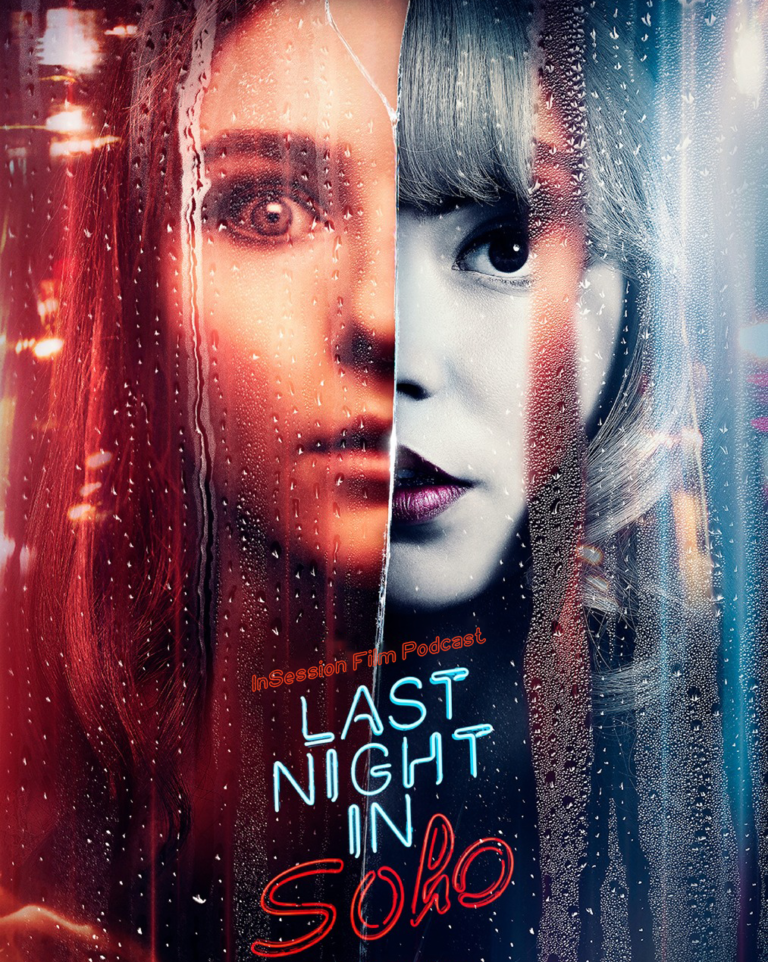
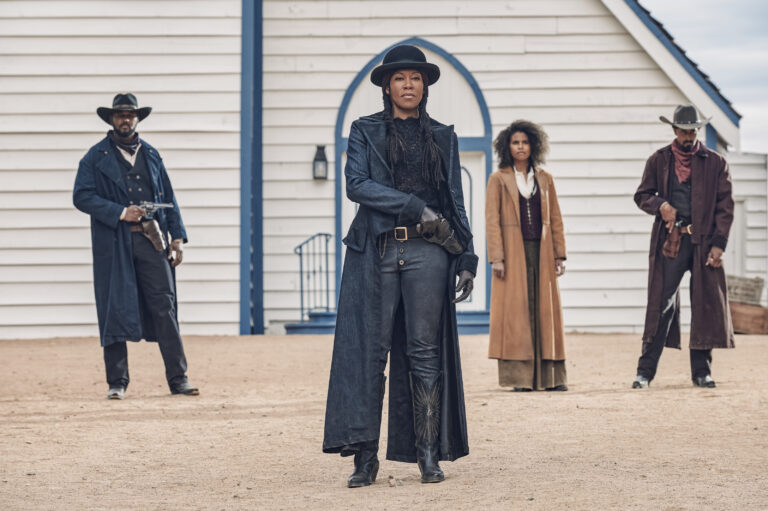
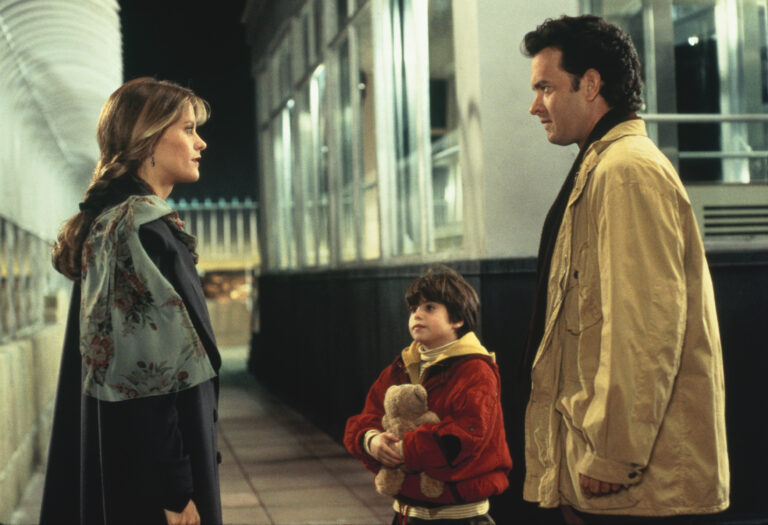
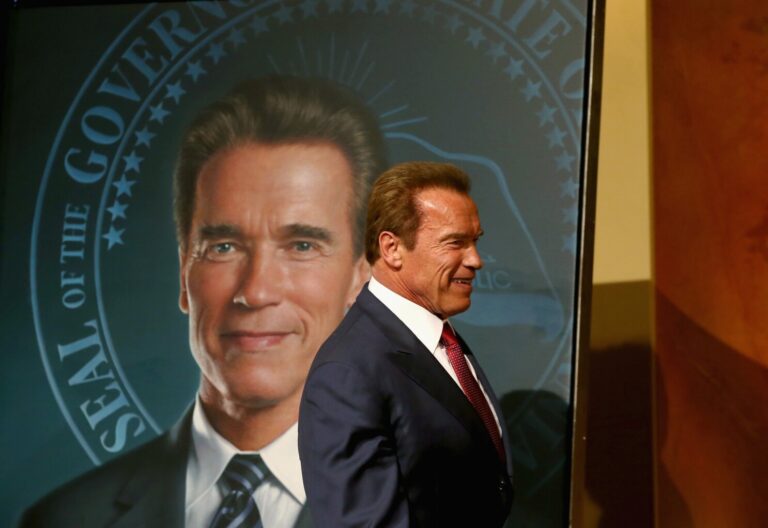


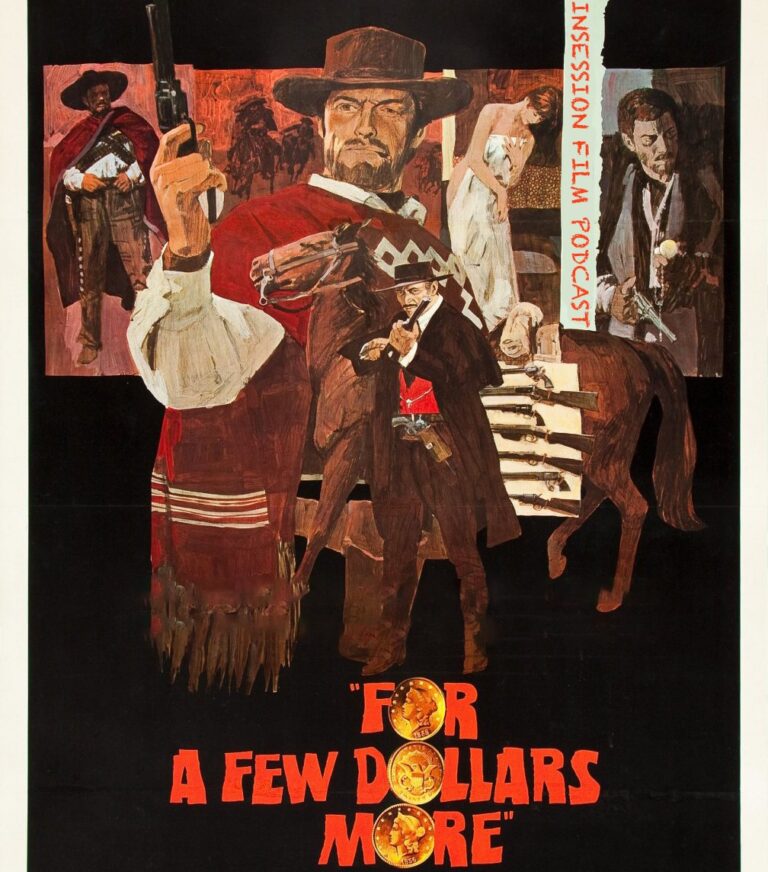
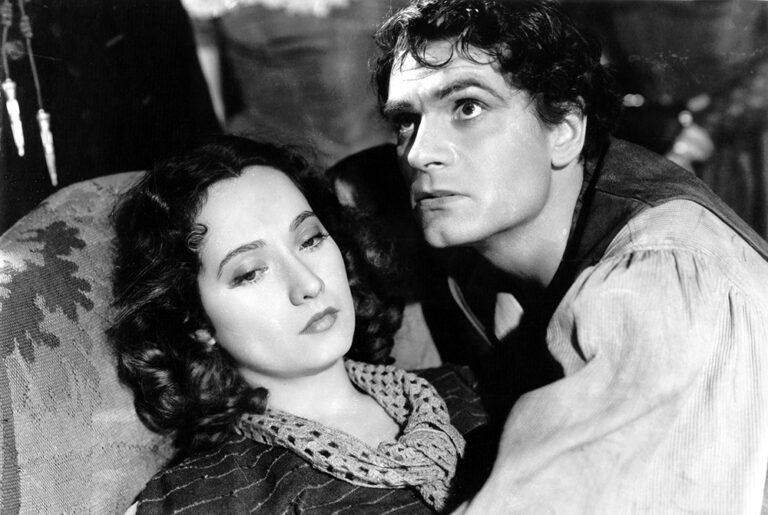
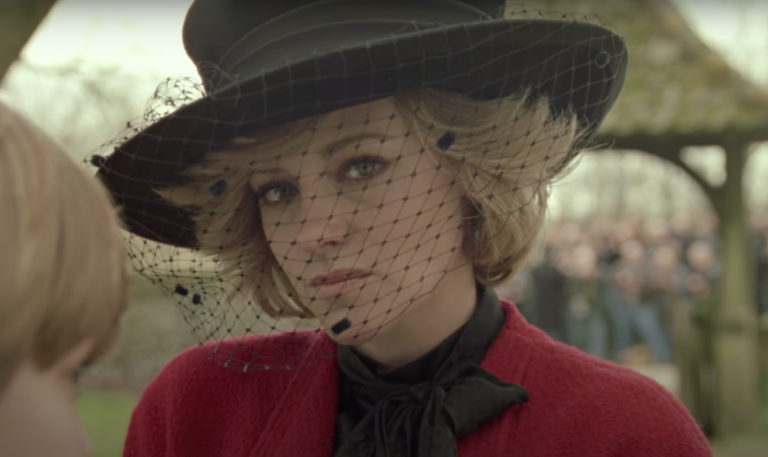
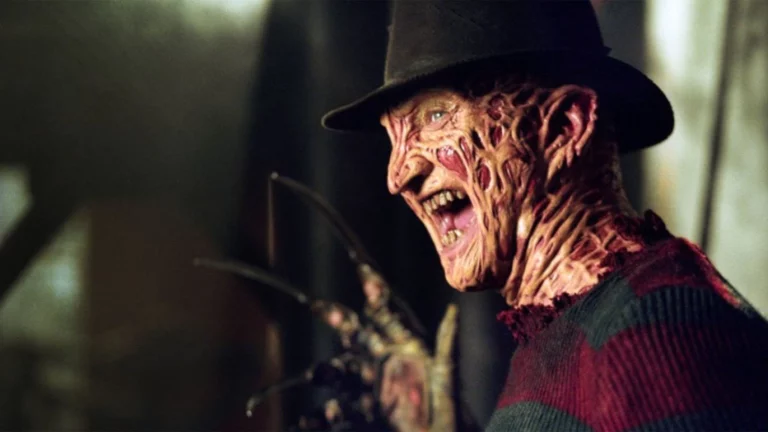
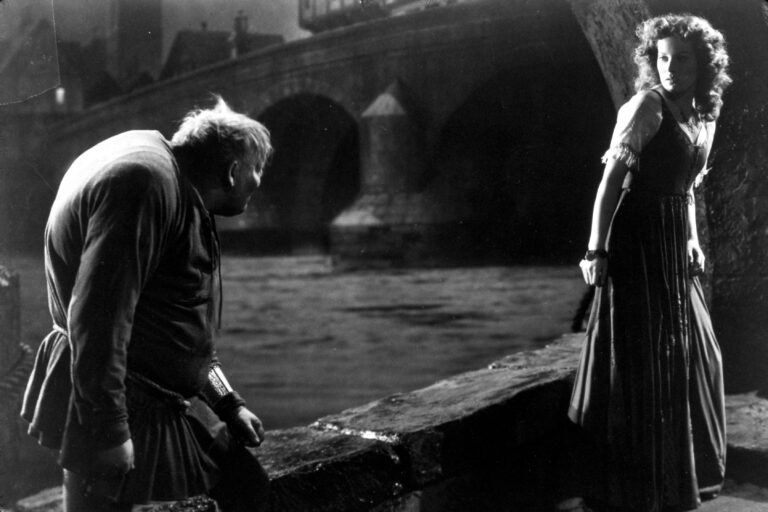
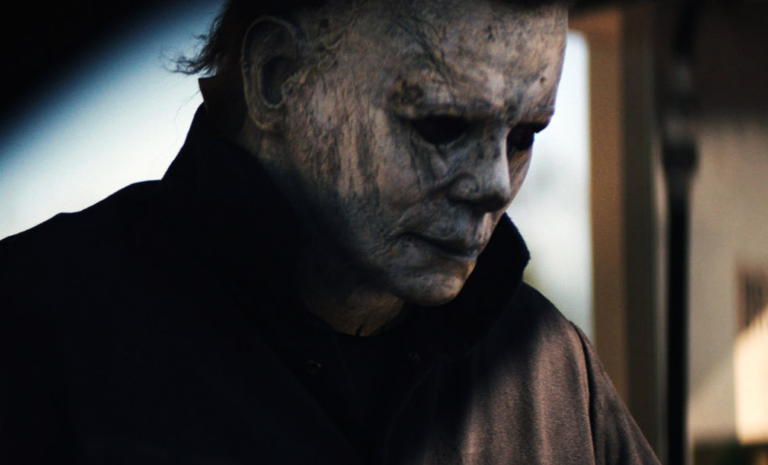
![Throwback Trailer] 'Halloween 5: The Revenge of Michael Myers' (1989) - Halloween Daily News](https://i0.wp.com/3.bp.blogspot.com/--oY7-sosn_k/VgQnoFQT5pI/AAAAAAAAFP4/7rg7BpukSbM/s1600/Halloween%2B5%2BMichael.jpg)