Home Blog Page 275

Movie Review: ‘Whitney’ offers compelling insight into the rise and fall of the great Whitney Houston


Director: Kevin Macdonald
Synopsis: An in-depth look at the life and music of Whitney Houston.

[/info]

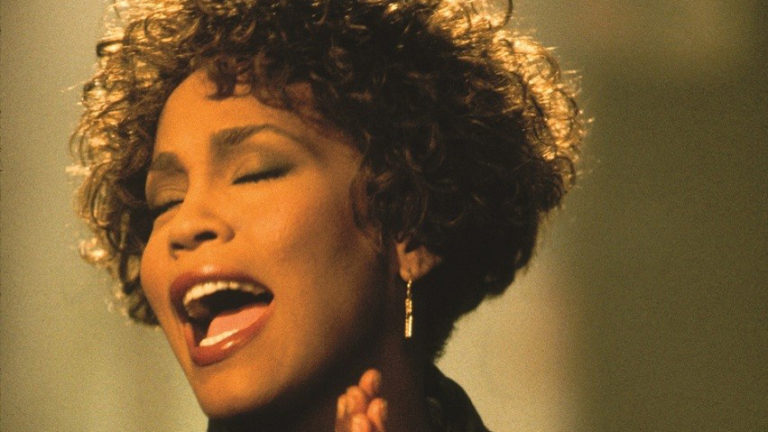
Whitney Houston was the greatest singer of all time. She still holds the record for most consecutive number one hits by any artist in history. She is among the top 10 bestselling artists ever, and I’m sure anyone on the planet could name and/or sing at least one Whitney song. This documentary, by Academy Award winning director Kevin Macdonald, chronicles Whitney’s life by way of home movies, TV appearances, concerts, and interviews with her family and friends. Her brothers are the chattiest of the interviewees, followed by a few family friends, Mary Jones and Aunt Bae, Whitney’s former music director Rickey Minor and the notorious Bobby Brown makes an appearance near the end. It is a good variety of people that cover different opinions, viewpoints and parts of Whitney’s life.

I consider myself a pop culture scholar and dabble in 80’s music trivia, and I was surprised at how much I didn’t know about Whitney prior to seeing this film. For example, Whitney came from a fairly famous musical family. Her mother, Cissy Houston, had a successful career singing backup for Aretha Franklin, Elvis Presley as well as a solo career. Two of her cousins were also well known singers, Dionne and Dee Dee Warwick. Despite the wealth of musical talent in the family, Whitney wasn’t pushed toward a singing career. She was groomed for one. When she was deemed ready, her mother tricked her into taking over a gig by pretending to be sick. From there her career took off. I like the films method to fast forward in time; Whitney song playing to a montage of images of Whitney and her life, sandwiched between newsreels and current events to let you know what was going on in the world at the time. The first one is set to an acapella version of “I Wanna Dance With Somebody”. If you are not ugly crying before this point, I guarantee it will make even the most hard-hearted person feel something.

The film spends a significant amount of time on Whitney’s upbringing and family, zooms through her career, briefly mentions her personal life, and then focuses on her addiction and inevitable fall from grace. My biggest complaint about the movie is that it felt rushed or over edited in spots, like the director had exactly two hours and had to make it fit. It’s obvious Kevin Macdonald had collected plenty of material, hours of interviews, but still struggled to tie it all together into a fulfilling story. It was also hard to watch at times – the interviews get understandably emotional, especially when discussing Whitney and Bobbi Kristina’s deaths. I won’t lie I got weepy a few times, and I’ll admit it… I’m not ashamed of it. Not a negative critique, just a warning to be prepared, bring emotional support chocolate and/or tissues.

I have nothing but love for this film, and I highly recommend it to any of the following: Whitney Houston fans, documentary fans, and anyone interested in pop culture and the life of popstars. I saw the film in the best environment possible – a small theater, packed full of passionate, vocal Whitney fans. One women started bawling loudly during the previously mentioned “I Wanna Dance With Somebody” montage and she continued off and on until the credits started rolling, and then she completely lost it. Not entirely her fault, they set the credits to “I Will Always Love You”. It was a miracle she was the only one hysterically crying.  A couple next to me yelled at the screen any time Bobby Brown tried to say “there was no drug problem, drugs didn’t kill Whitney”. Bobby Brown was booed and hissed and called a murderer. Videos of young Whitney singing in church were praised and got “Get it girl, sing, Hallelujah”. It’s definitely worth it to see the film in a theater if it’s playing near you.

Overall Grade: B+

[divider]
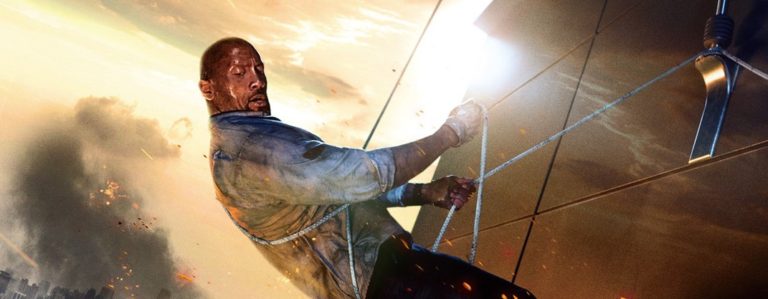
Movie Review: Yes, that burning ‘Skyscraper’ is worth scaling!


Director: Rawson Marshall Thurber
Writers: Rawson Marshall Thurber
Stars: Dwayne Johnson, Neve Campbell, Chin Han, Roland Møller, Pablo Schreiber

Synopsis: A father goes to great lengths to save his family from a burning skyscraper.

[/info]

World’s tallest structure is aflame, is aflame, is aflame, but Dwayne Johnson’s here. While not (yet) a super-figure, the actor has displayed enough heroics — at least twice since 2015 — that currently active cape-wearers, mask-donners and relic-holders can start planning getaways without feeling guilty. Not long ago Johnson halted three colossi’s pancaking of Chicago using only friendship (overcome the other lumps in the footage and you’ll see), so extinguishing a towering inferno should be a sigh-and-done affair.

Unless there’s a change to his fitness, something that may neutralize the star’s commonly Instagram-ed beastliness. In Skyscraper, director/writer Rawson Marshall Thurber constructs his lead, Will Sawyer (Johnson), as an amputee after a botched hostage rescue. An image-breaking move that’s rather refreshing after witnessing Luke Hobbs’ abilities (Furious 7’s “Unplaster Flex”) and hearing only veiled praises tailored for Jumanji’s Smolder Bravestone or Rampage’s Davis Okoye. For once, Johnson’s inhabiting of a paragon of a role has little trace of spectacle, that beneath it all lies a person we can confide in and relate to. When away from the action, every sight of Will is an echo of Gridiron Gang’s Sean Porter, to this date the purest proof that Johnson can carry a film without the sciences of popcorn entertainment trailing his footsteps.

Ten years after that incident, Will replaces his FBI agent creds to that of a security consultant, says “I do” to the hospital personnel who saved him, army surgeon Sarah (Neve Campbell, always brimming with quiet strength) and has two reasons to bring the bacon home, daughter Georgia (McKenna Roberts) and son Henry (Noah Cottrell). At the moment, the Sawyers’ are residing in Hong Kong, on the 96th floor of a hi-tech high-rise called The Pearl whose owner, the composed billionaire Zhao (Chin Han, a somewhat-warmer version of his Dark Knight twin), has hired Will to assess its safety. Zhao is expecting results soon — the upper half of the 220-storey wonder is still closed — and seeing how he has “spared no expense” (hex phrase!) to erect the thing the rush is understandable.

Much like June’s Upgrade, Skyscraper moves with the belief that it will perish if not in seventh gear. Don’t beat yourself up if the film’s meatier elements go by unnoticed, including d.o.p. Robert Elswit’s definitely tentpole photography, James D. Bissell’s most-seductive architectural eye (the spherical and panoramical observation deck is rather jaw-dropping), Johnson’s effective drama fuse and even why the edifice is set on fire. Something about a clunky-looking USB, traceable money and forcing the good-hearted consultant to take the fall? It’s all secondary to, and seems to be constructed with less dedication than, Will’s arduous journey to reenter The Pearl to save his family. Hyper-avidity aside — consequences being some needless reaction shots, cramped set-pieces and jumbled showcases of CQC — Thurber impresses as the lead’s personalized “hurdle maker,” coming up with all sorts of challenges set inside and — gulp — outside The Pearl.  Can you feel your temples crackling, or your tibia prickling, yet? And like construction tarps, the film uses those stemming-from-vertigo sensations to prevent the building’s roughness appear in full view.

But there’s one crack that goes uncovered, namely the shamelessly paper-thin villainy, with one individual — Xia (Hannah Quinlivan) — leaping straight out of Stereotype Weekly; the Umbrella haircut is a mark of edginess and technical specialist is her role in the group. As for the main baddie, international terrorist Kores Botha (Roland Møller), it’s a missed opportunity that Thurber finds nothing to add to him, not even a cosmetic layer when spiritually the film links with Die Hard. Still, in what might be regarded as wondrous compensation, the non-Will Sawyers are all tough and sharp-witted cookies; Harry and Georgia never lose their cool amidst the fire (the brother wisely directs his sister to higher ground!) and Sarah will put employers of the talk-local-so-the-foreigner-doesn’t-know trick to shame. A detail both minor and, on top of the momentum and bursts of creativity (that’s one handy leg!), crucial to the film’s ultimately winsome trait, despite making a first impression full of lethal parabolae and “I’d like you to meet John McClane.”

Remember to buckle the hell up when you go through The Pearl’s doors.

Overall Grade: B-

[divider]

Podcast review coming soon!

[divider]

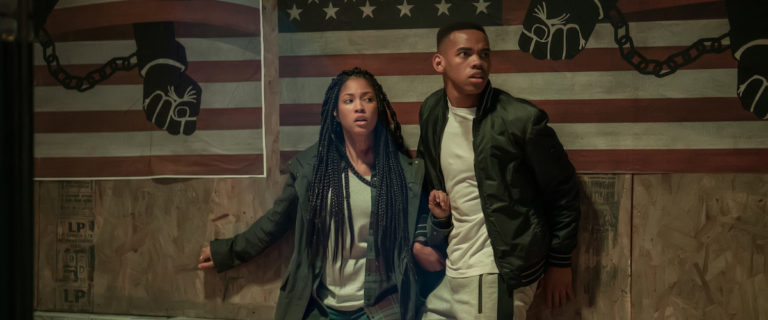
Movie Review: ‘The First Purge’ is a confusing movie for a confusing time


Director: Gerard McMurray
Writers: James DeMonaco
Stars: Y’lan Noel, Lex Scott Davis, Joivan Wade

Synopsis: After the rise of a third political party, the New Founding Fathers of America, an experiment is conducted, no laws for 12 hours on Staten Island. No one must stay during the experiment yet there is $5,000 for anyone who does.

[/info]

We live in a time of confusion and turmoil. How often have we remarked to each another that turning on the news or scrolling through our social media feeds is an exercise in anguish? What we see and hear in the world around us is difficult to rationalize. It breeds anger, and we don’t often know what to do with all that pent-up aggression. At least, this is the progression that The First Purge feeds us – a society built upon violence.

This is the first film of this series that I’ve seen, though I have been aware of these films for some time. The plot here is basically the same as the others – for one day, crime is legal in an attempt to allow citizens to release their pent-up anger. The difference here is that the film showcases an early trial of this “experiment.” Here, The Purge is isolated to Staten Island before the other films show The Purge on a national scale. This is how it all started.

We mainly follow the same group of people throughout the entire film. Nya (Lex Scott Davis) is a churchgoing activist who lives with her brother Isaiah (Joivan Wade) in a rundown apartment complex. They are barely making ends meet – a frustrating way to live. It pushes Isaiah to seek out the drug scene, which is run by the local kingpin, Dmitri (Y’lan Noel). Dmitri also happens to be Nya’s former lover. In the film’s very first shot, we also meet Skeletor (Rotimi Paul), the type of convict you would probably worry about most if something like The Purge were to actually happen. He is obviously disturbed, and he is looking for a way to release the tension he feels inside. Finally, you have the government team overseeing The Purge. Patch Darragh plays a wooden but calculating chief of staff named Arlo Sabian. He is joined by Marisa Tomei, who plays a small role as the behavioral scientist who conceives the plan for The Purge. It may be this film’s most egregious error that her considerable talents are mostly wasted.

Just by looking at the film’s marketing materials, you may think that this is a horror film. I won’t deny that there are a few jump scares, and the violence is certainly frightening at times. But this is a political film above all else. First, you have the obvious depiction of politics in the government agency overseeing The Purge. There are clear elements of national conspiracy and governmental overreach that may or may not have parallels in our current state of affairs, depending on who you ask. Then you have the overt references to our current president, such as when Nya is pulled down by a masked man reaching up from a sewer grate. His mask has a toy taped to it that emits baby sounds. When he grabs her, Nya fights him off yelling behind her, “Get your hands off me you p***y-grabbing m*********er!” This film is certainly not subtle.

I’ve started to notice more and more people on social media bemoaning the supposed encroachment of politics into the art of film. But doesn’t it seem like there’s a place for art to engage with politics on some level? We can’t completely separate ourselves from the political sphere. I think there should be art that has something to say in that regard. Not every piece of art should deal with politics, sure, but I think we’re kidding ourselves if we expect to totally divest ourselves from engaging with it.

Maybe the best thing The First Purge has going for it is the way it wrestles with the Orwellian doublespeak of its title. We first believe that the motivation for The Purge is the government’s intention to let the citizens of Staten Island release their pent-up anger. However, as the film continues, we realize that there are ulterior motives at play. There is a conspiratorial tone here, but I felt that the film did a good job of not crossing the line into ludicrous melodrama. The irony of The Purge is left simmering just beneath the surface for the audience to uncover on its own.

It’s common to hear people say that violence is not the answer to the world’s problems. This film entertains the notion of whether or not violence could be the answer if we allowed it to have its day. While I never found the film’s violence to be gratuitous, it certainly earns its “R” rating. It is clear that the film has something to say about violence, not only the made-up kind birthed by the film’s plot, but the everyday kind that it, unfortunately, presents with keen transparency. There are real people like Dmitri, and I think the film wants us to consider that.

While I acknowledge that this is at least a film with ambition and something important to say, it was the character of Dmitri that gave me fits. The film doesn’t really seem to know what to do with him. At times, it makes the case that Dmitri is no different than the invading government mercenaries. But, by the end, he is held up as the savior of the community. At times, it seems his motivation is love for Nya, but then he is also consumed with revenge. Nya’s character even has an intriguing plot surrounding the place of activism in such a violent society, yet even she must engage in violence by the end. By the end of the film, I knew there was something important the film was trying to say, but I never felt that it really grasped it. Whatever it was still dangled in front of me as the film’s closing shots came.

In those final shots, the camera pans up and we see an American flag set against a cloudy sky. I couldn’t help but hear the lyrics “This is America, Don’t catch you slippin’ now” from Childish Gambino in my head. Violence is America, at least that’s what the film would have you believe. You can try to run from it, but it spills into our very streets and even our homes.

But the fact that The First Purge doesn’t fully commit to this investigation of the place violence has in our culture kept me from feeling fully invested myself. As it stands, I was never really sure what The First Purge was trying to say because I don’t think it was ever quite sure of itself.

It is a confused movie for a confusing time.

Overall Grade: C

[divider]

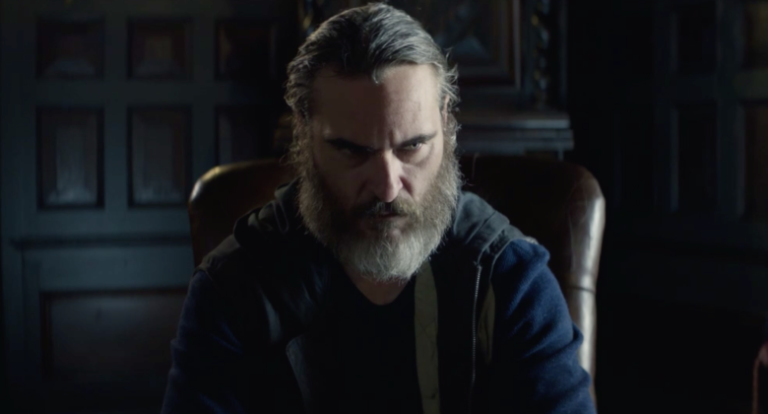
Movie Review: ‘You Were Never Really Here’ is an enthralling experience that stays just out of arm’s reach


Director: Lynne Ramsay
Writers: Lynne Ramsay (screenplay by), Jonathan Ames (based on the book by)
Stars: Joaquin Phoenix, Judith Roberts, Ekaterina Samsonov

Synopsis: A traumatized veteran, unafraid of violence, tracks down missing girls for a living. When a job spins out of control, Joe’s nightmares overtake him as a conspiracy is uncovered leading to what may be his death trip or his awakening.

[/info]

In figure skating, there are several elements that go into evaluating an athlete’s performance. The first is the degree of difficulty of the moves attempted. This is known as the technical score. The second is the how well the skater executed the attempted moves. This is the grade of execution. The third, and most difficult to quantify, is the program component score. This score is determined by much more subjective aspects. It is very hard to explain exactly what you see when you watch a truly great skater perform or the qualities that a routine from a lesser skater lack, but you know it when you see it. You feel the transcendent artistry and soulfulness of a gold medal performance, even if the fellow olympians have a similar technical toolbox. Lynne Ramsay is to film what an olympian is to figure skating. She is an elite filmmaker with the technical craftsmanship of a master, even with only 4 feature films on her résumé. Her shots are bold and her imagery is beautiful, but her most recent film, You Were Never Really Here felt like there was something missing. It is a movie without a pulse, guiding you through a striking visual, audial, and sensory world, only to leave you feeling slightly cold and mostly unmoved.

You Were Never Really Here is the story of Joe (Joaquin Phoenix), a gun for hire who is tasked with rescuing the daughter of a U.S. Senator who has been kidnapped. With the thrust of the story established early in 90-minute film, the remainder is spent following Joe around as he either a) discovers people he knows who have died because of his latest contract or b) commit violence on the people who want the girl, whose name is Nina (played by Ekaterina Samsonov).  That’s pretty much the whole film. This is not a bad thing, on its own. There have been plenty of films that have utilized very contained, stripped-down stories to make profound, elevated works of art. The problem is that Ramsay’s attempts at giving the story that extra punch-up come from the parts of the film that aren’t Joe stomping around and pummeling his potential enemies with a ball-peen hammer, and those moments are, more often than not, too brief to establish anything to grasp onto.

We see small snippets of Joe’s past in the military and his upbringing in an abusive household, but there is a non-specificity to his trauma because of the brevity of these moments that makes it difficult to connect with Joe on an emotional level. In a movie that flies by in an hour-and-a-half, there was plenty of time to give the audience a better idea of what drives Joe. The images we see in his past and the parallels in is modern state are striking, but they don’t make a character full enough to have an opinion on. The film tries to let the audience craft a puzzle to discover Joe, but there are too many pieces missing.

What Joe lacks in characterization on the page, however, is leveled out by the performance of Joaquin Phoenix. Phoenix has always been a purveyor of broken, socially-stilted men looking for their place in the world and that is again the case in You Were Never Really Here. In a movie where emotion is almost always sullied, Phoenix provides moments of rage and sadness that stand out from the film around him. Joe doesn’t seem to have a particular affinity for his work, but it pays the bills for himself and his mother, who he both loves and is annoyed by (in that order). The strongest scenes in the film are driven by their relationship, full of sadness and dependence through a life of shared abuse. The other scenes in the film don’t possess the same poignancy as these, even as Phoenix’s performance is unwaveringly enrapturing (the guy makes crushing a green jellybean compelling, for God’s sake).

Fortunately for Ramsay, there is enough of a singularity to the vision of You Were Never Really Here to overcome most of the structural and thematic shortcomings of the film. Despite the film having few plot beats, it rushes by at breakneck speed. Ramsay’s eye for shot composition is remarkable and the combination of her eye and her use of violence makes this the most visually compelling film of the year so far. It is unlike almost any revenge film you will see with its patience, quietness, and frequent use of long takes. This patience only ramps up the viscerally of the action sequences, lingering on strike after strike with the aforementioned ball-peen hammer. You feel Joe and Nina’s struggle for survival because you experience the violence in a completely engrossing way.

When the film isn’t silent, we are treated to the work of Jonny Greenwood, perhaps the best film composer currently working. His work continues to dazzle here, ramping up the tension every time his music plays over a scene. This score combines the string-driven scores we are used to from his collaborations with Paul Thomas Anderson with the electric guitar and electronic elements that he often uses in his work away from film. It is not an omni-present score, but that only makes it more effective when it does pop up. A score like this one is able to make the most mundane actions make your palms sweat from the tension. Greenwood continues to be a hugely valuable asset for all the films he works on.

As the film moves towards its ending, the story becomes one of very pulpy government corruption. The bombastic plot twists don’t mesh well with the crippling tension of the rest of the film, sending confusing signals about what it is all supposed to mean. It’s possible that a version of this film that leans into the pulp of the script, and a little less on the arthouse poetry, that achieves its goals more successfully than this one. As it stands, the two approaches clash. The film ends bombastically (and very memorably) but there is no urge to reflect on what you just saw. It is a character study that is too vague with its characterization and a political commentary that goes too big.

You Were Never Really Here is a movie that can, and should, be appreciated for so many reasons. The artistry on the screen is indelible. Lynn Ramsay has proven that she is one of the most talented, original, and challenging filmmakers we have. She makes choices that are completely her own and executes them perfectly. Her degree of difficulty is very high. Her technical execution is almost flawless. But in the end, I couldn’t help but think, So what?

Overall Grade: B-

[divider]

Hear our (slightly different) podcast review on Episode 270:

[divider]

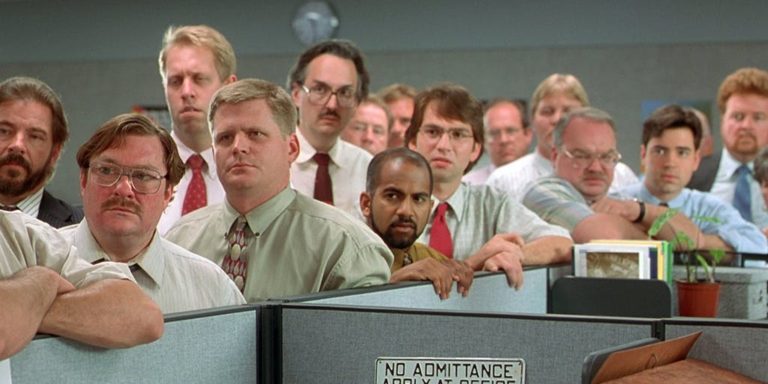
Poll: What is the best movie largely taking place at an office?

With the release of Sorry to Bother You this weekend, it should be appropriate to focus on films with an office setting; and yes, there are plenty. Some of these have even become cult favorites (one in particular, that just so happens to have ‘Office’ in the title), which is probably a good indicator into how those of us corporate folks feel about the corporate world. That said, what do you think is the best film largely taking place at an office?

Vote now!


Featured: ‘Shoah’ – Claude Lanzmann’s Legacy On The Darkest Of Histories

When the acclaimed documentarian died aged 92 on July 5, I tweeted out that Shoah, his haunting nine-hour-plus story about the events of Poland’s extermination camps was on another level as a documentary. Like James Joyce’s modernist novel Ulysses or Tony Kushner’s epic two-part play Angels In America, Shoah is on its own category of storytelling about a horrible truth. It is not a simple reenactment or newsreel telling of the Holocaust, but being on location filming the sites as they stood. Documentaries usually rely on newsreels and voiceovers, but Lanzmann managed to evolve what was supposed to be a two-hour project into a visual non-fiction novel.

Shoah took eleven years to make because of financial problems, the challenges to find willing interviewees, death threats against Lanzmann, and the amount of footage he accumulated in his search – approximately 350 hours. To do the math for you, that is two weeks worth of film. Make your own jokes about Stanley Kubrick’s never-ending amount of takes and the million feet of celluloid Terrence Malick uses and then leaves on the cutting room floor. But, for such a project and for such a story that requires precise accuracy and care for detail, Lanzmann needed to shoot for eternity to respect those who are alive and honor the dead in the 20th century’s greatest crime.

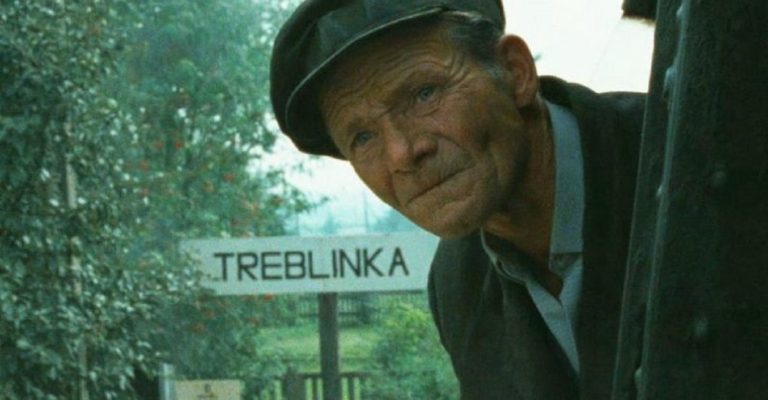
This was cinema’s Schindler’s List eight years before Spielberg churned out the masterpiece because this was something unheard of at the time. The style that Lanzmann proposed was going to be strictly first-hand by those who participated, such as surviving Nazi officials, former prisoners, and those who may have lent a “helping” hand to the Nazis in Poland. The subject of Poland’s role is very controversial today still as it was in 1985; the country condemned the documentary as biased, putting the entire country as complicit rather than acknowledging the fact that many citizens helped hide or move out Polish Jews from harm’s way. In the film, some state they knew what was happening, but plead that they feared for their lives and were too busy trying to fight the Nazis. Others break down in remembering the horrid details of prisoners singing entering the gas chambers; one survivor, a barber who moved to Israel, gave his testimony while working and hesitated at times. On the film’s original poster was a Polish train conductor who talks about his role in transferring prisoners to Treblinka and that he did so aware that he would’ve been put in a work camp and killed. Vodka was his go to to make him less aware.

The most daring feat by Lanzmann was the use of hidden camera footage when talking to the Nazi officials who lived in anonymity and agreed to speak but not on camera. Franz Suchomel spoke about how they gassed their prisoners, disposed of their bodies, and sang a song about Jewish prisoners not knowing what was about to happen; we see it through the hidden camera in a van that was connected by a transmitter. Lanzmann shows this to us right before we get our first glimpse at Suchomel, who died in 1979. At this time, Israel’s government and Holocaust survivors were on a crusade to make people not forget the past, to not let society absolve itself for permitting the rise of Nazism, finding and tracking down guards and officers who have evaded justice. Here was one who openly talked about it in great detail not denying anything.

https://www.youtube.com/watch?v=y_rpQuF85Hs

The purpose by Lanzmann was to give testimony by those forgotten and not mentioned in the Nuremberg Trials and not just contain it to books or dramatic movies who keep the focus of World War II on the invasion of Normandy or life under Fascist Italy. As a Jew who grew up in France in the 1930s, he was still the victim of backdoor anti-Semitism from other kids; the remnants of the Dreyfus affair was still around. He survived under Vichy rule and took part in the French Resistance like his father did and became more active through Jean-Paul Sartre’s book about anti-Semitism. Aware more of Jewish identity, Lanzmann, who was approached to do it, went the extra mile for the intimate details of these events, letting the camera roll and his subjects speak freely. 220 hours of Lanzmann’s interviews survive at the United States Holocaust Memorial Museum in Washington, D.C. They will survive forever, under the conscious of many who have seen Shoah (Criterion came to rescue in 2012 with its restoration and re-release), and under the guide of Claude Lanzmann.

List: Top 3 Sense of Scale Movies

This week on Episode 281 of the InSession Film Podcast, inspired by Ant-Man and the Wasp, it felt appropriate to talk about films that have best utilized a sense of scale in film. This topic was challenging to define let alone narrow down the films that fit that criteria. Despite the rigorous homework, we all ended up conjuring lists that hopefully comes through as compelling. At the very least, it sparked some enjoyable conversation. On that note, what movies would make your list? Here are the one’s that made ours:

(Note: Please keep in mind that we each had different criteria for our selections)

JD:

1) The Lord of the Rings
2) Brazil
3) Gravity

Brendan:

1) Alien
2) Synecdoche, New York
3) Ran

Paul:

1) The Lord of the Rings
2) Inception
3) King Kong

Honorable Mentions (Combined)

Honey I Shrunk the Kids, Innerspace, Ant-Man, Metropolis, Jurassic Park, The Matrix, Toy Story, Inside Out, Titanic, Blade Runner, Rear Window, Moon, Star Wars, Rogue One, Th Walk, The Impossible, Hereditary, Godzilla, The Wizard of Oz, Trip to the Moon, anything Wes Anderson and Charlie Chaplin

Hopefully you guys enjoyed our lists and if you agree or disagree with us, let us know in the comment section below. This list is going to be quite different for you depending on how you define sense of scale and what you’re looking for. That being said, what would be your Top 3? Leave a comment in the comment section or email us at [email protected].

For the entire podcast, click here or listen below.

For more lists done by the InSession Film crew and other guests, be sure see our Top 3 Movie Lists page.

Podcast: Ant-Man and the Wasp / Top 3 Sense of Scale Movies – Episode 281

This week’s episode is brought to you by Reklist. Sign up today and never waste any time finding a great movie to watch!

This week on the InSession Film Podcast, Paul from The Countdown Podcast joins us to review the latest film in the Marvel Cinematic Universe, Ant-Man and the Wasp. We also discuss our Top 3 movies that best utilize a sense of scale and JD gives his thoughts on the romantic-comedies Set It Up and Alex Strangelove!

Huge thanks to Paul for joining us on the show this week. He was a great guest and a joy to converse with, even if his awesome accent was distracting at times. Please go and check out his show, it’s really entertaining and highly recommended. Talking Marvel is always fun for us and this week was no different. We enjoyed the first Ant-Man and we were quite excited for this sequel.

Let us know what you think in the comment section and thanks for listening to the InSession Film Podcast!

– Movie Review: Ant-Man and the Wasp (4:38)
Director: Peyton Reed
Writer: Chris McKenna, Erik Sommers, Paul Rudd
Stars: Paul Rudd, Evangeline Lilly, Michael Douglas, Michael Peña

– JD Reviews: Set It Up / Alex Strangelove (41:42)
On our latest Extra Film podcast, Brendan and guest co-host Ryan McQuade reviewed the Netflix romantic-comedies Set It Up and Alex Strangelove. JD was finally able to catch up with both films and he gave us his thoughts on them as well.

[divider]

RELATED: Listen to Episode 280 of the InSession Film Podcast where we discussed Sicario: Day of the Soldado and our Top 5 Movies of 2018 so far!

[divider]

– Top 3 Sense of Scale Movies (56:00)
Using Ant-Man as inspiration, it felt appropriate to talk about films that have best utilized a sense of scale in film. This topic was challenging to define let alone narrow down the films that fit that criteria. Despite the rigorous homework, we all ended up conjuring lists that hopefully comes through as compelling. At the very least, it sparked some enjoyable conversation. That said, what would be your Top 3?

– Music

It Ain’t Over Till The Wasp Lady Stings – Christophe Beck
Anthropodie – Christophe Beck
The Fellowship – The City Of Prague Philharmonic Orchestra
The Return of the Eagle – Atli Örvarsson

Subscribe to our Podcasts RSS
Subscribe to our Podcasts on iTunes
Listen on Spotify
Listen on Stitcher
InSession Film Podcast – Episode 281

[divider]

Next week on the show:

Review: Sorry to Bother You
Top 3: TBD

[divider]

Help Support The InSession Film Podcast

If you want to help support us, there are several ways you can help us and we’d absolutely appreciate it. Every penny goes directly back into supporting the show and we are truly honored and grateful. Thanks for your support and for listening to the InSession Film Podcast!

VISIT OUR DONATE PAGE HERE

Chasing the Gold: Oscar Watch for Jan-June 2018

Welcome to InSession Film’s new monthly Oscar Watch! As the summer movie season starts winding down, the other movie season will start coming upon us, the Oscar season. Over the next couple of months, film festivals like the Toronto, Telluride and others will start showcasing the rest of the films that will be competing for various awards including the ultimate prize, Best Picture of the year. While there is still a lot of uncertainty in the race within the current moment, we can, based on what has been seen in theaters and most trailers, we are starting get a general jest as to what we could see come Tuesday, January 22nd, the morning of the Oscar nominations.

The first couple of the months each year can be a little rough with next to nothing coming out due to the previous year’s award season coming to an end. While many audiences around the world already saw this film is 2017, American audiences were given a taste of what could be a dark horse for this year’s Oscars in Paddington 2. The irresistibly lovely sequel about the adorably clumsy bear was a big player at last year’s British Academy Awards, or BAFTA’s as they are called. The film could also compete in costume, art direction, make-up categories but it’s best shot could in the Best Supporting Actor field for Hugh Grant’s devilishly charming performance as the villain Phoenix Buchanan. The film is one of the highest reviewed films of the year and could play well if viewed on screeners later in the year.

February brought us some more interesting films to take a look at within the Oscar race. Annihilation, director Alex Garland to Ex Machina, came out with most high praise for his adaption of the Jeff VanderMeer best-selling novel. The films visuals could be a player again for Garland, considering Ex Machina was the winner for Best Visual Effects for 2015, as well as it’s sound design. The performances and Garland’s direction are strong within the film but the only awards the film could compete for at this point outside the technical awards is the adapted screenplay race, though do look for Gina Rodriquez to be on some critics lists for Supporting Actress at the end of the year.

The other major player from the second month of the year was probably the biggest film of the year and could very well be the biggest Oscar player we have seen so far in Ryan Coogler’s superhero epic, Black Panther. Not only is was this film received with massive praise by audiences and critics, it has become a cultural milestone in not just its genre but in film history. With Marvel and Disney already coming out and saying that they will push this film during the awards season, the sky is the limit in terms of what the nominations could be. The film could compete in almost every technical category, as well as Adapted Screenplay, Best Supporting Actor for Michael B. Jordan’s remarkable performance as the villain Eric Killmonger, and as well as Best Director for Coogler. Many also tend to forget that this is Coogler’s follow up to Creed, an Oscar player with 2015. And while Sylvester Stallone was the only nomination for that film, many believed Jordan and Coogler were snubbed of nominations for that film. Marvel will look hard to push them along with the film, though no superhero film has ever been nominated for Best Picture but I believe that at this moment, history could very well be changing in 2018.

March brought us only minor films within the awards race. Disney gave us A Wrinkle in Time, a film that’s best chances are in costumes and possibly special effects. The Death of Stalin and Thoroughbreds represent two movies with strong scripts destined for screenplay nominations throughout the awards season, especially at the Gotham Awards and Independent Spirit Awards. Isle of Dogs gave us our first real contender for Best Animated Film but beyond that, Wes Anderson’s follow-up to The Grand Budapest Hotel will most likely fall short of any other Oscar love considering how forgot that film became. Then there was Ready Player One, a film that was visually stunning and not much more, which is sad to say considering its person behind the chair, Steven Spielberg.

John Krasinski’s silent, horror-thriller A Quite Place kicked into theaters at the beginning of April as a wonderful spring surprise. Riding off the heels of Get Out being nominated last year, Paramount Pictures hopes to turn its box office horror hit into a loud contender for its awesome sound design, tense lead performance from Emily Blunt and inventive direction at the hands of Krasinski. The Rider hopes to take its impressive showing from the Independent Spirit Awards from last year and turn it into a full contender this year ala The Hurt Locker, with Chloe Zhao being a possible dark horse for Best Director. You Were Never Really Here showcased yet another powerhouse performance from Joaquin Phoenix, who is very much in the Best Actor race again. Disobedience gave us two fantastic performances from Rachel Weisz and Rachel McAdams as conflicted, forbidden lovers. The trick about those two performances will be which one runs in lead and which one runs in supporting but either way those strong performances speak for themselves. And then there was the other film from Marvel, Avengers: Infinity War, a film that doesn’t have the Oscar potential of Black Panther but could be a player within those technical categories including visual effects.

The month of May was slim pickings in terms of award season films, with RBG being the first real film that could compete in the documentary field and Tully being an awards vehicle for Charlize Theron’s performances as the lead character. But one film could emerge as a contender from this month in Paul Schrader’s First Reformed. Schrader’s faith vs science opus is his best script in decades and a career defining performance from Ethan Hawke, this film could very well have the legs to gather the acting and screenplay nominations it deserves.

Hereditary kicked off a jammed packed month of June with a divisive horror thriller with a bone chilling performance from Toni Collette that is a dark horse for Best Actress consideration. The Incredibles 2 gave us Pixar’s entry into the animated race, and Hearts Beat Loud gave us our first real contender in the Original Song category. American Animals could be an Editing contender if it makes hay at the smaller award shows but seems to be a player for mostly Indie Spirit awards. Leave No Trace could get Ben Foster a nomination ala Viggo Mortenson for Captain Fantastic in 2016, in a performance that is about a father trying to raise his daughter off the grid. But the film that has taken over this month is Won’t You Be My Neighbor?, the Mr. Rogers documentary director by Morgan Neville, a previous Oscar winner for his film 20 Feet from Stardom. Not only is it the front runner right now for the Best Documentary Oscar but it could easily have an outside chance of becoming the first documentary of being nomination for Best Picture of the year.

The month of June was also a massive dumping grounds for trailers that will by for Oscar attention. First Man (Damien Chazelle), BlacKkKlansman (Spike Lee), A Star is Born (Bradley Cooper), The Old Man and the Gun (David Lowery), Beautiful Boy (Felix Van Groeningen) and Widows (Steve McQueen) all gave us great first looks of what is to come, with many more trailers coming within this month. Like I said earlier, it’s still too early to talk about frontrunners and who will be taking the gold, but based on what has been presented so far, it’s going to be one hell of a fall race for the gold.

You can find me on Twitter: @ryanmcquade77

Podcast: Set It Up / Alex Strangelove – Extra Film

This week on the InSession Film Podcast: Extra Film segment, new IF writer Ryan McQuade fills in for JD as we discuss two Netflix romantic-comedies in Set It Up and Alex Strangelove!

Big thanks to Ryan for filling in this week, bringing his A-game to the podcast as well as what we’ve seen in his writing. While JD was absent during this show, he has seen these two films and will reveal his thoughts on Episode 281 – so be on the lookout for that. Both of these movies are available right now, but as you’ll hear on the show, one of them is certainly more recommended than the other.

We hope you have fun with this week’s Extra Film segment, and as always let us know what you think in the comment section below. Thanks for listening!

– Movie Review: Set It Up (8:48)
Director: Claire Scanlon
Writer: Katie Silberman
Stars: Zoey Deutch, Glen Powell, Lucy Liu, Taye Diggs

– Movie Review: Alex Strangelove (34:19)
Director: Craig Johnson
Writer: Craig Johnson
Stars: Daniel Doheny, Madeline Weinstein, Antonio Marziale

This week’s episode is brought to you by our great friends at Simplistic Reviews.

– Music

The Power Of Love – Huey Lewis & The News
Dance This Mess Around – The B-52’s
The Return of the Eagle – Atli Örvarsson

We try to make this the best movie podcast we possibly can and we hope you enjoy them. Subscribe today on iTunes and Stitcher and please leave us a review on iTunes. You can also find us on Soundcloud, PlayerFM and TuneIn Radio as well. We really appreciate all your support of the InSession Film Podcast.

Subscribe to our Podcasts RSS
Subscribe to our Podcasts on iTunes
Listen on Spotify
Listen on Stitcher
Set It Up / Alex Strangelove – Extra Film

[divider]

Mobile App

To hear this Extra Film episode and everything else we do, download our apps on the Amazon Market for Android and the Podcast Box app on IOS devices. The mobile app covers all of our main shows, bonus podcast’s and everything else relating to the InSession Film Podcast. Thanks for your wonderful support and listening to our show. It means the world to us!

[divider]

Help Support The InSession Film Podcast

If you want to help support us, we would greatly app

Featured: Why the 1998 version of ‘The Parent Trap’ is a great film

We all have favorite movies from when we were kids. Sometimes nostalgia clouds our view and we cling tightly to a film that, if we’re being honest, no longer holds up. But then there are those rare moments of pure bliss when we revisit a childhood favorite and find that it still brings about the same wonder, joy, and amazement as when we first watched it.

I am so thankful that the latter is true of my experience with Nancy Meyers’ 1998 remake, The Parent Trap.

Brendan had this film on his list of the Top 3 Movies About Parenthood in one of the recent episodes of the InSession Film Podcast. I’d definitely agree with that, and I’d even go a bit further to say that the 1998 version of The Parent Trap is an all-time great film.

I’m not sure when I first saw this film. In fact, it very well may have been one of the first movies I ever watched. I always remember it being a favorite. It is easy to see why a child would like this movie – the idea that you can have some kind of control over the lives of your parents is tantalizing to anyone in their youth. What’s even more endearing about this film, however, is that it offers more than enough for older viewers.

This is the story of Nick Parker (Dennis Quaid), Elizabeth James (Natasha Richardson) and their twin daughters – Hallie and Annie (both roles played by a young Lindsay Lohan). We meet Nick and Elizabeth in the opening scene as Nat King Cole’s iconic “L-O-V-E” plays. They are married on the QE2 in rapturous bliss. This opening scene is important, because we feel invested in their marriage before we even meet the real stars of the show.

I am, of course, referring to Hallie and Annie.

The film quickly jumps ahead 11 years to a summer camp. Even if you never went to camp as a kid, I think most kids can relate to being thrown into a place where you don’t know anyone. In fact, I think most adults can relate to that, too. Whether it is school or work, we’re all constantly looking for ways to relate to the people around us. That the film drops us into this situation with the characters at the very beginning of the film is, I think, a very good choice. We’ve already been introduced to the marriage of Nick and Elizabeth, but not to the point that we really know what’s going on. So we’re meeting everybody right alongside Hallie and Annie.

They don’t know each other yet either, of course. Hallie lives with Nick in Napa Valley and shares his last name of Parker. Annie lives with Elizabeth in London and shares her last name of James. They both have vague memories of the other parent, but they have never met each other. That will change, of course, as the camp scenes commence. The way the big “reveal” is handled invests us so much in both characters.

For this film to work, we have to want Nick and Elizabeth and the girls to all end up together. That may sound easy to do, but I don’t think it’s so simple. We could very easily accept that Nick and Elizabeth just didn’t work out together and the arrangement that has worked for 11 years is for the best. Certain characters make that very case as the film continues. But throughout it all, it is the work of these early scenes that has set us up to care about the characters of Nick, Elizabeth, Hallie, and Annie above all others. We really want to see THIS family together.

This is done through overt means (the opening shots of the wedding) and through more subtle means, as well. An example of the more subtle way that is accomplished is the prank war the two twins wage upon each other before they know each other’s true identity. Their competing personalities clash in very funny and engaging scenes. Inevitably, the leaders of the camp discipline the two and put them together in a cabin. It is there that they realize who they both really are. This process of being at odds then coming together mirrors what happens in a family with multiple siblings. By the end of it, we are fully on their side and want to see them succeed in their quest to reunite their parents. The setup is done very well.

Meyers certainly deserves much of the credit for that, but her work would be in vain if not for the performance by Lohan. It cannot be overstated how incredible her work in this film is. Think about the skill it takes – as an 11 year-old – to perform two different accents. Not only that, but when the film leaves the camp scenes and the twins have enacted their crazy scheme (to switch places, impersonate each other, and force their parents to come together), Lohan must then subtly augment those accents since she is now playing a character who is trying to, in a sense, play a character. That’s not easy to do, and Lohan does it so well here.

The direction, performances, and setup all have us riding pretty high by this point. But this wouldn’t be a great film if it let us stay there. Something has to happen to throw all this into a fuss. That “something” comes in the form of a person – Meredith Blake (Elaine Hendrix).

You see, in these intervening 11 years, Nick has moved on to a new relationship. He is now engaged to Meredith. Even if she ended up being another version of Mother Teresa, the masterful setup of this film would have us rooting against her. We certainly find out that she is no Mother Teresa, so it becomes even easier to root against her. But an engagement isn’t the easiest thing in the world for a child to change, so we now have the makings of a great plot. Hendrix has fun playing the role of the villain here, and she does it well. It all brings us to a fateful camping trip where the “new family” – Nick, Meredith, Hallie, and Annie – try to bond. Well, Hallie and Annie don’t try all that hard, but we certainly see Meredith’s true colors. These are also some of the funniest scenes in the whole movie. I remember rolling on the floor laughing as a kid.

A simpler film would give us a quick resolution right after this camping trip. But this film doesn’t do that. Just when we think we have everything figured out, we get thrown for one last loop. Then, without giving too much away if you haven’t seen this movie, that loop is closed up in the film’s rousing ending.

On the surface, The Parent Trap may seem like a kid’s movie entry into the romantic comedy genre. It is that, in part, but it’s much more than that, too. Are there some cheesy parts? Sure. Elizabeth’s butler, Martin (Simon Kunz), and Nick’s housekeeper, Chessy (Lisa Ann Walter), ending up together might feel like a little too much, for instance. I’m willing to accept it because 1) they both give incredibly endearing performances and 2) the film has so much love in the air that you can believe that the supporting characters will get in on it too.

In the end, this is a movie about family, love, loss and reunion. Those are themes to which we can all relate, and it is the film’s adept handling of these universal themes that make it such a great film.

Featured: The Mind Of A Directing Madman: R.W. Fassbinder

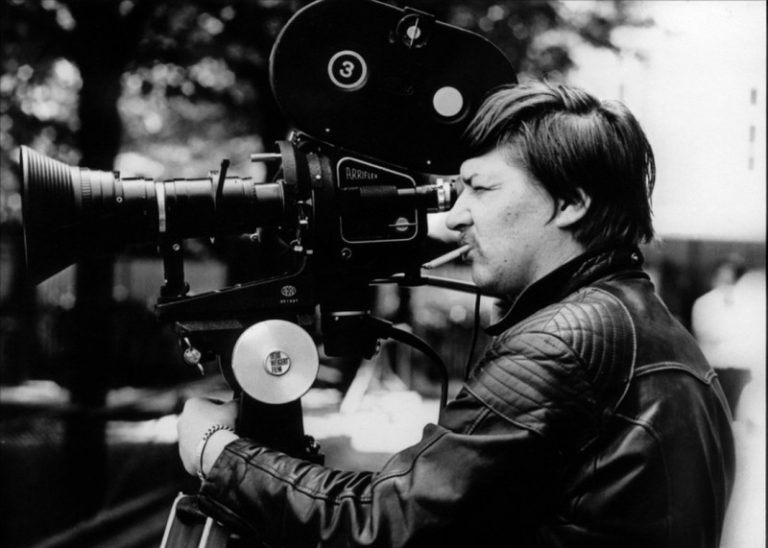
When we think of booming creative minds with loads of energy poured into their work, we tend to think Quentin Tarantino with his colorful, epic scripts or Aaron Sorkin with his extensive walk-and-talk dialogue. In terms of production, we can also think of Woody Allen and his annual film he puts out. I think of someone who does all in one and did it in a short period of time: Rainer Werner Fassbinder.

When Fassbinder was found dead in 1982 of a drug overdose, he was 37 years old. Lying by his feet were the notes to his next script about the revolutionary Rosa Luxembourg. At the same time, he was editing his latest feature film, Querelle. Fassbinder epitomized the German New Wave which included Werner Herzog and Wim Wenders. He was born at the same time World War II came to an end and struck out on his creative self as West Germany was rebuilding and flourishing economically. From the time he turned 18 all the way until he died, Fassbinder made over forty films, two television mini-series, and twenty-four plays, many of which he helped score, shot, acted in, and edited.

It is fair to say Fassbinder was a workaholic who wrote and shot films as quickly as cheaply as possible, even faster than Clint Eastwood today. He knew what he wanted and how to get it, not being a “40-take Willie” Wyler, and getting it in no more than 3 takes. His lifestyle reflected the frantic work and style of his movies, having multiple affairs with men and women, including with his actors and lastly his editor, as well as having a notable temper. His attire was notably a black leather jacket, hat, and dark sunglasses, as well as a growing goatee he kept until he died. By utilizing all of his energy, for better or for worse, he produced plenty of incredible pieces of drama that are forever part of global cinema.

Here are my Top 5 Fassbinder films, in alphabetical order:

Ali: Fear Eats The Soul (1974)

https://youtu.be/Tyr-_gJ6e-A

Inspired by Douglas Sirk’s All That Heaven Allows, Fassbinder’s melodrama tells the story of an older German widow, Emmi, who falls in love with young, handsome Moroccan immigrant, Ali. When they get married, they are ostracized by neighbors, friends, and even Emmi’s family. The prejudice in Ali is sadly very similar today and so is the pressure by the couple to prove others wrong. The film was shot in just two weeks and is Fassbinder’s most powerful, direct social message in his filmography, especially since Fassbinder was in a relationship with El Hedi ben Salem, who plays Ali. The film ends with hope, but it was not the case with ben Salem; in prison for attempted murder, he hanged himself and Fassbinder was not informed of his death until he was making his last film, Querelle, and dedicated it to ben Salem. This is personally my favorite Fassbinder film.

Berlin Alexanderplatz (1980)

Fassbinder’s 14-episode, 15½ hour-long TV series is based on the novel by Alfred Doblin about Franz Biberkopf who is freed from jail after serving time for killing his girlfriend. Now in a Germany thriving in the 1920s before the rise of Nazism, Franz tries to get out of the criminal underworld he’s been in but finds himself lured back in easily. No one is sympathetic, especially with Franz, a killer, but yet there is a humane portrayal of someone who just cannot catch a break in finding work in such booming city nor having a stable lover to keep him steady. Because many were unhappy about being reminded of what Germany was like in between two dark periods, the series was neglected physically. It was only saved by the Fassbinder Foundation in restoring the scratched, discolored prints that the miniseries was released on DVD in 2007.

Fox And His Friends (1975)

When released, some accused Fassbinder of being homophobic with his portrayal of his leading gay characters as cynical figures who are loathing and selfish. Fassbinder played the leading character, a working-class gay man who wins the lottery, falls in love with a wealthy industrialist but struggles to conform to the livelihood of being in the upper class. It may not be happy-go-lucky, but it does go against stereotype on gay characters at the time, making them as normal as heterosexual characters who can also go through the same pains as they do. The themes are the same as he had written in movies before, where money can’t buy anything but mother’s little helper, fancy meals, and the best liquor out there.

The Marriage Of Maria Braun (1979)

https://www.youtube.com/watch?v=fT90kcotRZ4

Box office success was something elusive to Fassbinder until he came out with the first of his BRD (Bundesrepublik Deutschland) Trilogy, followed by Lola and Veronika Voss. Maria Braun tells the story of a woman who has to survive the post-War years with conflicting loves all while trying to avoid the poverty the has engulfed the country. Like in Ali, it features an interracial relationship (with an African-American soldier) and commentates on Fox’s feel that money cannot give you the love you want, but just a big house. As a film that was more mainstream, it made Fassbinder a marketable figure that Francois Truffaut later commented, “[He] has broken out of the ivory tower of the cinephiles…an original work of epic and poetic qualities.” However, the difficulties of production, including going over budget and conflict with distribution rights, made it a turning point in Fassbinder’s life for the self-destructive end that would come.

The Merchant Of Four Seasons (1970)

At first, I was not impressed by Fassbinder’s quick-moving story of a man struggling to make a living as a fruit peddler after losing his job as a police officer for having sex on the job with a prostitute. It seemed very jumpy and rushed. A second viewing at it and I picked up more on Fassbinder’s style compared to his other works and saw that there was nothing wrong with it. Four Seasons doesn’t linger on about him being angry at life; we know that he is angry and has contempt for others. Instead, in its quick 88 minutes, we watch the downward spiral in its complexity that stems from his experimental theatre days and attacks society as being more selfish than helpful.

Rainer Werner Fassbinder may be the ultimate director from Germany for his expressionism of a variety that blossomed and touched on every aspect of life in the country. He described his films as building a house with the foundations of the past, namely the 1950s, the economic miracle, and the country’s attempt to forget about the Nazi period. He was a rebel and someone I’d label a populist filmmaker, refusing to abide by the rules and challenging the norms, which brought him the wrath of several groups over his work. But Fassbinder was a genius who could only work and not relax, knowing that he would rather die an early death than get old and not have the same energy when he was younger. If he made it past age 40 and even saw the reunification of Germany 8 years after his death, Fassbinder could have continued to push the boundaries and upset the status quo with his biting spitfire of love, death, sex, isolation, and prejudice in a changing landscape.

You can follow me on Twitter: @BrianSusbielles (Cine-A-Man)

P.S. – For those who are fans of Fassbinder, check below as someone uploaded (and I hope it remains up) an incredible documentary about his life featuring interviews with the crew and actors that worked with him: I Don’t Just Want You To Love Me. It is worth a look.

https://www.youtube.com/watch?v=gBlm8ys1Pj4&t=349s

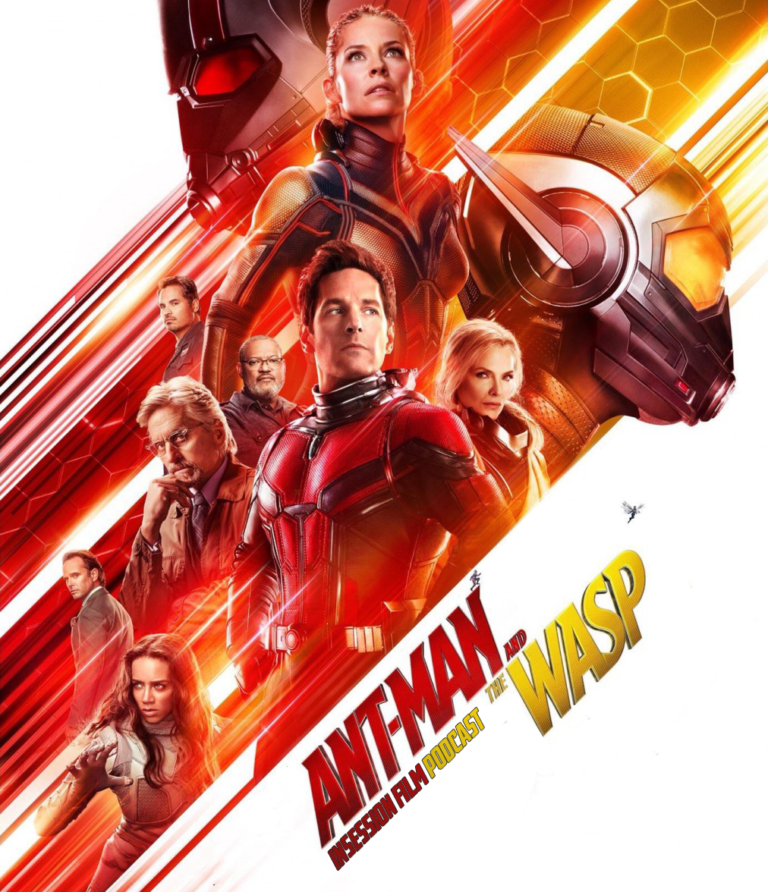
Movie Review: ‘Ant-Man and the Wasp’ makes slightly better buzziness


Director: Peyton Reed
Writers: Chris McKenna, Erik Sommers, Paul Rudd, Andrew Barrer and Gabriel Ferrari
Stars: Paul Rudd, Evangeline Lilly, Michael Douglas, Michelle Pfeiffer, Hannah John-Kamen, Laurence Fishburne

Synopsis: As Scott Lang balances being both a superhero and a father, Hope van Dyne and Dr. Hank Pym present an urgent new mission that finds the Ant-Man fighting alongside the Wasp to uncover secrets from their past.

[/info]

Ready for an incendiary take? The debut of Scott Lang, plus his alter-ego Ant-Man (Paul Rudd), is pretty tight. Production-wise, the film is Disney’s Solo before the actual thing, but what was released is still a delight thanks to gumptious main players, hyper-creative size shifts and, most importantly, decision to keep the soul Wright-ful. Still, our hero is of the “lower tier” type in the Marvel Cinematic Universe, what with box-office gains not quite Coachella-scale during its run and related memes showing no imminent case of over-usage. Maybe someone could use a teammate? It did make Mark Ruffalo’s likely-will-never-have-a-solo-film Hulk a more involved figure in the series (Ragnarok) and let internet have a more concrete cause to fawn over Chris Evans’ Cap than “leadership” (seeing Bucky Barnes).

And that’s precisely what is given to Ant-Man in this episode: a super-partner called Wasp, real name Hope van Dyne (Evangeline Lilly). Not the smoothest of duos — don’t forget she wasn’t her father’s, or Hank Pym (Michael Douglas, slightly looser)’s, first choice to don the suit — but a beneficial one. Wasp is the first item on the “wanna do something right” list (according to an exchange), the provider of the film’s backbone and the answer to why part two surpasses the first — if only by half an ant.

Acting on the theory that things entered the timeless, multiform Quantum Realm can be retrieved, Hope and Hank devise a plan to rescue mother/wife Janet van Dyne (Michelle Pfeiffer, ever-impassioned, even under five minutes), previously selflessly went subatomic to disarm a missile. Regrettably, the father-daughter duo will have to go at it, toiling away at a can-be-rolling suitcase laboratory, without Scott; the man’s antics in Civil War have forced S.H.I.E.L.D. to turn him into a house arrestee. No worries, though — there’s now more time to bond with daughter Cassie (Abby Ryder Fortson, a ray of sunshine) in the cardboard maze or impress S.H.I.E.L.D. agent Jimmy Woo (Randall Park, tenderly insecure) with learnt-online magic tricks. Scott may have gone through the adulting process more than most, but he never severs the link with his inner big kid, a persona Rudd continues to nourish with maximal charm and trademark sardonic zest. So much easiness is inhabiting the character that, say, randomly ringing him up to grab a po’boy with you and he’ll be down. Grinning is a certainty when he’s around, and that’s a comfort — blessing, even — after all that ashy denouement in April’s Infinity War (stay for the first post-credit scene aka perfect explainer why Ant-Man pulled a no-show there).

But Scott’s betterment here can be traced back to the lady who bettered him. Now with exponentially better hair and more occasions to take charge, names and the wheel (the late-game Hot Wheels vs. full scale car chase around San Francisco’s hilly roads is riotous), Hope really flies. She can now exude frankness and veiled compassion, traits that Lilly, like Rudd in and since the first film, winningly displays besides the kicks. It also helps that Ant-Man and the Wasp’s five writers, among them is the lead actor, have crafted a story more personalized, more character-bound rather than the minimal-maximal feature. Hope and the familial issue she believes is resolvable invite the film’s baddie, Ghost (Hannah John-Kamen, equal parts intense and sympathetic), to chase the good peeps across the walls, the effect of an ailment that Janet can cure, per two exposition-heavy-yet-buttery clarifications from Hank’s former friend Bill Foster (Laurence Fishburne).

Speaking of, Ant-Man and the Wasp has a habit of following up goodness with something less so and back. It’s like stinging you, handing out the ointment and repeat. Whereas John-Kamen develops her villainess using an actress’ toolbox — Ghost has a sliver of an arc! — Fishburne’s Foster apparently also does the same job with that of the writers’, which can get intrusive. Hope’s mission also has her meeting gangster Sonny Burch (Walton Goggins, again practitioner of the unsavory), whose function doesn’t go beyond giving the heroes a reason to alter their atoms’ size and, as a result, easily excisable. On the aesthetics side, the film is a notch below its predecessor; the antsier editing often has Dante Spinotti’s lensing switching between distinctive and pedestrian during set pieces and substitutes the emotion the frame yearns for with fun. That’s OK, but that’s not what’s needed.

That said, when alignment occurs, Ant-Man’s secret weapon Luis (Michael Peña) — now the boss of, ahem, X-CON Security Consultants — will again strike the funny bone at full force. At one point, the man has the enemy’s maybe-maybe not truth serum in the system, and there he goes imbuing his fast-talking skill onto many people, even the previously spared Scott and Hope. Other than a moment of genuine hilarity, one can take it as a sign of the series growing in confidence;  from here onward it will molt without the weight of its borrowed-soul beginnings.

Let’s settle on the visual front, though. Look at the first film again. Once that happens and a great narrative is in play, Ant-Man’s third rollout will be anything but ant-i-swell.  (A million pardons!)

Overall Grade: B

[divider]

Hear our podcast review on Episode 281, coming soon!

[divider]

Poll: What is your favorite film featuring “shrunken” people?

With Ant-Man and the Wasp hitting theaters this weekend, we thought it would be appropriate to talk about movies featuring shrunken people for our poll. There are certainly some interesting options here that tap into the concept in unique ways. With that said, what’s your favorite film featuring shrunken people?

Vote now!


Movie Review: ‘Won’t You Be My Neighbor’ is a great exploration of the state of pop culture and the best in all of us


Director: Morgan Neville
Stars: Joanne Rogers, Betty Aberlin, McColm Cephas Jr.

Synopsis: An exploration of the life, lessons, and legacy of iconic children’s television host, Fred Rogers.

[/info]

I am not going to say that Won’t You Be My Neighbor? is “the movie we need right now”. This isn’t the only time that we could benefit from watching 90 minutes of selflessness, sincerity, caring, and love in a theater. This movie, and Fred Rogers, are worthy of adulation in any era. I do not have a tremendous fondness for Mister Rogers’ Neighborhood, having only seen it a handful of times, but there has always been an aura surrounding Fred Rogers (or, at least, the idea of Fred Rogers). In Won’t You Be My Neighbor?, director Morgan Neville deconstructs the icon “Mister Rogers” to show the man behind the myth. Turns out, Fred is more like his on-screen persona than you would readily believe. The film won’t have the staying power of many other films you will see this year, but sometimes an experience like the one Won’t You Be My Neighbor? provides is more than enough. Oh, and there is a high likelihood you will cry.

For the uninitiated, Fred Rogers was a beloved American television personality. He was mild-mannered to an extent that you rarely see on television. His unrelentingly calm demeanor and forbearance even strike some viewers as “awkward” or “creepy” (a fact that is explored in one of the documentary’s most interesting stretches). In a world where educational television has been inundated with bright colors, loud personalities, and general sensory overload, the muted, patient, calm Mister Rogers’ Neighborhood doesn’t really have a place. That fact is, perhaps, the most interesting thesis of Won’t You Be My Neighbor: postmodern sensibilities, the need for immediate satisfaction, and a general cultural cynicism have made sincerity a pop culture commodity devoid of value, even in children’s programming. It’s easy to consider this some sort of political statement in our current situation, but I believe it extends much further than that. It is a commentary on our culture, not our government (granted, it is a very short leap to get to the political interpretation).

Beyond the principles of Rogers’ programming, we also see that he was very keen on speaking to children about important, often tragic, world events. What was so remarkable about Rogers in these instances was that he never spoke down to the children. Even when tackling issues such as the Vietnam War, the assassination of Robert Kennedy, or the Cold War, Rogers gave the children the benefit of the doubt, believing that they could comprehend and interpret these concepts on a level much higher than the one most adults would give them credit for. The reason for this, the movie shows us, may be because Fred Rogers, the man, was not nearly as assured as his on-screen persona. We don’t spend a lot of time exploring Rogers’ childhood, but we do see that he has been concerned with with his own fallibility for his entire life. There seems to have been a piece of his childhood anxiety in his creative work.

This quest to never stray from his moral path led him to a seminary when he was a young man and he became an ordained minister. However, he believed his true calling was on television. Rogers found the content on TV to be mostly abhorrent (even in the 50’s and 60’s). He was always interested in childhood education and decided to create children’s programming at a public television station in Pittsburgh. Rogers was the lifeblood of the entire program. He wrote the show, hosted the show, and voiced the many puppet characters he created for the more whimsical, abstract segments of the show.

One puppet on the program, Daniel Striped Tiger, is the closest thing to a Fred Rogers surrogate on the show. Daniel was a shy, timid creature that wanted desperately to understand the world around him. The bad things that people were capable of baffled him and he was very interested in morality and friendship. You see a special side of Rogers when he controls Daniel. Through Daniel, Fred is able to verbalize all of the things that he is afraid to say away from his TV studio. Mister Rogers had questions about the world just like everybody else and was always looking for his place in it. In his later years, he became more insecure than ever, as it seemed that children’s programming, and maybe the world as a whole, had passed him by. There is one scene where he attempts to address a TV audience following the events of September 11th and, for the first time in the entire documentary, he is speechless. In that moment, he questioned whether his attempts to teach had made even a minute impact.

=Don’t let this description put you off, though. Won’t You Be My Neighbor? is, first and foremost, a celebration of Fred Rogers and his achievements. He made an incredible impact on many, Manny people’s lives. We see the man’s advocacy for civil rights, education, and child psychology. We see him embrace a crew on his show that looks much more like a biker gang than a Mister Rogers fan club (he even cracks a joke about one crew member sending him a photo of his bare butt). Fred Rogers lived up to the lessons of his show. He truly loved us the way we were. He truly wished the best for us. Forget the political climate, the world could always use more of that sentiment.

By the end of the film, many people’s popcorn will have been doused by tears and you will float to your car knowing that this there is unconditional love in this world. There is no lesson to be learned here, just a display of the best of humanity. The film has not completely stuck with me, but when I was in the theater, there is no doubt that it was a beautiful day in the neighborhood.

Overall Grade: B+

[divider]

Hear our podcast review on Extra Film:

[divider]

List: Top 5 Movies of 2018 (so far)

This week on Episode 280 of the InSession Film Podcast, as we do every year at this time, we discussed our Top 5 movies of the year so far. 2018 – for us anyway – was a pretty rich first half. Sure, its had a few blemishes, but overall it’s had a great mix of both mainstream and indie films – perhaps even some of the best we’ll see all year. This exercise, while somewhat stressful, is always fun and we had a blast discussing the five films that have stood out to us so far this year. On that note, what movies would make your list?

Here are the one’s that made ours:

JD:

1) You Were Never Really Here
2) First Reformed
3) Hearts Beat Loud
4) Won’t You Be My Neighbor?
5) Avengers: Infinity War
—
6) Lean on Pete
7) Paddington 2
8) Annihilation
9) Thoroughbreds
10) Beast

[divider]

Brendan:

1) The Rider
2) First Reformed
3) Paddington 2
4) Won’t You Be My Neighbor?
5) Isle of Dogs
—
6) You Were Never Really Here
7) Loveless
8) Annihilation
9) Hereditary
10) Revenge

Honorable Mentions (Combined)

A Quiet Place, The Tale, American Animals, A Fantastic Woman, Black Panther, Tully, Incredibles 2, Deadpool 2, On Body and Soul, The Death of Stalin, Disobedience, Cargo, First Match, Red Sparrow, Love, Simon, Ocean’s 8

Hopefully you guys enjoyed our lists and if you agree or disagree with us, let us know in the comment section below. This list is obviously going to differ based on your own personal taste and what you’re looking for in these films. That being said, what would be your Top 5? Leave a comment in the comment section or email us at [email protected].

For the entire podcast, click here or listen below.

For more lists done by the InSession Film crew and other guests, be sure see our Top 3 Movie Lists page.

Podcast: Sicario: Day of the Soldado / Top 5 Movies of 2018 (so far) – Episode 280

This week’s episode is brought to you by Patreon.com and our awesome listener’s like you. Sign up today and get some cool gifts in the process!

This week on the InSession Film Podcast, we discuss the-not-so-great sequel Sicario: Day of the Soldado, starring Josh Brolin and Benicio del Toro. But we make up for that by revealing our Top 5 movies of the year so far!

We were supposed to be joined by the great Walter Vinci from the First Time Watchers podcast this week, but due to some scheduling issues, he was name able to make it. However, we will remedy that because he is long overdue to being a guest on our show. We still had a lot of fun on this week’s show, despite Soldado offering up a bit of frustration, it didn’t diminish the love we poured over our the films in our Top 5.

Let us know what you think in the comment section and thanks for listening to the InSession Film Podcast!

– Movie Review: Sicario: Day of the Soldado (3:23)
Director: Stefano Sollima
Writer: Taylor Sheridan
Stars: Benicio del Toro, Josh Brolin, Isabela Moner

– Notes (38:47)

We do a little housekeeping per usual and also welcome a few new members to our team who will be writing for us, and occasionally joining us on the show.

[divider]

RELATED: Listen to Episode 277 of the InSession Film Podcast where we discussed Hereditary

[divider]

– Top 5 Movies of 2018 (so far) – Part 1 (49:28)
2018 – for us anyway -has been a pretty rich year so far. Sure, it’s had a few blemishes, but overall it’s had a great mix of both mainstream and indie films – perhaps even some of the best we’ll see all year. This exercise, while somewhat stressful, is always fun and we had a blast discussing the five films that have stood out to us so far this year. For Part 1, we discuss our #5, #4 and #3 picks.

– Top 5 Movies of 2018 (so far) – Part 2 (1:31:14)

For Part 2, we continue discussing our favorite films of the year with our #2 and #1 picks. What films would make up your top 5 at this point in 2018?

– Music

Survivors – Hildur Guðnadóttir
Hearts Beat Loud – Keegan DeWitt
Won’t You Be My Neighbor? – Fred Rogers
The Return of the Eagle – Atli Örvarsson

Subscribe to our Podcasts RSS
Subscribe to our Podcasts on iTunes
Listen on Spotify
Listen on Stitcher
InSession Film Podcast – Episode 280

[divider]

Next week on the show:

Review: Ant-Man and the Wasp
Top 3: TBD

[divider]

Help Support The InSession Film Podcast

If you want to help support us, there are several ways you can help us and we’d absolutely appreciate it. Every penny goes directly back into supporting the show and we are truly honored and grateful. Thanks for your support and for listening to the InSession Film Podcast!

VISIT OUR DONATE PAGE HERE

Movie Review: ‘First Reformed’ wants to know if God will forgive us


Director: Paul Schrader
Writers: Paul Schrader
Stars: Amanda Seyfried, Ethan Hawke, Cedric the Entertainer

Synopsis: A priest of a small congregation in upstate New York grapples with mounting despair brought on by tragedy, worldly concerns and a tormented past.

[/info]

This is the question that is being asked throughout the entirety of the newest film from legendary writer Paul Schrader, a question that makes this one of the most interesting, thought provoking films of the year. How would God feel if he found out what we did with his creation? And more importantly, how would he feel about us, as a population, doing next to nothing in order of fixing the damage that we have afflicted on this world?

First Reformed follows Reverend Ernst Toller (Ethan Hawke), a man that recently turn back to the church after his marriage fell apart due to his son enlisting in the military and dying overseas in Iraq. He is the Reverend at the First Reformed Church in the small town of Snowbridge, New York, a job was given to him by Reverend Jeffers (Cedric Kyles) at Abundant Life Church, a mega church within the same town, but more on that later. After service one morning, Toller meets Mary (Amanda Seyfried), a pregnant woman who asks Toller to speak to her husband Michael (Philip Ettinger), whom seems troubled by the reality of the upcoming child. But Michael is not scared of becoming a father, he is an environmentalist and is scared to bring a child into a world that is dying due to global warming.

While this is going on, Toller is also dealing with the 250th anniversary of the church he resides over. He is dealing with the pressures from Abundant Life and Edward Balq (Michael Gaston), a business man that owns an industrial company within the town, to make sure everything goes over well with this ceremony. Balq feeds Abundant Life who feeds First Reformed, something that doesn’t go over well with Toller. And as the film plays out, both stories collide upon Toller, who we see throughout the film as someone struggling with his health, as well as his faith in the world around him.

While the films story on the surface about a man struggling within his life and beliefs is fascinating enough as it is, Schrader’s film is not singly focused on that. This film is a subtle yet bombastic battle cry to not just one man or one woman, but to all human beings on this planet. Schrader argues that when the world is gone, religious beliefs and disagreements we have about climate change won’t matter because there won’t be a world to live in. Schrader is not bashing religion in this film, on the contrary, he wants their leaders and followers to stop resisting and join the party, believe the science so solutions can be made. Schrader screenplay is a multiple layered sermon and with that, Hawke is the perfect vessel to preach Schrader’s gospel.

Hawke, whose work over the last couple years in films like Boyhood, Born to Be Blue and Before Midnight, has given new life to his career and made him one of the best actors working today. If all those roles have been appetizers leading to a main course, then this is one hell of a main course. Hawke’s performance is one of the most realistic portrayals of someone with a crisis of faith that I have ever seen put to film. Just like Robert De Niro’s cab driver in Taxi River, Hawke takes a usually innocent profession, a priest, and gives him a sense of terror and unpredictability that will define the rest of his already glowing career. All the supporting character, Seyfried, Kyles, Ettinger, Gaston and Victoria Hill play their parts beautifully but they are here to either heal or hurt or help Hawke’s Toller make his final decisions. Those decisions lead to what could be the most divisive ending for the rest of the year, and one that I have been thinking about since the moment I left the theater.

But back to Schrader, whose direction is as simple as you can find it, yet is the right move for the film. A close box frame on the screen signals that this director wants you to feel uncomfortable about what you are hearing and seeing on the screen. You aren’t going anywhere in his hands, keeping your eyes close to the screen, right where he wants them, making you focus on every word and action being said by Hawke and company. Like I said before, it a battle cry, an awakening if it were, and you need to hear what Schrader has to say. Our world is falling apart, in its first original form, and regardless of what you think about the subject of climate change, Schrader is set on making you feel something by the time the screen goes black.

It’s not often an artist is given the tools he or she needs these days to make the kind of film that challenges us in the best sorts of ways. What Paul Schrader has done is very similar to what George Miller did with Mad Max Fury Road, in that it doesn’t matter how old you are, or how long you have been out of the game, you can still innovate and take us into the next phase of true cinema.

Overall Grade: A+

[divider]

Hear our podcast review on Extra Film:

[divider]

Podcast: Won’t You Be My Neighbor? / The Endless – Extra Film

This week on the InSession Film Podcast: Extra Film segment, JD is joined by The Vern from Cinema Recall for a little kindness and compassion, discussing the Fred Rogers documentary Won’t You Be My Neighbor?. And in the back half, the one and only Tim Costa from the First Time Watchers podcast comes in to bring the tension, joining JD to discuss the sci-fi indie The Endless.

Both of these films have garnered a lot of critical acclaim, and for at least one of them, good reason. It’s hard to deny that Won’t You Be My Neighbor? is a film we sorely need right now, and JD and The Vern discuss how crucial its morals and emotional resonance supports that. But be sure to stick around for Tim and JD’s thoughts on The Endless, which may or may not go against the critical grain (no spoilers).

We hope you have fun with this week’s Extra Film segment, and as always let us know what you think in the comment section below. Thanks for listening!

– Movie Review: Won’t You Be My Neighbor? (3:33)
Director: Morgan Neville
Stars: Fred Rogers

– Movie Review: The Endless (44:22)
Director: Justin Benson, Aaron Moorhead
Writer: Justin Benson
Stars: Justin Benson, Aaron Moorhead, Callie Hernandez, Emily Montague

This week’s episode is brought to you by our great friends at French Toast Sunday.

– Music

Won’t You Be My Neighbor – Fred Rogers
The Endless – The Album Leaf
The Return of the Eagle – Atli Örvarsson

We try to make this the best movie podcast we possibly can and we hope you enjoy them. Subscribe today on iTunes and Stitcher and please leave us a review on iTunes. You can also find us on Soundcloud, PlayerFM and TuneIn Radio as well. We really appreciate all your support of the InSession Film Podcast.

Subscribe to our Podcasts RSS
Subscribe to our Podcasts on iTunes
Listen on Spotify
Listen on Stitcher
Won’t You Be My Neighbor? / The Endless – Extra Film

[divider]

Mobile App

To hear this Extra Film episode and everything else we do, download our apps on the Amazon Market for Android and the Podcast Box app on IOS devices. The mobile app covers all of our main shows, bonus podcast’s and everything else relating to the InSession Film Podcast. Thanks for your wonderful support and listening to our show. It means the world to us!

[divider]

Help Support The InSession Film Podcast

If you want to help support us, we would greatly app

Movie Review: ‘Sicario: Day of the Soldado’ marks itself as a still-brutal, distant follow-up


Director: Stefano Sollima
Writer: Taylor Sheridan
Stars: Josh Brolin, Benicio del Toro, Isabela Moner, Catherine Keener, Matthew Modine, Elijah Rodriguez

Synopsis: The drug war on the U.S.-Mexico border has escalated as the cartels have begun trafficking terrorists across the U.S. border. To fight the war, federal agent Matt Graver re-teams with the mercurial Alejandro.

[/info]

“No rules this time,” said the poster and later repeated by the open-toed CIA operative Matt Graver (Josh Brolin). Since that isn’t the last time it’s referenced, the rejection of principles can be classified as a motif. One of many, of course; showcases of the desert and Mexico as hell’s downtown also come often.

Thing is, the previous mission, the one in 2015, wasn’t exactly a thumper, so “again” sounds like a goof. Or is this rulebook-shredding thing has a meta touch to it, how it invalidates the “three-parter” vision of Taylor Sheridan-written’s “frontier trilogy”? Regardless, when it comes to mining more shine from Matt and also-returning hitman Alejandro (Benicio del Toro), it’s best to consider the viewers who may feel blindsided. And when the main task is to legitimize the new op, or somehow make the heart link up with the left-field workings, Sicario 2, or Soldado, or — inhale — Sicario: Day of the Soldado, responds with static.

As with Sicario, bombs detonated on U.S. soil kickstart the battle of the ongoing drug war, but this time they are wrapped around people rather than locked beneath a shed. The explosives can either be a part of the border crossers or the group who entered a grocery store. The need to dramatically overreact again arises, and so the DoD — actually has a face this time, that of Secretary of Defense James Riley (Matthew Modine) — designates Matt, and afterward he to Alejandro, to get things done. What was planned is this: kidnap Isabel Reyes (Isabela Moner, electrifying), the cosseted daughter of a cartel leader, under the guise of a rival gang so the factions tear themselves, and their businesses, apart.

Since Matt and Alejandro debuted as deliberately inscrutable badasses, having them as protagonists, or actually men on a mission, in Soldado invites awkwardness. When the mission goes wrong, as it has to, Alejandro and Matt are forced to play a game of chicken with Isabel at the center; the aesthetically wolfish sicario sees her as a victim while the person who hires him is forced to treat her as a loose end. There’s no denying that Brolin, Del Toro and especially Moner bring only premium spark to the frame, but their respective character’s reconstruction of a moral compass is toothless next to Kate Macer’s loss of it. Call her a refresher, tour guide or audience surrogate, Kate is the reason we enlist; her annoyances at the system, rebellions and, mainly, defeat mirror that of us. No such bridge exists in Soldado, and if you’re thinking Isabel is one there’s a chance you were distracted when the principal’s office scene, or her intro, plays out.

The damaging coldness also resides in Sheridan’s at-first-unrelated narrative about Miguel (Elijah Rodriguez, acute), an aspiring and taciturn trafficker. This is Soldado’s “Nogales” story with the subtext drained, giving more time of day for garish brutality rather than spiritual toll. At least director Stefano Sollima excels in this aspect, and despite a different set of eyes he showed willingness to readjust them so the film belongs in the Sicario universe — callbacks to Denis Villeneuve’s steady, near-serene style are often heard, which aid a couple of the set pieces. A move most gracious, yet not the one needed.

Much like Sheridan’s writing here, and hopefully it’ll be the only anomaly, Sollima’s coverage of Soldado scrubs many areas and always removes the psychology. There was no attempt to dive a bit deeper into the unfoldings, to see which corner they inhabit within the grander, and topical, fabric. All the elements can’t thicken themselves as a result, and among them one is (the terroristic threat) a case of gross misapplication and another (pressure from superiors) is talent-wasting stuff. Sorry Catherine Keener, yet not so to the milquetoast POTUS whom your character Cynthia disapproved of. Whereas Sicario assumes the swagger of a thinking actioner, all Soldado does is staying active to a ruinous degree. The larger it grows and the longer it paces, the more it loses its grim-but-reverential tang in the first place.

At least Dariusz Wolski’s photography and Hildur Guðnadóttir’s score, along with Del Toro’s perpetually hypnotic bearing, preserve the original’s imprint (Guðnadóttir is a frequent collaborator of the late Jóhann Jóhannsson) so not all is lost. Still, they serve as a reminder that the hitman’s pre-soldiering days are of better standard.

Overall Grade: C-

[divider]

Listen to our podcast review on Episode 280!

[divider]