

Home Blog Page 210

Movie Review: ‘One Night In Miami’ is a Soulful South Beach Confessional Surrounding Four Legends


Director: Regina King

Writer: Kemp Powers

Stars: Kingsley Ben-Adir, Eli Goree, Aldis Hodge, Leslie Odom Jr.

Synopsis: On the night of Feb. 25, 1964, in Miami, Cassius Clay joins Jim Brown, Sam Cooke, and Malcolm X, and they discuss the responsibility of being successful black men during the civil rights movement. They boldly challenge each other to be the best versions of themselves.

[/info]

Joining the recent strong of actors making their directorial debut is Regina King, still riding on the high from her Oscar win in If Beale Street Could Talk and her much recent Emmy win for Watchmen. Most debuts tend to be something grounded and short, but for King’s debut, she takes on something a little bit ambitious. Based on the play by Kemp Powers, who adapted it to the screen, One Night In Miami is a good first step for King behind the camera.

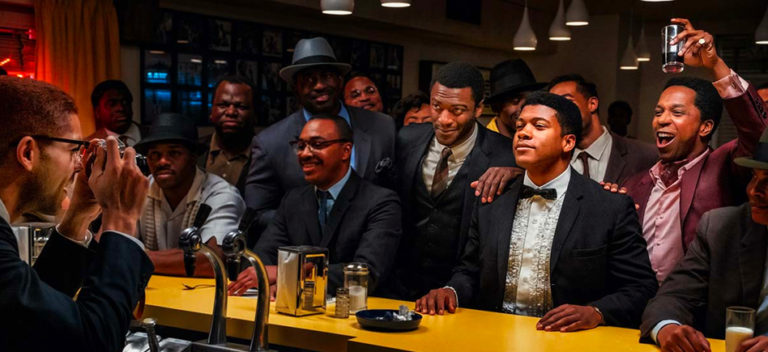
The date is February 25, 1964, and Cassius Clay (Eli Goree), before he changed his name to Muhammad Ali, has just defeated Sonny Liston to become the new heavyweight champion of the world. With him is football star Jim Brown (Aldis Hodge), singer  Sam Cooke (Leslie Odom Jr.), and the controversial speaker for the Nation of Islam, Malcolm X (Kingsley Ben-Adir). Like the one-act play version, it is predominantly set in a hotel after the fight where the quad of influences talks about race, fame, and faith. It is Clay and Malcolm X’s relationship Clay’s plans to announce his membership into the NOI that is a hot subject due to inflammatory comments from the head of the NOI.

The four are equal in fighting for racial equality but have different ways of pursuing that goal. Within the confines of the hotel, the conflict between hardened views from Malcolm X versus Brown’s and Cooke’s softer line that stays throughout the film. Ben-Adir is the headliner here as he commanders the tough-talking civil rights activist into challenging the successes of Brown and Cooke and what they have done so far is enough. It isn’t on the level of Denzel Washington’s performance, but that’s because it is impossible to do better than what he did, and so for Ben-Adir, it is simply bringing to life his controversial historical figure with dignity. As Cassius Clay, Goree does a superb job of incorporating the late boxer’s legendary swag before, during, and after the fight, entrenching himself with Malcolm’s ideas and induction into the NOI and following his word throughout the night.

Odom Jr., bringing in his charismatic soul to the role of crooner Cooke, embodies Malcolm X’s dislike for bourgeoise figures of black men making it under the thumb of powerful white people. Like a stare down at the weigh-in, Odom Jr is able to rise to the occasion amongst Malcolm’s taunts that his music hasn’t done anything to advance his cause or his lyrics don’t encompass the Black struggle. Cooke cares, of course, but tends to be apolitical in his songs until the end with his performance of “A Change Is Gonna Come.” Brown is also a witness and target to Malcolm’s confrontations on his fame as the best football player and if it has brought him respect amongst his white bosses in Cleveland. Hodge maintains Brown’s real-life calm and physique throughout, even at the beginning of the film when a meeting with his former coach ends with a verbal slap of the N-word as he heads to Miami.

The foursome’s get together in a hotel room did not happen, but Kemp Powers is able to put together an electrifying conversation between them in a period of peaks for racial justice. After all, the Civil Rights Act was passed later that year followed by the Voting Rights Act the next; in a similar fashion, Cooke was shot dead in late 1964 and Malcolm X was assassinated in February 1965. It’s an imaginary meeting that could’ve happened amongst the four friends and Regina King helms it all to a single flash moment in time in the middle of America’s changes. 
Grade: A-

Movie Review: Bill Murray, Rashida Jones Shine in ‘On The Rocks’


Director: Sofia Coppola
Writer: Sofia Coppola
Cast: Bill Murray, Rashida Jones, Marlon Wayans

Synopsis: The story of a young mother who reconnects with her larger-than-life playboy father on an adventure through New York.

[/info]

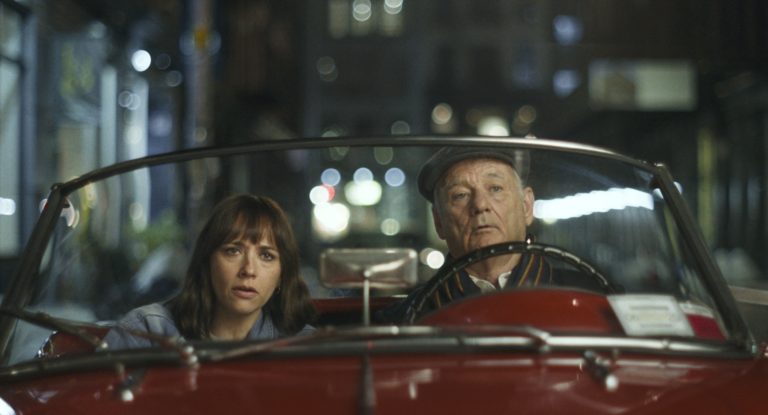
There are threads throughout Sophia Coppola’s On The Rocks that feels very familiar. Rashida Jones is a too-busy mom questioning whether her traveling husband (Marlon Wayans) is having an affair. And instead of charming his way through Japan with Scarlett Johansson a la Lost in TranslationOn the Rocks finds Bill Murray wandering New York City with Jones by his side playing her eccentric but loving, and well-intentioned father determined to help her through this time of marital confusion. Jones’ character is a writer between novels; Murray is an art-dealer with an insatiable love for women and travel—it doesn’t feel like a stretch to think that the father-daughter dynamic at the center of On The Rocks was inspired by Coppola’s own with her legendary dad.

So yes, there are threads that seem familiar, but they weave together something that feels, in its best moments, like a magic trick. Bill Murray is brimming with effortless charm in what feels like something destined to become a quintessential performance in his already stacked filmography. In the hands of someone less capable, his character’s relentlessness would become overbearing, but Murray knows just when to pull back and thus pulls you even further into his orbit. Jones gives a career best performance in a role that is tailor-made for her—she is funny, sweet, and utterly relatable, with a charisma that complements Murray at every turn. Jones and Murray are perfectly matched. On The Rocks also serves as a beautiful ode to a pre-pandemic New York City—alive with character and culture, creating a visually-rich backdrop for Coppola’s direction.

The problem with On The Rocks is that it doesn’t quite know what to do when its central duo isn’t on screen together—in those moments, you feel their absence and a lack of electricity. Despite a crisp runtime of 98 minutes, the film feels much longer. The scenes that serve as the connective tissue between Jones and Murray’s New York outings do little to add character development and cause the film to lose momentum.

Ultimately, On The Rocks‘ is a deeply human study of love—whether parental or romantic— in relationships. And how much of ourselves we are willing to part with in exchange for the promise of companionship. Coppola’s screenplay does a fine job of wrestling with the questions of what happens to love after marriage. The exchanges are smart and thought-provoking, exploring what it means to parent and be parented. On The Rocks is the movie equivalent of a perfect fall treat, warm and comforting. And very much worthy of your time.

Grade: B+

Movie Review: Dylan O’Brien Shines in the Sweet Apocalyptic Comedy ‘Love and Monsters’


Director: Michael Matthews
Writer: Brian Duffield, Matthew Robinson
Stars: Dylan O’Brien, Jessica Henwick, Michael Rooker, Dan Ewing, Ariana Greenblatt.

Synopsis: In a monster-infested world, Joel discovers that his girlfriend is 80 miles away. Joel discovers his inner hero to try and reunite with her, starting a dangerous journey.

[/info]

2020 has become the year of terrible nightmares coming to life. Just as something happens, something even uglier and more depressing is waiting for us just around the corner. Therefore, I happily accept sweet and innocent movies that make me feel good for a couple of hours. Here is where Love and Monsters, the new movie by Michael Matthews, appears. This film, which opened on VOD last Friday, is an adorable escapist film, although set in an apocalyptic world, that is vastly enriched by the bright and committed presence of Dylan O’Brien.

O’Brien has been away from the big screen for a couple of years, instead focusing on limited projects on TV such as Amazing Stories and Weird City. The last time that we saw him in movie theatres was in 2018 with the last installment of his blockbuster saga, Maze Runner: The Death Cure. Unfortunately, his appearances on screen have not been as common as his talent demands it. However, with this project and the upcoming The Education of Fredrick Fitzell, this year will have its healthy dose of this actor.

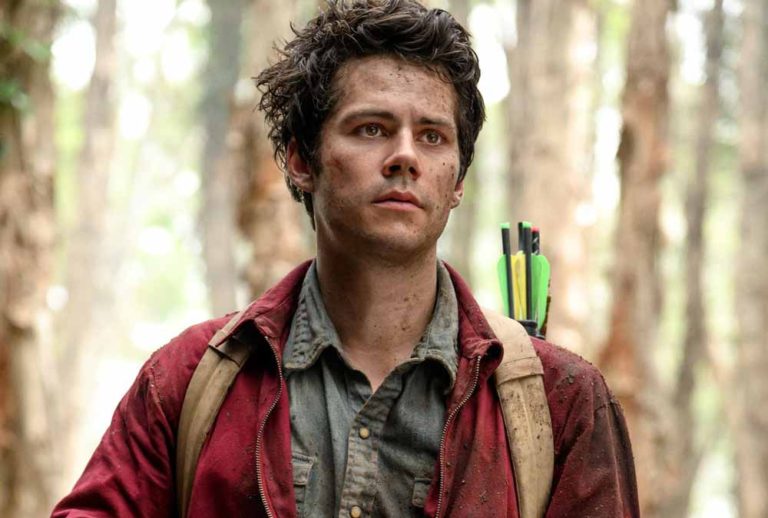
In Love and Monsters, O’Brien plays Joel, a twenty-something guy that has lived underground for seven years after the appearance of gigantic monsters all over the world. Now, lonely and in need of love, he decides to embark on a quest to reunite with Aimee (Jessica Henwick), his teenage girlfriend who he has not seen since the beginning of the apocalypse. However, he is useless and suffers from paralyzing fear, proving that his objectives are wildly optimistic.

Here, O’Brien’s character is a hopeless romantic that suffers about the idea of spending the apocalypse on his own, just as he uncomfortably witnesses every single of his peers in a loving relationship (something that awkwardly reflects the world of isolation in our current pandemic). In this regard, Joel dangerously flirts with the possibility of becoming an annoying Ted Mosby kind of guy. The fact that he never stops talking about his former girlfriend does not help. However, he thankfully grows throughout the movie.

In addition, his sensible characteristics are embraced in a genre that is constantly inhabited by self-sufficient, macho, toxic men. Joel is sensitive (and dealing with trauma), fragile and idealistic, characteristics that make him the useless but deeply loved member of his survival squad.

This character works, even during his moments of borderline obsession with Aimee, because of O’Brien’s charisma, who offers something similar to what we witnessed in the early seasons of Teen Wolf. He has great chemistry with everyone in the cast, is perfect in the delivery of deadpan and under the breath comments, and is even believable in the numerous scenes of fright and uselessness. These characteristics do not compromise his self-image or the role in his underground home, it just means that survival skills are not his forte.

The platonic relationship between Joel and Aimee deserves a special mention. The idea of starting a quest to reunite with a loved one is something that I embrace in these times. Joel’s personal growth regarding Aimee, and his evolving realization about the status of their relationship, are good examples in today’s lessons regarding consent and toxic masculinity.

This movie wears its heart in its sleeve, without a hint of cynicism or malice, making it instantly special. This is particularly noticed in the relationship between Joel and his group, or with the characters he encounters once he is out in the open, Clyde (Michael Rooker) and Minnow (Ariana Greenblatt). It could have easily become a horror story, but instead, the good-naturedness of the story continues undefeated.

Regardless of its triumphs, the movie is far from perfect. Love and Monsters shines especially when O’Brien is on his own (or accompanied by Boy, the adorable dog that becomes his sidekick). In the case of Clyde and Minnow, their introduction and presence in the story feels rushed and insufficient, especially when we consider that they develop a significant bond with Joel.

Furthermore, the final act feels equally rushed and unconvincing. The introduction of new characters towards the end implies the development of ridiculous conflicts that threaten the achievements of the movie. In addition, the movie introduces a shift in the psychology and intentions of the monsters that shake everything we previously learned in a new scenario that is not explored.

Love and Monsters is the perfect diversion for these difficult times. The movie, besides providing a light and tender story about love, also offers an inspiring arc about overcoming trauma and becoming one’s own hero, strengthened by a solid performance by Dylan O’Brien. This film encourages the idea that anyone can be heroic, and in a movie world where destiny and lineage tend to be the rule, this is welcomed with open arms.

Grade: B-

Movie Review: ‘Borat Subsequent Moviefilm’ is Both Hilarious and Horrifying


Director: Jason Woliner
Writer: Peter Baynham, Sacha Baron Cohen, Jena Friedman, Anthony Hines, Lee Kern, Dan Mazer, Erica Rivinoja, Dan Swimer
Stars: Sacha Baron Cohen, Maria Bakalova, Dani Popescu

Synopsis: Fourteen years after the release of Borat, Borat Sagdiyev once again journeys to the United States from Kazakhstan in the midst of the COVID-19 pandemic and the 2020 elections.

[/info]

Sacha Baron Cohen’s Borat was a massive hit back in 2006, even earning an Oscar nomination for Best Adapted Screenplay. In the years afterward, Cohen would occasionally recur the character on various comedy shows or on late-night TV, but there was seemingly no sequel on the horizon. There wasn’t even a hint at the beginning of 2020 that it would be on its way. Yet, here we are, the release of Borat Subsequent Moviefilm has arrived, and boy is it a doozy.

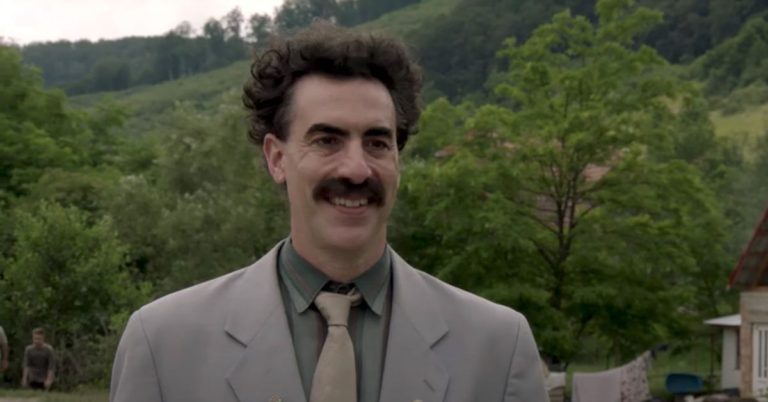
Borat Subsequent Moviefilm starts off with Borat narrating what happened to him in the aftermath and success of the first film, where he now finds himself in a Gulag prison as Kazakhstan was embarrassed by how Borat made them look to the rest of the world. However, the Kazakhstan government needed him for a new mission, so they sent him back to the U.S. of A. to offer up a gift to Vice President Mike Pence. As you could imagine, chaos ensues and things don’t always go according to plan for Borat.

Those unexpected turns may be a hurdle for Borat himself, however, for Cohen, it’s where his brilliance blossoms. The last four years have seen a brazen rise in white nationalism, racism, conspiracy theories, and tribalism, notions that have become exacerbated by a pandemic and the government’s response to it (or lack thereof). If Borat’s anti-Semitism and crass ethos were prevalent in 2006, things are even riper now for Borat to examine given the festering divide we’re experiencing in 2020. And Cohen does not miss the opportunity. Borat Subsequent Moviefilm, like its predecessor, once again masks itself as lowbrow comedy, but underneath its silly and boorish gags is a blistering commentary that’s equal parts hilarious and horrifying.

Cohen does not pull any punches in exposing the bigotry and toxic behavior from those in power. The humor Cohen finds is remarkable. It’s certainly coarse and gaudy, but incessantly hilarious. Yet at the same time, some of the imagery we see is quite disturbing. The scenes of Rudy Giuliani are already making rounds on social media and for good reason. It’s a moment where Giuliani preys upon a nervous teenage journalist, and even without context, it’s grossly off-putting. However, in context, with how the film formulates the Sandra character, Borat’s 15-year-old daughter, it makes the moment all the more powerful. This also comes off the heels of Borat Subsequent Moviefilm cultivating indictments on anti-Semitism, pro-life biases, rampant sexism, obtuse conspiracies, frivolous masculinity, and exhibiting the threat of online disinformation. All of which falls into that dichotomy of involving great levity and biting accusation. Eventually weaving itself through Cohen’s subverted satire to somehow find COVID-19 overtaking the plot and further elevating all the material he mined earlier in the film. It’s not an exaggeration to say that, in the end, Borat Subsequent Moviefilm is arguably the funniest and scariest film of 2020.

Speaking of duality though, another feature that makes the experience surprising, yet very satisfying, is the father-daughter dynamic of Borat and Sandra. Borat does not offer up any ambiguity as it relates to how he and his culture treat women. This fundamental throughline is continued in the sequel as well, but again, with a twist. Without getting into too many details, Borat discovers more about himself and the world thanks to his daughter. And it’s oddly tender and heartwarming. Which may seem jarring given who Borat is as a character, but the film’s poignancy is somewhat necessary. Or at the very least, it wonderfully adds further texture to the divide between the behavior being exposed (in the film’s commentary) and the evolution of Borat himself. It’s smart storytelling.

Like the first Borat, Borat Subsequent Moviefilm relies heavily on Cohen’s abilities as a comedian. If you find his sensibilities uncouth and nothing more, then there’s not much you’ll enjoy here. On the other side of that coin, though, this is among Cohen’s better performances as he’s forced to find a balance between ignorance and tenderness. You have to believe that Borat, in all his lunacy, still has the ability to be a loving father. And to me, he works his magic to great effect. Bulgarian actress Maria Bakalova, who plays Sandra, is also quite great. Their chemistry is superb and it makes for some of the funniest scenes of 2020.

To put it simply, Borat Subsequent Moviefilm is extremely timely. It’s relevant. It’s more than just a series of gags and vignettes. There’s a robust purpose in planting Borat in the positions that Cohen does throughout the film. Which, yes, offers up great commentary and hilarity, but it’s a great set up for some misdirection in the end as well. Borat Subsequent Moviefilm is not only the best surprise of 2020, it’s up there with the best films of the year. It holds up a mirror to American ignorance and propaganda in ways that rivals the first Borat. Is it better than its predecessor? Maybe not, but you won’t see me arguing against those who do think that is the case. Either way, it’s a film worth seeking out.

Grade: A-

Movie Review: ‘Nocturne’ Strikes A Fair Key


Director: Zu Quirke
Writer: Zu Quirke
Stars: Sydney Sweeney, Madison Iseman, Ivan Shaw, Rodney To, John Rothman

Synopsis: An incredibly gifted pianist makes a Faustian bargain to overtake her older sister at a prestigious institution for classical musicians.

[/info]

Can art schools ever be peaceful, or just normal places, in horror films? Zu Quirke doesn’t seem to want the answer to be ”yes,” for in her feature debut — as one of four films of the Welcome to the Blumhouse anthology — she renders a California music academy the place where talents make their first and final mark. Mere moments from the gate, Nocturne pushes Moira Wilson (Ji Eun Hwang, an L.A.-based violinist) off the balcony and into the golden, spotlighting sun. Characteristic of any institution in a horror film toward a beloved figure, she is iconized by the faculty and becomes the “tormented savant” in after-class chats.

This incident is the seed from which more unnerving happenings will sprout because the source of Moira’s talent, as our lead Juliet (Sydney Sweeney) discovers, is a music notebook packed with occult drawings. For anyone whose bet was on Evil Eye and not Nocturne for being the title with the most pronounced supernatural aspect — apologies. Likewise, for anyone who thinks Quirke would go all-out with the supernatural shenanigans, from both scripting and directing standpoints — apologies. She doesn’t have to, but her material always summons it even on a passive level. It’s unavoidable, really, as Nocturne applies the same spice blend of artistic studies, sisterly rivalry, jealousy, and harmful mysticism just as Black Swan, Suspiria and Wishing Stairs had done. You can tell something unpleasant is afoot with the reflections, Dutch angles, split diopter, SnorriCam, slow-motion, lighting changes, harsh editing (from Andrew Drazek) and spectral music (from Gazelle Twin), but you’ll also wish that it would be the content rather than the technique, or the former more often than the latter, that primes the feeling. Still, if the objective is to make this the most stylistically playful title in the anthology, consider it fulfilled.

But in the face of shifts — of any kind — Sweeney stays steady. As things escalate as Juliet moves from being the shadow of her sister, Vivian (Madison Iseman), to her twisted best, the actress would find the fitting level of resentment to then portray. While Quirke has composed the arguments in a way that they generally enter overbaked territory, seen clearest in those between Juliet and her brooding, uncompromising tutor Henry Cask (Ivan Shaw), Sweeney’s performance can still make them digestible. And that’s ideal, as one needs to go through the conflicts that have strong ties to the mysterious book’s six “chapters” to reach the meaningful final note. Meaningful, if a tad grotesque.

With four films out of eight films down, Welcome to the Blumhouse is off to an OK start. Just OK, for out of what we have so far, there is just one — Black Box — with the ability to wholly grab your attention, the only one that knows how to explore its premise without tripping into tedium. Still, these films prove that there is diversity in horror, or horror-glazed, stories and the creatives telling them, which under the roof of the Blumhouse enable them to weave into the mainstream (among the most apparent observations: Black Box and Evil Eye are POC-driven, The Lie and Nocturne are from women director-writers). Here’s hoping the next four tenants moving in in 2021 will maintain the idea and altogether bring the chills.

Overall Grade: B-

[divider]

Criterion Crunch Time: ‘It Felt Like Love’

We are back on Criterion Crunch Time with another film leaving Criterion Channel at the end of the month. While it is October and they have added a bunch of horror movies (seriously, do yourself a favor and find some terrifying gems), lots of interesting films are never to be seen again. This brings us to a rising star director, Eliza Hittman. I chose It Felt Like Love for selfish reasons. Her other two features, Beach Rats and Never Rarely Sometimes Always are both, in my opinion, stone-cold instant classics. It Felt Like Love is her first feature and I felt that I owed myself a viewing of where her career began. Would it be underwhelming? Would it be just as good as the other two? Well…

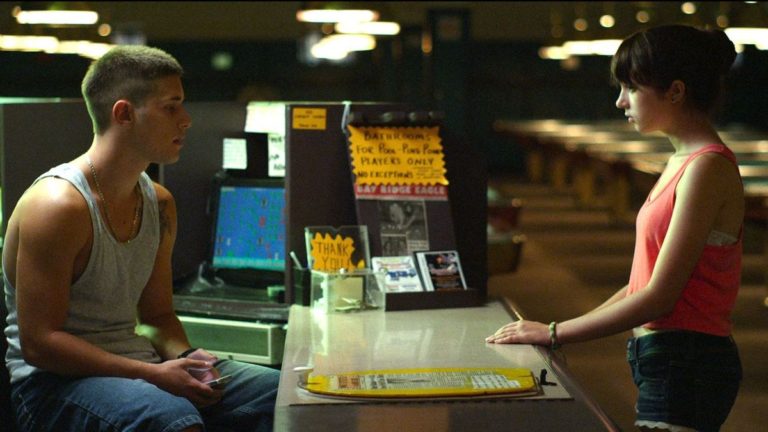
It Felt Like Love focuses on Lila (Gina Piersanti) who, on some levels, is going through what we all do as a young teenager. During that age, sex is something we want, but it is also a horrifying prospect, full of risk, danger, and the absolute unknown. To make matters worse, she is faced with her best friend Chiara (Giovanna Salimeni), who not only has a steady boyfriend but is drastically more experienced than Lila. This added pressure pushes Lila to make some, let’s say, questionable choices. 

Watching this movie out of order in Hittman’s career likely does it a disservice. In some ways, It Felt Like Love is a combination of her two later films. It contains the discovery and fear of Beach Rats with the uncomfortable closeness of Never Rarely Sometimes Always. Unfortunately, the screenplay, also by Hittman, lacks the pacing and punch of those films. It should be noted that Hittman wrote those as well, so she obviously grew as a screenwriter and a director. One can accuse It Felt Like Love of feeling like a sizzle reel that lacks cohesion.

But what a sizzle reel! Hittman and cinematographer Sean Porter (Green Room, 20th Century Women, Kumiko The Treasure Hunter) band together to create something truly memorable. There are movies about sex that come out every year, but most of them are afraid to be sexy, to be intimate. You may not level this complaint at It Felt Like Love. Hittman and Porter make the decision very early on to use uncomfortably close camera angles to demand you feel the power and terror of intimacy. This begins with close-ups of two characters holding hands, without dialogue. By making this choice, the connection between Lila and Chiara is palpable, as only the friendship between teenage girls truly can be. As the movie progresses and sexual activity is shown on screen, similar tactics are used. When Chiara and her boyfriend, Patrick (Jesse Cordasco) share an intimate moment, we are given views of backs, legs, and arms, simultaneously showing the passion and awkwardness of early explorations of sexuality. One of the positives of the script is Hittman’s detailing how boys and girls of that age are treated differently. Patrick’s insecurity regarding Chiara’s experience (a whole 3 people!), is weaponized as an insult to her. The pain on Salimeni’s face is focused on just enough for us to feel it without it delving into melodrama.

But, if anything, Lila’s journey is even more dangerous and mortifying. She, after a brief introduction, develops a fixation on Sammy (Ronen Rubenstein) who happens to be an ex of Chiara’s. This older guy also has the reputation of sleeping with anyone who shows a hint of interest. This is a rarity, a male character who is mostly an object. Lila’s focus on him is not about being in love, not about Sammy as a person, instead, it begins as a means to end. A way to lose her virginity, and nothing more.

Of course, it is not that simple. Her desires aside, Lila is still a young girl in a patriarchal society. Men, in general, are terrible and predatory. Though Sammy is a little more polished than his friends, he is no knight in shining armor. Lila is certainly not perfect, she even tries and fails, to convince Sammy that he drunkenly slept with her. However, all of this pales in comparison to this college-age boy allowing Lila to put herself in dangerous situations. Despite her protestations, it should be clear to anyone that Lila is acting like an experienced possible sexual partner. He constantly challenges her to go further, sometimes with nothing more than silence and a piercing stare. This all culminates with a nearly shaking young girl, on her knees in front of three men. Again, Hittman and Porter’s camera work focuses closely on Piersanti’s face, her eyes not daring to look up at them for an excruciatingly long beat. In this moment, and in many others, Lila, even when surrounded, is alone. No one is supporting her, not Chiara, not her well-meaning single father (Kevin Anthony Ryan), and certainly not these horrific men.

So, to return to the work of Eliza Hittman in comparison, the bar was high before sitting down to watch It Felt Like Love. And while it does not clear that bar, it was still worth watching. If you want to see the beginning of a career that will likely have a meteoric rise in the independent film world, it is still incredibly impressive from the very start. Of course, both Beach Rats and Never Rarely Sometimes Always are vastly better films, but this still shows off the immense talent of Hittman and it deserves to be watched before the end of the month!

Join us next week for the last movie of the month, Uncle Boonmee Who Can Recall His Past Lives!


Movie Review: ‘Possessor’ Proves Brandon Cronenberg’s Talent for Pulp


Director: Brandon Cronenberg
Writer: Brandon Cronenberg
Stars: Andrea Riseborough, Christopher Abbott, Rossif Sutherland, Tuppence Middleton, Sean Bean, Jennifer Jason Leigh

Synopsis: Tasya Vos, an elite, corporate assassin, takes control of other people’s bodies using brain-implant technology to execute high-profile targets.

[/info]

There’s a lot to love in Brandon Cronenberg’s Possessor. It packs a punch with sudden spots of violence, while also capturing mental deterioration in an inventive, unnerving way. The film follows Tasya (Andrea Riseborough), an assassin whose consciousness is implanted into a hapless host for her to use their body as a murder weapon. But when she finds herself in the body of the unstable Colin (Christopher Abbott), she finds herself leaning into his life more than she’s supposed to, and separating her mind from his body proves a complex challenge. The warring identities battle for dominance in a pulpy genre flick that indulges in its creepy, bloody thrills without sacrificing unsettling and lasting questions of identity.

The influences of the director’s father, horror legend David Cronenberg, are obvious in Possessor, but Brandon effectively asserts his own cinematic style that feels much more clinical and polished than his father’s early films. The violence in the film is at times extreme, but it’s also visceral, short bursts of horrendous bodily harm that always feel real and affecting. 

It’s also worth noting that the violence is always rooted in genuine emotion. After a stylish opening showing Tasya on a job, Cronenberg slows the film down to let the audience become more familiar with her character. We see her practice what to say to her estranged husband and child before she arrives at their door, showing us that even though she wants to be more present in their lives, her warmth towards them feels a little performative. She finds it difficult getting close to people when she spends most of her time in other people’s bodies. By the time she’s inhabiting Colin, we can tell she’s enjoying being him on more than a purely professional level. 

This conflict is portrayed well by Abbott, who mixes the quiet, nervous energy of Tasya with the numb impassivity that characterizes Colin. Occasionally Tasya’s body will replace Colin’s in shots to emphasize how dominant the former is over the latter’s mind, a technique used most effectively in a sex scene between Colin and his fiancé Ava (Tuppence Middleton), who is one of Tasya’s targets. Tasya, by constantly shifting from one body to another, has eroded her own identity, making it easy for her to attach herself to those she continually inhabits. When Ava’s rich father, John (Sean Bean), humiliates Colin at a party, we see the hurt across Colin’s face – even though Tasya is the one controlling his reactions. 

As the film progresses, we’re treated to a kaleidoscopic unwinding of psyches, shown through drawn-out spells of flaring lights and distorted images. They’re undeniably creepy, and effectively transmit the growing lack of control Tasya is having over the brain-transplant technology. As the battle for mental autonomy wages, it can be confusing trying to work out whether it’s Tasya or Colin in command of the host body, but credit has to be given to Cronenberg for letting the subtleties of the actors’ performances inform who is the dominant or submissive identity. 

The film’s major turning point comes in the second half, where the consequences of Tasya’s exhilarating and addictive life of body-snatching are forced onto her. The last act takes on the exact same feeling as being unable to wake from a bad dream. As it lurches towards the end and the film turns more to the internal, personal conflict, Possessor loses its focus a little, and its gripping tension starts to slacken. But Cronenberg turns his lens onto exploring what individuals who have had everything taken away from them are capable of, as well as touching upon who is culpable for actions committed by those, not in full possession of their mental faculties. At once viscerally entertaining and carefully disturbing, Possessor transcends its corny, ridiculous premise to give an upsetting sci-fi thriller that will stick with you like an infection. It is schlock manifested in a sinister, surgical way.

Grade: B+

Poll: What is your favorite body horror film?

As we get closer and closer to Halloween (a favorite holiday for many cinephiles), it only makes sense for us to get a little horrific on InSession Film this weekend. We’ve talked about the horror genre quite a bit already, but not so much one of its most popular subgenres, that being biological horror, or “body horror”. Often sited for its grossness, it’s certainly not a genre for everyone; it’s grotesque, gratuitous, melodramatic, but also quite often just as psychologically stirring, and dare I say incredible. A great example being John Carpenter’s 1982 classic The Thing, a favorite of ours that we are incredibly excited to review on the main show this weekend. Happy Halloween indeed.

With that said, let’s get mutilated; what is your favorite body horror film?


Movie Review (LFF): ‘Limbo’ is a Slow, Meditative Comment on the Immigrant Experience


Director: Ben Sharrock
Writer: Ben Sharrock
Stars: Kwabena Ansah, Vikash Bhai, Grace Chilton

Synopsis: Omar is a promising young musician. Separated from his Syrian family, he is stuck on a remote Scottish island awaiting the fate of his asylum request.

[/info]

Even for residents of Scotland, the Uist Islands off the north coast of the country would be a harsh place to live. Sparsely populated with little in the way of entertainment and experiencing temperatures frequently in the minus degrees, it is hardly a tourist destination. Spare a thought, then, for the refugees who have made the islands their home as they await a decision on their application for asylum. Coming from countries in the Middle East where sweltering heat is common and civilian populations are large, it must surely be a bleak culture shock to experience. With a basis in truth (Syrian families are often relocated there when they arrive in the UK until the government decides what to do with them), Ben Sharrock’s sophomore feature Limbo is a droll and deadpan take on the immigrant experience, often languidly humorous and offbeat. Your mileage may vary depending on your comical sensibilities, as nothing here is particularly overt and proceedings bare more of a resemblance to Local Hero or Withnail & I than any modern comedies, however, fans of this particular formula are sure to find much here to enjoy.

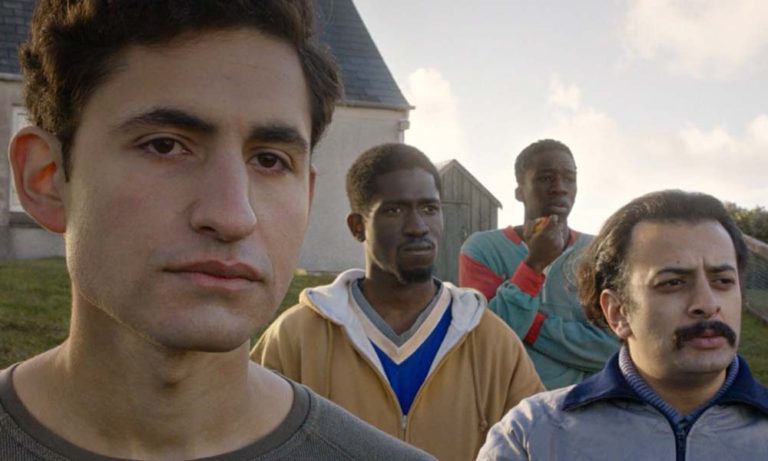
Omar (played with a dead-eyed wit by Amir El-Masry) finds himself on the Islands of Uist as he waits to find out if he has been granted permanent residency. His parents are in Turkey (he regularly contacts them using what must be one of the last working payphones in Scotland) while his brother is back in Syria fighting for its liberation. Omar is angry and frustrated. Cut off from his Syrian identity and treated as a terrorist by local kids who threaten violence if he tries to bomb anything, he spends his days at a center where he and his fellow expatriates are focused to sit through cultural awareness lectures on how to dance with girls in nightclubs and the proper tone to take when at a job interview. Add to this, he is creatively stifled; choosing not to play his beloved oud likely because there is very little creative joy to be mined from his circumstance.

Alongside Omar, and providing both humor and companionship is Farhad (Vikash Bhai) an Afghani obsessed with Freddie Mercury (who points out they were both Zoroastrians and preferred the same style of mustache), and Wasef (Ola Orebiyi) who has come to the UK to fulfill his dream of playing for Chelsea Football Club despite his age and the fact he isn’t actually good at football. The three of them function as part of a group and much of the focus here is on their attempts to integrate into Western culture, by doing things like arguing over whether Ross and Rachel from Friends were on a break, or joining the locals in a painfully depressing pub on karaoke night. The style is episodic and rather glib; there are touches reminiscent of the likes of Aki Kaurismäki throughout (particularly Lights in the Dusk), and it might test the patience of the average viewer.

Undoubtedly the heart of Limbo is Omar. His restive nature seems starkly at odds with his surroundings and El-Masry tenderly evokes a sense of loss and heartache for a man who has lost his country and identity. He provides a useful way in for the viewer and keeps your sympathy throughout; a late act tone shift would feel a little more jarring if he wasn’t there to anchor it in the way he does. There are little pops of profundity here and there, but there’s a feeling that Sharrock can’t quite carry it off, occasionally drifting into cloying melodrama, and so we’re left to mine what meaning we can from proceedings.

There are also genuine moments of comic genius such as when Omar meets a Pakistani grocery store owner (played with brilliant deadpan sensibility by Scottish comedian Sanjeev Kohli) who introduces him to the many varied British epithets regarding race. It’s moments like these (and to be fair Sharrock walks a thin line as a white Scottish man directed a movie about immigrants experiencing racism in Scotland) which stand out, feeling natural and real.

Having established itself through an often tediously slow setup, Limbo then heads towards a rushed, tonally inconsistent ending which cheats the viewer out of any meaningful conclusions. It’s a shame because the time and effort spent on establishing this world is then hastily deconstructed and it feels like it didn’t mean much in the end.

Sharrock tries to evoke filmmakers (such as the aforementioned Kaurismäki, as well as Jim Jarmusch) who have done much better. With an achingly beautiful backdrop – Scotland’s lush, scenic landscapes are highlighted well here – full of open, deserted roads, rolling hills, and the casual grey-blue sky of the north, Limbo looks stunning (even if it is hampered by a boxy 4:3 aspect ratio) and makes the wise decision of focusing on Omar, who is a compelling and sympathetic character. However, too many moments dip into absurdism which both undermines the more profound moments and doesn’t stand out in their own right either. It’s a decent movie, with a great performance from El-Masry but unfortunately doesn’t live up to the hype.

Grade: D

Movie Review (LFF): ‘Never Gonna Snow Again’ is a Mesmerizing and Hypnotic Experience


Director: Małgorzata Szumowska, Michał Englert
Writer: Małgorzata Szumowska, Michał Englert
Stars: Alec Utgoff, Maja Ostaszewska

Synopsis: While working as a masseur in a gated community in Poland, Zhenia, a Russian-speaking immigrant from the East unexpectedly builds a cult following

[/info]

It’s the time of year where contenders for the next Oscars begin to emerge, whether it be actors, scripts, or even scores. One category that is often the subject of excitement is the International Film category, which is currently held by last year’s Best Picture winner Parasite. With a handful of strong films across the world already screened in this unprecedented and unpredictable year, another has arrived. Never Gonna Snow Again, which has been selected as the Polish entry (notoriously a country that has a high level of success) is a hypnotic, mesmerizing experience, and one that is sure to win over audiences across the globe.

The story follows Zhenia, a masseur and immigrant who begins work in a protected neighborhood in Poland secured by gates. His clients range from a mother to a cancer patient, to a woman obsessed with bulldogs. It’s a colorful range of characters who weave in and out of the film depending on who Zhenia spending time with. Never Gonna Snow Again is classified as a comedy of sorts, and that’s thanks to the characters that Zhenia encounters, some completely outlandish. Particular highlights in the ensemble include Maja Ostaszewska, the first client we see of Zhenia in her home, and Lukasz Simlat as a cancer-stricken man who enjoys the time he spends with Zhenia, even if it’s obvious his wife has fallen for the irresistible masseur.

Zhenia’s back story is also a fascinating one. Born in Chernobyl, it appears he has been gifted with special powers thanks to the disaster, with a flashback scene even indicating his ability to move objects. It’s a mystery that continues to unravel itself throughout the film, as we explore more of his exceptional past.

For these characters, most of whom rich and wealthy enough to live in such a secure community, their source of happiness becomes Zhenia, so much so that some begin to grow jealous when they see him with anybody else that isn’t them. They live in fear that perhaps he won’t want to dedicate his time to them anymore, with a few encounters see clients seeking reassurance. “You look 35,” “Don’t you usually say 28,” says one of Zhenia’s older clients, a small example of the attention to details that these characters remember. They know Zhenia doesn’t really mean it when he compliments them, but just hearing his words is enough satisfaction.

Alec Utgoff’s performance is extraordinary, somehow creating a character that although doesn’t speak all that much, oozes charisma and likeability. Zhenia is a popular character within the film, one that’s heavily relied on to complete the other characters and fulfill their happiness. It’s therefore important that Utgoff can reflect this to the audience too and he does so. He’s found himself in small roles in the past such as Netflix’s Stranger Things as Alexei, but after this performance, he’s no doubt going to find himself as a leading man going forward.

From the opening moments of Never Gonna Snow Again, it’s obvious that it’s going to be a gorgeous watch. Co-director Michał Englert serves as cinematographer and captures every small detail exquisitely, especially the film’s most tender moments.  The scenes set in a forest – whenever a client is asleep or in one of Zhenia’s trances – are beautifully shot, with an eerie vibe especially when it’s the turn of a former army veteran. A character we only see aggressively arguing with people in the street, he suddenly feels a lot more vulnerable in the woods, dressed in army uniform. It’s a haunting reminder that our pasts shape who we become – and for this character especially, he is defined by his past experiences and occupation.

It’s not common for a film to be working with two directors, but Malgorzata Szumowska and Englert have been such long time collaborators that they work and balance each other extremely well. While Szumowska is known for her films such as The Other Lamb, Englert has worked as her DP, so the transition to co-director is a natural one. We should all be excited about their future, especially if they can continue to create the spellbinding scenes that they do here.

There are a couple of occurrences throughout that don’t make complete sense – particularly on a first viewing – which does affect the film a little. While the lingering questions create a sense of intrigue in your head, others remain to frustrate as they don’t fit what we think we know. If the aforementioned forest is a metaphorical one where characters are seen when in a trance from Zhenia, how is it that Gucci’s bulldogs happen upon it? Is it a real place anyway, but if so does that not remove the beauty of those shots? The film also sticks around with clients a little too long on a couple of occasions, with no real destination, but this isn’t enough to detract too much from the quality overall. By the film’s conclusion, the time spent watching these characters develop a relationship with Zhenia becomes worth it, with a poetic closing few notes that round off Zhenia’s character arc perfectly.

Polish cinema has been undeniable in recent years, particularly with the works of Pawel Pawlikowski. Ida and Cold War were two of the best films of the last decade, and the work from duel directors Szumowska and Englert here already provides a platform for Polish cinema to grow even bigger in the coming years. Never Gonna Snow Again is mesmerizing and hypnotic and deserves your time to fully experience it. It features some of the year’s most beautiful looking shots, and Utgoff’s character and performance will stick with you long after the credits.

Grade: A-

Movie Review: ‘The Trial of the Chicago 7’ is an Expertly Crafted Courtroom Drama by Aaron Sorkin


Director: Aaron Sorkin
Writer: Aaron Sorkin
Stars: Yahya Abdul-Mateen II, Sacha Baron Cohen, Joseph Gordon-Levitt, Michael Keaton, Frank Langella, John Carroll Lynch, Eddie Redmayne, Mark Rylance, Jeremy Strong

Synopsis: The film is based on the infamous 1969 trial of seven defendants charged by the federal government with conspiracy and more arising from Chicago’s countercultural protests at the 1968 Democratic National Convention. The trial transfixed the nation and sparked a conversation about mayhem intended to undermine the U.S. government.

[/info]

I am a sucker for a passion project. When directors promote their finished films, they usually tell us how long it took to get to the big or small screen and all the trials and tribulations it took to get it made. It’s curious for this reviewer to see why they wanted to keep pushing this to get made and get this released for audiences to see around the world. With Aaron Sorkin’s latest The Trial of the Chicago 7, the writer-director has been saying that he wrote the screenplay all the way back 2007 when Steven Spielberg asked him to write about this subject. For whatever reason, we never got the Speilberg version of the film, and as time has gone on, many never thought this movie would get made. But now, in a year of social injustice and protest around the country, this is the perfect time to release The Trial of the Chicago 7 due to how relevant the subject matter is.

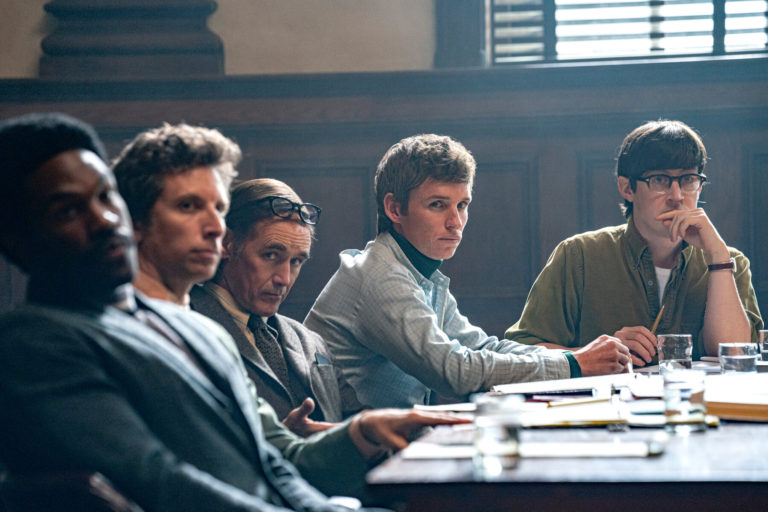
The story follows the trial of eight defendants charged by the United States government with conspiracy to incite riots at the 1968 Democratic National Convention. We go back and forth from the proceeding in the trial to the actual events at the ‘riots.’ The reason these men were put on trial wasn’t because of the demonstration they caused, but because of the message they were spreading across the country. Therefore, President Nixon and his Attorney General used Tom Hayden (Eddie Redmayne), Abbie Hoffman (Sacha Baron Cohen), Jerry Rubin (Jeremy Strong), Rennie Davis (Alex Sharpe), David Dellinger (John Carroll Lynch), Lee Weiner (Noah Robbins), John Froines (Daniel Flaherty), and Bobby Seale (Yahya Abdul-Mateen II) as examples of what it is like when you cross your government and upset the statuesque.

It’s a disturbing trial because the fix is in from the moment they step into the courtroom, with a judge (Frank Langella) clearly siding against them, given how he treats their witnesses and evidence by throwing it out left and right. At the same time, objections are sustained by any member of the eight men’s legal team. This shows that no matter how noble or brave or smart your ideas will be, the powerful will stop at nothing to silence you. These men were victims of a paranoid administration, much like the one occupying the White House right now. But what do the powerful have to be afraid of, well everything. Being questioned on every basic level idea they stand for by individuals that are just smarter than them and can call them out on their nonsense chaps the weak-minded’s heart to the point they seek vengeance. And this trial, and the time spent in jail by any member of the defendants, is the icing on a cake of unchecked power and corruption by those involved.

Sorkin, known for doing political projects like Charlie Wilson’s War, The American President, and the television show The West Wing, is right at home with this story. This movie is about the powerful taking on the powerless, and he shines a light on the wrongfully treated men on trial. He also gets us the best performances of most of these actors’ careers, especially Mark Rylance, as William Kunstler, the lead member of the defense counsel. We feel Kunstler’s frustrations throughout The Trial of the Chicago 7, mostly because he is just like the audience; he wants justice for these young men and also doesn’t want to see their lives ruined in a game of political warfare. It’s a miraculous performance that’s also matched by stellar work from Baron Cohen, Redmayne, Strong, Lynch, and Abdul-Mateen II.

But beyond the stellar acting and Sorkin’s impeccable screenplay, it’s his direction that feels like it has stepped up big time for this project. While he did a decent job behind the camera with Molly’s Game, this is where he excels as a director. He really makes you feel the intenseness of the riots, the claustrophobia of everyone crammed together in the park, the brutality of the cops on these young Americans. Mixing in real footage into what he shot makes this feel like a documentary at some times while also shocking the audience by showing what our government is capable of.

The Trial of the Chicago 7 will get criticized for being too old school, or that this is lesser Sorkin, or that it’s too safe of a film to win Oscars, or whatever. But for me, it’s a film we need right now to show the world just how dangerous unchecked power is and how an individual’s ideas are worth fighting for, not locking away. The Trial of the Chicago 7 is Aaron Sorkin at his finest, and I hope the next project he does has as much passion and heart in it as this does.

Grade: A-


Movie Review: ‘Night Of The Kings’ Doesn’t Have the Magic to Make it Special


Director: Philippe Lacôte
Writer: Philippe Lacôte
Stars: Bakary Koné, Isaka Sawadogo, Steve Tientcheu

Synopsis: A young pickpocket (Bakary Koné) is sent to the MACA prison in Abidjan. To survive, he will have to compel the other prisoners with his storytelling.

[/info]

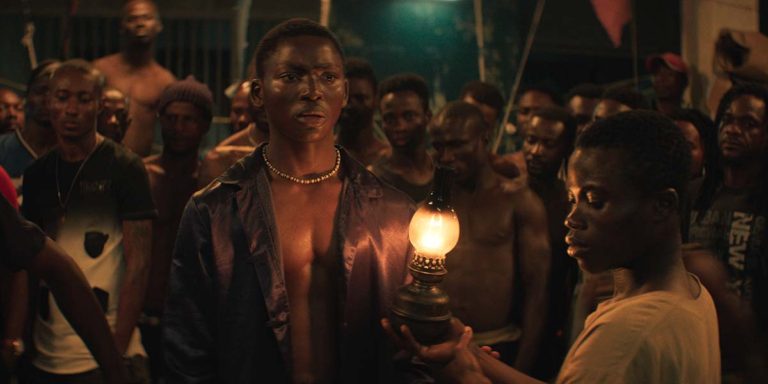
In Philippe Lacôte’s Ivory Coast prison drama, the institution called MACA (which is a real-life notorious prison) becomes the new home of a young man (Koné Bakary) serving time for robbery and quickly learns his place in the prison. Given the nickname Roman, his job is to survive one whole night while the moon is red by becoming a storyteller to the rest, making them from the realms of his own life. From the beginning, you can tell Roman is unprepared as he is immediately thrown into the fire and must adapt quickly under the threat of death. MACA is not a place where the behavior isn’t as dangerous as those Andy Dufrane dealt with in The Shawshank Redemption. Instead, prisoners actually run the whole place in a tribal state where protocols of a village in the wild are the name of the game.

The stories are a mix of African folklore and recent events from the Ivory Coast’s rough past, all told on a soapbox as Roman nervously paddles through to gain respect and retain his life. The inmates watch with anticipation of what surprises this young man has in store while in actuality he improvises. And the film, Lacôte’s sophomore effort, does feel like an entire improvised story where it’s on the actors to give life into every word being breathed out. The scenes in the prison tend to have much of a sound stage feel when it shouldn’t have that mood, but the exterior flashback scenes capture the scenes on the beaches and in the dangerous shantytowns with the full vigor of the Ivory Coast’s past.

The atmosphere is one of fascination because of how very far it is to Western senses on prisons which is a shame that the backgrounds of the other main prisoners weren’t told more. While MACA is a tradition, it isn’t given much explanation and leaves a few questions on just how this all started and the meaning of the names. Even with the slam poet-like movements that heighten every word from Roman, you don’t necessarily grasp where he’s going with it and how the climax can bowl over so suddenly. While it does raise eyebrows into another area of African cinema, Kings does not have the magic it should deliver.

Grade: B-


Podcast: Celebrating 400 / Franchise Movie Draft – Episode 400

This week’s episode is brought to you by Patreon and our awesome listener’s like you. Sign up now and get some fun rewards!

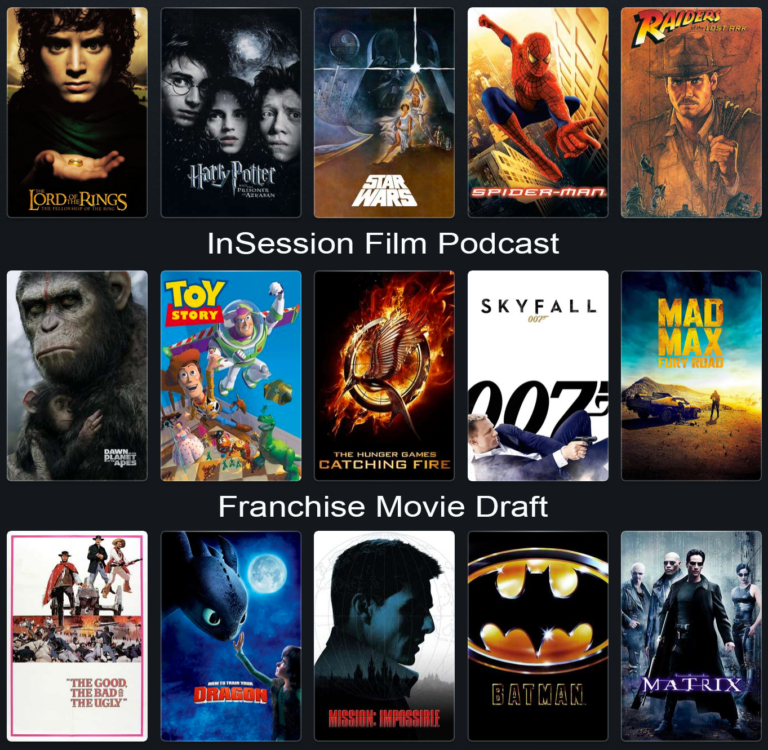
This week on the InSession Film Podcast, Ryan and Jay join JD and Brendan as we celebrate 400 episodes with a Movie Draft where we discuss and pick the best franchises in film!

It’s crazy to think we are 400 episodes deep into the Main Show. When we launched in 2013, we had no idea where it was going to go or how long it would last, but here we are, chugging along and having a great time still. We are super grateful to our wives who put up with us each week, our great listener’s who tune in and hear us ramble on about movies, and the great guests we’ve featured over the years. Here’s to another 400 episodes.

This week’s show may be long, but it’s a fun one. We often spend time talking about the artistic integrity of the films and how those provoke us at our core, but cinema is also about entertainment value. It’s easy to poke holes in film franchises and the studios that create them, but the joy they give us isn’t valueless. In fact, it can go a long way and we wanted to celebrate that on this show with our latest Movie Draft.

On that note, check out this week’s show and let us know what you think in the comment section. Thanks for listening and for supporting the InSession Film Podcast!

– Celebrating 400 Episodes (4:04)

In this segment, we talk about the evolution of the podcast, how Ryan and Jay changed the game for us, and the show moments that stand out to us over the years.

– Franchise Movie Draft: Part 1 (38:05)

For Part 1, we feature Rounds 1-5 from our movie draft.

[divider]

RELATED: Listen to Episode 393 of the InSession Film Podcast where we discussed Batman and Batman Returns!

[divider]

– Franchise Movie Draft: Part 2 (1:00)

For Part 2, we feature Rounds 6-10 from our movie draft and we talk about this week’s poll.

Show Sponsor: First Time Watchers Podcast

– Music

The Return of the Eagle – Atli Örvarsson

Subscribe to our Podcasts RSS
Subscribe to our Podcasts on iTunes
Listen on Spotify
Listen on Stitcher
InSession Film Podcast – Episode 400

[divider]

Next week on the show:

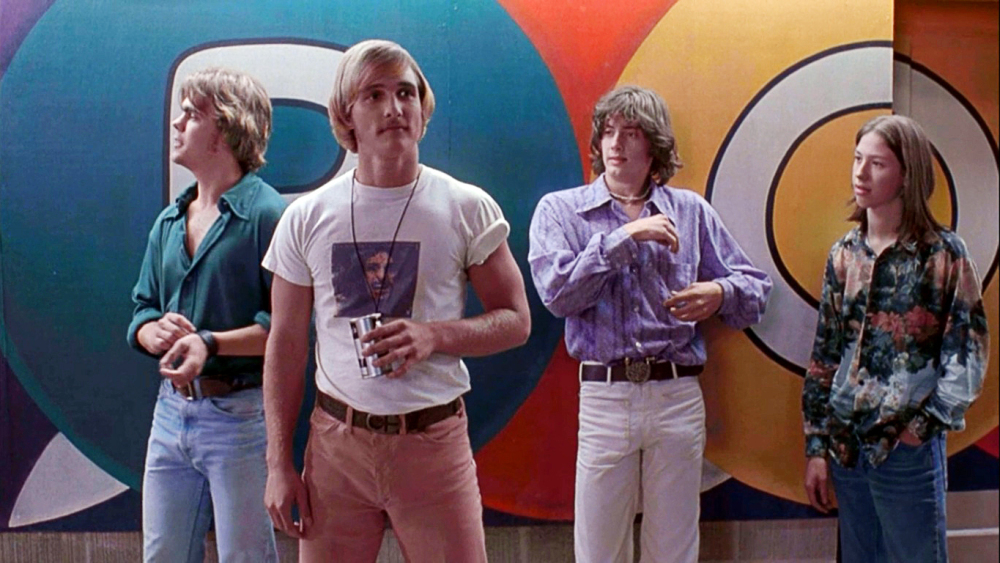
Main Review: Dazed and Confused
Top 3: TBD

[divider]

Help Support The InSession Film Podcast

If you want to help support us, there are several ways you can help us and we’d absolutely appreciate it. Every penny goes directly back into supporting the show and we are truly honored and grateful. Thanks for your support and for listening to the InSession Film Podcast!

VISIT OUR DONATE PAGE HERE

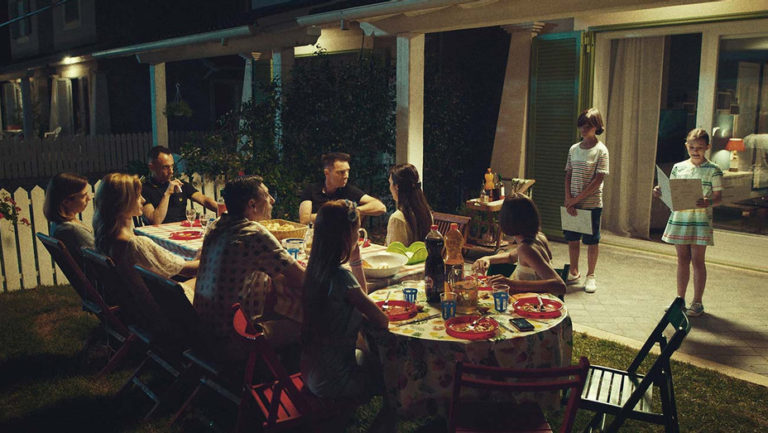
Movie Review (LFF): ‘Bad Tales’ is a is a Disturbingly Brutal Yet Powerful Piece of Italian Cinema.


Director: Damiano D’Innocenzo, Fabio D’Innocenzo
Writer: Damiano D’Innocenzo, Fabio D’Innocenzo
Stars: Elio Germano, Barbara Chichiarelli, Gabriel Montesi, Max Malatesta

Synopsis: A few families living out on a limb in the suburbs of Rome. Tensions here can explode at any time; ultimately it’s the children who bring about the collapse.

[/info]

On rare occasions, the credits of a film will roll and you feel a sense of relief that it’s over. Not because it wasn’t good, but because the brutality and bleakness become so daunting that you’re not sure how much more can be handled. That’s exactly the feeling when Bad Tales comes to its conclusion. A terrific piece of Italian cinema, it’s nevertheless a tough sit and one that will not appeal to everybody, despite being more than worth your time.

The story follows several families in a small town in Italy, mainly through the perspective of the young children and their dysfunctional upbringings. Siblings Alessia and Dennis have perhaps the toughest of situations, living with their abusive father Bruno (Elio Germano) who also makes wife Dalila’s (Barbara Chichiarelli) life a living hell. There’s also young Geremia, who is raised by single parent Amelio (Gabriel Montesi) who appears to only want the best for his son but is clearly not best suited for the job despite good intentions. There’s also the pregnant canteen worker Vilma (Ileana D’Ambra) who is preparing for life as a parent, while also acting very provocatively around young Dennis who she knows looks at her. Throughout the film, we see how these characters’ lives intertwine with each other and also how each family deals with the same situation.

Despite the narration of a character we don’t know, there’s no central figure to this story nor is there one particularly likable character. Everybody is flawed and many irredeemable, and it makes for an even tougher sit when there’s not one character to latch on to. Bruno is the closest the film has to an antagonist due to the disgusting violence he bestows upon his young crying children, but it’s clear that teacher Professor Bernardini is not to be trusted, especially when we learn just what he’s been discussing in class the influences the children in a traumatic way. The way the adults talk and behave – especially the older male characters – is vile at times, which makes it all the harder to sit through.

The central idea of the film is that without true role models – whether it be parents or teachers – these children are forced to grow up too quickly without any true understanding. They learn about things and discover things they are simply too young to get their heads around, but there’s not anybody around to talk to besides each other. The tragic feel of the film only grows stronger as the runtime progresses, but it’s compelling filmmaking.

The performances from the entire cast are excellent, especially the young actors who have sensitive material such as domestic abuse scenes to handle. Tommaso Di Cola as Dennis feels the closest we have to a central protagonist, while Justin Korovkin creates a fascinating character in Geremia. Elio Germano is by far the highest-profile actor, having won numerous awards in Italy and internationally for various work. It can’t be easy playing a character so detestable, but he makes it work without ever feeling like a caricature. Gabriel Montesi and Ileana D’Ambra are also particular standouts from the cast, both creating memorable characters whose arcs ending in jarringly different ways.

The D’Innocenzo brothers – Damian and Fabio – wrote the script as well as directed, and it’s clear that they understand the story they want to tell. The brothers won the Silver Bear at this year’s Berlin Film Festival for this script, and it’s deserved. It takes courage to create such a pessimistic unflinching look at the rougher side of childhoods, but they handle it with care and maturity. They also deserve inordinate amounts of praise for the performances they are able to bring out of their young actors. Their previously directed film Boys Cry was also an incredibly tough sit, something that’s quickly becoming their specialty. The stylistic decisions are also commendable, with many shots framed beautifully despite the ongoing horrors. The talent of the two brothers is on show for everybody to see.

Sometimes the brutality becomes a little too much – especially in the scenes involving Bruno – and there’s a sense of relief when the film’s credits roll. The tension escalates throughout like a ticking bomb, and the film’s conclusion is disturbing and unexpected. The brothers manage to wrap up all of the major arcs in a way nobody can see coming, but it’s commendable for how far they are willing to go. There are particular moments throughout the film that make no sense at the time, but the ending soon fits the puzzle pieces together to create a disturbing finished picture.

There are also particular characters that feel as though they are lost throughout, particularly female characters Dalila and young Ada (Laura Borgioli) the closest friend of Dennis. These characters, in particular, feel like there are complexity and nuance to them just bursting to be explored, but there’s just not enough time and they feel lost to the wayside.

While this review has mentioned the words disturbing and brutal many times, it’s not meant as a negative, because it’s exactly what the D’Innocenzo brothers are going for. It’s obvious from the title Bad Tales that this is no happy story, but for all its bleakness, it’s admirable and stylish to look at. Not one to revisit any time soon, but one that’s a must-watch to truly appreciate its intent.

Grade A-

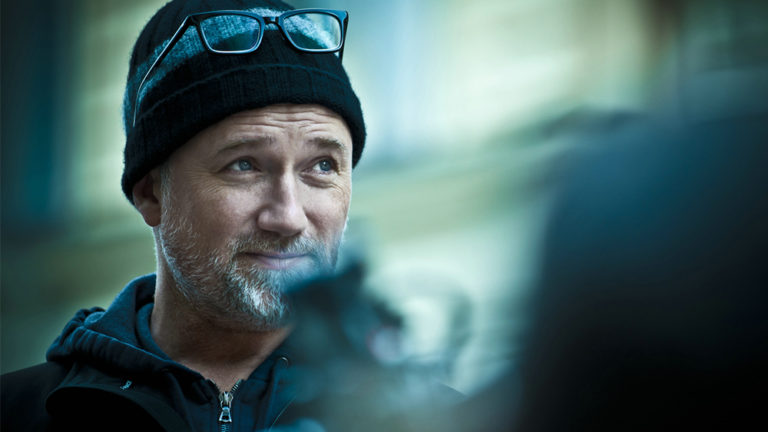
Podcast: David Fincher Movie Series

Known for being a very intimidating figure, David Fincher is regarded by many as one of the greatest living directors working today. In an over 30 plus year career, he has changed the land space of cinema as we know it and transformed genres into the mold in which fit his singular vision. Always able to adapt, studios have been trying to copy what he does for years, but never to the success of Fincher. From his demanding shooting schedule to the cynical look of the world, David Fincher seemed like a perfect choice for Ryan and Jay to cover their continuing movie series.

Alien 3, 1992

Listen to our review below as heard on Extra Film.

Se7en, 1995

Listen to our review below as heard on Extra Film.

The Game, 1997

Listen to our review below as heard on Extra Film.

Fight Club, 1999

Listen to our review below as heard on Extra Film.

Panic Room, 2002

Listen to our review below as heard on Extra Film.

Zodiac, 2007

Listen to our review below as heard on Extra Film.

The Curious Case of Benjamin Button, 2008

Listen to our review below as heard on Extra Film.

The Social Network, 2010

Listen to our review below as heard on Extra Film.

The Girl with the Dragon Tattoo, 2011

Listen to our review below as heard on Extra Film.

Gone Girl, 2014

Listen to our review below as heard on Extra Film.

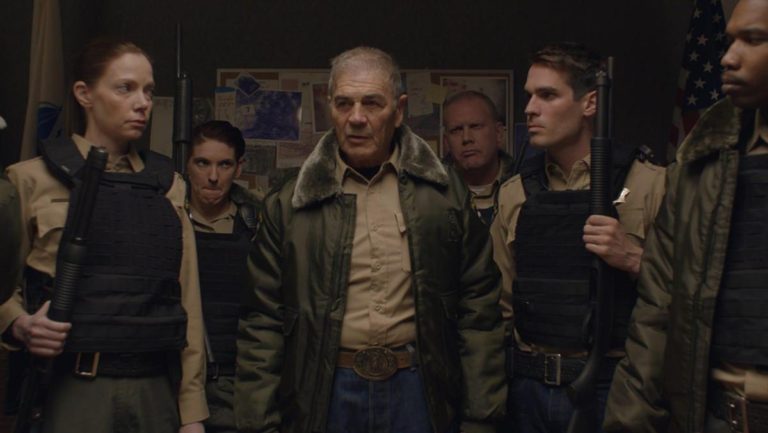
Movie Review: ‘The Wolf of Snow Hollow’ is Another Winner From Jim Cummings


Director: Jim Cummings
Writer: Jim Cummings
Stars: Jim Cummings, Riki Lindhome, Robert Forster

Synopsis: Terror grips a small mountain town as bodies are discovered after each full moon. Losing sleep, raising a teenage daughter, and caring for his ailing father, officer Marshall struggles to remind himself there’s no such thing as werewolves.

[/info]

Jim Cummings is back with his second feature film, The Wolf of Snow Hollow. Like his debut film, Thunder Road (2018), The Wolf of Snow Hollow focuses on a small-town police officer’s struggles to balance his family life, performance at work, and personal demons. But where Thunder Road focuses solely on one man and his family, The Wolf of Snow Hollow adds a potentially supernatural murder mystery to the mix.

Jim Cummings stars as John Marshall, an officer in the small town of Snow Hollow and son of the current sheriff. Marshall and his team are tasked with finding who (or what) are responsible for brutal murders that take place in their otherwise quiet town. Cummings wrote and directed this film as he did with his previous one. The Wolf of Snow Hollow also features Riki Lindhome as Officer Robson, Chloe East as Marshall’s daughter Jenna, and was the final film for Robert Forster who plays Sheriff Hadley.

After just two movies, Jim Cummings has solidified a style of filmmaking that is instantly recognizable. His sense of humor and the way he makes audiences laugh at things that are not supposed to be funny is a skill that can only compare to Taika Waititi. Both directors are experts at taking situations that are normally not funny, like addiction, a horrific crime scene, or a death in the family and portraying them in a manner that is so ridiculous that it feels okay to laugh. This is not done in a disrespectful way, but more as to encourage one to find humor in any situation.

I have only one negative critique for The Wolf of Snow Hollow and it’s that the sense of humor in the film may not work for everyone. But, anyone who’s a fan of Cummings’ previous film will most likely enjoy The Wolf of Snow Hollow as well. This movie may actually appeal to a broader audience due to the murder mystery and/or horror-comedy element as well as the ridiculousness of whether or not the culprit is a werewolf. Jim Cummings is a standout as Officer Marshall. His character is going through a lot emotionally, while also dealing with his family and stress from work. He shows us that in these situations it’s ok to go a little crazy, and not handle everything with grace and poise. Riki Lindhome is a great counterpoint to his character as fellow Officer Julia Robson. She is a no-nonsense, blunt person at work that keeps her emotions in check. The rest of the cast is equally wonderful, especially Robert Forster as the aging but refuses-to-retire Sheriff Hadley. Other positive points for the film are the setting- a beautiful mountain town (filmed in Utah)-, cinematography, and a mystery keeps you guessing until the end of the film.

The Wolf of Snow Hollow is another fantastic film from Jim Cummings. Its quirky sense of humor, surprisingly deep family dynamics, mixed with the murder mystery story make for an entertaining and unpredictable horror-comedy. This movie instantly made it to the top of my ranked list of 2020 films and I think it may make its way to other’s top 10’s soon. It’s made me a dedicated fan of Jim Cummings- I will see any movie he makes in the future. The Wolf of Snow Hollow is available on VOD on multiple platforms and has limited showings in theaters. I cannot recommend it enough

Grade: A+

Movie Review (LFF) – David Byrne’s ‘American Utopia’ is a Concert Experience Unlike Any Other


Director: Spike Lee
Writer: David Byrne
Stars: David Byrne, Chris Giarmo, Tendayi Kuumba

Synopsis: Spike Lee documents the former Talking Heads frontman’s brilliant, timely 2019 Broadway show, based on his recent album and tour of the same name.

[/info]

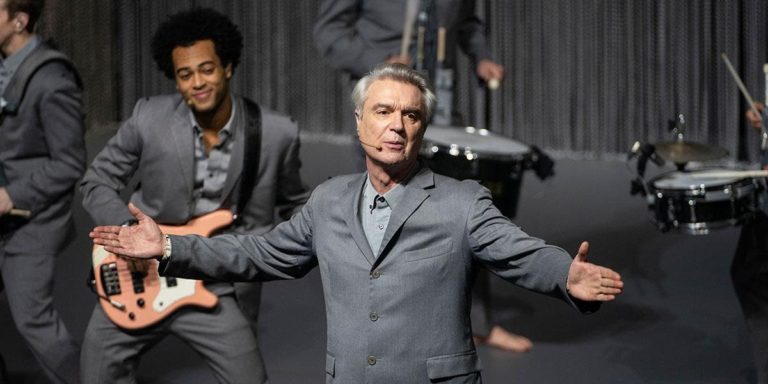
As someone from Scotland, I should be ashamed that I am unfamiliar with the works of David Byrne, a fellow Scot. Whilst I have obviously heard of him, as well as Talking Heads, I could not name a single song or album. I did not know a single thing about the American Utopia production either, and only became aware of it when I heard that Spike Lee was set to direct the filmed production of it. This film is going to be an obvious watch for fans of David Byrne, but I am here today to tell you why everyone should give this production a watch.

I do not want to make this review focused on the music itself, but it is something to highlight in a concert film. As someone who hadn’t heard a single song before this screening, I found myself really enjoying the music. It isn’t the sort of genre I would naturally listen to, but it had a nice sound to it. It wasn’t too generic of pop, yet it still felt quite modern and spoke about today’s society (a theme I will continue to address throughout the review). David Byrne is also a natural performer, being able to sing well whilst putting on a stage production like no other concert experience I have seen.

Of course, a stage experience is more than just what you hear, it is what you see on the stage. Most concerts have a simple set up with a band in the background and the artist out in front. Not with this production. From the opening sequence, there is a table set up and David Byrne is holding a brain and using it as part of the performance. It’s still simple in the presentation in comparison to most stage productions, but the set-up that is used is done to great effect.

I want to use a stage production brought to screen this year that many people have seen, Hamilton: The Musical, to illustrate how simple can be extremely effective and how it is also done here. Both of these productions use little props and have a large floor space to play around with. Instead of filling it with elaborate set pieces that move constantly, the space is there to allow fluidity between the people on stage. Complicated dance sequences not only make for incredible sequences but are able to communicate the story between narrative and music. That is exactly what David Byrne’s American Utopia does, and it is incredibly effective.

David Byrne is great as a performer, but so is the entire crew he has on stage with him. They fill the room with energy, and it makes you think that so many people are creating this energy when there are only eleven people in the entire production.  All of them are great, but special recognition goes to the two backing vocalists, Chris Giarmo and Tendayi Kuumba. Not only do they have to give great vocal performances as well to support Byrne, but they have some extreme choreography to pull off throughout it as well. They are captivating to watch and you cannot take your eyes off either of them.

I could speak about the production itself all day, but this is more than just a stage production. This is a recording of a stage production and done by none other than Spike Lee himself. You can definitely see his style of filmmaking throughout, particularly when David Byrne does a cover of Janelle Monáe’s “Hell You Talmbout” – which is easily the most powerful section of the film. Spike Lee managed to find his voice in this production and, between him and David, make big statements that still impact Americans to this moment in time.

It is not just these individual moments that make the filmed version of the production work, but even the smaller angles and tricks that Spike Lee does. The opening shot is taken from a bird-eye view and it is incredibly effective to see how much space there is on the stage. A small touch that I really liked was how the camera was angled enough to see the crowd. This is very much a stage production that you couldn’t film in an empty room. Between the crowd’s reaction to the performances on stage and the way that Byrne breaks up the songs through interacting with the crowd, it was electric to see a live audience react to something on stage in this format.

Right as I finished watching David Byrne’s American Utopia, I tweeted that it might have been the concert lover in me that made me warm to this project. I know the feeling of going to a stage production and being taken away to another world. It is exactly what we need right now, but sadly in a climate that cannot support the medium due to the ongoing pandemic. This film felt like a hug to me, saying that there is still a way to entertain on the stage and, one day, we will get to do the same again.

Grade: A-

Movie Review (LFF) – ‘The Reason I Jump’ Shows Autism in an Empowering and Beautiful Light


Director: Jerry Rothwell
Writer: Naoki Higashida
Stars: Jordan O’Donegan (Narrator)

Synopsis: Based on the book by Naoki Higashida, this immersive film explores the experiences of nonspeaking autistic people around the world.

[/info]

Autism can be defined by many different aspects of life that become hindered and is quite common for young children to develop or to be born with. However, there is still a lot of misconceptions about the diagnosis and there is so much to still teach about the disability. This documentary gives a look into several families who have a loved one suffering from autism and shows them in a different light than is portrayed in the media.

Whilst being about the general disability of autism, this documentary focuses on those who are not able to physically speak. What is heart-warming about this narrative is that the film delves into ways of letting these people who are suffering speak, showing them typing and pointing out letters to help them communicate. It is empowering that work is being done to not only support these families but to find a way to let them have a say and to give them a voice.

The people shown in this documentary are being portrayed in a very positive manner, which is beautiful to see. The film feels raw, telling the story from the perspective of the families and being able to connect to each one as they do to each other. This is a story of empowerment, not one of pity or shame. Whilst we can recognize that living with autism of this type is not pleasant, that is not the focus of the film. Instead, the film focuses on the accomplishments, from their creative ability to the new technologies and tricks developed to let them speak. It is hard not to watch this and simply have a smile on my face.

This documentary is based on a book with the same title, written by Naoki Higashida. This was a personal book written about his own experiences living with autism at the age of 13, and I love that the documentary makes him a clear focus of this particular story. With all of the other stories that intertwine, there are sections that cut between them and David Mitchell, the novelist who found Higashida’s book and translated it to English. What makes this section even more personal is the interviews with Mitchell, who is a parent of an autistic child himself. It makes those scenes even more impactful, as it becomes clear that the project is filled with passion.

For a documentary, this may just be the most visually stunning of the genre that I have ever seen. There are scenes specifically shot that are meant to reflect Higashida as a young child, alone and free to explore the outdoors. These shots are captivating and help bring the narration done by Jordan O’Donegan to life. It isn’t even just these individual scenes though, but the entire film. For some people who suffer from autism, they are drawn to visually pleasing stuff like lights, so it makes sense that the camera focuses on making these items look appealing and is able to play with light and shots to create these gorgeous sequences.

This is quite a short documentary, only clocking in at 82 minutes. I did wish the film allowed itself to slow down, as it certainly could have allowed for more connections to be made personally with the families and the individuals. Instead, we get mere fleeting moments with them, as we have to follow numerous families all surrounded by the main focus, the reason the documentary was able to be made. Whilst these moments are great, I just wish we got more of them.

There is also still so much more to be taught about autism, and I feel like a documentary like this would have been a great place to perhaps highlight the tougher conversations surrounded by the diagnosis. Whilst I wouldn’t want to drag the tone of the film down, there are still people out there who believe that vaccinations against deadly diseases such as Hepatitis C gives children autism. Not only is this completely false and misleading, as proven by scientists for numerous years now, but presents a negative look at autism. This is not helpful for anyone, and I hope people take some of the messages from this film and go on to do further research on autism.

There needs to be more awareness, and I hope that this documentary becomes the start of a conversation that can develop and mature for several more. We cannot simply hide away from these topics, and we cannot discriminate and shame those who have to go through this. Instead, we should cheer them on and hope that more technological discoveries are made soon so that their voices can be heard louder and they can live their lives to the fullest.

Grade: B+

Movie Review (LFF): ‘Another Round’ Is A Boozy, Feel Good Drama


Director: Thomas Vinterberg
Writer: Thomas Vinterberg
Stars: Mads Mikkelsen, Thomas Bo Larsen, Magnus Millang, Lars Ranthe

Synopsis: Four friends, all high school teachers, test a theory that they will improve their lives by maintaining a constant level of alcohol in their blood.

[/info]

There has always been an existential tie between philosophy and alcohol. Some of the world’s greatest thinkers were famously loaded more than half the time, and this state of inebriation was often celebrated in their work. This idea dates back to the Symposium where Socrates, Plato, Alcibiades, and Aristophanes to name but a few, got legless while discussing the nature of love.

In a way, Another Round, the latest by Danish auteur Thomas Vinterberg, has it’s own Symposium moment early on. It comes when Martin (Mads Mikkelsen), Tommy (Thomas Bo Larsen), Peter (Lars Ranthe), and Nikolaj (Magnus Millang) are out celebrating Nikolaj’s 40th birthday. Premium alcohol is being served, caviar is being consumed, and discussions are had about the state of their lives. The four of them, you see, are fairly unhappy. They are high school teachers reaching middle age, trapped in a state of bloodless inertia. This ennui has seeped into both their home and work lives. Martin is all but estranged from his wife, Nikolaj doesn’t seem to like his kids very much, and none of them care about teaching anymore. This is apparent in early scenes which show Martin half-heartedly attempts to teach his students about Winston Churchill; he mumbles through his speech and somehow confuses WW1 with WW2. They are all four of them, on the brink. “I don’t even know how this happened” one of them comments. Time has caught up with all of them, and they don’t know what to do. Which is when a plan is suggested.

The Norwegian psychologist Finn Skårderund, it is said, suggested that the human blood-alcohol level is 0.5% too low, and for a human to be happy they should keep this topped up. It’s the equivalent of a few glasses of wine or a shot or two of vodka, but the implication by Skårderund is that being just a little sloshed every day will help with confidence, motivation, and being open. The boys decide it can’t hurt to try it and draw up a plan to enact a social experiment of sorts: they will drink throughout the day to reach that elusive 0.5% BAC (this is helpfully relayed through interstitial graphics showing the numbers climb as they drink) and see if this has an effect on their lives.

And it does. They all begin sneaking alcohol into school, through hip flasks and water bottles, and find they become better teachers. Martin especially finds he is more engaging with his students (albeit arguably more irresponsible, as his lectures pivot from the perils of WW2 to discussing why alcohol makes the likes of Winston Churchill better leaders; the kicker is the revelation that Hitler was teetotal. Alcohol kills fascism, folks), as well as with his wife, with whom he resumes regular lovemaking. All seems well for the foursome, who discover their verve and lust for life again. But how long can this love affair with alcohol last? As they careen towards tragedy – urinating beds and slamming face-first into walls on the way – there is the sense that there’s another lesson for these friends to learn, that maybe with alcohol they are sticking a bandage on a bullet wound.

Thomas Vinterberg was part of the Dogme 95 class, alongside the likes of Lars Von Trier, and those Dogme principles are (mostly) imbued here; Another Round is fairly low-key, handsomely made but not flashy. It suits the premise well. An opening montage shows young adults engaging in a binge drinking contest which isn’t overdone at all, and in lesser hands might have looked like a hackneyed American Pie rip-off. Instead, it reads as a very natural moment and captures the spirit of youth which is then contrasted with the muted behavior of the adults later.

That is where Vinterberg really shows his class because the premise requires a delicate balance. Too far to one side and you’ve got broad, empty comedy (one can imagine an American remake of this starring Adam Sandler and his famous friends, please God no), too far to the other side and you veer into dark melodrama which would swallow the movie whole. It requires a deftness which Vinterberg is more than capable of. There are moments of genuine joy here, counteracted with the darker side of tying one on with your friends until the early hours of the morning. While the friends find things to love about life again (Martin takes his wife and kids canoeing, something they haven’t done in several years), they also run up against the stringent expectations of the society around them. One scene finds the friends about to head out drinking as Peter’s wife asks him to pick up fresh cod for dinner. This leads to an utterly hilarious moment later on when the dangerously inebriated group collapse through supermarket shelves as they attempt to find fresh cod. When they can’t find any, they take to fishing in the harbor! It’s a tear-inducing moment which will have audiences remembering their own drunken tales with friends fondly, but there’s also the undertone that Peter was unable to follow his wife’s simple instructions for dinner.

Although all four men get a good run-out, this is undeniably Mads Mikkelsen’s show. The Dane reunites with Vinterberg for the first time since 2012’s The Hunt and gives a subtle, nuanced performance like we haven’t seen from him in a while. With his sharp-edged features and intense eyes, Mikkelsen has found himself cast most often as the villain – Le Chiffre in Casino Royale, Kaecillius in Doctor Strange – but to see his Hollywood oeuvre is to forget his roots at the forefront of Danish cinema. Here he reminds us he is capable of understated acting, stifling his easy charisma to portray a man sleepwalking through life. He’s almost unrecognizable in the opening scenes until the end credits scene reminds us how much fun he is. Indeed, Mikkelsen dancing will most likely be the biggest takeaway for his loyal fans.

Another Round is a raucous, joyous tale of friendship and catharsis. Its purpose is not to denigrate alcohol or act as a cautionary tale for the perils of binge drinking. Instead, it is a pleasingly affecting look at morality and society. It isn’t exactly ground-breaking (mid-life crisis movies come by the dozen these days) and doesn’t say much that hasn’t already been said, but that’s not the point; it is a fresh, optimistic look at life which balances its themes perfectly without going overboard and is aided by a wonderful performance from a never-better Mikkelsen. It is one of the highlights of the London Film Festival and deserves a wide audience.

Grade: A+

Movie Review: ‘Minari’ is a Breathtaking Account of the Korean Experience In America


Director: Lee Isaac Chung
Writer: Lee Isaac Chung
Stars: Steven Yeun, Han Ye-ri, Alan Kim, Noel Kate Cho, Youn Yuh-jung, Will Patton

Synopsis: A Korean American family searches for a better life when they move to a small farm in Arkansas.

[/info]

A Korean family, already immigrated from their homeland to the West Coast, makes a bold move to rural Arkansas where Jacob Yi (Steven Yeun) seeks to make it on his own as an independent farmer. His wife (Han Ye-ri) is immediately skeptical based on the fact they are now living in a trailer home on cinder blocks and far away from the city. Coming along with them are their two kids, David and Anne, while their grandmother, Soon-ja (Youn Yuh-Jung) comes along later, which twists up the family chemistry in an already-full house far from the land they know. Yet, the determination to start a new life is burning inside.

What is cultivated is an astonishing piece of art from writer/director Lee Isaac Chung who used his own personal life growing up in Arkansas in the 1980s as the backdrop of the story. We already knew Yeun was already an amazing actor thanks to his performance in 2018’s Burning and on the TV series The Walking Dead. But now, he adds on more to being a thespian actor who takes inside of him the immigrant experience regardless of nationality. Han is brilliant also, playing the suffering wife who does not want what his husband has got for the family and struggles with the isolationism from others. Even though there is a tiny Korean community in Arkansas, she doesn’t feel connected to them as well. Han’s character is a Christian, and when she asks the other Korean ladies why there isn’t a Korean church set up, one of them responds that the reason they’re not in the city is to get away from the church.

David and Anne, played by child actors Alan Kim and Noel Kate Cho respectfully, are innocent youngsters who have already become assimilated with their home since birth. Alam Kim is, for now, this year’s Jacob Tremblay/Quvenzhane Wallis of being cute and brilliant in their performance. As David, he is innocuous and snoopy exploring this new farm, wanting to be close to his father’s work, but it is Youn as their sly grandmother who really takes David in closely when she has brought over from Korea the local spice which is what the film’s titled is called. Tucked away from the main farm, it is a secret garden, an authentic sector of the Korean land they have escaped (in the 80s, South Korea was politically unstable and shifted away from its rural roots) that is a symbol of their heritage.

While the road isn’t as rigorous as other American Dream-themed movies, the blood, sweat, and tears are legitimate to all immigrant families in this country. Minari doesn’t play hard to make it viewers feel anguished thanks to its light, funnier moments sprinkled throughout the film. Chung avoiding moments of being overdramatic makes the movie feel just about right and balances the storylines. The splash made at Sundance earlier this year – when we were still all sitting in movie theatres next to each other – is a statement of marking the territory that a new American film for the new decade is putting down its roots for years to come.

Grade: A+