Home Blog Page 209

Podcast: 2021 Acting Categories – Chasing the Gold Ep. 25

On Episode 25 of Chasing the Gold, Ryan is joined by Matt Neglia of Next Best Picture and Erik Anderson of Awards Watch to break down the 2021 acting categories for the Oscars.

With the fall festivals all but wrapped up and entering the final months of 2020, we have talked a lot about the Best Picture race so far and not the acting categories as a whole. With that in mind, Ryan welcomed two familiar guests back to Chasing the Gold in Matt and Erik, to figure out how the evolving races are looking and what might show up nomination morning in February 2021. This is an epic show and one of the best Chasing the Gold episodes Ryan has ever recorded. It was a lot of fun to hear these three go back and forth talking about these categories and performances.

On that note, have fun with this week’s Chasing the Gold and let us know what you think in the comment section below. Thanks for listening!

– Music
The Return of the Eagle – Atli Örvarsson

We try to make this the best movie podcast we possibly can and we hope you enjoy them. Subscribe today on iTunes, Spotify, or Stitcher, and please leave us a review on iTunes. You can also find us on Soundcloud, PlayerFM, and TuneIn Radio as well. We really appreciate all your support of the InSession Film Podcast.

Subscribe to our Podcasts RSS
Subscribe to our Podcasts on iTunes
Listen on Spotify
Listen on Stitcher
2021 Acting Categories – Chasing the Gold Ep. 25

[divider]

Mobile App

To hear this Extra Film episode and everything else we do, download our apps on the Amazon Market for Android and the Podcast Box app on IOS devices. The mobile app covers all of our main shows, bonus podcast’s and everything else relating to the InSession Film Podcast. Thanks for your wonderful support and listening to our show. It means the world to us!

[divider]

Help Support The InSession Film Podcast

If you want to help support us, we would greatly appreciate it! For more info, CLICK HERE.

Movie Review (LFF): ‘Striding Into The Wind’ is a Tender Insight Into Post-Modern China


Director: Shujun Wei
Writer: Gao Linyang, Shujun Wei
Stars: Zheng Ying Chen, Tong Lin Kai, Wang Xiaomu

Synopsis: An aimless film school student goes on an ambling road trip across China in a rickety old Jeep in this charming, deeply personal road movie.

[/info]

Wei Shujun’s debut feature showed up at the London Film Festival with an aura of intrigue surrounding it. An autobiographical slacker-style comedy in the vein of Jarmusch or possibly even early Linklater, there could have been cause for a little eye-rolling, such is the typical nature of debuts like this. However, Striding Into The Wind never really becomes cloying enough to justify that. Instead, it’s rather sweet and laidback, choosing not to self-indulge (thankfully) too much in its protagonists and instead of providing something of a portrait of capitalist China and its effect on the “lost generation”.

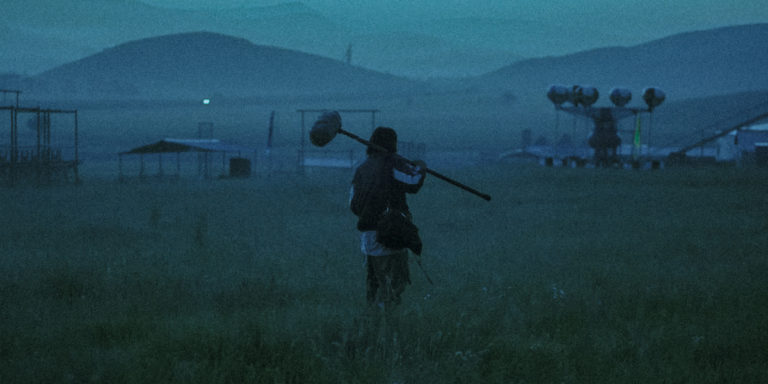
Kun (played by Zhou You) is studying to be a sound recordist at a film school in Beijing. He and his friend Tong (Tong Linkai) seem to have been there forever. They sit at the back of the class talking to themselves, watching videos of half-naked cam girls on their phones, and undermining the authority of the lecturer, who regularly calls them out for never listening. They don’t feel they need to, though. Kun is talented, perhaps only underachieving because of his feelings of suffocation at the strictures of University. At one point during a lecture on Foley recording (the art of adding manual sound effects to a movie), the lecturer attempts to make an example of Kun by calling him out, asking him to recreate the sound of horse hooves for a movie. Kun then takes the textbook the lecturer offers him so he can find a solution in it, rips a few pages out, and uses those pages to create the desired sound. It’s a brilliant scene which emphasizes the way in which ordinary rules can sometimes be a deterrent to success rather than the cause of it. They are also taking part in a student production led by an amusingly arrogant director who spends all his time flirting with his lead actress, says things like “who needs a script? The film will come to life when the camera starts rolling” and regularly extolls the virtues of auteurs such as Wong Kar-wai, Hou Hsiao-hsien, and Hong Sang-soo. You feel these are the kinds of attitudes Kun, and Shujun, are fighting against.

Elsewhere, Kun frequently bothers his girlfriend Zhi (Zheng Yingchen) while she’s at work as a hostess. He wants them to travel together to Inner Mongolia, which represents a sort of freedom from the bounds of society to Kun, but Zhi is more than aware of her responsibilities and regularly rebuffs him. So, to fund his adventure, Kun begins a series of jobs he completes in a slacker-esque manner (he’s given CDs by a record producer to sell, but instead he and Tong spend their time throwing the CDs onto train tracks).

Everything plays out in a very languid, picaresque manner. There is very little through-line here; as with the likes of the previously mentioned Linklater (Dazed and Confused in particular), it’s simply a snapshot of a life. Shujun allows each scene to unfold at its own pace, leaving the camera to linger in a static position while the drama slowly burns on. There’s a sense of foreboding that underscores proceedings, as though Kun and his generation are fighting a rising tide of hopelessness. Even in the very first scene, which sees Kun get frustrated with his driving lesson, abandon his car and instructor in the middle of the street, and walk away, it is clear Shujun is taking aim at the conventional boundaries of society. Kun seems to abhor any kind of authority and discipline (the reveal that his father is a police officer and his mother a school teacher seems to hint at a childhood couched in rules and disciplines, to which the obstinate Kun rebels) and lives a life without boundaries, be they personal or societal.

Striding Into The Wind feels concerned mostly with freedom. Freedom from the rules of society and the roles we must play within that society. Kun’s personal voyage to Inner Mongolia is tinged with the idea, the hope, that Mongolia represents liberation from those rules. The China which Kun lives in is rapidly changing, embracing a capitalist structure more and more, which disavows the poverty-stricken and increases the likelihood of a life of hardship for people like Kun. Even when he reaches Inner Mongolia, Kun realizes it is not the bastion of freedom he had anticipated. Modernity has spread here too, to his dismay.

There is no real answer here. Shujun is concerned less with conventional plotting and more with the vagaries of modern life. Striding Into The Wind works best when it calls out the post-modern world which feels increasingly soulless, and through Kun shows a glimpse into the life of the average Chinese young adult, who feels adrift in this new world. It is refreshingly downbeat, determined not to hold the hand of its audience, or provide easy solutions to the difficult questions it asks. In Kun we have a protagonist who is all too real – even those who don’t share his cultural influences will recognize a frustrated underachiever searching for meaning when they see one – and relatable. At one point in the movie, we see wild horses running free over the grassland, and one would be forgiven for thinking this is the real point of Striding Into The Wind.

Grade: B+

Chasing the Gold: Best Cinematography Analysis (2021)

If there is any below-the-line category that I personally love, it is Best Cinematography. Unlike most other categories, this is the one that feels like it takes risks and picks more artistic choices for the nominations (with last year alone nominating The Lighthouse in this category). Even with the smaller amount of films that are releasing this year, there are some fantastic choices for what can be nominated in this category. Here is what I have predicted right now – most sight unseen – to get a Best Cinematography nomination.

Mank

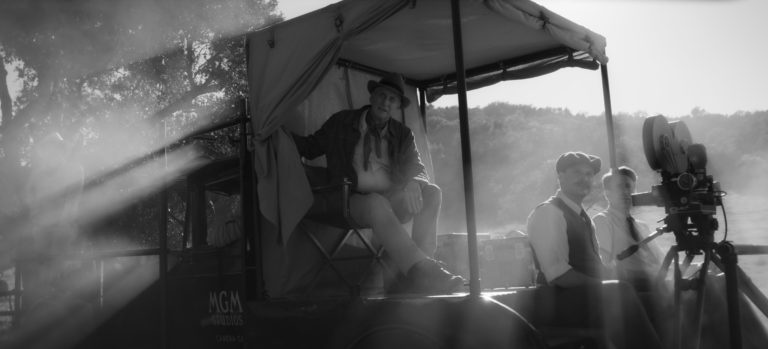
A film about the craft of cinema. A film that is directed by David Fincher. A film that is filmed in black-and-white. Out of every technical aspect that Mank will get nominated for (and there’s quite a few that I am predicting it for), this nomination is the safest of the lot. It has everything the Academy looks for in a Best Cinematography nomination, and I would honestly place this in your top spot right now. 

Minari

Minari is having a sudden surge of support after the first showing back at Sundance in January. From writing and acting, this is slowly having a big shot of being a real Best Picture contender. However, from a majority of the reviews and reactions I have seen from other film critics, the one thing that stands out is the cinematography. If this film does end up being the big contender that it is potentially lining up to be, I would suggest having this in your nominations.

News of the World

Out of the five nominees, this is the one that I am least confident in right now. A western film has a lot of potential to get this cinematography nomination, especially when News of the World is lining up to have a potential sweep technical nominations in Sound, Production, Costume, and Editing. This will be one that we will have a better idea of when we get to see the film, but it is worth noting for now.

Nomadland

This is going to be a major contender for the rest of the awards season, and that includes the nomination for Best Cinematography. You only need to watch the first trailer for this film to know that Nomadland looks stunning, and this is the sort of filmmaking and storytelling that requires strong cinematography. If this is not in your predictions already, then you must put it in now.

Tenet

There are many issues with Tenet as a film, from the sound to the script. However, the strongest aspect of the film for me is the cinematography, which has to work both forwards and backwards. It is the part that holds the entire premise together and is the showiest use of cinematography in the entire year. Whilst I am still unsure of the other nominations that Tenet might get, I feel pretty confident it getting this one.

My current predictions for Best Cinematography ranked:

  1. Mank
  2. Nomadland
  3. Tenet
  4. Minari
  5. News of the World

Chasing the Gold: How Did That Get Nominated for Best Picture? (2018)

The Academy Awards of 2018 deemed The Shape of Water the Best Picture of the year.  Yes, a fantasy about a woman having a love affair with a sea creature was able to nab the top prize over two other films that I believed were the two frontrunners, Three Billboards Outside Ebbing Missouri and Lady Bird. It also beat out the beautifully moving Call Me by Your Name and the horror/social commentary film Get OutAll of these films received awards on Oscar night (the exception being my beloved Lady Bird, which still stings a bit), and it stands out as a great year for film. I admit, for this article, I had a very hard time decided on what the least deserving film was for the year. After watching Dunkirk and Darkest Hour several times each, I have decided that Darkest Hour earns the title. 

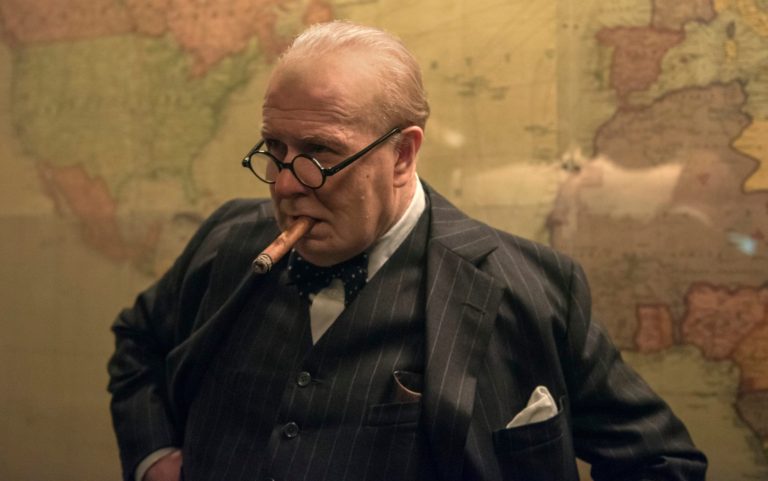
Joe Wright’s Darkest Hour chronicles the first days of Winston Churchill’s rise to Prime Minister, how he rallied his country to want to fight Hitler and has to solve the problem of rescuing the British military from Dunkirk. Gary Oldman finally won a Best Actor Oscar, for his portrayal as the iconic Winston Churchill. He did an adequate job playing Churchill, showing him to be somewhat of a gruff teddy bear. He meets his new assistant, and barks at her for making mistakes, driving her to tears, only to become more friendly with her throughout the film. We see him rant and rave against political opponents, and then giggle like a schoolboy when he learns he’s been making the “V” with his fingers backward, giving it an obscene meaning. Personally, I understand why Oldman won, most people see the win as overdue, but I would have been more satisfied with a Timothee Chalamet win for Call Me by Your Name.

The film gives insight into a very specific time period. It begins with Churchill taking over the Prime Minister position after England lost faith in the Nazi appeaser Neville Chamberlain, and shows Churchill overseeing the Dunkirk situation. While I understand that dramatic and creative licenses are allowed when making a film, one thing that weakens the power of a historical film is when the film-maker puts in a scene to tug at the heartstrings. The scene that weakens Darkest Hour was a major moment in the film. At the start of the film, Churchill looks out the window of his car, lamenting to the driver that he has never ridden the “tube.” He admits that he was born to great privilege and has essentially never been among “commoners.” Churchill was one of the most inspirational leaders and orators of modern history.  One doesn’t need to shoehorn false stories about Churchill riding the subway and mingling with the “commoners” and asking their opinions of matters of state. Honestly, I don’t think I have ever rolled my eyes more, nor cringed so hard during a scene in my life. The scene is so absurd, I did actually go online to see if it had actually happened, and was not shocked when I read that it hadn’t. This false scene is a pivotal moment in the film. It is the scene that causes Churchill to get fired up and give that moving speech about how England WILL fight the Nazis. Winston Churchill was a larger than life historical figure.  Nothing about his leadership during World War II needs embellishment.

Unfortunately for Darkest Hour, the superior Dunkirk came out the same year. Dunkirk was a well-made film that really made me understand just how dire the entire situation was. It opened my eyes to the horrors of what those troops went through. Darkest Hour seemed like it was made to win awards. It is part biopic and part World War II film. If there is one thing filmgoers and the Academy loves, it is biopics and reminders of how amazing the Allies were during World War II. Without that “pivotal” scene, the film would have been far more effective. 

Review: I, Tonya Tells Us The Past Is What We Make Of It – Before The  Cyborgs

I’m truly torn with what picture SHOULD have gotten a Best Picture nomination over Darkest HourCoco is an incredible film, that moves me emotionally more with each viewing. The story, the animation style, the colors, the look at family, and the wonderful music never fails to make me cry and miss my own relatives, especially ones that have passed. However, because it did receive recognition as Best Animated Film (and Best Song for the lovely “Remember Me”), I will give the nomination to a film that I feel deserves much more recognition than it received, I, Tonya. 

I, Tonya retells the story of Tonya Harding, her rise to a top figure skater in the country, to her downfall with the attack on competitor Nancy Kerrigan. Now, I was a pre-teen when the attack on Nancy Kerrigan occurred.  I remember following the story in the news. You couldn’t turn on the television without hearing about it. I remember how the media had always portrayed Nancy Kerrigan as a princess. She wore Vera Wang skating costumes, was beautiful, and has a blind mother who couldn’t see her skate, but was always there in the audience to support her daughter. It was so lovely and tragic. Tonya Harding was shown as being trashy.  She wasn’t lithe and delicate. Her makeup was garish, and her family was low-class. All of these things are portrayed to perfection in the film. Margot Robbie, who before I really had only seen her in Wolf of Wall Street, was stunning. I had no idea of the depths of her talent until I, Tonya. This is not an example of “deglamorization” of a beauty to win an award. This isn’t Grace Kelly in The Country Girl. If I hadn’t heard her speak in public, I’m pretty sure I wouldn’t realize she isn’t actually American.

I knew within ten minutes of the start of the film, when Allison Janney makes her first appearance on camera, that she was going to win an Oscar for Best Supporting actress. She is a villain in the story, but the kind that lives in the real world. She and Robbie are incredible, playing unlikeable and unsympathetic characters, yet make you listen and understand the motivations behind what they do. The film is set up like a documentary, with interviews of Harding’s ex-husband, her skating coach, and members of the media who reported on the event. While you see and hear the perspectives of this wild group of characters, it remains Harding’s story.

We see Harding struggle in her life from the constant abuse she faced from her mother and her husband. You feel for her when she is treated like a joke by the skating community. You feel her elation when she becomes the first female skater to succeed in a triple axel.  Speaking of that scene, which highlights a major moment not only in the sport of figure skating but in Harding’s life, is brilliantly filmed.  The editing in this film is some of the best I have ever seen. It cuts to several people explaining what a triple axel is, intercut with a slow-motion clip of Harding completing the move.  It’s so well shot and edited.

There is also not enough attention paid to Sebastian Stan and Paul Walter Hauser, who plays Tonya’s ex-husband and bodyguard.  These two had me crying laughter tears as they planned and plotted the attack on Nancy Kerrigan, and how they allowed everything to fall apart in the aftermath.  Yet, as funny as this film is, it also hits home how tragic the entire course of events were. Tonya Harding literally lost everything she had worked for her entire life by getting involved with these two men. And Margot Robbie reminds us of that throughout the film. I, Tonya is wildly entertaining and well made. With nominations in Best Actress, Best Film Editing, and a Best Supporting Actress win, this film absolutely should have received a Best Picture nomination over Darkest Hour.

Criterion Crunch Time: ‘Uncle Boonmee Who Can Recall His Past Lives’

We have reached the end of another month here on Criterion Crunch Time.  You know what that means, right? You just have about a week to watch as many of these movies as you can before they leave the Criterion Channel forever! Well, maybe not forever, but for quite a while at least. If people have any kind of negative opinion of Criterion films, it is that they are mainly art films, not for the masses.  And that is exactly what we have here to end October. Specifically, the film being discussed here is from director Apichatpong Weerasethakul, Uncle Boonmee Who Can Recall His Past Lives (from this point on, referred to as simply Uncle Boonmee, because I refuse to type that all out more than a few times.

In researching just a bit, and this is a film that kinds of demands it, you may find that this is part of a large set of work from the director. But this is not a trilogy in the stereotypical film way. In addition to Uncle Boonmee, it involves two short films and a seven-part art installation. But, thankfully, it is not necessary to experience those other pieces in order to watch this movie. I will not mince words here. If you demand action and plot in your films (and no shame if you do!), this one is absolutely not for you. Uncle Boonmee moves at a snail’s pace but is wildly rewarding for viewers that stick with the process. The inciting incident of the film actually mirrors this pacing perfectly. More on that in a moment.

First, some basics of the film (in case you didn’t watch it). Uncle Boonmee in some ways is a ghost story. And like the greatest ghost stories, a lesson is learned by the object of the ghosts. Boonmee (Thanapat Saisaymar) is suffering from kidney issues and is being given dialysis treatments. He lives with his sister-in-law and nephew as he struggles through his days. We find out through supernatural means that Boonmee was once married and had a son. This is one of many things to love about the film, there are no moments of unnecessary exposition about who he is or his familial connections. We learn these things in the process of the story, and never in a forced fashion.

But back to that inciting incident. Boonmee and his sister-in-law, Jen (Jenjira Ponpas) are eating dinner.  His nephew, Tong (Sakda Kaewbuadee) is also present, but mostly silent. As they have a benign discussion about the meal, something begins to happen, seemingly in the corner of your vision. As you watch, you may think your eyes are playing tricks on you. At first, a female form begins to be shown, so slight that it feels more like a reflection in a window than anything real. But slowly, achingly slowly, there is a realization that this is an important moment and it manages to draw your eyes and ears from Boonmee and Jen. And almost magically, just as you realize she is really there, so does everyone at the table. 

We find out rather quickly that this woman is Boonmee’s dead wife, Huay (Natthakarn Aphaiwong). This long, protracted appearance fills the audience with wonder, instead of fear. This allows us to simply accept what is happening and listen to the family connect once again after all this distance. But if you want some creepy imagery, you don’t have to wait long. Boonmee’s son, Boonsong (Jeerasak Kulhong) appears first simply as a set of glowing red eyes, and then, even more disturbingly, as a beast covered from head to foot in hair. In another example of the lack of exposition, we quickly discover that, at some point, Boonsong wandered off to chase a “monkey ghost” and was never heard from again. If this all sounds very strange to you, well I think that is purposeful. Weerasethakul seems to have a fascination with the bizarre.

This bizarreness is shown repeatedly in the consistent theme of transformation throughout Uncle Boonmee. The monkey ghost, combined with Huay’s distance and lack of emotionality creates a mood of discomfort and the ability for characters to tell hard truths without cruelty. Additionally, there is a fantasy segment of the film flat in the middle of this family drama. I won’t spoil the surprise, but it involves a princess, another transformation, and a mildly disturbing moment with a fish, or a spirit, depending on your perspective. But these transformations have a point. Boonmee’s own transformation is dual in nature. On one hand, he, through his slow death in the film is transforming his own memories and changing from the man he was to someone kinder, and a man filled with regret. On the other, near the moment of his death, he both remembers long past and oddly, far into the future. So, he knows his past lives, as the title portends, and maybe something more. But like everything else in the film, Weerasethakul does not lead you by the hand. This is a film that has as many readings as viewers.

Uncle Boonmee Who Can Recall His Past Lives is many things. It is a meditation on both death and life. It is a ghost story. It is an indictment of the military and the inherent violence of serving the state. And it is so much more than that. This is a film that I am truly sad is leaving Criterion Channel, because it would absolutely be rewarding to rewatch, but it is not a movie that one would want to see immediately after finishing it the first time. Frankly, I wish I had more time to let this one sit before attempting to write on it. I will end with this. If you have the patience to let Uncle Boonmee unfold and surround you, you will experience something great and truly illuminating and gratifying.

Join us next month with a brand new crop of films leaving the Criterion Channel!

Poll: What is the best animated film of the past decade NOT by Disney or Pixar?

When we think of the best animated films of a particular time period, the first words that often come to mind are “Disney” and “Pixar”. But what if we remove them from the conversation? Narrow down the playing field a bit, and we are left with…an incredibly competitive string of great films. Don’t be so surprised; with the likes of Studio Ghibli, Cartoon Saloon, Laika, and even Wes Anderson and Don Hertzfeldt still making animated movies, what you’re left with is what looks like just another list of the best animated films of the decade. And with the release of Cartoon Saloon’s latest film Wolfwalkers, we wanted to celebrate the greatness that exists outside of the giant Disney umbrella.

With that said, what do you think is the best animated film of the past decade NOT by Disney or Pixar?


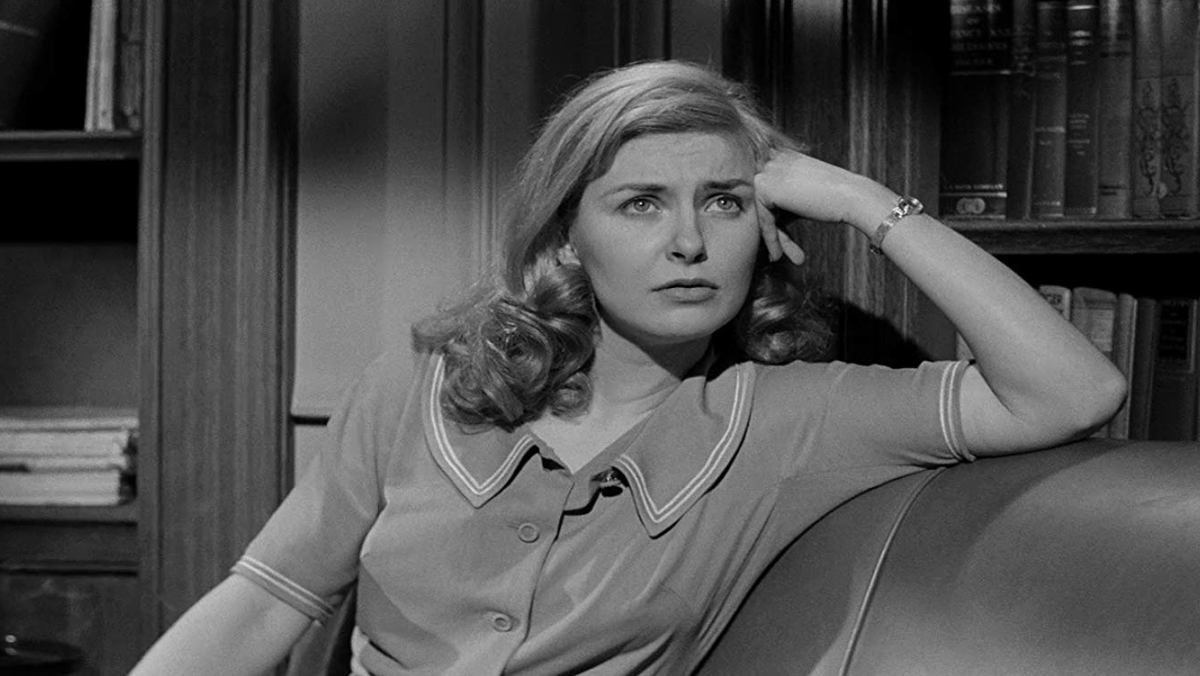
Op-ed: Joanne Woodward in ‘The Three Faces of Eve’

0

I simply adore the incredibly talented Joanne Woodward who was most popular as a movie star in the late 1950s and early 1960s. She often lamented the fact that she didn’t become a bigger star but I’m glad that she never got boxed in by the limitations of stardom as she had the freedom to appear in gritty independent films later in her career rather than settling into grande dame mode. In the minds of many, she is closely associated with her husband Paul Newman and the two did collaborate many times as he directed her to great success but their collaborations served as one phase of her long career rather than defining it. She was first and foremost a dramatic actress who appeared in serious films that weren’t necessarily made to satisfy the urges of mainstream audiences. Because of this she became prestigious in her own way and ended up earning four Academy Award nominations which cemented her status as one of the great talents of her generation. I wanted to discuss her first nominated performance which boosted her reputation as well as providing her with her only win.

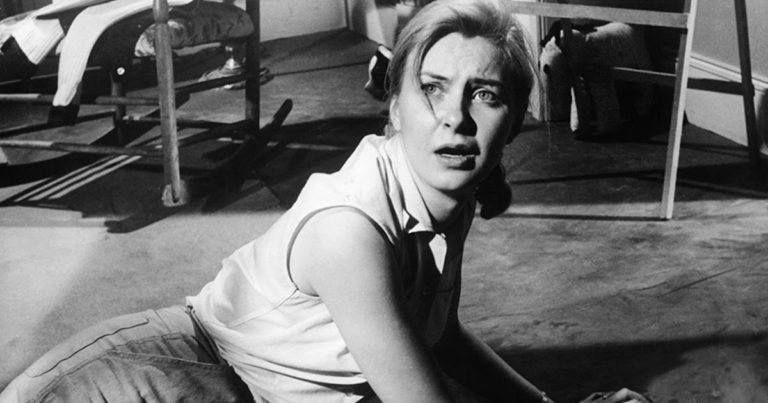
In 1957 Woodward had only made two films and wasn’t necessarily a big name in the industry as Count Three and Pray (1955) and A Kiss Before Dying (1956) failed to make a major dent at the box office. She was a blonde beauty like so many other starlets at the time and looked like she was going to be permanently slotted into girlfriend roles alongside dependable leading men like Robert Wagner. She got her big break when she was cast in The Three Faces of Eve which offered her a juicy leading role. It concerned the life of housewife Eve White who suffers from multiple personality disorders and needs the help of a psychiatrist to return to acting normally. This was the sort of role that allowed an actress to go big and display a lot of mannerisms displayed during hours of practice. In other words, this was the sort of role that the Academy loved to reward actresses for as they had already recognized Joan Crawford in Possessed (1947) and Olivia de Havilland in The Snake Pit (1948).

Upon release, the film was a decent moneymaker but Woodward’s star power did hold it back and it did not become a hit on the scale of the salacious soap opera Peyton Place (1957) which featured top leading lady Lana Turner. Reviews for the film as a whole were also mixed as it’s depiction of psychology was described as “Easy and pat” by Variety. Despite this, Woodward’s performance was universally acclaimed and reviewers heaped praise on her as Bosley Crowther of the New York Times noted the fact that she played her role with “Superlative flexibility and emotional power.” Such glowing praise was rare in the 1950s and with her juicy role and the incredible commendation she received she was thrust into the awards conversation. At this point in time, I can’t help but feel that producers and her contemporaries within the industry thought that she would have a very different career. She was a young, gorgeous ingenue and she was winning awards in a decade in which Audrey Hepburn had both gone on to play glamour girls after winning awards for their star-making roles. This means that them rewarding her makes more sense as they thought that she would appear in mainstream blockbusters that would earn them money rather than turning towards independent cinema.

I also suspect that she might not have won if the field of potential nominees in 1957 had not been so weak. She was joined by Turner, a legendary sex symbol, who anchored Peyton Place and turned it into a success by playing the frigid mother who allowed audience members to assuage their guilt for being excited by lurid material. The nomination feels like a career achievement acknowledgment as Turner had been a reliable star since the late 1930s without receiving a nomination and Peyton Place proved to be unusually popular with the acting branch of the Academy as it picked up five acting nominations in total. She wasn’t necessarily taken seriously as she was seen as a movie star more than being a serious actress and the Academy does have a bizarre prejudice against them. Because of this she likely didn’t come close to winning as she was just a sex symbol in the eyes of those who chose to place an arbitrary distinction between movie stars and actresses. The other nominee who didn’t have a chance in hell at winning was Anna Magnani who appeared in the romantic melodrama Wild Is the Wind (1957). She built up her reputation with her work in the films of Roberto Rossellini before making a big splash in the United States with The Rose Tattoo (1955) which earned her the Academy Award for Best Actress. She was disadvantaged by the fact that she had already won just two years prior but she also refused to do press to promote the film and her performance and this made it difficult to mount a campaign in favor of her.

Woodward’s biggest competitors were Elizabeth Taylor and Deborah Kerr. Taylor appeared in the ridiculously long Gone with the Wind (1939) rip-off Raintree County (1957) which went through a tumultuous production and didn’t end up earning money because it’s budget was so high. Her nomination and the buzz that built around her had more to do with the fact that she hadn’t been nominated yet even though she had starred in several award-winning films. She made her film debut in National Velvet (1944) which earned Anne Revere the Best Supporting Actress award and from there she appeared in Best Picture nominees like Father of the Bride (1950), A Place in the Sun (1951), and Giant (1956). She still hadn’t been recognized by 1957 and despite the fact that Raintree Country wasn’t a hit with the critics her popularity with audiences and the sense that she was overdue put her in the conversation. Kerr had a similar narrative in some ways as she had been nominated three times before 1957 and was likely the runner up in both 1953 and 1956. With her role in Heaven Knows, Mr. Allison (1957) she continued her run of playing noble British ladies who struggle with temptation in the face of roguish men. This time she even played a nun who refuses to engage in an affair with a randy Robert Mitchum and in an era in which the Academy was particularly puritanical the nature of the role she played probably helped her chances. Unlike Turner, it was also easy for Kerr to be taken seriously as she had a background in British arthouse cinema and played the sort of virtuous, respectable women that the Academy admired. Reviews for Kerr and Taylor were not as good as the reviews for Woodward but they were seen as serious contenders to win the award.

Woodward did become the frontrunner however as she won both the National Board of Review award and the Golden Globe award for Best Actress as well as being nominated for the BAFTA. It appeared that critical praise and her ingenue appeal were enough to net her the prize and she attended the ceremony with Newman. It was a triumphant moment for her and it did put her on track to become one of the most respected talents of her generation but I have to admit that I don’t love her performance. It feels like it is a purely technical piece of work and I always felt like I was watching somebody ticking boxes in their mind as there was something completely cold about Woodward here. Her character has to cry out for help at several points as well as slowly finding her voice as the film goes on but I didn’t feel like I was seeing concern and self-doubt on her face. Every beat in her performance felt like it had been predetermined and even though her character is meant to be losing control I always felt like Woodward was firmly in control of everything that happened. She loosened up later on in her career and turned into somebody who could create the illusion of not acting even when she was handling big, emotional scenes. At this point in her career, she hadn’t quite put it all together yet but I am glad that she received an Academy Award at least once in her career and I would be burning with rage if she had never been rewarded for her work.

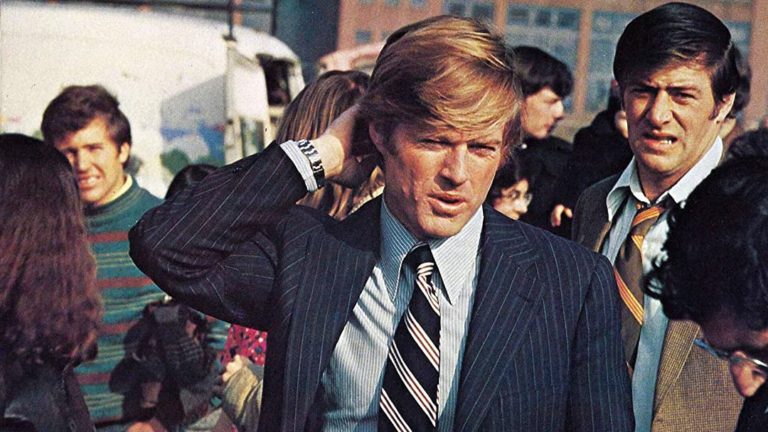
Classic Film Review: ‘The Candidate’ is an Eerily-Relevant 1970s Satire

Shortly after I watched The Candidate for the second time in a month, I watched the final presidential debate between Joe Biden and Donald Trump. Though the debate in the film is certainly more watchable than the debates we’re witnessing in reality, it’s difficult not to notice some similarities. A film that poked fun at the political machine in 1972 feels scarily relevant now, right down to some of the issues that are addressed. 

The Candidate, directed by Michael Ritchie, begins with the Republican primary for a U.S. senator race in California. The victor is the incumbent, Crocker Jarmon (Don Porter), a long-time holder of the position. His eventual victory in the general election is such an afterthought that there is not a single Democrat in the state willing to run against him. However, there is one person who sees the situation as an exciting opportunity. That person is Marvin Lucas (Peter Boyle), a campaign manager associated with the recently defeated challenger. 

While Lucas does not expect to lead anybody to a victory in the election, he uses the circumstances to reach out to an old college friend, and our protagonist, Bill McKay (Robert Redford). McKay leads a low-key life as a small-time lawyer, but his father (Melvyn Douglas) was the state’s governor back in the day. Lucas thinks he can run a campaign that will shake up the system with McKay. Of course, the first step is getting McKay to agree to the proposition, which Lucas does by ensuring that there is no way McKay can win the election. McKay can say anything he wants to on the campaign trail, sticking to the beliefs he holds without being influenced by a campaign geared to win at all costs. There’s also a guarantee that McKay’s father will not be brought into the process. 

On the surface, the idea of a famous son with no political experience whatsoever running for a major office may draw comparisons to the current sitting president. But McKay seemingly has no interest in the power that comes with being elected. In fact, he’s not even registered with a party. The campaign begins with his displays of pure honesty in his convictions. He leaves no doubt that he is pro-choice, believes in the expansion of welfare programs, and focuses his efforts on the working class. Even more surprising, when he does not know the answer to a question directed at him, he simply replies with, “I don’t know.” In short, he’s not a politician, and Redford brings immediate charm and charisma to the instantly likable character. 

Of course, this all changes very quickly. The real strength of the film lies in how effectively it displays the machinations of the American political system. The film was marketed and released as a satire, indicated by tongue-in-cheek humor, overly patriotic music, and a poster that featured Redford blowing a bubble of pink gum in front of the U.S. flag. But the Oscar-winning screenplay was written by Jeremy Larner, who was an actual speechwriter at the time. As a result, the film is infused with a sense of realism in the way it displays the manipulation of McKay, and the voters, by his campaign team. Michael Ritchie also shoots the film like a documentary, including overlapping dialogue reminiscent of an Altman film. The gritty authenticity of the style adds to the real-life implications of the script. 

Almost immediately, the campaign McKay is involved with becomes much different than the one he signed up for. He goes from humble interviews in his office to TV ads, publicity shoots, and coaching from a team of writers on how to answer interview questions in the future. Before we know it, he looks like a real contender in the race. As expected, this results in McKay’s very left-leaning agenda moving closer and closer to the center in an attempt to attract sponsors and weary voters. 

Throughout all of this, McKay rarely displays strong opposition to the direction of the campaign. We can see how uncomfortable he is with some of the decisions being made, but his protests are fairly small. In some ways, this may come off as one of the few flaws of the film. The character that easily gives in to the domination of his political ideals by the likes of his own campaign manager seems like a far cry from the headstrong person we’re first introduced to. Granted, Peter Boyle’s performance as that manager is as thoroughly convincing as the character himself. And the film resolves this issue in Redford’s character by capturing the dizzying pace of the campaign trail and honing in on other aspects of McKay’s life. 

Though the film is largely an exploration of a singular venture in American politics, it’s also a very personal character study of McKay himself. It’s not just that he is a victim to a system that gobbled up his forward-thinking ideas for the sake of being competitive. The campaign also takes a strain on his marriage, leading to a confrontation with his wife (Karen Carlson) about how they have abandoned who they truly are for the cameras and papers. He is also eventually forced to bring his father into the fold, leading to an uncomfortable reunion that hints at a distressing past between the two. Redford’s affecting performance never allows us to forget that this is an actual human being, not just a face in a TV spot. 

Still, the most appealing aspect of the film is the changes that come about because of the political gambit and the prospect of winning. As we near the end of a tumultuous election cycle in 2020, perhaps the most relatable aspect of the film is its portrayal of just how performative major American politics are. This is apparent in the final act of the film, as the two candidates take part in a televised debate. McKay’s advisors nod and smile in approval as he follows the script prepared beforehand. They writhe in pain during the moment when McKay goes off-script to lay out his true concerns. It makes it clear that such political ventures are not about saying what you believe, but rather what you need to say to win the power that comes with the office. At its center, this film is about the extreme desire to win at all costs. That’s obviously true for Boyle’s sketchy campaign manager, but some moments make us wonder if it’s also become true for McKay. 

The Candidate is both securely of its time while also featuring parallels to the performative aspects of the political system we continue to see today. Let it be made clear that this film should not be used to interpret the nuances this election cycle. Though it can make one question how they feel about American politics and how little they have changed throughout the years. Then again, I’m not sure what’s scarier: how minuscule those changes are, or the line that Redford delivers at the conclusion of the election: “What do we do now?”  

Grade: A-

Criterion Releases: November 2020

Now, we’re getting into the holidays, and shopping for your cinephile friends and family (or buying for yourself) now features more editions to the Collection. Four new films come in with three of its directors having another masterpiece being added in while an indie breakthrough gets its full recognition finally. Then, there is one of the greatest directors in the history of cinema, now joining the collections of other masters to be had in one box. Here are November’s newest inductees.

Girlfriends (1978)

The inaugural winner of the People’s Choice Award at TIFF, Claudia Weill shot her film for $140,000, a mix of grants and private investors, cementing the strength of independent cinema for female directors, to which there were hardly any at the time. The protagonist, played by Melanie Mayron, fumbles her way place-to-place while living as a freelance photographer for different events, seeking to showcase her own gallery. Eli Wallach, Christopher Guest, and Bob Balaban co-starred. One of its biggest fans was Stanley Kubrick, who acclaimed it as, “one of the very rare American films…with the serious, intelligent, sensitive writing and filmmaking that you find in the best directors in Europe.”

Moonstruck (1987)

A wonderful romantic-comedy from the 80s, Norman Jewison’s Italian-American families, the Cammareris, and the Castorinis, get together for love, marriage, and opera. The wooden-handed Ronny (Nicholas Cage, when he did great films) falls for a widower (Cher) who is engaged to his brother (the late Danny Aiello) and makes the push to steal her heart when his brother goes over to Italy. Like an old commedia dell’arte, a sudden twist in the path of love jeopardizes the new romance, but Jewison and writer John Patrick Shanley cruises it into the hearts of viewers that stands up along the other great romantic comedies in film history.

Ghost Dog: The Way Of The Samurai (1999)

Jim Jarmusch is a chameleon, tapping into different genres and creating some of the most original pieces from any artist. In his sixth installment to the CC, Ghost Dog is a mix of the mob drama with the Japanese “Hagakure” of sword fighting. Forest Whitaker is the titular character who goes from a hitman to being sought out for a hit by his employers after one of his jobs doesn’t go according to plan. Jarmusch mixes the two styles for a very street-level appeal thanks to the soundtrack by RZA of the Wu-Tang Clan and the influence of Jean-Pierre Melville’s Le Samourai which is very obvious.

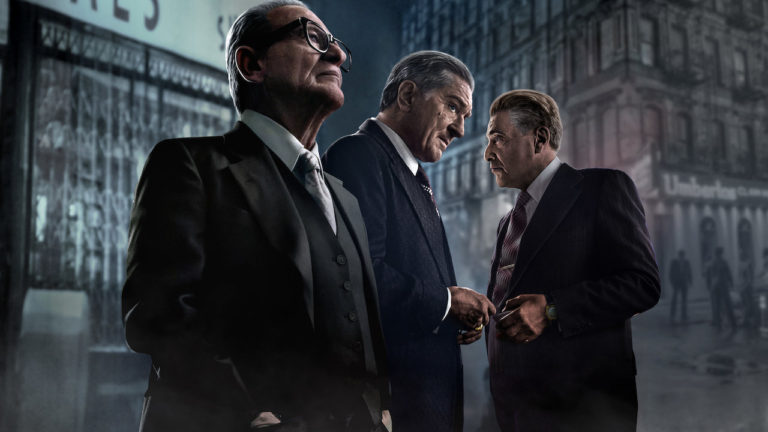
The Irishman (2019)

Joining Roma and Marriage Story on Criterion’s Netflix releases is Martin Scorsese’s 3.5-hour gangster drama about hitman Frank Sheehan and his relationship with mob boss Russell Bufalino and Teamsters leader Jimmy Hoffa. Through the ridiculous complaints of why Anna Paquin doesn’t have many lines (her character’s silence is deafening to Sheehan) to the length of the picture (Gone With The Wind and Cleopatra are longer), this is not like Scorsese’s other gangster flicks. It is a personal view for an aging man who feels guilty for his betrayal and pays a hefty price, to which I ask the Academy, why did DeNiro get snubbed for a Best Actor nomination?

Essential Fellini

This year is Fellini’s 100th birthday. The iconoclast from Rimini shaped the world of post-war international cinema first a writer in some noted neorealist films by Robert Rossellini, then turned to the director’s chair and made some of the greatest films ever. In one box, his poetry, memory, and majestic touch in 14 of his films, from Variety Lights to 8 1/2 to Intervista, can be yours, along with plenty of special features include full-length documentaries on Fellini and noted collaborator, Marcello Mastroianni, plus behind-the-scenes documentaries on several films and two booklets filled with production notes, on-set photos, and essays from film historians.

Follow me on Twitter: @brian_cine (Cine-A-Man)

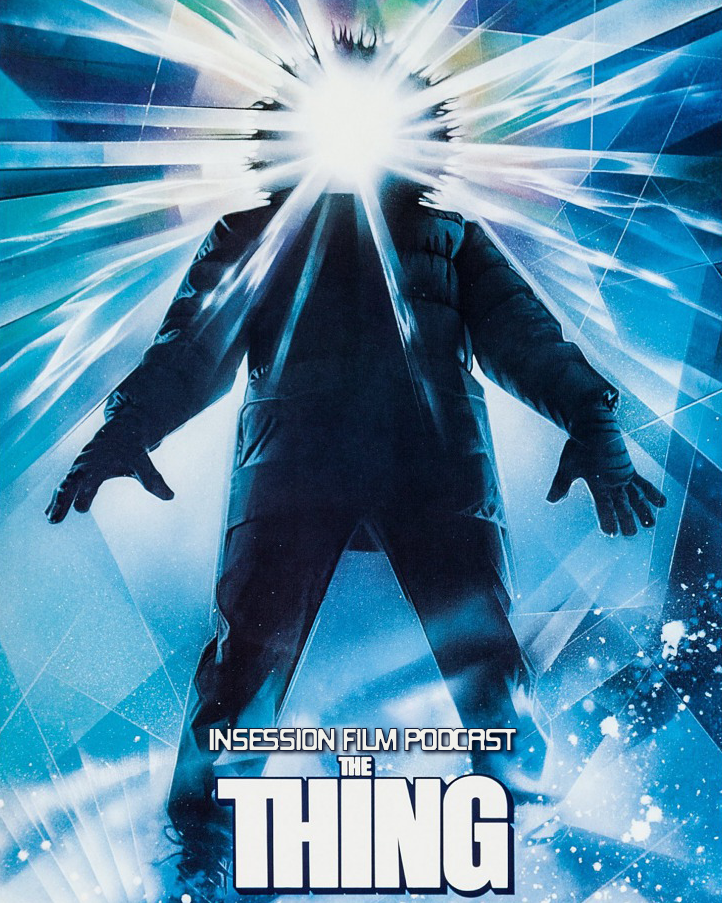
Podcast: The Thing / Tomm Moore Interview / Kajillionaire – Episode 401

This week’s episode is brought to you by Love and Monsters. Follow us on social media for your chance at a free digital copy!

This week on the InSession Film Podcast, we get into the horror spirit as we discuss John Carpenter’s The Thing! We also discuss Miranda July’s latest film Kajillionaire and feature JD’s interview with Wolfwalkers director’s Tomm Moore and Ross Stewart.

With Halloween just around the corner, we thought it would be fun to do something horror related, and while The Thing certainly qualities, Kajillionaire will be a traumatizing experience for those who can’t stomach (very) awkward comedy. But that’s why we love Miranda July. A big, big thanks to Tomm Moore and Ross Stewart for taking time to chat with us last week as well, both of them were very kind and wonderful to talk to. We hope you enjoy the interview and please see Wolfwalkers asap.

On that note, check out this week’s show and let us know what you think in the comment section. Thanks for listening and for supporting the InSession Film Podcast!

– Movie Review: The Thing (7:49)
Director: John Carpenter
Writer: Bill Lancaster (screenplay), John W. Campbell Jr. (story)
Stars: Kurt Russell, Wilford Brimley, Keith David

– Notes / Tomm Moore + Ross Stewart Interview (48:41)

This week for our discussion segment, we respond to a comment by listener Dione Anderson, who had some great feedback to our review of The Assistant. We also feature JD’s interview with Wolfwalkers director’s Tomm Moore and Ross Stewart, who talk everything from Irish lore, the animation process, and what inspired them when making their latest film.

[divider]

RELATED: Listen to Episode 393 of the InSession Film Podcast where we discussed Batman and Batman Returns!

[divider]

– Movie Review: Kajillionaire (1:23:48)
Director: Miranda July
Writer: Miranda July
Stars: Evan Rachel Wood, Gina Rodriguez, Debra Winger, Richard Jennkins

Show Sponsor: First Time Watchers Podcast

– Music

The Thing – Ennio Morricone
Running With The Wolves – AURORA
Love Theme – Emile Mosseri
The Return of the Eagle – Atli Örvarsson

Subscribe to our Podcasts RSS
Subscribe to our Podcasts on iTunes
Listen on Spotify
Listen on Stitcher
InSession Film Podcast – Episode 401

[divider]

Next week on the show:

Main Review: Rebecca / Over the Moon
Top 3: N/A

[divider]

Help Support The InSession Film Podcast

If you want to help support us, there are several ways you can help us and we’d absolutely appreciate it. Every penny goes directly back into supporting the show and we are truly honored and grateful. Thanks for your support and for listening to the InSession Film Podcast!

VISIT OUR DONATE PAGE HERE

Chasing the Gold: Best Adapted Screenplay Analysis (2021)

It seems like every year there are fewer choices for the Adapted Screenplay category. Whilst I admire the Academy for going bold and supporting original filmmaking, it does make this category hard to actually be certain what they will put forward. This is also a much scarcer year for nominations, due to the ongoing pandemic. However, I feel like I found five fitting nominees and I certainly feel confident (sight-unseen for the most part) about predicting these right now.

Nomadland

It won the TIFF People’s Choice Award (which, Best Adapted Screenplay winner Jojo Rabbit also won last year). It won the Golden Lion at Venice. It has been a hit for every single stop it has made this festival season. This is also a tough adaption, as it was based on a book of the same title which was written as a documentary on the life of the Nomads. This adaptation is so faithful to the point that Chloé Zhao went to the same people who were interviewed in the book and used them in the film. I think many filmmakers will appreciate the level of adaptation taken for the story. If she isn’t going to win Best Director (and simply, who’s going to take on Fincher this year?), it seems fitting to award her here.

The Father

For a film that premiered at Sundance at the start of the year, it is strange how it has taken so long for this film to get the awards attention many people are saying it deserves. If you have Anthony Hopkins and Olivia Colman giving incredible performances, then the screenplay is naturally going to be elevated on that alone. This also has the tough task of telling a story so personal and human, yet something that not many films talk about in memory loss and aging. This is one we should have been talking about for months, but at least it is in the conversation now.

One Night in Miami

Whilst not adapted from a book or article, this film is adapted from an existing screenplay. This is the only film of the contenders that I have seen, and I can admit that at times the story can come across as made for the stage rather than the screen. However, it is a fantastic story and the performances elevate the screenplay. There are moments of genius in the screenplay, especially when all four men are in the room and having a discussion about religion and their roles in the black community. It is a film made for this moment in time, and that will benefit in getting nominated here.

Ma Rainey’s Black Bottom

One Night in Miami may have felt like a stage production, but Ma Rainey’s Black Bottom is going to be an actual adaptation of a stage screenplay. That in itself is a tougher challenge and is worthy of recognition. Whilst it is sight unseen, this is another film in which the screenplay will be elevated by potential Oscar-winning performances with Viola Davis and the late Chadwick Boseman. This is a film that is yet to surprise everyone, and I am anticipating it doing well.

News of the World

If there is any film that looks to have nominations all across the board this year, it may just be News of the World. Very little is still known about the film, but having Tom Hanks in it is not a bad start. The trailer received great buzz, and it has been a while since a film of this style has been nominated for a screenplay award. This may end up not only being a contender, but a potential winner depending on how good it ends up being.

My Current Predictions (As of 10/21/2020)

  1. Nomadland
  2. The Father
  3. One Night in Miami
  4. Ma Rainey’s Black Bottom
  5. News of the World

Op-ed: A Brief Journey Through French Poetic Realism

0

When it comes to the history of film movements around the world, France has been the locale for some of the most notable and influential. In between French Impressionism in the 1920s and the arrival of the French New Wave in the 1950s and 1960s, the country became the site of the Poetic Realism movement in the 1930s. Beginning around the same time that Hitler and the Nazi party took control in neighboring Germany, the films of this style reflected the mood of a nation that felt the pressure of an oncoming war as the decade went on. These films depicted normal individuals (usually men) with fatalistic attitudes in a truly sobering and down-to-earth fashion. The films also took on a noticeably dark and foggy aesthetic to reflect these attitudes. As always, this piece is not designed to be an exhaustive list of influential films from the movement, but these are six notable examples that came from that time. 
L'ATALANTE (1934) – Film Review – ZekeFilm

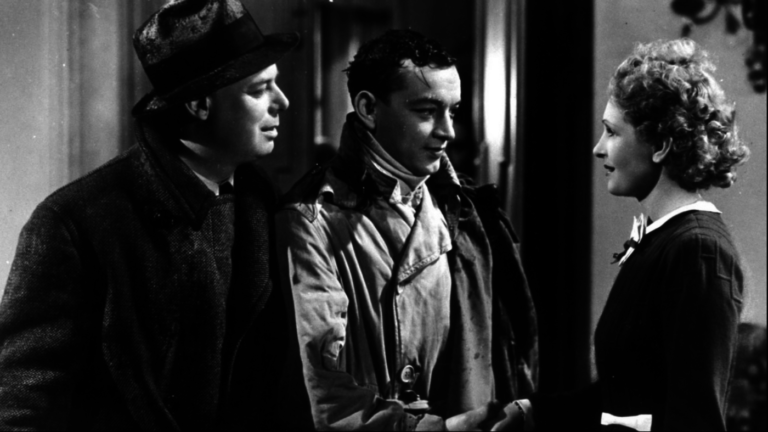
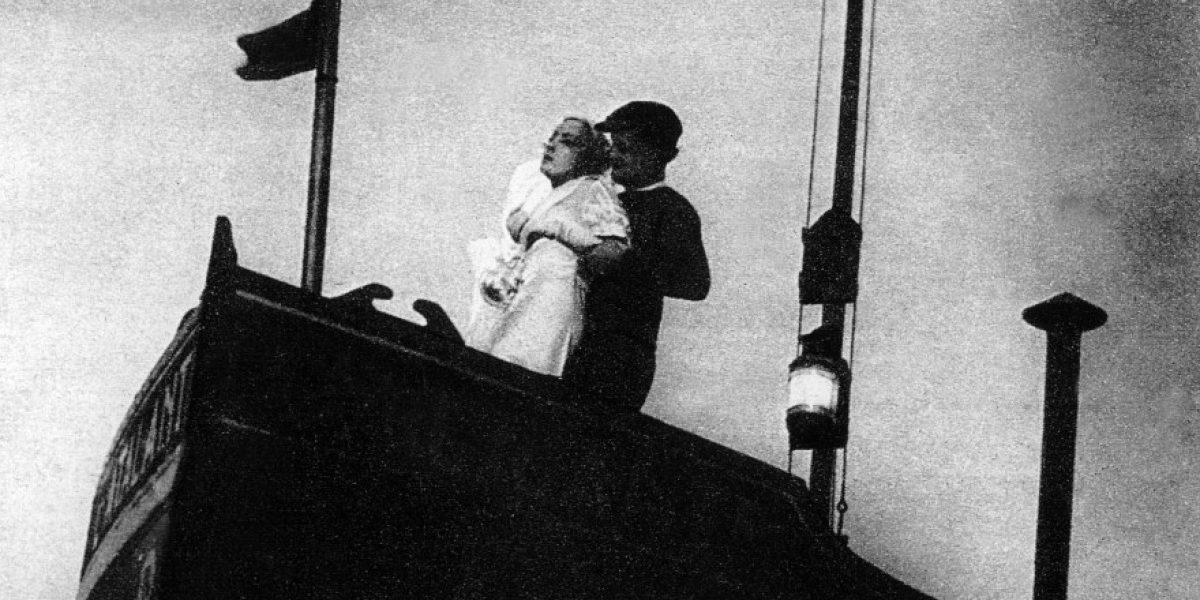
L’Atalante (1934, Jean Vigo) 

One of the earliest works of Poetic Realism actually differs quite a bit from the films that would follow. Jean Vigo’s film tells the story of Jean and Juliette (Jean Dasté and Dita Parlo, respectively), a newly married couple who embark on his cargo boat, L’Atalante. They are joined by Jean’s two shipmates, led by the gruff but lovable Jules (a standout Michel Simon). Though their romantic journey begins well, things become complicated when they land in Paris as their honeymoon destination. Dramatic decisions lead to dire results, and the relationships between all of the characters–not just the two lovers–are threatened. 

This film stands out from other Poetic Realist features largely because of its humor. Though the film presents working-class situations and the difficulties that arise from them (much like other films of the movement), the first half of the film is more of a comedic romance than a dark representation of troubled characters. However, the tonal shift midway through signals a deeply depressive state for our leading male character, creating questions of whether redemption is in the cards. Here, love serves as a source of that redemption. Though the concept would be used in very different ways in later films, love became a heavily recurring theme throughout the movement. While L’Atalante may not have the impact, maturity, or introspection of later films, it does give an idea of what would come later. 
Vatican Film List - Decent Films

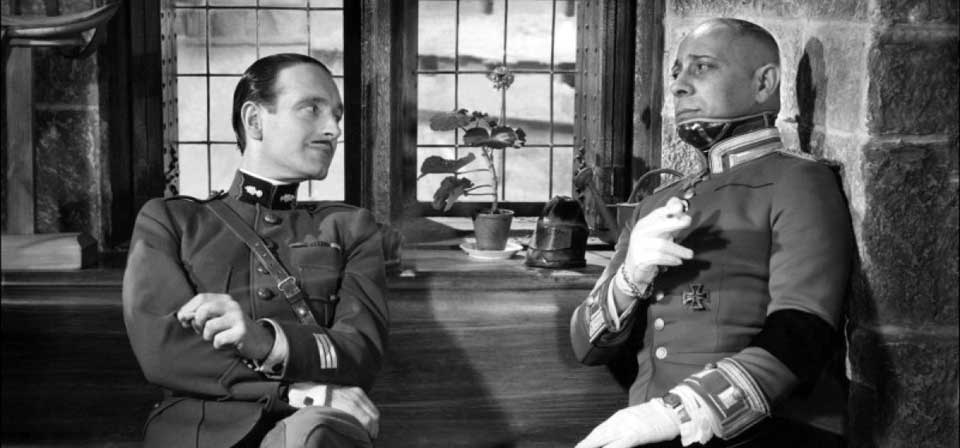
The Grand Illusion (La Grande Illusion, 1937, Jean Renoir)

The best and perhaps most widely recognized film of the Poetic Realism movement came from one of the most celebrated French directors of all time, Jean Renoir. The Grand Illusion took on the sense of the impending war in the country head-on, while also becoming the first film in a language other than English to be nominated for Best Picture at the Oscars. It’s a World War I story of a working-class officer (Jean Gabin) and his upper-class superior (Pierre Fresnay) who are shot down by a German officer (Erich von Stroheim) while on a mission. As a result, they are placed in a prisoner-of-war camp alongside other French soldiers captured by German forces. While the two men find a sense of belonging and friendship amongst their fellow soldiers, they continuously seek opportunities for escape as they move from camp to camp. 

Though World War II was still a few years away, this film feels like a reflection of that time in its exploration of war and ethics. An interesting dichotomy emerges from our two main characters, reflecting their socioeconomic backgrounds. While Fresnay’s aristocratic character reflects on the vanishing “ethical” way of conducting war, Gabin realizes there is nothing ethical about war at all. The harsh conditions they face puts them on an equal level, and they face a growing sense of despair as time goes on. This despair would become very common in films of the movement, as would the heavy societal themes the film addresses. This was also the beginning of a string of notable films for Gabin, who plays the lead role in four out of the six films covered here. From its somber content to its influence on films like Casablanca, The Grand Illusion earns its distinction as one of the greatest war films of all time. 

Pepe Le Moko Review | Movie - Empire

Pépé le Moko (1937, Julien Duvivier) 

In the same year The Grand Illusion was released, Jean Gabin traded his military gear for gangster garb in Julien Duvivier’s Pepe le Moko. Gabin plays the titular character with a true sense of confidence in this escapist tale with an underlying feeling of dread. Pepe is a fugitive gangster in the Casbah of Algiers. The local police want to put him away for good, but he’s intensely protected by those who surround him. In short, Pepe is safe and sound as long as he stays in the Casbah. And just when it seems like nothing will sway him away, a beautiful woman from Paris named Gaby (Mireille Balin) might be the key to changing that. 

This is where the gloomy portrayal of love really took off for Poetic Realist films. It plays a major role in the narrative, though in a much different way than L’Atalante. Rather than serving as Pépé’s form of redemption, the prospect of love threatens to be his downfall. The film also uses nostalgia to make us question how true this love is. In one of the film’s best scenes, Pépé and Gaby discuss their favorite sites and locales in Paris. It becomes clear that Pépé has become tiresome of his current way of life and longs for his previous residence in the city. The distressing atmosphere created as a result of this, alongside what might be Gabin’s best performance, drives home the sense of nostalgia and a craving for a better time. What Pepe is feeling may have been eerily similar to what many in France felt with the threat posed in Europe at the time. 
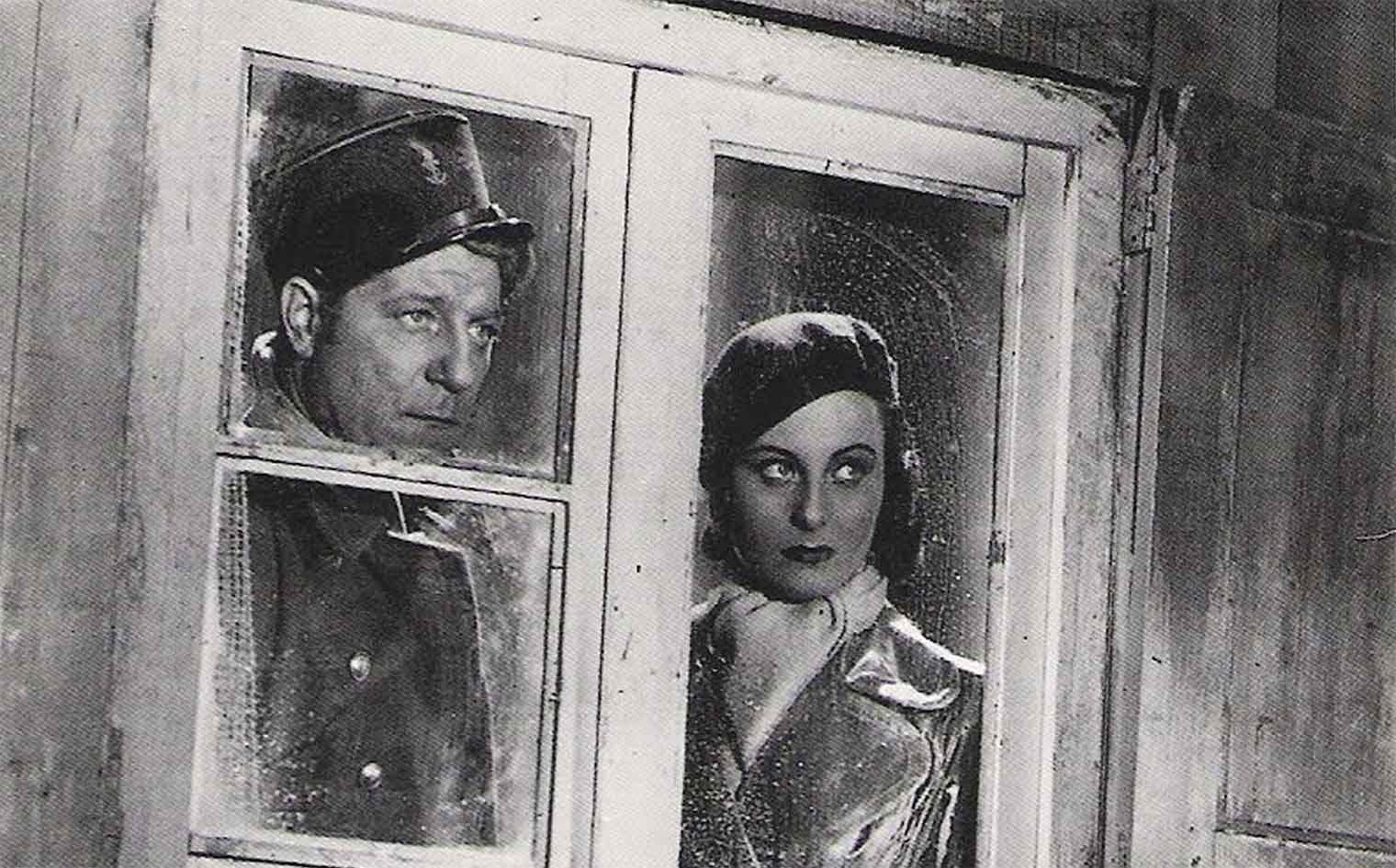
Film Forum · PORT OF SHADOWS

Port of Shadows (Le Quai des brumes, 1938, Marcel Carné) 

Of all the films released during the era of Poetic Realism, the one that probably reflected the central themes and styles of the movement the most was Marcel Carné’s Port of Shadows. By following a lowly, fatalistic man who falls deeply in love and pays the price for it, a number of aspects from other films came into play here. Once again, we have Jean Gabin in the lead role. This time he plays a deserter of the French army named Jean who finds himself in a port city influenced by the local mob. He runs into a young woman named Nelly (a fantastic Michèle Morgan) and the two immediately hit it off. Though they wish to be together, these dreams are hampered by Jean’s need to leave France, the gangsters that also vie for Nelly’s hand, and Nelly’s own godfather. 

The film has the feel of a Poetic Realist picture from the very start, giving us foggy cinematography as we’re introduced to Jean and his murky circumstances. He’s disillusioned by the war effort – yet another theme of the time – and love is a fantasy to him at first. His affection for Nelly is accented by the camera, which shoots her in a similar way to Ingrid Bergman in Casablanca. And though Gabin has a somber softness to him here, his character cannot escape from moments of brutality. Here there are crimes of passion from men who resort to violence when confronting each other. Despite all of this, the film hits all emotions, not only those that are melancholy in nature. At one point, Jean says, “I’ve been happy at least once in my life.” It’s fitting, as the romantic scenes between him and Nelly are quite joyful. The fact that Nelly is only 17 in the film does not hold up well, though the film does capture moments of passion within the fog of despair.  

Le Jour Se Lève review: classic film has its day

Le Jour Se Leve (1939, Marcel Carné) 

“A man has committed murder…” Le Jour Se Leve begins with this haunting revelation, setting the stage for the grim situations that will follow. Next, we hear the sound of gunfire and the victim stumbling to his death. We come to learn that the perpetrator is our working-class protagonist François, who is of course played by Jean Gabin. This performance features the most distinct and pointed dichotomy between cheeriness and glum from his character. From the beginning going forward, much of the film is told in flashback in order to display how he ended up in this position. As it turns out, once again, love has become his downfall. We are shown his first interaction with Françoise (Jacqueline Laurent), which leads to a brief romance between the two. It becomes complicated when Françoise longs for the older and more established Valentin (Jules Berry), who audiences will recognize as the victim of François’s gunfire. 

While all of this is revealed, we often come back to François in the present, as he stands off against the police who have come to arrest him. Along the way, director Marcel Carné and Gabin deliver perhaps the most intriguing character of all these films. Though we are first introduced to him as a killer, the film pulls the layers back to reveal the instances of lies, deceit, and heartbreak that led to his predicament. We learn more of him from his neighbors, who refer to him as “a good chap.” What we are exposed to is a crime of passion that still allows us to decide where the fault lies. Additionally, the film employs an effective noir style to expose the fatalist mindset of François while he waits. 
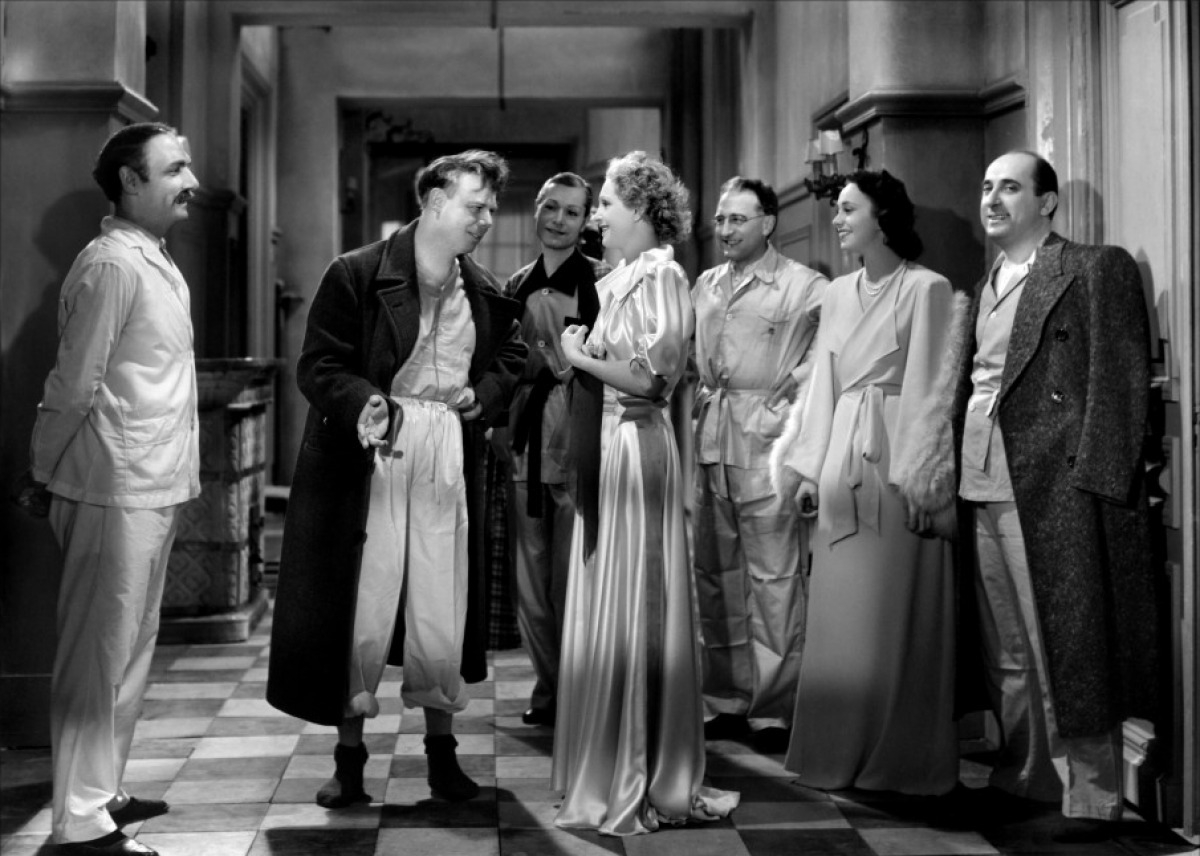
Featured: Renoir's Own Rules Of The Game | InSession Film

The Rules of the Game (La Règle du Jeu, 1939, Jean Renoir) 

As one of the final films released as part of the main movement, just before the onset of World War II, The Rules of the Game features a rather unique set of characters and a shifted tone. Director Jean Renoir (who also acts in the film) predicted the beginning of the aforementioned war with this film, while also relaying his ideas on the perception of the situation by upper-class individuals. The plot cannot be as easily defined as other films of the movement, partially because there are so many characters at play. Essentially, a group of wealthy individuals come together for a retreat at the country home of Marquis Robert de la Cheyniest (Marcel Dalio). One of the guests is a famous pilot André Jurieux (Roland Toutain) who is in love with Robert’s wife Christine (Nora Gregor). Fits of jealousy and chaos ensue, not just between the wealthy acquaintances, but also between their poor servants. 

What’s most striking about this film compared to other Poetic Realist films is that it does not present its themes in an outright fashion. Rather than displaying the fatalistic and melancholy attitudes of characters, Renoir is making a statement on a subtextual level. We do not see a group of people that represent a disdain for the oncoming war. Rather, we primarily witness a group of individuals with power who are oblivious to the circumstances around them. Love is the aspect most responsible for the disorder in the film, but it’s difficult to tell how to present love really is. Are these people really in love, or are they just playing the titular game? That said, the characters who might actually be in love are the ones who have the clearest collapse. Overall, the film is a satire about the rich that still holds onto realistic qualities, with an ending that signals darkness rather than light. 


The appeal of major film movements is not only their distinct style and form of storytelling but also how they reflect the time period and locations they originate from. That is especially the case with French Poetic Realism. These films feature compelling characters and an authentic aura while also serving as historical markers for the attitudes that persisted when they were released. Though they are engaging for their foggy and realistic style, where they really shine is in the fatalistic themes and motivations behind the plots and characters.


Movie Review: Kristin Scott Thomas’ Sinister Performance is Not Enough to Save ‘Rebecca’


Director: Ben Wheatley
Writer: Joe Shrapnel, Jane Goldman, Anna Waterhouse
Stars: Lily James, Armie Hammer, and Kristin Scott Thomas

Synopsis: A young newlywed arrives at her husband’s imposing family estate on a windswept English coast and finds herself battling the shadow of his first wife, Rebecca, whose legacy lives on in the house long after her death.

[/info]

We seem to find ourselves in an endless loop of remakes and reboots. And while some are decently made, to the point where we can find the ounce of good in order to shrug off the fact that the studio didn’t need a remake in the first place, most of these repeats are generic versions of the original. In director Ben Wheatley’s new take on the classic Rebecca, I find myself wondering, did we even need a remake?

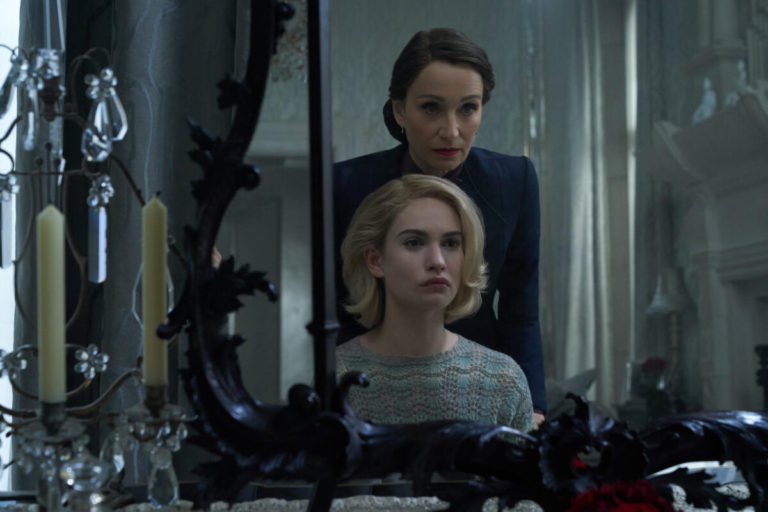
Daphne Du Maurier’s 1938 novel serves as the source material for this new take on the gothic horror. Du Maurier is no stranger to the suspense as Rebecca tells the story of a young woman (Lily James) traveling as a companion to a less than cordial woman, Mrs. Van Hopper (Ann Dowd). On one of their stays in Europe, the young woman meets Maxim de Winter (Armie Hammer),  a rich man who is still feeling the sting of his wife’s recent passing. She immediately falls for Maxim, and after a few days by each other’s side, he asks her to be his wife. What begins as blissful nuptials against the beautiful European coasts, is abruptly halted when the young woman moves into Manderley, meets the incredibly creepy Mrs. Danvers, and is haunted by the former Mrs. de Winter. What unfolds is lies, deceit, and whisps of the supernatural.

With works such as The Birds, My Cousin Rachel, and Don’t Look Now, Du Maurier bleeds horror and suspense. In Alfred Hitchcock’s 1940 adaptation of Rebecca, Hitchcock (the Master of Suspense) layers the horrors throughout the film as it sends the young woman into a whirlwind of events in the Manderley home. However, Wheatley’s adaptation is far from Hitchcock’s brilliance. Now, to be fair, I never expected Wheatley to reach such heights in this go-around. However, the characters that befall this new adaptation are just plain boring.

James plays the young woman who, by the way, never has a first name revealed. So from this point on, I’ll call her the second Mrs. de Winter — as the staff so sarcastically calls her. It’s a rough transition as she tries to acclimate into the life of the house. James does it in typical innocent fashion as she plays the character like a young doe stepping into a den of lions. But as many of you may root for James to create a scene where she’s hauntingly being taken over by the presence of the house — it doesn’t happen. There’s nothing that ties you to the protagonist and the more she is on screen, the more you want her off. James spends the majority of the time blubbering and complaining of her new situation, as she tries to look for answers to the death of Rebecca. An approach to the film that gets old almost immediately. If James spent her whole time crying on screen, Hammer spent his time shirtless. I’m sure many people won’t mind Hammer’s lack of clothing, but it becomes eye-rolling. But that frustrating aspect aside, his overall performance is forced, so much so that I found his domineering Mr. de Winter no scarier than a “spooky” character in a neighborhood haunted house. He fails to wow me, or inject a new feeling of horror into the film. Often times I find his fits of rage towards the second Mrs. de Winter to be a dog who’s all bark and no bite.

All hope for Rebecca isn’t lost as is seen with Kristin Scott Thomas’ performance of Mrs. Danvers. Danvers runs the house like a warden overseeing a prison — keeping a tight ship on the day to day operations. And in that regard, Thomas’ keeps this film running. She’s a conniving character who broods around, lurking in the dark corners of Manderley. Her unwavering loyalty to the deceased Rebecca is a bit creepy in its own right — bordering an obsession. You can decipher the extent of the relationship between Danvers and Rebecca however you see fit. Thomas spits a venomous poison in her interactions with the second Mrs. de Winter. A cold presence in what the second Mrs. de Winter hoped would be a warm atmosphere. Thomas is the highlight of the film — the core from which all horror resonates. But the scenes without her powerful performance makes the rest of Rebecca fall flat.

As Rebecca progresses, the more twist and turns the story takes. But there’s nothing that immediately makes you feel sympathetic to the de Winters situation. Wheatley never flushes out the haunting imagery that flows throughout the house, and by the time you need to take note of the dark presence, you can’t force yourself to feel, well, anything. At that time, I wouldn’t blame you for glancing at the clock wondering when the movie will be over. Wheatley needed to have played with the horror even more than he did. Hitchcock was always limited by the codes of the old days, and now that the codes leave a bit more room for creative expression, Wheatley missed the opportunity to take advantage of Du Maurier’s dark story-telling.

Rebecca has multiple flaws, ones that can certainly prevent you from enjoying this classic tale. It goes without saying that the original is better in nearly every way. However, even with that sentiment aside, Rebecca doesn’t deliver the horrors or suspense that needed to be on display. The thirst for a sinister and mysterious Rebecca is a thirst that is never quenched.

Grade: C-

Movie Review: ‘Collective’ Looks into Governments Collapsing Journalistic Credibility


Director: Alexander Nanau
Writer: Alexander Nanau, Antoaneta Opris
Stars: Razvan Lutac, Mirela Neag, Catalin Tolontan

Synopsis: Director Alexander Nanau follows a crack team of investigators at the Romanian newspaper Gazeta Sporturilor as they try to uncover a vast health-care fraud that enriched moguls and politicians and led to the deaths of innocent citizens.

[/info]

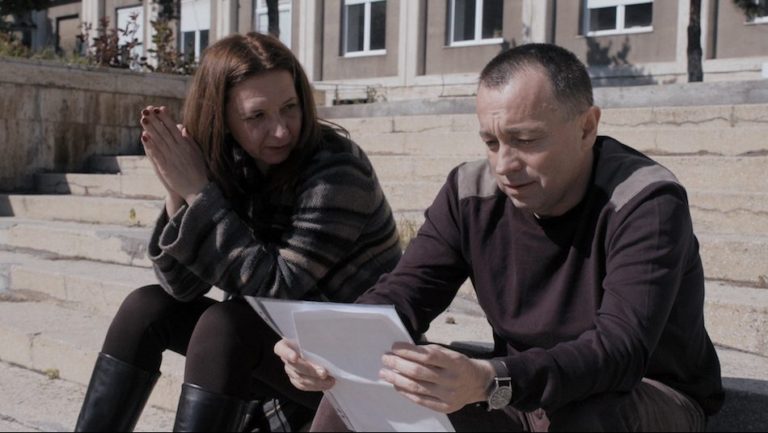
With “fake news” and disinformation all over, when conspiracy theories become general truth instead of the actual truth, it is good to be reminded that legitimate journalism and not clickbait can actually make a real impact. Such an institution has to be protected for the people to be aware of what their government is actually doing rather than what they say. Such governments fear of a breakdown of the state if every dirty story is uncovered, but hasn’t stopped such citizens to protest rigorously and bring everyone down. Take Romania in 2015 for example, covered on the ground in a fly-on-the-wall documentary capturing the chain of events.

Director Alexander Nanau tells us straight away the catalyst of the event and shows the moment the tragedy occurred and the panic from its victims. A fire during a concert in a nightclub killed 27 people on the spot, with more dying days apart in hospitals. Quickly, it is discovered that anti-biotics to attack bacteria on burn victims were heavily diluted, rendering it useless when applied to those in the ICU. A tragedy turns into outrage over corruption by authorities who let the club open despite it now having fire exits as well as healthcare companies responsible for the dilution. The center of the expose is journalists from Gazeta Sporturilor (“Sports Gazette” in English) who use their pages on soccer to instead publicize the ugly truth as to why many had to die for the cause of saving money for a private healthcare manufacturer.

In their offices, meeting with grieving parents, whistleblowers, and on-scene press conferences with government officials, the audience is right there as another attendant to the meetings. The government has collapsed and it is now a collective effort of independent-minded figures to get everyone together, root up problems in the healthcare sector, and bring justice to those families grieving over the loss of their loved ones. There’s a feeling of urgency as the journalists go digging, even more, to find how much of a swamp the industry is in that country, and the difficulty it is to drain it. Sound familiar?

Collective is a damning indictment on what many governments are accused of on a daily basis, but this is one where the blood-stained hands of politicians and technocrats are all caught in the cookie jar. It is a story of human endurance in the face of a national tragedy and fighting the establishment, symbolized by a survivor of the tragedy who does not hide her terrible burns and scars are over the back and arms and even poses naked. It is not a fairy tale story, but one of the cynical feelings many have towards the rulers as the truth seekers risk it all to pull out the rotten core.

Grade: A

Movie Review (LFF): ‘The Intruder’ is a Tale Suffering From an Identity Crisis


Director: Natalia Meta
Writer: Natalia Meta
Stars: Guillermo Arengo, Mirta Busnelli, Daniel Hendler

Synopsis: The story of Inés, a young woman who after a traumatic episode during a trip with her partner begins to confuse herself between the real and the imaginary.

[/info]

It’s perhaps fitting that a movie concerning a woman facing an identity crisis would have one of its own. With an overextended prologue that feels tonally inconsistent with the rest of the movie and a gossamer-thin plot that only really begins to pick up pace within the last fifteen minutes, it could be argued The Intruder doesn’t entirely know what it wants to say. This is a shame because there is potential here – Erica Rivas being one of the standouts – but it never gets realized; The Intruder seems content to play it safe (at least until those last fifteen minutes), refusing to lean into its wilder aspects, and so ends up feeling neutered.

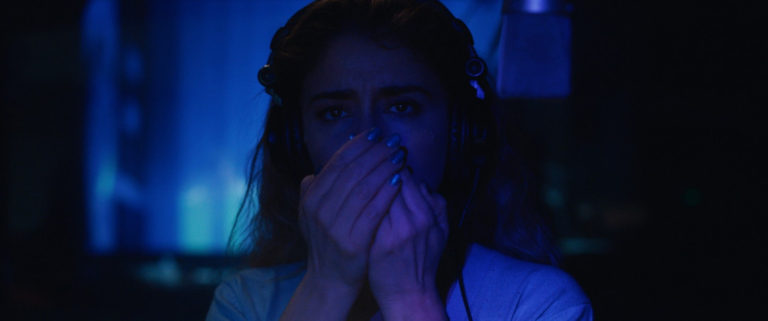
We first see Ines (Rivas) at work in a recording studio. She is a voice-over artist, dubbing an Asian horror movie that viewers might wish they were watching instead. Her face is distorted into a series of horrified expressions, as she screams in terror, the movie projected across her face. Seconds later she drops all pretense as the recording is over and the sound engineer (played by Agustin Rittano) interrupts to cut the scene. It’s an interesting start, tinged with 70s paranoia: there are shades of De Palma and Coppola here.

Later, we see Ines and new boyfriend Leopoldo (Daniel Hendler) take a trip to Brazil. Leopoldo is, for want of a better phrase, a possessive jackass. He continually suffocates Ines with demands, pressuring her to take sleeping pills on the flight to combat her fear of flying. This leads to a jarring dream sequence where the air hostess offers to choke a sleeping Leopoldo to death for Ines. Unfortunately, he lives long enough for them to arrive at their hotel, where a frustrated Ines has had enough of Leopoldo’s insecurity and locks herself in the bathroom. The tension is well handled here, director Natalia Meta (making only her second feature after Death in Buenos Aires) lets the scene unfold without too many cuts and slowly teases out the drama. It helps that Rivas is a commanding enough presence to keep the viewer’s attention.

It is here that their relationship comes to an end, with a finality that seems Ines willed it into existence. Leopoldo’s departure feels like the beginning of a mystery in which Ines is destined to untangle and there is an intrigue into how this happened in the first place.

You would be forgiven if you believed you had figured out where The Intruder was going at this point, but you would be wrong. For as a startled Ines heads back to Buenos Aires, the opening titles confirm that this twenty-plus minutes of vague ambling is only the prologue. Unfortunately, the rest of The Intruder doesn’t even attempt to follow the tone it has established – albeit through a painstakingly slow and deliberate means.

Back in Buenos Aires, Ines’ life begins to unravel. She is unable to sleep, suffering nightmares whenever she does and begins taking a cocktail of medications offered to her from random people with no medical background. Work is also a disaster: there appears to be an electromagnetic interference whenever Ines speaks, which disrupts the recording. An old lady (Mirta Busnelli) who happens to be at the recording studio for no given reason informs her she has an intruder: a man who is haunting her dreams and invading her body.

And really, this is it. The action stalls here as the plot all but dissembles and the viewer is treated to fifty-plus minutes of Ines attempting to discover why this is happening to her. Meta attempts a kind of shlocky horror vibe with an atmosphere of mystery that she can’t quite sustain. With somewhat muted visuals (we never see much of Buenos Aires at all, the action taking place mostly in dark rooms) it’s up to the sound design to really sell this. This makes sense for a movie this concerned about aural hallucinations, but it’s only half a job done. While the music does notch up the tension, using an old pipe organ that evokes the Phantom of the Opera vibes, it does nothing with that tension. Instead, it’s left to fizzle out whenever Ines moves on to the next thing, be it dealing with her exhausting mother (Pain & Glory’s Cecilia Roth, easily one of the best things about this movie), a potential suitor (who’s effeminate nature is amusingly ridiculed by Ines’ mother), or her sideline as a soprano in a choir, the maestro of which she has a seemingly over-involved relationship with.

Recurring motifs such as the unseen creature crawling its way up Ines’ body as she lies in bed, fall completely flat, given that they are never really explained amid the aural goings-on. The implication is that Ines is having a mental breakdown. This would be an interesting explanation for everything that’s been happening if Meta had decided to lean into it, but instead, these little hints are left to wither and die on the vine.

Finally, after all of Ines’ attempts to understand what’s going on with her (including a head-scratching sequence where her sound engineer is revealed to dabble in electrotherapy and engages in a sexually charged experiment with her), the veil is all but lifted and a somewhat baffling denouement indicates we were dealing with a gender identity issue this whole time. It’s puzzling because the abruptness of it highlights how little we know of Ines’ character. Amid all of the hallucinations, the nightmares, the interactions, etc, we learn very little of her character and so this late-game “twist” feels unearned and frustrating, like an ‘aha’ moment that is robbed of an impact because there was no groundwork laid in the first place.

And that’s really the problem with The Intruder. There is very little groundwork laid here. The tone shifts so often that you’re hard-pressed to know where to invest your energy. Beginning with an ostensible tale of toxicity and potential gas-lighting, which is then summarily dropped in favor of a shlock-horror fantasia with a honey-drip slowness, ending with a statement about gender identity that feels tacked on and doesn’t pack anywhere near the punch it thinks it does, The Intruder doesn’t know what it wants to say, or what it wants to be. Despite some good acting, and effective sound design, this whole endeavor feels like a frustrating attempt to throw everything at the wall to see what sticks.

Grade: D

Movie Review (LFF): ‘After Love’ Struggles to Live Up to Its Opening Sequence


Director: Aleem Khan
Writer: Aleem Khan
Stars: Joanna Scanlan, Nasser Memarzia, Nathalie Richard

Synopsis: Set in the port town of Dover, Mary Hussain (Scanlan) suddenly finds herself a widow following the unexpected death of her husband. A day after the burial, she discovers he has a secret just twenty-one miles across the English Channel in Calais.

[/info]

The opening sequence of this film appears to set-up a normal household in their daily lives. The kettle is brewing, the couple are chatting and life moves as normal. However, it does not take long into this opening scene to realize that something major has happened, and life changes within that moment for Mary Hussain. Not only is this scene so incredibly impactful, but beautifully done and respectfully handled. After the audience realizes what has happened, the screen cuts to black and the scene is over.

Joanna Scanlan gives a wonderful performance here, not just in the opening scene but throughout the entire film. The performance is not one that is over-dramatized or romanticized, instead of feeling human and real. I have not seen her in anything before this film, but she is someone that I want to keep my eyes on in the future. She has to hold this entire film, and she manages to do that.

I appreciate the approach to filmmaking that Aleem Khan took with this story and his approach to filmmaking. This is an authentic look not only into the life of a widow but the life of a Muslim. The filmmaking captures the prayers, the prayers, and the lifestyle that Muslims live, and yet it does not become a personality trait for Mary or her family. She is still motivated in this film by her family and by the narrative, things that aren’t based on religion. This is not a religious film in nature, but I appreciate the use of religion throughout the film.

Whilst I appreciate what Khan did with certain aspects of this story, unfortunately, the narrative, in general, lacked after that powerful opening sequence. This story focuses on exploring the life that Mary’s husband had whilst he was alive, but I struggled to remain fascinated during this section. The strongest parts of this film are when the story is based on Mary and her dealing with the grief of losing a loved one, and the film loses some of that honestly and raw filmmaking when it goes beyond that story.

What might have helped this story be stronger would have been a further exploration of the other characters around Mary, particularly the family that she goes to work for to gain access to their place. The performances were solid from both the mother and the son, but they lacked development in a story that was asking them to have a personal connection to Mary and her husband, Ahmed. The family felt like they were there just to have a narrative to the film, and it left me feeling cold when Mary was interacting with them.

The film uses the location of the cliffs of Dover as a symbol, which is effective in some ways. Watching the cliffs break off a little and having Mary stare out at it, representing how she feels at that moment in time, is a great use of imagery. However, it does take away from the editing style of the rest of the film, which feels raw and focusing on capturing the real emotions behind people. Using a symbol to represent this does look nice visually but takes away from the impact that Joanna Scanlan gives from her performance alone.

The film is a tight 89 minutes long, which seems reasonable for that this story focuses on. However, I wonder if the time length is part of the reason this film doesn’t quite work. If this film took some more time, the relationships could have been further developed and we could have learned more about the side characters. If the film was shorter, this story couldn’t have felt unnaturally dragged out and the pacing would have been tighter. I just wish this film had something more to offer.

This film had real potential and a distinctive voice that certainly deserves to be heard by a large audience. There are individual aspects that I really love about this film, but I just wish the story connected with me more. I am in love with the opening scene, and it shows to me the talent that Aleem Khan has with filmmaking. I will be interested in whatever Khan makes next, but sadly this one didn’t fully work for me.

Grade: C+

Movie Review: ‘Billie’ is a Tale Of Two Fascinating Stories


Director: James Erskine

Writer: James Erskine

Synopsis: In 1971, journalist Linda Lipnack Kuehl set out to write the definitive biography of Billie Holiday. Over 8 years, she tracked down and tape-recorded over 200 hours of interviews with the extraordinary characters that populated the iconic singer’s short, tumultuous life. However, Linda’s book was never finished and the tapes never heard — until now.

[/info]

In James Erskine’s documentary of the singer’s life, we follow Holliday’s rise to fame through her rough upbringing, to standing alongside bandleader Count Basie, producer John Hammond, and her different lovers and managers, and her downfall due to drug addiction, as told by those who knew in audio recordings dating back almost 50 years ago. From the beginning of the film, we learn about these recordings accumulated from a single woman and Billie Holliday fan who worked herself to own tragic demise like the singer she admired and that it was the first time these tapes were being heard publically. The title may be called Billie, but this could have easily added a slash and name, retitling it “Billie/Linda.”

Of course, Billie Holliday is still among the greatest jazz-related performers of all time, and the archive footage of her singing and interviews of those who were with her throughout verify that. But it goes deeper into her personal issues, first with the color of her skin, the pressure she faced over her content (such as singing “Strange Fruit,” a song about lynching), and her lifelong struggle with drugs that the federal government chased Billie for the rest of her life. Erskine is able to piece together a collage of sound pieces and still images that tells the story for him thanks to audio recordings of main figures in her life, all of whom are dead today.

As the main story unfolds surrounding Holliday’s life, we slowly learn about Linda Lipnack Kuehl, the woman who decided to pursue writing a biography about Billie Holliday. Her sister is interviewed and bits of her recollections of what happened to Linda during the interviews when she started to get too deep into the interviews personally. A negative to the documentary is that the story does not delve into Ms. Kuehl’s complete life as much and what else was going on around her in the years prior to her death. It leaves suspicion as to what may have happened that fateful night, but is not conclusive or implies that something else happened to her. What is known is Billie was her passion and Linda feels connected to Holliday’s troubled life, which leads her to pursue such a project. Like other writers, actors, and musicians, it’s the passion project that brings on the heartache and fear around them.

One side remains a mystery, the other is solidified in history. Billie Holliday is presented by James Erskine as among the many greats used and abused by many, a victim of racial profiling and harassment by fame against law enforcement similar to the events of today. The story around her performance of “Strange Fruit” shakes racism to its core as it is under current circumstances, a reflection of Holliday daring to stick up to the establishment, while for Ms. Kuehl, she is herself a victim of jumping into Billie’s murky waters that lingered on many years after dying of cirrhosis. The blood, according to Erskine, has always been on the tea leaves of history.

Grade: B 

Movie Review (LFF): ‘One Man and His Shoes’ is a Fascinating Insight Into A Legend


Director: Yemi Bamiro

Synopsis: ‘One Man and His Shoes’ tells the story of the phenomenon of Air Jordan sneakers showing their social, cultural and racial significance and how ground-breaking marketing strategies created a multi-billion-dollar business.

[/info]

There is arguably no greater sportsman of renown than Michael Jordan. The NBA legend was revered throughout the world in the 80s and 90s for his incredible athleticism and ability to win games almost on his own. His accomplishments for the Chicago Bulls, taking them from virtual fringe team to 6-time champions, is unparalleled. Untouchable as he was in the world of basketball, his influence spread out into the cultural zeitgeist; he was an icon for young African Americans, as stylish as he was personable. It’s no real surprise that his fame would give rise to a sneaker of equal prominence and stature, as long-lasting and legendary as MJ himself: the Air Jordan.

Air Jordans have been at the top of the mountain in the sports shoe industry for a long time now, and in Yemi Bamiro’s documentary, we get an insight into how this cultural phenomenon happened, and what it did to the societies it targeted. It’s an illuminating insight into an aspect of Michael Jordan’s impact that wasn’t quite addressed in this year’s The Last Dance documentary.

One Man and His Shoes starts off in the same territory as The Last Dance, charting Jordan’s historic rise and that of the Chicago Bulls, but then pivots to a more socio-economic view: Jordan’s fame was able to bridge the divide between black athletes and mainstream branding that had been eluding them thus far. As well as this, Nike was able to tap into the youth market in a way never done before – which had tragic consequences as well as financial implications.

At first, it seems Bamiro is more interested in the flashy side of the industry. Super quick edits of Jordan’s highlight-reel play over talking heads explaining why the man was able to capture the public’s imagination in the way he did. It covers ground around Jordan’s decision to sign with Nike, and why their campaign was so unique (in the past, with brands such as Adidas and Converse, the idea was to showcase an entire team. Jordan’s was the first to focus solely on him). It’s fascinating and dives into the psychological aspects of the decisions that were made. In that way it transcends a traditional sports documentary: it is less about Michael Jordan and more about how fame can be manipulated into sales with the right ideas.

We see instances of superfans who collect thousands of pairs of Air Jordans in their various different iterations (including someone in France who claims to own every pair of Air Jordans ever marketed) and another guy whom MJ gifted the shoes he wore when he famously broke his toe. The shoes in question are kept in a glass case like a museum artifact and take pride of place in the house. It’s astonishing, in a way, to see the level of fandom bestowed upon these shoes and Bamiro is excellent at capturing the electricity surrounding their releases. Viewers might find themselves wanting a pair of Air Jordans having never worn a pair before in their lives.

The most interesting part, however, comes when Bamiro turns his focus on the darker aspects of Air Jordans; specifically, the murder of young men like Joshua Woods killed for his pair of Air Jordans in 2012. Although this part is undoubtedly the most fascinating aspect of the documentary, it feels like  Bamiro struggles to get the right tone following the pacey, bombastic first half. To go from animated segments and enthusiastic talking heads to a serious and somber murder investigation requires a very deft touch and it’s not altogether pulled off here. As well as this, it’s not entirely clear what Bamiro is trying to say. He touches briefly on Jordan’s lack of involvement with the case and slightly hints that Jordan might have borne some of the responsibility for allowing the marketing to get out of control, but really he pulls his punches and that leads to a bit of a lightweight finale.

It’s a beautifully done documentary, with real elements of style and flair. At its best One Man and His Shoes captures an important cultural movement and the forces behind it, an important lesson to learn. The talking heads, also, are fascinating and give deep insight not just into the life of MJ but about the sport of basketball at the time, and the world of marketing. The two worlds are melded well and make for a thrilling showcase. Unfortunately, the last half of the movie tries to focus on a very different subject and it doesn’t feel like it works, specifically as Bamiro doesn’t seem as interested in diving into the ethical ramifications of Air Jordans as you might want him to.

Ultimately, if you’re a basketball fan you’ll find plenty to love here. At a brisk 80-min runtime and with a fascinating insight into a world which hasn’t been covered much, One Man and His Shoes feels like it could be a companion piece to The Last Dance; just don’t expect many answers regarding the darker aspects of Air Jordans.

Grade: B

Podcast: David Byrne’s American Utopia / True Stories – Extra Film

On this week’s Extra Film, Ryan and Jay have a David Bryne-apoolza as they discuss the Spike Lee documentary David Byrne’s American Utopia and Byrne’s only directed film True Stories.

Before the Extra Film duo begins another movie series, they take a look at one of the greatest living artists of our time in David Byrne. The former frontman for the Talking Heads has made a career out of blending music and the world around us. In his latest venture, we get the spiritual successor to Stop Making Sense with David Byrne’s American Utopia, a staged concert made to get the audience on their feet as well as make them think. It’s a highly provocative feature from Byrne and Lee, who use Byrne’s music to tackle race, immigration, voting, and various other current issues facing this country. David Byrne’s American Utopia is relevant and personal and one of the best films of the year.

In the back half of the episode, the boys linger to True Stories, Byrnes only directorial effort. In making a deal with the record company to make his next album, he leveraged them to finance a passion project of his and create a cult classic. Based on his own issues about small-town America, True Stories is a slice of heaven you should see ASAP.

Thanks for listening!

– Movie Review: David Byrne’s American Utopia (4:01)
Director: Spike Lee
Stars: David Byrne

– Movie Review: True Stories (50:53)
Directors: David Byrne
Screenplay: Stephen Tobolowsky, Beth Henley, David Byrne
Stars: David Byrne, John Goodman, Annie McEnroe, Swoosie Kurtz, Spalding Gray

– Music
David Bryne – Once in a Lifetime
Talking Heads – Wild Wild Life
The Return of the Eagle – Atli Örvarsson

We try to make this the best movie podcast we possibly can and we hope you enjoy them. Subscribe today on iTunes, Spotify or Stitcher, and please leave us a review on iTunes. You can also find us on Soundcloud, PlayerFM, and TuneIn Radio as well. We really appreciate all your support of the InSession Film Podcast.

Subscribe to our Podcasts RSS
Subscribe to our Podcasts on iTunes
Listen on Spotify
Listen on Stitcher
David Byrne’s American Utopia / True Stories – Extra Film

[divider]

To hear this Extra Film episode and everything else we do, download our apps on the Amazon Market for Android and the Podcast Source app on IOS devices. The mobile app covers all of our main shows, bonus podcast’s and everything else relating to the InSession Film Podcast. Thanks for your wonderful support and for listening to our show. It means the world to us!

Movie Review (LFF): ‘New Order’ is the Most Shocking Film of 2020


Director: Michel Franco
Writer: Michel Franco
Stars: Samantha Yazareth Anaya, Dario Yazbek Bernal, Patricia Bernal

Synopsis: A high-society wedding is interrupted by the arrival of unwelcome guests.

[/info]

Before I start the review, I want to highlight some information that you should know going into the film. This story is incredibly dark and has some triggers which may upset viewers and I think it is vital to warn you of them. If you are somebody that wants to avoid films involving graphic rape, false imprisonment, gun violence, and mass murder, I would say to avoid watching New Order. Whilst the choices made shows the dark nature of the story and works for the storytelling, I think it is important to know what you are going into when pressing play or paying for a ticket.

I went into this screening of New Order with only knowing one thing about the film: the fact it won the Silver Lion at the Venice Film Festival. If there is one thing that is great about these festivals, it is how they manage to highlight foreign cinema to an audience that is perhaps not aware of the film’s existence. To give some context as to where I sit with this particular, two of my top three films are foreign language. My top film was Another Round with Mads Mikkelsen, but New Order is certainly in my top three.

This is a film that takes you on a journey like no other. With some films from this festival, I had no idea what was going to happen because the plot either felt loose or the editing was not as tight as I would have liked it to be. That is not the case with New Order. I had no idea where this plot was going, but that was down to the fantastic script done by director Michel Franco. There are so many twists and turns taken in this film that will leave you shocked at what you are seeing.

The themes that this film handles can be compared to another foreign language picture from last year, Parasite. It seems like filmmakers are becoming bolder in their stories, as well as condemning the world around them. Both of these directors tackle the difference in life between the rich and the poor but manages to merge both of the worlds together to show the contrast between them. The film doesn’t feel heavily focused on one or the other, there is a nice blend of how both are seen.

The first act of the film, the wedding, is so beautifully shot and edited together. It places the audience in a safe and familiar location for a while, letting us establish the characters and their relationships. This is smart, as what comes after is a huge shock to the system and the storylines start to become broken up between the poor and the rich, with them working out a way to come together. This showcase of how the rich live shows how comfortable they are, and presents a challenge when something intervenes with the power that money naturally brings to them.

As I alluded to in my opening for the review, this film gets incredibly dark. This is a story about the poor rebelling in this not-too dystopian Mexico, but it is not just a look at how the poor are treated differently. This is about the impact of money itself, and how the rich can pay their way out of horrible situations and the extra luxuries they receive, such as being favored by their government and local police service.

This is a story and theme that has been tackled by filmmakers many times now, but none go as hard on the subject matter like this. With many films, such as Parasite, they either use imagery to suggest some of these harder topics or they use humor to make the audience feel at ease whilst watching the film. This is not the case with New Order. This film is incredibly graphic, hard-hitting and there is no humor to be found after the first act. It can be incredibly hard to digest and sickening to think that this sort of thing could, and sadly does, happen in more divided regions of the world.

I do understand why many people gave this film a negative review, it can be hard to digest and the film is of an acquired taste. Instead of being suggestive and sticking to entertainment, this film is dark and is more focused on telling the truth and showing it all. I really admire how bold Franco was with this film, and I ended up loving it. This may, however, be a film I put on the list of films that I may not be able to stomach again though.

Grade: A-