

Home Blog Page 179

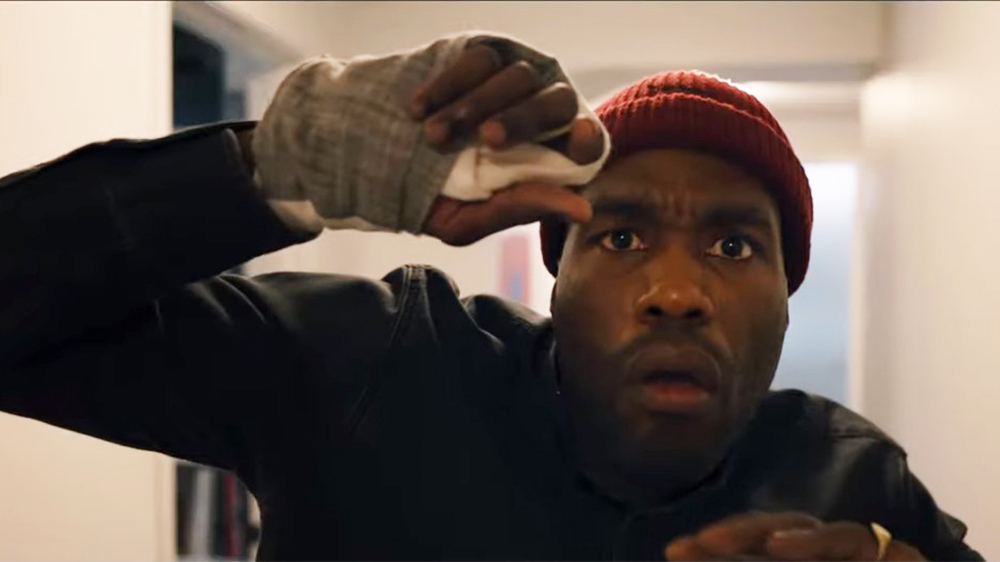
Movie Review: Modern Social Commentary Derails DeCosta’s ‘Candyman’ from being Special


Director: Nia DaCosta
Writer: Jordan Peele, Win Rosenfeld, Nia DaCosta
Stars: Yahya Abdul-Mateen II, Teyonah Parris, Nathan Stewart-Jarrett, Colman Domingo

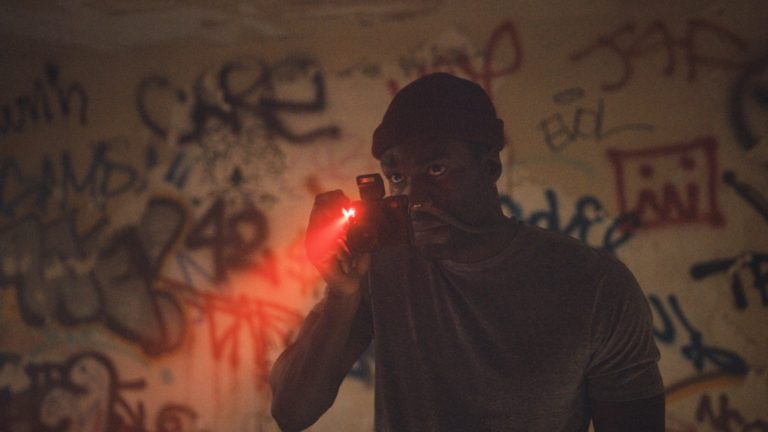
Plot: A “spiritual sequel” to the horror film Candyman (1992) that returns to the now-gentrified Chicago neighborhood where the legend began.

[/info]

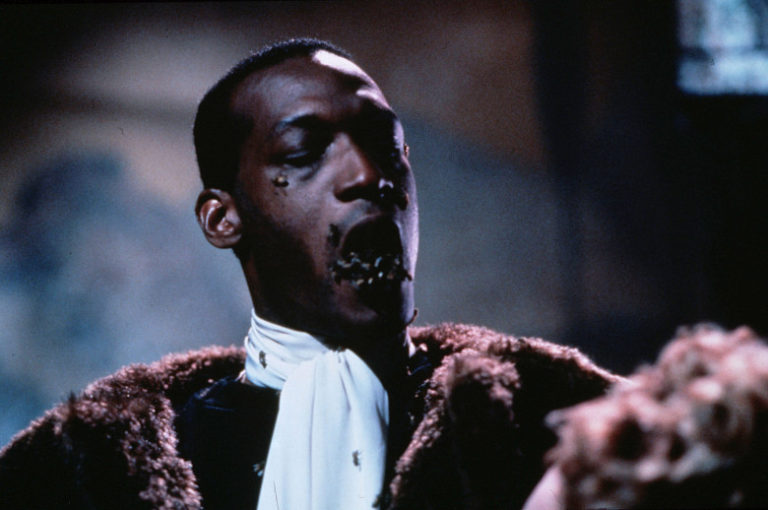
Clive Barker wrote the source material for Candyman called “The Forbidden” which dealt with urban legends that come to life. The 1992 film Candyman was created by Bernard Rose who adapted the short story into the Tony Todd and Virginia Madsen film that we know and love today, and with that, the 1992 version is a classic that goes down in the annals of horror, especially in a decade that wasn’t kind to the genre. Not only was the movie genuinely creepy with a solid handful of jump scares, but it had an entire atmosphere that was derived from not only the plotline but the acting and especially the beautifully crafted score that is hauntingly poetic and unnerving in the plethora of infamous horror movie scores. The original film lives on in infamy and is a positive note in database of horror monsters from the moment of its conception and we need to thank the fathers who brought this titan to life- Clive and Bernard, whom without Candyman would not exist, but in doing so we need to also give praise to the man himself who brought the character from words on a page to the guy we know, love, and fear 29 years later, and that is Tony Todd- whose persona non-grata attempt at a ghostly boogeyman actually had us coming back to Cabrini-Green year after year, time and again. 

Now with all that praise, it actually pains me to write the rest of this piece as it won’t be as kind, but truth be told, I will definitely make sure to point out the good as well, not just the bad, and the ugly. It is not in my doing so of writing this review to tear this film down with a one-sided view of the film but to talk about the film on a spectrum of not only my view but me talking to other press members at my screening tonight. So, with that said- let’s start with the good.

Nia DaCosta is a visual genius. With this being my first view from the lens of her world, I will say that I am thrilled to see what else she brings to the table. In fact, the best thing about this film is DaCosta’s vision and what she’s portraying on screen. From the crisp visuals to the sense of intrigue that she allows on the screen to a property we as an audience ( or most of us) should be aware of by now. DaCosta was the absolute right person to make this film. The other best part(s) about this film were a few of the actors- particularly Teyonah Parris as Brianna, Nathan Stewart-Jarrett as her brother Troy, and the return of Vanessa Williams as Anne-Marie McCoy- they were the absolute standouts in what felt like a very crowded film. 

With that my praise for the good ends there- I want to get into the bad next- and that’s the score. What made a huge part of the original so iconic, and scary was the chilling score created by Philip Glass, his main theme titled “Helen’s Theme” is the most remembered thing about the movie next to Tony Todd’s performance in the original. It was really lacking in the scoring department. I understand wanting to create your own entity, but when you sign on to make a Candyman sequel you better bring what the fans love from the original- I dare you to try and make a Halloween sequel without a version of the infamous John Carpenter score, or a Saw sequel without a type of “Hello, Zepp”. You’d be laughed off the screen and this Candyman isn’t exempt from that same criticism. Huge missed opportunity, and sure you might be saying “It’s called Helen’s Theme, Joey” and sure I’d say you’d have a point if they didn’t use Helen’s story as heavily as Candyman himself in the film. While Academy Award Nominee Virginia Madsen may not be “personally” in the film, she’s throughout the film in stills, stories, and even new voiceover work. 

Yayha Abdul-Mateen II is also another part of the film that just doesn’t work here. I never actually connect with him in any project he’s done. He never feels like he actually knows what he’s in and I really wanna be won over by him but this performance still doesn’t have me convinced of his talents that many others see.  

Now the ugly of this film, the story. It makes almost no sense going hand in hand with the original. And yes again “Joey it’s a LIGHT sequel!” Okay, well if it’s such a light sequel then why bring Helen into the story at all? Why use Anne-Marie and her son? Why use anything in the realm of the lineage of the original Candyman lore? It feels like there’s a solid 25 minutes missing from this movie because it feels overcrowded with stories it wants to tell instead of the full complete story it’s trying to tell. The film’s story also really fails the myth and lore of Candyman by completely changing the Candyman legacy that we’re taught in the first film. The story of a racist crime that was avenged upon by the ghost of the character to those who believed in him has been changed to a story about the many awful crimes of innocent black men across Chicago. We live in a country today that is completely messed up with injustice done by the police everywhere and innocent people of color are constantly targeted day in and day out, it’s wrong- but my biggest issue with the plot change here is this film causes the first to be completely useless in its storytelling because if all these other men were also “Candymen” than what Helen went through and what Anne-Marie went through was for nothing as at that point Tony Todd’s Candyman was not even the most “recent” terror of injustice, it made Michael Hargrove’s Candyman second rate and not needed, which to his character’s story isn’t fair if we’re supposed to care about this guy as well. It feels like a giant cop out.

This movie also is “too woke” and that is a direct quote not from ME but from another critic I was sitting next to at my screening. To my left was a white female critic, and to my right was a black female critic, and the person who told me this comment was the black female critic. She mentioned that while she could see what the movie was trying to do, it was completely alienating an entire group of people. The white female critic next to me said she felt completely uncomfortable watching as if she felt like she wasn’t wanted. I have to say- I agree with both sides- I can see what the filmmakers wanted to say here but I agree also with the critics I was seated next to, this movie is Woke with a capital W and it completely takes away from the enjoyment of what I and apparently those women want to see in a Candyman movie when it comes to a continuation of what the original so beautifully laid out. 

Tell your stories, make them uncomfortable, make them your truths, but don’t try to alienate an entire fanbase of people behind a franchise, it feels lazy and disrespectful. Candyman at the end of the day is out there, but I say stick to the original, it’s better on almost every level. This property works best when it is not focused on being a slasher film, but instead, being a horrific love story that leaves you unnerved and afraid of wanting more.
Grade: C- 

Poll: What is the best 90s horror movie?

Happy Candyman week everybody! Be careful how often you say that name aloud though. All kidding aside, this spiritual sequel of sorts looks very promising. Nia DaCosta behind the helm is intriguing after Little Woods a few years ago, a film that certainly demonstrated her abilities and bold vision. Jordan Peele as one of the screenwriters is extremely exciting. And the cast in Candyman is out of this world. Of course, its predecessor was among the prominent slasher films to come out in the 1990s, so it’ll be interesting to see how this new one fares in comparison. Using the original as inspiration for our poll, we simply want to know what you think is the best horror movie to come from the 1990s. There are many to choose from, so this will be a lot of fun.

What do you think is the best 90s horror movie? Vote below!


List: Top 3 Sex Scenes in Film

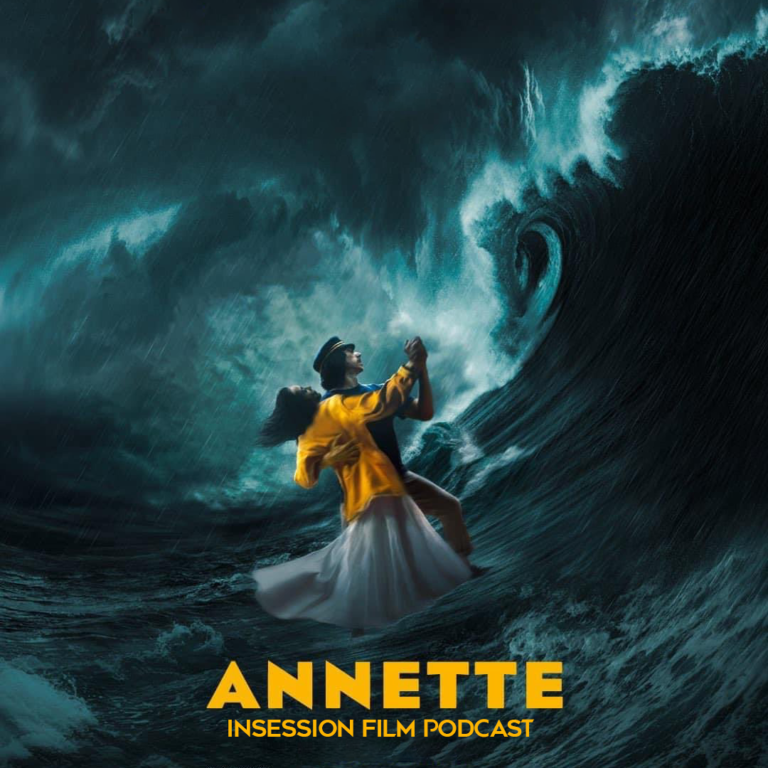
This week on Episode 444 of the InSession Film Podcast, inspired by our review of Leos Carax’s Annette, we discussed our favorite sex scenes in film. As we noted on the show, this is a significant moment for the podcast. It took 444 episodes, but we finally took the plunge to talk about the effect sex scenes can have in a film. Some would argue their futility, but we think they often add great value to characterization and overall allure. Perhaps some sex scenes are for pure pleasure or levity, however there are countless others necessary for character nuance and emotional heft. Sex is a vital part of human nature and it belongs in film. So, without shame, we talk about our favorite sex scenes from film over the decades. That said, here are our lists:

(Note: Please keep in mind that we each had different criteria for our selections)

JD

1) Alma’s Beach Orgy Story – Persona
2) John and Laura’s Intimate Moment – Don’t Look Now
3) Doc and Shasta Finally Meet Again – Inherent Vice

Jay

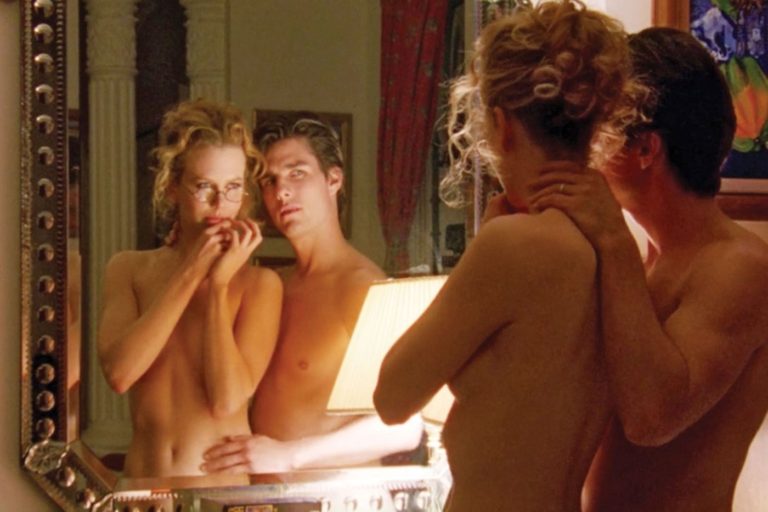
1) Mask Orgy – Eyes Wide Shut
2) Flashback Sex Scene / Space Motel – Blue Valentine
3) Final Sex Scene – Shame

Honorable Mentions (Combined)

Atonement, Brokeback Mountain, The Handmaiden, Boogie Nights, Bound, Love and Basketball, Moonlight, Carol, Call Me By Your Name, Her, Shortbus, Rust and Bone, Watchmen, A History of Violence,The Counselor, Mulholland Drive, Wild at Heart, Marie Antoinette, Titanic, Top Gun, Showgirls, Out of Sight, Halloween, Body Heat, Network, Basic Instinct, Black Swan, Wild Things, Wet Hot American Summer, Gone Girl, Y Tu Mamá También, Team America: World Police, Forgetting Sarah Marshall, Shoot ‘Em Up, MacGruber, The Notebook, Crash

Hopefully you guys enjoyed our lists and if you agree or disagree with us, let us know in the comment section below. As mentioned above, there are countless sex scenes in film, with a variety of tone and purposes, that your list could be quite different than ours depending on your criteria. That being said, what would be your Top 3? Leave a comment in the comment section or email us at [email protected].

For the entire podcast, click here or listen below.

For more lists done by the InSession Film crew and other guests, be sure see our Top 3 Movie Lists page.

Podcast: Annette / Top 3 Sex Scenes in Film – Episode 444

This week’s episode is brought to you by the InSession Film Store. Get your ISF gear today!

This week on the InSession Film Podcast, Jay fills in for Brendan as we discuss Leos Carax’s latest film Annette and we also discuss our Top 3 sex scenes in film!

A huge thanks to Jay for filling in this week as co-host. The last time JD and Jay shared the stage it led to one of our most infamous reviews, but this time we decided to play nice. So much so that our discussion of Annette resonated even further the more we talked about it. Additionally, this episode marks a first for the InSession Film Podcast. Until now, we’ve never had a dedicated segment to sex scenes in film, and after seeing Annette, we felt it was time.

On that note, check out this week’s show and let us know what you think in the comment section. Thanks for listening and for supporting the InSession Film Podcast!

– Movie Review: Annette (6:10)
Director: Leos Carax
Writers: Ron Mael, Russell Mael
Stars: Adam Driver, Marion Cotillard, Simon Helberg, Devyn McDowell

– Notes / Discussion (1:02:46)

For our break segment, we had no other films to review or bring up, however we do once again plug our 2003 Retrospective coming up soon and next week we finally begin our Lord of the Rings Movie Series. It’s going to be a lot of fun, so don’t miss it! Also, we are still giving away t-shirts for iTunes reviews. If you left a review already, or leave one soon, please DM us on social media (or email us) to get a FREE InSession Film t-shirt.

[divider]

RELATED: Listen to Episode 423 of the InSession Film Podcast where we discussed The Tree of Life!

[divider]

Top 3 Sex Scenes in Film (1:23:10)
As noted above, this is a significant moment for the podcast. It took 444 episodes, but we finally took the plunge to talk about the effect sex scenes can have in a film. Some would argue their futility, but we think they often add great value to characterization and overall allure. Perhaps some sex scenes are for pure pleasure or levity, however there are countless others necessary for character nuance and emotional heft. Sex is a vital part of human nature and it belongs in film. So, without shame, we talk about our favorite sex scenes from film over the decades. That said, what would be your top 3?

Show Sponsor: First Time Watchers Podcast

– Music

We Love Each Other So Much – Adam Driver, Marion Cotillard
She’s Out Of This World – Annette Cast
My Tamako, my Sookee – Jo Yeong-wook
The Return of the Eagle – Atli Örvarsson

Subscribe to our Podcasts RSS
Subscribe to our Podcasts on iTunes
Listen on Spotify
Listen on Stitcher
InSession Film Podcast – Episode 444

[divider]

Next week on the show:

Review: Candyman
Top 3: TBD

[divider]

Help Support The InSession Film Podcast

If you want to help support us, there are several ways you can help us and we’d absolutely appreciate it. Every penny goes directly back into supporting the show and we are truly honored and grateful. Thanks for your support and for listening to the InSession Film Podcast!

VISIT OUR DONATE PAGE HERE

Movie Review: ‘Sweet Girl’ Will Frustrate Many and Impress Virtually Nobody


Director: Brian Andrew Mendoza
Writers: Gregg Hurwitz, Philip Eisner
Stars: Jason Momoa, Isabela Merced, Manuel Garcia-Rulfo, Amy Brenneman, Adria Arjona, Justin Bartha, Raza Jaffrey, Lex Scott Davis, and Michael Raymond-James

Plot: A devastated husband vows to bring justice to the people responsible for his wife’s death while protecting the only family he has left, his daughter.


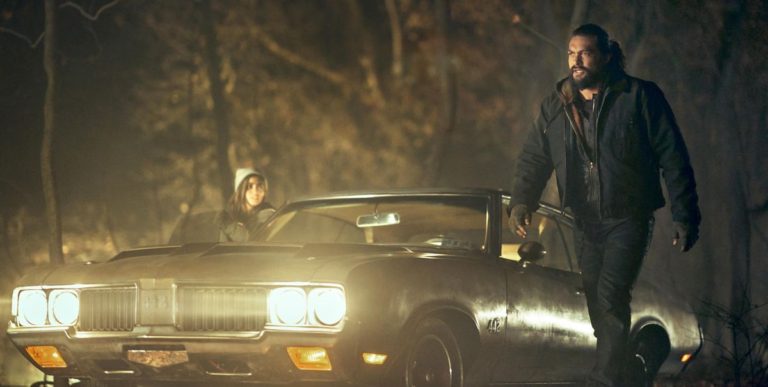
The basic plot of Netflix’s Sweet Girl is fairly straightforward and should make for great–albeit standard–entertainment: a recently widowed father (Jason Momoa) exacts revenge on the CEO of a Big Pharma company (Justin Bartha) that pulled a potentially life-saving cancer drug off the market that could’ve saved his wife’s life. It’s the kind of action/thriller role tailor-made for Liam Neeson’s gruff “particular set of skills,” where action replaces character depth but starring Jason Momoa instead. Credit where credit is due, Momoa performs pretty well as a father seeking justice against Big Pharma’s greed. However, director Brian Andrew Mendoza and writers Gregg Hurwitz and Philip Eisner think this isn’t enough and decide to throw in the most preposterous third act twist of the year, one that single-handedly ruins the entire momentum the film has been building up.

In isolation, Sweet Girl is an admirably made film with a story you’ve all seen before. How many movies have you seen where a father decides to take it up to himself to finally get justice for whatever situation his family endured? Death Wish is the most popular example, where the father (Paul Kersey) becomes a full-fledged vigilante to exact revenge on the gang that murdered his wife. However, Sweet Girl has a more political side to Ray (Momoa)’s revenge-fueled journey as he walks into a world filled with corruption, bribery, and legitimate murder for BioPrime to cover up their illicit acts. This results in an actioner infused with many interesting ideas; with Ray and his daughter, Rachel (Isabela Merced), stuck in not only a game of cat-and-mouse between themselves and the FBI, but also a chase game with a contract killer (Manuel Garcia-Rulfo) sent by BioPrime to take them out, before Ray exposes the company’s illegal operations.

All of that is decent enough to hold the audience’s attention. If Mendoza kept it that way, it would’ve likely been an entertaining watch, even if the action isn’t particularly enthralling. Instead, except for one action sequence that involves exploding shotgun bullets that’s both insanely cathartic and creative in its execution, fight scenes are bogged down by an overuse of shaky cam and incoherent editing. Momoa is in one position, and a quick-cut puts him in a different spot entirely, without ever respecting the continuity (and fluidity) a fight scene should have. What could’ve been a great subway fight scene between Garcia-Rulfo and Momoa, or another sequence where Merced fights him one-on-one, can’t get past poor choreography and disjointed quick cuts to hide the film’s chaotic stuntwork. Isabela Merced is a decent actress, and she can absolutely be an action star with the right material, but none of the films she’s currently starred in allowed her to showcase her action chops fully. However, she would fare very well in a Marvel production where the emphasis on character is built through fluid action sequences. Dora and the Lost City of Gold showed that she has the chops, even if the material wasn’t good, and Sweet Girl only solidified it, even if the action was poorly executed this time around.

What really makes Sweet Girl falter from a decent enough thriller to an absolutely ridiculous motion picture is its completely unwarranted (and unrealistic) third-act twist. Many critics have called it “bonkers,” and they’re absolutely spot on. Without delving into spoilers or specifics on the twist (because this is something you’ll truly have to experience for yourself), let’s say that not even M. Night Shyamalan would even dare to go in the direction Mendoza did, with a completely unrewarding reveal that changes the entire film altogether. It could’ve worked better if foreshadowed (only one scene does it, but quite haphazardly). Still, when you’ve constantly been setting up a standard action/thriller with standard action sequences and standard character beats, the audience expects nothing more or less, and they certainly don’t expect being whiplashed by a complete 360-degree plot twist that changes the plot and questions everything the film was going for.

If you’re going to watch Sweet Girl, expect the unexpected. Your jaw might drop in utter confusion, and pure shock as a decently crafted actioner gets completely ruined by one single twist. But, most of the time, the film’s most important element, the one that will solidify whether or not the audience liked it, is its third act. If your third act isn’t good or memorable, then many might say it’s bad, even if it had some redeeming qualities down the line. And while Sweet Girl’s third act is certainly memorable, it definitely isn’t good. It’s memorable in the same vein as how The Devil Inside’s ending angered many moviegoers who paid a ticket to watch an entertaining horror film only for them to be directed to a website link to watch the “true” ending. Though rest assured: Sweet Girl has an ending, but it won’t be the one everyone wants to see.

Grade: D

Movie Review: ‘Reminiscence’ is a Painfully Dull Dystopian Misfire


Director: Lisa Joy
Writer: Lisa Joy
Stars: Hugh Jackman, Rebecca Ferguson, Thandiwe Newton, Cliff Curtis

Plot: Nick Bannister, a private investigator of the mind, navigates the alluring world of the past when his life is changed by new client Mae. A simple case becomes an obsession after she disappears and he fights to learn the truth about her.

[/info]

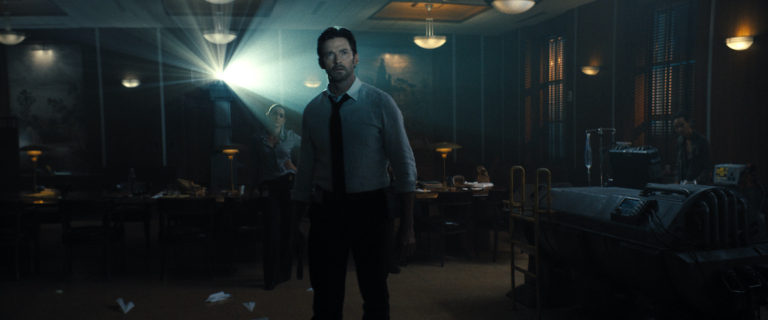
There’s a terrific scene early on in Reminiscence, written and directed by Lisa Joy, where Nick Bannister (Hugh Jackman) watches a memory play out before him of his newest client Mae (Rebecca Ferguson), a lounge singer who steps before a microphone and belts out an emotional song that clearly cuts into his heart, his fascination in her growing by the second. It’s a gorgeously rendered couple of minutes that draw you in with mystery and intrigue as to what might be coming next.

The problem is that over the next hour and a half, nothing ever comes close to the power of this scene, the derivative plot rapidly sinking into obvious twists and cliches in a confused narrative that amounts to little more than a subpar Twilight Zone episode stretched to feature-length. Joy, who worked in many capacities on the excellent HBO series Westworld, brings in some of the actors from that show and gives them and many others nothing to do throughout this over-long enterprise, one filled with regurgitations of ideas from much better films like Minority Report, Inception, and Eternal Sunshine of the Spotless Mind.

In a dystopian future, Bannister is a private investigator of the mind, working in a technologically advanced space with his partner Watts (Thandiwe Newton, sadly wasted in this) where he caters to those wanting to revisit better times from years ago when so much of the world’s cities weren’t half-sunken underwater. Of course, to access those memories, his subjects have to submerge themselves in water, which Mae does one seemingly inauspicious day that ultimately sets Bannister on a dangerous journey into violence, corruption, and heartache.

There are some interesting ideas at play in Reminiscence, but the whole endeavor ultimately feels hollow and tired; hell, Hugh Jackman himself looks tired all the way through, clearly not connecting with this material in a way he has in so many of his better projects of late. Jackman was hit-or-miss in the 2000s, with his appearances as Wolverine and the occasional gem like Christopher Nolan’s The Prestige intermixed with duds like Scoop and Deception. Lately, however, he’s been on quite a roll, his performances in Logan, The Greatest Showman, and particularly Bad Education showcasing his talent in endless exciting ways.

Reminiscence, sadly, is a big step back for Jackman, a film he sleepwalks through with little passion, his performance flat even when he’s over-the-top emoting near the end. He might have been intrigued by the premise and Joy’s spectacular work on Westworld, but this is the perfect example of a film that at some point went haywire not necessarily during production or post-production but during the screenwriting phase, nobody stopping to consider that the words themselves might need another pass. The dialogue throughout the film is clunky, there’s almost no tension, the pacing is extremely slow, and the characters are too thin to ever care about.

Worse, the film has murky, overly slick cinematography that makes it appear like a pilot for a new HBO series and not like a feature film. I know movies and television are blending together more these days than ever before, but everything from the awkward staging of scenes to the numerous fake-looking overhead shots of a future Miami submerged in water ultimately gives the endeavor a feel of TV, and not the good kind. If this were the first episode of a new series, I wouldn’t recommend anyone continue, and as a self-contained feature, it’s somehow even more underwhelming.

The supporting cast does what it can, particularly Ferguson, always a charismatic and welcome presence on screen even when given an underwritten character like this one. Cliff Curtis has some fun in a villainous role, and Angela Sarafyan, so great on Westworld, makes an impression even with screen-time that amounts to little more than a cameo. There’s also some joy at times purely in watching Jackman and Ferguson together on-screen again following their pairing in the much more crowd-pleasing The Greatest Showman.

But for the most part, Reminiscence is a painful slog, a tragic misfire, easily one of the giant turkeys of 2021 that no one will be talking about a year from now. It will be one of those titles on an actor’s resume that many people will later on scratch their heads wondering what it even was. On a cruise ship awhile back I played a movie trivia game where you had to guess film titles based on seeing part of the poster, and the only title out of forty I missed was Transcendence from 2014, the forgettable Johnny Depp effort that along with this similarly titled film has ties to Christopher Nolan. Odds are if the poster to Reminiscence ever makes its way into that cruise ship trivia game in the future, achieving a perfect forty out of forty will still be out of my grasp.

Grade: D-

Movie Review: Neill Blomkamp Can’t Find a Spark in the Laborious ‘Demonic’

0

Director: Neill Blomkamp
Writer: Neill Blomkamp
Stars: Carly Pope, Chris William Martin, Michael Rogers, Nathalie Boltt 

Plot: A young woman unleashes terrifying demons when supernatural forces at the root of a decades old rift between mother and daughter are ruthlessly revealed.

[/info]

Few filmmakers have exploded onto the scene the way that Neill Blomkamp did with his 2009 feature debut, District 9. Produced by Peter Jackson, the $30 million indie sci-fi grossed a whopping $115 million domestic and $210 million worldwide. Defying historical logic for an indie genre film, it also netted 4 Oscar nominations, including one for Best Picture. This stratospheric initial success was met with a calamitous fall from grace, as the filmmaker faced diminishing returns critically and financially with his follow-ups, 2013’s Elysium and 2015’s Chappie.

With the bloom off the rose, Blomkamp’s prospects began to stall. Despite being tipped for, and at times deep in development on, new additions to iconic Hollywood franchises like Alien and RoboCop (not to mention the development hell of his Halo movie), everything Blomkamp was attached to seemed to fall through in the years after Chappie made his name less of a selling point for audiences and studios. The solution? Like many directors in a rut before him, Blomkamp went back to the drawing board and attempted a more intimate, personal project that would see him return to his indie roots.

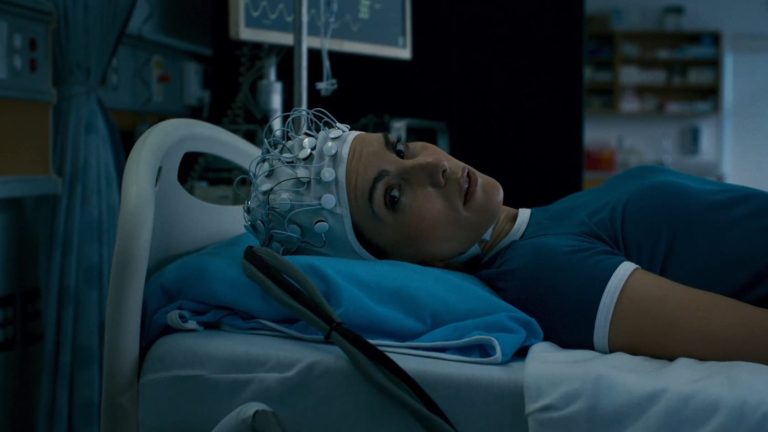
Shot in 2020 during the COVID-19 pandemic in British Columbia, Canada, Demonic tells the story of Carly (Carly Pope), a woman who is recruited by a shady organization to use groundbreaking new technology to go inside the mind of her comatose mother, Angela (Nathalie Boltt), whose violent and abusive history has left her estranged from her daughter. The set-up places the film in the same realm as many recent pictures, such as Hereditary and Relic, which have used genre storytelling to explore themes of parental abuse, and the fractured relationships between parents and children who come from households as toxic as this.

While some filmmakers, such as M. Night Shyamalan, were able to go smaller to course correct their career trajectories after a string of failures, this approach for Blomkamp has only served to lay bare the most glaring flaws that have always existed within his work. Thematic heft and character development have never been Blomkamp’s strong suits. His films have excelled in the technological department, the action, and surface-level thrills. With each new film, his weaknesses in story and character became more apparent, more damaging, and Demonic puts those shortcomings front and center.

Demonic is a film whose ideas play like half-baked riffs on a wide array of far better work that’s come before it. Blomkamp, as a storyteller, has struggled from the start with being too derivative, and he has possibly reached his nadir here. The result is a film that is an utter chore to get through. With stilted acting and grueling plot mechanics that promise excitement which never comes, viewers might struggle to even make it to the film’s third act. That would be a blessing for them, as this is where Demonic goes fully off the rails into oblivion.

The one element that allows Demonic to stand out, as a curio if nothing else, is in its unique approach to inserting Carly into Angela’s mind. That aforementioned groundbreaking new technology that is used for this process is portrayed via a patent-pending method of volumetric capture, which is a form of three-dimensional video tech that turns actors into geometric objects. Demonic uses this technique to an extent never before seen on film, adding a fascinating allure to the scenes inside Angela’s mind.

Due to the fact that Blomkamp is using real-world technology here, and not mapping things out with CGI to make the effects look as sophisticated as the latest Marvel blockbuster, these sequences have an odd feel that appears almost dated in a strange way. You get the impression that you’re watching something from the ‘90s in terms of the quality of the images, yet it’s actually more era-appropriate for what people are doing in the real world as we speak. It’s certainly the only thing worth discussing about Demonic, but it also leaves viewers wondering whether experimenting with this equipment was the entire reason that Blomkamp wanted to make the film.

Grade: D

Podcast: David Lynch Movie Series

After a couple of Movie Series focusing on big budget spectacles, the Extra Film boys always seem to balance it out with an auteur director who challenges both the hosts in ways they usually aren’t challenged by today’s cinema. Usually a series like that would involve first-time watches for both hosts, but in this case, David Lynch is a director Jay is very familiar with, being one of his favorite directors of all time. Known for being weird and unaccessible to standard audiences, Lynch is a unique voice in Hollywood who stands to make some of the most original films ever put to screen. With this being a history lesson for Ryan as the guys explore Lynch’s filmography, it is no secret that by the end of the series, he is everything you would think he is and then some. From noir thrillers to sandworms, Lynch is the wildest, purest director the boys have covered so far. Listen to all of their episodes on Lynch below.

Eraserhead, 1977

Listen to our review below as heard on Extra Film.

The Elephant Man, 1980

Listen to our review below as heard on Extra Film.

Dune, 1984

Listen to our review below as heard on Extra Film.

Blue Velvet, 1986

Listen to our review below as heard on Extra Film.

Wild at Heart, 1990

Listen to our review below as heard on Extra Film.

Lost Highway, 1997

Listen to our review below as heard on Extra Film.

The Straight Story, 1999

Listen to our review below as heard on Extra Film.

Mulholland Drive, 2001

Listen to our review below as heard on Extra Film.

Inland Empire, 2006

Listen to our review below as heard on Extra Film.

Podcast: Inland Empire / Free Guy – Extra Film

This week on Extra Film, Arlin Golden of the Wiseman Podcast joins Ryan and Jay to conclude their David Lynch Movie Series with Inland Empire and then Ryan and Jay discuss the newest blockbuster, Free Guy!

After the Mulholland Drive discussion, Ryan and Jay enlist Arlin to finish off one of the longest, strongest movie series to date. As the final traditional film in his filmography, Lynch takes views on one more dream-like journey through Hollywood with the help of amazing Laura Dern and complete creative control of the feature, making a three-hour endurance test. It’s a fun episode as Jay and Arlin try to convince Ryan that this is a very good movie, while the Extra Film boys give their final thoughts on the director.

In the back half of the episode, the guys review Free Guy. Bought within the Disney/Fox merger, this action-comedy set in the world of a video game has one of the more unique, “original” premises of the year. But once you hear Jay, and especially Ryan, talk about the film, you will know it is another bad example of a modern Hollywood blockbuster that audiences should stay away from.

Thanks for listening!

– Movie Review: Inland Empire (5:35)
Director: David Lynch
Screenplay: David Lynch
Stars: Laura Dern, Jeremy Irons, Justin Theroux, Harry Dean Stanton

– Movie Review: Free Guy (1:25:11)
Director: Shawn Levy
Screenplay: Matt Lieberman, Zak Penn
Stars: Ryan Reynolds, Jodie Comer, Lil Rel Howery, Joe Keery, Taika Waititi

– Music

Little Eva – The Locomotion
Video Games – Lana Del Rey
The Return of the Eagle – Atli Örvarsson

We try to make this the best movie podcast we possibly can and we hope you enjoy them. Subscribe today on iTunes, Spotify, or Stitcher, and please leave us a review on iTunes. You can also find us on Soundcloud, PlayerFM, and TuneIn Radio as well. We really appreciate all your support of the InSession Film Podcast.

Subscribe to our Podcasts RSS
Subscribe to our Podcasts on iTunes
Listen on Spotify
Listen on Stitcher
Inland Empire / Free Guy – Extra Film

[divider]

To hear this Extra Film episode and everything else we do, download our apps on the Amazon Market for Android and the Podcast Source app on IOS devices. The mobile app covers all of our main shows, bonus podcasts and everything else relating to the InSession Film Podcast. Thanks for your wonderful support and for listening to our show. It means the world to us.

Movie Review (EIFF): ‘The Bright Side’ is a Life-Affirming Take on Death


Director: Ruth Meehan
Writers: Jean Pasley, Ruth Meehan
Stars: Gemma-Leah Devereux, Tom Vaughan-Lawlor, Karen Egan, Derbhle Crotty, Siobhan Cullen, Derbhle Crotty

Plot: A cynical stand-up comedian is diagnosed with breast cancer and decides to die, but as she meets 4 fellow breast cancer patients, she begins to question her beliefs.

[/info]

There may be no one better at judging death than the Irish. Throughout its history the people of Ireland have suffered immense tragedy; its recent history marred by civil war and strife; its past blighted by famine and colonialism. Yet the Irish have an incredible sense of humor, dryly tipping off the Grim Reaper with an anecdote or quip, mining pathos in the morbid. Everyone fears death, but on the Emerald Isle they know how to give the middle finger to it as well.

It’s in this rich vein that Ruth Meehan makes her fantastic debut feature, The Bright Side. While dealing with heavy material – that in other hands, or cultures for that matter, could’ve been a far starker experience – Meehan finds wonderful depth to her characters, often emphasizing the absurdity of life and the tough spirit it takes to see it through. Instead of a deathly tone, perhaps introspective and emotionally draining, we’re treated instead to dick jokes, talking breasts, pot brownies, and brightly colored wigs. It would take a hard heart to come out of this experience without feeling uplifted.

Kate (Gemma-Leah Devereux) is a stand-up comedian struggling with life. She is cynical, world-weary, and suicidal. She muddles through the day with a mix of casual sex and an addiction to prescription drugs, which she procures through the help of an illegally obtained doctor’s prescription pad. Early scenes of Kate’s stand-up routine – typically sarcastic, abrasive, and tinged with a bitterness that tell of deeper issues – fill the audience in on her early life: a father who seemed to care very little about her and a growing sense of self-loathing guided her, and now in adulthood, she sees no reason to live, but can’t go through with the act of taking her life. Her comedy is taken from her failed social life: an inability to form relationships, or perhaps just bad choices in men, a caustic relationship with her mother. She is constantly on guard and defensive, ready to fight everyone and anyone she encounters, including her pharmacist who is beginning to realize he’s been conned into dispensing drugs Kate doesn’t need.

Everything changes after a fall from a trampoline results in bruised ribs and a breast cancer diagnosis. While at first stunned by the diagnosis, Kate begins to see it as a “guilt-free way out” of life. She promises her worried brother she’ll go through with the chemotherapy but secretly opts out of the mastectomy which would save her life if the chemo should work. She begins her treatment alongside a group of women, most of whom are far more positive about life than Kate herself. As she begins to integrate within the group and grow closer with the other women, Kate begins to find there are more reasons to stay alive than she initially thought.

The plot from hereon out is typical: Kate finds a new lust for life among her friends, learning to appreciate things she failed to do before. However, even though you may know where the story is going, that doesn’t mean you won’t enjoy the journey. Each of the women involved are wonderful in their own rights: Fiona (Karen Egan) is perennially upbeat and positive, but ignores her own feelings about mortality; Helen (Derbhle Crotty) spent the majority of her life in the closet and had only come out a few years before her diagnosis, which effectively stopped her first opportunity to explore her sexuality;  Roisin (Barbara Brennan) is the wise old mother of the group, deeply religious and more concerned about how her husband will survive without her; and Tracy (Siobhan Cullen) is a young woman furious about her diagnosis and desperately trying to survive so she might one day have kids.

Though the plot may be predictable, each of these women are worth the admission alone. Meehan handles the tone of proceedings perfectly, never allowing the drama to become cloyingly emotional, nor allowing the dark humor to detract from the very real problems these women face. A scene featuring all the women drunkenly laughing in a hotel room as they recount stories of their sex lives is punctured by Roisin, who goes from laughter to sobbing in a way that catches your breath. As all the women crowd around to comfort her, you’re reminded of how the specter of death is ever-present in their lives. It’s sobering but poignant.

Elsewhere the cinematography is gently poetic, capturing the rolling green hills of Ireland among the staid white of the cancer ward. Close-ups of Kate, specifically during a recurring motif where she uses her breasts as a ventriloquist might a dummy, are deftly handled, rocking slightly back and forth. There’s something intimate about that, as though we’re in Kate’s own world as she navigates through it.

The Bright Side is a beautiful meditation on loss and life. It may be cliched in its plotting, but the characterizations are what make it all worthwhile. Devereux will make you feel deeply for Kate and her struggle, as she begins to challenge her view on life and grow.

Grade: A

Op-Ed: AFI’s 100 Years…100 Passions – ‘Body Heat’ (#94)

I will be watching and reviewing all of the films included on AFI’s 100 Years…100 Passions list. The list contains the 100 greatest love stories in American cinema and I plan to consider how our views on romance and social issues have changed over the years as well as judge whether the romances in these films actually made me swoon. As a fan of the romance genre, I expect to love each and every one of the nominees but I also don’t know if I would consider all of them romantic.

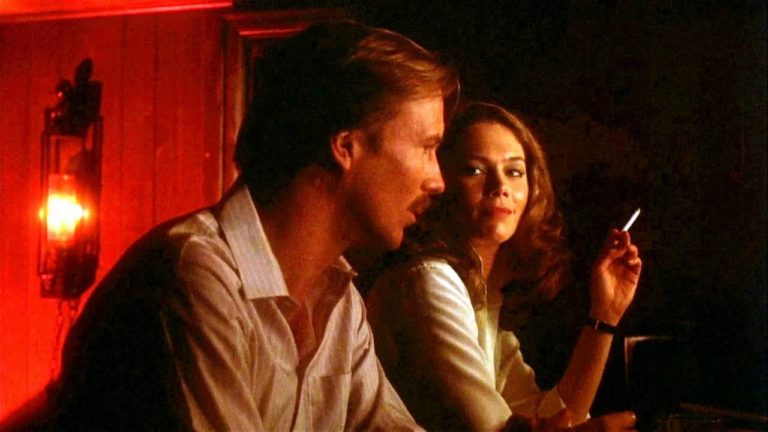
Body Heat (1981) seems to have been made so that the subtext in film noirs of the 1940s, could become text. You get sex scenes and nudity, rather than violent kisses and use of double entendre in dialogue. This seems to be the only thing that Lawrence Kasdan thought to add to a genre picture that shamelessly steals from classic film noirs and yet fails to generate the passion, suspense or sexual tension that exploded off of the screen in Double Indemnity (1944) and Criss Cross (1949). There is always the nagging feeling that you are seeing an undistinguished simulacrum of the real thing. This perception could have been challenged if Kasdan had tried to put his own spin on the genre and comment on how society had changed in the years since film noir fell out of favor. This doesn’t have a distinct 1980s air about it and Kasdan’s dialogue doesn’t have the flavor of any of the romantic comedies that he would later become known for. 

If you have seen Double Indemnity, the plot will immediately seem familiar to you. The story revolves around the libidinous Ned Racine (William Hurt), a slimy lawyer who is willing to cut corners in order to get around the law. He regularly has casual sex with women and enjoys the thrill of seducing them. One night, he comes across Matty Walker (Kathleen Turner), an attractive married woman, and attempts to flirt with her. A few nights later, he invites himself to her house and the two have sex. They engage in an illicit affair and become frustrated with the fact that her husband, Edmund (Richard Crenna), complicates their arrangement. Walker knows that she could collect a large insurance settlement if Edmund were to die and Racine eventually decides to murder him so that he can be with Walker and live off of her husband’s millions. He carries out the murder but complications ensue and he begins to suspect that Walker wants to implicate him in the crime. 

There is nothing about the basic plotline that will turn off fans of old noirs, but they will probably be unsatisfied with Turner’s unimaginative impression of actresses like Barbara Stanwyck, Joan Bennett, Jean Simmons, and Mary Astor. Her performance feels like one long-acting exercise and she is never completely convincing in the role. In her attempt to combine elements of Phyllis Dietrichson, Brigid O’Shaughnessy, and Diane Tremayne, she forgets to give Walker an identity of her own. The husky voice, the rigid posture and the cutting remarks all feel borrowed. She could have made it clear that Walker was a woman who was actively trying to imitate the sirens that appeared on screen. Her phoniness could have been telegraphed from the beginning and her artificiality could have felt like a character trait, rather than a distraction from the performance that Turner was trying to give. She’s meant to be sultry enough to make us believe that a man would kill for her, but she just doesn’t deliver the goods. 

She isn’t helped by the fact that the sex scenes themselves have a mechanical quality about them. You can see faint hints of boredom on the faces of the actors and one wonders whether we ended up seeing the 30th take of Hurt removing Turner’s undergarments. The overwrought score seems to be telling us that these people simply can’t control themselves and must fornicate. This would seem to make sense when you consider the fact that this, like so many other morality tales, ends up being about why a person shouldn’t engage in an extramarital affair. It’s rather exploitative and dishonest in the way that it uses sex to draw audience members in, before telling them that it’s bad and dirty and will inevitably cause them to murder an innocent man and end up serving prison time. Usually this is a technique that satisfies the desires of conservative members. They are allowed to enjoy the experience of watching soft-core pornography without dealing with any of the guilt that comes from supporting an affair. I do have issues with this sort of morality, but, when executed right, I can enjoy an illicit sex scene as much as anybody else. When I have to watch Hurt unceremoniously dropping some decidedly un-sexy underwear on the floor, it doesn’t exactly get my blood pumping. 

I also question why the sex needed to be shown if this was going to be one of those noirs that implies that sex is a force for evil. Kasdan tries to show all of the ways in which Walker is a menace in the bedroom and uses her sexuality to control Racine when he isn’t going along with her plans. At the same time, I think that he could have achieved more if the sex was just alluded to and we never explicitly saw the scenes in which she was able to change his mind. She would seem so much more terrifying because we would be left to imagine what she was capable of doing. Kasdan’s visuals could never be as scary as the feverish nightmares that exist in the back of a person’s mind. 

It is very difficult to see this as a love story when Walker and Racine are only sexually attracted to one another. Despite the fact that they frequently claim to love one another, we get a lot of evidence to the contrary. I think that AFI misread the message of this film in categorizing it as a romance, and I can’t see why there were so excited by it. There were better sexy 1980s dramas out there. 

Movie Review: ‘The Night House’ Guarantees to Keep You Up All Night


Director: David Bruckner
Writers: Ben Collins, Luke Piotrowski
Stars: Rebecca Hall, Sarah Goldberg, Evan Jonigkeit, Stacy Martin, Vondie Curtis-Hall

Plot: A widow begins to uncover her recently deceased husband’s disturbing secrets.

[/info]

Many of us know the fear of the things that go bump in the night. However, what if that bump might just be the one person you wish to see the most? A loved one who has recently passed? Would you retreat or push forward in the hopes of somehow being reunited with a person you never thought you’d see again?

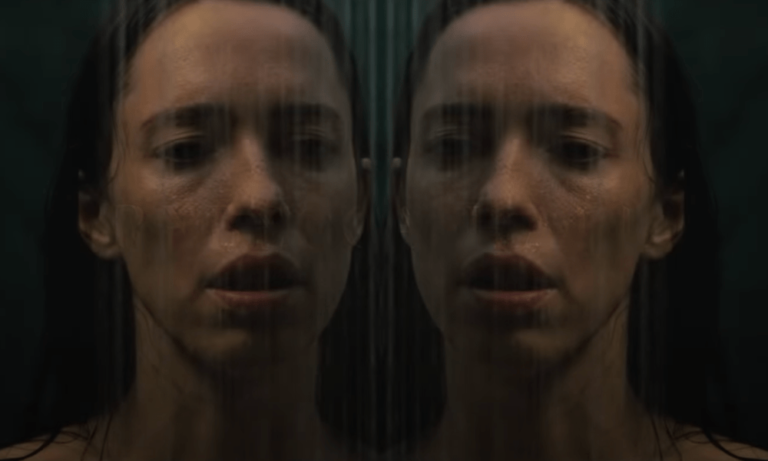
That’s the dilemma that begins to plague Beth (Rebecca Hall), a teacher mourning the unexpected death of her husband Owen (Evan Jonigkeit) in David Bruckner’s The Night House. Already grappling with the weight of trying to understand how the person most precious to her could be taken so young, Beth begins to experience troubling signs that maybe his presence hasn’t quite left their lakeside home. When night comes, Beth’s dreams turn to frightening visions, sounds, and images distorting reality to a point where she no longer knows truth from fiction.

Haunted house films are nothing new, yet Bruckner manages to make the classic horror trope feel alive again with an unnerving approach that knows exactly the right buttons to push at the right time. An image of Owen, lurking in the water, staring up at Beth, sends a chill down your spine. A stereo turning on from the other room makes you shriek in terror. Jump scares have (often rightfully) earned a negative reputation over the last two decades. Bruckner is able to demonstrate that when utilized properly, they can land in a way that feels earned, as opposed to cheap and easy manipulation.

Part of that comes from the way in which the filmmaker is able to set the pitch of The Night House at a steady unease. As Beth begins to investigate these strange happenings, exploring her husband’s life and the secrets he was keeping from her, every scene starts to hold a sense of discomfort, a feeling that things aren’t quite right. Events as seemingly serene as Beth going to a bookstore begin to hold the fear that something demonic could be right around any corner. Mainstream horror simply doesn’t get as persistently unsettling as this.

A veteran of genre films such as The Signal and The Ritual, Bruckner is no stranger to getting under an audience’s skin, but it’s his collaboration with Hall that truly takes The Night House to the next level. An actress who somehow still doesn’t get the credit she deserves (her performance in Christine remains one of the best of the past decade), Hall has an innate ability to sink into her characters in a way that allows the audience to feel every single thing that she is feeling. That’s never more crucial than in the realm of horror, a genre that can quickly become silly if a wrong step is taken.

While the film’s script, by Ben Collins and Luke Piotrowski, opens up doors to some interesting questions regarding how much we can ever really know a person, The Night House is, on paper, a bit conventional. Haunted houses as metaphors for trauma can be seen in a few dozen films or television series released each year, but it’s Bruckner and Hall’s combined forces which elevate this to something that demands attention, getting under your skin like few other pieces of horror in recent memory.

Whether you’re seeing The Night House in a crowded theater or in the comfort of your own home, it’s sure to be effective. Be wary, though, of watching it alone at home late at night, as the specific ways in which Bruckner manages that lakeside living space are sure to make you distrust your own environment in a way you never thought possible. If you’ve ever walked around your home in the middle of the night and thought for a second that you saw a person standing on the opposite end of the room, only to discover it was just a coat rack or a bookshelf lit in a peculiar way, Bruckner sees you and wants to exploit that experience for maximum impact.

Architecture becomes a vital component of The Night House in more ways than one. While the home Beth is living in holds special meaning to her, it also becomes her living nightmare, as Bruckner structurally warps the environment in subtle ways that are practically incomparable to anything we’ve seen before. Great care in production design and cinematography craft images that cause the audience to focus in on specific areas, some of which they’re bound to regret once a wall shifts and sends them into a frenzy of terror. A warning to all who enter The Night House: this isn’t the film to watch before bed.

Grade: B+

Chasing the Gold: 2022 Best Picture Race Begins – Episode 37

On Episode 37 of Chasing the Gold, Ryan is joined by Jazz Tangcay of Variety and Dan Bayer of Next Best Picture to preview the 2022 Oscar Season and give their very early thoughts on the Best Picture race.

After taking a much needed break from the crazy 2021 Oscar Season, Ryan, along with Jazz and Dan, breakdown the year so far, what films they assume will be in the Best Picture race once everything has premiered at the various film festivals, and how delays due to Covid could prevent this season to be as packed as it seems. It was a wonderful conversation and a great way to start off the new season of Chasing the Gold.

On that note, have fun with this week’s episode, and let us know what you think in the comment section below. Thanks for listening!

– Music

The Return of the Eagle – Atli Örvarsson

We try to make this the best movie podcast we possibly can and we hope you enjoy them. Subscribe today on iTunes, Spotify, or Stitcher, and please leave us a review on iTunes. You can also find us on Soundcloud, PlayerFM, and TuneIn Radio as well. We really appreciate all your support of the InSession Film Podcast.

Subscribe to our Podcasts RSS
Subscribe to our Podcasts on iTunes
Listen on Spotify
Listen on Stitcher
Chasing the Gold: 2022 Best Picture Race Begins – Episode 37

[divider]

Mobile App

To hear this Extra Film episode and everything else we do, download our apps on the Amazon Market for Android and the Podcast Box app on IOS devices. The mobile app covers all of our main shows, bonus podcast’s and everything else relating to the InSession Film Podcast. Thanks for your wonderful support and listening to our show. It means the world to us!

[divider]

Help Support The InSession Film Podcast

If you want to help support us, we would greatly appreciate it! For more info, CLICK HERE.

Podcast: Pig, Undine, Our Friend, Val, Some Kind of Heaven – Patreon Bonus Content

Listen!

For this week’s Patreon Bonus Content, JD and Brendan offer up their thoughts on the latest Nic Cage film Pig, Christian Petzold’s Undine, the poignant drama Our Friend, and two documentaries in Val and Some Kind of Heaven! Plus, JD gives a few brief thoughts on the Benedict Cumberbatch-starring film The Courier.

If you’re already a Patreon supporter, you can listen to this episode NOW on Patreon by clicking here.

Sign up today to get early access and hear the entire episode!

[divider]

HELP SUPPORT THE SHOW

To hear our bonus content episodes early, subscribe now on Patreon. In many cases, though, we offer our bonus content for free after a certain period of time and we do encourage (and very much appreciate) a small donation of $0.99 as a way to help support the show if signing up on Patreon isn’t for you. Click on the PayPal button below to donate and thanks so much for your support. You can also hear much of our Bonus Content via our mobile apps. See the information at the bottom of the post for more details.


One-Time Donation


[divider]

Mobile Apps!

Listen to all of our bonus content on our apps for just a one-time fee! Whether you have an iPhone, Android or Windows phone, our apps are available in many different ways that is convenient for you. With our mobile app, not only can you listen to all of our bonus content, but our main shows and our Extra Film podcasts as well. Click here for more info!

If you don’t want to purchase our bonus content, but still want to support us, there are other you can help us out. Click here for more info.

Op-Ed: AFI’s 100 Years…100 Passions – ‘City Lights’ (#10)

I will be watching and reviewing all of the films included on AFI’s 100 Years…100 Passions list. The list contains the 100 greatest love stories in American cinema and I plan to consider how our views on romance and social issues have changed over the years as well as judge whether the romances in these films actually made me swoon. As a fan of the romance genre, I expect to love each and every one of the nominees but I also don’t know if I would consider all of them romantic.

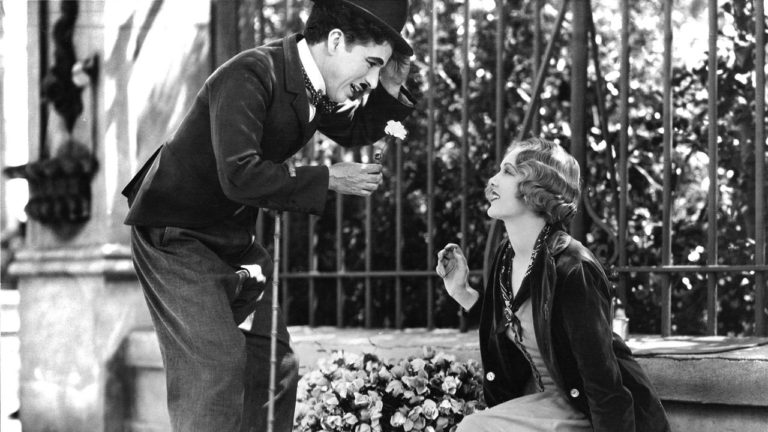
City Lights (1931) might have reduced early 1930s audiences to tears of both laughter and sadness, but I dare say that it has not aged well. Unlike some of the timeless classic films of this period, it feels very dated and of its time. Charlie Chaplin’s over-the-top style of slapstick has not aged well and you can see him putting a lot of effort into his acrobatic movements. He also tries to insert social commentary into the stories that he tells, but rather than subtly threading his points into scenes that also feature moments of comedy and romance, he feels the need to hit the audience in the face with his polemic against wealth inequality. The comedy and the drama never quite combine to create the funny, emotionally resonant moments that Chaplin seems to be trying to create. Maybe all of the jokes did land back in 1931, and everybody cried at the sappy, emotionally manipulative final scene. Maybe I’m a madwoman for disliking this. 

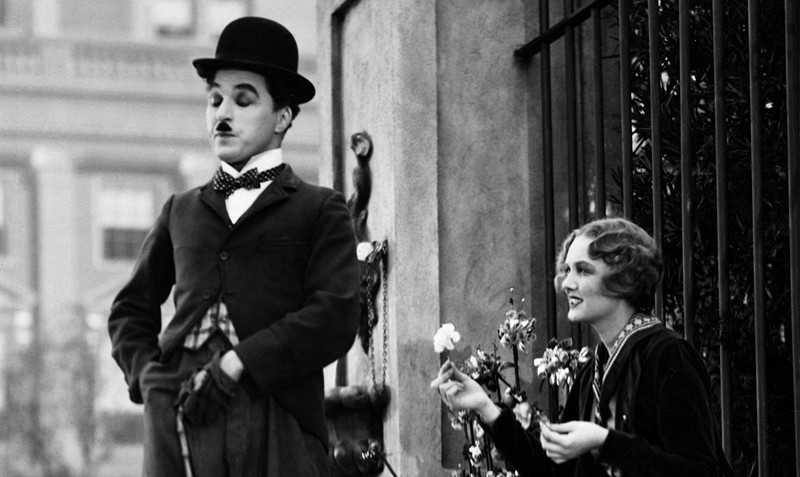
As with many other Chaplin flicks, the plot is disjointed and it never feels as though the different plot threads come together to form a whole. The comedic plotline involves The Little Tramp (Charlie Chaplin) befriending a drunk millionaire (Harry Myers), who only recognizes him when he is inebriated. This means that he is provided with a place to sleep and occasional monetary gifts, but grows confused when the millionaire kicks him out of his mansion after sobering up. The romantic plotline involves The Little Tramp courting a blind flower girl (Virginia Cherrill). She is unaware of his identity and imagines him as an extremely wealthy benefactor who will be able to take her away from all her sorrows. When he hears about a Viennese doctor who can cure blindness, he decides that he needs to raise the money to have the flower girl treated. He is able to get money from the millionaire in order to pay for her treatment but goes to prison because the millionaire hits his head and forgets that he agreed to give the money to him. If it sounds a bit contrived, that’s because it is. Chaplin seemed to be a big fan of overly convoluted plots that relied on a lot of clichéd plot devices. 

4 Reasons Why “City Lights” Is Charlie Chaplin's Best Movie | Taste Of Cinema - Movie Reviews and Classic Movie Lists

I could never quite buy into any of the twists or turns and I hated the fact that I always felt as though he was toying with me. There was something painful about seeing a piece of art that so desperately wants to get a certain emotional response out of you. When you can see the gears turning in Chaplin’s head as he performs, it becomes more difficult to enjoy the moments where he humorously hops into a vehicle. It tries too hard and that takes all the fun out of it. With its loose, almost non-existent structure, this could have been one of those free flowing, almost avant-garde studio comedies that came out of Paramount during the early 1930s. Instead of taking risks when it came to the tone of the film, he chose to turn this into a saccharine sobfest. 

The comedy and the social commentary were poorly executed but the romance also fails to work because, as in most Chaplin projects, the love interest is a pretty object who has to be purchased. He needs to make enough money to get her the operation and then she suddenly decides that he’s worthy of her love. Their romantic connection does not develop organically and their relationship feels purely transactional. He has a friend who will provide him with money and can financially support her, while she has no discernible personality traits but appears to be quite physically attractive. They build their relationship on the transaction of money and, presumably, sex and, as a result, there is very little passion involved. For the most part, it feels as though the romance is just there to satisfy the ladies in the audience. 1930s audiences expected most films to feature a romance and the blind flower girl was just there to tick a box on the list of requirements that needed to be satisfied in order to produce a box office hit. 

That famous final scene didn’t leave me crying my eyes out because the two main characters were thinly drawn archetypes and their bond did not seem to mean anything. There was never the feeling that she seriously hesitated before agreeing to be with him, or had to battle her inner demons in order to enter into a serious relationship. She was just a sweet young thing who was on hand to be ravished by the male lead. If you have seen any film, you can predict how this one ends. That is true of most romantic comedies but the fun is meant to come with seeing how the central couple gets to the predictable finale. Both the journey and the destination are deeply disappointing in this subpar example of the genre. 

I can’t see what made AFI go so gaga for City Lights but they loved it enough to give it a high position on many of their vaunted lists. I can only trust that they take Chaplin’s towering reputation too seriously and felt that they needed to honour him for his legacy. Personally, I would have liked it if they had given more honours to Monsieur Verdoux (1947), which stands as the most modern of all the comedies he made about class warfare. 

Criterion Crunch Time: ‘Pink Flamingos’

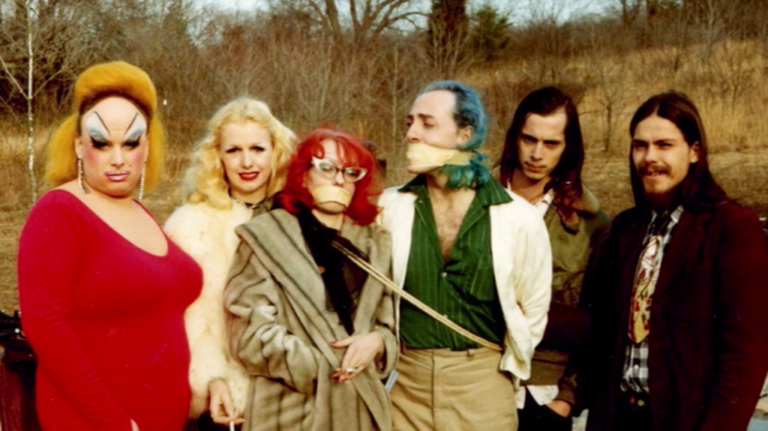
There are films for all seasons. As a film fan, I think we do ourselves no favor by staying comfortable and only watching films in our wheelhouse. A service like the Criterion Channel offers numerous opportunities to experience the entire calendar of said seasons, whether you “like” the movie or not. I use that particular representation of the word like, because, simply put, some movies are not made with you or your delicate sensibilities in mind. Some movies are meant to provoke, meant to force your hand into a reaction, almost dare you to walk away disgusted. And that perfectly brings us to John Waters and Pink Flamingos

The plot itself focuses in on this disgust. A quick news splash shows us that Divine (Divine), the Queen of Filth, has disappeared. At first, it is not clear why, and one might assume that she has made an exit out of shame. But it is quickly revealed that the world at large (at least the world that director John Waters shows us) is obsessed with filth and hounds her. In support of this, the Marbles, another filthy couple, are solely focused on taking her crown. Connie (Mink Stohl) and Raymond (David Lochary) believe they deserve the title for, among other things, kidnapping, raping, and impregnating women for the purposes of selling the children to lesbian couples.

Pink Flamingos is also a film that would not be improved by an actual budget. It was shot on a micro budget of $10,000 dollars and, of course, it shows. But this only adds a sense of realism (for lack of a better word) to the proceedings. There have been complaints made about the poor, presentational acting, but this seems, like most everything else here, purposeful. The story is wildly dramatic, there is a grown woman living in a baby’s crib, for god’s sake. Everything, and I mean everything in the film is designed to draw you attention, to force you to look at this, well, filth.

Divine’s performance is what holds this all together. He (preferred pronouns through my research) manages a feminine presentation of this character which contains both moments of gentleness (usually at the homestead) paired with violent counterculture explosions. There is a particular scene that sticks with me (no, not that one, you sicko) in the beginning of the film. Divine and her son, Crackers (Danny Mills) driving their car at reckless speeds. Divine cackles and flips her middle finger to the world of normal, suburban life. This is obviously a purposeful choice, as are the individuals who are affected by this. A jogger, the representation of the burgeoning yuppies, and a veteran returning from war, a screw you to the American government, attempting to subdue its filthy underclass.

Plot wise, Waters does something wildly unexpected and clever. By introducing the absolutely disgusting (though entertaining) Marbles couple, he angles us towards rooting for Divine and her filthy family. We enjoy her tirades and escapades through small town life, despite her obvious depravity. It is a smart decision not only to focus on this group, but on Divine in particular. There is both a sweetness to her and a joy in living through her disgusting behaviors, mainly due to the extremity of them. How does one take cannibalism seriously when it is portrayed in this way?

But then, the end of the film happens. Waters is figuratively pointing the gun at the audience through the hands of Divine. The film brings the audience into the story under the guise of reporters tracking down the Queen of Filth. We watch a kangaroo court in which Divine doles out quick and violent justice to the Marbles for “the crime of assholery.” Of course, they have done plenty wrong, and possibly even deserve this fate, but not for the reasons Divine espouses. It is notable that Waters chooses not to show their deaths directly, only the aftermath. I do not believe that this is a budgetary decision, but rather that he wants the camera focused on Divine. On Divine and you. Are you upset by these deaths, or are you rooting for them? And what exactly does that mean about us? We have sat in our seats for nearly two hours supporting depravity without thinking for a moment about repercussions. Well, here it is. Now sit in it and stew.

Pink Flamingos is an attack. If there is no material here that you find even mildly objectionable, I believe that Waters would be both surprised and a little curious. There is cold blooded murder, masturbation, incest, animal cruelty, and, as is well known, even scatalogical cuisine. Pink Flamingos is reactionary art in the best, most pure sense. For those not indoctrinated into Waters (besides the comparatively very tame Hairspray), it is simultaneously the best and worst film in which to begin your journey. Pink Flamingos is rare. A challenging, but still entertaining watch, no matter how much you try to deny it.

Join us next month for more movies leaving The Criterion Channel!

Op-ed: Reevaluating Lars von Trier and ‘Dancer in the Dark’ Twenty-One Years Later

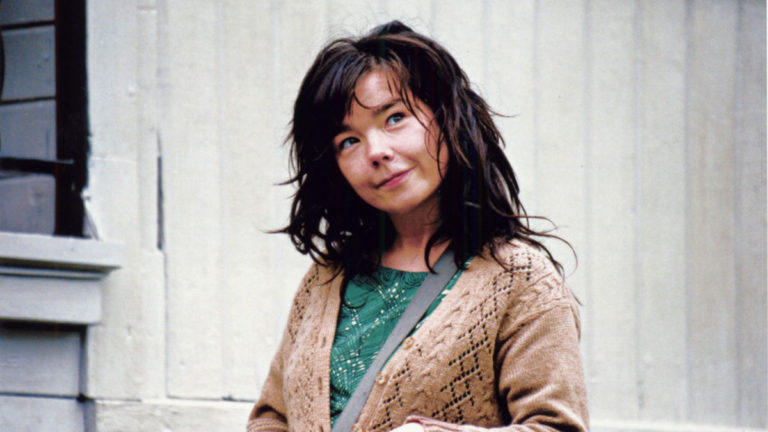
In Lars von Trier’s 2000 masterpiece Dancer in the Dark, the female hero Selma Jezkova makes the confident assertion that “In the musicals, nothing bad ever happens,” contradicting what film lovers familiar with the work of the Danish director know: everything that can go wrong will. Beginning with the opera-like overture reminiscent of Bergman’s Swedish adaptation of Mozart’s “The Magic Flute,” punctuated by a series of abstract images, this film promises to be true to form.

Selma, played flawlessly by Icelandic musical artist Bjork, is a kind-hearted Czech immigrant in the mid-1960s who has brought her son to America to have an operation to correct a congenital, degenerative ophthalmological condition he inherited from her. Renting a backyard trailer from a police officer and his wife in Washington State, Selma works long shifts at a factory doing manual labor while daydreaming of having a leading role in a Hollywood musical. With the help of her friend Kathy (played by Catherine Deneuve), a French immigrant who, like Selma, takes a Marxist view of community and friendship, Selma navigates her job and evenings spent rehearsing “The Sound of Music” for a community theater production while rapidly—and secretly—losing her eyesight. Bill (played by David Morse), the cop from whom Selma rents her home, initially seems interested in Selma and her son Gene, taking Gene under his paternal wing. As the story approaches its climax, however, it becomes clear that Bill’s intentions are not as altruistic as they appear: his capitalist greed leads to an operatic finale more “Tosca” than “The Magic Flute.”

The tension between the tragic storyline and the whimsically choreographed, quintessentially Bjork musical numbers takes a film that would be hard to watch and renders it unbearable. Instead of allowing viewers to settle into a parable of American avarice in its meanest and most destructive form (as he does with his next film, Dogville [2003]), von Trier uses the music he co-wrote with Bjork to distract and entertain them, disarming their defenses, before delivering the next cinematic gut punch, making “Dancer in the Dark” the ultimate anti-musical musical.

Naively celebrating Dancer in the Dark as a moralizing work of art that brilliantly plays with genre in order to expose the ugliest aspects of American culture is no longer an option. Gone are the days when art lovers were allowed to separate the artist from their art. Who relaxes anymore into listening to Wagner’s “Ride of the Valkyries” immune to its political history as a musical accompaniment to the march to the gas chambers? After the 2011 Cannes Film Festival interview that got Lars von Trier permanently banned, it will strike many as inappropriate to elevate any of his work for its moral teachings. When asked by a journalist about the inspiration he took from German Romanticism while making his film Melancholia (2011), von Trier joked about being a Nazi. Whether or not Lars von Trier is actually an antisemite is impossible to say, but his comments at Cannes ten years ago undermine his credibility as a moralist.

Perhaps we shouldn’t be surprised when artists we’ve revered turn out to be deeply flawed, even detestable human beings. Centuries-old, the notion of the “maverick” artist seems to have permeated the world of cinema, giving permission to directors like Woody Allen, Roman Polanski, and maybe even Lars von Trier to embrace their worst impulses. “Dancer in the Dark” is a film that masterfully explores the dangers of human impulse. In a time when the world is staring down the realities of such human-made crises as social injustice and climate change, Dancer in the Dark could serve as a cautionary tale. Sadly, the director’s own impulses have made that impossible.

Op-ed: The Book Isn’t Better, It’s Just Different

I stopped reading the book before seeing the movie a while ago. Books that had pending movie adaptations used to be something that dominated my “to be read” pile. I’d watch the trailer to get the idea of the characters in my head, then dive into the book with relish. More often than not, when it finally came to movie time, I was disappointed. One character was written out, two characters are combined, and three subplots are dumped completely. Like all readers I had the immediate thought, “the book was better.”

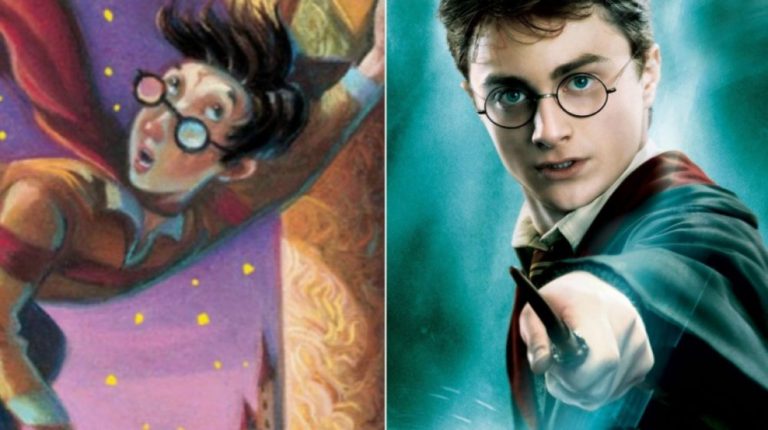
The book isn’t better, though, it’s a different medium entirely. A book is something that exists entirely in the reader’s mind. The author’s intent matters little if the reader can’t suss it out for themselves. A reader’s imagination can overwhelm the text. A book can have the richest, detailed descriptions imaginable, but our imaginations often fill in those details with our own complex diagrams and scenes. To this day, despite having read the books multiple times and seen the movies more than that, my mind gives Draco Malfoy a black, used car salesman haircut instead of the as written and seen, platinum blonde, which in retrospect the blonde is a bit on the nose for a pureblood enthusiast.

Our brains create our version of the story and it’s unlikely anyone adapting material can match what’s in our heads. The screenwriter is their own reader, they have their own interpretation of the words on the page, their own image of what the world looks like. From there, producer, director, production designer, costumer, makeup artist, actor, and all manner of other creatives have their own interpretation of that script. This idea, though eventually becoming unified, is an amalgam of dozens of imaginations. It’s more powerful than we, alone, with a text in our hand, could muster and it’s going to be very different than we could ever imagine.

No Country for Old Men | Netflix

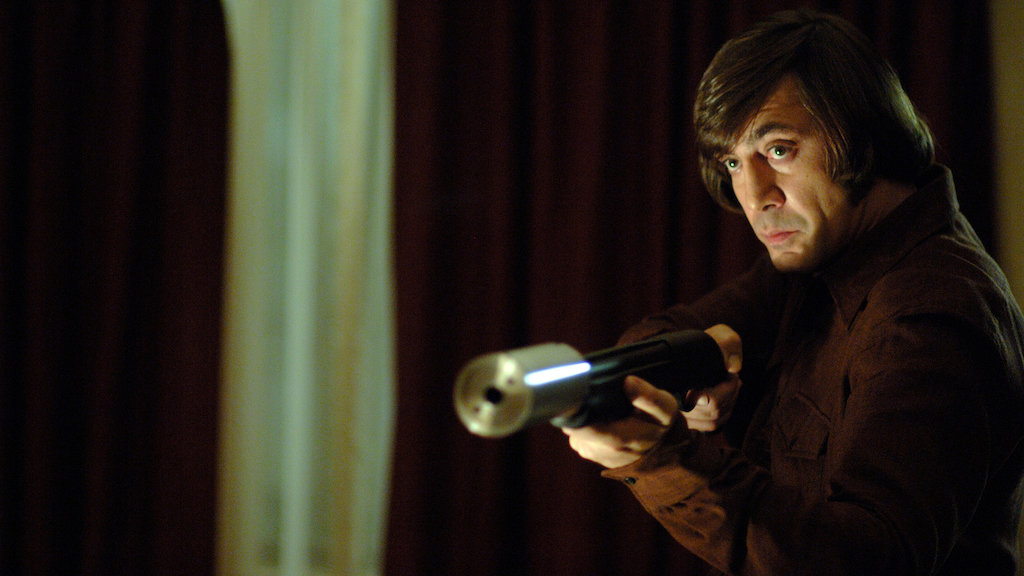
The interpretation of the text a viewer sees can change the way they see the original work. I read the text for No Country for Old Men and enjoyed it a great deal, but the Coen Brothers’ film is one I’ve revisited many times over the years. I thought I loved Ready Player One as a text, then I saw Steven Spielberg’s faithful adaptation and realized the book wasn’t that incredible of a text as its story relies so heavily on the context of other pop culture stories. I found Annihilation to be nearly completely impenetrable as a text, but as a film… I saw a visual representation of my utter confusion in a nearly impenetrable film that’s at least a little easier to comprehend than the text. What’s even worse than being adapted directly from a book is a new adaptation of a book that already has a classic, or at least infamous, film adaptation.

Movie people are always skeptical of a reboot, reimagining, or reinterpretation of a sacred text. I have no idea how many people actually read Charles Portis’ 1968 novel True Grit, but we have box office data to estimate how many people watched John Wayne as Rooster Cogburn put his reins in his teeth and ride at marauders firing two pistols at the same time. So many people saw it, loved it, and couldn’t imagine a world without it that when the Coen Brothers’ adaptation of Portis’ novel arrived, they derided it with the dismissive pejorative, remake, despite the 2010 film not having taken anything, but name and source material from the original. Even as I discussed this thought with my mom, she informed me that my second cousin had already dismissed Denis Villeneuve’s forthcoming Dune adaptation as utter trash because the 1984 David Lynch version is already perfect. I meant to ask if he had read the original source novel, but we had already moved on.

Film is far more indelible than literature in the public consciousness. Most people assume that a film is a remake rather than a new adaptation of a literary work. Movies are the people’s medium as it’s (relatively) inexpensive, easily accessible and often takes less than two hours to consume. There are countless films that have surpassed their literary counterpart in popularity and in the public consciousness. Jaws, Jurassic Park, Schindler’s List, The Godfather, MASH, The Shawshank Redemption, Blade Runner, and any and all James Bond films are just some of the films and franchises that have nearly eclipsed their literary roots. I have to imagine you’re humming, one if not all of those theme songs as you read those titles. You aren’t thinking of what’s on page 108, you’re thinking of Harrison Ford, Roy Scheider, Morgan Freeman, and Al Pacino. Though even when the epic popularity of a film can drown out, the “book was better” crowd, the adaptation itself has to be more than what’s on the page.

What is praiseworthy about adaptation is innovation. To take something we were asked to read in high school (and probably didn’t) and make it more approachable is the pinnacle of this. It’s been done do with modern Shakespeare riffs like Romeo + Juliet, Much Ado About Nothing (2012), and Coriolanus (2011) or at least adaptations that realize Shakespeare loved high school DRAMA with 10 Things I Hate About You and She’s the Man. Yet, what’s even more invigorating is to take the work within its context and to make it come off better than it could have on the page because someone who understands the material is better able to give us the joke, the pathos, and the pacing in a way those of us who have never donned a corset or been given an inheritance of 500 pounds a year can understand. Films like Pride and Prejudice (2005), Sense and Sensibility (1995), Emma. (2020), and Little Women (2019) have been elevated by the voices behind them who have made the drama better understood and brought to the forefront the subtext, often left out of male interpretations of the text.

Though, this innovation can be stymied before the film even gets rolling. The producer’s nervousness about the fan’s reaction to the adaptation of a mega-popular book or series can devolve the film into a live-action book summary of sorts rather than an interpretation meant for a new medium. As much as I enjoy the first two films in the Harry Potter franchise, there’s almost no denying they fall into the live-action summary category of adaptation. Most viewers were thrown for a loop when suddenly Alfonso Cuarón stepped in after Chris Columbus’ departure and gave us his version of The Prisoner of Azkaban, which is a far cry from what the first two films were. The tone, the color, and the genre-bending elements coalesced into a dynamic film that brought the story to life in a very new way. Not everyone enjoys this take of course and they complained, even more, when the next five films came out for the things left out.

The Kat's Guide: A Quick Guide to “The Lord of the Rings” Trilogy (Movie +  Books) – The Kats Cafe

If film adaptations are good for anything, it’s trimming the fat of a work of literature. The complaints about Harry Potter and the Goblet of Fire through to Deathly Hallows, Part 2 are mostly about that. Though I asked then, I ask now, and will ask in the future, “who wants to sit through a five-hour feature?” The snarky answer the die hards come back with is they absolutely would, but I always point out a little book about a little adventure to sour them on the idea. 

The Lord of the Rings trilogy left certain aspects of the book out and heightened other aspects for a four-quadrant appeal, but it seems the producers bowed to the pressure of the fans as they made the prequel The Hobbit. A several hundred-page tome was stretched mighty thin in order to fill out three, two hour plus, film adaptations. All the while the filmmakers added in details from author J.R.R. Tolkien’s vast appendices in order to connect it back to the original trilogy of films and make these slogs feel necessary to the broader franchise. Is it any wonder most book series are adapted for television now?

Truly, the market potential literary adaptations has shifted almost entirely to the small screen. Television is where those adaptations can breathe over episodes and seasons. These adaptations are safer bets and they may not end up like failed or abandoned film franchises, The metrics for success, the talent structure, and the budget are all completely different for television. They no longer have to spend years developing each book in the series only to wait for the box office returns of the previous to see if they can actually have a market for the next film. These television adaptations shoot a season, disband, then if the numbers are good, come back, shoot a season for the next year, and so on until the story or our attention spans are done. It may be that a film franchise of beloved literary series is a thing of the past, but adaptation will always be a part of the film.

From the first silent epics like Ben-Hur: A Tale of the Christ (1925), to the grand studio productions in Hollywood’s golden age, like Ben-Hur (1959), to the blockbuster epics of today, such as Ben-Hur (2016), film has been mining stories from literature, myth, and legend. To say, “the book was better” is to miss the point entirely. No film can be a book as no book can be a film because each comes from one mind first and from there is heightened, diluted, interpreted, derided, and experienced by each and every mind it touches.

Poll: What is your favorite film to receive a standing ovation at Cannes?

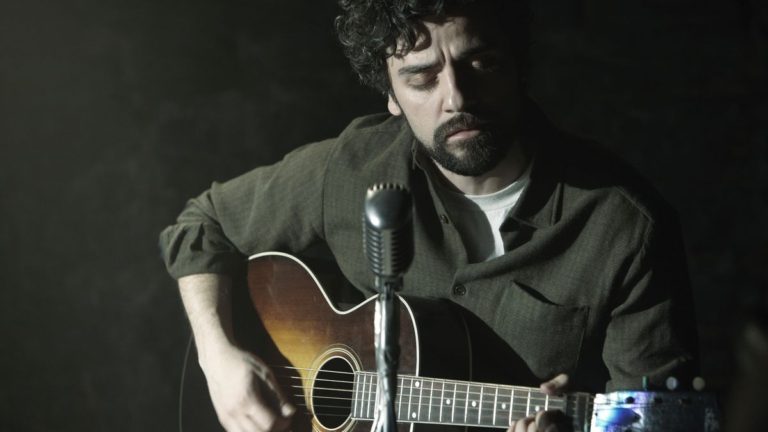
The attendees of the Cannes Film Festival are notorious for letting the world know when they enjoy something, and even more notorious for communicating their hatred for something else. It’s not uncommon for a film to be met with either an onslaught of boos, or even a lengthy standing ovation. As awkward as a standing ovation can be in the moment (consider Adam Driver taking the time to smoke a cigarette during the five minute applause for Annette), it proves two things: 1) The film will be talked about, and 2) The audience at Cannes is not afraid to express themselves. But they do have a habit of cheering films that would go on to receive considerable acclaim, and while the length of applause has historically ranged from 5 minutes (Inside Llewyn Davis) to as high as 22 minutes (Pan’s Labyrinth), it makes for a fun exercise to look at which films held up the most for us.

With that said, what is your favorite film to receive a standing ovation at Cannes? We realize we may be forgetting some, as not all standing ovations were documented at the time of their film’s premiere.

Data for this poll was found courtesy of Quartz, link here.


List: Top 3 Movies About Pursuing Music

This week on Episode 443 of the InSession Film Podcast, inspired by our review of Sian Heder’s CODA, we discussed our favorite movies about pursuing music. If you’ve been listening to the show for awhile, you’ve heard us talk about music movies many a times over the years, but we’re always trying to find new perspectives to talk about when it comes to that particular genre. And while this week’s topic is a bit more specific, it’s one we’ve never done before. The pursuit of music is something all musicians experience, and there are some fantastic movies that examine it directly. So, maybe not the broadest of topics, but a rich one nonetheless. That said, here are our lists:

(Note: Please keep in mind that we each had different criteria for our selections)

JD

1) Whiplash
2) Hustle & Flow
3) Sing Street

Brendan

1) The Committements
2) That Thing You Do!
3) Sing Street

Ryan

1) Inside Llewyn Davis
2) Nashville
3) Once

Honorable Mentions (Combined)

A Star is Born, Wild Rose, School of Rock, Purple Rain, Frank, 8 Mile, Hedwig and the Angry Inch, O Brother Where Art Thou?, Cold War, Victor Victoria, Almost Famous, Begin Again, CODA

Hopefully you guys enjoyed our lists and if you agree or disagree with us, let us know in the comment section below. As mentioned above, there are countless missions/sequences in film that will qualify for this list depending on your criteria. So, it’s quite possible that your list is different than ours. That being said, what would be your Top 3? Leave a comment in the comment section or email us at [email protected].

For the entire podcast, click here or listen below.

For more lists done by the InSession Film crew and other guests, be sure see our Top 3 Movie Lists page.