

Home Blog Page 178

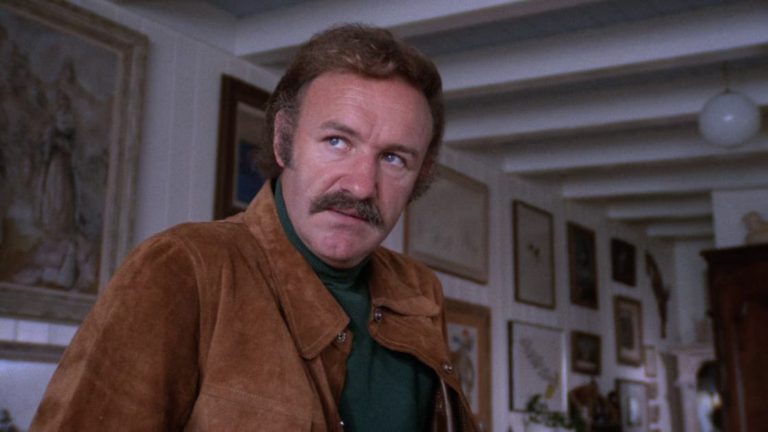
Criterion Crunch Time: ‘Night Moves’

There is something special for a movie fan about finding a “hidden gem.” This term really has no objective definition. You may feel like something is hidden and another person has seen it dozens of times and everyone they know has seen it. This experience is personal but intense. If you can manage to go in blind to a movie and no one you associate with has heard of it or recommended it to you, there is a certain pleasure in knowing you are viewing it in a completely personal way. In this day of constant information, it is a rarity and sometimes saved for movies of a prior generation. And especially if, god help you, you are on “Film Twitter,” good luck avoiding knowing everything about a movie before it is even released. But, if anything, this makes the rare hidden gem even more valuable. The Criterion Channel definitely offers many opportunities for this experience, and one such hidden gem for me is now Night Moves.

Directed by Arthur Penn, Night Moves is just my type of movie. A grimy, neo-noir filled with typically unlikable characters, a mystery to keep you interested, and an ending that solidifies its status as a great movie. Plus, it is all headed by a recognizable lead who isn’t technically a “movie star.” That non-star is none other than Gene Hackman, a film presence and a specific type that is sorely missing in today’s Hollywood. Hackman, as private detective Harry Moseby is the perfect middle ground that was lost in the 1980s through the likes of Arnold and Sly. Hackman is believable whether he is throwing the punch or taking it and showing the actual ill effects. Plus, he can play the grey. Hackman doesn’t have to have a heart of gold for us to root for him, a type he had already perfected in The French Connection and, to a lesser degree, The Conversation.

Night Moves, from director Arthur Penn, follows the previously mentioned Moseby (a former professional football player) on a case to find a missing girl, Delly Grastner (Melanie Griffith) by her aging Hollywood actress mother, Arlene Iverson (Janet Ward). Like any good neo-noir, this is merely the inciting event and the case is much more wildly complicated than it seems at first glance. From a script level, penned by Alan Sharp, Night Moves, is, in my opinion, wildly underrated. Immediately, the writing sets up Moseby as mostly ineffective, both in his personal and private lives. His wife, Ellen (Susan Clark) has been cheating on him. Instead of posing our lead as being above this process, he proceeds to get into a screaming match with her. Additionally, when he confronts the man (Harris Yulin), he does not get into a brawl, but instead practically skulks away, defeated verbally.

But all of this is merely set up to, rather quickly, catching up with Delly who is staying with her stepfather, Tom (John Crawford) and his girlfriend, Paula (Jennifer Warren). The meeting of Moseby and Paula is really where Night Moves begins to pick up steam. The palpable sexual tension between the two makes us forget, for a moment, about his rather simple job. Instead of immediately taking the girl back home to her mother and getting paid, Moseby is drawn into this world separate from reality. But given his lack of romantic prospects on the homefront, all of his decisions make a kind of sense. 

After this romantic interlude, filmed through both a lovely and grimy haze, Moseby comes back to earth to return Delly where she supposedly belongs. Quickly, it becomes clear that, for the safety of this girl, Moseby has made a massive error in judgment. This is an age old noir technique, what matters more, the right thing or the choice that gets you paid. Just about every noir hero has to make this choice, but this feels different. Moseby makes the incorrect choice and a relative innocent pays for it. He spends the rest of the film attempting, but mostly failing, to make up for his lack of foresight. We are simply not used to following ineffective protagonists, but because of Hackman’s tremendous performance, we empathize with his lack of knowledge instead of lashing out at him. Hackman is just the right choice for a role this subtle (even through loudness) and we feel for him, even through the closing credits.

I refuse to ruin the ending of Night Moves because it is an all-timer moment. Not to get off on a tangent, but the best endings inform characters, plot, and the audience’s understanding of the world created in the film. This ending does all of this and more. Night Moves is a movie that is not only worth your time, but is one that I see myself returning to on numerous occasions. Our cinema world is less interesting and darker without a presence like Hackman, and Night Moves  is the perfect movie to watch to remember that he is more than just Lex Luthor.

Join us next time for a look at 2046, Wong Kar-wai’s loose sequel to Days of Being Wild and In The Mood For Love!

Movie Review (TIFF 2021): ‘Three Minutes – A Lengthening’ is a touching tribute to anonymous people lost during the Holocaust


Director: Bianca Stigter.
Writer: Bianca Stigter.

Synopsis: The documentary transforms rare color home-movie footage shot in 1938 Poland into a testament to victims of the Holocaust.


Earlier this year, A Radiant Girl premiered at the Cannes Film Festival, a film that depicts the life of a young woman in the Paris of the 1940s just as the Germans are about to invade France. Her life is beautiful, but we as an audience know what will happen to her and her family in the coming days and months. Here lies the horror of history.

Something similar happens with Three Minutes – A Lengthening, a documentary by filmmaker Bianca Stigter that tries to delve into found footage shot in Poland in 1938. History allows us to now know that the small town of Nasielsk, which is presented in these recordings, would be invaded by the Germans in 1939 and that most of the 7,000 Jews living there would be assassinated, resulting in only 100 survivors by 1945.

Stigter is aware of the reverence and importance that this found footage means for history and for the long-gone people, and as such she treats the images with care and respect. The investigative team that came together to piece this puzzle focuses on small clues – the color and buttons of the clothes, the design of the houses, the Jewish traditional hats that are used by boys and men, or the trees in the streets – to try to make sense of the place and people that live in this moment. Their effort is as exciting as it is solemn.

The documentary, with less than 70 minutes, is a worthy and touching tribute to more than 150 people that would remain unknown and possibly forgotten if it weren’t for the private footage of David Kurtz, a Polish man residing in America that went on holidays to his hometown in 1938. As the film beautifully narrates and shows, Kurtz would record his visit around Europe with his brand-new camera, including these three minutes in Nasielsk, where the locals were so excited about the idea of appearing on screen that they prevented him from filming the houses, streets, and buildings, piling up together, smiling and waving.

The story is presented in the form of a mystery, an enigma that is patiently discovered as the minutes go by. Stigter introduces us to the story with the raw footage, with no explanation or introduction, showing men, women and children walking down the streets, minding their own business, going in and out of a synagogue, and being distracted by the man with his camera. In 1938, this day was special because of the presence of Kurtz, and more than 80 years later it is also special because of the cultural, social, and anthropological meaning this footage has for human history.

Based on the book Three Minutes in Poland, written by Kurtz’s grandson, Glenn Kurtz, the film enriches the story presented in the book through its moving images and the delicate score composed by Wilko Sterke. Narrated by Helena Bonham Carter, Three Minutes – A Lengthening slowly captivates the audience with the recounting of the facts: the way the footage was discovered and salvaged, the complicated path of finding where had it been recorded, the impasse of not having anyone to recognize the faces appearing on the footage, and the excitement of making slow and valuable advances.

Sharing an eerie connection with Babi Yar. Context, documentary also released at Cannes 2021, Three Minutes – A Lengthening works as a heartbreaking reminder of the war crimes committed by the Nazis, this time in Poland. Testimonies, tributes and recovered news reconstruct what happened when the Germans arrived in this small town. This film is a monument to the small efforts that shape history and leave behind special clues. With information recovered from public records from the 1920s, news about a local button factory, and testimonies buried in Polish ghettos, it is a reminder of how important the actions of the present are for the generations of the future, no matter how small or trivial they may seem.

Three Minutes – A Lengthening mourns the lives that were cruelly snatched 83 years ago. It also celebrates more than 150 people that were briefly and randomly immortalized by the camera of a vacationer filming a family video. With a humanizing speech that demands the remembrance of these nameless people, Stigter makes sure that we don’t dismiss or forget their faces. This is the only inheritance we have of 7,000 Jews from the town of Nasielsk, Poland.

Grade: A

Poll: What is your favorite film of 2003?

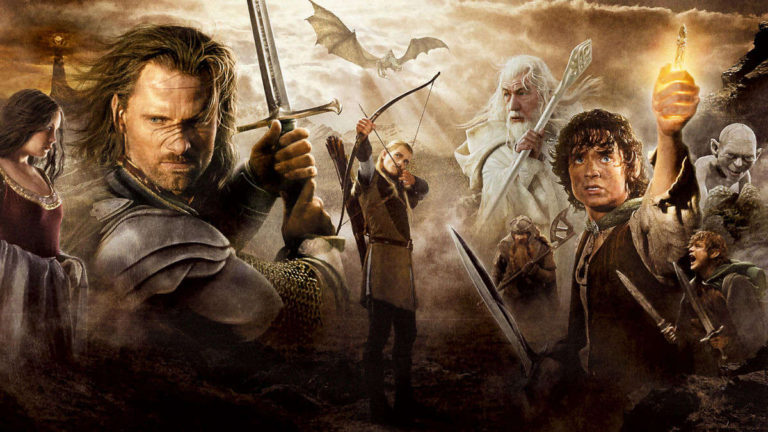
As we do these annual retrospectives on the InSession Film Podcast, we always try to decipher what it was that defined that cinematic year. In the case of 2003, many people remember that as the cinematic year where a fantasy epic would go on to sweep the Academy Awards, picking up a record-breaking 11 Oscars (tying Ben-Hur and Titanic). Many still hold The Lord of the Rings in the highest of regards, but should that overshadow the other greats that also came out in 2003?

So let’s see how the battle turns out. What is your favorite film of 2003?


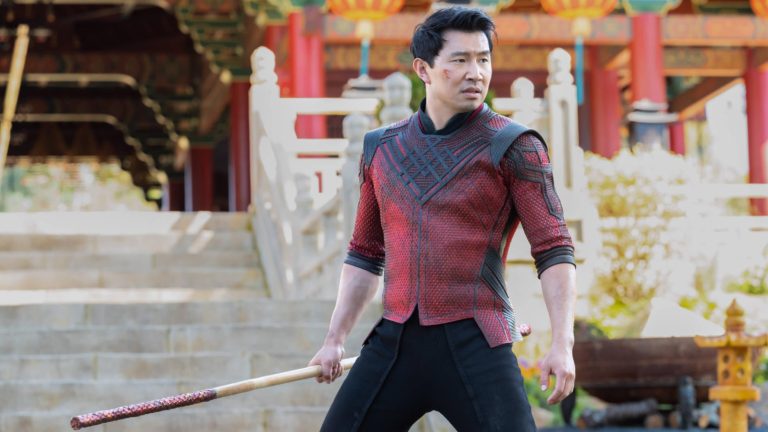
Podcast: Shang-Chi and the Legend of the Ten Rings / The Two Towers – Episode 446

For our latest campaign, we are trying to reach 200 reviews on iTunes. We are getting closer and closer to our goal, but we need your help. Leave us a review today and you may even receive a free InSession Film t-shirt!

This week on the InSession Film Podcast, Jeffrey Zhang from Strange Harbors joins us to discuss Marvel’s latest in Shang-Chi and the Legend of the Ten Rings and we continue our Lord of the Rings Movie Series with The Two Towers!

A huge thanks to Jeffrey for joining us on the show this week. We are big fans of his work and podcast. His passion is often palpable and that is especially true for Shang-Chi and the Legend of the Ten Rings. It was a fun discussion and we look forward to having him back in the near future. Similarly, we had a ton of fun talking about The Two Towers and how things evolved for the trilogy in that film.

On that note, check out this week’s show and let us know what you think in the comment section. Thanks for listening and for supporting the InSession Film Podcast!

– Movie Review: Shang-Chi and the Legend of the Ten Rings (5:07)
Director: Destin Daniel Cretton
Writers: Dave Callaham, Destin Daniel Cretton, Andrew Lanham
Stars: Simu Liu, Tony Leung, Awkwafina

– Notes / Discussion (58:21)

This week for our break segment, similar to last week’s episode, we spend most of our time talking about the latest reviews we’ve received on iTunes. Because of our current campaign, we received a hefty amount of new arrivals, and we wanted to read them on the show. We are super grateful for those who have participated, it’s really meant a lot to us. Keep ’em coming!

[divider]

RELATED: Listen to Episode 444 of the InSession Film Podcast where we discussed Annette!

[divider]

The Lord of the Rings Movie Series: The Two Towers (1:17:56)
Director: Peter Jackson
Writers: Peter Jackson, Fran Walsh, Philippa Boyens, Stephen Sinclair
Stars: Elijah Wood, Viggo Mortensen, Ian McKellen, Bernard Hill

Show Sponsor: First Time Watchers Podcast

– Music

Xu Shang-Chi – Joel P. West
Foundations of Stone – Howard Shore
Helm’s Deep – Howard Shore
The Return of the Eagle – Atli Örvarsson

Subscribe to our Podcasts RSS
Subscribe to our Podcasts on iTunes
Listen on Spotify
Listen on Stitcher
InSession Film Podcast – Episode 446

[divider]

Next week on the show:

The Lord of the Rings Movie Series: The Return of the King
Top 5: Movies of 2003

[divider]

Help Support The InSession Film Podcast

If you want to help support us, there are several ways you can help us and we’d absolutely appreciate it. Every penny goes directly back into supporting the show and we are truly honored and grateful. Thanks for your support and for listening to the InSession Film Podcast!

VISIT OUR DONATE PAGE HERE

Movie Review: ‘Worth’ Has Great Performances, But Undercooked Themes


Director: Sara Colangelo 
Writers: Max Borenstein 
Stars: Michael Keaton, Stanley Tucci, Amy Ryan, Tate Donovan, Laura Benanti, and Chris Tardio. 

Synopsis: An attorney in Washington D.C. battles against cynicism, bureaucracy, and politics to help the victims of 9/11.


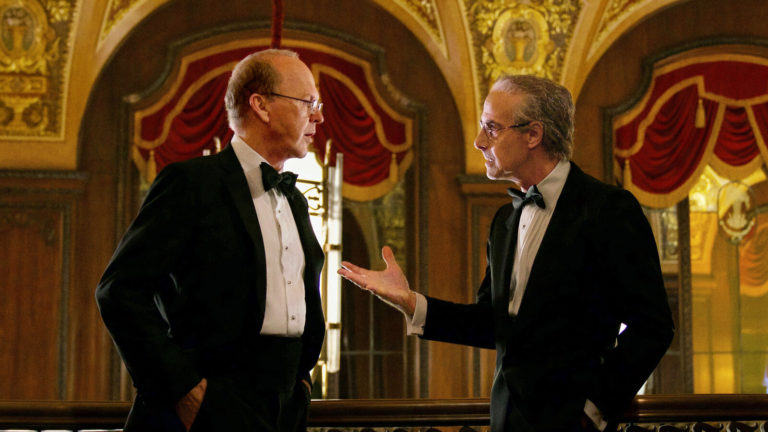
Sara Colangelo’s Worth begins with the central question of Kenneth Feinberg’s book, in which the film is based: “What is life worth?” Michael Keaton plays Feinberg, a lawyer specializing in mediation and alternative dispute resolution, and asks the students he is teaching. How much is your life worth, depending on the occupation you had and the contribution you’ve made to society as a whole? Of course, the rich will greatly benefit from their value, while the rest may not get anything in return for their contribution or very little.

This central question will chronicle Feinberg’s place in the September 11th Victim Compensation Fund. The Bush government established the fund to compensate the families of 9/11’s victims in exchange for their agreement not to sue the airline corporations involved. And while Worth contains two terrific performances from Keaton and Stanley Tucci, its themes and structure feel massively undercooked, as it only presents superficial supporting characters and ideas to drive its main narrative.

What really holds Worth together is the incredible performances from its two main actors. Tucci plays Charles Wolf, an activist for anyone who believes Feinberg’s fund is unjust and unequal. Whenever he has to confront Feinberg on the fund’s formula or its problems, these sequences are riveting, as they showcase how truly talented both Keaton and Tucci are when they have riveting dialogue. Unfortunately, I can’t say much for the rest of the film. Still, these scenes truly light up the film and transform a rather surface-level script into a must-see, as it acts as another great vehicle to showcase why Michael Keaton is one of the greatest living actors working today, and a reminder that Tucci has always been underappreciated. As we’re nearing Awards Season chatter with numerous film festivals happening this month, everyone has seemingly forgotten about how great of an actor Tucci was in Supernova, one of the best dramas of the year. It’s a damn shame because Worth is another great opportunity for him to demonstrate his talents, but others will overshadow his performance as we dive deep into Oscar season. But here’s a fact: you can watch Tucci and Keaton for literal hours and never get bored.

Worth also contains great supporting actors, including Amy Ryan, Tate Donovan, Laura Benanti, and The Sopranos veteran Chris Tardio, who are all great here. Benanti, in particular, gives an emotionally draining performance as the wife of a firefighter who sacrificed his life to save his brother (Tardio) during 9/11. The scene where she meets Feinberg for the first time highlights the film and brilliantly illustrates her acting talents more than anything else. Unfortunately, Benanti’s character is the only supporting protagonist to which the audience may attach themselves emotionally, with the film’s other characters only staying in surface-level motivations. Take Tate Donovan’s Lee Quinn, for example. Donovan is a highly skilled actor who has proven himself in multiple roles in the past, but in this movie, he is the typical bureaucrat who doesn’t want to help anyone but his own pockets. It would’ve made an interesting antagonist force for Feinberg, who must overcome partisanship and bureaucracy for victims’ families to commit to the fund. Still, none of the conversations with Donovan are in any way interesting, just as Feinberg’s female partner, Camille Biros (Ryan), who is sidelined as a “supporting female” for most of the film, without any development on who she is or what will be her contributions to the fund with Keaton.

Worth‘s biggest problem is that it doesn’t know what it wants to say on Feinberg, the victims, or the foundation of the fund itself. It chronicles moments in Feinberg’s path to help the victims’ families, but it doesn’t give us any compelling insight nor drama on the situation. Instead, it’s a rather traditional “walk and talk” drama, where conversational sequences make it appear like something is going on, as the characters are constantly in movement from one place to another. Still, once you listen to what’s being said, you’ll quickly realize how unfocused and underdeveloped everything is. It’s packed with talented actors who make most of the film w. Still, it’s writing from Max Borenstein (whose other writing credits include the MonsterVerse) misses the mark for a truly emotionally impactful drama making a surprising impression during Awards Season. However, only the acting talents of Stanley Tucci and Michael Keaton will hold your attention in this film, and it is for that reason only that the film should be sought out on Netflix this weekend. But don’t expect anything spectacular.

Grade: C+

Orion Pictures: A Spinoff That Spun Off Into The Ground

If you have seen Dances With Wolves and The Silence Of The Lambs, then you certainly must have seen the company that was behind them. Both of these films were back-to-back Best Picture winners and should have made the studio the toast of Hollywood. However, they never really celebrated it because the company, despite a string of success before this, was bankrupt. It was really sad that the Oscar glory the studio had acquired with both pictures was only short-lived, but the mistakes of the last decade had caught up to them, swallowing whole their riches and being nowhere back to where they started.

Breakaway From UA

Orion Pictures was founded in 1978 by a group formally with United Artists who had left their studio due to interference by Transamerica, which owned UA. Arthur Krim, Robert Benjamin, and Eric Pleskow, along with William Bernstein and Mike Medavoy, departed to form their competing production company based on the constellation which they erroneously thought had five stars but has seven. Regardless, they signed a deal with Warner Brothers almost immediately. Like with UA, it was about giving creative freedom to directors while they controlled distribution and advertising. The first films to come out in 1979 by them were the comedies A Little Romance and 10, in which Bo Derek caught people’s attention by wearing a skin-colored swimsuit with her hair in cornrows.

At the start, they had a solid slate of movies including Caddyshack (1980), Prince Of The City (1981), and Arthur (1981), but only a third of their films was a financial success. They split from Warner Bros in 1982 and were forced to settle in buying Filmways Productions to handle their distribution now that Orion was forced to finance pictures independently. They also got into television and were responsible for producing the hit show Cagney and Lacey. In 1984, they tasted a bitter failure with the sloppy production and release of The Cotton Club while reaping their first Best Picture win for Amadeus.

The Slope Into The Red

The problems compounded themselves for the rest of the decade where none of their financially successful movies could help cover the growing losses with other pictures. It was obvious that they kept falling short with their distribution and advertising planning and when it came to home video, they held off initially despite the financial lucratively of it. Eventually, Orion was bought, first by Viacom, then by Metromedia in an effort to fend off competition by Viacom’s leader, Sumner Redstone. With full control, Metromedia began expanding on Orion’s TV production and picked up the slack by pouring money to the movie side.

Initially, finances turned around with success in 1986 with Back To School, Hannah And Her Sisters, Hoosiers, and their second Best Picture winner, Oliver Stone’s Vietnam War drama, Platoon. But by 1990, the studio was last in terms of revenue among other large Hollywood studios. Twice, Billy Crystal joked about Orion’s downfall; the year Wolves won Best Picture, he said, “Reversal Of Fortune is about a woman in a coma, Awakenings is about a man in a coma, and Dances With Wolves [was] released by Orion, a studio in a coma.” The following year, when Orion shut down and Lambs was about to make its historical victory, Crystal quipped, “The good news is that Orion was just purchased, and the bad news is it was bought by the House of Representatives.”

Demise

Metromedia began selling their projects to other studios, as well as their TV productions to other networks as Orion’s TV division was shuttered and the company declared bankruptcy in November of 1991. Films already finished would be held off from release while Orion was busy reorganizing themselves including Love Field (1992), Robocop 3 (1993), and Blue Sky (1994), which won Best Actress for Jessica Lange, her second Oscar, and was the final film by Tony Richardson who died of AIDS after production was completed three years earlier. Also, all of the original founders of Orion left the company, giving Metromedia’s executives full control. Very few movies were released for the next few years, most notably Ulee’s Gold (1997), which earned Peter Fonda an Oscar nod for Best Actor. In 1997, Orion was sold to MGM; its final film released under the Orion banner was the war drama One Man’s Hero (1999). The company was officially defunct. 

A Sudden Revival

In 2013, fourteen years after the studio was shuttered, MGM revived Orion’s TV production sector while the film studio was relaunched for small-scale theatrical releases and video-on-demand. The first movie to come out under the Orion banner was the horror remake of The Town That Dreaded Sundown, produced by Ryan Murphy and Jason Blum. Orion would also partner with other studios in the release of other films and in 2019, they would see their films released through United Artists, making a full circle of where Orion originated from all the way back in 1978. These films included the remake of Child’s Play (2019) and the long-awaited Bill & Ted Face The Music (2020). Earlier this year, MGM was purchased by Amazon, giving them full access to Orion’s catalog for future release on Prime Video.

Orion Pictures quickly faded away after the Oscar success, but it still can be found in their films regardless of current ownership. They shot off like a star before it exploded, a victim of the founders’ own success and over-confidence of their work. In the chapter on cinema, however, their legacy is cemented as one with classics and Oscar winners that remain influential in the long run.

Follow me on Twitter: @brian_cine (Cine-A-Man)

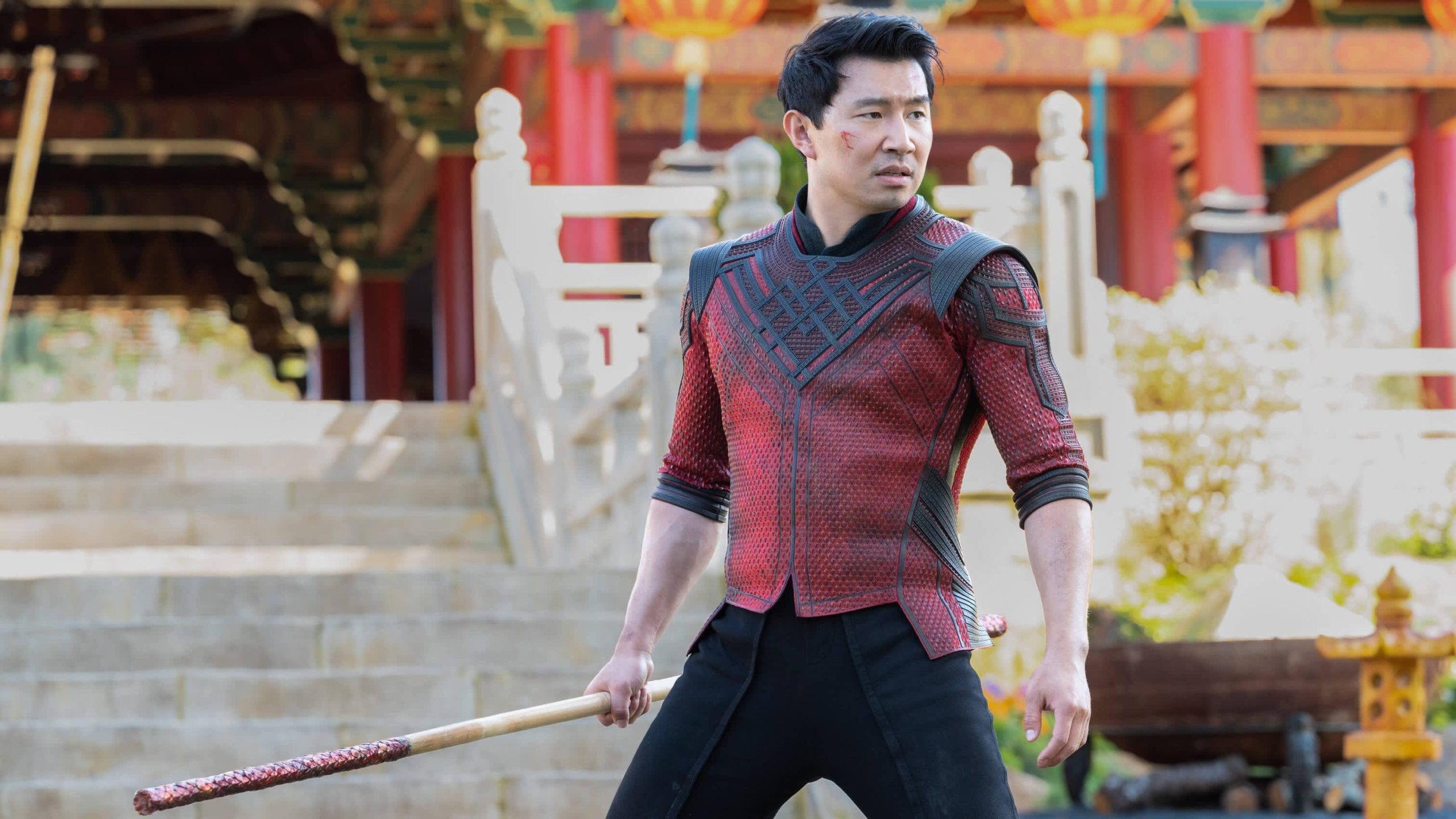
Movie Review: ‘Shang-Chi and the Legend of the Ten Rings’ is One of Marvel’s Best and the First Great Entry of Phase 4


Director: Destin Daniel Cretton
Writers: Dave Callaham, Destin Daniel Cretton, Andrew Lanham
Stars: Simu Liu, Awkwafina, Tony Chiu-Wai Leung, Michelle Yeoh

Synopsis: Shang-Chi, the master of unarmed weaponry-based Kung Fu, is forced to confront his past after being drawn into the Ten Rings organization.

[/info]

After almost a year-long break due to the pandemic, Marvel fans have been hungry for new content. Taking pop culture by storm, Marvel movies have become a staple at least once every year for movie theaters, bringing in fans dedicated to the series, and casual viewers who are just curious to see the newest superhero movie. Shang-Chi and the Legend of the Ten Rings is the first Marvel movie since the pandemic to be released exclusively to theaters, and it does not disappoint those who are eager to get back and see the newest addition to the MCU. While Shang-Chi might fall victim to a typical Marvel formula, it has some of the franchise’s best action sequences and excels in performances from every member of its ensemble cast.

I’ll admit I’m not the biggest fan of many action movies, namely because I feel like the fights are just trying to impress me without really doing anything for the story, instead only trying to barely keep the attention of the audience to compensate for a weak plot. Shang-Chi couldn’t be more opposite. Every action sequence that takes place is an opportunity for further character development or to help the story grow. From the bus fight that’s seen in the trailers, to the final fight that takes place at the climax of the films, and every other action sequence scattered throughout, each one is incredibly entertaining to watch, and each has an intention to further develop either the characters or the narrative. The film fully revels in the action whenever it can, squeezing out every ounce of tension in the best ways possible for as long as it can. Even the longest fight sequence in the film kept impressing me with its choreography and presenting new twists that kept me at the edge of my seat. They never feel repetitive either, as every new fight has varying amounts of stakes and importance to the film. Whether it’s just a simple story, or a life or death, typical marvel “we-saved-the-world” fight.

The action doesn’t take the entirety of the runtime either, and thankfully it knows when to breathe and when to let the audience laugh. However, it does fall victim to some of the marvel cliches. Like many Marvel movies, the characters often feel like they only have to travel from point A to point B because that’s what the plot dictates, rather than any kind of strong motivation from a character’s journey or importance of the journey. I felt this a lot recently with Black Widow, and while I wouldn’t say Shang-Chi is quite as noticeable, it’s still hard to overlook. Shang-Chi and his friend Katy (played by Awkwafina) often feel as if they’re just being strung from location to location in order to move the plot further along or to present a new conflict. Of course, there’s also the major battle at the end that HAS to be life threatening and huge, and normally feels a little out of place and sudden. It didn’t detract from the movie entirely, but it did hit every beat that you would expect from a Marvel movie. If this is something you’re comfortable with and one of the reasons you love Marvel, it’ll easily satisfy. However, if you’re looking for a fresh take on the superhero genre, Shang-Chi won’t provide much in this area.

The familiar emotional and plot beats are compensated and given life of course by the brilliant ensemble cast. Michelle Yeoh and Tony Chiu-Wai Leung are featured in supporting roles, both feeling perfectly cast after their careers in martial arts films such as the award-winning Crouching Tiger, Hidden Dragon, and Hero. Both continue to impress, but Leung excels as Shang-Chi’s father, the bearer of the titular Ten Rings. He may appear as a one-note villain from the trailers, but he’s so intricately played by Leung, and he totally delivers on the complicated role that he’s given. Simu Liu is a strong lead for the role of Shang-Chi, fully supporting the cast around him, and Awkwafina surprises with some of the best acting I’ve seen from her outside of The Farewell. Awkwafina has oftentimes been criticized for portraying the same character over and over again, and for her comedy becoming a bit stale in the roles she takes. I was nervous I would see a similar performance from her in this movie, but she has delivered what we haven’t seen from her before. Awkwafina is able to balance a new dramatic character and comedy that feels fresh and natural from her performance.

Thrilling and entertaining from start to finish Shang-Chi cements itself as easily one of the best films in the MCU franchise, up there along with Black Panther and Avengers: Endgame. Like any film trying to stand out from the other 25 in the franchise, it can feel a bit familiar and repetitive, but it’ll never lose your interest and curiosity for what more there is to come from the Ten Rings.

Grade: A-

Movie Review: ‘Cinderella’ is a Stale but Harmless Trifle


Director: Kay Cannon
Writer: Kay Cannon
Stars: Camilla Cabello, Nicholas Galitzine, Idina Menzel, Pierce Brosnan, Minnie Driver, Billy Porter

Synopsis: Our ambitious heroine has big dreams and with the help of her fab Godmother, she perseveres to make them come true.

[/info]

There’s nothing inherently wrong with telling the same story on film for the umpteenth time—as long as something of value is done with it, hopefully with a pinch of originality. We all know the story of Cinderella front and back, but filmmakers can make anything feel fresh with well-chosen actors and energetic direction and surprising detours into places new and exciting. The problem with the newest incarnation of Cinderella, written for the screen and directed by Kay Cannon (Blockers), is how creatively stale it is, despite a few clever touches and a game cast.

I can’t remember a time the Cinderella story hasn’t been a part of my life. My first memory ever is watching the 1950 Disney animated classic with my parents at a drive-in, and the classic story has followed me ever since—in middle school with the delightful Brandy-led TV movie, in high school with the more serious and gorgeously rendered Ever After, in college with the cheesy but fun A Cinderella Story, and in graduate school with Kenneth Branagh’s dazzling 2015 adaptation starring Lily James and Cate Blanchett. This is a story I’ve loved since childhood, and I’m always up for a new interpretation.

The new Cinderella, now available on Amazon Prime, isn’t a face-palm disaster like some might make you believe, but it could have been so much more. Camilla Cabello, in her feature film debut, plays the title character. This time not so much desiring a spin around the dance floor with the Prince but wanting to make it on her own in the world of fashion. She lives with her occasionally mean stepmother Vivian (Idina Menzel) and her mostly nice stepsisters Malvolia (Maddie Baillio) and Narissa (Charlotte Spencer). Yes, there’s a Prince (Nicholas Galitzine) in search of his Princess, and yes, there’s a ball Cinderella wants to attend, and yes, she only has until midnight until the spell by her Fabulous Godmother (Billy Porter) will be broken.

You know the gist, so what we need to talk about is what works in this update and what doesn’t, and if there’s a plus in this one, it’s the cast. Cabello is a natural and likable performer—I would love to see her tackle something more daring and contemporary in her next project. Porter is a blast despite his lack of screen-time, and Menzel gives Vivian a shade of compassion not usually seen in the stepmother role. It’s also nice to see a re-telling where Cinderella has ambitions that go beyond being with the Prince, the ending sending her on an empowering journey that doesn’t result in a mere kiss with a colorful backdrop.

But most of the positives end there since, wait, have I mentioned this movie is a musical? A musical that recycles a bunch of famous pop songs from the past few decades and throws them into scene after scene with questionable choreography and little purpose? Yes, if there’s any Cinderella version that aligns closest with the television series Glee, it’s this one—the use of familiar songs gives the movie its most dated quality. If it hadn’t been for Pierce Brosnan’s gray luscious locks, I might have assumed this project had been filmed a decade ago. Sure, the mash-up at the beginning of Janet Jackson’s “Rhythm Nation” and Des’ree’s “You Gotta Be” is entertaining, but once the story gets going, stopping things cold to hear the Prince belt out “Somebody to Love” and a frustrated Vivian sing “Material Girl” is mostly cringe-inducing. Not every musical can do what Moulin Rouge did, and this film is the proof.

Other cast members don’t get much to do, especially Brosnan as King Rowan and Minnie Driver as Queen Beatrice in an unlikely Goldeneye reunion. Both actors are so effortlessly charismatic that it’s a shame they’re wasted in this, brief glimpses of their bickering making me wish for an entire movie about them. Galitzine makes a handsome but bland Prince (staying true to the Prince, I guess, from the Disney animated original), and why-oh-why has James Corden showed up now in less than two years in his third movie musical? Watching him transform into a mouse on the carriage is a moment so horrific it should have earned the film a PG-13 rating.

But most of all it’s the lack of originality that keeps this version from soaring. There’s almost nothing here you can’t find in other better interpretations of the story, namely the 2015 Cinderella, still my favorite of the recent Disney live-action reimaginings. There’s a flatness to the cinematography and laziness to the storytelling, with a noticeable lack of tension throughout. And so many of the songs pad the overlong running time with moments that barely scratch the surface of these characters and the world they inhabit. Bewildering moments are abundant—how doesn’t Vivian recognize Cinderella at the ball? How does nobody recognize the Prince when he’s in disguise?—and tone problems clutter the movie, too, with a long and deadly serious conversation toward the end between Cinderella and the Prince feeling of a different movie, one that’s not so mired in fluff.

The new Cinderella is relatively harmless entertainment, and girls under twelve are probably going to love it. Despite its many flaws, it goes down easily, unlike some other 2021 films I’ve reviewed that were downright excruciating to sit through. Cabello is a charming presence on-screen, and there’s something about watching such a nostalgically familiar story that can fill you with warm fuzzies even when you recognize the version you’re consuming is subpar to most others. But if you’re looking for something fresh and modern, look elsewhere, because this film mostly treads on safe ground.

Grade: C-

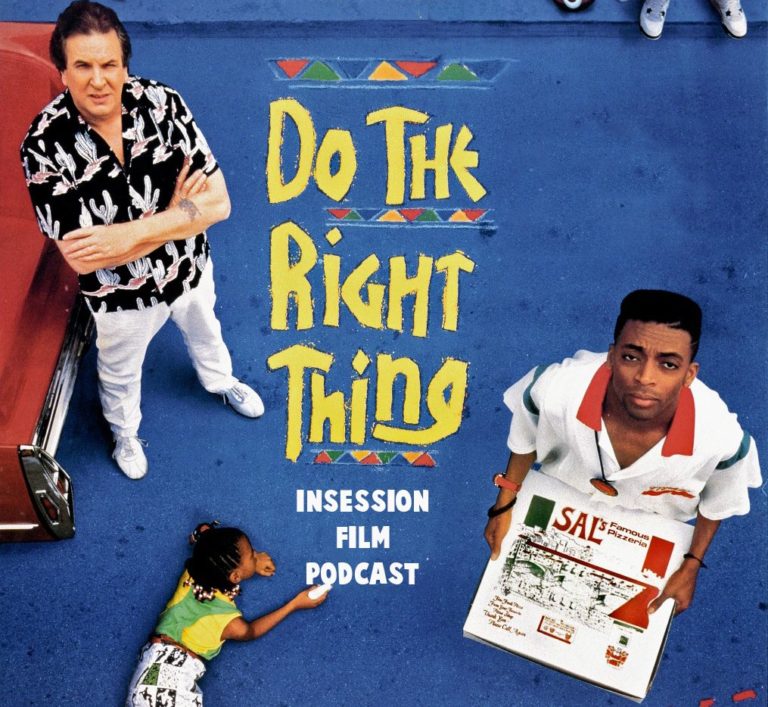
Podcast: Do the Right Thing (Revisited) / Master and Commander: The Far Side of the World – Extra Film

This week on Extra Film, Ryan and Jay begin their Spike Lee Movie Series with Do the Right Thing and then they discuss the 2003 sea epic, Master and Commander: The Far Side of the World!

Following last week’s conversation of She’s Gotta Have It, the Extra Film boys move on to one of the most important films of all time, Do the Right Thing. Set in a predominantly black neighborhood, racial tension boil on a hot summer day and lead to tragic repercussions. We talked about this wonderful film before in some bonus content with JD, Brendan, and Ryan a couple of years ago, but there is no way to talk about a Spike Lee Movie Series without this film. And by the end of the review, both Ryan and Jay agree, this is a masterpiece and a film that’s aged very well, even though that might not be a good thing.

In the back half of the episode, the guy’s review Master and Commander: The Far Side of the World. With the Main Show’s 2003 retrospective coming up, Ryan and Jay thought they would talk about a film that has been building a solid reputation since its 2003 release. Built as a sea epic, Master and Commander: The Far Side of the World is a cat and mouse chase set on large boats in the water with two wonderful performances from Crowe and Bettany. The guys really enjoyed talking about this one.

Thanks for listening!

– Movie Review: Do the Right Thing (Revisited) (4:22)
Director: Spike Lee
Screenplay: Spike Lee
Stars: Danny Aiello, Ossie Davis, Ruby Dee, Giancarlo Esposito, Rosie Perez, Spike Lee, Bill Nunn, John Turturro

– Movie Review: Master and Commander: The Far Side of the World (1:15:11)
Director: Peter Weir
Screenplay: Peter Weir, John Collee
Stars: Russell Crowe, Paul Bettany

– Music
Public Enemy – Fight the Power
Nathan Evans – Wellerman
The Return of the Eagle – Atli Örvarsson

We try to make this the best movie podcast we possibly can and we hope you enjoy them. Subscribe today on iTunes, Spotify, or Stitcher, and please leave us a review on iTunes. You can also find us on Soundcloud, PlayerFM, and TuneIn Radio as well. We really appreciate all your support of the InSession Film Podcast.

Subscribe to our Podcasts RSS
Subscribe to our Podcasts on iTunes
Listen on Spotify
Listen on Stitcher
Do the Right Thing (Revisited) / Master And Commander – Extra Film

[divider]

To hear this Extra Film episode and everything else we do, download our apps on the Amazon Market for Android and the Podcast Source app on IOS devices. The mobile app covers all of our main shows, bonus podcasts and everything else relating to the InSession Film Podcast. Thanks for your wonderful support and for listening to our show. It means the world to us.

Movie Review (EIFF): ‘The Beta Test’ is a Smart Dark Comedy with Some Issues


Director: Jim Cummings, PJ McCabe
Writers: Jim Cummings, PJ McCabe
Stars: Jim Cummings, Virginia Newcomb, PJ McCabe

Synopsis: A soon-to-be-married Hollywood agent receives a mysterious letter for an anonymous sexual encounter and becomes ensnared in a sinister world of lying, infidelity, and digital data.

[/info]

After the success of Jim Cummings’ previous two films Thunder Road and The Wolf of Snow Hollow, he is back again with a dark comedy around the film industry. In a Q&A after the screening of the film, Cummings made it clear that his love for filmmaking is what keeps him going and that he is not chasing to be locked into studio deals to have his vision on the big screen. He still edits his own films, works with people he has known for the past decade, and even uses tricks such as return policies in order to get professional speaker sets and mix the audio at his own place. There is a clear passion for filmmaking here and it comes through from the opening scene.

The structure of the film is incredibly clever, with the opening scene taking place between a couple and a clear mystery that needs to be solved. It is dark and graphic to set the tone of the film and yet leaves the audience in suspense about how much worse the situation can get. It then jumps into the main premise of the film, focusing on Jordan Hines (played by Cummings), a Hollywood talent agent like those you would see in Entourage – something that is referenced in the film.

What makes this film work as much as it does is the narrative of the story. The sexual encounter that happens between Jordan and his match is incredibly well written, from the letters at the beginning to Jordan’s paranoia after the event. Cummings plays the role well, escalating each scene and creating a sense of anxiety that is hard to look away from but nervously anticipating his next moves. The story naturally moves from point to point within this main storyline, with each scene adding more layers to this mystery that made for a fun journey.

The humor within this story is very sharp and, for the most part, lands well. Part of this is down to Cummings’ performance, but a lot of that also comes through in the screenplay and the editing style. There are numerous scenes, particularly when Jordan is trying to convince people that he is a police officer, that just works so well and brings some needed humor into a film that is this dark.

Whilst the main narrative of the film works so well, there are some other themes and side plots that are not handled as well. Jordan is one of those Hollywood talent agents that thinks he can get away with being horrible to those around him, even going so far as to include a joke about Harvey Weinstein. Whilst I get the purpose of this and what he is trying to show, there should have been a further exploration of this theme. Instead, the film even fails to pass the Bechdel test as the women are left to the side in order to further propel Cummings in the film. With the film being quite short as well, it could have taken a little longer to delve into these themes and explore them properly.

It is also hard to tell what lessons are learnt by Jordan when it comes to the ending of this film. Whilst I do admire what Cummings and co-writer PJ McCabe did to subvert expectations, but it does create a closure that is not rushed but certainly unclear. For some, this ending might work for the character of Jordan and his journey, but I just wished the film had given us something a little more satisfactory.

Overall, there is so much to enjoy about The Beta Test that it will certainly be a crowd-pleaser. This was a fun film to watch as part of a festival, and I would recommend seeing it with a group of people if physically possible. There are some things that stop it from being a fantastic film, but the good certainly does outweigh the bad in a film that promises to make you laugh before anxiously anticipating what will happen next.

Grade: B

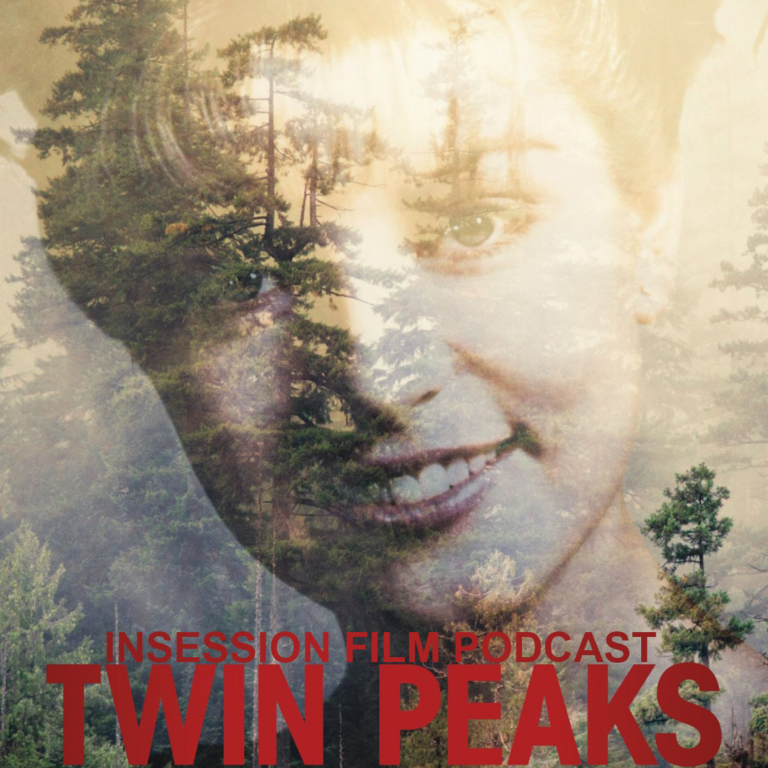
Podcast: The Full ‘Twin Peaks’ Saga – Patreon Bonus Content

Listen!

For our latest Patreon Bonus Content, Ryan and Jay are joined by Charles Bright to discuss all of Twin Peaks, including Seasons 1 & 2, Fire Walk With Me and The Return!

If you’re already a Patreon supporter, you can listen to this episode NOW on Patreon by clicking here.

Sign up today to get early access and hear the entire episode!

[divider]

HELP SUPPORT THE SHOW

To hear our bonus content episodes early, subscribe now on Patreon. In many cases, though, we offer our bonus content for free after a certain period of time and we do encourage (and very much appreciate) a small donation of $0.99 as a way to help support the show if signing up on Patreon isn’t for you. Click on the PayPal button below to donate and thanks so much for your support. You can also hear much of our Bonus Content via our mobile apps. See the information at the bottom of the post for more details.


One-Time Donation


[divider]

Mobile Apps!

Listen to all of our bonus content on our apps for just a one-time fee! Whether you have an iPhone, Android or Windows phone, our apps are available in many different ways that is convenient for you. With our mobile app, not only can you listen to all of our bonus content, but our main shows and our Extra Film podcasts as well. Click here for more info!

If you don’t want to purchase our bonus content, but still want to support us, there are other you can help us out. Click here for more info.

Top Ten: Nicolas Cage Performances

You either love him or hate him (I am most definitely in the former camp) whatever your opinion of the man, you cannot deny that there is a resurgence in Nicolas Cage’s career that must activate a certain amount of intrigue in you. With the recent release of the critically praised Pig – with Cage being back to his best – it perked my curiosity as to what are Cage’s best films in his seesawed career. Whether he starred or merely appeared as a memorable guest, Cage has offered us a varied amount of cinema treats, and with that, here I am, breaking down my favorite Cage films – where there is sure to be some controversy – to hopefully change people’s opinions on the once faded cult star.

Spider-Verse's Black & White 'Spider-Man Noir' Is More Important

10) Spider-Man: Into the Spider-Verse (2018)

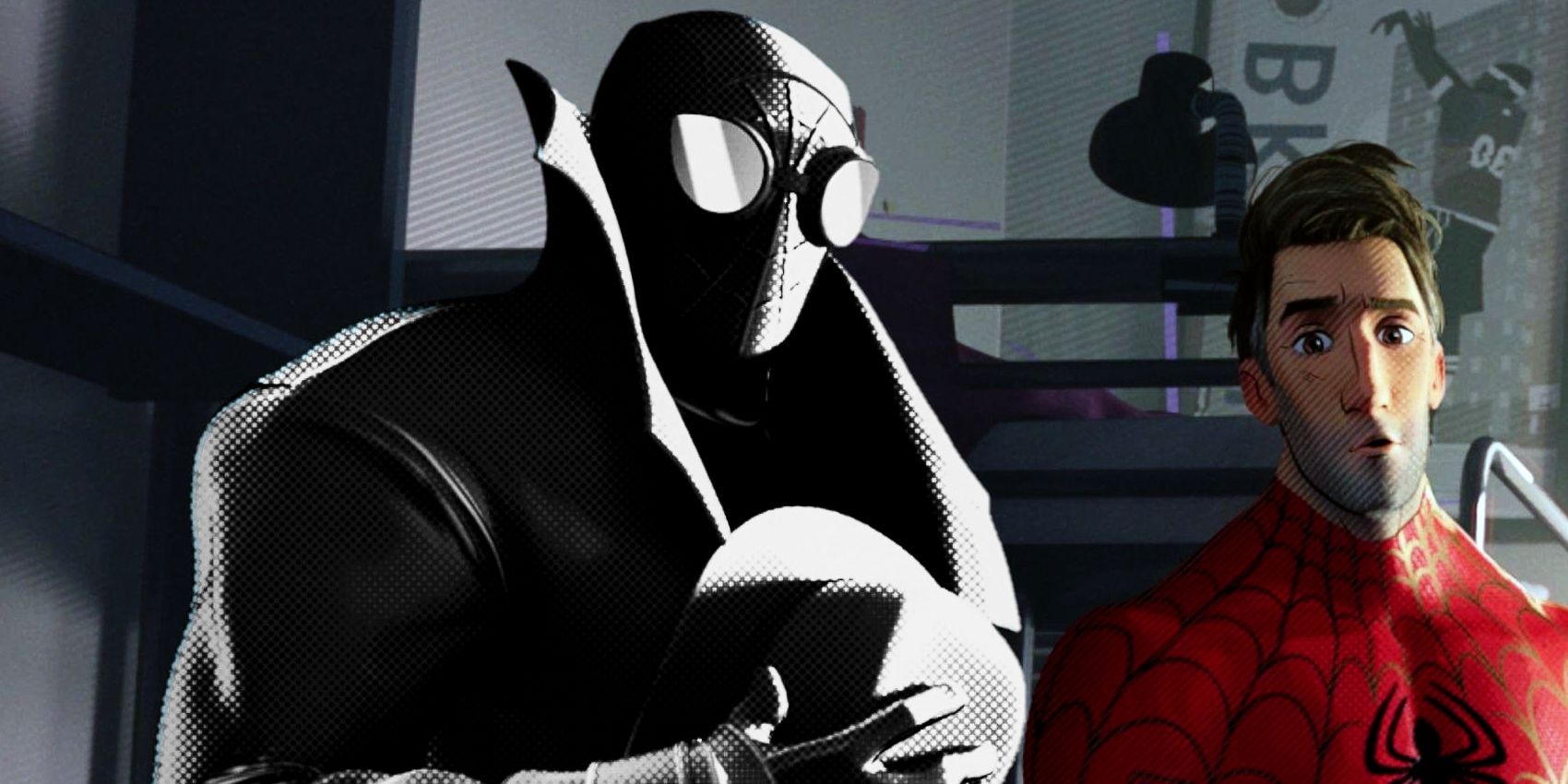
The first controversial choice in the list, seeing as Cage plays a very small supporting role, but his 1930s noir Spider-Man is truly memorable for possessing hilarious dry humor, a mysterious origin which is barely explored – the diehard Marvel fans will know though – and for being an effective ally for the ensuing fight. Cage voices the popular character with his usual deadpan style of acting; copying the style of James Coburn and Humphrey Bogart, which is the perfect match for his dark persona. It attributed to a positive audience reception following the film’s release, and with the character’s success, here’s hoping this isn’t the last we see of private eye Spider-Man and his colorless life of crime-fighting, or to Cage and his voice acting prowess – such a distinct voice needs more animated work.

The Rock - YouTube

9) The Rock (1996)

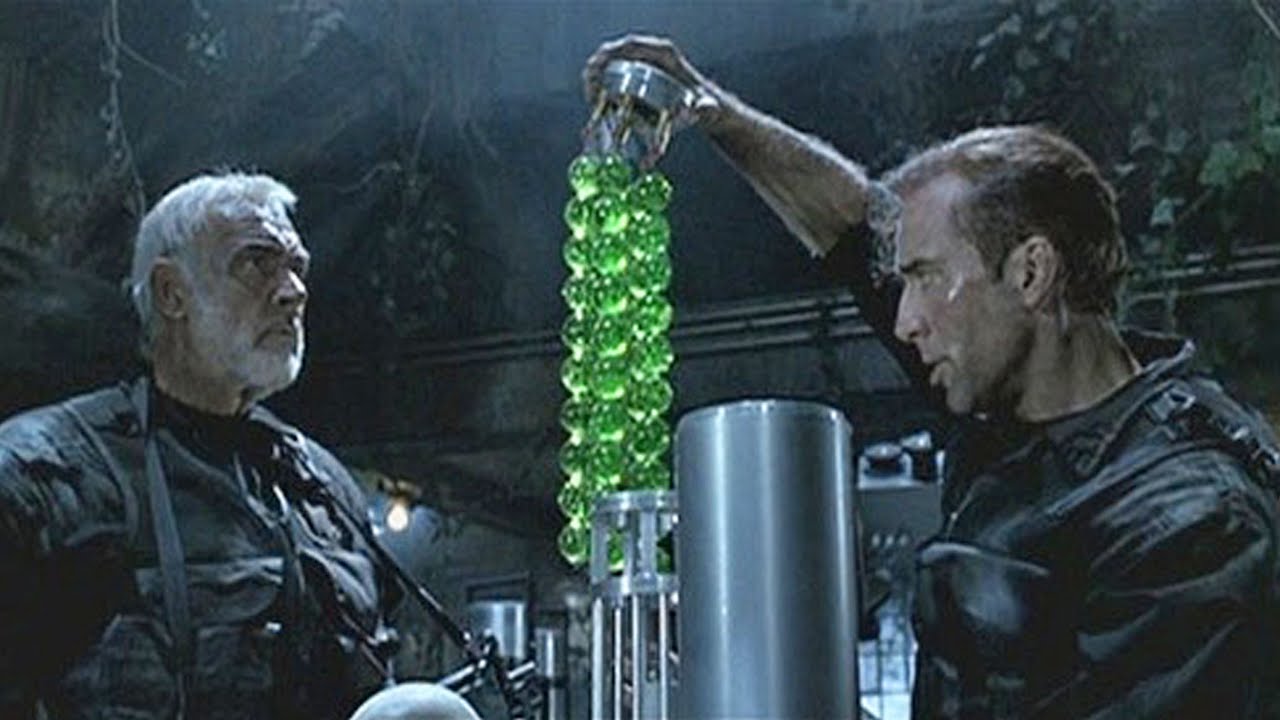
Now, I am no Michael Bay fan by any means, but what I am a fan of is Connery and Cage teaming up to take down a vengeful Ed Harris, accompanied by plenty of explosions – of course, there is explosions. Often overshadowed by the very, let’s say, colorful Con Air, which was released the following year, The Rock is by far superior – apart from the lack of an exquisite Cage hairstyle. It is one of a hatful of action films that Cage participated in during the 90s – with varying degrees of success – but this is a sure-fire hit and Cage is the standout as a mild-mannered FBI bio-chemist Stanley Godspeed (yes, that really is his name). To outshine cinema stalwarts like Connery and Harris is no easy feat, but Cage, you did us all proud with this one.

13 Enchanting Facts About Moonstruck | Mental Floss

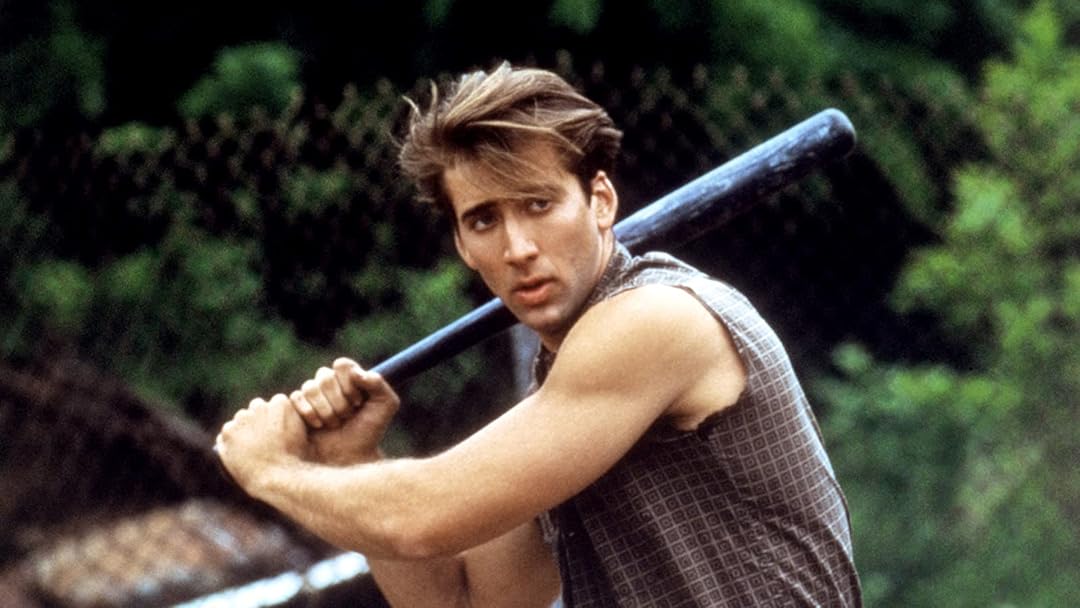
8) Moonstruck (1987)

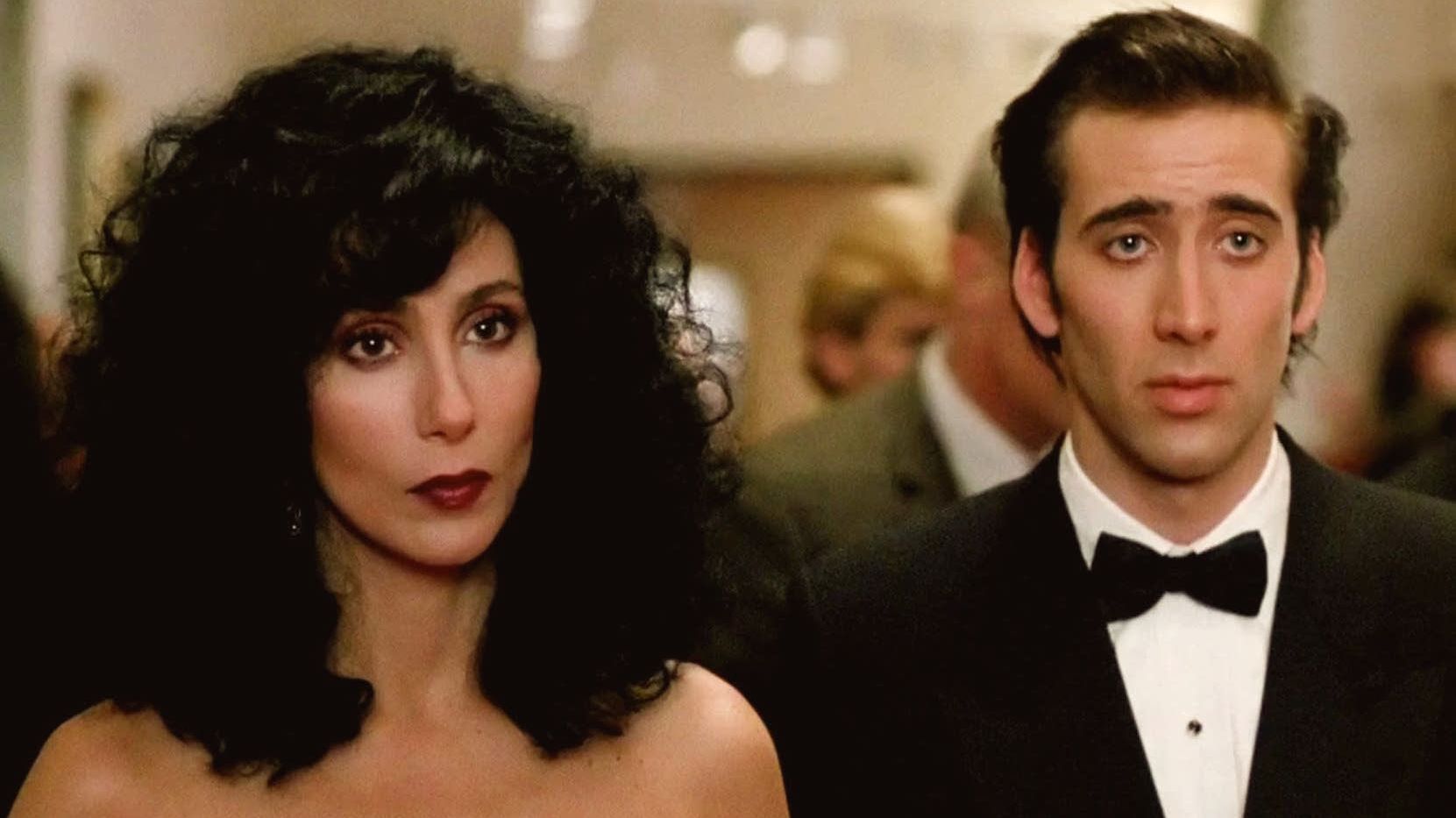
The film that turned Cage into a Hollywood heartthrob (yeah, you heard me right) with exposed chest hair and devilish good looks. Cage stars opposite the one and only Cher, as the moody and mysterious brother in-law that Cher finds herself tempted by. It is a sleek and sparkly performance from Cage, as he transforms into a sex symbol right in front of our eyes – after previously being cast as troubled teens and bad boys. His energetic style and debonair nature became one of the first performances where people took notice and thought, “Woah, this kid has levels to his game”. In fact, to create such a contrast from his character in Raising Arizona – released earlier the same year – to this, deserves all the recognition he received.

Watch Birdy | Prime Video

7) Birdy (1984)

Directed by the late great Alan Parker, Birdy sees a teenage Cage deliver a mature and powerful performance far beyond his years, opposite the equally great Matthew Modine. This underrated and overlooked gem follows two teenage boys who bond over a fascination for all things aviation, both of whom soon discover that the aftereffects of war are not to be trifled with, quickly transforming them into deeply troubled men wondering what went wrong. This performance by Cage was truly an insight of things to come; a compelling and authentic portrayal about the changing of boy to man, a troubling time in one’s life as it is.

The Highbrow Return of Nicolas Cage - The Atlantic

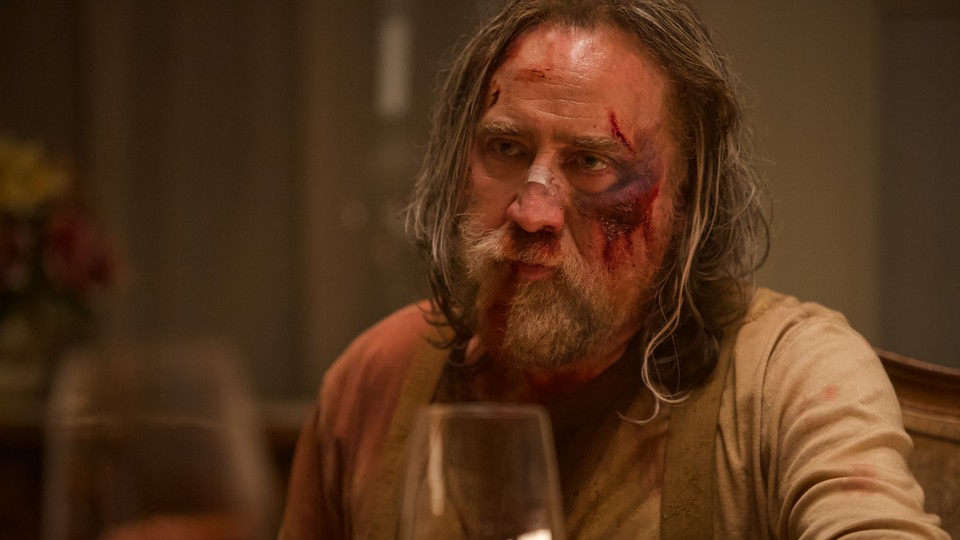
6) Pig (2021)

The film that is now firmly on the lips of Cage fans everywhere, the subtleties of this mysterious character were incredibly polished and showed that he hasn’t lost any of that acting prowess. Cage plays a truffle hunter who seeks revenge after his prized truffle pig is stolen from under his nose. Pig is such a poetic film that explores themes of love, loss, and loneliness, it is perfectly nuanced, and Cage delivers his best performance in years. You think it is going one way – towards violence and death – but it brilliantly steers down a brand-new path, with Cage being the catalyst to everything that is good in it. It helps when you have one of the great cinema pigs lining up next to you, it wouldn’t surprise me if they hung out after work either.

Bringing Out the Dead: A Pandemic Dialogue | Features | Roger Ebert

5) Bringing Out the Dead (1999)

Bringing Out the Dead is a crazily underrated film, and the performance of Cage is often overlooked. I am a huge Scorsese fan, and this is so different from his previous works that you can’t help but admire the bravery; it is experimentally bold, consists of some dark surreal humor, shot brilliantly and has a whole host of great performances. However, it is Cage – who plays the sleep deprived New York paramedic slowly going insane – that spearheads the whole thing so effectively. The way he interacts with a plethora of quirky characters as he travels through the mean streets of Manhattan is fabulous to watch. He blends into his surroundings trying to avoid his own personal downfall, it is both sad and exciting (who knew that was possible) and if I was wearing a hat, I would tip it to you, Mr. Cage.

Adaptation movie review & film summary (2002) | Roger Ebert

4)  Adaptation. (2002)

Well, what can you say about Adaptation that hasn’t been said already? A truly remarkable film by Spike Jonze – following the equally brilliant Being John Malkovich – that sees Cage playing two characters (only he could pull off two completely different characters at the same time), a set of twins as well. Cage plays a fictionalized version of Charlie Kaufmann, as well as portraying his completely fictional twin brother Donald; both equally odd, both equally brilliant, what a unique and difficult idea to process. Cage was nominated for his second Oscar for this performance – after Leaving Las Vegas ­– and it is a travesty he never won (damn you Adrien Brody), however, the recognition that has since followed means this is a truly great acting display and a perfect role for the king of quirk.

Nicolas Cage to Recreate Con Air and Face/Off Roles for Bonkers New Film -  Den of Geek

3) Face/Off (1997)

Ah Face/Off, what a truly brilliant film you are, and undoubtedly the pinnacle of Cage’s career as an action star. John Woo delivers a great Cage action film amid a packed decade for the man in question, but Face/Off leaves them all in its dust. Cage stars alongside Travolta as psychopathic criminal Castor Troy (he really does get the best character names) who, after participating in an experimental face swap surgery, begins to explore his arch enemy’s persona in any way he can, just the most ridiculous plot you’ve ever heard, but it works so well. Cracking performances from both Cage and Travolta, mixed with absorbing action sequences by the great Woo, makes Face/Off one for the memory, a film you won’t forget in a hurry.

Nicolas Cage 15 greatest films ranked: 'Leaving Las Vegas' and more -  GoldDerby

2) Leaving Las Vegas (1995)

A film that is most people’s favorite Cage flick (I yearn to be different) is controversially second on my list. A breathtaking performance by Cage which earned him his sole Oscar win, sees him as the depressed alcoholic screenwriter who moves to Vegas to live his last days as one giant party, surprisingly falling in love with a local prostitute. Knowing about his own personal drink problems, you could clearly tell that Cage had a lot of fun with this one. He is so authentic and offers a great magnetism to a deeply troubled character, Cage gives him that likeability factor that shouldn’t be there for someone so destructive. It feels quite poetic that this is the role to give him his only major acting award, a role so obviously close to his heart.

The Nic Cage Project: Raising Arizona - That Shelf

1)  Raising Arizona (1987)

And here it is, my controversial number one is the brilliant screwball comedy that is Raising Arizona. I first watched this as a kid and adored it for its unrivaled quirkiness, watching it again as a supposed adult made me realize how incredibly chaotic and hilarious it really was. What truly enamored me to it was the performance of Cage, and how his character “H.I.” is so loveable, but also completely hazardous to everything around him. Something else I found out years later was that the crazier “H.I.s” hair became, signified how stressed out he was during the whole ordeal – it all makes sense now. Raising Arizona is fabulous from all angles, it’s completely ridiculous but such a fun film and Cage is the standout funny man in a film that includes John Goodman, and that is something to be impressed about.

Poll: What is Tony Leung’s best performance?

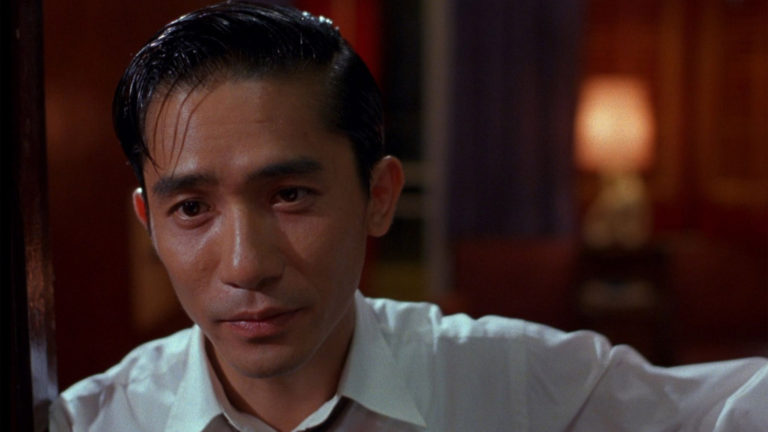
If you don’t know his name by now, I’m sure you’ll all remember it this weekend after seeing Shang-Chi and the Legend of the Ten Rings. Born in Hong Kong, Tony Leung Chiu-wai has become widely regarded as one of Asia’s best actors, whether it be his work with Wong Kar-wai or actioner John Woo. The variety in his work speaks for itself, and has even garnered him a best actor award at the Cannes Film Festival in 2000.

We can’t wait to see what else he has in store, but until then, let’s look at his incredible filmography over the last few decades. What do you think is Tony Leung’s best performance?


Podcast: Candyman / The Fellowship of the Ring – Episode 445

For our latest campaign, we are trying to reach 200 reviews on iTunes. We are getting closer and closer to our goal, but we need your help. Leave us a review today and you may even receive a free InSession Film t-shirt!

This week on the InSession Film Podcast, our own Christian Eulinberg joins us as we review Nia DaCosta’s Candyman and we begin our Lord of the Rings Movie Series with The Fellowship of the Ring!

Big thanks to Christian for joining us once again. He’s always great to talk to and his passion for The Lord of the Rings made the discussion all the more enjoyable. It was also great to hear his perspective on Candyman given the discourse surrounding that movie. You’ll have to forgive us, it’s a long show once again, but we are confident that you’ll love the conversation for both films. At the very least we had a ton of fun and hopefully that comes through.

On that note, check out this week’s show and let us know what you think in the comment section. Thanks for listening and for supporting the InSession Film Podcast!

– Movie Review: Candyman (6:45)
Director: Nia DaCosta
Writers: Nia DaCosta, Jordan Peele, Win Rosenfeld
Stars: Yahya Abdul-Matten II, Teyonah Parris, Colman Domingo, Nathan Stewart-Jarrett

– Notes / Discussion (1:04:56)

This week for our break segment, we spend most of our time talking about the latest reviews we’ve received on iTunes. Because of our current campaign, we’ve seen plenty of new arrivals, and we wanted to read them on the show. We are super grateful for those who have participated, it’s really meant a lot to us. Keep ’em coming!

[divider]

RELATED: Listen to Episode 444 of the InSession Film Podcast where we discussed Annette!

[divider]

The Lord of the Rings Movie Series: The Fellowship of the Ring (1:25:52)
Director: Peter Jackson
Writers: Peter Jackson, Fran Walsh, Philippa Boyens
Stars: Elijah Wood, Viggo Mortensen, Ian McKellen, Sean Bean

Show Sponsor: First Time Watchers Podcast

– Music

The Sweet – Robert Aiki Aubrey Lowe
The Shire – Howard Shore
The Road Goes Ever On – Howard Shore
The Return of the Eagle – Atli Örvarsson

Subscribe to our Podcasts RSS
Subscribe to our Podcasts on iTunes
Listen on Spotify
Listen on Stitcher
InSession Film Podcast – Episode 445

[divider]

Next week on the show:

Review: Shang-Chi and the Legend of the Ten Rings
Top 3: N/A
The Lord of the Rings Movie Series: The Two Towers

[divider]

Help Support The InSession Film Podcast

If you want to help support us, there are several ways you can help us and we’d absolutely appreciate it. Every penny goes directly back into supporting the show and we are truly honored and grateful. Thanks for your support and for listening to the InSession Film Podcast!

VISIT OUR DONATE PAGE HERE

Divas: Movies about the Greatest Female Vocalists of All Time

In honor of Respect, the latest of other legendary singers (Judy Garland, Nina Simone) getting their own biopic, I thought I would go down memory lane to look at other lives on screen. Some are good, some are bad, and I cannot fault those who just did it for the money. I mean, it is difficult to play any real-life person, especially one with a voice that Aretha Franklin had. While the film was a disappointment overall, Jennifer Hudson was fabulous – like Andrea Day in The United States vs. Billie Holliday. The movie sucked, but she was amazing. Here are some other diva-making performances.

Lady Sings The Blues (1972)

With respect to that latter film mentioned, Diana Ross, herself among the greatest divas ever, could not have done better in being Billie Holliday in a full biopic about the star troubled life from childhood to death. Ross and the movie (Richard Pyror doing drama as the Piano Man impressed me) give it the emotion people found from it despite some weaknesses, but it does not come out as wooden. The film received five Oscar nominations including Best Actress for Ross and in February of this year, the movie came out finally on Blu-Ray.

Coal Miner’s Daughter (1980)

Loretta Lynn has the title, “The First Lady of Country Music,” thanks to the massive success she had from the late 50s onward coming from poverty to being a late bloomer in the guitar and songwriting some of the early great songs ever put to writing in the genre. Sissy Spacek, in an Oscar-winning role, gives Lynn her voice straight out of the Kentucky hills she came from with Tommy Lee Jones building his stardom as Lynn’s hard-working husband and manager. It’s an enthralling film of a love story built in with the unlikely path Loretta Lynn came through to fame, daring to sing songs about subjects unheard of to the conservative ears of the genre that cemented Lynn’s legacy in country music. 

What’s Love Got To Do With It (1993)

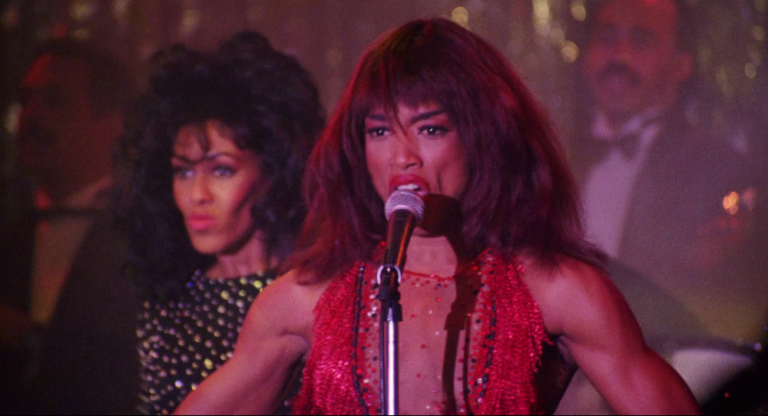
Anna Mae Bullock’s life was very turbulent when she was found and later married Ike Turner, who then renamed her Tina. Years of domestic abuse and an amazing comeback after, her autobiography was put on notice courtesy of Angela Bassett as Tina and Laurence Fishbourne as Ike. It is an amazing tour-de-force from the two of them, but it is Bassett converting herself to playing the sizzling, kinetic presence Tina showed in real life and nailing it to the last step. It’s a great film, even though Tina complained the movie sanitized her character as someone totally weak throughout the period.

La Vie En Rose (2007)

Marion Cotillard deserved her Best Actress Oscar win as France’s prima donna who lived a tragic life that she sung to people about. Olivier Dahan didn’t direct the first biopic about Piaf – there are at least three films about her produced earlier – but it is the most globally recognized film about the singer from childhood to an early death aged 47. Cotillard brought the passion, the pain, and the glory Piaf had throughout her life, representing a nation when playing around the world, even through the hardship that always surrounded her.

Bessie (2015)

Queen Latifah gives one of the most undervalued jazz singers a physical presence in a time when the genre, namely Blues, was not as publicized as other music in the 1920s and 1930s. Besse Smith, “The Empress of the Blues,” started alongside the great Ma Rainey, played by Monique (who should be getting more serious roles, but the establishment) before going solo and her own rough slide of relationships. Dee Rees, following up her breakthrough film Pariah, really established her credibility here as a director who can handle mainstream films also with that sense of humanism each person deserves.

Follow me on Twitter: @brian_cine (Cine-A-Man)

Movie Review: ‘The Witcher: Nightmare of the Wolf’ is a Prequel Done Right


Director: Kwang Il Han
Writers: Andrzej Sapkowski and Beau DeMayo
Stars: Theo James, Mary McDonnell, and Lara Pulver

Synopsis: Escaping from poverty to become a witcher, Vesemir slays monsters for coin and glory, but when a new menace rises, he must face the demons of his past.

[/info]

Nothing excites me more than seeing the world of the witcher expand across different mediums of storytelling and popularity. And it all started with the polish writer himself, Andrzej Sapkowski. The Witcher book series is something I stumbled upon soon after the video game franchise took flight. And with most fantasy books, I became infatuated with this new world. A lot goes into making a witcher, much like a lot of talent was created for the latest animated film The Witcher: Nightmare Of The Wolf.

I want to kick off this review by covering the story of this well-built prequel that focuses on Vesemir’s golden years as a witcher. If you have played the video game franchise you would know him as an uncle Iroh type character who’s Geralt Of Riva’s (The witcher on which the books and video games are based) guiding light. In his old age, Vesemir can be humble at times but isn’t afraid to show his fangs when backed into a corner. The story The Witcher: Nightmare Of The Wolf gives us quite the opposite. The Vesemir in this film is young and wants nothing more than to relish in gold and glory. And I adore every second of it. He has his fault like any man but will do anything for honor, fame, and greatness.

This film is what I called the shadow drops of prequels. As many of us know, the second season of The Witcher is dropping in December, and Netflix causally lets this gem of a film fall into our laps. Not only does this film give us insight into a different witcher, but it also gives us a glimpse of the politics surrounding the witchers and the crown. Throughout this journey, Vesimer quickly realizes the truth behind the witchers. It takes demise, treachery, and devotion for him to grasp the truth. 

As much as I adored Vesemir, I want to shed some light on the rest of the performances given in this film. The Witcher: Nightmare Of The Wolf is stacked with talent including voice actors such as Jennie Kwan, who plays Young Luka in the film and is famously known for her role as Suki on the animated series Avatar: The Last Airbender. Lara Pulver also makes an appearance as the mage Tetra Gilcrest, who becomes a thorn in Versemirs side throughout the story. You might recognize Lara from her work on True Blood or the animated Netflix series Dota: Dragon’s Blood.

Aside from the many talents of this show, another aspect that caught my attention was the animation. It looked clean, crisp, and more refined compared to that of the Castlevania series. The special effects while casting spells accompanied with other supernatural abilities were visually pleasing to watch. There were some points where the animation looked a tad stiff in the trailer but it seems to have been ironed out in the final product.

The more I think about The Witcher: Nightmare Of The Wolf,  the more excited I am for season two of The Witcher. The story of Vesemir and his days at Kaer Morhen have given me some hope that future projects of this franchise are in safe hands. And the prequels about side characters can be done if executed well.

Grade: B+

Podcast: She’s Gotta Have It / Reminiscence – Extra Film

This week on Extra Film, Ryan and Jay begin their Spike Lee Movie Series with She’s Gotta Have It and then they discuss the newest thriller, Reminiscence!

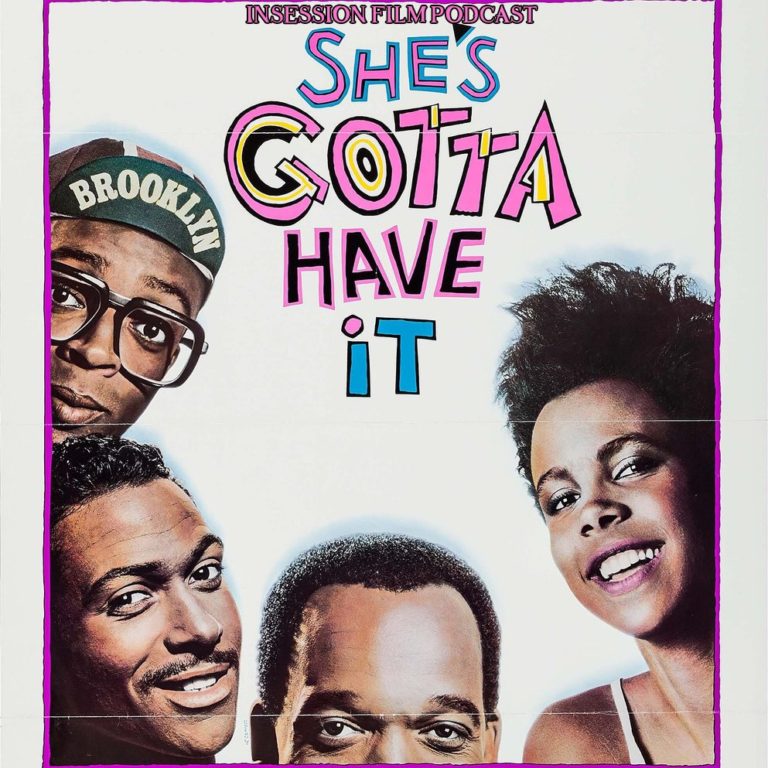
After concluding their David Lynch Movie Series last week, the Extra Film boys set their eyes on one of the most recognizable directors of the modern era in Spike Lee. Known for being an unpredictable personality, this series will be the reverse of the Lynch one, as Ryan is a big fan of Spike’s work and Jay is coming in with tons of blind spots. Case in point, with Spike’s first major film She’s Gotta Have It, exploring a young woman’s relationship with three bachelors. While the ideas of the films are there for something really topical, both hosts agree that some aspects haven’t aged well even if there is real beauty to see on the screen.

In the back half of the episode, the guys review Reminiscence. Considered one of the biggest flops to date, Reminiscence premiered with minimal praise and lack of support at the box office. From the mind of Westworld creator Lisa Joy, comes a futuristic thriller that leans on the past but doesn’t really have something to say. Not the worst movie the guys have seen, just forgettable when you really get down to it.

Thanks for listening!

– Movie Review: She’s Gotta Have It (5:35)
Director: Spike Lee
Screenplay: Spike Lee
Stars: Tracy Camilla Johns, Redmond Hicks, John Canada Terrell, Spike Lee

– Movie Review: Reminiscence (1:25:11)
Director: Lisa Joy
Screenplay: Lisa Joy
Stars: Hugh Jackman, Rebecca Ferguson, Thandiwe Newton, Cliff Curtis

– Music

Bill Lee – Opening Credits
Ramin Djawadi – Reminiscence Soundtrack
The Return of the Eagle – Atli Örvarsson

We try to make this the best movie podcast we possibly can and we hope you enjoy them. Subscribe today on iTunes, Spotify, or Stitcher, and please leave us a review on iTunes. You can also find us on Soundcloud, PlayerFM, and TuneIn Radio as well. We really appreciate all your support of the InSession Film Podcast.

Subscribe to our Podcasts RSS
Subscribe to our Podcasts on iTunes
Listen on Spotify
Listen on Stitcher
She’s Gotta Have It / Reminiscence – Extra Film

[divider]

To hear this Extra Film episode and everything else we do, download our apps on the Amazon Market for Android and the Podcast Source app on IOS devices. The mobile app covers all of our main shows, bonus podcasts and everything else relating to the InSession Film Podcast. Thanks for your wonderful support and for listening to our show. It means the world to us.

Movie Review: ‘Isabella’ is a Kaleidoscopic Film of Uncertainties


Director: Matías Piñeiro
Writer: Matías Piñeiro
Stars: María Villar, Agustina Muñoz, Pablo Sigal, Gabriela Saidon

Synopsis: Mariel wants to play Isabella in Shakespeare’s “Measure for Measure”. Luciana, who is also an actress, helps her rehearse the part. But during the audition, Mariel realizes that Luciana is trying out for the same role.

[/info]

Color purple is all over Matías Piñeiro’s Isabella. Purple isn’t easily found in nature; it’s a color often associated with wealth because it used to be a coveted and complex hue to acquire, and only leaders and nobility would wear it in their clothing. And since many of these leaders were considered descendants of God, the color would also be linked with some sort of spirituality and mystery. And that’s what Isabella is: a complicated film populated by uncertainties and mystery with a borderline inaccessible, yet subtly rewarding non-linear narrative. 

The movie follows Mariel (María Villar), an actress who would love to play the role of Isabella in a local play of William Shakespeare’s Measure for Measure. However, she has financial problems to worry about first and the best way to solve them would be to ask her estranged brother for money. How should she approach this? The solution is Luciana (Agustina Muñoz), a friend and fellow actress who happens to be dating her brother and who agrees to help her convince him if she keeps rehearsing for the Isabella role.

Isabella jumps between timelines to create a cinematographic puzzle. We see glimpses of Mariel’s life in very different situations; she’s working in an art gallery in one scene and auditioning for Measure for Measure a in the next one. Throughout all of this, Piñeiro focuses on the complicated relationship between Mariel and Luciana; two women looking for something. Despite always being linked with the pursuit of the Isabella role, there’s no competence between them. They support each other and create a bond through their passion for acting. 

In Measure for Measure, Isabella has an audience with tyrant Angelo, who promises to forgive her brother’s death penalty in exchange for sex. The film creates a reflection of this through the audition process. The abuse doesn’t come in the form of a disgusting proposition (nothing is straightforward in a Piñeiro film), but it’s there in the fact that Mariel has to play the part while locked in a room; we can only hear the director through a glass. Just like Isabella is at the mercy of Angelo, Mariel and Luciana are at the mercy of the director.

The challenging nature of its storytelling makes Isabella a hard pill to swallow.  Sometimes, the film it’s too immersed in the heads of its characters to be rewarding. Piñeiro doesn’t give answers and never gives away the final piece of the puzzle, but creates room for interpretation. And that’s what the Isabella character has done throughout the decades: she’s a polarizing figure whose actions have given birth to numerous questions and interpretations. Isabella plays with times, moods, ideas, and performances to generate analysis and hunger for discernment. It’s a kaleidoscopic enigma that is worth diving in while always having in mind that payoff is mostly nonexistent.

Grade: C

Criterion Releases: September 2021

This is a spicy set we have for this month. Some are full of boundary pushers who make scenes stand out to shock us, others are moving snippets of life in general. Dark time periods, love, desire, and the lust for power and revenge fill up Criterion’s releases for September. Here’s a rundown of what’s coming out.

The Damned (1969)

Luchino Visconti goes into the beginning of Nazi Germany with a shocking, depraved, and sadistic tale of family dynamics with the wealthy von Essenbeck family. Inheriting the wealth from their anti-Hitler patriarch who is murdered, three members take their lust for power to a hedonistic level. Helmut Berger plays the mentally unsound son who is inclined to sexual perversion over normalcy while Dirk Bogarde plays a family employee who uses his standing within the family to climb the social ladder he’s wanted to do. Ingrid Thulin plays the widow who is deeply possessive of the family heirloom she is entitled to and doesn’t want to lose. The massive orgy represents to the Communist-supporting Visconti how Germany corrupted itself to the core and is a mindfuck to see.

Mona Lisa (1986)

In a great selection of a film getting renewed for the Criterion treatment, Neil Jordan’s crime drama follows an ex-con fresh from jail who goes back to the life he knows by being asked to play chauffeur for a beautiful call girl (Cathy Tyson), only to start falling in love with her. Bob Hoskins as the softy George, a man not rock solid as what a gangster should be, is so brilliant and allows himself to be weak at the knees that frankly he should’ve beaten Paul Newman for the Best Actor Oscar. (Hoskins won the Golden Globe instead.) Finding love in such a dark place is dangerous and manipulative, yet unexpectedly possible for a man like George.

Love & Basketball (2000)

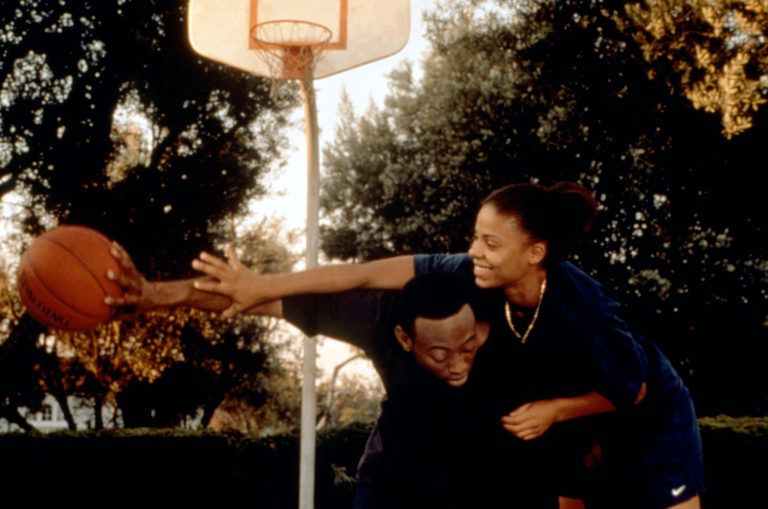
What an incredible choice by Criterion. It is a film, I personally, had forgotten about, and now it is being given a new and deserving life. Gina Prince-Bythewood wrote and directed this love story starring Omar Epps and Sanaa Lathan is about kindling a relationship amongst their affection for the sport both of them excel at which keeps them bound with daily pressures of school, early adulthood, and their own careers as the years pass by. Mr. Knicks fan Spike Lee produced it and has a really good soundtrack to go with it.

Throw Down (2004)

Director Johnnie To takes us to the Hong Kong underworld where we follow three different characters who seek to come out of it alive and with their personal dignity intact. It is an acknowledgment of Akira Kurosawa’s influence, namely his film Sanshiro Sugata, mixing in his noted noirs with traditional Cantonese martial arts culture in the hidden bars and nightclubs that carry the vibes of the scene. It is a setting we are familiar with, yet the atmosphere has a different feel than what we are accustomed to.

Melvin Van Peebles: Four Films

One of the godfathers of independent Black cinema, Melvin Van Peebles put a foot up The Man’s ass with his movies about the Black consciousness, racism, and what Van Peebles brought to the table but was unappreciated by the White leaders in Hollywood. Here are four movies that showcased this astounding talent in which he was a writer, producer, music composer, and director. His debut, The Story Of A Three Day Pass, was produced in France and followed a Black sailor on leave who has a dalliance with a gorgeous White woman. It is an American director using the French New Wave to create something innocent, yet scandalous in regards to interracial dating. Then, Van Peebles got his only foray into Hollywood with Watermelon Man, a story based on Frank Kafka’s The Metamorphosis. A bigoted White salesman wakes one morning and discovers he has turned Black, thus ensuing a sting of Van Peebles’ message of race in America as a satire.

His third film was a nuclear bomb. Frustrated with Columbia’s interference, Van Peebles decided to leave a contract he had with the studio to make his own work on his own terms. Van Peebles made Sweet Sweetback’s Baadasssss Song about a man who has had enough with being used around and goes on a crime spree as he heads for his definition of freedom. It made such an impression that it was a must-watch for all members of the Black Panther Party. Finally, there is his musical romp Don’t Play Us Cheap about some of Satan’s little devils infiltrating a party in Harlem, only to get caught up with the music filled with life. As a bonus, there is his son, Mario’s, own adaptation about the struggles making Sweet Sweetback (he’s in the movie, playing a young towel attendant in a brothel at twelve years old) titled Baadasssss! 

Follow me on Twitter: @brian_cine (Cine-A-Man)

Op-Ed: AFI’s 100 Years…100 Passions – ‘King Kong’ (#24)

I will be watching and reviewing all of the films included on AFI’s 100 Years…100 Passions list. The list contains the 100 greatest love stories in American cinema and I plan to consider how our views on romance and social issues have changed over the years as well as judge whether the romances in these films actually made me swoon. As a fan of the romance genre, I expect to love each and every one of the nominees but I also don’t know if I would consider all of them romantic.

King Kong (1933) is a film that is famous for a couple of scenes featured in its second half. Absolutely nobody touts the sluggishly paced, poorly acted, cliché ridden first act as one of the reasons that the film is considered great. In fact, I assume that many of its fans are willing to indulge its obvious flaws because they love the Freudian hysteria that comes to the fore when King Kong finally appears. It is a terribly uneven, messy piece of work that is dull for long stretches, so forgive me if I don’t think of it as a masterpiece. There were brief, startling moments in which it came to life and became an opportunity to show off stop-motion animation and other technical innovations. Like so many blockbusters that followed in its footsteps, it fails to build an engaging story around its action set-pieces. I can’t help but feel like this encouraged filmmakers to think it was acceptable to put little to no effort into scenes that didn’t involved buildings being knocked down or women being thrown around. 

At its core, this is about the fragile, complicated relationship between King Kong, a giant ape living on Skull Island, and Ann Darrow (Fay Wray), a starving indigent who was roped into becoming an actress. She traveled to Skull Island in order to star in a film being produced by Carl Denham (Robert Armstrong), but he didn’t expect King Kong to be such a strong, powerful creature. Leaders of the native population decide to kidnap Darrow and give her to King Kong in order to stop him from getting violent. He is attracted to this ‘golden woman’ and wants to take her as a bride. She is initially horrified by King Kong’s aggressive behavior, but comes to love and care for him. When her human boyfriend, Jack Driscoll (Bruce Cabot), decides that he needs to kill King Kong so that he can save her, she comes to believe that she needs to defend the ape. When dinosaurs are introduced into the mix, King Kong becomes increasingly willing to solve his problems by physically attacking others. 

There is nothing exceptional about the plot and the romantic, Beauty and the Beast-style romance between a human being and an animal is the only surprising element of a fairly routine genre movie. It is disappointing that the screenwriters felt the need to directly call out their main influence through dialogue, but at least they were aiming slightly higher than the writers of Sex Maniac (1934). The film explicitly acknowledges that King Kong sexually desires Darrow and she has certain sadomasochistic urges. She’s barely clothed and when he sniffs her, you will probably be hit with a wave of revulsion. The erotic charge between the two characters is able to throw you off balance, and I kept hoping that the film would go completely off track. I hoped that the second act would be entirely devoted to scenes that dealt with this bizarre attraction. Alas, the film keeps returning to the dull human characters who want to track Darrow down and save her. I understand that they needed to be there in order to take King Kong down and spark the tragedy that serves as the film’s ending, but couldn’t they have been slightly more engaging? Whenever they appeared on screen for long stretches of time, I had to fight the urge to fall asleep. 

Perhaps the issue is that I was evaluating this as a romantic drama. According to AFI, this film is primarily about the love triangle between Cabot, Darrow, and King Kong. In reality, it is mostly an excuse to have King Kong attack people and objects. For some, this will be satisfying, for others, including myself, a more well-rounded piece of entertainment will be required. This is a film with severe, debilitating weaknesses that prevent even the exciting passages from being as engrossing as they should be. This means that I can’t fully comprehend why people are so enthusiastic about it. Maybe this is one of those widely accepted classics that needs to go through a critical reevaluation. 

It can be hard to accept the fact that certain films are not as great as they might have seemed when they were first released. There’s a difference between a highly influential classic that still holds up, and an influential hit that was vastly improved upon by the films that followed it. It Happened One Night (1934) popularised a lot of the tropes which pop up in almost every romantic comedy, but it also hits all of its marks better than most of its imitators. It doesn’t feel too much like a product of its time and Claudette Colbert and Clark Gable gave the sort of intuitive, charismatic performances that great movie stars can effortlessly turn out. With King Kong, you can see how better technology was able to advance the quality of films like this. You can’t improve upon a star like Colbert but you can produce better practical effects with more developed technology. I don’t think that this fully earns its reputation as one of the greats when it falls so flat from a modern perspective. I usually adore 1930s films, it might even be my favorite decade of cinema, but not everything can stand the test of time.