Home Blog Page 176

Movie Review (TIFF 2021): ‘Silent Night’ Is An Apocalyptic Horror Comedy That Misses the Mark


Director: Camille Griffin
Writer: Camille Griffin
Stars: Roman Griffin Davis, Keira Knightley, Matthew Goode, Lily-Rose Depp

Synopsis:  Family and friends gather at Christmas for the end of the world.

[/info]

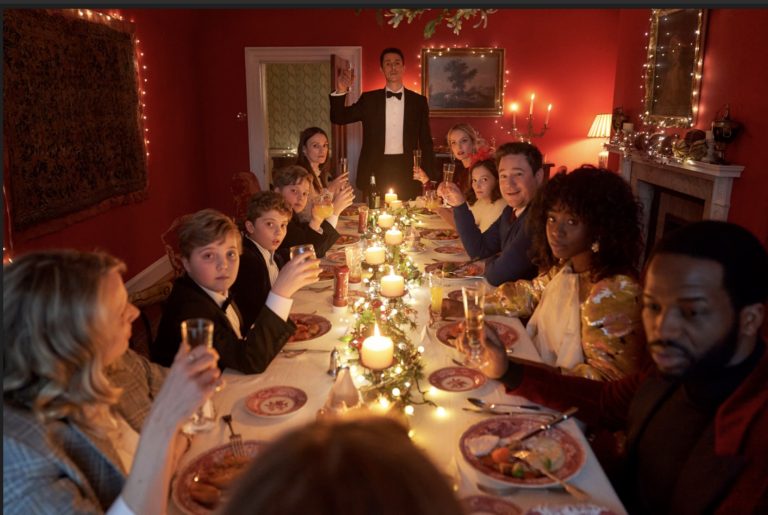
Silent Night, the debut film from writer-director Camille Griffin, either has the world’s worst timing or the best. Written before the pandemic, it tells the story of a group of family and friends who get together for Christmas in the English countryside, as they always have, but the one difference this year is that they all know they are going to die before the night is out. An apocalyptic cloud of poison gas is moving across Britain, which kills every living thing that breathes it in a gruesome and painful way. Because of this, the government has provided a pill to every citizen to take that will allow them to die without pain, so everyone can take it when they are ready, to avoid a much more torturous end. So, no matter if it’s via the gas cloud or the pill, death is imminent and inevitable on this night.

Did I mention Silent Night is a comedy?

An end-of-the-world comedy is not a new concept, but there is something a little different about this one, and a little different about watching it now. While it is a dark comedy, Griffin chooses to stick with an ultra-realistic tone—no alien invasion or giant comet heading towards earth here. No, instead, the poisonous gas cloud is a result of humanity’s willful mishandling of the climate crisis. Secondly, the characters engage in a debate about the veracity of the pill that is provided by the government, and whether the scientists are right, whether they can be believed, etc. This might all be very funny ten years from now, but it just hits a little too close to a nerve right now. Which is probably exactly the point.

That is not to say what Griffin is trying to do is a total failure. She has cast an ensemble of actors, including Keira Knightley, Matthew Goode, and her son, Roman Griffin Davis, who are all capable of handling the various tones and genre that this film navigates. Davis in particular is exceptional as the moral conscience of the group, the world-wise kid who is concerned about all the people whom the government didn’t provide pills to. He is the only one who has not resigned himself to his own fate, and Davis’s acting skills, which we first saw on display in JoJo Rabbit, signal a long career ahead for this fourteen-year-old, who seems to be going on forty.

But the rest of the cast fumbles around a bit, each one falling into a clichéd stereotype, as Griffin’s script is a disappointing case of concept over content. The film is quite effective in its gradual dimming in tone, one that starts quite upbeat and trivial and ends in twisted darkness, but the only character with any texture is Davis’s, so the only emotional connection the audience has is with him. The film spends so much time and effort decoying the audience into believing the film is something else, by the time the audience has finally caught on to what’s happening, the opportunity for emotional investment is gone.

Silent Night would be much more effective if it had found a way to bridge its comedy and horror elements a bit better, but Griffin is unable to commit to either one, so the film flounders, weakly trying to hit a moving target, never able to find its voice.

If Griffin intended to make a film that forces the audience out of their comfort zone, she has succeeded. But Silent Night is a big ask for the casual movie-goer. It confronts head-on the most traumatic elements of current life on Earth with little sentimentality or emotion. It clearly is trying to make some sociopolitical statements, but the harrowing and pessimistic glee it seemingly has for its own fate is slightly off-putting. It is certainly one of the bravest films I’ve seen in a long time, but it also could be one of the most unwelcome, at least right now. During a time when there is so much uncertainty and so much death in the world, it doesn’t feel like an apocalyptic Love, Actually is what people are craving.

Still, like the incredibly annoying Christmas pop songs that are played at the beginning of the film which trick the audience into thinking they will be watching a typical Christmas movie filled with frivolity and family dysfunction, Silent Night just might stick with you, boring itself deeply into your brain, whether you like it or not.

Grade: C

Movie Review: ‘The Voyeurs’ Is an Uninspired and Ridiculous Erotic Thriller


Director: Michael Mohan
Writer: Michael Mohan
Stars: Justice Smith, Sydney Sweeney, Ben Hardy

Synopsis: Pippa and Thomas move into their dream apartment, they notice that their windows look directly into the apartment opposite, this will set in motion a chain of events that will lead to disaster.

[/info]

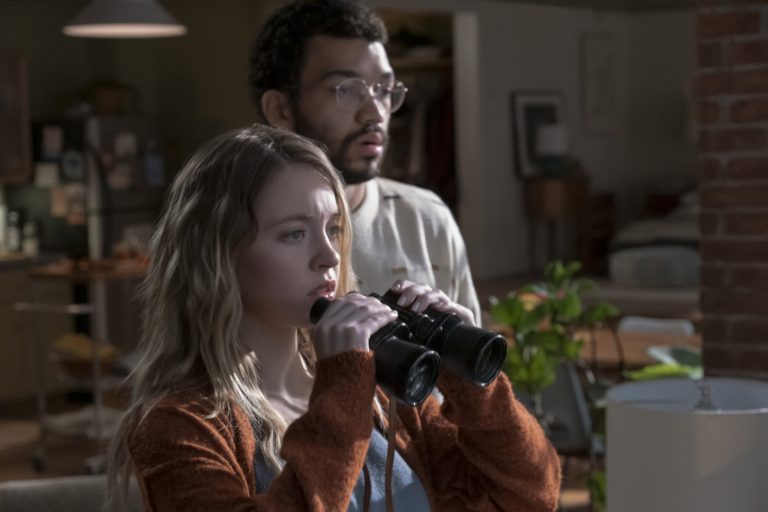
Michael Mohan’s The Voyeurs is the first American film I’ve seen since D.J. Caruso’s Taking Lives that has its entire story set in Montreal. Not in “New York, but it’s actually Montreal” or “Paris, but it’s actually Old Montreal,” but straight-up Montreal, and I can’t help but respect this aesthetic choice. At first, you may think that Montreal will act as a major city, but after its establishing shot, which doesn’t hide the fact that this will entice québécois viewers who’ll notice the lack of orange cones in its cinematic representation. So it’s a fictionalized portrayal of Montreal, but no matter, since most of the movie is set in an apartment. Couple Pippa (Sydney Sweeney) and Thomas) (Justice Smith) move into a new apartment together in the city, right in front of the studio/apartment of a renowned photographer (Ben Hardy), who has a rather sexually charged relationship with his wife (Natasha Liu Bordizzo). However, the photographer in question has been hooking up with multiple women in his studio, with Pippa and Thomas having front-row seats to the man’s infidelity. Pippa slowly becomes obsessed by prying into his life, which will lead her down a dark, and potentially deadly path.

Critics have compared the film as a mixture of Alfred Hitchcock’s Rear Window and Brian De Palma’s Body Double. The problem, however, was that these two films are cinema classics. In contrast, The Voyeurs is one of the most ridiculous thrillers of the year and leads to one of the most anticlimactic and unsatisfying endings I’ve seen in any movie that came out this year. As it begins as a methodically composed thriller, I was on board (and the Montreal establishing shots made me go “hell yeah!”). However, the further the film strolls, the long, the less interested I became in knowing what would happen in the end, in part due to how shoddily written both main characters are. This could’ve been Justice Smith’s best performance yet. He is, admittedly, not an actor who has been impressing me very much (though he was excellent in Pokémon Detective Pikachu). Still, his character in The Voyeurs had the makings of an all-time great performance for the actor. It’s Smith’s most serious character yet, but Mohan writes him in clichéd dialogue where he only tells Pippa that what she is doing is wrong multiple times until he decides to leave her because Pippa is too far gone on her obsession. But Mohan never once defines why the characters are obsessed. Is it just because they can see the couple from their apartment window, or that Pippa has voyeuristic tendencies?

In Rear Window, L.B. Jeffries (James Stewart) becomes obsessed with the people he observes because he doesn’t have anything else to do. He is wheelchair-ridden and must find anything to kill time, but his pastime soon becomes an obsession. Likewise, in The Voyeurs, as soon as the couple is introduced, Pippa starts to get obsessed with what the photographer is doing and will immediately plunge into criminality to listen in on their conversations and become immediately involved in their lives when she befriends the photographer’s wife, who visits her at the eye clinic Pippa is working at. The further Pippa gets involved in other people’s lives, the more self-centered she becomes, as she wants to figure out exactly what’s going on. But for what reason? There’s never a moment in which Mohan demonstrates that finding out if the photographer has been unfaithful to his wife will bring Pippa (or the wife) any form of satisfaction, so why must she get involved? Of course, there was a reason for Jeffries, in Rear Window, to start getting involved in other people’s affairs: he suspected murder! But if Pippa had minded her own business, maybe none of the events that unfold in the film would’ve happened.

But this is a movie, and we do need a story to entice our viewers! That’s why, when it’s clear that The Voyeurs doesn’t have anything remotely interesting to say or will develop a character relationship we actually care about, it quite literally jumps the shark and ends in the most utterly ridiculous plot twist I’ve seen all year, but not in a good way. Instead, without delving into any plot spoilers, the film delves into incredibly egregious (and horribly exploitative) territory that left an awful taste in my mouth. You can predict what will happen in the end, but it doesn’t make it less spiteful than it is. Of course, it tries to critique the ethics of performance art and photography, but the critique really isn’t as poignant or as interesting as the director thinks it is.

As a result, The Voyeurs is a terribly uninspired and silly erotic thriller whose ridiculousness grows the further the film advances in Pippa’s voyeuristic madness. And while the idea of it, a mixture of Rear Window and Body Double, is quite enticing, its execution is quite haphazard. I will say that I immensely enjoyed Ben Hardy in the movie, but the focus isn’t on him, and, in the end, his talents (and everybody else’s) become pitifully wasted. I should’ve known this wasn’t going to be a good movie when no orange cones were found in the movie’s representation of Montreal when, in real life, they are everywhere and haunt my nightmares forever and ever…

Grade: D

Creating a Gothic Awakening – Interview with TO KILL THE BEAST Director Agustina San Martín

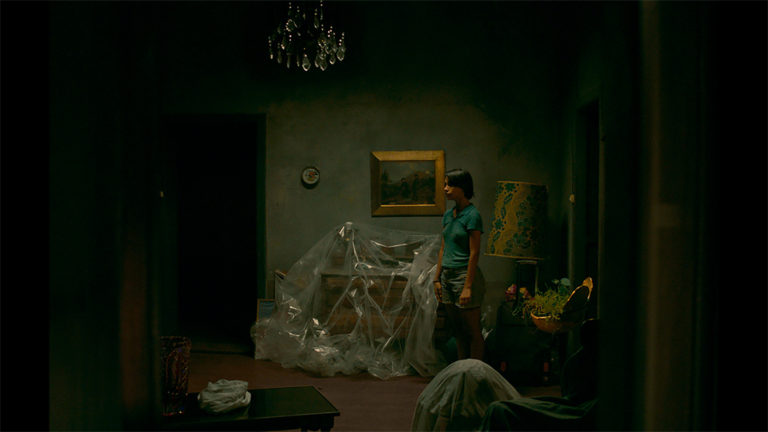
Having its world premiere at the 2021 Toronto International Film Festival, the Argentine film To Kill the Beast takes us into a surreal journey filled with evocative imagery under a gothic atmosphere. It’s an impressive feature film debut through which director Agustina San Martín channels a story of sexual awakening.

To Kill the Beast takes place in a small village near the border between Argentina and Brazil. Here, a recently arrived young woman will try to find her brother in an attempt to make peace with her past. However, roaming the village is a beast that, according to the locals, is attacking women.

To understand more about the artistic process behind To Kill the Beast, I had the chance to speak with Agustina San Martín about her fascination for the Gothic style, the sound design of the film, and her work with up-and-comer Tamara Rocca, who plays the main role. 

Ricardo Gallegos: Why place this story on the border between Brazil and Argentina?

Agustina San Martín: Borders are a fascinating place for me. When there is no literal boundary — a wall, a fence, or something — it is a very nebulous place. On the border between Argentina and Brazil, people mix the language, they consume food from both cultures, television sometimes picks up the signal from Argentina and sometimes from Brazil. This undefined space seemed the perfect one to tell a story of a girl who starts to inhabit her sexuality.

RG: How was working with Tamara Rocca? What elements do you have to take care of with someone who is making her feature film debut? How did you guide her to effectively bring about the topics of sexual awakening?

ASM: Tamara hadn’t had leading roles in a movie, only small roles. However, she was a classical ballet dancer for large institutions from a very young age, so she’s always had a very artistic and performative relationship with her body. Even though she was 19 years old at the time of shooting To Kill the Beast, this relationship made everything a lot less invasive and more artistic for her. We were able to build everything in a much more choreographed way. We had a lot of communication. Luckily we became friends and that allowed us to communicate from a human side where we could talk about what was happening to the character: when to raise her voice and when to lower it.

RG: What was the work process behind the creation of the many Gothic landscapes? You used VFX and photography, but how did you interact with the artists to bring your vision to life?

ASM: Before shooting, I put together a PDF where I had screenshots of all the movies that interested me as influences. I made drawings of all the frames and then I added details for the memories. Based on that, I began to put together a map, scene by scene, of the memories that were going to be there and I started discussing them with the director of photography and the art director. We sat down to talk and it was a slow process. We were like scientists talking about all these abstract things. The same happened with María Peralta, who made the VFX: it was like a handmade, artisanal process because of the way we commissioned it all.

RG: Your filmography has gothic natural environments, jungles, and animals. Where does your fascination for these elements come from?

ASM: The Gothic fascination has to do with the fact that I was always very Gothic in my pre-adolescence: I painted everything in black. It was part of my identity, I was always a huge fan of horror movies.

Regarding animals, Lucrecia Martel once said in an interview something that I loved: “One never feels so naked as when an animal looks into your eyes.” There is a bit of that thing about animals that fascinates me because it delves into this pure and transcendental thought.

RG: What movies were your influences to create the Gothic environments of To Kill the Beast?

ASM: They are separate influences. There is some Carlos Reygadas. I mix a lot of David Lynch’s Twin Peaks too. Something that I always liked a lot was Bruno Dumont’s Hors Satan, which has the goth girl, a character who is genius. The Handmaiden by Park Chan-wook too. There are several people whose elements I found very fascinating and tried to capture with this film.

RG: From a moan to a branch crackling in the jungle, sound design is very important in this film. How did you use sound to amplify the storytelling?

ASM: I had already worked with sound designer Mercedes Gaviria on my last short film and we already understood each other very well, so we had a more advanced dialectic. Our quest was to make things as musical and fluid as possible. We looked for musicality in the creaking of the branches, in the wind, and in the water. With that in mind, we were trying to find some kind of soundtrack with ambient sounds. That was the main objective, a baroque soundscape filled with elements as if all we were listening to was the new world that the protagonist had just arrived at.

RG: How has the pandemic changed Argentine cinema? Has support been reduced? What’s the landscape?

ASM: It was already difficult before, now it is eighty times more difficult. Without a doubt, support was reduced. Nobody was working during the pandemic so everyone asked for the same funds and everything became much more competitive and inaccessible. On the other hand, we have the Film Institute (INCA) that more or less has to guarantee that you can access these funds. However, if they give it to you, it might take them 800 years to do so, and sometimes it isn’t enough because everything is already more expensive. We have tools, but between the Latin American economic crises and the pandemic, it’s difficult. Just finishing a movie is a heroic act.

To Kill a Beast had its world premiere at TIFF 2021 where it was screened as part of the Discovery program.

Movie Review (TIFF 2021): ‘The Good House’ Features a Dynamic Central Performance From Sigourney Weaver, But is Not Able to Escape Its Formulaic Trappings


Director: Maya Forbes and Wallace Wolodarsky
Writers: Maya Forbes, Wallace Wolodarsky, Thomas Bezucha, based on the novel by Ann Leary
Stars: Sigourney Weaver, Kevin Kline, Morena Baccarin, Rob Delaney

Synopsis: An alcoholic New England realtor tries to keep her life together while reuniting with an old flame.

[/info]

The last time we saw Sigourney Weaver and Kevin Kline together on screen was in 1997’s The Ice Storm, director Ang Lee’s dark look at white, middle-class, suburban families in New England and how unhappy and imperfect they are, underneath their perfectly carved exteriors. Now, twenty-four years later, the two film legends are reunited again, at long last, in another film about repressed white New Englanders, but while The Good House is not as dark or cynical—or as good—as The Ice Storm, it still has just as much to say.

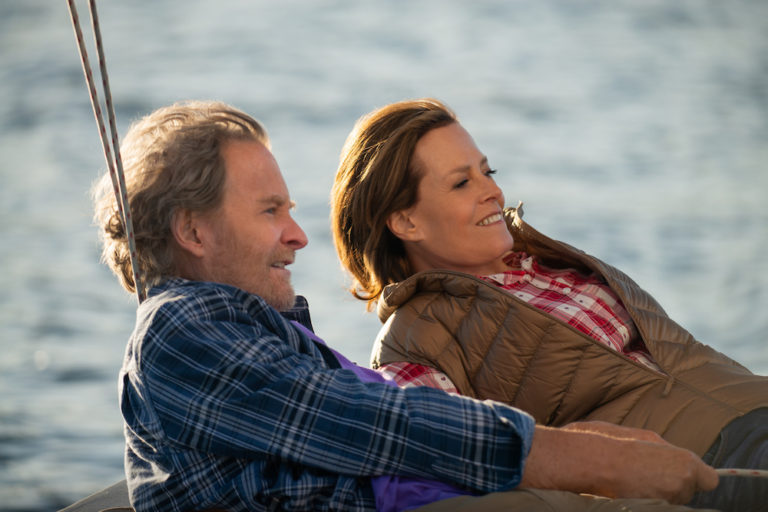
Weaver stars in The Good House as Hildy Good, the star realtor in her small coastal Massachusetts town. Hildy is going through a rough patch professionally, as her former assistant is stealing clients from her and sales are starting to dry up. Personally, she has never really recovered from her divorce and her two adult daughters don’t have much time for her as they are caught up in their own lives. But she can never let anyone see that her life is anything less than perfect, so she continues to put up the stoic and solid front that she’s put up her whole life, fooling everyone into thinking her life is perfect. But what people don’t know is that the only way Hildy can actually get through each day is by drowning in bottles of wine. She is in total denial that she has a problem, even after her family does an intervention and she goes off to rehab. All rehab does is force her to hide her drinking better.

Meanwhile, Hildy gets reacquainted with an old flame, played by Kevin Kline, but just as her love life and her work life are both finally starting to look up, her alcoholism finds a way to bring it all crashing down around her.

Directed by husband-and-wife team Maya Forbes and Wallace Wolodarsky, who also wrote the screenplay with Thomas Bezucha, based on the novel by Ann Leary, The Good House is generally a formulaic melodrama that gives us easily recognizable characters and follows a predictable path. Forbes and Wolodarsky have been able to find some interesting ways to infuse energy into an otherwise quite paint-by-numbers screenplay though, by giving Hildy a voice, literally, in the telling of her own story. They break the fourth wall early and often, allowing Hildy to speak directly to the camera, to let the audience know exactly what she’s thinking at that moment. It is very effective, especially when the main character is someone who is so protected and keeps the world at such a safe distance from her truths.

There is a stereotype of the “tough New England stock,” the stoic, stiff upper lip that gets passed down from generation to generation, a tradition borne out of history and weather—if you had to survive Nor’easters year after year, you’d toughen up, too. Hildy is very much carved from this tradition, so much so that she is a direct descendant of an accused Salem witch, a fact that everyone in town has fun with at parties. But, for Hildy, her toughness, her stoicism, and her strength are not only her familial inheritance but her obligation. She ridicules her artist daughter who shows her emotions on her sleeve by calling her a drama queen. Revealing to the world what she’s really feeling or going through is just not in her DNA. Letting her drop her curtain and speak directly to the audience, either literally or via voiceover, is a clever and insightful way to let the audience in and is what gives The Good House its best moments.

Those best moments are wholly because of Sigourney Weaver, an actress who has always epitomized class and professionalism and has never really been given a chance to drop her sophisticated allure like she does here. Weaver’s skillful restraint and natural abilities are perfectly at play here, as she relaxes and reveals only when she is ready to, a performer always in control, playing a character who must always stay in control. But Weaver’s best moments are when she loosens the reins and when Hildy cracks that perfect sheen and loses control, either happily to the sweet release of inhibition that wine allows her, or regretfully to blackouts and the demon of alcoholism that she so desperately tries to deny.

While most actresses may have chosen to amp up the drama in the most melodramatic scenes, going over the top and leaning into Hildy’s unraveling, Weaver instead loosens the grip just the right amount, picking the perfect moments for expressed emotions to hit home the hardest.

Unfortunately, Weaver’s pitch-perfect performance is the only real thing The Good House has going for it. Her central performance is the film’s key feature, but the film that is built around her is pretty standard formulaic fare, although the filmmakers should be applauded for not making the small-town characters and their personal dramas overly Hallmark Channel-ready. Still, there are weird tonal shifts throughout that attempt to keep us engaged with the secondary characters and their stories, but it’s all quite generic and bland, until a dark twist at the end that comes out of nowhere makes things really creepy.

As for Kline, he’s not exactly wasted, but his character is definitely a means to an end, which is disappointing. That being said, it is nice to have the tables turned a little bit, to see the male supporting character take a true backseat to the female lead, and to have her be the one with the complicated inner life, turmoil, and angst. It’s about time someone treated Kevin Kline as the boy toy.

While it is great to see Kline and Weaver together again, it’s too bad The Good House is the weakest of their three collaborations. Still, this film gives a meaty, adult, and meaningful role to a legendary older actress, and we all understand how few and far between these parts are, so, for all its weaknesses and uninspiring elements, The Good House at least gives us a complicated, pained, three-dimensional woman, struggling to find herself and refusing to deny herself happiness. The vehicle may be less than desired, but that message is certainly one worth driving home.

Grade: B-

Movie Review (TIFF 2021): ‘The Guilty’ Proves That English Language Remakes Can Work


Director: Antoine Fuqua
Writer: Nic Pizzolatto, Gustav Möller (original), Emil Nygaard (original)
Stars: Jake Gyllenhaal, Riley Keough, Peter Sarsgaard

Synopsis: A demoted police officer assigned to a call dispatch desk is conflicted when he receives an emergency phone call from a kidnapped woman.


There have been numerous high-profile cases over the past few years of critically acclaimed international features having the rights bought to make an English remake. Take the last two Best International Feature winners for example, as remakes for Another Round and Parasite have both been announced, and both given the blessing by their respective directors. These headlines have pushed a narrative of how lazy the film industry is and how these films should not be rushed to get a remake simply because it is not in the English language.

The Guilty has had the same treatment here, in which a Danish film from 2018 has been Americanised and is ready to be pushed to the Netflix audience. However, this might just be a smart move when it comes to this film and the result is one that is certainly worth checking out.

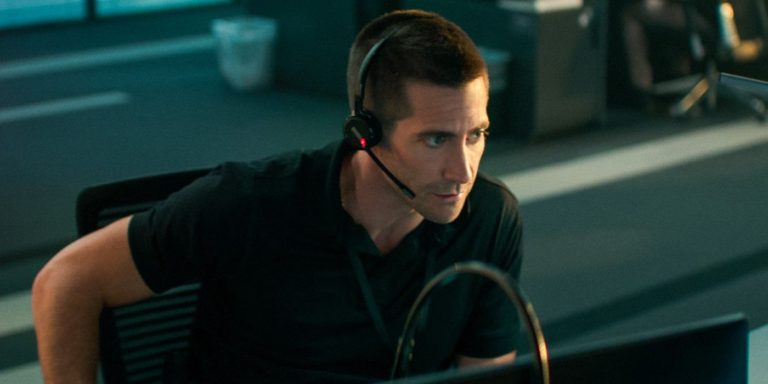
What instantly sells this project is the cast that is attached to it. There are big names here such as Riley Keough, Paul Dano and Ethan Hawke, however, these are all simply voice performances. These actors can communicate this story just through their voices, and the performances are all so impactful. The film is led by one person in Jake Gyllenhaal, and as we all can expect from him, he gives one of the best performances of his career as Joe Baylor, a demoted police officer working at a call dispatch desk.

The reason this adaptation works incredibly well is how the story fits into the world-building. With the past year, in particular, highlighting the issues within the police system in America, this film has some great moments within the screenplay that highlight those issues within the country and do so in a way that helps drive the narrative forward. However, the film also runs into issues of being set in a place that makes the police system look good and does end the story on a note which may leave a sour taste in some people’s mouths.

Alongside that, there are certain moments within the screenplay that are written in order to build suspense but took me out of the story within itself. The way Joe Baylor acts as a call dispatcher, sometimes being aggressive to victims and even cutting off people just to focus on one task, made me feel very uncomfortable and disgusted. Whilst he does not care about the job and is just waiting to get back out as a police officer, there was a lack of professionalism in this film that just had me at disbelief and made it clear that this was purely a setting just so the film could happen.

This film follows a structure like that of 12 Angry Men, in which the entire film takes place in one location: the call dispatch desk. The audience does not get to see the incident that our victims are calling at, only using their voices to tell the story and to bring personality to these characters. This method is incredibly effective, as the audience is placed in the same situation as Joe Baylor and helps build the mystery within the story. Whilst I am not fully sure if the reveals in the story are all as effective as they should be, the film certainly kept me hooked for the entire runtime.

It was smart of Netflix to pick up this project, as I do see the film being streamed by millions of audience members. Whether you are aware of the Danish original or not, I would still recommend giving this adaptation a watch. Jake Gyllenhaal continues to show that he is one of the best actors working in the industry right now, and even with the tonal issues and the blunders at the end, there is plenty of things to enjoy and to keep yourself invested for a short runtime.

Grade: B

Podcast: Malcolm X / Malignant – Extra Film

This week on Extra Film, Kolby Mac joins Ryan and Jay to continue their Spike Lee Movie Series with Malcolm X and then Ryan and Jay discuss the new James Wan horror flick, Malignant!

Following last week’s conversation of Mo Better Blues, the Extra Film boys, along with Kolby, review one of the most important films in Spike’s filmography. Hailed as a masterpiece, Malcolm X is a gold standard for biopics. They talk about the making of this film, the impact it has had, as well as all the technical aspects coming together for Spike to create something special. It was a long conversation, but worth every second.

In the back half of the episode, the guy’s review Malignant. After making action movies for his past couple of films, James Wan returns with an action horror film that might be one of the craziest films to be released within the last couple of years. If you haven’t seen the film, go watch it and then come back to this spoiler-free discussion and listen to the boys talk about one of their favorite surprises of 2021 and one of the best movies of the year.

Thanks for listening!

– Movie Review: Malcolm X (6:10)
Director: Spike Lee
Screenplay: Spike Lee
Stars: Denzel Washington, Angela Bassett, Albert Hall, Al Freeman Jr., Delroy Lindo

– Movie Review: Malignant (1:42:41)
Director: James Wan
Screenplay: Akela Cooper
Stars: Annabelle Wallis, Maddie Hasson, George Young, Jacqueline McKenzie

– Music

A Change Is Gonna Come – Sam Cooke
Where Is My Mind – Safari Riot
The Return of the Eagle – Atli Örvarsson

We try to make this the best movie podcast we possibly can and we hope you enjoy them. Subscribe today on iTunes, Spotify, or Stitcher, and please leave us a review on iTunes. You can also find us on Soundcloud, PlayerFM, and TuneIn Radio as well. We really appreciate all your support of the InSession Film Podcast.

Subscribe to our Podcasts RSS
Subscribe to our Podcasts on iTunes
Listen on Spotify
Listen on Stitcher
Malcolm X / Malignant – Extra Film

[divider]

To hear this Extra Film episode and everything else we do, download our apps on the Amazon Market for Android and the Podcast Source app on IOS devices. The mobile app covers all of our main shows, bonus podcasts and everything else relating to the InSession Film Podcast. Thanks for your wonderful support and for listening to our show. It means the world to us.

Movie Review (TIFF 21): ‘The Survivor’ Fails to Support Ben Foster’s Career-Best Transformative Performance


Director: Barry Levinson
Writers: Justine Juel Gillmer
Stars: Ben Foster, Billy Magnusson, Peter Sarsgaard, Vicky Krieps

Synopsis:  The true story of boxer Harry Haft, World War II concentration camp survivor.

[/info]

When someone hears that actor Ben Foster lost and then gained back 60 pounds to play a boxer in a biopic, it’s impossible to not think of Robert DeNiro and his Oscar-winning performance in Raging Bull forty-one years ago. But The Survivor, directed by Barry Levinson (Rain Man), in which Foster plays a Jewish man who survived Auschwitz by boxing other Jews, is a very different movie than Raging Bull, despite having a similarly transformative performance at its center.

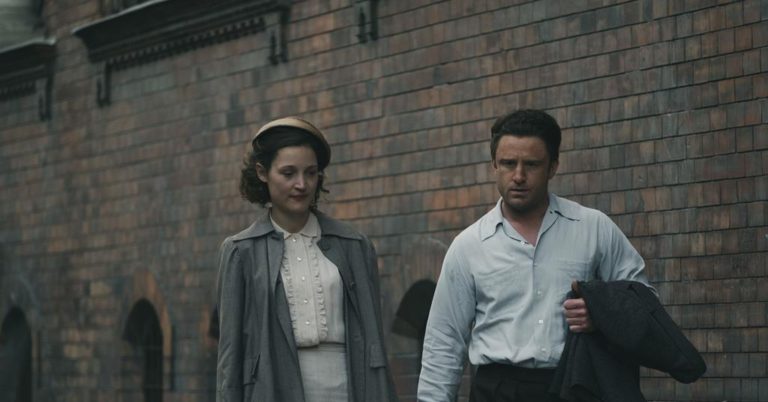
The Survivor tells the true story of Harry Haft, a middling pro boxer in New York in the late ‘40s whose biggest claim to fame—and promotional draw—is that he survived Auschwitz. Nobody knows exactly how he survived because nobody has ever asked until a journalist, played by Peter Sarsgaard, shows up, looking to tell Haft’s story. Harry had been searching for any information about Leah, the girlfriend that he was separated from during the war, so he does the profile, hoping the publicity might reach her, if she’s still alive. But telling his story is not easy. As we learn from flashbacks, Harry was forced by a sadistic Nazi officer, played by Billy Magnusson, to fight other camp inmates to the death—most often other Jews—for the entertainment of the German officers. As long as Harry kept winning, he would live.

As soon as Harry’s story gets published, his local Jewish community views him as a traitor and shuns him, but Harry seems unaffected by the scorn, as his own guilt has already caused his own crippling inner shame. The only thing Harry really cares about is finding Leah and, when the article doesn’t work, he tries to think of something he can do for even more publicity, and that would be to fight the most famous boxer on the planet, Rocky Marciano. Even though he would be overmatched, his team is able to secure the bout, and the film then becomes a boxing movie, Rocky-esque training sequence included.

Levinson is a gifted, Oscar-winning director, but he allows The Survivor to tell far too broad of a story. The screenplay, by Justine Juel Gillmer, hits on a few too many beats, with far too discordant tones. Because of its wide scope of story and emotions it needs to cover, the film ends up being overly thin on content, choosing instead to skim through significant moments in Harry’s life, never delving too deeply into any emotional moments, making the film seem more like a highlight reel than a character study.

The most impactful moments of the film are the flashbacks to Auschwitz, which are shot in shadowy black-and-white (eerily reminiscent of Schindler’s List) and show a gaunt, near-death Harry living his nightmare, tortured by the decisions he makes, even though he really has no choice.

The Survivor tries to affect a conversation about the blurry line between complicity and survival, attempting to address the moral conundrum that many faced during the Holocaust—how far would you go to survive—but it is never really able to connect, as the film allows itself to get too distracted by other elements.

By far the biggest distraction of all is Foster himself. The monumentally impressive transformation that he makes in order to play this part is staggering, reminding one not just of DeNiro, but also of Christian Bale in The Fighter, Michael Fassbender in Hunger, and Matthew McConaughey in Dallas Buyers Club, all actors who committed to weight loss for roles so intensely, they were hardly recognizable and, in three of the four cases, were rewarded by the Academy for their dedication. Considering that Foster has been one of the most underrated actors in Hollywood for years, delivering great performances time and time again, most notably in 3:10 to Yuma, Hell or High Water and 2018’s Leave No Trace, which many believed should have been his first Oscar nomination, there’s no other actor more deserving of the opportunity. And there’s little chance that the Academy can overlook his performance here, as its degree of difficulty is high, as is the overall effort Foster puts into developing his character, from his accent to his gait, to specific mannerisms that all allow him to truly inhabit the role and deliver an impressive, hard to ignore performance.

But the problem with The Survivor, in the end, is that it is hard to see anything but the performance. Even though Foster is not as famous as those other actors and the average audience member might not be aware of how unrecognizable Foster is in the opening frame of the film, the staggering difference in the flashbacks is unmistakable, and it’s difficult for the audience to be focused on anything else. It’s too bad, because Foster does give the performance of his career, one that will undoubtedly be recognized by critics and his peers, deservedly so, but there is just not enough of a film around him to engage with it as a whole.

In the end, The Survivor falls into too many traps and tropes of the many genres it’s attempting to inhabit, from its standard biopic structure to its boxing movie ambitions to its Holocaust horrors, there is more effort put into taking the audience through moments in time, rather than allowing us to sit in any of them. It’s clear that Levinson wanted to make the most of Foster’s talents by letting him show a wide range of emotions and scenes—even showing Haft’s dry comic wit—but showcasing a performance can sometimes be to the detriment of the overall film, and The Survivor certainly suffers that fate.

But, even so, there is no denying this is a film worth seeing, for Foster’s performance is a staggering achievement. As for the rest of it, though, there’s not much you haven’t seen before, and, sadly, not much that will make much of an impression.

Grade: C+

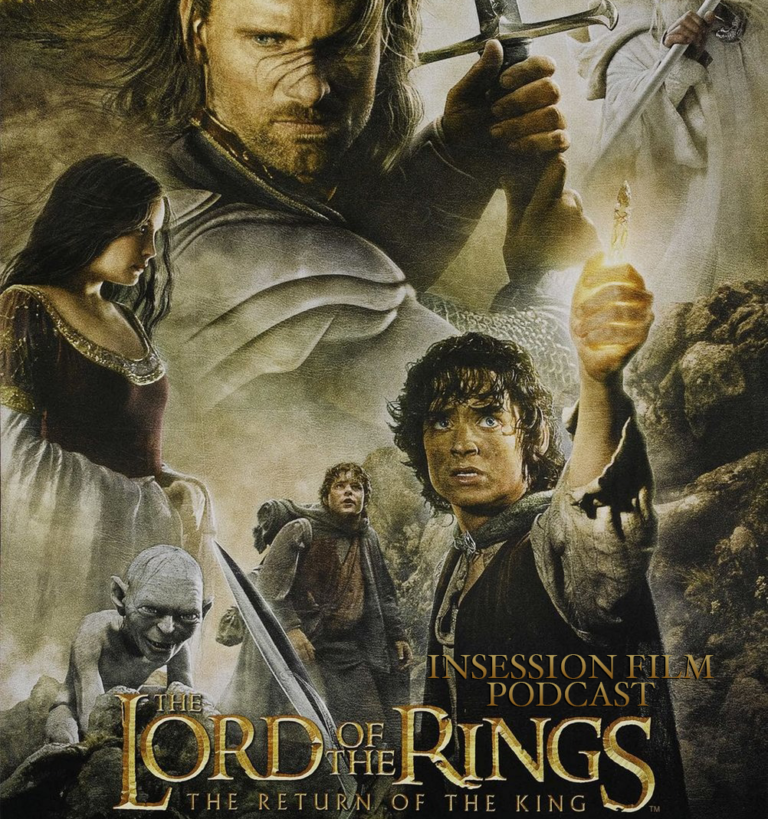
Podcast: The Lord of the Rings Movie Series

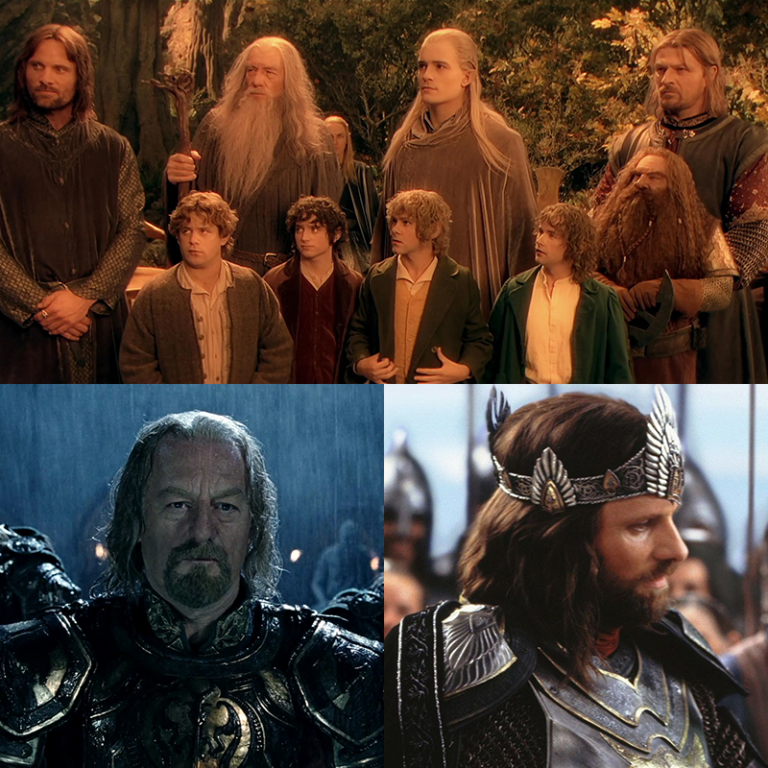
This is a big one. The Lord of the Rings trilogy is not only revered for its spectacle and awards, but they’re movies that were vital to our childhoods. We grew up with them, watching them over and over again, helping inform our cinephilehood. So, we’ve been toying around with the idea of doing The Lord of the Rings for years. And with out 2003 retrospective on the horizon, now is the time. What Peter Jackson did to bring these movies to life is nothing short of a miracle. He wasn’t a commercial commodity at the time, and filming all three back-to-back was a massive risk for New Line Cinema. But wow did it payoff. The films obviously won a bunch of awards and they were successful at the box office, however, most importantly, they were good. No, they were great. Honestly, one of the very best trilogies of all-time. This will be a really fun journey, hope you’re ready.

The Fellowship of the Ring, 2001

Listen to our review below as heard on Episode 445.

The Two Towers, 2002

Listen to our review below as heard on Episode 446.

The Return of the King, 2003

Listen to our review below as heard on Episode 447.

Be sure to leave any feedback in the comment section below or hit us up on social media!

Movie Review (TIFF 2021): Charming and Thoughtful ‘I’m Your Man’ Breaks New Ground for Rom-Coms


Director: Maria Schrader
Writers: Maria Schrader, Jan Schomburg, Emma Braslavsky
Stars: Maren Eggert, Dan Evans

Synopsis: A scientist agrees to participate in an experiment by living for three weeks with a robot who is created to be her perfect romantic partner.

[/info]

We may not be around for it, but all signs point to a future where artificial intelligence will be able to fully replicate human thought and behavior. It’s only a matter of time. Robots are becoming more and more prevalent, and computers already are integrated into our lives (hi, Alexa), so it’s not such a large leap to someday have some sort of human-appearing replicant that is able to mimic or even replace us. Such a concept has been a plot device in Hollywood for decades already, with human-like robots who can act and think like us being the subject of drama in everything from Star Trek: The Next Generation and AI: Artificial Intelligence to Alien, Blade Runner, Westworld and Ex Machina, just to name a few. In most Hollywood portrayals of humanistic robots, there is something threatening just below the surface, or something goes horribly wrong and the evil androids must be destroyed. It is a natural human instinct to assume that human thought and behavior cannot be fully replicated in artificial intelligence and that only bad can come of it when we try.

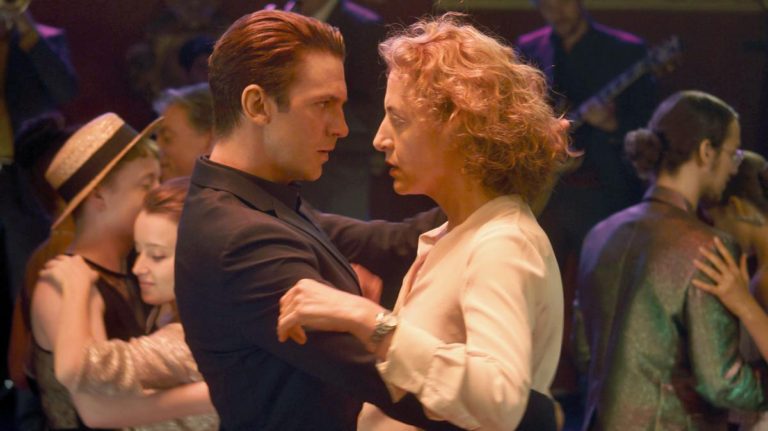
Which is why the new film I’m Your Man, by writer-director Maria Schrader, is all the more fascinating. Set in modern-day Berlin (in German with English subtitles), I’m Your Man has renowned scientist Alma, played by Maren Eggert, agree to be an evaluator for a new science experiment her colleagues have developed. They have developed a human replicant—a robot who looks exactly like a human—who is programmed with one assignment, to make Alma happy. They ask her to live with the robot for three weeks to see how realistic and viable the robot actually is. It has been programmed with millions of bits of information, not only to teach it how to react and behave like a real person but to specifically be Alma’s perfect match. The researchers have mined information from Alma’s entire life, and have created what they believe Alma’s dream man would look and act like. A natural skeptic, Alma is hesitant to be a part of the program, but, being a scientist herself—and single—she agrees to take “Tom” for a three-week test run and provide feedback.

It feels we’ve seen this before, and we have, most recently in Spike Jonze’s Her, in which Joaquin Phoenix falls in love with his digital personal assistant, voiced by Scarlett Johansson, and in Blade Runner 2049, where Ryan Gosling (who’s also a replicant, ironically), falls for a hologram in the form of Ana de Armas. The difference here is that Schrader has upped the ante by making Tom (Dan Stevens) a real-looking, breathing, covered with real skin humanoid creature, who can actually pass for a real person. But the effect is still the same: Tom is programmed to make Alma happy, to be everything she wants in a man, to never upset her, and to fulfill her every fantasy. It also doesn’t hurt that Tom is beautiful.

But, for Alma, there’s something just not right. A scientist and a skeptic, Alma initially resists Tom’s charms, believing that mimicking speech and behavior is one thing, but artificially recreating a human’s capacity for thought, emotion and reason is impossible. And how can you have love without emotion? And with that, Schrader and her co-writer Jan Schomburg (based on a short story by Emma Braslavsky) set up a truly unique and intriguing romantic comedy that is both entertaining and thought-provoking.

The hardest thing to do while watching I’m Your Man is to let go of the natural human assumption that something bad is going to happen. I mean, how can living with a robot NOT go south? There has to be some point of failure, right? If not, then we are accepting the hypothesis that it IS possible to replicate humans and that, in the end, we are replaceable. And that is a dangerous thing to accept, both on a personal level and a global one. But I’m Your Man chooses to follow its own path, by confronting those inner humanistic tendencies head on, by having Alma be the voice of reason, and to give us a story about a woman who is conflicted between her head and her heart, her reason and her emotions, her humanity and her hope.

The philosophizing is significant in I’m Your Man, and truly meaningful, but Schrader is able to give us a lesson in ethical conundrums in the most enjoyable and entertaining way possible. It starts with two central performances that are complex, layered and deceptively funny. Eggert, who won the top acting prize for this performance at the Berlin Film Festival, is believable and endearing as a woman truly conflicted, resistant to give in to her emotional vulnerability, which she perceives as a weakness. And as for Stevens, the British actor who won the hearts of millions on Downton Abbey and won even more with his outrageously extravagant performance in Eurovision Song Contest: The Story of Fire Saga last year, it’s not enough that he shows off his fluency in German in I’m Your Man, but he plays robot Tom with the perfect combination of warmth and delicate diffidence, walking that ultra-fine line between being believable as both a human and a robot. It’s impossible to not fall in love with him, and that’s exactly the point.

While the premise is decidedly simple, I’m Your Man finds a real depth in its honest and thoughtful approach to a concept that has been approached many times in popular culture before, but never handled quite this sensitively, or this humanely—and without being overly sentimental. The humor in the script is perfect, the performances are delightful and moving, but, mostly, what makes I’m Your Man such a fulfilling experience is its decision to track its own course, tell its own story, and play to both the heart and the head in equal proportion.

Grade: A

The Complexities of Understanding Your Past – Interview with ‘Comala’ Director Gian Cassini

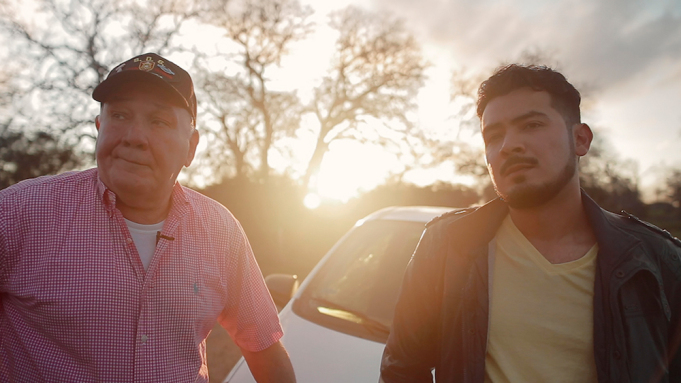
In the Mexican documentary Comala, filmmaker Gian Cassini does a deep dive into his own past to investigate the life and death of a Tijuana hitman nicknamed ‘El Jimmy,’ a man who also happened to be his father. 

The film, constructed through a collection of his memories and interviews with his family members, creates a powerful exploration of the machismo culture and violence normalization in México. Cassini uses the film as a therapeutic exercise to better understand his legacy and surroundings, and try to correct behaviors that permeate Mexican society.

As part of my TIFF 2021 coverage, I had the chance to talk with Gian Cassini about the complex making of Comala and the art of nonfiction filmmaking.

Ricardo Gallegos: You had only directed fiction before starting this documentary project. How was the transition? Was nonfiction storytelling something you wanted to do?

Gian Cassini: Initially I thought to make fiction with the idea of my father’s death, but after having a direct approach with the members of my family I thought that the most honest and powerful thing was going to talk about them and me in a direct manner. 

However, when I started I had no training in documentary. My notion of the documentary was the one that the average citizen has: that documentaries are about science and animals, or that they are interviews dubbed into Spanish.  However, when I started to work in laboratories, to document myself, to meet other documentary filmmakers, and learn about their work, motivations, and the narrative forms available, I realized that there is a whole world and a whole series of possibilities in how you can structure a documentary, how you can structure a story or a concept. That made me fall in love. Now I am in love with the documentary and I feel like I want to stay here, but I can’t say for sure if I will right now. I am very excited to find my voice as a filmmaker within the documentary area and also give that space to a series of people and causes, which is a little more difficult to do in fiction; the documentary is very generous in terms of budget which greatly facilitates its production.

RG: I feel that, erroneously, the documentary becomes pigeonholed in this idea of the search for the absolute truth. In Comala, you search for the truth, but there is an important subjectivity from you and your family. How did this affect the documentary? What does a documentary mean for you now? How should the documentary be perceived by audiences?

GC: First, I would say that the documentary is not a genre. It is another area of cinematography, which houses all genres. A documentary can be a comedy, action, drama, or any genre. That’s something I discovered.

After working with family members and hearing anecdotes from different points of view, I learned that I cannot reach absolute truth. I realize how powerful and comfortable it is when you simply take a stance to claim: ‘I believe this because of this.’ However, I would hear a story from a family member, and then listen to that same anecdote or story from another perspective, and It would change everything. I didn’t know what to believe anymore. I realized that I knew absolutely nothing and couldn’t come up with a guess. So the only thing I could do was to sit down, listen and give pertinent space to each of the characters so that the viewer, based on their own experience, could find their own interpretation. That is something I learned during the production process.

RG: What was your scriptwriting process? You have all these pieces, family members, and ideas. How did you structure it all?

GC: That is the most complicated part of the whole process because being my first documentary I had no idea how I could structure it and I didn’t know all the possibilities available to me. I had a very general idea: I knew I was going to be the guiding character to reach each of these voices, that somehow it could fall into the road movie genre. These ideas were important guides for me. I also knew that there was going to be a parallel structure between my dad’s chronological life and the geographical journey that I undertake within the film, but structuring that information, the testimonies, the observations of each one, was something time-consuming, complex, and frustrating.

The first two years I would sit down to apply for funds and they would ask me for the script. I was writing based on the material I had, but it was ridiculous. I knew they wouldn’t award me anything because I didn’t know where I was going. That was frustrating as a filmmaker and producer because I didn’t know how long this was going to last. I couldn’t see the end. I learned as the years went by. In 2016, when we presented Comala at Doculab in Guadalajara, they asked for a one-hour cut of the film. At that time, it was evident that there was no finale. They asked me where It was and I sincerely replied, “I have no idea.” That was 2016, it took me about two more years to get an idea of how the movie was going to end.

I recently came to the realization that it was two people who were operating this film: ‘Family Member Gian’ and ‘Filmmaker Gian.’ There was duplicity, a complement between one and the other. At some point, one of them had more control over the other and when structuring the film, the guidance fell in the lap of ‘Family Member Gian.’ At the time I couldn’t understand these things and didn’t know how relevant certain information or events were.
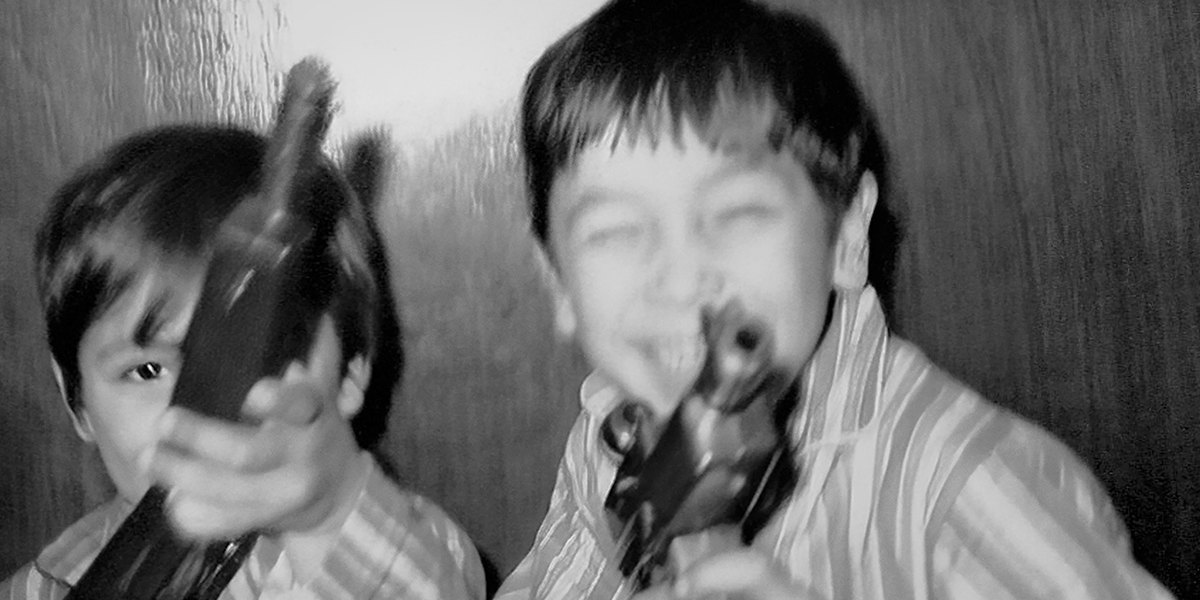
Comala

RG: During the planning and production of this documentary, what concern did you have about your own safety? Was there a concern? I mean this in terms of maybe running into dangerous names or troublesome information.

GC: That was a concern my family had. At first, when they learned that I was serious in wanting to make this film, many of them objected because they were concerned for my safety. But, from the very start, I had something clear: I didn’t want to make a police movie. I knew then that I didn’t need to dig deep into data. There was some general information that was needed to create Comala though, and I approached it from a conscience of safety, not for me, but for the sake of my family.

On one of the initial trips I made to Tijuana, I was looking for archive material about my father’s case and I went to the attorney general’s office to see if I could find the file. When I went, they asked me: “Why? Why would you expose yourself?” I hadn’t told them that I was El Jimmy’s son. I just wanted to see a file, but that simple fact already exposes you. So, whenever I encountered those signs of danger, I just would go the other way.

Instead of safety, my fears were about how the movie was going to turn out. I didn’t want the movie to be seen as a narcissistic piece. It was very difficult for me, even when pitching, to recognize that the protagonist of this film was me. Even now, as I’m talking to you, I feel very strange because it lends itself to that narcissistic reading. Through the structuring, I tried to avoid that path. 

Something that motivated me to bring the film to its conclusion was to give space to the voices of each of the members of my family, who, cinematographically speaking, seemed like fascinating and charismatic characters to me. I wanted to see a movie with them and about them. And I achieved just that.

Another aspect that I feared was precisely how to introduce my family members. I didn’t want to feel like I was exposing them to viewers’ judgment. They were already generous in allowing me to approach and record them. I didn’t want, for example, to know that my grandmother’s neighbor would come over to tell her that she was a bad mother. Things like that. That was something I tried to be very careful about. I paid a lot of attention. In the end, I feel like I achieved it.

RG: The encounter with your grandfather helps encapsulate the toxic masculinity themes that are explored throughout Comala. What did you expect before meeting your grandfather and as a filmmaker (not as a grandson), what did you think after it? How did this encounter change the documentary?

GC: ‘Filmmaker Gian’ was fascinated. I could’ve just ditched Comala and made a whole movie about him. That’s how great his story is.

I couldn’t unlink ‘Filmmaker Gian’ from ‘Family Member Gian’ in this particular movie. Approaching my grandfather from the ‘Family Member Gian’ made things a lot easier in terms of structure because he really was a new family member that came into my life and whom I was just getting to know. The discovery that you see in Comala was a completely direct translation of the experience because that was exactly how the development of my appreciation for him was. Even in editing, it was easy to structure his scenes, which wasn’t the case for any other encounters.

RG: Have you shown the film to your family? How did they react or how do you hope they will react?

GC: It has only been seen by my mother and my grandfather. I think my mom needs to see it again because it really wasn’t the cathartic and emotional projection that I expected. She just patted me on the back and told me: ‘it’s good, mijito.’ I thought, ‘Okay. Is this an indication that the film is destined to fail?’ My own mother was not moved by my film, but then I realized that she was still processing it. Later, she told me that she was still thinking about it. She is going to present the film at the 2021 Guadalajara Film Festival with me. It will be very interesting to see her process there.

The projection with my grandfather was quite powerful because, in addition to me, he, and his wife, his children from his other family were there. It was a powerful experience because there were many elements that they did not know at all about their own father, so seeing the film from this perspective was emotionally powerful. They were upset not with the film or with me, but with all these patterns that the film portrays and exposes. There was a lot of emotion. I’m excited that they wanted to see it again.

Comala had its World Premiere at the 2021 Toronto International Film Festival as part of the TIFF Docs program. Next, it will screen at the 2021 Guadalajara Film Festival and 2021 Morelia Film Festival in México.

Cover image courtesy of TIFF.

Movie Review (TIFF 21): Overlong ‘Benediction’ Wanders, But is Saved by Its Moving Screenplay and Central Performance


Director: Terence Davies
Writer: Terence Davies
Stars: Jack Lowden, Peter Capaldi, Jeremy Irvine

Synopsis:  The true story of British poet, soldier, and conscientious objector Siegfried Sassoon.

[/info]

While World War II has received the lion’s share of Hollywood attention, more and more films are now telling stories from World War I, the conflict which engulfed the world from 1914 to 1918. The heroism and sacrifice from The Great War cannot be overstated and it’s good to see recent examples of filmmakers delving into this important period of history. Producer Peter Jackson’s documentary from 2018, They Shall Not Grow Old, featured never-before-seen footage from the trenches, and Sam Mendes’ 2019 Oscar-winning masterpiece, 1917, was dedicated to his grandfather, who enlisted as a 17-year-old and fought in the “war to end all wars.” And now, writer/director Terence Davies gives us Benediction, the stream-of-consciousness biography of famous English soldier/poet, Siegfried Sassoon, who was decorated for bravery while fighting on the Western Front, but later became an outspoken critic of the war, haunted by the devastation and death he witnessed first-hand.

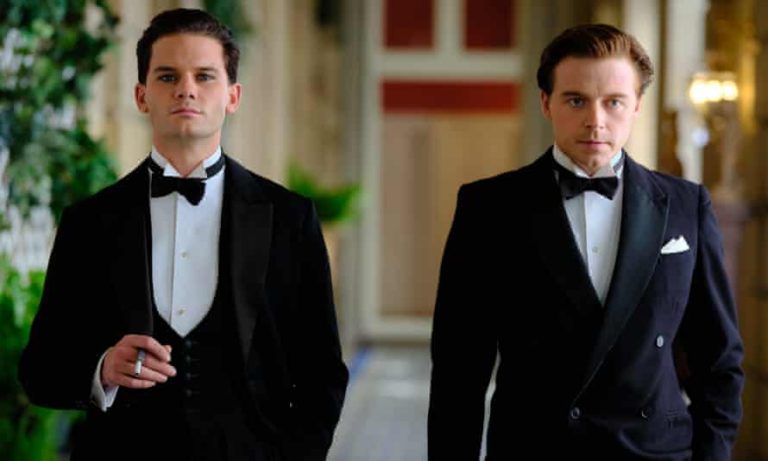
Benediction is a beautifully-rendered, elegant, and very English journey through the life and mind of a conflicted and tortured man, played in youth by Jack Lowden, and in old age by Peter Capaldi. After getting injured early in the war, Sassoon swears he will never go back, even after he heals. He writes a scathing poem about the insanity of the war, hoping for it to be published, but friends in high places rescue him from a court martialing instead, pulling strings to get him sent to a psychiatric hospital. Never able to forgive himself for not standing up to those who protected him, Sassoon spends the rest of his life drowning in guilt, ashamed of not having done more to speak up or act out.

It is Sassoon’s passivity in his own life that is the central theme of Benediction, as life continues to be something that happens to him, not because of him. His trauma from his experiences in the war, along with his deeply mournful guilt over those close to him who were lost dominate every waking moment, as recurring nightmares and fraught daydreams often return him to the battlefield, graphically re-living the horrors. Davies shows little restraint in depicting the horrors of war, intercutting real footage from the war throughout the film, with graphic images of death bringing the audience directly into Sassoon’s nightmares.

But there is an elegance in Benediction as well, as Davies counteracts the brutality of war with beautiful, languid, and visually stunning shots, reflecting the inner conflict of Sassoon, an upper-class, well-connected, well-educated member of high society who is, in fact, still wallowing in the mud and blood of the trenches. The cinematography by Nicola Daley is gorgeous and effective, with tricks of the camera and imagery working well to keep the audience engaged with Sassoon’s inner turmoil.

The first third of the film is a raging anti-war manifesto, with Sassoon’s poetry serving as voiceover narration to the graphic images. While the images are disturbing, the words are transcendent, Sassoon’s powerful poetry deeply soulful in its imagery and achingly emotional in its depth. He is able to capture the horrors of war with a delicacy and trauma, a brutal beauty that weeps with knowing regret. Sassoon’s post-war experiences and poetic rebellion that opens the film is the strongest part of Benediction, with Lowden absolutely magnificent as Sassoon, determined and pained, aching for the strength to be able to do anything more than rage against he dying of the light.

But the film starts to lose steam once the films moves further away from the war and into the decadence of the 1920s, a decadence even more self-fulfilling in Sassoon’s world of high society, filled with artists, bohemians, and ladies of leisure. Sassoon has come to accept his homosexuality and ends up falling in love over and over again, always with someone who treats him badly, something he somehow feels he deserves—or at least doesn’t argue against. Once Sassoon loses a sense of who he is, so does the audience, his tragic romances further distancing us from the determined and courageous man we knew earlier. Even though it is guilt and shame that shape Sassoon in later years, the depiction of his mean-spirited lovers who spout nothing but pithy contempt for him feels lazy and disingenuous. The hard-heartedness is a bit over-the-top, especially as played by Jeremy Irvine, who portrays Sassoon’s most callous lover, the famous musician Ivor Novello, who is almost cartoonish in his bitchiness.

The film manages to emerge from the pointless dreariness of Sassoon’s gay shame spiral to the final section of the film, which features Capaldi as the older Sassoon, who is now angry, bitter, and resentful towards the world—but mostly towards himself. Having been constantly looking for answers in something or someone else, he contemplates converting to Catholicism to help find forgiveness, but he knows, deep down, that he will never be able to forgive himself for the fact that he believes he didn’t do enough against the war. It is a hard thing, to watch a man look back on his life with regret and pain, and Capaldi’s performance is raw and heartbreaking.

But it is Lowden’s performance and Davies’ screenplay that truly keep Benediction alive, even in its weaker moments. Lowden is engaging in every scene, able to keep Sassoon’s simmering rage and crippling sorrow always in the forefront, as Sassoon’s sadness is an ever-present cloud that colors every moment. Lowden is at his absolute best when he is speaking the words on the page, both from Davies’ script or straight from Sassoon’s real poems. The screenplay is magnificent, in spite of the nastiness of some of it, the dialogue is crisp and succinct, colorful and majestic. Not a word is wasted or unnecessary.

While Benediction does lose its way in the middle and is too long, the screenplay and performances honor the intended themes and purpose of the filmmakers and do right by the memory of those who perished in World War I, while bringing to light the work of a poet whose perceived failures belie his genuine successes.

Grade: B-

Op-Ed: AFI’s 100 Years…100 Passions – ‘Way Down East’ (#71)

I will be watching and reviewing all of the films included on AFI’s 100 Years…100 Passions list. The list contains the 100 greatest love stories in American cinema and I plan to consider how our views on romance and social issues have changed over the years as well as judge whether the romances in these films actually made me swoon. As a fan of the romance genre, I expect to love each and every one of the nominees but I also don’t know if I would consider all of them romantic.

Way Down East (1920) features one of the purest expressions of his disturbing, often contradictory romanticization of suffering. So many of his collaborations with Lillian Gish hinged on her playing a vulnerable, fragile young woman who is trapped in a world that doesn’t possess her innate goodness or purity of heart. Her heroines are put through the wringer in Broken Blossoms (1919) and True Heart Susie (1919), with Gish providing operatic displays of intense emotion in response to the horrors that her character faces. She receives credit for bringing an unprecedented level of subtlety and emotional dexterity to the roles that she played and in the process, she modernized the art of screen acting. Way Down East might be the most operatic of all of their collaborations. It is mounted on a far grander scale than the comparatively modest True Heart Susie, as well as asking Gish to draw out the theatrical gestures that she specialized in. As a tribute to the breathtaking vigor behind so many of those legendary Gish close-ups, Way Down East is more than adequate. 

Griffith took inspiration from Lottie Blair Parker’s enormously popular play of the same name and he and Joseph R. Grismer faithfully adapted it to the screen. Gish portrays Anna, a beautiful, naive country girl who is thrust into high society when she is sent to live with her wealthy relatives. She is not popular with them but achieves success in high society because of her virginal, pure appearance. Her innocence causes her to pounce upon any opportunity to get married and receive the love that she has always dreamt of. The dastardly Lennox (Lowell Sherman) fools her into getting married to him, as part of a fake ceremony, before abandoning her when she gets pregnant. She gives birth to the baby and is devastated when it dies. After the loss of her beloved child, she tries to reinvent herself as a maid and chooses to work for Squire Bartlett (Burr McIntosh). Through hard work and determination, she becomes a well-liked member of the Bartlett household, and young David Barlett (Richard Barthelmess) falls in love with her. When Lennox re-enters her life, she realizes that he may seriously damage her reputation. 

It’s a lengthy epic that is chock-full of unexpected twists and turns but Griffith’s interest tends to stray from the plot at hand. When he isn’t lovingly photographing Gish, he’s capturing the dark recesses of a stately old manor. He has a way of filling up the frame that makes this feel more cinematic than the other play adaptations of the period. I’m not suggesting that spareness and Brechtian use of meta commentary on the concept of making a film have no place in cinema, I just feel that Griffith’s films gain a warmth and familiarity from the crowded, ramshackle appearance that many of the locations take on. Rather than giving off the impression that they have been designed to within an inch of their life, even though they probably have, every room in the Bartlett household looks like it has been inhabited for years. It doesn’t have the showroom quality that so many on-screen family homes have. There are signs of wear and tear on some of the furniture, none of the knick knacks sit ramrod straight on the cabinets and Griffith doesn’t try to hide the fact that the actors are often awkwardly positioned. This is just one of the unusual touches that he brings to an utterly unrealistic, highly mannered melodrama. The emotions of the piece and the storyline exist to create situations in which Gish can cry, scream and thrash around. The set dressing is there to remind us that Anna does have the opportunity to find real happiness, instead of living in a world that is completely cruel and unfair. 

The whole film really builds up to the big set piece that lets the story go out on a bang. After Lennox has besmirched her name, she walks outside and ends up standing on an ice floe in the middle of a storm. The ice floe is floating down a river, towards a waterfall, and Anna is so physically weakened that she can barely fight against the current. Griffith manages to work wonders with this scene. From the very moment, it begins, as we see a vulnerable figure off in the distance, resolutely walking through the snow, we can sense that this is something special. In the next few minutes, Gish puts on a masterful display of physical performance. Just through throwing her hand into the freezing water or pressing her chin into her collarbone, she gives us a sense of the peril that Anna is in. This is to say nothing of James and Rose Smith’s editing. They draw suspense, terror, sentimentality, and eventually, joy, out of just a couple of shots. The choice to pay more attention to Gish’s limbs than her famously expressive face would seem to be risky but it pays off in a major way. They ended up creating an iconic moment. 

The inclusion of Way Down East on this list has restored my faith in AFI voters. If they can see value in a masterpiece like this, they might not be the philistines that I had previously assumed them to be. It is still difficult not to resent them for ranking this lower than The Way We Were (1973) but I have low expectations of them at this point. 

Movie Review (TIFF 2021): ‘Montana Story’ captivates with its story of regret and forgiveness


Directors: Scott McGehee, David Siegel.
Writers: Scott McGehee, David Siegel.
Stars: Haley Lu Richardson, Owen Teague, Kimberly Guerrero, Gilbert Owuor, Asivak Koostachin, Eugene Brave Rock.

Synopsis: Two siblings returning to the family ranch to care for their ailing father must confront painful truths.


Scott McGehee and David Siegel took advantage of the forced isolation brought by COVID-19 to go to Montana and create one of the warmest films of the year, marked by its simplicity and heartfelt message. Montana Story presents the story of two siblings that come together after a tragedy separated them years before. While the reunion happens because of the approaching death of their father, the truth is that this unfortunate event is just the excuse for them to come together and face the real event that marked them somewhere in the past.

As presented by the directing / writing duo of McGehee and Siegel, Montana Story is a tale of love between brother and sister. This is the kind of love that we saw in French Exit (Azazel Jacobs, 2020), where mother and son, Frances (Michelle Pfeiffer) and Malcolm (Lucas Hedges), shared a bond so profound that it propelled the story. While in the 2020 film the relationship between these characters never faltered, in Montana Story the attachment between Erin (Haley Lu Richardson) and her little brother Cal (Owen Teague) has been fatally bruised by resentment and regret.

The movie starts with Cal coming back to his family ranch as his father is in his final days. As soon as he arrives, we can see how kind he is. He is soft-spoken, awkward as he tries to create a rapport with Ace (Gilbert Owuor), the Kenyan nurse tending to his father, and at ease with Valentina (Kimberly Guerrero), the long-time family employee. As it becomes clear that the father won’t wake up from his coma, Cal starts making arrangements for the fate of the ranch, the accumulated debts, and the few animals left.

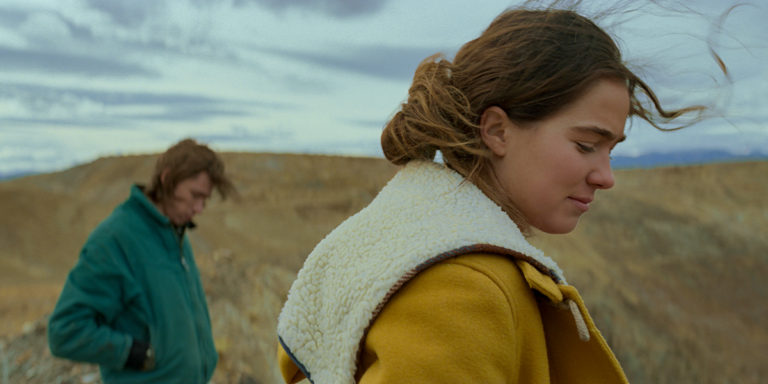
Cal’s tenderness and softness contrast with Erin’s intensity and hyperactivity, who arrives unexpectedly. As we soon learn, Erin ran away one night seven years before, leaving no trace of her whereabouts and breaking the special bond that she shared with Cal. Quick conclusions are crumbled as the script explores the power dynamics between the two. She is decisive and curt; he is dutiful and gentle.

This reunion will work as a previously resisted exploration of the reasons for her disappearance as well as a long-needed process of healing. While she carries a heavy burden of resentment and hatred, Cal needs to deal with his own doses of regret.

Surrounded by the vast and impressive scenery of the North-western part of the United States, this Neo-Western embraces the exploration of childhood trauma, toxic masculinity, and family bonds. In this regard, Montana Story is a worthy companion to the tenderness of First Cow (Kelly Reichardt, 2020), the coming-of-age story of Lean on Pete (Andrew Haigh, 2017), and the resilience of The Rider (Chloé Zhao, 2017).

With a drama that is dependent of a story that doesn’t happen on screen, McGehee and Siegel find creative ways to bring the audience up to date with conversations between Cal and Ace. Cal, a sensitive young man that is aware of his past mistakes, is a transparent person that shares his private stories to bond with Ace. This recourse, unexpected but welcomed, offers a glimpse into the past of the family and Cal’s personality. Instead, Erin is guarded and annoyed at her brother’s openness.

Ace’s role is vital in the story as a window of healing, not for the father but for his children, with an empathetic and patient hand offered to both Cal and Erin. In this intimate film, every character has something valuable to give and to receive in return.

The heart and soul of the film are the young stars, Haley Lu Richardson, and Owen Teague. Richardson, who has created an exciting career with films such as Unpregnant (Rachel Lee Goldenberg, 2020), Support the Girls (Andrew Bujalski, 2018), and The Edge of Seventeen (Kelly Fremon Craig, 2016), is a tour de force as Erin, bringing to life the intensity and sensibility that amazed everyone in Columbus (Kogonada, 2017). Her ability to offer heartfelt monologues and brusque answers create a troubled and deeply hurt character that is still sensible enough to embrace forgiveness and compassion (with those who are worthy of it).

Considering that Richardson is now a veteran in the indie scene, Teague is the real revelation. Sweet, quiet, and noble, his character has bottled up regret and sadness in a way that make him sensible and empathetic, and not toxic or violent (as his father was). He is instantly liked, the opposite of what happens with Erin. These first impressions are vital for the evolution of the film, with McGehee and Siegel surprising the audience with profound and unexpected character evolutions.

Montana Story is a delicate story about the family bonds that are lost by betrayals, but that, somehow, are still strong even after years of silent resentments. In a matter of days, Erin and Cal go through a transformation when forced to confront their past and the repercussions of their actions. While there are intense feelings bottled up in both characters, Richardson and Teague present cathartic interpretations where the path to healing is finally discerned.

Grade: A-

Movie Review (TIFF 2021): ‘Encounter’ merges sci-fi and family drama beautifully


Director: Michael Pearce.
Writers: Joe Barton, Michael Pearce.
Stars: Riz Ahmed, Octavia Spencer, Aditya Geddada, Lucian-River Chauhan.

Synopsis: A decorated Marine goes on a rescue mission to save his two young sons from an inhuman threat.


Riz Ahmed doesn’t seem to stop. After having an outstanding 2020 that included an Oscar nomination for his role in Sound of Metal, and multiple BIFAs for Mogul Mowgli and The Long Goodbye, Ahmed is back in the festival circuit with Encounter, a sci-fi film that distinguishes itself for its clever story and the family drama at its core.

Co-written and directed by Michael Pearce, who turned heads in 2017 with the psychological thriller Beast, Encounter maintains the sense of discomfort and suspicion that made of his directorial debut such a success (launching Jessie Buckley’s career and offering a new facet of the always affable Johnny Flynn). As with his previous film, nothing is what it seems, maintaining the audience at the edge of the seat with constant revelations that feel equally unexpected as shocking.

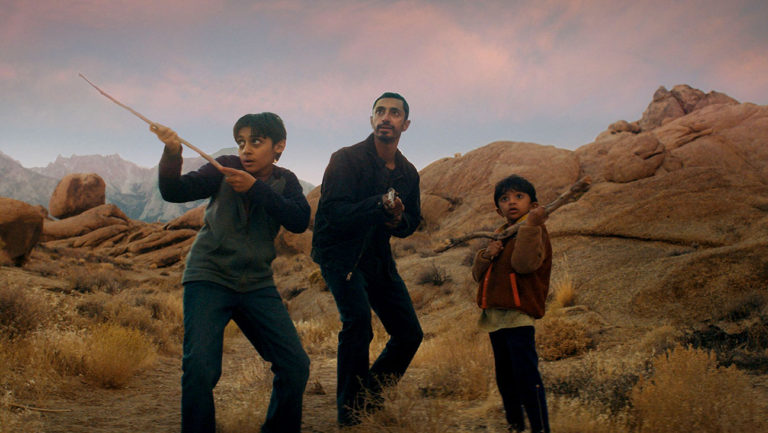
In the Encounter’s scenario, the Earth has been invaded by microscopic organisms that latch onto humans, making them violent and irrational, and provoking utter chaos as the infected start flooding the streets. Malik Khan (Ahmed) is a former Marine that has the mission of retrieving his two sons – Bobby (Aditya Geddada) and Jay (Lucian-River Chauhan) – to take them to a safe haven somewhere in the United States. Prepared, lethal, and determined, Malik sets out on his quest.

While the details of the world invasion are left unexplored, Pearce uses impressive visuals to illustrate the bug threat. With detailed and colorful animations, he explains the way the insects invade the cells. He creates pandemonium through the incentive to use one’s imagination. His sci-fi film flirts with horror as he uses the current feeling of uneasiness in the real world to create more panic. The fact that the havoc is created by organisms that can be found anywhere and everywhere, adds a new layer of alert.

The tension is compacted and intimate, with Malik being the only one that reacts to the pressure of the alien invasion. This narrow point of view only intensifies the tension with sudden camera movements and an outstanding sound design. Just as with the previously mentioned Sound of Metal and this year’s The Killing of Two Lovers, the sound is an essential element of the film and the secret weapon that makes it work so well. Pearce uses everything at his reach to create fear and uncertainty while maintaining the film grounded in constant thematic evolutions.

While the first half of the story has the stress and urgency of films such as War of the Worlds (Steven Spielberg, 2005) or A Quiet Place (2018), the second half slowly evolves into a road-trip film where the threats become more tangible and immediate. The small family starts facing people that become obstacles: a police officer that stops them in the middle of the road, a man that shoots Malik when he is looking for help or white supremacists that go after them. The alien bugs become secondary and now Malik must face human terrors as he tries to maintain Bobby and Jay in safety. They can never catch a break.

While it’s best to maintain the surprises unexplored for an enriching viewing experience, it is safe to say that Pearce maintains the themes of survival, mental health, and family bonds at the heart of the story. The sources of tension change, but the anticipation and stress never go away.

The complicated changes in narration are successfully portrayed by the impressive cast, probably the greatest aspect of the film. Ahmed keeps reminding us that he is one of the best actors working today, offering a tumultuous performance that demands outbursts of emotions. He is sometimes vulnerable, and others toxic, violent and tender, dangerous and protective. Malik is filled with contrasts, and Ahmed portrays every change passionately and accurately.

Aditya Geddada and Lucian-River Chauhan are a delight as Malik’s children. Exhibiting an inherent violence with one another, the relationship amongst themselves and the feelings towards their father change as the story progresses. Scared, spoiled, and sweet, these boys are excellent counterparts to Ahmed’s tortuous interpretation. Chauhan deserves a special mention as the oldest boy that distinguishes what is going on and who tries to become the protector of his father.

Encounter is an exciting and adrenaline-filled film that is uplifted by the performances of the core cast. Pearce, with a fantastical use of sound and image, creates a thriller that is impactful for the way it manages tension and for the skilled way in which it manipulates expectations. Even if the threats are always changing, fear and anxiousness are always present. Encounter offers urgent social messages disguised as adventure and science fiction.

Grade: B+


Movie Review: ‘He’s All That’ Is Bad, But It’s Also Camp


Director: Mark Waters
Writers: R. Lee Fleming Jr.
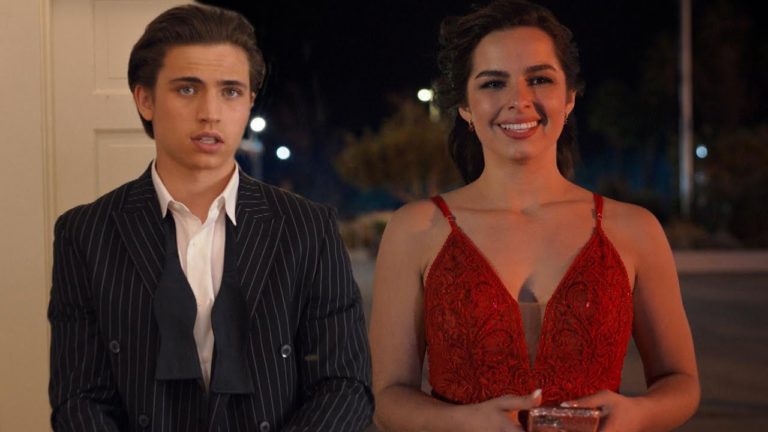
Stars: Addison Rae, Tanner Buchanan, Madison Pettis

Synopsis: A teenage girl sets out to give a nebbish classmate the ultimate high school makeover. An updated remake of the 1999 film, “She’s All That”.

[/info]

New types of influencers only continue to pop up as technology develops. Ten years ago, Instagram didn’t even exist, and now people can make entire careers either posting pictures of themselves with sponsorships or by running a company’s social media pages. A study done by Lego in 2019 reported that almost a third of children ages 8 to 12 said they wanted to be YouTubers when they grew up. Now, we have the short-form video app TikTok, which is only spawning more careers. Of those, Addison Rae is one of the highest paid on the new app, and her career is quickly taking off. She’s well known to the younger crowd, and that’s just what Netflix needs to make a rom-com hit.

It’s no secret that He’s All That has been mocked all over online for being one of the worst films of the year, and I dreaded watching it, thinking about how painful it would be to sit through. The acting is bad, the writing is atrocious, and it’s full of cliches. But if you can accept all of those pieces, it’s surprisingly not the worst thing I’ve seen. It felt like a movie that was “so bad it’s good”. All of the worst aspects of it surprisingly make it fun to casually have on in the background, where you can tune in and have a laugh at the utter stupidity of it.

It’s pretty clear from the start of the movie that Addison Rae absolutely cannot act. She’s undeniably stiff, and she has no way of making the dialogue sound natural. It almost sounds as if she was called on to read out loud during class instead of performing her lines. Granted, she’s not given much to work with either. The script is littered with cliches and downright terrible writing, which is surprising seeing how it’s be R. Lee Fleming Jr, from the same writer of the original, She’s All That. The film is also headed by Mark Waters, the same director who gave us other iconic teen movies such as Freaky Friday and Mean Girls. So how did we end up with this?

As a remake, we’re already familiar with the plot of the story, but the “makeover/win someone over as a bet but then actually fall for them” trope is something we’ve already seen, and it’s been done better. Even by the time the original was made in 1999, the idea was starting to get a bit stale. I haven’t even seen the original and yet I always knew what was going to happen next. There’s nothing exciting or new about this movie, it just feels like a cash grab to get a younger audience to watch Addison Rae do something other than TikTok. Although, they couldn’t help but add a TikTok dance sequence to the movie!

Yet with all of that, I couldn’t help but have a good time. I have no connection to Addison Rae or TikTok or YouTube culture. Growing up, I wanted to be an actor, so I can relate to the feeling of wanting some sort of fame, and I understand why teenagers and kids are constantly chasing after it online when it’s seemingly so easy. The film definitely presents problems with this mentality, even if it doesn’t have much to say about it. I can see why a younger audience would relate to this and find it enjoyable. It reminded me of other romcoms, or even what it was like my first time watching Mean Girls. I might not exactly like it, having been beyond that point in my life, but I can see this film gaining a cult following and garnering heavy nostalgia as time passes. In ten years, current teenagers and kids will look back on this and laugh about how bad it is while reveling in the utter camp of the entire film, and will banter with their friends “is that really what technology was like? Is that really how we behaved?”

He’s All That feels a bit useless and draining, but if you’re willing to soak in all the cliche and over the top energy, you’ll have a good time with it. But don’t get me wrong, it’s still a bad movie.

Grade: C-

Movie Review (TIFF 2021): ‘Drive My Car’ is a delicate view of life and death


Director: Ryusuke Hamaguchi.
Writer: Ryusuke Hamaguchi, Takamasa Oe
Stars: Hidetoshi Nishijima, Toko Miura, Masaki Okada, Reika Kirishima, Park Yurim, Jin Daeyeon.

Synopsis: Nishijima Hidetoshi is a stage actor and director happily married to his playwright wife. Then one day she is suddenly gone.


As a naked woman recites a story to his naked lover, Ryusuke Hamaguchi starts Drive My Car, an erotic and mysterious story of life and death, and of letting go and finding the courage to move on. Yusuke Kafuku (Hidetoshi Nishijima) and Oto (Reika Kirishima) maintain a peaceful marriage. He is a theatre actor, and she is a TV writer. They have a bond that is reinforced by a profound love and a creative collaboration that allows them to thrive in their respective careers.

One day, Oto unexpectedly dies, leaving Yusuke in emotional shambles. Two years later (bold of the director to introduce the opening credits 40 minutes after the start of the film), Yusuke accepts an offer to direct a play in Hiroshima, arriving in his red Saab 900. Having to comply with the rules of the place, Yusuke will need the young chauffeur Misaki Watari (Toko Miura) to drive him around the city, as Yusuke recites aloud the lines of the play that he is mounting.

Soon enough, this minuscule and cherished car will witness profound conversations, soul-assuring trips, and confessions that will change Misaki and Yusuke’s relationship. This simple premise is more than enough for the development of a story marked by its melancholy. There is nothing loud or ground-breaking happening on screen, instead – through conversations and small offerings – the director strips down Yusuke and Misaki of the emotional baggage that they are carrying.

What starts as a nostalgic drama characterized by delicate interactions between husband and wife, outbursts of creativity as Yusuke and Oto are intimate, and barriers between the married couple that are never brought down, but slowly evolve into an even more forlorn story. After his wife’s death, Yusuke leads a lonely life, marked by his dryness and uninterest to socialise with others. Nevertheless, Misaki turns out to be somehow his perfect companion: quiet, taciturn, and an excellent driver, they silently lean on each other as they start talking about their past.

Surrounded by a group of actors that are vying for a role in the play of the revered actor/director, Yusuke will have to face secrets of his dead wife that were left untouched and interrupted with her sudden death. Kôji Takatsuki (Masaki Okada) is a young actor, and Oto’s former lover, who comes to Hiroshima with the hopes of getting closer to Yusuke. Always an enigma with calm expressions, Yusuke starts his path to recovery as soon as he acknowledges the reality of his marriage and the mystery that Oto was.

Hamaguchi’s script – adapted from Haruki Murakami’s short story of the same name – is filled with understanding and empathy, respecting the otherness of the characters and their own struggles. As presented by the cast, the dialogues are sentimental lessons and insights into their feelings and regrets.

While the script is filled with meaning and teachings, the scenery injects more melancholy to the story. The recurring rain appears in the saddest moments of the film, while the clean and peaceful environment of Hiroshima reflects the private path walked by both Yusuke and Misaki.

The dialogues of Anton Checkhov’s Uncle Vanya are always present as Yusuke practices them in the car. The play itself becomes a valuable interpretation of the story and Yusuke’s journey. In this regard, Drive My Car is also a moving representation of the power of the arts and storytelling as tools of healing.

Drive My Car is a delicate and transcendental experience grounded on the acceptance of death and the period of mourning on those left behind. Yusuke goes through a painful journey as he realizes that he didn’t really understand his wife. As the film ends after three hours of duration (that go by as delicately as the story), the feelings of anguish start to dissipate as a new hope appears for the actor and his driver.

Grade: A


Movie Review (TIFF 2021): ‘Burning’ is a Devastating and Crucial Documentary About the Australian Black Summer


Director: Eva Orner

Synopsis: Looks at the deadly Australian bushfires of 2019-2020, known as ‘Black Summer’. An exploration of what happened as told from the perspective of victims of the fires, activists, and scientists.


“The greatest tragedy of this Black Summer bushfire season was that we saw it coming,” says scientist and environmentalist Tim Flannery in the opening credits of Eva Orner’s Burning, a devastating exploration of the tragedy that took the life of 34 people, killed or displaced over 3 billion animals, and burned 18.6 million hectares in Australia between June of 2019 and March of 2020.

In terms of form, the documentary is straightforward. Orner uses news and on-the-ground footage, aerial shots, and interviews with activists, scientists, civilians, and firemen to assemble the film. There’s not much creativity in terms of filmmaking, but smooth editing and passionate delivery of its message make it an engaging and highly important watch.

Burning starts by describing the general environmental conditions of Australia and the ease with which bushfires appear every year. Figures such as Tim Flannery and journalist Marian Wilkinson explain how predictable the tragedy was and the non-existent political efforts to prevent it. At the heart of the issue is Prime Minister Scott Morrison, an irrational climate denier whose infuriating attitude, actions, and responses before, during, and after the fires will make you want to punch a hole through a wall. He’s a real-life villain whose unconcerned behavior toward the whole situation is sickening. But he’s not alone as Orner shows the harmful impact of the media in spreading disinformation. These are tools effectively used to push your buttons and make you want to take action.

Of course, the biggest impact of this film lies in showing the devastation of the tragedy through footage and testimonies. And it’s harrowing. Former Fire and Rescue Commissioner Greg Mullins struggles to find words to describe the nightmare. A civilian shares terrifying footage of pitch-black skies at 9:13 AM; Mullins describes his surprise encounter with a mob of kangaroos running away from the devastation only to fall dead on the ground; Orner shows heartbreaking images and videos of dead birds, kangaroos, koalas, and many more animals. Blackened, twisted bodies fill the roads.

One of the strongest narrative elements of Burning is the brief explanation of Australia’s coal-centered identity. This creates an understanding of the country’s deep-rooted anti-sustainability rhetoric that has been manipulated by the media to push the agenda of power-hungry individuals and corporations. It’s a fascinating theme that serves its purpose, but Orner doesn’t fully exploit it, thus losing an opportunity to enrich the film.

The film opens with an acknowledgment toward the Custodians and original owners of the country. This is an immediate reminder of the reason why humanity is in such a precarious situation. It’s something touched upon by other important 2021 documentaries such as The Spokeswoman and Eatnameamet – Our Silent Struggle. Colonization changed the landscape and tried to bury Indigenous traditions and beliefs. Instead of respecting and protecting nature, extreme capitalism practices and oppression has forged a path of unbridled destruction. Orner barely addresses this idea near the end of the film. Once again, she doesn’t do nearly enough with it but does manage to create a powerful reflection.

Burning might trigger climate change anxiety. It’s infuriating and mortifying, but it’s also hopeful thanks to its portrayal of honest, passionate people working hard to create a better future. Teenage activist Daisy Jeffrey and billionaire entrepreneur Mike Cannon-Brookes offer hope on two fronts: one is shown spearheading an awareness movement supported by the younger generations, and the other proves that rich people can make a huge difference when using their resources to support environmental-friendly ideas. We might need a combination of both.

There are more fashionable and friendly films out there, but environmental-focused filmmaking is vastly needed right now, and Burning effectively serves its purpose. It lights a fire in your heart and pushes you to engage in the conversation and do something, anything to fight for the planet.

Rating: B-

List: Top 10 Movies of 2003

This week on Episode 447 of the InSession Film Podcast, we continued our year-by-year retrospective series by taking a look at 2003, a pretty strong and consistent year for film. Between The Return of the King, The Curse of the Black Pearl and Master and Commander (and if you ask JD, Bad Boys II), its commercial films were quite remarkable. With films like Something’s Gotta Give, Down with Love, and Love Actually, among others, romantic comedies were also very good. Or how about the animated category with Finding Nemo, Millennium Actress, Tokyo Godfathers and The Triplets of Belleville (as a reminder we go by U.S. limited release dates for our criteria). Many of the awards films were also genuinely great as well. A deep year like 2003 makes an exercise like this challenging, but we had a great time talking about the films that stood out to us. That said, what would be your Top 10?

NOTE: We spend most of our time only discussing our Top 5 movies of 2003, however, as you’ll see below, we have listed our full Top 20 lists from that year.

JD

1) Lost in Translation
2) City of God
3) Big Fish
4) The Station Agent
5) Pirates of the Caribbean: The Curse of the Black Pearl
6) Mystic River
7) In America
8) The Lord of the Rings: The Return of the King
9) Finding Nemo
10) American Splendor

11) Master And Commander: The Far Side Of The World
12) 28 Days Later
13) School of Rock
14) Millennium Actress
15) 21 Grams
16) Whale Rider
17) Monster
18) The Barbarian Invasions
19) All the Real Girls
20) The Triplets of Belleville

Brendan

1) Big Fish
2) Lost in Translation
3) Mystic River
4) The Triplets of Belleville
5) American Splendor
6) Millennium Actress
7) Pirates of the Caribbean: The Curse of the Black Pearl
8) The Lord of the Rings: The Return of the King
9) Shattered Glass
10) Master And Commander: The Far Side Of The World

11) The Station Agent
12) In America
13) Down With Love
14) 28 Days Later
15) Tokyo Godfathers
16) Something’s Gotta Give
17) Under the Tuscan Sun
18) Finding Nemo
19) School of Rock
20) Better Luck Tomorrow

Hopefully you guys enjoyed our lists and if you agree or disagree with us, let us know in the comment section below. Clearly there are a lot of other contenders from 2003 that battled for our lists, that just missed the cut. That being said, what would be your Top 10? Leave a comment in the comment section or email us at [email protected].

For the entire podcast, click here or listen below.

For more lists done by the InSession Film crew and other guests, be sure see our Top 3 Movie Lists page.

Podcast: The Return of the King / Top 5 Movies of 2003 – Episode 447

For our latest campaign, we are trying to reach 200 reviews on iTunes. We are getting closer and closer to our goal, but we need your help. Leave us a review today and you may even receive a free InSession Film t-shirt!

This week on the InSession Film Podcast, Matt Neglia from Next Best Picture joins us as we conclude our Lord of the Rings Movie Series by discussing The Return of the King! We also round out our retrospective by discussing our Top 5 movies of 2003.

A massive thanks to Matt for joining us on the show this week. He may be the busiest guy in film punditry, but there was no one else who could have joined us for The Return of the King. He’s the biggest Lord of the Rings fan on the planet, and we had to have him on for this series in one way or another. And he was brilliant. We also had a great time talking about the best films of 2003. It may not have a singular theme, but the consistency of quality is astounding. Whether it be commercial blockbusters, romantic comedies, foreign language films, animated movies and everything in between, the year had a lot of variety.

On that note, check out this week’s show and let us know what you think in the comment section. Thanks for listening and for supporting the InSession Film Podcast!

The Lord of the Rings Movie Series: The Return of the King (5:19)
Director: Peter Jackson
Writers: Peter Jackson, Fran Walsh, Philippa Boyens, Stephen Sinclair
Stars: Elijah Wood, Viggo Mortensen, Ian McKellen, Sean Astin

– Notes / Discussion (1:54:08)

This week for our break segment, we spend most of our time talking about the latest reviews we’ve received on iTunes. Because of our current campaign, we received a hefty amount of new arrivals, and we wanted to read them on the show. We are super grateful for those who have participated, it’s really meant a lot to us. Keep ’em coming!

[divider]

RELATED: Listen to Episode 444 of the InSession Film Podcast where we discussed Annette!

[divider]

Top 5 Movies of 2003 (2:03:30)
As noted above, 2003 was a pretty strong year for film. Between The Return of the King, The Curse of the Black Pearl and Master and Commander (and if you ask JD, Bad Boys II), its commercial films were quite remarkable. With films like Something’s Gotta Give, Down with Love, and Love Actually, among others, romantic comedies were also very good. Or how about the animated category with Finding Nemo, Millennium Actress, Tokyo Godfathers and The Triplets of Bellvile (as a reminder we go by U.S. limited release dates for our criteria). Many of the awards films were also genuinely great as well. A deep year like 2003 makes an exercise like this challenging, but we had a great time talking about the films that stood out to us.

Show Sponsor: First Time Watchers Podcast

– Music

The Edge of Night – Howard Shore, Billy Boyd
The Black Pearl – Klaus Badelt
The Last Samurai – Hans Zimmer
The Return of the Eagle – Atli Örvarsson

Subscribe to our Podcasts RSS
Subscribe to our Podcasts on iTunes
Listen on Spotify
Listen on Stitcher
InSession Film Podcast – Episode 447

[divider]

Next week on the show:

Review: The Card Counter
Top 3: TBD

[divider]

Help Support The InSession Film Podcast

If you want to help support us, there are several ways you can help us and we’d absolutely appreciate it. Every penny goes directly back into supporting the show and we are truly honored and grateful. Thanks for your support and for listening to the InSession Film Podcast!

VISIT OUR DONATE PAGE HERE

Poll: What is Oscar Isaac’s best performance?

Serious question, who doesn’t love Oscar Isaac? Whether it be as Poe Dameron, Llewyn Davis, or sniffing Jessica Chastain’s arm at the Venice Film Festival, the Guatemalan-born actor is both a talent and the biggest heartthrob in Hollywood. He is not only having a killer year starring opposite Jessica Chastain in the HBO miniseries Scenes from a Marriage, but he also stars in Paul Schrader’s The Card Counter, which we’re sure will get people talking.

Let’s celebrate his wildly diverse career. What do you think is Oscar Isaac’s best performance?