


Home Blog Page 177

Movie Review (TIFF 2021): ‘Lingui, the Sacred Bonds’ is a testament to sorority and female ties


Director: Mahamat-Saleh Haroun.
Writer: Mahamat-Saleh Haroun.
Star: Achouackh Abakar Souleymane, Rihane Khalil Alio, Youssouf Djaoro.

Synopsis: When Amina learns that her 15-year-old daughter Maria is pregnant and wants to abort the child, they face an impossible situation in a country where abortion is legally and morally condemned.


The first thing that you notice as soon as Lingui, the Sacred Bonds starts is its sun-kissed cinematography, capturing the beautiful aura of Chad. Photographer Mathieu Giombini makes sure to highlight the traditional dresses and the brown and orange colors that form part of the local landscape. Chad has never looked as bright and beautiful as it does in Lingui. This stunning façade echoes a story that is equally empowering as it is indignant and celebratory as it is condemning.

While the topics of abortion and reproductive rights have acquired a loud voice in American cinema during the last years with films such as Never Rarely Sometimes Always (Eliza Hittman, 2020), Unpregnant (Rachel Lee Goldenberg, 2020), and Plan B (Natalie Morales, 2021), Lingui takes a close look to these themes within a society that is much more limitative and condemning than the one from the West (even as Texas has gotten a terrible and recent setback in this endless fight).

With Lingui, Chadi filmmaker Mahamat-Saleh Haroun portrays the demanding and inhumane rules and expectations of a patriarchal society, as well as the subtle and resolute strategies that women design to survive. While the film critiques the Chadi patriarchal norms, it celebrates the sacred bonds (known as lingui in the local customs) between women.

The film presents the story of Amina (Achouackh Abakar Souleymane), a woman that creates vases out of rubber tires to support her 15-year-old daughter, Maria (Rihane Khalil Alio). One day, Maria starts acting weird and aloof. Amina discovers that she is pregnant, having been recently expelled from school to avoid a scandal. Determined to avoid a destiny like her mom’s – Amina got pregnant as a teen and was disowned by her family –, Maria decides to have an abortion.

In a country where abortions are prohibited by law and religion, Amina and Maria’s options are limited, as well as the people in whom they can trust. Haroun slowly and delicately takes us through the small and big obstacles that these women endure. Marina is courted by a long-time friend that highlights her feeble position in society as a reason for her to marry him. The hospital refuses to perform the abortion, instead referring them to a clandestine clinic. The local Iman constantly harasses Amina, scolding her for her absence at daily prayers as she designs ways of getting money.

Achouackh Abakar Souleymane and Rihane Khalil Alio offer captivating performances as mother and daughter. Souleymane goes through a whirlwind of emotions as Alio exposes a determined young girl that knows what she wants and deserves from life.

As the path to get an abortion becomes more complicated and desolate, Amina and Maria’s bond becomes stronger. Their difficulties pull them closer together and their relationship is even deeper from what it was at the beginning of the film. It is worthy of praise that Haroun’s script never alienates one from the other, even as the final revelations are gasp-inducing and infuriating. No matter what happens, their bond is never broken.

They also receive unexpected help and solidarity from the women of the community. Friends, recently reconnected family members, and considerate nurses and midwives offer them support. Mother and daughter are safe whenever they are surrounded by women, even if the external threats are as scary as ever. The mood and tone of the film contrast clearly whenever there are men and women on screen. Lingui offers a glance at the creative ways in which women navigate the difficult norms of their country, strengthening their relationships along the way through their shared secrets and strategies.

In Lingui, the Sacred Bonds, Mahamat-Saleh Haroun presents a film of resilience and determination. He carefully exposes the many ways in which women are abused of in such a traditionalist country while celebrating their strength. The story of Amina and Maria shines through their unbreakable bond, as they are embraced by other women that understand their struggle and pain. This film works as a social commentary, and as a testament to the strength and unity of the female community.

Grade: A-

Movie Review: ‘Wife of a Spy’ is When Patriotism and Humanity Come Face to Face


Director: Kiyoshi Kurosawa.
Writers: Ryûsuke Hamaguchi, Kiyoshi Kurosawa, Tadashi Nohara.
Stars: Yû Aoi, Issey Takahashi, Masahiro Higashide.

Synopsis: A Japanese merchant travels to Manchuria, where he witnesses an act of barbarism. His subsequent actions cause misunderstanding and legal problems for his wife.


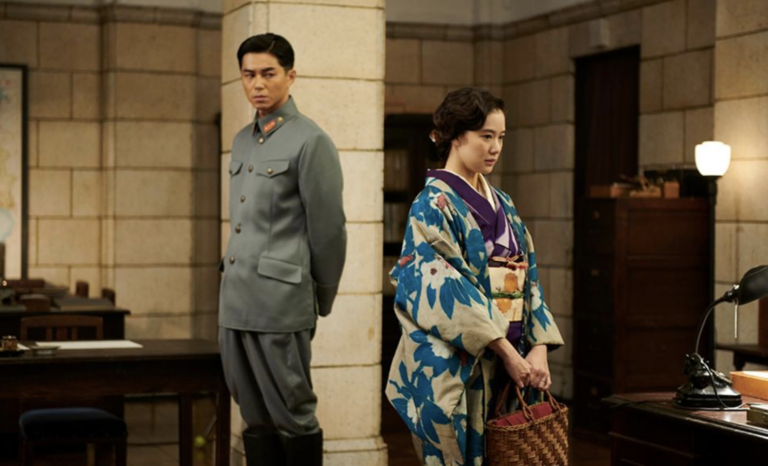
Kiyoshi Kurosawa has created one of the most enigmatic and varied careers in Japanese cinema. While he started in horror, Kurosawa’s human interactions create tension and dread, and his latest effort, Wife of a Spy, isn’t different, even if it is a historic drama. Set during the Second World War and marking the first-period piece by the experienced filmmaker, this story explores an apolitical and guarded woman that reflects the naiveté and perdition of an entire country.

In 1940, the city of Kobe, Japan is going through the transformation of the starting war. Militaries are now marching around the city and locals are exhorted to wear traditional clothes and embrace the Japanese way of living, casting a harsh look on those that refuse. One of these rebellious people is Yūsaku Fukuhara (Issey Takahashi), a merchant that loves Western clothes, goods, and luxuries.

Having worked with a British silk merchant arrested under charges of espionage, Fukuhara captures the attention of Taiji (Masahiro Higashide), the leader of the military police and childhood friend of Fukuhara’s wife, Satoko (Yû Aoi). Satoko is an amateur actress that lives in an ignorant bliss. In a comfortable economic and social position, Satoko is naïve and girlish, somehow unaware of the big changes that are taking place in her city and country and determined to maintain this feeble stability.

The story is methodically presented. The Japanese filmmaker takes his time introducing the characters and conflicts. He is first focused on setting an expectant mood and, after a while, he presents the challenge that brings down the stability of Satoko and her perfect world.

Filmed on an 8K digital camera to be presented on TV, the cinematography by Tatsunosuke Sasaki is romantic and dreamlike, transporting us to the past. The production design is transformative, with Kurosawa using scarce but well-defined settings that shine through their details and elegance. Aoi and Takahashi show off exquisite tailor-made suits and dresses. Visually, Wife of a Spy is breath-taking.

Kurosawa offers a story of intrigue and treason in a way that cautiously reflects the Japanese evolution through World War Two and the following years. With the story of the Fukuhara marriage, Kurosawa confronts the traditional expectations of patriotism – that have been persistent in Japanese culture – with the idealism and determination of doing the right thing. Satoko goes through an evolution that reflects a country that naively got involved in a war, only to get to the other side completely transformed and destroyed.

When Fukuhara returns from a business trip to Manchuria, his relationship with Satoko changes. He is trying to protect her from what he saw there, but she is suspicious. Fukuhara discovered biological experiments in civilians led by the government. He is determined to expose this, even if that decision puts him in harm’s way.

In this crossroads, the married couple represents contrasting interests and ideals: his idealistic nature demands him to do the right thing, while she is determined to not be the wife of a spy that betrays his country. He wants justice, while she craves for security and political correctness.

Kurosawa continually introduces curveballs and unexpected actions. It is hard to confidently define the tone and genre of the film, going through many twists, revelations, and paradigm shifts. After seeing for herself the evidence that Fukuhara retrieved from Manchuria, Satoko goes through a massive transformation that feels dubious. Now she is determined to help her husband, a change of heart that presents a new source of distrust. The filmmaker keeps us on our toes. Satoko is so transparent and well-intentioned that apprehension is the only result.   We know that something will happen, but we don’t know how and who will be responsible for such a change.

Yû Aoi is the soul of the film, offering an intense performance. While her transformation from an innocent housewife to a scheming rebel has the potential of fulfillment, there is an air of distrust that never goes away and is left untouched. Kurosawa plays games with the audience through every character, with special emphasis on Satoko. Consequently, the final 15 minutes are unexpected, presenting the final blow that joins Satoko’s fate with Japan’s.

Wife of a Spy is a layered and subtle drama that carries more significance than what is initially seen. Through his beautiful and captivating visuals, Kurosawa presents an intimate story of awakening and treason that is equally passionate as heart-breaking. The filmmaker questions our values and expectations, demanding us to think about what it takes to make a stand and how much we are willing to risk for the protection of our values. Everyone is wearing a mask, provoking massive consequences on our main characters and their country.

Grade: B

Op-Ed: Film Places To Make Pilgrimages To

This past August, a baseball field was constructed right across where the existing Field Of Dreams set is for an actual, regular-season baseball game between the New York Yankees and the Chicago White Sox. The new field had temporary grandstands and a press box, but it retains some of the magic from the movie. People still drive all the way to Dubuque County, Iowa to visit the set, passionately in love with the movie, especially since it’s a father-son film where baseball is the sport that tightens those bonds. I love the movie, although my dad knows nothing about baseball, yet I would love to trek there as a fan.

This got me thinking that they are other real-life locations where people go just to reenact famous scenes from that movie. Living in Miami, I can testify to numerous places where movies made their marks, such as Jimmy’s Eastside Diner, a simple, old-fashioned eatery where Moonlight filmed the reuniting of both Chiron and Kevin. Or, The Carlyle hotel, where the exterior and club to The Birdcage was shot at. The world-famous Fountainbleu Hotel allowed Season 3 of The Marvelous Mrs. Maisel to shoot inside their lobby while Marley & Me strolled through Bayside Marketplace and Monty’s Raw Bar restaurant. Those are locations that could not be copied on a Los Angeles soundstage. Here are some other special locations where film lovers make a special trip just to be at that spot that remains special.

The Philadelphia Museum of Art – Rocky Steps

Justin Bieber posts picture from Philadelphia's Rocky Steps to his  Instagram | PhillyVoice

It is an incredible place housing hundreds of thousands of sculptures, paintings, prints, and photographs, but the most visited spot of the museum is outside at the entrance, where people run up the 72 steps to copy Rocky Balboa reaching the top. Many people photograph themselves doing it because of the cultural impact the Rocky series has on the human psyche, coming from the bottom to the top. A bronze statue of Rocky was made in 1982 in conjunction with the release of Rocky III and now resides near the foot of the steps leading up to the museum.

Hoosier Gym – Hoosiers

Hoosiers' gym offers to host Final Four | theScore.com

In 1985, the production of Hoosiers looked for a place that would become the home court of the Hickory Huskers, coached by Gene Hackman. In 1921, this gym was built in Knightstown, Indiana for the Knightstown Community School and was expanded as it became more in-demand. But in the 60s, the gym was obsolete for the newly built high school and was closed, used mainly as storage until Hoosiers came to town. After shooting, the interior design of the film remained, and the community maintained it that way as the gym hosts basketball games to this day, even though the court is not regulation length. 

Trevi Fountain – La Dolce Vita

In Federico Fellini’s Oscar-winning classic, a journalist (Marcello Mastroianni) spends a week following different stories while trying to find his own happiness, and one encounter leads him to the famous fountain from 1762. That scene was shot in the winter, and while actress Anita Ekberg had no problem getting in the cold water in a dress, Mastroianni struggled to even get in with a wet suit under his clothes. To get him to do it, Mastroianni was fed a bottle of vodka and had no problem getting in while drunk. That’s the most famous movie connected to the fountain, but Roman Holliday and The Lizzie McGuire Movie also had their fountain scenes shot here.

New Zealand – Lord Of The Rings/The Hobbit Franchises

The country’s natural beauty made it impossible to not shoot these movies all over the country, especially since it is the homeland of Peter Jackson. I personally visited the country in 2010 as part of a university trip but went to a few locations from the film, including Mount Ngauruhoe, which served as Mount Doom. In the town of Matamata, a farm was purchased to build Hobbiton. Tongariro National Park featured many other scenes and is another popular place for Tolkien tourism of the entire franchise, as well as dozens of natural locations on both islands that Jackson had perfectly picked out for even the smallest scenes that filled in for Middle Earth.

Tunisia – Star Wars Franchise

For the desert scenes, George Lucas took the production to various places in the North Africa country where a lot remains from the movie because of the natural state of these places which made it prime to shoot at. The granary called Ksar Ouled Soltane has naturally made vaults which became the scene of slave holdings from The Phantom Menace. In the village of Matmata, the Hotel Sidi Driss served as Luke’s home in A New Hope, and nearby cave dwellings also served in different scenes for Attack Of The Clones. Multiple scenes in Tatooine were shot in the Shubiel Gorge, the dried lake Chott el Djerid, and the port of Ajim was where Obi-Wan Kenobi’s house and the cantina was held.

Follow me on Twitter: @brian_cine (Cine-A-Man)

Movie Review (TIFF 2021): ‘The Starling’ Works Way Too Hard to Get You Invested in Its Story


Director: Theodore Melfi
Writers: Matt Harris
Stars: Melissa McCarthy, Chris O’Dowd, Kevin Kline

Synopsis:  A couple struggles to put their marriage back together after a loss.

[/info]

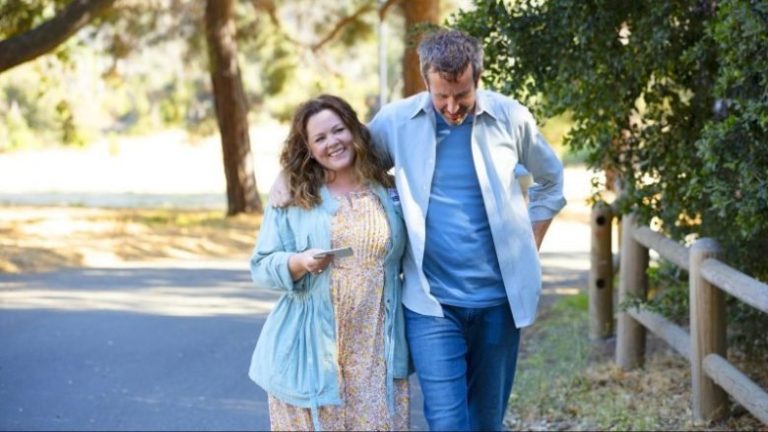
If there’s one cliché in Hollywood that is true, it’s that comedy is harder than drama. The irony of it, though, is that comedic actors are still not recognized nearly enough for the level of difficulty in their craft, and it’s often not until they turn to dramatic roles that the accolades roll in. Granted, not all comic actors can deliver a great dramatic performance, but the ones who can seem to be really good at it. Most recently, Melissa McCarthy has followed this trend, earning an Oscar nomination in 2018 for her dramatic role in Can You Ever Forgive Me? McCarthy, who is best-known for her broad, physical comedy, nailed it as a depressed writer who turns to forgery to keep her career going, proving she certainly is more than a one-trick pony. McCarthy has continued on the dramatic trend this year, starring in the Hulu limited series, Nine Perfect Strangers, and in director Theodore Melfi’s new film, The Starling.

McCarthy is joined in The Starling by two other comedic actors, Chris O’Dowd and Kevin Kline, who happens to be one of the few actors the Academy has rewarded for a comedic performance, when Kline won Best Supporting Actor in 1988 for his iconic role in A Fish Called Wanda. Having receded somewhat from the limelight in recent years though, it’s a welcome sight to see Kline in a movie again, The Starling marking only his fourth film in the last five years. As for O’Dowd, his career has continued to gain steam since he first gained attention by American audiences in the 2011 box office hit, Bridesmaids. The Starling is a reunion for O’Dowd and McCarthy, who not only were in Bridesmaids together, but also St. Vincent, the 2014 dramedy starring Bill Murray, also written and directed by Melfi. Melfi is following a similar formula in The Starling, giving Melissa McCarthy a dramatic vehicle in which she can not only find humor and pathos, but allowing her to share the screen with a legend. Unfortunately, though, the overly sentimental and predictable screenplay leaves the actors to fend for themselves to mine for magic and the result is an uneven message movie that you can see coming a mile away.

McCarthy and O’Dowd play married couple Lilly and Jack, whose infant daughter died of SIDS. While neither handled the death well, Jack found it the hardest to cope and ended up checking himself into a mental hospital to try and get right. Meanwhile, Lilly is trying to cope in her own way, cleaning out the house, obsessing over things at work, and deciding it’s time to plant a garden in her front yard. Whenever she tries to do anything in her yard, however, she is attacked by a territorial bird, a starling, who dive-bombs her every chance it can get. Lilly channels much of her bubbling rage and desire to get control of her life back into taking out this bird, which proves to be much more difficult that she thought.

As for Jack, he is simply unable to move on from the death of his daughter, and his marriage is suffering mightily from it. While Lilly does visit weekly and they both want to find a way to keep their marriage together, neither of them knows how to do it and they continue to pick unnecessary fights with each other. After one especially bad visit, a nurse at the hospital suggests that Lilly visit a therapist she knows in her town, who is really good. When Lilly goes to find him, she finds he’s now a veterinarian, having quit psychiatry years before. But Dr. Fine, played by Kevin Kline, is moved by Lilly’s story and offers to help, more as a friend than a doctor. It turns out Lilly needs him more than she ever was willing to admit.

It would be a true insult to the caliber of talent involved with this film to label it not much more than a Hallmark made-for-television movie, but it’s really not that far off. The high level of performances, especially from O’Dowd and Kline, lift The Starling out from its mediocrity, but the screenplay is still riddled with over-sentimentality, predictability, and plot devices that feel manufactured, and not just because the titular starling is completely computer-generated—although that really doesn’t help. Melfi’s direction matches his screenplay, in that it depends way too much on unnatural emotional beats to trigger a response from its characters and from the audience.

What makes it worse is the fact that McCarthy seemingly doesn’t have enough confidence in her dramatic skills to deliver a performance that doesn’t use comedy as a crutch. Lilly has moments of real poignancy that are interrupted by a sight gag or a pratfall. If Melfi had just let those moments get a little darker, go a little deeper, the film might have been more than a surface-level, Hollywood-style look at depression and mental illness. But instead, the film bails out just when it starts to get interesting, and we are forced into awkward laughter by a manufactured comic bit. While McCarthy is still a good dramatic performer, she relies just a bit too much on her innate charm and natural comic tendencies. If she pushes out of her comfort zone, it could be a much more effective performance.

O’Dowd is given much deeper places to roam in his performance, and he delivers with heartbreaking effectiveness. He instead uses his comic instincts to hide his character’s pain, a powerful tool that he breaks out with subtlety and warmth. Kline is similarly endearing, even though he really doesn’t have much to work with. He too is offered a comedic escape route in nearly every scene, as his character is always surrounded by animals, but he never takes it, giving a real and heartfelt performance that is designed to be the anchor of the film and ends up being the exact thing that keeps it afloat.

Far beyond the uneven performances is the fact that The Starling gets lost in its own message. There is no character building or storytelling, just a hammer-on-the-head oversentimentality that ends up misfiring due to lack of a sincere emotional connection. And way too much time is spent on the metaphor of the starling itself, the CGI bird that couldn’t be more on the nose if it were carrying a sign.

While it is great to see these comic talents get the chance to show the world their skills are much more than joke-deep, all three deserved a better vehicle than The Starling, a film that gets in its own way and works way too hard to achieve far too little.

Grade: C

Movie Review (TIFF 2021): ‘Petite Maman’ is a brisk, profound film on childhood and memories


Director: Céline Sciamma
Writer: Céline Sciamma
Stars: Joséphine Sanz, Gabrielle Sanz, Nina Meurisse, Stéphane Varupenne

Synopsis: An eight-year-old girl visits her mother’s childhood home after the death of her grandmother and meets a friend who helps her get close to her mother’s memories.

[/info]

Director Céline Sciamma catapulted herself into the international film consciousness with her gorgeous Portrait of a Lady on Fire in 2019, one of the best films of that year. She follows it with the similarly simple yet beautifully rendered Petite Maman, a film about childhood and holding close the memories that we cherish. While Petite maman may not boast the same emotional impact of Portrait of a Lady on Fire, it still delivers a delicate and transcendent experience.

The film (in French with English subtitles) centers on 8-year-old Nelly (Joséphine Sanz), whose grandmother has just passed away. When her parents, played by Nina Meurisse and Stéphane Varupenne, take her to her grandmother’s house in the country in order to clear it out, Nelly revels in the opportunities to play with her mother’s childhood toys and explore the woods next door. She wants to learn more about her mother’s childhood growing up in the house, but her mother is finding it difficult to reminisce while still grieving her mother’s death, so Nelly is forced to color in some of her mother’s memories by herself.

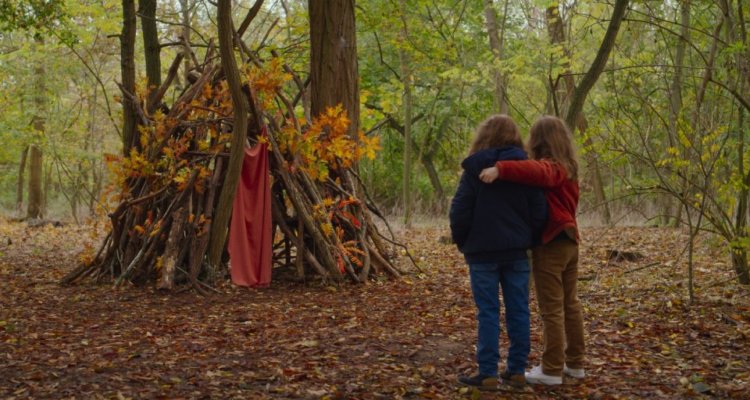
While out in the woods, Nelly meets Marion (Gabrielle Sanz), another eight-year-old girl who Nelly becomes instant friends with. They play together, building a fort in the woods. It’s not until we notice the striking resemblance between the two that the audience realizes that Marion is the imagined embodiment of Nelly’s mother when she was Nelly’s age. When Nelly goes to Marion’s house to visit, it is the same house that Nelly’s parents are cleaning out, but twenty-five years earlier. And when we see Marion’s mother warmly greeting Nelly, we realize that is the grandmother who Nelly just lost.

In the hands of another director, this plot twist could be played as either overly saccharine or just plain creepy. But, in Sciamma’s hands, it plays like a beautiful ode to memory, to the simplicity of childhood and the desire to hold close those who we love. The title, Petite Maman, literally translates to “small Mom,” amplifying the generational bridge that is crossed in this film.

But what makes Petite Maman such a beautiful and warm experience is not just the longing that Nelly has to be closer to her mother’s memories, but the fact that Nelly finds such a pure joy in seeking them out. A child’s reaction to death is not the melancholy and sorrowful one that adults tend to linger in, it is instead one that triggers a curiosity and a desire to envelop themselves in memories. While Nelly’s mother chose to run away from her grief, Nelly instead chose to embrace the beauty of it, wanting to immerse herself in the life that was lived. While she does see her grandmother in these memory dreams, it is the memories and childhood experiences of her own mother that Nelly wants to absorb, to be closer to her, to know her better.

It is a beautiful film, in both spirit and production. Cinematographer Claire Mathon, who is also getting rave reviews for her stunning work in Spencer, and who also shot Portrait of a Lady on Fire, creates yet another stunning palette of shots here, taking the audience into a child’s view of the world, seeing the world through a child’s eyes, lowering the camera to Nelly’s level so we feel and see everything she sees and feels. Sciamma hones in on what it feels like to be a child, especially an only child, who revels in their time spent exploring and playing by themselves. The world is a place of discovery for a child thirsty to take it all in, and Sciamma depicts it perfectly, with the help of two exceptionally cast twins who are absolutely perfect.

The real-life Sanz twins, who have never acted on screen before, are the reason Petite Maman is able to be everything Sciamma designs it to be. Despite being twins, each one plays their character with discernably unique qualities, providing just enough separation, yet still intrinsically similar. Their obvious fondness and comfort with each other jumps off the screen, as their interactions feel natural, never forced, especially when the camera is allowed to simply watch them be together. Their believability and natural ease on screen is what makes everything else work.

At just seventy minutes long, Petite Maman is a brisk and monumentally effective film that wins over with its heart and impresses with its structure, a film that may not be a towering achievement of cinema, but is an engaging examination of the curiosities of childhood and the power of memory that will stay with you long after the credits roll.

Grade: B+

Movie Review (TIFF 2021): ‘Julia’ is a Thorough, Passionate Documentary on the Life of Julia Child


Directors: Julie Cohen and Betsy West

Synopsis:  Documentary chronicling the life and career of celebrity chef Julia Child.

[/info]

Documentarians Julie Cohen and Betsy West must have found it impossible to follow up their 2018 Oscar-nominated RBG, a documentary about the gigantic force of nature, Supreme Court Justice Ruth Bader Ginsberg. An icon, feminist trailblazer, passionate, career-focused woman who enjoyed a happy marriage, Ginsberg became a celebrity not for her beauty but for her brains and changed not only her profession but society as a whole. How do you—or can you—follow that? There certainly couldn’t be another story to tell as interesting as hers, right?

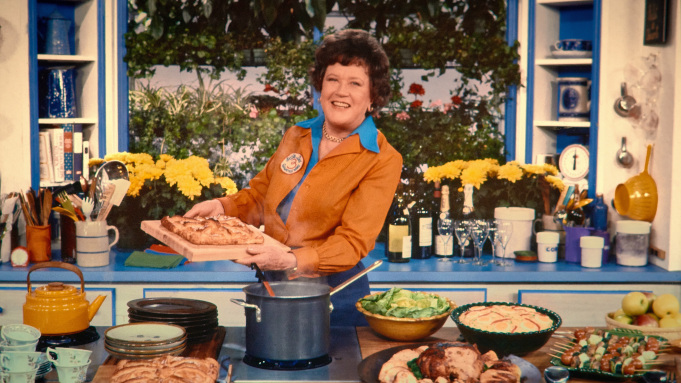
As it turns out, there have been many more than just one trailblazing American woman in the past fifty years and it didn’t take long for Cohen and West to settle on telling the story of Julia Child, the original American celebrity chef who revolutionized not only the way Americans ate after World War II, but altered the landscape of popular culture, paving the way for reality television long before there was ever such a thing. While Child may not have changed the path of history the way Ginsberg did, Child certainly inspired and encouraged American women to enjoy cooking, not as an obligation, but as a genuine source of pleasure. Revolutionaries take all shapes and sizes, whether it’s the diminutive RBG or the 6’3” Child, heroes are defined not by their stature, but by their contribution.

As the child of a mother who was a Julia Child devotee, I can attest first-hand to her scope of influence, as my mother would spend hours in the kitchen, perfecting dishes, her dog-eared copies of Child cookbooks always on hand. It’s impossible to overstate Child’s popularity in the ‘60s and ‘70s, through the success of the cookbook that she co-wrote, “Mastering the Art of French Cooking” and her PBS cooking show, The French Chef, which aired from 1963-1966 and then again from 1970-1973. In the documentary, Julia, Cohen and West craft a well-structured journey through Child’s life that gives the audience a sense of who this woman was and why she became so popular. But, more than anything, Julia paints a portrait of a woman who took charge of her own life, followed her own passions and took ownership of her own destiny.

Utilizing letters, journal entries, family photographs, and recordings made of Child during her long career, Julia gives the audience an intimate look into Child’s life, from her comfortable, conservative upbringing in Massachusetts to her military service during World War II, to her long and happy marriage to her husband, Paul, and, of course, her lifelong love affair with food, especially French food. The filmmakers give us a complete sense of who Child was, taking their time to tell the story of where Child came from, not just focusing on who she became. A fame that was borne out of the Camelot of the Kennedys in the early ‘60s, Child capitalized on a nation’s desire for change, for discovery, for embracing new and exciting things. Cohen and West lean less on interviews with those who knew her to explain what Child was thinking, and allows the recordings and footage to do the bulk of the storytelling, which is effective and engaging.

But far beyond the incredible chef and the captivating screen presence Julia Child was, she was a woman who lived the life she wanted. Resisting every expectation of her, she did what she wanted, followed the career she wanted, married the man she wanted, and lived where she wanted. She would not compromise, was a perfectionist, and somewhat of a contrarian, a feminist icon who was devoted to her husband and made sure she was home every night to cook him dinner. She was a brilliant businesswoman who put PBS on the map and cookbooks on the bestseller list. Every celebrity chef who now is a household name owes their career to Julia Child, the original.

Cohen and West do let Child be the central figure of their film, but the supporting role that food plays in telling her story is unmistakable. Close-ups of food, slow-motion camera sweeps of food being prepared, cooked, boiled, roasted, chopped, seared, sauteed—will literally make your mouth water. While not a film for vegans, as close-ups of raw meat, poultry and fish are ubiquitous, there is a beautifully delicate dance that plays out with the stylistic choices the filmmakers make, as if trying to seduce the audience—or at least their tastebuds.

In the same year of another documentary about a hugely popular celebrity chef, Roadrunner: A Film About Anthony Bourdain, Julia takes a far less philosophical approach to its muse, allowing Child’s words and craft to simply reflect her genuine affection for her audience, and her real desire to spread the love of cooking to the world. “Food is love,” Julia herself explains in the film. And Julia is indeed a love letter to not only food, but to the icon who turned it into an art form.

Grade: A

Movie Review: ‘Malignant’ Proves James Wan is the Modern Horror Master


Director: James Wan
Writer: Akela Cooper
Stars: Annabelle Wallis, Maddie Hasson, George Young, Michole Briana White, Susanna Thompson, Ray Clark

Synopsis: Madison is paralyzed by shocking visions of grisly murders, and her torment worsens as she discovers that these waking dreams are in fact terrifying realities.

[/info]

If there is any horror filmmaker we can count on, it’s James Wan. Since the release of the groundbreaking Saw in 2004, Wan has shown his expertise in and command of his craft in excellent genre films like Insidious, The Conjuring, and the underrated Dead Silence from 2007. He has gone on to take the helm of huge franchise non-horror blockbusters like Furious 7 and Aquaman, and one could think after the incredible job he did on The Conjuring 2, easily the best horror sequel of the past twenty years, he might put the genre behind him for good. But thankfully he’s back with plenty more scares and delightfully crazed action set pieces in the wildly entertaining Malignant, a film that rarely stops moving and gives you everything you want in a movie like this and more.

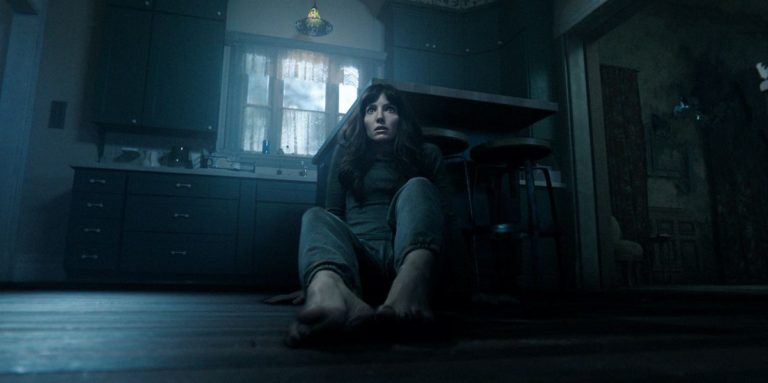
It was a treat to sit down for this one knowing nothing of its plot, but if you want a tease, here it is: Madison (Annabelle Wallis) is pregnant and has an abusive partner Derek (Jake Abel) who one night in a moment of rage pushes her into the wall, making her bleed out the back of her head and nearly knock her unconscious. Soon thereafter a ghostly presence emerges in their house, one that violently massacres Derek and hurts Madeline so bad she wakes up in the hospital to discover her baby didn’t survive the night. When she returns to the house, she starts seeing visions of the same evil figure now attacking others, each grisly murder seeming to be connected to her in a way she needs to discover before it’s too late.

The less you know about the film the better because Wan keep the twists and turns coming at you all the while scaring you senselessly from beginning to end. It’s always fun while watching a horror movie to know you’re in a good director’s hands, and that’s the case here with someone who loves and understands the genre so unbelievably well he knows he can take risks and throw insane things at the viewer. This is definitely his nuttiest, most insane horror movie to date, particularly in its final act, but Wan also makes time for quieter moments of terror throughout, using darkness and shadows in the supremely effective way only he can.

He has an ability to keep the viewer in near constant suspense in these quieter scenes, like when Derek notices a black figure sitting on the couch, only for him to turn the light on and see the figure is gone. In nearly every frame of this film we cautiously scan our eyes across the entire frame, often looking for something ominous in the background even if one isn’t there. I did that all throughout The Conjuring 2, and I found myself doing it again in this film, like when a man enters his pitch black closet before heading to bed, or when a young woman steps down a darkened hallway in the Seattle Underground tunnels (a creepy tourist destination I’ve visited before that’s used beautifully in the film).

Sure, Wan isn’t reinventing the wheel by any means here, but what’s additionally such a blast with Malignant is how the director and his screenwriter Akela Cooper keep growing the tension and upping the stakes to take the story in new directions that offer not just some heart-pounding chase scenes and impressive special effects and but also insane moments of over-the-top violence that will leave you wide-eyed and amazed, especially scenes that take place in a jail holding cell and a police station. This film costs about 40 million dollars, a lot for a modern-day horror film with no stars that’s not based on any known property, and you see the money on the screen in one dazzling sequence after another.

But what I loved so much about the film is that despite the at-times wild storytelling detours and outlandish action sequences, the emotional core of the story always remains on Madison’s journey and her quest in facing fear and defeating evil. Wallis gives a terrific performance in an ensemble of actors mostly unknown to me, and it’s a thrill to see a studio horror film at this high of a level filled with actors most of us won’t be familiar with. Maddie Hasson is solid as Madison’s sister Sydney, George Young is an effective presence as the police officer Kekoa, and Ray Chase is crazily creepy as the vindictive, all-powerful, “it’s time to cut out the cancer” Gabriel.

If there two things that keep the film from being an all-out modern horror classic, it’s the rushed ending, along with an overuse of bland scenes that take place with the police officers, which too often act as a dull break from the past-paced terror and madness. The Nightmare On Elm Street-like final few minutes are also too abrupt, the resolution making sense but also leaving some plot threads unresolved and happening too fast to carry the emotional weight it deserves. At nearly two hours, Wan could have cut down on some of those early police station scenes and given the grand finale with its final big twist a bit more time to breathe.

But overall I was delightfully giddy for almost all of Malignant, certainly the best horror film I’ve seen so far this year and one that certifies James Wan as a master of the genre. It doesn’t matter how low-budget or high-budget the film is, if he has a cast of familiar actors or actors we’ve never seen before if it’s a sequel we go in knowing what to expect or something totally original, Wan delivers every time out. I’m happy that with all his success he’s not turning his back on the genre like some other great horror directors have in the past, and here’s hoping he’ll continue to surprise and delight us with many more terrifying gems to come.

Grade: A-  

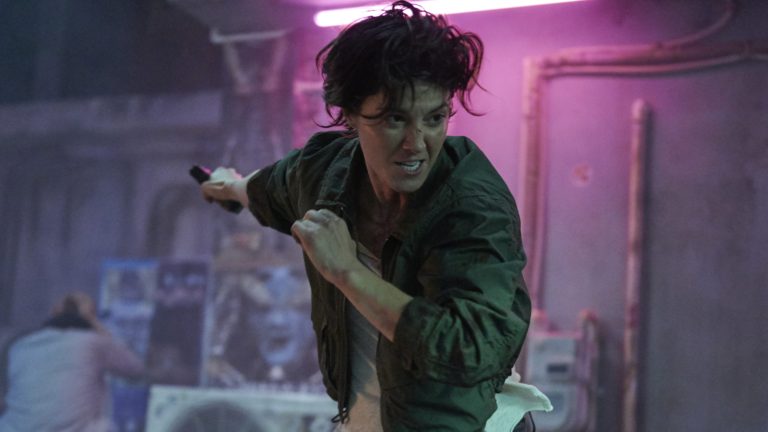
Movie Review: ‘Kate’ is yet another half baked, poorly executed John Wick imitation

[/info]

Director: Cedric Nicholas-Troyan
Writer: Umair Aleem
Star: Mary Elizabeth Winstead, Miku Patricia Martineau, Tadanobu Asano, Woody Harrelson, Miyavi, Michiel Huisman, and Jun Kunimura

Synopsis: A female assassin has 24 hours to get vengeance on her murderer before she dies.

[/info]

An assassin who is not a completely amoral sociopath is only as good as her story. That’s the biggest failure of Kate is that the story fails to be anything more substantial than a vehicle for action sequences. Screenwriter Umair Aleem attempted to give heft to the journey, to express a thoughtful idea about family both found and biological but fails. Without a significant backstory or any major flashback, there is no deep investment in the characters. Everything is glossed over, touched with a feather, and used to fuel the idea behind the rampage.

The most aggravating aspect is that we never learn why or how or who. We can suppose. We can put it together from throwaway comments and the climax of the film, but why? The best trapping of this subgenre of action film, the convoluted, often silly, codes, rules, and lingo of assassins is all missing from Kate. It’s pared-down like a small business instead of a network. Why not then have more conversations, more details about who these people are, why they’ve been, apparently, context from a throwaway line, been hunting people connected to the big boss for several years? It’s unknown and unimportant to the filmmakers. Instead, there are fight scenes.

The fight scenes are intriguing, but they’re nothing beyond what has been done before. Director Cedric Nicholas-Troyan comes from a visual effects background and it’s clear he has an eye for movement. In one of the first fight sequences, Nicholas-Troyan and director of photography Lyle Vincent create a way for their camera to access more space as the scene commences. Being in a restaurant with paper sliding doors effectively opens the space, or breaks open the space, creating the illusion of continuous takes and spectacularly brutal violence. Many of the fights have this immersive component, tricking us with every movie goers favorite trick, the tracking shot. The one absolutely poor decision, but for safety reasons understandable, is that the one car chase in the film is entirely computer generated. It looks hokey and is only dramatic because it’s the onset of Kate’s symptoms.

If Kate is at all watchable it’s because of Kate herself, Mary Elizabeth Winstead. Winstead exudes the emotional vulnerabilities of Kate while also kicking a lot of tail. She’s ferocious in her action scenes, stoic when faced with an emotional burden, and when needed, she’s got that intense vulnerability. The depth of backstory missing from the script is in the performance. Winstead knows this woman inside and out. Her best scene is when she finally confronts the man she’s hunting.

Kate is at her lowest, she’s dismissed her young partner, she’s only got a small amount of stimulants left and she’s ready to face death. Yet, she does what she’s failed to do for most of the film. She sits and she listens. Kijima, played by the incredible Jun Kunimura, himself of the masterfully expressive eyes and, practically concrete, stone face, tells her how it all really is, what she really is, and what family means. It’s a scene of quiet amidst the violence and it’s the scene that makes you feel the most. As you watch it dawn on Kate that her whole world was shattered long before she was poisoned you get to see that emotion Winstead has been holding in reserve. Winstead brings the gamut of emotion with just her face in a beautiful tapestry of rage, grief, and physical pain.

Kate is the kind of movie you put on in the background while you fold your laundry. For the most part, it’s a revenge film that makes only a little sense as to why the person is seeking revenge. It’s got some cool action scenes, a couple of good performances, but it’s not immersive. It’s not one that will keep you glued to the television. It’s the one that will make you nod to yourself when it’s over and then forget it as soon as you find the next new thing to watch on Netflix.

Grade: C


Movie Review (TIFF 2021): ‘Maria Chapdelaine’ disregards a promising premise

[/info]

Director: Sébastien Pilote.
Writer: Sébastien Pilote.
Star: Sara Montpetit, Sébastien Ricard, Hélène Florent, Antoine Olivier Pilon, Émile Schneider, Robert Naylor.

Synopsis: Story of a young woman having to choose between three suitors promising each a different life.

[/info]

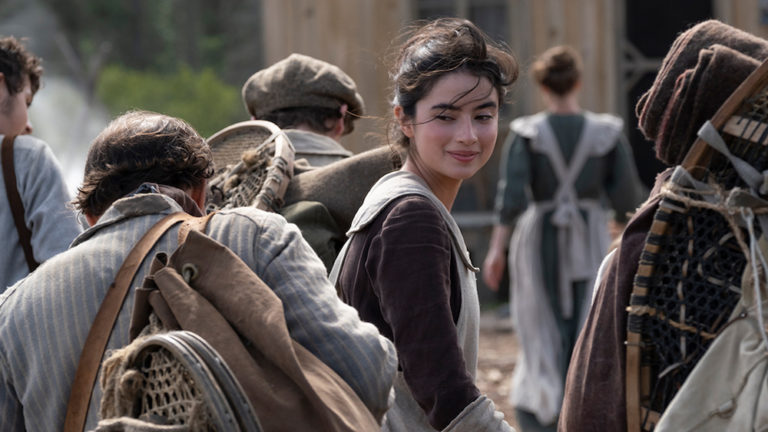
A romantic story presents a young woman being wooed by three different prospects. This brief premise was enough to make Maria Chapdelaine one of my most anticipated films of TIFF 2021 and practically the year. Unfortunately, it is with a heavy heart that I report that this adaptation of Louis Hémon’s book turned out to be an utter disappointment, flirting with attractive ideas and instead offering a lethargic story with little longing and excessive periods of boredom.

The film, written and directed by Sébastien Pilote, follows Maria Chapdelaine (Sara Montpetit) as she reunites with her family in the Northern part of Quebec in the 1900s. Set against a tumultuous and drastic landscape, the movie exposes the beautiful views offered by snowed forests in the winter, blooming flowers and trees in the summer, and the unforgiving isolation that comes from being cut off from everyone else.

Because of the taciturn ways of the patriarch of the family, Samuel (Sébastien Ricard), the family has relocated constantly and now lives apart from any kind of civilization, keeping to themselves during the long winters. Still, Maria manages to get the attention of three suitors: François Paradis (Émile Schneider) is a former neighbor that moved around and now works as a fur trader; Eutrope Gagnon (Antoine Olivier Pilon) is their current and only neighbor, a timid and quiet shadow that is always loyally present; and Lorenzo Surprenant (Robert Naylor) is a factory worker that has moved to Massachusetts and rejects the country life.

While the film has a promising start with Maria and François sharing a furtive look during mass, this is one of the few precious moments of excitement and visual representation of physical interest between two characters. With a story that reminds of films such as Far from the Madding Crowd (Thomas Vinterberg, 2015) or Brooklyn (John Crowley, 2015), where love triangles (or squares) mark the tone and exhilaration of the story, it is amazing how little platonic longing and romantic eagerness is present in Maria Chapdelaine.

Instead, the film focuses too much on the family, their routine, and the superfluous conversations they have when they encounter friends and acquaintances. There are countless of meaningless and shallow interactions where family and friends talk about the weather, the isolation, and the joy of coming together. It seems that they get stuck in their good manners and there is no way for the story to move beyond this. The romantic potential surrounding Maria is side-lined to silent shots and the imagination of the audience wanting something dreamy to happen.

The first deception of the film is its title, giving the idea that the young woman will be the main character of the story. Instead, Maria remains a mystery, and her desires, interests, and expectations are never truly explored. Rather, the movie is more interested in Samuel and his wife Laura (Hélène Florent), who has given up the joy of being around people in the name of love for her husband and family. The camera follows the routine of chopping down wood and maintaining a peaceful life. At least the film successfully portrays the tedium of their lives.

Maria is portrayed as a young girl barely waking up to the expectations of her age. Her monosyllabic answers to the scarce questions thrown her way don’t help. How are we supposed to feel excitement or interest in her life if it is devoid of adventures, decisiveness, aspirations, or restlessness?

This issue is intimately linked to Sara Montpetit, actress who brings Maria to life. She gives a subdued and absent performance as the lead character and source of affection of three very different men. With a juvenile physical appearance, there is a clear mismatch between her and the three men vying for her attention. Her character is devoid of the personality and charisma that is needed in such a heroine. With her lack of presence, the love for actresses such as Mia Wasikowska (Jane Eyre, 2011), Carey Mulligan (Far from the Madding Crowd) or Keira Knightley (Pride and Prejudice, 2005) is instantly increased. Montpetit is just blank and flat.

For their part, the three love interests appear too little on screen to make a lasting impression (it took me half a film to recognize Mommy’s Antoine Olivier Pilon). Furthermore, the few interactions that they have with Maria are boring and muted. There are no clues as to why they would want to be with her and she with either one of them. The film expects the audience to believe in signs, looks, and possibilities that are non-existent. The tenderness of Emory Cohen (Brooklyn), the decisiveness of Matthias Schoenaerts (Far from the Madding Crowd), or the presence of Matthew Macfadyen (Pride and Prejudice) are sorely missed.

While the film slightly improves in its second half (it is more than 2h 30 minutes long), it is still devoid of emotions and expectations. A beautiful but solemn score by Philippe Brault maintains the film in a cold and formal tone that prevents the story of being enjoyable.

This film was the perfect opportunity to offer a new period piece that would allow us to sigh to expectant or suggestive looks, caressing hands, defying speeches, or tense dancing scenes. Instead, Maria Chapdelaine presented a boring story that stays short on its promise of romantic adventures (three suitors! The opportunities missed!) and dramatic encounters.

Grade: C

Movie Review (TIFF 2021): ‘The Story of My Wife’ is a challenging but splendid epic

[/info]

Director: Ildikó Enyedi.
Writer: Ildikó Enyedi.
Star: Gijs Naber, Léa Seydoux, Louis Garrel.

Synopsis: A sea captain bets an associate that he will marry the first woman who enters the café. In walks Lizzy (Léa Seydoux). The rest is history.

[/info]

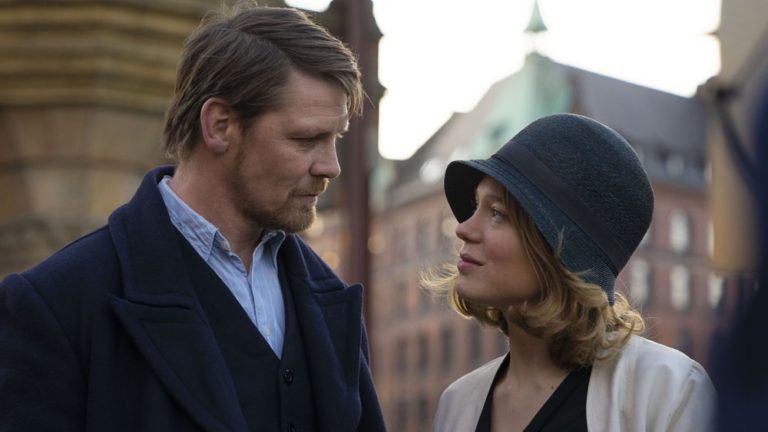
After conquering us with On Body and Soul (2017), Hungarian filmmaker Ildikó Enyedi embraced a challenge and wrote and directed The Story of My Wife, an adaptation of the novel of the same name by poet Milán Füst. The story, set in the 1920s, is divided into multiple chapters that are introduced as acquired experience by Captain Jakob Störr (Gijs Naber), as if he were observing his life and defining specific highlights and morals of his doomed love story.

Devoted to his job and dealing with a mysterious stomach disease, Jakob takes to heart the advice of his boat’s cook to get a wife. Leading a lonely life as a sailor, it is not as if many women are vying for his love. Aware of this, when he is on land, he makes a bet with a friend to marry the first woman that walks into the café. This person happens to be Lizzy (Lea Seydoux), a self-assured French lady that humors Jakob’s impromptu proposition. Soon enough, they are married and testing their physical attraction as a possible foundation for a lasting relationship.

As the film is solely explored from Jakob’s point of view, we witness the distrust he develops for his wife, even though there are no real grounds for this uneasiness. They start a toxic game where emotional abuse, challenging attitudes and outbursts of passion mark their volatile relationship. They had the terrible luck of finding someone to match their stubbornness, a decisiveness that proves to be frustrating when neither one of them is entirely honest with each other nor willing to let go of the marriage.

There’s no doubt that Enyedi’s film is challenging. With almost three hours of running time, The Story of My Life feels shallow and senseless at times, even though it is gorgeous to look at. Enyedi creates an elegant and restrained romantic epic, characteristics that constantly work against the film. The dialogues, complicated and refined, feel too rehearsed and polished to be believable. Considering that English is neither Störr’s nor Lizzy’s mother tongue, their expressions are too neat, constantly reminding us that they are actors delivering rehearsed dialogues.

While Naber is a physically compelling leading man, his interpretation is wooden. I wonder if he would have felt more comfortable with a less convoluted script. The fact that he shares no chemistry with Seydoux is another challenge. The movie has all the elements to be a memorable epic, and yet, it often falters because of its refinement and self-contempt.

Nevertheless, its elegance works in other areas. Marcell Rév’s cinematography is sharp and meticulous, standing out in scenes that take place on high seas and offering wide takes that inspire to see them in a loop. The score by Ádám Balázs, with pianos and violins, matches the drama that unfolds on screen. The excellence in its technical departments is the main virtue of the film, and the reason why we keep seeing it, even as it tests our patience several times.

The story at the core is challenging to portray without access to the thoughts of the characters. Considering that we witness the version of an unreliable narrator, it is understandable that Lizzy is hazy and mysterious. We never truly learn anything about her, and the relationship that she has with Jakob is superficial and frail.

Jakob is also an enigma. He sees himself as the victim of the story, something fascinating when we consider that he is the one cheating on his wife, physically assaulting her, or setting up private investigators to follow her around. While he is not sympathetic, this theme is fascinating and compelling. Precisely this aspect of the story is the one that offers a reward long after the movie has finished. The Story of My Wife demands patience from an audience that may find it challenging to stay with deplorable characters for three hours.

Following the steps of A Phantom Thread (Paul Thomas Anderson, 2017), The Story of My Wife presents an example of how love is not supposed to be. As that film, Enyedi’s feature is visually captivating. Its immaculate beauty makes it difficult to resist to.

With all its flaws, I can’t help but admire and appreciate this epic. It is elegantly and masterfully presented, and while it may not provoke an instant feeling of gratification, it is bound to stay in the mind of the spectator long after it’s finished.

Grade: B

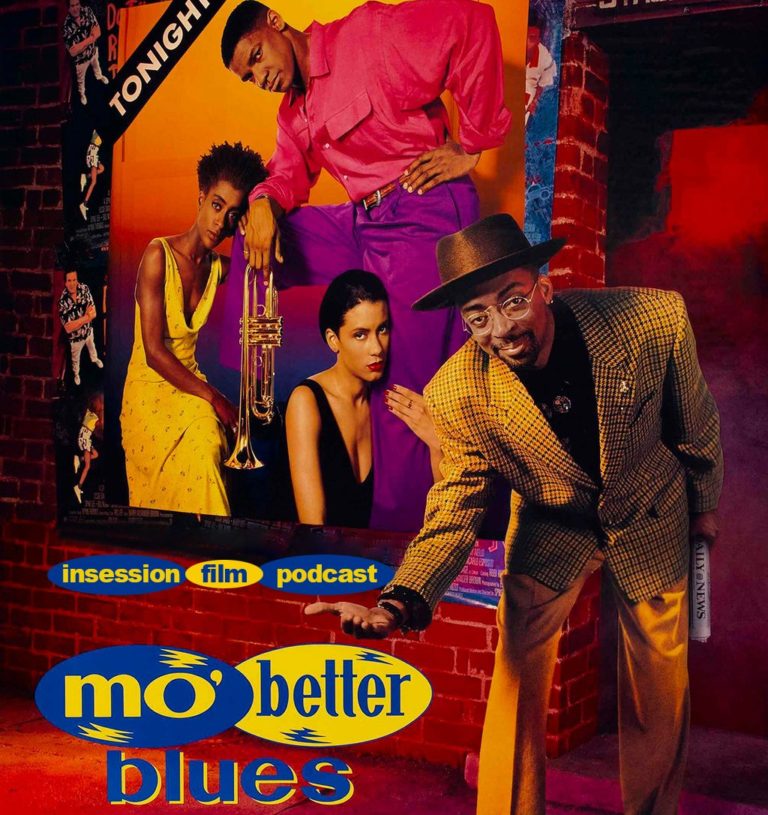
Podcast: Mo Better Blues / Worth – Extra Film

This week on Extra Film, Ryan and Jay continue their Spike Lee Movie Series with Mo Better Blues and then they discuss the new Netflix drama, Worth!

Following last week’s conversation of Do the Right Thing, the Extra Film boys move on to one of the lesser-known films with Lee’s filmography. Based on the life of his father, Mo Better Blues is the most mature film to date within the Spike series and lays down the tracks for what is to come in his career, as well as the force that would become the great Denzel Washington. Both Ryan and Jay really liked this one.

In the back half of the episode, the guy’s review Worth. As this week marked the 20th anniversary of September 11th, Netflix has released this drama about the fund to compensate the victim’s families affected by the attacks. Led by a stellar cast, Worth uses its time focusing on the people we lost in 2001 and the people they left behind. Ryan liked it a little more than Jay, but they both agree that it is an effective drama.

Thanks for listening!

– Movie Review: Mo Better Blues (6:05)
Director: Spike Lee
Screenplay: Spike Lee
Stars: Denzel Washington, Spike Lee, Wesley Snipes, Giancarlo Esposito, Robin Harris

– Movie Review: Worth (1:08:31)
Director: Sara Colangelo
Screenplay: Max Borenstein
Stars: Michael Keaton, Stanley Tucci, Amy Ryan, Tate Donovan

– Music

Harlem Blues – Cynda Williams
Each Claim Individually – Nico Muhly
The Return of the Eagle – Atli Örvarsson

We try to make this the best movie podcast we possibly can and we hope you enjoy them. Subscribe today on iTunes, Spotify, or Stitcher, and please leave us a review on iTunes. You can also find us on Soundcloud, PlayerFM, and TuneIn Radio as well. We really appreciate all your support of the InSession Film Podcast.

Subscribe to our Podcasts RSS
Subscribe to our Podcasts on iTunes
Listen on Spotify
Listen on Stitcher
Mo Better Blues / Worth – Extra Film

[divider]

To hear this Extra Film episode and everything else we do, download our apps on the Amazon Market for Android and the Podcast Source app on IOS devices. The mobile app covers all of our main shows, bonus podcasts and everything else relating to the InSession Film Podcast. Thanks for your wonderful support and for listening to our show. It means the world to us.

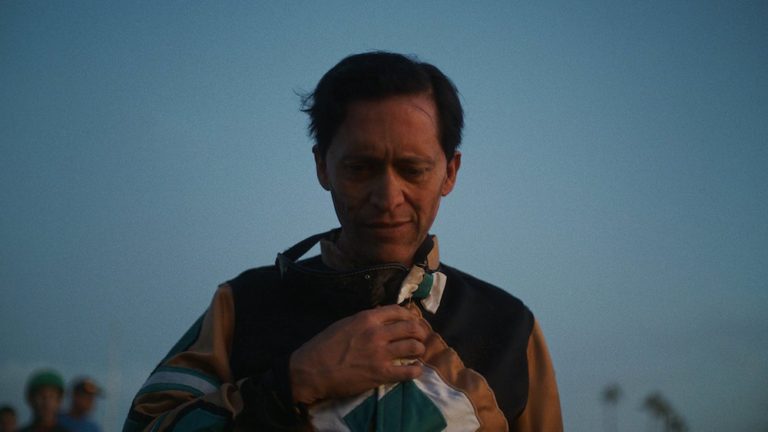
Movie Review (TIFF 2021): ‘Jockey’ Showcases a Poignant, Career Defining Performance from Clifton Collins, Jr.


Director: Clint Bentley
Writers: Clint Bentley, Greg Kwedar
Stars: Clifton Collins, Jr., Molly Parker, Moises Arias

Synopsis: An aging jockey desperately tries to stay in the game, even as a talented rookie appears, claiming to be his son.

[/info]

While there have been many films about racehorses, there have been very few, if any, that have been about the jockeys that ride them. The life of a jockey is unglamorous, difficult, and often painful, sometimes even tragic. Jockeys are elite athletes with a unique skillset, without which a multi-million-dollar industry would collapse, and yet they are often treated no better than the hired help. The spotlight rarely finds these humans who dedicate their careers—and often their lives—to the sport of horse racing, which is why Jockey, a new film from Clint Bentley, is all the more moving and vital.

In his introduction of the film before its showing at the Toronto International Film Festival, Bentley reveals that he is the son of a jockey and has always wanted to tell his father’s story and the story of all the people who live and work in the world of horse racing. His father would undoubtedly be proud with the film that Bentley delivers, which he also co-wrote with Greg Kwedar, as Jockey is a supremely sublime cinematic experience that resonates with a deep soul and heartbreaking clarity.

Clifton Collins, Jr. plays Jackson Silva, a veteran jockey whose body is starting to give out. The vet at the racetrack begs him to go to a real doctor, but Jackson knows that, in the sport of horseracing, any sign of weakness from a jockey is a liability, so he soldiers on, hoping for one last great ride before he hangs up his spurs. When Ruth (Molly Parker), his longtime trainer, shows up with a new young horse, Jackson can instantly tell the horse is a champion, the kind of horse jockeys dream of riding. Ruth, who is loyal to Jackson, promises that her new horse is his to ride, which invigorates Jackson, helping him stave off his pains and recommit to his sport. But when a rookie rider (Moises Arias) shows up on the circuit claiming to be his son, it complicates things for Jackson, who has never been able to commit or follow through on anything in his life outside of racing. He is forced to confront both his past and his future, while trying to win one last race.

Collins, a longtime character actor, delivers poignantly in a performance that carries the film on its shoulders, as the audience experiences everything that Jackson experiences, and we have to feel his highs and his lows, his doubt and his hope, his fear and his pain. Collins delivers a masterful performance at the center of this gloriously stripped-down, no-frills, melodrama-free reflection of a man facing the end. Collins manages to find every bit of pathos without a note of self-pity, mining the humanity that lives deep within a character who has only known one thing his entire life and is now facing existence without it. The performance is so subtle it will no doubt be underestimated, but there is no denying that this is a performance that deserves to be remembered deep into awards season.

While Collins’ performance is certainly worthy of high praise, as is the superb performance turned in by Parker, the artist whose imprint on Jockey is most unassailable is cinematographer Adolpho Veloso, who paints the canvas with one gorgeous shot after another. Reminiscent of Nomadland in so many ways, Jockey similarly captures an essence of Americana and the down-to-earth and hardworking people who live in the shadows and make the wheel turn. And like Nomadland’s Oscar-nominated cinematographer Joshua James Richards, Veloso shoots the Arizona landscape of Jockey with a painter’s brush, shooting most scenes at twilight, capturing the deep hues of a changing sky and the dramatic silhouettes that emerge in the looming darkness. I honestly can’t imagine seeing a more beautifully-shot film this year, and here’s hoping this film has its own racehorse legs to keep it in the awards conversation for the next several months.

Bentley’s choice to allow Veloso free rein was the best choice he made, but the other (other than casting Collins) was the decision to make a movie about horse racing that doesn’t ever actually show a horse race. While there are races in the film, Bentley instead keeps his lens trained on a closeup of the jockey, watching the race play out on his face. It is so refreshing to see an American filmmaker resist the urge to artificially pump up the audience with the adrenaline rush of a Hollywood-style racing scene. When the story is about the human on the horse, it’s so much more effective for the audience to ride with that human instead of watching from a distance, especially when the actual outcome is truly secondary.

It’s too bad that Jockey is coming out less than a year after Nomadland took the world (and the Oscars) by storm, as it will no doubt suffer many comparisons to that Chloé Zhao Best Picture winner. Admittedly, it is hard to not think of Nomadland during the first fifteen minutes of Jockey, but once the film finds its rhythm, it settles into its own unique stride and manages to separate itself with aplomb, crossing the finish line with a grace and beauty all its own.

Grade: A

Movie Review (TIFF 2021): ‘The Hill Where Lionesses Roar’ is a striking view of a neglected generation


Director: Luàna Bajrami
Writer: Luàna Bajrami
Star: Flaka Latifi, Uratë Shabani, Era Balaj, Andi Bajgora, Luàna Bajrami

Synopsis: In a remote Kosovar village, three young women who feel their dreams have been stifled go on a quest for independence.


After starting her acting career in France, Luàna Bajrami went back to her native Kosovo for her directorial and writing debut, The Hill Where Lionesses Roar. The filmmaker – barely 20 years old – offers a promising style and a relevant perspective on topics such as identity and the overwhelming prospect of the future, taking advantage of her youth and her recently-lived period of maturity.

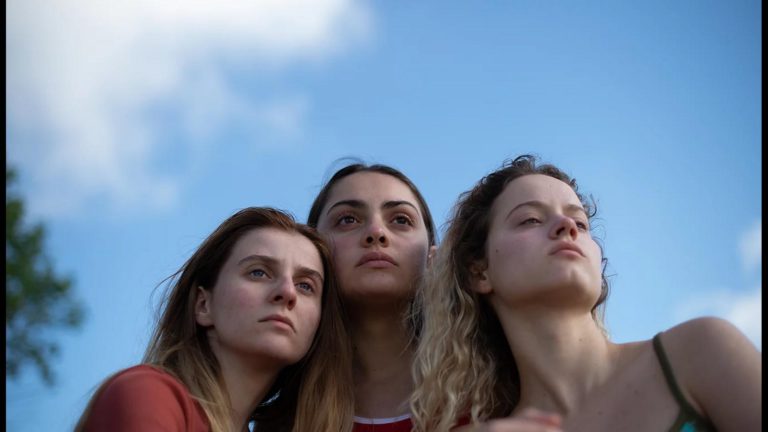
The Hill Where Lionesses Roar follows three best friends as they spend their summer holidays together. Soon it becomes evident that there is nothing to do in their little Kosovar town, with them spending their hours in an abandoned house, an empty pool, and the hill that gives name to the film. Always together, they seem to have created a bond on the basis of their scarce future prospects and the difficulties they face at home.

Qe (Flaka Latifi) has to deal with an abusive father and the constant pestering of her mother, reminding her that no one expects anything else from her but to become a hairdresser and join the family business. Jeta (Uratë Shabani), an orphan, lives with her uncle who constantly harasses her. Li (Era Balaj) has the better life with a mother that motivates her to go to college and a boyfriend (Andi Bajgora) that cares for her.

The film starts as a familiar coming-of-age story, pretending to be an enchanting story filled with natural sounds, dreamlike colors, and a lack of concern for chores and responsibilities. Nevertheless, Bajrami cautiously peels the reality of life in this small town and its static nature. Everyone seems to be stuck in unchanging surroundings, abandoned places, and a certain feeling of hopelessness. It is understandable when the girls make it clear that they can’t wait to go to college.

Bajrami offers clues about the current situation in Kosovo and the way the war of the 1990s shaped the country. She explores the violent past of her home country and the way its uneventful present shapes a future of minimal opportunities of growth. People are afraid to come back after the past diaspora, multiple gangs control the place, and the institutions are filled with corruption and disappointment. After waiting for two years to be selected to go to college, the three girls are rejected once again. Restless, hopeless and a little desperate, Qe, Li, and Jeta decide to create a gang, demanding for themselves the things that they were hoping to earn.

While the story is thinly joined by an ethereal script, Bajrami’s words shine as she illustrates the overwhelming experience of growing up. She aptly portrays the feelings of anxiety and fear of her generation.

The arrival of Lena (interpreted by the director herself), a girl that is visiting her grandfather for the summer, offers a new perspective. A Kosovar that lives in Paris (an evident wink to Bajrami’s life), Lena is overwhelmed by the prospects of her future and the need to decide by 20 what she wants to do for the rest of her life. She would prefer to not have options, just as the main characters. While they crave for freedom and options, Lena wants direction and an emotional bond like the one they share.

With its low-scaled stakes, feminine perspective and maturing storyline, Céline Sciamma’s influence comes to mind (Bajrami had a secondary role in Portrait of a Lady on Fire). The freedom of the camera and the unfashionable portrayal of life reminds of Mia Hansen- Løve’s style. Bajrami conveys sensibility and empathy in the way she portrays young women looking for a way out and finding constant obstacles.

The film changes its ways the moment the girls decide to become petty criminals. Their actions become reckless, and they descend into a nihilistic lifestyle as if they knew that this couldn’t last long. Bajrami finds the beauty in uncertainty and short-lived happiness, rejoicing in filming her three leads having fun and being physically and spiritually linked.

The main trio offers head-turning performances. Each one with well-defined personality traits. Flaka Latifi is reckless, daring, and intimidating, going through a mental awakening when she comes into contact with Lena. Uratë Shabani conveys an overwhelming sadness, giving a powerful performance with her eyes and reactions. Andi Bajgora merges anger and receptivity in her layered character.

The Hill Where Lionesses Roar is a promising directorial debut. Bajrami understands and knows how to portray the restlessness of her peers. She dares to be vulnerable by showing a rumination about her identity and the restlessness of growing up. The anguish and despair of the four young women presented on screen are recognizable and empathetic. The film is a dreamlike act of rebellion and just as it is about to turn into a nightmare, Bajrami brings everything to an end.

Grade: B-

Movie Review: ‘Mothering Sunday’ is Visually Stunning But Doesn’t Land the Necessary Emotions it is Striving For


Director: Eva Husson
Writers: Alice Birch, based on the novel by Graham Swift
Stars: Odessa Young, Josh O’Connor, Colin Firth, Olivia Colman

Synopsis: A writer reminisces about the affair she had in post-World War I England with a man who was about to marry another woman.

[/info]

Just as the Academy has a soft spot for films about moviemaking, so are film critics naturally vulnerable to films about a writer’s anguish. Even more so when the film is based on a book. Both are the case with Mothering Sunday, a new film from director Eva Husson and based on the 2016 novel of the same name by Graham Swift, adapted for film by Alice Birch.

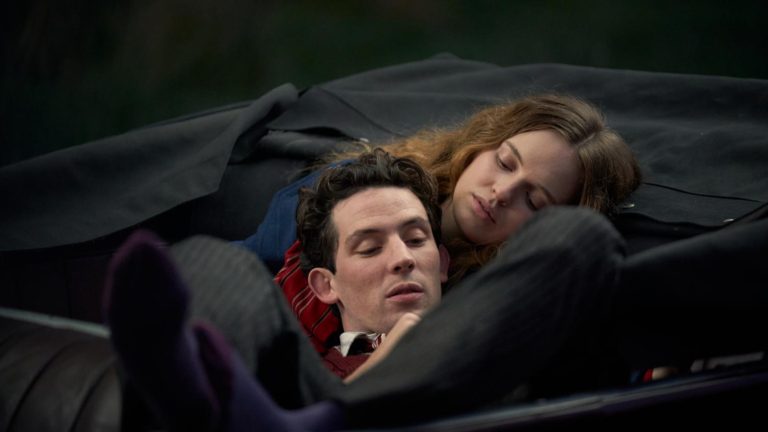
Writer Jane Fairchild (Odessa Young) is struggling to write her latest book, distracted by memories that keep flooding back of a time when she worked as a maid for an upper-class family in England before, during, and after World War I. The specific memory that sticks with her is that of Mothering Sunday, 1924. Mothering Sunday, the equivalent of Mother’s Day in the United States, is the day when families get together to celebrate, but, for families in England who lost sons in the Great War, it was difficult to find joy in much of anything. The Sheringhams lost two of their three sons in the war, but they are clinging to the joy they can find in the upcoming wedding of their youngest and only surviving son, Paul (Josh O’Connor). On this day, the Sheringhams are meeting the family of Paul’s fiancée, Sylvia (Caroline Harker) for a picnic lunch by the river, joined by Mr. and Mrs. Niven (Colin Firth and Olivia Colman), who Jane works for. Because of the holiday, Mr. Niven gives Jane the day off, but, because she’s an orphan, he wonders how she will fill her day, with no family to visit. Little does he know that Jane will be sneaking over to spend the morning with Paul, with whom she is having an affair. Paul tells his family he will be late for the picnic because he has to study, but Sylvia blames his tardiness on the fact that he’s just plain inconsiderate, not knowing it’s really because he is with Jane. Sylvia’s sullenness at the picnic makes for an already awkward meeting of families who are all still grieving the losses of their soldier sons in the war.

While the mothers continue to grieve, perhaps nobody carries the weight of the losses more than Paul, the only surviving son of the three families, who now feels the expectations fall heavily on his shoulders to live the life that his two brothers never got the chance to, including getting married, having children and becoming a lawyer. The only control Paul has over his own life is to steal some precious moments with Jane, the only person he can truly be himself with and can talk to. As for Jane, she allows herself to dream of what it would be like to be a part of his life, to live in a house as the mistress of the house instead of the maid. Their morning together is sensual and intimate and, after he leaves to go join Sylvia and his family at the picnic, Jane wanders around the empty house, naked, taking in every extravagant detail of the lavishly appointed house, with its paintings, books, and flowers, and imagines herself a part of it. Tragedy then befalls the families yet again, marking the day forever in time.

It was just the sort of day that lingers in one’s memories, and, as we see Jane many years later, in a relationship with another man, it’s one that she keeps going back to, replaying it in her mind, all the sorrow, all the hope, all the passion of that one, idyllic and tragic day. Director Husson does well to tap into the things that keep memories alive, like specific sounds or smells that instantly transport us back to a place and time. The older Jane is somewhat haunted by her affair with Paul and all the melancholy that surrounded him and she often finds it difficult to escape from it, no matter how happy she may be or what success she finds. There is a deep sorrow that she continues to carry, something that, ironically, Mrs. Nevin had once declared she would be free from because she has no family. It turns out sorrow can come from any number of places, and love is not only devoted to blood relations, and neither is pain.

While there really isn’t anything new or groundbreaking in a period drama about sad British people, Husson still finds a way to keep this relatively simple story engaging enough, largely on the strength of O’Connor and Young, who provide intimacy in their performances that draw us in. O’Connor has mastered the troubled young man routine and plays the “poor me” thing to the hilt, but he still finds an empathy in his character, the spoiled young man with the world at his feet who is drowning in guilt and familial expectation. He plays off of Young with a vulnerability that she absorbs to make her stronger, giving a performance that is confident and self-possessed.

When we see Jane again as an old woman (played by Glenda Jackson), she is successful but still holding onto memories that she has finally accepted will never leave her. While it’s great to see Jackson, it’s too bad she only gets one scene, and a quite confounding one at that. There’s a feeling of wasted opportunity with Colman as well, who clearly put in a day’s work and was done. She is paired with Firth, who is given much more to do, but they have little actual interaction with each other, which leaves the audience naturally wanting so much more.

Sandy Powell’s costumes and Jamie Ramsay’s cinematography are luscious, but there is more of a sense of what is missing in Mothering Sunday than there is to recommend it. It’s always difficult to make a film that is organically very interior—what someone is feeling, remembering or regretting is hard to capture visually and it takes a truly skilled hand to be successful. Husson does an admirable job and Mothering Sunday certainly is beautiful to look at, but it is just not able to achieve the emotional wallop that it’s going for. The dramatic beats feel too on the nose and the sense that we’ve seen it all before prevents the audience from getting wholly invested. There is just a little too much languishing in the moment and not enough coloring in the details. A writer’s gift is in the illumination of experience, and, sadly, Mothering Sunday leaves its audience just a little too much in the dark.

Grade: B-

Classic Review: ‘The Rock’ Is Starship Troopers Without The Irony


Director: Michael Bay
Writers: David Weisberg, Mark Rosner, and Douglas Cook
Stars: Ed Harris, Nicolas Cage, Sean Connery, and Michael Biehn

Synopsis: An FBI agent and a criminal have to learn how to get along when they are tasked with taking down a rogue military General who is holding tourists hostage on Alcatraz Island.


The Rock (1996) is one of those films that invites questions about the political views of those who made it. It feels like a military propaganda film that was made under the direction of a fascist government that abhors democracy and wants to convince the masses that all non-violent men are doltish imbeciles. It’s almost like watching Starship Troopers (1997) without any of the irony. It really does feel like it exists to recruit young men into the military and turn people against politicians who don’t think that the national defense budget needs to be increased by 75%. That makes it terrifying on many levels and you begin to wonder whether Michael Bay is indoctrinating his target audience or simply playing on pre-existing prejudices and beliefs. The idea that the average American in the mid-1990s was a bloodthirsty, warmongering chauvinist reveals a lot about how somebody like Donald Trump could get elected in the mid-2010s. 

Even in 1996, Bay was known for the misanthropic touch that he brought to action blockbusters. In Bad Boys (1995), he presented the two cops at the center of the story as idiotic dimwits who deserve to be looked at with contempt. The Rock seemingly allowed him to progress beyond viewing every character on-screen with disgust. This time he was working with a screenplay that gave him the opportunity to valorize the military. Brigadier General Francis Hummel (Ed Harris) is viewed with warmth and affection, as he attempts to extort the government in order to provide the family members of slain American soldiers with financial compensation. Bay seems fine with the fact that Hummel takes a group of tourists hostage and leaves them in prison cells on Alcatraz Island, without any food or water to sustain them. Hummel is tough, stoic, and willing to be a real American. Unfortunately, that seems to involve using violence to solve all problems. 

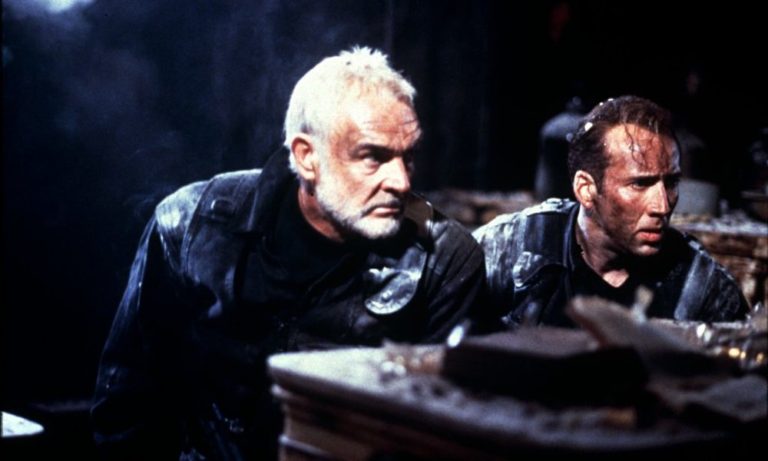
Hummel is up against the U.S. government, and they refuse to yield to his demands. He threatens to unleash VX-gas rockets on San Francisco if they don’t pay him a $100 million ransom. The FBI deploys Stanley Goodspeed (Nicolas Cage) to break into the prison and take Hummel out. He is teamed with folksy ex-criminal John Patrick Mason (Sean Connery), who is famous for having escaped from the prison. The two men initially struggle to get along but find themselves bonding as they overcome various obstacles together. When it finally comes time to complete their mission, they find themselves siding with Hummel. This causes a great deal of conflict and they realize that the world is now against them. 

Thematically, there isn’t much going on beyond the military propaganda and opposition to the government. It mostly aims to entertain the audience with a series of loud explosions and frenetic camerawork that ensures that most scenes move along at a fast pace. Character development isn’t really a concern and the movie stars in the cast are asked to show up and do their thing. Cage is neurotic and weird, Connery is a cantankerous old man and Harris is businesslike and efficient. On one level, you do have to admire the way it was constructed. Producers Don Simpson and Jerry Bruckheimer had found a way to repackage the traditional disaster movie formula for a 1990s audience and The Rock faithfully follows along with it. It must have been easy for them to piece this together and from a purely Capitalistic standpoint, it is hard not to admire their ability to predict what the audience wants. From an artistic standpoint, it is impossible not to want to see something more experimental and less willing to glamorize violent behavior. 

One of the most frustrating aspects of Bay’s work is that it feels so derivative and unoriginal. The Rock feels very similar to all of the other action blockbusters that were released during the 1990s. It isn’t as campy as Face/Off (1997) and it doesn’t feature a scene in which a plane crashes into a fireworks factory. There is something disappointingly conventional about it and the sense that Bay, Simpson, and Bruckheimer missed out on an opportunity to try something new. They could have smuggled something slightly subversive into this big budget extravaganza. Rather than making a mindless crowd pleaser that happens to contain an insidious message, they could have done something unexpected. Critics in 1996 were probably forced to see dozens of action flicks that looked and sounded exactly like The Rock. That is probably why it received such a critical drubbing. 

All these years later, it is difficult to argue that the cinematic landscape has changed that much. The Rock still feels generic and lacking in any of the flourishes that distinguish hacks from legendary auteurs. We won’t be talking about The Rock in twenty years’ time and some other hack will have taken on his role within the traditional framework of Hollywood. If The Rock were a glorious failure, it might have more integrity. 

Rating: D+

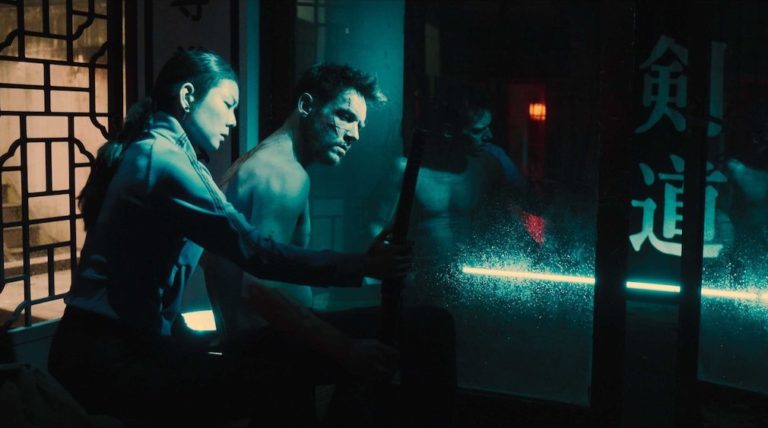
Movie Review: “Yakuza Princess” is a Robust Action/Thriller with no Substance


Director: Vicente Amorim
Writers: Fernando Toste, Kimi Lee
Stars: Masumi, Jonathan Rhys Meyers, Tsuyoshi Ihara, Eijiro Ozaki

Synopsis: The heiress to half of the Yakuza crime syndicate forges an uneasy alliance with an amnesiac stranger who believes an ancient sword binds their two fates. She must unleash war against the other half of the syndicate who wants her dead.


Here’s something you might not have known: the largest Japanese diaspora in the world is found not in America, or even neighboring countries such as China or the Philippines, but in fact in Brazil. Specifically in the São Paulo region. It’s an interesting factoid and one which made Danilo Beyruth’s graphic novel Samurai Shiro so fascinating. Indeed a title at the beginning of Vicente Amorim’s big screen adaptation Yakuza Princess informs us of this fact, hinting at the salivating prospect of a cultural crossover between the two.

Unfortunately, this promise is ultimately unfulfilled. Any opportunity this movie might have had to stand out among its peers with a genuine, authentic insight into a cultural phenomenon that remains largely unexamined is wasted by homogenous filmmaking which ensures Yakuza Princess could have been filmed anywhere, making no difference to the story or even the cinematography. What we have instead is a generic action/thriller mired by clunky dialogue, an over-reliance on style, and an ineffectual performance by its lead star.

Akemi (played by Japanese singer/songwriter Masumi) is the survivor of a Yakuza turf war which saw the deaths of her parents. Spirited away to Brazil, she yearns to know more of her grandfather – to the extent she gets a tattoo of a symbol he left her with on her forearm. At night she drinks in karaoke bars and beats to a bloody pulp the men stupid enough to antagonize her.

Meanwhile, Shiro (Jonathan Rhys Meyers, turning into something of a journeyman actor these days) wakes up in a hospital, his face a jigsaw of scars. He has no memory of who he is or how he got there. His only clue is the sword in his possession, designed by legendary Japanese swordsmith Muramasa. Shiro departs the hospital leaving a trail of bodies in his wake and goes off in search of answers.

Akemi and Shiro eventually cross paths, as the sword in Shiro’s possession comes to provide the answer for both of them. They must then contend with a legion of Yakuza intent on killing Akemi who is the rightful heir to the Yakuza throne. What follows thereafter is much battle and gory bloodshed as the two cut down entire lineages on their quest for the truth.

If this all sounds very exciting and watchable, prepare to be disappointed. Kill Bill, this is not. Instead, Amorim and cinematographer Gustavo Hadba go for a style that might be best described as Tarantino-lite. Lots of neon colors – mostly variations of blue – wash the screen, intensely framed close-ups are in abundance, one tracking shot looks like it aspires to the Copacabana scene from Goodfellas. It certainly goes heavy for style, and for its money it works, yet no movie with a title like Yakuza Princess and featuring a legendary sword which is said to house a demon and drink the blood of its foes should ever be this, well, boring. Whole swathes of time pass with Akemi meandering aimlessly as she looks for answers. It slows what little story there is to a snail’s pace, and by the time the brutal, gonzo violence unfolds we’re left just waiting for it to finish. At a frankly numbing runtime of 111 minutes, Yakuza Princess is far too long for such a slight story.

It also doesn’t help that Masumi is not a capable enough actor to convince you to invest in Akemi’s emotional journey. In fact, as each piece falls into place and Akemi learns more of her fabled grandfather and his dark past, nothing seems to change in her manner at all. There is very little in the way of an emotional arc for the character, and thus it’s hard to care about what happens to her. Consideration should be given to the fact this is her first feature and so she is largely untested in this arena, but it can’t be ignored that the only saving grace Yakuza Princess might have had – a compelling lead character who you want to see succeed – is rested on the shoulders of an inexperienced actor who can’t carry it.

Rhys Meyers is a little better, although he gets far less to work with. Shiro is practically mute throughout, instead glaring intensely in every scene as he is rendered little more than plot foil for Akemi. There was a time Rhys Meyers was considered the up-and-comer, heir to the British heartthrob throne (though he is Irish). His turn in Woody Allen’s Match Point garnered critical buzz and won him a Chopard Trophy at Cannes. His career since has been twisting and turning, never going in the direction you might expect. It’s admirable and one has to commend him for it, although you find yourself wishing he had chosen a better script than this.

Ultimately, Yakuza Princess never gets going: its adherence to style over substance ensures it never builds momentum, amounting to little more than a series of stylish set-pieces which feel bereft of meaning. Most frustrating is the excellent potential within the material – a Yakuza retirement home where the old-timers lament about the lost age of honor; a culture of displaced Yakuza in the slums of São Paulo; a legendary sword; an amnesiac ronin looking for answers – which is never fully realized. In more capable hands perhaps Yakuza Princess might have been a cult hit, garnering the kind of following enjoyed by the movies it clearly tries to emulate. Yet what we’re left with is a formulaic actioner with bad dialogue – “The katana has found you. You and it are one now, as you are meant to be. Go, now. Your life depends on it” – stilted acting, and more interest in style than storytelling.

Grade: D

Movie Review: ‘Death Drop Gorgeous’ Serves Up Glamour and Gore Galore!


Directors: Michael J. Ahern, Christopher Dalpe, and Brandon Perras
Writers: Michael J. Ahern, Christopher Dalpe, and Brandon Perras
Stars: Wayne Gonsalves, Christopher Dalpe, Michael McAdam, and Matthew Pidge

Synopsis: As a masked slasher is killing gay men and draining their bodies of all their blood, a down-on-his-luck bartender and an over-the-hill drag queen struggle to find their way. 


“I douched for this!” blurts out co-star, co-screenwriter, and co-director Christopher Dalpe’s Brian when a masc4masc top derides Brian for being too fem and walks away from him at 3:00 in the morning at a Providence, Rhode Island gay club called The Out House. Hookup and dating apps like Grindr, Tinder, and OkCupid are chock full of straight-passing gay men who refuse to associate with—let alone bed—anyone remotely feminine or androgynous. Many will say they just have a “type” without an ounce of self-reflection as to why they’re only into other virile men. The inherent misogyny and internalized homophobia of the masc4masc “preference” is one of the many problematic facets of gay culture that Death Drop Gorgeous seeks to dissect over the course of its crude and grotesque 104-minute runtime. 

In addition to ridiculing Brian’s demeanor, the chauvinist tells Dwayne (Wayne Gonsalves) that he isn’t interested in “blacks.” Out loud. I was genuinely taken aback when that line was delivered only because I’m not accustomed to hearing that “preference” actually spoken aloud, even though I’m well aware that it’s a very real thing. There was a time when phrases like “no fats” or “no fems” or “no blacks” were disturbingly common in app profiles, especially if the avi was a headless torso. Yet again, this is a “type” held by folks who could use a little psycho-analysis, but for a lot of them it’s too late. The damage is done. And like any good slasher film, Death Drop Gorgeous does not let bad behavior go unpunished. So, for being a prejudiced jerk and for committing the cardinal sin of wearing an inseam that’s at least three inches too long, it’s no surprise that this bloke gets a proper comeuppance.

The kills are a riot. A screwdriver, an electric carving knife, and an old fashioned meat-grinder are just a few of the weapons of choice that contribute to these grisly deaths. The lurid gore is super fun and possesses a particularly DIY charm, and coming from me that is not shade. Whereas the snobbish may write-off such unrefined special effects as amateurish or distasteful, I view them as spunky. All the loose entrails and oozing viscera, like the film as a whole, are a rejection of conventional polish. So, too, is the filmmaking. Could the overall product have benefited from enhanced color grading? Maybe. More dynamic framing? Conceivably. Smoother staging of the shots? Perhaps. But at what cost? Death Drop Gorgeous is what indie spirit is all about. It would rather say something while looking rough around the edges than not say anything at all. And raise some hell along the way. 

The ingenuity and the presentation of the killer harken back to the Italian giallo pictures of the 1970’s. Early on we’re shown black leather-gloved hands (a tell-tale giallo staple) and later, a metallic mask.  If you think about it, slasher killers are, by design, in drag when they’re doing their business, so it only makes sense to set such a film in and around a drag bar. The two main queens are the seasoned diva Gloria Hole and the egotistical rising star Janet Fitness, played by Michael McAdam and Matthew Pidge, respectively. I love that in the world of this story, drag queens do not exist out of drag. As a fan of the art form, it’s amusing to watch of course, but it works to also maintain an emphasis on their appearance. Ageism and vanity are also key components to this narrative. It’s through the queens’ behavior and cutting lines toward each other that the movie explores the fear of aging and the alienation that comes with it—another giallo characteristic.

Also, like most gialli, this is a mystery; the murderer is not an anonymous adversary but rather an established character with a secret motive. And thankfully, we’ve got some handsome investigators on the case. The buddy cop canon is rife with homoerotic clue-gatherers, and Detectives O’Hara and Barry are welcome additions. Played by Michael J. Ahern and Sean Murphy, these guys definitely lean into the trope, and they’re appropriately upfront about it. When we first meet Barry, he’s biting into a big gooey eclair, then papa bear O’Hara wipes the excess filling from his partner’s face with a thumb and tastes the sweet custard himself. Not exactly subtle, and it only gets more overt from there. O’Hara and Barry may have the more suggestible material, but it’s Brandon Perras’ smarmy Tony Two Fingers who proves to be the most histrionic performance. Those on the internet who do not believe in the existence of male camp need search no further. Perras’ portrayal is so unabashedly parodic as the sleazy nightclub owner that it makes up for the lousy belly padding under his shirt. 

Death Drop Gorgeous owns its messiness. There’s almost no point in mocking its wonkiness because it’s already in on the joke. Any technical note that could be dished out, the filmmakers are already aware of—they lived it. They made a feature-length movie for very little money (shout out to all the donors listed in the credits) on their terms and managed to create a boisterous ride. A bigger budget and a more experienced crew could have “improved” the production, sure, but I frankly don’t care. You can see the passion being poured into every scene. At least, I can. And to top it all off, they spoke their truth. This team called out the prejudices, hypocrisies, and double-standards that are rampant within the LGBT community while simultaneously producing a gory and glitzy horror-comedy that is first and foremost highly enjoyable. I’m not saying it’s a perfect movie, but even naysayers have to admit it’s an accomplishment. The film trips over its own hem from time to time, but I was never not entertained, and that has to count for something. 


Grade: B

Op-Ed: AFI’s 100 Years…100 Passions – ‘To Have and Have Not’ (#60)

I will be watching and reviewing all of the films included on AFI’s 100 Years…100 Passions list. The list contains the 100 greatest love stories in American cinema and I plan to consider how our views on romance and social issues have changed over the years as well as judge whether the romances in these films actually made me swoon. As a fan of the romance genre, I expect to love each and every one of the nominees but I also don’t know if I would consider all of them romantic.

This is the big one for Bogie and Bacall fans. Yes, The Big Sleep (1946) enjoys a better critical reputation, but this film gave us the moment when Lauren Bacall states, “You know how to whistle, don’t you Steve? You just put your lips together and blow.” This line, and Bacall’s striking facial features, turned her into an iconic screen beauty who was emblematic of the toughness that 1940s audience desired out of their women. Her first film became something that she could never quite top, and the bloom came off the rose fairly quickly. When people think of Bacall, they imagine the sultry nineteen-year-old seducing a craggy, hardened older man who seems to admire her sense of humor and youthful vitality. In the minds of the public, Bacall and her character, Slim Browning, became one and the same. She’ll always be Browning in the eyes of film fans, so I was surprised to find that To Have and Have Not (1944) isn’t really about her character. 

When you read about the production of the film, it begins to make more sense that you have to sit through about half an hour of Bogart dithering around before Bacall shows up and subsequently becomes the center of attention. You learn that the film’s director, Howard Hawks, quickly picked up on the fact that there was electric chemistry between the married Bogart and his young, inexperienced co-star, so the existing screenplay was re-written to mostly focus on the relationship between their characters. This is why the plot structure feels so odd, as, by the end of the film, everybody has completely lost interest in the supposed conflict at hand. 

It was conceived as a rip-off of Bogart’s recent hit, Casablanca (1942), and a lot of the same plot points are present. Bogart plays Harry Morgan, a grizzled, emotionally guarded boat captain in Vichy France, who is determined to avoid getting into a serious relationship with a woman or any real involvement with French Resistance fighters. He aims to remain neutral and wait out the war years without aligning himself with either side of the conflict. He is eventually drawn into the conflict when he is forced to help members of the French Resistance travel to Devil’s Island. He rediscovers his humanity and takes the side of the Resistance fighters, whilst also opening his heart to the prospect of love when he begins to spend more time with Browning. Ultimately, he gets the girl and ends up on the right side of history when it comes to the political positions that he takes. 

It really feels like everybody was on cruise control as they made this. The screenwriters took the basic framework of Casablanca, played mad libs with it, and then decided to let Bogart keep the girl at the end. There is a laziness to the fairly unnecessary subplot that takes up the first twenty minutes, that I simply could not abide by. When you have names as legendary as Bogart and Hawks, you expect something dynamic and tightly woven. Hawks was renowned for his ability to get to the point and express his ideas with a startling clarity of vision, so why did he have to lose his knack when it came to this project? He took his foot off the gas and it severely hurts a film that should be a blend between a sexy erotic drama and a tense, exhilarating thriller. Everybody is so lethargic that nothing ever quite kicks into gear. 

It ends up being most notable for Bacall’s presence, which was to be expected, but even she was rather disappointing. I have come to realize that there are several stars who are more arresting as models than screen presences. I can draw more out of a promotional shot of Bacall than I can get out of her appearances in films. When she shows up on the screen, she still has that incredible face, and yet she’s always a little stiff and withholds too much from the camera. That veneer of imperious hauteur turned her into a sex symbol, but when that facade wobbles, and we notice that she appears deeply uncomfortable in her role, she loses our interest. Unlike Rita Hayworth, another screen goddess, she never fully dazzled me, and when she displays a touch of fragility, the move feels too calculated to mean anything. There was a streak of mania that ran through Hayworth’s performances, and that made her enigmatic and compelling, even when the camera was leering at her breasts. Bacall has a couple of tricks and seems completely unwilling to draw on anything that might seem too raw or immediate for audience members who want to see her as a fantasy girl. Unfortunately, she becomes less intriguing because of her limitations as an actress and her aversion to risk taking. I don’t need every movie star to be a brilliant actor, but I expect them to be less awkward than Bacall. 

I criticize her performance so heavily because she is the real selling point of a film that is low-rent Casablanca on almost every other level. Bogart and Hawks, the veterans with a lot of pedigree, deserve an even larger share of the blame, as they didn’t pull their weight in a situation where they had all sorts of resources handed to them. With a better foundation to work with, Bacall might have seemed like more of a commanding screen idol. 

As it is, I would suggest that people look at binders of artfully lit photographs of Bacall. She manages to radiate that enigmatic quality that she fails to capture in her films. You want to know more about the smirking teenager who gazes up at you through her eyelashes when she’s looking out at you in still image form. That’s the real Bacall experience, and it’s disappointing to see that she’s not all that she’s cracked up to be when it comes to her most famous film performance. 

This presumably made the list because Bogie and Bacall are some of the most iconic couples of Old Hollywood. It doesn’t matter that we care more about them as mythical characters built up by tabloid stories; they did make a couple of films together. To leave them off of a list of iconic romances would seem like a criminal offense. They are here because they are legendary celebrities. Their place on the list has very little to do with any critical evaluation of the film at hand. 

Movie Review: Despite Oscar Isaac’s Performance, ‘The Card Counter’ is a Meandering Setback for Paul Schrader


Director: Paul Schrader
Writers: Paul Schrader
Stars: Oscar Isaac, Tiffany Haddish, Tye Sheridan, Willem Dafoe

Synopsis: An ex-military interrogator turned gambler haunted by the ghosts of his past decisions.


It is no secret that director Paul Schrader is a controversial figure. From the subjects in his films to his meandering rants on Facebook to interviews he gives during press junkets, you never know what you are going to get with the guy. He’s a wild card. Moreover, he’s an interesting, confusing presence in the landscape of film because he’s written and directed some pretty amazing pieces of work; like First Reformed, Mishima: A Life in Four Chapters, Raging Bull, Taxi Driver, but also as many duds along the way. When you step into one of his movies, it is a lot like logging onto his social media accounts and reading the latest post, you just hope what you are seeing is something good. So, with his latest endeavor, The Card Counter, Schrader sadly delivers a jumbled, meandering mess.

We follow William Tell (Oscar Isaac), a former member of the military who was put in prison as a fall guy for unconventional torture methods used overseas. In prison, Tell learned the art of counting cards, and once he is released, puts his skills to the test, winning modest amounts of money to get him by without getting caught. He also lives by a code, which is the basis to why he won’t go big into the gambling scene, much to the dismay of La Linda (Tiffany Haddish), who specializes in finding players to sponsor for the World Series of Poker. As Tell moves from city to city, he comes across a seminar hosted by former Major John Gordo (Willem Dafoe), the man responsible for putting him in prison. At this meeting, he meets Cirk, the son of a soldier trained by Gordo to kill, just like Tell. Cirk wants to kill Gordo for what he did to his father and wants Tell to assist him in this execution. Instead of doing that, he takes Cirk under his wing and brings him along for the ride through his casino stops.

Sound like a lot? Well, that is a taste of the surface level story to get you invested in The Card Counter, but that’s also where the movie starts to fall apart. Running at the same time are multiple stories within one movie. We have Tell’s gambling obsession, Crik’s revenge plot, a romance between La Linda and Tell, a commentary on the military’s use of torture, and they just don’t mix together. It’s almost as if Schrader is trying to copy a lot of the success from his last film, First Reformed, where he weaved multiple stories into one holy gospel of religious fundamentalism when it came to the subject of climate change. It also dealt with a character’s struggle to cope with the realities of living helpless in an unforgiving world and being the only one screaming for change. In this, Isaac’s Tell is the only realistic person, who just wants to play cards, make a little cash, and move on with his day. But he gets wrapped up in this web of danger, thus resulting in him begrudgingly having to face his past. And it’s not practically entertaining to watch, as we see Tell slowly moving from storyline to storyline without actually making any profound impact.

Some could call this film a slow burn that leads to an ending that does have the best moments of the film. But the ride to get there is such a tonal slog, you can’t help but wonder what was the purpose this hypnotic venture if not to put us to sleep. Heck, from scene to scene, the way the characters speak is so scattered, it’s like each actor is in another movie than the person they are sharing the screen with. Isaac, who is one of the best living actors working today, is serviceable as Tell. He doesn’t do anything off the charts in his performance, but he is believable enough as a man going through all these internal emotions. It’s everyone else that is out of place. Haddish, a fine dramatic actress and hilarious comedic actress, isn’t given the tools to succeed in her role, while Sheridan is totally miscast and isn’t the right fit at all for this type of character. And given the amount of time these characters spend with Tell, you need actors that have chemistry with Isaac, and sadly, neither of them do.

But the major complaint of this movie is Schrader’s decisions as both a writer and director. As a writer, his characters, besides Tell, are very one dimensional and lack substance. Their dialogue is clunky and motivations aren’t fully justified. His direction is even worse, with annoying music cues from Robert Levon Been mixed into scenes that are repeated over and over again. Maybe it is to prove Tell’s point about gambling being a routine, but it is lazy filmmaking. Then there are the flashback sequences with Gordo and Tell, where Schrader uses an off putting fish eye lens to convey the horror of these events, but the only thing horrific is having to watch the way these scenes are shown visually. It’s just not good, plain and simple. Add in some harsh editing, and you’ve got a recipe for something that should’ve been great, but instead was a disappointing ordeal.

Since Schrader usually does one good film then one bad film, maybe his next project will be more like First Reformed, which was engaging and thought provoking concurrently. But The Card Counter is a misstep that makes you want to just fold in your hand and leave the table for good.

Grade: D

Movie Review (Venice 2021): ‘Django & Django – Sergio Corbucci Unchained’ is a Study on Sergio Corbucci’s influence on Tarantino


Director: Luca Rea

Synopsis: Documentary about legendary director Sergio Corbucci featuring previously unseen material from the time, testimonies, and reconstructions used to present a unique period in cinema. 


In Once Upon a Time in Hollywood, Rick Dalton (played by Leonardo DiCaprio) travels to Italy to perform in westerns under the direction of Sergio Corbucci. The reference is a tribute by Quentin Tarantino to a director who influenced his style and inspired characters, situations, and plots in films such as The Hateful Eight and Django Unchained. That is why Tarantino himself is the narrator of Django & Django – Sergio Corbucci Unchained, a documentary directed by Luca Rea that, far from being a journey through Corbucci’s career, works as a kind of essay to exemplify his enormous influence on the American director.

Despite having interviews with Franco Nero and Ruggero Deodato — recurring assistant and actor in Corbucci’s works, respectively — this film is conducted by Quentin Tarantino, whose voice, passion, and mastery of the subject make him our guide here. In fact, the entire editing seems to be revolving around his interview with the filmmakers; he isn’t just a narrator. This is the blessing and curse of Django & Django. Rea relies too heavily on his stories, missing the opportunity to delve into the Italian director’s cinematographic intentions. However, the final product is attractive thanks to the love with which Tarantino explains Corbucci’s filmography.

Naturally, Rea accompanies the words of his guide with the corresponding footage. Scenes from films like Navajo Joe, Duel of the Titans, The Great Silence, The Mercenary, and of course Django parade throughout the documentary. Each stop on this tour serves the purpose of explaining the style and intentions of its director and his connection to Tarantino’s cinema.

During the proliferation of the spaghetti western, Corbucci stood out for painting the cruelest and most savage Wild West, one where blood flowed freely and every character was in constant peril. This originated from the director’s anti-fascist intentions, which are briefly explained through anecdotes involving his childhood. 

Corbucci’s narratives were based on revenge, his villains were personifications of fascism, and the protagonists were not exactly heroes, but avengers bordering on the edge of evil instead. This combination resulted in politically charged films that fascinated audiences and inspired many. You can feel the love in Tarantino’s voice as he describes the film qualities of his idol.

The documentary addresses interesting topics about Corbucci’s cinema: politicization, the importance of Burt Reynolds in Navajo Joe, his interest in the Mexican revolution (evidenced in his trilogy), his inspiration in Akira Kurosawa, and comics, the representation of morally terrible societies, his taste for comedy. Unfortunately, all of this is superficially explored. Ideas are proposed, but before delving into them, Rea changes the subject. This allows him to maintain a good rhythm, but inevitably causes frustration in the face of wasting the chance to dig into what truly made tick such a beloved filmmaker.

The dependence on Tarantino becomes even more evident when the film tries to talk about Corbucci’s post-western career: With no words from the American dedicated to the subject, Rea opts to use behind-the-scenes footage to try to capture his vibe. A poor attempt that demonstrates the inability of the director to think outside the box.

Despite being superficial and lacking in creativity, Django & Django gets the job done and has enough interviews, footage, and interesting anecdotes to keep your attention. If you know little about Sergio Corbucci, you will find here the bases to get started in his cinema. The film has to be appreciated as a connection between filmmakers: How did Corbucci’s cruel vision inspire Django Unchained? What similarities does The Great Silence have with The Hateful Eight? Where do all these scenes of extreme violence that Tarantino loves so much come from? This documentary will help you understand the answers to these questions.

Django & Django – Sergio Corbucci Unchained screened Out of Competition in the 2021 Venice Film Festival.

Cover image courtesy of The PR Factory.

Grade: C