Home Blog Page 175

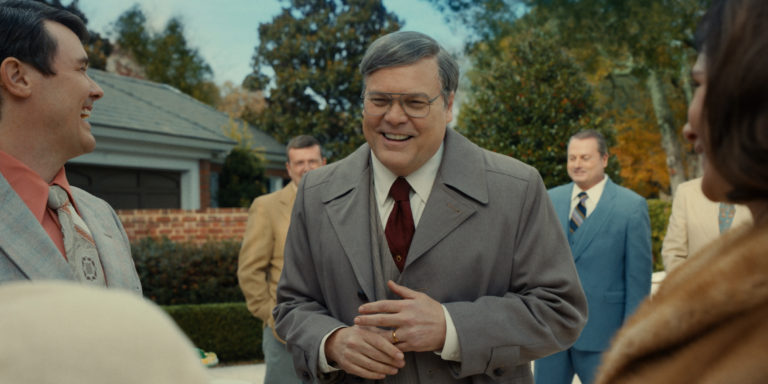
Movie Review: ‘The Many Saints of Newark’ is a Fantastic Return to the World of Blood and Gabagool


Director: Alan Taylor
Writers: David Chase, Lawrence Konnar
Stars: Alessandro Nivola, Vera Farmiga, Corey Stoll, Michael Gandolfini, Ray Liotta.

Synopsis: During the long summer of 1967, a race riot erupts in Newark as Dickie Moltisanti tries to steer his nephew Tony away from a life of crime.


It has been fourteen years now since the screen abruptly cut to black and left us all wondering at the fate of Tony Soprano. The rich world of the New Jersey based mob show The Sopranos created by David Chase was teeming with such memorable characters, such momentous events, and so many tragic outcomes that it has cemented itself as one of the greatest TV shows of all time – effectively becoming the lynchpin for the long-form American drama of the Golden Age of TV – and ensured it will remain enshrined in the memories of its legions of fans for a long, long time to come.

It makes perfect sense, then, that Chase would decide on a big screen follow up, a chance to revisit those irresistible characters and the high stakes lives they led. Any chance of a direct sequel though, and an answer to the question of whether Tony had been whacked by the New York mob, ended forever with the tragic passing of James Gandolfini in 2013, and so The Many Saints of Newark is not the movie some Sopranos fans might expect. Chase, no stranger to subverting expectations, has gone in a different direction, setting his tale during the Newark race riots of 1967. This allows for a new dimension to the Sopranos canon, with significant exposure given to the politics of race as well as featuring major Black characters for the first time.

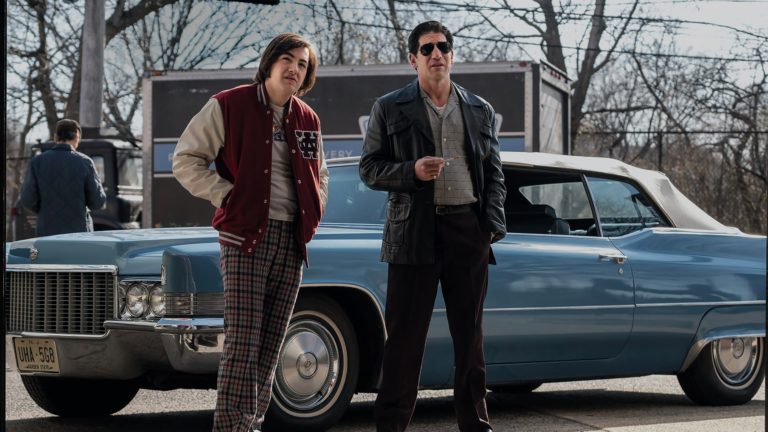
Alongside this is the attention given to previously unseen characters, primarily Dickie Moltisanti (Alessandro Nivola), father of Soprano’s stalwart Christopher Moltisanti (played by Michael Imperioli, who makes a significant appearance here in a way that may either delight or annoy fans). Dickie was a character talked about many times during the Sopranos’ run, with his death providing an insight into the demons his son Christopher would later face, and here he is the main character (the name Moltisanti in English means “Many saints”, giving the movie one aspect of its title). Those expecting a bildungsroman for Tony Soprano – Breaking Bad style descent into criminality – may leave disappointed. Tony is only a peripheral character throughout, just slightly coming into focus in the latter half of the movie.

If you read that and felt disappointed, don’t be. David Chase has delivered a feature dripping with the same bloody consequences and moralism which made The Sopranos such a compelling show. While it may not concern itself too much with Tony – at least not until near the end -, Dickie more than makes up for this. His mercurial nature mirrors Tony’s own, and the constant battle he has within himself between his incandescent rage, self-loathing, and desire to be a good man will be very familiar to fans of the show. While Dickie constantly makes the kind of rash, terrifying decisions Tony was known for, he also shows a side of himself determined to do better as he seeks absolution from his father’s twin brother in prison.

The movie opens with Dickie meeting up with his elderly father “Hollywood” Dick Moltisanti (one of two roles played by Ray Liotta, giving his best performance in years). Hollywood Dick arrives home from Italy to show off his new and beautiful young Italian wife Guiseppina (Michela De Rossi), who has come to America with dreams of opening her own salon. Dickie inevitably finds himself attracted to Guiseppina and harbors a smoldering rage against Hollywood Dick for the dismissive, and violent, way he treats her. While Hollywood Dick sees the young woman as a trophy bride – carrying a picture of her to show his friends at parties, telling anyone who’ll listen about the “Miss Provolone 1967” – Dickie encourages her independence. His light touch with her stands in stark contrast to that of his father and underpins the Greek tragedy about to play out.

Meanwhile, Johnny Soprano (a tragically underused, but perfectly cast Jon Bernthal) is arrested and sentenced to five years in prison. His wife Livia (a pitch-perfect Vera Farmiga, channeling Nancy Marchand’s witheringly acidic persona from the show, with a drop of Edie Falco’s Carmella for good measure) asks Dickie to step in as a father figure for their young son Tony, whom, despite his intelligence and leadership ability, is flunking school and falling evermore into a life of crime. Dickie is struggling with the moral consequences of his own actions, however, and is afraid of being a bad influence on Tony. The best option would be for him to completely cut ties with the young Soprano, although we are already aware Dickie’s impending death will cast a pall over Tony’s life.

All of these events play out to the backdrop of the race riots which took place in Newark after two police officers hauled a Black taxi driver from his cab and beat him senseless. The inciting incident is shown again here, as well as the shocking aftermath which saw four days of violence and looting, culminating in the deaths of twenty-six people. While The Sopranos often tackled core issues such as race and misogyny, they had never done so quite like this: naked brutality and bloodshed as a result of systemic oppression rather than the broody mafioso hits we’ve come to know. It adds an extra layer especially as Dickie’s former associate Harold McBrayer (Leslie Odom, Jr) decides to turn against his friend and strike out on his own. As a Black man in a majority Italian neighborhood, McBrayer’s presence is always noticed. Jokes are cracked about plantations, casual beatings thrown at the slightest provocation. Dickie treats McBrayer like a friend on the surface but is still cautious not to let McBrayer stand too close to Guiseppina, and is prepared to drop him at a moment’s notice. It is clear their relationship is transactional, and Odom, Jr plays McBrayer with a latent rage that bubbles precariously to the surface.

The film shifts focus slightly when Tony comes of age. He is played now by Michael Gandolfini, and there’s a poetry in witnessing a son play the younger version of the character his father immortalized. The now teenaged Soprano has made a habit of bad behaviour: smoking, stealing ice cream trucks, starting an illegal betting shop in his school. Still, he’s kept out of arms reach of the main plot and hasn’t much to work with. Gandolfini is perfectly fine as young Tony but lacks the dark menace and sense of physical danger his father brought to the character. Young Tony might look a dead ringer for the Tony we know, but unfortunately, the similarities end there.

The stand-out performance belongs ultimately to Nivola. Dickie walks a fine line between the light-hearted, fun loving uncle whom Tony looks up to and the hardened killer who won’t hesitate to drown someone or place a drill bit between their teeth. It’s a line Nivola perfects. In every scene, he shows a duality to Dickie that is never less than totally compelling. Full of lingering stares and over-stated hand gestures, Nivola brings a naturality to his interactions with the other cast that bring his character to fully fleshed life and means the tragedy is all the more intense because of the connection we make with Dickie. While others – Farmiga as Livia, Liotta as Hollywood Dick, Corey Stall as the eternally nebbish Uncle Junior, and Billy Magnusson as Paulie Walnuts – do well with the parts they’re given, it is clearly Nivola’s show and he runs away with it.

It’s not all good news: while the plot beats are paced evenly at the beginning, by the time Tony comes of age the plot starts to spin too quickly. Perhaps it may have been better suited to a mini-series where we might have had more time to sit with Dickie as his world begins to collapse, but the story pivots onto Tony at exactly the wrong time and the audience then is shut-out of Dickie’s life at the most crucial moment. It’s frustrating and does a disservice to Tony, whom the audience may struggle to be invested in by the time he comes to the fore.

Chase has said he sees The Many Saints of Newark as a standalone experience which viewers can enjoy even if they haven’t seen The Sopranos, but this doesn’t exactly ring true. There are many, many Easter Eggs and ominous portends – most of which are about as subtle as a sledgehammer to a car window – which new audiences won’t get. Dickie’s newborn son Christopher is given to Tony to hold but immediately begins crying. Tony wonders aloud why the infant doesn’t like him, until someone suggests that babies are born with a knowledge of ‘things from the other side’. It’s a little too heavy-handed and cracks the veneer of Grecian Tragedy which it so handily set up.

Elsewhere, mainstay characters such as Big Pussy Bonpensiero and Jackie Aprile are given short-shrift while John Magaro overplays his role as Silvio almost to the point of caricature. Finally, the ending – clearly a nod to the ending of The Sopranos, which takes place in the exact same café – feels a little abrupt. Even after all these years Chase still hasn’t figured out how to finish a story.

The little things can be ignored though – especially if you’ve never seen the show – in favour of the truly stand out performances, specifically from Nivola, and the brilliantly executed thematic beats. Director Alan Taylor served as director on nine episodes of The Sopranos and keeps the visual style intact, with the added bonus of a soundtrack featuring various funk and jazz compilations. By the time the familiar rumble of the bass announces the arrival of the Alabama 3’s Woke Up This Morning as the credits roll, you’ll be reeling from new revelations planted by Chase which give extra meaning and context to the show. And if you’ve never seen it before…well, what are you waiting for?

Grade: A

Chasing the Gold: 2022 Acting Categories – Episode 38

On Episode 38 of Chasing the Gold, Ryan is joined by Erik Anderson of Awards Watch and Cody Dericks of Next Best Picture to talk about the acting races for the 2022 Oscar season.

On the last Chasing the Gold, Ryan and his guests talked about the beginning of the awards season with the Best Picture category, but the acting categories are some of the most popular awards handed out on Oscar night. He enlists Erik and Cody to talk about all four categories, who they all think will currently win, and talk about Erik and Cody’s festival experiences.

On that note, have fun with this week’s episode, and let us know what you think in the comment section below. Thanks for listening!

– Music

The Return of the Eagle – Atli Örvarsson

We try to make this the best movie podcast we possibly can and we hope you enjoy them. Subscribe today on iTunes, Spotify, or Stitcher, and please leave us a review on iTunes. You can also find us on Soundcloud, PlayerFM, and TuneIn Radio as well. We really appreciate all your support of the InSession Film Podcast.

Subscribe to our Podcasts RSS
Subscribe to our Podcasts on iTunes
Listen on Spotify
Listen on Stitcher
Chasing the Gold: 2022 Acting Categories – Episode 38

[divider]

Mobile App

To hear this Extra Film episode and everything else we do, download our apps on the Amazon Market for Android and the Podcast Box app on IOS devices. The mobile app covers all of our main shows, bonus podcast’s and everything else relating to the InSession Film Podcast. Thanks for your wonderful support and listening to our show. It means the world to us!

[divider]

Help Support The InSession Film Podcast

If you want to help support us, we would greatly appreciate it! For more info, CLICK HERE.

Podcast: He Got Game / Cry Macho – Extra Film

This week on Extra Film, Ryan and Jay continue their Spike Lee Movie Series with He Got Game and they also review Clint Eastwood’s latest film Cry Macho!

He Got Game may not be top tier Lee by many people’s standards, but it’s easily in that tier II category and certainly a noteworthy film in his filmography. Denzel Washington gives a remarkable performance and Ray Allen is still marked as one of the most memorable performances from professional athletes in film. So the Extra Film boys had plenty to discuss and once again get deep into the weeds on the film.

In the back half of the episode, the guys talk about Clint Eastwood’s latest directorial effort in Cry Macho and it was quite the discussion. As he’s done on previous reviews, Jay continues to defend Eastwood’s recent output while Ryan shakes his head in soft disagreement. Say what you will about the film, but it fostered a fun review that we think you’ll very much enjoy.

On that note, check out this week’s show and let us know what you think in the comment section. Thanks for listening and for supporting the InSession Film Podcast!

– Movie Review: He Got Game (6:56)
Director: Spike Lee
Screenplay: Spike Lee
Stars: Denzel Washington, Ray Allen, Milla Jovovich

– Movie Review: Cry Macho (1:16:09)
Director: Clint Eastwood
Screenplay: Nick Schenk, N. Richard Nash
Stars: Clint Eastwood, Dwight Yoakam, Ivan Hernandez

– Music

He Got Game – Public Enemy
Macho Man – Village People
The Return of the Eagle – Atli Örvarsson

We try to make this the best movie podcast we possibly can and we hope you enjoy them. Subscribe today on iTunes, Spotify, or Stitcher, and please leave us a review on iTunes. You can also find us on Soundcloud, PlayerFM, and TuneIn Radio as well. We really appreciate all your support of the InSession Film Podcast.

Subscribe to our Podcasts RSS
Subscribe to our Podcasts on iTunes
Listen on Spotify
Listen on Stitcher
He Got Game / Cry Macho – Extra Film

[divider]

To hear this Extra Film episode and everything else we do, download our apps on the Amazon Market for Android and the Podcast Source app on IOS devices. The mobile app covers all of our main shows, bonus podcasts and everything else relating to the InSession Film Podcast. Thanks for your wonderful support and for listening to our show. It means the world to us.

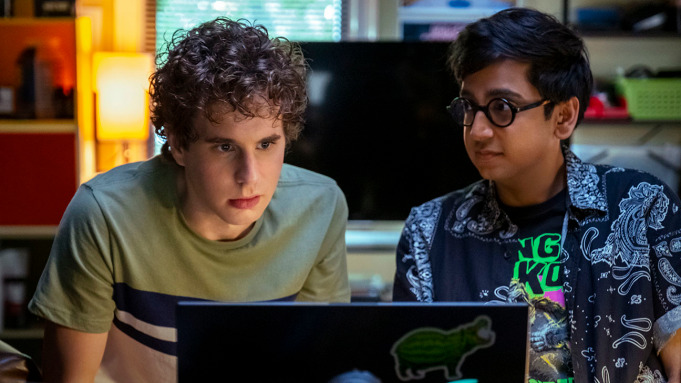
Movie Review: ‘Dear Evan Hansen’ is Based Around A Beautiful Lie


Director: Stephen Chbosky

Writers: Steven Levenson

Stars: Ben Platt, Julianne Moore, Kaitlyn Dever

Synopsis: Film adaptation of the Tony and Grammy Award-winning musical about Evan Hansen, a high school senior with Social Anxiety disorder and his journey of self-discovery and acceptance following the suicide of a fellow classmate.

[/info]

“Today is going to be a good day and here’s why.” These are the words that I believe people should adopt as their motto. It’s a simple saying that carries a powerful meaning that multiple people need to hear from themselves or from a loved one. It brings comfort and reassurance to those who speak it. It is so encouraging that it can change someone’s day for the better, and here’s why.

Dear Evan Hansen is a film that spoke to me on numerous levels and camouflages itself as a hybrid of multiple themes. If I’m being honest, it is difficult to determine where to begin. As I stated, this film spoke to me in a way that other films will never reach. I have never witnessed the broadway show this film is adapted from, but I have lost a friend or two who have taken their own lives. And if there’s one thing I’ve learned from this film, it is to never give your flowers to the departed before it’s too late.

Dear Evan Hansen is a film based on a beautiful lie, a lie so substantial that it changed the life of many for the better. This film is a chameleon of emotions and I find that so rare in today’s world. Ben Platt gives us an important and special performance as Evan Hansen. Due to his mannerisms and his vocal presence, Ben Platt shows us what it is like to be a person who lives with social anxiety on a daily basis. The film shows you the highs and lows of Evan’s condition and, as the movie advances, you find out that he isn’t the only teenager dealing with these issues.

The story gives you a solid overview of how the death of Connor Murphy affects not only his family, but Evan and the rest of the town. Connor’s sister Zoe, played by Kaitlyn Dever, delivers another phenomenal performance and is perhaps my favorite character in the film next to Evan Hansen. Regardless of Ben Platt’s age, I think he killed it in the role. He was everything I wanted him to be and more. Despite the condition that the character struggles with, I found Platt and Dever to have comfortable and genuine exchanges throughout the film.

This review would not be complete without mentioning the brilliant move of having the cast perform the soundtrack in real-time. The harmonies were wonderful and songs such as “Sincerely Me”, “Waving Through A Window” and “For Forever” stuck out to me among the crowd. I have found myself listening to the soundtrack on repeat ever since I left the theater.

Dear Evan Hansen tells a beautiful lie to keep a classmate’s memory alive. It is a beacon of remembrance to give your flowers to your loved ones before they’re gone and to always remember that today is going to be a good day.

Grade: B

Movie Review (TIFF 2021): ‘The Rescue’ is simply the Best Documentary of 2021


Directors: Jimmy Chin, Elizabeth Chai Vasarhelyi

Synopsis: Follows the story of the Wild Boars youth soccer team who got trapped and their dramatic 2018 rescue.


When coming up with the list of films that I would end up being able to see at TIFF this year, The Rescue was one of the few top priority picks. It is crazy to think that it has been over three years since the events of the Thai cave rescue, as I remember watching the news and the long stretch of time this mission took, not quite believing the result of it all.

This documentary by Chin and Vasarhelyi, who previously made the Oscar-winning Free Solo, is simply the best documentary of the year and it is no surprise that it won the Audience Award at TIFF for the Documentary category. If you somehow did not hear about the events of the rescue when it happened in 2018, then get ready to go into this film and be blown away by what happened.

What shocked me the most about this documentary was how much footage there was of the rescue. Whilst this was clearly a big mission and a moment in history that would live on, the film places the audience in the rescue from start to finish. Even if you know what the result is, the documentary is thrilling as there are so many moments where things can – and do – go wrong. This footage also helps create a clear structure for the film, with a distinct start and finish and with no major jumps in time.

There are interviews that take place throughout the film, primarily focusing on the British divers that were recruited for their cave experience. Not only were the interviews insightful into the mission, giving details on every decision made and explaining how dangerous this rescue was, but the interviews also added a layer of heart and human connection, grounding the situation and showing a side to the divers that other documentary filmmakers wouldn’t have handled. It becomes easy to side with the cave divers and to hope that they pull off the rescue.

This is a rollercoaster of a journey, with some incredible highs as well as some tension and tragedy, and yet it is paced incredibly well for a documentary. Everything that features in this film is important to the story and there are so many aspects that I was not aware of just by seeing the news when this all took place. I did not realize the scale of this cave that the football players were stuck in, so seeing the diagrams and the footage brings the place to life and shows the level of danger the boys were in.

One aspect that keeps the film at an optimistic tone, particularly in the second half, is the football team that is stuck in the cave. Whilst there are no interviews with the boys, there is footage caught by the diving team and to see this team keep their spirits up shows the strength that they have. At such a young age, they kept their spirits going and it is the moments such as seeing them interact with some of the rescue team that makes this documentary as rewarding as it is.

Despite the subject matter and the level of tension that builds within the film, The Rescue is such a feel-good documentary and another success from Chin and Vasarhelyi. Even if you think you know the events of the rescue, there is so much information packed into this film that will leave you amazed. The footage that is captured is so well done and I cannot wait for more people to discover this and to see how it does in this year’s award race. It certainly should be a top contender.

Grade: A

Movie Review (TIFF 2021): ‘Charlotte’ is a Remarkable Story Told Poorly

0

Directors: Tahir Rana, Éric Warin
Writers: Erik Rutherford, David Bezmozgis
Starring: Keira Knightley, Marion Cotillard, Brenda Blethyn, Jim Broadbent

Synopsis: An account of German-Jewish artist Charlotte Salomon living in the south of France between 1941 and 1943.


Before hearing about the film Charlotte, I was not familiar with Charlotte Salomon as a person and the work that she had created. Regardless of the quality of the film, I am thankful that her story was told and that there is now an audience who, like me, is discovering who she is. The amount of works that she created over a short period of time and the trauma that she had to live through makes for a story that is hard to see, but one that is necessary to tell.

Whilst others have criticized the art style within the film, it was something I found to be quite charming. Firstly, the artworks featured in this film that are of Charlotte are recreated almost exactly and shows off the distinct art style that she had, unafraid of making bold strokes and experimenting with composition and style. Yes, the animation style is not that of the classic Disney tales or of Studio Ghibli, but there is a charm to the heavy linework and the flat colors used.

The film has a huge voice cast, something that is quite unexpected for a project like this. Keira Knightly gives her voice acting debut in the role of Charlotte, and whilst it is certainly not a stand-out or anything special, she does get the job done. Most of the voicework here falls flat to leave any mark, with Jim Broadbent being the one real stand-out in the cast playing Charlotte’s Grosspapa.

The story may be compelling on paper, but unfortunately, the film struggles to make you truly care about these characters and the journey. The screenplay presents the events in a way that is unevenly paced, speeding through years of Charlotte’s life whilst focusing on moments that just are not as compelling. There are plot points that I wanted to dig my teeth into more, and a lot of that was wanting to know more about Charlotte as a person and her passion for art. A lot of that is sadly brushed to the side here.

There is a disconnect between the audience and the story, something that only really goes away when we reach the end of the film and real footage of Charlotte and her family is shown. Maybe it is due to the choice of telling this story in the form of animation, but a lot of that does come down to the screenplay. Instead of showing Charlotte’s reaction and mindset after something major happens in her life, the film instead rushes along to the next plot point and focuses on the side characters. It creates a story that is moving and focused on the actions, but not on the emotion within it.

The strongest part of the story is the final ten minutes, which does feel like it has some weight and does create compelling character motives and emotion. Unfortunately, the film rushes to the finish line and ends abruptly, something that does seem to be a purposeful choice. I do understand what the screenwriters were going for with this choice, and it is one I might warm to more on a repeat watch, but it only left me wanting more of that for the entire film and not just at the final moments.

This is a story that needed to be told, and I am glad I had the chance to discover who Charlotte Salomon was. However, she also deserved a better film than this and I hope people take the time to do their research and look up the work that she did and how much she accomplished in her life. Whilst there are things to admire about this story, the flat writing and forgettable voice performances do nothing to bring the dialogue and the characters to life as this is a film I will forget about in a few months’ time.

Grade: C-

Interview: Actor Vincent D’Onofrio for ‘The Eyes of Tammy Faye’

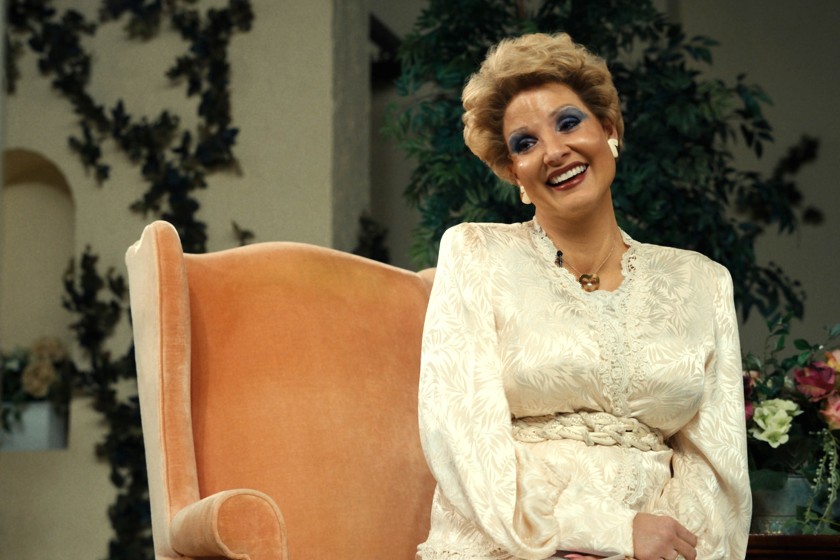
Out in theaters now, The Eyes of Tammy Faye tells the story of Tammy Faye Messner, a televangelist who, along with her husband Jim Bakker, stirred up quite a bit of controversy in the 1980s with their show The PTL Club and the shady activities that were happening behind the scenes, both in the production of the show and in their personal lives. Captured in the year 2000 in the documentary of the same name, directed by Fenton Bailey and Randy Barbato, and narrated by RuPaul, the film now gets the big-screen biopic treatment courtesy of director Michael Showalter.

Jessica Chastain stars as Tammy Faye, with Andrew Garfield as Jim. In their wheelings and dealings in the televangelist community, the two come into contact with Reverend Jerry Falwell, played by Vincent D’Onofrio. A notoriously strict conservative who relentlessly pushed his bigoted belief system, Falwell was memorably captured on film before in Miloš Forman’s 1996 feature The People vs. Larry Flynt, which in part depicted Flynt’s battle with Falwell after Hustler magazine posted a fake interview with Falwell describing his first sexual experience being with his mother in an outhouse.

While The Eyes of Tammy Faye’s portrayal of the man may not be as salacious a period of time in Falwell’s life, it certainly doesn’t paint the rosiest picture of him either. D’Onofrio is tasked with capturing the man as an antagonistic figure to the Bakkers, and to Tammy in particular, as he gives in to the greed of the booming televangelist scene while clashing with Tammy’s activism towards the queer community. This far right political figure is quite the opposite end of the spectrum for the liberal D’Onofrio, something which we discussed in my recent interview with the actor.

MITCHELL BEAUPRE: How familiar were you with this story before signing onto the project? Were you aware of it when it was happening?

VINCENT D’ONOFRIO: I was slightly aware of it. I grew up in the South a bit, and as you know the country was not as blatantly divided as it is now. Although I grew up in a very liberal household, I didn’t actually know I was growing up in a liberal household. I also didn’t know that my neighbors were conservative or far right. They were just like our family. Those kids that lived in that house were close friends of mine, and I remember being over at their house and seeing those shows — The PTL Club and Pat Robertson. All of those types of evangelists. But, that was the extent of it. I think I had the typical opinion that most people who aren’t Christians had about it.

MB: Once you got involved with the film, did you go through a process of learning more about it all?

VD: I knew I had to take a deep dive to learn, and to erase all of my uninformed opinions. There’s how I feel about everything personally, which has nothing to do with my participation in the film. I was asked to play the role of Reverend Jerry Falwell. In order to do that, I had to take that dive, and learn what I could about him. Everything I could find on the internet, every piece of video or audio. I saw the documentary as well, but I also found all of this stuff on YouTube, and watched videos of the shows that Tammy Faye and Jim Bakker did. My task was to service the story in the best way I could, and so I had to create my version of Jerry so that I serviced the story properly.

Within that, it was incredibly fun, and interesting to watch. As an actor, to be in the company of your peers and to have your peers be as good as Jessica and Andrew, it’s a wonderful thing because we’re on set and we’re creating, and you can feel it. To me, Tammy Faye is Jessica in those scenes. It’s an odd way to talk about it. I’m being as honest as I can. I didn’t know Tammy Faye. I know Jessica Chastain, as an actress who’s incredibly talented, playing Tammy Faye. That is extraordinary.

MB: How did inhabiting this character and acting out this story have an impact on your perception of these people and that kind of political sphere?

VD: The one point that it makes for me is that there’s good in bad, and there’s bad in good. I think that’s needed more than ever right now, because we get blind sometimes and forget that things are not so black and white, unless you get to the main, main, main issues, and that’s unfortunately political. As a person, as a liberal, I have my beliefs, and there are bottom line things that I believe in that I will never change on. But as an actor, you know, what a world to enter, and to participate in, to service that story.

MB: When you’re playing a character with a very different set of beliefs from your own, is that more challenging for you to get into that headspace or is it more exciting in a way?

VD: It’s very exciting, number one. You’re right, it’s so exciting. I’ve explained this before, even with friends I’ve talked about this, that it’s kind of like a Stockholm Syndrome. It requires a lot of work, a lot of commitment and time. It’s like you’re captured, and you become your captor, and you end up loving it. That’s the way I see it. Then one day it’s done, and you get out and reflect all you want afterwards. But during that period, you are its captive, and you experience that Stockholm Syndrome where you fall in love with your captor.

MB: Speaking of control, you got to work with Michael Showalter here as your director. What stood out the most to you about making the film with him?

VD: He’s an amazing director. There are a lot of great directors out there, and they’re all great in their own different ways. Michael is definitely an actor’s director. His sets are so comfortable to work on. He has a way of entering his direction to the scene in the most subtle way. When Andrew and Jessica and I were on set and we were doing our scenes together, we would find the scene and each take would get better and better. Michael knows the right way to do it is as a sort of experiment. You bring everything you’ve studied into it and then experiment while servicing the story properly.

The Eyes of Tammy Faye is in theaters now.

Movie Review: ‘Blue Bayou’ Shows Promising Work from Justin Chon


Director: Justin Chon

Writers: Justin Chon

Stars: Justin Chon, Alicia Vikander, Mark O’Brien

Synopsis: As a Korean-American man raised in the Louisiana bayou works hard to make a life for his family, he must confront the ghosts of his past as he discovers that he could be deported from the only country he has ever called home.

[/info]

Many movie stars don’t like to be associated with a single project that they’ve done, especially if that previous project was known to be… not the best, to put it nicely. Robert Pattinson and Kristen Stewart know this all too well from their days in Twilight, and almost a decade after the last movie was released they’re both finally starting to break away from those roles. Another small actor in the Twilight films, Justin Chon, has been spending the last few years as an actor/director. Creating new films about topics he’s passionate about, Blue Bayou is the latest entry to his filmography. Often unafraid to explore intense topics in his films, Chon leans heavily into his themes of the threat of living as an immigrant in America, but his vision becomes cluttered and complicated with ideas that fail to provide anything substantial to the main narrative.

Adopted at 3 years old from Korea, Chon plays Antonio LeBlanc, a father who’s living in Louisiana where he clearly sticks out in the small town he lives in. and his adopted daughter. From the start, the film makes it clear that Antonio is facing an uphill battle. On top of the casual racism that he faces everyday, he also lives in near poverty with his wife, Kathy (played by Alicia Vikander). Carrying a felony charge with him, it also makes it harder for him to find a job to dig himself out of poverty. Chon deeply develops Antonio as a complex character, layering him with moments of genuine kindness and wanting the best for his family and taking care of his wife. However, Antonio also refuses any help and continues to make careless decisions. He’s difficult to figure out, and this only adds to the humanity of his character, especially as an immigrant. As he faces many challenges connected to deportation throughout the film, I was constantly left with questions. I struggled with why he has this obvious need to prove that he is perfect. And at a larger level, as a man who has lived his entire life in the United States, why is there a need to prove that he deserves the respect and dignity of remaining here? Humans are complex people who make mistakes often, and Blue Bayou is incredibly successful at showing how much more difficult it is for immigrants living in America.

As the narrative progresses, Chon adds more layers and complexities to the challenges Antonio is facing, even as late as almost an hour and a half into the film. The additional depth and storylines make it feel like a very lived experience. People are constantly facing new things as others come and go in their life, and rarely do we ever have one main problem that our life is centered around. While it feels like I’m watching the highlights (or lowlights) of a real life experience, it doesn’t translate as smoothly to film. It becomes confusing as to where the narrative is going, and what exactly the point Chin is trying to make, or how these additional elements are relevant. Many of the characters and subplots introduced feel entirely unnecessary to the story Chon is trying to tell, and it’s incredibly obvious that while the writing is so heartfelt, this script could have used another set of eyes to trim it down, or a few more rounds of edits.

On top of the complex narrative, as well as the complicated and sometimes unlikable character of Antonio, it was hard to emotionally connect to this movie. There are moments that really tug at the audience’s heartstrings, and at points are incredibly successful, but these moments feel more out of sympathy rather than out of a care for these particular characters. It’s like when a stranger in a parking lot has something bad happen to them. You feel bad, but you don’t really know what you can do other than just either watch or leave.

The film is anchored by incredible performances by Chon and Vikander, both delivering the best performances possible as allowed by the script. Chon is clearly connected, as he both wrote and directed the film, but Vikander makes her character feel so realistic and genuine, as if she’s someone who you actually know. The child actor who plays their daughter, Jessie (Sydney Kowalske) also delivers one of the best youth performances I’ve seen, delivering casual conversations naturally and emotional depths that would be difficult for any adult actor to access.

The themes that Blue Bayou are trying to tackle are compelling, and there’s really a great story in there somewhere. Unfortunately, that story isn’t what made it to screen. Justin Chon is a filmmaker to watch out for, and this movie will still make you think and question what your beliefs are, as well as move you emotionally, especially in the final scene. However, it’s not a film that I would willingly revisit anytime soon. While I would recommend anyone to see this movie, I would also say that maybe one viewing is enough.

Grade: C+

Criterion Crunch Time: ‘2046’

The Criterion Channel is particularly focused on, maybe even more so than other boutique labels and streaming services, the oeuvre of specific directors. Whatever your thoughts on high minded film topics like the auteur theory, it is undeniably enjoyable to work your way through a director’s work. This is why they offer sets from the likes of Agnes Varda, Ingmar Bergman, and Federico Fellini. This not only offers the opportunity to view their most famous works, but in many cases, affords an ability to release many films that were not available domestically previously. Another of Criterion’s favorite directors is Wong Kar-Wai. With that in mind, one of the many high quality films leaving the Criterion Channel this month is 2046.

I decided to watch this sight unseen because the work of Wong Kar-Wai is a bit of a blind spot for me. The only film I had previously watched was In The Mood For Love which, frankly, is one of the best films ever made. No pressure. Before I sat down to watch, however, I noticed that 2046 is actually a part of a trilogy, preceded by In The Mood For Love and Days of Being Wild. Being a glutton for punishment, of course, I watched all three in quick succession. However, this is certainly a loose trilogy, meaning watching them in order (or at all) is not completely necessary, though it does add to the experience.

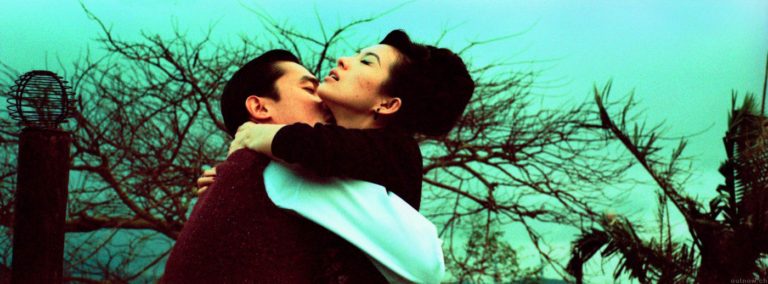
2046, like much of his other work, is a non-linear story. It focuses on Chow Mo-wan (Tony Leung Chiu-Wai) in the aftermath of his failed relationship with Su Li-zhen (Maggie Cheung) detailed in In The Mood For Love. Despite the fact that it follows the same character, this role would be a challenge for any actor. After his self-imposed rejection, he has become a playboy to cover his pain and loss. Leung, with his stunning good looks and suave charm, fulfills this role perfectly. He is so convincing, in fact, that there are moments where you wonder if this is truly the same man. 

But the script, also written by Wong Kar-Wai, gives us numerous clues into the connected worlds. Included in this are the story about a legless bird and the ways in which people used to keep secrets, both remnants from the previous two films. But the most important connection is in the title itself. 2046 is not only the title of the film but also the hotel room in which Chow Mo-wan and Su Li-zhen meet clandestinely. It is also the room that he wishes to rent in this film, as well as the name of the story he is writing. Cleverly, in this fictional story, it is a place that people travel to and never leave. His protagonist does leave because he lost his love, possibly because she loved another, a clear connection to In The Mood For Love.

Matching, and at times exceeding Leung’s performance, is his sometimes scene partner, Zhang Ziyi. Portraying his neighbor, in room 2046, Bai Ling. Zhang goes toe-to-toe with Leung and never falters. Bai Ling seems to be written as a foil for his memory of Su Li-zhen. The first relationship is maddeningly intimate but never delves into animalistic desire. His interactions with Bai Ling are nearly the opposite. It begins quite combative but quickly moves into the physical realm. Their mutual desire and energy is immediately palpable, as to almost be uncomfortable until it is consummated. However, the intimacy in this relationship is unidirectional. Bai Ling cares for him, and in a particularly painful moment, she asks him to treat her as a primary partner. Chow Mo-wan coldly refuses with a smirk and Zhang’s face reveals how much she truly cares for him. Her performance in this moment will make many audiences wish they were following her instead of Chow Mo-wan. If there is a negative in 2046, it is the fact that she is missing for nearly half the film.

But in fairness, it is appropriate for the arc of the characters in the trilogy. In many ways, this trilogy is about the search for love and how easily we can miss our opportunities. Chow Mo-wan truly believes, like Yuddy (Leslie Cheung) in Days of Being Wild, that there is one partner for him. He is constantly looking for Su Li-zhen. Bai Ling is her opposite, and another female character, Black Spider (Gong Li), is merely a pale imitation. The realization that he is being unfair to these women, as well as himself, is truly a painful one. He has become the legless bird that can never land. His one chance at landing was with Su Li-zhen, and they were the victims of awful timing. He seems destined to climb a mountain and whisper his secrets to a tree, and to do so alone. Damaged beyond repair, he is willing to lend anything. Anything but what matters, his heart, and he and Bai Ling are worse for this inability to move past his loss. 

Next month, we look at two more movies leaving the Criterion Channel.

Top Ten: Sean Bean Essentials

Superb television such as Sharpe, Lady Chatterley, and Game of Thrones or cameos and tent poles like GoldenEye and Lord of the Rings aside; Sean Bean has been smirking, cursing, and dying onscreen for decades before his walking spoiler notoriety became a meme. Here’s an eclectic sample of vintage Bean baddies, heavies, and impressive dramatic turns.

Ian..."National Treasure" | National treasure movie, Sean bean, National  treasure

10. National Treasure

Knights Templar clues and a treasure map on the back of the Declaration of Independence lead Nicholas Cage (Leaving Las Vegas) – and his former business partner Sean Bean – to hidden Free Mason riches in this 2004 Disney adventure. The ambitious premise falls prey to logistical plot holes, geographic flaws, and basic historical exposition. The script is both broad and witty in the wrong places, and despite a talented ensemble, including feisty doctor Diane Krueger (Troy) and FBI agent Harvey Keitel (The Piano), the secondary characters are underwritten with no time to be properly showcased amid van pursuits, perilous staircase mazes, and death defying avalanches. Fortunately, the Smithsonian heists, Philadelphia chases, and New York underground escapes create fantastical what-ifs, and Cage is clearly having fun with the lighthearted one-upmanship riddles. Although he’s the cliché wealthy European villain bent on acquiring treasure simply because he can, Bean’s subtle threats and big ambitions elevate a fun story that really isn’t meant to be taken so seriously. This may not hold many re-watches for adults, however, history teachers might appreciate a fact or fiction classroom viewing, and younger audiences will delight in the set pieces, secret puzzles, and treasure quest.

Stormy Monday

9. Stormy Monday

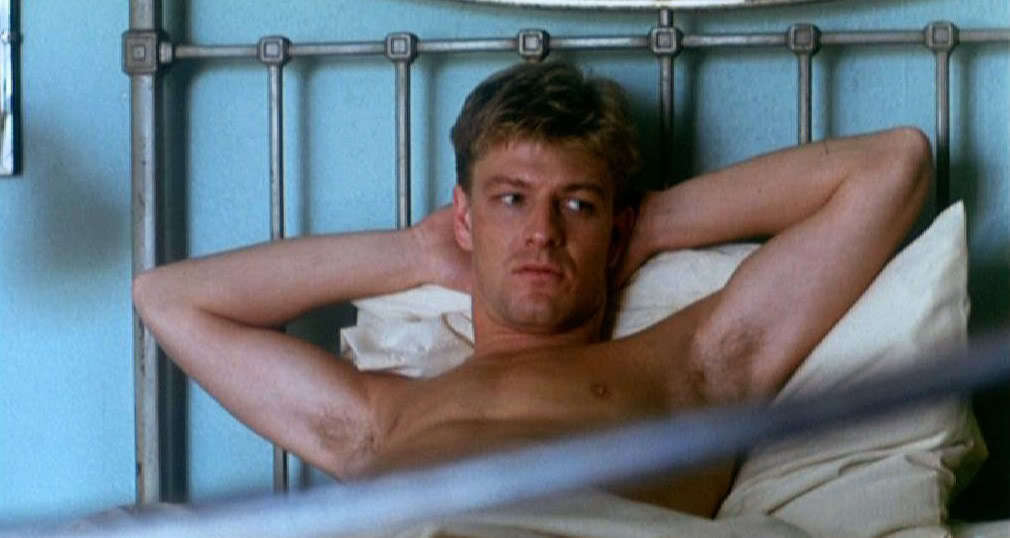
Call girl Melanie Griffith (Working Girl) is under the thumb of corrupt businessman Tommy Lee Jones (The Fugitive) but finds romance with business rival and jazz club owner Sting’s (Dune) everyman Sean Bean in this smooth, moody 1988 noir written and directed by Mike Figgis (The Loss of Sexual Innocence). The very blonde and baby faced Bean is a down on his luck musician drawn into the crooked New Castle underground amid brewing plotting, strategic business deals, and deadly political maneuvers. Griffith’s Kate also starts out bright eyed and hopeful, but her despair over the inescapable situation increases – a depression only alleviated by tender moments with Bean’s younger, daring Brandon. Though underutilized, Tommy Lee Jones has a wicked presence, raising the dangerous cat and mouse territorial games with the suave Sting as our couple and an innocent but humorous Polish jazz band interfere. Although the on location production looks eighties poor now and the “American Week” celebration themes may miss the Reaganism mark today, the blues ambiance unifies the somewhat routine story. The atmosphere, music, chemistry, and performances make Stormy Monday a must for fans of the cast.

10 Movie Casting Choices That Were Total Misdirection – Page 9

8. Flightplan

Widowed engineer Jodi Foster’s (Silence of the Lambs) daughter goes missing on a transatlantic flight in this claustrophobic, turbulent 2002 thriller. In fact, it seems like the six year old never existed at all – leading passengers, crew, air marshal Peter Sarsgaard (Kinsey), and captain Sean Bean suspicious of the bereaved pills, drinking, and paranoia. Foster’s facial realizations and intelligent actions are sympathetic rather than hysterical, but her absurd requests make Bean’s captain increasingly curt. He placates her with plane searches at the expense of the other passengers’ needs, ultimately choosing what’s best for everyone else onboard instead. No one is on her side, invoking a Twilight Zone unreliable as we aren’t sure who to believe. It’s certainly possible for a child to go missing on an airplane; there are so many places to hide thanks to the double decker passenger lounges, a spacious cockpit, massive cargo holds, and dark underbelly avionics. It’s not like she could leave! How the crew and passengers react to the frantic situation remains more suspenseful than typical losing cabin pressure scenarios or shaking prop planes. Aeronautics knowledge and aviation skills provide smart setups and realistic in-flight action while multiple languages add continental flair. There are unfortunate Arab stereotypes and younger viewers may be frightened, but the elevated performances and family doubts provide food for thought entertainment.

Bravo Two Zero: Pic Spam 4 aka The End | Bravo two zero, Sean bean, Actors

7. Bravo Two Zero

This 1999 Gulf War drama based on the book by SAS Sergeant Andy McNab is not for the squeamish or sensitive audiences thanks to the extensive torture, abuse, dirt, and shame endured. As McNab, Bean takes his team through a disastrously compromised Baghdad mission and a race to the Syrian border in hopes of rescue before an arduous capture and escalating prison anguish. It’s not all pretty uniforms, shiny medals, and heroics here, for knowing the operation fails increases the gut wrenching disturbing. The ensemble looks the career soldier rugged and they certainly don’t end up pretty amid authentic looking weapons, desert gear, and dusty, drab locations. Sean Bean is known for his rough and tumble portrayals and is by no means a glamorous actor, however, this stripped bare tour de force is tough to watch impressive. The things are done to him. The things he made to do. Such strength, courage, and will to survive are inspiring, and accolades should have followed. Although now it is very nineties dated in scale, score, style, and slang; Bravo Two Zero provides a unique, realistic portrayal of the first Gulf War with a touch of SAS grit. Despite its ruthlessness and scary realism, this is an important tale shedding light on the ugly side of modern warfare.

Essex Boys screenshot Billy Reynolds (Charlie Creed-Miles), Jason Locke (Sean  Bean) and John Dyke (Tom Wilkinson) © Granada Film Productions - Kent Film  Office

6. Essex Boys

Brutal violence, a fine cast, and a complex story based on real life criminal events anchor this 2000 British ride. Recently freed felon Sean Bean quickly returns to his criminal ways, but his crew has moved up the gang ladder without him and his abused wife Alex Kingston (ER) acerbates the drug dealing love, loyalty, and betrayal. The players keep us guessing as to who is double crossing whom as one mess after another begets more twists and turns. Bean’s Locke is an acid loving, rapacious, wife beating lush. He’s crazy but has a mastery of weapons, women, and brutality. Most actors couldn’t or wouldn’t portray the demented here, but Bean leans into the well done vile. Alex Kingston likewise makes the most out of a seemingly homely role. Her Mrs. is strong, coy, and loyal yet weak, stupid, and desperate. We feel for her and loathe her at the same time. The behind the times looks and zany fashions add to the low end world as well while violent action, shoot outs, and chases supplement the intricate plot. Nothing is given away or dropped too soon, raising the unexpected and clever finale. Granted the thick dialects, thorough Englishness, and dated gritty will not be for everyone, but the juicy gangster action remains worthwhile.

Cleanskin (2012) - IMDb

5. Cleanskin

Secret Service agent Sean Bean goes on a covert mission to find a young, radical terrorist in this 2012 espionage thriller. Unfortunately, the deeper he digs, the more he sinks into the corrupt spy game. Writer and director Hadi Hajaig (Puritan) opens with intercut steamy and news footage, building intrigue with attention to detail, ordinance technicalities, and political divides. The violence is realistic, frightening, and shocking with crisp London locales and tense underscoring to match. Mishandled flashbacks, however, should have come earlier to invoke sympathy instead of halting the forward moving spy pursuits. There’s material enough for two separate films, but fortunately, the parallel plots converge for an intense finale. When does one cross the line between defending his country and becoming exactly like his terrorist prey? Soft-spoken, unassuming, professional man of action Sean Bean makes mistakes in his undercover, off the deep end desperation. He doesn’t want things to get ugly but is damn effective at scaring people into giving him what he wants. Charlotte Rampling (Swimming Pool) also brings her usual excellence and grace as a sophisticated handler with her own motivations making us doubt who we can trust and who the villains really are. Though somewhat muddled with potentially offensive depictions and flashbacks hampering the attempt to shed light on the often misconstrued face of terrorism, this is a gripping, thought provoking piece.

Ca$h (2010) - IMDb

4. Ca$h

A suitcase filled with over a half a million dollars literally lands on a Chicago couple’s station wagon in the 2010 heist Ca$h, but the now jailed Reese (Sean Bean) wants his ditched loot back and calls his twin brother Pyke (also Bean) to handle it. The stylish, never sleeping, genius with numbers Pyke, however, isn’t content with merely taking the swag. He insists on retrieving the mere $75,000 the couple has already spent – forcing them into a dangerous life of crime. Writer and director Stephen Milburn Anderson’s (Dead Man Can’t Dance) dark but sardonic script satirizes America’s obsession with wealth and greed, laughing at the things we do for money. This shady Chicago reiterates the slippery slope toward a life of desperation or illegal means while swanky scoring and suave pop tunes add a classic edge and sexy mood to the clever humor. Bean is bemusing as the mullet wearing Reese, but Pyke slicks back his hair and straightens his tie after some violent intimidation and his dominating presence drives the picture. This is one of Bean’s best performances since he should have been nominated for Supporting Actor in the Fellowship of the Ring. A pre-Thor Chris Hemsworth is also surprisingly good as his previously honest, upstanding Average Joe escalates to anger, robbery, and cruelty once Pyke leans into his possible cowardice. The camera work is both fast and intense for violent scenes or claustrophobic and askew for revealing character moments, and this gruff yet witty examination of money, corruption, and power does not shy away from telling it like it is.

The Field (1990) - IMDb

3. The Field

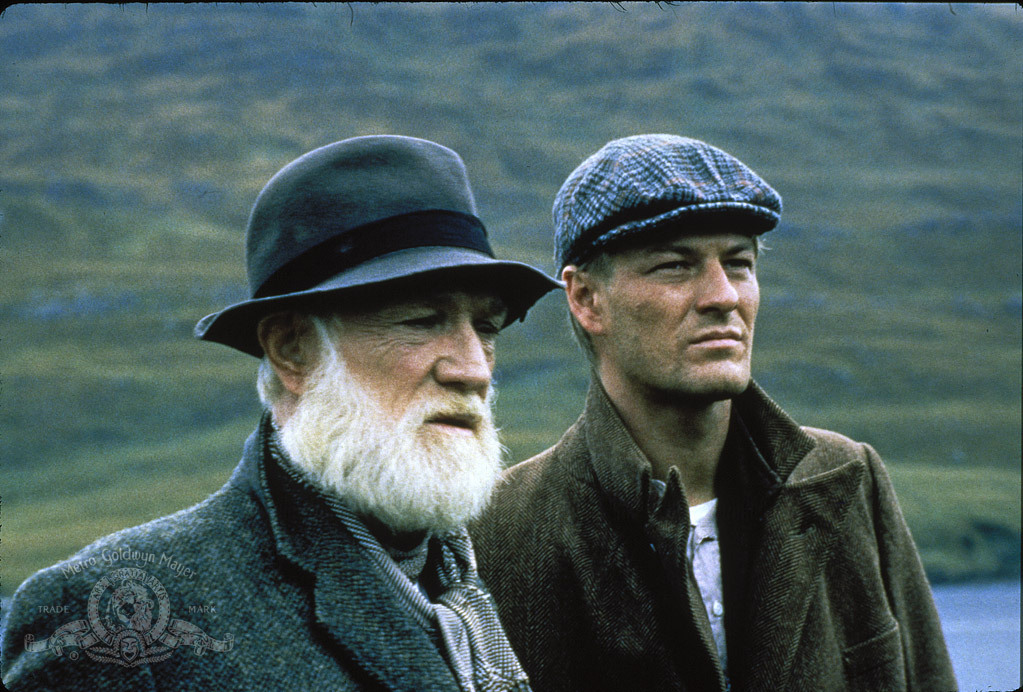
Richard Harris (Camelot), Tom Berenger (Major League), and John Hurt (Alien) join Bean in this 1990 Irish tale about one stubborn man who refuses to back down against outside developers over the titular land. The Oscar-nominated Harris is stellar, balancing the hardened laborer and tortured father while despising those who gave up during the Potato Famine. Bull McCabe is willing to sacrifice himself and his family to purchase this plot, descending into murder and madness to stop anyone who stands in his way. The unrecognizable town idiot do-anything-for-a-drink John Heard is a sad representation of what happens to those who lose their livelihood, and Sean Bean is admirable as the tormented son with big dreams. He’s not the brightest and he’s not at all interested in the field – placing him in direct conflict with his father. The at odds generations parallel the dwindling community, quaint ways, horse drawn carriages, and thatched homes versus the vintage cars, lush greens, and stunning cliffscapes, and the on location filming is a character unto itself. No effects, obvious mysteries, and numerous monologues may make The Field seem slow today, but delicate zooms, tracking shots, and vast panoramas capture both the fertile scope and the bittersweet characterizations, and the potent performances make this tragic little ode worthwhile.

Black Death | The Arts Desk

2. Black Death

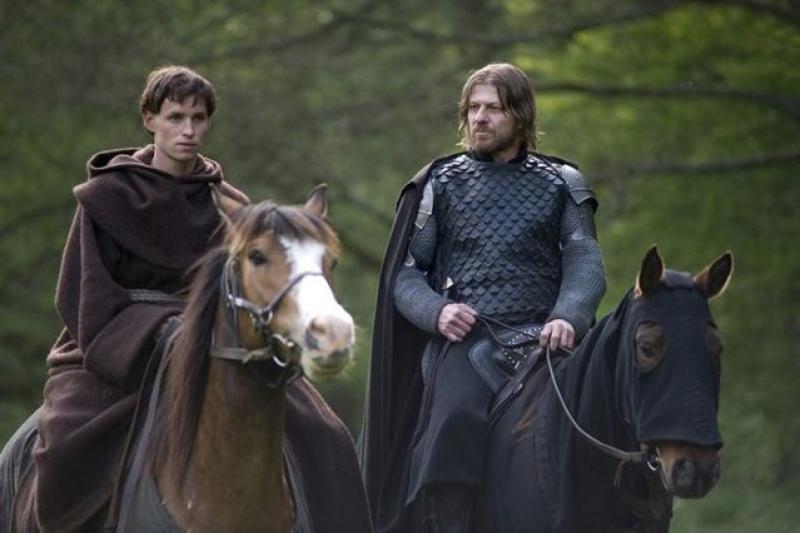
Monk in love Eddie Redmayne (The Danish Girl) joins zealous knight Sean Bean’s quest to investigate a nearby plague-free village lead by supposed necromancer Carice van Houten (Game of Thrones) in director Christopher Smith (Triangle) and writer Dario Poloni’s (Wilderness) 2010 historical horror thriller. Devout and superstitious ideologies place viewers in the Dark Ages state of mind alongside emotional characters, lofty concepts, questions of faith, and deadly circumstances. Fear of pestilence as a punishment from God drives the sword fights, battles, shocks, and scares; but the performances, emotion, and spiritual intrigue are not at the mercy of the violence, torture, and blood. Rhythmic dialogue is delivered seriously despite talk of demons, and righteous Bean has a job to do, unflinching in his gruesome killings. Our warrior and priest both kill in the name of God, but what happens when the knight is more of a believer than a monk led by his own desires? van Houten’s eerie performance adds to the temptations, creating devilish promises to counter the divine love. Is one or the other right or wrong? Dirty realistic photography matches the Latin chants, robes, chain mail, and ecclesiastic designs as choice red flavors an otherwise natural, devoid palette. Despite its deadly subject matter and morbid outlook, this is a beautiful film with stunning locales and an accurate, aesthetically pleasing atmosphere – a thrilling, intelligent drama with horrific slice and dice debates.

Patriot Games (1992) - IMDb

1. Patriot Games

After thwarting a radical IRA attack, Harrison Ford’s (Star Wars) former CIA analyst Jack Ryan is pursued by vengeful Ulster terrorist Sean Bean in this 1992 Tom Clancy adaptation from director Phillip Noyce (Dead Calm). Jack Ryan is not a superhero – his family’s life is taken out of his control – and Ford delivers the tears and need to defend his castle. Bean only speaks about ten times in the picture, disturbing dialogue to match his intense stare and ruthless vengeance. We hate the silent killer yet root for the family man to take matters into his own hands. What would you do if it were your dead brother? How would I react if my family were in danger? While the action and choreography may seem small scale to contemporary viewers, the camera remains up close on Bean’s face as he kills – revealing his smiling, cold joy at murder. The focus is on the people involved during the large set pieces, maintaining the emotion, suspense, and drama. Put on accents and red wigs acerbate Irish stereotypes, however, the Celtic score amplifies the cultural analogies. Patriot Games may be simplified as a man versus man vehicle, yet the fine ensemble keeps the IRA relations, politics, and patriotism personal and relatable for today. Readers of Clancy’s novel will find significant changes and a rushed ending, but fans of sophisticated capers need look no further.

Movie Review: ‘Prisoners of the Ghostland’ is a Disappointing Outing from Sion Sono


Director: Sion Sono
Writer: Aaron Hendry & Reza Sixo Safai
Stars: Nicolas Cage, Sofia Boutella, Bill Moseley, Nick Cassavetes, and Tak Sakaguchi

Synopsis: A notorious criminal must break an evil curse in order to rescue an abducted girl who has mysteriously disappeared.

[/info]

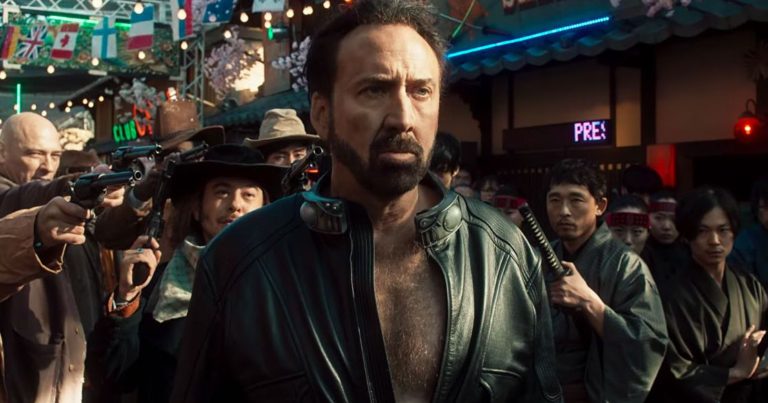
Famed Japanese genre filmmaker Sion Sono directs his first English-language film in Prisoners of the Ghostland. Teaming up with acting legend Nicolas Cage and bringing the director’s usual brand of a hyper-stylized aesthetic and ultraviolent action sequences should’ve resulted in one of the most entertaining movies of the year, especially when you consider the fact that 2021 has been an incredible year resurrecting the long-lost art of genre cinema. Unfortunately, it feels surprisingly tame and restrained from the usual works of Sono, and even such an entertaining actor like Cage can’t make most of its haphazard material feel entertaining enough for audiences to care.

It starts pretty entertainingly, though, with Cage’s Hero robbing a bank with Nick Cassavetes’ Psycho. Cinematographer Sohei Tanikawa beautifully shoots the sequence. It perfectly establishes Sono’s tone right from the get-go, alongside another bonkers performance from Cage, going full Wild At Heart crazy. However, right after this scene, the movie’s pace slows down hard. It becomes a somewhat clichéd actioner, as Hero has to accept a mission from The Governor (Bill Molesley) to find his adopted granddaughter, Bernice (Sofia Boutella), trapped in the “Ghostland.” The Governor straps Hero inside a suit filled with explosive devices in the hopes he returns her safely, but our protagonist discovers the people of Ghostland and uncovers who The Governor is.

As an actor, Nicolas Cage has embraced his self-awareness as of late. He loves to bathe himself in the most ridiculous movies, and Prisoners of the Ghostland is no exception. Cage himself has called it “the wildest movie I’ve ever made,” and if by “wild,” he means losing one testicle from an explosive gadget and then yelling it out in front of a crowd in a ridiculous fashion, yeah, I’d believe it. But after seeing Julia Ducournau’s Titane at the Toronto International Film Festival, no other movie can be as wild as this. Some of the film’s action sequences are a tad wild, yes, but compared to some of Sono’s previous work, such as Why Don’t You Play in Hell?, Love Exposure, and Suicide Club, Prisoners of the Ghostland is the tamest wildest production Sono has ever done.

The action is expertly choreographed as always, and it’s beautiful to see Tak Sakaguchi going at it with his skillful samurai stuntwork. Still, it doesn’t feel as cathartic or as violent as what Sono is usually accustomed to. As a result, everything in Prisoners of the Ghostland feels underwhelming, from how the action doesn’t go above a standard R-rating to how Cage is utilized as a lead actor. In films such as Color out of Space, Willy’s Wonderland, or Mandy, Cage’s wild persona was used significantly. Still, he feels restrained, or should I say, uncomfortable with his character in Prisoners of the Ghostland. But there’s no reason for him to feel uncomfortable; the character is tailor-made for Cage to have the time of his life with. In some sequences, he’s relishing his role and delivers a performance that’s as iconic as some of his best work in Wild at Heart, Snake Eyes, and Face/Off. And then some of the most dramatic sequences don’t work at establishing emotional weight, where Cage and Boutella feel completely uncomfortable with what they have to work with.

The movie’s pacing falters its momentum as well, quickly dwindling any interest you may have in the film’s genre-blending concept. Sono throws way too many sub-genres of action at you: a post-apocalyptic Mad Max-esque thriller, alongside a Samurai flick with Western sensibilities, that, as a result, doesn’t know what it wants to say. Granted, there are few visually exciting sequences in the movie. Still, they’re so sparse, with the movie filling itself with drab and cyclical scenes where Hero interacts with the prisoners of Ghostland that lead to absolutely nowhere, that it’s hard for us to start getting fully invested in the movie.

It’s a damn shame because Sion Sono is one of the most exciting genre filmmakers working today, who continues to push the bar of catharsis to deliver an exhilarating film experience every single time. But Prisoners of the Ghostland lacks any excitement and catharsis that made Sono the filmmaker he is today. And while Cage, Boutella, Cassavetes, and Moseley have some sparse fun, it isn’t enough for me to recommend it to anyone. So if you haven’t seen Love Exposure yet, do it now. That is all.

Grade: D

Podcast: 2003 Awards Season – Patreon Bonus Content

Listen!

For our latest Patreon Bonus Content, as a tie in to our 2003 Retrospective, Ryan McQuade joins us to discuss the awards season for the films of 2003! We talk a lot about The Return of the King (obviously), but also, what other films win if The Lord of the Rings never excited?

If you’re already a Patreon supporter, you can listen to this episode NOW on Patreon by clicking here.

Sign up today to get early access and hear the entire episode!

[divider]

HELP SUPPORT THE SHOW

To hear our bonus content episodes early, subscribe now on Patreon. In many cases, though, we offer our bonus content for free after a certain period of time and we do encourage (and very much appreciate) a small donation of $0.99 as a way to help support the show if signing up on Patreon isn’t for you. Click on the PayPal button below to donate and thanks so much for your support. You can also hear much of our Bonus Content via our mobile apps. See the information at the bottom of the post for more details.


One-Time Donation


[divider]

Mobile Apps!

Listen to all of our bonus content on our apps for just a one-time fee! Whether you have an iPhone, Android or Windows phone, our apps are available in many different ways that is convenient for you. With our mobile app, not only can you listen to all of our bonus content, but our main shows and our Extra Film podcasts as well. Click here for more info!

If you don’t want to purchase our bonus content, but still want to support us, there are other you can help us out. Click here for more info.

Movie Review: ‘Apartment 413’ Is a Languid Chamber Piece


Director: Matt Patterson
Writer: Ron Maede
Stars: Nicholas Saenz, Brea Grant, Dave Buckman

Synopsis: Marco is running out of time to find a job before his girlfriend has their first baby. He’s also losing his mind. 


Several moments of this film feel all too familiar for this pandemic age. Apartment 413 is the story of a man who’s homebound—perhaps voluntarily, perhaps not—as he struggles with his mental health and fears of inadequacy. Marco (Nicholas Saenz) is at the end of his rope. He’s between jobs, behind on his bills, and his girlfriend Dana (Brea Grant) is due to give birth to their first child any day now. As he’s futilely applying for jobs in isolation every day, Marco’s humiliation is mounting and manifesting as a dangerous form of depression, then from there into something more sinister. Too often, people on the outside perceive the immobility that comes with depression as laziness, without any understanding of the turmoil that eats at you from the inside. The inward nature of mental illness can be tricky to capture on-screen in a non-stylized film, so this crew employs a dash of genre to physicalize the psychological. 

Apartment 413 is set in almost entirely in one central location, over the course of a handful of days, with just a few characters. This is admittedly not an easy feat from a screenwriting standpoint. In such a confined script, each verb has to actively propel the plot forward while highlighting the drives and struggles of the characters. And with so few names per scene, specificity becomes especially important. Screenwriter Ron Maede manages to construct a sturdy foundation from the page, though the narrative does have a tendency to stagnate from time to time. Apartment 413 is already on the lighter side in terms of its length, but the tempo is not as breezy as the minute count would suggest. Ultimately, I’m not convinced there’s enough external conflict to warrant a feature film status.

Thankfully, director and co-editor Matt Patterson is inventive enough to keep things visually interesting. Patterson embraces the parameters of the story he’s working with—not to mention his modest budget—and imbues some sage filmmaking techniques to raise the energy when it’s needed. But he doesn’t do it alone. Sometimes the smartest thing a director can do is assemble a strong squad. The film’s other credited co-editor is A.J. Edwards, who contributed to Terrence Malick’s Knight of Cups. Keeping a film’s pace at the proper speed can be a difficult task for an editor to nail well in a film not bound by time and place, and Edwards splices Patterson’s shots together with an unassuming proficiency. Rounding out the creative team is production designer Ashley Landavazo, whose art department prowess helped bring last year’s The Dark and the Wicked to life. The apex of her work on this film is an impressive earthquake sequence that successfully thrusts the film into its emotional peak.  

The main reason to watch Apartment 413 is Nicholas Saenz. The whole, merciful 80-minute runtime is really a showcase for his talents. As Marco spirals further into psychosis, Saenz plays his character’s condition earnestly, without any the theatrics or affectations that would compel some reviewers to use the word “unhinged.” Absent, too, is any sign of the purposeful inelegance that many liken to “rawness.” He instead trusts that the camera will see the internality of his work. Through the measured and cadenced progression of Marco’s arc, Saenz demonstrates a selfless willingness to let his portrayal be in service of the film, which sounds like it ought to be a no-brainer, and yet actors playing delirious roles habitually seem to think it’s supposed to be the other way around.

The rest of the small ensemble is good as well, but their material isn’t quite as exciting. As Marco’s pregnant girlfriend, Brea Grant delivers a firm and confident performance. She takes a role that could have easily blended in with the background but instead brings a sympathetic dimensionality to her character. Dave Buckman portrays an ominous mechanic roaming the property who becomes a vexing figure for Marco. I suspect the character was meant to have a vibe reminiscent of Robert Blake’s Mystery Man in David Lynch’s Lost Highway, but Buckman’s performance is a bit too forceful and prickly. And in the end, his exact significance in Marco’s life is a smidge unclear, which seems to be a running theme with this narrative. Ambiguity works when a filmmaker offers enough evidence to allow the audience to formulate a cogent theory. But Apartment 413, unfortunately, leaves too many stones unturned. 

Grade: C-

Movie Review (TIFF 2021): ‘True Things’ hurts, even though it doesn’t offer anything new


Director: Harry Wootliff.
Writers: Harry Wootliff, Molly Davies.
Stars: Ruth Wilson, Tom Burke, Hayley Squires.

Synopsis: A woman’s dreary life is forever changed after a risky sexual encounter.


It would seem that it is a ritual of passage to go through unfortunate romantic relationships, a topic that is well-known and vastly explored in cinema. Harry Wootliff, co-writer, and director of True Things, knows this too well, offering a film that is instantly recognizable, in the good and bad things regarding toxic relationships. Even though the film doesn’t really offer anything new, it is a hurtful reminder of the rush, expectation, and ambiguity of bad relationships.

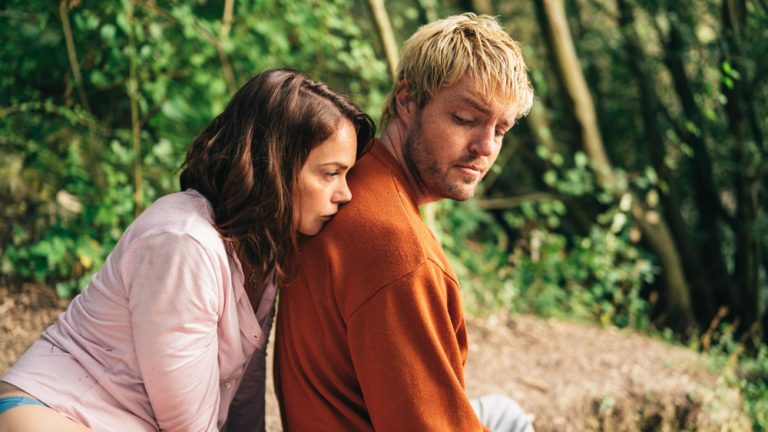
When we meet Kate (Ruth Wilson) she is kind of a mess. Her sense of humor, dry and sarcastic, alienates her from her colleagues and family, and she has been severely reprimanded for arriving late at work (something that is common) at a benefits office in a seaside town in England. As we see her on her routine, it is clear that she is miserable, waiting for something exciting that takes her out of her reverie. The answer seems to be Blond (we never really learn his name), one claimant that appears in the middle of Kate’s day. Blonde, over-confident and pathetic in his shadiness, he instantly sweeps her off her feet.

The attraction seems to be mutual (of course). Kate and Blond (Tom Burke) rapidly get immersed in an affair defined by its uncertainty and confusion. He is dominant and she is awkwardly trying to fit into his expectations. He brings her down with casual criticisms, cynical reactions to her signs of affection, and long absences.

More than being interested in understanding the relationship, Wootliff accompanies Kate as she gets excited, unravels, and puts herself back together again, only to be brought back down by Blond’s casual misogyny and loving manipulation. The film solely focuses on Kate and her drastic changes, making Blond a total enigma.

Eager, excited or heartbroken, Kate’s despair and obsessive need for Blond are painfully recognizable. She is eager to throw herself into a relationship with this man, even if she knows that he is unreliable and mean. Her fear to threaten the delicate rapport that she has established with Blond is tangible, as well as her despair to be with him all the time. Brought to life by a realistic Wilson, her physical performance is as vital as the words that come out of her mouth. The actress is fearless at showing so much vulnerability and humiliation.

Tom Burke appears as attractive and mysterious as we’ve ever seen him – with an eerie similarity to his role in The Souvenir (Joanna Hogg, 2019) –, but with an emotional distance that makes him more present, and problematic. Is Blond playing with her or does he really love her? These questions are always present but never answered, allowing the audience to create their own conclusions. Burke creates a man that is evidently a jerk, but that earns the benefit of the doubt because his real life is truly a mystery.

Filmed with a romantic and picturesque style, in True Things everything looks like a postcard. Wootliff is intimate in her images as well as her story: the camera is always too close to the characters, focusing on their eyes, mouths, and hands, especially hers. Sometimes it feels as if there’s no space between the camera and Kate.

Coming off from her sweet and good-natured Only You (2018), Wootliff keeps proving that she is skilled at showing intimacy and connection. While her 2018 film presents a relationship based on vulnerability and willingness to make things work, in True Things she presents the complete opposite: the rush of having feelings for someone, but the uncertainty of being reciprocated. In both films, the chemistry formed between the leads is intoxicating and vital. Even if True Things hits familiar notes, Burke and Wilson’s bond propels the story to go, aided by Wottliff’s unstructured and free depiction of her subjects.

True Things is an accurate representation of a toxic relationship that is doomed to fail from the start. The film effectively portrays the turmoil and bliss of getting involved in an unexpected and yet exciting affair that shakes you and presents previously unthinkable possibilities. With an unforgettable music number that works as an inspired cathartic event for Kate, Wootliff invites us to reflect about the life-altering, but shallow loves that we have experienced.

Grade: B-

List: Top 3 Oscar Isaac Scenes

This week on Episode 448 of the InSession Film Podcast, inspired by our review of The Card Counter, we discussed our favorite Oscar Isaac scenes in film. As we joked about on the show, it may be a little too early in Isaac’s career for this, but this is just Part 1 of hopefully an unlimited part series talking about his best scenes. Perhaps it’s because the timing of his rise in popularity correlates with our own growth as a podcast/film website, but his resume is somewhat nostalgic for us. We love Isaac and what he brings to his roles. There ore many, many great scenes to consider for this list, and boy did we have a great time talking them. That said, here are our lists:

(Note: Please keep in mind that we each had different criteria for our selections)

JD

1) Gorfein Apartment Scene – Inside Llewyn Davis
2) Roundtable Dinner Scene – A Most Violent Year
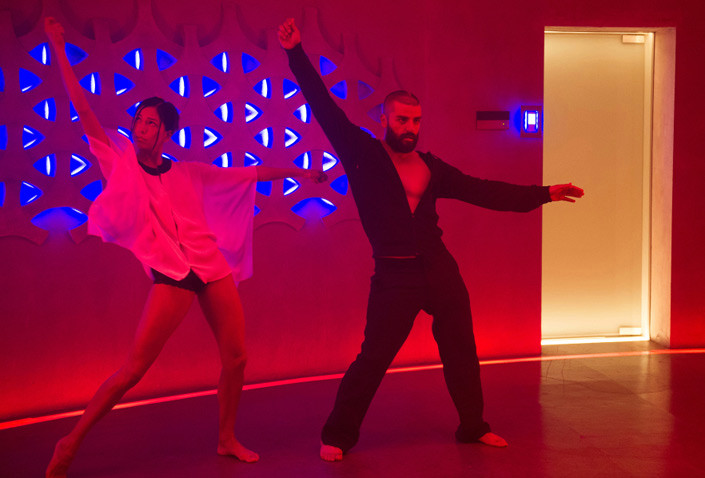
3) Nathan / Caleb Debate Consciousness and Sexuality – Ex Machina

Brendan

1) Audition Scene – Inside Llewyn Davis
2) The Art of the Sale – A Most Violent Year
3) Standard First Meets Driver – Drive

Honorable Mentions (Combined)

Various other scenes in Inside Llewyn Davis, Ex Machina, Drive, A Most Violent Year, Robin Hood, Annihilation, Star Wars: The Force Awakens, Star Wars: The Last Jedi, Triple Frontier, The Card Counter, 10 Years, Sucker Punch, The Two Faces of January

Hopefully you guys enjoyed our lists and if you agree or disagree with us, let us know in the comment section below. There are many great scenes in the career of Oscar Isaac so far, and perhaps your list is different than ours depending on your criteria. That being said, what would be your Top 3? Leave a comment in the comment section or email us at [email protected].

For the entire podcast, click here or listen below.

For more lists done by the InSession Film crew and other guests, be sure see our Top 3 Movie Lists page.

Poll: What biopic had the best makeup effects?

Biopics are often notorious for a couple of things – Wikipedia-style storytelling, and excessive amounts of makeup. The results are sometimes cringeworthy (cough…J. Edgar…cough), but in the cases that aren’t, we cannot deny the artistry involved. In fact in most cases, the work of the makeup artist is always rightfully applauded. The new Jessica Chastain vehicle The Eyes of Tammy Faye inspired us to look at biopics that allowed the makeup artists to do their very best work. Some of their work is quite subtle, others are quite grand, but are nonetheless authentic and convincing.

With that said, what biopic do you think had the best makeup effects?


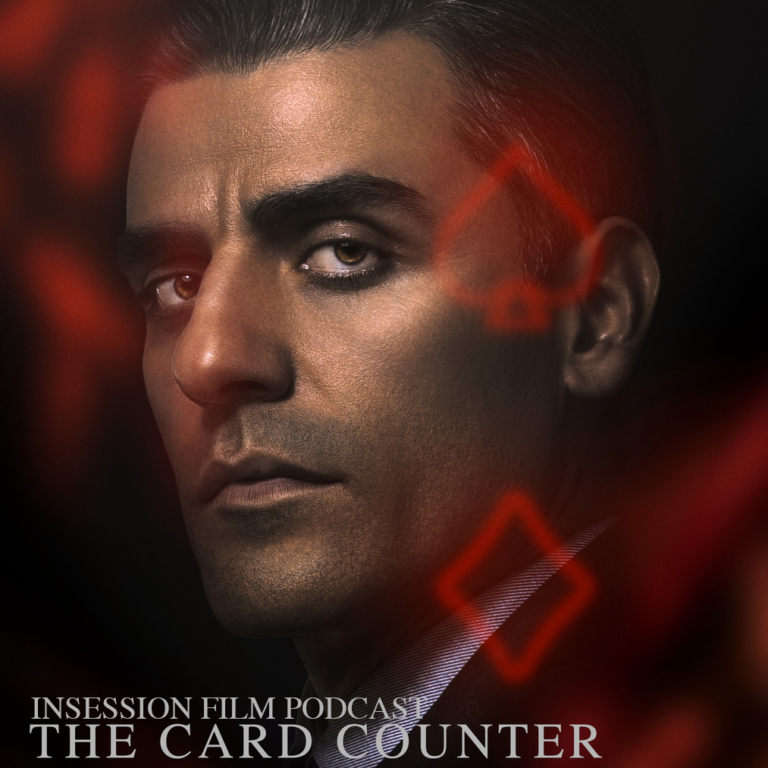
Podcast: The Card Counter / Top 3 Oscar Isaac Scenes – Episode 448

For our latest campaign, we are trying to reach 200 reviews on iTunes. We are getting closer and closer to our goal, but we need your help. Leave us a review today and you may even receive a free InSession Film t-shirt!

This week on the InSession Film Podcast, we discuss Paul Schrader’s latest film in The Card Counter and our Top 3 Oscar Isaac scenes in film!

After last week’s massive 2003 retrospective, it may be easy to snooze on this episode if you’re not interested in The Card Counter or Paul Schrader. However, at the very least, we urge you to stick around for our Oscar Isaac conversation. It was passionate and boy did we have a lot of fun talking about his best scenes. And for what it’s worth, we did our best to sift through all of The Card Counter‘s nuances and where the film falters and where it succeeds.

On that note, check out this week’s show and let us know what you think in the comment section. Thanks for listening and for supporting the InSession Film Podcast!

– Movie Review: The Card Counter (6:31)
Director: Paul Schrader
Writers: Paul Schrader
Stars: Oscar Isaac, Tye Sheridan, Tiffany Haddish

– Notes / Discussion (48:21)

For our break segment, we had no other films to review or bring up, but we did have many new iTunes reviews to get to as part of our latest campaign. If you’re interested, we are still giving away t-shirts for new iTunes reviews. If you left a review already, or leave one soon, please DM us on social media (or email us) to get a FREE InSession Film t-shirt.

[divider]

RELATED: Listen to Episode 423 of the InSession Film Podcast where we discussed The Tree of Life!

[divider]

Top 3 Oscar Isaac Scenes (1:08:47)
As we joked about on the show, it may be a little too early in Oscar Isaac’s career for this, but this is just Part 1 of hopefully an unlimited part series talking about his best scenes. Perhaps it’s because the timing of his rise in popularity correlates with our own growth as a podcast/film website, but his resume is somewhat nostalgic for us. We love Isaac and what he brings to his roles. There ore many, many great scenes to consider for this list, and boy did we have a great time talking them. That said, what would be your top 3?

Show Sponsor: First Time Watchers Podcast

– Music

Smoke Ring – Robert Levon Been
Fare Thee Well – Oscar Isaac
Abel’s Theme – Alex Ebert
The Return of the Eagle – Atli Örvarsson

Subscribe to our Podcasts RSS
Subscribe to our Podcasts on iTunes
Listen on Spotify
Listen on Stitcher
InSession Film Podcast – Episode 448

[divider]

Next week on the show:

Review: The Eyes of Tammy Faye
Top 3: TBD

[divider]

Help Support The InSession Film Podcast

If you want to help support us, there are several ways you can help us and we’d absolutely appreciate it. Every penny goes directly back into supporting the show and we are truly honored and grateful. Thanks for your support and for listening to the InSession Film Podcast!

VISIT OUR DONATE PAGE HERE

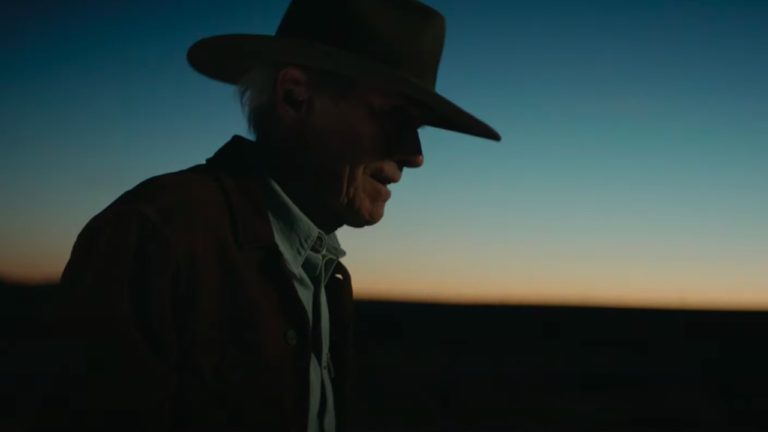
Movie Review: ‘Cry Macho’ Offers a Familiar but Compelling Road Trip Narrative


Director: Clint Eastwood
Writers: Nick Schenk, N. Richard Nash
Stars: Clint Eastwood, Eduardo Minett, Natalia Traven, Dwight Yoakum

Synopsis: A one-time rodeo star and washed-up horse breeder takes a job to bring a man’s young son home and away from his alcoholic mom. On their journey, the horseman finds redemption by teaching the boy what it means to be a good man.

[/info]

2021 marks not only Clint Eastwood’s thirty-ninth feature film as director but also the fiftieth anniversary of Eastwood’s very first feature as director—the terrific 1971 thriller Play Misty for Me, starring Eastwood and the late Jessica Walter in a dazzling performance. There have certainly been highs and lows in his long career as a director, but the good films absolutely outweigh the bad, and although his latest effort Cry Macho isn’t in the same league of some of his best films like Unforgiven, Mystic River, and Million Dollar Baby, it’s a noble film with compelling relationships and an impressive efficiency that keeps the viewer engaged.

If there’s any section of the film that doesn’t work well, it’s the opening few minutes, where the screenplay awkwardly shoves in the needed exposition to get the plot in motion. Set mostly in 1980, Dwight Yoakum, sadly underutilized, plays Howard, the ex-boss of Mike Milo (Eastwood) who desperately needs a favor. He goes to Mike to ask if he would be willing to travel down to Mexico to retrieve his thirteen-year-old son Rafo (Eduardo Minett) from the boy’s alcoholic mother and bring him back to Texas. At first, Mike treats the mission as a simple job, nothing more, but soon he takes to the boy and finds himself going through an emotional journey of his own as he becomes a momentary father figure to someone who needs his care and guidance.

If you’re looking for something groundbreaking from the ninety-one-year-old Eastwood this time around, you won’t find it in Cry Macho, which plays on many ideas and themes he’s visited before in his work, like the road trip narrative, and being a mentor, and evading the police by any means necessary. You can look at the movie cynically as a Greatest Hits compilation of some other better works he’s made in the past, but if you give yourself over to the story, this is a solid and at times riveting piece of filmmaking, with lush cinematography by Ben Davis, tender music by Mark Manina, and a fairly tight screenplay by Nick Schenk and N. Richard Nash, the latter of whom wrote the original novel, wrote his version of the script in the 1970s and died in 2000.

Yes, this project has been in the works not for many years but for many decades, Eastwood first being approached about making it in the late 1980s. The film almost happened with Roy Scheider in the 1990s and Arnold Schwarzenegger in the 2010s, but it wasn’t until Eastwood felt he was the right age for the lead role that he finally put the project into motion. This is a role that fits Eastwood like a glove from minute one, a one-time rodeo star who broke his back and lost his wife and child in a sudden car accident, and who has for a long time been sleepwalking through the remaining years of his life. He plays the Greatest Hits as an actor too, being cranky, kissing a pretty lady, and punching a man in the nose. (I’m not sure how many ninety-one-year-olds we would accept as being able to swing a violent punch, but Eastwood pulls it off!)

Again, something feels off about the opening—we actually start with a scene between Eastwood and Yoakum in 1979, only to cut quickly to another scene with the two men in 1980—but once Mike begins his quest to retrieve Rafo, the film draws you in and keeps you invested, especially once Rafo and Mike and a rooster named Macho band together to get to Texas. I found Minett to be a good young actor, occasionally stiff at times in his line readings, sure, but a charismatic personality always coming through. And Natalia Traven is totally winning as Marta, the Mexican woman who takes in Mike and Rafo, and whom Mike ultimately falls for.

The parts of the film that fall flat usually have to do with moments where the tension is dramatically and unnecessarily increased, like an over-the-top scene in the house of Rafo’s mother where you wonder if Mike is going to make it out alive, or like when the villain’s car smashes into Mike’s and the only way out of the predicament is through a wildly unbelievable moment of sheer dumb luck. Some of the comedy with the rooster Macho gives the film needed levity and energy, but other parts of the humor feel forced, particularly the last sound we hear before the film comes to a close.

The tone of Cry Macho is at its best when it’s silent and thoughtful, not ramped up into an action movie. There are so many lovely scenes played out that reveal the various layers of these characters. Eastwood’s best scene takes place in a church, his face covered in darkness, as he chokes up with tears, telling Rafo about the wife and son he lost many decades ago. The movie takes its time and I liked it for that, with Rafo learning how to ride horses, and a proud Mike looking on, the golden hour light reflecting against the peaceful smile on his face. And when some moments of quieter tension arise, like when two Mexican cops pull Mike over on a winding dirt road, we feel worried for Mike and Rafo and if they’ll be able to make it to their destination.

I hope Clint Eastwood has another five films in him, but if Cry Macho does turn out to be his last feature film as actor and/or as director, I found it to be an entertaining, if flawed, swan song to a truly stunning career. There are few film directors who stay active in their profession for fifty years, and even fewer who continually make good films decade after decade. The filmmaker who always enters my mind when it comes to directing two great movies fifty years apart is Sidney Lumet, who directed 12 Angry Men in 1957 (his first film) and Before the Devil Knows You’re Dead in 2007 (his last film). Whether Eastwood continues to make movies or not, his incredible legacy and contribution to cinema has been intact for a long while, and his latest effort is yet another worthwhile film to be added to his impressive canon of work.

Grade: B

Movie Review: ‘Everybody’s Talking About Jamie’ sings right into your heart


Director: Jonathan Butterell
Writer: Tom MacRae
Stars: Max Harwood, Lauren Patel, Sarah Lancashire, Shobna Gulati, Richard E. Grant, Samuel Bottomley, Ralph Ineson, Sharon Horgan, Adeel Akhtar

Synopsis: Feature film adaptation of the musical about a teenager from Sheffield, England who wants to be a drag queen.

[/info]

Musicals are melodramatic, campy, fantasies full of bright colors and drama with a capital D. So, why are there so few ones about and starring LGBTQ+ people? Thankfully, in this year of many movie musicals, we’re treated to a fabulous gay one. Everybody’s Talking About Jamie is not the typical coming out story, though it mirrors that idea in many ways. Jamie is gay. Everyone in town knows Jamie is gay. Yet, Jamie is also yearning to be a drag queen, which is more complicated.

Screenwriter Tom MacRae deftly handles the complicated nature of gender identity as it pertains to a gay man who does drag. As Jamie explains, he’s “a boy who likes to dress up like a girl sometimes.” MacRae finds those moments to give details without it being overly explanatory, usually handling it within a conversation between Jamie and one of his confidants. It’s a deft handling of a complicated identity.

The more somber musical numbers are also handled deftly. Director Jonathan Butterell and editor Mark Everson cut them without the traditional montage, but a flashback or a simultaneous scene. His song takes on a grander meaning as Hugo tells tales of fighting the Iron Lady’s rule and losing friends and lovers in the AIDS epidemic. It’s followed by Priti singing of Jamie’s beauty matched with a flashback of when he first tried on his mother’s wedding dress. Then as Margaret sings about needing Jamie because he’s her boy, we see him in a downward spiral, inflicting punishment on himself after confronting his mother about his father’s abandonment.

This scene is especially affecting because of Sarah Lancashire’s indomitable performance. She plays a mother without doubt. She supports, cares for, and loves Jamie regardless of who Jamie is or will become. She is the quintessential momma bear, fighting tooth and nail for Jamie and his happiness, sacrificing her own. Lancashire bares her soul and does it with a stoic, steadfast grace for the unsung hero that is Margaret.

What Everybody’s Talking About Jamie lacks is actual drag. This caused the film to, well, drag. The actual time we see people performing in drag is minimal. We needed far more of Richard E. Grant as Loco Chanelle, a performance or makeup tutorial, something. The queens at the showcase barely get into their outfits, just half made up and half-clothed. Even the one fantasy sequence in a drag club whizzes by so fast that the looks are lost in the crowd of dancers. Yes, the film is based on a stage musical, which is based on a true story, but the film allows for more. The filmmakers should have taken advantage of their larger budget and done more deference to the glory of the art form of drag.

Though, in spite of this, Everybody’s Talking About Jamie is full of joy, heartbreak, laughter, and a strong nod to the performers and activists in the fight for LGBTQ+ rights. There are some who disdain musicals and what musicals evoke, but musicals are about the joy of self-expression. Everybody’s Talking About Jamie has a joy and life within it that will make you hum the catchy tunes and want to call your mom.

Grade: B+

Criterion Releases: October 2021

Five pieces of individual works are making their way from Criterion onto our DVD/Blu-Ray players. Coming from different periods in the story of cinema, this month is another doozy of wonderful, worthy films to be seen and bought. Two Hollywood films, one with arguably American cinema’s greatest on-screen performer and the other a sci-fi classic, another gem by India’s ultimate auteur, a Japanese fable on greed, lust, and demons, and the breakthrough film about a dark, dirty side of Scotland that opened the doors for one of cinema’s most respected filmmakers today. Here is the quintuple of films for the month.

High Sierra (1941)

At the beginning of the film noir era, Humphrey Bogart and Ida Lupino star as a criminal and outsider, respectively, on the run after the criminal takes part in a robbery and she is brought along for the ride. Bogart became a top-billing star from hereon as his nest film, The Maltese Falcon, was released later that year. Both Falcon and this film were written by John Huston, who would form a long-lasting partnership with Bogart over the next two decades. It was also a smash for director Raoul Walsh, still in the middle of a lengthy career going all the way back to the silent era with another twenty years left.

The Incredible Shrinking Man (1957)

Based on Richard Matheson’s sci-fi novel, a man is suddenly covered by fog and slowly begins to shrink from an adult to an insect with no cure for stopping or reversing it. Director Jack Arnold makes this terrifying concept of being literally reduced to ants and constructs an existential symbolism of being too small in a world growing by the day during the 1950s. It feels a lot like other horror films with incredible special effects, but this was a B-picture essentially in cost which made the film even more profitable and added to Universal Pictures’ success with the genre dating back to the 1920s.

Devi (1960)

India’s master Satyajit Ray, who would’ve been 100 years old this past May, tells the story of a landowner who begins to believe that his daughter-in-law is a reincarnated goddess who can help people with anything but takes a deeply obsessive route leading to tragedy. It is India’s ultimate auteur creating another amazing fable full of spirituality and looks inside of the country’s close relationship to Hinduism, maybe too close as he feared the film would be censored because of the mockery of its superstitions. For Ray, it was another chapter to his ingenious, one that American directors William Wyler and Elia Kazan called out as favorites of Ray’s.

Onibaba (1964)

In fourteenth-century Japan, a mother and daughter-in-law kill samurai serving in a civil and sell their stuff to survive, only for a surviving neighbor to come into the picture and the evil demons from the murdered samurai sweep in to curse them all. Kaneto Shindo described people in general as being, “both the devil and God and are truly mysterious,” making Onibaba continuously fitting within his lengthy resume during his career, including 230-plus screenwriting credits and 48 directed films over a sixty-year span alongside his contemporaries Akira Kurosawa and Kon Ichikawa.

Ratcatcher (1999)

The only reissue from this list was Lynne Ramsey’s debut feature and it packed the punch of her gritty style of down-and-out settings. Set in 1970s Scotland in housing development, a young boy named James struggles to come to terms with an accident that killed his friend as his family is being moved. The old buildings are filthy, rats are everywhere, and regardless of the new settings, James realizes he is a prisoner of his own neighborhood. Alcoholism and gangs are the wardens of this area and young men like James are bound to fall into the large mud pit of social failure.

Follow me on Twitter: @brian_cine (Cine-A-Man)