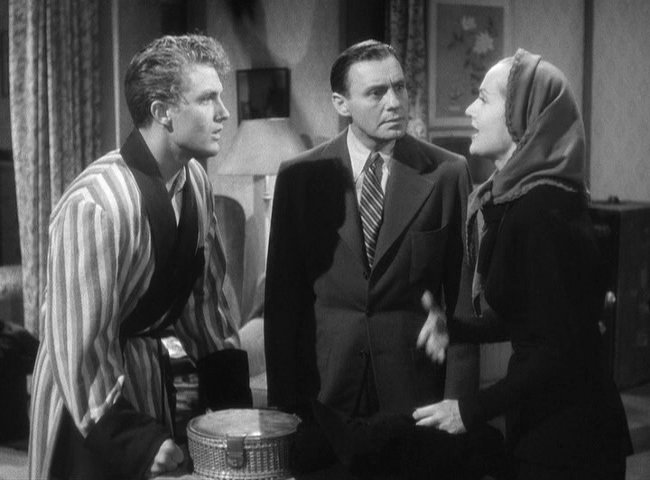
Two American painters and friends are on holiday where they meet the gorgeous Gilda. She asks them to sketch her face, finding both men attractive, seeking to play a game of “The Favourite” and seeing which man will impress her more. First, Gilda pretends she is French before revealing that she is an American like them, and then inquires, if possible, to play footsie with her two prospects to see which she likes more. Even better, have both of them live under the same roof as friends, even as the sexual tension is obvious and jealousy became obvious between the two. They agree to no sexual attempts, but what are the odds that they resist? This is the scenario in Design For Living (1933) and this is a common tease Ernst Lubitsch loved to play with without getting into details.
Background
https://www.youtube.com/watch?v=Q0YAWpvBYAw
Born in Berlin in 1892, Lubitsch became interested in comedy and drama while acting in plays in school, joining the famous Deutsches Theater in 1910. After working his way up quickly through the ranks, he transferred to the cinema and became known quickly for his writing and directing of German comedies, establishing the humor and visual wit he would be known for (as described below). His international success invited him to America in the 1920s where he had hit after hit that continued when silent films became talkies. It is this string of hits – The Love Parade, Monte Carlo, The Smiling Lieutenant, One Hour With You, Trouble In Paradise, Design For Living, Ninotchka, The Shop Around The Corner, To Be Or Not To Be – which provided the full context of Lubitsch’s extensive style of expression. He collaborated with Mary Pickford, Claudette Colbert, Miriam Hopkins, Gary Cooper, Frederic March, Greta Garbo, James Stewart, and Carole Lombard among many other actors. In 1947, the same year he won an Honorary Academy Award, Ernst Lubitsch died of a heart attack, aged 55.
The Meaning of His “Touch”
The Lubitsch’s touch, a phrase made by the studio PR department, is many things, but his movies focus on satirizing American ideas on sex and money. From his foreign point of view, he poked at American views on these two subjects and exposed their pitfalls in how people behaved around the opposite sex and when confronted in awkward moments. In arguably his most famous film, The Shop Around The Corner, two works in a shop are unknowingly sending love letters to each other when they cannot get along in person. When James Stewart discovers that the other person is Margaret Sullivan, he is both miffed and smitten and has to dig deeper at her to find the common ground. A lot of his movies were not set exclusively in America or Europe, although some locations are notably established or mentioned. Some of the comments below explain it more thoroughly (and much better than I do).
“The Lubitsch Touch” is a brief description that embraces a long list of virtues: sophistication, style, subtlety, wit, charm, elegance, suavity, polished nonchalance and audacious sexual nuance.” – Richard Christiansen
“In its broadest sense, this meant going from the general to the particular, suddenly condensing into one swift, deft moment the crystallization of a scene or even the entire theme…..the idea of utilizing the power of the metaphor by suddenly compressing the quintessence of his subject in a sly comment – a visual comment, naturally – that said it all.” – Herman G. Weinberg
The phrase does connote something light, strangely indefinable, yet nonetheless tangible, and seeing Lubitsch’s films – more than in almost any other director’s work – one can feel this certain spirit; not only in the tactful and impeccably appropriate placement of the camera, the subtle economy of his plotting, the oblique dialogue which had a way of saying everything through indirection, but also — and particularly — in the performance of every single player, no matter how small the role.” – Peter Bogdanovich
In other words, there is no singular definition, but a set of ideas and common denominators one can pick up in Lubitsch’s movies.
Interweaving Messages
Lubitsch utilized his Jewish humor as a template through his movies on approaching ideas by squeezing in simple moments into one shot that is ironic and gives context to the whole story. Once a major dramatist, he settled on the lighter side while putting in some emphasis on contemporary themes of the moment. Ninotchka didn’t just make Greta Garbo laugh, but satire Stalin’s Soviet agents in their attempt to sell jewels stolen from the deceased Russian aristocracy. In To Be Or Not To Be, it is a comic relief against the Nazi regime who would be having Lubitsch dead if he was still there. In Poland, he’s mixing in a stage setting of Shakespeare with the incompetence of the Gestapo, acknowledging the awful truth to what was going on in their enemy’s land. In Trouble In Paradise, filmed in the midst of the Great Depression, Lubitsch lightly touches upon the economic crisis with his upper-class leads holding on to their money too much dearly, a subtle critique on capitalism, according to philosopher Slavoj Žižek.
When Lubitsch died, Billy Wilder said to William Wyler, “No more Lubitsch,” to which Wyler responded, “Worse than that — no more Lubitsch films.” In an era where the Code prohibited risque content, Lubitsch was able to go around it directly with backhanded scenes of discreet tones, high comedy in realism, especially as his work went into the Second World War. To the end, he was able to invoke the sophisticated wit he picked up from his homeland and bring it to an intellectual level in all of his pristine works. Even the genius wit of Billy Wilder had a sign in office asking, “What Would Lubitsch do?” John Ford, Francois Truffaut, Jean Renoir, and Greta Grabo (“He was the only great director out there. Ninotchka was the only time I had a great director in Hollywood.”) lavished praise on Lubitsch, whose legacy endures with the rest of the first generation of great sound film directors.
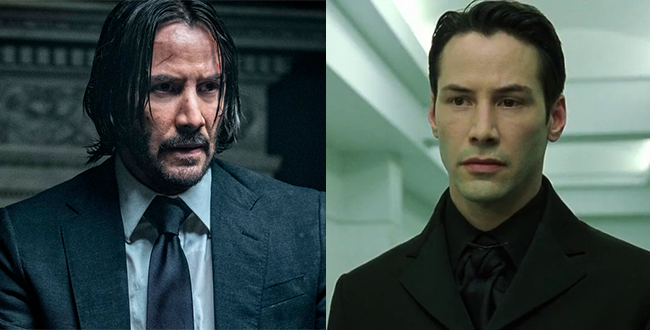
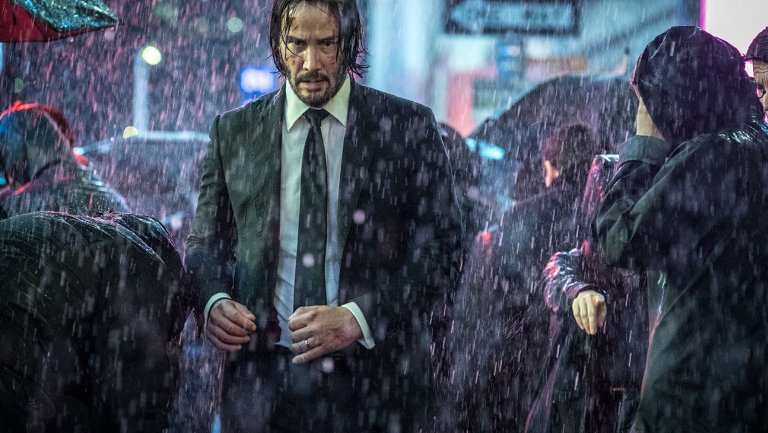
Keanu Reeves will be remembered for more than just two roles, as he’s portrayed many memorable characters, but there’s no doubt that his two biggest roles are John Wick and Neo. With three films for each character, and potentially a fourth along the way for both as well, Reeves is synonymous with them. They’re both great despite having very little in common. So, we decided to settle it once and for all. Which one will he be remembered for the most?
Director: Dome Karukoski Writers: David Gleeson, Stephen Beresford Stars: Nicholas Hoult, Lily Collins, Colm Meaney
Synopsis: The formative years of the orphaned author J.R.R. Tolkien as he finds friendship, love and artistic inspiration among a group of fellow outcasts at school.
[/info]
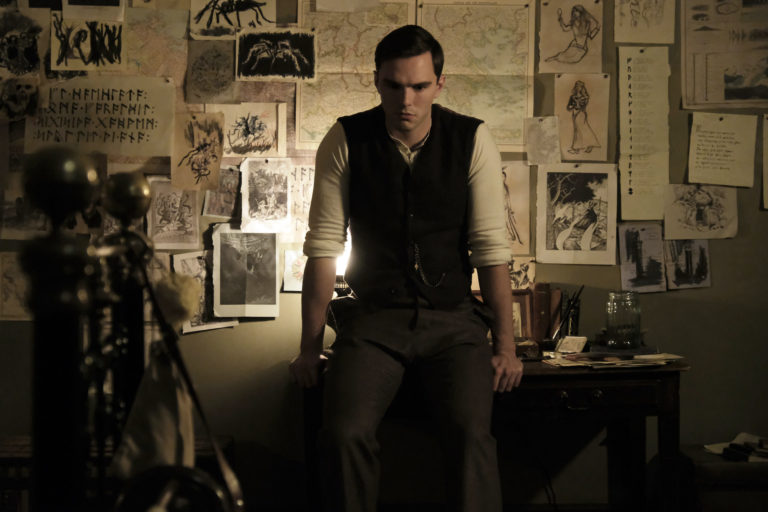
Tolkien, Dome Karukoski’s exploration into beloved author J.R.R. Tolkien’s early years, often feels like reading the footnotes of a great biography, the important bits are missing and there is a haphazard attempt to connect the dots. The talent and passion with which Tolkien writes are never truly highlighted or admired; his ability to write and create is always obscured from view, forcing the audience to make up their own connections to fill in the gaps. Few, if any, anecdotes work in Tolkien, and rarely does the viewer feel as if they are witnessing aspects of the author’s life that could be construed as building blocks for his writing, as hard as the filmmakers try to paint an image of inspiration.
In Tolkien, the audience is introduced to John Ronald Reuel Tolkien (Nicholas Hoult) a brilliant orphan who struggles to find his place socially and academically in the years leading up to World War One. Along his path, Tolkien loses his mother to illness, creates a fellowship with a group of like-minded artists in the form of boyhood friends, and meets his beloved Edith (Lily Collins). All of these moments culminate in WWI as Tolkien is in the trenches of war looking back on all the influences he has had in his life.
From the fellowship of friends to the stories of knights and dragons his mother used to tell, Tolkien wishes to inform the audience that the famed author’s inspiration for world building and storytelling lie in these moments. However, the connection between what we see on-screen and the massive work that J.R.R. Tolkien gifted to readers is minimal. It is almost as if we as the audience just have to accept that Tolkien was a famous writer and what we see in the film’s story are just experiences that this future famous person happened to have.
Tolkien struggles in his life, as do we all, but when making a biopic, the audience should become aware of what instances of this figure’s life translate into his or her works. In Tolkien, there is none of that. We see dragons on the battlefield, knights in fog, and other mythical imagery, but there is very little connecting what happens in Tolkien’s life with what happens on the pages of his most famous books. It actually becomes a bit frustrating: waiting, hoping for the filmmakers to tie something into his work. It is almost as if the people behind Tolkien just knew he was a famous writer and his books were turned into really popular movies. There is no heart and soul. The film feels like it is reading the audience footnotes to a biography and not connecting them to the main work.
Overall, Tolkien purports to be a biopic on a famous writer. The acting is superb; Hoult and Collins light up the screen. However, one could easily mistake Tolkien for a war movie, or a romance movie, or a coming-of-age story. The problem with that aspect is that this film is, for all intents and purposes, a biopic about J.R.R. Tolkien. The tonal shifts between everything this film is trying to be loses the connection with its subject, and that is a real problem.
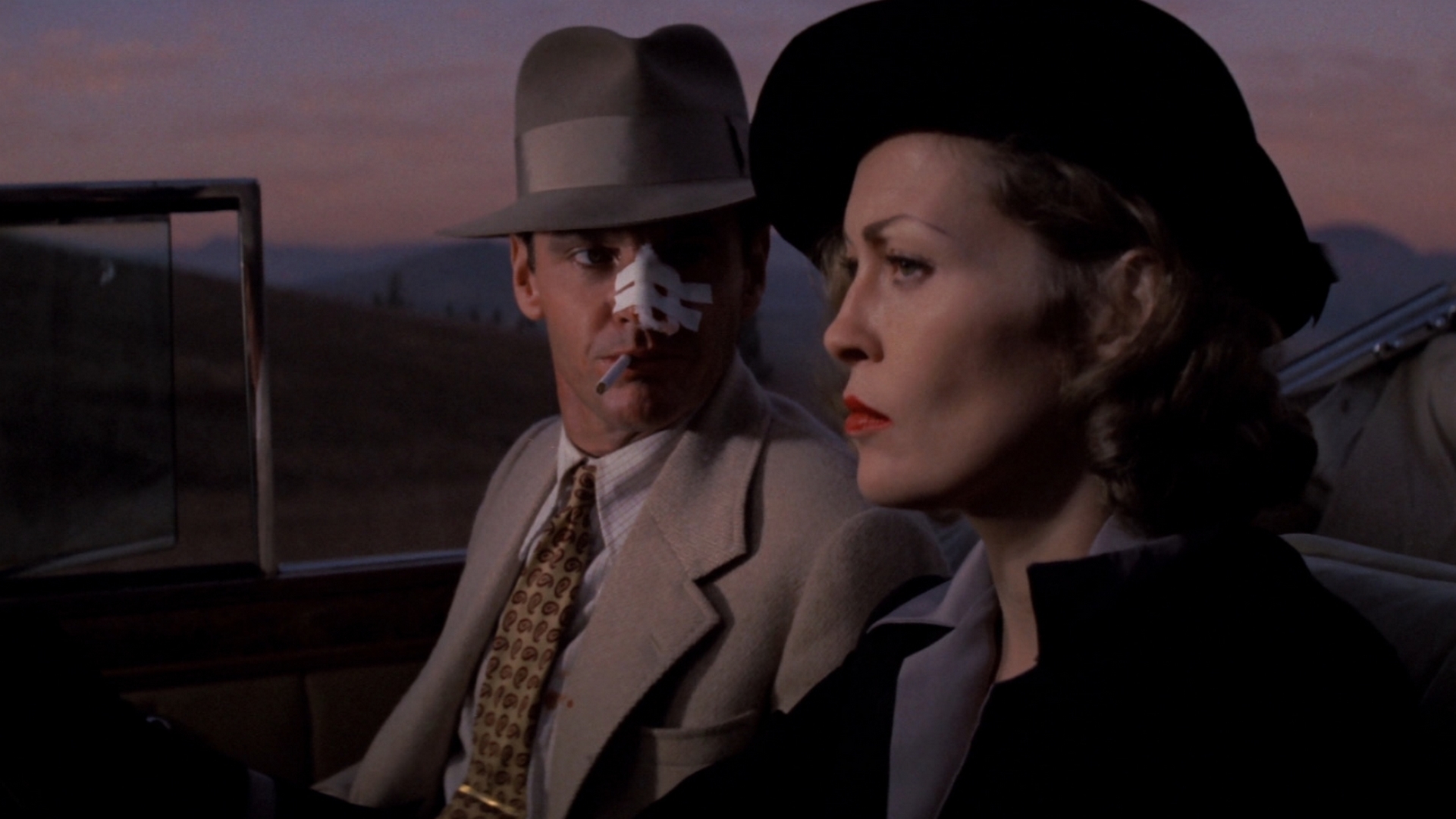
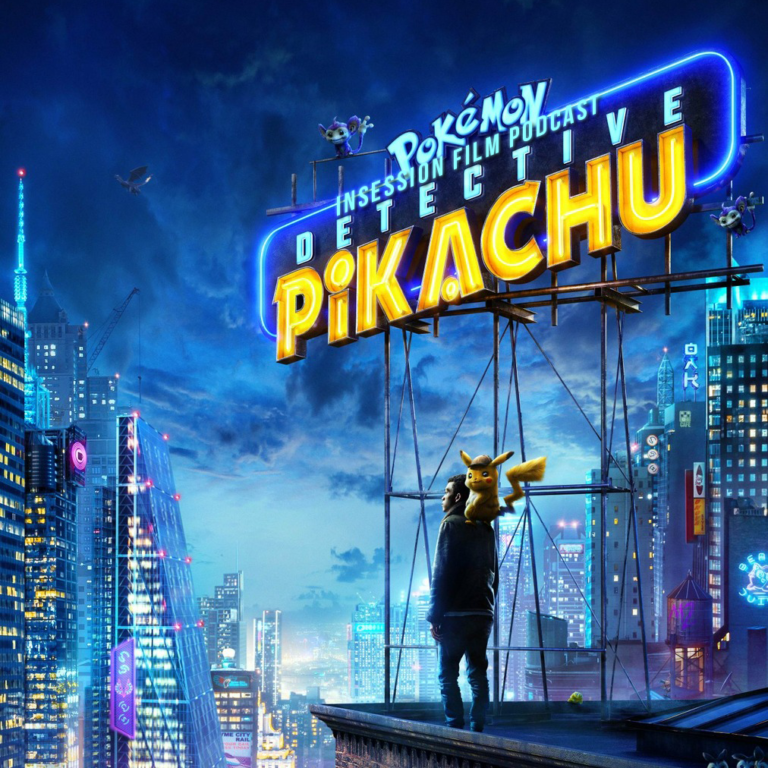
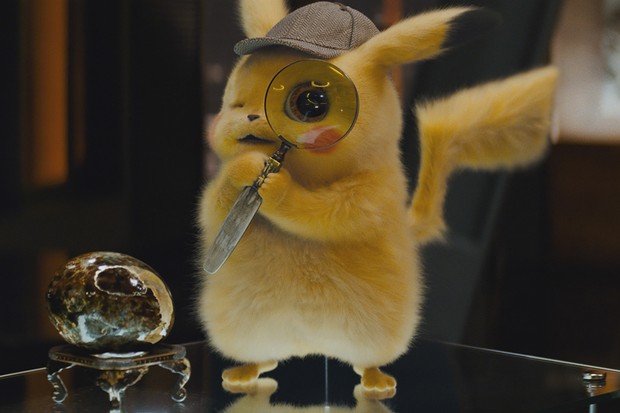
This week on Episode 325 of the InSession Film Podcast, inspired by Detective Pikachu, we decided to talk about the best detectives in film. Movie detectives are about as old as film itself. There are legendary characters that fall under the brand of “detective” as mystery and thrill help make up the backbone of many dramas. Whether it be classic noir, neo-noir or contemporary crime thrillers, there are so many characters to choose from for this exercise and we had a ton of fun with this list. That said, here are our lists:
(Note: Please keep in mind that we each had different criteria for our selections)
Brendan
1) Eddie Valiant – Who Framed Roger Rabbit
2) Brendan Frye – Brick
3) Rigby Reardon – Dead Men Don’t Wear Plaid
Aaron
1) Mills / Sommerset – Se7en
2) John McClane – Die Hard
3) Leonard – Momento
Honorable Mentions (Combined)
Scottie Ferguson – Vertigo
Holly Martins – The Third Man
The many iterations of Sherlock
Doc Sportello – Inherent Vice
Gay Perry – Kiss Kiss Bang Bang
Clarice Starling – The Silence of the Lambs
Bud / Ed – L.A. Confidential
Sam Spade – The Maltese Falcon
Will Dormer – Insomnia
John Anderton – Minority Report
Alonzo Harris – Training Day
Patrick Kenzy – Gone Baby Gone
Jackson / Holland – The Nice Guys
Jimmy Popeye Doyle – The French Connection
Frank Bullitt – Bullitt
Deckard – Blade Runner
K – Blade Runner 2049
Phillip Marlow – The Big Sleep
The Dude – The Big Lebowski
Nicholas Angel – Hot Fuzz
Harry Caul – The Conversation
Alex Foley – Beverly Hills Cop
Carter / Lee – Rush Hour
Ace Ventura – Ace Ventura
Riggs / Murtaugh – Lethal Weapon
Hopefully you guys enjoyed our lists and if you agree or disagree with us, let us know in the comment section below. As mentioned above, there are countless detectives to choose from for this list, and there’s a good chance we missed something from your list. That being said, what would be your Top 3? Leave a comment in the comment section or email us at [email protected].
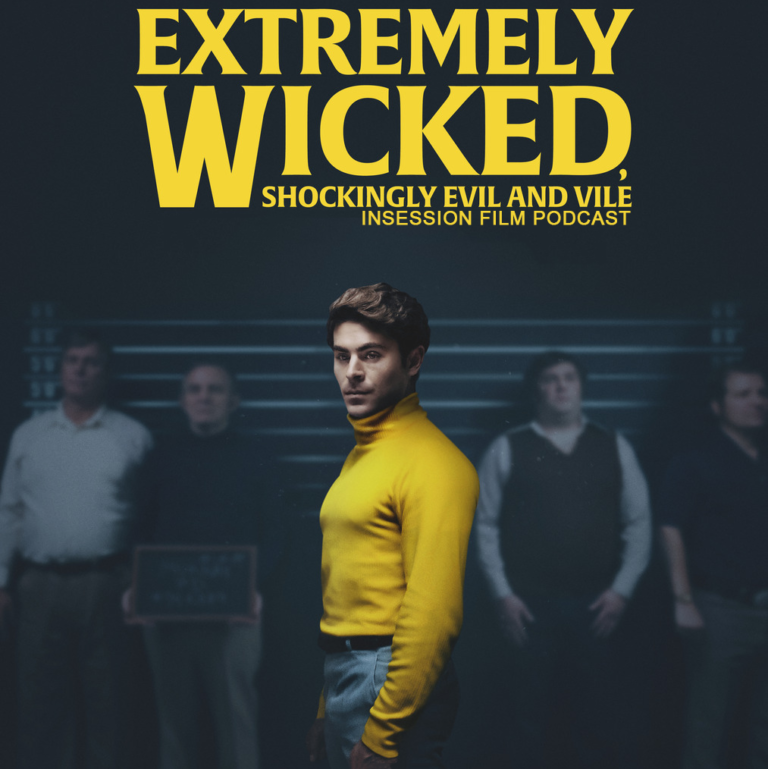
This week on the InSession Film Podcast, Aaron White from Feelin’ Film joins us to review Detective Pikachu and discuss our Top 3 movie detectives! Brendan and JD also give their thoughts on Extremely Wicked, Shockingly Evil, and Vile and the documentary Amazing Grace.
Big thanks to Aaron for joining us this week, his first appearance on the Main Show but his second overall guest spot as he was on the show last year for our review of The Rider. We were especially grateful to have him on this week though as Aaron is a big Pokémon fan, and his excitement for Detective Pikachu was palpable. So needless to say, the conversation was quite interesting. Also fair warning for those who really enjoyed Extremely Wicked, Shockingly Evil, and Vile.
That said, check out this week’s show and let us know what you think in the comment section. Thanks for listening and for supporting the InSession Film Podcast!
– Movie Review: Detective Pikachu (5:26) Director: Rob Letterman Writers: Dan Hernandez, Benji Samit, Rob Letterman, Derek Connolly Stars: Ryan Reynolds, Justice Smith, Kathryn Newton
– Notes / Extremely Wicked, Shockingly Evil, and Vile / Amazing Grace (49:23)
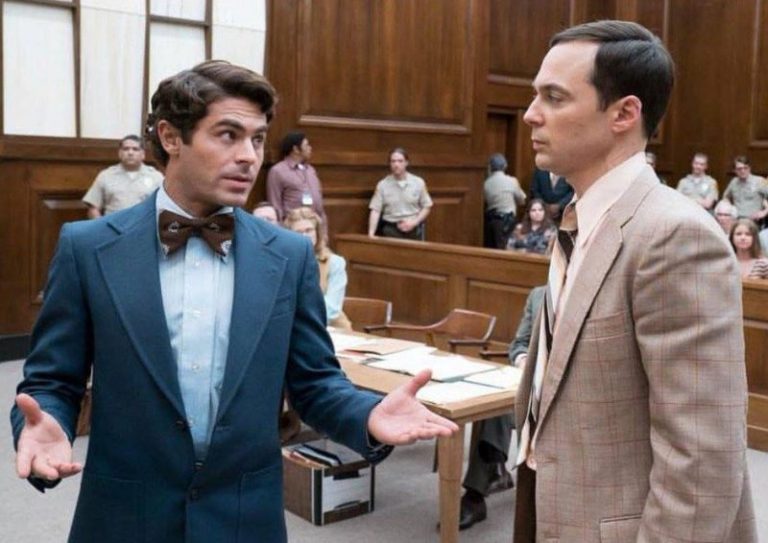
There has been a lot of talk about Extremely Wicked, Shockingly Evil, and Vile and Zac Efron’s performance, so we decided to weigh in on the anticipated Netflix film. We also give some brief thoughts on the Aretha Franklin documentary, Amazing Grace, a film that leaves us in a weird space.
– Top 3 Movie Detectives (1:18:20)
Movie detectives are about as old as film itself. There are legendary characters that fall under the brand of “detective” as mystery and thrill help make up the backbone of many dramas. Whether it be classic noir, neo-noir or contemporary crime thrillers, there are so many characters to choose from for this exercise and we had a ton of fun with this list. That said, what would be your Top 5?
If you want to help support us, there are several ways you can help us and we’d absolutely appreciate it. Every penny goes directly back into supporting the show and we are truly honored and grateful. Thanks for your support and for listening to the InSession Film Podcast!
Director: Deon Taylor Writers: David Loughery Stars: Dennis Quaid, Meagan Good, Michael Ealy
Synopsis: A young married couple buy a beautiful house on several acres of land only to find out that the man they bought it from refuses to let go of the property.
[/info]
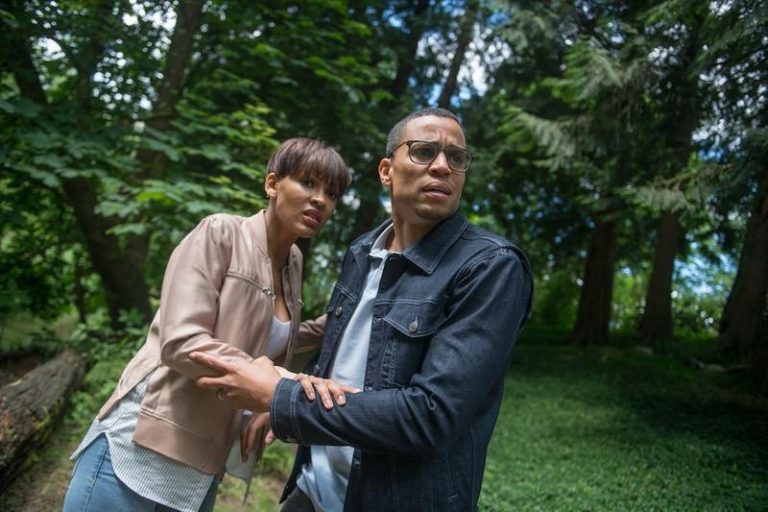
The Intruder tells the story of Annie (Meagan Good) and Scott Russell (Michael Ealy). A young couple, living in the city, with dreams of a big family house in the country. They find a house that seems to be the perfect fit, but right off the bat you feel something isn’t quite right with the previous owner Charlie (Dennis Quaid). Creepy feelings aside, they buy the house and move in right away. Scott works for a big marketing firm in the city and commutes, leaving his wife home alone most of the time. Instead of moving away, Charlie keeps showing up uninvited to do seemingly harmless things- like giving advice on how to maintain the house, mowing the lawn, etc, but what started out as a “harmless old man not ready to let go of his family home”, turns into something more sinister.
This movie was pretty much what I expected, an okay-ish thriller, but it was carried completely by a phenomenal performance by Dennis Quaid. Quaid’s performance is really the only thing worth talking about in this movie. I knew he was a decent actor, but I haven’t seen him in much where he isn’t playing the loveable dad figure. So to see Nick Parker from The Parent Trap, or Frank Sullivan from Frequency as a crazy, obsessed, creep-on-you-from-the-woods stalker, was mind blowing. I didn’t think he had that kind of role in him. Even though the rest of the film isn’t the greatest, it’s worth a watch just to see Dennis Quaid.
Michael Ealy plays Scott, the workaholic husband. He is generally unlikable, but called out Charlie’s inappropriate behavior early on, so I’ll give him points for that. Meagan Good is a bit better as housewife Annie, but she’s naive and too trusting. At one point she’s talking to Charlie outside and he asks if he can come in, the entire theater yelled “Nooo!” at her before she inevitably invited him in for a glass of wine. There were a few side characters, but they were mostly forgettable. The only memorable one was Scott’s obnoxious work buddy Mike (Joseph Sikora), and he was only memorable because everyone thought “I hope Dennis Quaid gets him first” anytime he was on screen.
My biggest issue with The Intruder is the story – it’s kind of all over the place. It starts off as a decent thriller, but then they kept adding in unnecessary twists and character drama that just muddled the main storyline. I wanted to like this movie, I’ll admit I liked some of it, but they ruined a good thing by trying to make it deeper or more complicated. They didn’t need all that. All you need for a good, watchable thriller is a main character(s) that you like or related to, a decent bad guy, some tension, and one good plot twist. I also felt like I had seen this movie before. In 2003 there was a movie called Cold Creek Manor, the synopsis on IMDB is: “A family relocates from the city to a dilapidated house in the country that was once a grand estate. As they begin renovations, they discover their new home harbors a secret and may not be completely free of its former inhabitant.” Sound familiar? It even stars Dennis Quaid as the new homeowner who just wants to live in his big house in peace. I haven’t seen Cold Creek Manor in 10+ years, so I don’t remember much other than it was also disappointing.
Overall, The Intruder was an okay watch. I don’t know if I’ll see it again, but I do recommend it if you’re interested in seeing Dennis Quaid in a villain role. I think with some editing this movie could have been a decent thriller, but ultimately it failed.
This week on the InSession Film Podcast: Extra Film segment, Ryan and Jay discuss the newest Netflix thriller, Extremely Wicked, Shockingly Evil and Vile and the John Singleton classic, Boyz in the Hood.
First, the guys tackle what is being known around the internet as the “Zac Efron/Ted Bundy” movie on Neflix. Since it’s premier earlier in the year at some of the early film festivals, the film has polarized and divided audiences, so when the film hit the streaming service this past week, the guys were excited in seeing what all the noise was about this film and if it deserved the good or the bad praise it has been getting.
Then, the guys review the debut film for the late director John Singleton. In wake of the shocking news of his death, Ryan and Jay couldn’t have thought of a better way to tribute him than review one of the biggest films of 1990’s and a tribute to the visionary that was Singleton.
On that note, have fun with this week’s Extra Film segment and let us know what you think in the comment section below. Thanks for listening!
– Movie Review: Extremely Wicked, Shockingly Evil and Vile Director: Joe Berlinger Writer: Michael Werwie Stars: Zac Efron, Lily Collins, Kaya Scodelario
– Movie Review: Boyz in the Hood Director: John Singleton Writer: John Singleton Stars: Ice Cube, Cuba Gooding Jr., Lawrence Fishburne
We try to make this the best movie podcast we possibly can and we hope you enjoy them. Subscribe today on iTunes, Spotfiy or Stitcher, and please leave us a review on iTunes. You can also find us on Soundcloud, PlayerFM and TuneIn Radio as well. We really appreciate all your support of the InSession Film Podcast.
To hear this Extra Film episode and everything else we do, download our apps on the Amazon Market for Android and the Podcast Box app on IOS devices. The mobile app covers all of our main shows, bonus podcast’s and everything else relating to the InSession Film Podcast. Thanks for your wonderful support and listening to our show. It means the world to us!
Director: Joe Berlinger Writers: Elizabeth Kendall (based on the book “The Phantom Prince: My Life with Ted Bundy” by), Michael Werwie Stars: Lily Collins, Zac Efron, Angela Sarafyan
Synopsis: A courtroom frenzy ensues and sweeps 1970s America when a young single mother reluctantly tips the attention of a widespread manhunt toward her longtime boyfriend, Ted Bundy.
[/info]
When I went to Netflix to watch Joe Berlinger’s new film about America’s most notorious serial killer, Ted Bundy, it came after starting but never finishing his documentary about Bundy (Confessions of a Serial Killer) that also aired on Netflix. I felt there was something “off” about putting the direct video of interviews with Bundy on such a platform. It didn’t feel right. But I came to this feature film looking for a different treatment of the story.
I didn’t get one.
Though Bundy himself is obviously not around to play the role having been sent to the electric chair for his crimes, the film is completely obsessed with him and with the decision to cast Zac Efron in the lead role. You don’t even have to see the film to know this, as all the marketing leading up to its release focused on Efron inhabiting the “vile” character to which the title refers.
There have been great films about serial killers, most notably David Fincher’s incredible 2007 film, Zodiac. Where that film succeeded was that it realized that everyone watching the film knew the story of its serial killer (there it was the Zodiac killer). So, it instead focused on the people around the case and left the killer on the periphery of its narrative, giving us glimpses of his crimes before jumping back to its real story.
There’s a good film in that vein somewhere inside Extremely Wicked, but the film simply can’t let itself get there. It is constantly sidetracked by the shocking allure that has built the reality TV, true crime industry – that people are intrigued by pure evil.
What I found most appalling was that this film even attempted to depict the ways that the media was complicit in Bundy’s celebrity. But that storyline falls completely flat when you realize that this film – and its accompanying documentary – does exactly the same thing!
There are scenes depicting the media circus around Bundy’s trial that seem to cast some aspersion on the media’s role in all of this – something that would certainly have relevance to our current discussions about the role of media in society. But, again, when Berlinger himself basically did exactly what the media did by devoting an entire documentary to the words of Bundy himself, that storyline loses most, if not all, of its power.
I wasn’t even really impressed by Efron’s performance, though it is probably a career-defining turn for him. Try as he might, I really don’t think he’s been able to shake the High School Musical vibe. If there’s a former child star performance to note here, it is most certainly from Haley Joel Osment as Jerry, the co-worker of Bundy’s fiancé, Liz Kendall (Lily Collins).
Collins should have been the star of this film. That she isn’t says nothing about her performance, which is a strong one. But if this film would have taken the Zodiac route and decided to focus on the ways this evil individual affected the lives of the people around the case, I think this would have been a strong film. The opening title card makes it seem like that is the type of story this film wants to reach for, but it clearly never gets there. Again, it is too distracted by Bundy to unearth a cautionary tale about the people who continued to believe him long after evidence began mounting against him.
Emily Yoshida, a wonderful writer for New York Magazine and other outlets, recently wrote a piece about post-film real-life photos and videos and how they often undercut the narrative story. Extremely Wicked contains some of the documentary footage that Berlinger used in Confessions in its post-credits sequence. Yoshida rightly points out the sheer ludicrousness of making both the documentary and the feature film but then deciding to let the documentary merge into the feature film. What’s the point? The point is that Berlinger was not able to find the powerful story at the heart of all this because he was too busy being distracted by the seedy tale. Maybe the overlong title of the movie should have clued us all in.
There are bits and pieces here (including another fine performance from John Malkovich), but none of them are allowed to merge into anything worthwhile. You’re better off watching one of those true crime docuseries on TruTV or simply firing up Zodiac again.
Overall Grade: D-
[divider]
Listen to our podcast review on Extra Film, coming soon!
B films are what they are: low cost, exploitive, the second film of double billing, and set with a genre and story ridiculous for the traditional art house. Even after the end of the double billing, independent productions still made such films that have kept the style alive through today. Some of them like Plan B From Outer Space has survived through its infamy while others have turned out to be very popular and quite good. Criterion has even released it as part of their collection of preserving certain films for its representation of the times. There a lot of this B-movie cult favorites under their control.
Cat People (1942)
RKO Pictures, the studio that made Citizen Kane, had a side section for low-budget horror films led by producer Val Newton and director Jacques Tourneur. Their first collaboration was this story of a European woman living in New York City who fears that she is a curse of people who turn into cats when aroused or angered. Cat People was a hit with decent reviews but it is now recognized even more like a masterpiece of horror where imagination triumphs over imagery and what we think it is or the sudden shows of the mysterious figure is very terrifying. Underneath the theme of failed love, the jealousy that provokes the cat figure to come out gives us a natural response to darkness and the supernatural invasion of our nightmares.
Detour (1945)
From “Poverty Row,” one of the most well-respected film noirs came out of nowhere, made on the cheap by Edgar G. Ulmer, who could have been the next big director in Hollywood had he not be blacklisted for an indiscreet affair. In just a brisk 63 minutes, a pianist hitchhikes his way across the country to get back the woman he loves, only to get caught up in one bad moment to another with a dead man and a woman who blackmails him into her own demise. Even the real life of the lead actor Tom Neal was something out of the movie; his career was tarnished after a highly publicized affair with a married woman and later served prison time for the death of his wife.
The Blob (1958)
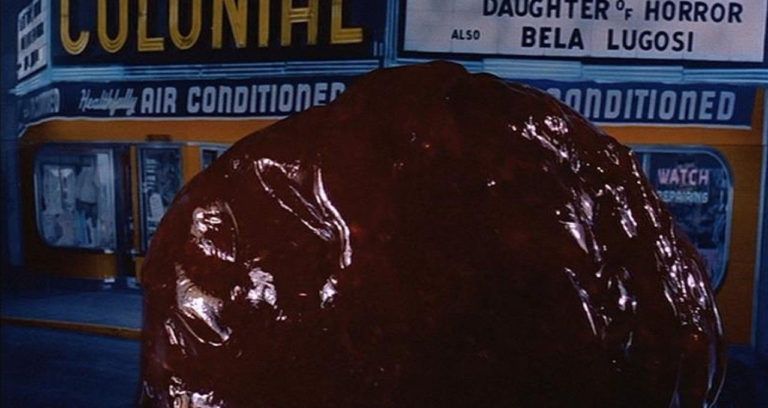
It was Steve McQueen’s debut film and his first swing as being the hero. Here, a meteorite crashes into a sleepy Pennsylvania town and a blob comes out, eating anything living and grows as it flows in the town. McQueen and his girlfriend try to warn people but the blob just grows and grows and becomes quite an impressive moving piece of jelly as it swamps the town. Besides McQueen, a young Burt Bacharach co-wrote the funny opening theme song. Some saw it as another allegory about the threat of communism; the writers denied it having a message of a kind. The color and campy style of the movie made it a smash hit for teenagers, became an early favorite for astronomer Neil Degrasse Tyson, and had an influence in the making of the DreamWorks animated film, Monsters Vs. Aliens.
Fiend Without A Face (1958)
https://www.youtube.com/watch?v=LtR8EBEH1mA
On an American Air Force base in Canada (it was shot in Britain as a British production), people have suddenly died without a formal explanation, especially when autopsies confirm a lack of brain and spinal cord in the victims. At first, many believe it is the base’s nuclear fallout as the cause, but an officer believes that a scientist’s own experiments are the cause of creating the multiple monsters that, until the end, are invisible. It’s a pulp sci-fi with creative stop-motion and scenes of gore that actually brought up a debate in Parliament about such a film being made. It is so silly yet it is a highly creative and entertaining film.
The Atomic Submarine (1959)
When a nuclear-powered submarine heads for the Arctic, the crew inside encounters UFOs who have settled underwater with random electrical storms. It is different from a traditional invading alien film, but it has the characteristics of bad acting and bad dialogue. Like other guilty pleasure B-movies, the actions and ridiculousness of the plot are what makes it a very interesting film. The editing is quite crafty in mixing in action with real stock footage of submarines and ship explosions. It also reflects the differences between a military adventurer and someone who recognizes the madness of getting into a battle with such a thing.
Carnival Of Souls (1962)
In Kansas, a woman survives a car accident miraculously, only to find herself working in a church in Utah. The isolation of the church and the mystery of “the man” who haunts her as brilliantly conducted by the organ score. The abandoned amusement park and the existential presence of “the man” hangs over the woman’s feeling and psyche in whether she should even be alive – if she is after the wreck. It’s a horror film without the gore, a B-film that has the throwback mood of a psychological thriller in the 20s and 30s. This played a role in the growth of David Lynch and George Romero in their future works while it was the only full-feature film done by writer/director Herk Harvey, who only made short education films thereafter.
Multiple Maniacs (1970)
The celluloid atrocity that is John Waters made his second feature film the opening mark of his “trash” films which followed, namely Pink Flamingos, a film I would not be surprised that would be re-released by Criterion, and Female Trouble, which followed as a Criterion release later. But for the Cavalcade of Perversion, a circus of degenerates who has the singular task of doing all things immoral as a middle finger to tradition, the black-and-white, constant zoom-in from Waters’ camera is underground cinema at its peak. Influenced by Andy Warhol, Russ Meyer, and Ingmar Bergman (plus Elizabeth Taylor’s performances), slapstick “horror” and gratuitous sex – Waters’ muse Divine getting raped by a lobster; yes, there’s such a scene – is plastered in its blasphemous wave where it debuted in a church basement, where the pastor must have had a heart attack watching Divine getting penetrated with a crucifix in the pastor’s own parish.
The B-movie is still around but as those straight-to-DVD types but some are still released as one-the-cheap tacky comedies and horror films that are like the ones mentioned here and in film history. Some of the best film directors looked at these films as proof that independent, inexpensive works can be made into silly or serious masterpieces and can be profitable. The B-movies successfully preserved for our enjoyment all these years later reinforces the pragmatism cinema has with a genre and with what we can tell an audience – some audience – will enjoy.
For our Episode 324 Bonus Content, JD sits down with host of Blockbuster Podcast Matt Schrader to talk about his new show and why it’s something all film fans will want to check out!
To listen, use the media player above or click here!
[divider]
HELP SUPPORT THE SHOW
To hear our bonus content episodes early, subscribe now on Patreon. In many cases, though, we offer our bonus content for free after a certain period of time and we do encourage (and very much appreciate) a small donation of $0.99 as a way to help support the show if signing up on Patreon isn’t for you. Click on the PayPal button below to donate and thanks so much for your support. You can also hear much of our Bonus Content via our mobile apps. See the information at the bottom of the post for more details.
[divider]
Mobile Apps!
Listen to all of our bonus content on our apps for just a one-time fee! Whether you have an iPhone, Android or Windows phone, our apps are available in many different ways that is convenient for you. With our mobile app, not only can you listen to all of our bonus content, but our main shows and our Extra Film podcasts as well. Click here for more info!
If you don’t want to purchase our bonus content, but still want to support us, there are other you can help us out. Click here for more info.
Happy early Mother’s Day to all the mom’s out there! We are looking forward to celebrating with our families this weekend and that is the inspiration for our poll this week. There have been many great movies about motherhood over the years, so this could have gone in a number of directions. If there’s a film you love that we haven’t listed in the poll, feel free to use the write-in option!
Director: Jonathan Levine Writers: Dan Sterling, Liz Hannah Stars: Charlize Theron, Seth Rogen, June Diane Raphael
Synopsis: When Fred Flarsky reunites with his first crush, one of the most influential women in the world, Charlotte Field, he charms her. As she prepares to make a run for the Presidency, Charlotte hires Fred as her speechwriter and sparks fly.
[/info]
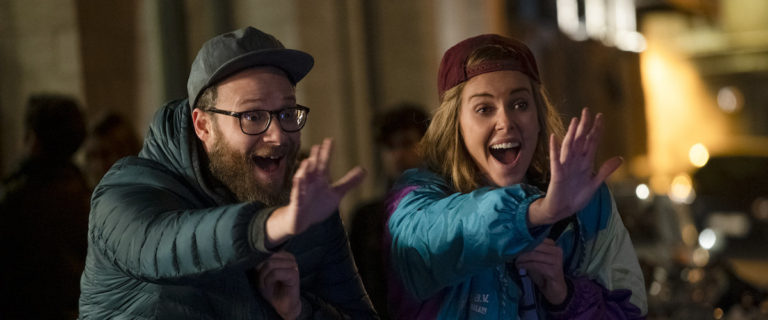
Jonathan Levine’s newest comedy, Long Shot, is a sharp-witted, intelligent, and lively experience hidden within a Trojan horse disguised as standard romantic comedy fare. Writers Liz Hannah and Dan Sterling work around expectations by manipulating the genre in a way that feels comfortable yet excitingly new. Starring Charlize Theron and Seth Rogen, Long Shot utilizes our familiarity with gender roles in a heterosexual romantic comedy and subverts assumptions to deliver a wholly different romantic comedy.
Fred Flarsky (Rogen) is an in-your-face, successful and recently unemployed reporter whose quick wit with a pen has placed him in dangerous situations. In his work, he has tackled white supremacists and evil corporations, the latter of which is what leads to the abdication of his job. The exceedingly talented Secretary of State Charlotte Field (Theron), was once a babysitter for Flarsky during her high school years. Once they meet again, there is definite chemistry alight between the two protagonists, a chemistry that is expanded upon when Field hires Flarsky as a scriptwriter on her upcoming world tour to promote her green initiative. The tour is extremely important to Field, as she sees it as her opportunity to springboard into the White House. However, success is determinate on the current president (Bob Odenkirk) endorsing her before he leaves office. As the tour progresses, Field and Flarsky spend more and more time together, eventually realizing the feelings they have for each other.
The plot of Long Shot is no different from that of other romantic comedies. They meet, fall in love, fall apart, reunite, live happily ever after. Sorry for the spoilers, but that is basically the plot to every rom-com imaginable. Alternatively, it’s what the filmmakers achieve between those beats that continue to surprise. First, the roles of Field and Flarsky. In usual romantic comedy films, the man holds a position of power or authority, but in Long Shot, Field is clearly the authority in every scene. In both Field’s job and Theron’s command of the screen, there is no question about whose story is being told. She is determined to become president but more than that, she is determined to use her power to help others. Unfortunately, a life in politics and the patriarchy have dictated how she eats, walks, and with whom she is seen. The social rules of the world push on all sides. Once Flarsky enters they are immediately attracted to each other’s intelligence and sense of humor. However, the perceived rules threaten to push them apart, as they struggle to find moments to be with each other.
Field is keenly aware of the optics of everything she does or says. Her ability to succeed is being constantly defined by men: the president that holds her candidacy in his hand, a soulless media mogul (played by an almost unrecognizable Andy Serkis), and a Canadian head of state that wishes to use her for his own optics. Field realizes the rules of the game dictate her life and her happiness. In order to attain what she wants, she must push back against the people who wish to tear her down.
Throughout the film, jokes fly quickly and effortlessly. Theron’s comedic timing is sheer brilliance and fits very well with Rogen’s style of bro-humor. The ease with which the two characters fit together is partly why this film works. Never for a minute does the audience believe their feelings for each other aren’t genuine. It feels raw and organic. Within their interactions, there is no hidden agenda. Flarsky is not using Field to get ahead and Field is not exploiting Flarsky in any other way than his job as a speechwriter. Far too often in films, audiences hold their breath and waits for the shoe to drop. In Long Shot the shoe is dropped from outside forces and not from within their relationship, which is a welcomed twist. However, often a voice advocating for a balance in politics (possibly from the studio) is shoehorned in, which makes some scenes drag. Overall, the comedic aspect of Long Shot is wholly entertaining and leaves the audience wanting more.
Long Shot is a fun and exciting look at what romantic comedies could become, two people loving each other’s company based on who they are on the inside and not being defined by what’s on the outside. In Long Shot, brains, ambition, love, and morals combat the stereotypes of standards of beauty. The characters of Long Shot fly in the face of convention and deliver a breath of fresh air into a genre that has been stagnant for far too long.
This week on Episode 324 of the InSession Film Podcast, inspired by the start of the summer movie season with Avengers: Endgame last week, we decided to talk about our expectations for this summer’s movie season, and the films that correlate respectively. We discussed both blockbuster and indies alike, and covered as many films in detail as we could in our preview for summer 2019. That said, here are our lists:
(Note: Please keep in mind that we each had different criteria for our selections)
JD
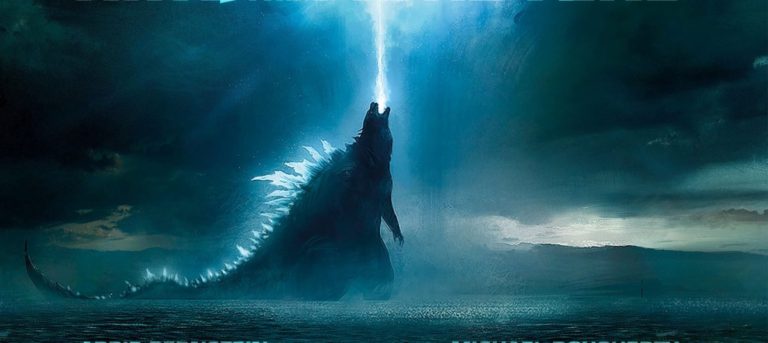
1) JD will either be a genius or look really dumb when it comes to Godzilla: King of the Monsters.
2) Olivia Wild and Joe Talbot will join the ranks of Paul Dano, Bradley Cooper, Bo Burnham, Trey Edwards Shultz, Alex Garland, Greta Gerwig, Jordan Peele and Robert Eggers as the best directorial debuts of the last 5 years with Booksmart and The Last Black Man in San Francisco respectfully.
3) John Wick: Parabelum will cement Keanu Reeves as maybe being more known for Wick than Neo from The Matrix.
4) Wild Rose and Jessie Buckley will vindicate my screaming into the void about how great Buckley was last year in Beast, and that she’s an actress we should be on the lookout for.
5) Ari Aster and Riley Stearns will prove they are not one-hit wonders with Midsommar and The Art of Self-Defense respectively.
Brendan
1) Once Upon A Time in Hollywood will bring Brendan back to the Quentin Tarantino bandwagon.
2) Wild Rose will be this year’s Sing Street.
3) Yesterday will be the most divisive film of the summer.
4) Will Rocketman save the music biopic genre? Not really sure.
5) The Lion King and Aladdin will continue to divide critics and audiences
David
1) As a result of the reaction to the trailer for Sonic the Hedgehog, future summer movies will be effected by Studios listening to fans on Twitter.
2) People will get heavily offended by at least something in Once Upon A Time in Hollywood.
3) Ad Astra will get pushed back yet again to maybe even next year.
4) John Wick: Parabelum and Rocketman will connect with audiences the most.
5) Everyone will continue to complain about The Lion King remake but will go see it anyway.
Honorable Mentions (Combined)
Various expectations on these films – Late Night, The Dead Don’t Die, The Nightingale, The Farwell, Ma, Toy Story 4, Spider-Man: Far From Home, Brightburn, X-Men: Dark Phoenix, New Mutants
Hopefully you guys enjoyed our lists and if you agree or disagree with us, let us know in the comment section below. Given the subjective nature of this topic, and the varying films that we’ll see this summer, this list could go in any number of directions. That being said, what would be your Top 5? Leave a comment in the comment section or email us at [email protected].
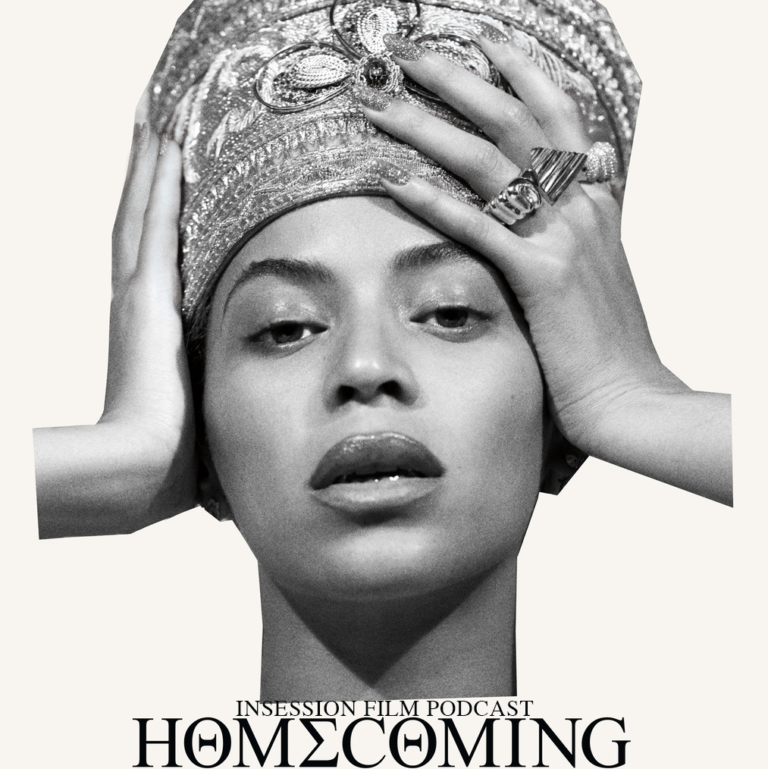
This week on the InSession Film Podcast, David Rosen from Piecing It Together Podcast joins us to review the Seth Rogen, Charlize Theron romantic comedy Long Shot! We also preview the summer movie season by talking about our Top 5 expectations for Summer 2019. JD also gives his thoughts on the indie horse drama, The Mustang as well as Beyoncé’s Homecoming.
Huge thanks to David for joining us on the show. It was his first time and he was an absolutely wonderful guest. We had a lot of fun talking Long Shot and previewing the summer movie season for this year. Things kicked off in high gear last week with Avengers: Endgame, and hopefully the rest of the summer can carry over that momentum.
That said, check out this week’s show and let us know what you think in the comment section. Thanks for listening and for supporting the InSession Film Podcast!
– Movie Review: Long Shot (5:02) Director: Jonathan Levine Writers: Dan Sterling, Liz Hannah Stars: Charlize Theron, Seth Rogen, June Diane Raphael
– Notes / The Mustang / Homecoming (31:54)
JD was able to see both The Mustang and Homecoming a few weeks ago, but wanted to wait for the guys on Extra Film to get to them first. Both films were finally talked about on our most recent Extra Film, so he finally got a chance to revel in both of these films that he quite enjoyed.
– Top 5 Expectations for Summer 2019 (1:02:41)
With the start of the summer last week (I guess? Kinda? Sorta?) with Avengers: Endgame, we decided to talk about our expectations for this summer’s movie season, and the films that correlate respectively. We discussed both blockbuster and indies alike, and covered as many films in detail as we could in our preview for summer 2019. That said, what would be your Top 5?
If you want to help support us, there are several ways you can help us and we’d absolutely appreciate it. Every penny goes directly back into supporting the show and we are truly honored and grateful. Thanks for your support and for listening to the InSession Film Podcast!
This week on the InSession Film Podcast: Extra Film segment, Ryan and Brendan discuss the newest Netflix concert-documentary from Beyonce, Homecoming and the newest horse drama, The Mustang.
First, the guys do a deep review of Beyonce’s concert film from her 2018 Coachella concert, that also has behind the scenes look into what it took for her and all the members of her band and crew to get this show to work on stage, let alone on film for all of us to see. To much surprise, there is a lot to unpack with this documentary, and the guys dive head first into all of the things that make this film on of the most talked about docs of the year so far.
Then, the guys review the debut film from Laure de Clermont-Tonnerre. Its been a interesting last couple of years for introspective horse dramas, with The Rider and Lean on Pete coming out last year. Ryan and Brendan stay away from comparing this film to the previous others in its new genre, and instead talk about how it works as a film within the genre and how it is as a debut for Clermont-Tonnerre, along with praising its strong performances.
On that note, have fun with this week’s Extra Film segment and let us know what you think in the comment section below. Thanks for listening!
– Movie Review: HomeComing: A Film by Beyonce Director: Beyonce Knowles-Carter Stars:Beyonce Knowles-Carter
– Movie Review: The Mustang Director: Laure de Clermont-Tonnerre Writer: Laure de Clermont-Tonnerre, Mona Fastvold, Brock Norman Brock Stars: Matthias Schoenaerts, Jason Mitchell, Bruce Dern
We try to make this the best movie podcast we possibly can and we hope you enjoy them. Subscribe today on iTunes, Spotfiy or Stitcher, and please leave us a review on iTunes. You can also find us on Soundcloud, PlayerFM and TuneIn Radio as well. We really appreciate all your support of the InSession Film Podcast.
To hear this Extra Film episode and everything else we do, download our apps on the Amazon Market for Android and the Podcast Box app on IOS devices. The mobile app covers all of our main shows, bonus podcast’s and everything else relating to the InSession Film Podcast. Thanks for your wonderful support and listening to our show. It means the world to us!
Among the purest directors of early-to-mid twentieth-century international cinema, Danish visionary Carl Theodor (Th. for short) Dreyer was among the first spiritualist storytellers before Ingmar Bergman arrived at the scene, telling stories of people in between faith and real human feelings in a slowly handcrafted form that made everything movie he made very personal. His upbringing had a role; born out of wedlock, adopted and formally named after his new family, but left emotionally distant from them. But as an intellectual, he was able to leave and never go back at 16, going to Copenhagen where he would go from journalist to title card writer at Nordisk Film, where he began his film career. The bulk of his filmography was made between 1918 to 1928, but it wasn’t until 1925’s Master of the House would he get both critical and commercial acclaim. It would be his launching pad to international stardom.
“I Am No Sadist”
Dreyer was, by many accounts, not a director an actor was pleasant to work with. On what is considered his magnum opus, The Passion Of Joan Of Arc, Dreyer chose stage actress Maria Falconetti and proceeded to have all her hair cut off for the role, which she was cried during the process. Her physical humiliation, as she saw it, was filmed by Dryer to capture the emotion that fit the essential scenes. Anna Svierkjaer, the witch in Day of Wrath, was forced to be tied to a ladder for almost three hours outside the heat being Dreyer filmed her. Svierkjaer had trouble standing up straight for the rest of the day. He also was not the most friendly with his crew because of his perfectionism but was certainly not a man who was the myth of having a knack of torture. Some of his more provoking behavior came from his time as an aviator in the 1910s with airplanes and hot air balloons. His daredevil actions, ending with him alive before World War I broke out, clearly showed how far he would go to create the right image and the right emotion. As critic Pauline Kael would write regarding his harsh work ethic, “Everything that son-of-a-bitch did was great.”
Love And Miracles
Dreyer used Christian humanism as a source of influence and wrote themes connected to the miracles of Jesus Christ as part of the storyline. Joan Of Arc is the most obvious about a girl who is challenged but does not renounce on her beliefs and is proven to be a martyr in the end. Day Of Wrath comes from the Latin hymn on Judgment Day set in the 17th century surrounding the subject of witchcraft. The protagonist, Anne, is the young wife of a pastor, Absalon, who leads the investigation of witchcraft and helped Anne’s mother be spared when she was accused of practicing Satanism. Later, Anne has an impulsive thought of wishing her husband dead and it comes true, but the miracle becomes a curse quite quickly. In Ordet, Johannes is the son of a family in spiritual decline while he, after a breakdown, sees himself as Jesus. Inger, the matriarch, is the source of love, which goes away suddenly as she dies. The miracle comes when, under Johannes’ eye, she resurrects from death.
Outside of the Christian faith, Dreyer revolved around women in harsh times such as being under persecution, abandonment, forced love, and untimely death. They are under duress and given an unfair burden, a connection to his birth mother’s situation when she was pregnant with him unwed. From his first film, The President, to his last film, Gertrud, the woman is the center of the story under various precarious positions. But, besides his own birth mother, Dreyer thought of his own past, where his adopted family gave him no love and put himself in a psychiatric ward following the brutal production and response to Vampyr. Many projects he tried to start never got off the ground and remained in Denmark when the Nazis occupied them in World War II, shooting Day of Wrath during that period. The theme of life unrealized in some of his characters was the same in the failure in getting projects made. The script he had written and was working to make when he died in 1968, Medea, was only realized twenty years after his death by fellow Danish auteur, Lars von Trier.
Minding The Gap (Or Lack Thereof)
Carl Theodor Dreyer said, “Everything must be prepared – if not, you might suddenly find yourself lacking an elephant.” This statement emphasized his obsession with arranging everything to the smallest detail right to his liking. Not just the actors he was concerned about, but the physical spaces, the camera’s location and movement, how a shot is light, and how a scene is edited. It is seen from the start of his career, consistently maintaining a visual narrative to control the flow, mood, and words; his films lacked a lot of dialogue because he relied on movement and reaction. It is a large choreographic scenario. For example, Ordet has approximately 114 individual shots in a 126-minute film. In Joan of Arc, he kept shots mostly in a close-up but differed in lighting Joan and her interrogators, where soft lighting made Joan saintly but high-contrast lighting made the rest monstrous and from a low angle.
Later on, Dreyer made the camera move a lot more so the actors could move in and out of the shot easily and give the audience an additional point of view. Dreyer wants us to see the universe surrounding his characters. It pans around, gets on a dolly track slowly, and cut in very close on a person. In Vampyr, the atmosphere is a hazy grey that signals the threat of his evil. The subject may feel he or she is far from it when the space we see actually indicates it is much closer. In Thou Shalt Honour Thy Wife, he had his camera far back to capture the whole main room filled with people doing things. Our eye is on everything that is going on. Dreyer also experimented with different types of light to give a different shine on his characters, reflecting every scene’s moods. A lot of this was done on the fly as there was not much to get an influence on with the camera.
https://www.youtube.com/watch?v=V1sVhv7DLQ8
Carl Th. Dreyer was a legend as a definitive movie formalist, investigating stories of spiritual awakening, moral consciousness, social disturbance. He dove into history and matched with contemporary, giving wonderful adaptations of plays and transcripts into a cinematic transformation. It’s a filmography, where, even after he transfers to sound, there are not many words. He wants you to see rather than hear the film. It is cinema at its purest, never going to color as he worked into the 1960s. His world his tough and not an escapist form, but very philosophical, where Robert Bresson, Krzysztof Kieślowski, and Andrei Tarkovsky would take the mantle from him later on.
We are the verge of Avengers: Endgame this weekend, so I took it upon myself to rank all of the previous 21 films in the Marvel Cinematic Universe. It’s been a fun journey since all of this started back in 2008, and while not every film is great, there have been more hits than misses in my humble and geeky opinion. There is a good chance you’ll disagree with some of these picks, which is fine, so let’s debate and jump right on in.
Here is my ranking of the MCU:
22. Thor: The Dark World
I’ll be honest. Even though Thor: The Dark World comes in last place here, I don’t completely hate it. Brian Tyler’s score is perhaps the most memorable of Phase Two aside from The Winter Soldier and there are some great laughs to be had here. Chris Hemsworth and Tom Hiddleston’s dynamic chemistry is palpably captivating and helps transcends the film’s obvious scripting flaws. Jane’s inclusion may be muddled and [insert bad guy’s name] is forgettable, but Thor: The Dark World isn’t a complete waste. It’s bad enough to be the worst of all the MCU though.
Like Thor: The Dark World, Iron Man 2 is flawed but interestingly flawed. Robert Downey Jr is still crackingly funny and Tony’s relationship with Gwenyth Paltrow’s Pepper Potts gets spicier. We are also introduced to Black Widow in Iron Man 2, in which we see her hilariously upend Tony in the boxing ring. War Machine is back with an interesting role and we finally get to see him team up in the suit next to Iron Man at the end. Iron Man 2 is the first time we see the MCU grapple directly with the Avengers initiative, which could narratively stifle the film’s momentum, but I find those scenes still interesting on their own. Whiplash may not be a great villain either, but I do find the ideas behind his motives compelling enough. They do lack in execution though. Lastly, Iron Man 2 gets a few bonus points for a very funny Sam Rockwell.
[divider]
20. Guardians of the Galaxy Vol 2
Okay, let me explain. I can already see many of you rolling your eyes at me. Part of this may just be subjective on my part, but there’s something about splitting up the Guardians in Vol 2 that left me surprisingly frustrated and dramatically disengaged. The team dynamic is easily the best part of Vol 1, so dismissing that here is a head-scratching move. I understand that James Gunn didn’t want to just copy and paste the same script, but the loss of team comradery is felt as Vol 2 becomes more disjointed in individual threads that I found less compelling. Also, the first half was unrelenting in its jokes. I like jokes. They are fun. They’re great in Vol 1. But they also need to be balanced within the film’s drama and characterization, and Vol 2 veered toward being more of a stand-up comedy routine at times. Lastly, and more problematic, as a result of those aforementioned issues Ego becomes an underutilized villain. I love what he represents on paper, but his turn isn’t earned because we don’t really spend that much time with him. Yet, Vol 2 treats his betrayal as some sort of massive revelation and I just kind of shrugged at it. And this is coming from the guy who weeps over most father/son relationships in film. Take that FWIW I guess, but sadly Vol 2 didn’t work for me. There are many positives to the film that I loved (Rocket forever), but I figured I would spend my time here arguing as to why it’s low on my list.
http://www.youtube.com/watch?v=RsxsAN_bsvQ Iron Man 3 is one of the more fascinating films in the MCU. It comes off the heels of The Avengers, which was heavily praised by fans and critics at the time, so the hype for Phase 2 was strong. Then came the twist. And boy, oh boy, did that divide people. As for me, I think the twist suffocates much of the film’s drama as the true villain in Iron Man 3 is…not great. Would The Mandarin as depicted by Ben Kingley be any better? Maybe not. But Kingley’s performance seemed to be transcending the stereotypes he emulated in his physical appearance, so there could have been potential there for it to play out in an interesting way. That said, while it may not work as a superhero film, the twist is refreshingly wonderful as a Shane Black film. If you remove the fact that it’s an Iron Man movie, there is a lot of joy to be had with Iron Man 3. Not sure about the Pepper Pots thing at the end though. That was weird.
Doctor Strange sits somewhat lower on this list, but I actually quite like it overall. Benedict Cumberbatch gives a committed performance that is both parts humorous and dramatically inviting. Once he becomes the hero Doctor Strange, coupled with the mannerisms that come with magic, and it’s really fun to watch as he gives it his all. The visual imagery and cinematography do a great job of complimenting all of that as well, so kudos Scott Derrickson’s direction. Chiwetel Ejiofor has a surprising role that concludes in a mysterious way that has me intrigued. I can’t wait to see more of that character (assuming he is coming back). Benedict Wong is the best sidekick you could ask for (his little role in Infinity War is lovely too). The Tilda Swinton controversy perhaps hinders this film a bit, and I can sympathize if that is not something you are willing to forgive. I will say though, regardless, I found her scenes poignant and effecting in execution. Perhaps miscast, but she gives a striking performance in her limited screen time. Last note – Michael Giacchino’s score is severely underrated. It’s very good.
I’m glad that Marvel finally started to embrace the fact that The Incredible Hulk exists within the MCU. For the longest time it seemed as if they tried to forget, but I don’t think it’s as bad as everything claims it to be. Between that statement and everything I said about Guardians Vol 2, you may be willing to disown me. Certainly fair. But for some reason, this film speaks to my sensibilities. It’s essentially about a guy struggling to get his life back, comes across the love of his life only to realize that he can’t be with her, and then turns into a raging green monster to fight another raging green monster. It may be messy at times in execution, but it’s surprisingly very simple in its narrative. The score is quite good and the action beat at the end is thrilling as well. Plus, a little cameo from Tony Stark is fun.
[divider]
16. Ant-Man and the Wasp
Ant-Man and the Wasp is slightly inferior to its predecessor, but still an enjoyable entry into the MCU. Its scope is slightly larger (figuratively and literally) than the first one and tries to juggle more characters this time around, which mostly succeeds I think despite a few blemishes here and there. Where Ant-Man and the Wasp stings the most is with Hannah John-Kamen’s Ghost character, who I think is one the more alluring villains of the MCU. Her backstory is tragic, her powers don’t help matters much and her fight for normalcy is poignant. I’m eager to see more of her should she come back. Evangeline Lilly has more to do this time around, at least as her superhero persona, and that was fun to see. Her chemistry with Paul Rudd is as wonderful as the first time around. And lastly, Michael Pena once again steals the show when he’s on screen.
Thor is an interesting experience in that much of its first act is a Shakespearean family drama, but then it turns into a hilarious fish-out-of-water comedy for the rest of the film. Perhaps those varying tones won’t work for everybody, but I think it works marvelously. Those opening scenes set the foundation well for who these characters are, where they come from and why they are important to the safety of the galaxy. As a result, the earth-comedy that follows is biting thanks to well-timed editing and Chris Hemsworth’s committed performance. He’s somehow very funny while maintaining a straight persona, and it makes for a stimulating experience that compliments Thor’s arc well. Tom Hiddleston is great and Anthony Hopkins is perhaps the unsung hero. Great score by Patrick Doyle.
[divider]
14. Ant-Man
The smallest film in the MCU. No, I mean dramatically! Ant-Man is pretty small (pun intended?) in scale and mostly focuses on Scott’s attempts to get closer to his daughter. And who doesn’t want to become a superhero to get closer to their kid? All joking aside, I love how isolated, contained and simple this story is overall. Paul Rudd is perfect for the role, playing up the humor of Scott well, but also being able to ground him when needed. Peyton Reed’s Edgar Wright editing style makes for some great gags too. Michael Pena is of course the MVP though. Ant-Man may sit at number 13 here, but subjectively I quite adore this film.
This is perhaps another one where many of you get angry with me as it may be “too low” for you. I understand. Really, I do. Thor: Ragnarok is one of the more aesthetically enthralling films in the MCU. It’s arguably the funniest film of the MCU as well. Korg is phenomenal. Thor’s dynamic with Hulk is sublime and quite humorous in its own right. Jeff Goldblum is here(!!) doing Jeff Goldblum things, and it’s perfect. They somehow convinced one of the best working actresses in Cate Blanchett to be the main villain. Tessa Thomspson’s constantly drunk Valkyrie is a sight to behold. The soundtrack/score is wonderful. There is a lot to love about Thor: Ragnarok. At the same time, though, the film’s humor is so incessant that it suffocates its drama at times. There’s a lot going on here and consistency becomes secondary to the prowess of its humor. As visually alluring as Hela was, her scenes often came off as thin, uneventful and somewhat contrived. Still, a very fun film that is endlessly re-watchable.
I genuinely really like this film a lot. It’s the weakest of the Captain America films, but it’s chock full of heart and unexpectedly biting comedy. Chris Evans is the embodiment of perfect casting. He looks and acts every bit the part, and is in every way Steve Rogers. Tommy Lee Jones, coming off the heels of an Oscar-nomination I might add, is equally as great. He’s a big reason why Captain America: The First Avenger is surprisingly funny at times. Of course, you can’t have Captain America without his good ole’ buddy Bucky, and Sebastian Stan is very good. Red Skull is perhaps a trite villain in many respects, but I love Hugo Weaving’s performance and I wish he had done more in the MCU. Captain America: The First Avenger also features what is perhaps one of my favorite endings as well. Poignant and effective.
[divider]
11. Spider-Man: Homecoming
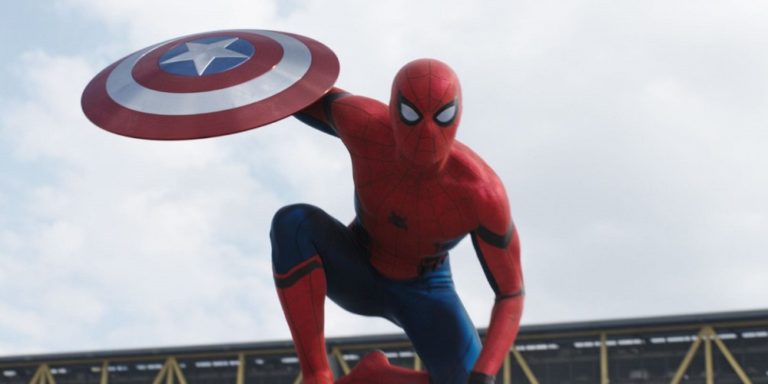
Spider-Man was my favorite character growing up, and when the MCU began I (as we all did) had to accept that Spider-Man would not be a part as his home was over at Sony. Then, thankfully(?) The Amazing Spider-Man 2 happened. As a result of that debacle, the character all of a sudden became open to Disney/Marvel and it opened up a floodgate of emotion in me. His appearance in Civil War was everything I wanted it to be, and then we got Spider-Man: Homecoming, a charming John Hughes-esque story that centers on Peter figuring out how to balance his teenage life with that of being a new Avenger. And…I loved it. Tom Holland emulates the character – both Peter and the hero – exactly as I read him on the page as a kid. He’s awkward, he’s confident, he’s snarky, he makes mistakes and saves the people he loves. His dynamic with Tony Stark is great. And Vulture is the kind of villain that the MCU had been missing. Don’t get me wrong, he’s no Heath Ledger Joker or anything, but his backstory is interesting as it relates to previous MCU stories and Michael Keaton gives him a motivation that jumps off the screen. The “car” scene near the end is something that most of these films lack. And once again, Michael Giacchino with an irresistible score.
Avengers: Age of Ultron has become one of the more divisive films in the MCU and I can certainly understand why, however I lean on the more positive end of that spectrum. It’s unquestionably inferior to its predecessor, but Ultron still has a lot to offer in how it tackles themes of morality, mistakes and grappling with our imperfections. The script may lack in consistency, but I admire its ambition and there are enough character moments to help make up for its faults. The “farm house” sequence is one of the best of the entire MCU. The nightmarish visions that some our heroes experience carry a gravitas with them. Speaking of, Vision himself is interestingly complicated in how he amplifies the film’s themes of morality. The character banter is still often biting and dramatically riveting. So, yeah, it’s not perfect, but that’s exactly what the film is about and I like that about it.
Captain Marvel is the latest film in the MCU and most likely a significant game-changer. Captain Marvel is very powerful and her powers haven’t really been tested yet. I imagine Endgame will change that. As for the film itself though, it’s an endearing throwback to 90’s action films and becomes an absorbing road buddy movie. Which is somewhat ironic given the digital de-aging on Samuel L. Jackson and how he looks like he’s coming straight out of one of his actual 90’s road buddy movies. What moves me about Captain Marvel though is simply Brie Larson’s performance. She is ridiculously charming. Carol has a snarky personality and sense of humor that I found enthralling. She smiles often as to be giving fanboys the middle finger and that sense of awareness is perfect. Her chemistry with Jackson is palpable as well. They’ve both mentioned in various interviews how they are real life friends and that comes through on screen.
Ronan is perhaps the worst villain in all of the MCU. Now with the negatives out of the way, please bare with me as I gush over this film. Guardians of the Galaxy is one of the best surprises that any superhero film has given us. It may be hard to remember now given how normal it is, but in 2014 we were all dubious as to how a talking racoon and tree were going to work as heroes. The idea was bizarre, but exciting at the same time. Of course, it didn’t take long before Bradley Cooper brought Rocket to life in glorious ways. To this date, he’s one of my favorite characters in the MCU and Cooper’s performance is severely underrated. Rocket’s dynamic with Groot is poignantly wonderful and the way it crystallizes in the end is very affecting. I know some of you find Chris Pratt annoying, but I like him as Peter Quill. He’s charming and magnetic, but when things get grounded Pratt is able to switch that gear awfully fast. James Gunn’s direction and screenplay is astounding (Ronan aside). Everything from the costuming to the production design to the color palette to the special effects and action, it’s all handled with vigorous diligence. Shout out to Dave Bautista, who at the time nobody in the film world really knew all that well, but he slays this role.
The one that started it all. When Iron Man came out in 2008, the superhero genre was barely alive. The fact that any of this exist is beyond my wildest dreams as a fan of Marvel comics. And I remember how dire the genre was at that time. No one could imagine what a team-up film could look like because Hollywood coudn’t consistently do solo films right. I’m getting ahead of myself, but that’s the impact Iron Man had on the system. The response to Jon Favreau’s film was so strong that it launched an ambitious idea to completely flip things on their heads. “I’m here to talk to you about the Avengers initiative” is perhaps the single greatest line uttered in all the MCU. It sill gives me chills. I remember that moment like it was yesterday. My entire crowd rightfully lost its mind. And it felt right because Iron Man was great and Robert Downey Jr. was in every way Tony Stark. His journey through the cave, to becoming Iron Man to fighting off his first foe, it was exactly the boost of energy the genre needed and I love it.
[divider]
6. Black Panther
There is no denying that Black Panther is the most blistering thematic film in the MCU. Its ideas on moral dissension, oppression and identity is emotionally striking and balanced. Ryan Coogler’s thumbprint is all over this film in his direction, but it’s his writing that carries the most heft. What makes Black Panther different is in what Coogler does with Killmonger. We sympathize and emotionally understand the “villain” as we do the hero. Killmonger’s motives are justified. The only thing that separates him from T’Challa is how he goes about seeking his justice. This is even more visceral in the hands of Coogler and how he channels those perspectives through the culture of Wakanda. The first time we are introduced to Wakanda, through evocative imagery and a moving score, it’s spellbinding. Chadwick Boseman is the perfect Black Panther and works impeccably against Michael B. Jordan, who was one of my favorite supporting performances of last year. Add in Lupita Nyong’o, Danai Gurira, Letitia Wright, Daniel Kaluuya, Sterling K. Brown, Winston Duke and a few others around our two leads here. That’s one hell of a cast. I agree the action in Black Panther isn’t the best, but it’s sufficient enough. The rest of the film is what makes it easily one of the best in the MCU to date.
Enter in the Russo Brothers. Captain America: The Winter Soldier is the film that turned a page for Marvel. This was the first time that it became something more than just a superhero movie. It was also a captivating spy thriller. It’s raw and gritty. It moves and breathes with an energy we hadn’t experienced before. The Winter Soldier himself was a unique villain in the sense that he’s not a villain the hero wants to defeat. Steve Rogers wanted to help Bucky, not destroy him. This elevated the emotional stakes of the film. Then there’s the great action sequences that came out of a Jason Bourne film. The street fight with the knife is undoubtedly one of the best, if not the best, action sequence of the MCU. The staging and choreography of everything here is immaculate. The road buddy journey of Steve Rogers and Black Widow is also great, and tonally more suspenseful than the comedic trip of Captain Marvel. The narrative twist and reveal of Hydra was a great surprise as well. Captain America: The Winter Soldier has arguably the best score of all the MCU. Henry Jackman’s music is excellent and “Captain America” specifcally may be the best track aside from “The Avengers” theme.
I mentioned this earlier, but I cannot stress enough, it’s amazing that this film exists. How in the world did the genre go from being on its death bed to having a team-up movie just four years later. The approach was perfect. Let’s build up each of these characters individually first, so when The Avengers come we don’t have to spend any time on unnecessary exposition. The only backstory we get is mostly on Loki’s involvement and what his endgame was. But even that is small as we already know Loki, and personally I was moved by his arc in Thor. Joss Whedon somehow took something that shouldn’t work, and made it into some of the most fun I’ve ever had at the theater. The banter is hypnotic, the action is geeky fun and tonally each character feels as if they were dropped just out of the film they were featured in. It had all the pieces needed for a great team-up movie. The stakes then get elevated by the death of Coulson and it’s game on. The battle in New York still resonates at a high level for me. Alan Silvestri is God.
The title is a red herring. This is not an Avengers film. It’s a Thanos film. Infinity War is a two hour exploration of a being who is distraught that his home planet was destroyed by ignorance. His motives to “fix” the universe is rooted in something emotional. His means might be misguided, but his argument has merit. And I love how Infinity War gives Thanos a pathos (I may trademark that) to his actions and why it means so much to him. Out of all the villains in the MCU, the most powerful, badass and formidable is also the most emotionally vulnerable. The sacrifices he makes is gut-wrenching to him. Cue thanks to Josh Brolin’s performance – who gives a stunning motion-capture performance. And I love how the Russo’s never stray from that central emotion. Even as Thanos has five of the six stones and could have easily killed the Avengers, he doesn’t. He just does enough to move them out of the way to get the last stone. Which almost costs him. If Thor had slightly higher aim, his plan would have ended abruptly. Instead he walks away alive with a chest scar and a victory smile. Regardless of what Endgame does to reverse Thanos’ actions, he still won. He defeated The Avengers. And we got to linger in that for a whole year. Side note: Thor’s arc in this film is phenomenal and Chris Hemsworth gives maybe the best individual performance of all the MCU. Sooooo good!
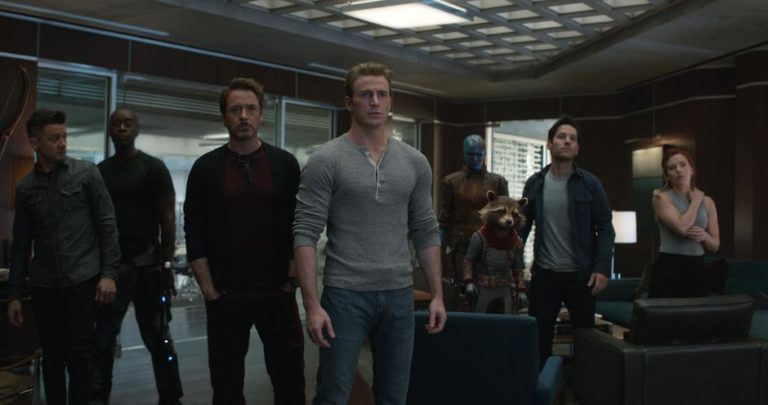
It’s impossible for me to separate Avengers: Endgame and Avengers: Infinity War. The two films tell one collective story and compliment each other so well that it would be a disingenuous to keep them away from each other. Endgame just also happens to be one of the best film in the MCU, thanks to the Russo’s vision and a smart screenplay by Christopher Markus and Stephen McFeely. It is a magic trick in how they simultaneously move the story forward using nostalgia for plot while poignantly tapping into how our heroes are grappling with their past failures and regrets. In some way, shape or form, every single one of them had to face who they were in order to overcome the struggles of their present, and there’s gorgeous irony in that they were forced to grapple with that internally, but also literally. It’s incredible to me how Endgame explores that dichotomy to sift through the aftermath of Infinity War, and build a really fun and entertaining ride at the same time. Your 11 years of investment does not go without rich compensation. It’s breathtaking to see how everything crystallizes in this film, one that is emotionally driven, character focused and a love letter to the last decade of Marvel films. That approach is not only robust for marrying theme and characterization, but it’s handled with such care that you don’t care that Endgame lacks action. There isn’t a single major action beat until the two-hour mark and I wouldn’t of had it any other way. Of course, what we get in that climactic battle is epic, majestic and nerdy, but it’s also emotionally arresting. The Infinity Saga couldn’t have asked for a better swan song.
Captain America: Civil War is the best, and my favorite, film in the Marvel Cinematic Universe. It is the smartest film (with the exception of maybe Black Panther) and the most thematically captivating for me. Thanos defeating The Avengers is the most devastating blow they experienced, but it was technically their second in the L column. Baron Zemo has no magical abilities, yet he was able to do something that not even Loki could do. The true villain of Civil War isn’t Zemo. If we saw this film from his perspective, we would root for him in the same ways we do Jason Bourne, James Bond, etc. Like Thanos, his motives are sympathetic. His family was stripped from him and the Avengers did nothing to take responsibility for it. That in and of itself is great irony as Ultron was all about grappling with our mistakes. Unlike the mechanic down the street, though, Zemo has a background and skill set that allowed for him to seek justice. And what does he do? He doesn’t seek an alien army. No. He uses guilt to beat our heroes. He turns them against each other in a way that’s visceral and stirring. The final fight between Cap, Iron Man and Bucky has an intimate intensity that no other action sequence in the MCU has. It’s incredible. Not to mention, there’s the whole Black Panther and Spider-Man thing, which is electric on its own terms. The airport battle that is mesmerizing. I am a fan of all these films in some way, but Captain America: Civil War has it all for me.
Well that’s it. That’s my ranking. I know many of you disagree, so let me know what you think. Hit us up on Facebook, Twitter or Intagram. Email me at [email protected]. Let’s all have fun with Avengers: Endgame this weekend!
Director: Michael Chaves Writers: Mikki Daughtry, Tobias Iaconis Stars: Linda Cardellini, Raymond Cruz, Patricia Velasquez
Synopsis: Ignoring the eerie warning of a troubled mother suspected of child endangerment, a social worker and her own small kids are soon drawn into a frightening supernatural realm.
[/info]
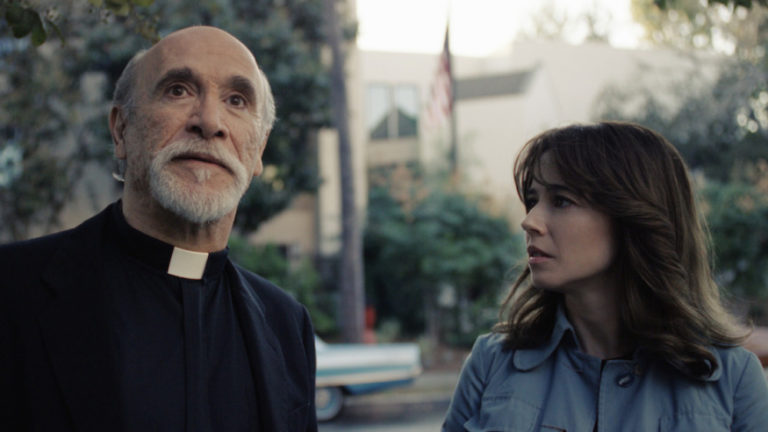
The Curse of La Llorona is the latest film in “The Conjuring” universe. Other than a minor character connection, this movie is nothing like the previous films and I don’t personally believe it belongs with them. It just doesn’t have the same feel as its predecessors. It was a decent watch, but ultimately it did not live up to my expectations.
The Curse of La Llorona focuses on the Garcia family; recently widowed mom Anna (Linda Cardellini) and her two kids Chris (Roman Christou) and Samantha (Jaynee-Lynne Kinchen). Through her job as a social worker, Anna meets trouble single mom Patricia Alvarez (Patricia Velasquez). Patricia is very upset and won’t let anyone check on her two sons. When Anna is able to gain access to Patricia’s apartment, she finds the terrified Alvarez boys locked in a closet. Patricia and her kids are upset, saying they don’t want to leave because “she” will get them. The boys are removed from their mother’s care, placed in a temporary shelter, and this kicks off the supernatural craziness that is the rest of the movie.
La Llorona is the supernatural “bad guy” of the movie, she is a very common legend in Mexico and surrounding areas. The movie does use one of her common origin stories- Beautiful woman in poor town is discovered by rich guy, they get married, have some kids, he cheats, she goes temporarily insane and drowns her kids, after realizing what she has done drowns herself, then spends eternity searching for her children. She is a boogeyman of sorts, “If you don’t behave, La Llorona will come take you away”. Honestly, every other portrayal of her in tv shows or movies is better than this movie. The very first episode of Supernatural is about a “woman in white”, a ghost with similar origins to La Llorona. There’s an episode of Grimm called La Llorona (Season 2, episode 9). There’s a song in the movie Coco called “La Llorona”, and the two minutes of the movie where Mama Imelda and Ernesto de la Cruz sing it, is better than this movie. The Curse of La Llorona really relies on jump scares to make it a horror movie. I’m one of those weird people who takes notes while watching a movie so I can remember things, and I kept a tally of the jump scares and there were at least 20 in this film. That averages to one jump scare every 4.5 minutes! I love horror movies for their stories, and if you solely rely on jump scares to convince your audience it’s a horror film, you have failed at storytelling. There was also an attempt at comedic relief by the Curandero (shaman/witch doctor) Rafael (played by Raymond Cruz) that was awkward and didn’t sit well. They tried the same joke a few times and sometimes it worked, sometimes it really didn’t, so it felt overdone. The final complaint I have about the movie was La Llorona herself. She looked awful close up. She wasn’t scary, she was a bad mix of CG and makeup and it was extremely disappointing.
I know I said a lot of bad things about the film but there were a few things I liked. I thought Linda Cardellini was great as the mom. In the movie her kids watch the Scooby-Doo cartoon, which is funny because Cardellini played Velma in the live action versions they made in the early 2000’s. I loved the setting, the house or set they filmed in was very cool and looks really familiar. I also really liked Patricia Velasquez as the crazy, grief-stricken mother side character. I spent the entire movie trying to figure out where I knew her from (she’s Anck-Su-Namun in The Mummy (1999) with Brendan Fraser). They had a lack of music in places that helped build tension, that was a good break from the jump scares. There was a neat effect / jump scare with a clear umbrella. The movie succeeded in making me afraid of a new everyday object -which I think is secretly the goal of all horror movies – I’m now terrified of all flowy chiffon curtains or shower curtains, just that fabric in general. The movie also did not mess around with its scary bits, it starts right at the beginning and does not stop until the end. There is no half hour intro period like many horror movies. If you are interested, this movie takes place in 1973 so if you have the desire to watch these chronologically it goes: The Nun, Annabelle: Creation, Annabelle, The Conjuring, The Curse of La Llorona, The Conjuring 2.
To wrap up, this was not a good movie. It had its moments, but overall it was disappointing. I also had a terrible experience in the theater, so I might rewatch when this is available on Netflix or something. There was a group of loud, obnoxious teenagers behind me. They were screaming and talking the entire time. There were also children, actual 9 or 10 year-old children, in front. Why would some parent bring their kids to a night time showing of a horror movie, especially a horror movie where the primary victim/target is children?! Even though The Curse of La Llorona did not live up to my expectations, I am still willing to see whatever The Conjuring universe churns out next.
Well, it’s here. The summer movie season is upon us and there is potential for a lot of fun in the upcoming months. Between Detective Pikachu, Godzilla, Toy Story, Spider-Man and many more, summer 2019 has many interesting offerings. With that said, what movie are you most anticipating?
Director: Anthony Russo, Joe Russo Writers: Christopher Markus, Stephen McFeely Stars: Robert Downey Jr., Chris Evans, Mark Ruffalo, Scarlett Johansson, Chris Hemsworth, Jeremy Renner
Synopsis: After the devastating events of Avengers: Infinity War (2018), the universe is in ruins. With the help of remaining allies, the Avengers assemble once more in order to undo Thanos’ actions and restore order to the universe.
[/info]
***This review will be spoiler free for Avengers: Endgame but will talk about the events in the previous films in the MCU. If you have not seen Endgame or other films in the MCU, come back and read this when you are all caught up. You have been warned! ***
Where were you eleven years ago? Were you in school learning all you can for the job that you wanted to get once you were out of college? Heck, were you in high school still getting ready for college? Were you single and still mingling or were you just meeting the person you were going to spend the rest of your life with? Or maybe you were just a normal, casual movie fan that went into the first film of the 2008 summer looking to see what the director of Made and Elf, Jon Favreau, was going to be cooking up in a genre that hadn’t seen its best days yet. A film that was going to be giving you with an adaption of the Marvel comic book character that no one, besides comic book readers, knew and starred a lead actor that was a risk for the studio to take on at the time. But the film came out, it defied all odds, became a smash hit, and from the moment Nick Fury showed up at the end-credit scene, we were off on what is now a twenty-two film franchise that has shaped what the modern blockbuster is, for good and for bad (but that is for another discussion at another time). We have seen highs and lows in the MCU but over the last couple of years, the Avengers Saga has given us some of its strongest films to date with Thor Ragnarok, Black Panther, Captain Marvel and Avengers: Infinity War, the later one which changed the franchise forever, lead to an entire year of speculation while also leading to what will be known as the biggest film to hit the screens in the year 2019, Avengers: Endgame.
Avengers Endgame begins right where we left off with the events of Infinite War, where the evil titan Thanos (Josh Brolin) has completed his mission and whipped off half of the population in the entire universe, including half of the Avengers team and the characters that we have grown to love. The Avengers are separated, with Tony Stark (Robert Downey Jr) and Nebula (Karen Gillan) floating out into space while Captain America (Chris Evans), Thor (Chris Hemsworth), Black Widow (Scarlett Johansson), Hulk (Mark Ruffalo) and the remaining Avengers are on Earth trying to come up with a plan to track down Thanos and reverse what he has down and bring back all that were lost when we snapped his fingers. And that is literally all of the backstory one would need to enter into this film. The characters must sacrifice everything and lay everything out on the line if they want their mission to be successful and fulfill the vision that Doctor Strange saw in Infinite War.
The film is an epic three-hour film that’s three-hour structure on paper would suggest another action spectacle like Infinity War. But instead of that, we are given a full three-hour film filled with some of the best character building and emotional relevant scenes to come out of any franchise film this decade. The film doesn’t go for the easy expectations that we have been thinking about for the last twelve months. Instead Endgame keeps you on the edge of your seat with compelling drama that makes our characters have to examine not only their action from Infinity War, but a lot of decisions from most of the past films and how their actions have led to the result that Thanos has carried out. This is when the film is at its best, with some of the first act scenes feeling like it took cues from the HBO drama The Leftovers, in how the world that was always vibrate and eager to be saved by the Avengers, is now reduced to sadness and empty of all things hopeful. The film is not all gloom and doom, with all the credit going to screenwriters Christopher Markus and Stephen McFeely, who find a way to balance everything perfectly with the tone of this film They, along with the directors, give the audience everything they want while also making sure it makes sense for the story and characters. They give our heroes the mission of their lives, and with the traditional MCU humor, mixed with this serious tone, Markus and McFeely give one of, if not, the strongest script the MCU has given us yet.
And within the fantastic, layered scripted, we are given some of the best character moments and with that comes some of the best performances within the MCU from Downey, Evans, Gillan and Paul Rudd as Ant Man. Rudd, who much like Benedict Cumberbatch in Infinity War, is the actor in this film that may not be the biggest named Avenger but he becomes the most important to the story being told and Rudd knocks all of the emotion elements out of the park that aren’t in the stand alone Ant Man films while also giving that charm that we know he can give within these films. Gillan, whose Nebula started as a villain in the original Guardians of the Galaxy film, shows what she can do when give a larger role in the stakes of the film and truly shows some of the best character growth within the film. Then there is Downey and Evans, who are the among the pillars of the MCU and are part of the original six Avengers that teamed up to form this team a couple of years ago. Their performances bring out every crayon in the box and paint beautiful acres for both characters and show just how much fun they have in these roles and show how much time we really have spent with these two to give us tears of joy when watching them on the screen.
The rest of the cast gives solid performances, with Ruffalo and Johansson giving their best performances in an Avengers movie since the first one and Bradley Cooper giving us another great turn as Rocket Raccoon. Chris Hemsworth, who I thought gave the best performance in Infinite War, takes a little bit of a step down in this film, which is not to say he isn’t good in the movie, it’s just he isn’t as strong in this film because the focus isn’t on him as much. Brolin gives another menacing performance as Thanos but, just like Hemsworth, the film really isn’t focused on him till the final act, so it’s mostly a good performance but a decrease from his last outing. But the biggest congrats I can give Endgame is that after twenty-two films in the franchise, the filmmakers finally give Jeremy Renner’s Hawkeye something meaningful to do and he shines brightly on screen because he is the human embodiment of the tone that this film is trying to go for and he delivers everything he is given perfectly.
When talking about the script and the actors, I have yet to mention the directors Anthony and Joe Russo, who have been a part of this franchise since Captain America: Winter Soldier. The Russo Brother have been up and down for me considering I really liked what they did with Winter Soldier and didn’t care for what they did with Civil War. That being said, they won be back over with Infinity War and now have me sold on them for good with Endgame. Their sense of scope in these last two Avengers films have been great, from going to planet size wars to quiet, contemplative human moments to moments of humor that bring us closer to the characters that we knew long before they took over the franchise. They know how to balance the right tone in these Avengers movies, something that Joss Whedon had a trouble with in his tenure at the helm of the Avengers films. A story of this size and having to bring everything together shouldn’t work and yet it does. You can tell by watching this film that they know that they have the weight of the world on their shoulders, with the highest of expectations and the direction of the film seems unfazed by any of the outside noise. What the Russo Brothers deliver is nothing short of the perfection in terms of tying everything from the past movies together into the story of Endgame and it all making sense, while also giving us iconic shot after shot and moments in this film that will go down as some of the best in the MCU. When Marvel goes forward with more Avengers films in the future, I trust these guys to stir the ship in the right direction and give us something more than just a movie of fan service, but a cinematic event that won’t be topped for a while.
Overall my experience with this film is one that I can’t begin to even describe. As someone that has gone hot and cold on the MCU over the years, wanting to get back the hope and promise this franchise gave me with that first Iron Man film, I have to say that Avengers: Endgame brought me back one-hundred percent into what the MCU is doing. They finally gave me a film with massive stakes, human connection and delivered it all in one package that feels like what this generation will one day sit down and show their kids, much like the original Star Wars trilogy with our parents’ generation showing that to us when we were young. The future is uncertain for MCU as to where they go now after giving us all three hours of this dramatic, bombastic conclusion to a huge chapter in the superhero genre. But rest assure, just like I was in 2008, I can’t wait to see what they will bring us and hope it continues to be something to marvel at.