

Home Blog Page 244

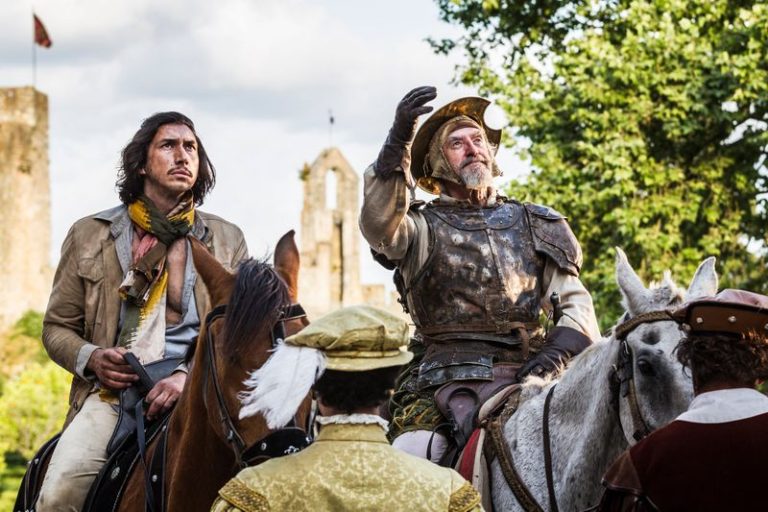
Movie Review: ‘The Man Who Killed Don Quixote’ is a funny (if unhinged) adventure from Terry Gilliam


Director: Terry Gilliam
Writers: Terry Gilliam, Tony Grisoni
Stars:José Luis Ferrer, Ismael Fritschi, Juan López-Tagle, Adam Driver

Synopsis: Toby, a disillusioned film director, becomes pulled into a world of time-jumping fantasy when a Spanish cobbler believes him to be Sancho Panza. He gradually becomes unable to tell dreams from reality.

[/info]

“We must always believe in ourselves…whatever the cost. It is our story, Sancho…”

What most resonated with me in Terry Gilliam’s latest fantasy film The Man Who Killed Don Quixote is this notion of creative individuals taking control of their destiny. Toby (Adam Driver) is a disillusioned director who now mostly works on commercials at the whims of advertising agencies. Nothing against advertising agencies – I work for one! But clearly, Toby is not where he wants to be in life.

While at work on his latest project, a commercial featuring Don Quixote and Sancho Panza in rural Spain, Toby is reminded of his first student film that he made in a small, Spanish village – also about Don Quixote. There he found a shoemaker who had just the look he needed for the lead role of Don Quixote. He is a man who looks like he could sell insurance. His name is Javier (Jonathan Pryce), and Toby casts him as Don Quixote. He also cast Angelica (Joana Ribeiro) in the film, a choice that has repercussions on the small town after Toby convinces her that she will be a star.

All of these actually does come back to Toby when, attempting to get away from the craziness of the commercial shoot, he finds himself face-to-face once again with Javier – who now believes himself to be the real Don Quixote. He calls Toby “Sancho” and he exclaims that it is a “wonderful day for adventures!” From here on out, the story has a fantastical element to it that blurs the line between dream and reality.

It also considers a different line – the line between lunacy and genius. Toby is repeatedly referred to as a genius, but then others think he has gone mad at various points in the film. But it all goes back to the quote from Javier that led off this review. It is the story that must be adhered to. Outside it make look crazy, but that self-belief must be present to carry the story through.

It is clear to see how Gilliam would have a deep love for the power of stories. He is, himself, a genius creative mind who has given us some of the most unique cinematic stories of our time. Here, you can see some parallels to his earlier film The Fisher King. There, too, you had a man who some would consider to be a lunatic who believed himself to be a on an epic quest. Robin Williams brought that role to life in thrilling fashion. Here, Pryce fills a similar role in powerful and humorous ways.

The performances really do give the film its power. Driver is fantastic in the lead role. I’m proud to say that he is from the same area in Northern Indiana where I grew up. He has become a fantastic actor, and he routinely works with some of the most fascinating directors in the business. Here, his talents are on full display.

However, it is Pryce that steals the show.

His performance has an unhinged quality to it but he never lets it reach the point of caricature. There are hilarious moments, and there are tender moments. Pryce nails every beat. I believe he is one of our most criminally-underrated actors. He always brings an extra quality to the roles he plays, and it is no different here.

So far, I’ve focused on the areas of the film worthy of praise, and that’s intentional. But I don’t think the film as a whole ultimately works. Why? Maybe it has something to do with the fact that it took Gilliam decades to make the film. He originally started on it in 1989, but shooting did not begin until 1998. Then, after many setbacks during production, the film was cancelled and it took Gilliam years to secure funds and find a cast. Finally, we have the finished product before us.

It’s a fascinating story, and Gilliam should be credited for having such a firm adherence to his idea. But I do wonder if that much time and so many different people taking part in the project diluted the final version. There have been other long-stagnating projects that have worked wonders – Terrence Malick’s The Tree of Life comes to mind. I couldn’t begin to tell you what the magic formula is. That’s probably because there isn’t one. Maybe it has nothing to do with all the different minds involved in production. Maybe it only has to do with what took place in Gilliam’s mind. Maybe the many years brought on a swell of ideas that simply could not all be worked together. I’m not sure, but the final film certainly feels weighed down by the pressure of having so many threads attempting to be tied up. When a Trump joke shows up, you realize that Gilliam might have strayed a bit from his original idea.

That’s not to say that the experience is wholly stained. Overall, I enjoyed the film. The performances carry it through, and it is legitimately funny and enchanting. The beautiful scenery and the striking cinematography from Nicola Pecorini also add much to the experience. Even if the finished product doesn’t fully hit home, the film is a testament to the power of ideas and the lengths we must go to preserve them. Gilliam certainly displayed that by even getting the film made, and I think it will long be a testament to the creative spirit.

Overall Grade: B-

[divider]

Hear our podcast review on Extra Film:

[divider]
Podcast: Avengers: Endgame – Episode 323

This podcast is brought to you by Blockbuster Podcast. Subscribe today!

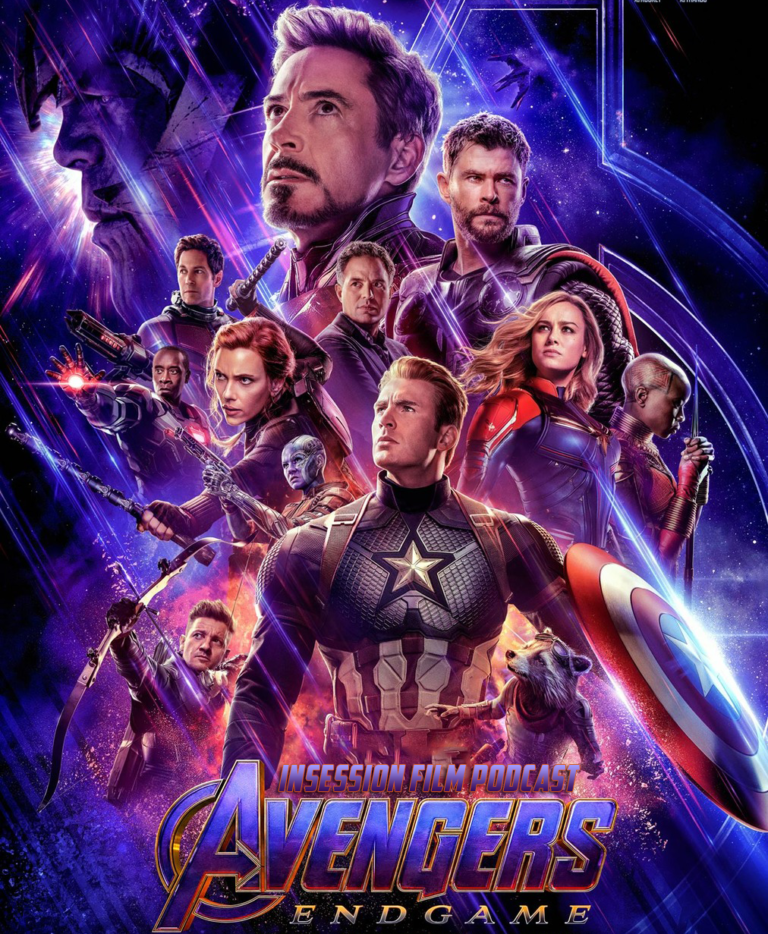
This week on the InSession Film Podcast, it’s all about Avengers: Endgame! We are joined by DJ Valentine of Simplistic Reviews as we discuss the film in both non-spoilers for those who haven’t seen it yet, and in full-on spoilers for the fans interested in some nerding out. We also offer up a few thoughts on Claire Denis’ High Life, David Robert Mitchell’s Under the Silver Lake and S. Craig Zahler’s Dragged Across Concrete.

It’s somewhat surreal that we are at this point. It’s been eleven years in the making, but Avengers: Endgame is finally here to culminate the Infinity Saga. Was it everything that we hoped it would be? Well, we talk for over two and half hours, so hopefully that gives you a hint as to how we felt about it. Either way, there was a lot to talk about and a big thanks to DJ Valentine for joining us once again. He’s a great guest and we are always grateful for his presence.

On that note, check out the show and let us know what you think in the comment section. Thanks for listening and thanks for supporting the InSession Film Podcast!

Avengers: Endgame Movie Review (4:55)
Director: Anthony Russo, Joe Russo
Writers: Christopher Markus, Stephen McFeely
Stars: Robert Downey Jr., Chris Evans, Chris Hemsworth, Mark Ruffalo, Scarlett Johansson, Jeremy Renner

– Notes / High Life / Under the Sliver Lake / Dragged Across Concrete (53:57)
How about some counter-programming this week? High Life, Under the Sliver LakeDragged Across Concrete could not be more different than Avengers: Endgame, so we did our best to cover the gamut this week. High Life in particular was fun to talk about, as it may be JD’s favorite film of the year so far.

Show Sponsor: First Time Watchers Podcast

[divider]

RELATED: Listen to Episode 322 of the InSession Film Podcast where we discussed our newly revised Top 10 Movies of 2014!

[divider]

Avengers: Endgame SPOILERS (1:16:30)
Again – fair warning as we do spoil the film here, but given the complexities of this story and all of the characters involved, we felt like it deserved more attention in details. Endgame does a great job of referencing all previous films in the MCU, there’s a giant battle at the end and there is death involved. So, it was cathartic for us to be able to get into the specifics of how that defines what Endgame is all about.

– Music

Portals – Alan Silvestri
The Real Hero – Alan Silvestri
Main on End – Alan Silvestri
The Return of the Eagle – Atli Örvarsson

Subscribe to our Podcasts RSS
Subscribe to our Podcasts on iTunes
Listen on Stitcher
InSession Film Podcast – Episode 323

[divider]

Next week on the show:

Main Review: Long Shot
Top 5: Expectations for Summer 2019

[divider]

Help Support The InSession Film Podcast

If you want to help support us, there are several ways you can help us and we’d absolutely appreciate it. Every penny goes directly back into supporting the show and we are truly honored and grateful. Thanks for your support and for listening to the InSession Film Podcast!

VISIT OUR DONATE PAGE HERE

Podcast: Under the Silver Lake / The Man Who Killed Don Quixote – Extra Film

This week on the InSession Film Podcast: Extra Film segment, Ryan and Jay discuss a pair of straight-to-video releases from auteur directors: David Robert Mitchell’s Under the Silver Lake and Terry Gilliam’s The Man Who Killed Don Quixote. The stories of the production and release of each of the films are as fascinating as the films themselves, and both have been very polarizing with critics.

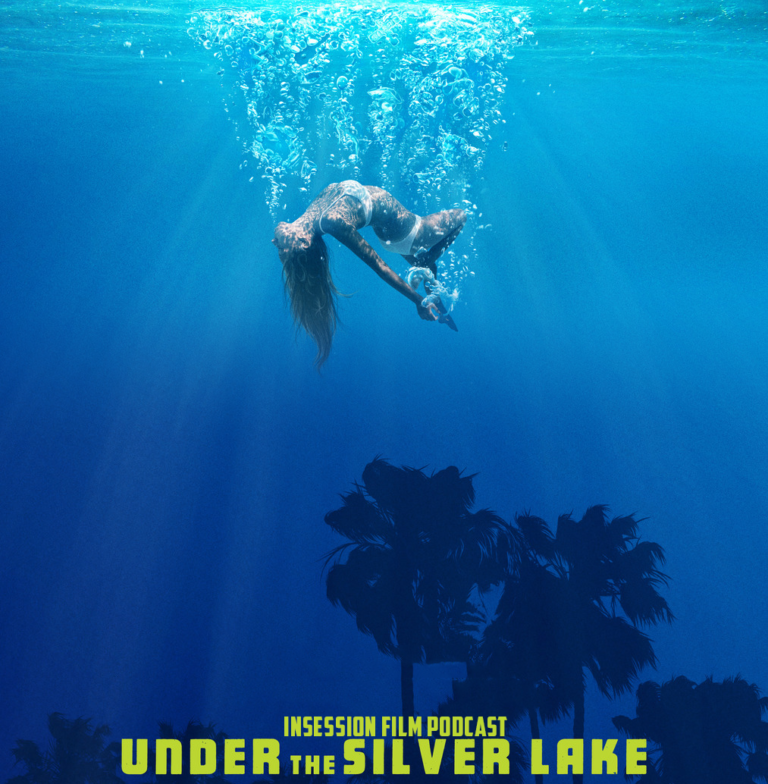
Under the Silver Lake is David Robert Mitchell’s follow-up to 2014’s It Follows, a film many consider to be a modern horror masterpiece. It was a true throwback to a bygone era of horror. Similarly, Under the Silver Lake hearkens back to the days of 70’s noir. Comparisons to films like The Long Goodbye (as well as the more recent films it influenced, like The Big Lebowski and Inherent Vice) are unavoidable. Many have called it a mess. Some have called it one of the best films of the years. The guys have there own thoughts in a crackling conversation about the films merits.

Meanwhile, The Man Who Killed Don Quixote is a film 25 years in the making. Stuck in production hell for many years, Terry Gilliam was finally able to get the film made. Starring Adam Driver and Jonathan Pryce, the film is a trippy, time-jumping exploration of the plight of an artist, the staying power of great art, and how the quest for fame and power can tear a men apart. It’s another movie that has received incredibly mixed reviews. At times incomprehensible, there is still a lot to admire about the film. One thing is for sure: The Man Who Killed Don Quixote feels like pure, uncut Gilliam.

On that note, have fun with this week’s Extra Film segment and let us know what you think in the comment section below. Thanks for listening!

– Movie Review: Under the Silver Lake (9:21)
Director: David Robert Mitchell
Writer: David Robert Mitchell
Stars: Andrew Garfield, Riley Keough, Topher Grace

– Movie Review: The Man Who Killed Don Quixote (46:19)
Director: Terry Gilliam
Writer: Terry Gilliam, Tony Grisoni
Stars: Adam Driver, Jonathan Pryce, Stellan Skarsgård

– Music

Unknowable Things – Disasterpiece
I Am Don Quixote – Roque Baños
The Return of the Eagle – Atli Örvarsson

We try to make this the best movie podcast we possibly can and we hope you enjoy them. Subscribe today on iTunes, Spotfiy or Stitcher, and please leave us a review on iTunes. You can also find us on Soundcloud, PlayerFM and TuneIn Radio as well. We really appreciate all your support of the InSession Film Podcast.

Subscribe to our Podcasts RSS
Subscribe to our Podcasts on iTunes
Listen on Spotify
Listen on Stitcher
Under the Silver Lake / The Man Who Killed Don Quixote – Extra Film

[divider]

Mobile App

To hear this Extra Film episode and everything else we do, download our apps on the Amazon Market for Android and the Podcast Box app on IOS devices. The mobile app covers all of our main shows, bonus podcast’s and everything else relating to the InSession Film Podcast. Thanks for your wonderful support and listening to our show. It means the world to us!

Movie Review: ‘Under the Silver Lake’ drowns amid its lofty influences


Director: David Robert Mitchell
Writers: David Robert Mitchell
Stars: Andrew Garfield, Riley Keough, Topher Grace

Synopsis: Sam, intelligent but without purpose, finds a mysterious woman swimming in his apartment’s pool one night. The next morning, she disappears. Sam sets off across LA to find her, and along the way he uncovers a conspiracy far more bizarre.

[/info]

“Lot of skunks in Los Angeles, especially on the east side.”

The main character in Under the Silver Lake, Sam (Andrew Garfield), says this at an outdoor movie screening after he, himself, has been sprayed by a skunk. There are certainly other “skunks” that populate this story, but the movie itself is the one that stinks most of all.

Writer and director David Robert Mitchell proudly wears his influences on his sleeve here. This is something I always enjoy. I love catching little throwbacks to old films, and this one is rife with them. Characters literally walk over the graves of past Hollywood legends, including Aflred Hitchcock. There are references to Chinatown, Rear Window, and Mulholland Drive. It is that last influence that holds the most sway over the storyline. In fact, one of the key actors from David Lynch’s L.A. thriller appears in this film as well. But that is really where the comparison between the two films should end.

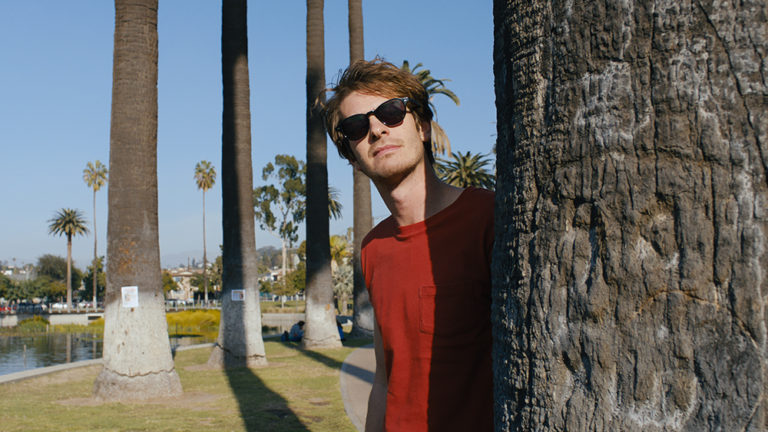
Sam is a stoner who is having trouble paying his rent. He lives a purposeless life. That is, until he finds the mysterious Sarah (Riley Keough) swimming in the pool at his apartment complex. She catches him spying on her with his binoculars (hence the Rear Window reference), and they end up running into each other the next day. But when she disappears soon after, Sam is sent on the chase that populates the rest of the film.

That chase lays the groundwork for the noir stylings that are one of the film’s few redeeming qualities. This is a stylish film, and it brings the old noir detective story into a more modern setting. However, it also makes the fatal mistake of throwing too many competing storylines into the mix.

While the film’s debt to Mulholland Drive is clear, Under the Silver Lake falls far short of its legendary predecessor. Where David Lynch’s masterpiece had perfect execution, Mitchell’s story continually throws intriguing ideas into the mix but fails to back them up. Mulholland Drive has some crazy twists and turns, but they work because Lynch had full commitment to his idea. Under the Silver Lake ultimately fails because it doesn’t even feel invested in its main character.

The film portrays Sam as the ultimate entitled loser. He doesn’t pay rent and the film gives no hint as to how Sam even maintains his livelihood (somehow he keeps ending up at elite parties). And yes, I was telling the truth when I said that he gets sprayed by a skunk. As character after character comments about his smell, I couldn’t help but wonder why this movie seemed to have such an utter disdain for its main character. Even more importantly, if the film doesn’t care then why should I?

I think an answer to the way Sam’s character is handled is that the film has some powerful things to say about male culture. Certain lines of dialogue about the male gaze belie this narrative thread. While there are interesting ideas here, I never felt like the film fully carried them through.

However, while we’re on the subject of the male gaze, this film contains graphic sexual content to the point that it really pulls you out of the film. Nearly every female character in the film is displayed as nothing more than a sexual or visual object. This goes back to Roger Ebert’s adage that it doesn’t matter so much what a film is about as much as how it is about it. Sure, Mulholland Drive contains graphic sexual content, too. But, again, the execution there is much cleaner than it is here. First, there is a narrative reason for the eroticism. Second, the female characters in that film are given far more to do than just being sex objects. While I’ll concede that this film may be going for a dissection of misogynistic culture, I think it goes overboard in its graphic sexuality.

Another element that pulled me out of the film was the music. Moments are underlined by the swelling score, and songs played by a fictional band in the story play a key role. But the music really calls attention to itself, and it honestly gives the film more of a B-movie vibe than anything else.

However, it wasn’t all bad. I must give credit to the stylish camerawork that at every turn attempted to redeem the experience for me. Mitchell and cinematographer Mike Gioulakis do an incredible job of using fluid camera movements and stylish setups to visually convey their story. The camerawork in this film is by far the best element.

A close second would be the acting, especially from Garfield and Keough. When I saw that these two actors were appearing in a film being distributed by A24, I was instantly intrigued. Garfield invests far more into the character of Sam than the film ever seems to. And Keough is absolutely beguiling. However, they cannot prop the film up by themselves.

By the end of the film, I no longer cared about the conspiracy Sam is trying to uncover. That’s a fatal flaw for any noir, as the investigation is always the key plot. There’s simply too much going on to be invested in any one part of it. There truly are some interesting ideas here, and the film is clearly influenced by the greats. Unfortunately, those legendary films don’t translate their secrets very easily, and this film feels completely lost amid the cinematic mystery for which it strives.

Overall Grade: D

[divider]


Hear our podcast review on Extra Film, coming soon!

[divider]

Featured: What The Criterion Channel Has Introduced Me To

We mourned the death of FilmStruck and welcomed the birth of Criterion Channel, bringing back classic movies around the world for our entertainment. Like its predecessor, I watch one film a day, sometimes two, plus any special features present. I watch the ones I have seen before and the ones that I never saw; as of this writing (24th of April), I am watching the German miniseries Eight Hours Don’t Make A Day (1972) with Tokyo Story (1950) and Taste Of Cherry (1997) waiting in the queue. You go on my Letterboxd (link) and you will see the growing list of films and their rating. Here are some of those movies that you should watch if you haven’t already – and if you haven’t signed up to Criterion, go do so!

The Color Of Pomegranates (1969)

So far, my favorite to have come my way. This is how I approached it: I viewed it without context, read a little bit of the background, rewatched it, looked at the in-depth visual essay about the movie’s meanings, rewatched it a third time, and watched a documentary about the life and career of director Sergei Parajanov. It was a Soviet production that is embedded deeply into a foreign culture victimized by genocide in World War I, repression by the Soviet authorities, and denialism by the Turks. But for Parajanov, his image-based story of the famous poet & singer Sayat Nova, it is an affront to being censored, which only sent him to prison for a few years because he was seen a threat to the government. In its 80 minutes, you will feel mesmerized by the richness of the screen and make you invest more into the meaning of each shot.

Baal (1970)

My second piece written for this site was a background on the life and work of German auteur Rainer Werner Fassbinder. Fassbinder was starting to come out a movie director and had done his first three when he acted in Volker Schlöndorff’s TV modern adaptation of Bertolt Brecht’s play about a self-loathing writer who goes against the bourgeois society he grew up in and indulges women and his own path to self-destruction. The opening scene (as seen above) is a psychedelic entrance into Fassbinder’s performance as a leather-jacketed man who wants to do whatever he wants while getting what he wants. The fascinating part is that Brecht’s widow hated the movie and had it removed from the airways. When inquired about the movie 40 years later, Schlöndorff didn’t know where it was us before an extensive search found it in a rusty can. After extensive restoration, Criterion gave it to us last year.

Ace In The Hole (1951)

This was a rewatch as I saw it several years ago, but this was a great refresher at an underrated Billy Wilder film. Kirk Douglas plays a reporter, cocky and power hungry, who heads into a New Mexico town and takes a job at a tiny newspaper. He overhears of a man trapped in a cave and decides to use this as his scoop and his big ticket back to New York where he was before. Instead of a story of survival, it becomes his own control to create a large carnival atmosphere (literally) to bring in the crowds and the rest of the country in to see the show. It’s a noir film wrapped in a real story, as it was based on two similar events where the lead reporter had sole access to the story as it was folding before its tragic climax. Douglas is power hungry and his madness to play the puppeteer pulling all the strings leads to his inevitable downfall.

Manila In The Claws Of Midnight (1975)

Thanks to Martin Scorsese’s World Cinema Project, he unearthed for us arguably the best film to ever come from the Philippines. Director Lino Broka brought about the rawness of living in the capital and the dehumanization it does on an innocent man coming from poverty to seek a better life and rescue the girl he loves. Working on a construction site under poor conditions, fighting gangsters who control the prostitutes, and learning about the real life of the shady underworld that Manila, a city of dreams, can turn into many nightmares. Outside of Manila, you can also find the Brazilian film Limite (1931), the Taiwanese epic drama A Brighter Summer Day (1991), Senegal’s colonial conscious Black Girl (1966), and Turkey’s Law of The Border (1966) courtesy of the World Cinema Project.

There’s a lot more I have seen and yet to have seen. With continuous changes in their monthly lineups, it’s a jackpot for all cinephiles. I will provide an update as time goes on, but go ahead and invest yourself into a list of movies that opens the mind beyond the current time and into other countries.

Follow me on Twitter: @BrianSusbielles (Cine-A-Man)

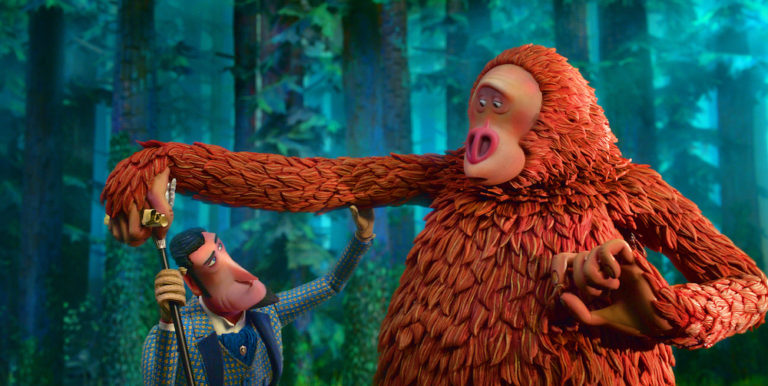
Movie Review: Few qualities are lost in Laika’s ‘Missing Link’


Director: Chris Butler
Writers: Chris Butler
Stars: Hugh Jackman, David Walliams, Stephen Fry

Synopsis: Mr. Link recruits explorer Sir Lionel Frost to help find his long-lost relatives in the fabled valley of Shangri-La. Along with adventurer Adelina Fortnight, this trio of explorers travel the world to help their new friend.

[/info]

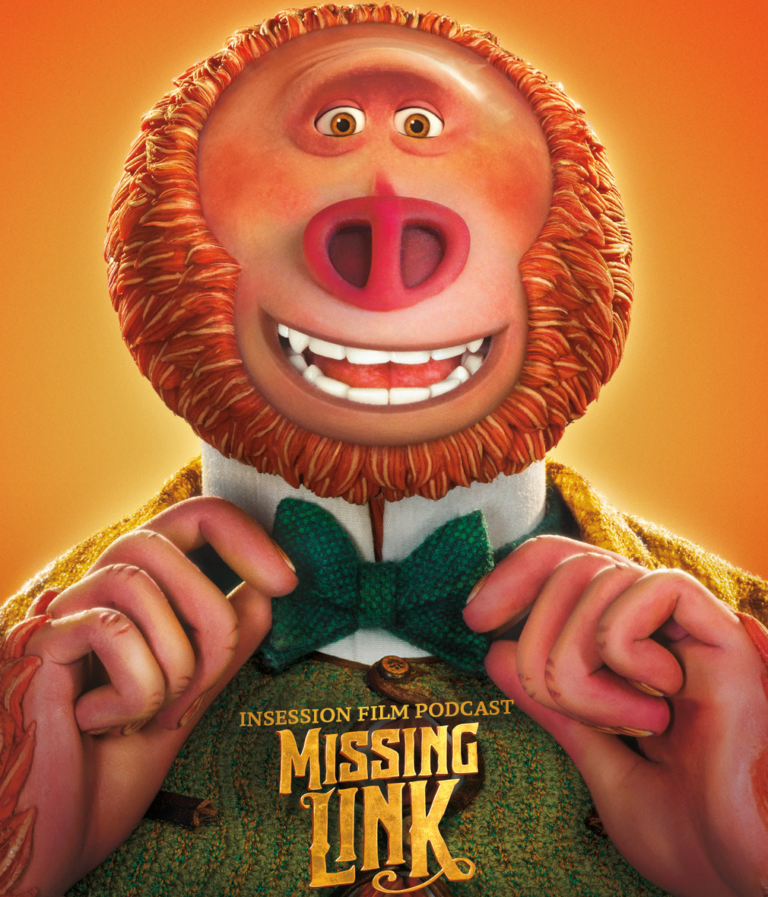
Even without the name recognition and power of Disney, Pixar, or Dreamworks, Laika continues to produce highly technical and whimsical films that delight the eye and the soul. Laika’s newest film, Missing Link, is an incredible addition to Laika’s already stunning resume. If you are unfamiliar with Laika’s work, here is a quick recap: Coraline (2009), ParaNorman (2012), The Boxtrolls (2014), and Kubo and the Two Strings (2016), all of which deserve a viewing. Using the unbelievable technical ability Laika has shown over a decade of movie magic, Missing Link exists as an enjoyably hilarious film that entertains and delights but is not without its flaws.

Missing Link is the story of Mr. Link (Zach Galifianakis), a lonely sasquatch, who enlists the help of famous explorer Sir Lionel Frost (Hugh Jackman) to help him find his long-lost cousins. The chemistry between the voice actors, including the brilliant Zoe Saldana as Adelina Fortnight, is palpable. One can tell these actors are committed to their roles as well as committed to what Laika is trying to achieve. The animated world that is created is visually stunning and the characters feel right at home in every strange yet beautiful location. The technical ability portrayed in this film is truly mesmerizing. One finds themselves lost in the colorful grandeur of the film.  The vastness of the world being created, the exotic locales, and the set pieces all envelop a very simple and personal story.

The story of inclusivity and belonging resonates throughout the film. There is conflict between the characters as they try to find their place in the world. Throughout all the places the characters travel, a thin thread of story unites them, and herein lies the flaw. The story is thrust on the audience so quickly, it begins to feel forced and uncoordinated. Being an animated film and having a rather short run time may be the culprits here, but main plot points are fired at the audience rather quickly, and this leaves us reeling. That is, until the story settles a bit in act two. In other words, there is a lot of character development and introductions in the first ten to fifteen minutes, which leaves the viewer with mixed feelings about certain characters, Sir Lionel Frost for one, that can lead to dissatisfaction with regards to his character arc. This could just be nitpicking, but Coraline has a similar run time and the characters feel more developed and nuanced. These slight flaws are mere drops in the bucket when compared to the visual magic Missing Link contains. However, having more clearly defined and imaginative characters would have made this film a near masterpiece in the annals of animated cinema.

Overall, Missing Link is fun, exciting, and beautiful to behold. The heart is there but feels somewhat lacking due to a compressed story. The technical achievement is truly breathtaking and is a pure joy to behold. The jokes and physical comedy often reward or subvert expectations, which seems to make Missing Link feel ephemeral and quick-witted. Missing Link quite literally finds the right balance between beauty and the beast.

Overall Grade: B+

[divider]

Hear our podcast review on Episode 321:

[divider]

Poll: What is your favorite MCU team-up film?

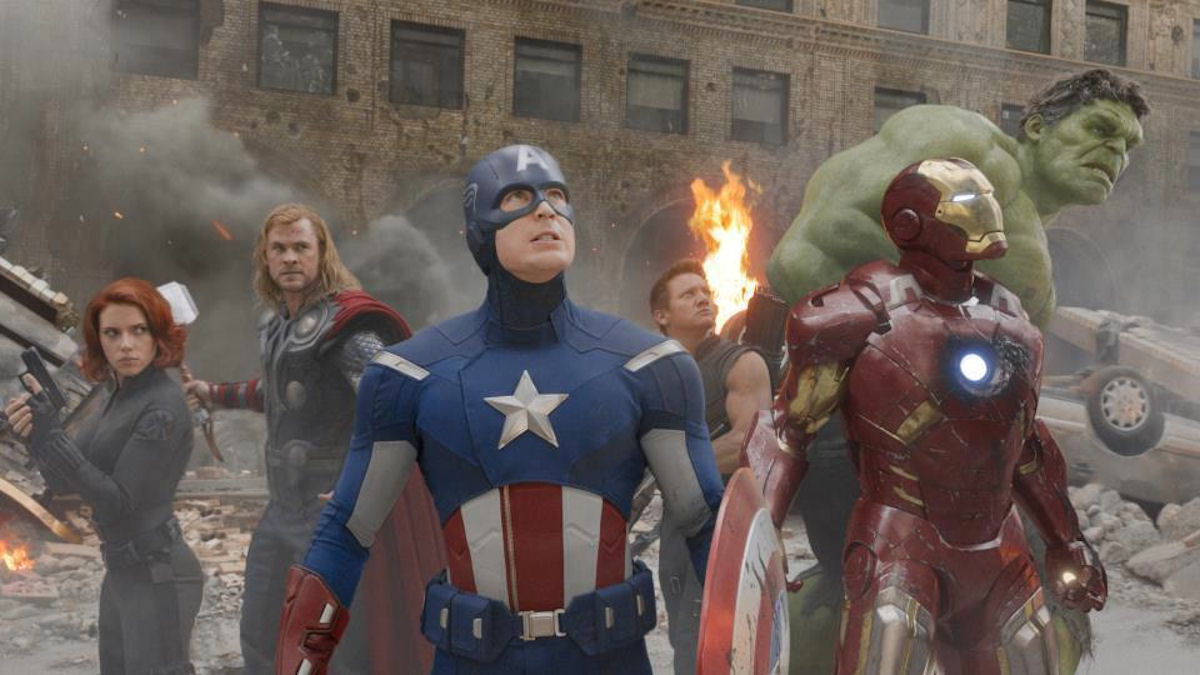
We are on the verge of finalizing the Infinity Saga as Avengers: Endgame hits theaters this weekend. One of the biggest impacts the MCU has had since 2008 is how realized the team-up film after establishing each character on their own first. Never before had we seen that before in live-action and at that scale. It was unprecedented, but they pulled it off and it’s been arguably the most fun aspect as a geeky fan of Marvel. Whether it be directly in an Avengers film, the Guardians team going on an adventure, or other MCU characters showing up in specific properties, there has been plenty of thrilling team-up action.

With that as our inspiration for our poll this week, we are simply asking; what is your favorite MCU team-up film? Vote now!


List: Top 10 Movies of 2014

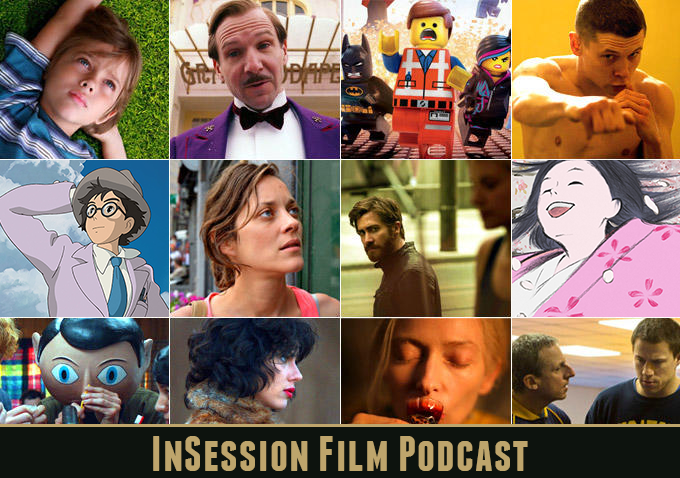
This week on Episode 322 of the InSession Film Podcast, we revisited 2014 and offered up a newly revised Top 10 for that year. And 2014 was already a great year for film if you ask us. Whether it be mainstream and indie films, the year had plenty to offer in terms of quality. Animated films were particularly a stand out, verging on being perhaps the best year ever to churn out greatness from that art form. Even the Awards Season had some great contenders that year, so grappling with this list again was not easy. Which films do we remove from our lists? Which one’s do we add? As one could imagine, it was slightly stressful, but in the end we are thrilled with how our lists turned out.

NOTE: On #322 we only discussed our Top 10 movies of 2014, so be sure to listen to the show to hear us discuss why these particular films were the very best of that year. However, as you’ll see below, we have listed our full Top 20 lists from 2014.

JD

1) Boyhood
2) The Wind Rises
3) Whiplash
4) How to Train Your Dragon 2
5) Locke
6) The Grand Budapest Hotel
7) Birdman or (The Unexpected Virtue of Ignorance)
8) Under the Skin
9) Calvary
10) Inherent Vice

11) The Tale of the Princess Kaguya
12) Ida
13) Fury
14) Nightcrawler
15) The Lego Movie
16) Gone Girl
17) Selma
18) Dawn of the Planet of the Apes
19) A Most Violent Year
20) Captain America: The Winter Soldier

Brendan

1) The Tale of the Princess Kaguya
2) Boyhood
3) The Wind Rises
4) Inherent Vice
5) The Grand Budapest Hotel
6) Whiplash
7) How to Train Your Dragon 2
8) Dawn of the Planet of the Apes
9) The Rover
10) Snowpiercer

11) Under the Skin
12) Ida
13) Selma
14) Starred Up
15) The Lego Movie
16) Nightcrawler
17) Calvary
18) Captain America: The Winter Soldier
19) Two Days, One Night
20) Frank

Hopefully you guys enjoyed our lists and if you agree or disagree with us, let us know in the comment section below. Clearly there are a lot of other contenders from 2014 that battled for our lists, that just missed the cut. That being said, what would be your Top 3? Leave a comment in the comment section or email us at [email protected].

For the entire podcast, click here or listen below.

For more lists done by the InSession Film crew and other guests, be sure see our Top 3 Movie Lists page.

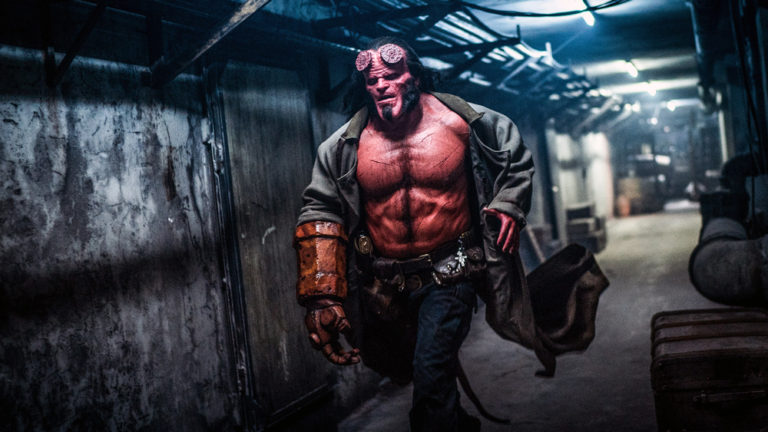
Movie Review: ‘Hellboy’ reboot is as bad as it gets


Director: Neil Marshall
Writers: Andrew Cosby
Stars: David Harbour, Milla Jovovich, Ian McShane

Synopsis: Based on the graphic novels by Mike Mignola, Hellboy, caught between the worlds of the supernatural and human, battles an ancient sorceress bent on revenge.

[/info]

About 1 minute into Neil Marshall’s Hellboy is about all it took for me to realize it was going to be a long and turbulent ride. The opening scene narrated by Ian McShane, as Professor Broom, which should set the tone for the rest of the film instead makes it fairly clear that the film has no idea what its tone is supposed to be. Aside from simply poor writing, the scene uses an odd blend of violence, humor and some unnecessary profanity that seems awkward and out of place. Here we also get our first taste of the CGI that is scattered throughout the film and it is painfully bad. Over the next 15 minutes, we meet Hellboy (David Harbour) and get a feel for what Marshall is going for and what to expect from the remaining hour and 45 minutes. By then I was already rubbing my head and glancing at the exits trying to weigh out the risk/reward of making an early departure. 15 minutes in and the film was already dragging…and it keeps dragging. But I kept on mission and buried my despair in popcorn and caffeine free diet vanilla Coke, and this is what I took away from it.

In that first 15 minutes, we are also introduced to a recurring theme in the film: When things are getting dull add a fight sequence and queue the rock music. Now a classic rock hit played over some action is nothing new to cinema but Hellboy somehow overdoes it and even made me roll my eyes to Mötley Crüe’s Kickstart My Heart. It all feels forced and my guess is it’s meant to distract from the sloppy action which is unsatisfying with poor editing, shoddy CGI and dull climaxes. They usually add a splash of poorly executed humor and quickly move on to the next scene which is another theme. The film never allows time to digest a sequence and instead crams each down the viewer’s throat just to move on to the next. In this way, it is difficult to really put my finger on the film’s pulse. I can’t tell if it wants to be non-stop thrill ride or a sarcastic comedy. Additionally, the film, although, according to my research, is sticking close several plots from the Mike Mignola’s creation, is all over the place introducing numerous side characters with no backstory or explanation and cramming multiple stories into the 2-hour runtime. Again these side characters and plots occur with very little time to settle and feel poorly connected. When combined with the fast pacing the film is disjointed making it difficult to remain engaged with and feels more like a chore and than entertainment. By the film’s end I could hear most people in my theater groaning over what we all just witnessed which is unfortunate as most films that I may have not enjoyed, I still hear a mixture of responses from the audience post-credits.

It is difficult to really talk about the performances from the cast as I was constantly distracted and drawn out of the story from boredom. But I will say the one positive thing about Hellboy is Harbour makes a fairly decent lead. From the trailers, I didn’t think I was going to enjoy his take on Big Red but over the course of the film, I learned to appreciate him in the role. Harbour has a way of delivering sarcasm and dry humor that really fit with Hellboy. He gives in to the role and you can see his commitment but unfortunately, there was not much Harbour could really do with the material he was given which made most of his attempts at humor land flat. The other performances were adequate but nothing really stood out. It was refreshing to see Daniel Kim as Ben Daimio, I personally had not seen him on screen since Lost. Daimio has an interesting arch which I would have like to see more of but, again, the script doesn’t allow for much character development and his presence in the film feels more like an accessory than a fleshed out role. Milla Jovovich as the protagonist, Nimue The Blood Queen, has minimal screen time and by the end of the film, I found myself not really caring if she succeeded in her evil plot. Additionally, I did not care much for Ian McShane’s Professor Broom, his character felt stale and not really significant to the story and I didn’t buy into any connection between him and Hellboy. With no energy from Hellboy’s characters, it makes it all the more difficult to stay engrossed in the film as well as invest in the story and each character’s defeats and triumphs. It is another pain point of Hellboy that is hard to get passed.

Marshall’s Hellboy is getting hammered by critics and for good reason. Del Toro’s original concept was a hit and maintains a decent following and when you attempt a reboot of a successful film you have to bring your A game because before it even hits theaters it is going to take some lashings. Additionally, it is reasonable to assume that most reboot’s never really match up to the original. In the case of this one, the film falls very far from meeting even minimal expectations and is not a film I would recommend to watch even just for kicks and laughs. Granted some may argue that Del Toro’s version isn’t perfect but what he did do well was breathing life into his characters and bringing a popular comic book character to screen with some style and edge. As hard as I tried it was difficult not to mentally compare the two films side by side which makes the flaws in this recent production stand out all the more. I had my doubts going into the film and I was honestly hoping to be proven wrong but in the end, the film was much worse than I had imagined. A few months back I made a decision to essentially boycott any future remakes, prequels and unnecessary spin off’s (With maybe a few exceptions). The last few films like this have been incredibly disappointing and have felt more like money grabs than real attempts at art and cinema. I lifted my boycott for the sake of this review and I can safely say this film truly hammers in the reason why I swore off these films. It brings nothing interesting or refreshing to the Hellboy saga and offers no reason for existing other than to cash in on the original’s success. Word is that this film is to be the first in a new media franchise similar to what Disney has done with the Marvel Cinematic Universe. If this debut is any indication of what we can expect it is going to have a long hard road ahead of it and there is almost no chance that I will be along for the ride.

Overall Grade: F

[divider]

List: 2014 InSession Film Awards (all nominees and winners)

This week on the InSession Film Podcast, we revisited 2014 as we needed to remedy a few mistakes we had on our original Top 10 list of that year. As part of that event, we thought it would also be fun to look back at our InSession Film Awards from that year and update what our nominees and winners would look like in the process. Our annual awards show is run slightly different now than it was originally in 2014, and we didn’t have posts like this to compliment the show, so it made sense to add this to the project.

Below you will see most of the categories we mentioned on Episode 99, along with many of our original nominees and winners. However, we have added a few more categories to reflect how we do things now and some of the picks have changed to accompany the exercise we did on Episode 322.

As per usual, for every category, we each listed our own nominations and winners. Winners are highlighted in bold.

Best Actor

Brendan:

  • Michael Fassbender, Frank
  • Jake Gyllenhaal, Nightcrawler
  • Brendan Gleeson, Calvary
  • Michael Keaton, Birdman or (The Unexpected Virtue of Ignorance)
  • David Oyelowo, Selma

JD:

  • Jake Gyllenhaal, Nightcrawler
  • Michael Keaton, Birdman or (The Unexpected Virtue of Ignorance)
  • Tom Hardy, Locke
  • Brendan Gleeson, Calvary
  • Ralph Fienees, The Grand Budapest Hotel
Best Actress

Brendan:

  • Agata Kulesza, Ida
  • Reese Witherspoon, Wild
  • Julianne Moore, Still Alice
  • Marion Cotillard, Two Days One Night
  • Rosamund Pike, Gone Girl

JD:

  • Marion Cotillard, Two Days One Night
  • Reese Witherspoon, Wild
  • Julianne Moore, Still Alice
  • Essie Davis, The Babadook
  • Rosamund Pike, Gone Girl
Best Actor Supporting Role

Brendan:

  • Ethan Hawke, Boyhood
  • J.K. Simmons, Whiplash
  • Ben Mendelsohn, Starred Up
  • Robert Pattinson, The Rover
  • Toby Kebbell, Dawn of the Planet of the Apes

JD:

  • Edward Norton, Birdman or (The Unexpected Virtue of Ignorance)
  • J.K. Simmons, Whiplash
  • Shia LeBeouf, Fury
  • Ethan Hawke, Boyhood
  • Andy Serkis, Dawn of the Planet of the Apes
Best Actress Supporting Role

Brendan:

  • Emma Stone, Birdman or (The Unexpected Virtue of Ignorance)
  • Laura Dern, Wild
  • Katherine Waterston, Inherent Vice
  • Patricia Arquette, Boyhood
  • Tilda Swinton, Snowpiercer

JD:

  • Emma Stone, Birdman or (The Unexpected Virtue of Ignorance)
  • Patricia Arquette, Boyhood
  • Katherine Waterston, Inherent Vice
  • Viola Davis, The Disappearance of Eleanor Rigby
  • Laura Dern, Wild
Best Director

Brendan:

  • Wes Anderson, The Grand Budapest Hotel
  • Damien Chazelle, Whiplash
  • Richard Linklater, Boyhood
  • Christopher Nolan, Interstellar
  • Jonathan Glazer, Under the Skin

JD:

  • Richard Linklater, Boyhood
  • Wes Anderson, The Grand Budapest Hotel
  • Jonathan Glazer, Under the Skin
  • Alejandro González Iñárritu, Birdman or (The Unexpected Virtue of Ignorance)
  • Christopher Nolan, Interstellar
Best Original Screenplay

Brendan:

  • David Michôd and Joel Edgerton, The Rover
  • Richard Linklater, Boyhood
  • John Michael McDonagh, Calvary
  • Wes Anderson and Hugo Guinness, The Grand Budapest Hotel
  • Pawel Pawlikowski and Rebecca Lenkiewicz, Ida

JD:

  • Richard Linklater, Boyhood
  • John Michael McDonagh, Calvary
  • Wes Anderson and Hugo Guinness, The Grand Budapest Hotel
  • Dan Gilroy, Nightcrawler
  • Alexander Dinelaris, Nicolás Giacobone, Alejandro González Iñárritu and Armando Bo, Birdman or (The Unexpected Virtue of Ignorance)
Best Adapted Screenplay

Brendan:

  • Damien Chazelle, Whiplash
  • Gillian Flynn, Gone Girl
  • Paul Thomas Anderson, Inherent Vice
  • Phil Lord, Christopher Miller, Dan Hageman, and Kevin Hageman, The Lego Movie
  • Isao Takahata and Riko Sakaguchi, The Tale of the Princess Kaguya

JD:

  • Paul Thomas Anderson, Inherent Vice
  • Damien Chazelle, Whiplash
  • Gillian Flynn, Gone Girl
  • Mark Bomback, Rick Jaff and Amanda Silver, Dawn of the Planet of the Apes
  • Hayao Miyazaki, The Wind Rises
Best Cinematography

Brendan:

  • Hoyte Van Hoytema, Interstellar
  • Daniel Landin, Under the Skin
  • Emmanuel Lubezki, Birdman or (The Unexpected Virtue of Ignorance)
  • Robert Yeoman, The Grand Budapest Hotel
  • Lukasz Zal and Ryszard Lenczewski, Ida

JD:

  • Daniel Landin, Under the Skin
  • Emmanuel Lubezki, Birdman or (The Unexpected Virtue of Ignorance)
  • Robert Elswit, Inherent Vice
  • Robert Yeoman, The Grand Budapest Hotel
  • Lukasz Zal and Ryszard Lenczewski, Ida
Best Documentary

Brendan:

  • Life Itself
  • Citizenfour
  • Last Days in Vietnam
  • The Overnighters
  • Virunga

JD:

  • Mistaken for Strangers
  • Citizenfour
  • The Overnighters
  • Life Itself
  • Virunga
Best Foreign Language Film

Brendan:

  • Force Majeure
  • Ida
  • Two Days, One Night
  • A Girl Walks Home Alone at Night
  • We Are the Best!

JD:

  • Force Majeure
  • Ida
  • Two Days, One Night
  • A Girl Walks Home Alone at Night
  • We Are the Best!
Best Animated Movie

Brendan

  • How to Train Your Dragon 2
  • The Lego Movie
  • Song of the Sea
  • The Tale of the Princess Kaguya
  • The Wind Rises

JD:

  • How to Train Your Dragon 2
  • The Lego Movie
  • Song of the Sea
  • The Wind Rises
  • The Tale of the Princess Kaguya
Best Original Score

Brendan:

  • Joe Hisaishi, The Tale of the Princess Kaguya
  • Hans Zimmer, Interstellar
  • Mica Levi, Under the Skin
  • Alexandre Desplat, The Grand Budapest Hotel
  • Jonny Greenwood, Inherent Vice

JD:

  • John Powell, How to Train Your Dragon 2
  • Hans Zimmer, Interstellar
  • Mica Levi, Under the Skin
  • Alexandre Desplat, The Grand Budapest Hotel
  • Patrick Cassidy, Calvary
Best Use of Soundtrack Music (Doesn’t have to be original. Closing and Opening credits count)

Brendan:

  • “Everything Is Awesome” by Tegan and Sarah and The Lonley Island, The Lego Movie
  • “Glory” by Common and John Legend, Selma
  • “I Love You All” by Michael Fassbender, Frank
  • “A Step You Can’t Take Back” by Kiera Knightly, Begin Again
  • “Where No One Goes” by Jónsi and John Powell, How to Train Your Dragon 2

JD:

  • “Everything Is Awesome” by Tegan and Sarah and The Lonley Island, The Lego Movie
  • “Glory” by Common and John Legend, Selma
  • “I Love You All” by Michael Fassbender, Frank
  • “Hero” by Family of the Year, Boyhood
  • “Hooked On a Feeling” by Blude Swede, Guardians of the Galaxy
Best Opening/Closing Credits Sequence or Scene

Brendan:

  • Guardians of the Galaxy (Opening)
  • How to Train Your Dragon 2 (Closing)
  • Selma (Closing)
  • 22 Jump Street (Closing)
  • Under the Skin (Opening)

JD:

  • Guardians of the Galaxy (Opening)
  • Whiplash (Closing)
  • How to Train Your Dragon 2 (Opening)
  • Fury (Closing)
  • Snowpiercer (Closing)
Best Overlooked Movie

Brendan:

  • Calvary
  • The Rover
  • Force Majeure
  • A Girl Walks Home Alone at Night
  • Starred Up

JD:

  • The Disappearance of Eleanor Rigby
  • Le Week-End
  • Obvious Child
  • Song of the Sea
  • Starred Up
Best Surprise Movie

Brendan:

  • Beyond the Lights
  • Edge of Tomorrow
  • Paddington
  • John Wick
  • Guardians of the Galaxy

JD:

  • As It Is In Heaven
  • Edge of Tomorrow
  • The Babadook
  • X-Men: Days of Future Past
  • Force Majeure
Best Surprise Actor/Actress

Brendan:

  • Michael Fassbender, Frank
  • Chris O’Dowd, Calvary
  • Robert Pattinson, The Rover
  • Tyler Perry, Gone Girl
  • Jenny Slate, Obvious Child

JD:

  • Tyler Perry, Gone Girl
  • Kristen Stewart, Still Alice / Camp X-Ray
  • Robert Pattinson, The Rover
  • Toby Kebbell, Dawn of the Planet of the Apes
  • Chris O’Dowd, Calvary
Best Movie Discovery

Brendan:

  • Riz Ahmed – Actor, Nightcrawler
  • Damien Chazelle – Director, Whiplash
  • Paul King – Writer/Dierctor, Paddington
  • Jeremy Saulnier – Writer/Dierctor, Blue Ruin
  • Sheila Vand – Actress, A Girl Walks Home Alone at Night

JD:

  • Jennifer Kent – Director, The Babadook
  • Damien Chazelle – Director, Whiplash
  • Pawel Pawlikowski – Writer/Dierctor, Ida
  • Jack O’Connell – Actor, Starred Up / Unbroken
  • Jenny Slate, Obvious Child
Brendan’s Individual Special Awards

Funniest Scenes

  • Eating Weed, Inherent Vice
  • Peter References Footlose, Guardians of the Galaxy
  • Spaceship, The Lego Movoe
JD’s Individual Special Awards

Best Individual Score Track

  • “Hope” – John Ottman (X-Men: Days of Future Past)
  • “Coward” – Hans Zimmer (Interstellar)
  • “Norman” – Steven Price (Fury)
  • “Captain America” – Henrhy Jackman (Captain America: The Winter Soldier)
  • “Calvary Theme” – Patrick Cassidy (Calvary)
  • “Dragon Racing” – John Powell (How to Train Your Dragon 2)

The Movie I Liked That Most People Hated

  • The Amazing Spider-Man 2

The Biggest Surprise Scene of 2014

  • Tuck revealing how he’s still married despite being a widow – Best of Me

Well that’s it for our 2014 InSession Film Awards! Hopefully you all enjoyed our nominations and winners. If you agree or disagree with us, let us know in the comment section below. We would love to hear how your nominations and winners would vary from our picks above. You can also email your selections to us at [email protected] or follow us on social media.

To hear our newly updated Top 10 Movies of 2014, listen below on Episode 322!

To hear our original Top 10 Movies of 2014, listen below on Episode 99!

Podcast: 2014 Retrospective – Episode 322

This week’s episode is brought to you by the GameFly. Sign up today and get a 30-day trial + one free game!

This week on the InSession Film Podcast, we revisit the year 2014 and offer up our newly updated Top 10 Movies of 2014!

Why you may ask? Well, we get into that in some great detail before getting into our newly formed lists. Simply, there were some egregious errors we needed to remedy. And now that we have this weight off of our shoulders, we feel pretty great about where we stand regarding films from 2014.

That said, check out this week’s show and let us know what you think in the comment section. Thanks for listening and for supporting the InSession Film Podcast!

– Why are we revisiting 2014? (4:46)

As mentioned above, we wanted to go into some specifics as to why we wanted to talk about films that we’ve already reviewed on the show. Hell, on Episode 99 we already offered up a Top 10 of 2014. So, doesn’t this seem redundant? Yes, in some ways that is true. However, 2014 was just our second year as InSession Film and we were still maturing into who we would become as cinephiles and film critics. We also made some big mistakes that we needed to rectify regarding our Top 10. During the first segment, we do our best to set the table as to why that mattered to us.

Top 10 Movies of 2014 – Part 1 (46:24)
2014 was a great year for film if you ask us. Whether it be mainstream and indie films, the year had plenty to offer in terms of quality. Animated films were particularly a stand out, verging on being perhaps the best year ever to churn out greatness from that art form. Even the Awards Season had some great contenders that year, so grappling with this list again was not easy. Which films do we remove from our lists? Which one’s do we add? As one could imagine, it was slightly stressful, but in the end we are thrilled with how our lists turned out. That said, what would be your Top 10?

Top 3 Sponsor: First Time Watchers Podcast

[divider]

RELATED: Listen to Episode 316 of the InSession Film Podcast where we discussed Captain Marvel!

[divider]

– Top 10 Movies of 2014 – Part 2 (1:28:55)

For Part 2, we round our Top 10 and offer up our 11-20 picks as well to round out our fully finalized top 20 of 2014.

– Music

Hooked On A Feeling – Blue Swede
Everything Is Awesome!!! – Tegan and Sarah, The Lonely Island
Hero – Family of the Year
The Return of the Eagle – Atli Örvarsson

Subscribe to our Podcasts RSS
Subscribe to our Podcasts on iTunes
Listen on Spotify
Listen on Stitcher
InSession Film Podcast – Episode 322

[divider]

Next week on the show:

Main Review: Avengers Endgame

[divider]

Help Support The InSession Film Podcast

If you want to help support us, there are several ways you can help us and we’d absolutely appreciate it. Every penny goes directly back into supporting the show and we are truly honored and grateful. Thanks for your support and for listening to the InSession Film Podcast!

VISIT OUR DONATE PAGE HERE

Podcast: High Life / Hellboy – Extra Film

This week on the InSession Film Podcast: Extra Film segment, Ryan and Jay discuss Claire Denis’ latest film in High Life and the latest comic book remake in Hellboy.

First, the guys discuss the English language debut of one of the most auteur filmmakers living today in Claire Denis. While High Life is her first film in English, the film still feels like the essence of her previous work. Denis is a very thought provoking director, thus the film lead to a pretty great discussion between the guys considering there is a lot to unpack in this film and a lot of different subjects and meanings that Denis is trying to convey.

Then, in the back half of the episode, the guys get into the newest version Hellboy. What once started off as the third film in the Guillermo del Toro incarnation of these characters, due to a lot of behind the scene drama, the film turned Hellboy into a R-rated ramp that has received a lot of negative press. Thus is why Ryan and Jay had to take a dive into the underworld to find out what all the hype was about.

On that note, have fun with this week’s Extra Film segment and let us know what you think in the comment section below. Thanks for listening!

– Movie Review: High Life (9:52)
Director: Claire Denis
Writer: Claire Denis, Jean-Pol Fargeau
Stars: Robert Pattinson, Juliette Binoche, André Benjamin

– Movie Review: Hellboy (41:42)
Director: Neil Marshall
Writer: Andrew Cosby
Stars: David Harbor, Ian McShane, Sasha Lane

– Music

High Life – Stuart A. Staples
Hellboy – Benjamin Wallfisch
The Return of the Eagle – Atli Örvarsson

We try to make this the best movie podcast we possibly can and we hope you enjoy them. Subscribe today on iTunes, Spotfiy or Stitcher, and please leave us a review on iTunes. You can also find us on Soundcloud, PlayerFM and TuneIn Radio as well. We really appreciate all your support of the InSession Film Podcast.

Subscribe to our Podcasts RSS
Subscribe to our Podcasts on iTunes
Listen on Spotify
Listen on Stitcher
High Life / Hellboy – Extra Film

[divider]

Mobile App

To hear this Extra Film episode and everything else we do, download our apps on the Amazon Market for Android and the Podcast Box app on IOS devices. The mobile app covers all of our main shows, bonus podcast’s and everything else relating to the InSession Film Podcast. Thanks for your wonderful support and listening to our show. It means the world to us!

Movie Review: ‘Diane’ is a poignant and sneaky good film about guilt


Director: Kent Jones
Writers: Kent Jones
Stars: Mary Kay Place, Jake Lacy, Estelle Parsons

Synopsis: Diane fills her days helping others and desperately attempting to bond with her drug-addicted son. As these pieces of her existence begin to fade, she finds herself confronting memories she’d sooner forget than face.

[/info]

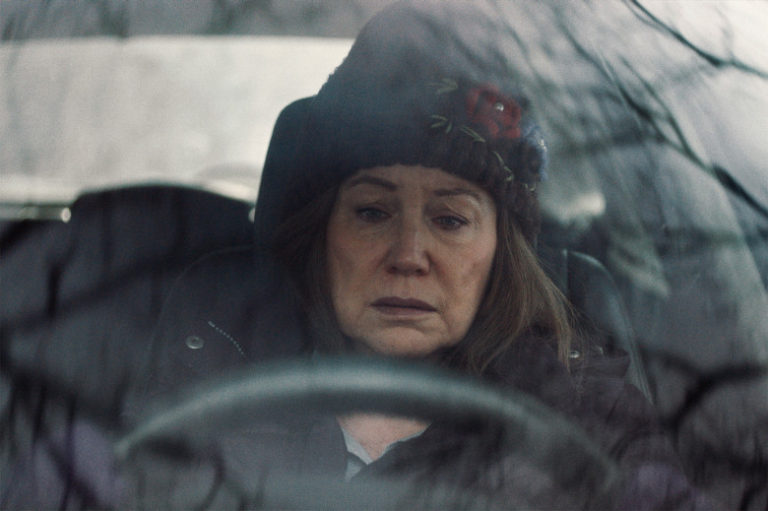
“How could something originate in its antithesis? The unselfish act in self-interest? Such origination is impossible” is a Nietzsche quote, which is something I just learned. When I was 13, I thought I had come up with this philosophical notion. I truly loved this theory because I wrestled with it all the time, wanting to be a good person in the beginnings of teenagehood. It’s a pretty nihilistic view of the world, but it is one I keep in check from time to time. I mention it because it was one of the first things I thought of when I watched Diane. The quote falls right into place here, as our lead character is almost as unselfish as one can be. The following film is somewhat of a mystery, as towards the end we learn the cause of her guilt and shame. It’s also a lovely portrait of a frustrated woman, a New England community that slowly passes away, and a shaky study of addiction which luckily gets better as the film goes on.

We meet the titular Diane (Mary Kay Place), a woman who spends her time caring for everyone else. She begins the film asleep in the hospital room of her cousin (Deirdre O’Connell). It’s soon followed by shifts at the soup kitchen, dropping food off at different friends’ houses (all of whom seem beaten down by age), and visiting her heroin addicted son (Jake Lacy). We see these things as a routine, her working and doing her best to support her friends and neighborhood as much as possible. She writes down a to do list of good things, completes them, spends time with friends, hopes her son will get help, and keeps moving.

At first, Diane develops this sort of wonderful routine. We get a genuine portrayal of a woman and the people who make up her life. The scenes in diners, kitchens, and bars where people discuss trivial history are the best parts of the film. These scenes feel so ingrained in reality that I’m unsure if director Kent Jones stole the dialogue from a family get-together. Each small character and family member is perfectly realistic. It’s a joy to watch this woman try her best to tend to them, even if I started to question her intent. The film loses some of its footing earlier on when showing the relationship of Diane and her son. These scenes can seem slightly obvious and manipulative, along with Lacy’s performance, which starts hammy and over the top. At first, I thought that I’d be praising the background here as it seemed like his drug addiction was taking center focus. But the film soon straightens itself out. Once that plot thread comes to an end, the primary focus of Diane’s guilt comes to light. From there, everything is absolutely superb.

Diane is the sort of subtly masterful film that you wouldn’t expect from a first time director. But it does make sense that it comes from Kent Jones, one of the greatest cinema writers of all time. Jones has an excellent command of visual language, taking cues from Paul Schrader and Jim Jarmusch’s latest works. All the while, he succeeds best at making a setting feel deeply integrated as a part of the film. Shades of Manchester by the Sea pop up, especially if you want to find another film about guilt where the lead character spends a large portion of the time driving around in the cold of Massachusetts. But Diane does something special with its formal approach. As to mimic the slow decay of our lead character, the film gets more fragmented, dream-like, and odd as it moves on. Time withers away to the point where you can’t tell if you are six months or six minutes away from the previous scene. It’s an ingenious way to stop that feeling of repetition and routine that the film creates, even if I found the routine pleasant enough on its own. This is a sneaky, sneaky film. It’s a crushingly sad one, along with being one of the most human ones I’ve seen in a long time. I’m very sure I’ll be returning to Diane’s community soon, although I’m unsure if it’ll be an easy visit.

Overall Grade: B+

[divider]

Featured: The Unepic Works Of David Lean

The Bridge Of The River Kwai. Lawrence Of Arabia. Doctor Zhivago. A Passage To India. 

These are gorgeous epics by the great David Lean, who won two Oscars and nominated for another three during this era of epic producing. It is a style that may never be duplicated again, where it’s all on location, no CGI, lush settings, and made to be shown completely wide on the screen. Lean’s rise to the Oscar-winning epics came from his period in shooting traditional black & white stories and adaptations of noted pieces of literature that have itself become an acclaim section of films to watch. He first began as an editor, working on the Oscar-winning films Pygmallion (1938) and 49th Parallel (1941) before moving on to being a director, starting with In Which We Serve (1942) alongside Noel Coward for the war effort. It was these works which helped him give a better insight in telling a story from shot to shot and giving a more eloquent performance from his actors. Here are a few of those pre-epic films.

Brief Encounter (1945)

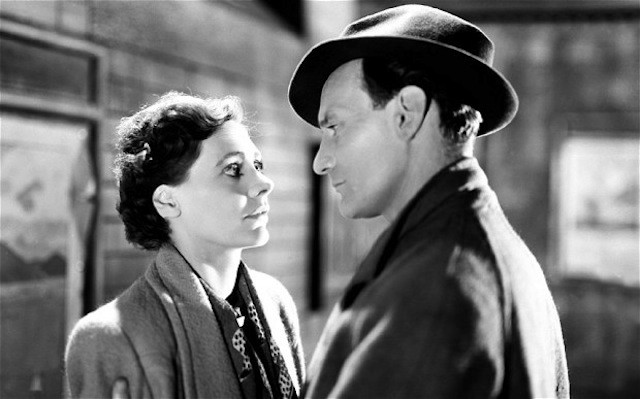
A chance meeting between a two married people starts off an illicit affair that is full of passion and understanding of two souls who are internally alone from their spouses. Based on Noël Coward’s short play, Lean’s melodrama sets the train station as the criss-cross of a society where random encounters come and go and the speed of the train is reminiscent of doomed love. The performances of both Celia Johnson and Trevor Howard are tender in their affection for each other, even in the knowledge that it will never go into serious territory. Brief Encounter is considered among the five greatest British films in history alongside The Third Man and Don’t Look Now. It also gave David Lean his first taste of being an Oscar nominee, for Direction and Adapted Screenplay, plus a Best Actress nod for Johnson.

Great Expectations (1947)

The first of back-to-back Charles Dickens adaptations (the second being Oliver Twist), Lean did not read the novel before accepting the project but followed the closeness of the script form the book to make a strongly modified movie that is rich in vision. Dickens’ works were about criticizing the Victorian era and their neglect of the poverty and it remains so in this version as we see Pip grow up from poor orphan to benefactor. With shadowy camerawork and a stellar set that goes to extensive detail over Victorian England, it is considered by some as the best Dickens adaptation ever with its cinematic expression that perfectly transitions to the screen. It was also the first film actor Alec Guinness would work with David Lean on.

Hobson’s Choice (1954)

After less successful works in The Passionate Friends (1949) and The Sound Barrier (1952), Lean found success again in the play referring to the meaning essentially to take it or leave it. The great Charles Laughton plays the bootmaker Henry Hobson with three daughters, one of whom falls in love and marries the shoemaker working under Hobson. When the daughter and shoemaker go off and form their rival business, Hobson goes on drinking and the shoemaker, scorned in the start, finds his footing as a legit businessman. This can be considered a sort of a feminist film as the strongest character is the strong-willed daughter who keeps on supporting her husband and defies her father. It was another Victorian-era film but in a comic tone, a rarity for Lean, thanks to a virtuoso performance by Laughton. Thanks to his girth, he gave us other sensational performances and the stubborn, proud Hobson is just gold.

Summertime (1955)

The last film Lean made before going to his epic era was also the first color film he directed. Starring the great Katherine Hepburn, Summertime is a romantic story of a single woman in Venice who has comical encounters with the locals and find s herself lost in translation with them. She meets another American couple visiting, quite boisterous, and she struggles to try to be a good tourist instead of falling into the stereotypes of American visitors. What she sees is all gorgeous, but with love all around, the loneliness comes in until she meets than Italian charm of a man in the Piazza San Marco.

The pre-epic Lean was the early sight of the larger masterpieces he would make after. The control of Lean in multiple periods and giving the pace and pieces for every shot that is perfected by him would be the craft of his perfection in driving the story forward and trusting his actors to be as transient as they can be on the screen. Lean did bring in A-list actors for his shorter pieces and recognition that he was going to make even bigger, better films. This first act of Lean’s career was the establishment of orthodox storytelling; the second act that followed constructed skyscrapers that opened the ideas of many of shooting anywhere and telling long stories in its perfect format.

Follow me on Twitter: @BrianSusbielles (Cine-A-Man)

P.S. – Here’s a bonus doc on the life and career of David Lean made in 1985, right after the release of his final film, A Passage To India. It gives brilliant inside into his buildup and features behind-the-scenes footage of his last directorial effort, including his ability as an editor.

Movie Review: ‘Transit’ struggles between political relevancy and overly direct commentary


Director: Christian Petzold
Writers: Christian Petzold (adaptation), Anna Seghers (novel)
Stars: Franz Rogowski, Paula Beer, Godehard Giese

Synopsis: When a man flees France after the Nazi invasion, he assumes the identity of a dead author whose papers he possesses. Stuck in Marseilles, he meets a young woman desperate to find her missing husband – the very man he’s impersonating.

[/info]

The world of Christian Petzold’s Transit is a bit of a fantasy. We find ourselves in present day France, but the circumstances mirror that of Nazi occupation during World War II. Violent prejudice exists at every corner, where victims find themselves on the run, desperate to flee their surroundings for a better life across borders. If this at all sounds historically familiar, that is absolutely Petzold’s goal. To put it bluntly, Transit is a modern-day Holocaust film, designed to work in parallel to the world’s current refugee crisis; does that make it unfair to call this a fantasy then?

Transit is a journey of hiding, where owning up to who you really are will get you caught or killed, sometimes needing to live through someone else’s identity in order to reach safety and seclusion. This story lends itself perfectly to writer/director Christian Petzold’s sensibilities, who is no stranger to making films about mistaken identity during wartime, previously explored in his 2013 near-masterpiece Phoenix. In Transit (based on the 1944 novel by Anna Seghers), Petzold chooses to keep Seghers’ story grounded in political relevancy.

This makes for an effective use of dramatic irony, putting us as the audience multiple steps ahead of the its supporting characters, ignorant of a truth far too great to comprehend. In the case of Phoenix, we arrived at a victorious final confrontation between husband and wife, but Transit leaves us with a more ambiguous and subtler conclusion, an almost spiritual revelation of unknown consequences. It works in its favor by blurring the lines of our main character’s actions, and yet simultaneously works against itself in a film that is missing a key component that made Phoenix so captivating, and that is nuance.

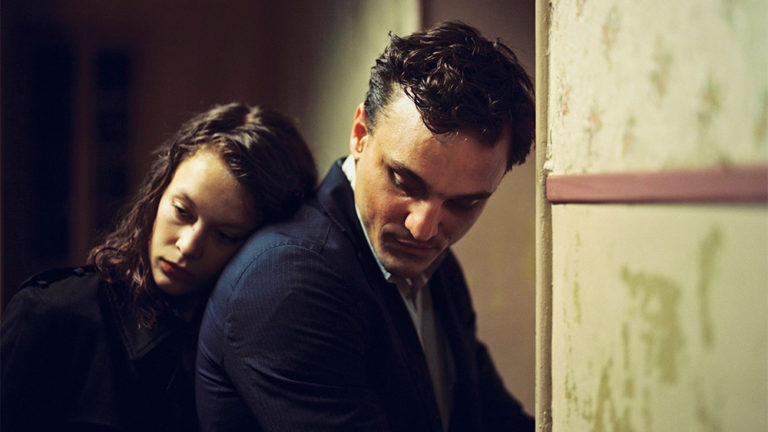
Our main character here is Georg (Franz Rogowski, who may be Joaquin Phoenix’s long-lost twin brother), who assumes the identity of a now dead author in order to gain passage out of the country. Things become more complicated when he meets the dead writer’s wife Marie (Paula Beer), who remains unaware of her husband’s death, desperate to find him and the transit papers he possesses for a “loving” escape together (oh, the dramatic irony). To call her desires “loving” is a very loose concept and a bit of a stretch, as Marie’s motives remain rather unclear and confused. She retains a love for her husband, yet expresses her sexual longings not just toward Georg, but even for a third man seeking his own solitude; a doctor by the name of Richard (Godehard Giese). The confusion in Marie’s arc is perhaps its intent (and understandably so, given her circumstances), but in this case Marie comes off as underwritten and morally misguided, an unfortunate aftereffect of the film’s narrative imperfections.

It’s difficult to gauge if Petzold had to work with a complexly written novel (one I have not read), but it’s surprising how dramatically direct Transit is given how Phoenix was so heavily defined by its emotional opacity. Unlike Phoenix, Petzold feels so passionately influenced by our current political landscape to the point that his approach veers quite close to being agenda-driven, at times cheaply finding ways to communicate his beliefs to us. While this leads to some riveting directional touches (a few chases sequences on foot come to mind), Petzold’s adapted screenplay relies too heavily on exposition and voiceover narration to emphasize its drama, most of which comes from an outsider’s point of view who has little involvement in the film’s overall conflict. In doing so, the film depicts its parallels to the current refugee crisis with an obviousness that makes the experience feels rather abrasive and thematically on-the-nose, which can feel somewhat troubling in a world where open-mindedness is something to value.

On the other hand, perhaps given our current political climate, this story should be overtly direct; but that approach then contradicts the film’s wonderful final act, a moment of challenging uncertainty. In its subtle conclusion, Georg’s actions come with dichotomizing consequences; he becomes aware of his own selfishness and attempts to remedy that by securing others across the border instead of himself. But this backfires, and the more good he tries to do for others, the worse off they seem to end up; the same can be said for a mother and child he befriends early on. For a film so direct, its morally ambiguous conclusion is both a welcomed surprise and a very jarring one, despite Franz Rogowski’s wonderfully empathetic performance bridging the emotional extremes of this world together. Georg’s arc is the one hopeful glimmer of kindness and humanity within a dichotomizing world, and is the film’s necessary guiding light. He is just sadly stuck in a film that becomes its own dichotomy of sorts, unable to stick to its politically direct or ambiguous guns; I wish the film felt a little less dichotomizing.

Overall Grade: B-

[divider]

Podcast: Unforgiven – Ep. 321 Bonus Content

Listen!

For our Episode 321 Bonus Content, we continue our Patreon Series with a suggestion via Two Peas on a Podcast where we discuss the 1992 Oscar-winning film Unforgiven!

*Note: While this review originates from a Patreon subscriber, it is available to the public on our main show feeds.

[divider]

HELP SUPPORT THE SHOW

To hear our bonus content episodes early, subscribe now on Patreon. In many cases, though, we offer our bonus content for free after a certain period of time and we do encourage (and very much appreciate) a small donation of $0.99 as a way to help support the show if signing up on Patreon isn’t for you. Click on the PayPal button below to donate and thanks so much for your support. You can also hear much of our Bonus Content via our mobile apps. See the information at the bottom of the post for more details.


One-Time Donation


[divider]

Mobile Apps!

Listen to all of our bonus content on our apps for just a one-time fee! Whether you have an iPhone, Android or Windows phone, our apps are available in many different ways that is convenient for you. With our mobile app, not only can you listen to all of our bonus content, but our main shows and our Extra Film podcasts as well. Click here for more info!

If you don’t want to purchase our bonus content, but still want to support us, there are other you can help us out. Click here for more info.

Poll: What is your favorite film of 2014?

This weekend on Episode 322 we’ll be revisiting the year 2014 and going back over our Top 10 movies of that year. Why you may ask? Well, stay tuned for the show this weekend as we will get into that. We’ve been mulling over this idea for a good while now and it mostly comes down to a couple of errors that we feel strongly about remedying.

With that said, for our poll, we are keeping it pretty simple. What is your favorite film of 2014? Vote now!


List: Top 3 Mythical Movies

This week on Episode 321 of the InSession Film Podcast, inspired by Missing Link, we decided to talk about our favorite mythical movies. Now, depending on how you look at this, you could argue that all movies are based off one myth or another. So, we did our best to narrow things down in our criteria to focus on specificity as it comes to myth. Whether it be movies that are inspired by real-world mythology or films that create their own, either way there is a lot to sift through. It may have been challenging, but we’d be lying if we didn’t say it wasn’t fun. That said, here are our lists:

(Note: Please keep in mind that we each had different criteria for our selections)

JD

1) Princes Mononoke
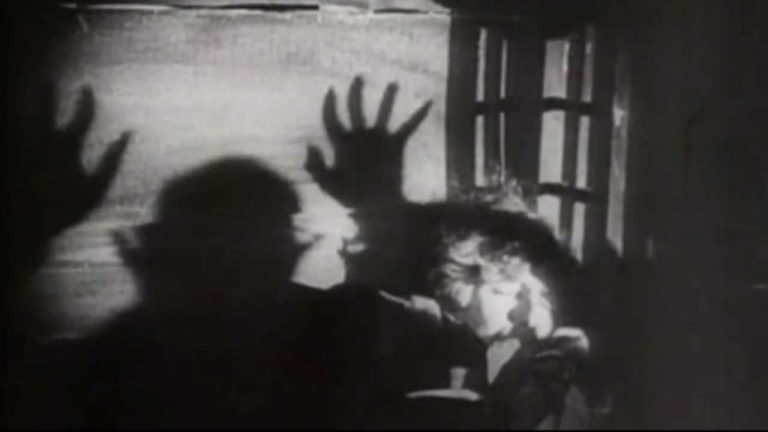
2) Nosferatu
3) Star Wars: The Force Awakens

Brendan

1) O Brother Where Art Thou
2) An American Werewolf in London
3) Jason and the Argonauts

Daniel

1) Shrek
2) Elf
3) Alien

Honorable Mentions (Combined)

Star Wars, The Lord of the Rings, Pan’s Labyrinth, What We Do in the Shadows, Inception, Thor, Black Panther, Big Fish, 300, Spartacus, The Adventures of Robin Hood, Excalibur, Troy, The Witch, Indiana Jones, Monty Python and the Holy Grail, Clash of the Titans, The Mummy, The 7th Voyage of Sinbad, John Wick, Time Bandits, The Princess Bride, The Fountain, Interview with a Vampire, How to Train Your Dragon, Mulan, The Little Mermaid, Beauty and the Beast, Tarzan, Hercules, The Kid Who Would Be King, Splash

Hopefully you guys enjoyed our lists and if you agree or disagree with us, let us know in the comment section below. As noted above, there are many, many more films that could have been considered here and it’s likely we missed out on some films that will make your list. That being said, what would be your Top 3? Leave a comment in the comment section or email us at [email protected].

For the entire podcast, click here or listen below.

For more lists done by the InSession Film crew and other guests, be sure see our Top 3 Movie Lists page.

Podcast: Missing Link / Top 3 Mythical Movies – Episode 321

This week’s episode is brought to you by the InSession Film Store. Get your IF gear today!

This week on the InSession Film Podcast, Daniel Howat from the Screeners Podcast joins us to discuss Laika Studios’ latest film in Missing Link and our Top 3 mythical movies. We also give a few brief thoughts on that little trailer that dropped last week for Star Wars: The Rise of Skywalker.

Big thanks to Daniel for coming back on the show. He’s always a great guest and this week was no different. We are big fans of his show and very much urge you to check it out. Also, fair warning to those who got their feathers ruffled by the new title for Episode IX. Our thoughts on the matter aren’t a reflection on you personally, but rather the general idea behind the outrage.

That said, check out this week’s show and let us know what you think in the comment section. Thanks for listening and for supporting the InSession Film Podcast!

– Movie Review: Missing Link (3:59)
Director: Chris Butler
Writers: Chris Butler
Stars: Zach Galifianakis, Hugh Jackman, Zoe Saldana

– Notes / Dragged Across Concrete / Star Wars: The Rise of Skywalker Trailer (34:22)
As mentioned above, because there was so much discourse on the matter, we figured we would offer our thoughts on the new title and trailer for Star Wars: The Rise of Skywalker. For those who were hoping to hear us rant about it, we are (not?) sorry to disappoint you. Instead, we try to offer up some more open-minded thoughts that make sense of the title and why it’s appropriate – assuming a few things about the film. JD also gives his thoughts on S. Craig Zahler’s latest in Dragged Across Concrete.

[divider]

RELATED: Listen to Episode 316 of the InSession Film Podcast where we discussed Captain Marvel!

[divider]

Top 3 Mythical Movies (1:04:26)
Now, depending on how you look at this, you could argue that all movies are based off one myth or another. So, we did our best to narrow things down in our criteria to focus on specificity as it comes to myth. Whether it be movies that are inspired by real-world mythology or films that create their own, either way there is a lot to sift through. It may have been challenging, but we’d be lying if we didn’t say it wasn’t fun. That said, what would be your Top 3?

Top 3 Sponsor: First Time Watchers Podcast

– Music

Missing Link – Carter Burwell
300 Theme Remix – SASJames92
A Man Of Constant Sorrow (Radio Mix) – Soggy Bottom Boys
The Return of the Eagle – Atli Örvarsson

Subscribe to our Podcasts RSS
Subscribe to our Podcasts on iTunes
Listen on Spotify
Listen on Stitcher
InSession Film Podcast – Episode 321

[divider]

Next week on the show:

Main Review: 2014 Retrospective

Top 10: Movies of 2014

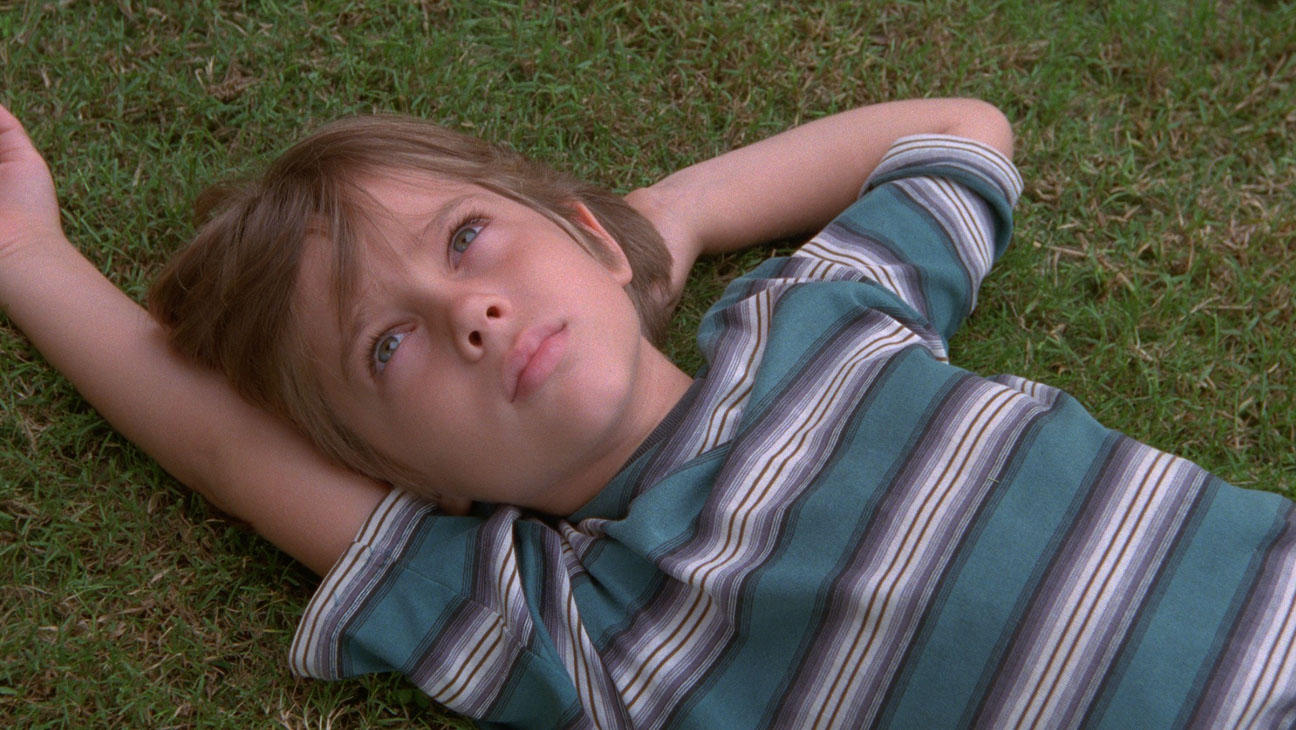
Boyhood Linklater Movie

[divider]

Help Support The InSession Film Podcast

If you want to help support us, there are several ways you can help us and we’d absolutely appreciate it. Every penny goes directly back into supporting the show and we are truly honored and grateful. Thanks for your support and for listening to the InSession Film Podcast!

VISIT OUR DONATE PAGE HERE

Movie Review: ‘The Hole in the Ground’ isn’t anything groundbreaking, but still a decent watch


Director: Lee Cronin
Writers: Lee Cronin, Stephen Shields
Stars: Seána Kerslake, James Quinn Markey, James Cosmo, Kati Outinen

Synopsis: A young mother living in the Irish countryside with her son suspects his increasingly disturbing behavior is linked to a mysterious sinkhole in the forest and fears he may not be her son at all.

[/info]

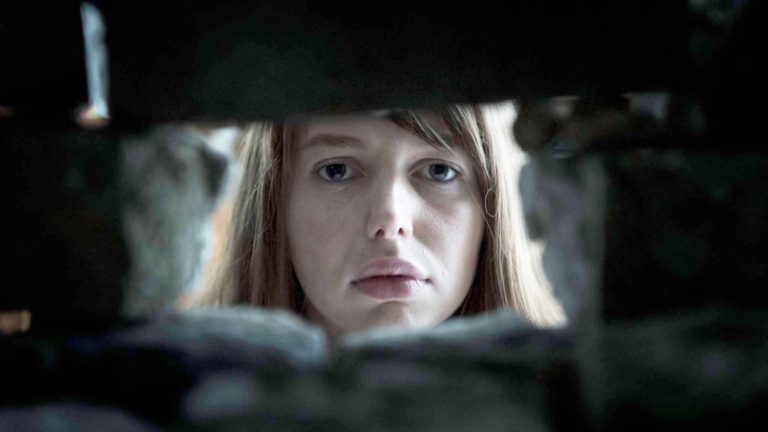
I have a love/hate relationship with horror movies. I love watching them, I love the stories they tell, and look forward to how they’ll scar me for life and/or make me have an irrational fear of something I deal with every day. Horror movies enter a whole other level when they add creepy children to the plot. The Hole in the Ground falls into that “creepy kid” category. It’s an Irish film, it premiered at Sundance this past February and it’s now available on Amazon Video, Vudu, and other VOD platforms.

The Hole in the Ground tells the story of Sarah and Chris O’Neill, a mother and young son who move to the country to presumably get away from a not-so-nice husband/father figure. They live in a large fixer-upper house on the edge of a large forest. After running around one day they discover a huge creepy sinkhole in the woods and Sarah tells Chris to stay away from it. Chris is shy in school but has a good relationship with his mom, we are shown they have several inside jokes and games. One night Sarah wakes up to find her son is missing from his bed! She frantically runs around looking for him, even venturing out to the woods, but as soon as she’s on the phone with the police Chris reappears. Soon after this event, Sarah notices her son is behaving differently and begins to think something is very wrong.

This movie doesn’t really offer anything new to the genre, it’s the standard “creepy kid” movie we’ve all seen before. The “kid being replaced by something sinister” story has been used many times. I will say that this film is much better than The Prodigy, which has a similar vibe and was released earlier this year. I was also confused by the giant sinkhole. If something that huge and creepy was that close to my house, I’d report it to someone. There’s no way that’s normal and/or safe. So it was weird to me that Sarah stumbled across it and the only thing she did is tell her son he can’t play in the woods. There are some plot holes that bothered me, but not enough that I didn’t enjoy the movie.

What The Hole in the Ground lacks in originality, it makes up for in other areas. The scenery in this movie is beautiful, the opening and closing shots are dramatic and instantly give off that uncomfortable feeling that is prominent during the rest of the film. The cinematography is better than I expected in a movie like this, I really need to find out where it was filmed. The music was another positive for me, it did its job adding tension and drama to scenes that needed it. Seána Kerslake gives a strong performance as the mother Sarah, and James Quinn Markey also does a good job as her son Chris. The supporting cast, save for a small role from James Cosmo, is mostly forgettable.

Although The Hole in the Ground brought nothing new to the horror genre, it’s still a decent movie that was fun to see on the big screen. It’s worth a try if you’re looking for a solid horror movie, if you like Irish films, or if you just need something new to watch.

Overall Grade: C+

[divider]