


Home Blog Page 190

Chasing the Gold: Best Live-Action Short Nominees Analysis (2021 Oscars)

Don’t short-change the live-action short film category. I know we all like to go on about the glorious full-length feature films, which definitely garner nominations, but what about live-action? Much like a short story, these films have to get straight to the heart of the plot and resolve it within mere minutes. All but one of this year’s nominees deal with authority/police officials in some capacity. But while the stories all take on similar subject matter, they creatively differ in their voices. 

Feeling Through short film

Feeling Through

Don’t worry, you’re not the only one who’ll be left crying after this film fades to black. Feeling Through examines a connection like no other when a teenager, Tareek, with nowhere to go, and a deafblind man trying to get home, meet one late evening. Tareek is first burdened with the task but soon looks within as he realizes something about his situation. Feeling Through will, to put it so cliché, tug at your heartstrings. It’s poetically enriched with such humility from our characters and communicates the value of compassion when that communication is severely limited. 
The Letter Room | 2020 Tribeca Film Festival | Tribeca

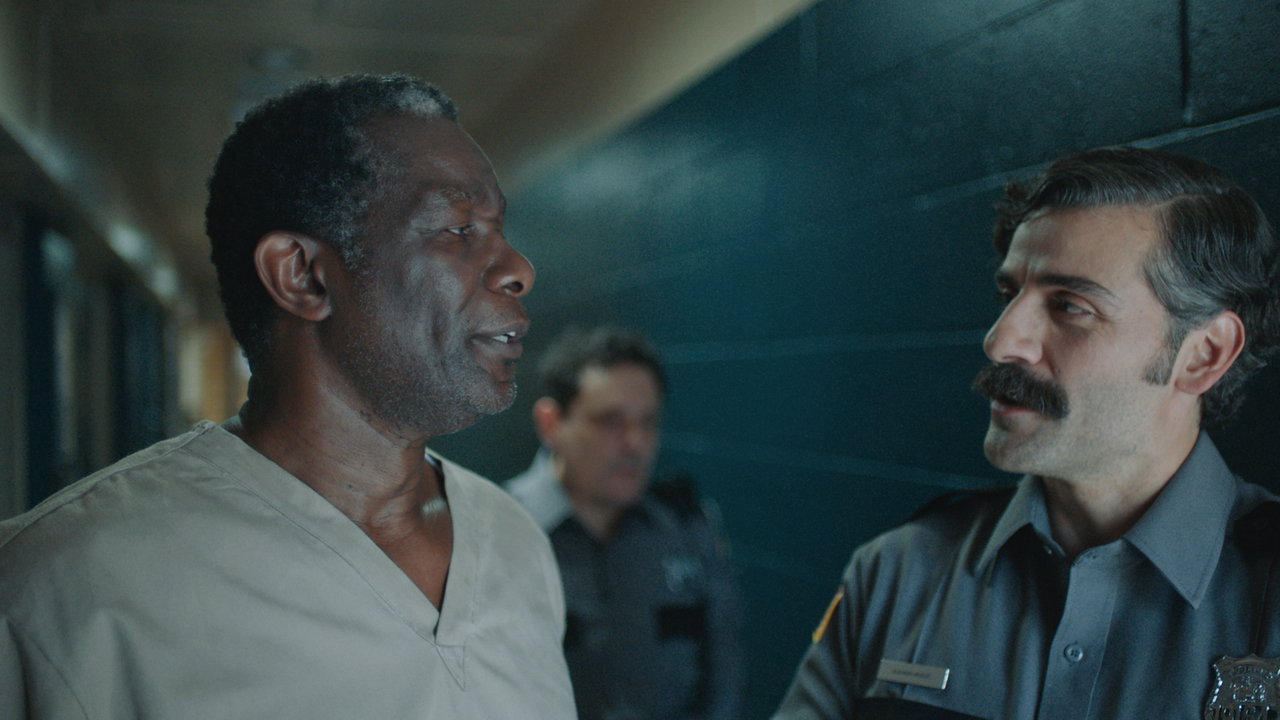
The Letter Room 

The longest film out of the nominees, The Letter Room breaks up the monotony of the always thriller or suspenseful take on the typical prison film. It focuses on Richard a sweet correctional officer — not one you’d likely find in that world — as he is assigned to open up the prisoners’ incoming mail. Director Elvira Lind, whose work is mostly done within documentary genre, does a beautiful job at examining the characters throughout the film, while also highlighting a number of different emotions. There’s so much more Lind could have done with the material she has created. I’d love to see her delve into the realm of fiction with her work or even extend The Letter Room into a feature-length film. 

Oscar-nominated Palestinian film 'The Present' debuts on Netflix | Arab News

The Present 

The simple task of getting one’s wife a refrigerator as an anniversary present should not leave one with such a sour taste in their mouth. And yet, that’s what The Present has come to show us. In a brilliant illustration of segregation on roads of the Middle East, we find a father and daughter carrying on with their day as they venture from Bethlehem to Jerusalem. The director, Farah Nabulsi, paints but a mere 25-minute snapshot of the reality that goes on in those countries. The film continues to press the audience as we ask ourselves: how far are we willing to go before we break?

2021 Oscar-Nominated Short Films: Live Action' Review - Variety

Two Distant Strangers

This pivotal story may play on the gimmicky “Groundhog Day-esque” theme, but don’t let that deter you from watching it. Two Distance Strangers is integral to our current state of affairs as it tells the story of Carter, who wakes up, day after day, only to be murdered by the same police officer again and again. Two Distant Strangers is a creative must-see film that provides a vivid look at what is happening to innocent people on the streets of our cities. 

The Story Behind Israeli Live Action Short Oscar Contender 'White Eye' -  Variety

White Eye

White Eye was shot on an extremely low budget and with one take as director Tomer Sushan wrote the screenplay based on an incident that he personally experienced. When an Israeli man, Omer, is scouring the streets looking for his stolen bike, he finds it chained outside of a business. Omer calls the police and begins to question the man who he believes stole the bike. White Eye is an unexpected film examining the entanglements of pride, forgiveness, and cultural biases, in a situation when culminating events may not even give us a moment to catch our breath.

Diddy's Oscar-Nominated 'Two Distant Strangers' Starring Joey Badass is  Heading to Netflix

Who Will Win?

The favorite to win is Two Distant Strangers. It deals so much with real-world events that the Oscar voters find familiar  — as sad as that may be. 

Oscar Isaac's Mad Gene Media To Release 'The Letter Room' (EXCLUSIVE) -  Variety

Who Do I Want to Win?

My personal favorite of the bunch is The Letter Room. I love Elvira Lind’s filmmaking; I want to see where she can go as a feature-length, fiction, filmmaker.

Podcast: 2021 Final Oscar Predictions – Chasing the Gold Ep. 35

On Episode 35 of Chasing the Gold, Ryan is joined by Kevin Jacobsen, Amy Thomasson, Erik Anderson, and Joey Gentile to give out their final Oscar predictions.

This is it, the final show before the Oscars. After a long 14 month season, it is finally time to reveal what Ryan’s Oscar predictions are, and in doing so, he brought on some of the best guests he has had this season as well as a new voice (Amy) to the discussion to breakdown every single angle of the 23 categories at play. This is a long one but it was a lot of fun to make.

On that note, have fun with this week’s Chasing the Gold, and let us know what you think in the comment section below. Thanks for listening!

– Music
The Return of the Eagle – Atli Örvarsson

We try to make this the best movie podcast we possibly can and we hope you enjoy them. Subscribe today on iTunes, Spotify, or Stitcher, and please leave us a review on iTunes. You can also find us on Soundcloud, PlayerFM, and TuneIn Radio as well. We really appreciate all your support of the InSession Film Podcast.

Subscribe to our Podcasts RSS
Subscribe to our Podcasts on iTunes
Listen on Spotify
Listen on Stitcher
2021 Final Oscar Predictions – Chasing the Gold Ep. 35

[divider]

Mobile App

To hear this Extra Film episode and everything else we do, download our apps on the Amazon Market for Android and the Podcast Box app on IOS devices. The mobile app covers all of our main shows, bonus podcast’s and everything else relating to the InSession Film Podcast. Thanks for your wonderful support and listening to our show. It means the world to us!

[divider]

Help Support The InSession Film Podcast

If you want to help support us, we would greatly appreciate it! For more info, CLICK HERE.

Chasing the Gold: Best Original Song Nominees Analysis (2021 Oscars)

Best Original Song is one of the most competitive categories at this year’s Academy Awards. Though there are a few that appear to have a better shot than others, this feels like a category that any of the five nominees can win. It’s been some time that the category was this close, with the 2015 duel (ultimately won by Sam Smith’s Spectre) being arguably the only year that even came close to approaching the level of uncertainty for this year. Let’s take a look into the case for each nominee in this category: 

The Nominees

Eurovision Movie: "Husavik" nominated for an Oscar

“Husavik” (Eurovision Song Contest: The Story of Fire Saga) – This song is considered a favorite of many Oscar followers as a song that mixes English and Icelandic and builds to a powerful climax. But most importantly, the song is the only one of the five nominees that actually shows up within the film itself, rather than in the end credits. That’s not to say the Academy is completely averse to end credit songs, but appearing as part of the plot certainly helps “Husavik” stand out from the group. It also won the award for Outstanding Original Song for Visual Media from the Society of Composers & Lyricists, so it is not walking into Oscar night empty-handed either. 
Judas and the Black Messiah's William O'Neal Flips Informant Movies' Script  | Den of Geek

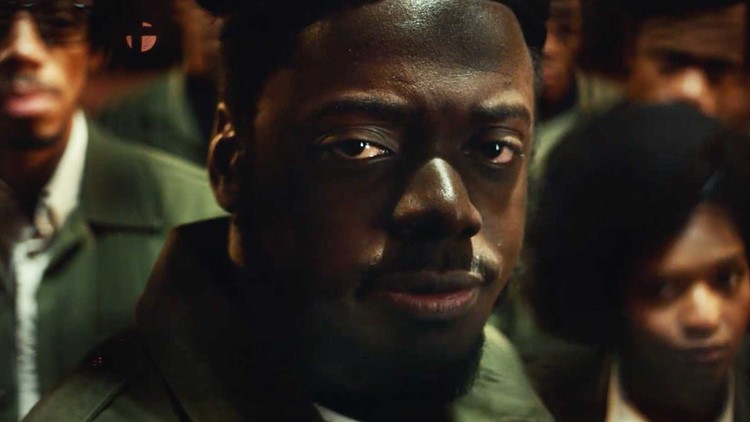
“Fight for You” (Judas and the Black Messiah)This one isn’t walking in with major precursors, so its success should largely rely on how much the Academy appreciates the performer and co-writer, H.E.R. The artist has seen a big year that recently included Grammy wins for Song of the Year and Best R&B Song. It’s unlikely that this will carry “Fight for You” all the way to an Oscar win, but it’s an impressive, upbeat tune that packs an emotional punch, so we can’t count it out. It’s also one of two songs here that appear in a Best Picture nominee, but that rarely plays a big factor in this category. 

Diane Warren On The Life Ahead's Original Song Contender 'Io Si (Seen)'

“Io Sì (Seen)” (The Life Ahead) – Some might say this is the favorite heading into the Oscars, and for good reason. It had the earliest award to its name when it pulled a slight upset and won the Golden Globe for Best Original Song. Where the song faces difficulty is the fact that The Life Ahead was not even Italy’s submission for Best International Feature Film and that Sophia Loren never picked up a major precursor nod, much less an Oscar nod. It begs the question of how much passion there is for the song, and the film itself. But the major point here is that Diane Warren co-wrote it, giving her a twelfth career nomination in the category, despite never winning. Will this finally be the year she gets her Oscar? It may help that the performer and one of the co-writers of the song is Laura Pausini. While she may not be as popular as some of the other nominees in the U.S., she is very acclaimed overseas, including her home country of Italy. This, combined with Warren’s overdue narrative, could be the perfect combination. 

One Night in Miami' Star Leslie Odom Jr. Scores Two Oscar Noms: “It Just  Feels Like I Can Build From Here” – Deadline
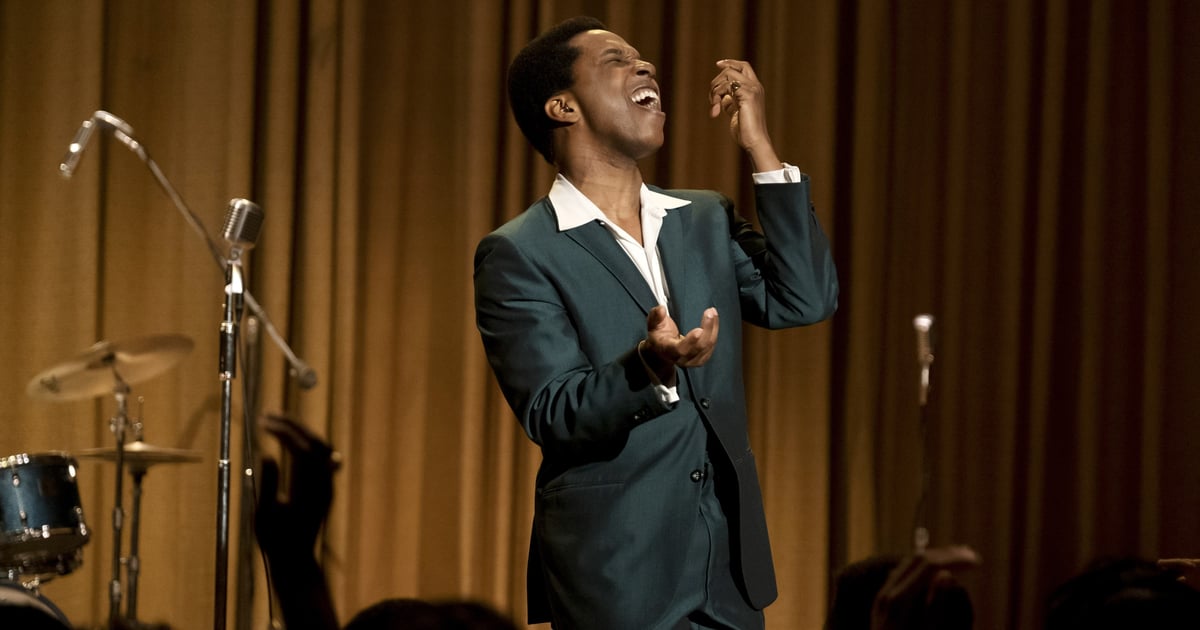
“Speak Now” (One Night in Miami…) – Despite featuring one of the most popular current artists as its performer, this song is probably the most toned-down of the nominees. Oscar voters may prefer one of the more upbeat or crescendoed options. However, the fact that Leslie Odom Jr. provides his incredible vocals for the tune may decide the category. In addition to being nominated here, he’s also up for Best Supporting Actor. This is after a year in which his Tony-winning role in Hamilton was made available for many more audiences to witness on Disney+. It was shocking to see One Night in Miami…miss in Best Picture, but considering that Odom Jr.’s chances of winning Supporting Actor is minimal, some voters may decide this is the best place to award him and the film. It also took home the Critics Choice Award for Best Song, which has a decent track record of predicting the Oscar in the last decade. 
Trial of the Chicago 7' Has Major Oscar Potential | Hollywood Reporter

“Hear My Voice” (The Trial of the Chicago 7) – Performed by recording artist Celeste – who released her debut album this year – this feels like the placeholder for spot number five in this category on the surface. But we should remember that the song comes from a film that entered the season as a supposed top-two contender in Best Picture. That alone doesn’t say much for this category, but it also may be the most wide-open place for Trial to steal a win on Oscar night. It’s unlikely, especially since the film is already a strong contender in Best Film Editing, but Celeste’s powerful vocals could sway the voters who listen to the nominated songs. 

Hear Leslie Odom Jr. Channel Sam Cooke In 'Speak Now' From One Night in  Miami

Which Song Will Win? 

As wide open as this category is, I think there are two strong frontrunners in “Speak Now” and “Io Sì,” with “Husavik” not far behind. Statistically, the split between the Golden Globes and the Critics’ Choice makes it tough to call. The Globes lined up with the Oscars six times in the 2010s, with Critics’ Choice lining up seven times. It’s too close to say which film has the advantage based on this alone. With that in mind, it’s likely to come down to narratives and the people behind the songs. It’s difficult to pick against Warren when she has such a good chance of finally ending her winless streak in a category that doesn’t have a clear favorite. However, I’m going with “Speak Now” due to Odom Jr.’s presence and the support of the film. Though the Academy snubbed One Night in Miami… in Best Picture and Best Director, they liked it enough to give it an Adapted Screenplay nod in addition to Odom Jr.’s two nominations. The last two winners of this category have been performed by popular recording artists and actors (Lady Gaga and Elton John), and I expect that trend to continue. 

H.E.R. releases gripping new track 'Fight for You'

Which Song Should Win? 

Film is subjective, and the same goes for music. While it’s not one of the three frontrunners in this category, I think “Fight for You” is the most effective and lingering song of the bunch. Though all of these songs relate to the content of their films in powerful ways, H.E.R.’s work reflects a sense of urgency and style that most closely resembles the film it comes from. Despite covering content that is both timely and oftentimes frustrating, it’s also an easy song to get hooked on and listen to multiple times. And though it doesn’t show up within the film like “Husavik,” it can still sit with a viewer who takes the time to listen through the credits.

Poll: What is the best martial arts film?

From wuxia, to kung fu, to karate, to even action-comedies and samurai films, the martial arts have given us some of the best action movies ever made, and they’ve been kicking butt for decades. This weekend sees the release of yet another video game adaptation, and while it’s safe to assume that Mortal Kombat won’t quite join the ranks among the best martial arts films, it did prompt us to look at the best the genre has to offer. At the very least, perhaps Sub-Zero could hold his own against Bruce Lee or Jackie Chan, but I wouldn’t bet on it.

With that said, what is the best martial arts film? We realize this may be a bit of a loose term, hence why these options cover its respective sub-genres as well.


Podcast: Manhunter / 2021 Oscars Predictions – Episode 426

This week’s episode is brought to you by StoryWorth. Sign up now and get $10 off your first order!

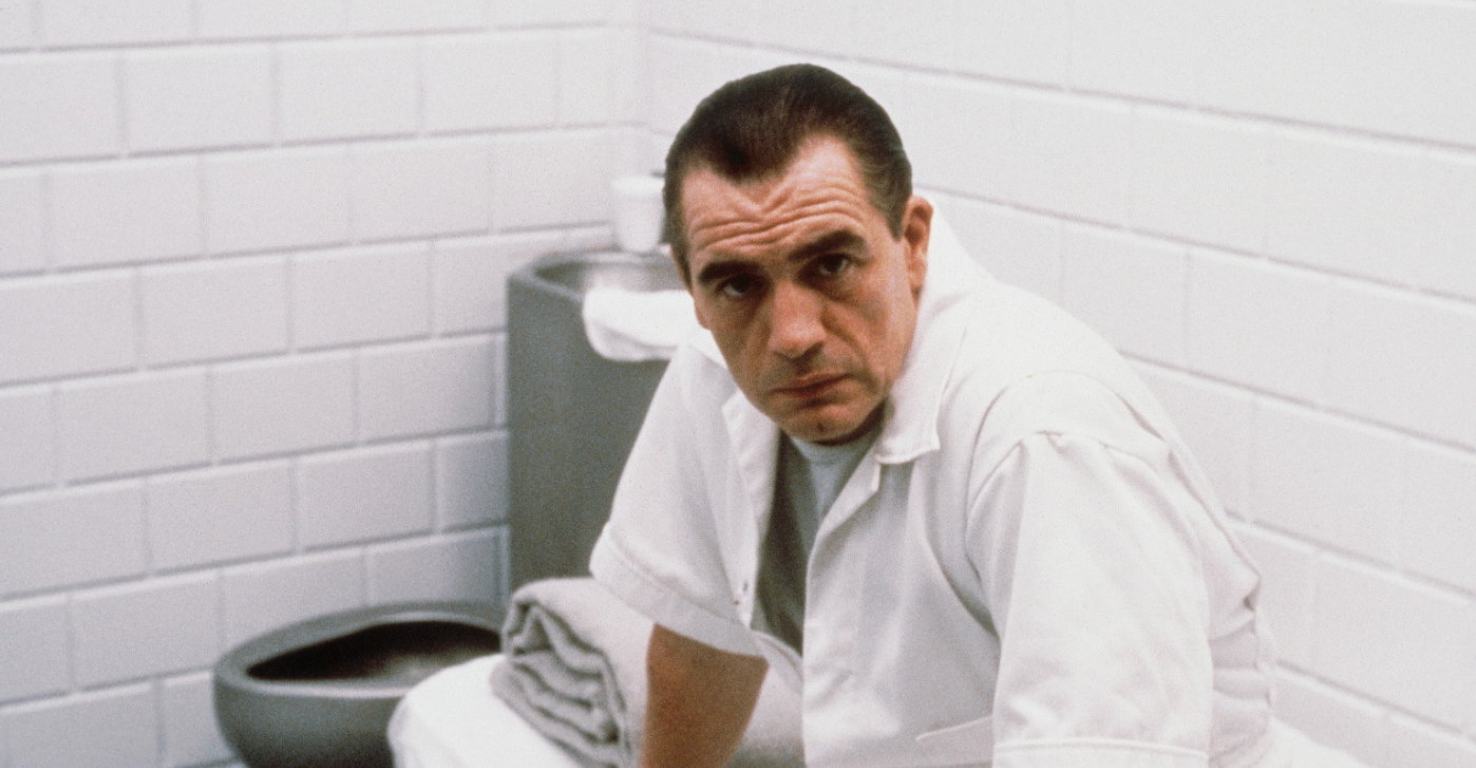
This week on the InSession Film Podcast, we continue our Michael Mann Movie Series with his 1986 film Manhunter and then give our predictions for the 93rd Academy Awards!

No guest this week, but we had a great time talking about Manhunter as we take our next step down the Mann-hole. Jonathan Demme’s Silence of the Lambs is certainly more popular and in the mainstream, but we do our best to argue that Manhunter should equally be in the conversation. And, of course, you can’t go wrong with our Oscars predictions since we are known as awards aficionados. Facetiousness aside, we did have fun talking about this year’s Oscars and how we think it will play out.

On that note, check out this week’s show and let us know what you think in the comment section. Thanks for listening and for supporting the InSession Film Podcast!

Michael Mann Movie Series: Manhunter (6:04)
Director: Michael Mann
Writers: Thomas Harris (based on the book “Red Dragon” by), Michael Mann (screenplay by)
Stars: William Petersen, Kim Greist, Joan Allen

– Notes / Trailer Talk: Shang-Chi and the Legend of the Ten Rings (52:10)
No new movies to talk about this week, however we did bring back an old segment to briefly discuss the incredible trailer that is Shang-Chi and the Legend of the Ten Rings. The MCU may be past its Endgame, but the next chapter of the Marvel Universe looks quite exciting. WandaVision and Falcon and Winter Soldier have been exciting, Black Widow looks interesting as well, and now we have our first look at Shang-Chi and the Legend of the Ten Rings. By the looks of it, things do not seem to be slowing down for Marvel. Shang-Chi looks really great.

[divider]

RELATED: Listen to Episode 423 of the InSession Film Podcast where we discussed The Tree of Life!

[divider]

– 2021 Oscars Predictions (1:14:19)

The 93rd Academy Awards will be here soon, and that means it’s time to offer up predictions. We don’t cover all of the categories, but we do get to the more “prestigious” categories, including Best Documentary, Best Original Score, Best Original Song, Best Screenplay (Original and Adapted), the acting categories, Best Director and Best Picture. And, of course, we get to the most important category of the night in Best Animated Film.

Show Sponsor: First Time Watchers Podcast

– Music

Graham’s Theme – Michel Rubini
Heartbeat – Red 7
Speak Now – Leslie Odom Jr.
The Return of the Eagle – Atli Örvarsson

Subscribe to our Podcasts RSS
Subscribe to our Podcasts on iTunes
Listen on Spotify
Listen on Stitcher
InSession Film Podcast – Episode 426

[divider]

Next week on the show:

Review: Mortal Kombat
Top 3: N/A
Michael Mann Movie Series: The Last of the Mohicans

[divider]

Help Support The InSession Film Podcast

If you want to help support us, there are several ways you can help us and we’d absolutely appreciate it. Every penny goes directly back into supporting the show and we are truly honored and grateful. Thanks for your support and for listening to the InSession Film Podcast!

VISIT OUR DONATE PAGE HERE

Criterion Crunch Time: ‘The Postman Always Rings Twice’ (1946)

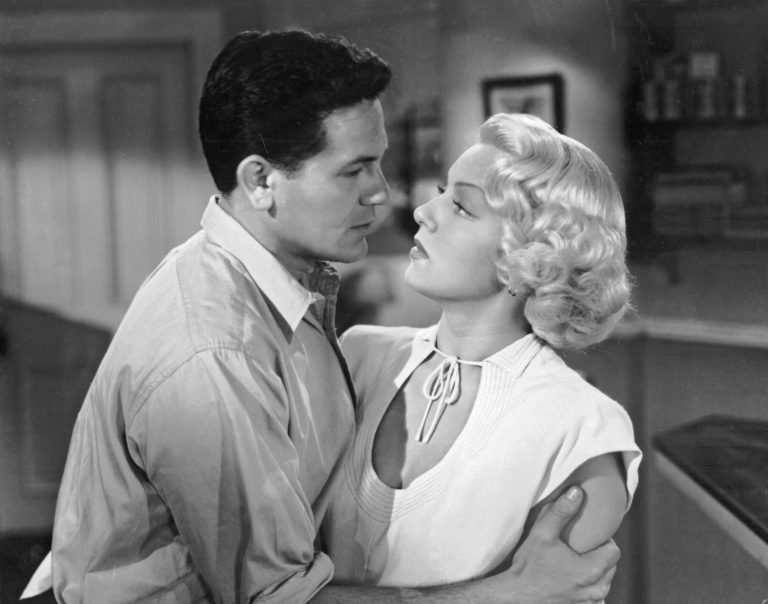
Another one of the many great things about watching movies on The Criterion Channel is the window into Old Hollywood. Movies are, of course, great in any era. If you didn’t agree, you probably wouldn’t be reading a piece like this. But there is an allure, a mystery to that era which we don’t have anymore. Aside from maybe Pitt, DiCaprio, or Jolie, I could argue that the age of the movie star is dead. There are a lot of reasons for this, which would be another long article. But one of the reasons, in my opinion, is our 24-hour entertainment cycle paired with both a desire to know and nearly unrestricted access to their lives via the internet. And that desire for mystery, the unknown, brings to a star of Hollywood past, Lana Turner. Even if you are not well versed in older film, you have likely heard the name. And if there is anywhere to start, it is with The Postman Always Rings Twice.

In this film, Turner plays the femme fatale, but there is subtlety to her performance that is hard to match. She is not the lead character, but certainly the most memorable. The protagonist, Frank Chambers (John Garfield) is a drifter, a man who freely admits he cannot stay in one place for too long. When he wanders into the gas station and diner owned by her husband, Nick Smith (Cecil Kellaway), the film wastes no time in introducing the two. After all, the marriage is clearly mismatched. Cora (Turner) is a young bombshell and Nick is a pleasant, older, overweight man and there seems to be little passion. And the film makes you wait to see her, as Nick and Frank meet when the job offer is tendered.

But her introduction is one of those Hollywood magic moments. Frank sits at the counter by himself, hears a noise, and the camera tracks an object rolling towards him on the ground. As the focus narrows, we see it is a tool of beauty, specifically a tube of lipstick. As he leans down, the camera travels along the ground and halts at her legs, before panning up, mimicking the way in which we know his eyes are traveling. As the camera stills on her, she gazes into her mirror and simply holds her hand out, waiting for her lipstick to be returned. The clear inference is that this is a woman who has been worshipped, who expects certain treatment. The surprise here, and the reason for all the pain that follows, is that he refuses and instead beckons her. This covers maybe 15 seconds of a two-hour film but is the lynchpin upon which everything rests.

But Cora is not simply a woman who is unhappy and will find solace in Frank. This is a character of depth, of ever changing motives, and Turner handles these twists and turns perfectly. She is not a femme fatale who just can’t wait to do the deed, whether that be sex or death. She wants to be a good person. For my money, the most important scene in the film is a conversation between Frank and Cora about her past. It is needed because, as mentioned, her marriage makes no sense. She is a woman, naturally beautiful, that was hounded by men. She was exhausted and she settled for safety sans love. As Nick told her, I think she hoped that she would love him eventually. It is important to remember that she doesn’t begin this plot to kill him because she simply has sexual desires; instead, it is because she wants to make something of herself and will not be allowed to accomplish anything.

And unlike many femme fatales, there is true sorrow and regret in her. She is willing to do terrible things, but either goes back on them or is gutted by this regret. When she first leaves with Frank, she quickly realizes that the life of a drifter is not for her. She has worked too hard and given up too much to start over, even for love. After Nick’s death, she is changed internally, and not for the better. Much of the plot is taken up by the twists and turns of the court case, but more interesting is Turner’s ability to communicate her terror and sorrow, even when silenced by her sleazy attorney (a wonderfully slimy Hume Cronyn). These moments are why the ending work, and in lesser hands, it could be eye-roll inducing.

The Postman Always Rings Twice plays with our expectations of her, particularly when she is caught by Frank with a knife. We, like him, assume that she has finally had it and is going to kill her husband in cold blood. But no, the knife was for her, as she was ravaged by guilt. This choice pushes the drama all the way until the end when she gives voice to these feelings. She knows that his death was immoral and that someone must pay for it, life for life. She vacillates between this and simply living a good life from here on out. To add complexity, neither one of the romantic leads is sure if they can trust one another and in a climactic scene at the beach, they find a clever way to solve it. It is to the film’s credit that seeing Cora exhausted, bobbing in the ocean, we are still not sure if Frank will carry her back to safety. When he does the right thing for the woman that he loves (finally!), there is a jubilation and that is also shown in our lead’s fatal drive home. They share tender kisses and there is a moment when maybe, just maybe everything will be alright. She says, simply “When we get home, Frank. Then there’ll be kisses. Kisses with dreams of them. Kisses that come from life, and not death.”

Of course, it is not ok. This is a noir film, after all. A noir film made during the infamous production code of the day. Killers and adulterers simply cannot get away scott free. His eyes are on her instead of the road and they crash. This time, a real crash, not a faked one like when they murdered Nick. And in a beautiful, dark twist, Cora exits as she entered. As Frank gets out the twisted vehicle in shock, her lithe hand drops in her last breath and that same tube of lipstick drops out of her hand, onto the floor of the car, and rattles out into the road. 

Yes, The Postman Always Rings Twice punishes its leads. Yet, it feels kind. Cora dies while in love for the first time, looking forward to life. Frank dies, headed to the gas chamber, but in speaking with the District Attorney knows that he is truly dying for the murder of Nick, not for the woman he loves. Given the codes, the book it was based on, and the genre, this is what passes for a happy ending. Cora was able to make something of herself and Frank finally stayed in one place, when he had every opportunity to leave after the original trial. They both grew and changed, becoming slightly better people in a dark, terrifying, world.

Check back next month for two more fantastic films leaving The Criterion Channel!

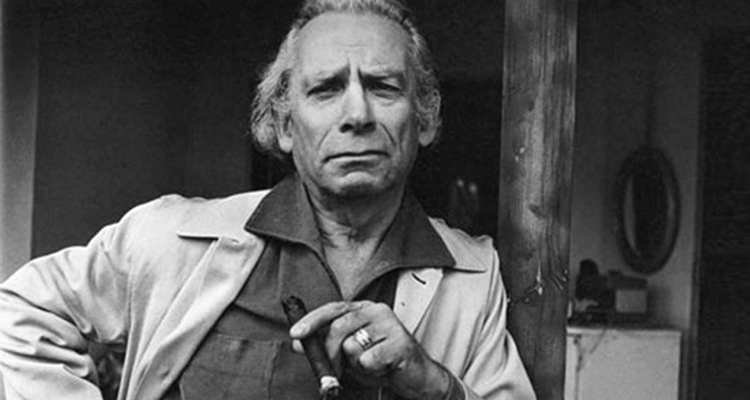
A Fuller Life: Hollywood’s Great Carpetbagger

Samuel Fuller was born to be outside the studio system. His films, the low-budget B-pictures that studios added to their inexpensive productions for a cheap buck, have turned out to be some of the more acclaimed pictures in retrospect. While the Production Code was still in effect, Fuller wrote themes that were too dark and controversial for major studios to produce, thus, was never given a major award in his life. Yet, his career lasted almost sixty years, and important names like Martin Scorsese, Quentin Tarantino, and Jim Jarmusch cited his works as influential to them.

He was born on August 12, 1912, in Worcester, Massachusetts. As a young child, he had a speech impediment problem and did not say his words until he was five years old. According to Fuller, the first word he said was, “hammer.” At age 11, his father died, and the family moved to New York City. His first jobs were in the newspaper business, something that would play a major influence in his own stories, first, as a copyboy, then as a crime reporter by age 17. The biggest story he broke was the sudden death of actress Jeanne Eagels, who would become the first posthumous Oscar nominee for her performance in The Letter. Fuller would also write pulp novels at this time and would continue to write them for the rest of his career.

Daily News front page headline Oct. 4 JEANNE EAGELS DEAD!, Actress... | Jeanne  eagels, New york pictures, Daily news

In the 30s, Fuller would transition into screenwriting, receiving his first writing credit in the musical comedy Hats Off. He continued to write a steady stream of films, even as Fuller went into the Army for World War II. He fought in North Africa, France, and Belgium before going into Germany and liberating the Flossenbürg concentration camp when an estimated 30,000 people died. Fuller filmed the area that would be used in tribunals against Nazi officers and be selected by the U.S. National Film Registry in 2014. He would co-write a book about the history of his unit, the 16th Infantry Regiment, later on. By the end of the war, Fuller was a Corporal and was awarded multiple times for his service before returning to Hollywood, taking the war with him in his future works.

Tired of seeing films he wrote getting butchered by the directors, Fuller sought to be one himself with his scripts, I Shot Jesse James and The Barron of Arizona. Like Preston Sturges who became a director by accepting a fee of just $1, Fuller convinced the producer to let him try without any extra payment besides his writing. Both films were made with low budgets and tight shooting schedules, but Fuller got them done on time and under budget with good results. It was his third film, The Steel Helmet, a Korean War drama that made Fuller into a recognized director. Shot for $104,000, it grossed $2 million and was recognized for speaking about racism (opposing the word ‘gook’) and reference to the country interning Japanese-Americans during the Second World War, ruffling some feathers with the Army. It took ten days to film, using Griffth Park for exteriors and hiring students from UCLA as extras.

Darryl F. Zanuck would sign Fuller to make seven films for 20th Century Fox, all under Fuller’s own production company, and made on low budgets. This included Park Row, a film noir surrounding the New York newspaper business, Pickup On South Street, which received an Oscar nod for Thelma Ritter’s performance, and the Cold War submarine thriller Hell And High Water, which Zanuck assigned him to with the use of CinemaScope and Technicolor. Park Row was Fuller’s favorite film he made because of how much he knew of the life and is made in the same mood as Sweet Smell Of Success, another story about the newspaper business that came out years later. In Pickup, J. Edgar Hoover, head of the FBI, met Zanuck and Fuller, saying he hated the film because of the depiction of an agent committing bribery. Zanuck agreed to take out FBI references in its advertising but backed Fuller’s film completely. Fuller was released from his contract one film short as he sought to direct another war drama, Verboten!, which became the final film produced by RKO Radio Pictures in 1959.

Fuller would continue on his dark, independent streak in the 60s with two films later picked up by the Criterion Collection: Shock Corridor and The Naked Kiss. In the former, Peter Breck plays a reporter who wants to win a Pulitzer Prize, and solving a mysterious murder in a psychiatric institution will win it for him. To get inside, he fakes a mental illness and tries to speak to any witnesses, but the behavior they exhibit is far more dangerous than the reporter expects. The film references the threat of nuclear annihilation, communist indoctrination (like The Manchurian Candidate), and the ongoing Civil Rights Movement between pro-integration and the white supremacists who wanted to stop them. In the latter film, Constance Towers plays a prostitute trying to leave it all behind by running away into the next town, trying to prove she has reformed herself. As she seems to find love and someone who believes her, the scandal that surrounded her before comes back shockingly.

Fuller would not be noted again until the early 80s with two controversial pictures. First, there was The Big Red One, another war film Fuller planed to make in the 50s, but conflicts with Warner Brothers scrapped the project. Friend Peter Bogdonavich helped revive the project for Paramount but was also shelved before Bogdonavich brought in a third producer when he pulled out of the film and released it in 1980 for United Artists. Despite good reviews, the film was heavily cut against Fuller’s wishes; the restored version was shown in 2004 to critical acclaim. Then, came 1982’s White Dog, which he wrote with future Oscar-winner, Curtis Hanson. A film about a black dog trainer who tries to deprogram a ‘white dog,’ a dog who is programmed to attack black people, Fuller and Paramount Pictures came under fire from the NAACP who said the movie was inflammatory (without having seen it, but aware of the book it’s based on) and threatened to boycott its release. Even with some changes, Paramount gave the film an extremely limited release and shelved it. Black Dog would get its first DVD/Blu-Ray release in 2008 through Criterion.

Fuller, hurt by Paramount’s self-censorship on what many critics said was an anti-racist movie, moved to France and never worked on a Hollywood film again. He would make three more films, his last being 1990’s The Madonna And The Dragon with Jennifer Beals, and his final credit being co-writer of the film Girls In Prison. After a serious stroke, Fuller moved back to the States where died in 1997, aged 85. His legacy was by then cemented as an outsider who produced top-quality works with half of the budget other films had. Younger filmmakers visited the elder Fuller in appreciation of his career and his movies are at the Academy Film Archive, even though he was never nominated personally. Fuller’s autobiography, A Third Face: My Tale of Writing, Fighting, and Filmmaking, was published posthumously in 2002. And, even today, his gritty pictures are be viewed by new students and still respected by the cinephile community.

Follow me on Twitter: @brian_cine (Cine-A-Man)

Chasing the Gold: Best Documentary Feature Nominees Analysis (2021 Oscars)

There’s no doubt that we all like to sit in front of our televisions with our bowl of popcorn and like to be entertained with the latest blockbuster. But like any well-balanced diet, sometimes it’s nice to sit down to watch an interesting, thought-provoking documentary. This year’s nominees for Best Documentary are well-covering everything from the U.S. prison system, government corruption, disability, finding yourself, and going undercover. 

After the Amazon documentary 'Time,' their work continues - Los Angeles  Times

Time

There’s a saying out there that says, “time is fleeting.” With Time’s family home movies spliced in between the present, this documentary has a lot to unpacks in 90 minutes. The documentary chronicles Fox Rich’s 20-year fight for her husband’s release from prison after being sentenced to a 60-year prison sentence for a robbery when the two of them had nowhere else to turn. Rich is constantly given a “sorry,” or a “no” in response to the many phone calls — trying her patience after all these years. Time reveals the broken prison system for what it is, or “nothing more than slavery” as Rich describes it. The resilience that Rich shows throughout the film is nothing short of inspirational, as she herself is Penelope trying to guide her own Odysseus back home in this perilous odyssey. 

Collective' Review: When Tragedy Consumes a Nation - The New York Times

Collective

The Colectiv Nightclub fire in 2015 killed 27 people and that should have been the end of the casualties. However, more people died as a result of that evening. The Collective, by director Alexander Nanau, is a shockingly powerful documentary about the injustices that befell the clubgoers that evening. Through its investigative journalism, the documentary is able to show the Romanian corruption — from the top, down — each domino falling, one by one, as whistleblowers, fraud, and corruption, are all revealed. This is a landmark year for Romania when it comes to being nominated for the Academy Awards. The Collective is nominated for two Oscar in both Best Documentary and Best International Feature Film. Thus, making it only the second film to be nominated in both categories and the first Romanian film to ever be nominated in the International Film category. 

My Octopus Teacher" is the antidote to our pandemic year

My Octopus Teacher

Craig Foster is a filmmaker, down on his life, who makes the decision to go and live at his childhood beach house in South Africa. Foster begins to free dive learning about the marine life as well as learning about himself in the processes. My Octopus Teacher is a gift for your eyes. The underwater scenes are gorgeously filmed as you are not simply watching the moments unfold before you, but you are immersed into what you’re seeing. It will please those who are interested in our friends who live underneath our blue ocean, those who have an interest in the beauty of our world, or those who just want something truly interesting to watch. This documentary is a stunning visual for the senses.

Crip Camp: The directors of Netflix's new documentary on what the movie can  teach us today.

Crip Camp

Peace, love, and rock and roll… emphasis on the peace and love. The 70s got many to revolutionize against “the man” in some form. In Crip Camp, produced by Barack and Michelle Obama, the documentary tells the story of a group of disabled teenagers at Camp Jened. These young people are being accepted by one another in a way they had never experienced before. The experiences at Camp Jened lead them to believe they are made for so much more in this world. This inspirational documentary shows how many of the members of the camp would do everything they could to fight for the rights of other disabled citizens of the United States and take on the government in 1973. With the uprising of many social issues happening within the world today, documentaries such as Crip Camp are able to show how different groups can stand together and enact change in this world. 

The Mole Agent | American Documentary

The Mole Agent

Dealing with a serious issue, The Mole Agent is probably the least dramatic of the documentaries nominated for the Oscar this year. Sergio is a sweet, 83-year-old man who has been hired to go undercover at the wishes of a woman’s family when they believe she is being abused by the nurses in the retirement home. It is his job to look for signs of unfit conditions or abuse. However, Sergio begins to become invested in the lives of the residents there. In my opinion, The Mole Agent has a bit of a Pink Panther vibe with its bouts of humor as Sergio travels around as a wannabe spy. I applaud director Maite Alberdi as she films these seniors with such care in order to tell such a story, but not exploit these elderly citizens.

Time' Review: What We Really Mean When We Say Mass Incarceration - The New  York Times

Who Will Win? 

Time is most likely going to take home the golden statue for the category this year. I believe it will resonate most with Oscar voters. Not to mention, it’s a great documentary!

RO documentary Collective, on The Guardian's list of best films of 2020 in  the UK | Romania Insider

Who I Want to Win?

I’m personally a fan of political thrillers, so Collective is my choice.

Chasing The Gold: Best Supporting Actor Nominees Analysis (2021 Oscars)

The category for Best Supporting Actor doesn’t seem as straightforward as it has been in previous years. This year we have a wealth of potential stars who could easily lift gold at the end of the night. From breakout stars Daniel Kaluuya and Lakeith Stanfield to Sacha Baron Cohen and Paul Raci, there’s very little to differentiate between these performances. One of them has to win, however, so let’s take a look and see what might happen on the night.

The Nominees: 

Judas and the Black Messiah' Team on Honoring Fred Hampton's Legacy -  Variety

Daniel Kaluuya, Judas & the Black Messiah – There’s no question of Kaluuya’s immense talent. From his starring role in Get Out (in which he and co-nominee Stanfield both had breakout roles) Kaluuya has delivered standout performances in everything he’s been in. He is well known in the British TV scene ever since his turn as Posh Kenneth on E4’s Skins, but now finally his star has ascended to an incredible level and there’s no telling where he’ll go from here. He is a good bet to win on the night but even if he doesn’t expect him to be back again. His recent win at the SAG Awards indicates it might just be his time, though.

Judas & The Black Messiah Trailer: LaKeith Stanfield Infiltrates Black  Panthers

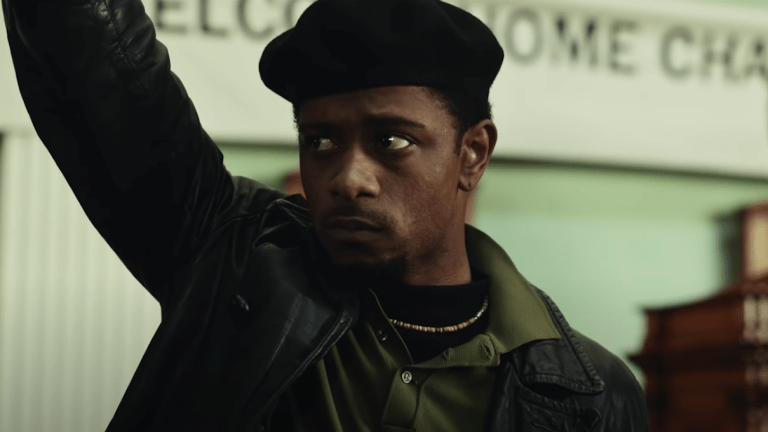
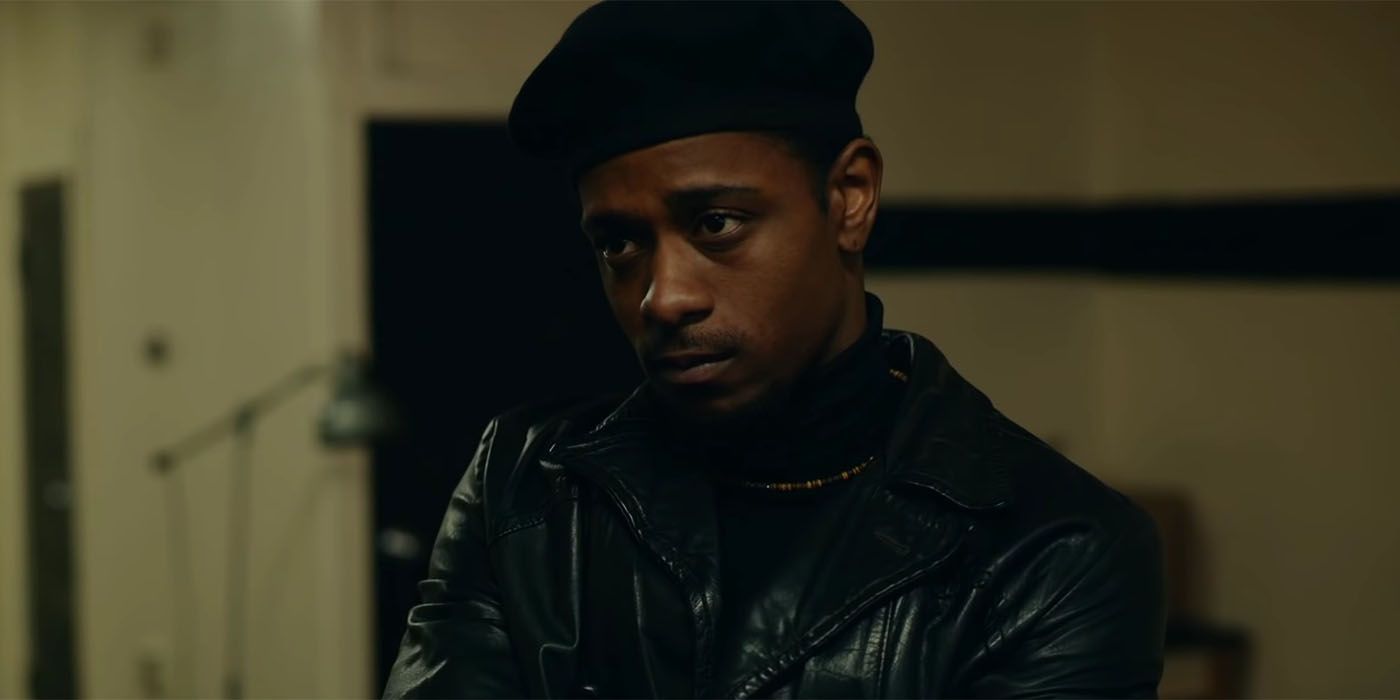
Lakeith Stanfield, Judas & the Black Messiah – Stanfield is another rising star who’s best work in still all in front of him. His starring role as Cassius “Cash” Green in Boots Riley’s Sorry To Bother You announced him as a serious actor to pay attention to, but he’s been around for longer – in fact, you can see him in the Bree Larsen starring Short Term 12. Stanfield gives a great performance as the turncoat Bill O’Neal – and to be honest, he has the more difficult of the two roles here – but there’s little chance of him taking home the Oscar ahead of his co-star Kaluuya.

Sacha Baron Cohen on Working With Sorkin in 'Trial of the Chicago 7' -  Variety

Sasha Baron Cohen, The Trial of the Chicago 7 – Aaron Sorkin’s Trial of the Chicago 7 is really an ensemble piece. There are any number of actors featured who could have been put forward for this award. Cohen’s nod for the award might just be a token thing, indicating his presence – his performance as Abbie Hoffman, while excellent, was not exactly standout compared to that of Eddie Redmayne, Jeremy Strong, Yahya Abdul Mateen II, Mark Rylance, Joseph Gordon-Levitt, the list goes on – is solely another nod for Chicago 7 in general. It’s unlikely he’ll take the gold.

Paul Raci on 'Sound of Metal' Oscar Nomination and Growing up With Deaf  Parents | Esquire

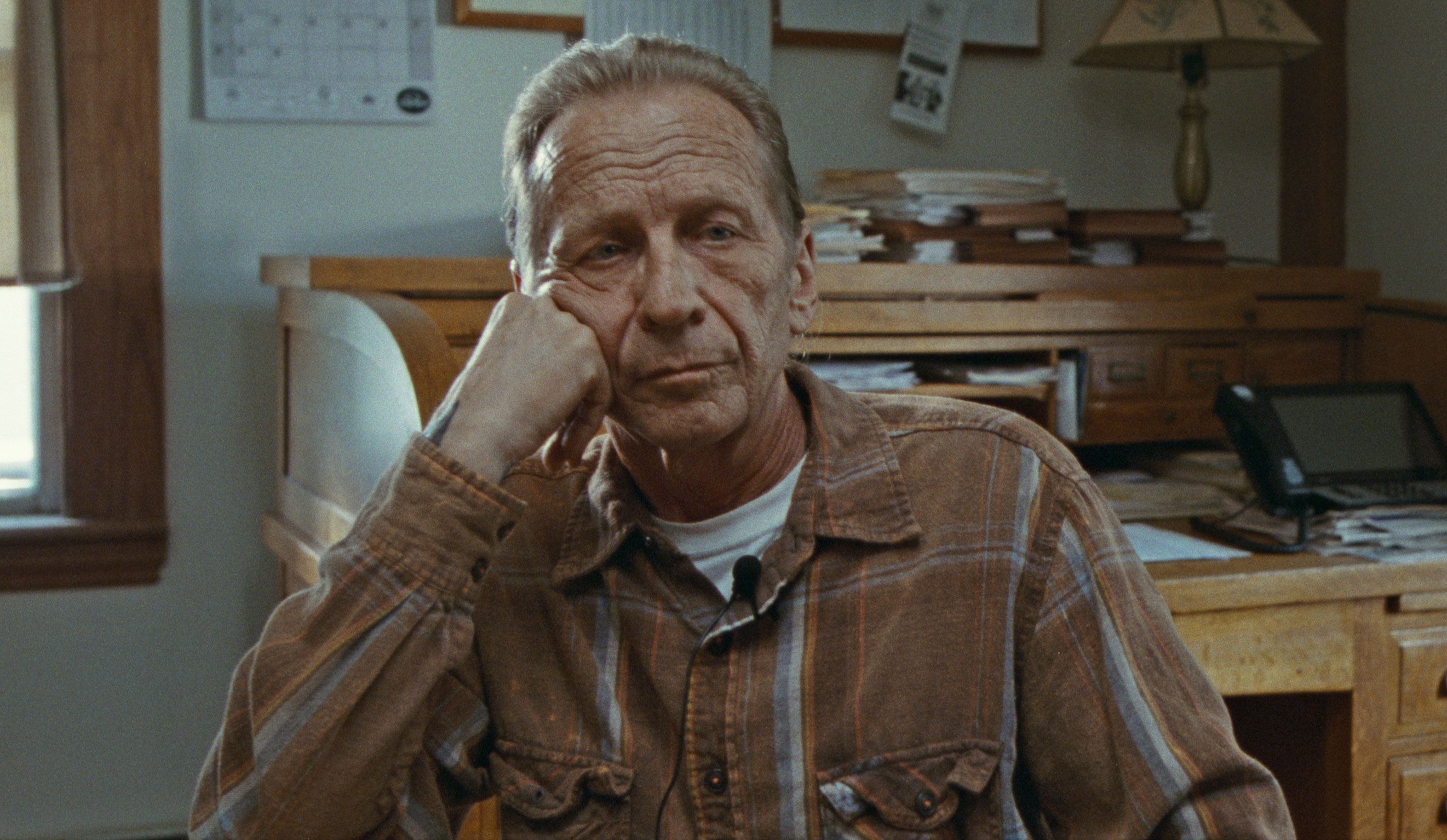
Paul Raci, Sound of Metal – If there’s a standout dark horse among this list, it’s Paul Raci. Raci has been around forever – he’s now in his 70s – albeit never hitting anywhere near the heights of Darius Marder’s Sound of Metal. His turn as Joe, the grizzled mentor who aids hearing-impaired addicts, is magnificent and seems tailor made for Raci – himself the child of two deaf parents. He’s exactly the sort of story the academy loves: a journeyman actor who finally finds his moment in the spotlight in a unique role he was perhaps born to play. The Oscar speech writes itself. It would be a magical moment if Raci was to find himself on stage holding the big gold, and few would begrudge him that.

Is Leslie Odom Jr. Really Singing in One Night in Miami? | POPSUGAR  Entertainment

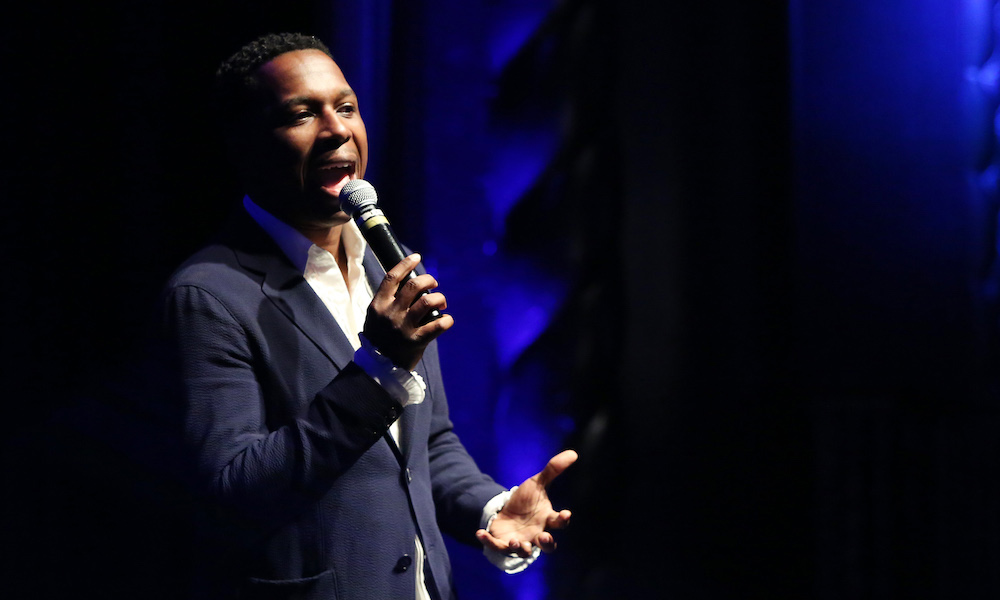
Leslie Odom, Jr, One Night in Miami – Odom, Jr’s inclusion is similar to that of Baron Cohen’s in the sense that Regina King’s One Night in Miami is an ensemble piece. It’s unsure why Odom, Jr got the nod ahead of his co-stars Kingsley Ben-Adir, Eli Goree, or Aldis Hodge. Even Lance Reddick – as Kareem X – would’ve been a good nomination, albeit very unlikely. For his part, though, Odom, Jr is excellent in the role as crooner Sam Cooke. It likely has something to do with Odom, Jr’s impressive singing chops, belting out the baritone hits like A Change is Gonna Come with abandon. He’s also nommed for Best Song and it’s more likely you’ll see him win the gold for that than his performance here.

Judas and the Black Messiah' Review | A great Daniel Kaluuya performance  can't save an overcrowded, troubled script | ksdk.com

Who Will Win?

It’s Kaluuya’s night. Although there are serious contenders in this list – and there could have been, even more, to be fair – the industry is rightly lauding Kaluuya at the moment and the likelihood is he’ll cap off a phenomenal awards season with an Oscar win. The young star will only go from strength to strength here, but his performance as Fred Hampton will likely be a defining one of his young career.

Catweazle (1970)

Who Should Win?

This is a tough question as any one of the nominations could arguably be deserving of a win. Kaluuya and Stanfield both give great performances, but they’ll be around for some time to come and no doubt give many more. Paul Raci, on the other hand, has been doing this a long time without coming within sniffing distance of an award. It would be lovely to see him get the glory for an excellent role which he carried out superbly. The Academy loves an underdog, and Raci’s status as both underdog and veteran journeyman means he should be getting the win here.

Podcast: Terrence Malick Epilogue – Patreon Bonus Content

Listen!

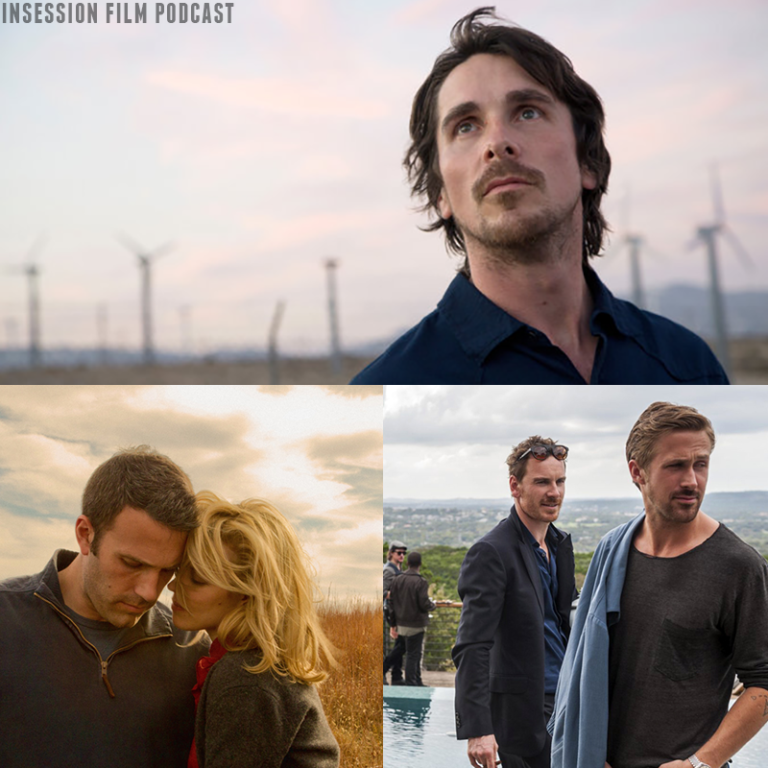
For our latest Patreon Bonus Content, Brendan and JD conclude (officially) their Terrence Malick Movie Series by revisiting To the Wonder, Knight of Cups and Song to Song – Malick’s contemporary trilogy. These films are mostly viewed as “lesser” Malick, and while we’ve technically reviewed them on the podcast before, we wanted to revisit them in context of the series to see if/how our thoughts differ from the first time around.

If you’re already a Patreon supporter, you can listen to this episode NOW on Patreon by clicking here.

Sign up today to get early access and hear the entire episode!

[divider]

HELP SUPPORT THE SHOW

To hear our bonus content episodes early, subscribe now on Patreon. In many cases, though, we offer our bonus content for free after a certain period of time and we do encourage (and very much appreciate) a small donation of $0.99 as a way to help support the show if signing up on Patreon isn’t for you. Click on the PayPal button below to donate and thanks so much for your support. You can also hear much of our Bonus Content via our mobile apps. See the information at the bottom of the post for more details.


One-Time Donation


[divider]

Mobile Apps!

Listen to all of our bonus content on our apps for just a one-time fee! Whether you have an iPhone, Android or Windows phone, our apps are available in many different ways that is convenient for you. With our mobile app, not only can you listen to all of our bonus content, but our main shows and our Extra Film podcasts as well. Click here for more info!

If you don’t want to purchase our bonus content, but still want to support us, there are other you can help us out. Click here for more info.

Op-Ed: AFI’s 100 Years…100 Passions – ‘Roman Holiday’ (#4)

I will be watching and reviewing all of the films included on AFI’s 100 Years…100 Passions list. The list contains the 100 greatest love stories in American cinema and I plan to consider how our views on romance and social issues have changed over the years as well as judge whether the romances in these films actually made me swoon. As a fan of the romance genre, I expect to love each and every one of the nominees but I also don’t know if I would consider all of them romantic.

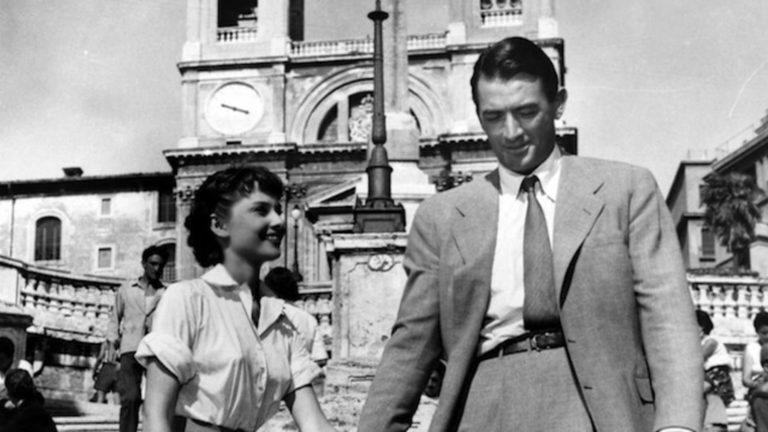
Am I the only person on Earth who is not a fan of Audrey Hepburn? She was launched into superstardom by Roman Holiday (1953) and yet I can’t see what others saw in her. Everything that they find charming and adorable about her, causes me to grind my teeth. Myself and Emma Thompson find it difficult to tolerate her “mimsy-mumsy sweetness without any bite” and I resent the fact that she was cast in so many roles that asked for a more capable actress. Roman Holiday is a vehicle for her talents and it mostly exists so that we can marvel at her beauty (which I can understand) and be won over by her engaging in all sorts of hi-jinks. I wanted to retch in most scenes where she was engaging in light, decidedly forced comedy. Unfortunately, that is what takes up most of this film and that meant that I walked away from it feeling as though I had lost my love of cinema.

Princess Ann, Audrey Hepburn, is bored with her lifestyle of being ferried around to various exotic locations and being forced into attending dull events. She finds freedom when she meets reporter Joe Bradley, Gregory Peck. He decides to write an article about his time with her and deliberately deceives her in order to collect information on her. She wants to be a normal girl for a day and ends up falling in love with Bradley. He is torn between being honest with her and advancing his career by publishing an explosive story. They continue to get closer and closer, but know that their time together must end. She is greatly depressed at the prospect of returning to her former lifestyle but knows that she has to give her personal happiness up.

This is a pretty thin plot and most of the film is taken up with Ann and Bradley engaging in a variety of silly antics. None of them are particularly funny and there is something incredibly calculated about the ‘charm’ of the script. Dalton Trumbo has attained noble martyr status because he was blacklisted by the HUAC during the McCarthyism era. He was a prominent member of the Hollywood Ten, who did not back down when he was threatened with serious punishment by the wrongheaded, jingoistic conservatives who were in charge. He deserves some sympathy for having his freedom taken away from him but I do question whether he was even a good screenwriter before he was officially prevented from working in Hollywood. He famously wrote Roman Holiday, and many other films, under different nom de plumes and had many other writers take credit for his work in an effort to avoid being publicly attacked. We can applaud this act of defiance and celebrate the fact that he continued to work despite opposition but does that make this a well written film? 

Roman Holiday Vespa Tour | Buzz4Tours

He takes a basic romantic comedy setup and somehow manages to mess it up. This does have a lot in common with It Happened One Night (1934) when it comes to its plot but where that film featured rich characterizations, perfect pacing, and genuinely hilarious moments of comedy, Roman Holiday comes up short. Bradley is icy, asexual, and uptight, in the way that a lot of Peck characters were, and that means that it doesn’t really feel like he and Ann are all that different. He’s so buttoned up and put together that we can’t believe that he would seem out of place in an event that hosted royals. In order for the opposites attract dynamic to work, the two lovers actually have to be substantially different. Peck and Hepburn both come from the same school of acting. They exist in that Hollywoodland in which everybody speaks with a vaguely Transatlantic accent and display no signs of having a beating heart. The two of them look like shiny but unexpressive dolls throughout this film and the script doesn’t really help as it asks them to play ‘perfect’ people instead of playing complicated, relatable figures.

Trumbo seems willing to play along with those who see Hepburn as a delivery system for moments of mimsy-mumsy sweetness. That’s why we get a lot of scenes that entirely revolve around her smiling or laughing in a mannered way. The build-up is never terribly compelling and I wanted the chemistry between Peck and Hepburn to blossom at some point. This might have been better if it simply admitted what its real intentions were, and served as a vanity project for its star. Trumbo stuffs too many zany incidents into this script and makes a last ditch attempt to wring dramatic pathos out of the ending of this story. I didn’t find myself crying as Bradley and Ann shared one last kiss and I was honestly glad to realize that the two of them weren’t going to be together anymore. I just couldn’t see why they would stay together.

I never want to see Roman Holiday again and I regret the fact that I wasted so much time on it. I might put it on a list of my top 100 least favorite films but it would never be anywhere near a list of my favorite romantic films. I assume that AFI members chose it because it has a wildly over-inflated reputation and some of them were fans of Hepburn’s irritating performance. I resent them more than ever. Who wouldn’t?

Movie Review: ‘Slalom’ is a French approach to the #MeToo Movement


Director: Charlène Favier
Writers: Charlène Favier and Marie Talon
Stars: Noée Abita, Jérémie Renier, Marie Denarnaud, Muriel Combeau, Maïra Schmitt, Axel Auriant

Synopsis: Slalom follows the relationship between a teenage ski prodigy and her predatory instructor.

[/info]

In Slalom writer/director Charlène Favier offers a story of abuse of a young girl at the hands of an authority figure. Presented through a neutral lens, and set in the cold scenery of the Alps, the film exposes the psychological and contextual trappings that allow a teacher to take advantage of a girl looking for validation.

Lyz Lopez (Noée Abita) is an ambitious ski prodigy. Her arrival in an elite ski club in the Alps means that she must prove her value quickly to the demanding coach, Fred (Jéremie Renier). He is strict, even abusive, towards his students, looking for that child that can bring him glory just as he had it when he was younger. It seems that Lyz is his long-awaited answer. She is driven, fearless, and utterly perfect as she climbs down the snowed mountains with ease and grace. Their ambitions are synchronized.

Charlène Favier defies expectations and stereotypes with her lead characters. Lyz is independent, ruthless, and motivated. Still, she is completely alone in a hostile environment of competition and animosity. Her mother is occupied with a far-away job and a blossoming romantic relationship, her father is out of the picture. Her loneliness is tied to her independence, so she creates a bond with Fred, fed by their training lessons and ambitious plans.

It is constantly and conveniently forgotten by Fred that Lyz is a child, even as Favier’s lens is always aware of it. Whether it is through Lyz’s heartbeats in moments of tension, the focus of the camera on her tiny hands as she faces overwhelming moments or her explosive personality that is starting to shape, Favier does not allow the audience to forget that she is a teenager.

Beyond his psychological abuse – so common in real-life relationships in a context of extreme pressure – Fred physically assaults Lyz in one of the many moments that they spend together. These scenes are sufficiently graphic to understand Lyz’s confusion and violation – as well as her panic – but remote enough to avoid being gratuitous or incendiary.

Fred is not represented as a monster. He is just a man, as countless abusers. First, he is cruel and determined, maybe a bully – he represents the kind of leadership that is finally starting to be condemned – but focused on his job. He nonchalantly measures the girls and commands them to lose weight, scolds the athletes when their performance is poor, and even mansplains to Lyz her own menstrual cycle. However, when their relationship takes a turn because of his actions, he never loses his humanity. Sometimes his personal conflict is evident in Renier’s eyes. Fred is a distinguishable representation of the abusers that are close to their victims and commit crimes taking advantage of their familiarity and trust. Simply put, Renier portrays a predator.

The movie is agile at presenting different kinds of abuse, some of them normalized in our culture, others drastically denounced. First, it is a matter of power and verbal abuse and too much pressure on the young athletes. Nevertheless, as the relationship between Fred and Lyz becomes more familiar, boundaries are lost. She, too naïve and too young to understand what is happening; he, too swift to control her with games and manipulations.

We have seen countless stories about the pressures of excellence and the way this creates a toll on the receiving part. At the start, Slalom could have been easily compared with titles such as Whiplash, Molly’s Game, or Foxcatcher. Nevertheless, as the story progresses, it exhibits a grooming testimony, realistically reflecting the stories that keep appearing in the news about abuse in high-performance sports. As such, it comes closer to the documentary Athlete A. In this regard, Slalom becomes an important tool of exposition from a country that has had a complicated relationship with the #MeToo Movement.

In addition, Slalom successfully presents the internal turmoil of a victim of sexual assault. Perfectly captured by the young Noée Abita, Lyz goes through an emotional evolution: she likes Fred, she thinks she is in love with him, she isolates from everyone else, she protects him, and she despises him. Her emotions change as she starts to understand what happened. Her experiences make her grow up too soon, risking even her most ambitious dreams.

In this regard, while the ending is solely focused on Lyz, it reflects a resistance to offer deliberate punishment of the abusers. As empowering as it is to see the transformation of the victim, the movie fails in offering even a glimpse of accountability or exhibition. The resolutions arrive in a revolutionary fashion on the inside, but quiet and contained in the exterior. Nevertheless, Slalom offers a well-executed story of abuse and ambition.

Grade: B+

List: Top 3 Directorial Debuts (Revisited)

This week on Episode 425 of the InSession Film Podcast, inspired by our review of Thief, we discussed our favorite directorial debuts in film. The first time we did this list was all the way back on Episode 61, in the days before Brendan, so we felt it was time to revisit this topic and give it an update. Not only have we grown as cinephile’s and critics since then, the quality of debuts we’ve seen in the last decade is just astounding. In addition to the classic directorial debuts that’s often talked about in this context. Cinema has not only seen great directorial efforts for rookie helmers, some of these films are among the best of all-time. There is no shortage of excellent directorial debuts, and we had a ton of fun revisiting this list. That said, here are our lists:

(Note: Please keep in mind that we each had different criteria for our selections)

JD

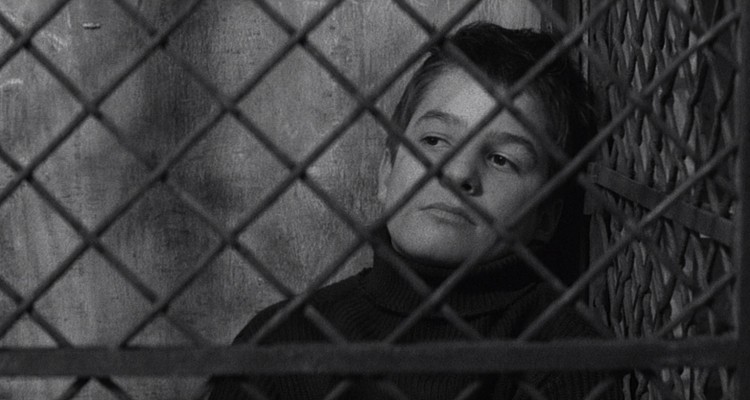
1) François Truffaut – The 400 Blows
2) Charles Laughton – The Night of the Hunter
3) Jordan Peele – Get Out

Brendan

1) Satyajit Ray – Pather Panchali
2) Joel & Ethan Coen – Blood Simple
3) Sofia Coppola – The Virgin Suicides

Honorable Mentions (Combined)

Orson Welles – Citizen Kane
Charlie Chaplin – The Kid
George Romero – Night of the Living Dead
Terrence Malick – Badlands
Robert Redford – Ordinary People
David Lynch – Eraserhead
John Huston – The Maltese Falcon
Sidney Lumet – 12 Angry Men
Mike Nichols – Whose Afraid of Virginia Wolf
Dennis Hopper – Easy Rider
Spike Jonze – Being John Malkovich
Quentin Tarantino – Reservoir Dogs
Sam Raimi – The Evil Dead
Spike Lee – She’s Gotta Have It
Steven Spielberg – Duel
Wes Anderson – Bottle Rocket
Cameron Crowe – Say Anything
Frank Darabount – The Shawshank Redemption
George Miller – Mad Max
Neil Blomkamp – District 9
Steve McQueen – Hunger
Greta Gerwig – Lady Bird
Jeff Nichols – Shotgun Stories
Steven Soderbergh – Sex Lies & Videotapes
John Singleton – Boyz n the Hood
Rob Reiner – This is Spinal Tap
Charlie Kaufman – Synechdoche, New York
Bo Burnham – Eighth Grade
Michael Mann – Thief
Wachowski Sisters – Bound
Brad Bird – The Iron Giant
Paul Thomas Anderson – Hard Eight

Hopefully you guys enjoyed our lists and if you agree or disagree with us, let us know in the comment section below. As mentioned above, there are plenty of monster battles to pick from if you’re familiar with this genre. So, it’s quite possible that your list is different than ours. That being said, what would be your Top 3? Leave a comment in the comment section or email us at [email protected].

For the entire podcast, click here or listen below.

For more lists done by the InSession Film crew and other guests, be sure see our Top 3 Movie Lists page.

Chasing The Gold: How Was THAT Nominated For Best Picture? (2012)

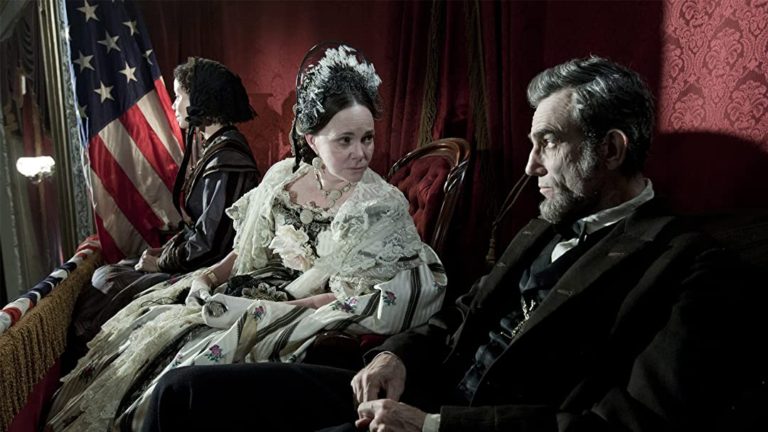
At the 85th Academy Award nominees for Best Picture, Argo won Best Picture, despite not receiving a Best DIrector nomination for Ben Affleck.  There were some interesting films this year; The LIfe of Pi, based on a best-selling novel, Django: Unchained which was both funny and violently satisfying, and Silver Linings Playbook, a romantic comedy that also provided insight to mental illness. While there were many interesting films this year,  one traditional, Oscar bait film was nominated. Lincoln was designed to win awards. However, in my opinion, it was also the Best Picture nominee that was least deserving of a nomination.

Lincoln is a movie I should absolutely love. Steven Spielberg is a brilliant film director. Tony Kushner, who wrote the screenplay, is one of my all-time favorite playwrights. The screenplay was based on the book Team of Rivals, by Doris Kearns-Goodwin.  I love Doris Kearns-Goodwin!  I saw her speak at my sister’s college graduation! Her book on the Roosevelts is a family favorite! And, obviously, any performance by Daniel Day-Lewis is going to be amazing. I was hoping this movie would be more than a basic retelling of how the Thirteenth Amendment was passed.  Sadly, I was disappointed. I feel that if one is going to make a film based on a historical event, it should either be on something relatively unknown to the public (like Argo), or shed an interesting or fresh perspective on something very well-known. Lincoln did neither of these things. 

The film reaffirmed the already established American belief that President Lincoln was one of the greatest presidents we ever had, that he was more god than mere human being. As a product of the American public school system, literally nothing in this movie was new. This movie beats you over the head with the “Lincoln was the greatest man who ever lived” from literally the opening scene. In this scene, it’s dark and raining, and we are in the midst of the Civil War. Daniel Day-Lewis is sitting under a cover, looking at the soldiers. All of the soldiers are in awe of him, and try to recite the Gettysburg Address. Day-Lewis smiles upon these dirty, wet, tired soldiers, like a king smiling at his humble subjects. When I was watching this for the first time in the theater, I knew I was going to spend the rest of the film cringing and rolling my eyes. I did eventually have to watch this movie for a second time to record a podcast on it, and unfortunately, on my second viewing, my opinion didn’t change. This is one of the most heavy-handed, least nuanced films I have ever seen. 

I won’t tell you that this is a poorly made film.  It’s just an unremarkable film. The period costumes are very nice, and there are lots of scenes where people are walking around talking, making deals.  The cast is wonderful in their parts. Tommy Lee Jones did a wonderful job playing Thaddeus Stevens, the Radical Republican who, quite honestly, should get most of the credit for getting the 13th Amendment passed.  Lincoln pushed for it, but it was Stevens who was doing the actual fighting for it in Congress. If the movie had focused on Thaddeus Stevens, perhaps I would have enjoyed it more.  We all know Lincoln was the greatest human being who ever lived, tell us more about the OTHER people involved in passing the 13th Amendment. Teach us something we don’t know! Another interesting aspect of the film was Lincoln’s relationship with his wife.  This also would have made a much more interesting film, given us a chance to see Lincoln outside of how he is usually portrayed, his human side. And, if the film is supposed to only focus on the 13th Amendment, and how it was passed, why didn’t the film end when it was passed?  Why did they tack on the ending where Lincoln was shot? We all took US History.  We know how he died.  If this film hadn’t been made by Steven Spielberg, the man who gave us the story of little known Oskar Schindler, and made us cry in ET, maybe I wouldn’t have had such high expectations. I said it before, and I’ll say it again, this was not a bad film.  It just offered nothing new to the discussion of Abraham Lincoln, the kind of man he was, or the 13th Amendment.  The audience leaves thinking Lincoln was one of the greatest Americans who ever lived, but this is something they came into the film already knowing. 

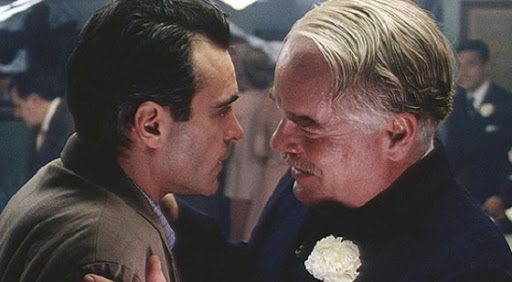
One film that did take an interesting perspective on a subject many people don’t know a great deal about was Paul Thomas Anderson’s The Master, which is loosely based on the life of L. Ron Hubbard, of Scientology fame. Rather than make a biopic inspired by the life of Hubbard, Anderson focuses on a very troubled man named Freddie Quell (played by Joaquin Phoenix, in the role I personally think is his best). Freddie is a man who is barely getting by in life, the type of person looking for salvation, who will eventually meet the charismatic leader, Lancaster Dodd (played by the always wonderful Philip Seymour Hoffman), and join his religious movement called “The Cause.” 

Both actors give some of the best performances of their careers, and, in my opinion, should have won the Oscars in their categories. One scene that really stood out is when Dodd goes through an interrogation of psychological questioning that Dodd calls “Processing.” Dodd asks a series of very personal questions, and if Freddie even blinks, they have to start the questioning over again.  The intensity of both actors in this scene is amazing, and you wonder how they had the endurance to finish the scene.  Phoenix, as we know, plays dark, brooding, psychologically damaged characters very well. Hoffman, as always, owns every scene he is in.  We, the audience, relate to Freddie, because, who can resist and not get pulled in by the charismatic Philip Seymour Hoffman? 

Like all Paul Thomas Anderson films, it features a great cast of characters.  Amy Adams plays Dodd’s loyal current wife, full of admiration for her husband. She is the young, sweet, pregnant, and utterly loyal wife to a man that we begin to learn is not all he claims to be. Jesse Plemons plays Val, Dodd’s son, who deep down knows his father is a charlatan. One of my favorite moments in the movie is when he states this fact to Freddie, wondering why he hasn’t picked up on the fact that his father is “making this up as he goes along.’  Laura Dern plays a society patron of his, who begins questioning his beliefs once they begin to start becoming inconsistent with things he has previously said. Dern wants to believe in “The Cause,” but points out correctly, that if things start being inconsistent, it will be more difficult to maintain followers. 

Paul Thomas Anderson has always made extremely thought provoking and interesting films, often based on ideas or novels most of us do not think about on a regular basis.  I know I never really thought about the evolution of the porn industry from the late 1970s-1980s until I saw what I believe is his masterpiece, Boogie Nights. There Will be Blood is based on a lesser-known novel by Upton Sinclair, and Phantom Thread shows the obsessive lifestyle of a brilliant designer. Paul Thomas Anderson frequently takes things the audience member might not think about, and makes us all ponder it.  He gets great performances from all of his actors, and leaves us with memories of eccentric, interesting characters and scenes that we would never see in any other film.  Films like The Master should be recognized in the Best Picture category over safe films that add no new perspective, like Lincoln.

Poll: What is your favorite 2021 Oscar nominee for Best Picture?

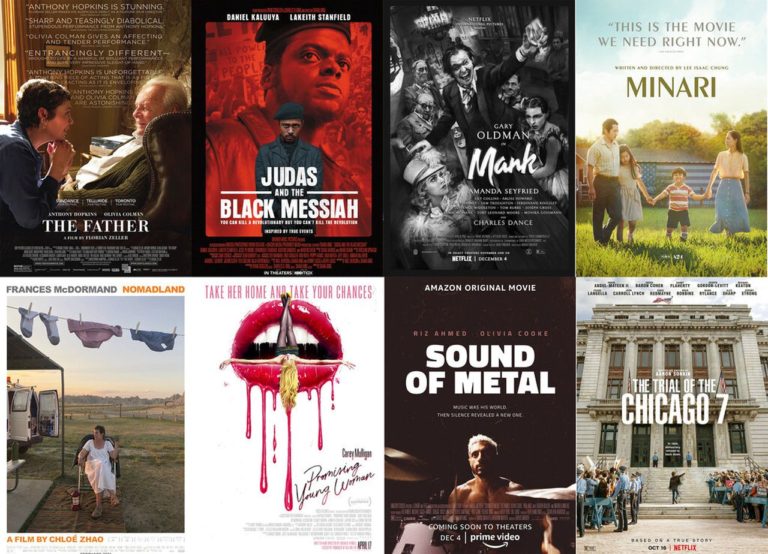
It’s hard to believe that we would end up having two history-making Academy Awards ceremonies in a row; the first being Parasite winning Best Picture, and now we get to experience a ceremony affected by a deadly pandemic. Some of us didn’t even think there would be enough content to celebrate, but if you look at this year’s crop of eight nominees for Best Picture, I’d say the Academy did okay. It proves that 2020 was still a good cinematic year, and all eight of these films have something worth talking about. We will be sharing our predictions on Episode 426 this weekend, and since this will be our final main show released before the ceremony, we were obligated to start this discussion now.

So out of the eight Oscar nominees for Best Picture, which is your favorite?


Podcast: Thief / Top 3 Directorial Debuts (Revisited) – Episode 425

This week’s episode is brought to you by Grammarly. Download the app for free today!

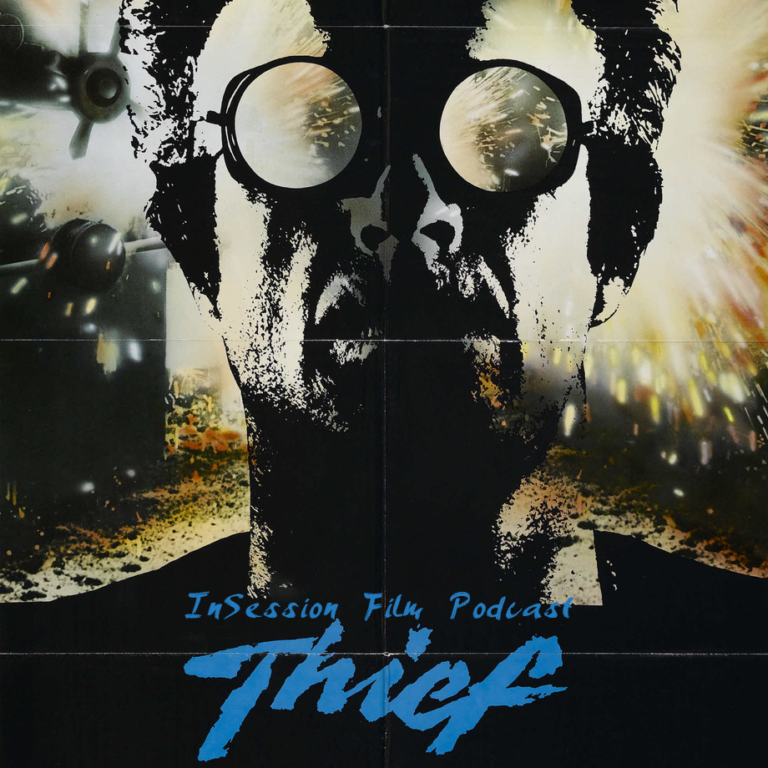
This week on the InSession Film Podcast, the great Vince Leo joins us as we begin our new Michael Mann Movie Series with his 1981 film Thief and we discuss our Top 3 directorial debuts!

Words cannot express how great it was to have Vince back on the show. For those unfamiliar, he was our Extra Film co-host back in 2016 and has been a guest many a times over the years. It’s been awhile since we’ve been able to connect, however, so it was a pleasure to get him back on the podcast. It was an interesting episode for this reunion as well given our Michael Mann announcement at the beginning of the show. We didn’t settle on the details until just a few hours before recording, so SURPRISE, but we’ve decided that our next movie series will be a deep dive into the Mann-hole.

On that note, check out this week’s show and let us know what you think in the comment section. Thanks for listening and for supporting the InSession Film Podcast!

Michael Mann Movie Series: Thief (7:20)
Director: Michael Mann
Writers: Frank Hohimer (novel), Michael Mann (screen story)
Stars: James Caan, Tuesday Weld, Jim Belushi

– Notes / Discussion (1:10:17)

Given the length of our Thief review, we decided to keep the break segment shorter this week. We spend most of our time here laying out the details of our Mann series, the film’s we’ll be covering and what we’re looking forward to as it goes.

[divider]

RELATED: Listen to Episode 423 of the InSession Film Podcast where we discussed The Tree of Life!

[divider]

Top 3 Directorial Debuts (1:27:14)
The first time we did this list was all the way back on Episode 61, in the days before Brendan, so we felt it was time to revisit this topic and give it an update. Not only have we grown as cinephile’s and critics since then, the quality of debuts we’ve seen in the last decade is just astounding. In addition to the classic directorial debuts that’s often talked about in this context. Cinema has not only seen great directorial efforts for rookie helmers, some of these films are among the best of all-time. There is no shortage of excellent directorial debuts, and we had a ton of fun revisiting this list. That said, what would be your top 3?

Show Sponsor: First Time Watchers Podcast

– Music

Final Confrontation – Tangerine Dream
Diamond Diary – Tangerine Dream
Blood Simple – Carter Burwell
The Return of the Eagle – Atli Örvarsson

Subscribe to our Podcasts RSS
Subscribe to our Podcasts on iTunes
Listen on Spotify
Listen on Stitcher
InSession Film Podcast – Episode 425

[divider]

Next week on the show:

Michael Mann Movie Series: Manhunter
Top 3: N/A
Discussion: Oscars Predictions

[divider]

Help Support The InSession Film Podcast

If you want to help support us, there are several ways you can help us and we’d absolutely appreciate it. Every penny goes directly back into supporting the show and we are truly honored and grateful. Thanks for your support and for listening to the InSession Film Podcast!

VISIT OUR DONATE PAGE HERE

Chasing the Gold: Best Actress Nominees Analysis (2021 Oscars)

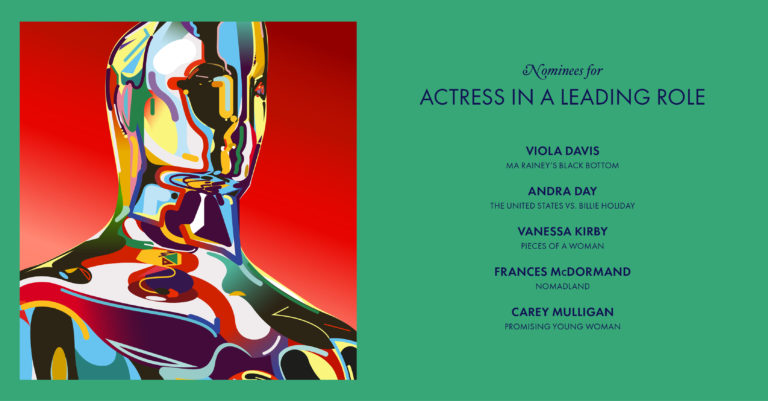
Well, this has certainly shaped out to be quite a fun category. Whilst many of the winners have seemed to be decided, there is no consensus of who is going to win Best Actress. With four of the contenders each winning one award and with pros and cons for every nominee, if you are predicting someone that is not Vanessa Kirby you might end up having the winner. On the category that might make or break your Oscar ballot, let’s look at each of the nominees.

The Nominees:

Ma Rainey's Black Bottom': Viola Davis stars as queer blues legend -  OUTInPerth | LGBTQIA+ News and Culture | OUTInPerth | LGBTQIA+ News and  Culture

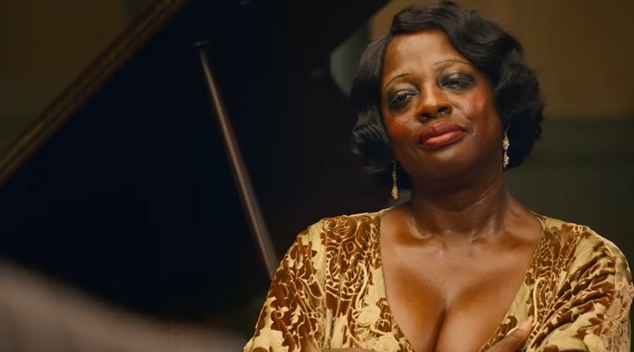
Viola Davis, Ma Rainey’s Black Bottom – For months, people were rallying behind the narrative that Viola Davis would be only the second black actress to win Best Actress, and with a SAG win behind her belt that is certainly possible. However, I still find it hard to believe that not only will Best Actor and Best Actress be awarded to the same film, but it will be a film that is not even nominated for Best Picture.

The United States vs. Billie Holiday Review: Andra Day Is Remarkable |  IndieWire

Andra Day, The United States vs Billie Holiday – Whilst it was not clear how much of an impact her performance would make, it was the win at the Golden Globes that solidified her as a contender in this race. She, however, has failed to make another huge statement since, and with her nomination being the only one for her film, the chances of her winning seem to be slipping.

Ellen Burstyn and Vanessa Kirby are Spellbounding in Pieces of a Woman

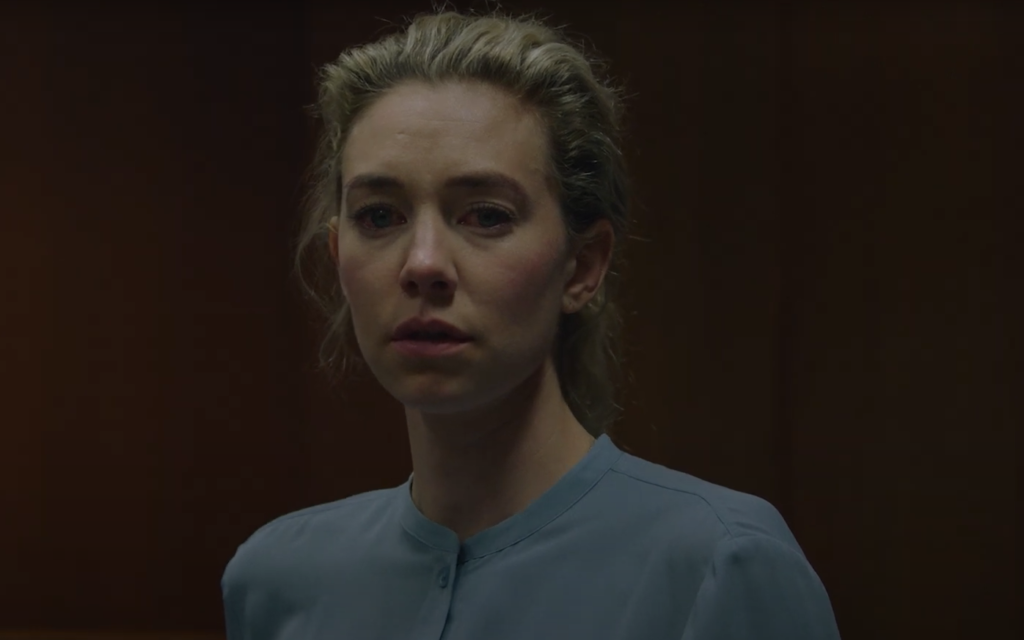
Vanessa Kirby, Pieces of a Woman – If there is something going for Vanessa Kirby, it is that she made it into every single precursor (only one of two to do so this year). However, this race sadly seems to be done for her as she is the only nominee not to have won a major precursor. This is only hurt by the fact that she is the only nominee for her film and a tough watch at that.

Nomadland' Trailer: Frances McDormand Oscar Frontrunner | IndieWire

Frances McDormand, Nomadland – On paper, McDormand seems like she has a lot going for her. She made every precursor like Kirby, she ended up winning at the BAFTAs, and her film is on the way to winning Best Picture as it has across the board. However, this is not a typical Best Actress winning role, and having only won her second award for Three Billboards Outside Ebbing, Missouri in 2018, is there a hurry to reward her for a third time so soon?

Promising Young Woman Costume Designer on Carey Mulligan's Outfits - Variety

Carey Mulligan, Promising Young Woman – When it became clear that voting bodies were loving Emerald Fennell’s Promising Young Woman, it seemed like Mulligan would pull through and become the frontrunner. Whilst she has Critics’ Choice to her name, a miss at SAG is huge to solidify that position. However, BAFTA clearly loved the film with an Outstanding British Film and Original Screenplay win and in a normal year where all members got to pick the nominees for Best Actress, I think Mulligan would have been an easy win. Plus, never doubt the power that performing on Saturday Night Live right before voting gives to a potential campaign.

Trailer Watch: Carey Mulligan Preys on Predators in “Promising Young Woman”  | Women and Hollywood

Who Will Win?

Honestly, I don’t think anyone can say for certain that they know who will win. In the past week alone, I have changed my predictions a couple of times. On paper, it should be a battle between Viola Davis and Frances McDormand, yet I still think there is too much going against them to actually get them to the finish line. Yes, Mulligan only has the Critics’ Choice, but I really sense a passion for Promising Young Woman – and particularly for Mulligan’s performance. Whilst I am not confident, I think for my own sanity I will be predicting Mulligan and sticking with Mulligan until the end of the race.

Trailer Watch: Vanessa Kirby Enters the Oscar Race with “Pieces of a Woman”  | Women and Hollywood

Who Should Win?

I want to use this spot to highlight the performance that, for me, is the best out of anyone this entire year. Despite being the only person not to get a major precursor this season, Vanessa Kirby is the actress that should be walking away with the Oscar. Yes, the film is incredibly tough to watch, but it is such a vital performance and a story that needed to be told in the way that it was. Kirby gives such a heart-breaking performance that it is hard not to fall in love with her. Also, wouldn’t it be fantastic if all five of these incredible performances got to take home one accolade each, saving the best for last?

Op-ed: Jean Renoir – The Colored Years

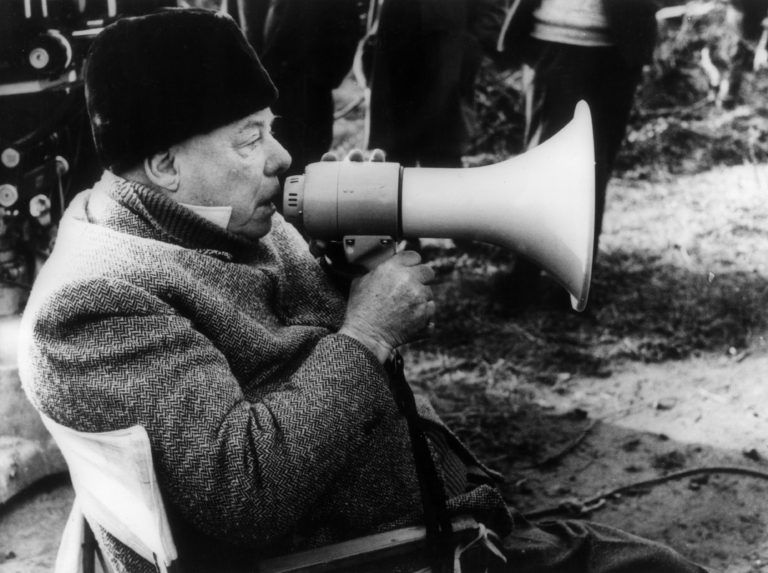
After producing his magnum opus, The Rules Of The Game, Jean Renoir, and his later wife, Dido Freire, fled from France to Hollywood to escape the Nazis. While he became a naturalized American citizen, Renoir could not have the same freedom as he did in editing his works, nor the influence to make whatever he wanted in the Hollywood system. While they were fairly successful, they did not fully come to his satisfaction and decided to make his future works outside of the United States. Because of the viciousness he received after making The Rules Of The Game, Renoir was reluctant to return home, but he was given the resources from there and other producers in different countries to make his own projects in his respected vision. It would be the first of a string of noted films that Renoir finally made in gorgeous Technicolor.

The River (1951)

The first colored film was shot on location in India and is very pretty. The story deals with a young girl, Harriet, who comes from an affluent English background who lives with her siblings on the edges of the Ganges River. It’s a coming-of-age story with the theme of first love and heartbreak. The river and its various shades of light is a symbol of life and the dreams that India produces for its beauty. It serves as a bridge of the cultures and a representative of Hinduism to Christianity. People are born along the holy river and in death find their remains scattered in. There is no biting satire as in Renoir’s 30s works but instead gives us the romantic but bitterly truthful and authentic touch of expressive love. The River is one of Martin Scorsese’s all-time favorites (note the video above) and played a role in Wes Anderson’s directing of The Darjeeling Limited. 

The Golden Coach (1953)

In 18th-century Peru, the viceroy of Peru buys a pretty horse buggy (hence the title) for the headliner of a touring theatre instead of his mistress. When it is discovered, the viceroy is threatened with expulsion for buying an expensive gift with public money to impress the lead singer, Camilla. The buggy becomes the centerpiece in a comedy about the corruption of a misled love. Anna Magnani, who plays Camilla, made her breakthrough in the Italian neorealist Rome Open City. Her presence is full of energy and she is clearly a gorgeous woman who was the foreign Rita Hayworth in terms of being a bombshell for the time. As seen in his next film, music becomes the rhythm of the mood, here by the composer Antonio Vivaldi. The theme to this, as in The River, is regular life is not suited for everyone. The government official cannot force his love onto others and Camilla cannot simply walk out on the stage life; her total happiness is constricted to the stage.

French Cancan (1955)

In nineteenth-century Paris, a stage director (Jean Gabin, who starred in Renoir’s Grand Illusion and La Bête Humaine) works on recreating an old dance that is a sensual tease. However, the director finds himself attracted to a new dancer even as he sets the performance for his girlfriend. It was another rich colorful film and one Francois Truffaut proclaimed it as a major turning point for French color films, saying, “Every scene is a cartoon in movement.” This was his father’s Paris, reflecting the era of impressionist art that was the popular form as seen in the backgrounds. The music is lively, the audience is international, and life, even with the sudden complications of love and what Paris can do, is celebrated in grandiose style. French Cancan was a commercial success, the last one he would ever have.

Elena and Her Men (1956)

What is really the last good film by Renoir is a free-spirited romantic comedy about a Polish princess (Ingrid Bergman) who is engaged to a wealthy man but finds herself in love with the officer Count de Chevincourt (Mel Ferrer, who later married another fictional princess, Audrey Hepburn) For the Count, he is used in influencing a military coup as the princess is known for her blessings of good luck. It becomes a love triangle of loyalty to country, honoring commitments, and political intrigue. The story is a farce type of romance, albeit a “cynical” one, as said by Christopher Faulkner. However, the social criticism that could be slightly interpreted is one of light and certainly a happier ending than his previous works. For the princess, she uses her power as an attractive woman to play the strings of her men’s desires.

Unlike his work in the 30s, this was a more fun time and one where Renoir slowly got reacquainted with French cinema because of his bitter split from the country. He transferred into modern times with Technicolor and permits it to flourish the screen on all corners to capture the exotic scenery. Renoir’s modernism came right before the French New Wave began, making this his last hoorah as a captivating filmmaker before being relegated to a respected legend that was outdated for the current times. Yet, those directors who would surpass him and future students would look at his latter half as pure Renoirean as his masterpieces from three decades before.

Chasing the Gold: ‘Nomadland’ Continues to Dominate Awards Season with BAFTA Wins

The 74th annual British Academy Film Awards took place this past weekend, with Chloe Zhao’s Nomadland continuing its award season dominance with a Best Film win.

Zhao herself also topped off a successful weekend, winning BAFTA’s Best Director prize to follow up on her prestigious DGA win the previous night. Leading lady Frances McDormand also picked up a huge Best Actress win, although it was to be expected considering her closest Oscar rivals – Viola Davis and Carey Mulligan – were both snubbed from the nominations.

This dominance is no surprise considering how strong the film has performed all year, and it wouldn’t be wise to bet against it come Oscar night. It’s, without a doubt, the least competitive Best Picture race in years – but that’s okay. Nomadland thoroughly deserves the acclaim and the awards, a worthy winner to follow last year’s crowd-pleasing Parasite. For every Moonlight versus La La Land and The Shape of Water versus Three Billboards, there’s a year like 2011 when The Artist’s win was already wrapped up before the ceremony even begun.

The Father had an impressive performance with the British Academy, as local favorite and previous Fellowship recipient Anthony Hopkins won his third BAFTA for Best Actor in a leading role. Florian Zeller and Christopher Hampton also won for Best Adapted Screenplay, creating an exciting climax to this category come Oscar night. If Oscar voters find themselves ticking off Nomadland in most categories, they may opt for The Father’s screenplay just as BAFTA have done.

Promising Young Woman also had a good showing, winning Outstanding British Film as well as a win for Emerald Fennell in Best Original Screenplay, besting Aaron Sorkin’s The Trial of the Chicago 7 script. Fennell’s first feature has been a huge success and no matter how her film performs on Oscar night, she’s a filmmaker with an incredibly exciting future.

Nomadland' Review: Frances McDormand Embraces Vagabond Life - Variety

Elsewhere in the supporting categories, Daniel Kaluuya and Youn Yuh-jung continued their much-deserved awards success with wins for Judas and the Black Messiah and Minari respectively, the only wins for each film on the night. Minari was also strongly in contention for Best Film Not in the English Language, however, Thomas Vinterberg’s Another Round pulled through with the win. The Danish film has been particularly well received in the UK (including winning the London Film Festival’s Audience Award) and looks set for an Oscar win in a couple of weeks.

This year’s BAFTA ceremony was split in two this year allowing the below-the-line categories to be broadcast and making both nights a very easy and enjoyable watch. Nominees were present virtually with winners speeches performed over zoom, with only a select few presenters at the Royal Albert Hall this year.

One award that receives much fanfare in the UK is the EE Rising Star Award, an audience vote that aims to highlight a particular actor whose stock is on the rise. Rocks actress and nominee Bukky Bakray won the award this year, joining an illustrious list of winners that include James McAvoy, Tom Hardy, Tom Holland, Daniel Kaluuya, and Kristen Stewart.

Two-time Oscar-winning director Ang Lee received the prestigious BAFTA Fellowship award, with Hugh Grant on hand to honor the legendary filmmaker whose credits include Brokeback Mountain, Life of Pi, and Crouching Tiger, Hidden Dragon.

We are just under two weeks to go before the 93rd Academy Awards, and while the BAFTAs didn’t drastically change the trajectory of any awards, it was nevertheless a wonderful night that celebrated the standouts from an unprecedented year. A full list of winners in all categories can be found on the BAFTA website here.

Classic Movie Review: A Look at ‘Fargo’ 25 Years Later

It’s been 25 years since Joel and Ethan Coen, in their smorgasbord of dark-comedy delight, released one of their masterpieces: Fargo. Their early career was filled with key films like Bloody Simple, Raising Arizona, Miller’s Crossing, and Hudsucker Proxy. But if we talk about their vast filmography as a whole, Fargo was the film that catapulted their filmmaking to a whole new level. So what do you get when you have a pregnant police officer and place her in the frozen tundra of North Dakota to a semi-true (or not) story following a slew of murders? A great film, don’tcha know?

Fargo begins with a thunderous orchestral score by Carter Burwell as it beckons the audience towards the tragic events that are about to unfold. The first domino is about to fall as one of our antagonists drives towards us in the blinding white snow. Jerry Lundegaard (William H. Macy) is a skittish man, a man who’s clearly not made for a life of crime. He’s made a straightforward deal, “no rough stuff,” with two ex-cons to kidnap his wife. Therefore, his father-in-law will pay her fake ransom, and Lundegaard will split it, payoff the criminals, and payoff the large secret debts he can’t seem to get out from under. Easy enough, right?

The two criminals initially adhere to the orders. Carl Showalter, played by the still fresh-faced Steve Buscemi,  is described by locals as a “funny lookin’ man.” An “in and out” sort of guy —mostly just in it for the money. His partner is the factor he can’t control. The bleach blonde psycho, known as Grimsrud (Peter Stormare), is well beyond creepy. His favorite things in life seem to be violence and pancakes. When the simple kidnapping goes awry, the easy come, easy go kidnapping takes a grim turn of events. The chaos is soon investigated by the one and only Marge Gunderson (Frances McDormand), a police officer in Brainerd, Minnesota. She’s seven months pregnant, or “carrying quite the load,” as she likes to refer to it. Marge is sweet and excusing of other people’s odd behavior, but tough and stern when those she questions begin to push her too far. Marge’s keen eye for detective work, and the criminals’ greed, pushes the case into the depths of chaos and bloodshed. 

The excitement of Fargo builds as the audience falls deeper down the rabbit hole. Fargo credits Joel Coen as the sole director of the film. However, IMDb marks Ethan Coen as an uncredited second director. I’m sure it’s hard to have one without the other, considering the two wrote the screenplay. The Coens, in their elite filmography, perfectly blend together shock and awe with moments of comedy throughout the film. A dark comedy in its purest form. It’s odd to think that one scene can have a man’s foot being grotesquely hammered into a woodchipper, and in that same scene, a character’s mannerisms can cause a chuckle to escape your mouth.  

Unlike many films that slowly ease you into the thick of the story, Fargo gets right to it. The early title card “Based on a True Story” has had many on a merry-go-round whether to believe if the story is truly based on true events. The Coens have since cleared this up by stating that some of Fargo’s chilling elements are actually true. Which ones, you ask? Well, that only adds to the mystery.

In 1997, Fargo was nominated for seven Academy Awards and went on to win Best Original Screenplay for the Coens and Best Actress for Frances McDormand. 25 years after its release, Fargo still lives on as one of the Coens’ best films with some of the greatest characters cinema has ever seen. In 2014, the film also spawned a series, by the same name, on FX, which has four seasons and several awards under its belt. Not too shabby for a crime film set in the snowy white depths of Fargo, North Dakota. 

Grade: A+