Home Blog Page 196

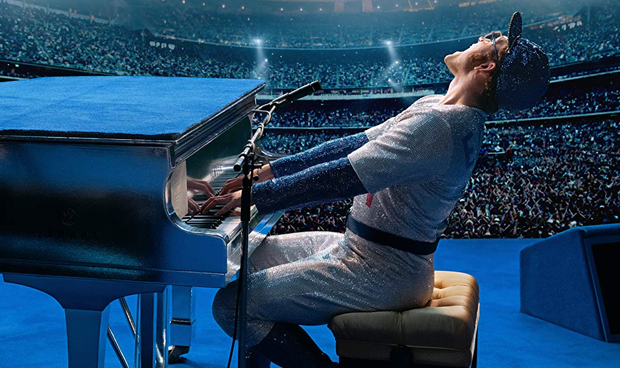
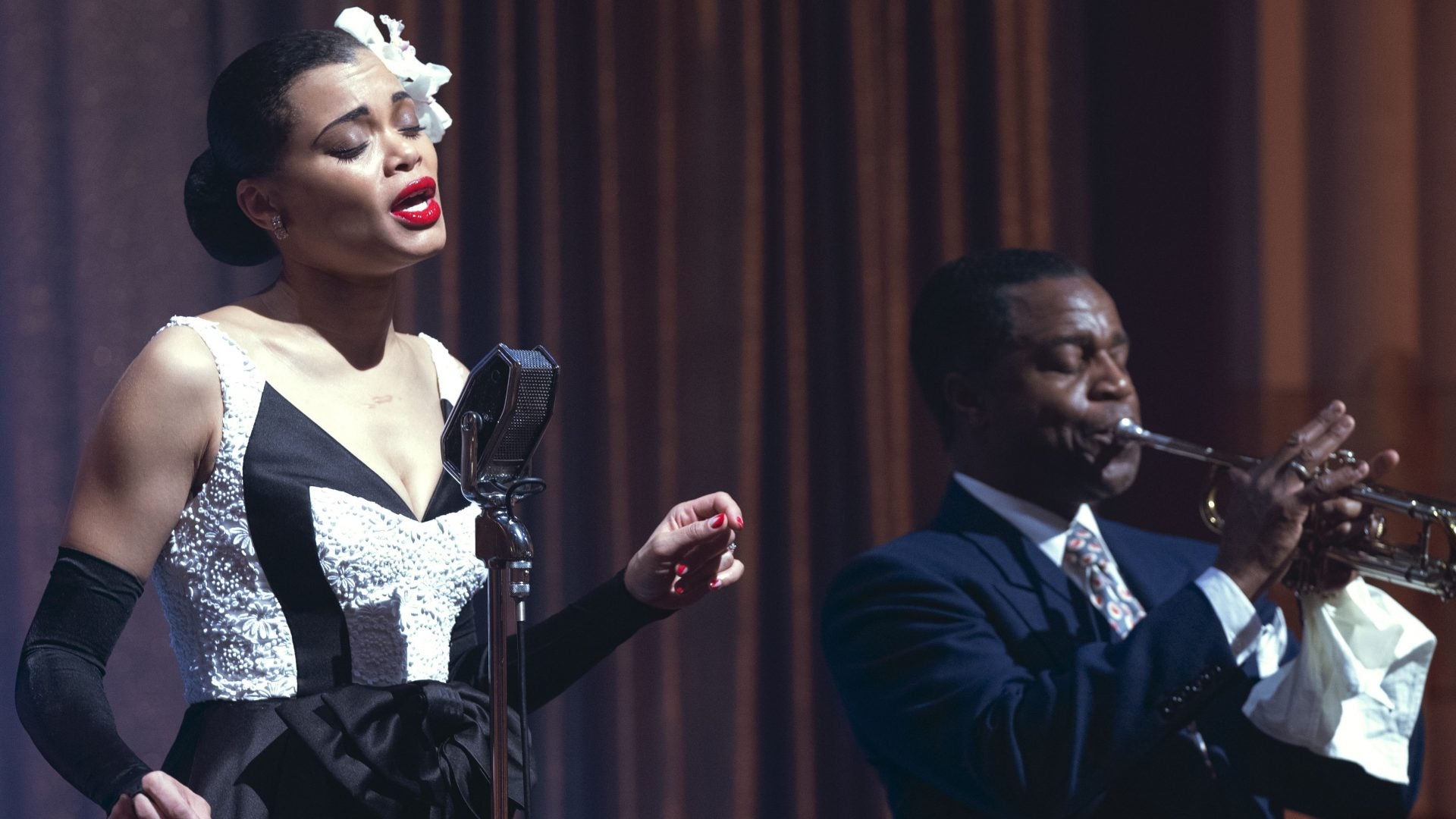
Poll: What is the best music biopic?

If there’s one genre that film critics give the hardest time, it’s the often dreaded music biopic. Most commonly associated with “Wikipedia storytelling”, the music biopic often gets by on the use of its subject’s music, urging us critics to scream, “That’s not enough!” However, ever since we last asked this question (back on Episode 130 for the release of Straight Outta Compton), we have begun to see more successes in the genre, covering the gamut from country to jazz to rocketmen. Here’s hoping the new release of Lee Daniels’s The United States vs. Billie Holiday sustains that upward musical trend.

With that said, what is the best music biopic?


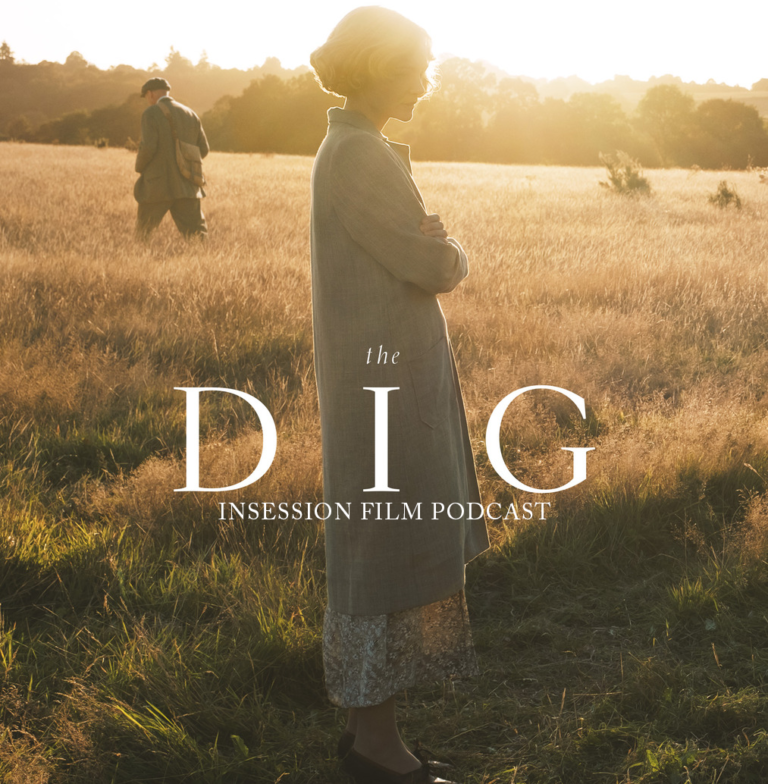
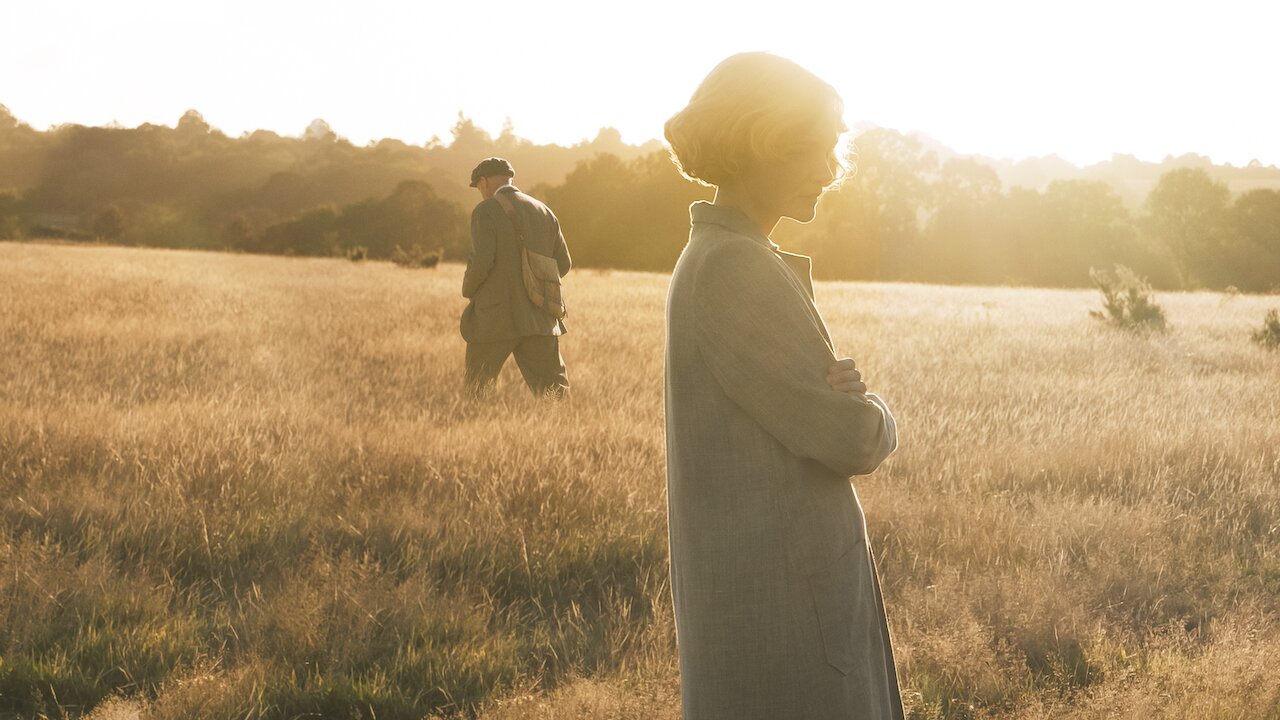
Podcast: The Dig / Badlands – Episode 418

This week’s episode is brought to you by Amazon Music Unlimited. Sign up and get it free for 90 days!

This week on the InSession Film Podcast, we discuss the Netflix film The Dig and begin our Terrence Malick Movie Series with his 1973 film Badlands! Plus, a few thoughts on Barb and Star Go to Vista Del Mar and I Care A Lot.

For those that have listened to the show over the years, you’ll know that we are big fans of one Terrence Malick. We’ve talked about doing a series for him many times in the past, and after seeing Simon Stone’s The Dig, we felt that now was the time. Seeing just how impassioned Stone is over Malick, we couldn’t let him stand alone, and we took the plunge. We understand that not everyone loves Malick like we do, but we hope that you still enjoy the movie series as we cover everything from Badlands to The Tree of Life.

On that note, check out this week’s show and let us know what you think in the comment section. Thanks for listening and for supporting the InSession Film Podcast!

– Movie Review: The Dig (6:39)
Director: Simon Stone
Writers: Moira Buffini (screenplay), John Preston (novel)
Stars: Carey Mulligan, Ralph Fiennes, Lily James

– Notes / Barb and Star Go to Vista Del Mar / I Care A Lot (48:51)
As noted above, we joyfully caught up with the Kristen Wiig and Annie Mumolo’s latest collaboration in Barb and Star Go to Vista Del Mar, and boy is that a wild ride. Additionally, JD caught up with the Netflix film I Care A Lot, which has sparked some fascinating discourse on social media over the weekend.

[divider]

RELATED: Listen to Episode 413 of the InSession Film Podcast where we discussed our Top 10 Movies of 2020!

[divider]

Terrence Malick Movie Series: Badlands (1:17:20)
Director: Terrence Malick
Writers: Terrence Malick
Stars: Martin Sheen, Sissy Spacek

Show Sponsor: First Time Watchers Podcast

– Music

The Dig – Stefan Gregory
Edgar’s Prayer – Jamie Dornan
Gassenhauer – Carl Orff
The Return of the Eagle – Atli Örvarsson

Subscribe to our Podcasts RSS
Subscribe to our Podcasts on iTunes
Listen on Spotify
Listen on Stitcher
InSession Film Podcast – Episode 418

[divider]

Next week on the show:

Review: The United States vs Billie Holiday
Top 3: N/A
Terrence Malick Movie Series: Days of Heaven

[divider]

Help Support The InSession Film Podcast

If you want to help support us, there are several ways you can help us and we’d absolutely appreciate it. Every penny goes directly back into supporting the show and we are truly honored and grateful. Thanks for your support and for listening to the InSession Film Podcast!

VISIT OUR DONATE PAGE HERE

Criterion Crunch Time: ‘Zama’

If I’m being completely honest, the film we are covering in this column is exactly the type of work I was looking forward to covering. Let’s face it, there are entire bodies of work from artists that we have heard of, but never bothered or found an avenue to get around to. What does the name Lucrecia Martel mean to you? I’m sure if you asked the general public, you would be met with a chorus of “Who?” And if you ask cinephiles, it would likely be split. You would have those that could give you examples of her work, but then you would have viewers like me. “Oh yeah, her, I’ve heard of her. What did she do again?” If you are in my camp, you can likely be forgiven. Martel has directed just four features in between 2001-2017, but she is well known in auteur circles, especially at numerous film festivals. A few of her films are leaving the Criterion Channel this month, and we will be focusing on her most recent work, Zama.

Given my previous description of Lucrecia Martel, it will likely not surprise you that Zama is not for everyone. It is slow moving, difficult, and takes some real work to access as a viewer. That said, it is also a wonderful film. It follows Don Diego de Zama (Daniel Giménez Cacho), a relatively low ranking Spanish functionary at an outpost in Argentina. It feels foolish to simply provide a plot synopsis, as, especially on first watch, one is overwhelmed by the feel of Zama. Given its setting, in the late 18th century, Martel’s work is admirable, as you almost immediately forget that this is a film set of any kind. She makes the choice to throw you into the middle of this world and not obey a typical screenplay structure. This forces the audience to catch up, which leaves precious little time to slowly acclimate. Because of this, we simply follow Zama from one frustration to the next and soon find that we are essentially lost in his world. 

And yet, this is more than a slice of life movie. There is a clear narrative, it just takes a good long time to reveal itself. Looking back on it, the consistent lies about Vicuña Porto are the true focus. All of Zama’s desires to go home, to see his wife and child, to bed the one white woman on the island, these are all secondary. They do not feel secondary because Zama is our protagonist and we feel his desires. But there are many mentions of Vicuña Porto, almost as if he and his men are spirits haunting the colonizers. And every time his existence is denied, whether through statements of his death or his supposed ears taken as a trophy, his presence increases. As the lies grow and the fear of the people refuses to dissipate, it becomes more and more clear that the specter of this rapist and murderer is becoming increasingly real, and dangerous.

It should be noted that, because this is a story of colonizers, there are certainly more rapists and murderers besides Vicuña Porto. But like any story, the perspective matters. This is where Martel truly shines. It is stunningly difficult to create a realistic portrait of slavery without focusing on an uplifting slave narrative, usually through voiceover and triumph. Martel, instead, populates her shots with these men and women, forced into slavery by the Spanish, sometimes purely as background. There is no giant revolt, but there is a pure, realized sorrow that she never shies away from. It is a lesson, teaching us as viewers that we do not need to see the brutalization of bodies, especially brown and black bodies to know that this is inherently wrong and cruel. Among other choices, Martel dresses many of their upper bodies in noble finery, including powdered wigs and coats, but keeps their lower halves only barely covered with cloth. This decision shows us that their place in this society is easily stripped at the slightest indiscretion.

Don Diego de Zama, despite missing his family, lives a relatively comfortable life in this story. And yes, he is subject to the whim of his superiors. He is repeatedly lied to by them and this puts him at risk. However, what truly unravels him is both his temper and his lack of patience. Zama could have lived there for years at almost no risk to his safety. His brawl with another Spaniard leads to him losing a coveted transfer and helps him realize that he has been strung along. After many requests, the governor, begrudgingly agrees to write a letter to the King on his behalf. However, he also mentions that he will follow up with a second letter months later to convince him. This frustration at the bureaucracy inherent in the system leads Zama to a dangerous decision.

And this sequence, after said decision, is where everything comes to fruition. Zama makes all of the wrong choices and, because he wants to stand out to the governor (and indirectly, the King) he puts himself and others in mortal danger. Despite being the titular character, Zama is brutally punished for his crimes, but even without horrific visuals, Martel reminds us that he is a part of a system that has subjugated, enslaved, raped, and murdered others en masse. No one in this system is innocent, we are all implicated.

These movies on The Criterion Channel can be quite difficult, but they are also an opportunity. Every day, and especially every month, is an opportunity to expand our horizons. I can say with almost certainty that without this column, Lucrecia Martel would not have been on my radar. Now, if you’ll excuse me, I’m off to watch more of her work.  I hope you join me before February ends!

New Criterion Releases: March 2021

At the of the first quarter of this year, we have a brand new set of films for the Collection. One film from Martin Scorsese’s World Cinema Foundation will get its own release, two directors will have another film of theirs get the treatment, and a new director joins the list with one of the most postmodernist films ever in the Collection. Speaking of new films to check out, I will put out soon my first quarterly list of favorite films from the Criterion Channel, movies I have not seen before. For those who haven’t checked the CC out, some of these new movies can be seen there as if it is a digital copy you own. Make sure you check that out. Now, for the movies coming out this month:

Touki Bouki (1973)

Writer/director Djibril Diop Mambéty put the cinema of post-colonial Senegal on the map with a road trip featuring two young lovers leaving the country for the dreams of France. But remaining connected to their roots proves to be a harder task to disconnect from as they reach the dock for their journey to the modern world. Mambéty comments on the post-colonial world and this newfound sense of independence from a nation’s inhabitants after decades of exploitation. Yet, it also puts forward how the young generation seeks to move on past the struggles of fighting for that independence their ancestors sought for them, yet they want something bigger.

Celine And Julie Go Boating (1974)

Director Jacques Rivette went on an experiment with two girfriends who take a trip into Paris and embark on a rules-breaking adventure that sends viewers into another realm. Daydreams become real, investigating a murder becomes an adventure, and the road trip film with these women is shattered for another type of travel. Juliet Berto and Dominique Labourier are both the titular characters and co-writers with Rivette and others in this super collaboration where no idea is discarded and lets the imagination run wild.

Defending Your Life (1991)

Albert Brooks gets another wonderful comedy of his in the Collection with this romantic-comedy of a recently dead man, played by Brooks himself, stuck in purgatory and meets a woman (Meryl Streep) whose personality is the opposite of his, but falls in love with her and seeks to be judged worthy of heaven to be with her. Brooks’ directing credits have all touched upon a human element that pushes characters into a scenario that challenges their own beliefs and feelings. His other Criterionized film, Lost In America, satirized an American’s wish to be “free” and explore. Co-starring Buck Henry,  Rip Torn, and Lee Grant (plus a cameo by Shirley MacLaine with her views on reincarnation), Defending Your Life is about handling our fears and being able to live life as it was intended to be.

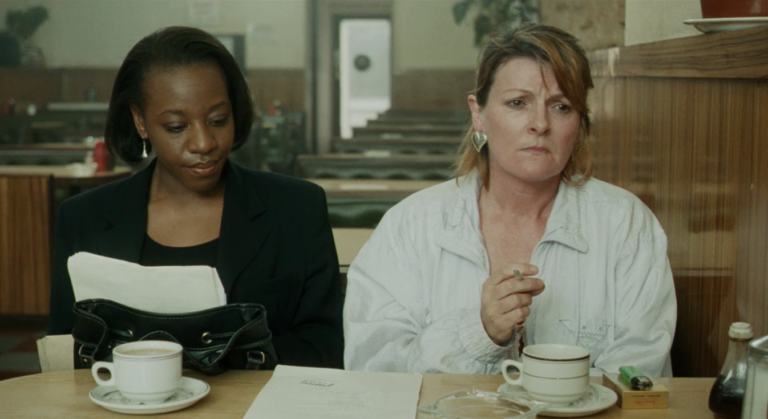
Secrets & Lies (1996)

Mike Leigh’s Palme d’Or-winning, Oscar-nominated drama follows a black woman (Marianne Jean-Baptiste) who was adopted at birth finding her birth mother, only to make the shocking discovery that she is a white woman (Brenda Blethyn) from a dysfunctional family. Blethyn’s performance is the amazing standout, innocent but fragile to her own family’s behavior while having to confront a secret to the entire family. One of Mike Leigh’s best features, it once again taps into middle-class life and the surprises that come along that either gives a thrilling or shocking surprise. Whether it be a contemporary or a period piece, Leigh once again provides a provocative portrait on a subject that can (dis)connect the family dynamics in any area.

Follow me on Twitter: @brian_cine (Cine-A-Man)

Chasing the Gold FYC: ‘Jingle Jangle: A Christmas Journey’ – Production Design

When the Academy of Motion Picture Arts and Sciences revealed shortlists for nine Oscar categories on February 9th, I was pleased to see three mentions for David E. Talbert’s holiday-themed musical, Jingle Jangle: A Christmas Journey. The film showed up on the shortlists for Best Makeup and Hairstyling, Best Original Score, and Best Original Song for “Make it Work.” Though the film still has a bit of an uphill battle to receive nominations in these categories, it was nice to see some recognition for a film that may have familiarities in its plot, but also features a sense of awe and wonder in a Christmas tale that centers Black characters. And of course, the technical aspects of the film are marvelous. 

It would be a joy to see this film make the cut in any of the three aforementioned categories, especially Best Makeup and Hairstyling. The film should be in contention for a nomination in Best Costume Design as well. However, the category for which the film is most deserving of an Oscar nomination, in my opinion, is Best Production Design. 

Production design is such a fascinating category, as the Academy tends to recognize various styles with the honorees. In the last decade, we’ve seen winners featuring expert inclusion of objects and styles that signify a time and place (such as Once Upon a Time in Hollywood), the construction of sets that echo the distant past (Lincoln), and grand designs with gorgeous colors that are a feast for the eyes (The Grand Budapest Hotel, my favorite winner of the 2010s). But perhaps most of all, the Academy has recently displayed a longing for epic, visual-effect-infused designs that evoke a sense of wonder, through the likes of Hugo, Mad Max: Fury Road, and Black Panther. 

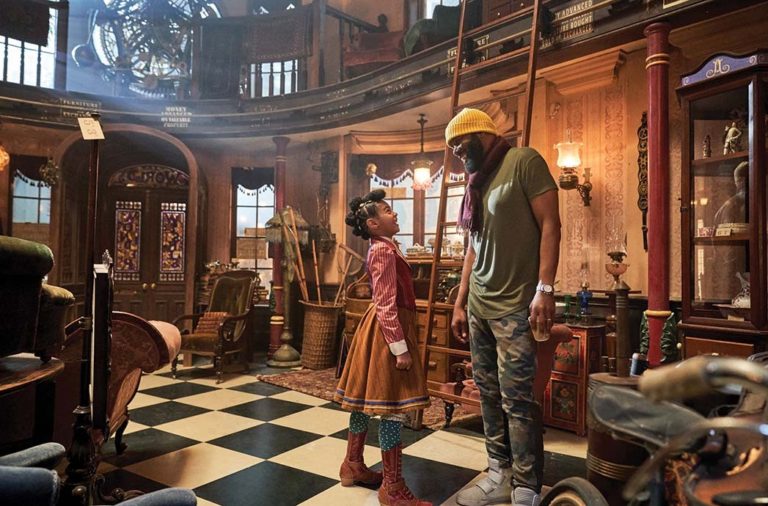
Jingle Jangle fits right in with this latter group of winners, employing CGI effects that blend with lavish sets and decorations. Much of the film takes place inside of a toy store, Jangles and Things, owned and operated by Jeronicus Jangle (Forest Whitaker). In the earliest scenes of the film, we get a taste of what the shop was at its height, and it’s beautifully brought to life by production designer Gavin Bocquet. The configuration works perfectly with the story, giving the shop a hometown feeling while also delivering on spectacle. The classic interior, complete with dual staircases and a balcony, helps to establish the assumed time period of Christmases past. Of course, this is expanded upon when we are introduced to the back rooms, nooks, and crannies of the shop. 

Much of the joy elicited by Jangles and Things, however, is a result of the set decoration by Rob Cameron. In every shot of the early scenes in the store, there is some sort of toy or mechanism moving in the background. These are accented by stunning colors that draw the eye to everything happening. And though some of these aspects are created through the use of CGI, they each have their place in the setting. As time goes on in the film, and the shop is virtually shut down, the production design and set decoration are useful tools for maintaining the attitudes of Jeronicus. The bright colors are no more, but the extravagance of the shop of old remains. And throughout the unique location, there are surprises to be found, normally by his granddaughter Journey (Madalen Mills). 

It’s enthralling to see the role the production design plays in the conflict of the film between Jeronicus and his rival Gustafson (played by Keegan-Michael Key). While Jangles and Things contains a charmingly clustered and old-timey nature, Gustafson’s is much more tidy and modern, placing it at odds with the village itself. It uses green in a way that evokes memories of the Emerald City in The Wizard of Oz, juxtaposing it with the less intense colors of Jeronicus’s store. This is underscored by twisting decorations on the wall, keying in on the snakelike personality of the character. 

Of course, Jeronicus’s toy store, as well as the more modern toy store of his rival, would not exist without the holiday-themed town that surrounds them. Bocquet and Cameron built a charming but bustling little village, with shops and locations that maintain clues of uniqueness within the uniformity. For much of the film, it’s refreshing to step outside of the interiors and take in the delight of the town. This is especially true in a scene that consists of a huge snowball fight between the villagers, with the action and the design working together to provide a sense of community. 

When it comes to effective production design, and especially Oscar-worthy production design, I tend to look for how the craft enhances the narrative and tone of the film. In Jingle Jangle, the production design and set decoration indicate the differences between Jeronicus and Gustafson as characters. They also successfully create a sense of place with the design, clueing viewers into the type of time period and location we are working with. It’s fortunate that the Academy recognizes both production designers and set decorators with the award, as Gavin Bocquet and Rob Cameron both do great work here that is worthy of at least a nomination. 

Movie Review: ‘I Care a Lot’ Falls Apart in its Third Act


Director: J Blakeson
Writers: J Blakeson
Stars: Rosamund Pike, Peter Dinklage, Eiza González, Chris Messina, Dianne Wiest

Synopsis: A shady legal guardian lands in hot water when she tries to bilk a woman who has ties to a powerful gangster.

[/info]

Have you ever had that sinking feeling in the pit of your stomach where you can just anticipate that an experience that you were enjoying is about to sour on you? I had that feeling about 80 minutes into I Care a Lot (2020). The first two acts were deliciously nasty and the script accurately depicted the behavior of ruthless sociopaths who are driven by a desire to earn money and achieve a twisted version of the American Dream. You are fascinated by the anti-hero at the center of the story but for this sort of unlikeable character to remain interesting, she has to be challenged and tested. If she is just allowed to continue breezing through life without being shaken by anything that happens to her, we wonder why we are watching somebody failing to go through any progression. We want to see this sort of person suffer in order to atone for their sins and we enjoy seeing them humiliated because it forces them to up their game. I Care a Lot mistakes fascination with a character for deep personal interest in them and its ending is deeply unsatisfying for the audience. It throws the film so wildly off kilter that I struggle to hold onto the aspects of the picture that I had previously loved.

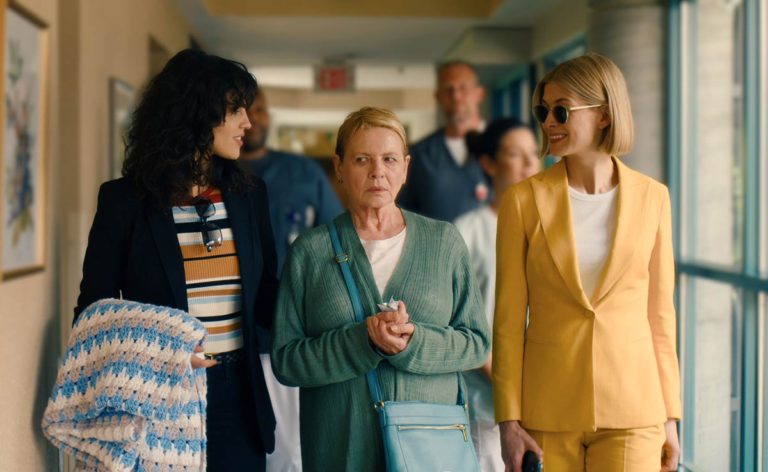
Marla Grayson, Rosamund Pike, serves as the legal guardian for a large number of vulnerable, elderly people. She has them involuntarily committed to rest homes where they are treated for conditions such as dementia and then proceeds to sell all of their assets and use this money to financially support herself. She gets into trouble when she takes on Jennifer Peterson, Dianne Wiest, and has her committed to a facility. She was not previously aware of the fact that Peterson is connected to a powerful Russian Mob family. Her son Roman Lunyov, Peter Dinklage, is determined to ensure that his mother is safe but also wants to win back some precious diamonds that Grayson stole from his mother’s safety deposit box. Suddenly Grayson feels threatened by him and realises that her life is threatened if she continues to move forward with this scheme.

I suppose I can’t reveal that much about the ending itself in terms of specifics but it will have you rolling your eyes and wondering why they didn’t take more risks. We are told that Lunyov is threatening and terrifying, we’re meant to believe that he strikes fear into Grayson’s heart and yet she easily fights back against him. It never feels like she is punching above her weight or being forced to go to extreme lengths in order to stay alive. We don’t get one of those thrilling moments where the smartest person in the room is thrown off balance and has to scramble to catch up with their adversary. Our anti-heroine is barely troubled by the warnings that Lunyov gives her. I think out concern for her is meant to hinge on her relationship with Fran, Eiza Gonzalez. We get to see the two of them kissing a lot but Fran just isn’t a well-developed character. That approach would work if she was just a pretty, subservient young thing who was a slave to money and attached herself to somebody who could keep her rolling in the green. When we’re meant to cry as her life is threatened, I just shook my head. The screenwriters put their eggs in the wrong basket and assumed that we cared about characters who just felt like plot devices. 

It is maddening that this film so thoroughly squanders its potential because it does have quite a few assets on its side. Pike’s performance is well-modulated for the cynical, angry tone of the film and she rarely allows that icy facade to crack. The script prevents her from getting a few scenes in which she gets to be darkly funny. She is restricted to playing one note over and over again and while it is a very entertaining note, I couldn’t help but yearn for more. Wiest gets to have even more fun as she playfully taunts the woman who has been controlling her life. She’s under the influence of dangerous amounts of medication and could be reprimanded for threatening Grayson but she finds a way to quietly get back at her. The devious grin on her face reminds us that she is a force to be reckoned with. For once, she actually appears to be intimidating Grayson and Wiest seems to be revelling in the opportunity to play a character who is slightly darker than a lot of the mothers that she played in 1980s teen movies. Gone are the pearls that she clutched at in The Lost Boys (1987), now she’s playing a predator who will happily dish out punishment to anybody who crosses her. If there was more of Wiest, I wouldn’t have been complaining.

The pacing also feels zippy during the first two acts and we aren’t checking our watches as Grayson zooms from Peterson’s house to a courtroom and then back to her love shack. We do start to fidget during the overly convoluted second act and I think this is down to the direction. J. Blakeson knows how to dazzle us during the opening scenes as he confidently sets up the world that these characters inhabit and the central conceit but he doesn’t know where to go from there. So often he relies on close-ups of Pike’s smirking face, which are meant to be disturbing, or greets us with an establishing shot of a cityscape which is set to some synth-y composition from the repetitive score. He loses grasp of the tone of this story and his ill-fated attempts to cross over into the romantic melodrama genre are just clunky. He’s not utterly incompetent but he sets up expectations that he doesn’t follow through on. That almost makes it more painful when the third act is an unmitigated disaster. 

You get the feeling that this could have been a delight if the script had gone through a few more rewrites. It becomes infuriating to watch at the 80-minute mark but you might like the first hour enough to stick around. This was made for Netflix so it is designed to be half-watched while you perform chores around your house or organise your schedule on your phone. That means that this might go down easy for some viewers. They’ll look up in the middle of watering their plants and be flabbergasted by all of the twists that have been thrown at them. It is never positive when you argue that something would be more enjoyable if you didn’t really focus on it and I don’t think that I Care a Lot deserves a passing grade simply because of the way that it is likely to be consumed.

Grade: C-

Movie Review: ‘Identifying Features’ Captures a Sadly Common Crisis


Director: Fernanda Valadez
Writers: Fernanda Valadez,Astrid Rondero
Stars: Mercedes Hernández, David Illescas

Synopsis : A mother travels across Mexico in search for her missing son despite authorities insistence that he died crossing the border

[/info]

It’s hard to overstate the cruelty of the United States’ immigration process. Even after migrants travel thousands of miles through uninviting environments, there is still little chance that they make it to where they intended. With millions of families, this leads to an uncle, sibling, or child that they never see again. For Magdalena (Mercedes Hernández), the towering central figure of Fernanda Valadez’s debut film Identifying Features, this is more than just an anecdote. Two months after her son, Jesus, leaves for Arizona with his best friend, there’s no sign of either of them. Like many in the real world, they have simply  slipped through the cracks. 

While this story might be familiar to anyone who has paid attention to the U.S.’s border crisis, Identifying Features illustrates the tragedy in evocative detail, especially for those that lack that particular painful experience. Without turning the film into an Alejandro González Iñárritu style tale about the inherent sadism of human nature, co-writers Astrid Rondero and Valadez carefully portray the harshness that comes with trying to track down a missing migrant and family member. For the film’s first half-hour, you follow Magdalena as she moves through bus stations, office buildings, and various other uncaring locations in an attempt to find out anything about her son. Various bystanders are apathetic to her struggle because it’s a story they hear too often to be invested. As she moves through these circumstances, the film begins to feel like a Kafkaesque world of ugly overhead lighting and office desks, a mechanical realm that doesn’t care one bit about the disappearance of an asylum seeker. 

A little before the Identifying Features’ halfway point, Valadez shifts to a more human narrative to balance out the harshness of the beginning. While the film opens with looking at the systems that could lose an immigrant, eventually Magdalena stops jumping through these frustrating technological hoops and starts traveling across Mexico to find answers. Along the way, she meets Miguel (David Illescas), who recently returned from America. The duo’s bond is one of the strongest centerpieces that the film has, as their quiet companionship is appealing and captivating. This is where Hernández’s gripping performance takes hold of the film, with her silent furiousness only growing as the run length moves onward. Although Illescas does a solid job playing Miguel, it is nearly impossible to hold one’s own against Hernández’s incredible acting. This is mostly her story, after all.

Plaguing the backdrop of the film is the gang violence of Latin America, which constantly threatens to derail Magdalena’s journey. Especially once the storytelling moves past the mechanical, Magdalena’s search for her son feels like a dangerous ordeal, opposed to just being told vaguely that things are bad. The film finally decides to show us the inherent mood of danger, as opposed to simply preaching it. Because of this emotion, it’s a shame that the film somewhat sputters out and wastes this forward momentum. Valadez’s assured direction helps Identifying Features ratchet up some tension, but the film’s closing twist goes against the wandering tale at its center.  The reveal is crushing but somehow also too easy. To some degree, the ending feels like Valadez undercutting the detached, glacial nature of her movie, which is exactly what made it work in the first place.

Grade: B

Classic Film Review: ‘Road to Morocco’ Conforms to the Racist Tropes of its Genre

The Road to… series probably wouldn’t be massively successful today because all of the entries in the series feel similar to television sitcoms. They’re all fairly short, feature the same cast of characters playing very similar roles and moving through similar storylines. They would go to different locations in each film and Dorothy Lamour would wear a new set of dresses but they never radically changed the formula. Understanding their appeal could be difficult for modern audiences as they seem so dated and un-cinematic now. They’re racist, take a pro-imperialist viewpoint, and support the idea that women should be subservient to men. Not all of the jokes land and Bob Hope ends up sounding like a bigot but the self-referential style might have felt revolutionary at the time. The idea of being in on the joke made the audience feel like they weren’t being talked down to and it prevented the usual criticisms about the series being formulaic. If the writers were already taking jabs at themselves, it was difficult for critics to complain about their laziness. This is what made it different to other comedies from the period and families could titter as Bing Crosby winked at the camera and referenced the salary that Paramount executives were paying him.

I decided to dive into my evaluation of the series with Road to Morocco (1942). It is generally listed as the best of the franchise and has the added bonus of featuring a young Anthony Quinn. It was released following the success of Road to Singapore (1940) and Road to Zanzibar (1941). AFI listed this as one of the top 400 American films of all time and it would go on to inspire legendary screenwriter, director, and actress Elaine May. This set me up to have high expectations but I was also on the lookout for the racism that I was prepared for.

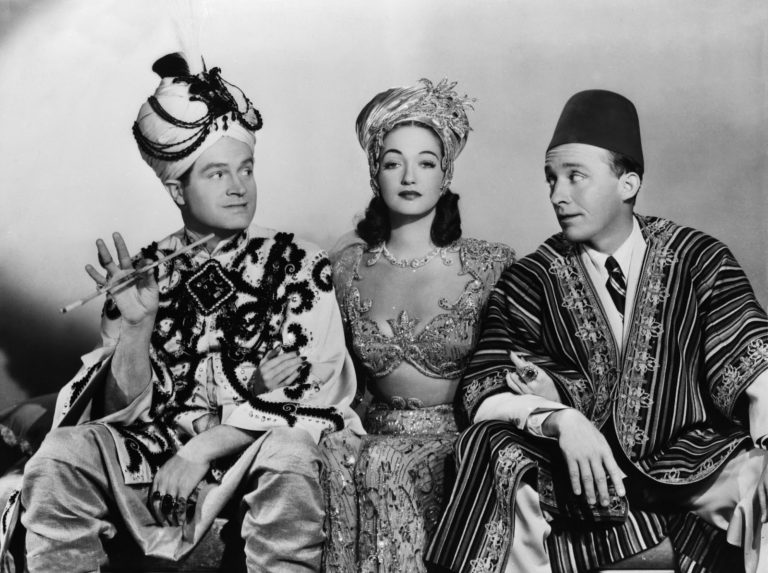
Jeff, Bing Crosby, and his good friend Orville, Bob Hope, were stowaways on a freighter but escaped on a life raft after it exploded. They end up in a secluded part of Morocco and hitch a ride on a camel that leads them into a large city. Jeff sells Orville to a slave trader and this causes Orville to feel animosity towards Jeff. Orville is happy when Princess Shalmar, Dorothy Lamour, takes him on as a concubine and tries to keep Jeff away from the palace by telling him that he is in danger. This causes Jeff to go after him and he is angered when he realizes that Orville enjoys being Shalmar’s concubine. Jeff sticks around and he and Shalmar have an innocent flirtation but she announces her intention to marry Orville. She is only marrying him because her fortune teller has told her that her first husband is destined to die within a week of their marriage. She plans to marry Mullay Kasim, Anthony Quinn after Orville dies. He finds out about this and tries to convince Jeff to stay and serve as Shalmar’s first husband. The fortune teller reveals that his prophecy was incorrect and the two men attempt to run away before they can be attacked by Kasim. The two men are left stranded in the desert and make their way into Kasim’s camp. Kasim and a rival Sheik are so busy fighting with one another that they don’t notice it when Jeff, Orville, Shalmar, and Mihirmah, Dona Drake, run away. They are all happy as they near the New York harbor.

The plot is really incidental in a comedy like this and it’s just an excuse to show off a foreign location and encourage Hope and Crosby to riff. Personally, I didn’t think that the chemistry between Hope and Crosby was all that sparkling. Hope does his usual routine and, perhaps because of over-saturation, I never felt like I was getting anything new from him. I could have just watched a tape of him hosting the Academy Awards back in the 1950s if I wanted to see him pull out this routine. On the other hand, I have always felt as though Crosby had a lot of potential. His dramatic performance as a self-pitying alcoholic in The Country Girl (1954), took my breath away. That meant that I raised my expectations when it came to his acting and I keep expecting him to dazzle me in these stodgy comedies. I tend to forget that he is better known for lame, aggressively conservative musicals like Going My Way (1944) and The Country Girl was an aberration in his career. He’s goofy and genial in this and yet I could never bring myself to be won over by his greasy, insincere charm. I could always sense that he was really a sad, middle-aged man reckoning with the mistakes he had made in his own life rather than being a carefree fool. I understood that Hope was meant to be wacky and outrageous while Crosby was the emotionally repressed straight man but I did not find myself howling with laughter.

I was also resistant to the thoroughly repugnant characters that they played. These films were supposed to serve as parodies of adventure flicks that were popular during these period. They do manage to poke fun at some of the tropes but they carry over the colonialist viewpoint. I don’t understand why most adventure stories have to involve a white, English-speaking man traveling to a financially struggling nation in which non-white people live. I am not against the idea of white people traveling around the world and settling into countries where people speak different languages and are members of different ethnic groups but why do these stories always have a white supremacist angle. You get through a few scenes in which the white man or men have a bit of fun being introduced to the social customs in these new countries but there is inevitably a moment at which they become dictators in the country, impress their values onto the local people and take on a bevy of sex slaves. We’re meant to nod along as they talk about ‘civilizing’ the natives and agree with them as they act like they are owed the right to take helpless indigents on as slaves. Road to Morocco mocks all of the native Moroccans and the far more sophisticated Americans who bumble around in the palace are implied to be better than them because of the values that have been instilled in them back in America. It’s hard not to feel uncomfortable when you watch white actors in brownface playing racist caricatures and this is, unfortunately, representative of the way that most middle class Americans would have seen Moroccans at the time.

The real highlight for me was Lamour’s singing. She has a honeyed voice that is reminiscent of Doris Day and as she delivers her breathy rendition of “Constantly”, you can’t take your eyes off of her. It is a shame that she was cast as a Moroccan princess when she was a white woman but she does bring a unique exuberance to the part. Hope and Crosby seem like they’re coasting and while Lamour is bring out her usual razzmatazz, she is as gorgeous as ever and never seems to take herself too seriously. I wanted to see more of her and I was saddened when I learned that she was later dropped from the series for being too old. Her appeal is timeless and I get why people kept on coming back for her.

Grade: D+

Podcast: The Wachowski Sisters Movie Series

To start off the 2021 movie year, Ryan and Jay take a look at a sibling pair of directors who have been revolutionary visual storytellers for almost three decades. Lana and Lilly Wachowski debuted in the late 1990s, and since then, they have been trailblazers with an epic scope that leaves the audiences with plenty to talk about. While not every single movie of theirs is a box office or critical hit, they swing for the fences and carry their projects with such tender emotions. Their filmography has changed modern-day cinema, and with that, Extra Film couldn’t think of a better way to start the new year than with these two amazing directors.

Bound, 1996

Listen to our review below as heard on Extra Film.

The Matrix, 1999

Listen to our review below as heard on Extra Film.

The Matrix Reloaded, 2003

Listen to our review below as heard on Extra Film.

The Matrix Revolutions, 2003

Listen to our review below as heard on Extra Film.

Speed Racer, 2008

Listen to our review below as heard on Extra Film.

Cloud Atlas, 2012

Listen to our review below as heard on Extra Film.

Jupiter Ascending, 2008

Listen to our review below as heard on Extra Film.

Podcast: Jupiter Ascending (Revisited) / Barb and Star Go to Vista Del Mar – Extra Film

On this week’s Extra Film, Ryan and Jay conclude their Wachowski Sisters Movie Series with Jupiter Ascending, and they also the comedy, Barb and Star Go to Vista Del Mar.

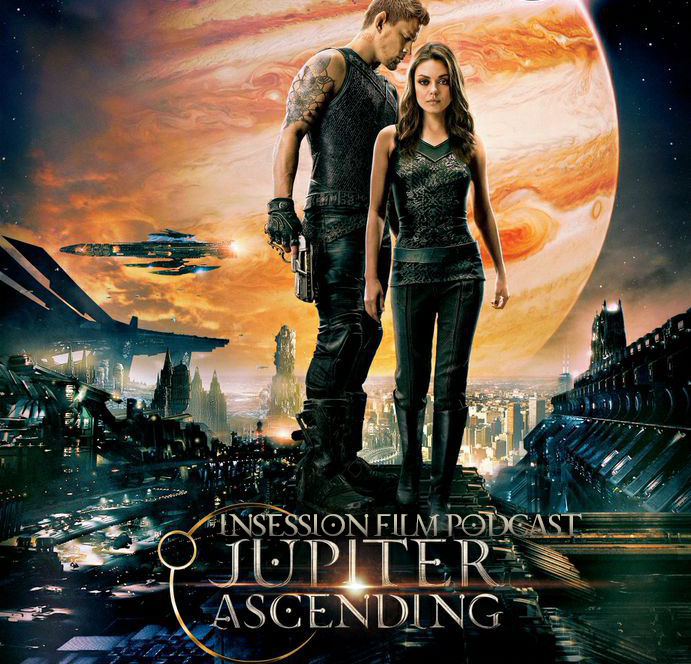
With this last film in the series, the Extra Film boys looked at what is considered by many to be the Wachowski Sisters’ worst film to date. Released back in 2015, Jupiter Ascending was a massive flop and considered one of the worst films of that year and the decade. And while Ryan and Jay don’t think it is that bad, it certainly is the weakest film they have talked about and ultimately, this was a bummer of a film to end what was a really fun Movies Series to start the year.

In the back half of the episode, the boys talk about the new comedy, Barb and Star Go to Vista Del Mar. With many studios not making many straight-up comedies anymore, in steps this gem of a flick. From the minds of Wiig and Mumolo, who wrote Bridesmaids back in 2011, comes a zany comedy about friendship and a plot to take over the world. Truly one of the funniest films to be released in some time, and Ryan and Jay really dug in and talked about everything they could without spoiling their favorite jokes contained within the film.

Plus, stay tuned till the end of the episode to see who the boys will be covering in their next Movie Series, starting next week.

Thanks for listening!

– Movie Review: Jupiter Ascending (4:51)
Director: Lana Wachowski, Lilly Wachowski
Screenplay: Lana Wachowski, Lilly Wachowski
Stars: Channing Tatum, Mila Kunis, Sean Bean, Eddie Redmayne, Douglas Booth

– Movie Review: Barb and Star Go to Vista Del Mar (1:03:12)
Director: Josh Greenbaum
Screenplay: Kristen Wiig, Annie Mumolo
Stars: Kristen Wiig, Annie Mumolo, Jamie Dornan, Damon Wayans Jr.

– Music

Michael Giacchino – Jupiter Ascending
Jamie Dornan – Edgar’s Prayer
The Return of the Eagle – Atli Örvarsson

We try to make this the best movie podcast we possibly can and we hope you enjoy them. Subscribe today on iTunes, Spotify, or Stitcher, and please leave us a review on iTunes. You can also find us on Soundcloud, PlayerFM, and TuneIn Radio as well. We really appreciate all your support of the InSession Film Podcast.

Subscribe to our Podcasts RSS
Subscribe to our Podcasts on iTunes
Listen on Spotify
Listen on Stitcher
Jupiter Ascending (Revisited) / Barb and Star Go to Vista Del Mar – Extra Film

[divider]

To hear this Extra Film episode and everything else we do, download our apps on the Amazon Market for Android and the Podcast Source app on IOS devices. The mobile app covers all of our main shows, bonus podcasts and everything else relating to the InSession Film Podcast. Thanks for your wonderful support and for listening to our show. It means the world to us.

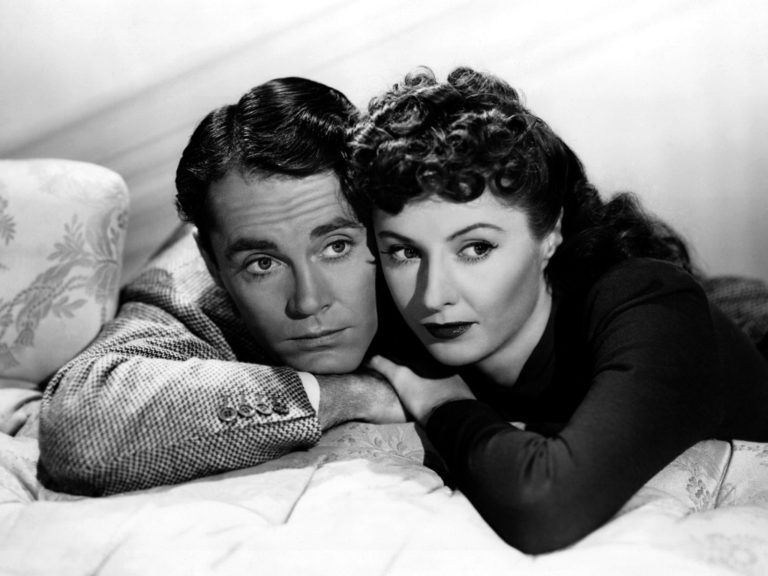
Op-Ed: 100 Years…100 Passions – ‘The Lady Eve’ (#26)

I will be watching and reviewing all of the films included on AFI’s 100 Years…100 Passions list. The list contains the 100 greatest love stories in American cinema and I plan to consider how our views on romance and social issues have changed over the years as well as judging whether the romances in these films actually made me swoon. As a fan of the romance genre I expect to love each and every one of the nominees but I also don’t know if I would consider all of them romantic.

I have already extolled Barbara Stanwyck’s virtues as an actress in my review of Double Indemnity (1944), but she really outdid herself with her performance in The Lady Eve (1941).

A lot of different elements probably had to click into place for this to be as perfect as it is, but without Stanwyck, none of it would have come together. Preston Sturges could write snappy dialogue like nobody else and subtly fold pathos and character development into his jokes, but he wrote a character who needed a special actress to play her. I adore comediennes like Carole Lombard and Madeleine Carroll; yet they didn’t possess Stanwyck’s ability to shift gears on a dime and turn highly unsympathetic characters into complex, thoughtful heroines who existed in a moral grey area. Even when she’s doing something manipulative, she does it in style and there is always the feeling that real emotions are bubbling beneath the surface. She can keep up with Sturges’s nimble pacing, project a mix of sex appeal and vulnerability, and hit the perfect note in the final scene. With her in place, everything else effortlessly falls into line.

The film concerns con-woman Jean Harrington (Barbara Stanwyck) who sets her sights on ale heir and ophidilogist Charles Poncefort Pike (Henry Fonda) as he returns from a long trip to the Amazon. She enchants him almost immediately and with the help of her manipulative father ‘Colonel’ Harrington (Charles Coburn), she draws him into a game of poker. Pike eventually proposes to Harrington but discovers her deceptions through his dutiful servant Muggsy (William Demarest). Harrington has fallen in love with Pike by this time and is devastated by the fact that he has left her. In order to get revenge on him, she pretends to be the posh Lady Eve and seduces him yet again in her new persona despite Muggsy correctly suspecting her of being Harrington. Once Lady Eve and Pike are married, she reveals that she has had previous affairs and endeavors to make him dislike her so that he will reconcile with Harrington when he ‘coincidentally’ meets her again. Her plan works to great effect, and the two resume their relationship without Pike knowing about her lies.

It is extraordinary that Sturges is able to set this film up so quickly and get away with giving his leading actress such a long screed of dialogue to deliver. We briefly meet Pike as he enters onto the boat after getting to the end of his long expedition in the Amazon. Afterwards, Harrington tells us about her plan to seduce Pike as she glances around the room and performatively mocks her rivals in front of her father. In just a few minutes, we learn so much about Harrington, Pike, and the Colonel. She’s obviously confident enough in her own seduction techniques that she feels secure attacking the amateurish attempts of other passengers to catch his eye. Stanwyck stops us from disliking her character because there is the sense that Harrington is just having fun as she goes off on this rant. We start to realize that she thinks of this period before she has to go through the seduction as the enjoyable part of her mission. She has to anticipate seducing a hapless fool who might be a real bore to spend time with and then endure tricking him into giving up a significant portion of his earnings while gambling with her father. The bemused tone she adopts, sets us up to believe that she views Pike as a dummy and we don’t necessarily expect her to fall for him in the process of seducing him.

We also feel as though she and her father are not as close as they should be and they seem more like business partners rather than being family members who would do anything for each other. Coburn is giving his usual blustery curmudgeon performance but he doesn’t soften up as he would in The Devil and Miss Jones (1941) and The More the Merrier (1943). When his daughter turns against him, we are not that surprised, but we do feel for Harrington when she tries to break away from him, as we know that he is fairly cold and heartless and would ruin her life if she didn’t go along with his plans. Pike is mostly seen through the eyes of other characters, but Fonda is still excellent at giving the impression of being overwhelmed by this new environment. He is either oblivious to the overtures of women or almost afraid of them. Yet his strain of neuroticism sets him apart from the other bewildered men who made frequent appearances in the genre at this point in time.

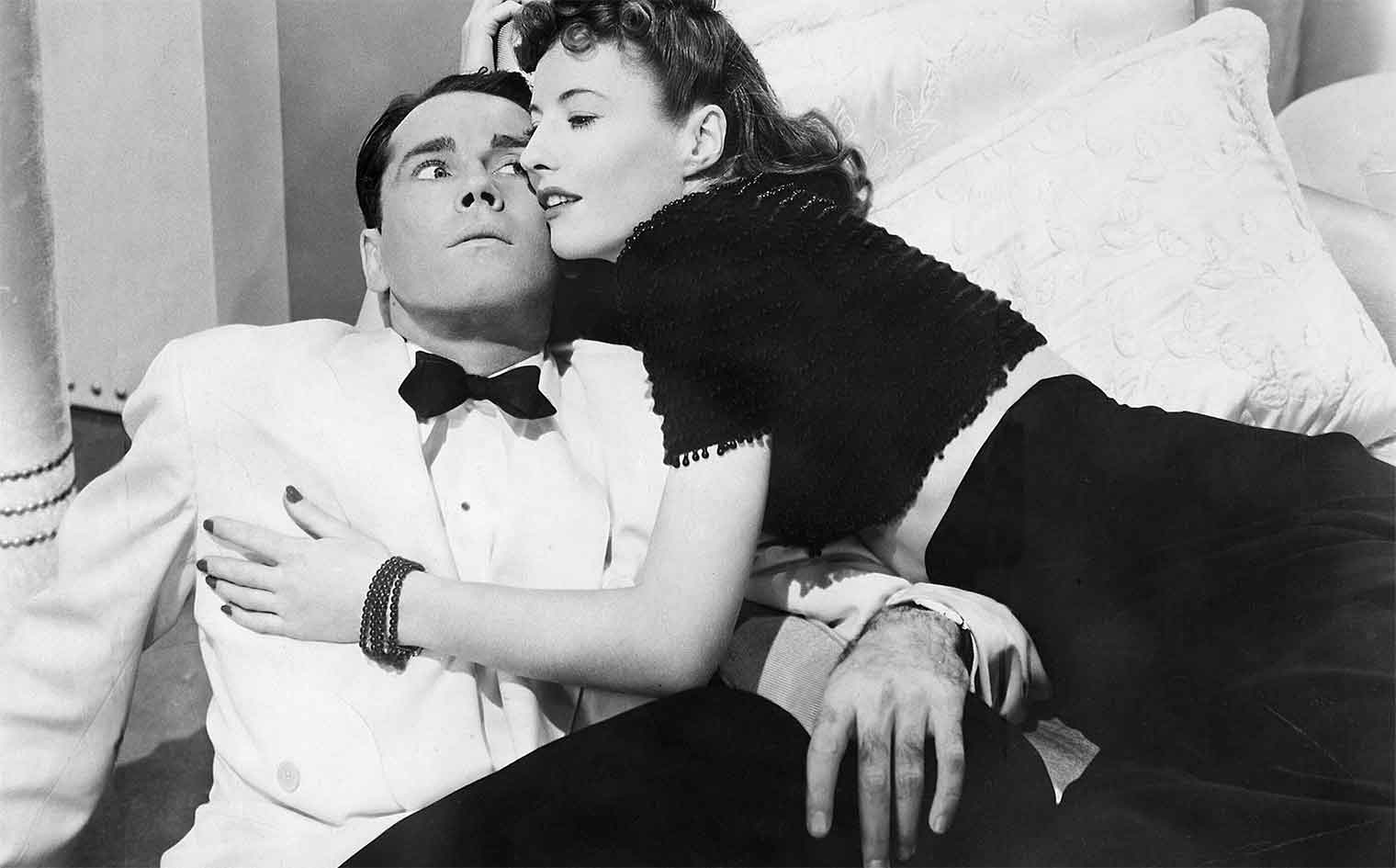
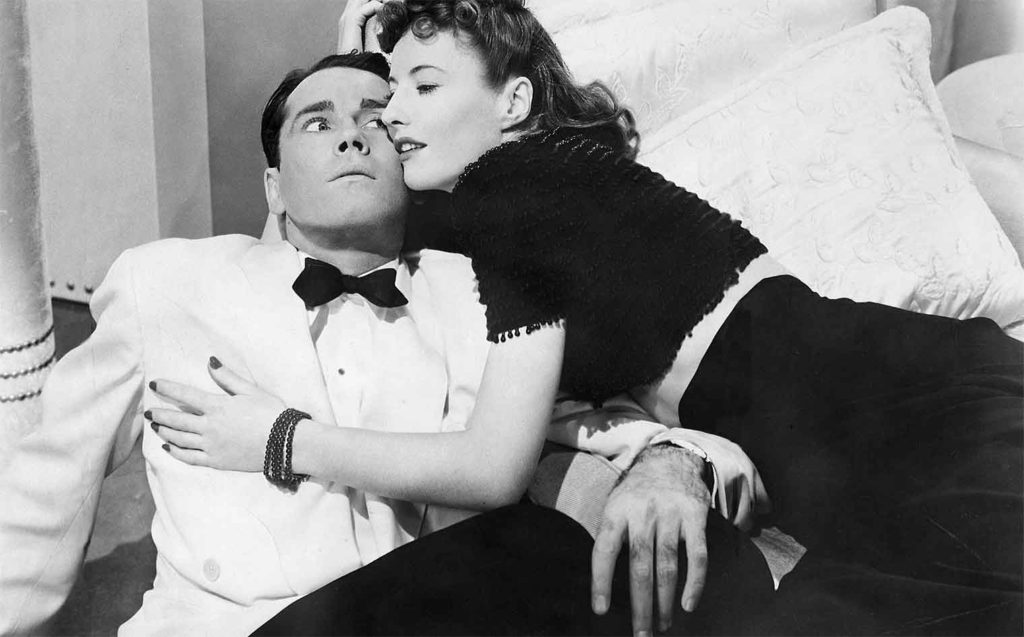
The sequence in which Harrington seduces her prey is the pièce de resistance of this masterpiece. We see the expectations of both of the leads upended as they are confronted with feelings they have never had before. The situation is comical but the emotions are real and the actors are able to get across the surprise and wonderment that you feel when you meet somebody who leaves an indelible impression on you. Harrington expects to waltz into Pike’s life and dazzle him with her revealing outfit and rather unsubtle flirtatious come-ons. She goes from saying “See anything you like?” and aggressively pushing him to the floor to taking a genuine interest in him. He is clearly impacted by her take charge attitude and hands on approach to fixing her shoe but we also get to hear a lot of sexual innuendo. Jokes about rumpy pumpy can be awful when they seem crass or aim for a level of pretension that will elevate them above the average laugh line about bodily fluids. Stanwyck and Fonda seem aware of the fact that their references to snakes and apples are goofy and sweet in their own way. They also deliver them with an archly knowing streak that prevents us from accusing them of being too clever for their own good. The sexual attraction is what initially draws him to her, but it is her personality and her vitality that keeps him interested.

They move from simple flirtation to really falling in love when she does push him to the ground and begins massaging the side of his head and discussing her admiration of short men. Fonda is magnificent in this scene, as he has to blend so many different emotions together while watching Stanwyck hold court. He stares at her with reverence in his eyes but we have to believe that he adores her as a woman with idiosyncrasies, and not just a sexy goddess within the matter of minutes. He begins to lighten up as she playfully questions his interest in snakes and affectionately caresses him. Stanwyck also has to go through an even more extreme transformation as she has to retain Harrington’s hard bitten edge even as her eyes go soft and she comes tantalizingly close to kissing the object of her affection. When she describes her ideal man and eventually reveals that “I want him to sort of take me by surprise”, we key in on the fact that she’s talking about Pike at the same time that she does. A big grin spread across my face as I saw Harrington wrestling with her complicated emotions yet again. Her routine has been broken up and she has to fight to tamp down the rush of exhilaration that comes with meeting her match, for once. He’s the man that she never knew she wanted and now she faces the conundrum of conning the man she loves out of his money.
We actually squirm in the next few scenes and feel a great deal of sympathy for Harrington as she tries to hold onto her man, while also defeating her former ally. Her allegiances officially switch when her father begins trying to swindle him and she tries to fight back against him and protect Pike. I love the fact that this doesn’t turn into a story about a father and a boyfriend fighting over a woman, but subverts our expectations. In so many forbidden romances we witness an angry, overprotective father beating up some poor young boy because he happens to be dating his daughter. The girl will stand on the sidelines and weakly protest that her father shouldn’t be doing this, but we are meant to accept that this is the way the world works and tolerate people violently beating each other up for nonsensical reasons. Physical attacks don’t take place in this film and Harrington has to match wits with her father and various others who are connected to Pike, in order to be his wife. Stanwyck slips between fondly running her fingers through her boyfriend’s hair and shooting daggers at her father and we understand the fact that the stakes are high for her.

This is why we are distraught when everything comes crashing down and Pike tersely informs Harrington that he knows that she has been conning him. Stanwyck draws so much out of this scene as she turns her character into a deeply wounded woman who is masking her pain with good natured humor and light hearted jests. She desperately reminds him of the good times they had in the past, affirms the fact that her feelings for him are real, and finally tries to put herself back in a position of power by adopting a conciliatory tone. It feels like a natural progression and Stanwyck gets away with some showboating theatrics because Fonda remains so stone-faced. This is Harrington’s cry for help and Stanwyck plays around with the power dynamics involved in this scene. Harrington has moved on from being controlled by her father and assumed that she would be dominant in her relationship with Pike, but now realizes that she is left with nobody. She has to cede a little bit of that control and you see how much that kills her.

Their breakup leads into the second act of this story and Harrington only gains depth as time goes on. You’ve probably all been annoyed about the fact that I have frequently complained about the portrayal of women in films made several decades ago, in previous columns. The Lady Eve is the exception to the rule, as it was made in 1941 and yet, it feels startlingly modern in its view of the role of women in society. Harrington is allowed to be confident, sexy, and cunning but she is never punished for it. She and Pike briefly break up but she doesn’t win him back by acting like a submissive, virginal innocent. We see how pained she is when he leaves her and angrily chides her for past activities, but this only strengthens her resolve to be with him and win him back on her own terms. The immortal line, “I need him like the axe needs the turkey,” is so brilliant because it encapsulates so many of the contradictions in Harrington’s personality. She has been humiliated by Pike and she knows that she has the power to destroy him, but she still loves him. Love and hate are interconnected for her and she compares Pike to a turkey as though she is using a term of endearment. Her second scheme will give her a chance to humiliate Pike but, more importantly, she will win back his love and give him the opportunity to recognize the fact that, as Harrington, she thought the world of him.

As much as Stanwyck is the star of this movie, Fonda also gets to shine and he has some of his best moments in the second act. Pike is a bumbling fool at times, but he is aware of this fact and this means that we can’t help but find him endearing. His deadpan performance combines with Sturges’s direction to create a character who is wholly refreshing within this genre. It’s the best male performance that I have reviewed so far, and he has exceeded every mark that has been set for him. At the same time, Sturges’s touch is present everywhere and he seems to know exactly how long a gag can run on for. His sense of timing comes into play in the scene in which Pike awkwardly proposes to Harrington/Lady Eve. It’s one of those classic scenes of physical comedy that never becomes absurd enough for us to scoff at it. There is an undercurrent of distress that only serves to make the scene more funny and more painful to watch. Sturges presents us with a medium shot of Stanwyck and Fonda and refuses to expand the frame or adjust the position of the camera in order to free us from the discomfort of the scene before us. Fonda’s head keeps bobbing around as the horse creates problems for him but he never completely slips out of sight and Sturges keeps our focus on the right aspects of the scene.

The cherry on top of the sundae is the deeply moving final scene in which Pike returns to Harrington. He wants her to re-embrace him and tell him that everything will go swimmingly after he ends his disastrous marriage to Lady Eve. She does everything that he could have asked of her and, with a slight catch in her voice, says “So am I, darling” after he informs her that he is married. It’s the culmination of so much, as Harrington has pulled off her harebrained scheme, come to terms with how much she loves this man, and dealt with the pain of rejection, not once but twice. She is delighted that he has come to value her but also knows how precious he is. We feel that this couple has really earned the right to be together. The most common complaint that I have heard about screwball comedies is that people don’t like the fact that so many ridiculous contrivances keep the central couple apart. Sometimes, I agree with that view as they can get too caught up on getting from one plot point to the next rather than developing the characters or making us laugh. The Lady Eve gets away with its rather convoluted plot and presents us with one of the more heartwarming endings that has ever been presented on film.

If you couldn’t tell already, this was one entry on the list that I wholeheartedly embraced. This is one of the best films I have ever seen, let alone one of the best romances. Its influence on future romantic comedies is undeniable and it remains as fresh and exciting today as it was when it was first released. I only question why it didn’t make it into the top 10. Surely they could have dropped Love Story (1970) in favor of this. This is yet another decision they made that caused me to question their taste level.




Movie Review: ‘The Owners’ is a Strange, Scattershot Attempt to Switch Up Home Invasion Thrillers


Director: Julius Berg
Writers: Julius Berg, Matthieu Gompel, Geoff Cox
Stars: Maisie Williams, Sylvester McCoy, Rita Tushingham, Jake Curran, Ian Kenny

Synopsis: An elderly couple turn the tables on a group of young thieves who broke into their house while they were away.

[/info]

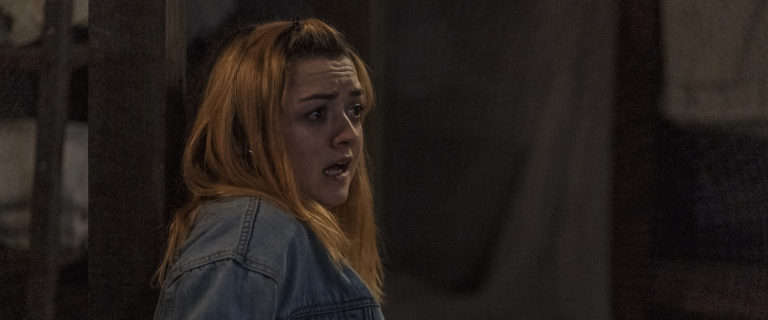
Home invasion thrillers won’t be a popular choice at the moment since they are often too close for comfort, but this latest offering from director Julius Berg and co-writer Mathieu Gompel will do you no harm, as it is really quite silly. The Owners is adapted from the graphic novel ‘Une Nuit de Pleine Lune’ by Hermann and Yves H, and stars Maisie Williams as a wayward teenager caught up in a house robbery, swapping assassinations in Westeros for torturing the elderly in rural England. Not the most obvious of career paths, but you can understand why she’s been chosen to headline this bizarre attempt to subvert an exhausted sub-genre. The poster that has her holding a massive sledgehammer is compelling enough, promises smashing times ahead if only she had swung it against the side of the house and escaped through the hole right at the start. Those hoping to have a good time watching Williams hunt her way out of trouble will be disappointed as The Owners is devoid of tension and thrills, although some peculiar creative choices do ensure this film goes all in with a chaotic, head-scratching third act.

The film makes it clear early on that you can switch your brain off, as its dim-witted trio of men break their way into a house they already have the key for. Nathan (Ian Kenny) leads the pack, boyfriend to Mary (Maisie Williams), trailed by the bumbling Terry, prone to crying and creeping on Mary when Nathan isn’t looking – it’s unpleasant and mind-numbingly boring. Somehow even worse is the manipulative brute Gaz (Jake Curren), a man whose only form of communication is destroying, swearing, or mutilating. Nathan is pathetically spineless as a boyfriend and armed robber, convincing as neither. And while Curren looks the part as Gaz, relishing his lack of humanity and sadistic sense of humor, the acting is so predictable and wooden you never feel like these men could hurt anybody. Even when the knives come out, the violence is dull because no effort has been made to get you emotionally invested. 

Williams is reliably good but even her nimble heroine Mary can’t escape screenwriting crimes, given a lazy a pregnancy plot that goes nowhere and has no place in this film. It shows a naivety in Berg and Gompel’s screenplay, neither writer understanding how to create empathetic characters with interesting things to do. Aside from fitting this sort of genre fare like a leather glove, Williams does thankfully provide a much-needed focal point. Since she is such a naturally energetic performer, the film always feels like it could erupt into something interesting when she’s darting from room to room, scrambling about for the next best thing to a sledgehammer. Best not to get your hopes up too much though, as the screenplay has no idea what to do with her towards the end, fading out with such minimal effort to bring everything together that it’s almost impressive in its ambiguity.

Having said all that, what the film lacks in substance, it finds brief redemption in homeowners Dr. Huggins (Sylvester McCoy), who sneaks about like Bilbo Baggins, and his rather creepy wife Ellen Higgins (Rita Tushingham, the actress making every minute of her screen time count). The two are a welcome respite from the adolescent inertia, both having a fun time with their off-kilter parts. They are rather similar to the lovable cultists in Anything for Jackson, a film that achieves everything this one sets out to do but doesn’t. The biggest absence is a beating heart. Immoral, eccentric characters need a glimmer of warmth. Berg and Gompel get so carried away with their drunken stew of a plot they forget to make any of it matter. If you don’t care about the characters, you aren’t going to be bothered when their severed finger flies across the room. Weirdness for the sake of weirdness is not clever or interesting.

The Owners crashes as a tense thriller, and while it’s all over the place, it’s still more suited as a bonkers horror film. The arrival of the old couple is a cryptic awakening of sorts, for the characters and the film itself, bringing all manner of strange events into play. For instance, a cockroach resurrects itself on the dinner table, the film appearing to have slipped into another dimension. The quirky humor is ramped up, the action intensifies, and the characters become incomprehensibly inconsistent. It may not be successful, but the lighter change in tone is a welcome one. From a purely aesthetic sense, the unburdened frenzy of the third act is more exciting than the boring torture-fest of the first, although each new scenario makes less sense than the one before it.

The Owners is a strange oddity, curiously unhinged but entirely forgettable. Berg’s attempt to spice up the ordinary home invasion horror is adventurous, but sadly none of his and Gompel’s ideas work on screen. Instead, the fun comes from trying to work out what an earth this film is trying to do rather than enjoying the senseless chaos. And this is before the aspect ratio suddenly shrinks itself to half the screen for the entirety of the second half of the film. Why? You decide. It’s honestly difficult to process. It was at least eye-catching, in what is otherwise an absurd misfire.

Grade: D+

Available on Digital Platforms 22nd February and DVD 1st March

Scratching My Hitch: ‘Strangers on a Train’ (1951)

As a self-proclaimed Hitchcock fanatic, I realize there are many films in his filmography I have yet to explore. Hitchcock is my favorite director. One of my favorite things to do is find his continued influence on current directors and films being released in today’s world. This is my journey on becoming a more well-rounded, educated Hitchcock fan.

I have been known for my entire life as someone who “knows no strangers, just friends I haven’t met yet” so I can completely relate to the basis of this narrative. I talk to people in grocery stores, on planes, at the gas station, you name it! I even once went on a date with a guy I met at jury duty. But maybe Hitchcock’s Strangers on a Train (1951) will make me reconsider my willingness to be friendly to strangers.

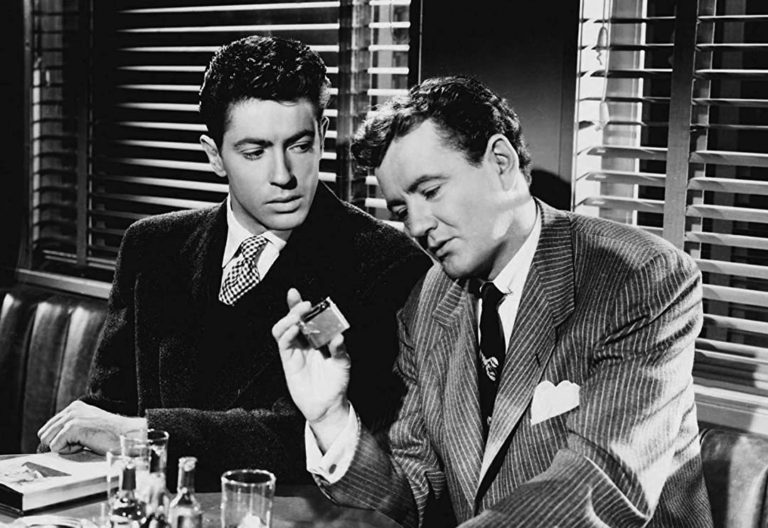
I love Hitchcock’s approach to his narratives. Rather than a “whodunit” type of mystery and thrill, his approach is instead: here is everything you need to know, now sweat while you wait to see what happens. That is exactly what happens to the protagonist, tennis star Guy Haines (Farley Granger) meets Bruno Antony (Robert Walker) on a train after their feet touch accidentally. Then, Bruno realizes he knows this man. Bruno immediately infiltrates Guy’s space, moving closer and asking intrusive questions and creating an uncomfortable conversation. Wouldn’t it be ideal to have two strangers commit a perfect murder? Here is Bruno’s scheme: Bruno kills someone for Guy, and Guy does the same for Bruno. Guy just wants to divorce his unfaithful wife, pregnant with another man’s baby–not to murder her. He wants to cut ties and move on with his life, marrying the woman he is now in love with, Anne, the daughter of a US Senator. Bruno thinks this a foolproof plan: the two have no known connection, so the murders would be random, completed by a stranger of the victim. It is apparent that Guy just wants Bruno to leave him alone, and not taking him seriously, laughs along with the idea of the plan. Strangers on a Train is truly Hitchcockian. By that I mean, we know what happens, who killed who, but we are forced to endure the suspense of what the consequences will be. Who will get the blame? Will the correct murderer be found out, or will he get away with it?

Hitchcock takes full advantage of the camera and accentuates the targeted visuals, perfectly weaving them into the story. He does this in a way that makes the visual important, though the audience doesn’t know necessarily why, yet. I adored how Hitchcock introduces us to the characters through their feet and shoes, essentially what brings them physically to the train. This also ends up being how they meet, when their feet “bump” into each other. The shoes, of course, will later come into play when Bruno attempts to use them as a weapon. But the shoes tell us much more about the characters other than just serving as the avenue for how they meet. Guy’s shoes are one color, solid and plain. He is who he is, simple, and what you see is what you get. Bruno’s shoes, in contrast, are fancy and two colors, which represent his two-sided personality. His shoes are light and dark, which serve as his normal side and dark side of who he is as a person: the person he shows people and the psychopathic murderer he keeps hidden.

I cannot help but remember the use of shoes throughout JoJo Rabbit (2019). Director Taika Waititi perfectly weaves in the visual of Rosie’s (Scarlett Johansson) shoes, and then uses them for full shock value and messaging as a turning point in the film. I would love to think that all talented directors working today were somehow influenced by Hitchcock, and I might be stretching to make this comparison, but it makes sense in my head–so i’m going to stick with it. Either way, whether you see the comparison or not, both directors use the camera and what takes up the screen, something tied directly to a character, to relay the message you need to understand the story. Rosie’s shoes are also two colors; not representing good and evil in the way that Bruno’s do, but representing her double-life. The life she shows her child and the life she keeps hidden away from him.

To bring it back to Hitchcock, though, and Strangers on a Train, Guy continues to play the cat and mouse game with Bruno and the police trying his best to not be blamed for his wife’s murder that Bruno executed solely on his own merit. Good eventually prevails over evil, and Hitchcock has his snarky way of ending the film exactly where he started it. However, this time, Guy is accompanied by his love Anne, and when a stranger attempts to strike up a conversation, they get up and leave. The punch-line Hitchcock serves is clear: don’t talk to strangers.

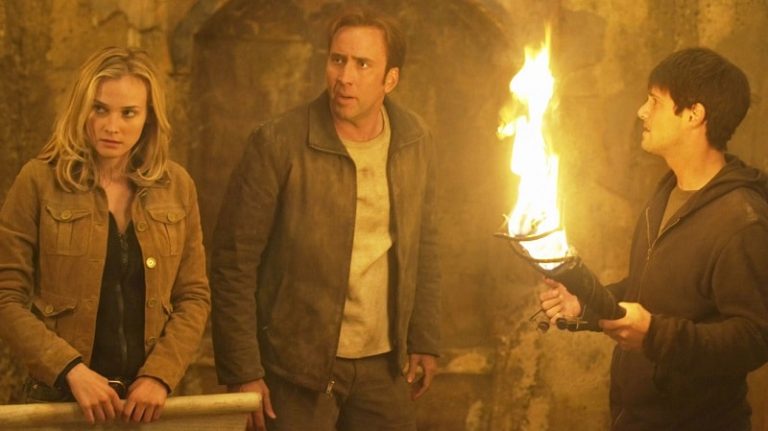
Poll: What is your favorite “archaeology” movie?

Dinosaur bones. A lost city. The Ark of the Covenant. The Declaration of Independence. An undead man wrapped in bandages. These examples merely scratch the surface of the many journeys of archaeologists and adventurers in film. Some of these stories may offer inspiration and authenticity for archaeological scholars, while others might make them cringe at their fantastical absurdity. But it was no matter to us and our lack of archaeological understanding, they still made for fun entertainment that surely inspired all of us in one way or another (if you at 8 years old were to say you never wanted to dig up dinosaur bones for a living, you are probably lying). And with the recent release of The Dig on Netflix (starring Carey Mulligan and Ralph Fiennes), we wanted to relive that fun by digging up some cinematic treasure.

With that said, what is your favorite “archaeology” movie? We realize this is somewhat of a loaded question, as many movies about exploration may only hint at the topic of archaeology.


The Hollywood Foreign Press Association: Kiss Asses Since 1943

By now, we would have already celebrated the Golden Globes as the Oscar race is in full swing. But because of the epidemic, everything has been postponed, and the Globes are now preparing for their annual ceremony in a virtual manner. Better than canceling everything and having two people announce the winners as in 2008. Yet, the Globes are highly watched because of their dual honors for both film and TV. Nicole Kidman described the ceremony as more of a dinner party than an awards show because of its intimate setting at the Beverly Hilton. Yet, for awards watchers like us, we wonder what the 90+ voters from the Hollywood Foreign Press Association (HFPA) will vote for because of their notorious history for who they nominate and who wins.

Starting Years

The founders of the HFPA were a group of overseas reporters based in Los Angeles covering the entertainment world who recognized that there was a large foreign market not being covered and being overlooked. Their predecessors, the Hollywood Association of Foreign Correspondents and the Foreign Press Society, sought to bring more recognition outside of traditional Hollywood functions, and with World War II underway, the newly established Hollywood Foreign Correspondents Association came about. The 1st annual Golden Globe Awards was on January 20th, 1943, at 20th Century Fox Studios, where its film, The Song of Bernadette, won Best Film. 

In 1950, a split in the group led to the formation of the Foreign Press Association of Hollywood, led by Henry Gris and their own awards called the Henriettas. In 1955, the two groups reconciled and rebranded themselves under their current name; that same year, they begin awarding television in conjunction with cinema. Its famous trophy, a golden globe with a strip of film on a platform, came out in its 2nd annual ceremony after the inaugural awards presented scrolls to the winners. Early venues included The Beverly Hills Hotel, Hollywood Roosevelt Hotel, the Ambassador Hotel, and the Ciro Nightclub before finding its permanent home at the Beverly Hilton beginning in 1961.

The Rules And Charity Of The HFPA

https://www.youtube.com/watch?v=72OLf6x1Vgs

Every month, meetings take place in which officers and directors are elected, as well as up to five journalists are admitted to the HFPA every year. All members are accredited by the Motion Picture Association of America (MPAA) and have to show their work to renew their active membership status or else be designated as a non-voter affiliate. Members must live in Southern California, attend four monthly meetings, and publish at least four articles outside of the US yearly. Outside of its voting duties, the HFPA is a nonprofit group that takes in nearly $10 million from its telecast and donates  to various entertainment groups for film restoration projects, scholarships for students, and grants to different organizations.  

We Can Never Be Bribed! (But Thanks For The Trip…)

As the show grew and gained the attention of more studios who wanted their films to compete as a precursor to the Oscars, the HFPA began to get swallowed in controversy on what they vote and nominate for. In 1958, Henry Gris resigned from the HFPA protesting what he saw as favoritism towards certain actors based on close relationships with them, as well as noting how a large number of winners came from one public relations firm. From 1968 to 1974, NBC canceled their contract with the HFPA after TV’s most hated critic, the FCC, said the show was fraudulent. Instead of private ballots, they accused the HFPA of granting votes based on lobbying and informing nominees that showing up would guarantee them a win. Until they were satisfied that the HFPA was having legitimate votes, NBC stayed away from broadcasting the show.

And while there is certainly some ass-kissing and IOUs being given around, there were some votes that were put out there based on gifts. Pia Zadora’s win (for the critically-panned Butterfly) for New Star of the Year in a Motion Picture in 1982 over the likes of Elizabeth McGovern (Ragtime) and Kathleen Turner (Body Heat) clearly indicated the HFPA was bought off when it was learned that Zadora’s husband – multimillionaire Meshulam Riklis – brought the voters to his hotel and casino in Las Vegas for a lavish showing of the film. Vegas made an impact again when another critically-panned film, The Tourist, received three nominations in 2011, including Best Picture – Musical/Comedy, even though it’s a thriller. The film’s distributor, Sony, sent the voters to a lavish showing and a concert by Cher. 

At the same time, there was another “bribe” that came their way, but this time, they returned it. In 2000, distributer USA Films (now Focus Features) sent over luxury watches to the HFPA to promote Sharon Stone’s performance in The Muse. The head of the HFPA at the time got wind of this and ordered the watches be returned, “to protect the integrity of its award.” While Stone did get nominated for her performance, she eventually lost.

So, what do we still make of this group of foreign hotshots? They still don’t know where to place films in either Drama or Musical/Comedy (like The Martian winning) and with Foreign Language Film, their rules really need an update. Just because a good percentage of Minari and The Farewell is not in English doesn’t mean it’s foreign, when the production is American. They sometimes like to award the same person multiple times and sometimes go with random winners no one saw coming; I’m looking at you, Aaron Taylor-Johnson. They go well past their three-hour time slot, which makes the end of the ceremony all crunched up and like to catch winners off guard, like Christine Lahti being in the bathroom or Jacqueline Bisset being a little tipsy. All of this comes from the HFPA and a group that never reaches 100 members, who make their choices the first important award on the road to the Oscars. Whatever the case, this group of foreign journalists get together and make their own contributions to entertainment in ways only the HFPA would do.

Follow me on Twitter: @brian_cine (Cine-A-Man)

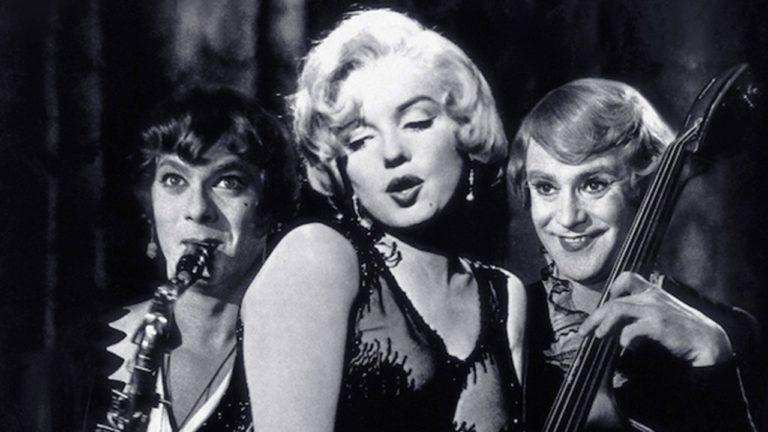
List: Top 3 Undercover Movies

This week on Episode 417 of the InSession Film Podcast, inspired by our review of Judas and the Black Messiah, we discussed our Top 3 undercover movies. For our poll this week, it was about undercover *cop* movies specifically, but for our Top 3 we went more broadly talking about all kinds of undercover scenarios in film. Beyond just police work, we’ve seen many other types of undercover work in film over the years that made this list all the more fun. There is surprisingly a good amount of variety here and we did our best to highlight that in the discussion. That said, here are our lists:

(Note: Please keep in mind that we each had different criteria for our selections)

JD

1) Point Break
2) Some Like It Hot
3) A Scanner Darkly

Jay

1) Some Like It Hot
2) Face/Off
3) 21 Jump Street / 22 Jump Street

Honorable Mentions (Combined)

Foxy Brown, Miami Vice, Donnie Brasco, The Raid 2, The Street With No Name, Eastern Promises, Mrs. Doubtfire, Internal Affairs, The Departed, American Hustle, BlackKklansman, Serpico, Coming 2 America, House of Flying Daggers, Kindergarten Cop, Miss Congeniality, Sister Act, Spy Game, The Fast & Furious, Black Mass

Hopefully you guys enjoyed our lists and if you agree or disagree with us, let us know in the comment section below. As mentioned above, there is a good variety with this topic and perhaps your list is very different than ours. That being said, what would be your Top 3? Leave a comment in the comment section or email us at [email protected].

For the entire podcast, click here or listen below.

For more lists done by the InSession Film crew and other guests, be sure see our Top 3 Movie Lists page.

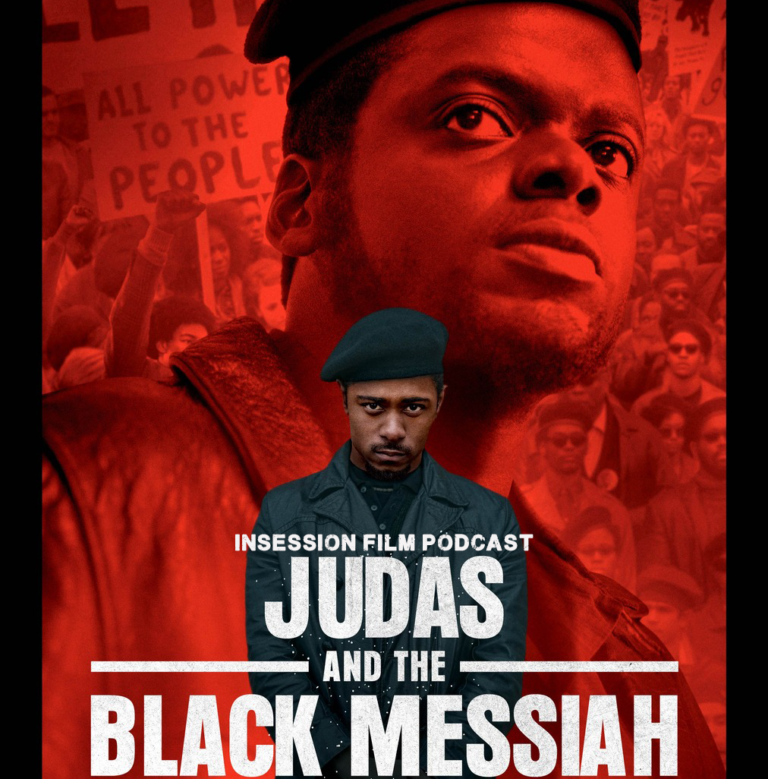
Podcast: Judas and the Black Messiah / Top 3 Undercover Movies – Episode 417

This week’s episode is brought to you by Patreon and our awesome listener’s like you. Sign up today and get early access to all bonus content!

This week on the InSession Film Podcast, we discuss the Shaka King film Judas and the Black Messiah and our Top 3 undercover movies! Plus, Brendan gives his thoughts on Malcolm & Marie while JD reviews the A24 horror film Saint Maud.

After a chaotic last few weeks (again, thanks to Ryan and Jay for stepping up), Brendan and JD were able to get together once again, and just in time for Valentine’s Day. However, it wasn’t all roses and cuddles as there is at least one spirited debate in the episode. Mostly though, we do our best to spread the love on this week’s show.

On that note, check out this week’s show and let us know what you think in the comment section. Thanks for listening and for supporting the InSession Film Podcast!

– Movie Review: Judas and the Black Messiah (5:22)
Director: Shaka King
Writers: Will Berson, Shaka King, Kenneth Lucas, Keith Lucas
Stars: Daniel Kaluuya, LaKeith Stanfield, Jesse Plemons, Dominique Fishback

– Notes / Malcolm & Marie / Saint Maud (47:20)
As noted above, while we spend most of the episode in peace, the Saint Maud conversation did spark a few fireworks. It’s not often that we argue like that, so we relished the moment and had fun with it. Similarly, our discussion on Malcolm & Marie also caused some interesting back and forth. It wasn’t quite as heated, but still differing perspectives nonetheless.

[divider]

RELATED: Listen to Episode 413 of the InSession Film Podcast where we discussed our Top 10 Movies of 2020!

[divider]

Top 3 Undercover Movies (1:27:14)
While our poll this week was about undercover *cop* movies specifically, for our Top 3, we went more broadly talking about all kinds of undercover scenarios in film. Beyond just police work, we’ve seen many other types of undercover work in film over the years that made this list all the more fun. There is surprisingly a good amount of variety here and we did our best to highlight that in the discussion. That said, what would be your top 3?

Top 3 Sponsor: First Time Watchers Podcast

– Music

The Inflated Tear – Mark Isham / Craig Harris
Fight For You – H.E.R.
22 Jump Street – Angel Haze / Ludacris
The Return of the Eagle – Atli Örvarsson

Subscribe to our Podcasts RSS
Subscribe to our Podcasts on iTunes
Listen on Spotify
Listen on Stitcher
InSession Film Podcast – Episode 417

[divider]

Next week on the show:

Review: The Dig
Top 3: TBD

[divider]

Help Support The InSession Film Podcast

If you want to help support us, there are several ways you can help us and we’d absolutely appreciate it. Every penny goes directly back into supporting the show and we are truly honored and grateful. Thanks for your support and for listening to the InSession Film Podcast!

VISIT OUR DONATE PAGE HERE

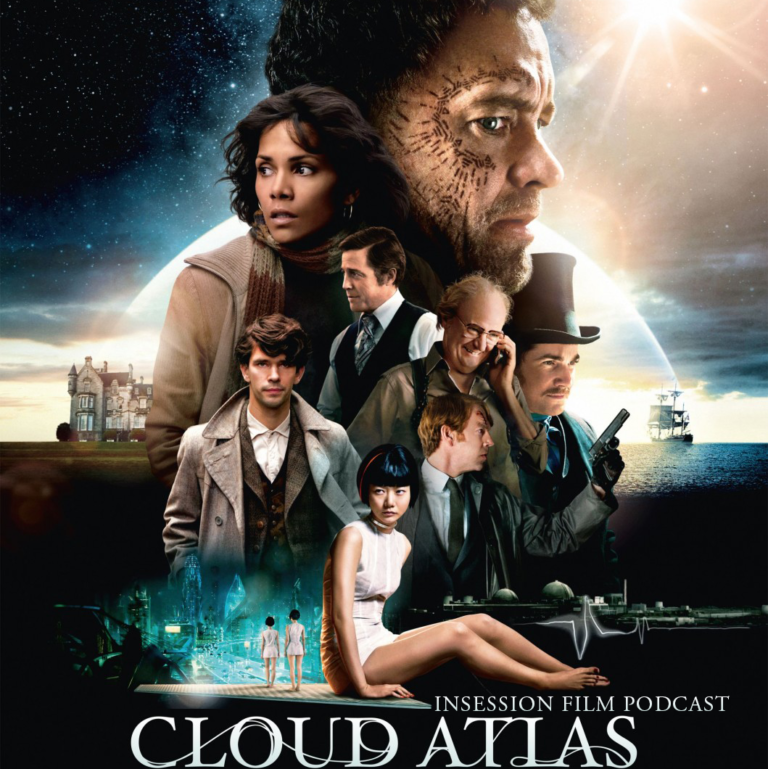
Podcast: Cloud Atlas / The World to Come – Extra Film

On this week’s Extra Film Podcast, following their love fest for Speed Racer, the Extra Film boys take a deep look at the sisters next project, Cloud Atlas. Based on the novel of the same name, the film weaves six narrative stories together to connect people and time as one interlocking story. While Jay and Ryan might not be high on the film, that’s where Kevin comes in to bring balance and present the film as one of the most enriching films in the series so far. Regardless of how you feel about the movie, Ryan, Jay, and Kevin’s conversation was truly a great one and we thank Kevin for coming on the show again!

In the back half of the episode, the guys take a look at the latest indie drama, The World to Come. Showcasing a stellar cast, the film suffers from familiar projects released over the last couple of years and doesn’t speak to the characters on screen or the story at large. This review is on the shorter side, mostly because well, the movie is just fine for the guys and there isn’t much to say about it other than Vanessa Kirby steals the show again.

On that note, thanks for listening and enjoy this week’s Extra Film!

– Movie Review: Cloud Atlas (5:25)
Director: Tom Tykwer, Lana Wachowski, Lilly Wachowski
Screenplay: Tom Tyker, Lana Wachowski, Lilly Wachowski, David Mitchell (novel)
Stars: Tom Hanks, Halle Berry, Hugh Grant

– Movie Review: The World to Come (1:15:09)
Director: Mona Fastvold
Screenplay: Ron Hansen, Jim Shepard
Stars: Katherine Waterston, Vanessa Kirby, Christopher Abbott

– Music

The Cloud Atlas Sextet – Tom Tykwer, Johnny Klimek, Reinhold Heil
The World to Come – Josephine Foster, Daniel Blumberg
The Return of the Eagle – Atli Örvarsson

We try to make this the best movie podcast we possibly can and we hope you enjoy them. Subscribe today on iTunes, Spotify, or Stitcher, and please leave us a review on iTunes. You can also find us on Soundcloud, PlayerFM, and TuneIn Radio as well. We really appreciate all your support of the InSession Film Podcast.

Subscribe to our Podcasts RSS
Subscribe to our Podcasts on iTunes
Listen on Spotify
Listen on Stitcher
Speed Racer / In & Of Itself – Extra Film

[divider]

To hear this Extra Film episode and everything else we do, download our apps on the Amazon Market for Android and the Podcast Source app on IOS devices. The mobile app covers all of our main shows, bonus podcasts and everything else relating to the InSession Film Podcast. Thanks for your wonderful support and for listening to our show. It means the world to us.

Movie Review (Sundance): ‘The Sparks Brothers’ is a Successful Step Into Documentary Direction for Edgar Wright


Director: Edgar Wright

Synopsis: Edgar Wright’s vision brings five decades of invention to life through animations and interviews, digging deeply into the band’s rich, career-spanning archival.

[/info]

When looking at a list of films as large as Sundance was and to fit in as many films as possible in the space of a week, the first place to begin is to look at the directors and talent involved in each film. Whilst a few names stuck out to me, such as Ben Wheatley, none stuck out more than Edgar Wright. Whatever he was directing here, I was putting myself down to check it out. Turned out, it was not his upcoming film Last Night in Soho but his first venture into documentary filmmaking, with what clearly seemed like a passion project of his. Regardless, I was in and ready for the journey.

I will openly admit this, I had never heard of the band Sparks before this documentary. If it was not for Edgar Wright, I would have questioned if the film was made for my demographic and just been for die-hard fans of the band. However, the concept of the film is about introducing this band to new audiences and showing the legacy they had, and this film succeeded in informing me about them and what impact they had in the music industry. Whether you are a huge fan already or have never heard a song, there is something here for everyone.

Within the first fifteen minutes of this documentary, Wright had already added so much style and fun to what could have been a simple documentary. Whilst it has all of the basic elements to make a documentary work such as interviews, archival footage, and an incredible soundtrack to move through the timeline, it is the editorial choices, the fun animations, and Edgar Wright’s voice that makes this more than just a documentary that anyone could make. It has his voice in it just as much as Baby Driver does.

It would have also been simple to only have one main focus of the documentary in terms of Sparks and their career, but instead, it delves way further than that. Spanning their entire career, this film talks about their music, their personas, the need for change in the industry, and their personal lives. No detail is spared with this documentary, and there is bound to be something in here that even the biggest of fans will learn about members Ron and Russell Mael.

The documentary has a lot of fun presenting the Sparks music, not making it feel forced or only as part of the soundtrack. It becomes the driving force of the narrative, moving through different eras and times and having each of the interviewees participate with the music, showing their passion for the band by having them pick out favorite lyrics of their favorite songs from Sparks. Not only that, but Wright once again has fun with the editing by having the lyrics float around the screen, letting the viewer familiarise themselves with it all.

This critique that I make might just be because Sundance gave us a huge catalog of films that were mostly under 100 minutes in terms of runtime, but I question if this documentary had to be over 130 minutes long. For documentaries at the festival to have much bigger stories and more to say in a shorter time, I did not feel like I needed to be invested enough to hear about most of the 25 studio albums that Sparks made in their career. There were things included in the documentary that I simply would have been happy to leave off, as there was no urgency in me rushing off to Google them and listen to more immediately. I almost felt burnt out by how much was given all at once, and I just wish Edgar Wright knew how to hold off and let the viewer seek it out for themselves.

For a debut in the world of documentary filmmaking, Edgar Wright did a wonderful job bringing the legacy of Sparks to life. Being respectful to both newcomers and pre-existing fans of the band, there is something here for everyone whilst also adding his own voice and style to the mix. If the goal of the documentary was to make more people aware of Sparks and to introduce more people to like them, he succeeded in getting me to do so.

Grade: B

Movie Review (Sundance): ‘My Name is Pauli Murray’ Shows a Hero That Deserves More Recognition


Director: Julie Cohen, Betsy West
Writers: Talleah Bridges McMahon, Julie Cohen, Cinque Northern

Synopsis: A look at the life and ideas of Pauli Murray, a non-binary Black lawyer, activist, and poet who influenced both Ruth Bader Ginsburg and Thurgood Marshall.

[/info]

It is something that I am not proud to admit, but I was not aware of who Pauli Murray was before watching this film. I knew what sort of documentary I was getting myself into since the directors have previously worked on the Oscar-nominated RBG (2018), but I was interested to learn about the life of Murray and the work that they did decades ago. Safe to say, I was blown away by what I saw.

It is clear that Murray left behind a legacy from all of the work they did inside of the system. However, the most shocking thing that is presented by the documentary is about how few people knew about them. This is not like Ruth Bader Ginsburg, someone in the public eye that many would recognize and identify the progress she helped make in the US. Pauli Murray never fully got credit for the work that they did, and I hope many people get to learn the incredible stuff that they did do in shaping North America to be the way that it currently is to this day.

The documentary has a clear structure to it, making it extremely easy to follow. There are clear messages, some wonderful interview sequences, and follows the timeline of Murray’s life chronologically, speaking about many different issues. None of the issues felt unimportant to the story either, as each individual piece of information feels vital to Murray’s personal life and the years of power they did have to make a difference in the community. It really helped give someone like me who knew nothing about them a chance to learn and take all the information in, without ever feeling overwhelmed.

The primary issue that will stand out has to deal with racism. We have all heard numerous stories about the struggles that black people faced for decades in the US, and of people like Martin Luther King Jr. and Rosa Parks. However, it is clear from this documentary that is still so much more to learn as the story of Pauli Murray needs to be told more. The documentary presents the idea that American school systems need to improve their teachings of black history to the students, and the arguments for that are extremely compelling.

That is not the only form of representation that is given in this documentary, as this film also highlights the LGBTQ+ community and their need for equality. Whilst I am disappointed that so few people referred to Pauli Murray as they/them (with one particular interviewee pointing out that they believe Murray would have chosen those terms in this day and age), I am glad that the film is open about Murray’s beliefs and how she was a pioneer for the community back when it was deemed inappropriate. It makes you wonder how Murray would feel seeing the community today and the progress, albeit slow, that is being made to accept those in the community.

If there was something I would point out about this documentary, it is that it is incredibly short for the subject matter. Clocking in at a short 91 minutes, there is so much packed in there that some subject matters are only skimmed by. If this film was given room to breathe and allowed another 30 minutes to further expand on a few of the ideas and the impact that Murray has on today, it would have made for an even stronger documentary.

The main goal of a documentary is to inform, and that is exactly what My Name is Pauli Murray does. This is a person that deserves more recognition for everything that they did, and I can only hope that this documentary will help get their name out in the public more. You will certainly be on Google for hours after watching this one, and I could not recommend it any more than that.

Grade: A-