Home Blog Page 197

Podcast: 2021 SAG Nominations – Chasing the Gold Ep. 31

On Episode 31 of Chasing the Gold, Ryan is joined by Kevin Jacobsen of And the Runner Up Is and Joey Gentile from Academy Queens to discuss the 2021 SAG Nominations!

We’ve hit the first guild nominations of the 2021 Oscar season. While SAG doesn’t guarantee someone a nomination, actors do make up the largest branch of the Academy. And with this being the last batch of nominations for almost a month, Ryan, Kevin and Joey breakdown what they see here and what they think matters when it comes to the race as it stands. While Ryan and Kevin we more down the middle with their proclamations, Joey’s takes, backed by reasonable conclusions, seem to be swing for the fences, leaving him extremely right or sadly wrong when nominations come out in March. With that said, it lended to a fascinating conversation and one of the best of this Oscar season so far.

On that note, have fun with this week’s Chasing the Gold, and let us know what you think in the comment section below. Thanks for listening!

– Music

The Return of the Eagle – Atli Örvarsson

We try to make this the best movie podcast we possibly can and we hope you enjoy them. Subscribe today on iTunes, Spotify, or Stitcher, and please leave us a review on iTunes. You can also find us on Soundcloud, PlayerFM, and TuneIn Radio as well. We really appreciate all your support of the InSession Film Podcast.

Subscribe to our Podcasts RSS
Subscribe to our Podcasts on iTunes
Listen on Spotify
Listen on Stitcher
2021 SAG Nominations – Chasing the Gold Ep. 31

[divider]

Mobile App

To hear this Extra Film episode and everything else we do, download our apps on the Amazon Market for Android and the Podcast Box app on IOS devices. The mobile app covers all of our main shows, bonus podcast’s and everything else relating to the InSession Film Podcast. Thanks for your wonderful support and listening to our show. It means the world to us!

[divider]

Help Support The InSession Film Podcast

If you want to help support us, we would greatly appreciate it! For more info, CLICK HERE.

Movie Review: Jordan Graham’s Extraordinary Horror Film ‘Sator’ is an Occult Stunner


Director: Jordan Graham
Writers: Jordan Graham
Stars: Michael Daniel, Rachel Johnson, Aurora Lowe, Gabriel Nicholson, June Peterson

Synopsis: Secluded in a desolate forest, a broken family is observed by the demon Sator who is attempting to claim them.

[/info]

Inspired by true events concerning his grandmother and the supernatural entity she believed she conjured in the Summer of 1968, Jordan Graham has spent the last seven years directing, writing, and producing an astonishing personal project that is so scary it feels dangerous even writing about it. Graham spent months filming in remote cabins and his grandmother’s home – who also appears in the film during home video flashbacks – with only one or two actors, made all the more impressive considering how much of the film doesn’t rely on dialogue. It may have taken him seven years, but Graham hasn’t wasted a day. Thrillingly new, genuinely unsettling, Sator manifests an atmosphere so convincing it pours out from the screen and into your bones.

Almost entirely contained in an isolated forest and single house, this slow-burn horror shares its DNA with the likes of The Witch and Hereditary, and the murky mysteries of The Blair Witch Project and Lake Mungo. Sator feels like the best of those worlds. It has the ingenuity of the found footage format when this style felt fresh – although the implementation here is far more imaginative – and the rural physicality of a film like The Witch. But Sator is entirely its own menacing creation, and Graham his own incredible talent. The creature work is good too – of what there is anyway. But Graham impresses the most with his command of space and tension. The environments feel so aggressively tangible and unknown, that the supernatural elements remain, for the most part, frighteningly grounded. It wavers a little when a woman is invisibly air-lifted into the trees, but your shoulders are so tense at this point it’s hard to question it all – all you want to do is run in the other direction.

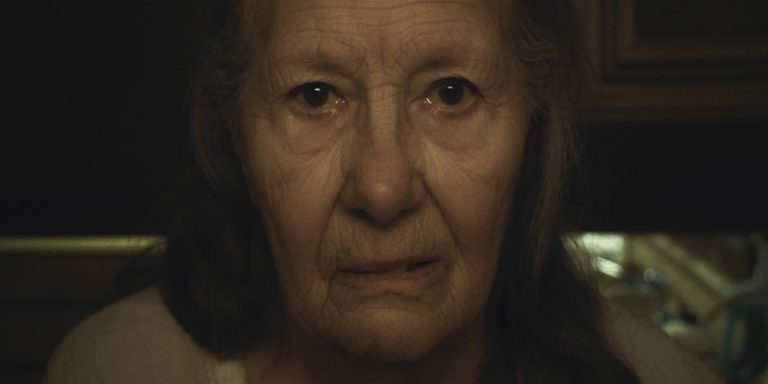
The story is the weakest element of the film, but it feels minor when you can’t keep track of the last time you breathed. And there is a case to be made that Sator loses steam the further along it goes, but the first hour is, at least, really special. A brilliant opening black and white prologue feels like footage resurrected from an ancient crypt, shot in grainy 4:3 ratio. An old woman scribbles messages on the paper in front of her, which you then realize are the title credits and production companies. It’s the first sign of the director blending truth and fiction, and this beginning already shows that Graham is as keen to play with the medium as he is in using it to scare us senseless. As we’re shown a bizarre ritual, oppressive whispering drips in from the corners of the screen. We’re hearing the same tormented chant that plagues the characters in the film, and it rarely lets up, fusing both the idea of an infectious mental illness and a terrible haunting. You’d be hard-pressed to find a more compelling opening sequence. One slight issue is that this opening aspect ratio is quite ridiculous on a small screen, so the biggest screen you can find is a must for the best experience. Graham dabbles with various film formats as Sator drifts between tragic documentary and arthouse horror. It’s one of several compelling creative choices that make this a difficult film to unpick on first viewing but an easy one to recommend because it’s so exciting in execution.

The intro, disappointingly, is pretty insignificant and unrelated to the rest of the film. As soon it ends, the camera stretches across the screen, color seeps into the film, albeit a constant mush of green and browns and flickering flames in the darkness, with the occasional stunning wintry shot of the encroaching wilderness. We’re introduced to Adam (Gabriel Nicholson) who strings about a dozen sentences together in total, which means Nicholson’s performance depends on his physical presence and ability to look afraid and frightening. To his credit, Nicholson does everything required, although the script doesn’t allow much room for movement. Adam has been unofficially banished to the remote woodland because he can’t get over the demonic chanting in his head, whispers that have sent his grandmother into psychiatric care, and his mother missing or dead. His cabin is rigged with an old computer that brings up the security cameras lining the perimeter of his home. What does Adam see? It’s unclear, but you can feel something staring back.

The idea of generational trauma and mental illness is a running theme, as is the inability to separate mental trauma from physical threats. It’s long been tied to the genre, and horror itself as something unknowable, untreatable, dating back hundreds of years to when people would have been imprisoned for displaying mental fragility. And while this stems from Graham’s investment in the film – his grandmother is literally embedded into the plot – the director is far more comfortable conjuring a sense of unease from the environment rather than showing it through his characters. Adam’s family, which also includes his estranged brother and sister, has been stalked in the shadows for decades by an unseen entity that goes by the name of Sator. It’s not obvious what it wants, only that it’s bad news if it likes you. Not the most original of ideas, but the power of this film is in the permeating dread conveyed from beginning to end, and the ability of Graham to translate that into a foreboding nightmare.

Something as innocuous as a makeshift whistle screeching in the desolate mountains feels chilling, even though there has been no indication to suggest that it should be. The simple fact that it is, tells you all you need to know about the talent behind the camera. Graham’s soundscape is smartly contained to earthy, physical things, like snapping twigs and creaking floorboards; there’s no dramatic score drowning out whatever evil is happening on screen. The phenomenal sound design does so much of the heavy lifting needed to cement this metaphysical horror into bone-chilling reality. When somebody approaches Adam’s cabin door in the middle of the night, you definitely know about it.

It’s not all excellent, that would be too much to ask from Graham’s seven-year project. He isn’t immune to cliches of the genre either. A wild dog turns up in the first act only to violently snarl a day later and subsequently disappear by the midway point. The lack of a narrative focus reveals the film’s budget, with filler scenes spliced into the script to support the shallow substance. It makes it feel longer and slower than it is, although I didn’t mind this. Sator also loses its grip whenever it focuses on any of the characters. Neither the supporting cast have much to do, only there to give the film a sense of danger, which only works in creating a surface-level fear because it’s difficult to care about any of these characters since you’re given so little. If weak characterization and story is a deal-breaker, and it often is, Sator is likely to frustrate. Certain aspects late in the film are trickier to accept than one would’ve liked, particularly the ending, which is too hazy and the explosion of violence too far away from the film’s atmosphere to create a lasting impact in the way that it should have been. For all its dizzying early promise, Sator peters out rather than flashing to an emphatic halt. Fortunately, Graham is so assured everywhere else, and his film so visually and audibly stimulating, that it overshadows any flaws.

Accept the film on its strange, brilliantly unnerving terms, and you’ll find it slipping into your dreams. Any horror fan should be scrambling to see this as soon as they can.

Grade: A

Movie Review: ‘Rams’ gets an Australian Makeover in Jeremy Sins’ Charming Drama about Two Feuding Sheep Farmers


Director: Jeremy Sims
Writers: Jules Duncan
Stars: Sam Neill, Miranda Richardson, Asher Keddie

Synopsis: Two estranged brothers must set aside their differences when a rare and lethal illness threatens their respective flocks of sheep in Western Australia.

[/info]

In 2015, Icelandic director Grímur Hákonarson struck a chord with his bleak comedy-drama Rams. A festival hit, this icy film about two estranged brothers and their flock of endangered sheep enraptured hearts with its delicate touch of tragedy and glimmer of comedy. Forward fast to the present and Australian director Jeremy Sins has more or less reimagined the film with everything in tack, swapping the chilly Icelandic landscape for the beautiful, blazing scenery of Mount Barker, Western Australia. As such, it makes for a much warmer film, both in its cinematography and central performances from Aussie treasures Sam Neill and Michael Caton as the two feuding sheep farmers. If you’ve been unfortunate enough to see any of the promotional material for the film, its bland profile shots would have painted a knock-off, slapstick comedy in your mind, which couldn’t be further from the truth. There’s a lot to like here and it’s far more interesting you’d think. Sins’ balance of humour and drama make for a pleasant, surprisingly tender film about community, masculinity, and the brutal reality of life alongside bushland prone to catching fire. Releasing it now, in the wake of Australia’s ongoing bushfire crisis, will no doubt strike a similar emotional chord with viewers that Hákonarson achieved with his stark original.

Colin (Neil) and Les (Caton) begin the film competing in a prized annual competition for best ram, their relationship quickly established through seething scowls and written notes passed between the two with a little help from an adorable, precious Border Collie – when the centrepiece bushfire comes, dog lovers will be the first to sweat. There’s a subtle moment early on that sees Colin pause at his brother’s door, concealed in shadow, too reluctant to cross the threshold and make contact with his older brother, who also bears an explosive grudge and succumbs to alcoholism. Neill is right at home as the softer of the two brothers, his trademark short, snappy grunts and easy shoulders make for a very likeable lead and constant warm presence. The veteran actor also finds room to explore a surprising amount of buried grief and vulnerability in what is otherwise a run-of-the-mill gruff loner, good guy role. Meanwhile, Caton plays an isolated Les to the point of engulfing resentment, trapped in a cycle of self-destruction, only able to engage with his brother through angry rants, or a shotgun blast through the window. He’s often comatose in the scorching heat, burned dangerously to a crisp, but Caton’s helpless stumble and weary eyes draw you in, regardless of Les’ shrapnel temperament.

While it’s billed as a comedy, it doesn’t really feel like one. For one thing, it’s quite a long film, clocking in at two hours, and it has the sleepy pace to match it too. Don’t’ confuse this with slow or boring, as Rams is neither, but it does have its own quirky rhythm that takes adjusting to. A lot of the humour is baked into the background, mostly found in the way Jules Duncan’s script handles everyday encounters. Everybody in this film, at some point, ends up dropping their lines and thoughts mid-sentence, which makes the initial tone of Rams a little awkward. Fortunately, you do settle in, and those scattershot interactions become more natural and charming. It brings this small rural community to life. It’s aided by Sins’ attention to rustic farming details, a host of colourful supporting characters (a half-baked love interest (Miranda Richardson) and slithery health department official (Leon Ford) to highlight two) and Steve Arnold’s picturesque cinematography of remote Western Australia, both in its natural tranquil beauty and the eventual depiction of hellish fires sweeping across the horizon, staining the sky red. The time spent with Rams is always visually and emotionally engaging, even when the plot dips into Sunday afternoon melodrama.

The big plot drive in Rams, which remains the same as the Icelandic original, is an outbreak of Ovine Johne’s Disease (OJD) a highly infectious and deadly disease to sheep, which health authorities declare an emergency, enforcing every sheep in the valley be destroyed. It’s a crushing blow to the community, especially the two brothers who have inherited their family farm and history – for Colin and Les, there is no life beyond their livestock. This lifestyle, and an entire industry, is also embedded into the conflict that has split the brothers apart for 40 years. It’s rammed home further every time Colin charmingly talks to his sheep, “You’re beautiful, and you’re beautiful, and you’re beautiful.” If you’ve seen and liked any of Sam Neill’s daily Instagram videos, you’ll find much to enjoy here. The sheep are as much a pet as the Border Collie trained to herd them. Crucially, they have a lot of character in the film, and many of the laughs come from watching Colin navigate them through his house, which he transforms into a makeshift secret barn to hide them away from authorities.

The catastrophic bushfire that careens the film into a different, altogether more threatening direction, while emphatically filmed, also doubles as an insight into what Australians deal with amidst the very real and present danger of climate change. Since Rams is generally a light affair, the lingering shot of a scorched Kangaroo completely darkens the tone and grounds it in an unshakable reality.

At two hours, Rams threatens to overstay its welcome and not all of its expected plot points come off. The attempted love interest from the on-scene vet, Kat (Richardson), half works in that Richardson and Neill have good chemistry, although Colin and Kat’s attraction is never really pushed and feels ultimately pointless and forgettable. Colin is too much of a recluse to allow anybody close, even if he wants to – the script makes a limp attempt to tackle this in a brief moment of emotional breakdown from Colin, but any impact this has is simply abandoned in the next scene. It’s not a deal-breaker, the only connection that matters is Colin and Les as the down-beaten brothers attempting to repair their livelihood and fractured relationship. Neill and Caton complement each other terrifically, their fiery partnership sells the entire film.

Grade: B

https://www.youtube.com/watch?v=ek4lJ7ZtdOs

Movie Review: ‘Bliss’ has Big Ideas But Comes Up Empty


Director: Mike Cahill
Writers: Mike Cahill
Stars: Owen Wison, Salma Hayek

Synopsis: An unhappy man meets a mysterious woman, who tells him that the world around him is a simulation.

[/info]

When I saw that a new film starring Owen Wilson and Salma Hayek was arriving on Amazon Prime this weekend, I assumed it was a new romantic comedy and did not think much of it. Then I discovered that it was a new science fiction film from a director familiar with the genre, Mike Cahill, and I was intrigued. Perhaps this was an opportunity for these actors, especially Wilson, to step outside their comfort zones. And while that certainly might be the case, it fails to reach the heights that its ambitious premise seeks. 

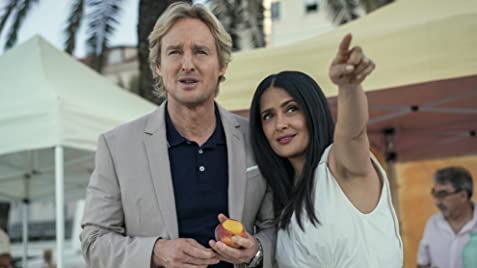
Bliss is the story of Greg Wittle (Wilson), an unhappy man who is estranged from his family and draws sketches of his dream house at work, rather than fulfilling his responsibilities. This leads to him being fired, and in a brief fit of anger, he accidentally kills his boss. He tries to take on a dizzying escape, which results in him meeting the mysterious Isabel (Hayek) in a bar. She reveals that she has powers akin to telekinesis, granted to her by colorful crystals she takes like a drug. She convinces Greg that she can help him be cleared of his crime and introduces him to her chaotic world. 

Isabel explains that her powers are not just a result of the crystals but are representative of the fact that they are living in a simulation. She convinces Greg that most of the people they encounter on a daily basis are not real and that the crystals are the key to entering and exiting this world. If this already sounds complicated, keep in mind that it only gets more twisted and convoluted going forward. This is where the problems with the film begin and end. 

In this film, it’s not enough to have a complex premise that seemingly pairs The Matrix with Limitless. Cahill feels the need to take it further and further, creating questions and turns up until the film ends. At one point, this does result in some intriguing ideas, and the film introduces visuals to set the tone for the story. The world that we are first introduced to is bleak, impoverished, and shot in cold, dark cinematography. When we enter a more ideal world, this is replaced by bright warm colors. It’s an interesting tactic that would have been a neat addition to a more grounded film. 

After an hour plus of questioning, we are finally given some answers to the mystery that Isabel brings to Greg’s world. The solutions presented are conjoined with themes of environmentalism and wealth inequality that began to make me wonder if this film was going to dive deep into some of these areas in an innovative fashion. Unfortunately, the film abandons this to shift gears and become an action film to lead us into the dramatic ending. It’s an unnecessary change that comes at exactly the wrong time.

The shift in genre and pace is accented by a shift in ideology as well. Rather than take on the various themes that are already introduced, the film resorts to a classist concept in the vein of, “Why have it good when you can experience the mystery and unpredictability of a cruel life?” While we try to grapple with this theme, we are also subjected to constant plot exposition that sends the film in circles. Just when we can get our bearings on one development, another is thrown in the loop. This would not be an issue if the film reached a satisfying conclusion, or if the developments actually felt logical. 

Despite all of the tonal and narrative stumbles, the question remains of whether the star power of Wilson and Hayek can save the film. Wilson applies his normal schtick here without the comedy to support it, and we’re hardly given time to get a true understanding of his character. Hayek is certainly the most admirable aspect of the film, as she does deliver the variances necessary for a character that is difficult to pin down. Still, it’s not enough to make most of the scenes in the film coherent or particularly interesting. There is a scene between the two in an ideal world, having an intellectual but calm conversation. The film could’ve used more of these light moments, rather than being so gloomy for the majority of the runtime.

The title of this film refers not just to a feeling, but the steps we take to find that feeling. It seeks to ask hard questions about where bliss comes from, but it employs empty characters to explore that. All in all, the film is really quite depressing, and it’s so easy to get lost in all of the explanations when we are given so few moments to breathe. The initial concept is fascinating, but the film turns away from the aspects that progress that fascination. Though a cameo from Bill Nye certainly brought a brief smile to my face, the film overall left me with the opposite of bliss. 


Grade: D

Op-Ed: AFI’s 100 Years…100 Passions – ‘Dirty Dancing’ (#93)

I will be watching and reviewing all of the films included on AFI’s 100 Years…100 Passions list. The list contains the 100 greatest love stories in American cinema and I plan to consider how our views on romance and social issues have changed over the years as well as judge whether the romances in these films actually made me swoon. As a fan of the romance genre, I expect to love each and every one of the nominees but I also don’t know if I would consider all of them romantic.

Dirty Dancing (1987) was partly based on the girlhood of screenwriter Eleanor Bergstein. It is most engaging when it is dealing with a youth who is maturing into womanhood and the nostalgia that adults in the 1980s had for the supposedly idyllic 1960s. It wants to be about a specific era in which adults were buttoned up and conservative while their children were being opened up to a sexual revolution which gave women more freedom and the prospect of escaping from their stuffy, middle-class backgrounds. All of this would have been perfectly nice and I could have smiled at a story told by a slightly older, wiser woman who is recognizing the fact that the one summer she spent at a Catskills resort was bittersweet but essential in her progression into adulthood. Unfortunately, it feels the need to weigh itself down with bland love interest and his career struggles, a mishandled abortion subplot that adds a vague air of pretension to the proceedings, and a couple of unbelievable plot contrivances. I can’t deny the fact that certain scenes have a visceral power to thrill and excite but Dirty Dancing doesn’t even approach reaching its full potential.

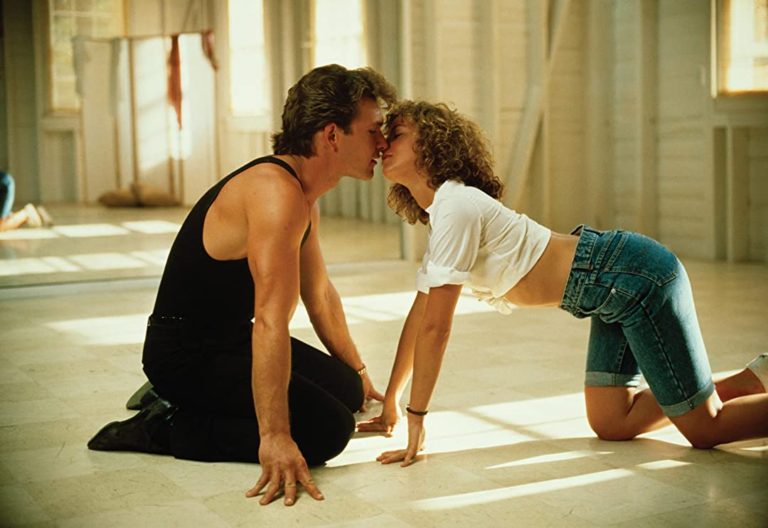
The film concerns teenager Frances “Baby” Houseman, Jennifer Grey, who travels with her wealthy parents to the Kellerman’s resort in the Catskills for a summer holiday. She meets professional dancer Johnny Castle, Patrick Swayze, and quickly falls for him but their budding attraction is threatened by his prostitution as he regularly sleeps with wealthy married women for money. When Castle’s friend Penny Johnson, Cynthia Rhodes, becomes pregnant and needs an abortion Houseman brings her doctor father Jake, Jerry Orbach, to help save her from dying of her botched abortion and he comes to believe that Castle impregnated Johnson. This makes Houseman’s affair with him illicit as the two both have other responsibilities and do not want their friends and family members to know about their bond. They break up after she reveals her relationship with him to save him from being fired but he ends up getting fired anyway and is so angered by this that he leaves. He later returns and the two dance together in front of all of the guests at the resort.

Houseman herself is a real problem as she feels like an adult’s idea of a teenager and not an insecure, awkward adolescent who is uncomfortable in her own skin. Grey was seen as slightly more kooky and offbeat, even though she was very beautiful than her Hollywood contemporaries because of her famous nose, and in casting her, the producers were seemingly trying to send the message that Houseman is ‘different’ to most girls. She is introduced to us as a sheltered little rich girl who is bewildered by the prospect of having to step away from the influence of her family. It doesn’t communicate either of these details in a very subtle manner and that was a real problem. Grey gives Houseman a whimpering, breathy voice that makes her sound like a baby and the way that she looks away whenever anybody directly stares at her, lets you know that she’s nervous and withdrawn. Her worries about having control over her own life are also handled poorly as we see her practically shaking every time she is asked to do something alone.

Her family members also feel like broad archetypes as her father is a wealthy businessman who talks about the ‘poors’ in a condescending manner and he seems to have little interest in actually listening to his daughter, he just wants her to fall into line. All of these little traits could have been developed further and the screenplay could have made original observations about the difficulties that fathers can have in connecting to their daughters. One way in which the film tries to flesh out his character is by touching on the fact that he is classist even though he faces prejudice himself as a Jew. The owner of the resort is a friend of his and that gives him a privileged position but anti-Semitism was still common in the United States during this period and we begin to wonder whether the Housemans would be ostracized at resorts that primarily cater to WASPs.

Image result for Dirty Dancing

If the film dealt with the fear that Jews were still forced to feel, it might have been legitimately radical and it would have been uncomfortable to watch a man who has been built up as an all powerful patriarch being rendered helpless in the face of horrific racism. This would have displayed the fact that this prejudice impacted Jews in all socioeconomic positions and hammered home the message that while the 1960s were a time of increasing freedom for women, they were still an era in which a lot of groups were oppressed. Occasionally we hear discussions of Jewish identity and the importance that Max Kellerman, the owner of the resort, places on having Jewish guests but I kept feeling like this was an issue that the film could have explored in more depth.

I touch on a social issue because it feels like the film does want to target the sweeping changes that were occurring in America at this time. It tries to deal with the mistreatment of women through the abortion subplot but that gets sidelined at so many points and it feels like it is only in there to shock audiences. The film is far more interested in making Houseman look good because she supports Johnson throughout this ordeal and is brave when she goes to her father and gets him to handle her injuries. It also feels like the abortion is used as an excuse to turn Houseman’s romance with Castle into something forbidden. Before this point, their relationship is ‘dirty’ because he’s older than her, presents himself as a bad boy, serves as a gigolo and sees her as an innocent virgin who is too good for him. The abortion plot contrivance means that Houseman’s mean father suddenly wants to keep his daughter away from Castle because of a misunderstanding. We end up missing the ostensible point of this subplot and it becomes difficult to tolerate the creakiness of the plot mechanics.

The central romance itself is also an issue as it ends up feeling like a distraction from the coming of age tale that I had signed up for. Castle is pure fantasy as he is a gigolo with a heart of gold who melts for a meek lass who is curiously lacking in any vitality or ebullience. I must confess to not being attracted to Swayze, something about the shape of his face is off-putting, and that is what stops me from going all gooey when he appears on screen. I suspect that a lot of people who are attracted to him were able to overlook the fact that his performance is subpar and Castle is a collection of clichés. I get that the idea of a ‘dangerous’ older man is appealing to a lot of young girls because they seem so different to the immature, dopey boys who mill about in their high school and they are able to experiment with walking on the wild side by being with somebody who is engrained in a perilous lifestyle. I can understand this basic concept and the formula has worked in everything from classics of gothic literature to Taylor Swift pop songs but it doesn’t quite work here. I think I would have found Castle more interesting if the film itself hadn’t asked us to take Houseman’s perspective on him. She is innocent and you can see why she stares at him in awe and is amazed by his daring dance moves but I felt like we were also viewing this story through the eyes of her older self as she reminisces on the past. Surely her older self would be a woman who could see all of the ways in which Castle was a ne’er do well rather than seeing him as somebody to be idolized. If her affection for him had been mixed in with a bit of pity and shame over how besotted she was with him, it would have been easier to swallow all of the clichés.

In general, I wished that I had felt more of a sense of nostalgia and reflection throughout this film. Adult Houseman should have been more of a presence in the room and the contrast between the perspective of her adult self and her youthful self could have been juxtaposed in order to comment on the way that your adolescence will always loom large in your mind. I didn’t want wall to wall voice-over narration in which Jessica Tandy took on the role of the older Houseman but if the screenplay could have subtly conveyed the fact that this story was told through older Houseman’s eyes it would have added whole new dimensions to a tale that has been told many times.

Image result for Dirty Dancing

Where I felt that the story did work was in the brief snatches in which Houseman and Castle train for their final dance together and in the performance itself. We get a fairly lengthy training montage, a quintessential element of any 1980s hit, in which we see the two leads trying their hardest to pull of the big move. That infamous lift has been parodied many times and we all like imagining how horrible it would be if our partner dropped us on the floor and we landed headfirst. Dirty Dancing is smart enough not to treat the dance with grave seriousness and Houseman can laugh and blush as she tiptoes along the top of a log. There is real energy in these scenes as Swayze, a highly skilled dancer seems far more comfortable showing off his hoofing skills than delivering dialogue, and Grey displays a freshness that is absent in other scenes. Their excitement is infectious and when they dip into the water the film even becomes rather erotic. Suddenly you are immersed in the location as you can feel the buzz that people experience at the end of a long day in which they feel that they have accomplished something and have all the energy in the world as they push ahead in achieving their ultimate goal. When they are waist-deep in the water of the river and appear to be all alone, you can’t help but crave the intimacy that they are experiencing in this moment. They are surrounded by wooded hills and grass lawns but there isn’t the fear of being caught by your parents or being judged for getting too close. They could do whatever they want and that is a tantalizing prospect. As I describe this, it all sounds terribly cheesy and unexceptional but the film does work its magic on you in these few minutes.

The final dance is so much better than anything else in the film and I suspect that it is what turned this into a global phenomenon. There is a similar crackling energy in this scene as there are no longer any boundaries when it comes to what they can do and they are also acting like exhibitionists at this point as Houseman is deliberately throwing her naughtiness in her parents’ face. The song “I’ve Had the Time of My Life” was a huge hit and you can see why it received so much radio airplay in 1987, it’s catchy and it reflects the general tone of the film. It actually manages to communicate more than the script and the first two acts of the film as it adopts a wistful tone and is all about somebody who knows they have experienced something wonderful but is already regretting the fact that they have moved beyond that point in time. On one level, it is about sex and the desire that the characters feel but it is also about the way that euphoric bliss can fade and nostalgia can take its place. There is something painful about the fact that none of us can just live in the moment as we all know that happiness can’t last and you don’t know how you will remember these fleeting moments of joy in the future. This dance is one of those experiences that adult Houseman would treasure as it was a time when she proved that she was independent and didn’t need to follow her father’s orders.

The use of locations is another virtue that Dirty Dancing has on its side as you do come to feel at home in the resort and regret the fact that establishments like this disappeared. There is a hominess to the wood-paneled walls and the small rooms that force families to stay in close quarters. This resort straddles the line between being luxurious and having a ramshackle charm and you start to realize that it has degraded in quality over the years. Houseman becomes more familiar with the little nooks and crannies in the location as time goes on and we start to feel affection for the little meadows that she dances in or the room in which the waiters are instructed on how to treat their clients. This is a sprawling establishment and there are also opportunities for the randy, carefree teens to make a getaway and head out to the woods where their parents can’t track them down. A vague feeling of rebellion is in the air but there is also a warmth to the resort that insists that everybody has to reconcile with their family members at the end of the summer and have a conversation with their mother that will leave them in tears. I kind of wanted to visit Kellerman’s and I don’t often say that about locations in movies.

This relationship has to end with the two of them breaking up as they can’t possibly stay together. She will end up going to a fancy university and will probably become a respected author or a Greenpeace activist. I suspect that Castle will continue to be a ne’er do well and when his looks fade he will find it more difficult to endear himself to rich women. He might end up settling down as a janitor at the resort and he’ll live out his days happily but I think Houseman has more potential than he does. She will fondly recall him as her first love but then move on to a rich older man who vaguely resembles her father and they will have a marriage that resembles a business arrangement more than a loving relationship. You can predict their futures as you watch this film and maybe that is a sign that the characters are better written than I thought they were.

Image result for Dirty Dancing

So, should Dirty Dancing have made the list? I can’t say that it should have. As explained, it has its virtues but those are not enough to overcome the major shortcomings. There is a pretty good movie buried in here but the director was more concerned with getting gratuitous shots of a half-naked Swayze than capturing the protagonist pondering the options that have been laid out in front of her. I preferred it as a coming of age tale and when it tried to become an erotic drama, I became a little bit bored. Swayze doesn’t do nearly enough to support the idea that he is a real romantic lead and his weaknesses as an actor are on full show here. I am surprised that it was ranked so low because it enjoys a reputation as one of the unimpeachable classics of the 1980s. Sure, it’s campy, and serious film aficionados turn their noses up at it but AFI voters were into the dross that was Love Story (1970) so they aren’t above rewarding trashy but popular entertainment. Maybe it ranked so low because it was too recent to fully enter into the echelon of the greats but I feel like it would have cracked the top 50 if this list had been compiled more recently.

Next week I will be writing about the incomparable The Lady Eve (1941). Preston Sturges was widely recognized as a genius in his time but we don’t seem to talk about him enough today. I am excited to discuss whether ear pulling is sexy, allusions to sex in the Biblical sense, and the abundance of snake references that Henry Fonda casually throws out. I feel as this might be one of the best movies I have ever reviewed for this website but we’ll just have to wait and see. I worry that I might end up disliking it upon viewing it again and pushing myself to write an extended review of it.

Movie Review (Sundance): ‘Together Together’ is a Sweet Story With Some Important Messages


Director: Nikole Beckwith
Writers: Nikole Beckwith
Stars: Ed Helms, Patti Harrison, Rosalind Chao

Synopsis: When young loner Anna is hired as the surrogate for Matt, a single man in his 40s, the two strangers come to realize this unexpected relationship will quickly challenge their perceptions of connection, boundaries and the particulars of love.

[/info]

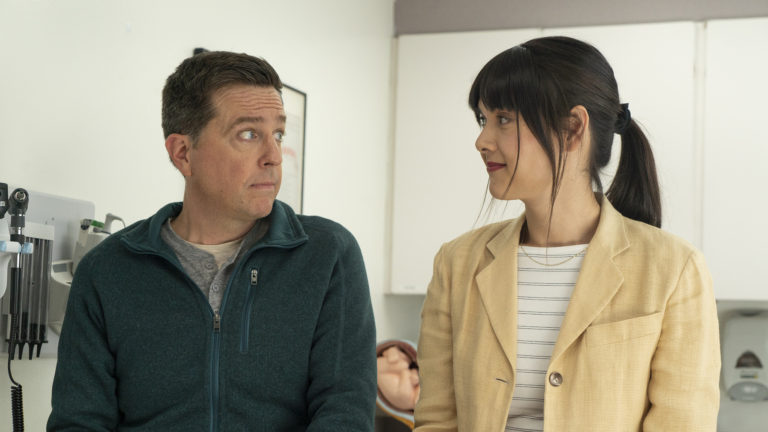
This film primarily works because of the two leads. Both well casted, Ed Helms and Patti Harrison give performances that on the surface look simple, but actually balance out well. It could be easy to over-perform here, but what is sweet is how their friendship naturally develops over the film. Their chemistry is believable, and part of that is down to seeing the journey from start to end. The audience is given time to understand the situation, get to know the feelings of both individual characters, and then see them work through any issues together in a way that is endearing to watch, but also reasoned and cleverly done through the script.

It is important that a story like this has humor within it because it could have been a dry watch that would have had no personal connection to the story. Having these awkward but fun moments help communicate some great messages not only help make the film enjoyable to watch but also helps make the situation feel more real. A lot of the jokes also land extremely well, both from the writing and the performances from Helms and Harrison.

This is a story that I have surprisingly not seen many people cover in this sort of medium. Whilst many stories have recently focused on the struggles of maternity and being a single mother, it is nice to see this twist in watching having a man want to have a child and to be a single dad, preparing for fatherhood. It is empowering to watch and also lends itself to some great commentary on the pressures of being a single father and the surrogate process.

This is very much a capsule story, one that is contained within its own bubble. There is a clear focus to this story and it does not want to take any focus away from our leading couple. For a film like this, it is extremely effective and does not need further distractions to be engaging for the full runtime. This is a story that is necessary to be told, as it is done so realistically and there will be people watching who either want to consider the surrogate process or to see a de-stigmatization of single parenthood. The story is incredibly impactful, even when it delves into the comedy.

There are a few nit-picks that I do have with the film. Firstly, there is one side character who works at the coffee shop alongside Harrison’s character who I struggled to care about. Considering how realistic the rest of the film feels tonally in the world-building and character development, the coffee shop worker felt like he belonged in a different film altogether. The tone was trying to be humorous with him, but just came across as a parody and anytime the film went back to the coffee shop, I just wanted straight out and to be back focusing on our leading two characters.

I also, unfortunately, found the final twenty minutes to be completely rushed. So many great ideas and messages are presented within this final part of the film that are sadly skimmed over to get to the conclusion. The final shots, whilst powerful and intentional, feel abrupt and leaves the audience feeling disconnected after warming to these characters. Despite how simple the story is, I really could have done with an extra fifteen minutes at the end to let these ideas develop and to make an even bigger impact.

I commend director and writer Nikole Beckwith for telling this story and making it feel as authentic as she did. The narrative flows naturally as we are presented with characters that are easy to warm to, situations that we may not have considered before and a perspective that is important to look at in terms of parenthood. Whilst also being a fun and entertaining film that many will enjoy, I hope people leave this film with a new view and respect for surrogates and parents-to-be.

Grade: B+

Movie Review (Sundance): ‘Marvelous and the Black Hole’ Can’t Decide on a Tone or Target Audience


Director: Kate Tsang
Writers: Kate Tsang
Stars: Miya Cech, Rhea Perlman, Leonardo Nam

Synopsis: A teenage delinquent teams up with a surly children’s party magician to navigate her dysfunctional family and inner demons.

[/info]

This is a film that has all the right pieces to work on paper. Whilst the premise can feel like one that is overdone, it has a strong message connected to the core of it and something that many people can relate to. As a coming-of-age tale, this is one that does have development and delves into the subject more than just the teenager growing up. It also has a fun aspect to the narrative, throwing in magic to the plot and using that as a means of escape for our main character, both physically and emotionally.

The film does not get everything right in terms of the filmmaking or editing, but there are some great ideas hidden within here. The film takes liberty of having fun with the images inside out lead character Sammy’s head, whether these are ideas that are brought to life showing her true thoughts on her family, or incorporating a bit of fun with the magic. When the film has black-and-white footage and goes within the fantasy, that is when the film is at its best.

It also has two solid leading performances from Rhea Perlman and newcomer Miya Cech, who is incredibly engaging and has a bright future ahead of her. They not only give great performances separately, but when they come together as well. Their relationship as young girl Sammy (Cech) and magician Margot (Perlman) is captivating, especially when we get to follow their journey and see them grow.

However much I liked their performances though, I struggled to connect with any of the characters in the film. Some of the characters, particularly the rest of Sammy’s family, felt one-dimensional and only really were written to push the narrative forward. Even if I understood the reasons why Sammy was so distant and disconnected from her family, I still found it difficult to actually like her as a person. The only character I actually found myself liking as a person was Sammy’s sister, Patricia, but even she fell into some stereotypes with her character.

There is a storyline that is introduced at the start of the film regarding Sammy being enrolled into a business class. Firstly, the induction of this class and the comparison of her to the other students feels out of place immediately, considering the age gap. However, I really liked the idea of her learning the tricks of running a business and having her grow that way – something that is briefly used in one part of the film. However, this narrative is not the main focus and I wish the film did more with this throughout.

My main issue with this film comes with the tone. In terms of the narrative and the child-like approach to the magic in the film, this plays out like a standard coming-of-age story that would potentially be seen as a Disney Channel Original Movie. I almost wish it continued to go down that route, as it would have made for a fun movie with a suitable target audience and been a film that young children could look up to. However, some of the ideas within this film do seem to be a bit mature, from the amount of swearing our lead character does, the idea of her marking herself with hand-done tattoos, and the over-the-top visual gore presented through her dream sequences – something I love but that messes with the tone of the film. Whilst these are strong ideas, I am not sure if they work for the rest of this movie and what target audience I would have otherwise suggested this film for.

With a few tweaks, there is a strong movie in here. I just wish that some of the writing didn’t feel as flat and that there was a strong demographic group for the film. I’m not convinced that I would be able to recommend this for children given the more mature moments within it, and I am also not sure I could recommend the film to adults due to the simplicity of the story and how the tone can come across as childish in aspects.

Grade: C

Podcast: Sundance Film Festival 2021 – Patreon Bonus Content

Listen!

For our latest Patreon Bonus Content, for our latest bonus content, JD sits down with Alessandra Rangel and Sarah Cortinaz to discuss the 2021 Sundance Film Festival and their favorite films from the fest!

If you’re already a Patreon supporter, you can listen to this episode NOW on Patreon by clicking here.

Sign up today to get early access and hear the entire episode!

[divider]

HELP SUPPORT THE SHOW

To hear our bonus content episodes early, subscribe now on Patreon. In many cases, though, we offer our bonus content for free after a certain period of time and we do encourage (and very much appreciate) a small donation of $0.99 as a way to help support the show if signing up on Patreon isn’t for you. Click on the PayPal button below to donate and thanks so much for your support. You can also hear much of our Bonus Content via our mobile apps. See the information at the bottom of the post for more details.


One-Time Donation


[divider]

Mobile Apps!

Listen to all of our bonus content on our apps for just a one-time fee! Whether you have an iPhone, Android or Windows phone, our apps are available in many different ways that is convenient for you. With our mobile app, not only can you listen to all of our bonus content, but our main shows and our Extra Film podcasts as well. Click here for more info!

If you don’t want to purchase our bonus content, but still want to support us, there are other you can help us out. Click here for more info.

Movie Review (Sundance): ‘Mayday’ Successfully Subverts the Damsel in Distress Trope


Director: Karen Cinorre
Writers: Karen Cinorre
Stars: Grace Van Patten, Mia Goth, Havana Rose Liu, Soko, Théodore Pellerin, Juliette Lewis

Synopsis: After a short circuit at her workplace mysteriously transports her to an alternate world, Ana meets a crew of female soldiers caught in an endless war. Under the leadership of Marsha, Ana trains as a sharpshooter, but soon senses she may not be the ruthless killer they expect.

[/info]

In Mayday, writer/director Karen Cinorre creates an original and magical feminist story in which a very masculine topic such as war is subverted in a way that becomes feminine propelled by a feminist agenda. Furthermore, the typical male virtues are exploited and used against the men of the story.

Mary. Alpha. Yankee. Delta. Alpha. Yankee. These are the words that Ana (Grace Van Patten) starts hearing randomly in the middle of a terrible day. After having to spend the night in her car and to deal with an abusive boss, Ana is just trying to survive her shift as a waitress in a party hall. When an electrical storm starts, a short circuit magically transports her to an alternate reality.

Here, she finds herself on an island inhabited by women who are in the middle of a war against an all-male army. It does not matter to which side these men belong because “they are all on the same side, regardless of the uniform.”

Ana soon becomes part of the female army and trains to become a sharpshooter. She is constantly motivated by Marsha (Mia Goth), the leader of the group. Bea (Havana Rose Liu), a sweet and sensitive girl is in charge of tracking the weather, and Gert (Soko), a pragmatic and mature woman, rounds up the effective regiment.

On this island, they use the elements as their strength to attract men towards them and towards death. Mary. Alpha. Yankee. Delta. Alpha. Yankee. MAYDAY. They play the roles of women in distress, appealing to the chivalrous complex of the men in uniform to save them. “They like their girls softer. Less authority.” Marsha advises Ana as she is learning the game. Gallantry is the weapon for male annihilation.

All of the girls seem to have tragic stories in their past – related to men – although they have almost forgotten their previous lives. Ana, in contrast, has vivid memories and a recurring dream of driving in a long tunnel with no ending on sight. Sometimes a man is there to torment her.

One of the most satisfying aspects of the film is the dialogue, which patiently embraces its awareness of the female experience. More importantly, it presents two different points – that rapidly confront each other – about the feminist struggle. Marsha is ruthless and fierce. She is radical and never hesitates in her mission. Ana, in contrast, although great at her new job, is conflicted about their methods and the extremity of their actions. Soon their relationship evolves into one of suspicion and distrust. While the rest of the women are comfortable in this idyllic feminine paradise, Ana longs for the life she left behind, even with all of its flaws.

Mia Goth’s Marsha may be the most interesting character of them all. As interpreted by Goth, this woman is unapologetic in her intensity. Extremely insensible to her enemies, Goth gets to say some of the best lines of the movie that echo in our ears as Ana tries to absorb them too: “Girls are better off dead because now we’re free” or “You’ve been in a war your whole life you just didn’t know it” are some of my favorites.

The sharpness of the script would feel shallow in less committed lips than the ones of Goth and Van Patten. With lines that work perfectly to propel the conscious awakening of Ana inside this fantasy world, Marsha is the vital impulse for Ana’s radicalization. Nevertheless, Marsha’s intensity may be too strong for someone as blank and doubtful as the new recruiter.

Although the story weakens in parts – it does not succeed in maintaining our undivided attention – its style and ideas are refreshing and revolutionary. The cinematography in charge of Sam Levy offers an ethereal tone to the island. The costumes by Ola Staszko are appealing and practical; something that women in a war would actually use, à la Birds of Prey. Many of the ideas feel otherworldly and innovative, leaving us in doubt of if what we are seeing is reality or fantasy.

The reality of what we see on screen is never fully clear. The decisions and doubts that surround Ana are the weakest aspects of the movie. The aggressive feminism that is present throughout its duration feels threatened by Ana’s moderation. Nevertheless, the movie offers two prominent points of view, and some clever musings about being a woman in today’s world, that make it a fun and inspiring entry in the feminist catalog.

Grade: B

Op-Ed: #52FilmsByWomen – Private Life (2018) is So True it Hurts and Heals in Equal Parts

For the year 2021, I have set a goal to watch #52FilmsByWomen. I found 2020 to be an exceptionally incredible year for women filmmakers, amid the crazy global pandemic their films were often pushed to the front of the line without big theater blockbusters taking all the limelight. I will watch one film per week made by a woman, all films I have never seen before, both old and a few fairly recent releases sprinkled in, as well. I look forward to expanding my knowledge of women filmmakers and their work, and hopefully bring a new light and following to a severely under-appreciated part of cinema.

Yea–not to brag, but I’m at that age. You know, the age when you finally feel stable and successful in your career, established and grounded as a person, like you really know yourself. Oh no, I’m sorry, I am actually a 30-year old WOMAN, so I am at the age where people are expecting me to have children soon, regardless of anything else that is going on in my life. A lot of my friends are trying to get pregnant, or are already have their first or second child.  Cheers to them! I love babies and kids, but wow, I cannot imagine that in my personal life right now. Women deal with unrealistic expectations all the time. We spend so much of our lives making sure we don’t get pregnant until the time is “right” (is there ever a right time to bring a life into this insane world?) and even when the time is “right”, I have realized, it does not happen so effortlessly. I have friends who have had multiple miscarriages, stillbirths, who have struggled to get pregnant, who have spent thousands and thousands of dollars on IVF and other procedures to help them conceive a child. I’ve had friends who have had to come to the realization that they will never get pregnant. I’ve had friends consider adoption or visiting the sperm bank because they don’t have much “biological time” left. I have seen and heard it all, truly. I have held friends as they literally cry into my arms because they want a baby so, so bad. I just keep telling them: “it will happen,” because I truly believe in optimism and I deeply want a pregnancy to happen for them. But, at the same time I can’t help but wonder, to myself of course, “what if it doesn’t happen?”–for them, or me, or the random woman I pass in the grocery store. Then what?

In the year where many pregnancy, birthing, and abortion stories were told, Pieces of a Woman, Never Rarely Sometimes Always, and Unpregnant, to name my favorites, I decided to go back to 2018 to watch the Netflix original: Private Life. I found this film not because of any of the above reasons, but because of Kathryn Hahn. Twitter was buzzing about her because of the gem of a lady that she is, and I saw a tweet praising this film and discussing how underseen and underappreciated it was and still is; I looked it up, and when I saw that it was directed by Tamara Jenkins, I added it to my list in addition to her 2007 film, The Savages.

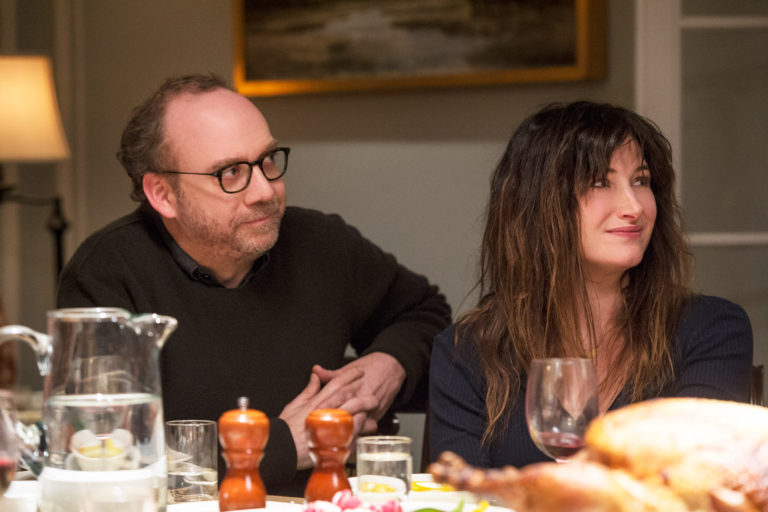
Private Life exceeded my expectations.  I was eager to see Hahn in a leading role and she absolutely smashes it. This is a film I will recommend to everyone for a long time. I loved this story, it’s characters, its delivery and its unwavering commitment to the theme. When you think you have the narrative figured out and where it’s going, Tamara Jenkins challenges your perceptions. The film opens and the audience is introduced to Rachel (Kathryn Hahn) and Richard (Paul Giamatii) directly in the thick of it. Not mid-intercourse, no, Richard is about to give Rachel a hormone injection to help their reproductive intentions. I appreciate the way Jenkins presents this opening scene, though. Rachel is almost sexualized until the reality of the needle stabs all of us into reality. We immediately understand they are struggling to conceive, and having sex sometimes just is not enough. The two travel to multiple doctors visits and sit in over crowded waiting rooms full of extremely exhausted people.  As the narrative continues, there is a special way that the representation of a ticking clock is embodied; a continuous tapping of a stained-glass ornament of a pregnant woman bangs against the window of the waiting room, reminding us over and over again how time is running out for them to get pregnant. The brutality of this process is so real and honest and Rachel and Richard’s reactions and emotions are relatable and true. 

Then we are introduced to Sadie (Kayli Carter), Rachel and Richard’s free-spirited step-niece, we, of course, think have it figured out. Sadie is a struggling–she calls her sister and mom to tell them so. At first, I assumed Sadie might be pregnant. She will save the day and Rachel and Richard can adopt her baby! No. That’s not it. And I am glad, because after I thought about it, that would be really awkward. Sadie could be their surrogate! No. That’s not it either. This is all speculation and an attempt to solve the narrative, I recognized this in myself, so I decided to sit back and just let it play out. Sadie decides to drop out of college and knows she can crash with her cool Aunt Rachel and fun Uncle Richard’s place in the city until she figures out her next steps. 

At the same time all of this is happening with Sadie, and after much discourse with their current attempts, Rachel and Richard consider other avenues to have a child. Then their doctor makes a suggestion that changes everything. A third-party egg donation could be an option. Rachel could still carry and birth the baby–but it would just be someone else’s egg with Richard’s sperm. When they decide to ask Sadie if she would donate the egg for them, what happens is again, not at all what you think the story has led you to assume. Again, though, this is what makes this film so special. It is rooted in truth. Nothing is ever easy, and especially not fertility. 

As we watch this couple center their entire relationship and existence around the premise of pregnancy, I laughed out loud, cried, and felt scared, let down, hurt, and then, by the end, I felt all warm and tingly inside. The chemistry of the entire cast is fun to witness, Molly Shannon and John Caroll Lynch play Sadie’s parents, and honestly have some of my favorite moments in the film. Jenkins’ direction will grip you from the beginning, throughout, and to the end. I cannot wait to continue to recommend this movie to everyone I know, childless or otherwise.

Grade: A

Poll: What is your favorite undercover cop movie?

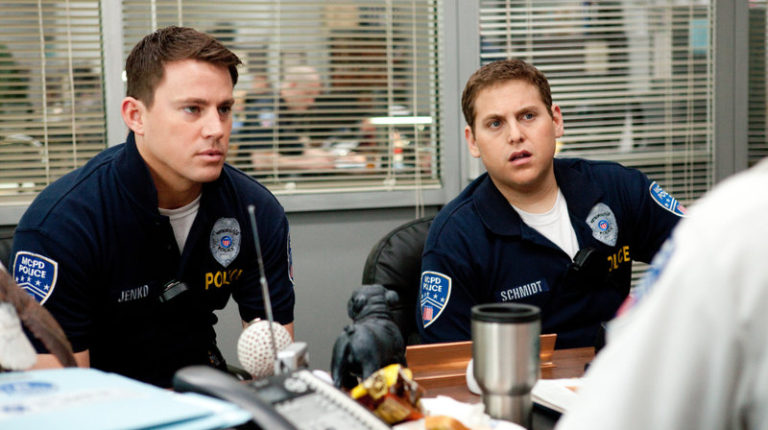
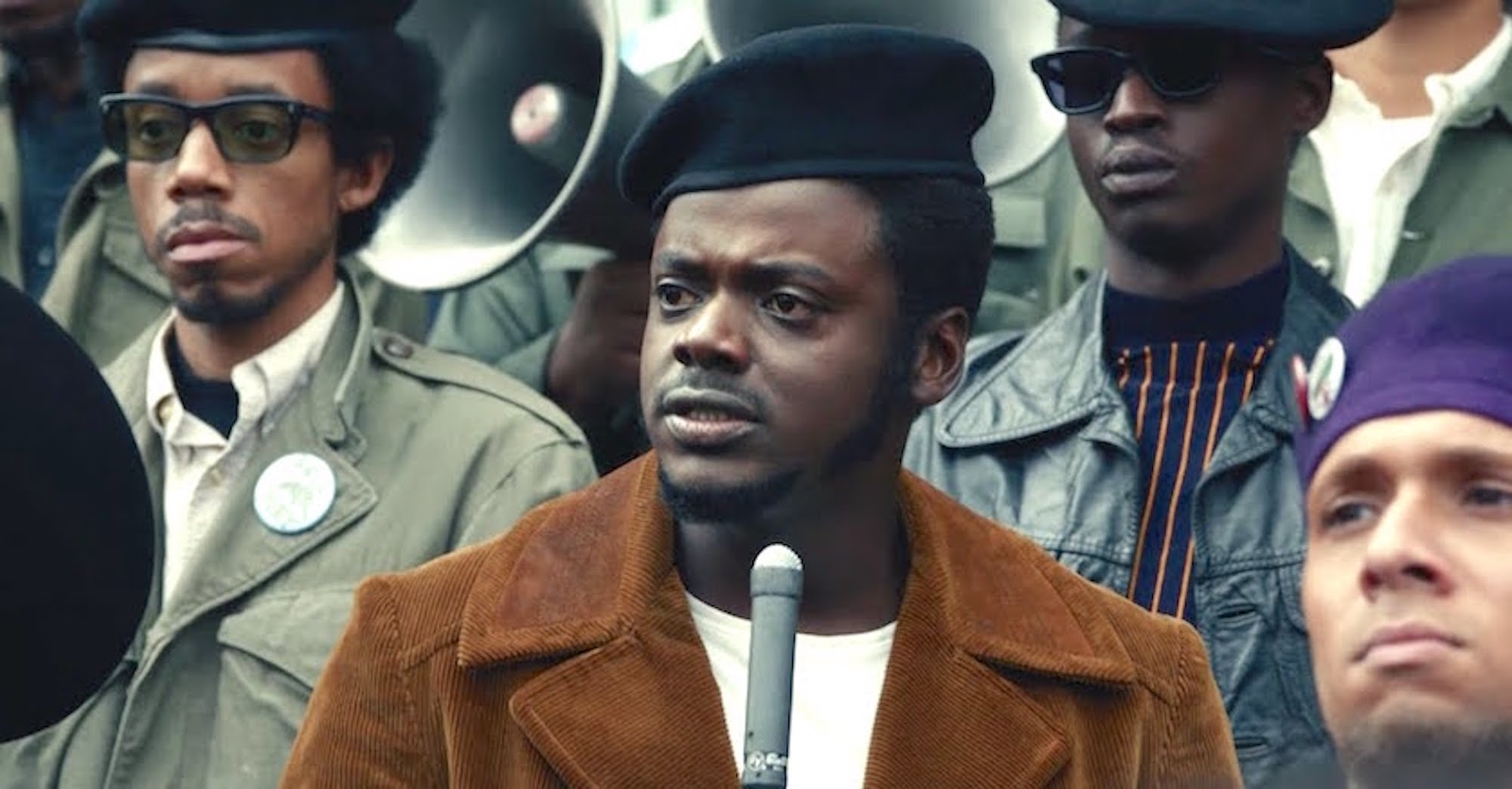
Infiltration is the name of the game. Whether it the South Boston Irish mob, a group of thieves, high school, or kindergarten, cinema has given us many stories about undercover cops and FBI agents infiltrating various territories. Some of these movies are action packed, others hilarious, and others topically and tragically true, but they all have one thing in common – they are thrilling as hell. Inspired by the new release of Shaka King’s Judas and the Black Messiah, which tells the true story of FBI agent William O’Neal infiltrating the Illinois chapter of the Black Panther Party and its chairman Fred Hampton, this felt like the perfect opportunity to celebrate this incredible collection of cops and robbers.

With that said, what is your favorite undercover cop movie? We realize the term undercover “cop” is a bit loose, as we are also including FBI informants and detectives within the mix.


List: Top 3 Two-Character Movies

This week on Episode 416 of the InSession Film Podcast, inspired by our review of Malcolm & Marie, we discussed our Top 3 two-character movies. This was honestly one of the more difficult topics we’ve done yet for this segment. There are some great two-character movies, but it’s not as deep a field if we’re limiting it to strictly two characters. So, we did loosen up the criteria a little bit to focus on movies that may feature a few other characters, as long as it was *mostly* focused on those two central characters. That said, here are our lists:

(Note: Please keep in mind that we each had different criteria for our selections)

JD

1) Locke
2) Hiroshima mon Amour
3) The Trip

Jay

1) Wendy & Lucy
2) Duel
3) Misery

Honorable Mentions (Combined)

Before Sunrise, Before Sunset, The Road, Life of Pi, Planes Trains & Automobiles, The Trip to Greece, The Trip to Spain, Old Joy, Hard Candy, Gravity, Moon, The Red Turtle, Columbus, Prince Avalanche, Leave No Trace

Hopefully you guys enjoyed our lists and if you agree or disagree with us, let us know in the comment section below. As mentioned above, this may be somewhat of a limited topic, but it’s still very possible that your list is very different than ours. That being said, what would be your Top 3? Leave a comment in the comment section or email us at [email protected].

For the entire podcast, click here or listen below.

For more lists done by the InSession Film crew and other guests, be sure see our Top 3 Movie Lists page.

Criterion Crunch Time: ‘Klute’

Sometimes, when going through a service like the Criterion Channel, there are lessons to be learned (when it comes to your movie watching). And this is a great joy, as many of us are stuck in our ways and have our own unwritten rules about cinema. However, I guarantee you that for every single trope, stylistic choice, or “mistake” that you despise or have been told should never happen, has an exception that proves that rule. There are movies that break the mold and use these accepted errors to great affect. As a prime example, one movie that is sadly leaving the streaming service at the end of this month is Alan J. Pakula’s Klute

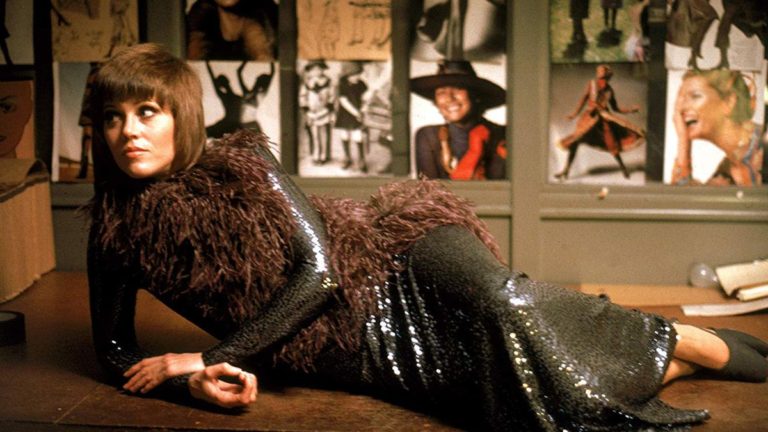
Although Pakula is probably better known for the political intrigue classic All The President’s Men, this film deserves attention, as well. For those not in the know, Klute follows a sometimes call girl, Bree Daniels (Jane Fonda, in perhaps her best performance) after a man disappears following the sending of obscene letters to her. This puts private detective John Klute (Donald Sutherland) in her path to find out the not so simple truth. 

I could go on and on, as I have in previous columns, about the ways in which this film subverts genre; as it is a mystery, a character study, and a romance. But I became much more interested in Fonda’s portrayal and how Pakula takes advantage of this, both visually and narratively. Now, a fair amount of credit for the visual style should go to cinematographer Gordon Willis, affectionately known as “The Prince of Darkness.” I can think of a fair amount of cinematographers who could take lessons from him regarding how to use gradations of black to their advantage. Additionally, in the mystery/thriller component, Pakula takes advantage of silence like few other directors have managed. It is so masterful, that the very normal sound of a phone ringing is liable to make you jump in your seat. 

But back to literally the star of the show. Fonda, despite coming off of a stunning performance in They Shoot Horses, Don’t They?, was probably most well known for Barbarella. Additionally, she was just coming in to her own as an out and proud feminist and had concerns about portraying a sex worker and how that would fit in with her own beliefs. And regardless of whether it is the writing, direction, or purely her decision making as an actor, Fonda grips this role and wrings fantastic work from it. A lot has been made of her introduction, involving having sex with a client and faking her orgasms, all white eyeing her watch from behind his head. And for good reason! Especially for 1971, this simple choice is downright revolutionary. Despite the romantic angle later in the film, she point blank tells Klute that she never has an orgasm with a “john.” She also details the amount of control that the performance of sex gives her, but she doesn’t tell this directly to Klute. And this brings us to the rule breaking notion of Klute.

Anyone who has watched their fair share of movies has heard the phrase “Show, don’t tell.” In general, I agree with this notion. It is usually tedious to hear characters discuss things that feel unnatural, rather than processing this through actions and realistic dialogue. But again, there are exceptions. Bree is, by necessity, a private person. Practically everything she does in her life as a call girl is pure performance. And it should be noted that her dream profession is that of an actress. This is, of course, no coincidence, as both of these roles play to her strengths. But that leaves us distant from her, which is a problem. The name of the film is a bit of a misdirect. In some ways, John Klute drives some action, but Bree really is the protagonist. So how do we reach her?

The film offers a deceptively simple solution. Bree is in therapy, and from time to time we are privy to these conversations, which offer a great deal of depth. The therapist rarely speaks, so it is nearly unfiltered Bree. The audience is never given much of a backstory on our protagonist, and yet, through these relatively short glimpses, we know her better than most. The duality of Bree becomes evident, especially when discussing the beginnings of her possible relationship with Klute. Fonda states both assurity that Klute cares about her and that she becomes noticeably angry when she is treated well by him. Given the life she is leading, it is understandable, but not an easy thing to portray, particularly only through voiceover. She mostly refuses to show him this anger, except in the presence of her pimp, Frank (Roy Scheider). 

But the line reading that sticks with me most is the following. “What I would really like to do is be faceless and bodiless. And be left alone.” I cannot imagine a more powerful piece of dialogue for a character like Bree. The world stares at her. She performs in nearly every public aspect of her life. And yet, or maybe because of this, her greatest desire could be to not be seen. Imagine the pressure that would be relieved if she could simply live without that judgment, that lack of power. Despite the fact that Klute cares for her, he is a part of that world. Yes, Klute is with her at the end of the film, but there is no surety that this relationship will continue. The ending is purposefully ambiguous, but I have hard time believing that this is a relationship that will have a standard, ride off into the sunset kind of finish. They have both challenged each other’s notions of love, but that could truly be the point. Sometimes, it is enough to be changed for the better and move on. 

In cinema, thankfully, there are no absolutes and no easy answers. Sure, there are generalities but a great film, especially with a transcendent performance, can take those rules and tear them into a million pieces. For viewers who think they have a handle on Pakula as a filmmaker or Fonda as an actress and haven’t seen Klute, this is an absolute must-watch. And frankly, anyone who wants a great example of 1970’s possible paranoia, Klute should be a priority to see before it leaves the service at the end of the month.

We will back in a few weeks with Lucrecia Martel’s Zama!

Podcast: Malcolm & Marie / Top 3 Two-Character Movies – Episode 416

This week’s episode is brought to you by the film Greenland. We have digital codes to give away, follow us on social media to get yours!

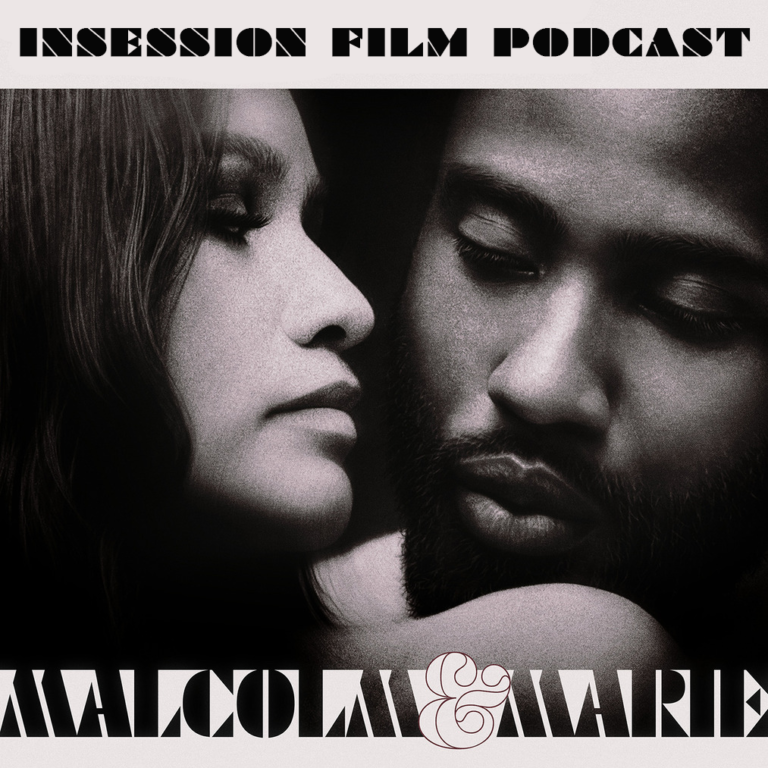
This week on the InSession Film Podcast, the great Kolby Mac joins us to review Sam Levinson’s polarized film Malcolm & Marie and we also discuss our Top 3 two-character movies!

As you’ll hear at the very top of the episode, this week was a bit of a cluster due to some technical errors we experienced on our first recording. A big thanks to Jay Ledbetter for filling in for Brendan this week, however our initial review of Malcolm & Marie had to be cut due to those aforementioned issues, so while Jay was on for the Top 3, our own Ryan McQuade stepped in to do the review. Simply, we had to do some musical chairs with the co-hosting duties on this episode. But it was fun and we hope you enjoy all the chaos as we did.

On that note, check out this week’s show and let us know what you think in the comment section. Thanks for listening and for supporting the InSession Film Podcast!

– Movie Review: Malcolm & Marie (6:16)
Director: Sam Levinson
Writers: Sam Levinson
Stars: John David Washington, Zendaya

– Notes / The Matrix Revolutions / The Dig (1:23:21)
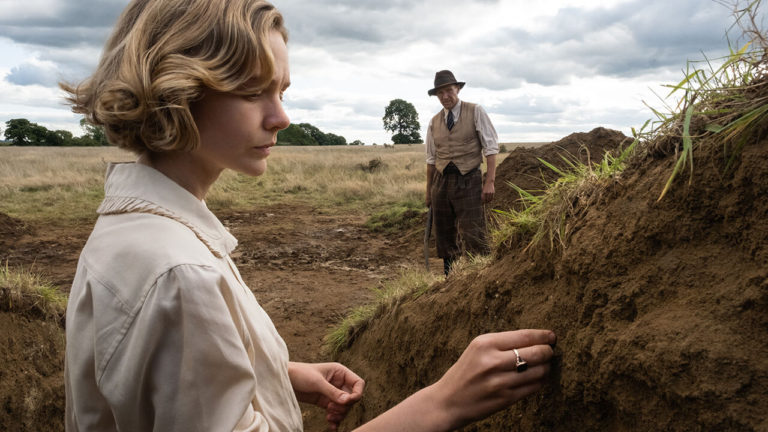
A few weeks ago on the show, JD gave his thoughts on the first two Matrix films, but after catching up with all three, he decided to give his thoughts on the final Matrix film in Revolutions. Additionally, Jay caught up with the latest Netflix film The Dig, starring Carey Mulligan and Ralph Fiennes.

[divider]

RELATED: Listen to Episode 413 of the InSession Film Podcast where we discussed our Top 10 Movies of 2020!

[divider]

Top 3 Two-Character Movies (2:03:46)
This was honestly one of the more difficult topics we’ve done yet for a Top 3 segment. There are some great two-character movies, but it’s not as deep a field if we’re limiting it to strictly two characters. So, we did loosen up the criteria a little bit to focus on movies that may feature a few other characters, as long as it was *mostly* focused on those two central characters. That said, what would be your top 3?

Top 3 Sponsor: First Time Watchers Podcast

– Music

Down And Out In New York City – James Brown
Gravity – Steven Price
Pi’s Lullaby – Mychael Danna
The Return of the Eagle – Atli Örvarsson

Subscribe to our Podcasts RSS
Subscribe to our Podcasts on iTunes
Listen on Spotify
Listen on Stitcher
InSession Film Podcast – Episode 416

[divider]

Next week on the show:

Review: Judas and the Black Messiah
Top 3: TBD

[divider]

Help Support The InSession Film Podcast

If you want to help support us, there are several ways you can help us and we’d absolutely appreciate it. Every penny goes directly back into supporting the show and we are truly honored and grateful. Thanks for your support and for listening to the InSession Film Podcast!

VISIT OUR DONATE PAGE HERE

Top Ten: Tom Hiddleston Essentials

While many adore his Loki, there’s more to Tom Hiddleston’s repertoire than Marvel. In addition to his theater acclaim and Shakespearean work, here’s a mix of underrated turns and indie gems that prove Hiddleston isn’t only about that comic book mischief.
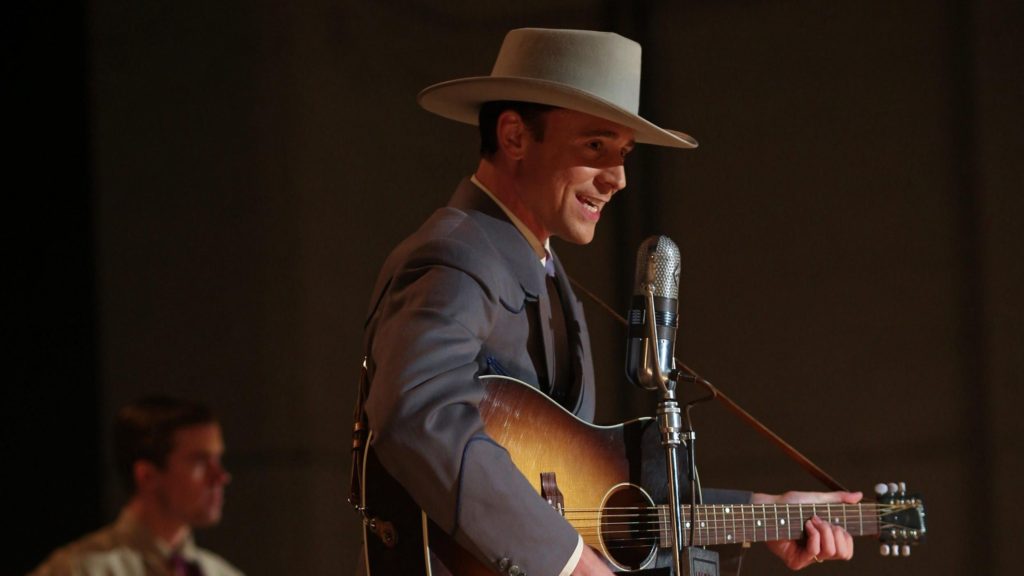
10. I Saw the Light

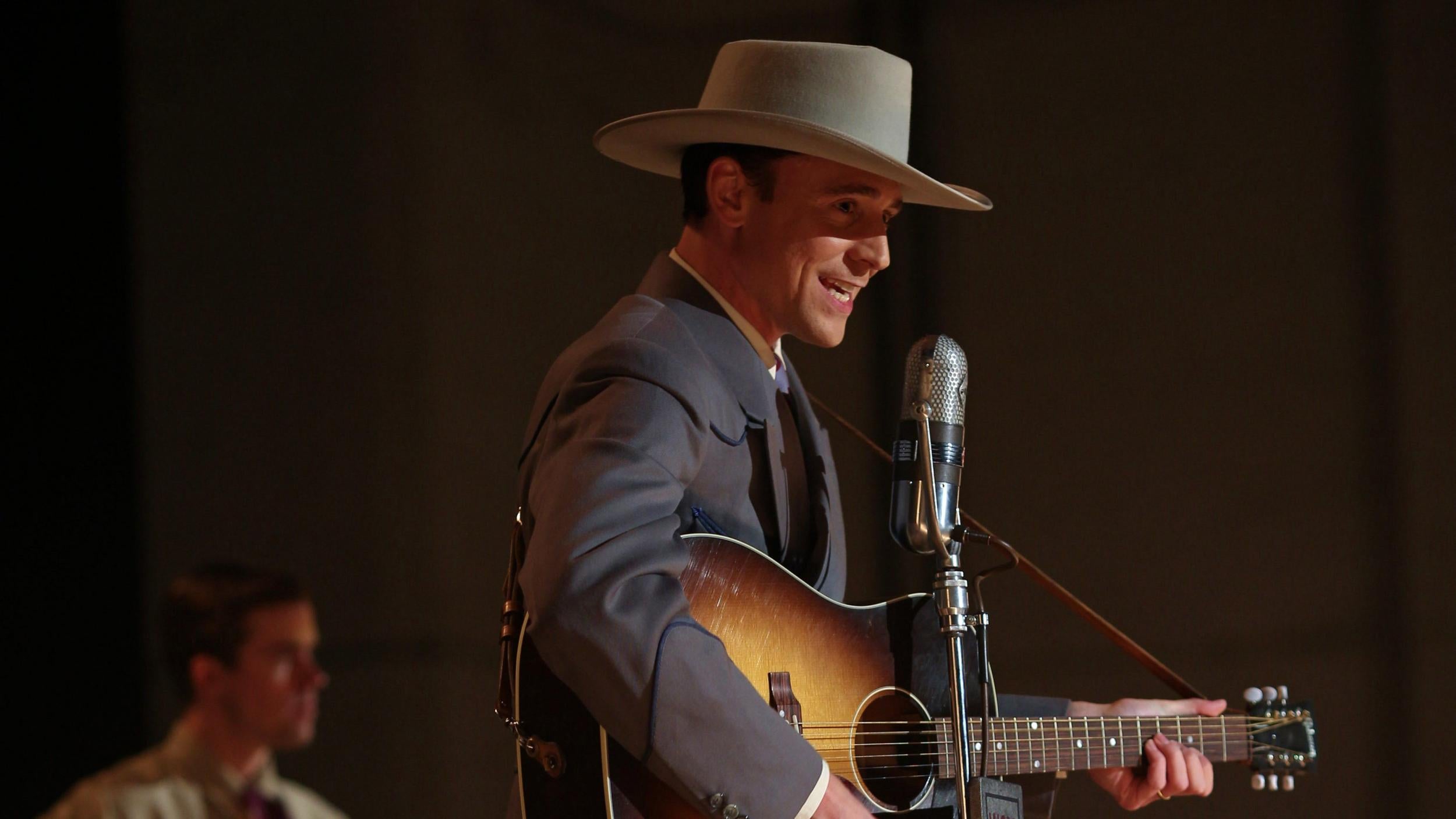
The fade ins and lack of narrative flow in this 2015 Hank Williams biography are very disjointed. Significant moments are treated as mere transitions and it feels like half the movie was left on the cutting room floor. The patchwork writing, directing, and editing skip half the man’s life with little rhyme or reason why. Hank wrote songs, loved his mother, women, booze, and then he died. Artistic spotlights, silhouette lighting schemes, and larger than life visual angles accentuating the man versus the myth should have been used more, but vintage reels and black and white interchanges with manager Bradley Whitford (The West Wing) fall prey to piecemeal time stamps. Brief recording sessions and Opry glory make for an ironic lack of songs, and mother Cherry Jones (24), first wife Elizabeth Olsen (Martha Marcy May Marlene), baby mama Wrenn Schmidt (Preservation), and second wife Maddie Hasson (Twisted) deserved more. What’s really sad is that Tom Hiddleston gives a fine performance, fitting the period hats, suits, and flashy fringe by matching Hank’s dialect, singing, and physicality. One would not know Hiddleston is a British RADA graduate here, yet he doesn’t have much to do and the camera refuses to stay still and make the most of his onscreen zing. Hiddleston obviously put a huge effort into becoming Hank Williams – a transformation worth much more than such a detached, arms length approach.
9. Midnight in Paris

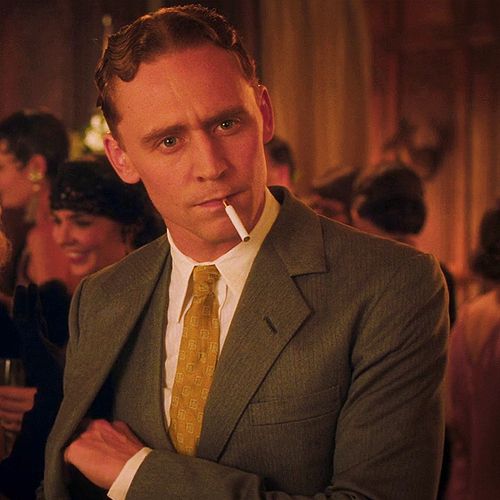
I am not a Woody Allen fan, and Owen Wilson (Wedding Crashers) is a bumbling placeholder in this 2011 pretentious embarrassment of riches. How did this win Best Original Screenplay with such terrible in-laws, unnecessary hotel slapstick, snobby set pieces, forced intellectual comedy, and stereotypical women ideals and/or bridezillas? The mid-life crisis lessons are pretty straightforward, and the sentimental fantasy is obvious for audiences of a certain age – conflicting with the living in the now rather than a rose colored past moral of the story. The famous intelligentsia, including Hiddleston as F. Scott Fitzgerald among the stellar cast, make the eponymous period segments the best parts of the show thanks to excellent punchlines, one-on-one wisdoms, and divine deliveries. Parisian locales, scenic snapshots, vintage cars, and quality jazz are worth the artistic nominations, but the back and forth present and fictitious muses meander with who’s who “Vogue” vignettes. Our writer is never shown writing or even carrying his manuscript, pen, or paper, and it takes him so long to see what was there all along because the ninety minutes stretches thin, glossing over the most interesting aspects despite a few pleasant twists and unexpected moments. While refreshing to mature viewers compared to busy blockbusters, the superficial, flawed structure here gets by on the nostalgic novelty. Can Hiddleston please play Fitzgerald again in a full on biopic?
8. Archipelago

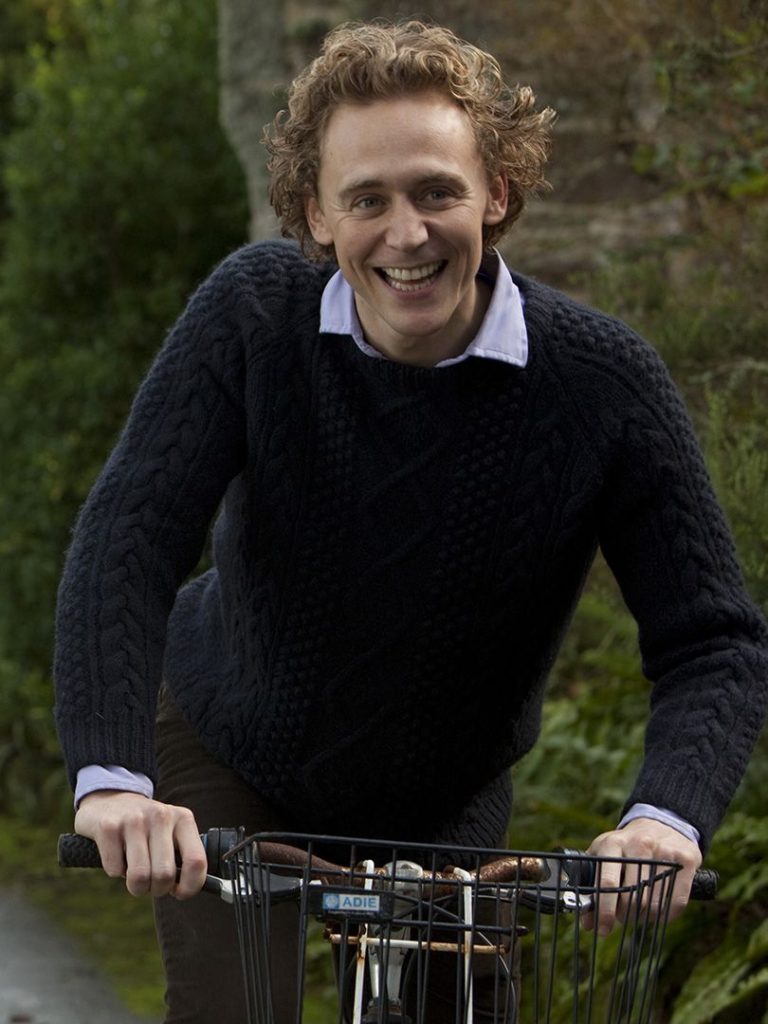
Like their fine collaboration in Unrelated, writer and director Joanna Hogg’s second film featuring Tom Hiddleston can be plain, dry, or slow. This is a very British, white tale of pheasant eating, vacationing rich people with problems. Fortunately, Hiddleston does daddy issues like nobody’s business, and his quarter life crossroads dampens the should be idyllic Scilly’s blustery coastal freedom. Congested interiors loom with the presence of our absentee patriarch – a beige slate of uncomfortable awkwardness and mundane moments. Tall Hiddleston hits his head on the ceiling, for his room is literally too small, yet the siblings bypass one another in this tiny space without acknowledging each other. Wine is at the ready, nothing that should be said is, nobody means what they say, and it’s all talk about the weather. This family wastes an entire conversation on where to sit in an empty restaurant because they are all so involved with their own issues, suffocated by dad’s argumentative, one sided phone calls. The arms length camera stays still as people shout from another room, which makes for interesting blocking that allows the audience to observe while mirroring the disconnected dynamics. There’s only one traditionally framed two person conversation, few close ups, and several embarrassed people walking into medium shots, questioning what to do with their lives next. Unlike the usual onscreen family happiness, this kind of realistic nuclear study is refreshing.
7. The Deep Blue Sea

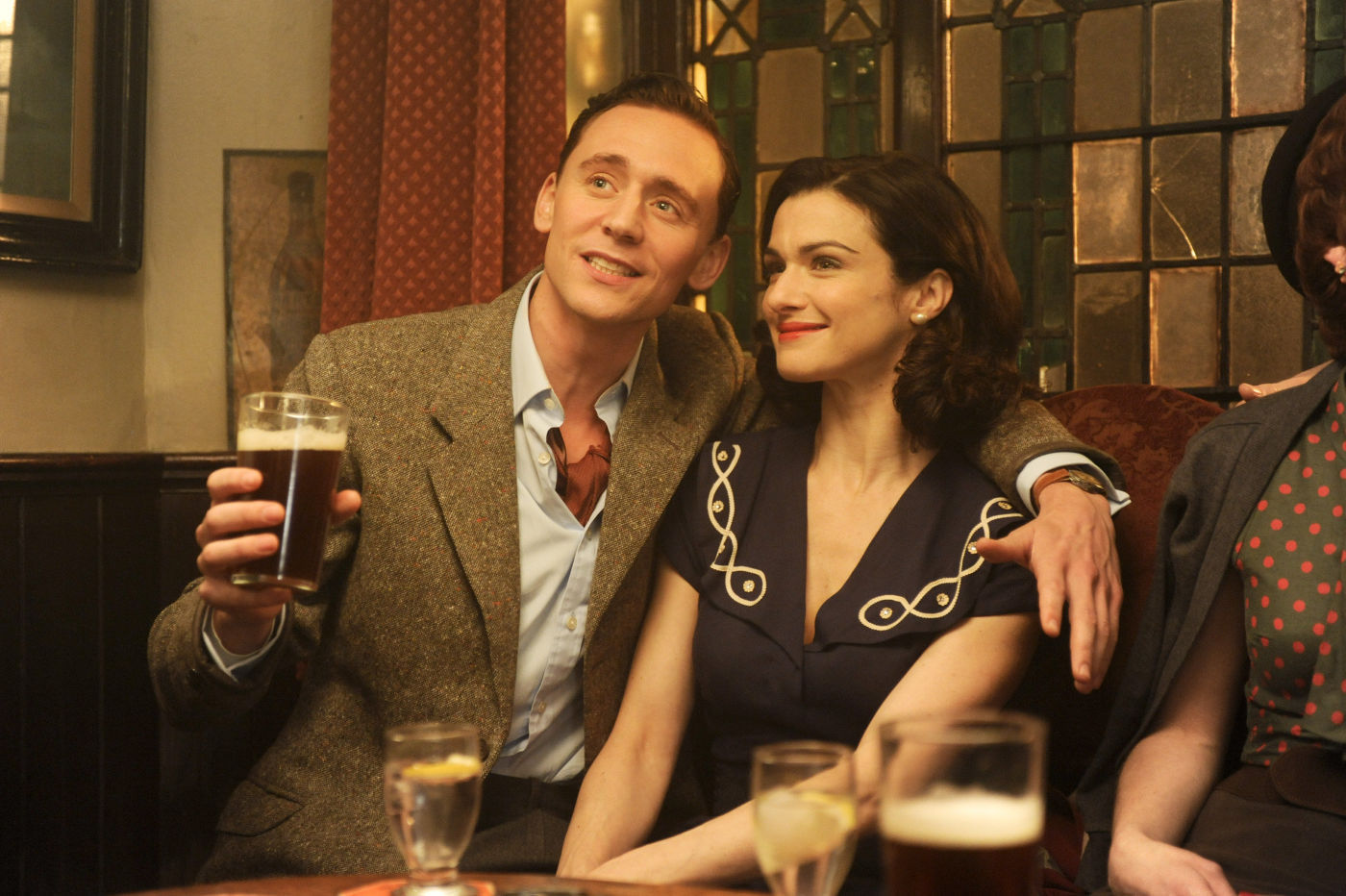
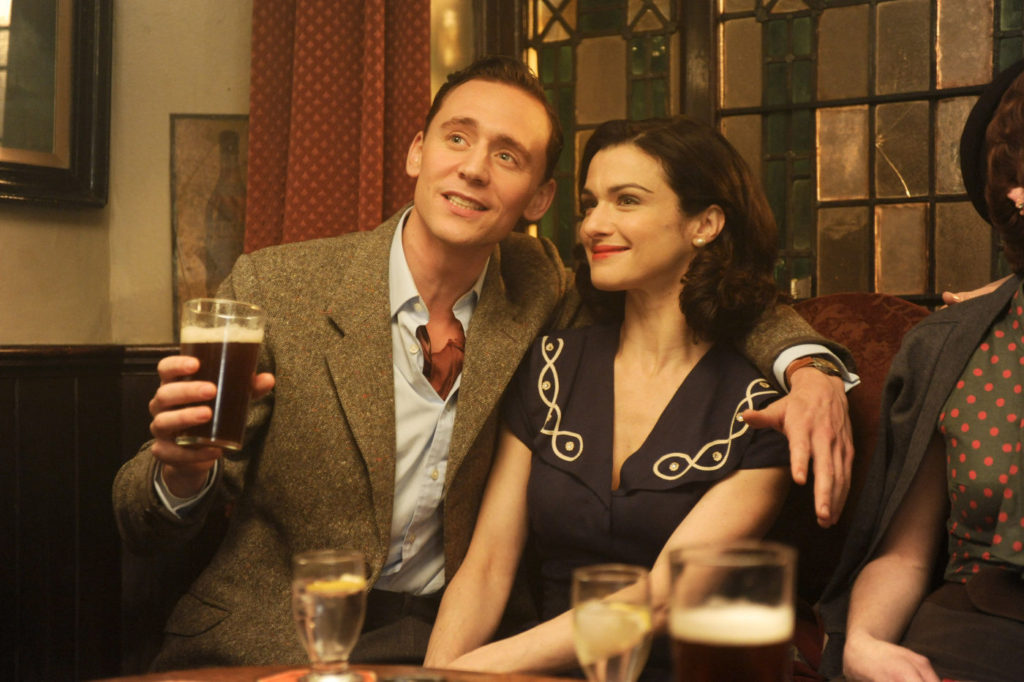
Married aristocratic Rachel Weisz (The Constant Gardener) has an affair with devil may care pilot Tom Hiddleston in this 2011 British adaptation of the 1952 post-war play by Terrence Rattigan. This is London 1950, turbulent and emotional post-war times, and director Terence Davies (The House of Mirth) opens the melodrama with bleak thoughts, suicidal montages, and dreary reality. The first half hour is uneven, stuffy with old fashioned dialogue and delaying etiquette intercut with whirlwind bliss and breaking free of conflict. This intentionally broken narrative symbolizes the fractured minds and hearts of our lovers, but it’s too arty and disjointed. The non-linear upheaval makes it tough to appreciate the anger, regret, passion, and pain. Fortunately, the uninterrupted conversations are delightful as the players struggle to express themselves thanks to the stiff upper lip unyielding that sustained them during The Blitz but leaves them unable to cope now. Men aren’t supposed to talk about shell shock and women aren’t supposed to have sexual satisfaction, and the wonderful risk they take in doing both isn’t always dandy. Hiddleston carries off the past debonair and traumatizing war glory. He wants all her attention but remains oblivious to her extreme emotions. She needs one fix, he needs another, and neither knows how to give an inch. This would have had a larger audience without the constrained structure, but the complex character study, intersecting intrigue, and social examinations are a heavy watch for thinking film fans.
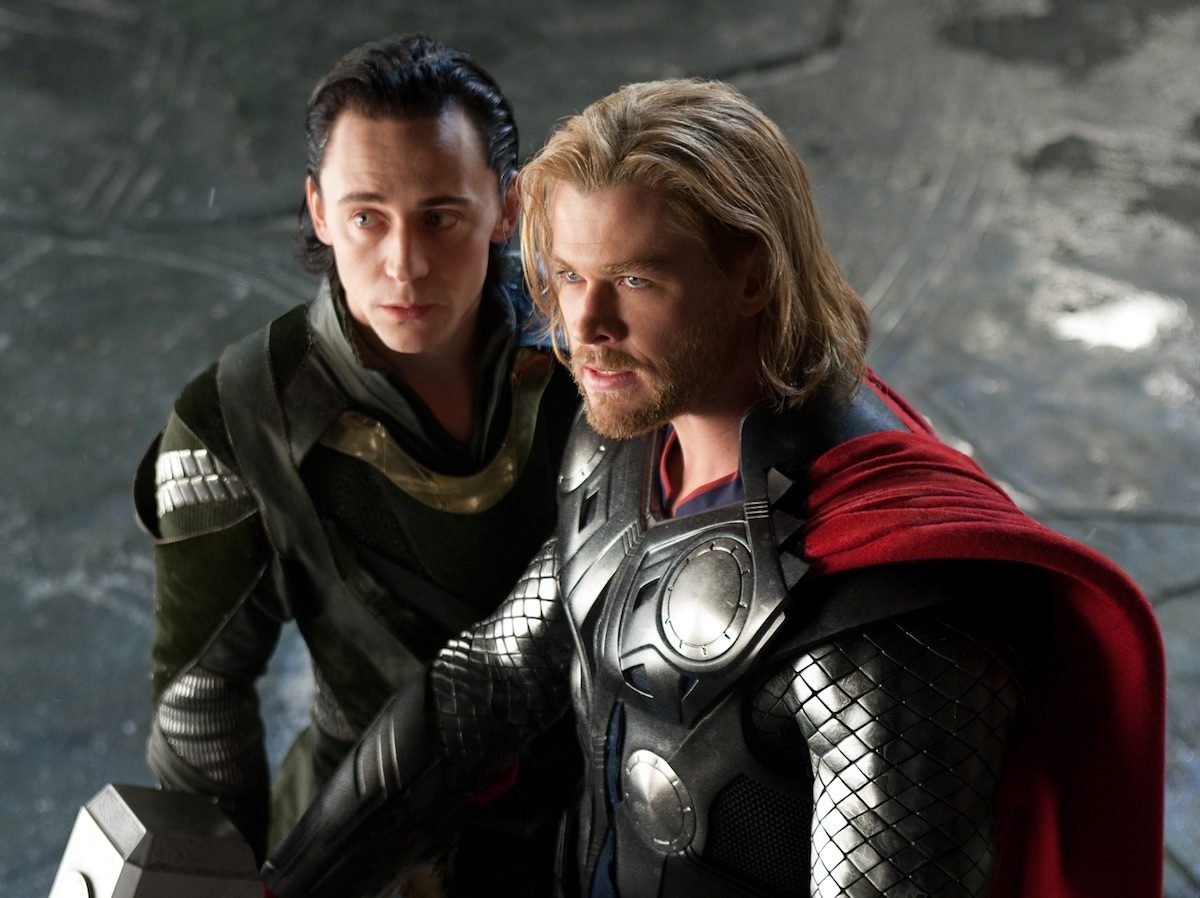
6. Thor

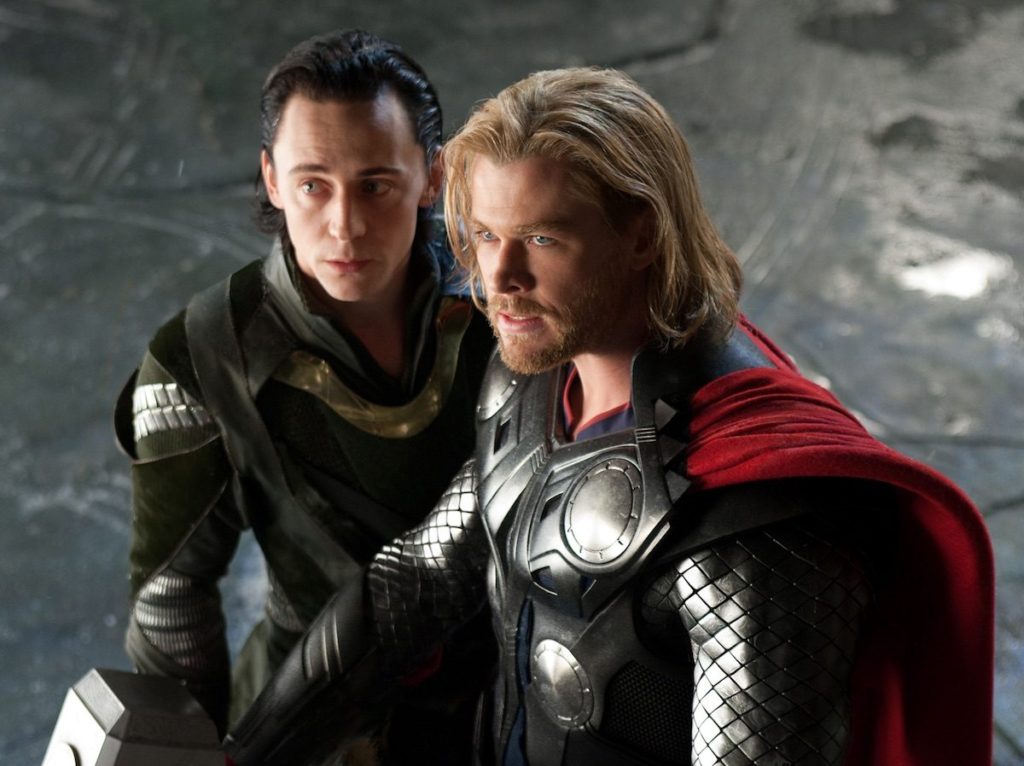
Kenneth Branagh (Much Ado About Nothing) directs this 2011 Marvel escapade with the titular Avenger Chris Hemsworth and Hiddleston as his mischievous brother, Loki. Humorous earthbound fish out of water plots help ground what was then an unknown cinema property, but today the New Mexico set comedy, Mary Sue perspectives, telling rather than showing science explanations, and dated CGI just for the cool panoramic zooms can feel unnecessary compared to the missed opportunity for total Asgard explorations. Fortunately, fun costumes, a heroic score, a sweet Rainbow Bridge, and great galactic visuals create a recognizable space fantasy without placing the spectacle over the frosty enemies, precious relics, and traitors in the House of Odin. While a few deleted scenes should have been kept for even more sibling rivalry and later films in the franchise somewhat reset the characterizations, Thor learns how to be a hero as budding villain Loki steals the scenes with petty deceptions and tears real, crocodile, and understandable. With family friendly parables, brotherly angst, unexpected twists, and great explosions, this Asgard debut doesn’t fall into that mind numbing, all comic book movies are the same trap. Branagh’s Shakespeare influences layer the drama with subtle details well paced amid the action set pieces. There are choices to be made for good or ill and time for reflection before and after the wild finale. Overall, this trusts in its fantasy, creates memorable characters, and remains fun with repeat viewings.
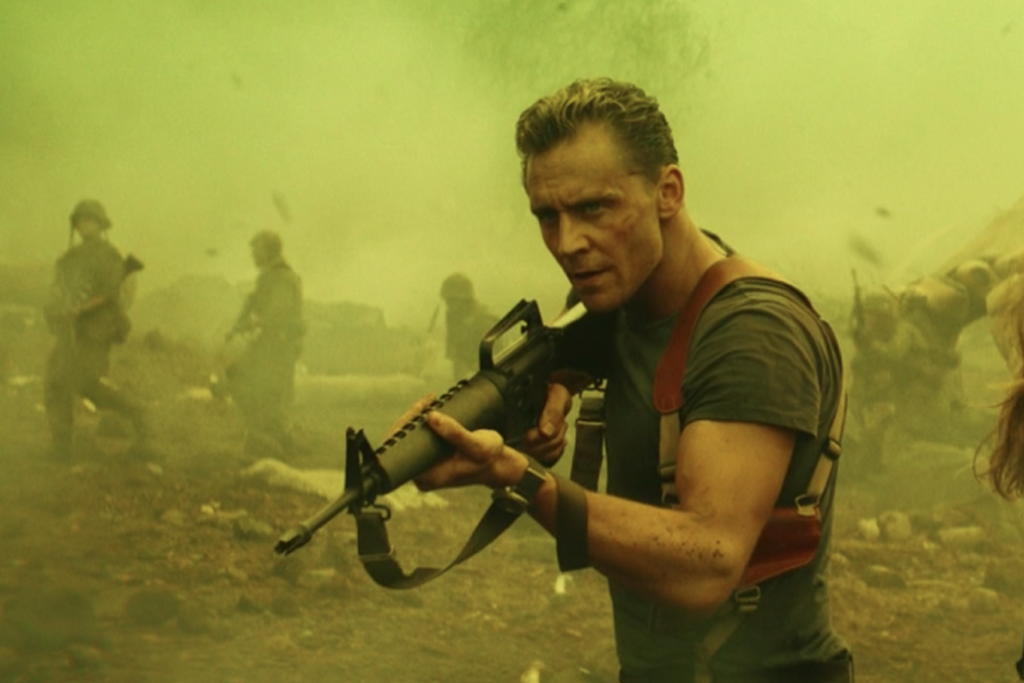
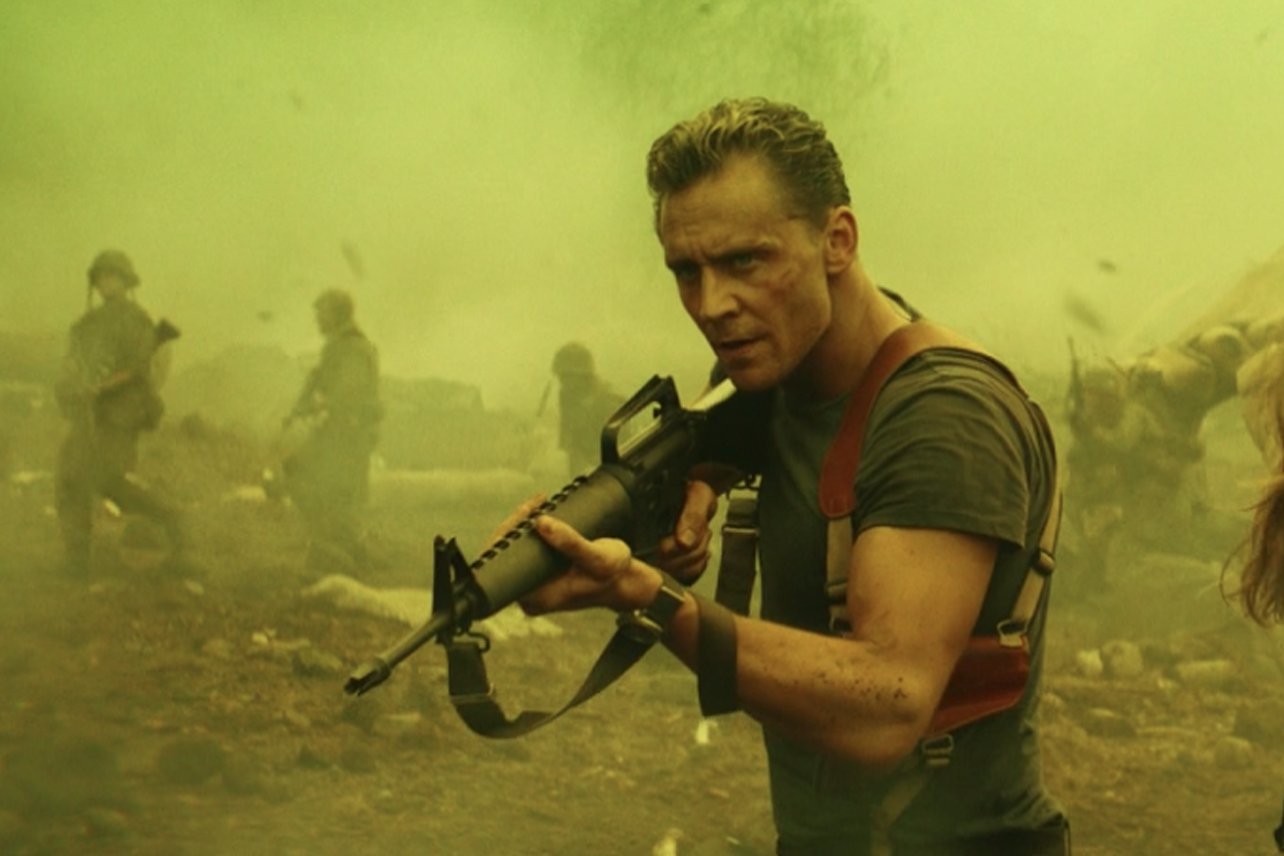
5. Kong: Skull Island

This 2017 MonsterVerse prequel has its flaws. The focus is messy with Vietnam, horrors of war, personal vengeance, monster monstrosities, and awe-inspiring adventure. Between photographers, trackers, angry military, government officials, and stranded scientists there are far too many undeveloped characters walking to and fro amid convoluted information dumps and no time to actually explore. It really seems like this is just storyboards of cool things for Kong to do, and that’s okay because this uncharted Pacific isle is brimming with action, superb monster graphics, colossal silhouettes, and dangerous creatures. Old school cool comes early and often with diegetic classic rock, retro camera flashes, and Nixon jokes accenting gritty zooms, fiery explosives, and toxic green gases. Top billed Hiddleston, however, inexplicably goes from a rugged bad ass asking for five times the mercenary money to sunshine blonde matinee idol Tom Hiddleston. The mysteriously decommissioned tracker suddenly cares enough to question the mission motives, but any previous wartime or familial issues remain throwaway lines while our tracker takes charge but gets lost. Although he has the best gas mask samurai glory moment, the would be hero has no winking Indiana Jones moment nor does he take off his shirt. Why hold back when you can go all the way on the eye candy? This monster money maker has heaps of knockdown, drag outs and enjoyable action for everyone.
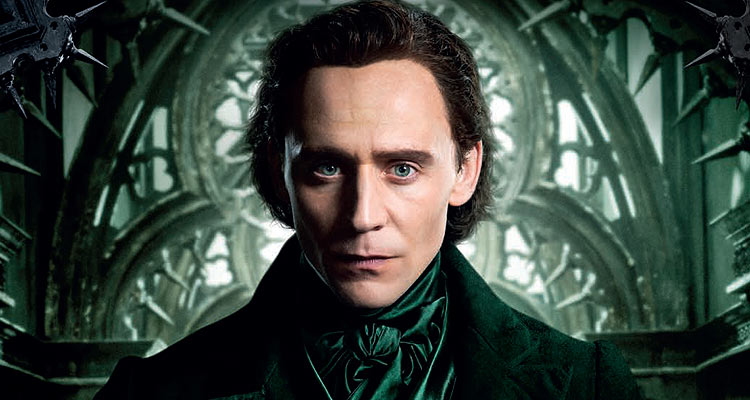
4. Crimson Peak

Spooky unreliable narrator bookends, dime novel embellishments, and a tall, dark, and handsome Hiddleston hearken back to Hammer glory and gothic romance of old in writer and director Guillermo Del Toro’s (Pan’s Labyrinth) 2015 supernatural melodrama starring Mia Wasikowska (Jane Eyre) and Jessica Chastain (Zero Dark Thirty). Poor marketing would have viewers believe this is a ghostly by the numbers, terror a minute horror movie slice and dice, but here murderous intentions, gory deaths, and household dread mix with whirlwind romance, period panache, marital unease, scandalous slaps, and somber siblings obviously up to no good. Hiddleston’s Sir Thomas Sharpe is meek, swayed by the dominating women in his life. He plays the charming part in his sister’s plans, dreamy and sympathetic but stunted and corrupted with a top hat that’s too big, a crumbling mansion, and failed engineering dreams. Tell tale ghosts and secrets in the eponymous clay acerbate the misplaced loyalties, conflicts, accountability, and choices as splendid macabre, haunting visuals, emotional gazes, and delicious scene chewing escalate to poison tea and bloody cleavers. Hiddleston also looks a lot like Peter Cushing here, and I’d love to see him as a young Grand Moff Tarkin in a Star Wars project! Some demented love and paranormal help may be predictable, but the real shock here is why anyone ever thought a Victorian piece was going to be a contemporary splatter-fest.

3. High-Rise

Pathologist Tom Hiddleston moves into a prestigious new building designed by architect Jeremy Irons (Reversal of Fortune) alongside Luke Evans (Beauty and the Beast) below and Sienna Miller (Layer Cake) above in director Ben Wheatley and writer Amy Jump’s (A Field in England) 2015 adaption of the J.G. Ballard novel. Technological problems accelerate the high and low resentments, dividing floors against each other for food and necessities as the excess explodes into violence and anarchy. The advanced tower gives and takes, a concrete witness to lust and sloth. Those at the top commandeer booze and cake while it’s dog eat dog at the bottom, and those downstairs record the mayhem – retaining Ballard’s prophetic warnings on media distorting our lives a la the way we look at the world through our smartphones. Names and dialogue have dual meanings, and like the past participle lain, Hiddleston’s buttoned up Laing lies low, detached from the outside world in his apartment full of moving boxes said to contain “sex and paranoia” or “nothing.” He gets trapped in a mirrored elevator and dislikes the stairs – both tools to move up or down – and Laing’s suave facade gives way to everything gray. British stoicism and our accustomed numbness to extremes onscreen mean High-Rise isn’t as shocking as A Clockwork Orange but comparisons with David Cronenberg’s Shivers are intriguing. This isn’t an entertaining or happy viewing experience but an intense little dystopian character study.
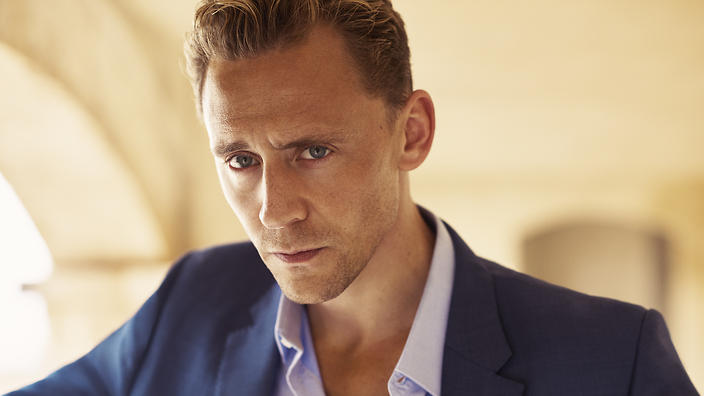
2. The Night Manager

Emmy winning director Susanne Bier (Bird Box) opens this impressive 2016 six hour production of John Le Carre’s 1993 novel with hotbed protests, corrupt entrepreneurs, seductive clientele, confidential documents, and cinematic espionage. Simmering melodies mirror the dangerous edge while the excellent credits merge explosive clouds with alluring diamonds and champagne. Weapons deals and bureaucratic paperwork lead to bruises, fatalities, and consequences. This is a more nuanced potboiler than Spectre, but could Hiddleston ever be the next 007? Not in the gritty vein as Daniel Craig, no, but as a return to the more suave, lighthearted Roger Moore era, maybe. At times, it seems like Golden Globe winner Hiddleston is playing his blue steel self, but our eponymous hotelier hibernates in luxurious shadows with a controlled facade for every situation; be it soldier, leather jacket, or tailored suits. The camera plays to his strengths – panning up as he struts and filling the frame with close shaves, shirtless muscles, and steamy sheets. As the debonair front man gathering sleight of hand intel and infiltrating Hugh Laurie’s (House) lavish enterprise, he’s cool on the fly with the right wink or smile. A guy can get used to this kind of deception, but the well paced narrative balances the overarching mission details and personal in too deep as the undercover goes off script and the international cat and mouse comes face to face.
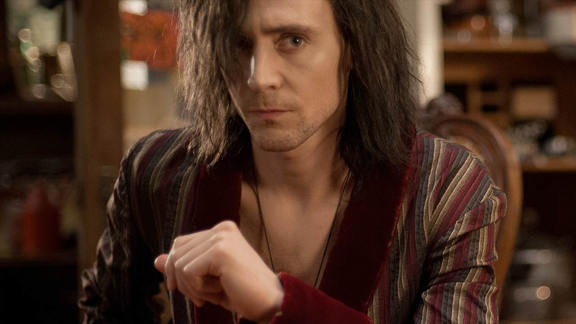
1. Only Lovers Left Alive

Tilda Swinton (We Need to Talk About Kevin) is Eve to Hiddleston’s Adam in Jim Jarmusch’s (Mystery Train) thought provoking 2013 vampire tale. Ritualistic blood drinking highs reveal their true nature, but the euphoria ends quickly and not all revel in this necessary fix. Spooky, noir atmosphere and a moody color palette anchor the subtle black comedy, social statements, and melancholy analysis while the addiction subtext layers the sardonic script and quotable banter. Depressed, Byronic, and brooding but surprisingly deadpan Adam dresses up as Dr. Faust to obtain his blood supply, but he has had it with humanity’s so-called zombie apathy and requests an elusive wooden bullet. The apart lovers reunite in desolate Detroit, where Eve draws Adam from his vintage clutter and musical solitude with chess, nature, and dancing. If they are wasting time on self obsession, then what are we doing with our lives? Despite their seemingly superior longevity, our quantum theory and Einstein discussing couple end up on the lamb when reckless vampires endanger their O Negative chain, and their predatory nature must surface when it’s down to that precious last drop. Unexplained plot holes, silent montages, and seemingly aimless, nothing much happening will be a big no thanks for today’s fast paced audiences. However, for depth that stays with you and mental stimulation that takes more than one viewing, everyone should give Only Lovers Left Alive a chance.


Op-Ed: An Examination of Class Division in Modern Cinema

(This article contains spoilers for movies such as Parasite, The White Tiger, and Us.)

Karl Marx once said that history itself is nothing more than the struggle between various classes in society. Would that he could have lived to see the way our society operates now, he might have felt more than a little vindicated. We are in the midst of the largest inequality gap since the turn of the 20th Century. A financial crisis in 2008, coupled with over a decade of bad judgment and irresponsible use of economic infrastructure from our leaders, culminating in last year’s COVID-19 pandemic, has ground much of society to a halt. Wages have stagnated, the middle class is shrinking out of existence, and poverty is climbing. While we try to find our way out of this mess, it’s also important to understand its implications on a micro-level. Qualitative, anecdotal data will be useful in understanding the psychological effects this century has had on the evolution of humanity, and what better way to do this than in cinema?

In 2020, Bong Joon-ho’s much heralded Parasite made history when it became the first foreign-language movie to take home the Best Film Oscar at the Academy Awards. It was richly deserved: Joon-ho’s masterpiece was a searing insight into the minutiae of wealth inequality, eschewing grandiose pronouncements for the subtle micro-aggressions that are mainly the preserve of the rich. Consider the Kim family; low class, clustered together in a small apartment below ground. In order to get Wi-Fi, they must steal from a local business, unable to afford it themselves. In a modern world, internet is essential. Ask yourself how many jobs these days do not require the use of email, or advertise their vacancies by posting notices on shop windows? Something as seemingly innocuous as the lack of internet can have far-reaching ramifications on the smallest of scales.

Now take the Parks. Able to afford tutoring for the most inconsequential of details. See how Mrs. Park deems her son an artistic genius for crafting doodles that any child might do, and employs someone to foster and nurture that ability. The most minute detail for the Parks can be made exponential, while the most minute detail for the Kims can be cripplingly detrimental. That is a wealth inequality that is not often explored. Those moments are where the real magic of Parasite lies. It comes in small instances, such as the Park son’s observation that the Kims all smell the same, or Mr. Park’s similar observation that Mr. Kim smells like someone who rides the subway.

There are subtle ways in which passive interactions demarcate the gulf in difference between the Parks and the Kims. For all that the Parks are polite and kind to the Kims, who are servants in the Park household, there are still boundaries that, when crossed, show an ugly, entitled side to the Parks, a side which is emblematic of many in a higher class. Mr. Kim, who acts as Mr. Park’s driver, ingratiates himself to his employer with his driving skills. A close-up of a coffee cup in Mr. Park’s hand shows that he appreciates the smoothness with which Mr. Kim is able to round corners. Small talk is made; careful, surface-level small talk. Yet when Mr. Kim deigns to overstep his boundaries with more personal conversation, Mr. Park is visibly angry. The implication is clear: Mr Kim cannot speak to Mr Park like an equal. He is far from that.

Image result for parasite

Elsewhere, the cinematography showcases the visual differences between the two families. The Kims, as mentioned, live in a basement apartment, vulnerable to passing drunks urinating on the streets, and floods which threaten to destroy their home. The Parks have a home on top of a hill, enabling them to look down upon the city of Seoul. While the Kims must walk down to their home, the Parks walk up to theirs. Consider, also, the revelation that a former housekeeper of the Parks lives in a hidden basement dwelling of the Parks’ home, unbeknownst to them. Here we have a literal underclass, subsisting like parasites (to give the move its title) on the unknowing rich.

On the same landmass as Korea sits the Indian subcontinent, the setting of the new Netflix movie, The White Tiger. India’s social stratification has a deeper well than in Korea, thanks to an archaic caste system. We see this clearly in the story of Balram, a poor boy from the village of Laxmangarh who cultivates a working relationship with a wealthy family which he then manipulates for his own gain. Throughout The White Tiger Balram’s monologue shows his growing consciousness of class divide as his anger subsequently boils over into murderous rage.

Similar to Parasite, what The White Tiger shows us as viewers is how every aspect of a person can be a signifier of their class: the way they dress, the language they use, their teeth and hygiene, the education they have. A key moment shows Ashok, Balram’s employer, use him as an example of how uneducated India is. He asks Balram a serious of simple questions, which Balram is unable to answer. Ashok then highlights to his partner the incredulousness of Balram’s simplicity, calling him “half baked”. Another signifier is alcohol. Balram tells us that there are two types of men in India: those who drink Indian alcohol and those who drink English alcohol. Indian alcohol is a variety of cheap hooch, whereas English alcohol is rum, whisky, beer. As Balram’s fortunes are juxtaposed throughout The White Tiger, we see how high quality alcohol has become one of the signifiers that he is wealthy.

Perhaps the strongest indictment of the class divide, however, is made through what we’ll call The Rooster Analogy. A particularly harrowing scene shows a rooster being taken from a cage in which there are many roosters present, and then being butchered in front of the others. Balram points out that the roosters must know what is coming, must have seen their companions chopped up into so many parts, yet remain docile, awaiting their turn to be executed. This is India, Balram says, a country full of lower class citizens awaiting their own death, doing nothing to change the course of their lives. It’s an astute analogy, one which opens up questions of the psychological effects of poverty, of a hopeless despair, and one which leads to Balram’s realization that he is the white tiger, a rare species that comes along only once in a generation, willing to break those class barriers.

Balram’s entire young life is predicated upon his class. He is the proletariat, subject to the whims of the capitalist class who own land on which Balram’s family must pay rent. Early on he loses his mother to poverty, then his father succumbs to tuberculosis which might have been avoided had he had access to healthcare. Instead, Balram’s father dies in a deserted medical facility, awaiting a doctor who will never come. Balram is then taken in by his grandmother, a tough matriarch who eschews the idea of formal education for the money Balram could provide his family if he were to take work. This is a funneling system very common in poor socioeconomic communities: education is for the wealthy, while the poor must struggle to survive. Balram may be “half baked”, but he is so because he must earn a living for his family. Mr Kim’s children fold pizza boxes for income, while Mr Park’s children take expensive, and entirely superfluous, art classes.

What Balram comes to realise is that the purpose of the social system into which he was born is to maintain the status quo; like those roosters, Indians are locked into a system which does not allow them the tools or the opportunities to ascend to a better quality of life. Class is not, as he had believed in the beginning, a natural, God given set of rules which he is predestined to follow. As Balram plots to overthrow his employers in a brutal way, he reflects that class is simply a human construct, a way of ensuring the higher class retains power, a power Balram can take if he is willing to go far enough for it. Like Mr Kim before him, Balram allows the unrepentant fury of the underclass to overcome him. The real tragedy is that Balram did not overthrow the system, but simply climbed to a higher place within it.

Image result for us movie

The western world is not immune to the cruel divides of class warfare either. Over in America, class division takes on subsets that include color – a topic which might consume the continent in flames one day. In Jordan Peele’s Us, a woman called Red sits across from a wealthier, healthier, version of herself. She is pure, untrammeled fury as she stares across at her better self, a self who was given every opportunity, every chance of success. She is the resentful consequence of circumstantial fate; a representation of the duality of life. It’s a duality which Peele utilises to full effect. In Us there is a world beneath our own where our mirror images, called Tethered, exist and struggle in horror. It is not exactly subtle, but it is effective. The Tethered in Us are emblematic of circumstantial classicism; they live in a horrific situation so that their counterparts may thrive. It is the subjugation of Balram and Mr Kim made extreme, the embodiment of a very real system in America whereby a lower class must toil in mediocrity and poverty in order to provide a better life for their betters.

Red rises up, however. Brandishing a knife and a murderous intent, she escapes the world beneath to exact revenge on the woman who – in a surprise twist – was in fact a Tethered herself, who swapped places with Red as a child unbeknownst to her family. In Red is a type of privilege: a fury that her rightful place on top was taken from her by an underling. More than that, it’s a bloody examination of how the underclass can boil over in fury. For all that Red was as subjugated as Balram and Mr Kim, she is equally as angry and bloodthirsty.

Red’s explanation (somewhat convoluted though it may be) of the Tethered existence includes the idea that the Tethered were meant as soulless copies of their above ground counterparts. They were not considered to have souls, and so were not given free will. Red was the first to become “untethered” because she was human to begin with. The subtext here is simple: when a higher class descended to a lower rank, those in the low ranks realised there was no difference between them. Like Balram understanding that classicism is not ordained by God, the Tethered understand they are no different than the humans above them but have been conditioned to believe it – or, to put it more succinctly, when a stunned Gabe asks Red who she is, Red just smiles maliciously, “we’re Americans”. Just like Balram, just like Mr. Kim, they rise up, knowing the truth of their existence: that the divides between the haves and have nots are manmade and can be torn down just as easily.

So what do all of these instances mean? Parasite, The White Tiger, Us, these are only three quick examples of modern cinema examining the class divide. There are many, many more – for further viewing on this please see Sorry To Bother You, Snowpiercer, Joker, and I, Daniel Blake. But why now? And what does it mean that in each of the movies examined here there is a reckoning against the upper class?

Karl Marx once said that history itself is nothing more than the struggle between various classes in society, but how many of us are truly aware of that? How many of us, in the last decade, have paid heed to the invisible machinations of society that impede us, hold us down, show us that we are undervalued even while telling us the opposite? Our collective consciousness is on the rise now. The advent of social media has ensured information spreads quicker (albeit we still need to understand which is real and which is fake) and our tolerance is growing weaker. Like Mr Kim, Balram, Red, the Tethered, like the many, many, examples of frustrated proletariats in cinema who blaze their way to the top, we are beginning to become conscious of class. Cinema, as it often has over the years, is simply reflecting the look of society – and that society is about to change.

Otto Preminger: The Taboo Breaker

Austria has a really good history of actors, writers, and directors who come abroad to Hollywood. There was Erich von Stroheim, whose perfectionism roiled everyone, but his work would be validated decades later. Billy Wilder fled over from Nazi Germany and quickly set himself up to be one of the finest writer-director-producers ever with his range from comedy to melodrama to film noir, winning six Oscars in the process. Two more of Austria’s exports, Arnold Schwarzenegger and Christoph Waltz have continued the tradition of bringing their European sensibilities – and their accents – over to the U.S. But there was one person who challenged Hollywood’s Production code and will to talk about the series subjects out in the open, contrasting the family-friendly world in the 1950s.

Otto Ludwig Preminger was born on December 5, 1905, in what is now the town of Vyzhnytsiain in Ukraine. Until the First World War, it was called Wischnitz in the old Austria-Hungry empire. His younger brother was Ingwald “Ingo” Preminger, who would also get in the film business, first as an agent, then as a producer. Ingo’s most noted film was M*A*S*H, which was written by his former client, Ring Lardner Jr. Another client of his was blacklisted writer Dalton Trumbo, who Otto would approach at a crucial point in their careers. The Preminger’s left Wischnitz when the First World War commenced, heading to Vienna for safety. Here, Otto would do most of his studies and became interested in the theatre during his teen years. In the twenties, Preminger worked in theatre and became a director himself, working on plays with provocative subjects he would return to in his filmmaking.
Image result for The Great Love otto Preminger
But at the same time, the twenty-something Preminger knew nothing about movies, so when he was approached in 1930 to direct an adaptation of the play, The Great Love, for the screen, he was surprised to have been asked. Still, Preminger accepted the job because it was something to do while the theater was closed for the summer. The Great Love received positive reviews from critics and fans alike, although Preminger saw it as amateurish compared to his later works. Preminger went back to directing plays when, in 1935, he received an invitation by Joseph Schenck, co-founder of the newly formed 20th Century Fox, to meet him in person. Schenck, scouting new talent in all film-related professions to bring back to Hollywood, convinced Preminger in thirty minutes to move to Hollywood and become a film director. The first two films were B-pictures and were, at best, tepid, but Preminger was hired for a big-budget film called Kidnapped in 1937. He reluctantly took the job even though he did not understand the story and simply shot what was on the page. But Darryl F. Zanuck was not happy with what Preminger had done and fired him from the picture and the studio.
https://www.youtube.com/watch?v=ThmrifWeItw
Back in New York City, Preminger would direct a successful string of plays and even a part-time directing gig at Yale when he got a second chance at 20th Century Fox. This time, with Zanuck in the Army during World War II, interim studio head William Goetz brought back Preminger to direct the film version of Margin For Error, based on the play Preminger directed and starred in. Goetz would sign him to a contract as both director and actor, sweetened by Preminger being allowed to serve as his own producer. His first breakthrough was 1944’s Laura starring Gene Tierney and Dana Andrews, which earned Preminger his first Oscar nomination for Best Director. The rest of the 1940s brought in mixed reviews for his work, as well as more conflict with Zanuck, who accepted his return but still mistrusted his judgment on casting and script changes. Yet, one of those films, Forever Amber, a film Preminger was asked to finish after the original director was fired (in a reverse from Kidnapped), the film was condemned by the powerful Catholic Legion of Decency condemned it for what they saw as celebrating a promiscuous woman giving birth to a child unmarried. This gave Preminger ideas for his future films at challenging these taboos.
https://www.youtube.com/watch?v=xuPxpDUOM8c
Preminger believed, in the changing times, that movies could and should confront these realities Hollywood censorship, the newly formed blacklist, and the Legion of Decency wanted to keep off the screen. In 1953, Preminger released the comedy The Moon Is Blue without the Production Code’s seal of approval because of, “an unacceptably light attitude towards seduction, illicit sex, chastity, and virginity.” Two years later, The Man With The Golden Arm starring Frank Sinatra portrayed the struggle of drug addiction (although not named, it is implied to be heroin) that, knowing it wouldn’t get the seal of approval either, Preminger released it straight away instead of viewing it for the censors. The film was successful critically and commercially.
https://www.youtube.com/watch?v=BEk_nKGMwmU
1959’s Anatomy Of A Murder starred James Stewart as a defense lawyer for an Army Lieutenant charged with murder after learning his victim had raped his wife. Based on true events, the courtroom drama uses language regarding the rape in terms mild today, but harsh for public hearing back then. This time, it was given the seal of approval and is considered a key moment for when the Production Code was ending, as well as receiving an Oscar nod for Best Picture. Playing the judge of the trial was Joseph Welch, the lawyer who successfully challenged McCarthyism and brought down the infamous Senator who accused many figures of the government of communist sympathies. Another film, 1962’s Advise & Consent, starred Henry Fonda as the nominee for Secretary of State who is scrutinized heavily by the Senate and its President pro tempore, played by Charles Laughton. When the nominee commits perjury, his sketchy past is discovered, including an alleged homosexual relationship which was mostly illegal back then.
https://www.youtube.com/watch?v=FBvAPUlFmhY
During this successful period, Preminger’s personal life was caught in between his professional work. In 1954, he directed Carmen Jones, a modern musical adaptation of the opera Carmen, starring Dorothy Dandridge. Preminger and Dandrige would start an affair lasting four years, during which Preminger told her to turn down The King & I, something she regretted later. Dandridge also found herself pregnant by him, but the studio paid for an abortion. For Carmen Jones, Dandridge became the first woman-of-color to receive an Oscar nomination for Best Actress (Lead). In 1957’s Saint Joan, Preminger cast the unknown Jean Seberg in the lead role and personally sculpted the film to make her performance the biggest breakthrough Hollywood had ever seen. The film, and Seberg’s performance, was panned heavily.
https://www.youtube.com/watch?v=ii5Aoqy7ggA
Seberg was then cast in Preminger’s next film, Bonjour Tristesse, and while shooting in France, she met her first husband. The film received mixed reviews, but Seberg’s performance was praised by Francois Truffaut and Jean-Luc Godard, setting up Seberg to become a key fixture in the French New Wave. One other key event with Preminger was, after finishing Anatomy Of A Murder, his announcement that his next film, Exodus, would be written by Dalton Trumbo. Trumbo had been blacklisted years before for his communist beliefs, as noted in the biographical film about him, and features a scene in where Preminger goes home and pitches him the book. This, plus Kirk Douglas also announcing Trumbo as the screenwriter for Spartacus, ended the blacklist and brought back those who had the write under pseudonyms or went to Europe for work. One of them was Ring Lardner Jr., who co-wrote Forever Amber before his blacklisting.
https://www.youtube.com/watch?v=aFtSmc1I-p8
The rest of Preminger’s career after Advise cooled down, starting with the thriller Bunny Lake Is Missing starring Lawrence Olivier, which had mixed reactions but has been reappraised as Preminger’s last masterpiece. His later films through the 70s were flops and received negatively, ending with his last release, The Human Factor, in 1979. In between, he played Mr. Freeze in two episodes of Batman, plus provided his voice for the TV movie The Hobbit. Retiring in New York, Otto Preminger died of cancer and Alzheimer’s disease on April 23, 1986, aged 80. He was survived by his son, Eric, the product of an affair between Preminger and burlesque dancer Gypsy Lee Rose, who would provide the story for the famous musical, Gypsy. Today, his legacy is in the vault with the Academy Film Archive and currently on the Criterion Channel.
Follow me on Twitter: @brian_cine (Cine-A-Man)

Movie Review (Sundance): ‘The World to Come’ is Familiar But Soaking in Atmosphere and Emotion


Director: Mona Fastvold
Writers: Ron Hansen, Jim Shepard
Stars: Katherine Waterston, Vanessa Kirby, Christopher Abbott, Casey Affleck

Synopsis: Somewhere along the mid-19th century American East Coast frontier, two neighboring couples battle hardship and isolation, witnessed by a splendid yet testing landscape, challenging them boy physically and psychologically.

[/info]

There has been a trend over the past year with the lesbian period piece dramas, particularly popularised after the critical love for Portrait of a Lady on Fire. Since then, we have also had the release of Ammonite, which seemed to come and go quite quickly, potentially due to the comparison and the lukewarm reception the film was given on review. Now, after premiering at Venice and coming over to Sundance, we are given another chance to enjoy the genre and connect with another lesbian relationship.

I do not want to make comparisons of the quality of this film with the others I just mentioned, but it is important to know that this film hits familiar beats. This is a story that has been told numerous times, staying safe and letting the characters drive the movie forward. It can feel quite repetitive at times, and it is easy to wish for more from this story. However, I ended up being pleasantly surprised by what the film had to offer despite the simple and repetitive narrative.

It is incredibly easy to connect to the relationship thanks to the two leading performances by Katherine Waterston and Vanessa Kirby. Both of these women not only sell their own roles and struggles throughout the film but the connection that they have for each other. For a film that is primarily focused on the blossoming relationship between each other, it is nice to see they have the connection that we see on screen. This is also built up with the smaller moments within the story, that helps sell their love for each other and adds charm to the film.

Director Mona Fastvold did a wonderful job directing this story and help to bring it to life. Whilst some people might find the film to be slow narratively, I actually found myself enjoying the pacing, allowing us to soak into the atmosphere and get swept away by the romance. The production and costume design stands out, and that is because of the other technical elements within the film. The color gradient could have washed the film out, and yet it instead made the film feel warm and cozy, particularly when inside with these characters.

Regardless if people enjoyed this film or not, there is one aspect that critics right now are universally agreeing on: the incredible score from Daniel Blumberg. A newcomer to the scene, it is hard to believe that The World to Come is the first feature film he has composed for. It could have been jarring, considering how distinctive and loud it is at certain points, but it only helps the film come to life. I already cannot wait for the soundtrack to be out, as I just want to listen to it over and over again.

There is one creative choice within the direction that I particularly did not like, and that is the voice-over narration that is used to transition between scenes. This is a classic example of a script that decides to tell, not show. I simply wished that the script would be more trusting of the audience and let us be truly immersed into the world, without the needing of interruptions to tell us what is going on.

This is a film that tells a familiar story and it is easy to question the need to tell this particular story. However, I was sold by the film by how much I enjoyed watching these characters come to life and seeing their relationship develop over time. This will not be a film for everyone, due to a few creative choices that are made to tell this story. However, whether it is the wonderful leading performances or the sensational score, there is something here for everyone to grasp onto and appreciate.

Grade: B-

Movie Review: ‘The Dig’ Features Great Acting but is Sadly Unfocused.


Director: Simon Stone
Writers: Moira Buffini
Stars: Carey Mulligan, Ralph Fiennes, Lily James, Johnny Flynn, Ben Chaplin

Synopsis: An excavator and his team discover a wooden ship from the Dark Ages while digging up a burial ground on a woman’s estate.

[/info]

Few would disagree that the English countryside is a beautiful, serene place. When captured at its best it can lift a movie out of average mediocrity and into something worthy of watching. While that isn’t exactly the case with The Dig – which benefits as much from the subtle yet strong performances of both Ralph Fiennes and Carey Mulligan – it certainly doesn’t hurt it.

Adapted from the novel by John Preston, which itself was based on the true story of an archaeological dig at Sutton Hoo on the eve of the Second World War, Simon Stone’s The Dig sees Carey Mulligan as Edith Pretty, a wealthy widow who believes the giant mounds on her land may just be the burial site of an ancient civilization. To that end, she hires Basil Brown, played by Ralph Fiennes. Basil is a hardworking and humble archaeologist, quiet and temperate, who believes the site could be as old as Viking, or Anglo-Saxon. He rides up on his bike and gets to work on digging the mounds, eventually making the huge discovery of an Anglo-Saxon ship, replete with riches, which seems to have been used as a burial site for a king. As more and more is unearthed, a cadre of academics descends upon the quiet countryside to take part in the discovery and claim it for their own. Meanwhile, all is not well with Edith Pretty; her son is concerned about her health, and as it gradually deteriorates, Basil becomes closer with the young boy in an attempt to help him cope.

The Dig is a really understated piece of cinema, featuring restrained performances from Fiennes, Mulligan, and the cast of characters who rotate through their lives for the duration of the dig. Ken Stott is typically stalwart as Charles Phillips, an academic who wants the find to be placed in the London Museum, and Lily James does what she can with an underbaked side plot that really didn’t need to be in here and doesn’t add very much to proceedings. Elsewhere Johnny Flynn makes an appearance as Pretty’s cousin Rory Lomax, a sort of freewheeling bachelor whose presence doesn’t amount to very much either. For all the distractions that take place during The Dig, it is clearly the central relationship between Basil and Edith Pretty which captivates. Fiennes and Mulligan are, of course, terrifically reliable and the kind of period drama on offer here is meat and potatoes for them both.

Unfortunately, there isn’t very much for them to sink their teeth into. The Dig is very slight, taking a much more meandering approach to proceedings than other dramas might. Only the spectre of the Second World War – hovering ominously in the background, threatening to boil over only on the rare occasion – provides any real sense of threat. Basil finds his work impeded by archaeological academics determined to claim the find for their own, while he must also navigate a relationship with Pretty’s young son, an aspiring space explorer who is given to running around the dig site with his toy rocket-ship.

The early scenes of The Dig are the strongest, before the cast of characters descend and everyone loses themselves in a mish-mash of plot devices that you feel are inserted purely to pad out the otherwise languid pacing. Fiennes and Mulligan play their respective characters with an undercurrent of longing, perfectly pitched, which carries the emotional load throughout as they negotiate the mounds and Basil’s fee.  Later there is a romance between Lily James’ character (the real-life archaeologist Margaret Preston) and Rory Lomax (who is a completely fictional character) but this is so ham-fisted at times and superfluous that you wonder if James and Flynn thought they were making a different movie.

There are genuine moments of peril (a cave in traps Basil underground and only quick thinking and a bit of luck saves his life), as well as pathos, and the cinematography by Mike Eley is beautiful – capturing the wide, low skies of northern England in all their tempestuous glory. Were The Dig confident enough to focus on its main duo, perhaps wringing out a little more emotion between them in some of the later moments, then it might have been something really worthy of consideration. The superb acting and gorgeous cinematography, however, isn’t enough to stop The Dig from getting a little side-tracked and bogged down in unimportant side plots and characters who don’t add much to the story.

For all that, it is worth seeing if only for the great performances from Fiennes and Mulligan, surely two of the greatest actors of their generations.

Grade: C

Movie Review (Sundance): ‘Pleasure’ is a Brutal but Honest Depiction of the Adult Film Industry


Director: Ninja Thyberg
Writers: Peter Modestij, Ninja Thyberg
Stars: Sofia Kappel, Revika Ann Reustle, Evelyn Claire

Synopsis: 20-year-old Jessica leaves the small-town life in Sweden for Los Angeles with the aim to become the world’s next big porn star but the road to her goal turns out to be bumpier than she imagined.

[/info]

Before I delve into this review, there are a few trigger warnings that I want to warn you about before you decide if you want to see Pleasure. This is an 18+ film, filled with male and female nudity, graphic scenes, sexual assault, hitting, choking, and abuse. Whilst these are all done for the sake of the narrative and to de-stigmatize sex workers, they are shown on screen and may impact your viewing experience if you are sensitive to that. If you are not sure if the film is going to impact you negatively, please do your research on it before watching it when it releases.

Pleasure exposes the true, dark side of the porn industry and does so through the eyes of a Swedish girl who is new to the scene. This almost innocent approach to the start of the film, knowing what might end up happening to Jessica because of this industry, makes the film terrifying from the first few scenes and just continues to escalate. Even when things appear to be going well, it is hard to feel good about the situation.

This is a breakout performance from lead Sofia Kappel, who is fully believable as a young girl just entering the scene. Having no previous experience in any sort of filmmaking, especially the adult film industry, she is incredibly convincing and goes so far to pull off the role and what is needed from the story. Quite simply, she is one to keep your eye out on, because she has a bright future ahead of her.

This is a film that I love, but that I will most likely never watch again. It captivated me from the first moments due to the filmmaking and the narrative, but it is such a brutal watch for anyone. There are so many tough scenes and so much pain and heartbreak within the narrative, and the sad truth is that this is a reality for many people starting out in the industry. It does not sugar coat the situation at any moment, making the audience aware of what young women are doing to earn their pay in the industry and saying that things need to be changed.

There are two key messages that come out from watching this film, both of which have a huge impact on the narrative as well as being a commentary on the porn industry right now. Firstly, I love that the film addressed the issues in the workplace surrounding the male gaze and how men and women treat their actresses at film shoots. Having two particular scenes right next to each other, one that was a shoot with a female director and one that was a shoot with a male director, shows the reality that women look after each other more and care about the safety of each other more than men will. This was incredibly impactful and well-directed by Ninja Thyberg.

The other key message that came out of this film, which is something they could have perhaps pushed further, was the stigma that surrounds sex workers. Not only does this film show how incredibly hard-working these women are to earn a living, some of them working every single day and only seeing this job as work, but the amount of preparation they have to do to be prepared for a shoot. If we see actors in Hollywood as real workers who earn their wages, there should not be the stigma for porn actors either.

If there is something to point out about this film in terms of criticism, it is how the film decides to end off. It is so easy to be emotionally invested in the story and our leading character, but the ending feels so abrupt that we do not get a satisfying conclusion to the story. Whilst there is a stylistic choice to how this story ends, and I can see where the director was going with it, I just wish there was more substance to go along with how the rest of the film plays out.

This is definitely not going to be a film for everyone, and it is hard to fully recommend it without knowing what boundaries people have. It is such a tough watch, but one that I feel is necessary for those who can make it through. Ninja Thyberg tells a wonderful story here, one inspired by a short she made years ago of the same name, and I am intrigued to see how that short film plays out in comparison to this film. Whilst I will not be rushing out to watch this film again, it is one I will certainly not forget.

Grade: A-