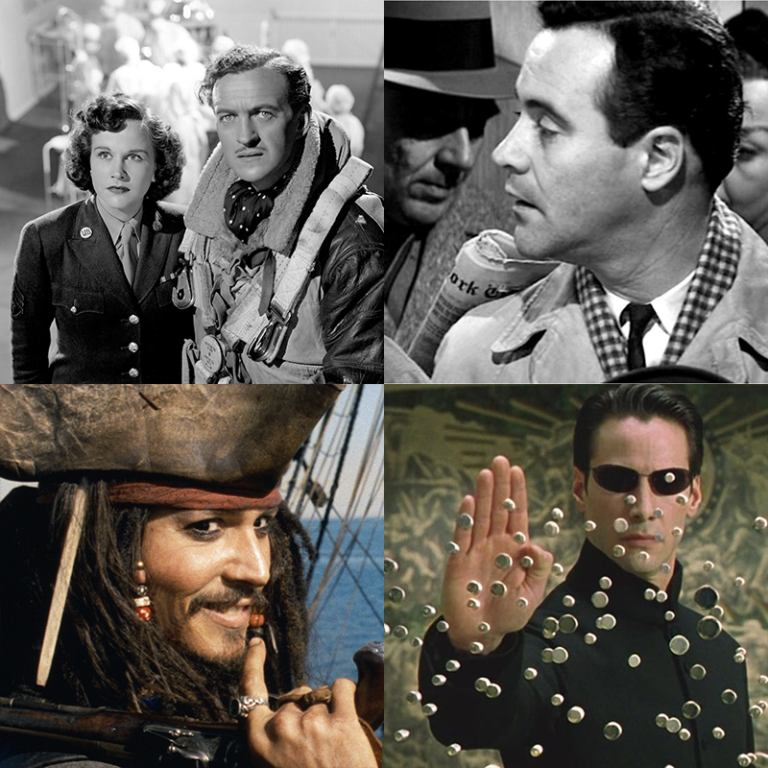
He’s back baby! Not just Sung Kang’s beloved Han, but director Justin Lin, arguably The Fast Saga’s greatest director and overall savior, returns for F9 this weekend. Lin’s eye for action set pieces gave this franchise a new sense of self-awareness it sorely needed, and those attributes are also found in his other films; even Star Trek Beyond gave that rebooted franchise a kinetic energy while simultaneously tethering itself back to classic Star Trek, more-so than J.J. Abrams’s films. With F9, the lunacy seems to be extending beyond our atmospheric reach, and isn’t that exactly what we’ve been waiting for? If any Fast Saga director can pull that off, it is Justin Lin.
So let’s look at his whole filmography; what do you think is the best film directed by Justin Lin?
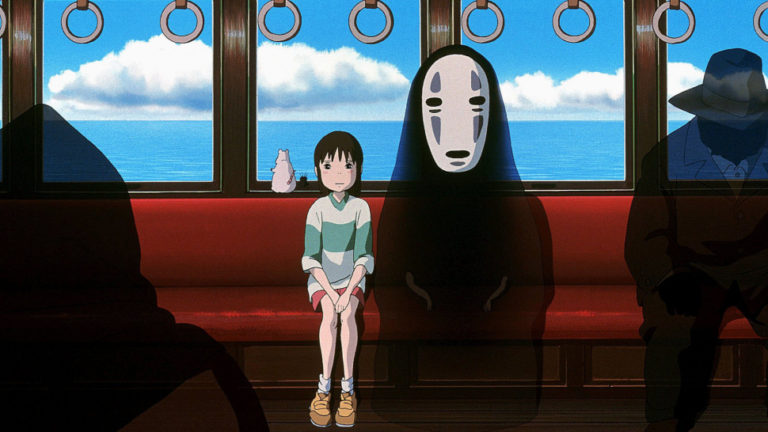
This week on the InSession Film Podcast, we discuss Pixar’s latest in Luca and our Top 3 coming-of-age scenes in animated movies! Plus, JD gives a few brief thoughts on F9 since he will be out next week.
This may just be the quintessential JD/Brendan episode. It’s always a fun time when we get to talk about Pixar, or animation generally, but it’s even more poignant when we get to discuss coming-of-age stories in film. It’s a “genre” that we deeply love and it fits animation immaculately. So, discussing the best coming-of-age scenes in the world of animation just seems too perfect for us. And spoiler alert, we had a ton of fun with it on this week’s episode.
On that note, check out this week’s show and let us know what you think in the comment section. Thanks for listening and for supporting the InSession Film Podcast!
– Movie Review: Luca (6:26) Director: Enrico Casarosa Writers: Enrico Casarosa, Jesse Andrews, Simon Stephenson, Mike Jones Stars: Jacob Tremblay, Jack Dylan Grazer, Emma Berman
– Notes / F9 (48:12)
For our break segment, JD offers up a few thoughts on the latest Fast & Furious film F9 since he will be out next week on Episode 436.
– Top 3 Coming of Age Scenes in Animated Films (1:12:51)
As mentioned above, this topic is right up our alley in just about every way. Coming-of-age stories are very personal to us, and when coupled with animation it often makes for some magical experiences. Which is to say, there is no shortage of great scenes to pick from for our lists, making this exercise a bit challenging. But also a lot of fun simultaneously. That said, what would be your top 3?
If you want to help support us, there are several ways you can help us and we’d absolutely appreciate it. Every penny goes directly back into supporting the show and we are truly honored and grateful. Thanks for your support and for listening to the InSession Film Podcast!
Director: John M. Chu Writers: Quiara Alegría Hudes. Based on the musical stage play music and lyrics by Lin-Manuel Miranda. Stars: Anthony Ramos, Lin-Manuel Miranda, Stephanie Beatriz, Melissa Barrera, Leslie Grace, Corey Hawkins, Dascha Polanco, Jimmy Smits, Marc Anthony, Gregory Diaz IV, Olga Merediz, Daphne Rubin-Vega.
Synopsis: A film version of the Broadway musical in which Usnavi, a sympathetic New York bodega owner, saves money as he imagines and sings about a better life.
[/info]
In the Heights has been out for only a week and it seems as if its fate has been set by overwhelming reactions of letdown expectations, only sunk by its box office numbers that keep plummeting. As with other films of underrepresented sectors of the American population, it seems that it was carrying too much on its shoulders and it was bound to disappoint.
The latest film by John M. Chu (Crazy Rich Asians) – I still don’t understand why a Latinx director wasn’t in charge of bringing this story to the big screen – is a celebration of Latinx optimism and community. It is based on the Lin-Manuel Miranda play, In the Heights, created way before becoming a megastar with his other Broadway production, Hamilton. The story follows Usnavi (Anthony Ramos), a young man that has a “sueñito”, aka a little dream. He wants to leave behind his life as a bodega owner in New York City and go back to the Dominican Republic, the land of his father.
The musical is vibrant and enjoyable with its multiple numbers (a personal favorite is the opening choreography “In the Heights”). The Latin American rhythm can be felt in every pulse and note, highlighted by the rap sequences performed by the male characters, and felt through the coordinated and lively dances. Through music, we learn that everyone in Washington Heights – the New York neighborhood where the story takes place – has a dream. They have something that inspires them to accept jobs with precarious conditions or exhausting schedules. Just as Usnavi, everyone has a sueñito that keeps them going.
While he is planning on going back to the Caribbean, idealizing the country that he only visited once when he was a child, he is also thinking of his crush Vanessa (Melissa Barrera), a hairdresser that dreams of becoming a fashion designer with her own studio. Meanwhile, Nina (Leslie Grace), Usnavi’s childhood friend, is back in town from Stanford, grappling with her resistance to go back to college and the heartbreak that this decision will cause to her community.
That is the thing with this story. While the little dreams are the intimate motivators, the community is the defining presence in all of their lives. This becomes their blessing and their curse: while they are constantly inspired and supported by others, their personal dreams take a secondary place in favor of their neighbors and friends. Sacrifice is a constant denominator, somehow disguised as community bliss, and there is no notion of individuality.
The link these people share is more important than living conditions, dreams, or external injustices. Usnavi is willing to give up his plans for Vanessa or give up an unexpected fortune for Sonny (Gregory de Vega IV), his undocumented cousin. Nina is willing to go back to university, even though she was racially profiled and despises the place, in the name of Sonny’s future. Vanessa’s conflict is clumsily resolved, instead focusing on her relationship with Usnavi. The film offers an idealized vision of the bond of community, setting too heavy a burden on the characters that could be driven by personal ambition, something that has been historically condemned in Latin America.
In fact, the film has an idealized perspective on everything. Whether some characters idealize the United States (Usnavi’s name and its origin is something to ponder about), others idealize Latin America, thinking that their lives would be much better if they went back, with no acknowledgment of the massive issues that exist south of the border (violence, economic uncertainty, political turmoil, corruption, unemployment, racial discrimination, etc.) that have forced millions of people to try to migrate to the United States. In this regard, I am convinced that In the Heights represents the Latinx experience of those in the United States and not necessarily of those that live in Latin America.
This does not mean that the film isn’t enjoyable. Anthony Ramos is a magnetic presence on screen. He dances, sings, and acts perfectly well, showcasing an enviable charisma. There are several musical numbers that deserve attention, whether because of their ambition (“96,000”), choreography (“The Club”), set design (“When the Sun Goes Down”), or message (“Paciencia y Fe”). This last one, performed by Abuela Claudia (Olga Merediz), the neighborhood’s caregiver, is probably the only number that effectively reflects the conflicting reality of the Latin American migrant.
The other storylines are covered in fairytale ingenuity. The characters’ overwhelming personal conflicts resolve rapidly and smoothly. When there is a blackout in the block, everyone dances together – celebrating their heritage of course – and it ends. When Nina decides to go back to school, there is no practical challenge impeding her way and she swiftly gets over her own case of racial discrimination. When Usnavy and Vanessa go out on a date, a nonsensical conflict separates them, only to reunite minutes later. In the story, there are no consequences in the real world, only motivations that are skillfully resolved in a second.
At the end of the day, In the Heights is a carefully put story of the Latinx experience and community, reflecting the stereotypical ideas of what Hollywood thinks it means to be Latinx. While it is commendable that such a film exists – almost everyone in the cast is Latinx – there are some failures that cannot be ignored. The conversation about colorism and the lack of inclusion of Afro Latinx actors in the main cast is urgent and unavoidable. Also, traditionalism and cliched expectations are present: Is it okay to give up personal goals in the name of traditional expectations and the value of community? Are we to believe that Daniela (Daphne Rubin-Vega) and Carla (Stephanie Beatriz) – two supporting characters that are part of the main group of friends – are a couple, even when there’s a weak wink to their sexual preference? The intention is useless if there is no courage in being clear.
In the Heights works as a sneak peek and promise of genuine Latinx representation. Nevertheless, it still offers a soft and curated view of diversity and community. Ecstatic and shallow, this film proves that it is impossible to showcase in just one product the complex Latinx reality. In order to do that, we need more films created by Latinx people focused on authentic representation.
I will be watching and reviewing all of the films included on AFI’s 100 Years…100 Passions list. The list contains the 100 greatest love stories in American cinema and I plan to consider how our views on romance and social issues have changed over the years as well as judge whether the romances in these films actually made me swoon. As a fan of the romance genre, I expect to love each and every one of the nominees but I also don’t know if I would consider all of them romantic.
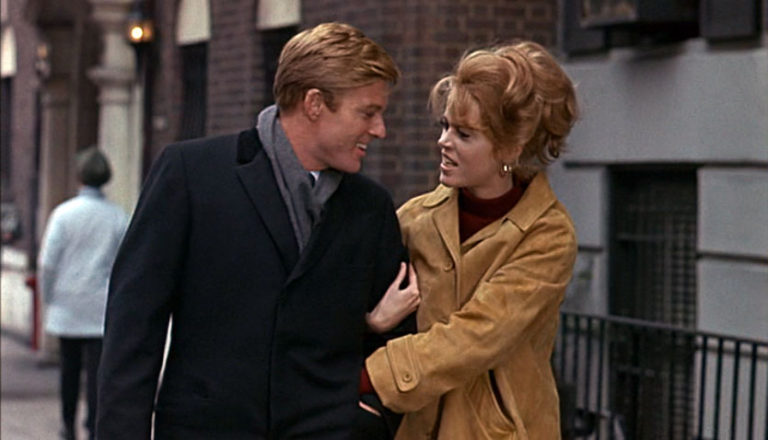
When watching Barefoot in the Park (1967), one can’t help but feel like Jane Fonda and Robert Redford were almost too pretty in 1967. Both of them look like dolls in this film and they’re squeaky clean and strait-laced in a way that is off-putting. Maybe this has something to do with the fact that neither of them had fully blossomed as stars yet. Neil Simon is the real star of the show here and his style of wiring doesn’t go over as well as it did back in the 1960s and 1970s. Fonda and Redford are the big draws in 2021 but right off the bat, I want to warn people that this isn’t a showcase for their talents. This is one of the reasons why the film hasn’t remained popular. It also has the misfortune of essentially feeling like a filmed play that hasn’t really been adapted for the screen.
It’s all about uptight lawyer Paul Bratter (Robert Redford) and his impulsive decision to marry the funky, free-spirited Corie (Jane Fonda). They decide to move into a small apartment together and try to make it on their own. Initially, his career is off to a good start and she finds ways to entertain herself on the days when he is not at home. Their marriage begins to fall apart when their personalities clash and they can’t find ways to deal with the many minor problems that they have to contend with each day. Corie also gets caught up in serving as a matchmaker for her mother Ethel (Mildred Natwick). These diversions drive the young couple apart and they consider the very serious possibility of getting divorced. They have to come to terms with the fact that marriage is more difficult than they expected it to be.
That plot sounds incredibly outdated and it also seems like the setup for a pretty basic sitcom that might play while you’re hurriedly folding laundry before going to bed. It just doesn’t feel like the material for a hit comedy that earned an Academy Award nomination. It just goes to show that the world was very different in 1967. This dated quality occasionally makes the film charming and it is nice to inhabit a fantasy world in which a young couple can afford to live in a nice part of New York City. Of course, Bratter is a yuppie and you assume that he became a Ronald Reagan supporter in the 1980s, but the twenty-somethings of today don’t share the same experiences as the financially stable young adults of the 1960s. It is nice to see an idealized version of this time period and a romanticized depiction of what it might have been like to try to make it in the big city and maintain a relationship at the same time. It’s a nice bit of wishful thinking.
In the end, it’s Simon’s writing and Gene Saks’s slavish devotion to it, that stopped this from working. Simon had no interest in accurately observing the lives of real twenty somethings and his obsessive focus on getting to the punchline is just distracting. There is something schematic about every scene and we know that we can expect an overwritten joke to be lobbed at us every few minutes. He employs lazy contrivances to provide him with opportunities to tell jokes and then doesn’t make the most of those contrivances. When a crack forms in the skylight in the apartment belonging to the Bratters, we have to watch on as snow falls onto the carpet. This is the sort of stuff that would have made an elderly Bob Hope roll his eyes. I just think that Simon’s work was often hacky and deeply artificial that it was hard for any actor to make it believable.
Natwick is the only one who feels like she’s not in a community theatre play. She is warm, witty and above all, natural. None of her movements seem forced and she has a refreshing stillness that makes Fonda’s jitteriness seem even more desperate. The onus isn’t on her to deliver the laughs and she cuts through the layers of artifice in several scenes that would have been totally unwatchable without her presence. She achieves the rare feat of managing to remain above the film she is in. You constantly find yourself captivated by her and want to leave the stuffy little apartment to spend more time with her character.
When you find yourself wanting to spend less time with the central couple, and don’t have that much to say about the on-screen depiction of their marriage, it’s a clear sign that this film didn’t work as a romance. Simon’s writing ensures that the Bratters exist as thin constructs who can be inhabited by half naked attractive people who can awkwardly yelp his one-liners. Everything is painfully labored and Fonda and Redford, as pretty as they are, don’t have any real chemistry. Because he hasn’t written Bratter and Corie as fully formed characters, it’s almost impossible for the audience to feel anything for them. When you’re not laughing, which happens quite often, you notice just how deficient this film is in other areas.
Shame on AFI for including this on such a prestigious list. At least The Goodbye Girl (1977) is far more charming and whimsical than this. Somebody was able to pull the wool over their eyes in this case and voters should feel foolish for giving this a spot on the list.
Everyone is a gossip columnist today courtesy of social media. There are notable names, but anybody can make a splash with hot takes, rumors, and stupid conspiracies about how certain people are part of the Illuminati and so on. (Thank you, AND, fuck you, Twitter.) But the old-timers, and I say this with respect to living former columnist of print, will remember an era when a single person played a major role and be widely recognized on all mediums and were feared. There would be rivalries on who got the better story and what rumors were the hottest that celebrities would become Nixonian a make an enemies list starting with them. From the 1930s forward, during Hollywood’s Golden Age, the gossip columnist would step in with juicy details to feed readers’ desires on what was happening behind the scenes.
Jimmie Fidler
https://www.youtube.com/watch?v=CLsVXJffEJ8
He was first seen interviewing actors in Fox Movietone News segments at the dawn of sound in movies before starting his “Jimmie Fidler in Hollywood” column that was published in 187 outlets. Fidler even beat a libel case when the judge ruled that, even if untrue, something told without malice, as in the case of Fidler’s writing, does not count as libelous. In 1933, Fidler began his 15-minute Hollywood on the Air radio show and received over 40 million listeners by 1950. Compared to the others on this list, Fidler was able to avoid major scandal and would continue his radio program until retirement in 1983.
Walter Winchell
While Winchell wasn’t really a Hollywood gossip columnist – he was based in New York City – his columns on celebrities and politicians was powerful but marred in ethical misconduct. Under the protection of the powerful William Randolph Hearst, Winchell’s work made him a famous nationally in the 1930s with damning stories on anyone he hated or was given scoops to by his high connections with a cracking writing style that was widely recognizable. Winchell, like another columnist, attacked suspected communists and aligned himself with McCarthyism, but also went after alleged Nazi sympathizers and isolationists like Charles Lindburgh. His power was untamed and unmatched until the 1960s, but by then, Hollywood would produce Sweet Smell Of Success starring Burt Lancaster in a role based on Winchell that confirmed his legacy as a power player in the gossip business.
Louella Parsons
(Picture of Parsons)
Parsons was the first gossip columnist in Hollywood, writing in 1914 first for the Chicago Record-Herald, then The Morning Telegraph, and then moving to California where she wrote for The Los Angeles Herald Examiner. Her column would be published in over seven hundred newspapers globally with a readership of twenty million. Her success is in part due to the papers being owned by William Randolph Hearst, who backed Parsons for supporting his mistress, Marion Davies, as an up-and-coming actress. Parson was given the title, “Queen Of Hollywood,” for her influence and printing stories ahead of everyone else until Hedda Hopper arrived and engaged in a bitter rivalry which Hopper won. Parsons would release her memoirs and retire comfortably.
Hedda Hopper
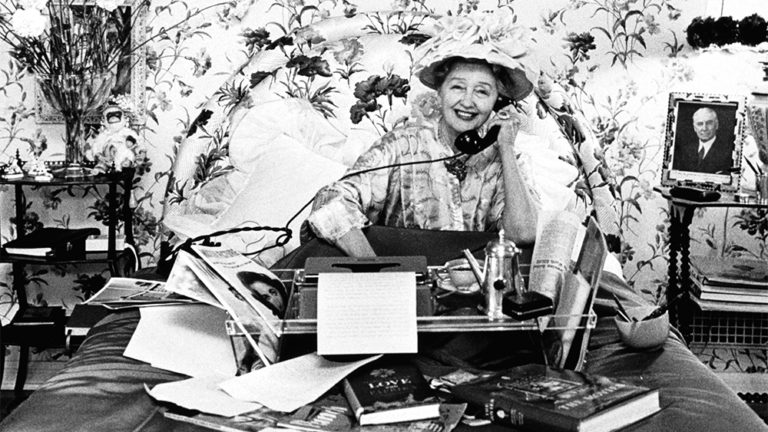
Arguably the most notorious gossip columnist of the Golden Age, Hopper had a readership of 35 million in the 1940s when writing for The Los Angeles Times. Hopper was an actress initially, but when her career was winding down, she became a writer where she got scoops that caught the attention of everyone. Immediately, she became the arch-rival of Parsons and would surpass her in viewership and influence. Hopper’s persona was also of interest with her flamboyance and flair for intentionally writing false rumors, some of which she’d be sued for. A conservative and staunchly anti-communist, Hopper named figures she believed were threats to Hollywood and was a promoter of the infamous blacklist. Even as it ended, Hopper remained a fervor critic of anyone with known left-wing views and would continue to write for newspapers until her death in 1966.
Rona Barrett
Barrett began her gossip column career in the 1950s in her native New York City before being hired by the ABC affiliate in Los Angeles in 1966. From there, Barrett’s televised gossip segment would be broadcast in various major ABC affiliates and would reach Frank Sinatra and Ryan O’Neal, who came to dispise her. One story is that an irate O’Neal sent her a live tarantula in retaliation. Barrett would later work on Good Morning America and Today while producing TV specials on various subjects including film, television, music, and various celebrities, plus a magazine called Rona Barrett’s Hollywood: Nothing But the Truth. After stints on Entertainment Tonight and her own morning show she breifly held on NBC, Barrett retired in 1991 and now runs her own non-profit organization that supports senior citizens in need.
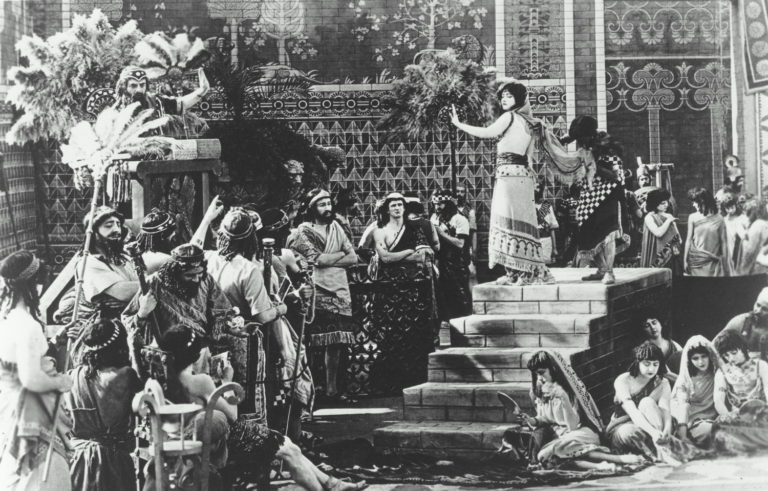
Like many D.W. Griffith films, Intolerance: Love’s Struggle Throughout the Ages (1916) has the rhythm of a poem. Unlike The Birth of a Nation (1915), which sought to tell an epic tale by interweaving various detailed narratives, this film features four loosely interconnected storylines that are linked by a central theme. There are points when Griffith lets go of narrative structure altogether and relies on the intuition of audience members to connect the dots. He also cleverly turns this into a tone poem of sorts. Walt Whitman’s “Leaves of Grass” is even used as connective tissue between the different sections of the story. The line, “Out of the cradle, endlessly rocking” is employed as a jumping-off point for Griffith to explore the manner in which children cannot be sheltered from the collateral damage that comes as a result of historical tragedies.
He splits the story into four different vignettes that are all centrally about intolerance preventing social progression and causing great pain for the most vulnerable members of society. In one of these stories, he tells the tale of the fall of Babylon and portrays it as a tragedy that resulted from religious conflict between followers of Belshazzar and Cyrus the Great. In the second story, he deals with the crucifixion of Jesus Christ and the persecution of early Christians. The third story details the St. Bartholomew’s Day Massacre and the class warfare that helped to fuel it. Finally, he tells a story that is meant to represent the struggle of working class mothers everywhere. All of these morality tales are meant to combine in order to make a strong statement against all forms of intolerance. Of course, this is a Griffith film so racism and sexism are not seen as forms of intolerance.
He really feels the need to hammer home his point in telling all four of these stories, but you find yourself forgiving the preachiness when you take in the sight of some of the sets that he had constructed. When it comes to glitz and glamour, he just can’t be matched. In some ways, his work is similar to that of Cecil B. DeMille, who also dazzled audiences with spectacle and productions with a very wide scope. I think that Griffith receives more respect than DeMille because he does have the ability to hold onto certain plot threads when he decides to bring out the razzle dazzle. With DeMille, it often felt as though the story and its themes were distracting from the mindless extravagance that he wanted to show off. With Griffith, it feels as though there is some purpose behind all of the stunning imagery and the massive crowds of extras. Yes, you do begin to think about the effort that it must have taken to bring all of this together, but you can also get swept up at the moment.
The use of color tinting is also startlingly effective. This is a technique that has largely fallen by the wayside, as three-strip Technicolor was introduced into the world and it became much easier to colorize films. I could notice all of the ways in which the technique was outdated but I still appreciated the correspondence between the colors and the actions occurring on screen. It’s like observing early color grading and it gives you a sense of Griffith’s artistic vision. I can only imagine what he might have done if he had been able to use glorious Technicolor while making this. I’m not suggesting that black and white cinematography is less advanced it is far better suited to certain films when it comes to communicating ideas or setting a specific tone. It’s just that Technicolor would seem to suit a film with this much bombast behind it. Rich hues of gold and red would have felt at home in the first section of the film and they could have served to highlight the vulgarity of the lifestyles that rulers led during that period. The black and white does not highlight points like that with as much emphasis and it is disappointing to realize that Griffith was held back in some regards.
This will likely always place highly on lists of the greatest films of all time. This is because it is credited with pioneering several techniques that have now become essential components of the language of cinema. We might be living in a very different world if we didn’t have big, over-the-top, moralizing epics that contained the occasional flash of brilliance. It may not be my favorite genre of cinema, but I can’t deny the fact that there was something affecting about seeing an early version of a formula that has become stale in the decades following the 1910s. Perhaps I was too awed by its reputation when choosing to evaluate it, but I think that is a bad habit that most people indulge in.
Synopsis: A truck carrying a Dutch military convoy on a peacekeeping mission breaks down somewhere in the desert. As a group of soldiers waits for a repair team to arrive, they encounter a local boy who refuses to leave.
[/info]
There is something intimate and private about Shariff Korver’s latest effort, Do Not Hesitate. While it tackles a well-known, albeit tiring topic, the trauma of armed conflict and violence from a Western point of view, he does it in a way that feels novel and affecting, bringing quietness to a genre that is usually loud and hyperactive. This film focuses on the confrontation of a few within the massive scope of war. Its context may be an armed conflict and the efforts of restoration, but the film is stripped of this massive weight to present the minuscule and immediate threat of historical animosity and the consequent mental toll on soldiers.
The story, shot brilliantly by Nadim Carlsen, follows a group of Dutch soldiers that are in an unspecified Middle Eastern country (a clue that the film is more interested in the characters than in the context, in the personal ramifications rather than the geopolitical consequences). After the convoy in which they are traveling breaks down in the middle of the road, they have to stay the night while they wait for the repair team. While these scenes do not offer any kind of threat, there is a sense of unprotection and vulnerability. There is no one around, they are in the middle of a valley, and the exhausting sun is shining in the sky. The calmness is their main source of discomfort.
While other films would present the threats of guerrillas or hostile enemies – LoneSurvivor (2013), The Outpost (2019) – surrounding them, writer Jolein Laarman instead introduces a sole local kid (Omar Alwan). When they are setting up camp, they mistake a goat for an enemy, and they kill it. Soon after, this boy arrives asking about the whereabouts of his animal. Realizing their mistake, they pay him 50 dollars and urge him to leave. Nevertheless, the boy sticks around, asking for more money, with anger and hatred spilling through his words and shouts.
When the waiting extends for another day, the team is forced to split up, leaving behind three soldiers: Erik (Joes Brauers), the considerate young man in charge; Roy (Spencer Bogaert), a hostile figure that has been violent towards the boy; and Thomas (Tobias Kersloot), the neutral ally to Erik’s kindness. Hence, the three soldiers – who are really just teenagers – stay in company of the fuming, but otherwise harmless child. From here on, the film develops as a survival story and psychological thriller, where distrust, fear, and resentment weigh heavily in the relationship between the combatants and the civilian.
At the center of the story is Erik, brought to life perfectly and compassionately by Brauers, who brings to mind the defining performances by Bartosz Bielenia in Corpus Christi (2019) or Kai Luke Brummer in Moffie (2019). His work here is as delicate, painful, and defining as those memorable roles. As we spend more time with him, we realize that he is kind and docile, making extraordinary efforts to appease the boy’s anger. He tries to be amenable and friendly, giving the benefit of the doubt to this local boy that could betray them at any second. Nevertheless, he is constantly pressured by Roy to be more resolute and violent towards the annoying boy. What do you do with your power during a moment of crisis? This character study is engrossing and fatidic.
Director Shariff Korver explained during the Q&A of the film that he was inspired by a news story of Dutch soldiers sent to Italy after being on the field and before going back home to the Netherlands. He was curious and terrified of the total chaos that meant having these young people with deep trauma spending a mini holiday in a foreign, but friendly place. In Do Not Hesitate, this scenario is the end of the story. Korver is more interested in presenting the “before” picture. What kind of trauma could these kids be carrying with them?
Korver and Laarman worked on a setup that would provoke incommodity and harsh conclusions. It is hard to form positive opinions about this film, but at the same time, it is impossible to dismiss it as another war effort. Its conflict is ethically messy, offering a tragic conclusion to a delicate setup. The trauma that the soldiers face, the sole focus of the director’s effort, is provoked by bad decisions taken in a moment of chaos. They are marked by their relationship with the boy, not by confrontations with enemies in the heat of armed battles.
Every actor in the minuscule cast is defining and important, offering different points of view on the moral dilemmas that surround armed conflicts, including the initial involvement through drafting and the reasons to be part of the army, the use of military power over civilians, the racial attitudes in occupied territories and violence as a method of dealing with challenges. Practically, Erik, Roy, and Thomas embody three different perspectives on war, offering distinctive points of view on masculinity, violence, and remorse.
In this regard, Laarman includes an urgent commentary about violence and the way it is seen as valid when answering unforeseen circumstances and threats in the context of war. There is a direct link between toxic masculinity, violence, and armed conflicts, and this movie skillfully brings that to light.
The film is wise by setting the conflict on its most sensible character, the young soldier with too much responsibility and pressure, cornered by the circumstances. This decision creates emotional conflict and tragedy, as well as condemnation on things such as the lack of accountability and excessive power.
Do Not Hesitate is a tough watch. It discreetly brings to life the moral challenges in the scenario of the heavily conflicting topic of armed conflicts. The film is focused on exploring those secrets that are left behind, far away from home, safe from accountability, but not from trauma and guilt. Although its scope is small, its impact is resounding.
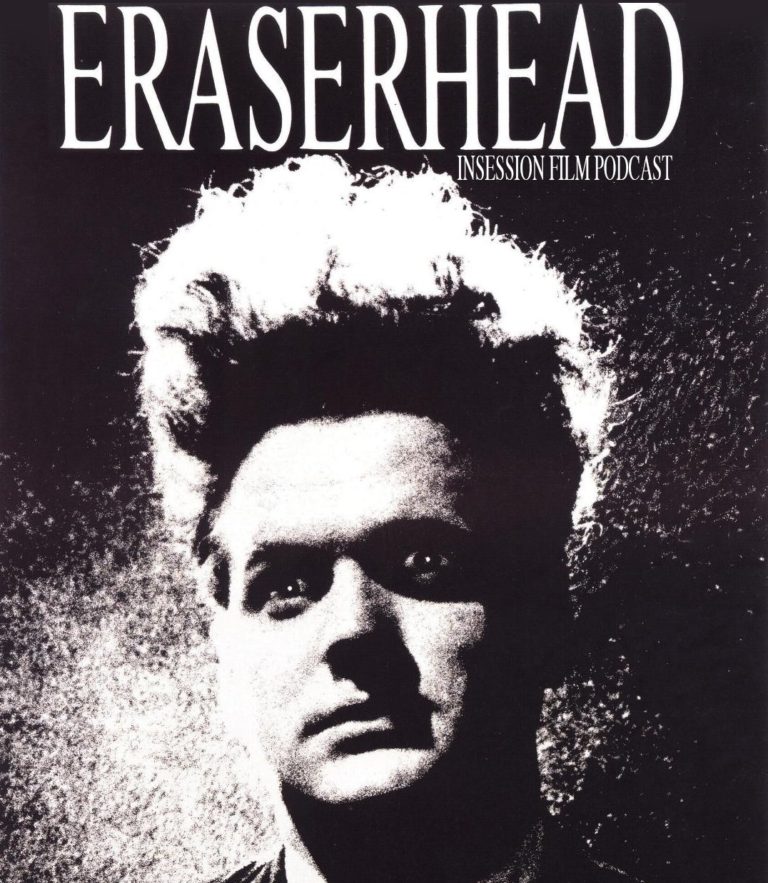
This week on Extra Film, Ryan and Jay begin their David Lynch Movie Series with his psychological thriller Eraserhead and they discuss the documentary The Sparks Brothers!
As the Verbinski Movie Series ends, Ryan and Jay start to explore the crazy, strange, fascinating mind of David Lynch. With his debut film Eraserhead, Lynch is able to tap into visuals never seen before on screen but give us a deeply personal film that anyone entering adulthood can relate to. While Jay had seen it before, Ryan had not, and the discussion led to both hosts loving the film.
In the back half of the episode, the guys review the new film, The Sparks Brothers. With his first film of two this year, The Sparks Brothers is a doc made by Wright to highlight a band he thinks had a major influence on the world of music, “Sparks.” With many celebrity fan cameos, we get a whole picture to examine these two brothers and their massive catalog of music. It’s one of the best films of the year so far and Ryan and Jay really liked it.
Thanks for listening!
– Movie Review: Eraserhead (4:57) Director: David Lynch Screenplay: David Lynch Stars: Jack Nance, Charlotte Stewart, Allen Joseph, Jeanne Bates
– Movie Review: The Sparks Brothers (51:58) Director: Edgar Wright
We try to make this the best movie podcast we possibly can and we hope you enjoy them. Subscribe today on iTunes, Spotify, or Stitcher, and please leave us a review on iTunes. You can also find us on Soundcloud, PlayerFM, and TuneIn Radio as well. We really appreciate all your support of the InSession Film Podcast.
To hear this Extra Film episode and everything else we do, download our apps on the Amazon Market for Android and the Podcast Source app on IOS devices. The mobile app covers all of our main shows, bonus podcasts and everything else relating to the InSession Film Podcast. Thanks for your wonderful support and for listening to our show. It means the world to us.
For this week’s Patreon Bonus Content, Ryan and Jay get caught up on their Movie Series awards. They combine the movies of Powell & Pressburger, Billy Wilder, the Wachowski sisters and Gore Verbinski as they talk Best Production, Best Acting, Best Movie and more!
To hear our bonus content episodes early, subscribe now on Patreon. In many cases, though, we offer our bonus content for free after a certain period of time and we do encourage (and very much appreciate) a small donation of $0.99 as a way to help support the show if signing up on Patreon isn’t for you. Click on the PayPal button below to donate and thanks so much for your support. You can also hear much of our Bonus Content via our mobile apps. See the information at the bottom of the post for more details.
[divider]
Mobile Apps!
Listen to all of our bonus content on our apps for just a one-time fee! Whether you have an iPhone, Android or Windows phone, our apps are available in many different ways that is convenient for you. With our mobile app, not only can you listen to all of our bonus content, but our main shows and our Extra Film podcasts as well. Click here for more info!
If you don’t want to purchase our bonus content, but still want to support us, there are other you can help us out. Click here for more info.
I will be watching and reviewing all of the films included on AFI’s 100 Years…100 Passions list. The list contains the 100 greatest love stories in American cinema and I plan to consider how our views on romance and social issues have changed over the years as well as judge whether the romances in these films actually made me swoon. As a fan of the romance genre, I expect to love each and every one of the nominees but I also don’t know if I would consider all of them romantic.
Two words: Deborah Kerr.
That was what attracted me to this 1957 melodrama when I first sought it out and that was why I was so eager to return to it in 2021. It has a plot that almost everybody is aware of and I almost feel like a fool actually repeating it for you.
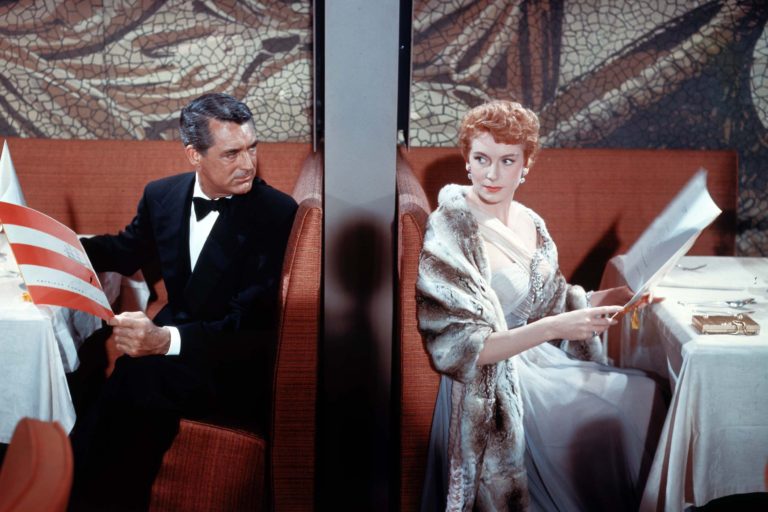
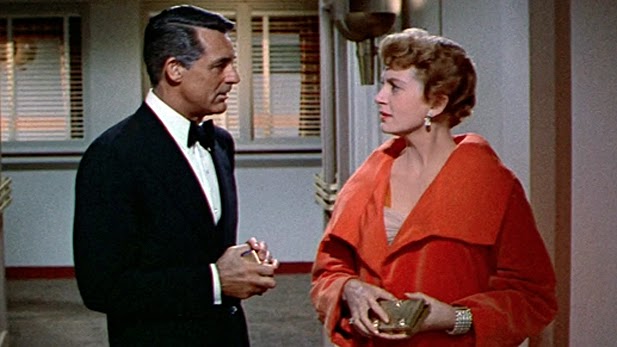
If you’ve been living under a rock, the film concerns an affair between engaged singer Terry McKay (Deborah Kerr) and engaged celebrity painter and ladies man Nicky Ferrante (Cary Grant). They meet on a ship and quickly fall in love. Their romance is hindered by the fact that neither of them can hold down a job. They want to continue living it up but need to have the funds to maintain their lavish lifestyles. Before they leave the ship, they agree to meet up again in six months, atop the Empire State Building. Their plans are thwarted when McKay is faced with an unspeakable tragedy.
My problems with this film are twofold. Firstly, Grant just doesn’t bring any charisma to his role and I fail to see why women would be falling over themselves to date him. In all of his 1950s films, he plays debonair, orange-skinned men who sweep twenty-year-olds off their feet. He looks like a middle-aged man who spends too much time in the sun and yet he’s meant to be irresistible. It just doesn’t make sense to me. I might understand it if he were exceptionally funny or even just friendly. He is neither of those things, as he spends most of his time seeming vaguely annoyed with his leading ladies. Maybe women were just meant to project all of their romantic fantasies onto Grant and he was supposed to be a bland blank slate that wouldn’t turn any of them off. Sadly, he’s too unlikeable to even have that effect and I frequently wanted him to look a little less self-satisfied. He shouldn’t have been presented as some great catch when he really wasn’t in the league of any of the women that he was chasing.
My second big issue with the film is that it does not have a great deal of depth. The truly great films about affairs, such as Brief Encounter (1945) and A Touch of Class (1973), are able to point out that people have affairs for reasons beyond love and lust. In Brief Encounter, Laura Jesson wants to escape from the monotony of day-to-day life as a middle-class housewife. Her affair gives her the feeling of being independent and slightly naughty for once. She can savor that feeling when she’s sitting through a dull Sunday afternoon with her disinterested husband. Ultimately, her dissatisfaction with her real life is so great that she considers committing suicide. An Affair to Remember has extraordinarily simple ideas on its mind. McKay and Ferrante fall in love because they are attractive and their real partners have little in common with them. They have very few deeper frustrations and all of their big problems will be solved if they can just be together. This lack of depth means that the ending doesn’t hit as hard as it really should.
Those are the factors that conspire to make this an unsatisfying film. There is so much beauty on display and McCarey occasionally shows off some sleight of hand as a director, but you get the nagging feeling that there just isn’t anything there. Perhaps that feeling could be overcome if this were more of a comedy and less of a drama. I think the script would need to be retooled and some recasting would need to take place if this were to enter into the pantheon of masterpieces about infidelity.
It’s better to embrace this as pure Hollywood fluff and avoid treating it like a serious piece of art. Everything in this world is artificial and you have to accept the fact that McKay only ever wears couture evening gowns. There is something intoxicating about this fantasy and I was completely enraptured by it whenever Kerr would lip-sync to a song in one of her satin gowns. McCarey also succeeds in building up the ship as a character in itself. We get frequently establishing shots of it and it appears ethereal and glorious as it effortlessly coasts through the waters of the South of France.
This film serves as definitive proof that Kerr makes absolutely everything better. I wasn’t a fan of Love Affair (1939) when I last saw it and An Affair to Remember stays pretty true to the formula set up by its predecessor. Sure, now it’s in glorious Technicolor and the dialogue is different, but it still hits on all the same plot beats. The secret sauce that makes it so much more engaging than that miserable slog of a weepie, is its luminous leading lady. She displays a delicate touch with comedy, a unique way with words and astonishing loveliness. Through the slightest shifts in tonal inflection, she turns McKay into an achingly vulnerable woman. She elevates suffering glamorously into an art and succeeds where Greta Garbo failed in the 1930s. This is a flawed, shallow piece of melodrama, but never let it be said that it isn’t worth seeing for Kerr alone.
So, I wouldn’t place it on a list of the greatest American romantic films, but I would urge everybody to acknowledge Kerr’s greatness as a movie star.
Director: Andrew Irvine, Mark Smoot Writers: Mark Smoot Stars: Catherine Keener, Charlie Heaton, Rosa Salazar, Jackie Earle Haley, Austin Amelio, Jefferson White
Synopsis: After the overdose of his estranged friend, Will, a recovering addict, returns home and begins a secret and volatile affair with Claire, his friend’s grieving mother.
[/info]
Andrew Irvine and Mark Smoot continue with their directorial pairing with No Future, a film that focuses on loss, forgiveness, and resilience. The fact that these issues are tackled from a pessimistic perspective slowly proves that this is a depressing and challenging offer; its title is fitting for the bummer of a story that we witness for 80 minutes. In the film, written by codirector Smoot, not even our protagonist – the most naively optimistic character of the film – avoids the trappings of his own past.
Will (Charlie Heaton) is a recovering addict that is starting to see life in a positive way. During his latest support group meeting, he mentions that he met Becca (Rosa Salazar), a woman that makes him see the purpose of life. He is ready to move on, clinging to the girl as his most important (and only) ally. When he gets home, his former best friend Chris (Jefferson White) is waiting for him, bringing back all the things that Will is trying to leave behind.
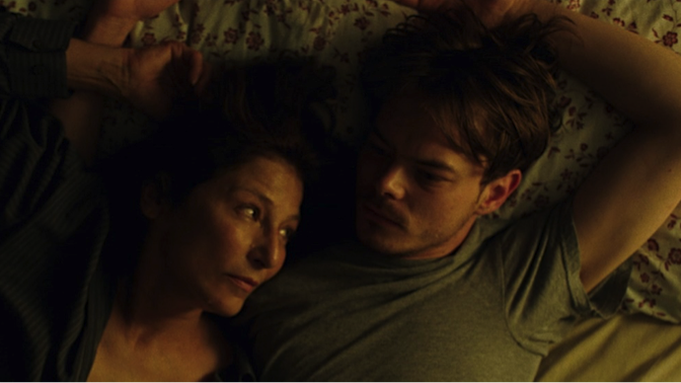
While Will has found the strength to mend his path, Chris has been struggling, just coming out of jail and aching for the past when the two of them made music and reveled on their addiction together. Will has moved on and is not willing to entertain those thoughts, or even help him in any way. In a despaired move, Chris kills himself. This tragic event brings Will and Claire (Catherine Keener), Chris’s mother, together.
It is a shame that the most interesting things happen in the first five minutes of the film. Unfortunately, the best character is quickly out of the picture, and we are left to explore Will and Claire’s story instead. Chris brings to mind memories of Oslo, 31. august (2011) and Ander’s (Anders Danielsen Lie) hopeless reckoning with life and his future. Chris’s despair and fear are painful and recognizable. He is clinging to the past, and he does not seem to have too many options to resume his life. Unfortunately, he only inspires the conflict, and we are left instead with more sadness and mourning on others that inspire no empathy or interest.
The tone and essence of the film is heavy. This, joined by defeated performances, a helpless story, and a sullen score by Jon Natchez, weigh heavily. It is hard to connect with a film that is such a miserable experience. The fact that both Claire and Will make senseless and ridiculous decisions inspired by their pain only makes everything harder.
Will starts acting weird and alienating his girlfriend, the very same woman that was the reason for him to continue living (deeply troubling expectations). When he goes to Chris’s funeral, he reconnects with Claire, someone that has always been around as the mother of his best friend. This image is quickly corrupted when they start an unexpected and awkward affair. This creative decision feels forced and messy. Something that is written in the script for the actors to do, not something that the characters in such circumstances would do.
From this moment on, Will and Claire develop an undefinable relationship. They do not share anything other than pain, and when they are apart, they destroy their own lives. Still, this affair is nonconsequential. It is hard to develop interest for characters that are not profoundly developed, their arguments based on resentment and despair. In this regard, Smoot’s script is simplistic and full of shortcuts on topics such as addiction and complicity.
The failures of the film are painful when we consider the cast at its service, including Keener and Jackie Earle Haley. Charlie Heaton appears in his meatiest role since Stranger Things, bouncing off his gloomy and existential presence in the Netflix show. Unfortunately, Heaton and Keener do not share chemistry, making it more uncomfortable when Heaton tries to embrace that role of possible love interest.
No Future is a deeply gloomy and unempathetic story of loss and sadness. While it has an intriguing cast, it inspires an uncomfortable feeling of defeat. Smoot and Irvine intend to reflect on the difficulty of moving on, and while they offer an optimistic perspective at the beginning of the film, they make sure that by the end this foolish idea is completely obliterated.
Director: Bo Burnham Writers: Bo Burnham Stars: Bo Burnham
Synopsis: A new comedy special shot and performed by Bo Burnham, alone, over the course of the past year.
[/info]
When I watched YouTube videos of a funny guy named Bo Burnham in high school, it never crossed my mind that he would go on to do all the things he has. After a few hilarious standup specials, supporting roles in films like The Big Sick and Promising Young Woman, and a truly impressive directorial debut with Eighth Grade, he’s carved a reputation for himself as an ultra-talented comedic artist. And yet, somehow he’s topped all of those accomplishments with his latest venture, Inside.
Inside is…a comedy special? A film? It’s a bit difficult to wrap up in a simple defining term. The work, released by Netflix, was made entirely by Burnham and Burnham alone in quarantine as a result of the ongoing COVID-19 pandemic. What results is a meditation on the pandemic itself, U.S. society and injustices, and the digital world, all surrounded by bits of humorous delivery. The passing of time is readily apparent in the film, most notably through Burnham’s continuously growing hair and beard. Though that’s not to say the film is in chronological order, as he employs some fascinating editing techniques to move between periods of time, personal reflections, and numerous musical numbers.
A musical is yet another definition for the work. Burnham spends most of the time singing songs that cross between gut-busting humor and harsh truths. Such is the case for one of the earliest tunes in the film, “How the World Works.” Here, Burnham’s sock puppet Socko delivers a lecture on just a few of the problematic issues with U.S. society, all while Burnham responds with hysterical facial expressions. As with every aspect of the film, the segment goes even deeper as a take on the efforts of white men to maintain power, even those who come off as well-intentioned.
A quick look at the soundtrack, which was recently released to music streaming platforms, shows that 53 minutes of the film’s hour-and-a-half runtime is made up of the songs. But Burnham employs a welcome tactic of including his spoken musings, usually quite deep and sometimes depressing, as well as skits in between the musical numbers. Songs have always been a major part of Burnham’s shows, but some of these skits stand out as a real throwback to his earliest successes. That’s especially the case for a bit in which he poses as a YouTube personality reacting to one of his songs. This results in a sort of domino effect where a new reaction begins every 30 seconds or so, allowing him to share his sensibilities in viewing his own work with each subversion or rejection of the previous reaction.
The YouTube connection shows up again when he acts as an online gamer, playing as himself on a typical, meaningless day in the middle of the pandemic. It serves as an example of the essence of each segment in the film. Burnham is not trying overly hard to be funny. He has an interest in sharing what he believes to be true, whether about himself or the world, and he has a naturally humorous way of delivering that. This is something he addresses in the beginning of the film, as he questions whether there is truly a place for comedy in times like these.
The theme of the internet and social media is a major factor in the special, much like in Eighth Grade. In addition to his acts as a social media influencer, he addresses this directly in perhaps the best song of the film, “Welcome to the Internet.” Here, Burnham sings like a sort of mysterious carnival leader, welcoming the viewer into the online world and all of its qualities and challenges. He essentially encapsulates the nature of the internet in one song, from QAnon conspiracy theories to unsolicited nude photos. The theme also shows up in the funniest song of the film, “White Woman’s Instagram,” which is notable for the vast number of set pieces and costumes Burnham uses for the song alone.
Songs like these work in the film because Burnham is actually musically talented. He works with a number of styles for the soundtrack, and his lyrical rhythm is wonderful. However, as good as the songs are, what may stick with viewers the most are the quiet moments of the film. Throughout, Burnham touches mental health, displaying that he feels emotionally unwell both verbally and visually. Of note is a crushing scene in which he waits for midnight to arrive on his 30th birthday while in quarantine. The entirety of the special is filmed in Burnham’s home, primarily in one small room. Moments like these help heighten the sense of isolation he appears to be feeling and creates a truly palpable and emotional aura.
In addition to all of the magical content, the film also sets itself apart from other such specials with the visuals. Burnham employs numerous camera angles, tinted lenses, and even the use of a projector to display images on himself throughout the film. In short, the movie looks amazing for something shot in a simple home without a set. When considering Burnham did this all on his own, without another writer, cinematographer, editor, etc., it comes off as a bit of a masterpiece of a one-man show. Of course, Burnham gives us a look into this creation as well, not only by speaking to us about the process but also by including scenes of his frustration amongst all the wires and tools of the set.
When putting all of this together, it’s abundantly clear that Burnham has created something truly special. There will certainly be a number of films and documentaries about the COVID-19 pandemic over time, but this may very well end up being the essential work on the tragedy. Burnham accomplishes this by honing in on the emotional impact of the pandemic and revealing himself to viewers in a completely vulnerable fashion. I’ve seen the word “genius” used to describe him. That is certainly fitting, though I think what’s most special about this isn’t his talent level. What the film shows is that, on an emotional and personal level, he’s so much like us as viewers. That’s why one might feel so much joy as the film ends with a glimmer of hope in his little smile.
I will be watching and reviewing all of the films included on AFI’s 100 Years…100 Passions list. The list contains the 100 greatest love stories in American cinema and I plan to consider how our views on romance and social issues have changed over the years as well as judge whether the romances in these films actually made me swoon. As a fan of the romance genre, I expect to love each and every one of the nominees but I also don’t know if I would consider all of them romantic.
The dizzy dame is a character type who frequently appeared in 1930s screwball comedies. Golden Age legends like Irene Dunne, Carole Lombard, and Jean Arthur were able to play women who were impulsive, funny, charming, irrepressible, occasionally annoying, and lacking in self-awareness. Heroines who could have been categorized as ‘ditzes’ became daffy, loveable, and full of the sort of idiosyncrasies that would go on to characterize the anti-heroes of 1970s arthouse cinema. These actresses were given the difficult task of getting us to empathize with women who cause pain and destruction. They had a difficult tightrope to walk and if they screwed up, audiences could completely turn against their characters and the films they were in.
Katharine Hepburn was an actress who had a love-hate relationship with the American public in the 1930s. She first gained fame by playing characters who were very similar to herself. They tended to be haughty, upper class, arrogant and eccentric. These qualities were admired when she was just a pretty young thing breaking into the industry but by the mid-1930s, audiences hungered to see her playing characters who had their confidence knocked down a bit. People started to resent her wilfulness and lack of bashfulness in the presence of her leading men. This is why it was so risky for her to appear in a romantic comedy where she played a character who was potentially detestable. Bringing Up Baby (1938) wasn’t financially successful in its time and it contributed to Hepburn’s late 1930s downfall, but it has become one of her most enduring classics in the decades following its release. Maybe it’s because modern critics are more open to the idea of a heroine being a flawed figure who doesn’t need to completely change herself for the man she is with.
Hepburn’s flawed heroine is Susan Vance, who is described as a “Flutter-brained vixen” on the film’s poster. She’s flighty, ignorant, selfish, manipulative, dishonest, and overbearing. When she stumbles into the life of David Huxley (Cary Grant), a meek, stiff paleontologist, he doesn’t quite know how to deal with her. She is immediately smitten with him and decide that she must have him for herself. He is already engaged to Alice Swallow (Virginia Walker) and meets Vance just a few days before their wedding is scheduled to take place. She steals Huxley away from his fiancée by convincing him that he needs to help her transport her pet leopard, known as Baby, to her farmhouse in rural Connecticut. Once they reach the farmhouse, she plots to keep him around for as long as possible so she can seduce him.
Like most screwball comedies, the plot exists as a foundation upon which zany, outlandish characters and hilarious gags can battle for supremacy. The real wonder of Bringing Up Baby is that the script seems to value characterization over jokes and easy punchlines. Both of the main characters have their own little character arcs and there is a feeling of consistency in the way that they are developed. There was never a point where I felt as though they were acting out character in order to make some contrived laugh line work. By the time Vance plunged into the depths of a river after assuring Huxley that it was simply a shallow puddle, I could point at the screen and declare “That’s such a Susan thing to do!” I think it’s always a good sign when audiences can feel this sense of familiarity with, and affection for the characters developed in the screenplay. They weren’t mere chess pieces that could be moved around the screen like props. Both Vance and Huxley feel like living, breathing human beings who are deserving of our sympathy, this creates deeper engagement with the film and ultimately, more enjoyment.
As strong as the script is, this really doesn’t work without Hepburn. Her performance is miraculously free of many of the tics that she often fell back on. Her eyes don’t well with tears at any point and she doesn’t tip her chin upwards and direct a scornful glare at anybody. The extreme physicality that we associate with her early work is on full display and she manages to reflect her character’s emotional state through some of the gymnastic moves that she performs. Vance’s relentless optimism can be seen in the way that Hepburn will pick herself up and dust herself off at an alarmingly quick pace, shortly after being involved in a horrible accident. You can also genuinely believe that Vance is oblivious to the reactions of people around her. Hepburn’s back never stiffens in the face of criticism and she does seem to exist in her own little world while the people around her gawk at her. She’s always completely in control of her body language and the tenor of her voice, which creates the illusion of her fully slipping into character. Hepburn was rarely a transformative actress, and I’m not arguing that she always needed to be, but I admire the fact that she was able to change her approach in order to take on this role.
This has mostly been a lengthy love letter to Vance and Hepburn but I’ll admit that Bringing Up Baby is not perfect. It could do with having a good twenty minutes trimmed off of it and it does drag towards the end. This effect is compounded by the fact that the script’s contrivances become increasingly strained during this section of the film. It’s a shame that it can’t quite maintain the pace that it sets up during the first two acts but it puts in a damn good effort.
Director: Enrico Casarosa Writers: Jesse Andrews and Mike Jones Stars: Jacob Tremblay, Jack Dylan Grazer, Emma Berman, Maya Rudolph, Marco Barricelli, Jim Gaffigan, Sacha Baron Cohen
Synopsis: A young boy experiences an unforgettable seaside summer on the Italian Riviera filled with gelato, pasta and endless scooter rides.
[/info]
Something is under the sea, and it is cute! And colorful! And it is from the people who have brought you other one-word darlings of animation like Coco and Soul…? The hesitation is there as, unlike Miguel’s trip to the afterlife and Joe’s trip to, well, the afterlife, Disney and Pixar’s Luca doesn’t linger in the mind or moor to the heart for long. These aren’t the filmmakers’ imperatives, one could even say, and what is instead is to give audiences an easygoing “day at the beach” experience through the days on the shore of a 13-year-old sea monster ragazzo.
Unlike his two aforementioned musical relatives, or his much closer mermaid cousin Ariel, Luca (Jacob Tremblay) has no brush with the triumphant when he, at last, breaches the surface. It’s a big character moment that simply comes and goes, possessing the same sunniness and breeziness behind nearly every minute of Luca discovering the whozits and whatzits of Vespa, pasta and the town of Vernazza (now called Portorosso, a semi-nod to Hayao Miyazaki’s Italian-centric 1992 film) without the usual fins and gills. Given Pixar’s known capacity to amplify the small or otherwise ground the colossal, Luca seems to be an outlier because it’s doing neither, whether it be Jesse Andrews and Mike Jones with the story or Enrico Casarosa in the direction. As if swimmers, the three men aim for straightforwardness from the outset, otherwise streamlining to lean toward that, resulting in a coming-of-age yarn with plenty of phases to count but none proving to be memorable. What you see of a particular component is what you get — the bond between Luca and fellow land-dwelling sea monster Alberto (Jack Dylan Grazer), their maneuvers around one wise firecracker fishmonger Giulia (Emma Berman) and her dad Massimo (Marco Barricelli) for their scales’ sake, a triathlon where victory means embarrassing the town bully Ercole (Saverio Raimondo), and how all those land-based adventures will pressure Luca’s mom Daniela (Maya Rudolph) and pop Lorenzo (Jim Gaffigan) — no more, no less. Or nothing more in what initially seems less. It’s standard, which, while not a sin, will force you to adjust your expectations.
But despite being — for want of a better word — a “lesser” Pixar effort, Luca is no clearance-grade fillet. Andrews and Jones may have completely ditched the layers of themes and tones in their respective hit friendship-centric works, Me and Earl and the Dying Girl and Soul, but the humor and lightness they would constantly serve are free from saccharine (but with plenty of cheese), independent from side characters (hello, Minions) and the kind that gets the plot moving. Director Casarosa may have foregone the wonders of respite and intimacy he applied in the La Luna short, but the vibrancy and electricity — from Daniela Strijleva’s lived-in designs and Dan Romer’s heartfelt strumming — blend right in with details allowing Portorosso to be as much a postcard-primed reverie as an innocent memory (Casarosa said the Luca-Alberto friendship is inspired by his). You can, and will want, to travel to this world to meet these lives. And the escapism which Luca provides? It’s still proof the animation house can still make magic, only this time without the usual flourish that is an attempt to mine depth.
Still, if Luca can silence the Brunos who have chastised Pixar for being “so depressing” of late, it’s worth the while. And it will, considering how bright the universe is and how cracking the personalities are. Luca is an Italian getaway you should take when it’s available, even when it will all-too-quickly become a haze once it’s over (and when its big-screen brushstrokes are deemed more fitting for smaller windows on the first day of release).
Michael Mann isn’t the most prolific of filmmakers, but man (pun intended) is the quality always there. From Thief to Manhunter to Heat to Collateral, and everything in between, Mann has a style that vibrates in every single one of his film’s. He’s a director that thrives with pulsating color and energy. He’s also not afraid to play in the gray area with his characters, often positioning them in situations that teeter back and forth between “good” and “bad.” As a result, when it comes to crime thrillers, he’s arguably underrated within the discourse. People often talk about the Scorsese’s and Tarantino’s of the world, but Mann should be in that conversation. His influence on the genre is equally potent and wide ranging. We greatly look forward to discussing this in-depth over the course of the next several weeks, and hope you enjoy the journey along with us.
Thief, 1981
Listen to our review below as heard on Episode 425.
[divider]
Manhunter, 1986
Listen to our review below as heard on Episode 426.
[divider]
The Last of the Mohicans, 1992
Listen to our review below as heard on Episode 427.
[divider]
Heat, 1995
Listen to our review below as heard on Episode 389.
[divider]
The Insider, 1999
Listen to our review below as heard on Episode 428.
[divider]
Ali, 2001
Listen to our review below as heard on Episode 24.
[divider]
Collateral, 2004
Listen to our review below as heard on Episode 429.
[divider]
Miami Vice, 2006
Listen to our review below as heard on Episode 430.
[divider]
Public Enemies, 2009
Listen to our review below as heard on Episode 431.
[divider]
Blackhat, 2015
Listen to our review below as heard on Episode 433.
[divider]
As you can see above, we have officially covered Heat and Ali in previous years, however we will have an epilogue at the end of this series where we revisit those films in one conversation. Be sure to leave any feedback in the comment section below or hit us up on social media!
It’s a very deliberate choice to have children front and center in most animated films. Their innocence and naivete not only gives them room to grow, but it makes them great catalysts for childhood themes, even when they go to much darker places (I mean, I genuinely believed that if I smoked or drank underage, I would in fact turn into a donkey). This weekend sees the release of Pixar’s latest Luca, which has essentially been described as the studio at their most innocent and simple, two words that go hand-in-hand within the coming-of-age subgenre.
So with that said, what is your favorite animated coming-of-age film?
This week on the InSession Film Podcast, Ryan fills in for Brendan as we discuss two (very different) musicals in John M Chu’s In The Heights and Bo Burnham’s comedy Inside!
Big thanks to Ryan for stepping up as co-host this week. It’s always a pleasure to have him on the Main Show, but it’s especially great when he brings as much passion as he does with these reviews. His thoughts on In the Heights is not to be missed. Our discussion of Inside, though, was equally a ton of fun. It’s another long episode, but we hope you enjoy it as we did.
On that note, check out this week’s show and let us know what you think in the comment section. Thanks for listening and for supporting the InSession Film Podcast!
– Movie Review: In the Heights (7:10) Director: Jon M. Chu Writers: Quiara Alegría Hudes (based on the musical stage play, book by, and screenplay), Lin-Manuel Miranda (based on the musical stage play, concept by) Stars: Anthony Ramos, Melissa Barrera, Corey Hawkins, Leslie Grace
– Notes / A Quiet Place Part II (1:09:07)
For our break segment, we talk about a few Patreon shows we have this available this month, including Part 1 of our Disney Animation extravaganza and the Extra Film boys doing a celebration of their last few Movie Series. Ryan also gives his thoughts on John Krasinski’s A Quiet Place Part II.
If you want to help support us, there are several ways you can help us and we’d absolutely appreciate it. Every penny goes directly back into supporting the show and we are truly honored and grateful. Thanks for your support and for listening to the InSession Film Podcast!
Director: Adam Leon Writers: Adam Leon Stars: Vanessa Kirby, Simon Brickner, Annika Wahlsten, Annabel Hoffman, Maya Hawke
Synopsis: A mysterious woman wanders the streets of Manhattan in a confused state. Finding herself inexplicably drawn to a teenager, she embarks on an adventure with him through the city and the unknown.
[/info]
In 2016, writer/director Adam Leon got international attention with Tramps, a fresh romantic film marked by crime and drama, and showcasing two promising stars, Callum Turner and Grace Van Patten. Five years later, Leon is back with his abstract effort in Italian Studies, using once again the city of New York as the canvas for his story.
In his new movie, Leon is interested in topics of identity, memory, and social acceptance, which are explored through the eyes of a mysterious woman (Vanessa Kirby) who finds herself alone and lost in a pre-pandemic and lively New York. Leon experiments with the idea of bringing to life broad ambitions with no explanations. His camera freely follows her lead, and the audience has the task of understanding on their own what is going on. Clarity is restrained in favor of atmosphere and mystery.
Kirby is the sole interest of the story as we follow her in two different timelines. The past is in the ebullient and nocturnal New York, and the present is in the busy and diurnal London. In England, she is stable and conscious, and in the United States, she is as if in a dream, trying to make sense of her surroundings, in a defensive state. She knows that she cannot remember who she is, but she does not want anyone else to know that as well.
In London, she meets a New York acquaintance that she cannot recognize. Soon things start to become frustrating. The more details she gets, the less she can remember. Is she lying or is this lack of memory real? While the audience is trying to make sense of her confusion, Leon takes us back to New York, to the very day of this conversation.
We follow Kirby as she leaves her apartment with her dog. As she enters a store and starts exploring the place, she forgets what she is doing there. Soon after, she simply leaves the store and her dog behind and starts wandering the streets of New York. Sometimes the camera sees her from across the street, others it focuses exclusively on her calm face with restless eyes. How long before she asks for help? Why doesn’t she want others to know that she is lost? Although her distress is palpable, her silence is definitive. As said before, we really do not get answers about her condition. We are frustratingly left to imagine.
After hours of being alone, she bumps into someone that seems to recognize her. Our protagonist quickly accepts the identity that this other woman confers to her. She finally has a clue about herself. She is an author of a collection of short stories called Italian Studies, and her name is Alina Reynolds. This identity sounds exciting and compelling, and Allina embraces it and goes with the motion. How is our identity defined? Is it established by our names and professions, by the way, others see us, or by our thoughts? What would have happened if Alina had been distinguished as something completely different and unappealing to her lost self? Italian Studies tries to explore this.
While the themes are compelling and the exploration of that feeling of being lost is an intriguing way to understand our instincts and basic elements of our personality, the execution in Italian Studies is challenging, creating impatience at how little we understand of what is going on. The film is more successful when talking about it, and not when watching it on screen.
Somewhere on her lost wandering, Allina starts hanging with a group of teenagers, under the pretense that she is doing research for her next book. While the testimonies that the teens – which include actors such as Maya Hawke, Simon Brickner, and Fred Hechinger – provide feel fresh, clueless, and inspiring, the link with Alina’s storyline is messy and uncertain. Again, this story is more about mood and experimentation than concrete and understandable results.
Vanessa Kirby keeps shining in roles that focus on her face and elegant appearance. The camera seems to be enchanted with her and she shines every minute of the film. She conveys fear, confusion, and frustration with a single look and the movie relies too much on her charisma and authenticity. She is vital for the somewhat success of Leon’s effort.
In addition, the technical aspects make the film compelling. The cinematography by Brett Jutkiewicz is moody and abstract. Sometimes Kirby seems to be in a dream, others in a nightmare. The music by Nicholas Britell (Oscar-nominated for Moonlight and If Beale Street Could Talk) is the story’s most important ally. Formed by warm whistles and tense notes, it offers moments of tension, absentmindedness, and freedom. The tentative essence of the film can be felt in its musical notes.
Italian Studies is a challenging film. While Vanessa Kirby is a compelling reason to watch it, it can inspire feelings of frustration and impatience. Leon presents intriguing themes that require a lot of commitment from the audience to get involved with them. Nevertheless, the liveliness of a now nostalgic New York, and an ethereal feeling form an intriguing project.
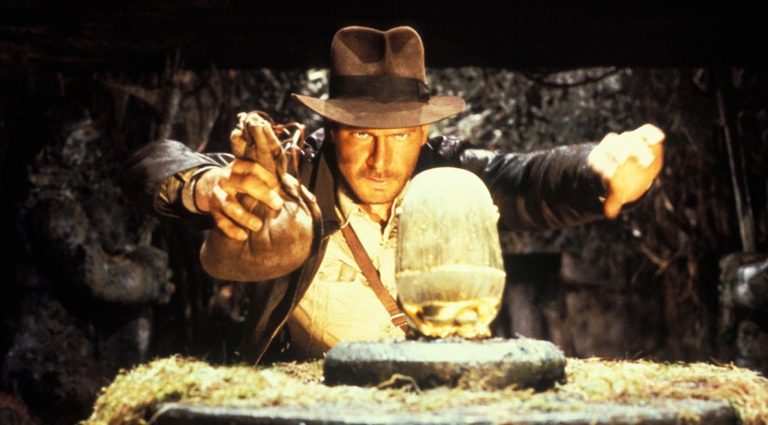
As a team of explorers wanders through a jungle, the sun peaks through the branches. The obscured lighting builds an instant fascination as the men move silently through the jungle. A hive of bats turns scares their guide, turning him into a flurry of flailing arms and louder screams. The others trudge through the jungle, following a wordless leader deeper into the foliage. The men begin to wilt under pressure, proving themselves unfit for the challenges awaiting them. In the end, only two men enter the temple that houses a golden idol. As the unnamed hero makes his way to the shrine, the tension tightens on his face. As Indiana Jones arrives at the dangerous puzzle, he secured his place in the pantheon of cinematic heroes.
From its opening set-piece, Raider of the Lost Ark establishes itself as a masterpiece. Steven Spielberg’s immaculate vision lends Raiders a nostalgia and texture that grounds the film in reality. Yes, mysticism and otherworldly phenomena litter the franchise. As the Indiana Jones franchise developed and changed, the relic hunts became ingrained in belief and cosmic powers. Yet the images of dust, wooden spikes, and massive marble statues root us in an explicitly tactile world. Forty years since its release, Raiders of the Lost Ark remains one of cinema’s true masterpieces while spawning a worldwide phenomenon.
Since its release, Raiders has largely been credited as the work of three men. George Lucas wanted to tell stories outside a small intergalactic franchise that captured the imagination of the world. Spielberg has already created an American masterpiece in Jaws, and Close Encounters of the Third Kind had proven his versatility. Harrison Ford, like Lucas, was looking to branch out from a galaxy far, far away. The three men had the clout to bend Hollywood to their will and the means to create the ultimate original property. While the series would harken back to Buster Keaton, Errol Flynn, and the serials of the 1950s, it had the promise of something greater.
Despite the vision of Raiders as a three-man circus, it’s impossible to ignore the immense talent present across the film. Lawrence Kasden and Phillip Kaufman would each develop the story and screenplay, paving the way for their own success in the director’s chair. Douglas Slocombe captures dozens of iconic images with his camera and expertly captures action sequences with intimacy. As he follows Indy and Marion through a marketplace, tracking the street fight as it evolves, one cannot help but see Raiders’ influence on kinetic action films that would release in the next few decades. Michael Kahn deserves much of that credit as well, as the three-time Oscar winner expertly vacillates between long character-building moments and the brisk cuts within the action sequences.
The aural experience of Raiders remains unmatched, both in its use of score and sound. John Williams won five Oscars and has been nominated thirty-eight times. It’s a stunning career, and yet Raiders remains one of his most influential works. Williams’ score adds to the majesty of Spielberg’s camera. Few films can balance the upsettingly creepy creatures lurking in the shadows with the pure evil of the Nazis. Williams adds considerably to the romance, and his light-hearted flourishes highlight the comedic moments that Karen Allen pulls out of thin air. The Oscar loss for the Raiders score is arguably the most egregious snub of Williams’ career. While Chariots of Fire’s score is iconic, the Raiders score achieves a universality that few instrumental pieces ever will.
If Williams wasn’t enough of a shining star, Raiders features the greatest sound team ever assembled on a film. That may sound like hyperbole, but the sound team alone went on to win 22 Oscars, 101 nominations, and multiple special achievement Oscars. The names are iconic, including Gary Summers, Gary Landaker, Stephen Hunter Flick, Ben Burtt, Kevin O’Connell, Leslie Dilley, Bill Varney, Mark Mangini, Randy Thom, and Steve Maslow. The soundscapes of Star Wars, Pixar, Mad Max’s wasteland, the beaches of Dunkirk, and even Michael Bay’s asteroid were born from these minds. The influence is incalculable, and the way modern cinema sounds can largely be attributed to the crew of this film.
Even with all this talent at his disposal, Spielberg remains the essential figure in shaping Raiders as a cultural phenomenon. After Kaufman decided to pursue other projects, Spielberg assumed total control. He would push Ford into new ground as a performer. The actor’s reputation was as a smooth ladies man, and while Indiana Jones certainly plays up those aspects, it also allows him to be a knowledgeable, adventurous nerd. It was a far cry from Han Solo or Bob Falfa.
Spielberg boosted Ford’s confidence in delivering expository dialogue, but the line readings create as much excitement as the whip fights. The stakes of the film are instantly made clear through the use of a chalkboard and a textbook. Peering over the shoulders of two men, the image of lightning and death instantly puts them at a state of unease. The silhouette of Indy becomes iconic in its own right throughout the film, and the repeated visual motif establishes the larger-than-life persona of our hero.
The practical effects continue to age well, and with 4K transfers flooding the market this past week, Raiders still looks incredible. The set pieces remain iconic. Disney would later incorporate the bazaar fight, the boulder run, and the plane fight into an Indiana Jones stunt show for their theme parks. That show ran thirty years of productions before COVID temporarily closed it down. One might be surprised to know the majority of the film was set on stages because of the minutia Spielberg brings out of the settings. Raiders thrives in creating this sensation, thanks to intricate production design, brilliantly choreographed fight sequences, and dozens of set pieces.
That is not to say that Raiders does not have some questionable elements. The depiction of Middle Eastern and Egyptian characters leaves a lot to be desired. The romance with Marion has always been uncomfortable at best. Under further examination, a girl that can barely give consent fell in love with a student in his early twenties. The film rises above these issues, in part because of its rapid-fire dialogue and rapturous story. One can enjoy this film and simultaneously feel these pieces are questionable in their execution.
With a whip snap and an errant gunshot, Indiana Jones instantly became an icon of the silver screen. The ultimate homage to the Matinee Idols of old ushered in epic storytelling and reinvented the action blockbuster. Spielberg, Lucas, and Ford remain the icons of Raiders of the Lost Ark, but the influence and skill of this crew are nearly unmatched in cinema history. For a brief moment, many of Hollywood’s most influential artists and engineers collaborated on a single project. The final product deserves its place in the American canon for decades to come.
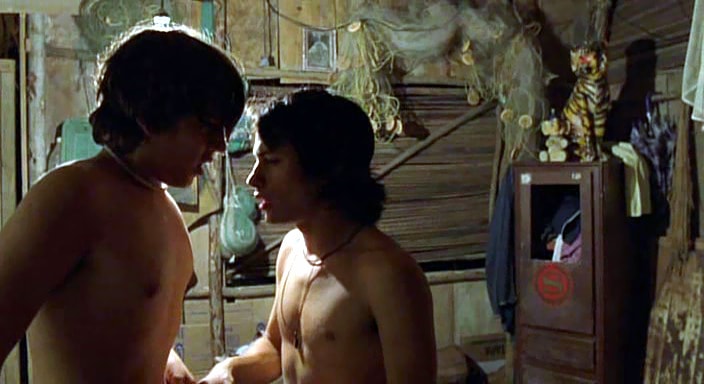
Queer cinema really hit it off in the 1990s and 2000s with more LGBT actors, directors, and stories being portrayed more openly than in years prior. Primarily, they were outside-the-box productions with very little big studio support that would get enough recognition from critics and sometimes were recognized in major outlets, such as Gods And Monsters and Boys Don’t Cry. Considering its liberal culture, LGBT stories would presumably be primarily made in the United States, Great Britain, France, Germany, and Spain. In Latin America, an area mixed with heavy-handed conservatism because of the influence of the Catholic Church, it wouldn’t be a place you’d expect with great LGBT films. And yet, from the 1990s onward, Latin America has produced plenty of positive films about the usually marginalized community.
The word “maricón” is Spanish for the horrendous slur, “faggot.” The genre of “New Maricon Cinema” was first written by film critic Vinodh Venkatesh. But, as with the word ‘queer,’ it is a word being taken back and being used as pride and Latin America has plenty of LGBT pride. Like Spain after the downfall of its far-right dictatorship, these countries opened up after brutal military dictatorships in the 70s and 80s were ending, bringing peace to the region and a breath of fresh air to a liberalized world. Things once-taboo finally became freer to speak about such as same-sex relations, women in the workplace, and divorce. The social conservatism, although still present, was no longer shackling the region. But, like Almodovar, the first films released were independent features.
A common theme portrayed is the machismo culture where men are tough, drinking and smoking with no fear, and are dominant in every position. To show a sign of feminity is to be weak. Yet, there is a contrasting element between the machismo man and the leading gay figure. In dramas, these characters try to bring down the gay characters, male or female. In comedies, they are the subject of jokes and almost aloof to what gay characters are saying about them. Straight characters are also teased that they are hiding their inner feelings, that they are bisexual, such as the singular moment in Y Tu Mama Tambien when the two hormone-raging best friends end up kissing one another. The stereotypes are there and it is only by confronting them do they begin to crack.
Also, Latin American cinema has produced stories that are groundbreaking and focus straight on the character instead of tip-toeing around it. The coming-of-age tale is the standard for going into the reflexive nature of such a discovery, especially in the context of being within the family. The 2007 film XXY centers around a fifteen-year-old who born intersex and lives on an island where her family. The main character, Alex, struggles to grasp his/her identity while Alex’s parents say it is up to Alex to decide, aware that the society around Alex expects conformity within the traditional male-female role. Trans characters have become an important fixture thanks to the acclaim of Chile’s A Fantastic Woman. It’s a country that more conservative than its neighbors Argentina. But the sympathetic lead played fiercely by Daniella Vega still deals with discrimination and from authorities and family members of her late lover.
Argentina is certainly more progressive than in other countries for having a more cosmopolitan feel from Buenos Aires onward. In 1969, writer/director Armando Bo, grandfather of the same namesake who won an Oscar for co-writing Birdman, released his sexploitation comedy Fuego, which had the first depiction of a lesbian relationship in Latin American cinema. In 1975, a loose remake of Victor/Victoria was released called My Girlfriend, The… about a man and his fixation with a trans woman, referred to as a “travesti.” It was only until 2000 did more LGBT-themed films from Argentina were being produced a lot more. One director, Marco Berger, has his trademark gaze shot, where instead of focusing on the face of a person, his camera will point at the crotch of a man. This is the so-called “Berger Shot.” It provides a homoerotic tone for viewers’ imagination, floating as we close in on a man wearing tight briefs in contrast to gazing shots of breasts commonly seen in straight-driven movies.
Mexico also has a history of progressive LGBT films dating back to the 1970s. The sex comedy genre, known as ficheras, had gay characters that were based on underground drag shows. While in small, supporting roles, they are part of society and are used for scenes of comic relief. 1985’s Dona Herlinda and Her Son are known for portraying a same-sex relationship in positive ways and its director, Jaime Hermosillo, had already produced LGBT-themed films in this era parallel to Pedro Almodovar in Spain. More of these films continued an uptick past 2000 coinciding with the New Mexican Wave as well as the introduction to gay characters in Mexican soap operas.
While progress has been made in Latin American society, the LGBT community in certain countries still struggles underneath the stigma, social conservatism, and the chauvinism which rules. Several countries don’t have things as open and supportive for these communities, and very few gay-friendly movies have come out from these nations. Thanks to Mexico, Argentina, Chile, and others, this still caters to a thriving community that lives proudly in a region once under dictatorial rule, where homosexuality was censored but is now freely open.