Home Blog Page 184

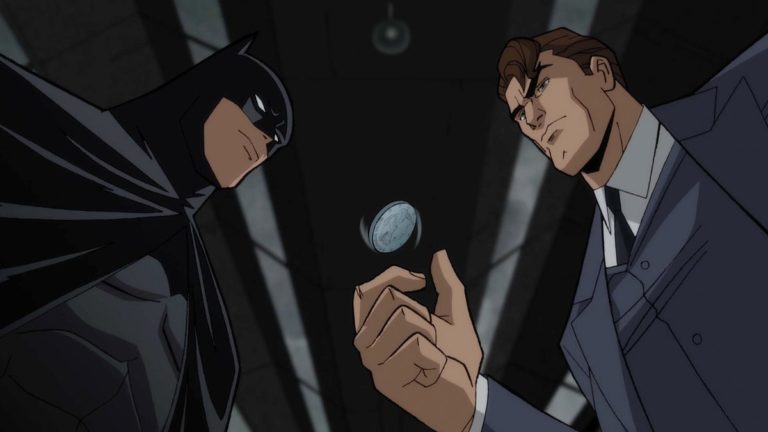
Movie Review: ‘Batman: The Long Halloween Part 1’ Is A Different Experience For Newer Fans


Director: Chris Palmer

Writers: Jeph Loeb, Tim Sheridan

Stars: Jensen Ackles, Troy Baker and Naya Rivera

SynopsisBatman investigates a murder spree that takes place on holidays.

Batman: The Long Halloween is one of the most iconic stories in the caped crusader’s arsenal. And the limited 13 issue series is finally being adapted into a two-part animated film. I have heard nothing but praise about The Long Halloween, and after my 2nd viewing of this film, I’m starting to understand why fans hold this story in such high regard.

DC’s animated films have always been a cornerstone in the realm of comic book movies. Animation gives studios a larger canvas to present their vision to the audience. And as much as I enjoy seeing my favorite heroes in live-action, animated comic book films will always feel more true to the form. It’s where this genre of the film got its start, and Batman: The Long Halloween Part One is living proof of why that’s true.

I mentioned that I watched this film twice, and it wasn’t because of my enjoyment or love for Batman, Catwoman, Or Gotham. It was the art style. This is something I started noticing with their previous films, such as Justice Society: World War II and Superman: Man Of Tomorrow.  Animation decided to rebrand the look of their animated films after the New 52 Universe was put to rest in 2020 with Justice League Dark: Apokolips War. 

The new animated style is a welcome one but for some reason, I haven’t decided if this a style that many fans will like and appreciate. The characters have a bold outline to them, which sometimes makes them look and feel robotic, stiff, and at times, lifeless. And this is apparent in Long Halloween Part One. I wasn’t sure how well it would translate with the film, and for some viewers it will take time to get used to.

The story is an engrossing but slow burn. The plot is centered around a villain who kills on holidays. And funny enough the antagonists’ alias is Holiday. It is an obvious but simple name. His name didn’t add any significance to the plot other than the reason for committing murders during major holidays. I believe his alias was revealed on a passing line which can be confusing to the audience if they’ve never read the original material. At times, the pacing can feel a bit steady but will subvert your expectations as the scenarios unfold. There were times when I thought I knew who the killer was only to remember that this is but one stroke of a larger canvas. 

The voice casting is phenomenal with veterans such as Jensen Ackles playing Batman himself and the esteemed Troy Baker as the nefarious Joker, and the late Naya Rivera as Catwoman/Selina Kyle. They made this world of Gotham come to life and had thrilling chemistry with one another. Troy Baker is the voice that stuck out to me the most due to his distinct voice and history with the Joker. He an impressive resume that spans across the entertainment industry. His more notable roles are those of Joel Miller in The Last Of Us video game franchise as well as Jason Todd, The Joker Harvey Dent, and Two-Face in the Batman: Arkham video game franchise. 

As someone who isn’t familiar with the original material, Batman: The Long Halloween is an enjoyable film for seasoned comic-book readers. As someone who isn’t familiar with the original material, it’s not something I would return to soon. However, if you’re a fan, there are plenty of easter eggs and references to dive into. I’m hoping that the multiple plot points will pay off in part 2, which could make me a fan.

Grade: B

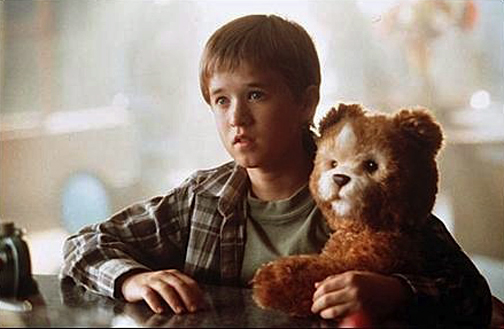
Classic Review: ‘A.I.: Artificial Intelligence’ 20 years later

I think we can all agree that A.I.: Artificial Intelligence is a divisive film. Some people love it, and some people love to hate it. In my years of hearing reactions to this, it appears to be split right down the middle. But could this just be another misunderstood gem? In order to celebrate A.I.’s 20th anniversary, I thought we should discuss this brainchild of Stanley Kubrick and Steven Spielberg. 

Based on the short story, “Supertoys Last All Summer Long,” by Brian Aldiss, it’s basically a modern day retelling of Pinocchio. David, played by the young and talented Haley Joel Osment, coming off the heels of the incredibly successful The Sixth Sense (1999), is the first child android that has been placed with a family. The family’s son, Martin, sadly has a terminal disease. David’s a mecha, which is short for mechanical. He’s basically what we would call an android. The most important thing to know about him is that he can love, or at least is able once you program him to love. However, before one can program a mecha child you must be very sure, or he will be returned to Cybertronics for destruction if you change your mind. Monica (Frances O’Connor), the matriarch of the family, makes the decision to program David, connecting her to him forever as he exclaims “Mommy,” and embraces her. If this was a happy story, it would end here — the family living happily ever after. But since Kubrick felt a need to tell this story, let’s just say you should probably have a box of tissues nearby. 

The happiness is short lived as Martin is cured from the once terminal illness. And because of that, and a series of many other mishaps — mostly out of Martin’s jealousy — Monica discards David, but not at Cybertronics as requested. David’s life is now the song Ain’t No Mountain High Enough, as his coding will continue to tell him that he must love Monica, a.k.a. Mommy, no matter what. No mountain too high, no valley too low, to keep David from loving his Mommy. He embarks on an odyssey, his teddy in tow, searching for the Blue Fairy. David believes that if he finds her, she will turn him into a real boy, and he can go home and Monica will finally love him just as she loves Martin. Depressed yet? Yes? It only gets worse. 

Kubrick had his sights set on adapting the story with Aldiss picked to pen the screenplay. But Aldiss’ lengthy writing process, along with Kubrick’s belief that a film like this couldn’t be made in the 1970s, put a stop to any plans. However, in 1995, Kubrick saw Spielberg’s Jurassic Park. Spielberg and Kubrick had been friends, but after Jurassic Park, Kubrick wanted his friend to direct A.I.  Unfortunately, Spielberg had no desire to take on the project. By the late 90s, Kubrick moved on with Eyes Wide Shut being his final project and his untimely passing in 1999. The rumor is that Kubrick’s wife spoke with Spielberg to convince him to finish the project, and with that, Spielberg began writing the script for A.I. — his first solo writing credit since Close Encounters of the Third Kind

This was the merging of two very different filmmakers. Though Spielberg’s name is in the credits, it’s very much a Kubrick film. So much of the story, characters, and concept art that made the final cut were developed by Kubrick. This includes the, as Roger Ebert first called it, “problematic ending.” There’s a bleakness that lingers throughout the whole film, and if we begin to look at it through Kubrick’s lens, the film begins to make more sense, and doesn’t seem so disjointed when the screen fades to black. Maybe A.I.’s misinterpreted “syrupy-sweet” ending isn’t the stereotypical touch of Spielberg hopefulness to the film after all, but rather a darker look at technology being integrated into the lives of humans. A vicious circle of those looking to love and be loved by one another. That androids, or the mechas in this case, are the only ones truly being humane to one another. 

A.I. isn’t without a few hiccups, but in my opinion, is severely underrated when it comes to Spielberg’s credits as a director. Cinephiles often glaze over it, mentioning the famed director’s others blockbusters as a “must see.” However, there’s something so unlike him woven within the fabric of the story. Spielberg would continue to travel further into the future in his next film Minority Report. Thus, continuing to examine the ethical and philosophical rights and wrongs in the advancements of technology. Depending on what you think of Spielberg’s career, or even his more modern work, it’s worth giving A.I. a second look. 

Rating: A-


List: Top 3 Action Films of the 2000s

This week on Episode 436 of the InSession Film Podcast, inspired by our review of F9, we discussed our favorite action films of the 2000s. As evident with the Fast and Furious franchise, the evolution of action films from the 1980s to the 2000s is fascinating, and it made for a fun conversation on the best action films from a decade when the genre got a little…goofy. But when looking at it more broadly (from science fiction to martial arts films), we were still left with some of the best films that came out from that decade, regardless of genre. That said, here are our lists:

(Note: Please keep in mind that we each had different criteria for our selections)

Brendan

1) Hero
2) Pirates of the Caribbean: The Curse of the Black Pearl
3) Miami Vice

Ryan

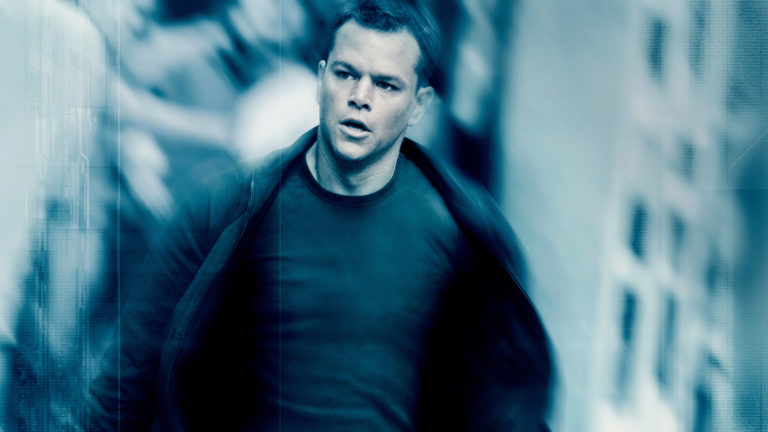
1) The Bourne Ultimatum
2) The Lord of the Rings: The Two Towers
3) Hot Fuzz

Honorable Mentions (Combined)

Casino Royale
The Matrix Reloaded
The Matrix Revolutions
Speed Racer
The Dark Knight
Spider-Man 1/2
Blade II
Kill Bill Vol. 1 and 2
Crouching Tiger, Hidden Dragon
House of Flying Daggers
Minority Report
The Transporter
Crank
Crank: High Voltage
Wanted
Gone in 60 Seconds
The Rundown
Lara Croft Tomb Raider
National Treasure
The Italian Job
Harry Potter
300
Children of Men
Gladiator
Mission: Impossible III
V for Vendetta
Sherlock Holmes
Mr. and Mrs. Smith
Once Upon a Time in Mexico
RocknRolla
Bad Boys II
The Last Samurai
Master and Commander: The Far Side of the World
Planet Terror
Charlie’s Angels
The Mummy Returns
The Bourne Identity
The Bourne Supremacy
Spy Game
Collateral
Kingdom of Heaven
Black Hawk Down
Flyboys
The Patriot
The Hurt Locker
Inglourious Basterds
Kung Fu Panda

Hopefully you guys enjoyed our lists and if you agree or disagree with us, leave a comment in the comment section or email us at [email protected].

For the entire podcast, click here or listen below.

For more lists done by the InSession Film crew and other guests, be sure see our Top 3 Movie Lists page.

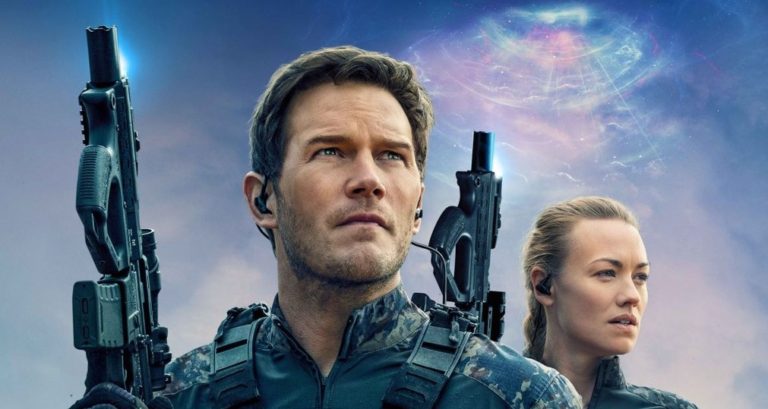
Movie Review: ‘The Tomorrow War’ Sees Fun, Struggles Being a New ‘Independence Day’


Director: Chris McKay
Writer: Zach Dean
Stars: Chris Pratt, Yvonne Strahovski, Betty Gilpin, Sam Richardson, Edwin Hodge, Keith Powers, J.K. Simmons

Synopsis: A family man is drafted to fight in a future war where the fate of humanity relies on his ability to confront the past.

[/info]

Sci-fi allows us to believe what the imagination has made — if more often dystopian than utopian. But it’s only the latter, only like landing on a cushion and downing the finest boba tea when The Tomorrow War shows, in December 2022, people are partying indoors, carefree and mask-free in a suburb all prepped for Christmas. A tear was almost shed. At this point in our current timeline, after waves and waves of misery and loneliness, it’s no drunken stupor or jesting behavior to think of a gathering as fantastic.

What does it say about The Tomorrow War, however, when a text overlay is more memorable than everything that comes after? Bombast, tear-jerking, heroism, and gags are plentiful in the live-action debut of The Lego Batman Movie’s Chris McKay, and the feature exec-producing debut of Chris Pratt and the third Paramount Pictures feature this year to be rescued by Amazon Studios (after Coming 2 America and Without Remorse), but fine-tuning them to see if they are truly contributive seems to have been an optional process. The final product, at 140 minutes, warps back and forth between being a throwback with fancier effects and a fresh breeze with thrown-back irritants. Any chance it’s a new title on the horizon? “Back Forth Repeat?”

Our lead, Dan Forester (Pratt), is not all that different from Capt. Steven Hiller, in the sense, that he is someone scripted as such a paragon everyone around him is inferior to varying degrees. Pre-battle, and it’s a battle writer Zach Dean has framed as going so badly for us every living civilian in the present 2022 is a viable draftee, Dan embraces the silhouette of a model American man: a science teacher, a veteran, an electric-car driver, a husband to Emmy (Betty Gilpin) and a dad to young Muri (Ryan Kiera Armstrong). During battle, and this is where close encounters with the ferocious alien species called White Spikes are held, Dan would either be unfazed in the face of danger or see his instantaneous competence heightened through his squadmates: Charlie who talks fast when scared (Sam Richardson), Dorian who talks tough (Edwin Hodge), Norah who looks confused (Mary Lynn Rajskub) and Cowan who’s equally confused (Mike Mitchell). Look, Pratt is genuinely charismatic and more expressive than the general leading man, but when he and his stardom are so pronounced it clashes with everything and everyone else The Tomorrow War’s artistic merits become questionable. 

And this is not a completely artless enterprise, to be clear. Even if the scope will always outshine the tension and staging, and sometimes there’s the dip into overstretched territory, for the action or effects-heavy numbers director McKay shows no fear when facing a markedly different medium. A wormhole interrupting the final of the World Cup in Qatar (now this is sci-fi, Americans watching actual football instead of the Deflategate-prone football) that d.p. Larry Fong frames with assured credibility. A stairwell of doom sequence debuting the jolting speed and marksmanship creature designer Ken Barthelmey have fused into the White Spikes. Despite her scripted purpose to communicate info about the desperate future — in sequences with hazy emphasis due to music or montage-esque editing —  the Colonel (Yvonne Strahovski) who has a close connection with Dan turns out to be a poignant emotional anchor. Unfortunately, the plot would diminish her effect by upscaling Dan’s recluse-but-ripped father James (J.K. Simmons) to jackhammer home the undercurrents of adequate fathering, destructive soldiering, and second chances. They all are better on paper. See how greedy The Tomorrow War can be, holding onto everything it has as if it is convinced it won’t see, well, tomorrow?

But at least it’s a more complete experience than Infinite. The film’s transformed lead here also doesn’t have this “Up yours!” attitude when schooling villains with different ideals as well.

Grade: C

[divider]

Movie Review: ‘Fear Street Part 1: 1994’ is a Promising Start to the new Netflix Horror Trilogy


Director: Leigh Janiak
Writers: Leigh Janiak, Phil Graziadei
Stars: Kiana Madeira, Olivia Scott Welch, Benjamin Flores Jr., Julia Rehwald, Fred Hechinger, Ashley Zukerman, Maya Hawke

Synopsis: A circle of teenage friends accidentally encounters the ancient evil responsible for a series of brutal murders that have plagued their town for over 300 years. Welcome to Shadyside.

[/info]

For anyone like me who grew up reading the Fear Street books, there is a great delight to be had in watching Fear Street Part 1: 1994, the first in a new horror trilogy on Netflix that continues with a second film set in 1978 and a third film set way back in 1666. How fitting that the first installment is set in 1994, the year I probably devoured the most R.L. Stine Fear Street books when I was nine years old going on ten. Stine has always known how to craft a compelling suspense yarn, and this film’s director Leigh Janiak, who previously directed the slick thriller Honeymoon and two episodes of the Scream TV series, has a similarly adept set of skills. This first installment could be lighter on exposition at times and heavier on actual scares, but overall it’s filled with lots of bloody fun.

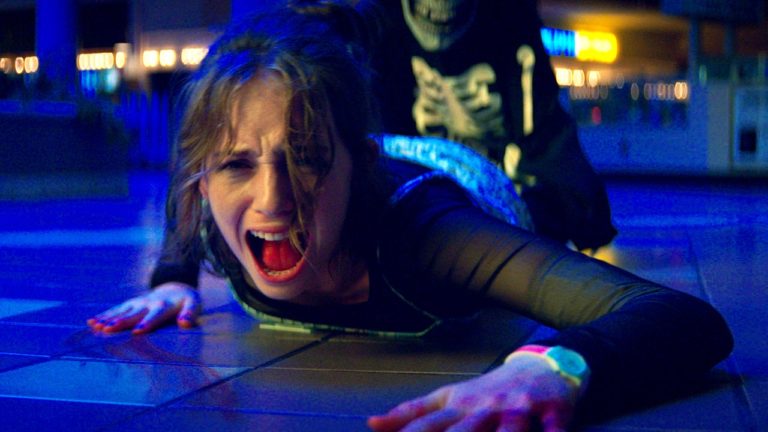
The film opens at a mall late at night, where Heather (Maya Hawke) is closing up the bookstore, which just so happens to be stocked full of Fear Street novels by Robert Lawrence (a nice touch there from the production department). A killer dressed in a black skull costume appears and stalks her through the mall, leaving plenty of victims in his wake. The beginning of the film, which resembles to a great extent the iconic opening minutes of Scream, has lots of energy and style and is easily one of the best sequences, launching the story with not only a heart-pounding chase but also an intriguing mystery.

Yes, Fear Street Part I: 1994 (and the whole trilogy it appears) is more than a series of familiar scares and gory slashings: a supernatural whodunnit takes hold right from the start, one that grips the small town of Shadyside where Deena (Kiana Madeira) is trying to get over the girl of her dreams Samantha (Oliva Scott Welch), and Deena’s brother Josh (Benjamin Flores Jr.) likes to spend his time on America Online debating with his online buddies the evil that’s been lurking in his city for hundreds of years. Also along for the terrifying ride include Kate (Julia Rehwald), Simon (Fred Hechinger), and a police officer Nick (Ashley Zukerman), who never seems to be bothered by all the dead bodies piling up.

Something the filmmakers did right in this adaptation was making it a blood-soaked, R-rated adaptation of Stine’s novels, not some lame, watered-down PG-13-rated snooze-fest that likely would have been the case if this trilogy had been only one film released in theaters. With the streaming model, Janiak was able to make this into the film it was supposed to be, filled with swearing and sexuality and grisly death scenes that fit the spirit of Stine’s more violent novels that were a step up for readers sick of his safe, sillier Goosebumps books. I also think it was smart to not directly adapt three specific Fear Street books and instead create new stories that screenwriters Janiak and Phil Graziadei appear to be doing here, the same way the successful 2015 Goosebumps film had its own original narrative.

The first half of Fear Street Part I: 1994 works better than the second, with an infectious fast-paced energy and colorful characters set amidst the nostalgic backdrop of 1994, where the clothes are ridiculous and the songs are moody masterpieces and there’s not a cell phone in sight. Marco Beltrami’s score is at times too similar to Scream (especially during the opening titles) but ultimately gets the job done. And the actors are all natural and well-cast, Madeira and Welch particularly good in this, beautifully bringing to life a tender and effective lesbian romance storyline in the midst of the horror mayhem.

Even the corny dialogue didn’t bother me since so much of the dialogue in R.L. Stine’s work is fairly ridiculous. “She’s been possessing people!” and “It’s not like the movies, okay?” and “did you all go to pound town?” made me cringe, and at one point Deena says to Olivia, “Even though we are in Hell, I feel like I have another chance with you,” the kind of stupid line that can immediately break the spell of an otherwise entertaining horror movie. Stine’s dialogue, however, was always bad and on-the-nose—the man was pumping out two books a month at one point, to be fair—and so lines like “You deliberately tried to ruin my life two years ago. I told you then I’d get even. And now’s my chance” from his 1991 Fear Street book Lights Out makes the dialogue in this new film sound positively Shakespearean.

Unfortunately, the film does fall a bit short when the absurd supernatural plot about a vengeful witch takes over around the hour mark and one of the main characters conveniently knows every detail about what’s happening and gives us an overlong info dump. Worse, the other teenagers don’t even doubt his findings and automatically believe him, as of course any of us would do when told a witch’s curse has grabbed hold of nearby homicidal killers who can’t stay dead. I’m not sure if taking this story far beyond realism was the right call because the sense of dread and, frankly, fear, drains a bit from the film as more and more of the crazy plot takes over. Janiak forgets for a good thirty-minute section to be actually scaring us, and that’s too bad.

Thankfully the horror machine kicks into high gear again in the final act, and the lull from before is long gone as some great action and a couple of genuine surprises lead us toward the shocker cliffhanger ending. I did admire for a movie that is set up from the beginning to be the first in a trilogy that it works pretty well as a stand-alone movie, with only the last scene majorly setting up the second chapter, set at a summer camp in 1978 (the same year as John Carpenter’s horror classic Halloween, which I can’t imagine is a coincidence). This film could have merely felt like one-third of a longer story and yet it never does, giving us a soft sense of closure while also teeing us up for what looks to be a pretty groovy second installment.

For the most part, I had a good time with Fear Street Part 1: 1994, and I think you will, too, especially if you loved Stine’s enjoyable books like I did in the 1990s. Nothing really matches the intensity of the fantastic opening scene with Hawke, whose brief presence gives it an instant Stranger Things vibe, but Janiak gets a lot more right along the way than she gets wrong, and I’m excited to see what she does next with the larger narrative. She captures the period feeling well along with terrific performances from the young cast, a group of talented fresh faces that gives the movie a welcome sense of authenticity. All I hope is that the story moves a little faster and gets a hell of a lot scarier in Part 2 when it drops on Netflix next week.

GRADE: B

https://www.youtube.com/watch?v=clZK2PqLWpI

Op-Ed: AFI’s 100 Years…100 Passions – ‘Working Girl’ (#91)

I will be watching and reviewing all of the films included on AFI’s 100 Years…100 Passions list. The list contains the 100 greatest love stories in American cinema and I plan to consider how our views on romance and social issues have changed over the years as well as judge whether the romances in these films actually made me swoon. As a fan of the romance genre, I expect to love each and every one of the nominees but I also don’t know if I would consider all of them romantic.

Working Girl (1988) is the rare romantic comedy to earn the distinction of receiving a nomination for Best Picture. It was sold as something classier and tonier than your average chick flick and snobs in Hollywood looked at it as something deep and meaningful. When you have When Harry Met Sally… (1989), Crossing Delancey (1988), and Big (1988) lying around, I find it hard to see why Working Girl was viewed as the creme de la creme of the genre. I know that Mike Nichols, Michael Ballhaus and Sigourney Weaver have all earned their pedigree but I can’t help but feel as though people were responding to the reputation of the people involved and not the film that they ended up seeing. 

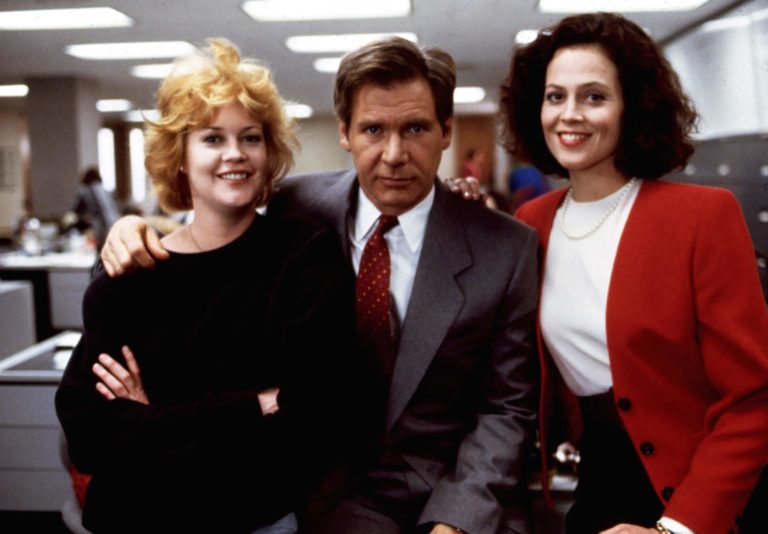
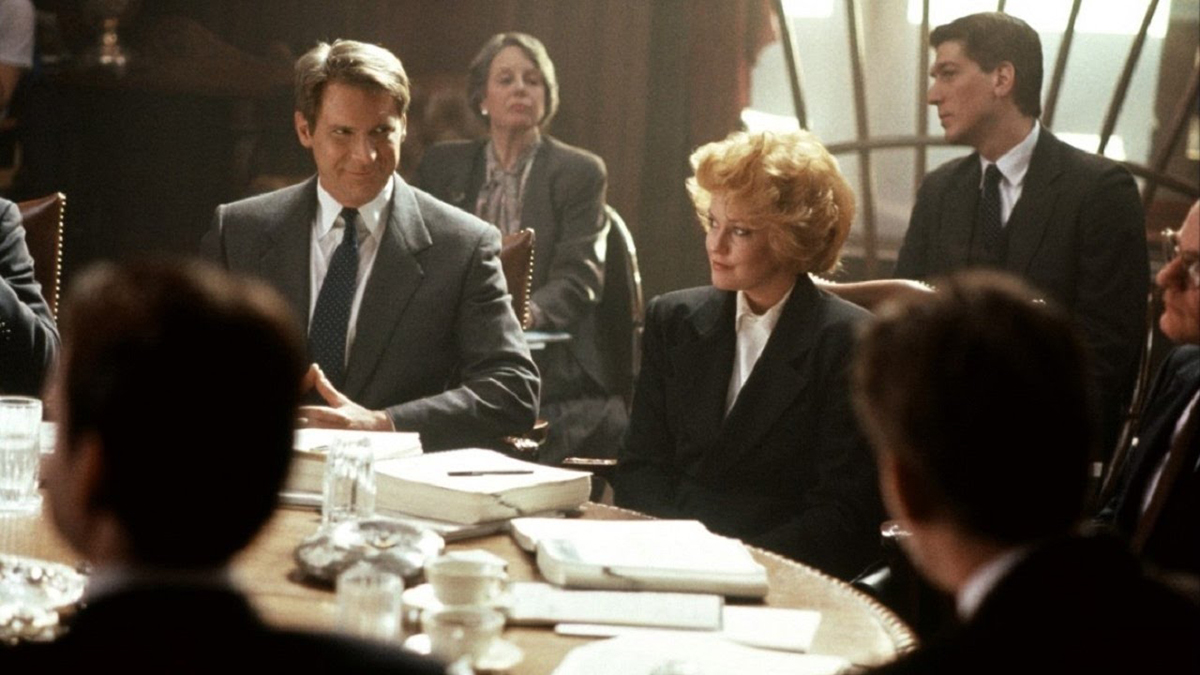
I won’t deny that this could have been a fascinating story about the evils of Capitalism and the corrupting power that yuppie culture had. Tess (Melanie Griffith) is your typical ambitious ingenue who wants a good job, dependable friends, and a devoted, loving husband. In chasing those goals, she gets caught up in petty little concerns and begins to use immoral tactics to get ahead. She is thrust into a ruthless, cutthroat world and can’t find a way to keep her hands clean while still being a part of it. Her main conflict is with her boss, Katharine Parker (Sigourney Weaver), who steals her ideas and obsequiously compliments the people around her while planning all of the ways in which she can stab them in the back. Tess sees an opportunity to rise through the ranks when Parker is incapacitated and pretends to be a powerful businesswoman instead of being a lowly assistant. At the same time, she falls in love with Parker’s boyfriend, Jack Trainer (Harrison Ford), and finds herself growing increasingly confident. She can have it all if she just keeps her deceptions up. 

I kept hoping that this would turn into a female led version of Carnal Knowledge (1971). Nichols knew how to make fairly disturbing relationship dramas back in the 1970s and highlighted all of the ways in which societal norms prevented people from feeling secure in relationships that they had. He also managed to tie stories about rotten individuals to wider social issues and political movements. It feels like he lost the desire to create something challenging and painful to watch by the late 1980s. Working Girl is warm, fuzzy, and willing to present its protagonist as a Cinderella of sorts and not a complicated corporate flunky who gets sucked into a dehumanizing system driven by greed. There are occasional nods toward commentary on dodgy business practices but the film is desperate to turn Tess into somebody who will revolutionize the way that her business functions. It sucks all of the ambiguity out of the premise and inserts a sharp dividing line between the good characters and bad characters. Nichols should have recaptured some of the misanthropy and anger that he brought to his previous works. It almost feels like he turned into Gary Marshall lite in an effort to make a commercial hit. 

Working Girl (1988) Movie Summary and Film Synopsis on MHM

In an ideal world, this would have been a story about a Becky Sharp-Esque heroine who seeks to rise through the social ranks by manipulating the people around her and using love like most people use money. I didn’t want her to be wide-eyed and idealistic, I wanted her to feel like a full-blown product of the 1980s. It would have been more interesting to see her slowly becoming depressed as she realizes that her materialistic ambitions are never going to satisfy her. There could have been something thought provoking about seeing a shallow, avaricious woman waking up to the fact that her life is absolutely empty and meaningless. I wouldn’t want the script to preach about how society has to change immediately and I wouldn’t even like to see Tess change that much. I simply believe that it would have been better to make the point that people should not aspire to climb up the corporate ladder by having sex with their colleagues and impersonating others. 

I have mostly spoken about the film’s focus on the business world and my disappointment with how bland Tess is. I have done that because I feel like that content takes up the bulk of the film’s running time. We get occasional romantic interludes that feel like they have been awkwardly wedged into scenes that are mainly focused on business negotiations. You’ll groan when Griffith, in her childlike voice, says “I have a head for business and a bod for sin” before cutting to Ford’s perplexed face. There is no sexual tension between the two and because their characters are deeply unlikeable figures, it is difficult to tolerate the cheesy romantic music that plays over most of their scenes. We’re meant to see them as the ideal couple and overlook the fact that Trainer cruelly casts aside his former lovers when they are no longer fresh and exciting to him. I kept wanting to see the moment when Tess understands that he has moved on to yet another young businesswoman who can be subservient to him. In a perverse way, they deserve one another but the film doesn’t seem to be aware of how disgusting they are. 

It’s easy to figure out that I didn’t respond to the ‘love story’ that was on display in Working Girl. I don’t think of this as a primarily romantic film and I think that it fails as a deconstruction of myths about what it means to be a successful businesswoman. The 1980s produced better romantic comedies than this and we should all be thankful for that. If Mike Nichols had just stayed in his lane, we wouldn’t have gotten something that was so lightweight and ineffective. 

Poll: What is your favorite film of 2021 so far?

It’s one thing to think about it being halfway through the year already, it’s another to think about it feeling like an actual movie year thus far. While we are still reeling from the aftermath that was 2020, this year has finally given us a combination of what films were frustratingly delayed, and what the year potentially had in store for us regardless. From the rejuvenation of the blockbuster, to the critical darlings from Sundance, 2021 is not only shaping up to be a decent year, but one that is surprisingly less cumbersome than many of us predicted. We hope this sense of balance continues, but it is still early, and the second half of the year still has the potential to drown all film critics.

But until that inevitable drowning, let’s celebrate the first half of the year. What is your favorite film of 2021 so far? We are only considering films that have already been officially released, either in limited or wide.


Movie Review: ‘Zola’ is Chaotic in All the Best Ways Possible


Director: Janicza Bravo
Writers: Janicza Bravo, Jeremy O. Harris
Stars: Taylour Paige, Riley Keough, Nicholas Braun, Ari’el Stachel, Colman Domingo

Synopsis: A stripper named Zola embarks on a wild road trip to Florida.

[/info]

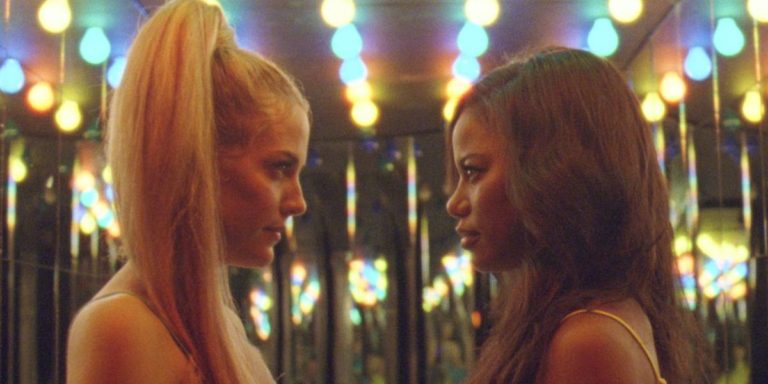
If you were around on the internet at all in 2015, you probably remember the iconic 148 tweet long Twitter thread about Aziah “Zola” King’s wild adventure on a trip to Tampa with another stripper whom she had just met. The thread starts with the recently meme-d phrase “Y’all wanna hear a story about why me and this bitch fell out? It’s kinda long but full of suspense” and only proceeds to get more excessive and bizarre from there. Talks for a movie adaptation of this wildly unbelievable but supposedly true story kicked off right away, eventually settling on Janicza Bravo to direct, as well as co-write the screenplay along with Jeremy O. Harris.

Zola is just as chaotic as reading the Twitter thread it’s based on in every best way imaginable, and sticks true to its source material even to a fault. The film does an amazing job balancing camp with the more intense and serious tone, leaving you laughing at how ridiculous everything going on is one moment, and on the edge of your seat two seconds later. It delivers believable characters, with strong, forward opinions on sex and power, and intense performances from the main trio, Taylour Paige, Riley Keough, and Colman Domingo.

Aziah “Zola” King’s story is enhanced largly for the big screen. She’s claimed herself in interviews since then that she may have embellished on some of the details in her long-winded tale. But the film fully embraces these moments and translates them to the screen exactly how you would imagine them, and often enhancing them as well. The soundscape envelops you to an entirely immersive experience, all while keeping at the forefront that this is just a story, with little tweets sprinkled throughout the film as a reference to the original thread each time they’re brought up. The score surrounding the events that transpire guides the viewer exactly through every rollercoaster emotion imaginable. A soft pulse pushes the intensity up to an eleven, and a dreamlike harp guides the viewer to a relaxing fantastical state. It’s most effective when the focus returns to Zola, helping provide context as to why she chooses to stay in situations that she could easily just get up and leave from. It provides Zola with a complex character of a woman who is empowered in what she does, knows her own worth, but also cares deeply about the well being of people, and what battles she can afford to fight when they’re presented to her.

Taylour Paige anchors the cast in the most subtle performance of the film. When surrounded by the messy characters she’s stuck with, she delivers insight to the real fear and danger that they’re forced at every turn. Paige is allowed moments to let loose similar to her co-stars, and as the narrator of the film she’s given some funny quips, but it’s the small moments that she suffers through that really translates on the screen to create such a dynamic performance. Riley Keough fully embraces the trashy white girl that she’s made out to be, and is the perfect foil to Paige, forcing her presence to be known to those around her with her loud and “main character” demeanor. However she also relishes in the brief bits she gets of quiet reflection, and you truly feel for her as you see her suffer from the abuse and manipulation she’s put through by her pimp. Controlling them both and at the center of all the trouble the two women experience is Colman Domingo, who is able to take an extreme character that could so easily be overdone, and make him into a threatening and terrifying force that leaves the characters Zola and Stefani trapped.

As a story about two strippers, the narrative obviously centers itself around sex. Janicza Bravo and Jeremy O. Harris find these nuanced themes in the tread that they so closely follow to shape the story and intertwine them into the character in a healthy and balanced way. Zola is convicted in her own ways, and loves to embrace her sexuality through the medium of stripping and dancing, but draws a firm line once someone else tries to force her outside of her boundaries. She isn’t judgmental to those who chose a different path than her but also knows the dynamics that sex and sexuality can have over others. “Pussy is worth thousands” as she says at one point. Sexual activities and their control over others is something that Colman Domingo’s character X knows as well, using it to manipulate Stefani into a never ending trap of pimping herself out only to have all her money taken away from her. It teeters a fine line between both the positives and negatives of sexuality in the world of sex work and outlines both the confidence and dangers that comes along with it.

Sometimes written using the exact words originally in the Twitter thread, the film is incredibly true to its source material, even when it starts to hinder the narrative slightly. The third act of the film starts to lag just a bit, but feels massive after the intensity of sitting through the first two-thirds. Unfortunately, the climax does not reach the suspense as promised by the opening tweet, but still manages to serve its purpose in emotional payoff. Shortly after, the film ends similar to the Twitter thread, almost anti-climatic and calm. As someone who’s read the thread, I wasn’t too put off by the abrupt ending that doesn’t try to create something more out of nothing, but it left my friend who I went with asking me “that’s it?” A sentiment I’m sure many will also experience.

Zola delivers chaos in the best way possible, and as someone who anticipated this film for over a year and a half since its 2020 Sundance premiere, I was nowhere near let down, and entirely satisfied. While this film reaches bold and extreme heights that seem unimaginable, it still feels as if it can’t boost itself to its full potential, or the same reach and wonder that left the internet in a frenzy on October 27th, 2015.

Grade: A-

Chasing the Gold: Why Isn’t Makeup Scary for the Academy Anymore?

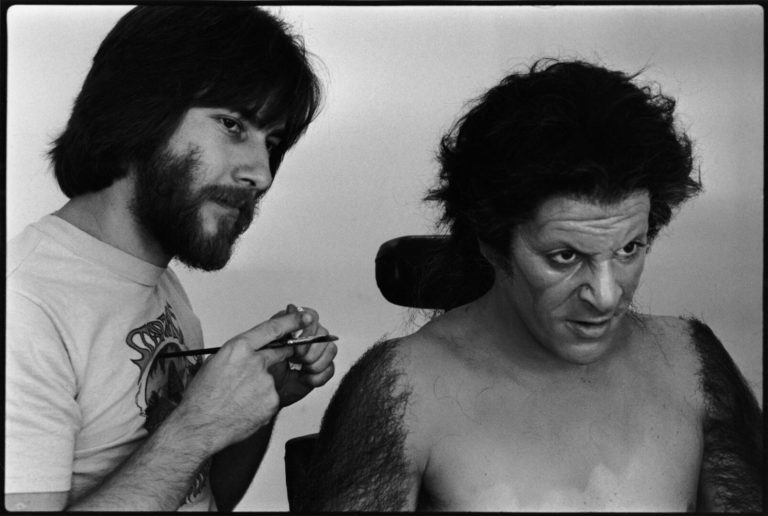
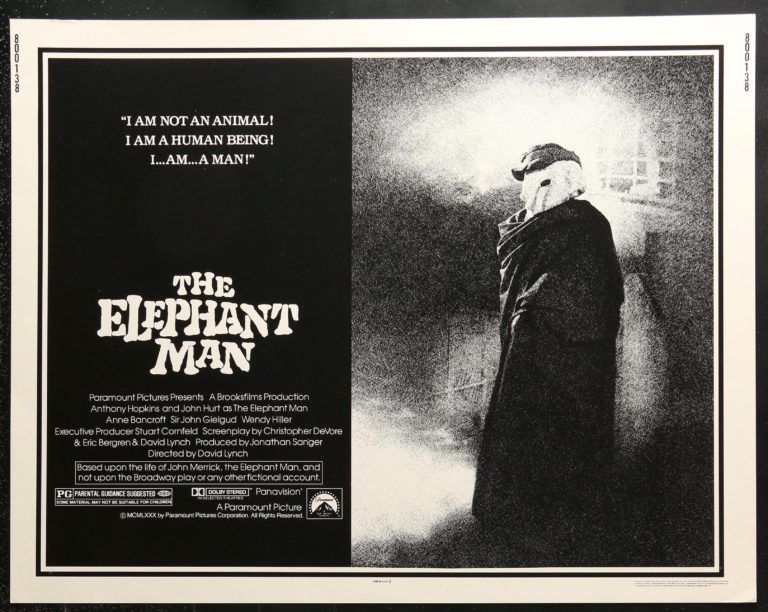
Change comes to the Oscars not with a nod in a back room, but often with an outcry or at least a strong shift in opinions. After The Elephant Man, David Lynch’s black and white, faux horror, grotesque was not given a special award for its uniquely crafted facial prosthetics at the 1981 ceremony, such an outcry was heard. This special award had been a tradition among feats of makeup that went beyond the normal realm of what was thought possible. In response to the lack of recognition, the Academy created an entirely new branch which would oversee the newly created Makeup category. At the 1982 ceremony, Rick Baker won the inaugural award for his work on An American Werewolf in London, giving genre films hope for official recognition in a craft they excel at.

That is how it’s been for nearly all of the last forty years. The genre films go head to head with a period drama or the occasional war film in Makeup.Yet, in the last four years there’s been a significant shift in the, now, Makeup and Hairstyling category. Of the sixteen nominees between 2017 and 2020, only four of them could be considered genre films. That’s even after the expansion of the category in 2019 from three nominees to five.

Take Best Picture winner The Shape of Water as a prime example. An old school horror film with the classic girl meets monster trope. Very few predicted its triumph over a crowded Best Picture field, but what’s even more baffling is why it was left out of Makeup and Hairstyling. Not only is the design and implementation of the monster a feat of ingenuity that likely accounted for The Shape of Water’s nomination in costuming, but Guillermo Del Toro’s team elevated their love of the grotesque to fantastical heights with bloody wounds, gills, and horrifying self mutilation.

Horror cinema has created our darkest fears. It has shown us in a world of monsters, demons, slashers, the undead, and pure malevolence. The people who craft these worlds have done something that other artisans have struggled to do, which is to bring nightmares to life. Makeup artists allow us to see real people interacting with true monsters in a way computers never can.

The shift from genre cinema nominations can be attributed to a number of factors, but the biggest and most important is the use of CGI. Josh Brolin would have looked impressive painted completely purple to menace Robert Downey Jr. and crew, but as a motion capture creation with added, height, weight and musculature, he’s something else entirely. 

Because of this ease of transformation into a CGI realm, the lines of what is costuming, makeup, and production design in the physical sense are blurred. The shift away from genre films, and especially ones made by a major studios, is because the more accomplished feat, and the more easily seen, is to transform a famous actor into another famous figure. Three of the last four winners have been for that kind of transformation. 

The Makeup and Hairstyling category seems to have become the focal point in a battleground of tradition versus technology. This shift away from the category’s roots is a fight genre films are facing within their production about practical effects versus computer animated effects on actors. Though, unless it’s been touted in other ways, a mid, small, or no budget film that uses the old fashioned ways, as a many excellent horror films of the last several years have, Oscar voters are more likely to ignore it. They tend not to delve too deeply into the catalog of films in a given year.

The members of the Makeup and Hairstyling branch have forgotten their roots. They have eschewed the traditions that made the category possible. Ironically they offer recognition and plaudits now only to those who move into the more prestige biopics. Kazu Hiro, a two time winner of the last four years started out working with Rick Baker, the most lauded member of the branch, on a number of genre projects, but is only now getting recognition for raising Charlize Theron’s cheekbones so she can look a little more like a different blonde woman. This is not to diminish Kazu Hiro’s, or his team’s, work, but to point out that the work of creating life like ape prosthetics as he did on the Tim Burton Planet of the Apes film is a far cry from what he’s getting recognition for now.

The year 2020 provided a unique opportunity for the members of the Academy to reach  back out to the horror, sci-fi, and fantasy communities, pulling out more interesting films like Relic, I’m Thinking of Ending Things, Possessor, or Color Out of Space to the forefront of the category again. Yet, they kept on this path of realism over fantasy. I’m sure in 2021, too, we’ll all be talking up a genre film that surpasses expectations in gore, aliens, or monsters, yet some darling out of Venice, TIFF, or a late breaking studio backed biopic will steal the show in this category yet again failing the craftspersonship of the films that built the category in the first place.

Podcast: F9 / Top 3 Action Films of the 2000s – Episode 436

This week’s episode is brought to you by Patreon and our awesome listener’s like you. Sign up today to get early access to bonus content and much more!

This week on the InSession Film Podcast, Ryan fills in for JD to discuss the latest entry in the now dubbed Fast Saga, F9, as well as reveal our Top 3 action films of the 2000s!

Things certainly got a little fast and furious on this episode, as Ryan and Brendan offered up some surprisingly passionate thoughts on the current state of the Fast and Furious franchise. But it was even more exciting offering thoughts on the best action films of the 2000s; we already talked about action films of the ’80s and ’90s, so the 2000s were next in line. And how appropriate, considering the original The Fast and the Furious celebrated its 20th anniversary this year!

On that note, check out this week’s show and let us know what you think in the comment section. Thanks for listening and for supporting the InSession Film Podcast!

– Movie Review: F9 (6:13)
Director: Justin Lin
Writers: Daniel Casey and Justin Lin
Stars: Vin Diesel, Michelle Rodriguez, Jordana Brewster, Tyrese Gibson, Ludacris, Nathalie Emmanuel, Charlize Theron, John Cena, and Sung Kang

– Notes / Discussion (48:53)

For our break segment, Ryan talks about his favorite films of 2021 so far, in preparation for our JD and Brendan’s mid-year report on Episode 437.

[divider]

RELATED: Listen to Episode 423 of the InSession Film Podcast where we discussed The Tree of Life!

[divider]

Top 3 Action Films of the 2000s (1:11:36)
As evident with the Fast and Furious franchise, the evolution of action films from the 1980s to the 2000s is fascinating. While it made for a passionate discussion on F9, it made for an even better conversation on the best action films from a decade when the genre got a little…goofy. But when looking at it more broadly (from science fiction to martial arts films), we were still left with some of the best films of the entire decade. That said, what would be your top 3?

Show Sponsor: First Time Watchers Podcast

– Music

One Shot – YoungBoy, Lil Baby
Flight to China – Wiz Khalifa, Toosii
Extreme Ways – Moby
The Return of the Eagle – Atli Örvarsson

Subscribe to our Podcasts RSS
Subscribe to our Podcasts on iTunes
Listen on Spotify
Listen on Stitcher
InSession Film Podcast – Episode 436

[divider]

Next week on the show:

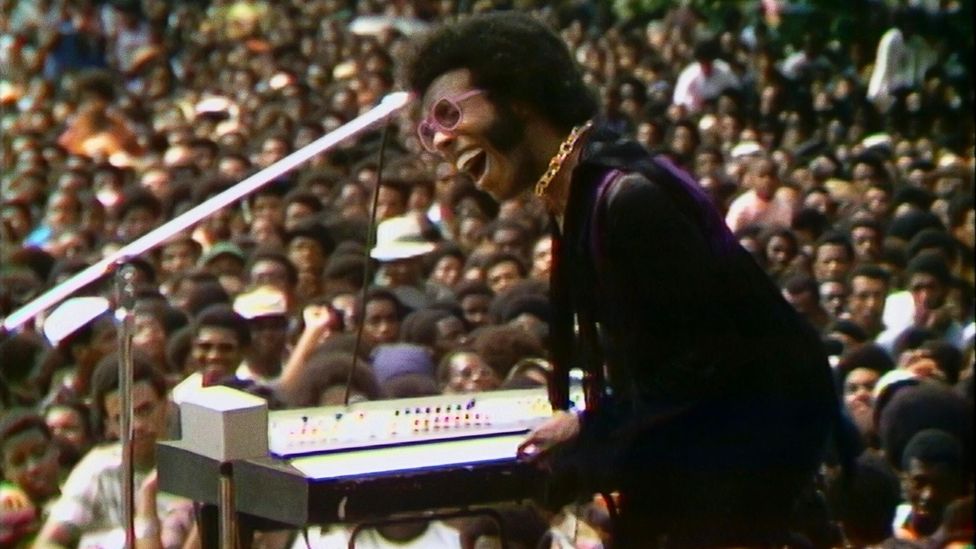
Review: Summer of Soul (…Or, When the Revolution Could Not Be Televised)
Top 5: Best Movies of 2021 so far

[divider]

Help Support The InSession Film Podcast

If you want to help support us, there are several ways you can help us and we’d absolutely appreciate it. Every penny goes directly back into supporting the show and we are truly honored and grateful. Thanks for your support and for listening to the InSession Film Podcast!

VISIT OUR DONATE PAGE HERE

Op-ed: Family Films Don’t Need, and Shouldn’t Have Villains

It’s that time of the year again; when school is out, and ice cream becomes the only way to escape the heat. And with summer, comes the return of summer blockbusters. With Fast 9, Black Widow, and The Suicide Squad, we can expect to be blown away by jaw-dropping battles of Good vs. Evil. I am more prepared than ever to listen to Dom talk about Family and to see how Natasha Romanoff interacts with her sister. These stories all have a common thread in being about family.

And yet, I can’t help but wish that these films weren’t going to be as focused on a typical blockbuster story with good guys, and a villain that needs to be stopped. Despite these films being about family and caring for others, they still have characters of pure evil that must be defeated by the end, and that can not be integrated into the family. And in my eyes, that is antithetical to what family is.

So this week, I wanted to look back at the family movies that have moved beyond simple stories of good guys and bad guys. More specifically, I wanted to look at some of Pixar’s animated films, as these stories all are approachable by all ages.

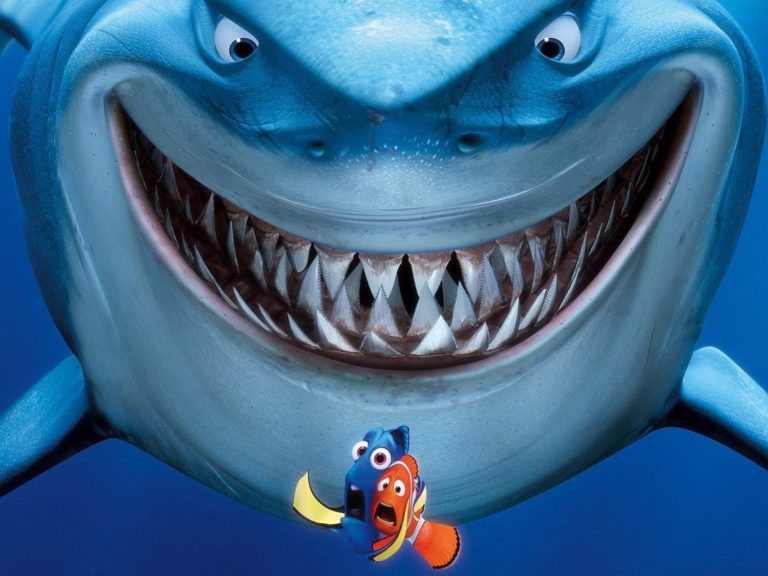
Finding Nemo was released in 2003, and follows the story of Marlin, an overprotective clownfish father, as he searches for his son, Nemo, who was taken from him by divers. This 18-year-old movie was the one of the biggest films of the year, second only to the epic conclusion to The Lord of the Rings.  And though this film was a blockbuster, it contains no villains. While there are dangerous characters in the film, from the friendly Great White shark, Bruce, to the horrifying Darla, yet none of these characters can be classified as pure evil. They all have passions and desires, and while they may get in the way of our central characters, they don’t knowingly put them in harm’s way. To the diver, Bob, he saved a lost clownfish struggling to swim. Gill’s obsession with escaping the tank leads him to risk Nemo’s life unintentionally. And for the many teeth of Bruce, he doesn’t want to eat fish anymore, forming a fish-aholics anonymous with two other sharks that goes by the motto: Fish are friends, not food.

This writing decision, to have there be no purely evil characters, only individuals acting out of self-interest or arrogance, is beautiful. From a storytelling perspective, it allows the film to focus on the characters of Nemo and Marlin, and how they change due to the influences of others. And yet, on a deeper level, it teaches the audience that no one is inherently evil, though they certainly have the capacity to harm others. In fact, each fish, bird, shark, or turtle are drawn to help Marlin find Nemo at every turn, despite their initial response to his dismissive attitude towards most other fish. And through the help of other characters, we see Marlin change by the end of the film, letting go of the absolute control he craved previously.

In removing villains, Finding Nemo became a reflective film about maturing and growing, despite the challenges that come along the way. And for that reason, Finding Nemo remains one of the most realistic Pixar movies to me, for its depiction of human behaviours.

But Finding Nemo isn’t the only Pixar film to be without a villain character.
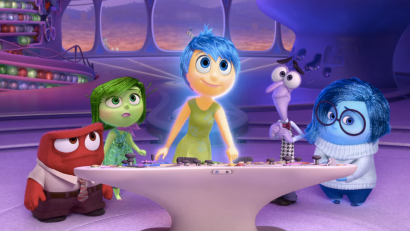
Inside Out may be one of Pixar’s most well-known, and well-received movies in recent years. Throughout the film, we follow the characters, or more accurately, the emotions, of Joy, Sadness, Anger, Disgust, and Fear that operate within Riley; an eleven-year-old who has to adapt to life in a new city.

Like Finding Nemo,  Inside Out is a film that operates without a central villain character. Actually, it’s a film that highlights the dangers of making someone else a villain, which is beautifully shown through the relationship between Joy and Sadness. At the start of the film, Joy believes that happiness is the goal of life, and should be the ruling emotion within Riley.  Whereas anger, disgust and fear still were given input towards Riley’s feelings, Sadness was put in places where she had the least input, because Sadness and Joy are polarized emotions.

However, throughout the film, when Joy is forced to rely on Sadness, Joy begins to see the benefits of sadness, and in the climax of the film, we see Sadness be the emotion that saves Riley from running away.

And that idea, that there are no solely evil beings, only those with differing beliefs, preferences, and thoughts; is core to this style of storytelling. When villains are removed from a story, an antagonistic character becomes a crucible, testing the limits, and limiting beliefs, of the protagonist, and growing the protagonist by the end of the film.
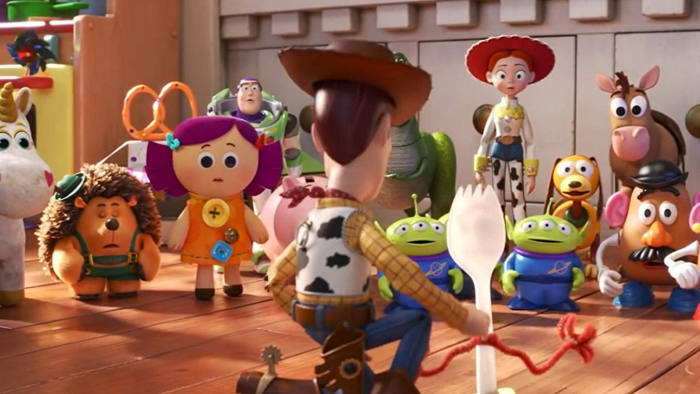
And I can think of no better example of this than Toy Story  4.

Toy Story 4 is a masterclass in character reflection and growth. At the point we start the film with Woody and the gang, Woody is still hung up on Andy, desiring to be more than a dust collector in the closet, stepping on the toes of Dolly as he tries to be the favourite toy again. While Woody is often refuted for his actions, he tries his hardest to be the best toy for Bonnie, even if that means putting Forky in the position of the favourite toy while Woody is treated like he doesn’t exist. And while Woody denies the toll that protecting Forky has on him, we see the cracks show when he talks with Forky on the road.

The magic of Toy Story 4 is found in that moment, as we see Forky break through the walls Woody has kept up the entire film. This happens again, at various points, when Woody is forced to reflect on his actions, which he claims to have done for Bonnie, though he ultimately did for himself. These moments are brought on by Bo Peep, Gabby Gabby, and Forky. These characters are structurally antagonists, who force Woody to react to their actions and change his beliefs. However, these characters are not villains.

It’s something that director Josh Cooley knows and plays with throughout the film. The introduction to Gabby Gabby shows this beautifully, as she is surrounded by various ventriloquist dummies, lovingly named Benson. Like her, they lack an audible voice during play with humans, but more importantly, these dummies have become closely associated with the horror genre, primarily due to their unsettling nature and the prominence of Chucky in the Child’s Play franchise. This decision, to surround Gabby Gabby with dummies, creates a tension that nudges the audience to assume she is an evil character. But as we see, Gabby Gabby only desires to be wanted by a toy, a striking reflection of who Woody has become. And through empathy, we see Woody giving up pieces of himself to enable her with the opportunity to be loved as he was loved.

I think that’s why I love this micro-genre of animated films. By removing villains, only leaving opposing viewpoints, the characters are challenged to grow and have empathy for those who are different. And that message; to be willing to listen, understand, and change for their benefit is of utmost importance. While villains allow us to emphasize the importance of certain morals, films without villains create situations in which self-reflection is vital to becoming a better, more fulfilled person.


Criterion Releases: July 2021

We begin the second half of the year with some more diverse selections going into the Criterion list. All are first-time entries with three of the five being American films. However, the list leans more into the artistic, untapped side, where a mainstream Hollywood film has a vintage touch and an independent feminist piece share the same platform. One of the greatest films ever made is finally graduating to Criterion status alongside a masterpiece in 1930s comedy. In the middle, a sizzling French psychodrama with a shocking behind-the-scenes story that ran parallel with the movie itself.

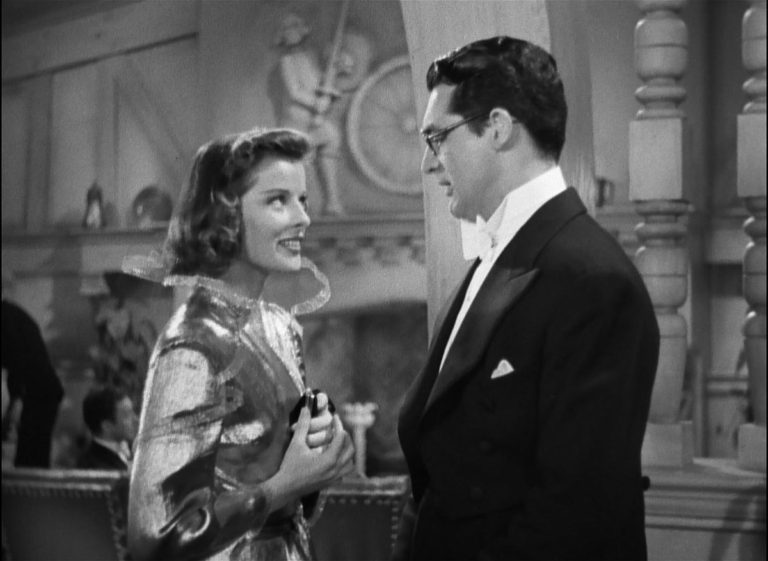
Bringing Up Baby (1938)

One of the all-time great screwball comedies in the era, Cary Grant and Katherine Hepburn are an unusual pair of lovers who find themselves dealing with Baby, a leopard who is on the loose. It is among Howard Hawks’ more popular films mixed with his hitting dramas and westerns, but at the time of its release, the movie was a flop, and Hepburn, after a series of misfires, was labeled as box office poison. However, time has been kind to the movie and critics have revered it, making it among Grant and Hepburn’s most popular in their careers and it was one of four collaborations featuring the two, including the future smash that Criterion has already christened, The Philadelphia Story.

La Piscine (1969)

Alain Delon and Romy Schnieder, who were dating at the time, are a couple on vacation along the French Riviera when their relationship is challenged by the arrival of a friend and his teenage daughter. Sexual jealousy consumes the house with the titular swimming pool being the pit of all of their desires. The film was a major success in part due to the events happening around Delon at the time. While filming, Delon’s bodyguard was found murdered and had in his possession explicit photos of the President’s (Georges Pompidou) wife in an alleged plot to sabotage her husband’s political ambitions. Delon was implicated along with his friend, a known French gangster, in the murder but neither were charged and the murder remains unsolved. A Bigger Splash (2015) by Luca Guadagnino is a loose remake of La Piscine starring Tilda Swinton and Ralph Fiennes.

Mirror (1975)

Andrei Tarkovsky’s sensational mid-career picture is a tapestry of different stories connected in one. Non-linear and unconventionally structured, Tarkovsky tells events closely based on his own life using words written by his father, famous Russian poet Arseny Tarkovsky, as narration. Long takes and gorgeous cinematography, two hallmarks of a Tarkovsky film, and forever present in his collage of moments throughout the film. When it was released, it was very divisive among global critics and some said Mirror was incoherent and indecipherable. But today, it’s among the greatest movies ever made and made the Top 10 in the Directors’ list of Sight And Sound’s 2012 poll.

Working Girls (1986)

Writer-director Lizzie Borden created a simple, humanistic story of women in a New York brothel making it day-to-day without judgment of their profession. For one of these women (Louise Smith), it is a way to survive while not demoralizing herself as she tries to keep personal and professional relationships separate. Borden’s feminist underground film, a story of an “economic choice,” is not a documentary as some would call it, but a narrative on women being independent and proud of their livelihood. Borden’s film would be shown at Cannes and won the Special Jury Prize at Sundance.

Deep Cover (1992)

Bill Duke’s cool noir follows a police officer (Laurence Fishburne) going undercover to work with a drug trafficker (Jeff Goldblum) and take out a drug ring that seems to be impenetrable. The deeper he digs, the more power he has, and becomes unwilling to give up what he controls and violates his own rules. Co-written by Oscar-nominee Michael Tolkin (The Player), Deep Cover is a hidden piece of noir revived in the 1990s the blends in with the rap soundtrack from Dr. Dre and Snoop Dog, who made their debuts as major solo artists that same year.

Follow me on Twitter: @brian_cine (Cine-A-Man)

Classic Movie Review: The Nostalgic Charm of ‘Mr. Blandings Builds His Dream House’

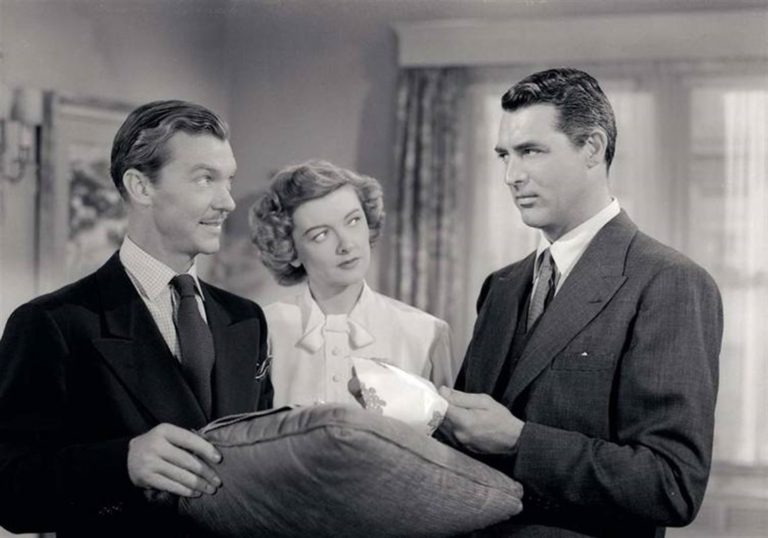
Advertising executive Jim Blandings (Cary Grant) is tired of cramped Manhattan living so he and his wife Muriel (Myrna Loy) buy a historic Connecticut property in the 1948 comedy Mr. Blandings Builds His Dream House. Their lawyer Bill Cole (Melvyn Douglas) disagrees with these perfect home ambitions, but the innocent mishaps and not so costly nostalgia remain satirically charming.

Based on the novel by Eric Hodgins, director H.C. Potter (The Farmer’s Daughter) and producers cum writing team Melvin Frank and Norman Panama (White Christmas) create a New York time capsule with retro cityscapes and a tongue in cheek narration waxing on the grandiose high life. The voiceover introduces the titular family before silent interplay and interrupted morning routines visualize the crowded lifestyle. For audiences expecting LOL a minute, Mr. Blandings Builds His Dream House may start slow, however, this subtle introduction spins the seemingly sunny, idyllic, typical mid-century American way as anything but. The pre-teen Blandings daughters bemoan what they think is mere middle class finery, obnoxiously critiquing their father’s job as commercial, parasitic, and perverse. They aren’t wrong in saying advertising makes people buy things they don’t want with money they don’t have, but they have no problem reaping the rewards from that advertising. Jokes about divorce in Reno, seeing an analyst, and threats to jump of the Brooklyn Bridge are dismissed as humor rather than taken seriously in then unheard of darker psychological commentary, but get away from it all ads for quaint Connecticut living put our snobbish New Yorkers in over their real estate heads. They get lost on the way to the property – twice – and refuse to believe tear down recommendations even as they can’t agree on rebuilding plans. Our couple tells the engineers how to do their business right down to erroneous staircases thru the pantry and chimneys hogging the center of the room.

The $10,000 budget goes up to $12,500 during the new house design, but what’s a few pennies to attain your dreams? The additional $13,329.45 to demolish the old house on-site, unfortunately, really hurts the wallet alongside water mishaps and dynamite blasts. Workers talk about The Blandings behind their back as they get in the way on the job site, interfering with equipment and needing bungled procedures re-explained in great “Who’s on First?” banter. They get locked in an unfinished closet when the crew leaves for the weekend, and the thirty day notice on their apartment means the family moves into their dream home sans windows and parts sent to the wrong location. Slogan deadlines, all nighters at the office, miscommunications, wet paint, and $38K and counting make for a frazzled family finish as the once so upstanding, what America is all about Blanding’s lament on the absurdity of building a home on $15,000 yearly salary. Today’s audiences completely relate to that minimum paycheck to paycheck number, making Mr. Blandings Builds His Dream House both understandable with a family looking over their shoulders at the price of achieving their goals as well as snickering at The Blandings’ terribly out of touch approach. Contemporary viewers can laugh at the past prices even as we know the crippling weight and mounting bills. Fortunately, a refund on a $12.36 overcharge and the compliment that they should take care of their pretty home makes The Blandings realize how grateful they should really be.

Poor Cary Grant’s Jim Blandings has to climb over the boudoir footstools and stumble into a closet where he can’t find anything before competing with the three women in the apartment for the bathroom. Jim brings his wife coffee in the morning, but his underwear is in his socks drawer and he looks forward to cutting himself shaving each morning – droll sarcasm that would indicate a deeper issue today. Jim envisions himself as a sportsmen in a grand manner, ignoring a bad land deal in favor of intangibles like being cooped up within four walls versus dream living that can’t be measured. He’s found something he loves, that he worked for and can say is all his. Jim doesn’t want cookie cutter designs and scribbles all over the plans, claiming he knows where every penny will go. Unfortunately, he can’t put his foot down on anything – wife, daughters, maid, lawyers, and each looming bill takes their toll. Jim obsesses with the house despite ad campaign deadlines and objects to being served the Wham ham he’s trying to sell. He thinks in America a man is guilty until proven innocent and doesn’t believe it is the other way around, wondering what he did for everything to go wrong.

Upon moving to his, not so country ideal, Jim finds out he needs to get up two hours earlier at 5 a.m. to catch a train for the commute. He comes to hate the house – grass is greener recalling that at least he had sanity in the city with a fine job, a trusting wife, and daughters that respected him. However, Jim really had none of those things, and the money eating property is the symptom, not the cause of all the problems. Contemporary cynical viewers don’t blame Jim when he finally snaps over the rising house costs, perceived dalliances, and unnecessary demands. We believe the stress getting to him even if his acceptance that he is not the king of his castle and apologizing for letting his hopes run away with him like some silly schoolboy seem unrealistically Hollywood and Hayes Code tidy. Myrna Loy re-teams with Grant after The Bachelor and the Bobby-Soxer, and we let Muriel Blandings get away with every little manipulation because we so love Myrna Loy. Her lingerie overtakes Jim’s two allotted drawers; she hides his socks, demands he hand her the washcloth and towel in the shower, and hogs the mirror while he’s trying to shave. It’ll be his fault if he cuts himself because she told him to get an electric razor. Muriel insists Jim put in a little more effort and not undermine the teacher’s authority at their daughters’ expensive school. She doesn’t want him to talk about money in front of the children, and when he objects that they spend most of it, Muriel calls it a lively discussion rather than bickering. She wants to redo the apartment without telling her husband – all in antique colonial furniture because they are such grassroots Americans.

At times, looking through modern eyes, Muriel can be pretty unlikable. She imagines what her country touch can do for their new property, which is entirely different from her husband’s vision complete with a then luxurious (and even still grand today) four bathrooms and a sewing room where she can sulk on rainy afternoons. If she has nothing to do but criticize her bread winning husband, why do they need hired help? Of course, she insists he say it’s “ours” even as Muriel demands one sacrifice after another, adding to the ballooning costs and refusing to move one inch on her plans. Her finite paint color instructions must be followed right down to the dot on the wallpaper in one of the best moments in Mr. Blandings Builds His Dream House. However, when Jim is jealous about her having dated his best friend in college and wonders how deceptive she really is, Muriel laughs at his so-called uncivil doubts. After all the double talk back and forth, he ends up apologizing to her! They ask why they love each other, and sometimes, we wonder, too. Muriel’s excuses and feigned explanations would be exasperating in real life, yet Mr. Blandings Builds His Dream House keeps our dame just this side of classy in the demure of old – ruling the roost and pushing her husband’s buttons right to the end.

Family lawyer Bill Cole also narrates Mr. Blandings Builds His Dream House, and Melvyn Douglas (Hud) breaks the fourth wall about being Jim’s quote unquote best friend. We see he takes Muriel’s side more, and she discusses an apartment remodel with Bill, not Jim. He warns them this deal is a swindle, overpriced with fine print, hidden costs, mortgage technicalities, and collateral needs. His humorous asides remind them how they don’t think before they act, but Jim wonders why ole Bill isn’t married and always kisses Muriel goodbye. She says it’s because he can’t find a sweet and wholesome girl like her, but Muriel also neglects to tell Jim she kept Bill’s fraternity pin. Their daughters claim mom’s diary from the time reads torrid, and it’s fascinating to imagine how sordid this love triangle would be onscreen today – especially when Muriel asks if Jim would prefer Bill shaking her hand and kissing him goodbye instead. Muriel wants to find Bill a nearby cottage, but he’s content being their third wheel and jokes he could live in her closet. When the bridge is rained out, he stays with Muriel alone overnight, and Mr. Blandings Builds His Dream House would have been better if there was actually something to this plot. Any would be scandalous is neither drama nor the primary comedy, just shoehorned in when the construction snafus need nothing else no matter Douglas’ charm.

Whimsical notes and bemusing blueprint credits set the mood for Mr. Blandings Builds His Dream House while period New York skylines, vintage roadsters, fedoras, and pipes invoke the high rise, masculine, business world. Naturally, there are separate beds – if only so our couple can fight over the alarm clock between them, and the ladies are dolled up in pearls, feathers, and frocks regardless of the construction messy. Though bemusing, montages speed up seemingly important action – even narrating dialogue that should be spoken – rushing the finale compared to earlier, draw out scenes. Although Mr. Blandings Builds His Dream House is less racist then previous films, Louise Beavers’ (Imitation of Life) Gussie is still the stereotypical happy servant. She comes up with the slogan that saves the day and her face becomes part of the ad campaign but all she gets is a $10 raise. For as old as they are, The Blandings daughters also only appear for pretentious commentary on the disintegration of middle class society they inexplicably think they represent.

Mr. Blandings Builds His Dream House is caught between earlier screwballs and later romantic comedies with uneven humor and underdeveloped detours. While not the focus, social commentaries accent today’s viewing, and more than one watch is required to spot all the charming asides, winking subtleties, and potentially deeper innuendo. Unlike our dark satire heavy with depressing implications, Mr. Blandings Builds His Dream House remains enjoyable thanks to the nostalgic facade, comforting struggle, and relatable bittersweet.

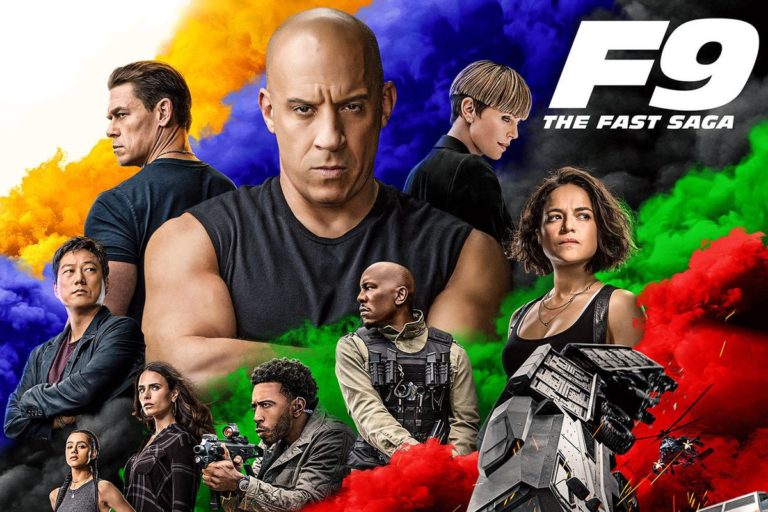
Movie Review: ‘F9: The Fast Saga’ is Another Ridiculously Entertaining Installment in the Franchise


Director: Justin Lin
Writers: Daniel Casey, Justin Lin
Stars: Vin Diesel, Michelle Rodriguez, Tyrese Gibson, Chris “Ludacris” Bridges, John Cena, Jordana Brewster, Nathalie Emmanuel, Charlize Theron

Synopsis: Cipher enlists the help of Jakob, Dom’s younger brother to take revenge on Dom and his team.

[/info]

I got into the Fast and the Furious Series last year, at the start of the pandemic. Like many others, I had an influx of free time and didn’t know how to use it all. But I was optimistic that the lockdown wouldn’t last long, so I went to work watching this dumb, crazy series.

A year later, and these films have made me become an avid fan of the franchise. It’s not high cinema, and it doesn’t aim very high as a franchise. But there’s a beauty in simplicity, in watching a series redefine what it is five movies in, and in bringing together a group of rugged outlaw racers to become one family. The Fast and Furious franchise is insane in all the best ways. The films aren’t really that good, but I love them all the same.

Going into F9, I had expectations that it would be a Fast and Furious movie, with impossible action sequences, an insane plot, and a fun globe-trotting adventure that wasn’t all that great. And it didn’t meet these expectations at all. It shattered them.

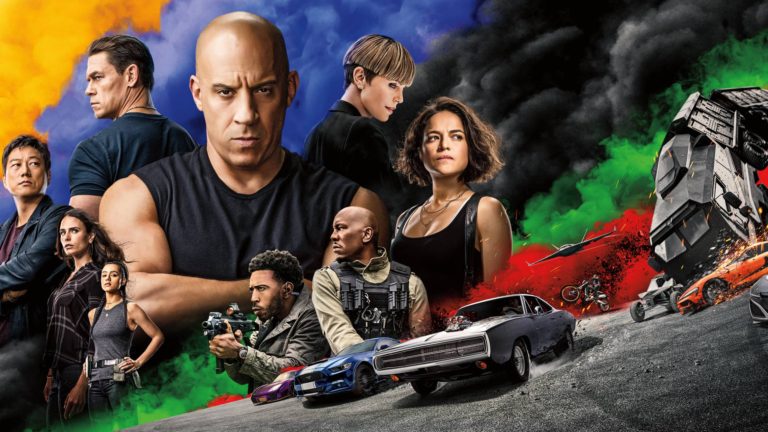
Following a surprise attack on Mr. Nobody’s (Kurt Russel) private plane, Dom (Vin Diesel) and the crew all shift into first gear to reclaim and protect a high-tech weapon from the recently escaped Cypher (Charlize Theron). But when Jakob Toretto (Jon Cena), Dom’s outcasted brother, intercepts the weapon, it’s an all-out race to save the world.

F9: The Fast Saga is the weirdest Fast and Furious movie. From a structural standpoint, the film is verisimilitudinous to the series. While the plot has some contrivances throughout, and while the secondary villain, Otto (Thue Ersted Rasmussen), has little screen time to develop, these aren’t unusual for this kind of story. And uniquely, this film utilizes flashbacks to tell the story of Dom and Jakob from two different perspectives, which works very well. In having multiple perspectives, it deepens the themes of the film and series effectively. No longer are we merely hearing how people have been framed, as has been the norm for the past 2 films, but rather, we watch them process unjust events acting out with misplaced anger. These core choices make this film the most engaging film yet, before the amazing action sequences. And yet, F9 feels tonally imbalanced. It doesn’t feel like a fast and furious movie. Instead, it leans closer to Uncharted 4, being more serious and introspective, in large part due to the character beats of the story, thanks to the return of director Justin Lin.

Justin Lin is back for the first time since Fast and Furious 6, and his love and care for these characters shines through the film in every way. From the return of fan-favorite characters Mia (Jordanna Brewster) and Han (Sung Kang) to the delicate handling of Brian, this film is both fan service and a love letter to these characters. I was floored by the character development in F9, due in large part to the smaller discussions between supporting characters in the film. Although this is largely Dom and Jakob’s story, Letty (Michelle Rodriguez) is given a fair amount of development thanks to Mia’s involvement. There are sequences here that rely solely on visual storytelling and subtext to convey how characters feel about their current situations. And while this isn’t a new technique, it’s so well utilized in this film that it feels completely different from the recent entries in the series.

And it’s this difference in tone that captures the oddity of F9. While it stands out against other entries, it also creates a tonal dissonance for the comedic elements of this film. Tej (Ludacris), Ramsey (Nathalie Emmanuel), and Roman (Tyrese Gibson) are once more delegated to roles of comedic relief, with their banter, pranks, and mishaps all captured for our entertainment. And unlike Hobbs and Shaw, the comedy isn’t one-note. There are a variety of gags throughout the film, from witty teasing to nearly fourth-wall-breaking meta humor. These gags work very well, but they also clash with the serious tone of the rest of the movie.

But asides from this tonal whiplash and its under-developed villain, F9 is the strongest entry in the franchise. It has the best action so far, with insane, jaw-dropping set pieces that defy the laws of physics in a purely enjoyable and cinematic way. From the car chases to the hand-to-hand combat, F9 is a dance that goes faster and faster, until it all explodes in moments of catharsis. The additions of Vinnie Bennet, Finn Cole, Jon Cena and Anna Sawai to the cast works fantastically, grounding the film with an emotional vulnerability for the various flashback sequences and the present-day tensions.

As a theatre-going experience, I can’t recommend F9: The Fast Saga enough. It may not win awards, and it may not be the most defining film of the year, but as a continuation to the most bonkers, original, and diverse franchise currently in Hollywood, it’s a fantastic experience and a riot with friends. Just make sure to stay safe out in the theatres.

Grade: B+

Podcast: The Elephant Man / The Fast and the Furious – Extra Film

This week on Extra Film, Ryan and Jay continue their David Lynch Movie Series with his period drama The Elephant Man and they discuss the action flick The Fast and the Furious!

After the really experimental first film from Lynch, the next film in this series is a more conventional, yet deeply personal The Elephant Man. While it may be a more stripped down version of a Lynch film, there is still the essence of him sprinkled throughout the film product. With a beautiful performance from John Hurt, The Elephant Man is a good entry in Lynch’s filmography.

In the back half of the episode, the guys review the first installment in the Fast Franchise,The Fast and the Furious. We’ve come a long way since this first film, where the stakes were all about stealing DVD players and racing cars and ripping off Point Break. But even though the film is dated, it does show the guys the roots of where this whole saga began. Overall, this was a fun review.

Thanks for listening!

– Movie Review: The Elephant Man (3:36)
Director: David Lynch
Screenplay: Christopher De Vore, Eric Bergren, David Lynch
Stars: Anthony Hopkins, John Hurt, Anne Bancroft, John Gielgud

– Movie Review: The Fast and the Furious (44:38)
Director: Rob Cohen
Screenplay: Gary Scott Thompson, Erik Bergquist, David Ayer
Stars: Paul Walker, Vin Diesel, Michelle Rodriguez, Jordana Brewster

– Music

The Elephant Man – John Morris
The Team Arrives – BT
The Return of the Eagle – Atli Örvarsson

We try to make this the best movie podcast we possibly can and we hope you enjoy them. Subscribe today on iTunes, Spotify, or Stitcher, and please leave us a review on iTunes. You can also find us on Soundcloud, PlayerFM, and TuneIn Radio as well. We really appreciate all your support of the InSession Film Podcast.

Subscribe to our Podcasts RSS
Subscribe to our Podcasts on iTunes
Listen on Spotify
Listen on Stitcher
The Elephant Man / The Fast and the Furious – Extra Film

[divider]

To hear this Extra Film episode and everything else we do, download our apps on the Amazon Market for Android and the Podcast Source app on IOS devices. The mobile app covers all of our main shows, bonus podcasts and everything else relating to the InSession Film Podcast. Thanks for your wonderful support and for listening to our show. It means the world to us.

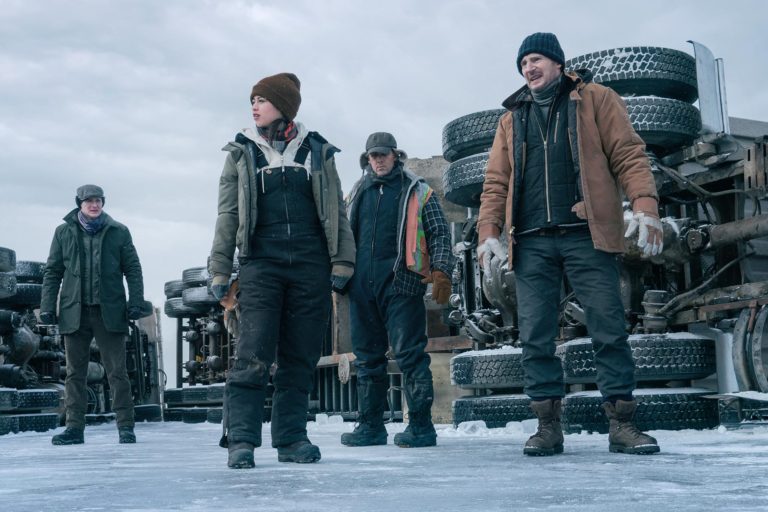
Movie Review: ‘The Ice Road’ is a Lazy Action Vehicle for Liam Neeson


Director: Jonathan Hensleigh
Writers: Jonathan Hensleigh
Stars: Liam Neeson, Laurence Fishburne, Benjamin Walker, Marcus Thomas, Amber Midthunder, Holt McCallany, Matt McCoy

Synopsis: After a remote diamond mine collapses in far northern Canada, a ‘big-rig’ ice road driver must lead an impossible rescue mission over a frozen ocean to save the trapped miners.

[/info]

As I watched the actors in Jonathan Hensleigh’s The Ice Road enduring one treacherous wintry action scene after another, all I could think about was a line from Roger Ebert’s review of 1998’s Hard Rain: “From beginning to end, I was acutely aware of actors being paid to stand in cold water.” It’s the same sensation we have in The Ice Road, now available on Netflix. There’s not much of a story that engages us, only a familiar action star in Liam Neeson battling the inconsequential bad guys again and making us believe he can win in a fistfight on slick ice with an actor thirty years his junior. All I could think about for most of this film was how uncomfortable much of the filming must have been for the cast and crew, and how little of it was worth the effort.

Neeson plays Mike (no last name—no character in this movie gets a last name), a truck driver who keeps getting fired from one job after another due to his temper when co-workers make fun of his mentally challenged brother Gurty (Marcus Thomas). Desperate to buy a truck of his own, he and Gurty take a job up north to drive trucks over a slick icy road to rescue a group of men at a collapsed diamond mine. Also along for the ride are three truck driver characters whose names seemed pulled directly out of the Star Wars universe—Tantoo (Amber Midthunder), Varnay (Benjamin Walker), and Goldenrod (Laurence Fishburne, in a thankless role).

The set-up to the film actually has promise, and there’s a scene of genuine suspense early on when a character accidentally gets his leg caught in a cable behind a big rig. But when the plot settles in and the true villain is revealed at the halfway mark, it’s difficult to care about much of what happens next. I mean, it doesn’t help that Neeson himself has already been a part of two better action films set in the snow—2019’s underrated thriller Cold Pursuit (which had its share of black humor laughs I wasn’t prepared for), and Joe Carnahan’s electric 2011 survival film The Grey, which has ten times more style and emotion and gravitas than anything in The Ice Road.

One big problem with the film is its pedestrian screenplay, which never gives the characters anything interesting to talk about or any big surprises from the viewer. Hensleigh has written some terrific action films before (Die Hard with a Vengeance, The Saint), but he’s struggled as a director, his 2004 debut The Punisher still the best thing he’s made to date. He has given the film a routine and polished look when he should have gone grittier, more menacing. Lots of obvious CGI shots don’t help matters, especially in action scenes that appear like they could have been filmed entirely in warehouses.

The reveal of the villain is so obvious halfway through that you have to be half-asleep to not see it coming. The action scenes, which might have read more exciting in the script, have a tired feel to them, the editing always a bit too slow, the angles not adding much energy, the lifeless music too familiar and lackluster. And we’re not listening for the best dialogue in the history of cinema in a movie like this, but it’s hard to look past clunker lines like these…

“Do you know why we get fired? It’s not your disability—it’s your freakin’ attitude!”

“We can’t stay here. We’ve gotta outtrun it!”

“You’ve never gonna get away with this. You know there’s gonna be an investigation!”

“They want us to fail. This isn’t about money now—it’s personal!”

The performances are fine, they do the job, but there’s no real standout. Midthunder is a fresh face I hope to see in a better movie, and Thomas does what he can with a fairly underwritten character. Benjamin Walker, whose first movie role was playing a young Neeson in Kinsey, fills the screen with deadpan expressions similar to Jason Patric in Speed 2: Cruise Control that seem to be asking, “What the hell am I doing in this movie? I graduated from Juilliard!” Furthermore, the actor revealed to be the villain is about the least intimidating bad guy since Jesse Eisenberg strapped on a bald cap to play Lex Luthor. Holt McCallany, who appears briefly in the film, would have made a much more convincing villain. Even Matt McCoy, the dad from The Hand That Rocks the Cradle who shows up as sleazy General Manager Sickle, would have been better.

If there’s anything that makes Neeson’s newest a movie a forgettable misfire rather than a complete disaster is Neeson himself, who always brings great presence to a film, doing so again here even when he spends most of the movie behind the wheel looking highly perturbed. He gets to punch at least three people—always a plus—and when he has to go dramatic, like in a tragic scene at the end, the scene comes to life solely because of his outstanding acting chops. We’re a long way off from his Oscar-nominated performance in Schindler’s List, but what you have to admire about Neeson is that he commits to a film every single time even when deep down he probably recognizes this one won’t be included in the Lifetime Achievement reel.

The Ice Road has the feel of a film that in the 1990s would have opened on a quiet January or September weekend, offering a few throwaway thrills and an excuse to eat popcorn in the dark, never to be thought of again. It’s an okay watch I guess for the Neeson action movie completists, but let’s face it—his best films of the genre are long behind him, and his latest is simply running on fumes.

Grade: D

Classic Film Review: ‘The Birth of a Nation’ Left a Horrible Stain on Cinema History

The Birth of a Nation (1915) is a film that actively promotes a racist ideology that allowed whites to convince themselves that they were ‘disenfranchised’ victims of African-Americans. Its enormous popularity with audiences also helped to repopularise the Ku Klux Klan in the mid-1910s and spread the Lost Cause myth. When it has that sort of problematic legacy, it is impossible to view this as just a piece of art. It exists as a valuable historical document because it can tell us a lot about how white Americans deluded themselves into believing that violent, racially motivated attacks on innocent African-Americans were morally acceptable. You can look at it in an academic context and pick it apart as a product of its times but, in trying to watch it as a cinephile, I found it hard to view this as a piece of entertainment. It does exist as a landmark in the history of cinema because Griffith introduced crosscutting, color tinting, parallel action sequences, and dramatic close-ups to the art form. You simply can’t ignore its impact or minimize its influence and that makes it difficult to watch. 

It is grand, theatrical, and bombastic in a way that few productions were during this period. Griffith got together the finances to produce a spectacle that was unprecedented in its narrative complexity. He tells the story of the American Civil War from the perspective of two white families who are on opposite sides of the conflict. The Stonemans are depicted as traitorous abolitionists who support the Union because they wish to elevate their own social position. Unionists in general are painted as fools who don’t seem to understand the fact that African-Americans ‘need’ to be treated like slaves in order to keep the fabric of American society together. Griffith contrasts their immoral way of life with the supposedly quaint, touching lifestyle of the Camerons, a traditional, pro-slavery Southern family. The members of the younger generation of each family, directly engage in the Civil War and they all become romantically entangled. After the North wins the Civil War, Griffith implies that society is in ruins and whites are being attacked by dangerous African-Americans. As a result of this, White Southerners decide to ‘defend themselves’ by forming the Ku Klux Klan and violently attacking, murdering and threatening African-Americans. This is presented as a solution to all of their problems and a force for good in the Southern United States. 

The film is most stunning in the way that it neatly incorporates all of the technical innovations that Griffith was employing. Unlike The Jazz Singer (1927), which is only really notable for being the first feature length motion picture to feature speech in several sequences, this film is able to craft a narrative around the techniques that are employed. So many early sound films would include scenes that existed purely to show off the fact that you could hear the voices of the actors on screen and this often makes those scenes painful to watch from a modern standpoint. We’re so used to having these conventions be a part of the cinematic language, that they are not enough to excite us. Griffith deploys cross-cutting at just the right moments and stages crowd scenes with great confidence. He could have easily disoriented audience members by cutting between too many different locations but he finds ways to establish spatial awareness and links between the two different events that are taking place concurrently. The seamlessness of his filmmaking is still astonishing, all these years later. 

There is also something to be said about how the lavish the production is. The costumes look period appropriate, every room is tastefully directed and Griffith was given the artistic freedom to make an epic. There is never the feeling that Griffith was severely restricted by the interference of producers and he is given the time to tell this story in full. There aren’t character arcs that have been severely truncated or set pieces that have had to be compressed. The narrative flows naturally and when intertitles appear, they aren’t introduced in an overly abrupt manner. This allows this to feel modern than a lot of the silent films that were being made during this era. 

You can make all the arguments in the world, but it is still impossible to look past the racial politics. I can completely understand why some feel as though they could never sit through this film and, while it occupies an important place in cinema history, it certainly doesn’t deserve to be considered a beloved film. 

Rating: B-

Criterion Crunch Time: ‘Hard Eight’

Sometimes, things just line up. The point of this column (for me) is to finally watch those movies from Criterion that I’ve been meaning to get to for years. The subject of this particular version of the column is the perfect example of that. Finally, I will be able to watch the first feature of one of my favorite working directors. But first, let’s talk about first features. It can be a bit difficult to view these in anywhere near an objective way. When a director goes on to greatness, there are essentially two options. On one hand, the first film could be truly great, but on the other hand, maybe we just want it to be so we can say things like “Yeah, I can really see the seeds of what he or she would do almost immediately after this.” And sometimes, it can honestly be difficult to tease these two things apart. For every great feature like Sex, Lies, and Videotape from Soderbergh, there is an Alien 3 from David Fincher. With that in mind, I watched Hard Eight from Paul Thomas Anderson.

In short, Hard Eight, based on PTA’s short film, Cigarettes & Coffee, tells the story of Sydney (Phillip Baker Hall) an older gambler, meeting and connecting with John (John C. Reilly). Looking at the careers of the actors in this film now, it certainly seems star-studded. After all, when your film has Samuel L. Jackson and Gwyneth Paltrow in secondary roles, this definitely stands out. Additionally, if you watch this out of order (as I did), Hard Eight is minor PTA. To be fair though, this means that is merely good, instead of very good or great.

But, as referenced in the introduction, one can absolutely see the talent on display behind the camera (not to mention from a writing perspective, as he also penned the screenplay). There is a calm and assurance from PTA that many more seasoned filmmakers never have the ability to access. Given the neo-noir stylings of Hard Eight, his choice of his two lead actors is pretty much perfect. Given the actors who make appearances, it certainly seems like Anderson had his pick. Yet, he chooses actors with character to their faces. Phillip Baker Hall as Sydney seems like a man who has seen his share of trauma without ever delving into the details. John C. Reilly manages a sense of naivety without appearing like a standard, young Hollywood leading man. These casting choices allow the audience to be unsure of how Hard Eight will end.

It is notable that Hard Eight hinges on a secret. And yet, until that secret is revealed, the audience has no clue that this is what we should be thinking about. And the story is not the only thing that changes at this moment, Phillip Baker Hall’s performance, which was already great, shifts into another gear and turns on a dime. Sydney changes from a man of values and assurance to something else entirely. His turn from completely in control to wild-eyed with fear is one of those moments that will stick with you long after the end credits roll. From a story perspective, this is a gutsy decision. Hall, up until this point, embodies everything you remember from movies set in casinos and, by extension, mafia films. He is consistently impeccably dressed, in control, and has a sense of honor and decorum. These rules he lives by creates a clear delineation between him and Jimmy (Samuel L. Jackson).

This relationship in particular, though not the focus of the film, is also given adequate time to become something unexpected. Jimmy is consistently a character that pushes buttons and jumps up and down on Sydney’s nerves. In a lesser film, Jimmy would immediately get his comeuppance. This, in some ways, is a character Jackson has played before and would play again. But there is a great deal more depth here, despite limited screen time. When Hall and Jackson share the screen, Hard Eight truly pops. It might lose its luster, but I would definitely be interested in an extended cut with a bit more between these two sans the interruptions of John attempting to keep the peace.

And no discussion of Hard Eight would be complete without mentioning the one appearance of Phillip Seymour Hoffman. It is brief, but similar to watching an early Paul Thomas Anderson film. Much like PTA, even in a small (in length, not in style) performance, Hoffman absolutely owns the screen. Anderson very smartly appears to simply let Hoffman run wild, as aside from contextual reactions, no one else speaks. His character is wildly obnoxious, and yet, the camera loves him and there is a sense of regret as Sydney walks away and the film moves on from this barely connected sequence.

So, is Hard Eight as good as Magnolia, There Will Be Blood, Phantom Thread, or Boogie Nights? Absolutely not. But for many other directors, this would be a fantastic film to hang your hat on. And this is yet another reason to love services like The Criterion Channel. While his other movies get a lot of publicity (as they should), this is yet another film to appreciate for film lovers like you and me. Sure, I would probably have watched Hard Eight eventually, but the fact that it was leaving a streaming service gave me the hint I needed to finally make it happen. And don’t we all need that hint? We all have so many choices, but I’m glad I spent my time with Paul Thomas Anderson and Hard Eight.

We’ll be back soon with more excellent movies leaving The Criterion Channel!

Chasing The Gold: How Was That Not Nominated For Best Picture? (2011)

The Oscars of 2012 had, in my opinion, some pretty bland nominees. The Artist took home the main prize, but, while charming, it’s a pretty forgettable film. The Help is entertaining, based on a best-selling novel of the same name, and has a great cast, but the “white savior” trope left a bad taste in my mouth. The Descendants seemed to be a frontrunner, and while it has some good performances, especially from George Clooney, the film didn’t hit me as hard as I think it was trying to. While reviewing the list of films that were nominated, I was shocked by an excellent film that I honestly thought was a Best Picture nominee, but apparently only received two Oscar nominations, one for Best Screenplay,  and one for Best Foreign Film, which it won. I am, of course, talking about A Separation. In such a mediocre year of Best Picture nominees, A Separation easily should have gotten in the Best Picture list.

Made in Iran, A Separation begins with a couple who seems to get along just fine. However, the wife (Simin, played by Leila Hatami) wants to leave the country, and bring her daughter with her. If her husband (Nader, played by Paymon Maadi)  would come with her, there would be no other reason to seek a divorce. However, Nader has an elderly father who is quite sick, and needs constant care. He refuses to leave him or let his wife take their daughter out of the country. But this is just the beginning. Simin remains in Iran, although in a different house, and Nader hires a woman named Razieh to come take care of his ailing father. After some unfortunate events occur, Simin is accused of causing Razieh to have a miscarriage, and unless he can prove that he didn’t know she was pregnant, he will go to prison on murder charges. 

What makes this film deserve a Best Picture nomination is that not only is it a technically well-made film, but it’s my favorite kind of film- a film that makes you think. It’s a film in which the story is so tightly written, your thoughts and opinions on each character change several times throughout the film. The audience, as well as the other characters in the film, are all aware of certain facts, while hiding many secrets. These secrets are not revealed all at once. As each secret becomes revealed, it causes you to rethink your opinions on the characters, often by understanding that character with more depth. What works so well in this film is that each character is in a desperate situation. Nader has his father to take care of, Simon wants to leave the country with her daughter, who doesn’t want to go with her.  Razieh, as we come to find out throughout the film, has several secret issues of her own.  

It’s challenging to write about this film without giving away spoilers. There is an incident that happens that has devastating effects on all of the characters. It’s a very quick, seemingly meaningless at the time, act. It happens during a stressful time, when emotions are high. However, something happens as a result of the incident that puts all characters at risk. What makes this moment brilliant, is that we don’t really see it happen. We see part of what happens. We feel the anger, confusion, and desperation of all of the characters as more information and secrets are revealed. The brilliance of the film is that there are no heroes here, nor are their villains.  These are people living in a country most Americans know very little about, with laws we don’t have here. These are characters living under a great deal of pressure, and they have to make decisions that can hurt themselves or others in order to survive.  This is a film that changes your opinions the more you watch it. And because of this, it completely deserved a Best Picture nomination.

If A Separation deserves a nomination, what film didn’t deserve one? A movie that had so much going for it, yet made me cringe the entire time I watched it, Extremely Loud, and Incredibly Close. This film is about the effects of 9/11! It has Tom Hanks, Viola Davis, AND Max Von Sydow! How could this movie NOT be totally amazing?  Before I get into my critique of the film, I want to give a disclaimer: I have a daughter who has Down Syndrome and Autism. In addition to writing, I am also a teacher, and have taught many special needs students throughout the year. That being said, what didn’t work in this movie was the character of Oskar Schell, played by Thomas Horn, a character who might have had special needs.  Now, in the history of film, there have been very few, in my opinion, successful youth performances. Children either seem much too old and mature for the age they are supposed to be, or they just try to be cute. Steven Spielberg is one of the greatest directors of children.  Think of Henry Thomas in E.T. or Christian Bale in Empire of the Son. These were terrific and deep performances, yet both actors still seemed like children, and not miniature adults. 

One thing that makes people love a film is being able to relate to it. This is the story of an extremely privileged boy, who has lots of social issues. Tom Hanks plays his dad, and, because it’s Tom Hanks, he, of course, is the greatest dad ever. He tells his son how brilliant he is all the time, and has lots of free time to make up adventures for his son all over New York City. Sadly, the way the son is written, and directed, he is one of the most unlikable characters I have ever seen in film. The problem with this is that I can see how the director and writer wanted him to be.  He was supposed to be “quirky” and “brilliant”, but instead was irritating and pretty hateful most of the time. There is one scene where he mentions that he was tested for Asperger’s Syndrome, but that results were “inconclusive.”  So, is that supposed to justify this kid’s behavior and attitude towards people? He lies to people (even counts how many lies he tells) and barges into people’s personal lives (especially Viola Davis, who just seems too tired and not in the mood to deal with his issues). He has hateful outbursts to his mother, and Max Von Sydow, which, as much as he tries to justify it, they really don’t deserve.  

The main problem is they try to make him “quirky” and to some degree we are supposed to feel for him, which, at the end when he has a breakdown, we finally do.  And that’s a credit to Thomas Horn. Let me be clear, Horn did a great job playing this complicated and rather unlikeable character. The character has a ton of idiosyncrasies;  he counts all the time, and flashes his fingers while talking about numbers, he runs around with a tambourine for some reason, and does the tell-tale “I’m an individual” by wearing vest sweaters and a winter hat during the springtime. It’s the way that he’s written and directed that makes the character impossible to like or root for.  And, considering the entire film requires you to care about and like this kid, it ruins the film. And for this reason, since it missed the mark of what it was trying to accomplish, I can safely say that it did not deserve a Best Picture nomination.

List: Top 3 Coming of Age Scenes in Animated Films

This week on Episode 435 of the InSession Film Podcast, inspired by our review of Pixar’s Luca, we discussed our favorite coming-of-age scenes in animated movies. As we mentioned on the show, this topic is right up our alley in just about every way. Coming-of-age stories are very personal to us, and when coupled with animation it often makes for some magical experiences. Which is to say, there is no shortage of great scenes to pick from for our lists, making this exercise a bit challenging. But also a lot of fun simultaneously. That said, here are our lists:

(Note: Please keep in mind that we each had different criteria for our selections)

JD

1) Hiccup Reunites with Toothless – How to Train Your Dragon 2
2) Copper Protects Tod – Fox and the Hound
3) Becoming A Real Boy – Pinocchio

Brendan

1) Will You Still Remember Me When I’m 100? – The Many Adventures of Winnie the Pooh
2) Bambi, Father Scene – Bambi
3) End Credits Sequence – Only Yesterday

Honorable Mentions (Combined)

Mufasa Sky Scene – The Lion King
Joy’s Epiphany – Inside Out
Sadness Saves the Day – Inside Out
So Long, Partner – Toy Story 3
Remember Me – Coco
Getting His Own Suit – Spider-Man: Into the Spider-Verse
Mother’s Death – Bambi
Friendship Scenes – Bambi
Talking About Her Father – Persepolis
Forbidden Friendship – How to Train Your Dragon
Stoick’s End – How to Train Your Dragon 2
Mother’s Death – The Land Before Time
Running with the Wolves – Wolfwalkers
Ending Sequence – The Tale of the Princess Kaguya
Flying Sequence – The Tale of the Princess Kaguya
Running Through Forest – The Tale of the Princess Kaguya
I Am Moana – Moana
Train Ride – Spirited Away
Final Battle – Mulan
Cutting Hair / Stealing Father’s Armor – Mulan
Rhino – James and the Giant Peach
Jack’s Realization – The Nightmare Before Christmas
Going Back to London – Peter Pan
Kiki’s Delivery Service
My Neighbor Totoro

Hopefully you guys enjoyed our lists and if you agree or disagree with us, let us know in the comment section below. As mentioned above, there are plenty of monster battles to pick from if you’re familiar with this genre. So, it’s quite possible that your list is different than ours. That being said, what would be your Top 3? Leave a comment in the comment section or email us at [email protected].

For the entire podcast, click here or listen below.

For more lists done by the InSession Film crew and other guests, be sure see our Top 3 Movie Lists page.