


Home Blog Page 170

Movie Review: ‘Clifford the Big Red Dog’ is A Big Red Disaster


Director: Walt Becker
Writer: Jay Scherick, David Ronn, and Blaise Hemingway
Stars: Jack Whitehall, Darby Camp, Tony Hale, Sienna Guillory, David Alan Grier, Izaac Wang, Russell Wong, Kenan Thompson, John Cleese, and Russell Peters.

Synopsis: A young girl’s love for a tiny puppy named Clifford makes the dog grow to an enormous size.

[/info]

Let’s be real, here: a live-action adaptation of Norman Bridwell’s Clifford the Big Red Dog was never going to work. You can’t make his lovable personality and charming demeanor appear convincing through CGI. You also need to make him talk, which was part of the charm that made the 2000 TV show so great and Clifford such an infectious character. Remove that and you transform the most loving big red dog there is into a terrifying family-friendly version of Godzilla with dated jokes harkening back to late 1990s and early 2000s Disney movies.

Godzilla seems like an overblown comparison here, but I’m not joking. A supposedly playful scene in which the CGI Clifford sees a man playing with an inflatable bumper ball and chases him down until the dog literally deflates the ball, likely severely injuring the man, isn’t funny or paints Clifford as a “charming” and infectiously lovable dog. Instead, it represents Clifford as a Them!-like creature that needs to be eradicated before it destroys the entire city. It’s a terrible thing to think while watching a family movie, but the filmmakers quickly tarnish anything Norman Bridwell established in his series of books, while also leaving fans of the original TV show with a bad taste in their mouths.

Clifford was never about bodily humor or fast-paced slapstick, but this movie is only filled with the lowest forms of humor imaginable. Jack Whitehall’s Uncle Casey gets hit by Clifford’s tail, peed, and sneezed on in more ways than one. It seems too interested in developing extended sequences of unfunny slapstick by taking advantage of Clifford’s “big red” size, instead of celebrating what Clifford’s truly all about: friendship and love. Yeah, sure, there’s a hackneyed message about “if a lot of people loved each other, the world would be a better place to live” during the end, but that love isn’t felt, nor seen through Emily Elizabeth (Darby Camp)’s relationship with Clifford.

Our main protagonist uses Clifford as a conduit for the love she has for him and hopes she will never be rejected by her peers at school again, and because of this, the puppy grows to a larger-than-life-size. After that quasi-poignant moment, the movie sacrifices any form of emotional levity it had for pure slapstick. Emily and Casey will chase Clifford on the streets of New York, while Zack Tieran, owner of Lifegro (Tony Hale) is looking for the dog for…reasons involving genetic mutation. In an absolutely inane turn of events, Tieran then bribes the NYPD and Clifford now becomes a fugitive from the LAW who must now go into HIDING in the hopes that the police and Lifegro don’t catch him.

Was Clifford becoming a fugitive from the POLICE ever in Norman Bridwell’s book? Of course not! Was a group of mutated goats and sheep tackling bodyguards and the NYPD ever part of the Clifford canon? Never, so why is this movie so obsessed by veering off Bridwell’s messages of love and friendship in favor of a family-friendly version of Godzilla, with an aesthetic that feels plucked straight out of Disney’s horrible adaptation of Inspector Gadget? I have no idea, but it’s definitely not the Clifford movie that should’ve been made.

It’s a good thing, though, that the CGI doesn’t look as unconvincing as the trailers made it out to be. It’s not as detailed as, say Peter Rabbit, but I believed that Clifford was a living, breathing animal during the entire runtime, save for his puppy scenes. The CGI is a bit “too CGI” during those sequences, but it becomes more palatable once the animal grows. The acting isn’t terrible too. Darby Camp gives a rather impassioned performance as Emily Elizabeth, and shares two great scenes with John Cleese’s Mr. Bridwell, an obvious nod to the author of Clifford, though I wonder what the real-life Bridwell would think of this movie. All other acting talents, while decent, are wasted either through limited screen time or a weak screenplay that never wants to exploit the actors’ strengths. I’m mostly looking at Jack Whitehall who becomes the literal punching bag for Clifford and all of the strangely violent slapstick that ensues in this movie.

The last Clifford film, Clifford’s Really Big Movie, wasn’t great, but it at least understood the source material it was adapting itself from and respected Norman Bridwell’s legacy. The new Clifford movie does not do any of that. It’s rather a slapstick-fueled nightmare filled with unfunny jokes, a predictable protagonist arc, and a story so insane your jaw will literally drop in utter disbelief. Even describing it now doesn’t do justice to how completely preposterous the entire movie is.

Initially, the movie was supposed to premiere at TIFF. Unfortunately, due to the Delta Variant of COVID-19, the movie was delayed indefinitely, thus stripping a (potential) midnight madness audience of its chance to see it on the biggest screen imaginable. And even if Clifford the Big Red Dog completely disregards Norman Bridwell’s charming and lovable titular character to make physical jokes about the dog’s size and transform it into a purely unhinged Creature Feature, it must be seen to be believed and will definitely be added to the canon of weird CGI-driven family films like Peter Rabbit, Sonic the Hedgehog and the oddity of Beverly Hills Chihuahua. And if that doesn’t convince you to turn on Paramount+ (or see it on the biggest screen you can find) and watch it, then I don’t know what will.

Grade: D
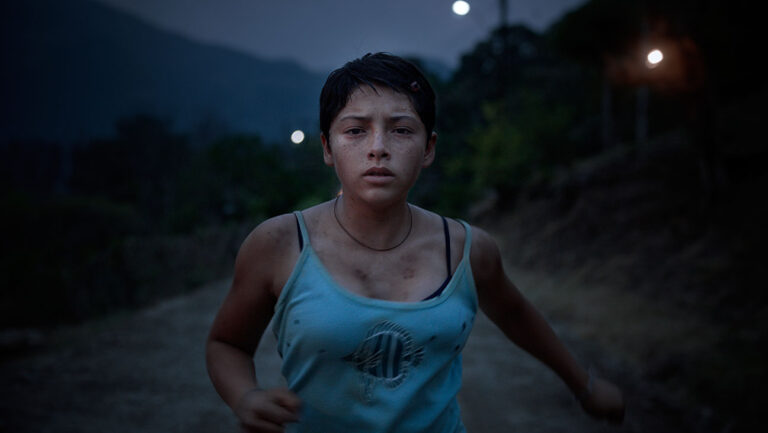
 

Movie Review: ‘Prayers for the Stolen’ brings to life the female experience of living with terror


Director: Tatiana Huezo.
Writer: Tatiana Huezo.
Stars: Ana Cristina Ordóñez González, Marya Membreño, Blanca Itzel Pérez, Giselle Barrera Sánchez, Camila Gaal, Alejandra Camacho, Mayra Batalla, José Estrada, Julián Guzmán Girón.

Synopsis: Life in a town at war seen through the eyes of three young girls on the path to adolescence.


It is unsafe to live in the town of San Miguel, Jalisco, Mexico. Even though it is far from big cities and full of lethal animals and insects, the danger comes from the unseen men that have conquered the place and now reign it with terror. The vulnerability only increases if you’re a girl or a woman. Being a girl is an immediate threat in a place where showing your femininity, for example wearing long hair, may result in an unexpected kidnapping and disappearance. Consequently, as women are concerned, there are no girls in this town.

Tatiana Huezo, a Mexican-Salvadoran filmmaker, has cemented her body of work by showing the horrors of Mexico in documentary form. The current state of the country, which was worsened when former President Felipe Calderón started the “War on Drugs” in 2006, has become a constant feature in Huezo’s filmography. In Absences, she presented the heartbreak of a mother and a wife trying to move on with her life after the forced disappearance of her son and husband five years prior. In Tempestad, she followed two women as they struggle to survive in a country dominated by drug dealers and haunted by forced disappearances.

Now, Huezo has her feature debut with Prayers for the Stolen. The story is based on the fictional book of the same name by American-Mexican author Jennifer Clement, but it portrays the harsh reality of living in certain areas of Mexico, and the unavoidable danger of being a woman in said country.

Divided in two different timelines and covering the childhood and early adolescence of its protagonist, Prayers for the Stolen is the coming-of-age story of Ana (Ana Cristina Ordóñez González as a child // Marya Membreño as the teenager), a girl that lives in the Mexican mountains of San Miguel. Her entertainment consists of watching snakes, running around the hills, and playing in the river with her best friends Paula (Camila Gaal // Alejandra Camacho) and María (Blanca Itzel Pérez // Giselle Barrera Sánchez). Nevertheless, they face a harsh awakening when Juana, another girl from the area, is kidnapped, never to be seen again.

Slowly, Ana starts facing the reality of her life and the town where she lives: men are scant since many went to the United States looking for money and opportunities (illustrated in a curious scene where everyone gets together in the only place in town with phone reception); the government representatives are either corrupt or outnumbered by the local drug kingpins; and schools and businesses are forced to pay their “protection rate” to said drug-dealers. These facts are presented through Ana’s eyes, who is still too young and naïve to really understand what is happening, but who will face trauma that will teach her to protect herself from unknown and unsaid threats.

Huezo, who also wrote the script, presents the unraveling of the tension in a sly and accumulative fashion. While the camera portrays the way of living in such a place, it slowly shows the horrific images that Ana witnesses. The terror is disseminated by the hushed conversations amongst adults, the stark prohibitions established by Rita (Mayra Batalla), Ana’s mother, and the decisions made by those around Ana, including her friend Margarito (José Estrada), who moves away from her as time goes by. There is a fine and delicate thread maintaining everything in order, but it can be broken unexpectedly and irreparably, and more likely, it will be shattered once the girls become women.

Prayers for the Stolen is a prime example of the horror of being a hostage of gendered violence and of not knowing who to trust. Is the new teacher who’s asking uncomfortable questions a spy or a friend? Is Margarito growing up to become another kingpin or can he be saved? Are the police there to protect or to be bribed? The women of the story – who dominate the film and the place for the mere reason that they are the ones left behind – form an existence based on panic and uncertainty, a survival strategy that is passed on to the girls.

Filmed by the clear and blunt eye of cinematographer Dariela Ludlow, the camera doesn’t shy away from showing the most harrowing scenes that mark the girls’ reality. This trauma can come from non-violent scenes, such as when Ana and Paula get their hair cut to “make them look ugly” and boyish, or from violent events, such as when Ana witnesses the aftermath of Juanita’s disappearance. Slowly – sometimes too slowly – Huezo illustrates the vices, ways of living, scarcities, and worries of the town.

The film’s direction creates a panicked mood where sound and unseen events create distress and expectation. In this environment, the girls grow up. The dangerous environment is reinforced by Rita’s silent and hostile concern; and still, Ana, Paula, and María try to live their lives, only showing traces of trauma in their conversations and learned attitudes. While the shock is constant, the bond between the girls is the most powerful thing of the film. Whatever they’re facing, they’re dealing with it together, with Huezo celebrating this bond.

Even if the film loses focus somewhere in the middle, it maintains its intensity through the performances. The older actors offer a smooth transition into the teenage years, a period that brings to life the possibilities that were distant threats in the past. In one of the most shocking scenes of the film, Huezo liberates the scary legends and fears in a scene that shows that Rita’s exaggerations were justified. In this regard, Mayra Batalla as Rita offers the most memorable performance. With her apprehension, Batalla becomes the steady face in a story that changes its main characters, presenting a mother’s despair and the Mexican roughness that distinguishes them.

Prayers for the Stolen joins a lengthy list of Mexican films that present a reality of living in a country marked by corruption, impunity, and violence. Still, this film stands out by showing the additional worries, injustices, and threats faced by girls and women. The last 15 minutes present the climactic ending of a story that was boiling with anticipation and dread, distinguishing Tatiana Huezo as a filmmaker that knows how to portray the feminine heartache of living in a country such as this.

Grade: A

Podcast: The Good, The Bad, The Ugly / Once Upon a Time in the West – Extra Film

This week on Extra Film, Ryan and Jay continue their Sergio Leone Movie Series with The Good, The Bad, The Ugly, and then they discuss Once Upon a Time in the West!

After being off a week, the boys return to talk about two of the most important westerns of all time, and the two most celebrated, memorable films in Sergio Leone’s filmography. With The Good, The Bad, The Ugly and Once Upon a Time in the West, Leone firmly cemented himself as one of the greatest filmmakers of his time and of all time. The Extra Film lads do the best they can to talk about these two epic masterpieces.

Thanks for listening!

– Movie Review: The Good, The Bad, The Ugly (4:59)
Director: Sergio Leone
Screenplay: Age & Scarpelli, Luciano Vincenzoni, Sergio Leone
Stars: Clint Eastwood, Eli Wallach, Lee Van Cleef

– Movie Review: Once Upon a Time in the West (50:05)
Director: Sergio Leone
Screenplay: Sergio Donati, Sergio Leone
Stars: Claudia Cardinale, Henry Fonda, Jason Robards, Charles Bronson

– Music
The Good, The Bad, The Ugly – Ennio Morricone
Once Upon a Time in the West – Ennio Morricone
The Return of the Eagle – Atli Örvarsson

We try to make this the best movie podcast we possibly can and we hope you enjoy them. Subscribe today on iTunes, Spotify, or Stitcher, and please leave us a review on iTunes. You can also find us on Soundcloud, PlayerFM, and TuneIn Radio as well. We really appreciate all your support of the InSession Film Podcast.

Subscribe to our Podcasts RSS
Subscribe to our Podcasts on iTunes
Listen on Spotify
Listen on Stitcher
The Good, The Bad, The Ugly / Once Upon a Time in the West – Extra Film

[divider]

To hear this Extra Film episode and everything else we do, download our apps on the Amazon Market for Android and the Podcast Source app on IOS devices. The mobile app covers all of our main shows, bonus podcasts and everything else relating to the InSession Film Podcast. Thanks for your wonderful support and for listening to our show. It means the world to us.

Chasing the Gold: 2022 Screenplay and International Feature Categories – Episode 40

On Episode 40 of Chasing the Gold, Ryan is joined by Sophia and Nick of the Oscar Wild Podcast to talk about the Screenplay and International Feature Categories of the 2022 Oscar Season.

With the race heating up, and the AFI Film Festival going on right now, it is time to start talking about some of the other stacked categories of the year with Original and Adapted Screenplay, which is big in determining who might win Best Picture. Then there is International Feature, which might be the most stacked it has ever been. Alongside first-time guests Sophia and Nick, who are fantastic, they are able to break down who the current frontrunners are in the race and if they will be the winners when it’s all said and done.

On that note, have fun with this week’s episode, and let us know what you think in the comment section below. Thanks for listening!

– Music
The Return of the Eagle – Atli Örvarsson

We try to make this the best movie podcast we possibly can and we hope you enjoy them. Subscribe today on iTunes, Spotify, or Stitcher, and please leave us a review on iTunes. You can also find us on Soundcloud, PlayerFM, and TuneIn Radio as well. We really appreciate all your support of the InSession Film Podcast.

Subscribe to our Podcasts RSS
Subscribe to our Podcasts on iTunes
Listen on Spotify
Listen on Stitcher
Chasing the Gold: 2022 Screenplay and International Feature Categories – Episode 40

[divider]

Mobile App

To hear this Extra Film episode and everything else we do, download our apps on the Amazon Market for Android and the Podcast Box app on IOS devices. The mobile app covers all of our main shows, bonus podcast’s and everything else relating to the InSession Film Podcast. Thanks for your wonderful support and listening to our show. It means the world to us!

[divider]

Help Support The InSession Film Podcast

If you want to help support us, we would greatly appreciate it! For more info, CLICK HERE.

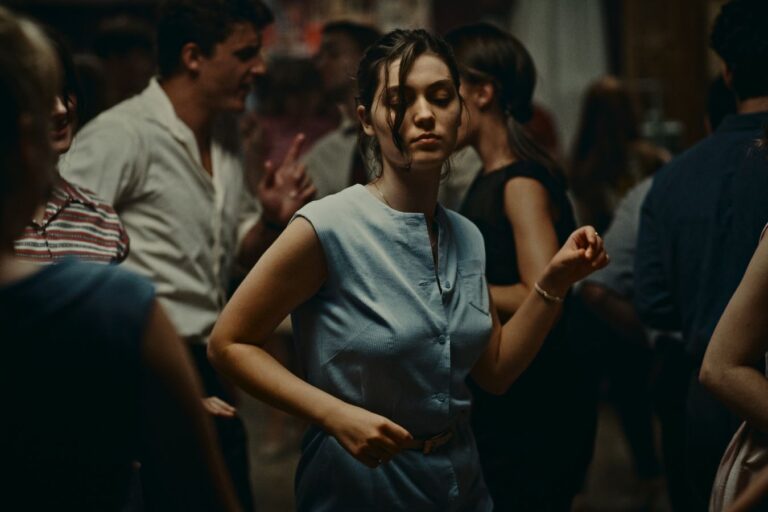
Movie Review: ‘Happening’ is a staggering, intimate piece about a young woman’s unrelenting experiences


Director: Audrey Diwan
Writer: Audrey Diwan, Marcia Romano, Anne Berest
Stars: Anamaria Vartolomei, Kacey Mottet Klein, Sandrine Bonnaire, Louise Orry-Diquero

Synopsis: An adaptation of Annie Ernaux’s eponymous novel, looking back on her experience with abortion when it was still illegal in France in the 1960s.


Adapted from Annie Ernaux’s novel of the same name set in 1960s France, a young and wishful literature student’s, Anne (Anamaria Vartolomei), life and future are about to be disrupted when she accidentally gets pregnant. Her period is five weeks late, and she begins to get desperate; her studies aren’t going well, she is scared about what her friends will think about the situation, and a “condoling” doctor can’t help her. In fact, he lies to her about the drug he prescribed her; instead of causing is a miscarriage, it’s intended to nourish and boost the fetus. At the period of time in which the film is set in, abortion is banned, and a person can go to jail for it.

There have been multiple films about the perils of illegal abortions, such as last year’s Never Rarely Sometimes Always. Nevertheless, Audrey Diwan’s Golden Lion winner owes a debt to quite a few festivals winning pictures that tackle the same themes (the Palme d’Or-winning 4 Months, 3 Weeks, and 2 Days and Vera Drake, which also won the Golden Lion back in 2004). It carries the ramifications of all the above and shines a new light on a story we are all familiar with, accompanied by a stirring feeling of concern due to the thematic strengths. As mentioned before, Happening is set in 1963, albeit the film downplays the time period decorations and fittings, focusing more on the interactions between the characters and the story’s atmosphere to fill the backdrop.

That is what makes Diwan’s adaptation tick; it overcomes the “cliches” that type of narrative might have by having vérité and human-esque writing. Each character is portrayed so that they don’t feel as if they are in the opposites, being either good or bad people, which is a problem that haunts tales about the diverse hordes of ethos. Its best choice narratively is that it does not sit on the fence on its topics, never dithers on telling the story from Anne’s intimate and thick as knives point of view. There are even body horror levels of intensity, and Diwan doesn’t gloss over the encroaching procedures; after all, doctors can’t help, so there is no anesthesia involved. Regardless of those tough and uneasy moments, the movie has several heart-to-heart moments that are haunting while powerful due to their living state.

The main ingredient that makes L’événement work exceptionally is Anamaria Vartolomei’s impressive performance. Anamaria plays Anne as intense while scared for her future and caring yet tough-willed. Nobody will help her, so she goes on her way to “speak in tongues” to try and get someone who isn’t running from the situation and is inclined to help people in the same position as her. There is something special about her performance, while it takes notes from others like Sidney Flanigan in Never, Rarely, Sometimes, Always. In a way, it reminded me more of Hanna Schygulla’s work in Rainer Werner Fassbinder’s The Marriage of Maria Braun. Hanna expresses all her emotions with the body, like every other actress would do, but it’s her luminescent eyes that showcase the inner pain Maria is suffering. Because she needs to hide her attempt at getting an abortion, Anne must wear a mask in public and with the people she holds dear since trust isn’t much of an option, and that’s where the eyes come into play. Resplendent and marvelous, a gripping act as Anamaria needs to balance how Anne feels inside and how she wants to be perceived by the public, faking her true feelings.

Happening is a brutal and powerful watch about a topic that remains highly important and disputed as ever since still there are being reintroductions of anti-abortion laws. Most recently, in Puerto Rico, Proyecto Dignidad (PD as its initials in English) is eradicating a new bill that prohibits women from getting an abortion once a heartbeat is detected. And with bills and laws like this, people think we are actually moving forward? This is supposed to be a modern progressive country, yet they are trying to determine other people’s lives, specifically women. We need more films like this to show those people why abortion must be available for every woman. There is an episode of the critically acclaimed TV series, Veep, where they quote the following: “If men got pregnant, you could get an abortion at an ATM.” Audrey Diwan doesn’t want to make her film a morality tale; what it wants to do is show us, the audience, a time where abortion was treated as a felony. It isn’t the best film depicting the subject; however, it is an essential watch, now more than ever before.

Grade: A-

Criterion Crunch Time: ‘In The Cut’

The genre of the sexual thriller has gotten a lot of play in online spaces, and almost never in a positive light. There is a push, specifically from younger audiences, to do away with most (if not all) sex scenes in film. Given the name of the genre, it should not surprise you that these two ideas might be at odds. And even if you are a proponent of this genre, there are issues. Even the greats are usually made by provocateurs, and overwhelmingly by men. This leads to some obvious, and sometimes uncomfortable leering at women on screen as nothing more than sex objects. But maybe some of these problems can be ameliorated by changing the perspective. So, in this edition of Crunch Time, we look at a sexual thriller from a female director and writer, in the form of In The Cut.

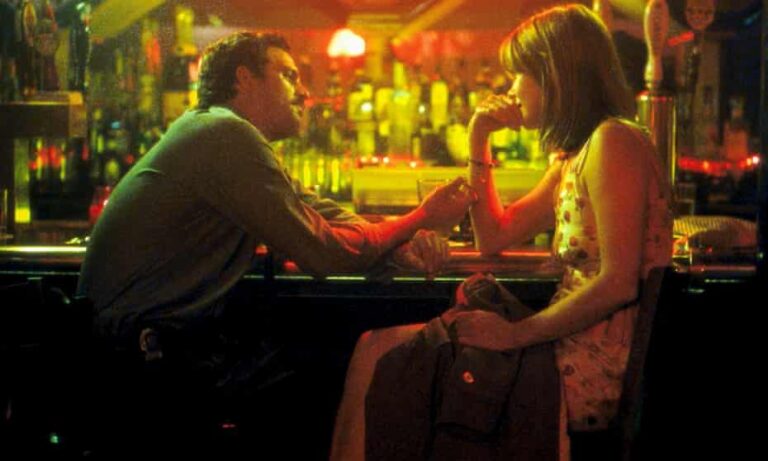
Director Jane Campion (also known for The Piano and The Portrait of a Lady) helms the story of Frannie Avery (Meg Ryan), a writer and English professor who begins a sexual relationship with Detective Giovanni Malloy (Mark Ruffalo) who is investigating the murder of a young woman in her neighborhood. It should be no surprise if you know her work, but In The Cut looks absolutely fantastic. Campion is proof that when you put a talented director behind the camera, genre is not a limitation, but rather an advantage. The film always feels like the sexual thriller that it is, without succumbing to scenes that feel unnecessary or exploitative. This is not to say that it is not sexually charged or body focused. It absolutely is and this highlights the importance of power differential and specific angles chosen by Campion and cinematographer Dion Beebe.

In The Cut is a film that has had a bit of a renaissance as time has passed. As someone who missed it upon release, it is easy to see why it was not immediately beloved, for some valid reasons, and some not so valid. In general, American audiences do not respond well to films that talk frankly about female pleasure, especially when focused on men performing oral sex on women. In The Cut talks the talk and walks the walk as far as that goes. Malloy repeatedly offers verbally and then makes good on said offer. After this scene, Frannie even questions him on where he learned to perform this skill so well. In an honestly touching scene, Ruffalo details his previous experience, and this allows us to believe Frannie falling for him, somewhat against her better judgement. Unfortunately, another reason audiences may have not reacted positively is the protagonist herself.

In a movie like this, an actress like Meg Ryan has a lot working against her. She has performed roles outside of her comfort zone here and there, but she never quite shook the romantic comedy America’s sweetheart persona. After all, this was released just after Kate & Leopold and just a few years removed from You’ve Got Mail. Frannie is very different. She is quiet, a bit cold, and sexually demanding. Throughout the entire film, her breathy vocal choice and reserved icy manner just made me feel as if she is doing an impression of Nicole Kidman. Given the Kidman produced this and was a star of Campion’s previous work, it is easy to imagine how much better In The Cut would have been with her in the lead. It is not a bad performance by any stretch of the imagination, but it lacks the realism and grounding that is desperately needed.

Additionally, the script, written by Campion and Susanna Moore (who wrote the book it is based on) is a bit sloppy once you get beyond Ruffalo and Ryan. It feels as if characters are introduced for only two reasons. One cannot have a story about these two without external lives and stressors and in a murder mystery, you need endless red herrings. A truly unhinged ex-boyfriend, John Graham (Kevin Bacon) is memorable, but not for reasons the film hopes for. This is the perfect example of unintentional comedy. When speaking about this character, others say things like “he’s so intense” to cover for the fact that he spends most of the film mugging and screaming. On the other hand, Frannie’s best friend Pauline (Jennifer Jason Leigh) is a lovely addition and creates a needed bond for our protagonist who otherwise would be a complete loner and impossible to connect on a human level. The murder mystery itself, despite the head fakes, is actually well created and clever. As in any movie of this type, some of the fake outs work and some don’t, but the ones that are effective are tremendously jarring and make the wait worth it. 

Which frankly, is In The Cut in a nutshell. It is a wildly uneven film, but the high points absolutely make it worthy of our time. There is no genre which is beyond the reach of a great filmmaker. Despite the seemingly puritanical desires of some movie viewers, the sexual thriller not only has a place but is a tremendous weapon in the hands of an auteur. It can put us on edge, flip the script of gender roles and sexuality, and make us question even our own senses. Campion manages this with aplomb and proves herself again to be a director we should always pay attention to regardless of structure, genre, or subject material.

Op-Ed: AFI’s 100 Years…100 Passions – ‘The Graduate’ (#52)

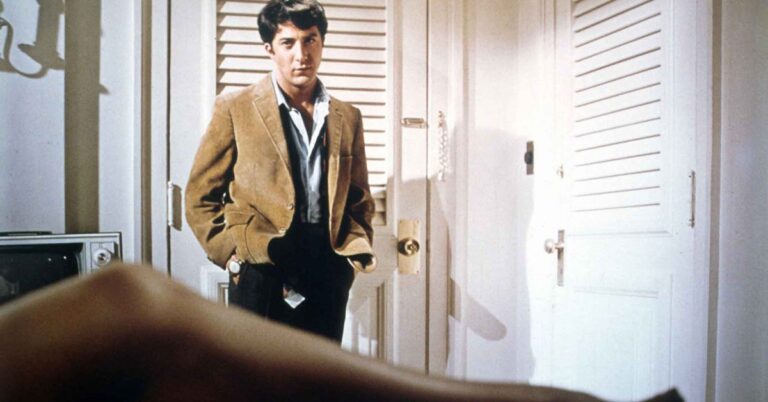
In many ways, time has not been kind to The Graduate (1967). Upon the first release, it was rapturously embraced by the counterculture generation. They saw Benjamin as an anti-establishment hero who saw through the phoniness of the conservative, middle-class society that surrounded him. Journalists promoted it as a radical rallying cry for a youth generation that wanted to forever alter the status quo. It became a mainstream cultural sensation and, for some, it is still synonymous with radical politics and the sexual revolution.

When I first saw it, I was aware of its towering critical reputation and I was too willing to accept the idea that it was a masterpiece. It had been so thoroughly hyped up that I assumed that it was a genuinely groundbreaking piece of art. All of its advertising suckered me into believing that it was going to blow my mind. I conflated the advertising with the product itself and lost sight of the fact that the film isn’t all that progressive or shocking. 

As most people know, the film is about the struggles of Benjamin Braddock (Dustin Hoffman), a young, wealthy Californian who doesn’t know what to do with his life after earning his Bachelor’s degree. He returns home to Pasadena and agrees to stay with his parents for a while. He quickly finds that he is suffocating under the weight of his parents’ expectations. One night, he is sexually harassed by Mrs. Robinson (Anne Bancroft), a married friend of his parents, and ends up having an affair with her. His parents quickly become concerned about the fact that he appears to have no intention of getting a job and push him to date Elaine (Katharine Ross), who happens to be Robinson’s daughter. When he begins to get close to Elaine, he decides to break off his relationship with Robinson and determines that marrying Elaine will satisfy all of his desires. She breaks up with him after Robinson publicly claims that Braddock raped her, but Braddock continues to chase after her until she runs away from her own wedding ceremony to be with him. 

The Graduate’s biggest issue that it seems to represent everything wrong with the sexual revolution. It pretends to be radical and progressive but, at heart, it’s a very conventional radical chic picture. It targeted white, middle class kids who were slightly dissatisfied with the ‘restrictions’ that society had placed upon them. They wanted to be able to have sex without being shamed for it and, like angsty teenagers, didn’t want to be told what to do by their parents. Braddock’s frustrations are fairly generic and rather than fighting back against a corrupt, broken system that ruined the lives of people who were genuinely in need. There is something selfish and entitled about Braddock’s worldview and you question whether the film’s fans were guilty of letting out a Freudian slip when they began fawning all over The Graduate.

The countercultural movement had become hip in the late 1960s and it had already been heavily commodified by Hollywood. This meant that there were plenty of young people who went to anti-war protests in the hopes of seeing Jane Fonda. These radical chic youths wanted all of the benefits of the countercultural revolution, without having to take on any of the disadvantages. They were quite happy to tell their parents to get lost, but they probably didn’t want to deal with a version of socialism that involved bread rationing. I suspect that this is why it took so long for progressive reforms to fully take root in American politics. So many of those radical chic youths became yuppies in the 1980s. When it became ‘cool’ to be a conservative, all of the Fonda wannabes decided to drop their liberal principles and start watching Firing Line. 

The Graduate does feel like a blatant attempt to commercialize a cultural movement that was gaining popularity in 1967 and this might be why it is so vague when it comes to establishing the social and political context that influences Braddock’s decision making. Some have argued that the film is actually a criticism of Braddock’s actions and many see the widely acclaimed final shot as a reflection of the emptiness that many 1960s youths felt when they were faced with adulthood. After getting Elaine to run away from her own wedding to be with him, Braddock gets her to hop on a bus and you witness the two of them staring off into the distance with a confused, slightly anguished expression on their faces. Their elation at freeing themselves from the influence of their parents is quickly tempered by their concern over finding their own way in the world. This shot would be powerful if the film did more to develop the troubled relationship between Braddock and Elaine.

It also suffers from the fact that it isn’t nearly as scabrous or disturbing as the disquieting final shot of The Heartbreak Kid (1972), which could be viewed as Elaine May’s response to The Graduate. That film was more effective in dealing with the gulf that still exists between WASPy high society and middle-class Jewish communities. May aims to make a point about the struggle that ordinary Jews face when trying to gain acceptance in gentile communities and the final shot of the film suggests that the Jewish protagonist has locked himself in a gilded cage that is full of uncaring, unfeeling gentiles who will never fully accept a person like him. On top of all that, May had more to say about gender dynamics and was less afraid of making her audience uncomfortable. 

It’s a real problem that Elaine, who is presumably meant to serve as a stand-in for an entire generation of sexually repressed young women, is such a blank slate. I can accept the idea that she’s meant to lack personality and a strong sense of self because she has always been taught to be deferential to others. I can’t accept the fact that a character who is so bland and vacant takes up so much of the third act. She sucks all of the air out of the room and leaves you yearning for Bancroft to slink back onto the screen. The film’s defenders would argue that Elaine comes across as a blank slate because Braddock has turned her into an idea and chases after her in the hopes of solving all of his problems, without considering the fact that he barely even knows her. I would give this argument more weight if we didn’t have to spend quite so much time with this nothing character. Audience members could be easily forgiven for falling asleep during the scenes in which Braddock chases her down. The whole film loses momentum and it becomes impossible to care about anything or anyone. If Nichols was going to pull a switcheroo at the end and reveal that Braddock’s victory was actually empty, he probably should have gone to the effort of making the audience care about his grand love affair. 

There are plenty of ways in which the film disappoints, but it remains essential viewing for one important reason. It’s impossible to deny the magnetism of Bancroft’s iconic performance. She’s forceful and abrasive in a role that doesn’t actually give her much to work with. Robinson is a character who has to burst onto the screen and horrify the audience with her abusive behavior, but there’s a point where she is promptly shuttled off the screen and never really heard from again. Her character arc feels unfinished and Bancroft has the difficult job of effectively sketching out the character biography of a woman who isn’t exactly fully rounded. Her performance works because Bancroft wholeheartedly embraces the monstrous elements of Robinson’s character.

When she throws herself at Braddock and uses manipulative tactics to coerce him into having sex with her, she doesn’t hold back. Robinson is using her powerful position to intimidate a younger man and Bancroft doesn’t make any easy pleas for sympathy. There’s not a point where she cracks and telegraphs the fact that Robinson is a lonely older woman who is desperate for love and affection. She waits to reveal Robinson’s vulnerability until later on and finds a way to successfully make the point that Robinson’s unhappiness within her marriage does not justify her abusive treatment of her lover. She’s commanding and magnetic whenever she’s on-screen and you never want to take your eyes off of her. Hoffman does his best to keep up with her, but it quickly becomes clear that Bancroft is another level. When she disappears from view, the film loses a lot of its vitality. 

You really can’t miss Bancroft’s iconic performance, but I wouldn’t blame anybody for feeling a bit disappointed by the film itself. The years have not been kind to it and it now seems shallow and overly calculated. There’s also something undeniably funny about the fact that AFI voters thought that this was a romantic film. Perhaps they were all searching for bland, vacant young wives and saw Elaine as the perfect woman? I can’t be sure of what their reasoning was, but this film’s inclusion on the list is truly perplexing. 

Movie Review: ‘King Richard’ Captures the Heart and Soul of the Williams Sisters Story


Director: Reinaldo Marcus Green
Writer: Zach Baylin
Stars: Will Smith, Aunjanue Ellis, Jon Bernthal, Saniyya Sidney, Demi Singleton

Synopsis: A look at how tennis superstars Venus and Serena Williams became who they are after the coaching from their father Richard Williams.


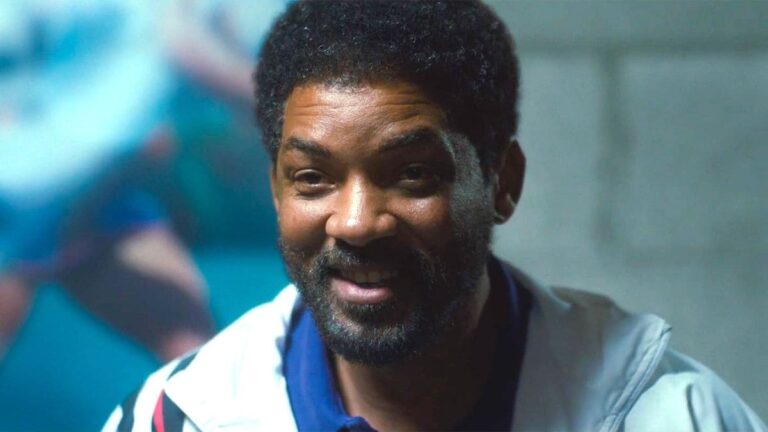
On paper, King Richard is exactly the sort of film that could have gone wrong. With the many themes and tonal balance the film has to strike as an Oscar-contending crowd-pleasing sports bio-pic, plus the framing of the narrative of Venus and Serena Williams’ success through the eyes of their father, there is a lot this film is tackling all at once. However, it did not take long for this film to settle me in and take me on this incredible journey.

What this film does right is the portrayal of the sisters’ father Richard, played by Will Smith. Yes, Richard is a passionate and caring father who will do whatever it takes to care for his daughters and get them to the top of their tennis game. Yes, Richard is willing to work overnight in order to train during the day and make their future work. However, throughout the film, he also makes mistakes and is confronted by them, and his character is rounded by what is Smith’s best performance in years. Not only that, but the success of the sisters is not truly defined by the father. With many stylish montage sequences, it is clear that their success came from the hard work that they put in, alongside the passion and love they have for the sport.

It was clear going into King Richard that Will Smith would give a strong performance, however, it is the entire cast that gives their all and the supporting roles are some of the best surprises of the entire year. Aunjanue Ellis has been the one many people have brought up, and she certainly is great, but it is Saniyya Sidney and Demi Singleton as Venus and Serena that are scene stealers throughout the entire film. Their burst of energy is insatiable, and it is so easy to fall in love with them from the minute they come on screen. With the knowledge we already have on the success the sisters will go on to, it creates an entertaining ride seeing them win every match and progress further.

As a biopic, King Richard feels more authentic than most and that is down to the heart of the story. Firstly, the crew cared about recreating some of the most important memories when certain moments are compared to the real footage shown at the end of the film. Not only that, but the film takes some turns narratively that I did not expect and don’t fit the typical structure of a bio-pic of this tone and yet it adds more impact to the story. I appreciate that screenwriter Zach Baylin took some risks and grounded this film in the facts and reality, and yet still found a way to make the film a celebration of the sport and of the achievements.

Having a black man direct this story, Reinaldo Marcus Green was able to tell a story within this bio-pic that reflected the attitude of America in the 1990s, and one that is sadly still around to this day. For a sport that was heavily dominated by white people for generations, the film touches on that and shows the many issues that the Williams family faced trying to crack into the league. Green manages to balance these tougher – yet important – storylines with the feel-good nature of the overall narrative to create an impactful story with heart, and one that is incredibly entertaining to watch.

Is it a little bit long, clocking in at 138 minutes? Perhaps, and it wouldn’t lose too much cutting out 10-15 minutes. Do I wish the film added more weight to the relationship of Venus and Serena Williams as sisters? Yeah, I do. That message gets lost in the second half as it becomes clear the film wants to focus on the immediate stardom of Venus and her journey to beginning her tennis career. However, it is hard to deny that when the film ends and we get the montage footage of the real Williams’ sisters, there is plenty to celebrate. King Richard is inspirational, crowd-pleasing, and is a film that shows exactly how bio-pics should be told.

Grade: A-

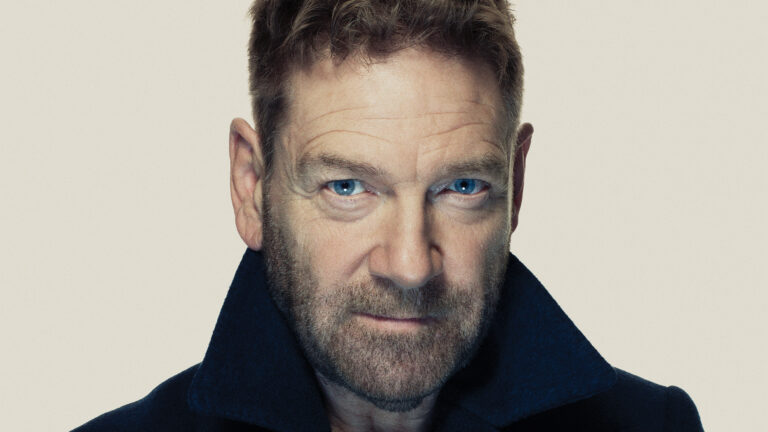
Poll: What is your favorite film directed by Kenneth Branagh?

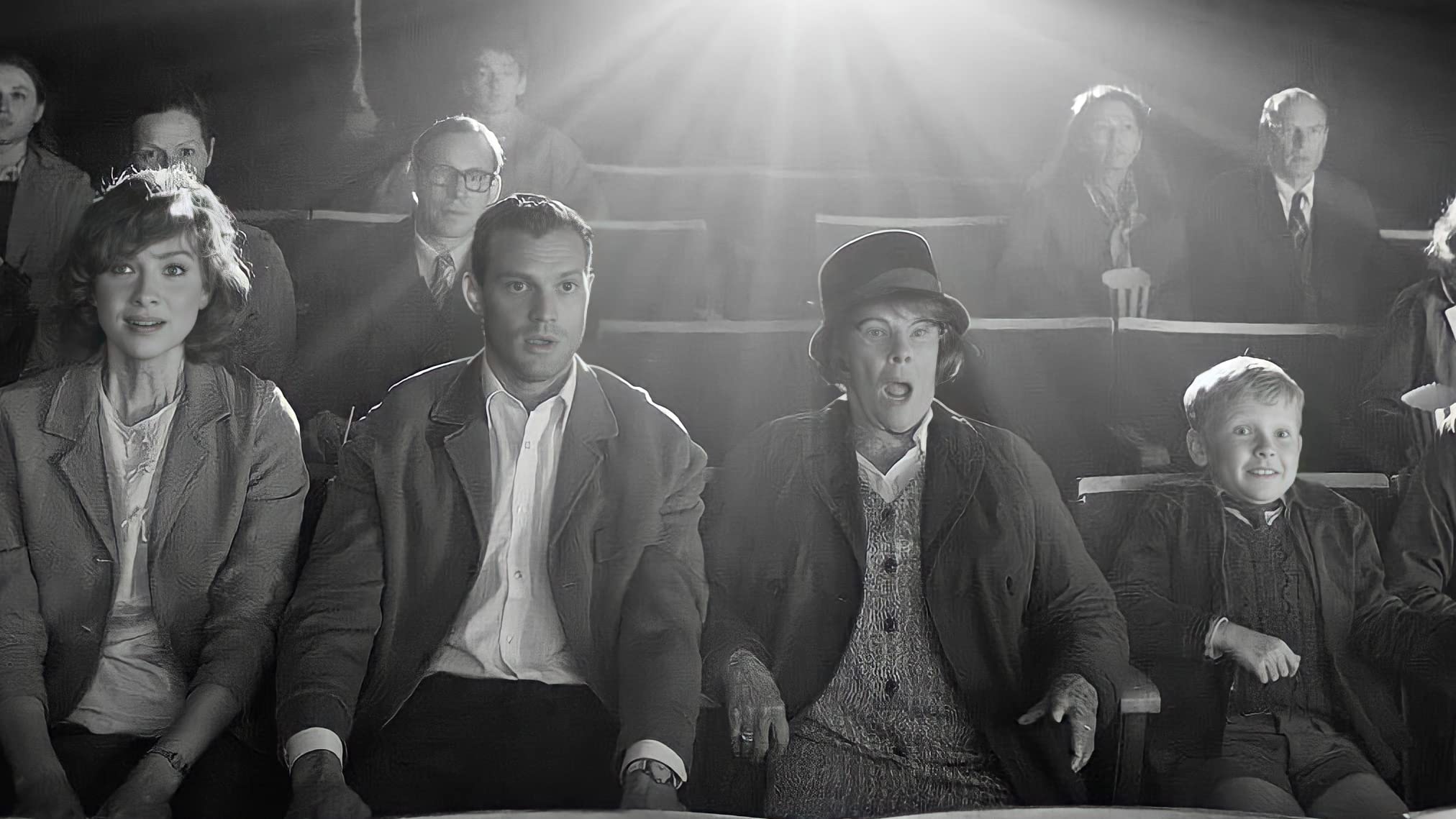
From journeyman to Shakespearean-man, Kenneth Branagh is one of cinema’s most theatrical talents (literally). As a performer, it’s rare for him not to go big; as a director, it’s even rarer. Initially known for adapting several of William Shakespeare’s works, he has taken his Shakespearean background across all genres while behind the camera. Some have led to great results, others…fowl (wink wink). But this weekend, for perhaps the first time, we find him scaling back his sensibilities for something a little more personal and nostalgic with Belfast. The results appear incredibly favorable, and it prompted us to look back at his filmmaking catalog.

With all of that said, what is your favorite film directed by Kenneth Branagh? You may notice a fowl omission, that was deliberate.


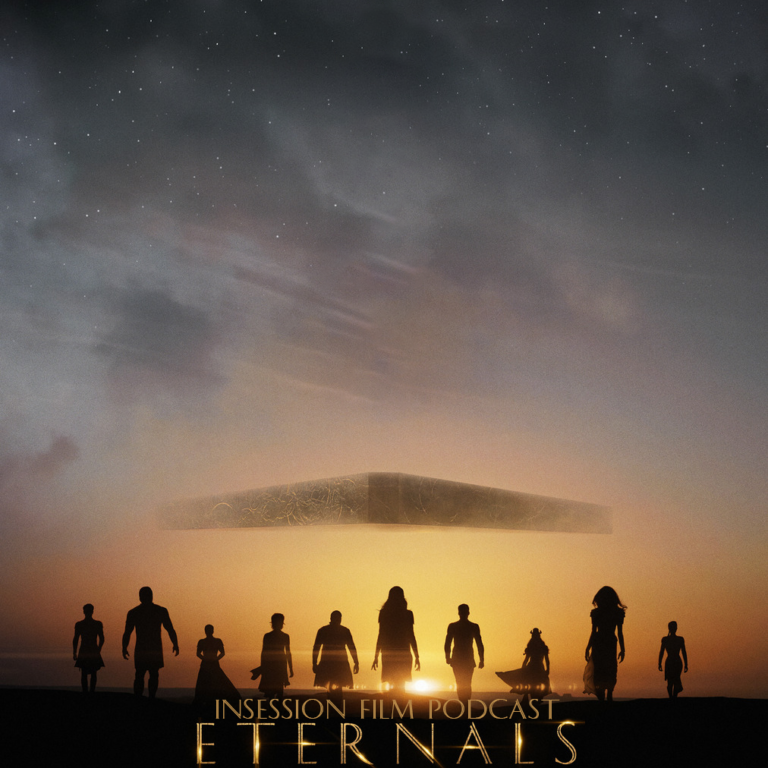
Podcast: Eternals / Spencer – Episode 455

This week’s episode is brought to you by ExpressVPN. Sign up today and get 3 months FREE with a 1-year package!

This week on the InSession Film Podcast, Kevin Brackett from Reel Spoilers joins us to discuss Chloé Zhao’s latest film Eternals and we also review Pablo Larraín’s Spencer! Plus, a few brief thoughts on the post-apocalyptic Tom Hanks vehicle Finch.

Another long show, but given the discourse on Eternals, it felt warranted. There is obviously a lot to unpack in Marvel’s latest film as we try to get at the heart of the film and why it’s dividing audiences. Either way, we have a great time talking about a film that we very much enjoyed. Then we get to Spencer, which was unexpectedly a back and forth debate. The film has mostly received universal praise, however, we found ourselves arguing over some of its technical merits.

On that note, check out this week’s show and let us know what you think in the comment section. Thanks for listening and for supporting the InSession Film Podcast!

Movie Review: Eternals (6:06)
Director: Chloé Zhao
Writers: Chloé Zhao, Patrick Burleigh, Ryan Firpo, Kaz Firpo
Stars: Gemma Chan, Richard Madden, Kumail Nanjiani, Lia McHugh, Brian Tyree Henry, Lauren Ridloff, Barry Keoghan, Don Lee, Salma Hayek, Angelina Jolie

– Notes / Discussion (1:19:30)

For our break segment this week, JD offers up a few thoughts on the Tom Hanks-starring post-apocalyptic film Finch, available now on Apple+ TV. And spoiler alert, it’s a good #JDTears time.

[divider]

RELATED: Listen to Episode 423 of the InSession Film Podcast where we discussed The Tree of Life!

[divider]

– Movie Review: Spencer (1:40:30)
Director: Pablo Larraín
Writers: Steven Knight
Stars: Kristen Stewart, Timothy Spall, Jack Farthing, Sean Harris, Sally Hawkins

Show Sponsor: First Time Watchers Podcast

– Music

Eternals – Ramin Djawadi
Across the Oceans of Time – Ramin Djawadi
Crucifix – Johnny Greenwood
The Return of the Eagle – Atli Örvarsson

Subscribe to our Podcasts RSS
Subscribe to our Podcasts on iTunes
Listen on Spotify
Listen on Stitcher
InSession Film Podcast – Episode 455

[divider]

Next week on the show:

Review: Belfast
Top 3: N/A

[divider]

Help Support The InSession Film Podcast

If you want to help support us, there are several ways you can help us and we’d absolutely appreciate it. Every penny goes directly back into supporting the show and we are truly honored and grateful. Thanks for your support and for listening to the InSession Film Podcast!

VISIT OUR DONATE PAGE HERE

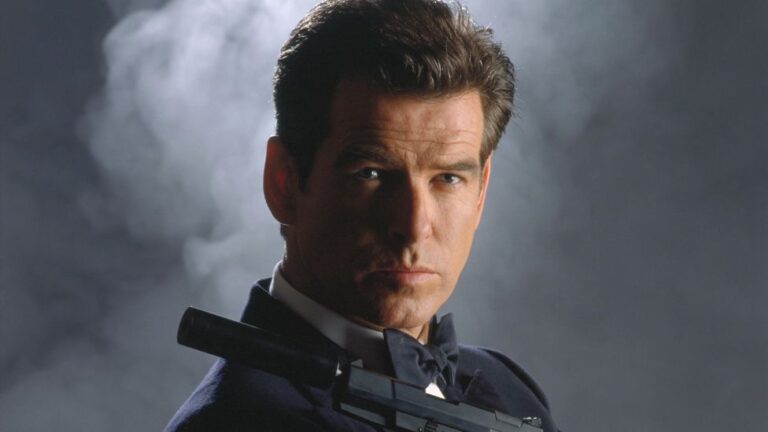
Op-Ed: Revisiting Pierce Brosnan as James Bond

Who doesn’t love Pierce Brosnan? Who doesn’t love Pierce Brosnan as Bond? Unfortunately, even the most ardent fan of the fifth 007 has to admit Brosnan peaked in his debut and suffers from an increasingly downhill, ho-hum tenure.

Watch Goldeneye | Prime Video

GoldenEye

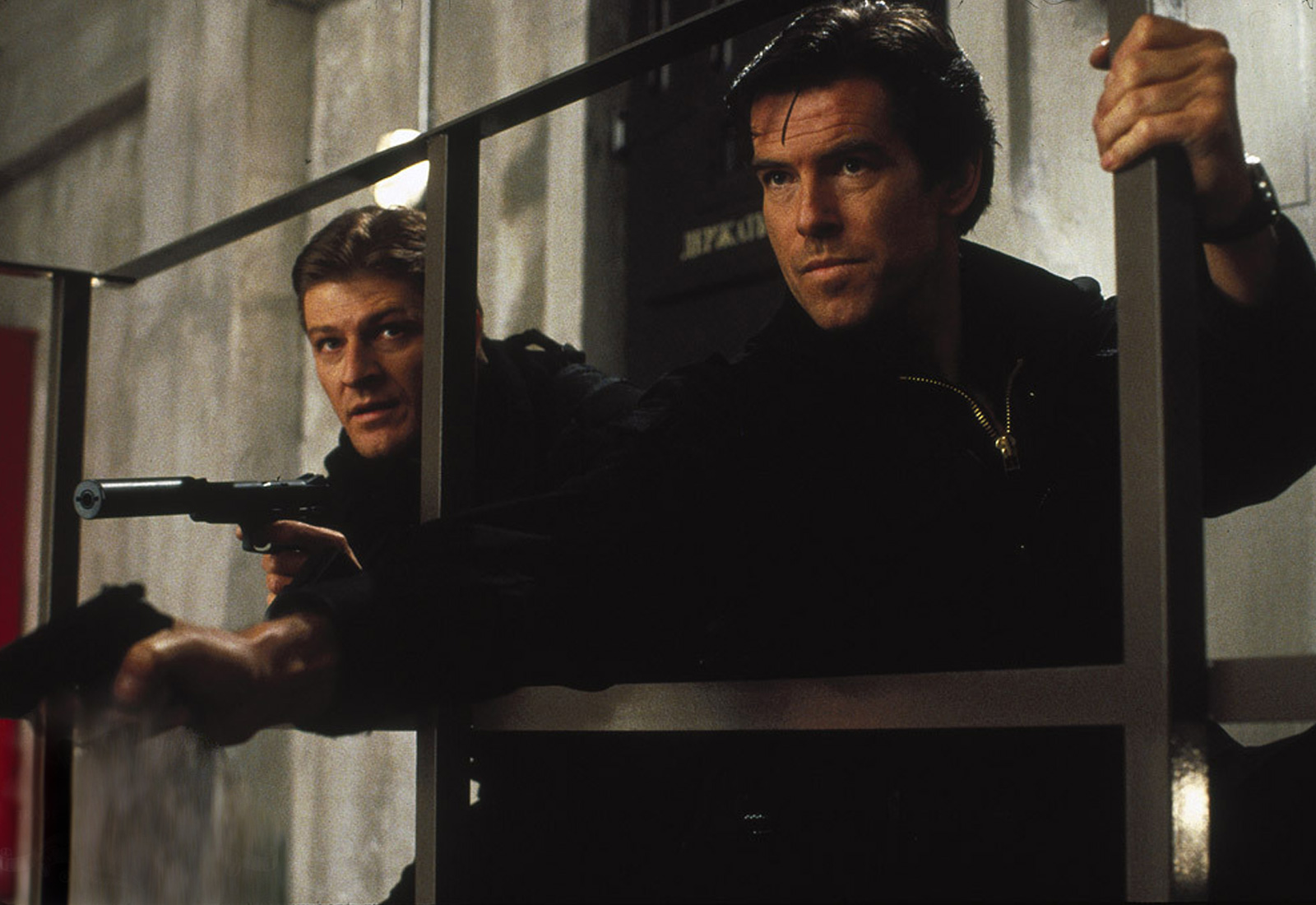
After a six-year delay, Pierce Brosnan’s 1995 debut as Our Man James results in one of the franchise’s finest. Ten years after 007 (Brosnan) loses fellow MI6 agent 006 Alec Trevelyan (Sean Bean) during a mission, the control keys to a powerful satellite code named GoldenEye have been stolen by the Janus crime syndicate. Bond must stop his former comrade from using GoldenEye’s electromagnetic pulse to steal millions – infiltrating Russian bases and uncovering skeletons in MI-6’s closet during this battle of the 00s. Hammer and sickle symbolism, communist relics, armored trains, and tanks accent the post-Iron Curtain Saint Petersburg twists while director Martin Campbell (Casino Royale) provides the obligatory planes, chases, and one on one fights. The Cold War is over and Dame Judi Dench’s (Notes on A Scandal) skeptical M sizes up 007’s misogynistic out of touch ways, mirroring the nineties audience that’s wondering why we should still care about Bond. Bean’s (Patriot Games) smooth Trevelyan is the slick bane of Bond’s existence with all the charm, gadgets, and babes of his successor in another multi-layered antithesis. The supporting cast – including Famke Janssen (X-Men) as horny henchwoman Xenia Onatopp and Izabella Scorupco’s (Reign of Fire) spunky computer tech Natalya Simonova – each have their moment thanks to the intelligent heist, then high-tech gear, and explosive satellite dishes. Brosnan brings his Remington Steele suave to Bond – the perfect blend between Dalton’s edge, Moore’s humor, and Connery’s strength. His 007 has history and grudges in a world that has no need for old time spies. The cheeky script, British wit, and debonair delivery create room for his swagger, smarts, and style. Viewers believe Brosnan’s Bond can endure the past, present, and future after facing crises both personal and professional. Even if you aren’t a Bond fan, GoldenEye is a complete picture with action, performances, and stature reinvigorating the franchise.

James Bond 007: Revisiting Tomorrow Never Dies - Den of Geek

Tomorrow Never Dies

James Bond investigates the mysterious sinking of the HMS Devonshire – orchestrated by media mogul Elliot Carver (Jonathan Pryce) to secure broadcasting rights in communist China – while rekindling his relationship with Carver’s wife Paris (Teri Hatcher) and teaming with Colonel Wai Lin (Michelle Yeoh). Director Roger Spottiswoode (The Children of Huang Shi) and house writer Bruce Feirstein deal with seafaring suspense and claustrophobic danger in this two hour time frame thanks to British and Chinese relations, realistic naval bombardments, and mass media manipulation. Infrared women covered in circuitry for the opening titles set the cool, technological tone while urban damage and helicopter pursuits up the pace even when the handcuffs on a motorcycle and remote-controlled car chases become silly. This mission is complex, an intricate caper with global implications compared to the franchise’s previously stereotypical Asian portrayals, and prophetic talk of internet technologies and our commonplace reliance on them forgives the 1997 notion that newspaper headlines can control the world. Print media’s power has waned, but tweet misinformation and look what happens! The tainted journalism and deeper social commentary, however, come at the expense of well-developed characters with backstories lacking dimension and a screenplay that feels unfinished. Teri Hatcher (Desperate Housewives) is a misused would be femme, quick and obvious compared to the intelligent Michelle Yeoh (Crouching Tiger Hidden Dragon). Yeoh’s martial arts skills aren’t the fulcrum of her wow, but the ladies deserved more than falling back on feminine weakness, and bland villains reveal their power hungry ways too early with no time to enjoy Jonathan Pryce (Carrington). Fortunately, Desmond Llewelyn’s disguised Q makes for a delightful debriefing, and Pierce Brosnan balances the refreshing, modern innuendo with military seriousness. Bond is in uniform for sweet interplay and perfected mannerisms, and Brosnan handles the internal heavy as well as the winking ensemble despite the film’s ultimately rushed, superficial structure. Tomorrow Never Dies is imperfect, thin on characterizations, and lacking personality despite its stars, yet it’s bleak, realistic commentary remains relevant.

The World is Not Enough: A Transitional James Bond Movie - Den of Geek

The World is Not Enough

007 Bond protects Sophie Marceau (Braveheart) amid oil pipelines, ex-KGB agents turned terrorists, and stolen nuclear bombs in this 1999 entry featuring a lengthy, action packed pre-title sequence with well done assassinations, boat chases, and hot air balloons. Neal Purvis, Robert Wade, and Bruce Feirstein’s plot starts off strong, but unfortunately, the international espionage becomes predictable and redundant fast. Kidnappings, Stockholm Syndrome, nuclear warheads, and pretty scientists meander with double talk drivel – a superficial mishmash of devices with no real analysis of the victims, oil crises, or missile intrigue. However, at the same time, this two hours is crowded thanks to the increased MI-6 at home – including Samantha Bond’s Moneypenny, Colin Salmon as Charles Robinson, Serena Scott Thomas (Inherent Vice) as Doctor Molly Warmflash, and more – yet the recurring players are also underutilized in what was Desmond Llewelyn’s final picture as Q. We’ve had bad girls and henchwomen before, but the beautiful, sexy, and should be Bond’s female match in Marceau’s Elektra King is likewise under cooked, standing out among the jetsam yet lost in the sexual angst and anticlimactic final confrontations upon multiple viewings. One time Bond director Michael Apted (Coal Miner’s Daughter) should have kept the focus on Bond and Elektra’s antagonistic relationship, but time is wasted amid Robert Carlyle’s (The Fully Monty) silly villain Renard who can’t feel pain and the unbelievably ridiculous Denise Richards (Wild Things) as Doctor Christmas Jones. Despite his humor, innuendo, and quips, the bland script relegates Bond to an old, duped bodyguard. This ho-hum bowing to action and cliches misses the boat, leaving Brosnan with an overall disappointing Bond picture.

Die Another Day | Where to Stream and Watch | Decider

Die Another Day

Eon’s twentieth, fortieth anniversary 2002 picture and Brosnan’s final outing unfortunately goes from bad to worse as the captured Bond is tortured in North Korea amid NSA agents, revenge, and diamonds. The action within the stylized titles starts off well, but the unique opening gives way to a poor theme song, product placement, and a need to be hip that’s more important than Neal Purvis and Robert Wade’s story. A hat toss or Universal Exports reference would have been enough homage, and the various music cues with interlaced Bond themes are a fine touch. However, the anniversary peppering meanders like a montage borrowing from every other Bond picture. Big explosions drown out the soft voices, and it’s tough to take the provocative Korean intrigue seriously thanks to an invisible Aston Martin, ice castles, Moneypenny’s VR sex romp, and spoiled man child villain Toby Stephens (Black Sails) stomping his foot to get his way. Rick Yune’s (The Fast and Furious) Zao is a far better villain, and Halle Berry’s (Monster’s Ball) show stopper a la Honey Ryder ends up lost in laughable CGI. Rosamund Pike (Pride and Prejudice) is also wasted as Miranda Frost but ironically Madonna (Evita) makes sex jokes, provides villainous information, and serves her purpose in five minutes. The tongue in cheek is corny and forced while hyperbole skews Bond’s revenge, unevenly wavering between the realistic torment and the preposterous even for 007 gadgets. Nonetheless, Brosnan works the shaggy prison look as well as the suave spy charm, keeping his Bondian style on form regardless of the ridiculousness surrounding him, and he deserved better than this hodgepodge finale.

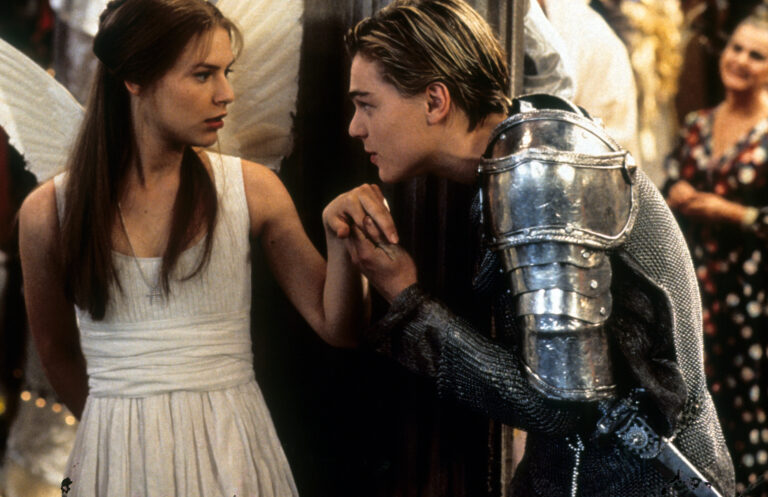
Classic Review: Romeo + Juliet is a decent display of nostalgia 25 years later.


Directed by: Baz Luhrmann

Stars: Leonardo DiCaprio, Claire Danes, John Leguizamo, Harold Perrineau, Paul Rudd, and Pete Postlethwaite


The year is 1996 and in the oh-so-hip time of “I want my MTV,” bands like Nirvana, Radiohead, and The Smashing Pumpkins flowed through airwaves of the alternative music scene, giving angsty teens something to identify within the lyrics. And through that mix of teenage wasteland, director Baz Luhrmann, coming off his first directorial debut, Strictly Ballroom, is set to release his newest film, an adaptation of one of the most famous plays to ever exist: Romeo + Juliet

William Shakespeare’s tragedy about two star-crossed lovers has been adapted so many times that I’m sure we’ve all lost count at this point. Most of us read the story at a time during our teenage years, and anyone else who wasn’t offered that opportunity, at least knows the story. Two young people, Romeo and Juliet, wear their hearts on their sleeves and fall head over heels in love. However, their families, The Montagues, and The Capulets, feud within the streets of Verona. Even vicious hate will not drive these young lovers apart. Whether it’s a pure period drama like Franco Zeffirelli’s 1968 version or a loosely based contemporary take like 1961’s West Side Story, they’re all basically the same narrative. But where does Luhrmann’s version rank in the plethora of adaptations? 

Luhrmann adapts this in the most “Luhrmann” type of way. He sets the tale in Mexico—a scorching atmosphere of heat and sweat surrounded by deeply religious imagery. The men drive colorful low riders, wear grills on their teeth, and guns now replace swords. Luhrmann always goes full outrageous when it comes to his films—nothing short of fever dreams, in my opinion. From the very beginning of Romeo + Juliet, it’s all fast edits and loud music. The vibrant aesthetic for which we have been exposed to is only the tip of the iceberg. The story is rather different, though encapsulating the basics of Shakespeare’s verse. While the play, and other period adaptations like Zeffirelli’s, focus on the romanticism of the couple, modern versions such as West Side Story or Romeo + Juliet put the fighting between The Montagues and The Capulets at the forefront. It’s easier sometimes for audiences to accept such heavy bouts of romance in period pieces. The romance can often get too cheesy when displayed in modern films. Nevertheless, Luhrmann combines the old English of Shakespeare’s time with the bright visuals of today’s culture. 

I believe that Luhrmann doesn’t get enough praise for his direction here, because his overall outlandish tone overshadows some of the great things he’s able to do. The movie begins with a single television as an anchorwoman now reads the prologue of the play. At the time we had just come off the heels of the O.J. Simpson trial—a media frenzy like no other. As we see during the first fray, the violence between The Montagues and The Capulets (now rival companies) are splashed upon the screen like entertainment. A cultural shift that we can still sadly identify with. In addition to the news angle is Luhrmann’s brilliant symbolic use of both water and color (blue for The Capulets and yellow for The Montagues). He blends these colors when Romeo and Juliet are together, even creating an atmosphere of water around them when they are often alone. These details are so subtle that it can often go unnoticed, but when we finally take note, they can amplify our viewing experience. 

Critics panned Romeo + Juliet upon its release, quaking in disgust at its “relevant” and “messy” retelling of the famous tale. One may find this version of “Romeo and Juliet” with, what I call, the overbearing MTV qualities booming in the background with every scene quite jarring, but rather it’s a making of its time period—a contemporary version made to fit a young generation. Many of the criticisms fell upon the lack of chemistry between Leonardo DiCaprio and Claire Danes. Although recognizable names now, both were still new in their careers with mostly television and only a handful of films at the time. The decision of keeping true to the original Shakespearean text also made some of the dialogue feel hollow in their proclamations. The actors were saying the words on the page, but did not accurately convey their meaning. 

I know. I get it. It’s flawed. However, even with those flaws, I find Romeo + Juliet to be entertaining in a refreshing way, as it continues to grow in its cult following. Cinephiles can try to pull anyone towards a different version pointing and exclaiming “this is the better,” but is it necessarily better? The longevity that Romeo + Juliet creates here with its nods to pop culture, is a gateway for people to better relate to the story. Thus, further possibly creating an easier grasp to explore other Shakespearean plays. In my opinion, “Macbeth” is better.

I was only a child when Romeo + Juliet was released in theaters, so I couldn’t make a well-thought-out critique of the wrongs and rights of the film. Nevertheless, it’s always stayed with me. Maybe it’s the nostalgia kicking in as I had a sibling with the Romeo + Juliet soundtrack, (The Cardigan’s “Lovefool” pumping through the speakers) but I’ve always found this film enjoyable. I also find Zeffirelli’s version and West Side Story great, too. I’m not going to discount Romeo + Juliet because it’s more “over the top” than the others. Much like the music that’s used throughout the film, Romeo + Juliet is just a decent cover of a great original. 

Grade: B-

Carolco Films: Another Independent Story Of Success And Demise

I had previously written about the rise and fall of Orion Pictures, plus the sudden disappearance of Miramax Films. Yet, they are just several major companies who made their mark on Hollywood, but have faded away and only be read in the history books. The Weinsteins were not the only duo to come out of nowhere to create their own business which was shaking up the system. Prior to their arrival, another duo came with a studio that would thread the needle between the big heads and rub shoulders with the establishment. They were Mario Kassar and Andrew Vajna and using their expertise in successfully distributing films abroad, the two bought a name from Panama (one they never bothered to find out what it meant) and formed Carolco Films.

Their First Blood In Hollywood

In 1976, their first film was the thriller The Sicilian Cross starring Roger Moore and was able to make a small profit. Other early films they would also produce successfully include The Domino Principle (1977), The Eagle Has Landed (1977), Winter Kills (1980), and The Chagneling (1980). In 1981, they would release Escape To Victory, a war sports drama with Michael Caine, Max von Sydow, and Sylvester Stallone. Stallone, a massive box-office draw with the Rocky series, was then cast in First Blood (1992), the first of the Rambo series which became a major success after scoring $125.2 million in the box office. Its sequel, released three years later, would also become a financial hit and make Carolco a real player.

More Action, More Money

Carolco saw this as a sign to invest mainly in action pictures which kept Stallone on board with the studio as well as bring in Arnold Schwarzenegger for a sequel to Terminator. The film, Judgment Day, would cost $100 million, but gross back $500 million, making it the most successful film ever by Carolco. The action genre became a financial boon for them and they were financed via pre-sales, where domestic and foreign distributors invested in productions in return for releasing rights locally. Plus, Carolco signed a distribution deal with TriStar Pictures and invested in home video by buying two distribution companies, creating LIVE Entertainment which helped the company move forward into the 1990s. However, as they were still riding high, disagreements between Vajna and Kassar led to Vajna selling off his shares of the company and forming Cinergi Pictures in 1989 with Disney as a distribution partner.

A Sinking Ship

Early 90s hits included Total Recall (1990), Jacob’s Ladder (1990), The Doors (1991), and Basic Instinct (1992)However, parallel to Orion Films, Carolco found itself bleeding money through other box office failures and overspending on multiple projects. Stallone had a ten-picture deal following First Blood that continued into the 90s while they paid Schwarzenegger close to $28 million for Recall and Judgment Day, and deals were left to expire that endangered the studio. In the midst of recouping benefits from both Basic Instinct and Chaplin (Richard Attenborough’s expensive biopic about the legendary silent star), Kassar led a restructuring of the company and sold off Carolco assets, including LIVE Entertainment.

After shutting down a $100 million+ budget project from Total Recall’s Paul Verhoeven, Carolco plotted its comeback through the pirate adventure film Cutthroat Island for director Renny Harlin and then-wife Geena Davis. The result was Carolco’s own version of Heaven’s Gate. The company sold off its rights in making Stargate (1994) and Showgirls (1995, a Verhoeven project) in order to finance the movie, originally budgeted at $60 million which was in trouble immediately after multiple A-list actors passed on it before Matthew Modine signed on. More delays and Hardin’s dissatisfaction with the script forced the production to overrun and end up costing almost $100 million. Everything but the musical score was panned, the film grossed only $10 million, and Carolco filed for bankruptcy and shut down one month before the film’s release.

The Remains Of It Today

Carolco was bought by StudioCanal and its parent company, Canal+, for $58 million in 1996. In 1998, Kassar and Vajna, whose Cinergi Pictures also folded, teamed up again to start C2 Pictures with the purpose of keeping the Terminator franchise going. Although 2003’s Rise Of The Machines was a financial success, the failure of both I Spy (2002) and Basic Instinct 2 led to C2 closing in 2008. Vajna returned to his native Hungary and helped restructure the country’s film industry, leading to the creation of the Hungarian National Film Fund, which helped finance 2015’s Son of Saul, winner for the Oscar’s Best International Film. He died in 2019, aged 74. Kassar sold the Terminator franchise and was given a second chance of running Carolco when it was briefly relaunched in 2015. It was short-lived and he left when the company was renamed, ending Carolco for good. Currently, Kassar still has the rights to an English remake of the Japanese horror classic, Audition, but that project has been in development hell since 2014. 

Carolco. A wannabe big studio that bit the dust. It’s the story that keeps on giving for other indie studios to this day.

Follow me on Twitter: @brian_cine (Cine-A-Man)

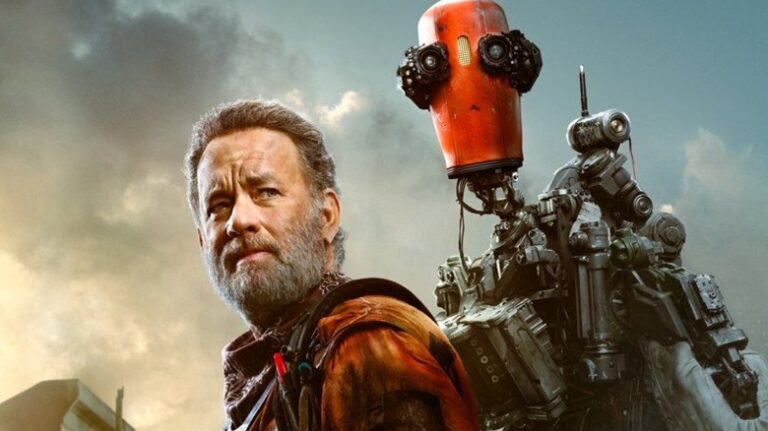
Movie Review: ‘Finch’ is a Surprisingly Terrific and Emotional Apocalyptic Story


Director: Miguel Sapochnik
Writers: Craig Luck, Ivor Powell
Stars: Tom Hanks, Caleb Landry Jones

Synopsis: On a post-apocalyptic earth, a robot, built to protect the life of his creator’s beloved dog, learns about life, love, friendship, and what it means to be human.


Almost every year since 1984 we’ve received a new Tom Hanks movie, and what continues to impress about the man is his refusal almost always to take on safe projects; he instead signs on to films that could easily crash and burn if not handled with a unique vision and delicate care in the storytelling. I’m thinking of Cloud Atlas, I’m thinking of last year’s News of the World, and I’m of course thinking of the 2000 drama Cast Away. At the height of his power and influence as an actor, Hanks decided to make a film in which he spends more than half of its running time on-screen completely alone, and miraculously it worked—Cast Away remains one of my all-time favorite Tom Hanks movies.

Now, if you were hoping in Cast Away for Wilson the volleyball to talk back, and for Hanks to have a cute and cuddly animal companion, then you’ll be looking at something close to what his latest film Finch is all about, a surprisingly terrific and emotionally devastating apocalyptic yarn that offers another tour-de-force performance by the Oscar-winning actor. I say surprisingly terrific because the film was shot way back in early 2019, and instead of being released in theaters, it’s been dropped directly onto AppleTV+; furthermore, the advertising in the weeks leading up to its streaming start date left a bit to be desired. If you’re worried this one was going to be an embarrassing Hanks’s clunker like Inferno or The Circle, don’t be; although it’s imperfect to be sure, you’re in for a treat.

In Finch (originally titled BIOS—thank God they changed the title!), Hanks is for the most part the sole human being, his robotics engineer character of Finch Weinberg one of the few survivors after a solar flare turned Earth into an ultraviolet radiation wasteland. Dying of cancer, Finch creates an advanced robot companion named Jeff to take care of his dog Goodyear when he’s gone. A storm that is to last forty days approaches his location of St. Louis, and he embarks on a perilous trip with Jeff and Goodyear to San Francisco.

Directed by Miguel Sapochnik (Repo Men, Game of Thrones), and executive produced by Cast Away’s own Robert Zemeckis, Finch has a striking visual look and confident sense of pacing from the opening scene, the planet decimated of civilian life, Finch always risking his life when he leaves his underground laboratory. His whole world is his canine Goodyear, who is likely the sole reason Finch has gone on as long as he has. And when they set out on the dangerous motorhome road trip, it’s clear he’ll do anything to keep the dog safe, which brings into the narrative the truly otherworldly character—the sophisticated Jeff, one of the most believable and fascinating robots featured yet in the movies.

The film would still have been interesting (and likely more downbeat) if Finch and Goodyear had been the only two characters throughout, but Jeff is a critical component, adding humor and spectacle, and gravitas to the proceedings. The robot is not a mere visual effect that was added later; Caleb Landry Jones was the actor on set every day portraying Jeff through motion capture, thus making Finch’s interactions with his new companion seamless and a thrill to watch. Better yet, Jeff himself has a fascinating arc, not only learning the necessary skills to go about the new devastated world but also discovering the meaning of responsibility, friendship, and empathy. An emotional moment Jeff shares with Finch at the end could have felt sentimental or odd, but because the living robot is so remarkably believable, it comes off as affecting and earned (and might have wrung a few tears out of yours truly).

If the film doesn’t quite reach the heights of being a great film, it’s merely in the lack of surprises in the screenplay by Craig Luck and Ivor Powell. It’s a piece that has plenty of powerful scenes and is a delight to watch, but exactly what you expect to happen in the second half pretty much comes to fruition, offering a final scene in particular that most any viewer will see coming. In addition, the film is occasionally overwritten at times, with too much dialogue between Finch and Jeff when longer stretches of silence and reflection could have added more mystique.

However, this is for the most part a riveting, hugely entertaining film that shouldn’t be buried in the thick of awards season and the big holiday blockbusters. The action is spectacular; the visual effects are top-notch. The character of Jeff is a dazzling creation guided by the talented hands of Caleb Landry Jones, and Tom Hanks is at the top of his game. He makes the friendships with both Goodyear and Jeff always believable, and the way he leans into his character’s illness to show its destructiveness on the body is essential to the film’s success, Hanks shedding any ego as he gives us the highs and lows of his character’s final days.

Twenty years since his groundbreaking turn in Cast Away, he shows he is one of our few actors who can keep a movie interesting even without any other human beings in the frame. Sandra Bullock was able to do it is so brilliantly in Gravity; add to the list Robert Redford in All is Lost, Brad Pitt in Ad Astra, and Tom Hardy in Locke. But I’m not sure if any major actor has done it successfully twice, and thus Hanks proves once again why he has a tremendous eye for material, and why he is simply one of the best in the business.

Grade: B+

Movie Review: ‘Eternals’ is a Visually Astounding, Narratively Flawed Entry in the MCU


Director: Chloe Zhao
Writers: Ryan Firpo, Kaz Firpo, Patrick Burleigh, and Chloe Zhao
Stars: Gemma Chan, Richard Madden, Angelina Jolie, and Barry Keoghan

Synopsis: The saga of the Eternals, a race of immortal beings who lived on Earth and shaped its history and civilizations.


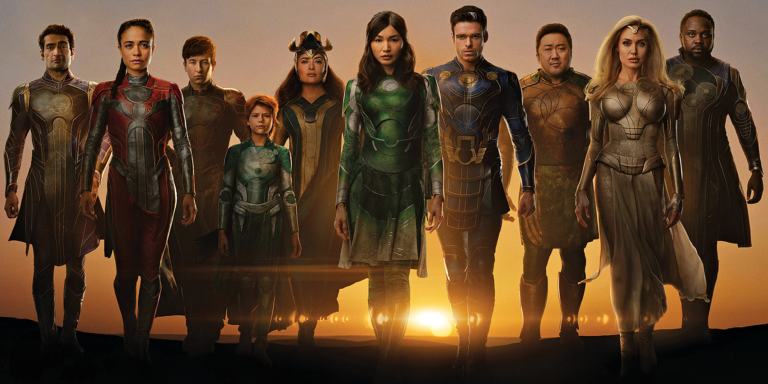
Eternals is the latest entry into the MCU, directed by Oscar Winner Chloe Zhao. Hot off of the success of Nomadland, the academy award-winning director has been given the opportunity to helm Marvel’s Eternals. The film follows the expedition of Earth by a group of beings created to protect Humanity from the Deviants, over the course of seven millennia. This group of individuals, comprising Ajak, Sersi, Ikaris, Thena, Kingo, Gilgamesh, Sprite, Makkari, Phastos, and Druig, all have their own feelings towards the planet Earth and the humans that inhabit it. If that description feels ambitious, it’s because the film is ambitious. There’s a lot of exposition that needs to be conveyed to the audience for this film, due to the size of the cast, the duration of their lives, and thus complex relationships with one another. And luckily, the film changes the Marvel formula to better tell this story. In utilizing a non-linear plot, the film is able to take us through each of these characters’ lives on Earth, showing us important moments of the past. And these moments in the past are littered with references to ancient mythology that is sure to excite. But in spite of the talented crew behind this film, Eternals is unable to carry the weight of its ambitious scale.

The core issues with Eternals are largely found in its script, which lacks subtlety and emotion. To compare it to another 2021 film, Eternals shares the writing problems of Candyman (2021). Both films want to throw around big thematic ideas. So the writing achieves this as efficiently as possible, solely comprising of exposition and explicit theme statements. And while some films are able to move past this, Eternals doesn’t. The pacing of Eternals rarely finds time to sit with these characters, as the story needs to move at a breakneck speed to be told in two and a half hours. And that really holds Eternals back from being a truly great movie. There are plenty of significant moments throughout Eternals that have to be skipped over due to the scale of the project. And there are a lot of dialogue exchanges that tell the audience something important happened in the past, though we don’t see them.

But that isn’t to say the entire movie feels rushed. There are some of the sequences that slow down. These are the sequences full of subtle acting and gorgeous cinematography. Even without dialogue, these sequences feel more impactful to the story than any of the words the characters say. Those sequences are the highlights of Eternals, where we see the craftsmanship of everyone involved on display. From the cinematography by Ben Davis to the rousing score of Ramin Djawadi, there’s a hypnotizing effect at the core of Eternals. This is accentuated by Eve Stewart and Clint Wallace’s work on the production design, which brings historical locations like Babylon to life. It’s infinitely grand in scale, and yet infinitely personal in these sequences. And that is largely to do with the performances Zhao is able to get from the stellar cast. Gemma Chan and Richard Madden are stellar, making the relationship between Sersi and Ikaris believable. Angelina Jolie, Kumail Nanjiani, and Ma Dong-Seok all convey their larger-than-life characters with effortless charm. And even the smaller performances from Lia McHugh, Lauren Ridloff, and Barry Keoghan are impactful, bringing the most heart into the film. When the characters stop telling us what occurred in the past and live in the moment with one another, Eternals feels like the best Marvel movie to date. The small exchanges between those characters have humor more in line with The Dark Knight than the bathos style we’ve come to expect from the MCU. It’s a kind of humor that lets you chuckle and smile, and sells the millennium-spanning relationships between these characters. And yet, the majority of Eternals is not these small moments.

Once the third act begins, Eternals jumps into lightspeed, trying to resolve each of the character arcs set up earlier in the film. But due to the ambitious size of this story, none of these arcs feel earned. Largely, it’s because this film seems to be missing a central character. Each character has their own mannerisms and beliefs, but none of them has a central arc that pulls us through the story. In the end, it leaves you feeling numb, as each character changes in their own way. But due to the little thematic overlap between these character changes, it lessens the impact of the story at the end. This lack of a uniform idea guiding Eternals is the film’s biggest weakness. While the action looks great, it all feels meaningless. Despite the diversity of the group’s beliefs, there is little conflict between each member on a philosophical level. The action feels big, looks gorgeous, is at times full of tension, but lacks any true meaning.

All this goes to say that Eternals is a movie at odds with itself. It’s clearly directed by a master, with great production design, fantastic performances, and impactful cinematography. And there seem to be a few story threads that Zhao really wants to play with: contentment, aid, and the need for companionship. There are fragments of these ideas found in the screenplay, but these ideas are told completely through the performances and cinematography. And on the other hand, there’s a screenplay that operates in either exposition or explicitly stating its theme to the audience. Where Zhao’s style seems to ignore the marvel formula as much as possible, the writing tries to remind the audience it’s a marvel movie. The jokes don’t land, and the references to previous entries feel tiring. From a directorial standpoint, the film is one of the best in the Marvel Cinematic Universe. But the screenplay brings this movie down and makes it one of the lesser MCU entries. As a whole, it’s somewhere in the middle; and I hope it’s not the last time Marvel allows a prestigious director to take a shot in the MCU and give a bold take on the formula, flaws and all.

Grade: C+

Chasing the Gold: 2022 Best Director Race – Episode 39

On Episode 39 of Chasing the Gold, Ryan is joined by Matt Neglia of Next Best Picture and Mark Johnson of Awards Daily to talk about the best director race for the 2022 Oscar season.

On the last Chasing the Gold, Ryan and his guests talked about the acting categories this early in the race. Well with more films releasing, and Ryan seeing some of the big contenders at the fall festivals, it was time to talk about one of the big races every year, Best Director. With the help of Matt and Mark, they navigate an already tight race that will come down the wire this year.

On that note, have fun with this week’s episode, and let us know what you think in the comment section below. Thanks for listening!

– Music
The Return of the Eagle – Atli Örvarsson

We try to make this the best movie podcast we possibly can and we hope you enjoy them. Subscribe today on iTunes, Spotify, or Stitcher, and please leave us a review on iTunes. You can also find us on Soundcloud, PlayerFM, and TuneIn Radio as well. We really appreciate all your support of the InSession Film Podcast.

Subscribe to our Podcasts RSS
Subscribe to our Podcasts on iTunes
Listen on Spotify
Listen on Stitcher
Chasing the Gold: 2022 Acting Categories – Episode 39

[divider]

Mobile App

To hear this Extra Film episode and everything else we do, download our apps on the Amazon Market for Android and the Podcast Box app on IOS devices. The mobile app covers all of our main shows, bonus podcast’s and everything else relating to the InSession Film Podcast. Thanks for your wonderful support and listening to our show. It means the world to us!

[divider]

Help Support The InSession Film Podcast

If you want to help support us, we would greatly appreciate it! For more info, CLICK HERE.

Movie Review: ‘Playground’ is an Outstanding, Honest Portrayal of Bullying


Director: Laura Wandel
Stars: Maya Vanderbeque, Günter Duret, Karim Leklou, Laura Verlinden

Synopsis: A seven-year-old girl witnesses her older brother being bullied. Though he swears her to secrecy, she tells their father and soon finds herself the victim of bullying as well.

[/info]

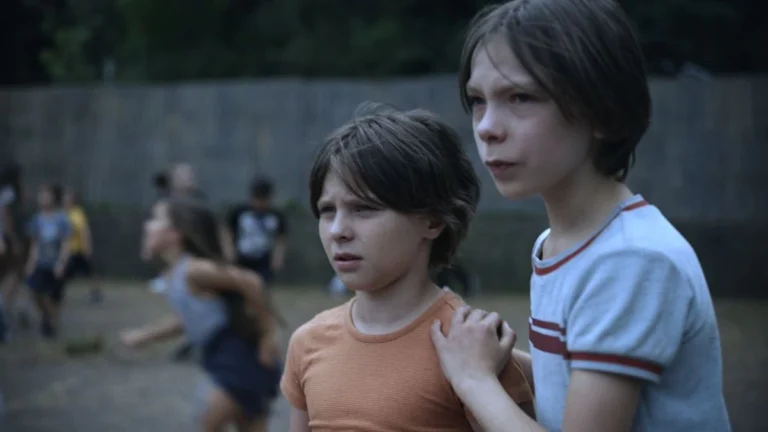
Bullying can turn what should be a temple for learning into a breeding ground for lifelong psychological damage. Laura Wandel’s feature debut and Belgium’s 2022 Oscar submission, Playground, brilliantly portrays this notion through the eyes of a girl discovering a new world — hence the original name of the film, Un Monde — called school. 

Playground grabs your attention from the very first frame and never lets go. Nora (Maya Vanderbeque in a riveting performance) is the name of the new girl. She’s being assured by her older brother Abel (Günter Duret) that everything will be okay and is soon forced to let go of the hand of her father (Karim Leklou) to make her way into the classroom. It’s an authentic representation of a moment you might be able to remember from your own life experience: the fear and confusion of being “abandoned” in school by the person you trust the most. 

This whole introductory scene is highly engaging because it isn’t shot in an ordinary manner, nor is the rest of Playground. Frédéric Noirhomme’s outstanding cinematography follows Nora from her vantage point. There are no establishing or wide shots. It’s all close and personal; she’s barely off-screen during the entire film. And even when the camera turns to other characters, it’s done through over-the-shoulder shots or other astute composition techniques that make sure to never break out of Nora’s experience. This is further enhanced by handheld movements and masterful shallow-focus camerawork which create an intimate approach to the subject, as well as a disconcerting feeling of entering this new planet called school. It also gives the whole movie a blurry nature: it’s as if someone was trying to find his or her way back to this suppressed childhood memory.

And why would someone want to forget something like this? Besides experiencing a separation from his father, Nora will get a taste of the cruelty life has to offer. As she desperately tries to reunite with Abel during lunchtime, she inadvertently triggers the rage of a bully who sets his sights on the older brother, making his life a living hell for the next few days. Nora tries to help by calling for help from teachers, but as everyone who has attended school knows, this only makes things worse for Abel. 

Somehow at her young age, Nora finds herself in a circle of fear and regret. One day she’s living peacefully at home, and the next she’s forced to witness her brother suffering horrific abuse which also starts to hurt her little burgeoning social life. When the grown-ups finally intervene, they try to solve things with handshakes and empty apologies. They don’t have a clue of how to treat the bullying disease which, of course, doesn’t disappear, it just transforms into other cruel forms. With clueless adults unable to find a solution, kids are forced to deal with the situation. It’s overwhelming and Wendel masterfully captures the discomfort, hopelessness, and innocence of it all. How the heck did we deal with that when we were kids? 

Along the way, the director never loses sight of reality. Playground is an immersive experience full of details that give depth and authenticity to its story. We see Nora being hurt by the reckless boys playing soccer, a friend inventing stories about bodies buried in the sandbox, dumb fights stemmed from jealousy, big words like ‘racist’ being thrown around with innocence, and the spreading of little ideas with the power to create big confusion and prejudice.

Laura Wandel’s exceptional directing brings empathy to a blurry world that might be dismissed by some adults as nothing more than child’s play. Playground suggests that schools should find better systems to deal with the bullying problem and makes it clear that, despite their age, children can experience a great amount of love, suffering, remorse, joy, and misery; and early events that trigger negative emotions can be deeply damaging to them. It’s an impressive and outstanding feature debut, and one of the finest Oscar contenders at play.

‘Playground’ received the FIPRESCI Award at Cannes 2021, Best International Feature at the Guanajuato Film Festival 2021, and the Sutherland Award in the First Feature Competition at the BFI London Film Festival 2021. It’s representing Belgium at the 2022 International Oscar race.

Cover picture courtesy of THE PR FACTORY.

Grade: A

Op-Ed: AFI’s 100 Years…100 Passions – ‘Pillow Talk’ (#99)

Pillow Talk (1959) can probably hold claim to being one of the most influential films of the 1950s. I know that you’re probably scoffing as you read that last sentence and wondering how I could put a Doris Day romantic comedy in the same category as The Night of the Hunter (1955) and Touch of Evil (1958). I put it in league with those other classics because Pillow Talk did help to define the modern romantic comedy formula. It combines wacky workplace comedy with a battle of the sexes theme and it did reflect the beliefs of a certain segment of society in the 1950s. It wasn’t radical or shocking or transgressive but most of the light woman’s pictures of the 1960s were clearly patterned off of it. That does have to count for something and it is remarkable that this formula is still so irresistible. 

The film’s success is inextricably tied to the resourceful, businesslike star persona of Doris Day. She portrays Jan Morrow, a single, career driven interior decorator who despises playboys that use women for sex. Morrow was just one in a long line of virginal, spunky women that Day played, and she perfectly fits into the niche that she carved out for herself. The plot is built around Morrow’s character development, as she initially loathes her neighbor Brad Allen (Rock Hudson) for his womanizing ways. The two share a party line and she is irritated by the fact that he is constantly sweet talking his many conquests. She has never seen him in person but becomes determined to ward off men like him. Allen coincidentally meets her one night and pretends to be Rex Stetson, an innocent Texan farm boy, in order to get closer to her. They enter into a relationship and he continues to deceive her, all the while tempting her with the prospect of sex. He begins to develop real feelings for her whilst she begins to question her traditional perspective on relationships. When she learns that he has been lying to her, she pushes him away and finds herself wondering whether she will ever find a man who truly loves her for who she is. 

Morrow’s journey is carefully programmed to allow audiences to flirt with the idea of having illicit premarital sex, without having to walk out of the theatre feeling naughty and rebellious. They get a brief walk on the wild side on top of receiving a confirmation of all of the beliefs and values that they already hold. On some level, this is irritating. Day didn’t typically get to play self-possessed, confident women who felt complete without involving a man in their lives. She did get to play a working woman and typically had a strong bond with her closest female friends, but her films certainly don’t feel like feminist texts. 

Even if modern viewers end up feeling uncomfortable with the message that Pillow Talk ultimately sends, it still endeavors to put women front and center. It never feels like Day is being undercut by her male co-star and she and Hudson have a relaxed, easy chemistry. Unlike Bette Davis, she didn’t have to contend with appearing in romantic dramas with male leads that just weren’t on her level. Hudson seems willing to support her and the two never appearing to be competing for attention. This might have been why the two were so popular as a screen pairing. They don’t just act like two A-list stars who have been thrown together. There’s real fondness in their eyes as they bicker away at one another. You just can’t find that in most other on-screen partnerships. 

Beyond the pleasant chemistry shared by Hudson and Day, Pillow Talk is most notable for its extreme devotion to formalism. It is set in a bizarre, far-off land that barely resembles the planet Earth. Every room is filled to the brim with shiny, brightly-colored objects, every woman is dressed in trendy clothing and everything looks so plastic and artificial that it becomes a real aesthetic. Milton Carruth liberally employed split screen technology to slip innuendo into scenes that were wrought with sexual tension and to generally spice up some of the film’s unoriginal content. He doesn’t push it nearly as far as he could have, but it is yet another touch that reminds you of the fact that you’re watching a movie. If the fantastical nature of the world of Pillow Talk wasn’t conveyed by Day’s perfectly primped hair, it is firmly established by all of the nutty Rube Goldberg machines that are on hand to elicit laughter. The image of Day and Hudson in the bath, with soap suds covering up all of their naughty bits and only a dividing wall between them, is something that stays with you. Even when the script suggests that the characters are keeping everything above board, the visuals let you know otherwise. 

This wasn’t the most innovative romantic comedy on the list and it definitely feels rooted in the sexual mores of the 1950s, but I can see why it remains a crowdpleaser. It offers up escapism for real working women who don’t get to wear designer clothing all the time or spend their nights hanging out in fancy restaurants. It succeeds in drawing you into the romance between Morrow and Allen, with all of the convoluted plot twists that come along with it. Its placements on the list does make sense and it would seem rather unfair to completely exclude Day from any list of the greatest romantic films of all time. As one of the undisputed icons of the genre, she deserves considerable recognition. 

Op-Ed: AFI’s 100 Years…100 Passions – ‘The African Queen’ (#14)

The African Queen (1951) is one of those peculiar classics that isn’t exactly outstanding in any category. Where most beloved masterpieces are revolutionary or innovative in some regards, The African Queen follows a formula that had been popular since the beginning of time. This makes it difficult to understand why it has remained so firmly entrenched in the public consciousness. Perhaps it is so well-liked because it features the involvement of so many icons. Humphrey Bogart, Katharine Hepburn and John Huston have managed to endure as personalities. Even if people haven’t seen Bringing Up Baby (1938), they could probably still imitate Hepburn’s bizarre idiolect. Everybody who hasn’t seen the film probably still feels like they know what it’s about and, for the most part, their suspicions are probably correct. It is a film that typecasts its stars and its plot will be familiar to anyone who has ever read an adventure-based potboiler about a rough around the edges man who slowly falls in love with a feisty, upper class woman. It doesn’t throw a whole lot of surprises at you and that has probably helped it to remain popular. Audiences can be absolutely sure of the fact that it does what it says on the box. 

The action takes place in German East Africa in 1941 and centers around the actions of Rose Sayer (Katharine Hepburn), a Christian missionary who has never experienced real romance. She is horrified when the Schutztruppe burn down the village that she and her brother Samuel (Robert Morley) were living in. When Samuel dies, she becomes bent on exacting revenge and plans to sink the Königin Luise, a valuable Schutztruppe gunboat. She enlists the help of Charlie Allnut (Humphrey Bogart), a working class mechanic who operates a steamboat, to pull off her audacious plans. They initially struggle to get along, but they begin to fall in love when they realize that they share the same goals. As he begins to fall more and more under her spell, Allnut gets increasingly tangled up in her harebrained scheme. 

Anybody who has seen It Happened One Night (1934) or Romancing the Stone (1984) will be familiar with the plot beats that the screenplay efficiently deploys. An upper class gal and a lower class guy overcome their differences while going on an adventure that allows them to learn about how the other half lives. The woman will inevitably learn how to perform menial tasks that get her hands dirty and the man will become more cultured and refined. There will be a scene in which the woman discovers that she is surprisingly proficient at shooting a gun or hacking an animal to death and her male partner will gaze at her in awe. These are tropes that appear in The African Queen and the screenwriters don’t do much to put their own spin on well worn material. 

Nothing about The African Queen is radical or different but it does find ways to quietly set itself apart from the rest of the pack. I particularly admired the fact that the actors and screenwriters don’t force Sayer and Allnut to despise one another at the beginning of the film. You can sense the fact that they are not entirely comfortable around one another but, like real human beings, they do make an effort to be polite. Most of the tension simmers under the surface and Sayer dutifully bites back snarky comments when Allnut does something that irritates her. When they finally erupt and start going at each other, it actually makes sense. Rather than seeming like two unnecessarily pugnacious individuals who will take any opportunity to browbeat their enemies, they seem like perfectly pleasant adults who have snapped under harsh conditions. Their banter is more entertaining because it seems to come from a place of genuine hurt and frustration. The script sells us on the idea that these two are resourceful enough to work things out, and this means that we root for them to finally get along. 

Having said all that, I must note that the screenplay doesn’t handle the transition from friends to lovers with all that much grace. The scenes of Bogart and Hepburn bonding over their mutual desire to survive and forming a close friendship are incredibly touching. The two actors were good buddies in real life and they regard one another with genuine fondness that allows them to soften their tough screen personas. You do see them let down their guards for a moment and choose to open themselves up to somebody who is their equal. This is why it seems so odd when they start kissing and talking about getting married. They’re so believable as two old pals that they don’t convince as crazy kids who are passionately in love. Bogart and Hepburn have great chemistry but they don’t have that type of chemistry. When their characters fall in love, it just doesn’t make sense. The story would have been more satisfying if they hadn’t been forced to enter into a contrived romance. 

The African Queen serves as a fantastic display of the virtues of old-fashioned craftsmanship. It’s a solid film and it has the sort of broad appeal that great blockbusters need to possess. However, I would be lying if I pretended that I didn’t feel slightly unnerved when Bogart and Hepburn started playing tonsil hockey. They might be legendary movie stars, but that doesn’t mean that they needed to be cast as lovers. 

Poll: What is the best movie about immortality?

The Marvel Cinematic Universe is back in theaters this weekend with Eternals, from Academy-Award winning director Chloé Zhao, and we are very excited for it. Say what you will about Marvel, but Zhao is one of the more captivating filmmakers in recent years. The Rider and Nomadland are both fantastic in their minimalism and evocative imagery. She may have won an Oscar for Nomadland, but there’s an argument that her direction was equally great, if not better, in The Rider. Either way, it’s jarring to think about those films and the MCU in the same time. Zhao’s style isn’t at all comparable to what we’ve seen so far in the MCU, but that’s what makes Eternals very enticing. However, she may be the right director given the premise of the film around immortality. And that’s our inspiration for the poll this week. There are many great films about immortality and we want to know which film stands out to you as the best.

So, with all of that said, what is the best movie about immortality?