Home Blog Page 149

Women InSession: A Place in the Sun – Episode 2

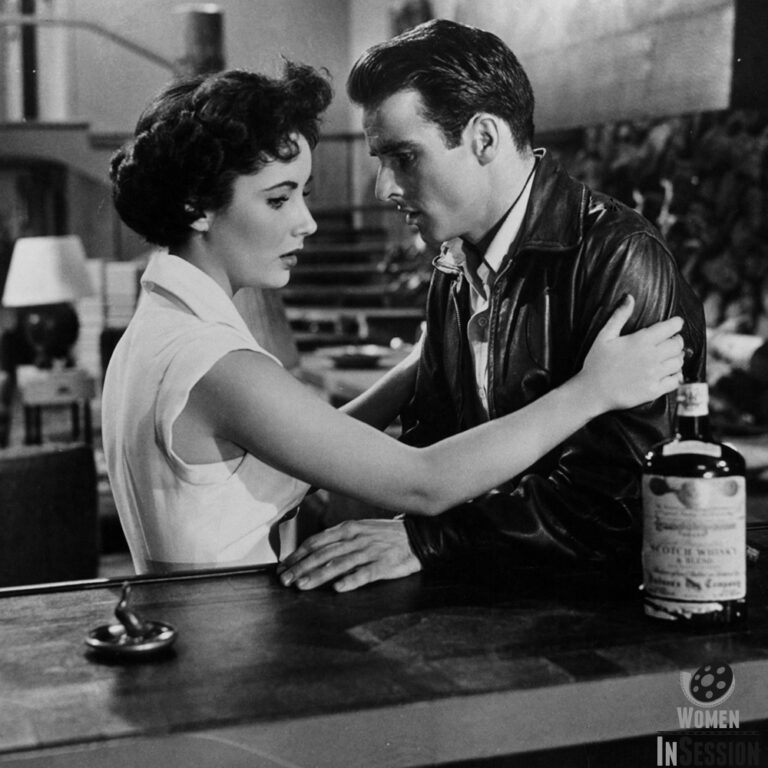
This week on Women InSession Podcast, we discuss the George Stevens award-winning film A Place in the Sun! Plus, a discussion on Stevens himself and his place in film history.

For this episode, Kristin Battestella, Zita Short, and Amy Thomasson make up the panel as they talk about the legacy of Stevens and why he hasn’t been quite as revered over time as others of that era. Despite winning a few Oscars and having some well-known films, he’s typically not lumped in with his contemporaries for reasons we discuss.

On that note, check out this week’s show and let us know what you think in the comment section. Thanks for listening and for supporting the InSession Film Podcast!

– Review: A Place in the Sun

– George Stevens Discussion

– Music

The Return of the Eagle – Atli Örvarsson

Subscribe to our Podcasts RSS
Subscribe to our Podcasts on iTunes
Listen on Spotify
Listen on Stitcher
Women InSession – A Place in the Sun

[divider]

To hear this Extra Film episode and everything else we do, download our apps on the Amazon Market for Android and the Podcast Source app on IOS devices. The mobile app covers all of our main shows, bonus podcasts and everything else relating to the InSession Film Podcast. Thanks for your wonderful support and for listening to our show. It means the world to us.

Coming to Shudder: August 2022 — Undead Gems

Shudder’s collection is incredibly vast and varied. They curate classics, new releases, and cult favorites. I can always find something to watch, no matter which subgenre I’m in the mood for.

Here are a few of the under-seen gems that Shudder will be resurrecting in August 2022:

August 1:

Season of the Witch (1972)

Director: George A. Romero

Starring: Jan White, Raymond Laine, Ann Muffly, Joedda McClain & Bill Thunhurst

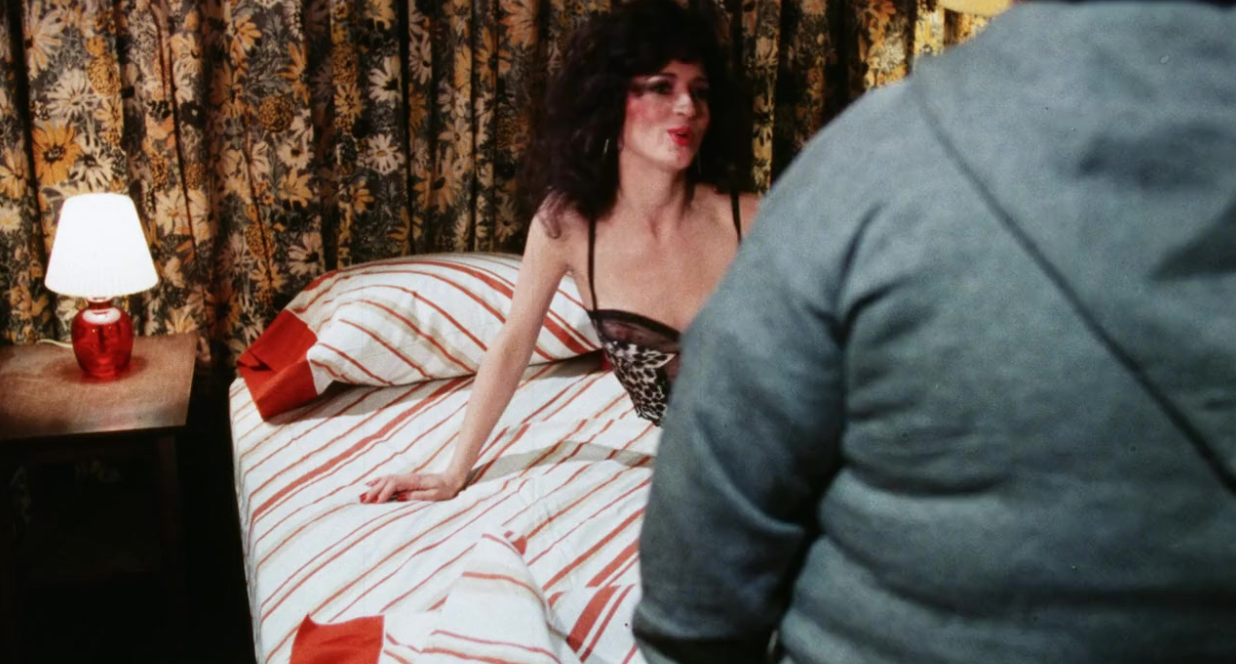
To coincide with their Creepshow original series, inspired by the George A. Romero/Stephen King anthology films from the 1980s, Shudder is curating collections of Romero and King films. Of the Romero films coming to the platform, the one I find to be the most unjustly under-seen is Season of the Witch, sometimes known as Hungry Wives. Produced as “women’s lib” was on the rise, the film is about an alienated housewife who begins to dabble in witchcraft to spice up her mundane suburban life and combat the patriarchy. 

Needful Things (1993)

Director: Fraser Clarke Heston

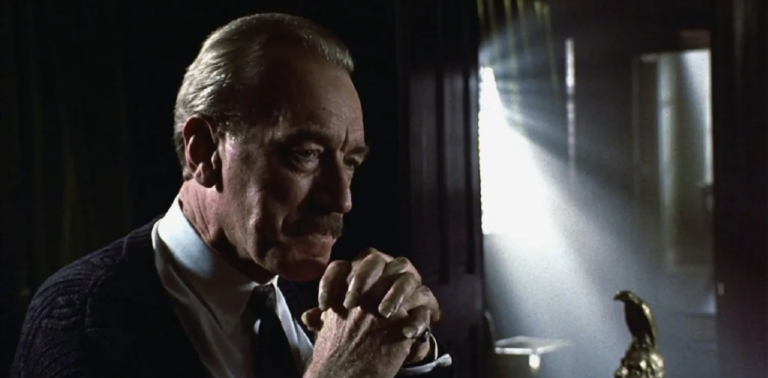
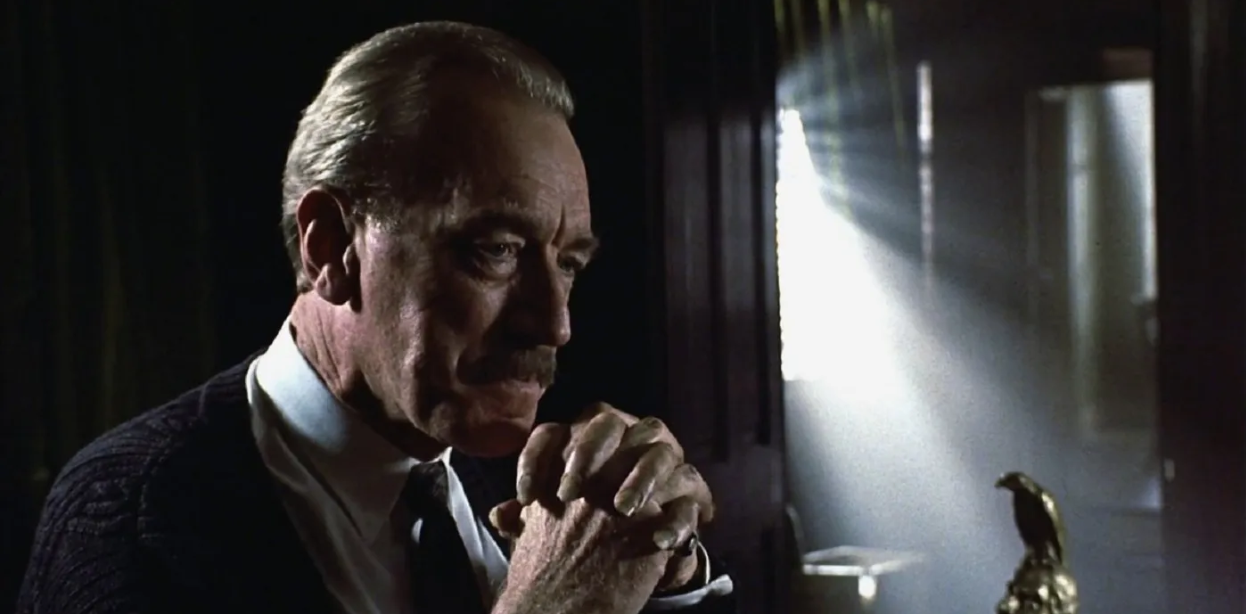
Starring: Max von Sydow, Ed Harris, Amanda Plummer, J.T. Walsh & Don S. Davis

For me, Needful Things is a Top 5 King novel. Like Salem’s Lot, Needful Things is a massive book (my copy is 731 pages) about an entire town on a path to doom. In Castle Rock, Maine, the site of many King tales, a mysterious new curiosities shop opens. There seems to be something in it for everyone, an object that awakens one’s darkest desires. Leland Gaunt, the proprietor, does not charge cash, though. To obtain one’s “needed thing,” customers must perform a prank or cause chaos of some sort in town… Admittedly, the Needful Things movie is not great, but I hope it leads people to the excellent novel, as it did for me. 


August 3:

Amityville: A New Generation (1993)

Director: John Murlowski 

Starring: Ross Partridge, David Naughton, Terry O’Quinn, Lin Shaye & Richard Roundtree

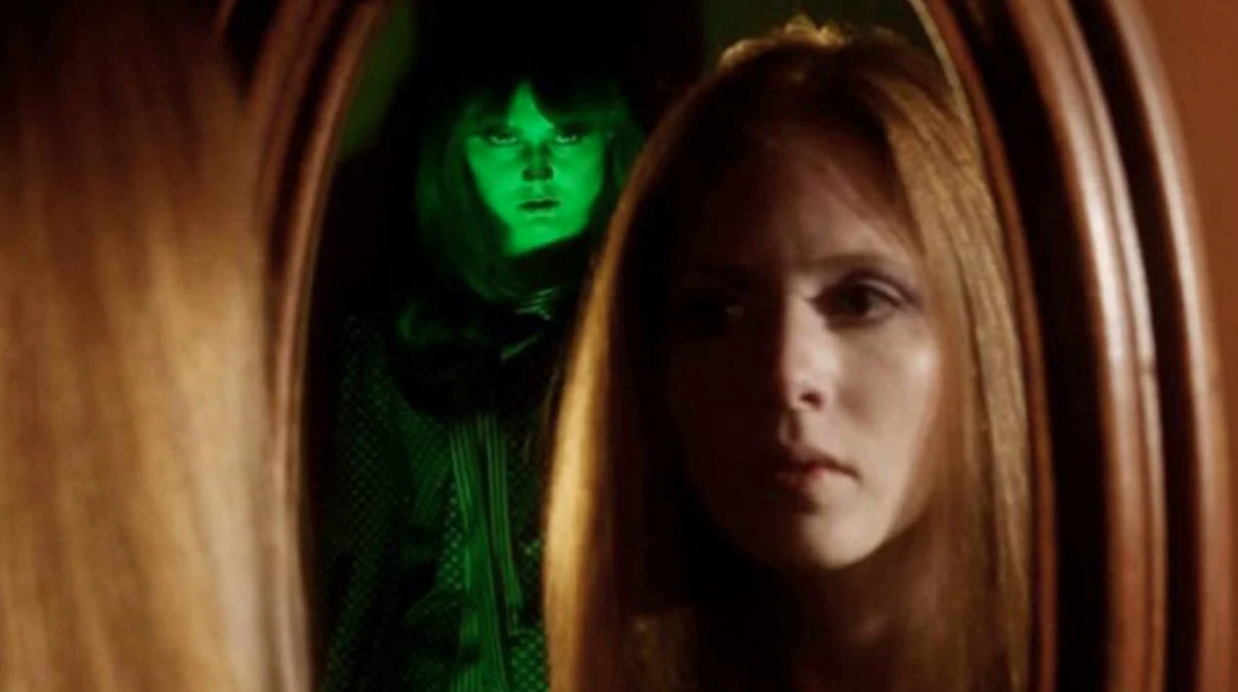
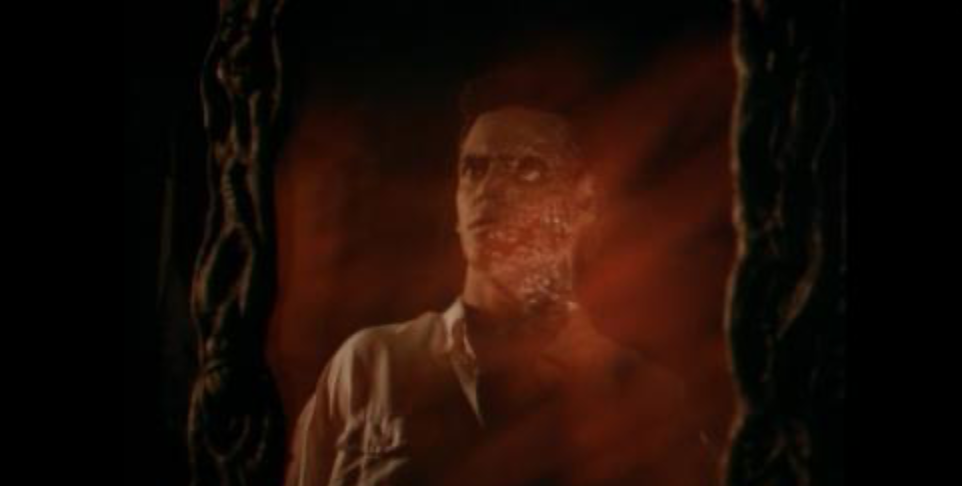
There are three Amityville sequels dropping on August 3, and the one I’ve chosen to highlight is A New Generation. Why? Because this one co-stars the hunky American werewolf in London (David Naughton), the spiritual and philosophical John Locke (Terry O’Quinn), a prolific horror grande dame (Lin Shaye), and the original John Shaft (Richard Roundtree). Amityville sequels are the epitome of bonkers and increasingly have very little to do with the original film or even the infamous suburban home. This one is set in an urban boarding house. How come, you ask? Just because, stop asking questions. And it’s about a haunted mirror. How does that work, you ask? Sweetie, just enjoy the nonsense already. 


August 8:

The Oracle (1985)

Director: Roberta Findlay 

Starring: Caroline Capers Powers, Roger Neil, Pam La Testa, Victoria Dryden & Dan Lutsky 

Roberta Findlay and her late filmmaker husband were considered one of the most notorious power couples of the sexploitation cinema of the 1960s and ’70s. After his early death, she continued making movies on her own. The Oracle is one such film. In it, a couple move into a new home, and the wife makes contact with the spirit of a murdered man who demands justice. The man’s spirit begins to manipulate and possess her in order to seek vengeance using her body. Kinky stuff, as one can expect from Roberta Findlay. 


August 22:

Yokai Monsters trilogy: 100 Monsters (1968), Spook Warfare (1968) & Along with Ghosts (1969)

Directors: Kimiyoshi Yasuda & Yoshiyuki Kuroda

Starring: Kojiro Hongo, Saburo Date, Ryutaro Gomi, Yoshihiko Aoyama & Takashi Kanda 

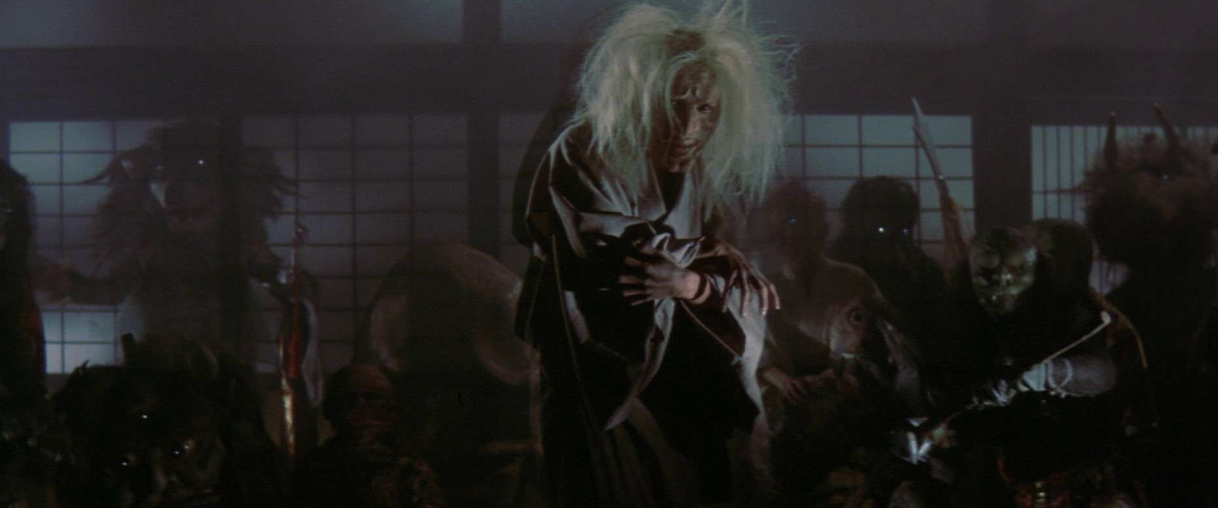
Yokai are supernatural spirits from Japanese folklore that can range in temperament from somewhat mischievous to downright malevolent. In 100 Monsters, a greedy slumlord tries to turn his tenants out onto the street, but then a bungled cleansing ceremony invites the wrath of the yokai. Spook Warfare is about treasure hunters that unwittingly awaken an ancient Babylonian vampire, so a samurai must team up with the yokai to defeat the bloodsucking beast. Along with Ghosts features a girl on the run from yakuza (Japanese gangsters) who want her dead before she can testify against them for the murder of her grandfather—committed on sacred ground, thus arousing the yokai. 

Criterion Releases: August 2022

Hotel Du Nord (1938)

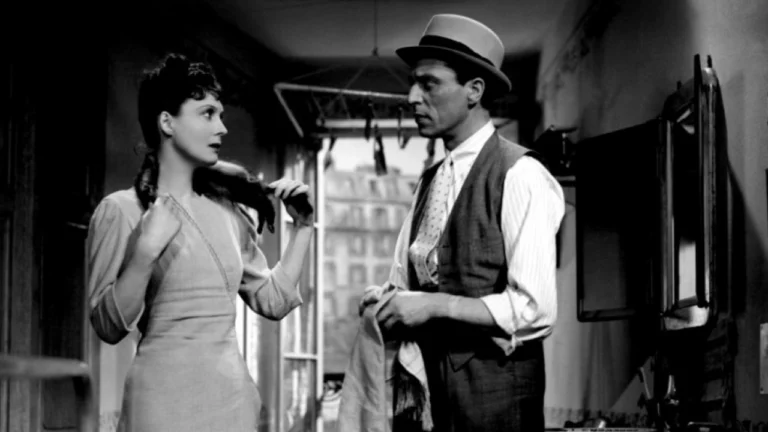
Marcel Carne builds around a fallen hotel a place for social outcasts, namely two couples from the working class in different times of their lives. One is a young couple who plan to kill themselves because they are poor, yet one cannot go through with it, while another is a pimp and his prostitute who get caught up in the young couple’s own story. The film is one of France’s major films of poetic realism, blending socially serious settings with a romantic aesthetic, putting Carne in the same room as Jean Renoir, Jean Vigo, and Julien Duvivier.


Buck And The Preacher (1972)

It wasn’t supposed to be the late Sidney Poitier’s directing debut, but it turned out that way after the original director was fired early in production and Poitier decided to make it himself. He and Harry Belafonte star as two cowboys who have to go and fight against White bounty hunters who seek to corral Blacks into conformity in the wild west. It’s part-Western, part-comedy with a twist of Black Power in a still-divided nation in which African-Americans were seen as the heroes in a genre that never gave a socially conscious idea of civil rights before.


Frownland (2007)

From New York’s underground, newcomer Ronald Bronstein, who later became co-writer and editor on several films for the Safdie brothers, tells the story of a salesman dying out mentally as he struggles with his neurosis. He wanders around in a mood full of muck everywhere he goes and the audience will have no idea where the film is going. It is a film that pushes what a viewer expects and wonders what the hell is happening; it’s very much like a homemade film with its weirdness. It is the only film to date Bronstein has made because of how the experience was too hard for him and others, but at least it got the interest of the Safdie’s as now’s part of their universe. 


Daddy Longlegs (2009)

Speaking of the Safdie brothers, the first film Ronald Bronstein worked on with them is this comedy-drama about a divorced father of two (played by Bronstein) who tries to care for his sons even though he has an irresponsible streak in him. His sons go out and get into trouble while their man-child father juggles work in a film theater, showing how inept he is even though he only has two weeks of father time with them. It was the first feature film for the Safdies as a duo, starting their renegade drive as a new indie force not seen since the Coen Brothers. 


Faya Dayi (2021)

Director Jessica Beshir made this documentary that gave viewers a first look into the world of the Oromo and Harari groups living in Ethiopia. There is one thing that binds them together, a plant called khat, that has mystical powers when consumed. It is their escape hatch around the political, ethnics-based conflict happening in the country, especially for the youth that is always at risk. It’s such a visually rich movie that Beshir can take viewers into a trance and separate us from the reality that this is not a work of fiction. 


Follow me on Twitter: @brian_cine (Cine-A-Man)

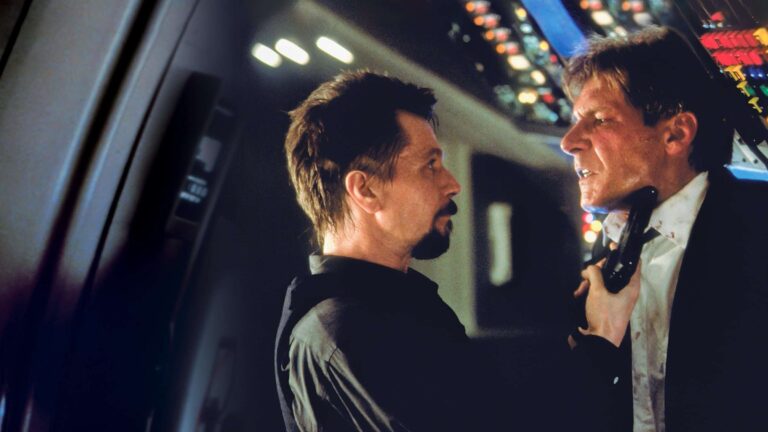
Film at 25: ‘Air Force One’ is Still an Entertaining Thrill Ride


Director: Wolfgang Petersen

Writer: Andrew W. Marlowe

Stars: Harrison Ford, Gary Oldman, Glenn Close

Synopsis: Communist radicals hijack Air Force One with the U.S. President and his family on board. The Vice President negotiates from Washington D.C., while the President, a veteran, fights to rescue the hostages on board.


The summer of 1997 had its share of terrific action films, particularly Face/Off, starring John Travolta and Nicolas Cage, but my favorite has always been the immensely entertaining Air Force One, a non-stop thriller of the highest order. Yes, there’s an element of predictability as to how the events are going to play out. Yes, that CGI plane crashing into a body of water at the end looks more hilariously bad with each passing year. But the majority of the movie is still a genuine blast, director Wolfgang Petersen giving the film an effective claustrophobic feel for much of the running time and the outstanding cast allowing the silly narrative to ascend to something so much better than it has any right to be. 

The pitch for Air Force One couldn’t have taken long. I can imagine a head executive at Sony hearing “Harrison Ford plays the President” and swiftly giving this project the greenlight. Those five words, alas, were at the heart of the movie’s advertising campaign; most audience members willing to check this one out to see one of their favorite actors play the leader of the free world in a thrilling summer entertainment. We had seen Ford play Han Solo and Indiana Jones and Jack Ryan—who else was there for him to play next than the President of the United States?

The story didn’t have to be overly complicated, and it’s not, a group of terrorists hijacking Air Force One to enact the release of one of their own—the dictator of Kazakhstan, who was captured in part by President James Marshall (Ford). The terrorists, led by Egor (Oldman), threatens to execute one hostage every half-hour until their demands are met, the Vice President (Glenn Close) leading the negotiations from the ground while Marshall, who the terrorists believe was ejected from the plane, remains on board to help protect his wife and daughter as well as the other hostages.  

So many positive elements came together at the right time for Air Force One. If this had been made five years earlier or five years later, I don’t think it would work as well. 1997 marked the end of Harrison Ford’s heyday as an action movie lead, following 1993’s The Fugitive and his two appearances as Jack Ryan in the Tom Clancy adaptations. Gary Oldman was delighting audiences as one villain after another, appearing earlier that summer in The Fifth Element. And Wolfgang Peterson was at the height of his cinematic powers, following the Oscar-nominated In the Line of Fire. Everybody takes the project seriously and gives it their all, and it shows.

This was another major studio entry in the airplane thriller genre mere months after the excellent Executive Decision, starring Kurt Russell, and the disastrous Turbulence, starring the late Ray Liotta. Air Force One is clearly the best of the three, not only the movie with the biggest budget—85 million dollars—but also with the best cast and most dazzling action sequences. 

It’s a treat to watch Ford do what he does best, kick some serious ass while always remaining charismatic and real and vulnerable. Oldman reportedly turned down the villain role in Speed 2: Cruise Control to play the villain here, a good choice because this character has infinitely more substance and resonance than Willem Dafoe’s character does in the lame-brained sequel, released earlier the same summer. And how can you deny the gravitas and intelligence of Glenn Close as Vice President Kathryn Bennett, twenty-four years before this country finally saw its first female Vice President. Director Petersen wisely surrounds this Oscar-caliber trio with fantastic character actors, including Wendy Crewson, William H. Macy, Paul Guilfoyle, and Dean Stockwell. 

But what works the best about Air Force One to this day is the near-constant tension aboard their airplane. Unlike other CGI-heavy action movies that summer like The Lost World: Jurassic Park and Men in Black, Air Force One for the most part keeps the action in-camera, the editing always keeping you on edge. The execution of a randomly chosen female hostage, Petersen keeping the camera close on her face as she realizes the inevitable is coming, Marshall pacing under the plane knowing there’s nothing he can do, is one of the most powerful scenes of any film released in 1997. And also, you can’t deny the awesomeness and glorious cheesiness of Ford’s delivery of the line, “Get off my plane.”

The film was a massive hit upon release, earning a worldwide gross of more than 300 million, and the reviews were mostly positive. Peter Travers called Air Force One “superior escapism,” and Todd McCarthy of Variety said it’s “quite entertaining.” President Bill Clinton reportedly screened the film twice while in office, and the film even received two Academy Award nominations, for Best Sound and Best Film Editing. Air Force One is a rare summer blockbuster from the ‘90s that still holds up remarkably well. It isn’t high art by any means, but it’s the kind of movie thrill ride I adored as a kid, and I still adore today. 


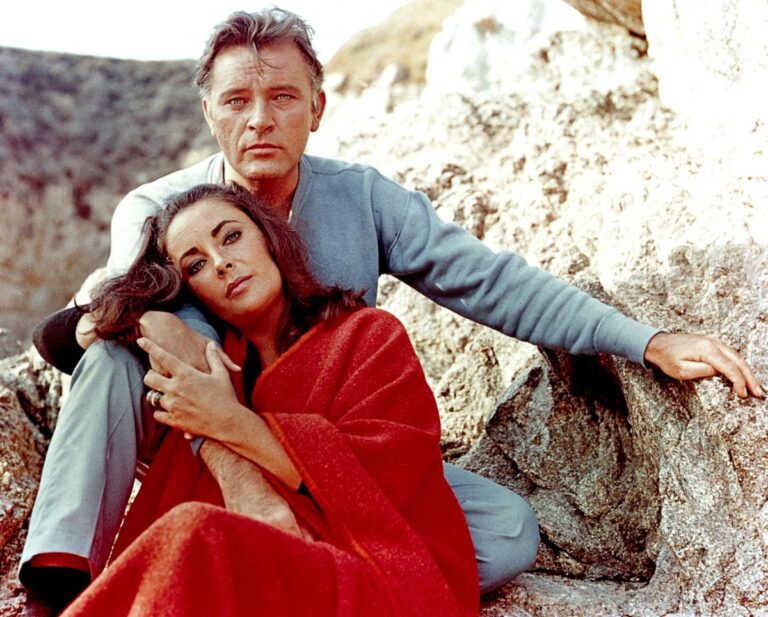
Larger than Life Elizabeth Taylor and Richard Burton Pictures

Together or separate, tumultuous thespians Elizabeth Taylor and Richard Burton left their mark on classic film. Here’s a chronological sample of costume dramas, medieval splendor, and larger than life epics featuring the two time couple.


Little Women

A blonde Elizabeth Taylor joins June Allyson (The Glenn Miller Story), Janet Leigh (Touch of Evil), Margaret O’Brien (Meet Me in St. Louis), Peter Lawford (Easter Parade), and Mary Astor (The Maltese Falcon) in this 1949 Louisa May Alcott color extravaganza. Though changes were made – Taylor’s Amy is now the third March sister rather than the youngest – the same script from the 1933 version is used, making for an interesting back-to-back study. Fortunately, the Technicolor Christmas is humble homemade but splendidly Victorian with dollar presents (and how much they could get for their dollars!), delightful caroling, and snowy escapades. The bundles of petticoats and heartwarming good deeds help forgive how obviously too old spunky Allyson is as Jo March. She’s spontaneous, fun, and feisty to counter Taylor’s charming prim, and although uneven and overlong, the sentimental joy captures Alcott’s sisterly coming of age and family friendly character drama.


The Robe

B.C. splendor, crescendos, and colorful details anchor this 1953 biblical drama based upon the Lloyd C. Douglas novel. Distant matte backdrops are occasionally apparent, and the dungeon sword fights and chariot pursuits are shoehorned in action in an otherwise quiet, introspective tale. However, there’s a touch of behind the scenes Blacklist turmoil paralleling the tolerance on screen, and the crucifixion montage is fittingly powerful with harrowing echoes. New vogue Cinemascope captures the foreground and background movement within the frame, visually accenting the internal angst and reverent ensemble featuring soft spoken Jean Simmons (Guys and Dolls) and convert catalyst Victor Mature (later of the sequel Demetrius and the Gladiators). Yes, Richard Burton is at times stiff and often overwrought, but Tribune Marcellus won Christ’s blood stained garment in a bet beneath the cross. Its haunting, hysterical power is understandable, yet Burton is also surprisingly somber and subtle in tender, reflective moments. Rather than relying on something abstract or mystical, this transformative story handles spiritual change with honesty and redemption.


Cleopatra

This should be a straightforward story with a familiar finale – crossword clue: three letter word for “Cleo’s snake.” However, director Joseph L. Mankiewicz’s (All About Eve) restored four hour 1963 spectacle lags in the second half with windblown scripting, pompous characterizations, messy battles, and empty cat and mouse games falling prey to the Richard Burton School of Overacting. History becomes tawdry hyperbole thanks to the scandalous off-screen steamy, an emergency tracheotomy, production shutdowns, and a then most expensive ever bankrupting budget. Nonsensical dialogue and distant Todd-AO widescreen lack emotional taut to match the lovely score. Fortunately, Rex Harrison (My Fair Lady) grounds the superior first leg as a respectable, surprisingly kind Julius Caesar. His chemistry with Taylor is a much more palatable, pleasing battle of wills mirroring the empirical politics. Oscar worthy costumes, risque fabrics, vivid outdoor cinematography, and lavish temple dressings surround Dame Elizabeth as she lays pretty amid the mid-century melodrama. Her indeed epic entrance encapsulates the head to head egos past and present, remaining an entertaining, cinematic megalith.


Becket

Contemporary viewers may find this two and a half hour 1964 Best Adapted Screenplay winner too dry. Subtitles are essential for the moody old speaketh soliloquies and one on one debates between Peter O’Toole and Richard Burton as their epic bromance waxes over women, religion, and a hint of gay subtext. Excellent medieval photography, colorful costumes, beautiful horses, sweeping architecture, and scenic landscapes all look scrumptious on the restored blu-ray without losing the made to look old atmosphere. Be it clashing Normans and Saxons sword fights or swashbuckling humor and saucy affairs, the stage presence and grandiose film scope match the Latin chorales, wonderful orchestrations, and rousing crescendos. King Peter is perfectly snotty and tormented, and despite the dramatic liberties over accuracy, history buffs can also continue with O’Toole’s reprisal in The Lion in Winter. Burton, however, is surprisingly subdued as the chancellor who knows how to rein in his prince – until he finds a higher power amid exile, betrayals, whips, love, and penance.


The Taming of the Shrew

Burton and Taylor produced this 1967 Shakespeare comedy directed by Franco Zeffirelli (Romeo and Juliet) complete with sing song carnivals, country rainbows, big plumes, jumbo sleeves, and a sixties meets medieval jovial to match their off-screen je ne sais quoi. Wide camera angles capture both the stage style and the rambunctious action alongside creative up close winks. Framing elements and side characters, however, are excised to emphasize the wooing and our Kate and Petruchio are a bit too old. Misogynist men also plot without considering the women, but the battle of the sexes ruses and boys will be boys disguises aren’t meant to be taken seriously. Strong, charming women are having none of the brash male showmanship and rough and tumble chases, and we’re easily smitten by the wild and beautiful, not exactly a shrew Taylor. Her iambic Bard isn’t super effortless, but Taylor’s acrimonious delivery contrasts Burton’s gruff cheeky. They balk at courtship yet celebrate love. He likes her not giving in spirit keeping him on his toes. Why must the woman who can take ownership of herself cower so the man can claim her? Taylor’s Kate becomes a refined woman that makes her rowdy husband look good, but whether the woman is tamed or pretending, he may never know.


Anne of A Thousand Days

What’s more “debauchery in Tudor” than an over the top Richard Burton as Henry VIII? Desperate for a male heir, Henry sets his sights on Genevieve Bujold (Coma) as Anne Boleyn in Director Charles Jarrott’s (Mary Queen of Scots) 1969 frock-filled drama with sly court intrigue, corrupt cardinals, raunchy asides, and scandalous subjects. The old speaketh flows naturally amid the opulent design, castle stoneworks, wooden accents, festive hats, feathers, and crowns. Sixties guitars and onscreen flutes make for a straight out of the sixteenth century score. Everyone has such courtly zeal – including the brief Elizabeth Taylor and her La Peregrina medieval pearls. Bujold holds her own as Anne’s disdain progresses to love and lust for power in excellent, tragic confrontations. Burton, of course, is a larger than life presence thanks to his booming voice, husky beard, big style, and ridiculous mannerisms. His pacing, dramatic tears, and clenched fists show his yearning, but we know Henry has the power to get his way. Such heavy historical material requires the right aplomb, and Burton gives one of his finest performances. Some viewers may tire of the uneven voices and loud shouts over the long two and half hours, but this remains an over the top delight.


Coming to Shudder: August 2022 — New Original & Exclusive Films

Shudder is not just a strong proponent of horror classics and “undead”  gems. They are also champions of fresh voices within the genre. Every month, they add a few new feature films to the platform. 

Here’s what coming to Shudder in August 2022:


August 1:

Shudder Exclusive: Allegoria 

Director: Spider One

Starring: Krsy Fox, John Ennis, Bryce Johnson, Adam Busch & Edward Hong

Musician Spider One, lead singer of Powerman 5000, makes his directorial debut with this film about a horde of monsters and demons that manifest from the minds of artists–springing forth from their obsessions and insecurities. Krsy Fox was nominated for Best Actress at Panic Fest 2022.


August 4:

Shudder Original: What Josiah Saw

Director: Vincent Grashaw 

Starring: Robert Patrick, Nich Stahl, Scott Haze, Kelli Garner & Tony Hale

Terminator franchise alums Robert Patrick and Nick Stahl lead this horrific family drama in which the Grahams reunite at a farmhouse to unbury their deep, dark secrets and atone for their past sins. The film garnered several recognitions for its strong ensemble cast on the festival circuit. 


August 18:

Shudder Exclusive: Glorious  

Director: Rebekah McKendry 

Starring: Ryan Kwanten, J.K. Simmons, Sylvia Grace Crim, Tordy Clark & Andre Lamar

Ryan Kwanten, star of HBO’s True Blood and my dreams, leads this film from USC film professor and podcaster Dr. Rebekah McKendry. Kwanten plays a man who finds himself locked in a rest stop bathroom with a stranger played by Oscar winner J.K. Simmons. As he tries to escape, he realizes he might be a pawn in a deadly situation. 

Shudder Exclusive: The Innocents (De uskyldige) 

Director: Eskil Vogt

Starring: Rakel Lenora Flottum, Alva Brynsmo Ramstad, Sam Ashraf & Morten Svartveit

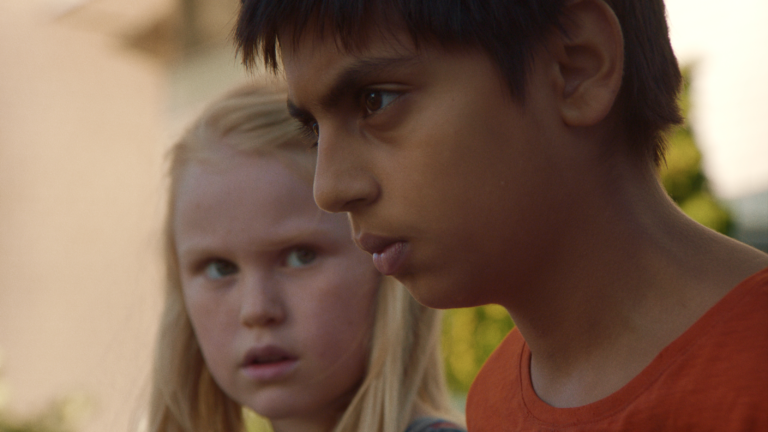
The Innocents has been picking up acclaim all over the world for months, and now at long last it’s coming to Shudder! It concerns children with weird and mysterious powers. One day they venture out into a nearby forest to explore their special abilities with each other, but at some point their “playtime” takes a terrifying turn.


August 23:

Shudder Exclusive: So Vam

Director: Alice Maio Mackay

Starring: Xai, Chris Asimos, Emma Bleby, Jessica Burgess & Molly Ferguson 

In this Australian film directed by a trans teen, an outcast named Kurt is kidnapped and murdered by a vampire, before he can achieve his dream of leaving his conservative town and becoming an iconic drag queen. However, Kurt gets resurrected in the nick of time by a band of vampires who kill oppressors of vulnerable communities. 


August 26:

Shudder Exclusive: Watcher 

Director: Chloe Okuno

Starring: Maika Monroe, Karl Glusman, Burn Gorman, Tudor Petrut & Gabriela Butuc 

An American actress and her husband move to Bucharest as a serial killer who decapitates women stalks the streets. She soon after begins to suspect that a voyeuristic man in the apartment building across the street may be the killer. 


Poll: What is your favorite Studio Ghibli film?

What would the world be without the Totoros of the world? On Episode 492 of the InSession Film podcast, we announced our latest movie series – Studio Ghibli. Their affinity for nature, fantasy, spirituality, and childlike innocence has arguably made them THE premier animation studio, and arguably the most beautiful. It seems we’ll have to wait quite a few years before they release their new film How Do You Live?, the supposed final film from Hayao Miyazaki, but that won’t stop us from revisiting the other twenty-two greats they’ve released over the past thirty years (okay, maybe Earwig doesn’t count).

With that said, what is your favorite Studio Ghibli film?


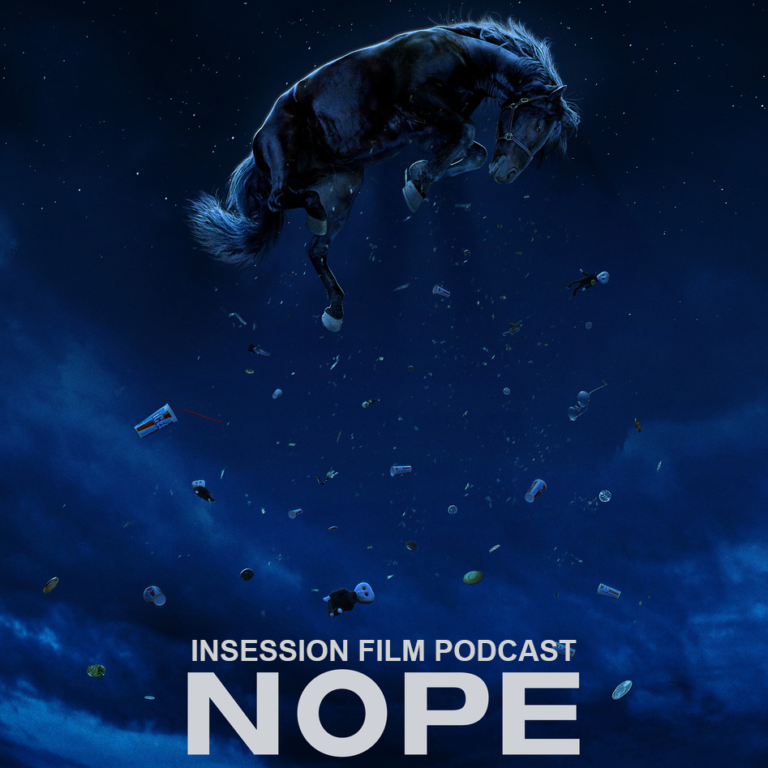
Podcast: Nope / Nausicaa of the Valley of the Wind – Episode 492

This week’s episode is brought to you by Libsyn. Start your podcast today and get your first two months free when you use the code FRIEND at checkout!

This week on the InSession Film Podcast, we discuss Jordan Peele’s new film Nope and begin our Studio Ghibli Movie Series with the 1984 Hayao Miyazaki film Nausicaa of the Valley of the Wind! Plus, some talk on Marvel’s announcements at this year’s San Diego Comic-Con.

If you’ve heard our episodes on Get Out and Us, you’ll know we are big Jordan Peele fans and his latest had us saying “yep” once again. It may not be his best effort to date, but there’s still plenty to love about Nope and we did our best to comb through why. We’re also fervent fans of the great Studio Ghibli, and we’ve been anticipating this series for quite some time now, so it’s extremely exciting to finally get it underway.

On that note, check out this week’s show and let us know what you think in the comment section. Thanks for listening and for supporting the InSession Film Podcast!

– Movie Review: Nope (6:21)
Director: Jordan Peele
Writers: Jordan Peele
Stars: Daniel Kaluuya, Keke Palmer, Steven Yeun

– Notes / Discussion (58:51)

This week for our break segment, as mentioned above, we dive into the world of San Diego Comic-Con and talk about Marvel’s announcements for Phase 5 and Phase 6. We also have a good laugh about Kevin Feige’s comments about ending Phase 4, as just a few weeks ago on Episode 490 we talked about the very clear direction Marvel is going despite the discourse on social media. Well, wouldn’t you know it, he walked on stage to pronounce Avengers: The Kang Dynasty and Avengers: Secret Wars as we all predicted. At any rate, we had a lot of fun talking about Marvel’s pipeline and what were most anticipating.

[divider]

RELATED: Listen to Episode 484 of the InSession Film Podcast where we discussed Top Gun: Maverick!

[divider]

– Studio Ghibli Movie Series: Nausicaa of the Valley of the Wind (1:34:39)
Director: Hayao Miyazaki
Writers: Hayao Miyazaki
Stars: Sumi Shimamoto, Gorō Naya, Yōji Matsuda

Show Sponsor: First Time Watchers Podcast

– Music

Nope – Michael Abels
Nausicaa of the Valley of the Wind – Joe Hisaishi
The Return of the Eagle – Atli Örvarsson

Subscribe to our Podcasts RSS
Subscribe to our Podcasts on iTunes
Listen on Spotify
Listen on Stitcher
InSession Film Podcast – Episode 490

[divider]

Next week on the show:

Review: Not Okay
Top 3: N/A
Studio Ghibli Movie Series: Castle in the Sky

[divider]

Help Support The InSession Film Podcast

If you want to help support us, there are several ways you can help us and we’d absolutely appreciate it. Every penny goes directly back into supporting the show and we are truly honored and grateful. Thanks for your support and for listening to the InSession Film Podcast!

VISIT OUR DONATE PAGE HERE

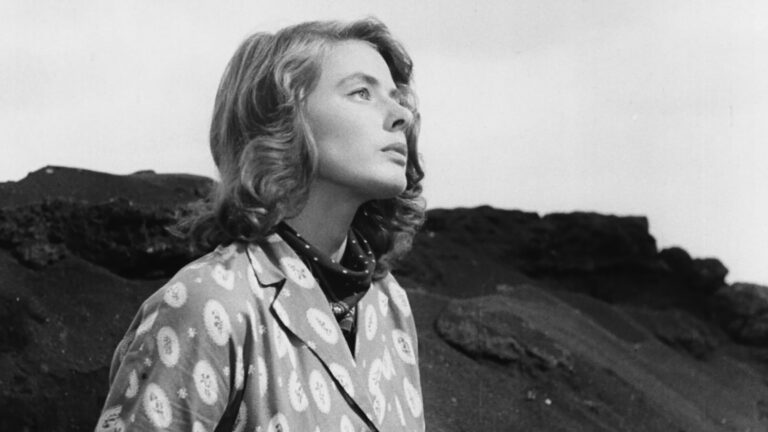
An Ingrid Bergman Potluck

Famed for her international beauty, classic films, and then scandals as well as awards – Ingrid Bergman’s talent is well known even to the movie layman, thanks to a big name picture or two. Her career, however, is more than just tent pole pieces. Here’s a varied countdown highlighting some of Bergman’s appetizing repertoire.


  1. Joan of Arc

Jose Ferrer (Cyrano de Bergerac), John Ireland (Red River), Ward Bond (Wagon Train), and many more join Bergman in director Victor Fleming’s (Gone with the Wind) final 1948 spiritual opus. A Cecil B.- esque narration adds grandiose scope alongside angelic choirs, lofty candles, big church art, fancy scrolls, and colorful sets. However, some of the design is forties facade apparent and the costumes are surprisingly plain – acerbating slow, dry sequences and an often windblown, bloated heavy handedness. There are also several versions with a poorly edited 100 minute choice or the fully appreciated and recently restored two and a half hours plus. Fortunately, the battle scenes are well paced and our lovely Best Actress nominee is on form reverent. Although Bergman battled to have this biopic made for some time, eventually at 33, she was far too old to play a teenage saint. Her personal scandals and Hollywood shunning over her relationship with Roberto Rossellini also overshadowed the onscreen spectacle. Thankfully, there’s enough grace and gravitas here for fans of more famous Biblical epics or history enthusiasts.


  1. Murder on the Orient Express

This 1974 Agatha Christie adaptation directed by Sidney Lumet (Dog Day Afternoon) also features Albert Finney, Lauren Bacall, Anthony Perkins, Jacqueline Basset, Sean Connery, Michael York, Vanessa Redgrave, Richard Widmark, John Gielgud, Everyone, and Your Grandmother alongside Supporting Actress winner Bergman. The understandably hectic, on the move pace may bother some viewers while others may find the criminal deduction too talkative with not enough action compared to those other all-star seventies disaster flicks. However, trans continental flair and mixed languages set off the sublime Art Deco design, tunes, and locomotive charm. The interconnected caper analysis is pleasing and intelligent – a step above those aforementioned star-studded, cliché disaster yarns. Suspenseful flashbacks, shrewd performances, and sharp editing reveal the layered Poirot procedural. To those who have seen more recent remakes, this may seem old hat, but the whole family can delight in the sophisticated Christie clues.


  1. Fear

Hypnotic credits and eerie music give way to classic cars and noir furs in this black and white 1954 downward spiral. The spoken Italian, English subtitles, and German setting may be confusing to some, but the opening voiceover is unnecessary thanks to the illicit guilt, torn love letters, tearful phone calls, and nasty arguments. Bergman comes and goes, up and down, in and out – visualizing her internal hectic and hurried state far better than the narration. Perilous point of view driving and her white knuckles gripping the wheel acerbate absent jewelry, denials, and confessions. Contrasting white rooms, dark figures, and stairs layer the foreboding poisons and science experiments amid silent angst, shame, love, and disappointment. Our classy Mrs. Wagner runs a post-war laboratory yet she can’t handle the scandal or her scoundrel. Rather than coming clean, high and low intermingle thanks to hotels, money, and lies that don’t fool anybody. Despite red herrings and a somewhat abrupt end, the life imitating art, real life couple neorealism from director Roberto Rossellini (Open City) makes up for any derivative Bergman Gaslight or Hitchcockian Spellbound feelings. This remains a suspenseful psychological character study on opposing forces and taboo female perceptions.


  1. Anastasia

Expatriate mercenary general Yul Brynner (The King and I) presents asylum patient turned titular impostor Ingrid Bergman to the exiled Dowager Empress Helen Hayes (A Farewell to Arms) in this romantic 1956 what if. Based upon Marcelle Maurette’s play about real life pretender Anna Anderson, opening scrolls fill in the Bolshevik history before the princess training suggests our actress may indeed be the Romanov heiress. Sweeping red velvet staircases in CinemaScope accent Alfred Newman’s (State Fair) sentimental Oscar nominated score as the coordinated appearances progress with aristocratic grace, headstrong shouting, and play within a play chemistry. Poised yet acerbic Hayes hangs on to the past grandeur, however Brynner takes pride in the fast talking subterfuge. Unfortunately, he’s thought of everything except the possibility of their ruse being true. Bounine falls in love with his charge in a stern but warm journey of self-discovery matching Bergman’s bittersweet, Oscar winning melancholy. Rehearsed lies or not, her troubled, on the run fear and inability to remember endears the audience. Anna mixes both “I” and “she” thanks to lingering traumas and tormenting confusion. Though fifties overdone, her desolate Parisian scenes are a stunning on the edge time capsule. Anna coughs, hunching and meager but blossoms with regal elan and the confidence to choose what she really wants. Even when knowing the Romanov reality, such charming performances, memorable meta, and self-aware reflection lets viewers choose which truth to believe.


  1. Casablanca

“Play it!” Yes, there’s not much left to be said of this most famously if erroneously quoted 1942 Michael Curtiz (White Christmas) Best Picture starring Humphrey Bogart (The Maltese Falcon), Claude Rains (Notorious), Paul Henreid (Now, Voyager), and more. Cigarette smoke haze, excellent shadow and lighting schemes, and California for Moroccan arches set off the scrumptious interiors as Rick’s Cafe Americain physically represents the tense, claustrophobia atmosphere. Local authorities, Resistance, and Nazis whisper at every table. White jackets, assorted uniforms, and military decorum are suave yet the sweat upon the brow adds heat and suspense. The international ensemble comprised of expatriates and refugees fleeing World War II deepens the tragedy, danger, and spirit alongside rousing anthems, tearful singalongs, and quintessential jazz standards. It’s easy to be swept up in the romantic flashback as well as drown in the bottle with brokenhearted Bogie thanks to Bergman’s hypnotic sparkle and tender conflict. The fedoras, the fog, the airplane…It’s amazing such a turbulent production with an unfinished script turned out as Oscar worthy as it did thanks to a crisp attention to detail, delightfully subtle performances, and of course, those memorable quips. Although the Ultimate Collector’s Edition blu-ray is delicious, I had the chance to see this in a sold out movie theater several years ago and there was not a dry eye in the house. “We’ll always have Paris.” 


The Unexpected Understanding of Tea and Sympathy

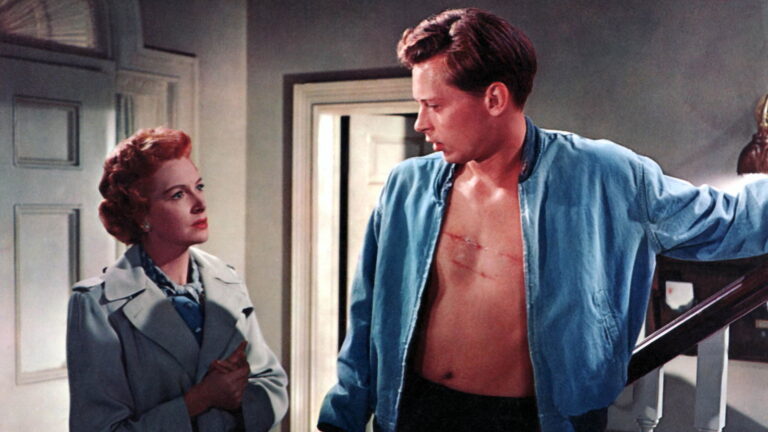
As far as its position within the queer cinematic canon, Vincent Minelli’s Tea and Sympathy, based on the play of the same name by Robert Anderson, is a hard film to pin down. Based on what I, an amateur film historian, had heard from various sources, the film was not much more than a fear-mongering, negative portrayal of homosexuality in the form of a Technicolor melodrama. Given my expectations, I was surprised to instead experience a highly sensitive, considerate reflection of post-war masculinity and, no pun intended, a sympathetic portrayal of a young man caught up in the middle of society’s conflicting expectations for men in the mid-century.

By the 1950s, the portrayal of American masculinity on film had already changed drastically since the art-form’s debut. In the earliest decades of filmdom, when cinema was still finding its footing, we think of figures such as Chaplin, Keaton, Arbuckle, Chaney; for lack of a better word: clowns. At the same time, the lines between masculinity and femininity were relatively blurred, as comedic actresses such as Mabel Normand had a great degree of creative control over their work, and could take on roles more typical of male performers. 

Japanese actor Sessue Hayakawa had been one of Hollywood’s earliest sex symbols in the late 1910s, both alluring and frightening women as an unfamiliar figure of foreign masculinity. By 1922, however, anti-Japanese sentiment and unideal business dealings forced Hayakawa to leave Hollywood. The year before saw the Italian-born Rodolfo Pietro Filiberto Raffaello Guglielmi di Valentina, better known as Rudolph Valentino, in his star making role in Rex Ingram’s The Four Horsemen of the Apocalypse, in which he danced the tango and became the screen’s first “Latin Lover”. While his career would only last until his untimely death in 1926, other actors such as John Gilbert would capitalize on their dark, vaguely European features to create a feeling of the exotic for a country who’d just had its world-stage debut a decade prior. This decade also introduced the archetype known as the “Swashbuckler”; a muscular, adventurous figure known to ravage women and look for danger. It would not be out of turn to assume these characters rose in popularity due to the effects of WWI on the American psyche, now that so many men had risked their lives and seen the world at the same time.

The thrill of adventure never went away in American cinemas, as seen by the dominance of the Western throughout the early decades. While this offered audiences a glimpse of the “long-gone” American male, the stars of the 1930s retired from the adventures of the swashbucklers, instead putting on their coat-and-tails, mingling with high-society, and attracting women not with their strength, but their charm. These stars, such as Clark Gable, Robert Taylor, Fred Astaire, Frederic March, and Cary Grant, appeared on screen to audiences, many of whom were struggling through poverty due to the Great Depression, and offered an image of the aspirational, the dashing, and in some cases, the effeminate. While authentic portrayals of impoverished American life did exist at the time, many audiences went to the movies with the express pursuit of escapism, so that for ninety minutes or so, they could still believe in the American dream.

Just as America’s one-year involvement in WWI forced the stars of American cinema to change from clowns to heroes, the American presence in WWII had drastic effects on the cinematic portrayal of masculinity that can still be felt in the current cinema. Combined with triumph, was a memory of immense loss and trauma, resulting in a more complex, down-to-earth male movie star, one with a cynical look at the elite and refined. This decade saw the birth of gritty noir anti-heroes (Bogart, Mitchum, Cotten), the neo-realistic everyman (Fonda, Tracy), and the defender of the American ideal in the East and the West (Stewart, Wayne). Of course, that’s not to say that the decade’s previous stars disappeared, but they had to adapt, such as the debonair Astaire who now had to compete with the athletic Gene Kelly. The aesthete, the dandy, and the effeminate male was both not only a far cry from aspirational, but a threat that had to be dealt with. Enter the queer-coded villain.

Characters akin to the 1930s leading male now served as foils to our brutish leads, appearing as tricksters, the ultimate villain to the post-war hero. Think, for example: Joel Cairo in The Maltese Falcon, Waldo Lydecker in Laura, or Addison DeWitt in All About Eve, the latter two which used their ambiguous sexuality to entice innocent young women. For an American man who was at the cinema from the 1920s-1940s, this constantly conflicting portrayal of the  male “ideal” would naturally produce a sense of confusion in regards to one’s identity.

While directed by Vincent Minnelli, Tea and Sympathy has an undeniable “Sirkian” quality in its use of Technicolor, story, and themes. Douglas Sirk, the master of Technicolor melodramas, frequently dealt with themes of gender and subtextual homosexuality. In Tea and Sympathy, a young man in his senior year at an all-boys prep school (John Kerr) is teased and ostracized constantly by his peers for his sensitivity and fondness for typically feminine pursuits, as well as his lack of sexual interest in women. While never stated explicitly, the film heavily implies that the film’s other characters assume him, Tom, to be gay.  “I’m always falling in love with the wrong people,” he exclaims. While subtle, those in-the-know will understand this deliberate use of genderless language to imply what could not be said out-loud in a 1950s movie theater. While Tom’s father, who subscribes to the mass machismo culture, is frustrated by his son’s inability to conform, the only person who offers him any sympathy is his headmaster’s wife, Laura, played by Deborah Kerr. By the film’s end, Tom practically has a mental breakdown spurred by his classmates’ bullying, concluding with an implied sexual encounter with Laura, who pleads: “Years from now, when you talk about this – and you will – be kind.”

I first heard of Tea and Sympathy through the 1995 documentary The Celluloid Closet, which examines Hollywood’s historic portrayal of homosexuality throughout the decades. In the brief segment about the film, narrator Lilly Tomlin relays the harsh gender-expectations of the 1950s, during which the male-female binary was arguably at its most drastic: “Seeming gay was almost as bad as being gay, so a man had to watch his every step”. One of the documentary’s contributors claims that the film is about “curing homosexuality”, showcasing a scene in which Tom’s roommate teaches him how to walk “like a man”. Respectfully, I have to disagree with the contributor. That scene in particular, in which Tom tries to emulate his friend’s walk, does the exact opposite of proposing the idea of curing homosexuality, instead showing the audience how ridiculous the idea of curing a man’s nature truly is. Tom watches his friend walk “the right way” with raised eyebrows and confusion, as the audience comes to realize the unjustified intricacies of what we deem “masculine” and “feminine”. 

The film is not ignorant of the issue it is portraying. Audiences both modern and contemporary would understand that the story overtly condemns Tom’s classmates while sympathizing with his unique disposition. Tom’s father expresses his paternal frustration to Tom’s headmaster and Laura: “I want to be proud of him, that’s why I had him in the first place,” exposing the expectations we place upon young men at birth. Along with John Alton’s stunning cinematography and other highly capable cinematic techniques, Tea and Sympathy is a fully realized, surprisingly complex study of era’s, the century’s, and the art-form’s complicated, often contradictory, relationship with gender. 

 

Criterion Crunch Time: The Goodbye

Well, we have come to it. This will be the final article in the long series: Criterion Crunch Time. And because of that, now I must attempt the impossible. I must find a way to wrap up two and a half years of articles in one final piece. And that oddly makes a bit of sense, given the focus of this column. Criterion used to be relatively easily defined.  Works from great directors, along with underseen films from outside of the United States. And you could argue that this is still mainly true of the physical collection, exceptions like The Breakfast Club aside.  But the streaming service, The Criterion Channel, is certainly much more wide and varied. All of the above are included, along with works like Across 110th Street, that likely will never make it to the sanctified collection. But who knows, they have branched out with films like Deep Cover and the Van Peebles Collection. The Channel is certainly intimidating in scope, as one could browse for days before choosing a film. This is, of course, why I limited myself to movies leaving the service. This was effective, despite my annoyance when films like Yentl left, then came back, and then left again.  But I digress. This task was daunting, but worthwhile, as I hope to review here.


The Greats

As I mentioned, there is certainly a focus on the great directors by Criterion. I am not here to get into auteur theory, but one might assume that the folks over at Criterion are big proponents. Due to this, I was given the opportunity to see many unseen (by me) films from some of my favorites.  I mean, the very first film covered was The Magnificent Ambersons from Orson Welles. To name a few, we covered films from Paul Thomas Anderson, Hal Ashby, Céline Sciamma, Michael Haneke, Bong Joon Ho, Mira Nair, and Pedro Almodóvar. This is just a small sampling, but utterly fantastic to experience. With Matador and Women on the Verge of a Nervous Breakdown, I was able to view two films from Almodóvar that were vastly different, but painted a bright picture of an artist that I already loved. In The Magnificent Ambersons, especially due to extras presented by The Channel, one can witness not only the greatness of Welles, but just how a studio can ruin greatness. All of these artists created absolute gold for me to mine as a writer, and I am grateful for the time spent.


The World Cinema Project

Ok, ok, I didn’t actually watch The World Cinema Project, I just stole the clever name from Martin Scorsese. But, in some ways, Criterion as a whole and Criterion Crunch Time as an idea really is a world cinema project. Through this series, I watched many films not in English and I am the better for it. Céline Sciamma’s Tomboy, a film many people sought out after Portrait of a Lady on Fire was eye-opening for me. Sometimes, a classic like Portrait comes along and it immediately makes us want to see the pattern of greatness, hoping that it is not just a fluke. Sciamma, of course, does not disappoint and provides greatness before we knew she existed. Director Bong gave our series Mother, and despite high expectations, exceeded these with a stunning lead performance that is totally unexpected from Hye-ja Kim. But it is not just the obvious greats that have been highlighted by awards and awards bloggers. Lore, from Cate Shortland, offers a completely new perspective on a time and place we feel we might know. Much has been made of the one inch barrier of subtitles, but the Criterion Channel offers many places to begin. I believe there are more barriers than this. Needing to read and watch creates a parallel process that is inherently different, but despite this, if you only watch film in one language, you have limited yourself to a small amount of perspectives and you are truly missing a great deal of staggering art. 


The Odd Members

At the outset of this column, I wanted to make a point to watch films not only from women and non white men, but also staying away from the classics, with a capital C. This was designed to stretch me as a writer and to introduce whatever audience came along to films that were slightly lesser known. And at the outset of this article, I mentioned films that likely would not make the physical collection. These, without fail, were the more rewarding and challenging articles to write. Included in this are queer films (that should be classics) like Go Fish, Pink Flamingos, Saving Face and The Living End. I would recommend all of these movies, if not to see people’s reactions during and after. If they haven’t seen that scene in John Waters’ amazing film, absolutely do not tell them.

And this is to say nothing of grittier pictures like Across 110th Street, Edge of the City, Klute, In The Cut and Night Moves. All of these seemingly may not fit the mold of what you think of when you hear Criterion. They all have rough edges and are not seen as classics in every corner of the internet. These are not Seven Samurai and Citizen Kane. And honestly, this is exactly why they are worth watching. Not everything needs to be pristine and acceptable to every individual in order to make an important film. These, among others, are absolutely a reason to delve deeper into the Criterion library/closet.


Final Thoughts

For those of you that joined me on this journey (partial or full), I hope that the trip was worthwhile. It certainly was for this writer. It is an interesting thing, to know that you don’t know. If you are a movie person and you talk to “normal” people, it feels like your knowledge has breadth and feels truly expansive. And then you open up this streaming channel and know that there is glory to be beheld. There are untold stories, from both and unknown voices to learn from. Sure, you can start with Scorsese, Godard, Hitchcock, and Almodóvar; but truly this is only the most shallow of a beginning. I truly hope that this column has incited at least one person to continue their own journey in underseen film. There are wonders to be discovered there, and I hope you find them.


Movie Review: ‘Marcel the Shell with Shoes On’ is a Shell of a Great Time


Director: Dean Fleischer-Camp

Writer: Dean Fleischer-Camp, Elisabeth Holm, and Nick Paley

Stars: Jenny Slate, Dean Fleischer-Camp, and Isabella Rossellini

Synopsis: Feature adaptation of the animated short film interviewing a mollusk named Marcel.


Marcel the Shell with Shoes On will go down as one of, if not the, most adorable film of the year. If you’re familiar with the Jenny Slate-voiced character from its very popular YouTube videos, you’ll already know what to expect, but here’s some background just in case. Marcel is a mollusk with one googly eye on the right side of his shell, and of course he comes with a pair of shoes on. His unique appearance is endearing on its own, but his quirky personality and funny quips make him all the more charming.

The beginning of the film sees Marcel’s friend Dean, the same character from the YouTube videos, is making a “documentary” about Marcel’s life. In what becomes very meta, the footage captured in those first ten minutes is essentially regurgitated to make those original videos that became a huge sensation online over a decade ago. We learn that Marcel’s family, and the community in which they lived, had been taken away accidentally by a couple who had left their home. Marcel and his grandmother Nani Connie are left behind to survive on their own.

In a series of humorous sequences, we see how Marcel and Connie have evolved to live on their own, including the innovative use of a blender to help gather food. Connie has become a master gardener thanks to a few books left in the house. Marcel has learned to roll around in a tennis ball in order to get from one place to another more quickly. Without the support of structure and their community, they’ve thrived off of limitation and adaptation. However, the sadness and loneliness they feel still lingers. Marcel has crafted a memory board where he’s carved out portraits of his missing family as a way to remember them. When they talk about what happened to their family, or how they’ve coped, there’s understandably a sadness to it, even if Marcel’s quips offer a few laughs in between. One of the better depictions of this is when Dean shows us Marcel and Nani Connie watching the TV show 60-Minutes, which has become one of their coping mechanisms. It’s surprisingly funny to see how this often very serious program has become something of comfort. There’s another captivating moment in which Marcel creates an “ice-skating” surface out of dust in order to lift Nani Connie’s spirits, which is very effective, only for it to be abruptly interrupted by the horror of a squirrel in the house. It’s somewhat jarring, but the turn from joy to uneasiness is incredibly seamless. And that tonal balancing act is what makes the film truly wonderful.

Marcel the Shell with Shoes On is directed by Dean Fleischer-Camp, a name most may not be familiar with as this is his feature debut, however he did direct the short films this is based on. It’s truly impressive how he’s able to blend poignancy with blistering dialogue and hysterical visual gags. It’s not an easy trick to pull off, especially in your debut, but Fleischer-Camp does it impeccably. My personal favorite is the scene featuring Marcel on the phone with 60-Minutes producers, a moment that could be life-changing for him, but on the right side of the frame is Nani Connie standing on the laptop keyboard standing on the “Z” key. The incessant Z’s being reflected on the Word-doc is so good. A simple, yet hilarious visual. It cannot be overstated how funny and warm Marcel is throughout its entirety. But for all of its cuteness, there’s an equal about of emotion and humanity to the film regarding loss, grief and the importance of community. The abundance of playfulness here never compromises the film’s pathos.

Dean Fleischer-Camp’s tone management is astounding on its own, but complimented even even more beautifully by this marriage between art and curiosity we see in Marcel’s journey. In those opening scenes, as they are making the original YouTube videos, Marcel isn’t fully aware of what Dean is doing and it elicits some really funny reactions out of him. Initially, it’s just this trivial documentary about their day to day lives. But then they explode and everyone is endeared to Marcel, eventually sparking this wonder in him, a thirst to see if his new found fame could lead him to discovering his family once again. It’s really fascinating to see how those crossroads of art and hope intersect, giving life to Marcel in a completely new way. The reality is, though, that it’s just a fantasy. Finding his family again is maybe just wishful thinking and something that may never come to fruition. Even with the help of the internet, which wasn’t always that helpful, as celebrity culture became a hinderance for Marcel. It even begins to endanger Nani Connie. These videos may have sparked a tender curiosity at the start, but hope begins to slip away from him until Nani Connie comes to the rescue. I will not give any spoilers away, obviously, but when you see it…it’s gorgeous.

Not enough can be said about Jenny Slate’s vocal performance. Her distinct voice could have been a distraction, but her quirkiness and specificity for Marcel is the star of the show. The film is reliant on you being as endeared to Marcel as everyone else is around him in the actual story. Without Slate, who knows if that would have worked? But she’s terrific and you’ll fall in love with him immediately. The great Isabella Rossellini voices Nani Connie, and she’s quite spellbinding as well.

Marcel the Shell with Shoes On is unlike most movies in the A24 cannon. It’s lighthearted and eccentric, but the craftsmanship here is genuinely great. The cinematography is especially vivid. It’s thematically stimulating in its ideas of loss and community, but even more arresting in how it examines the concoction of art and media having a tangible influence on the choices we make in our lives. The emotion in all of that is affecting. It may be different, but it’s easy to see why A24 would love something like this. Will it end up as one of the year’s best films? It’s hard to say. It probably should be in that conversation. At the very least it’ll end up as one of the best surprising films of 2022.


Grade – A


Women InSession: Top 3 Classic Films – Episode 1

On our first ever Women InSession Podcast, Kristin Battestella and Zita Short discuss why they love classic movies and offer up their Top 3 classic films!

We hope that you enjoy our inaugural episode of our new Women InSession podcast on the network. We are very excited about this new venture and the voices that will be shared on this show. In a rotating panel, you’ll hear the voices of Kristin Battestella, Zita Short, Amy Smith, Amy Thomasson, Shadan Larki and Erica Richards, along with some guests from time to time as well. They will talk everything from classic films, as heard on this specific episode, new films, Top 3 lists, and everything in-between.

On that note, check out this week’s show and let us know what you think in the comment section. Thanks for listening and for supporting the InSession Film Podcast!

– Classic Movie Discussion

– Top 3 Classic Films

– Music

The Return of the Eagle – Atli Örvarsson

Subscribe to our Podcasts RSS
Subscribe to our Podcasts on iTunes
Listen on Spotify
Listen on Stitcher
Women InSession – Top 3 Classic Films

[divider]

To hear this Extra Film episode and everything else we do, download our apps on the Amazon Market for Android and the Podcast Source app on IOS devices. The mobile app covers all of our main shows, bonus podcasts and everything else relating to the InSession Film Podcast. Thanks for your wonderful support and for listening to our show. It means the world to us.

Highlights From The Criterion Channel: Part 2

Into the summer, more and more screenings have come across the television with the continuing introduction of older pieces of cinema on the Criterion Channel. There are always themes every month with an incredible slate of movies part of it. Boxing films, a noir in color, and Richard Linklater’s works were one collection to be had at once. Again, I had to choose and dig deep and pick out those that stood out; these five for their cultural quality and rare exposure get my interest in this piece. 


Gentlemen Prefer Blondes (1953)

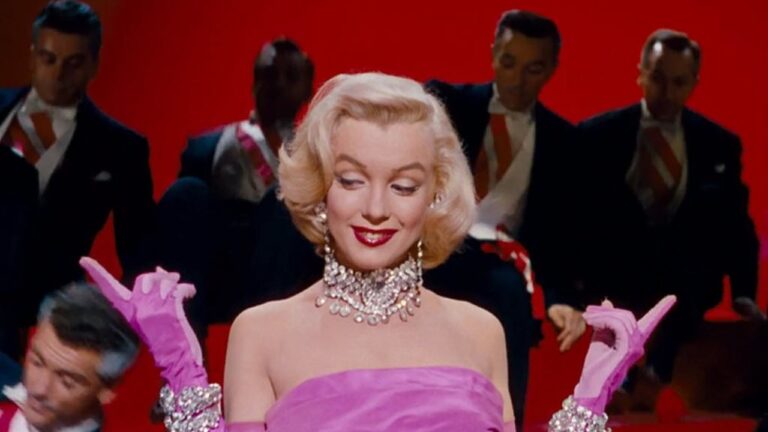
The musical comedy featuring Jane Russell and Marilyn Monroe became an iconic moment thanks to the number, “Diamonds Are A Girl’s Best Friend,” with Monroe in her pink dress and gloves. Costumer William Travilla would dress Monroe two years later in The Seven Year Itch with that white cocktail dress duplicating Monroe’s memorable moment on film. Howard Hawks is credited as director, but with the musical sequences, he wasn’t even on set for them; they were directed by choreographer Jack Cole and Hawks even acknowledged it. However, it was imprinted in the mind of multiple singers who paid homage to it in decades to come.


Yoyo (1965)

Pierre Etaix made his name as a notable clown before he turned his attention to moviemaking in the 1960s. Arguably his best work, Yoyo follows the title character (played by Etaix) who is the son of a billionaire that enjoys being free from responsibility and instead becomes an entertainer for a circus. As he becomes famous and rich, Yoyo seeks out a plan to save the chateau that once belonged to his father. Etaix was influenced by another French physical comic director, the great Jacques Tati, who inspired him to make his own films. Playing with sound and visual gags, Etaix strings together an unusual structure for a comedy film that harkens back to the days of silent film. 


The Poseidon Adventure (1974)

The 1970s was the era of the disaster genre and Ronald Neame’s cruise ship drama with an all-star ensemble modernized Titanic in the midst of nature’s fury. Gene Hackman is a pastor with unorthodox views being sent away, only to become the savior when he leads a group of people out to their only hope of survival. It’s quite entertaining and I remember the 2006 loose remake of it, but the original version is quite the picture with a variety of characters who take a leap (and climb) of faith with Hackman. Shelly Winters received an Oscar nomination for her role as a past swimming champion who plays a key role in their survival and co-stars Ernest Borgnine, Red Buttons, and Leslie Nielson – and this is a dramatic role, not a spoof.  


Something Wild (1986)

After the sudden passing of Ray Liotta, I took a second look at the film that made him a name. Jonathan Demme’s comedy featured a straight-laced Jeff Daniels who runs into Melanie Griffith’s Lulu, a free-spirited woman who takes him on a ride away from his yuppie lifestyle and they fall in love. This is threatened by Lulu’s ex-husband, played by Ray Liotta, who wants her back. It’s such a colorful film, one that makes Demme a chameleon with the different types of films in his resume, and a movie that makes me miss both him and Liotta today.


Distant Voices, Still Lives (1988)

Terence Davies has only made a handful of films, but they are all beautifully shot, made from his own memories and interest in nostalgic settings. He recently has done two biographical films A Quiet Passion about the poet Emily Dickinson and Benediction about writer Siegfried Sassoon. But in his first full feature, he used scenes from his own life as a child and as a grown adult to make this stirring portrait of a Liverpool family that is bound by song and trauma. Davies puts forth, for generations apart what is no longer there that remains so far distant, yet what remains in his mind that he brings it back to life for one moment.


Follow me on Twitter: @brian_cine (Cine-A-Man)


Movie review: ‘Nope’ Is Jordan’s Peele’s Twisted Western


Director: Jordan Peele

Writer: Jordan Peele

Stars: Daniel Kaluuya, Keke Palmer, Steven Yeun, and Brandon Perea

Synopsis: The residents of a lonely gulch in inland California bear witness to an uncanny and chilling discovery.


Jordan Peele loves harking back to history and stitching it up with contemporary standards. His X ingredient is always horror, which concocted the perfect formula in Get Out and a strong sophomore effort in Us. Not surprisingly, his third effort, Nope, is bigger than the first two and makes use of the screen more than before. Just knowing the 132-minute running time tells you that and clips from the trailer hint at his new recipe. This is another film with social commentary within a horror story, but now mixed with a UFO and questions of what is above us.

But it isn’t a throwback to something like The Day The Earth Stood Still or Invasion Of The Body Snatchers. Under Peele’s watchful eye, his own full-length movie of something from The Twilight Zone (of which he was narrator and producer of the latest incarnation) tries to pack in many visuals, but the motivation amongst his characters becomes lacking. His writing, arguably his strongest suit, weakens compared to the last two films, even though his craftsmanship does bump up a notch with a more special-effects-driven story. It, at times, does get exhausting when we change from the person to the eye in the sky.

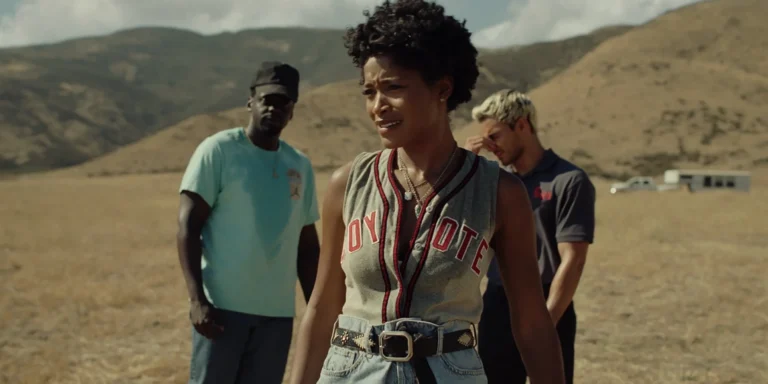
The story revolves around siblings OJ (Daniel Kaluuya) and Emerald (Keke Palmer) Haywood following the death of their father (Keith David) who died in a freak accident when a metallic object fell from the sky and struck him like a bullet. OJ has that killing object in a bag as he wonders while struggling to maintain the family business of horse wrangling for movies, what exactly is up there. He struggles to be like his dad and Emerald, a Jack-of-all-trades, but he is simply charismatic, but not into this business, especially when OJ lives in the middle of nowhere.

 After OJ catches a glimpse of a UFO as the power fades out before coming back again, the brother-sister duo buys security cameras and gets help from tech clerk Angel (Brandon Perea). Angel brings comic relief with his geeky personality who uses the sale to be friends with the Haywoods, especially when he realizes the cameras are not just strictly for security. Michael Wincott plays the scruffy cameraman who is called upon by Emerald to help them catch their “Oprah shot” with an old-school, hand-cranked camera which he refers to as “the stuff dreams are made of.”

Peele uses the longer running time to hand us the clues in pieces and tether together the ominous presence from above and how they need to catch it in the act as proof of extraterrestrial presence. Hence, advertisements involve a fake horse, a rope of flags, and those inflatable dancing figures in front of car dealerships. And while it is entertaining and satisfying in the end, it leaves something to be desired, as well as questions that need to be answered. 

One character that left this viewer wanting more is the performance of Steven Yuen. Yuen plays Ricky “Jupe” Park, a former child actor who witnessed a horrifying event during a recording of a TV episode, which serves as the prologue of the film. Ricky now runs, with his wife and three children, a Western-themed amusement park not far from where the Haywoods live as they do business together. His side story feels like it should have been its own movie rather than be sliced off into this one, especially when the prologue is expanded more later in the film. Is it an intentionally open-ended interpretation of Ricky’s witnessing that shocking event and what he sees with us in the sky? Or, is there more to it? With his storyline, Peele seems to dive into David Lynch territory and not give much away, if anything. 

This is where the film gets loose with the story and extends itself too much, becoming too smart for its own good. Sure, Peele drops film history and references that movie nerds (including me) would pick up on, but the story becomes arbitrary. The plot is shortened and the last half is about its chaos and the group capturing that “Oprah shot” they talked about before. However, Poole’s Director of Photography, Christopher Nolan collaborator, Hoyte van Hoytema (Interstellar, Dunkirk) does make his mark with these shots, in both night and day, when the power drops and the winds pick up from above. Its vintage score from Michael Abels adds the twang to the Western akin to something from a John Ford film, even though I wouldn’t call OJ a character equal to John Wayne’s Ethan Edwards in The Searchers.  

The film opens with a quote from the Bible: “I will cast abominable filth upon you, make you vile, and make you a spectacle.” Peele, even if it’s a bit messy, fulfills that promise. Nope doesn’t give its message as clearly as his earlier films, but it never falls down to mediocre levels.


Grade: B-


Movie Review: ‘The Gray Man’ is The Russos Fight and Travel Bore-Fest


Director: Anthony Russo and Joe Russo

Writer: Joe Russo, Christopher Markus, and Stephen McFeely

Stars: Ryan Gosling, Chris Evans, and Ana de Armas

Synopsis: When the CIA’s most skilled operative-whose true identity is known to none-accidentally uncovers dark agency secrets, a psychopathic former colleague puts a bounty on his head, setting off a global manhunt by international assassins.


The Russos (Anthony and Joe) made their name with two small features, Welcome to Collinwood (2002) and You, Me, and Dupree (2006), which is quite awful if you ask me, as well as some TV efforts in great series like Community and Arrested Development. I haven’t seen the former of these two films. However, if I’d based my thoughts on the latter, I would have never thought that this duo would end up making three of the highest-grossing movies of all time, including the number one spot, with Avengers: Endgame. After completing four films with the MCU’s ring leader, Kevin Feige, they sought out different projects – other films that don’t dwell within the realms of the superhero chain. The first of these was the self-titled adaptation of Nico Walker’s 2018 novel, Cherry. Unfortunately, that film, which was targeted as a late Oscars “contender”, ended up being a total disaster. 

So their latest picture, another adaptation of a modern novel, Mark Greaney’s The Gray Man, is basically a “scratch all that” situation. Instead of pushing for “possible” awards, The Russo’s were going for spectacle and blockbuster entertainment. Netflix wanted to go big with the franchise starters, hence last year’s mega-streaming blockbuster, the Rock-Reynolds-and-Gadot-led Red Notice. So, Netflix tapped the director duo to create another one for them. With a 200-hundred million dollar budget and an array of stars (Chris Evans, Ryan Gosling, and Ana de Armas, amongst others), The Gray Man makes its way onto theaters for a short while before hitting our television screens. The film looks and feels expensive in its lengthy action set-pieces and explosions. However, it doesn’t garner any popcorn movie glamor or enjoyment – another unsharpened franchise starter that one would watch once and forget instantly. The Gray Man begins with a short introduction to the lead character, Ryan Gosling’s Court Gentry (aka Sierra Six), who remains unnamed for the majority of the film, ten years before the film’s present day. 

He’s being recruited by the Sierra team creator, Donald Fitzroy (Billy Bob Thornton), to join the team. Gentry joins because he has no other option; it’s either rot in jail for plenty of years or do the dirty work for that government special-ops, the Sierra agency. After working for them for a long time, they contract him to haunt one of his own, Sierra Four, who has information that might rupture their standing – leaking some of the agency’s darkest secrets. Because he now knows and holds that information, Six becomes the primary target and is hunted down by some of the best killers in the game from across the globe, including a former colleague, Lloyd Hansen (Chris Evans). With this “everybody hunts him down scenario”, it paves the way for The Russos to go all out, both in its array of locations (Croatia, Berlin, London, Mumbai, etc) and the craftiness of its various action set pieces. 

However, what happens in The Gray Man is just a flat piece of popcorn entertainment. The multiple explosions, car chases, shootouts, and fist fights don’t add a jolt (or spark) of amusement. Things just happen, and there’s no reaction coming from the audience. The reasons for such an unamusement are plentiful, so it is hard to find a main culprit for this catastrophe. I know it isn’t the actors’ fault because they try to give their best with the poor material, particularly Ana de Armas, which is becoming one of the most magnetic screen presences working today. Even in the worst of films in her filmography, she’s still engaging to watch. And some even ham it up a bit because they are too into the role (Chris Evans’ villainous mustachioed fellow). It’s also great to see Julia Butters act again after her short yet great moments in Tarantino’s Once Upon a Time in Hollywood

For the most part, one could say that the worst aspects of the film are its creaky editing, the shoddy directorial effort by The Russos, and its overall bland visual presentation – which is a crucial facet for blockbusters, especially the first installment of what may be a future franchise. The action set pieces are overly edited and poorly shot, to the point where you can’t see the fighting choreography or bathe in the tension and high intensity. In addition, thanks to the poor cinematography and editing in the fight scenes, the viewer doesn’t feel the physicality of the punches, kicks, tackles, and takedowns the characters do to each other. One of the reasons why John Wick excels is because of that. It lets the fight continue into a single transition, or long enough so that the audience can see each punch being thrown and feel it, as well. 

And not only do you feel their bodies crunching hit after hit, the fights are crafty and savvy. This is unlike The Gray Man, which repeats plenty of its maneuvers and widgets (like the grenades that appear almost three times), causing the audience to get bored each time because it isn’t showing something creative or cunning. An excellent and well-shot action set piece garners reactions from the audience, whether it be a gasp or leaving you in sheer awe of what happened. Unfortunately, that doesn’t happen with any of this picture’s action sequences. Nevertheless, some of its fight scenes have potential, especially the hospital scene with Dhanush’s Avik San fighting with Gosling and de Armas’ characters. Yet, once again, the viewer doesn’t care because we don’t feel or see the pain inflicted on the characters and the physicality of the attacks being thrown. Like Michael Bay’s latest, Ambulance, this has plenty of drone shots during its car chases and location transitions, which tend to be annoying if used incorrectly and constantly – and that’s precisely what happens. 

Its action set pieces, which are the primary vehicle for the feature, are disjointed, although not as incoherent as its narrative. The script leaves too many threads dangling around, never to be resolved. One of them is the “big bad” of it all, who is running the whole show. That might be purposeful, as it wants to start a possible franchise of sorts, but the movie’s antagonists keep mentioning it repeatedly, so it gets under your skin when they won’t reveal who it is. What’s the purpose of mentioning said villain multiple times if you’re only going to let it be known later on (if it ultimately receives a sequel). It doesn’t make the film any more interesting; it makes it far more dull and unengaging. By having Ryan Gosling in the lead role, you have plenty to work with. He’s a great actor who can deliver dramatic and comedic chops, depending on the material. 

The Gray Man also tries to do a balancing act of adrenaline-fueled tense scenes and dramatic scenes for the purpose of connecting with the characters,  just to intercut them with poor comedic ones. One can’t even imagine how many jokes are thrown into the air, and none of them receive a laugh. Gosling does hold his own, and one or two quips or callbacks made me chuckle, but the script is so poor and unfunny that he can’t put the audience onto his charming spell to make it work. The film is just remarkably unremarkable, to the point where it tries too hard to make the audience engaged with what’s happening. Nevertheless, ultimately, nobody actually seems to care. The Gray Man is just expensive, glamour-less, and unsharp. 


Grade -D

Movie Review: ‘The Sea Beast’ or How To Train Your (Sea)dragon


Director: Chris Williams

Writer: Chris Williams and Nell Benjamin,

Stars: Karl Urban, Dan Stevens, Jared Harris

Synopsis: When a young girl stows away on the ship of a legendary sea monster hunter, they launch an epic journey into uncharted waters – and make history to boot.

[info}

They say we put monsters on our medieval maps to warn of treacherous voyages; venturing into the unknown was a common thing in the age of sails and sailors never knew if they’d return home. Tall tales were told of humongous, terrifying creatures patrolling the ocean depths. From this era grew the tales of Herman Melville and his legend of Moby Dick. Later, Patrick O’Brian would weave tales of sea explorers in his Jack Aubrey novels. Sea shanties, boundless oceans, and epic adventures became the stuff of legend. 

This is the world with which Netflix’s latest animation The Sea Beast shares DNA. Presented as a mix of How To Train Your Dragon and Pirates of the Caribbean, with a splash of Moby Dick thrown in for good measure, The Sea Beast is one of the best animated films Netflix has presented in recent years, happily avoiding the recent budget cuts Netflix has made to their animation department. It features a gorgeously rendered world which practically jumps off of the screen and plenty of dynamic action set pieces which feel fresh and unique in this setting. 

We begin with a narration from our young protagonist Maisie (Zaris-Angel Hator), an orphan whose parents died at sea while hunting for those great and terrible monsters of the depths, all too real in this world. Maisie reads extensively from books featuring real-life explorers such as Captain Crow (Jared Harris) and his first mate, the swashbuckling, barrel chested Jacob Holland (Karl Urban, who must have left the set of The Boys and carried his Billy Butcher accent directly into the recording studio, minus the swear words). Hoping to escape the orphanage she calls home and avenge her parents, Maisie stows away on board Crow’s ship The Inevitable as they tear off into the horizon in search of the Red Bluster. 

The Red Bluster is the most fearsome and elusive of sea beasts, and as such is the biggest target for any and every seagoer. Captain Crow – in the vein of Melville’s Ahab – has made it into his own personal white whale, hoping the capture of it will prove his worth as an adventurer. As they draw ever closer to capturing the beast, however, Maisie realizes the story books she has read might not be as accurate as she thought, and the Red Bluster – or Red as Maisie affectionately names it – is perhaps more of a gentle, misunderstood soul than was first thought. With Jacob in tow, Maisie sets about convincing the world to give the sea beasts another chance, and save Red’s life before Captain Crow launches his deadly spears in its direction.

Directed by Chris Williams, whose credits include Big Hero 6 and Moana, The Sea Beast knows its world and its story well. It doesn’t do anything new, and indeed most viewers – especially anyone who has seen How To Train Your Dragon, – will know exactly where this is all going to go. The destination hardly matters, though, when the journey is this much fun. An early sequence featuring a tracking shot throughout the Inevitable as we meet its hardy crew is sublime and sets us perfectly in its world. A little later Jacob will swing from the masts, diving into the ocean to tackle an incredible, serpent-like sea creature, and your jaw will drop at the technical achievement of it. In amongst all this grandeur are quieter moments of contemplation, such as Maisie resolutely removing the harpoons stuck to Red’s back, or the dawning realization that maybe we shouldn’t canonise our heroes as infallible gods. The message is clear, but gently woven through the narrative.

There are slight niggles: in order to achieve its action-packed sequences, there feels a slight omission to the world-building and the mythology. A subplot featuring a King and Queen waging war against the beasts is barely explored, and their armada little more than cyphers for a third act sequence. Alongside this are the questionable accents (at least to this reviewer’s ear) which feel immersion-breaking after a while. Hator, herself a British actress, adopts a cod-British accent full of ya-hars and aye-ayes that don’t quite stick the landing. Additionally, Red itself feels a little lacking as a formidable creature. The idea is clearly a seafaring version of Toothless, but the lack of definition means little opportunity for Red to emote and as such it’s difficult to empathise with.

Those minor faults notwithstanding, The Sea Beast is one of the more surprising movies of the year; feeling like a fresh take on a rapidly staling narrative, with genuinely gorgeous animation and set pieces, and a depth to match its ocean backdrop, it is one for the whole family and an excellent summer movie. The only loss is that we were robbed of the chance to see this streamer on a big screen. 

Grade – A+


Movie Review: ‘Good Luck To You, Leo Grande’ is Funny and Fearless


Director: Sophie Hyde

Writer: Katy Brand

Stars: Emma Thompson and Daryl McCormack

Synopsis: Nancy Stokes, a 55-year-old widow, is yearning for some adventure, human connection and some sex–some good sex.


It’s a particularly British thing to be squeamish around the topics of sex and sexuality. Such things aren’t meant for polite discussion. It calls to mind the old farce written by Alastair Foot and Anthony Marriott; No Sex Please, We’re British, in which a couple accidently receives pornography and must quickly get rid of the evidence before a mark on their social credibility appears.

It’s something that still prevails today, at least in some forms. A hint of skin in a mainstream movie often garners attention in tabloids for being too provocative. Little surprise, then, that Sophie Hyde’s sophomore effort Good Luck To You, Leo Grande has caused something of a stir in British media for its depiction of a fully nude Emma Thompson at the age of 62. Underneath the skin of this ‘provocative’ movie, though, lies an exquisitely told tale of sex positivity, loving oneself, and making the most of life.

Good Luck To You, Leo Grande presents itself as something of a stage play: it comes in 4 parts, or rather, 4 meetings between Nancy (Thompson) and a young gigolo named Leo Grande (Daryl McCormack). Each meeting, except the last one, takes place entirely in the hotel room which Nancy has booked out especially for an evening with Leo. Nancy is a retired Religious Education teacher, a woman who has, by her own account, followed the rules her whole life and, subsequently, has been left feeling unfulfilled. She sheepishly admits to Leo during their first meeting that she has never had an orgasm, viewing sex as more of an obligation to her husband Robert – her only sexual partner – than something to be enjoyed on its own terms. Nancy is of the typical British middle-class who keep their distance from anything close to illicit behaviour, and, as such, the entire spectrum of her knowledge about sex work comes from the essays she asks her students to write, about whether sex work should be legalized. 

Now, though, Robert has passed on and Nancy is at a stage in her life where she is more unsure of herself than ever. Her plan is to achieve ‘attainable goals’ through Leo, such as giving and receiving oral sex (neither of which she has ever done), to tick off the bucket list and find out what she’s been missing her whole life. As she engages with the effortlessly charismatic Leo, though, Nancy begins to develop an appreciation for herself and her own body, in a way that she never had before.

It should come as a surprise to no one that Emma Thompson is perfect here. The script, by Katy Brand, was written with her in mind and it shows. Her effortless ability to portray the many layers of an anxious woman in the late stages of her life is a marvel; her comic ability comes to the fore as she deadpans lines like “I’m a seedy old pervert like Rolf Harris” or “there are nuns out there with more sexual experience than me” with perfect timing, and mines emotional depths when discussing Nancy’s dislike for her children or her fear that life has passed her by. Each meeting between the two peels back more layers and Thompson handles all of it with aplomb.

McCormack too deserves praise for his portrayal of Grande. The gigolo, of course, has his own family drama courtesy of an absent mother, which creates a pleasing symmetry with Nancy’s family dynamic. There are shades of Richard Gere’s Julian from American Gigolo in McCormack’s performance. He is smooth, reassuring, and calm for the most part. Several times during their meetings he displays the same techniques and skills one would associate with a therapist. It’s enjoyable to watch a worldly young man discuss the merits of sex work with a neurotic older woman who projects her own experiences onto him. You feel most would pale against the acting might of someone like Thompson, but McCormack more than holds his own; the chemistry between them is obvious.

There is, of course, an additional, and unaddressed, layer: Grande is mid-to-late 20s at most, while Nancy is three times that age. Had genders been reversed and the story focused on an older man soliciting sex from a young woman, would the same result have occurred? It is an interesting question, but one that Hyde isn’t interested in positing. Rather, the focus is on sex-and-body positivity as Nancy explores herself through her interactions with Leo.

Ultimately, Good Luck To You, Leo Grande is a subversive dramady focusing on that seldom discussed issue: the sexuality of older women. It is fresh, fearless, and both laugh out loud comedy and teary drama at the same time. With great chemistry between the leads, a clever script and a very subtle cinematography which evolves with every meeting between them, Good Luck To You, Leo Grande is a delight and likely one of the best comedies we’re going to see in 2022. 


Grade – A


Poll: What is the best UFO film?

How would you react if you encountered a UFO? According to Jordan Peele, it would probably be some variation of, “Hell naw,” as uttered by Keke Palmer in this weekend’s extra-terrestrial(?) thriller Nope. Hollywood has depicted alien visitors and space crafts in a variety of ways (some horrific, some as religious experiences), and they’ll continue to do so until we one day encounter alien life, as there is for sure something more out there. As stated by the great Arthur C. Clarke, “The truth, as always, will be far stranger.”

With that said, what do you think is the best UFO movie? We are doing our best to avoid strictly “alien” movies, as we still aren’t sure if Nope even features aliens.


List: Top 3 Movies About Finding Family

This week on Episode 491 of the InSession Film Podcast, inspired by our review of Marcel the Shell with Shoes On, we discuss our favorite movies about finding family. Okay, so this is a pretty broad topic and it could go any number of ways depending on your criteria. However, we mostly settled on the idea of discvery and reconnection. Certainly there’s an element of literally finding family that many films do examine, but sometimes “finding” family is closer to home and discovering something new that completely changes your perspective on the world. For our lists, and much of the conversation, we equally considered the films that have done that remarkably. Either way, there’s a ton to mine out of this subject and it made for a fun, albeit challenging, exercise. That said, here are our lists:

(Note: Please keep in mind that we each had different criteria for our selections)

JD

1) The Kid
2) Like Father, Like Son
3) Ad Astra

Brendan

1) Shoplifters
2) Matilda
3) My Neighbor Totoro

Honorable Mentions (Combined)

How to Train Your Dragon 2, Finding Nemo, Luca, Pinocchio, The JUngle Book, Homeward Bound, The Royal Tenenbaums, Big Fish, Rachel Getting Married, Sin Nombre, Birth, The Impossible, Mystic River, E.T., Where the Wil Things Are, The Parent Trap, Paddington, Loveless, When Marnie Was There, Away We Go, Captain Fantastic, Step Brothers, August Rush

Hopefully you guys enjoyed our lists and if you agree or disagree with us, let us know in the comment section below. There are certainly many more movies about faith that are eligible for your lists. That being said, what would be your Top 3? Leave a comment in the comment section or email us at [email protected].

For the entire podcast, click here or listen below.

For more lists done by the InSession Film crew and other guests, be sure see our Top 3 Movie Lists page.