


Home Blog Page 148

‘Crooklyn’: More Proof That Spike Lee is One of the Greats

 “On your mark. Get set… Go!” These are the first words heard in Spike Lee’s  1994 film, Crooklyn. Perhaps one of Lee’s finest openings ever, it sets the stage wonderfully for what is to come. As the cast and crew of the film are imposed over  children running and playing through the streets of Brooklyn, New York, the literal  playfulness of Lee’s tale unfolds before the viewer. With Crooklyn, Lee sets his sights  on making a family film, adding to the wide array of genres within which he has  experimented. But of course, this is no run-of-the-mill coming-of-age style movie.  Instead, it is a heartfelt film about childhood, delivered in the way only a Spike Lee Joint  could be. With a soundtrack hand-picked by Lee, along with his usual vibrancy and flair, this has all the necessary ingredients to be a memorable film which highlights the impact our surroundings can have on our upbringing. 

  Co-written by Lee alongside his brother, Cinqué Lee, and sister, Joie Lee,  Crooklyn is clearly a snapshot inspired by their Brooklyn upbringing. Most importantly, it  pulls back the curtain on one of the most fascinating questions ever posed in cinema:  how did Lee find his voice? If Crooklyn is even a fraction of what Lee and his siblings  grew up alongside, it’s no surprise that his vision is consistently bursting with energy. As the familiar bickering of siblings and parents roars over a blaring television and unfinished meals, the sounds of the ’60s and ‘70s ring lightly in the background, with a constant veil of nostalgia and reverence layered over it all. Each scene feels deeply  emotional, not just through seeing Lee’s cinematic sensibilities come to life, but from seeing where they were born in the first place. 

At first glance, the message behind Crooklyn may not seem to be as impactful as  seminal Lee works like Do The Right Thing or Malcolm X. Yet, for a film that handles one’s upbringing so intimately, Lee and his siblings shed light on universal experiences  in nearly every scene. And a large part of why this film works so well is the expert  casting. Specifically, the parental units of the film, Alfre Woodward and Delroy Lindo shine. On a trip down South, where Lee can’t help but toy with his audience and his own ideas by employing a brilliant camera trick, a husband and wife have a serious conversation about supporting one another. Seemingly taking place outside of space and time, it’s a raw message Lee delivers to the viewer through the struggles of Woodward and Lindo’s  characters, and by proxy, his own parents. Lindo details his desire, even need, to create pure art, rather than what is more commercially viable. Equally, or perhaps even more importantly, Woodward makes her unwavering support abundantly clear by highlighting the many responsibilities she must take on as the matriarch of the household. In a single scene that barely clocks in at a minute and a half, Lee highlights a multitude of complexities regarding what it means to be a parent, a teacher, an artist. It’s one of the many solely dramatic moments littered throughout the film that showcase Lee’s ability to make astute observations on experiences extending far beyond his own. It’s soft moments like these that demonstrate why Crooklyn should sit in high regard among the rest of Lee’s filmography. 

 That is not to say that Lee doesn’t have plenty of fun within this film as well.  There’s no limit to the range of eclectic characters Lee brings to life on screen. From the  types of neighbors you can only find in New York City to shenanigans surely inspired by  his siblings, Crooklyn has a youthful exuberance that is undeniable. Full of familial  banter about why dinner wasn’t cleaned up, how well the Knicks are doing, or  mischievous pranks pulled on one another, Lee has a distinct goal in mind. If looking back to the past evokes sadness, this nostalgia also allows us to experience memories  full of joy and laughter. It’s definitely a balancing act, but with a master at the helm,  viewers are assuredly in capable hands.

 To breathe life and a true sense of realism into any piece of art is a challenge. To  do so within a setting as unique and special as New York seems as if it should be  impossible. And to do it time and time again, in ways that still feel fresh, while  consistently retaining a trademark through-line no matter the style of film?  Unfathomable. Yet, as Crooklyn demonstrates, what may be out of reach for most is  quite literally what Lee was born to do.
Podcast: Titanic / Avatar – Extra Film

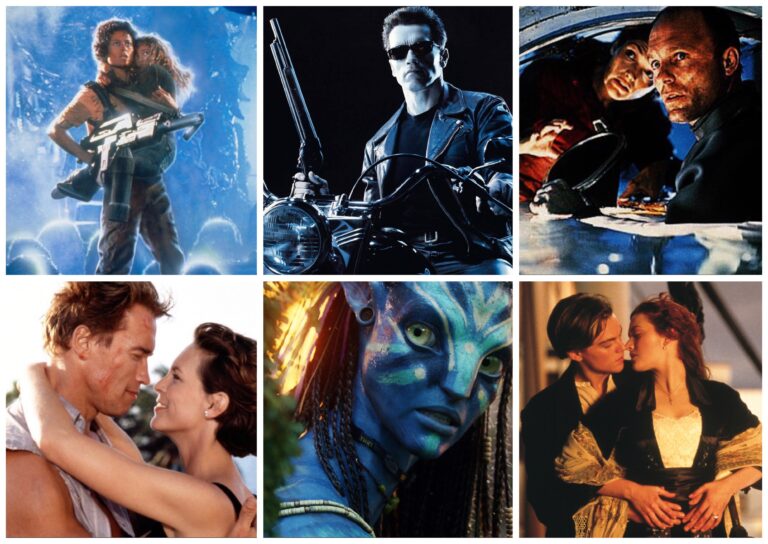
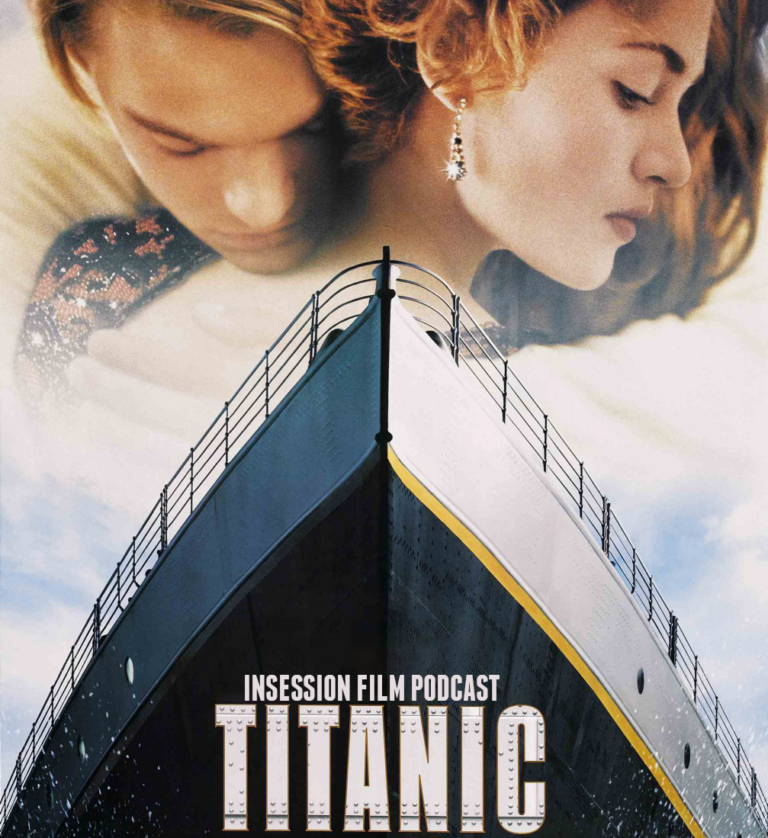
This week on the Extra Film Podcast, Ryan and Jay conclude their James Cameron Movie Series with the two biggest movies ever made as they review the 1997 film Titanic (where they are joined by the great Nicole Ackman) and the 2009 sci-fi fantasy epic Avatar!

A big thanks to Nicole for joining us this week as we (ahem) deep dive into Titanic. She’s always a fantastic guest, but her perspective was an interesting juxtaposition to the dynamic presented on this week’s Women InSession conversation of Titanic. But don’t worry, Ryan came out swinging with his reservations on the film. As far Avatar, there’s not much about the film in 2022 that’s worth defending.

On that note, check out this week’s show and let us know what you think in the comment section. Thanks for listening and for supporting the InSession Film Podcast!

– Movie Review: Titanic (6:45)
Director: James Cameron
Writers: James Cameron
Stars: Leonardo DiCaprio, Kate Winslet, Billy Zane

– Movie Review: Avatar (1:28:43)
Director: James Cameron
Writers: James Cameron
Stars: Sam Worthington, Zoe Saldana, Stephen Lang

– Music
My Heart Will Go On – Celine Dion
Becoming One – James Horner
The Return of the Eagle – Atli Örvarsson

Subscribe to our Podcasts RSS
Subscribe to our Podcasts on iTunes
Listen on Spotify
Listen on Stitcher
Extra Film – Titanic / Avatar

[divider]

To hear this Extra Film episode and everything else we do, download our apps on the Amazon Market for Android and the Podcast Source app on IOS devices. The mobile app covers all of our main shows, bonus podcasts and everything else relating to the InSession Film Podcast. Thanks for your wonderful support and for listening to our show. It means the world to us.

Women InSession: Titanic Retrospective – Episode 4

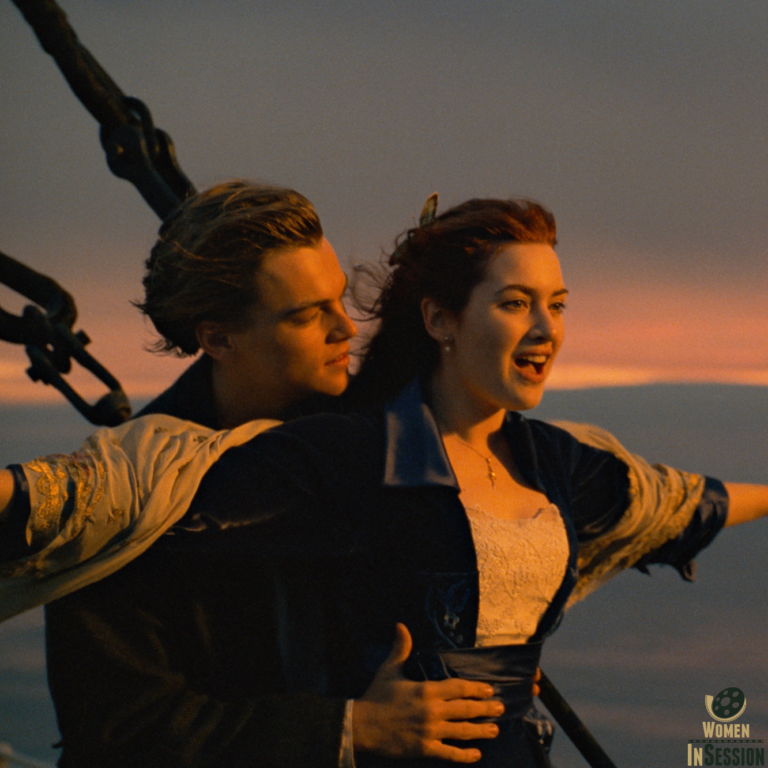
This week on Women InSession Podcast, we get together to discuss James Cameron’s epic Best Picture winning film Titanic!

For this episode, Kristin Battestella, Zita Short, Erica Richards, and Amy Thomasson make up the panel and it was a fascinating conversation. Erica was alone in her support for the film, but the conversation was open-minded and many great points were brought up for why it was so successful. Whether you like Titanic or not, we had a lot of fun with this roundtable discussion and we’re confident you’ll enjoy it as well.

On that note, check out this week’s show and let us know what you think in the comment section. Thanks for listening and for supporting the InSession Film Podcast!

– Titanic Retrospective

– Music

The Return of the Eagle – Atli Örvarsson

Subscribe to our Podcasts RSS
Subscribe to our Podcasts on iTunes
Listen on Spotify
Listen on Stitcher
Women InSession – Titanic Retrospective

[divider]

To hear this Extra Film episode and everything else we do, download our apps on the Amazon Market for Android and the Podcast Source app on IOS devices. The mobile app covers all of our main shows, bonus podcasts and everything else relating to the InSession Film Podcast. Thanks for your wonderful support and for listening to our show. It means the world to us.

Poll: What is your favorite James Cameron feature film?

The king of the world indeed, for better or worse. As Jay and Ryan conclude their latest movie series on Extra Film, we wanted to look back at Hollywood’s most profitable filmography, one that shockingly consists of less than ten films. Whether you love the man or not, you can’t deny the impact James Cameron had on action moviemaking and special effects. And with his birthday around the corner (August 16), let’s see which of his narrative films are the best.

What is your favorite James Cameron feature film?


This Is Your Life: Reactions To Their Own Biopics

Lisa Marie Presley praised the performance of Austin Butler as her father, the great Elvis Presley, in Baz Luhrmann’s biopic on the King of Rock n’ Roll. Butler “channeled and embodied my father’s heart and soul beautifully. In my humble opinion, his performance is unprecedented and FINALLY done accurately and respectfully.” Elvis’ ex-wife, Priscilla, also heaped praise on the film and Tom Hanks’ performance as Elvis’ manager, Colonel Tom Parker. Although there were factual inaccuracies, as there always are, the film was another big hit for Luhrmann and currently comes with Oscar buzz. However, not all biopics receive such praise from family and their subjects who were still alive at the time of the movie’s release. In fact, some ridicule it hard. Here are a few biopics that got the approval or scorn from the real-life characters.


Midnight Express (1978)

Alan Parker directed an Oliver Stone-penned script on the life of Billy Hayes, who was busted for smuggling hashish when trying to leave Turkey and was sent to prison before he was able to make his escape. The film received critical acclaim but was harshly criticized for its portrayal of Turkish people in general, especially the prison guards who are made to be very savage against Hayes. To many, it was another example of racist caricatures in a Hollywood production; even Hayes disapproved of the film because of how much of it was fictionalized, such as the scene where a prison guard tries to rape him. Stone would later apologize for his writing when he visited Turkey many years later. 


Raging Bull (1980)

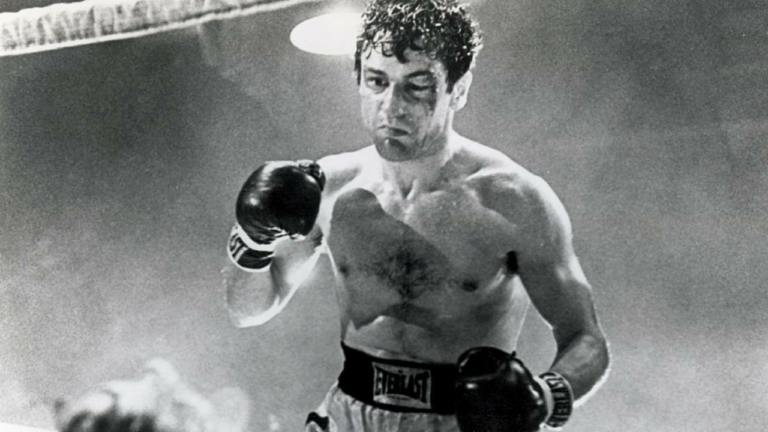
It just got the Criterion treatment as one of the best biopics made in film history. The story is about the violence outside the ring as much as it is in the ring with the story of Jake LaMotta and the demons driving him daily. Listed as #4 on AFI’s 100 Years…100 Movies list, it is argued to be Scorsese’s masterpiece of all masterpieces he has made, especially for someone who had little interest in boxing or doing the film, to begin with. As for LaMotta, he helped Robert DeNiro train for the boxing scenes and said he was very natural as a fighter. His first impression of the film, however, was negative, believing it was too unfair to him. When LaMotta asked his ex-wife, Vicky, if he was as bad as portrayed in the movie, she responded, “That’s right! You were worse!”


Hilary And Jackie (1998)

The Oscar-nominated biopic of the du Pre sisters, both of them classically trained musicians, received a significant dose of controversy because of the pushback from those who knew Jacqueline du Pre, the central figure in the movie. Jacquline’s meteoric rise as a universally acclaimed cellist was tragically cut short by multiple sclerosis which took her life at the young age of 42, meaning she could not defend herself from the movie. Friends and Jacqueline’s widow were furious at the depiction of her seeking to have an affair with his sister’s husband and claim that the movie and its memoir, from sister Hilary, were written out of bitterness and jealousy. In fact, a group of Jacqueline’s colleagues signed a letter protesting the depiction, including Itzhak Perlman and Julian Lloyd-Webber. Hillary du Pre strongly defended the movie and her memoir as truthful, even though several facts were omitted and some of the more scandalous parts unsubstantiated by others outside of Hilary. 


Carlos (2010)

Oliver Assayas’ miniseries about the infamous terrorist Carlos the Jackal was critically acclaimed from its debut at Cannes but did not get the same approval from the man himself. Serving life imprisonment in France, Carlos (born Ilich Ramírez Sánchez) had read several excerpts of the script and tried to block the release of the miniseries, claiming defamation and violation of judicial secrecy laws as he was still facing more charges at the time. According to Carlos, “Showing hysterical men waving submachine guns and threatening people is completely ridiculous. Things didn’t happen like that. These were professionals, commandos of a very high standard.” However, Assayas acknowledged that several moments took liberty with the truth, and dates and names were changed for other legal reasons.  


Argo (2012)

The story of the Iranian hostage crisis had neglected to talk about the amazing escape of six Americans who escaped capture but needed to be smuggled out. The CIA and the Canadian government collaborated to get them out of the country safely through an outrageous plan of a fake Hollywood production that was not declassified until the 1990s, and then Ben Affleck made it into a crowd-pleasing film. Everyone who was part of it in real life seemed to be pleased with the movie except the Canadian ambassador at that time, Ken Taylor. Taylor criticized it for downplaying Canada’s involvement in their escape and rightfully so; the movie portrays it as an American-only plan and says that Britain and New Zealand didn’t want to help them. That was not the case, but it didn’t harm the film’s chances of winning the Best Picture Oscar.


Follow me on Twitter: @brian_cine (Cine-A-Man)

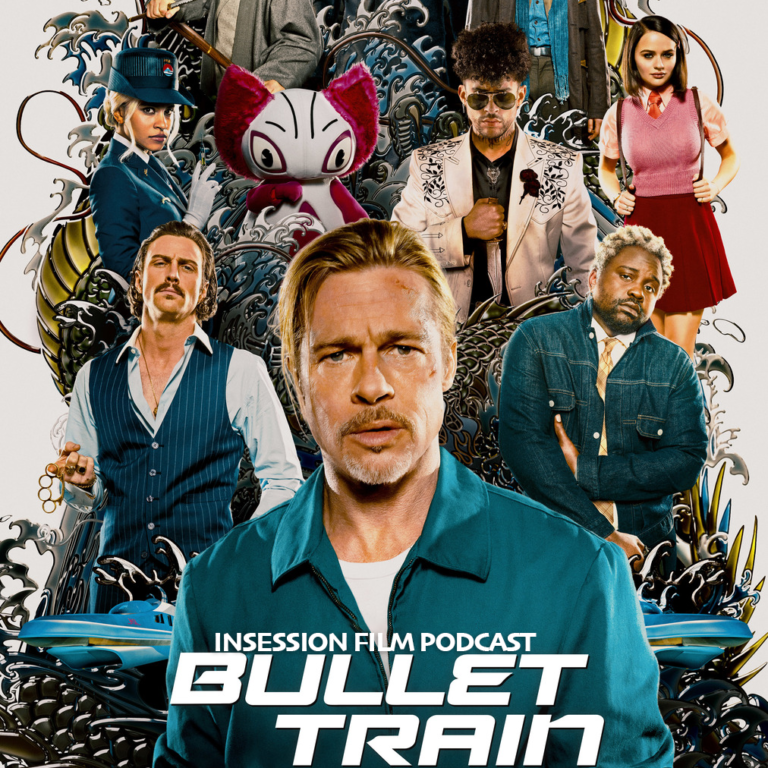
Movie Review: ‘Bullet Train’ is an Entertaining but Overstuffed Thrill Ride


Director: David Leitch

Writer: Zak Olkewicz

Starring: Brad Pitt, Joey King, Aaron Taylor-Johnson, Sandra Bullock 

Synopsis: Five assassins aboard a fast-moving bullet train find out their missions have something in common.


If there’s anything that makes me nostalgic for the action films of the 1990s, it’s Bullet Train, a slick thrill ride that has plenty of entertaining chases and kinetic fight scenes but ultimately succumbs to an overstuffed plot of too many characters. It’s ironic that Sandra Bullock has a small role since the movie Bullet Train reminds me the most of is 1994’s Speed, a similarly action-packed summer blockbuster set on a moving vehicle with a big ensemble cast. 

But what makes Speed so much better is its simplified approach to the narrative, the characters relatable but without too much backstory, the humor and drama always realistic despite the plot’s glorious absurdity. Bullet Train could have been the Speed of 2022, but director David Leitch (Deadpool 2, Atomic Blonde) piles on so much plot and so many flashbacks throughout the crazy long two-hour running time that the film is only successful in tiny segments. 

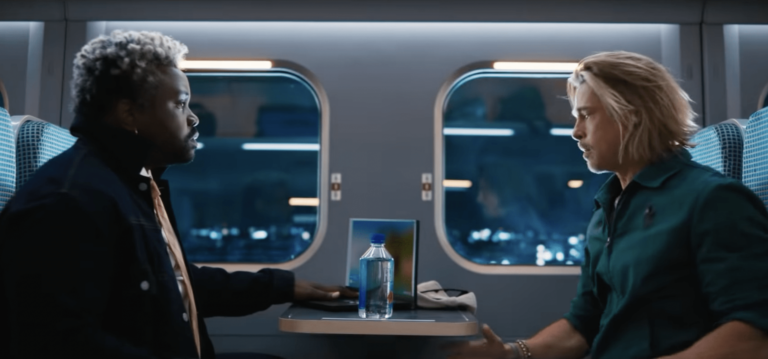
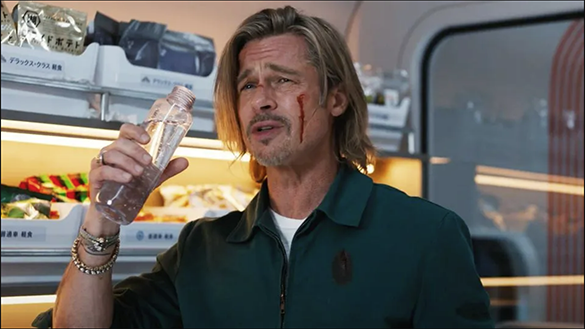
Brad Pitt plays Ladybug, an assassin who’s had bad luck on one mission after another and only agrees to another job because of its ease: board a bullet train in Japan, fetch a silver briefcase, and step right back off. There’s not a lot of time to disembark once he grabs the case—only a minute—but there are plenty of stops along the way, and the confident Ladybug feels his bad luck is about to turn around. Alas, he ends up facing many of his adversaries, including the lethal brotherly team Tangerine (Aaron Taylor-Johnson) and Lemon (Brian Tyree Henry), along with Prince (Joey King), Wolf (Bad Bunny), and The Hornet (Zazie Beetz). Some cameos pop up along the way, too, mostly characters of little consequence. 

Bullet Train works best when it focuses on Ladybug, his many quirks, and his tireless mission to get the briefcase off the train even when he’s faced with one enemy after another at seemingly every stop. Brad Pitt has always been a compelling actor, even in brainless action vehicles like World War Z, and his charisma takes Bullet Train a long way, his line deliveries always a pleasure, his banter with the various characters sharp and well-written. 

The film gives him lots to do physically, and yes, it’s the many visceral fight scenes that make Bullet Train worth seeing, Leitch keeping the choreography creative and with as little CGI as possible. You can feel Ladybug always searching for a better weapon as yet another adversary comes at him with everything they’ve got, at one point a bottled sparkling water used for a blow to the head. Lots of good plantings and payoff serve the story well, like a poisonous snake let loose on the train, and a character taking one too many sips of a tainted drink.  

What the movie struggles with the most is its integration of all the characters while also serving up the audience all of their detailed backstories. We don’t need to stay on the train the entire time, it’s fine to get a glimpse at some of the eccentric assassins in flashback, but screenwriter Zack Olkewicz (Fear Street: Part Two – 1978) provides enough of it to bring the story to a halt and annihilate any consistency to the film’s pacing. It’s supposed to be amusing to look back at how many people Tangerine and Lemon killed in graphic detail, and I suppose it’s unique to get backstory on the aforementioned bottled sparkling water, too, Leitch including a segment that shows how the bottle got from a vending machine to Ladybug’s hand in a pivotal moment. 

It’s the final act where I felt the length most, the film introducing a big bad played by an Oscar-nominated actor late in the game who is given endlessly long screentime, essentially becoming the ultimate version of Roger Ebert’s Talking Killer Syndrome of a summer 2022 release; the narrative appears to be wrapping up before he’s introduced, and then there’s another twenty minutes of plot to weed through. 

Many actors are used well, like Aaron Taylor-Johnson, and Hiroyuki Sanada as The Elder in particular, but many actors are sadly wasted, like Logan Lerman as The Son, who gets all of one good dialogue scene. And let’s talk about Sandra Bullock, shall we? She and Pitt reportedly swapped cameos, Pitt for The Lost City, Bullock for Bullet Train. So why does Pitt get to be an absolute riot in a few key scenes in The Lost City, not only funny and charming but also given a genuine character to play, while Bullock is just a voice on the end of a phone call before she appears in the last scene for all of a minute and is given nothing to do? This is technically her first action film since Speed 2: Cruise Control twenty-five years ago (if you don’t count Gravity), and it seems a missed opportunity to not have physically incorporated her character more, potentially in the final shoot-out.  

Overall Bullet Train is a mixed bag, worth seeing for action fans, but maybe at a matinee screening or when it hits VOD. There’s a tighter and better 100-minute movie in that 126-minute high-energy extravaganza with at least two characters’ long winded flashbacks dropped. Pitt makes it worth the ride, easily, but I couldn’t help feeling as I stepped out of the theater that it could have been so much more.


GRADE: C+

Podcast: Bullet Train / My Neighbor Totoro – Episode 494

This week’s episode is brought to you by Athletic Greens. Get a FREE one year supply of Vitamin D and 5 travel packs today!

This week on the InSession Film Podcast, we discuss the new Brad Pitt action film Bullet Train and continue our Studio Ghibli Movie Series with My Neighbor Totoro! Plus, a few thoughts on the Predator prequel Prey.

Anytime we get a chance to discuss a new Pitt film, we’ll gladly take that opportunity. David Leitch isn’t a groundbreaking filmmaker by any means, but he tends to inject his films with a fun energy that we enjoy. Bullet Train is his latest that fits that mold impeccably. As for Ghibli, My Neighbor Totoro is considered one of their best films and one of the best animated films ever made. So, no pressure this week. Hopefully we did the film justice, but either way we had a great time talking about it.

On that note, check out this week’s show and let us know what you think in the comment section. Thanks for listening and for supporting the InSession Film Podcast!

– Movie Review: Bullet Train (4:50)
Director: David Leitch
Writers: Zak Olkewicz
Stars: Brad Pitt, Joey King, Aaron Taylor-Johnson, Brian Tyree

– Notes / Discussion (44:41)

This week for our break segment, as mentioned above, we talk about the new Dan Trachtenberg film Prey. This film is getting a lot of buzz right now and we felt compelled to give our thoughts on it as well. Does it deserve its hype? One of us says “yes” and the other isn’t quite sure. Additionally, we had to get into this Warner Bros. Discovery nonsense. They are making some big changes at the moment and some of it has been…headscratching to say the least. Finally, JD offers up a few brief thoughts on Thirteen Lives and Don’t Let Me Go.

[divider]

RELATED: Listen to Episode 484 of the InSession Film Podcast where we discussed Top Gun: Maverick!

[divider]

– Studio Ghibli Movie Series: My Neighbor Totoro (1:09:14)
Director: Hayao Miyazaki
Writers: Hayao Miyazaki
Stars: Chika Sakamoto, Noriko Hidaka, Hitoshi Takagi

Show Sponsor: First Time Watchers Podcast

– Music

Five Hundred Miles – Hiroto
Path of the Wind – Joe Hisaishi
The Return of the Eagle – Atli Örvarsson

Subscribe to our Podcasts RSS
Subscribe to our Podcasts on iTunes
Listen on Spotify
Listen on Stitcher
InSession Film Podcast – Episode 494

[divider]

Next week on the show:

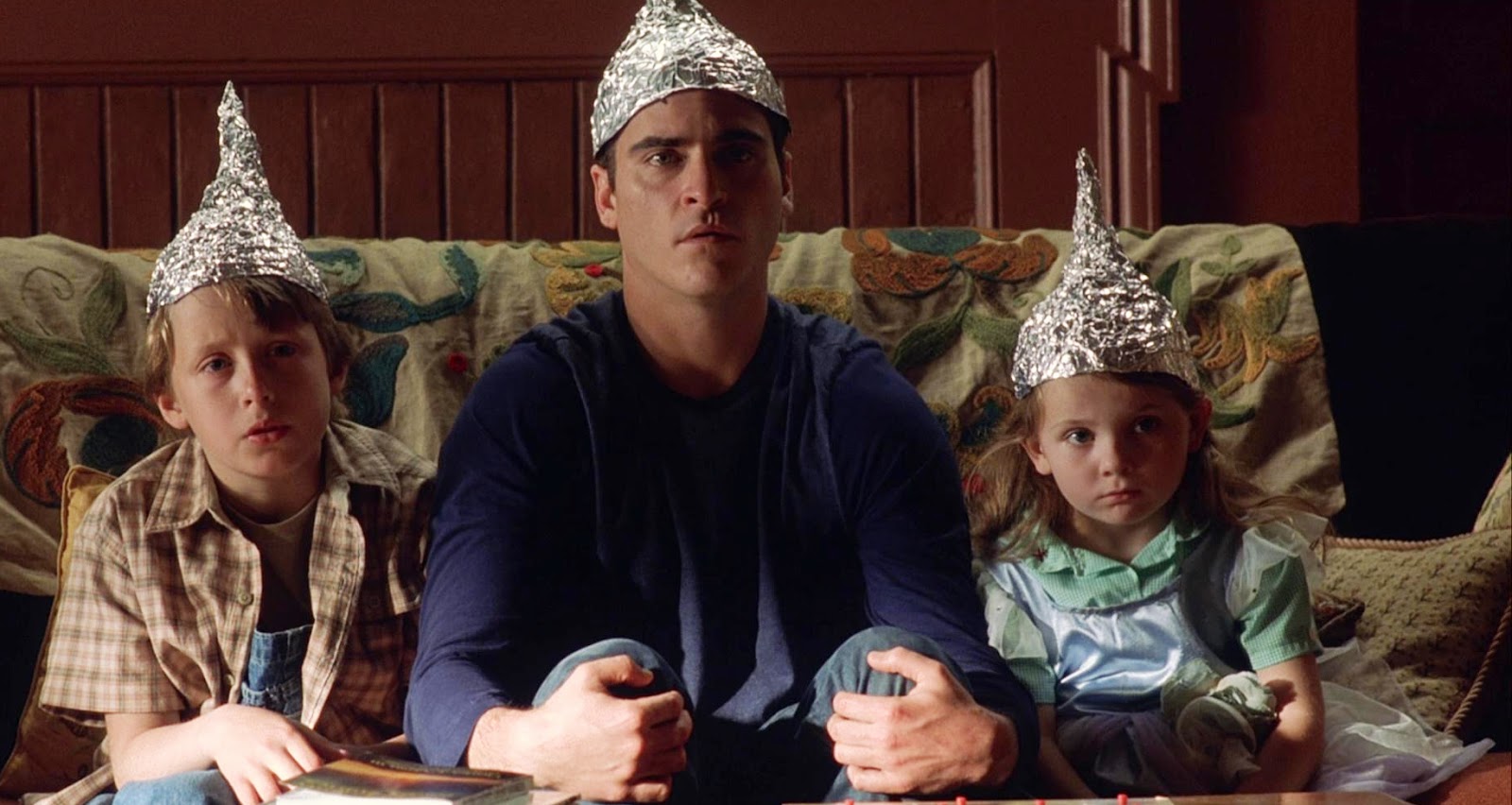
Review: Signs
Top 3: N/A
Studio Ghibli Movie Series: Kiki’s Delivery Service

[divider]

Help Support The InSession Film Podcast

If you want to help support us, there are several ways you can help us and we’d absolutely appreciate it. Every penny goes directly back into supporting the show and we are truly honored and grateful. Thanks for your support and for listening to the InSession Film Podcast!

VISIT OUR DONATE PAGE HERE

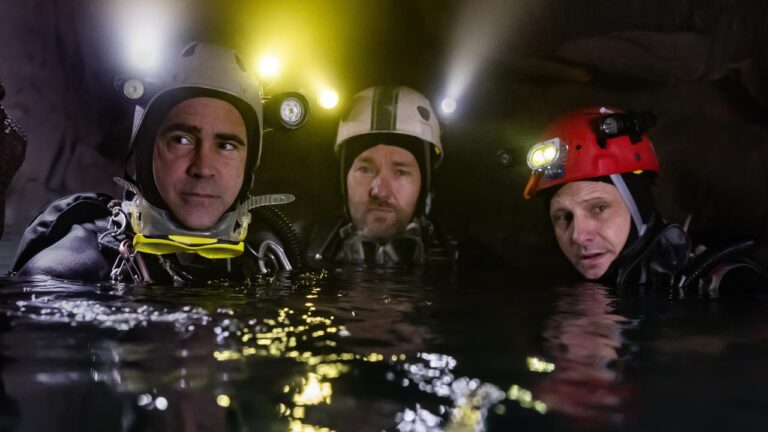
Movie Review: ‘Thirteen Lives’ Never Lives Up to Its Material


Director: Ron Howard

Writers: Screenplay by William Nicholson, Story by Don MacPherson and William Nicholson

Stars: Viggo Mortensen, Colin Farrell, Joel Edgerton

Synopsis: A Rescue mission is assembled in Thailand where a group of young boys and their soccer coach are trapped in a system of underground caves that are flooding


In June 2018, the entire world held their breath as we waited to find out the fate of twelve young boys and their soccer coach, who were trapped in a cave in northern Thailand. Deciding to explore the cave after soccer practice one day, the group found themselves unexpectedly trapped, as monsoon rains came in a month early and began to flood the cave, leaving them with no way out. It’s a story that quickly went international, and gripped thousands of people’s hearts for good reason. Everyone cared about the Thailand soccer boys, and wanted to see them make it out safe and alive. It’s no wonder that soon afterwards the rights to the story were sold to make a movie, helmed by Ron Howard. As someone who’s no stranger to survival and rescue movies, such as with his other true-story film Apollo 13, the story of the Thai soccer boys seemed to be in good hands.

Hopes were high after MGM decided to push the release date of the movie from its original April release to a more awards friendly November release, after test screenings for the film claimed to be the best in the company’s history. After MGM’s acquisition by Amazon however, the release was moved up once again to the summer release date in early August, adding a bit of skepticism as to what the film was really like. Thirteen Lives handles this story with much care, representing it not only accurately, but also filled with emotion that’s easy for an audience to connect to. Honestly, it’s easy to make a story like this one easy to connect to, and unfortunately that’s one of the only factors that makes this film enjoyable to watch. Otherwise, it tends to suffer from uninspired direction, odd pacing, and a longer than needed runtime.

It’s hard not to watch this dramatized version of events in Thirteen Lives and not compare it to the documentary on the same subject that was released last year, The Rescue, which received much critical acclaim. Unlike the documentary, Thirteen Lives fails to keep the tension consistent throughout the film. Focusing on the entire story, from the second the boys go into the cave, through the planning process, to the eventual rescue, many parts of the story ebb and flow in terms of how invested a viewer is to what’s going on. Starting with a bit of a weak opening, the tension only starts to build once we see the initial divers try to navigate the flooded cave tunnels. It’s only at that point that we begin to realize how difficult this rescue is, and how tense the journey is going to be.

Unfortunately, much of that tension is lost in the middle part of the film. For the two and a half hour runtime, I was surprised that they found the boys in the cave still alive only about 45 minutes into the film, and the rescue process only takes about the last hour. The 45 minutes in between those two events is a lot of discussion about how the rescue process should be handled. It’s definitely not wasted time, but it’s drawn out way too much, and I quickly transitioned from eager to see what happens next to tired of the next event not happening soon enough.

The rescue process itself, which should be the climax and filled with the most tension of the film, fits into this same dilemma. The procedure of the rescue itself starts off tense, keeping the audience on their toes as to whether or not this process is going to work and they’ll get the boys out. However, after the first rescue the rest just seem redundant. There’s nothing new or interesting that’s provided to make us feel as if this process is still dangerous, instead it’s played as if they did it once, they can already do it again. Because it’s based on a true story, it’s hard to keep the tension high when we already know the outcome: all thirteen boys come out alive. However, it’s hard not to compare again to The Rescue, which successfully keeps tension high throughout the entire rescue process.

Deciding to focus on the British divers who rescue the boys is an easy choice to make as well. Through this lens, we’re able to stay with the entire rescue process and understand what’s going on. It also provides the narrative with two central characters who the audience can attach themselves to throughout the course of events. Unfortunately, Howard fails to really bring these characters to life. While the acting from both Colin Farrell and Viggo Mortenson is well done as usual, I fail to really understand who these divers are, or what their motivations and morals are. Apart from being called in to help from the Thai government, it feels as if they’re just there because they have to be, simply fulfilling a job. There’s not much complexity to them, and it’s hard to care about the boys at the center of this story when it feels like the movie doesn’t really care about them much either.

As we learned as this story unfolded back in 2018, it’s hard not to become invested in the thirteen lives of these soccer boys that the film portrays. Unfortunately, the story itself shouldn’t be the only reason a film is interesting. Nevertheless, it succeeds in what it’s trying to do, and I definitely felt that it was worth the watch, along with the time I invested into viewing it.


Grade: B


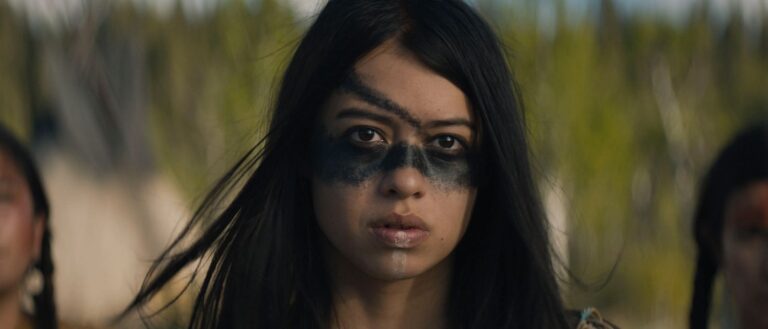
Movie Review: ‘Prey’ Does Everything Predator did… Better


Director: Dan Trachtenberg

Writer: Dan Trachtenberg and Patrick Aison

Stars: Amber Midthunder, Dakota Beavers, and Dane DiLiegro

Synopsis: The origin story of the Predator in the world of the Comanche Nation 300 years ago. Naru, a skilled female warrior, fights to protect her tribe against one of the first highly-evolved Predators to land on Earth.


Prey, the prequel to 1987’s Predator, was released on Hulu (or Disney+ via subchannel Star worldwide) this weekend. Directed by Dan Trachtenberg (10 Cloverfield Lane), Prey tells the story of a young Comanche woman, Naru (Amber Midthunder), who must defend her village against a foreign alien with advanced technology and a desire to kill anything that moves. This film is a return to form for the franchise, returning to the roots of John McTiernan’s 1987 classic. From the script to the screen, this is a pristine work of art that you must check out. 

Much like Arnold Schwarzenegger’s Dutch in the original, Naru is the anchor to this story, whose own ability to adapt to the situation is tested in every scene. And just as before, there is a tremendous weight placed on Midthunder to make these trials seem believable. To that end, she isn’t just an effective actress in the role, she’s a dominant powerhouse for the film. Whether it’s a tense battle with a lion or a glance across the great Comanche nation, Midthunder accentuates the humanity of Naru in every sequence. The emotional beats land thanks to her stellar performance that makes us feel Naru’s drive for success and acceptance as a hunter in her tribe. And that supercharged performance leads to some of the greatest showdowns in the action-thriller genre, where the audience is fully in tune with Naru’s fight to survive. But it’s not just the action where Midthunder shines. As noted previously, the restful scenes land with added potency thanks to her own serenity in the wild. There’s much to learn about this world, and Midthunder brings that reverence for nature to this role. Compared to every other protagonist from the franchise, Midthunder outshines them all. And thanks to the chemistry between her and fellow Native actor Dakota Beavers, the sibling relationship between Naru and her older brother Taabe soars. Beavers brings in the confidence and wisdom needed to the older brother role, and his screen presence endears us to his character immediately. Added to this is the work of the American Dingo named Coco, who portrays Sarii in the film. Dog trainer Lori Boyle deserves a ton of praise for her work, as Sarii is truly one of the greatest on-screen dogs of all time, working overtime to be cute, loyal, determined and ready to defend Naru against fictional creatures. Coco’s performance against other predators in the wild is so good it convinces you those predators were on screen simultaneously, despite them all being created in post-production through CGI.

These performances are all caught on camera by the director of photography Jeff Cutter, and his work here is simply stunning. Whether it’s a wide shot of the new world or a closeup of a hand axe, the film’s composition is constantly captivating. His implementation of tracking shots and rack focuses constantly move the story forward, pulling the audience into this story. Additionally, the editing of the film allows each shot to stand on its own. Thanks to the use of dolly shots, every scene is able to build energy without the need for fast cutting, and it makes the action bigger and the subtler moments stand out, too. Those subtle moments can be a conversation between Taabe and Naru, but they also are insert shots of objects found in this world. A cigar is given as much importance as the Predator’s weapons, and that drives home the message of this film in powerful ways. 

Adding to all this is Sarah Schachner’s score for Prey, which is propulsive, eerie, and truly transportive. Much like her work on the Assassin’s Creed franchise, Schachner is able to tell so much about a time period just through the instrument selection. The larger role of string instruments, clashing with the many drums, makes this a score to remember. The arrangements tell of the many tones of the pre-colonial Comanche world; it tells of a world with both peace and violence, a world set on survival and remembrance. It’s a score that never forgets the world it’s in, and when foreign invaders arrive, its tone transforms entirely. The instruments remain the same, but the rhythm is completely changed. What was once peaceful with a burst of violence is inverted. It builds apprehension in the downtime, constantly moving forward as if war is all around you. It elevates the terror in each scene in ways few films ever do. 

Adding to that tension is the wonderful soundscape of the film. Whether it’s the work of the foley artists that bring the jungles to life, sound designer James Miller’s mechanical approach to the Predator’s weapon arsenal, Prey sounds stupendous. Every weapon moves with deadly precision in its sound. The bows and axes hit their targets with a satisfying thump, and the muskets and flintlock pistols go off with huge booms, followed by the hilariously long reload of course. And when the hunt has ended, nature begins to breathe in its own rhythm. The rivers, the trees, the wind and the bogs are all present in the film’s mix. Nature isn’t always peaceful, but it’s captivating in all the best ways.

All of those technical elements are nothing without a story. And as with every other element I have mentioned, the story by Patrick Aison and Dan Trachtenberg returns to those very roots that made Predator great. It uses different storytelling techniques, but the core of it remains the same: Use the Predator to comment on historical events and injustices by placing it in a time period and setting filled with heavily skewed power dynamics. In Predator, that setting was the Vietnamese Jungle during the Vietnam war, where the genre twist commented on the horrors of the war for many Americans who went in unprepared for guerilla combat. The Predator was both a symbol of that horror and of the horror of American Interventionism simultaneously. 

Now, in Prey, Trachtenberg and Aison utilize the Comanche nation to comment on the colonization of the New World. The Predator becomes a symbol of much more in this film; it’s a foreign people that invade the territory of others and hunt them for sport with better technology and an unknown language. The monster once again becomes a symbol of injustice in the world and gets to inflict its harsh karma on the colonizers in the process. This symbol is once again made crystal clear, as the screenplay places a heavy emphasis on the colonization of the Comanche nation before we even see the Predator in action.

Of course, adding to all of this is the effortlessly brilliant period design that creates the New World of 1719. Kara Lindstrom’s production design is nothing short of breathtaking, transporting us to that time period through simple yet effective sets. It’s minimal in nature, with Tipis and tents being the largest man-made objects, but when combined with the tree-laden setting it captures this time period better than ever before. And Stephanie Porter’s costumes are equally stunning, giving the needed depth to associate these characters with a culture immediately. Props and makeup are used to great effect, both for the storytelling and for the portrayal of the Comanche people. And that portrayal is truly stellar, as it lets the culture shine through at all moments. Whether it’s a coming-of-age ceremony or the gathering of herbs and medicine, it truly lets those moments shine without talking down to them. This is clearly an effect of having multiple native American and indigenous actors take part in the creation of the film, and more films should strive to tell these stories. 

I loved Prey. I think it’s the best summer “blockbuster” of the year. It’s accessible to all on Disney+/Hulu/Star, and I highly recommend watching the film. It’s also launched with the Comanche dub, which is absolutely stellar and worth checking out. 


GRADE: A+

Podcast: True Lies / Prey – Extra Film

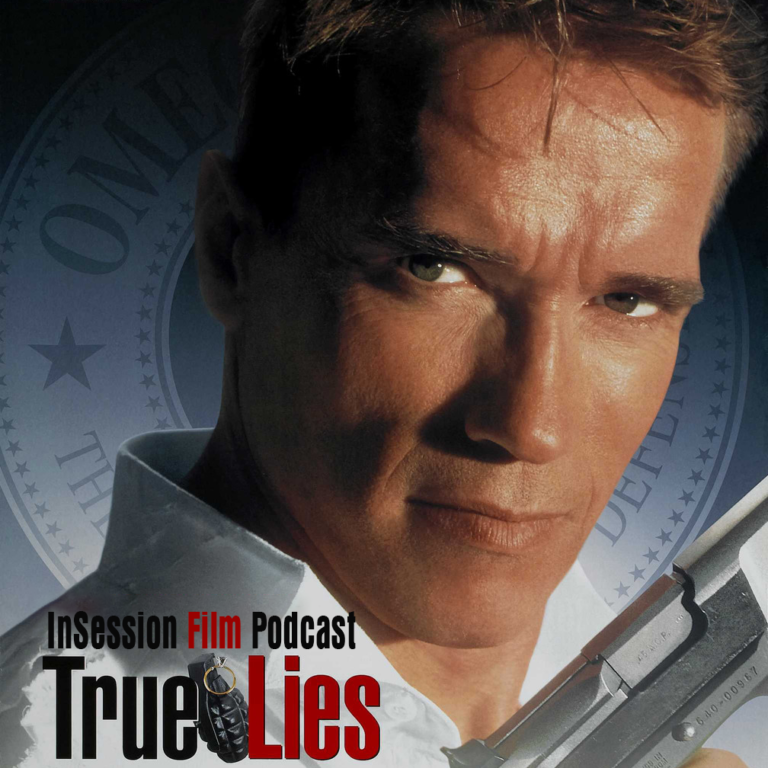
This week on the Extra Film Podcast, Ryan and Jay continue their James Cameron Movie Series with his 1994 movie True Lies and they also review Dan Trachtenberg’s latest in Prey!

Given the success of Cameron over the years, it’s safe to say that True Lies isn’t talked about in the say ways as his other films. However, we make the argument that it may be his best film all things considered. There’s a lot to appreciate about the film and we have a lot of fun breaking it down. As for Prey, it’s getting a ton of buzz right now, but is it all warranted? In a way, sure, but we also talk about why the discourse may be a little hyperbolic.

On that note, check out this week’s show and let us know what you think in the comment section. Thanks for listening and for supporting the InSession Film Podcast!

– Movie Review: True Lies (5:16)
Director: James Cameron
Writers: James Cameron
Stars: Arnold Schwarzenegger, Jamie Lee Curtis, Tom Arnold, Bill Paxton

– Movie Review: Prey (58:31)
Director: Dan Trachtenberg
Writers: Patrick Aison
Stars: Amber Midthunder, Dakota Beavers, Michelle Thrush, Stormee Kipp

– Music
True Lies – Brad Fiedel
Prey- Sarah Schachner
The Return of the Eagle – Atli Örvarsson

Subscribe to our Podcasts RSS
Subscribe to our Podcasts on iTunes
Listen on Spotify
Listen on Stitcher
Extra Film – True Lies / Prey

[divider]

To hear this Extra Film episode and everything else we do, download our apps on the Amazon Market for Android and the Podcast Source app on IOS devices. The mobile app covers all of our main shows, bonus podcasts and everything else relating to the InSession Film Podcast. Thanks for your wonderful support and for listening to our show. It means the world to us.

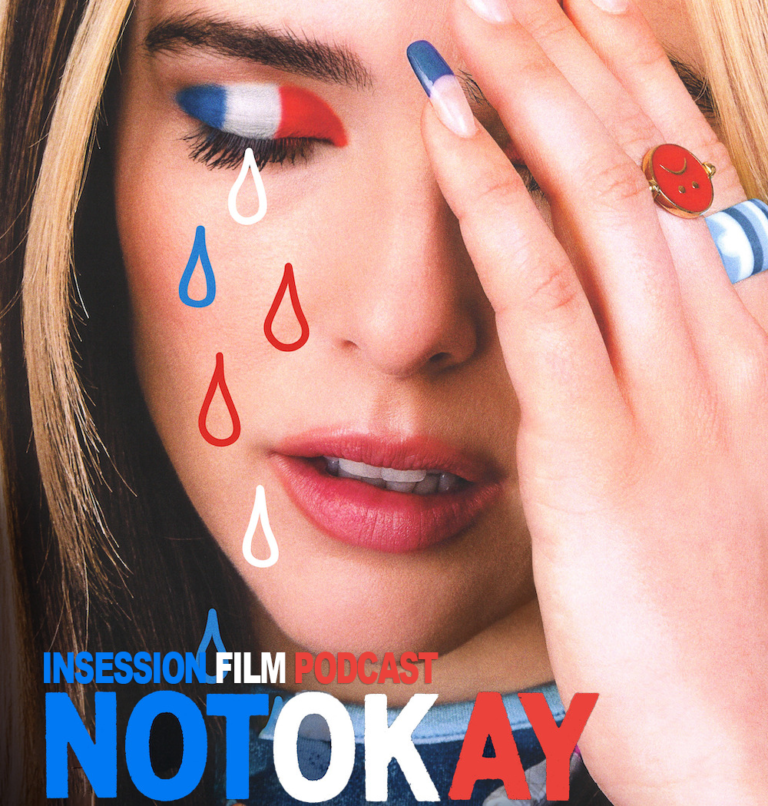
Movie Review: ‘Not Okay’ is Just That


Director: Quinn Shephard

Writer: Quinn Shephard

Stars: Zoey Deutch, Dylan O’Brien, and Mia Isaac

Synopsis: An ambitious young woman finds followers and fame when she poses as the survivor of a deadly attack, but she soon learns that online notoriety comes with a terrible price.


Every year we get these kinds of snarky satires and each time it’s a reminder of the miracle that is Michael Bay’s Pain & Gain. It’s a mystery as to how he pulled it off, but that film is pretty masterful as a ridiculous mockery that never sways from its tone and over-the-top style. Even as things get absurdly out of control, it leans into its excessive behavior and the result is wildly entertaining.

Not Okay has its heart in the right places, but it’s frustratingly uneven as a satire. Regardless of whether its humor works, and mostly it’s hit or miss, you can’t question its commitment to the parody it’s aiming for. Danni (played wonderfully by Zoey Deutch) works for a magazine called Depravity (no obvious commentary there) and she’s an aspiring writer despite the fact that she’s a photo editor. One of her co-workers Colin (Dylan O’Brien playing the thirst trap) is somewhat popular and she has her eye on him. In her attempts to capture his attention, and the world at large, she Photoshop’s a “work” trip to Paris to garner clout. However, a tragic bombing takes place in Paris and, to continue the lie, she despicably exploits trauma to render empathy from everyone around her. Throughout all of this, Not Okay is a clear mockery of clout chasing and the extreme lengths people go to for attention.

Danni is tasked to write a story about her “experience” for Depravity and it ends up going viral. It brings her fame and the superficiality she craves, including the attention of her crush Colin. Ironically though, Danni’s night out with Colin isn’t exactly what she imagined it to be. There is a clear turning point after this where things pivot drastically in terms of tone and style. It’s here where Not Okay starts to lose itself, as it becomes a straight up poignant drama for the rest of the film. And in another weird twist, it actually functions better as a biting drama.
Soon after Danni becomes famous for her #IAmNotOkay movement, she connects with another young woman by the name of Rowan (played by newcomer Mia Isaac). Rowan is a survivor of a school shooting and has become a vocal leader in her own anti-gun movement. They become good friends and connect through their shared experiences. This intensifies further when Danni realizes the futility of her clout-chasing after her date with Colin. However, it doesn’t take long for Danni’s lie to start to unravel and the conflict that arises between Danni and Rowan is really moving.

And thus, we are left with many questions. Firstly, what kind of movie does Not Okay want to be? Because it goes really hard as an absurd satirical comedy in the vein of Pain & Gain in its first act. But then it wants to be an uncompromising social drama about the appalling nature of deceitful victimization. Is it about the volatile nature of social media? The hazy allure of FOMO? Is it about depression and loneliness? Is it about the idea that it’s okay to not be okay? Is it…about gun violence in America? For a movie whose plot is fundamentally rooted in a terrorist bombing in France, this somehow turns into a commentary on guns in the United States. The problem with Not Okay is that it doesn’t know what it wants to do with its ideas or how to execute them with its lead character. The film is thematically overstuffed and tonally jumbled. It’s essentially acting as four different movies in one experience and pulling on 11 different thematic strings in the process.

There’s no denying the toxicity of clout chasing, and how disturbing it has become, but sadly that idea in this film is as hollow as the subject that it’s tackling. At some point, social media isn’t even a major factor in the film. It has good intentions, but the lack of commitment eventually suffocates any momentum that it gained as a satire or as a drama. That said though, Mia Isaac is a star and steals the show. She’s terrific in the way she portrays anxiety and grief. As a social media influencer and vocal leader, she’s magnetic. There are a few monologues by Rowan and they are pulsating with energy and conviction.  She should be one everyone’s list for breakout performances of 2022. Zoey Deutch is also great. She has a wonderful ability to heighten awkward tension and make it engaging.

Not Okay isn’t a bad film per se, it’s just an unfocused one. When it functions as a snarky satire, it is effective. When it acts as a poignant drama, it’s even more effective. The two don’t mesh very well, but singularly there are good things here. Pick a lane and perhaps lose some of those thematic strings and this could have been great. As it stands though, it’s…just okay.

Grade – C

Women InSession: Westerns From a Feminine Perspective – Episode 3

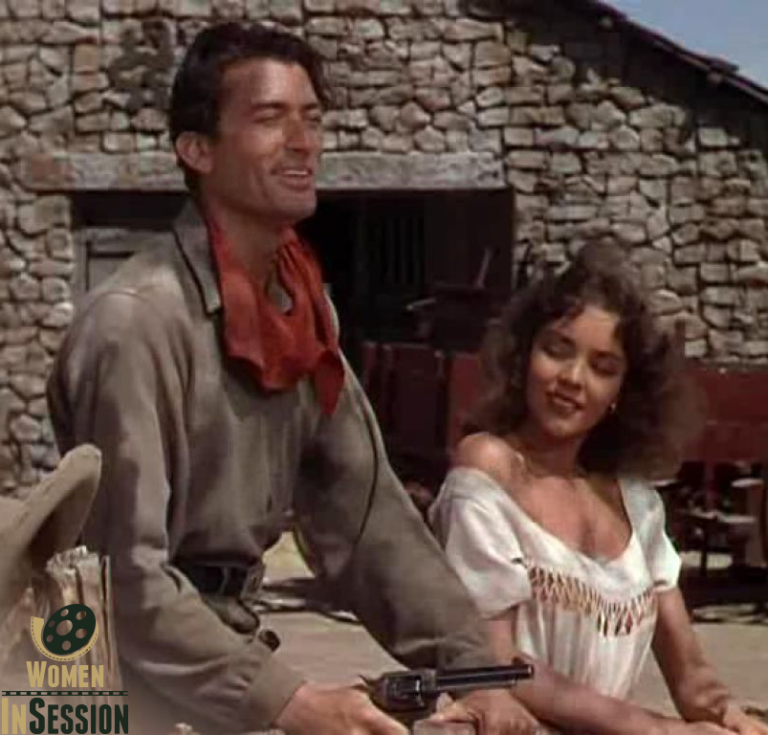
This week on Women InSession Podcast, we discuss Westerns from a feminine perspective and the movies that stand out to us!

For this episode, Kristin Battestella and Zita Short make up the panel as they converse over Western movies, which has been historically a male-dominated genre. However there are some films that take a different angle than the norm and have more of a feminine presence. Either way, Kristin and Zita offer up their thoughts on these films and how the genre is formed through their perspective.

On that note, check out this week’s show and let us know what you think in the comment section. Thanks for listening and for supporting the InSession Film Podcast!

– Westerns From a Feminine Perspective Discussion

– Music

The Return of the Eagle – Atli Örvarsson

Subscribe to our Podcasts RSS
Subscribe to our Podcasts on iTunes
Listen on Spotify
Listen on Stitcher
Women InSession – Westerns From a Feminine Perspective

[divider]

To hear this Extra Film episode and everything else we do, download our apps on the Amazon Market for Android and the Podcast Source app on IOS devices. The mobile app covers all of our main shows, bonus podcasts and everything else relating to the InSession Film Podcast. Thanks for your wonderful support and for listening to our show. It means the world to us.

Movie Review: ‘Vengeance’ Is An Enjoyable, Unfocused Comedy from B.J. Novak


Director: B.J. Novak

Writer: B.J. Novak

Stars: B.J. Novak, Boyd Holbrook, Dove Cameron, Issa Rae, Ashton Kutcher, and J. Smith-Cameron. 

Synopsis: A radio host from New York City attempts to solve the murder of a girl he hooked up with and travels down south to investigate the circumstances of her death and discover what happened to her.


B.J. Novak’s feature film directorial debut, Vengeance, isn’t a perfect film. But it’s an earnest first effort from one of the most entertaining minds working today. Telling the story of a journalist traveling to Texas to investigate the murder of a girl he once had a relationship with, the film boasts an all-star cast full of colorful characters and sharply written dark humor, even if its ending underwhelms everything it previously built up. 

It’s also a problem when we can see the ending coming a mile away when most of the film hinges on the “whodunit” aspect of Ben Manalowitz’s ( Novak) podcast. He travels to Texas to not only find out how Abilene Shaw (Lio Tipton) was killed, but to record a podcast to find out who (or what) killed her. When a specific character shows up (don’t worry, I won’t say who…better to find out on your own), I immediately said, “Ah! That’s the killer right there.” By the end of the film, I was right. The way that character is dressed immediately spells “MURDERER,” even if Novak tries to misdirect audiences before the reveal occurs. It didn’t work for me and may not work for everyone else. 

But even with a formulaic plot and an underwhelming ending, Vengeance has plenty of strong moments. Most of these involve Ben’s relationship with Abilene’s family, particularly siblings Ty (Boyd Holbrook), Kansas City (Dove Cameron), El Stupido (a terrific Elli Abrams Bickel), and their mother Sharon (J. Smith-Cameron). Everyone has their time to shine and is hilarious together, especially during scenes where they talk about Whataburger or show the Texan way of life to Ben. Those scenes have a documentary feel to them, with the camera consistently moving through over-the-shoulder shots, which give the scenes an authentic, cinéma vérité look. 

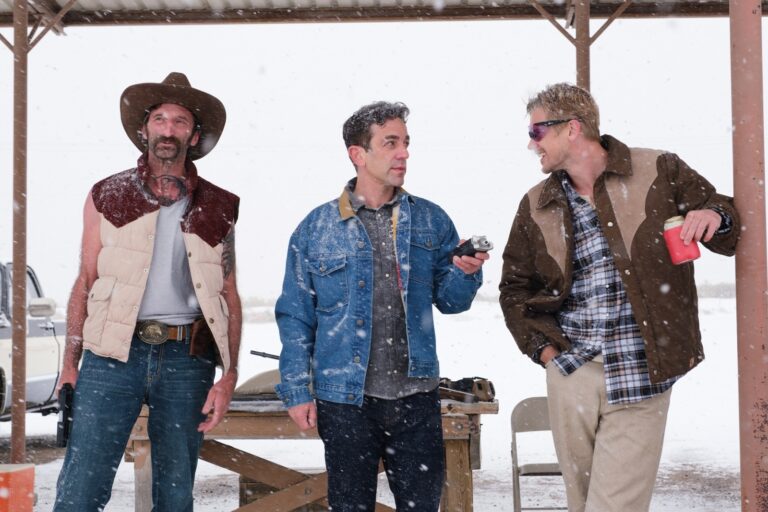
You truly believe that the Shaw family are real people. Novak struck gold by having highly talented actors like Holbrook, Cameron, and Smith-Cameron portray the Shaws, but it’s a testament to how insanely talented they are. I stand by a previous statement I made on social media that Boyd Holbrook is one of the most exciting actors working today, able to play any character with a wide range of emotions. And he is superb playing Ty–a clueless, MAGA-loving,  gun-toting redneck who thinks Adilene’s murder has something to do with a cartel or perhaps The Deep State (or both…why not…after all, he thinks there’s a conspiracy behind her death). His comedic timing is excellent, and he shares amazing chemistry with Novak throughout the entire film.

Issa Rae and Ashton Kutcher are also part of the cast, but their supporting roles are minor, and their talents feel underused. Kutcher is only in the film for two scenes, and though he has a strong, magnifying talent at playing his character, one would’ve appreciated if he had more scenes so that Novak could deepen the character a bit more. The same can be said for Rae–her performance is fine, but her character doesn’t add anything to the movie and slows down the pace whenever Ben finds a new piece of information on Adilene’s death. The podcast conceit also doesn’t work, as it hinders the “whodunit” aspect of the film more than anything else. 

Still, even with a flawed story and some underdeveloped characters, Vengeance shines through a hilarious script and a colorful bunch of Shaws that protagonist Ben interacts with. And while the ending isn’t the most inspired way to cap off the movie, the finished product itself is still an enjoyable one, particularly when Novak focuses on Ben’s relationship with the Shaws. With this much talent packed into the cast, there’s no reason to skip Vengeance in cinemas. It’ll certainly spark some interesting discussions among audiences, as it did with mine while the credits were rolling. 


Grade: B


A Fun Jane Seymour Trio

Peeping Jane Seymour’s new cozy detective series Harry Wild reminded me of some of her early science fiction work and entertaining swashbucklers. Here’s a sampling of fanciful romps from Dr. Quinn, Medicine Woman.


The Scarlet Pimpernel

Anthony Andrews (Brideshead Revisited) and Ian McKellan (Lord of the Rings) join the resplendent Seymour in this spirited 1982 adaptation of Emma Orczy’s rip-roaring adventure with powdered pony tails, frocks, and frills. The feathered finery matches the over the top flirting, roguish charisma, and humor belying the serious guillotine action alongside candlelit color and whimsical locales. Without subtitles, the pompous who’s spying on whom plot could be confusing, and this 2 hours and 22 minutes may be dry to a contemporary audience unaccustomed to conversational intrigue. Fortunately, fencing and carriage chases add pleasant period action compared to today’s obvious CGI spectacles. Ridiculous inflection and bad poetry capture Andrews’ suave dual identity as our 18th century titular superhero in disguise fooling the young, dark haired, stuffy yet devious Sir Ian. The hammy subterfuge helps the aristocrats flee the French Revolution in a satirical reverse Robin Hood topsy-turvy. Being familiar with the history or book changes does help the viewing, however this remains a sweeping escapade inspiring viewers to seek out more of the literary excitement.


Sinbad and the Eye of the Tiger

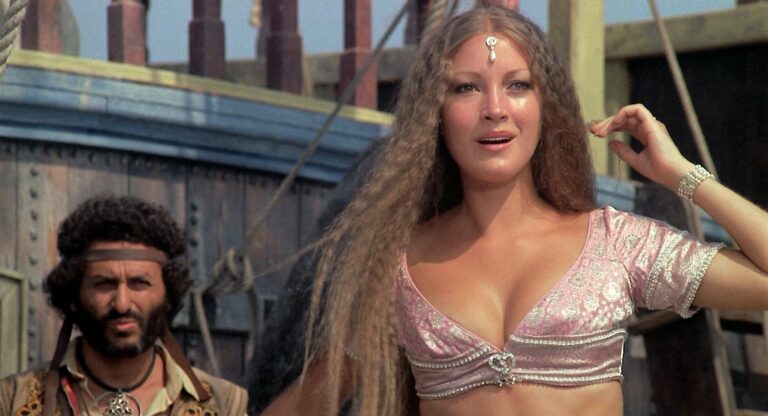
Producer and stop motion special effects maestro Ray Harryhausen (Jason and the Argonauts) also co-wrote this third 1977 Sinbad picture with Beverley Cross (Clash of the Titans). Granted, the matte shots look poor. The baboon scenes are slow and other monsters feel hokey. Seventies zooms and quick intercutting are uneven as the action both attempts spectacle yet cuts corners in tough to see high seas photography and obvious blue screens for the cool Petra locales. The stop motion, however, is wonderful with fun miniatures and Minotaur automatons. Colorful sets, belly baring costumes, and jewels add the expected Arabian flair even if chiseled star Patrick Wayne’s (McLintock!) delivery is too California in a totally whitewashed picture. Some of the appropriated hairstyles on Seymour are also wrong, but we can overlook it thanks to her warm spirit and sense of fun here. Patrick Troughton (Doctor Who) is a bemusing wizard, too, and his beautiful daughter Taryn Power (The Count of Monte Cristo) falls for the prince on their fantastical journey. This installment is a step down from the magical fifties charm of The 7thVoyage of Sinbad. Dialogue is often muddled and the fanciful plot nonsensical, but the spells and enchantments make for an entertaining adventure.


Somewhere in Time

Struggling playwright Christopher Reeve (Superman) becomes so enamored with the portrait of Jane Seymour’s 1912 stage actress Elise McKenna that he travels back in time to be with her. Unfortunately, time and McKenna’s ruthless manager Christopher Plummer (The Sound of Music) stand between them, and while I hate cliché romance movies, I adore this 1980 love story based upon Richard Matheson’s (The Twilight Zone) Bid Time Return. Paradox abounds yet we can suspend belief thanks to the realistic approach and intelligent questions posed. Was our Richard from the past or has this travel happened previously? Prophetic what ifs anchor their love as uptight Plummer fears Richard will ruin Elise yet she has somehow been waiting for him to arrive. The young, vital Reeve is a bittersweet, obsessed leading man. He’s awkward, be it past or present, belonging to neither as we root for his quest to succeed no matter how seemingly impossible. When we finally meet Seymour forty minutes into the film, the whirlwind romance is everything her photograph promised. Hats, gloves, and etiquette accent her charming delivery, beauty, and grace. The Grand Hotel and Mackinac Island locales match the turn of the century elan, and the award winning dresses are an eclectic mix of Victorian sheers and Edwardian effortless visualizing the sweeping, evocative John Barry (Dances with Wolves) score. Though at times sappy and today melodramatic, this time travel romance remains a must see. 


The Lost And Found World Of Pierre Étaix

When Pierre Étaix died on October 14, 2016, aged 87, he was a figure who only just recently had a second life in film. For years, his movies were out of distribution and left in vaults to wither away until they were rediscovered and restored in 2009. Étaix was someone Jerry Lewis described as a genius and hired him for his aborted picture, The Day The Clown Cried. While he continued on as an actor and professional clown, Étaix’s films were almost forgotten because he only made a handful of short and full-length movies, even though he was an Oscar winner. But in those few movies he made, Étaixwas an amazing magician in clever comedy.

Similar to his contemporary, Jacques Tati, Étaixwas heavily influenced by silent films and the genre of slapstick. His love for Buster Keaton and Max Linder convinced him to get into comedy, first as a clown. Étaixtrained himself in playing several instruments including the violin, piano, xylophone, saxophone, and trumpet; while also becoming skilled in dancing, illustration, and gymnastics that were needed in the circus. Moving to Paris in the fifties, Étaix fell in love with Tati’s Monsieur Hulot’s Holiday and got himself hired to work for him in his next film, Mon Oncle. 

After working as an assistant for Tati, Étaixwent on to perform at the famed Bobino Theatre multiple times while also getting acting roles for French TV and film. He then met writer Jean-Claude Carrière, who would become Etaix’s collaborator for the next decade. In 1961 and 1962, they would make two short features, Rupture and Happy Anniversary. For the latter, Étaixand Carriere would win the Academy Award for Best Live Action Short, a story about a man fighting through traffic and bad timing to get home to celebrate his wedding anniversary. They then went on to make his first full-length feature, 1963’s The Suitor.

Étaix utilized sound effects throughout his films to construct his gags with visual comedy, like his old boss, Jacques Tati. Instead of being dialogue-driven, Tati would push the story through physical action accompanied by strange noises that added a comedic effect to the scene. In The Suitor, he plays a shy man of wealth who is pressured by his parents to get married. While he falls in love with a pretty woman, she is a bit of a klutz, struggling with speaking French and getting easily drunk. The film received acclaim and Étaix was dubbed “the French Buster Keaton” by critics. 

In 1965, he would make Yoyo, considered by many critics to be his greatest film. Paying homage to clowns everywhere, Étaixplayed the titular character who chooses happiness over wealth by getting married and becoming part of a traveling circus. As he gets older, Yoyo returns to the abandoned mansion he once grew up in and seeks to bring it back to its former glory. In the first act of the film, Étaixhonors the silent film by simply having no spoken dialogue and selective sound effects. He breaks the silence when the story cuts to 1929 and Étaix says, “And that’s when talkies were born!”

His final three films were As Long As You’ve Got Your Health, La Grand Amour, and the documentary Land of Milk And Honey. Released in 1971, it would be Étaix’s last film as it was panned critically for its satirical style, critiquing French society following the events of May 1968 when the country was at a standstill. It was withdrawn from theaters and Étaix never got another chance at making a movie again. In retrospect, the movie was daring because of how it held a very painful mirror to French views even after the near-revolution of ‘68 and is now seen as underrated.

For decades afterward, Étaix’s works were out of circulation, but not by his choice. Lengthy legal wrangling with multiple distribution companies who handled his films and neglected to preserve them became a cause celebre in the cinema world. Writers, actors, and directors such as Jean-Luc Godard, Terry Gillam, Paul Thomas Anderson, and Woody Allen signed a petition to the court demanding they find in favor of Étaix. In 2009, Étaix won the case and got back his movies. Only then were the films restored and re-released to the public, including by DVD and Blu-Ray. 

While his directing career ended, Étaix still appeared in films as an actor but spent most of his time teaching tricks of the clown when he and his wife founded the National Circus School in 1973. Étaix enjoyed the rest of his life entertaining as Yoyo in costume, but the redemption of having his films shown to a new generation while he was still alive was the ultimate prize in a long and storied career. Thankfully, his work can now be seen anywhere (including the Criterion Channel) and the genius Jerry Lewis saw in Étaix can be experienced by everyone. 


Follow me on Twitter: @brian_cine (Cine-A-Man)

Poll: What is your favorite film starring or co-starring Arnold Schwarzenegger?

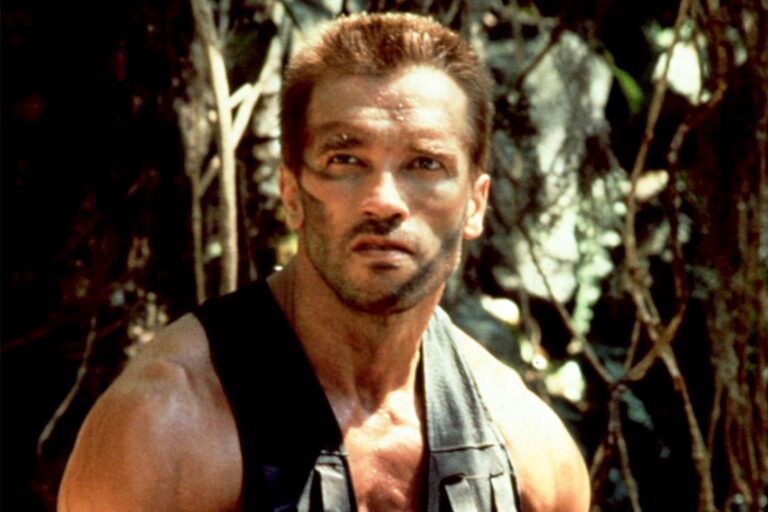
There’s a reason Arnold Schwarzenegger is one of the biggest action movie stars, if not THE biggest. Just say his name and you may feel the urge to yell, “Get to da choppa!” or “Hasta la vista, baby!” or “It’s not a tumor!” There are two reasons to celebrate The Governator this week – not only are we getting a new film in a franchise he helped kickstart (that being Predator), but the man recently celebrated his 75th birthday on July 30. While he doesn’t star in Prey, he’s one of the reasons for the original film’s status as classic sci-fi action, and the same can be said for many of his films.

What is your favorite film starring or co-starring Arnold Schwarzenegger?


Podcast: Not Okay / Castle in the Sky – Episode 493

This week’s episode is brought to you by the film The Lost City. Follow us on social media for your chance to win a FREE Blu-ray!

This week on the InSession Film Podcast, we discuss the latest satire to hit Hulu in Not Okay and continue our Studio Ghibli Movie Series with the 1986 film Castle in the Sky!

We are big fans of Zoey Deutch and it’s always a fun time whenever we get to talk about one of her movies. However, while we did discuss Deutch and the wonderful newcomer Mia Isaac, there ended up being more references to Michael Bay’s Pain & Gain than we intended. As for Castle in the Sky, this was our first watch of the film in its original Japanese language and we had a lot of great things to say about that in our conversation.

On that note, check out this week’s show and let us know what you think in the comment section. Thanks for listening and for supporting the InSession Film Podcast!

– Movie Review: Not Okay (4:50)
Director: Quinn Shephard
Writers: Quinn Shephard
Stars: Zoey Deutch, Mia Isaac, Dylan O’Brien

– Notes / Discussion (44:41)

This week for our break segment, we talk about the Extra Film boys as they’re back from their brief hiatus and JD talks about an observation he made recently when revisiting Ant-Man and the Wasp and its now deep connection to the broader MCU.

[divider]

RELATED: Listen to Episode 484 of the InSession Film Podcast where we discussed Top Gun: Maverick!

[divider]

– Studio Ghibli Movie Series: Castle in the Sky (1:09:14)
Director: Hayao Miyazaki
Writers: Hayao Miyazaki
Stars: Mayumi Tanaka, Keiko Yokozawa, Kotoe Hatsui, Minori Terada

Show Sponsor: First Time Watchers Podcast

– Music

Watch Me – The Pom-Poms
Castle in the Sky – Joe Hisaishi
The Return of the Eagle – Atli Örvarsson

Subscribe to our Podcasts RSS
Subscribe to our Podcasts on iTunes
Listen on Spotify
Listen on Stitcher
InSession Film Podcast – Episode 493

[divider]

Next week on the show:

Review: Bullet Train
Top 3: N/A
Studio Ghibli Movie Series: My Neighbor Totoro

[divider]

Help Support The InSession Film Podcast

If you want to help support us, there are several ways you can help us and we’d absolutely appreciate it. Every penny goes directly back into supporting the show and we are truly honored and grateful. Thanks for your support and for listening to the InSession Film Podcast!

VISIT OUR DONATE PAGE HERE

Movie Review: ‘Bodies Bodies Bodies’ is a Crafty and Darkly Witty Slasher That Bathes in Social Anxieties


Director: Halina Reijn

Writer: Sarah DeLappe and Kristen Roupenian

Stars: Amandla Stenberg, Maria Bakalova, and Rachel Sennott

Synopsis: When a group of rich 20-somethings plan a hurricane party at a remote family mansion, a party game turns deadly in this fresh and funny look at backstabbing, fake friends, and one party gone very, very wrong.


There’s nothing better than an excellent horror comedy, a la The Evil Dead (with its slapstick demeanor and outright ridiculousness), Return of the Living Dead, and Braindead. The feeling these films bring to the viewer while watching is incomparable to regular comedic films because the horror elements add more cinematic heft to the feature. They have been around since forever and changed the horror landscape for the modern generation of filmmakers dwelling on the genre. Films like Cabin in the Woods, Ready or Not, and Freaky have showcased the variations of the different combinations within the horror subgenres (slasher, splatter, found footage, etc), with its main component being comedy. Even Julia Ducournau’s features (Titane and Raw), which contain body horror scenes that would make David Cronenberg proud, are extremely funny – more humorous than one might expect from films with bodily transformations or cannibalism. Recently, many directors have taken childhood games and implemented horror-genre trappings and bloody demeanors to entertain the audience via scares and humor. The latest of these concoctions is Halina Rejin’s second feature, the A24-hoisted Bodies Bodies Bodies

The Dutch actor-turned-director takes the monomania-inducing social dedication games like Werewolf, Mafia, or the hit online game, Among Us, as inspiration to compose the horrors and wit contained in her sophomore feature. Rejin creates a variation of those games and combines it with critiques and expositions toward privilege, class, trust issues, and the toxicity that torments social media to create an assortment of a chamber piece, slasher, and horror comedy – keeping its tension and suspicion high until its last moments. In addition, it includes a slick quintet of young stars (and potential scream queens) in Rachel Sennott, Maria Bakalova, Chase Sui Wonders, Myha’la Herrold, and Amandla Stenberg. Although its comedic panderings can be a bit irksome occasionally, the overall project feels fully suited for today’s social-media-obsessed generation, with the potential of being a cult classic in years to come. What started as a sociable party among best friends spirals out of control – ending in a damaging frolicking of backstabbing and panic. Bodies Bodies Bodies begins with a scene of affection by two members of the woman-led quintet, Sophie (Stenberg) and Bee (Bakalova). The two of them are heading up to a hurricane party at Sophie’s best friend’s remote family mansion up in the hills. 

This quick transition from affection to expensive mansions shows that the film will take the mickey out of these types of people – the high class and privileged. Sophie and Bee arrive just an hour before the hurricane starts taking its toll on the crazed festivities. However, they are treated with side eyes, arrogance, and mixed retorts. Just seconds after arriving, there’s plenty of social tension and anxiety between the partygoers. David (Pete Davidson) and Emma (Wonders) are having some boyfriend-girlfriend troubles; Jordan (Herrold) is being selfish and snobbish to Bee. Meanwhile, Alice (played by the wonderful Rachel Sennott, the highlight of the film) and her boyfriend Greg (Lee Pace) are trying to unite the crew together so they can have some fun. As the hurricane crashes their festivities, the guys and gals decide to play a social deduction murder mystery game called Bodies Bodies Bodies, in which they have to find out who’s the killer between the bunch. It begins all nice and fun, right until the power goes out; that’s when their worst nightmares start to appear. Backstabbing and deceit are now vital party members, and, as a special guest, a bucket of crimson red secretly makes its presence. 

This being a gen-z horror picture, there were a lot of elements not going its way, especially since the recent attempts at dark horror comedies targeting today’s age have been quite awful (Tragedy Girls, Assassination Nation). On paper, Bodies Bodies Bodies sounds like an insufferable piece of horror filmmaking, and the trailer made it appear like it would be as such (poor marketing on A24’s part). That type of comedy works on a 50/50 basis and sometimes at much lower rates. However, to my surprise,  it is actually pretty humorous. This is thanks to the female quintet’s chemistry, performances, and line delivery, more so than the script itself, though it is more potent than expected. Bodies Bodies Bodies has a few writers attached to it, and sometimes it feels like each’s ideas or quips topple one on top of the other. The tone between the characters flounders a bit, causing some of its jokes to fall flat. The scenes where it revolves around the friend’s past relationships feel entirely natural and precise. Yet, as it continues to dwell on the trendy jokes and quips, it begins to feel forced. 

At least the cast, especially Rachel Sennott (with her wry line delivery and frantic facial expressions and mannerisms), makes some of its more mediocre jokes seem pretty funny. In addition, to make up for that fault, its satirical elements stand sharp, albeit ridiculous enough to engage the audience. Rejin and the group of writers depict the characters involved as self-righteous and deeply flawed – all of them keeping secrets of their own, aside from one of them knowing who the killer is. You don’t want to be near them because they are annoying or aggravating. It almost could have reached a point where it could have been too infuriating and annoying to watch because it gets under the audience’s skin (a la Tragedy Girls). Then again, it needs to make some space to leave clues to who the killer is during the film transgression in order to develop its whodunnit distinction. Rejin does so without overreaching and making the culprit seem very obvious. It is challenging to try to balance all these elements from the various subgenres it wants to showcase (slasher, “detective” story, satire, horror comedy). 

Bodies Bodies Bodies not only does have effective comedic panderings, but it is also brutal and bloody. It doesn’t reach a total morbid state of horror nastiness. It isn’t sinister or bloodstained without purpose; it restrains itself in that manner. Yet, when it decides to get messy, it does so in a way that doesn’t feel excessive or forced onto the narrative. It all contains itself in a crafty way. However, in the sense of genre filmmaking, that’s where I think it loses a bit of commitment, as it focuses more on the millennial comedy rather than the horrors of it all. Interestingly enough, Bodies Bodies Bodies’ tension and suspense in both the atmosphere and mansion don’t come predominantly from the social dilemmas between the characters as they try to figure out their sticky situation and who betrayed whom. Halina Rejin’s sophomore feature is darkly satirical and cheeky rather than frightening or anxiety-inducing. Although some of the jokes attached to the script might not hit in full force as much as the writers tended to, the rest uplifts it, making it a worthwhile bloody good time. 


Grade: B


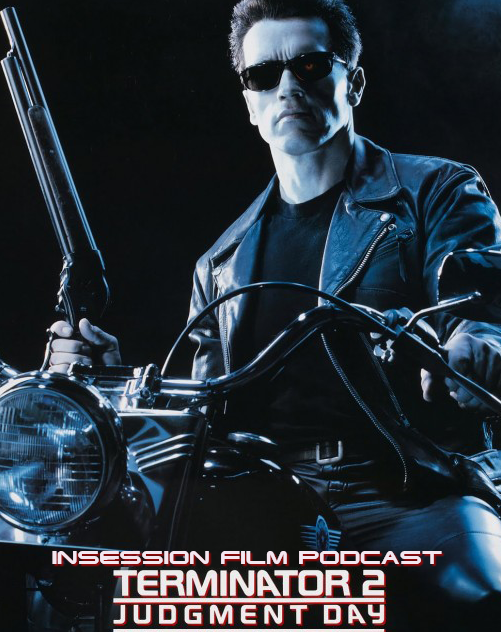
Podcast: The Abyss / Terminator 2: Judgment Day – Extra Film

This week on the Extra Film Podcast, Ryan and Jay are joined by John Junkins as they continue their James Cameron Movie Series with The Abyss and the iconic Terminator 2: Judgement Day!

A big thanks to John for joining us once again. It’s always great to have him on the show and he was fantastic as usual. We may have been off for a few weeks, but it didn’t take long before things were back to normal as we discuss these movies and perhaps a few other rabbit holes. The Abyss is perhaps the biggest outlier in Cameron’s filmography and we do our best to get into why that may be the case. Terminator 2: Judgment Day on the other hand is one of Cameron’s biggest films. Avatar may have the box office record, but T2 is arguably Cameron’s best film and we dig into that as well.

For anyone that wants to hear JD and Brendan’s Terminator Retrospective, click here.

On that note, check out this week’s show and let us know what you think in the comment section. Thanks for listening and for supporting the InSession Film Podcast!

– Movie Review: The Abyss (6:29)
Director: James Cameron
Writers: James Cameron
Stars: Ed Harris, Mary Elizabeth Mastrantonio, Michael Biehn

– Movie Review: Terminator 2: Judgment Day (45:30)
Director: James Cameron
Writers: James Cameron
Stars: Arnold Schwarzenegger, Linda Hamilton, Robert Patrick

– Music

Terminator Arrival – Brad Fiedel
The Black Phone – Mark Korven
The Return of the Eagle – Atli Örvarsson

Subscribe to our Podcasts RSS
Subscribe to our Podcasts on iTunes
Listen on Spotify
Listen on Stitcher
Extra Film – The Abyss / Terminator 2: Judgment Day

[divider]

To hear this Extra Film episode and everything else we do, download our apps on the Amazon Market for Android and the Podcast Source app on IOS devices. The mobile app covers all of our main shows, bonus podcasts and everything else relating to the InSession Film Podcast. Thanks for your wonderful support and for listening to our show. It means the world to us.

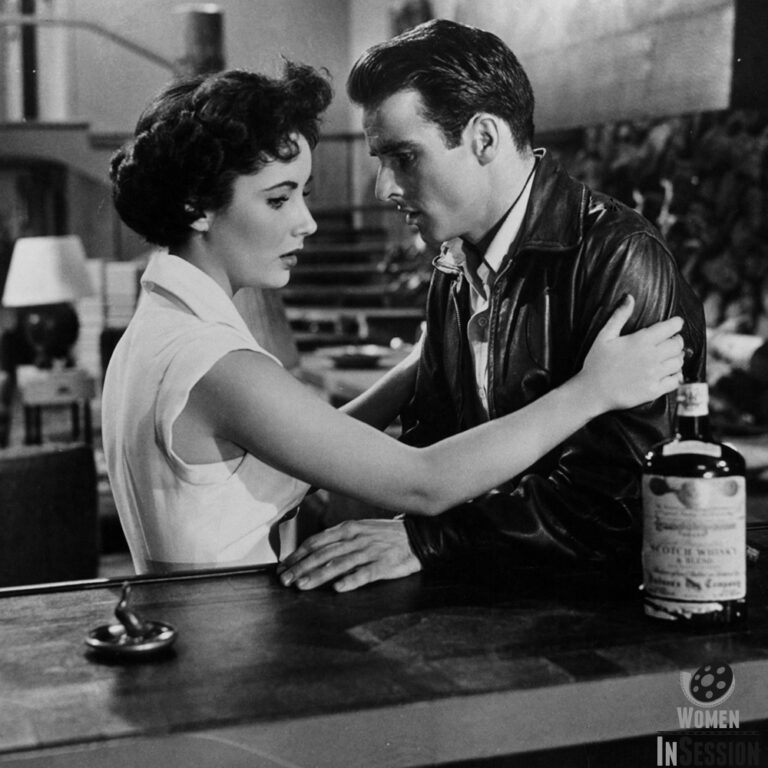
Women InSession: A Place in the Sun – Episode 2

This week on Women InSession Podcast, we discuss the George Stevens award-winning film A Place in the Sun! Plus, a discussion on Stevens himself and his place in film history.

For this episode, Kristin Battestella, Zita Short, and Amy Thomasson make up the panel as they talk about the legacy of Stevens and why he hasn’t been quite as revered over time as others of that era. Despite winning a few Oscars and having some well-known films, he’s typically not lumped in with his contemporaries for reasons we discuss.

On that note, check out this week’s show and let us know what you think in the comment section. Thanks for listening and for supporting the InSession Film Podcast!

– Review: A Place in the Sun

– George Stevens Discussion

– Music

The Return of the Eagle – Atli Örvarsson

Subscribe to our Podcasts RSS
Subscribe to our Podcasts on iTunes
Listen on Spotify
Listen on Stitcher
Women InSession – A Place in the Sun

[divider]

To hear this Extra Film episode and everything else we do, download our apps on the Amazon Market for Android and the Podcast Source app on IOS devices. The mobile app covers all of our main shows, bonus podcasts and everything else relating to the InSession Film Podcast. Thanks for your wonderful support and for listening to our show. It means the world to us.