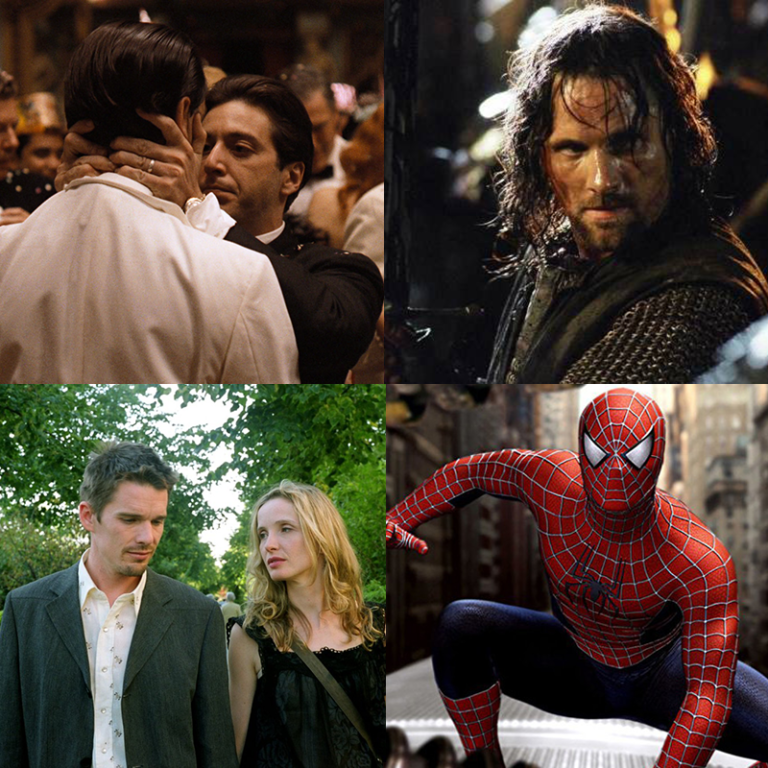
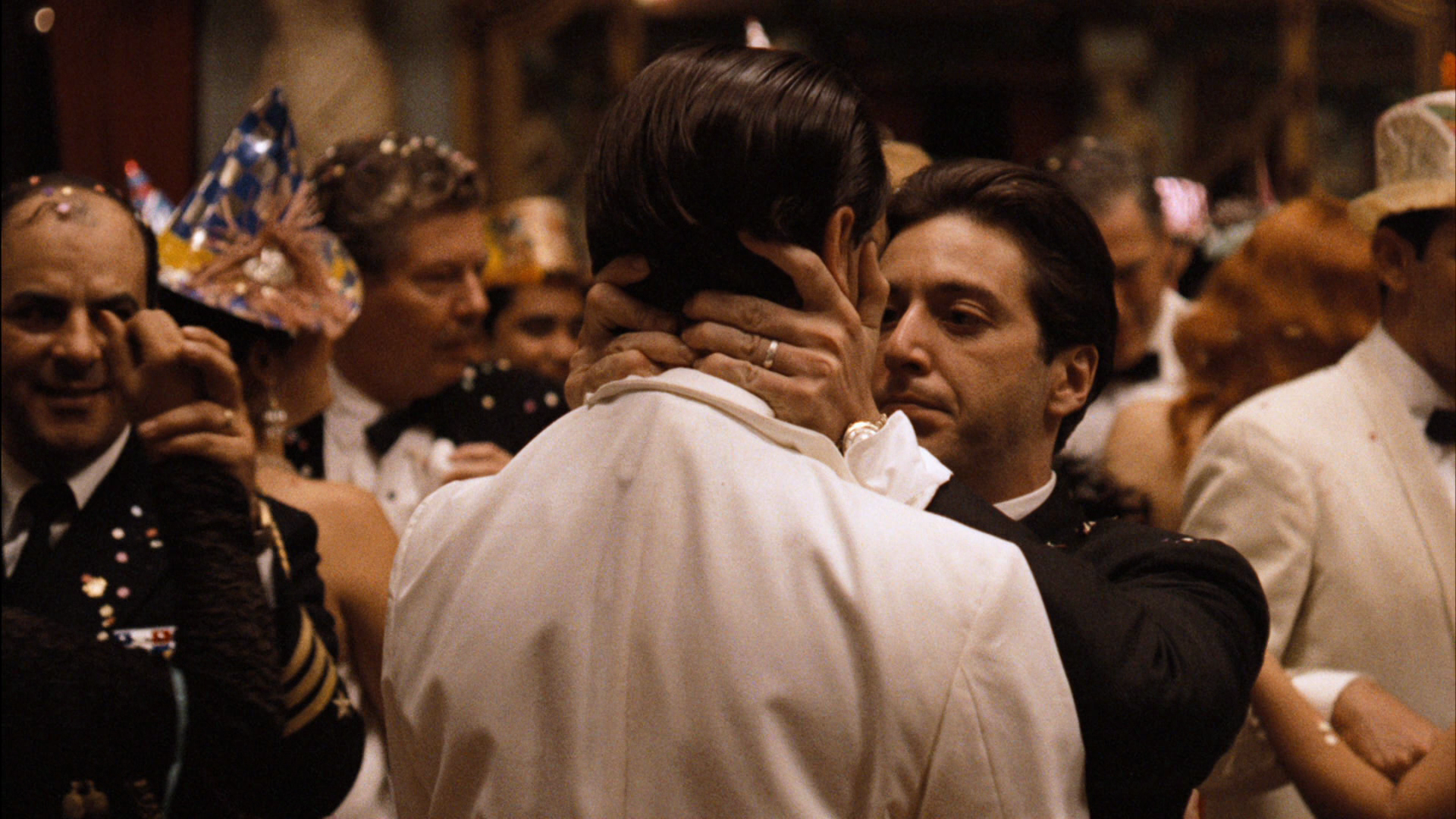
This weekend on Episode 375, we’ll be continuing our mini Godfather Movie Series as we review The Godfather II, a film many consider to be the best sequel of all-time. For our poll this week, we are focusing on sequels, but specifically the “first” sequel in a series of films. Sorry The Godfather III, you don’t qualify here. Of course, there’s still plenty of great options here and we want to hear from you.
What do you think is the best “first” sequel of all-time? Vote now!
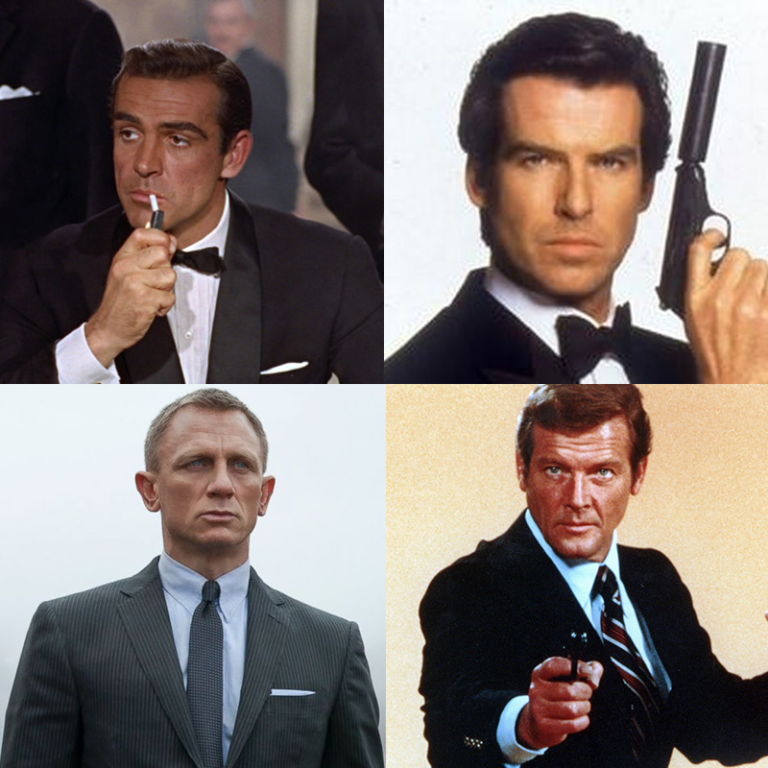
Ryan and Jay’s James Bond Movie Series was a lot of fun, and to wrap it up they got together for some bonus content where they talked about their journey and handed out some awards! Check it out!
To hear our bonus content episodes early, subscribe now on Patreon. In many cases, though, we offer our bonus content for free after a certain period of time and we do encourage (and very much appreciate) a small donation of $0.99 as a way to help support the show if signing up on Patreon isn’t for you. Click on the PayPal button below to donate and thanks so much for your support. You can also hear much of our Bonus Content via our mobile apps. See the information at the bottom of the post for more details.
[divider]
Mobile Apps!
Listen to all of our bonus content on our apps for just a one-time fee! Whether you have an iPhone, Android or Windows phone, our apps are available in many different ways that is convenient for you. With our mobile app, not only can you listen to all of our bonus content, but our main shows and our Extra Film podcasts as well. Click here for more info!
If you don’t want to purchase our bonus content, but still want to support us, there are other you can help us out. Click here for more info.
1972 was a remarkable year for American cinema, with the release of such classics as The Godfather, Cabaret, The Getaway, Deliverance and The Candidate to name a few. Francis Ford Coppola’s The Godfather was the highest-grossing film of the year, followed by Ronald Neame’s disaster film, The Poseidon Adventure. The third highest-grossing film of the year is probably a film that many of you haven’t heard of before, Peter Bogdanovich’s screwball comedy What’s Up Doc?. To this date, the film remains Bogdanovich’s most profitable film, grossing $66 million on a budget of $4 million. Prior to the release of What’s Up Doc? Bogdanovich had received critical praise for his black and white drama, The Last Picture Show which came out the year before. Side by side, these two films couldn’t be any more different but they both reflect the director’s appreciation and admiration for the films of classic Hollywood.
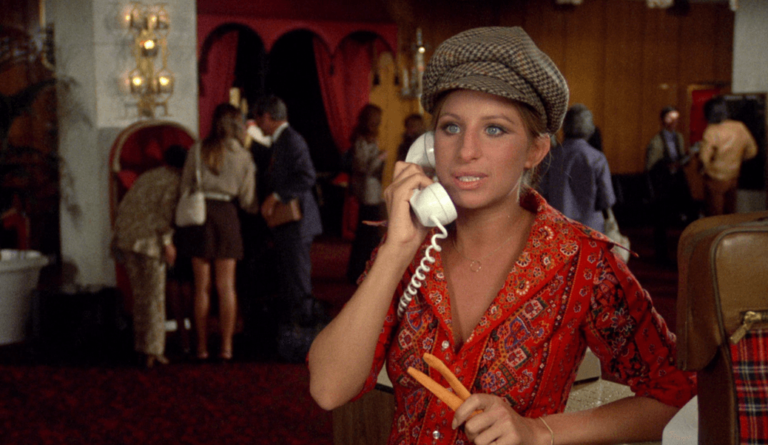
For those who aren’t aware, What’s Up Doc? is a romantic comedy starring the delightfully quirky Barbra Streisand and the heart-throb of the day, Ryan O’Neal.The plot (used in the loosest of terms) revolves around four identical plaid overnight bags which end up causing a mix-up at the same hotel as our main characters are staying. O’Neal is Dr. Howard Bannister, a musicologist who has travelled to San Francisco with his tightly wound, overbearing fiancée, Eunice Burns (Madeline Kahn), to obtain a grant offered by Frederick Larrabee (Austin Pendleton).
He crosses paths with the eccentric, quick-witted and spontaneous Judy Maxwell (Streisand) who becomes intrigued by Bannister. At first, Judy seems to be interested in winding him up, but it quickly becomes apparent that she’s genuinely interested in helping him and interested him as a person. There’s also a mysterious government agent now turned whistleblower called Mr. Smith (Michael Murphy) who is being followed by another agent known as Mr. Jones (Philip Roth). As well as the wealthy socialite Mrs. Van Hoskins (Mabel Albertson) who has her bag full of priceless jewelry stolen. If this all sounds completely chaotic and totally bonkers…well that’s the point!
The film’s final act descends into utter madness when a car chase occurs in the fashion of a Warner Bros. cartoon including a hilarious gag involving two men trying to transport a glass pane across a road. It’s whacky and over-the-top in all the right ways. While not all of the joes have aged practicularlly well, (there’s an uncomfortable joke about sexual assault that left me whincing), there’s still plenty of gags that land. Bogdanovich manges to recreate the essences of a Howard Hawks screwball comedy with the fast-paced dialogue and the stinging one-liners delivered perfectly by O’Neal and Streisand.
The story behind the film’s production is rather interesting. Hot off the success of The Last Picture Show, Bogdanovich was approached by studio executive John Calley to direct A Glimpse of a Tiger and Steve McQueen also approached him for The Getaway. Neither of these films interested him. McQueen wasn’t the only talent wanting to work with him, Streisand was also very keen. Bogdanovich was even asked to direct The Godfather but reportedly turned it down because he didn’t want to work on another drama.
According to Bogdanovich, Calley asked him what he wanted to film, to which he replied with “A screwball comedy, like Bringing Up Baby, with Barbra. A square professor and a daffy dame who breaks him down live happily ever after.” Calley was onboard with this idea, as long as Bogdanovich ensured the script was ready in time for shooting to begin in August 1971 because of Streisand’s schedule, meaning there were only a few months for Bogdanovich along with screenwriters Robert Benton, David Newman and Buck Henry to work on the script. Even while Bogdanovich was filming, jokes and gags were still being schemed up. It sounds like a recipe for disaster but luckily everything worked out. In fact, Bogdanovich described the whole experince as “It was absolute heaven from beginning to end” and has stated “What’s Up, Doc? was the most fun of any picture I’ve ever made.”
The script is a work of genius, full of many little in-jokes which poked fun at the screwball comedy genre, but Bogdanovich isn’t simply ripping off these traits and mocking the films of the past. Richard Bordy’s piece for The New Yorker sums Bogdanovich’s intentions perfectly: “He was in full-retro mode, but he was no nostalgist. He borrowed genres and tones from the past because that past seemed, to him, neither dead nor past.”
lso poked fun at the corny romantic films at the time which focused on a young couple coming from different backgrounds and falling in love at first sight. In the film’s closing lines, O’Neal repeats the line from Love Story, “Love means never having to say sorry” which Streisand’s character replies back with “That’s the dumbest thing I ever heard.” What’s Up Doc? works because of the chemistry of Streisand and O’Neal, who were dating at the time. Streisand and O’Neal even get a chance to show off their singing talents, in a duet. O’Neal delivers a great performance, but this is really Streisand’s picture and she truly dominates here.
According to Bogdanovich, he remembers how “Barbra Streisand told me before we did the picture, “I’ve never been directed. Nobody’s ever directed me in a picture.” I said, “Well, you’re about to be directed,” and I directed the hell out of her.” Her character is well-written and plays to her talent as a comedic actress. Judy Maxwell is very much a young woman of her time, intelligent and independent who uses her brains rather than her looks to get by. Even in 2020, it’s still very rare that we see characters like Judy Maxwell being depicted on the big-screen and propelling the narrative forward.
During self-isolation, I am finding myself going back and revisiting classic films. What’s Up Doc? may not be an absolute masterpiece but it’s a great distraction from what’s currently happening. It’s a lot of fun and compared to other comedies from the era, it’s actually aged pretty well. And, that’s all folks.
This week on Episode 374 of the InSession Film Podcast, inspired by current circumstances, we discussed our Top 3 characters to spend quarantine with during a pandemic. These are unprecedented times and quarantining ourselves is the most important thing at the moment. Many of us have been at home for over a month or so at this point, and we thought it would be fun to talk about the movie characters that we would want to be at home with us as we social distance. There are, obviously, thousands of fascinating characters to choose from, so there are a few different angles to approach this list from. Hopefully we came up with some clever picks that you all enjoy. That said, here are our lists:
(Note: Please keep in mind that we each had different criteria for our selections)
Brendan
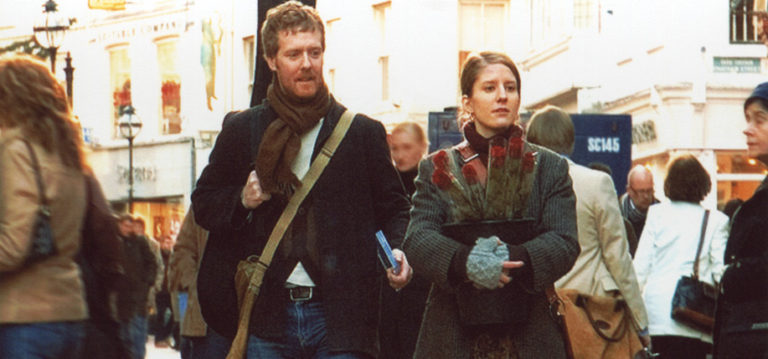
1) Guy / Girl – Once
2) Lester Bangs – Almost Famous
3) Carl Casper – Chef
Ryan
1) Remy – Ratatouille
2) Samantha – Her
3) Celine – Before Trilogy
Honorable Mentions (Combined)
Anything Charlie Chaplin
Wall-E – Wall-E
Doug the Dog – Up
TARS – Interstellar
Jiminy Cricket – Pinocchio
Genie – Aladdin
Rob Gordon – High Fidelity
Rick Dalton / Cliff Booth – Once Upon a Time in Hollywood
Paddington – Paddington
R.P. McMurphy – One Flew Over the Cuckoo’s Nest
Ed Bloom – Big Fish
Ed Wood – Ed Wood
Brendan / Dale – Step Brothers
Muppets – The Muppets
John Wick – John Wick
The Bride – Kill Bill
Luke Skywalker – Star Wars: The Last Jedi
Mary Poppins – Mary Poppins
The Weasley’s – Harry Potter
Tony Stark – Iron Man
Bruce Wayne – Batman
Doc Brown – Back to the Future
Tim – About Time
Llewyn Davis – Inside Llewyn Davis
Benoit Blanc – Knives Out
Steve Coogen / Rob Bryden – The Trip Trilogy
Moondog – The Beach Bum
Buzz / Woody – Toy Story
Andy – The 40 Year-Old Virgin
Jo March – Little Women
Hopefully you guys enjoyed our lists and if you agree or disagree with us, let us know in the comment section below. As is the case with a topic like this, depending on your tastes and criteria, your list could end up being very different than what we talked about. That being said, what would be your Top 3? Leave a comment in the comment section or email us at [email protected].
This week on the InSession Film Podcast, we review Francis Ford Coppola’s classic film The Godfather and discuss the movie characters they would want to spend quarantine with. We also talk about a few movies they’ve seen recently.
Big thanks to Ryan for filling in for JD this week. Not only did he give JD a much needed break, but it worked out very well as The Godfather is Ryan’s favorite film of all-time, and that passion comes through palpably in the conversation. And since JD is out this week, we also pause our Federico Fellini Movie Series and dive into what was a really fun exercise to do. Perhaps a long episode, but one we hope is well worth its length.
On that note, check out this week’s show and let us know what you think in the comment section. Thanks for listening and for supporting the InSession Film Podcast!
– Movie Review: The Godfather (5:26) Director: Francis Ford Coppola Writer: Mario Puzo, Francis Ford Coppola Stars: Marlon Brando, Al Pacino, James Caan
– Notes / Discussion (56:37)
As mentioned above, Ryan and Brendan were able to see a few films over the last week and gave their thoughts on those movies. They talked about The Man with the Golden Gun, The Way Back, the Ocean’s movies and more!
– Top 3 Characters to Spend Quarantine With (1:26:52)
These are unprecedented times and quarantining ourselves is the most important thing at the moment. Many of us have been at home for over a month or so at this point, and we thought it would be fun to talk about the movie characters that we would want to be at home with us as we social distance. There are, obviously, thousands of fascinating characters to choose from, so there are a few different angles to approach this list from. Hopefully we came up with some clever picks that you all enjoy. That said, what would be your Top 3?
Main Review: The Godfather II
Federico Fellini Movie Series: City of Women
[divider]
Help Support The InSession Film Podcast
If you want to help support us, there are several ways you can help us and we’d absolutely appreciate it. Every penny goes directly back into supporting the show and we are truly honored and grateful. Thanks for your support and for listening to the InSession Film Podcast!
Director: Prentice Penny Writer: Prentice Penny Stars: Courtney B. Vance, Lashun Pollard, Michael Mobley
Synopsis: Elijah must balance his dream of becoming a master sommelier with his father’s expectations that he carry on the family’s Memphis BBQ joint.
[/info]
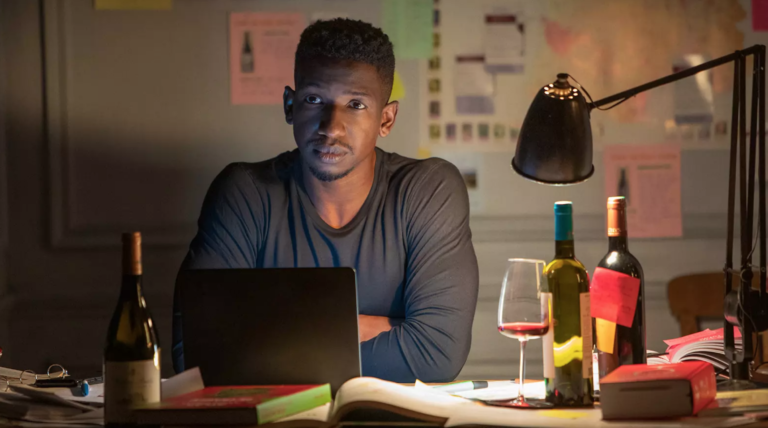
Prentice Penny adds a new swill to his film catalog with the Netflix Family Drama, Uncorked. It’s like Soul Food, but for a new generation. A unique blend of food, wine, and music that’s not as complex as the wine trials Elijah (Mamoudou Athie) endures in his pursuit of becoming a sommelier, but equally flavorful in the bouts he has with his father Louis (Courtney B Vance) who envisions a different path for him.
Elijah’s had a lot of different passions and Louis has possibly indulged them to a fault until it’s time for his son to step up and take over the family BBQ business. Elijah’s desire to become a Master Sommelier thwarts his dad’s plans and puts a bigger strain on their already rocky relationship. The narrative in this film penned by Penny is a unique approach to the type of story I was sold. It embraces the black experience through differing perspectives yet is so relatable on both sides. This film isn’t bothered by pointing fingers and assigning blame for the differences these 2 have but offers a nuanced and rising empathy from both men.
Athie and Vance have impeccable chemistry. Their relation feels authentic to who they were written to be. Additionally, Athie wouldn’t be the conventional choice to lead this film, but I’m happy he did. He wins you over quickly with his naivety with women matched with a quirky charm. He disarms you with his soothing voice and his presence as well. He’s still quite young in his career, but a performance like this makes way for much to look forward to.
This refreshing father and son tale is set to the back drop of Memphis, TN and Paris, France that infuses many of the sights and sounds that make these cities distinct. I was impressed by the camera work throughout the movie and how it glided through the city streets in a way that made these settings lived in and become characters themselves in the story. The films aesthetic is cool and just as colorful as its many other supporting characters. None more colorful than Niecy Nash, who turns in a career best performance in my opinion. She still exudes a powerful sass but with a honed vulnerability that comes out when the story needed it most.
As with most dramas that try to balance pacing with comedy, there are hits and misses. Luckily with this film there’s less of the latter. The screenplay has some of the most naturally comedic lines written and delivered for a drama I’ve seen on the screen in quite a well. However, there is a side character that quickly becomes a joke unto himself that runs on entirely too long and unfortunately sticks around for the entirety of the film. Putting him aside, this makes for an introspective stream at home with the family.
You may have thought this was your run of the mill Springtime comfort movie primarily for black audiences. You couldn’t be farther from the truth. We have a universal story that at one point or another in our own lives we may have tackled. Characters at a crossroads between family and career; or on the other side feeling left behind when new alternatives in life challenge your cultural lens. This screenplay is tight, packing in lots of laughs and a ton of heart. Did I mention its pretty inspiring too?
I promise, you’ll never look at a bottle of wine in the same way either!
This week on Extra Film, the fellas start a new film series! The days of Bond are in the rear-view and the Robert Altman train is full steam ahead. Additionally, Jay and Ryan review the Netflix documentary, Crip Camp.
While Robert Altman had been making films and television shows for many years, he didn’t break through until the smash hit, M*A*S*H. The film is controversial, angry, hilarious, and bold, in ways that few films are. Jay and Ryan talk about their experiences with Altman, their expectations for the series, and then take a deep-dive into the 1970 film. How has this film aged in the last 50 years? Listen to find out!
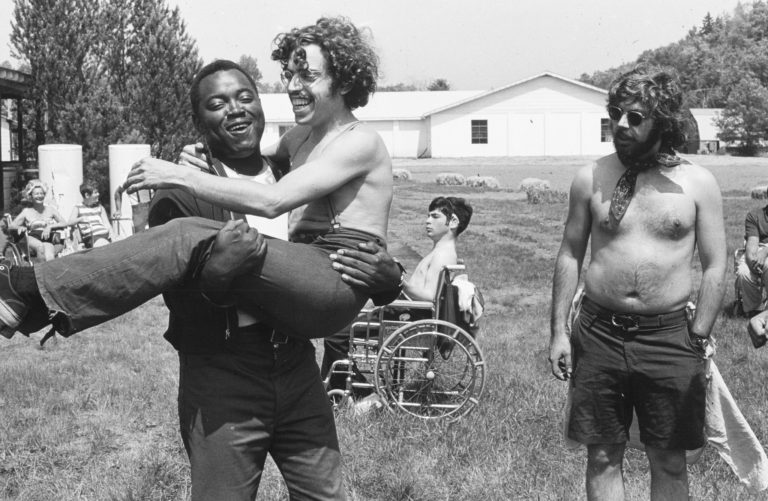
Then, the discussion moves to Crip Camp, a film centered around a summer camp for handicapped people in the 1970’s and the tremendous things that the people who attended that camp went on to accomplish. It is the perfect time for a Netflix documentary to drop, so hopefully this important story will get more attention than it usually would. But as for the film itself, the guys have a few problems. Listen to hear what they are and what they did like about it.
Thanks for listening!
– Movie Review: M*A*S*H (2:43) Director: Robert Altman Screenplay: Ring Lardner Jr. Stars: Donald Sutherland,Elliott Gould, Tom Skerritt, Sally Kellerman, Robert Duvall
– Movie Review: Crip Camp (53:23) Directors: James Lebrecht, Nicole Newnham
We try to make this the best movie podcast we possibly can and we hope you enjoy them. Subscribe today on iTunes, Spotify or Stitcher, and please leave us a review on iTunes. You can also find us on Soundcloud, PlayerFM and TuneIn Radio as well. We really appreciate all your support of the InSession Film Podcast.
To hear this Extra Film episode and everything else we do, download our apps on the Amazon Market for Android and the Podcast Box app on IOS devices. The mobile app covers all of our main shows, bonus podcast’s and everything else relating to the InSession Film Podcast. Thanks for your wonderful support and for listening to our show. It means the world to us!
I decided to take a look across the pond where black actors broke the barrier in movies and television. In the US, Paul Robeson became among most recognized actors and singers in the country and Hattie McDaniel was the first African-American to win an acting Oscar, followed by the recognition of Harry Belafonte, Dorothy Dandridge, and Sidney Poitier after the war to become mainstream with white audiences. In Britain, there were others who broke through against a feeling of racist resentment that they resettled in England, leading to a major race riot in 1958 and the rise of the “Windrush” generation.
Of course, the entire continent was moving on from both the Firat and Second World War, but many Blacks who struggled to make a living from the Caribbean and Africa migrated to England as they were allowed to. A number of them served in the war and with an emphasis on groundbreaking stories about race, these actors were in demand to challenge what people heard and saw. Here are a few of these “color bar” breaking actors.
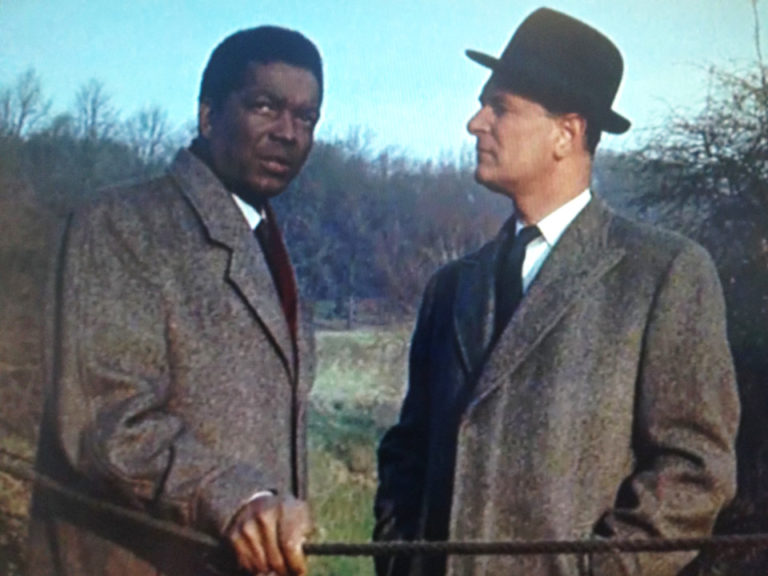
Earl Cameron
In 1951’s film noir Pool of London, Cameron made his film debut, becoming one of the first black actors in a British film since the 1930s. Originally from Bermuda, he started his way up through plays in the 1940s, having success on West End and on tours to perform for British armed forces stationed in several countries. In Pool of London, he plays a sailor who falls for a white woman while getting caught up in a diamond heist. The first major British film to show an interracial romance was a bit shocking for the time, but the film was well-liked. Cameron would do a steady flow of films and TV including the Bond film Thunderball, an episode of the series Doctor Who, the religious epic The Message, and a small role in Stephen Frears’ The Queen. He is still alive at the wonderful age of 102.
Cy Grant
Born in Guyana, Grant made his way to the UK to join the Royal Air Force during World War II. Shot down and ejecting himself to safety, he would spend two years in the Stalag Luft III prisoner camp, the same place that would be legendary for the events depicted in The Great Escape. After the war, he became a barrister (a lawyer in American terms) but would take up acting and join Lawrence Olivier’s acting company for a time. Adding to his ability to sing and play the guitar, Grant was seen more on British TV screens in the TV drama Man From The Sun and the current affairs show Tonight. Film-wise, he starred alongside Richard Harris and Joan Collins in the WWII drama Sea Wife. Grant died in 2010, aged 90.
Nina Mae McKinney
Just like Josephine Baker who moved to France where she was met with respect instead of racism, South Carolina-born McKinney moved to the UK in 1935 after studios completely avoided signing her despite early success. Others also made the move because African-Americans struggled to find work in Hollywood, especially for African-American women since the only roles available were restricted to stereotypical roles. After touring as a cabaret singer, McKinney would star in her breakthrough role in Sanders Of The River alongside Paul Robeson – another American actor who had success in Britain early on – as Nigerian natives. And when TV started to be broadcast in the 1930s (to the few who had one), the BBC gave McKinney her own special to show her acting and singing abilities. She returned to the US when WWII began to reluctantly play the stereotypical Hollywood roles she turned down before, but returned abroad after the war and retired. She died in 1964, age 54.
Elisabeth Welch
Born in Englewood, New Jersey, Welch had a solid career going for her on Broadway in the 20s, but after being hired to perform the London production of Nymph Errant by Cole Porter, Welch would make it her home. Her success in following shows brought her on-screen and on TV in the late 30s for the BBC, as it was with Nina McKinney. (On a side note, BBC Television was established in 1936, broadcasting Monday to Saturday from 3 PM to 4 PM and 9 PM to 10 PM.) Welch stayed in London throughout the war and went on the road to entertain all of the Allied armed forces, then after would go on to a string of West End, television, and radio productions. She died in 2003, aged 99.
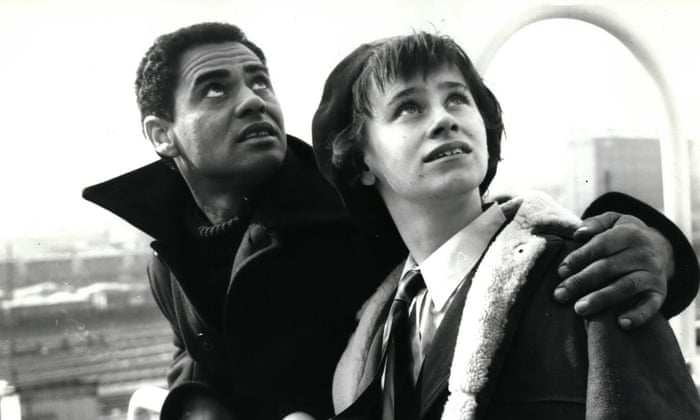
Paul Danquah
Although his acting career was short because, like Cy Grant, he was studying to be a barrister, Danquah made an impactful performance that was part of the kitchen sink realism movement. Danquah’s father, Joseph Boakye Danquah, was a Ghanan politician who is considered one of the founding fathers for the country’s independence. Tony Richardson cast Danquah in the adaptation of A Taste of Honey, playing a young black sailor who has a short affair with a teenage white girl. Later, he would star in the TV series Danger Man and would be one of the first black presenters of a children’s show in Play School. Afterward, Danquah would commit full-time to being a barrister and worked with the World Bank in Washington D.C. He died in 2015, aged 90.
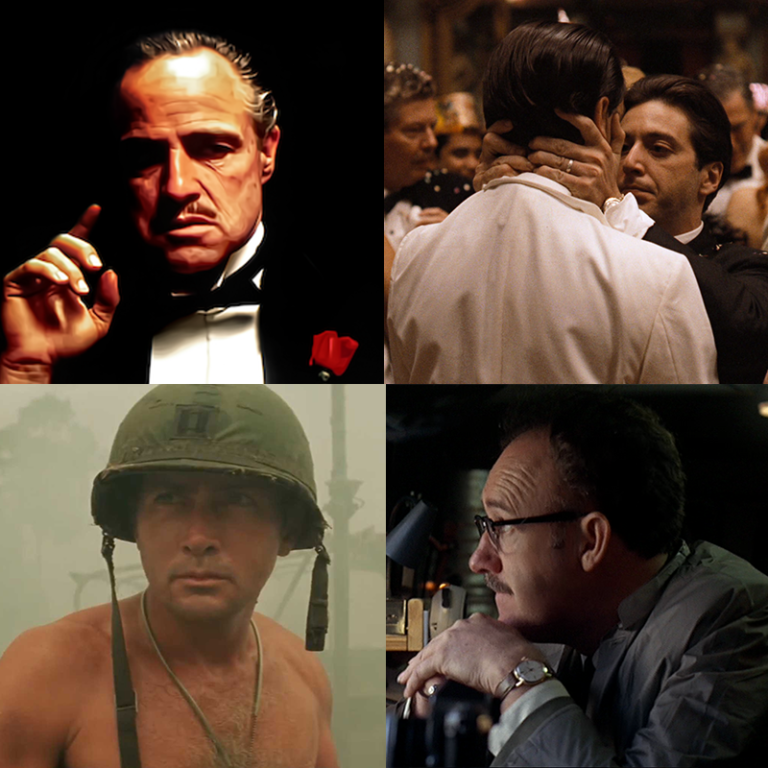
This weekend on Episode 374, we’ll be reviewing Francis Ford Coppola’s The Godfather, a film suggested to us by one of our Patreon supporters. Considered to be among the best films of all-time, it will be no small task to cover a film as deeply layered and renowned as that one is. However, we are up to the task and we look forward to it. Obviously, though, Coppola has made several films that are highly regarded and that is our inspiration for our poll this week. Some think The Godfather II is even better than its predecessor. Apocalypse Now is among the best war movies of all-time and The Conversation is a top tier surveillance thriller. In many ways, you can’t go wrong here.
But with that said, what do you think is the best Francis Ford Coppola film? Vote now!
Synopsis: A young couple looking for the perfect home find themselves trapped in a mysterious labyrinth-like neighborhood of identical houses.
[/info]
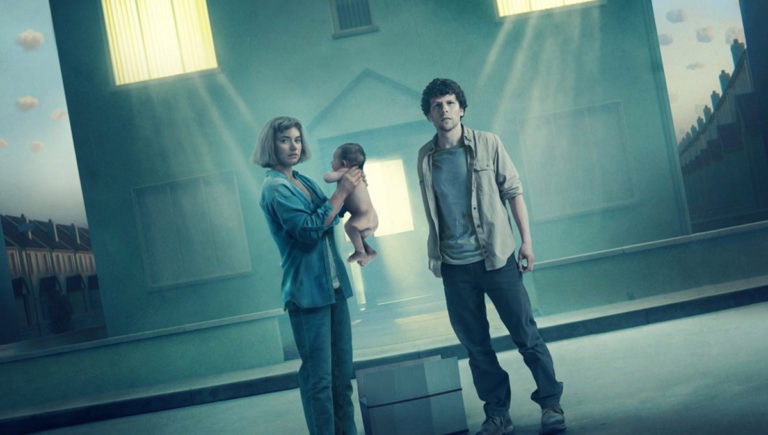
For a film with such an excitingly simple pitch, Vivarium is a perfect example of squandering a great idea when you don’t have anywhere to go with it. It’s a prime illustration of being unique while still not being good, as writer Garret Shanley creates an interesting meditation on domesticity which eventually sours into a blunt and empty experience. Despite the film’s unique set design, solid acting, and an inspired first act that promises something way sharper, the Imagine Poots and Jesse Eisenberg vehicle spins its wheels until they fall off.
Still, that initial setup is more promising than your standard indie. Tom (Eisenberg) and Gemma (Poots) are a happy young couple who have been house hunting but haven’t found many appealing options. One day after leaving the school where Tom is a handyman and Gemma is a teacher, they go visit an office for a new development titled Yonder. The agent for the development is Martin (Jonathan Aris), and while they’re something off about him, they follow him to visit Yonder. Soon after entering the home, Martin is gone, and they can’t find a way out. Soon after that, a baby arrives in a box on the doorstep. A note follows which tells them to raise the kid.
With this setup, director Lorcan Finnegan creates a series of admittedly hellish scenarios and creepy images. The problem with some of the admittedly cool iconography is how thuddingly obvious the metaphors can be. After being trapped and forced to raise the baby in this plastic embodiment of happiness, the film reveals itself to be about how a family life can be a painful and soul-sucking experience. It seems like Finnegan was in a confining relationship before writing this, as if he wanted to translate how relationships are inherently bad and limiting. The fundamental thesis here is difficult when it feels a deficient view of how things can be. Although there is an inherent creepiness to the setting of Yonder, the flimsy text doesn’t do this potentially interesting concept justice.
While the material is working against them, Eisneberg and Poots try their hardest. Eisenberg, in particular, feels a bit odd for this role. As one of the most nebby and frail actors of a generation, he feels odd in a role where he’s supposed to represent middle class angst and impatience. His character introduction feels almost jarring when he jokes around with Poot’s Gemma while playing that handyman. He still tries his hardest, and in the scenes where his resentment towards the child is the clearest, his character feels like the ideal combination of cutting and aggravated. Poots does good work as well as a naturally compassionate person who is forced to be compassionate to a giant annoyance. While both actors veer towards over acting from time to time, the two talents make this potential slog a watchable film. Even though the two tried, they couldn’t overcome a script that feels both apparent and undercooked. A good idea or two can only get you so far it seems.
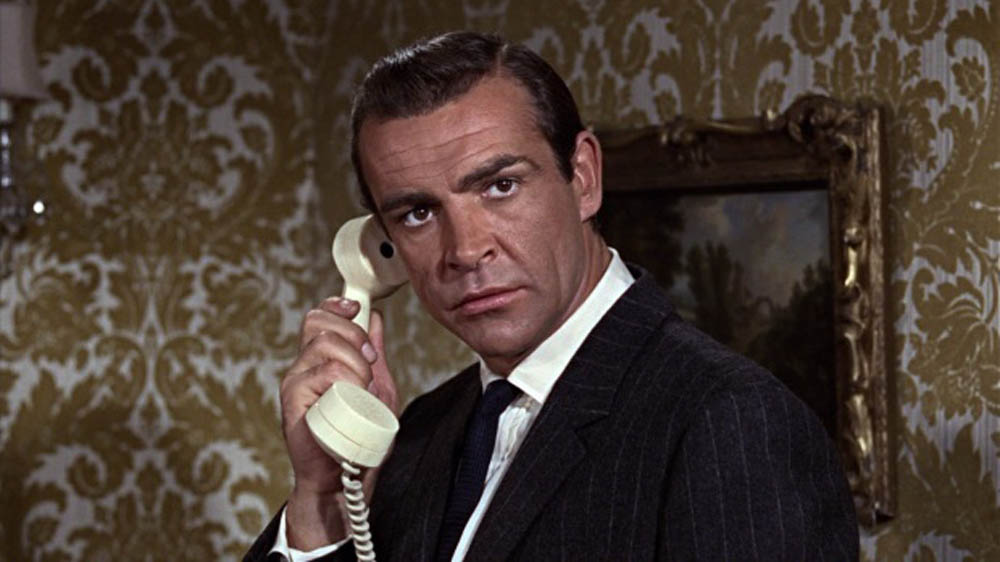
This week on the InSession Film Podcast, we discuss the Sean Connery starring James Bond film From Russia with Love and we continue our Federico Fellini Movie Series with his 1973 film Amarcord! We also discuss a few other films we’ve seen recently.
This last weekend was supposed to see No Time to Die in theaters, however due to COVID-19 that has been pushed back to November, but we thought we would still keep the James Bond spirit by reviewing From Russia with Love. We had a lot of fun talking about it and we hope you enjoy it as we did. Also, stay tuned for our break discussion as it gets a little passionate.
On that note, check out this week’s show and let us know what you think in the comment section. Thanks for listening and for supporting the InSession Film Podcast!
– Movie Review: From Russia with Love (6:37) Director: Terence Young Writer: Richard Maibaum (screenplay), Johanna Harwood (adaptation) Stars: Sean Connery, Robert Shaw, Lotte Lenya
– Notes / Discussion (47:14)
As noted above, Brendan and JD have been watching a variety of films during quarantine and offered up their thoughts on a few films they’ve caught up with during the last week or so. Particularly we discussed Live and Let Die, Midnight Run and Leave Her to Heaven. And boy oh boy, did JD have some thoughts on Leave Her to Heaven. You’ll want to tune into that.
Main Review: The Godfather
Federico Fellini Movie Series: City of Women
[divider]
Help Support The InSession Film Podcast
If you want to help support us, there are several ways you can help us and we’d absolutely appreciate it. Every penny goes directly back into supporting the show and we are truly honored and grateful. Thanks for your support and for listening to the InSession Film Podcast!
James Bond is one of the more iconic franchises of all-time. It’s full legendary moments, distinct era’s, memorable songs, charming characters, unforgettable action scenes (for better or worse), and a cupboard full of memories that many of us adore. With the release of No Time to Die coming soon, we thought it would be fun to dive into the filmography of James Bond and dissect what makes its legacy everlasting. Follow along with us and we hope you enjoy the series as much as we will.
Dr. No, 1962
Listen to our review below as heard on Extra Film.
[divider]
Goldfinger, 1964
Listen to our review below as heard on Extra Film.
[divider]
On Her Majesty’s Secret Service, 1969
Listen to our review below as heard on Extra Film.
[divider]
The Spy Who Loved Me, 1977
Listen to our review below as heard on Extra Film.
[divider]
Licence to Kill, 1989
Listen to our review below as heard on Extra Film.
[divider]
GoldenEye, 1995
Listen to our review below as heard on Extra Film.
[divider]
The World Is Not Enough, 1999
Listen to our review below as heard on Extra Film.
[divider]
Casino Royale, 2006
Listen to our review below as heard on Extra Film.
[divider]
Skyfall, 2012
Listen to our review below as heard on Extra Film.
[divider]
Be sure to leave any feedback in the comment section below or hit us up on social media!
This week on Extra Film, the Extra Film Bond Movie Series comes to an end! The final entry in the Bond series has Ryan and Jay reviewing Skyfalland then in the back half of the episode, the boy’s review Never Rarely Sometimes Always.
After a wonderful look at Casino Royale last week, it’s time to focus on the other beloved entry in the Daniel Craig era. With ravishing direction and cinematography from Sam Mendes and Roger Deakins, this might just be the best looking Bond film to date. But based on the conversation on this episode, the two Extra Film co-host go toe to toe in determining if this is actually the best Craig entry. It was a fun conversation for their last discussion of the series.
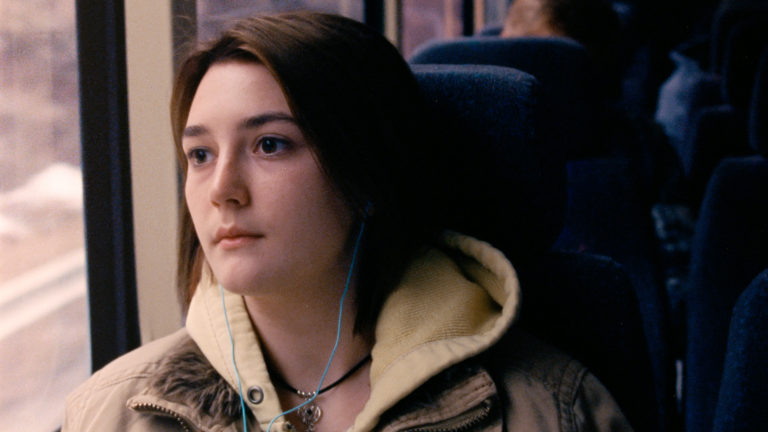
Then, the discussion moves to Never Rarely Sometimes Always, a film widely known as one of the best releases of 2020. Following up on her recent film Beach Rats, director Eliza Hittman brings us an important tale about a young girl seeks an abortion for her unplanned pregnancy. While tough to watch, the film is stunning to watch and has a confident pace. But the real question is, will the guys fall in line with everyone else in the praise for the film or will they alone in criticizing it? You will have to listen to this great review to find out.
Also, if you wait to the end of the episode, you will hear some exciting news for what will be happening over the next couple of weeks on Extra Film.
Thanks for listening!
– Movie Review: Skyfall (3:20) Director: Sam Mendes Screenplay: Neal Purvis, Robert Wade, Paul Haggis Stars: Daniel Craig, Judi Dench, Javier Bardem, Ralph Fiennes
– Movie Review: Never Rarely Sometimes Always(50:24) Directors: Eliza Hittman Screenplay: Eliza Hittman Stars: Sidney Flanigan, Talia Ryder, Théodore Pellerin, Ryan Eggold
We try to make this the best movie podcast we possibly can and we hope you enjoy them. Subscribe today on iTunes, Spotify or Stitcher, and please leave us a review on iTunes. You can also find us on Soundcloud, PlayerFM and TuneIn Radio as well. We really appreciate all your support of the InSession Film Podcast.
To hear this Extra Film episode and everything else we do, download our apps on the Amazon Market for Android and the Podcast Box app on IOS devices. The mobile app covers all of our main shows, bonus podcast’s and everything else relating to the InSession Film Podcast. Thanks for your wonderful support and for listening to our show. It means the world to us!
So, as you probably read awhile back, our Commander-in-Chief is no fan of Parasite because he finds it insulting that a foreign movie was given Hollywood’s most prestigious award. And Neon had that brilliant clap back, to which all of the major studios should find the social media manager and hire that person. So, the President is sour on foreign imports. How surprising. Build a wall around that, if you can (or not). But he’s not the first politician to feel that way about a movie.
Mr. Smith Goes To Washington (1939)
Frank Capra’s anti-corruption drama tells us something so obvious since the beginning of time: all politicians are corrupt and seek to profit through their power in Congress. When it screened in Constitution Hall to members of the Washington elite, they condemned it for portraying them as anti-American to the ideals of a democratic government. Senate Majority Leader Alben Barkley said the film gave “a grotesque distortion…as grotesque as anything ever seen,” about Congress. One journalist suggested that movies not representative of American values be banned (which violated the First Amendment), while the American Ambassador to Great Britain, Joseph Kennedy – the patriarch of the most famous political family – said it would hurt American prestige in Europe as the continent was beginning to go to war again. Yet, Capra and Columbia Pictures did not relent to pressure and the movie remains a landmark on political, social commentary on American democracy.
Paths Of Glory (1956)
One of the great anti-war films of all time didn’t get the love from governments and militaries who had a connection to the real-life story it is based on. When the French army and government officials saw the film, they were horrified and successfully kept United Artists from releasing the film until 1975. To avoid damaging their newly warm relations, the West German government ordered it withdrawn from the Berlin Film Festival and released it in 1958. Even Switzerland, a totally neutral country, banned the film until 1970, and the American military kept the film being released in all areas for entertainment. With the Cold War, Algerian Conflict, and the rise of Charles de Gaulle as a politician, they chose to close a lid on any mutiny that could have happened.
If You Love This Planet (1982)
This Canadian documentary short focused on the danger of nuclear weapons through the words of activist Dr. Helen Caldicott and the relation to pollution, ozone depletion, food contamination, the effect on animal species. Because of its criticism of nations who possessed these weapons, the Justice Department had it banned temporarily and labeled it as “foreign political propaganda.” The outrage over the government’s decision helped its cause when it won the Oscar for Best Documentary (Short Subject) and convinced Canada’s Prime Minister to push for nuclear arms reduction.
Avatar (2009)
https://www.youtube.com/watch?v=l6yExegrnr4
James Cameron’s return to the big screen with his decade-long production that shattered every record made (until Avengers: Endgame passed Avatar overall) brought in the wrath of conservative politicians and commentators who saw the deliberate anti-war, anti-capitalist, and pro-environment themes in it. When a noted socialist like ex-Bolivian President Evo Morales praised the film, when Palestinian protestors dress up as Na’avi, and when it is compared to Brazil’s native tribes being killed and forced out of the Amazon by loggers, personalities like Glenn Beck and Jonah Goldberg came in to be highly critical of it. True, it is obvious the anti-American military themes with parallel views to the invasion of Iraq and Vietnam – Cameron said it is about how greed and imperialism destroy things. Then, there are the pantheism elements, which scared Christians and brought criticism that Cameron was promoting paganism over traditional theology. And these are just some of the criticisms many people have against the movie and should be expecting more of with its sequels.
First Man (2018)
This is one of the most stupid criticisms about a singular shot and which may have sunk the film’s box office chances. Here is a movie about an American hero, Neil Armstrong, his personal life, and how he became the top guy at NASA to finally get to the Moon. It’s a great film by Damien Chazelle. To my editor JD Duran, it’s a movie that turned on the #JDTears. Yet, when it was revealed that the actual planting of the flag was not shown, even though a shot of it clearly has an American flag on the Moon, conservatives (fuck you, Marco Rubio, you spineless fraudulent twat) attacked it for being not patriotic enough, including POTUS. Only in America do we complain about a flag. It’s a flag!!!
Director: Eliza Hittman Writer: Eliza Hittman Stars: Eliazar Jimenez, David Buneta, Christian Clements
Synopsis: A pair of teenage girls in rural Pennsylvania travel to New York City to seek out medical help after an unintended pregnancy.
[/info]
All of our lives are filled with difficult choices, but most of them pale in comparison to those few life-changing moments that the unlucky few have thrust upon them. This is especially when those decisions don’t necessarily have a black and white, correct answer. There is nothing so intensely alienating as knowing you have to make that difficult choice on your own. Yet, in many cases, even if you have support, you feel that you are walking into that moment by yourself. Although this is not the first-time director Eliza Hittman has examined this feeling in her early career as a director, this particular emotion is palpable throughout the runtime of Never Rarely Sometimes Always.
Never Rarely Sometimes Always, ostensibly a movie about one young woman’s choice to have an abortion, is truly about many things, including female friendship, the predatory nature of men, loneliness, and the importance of the smallest gestures. Sidney Flanagan, in amazingly her first film role delivers one of the most genuine performances imaginable as the lead, Autumn. No single scene exists without her in frame, and the film is better for it. Much like Harris Dickinson in Hittman’s last film, Beach Rats, that lack of film experience aids the audience in feeling an immediate affinity for our lead. Autumn is, of course, not a perfect human being, but a person going through a horrific moment, and there are moments in which her interactions betray the stress that she is under.
Those interactions, specifically with her cousin Skylar (Talia Ryder) are honest, and never tip over into high drama. The two young women snap at each other on occasion, but also depend on and care for one another. In one specific scene, a simple, elegant shot of the two women’s intertwining fingers details more about this relationship (and the power of women bonded) than pages of exposition could possibly hope to define. This moment efficiently shows not only a connection between the two, but is also poignant dissection of both men and women. Some may refer to the gender inequity in this film as preachy, but I found it particularly truthful and raw. As women, especially young women, are preyed upon daily and shown repeatedly that their bodies and sexuality are traded upon by men, the scenes between Skylar and Jasper (Théodore Pellerin) ring completely true. Although Jasper is never vicious, he is nevertheless a man taking advantage of a situation, and thus, not blameless.
Without a doubt, the most powerful scene in the film, and likely one of the most moving you will experience all year, involves Autumn and a female social worker discussing her upcoming procedure. As the scene begins, both women are equally in the shot, but as it progresses, cinematographer Hélène Louvart expertly, and subtly, switches focus to solely hold Autumn in a close-up. This decision offers two distinct advantages. First, we understand the isolation of making this choice, especially at this young age. Secondly, it enables us to narrow our focus purely on Flanagan’s performance. Although she delivers a staggering range throughout, this is the moment she truly shines. Every choice, both behind the camera and in front of it, is utterly perfect for this stretch. This scene works both in a vacuum and in the arc of the story. The social worker (Kelly Chapman) is played by an actual counselor, and it shows. Her slow repetition of the questions for which the film is named, and her genuine empathy for Autumn are just what is needed as the camera rests on Autumn.
Most importantly, even at the moment of truth, just before her procedure, Never Rarely Sometimes Always holds back and refuses to give us any simple answers. Many films about abortion take a definitive stand one way or the other. In many ways, it is not actually a film about abortion as an issue, but instead, it details one woman’s choice. Because of this, after that choice, the film in neither celebratory nor sorrowful. Impactful, terrifying choices such as Autumn’s do not end when the credits roll. This will have an impact, whether positive or negative (or both), moving forward for many years. And sometimes, no matter how much people try to be there for us, we must make that choice, and live with it, alone. Hittman manages this intensely human story without pomp and circumstance, and without ever devolving into after school special territory. Never Rarely Sometimes Always is truly an achievement worthy of a large audience’s attention.
Director: James Lebrecht, Nicole Newnham Writer: James Lebrecht, Nicole Newnham Stars: Larry Allison, Dennis Billups, HolLynn D’Lil
Synopsis: Down the road from Woodstock, a revolution blossomed at a ramshackle summer camp for teenagers with disabilities, transforming their lives and igniting a landmark movement.
[/info]
One of the few things that Netflix has entirely succeeded in is making documentaries an important focus of their original content platform. If you hear about a buzzed non-fiction film that made a debut at Sundance or TIFF, it’s very possible that Netflix acquired it quickly. And for the most part, the documentaries they’ve made are pretty solid. Starting with their 2017 Oscar winner Icarus, you’re likely to see Netflix somewhere in the Best Documentary Feature category at the Oscars. It’s possible that they’ll continue that luck with their latest doc, the Sundance Film Festival premiere Crip Camp: A Disability Revolution, a solid but flawed advocacy/community portrait hybrid.
Directors Nicole Newnham and James Lebrecht start to achieve something unique with the first half of Crip Camp, starting with a warm portrait of a camp run by and for kids with disabilities. Camp Jened was only a few miles from Woodstock, NY, but the ramshackle spirit was felt down the road. Jened was founded in 1951, but blossomed throughout the 1960s, carrying the spirit of 60s culture with it. Like the wonderful archival footage in the documentary shows, Jened was a ramshackle endeavor, filled with community and caring staffers to make up for the loose ends. The camp is repeatedly described as a utopia by campers in the film, and it’s easy to see why.
Newnham and Lebrecht use a fair combination of talking head footage and archival shots to create a holistic portrait of the era, the camp, and the people, but sometimes the interviews can take away from the joy that radiates from the older images. Each interview with an old staff member or camper somewhat takes away from the excitement of the community that’s being captured. The grainy black and white that punctuates the first act of this documentary can be so powerful until it’s interrupted by present day perspectives who don’t really have much to add. You can tell the camp is special, but it’s with moments like this that you wish the directors would let the audience experience the camp and what was so magical about it without a voice over dictating how you’re supposed to feel about it.
Aside from a few obvious needledrops, the transition to 1960s disability rights advocacy film is a seamless one. As the film gets refocused on how this camp influenced a moment, the more standard and less invigorating the doc can seem. It isn’t a big issue, but there was something miraculous about the titular camp, and there’s something average (although important) about the way the doc wraps up. The use of modern day interviews start to make more sense as Newnham and Lebrecht pull off an obvious but sweet ending, but it can still be hard to move past the standardness of certain aspects of this film. Every great moment is offset by standard doc movements. Still, it’s not hard to see why the Obama’s picked this to be a part of the Higher Ground production company, and it’s surely an important one. It just feels like Crip Camp: A Disability Revolution would have been oddly better off if it had focused on the camp and less on the revolution.
This weekend on Episode 373 we’ll be filling in the void of No Time to Die with the Sean Connery James Bond classic From Russia with Love. And while it would be fun to do a Connery Bond poll, we thought it would be interesting if we stepped outside the notoriety of Bond and consider his other work. There are obviously some great options here and we’re curious as to how this will play out.
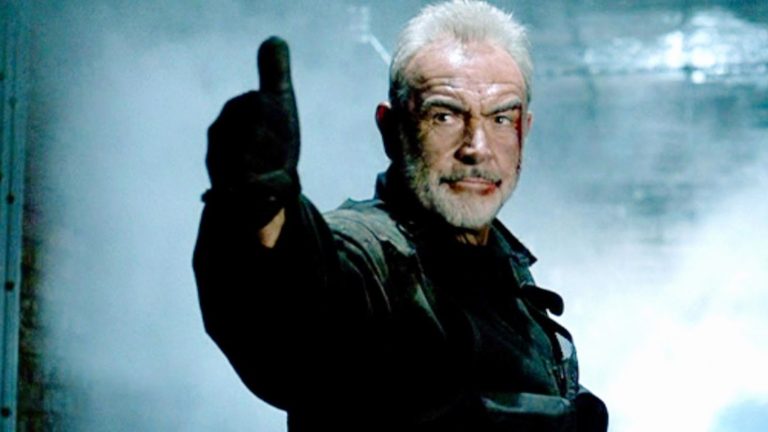
With that said, what is the best Sean Connery film that is NOT James Bond? Vote now!
Director: Gavin Michael Booth Writer: Gavin Michael Booth & Daved Wilkins Stars: Daved Wilkins, Sarah Booth
Synopsis: One night a bitterly alone man, Scott, played by Daved Wilkins who calls the Suicide prevention hotline, but accidentally calls Beth, a janitor played by Sarah Booth.
[/info]
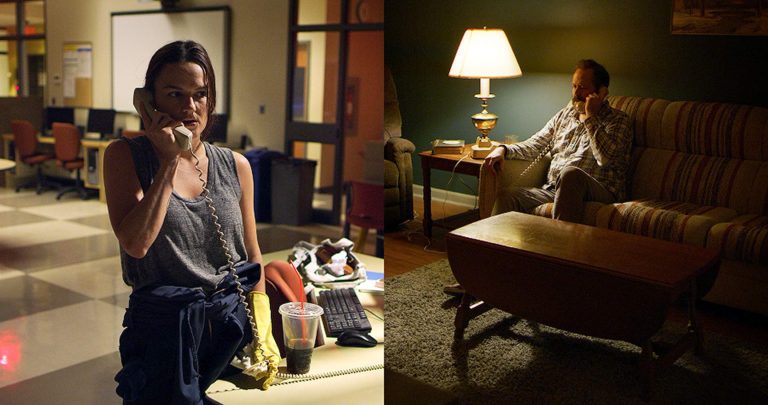
The one-shot film is a challenge that very few film directors take on; in the past we have seen the likes of Alfred Hitchcock and Sam Mendes being brave (or maybe that should be mad) enough to take on this challenge. Gavin Michael Booth takes on another challenge with his impactful and moving drama Last Call: he also uses split-screen and shoots two films in real time, without a single cut. It sounds like a gimmick, however there’s nothing about Last Call which is ‘gimmicky’. Not only is this film a technical marvel to behold, but it’s also an incredibly compelling story that features two powerful performances. Last Call is one of those rare films that leaves you in absolute awe, wondering just how the filmmakers managed to pull off such a magic trick.
Written by the film’s main male lead, Daved Wilkins (known for his work on The Mindy Project), the film follows his character Scott, a lonely and resentful man who is having a bad night. Frustrated and depressed, he makes the decision to call a Suicide prevention hotline, but accidentally calls Beth, a janitor played by the wonderful Sarah Booth. Beth is experiencing her own woes; she is a single mother with a rebellious son, and is also working two part-time jobs as well as being a student.
She answers the call not realizing who is on the other end of the line. Scott opens up to Beth and at first she seems reluctant to help (this is way outside her pay grade and she’s not trained). Scott can also come across as arrogant and sarcastic, but he’s trying to mask his pain and the loss of his son (this night just happens to be the anniversary of his death). Last Call unfolds like a classic Noir/Detective film, with Beth (and the viewer) carefully trying to piece together the reason for Scott’s call. Unfolding in real time Beth is essentially working against the clock in order to help save Scott’s life.
Last Call shouldn’t work but it does, on paper it all sounds rather too familiar but combined with the stunning performances from both Booth and Wilkins, the narrative feels fresh and original. The story hits all the right beats, smoothly running without a hitch for its 77 minutes runtime. There are some familiar character traits but the performances manage to excel the material to a whole new level. Any other actors just wouldn’t be able to pull these characters and the dialogue off, you can tell from their performances that both these actors have a history in the theater. It’s clear that these actors have the experience, the enthusiasm and the passion for acting as they both manage to dominate the screen for the entirety of the runtime. Even though the characters never meet on-screen we still feel their emotional connection such is the power of the actors’ performances.
Sarah Booth’s Beth is the clear standout of the film. Her character goes on a dramatic journey as she goes from being this apathetic individual at the start of the film who manages to transform into this person full of empathy and concern for a man she has never met. The film’s last few minutes manage to showcase just how much talent Booth contains with her. If you are not moved to tears by her struggle to contain her emotions, then you are made of very stern stuff indeed. Wilkins is known for his comedic work but he manages to show us all just what he is made of. It’s not always an easy transition from comedy to drama, but Wilkins makes it look like a breeze.
Honestly, at first the split-screen does take time to adjust to; it can be slightly confusing to follow, but Booth makes the decision to play around with the sound for each character, lowering the levels for one screen so we can hear the dialogue in the other. The film is beautifully shot by Booth and fellow cinematographer Seth Wessel-Estes, the hand-held camera helps to add a layer of realism to the film. The movement of the camera keeps the pace and maintains the tension so it almost feels as if we are there with Scott and Beth. We are a part of this shared experience with them even though we also have the privilege of being outside of the action, witnessing both perspectives unfold at the same time.
Booth is no stranger to taking on ambitious projects; in the past he has teamed up with producer Jason Blum (Paranormal Activity series, The Purge, and Oscar winning Whiplash) to create the world’s first movie broadcast live using Twitter’s Periscope App, but with Last Call he has outdone himself. Another key player is the film’s composer Adrian Ellis who also took on the task of composing the music in real time which is a beautiful companion to the film. Last Call is a film which pulls on all of our heart strings but never feels manipulative or melodramatic. It’s a very human tale which connects with many of us and it’s a film that has to be seen to be believed.
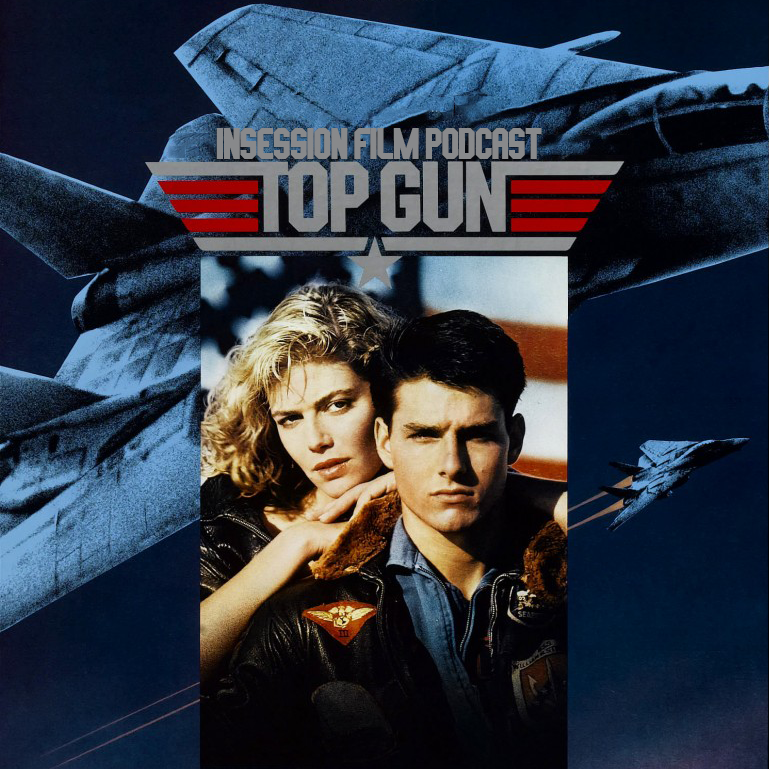
This week on the InSession Film Podcast, we review Tony Scott’s Top Gun (1986) and continue our Federico Fellini Movie Series with his 1965 LSD-trip known as Juliet of the Spirits. We also talk about a few films we’ve seen recently during quarantine.
Please forgive the length of this week’s show, Top Gun is a film that is personal to JD and he couldn’t stop talking about it. We also couldn’t minimize our review of Juliet of the Spirits as we needed every second possible to figure out what the heck was going on in that film. It may be long, but we had so much fun this week and we hope you enjoy it as well.
On that note, check out this week’s show and let us know what you think in the comment section. Thanks for listening and for supporting the InSession Film Podcast!
– Movie Review: Top Gun (5:13) Director: Tony Scott Writer: Jim Cash, Jack Epps Jr. Stars: Tom Cruise, Val Kilmer, Kelly McGillis
– Notes / Discussion (1:06:33)
As noted above, Brendan and JD have been watching a variety of films during quarantine and offered up their thoughts on a few films they’ve caught up with during the last week or so.
Main Review: From Russia with Love
Federico Fellini Movie Series: Roma
[divider]
Help Support The InSession Film Podcast
If you want to help support us, there are several ways you can help us and we’d absolutely appreciate it. Every penny goes directly back into supporting the show and we are truly honored and grateful. Thanks for your support and for listening to the InSession Film Podcast!
Directors: Tony Bancroft, Barry Cook Writers: Robert D. San Souci, Rita Hsiao Stars: Ming-Na Wen, Eddie Murphy, BD Wong
Synopsis: To save her father from death in the army, a young maiden secretly goes in his place and becomes one of China’s greatest heroines in the process.
[/info]
Disney Princesses have been a staple in the Disney genre since 1948 when Walt Disney released his first animated feature film, Snow White. For 50 years most of the female characters in these animated films fit the “damsel in distress” stereotype. They were all pretty, a majority caucasian, teenage girls who yearned for true love and a charming prince to whisk them off into the sunset. There were a few exceptions, but none truly broke the mold until Mulan in 1998. We saw glimpses of what a strong female lead would look like with Belle in Beauty and the Beast (1991), Jasmine in Aladdin (1992), and Pocahontas (1995).
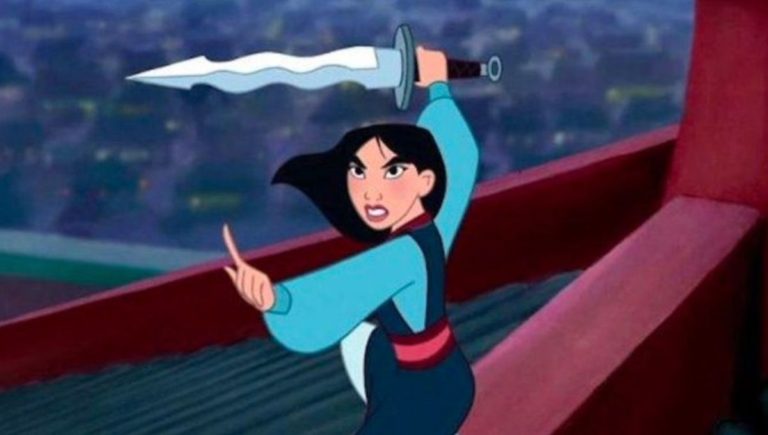
Mulan is based on the story of Chinese legendary warrior Hua Mulan. The basic premise is the same, but some details are different. A young girl secretly joins the imperial army in her father’s place to spare him from going to war again. She excels as a warrior, is rewarded for her achievements, and earns the respect of the men. Where the original legend and movie differ is when everyone finds out Mulan is a woman. It’s an epic and inspiring story, proving that Disney movies not centered around fairy tale romance can be successful too.
The film has a stellar cast; Mulan is voiced by the amazing Ming-Na Wen and her singing voice is done by Broadway legend Lea Salonga (who was also the singing voice for Princess Jasmine). Commander Shang is BD Wong, who most people will recognize from Law & Order SVU or the Jurassic Park franchise. The most recognizable voice in the cast belongs to Eddie Murphy who plays the travel sized (for your convenience) dragon, Mushu. That’s just the main cast – if you listen to the minor characters you’ll hear Harvey Fierstein (Yao), James Hong (Chi Fu), Donny Osmond (Shang’s singing voice), Pat Morita (the Emperor), and George Takei (First Ancestor).
Mulan is often listed as a favorite or “top tier” Disney. I believe that is due to the compelling story (it’s something different than its predecessors), a new animation style that includes traditional Chinese themes, and the amazing score and soundtrack. The story focuses on Mulan’s bravery and desire to protect her father. She’s introduced as a girl who doesn’t quite fit into the societal role assigned to her. She wants to bring honor to her family but she also wants to be true to herself. The viewer gets to see her grow in confidence as the story progresses. She isn’t looking for true love like many of her Disney predecessors, and while she does find it in a nonconventional way, it wasn’t the focus of the film. Mulan is one of my favorite Disney movies because it was one of the first kid’s movies that showed a woman overcome real adversity. You hear from other characters throughout the film that women are inferior, they can’t talk in front of men, they’ll be killed for breaking the rules, etc. Mulan does what she feels is necessary in spite of that. She is eventually recognized as a heroine who saved all of China. Even the main villain, Shan-Yu, a ruthless foreign invader recognizes Mulan as the soldier who defeated him and a threat. Her being a woman didn’t even matter to him. Including that short scene, where Mulan confronts Shan-Yu, helped solidify that Mulan has become a true warrior, despite the limitations placed on her gender. Disney wouldn’t give us another strong, independent female lead like Mulan again until Tiana in the Princess and the Frog (2009) eleven years later.
The way the movie is animated is also something that I find unique and interesting. They open the film with watercolor brushstrokes and traditional Chinese art. That style continues to flow into the rest of the film, especially noticeable in the background in things like smoke and water and in some of the character design (like Khan, Mulan’s horse).
Jerry Goldsmith’s score is one of the best ever featured in a Disney movie, and he was deservedly nominated for an Oscar (but somehow lost to Shakespere In Love). In addition to the score, Mulan has great songs and musical sequences. Honestly, how many people can resist adding “To Defeat the Huns” when someone says “Let’s get down to business”? Not many… The film is also credited for launching pop icon Christina Aguilera’s career. Until she recorded the pop version of “Reflection”, Aguilera hadn’t yet recorded a US single or album. She has recorded a new song, “Loyal Brave True” for the live-action remake of Mulan set to release sometime later this year.
Mulan is a groundbreaking film in many ways. This was Disney’s first DVD release and their last animated musical released on VHS. It was the first Disney film to feature an Asian heroine and she remains the only Disney princess of East Asian descent. Mulan also specifically mentions cross-dressing and shows multiple characters doing so. This doesn’t seem like much now, but almost got the film a PG rating in 1998. Mulan also has the highest body count of any Disney character, ever. Mulan managed to give us a musical, with goofy Eddie Murphy humor, while also showing us the horrors of war and resisting archaic (but unfortunately still relevant) assigned gender roles and their imposed limitations. Mulan (1998) will forever be considered one of the best Disney movies ever made. Even though that high bar is set, I am still excited to see the live-action remake when it eventually comes to theaters. Until then, I will rewatch the trailers, listen to the soundtracks, and continue to revisit the endlessly rewatchable, near perfect, animated classic.