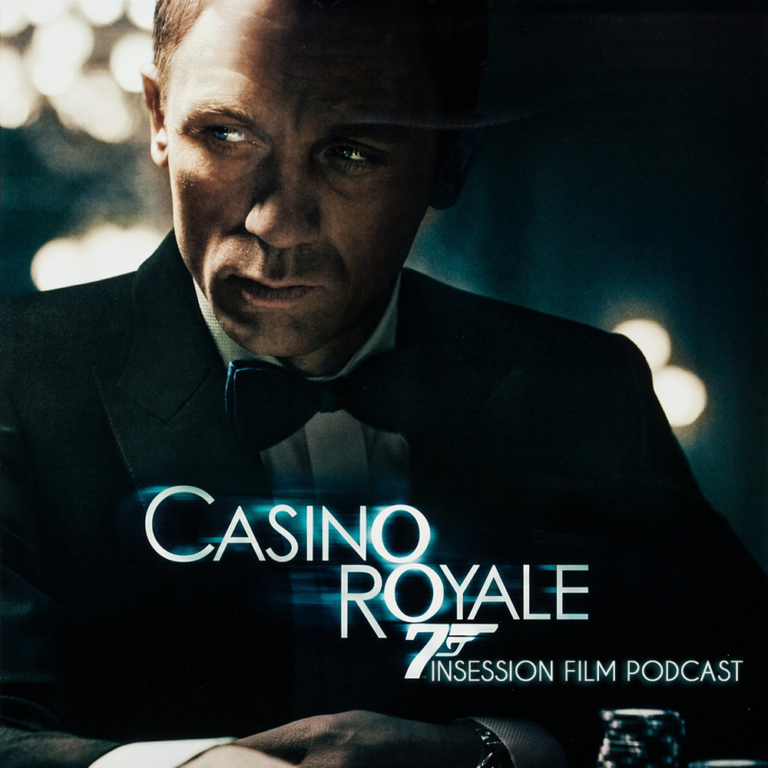
It’s a Martin Campbell double feature this week on Extra Film! The bond series enters the Daniel Craig Era with a review of Casino Royale and the guys go back to 1998 (with special guest Brendan Cassidy) to talk about The Mask of Zorro.
Many fans consider Casino Royale to be one of the better entries in the history of the Bond franchise. It re-invented the world of Bond as more grounded and gritty after the cartoonishness of the Brosnan films. What is it about this film that makes it feel so fresh, yet still so in-line with the tradition of Bond? Ryan and Jay talk through it!
Then, the discussion moves to The Mask of Zorro and Brendan Cassidy joins to talk about a movie he has a tremendous about of enthusiasm for. The Mask of Zorro is very much in the vein of classic swashbucklers and it makes complete sense that someone with a history with James Bond would make sense to take the helm of a film like this. The guys discuss its place in history, what makes it so memorable, and debate what some consider flaws.
Thanks for listening!
– Movie Review: Casino Royale (4:31) Director: Martin Campbell Screenplay: Neal Purvis, Robert Wade, Paul Haggis Stars: Daniel Craig, Eva Green, Mads Mikkelsen, Giancarlo Giannini, Jeffrey Wright, Judi Dench
– Movie Review: The Mask of Zorro (54:29) Directors: Martin Campbell Screenplay: John Eskow, Ted Elliott, Terry Rossio Stars: Antonio Banderas, Anthony Hopkins, Catherine Zeta-Jones, Stuart Wilson, Matt Letscher
We try to make this the best movie podcast we possibly can and we hope you enjoy them. Subscribe today on iTunes, Spotify or Stitcher, and please leave us a review on iTunes. You can also find us on Soundcloud, PlayerFM and TuneIn Radio as well. We really appreciate all your support of the InSession Film Podcast.
To hear this Extra Film episode and everything else we do, download our apps on the Amazon Market for Android and the Podcast Box app on IOS devices. The mobile app covers all of our main shows, bonus podcast’s and everything else relating to the InSession Film Podcast. Thanks for your wonderful support and for listening to our show. It means the world to us!
By now, the tide of the COVID-19 virus has swamped the world and the United States and normalcy is still very much distant. With every health scare, this country has dealt with, such a global crisis forcing the world to lock itself, stay away from each other, and find the time to pass on doing something not related to work. Even if I contract the virus (which I won’t because I’m drunk safely in my house), I’d be happy to sit and watch movies, even in the state of misery having this illness. But like Tom Hanks and his wife, we the nation have to remain upbeat and defiant against fear…even if it meant purging our toilet roll supply. I went on as always and, with no sports on TV, I went straight into both Criterion Channel, Netflix, Amazon Prime, and my own Blu-Ray collection to keep myself entertained. Here’s some that I found to be the best I caught:
Sex Education (2019-Present; Netflix)
I had been told a lot about this show. Probably out of lack of things to see, I took a peek at it and was hooked. It’s a wonderful teen sex dramedy about coming of age and going straight into the portal of raging hormones and exploration. Socially awkward 16-year-old Otis (Asa Butterfield, Hugo) attends his school is a village with his best friend, Eric, a gay Black young man from a religious family. Surrounded by jocks, nerds, cliques of popular people, and an old-fashioned headmaster, Otis feels like the last kid there to have had any sexual experience and it’s harder for him thanks to his mother, professional sex therapist, Jean (Gillian Anderson, aka Scully from The X Files).
In its two seasons so far and a third on the way, dive down into those familiar experiences where boys and girls quickly have questions about their anxieties, giving Otis and a social outcast, Maeve, a way to cash in and have their own sex clinic for their classmates. What can go wrong? Well, just about everything and the show doesn’t try to ham it up but lets it out freely. I think many would enjoy it because of its American Pie qualities, but also how smart the show is with the diverse cast and situations that are reflective in the real world in how this generation, those dreadful Millenials, think about sex.
Death Of A Cyclist (1955; Criterion Channel)
For writer/director Juan Antonio Bardem, the uncle of Javier Bardem, being a communist in Francoist Spain became a place to send hidden messages out critiquing the society that favored Franco. A wealthy socialite and a college professor are returning from an affair when they accidentally strike a bicyclist and leave him to die because saving him would mean revealing their scandal. The two are wrapped up in guilt and born of this comes distrust amongst themselves and the elite class they live in, and in Bardem’s leftist world, the wealthy are hypocritical who are out of touch in the real world with Spain’s real problems.
Hour Of The Wolf (1968; Criterion Channel)
https://www.youtube.com/watch?v=qVeJjxlNwIM
Following the passing of Max von Sydow, Criterion Channel made a list of his movies that can be seen, from his beginnings with Bergman to Wim Wenders’ epic Until The End Of The World. In the backend of his collaboration with Bergman, Sydow and Liv Ullman are a married couple on an island. Johan is a painter and struggles to sleep with constant visions of nightmares from his past that come out to physically attack him. It was Bergman’s only horror film, and while it wasn’t liked by the Swedish press on release, it has gotten a revisit that has made it one of his underrated achievements.
Reds (1981; Amazon Prime)
Among the collection of movies through Prime is Warren Beatty’s Oscar-winning 3-hour biopic on American journalist and renegade John Reed (played by Beatty himself), who was a communist and bared witness to the Russian Revolution. Along by focusing on Reed’s activism and account in Russia which results in his book, 10 Days That Shook The World, the film follows his lifelong romance with Louise Bryant (Diane Keaton) as it stands all the way from New York and their interactions with a clique of writers and activists including playwright Eugene O’Neill (Jack Nicholson) and anarchist icon Emma Goldman (Maureen Stapleton, who won the Oscar for Best Supporting Actress). Beatty, who won his Directing Oscar, also gets in front of the camera his witnesses to the love affair, providing a true first-hand account of the importance Reed and Bryant playing in the labor movement in the United States.
Wendy And Lucy (2008; Amazon Prime)
With First Cow delayed, I took a second look at Kelly Reichardt’s Wendy And Lucy, a beautiful tale of a woman and her only companion, a dog, as they trek through the Northwest where Wendy is heading to Alaska for work. But they are stranded in Oregon where Wendy has no money, and after being caught shoplifting from a grocery store, she finds Lucy has gone missing. Michelle Williams continued her post-Brokeback Mountain string of stunning performances for a film reminiscent of Vittorio de Seca’s Umberto D. Companionship, money, and shelter is a luxury hard to get.
Tomboy (2011; Criterion Channel)
With the massive success of Portrait Of A Lady On Fire, it was a good time to check out Céline Sciamma’s story of a child’s non-conformity to her gender and the exploration of being a boy among other boys. She is only ten, but from the beginning, she quickly plays the role of her opposite sex without necessarily declaring that she’s/he’s trans. It’s a small film that has the same beautiful qualities as her other previous works like Girlhood, but she has elevated herself to the adults and the exploration of sexuality since. However, this is a wonderful film with similar features to another non-conforming gender film, My Life In Pink.
Parchis: The Documentary (2019; Netflix)
Americans never heard of this band, of course, but if you grew up in Spain in the late 70s and early 80s, this was their version of Menudo. Five children formed the country’s first boy/girl band, each wearing a different color and each with a different personality that attracted other kids and families to raise their popularity in a country just fresh out of a repressive dictatorship. Just like Queen was playing to stadiums in South America, this band of pre-teens was already playing to thousands in similar venues. (Suck it, Bieber!) But all good things come to an end as the documentary explores their foundings, their rush to fame, and each member’s personal life to where they have gone since the music ended.
Director: Galder Gaztelu-Urrutia Writers: Pedro Rivero and David Desola Stars: Iván Massagué, Antonia San Juan, Zorion Eguileor, Emilio Buale Coka, Alexandra Masangkay.
Synopsis: A vertical prison with one cell per level. Two people per cell. One only food platform and two minutes per day to feed from up to down. An endless nightmare trapped in The Hole.
[/info]
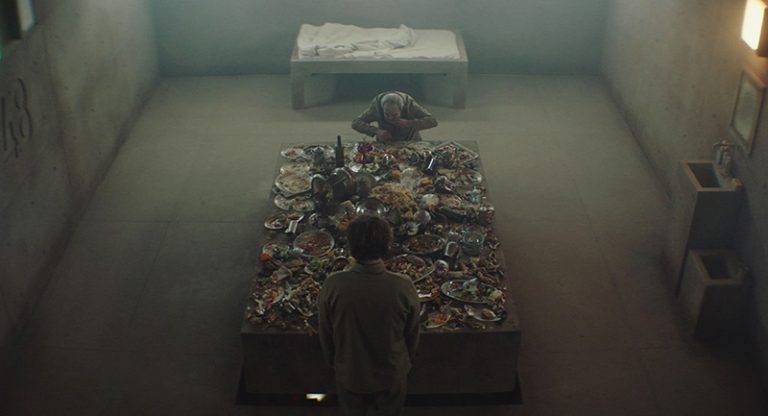
It’s hard to write about Galder Gaztelu-Urrutia’s film The Platform without giving away any spoilers but I shall do my best. Perhaps the biggest challenge any film critic faces when writing a film review is trying to restrain themselves from delving too deeply into the film’s narrative and giving a detailed analysis which doesn’t spoil the film for the reader. The Platform is one of those films that once you have finished watching it then you instantly feel the need to discuss in great detail with others. It’s very rare nowadays that we have films which are so rich and dense in detail that you feel compelled to hunt someone who has also seen it in order to deconstruct it together and bounce theories off each other. If you are self-isolating right now (which you should be) then theorizing about The Platform will keep you very busy indeed.
The film is set in the world of a futuristic prison made up of hundreds of floors, there are two prisoners to each floor. Every day, a platform descends through a large hole in the middle of the building, and it’s the only chance for food for the entire day. On the upper levels, the prisoners have access to a feast of gourmet dishes, but people don’t ration for those on the levels below. As the platform gradually makes its way down each level the food quickly disappears. It’s completely random who your fellow inmate is and which level you land on. Every month the prisoners are moved to a new level which could see them end up on level 6, or level 36 or even level 176.
The film follows Goreng (Ivan Massagué), who wakes up on level 47 which means there’s still food on the platform when it makes its way down to him. Believe or not, he’s volunteered to enter the prison in order to quit smoking and gain a diploma. Georen thinks it will be a breeze, and brings a book (each inmate is allowed to bring one item with them). It’s clear that Georeng is out of his depth, and his first cellmate Trimagasi (Zorion Eguileor) shows him the ropes. Can Goreng survive ‘The Hole’ and can he rely on the kindness from other prisoners like Trimagasi, Imoguiri (Antonia San Juan), and Miharu (Alexandra Masangkay)? And, more importantly does Georeng have the stomach to survive on the lower levels?
The Platform has just dropped on Netflix, and it’s hard not to see the disturbing comparisons with the COVID-19 pandemic that is currently sweeping across the globe. Those who find themselves on the upper levels only care about themselves, and people tend to ignore anyone below them. It’s a dog eat dog world in the hole. It’s a very timely film, and in a lot of ways it’s a wake-up call that we need. Increasingly it feels that humanity, compassion and empathy for others is barely holding on a thread, and coupled with the COVID-19 outbreak, The Platform really puts a lot in perspective for you. Gaztelu-Urrutia, writers David Desola and Pedro Rivero, and cinematographer Jon D. Domínguez have created such an immersive world which has the look and atmosphere of our nightmares; this is the true embodiment of pure horror.
As you can imagine, The Platform is brutally and unflinchingly violent, especially when we reach the film’s climax which becomes a race to the bottom of the hole (don’t worry, I won’t spoil anything, but let’s just say things get very bloody and messy). Those who have a weak stomach may reach the midway point and find it all a little too much. However, if you stick with the gore then you will be fully satisfied with a wonderfully surreal ending which is left open to interpretation. Every actor gives their all here, however the best stand out performance by far is the hilarious Zorion Eguileor who steals each scene he is in. The film’s tone shifts dramatically towards the end, and it becomes a little too serious however, Eguileor keeps popping up in places to help ease the tension.
Overall, The Platform is a sophisticated horror sci-fi which will delight fans of Snowpiercer and the Saw franchise, but will probably be a hard watch for anyone who isn’t a fan of Dystopian horror films. The film premiered at the 2019 Toronto International Film Festival, where it won the People’s Choice Award for Midnight Madness, and it isn’t hard to see why it won. Visually appealing, with some excellent claustrophobia inducing camerawork, this well written film comes in at a lean 94 minutes in length. It’s a shame that the film isn’t just a little bit longer because The Platform leaves you craving more. A word of a warning: it’s probably best to go into this film on an empty stomach.
This weekend on Episode 372, as we continue to quarantine, we’ll look back to the 80’s as we review the Tom Cruise aviation blockbuster Top Gun. With Top Gun: Maverick coming up later this summer (hopefully), we thought this would be a good time to get into the Top Gun spirit and look back on a classic that was a staple of our childhoods, at least it was for JD. So, with that as our inspiration for our poll this week, we want to know which film you consider to be the best aviation movie.
Director: J.D. Dillard Writer: J.D. Dillard, Alex Hyner Stars: Kiersey Clemons, Emory Cohen, Hanna Mangan Lawrence
Synopsis: Jenn has washed ashore a small tropical island and it doesn’t take her long to realize she’s completely alone. She must spend her days not only surviving the elements, but must also fend off the malevolent force that comes out each night.
[/info]
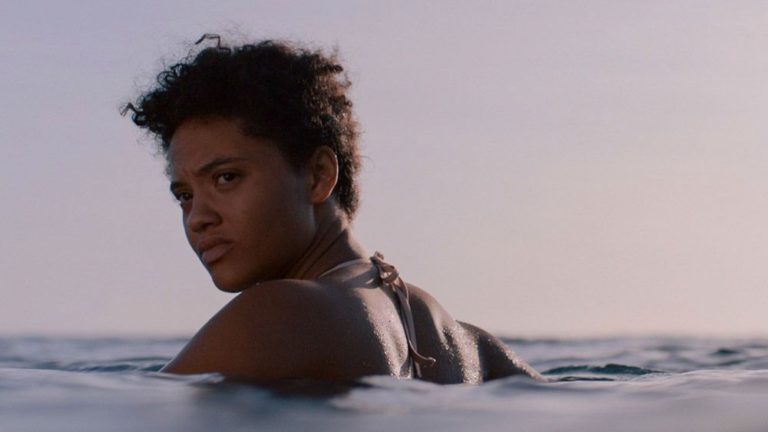
Kiersey Clemons starred in one of the best films of 2018. In Hearts Beat Loud, she gave one of the most overlooked performances of that year—and put her impressive vocal chops on full display. In that film, Clemons had the benefit of sharing most of her scenes with another actor, primarily Nick Offerman or Sasha Lane. Here in Sweetheart, however, Clemons is tasked with carrying almost the entire film on her own.
Her character Jenn washes up on the shore of a tropical island, shipwrecked, in the movie’s opening moments. Of course, being stranded on a desolate island comes with certain tribulations. Scavenging for drinkable water, hunting for food, constructing a shelter, building a fire, etc. Tom Hanks, Harrison Ford, Anne Heche, Brooke Shields, and even Madonna could tell you all about it. But none of them ever had to deal with a monster (unless you count Guy Ritchie).
Because—as if fighting off dehydration, starvation, and the elements weren’t enough—Jenn soon learns that an aquatic bipedal sea creature prowls the island for nourishment once night falls…
Director J.D. Dillard puts his faith in a solo Clemons to hold the narrative together, without the privilege of dialogue, for long spans of the picture. A truly versatile actor, she manages to convey so much of the story—and Jenn’s plight—tacitly with her body and face. Dillard’s direction is action-based and unassuming, allowing Clemons to stand out and repeatedly show that she is an absolute warrior whose range grows with each performance.
As a director, Dillard confidently drops his moviegoers right into the story—and provides zero flashbacks. He prefers to make Sweetheart all about his main character, and that’s where Clemons’ talent comes in. Thanks to her physical acting prowess, Dillard doesn’t need to include otherwise necessary exposition; this wouldn’t work with a lesser actor. In that way, Clemons is doing more audience-work than Dillard, whose presence behind the camera feels somewhat hands-off on occasion. Hints about Jenn’s pre-island life are sprinkled throughout, but for the most part Dillard instead trusts that the viewers will watch Clemons and instinctively go with her.
But then we witness our hero’s personal credibility—if what she’s seeing is true—unduly called into question, even though we and she have every empirical reason to know that the monster is entirely real. The subtext here is not exactly subtle, but maybe it shouldn’t be, for the folks who choose to reside in a bubble… In real life, the trustworthiness of women of color is frequently overshadowed by doubt. Firsthand accounts of sexual trauma, domestic abuse, police violence, workplace harassment, healthcare discrimination, micro-aggressions, and systematic prejudice regularly go unbelieved or brushed off as hyperbolic. The message lands in this horrific context, once again proving that horror is a perfect landscape for expressing social unrest.
Jenn is a survivor, utterly determined to live, despite the obstacles put in her path. She’s a young woman who has endured more hardship in two decades than many will experience in a lifetime. Her resilience matches her strength. She believes in her own skills and smarts—perhaps better than anyone she knows—because combatting this vicious humanoid ocean dweller is definitely not the first time Jenn’s vigor has been tested… but it just might be the last…
To be honest, Kiersey Clemons is the reason to watch Sweetheart. While there’s nothing blatantly bad about the filmmaking, it leaves a lot to be desired. J.D. Dillard handles this modest creature feature decently, sure. He gets the job done, and sells the important message adequately enough. But aside from two pretty killer revealing shots—keep your eyes peeled—the movie is not all that bold, directorially. It’s lean, like its amphibious predator, and resourceful, like its hero—a disadvantaged woman struggling to persevere in a place ruled by a beast whose dominance runs deep, if you catch my drift—but the film itself could’ve used more of an edge. Because once you carve out the lead performance and the central theme, Sweetheart is just your run-of-the-mill-sole-survivor-stranded-on-a-deserted-island-fending-off-a-carnivorous-aquatic-monster movie.
Director: Dee Rees Writer: Marco Villalobos, Dee Rees Stars: Anne Hathaway, Ben Affleck, Rosie Perez, Willem Dafoe
Synopsis: A veteran D.C. journalist loses the thread of her own narrative when a guilt-propelled errand for her father thrusts her from byline to unwitting subject in the very story she’s trying to break. Adapted from Joan Didion’s namesake novel.
[/info]
The Last Thing He Wanted, by Dee Rees, is so disconnected from itself that it feels like a cluttering of scenes and sequences held together by little more than adequate performances and missed opportunities. The Last Thing He Wanted never really comes together, so throughout the course of the film the tenuous threads of narrative are held together so loosely that oftentimes one is bewildered and irritated by the lack of cohesion.
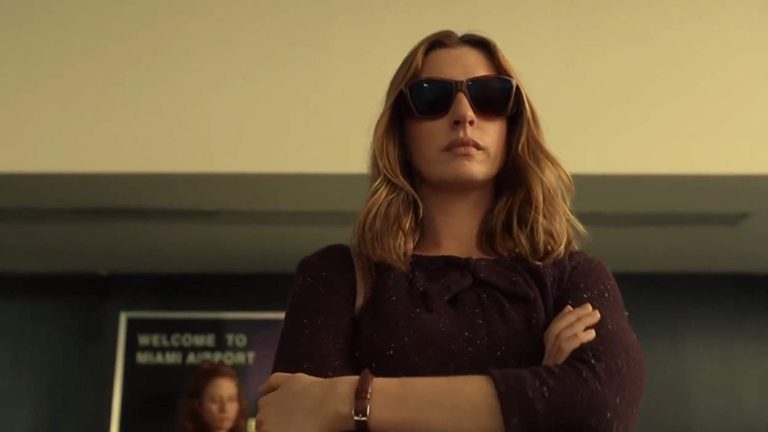
in The Last Thing He Wanted, based on Joan Didion’s novel, Anne Hathaway plays Elena McMahon, an investigative journalist following hot scoops regarding arms deals while covering Reagan’s presidential campaign in 1984. Soon, her estranged father (Willem Dafoe) appears, speaking riddles about army surplus guns and a big new deal in which he is involved. Elena quickly finds herself embroiled in an arms sale as both a participant and a journalist. During her investigations, she comes into contact with CIA operative Treat Morrison (Ben Affleck) and finds herself deeper and deeper in the very story that has consumed her.
From the start, The Last Thing He Wanted fails to build any sort of narrative foundation. The audience is keyed into guerrilla fighters and covert government bureaucrats, but nothing is ever shown or explained. The entire first third of the film is filled with hints and glimpses but there is no solid exposition. Once the plot supposedly thickens, one is left wondering who the players are and why on earth we should be intrigued by this story. Elena’s jet-setting and clandestine meetings do little to progress the story. With each new face we meet, more questions arise. With every character that is introduced, there is no explanation as to who they are, where they are, or what their role in the story happens to be. The confusion just mounts as Elena gets deeper and deeper into the plot.
As the film progresses, Elena’s character begins to lose focus. It is not that she is making different decisions and upending audience expectations, which would be welcomed and thought-provoking. The focus is lost in that the filmmakers seem to forget what her storyline entails. They haphazardly insert phone calls with her colleague (Rosie Perez) and her daughter (Onata Aprile) as to only remind the audience that she has a job and a family. None of it fits the narrative, as one finds themselves just plain wondering what the heck is going on.
The actors themselves seem to have put their performances on auto-pilot. Dafoe plays unstable well and that’s all he does. Hathaway hits her marks, weeps in close-up, and talks on the phone…a lot. Affleck broods and delivers lines like he is waiting for the check to clear. If their characters were better written and more well-rounded, perhaps their performances would have resonated more, lifting this film into something more narratively cohesive. However, the lack of a firm story and poor character development leaves them out on a limb, hoping the branch won’t snap below them.
All in all, The Last Thing He Wanted lacks enough substance to become enjoyable. Tensions are never properly set up and characters don’t even seem to be living in the world that is created. This disconnect between every aspect of the film works against itself right from the opening sequence. The locations are beautiful and some of the smaller parts are well acted (Edi Gathegi & Mel Rodriguez); however, nothing comes together and a lot of talent seems to be wasted.
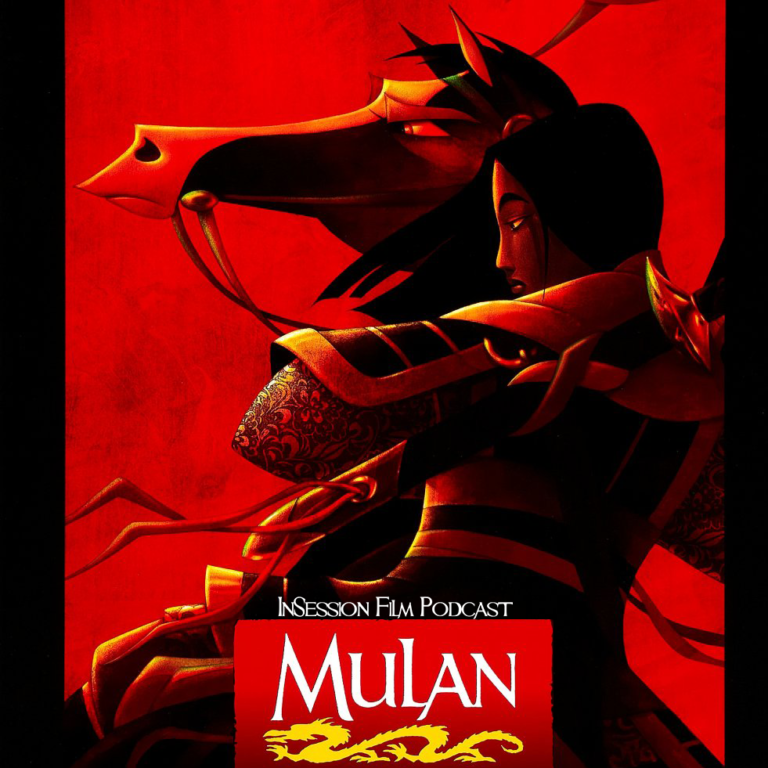
This week on the InSession Film Podcast, Nicole Ackman from Next Best Picture joins us to discuss Disney’s animated Mulan from 1998 and we continue our Federico Fellini Movie Series with his 1963 masterwork in 8½! Plus, some more debate on the James Bond franchise.
Big thanks to Nicole for joining us this week. We are big fans of her work over at NBP and with In Their Own League, and it was a big pleasure to finally get her on the show, especially given her love for Mulan. As we continue our Fellini Series this week, and of course we’re biased, but our review of 8½ is probably one of the best reviews we’ve ever done. All in all, we had a lot of fun on the show week and we hope you enjoy it as well.
On that note, check out this week’s show and let us know what you think in the comment section. Thanks for listening and for supporting the InSession Film Podcast!
– Movie Review: Mulan (5:50) Director: Tony Bancroft, Barry Cook Writer: Robert D. San Souci, Rita Hsiao, Chris Sanders, Philip LaZebnik, Raymond Singer, Eugenia Bostwick-Singer, Dean DeBlois Stars: Ming-Na Wen, Eddie Murphy, BD Wong
– Notes / James Bond Discussion (51:47)
As noted above, we had more James Bond to talk about as we catch up with franchise blindspots or rewatches that were overdue. Specifically, Brendan wrapped up his Pierce Brosnan-era rewatches and wanted to give his thoughts on those four films. And JD had more to say about The World Is Not Enough after the guys had their say on Extra Film last week.
Main Review: Top Gun
Federico Fellini Movie Series: Juliet of the Spirits
[divider]
Help Support The InSession Film Podcast
If you want to help support us, there are several ways you can help us and we’d absolutely appreciate it. Every penny goes directly back into supporting the show and we are truly honored and grateful. Thanks for your support and for listening to the InSession Film Podcast!
This week on the InSession Film Podcast: Extra Film segment, Ryan and Jay continue their James Bond series and review a recent indie VOD release, Swallow, making for a unique pair on Extra Film.
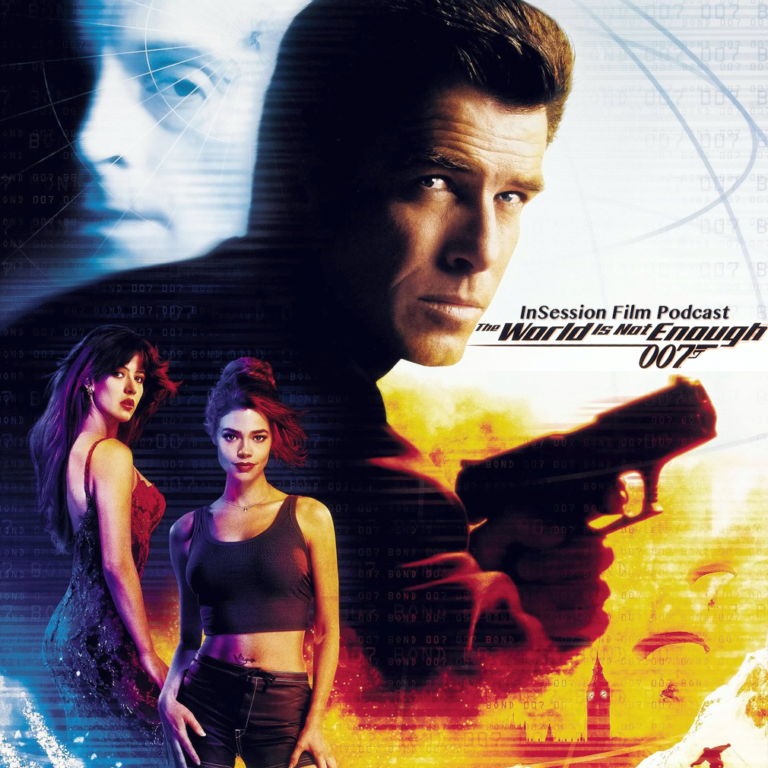
The guys continue the exploration of the Brosnan era with The World Is Not Enough, a fairly maligned entry in the series. There are good things about… and there are bad things about it, to say the least. Ryan comes to the film’s defense and Jay goes on a Denise Richards rant. It makes for a great listen!
Then, the discussion moves to a very different type of movie, the indie body-horror/domestic drama film, Swallow. It is disturbing, to be sure, but offers an important message on gender roles and features some very impressive film making, especially from a first-time director. Haley Bennett shines and, in a year with far fewer releases than usual, she might end up being on some best-of-the-year list when 2020 comes to a close.
Thanks for listening!
– Movie Review: The World Is Not Enough (3:15) Director: Michael Apted Screenplay: Neal Purvis, Robert Wade, Bruce Feirstein Stars: Pierce Brosnan, Sophie Marceau, Robert Carlyle, Denise Richards
– Movie Review: Swallow (43:30) Directors: Carlo Mirabella-Davis Screenplay: Carlo Mirabella-Davis Stars: Haley Bennett, Austin Stowell, Elizabeth Marvel
We try to make this the best movie podcast we possibly can and we hope you enjoy them. Subscribe today on iTunes, Spotify or Stitcher, and please leave us a review on iTunes. You can also find us on Soundcloud, PlayerFM and TuneIn Radio as well. We really appreciate all your support of the InSession Film Podcast.
To hear this Extra Film episode and everything else we do, download our apps on the Amazon Market for Android and the Podcast Box app on IOS devices. The mobile app covers all of our main shows, bonus podcast’s and everything else relating to the InSession Film Podcast. Thanks for your wonderful support and for listening to our show. It means the world to us!
Despite the global crisis of the COVID-19 virus, the show must go on. Four new films enter the collection and one is given a brand new re-release. A comic Western, a gritty French Resistance story, a black satire against communism, a stellar indie, and an all-around wonder from Mister Wes himself. The new introductees into the Criterion Collection are:
Destry Rides Again (1939)
The same year John Ford directed his Western classic Stagecoach, George Marshall made a comedy out of the saloon with the use of James Stewart and Marlene Dietrich. Stewart is a deputy sheriff, one of charm rather than seriousness, and Dietrich is the seductive (as usual) singer Frenchy. Although it is technically based on the popular Western noir by Max Brand, almost nothing from the novel was used in the film. Stewart’s performance helped him fill out his everyman status and get Dietrich away from her box office poison status that surrounded her in recent years.
Army Of Shadows (1969)
https://www.youtube.com/watch?v=KcXjW73IjOI
The re-release of the month is Jean-Pierre Melville’s French resistance thriller featuring Lino Ventura, Jean-Pierre Cassel, and Simone Signoret. On the run and ducking the secret police that wants them dead, the band of fighters must deal with the consequences of an informant as well as analyze what it means to sacrifice. Rejected on release because of the events one year earlier which many saw the film as a pro-Gaulle film (and de Gaule was unpopular then), it would not get its proper acclaim until after Melville died. Many critics – including this one – say it is Melville’s best film.
The Cremator (1969)
At the same time, as Czechslovakia’s freedoms were being crushed by the Soviets, director Juraj Herz took a stand with a dark comedy that attacked the totalitarianism being forced upon the country. Set in the 1930s as Nazi Germany knocks on the door of usurping it into their empire, a man working at a local crematorium begins to descend into madness when he sees his job as a way to look at the dying and roleplay their ideals. It was immediately banned and would not see the light of day until the fall of communism and is considered a masterpiece of the Czech New Wave.
Me And You And Everyone We Know (2005)
Miranda July wrote, directed, and co-starred in this dramedy about two lovers (July and John Hawkes) who slowly take it to the next level in their relationship while his two sons and his neighbors, two teenage girls, begin their first feelings for sexual exploring. There are different subplots loosely connected, but July keeps them in check and equally intriguing with the comparisons of teenage and adult sexual desires. A nice gem tucked behind the rest of the growing indies of the decade, Roger Ebert would list it as number 5 of the best films of the 2000s.
The Grand Budapest Hotel (2014)
Okay, this is the movie everyone wants because of Wes Anderson. His next film to get the Criterion treatment, it is such a Felliniesque stroke of genius, following the concierge and his lobby boy working with love, art, murder, and conspiracy set in the interwar years. But as a typical Wes Anderson film, the wit in every line said and the incredible mise-en-scene gives us such a unique adventure as we jump in time and go along for a ride through the hotel and its surroundings that, for a March release in 2014, stayed relevant for Oscar time with 9 nominations and 4 wins.
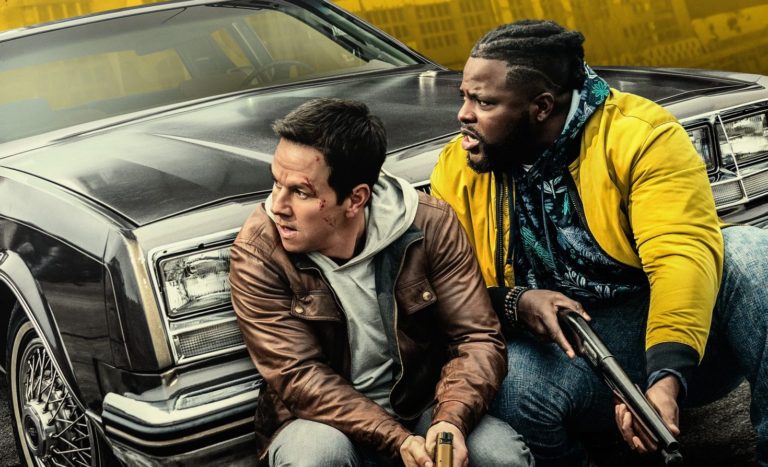
Director: Peter Berg Writer: Sean O’Keefe, Brian Helgeland Stars: Mark Wahlberg, Winston Duke, Alan Arkin
Synopsis: When two Boston police officers are murdered, ex-cop Spenser teams up with his no-nonsense roommate, Hawk, to take down criminals.
[/info]
If you look at Spenser Confidential from the outside, it’s both the film you would expect it to be, and the film that it had to be. It’s director Peter Berg’s fifth film in a string of collaborations with Boston’s homeboy, Mark Wahlberg. But unlike Patriot’s Day or Deepwater Horizon, two lopsided spectacles that both worked with odd competency, the duo’s latest follows Mile 22. While Berg directed with an efficient, if not tasteless style in the past, that 2018 project should have been the first film to win Most Directed Film at the Razzies (hey, if Michael Bay couldn’t, maybe Peter could get this category rolling). Spenser Confidential follows Mile 22’s pile of dreck with a harmless experience that would be hard to recall in a few days if not for the handful of misguided choices that act as wallpaper to a dollar store police thriller.
The barebones of Spenser Confidential paint a project more average than humanly possible. The titular character of Spesner (Mark Wahlberg) is an ex-convict and ex-police officer whose recent release from jail has put him back onto the streets of Boston. If you’ve ever heard someone say “the location is a character in this movie,” it turns out they were lying, because Spenser Confidential seems like it was created as a tribute to the cliches of Boston. When moving back to Southie, Henry (Alan Arkin… yes, that Alan Arking) provides Spenser with a bedroom and a new roommate, Hawk (Winston Duke). Blah, blah, blah, the two team up to do something nonsubstaial about murderers and corrupt police officers.
As the plot unfolds, the film moves into a solid groove of mediocrity. Wahlberg does his typical mannerisms, Duke tries to create a character out of nothing, and Alan Arkin is here for a reason unknown to me. While the Boston stereotypes are laid on hard, there are a few entertaining sections, including one that introduces Hawk’s abilities in the fighting ring. These little moments make Spenser Confidential worth enjoying, but particularly as an opportunity to savor every moment that we get to spend with Mark Wahlberg. He’s such a ridiculous person, not only as an actor but as a public figure as well. Anytime you see him, he’s just a happy presence, an actor who has no idea what to make of his body language, his mannerisms, his figure as a brute force. He can’t even make the last one work, he’s just too goofy.
At this point in the review, I’d like to turn and focus on the soundtrack and chosen music for Spenser Confidential, as it is one of the funniest collections of music in film. In an opening scene, where Spenser is still in jail, he fights off a series of people in the jail’s library(including Post Malone!), which is set to “Foreplay/Long Time” by…Boston, of course. When he gets home from prison, he has sex with his girlfriend in a public bathroom, set to “Feels Like the First Time” by Foriegner, one of the cheeisiest songs of all time. She yells out “Go, Sox” at one point. When he fights a bunch of cops in a bar’s bathroom, the movie peaks at Wahlberg being humorously flung into a toilet stall set to Neil Diamond’s “Sweet Caroline.” I mean, Jesus, that’s a bad needle drop. While these ridiculous choices make this film worth seeing, it’s disappointing to see Peter Berg slink away from what seemed like a solid career as an action-craftsman/director for hire. He can apply competence, he just doesn’t seem to want to.
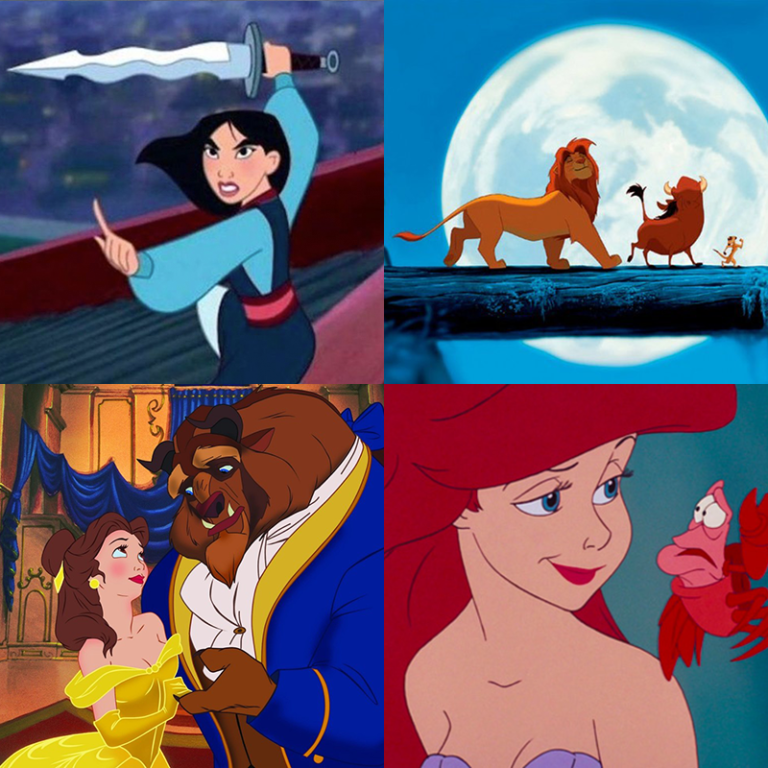
This coming weekend was supposed to be the release of Disney’s new live-action remake of Mulan before it was delayed due to COVID-19. We may have to wait on the new film, but we’re still in the Mulan spirit and decided to review the 1998 animated film in its place on Episode 371. It may not be as highly regarded for most people, but to JD it’s as great as any Disney film during the 90’s Renaissance. Brendan also favors the film quite a bit too. With that said, though, we are curious to hear were you all stand on Disney’s Renaissance era from the 90’s. What is your favorite film from that era?
Director: Tanya Wexler Writer: Brian Sacca Stars: Zoey Deutch, Jai Courtney, Judy Greer
Synopsis: Set in the underworld of debt-collecting and follows the homegrown hustler Peg Dahl, who will do anything to escape Buffalo, NY.
[/info]
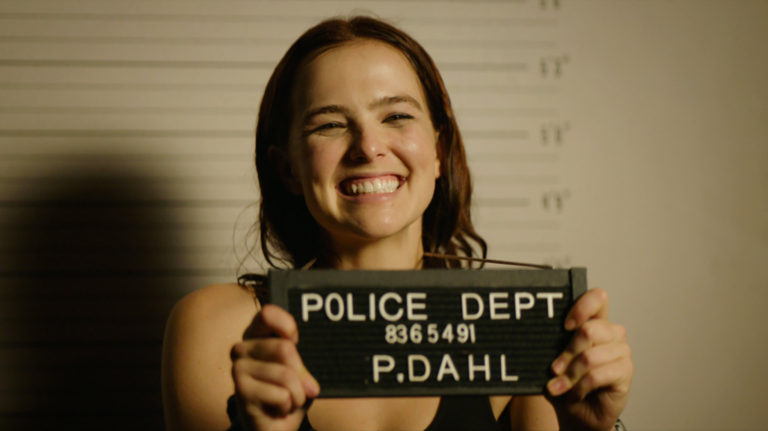
Zoey Deutch is a gift all of humanity should be thankful for. Any movie with her name in the credits should be on everyone’s watchlist. Her latest film is Buffaloed, a dark comedy about a girl who wants more in life and is willing to bend the rules to get it. This film may not be for everyone, but I recommend checking it out just for Zoey Deutch.
Buffaloed tells the story of Peg Dahl (Zoey Deutch) born into a blue collar family and the only person in her family that seems to want to make money and get out of town- even if she has to hustle people to do it. Peg comes up with many schemes, from selling cigarettes to counterfeiting Bills tickets. After serving time in jail, Peg is called by debt collectors. After some fast talking, Peg convinces the man on the phone to let her into the underworld of debt collectors. Her skills quickly make her the most successful person there, so Peg decides to go out on her own so she can make more money. This angers her former boss, Wizz (Jai Courtney), and their feud and accompanying shenanigans attract the attention of the authorities.
Zoey Deutch is the heart and soul of this movie. Without her, I don’t know if I would have been interested in Buffaloed at all. Her character does a lot of unlikable things, but because it’s Deutch we forgive her and keep watching. This is also the first film of hers where I really thought she resembled her mom, Lea Thompson (Back to the Future). The supporting cast was also good, I particularly like Judy Greer as Peg’s Mom Kathy and Jai Courtney as debt collector crime boss Wizz. I also loved the atmosphere of this film. It reminded me of where I grew up in the midwest (I know Buffalo, NY is not in the midwest…) with it’s slang and use of the (correct) word for carbonated beverages, pop. If you liked The Wolf of Wall Street (2013), Buffaloed is kind of in that same genre of “rag-tag group makes money in a sketchy way” flick.
I don’t have a lot of criticism for Buffaloed. My only complaint is it was sometimes hard to follow and I really wanted more for Peg. I really felt for her. She was intelligent and street smart and I felt like she could do so much more if she just had the opportunity. Frustratingly, her bad decisions and poor judgement kept holding her back. The movie was still entertaining, even if things didn’t pan out exactly as I wanted.
Buffaloed is a fun flick that proves, once again, that Zoey Deutch is a force to be reckoned with. She easily carries most of this film on her own and looked like she enjoyed every minute of it. She’s fantastic in comedic roles and I can’t wait to see her in something that will gain more awards attention. Buffaloed is available to rent or buy on a few streaming platforms (Amazon, YouTube, Vudu) and since theatrical releases are on hold for a bit, I strongly encourage you to check out this one.
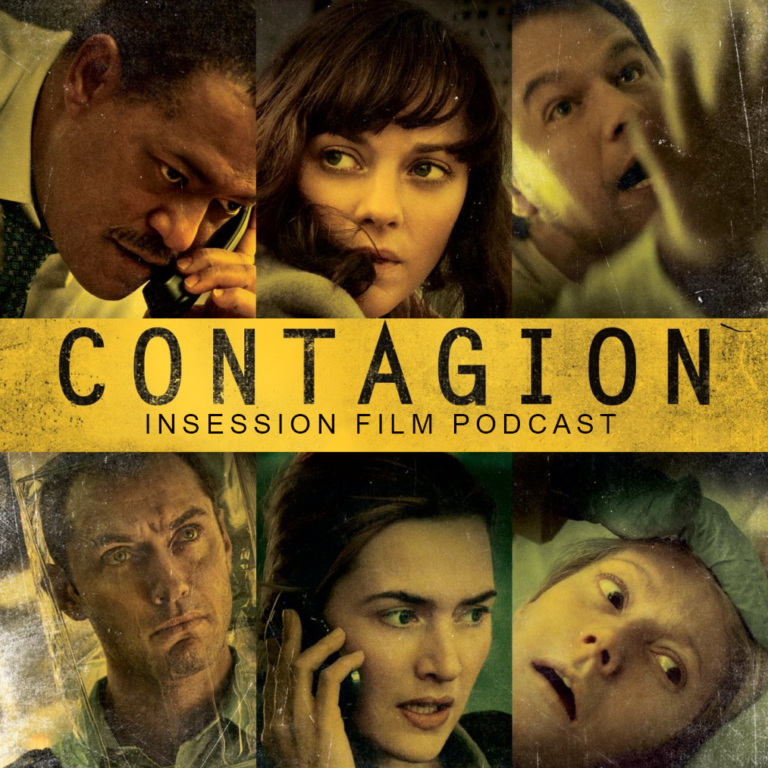
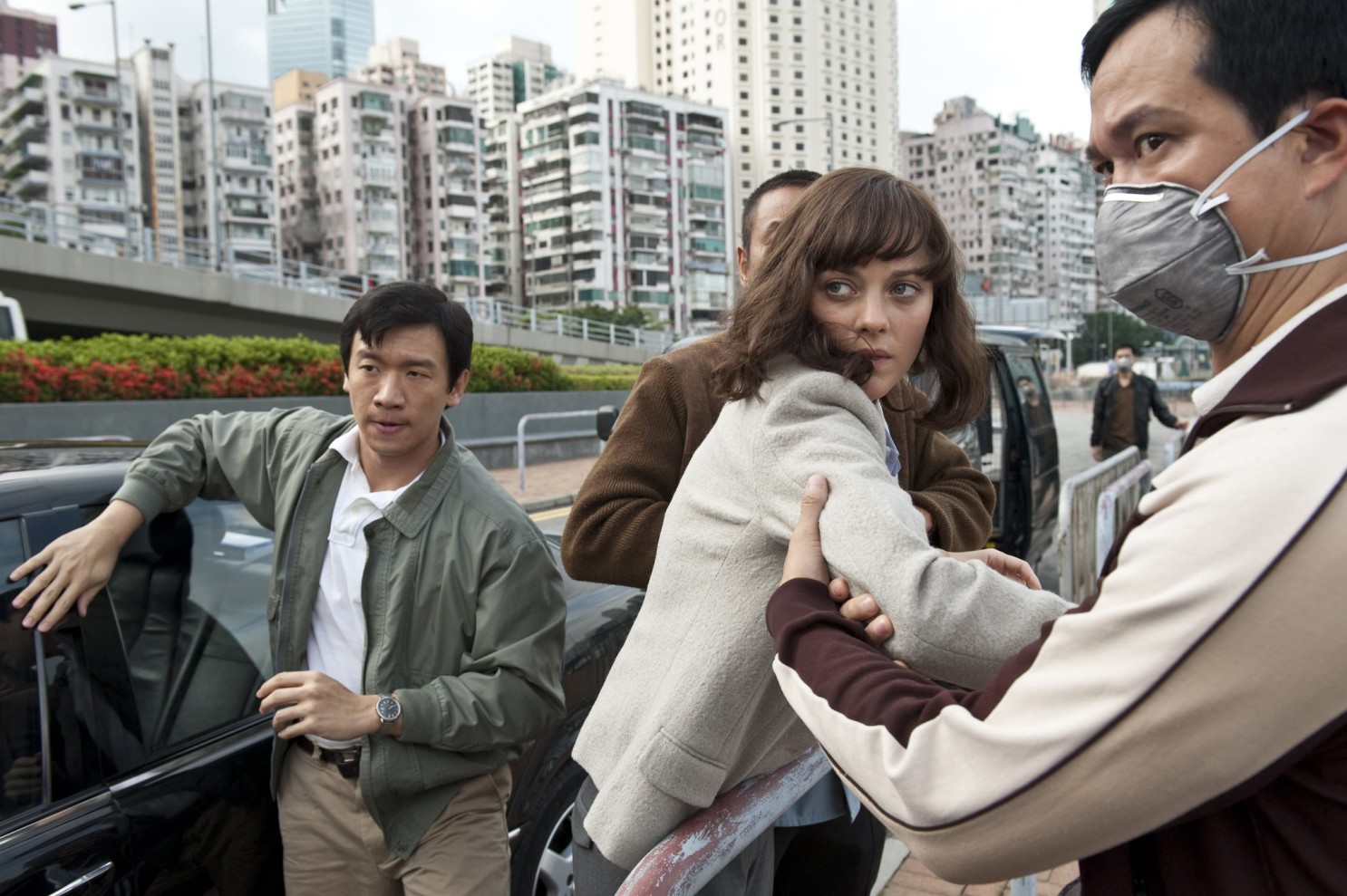
This week on the InSession Film Podcast, we review Steven Soderbergh’s Contagion and continue our Federico Fellini Movie Series by discussing his 1960 film La Dolce Vita! Plus a few thoughts on The World is Not Enough and The Big Lebowski.
With theaters shut down, streaming services have (understandably) become the crux many have gone to for entertainment and movies. And given the current circumstances, it seems as if virus/pandemic movies have been a specific topic of interest for a lot of people. So, we thought we would jump on that bandwagon as well this week and talk about one of our favorite directors working right now. We’ve always liked Contagion, but in 2020, it’s even more eerie. Also, brace yourself for some James Bond hot takes later in the show. We apologize in advance (sort of).
On that note, check out this week’s show and let us know what you think in the comment section. Thanks for listening and for supporting the InSession Film Podcast!
– Movie Review: Contagion (4:02) Director: Steven Soderbergh Writer: Scott Z. Burns Stars: Matt Damon, Laurence Fishburne, Jude Law, Gwyneth Paltrow, Kate Winslet, Bryan Cranston, Jennifer Ehle, Marion Cotillard
– Notes / The Big Lebowski / The World is Not Enough / Pirates of the Caribbean (43:39)
As noted above, since it was talked about on our latest Extra Film, JD figured he would offer up his thoughts on The Big Lebowski as well. And as promised, his thoughts on The World is Not Enough is sure to stir the hornets nest a little bit. It’s not the most liked James Bond film, but that isn’t stopping him (and spoiler alert, another IF member as well).
Main Review: Mulan (1998)
Federico Fellini Movie Series: 8½
[divider]
Help Support The InSession Film Podcast
If you want to help support us, there are several ways you can help us and we’d absolutely appreciate it. Every penny goes directly back into supporting the show and we are truly honored and grateful. Thanks for your support and for listening to the InSession Film Podcast!
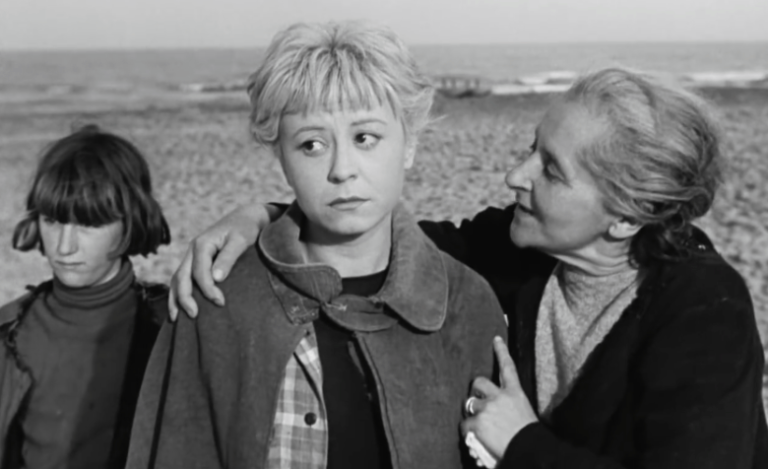
There are some actors that are just born to play a certain role, whether that be Robert De Niro for Taxi Driver’s Travis Bickle, Leonardo DiCaprio as Rick Dalton in Once Upon a Time in Hollywood or Marlon Brando in The Godfather. Sometimes it’s near damn impossible to separate the character from the performer. Such is the case for Giulietta Masina as the character of Gelsomina in Federico Fellini 1954 film La Strada. We came very close to not having Masina star in the picture, and looking back at the film it’s hard to picture anyone else in the role. Masina isn’t just playing Gelsomina, she is Gelsomina.
Upon my research for this piece, I found out that Masina was considered too old for the role of the young woman who is sold to Anthony Quinn’s strongman Zampanò and is forced into a life on the road. In Danielle Hipkins’ piece for The Conversation, she writes “At an initial screen test, the producer, Dino de Laurentiis, was hoping that Paramount would overrule Fellini’s choice of female protagonist in favour of one of the more typical Italian female stars of that period. This was the time of the rise and rise of the so-called “maggiorate fisiche” or pin-ups, such as Sophia Loren or Gina Lollobrigida.”
However, it’s hard to picture Sophia Loren being able to capture the fragility of the character. Loren’s Gelsomina wouldn’t have put up with Zampanò. The height difference between Quinn and Masina adds another layer to the fim, because the camera often positions them in such a way that she looks even more fragile and vulnerable when compared to this great, hulk-like man. Gelsomina is a character who we cannot help root for because she isn’t your typical heroine and it’s for this reason that she still remains one of cinema’s greatest heroines. She doesn’t appear ‘conventionally’ attractive, with each facial expression being extremely exaggerated but even when she’s smiling the camera will often cut to a close shot of her eye where we can see the real pain and anguish that she contains within.
We begin with an establishing shot of her lonely figure collecting firewood on a beach, and never has such a person look so delicate and fragile on the big-screen. Even before the events of the film take place, we instantly find ourselves bonding with Gelsomina from the way she is shot against the vast, endless stretching beach with the sea acting as a backdrop. Perhaps this shot indicates how there is no real escape for Gelsomina, she will always find her way back to the beach, trapped by the water with nowhere else to go.
Gelsomina’s story is a tragic fable of the perils of poverty, upon the arrival of Zampanò and the news of her elder sister’s death, Gelsomina finds herself essentially being sold for 10,000 lire. Her role in society is all driven not only by her class and social status but by her gender as well. As a woman Gelsomina has been conditioned to be obedient towards men, and even when Zampanò continues to insult her and belittles her she still remains a loyal subordinate. Even her own mother refers to her as coming out “a little strange”.
Before the opening scene ends we see Gelsomina in a state of shock, she smiles in her usual fashion before turning away and revealing to the camera and to us, just how much anguish she is in as she fights to hold back the tears. We’re only a couple of minutes into the film, and if you aren’t floored by the sheer magnitude of her performance already then by the end of the film you will be. Throughout the film there are a handful of rare occasions where we see Gelsomina genuinely happy and these occur when she is given the freedom to perform. We can see this clearly demonstrated in the scene where she plays her trumpet for the nun and this reveals to us how she uses the instrument to express her true feelings. This little interaction ends in the most heartbreaking way as the nun asks her whether she wants to say, only for Gelsomina to climb into Zampanò’s vehicle and tearfully say her goodbyes.
Fellini himself had gone on record to say that a strong feeling of guilt led him to make the film, and it is no secret that his and Masina’s marriage was strained. Perhaps the power of her performance comes from the fact that she drew on her own experiences, and that she could relate to this woman who just wanted to be an entertainer but was trapped by the constraints of society? If there’s one thing we can take away from the story of La Strada and the character of Gelsomina, it’s that behind every great showman there’s a great woman.
Ireland, or Éire in the old Irish language, has been a fascinating land for its recent turbulent history and long-standing culture. Many of our ancestors come from the island, escaping from religious persecution, famine, and just total depression from a country that did not modernize itself until the 1960s. There are people and things we associate with the country, and strictly with the Republic side, not the North (which has its own issues) thanks to the literature and culture the country has made itself into. A lot of exporting their talent and scenery, but not enough domestic filmmaking, even though they’ve had modest success. Part of it comes from their lack of industry and cultural export stagnation for the first sixty years of their independence, yet Hollywood and Britain took advantage of the scenery for productions.
First Views
The first film ever shot in Ireland was years before their independence, The Lad from Old Ireland. The silent one-reel from director Sidney Olcott was made in 1910 as the first Hollywood production done outside the United States. Olcott would return the next year to shoot more movies and wanted to build a production studio, but the First World War kept him out of the country. Native directors did make their own movies, but independently and with no studio use. Author James Joyce opened the first cinema in the country in 1909 as the Volta, and the Ambassador Cinema became a full-time cinema the following year, becoming Dublin’s longest-running movie theater until it closed in 1999.
For the first half of the 20th century, American films dominated the market, partly because of Ireland’s audiences’ preference for American films, as well as the strict censorship influence by the Catholic Church. In 1951, director John Ford honored his family ancestry by shooting in Ireland The Quiet Man with his go-to actor John Wayne as a former boxer who wants to buy his family’s old farm, falls in love with a local girl, but has to deal with traditional Irish customs that get in the way. It was the first time a film shot on location in Ireland was fully presented after the Second World War, something so risky that John Ford could only get the movie made with the small Republican Pictures. Thanks to its success, including Ford’s fourth Best Director win, the areas where the film was shot have become tourist attractions.
The Establishment Of The IFB
In 1958, the first (and only) purpose-built studio in the Republic of Ireland, Ardmore Studios, opened for business. Not surprisingly, it was part-funded by American businesses. For British and other international productions, it became a great place to shoot because of the economic incentives and location advantages, having noted films shoot in Ardmore such as The Spy Who Came In From The Cold, The Great Train Robbery, and Excalibur. The Film Act of 1970 laid the foundation for future investment in the film industry, keeping in local writers and directors to work from home, a state-supporting plan that was not found in other countries.
A decade later, The Irish Film Board (IFB), as it was first called, was established to formally provide funds for Irish directors and writers. It lasted only from 1980 to 1987, meaning that other films had to receive external funding after it was shut down. Three Irish-based movies that did so with critical and commercial success, such as My Left Foot,The Commitments, and The Crying Game, providing enough support for its reestablishment in 1993. In the first fifteen years, the underdeveloped talent blossomed with worldwide acclaimed films such as Bloody Sunday, The Magdelene Sisters, Palme d’Or winner The Wind That Shakes The Barley, the musical-romantic Once, and the Oscar-nominated animated The Secret of Kells.
Contemporary Times
In 2018, the name was changed to Fís Éireann/Screen Ireland (FÉ/SI) to reflect the change in the medium as no longer just film. FÉ/SI is responsible for the development, production, and distribution of movies, documentaries, short films, TV animation, and TV drama works. Irish productions have grown thanks to the government’s tax law for all international productions, creating a fresh base of working crews that have worked on TV shows such as The Tudors, Penny Dreadful, and Vikings. In more recent years, Irish-related works such as Room, Brooklyn, and The Killing of A Sacred Deer have been put forward for international recognition. The FÉ/SI are estimated to have an annual budget of €15 million, and while homegrown works are lacking, partly because major talent has gone abroad, it remains a much-valued place for work in somewhere not named London.
The last few weeks and months have been concerning with COVID-19 spreading around the world. We hope everyone is staying safe and taking all of the precautions necessary as we help fight the spread of the virus. As such, as you all know, theaters have closed and people are quarantining themselves for safety, giving people the opportunity to watch more movies at home as they cope with everything. One genre of film that’s been getting more attention is the pandemic movie. From The Andromeda Strain to Outbreak to Contagion, there are certainly plenty of interesting films to demonstrate the potent effect of a virus that is difficult to control. With that as our inspiration for our poll this week, what do you think is the best pandemic movie we’ve seen over the years?
Keep in mind that we are NOT counting zombie movies. We feel as if that’s a separate poll question on its own that we will eventually get to one day.
Welcome to the InSession Film Lounge! In our second episode, we discuss COVID-19’s impact on Hollywood, new films coming to VOD and how the industry could change as a result of what’s happening at the moment.
To hear our bonus content episodes early, subscribe now on Patreon. In many cases, though, we offer our bonus content for free after a certain period of time and we do encourage (and very much appreciate) a small donation of $0.99 as a way to help support the show if signing up on Patreon isn’t for you. Click on the PayPal button below to donate and thanks so much for your support. You can also hear much of our Bonus Content via our mobile apps. See the information at the bottom of the post for more details.
[divider]
Mobile Apps!
Listen to all of our bonus content on our apps for just a one-time fee! Whether you have an iPhone, Android or Windows phone, our apps are available in many different ways that is convenient for you. With our mobile app, not only can you listen to all of our bonus content, but our main shows and our Extra Film podcasts as well. Click here for more info!
If you don’t want to purchase our bonus content, but still want to support us, there are other you can help us out. Click here for more info.
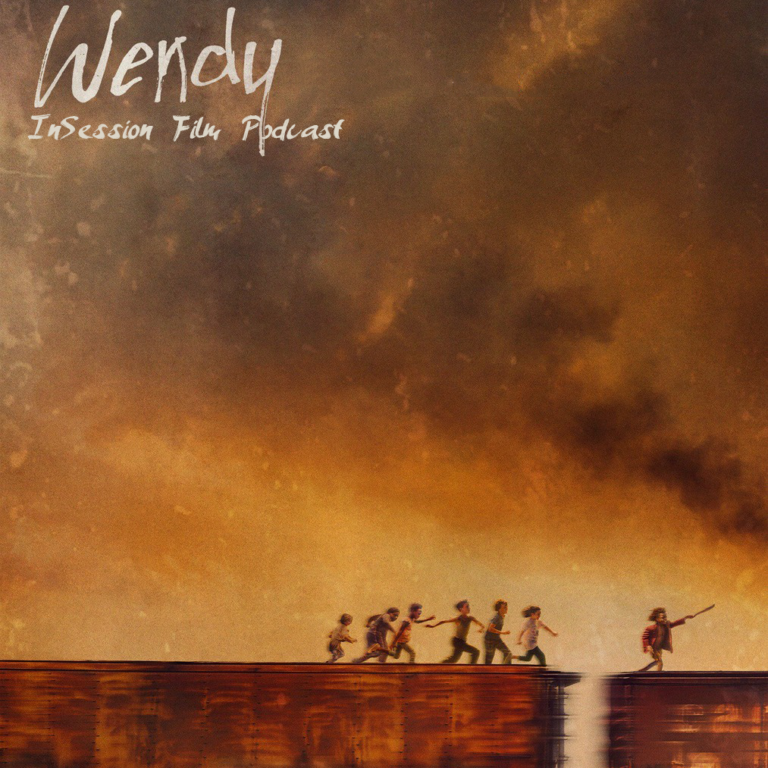
This week on the InSession Film Podcast, we discuss Benh Zeitlin’s highly anticipated sophomore effort in Wendy and we continue our Federico Fellini Movie Series with his 1957 film Nights of Cabiria! We also hear from a medical professional about coronavirus and JD gives us his thoughts on Gavin O’Connor’s The Way Back.
Special thanks to Brandi Duran (aka JD’s lovely wife) for taking the time to join us to discuss COVID-19 and its impact on social norms. She was very informative and we appreciate her candid responses, even if it means not going to the theater for a little while. Speaking of theaters though, it was very exciting as we got the chance to see Wendy before many of them close. It was our most anticipated film of 2020 and we had fun dissecting its Peter Pan-inspired story.
On that note, check out this week’s show and let us know what you think in the comment section. Thanks for listening and for supporting the InSession Film Podcast!
– Movie Review: Wendy (4:24) Director: Benh Zeitlin Writer: Benh Zeitlin, Eliza Zeitlin Stars: Yashua Mack, Devin France, Gage Naquin, Gavin Naquin
– Notes / Discussion / The Way Back (40:17)
As mentioned above, we talk to medical professional Brandi Duran to discuss coronavirus and why it’s a good idea to avoid the theaters for now. Additionally, JD gives his thoughts on Gavin O’Connor’s “kind of a sports movie, but not really” The Way Back, starring Ben Affleck.
Main Review: Contagion
Federico Fellini Movie Series: La Dolce Vita
[divider]
Help Support The InSession Film Podcast
If you want to help support us, there are several ways you can help us and we’d absolutely appreciate it. Every penny goes directly back into supporting the show and we are truly honored and grateful. Thanks for your support and for listening to the InSession Film Podcast!
This week on the InSession Film Podcast: Extra Film segment, Ryan and Jay continue their discussion on Bond and the latest from Gavin O Conner. It’s another fascinating pair of movies on Extra Film.
The guys shift from the Dalton era to the Pierce Brosnan as 007. For many of our listeners, and Ryan as well, Brosnan was the first Bond they got the chance to see on the big screen. Goldeneye is also considered to be the best Bond film Brosnan ever did, so it was interesting to hear the guys go a different way with their opinions. While there are many complaints about the film’s quality, they do also get into talking about the video game spawned from Goldeneye. It led to a pretty balanced discussion and one we think you will enjoy.
Then, the discussion moves to The Way Back, starring Ben Affleck. Gavin O Conner has tackled the subject of sports movies before but none with this much of a personal story behind it. With Affleck’s own personal battles, they collaborate to bring this story to the big screen. While the film doesn’t work overall, the boys are still able to admire Affleck’s performance as one of the best of the year so far.
Thanks for listening!
– Movie Review: Goldeneye (4:01) Director: Martin Campbell Screenplay: Jeffrey Caine, Bruce Feirstein Stars: Pierce Brosnan, Sean Bean, Izabella Scorupco, Famke Janssen
– Movie Review: The Way Back (40:06) Directors: Gavin O Conner Screenplay: Brad Ingelsby Stars: Ben Affleck, Al Madrigal, Michaela Watkins, Janina Gavankar
We try to make this the best movie podcast we possibly can and we hope you enjoy them. Subscribe today on iTunes, Spotify or Stitcher, and please leave us a review on iTunes. You can also find us on Soundcloud, PlayerFM and TuneIn Radio as well. We really appreciate all your support of the InSession Film Podcast.
To hear this Extra Film episode and everything else we do, download our apps on the Amazon Market for Android and the Podcast Box app on IOS devices. The mobile app covers all of our main shows, bonus podcast’s and everything else relating to the InSession Film Podcast. Thanks for your wonderful support and for listening to our show. It means the world to us!
Director: Dan Scanlon Writer: Dan Scanlon, Jason Headley, Keith Bunin Stars: Tom Holland, Chris Pratt, Julia Louis-Dreyfus, Octavia Spencer
Synopsis: Set in a suburban fantasy world, two teenage elf brothers embark on a quest to discover if there is still magic out there.
[/info]
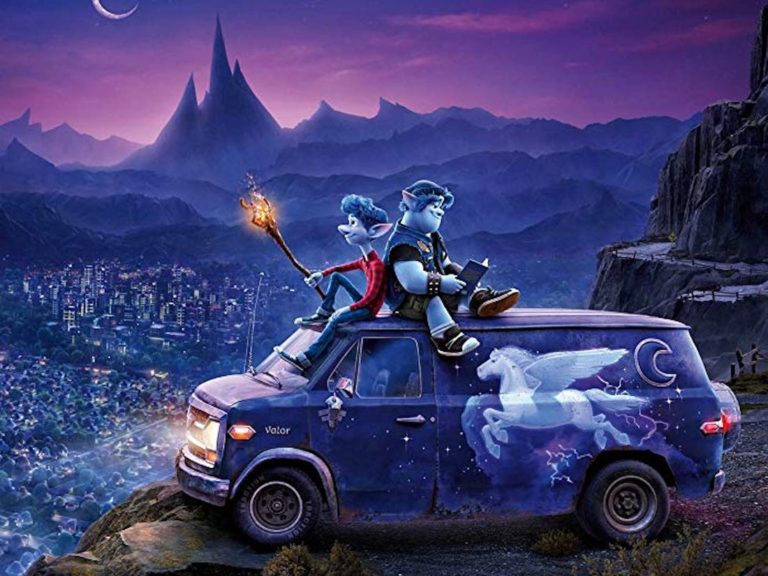
Dan Scanlon is back in the director’s chair at Pixar after his debut in 2013 with Monsters University, a fine film even if lesser than its predecessor. Onward is his latest, and the inspiration for it is actually quite the heartwarming story. If you haven’t heard the story, do yourself a favor and look it up, it’s well worth your time. Long story short, it involves Scanlon, his brother and their father, who unfortunately passed away when they were young. I won’t give the rest of it away, but when you hear it and how it tethers to Onward itself, it’s enough to make a grown man cry. Or maybe just me, but you guys know me.
Onward tells the tale of two brothers in Ian (Tom Holland) and Barley (Chris Pratt), who live in a suburban fantasy world that used to be ruled my magic. However, due to modern technology, magic of old is now obsolete. The film opens on Ian’s 16th birthday, but instead of being happy for himself, he’s still thinking about his late father, who he has no memories of since he unfortunately passed away when Ian was just a baby boy. To his surprise, though, Ian’s mother offers him up a gift from his father that he and Barley were supposed to receive once both reached the age of 16. It turns out to be a magical staff that would bring their father back for a 24-hour period. Once Ian figures out how to use the staff, there’s an error, and only his father’s legs are brought back via the spell. From there, Onward is an enthralling journey as Ian and Barley embark on a quest to discover a way to finish the spell before their father disappears forever.
Perhaps what’s most intriguing about Onward, however, is that its central premise is kind of a red herring. As Ian and Barley set off on their quest together, the film cogently demonstrates their motivation and urgency as they are desperate to see their father again. A notion that slyly leads you to believe one thing, but really, at its core, the film is really more about brotherhood and how sibling love can fill the void of a missing parent. Up until his 16th birthday, all Ian had was stories that others told him about his father. And he clutched on to those stories as if they were gold. Eventually though, Ian realizes that his life hasn’t been as empty as he thought, and the dynamic between Ian and Barley inside those notions is quite affecting. In one specific moment in the film’s climax, it heavily subverts expectation as we see Ian make a bold choice regarding Barley and his father, crystallizing the film’s themes and springing the water works.
Where Onward stumbles slightly, is in its editing and execution. Particularly, the side plot involving Laurel and The Manticore, and their escapades throughout the film. Scanlon and company do a great job of building momentum, emotionally and dramatically, only to then undermine that progression by cutting away from Ian and Barley, and in most cases for a silly gag or unnecessary meandering. Julia Louis-Dreyfus and Octavia Spencer give great vocal performances respectfully, though.
As is the case with all Pixar film’s, the animation here is great. Its use of colors and shadows, the way this world is rendered, the distinct ideas around magic, it’s all vivid and imaginative. On the same token, it wouldn’t be a Pixar film either without a great score, and Mychael and Jeff Danna do not disappoint. It may be be the most memorable in Pixar’s cannon, but it’s a worthy entry.
Where Onward thrives the most is in its emotion. Shocking, I know. But that is what Disney/Pixar does best and when the film is focused on that, and reveling in that inspiration I mentioned earlier, you can sense Dan Scanlon’s passion for this story. The relationship between Ian and Barley, and how that evolves, is nothing short of sublime. In fact, it’s so tender that even a van sacrifice is oddly poignant. And it ends in a way, that’s not only bold, but it ebulliently evokes the wonder of magic in our lives, and how that can come in the most unexpected of ways.
It’s not perfect, but I still admire what its aiming for and the challenges its taking on when it comes to death, grief and coping with it at a young age. Give me that any day of the week.