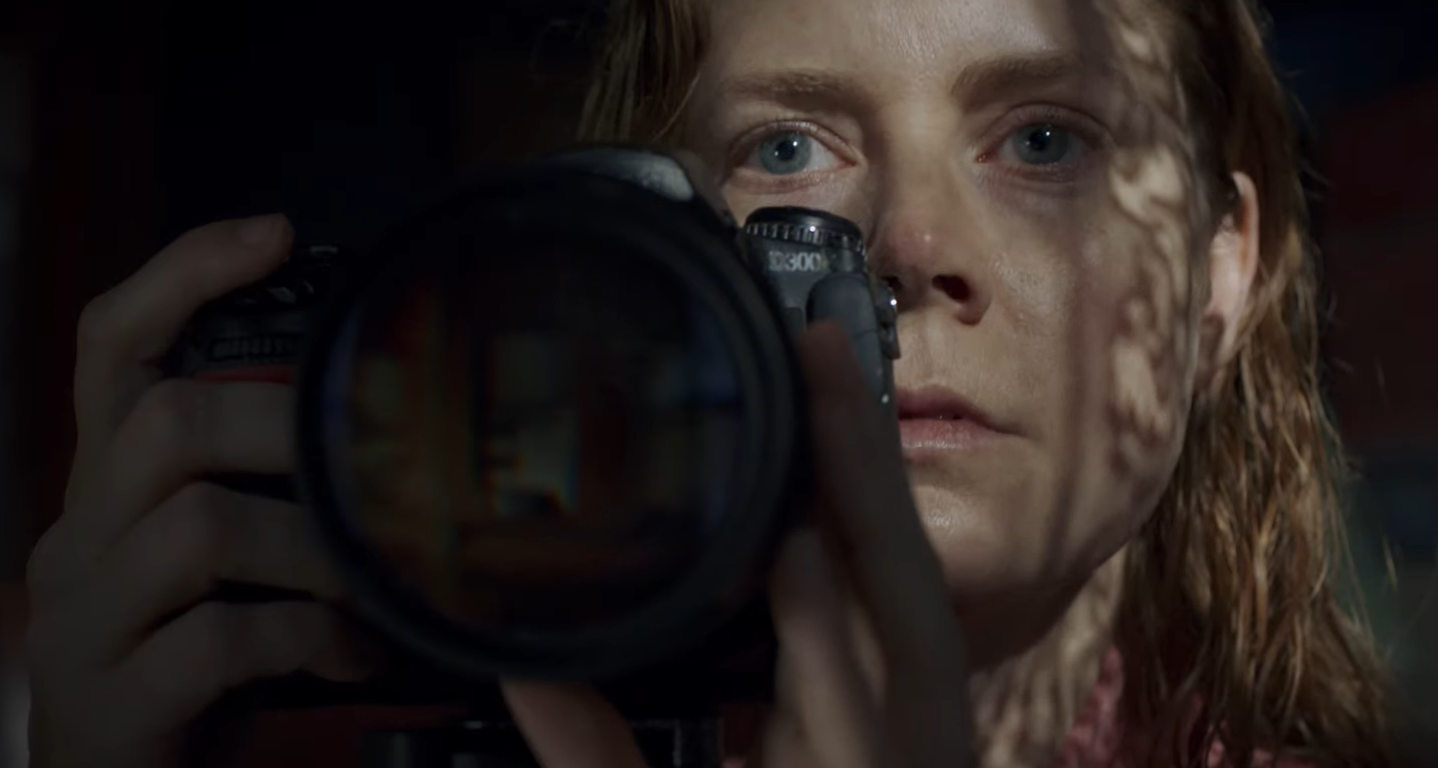
This week on the InSession Film Podcast, Jay Ledbetter joins us to discuss Joe Wright’s latest in The Woman in the Window and we continue our Michael Mann Movie Series with his 2006 film Miami Vice!
Huge thanks to Jay for joining us once again. It’s always a fun time when the Extra Film boys jump on the main show, but this time it’s especially interesting given our discussion of Miami Vice. For one, given Jay’s love affair with Michael Mann, it was great to have him on just to hear his passionate thoughts. But also, it led to an unexpected debate that amplified the conversation even further. This, in addition to somewhat of a defense of The Woman in the Window, a film that is mostly getting panned by cinephiles. So, this episode isn’t in short supply of interesting takes.
On that note, check out this week’s show and let us know what you think in the comment section. Thanks for listening and for supporting the InSession Film Podcast!
– Movie Review: The Woman in the Window (7:42) Director: Joe Wright Writers: Tracy Letts (screenplay by), A.J. Finn (based upon the novel by) Stars: Amy Adams, Gary Oldman, Julianne Moore
– Notes / Summer Preview (55:27)
Typically, our summer preview consists of a Top 5 list that lays out our expectations and excitements for that given year. However, since things are still fluid because of the pandemic, and we’re in the middle of a Movie Series at the moment, we thought it would be best to keep it simple. So, during the break segment this week, we loosely laid out a few films we’re anticipating and what we hope to see.
– Michael Mann Movie Series: Miami Vice (1:15:29) Director: Michael Mann Writers: Michael Mann, Anthony Yerkovich (TV series) Stars: Colin Farrell, Jamie Foxx, Gong Li
Review: Army of the Dead
Top 3: N/A
Michael Mann Movie Series: Public Enemies
[divider]
Help Support The InSession Film Podcast
If you want to help support us, there are several ways you can help us and we’d absolutely appreciate it. Every penny goes directly back into supporting the show and we are truly honored and grateful. Thanks for your support and for listening to the InSession Film Podcast!
Director:Joe Wright Writers: Tracy Letts Stars: Amy Adams, Gary Oldman, Anthony Mackie, Wyatt Russell, Brian Tyree Henry, Julianne Moore
Synopsis: Agoraphobic Dr. Anna Fox witnesses something she shouldn’t while keeping tabs on the Russell family, the seemingly picture perfect clan that lives across the way.
[/info]
Director Joe Wright, most known for his elegant period pieces, hangs up his lavish gowns and takes on his newest project The Woman in the Window. With one delay after another, and not all because of the worldwide virus, The Woman in the Window may not be everything you’re expecting.
Based on the best-selling novel by A.J. Finn, this adaptation has a lot to live up to. A story such as this may take its inspiration from an array of psychological thrillers, but it’s pretty clear the impact Alfred Hitchcock’s Rear Window has on this film. Our Hitchcockian heroine, Anna Fox, is not played by a blonde bombshell, but rather the talented Amy Adams, an actress whose stunning career includes a wide range of characters. Staying in the house with nowhere to go should be a rather relatable subject, but unlike Jimmy Stewart with his broken leg, Anna struggles with agoraphobia.
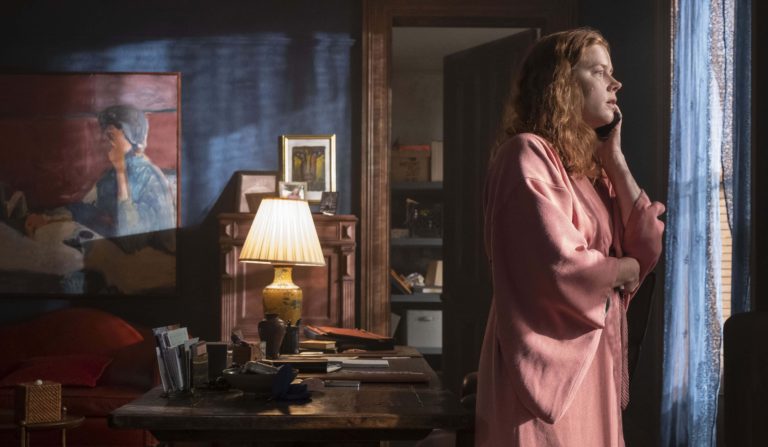
She stays in her home watching the outside world pass before her, surviving on an unhealthy diet of prescription pills from her psychiatrist (Tracy Letts) and bottles of red wine. Anna’s mind becomes fuzzy as each day bleeds into the next. Through the drunken stupor and hallucinations, she watches the neighbors go about their business, playing music or participating in prayer groups. On an ordinary Monday morning, she notices new neighbors moving in across the street.
The Russells are a wealthy family that has moved from Boston to Manhattan. Within a day, Anna is visited by the son Ethan (Fred Hechinger) and then by the matriarch of the family, Mrs. Jane Russell (Julianne Moore). Anna takes a liking to them, although she believes that their family life may be a bit troubled. Soon after their meeting, Anna sees Jane murdered from across the street — her disorder preventing her from helping Jane any further than calling the authorities. This is but the first domino to fall as the rabbit hole of mystery only becomes more convoluted.
Whether it be the celebrated novel or the intriguing trailer, we have all been taken in by the film’s compelling whodunit. However, its execution is severely underwhelming. In an “everything but the kitchen sink” type of storytelling, its constant barrage of twists and turns makes it hard for the viewer to feel engaged in what’s happening at a particular moment. Wright is no stranger in adapting famous novels for the big screen. However, this generic retelling of a story that’s plainly been done before, full of homage after homage to classic film, feels like it’s trying too hard.
In what can best be described as a “silver platter” of movies, The Woman in the Window has all the pieces to make this film a gripping thriller. An accomplished director, brilliant cast, great score, and eerie cinematography, this film should be a no-brainer award caliber film. Although the film isn’t terrible, it’s forgettable at best. With an original release date of 2019, The Woman in the Window feels like the piece of food in your fridge that urgently needs to be consumed as it reaches the end of its shelf-life.
If you’re a fan of sports, then you heard of the rise and fall (2 days) of The Super League, when twelve of the richest soccer clubs in Europe banded together to form a league of their own where no one gets relegated and they get all the money. I won’t go into details of why it was scandalous, but the basis of its backlash was its undemocratic formation and the obvious money grab these clubs wanted over less wealthy clubs. Even fans and players of the clubs who were doing this were opposed to this, and like a house of cards, the league folded with its billionaire owners having their tails between their legs.
Low and behold, it’s no surprise that the studios were doing this and it took, not the protests of millions of people, but the Supreme Court who found it in violation of the antitrust law that became known as the Paramount Decree. The instigators were the Big Five – Paramount, Warner Brothers, 20th Century Fox, MGM, and RKO – plus the so-called Little Three – Universal, Columbia, and United Artists. The real little guy in this to take on these studios were small independent companies who couldn’t get their works shown in theatres because the studios owned these theatres and used to promote their own movies.
The fight began when Hollywood was still in the silent era. As an industry unregulated financially, the studios developed a process where they got to work with theatres and bought the rights to show whatever they made in that specific theater. Small or big, they bought into all of them to distribute their constant content. This was known as vertical integration where the company controls the supply chain. At its peak, the studios only had almost twenty percent of the theaters in the country, yet this accounted for about forty-five percent of revenue. In 1938, the U.S. Justice Department sued the theatres for violating the Sherman Antitrust Act of 1890.
As it was laid out, the studios were in a business within a business with competition amongst themselves where the money would be shared to buoyant each other – just like what The Super (Fail) League was trying to do. They engaged in block booking, where they buy the rental space over long periods of time to show their films, shielding others from trying to sneak in their own work. Adolph Zukor, head of Paramount, is credited for starting this practice in order to give maximum exposure to his stars. Blind buying was also being done, where theatres would rent the film without seeing what the film was. The government did offer a consent decree if the studios followed a certain set of conditions, but the studios turned it down. A District Court found in favor of the studios, which was then appealed to the Supreme Court, who ruled the studio system of distribution was in violation and forced them to diverse themselves from any theatres they owned.
In 2019, the Justice Department sought to dismiss the ruling as they stated it was, “unlikely that the remaining defendants can reinstate their cartel.” The court affirmed it and currently, all studios and theatres are in a transitional period (even in these times) to adjust to the changes. And, while certainly, theatre chains will take any film from every studio out there, big or small, independent theatres and studios once again fear they are going to be boxed out again from being competitive and show films unlikely to be seen in a big theater. Time will tell of the ramifications that the end of the ruling will do. But certainly, it does not mean another Super League will form as studios no longer have the same affluence and power as it was in the past.
Director: Guy Ritchie Writers: Guy Ritchie, Ivan Atkinson, Marn Davies Stars: Jason Statham, Holt McCallany, Jeffrey Donovan, Josh Hartnett, Chris Reilly
Synopsis: The plot follows H, a cold and mysterious character working at a cash truck company responsible for moving hundreds of millions of dollars around Los Angeles each week.
[/info]
The term auteur theory is overused in cinema circles and, like most academic ideas, wildly misunderstood. But at its most basic, it is the idea that the director is that author of their films, so one can identify their films via theme or specific aesthetic stylings. Of course, there is a lot of subtlety missing here, such as film being a collaborative medium, but I digress. For years, since Lock, Stock, and Two Smoking Barrels (1998), and whether liked said style or not, Guy Ritchie was a quintessential example. Swept Away and Aladdin aside, you can almost always recognize a Ritchie flick. Crime/heist movies with twists and turns focusing on class structure in England with a quippy, sarcastic anti-hero? Yeah, that’s Ritchie to a tee. It would be easy to walk into his latest film, Wrath of Man with these ideas in your head. In fact, it is difficult not to, especially if you have strong feelings (in either direction) about Ritchie’s previous work.
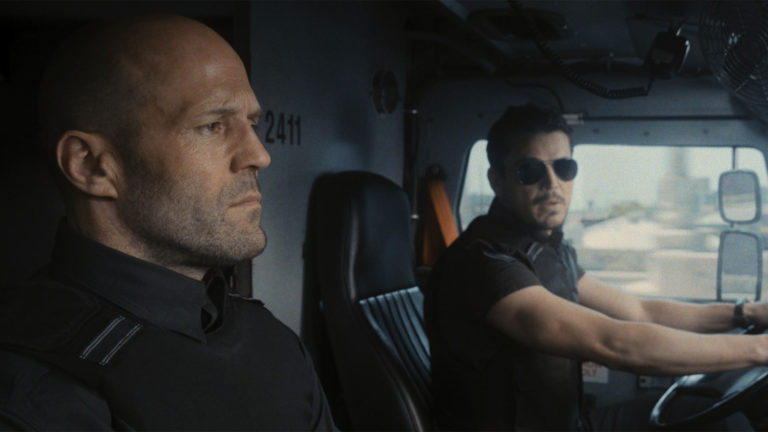
But I fear that if you have these preexisting ideas, Wrath of Man may rub you the wrong way. Despite the fact that Jason Statham stars (as he often does in Ritchie films), this is not a rehash of Bacon from Lock Stock or Turkish of Snatch fame. Wrath of Man tells a winding tale, which yes, is a Ritchie standby, but this one unfolds in a much more static fashion, using flashback and chapter structure as opposed to whirlwind reveals. It tells the story of H, a new hire at an armored truck security facility who quite obviously has a past that he is hiding. He is needed as two employees were recently killed in an armed robbery. Some might argue that H having a past is a predictable bit (after all, he gets the exact minimum score needed to be hired, a bit of perfection that is a little too noticeable), but I would argue that Ritchie has little to no interest in surprising the audience with new information. For a bloody action movie, the information being communicated to the audience is much more focused on providing next steps than moments of shock.
Statham’s performance is a good one, if a little unexpected. Aside from some mild humor in his introductions to his coworkers, his delivery is cold. It is performed as predatory, not with a wink as in previous roles. And this is not the only restraint on display. Ritchie himself, not exactly known for simplistic, contained camera movement, seems to be aware that this film is not as fast-paced as his other work and the look of the film reflects this change. As he allows the plot to unfold, the visual language of the film also slowly builds up steam. In the first act, essentially a workplace drama (with guns and body armor), we feel the frustration from H and the build of mistrust from his co-workers. But, Wrath of Man is more than Statham, and that is where problems begin to sneak into the frame.
There are two other plotlines, both of which are introduced through flashbacks and brought up to present day, and both are well below the quality of what Statham is giving us. The organized crime plotline, which is usually Ritchie’s standard, rings hollow and uninteresting. It exists purely to prop up the idea of a character, much of which could be accomplished much more quickly. These characters are uninteresting stereotypes. They are not offensive, but they quickly fade into the background. There is definitely not a Bullet Tooth Tony, Brick Top, or Boris the Blade to be found in Wrath of Man.
The second of these plots, as expected, surround the reveal of the original armed robbers who start this drama into motion. Before our awareness, this is based in well-designed action, a definite strength of the film. After all, it opens with this major event and is filmed in such a way that we are not aware of the intricacies of the plan or the deadliness of its results. Within this group of men, their leader, Jackson (Jeffrey Donovan) is the only one doing mildly interesting work. He is not given much to work with, but he is able to portray a sense of honor that can be lacking from this type of role. It certainly doesn’t help that Wrath of Man gives yet another opportunity to Scott Eastwood in a minor role, again coming off as a lump of wood in vaguely human form. His role is small but important, and his lack of charisma and focus makes the final act suffer a great deal.
All that being said, if you’re here for a pure action movie, you likely will not be disappointed. Ritchie usually focused on flair and shock in his action sequences, but not here. A combination of simple but effective choreography and Statham’s cold-blooded demeanor serve to have the desired impact once the film introduces its plotlines. He smartly includes that initial scene of violence, otherwise, a sense of boredom and impatience might set in. But once the action truly begins, it is efficient, bloody, and wildly effective. Wrath of Man is not a typical Guy Ritchie/Jason Statham project, but well worth watching for a fix of cold, effective revenge.
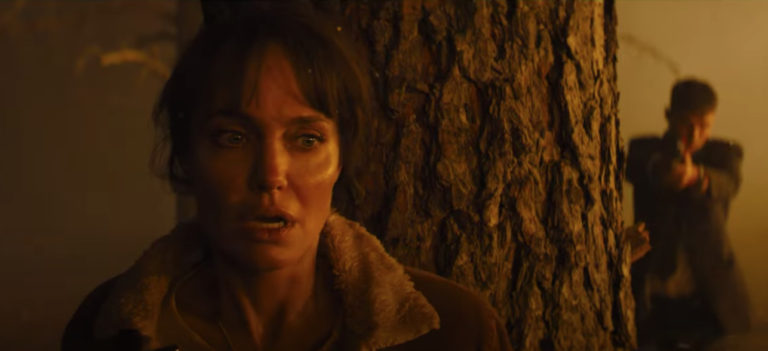
Director: Taylor Sheridan Writers: Michael Koryta, Charles Leavitt, Taylor Sheridan Stars: Angelina Jolie, Finn Little, Nicholas Hoult, Aidan Gillen, Medina Senghore, Jon Bernthal
Synopsis: A teenage murder witness finds himself pursued by twin assassins in the Montana wilderness with a survival expert tasked with protecting him — and a forest fire threatening to consume them all.
[/info]
Few writers or directors have more power in Hollywood than Taylor Sheridan. The writer-turned-director continues to draw an audience for his traditional, if not throwback, style of storytelling. Dressing up modern-day stories in Western tropes, his projects rarely flop with audiences. The track record of Sicario, Hell or High Water, Wind River, and Yellowstone is rather unassailable. Penning Oscar-winning films, draw massive numbers on television, and seemingly keeping a genre alive single-handedly fits the Sheridan persona. His latest feature, Those Who Wish Me Dead, unites a surprisingly stellar cast for a fairly straightforward crime thriller. With Angelina Jolie taking on her first non-Disney starring role since 2015, Those Who Wish Me Dead continues Sheridan’s hot streak.
After jumping out of an airplane to instant adrenaline, Those Who Wish Me Dead follows two converging stories. Hannah Farber (Jolie), a firefighter and smokejumper, has severe PTSD after a deadly incident on the job. Meanwhile, in Florida, an accountant Owen (Jake Webber), and his son Connor (Finn Little), find themselves running for their lives. When two assassins (Nicholas Hoult & Aiden Gillen) catch up with Owen, they kill him before reaching his brother-in-law Ethan (Jon Bernthal). Connor escapes into the woods and finds his way to Hannah. As the two of them bond, the assassins begin a fire to shroud their attempts to find and kill Connor.
In the 1990s, Those Who Wish Me Dead would fit the disaster film template like a glove. Unlike fellow disaster film Twister, Those Who Wish Me Dead takes its plot very seriously. This can be a bit off-putting at times, but it also differentiates from the winking, self-referential films that litter the genre’s landscape today. The stakes are obvious, with death on the line at every turn. While the McGuffin-serving information is left unspoken, and frankly, the specifics don’t matter. Instead, Sheridan lets relationships blossom in the tension-driven narrative of his film.
Jolie takes the superstar role and delivers a performance that balances the film around her. She is at once a badass, an emotional wreck, and a person struggling to find their worth. Her character is shallow in each aspect, but Jolie’s versatility provides an appearance of depth. This allows Jolie to spotlight Farber’s vulnerable mental health yet turn into a hatchet-wielding badass at the word go. She fits the white hat silhouettes of Rooster Cogburn and Will Kane. For Sheridan, the cosplay of the famous gunslingers is essential, even as Jolie crafts a role unique to the Neo-Western.
Yet, the real stars of the films are the unknowns. Little’s emotional turn opens the door for Jolie’s reflective and empathetic turn. His genuine fear at the sight of Gillen and Hoult provides a backbone for the tension Sheridan wishes to build. Little’s dual roles as an outsider and innocent create the audience surrogate we want to survive. Simultaneously, Medina Senghore steals nearly every scene. As Ethan’s pregnant wife, she could easily have been sidelined throughout the film. Instead, she’s an active participant. Her heroism and survivalist instincts are always in tune with the vibes of the film. She’s impossible to root against, and the sense that you’re discovering a star makes her an even more alluring screen presence.
The villainous crew is more of a mixed bag. Gillen tears into the script, bellowing his commands and anger in every direction. He turns up the temperature on the Littlefinger persona that made him famous. At times, he’s clearly going way over the line and is comical instead of threatening. While he oscillates between extremes, Hoult plays one of the most subdued hitmen you’ve ever seen. From the word go, Hoult feels wildly out of place in the film, which never utilizes his charm or ability to create menace. Instead, he’s simply boring in a role that could have gone to literally thousands of actors. The moment of clarity that explains Hoult’s involvement in the film never comes, and Sheridan’s screenplay and camera waste the extremely talented actor.
Sheridan often finds nuance in the stories he tells, even if the nuance reveals dark truths about how America treats its people. Unfortunately, Those Who Wish Me Dead never rises above the surface-level inspections on PTSD or the protection of whistleblowers. For much of the film, you know exactly where the story is going in how it will work itself out. Characters drop one-liners, and they explain what is literally happening on-screen.
While the screenplay traffics in cliches, but Sheridan’s direction adds more life to the story. At several points in the film, you can see the visuals that must have been swirling in Sheridan’s mind as he prepped the film. The image of ash falling around characters like snow sends chills down your spine. The raging fires frighten, fulfilling imagery one most often associates with demons as they nip our heroes’ heels. Throughout the film, Sheridan creates evocative imagery and proves his growth as an artist. If he can marry the visuals with his stronger screenplays, Sheridan could grab even more power in the industry.
For Sheridan, Those Who Wish Me Dead delivers another exciting hit. The tension and action set pieces provide plenty of excitement, and the writer-director improves his skills behind the camera. Jolie continues to add to her impressive filmography as a star, this time venturing outside the big-budget IP system to do so. With a combination of well-known actors and impressive newcomers, Those Who Wish Me Dead fills the mid-budget hole that many of us yearn for.
2020 was a weird year for movies, but as things start gradually going back to normal, the gears in the cinema industry slowly begin rolling again. With the Cannes cinema festival just around the corner and big-name directors such as Paul Thomas Anderson, Leos Carax, and Wes Anderson all having films scheduled to release later this year. It seems that the rest of the 2021 movie calendar is preparing a feast for movie lovers around the world with something for everyone to get excited about.
With that said, in a usual movie calendar year, a lot of indie films fly under the radar of most people, so to shed some light on those movies, here’s a list of ten films not to miss coming in the next half of 2021
10. Cusp
Cusp had its premiere in Sundance earlier this year; it’s the documentary debut of directors Isabel Bethencourt and Parker Hill. It takes a snapshot of the lives of three teenage girls living in Texas as they confront the dark corners of adolescence at the end of a fever dream summer. After being blown away by Minding the Gap, any documentary about the teenage experience immediately has my attention, and I hope Cusp can deliver another win like Minding the Gap did back in 2018.
9. Flee
Another film that had its premiere in Sundance, Jonas Poher Rasmussen’s documentary, tells the story of an Afghan refugee’s extraordinary journey to Denmark. Neon has acquired distribution rights with Oscar nominee Riz Ahmed set to lend his voice to the film. Flee chooses to tell its harrowing true story through animation, and I’m just excited to see how this choice will affect the final film when it releases later in the year with the beginning of the 2021 Oscars race.
8. Beans
Based on a true story, Tracey Deer’s debut feature chronicles the 78-day standoff between two Mohawk communities and government forces in 1990 in Quebec. The film premiered at the 2020 Toronto International Film Festival, where it took the second runner-up for the People’s Choice Award. The film also was part of the 2021 Berlinale Film Festival. Beans sets its coming of age story against the backdrop of a massive Political conflict, and that’s an intriguing mix of genres that I can’t wait it see portrayed on the big screen.
7. Pleasure
Ninja Thyberg’s feature debut follows the journey of a young Swedish woman who travels to Los Angeles to become a porn star. The film promises to provide a hard look at the state of the pornographic industry and all the disturbing inner workings of its system. This means that Pleasure could be a rough watch for most people, but it can be a reveling journey to others. A24 has acquired U.S. rights to the film and will release the full uncensored version, as well as a new R-rated version, later this year.
6. Jockey
Starring Clifton Collins Jr. and Molly Parker, jockey charts the journey of an aging jockey’s last attempt at winning a championship; when a young rookie shows up claiming to be his son. The film explores themes of mortality while also serving as a vessel to showcase Clifton Collins Jr. and Molly Parker’s true talent and range, and if that’s not enough to get you to see it, I don’t know what will. Sony Pictures Classics acquired the film’s worldwide distribution rights and will release it later in the year.
5. Worth
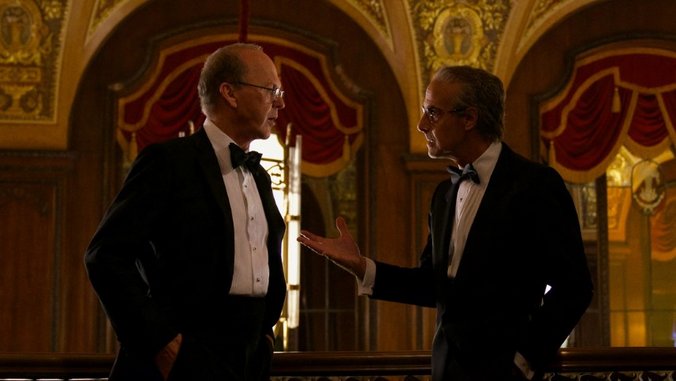
Directed by Sara Colangelo and starring Michael Keaton, Worth tells the true story of the man tasked to oversee the September 11th Victim Compensation Fund. The Kindergarten Teacher’s director teaming up with Michael Keaton and Stanley Tucci on a political thriller; doesn’t take much convincing after that to put the film on this list. The film was picked up by Netflix and will release in September to coincide with the 20th anniversary of the 9/11 attacks.
4. Coda
Coda follows Ruby, who is the only hearing person in her deaf family. When the family’s business is threatened, Ruby finds herself torn between pursuing her love of music and her fear of abandoning her parents. Coupled with a magnificent premise and a great cast, Coda is shaping up to be one of this summer’s big hits, and I can’t wait to see it on the big screen. Coda set a new record for the biggest buy-out of Sundance ever, with Apple paying $25 million to secure the rights for the film. The film is set to release on August 13th simultaneously in Theaters and on Apple TV+.
3. Mass
Fran Kranz’s directorial debut explores the aftermath of a violent tragedy that affects the lives of two couples in different ways. The film deals with a heavy subject matter, and it’s intriguing to see how it’ll examine the journey of grief and acceptance for those couples. Mass premiered to rave reviews at the 2021 Sundance Film Festival, and Bleecker Street recently acquired U.S. rights to the film with a fourth-quarter theatrical release currently planned.
2. Nine Days
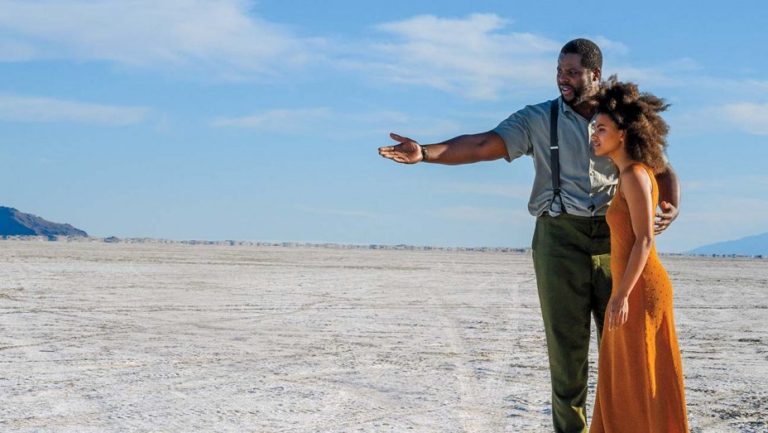
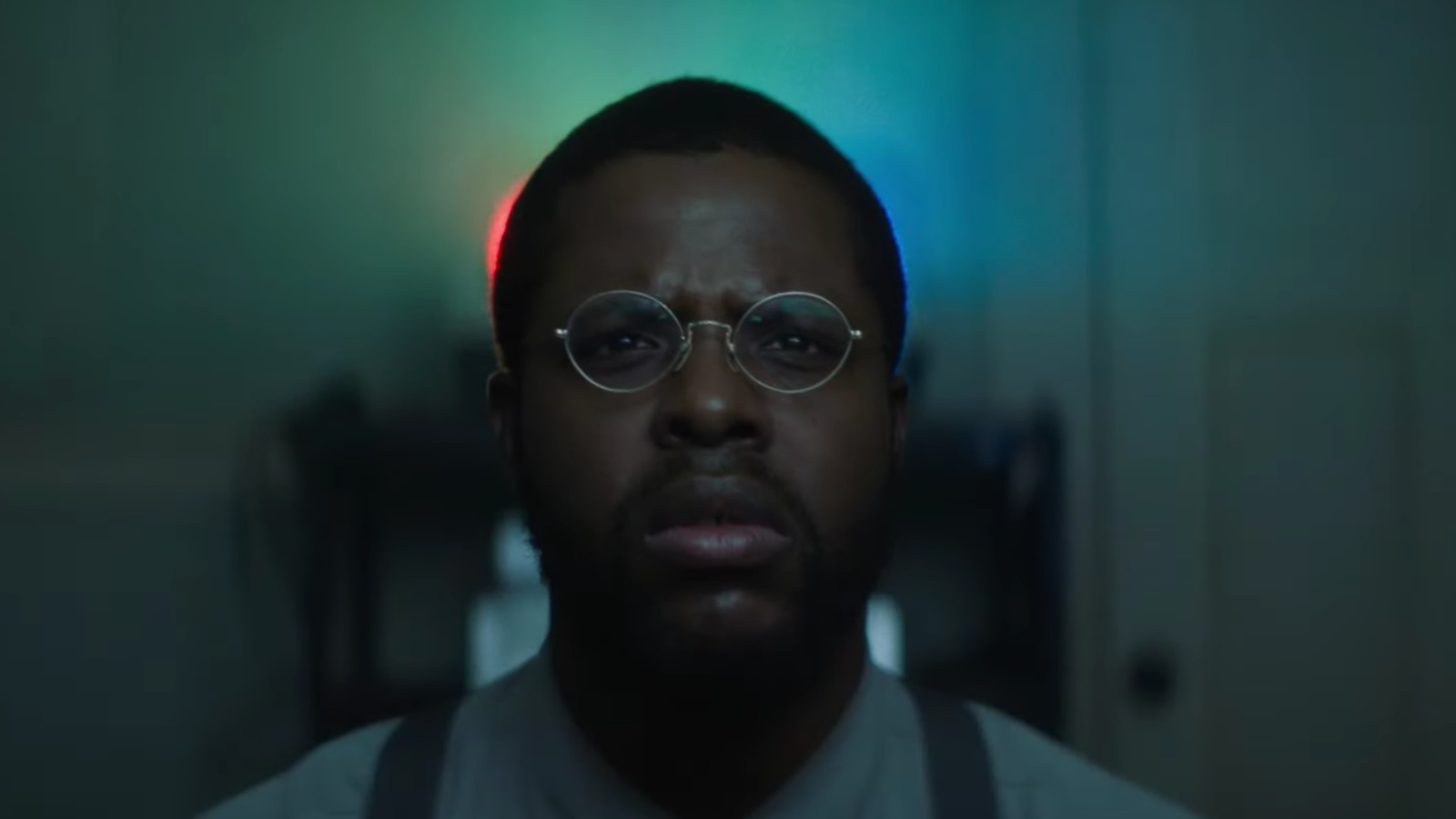
Since its premiere at last year’s Sundance Film Festival, Edson Oda’s Nine Days has been praised for more than a year now. The film’s story follows a reclusive man (Winston Duke) who conducts a series of interviews with human souls for a chance to be born. It will be interesting to see how Edson Oda’s explores the concept of life before birth and what he has to say about the human experience when the film hits theaters on July 30th.
1. After Yang
After being delayed from the original release date back in 2020 due to the pandemic, Kogonada’s long-awaited follow-up to his incredible debut Columbus comes out later this year. After Yang, which stars Colin Farrell and Jodie Turner-Smith tells the story of a family that reckons with questions of love, connection, and loss after their A.I. helper unexpectedly breaks down. Kogonada’s last directorial effort was one of the best films of the 2010s, so I can’t wait to see what his next project has on store for us, especially tackling a genre like Sci-Fi.
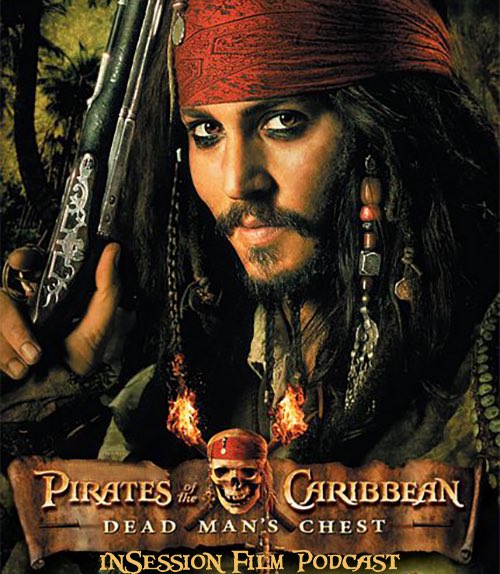
This week on Extra Film, Ryan and Jay continue their Gore Verbinski Movie Series with his blockbuster sequel Pirates of the Caribbean: Dead Man’s Chest and they discuss Gia Coppola’s Mainstream!
Following their lackluster response to The Weather Man, the Extra Film boys get back on the Black Pearl and discuss the second entry in the original Pirates trilogy, Pirates of the Caribbean: Dead Man’s Chest. Picking up shortly after the events of the first film, Verbinski and company build a second film that is just as fun and evocative as the first one. While Jay liked it overall, it was Ryan who really fell in love with it. Listen to them talk about Davy Jones, the film’s ending, and so much more.
In the back half of the episode, the guys review the indie dark comedy, Mainstream. Known for being one of the most divisive films released so far this year, director Gia Coppola tried to take aim at the toxic online culture that is running wild around the world. The problem is that this movie is a flaming pile of garbage that both hosts couldn’t stand. Even a good performance from actor Andrew Garfield couldn’t save it. It a complete misfire but an entertaining review from the boys.
Thanks for listening!
– Movie Review: Pirates of the Caribbean: Dead Man’s Chest (4:46) Director: Gore Verbinski Screenplay: Ted Elliott, Terry Rossio Stars: Johnny Depp, Orlando Bloom, Keira Knightley, Stellan Skarsgård, Bill Nighy
– Movie Review: Mainstream (55:47) Director: Gia Coppola Screenplay: Gia Coppola, Tom Stuart Stars: Andrew Garfield, Maya Hawke, Nat Wolff, Johnny Knoxville
We try to make this the best movie podcast we possibly can and we hope you enjoy them. Subscribe today on iTunes, Spotify, or Stitcher, and please leave us a review on iTunes. You can also find us on Soundcloud, PlayerFM, and TuneIn Radio as well. We really appreciate all your support of the InSession Film Podcast.
To hear this Extra Film episode and everything else we do, download our apps on the Amazon Market for Android and the Podcast Source app on IOS devices. The mobile app covers all of our main shows, bonus podcasts and everything else relating to the InSession Film Podcast. Thanks for your wonderful support and for listening to our show. It means the world to us.
I will be watching and reviewing all of the films included on AFI’s 100 Years…100 Passions list. The list contains the 100 greatest love stories in American cinema and I plan to consider how our views on romance and social issues have changed over the years as well as judge whether the romances in these films actually made me swoon. As a fan of the romance genre, I expect to love each and every one of the nominees but I also don’t know if I would consider all of them romantic.
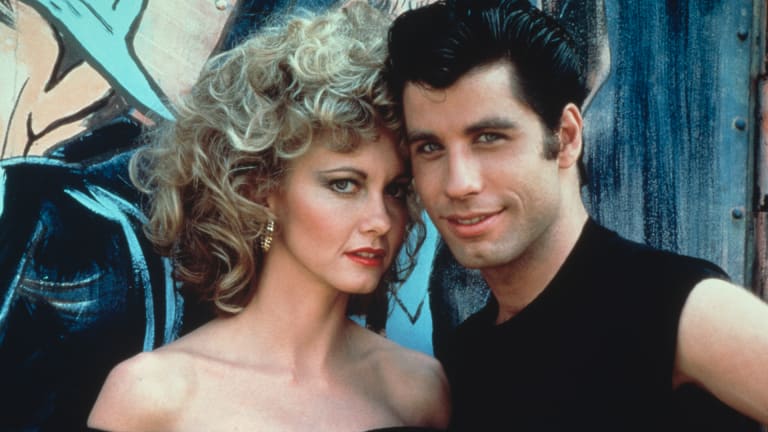
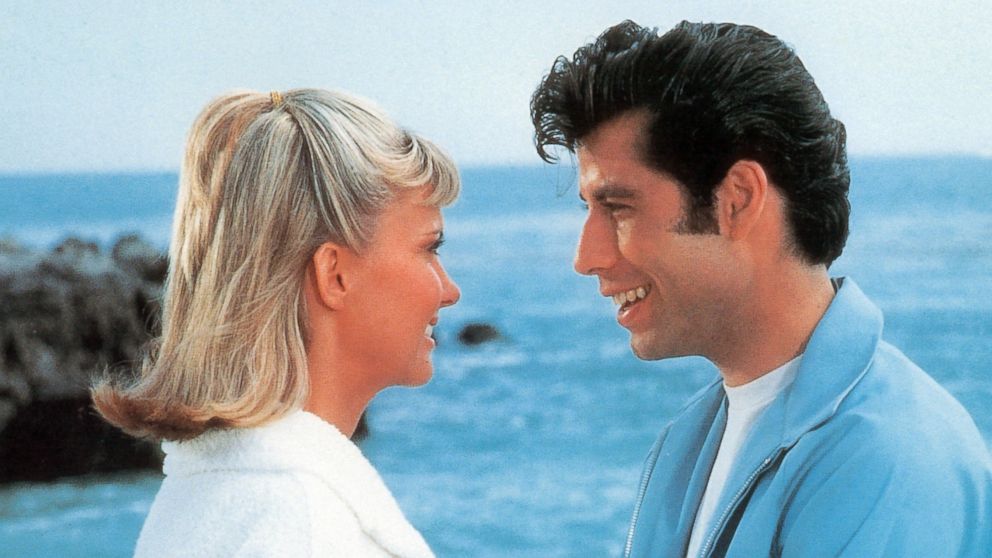
In 1978, a musical that served as a loving homage to the teen beach movies of the 1950s, took the world by storm. It remains a cultural touchstone for children of the late 1970s. My parents could sing along to any song on the soundtrack and my mother has very strong opinions on the tightness of Sandy’s leather pants. Surprisingly, it isn’t just an artifact of the 1970s, it has managed to become popular with following generations and it doesn’t seem to be losing its grip on the minds of adolescents. The tunes are catchy, the performances ride a fine line between pastiche and melodrama and it assures its audience that everything will eventually work itself out. What more could a fifteen-year-old girl want?
We all know that it’s set in the 1950s and centers on Danny, John Travolta, an American greaser, and Sandy, Olivia Newton-John, an Australian good girl who has recently moved to America. Their summer romance was cut short and Danny is nervous about getting involved with her when she begins attending his high school. Rizzo, Stockard Channing, is the leader of the Pink Ladies and initially clashes with Sandy. Rizzo is also worried about the fact that she might be pregnant and her boyfriend Kenickie, Jeff Conaway, does not seem like he wants to commit to her. Sandy and Danny drift in and out of each other’s orbit and try to figure out how to be a couple when they are both so different. Their friends both help and hinder them when it comes to the development of their relationship.
As beloved as it is, I don’t think anybody would call Grease (1978), a masterpiece. That ridiculous ending, which is too fantastical to believe, its questionable message about changing yourself for the person you love, and its rushed ending, ensure that it is easy to identify its flaws. However, you can look the other way whenever Newton-John delivers an emotionally wrenching ballad about the pains of being young and in love. There is a technical flaw in almost every scene but that is always offset by the fact that the scene in question will also contain flashes of genius.
The greatest asset that Randal Kleiser had in his arsenal was a 34-year-old Channing. She could never convince as a seventeen-year-old girl and doesn’t even try to adopt the voice of an adolescent. This is commonly used as a charge against her performance but I honestly don’t think it really matters. She makes Rizzo a complex, three dimensional character who is not what she first appears to be. She plays up the mean girl aspects of Rizzo’s personality and shows off her acerbic wit but drops in moments of vulnerability here and there. Initially, her unwanted pregnancy is seen in a humorous light and there are jokes about buns in the oven. This begins to change over time and Channing deepens Rizzo’s humiliation, anger, and self hatred in the face of a patriarchal society that wants her to be sexy but virginal and willing to hand over control of her life to the man she marries.
During her performance of “Look at Me, I’m Sandra Dee”, she mocks Sandy and sarcastically compares her to a variety of screen idols who are famed for their virtuous, innocent screen personas. The song initially appears to be a diss track of sorts but it does have a lot to say about the performative nature of femininity in the 1950s. All of these girls are aware of the fact that Doris Day isn’t really a virgin who is disgusted by the idea of sex. Rizzo practically rolls her eyes when she compares Sandy to Day and we realize that young girls were far more knowing than they are often seen to be. There is also something sad about the cynicism with which she has to talk about sex and the fact that she sees Sandy as competition. Channing is also terrifically funny during this scene, particularly when she rolls her eyes at a menacing poster of Troy Donahue.
There is something beautiful about the developing friendship between Sandy and Rizzo. Because we have come to understand Rizzo’s deep hatred of girls like Sandy, who cruelly mock her in the hallways for her ‘promiscuity’, it is pleasing to see her coming to appreciate a truly nice girl. There has been plenty of debate over the fact that the plot of the film requires Rizzo to adopt a more traditional lifestyle by getting back together with Kenickie while Sandy becomes a ‘bad girl’ in order to seduce Danny. I think the potential sexism of these changes is offset by the fact that Rizzo appears to want to enter into a committed relationship while Sandy insists that Danny must become more mature and make changes if he wants to be with her. Both women help each other to come of age and move beyond the silly conflicts that can erupt between high schoolers.
The majority of the songs are extraordinary and you can hum along to them for days after seeing the film. “There Are Worse Things I Could Do” hits hard as a female empowerment anthem and an exploration of what bullying has done to Rizzo, “Summer Loving” is a fun exploration of the different expectations that girls and boys have when it comes to love and “Grease is the Word” is a shot of pure nostalgia. With tunes like these, this musical is irresistible. I completely support its inclusion on this list and might have even ranked it higher.
Director: Robert Machoian Writers: Robert Machoian Stars: Clayne Crawford, Sepideh Moafi, Chris Coy, Avery Pizzuto, Arri Graham, Ezra Graham, Jonah Graham, Bruce Graham
Synopsis: David desperately tries to keep his family of six together during a separation from his wife, Nikki. They both agree to see other people but David struggles to grapple with his wife’s new relationship.
[/info]
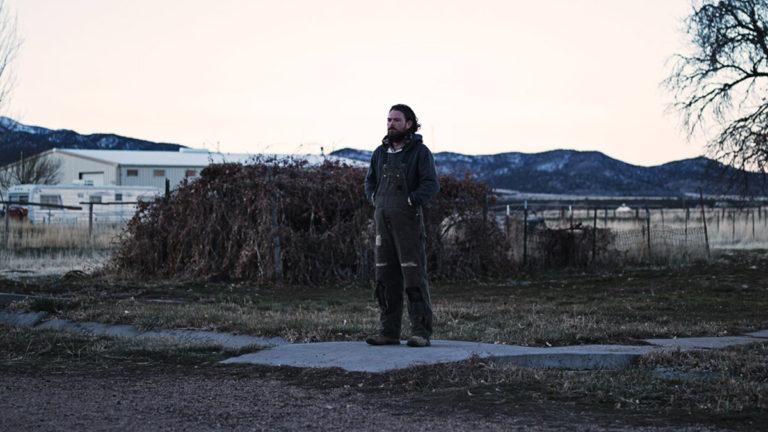
We see a distraught man pointing a gun at two lovers fast asleep. It is evident that he is suffering, waiting for a reaction from the unconscious couple so he can react himself. It is easy to conclude that he may be an ex-lover of hers, suffering as he sees another man next to her in bed. Just as he is about to do something, voices outside the room that arise with the morning dew take him out of his reverie. Are we about to witness a massacre?
The tension of these minutes of The Killing of Two Lovers is just a taste of the emotions and intensity that are about to happen for the next 80 minutes. Written, edited, and directed by Robert Machoian – best known as one half of the directing duo with Rodrigo Ojeda-Beck –, his first solo outing is this family drama set in an unspecified American town (shot in Utah) during wintertime, perfectly reflecting the cold and desolate feelings that surround David (Clayne Crawford), the man with the gun.
David and Nikki (Sepideh Moafi) are going through a rough patch in their marriage. Cleverly enough, Machoian introduces us into their strained relationship once they have separated, without giving any clue of what happened or who was at fault. Now, David is back at his father’s house – not even a mile away from his home in this tiny and deserted town –, dealing with palpable frustration of not being able to be with his family. Meanwhile, Nikki seems to be moving on with a new guy, even though they agreed to give their marriage another try while seeing other people.
The story is told entirely from David’s point of view, a man that is constantly grappling with feelings of frustration and anger – taken out in outbursts of violence when he is completely alone – while trying to keep a serene façade when he sees his small children and teenage daughter. The contrast between his cool exterior – even justifying his wife’s decisions that he evidently disapproves of – and tortured interior is overwhelming and dangerous. In any second this man could explode, and sure enough, in the climactic scene of the film we see his physical resistance to not surrender to his violent instincts.
Tension is the fuel of the movie fed by the uncertainty of David’s future with Nikki. A cloud of despair is over him, not sure what to do to get his life back, and too impatient to let anything and everything flow organically. Every encounter between the married couple is marked by hostility and misunderstanding. In an authentic spin, this film shows a man that seems to only live for his wife and children. The appearance of Derek (Chris Coy), Nikki’s new boyfriend, only complicates everything more, both men displaying toxicity and fragile masculinity while dealing with this challenge.
Considering that we are seeing this story through the eyes of a devoted father, it is easy to sympathize with David and his despair, as well as to question the cruel decisions of Nikki. We do not know what happened before, we just know that he is eager to go back home and that Nikki is resistant, and even maybe falling in love with someone else. In this regard, it is easy to define villains and victims through the skewed perspective we have access to, something that it is not particularly fair to the messiness of relationships, as well as to the complications that lead to separations.
The atmosphere and Machoian’s creativity are vital to understand the ticking bomb that David is. Just as with last year’s Sound of Metal, the sound in The Killing of Two Lovers is vital for its effectiveness. Completely silent at times, the film introduces explosions of noises that hunt David’s mind when he is going through his emotional turmoil. Sounds of gunshots, chains, and hinges intensify David’s instability. Sound designer Peter Albrechtsen created a masterful encounter between state of mind and sound.
Cinematographer Oscar Ignacio Jiménez uses long takes and wide shots to represent the solitude of the place and David’s alienation. The way The Killing of Two Lovers is filmed, it demands from us to be immersed in the moment, in the actions that are taking place right in front of our eyes. Whatever happens in the surrounding area is of no concern to Machoian and to us. The numerous and blurry close-ups demand from us to focus solely on the feelings and emotions of the characters (especially David), with no regard for those that create these reactions, adding a new level of frustration and psychological constraint to the story.
Most of the movie is filmed in a 4:3 aspect ratio, as if we were observing an ancient and distant story, working perfectly for the emotional intensity of the film. However, it transitions into 1:66 for a pivotal and harrowing scene. Jiménez offers us an exhausting visual trip through his muffled colors, intense lens, and changing aspect ratios.
Whether exploring the feeble mental state of David, the bickering between husband and wife, or the explosive ending, The Killing of Two Lovers is an involving experience that offers a strenuous view on the heartbreak of relationships and the efforts of being adults. While its message is heart-breaking, its climax is impressive and provoking, offering an unexpected release of bottled-up tension. Machoian conceived something remarkable.
Federico Fellini is a director who inspires fierce devotion from his greatest fans. His most fervent devotees are particularly drawn to the work that he produced following Nights of Cabiria (1957). He gave into his base impulses and chose to turn himself into a showman who alternately condemned and celebrated the vulgar excesses of the rich and the beautiful. I will admit that I have always struggled with Fellini because of this approach. To me, there seems to be something horribly hypocritical about his brand of moralizing and showmanship. He licks his lips with glee whenever there’s some taboo sexual act occurring on screen but then turns around and presents us with a scene in which one of his sexual partners sadly ruminates on their feelings of guilt and worthlessness. There is something dishonest about his refusal to call a spade a spade and accept that he enjoys the supposedly controversial, shocking acts that his characters perform.
It’s a funny thing to take issue with because so much of cinema is grounded in this sort of moral hypocrisy. You get to live out fantasies of what it would be like to do something naughty or scary but don’t have to analyze why we have some of these darker impulses. The clever filmmaker is there to let us off the hook and allow us to delude ourselves into believing that we are disgusted by what we see on screen. Fellini seemingly keyed into the fact that audiences wanted that. I could simply accept the fact that he was catering to his target audience but I resent the fact that he had to add an extra layer of pretension on top of this manipulative approach. He managed to convince high minded critics that he wasn’t just a showman in the tradition of Cecil B. DeMille. He was viewed as an auteur who deserved to be taken seriously and the chic despondency of his characters made them seem like more than just thin constructs. For years, he was garlanded with accolades and laudatory reviews for some of his most lowbrow works. Why, exactly, did this need to happen?
A film like Fellini Satyricon (1969) is one of the major beneficiaries of Fellini’s unique mystique. He was so controversial that defending one of his cause célèbres was a badge of honor for critics. They got to pretend that critics who objected to the film were just squares who couldn’t overcome their prudishness in order to appreciate Fellini’s genius. The trendy critics would sit there and pontificate about how the film wasn’t ‘really’ about sexuality or gratuitous violence. They got to have fun inventing some long-winded theory about how the film was really a drawn-out metaphor for the Paraguayan War, based on a few throwaway lines. It’s possible to write an entertaining review about a film that was incredibly dull to watch. On one hand, that’s their job and they are expected to come up with this sort of waffle. On the other hand, they don’t need to be quite so smug and disingenuous when it comes to defending the Enfant Terribles of the cinema world. We get it, you’re just a little bit edgier than those of us who don’t always see controversy as a reason to view a piece of art as deep and meaningful.
I find myself talking about the hype that Fellini’s work received, as much as the content of the films themselves. That’s because Fellini Satyricon is far more memorable as a cultural event than as a film. It’s excruciating to sit through and you almost feel like you are watching Fellini trying to ape himself as he turns everything up to eleven. There is no point at which it feels like he decided to rein himself in or get a second opinion on some of the decisions he made in relation to the script. It feels as though there was little consideration put into many of the creative decisions that he made and this added to the overall feeling of messiness. He just threw everything at the wall and hoped that something would stick. In this case, nothing did.
There were moments when I was floored by the fact that this film must have had a massive budget but I would quickly notice that it had been poorly used. Scenes were over-lit and the performers appeared as though they were in some trashy adaptation of a Jacqueline Susann potboiler. Everybody moves in the dancerly rhythms that Fellini often favored but he doesn’t seem to be saying anything with this choreographed motion. He’s just idly playing around with the tricks that he’s had up his sleeve since his first started working as a director. This film doesn’t represent any meaningful growth when it comes to his technical approach to moviemaking or the view that he took of the themes that he was always preoccupied with.
I came out of this with a headache and I think that any sane person would feel similarly uncomfortable after choosing to put themselves through this.
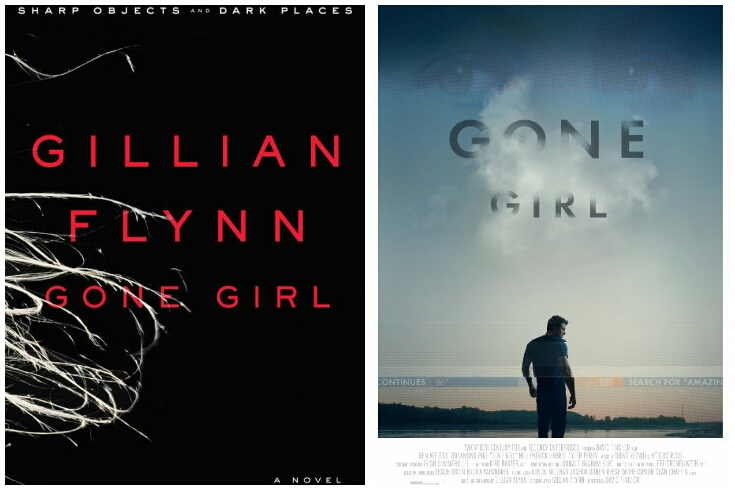
According to The Guardian back in 2007, the purpose of a so called “airport novel” is to be “read for pace and plot, not elegance of phrasing”. You would think that most of these would translate into bad films, however, you’d be surprised to hear that…yeah, most of them translate into bad films. But there are a select few that took us by surprised, and made for some of the most compelling thrillers of their time. This weekend sees the release of The Woman in the Window, starring Amy Adams and directed by Joe Wright, and before we have time to even wonder if this one will take flight (tehe) just like the works of Gillian Flynn and Stieg Larsson did, let’s celebrate the adaptations worth celebrating.
With that said, what is your favorite adaptation of an “airport novel”? We realize this is an incredibly vague term, therefore some of you may even argue that a few of these films wouldn’t even qualify (or that we may be missing some). But that would make things less fun and exciting; like most airport novels, we aren’t going for elegance of phrasing here.
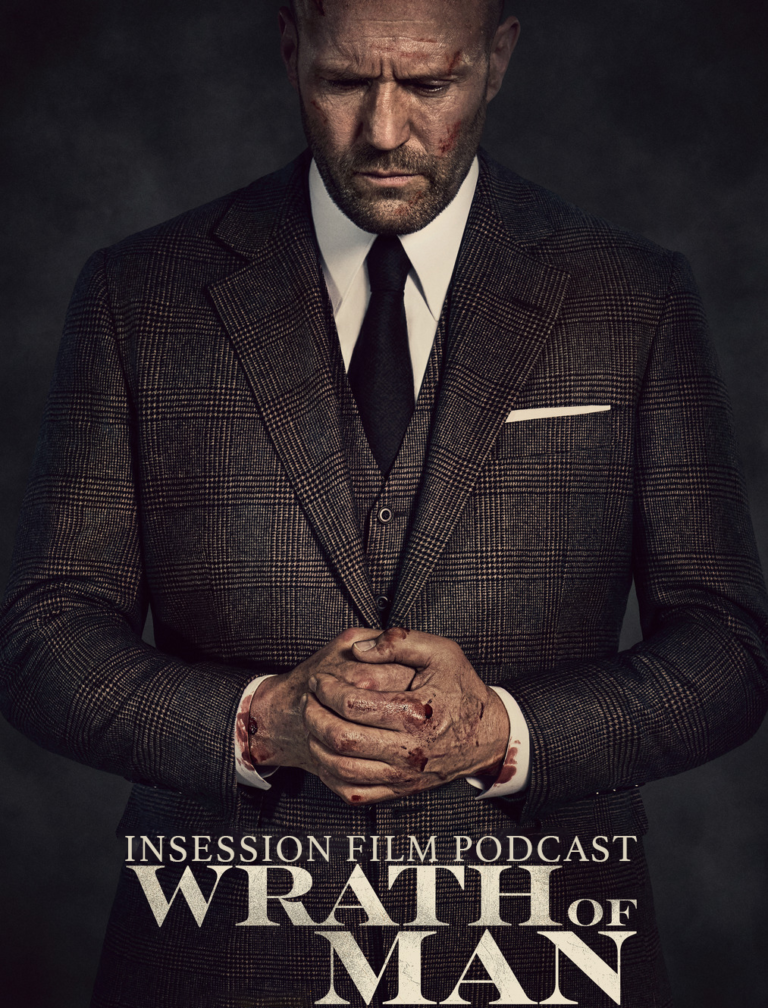
This week on the InSession Film Podcast, Ryan McQuade joins us to discuss Guy Ritchie’s Wrath of Man and we continue our Michael Mann Movie Series with his 2004 film Collateral! Plus, a few thoughts on the Golden Globes mess.
Big thanks to Ryan for joining us this week. It’s always a fun time when he jumps on the Main Show, especially when he’s passionate for a film like he is for Collateral. This episode may be a bit longer than normal (sorry!), but we are confident you’ll enjoy the conversation. We all may be a bit mixed on Guy Ritchie overall, but there was some interesting variance to our Wrath of Man review.
On that note, check out this week’s show and let us know what you think in the comment section. Thanks for listening and for supporting the InSession Film Podcast!
– Movie Review: Wrath of Man (6:48) Director: Michael Rianda, Jeff Rowe Writers: Nicolas Boukhrief (written by), Éric Besnard (written by), Guy Ritchie (screenplay), Marn Davies (screenplay), Ivan Atkinson (screenplay) Stars: Jason Statham, Holt McCallany, Josh Hartnett
– Notes / Golden Globes Discussion (1:03:46)
As you’ve probably seen, the Hollywood Foreign Press Association has been under fire for having a lack of diversity in their organization, sparking protests from actors and scrutiny from the studios (and of course the media). As a result, and under pressure, NBC announced last week that they will not be telecasting this year’s Globes. So we felt inspired to talk about it briefly and what the ramifications of this could be.
Review: The Woman in the Window
Top 3: N/A
Michael Mann Movie Series: Miami Vice
[divider]
Help Support The InSession Film Podcast
If you want to help support us, there are several ways you can help us and we’d absolutely appreciate it. Every penny goes directly back into supporting the show and we are truly honored and grateful. Thanks for your support and for listening to the InSession Film Podcast!
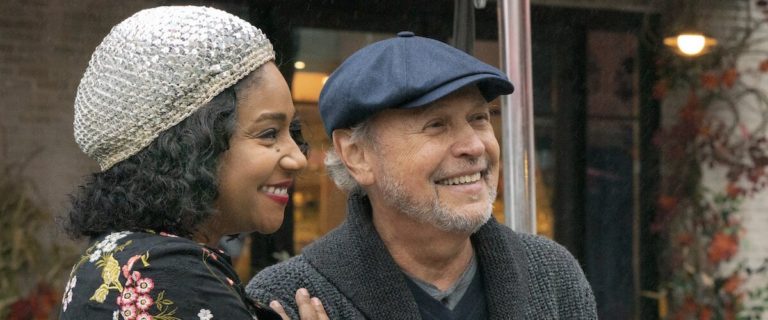
Director: Billy Crystal Writers: Billy Crystal, Alan Zweibel Stars: Billy Crystal, Tiffany Haddish, Penn Badgley, Laura Benanti
Synopsis: When veteran comedy writer Charlie Burnz meets New York singer Emma Payge, they form an unlikely yet touching friendship that kicks the generation gap aside and redefines the meaning of love and trust.
[/info]
It has been said many times (originally by Roger Ebert) that movies are essentially empathy machines. They make us feel something for completely nonreal people. Well, when a movie works, that is. When they don’t, movies show themselves for what they all are underneath, manipulation. Some films manage to manipulate us without the obviousness and realization that this is happening. Other movies are Billy Crystal’s Here Today.
Here Today is a mishmash of genre, some part comedy, some part family tragedy, some part romance. Shockingly, Crystal as a director and an actor doesn’t have a handle on any of these genres, and the movie becomes an empty exercise rather quickly. Here Today is about a comedy writer, Charlie Berns (Billy Crystal) who has been diagnosed with dementia but is trying to survive without any help. Enter the random connection with Emma Payge (Tiffany Haddish) who has stolen an auction item, lunch with Charlie from her ex-boyfriend, who has cheated on her. It is a cheap way to throw these two together and begins a pattern of Emma mostly being given a personality connected only to men. Haddish does Haddish things, including ordering a giant platter of seafood and having a massive allergic reaction.
Sadly, that lunch scene (up until her face puffs up in said allergic reaction) might be the highlight among the many lowlights of Here Today. There is genuinely enjoyable banter between the two, with Crystal and Haddish trading good natured barbs. But, of course, due to the hamfisted amnesia plot, Crystal must deal with his memory loss and Haddish falls into the caretaker role. Crystal attempts to continue cracking jokes, but honestly, if you’ve seen his older films, you know the bits. There really seems to be no growth left in him as a comedic performer. Although there are those moments of decent interaction between them, it certainly never feels enough for Emma to give up her dream of going on tour with her band to take care of him. But then again, the singer subplot, like most of the movie, feels thrown together in order to give Emma some semblance of a personality.
The script itself, written by Crystal and Alan Zweibel, is almost horrifically bad. There is an arsenal of Chekhov’s guns just waiting to go off, and good god, each and every one of them does. And not a one of them triggers in an interesting fashion. Pretty much what you think will happen, happens. But as tedious as the Crystal and Haddish relationship becomes, it is somehow the best part of the movie.
Charlie is also struggling through being a staff writer at a sketch comedy show, which shows all of the behind the scenes issues of creating funny bits. The big problem here is that distinguishing between what is funny and what is painful is possible because none of it is funny. Here Today tries so hard to be heartwarming that nothing lands. Additionally, the family plot has zero arc. Their relationship seems to change on a dime with little to no buildup. Penn Badgley and Laura Benanti as his son and daughter, respectively, give full effort, but the script gives them little to work with over the excruciating near two hour runtime. Charlie’s granddaughter, Lindsay (Audrey Hsieh) is cute, but to the exclusion of anything else about her character. The film’s problem remains consistent, there are no characters here. Even our protagonist is thinly drawn, only offered shades of grey near the climax, as if filling information they know should be there. Here Today is a first draft.
With a few exceptions, Crystal’s direction is amateurish. He clearly loves New York City, but anyone who has listened to him speak for more than five seconds knows that. The majority of the movie is shot in a straightforward manner, giving nothing to distract from the unfortunate work on screen. However, he does give effort in flashback scenes. Charlie is struck, every now and then, by visions from his past. Many of these are of his deceased wife, Carrie (Louisa Krause). When she appears, it is always shot in soft lighting, highlighting the memories that he is comfortable reliving. She is nearly always kind, borderline ethereal in her goodness. Additionally, he makes the decision to shoot this in a POV style, erasing the need to cast a young Billy Crystal. We experience it with him, and as such, feel the love for her that he does. This only changes when his mind and supposed growth allow him to remember some of the bad times. With this, the lighting changes and becomes harsh as he attempts to come to terms with his mistakes and his loss.
As Here Today spirals to a close, the manipulation becomes as obvious as in any film that I remember. There are lines that we know will come back around to try to make us feel. They do, but we feel nearly nothing. There are arguments that we know will be solved, and, of course, they are. But they all feel empty. And that is what Here Today is, empty platitudes and jokes that neverland. It will leave your conscious mind as soon as the credits roll. From a film perspective, it takes a master manipulator to make us feel genuine care and loss and sadly, Crystal is not even close to this level.
World War II was the battle that everyone had to roll up their sleeves and take part in everything. Actors, writers, directors, and others from the film industry went into uniform to fight the Nazis. Meanwhile, in France, things were much worse as the Germans captured the country in June 1940, splitting the nation in two between the Nazi rule and Vichy France, led by Philippe Petain with the blessing of Hitler. For those who stayed in France, they could keep quiet, support the authorities, or resist. The latter was not just about protesting this authoritarian replacement to the democracy they once had, it was about using violence against violence to sabotage the Nazi’s efforts to force France to full submission as in other occupied countries. Many writers, politicians, artists, and actors remained at home to take the fight while the Allies struggled their way back to France. These names were just a few of hundreds of thousands that resisted.
Josephine Baker
Making the move to Paris in the 1920s, the American-born Baker was one of the most popular entertainers in the world, famous for her risque dancing and limited costume that brought little imagination to the eye. When the Second World War began, Baker was immediately recruited by the French secret service, attending various parties with German, Italian, and Japanese attaches in parts of Europe and relaying any useful knowledge to Free French forces based in London. Her information, physically transferred within her underwear and written in invisible ink, was critical pieces in allowing the Allies to make their counterattack through North Africa and preparation in the Pacific. General Charles de Gaulle would later award Baker multiple medals for her service.
Jacques Becker
Becker began as an assistant to director Jean Renoir to some of his early greats including A Day In The Country and The Grand Illusion. At the beginning of World War II, Becker was detained in a German prisoner-of-war camp for a year before being returned home. He immediately joined the Resistance, being a messenger to groups in the North and South of France as he began his career as a film director. Becker later was part of the newly-formed, anti-Vichy Comité de libération du cinéma Français. After liberation, he later protested against the purge of all actors and directors who were accused of collaboration. All the way until his death in 1960, Becker’s experience in the Resistance would influence his style of directing, notably in Touchez pas au grisbi and Le Trou.
Marcel Carne
Carné started out as a film critic before he became director, finding early work in England and meeting fellow Frenchman, Jacques Prevert, with who he would collaborate for the next decade. Carne was living in the Vichy zone during the Nazi occupation but was allowed to keep working under the watchful eye of the government’s strict censorship. Still, Carne, using his influence in the Vichy film production sector, was able to send secret intel to Resistance groups and got around strict rules to make his masterpiece, Children of Paradise. Somehow, Carne was able to employ several Jewish members to the crew, right under the noses of officials.
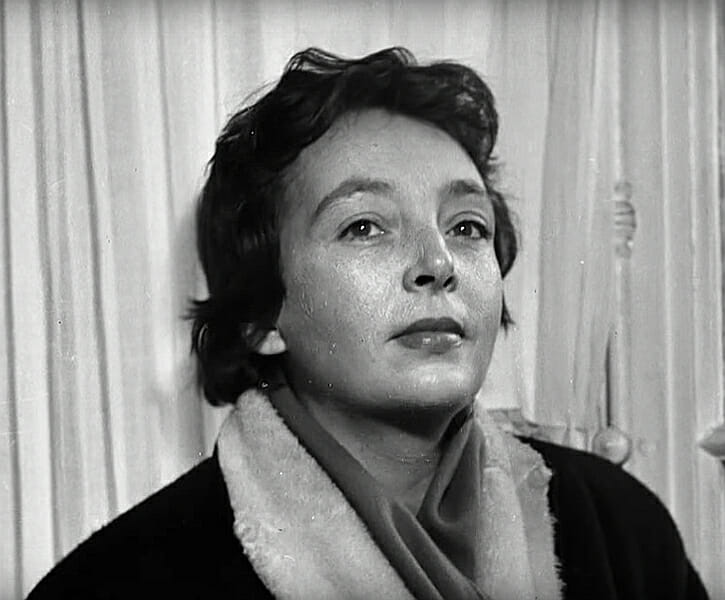
Marguerite Duras
In the second half of her life, Duras would be known as a famous author in both novels and the screen, writing Hiroshima mon Amour which resulted in an Oscar nomination. Later, she became a director, usually adapting stories based on her own stories. Prior to her well-established career, Duras was hired to work for the Vichy government, editing all books and newspapers to adhere to the government’s guidelines. In reality, she was an active member of the French Communist Party and, like Carné, used her own knowledge from inside to tell other Resistance groups. One of her lifelong friends from the Resistance would be future President, François Mitterrand.
Louis Jourdan
Too young to join the army, Jourdan remained in Italy working on films with the Italians declared war on France in 1940. Returning to his family, Jourdan kept working in films until his father was arrested and imprisoned; after his father escaped, the family all took part in the Resistance in some way, with the young Louis worked printing and distributing anti-Nazi leaflets without being caught. After liberation, Jourdan was hired by David O. Selznick to come to Hollywood, where he worked with Alfred Hitchcock on The Paradine Case and Letter From An Unknown Woman alongside Joan Fontaine. His most successful film was starring in the musical adaptation of the French novel Gigi, but it was his performance as villain Kamal Khan in Octopussy did he have his most recognition in a movie.
Jean-Pierre Melville
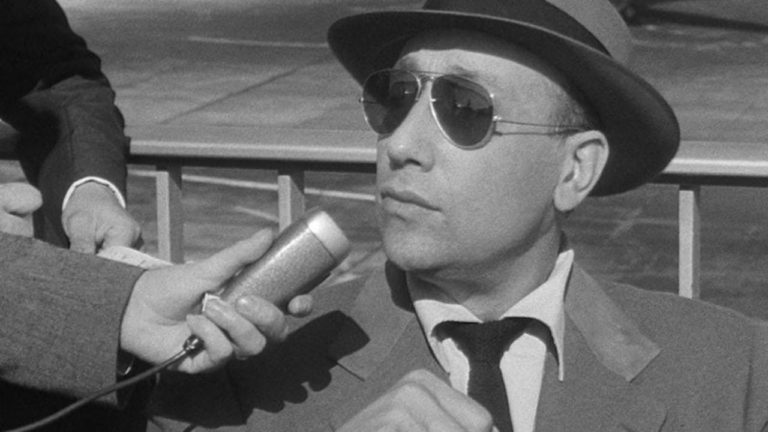
In 1969, Army of Shadows was released, dramatizing a group of Resistance members escaping Nazi custody and trying to survive day by day their presence and possible traitors in their midst. Melville was very familiar with the subject; he was a young man who joined the Resistance, even though he was at serious risk because he was Jewish. Instead of his natural surname, Grumbach, to cover his identity, he adopted his now-famous name from a favorite author, Herman Melville. A 2008 documentary titled Code Name Melville follows this period and how his experience of the war influenced all of his films.
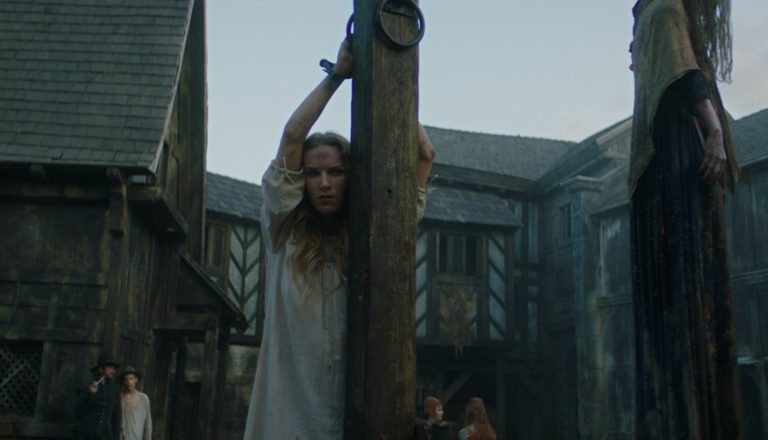
Director: Neil Marshall Writers: Neil Marshall, Charlotte Kirk, Edward Evers-Swindell Stars: Charlotte Kirk, Joe Anderson, Steven Waddington, Sean Pertwee
Synopsis: After losing her husband during the Great Plague, Grace Haverstock is unjustly accused of being a witch and placed in the custody of England’s most ruthless witch-hunter, Judge Moorcroft. Forced to endure physical and emotional torture while steadfastly maintaining her innocence, Grace faces her own inner demons as the devil himself starts to work his way into her mind.
[/info]
Any film that has Sean Pertwee (Dog Soldiers) thundering down a muddy track as a witch-hunter should be a riot of a time. And while British director Neil Marshall does deliver exactly this in his latest horror film, The Reckoning still manages to be a dated, bruised and battered misfire in every conceivable way.
Many would have hoped that pulling back to smaller British scares would have rung the bell for a return to form for Marshall, but at this point, the director’s sensibilities are so far removed from whatever brilliant energy powered his early films, The Descent and Dog Soldiers, two of the most resilient British horror films of the last twenty years. Even his biggest defenders are going to struggle with this tiresome slog through a plague hit 17th century England, where rape, torture, and incineration are the common pastime.
Weirdly, Marshall’s film has come at the perfect moment, with its paranoia and corrupt justice systems, not to mention Marshall has angled his film towards female empowerment by placing his accused witch, Grace (Charlotte Kirk), at the center of it all, as she fights prejudice and male oppression all in the name of her own beliefs. The intentions might have been good, but the execution is not.
The film begins with an overblown, although quite enjoyable, rain and thunder prologue, which cuts between pre-plague Grace and her husband Joseph (Joe Anderson) to the morning after where Grace lugs a massive sword through the mud to cut his swinging body down – her husband has committed suicide to save Grace from catching the disease. It sets out Grace’s future predicament efficiently enough, but any emotion that might have been felt had we seen this romance develop in real-time, is firmly buried below ground.
Not long after this, Grace draws the attention of the local town squire Pendleton (Steven Waddington) an obnoxious, offensively dull role that never changes gears. With her husband out of the picture, his intention to rape Grace is made clear from the outset, so it’s nothing other than exhausting to sit through his timid threats of eviction if she doesn’t pay up. And we know that Grace obviously isn’t able to pay him off, leaving only one tasteless outcome. Grace escapes, forcing Pendleton to limp away and call for back up in the form of Moorcroft (Pertwee), the infamous witch-hunter who burned Grace’s mother alive several years ago. An old-age revenge plot ensues, sprinkled with a thinly written back and forth interrogation between Moorcroft, the overzealous accuser, and Grace, the defiled accused, with neither shifting their stances. It’s a rather pointless plot.
Marshall drags us from one joyless scene to the next: whippings, public humiliation, and inhumane devices designed for women only. There’s plenty of judgment preaching thrown about, demonic sex dreams, and riotous revenge, but it’s all so painfully performative. It’s a film that pretends to be in league with the devil and has all the halfway nastiness to lead you on, but the only scary thing here is Pertwee’s ludicrous mustache. The reliably great Pertwee himself is also horribly miscast, although the actor looks like he’s having fun, but that would make him the only one.
The film is scored to an overbearing violin screech, which makes you think it’s going to be a campy throwback to classic horror romps, but then you have dream sequences where Grace has sex with a winged Satan. There is also a narrative side diversion that ends in a head being obliterated by a horse cart. Any thematically interesting material descends into a hot mess of poorly conceived ideas and botched intentions.
The wickedest thing is the script, a hodgepodge of modern-day dialogue and full-blown religious damnation, the clearest distinction that The Reckoning has no idea what sort of film it wants to be. It doesn’t come together, and it doesn’t feel like the pieces of the film have been properly considered. To highlight how silly it appears on the screen, the moment the townsfolk turn on Grace amounts to nothing more than each extra whispering “Witch!” to themselves, echoed by the next person and so on, until everybody in the inn has shouted “Witch!”, wide-eyed and furious at a person they’ve never met. You can see what Marshall was going for, there’s a unique appeal considering everything we’ve been through this year, but it’s laughable to watch. Yes, this wild-fire mob suspicion is all part of the act of this period piece, but for all its frantic paranoia and witch hunts, The Reckoning has no intention of exploring its topical themes other than showing us that they are there, like turning up to a Halloween party with your sweet bucket but no costume.
There are several opportunities to explore interesting paths too, most notably with Moorcroft’s scarred assistant, Ursula (Suzanne Magowan), who he saved from a fire, but she’s reduced to an oddball character with a savage heart and tendency to stab people in the neck, only there as another extension of dumb violence in the name of being provocative. This might give the impression of The Reckoning as a whacky slice of 17th-century torture porn that you can enjoy and not take seriously, but the film is genuinely uninteresting. As for the bloody violence, Marshall never really commits to this either, often cutting to black – probably a blessing in disguise for a film that’s already a struggle to recommend to anyone.
The Reckoning is tonally confused, ill-conceived, and fails in fulfilling the basic needs of a horror film, neither provocative enough to work as campy grindhouse or serious enough in its history tale to play as a grounded exploration of the horrors of the 1600s. It’s an impossible film to take seriously. As the old saying goes, the night is dark and full of terrors and Sean Pertwee’s fearsome mustache.
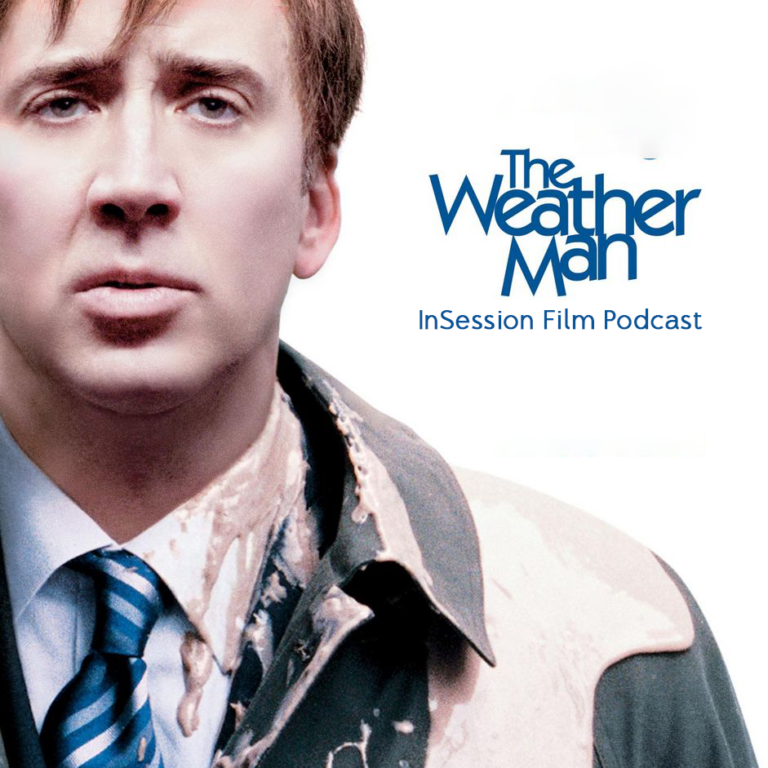
This week on Extra Film, Ryan and Jay continue their Gore Verbinski Movie Series with his 2005 film The Weather Man and they discuss Ben Sharrock’s Limbo!
Following the love fest that was their Pirates of the Caribbean review the week before, the Extra Film boys take a look at the film in-between the first two installments in the Pirates Trilogy. The Weather Man is a moody adult drama following a man on the verge of losing everything, so it only makes sense that man is played by Nicholas Cage. Filled with bleak cinematography and a weak humor, The Weather Man just isn’t worth it for either Ryan or Jay.
In the back half of the episode, the guys review the indie comedy, Limbo. Involving a story about Syrian immigrants trying to gain asylum in the UK, this had the potential to be something really special and deeply personal. While it may be the latter, Limbo just isn’t the former and for that it’s leads the hosts to feel disappointed with this film.
Thanks for listening!
– Movie Review: The Weather Man (3:21) Director: Gore Verbinski Screenplay: Steve Conrad Stars: Nicolas Cage, Hope Davis, Nicholas Hoult
– Movie Review: Limbo (40:14) Director: Ben Sharrock Screenplay: Ben Sharrock Stars: Sidse Babett Knudsen, Kenneth Collard, Amir El-Masry
We try to make this the best movie podcast we possibly can and we hope you enjoy them. Subscribe today on iTunes, Spotify, or Stitcher, and please leave us a review on iTunes. You can also find us on Soundcloud, PlayerFM, and TuneIn Radio as well. We really appreciate all your support of the InSession Film Podcast.
To hear this Extra Film episode and everything else we do, download our apps on the Amazon Market for Android and the Podcast Source app on IOS devices. The mobile app covers all of our main shows, bonus podcasts and everything else relating to the InSession Film Podcast. Thanks for your wonderful support and for listening to our show. It means the world to us.
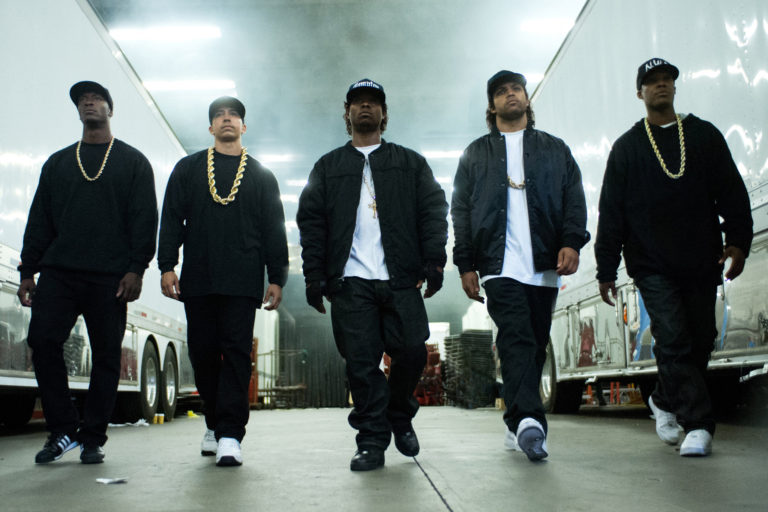
I suppose it’s a bad idea to start off a review of a film about a legendary rap group with the admission that I am completely averse to this genre of music. I can see all of the reasons why that admission would immediately turn people off the idea of reading this review. I know all of that and yet I realize that I can’t possibly talk about my issues with this film without acknowledging that I don’t see why everybody makes such a big fuss over N.W.A.
Most people who decided to watch this film, may have gone into it as fans of this group who were willing to accept the myths and legends that Ice Cube and Dr. Dre had cooked up. This is the sort of film that lionises its subjects and you can often sense the moments at which the real life figures decided to intervene and turn themselves into flawed, tragic heroes and not people who may need to take accountability for their mistakes. These are problems that are endemic to most of the musical biopics that have come out in the last few decades. I wasn’t surprised when any of those issues arose and I ended up with a watered down version of a potentially fascinating story about unchecked egos and the dangers of glamorizing the criminal lifestyle. If I happened to be a fan, none of these things really would have phased me. The idolatry of musicians can blind us to obvious flaws as we happily listen to the old hits being played.
The film follows the basic outline of most biopics. It centers on three enormously talented individuals who grew up facing rough living conditions. Eazy-E (Jason Mitchell) is depicted as a terrific singer who has enough capital to turn a fledgling band (known as N.W.A) into a musical group that is supported by a record label. He is joined by lyricist Ice Cube (O’Shea Jackson, Jr.), DJ and producer Dr. Dre (Corey Hawkins), and a bevy of others. They almost immediately experience great success when they release the album Straight Outta Compton. It attracts controversy for featuring several songs that are highly critical of law enforcement and the group becomes increasingly interested in commenting on social issues in their songs. Initially, the controversy brings them closer together but as fame takes hold, they begin to drift apart. Their ambitions turn out to be very different and they start to pursue different career paths.
The material for a decent first act is present, but it seems that the creators didn’t know where to go from there. Suddenly, the pacing suffers and everything strangely feels both rushed and slow moving. Flashy editing tricks are used to distract us from the fact that we have just zipped through plot details that deserve more serious, thorough examination. There is always the nagging sense that none of this is as intellectually nourishing as it should be.
Perhaps it’s similar to my experience of rap music itself. All bluster, loud line deliveries, and endorsements of morally questionable behaviour. There are times when I am drawn in by the brash, confident personalities or the swagger with which the characters enter their tour bus but it never sustained my interest. F. Gary Gray directs this as though it is one long music video and that approach eventually wore me out. There is so much glitz and glam that you can’t quite slow down and appreciate any of it. It’s akin to consuming seventeen fried Mars bars and ending up with acid reflux in the moments after you have gobbled them down. It would be nicer to savor a smaller portion of chocolate ice cream and take your time appreciating the scent of the fudge swirls or the texture of the melted ice cream at the edge of the tub. That was a long, drawn-out metaphor for what this film could have been like if it did properly engage with some of its darker themes.
What if this had been about the way that the media was saturated with stories about real crimes in the 1990’s? It could have dissected the ways in which rap music helped to shift the focus away from the victims of these crimes and onto the enigmatic, figures who perpetrated crimes. This would have rooted it more firmly in a specific time period and it would have allowed this film to be about more than the hero worship of these three men. It represents almost everything that I dislike about films that focus on real life figures.
The first time I ran into Jason Vorhees, I was wandering through the woods. The gargantuan man came through the mist with stunning speed, and I nearly fell into my friends behind me. He stopped, chuckled, and disappeared back into the darkness. Sure, you could say he stopped because we were at Halloween Horror Nights, Universal Studio’s yearly haunted house experience. You could say he recognized my fear and felt like I wasn’t worth his time. Or, most likely, he realized what a huge fan I was (the Camp Crystal Lake shirt was a dead giveaway). It’s not often you meet your heroes, but even rarer, you meet your villains.
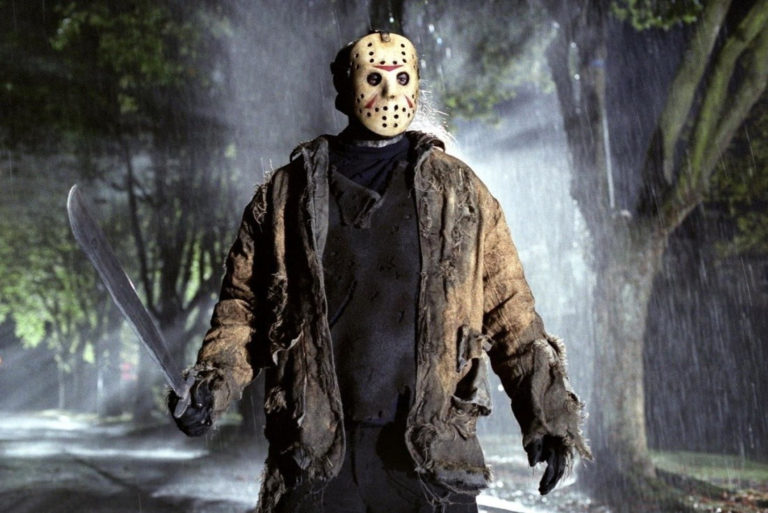
Jason Voorhees, the often misremembered star of Friday the 13th, turned forty this week with the anniversary of Friday the 13th Part II on Saturday. While yes, Jason cameoed in Friday the 13th, the big man made his bones in the sequel slasher. Over the next 18 months, Mr. Voorhees has carved his face into the Mount Rushmore of Horror. By 1992, he was given a lifetime achievement award by the MTV Movie Awards. He’s joined Halloween Horror Nights, defended Earthrealm in Mortal Kombat, and fought Freddy Krueger. Jason’s reach far exceeds most of his horror brethren, but what makes him so disgustingly fun to watch on the big screen? The argument for what makes Jason so popular is rather straightforward.
The most obvious reason for Jason’s popularity is his horrific and iconic design. Originally designed for his cameo role for Part I, Tom Savinicrafted an oddly misshapen child. Inspired by one of his own childhood friends, Savini’s flourish for the grotesque would take hold in future designs. Steve Miner built on Savini’s designs but drastically aged Jason to make him the physical specimen we’ve come to fear. However, leaving a bag on his head was too similar to other horror classics, most notably The Town That Dreaded Sundown. It wasn’t until Part III that Jason picked up his iconic hockey mask, but once on, it was an undeniably frightening addition that defined his iconography. The Simpsons, ParaNorman, and the video Zombies Ate My Neighbors have co-opted the mask to evoke the Jason imagery at the drop of a hat.
Over the course of the series, Jason got as big as a house, probably by never skipping leg day. As you watch the films, his strength becomes more and more impressive. In Friday the 13thPart III, Jason chops a man in half from the groin down. In the widely derided Jason TakesManhattan, he punches a victim so hard he decapitates them. Using a person-filled sleeping bag like a baseball bat remains his most iconic kill, especially given the brute strength it would take to accomplish the feat. The emergence of “Mecha-Jason” in Jason X is both a highlight and lowlight of the franchise, yet remains an iconic look to this day. Between his physical prowess and simple design, Jason felt like the everyman.
The highlights of the franchise remain Friday the 13th: The Final Chapter (ironically the fourth of twelve movies) and Friday the 13th Part VI: Jason Lives. Each film earns its spot near the top of the franchise because of the creativity and competence on the filmmaking front. Each is well-paced, delivers on the body count, and features genuine moments of tension. Jason Lives gets bonus points as a legitimately funny and self-aware horror-comedy. The Final Chapter finds room for creative kills and human emotion the other films lack. It’s no surprise that the film in the middle, A New Beginning, is undeniably the worst in the franchise.
Then again, Friday the 13th movies were made fast, cheap, and dumb. They rarely have the nuance of Halloween or the creativity of A Nightmare on Elm Street. In a way, this made them far more accessible to the masses. It certainly did not hurt that Jason stopped in at the megaplex for all but two years in the 1980s (skipping ’83 and ’87). The pure number of entries in the franchise helped immortalize and kill the slasher genre. Remember, even-numbered Jason films are often the best (often, not always). It also made them a mainstay of the VHS market, particularly for the video rental era. Gore, sex, and blood run rampant throughout the franchise, making it an easy choice for teens across America. Jason dug his hooks into our psyche, and with so many entries available at the drop of a hat, the series had gained a foothold in the culture.
Despite his ever-present role in our lives, we just concluded the first decade without the arrival of our favorite camper. The excellent video game certainly earned its place with hardcore fans, but the films have continued to stall out. There will be another feature at some point. A studio will realize the value of the IP is too high to ignore, and after a year in-doors, the thought of a forest-dwelling killing machine will feel spookier than ever.
There’s also a fair critique that the space for these films is gone. Horror continues to thrive on cheap films, with many of its hits consistently surprising on low budgets. A new Friday the 13th will certainly deliver on that front. However, killing victims for the “sin of sex” has been outdated since the 1980s. Jason’s also had a nasty habit of picking on women, people living with disabilities, and the elderly. Many of the most iconic kills feature characters with one or more of these traits. The David Gordon Green Halloween proved you can still make a slasher with value in the 2010s. Yet Friday the 13th carries baggage few other franchises hold. Perhaps more than any other franchise, Friday the 13th could use an infusion of young, underrepresented talent to create a new lens to view the character.
While Jason may have been best suited for the Covid era, alone in his cabin in the woods, he retains his icon status. Forty years after his first headlining role, Jason continues to inspire nightmares and knockoffs. It’s been a few years since Jason scared me out of my shoes, and I’m thankful for that. Still, it’s hard not to fantasize about the return of the icon to a theater near you.
I will be watching and reviewing all of the films included on AFI’s 100 Years…100 Passions list. The list contains the 100 greatest love stories in American cinema and I plan to consider how our views on romance and social issues have changed over the years as well as judge whether the romances in these films actually made me swoon. As a fan of the romance genre, I expect to love each and every one of the nominees but I also don’t know if I would consider all of them romantic.
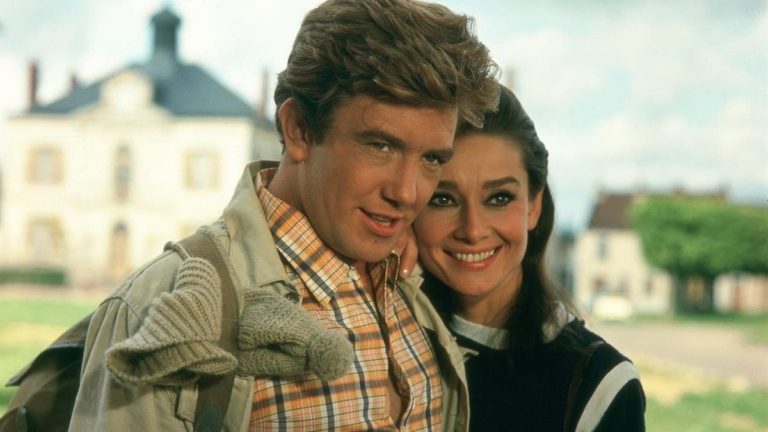
My journey with Audrey Hepburn continues with this tragicomic study of a marriage falling to pieces. This is dramatically different in tone to Roman Holiday (1953) and it is considerably less popular today. It did represent her moving into a more adult phase of her career and it was nice to see her playing an adulterer who is fed up with her husband’s irresponsible behavior. I was pleased by the direction that Hepburn was trending in with this film but my feelings on Two for the Road (1967) as a whole, are considerably more mixed.
The film traces the lives of Mark, Albert Finney, and Joanna, Audrey Hepburn, who have a lengthy marriage. It eventually breaks down after several years of tension come to a head on a trip to the South of France. They bicker over affairs that they have had, their concerns over growing older, and whether they are still in love.
My biggest bone of contention is with the attempts at authenticity that the script makes. They feel hopelessly shallow and contrived instead of helping the audience to relate to the characters. They present us with a very chic, idealized vision of what the breakdown of a marriage might look like. Every argument neatly segues into a comedic pratfall or an opportunity for Hepburn to wax poetic about the nature of love. The shifts in tone feel so carefully calculated that we feel like we are seeing a university screenwriting exercise playing out in front of us. It’s so mechanical and emotionally manipulative in execution. You just know that there will be a romantic beat, a dramatic/depressing beat, and then a comedic beat in almost every scene. I quickly grew tired of this formulaic procession.
The film wants to show us the moments when these two are bickering and can’t stand to be in each other’s presence but it’s too afraid to present either of them in a negative light. Hepburn is always captured through a soft focus lens and Finney is always smoldering. This means that it is hard to take them seriously when they’re screeching about infidelity or hotel fees. They have to remain sexy movie stars in situations where one should seem decidedly un-erotic or appealing. It’s just like watching a daytime soap opera and scenes that should be emotionally wrenching, end up feeling like camp.
All of their arguments are so written and you can tell that the germ of any true emotion has been wiped out by purple dialogue. They have taken the outline of sentences that an actual human being might utter and then replaced them with self-satisfied jokes that they probably spent hours formulating. I know that you rarely hear quotidian speech in films and I love it when screenwriters come up with a heightened lexicon for their characters to use. However, if you are going to do that successfully, you have to convince the audience of the world that you have built up and the actors have to sound comfortable when they are saying things like “Just because you use a silencer, doesn’t mean you’re not a sniper!” Two for the Road doesn’t manage to do either of these things.
I’m sounding like a negative Nancy here and ripping into this film but it does have its merits. The 1960s fashion is pretty groovy and Hepburn’s natural loveliness is only enhanced by Paco Rabanne’s figure-hugging sportswear. Of course, no ordinary person could get away with wearing a PVC suit or a stripy swimsuit which could easily lead one to appear heavy. She is able to dazzle in a simple red sweater and jeans but it never hurts to put her in some couture. Finney’s wardrobe is less impressive but who is examining his appearance when he has one of the most beautiful women in the world standing next to him?
It also moves along at a nice pace and Stanley Donen was smart enough to cut this off at about 110 minutes. This made by a big studio in the 1960s and that means that it could have easily been turned into an elephantine production. I don’t like the tonal shifts but Donen does know how to move things along quickly and he never lets us settle into one location for too long. I could praise the cinematography for capturing the beauty of the South of France but I don’t think it takes that much effort to make that area of the world look beautiful. I also felt as though the prettiness of the surroundings took away from the nastiness of the conversations that Mark and Joanna were having.
At the end of the day, Two for the Road is not a film that I would warn people away from. At the same time, I can’t see why it has such a great critical reputation and its place on this list seems unnecessary. I do appreciate the fact that this is the rare film on the list which deals with the ebb and flow of a marriage, rather than being about youthful, impulsive infatuation. This film is concerned with grownups and the complicated reasons behind their inability to fully separate from one another. That is admirable and I just wish that the screenwriters had been able to achieve all of those great ambitions when it came time to actually write the script. As you can expect, I don’t think this should have taken a spot on the list.
There is no genre more difficult or more subjective than comedy. I mean, think about just your own tastes when you were younger and now. Do you find the same things funny? Probably not. My tastes have changed wildly over the decades. Except Mel Brooks. He is always funny. But generally speaking, they change. Now, think about your taste and your friend’s. Different, right? Now think about time. Funny movies in the ’90s versus now? Extremely different. All of this to say that comedy is hard and changes from person to person and is dependent on time. But every once in a while, a comedy from an older era still absolutely works. And that brings us to A New Leaf now playing on the Criterion Channel.
Director (and star) Elaine May helmed precious few films, but honestly, with both this film and Mikey and Nicky in her filmography, she should be given a lot more respect. And that’s not even bringing up the fact that these two movies could not be more different in both genre and tone. A New Leaf is a deliciously dark comedy focusing on Henry Graham (Walter Matthau) a once wealthy man who has burned through his entire inheritance without a second thought. Stunned by this news, he initially plans to kill himself but is convinced by his valet to borrow a small (to a rich person) amount of money from his wildly rich uncle, and marry an unsuspecting woman of society and pay this back. Henry, unbeknownst to his kind valet, plots to both marry and kill this nameless woman, hence inheriting all of her money.
So, dark might be an understatement. But thankfully, Matthau plays this to the hilt so it is impossible to take him seriously and get lost in how monstrous he is acting. Also, his “romantic” interest, Henrietta Lowell, saves the day. She was left money by her father, but she is not really the moneyed type. She is shy, horribly clumsy, but also loving, giving, and accomplished. They meet at a party in which she spills her drink, twice. Henry, seeing an opportunity rescues her and whisks her away from a cruel hostess. May is so endearing here that you mostly forget how terrible her prospective partner is and what his plans are. After a whirlwind romance, though without much affection, she agrees to marry him and pay off his debts.
The film does a splendid job of pushing the plot forward and having the main characters make choices that will lead to an eventual change that we would never believe at the beginning of the relationship. For instance, Henry fires the cavalcade of employees in the Lowell household after finding them lacking, both in uncouth manners and crooked dealings with her books. And yes, he is annoyed by each and every one of them, and yes, you could argue that this is a purely selfish decision. But remember, this is a man who spent all of his own money through pure ignorance. Yet, for Henrietta, he hires good people and helps her manage the household so she can return to her botany research.
None of this stops his murderous plans as they head to their honeymoon, but there are still several kind moments from Henry, including assisting her in finding the right holes for her head and arm in her Grecian nightgown. To sell this growing relationship further, May is doing a lot of heavy lifting here. Her shy glances toward Henry, her desire to both please him and spend time with him, none of these come off as annoying. Instead, we find ourselves wishing that she was with someone who was truly worth her time. This continues as they return home and she names a new plant species after him. A truly genuine gift, a gift that takes him by surprise and touches him. I think this moment is the lynchpin. She, through nothing more than good nature, is beginning to find her way into his heart. Of course, comedy being what it is, he shakes this off and has one last plan to off her and live happily ever after as a rich widower.
Although this is absolutely a comedy, May’s hand behind the camera never allows us to relax and accept that everything will end happily. It is, instead, a movie that you understand only by looking back. As the climax approaches, with Henry safe on the shore and Henrietta (who cannot swim) about to float down the rapids to her death, it feels that the movie will end in a successful finish to Henry’s horrific plot. Instead, he has a last second change of heart and saves her.
In his first genuine moment of care for her, he saves her and holds her close as she shivers. It is a powerful moment of romance not usually allowed in comedy, and certainly a surprise in a dark, bleak comedy like A New Leaf. And it stands out as, yes, a surprising moment, but also one that works. The fact that we believe this moment is a testament to Elaine May as a director, as well as her and Matthau and their powerful chemistry. The resolution also powers home the importance of the title. Yes, Henry is turning over a new leaf, perhaps even against his actual judgment, and he is reminded of her importance to him by a representation of said leaf which she named after him. An act of pure love changes a man’s hellbent on murder and greed. In a movie full of darkness, Elaine May is a pure light giving just enough to change Henry from pitch dark to just a slight amount of gray. Enough to care for her and enough to make us believe it.
Join us next time for a review of Edge of the City!