

Home Blog Page 187

Movie Review: ‘A Quiet Place Part II’ is Consistently Entertaining Despite Narrative Retreads


Director: John Krasinski
Writers: John Krasinski
Stars: Emily Blunt, Cillian Murphy, Millicent Simmonds, Noah Jupe, Djimon Hounsou

Synopsis: Following the events at home, the Abbott family now face the terrors of the outside world. Forced to venture into the unknown, they realize the creatures that hunt by sound are not the only threats lurking beyond the sand path.

[/info]

One of the biggest strengths of A Quiet Place was that it did not feel the need to over-explain. We never got exposition on why or how those vicious creatures showed up on Earth, and it was all the better for it. With that in mind, it may seem like a major red flag that the second film in the burgeoning franchise begins with that explanation. On the contrary, it results in a fast-paced and enthralling introduction to the movie. 

The new film, which opened in theaters this weekend, opens with a seemingly normal and cheery day in the New York town where our characters live on the day the creatures from the first film arrive. From the get-go, there are indications that this is a more technically enticing work than your typical blockbuster. John Krasinski and cinematographer Polly Morgan display an effectiveness with a moving camera, following Krasinski’s character as he moves about the town to stop by the grocery store and go to his son’s baseball game. Stylistically, it’s almost a reminder of the Coen Brothers’ No Country for Old Men. However, it doesn’t take long for the chaos to begin. 

Though this intro may feel unnecessary at first, it’s useful in bringing us back into the world created by the 2018 film, and it’s an opening that’s every bit as electric and exciting as one can hope for. Most importantly, it introduces us to a new character, Emmett, played by the wonderful Cillian Murphy. This small introduction proves severely important, as the character plays a major role later on in the film. 

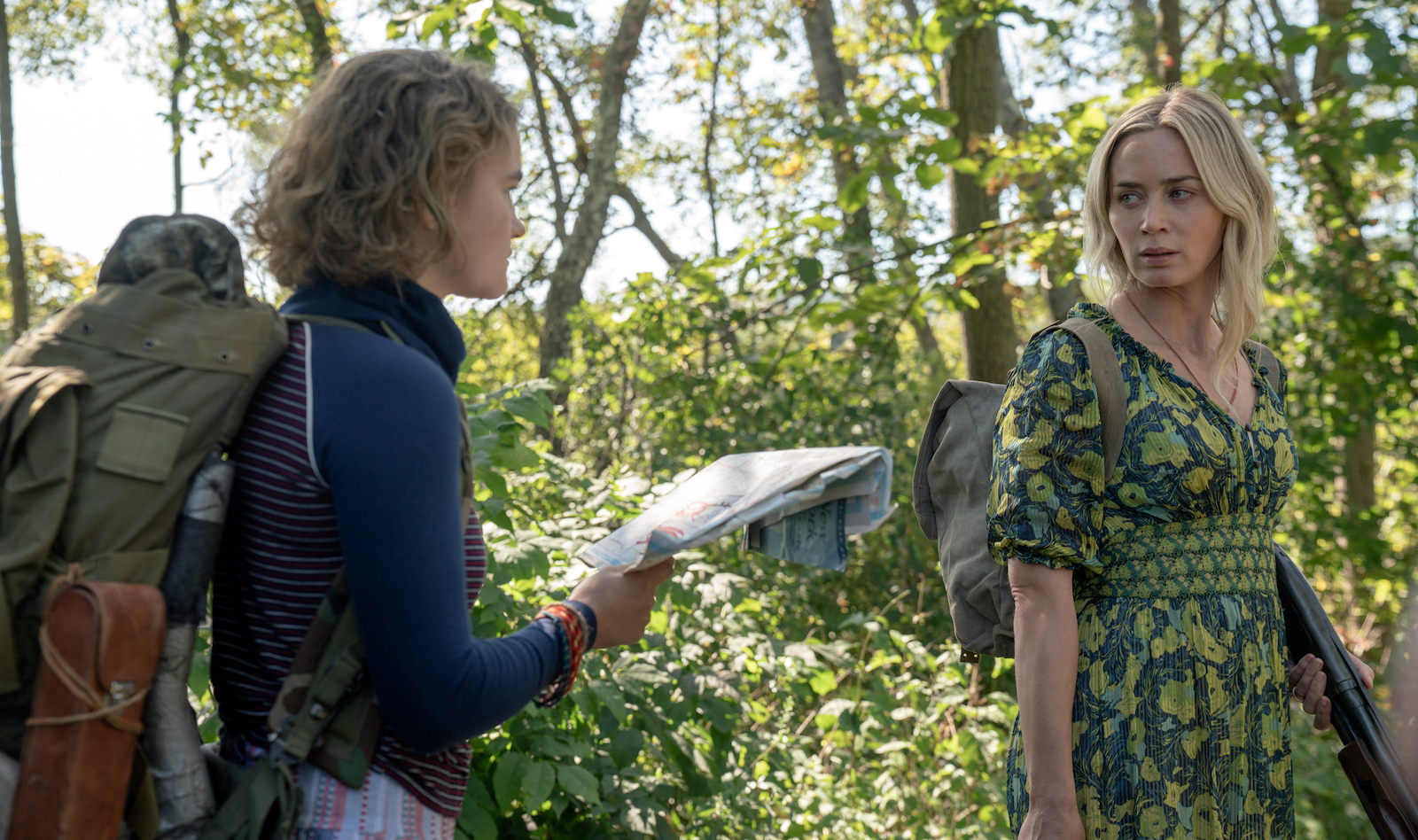
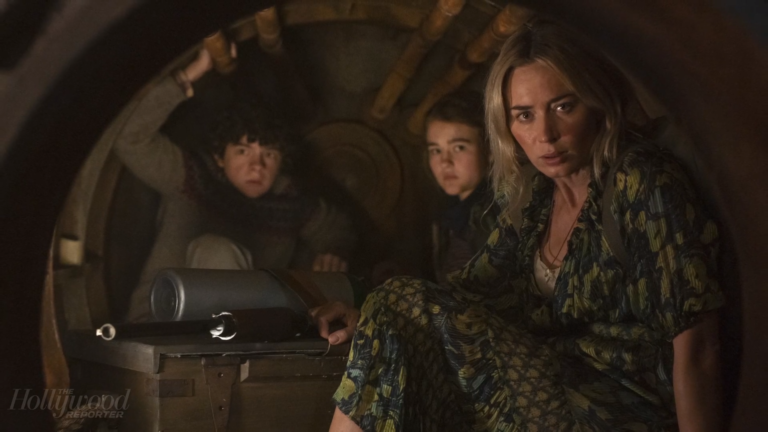
After the frantic opening, the film picks up right where the first left off. We’re placed alongside Evelyn (Emily Blunt), Regan (Millicent Simmonds), Marcus (Noah Jupe), and the newborn baby must travel silently in search of a new home. After a close encounter with boobie traps and a few of the creatures, they are given assistance and refuge with Emmett, who lost his family to illness and the creatures. Emmett first states that the stay must be short-lived due to limited food and supplies. However, he’s pulled into helping the family when Regan sets out on her own, into dangerous territory, to find what she believes will be a group of survivors living on an island just off the mainland. 

Although Krasinki’s presence on the screen is short-lived here, his impact clearly remains. In addition to his direction, the screenplay he wrote features some rich interactions between characters that allow the humanity of the story to remain intact. Of particular note are the scenes between Murphy and Simmonds. The script is intelligent enough to avoid filling Murphy in simply to replace Krasinski, opting to form a unique relationship between him and Simmonds. The film also creates an expanded role for Noah Jupe’s Marcus, putting him through pain and adversity that leads to noticeable growth. 

The development of characters in the film is essential to remaining above the convolutions of a typical action film. And it’s clear that this is indeed an action film. While it does carry over some of the atmospheric tension and horror from the original, most of that is replaced with intense sequences featuring creatures that are even more fierce in this go-round. What does remain is the excellent sound design that puts us in the position of Simmonds’s character, who is once again the heart of the movie. 

The characters are also strengthened by the performances behind them. Blunt and Simmonds carry over their excellent work from the previous outing, and Jupe takes advantage of the bigger role in his display of palpable fear. Murphy is not only a wonderful addition to the ensemble, but he also makes me excited to see him in a future outing (yes, there will definitely be a future outing). 

Where the film is most notably lacking is in the obvious retreads of the narrative from the previous installment. While the movie does a nice job of expanding the world, introducing new groups of people, and creating even more depth for the characters, it’s also filled in by overly similar plot points. The ending is the most detectable case of this. It not only feels indisputably abrupt and familiar but also strange in its tone and message. While most of the film feels elevated from typical summer box office fare in its filmmaking, the ending is clearly designed to lead into a third movie. 

This installment in what is seemingly meant to be an ongoing franchise may not work for those who find it too similar to the first film. But the film is so effective at building tension and delivering payoff that it works as a piece of entertainment with clever use of editing and Steadicam. What’s most pleasurable about the film is that Krasinski kept from abandoning the humanity of the characters that keep me so invested in the story. A Quiet Place Part II isn’t always as quiet as the title or the first film might suggest, but the more silent moments are the most impactful. 
Grade: B+

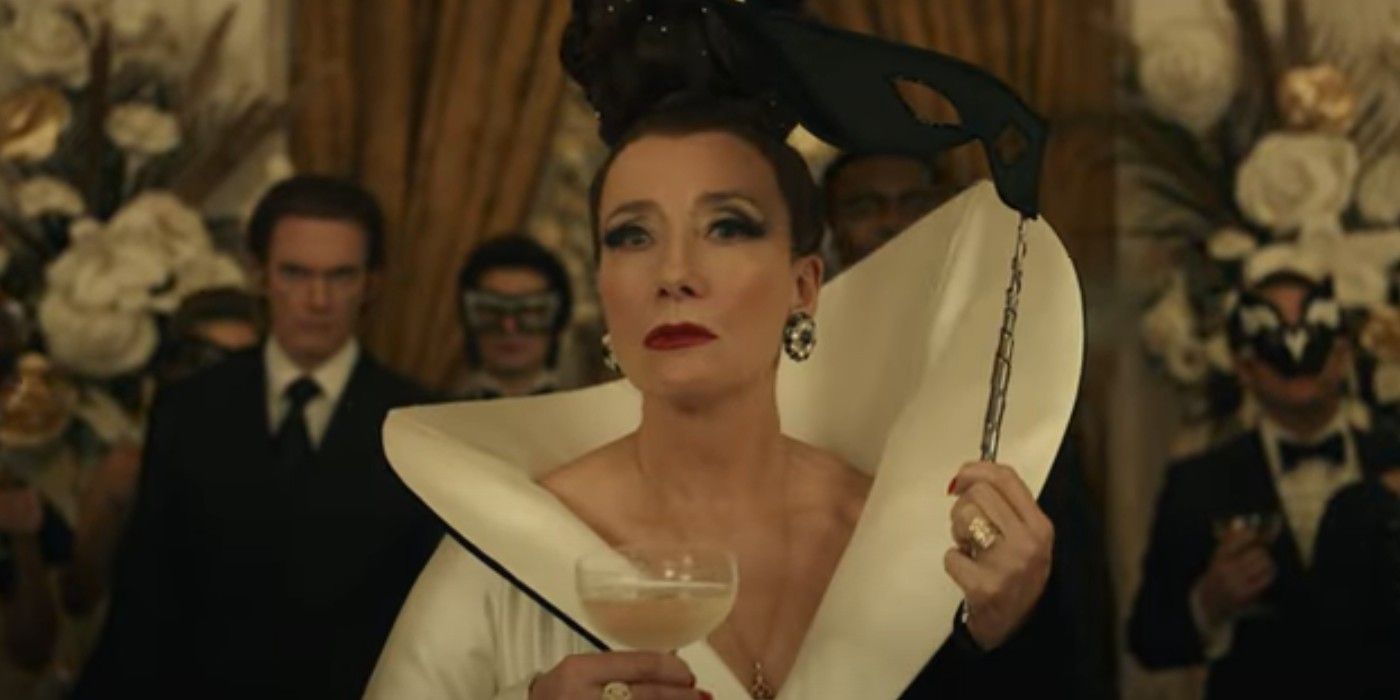
Movie Review: ‘Cruella’ Dresses Up a Disney Live-Action Retelling with Style


Director: Craig Gillespie
Writers: Dana Fox, Tony McNamara
Stars: Emma Stone, Emma Thompson, Paul Walter Hauser, Mark Strong

Synopsis: The story of Cruella de Vil is finally fully told in a reimagining from Disney.

[/info]

After decades of exploiting their hit films through a rigorous re-release schedule, the Disney model has shifted. While the repertory screenings of their classics would rake in the dough (The Lion King 3D re-release in 2011 banked $94.2 million), streaming began to change audience attitudes. With accessibility becoming a premium, Disney had to find a new goldmine. After realizing Glenn Close’s 101 Dalmatians films made half a billion dollars, the company full-court blitzed the live-action space. Since 2010, there have been a dozen live-action Disney films based on their most popular animated hits. Cruella returns the 101 Dalmatians universe to the big screen. Surprisingly, it clears a path as one of the top-tier efforts thanks to its incredible energy and style.

Cruella explores the roots of the iconic villain, played by the alluring Emma Stone. After losing her mother in a tragic accident, Estella (Stone) finds a family with street kids Jasper (Joel Fry) and Horace (Paul Walter Hauser). Estella dreams of pursuing a creative career in fashion as the three execute a series of petty thefts to survive. She begins a career as a janitor, and after a drunken night, catches the eye of fashion icon Baroness von Hellman (Emma Thompson). When she discovers a connection between the Baroness and her mother (Emily Beecham), Estella develops the alter-ego Cruella De Vil to exact her revenge.

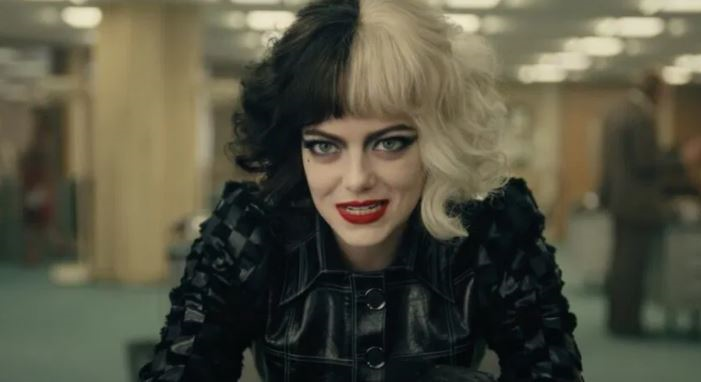
The story of Cruella should begin and end with Stone, who once again proves to be a singular screen presence. Stone won her Oscar, starred in generational hits, and seems game for any genre. Yet few actresses have ever moved physically through a scene like Stone, especially in her fiery entrance as the Cruella persona. Utilizing her lanky limbs and expressive eyes, she wanders through the scene with purpose and disgust. The fashion show she’s attending is fake, and her persona plays up that fact. But for Stone as the actress, she’s inviting us along for her own experimentation. While The Favourite and Birdman tested her dramatic range, Cruella allows Stone to explore her own subversiveness as an actress. It’s not camp, but her extravagant and arrogant turn invites us to explore a more versatile performer than one might expect.

Thompson’s turn deserves its own praise, as she seemingly relishes the ability to go bigger than her Late Night role that many unfairly compared to Devil Wears Prada karaoke. Thompson creates an ambitious and dangerous foe for Cruella, but their approaches offer very different interpretations of similar characters. Thompson embraces a quiet nature to the Baroness, even as she displays a volatile complexity that makes everyone an enemy.

Stone’s interplay with Thompson is key to unlocking the performance and the movie as a whole. Stone’s Cruella is brash and emotionally raw as she seeks acceptance from the public. Yet her eyes tell a different story, one of an insecure woman trying to prove her worth in the world. It is in those eyes that you see pain and suffering, empathy, and anger. For Thompson, her control over her gaze leaves others wounded. A well-placed withering look destroys those who oppose her. It’s also a key to showing her lack of empathy, revealing a predatory killer instinct that Stone does not have. This juxtaposition must come early in the film and break from the Cruella we’ve seen in animation. Stone’s Cruella must be our loving protagonist, not the irredeemable dog murderer that stalks other iterations of the franchise. In lesser hands, this would feel like Disney is watering down its villain to sell toys. While this may also be true, Stone’s performance capably stands on its own and clicks the film’s gears into place.

The side characters deliver both heart and humor throughout the film. Fry becomes the audience surrogate, questioning the actions of those who surround him. The role could become have devolved into a guide rather than a fleshed-out character. Fry provides enough chemistry with his co-stars to prevent the questions from becoming annoying. For those who have not joined the cult of Hauser, the actor delivers yet another committed performance. He services the film above all else, willingly playing up the physical comedy and slapstick humor to deliver a Horace that becomes a heartwarming piece of the narrative. While early reports overstated the queerness of John McCrea’s Artie, the actor finds himself drawing attention whenever he appears. McCrea’s quick dialogue and energetic performance provides a shot in the arm that keeps the momentum rolling.

Director Craig Gillespie shows growth as a visual director throughout Cruella, even as he references famed shots of influential films. Direct homages to The Dark Knight, The Devil Wears Prada, and a bevy of heist films create a somewhat odd mishmash of images. Oscar-nominated editor Tatiana S. Riegel maintains a high energy momentum throughout the film despite the long runtime. Gillespie and Riegel deploy tricks they picked up on I, Tonya, marrying a non-stop barrage of pop hits with the images to craft entertaining montages. While still a tad long, Cruella never feels as labored as its Disney contemporaries.

Early in the film, Cruella plays up the exquisite costumes and style that will dominate the film. The tactile dresses and costumes scream for your attention; smashing black, white, and red all over the screen. Jenny Beavan adheres to the period setting but succeeds in creating many stunning pieces of clothing. The sheer amount of pieces worn by both Thompson and Stone are too numerous to count, but the story allows Beavan to create costumes within the characters’ costumes. It’s important to see fashionable clothes in a movie about fashion, yet Cruella stands out from the many films that miss the mark on that integral point. The makeup team gets plenty of showy moments as well, completely transforming Stone and embedding her into Beavan’s curated looks.

The cast buys into Gillespie’s vision of a subversive counter-culture brewing within London, even if the one depicted in the film has few real-world parallels. Within the decade, punk rock and anarchists would begin to flood the space, driven by the rise of The Clash, Buzzcocks, and Sex Pistols. Gillespie nods on their future rise, but the soundtrack strikes a wildly different tone. Instead, Cruella celebrates a decidedly pop sound, with The Rolling Stones, Nina Simone, and The Doors headlining. Worse, the score by Nicholas Britell gets few moments to shine. While the music and style are certainly unusual for a Disney film, it would have been fun to see Gillespie fully commit to the ideas percolating at the edges of his camera.

Cruella is not a masterpiece, but the infectious energy is impossible to ignore. While there’s certainly darkness within the narrative, the Disney retelling succeeds where many have failed. Cruella creates an air of silliness that lets the audience in on the good time. Staging multiple little heists, forging charming relationships with the (sadly) CGI dogs, and crafting a fun soundtrack create a party atmosphere around the film. Anchored by Stone’s hilarious and engaged performance, Disney has finally created a worthwhile entry in its live-action formula.

Grade: B+

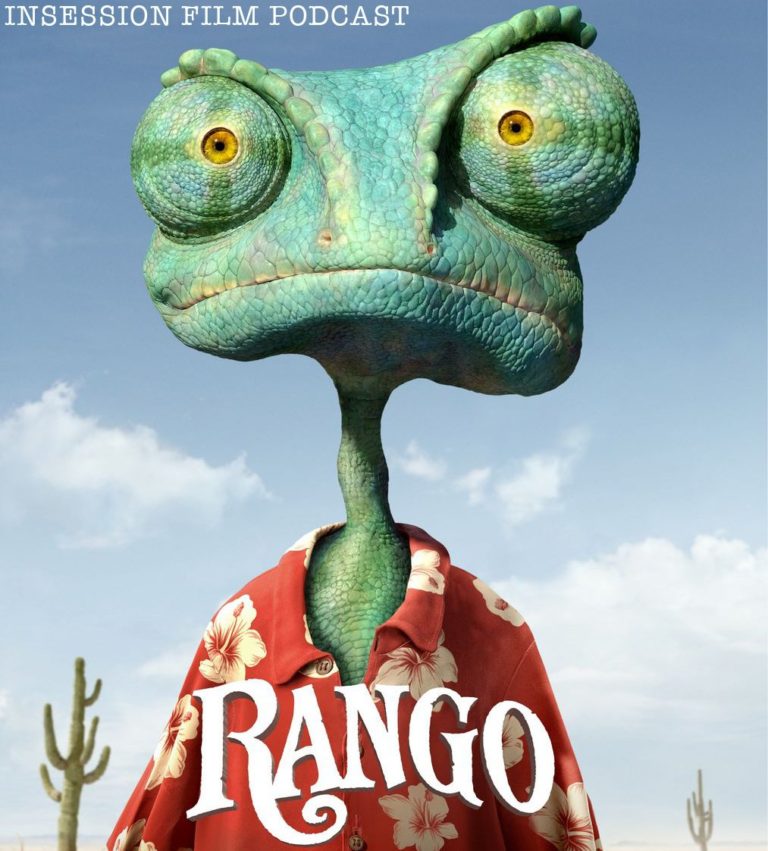
Podcast: Rango / The Killing of Two Lovers – Extra Film

This week on Extra Film, Ryan and Jay continue their Gore Verbinski Movie Series with his animated feature Rango and they discuss the indie drama The Killing of Two Lovers!

Following their closure on the Pirates trilogy, the Extra Film boys get on some horses and travel down the animated of Verbinski is a love letter to the western genre. Rango is one of the few animated films to win Best Animated Feature at the Oscars due to its fun character and highly original vibe that set it above a lot of animated films from its year. The problem with that is Ryan and Jay don’t think it has actually aged that well, due to it leaning on its genre tropes and callbacks. This led to a very interesting breakdown of the film and its legacy.

In the back half of the episode, the guys review the new film, The Killing of Two Lovers. Debuting on the festival circuit in early 2020, The Killing of Two Lovers is finally being released and being seen as one of the best indies of the year and one to look out for based on its great lead performances and tense direction. While Ryan seems higher on it than Jay, both admired the film and think it is one to check out.

Thanks for listening!

– Movie Review: Rango (2:46)
Director: Gore Verbinski
Screenplay: John Logan
Stars: Johnny Depp, Isla Fisher, Abigail Breslin, Alfred Molina, Bill Nighy

– Movie Review: The Killing of Two Lovers (43:59)
Director: Robert Machoian
Screenplay: Robert Machoian
Stars: Clayne Crawford, Sepideh Moafi, Chris Coy, Avery Pizzuto

– Music

Rango Suite – Hans Zimmer
Only One – Reem
The Return of the Eagle – Atli Örvarsson

We try to make this the best movie podcast we possibly can and we hope you enjoy them. Subscribe today on iTunes, Spotify, or Stitcher, and please leave us a review on iTunes. You can also find us on Soundcloud, PlayerFM, and TuneIn Radio as well. We really appreciate all your support of the InSession Film Podcast.

Subscribe to our Podcasts RSS
Subscribe to our Podcasts on iTunes
Listen on Spotify
Listen on Stitcher
Rango / The Killing of Two Lovers – Extra Film

[divider]

To hear this Extra Film episode and everything else we do, download our apps on the Amazon Market for Android and the Podcast Source app on IOS devices. The mobile app covers all of our main shows, bonus podcasts and everything else relating to the InSession Film Podcast. Thanks for your wonderful support and for listening to our show. It means the world to us.

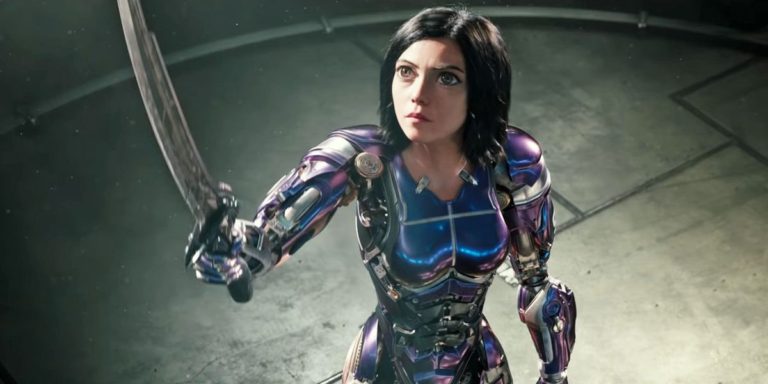
Blindspot of the Year: ‘Alita Battle Angel’

Every two weeks, I will be working my way back through each year and watching a major blindspot of mine. As long as they are not sequels, any film is on the table to be a blindspot. I will be aiming for the most recognizable films that I haven’t seen, whether they were box office successes, Oscar contenders, or just garnered a huge fan base. This post will talk about how I missed the film, and what my thoughts are now, linked to the love for the film and looking back on the year as a whole.

For the year 2019, my blindspot is Alita: Battle Angel.

2019 is an interesting year in which I saw most of the major Oscar contenders and box office hits. When trying to decide on my blindspot for 2019, I wanted to pick something that had a lot of passion behind it, something that people may want my opinion on. That was when I found Alita: Battle Angel and knew that this would be a great way to open up this series.

The film, whilst doing well enough at the box office, was not the success that the studios were hoping for from director James Cameron, only making 400 million dollars in the worldwide box office. It was also not a critical success, failing to even receive a Best Visual Effects nomination at the Oscars after making it to the second round of the shortlist.

However, none of that seems to matter as the film has still inspired a lot of passion. Whenever you tweet anything online about Alita: Battle Angel, the fans will find it and respond to it. Despite the poor box office ratings, many fans are still petitioning to this day for a sequel that was planned, and I commend the fans for being as passionate as they are.

With these conflicting views and opinions on the film, I was intrigued to see where I would land with this film. For the most part, I am glad to say that I had a good time with it. This is mostly due to the performance of Alita by Rosa Salazar, as well as the huge ensemble cast within the film. When you have a cast as known as Christoph Waltz, Mahershala Ali, Jennifer Connelly and Ed Skrein, you know you are in for a good time and all of these actors are having so much fun in their roles.

The world-building in this film is spectacular, and the visual effects help bring the audience into this Cyberpunk experience, setting high expectations with the opening scenes of Alita and her robotic limbs. I had a lot of fun with the action sequences, and that doesn’t just stop with the fantastic fight sequences. The fictional sport of Motorball is brought to life through these thrilling moments and develop throughout the story, starting out on the streets and, later on, immerses us in the arena.

Our leading character Alita goes through a lot of development throughout this story, and it is engaging to watch. I also like that Christoph Waltz’s character, Dr. Dyson Ido, has his one storyline to go through and to learn throughout the story, as it does add weight to the relationship between him and Alita. I do wish the other characters had more development, because the other relationships are simply not as impactful throughout.

The major problem with this film is the fact that it will most likely not receive a sequel. This is a strong opening film for a franchise, but by itself, it does feel like a shell. We have these great characters, particularly Alita, and a world that I want to explore as much as I can. However, the film ends with the story only feeling like it is beginning. So much time is spent setting up this huge world and giving us context for everything likely to come. Judging it as a solo film, there is a lot of potential here that does feel wasted, especially with the vague ending that we do get for this story.

I really do understand why fans want a sequel and to see more of Alita and this world. Whilst I would not say I love this film as much as the passionate fans did, there is so much more to offer and many stories to tell. This certainly wouldn’t have been a favorite film of mine in 2019 or one that I would rush to revisit, but I am glad to have finally watched it and understand why a call for a sequel has been made from fans. Alita Army, I am with you on this one.

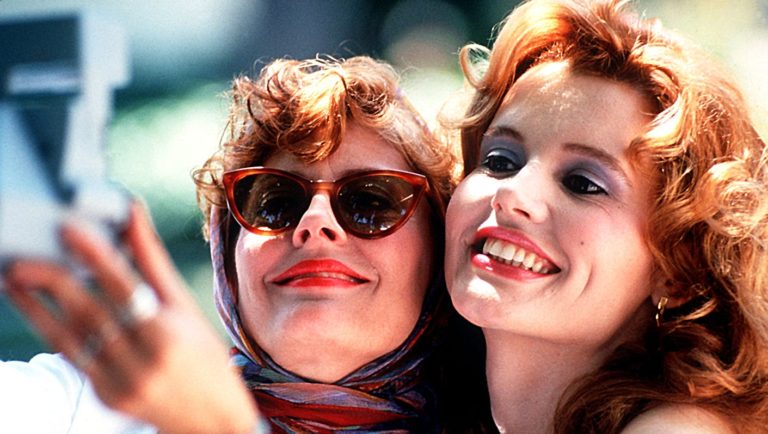
Classic Movie Review: ‘Thelma and Louise’ 30 Years Later


Directors: Ridley Scott
Writers: Callie Khouri
Stars: Geena Davis, Susan Sarandon

Synopsis: Two best friends go on an adventure to escape their lives, which soon turns into a terrifying chase from authorities

[/info]


A lot has happened in the 30 years since Thelma & Louise was released to audiences in 1991. The poignant quote of Louise telling her friend, “we don’t live in that kind of world, Thelma” as a retort to Thelma’s hopes of the authorities believing their situation; mirrors our current society of the “believe all women” mantra that has escalated the MeToo Movement. A sign of how far our world has come and how far we still must go.

This modern take on the traditional machismo westerns of old tells the story of our two titular female characters, Thelma and Louise. The two women are down on their luck — unsatisfied with the simplicities of life, or should I say the social norms that are so often pinned on women. Thelma (Geena Davis) is a homemaker with a domineering husband whose personality comes off as more of a strict father rather than a husband. He’s unforgiving to her desire to go out and have some fun every now and again. Louise (Susan Sarandon) is the more logical one, but hides a deep-seeded secret within her that eventually plays a role in the duo’s journey. One event leads to another as the ladies find themselves running from the authorities as their goal to make it across the border of Mexico becomes more elusive. 

Many names floated around the rumor mill as production looked for ideal outlaws. Jodie Foster, Michelle Pfeiffer, and Meryl Streep to name a few. It shows the strong women they were looking for from the very beginning. But with scheduling conflicts and other projects, production finally found their Thelma and Louise in Geena Davis and Susan Sarandon, and it couldn’t have worked any better. The chemistry between the two feels like catching lighting in a bottle. This isn’t your usual buddy movie, or even a best friend movie. To say this would be watering down the film as a whole. Thelma and Louise’s friendship must withstand a rollercoaster of emotions and the horrific circumstances that befall them. The duo is ride or die—thick or thin. The bond they exhibit onscreen is just as powerful as their general respect for each other offscreen.  This film would soon catapult these two actresses into the dramatic roles we associate with them today.

Now if there was a rulebook for the male film genre, Thelma & Louise threw it out at the beginning. Down to the most minute detail, the film flips those stereotypes and plays with the typical gender norms. One could say Thelma & Louise is a modern retelling of the classic film Butch Cassidy and the Sundance Kid. This time, women are running from the authorities. The “male gaze” of the sexualized Jane Russell in Howard Hughes’ The Outlaw is now a shirtless, oiled-up Brad Pitt. Who could forget a glistening Pitt in one of his first roles?

The key points of symbolism that are displayed in Thelma & Louise are no accident, but they are there to show the extreme changes in the women from beginning to end. So it begs the question, is Thelma & Louise a feminist film? In an interview with screenwriter Callie Khouri (who won an Academy Award for her work on the film), she spoke on the women’s outlaw ways saying that “you could not help but break the law if you were yourself.” No, she doesn’t advocate for every woman to start robbing banks, but sometimes women are confined in what society deems the norms, and to break away from societal norms can be awfully problematic for some. In the film, we see our two heroines baggy clothed, make-up free, and caked in the red dirt of the desert. They have shed the stereotypical female skin and, up until the end, refuse to go back. 

Five years ago, in celebration of the film’s 25th anniversary, Davis and Sarandon were interviewed by ABC. It was a laid back interview in which the two mostly spoke on the fun of filming such a classic, and joked about taking the first selfie with their famous polaroid picture. Maybe if it wasn’t for the progress that’s been made between then and now, I would be doing a simplistic review, reminiscing on how interesting a tale this is and how great the performances are with these two amazing actresses. Thelma & Louise was always a strong female movie, but in today’s social climate, it has taken on a different role. Thelma & Louise depicts the strength of female empowerment — a theme that is definitely important now more than ever. 


Rating: A

‘Center Stage’ and ‘Nina Wu’ Screening on Virtual Cinema

“I want to live! I want to retaliate!”

“They are not only destroying my body. They are destroying my soul!”

These heart-wrenching outcries are from the respective protagonists of Center Stage (Stanley Kwan, 1992) and Nina Wu (Midi Z, 2019). CineCina, a Chinese film festival in New York, is screening a double feature of these feminist Chinese language films via its virtual cinema. While these films differ in genres, styles, and contexts; they echo each other as thought-provoking exposés of the historical and systemic misogyny in the film industry and mass media.

Starting earlier this year, CineCina has been one of the first film venues worldwide to present the 4K restoration of Center Stage, the Hong Kong New Wave auteur Stanley Kwan’s classic biopic of Ruan Lingyu. Ruan was China’s most popular silent film actress in the 1930’s, who committed suicide at the age of 25 among the tabloids’ rampant, sensationalistic gossip about her personal life. But her legacy lives on long even after her death, and she has become a household name in China ever since. Ruan is notably played by Maggie Cheung, who is best known for her luscious, mesmerizing on-screen presence in director Wong Kar-Wai’s In the Mood for Love.

In Center Stage, Cheung’s sentimental, perceptive mirroring of Ruan transforms the film’s realism into a metatextual metaphor of what acting entails for an actress who cannot tell film and real life apart. Cheung’s divine composure and sultry glamour bring Ruan back to life on screen, and in turn anchor this film’s labyrinth-like structure. Kwan interweaves the original footage of Ruan’s silent films, the biographical arc that chronicles her career and life leading up to her suicide, and the group reflections and discussions among the film’s cast behind the scenes. He takes this experimental, hybrid approach of challenging the conventional biopic trope of linear reenactments, in order to invoke the audiences’ own emotive interpretation of Ruan’s femininity and vulnerability, as well as her heart of gold devoted to feminism and activism in the time of sociopolitical turmoil.

On the other hand, a Cannes contender from the Myanmar-born Taiwanese director Midi Z, Nina Wu is his stylized foray into the self-reflexive psychological thriller responding to the “Me Too” movement – co-written by the film’s leading actress Kexi Wu. In light of Harvey Weinstein’s sexual abuse cases in Hollywood, Wu bases this bold screenplay on her own story as an actress in Taiwan – which brutally dissects the contemporary Taiwanese film industry’s mental and sexual exploitation of women from men in power. Midi Z’s potent audiovisuals, saturated with symbolic lighting, construct a nightmarish maze that leads to a downward spiral of insanity. Meanwhile, Wu’s theatrical, larger-than-life portrayal of the film’s protagonist Nina – a mentally tormented actress on the brink of fame – engages the audiences with the traumas both on and off screen.

CineCina’s double feature of Center Stage and Nina Wu blurs the lines between reality and fiction, past and present, while breaking the fourth wall that reflects back on the abuses that women are subject to in the processes of filmmaking and film marketing. Drawing from their own personal emotions, perspectives and experiences, both films’ leading actresses exert another layer of authenticity on the sensitive, provocative narratives that the directors try to tackle.

To watch this double feature, please visit CineCina’s virtual cinema: https://cine-cina.co/2020/09/04/virtual-cinema/

Series Review: ‘Love, Death & Robots 2’ is a modest upgrade


Directors: Jennifer Yuh Nelson, Tim Miller, Robert Valley, Alex Beaty (and more)
Writers: Tim Miller, Philip Gelatt, John Scalzi (and more); J.G. Ballard, Joe R. Lansdale, Joachim Heijndermans (and more) (short stories adapted from)
Stars: Nolan North, Élodie Yung, Nancy Linari, Joe Dempsie, Peter Franzén, Archie Madekwe (and more)

Synopsis: A collection of animated short stories that span various genres including science fiction, fantasy, horror and comedy.

[/info]

With Love, Death & Robots’ debut in 2019, the Tim Miller-created (and David Fincher-produced) series proved that animation is a realm which also permits adults, though not without glaring flaws. It may be for mature audiences, but the hyper-dependence on bloodshed and wanton titillation makes the case that it doesn’t possess maturity. Too many of the 18 shorts failed to validate the usage of explicit spices, causing the story and animation, all of which have points of difference that can astound, to be secondary to the graphic brushstrokes. Sonnie’s Edge can’t resist reminding viewers the protagonist is an assault victim in dialogue and design. And the point of the striptease in The Witness is…? The angsty song choice isn’t the only crime in your sheets-shredding set piece, Beyond the Aquila Rift (the fact that it’s rendered into a set piece!).

For its second round, Love, Death & Robots recruits Jennifer Yuh Nelson of Kung Fu Panda 2 to be the supervising director, who hopefully can keep the male gaze and hunger for crimson in check more actively and pointedly than her Volume 1 counterpart’s Gabriele Pennacchioli. Despite having 10 fewer episodes, whether due to COVID or as intended all along, to showcase a more mindful and story-driven approach, improvements are detectable here. Not all of the eight shorts are equal in quality, such is the reality of anthologies, but they treat you as adults. No excess. Justified grime. Thin or thick, purpose is present. Volume 2 has found the right levels for all future loving, dying and robot-ing to apply, should Miller and company still see this as an experiment worth tinkering.

[divider]

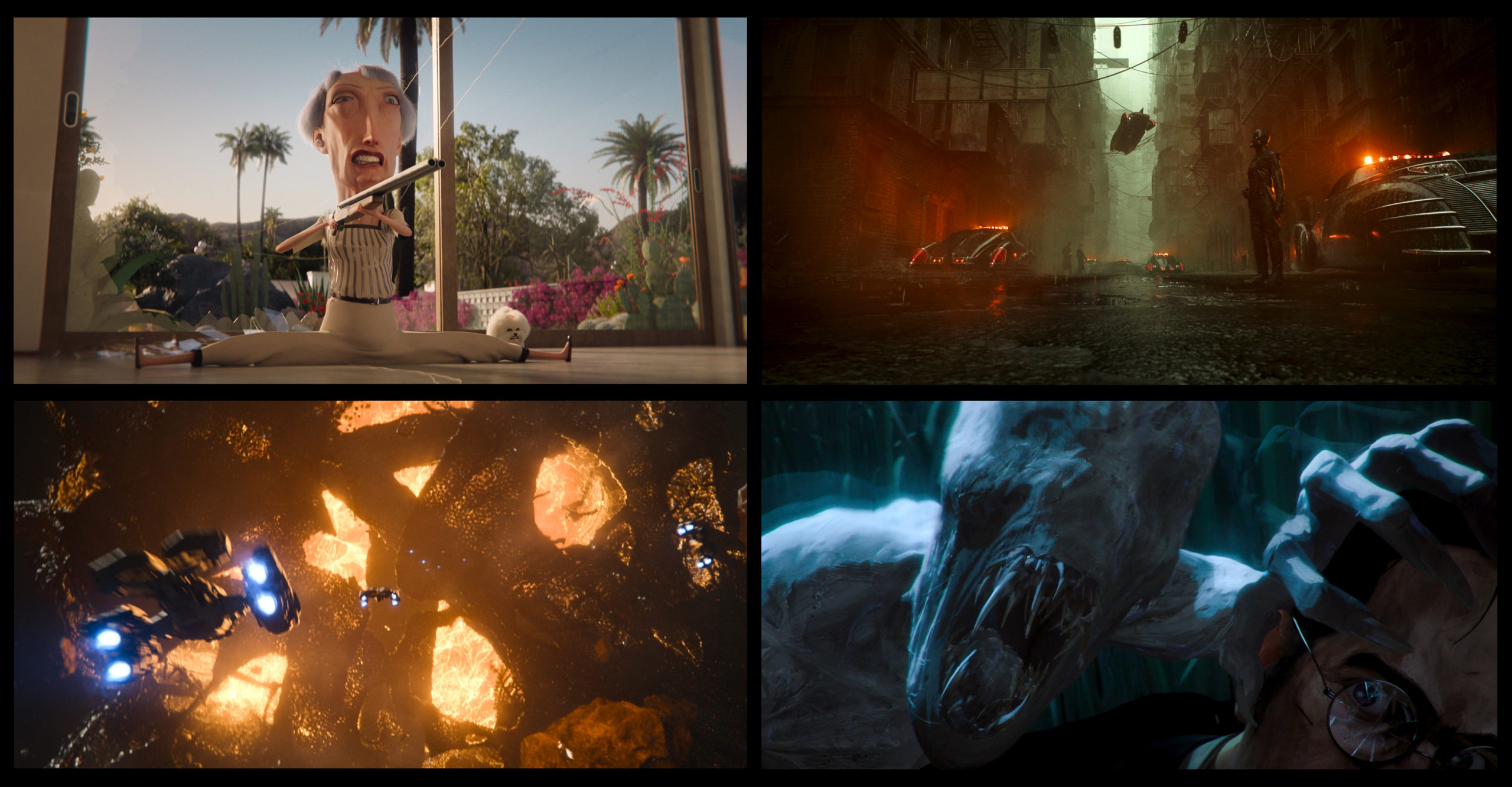
Top left, going clockwise: ‘Automated Customer Service,’ ‘Pop Squad,’ ‘The Tall Grass’ and ‘Life Hutch.’ | Courtesy of Netflix

Automated Customer Service (Atoll Studio)

A sleepy retirement community is about to get it boomin’ when yogi Jeanette (Nancy Linari) accidentally turns her boxy vacuum robot into a killing machine. From here, directing team Meat Dept takes a nightmare scenario — meeting the agent after ‘0’ is pressed — and blends it with funnies of the twisted variety, at times centering around Jeanette’s fluffy dog. The result is a start to Volume 2 that is as quirky and riotous as the geriatric caricatures populating the setting. [B+]

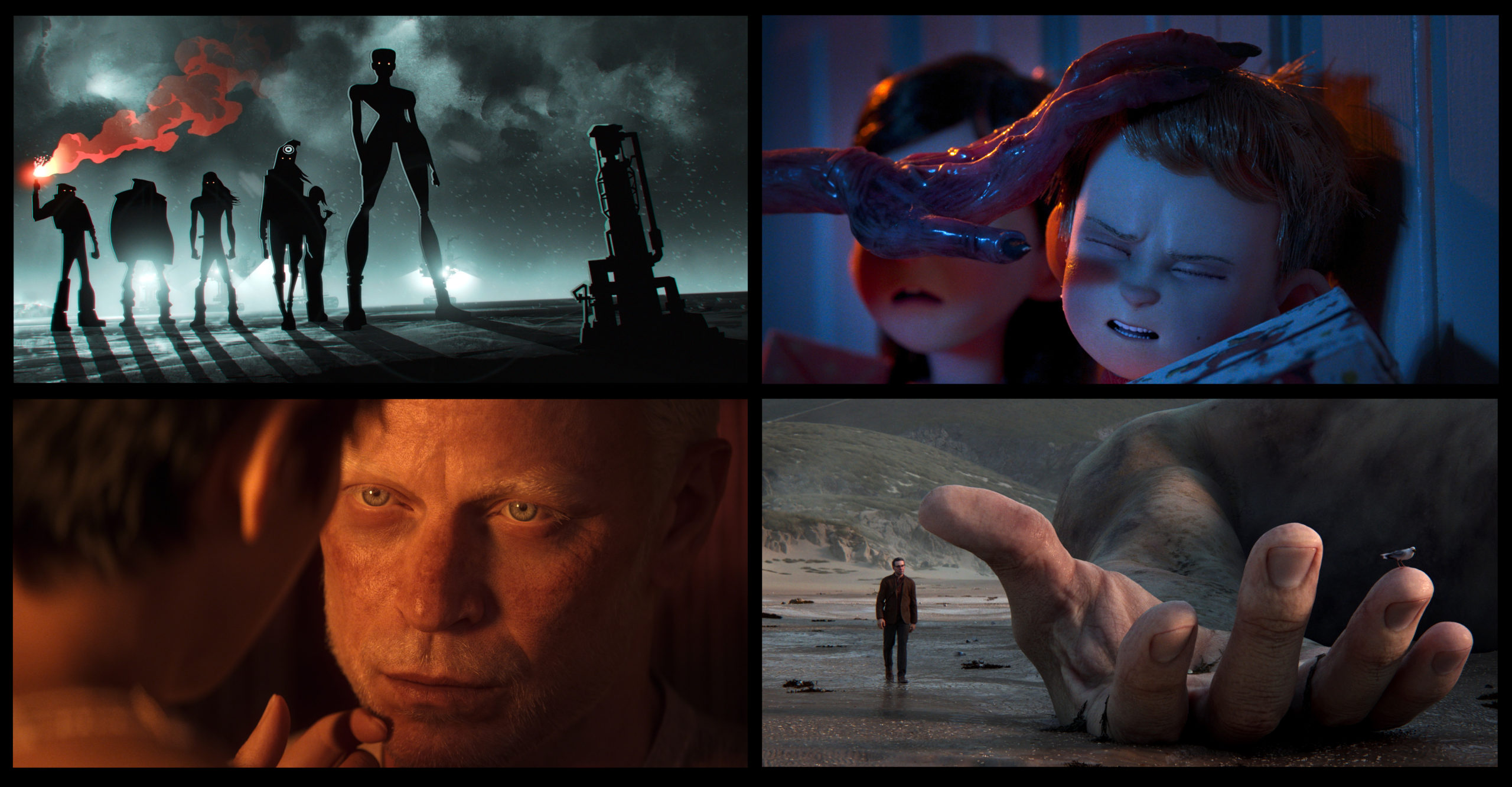
Ice (Passion Animation Studios)

From Robert Valley of Volume 1’s Zima Blue comes a hyper-stylish story about adaptation. Wanting to no longer be stigmatized by the natives of an icy planet as an “extro,” or persons without synthetic enhancements, Sedgewick (Archie Madekwe) joins his little brother Fletcher (Sebastian Croft) for a dangerous race against titanic whales. The short has precious little to absorb beyond what’s on screen, a letdown since Zima Blue managed to use its succinct aesthetics to tackle existentialism, but what’s on screen is a superb example of evoking the cinematic feeling solely through color use. [C+]

Pop Squad (Blur Studio)

The first (of three) star-studded and photorealistic short sees Detective Briggs (Nolan North), married to diva Alice (Élodie Yung), being worn down after years working as a population controller. Jennifer Yuh Nelson seems to have brought together Dark City, Blade Runner, Deus Ex games and Altered Carbon to create an environment dreamy to be a part of and yet sterile to a horrific degree, or at the very least will be a wonder on the big screen. Gorgeous and thought-provoking, this is the second-best short of Volume 2. [A-]

Snow in the Desert (Unit Image)

The allegorical and literal collide in this short from the team behind — gulp — Beyond the Aquila Rift. Albino recluse Snow (Peter Franzén) is being hunted because his balls (not a typo, swear) is the key to immortality, and it’s up to him and his only ally Hirald (Zita Hanrot) to keep them safe. Although somewhat predictable because of the apparent emphases in dialogue, this short recalls those pulpy, potentially set-on-Mars films of times past holding an endearing belief that it’s grander than it really is. One copulation scene, but now leaning toward tasteful rather than exploitative. [B]

Top left, going clockwise: ‘Ice,’ ‘All Through the House,’ ‘The Drowned Giant’ and ‘Snow in the Desert.’ | Courtesy of Netflix

The Tall Grass (Axis Studios)

Bespectacled passenger Laird (Joe Dempsie), refusing to listen to his conductor (Steven Pacey), wanders far from the train and into the overgrown fields full of fainting while lights. Although the short boasts the most unique style that adds to its fable, by-the-campfire tone — characters seem to be carved out of wood, and humans move at a different frame rates than non-humans — it is really Volume 2’s odd duck. It doesn’t seem to belong in this series, on top of being like Ice it begins and ends at “style exercise.” Still, a better use of the titular setting than the In the Tall Grass feature, which is also from Netflix. [C]

All Through the House (Blink Industries)

Here’s something to tide you over, fans of Henry Selick. Believing Santa has arrived, siblings Leah (Divi Mittal) and Billy (Sami Amber) want to take a peek, an action they will soon regret as he is less of a chubby old man and more a sentient Phil Tippett creation. Although strangely kid-friendly in a series that’s anything but and clocking in at just seven minutes, Elliot Dear’s work offers a different option besides Gremlins for folks programming “Horror on Christmas” in their households. [B]

Life Hutch (Blur Studio)

Who is your Killmonger? It is not the pilot Terence (Michael B. Jordan) who is taking shelter in a pod — called a life hutch in this world — but rather a quadruped assistant mech currently so malfunctioned it will kill anything that moves. A hyper-realistic, sometimes to the point you can’t decide whether Jordan or textures are animated, and claustrophobic cat-and-mouse yarn that is straightforward to a fault. Try not to think of it as being in the same universe as Volume 1’s meaningful Lucky 13 and you might enjoy this. Even better, boot up Black Mirror’s rogue bot episode Metalhead. [C+] 

The Drowned Giant (Blur Studio)

Creator Tim Miller writes and directs the anthology’s biggest surprise-slash-special ending — a pensive, heartfelt look at existence through the researcher Steven (Steve Pacey) who encounters the beached carcass of a colossal man. Don’t expect any mayhem here, just impressions and questions on the way we treat-then-mistreat wonders and on the natural order that is now extra-magnified. What begins as a phenomenon might end as anything but. Tom Holkenborg’s gentle score emphasizes both the bitter and the sweet nestling in this lesson. [A]

[divider]

https://www.youtube.com/watch?v=Gj2iCJkp6Ko

Op-Ed: Christopher Lee and Peter Cushing Non-Horror Recommendations

Lifelong friends and Hammer bros Christopher Lee and Peter Cushing are well known for their horror credentials, both together and separately. However, these May birthday boys certainly ventured into other genres, sometimes still together and occasionally even as the good guys! Here’s a chronological rundown of eclectic opportunities and a chance to see Lee and Cushing beyond the scares.

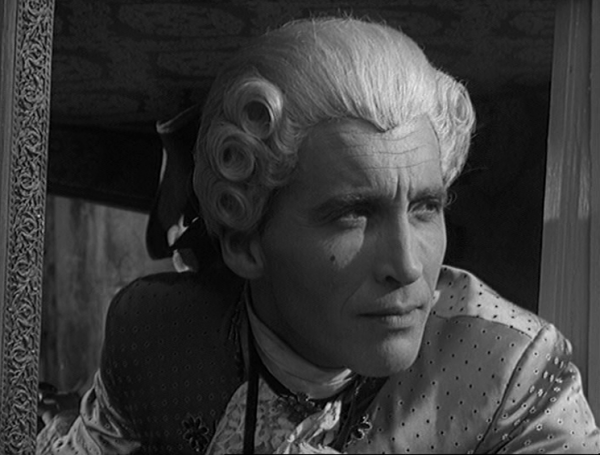
A Tale of Two Cities

It was the best of times, it was the worst of times…” Dirk Bogarde (Death in Venice) stars in this fairly accurate 1958 British adaptation along with Donald Pleasence (Halloween) and the young, pretty, and ruthless Christopher Lee. Though the black and white photography and budget décor are dated, there’s a feeling of old-fashioned ambiance created by the monochrome tricorn hats and shadowy aristocratic houses. For being the epitome of Victorian literature and nineteenth century England, Dickens’ parallels on the injustices amid the Revolution and the upper class turnabouts of the guillotine come across exceptionally. While the unrequited love isn’t usually the first genre element we think of regarding Charles Dickens, there’s still plenty of espionage, intrigue, and adventure as the expected Dickensian twists and turns combine for an interesting blend of 1958, 1858, and the original Vive la France! Some of the time and place transitions or foreign situations may be confusing to those unfamiliar with the novel and the source history, and perhaps this edition better serves older scholars or wise students. However, unlike some of Dickens’ other interwoven and complex intricacies, this is actually a straightforward, swashbuckling tale. “It is a far, far better thing that I do than I have ever done…”

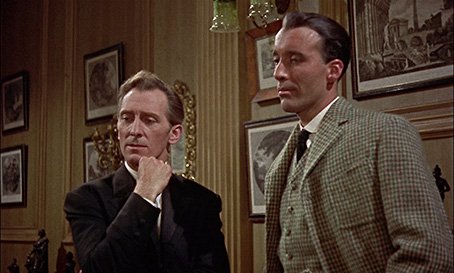
The Hound of The Baskervilles

This colorful 1959 Sherlock Holmes treat opens in the expected Hammer style, thanks to colonial prologues, lush Victorian looks, on the moors canine action, and our dynamic duo. Lee is once again handsome; smashing as the eponymous, snotty heir presumptive. It makes one wonder why he wasn’t cast as a traditional romantic leading man more. Peter Cushing is likewise suave as the famous detective. There’s a speedy flair and wit to his deduction, and Andre Morell (Ben-Hur) is quite the fun and capable Watson alongside a juicy, scene chewing supporting ensemble. Cinematic tricks, visual cues, and violent twists keep the hour and a half fast paced as the murder mystery threats and smartly timed puzzles unravel. Perhaps every generation wants to put its own stamp on Baker Street, so maybe fans of more contemporary or edgy Holmes renditions will find the dry British humor here too stuffy. However, oft Lee/Cushing director Terence Fisher keeps the suspense thrilling with traditional dramatic swells and charming performances. At the time, viewers were disappointed this wasn’t a horror tale – cutting short Hammer’s plans for its own Sherlock series – but both our boys would go on to separate Holmes adventures elsewhere. Fortunately, longtime fans of the cast, Sherlock, and Hammer can delight here.

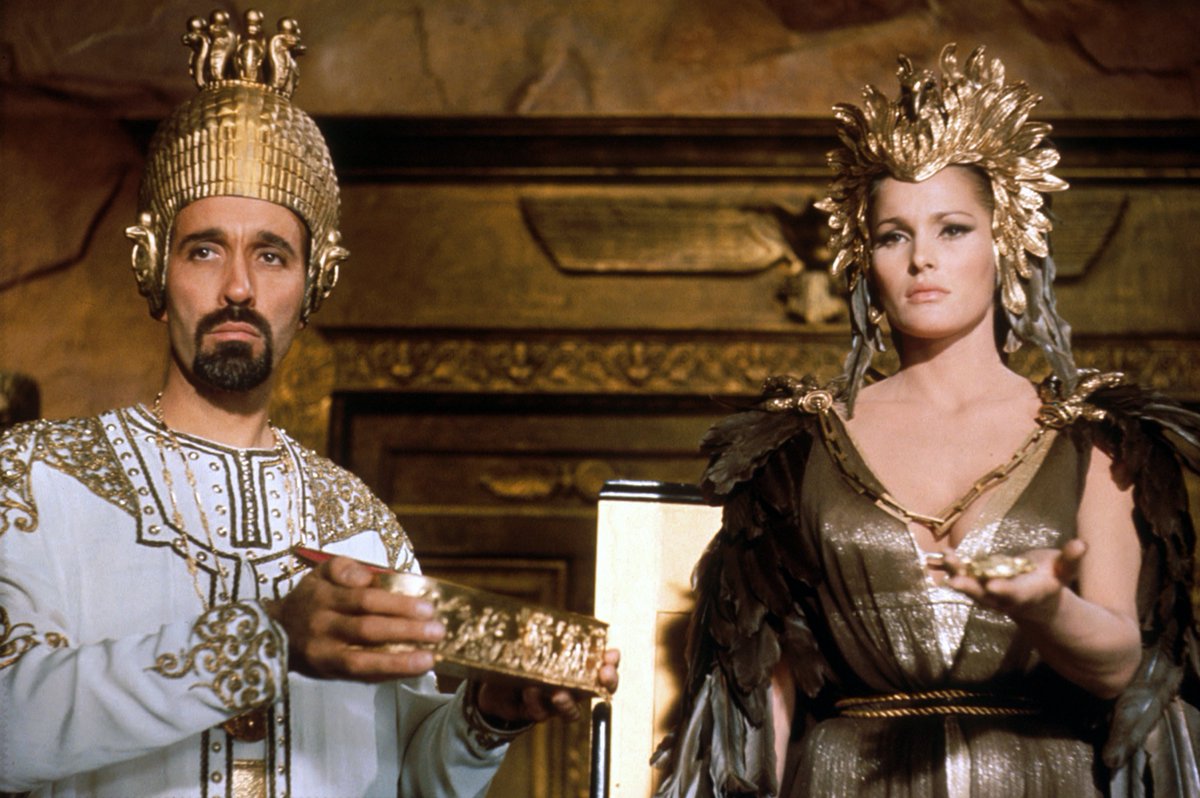
She

Ex-soldiers John Richardson (One Million Years B.C.) and Peter Cushing leave 1918 Palestine in search of the lost city of Kuma which is ruled by the titular Ursula Andress (Dr. No) and her high priest Christopher Lee in this tasty 1965 prehistoric adventure. Granted, Bernard Cribbins (Doctor Who) as Cushing’s batman is sometimes a little too much with the Brit servant humor. Some of the jokes might be lost on today’s younger viewers, and the speaking volume is also too soft to hear against the epic music. Stereotypical tribal elements are compounded by the sixties film-making, as well as the onscreen interwar attitude. On the surface, this is another tale that seems like Hammer is branching out too far from its horror best. Fortunately, this remains a fun, lavish escapade – an entertaining desert romp with treasure maps, immortal trysts, and celestial rituals. The fantasy sets are delicious, the juicy ladies are dynamite, and the fiery action remains well paced. What’s not to like?

Nothing but the Night

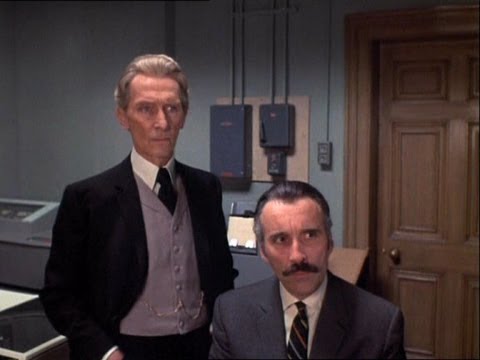
Groovy seventies interiors, cool cars, old science equipment, and lovely seaside waves begat explosive cliffside accidents, townhouse suicides, a suspicious orphanage, and hospital experiments in this 1973 thriller. Scholarly doctor Peter Cushing and personally invested police colonel Christopher Lee must work together as red tape, politicking, and aristocratic histories impede the case. A meddling newspaper reporter adds workplace tensions – mixing business with pleasure as mysterious trust organizations and cult connections leave a traumatized young girl hanging in the balance. Hypnosis and tender moments reveal past traumas and fiery experiences, but our boys must do what’s right despite a conflicted mother and shady officials who think differently. Phone booths and tape recorders create nostalgia for viewers now; but fedoras, silhouettes, and careful lighting schemes invoke a noir mood to match the procedural corruption. Initially, there isn’t any horror to the converging crimes. However, freaky deaths and well done child performances imply potentially supernatural twists. Audiences may find the this late mix of ritual occult meets straight crime lacking a cohesive finesse, and the science versus paranormal probably should have been one or the other. Thankfully, the fine cast and period investigation flair bring home the shocks, surprises, and bonfires in a spirited Guy Fawkes finale.

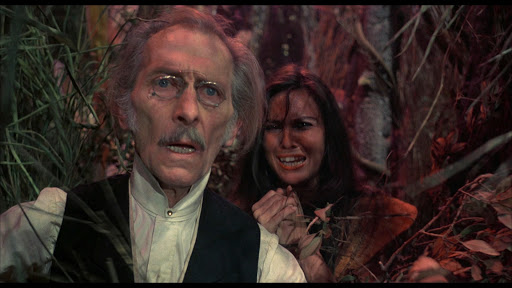
At the Earth’s Core

Peter Cushing adds wonderful charm and humor alongside Doug McClure (The Virginian) and Caroline Munro (The Spy Who Loved Me) in this 1976 Edgar Rice Burroughs adaption. Fluorescent pink smoke, plastic plants, and very bad rubber creatures accentuate the obvious backdrops, and the faux names are tough to pronounce. Yet all the underground humans conveniently speak English. It’s difficult to tell who is who in crowded fight scenes, but look at me awe zooms slow the action pace. Unfortunate “master race” wording and other stereotypes are also inappropriate today; white savior educate the primitives and free the slaves plots meander without any real goals or moral considerations. Thankfully, simplistic, outdated literature and hokey production aside; the Victorian fantasy, steampunk technology, spectacles, gears, and gizmos remain heaps of fun. Top hats, umbrellas, and posh waistcoats that survive all the roughness counter the totally impractical preposterous science. Homoerotic battle bonding and kinky scenes with giant beasts swooping down to take the women add adult suggestions while ahead of their time high tech and dinosaur bird theories strengthen the intriguing if disproved premise. Ninety minutes may be too long, but there’s enough whimsy and an exciting multi-level final battle to keep this adventure entertaining for the whole family.

Airport ’77

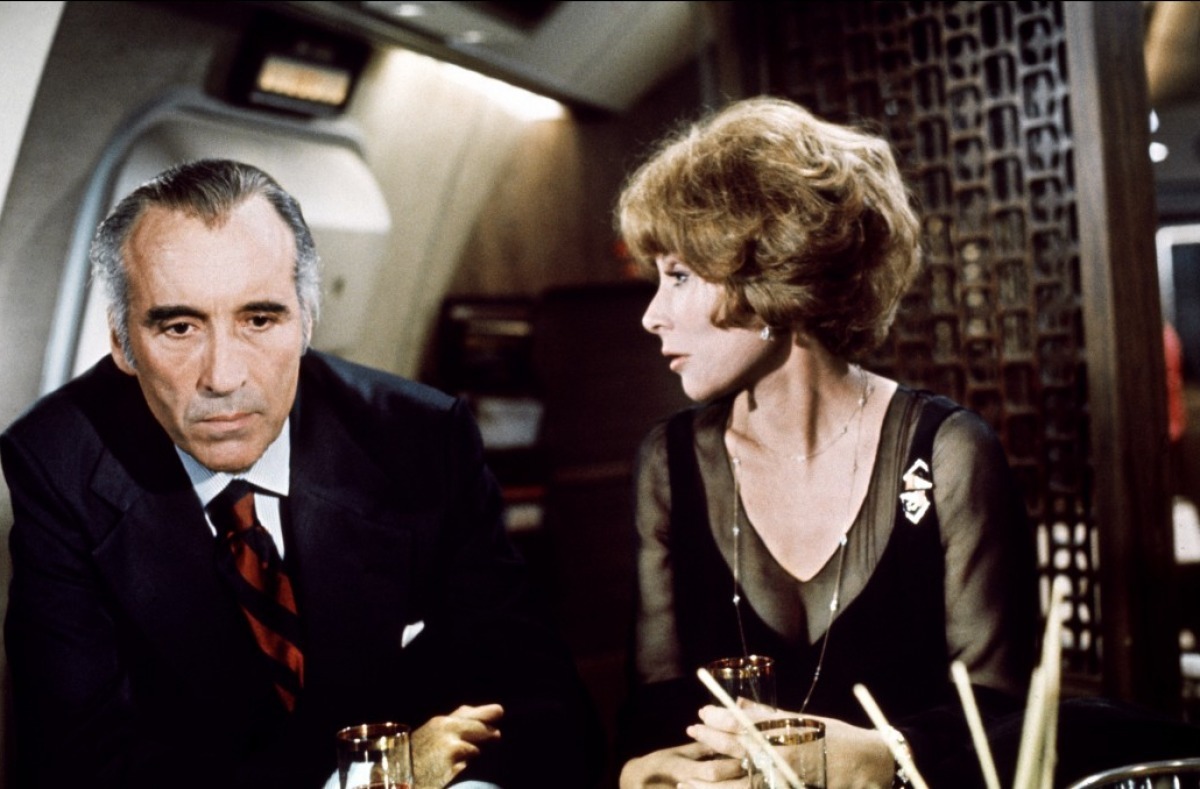
Christopher Lee joins an an all-star cast including Jack Lemmon (Some Like it Hot), James Stewart (Harvey), Olivia de Havilland (Gone with the Wind), in this third installment of the seventies transportation calamity franchise that sends the 747 out of the skies and into the ocean. Sure, certain equipment and mechanics are out of date, but the unique mix of airline frights, hijacking accidents, and aquatic dangers remain multi-level tense. The search and rescue half of the film feels more like a documentary with procedural explanations that have us looking up if this is how it’s really done these days or if it’s all hyperbole and liberties keeping the action scary cool. Although viewers can’t expect much character development amid the crowded cabin, under pressure machinery, and running out of air ticking clock; one by one the stars have their own in peril moments. This aged but still in their primes and now largely late ensemble creates a certain nostalgia even if the Airplane! spoofs have since capitalized on this kind of early disaster flick and CGI laden apocalyptic blockbusters are a dime a dozen today. Fans of the cast can enjoy all the talent coming out to play in this surprisingly intense yarn.

Rogue One: A Star Wars Story

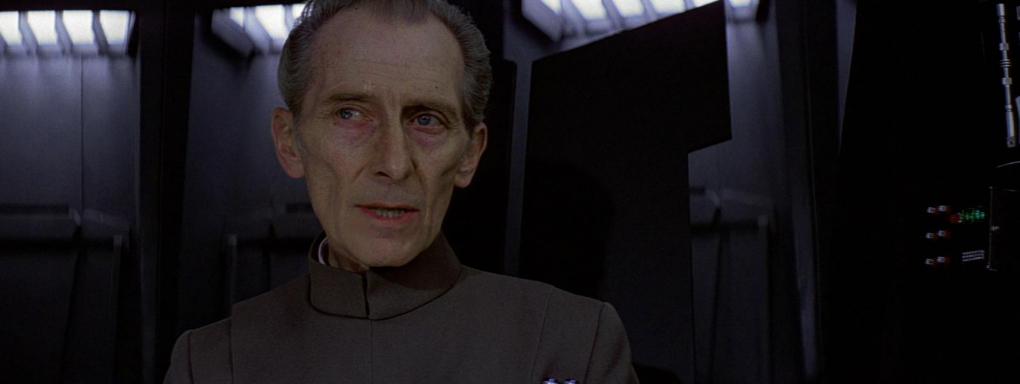
This 2016 offshoot set before the original Star Wars certainly has pleasant visuals, pretty planetary vistas, and intergalactic cities; but the spectacle doesn’t overtake the sad family separations, extremism, and bleakness of life under The Empire. Hopelessness, near gone Jedi philosophies, competing rebellion tactics, and doubts on whether a life like this is worth living unify the stands taken when lines are drawn. The audience wants these rebels to succeed regardless of the consequences – after all we know the stolen Death Star plans make it to Star Wars. Apparent rewrites, reshoots, and re-arranged editing, however, make for poor dialogue, confusing planet hopping, and ridiculously simple flick the switch/press the button/insert the data tape results. Fortunately, older stars and returning characters from this galaxy far, far away anchor the franchise hallmarks; including a digital revival of Peter Cushing as Grand Moff Tarkin. The superb technical achievement isn’t noticeably out of place, and I positively love the deserved respect for such a critical role and careful attention to detail. However, more than anything, the composite just reminds viewers that it isn’t really Peter Cushing. Being aware of the wizardry distracts from the sophisticated catharsis leading up to the hours before Star Wars, and there are definitely uncomfortable moral implications on using a late actor’s likeness on a body double. For all its impressiveness; archive footage, a blurry hologram message, or onscreen video communiques would have sufficed.

Poll: What is the best “silent survival” movie?

The classic mantra “silence is golden” implies that words are indeed important, but sometimes it is better to say nothing at all. This is especially true for characters in movies like A Quiet Place Part II, where if you say anything at all you might, you know, die. In these worlds, silence isn’t just golden, it is survival, and many thrillers have used the lack of sound as key plot points to frightening effect.

What do you think is the best “silent survival” movie? Keep in mind we are focusing on movies where silence is a key component in that film’s narrative, rather than mere moments of silence to survive (i.e. Jurassic Park).


Podcast: Army of the Dead / Public Enemies – Episode 431

This week’s episode is brought to you by Warby Parker. Sign up today and get a 5 day Home Try-On, complete with 5 pairs of glasses to choose!

This week on the InSession Film Podcast, we discuss Zack Snyder’s latest in Army of the Dead and continue our Michael Mann Movie Series with his 2009 film Public Enemies! Plus, a few thoughts on Those Who Wish Me Dead.

With his second film in just a few months, there is no shortage of Snyder this year. Zack Snyder’s Justice League was a nice surprise, and a fun treat at four hours, and now he’s back to the world of the undead in Army of the Dead. The reaction to it has been interesting so far, and we tried to capture that in our review as well. Public Enemies on the hand has been one of those films that is forgotten in Mann’s filmography, but we actually go to bat for it and talk about how it may be better than its reputation.

On that note, check out this week’s show and let us know what you think in the comment section. Thanks for listening and for supporting the InSession Film Podcast!

– Movie Review: Army of the Dead (7:19)
Director: Zack Snyder
Writers: Zack Snyder
Stars: Dave Bautista, Ella Purnell, Tig Notaro

– Notes / Zack Snyder’s Justice League / Those Who Wish Me Dead (40:29)
As mentioned above, JD caught up with Taylor Sheridan’s Those Who Wish Me Dead, and while he may be a slight bigger fan of Sheridan than the Extra Film boys, perhaps they were right about his latest film on their most recent episode. Meanwhile, Brendan finally caught up with Zack Snyder’s Justice League and offered his thoughts on the superhero epic.

[divider]

RELATED: Listen to Episode 423 of the InSession Film Podcast where we discussed The Tree of Life!

[divider]

Michael Mann Movie Series: Public Enemies (1:04:09)
Director: Michael Mann
Writers: Ronan Bennett, Michael Mann
Stars: Christian Bale, Johnny Depp, Jason Clarke

Show Sponsor: First Time Watchers Podcast

– Music

Not Here – Junkie XL
Viva Las Vegas – Junkie XL
Ten Million Slaves – Otis Taylor
The Return of the Eagle – Atli Örvarsson

Subscribe to our Podcasts RSS
Subscribe to our Podcasts on iTunes
Listen on Spotify
Listen on Stitcher
InSession Film Podcast – Episode 431

[divider]

Next week on the show:

Review: A Quiet Place Part II
Top 3: N/A
Michael Mann Movie Series: Black Hat

[divider]

Help Support The InSession Film Podcast

If you want to help support us, there are several ways you can help us and we’d absolutely appreciate it. Every penny goes directly back into supporting the show and we are truly honored and grateful. Thanks for your support and for listening to the InSession Film Podcast!

VISIT OUR DONATE PAGE HERE

New Criterion Releases: June 2021

Into the new days of summer, hopefully with everyone vaccinated (and do please get the vaccine), and a new slate of movies are coming from the Criterion Collection. A Samuel Fuller film is getting the re-release, an Olympic documentary is coming out as its own release, two sets of documentaries filled with social commentary on the taboos and hidden stories of the 1980s, and a recent indie film that started the career of new directing talent. Here is the (re)graduating class of June 2021.

Pickup On South Street (1953)

Samuel Fuller’s Cold War-noir follows a petty thief (Richard Warwick) who pickpockets a woman’s wallet that has confidential government secrets which are connected to a communist spy ring. The thief is not interested in politics, but he plays cat-and-mouse with both the Feds and the Reds to make it out alive and even find a way to go straight again. The communist theme was highly controversial at the time and even brought the wrath of FBI head J. Edgar Hoover who saw the protagonist as unpatriotic and protested the scene involving a Federal agent bribing an informer. But it remains a staple of Fuller’s masterful storytelling set in the city he once prowled as a beat reporter. 

Visions Of Eight (1973)

The next Olympic film to get its own release is a series of films from the world’s biggest directors of the time: Yuri Ozerov (Soviet Union), Mai Zetterling (Sweden), Arthur Penn (USA), Michael Pfleghar (West Germany), Kon Ichikawa (Japan; he directed Tokyo Olympiad), Milos Foreman (Czechoslovakia), Claude Lelouch (France), and John Schlesinger (United Kingdom). All did a different chapter of the Games and different events that reflected a certain theme, creating a compositive of what all athletes go through and think of, plus a reference to the tragic events of the Munich Massacre during the Games.

Streetwise (1984) / Streetwise: Tony Revisited (2016)

In a documentary tough to swallow with such subjects, Martin Bell followed a group of homeless children living on the streets of Seattle struggling to survive. They are from different backgrounds and broken homes where they all have to hustle in their own way to make it alive. The portrait of these scenes would result in an Oscar nomination for Best Documentary. Its main subject is Erin “Tiny” Blackwell, who was 14 years old and working as a prostitute while her mother, a groveling alcoholic, shrugs at her daughter’s behavior. Her life would be followed with a sequel documentary, The Life Of Erin Blackwell, which was also released as a book.

The Signifyin’ Works of Marlon Riggs (1986-1995)

The life of Marlon Riggs (1957–1994) was one of being blunt and daring to tell the truth about Black culture, media stereotypes, and the life of the Black LGBT community in the era of AIDS, which killed Riggs at just 37 years old. He used video first to create thought-provoking documentaries including Tongues Untied, Affirmations, Color Adjustment, and the posthumously-released Black Is…Black Ain’t. His poetic exploration of race, sexuality and social criticism brought the ire of the influential Christian right because of its broadcasts on PBS, which helped promote the documentary, ironically. But the legacy of works Riggs did in a decade span prior to his passing remains a highly important collection of LGBT-related work to an era where to be gay was to be a stigma of the times.

Pariah (2011)

Dee Rees has her breakthrough work getting the Criterion treatment and deservingly so with this coming-of-age tale about a black teenager getting to grasps with being a lesbian but fears resentment from her religious parents. It’s the common tale of ideal gender roles and social disapproval about homosexuality, especially within the Black community where it’s not always a religious thing. But Rees, using her own background as a template, constructs the story of discovery and embracement while aware of the social constructs that prevent it from being a more open, accepting experience. 

Follow me on Twitter: @brian_cine (Cine-A-Man)

Criterion Crunch Time: ‘Edge of the City’

It can be a difficult thing walking into a film (or sitting down to it as the case may be) without context. One consistent complaint you may hear about any movie is “we’ve seen this so many times.” Of course, with modern movies, the way you tell the story is so much more important than the details of said story. With precious few exceptions, there simply are not that many new stories. But I have also seen a disturbing trend of using this same criticism regarding older films. There seems to be a strange badge of honor connected to disliking or harshly judging these movies. As always, context matters. It can be difficult, as it takes more work, but as film fans, we must think more deeply than simply an initial take or reaction.

A story that has been told many times is that of the interracial friendship. Sadly, there has been so little progress towards the dismantling of white supremacy that these stories are still popular. In some ways, they are needed, but there is also a tendency to create narratives that only help to assist white liberals feel better about themselves. I would argue that the movie in question here, Edge of the City, does not travel that well worn path. And if context matters, it makes sense to offer some here. At this time in American film, 1957 to be exact, there were certain unwritten rules about race on film. You might see interracial friendships, but Edge of the City makes some different choices. 

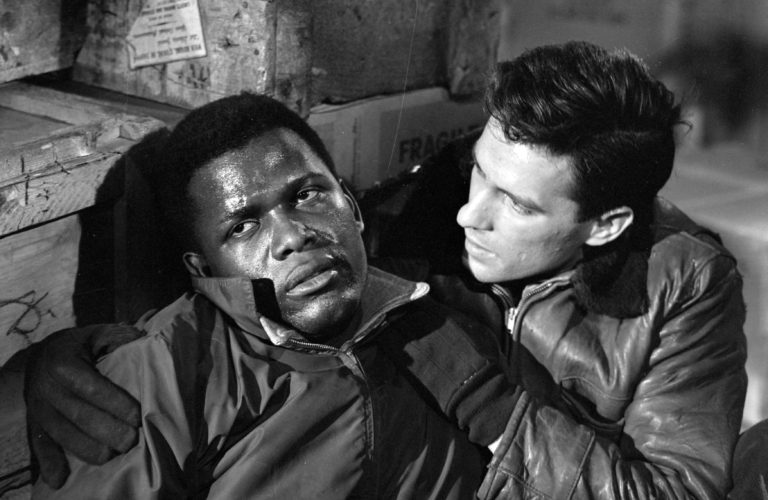
This is the story of Axel Nordmann (John Cassavetes) who is on the run from his life choices and finds himself as a laborer on the waterfront. There he meets Tommy Tyler (Sidney Poitier) and they have a nearly immediate bond. What makes this friendship different is that the Black man, Tommy, is nearly always in control of the friendship. Importantly, Tommy is Axel’s superior at work. In addition, he seems to be sharper, smarter, and a guiding force in the white man’s life and journey. This was basically unheard of at this point in major American media. 

But of course, that does not necessarily make it a good movie. Given the relatively limited frame of Edge of the City, it is imperative that it is perfectly cast. There are a few other important characters, including the incredibly warm and genuine Ruby Dee as Lucy Tyler (Tommy’s wife), the villainous Charlie Malick (Jack Warden), and Kathleen Maguire in a bit of a thankless role as Axel’s love interest Ellen. But really, this is Poitier’s and Cassavetes’ movie. In a noticeable and likely purposeful choice, there are dramatically different performances represented by the two co-stars.

Cassavetes is pure minimalism. Every movement, every syllable contains depth. Axel is stunted, but trying so hard to communicate through his pain. There is a clear gay subtext in Cassavetes’s portrayal and it would be interesting to see how this role would change in a more modern version, with less control and constriction. It would certainly be different, but I am not convinced it would be better. Poitier, on the other hand, is larger than life. From the moment of his introduction, he is big and bold in every presentation. But despite that, Tommy is never played for laughs. He is a real man, with actual problems, as well as a rich interior life even before Axel ends up in his life. We can imagine the simple, joyful life he shares with Lucy. However, he immediately lights up around Axel and feels the need to care for him, to guide him. And again, given the race of these two men, this is revolutionary writing. Writing that only works because of these two acting titans sharing the screen.

Sadly, this is not a film that solely focuses on these two men spending time with one another. Frankly, given its short runtime, director Martin Ritt could have taken a bit more time with them. But in defense of the film, the story’s difficult, brutal ending is essentially set up in the first few scenes. This physical altercation is certainly not the high point of the filmmaking. Ritt seems unsure of the choreographed moments necessary to cause greater impact. The fact that it still works overall is again a testament to the performances, particularly the raw emotion and terror from Poitier. Now, given his known history, this will not come as a surprise to us. But again, context. This was Poitier’s first co-star billing, so he was not the name that he would become over the next few decades. And perhaps more importantly, his emotion in this scene also allows for Cassavetes’ best moment. It is rare, even now, to see two men hold one another, regardless of context. Both actor’s commitment to the friendship on display allows us to view this intimate moment in its purest form.

So yes, you have seen this story before. But that does not mean that Edge of the City is not worth your time. This is not Green Book. Despite the ending, Edge of the City does manage to avoid the pitfalls of these types of movies. There is a purity in this friendship that helps angle the film away from the cheesiness inherent to stereotypical race relations movies. There is no desire to fix a societal ill. Instead, the laser focus on friendship and honor leaves us feeling both saddened and hopeful. Edge of the City is by no means perfect but manages a lovely character study without denigrating itself with pompous moralizing or forced sentimentality.

Come back next month for more movies to watch before they leave the Criterion Channel!

Classic Film Review: ‘Andrei Rublev’ Is Dazzling In Its Boundless Ambition

There is enough content in Andrei Rublev (1966) to fit into about three different films. I could easily see a director who wasn’t Andrei Tarkovsky choosing to cut this film up into several episodes and release this as a series of sorts. It could have been the Russian equivalent of Scenes from a Marriage (1972) or Dekalog (1989). Hell, it could have been similar to Sergei Bondarchuk’s War and Peace (1966-1967). But Tarkovsky is Tarkovsky and he chooses to present his audience with a lengthy epic that is at once overwhelming, frustratingly obtuse, and mesmerizing. From scene to scene, my level of engagement could rapidly dwindle or dramatically increase. 

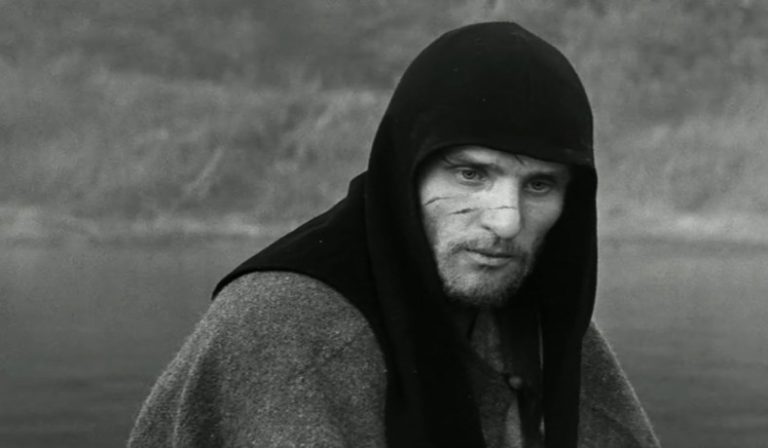
Like all episodic features, you find yourself responding to some episodes more than others, and you wish that more time had been allocated to the sections that you liked. Andrei Rublev is split up into ten different parts and each deals with a different period in the life of the titular religious icon painter. We see Rublev (Anatoly Solonitsyn) gaining inspiration during his early career and learning how to master his craft, before going through a spiritual crisis that leads him to question whether there is any purpose in creating art. After witnessing the burning of Vladimir, he comes to believe that mankind is not worth saving and retreats from society altogether, for a long period. He spends many years searching for reason and purpose in life and finds his artistic focus shifting as he experiences a great deal of struggle. 

The episodes that stood out to me were Episode IV: The Last Judgment and Episode VIII: The Bell. In the case of the former, I was stunned by the beauty of Tarkovsky’s symbolic imagery and the surprise of seeing a film about faith that chooses to challenge it in a such an aggressive manner. We live in the time of God’s Not Dead (2013), a scary piece of Christian propaganda that suggests that intellectuals who question Christian beliefs, deserve to get killed in hit and run accidents. That film tried to pretend that Christians don’t go through periods in which they experience doubt over their beliefs or experience disagreements with fellow Christians over what it means to follow the teachings of the Bible. All Christians are white, middle-class Americans (preferably from states like Arkansas and Missouri) who exist as a sort of hive-mind. The victims of Christian belief never appear on screen and atheists make ridiculous straw-man arguments that nobody makes in real life.

Andrei Rublev takes the opposite tack. It’s not just a piece of propaganda made by white Southerners with a right wing political agenda, it actually ends up presenting an ambivalent view of religion. It acknowledges that a significant part of Rublev’s worldview has been shaped by Christianity but, as time goes on, his viewpoint begins to change. He is presented as puritanical and unwilling to forgive those who do not follow traditional Christian principles during the first few sections of the film. This is why it is so astonishing to see him challenged by a naked Pagan woman, known as Marfa (Nelly Snegina), who chooses to question him about Christian persecution of followers of other religions. Her angry diatribe comes after he has self righteously lectured her about why Pagans express love in the wrong manner. We see him genuinely questioning the moral values that have served as the basis for his entire perspective. 

It’s a shattering moment and it comes after a dreamlike, gentle sequence in which Rublev wandered through the woods and came across two Pagans who were engaged in intercourse. This feels like a violent, shocking moment because it has come after so many scenes in which Rublev appears to passively watch the actions of others, without being affected by them. Everything seems to change when Marfa confronts him. She is initially cloaked in darkness and prowls around like some sort of predatory creature. Her overt sexuality seems like an affront to the ascetic Rublev, but she begins to look like a stern headmistress as she nears him. The lighting in this scene is magnificent, as it gives everything a heavenly spectre and sets you up to believe that Rublev is going to be a martyr who is presented in a sympathetic light. Tarkovsky then smartly throws you off by putting all of the focus on Rublev and his response to Marfa’s compelling, forceful speech. This moment of hesitation, and others, trigger his breakdown and decision to turn away from the lifestyle that had defined him. It’s important that this feels like one of the major turning points in the film and not just another throwaway scene. It feels important in every sense of the word and ensures that we never lose sight of one of the major themes of this story. 

In the case of the latter, I was floored by the amount of detail that Tarkovsky packs into a relatively brief episode. There was something so satisfying about getting to see a simple fable play out. The story of a boy coming of age, with power corrupting him and an inordinate amount of pressure causing him to almost lose his mind. It’s a real masterclass in economic storytelling and the simplicity of the dialogue during this episode is a perfect fit for the sort of salt of the earth, stoic characters that feature in it. I appreciated it so much that I almost wished that the entire film had just been vignettes that were enjoyable on their own terms. I understand the larger purpose that this episode served, but I also wondered whether it occasionally felt like too much of a diversion from the main storyline. If Tarkovsky had tried to tell the stories of multiple different characters, rather than continuously returning to Rublev, it might have been easier to get through the long stretches in which a certain inertia takes over. This could have felt like less of an undertaking and lost some of the heaviness that occasionally weighs it down. 

Many have called this one of the few masterpieces in cinema history. I would not go that far, but I still felt that there was so much to savor here. Individual moments, such as a horse rolling over on a muddy bank and Masha gliding through the water whilst making her escape, will likely stay with me forever. They spark emotion, thought, and a whole lot of implications that I could carefully consider with a fellow cinephile, whilst drinking spirulina. That’s what arthouse films are for, and you could never claim that this film doesn’t cater to its target audience. 

Grade: B

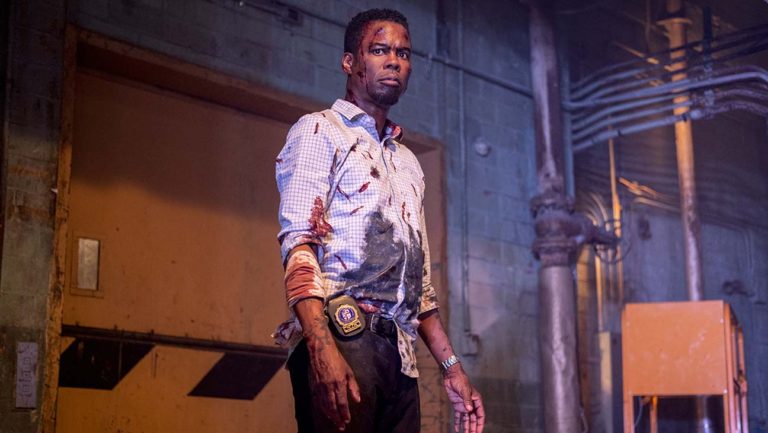
Movie Review: ‘Spiral’ Finds Surprising New Ways to Entertain


Director: Darren Lynn Bousman
Writers: Josh Stolberg, Pete Goldfinger
Stars: Chris Rock, Samuel L. Jackson, Max Minghella

Synopsis: The Saw universe returns with a new chapter. A criminal mastermind unleashes yet more twisted versions of justice.[/info]


Who knew that in 2021 we would be getting the very rare (in fact I’m sure it’s the first time) distinction of having not one but TWO 9th installments in a franchise? That particular prize goes to both Spiral and Fast 9, and despite doing this 8 times before; the 9th chapter in the Saw franchise would actually work well. 

Saw came out in 2004 when this lad was in the 7th grade and it won everyone over at Sundance. It immediately took Hollywood by storm. It had one of the best twist endings in a movie in quite some time and really worked for audiences. Saw followed its success with a really solid sequel with what I would argue is  the best twist in the whole series that could never and was never topped (it also remains one of the best theater experiences I’ve ever had, a giant packed crowd witnessing together that twist on opening night, fantastic).  As the years and the sequels went on, the films got less and less entertaining. So, when we get to 2021 with the release of a ninth film, where do we go? Well, welcome to Spiral.

Spiral does something with a series that we’ve seen before; it tries to change the mold of franchise moviemaking. Most of these films end in sadness or in space or sadness in space (see Hellraiser 4, Jason X, Leprechaun in Space) but this was able to reinvent the wheel in terms of the legacy of Saw. Spiral takes the ideas left by the character of John Kramer and allows it to begin to blossom into a whole new series. What does that mean exactly? Well it’s simple, the basis of Saw is a series of lessons. The series doesn’t rely on John Kramer as a character to continue what he was setting out to do, but rather uses his legacy for copycats. Sure, we’ve seen the copycat thing before (look at any Scream sequel for an example) but what works here is the fact that as an audience for Saw we’re not really here for the plot. We are here for cool kills, a rad twist, and maybe a jaw dropping moment or two. We get all of that here, and that’s why it works so well. 

I think it’s funny personally because we wouldn’t have this film without Chris Rock being such a diehard fan of the series but while he is its savior he’s also the weak link. There are some great moments in this film with Samuel L. Jackson and Rock but there are too many moments of “I’m Chris Rock, look at me looking serious into the camera or off in the distance.” His character comes off as a cross between Training Day, Clarice Starling from The Silence of the Lambs, and Officer Doofy from Scary Movie. There were genuinely moments where I wasn’t sure if I was supposed to laugh or not. With that said, he does raise an almost two decade long series to new heights by storytelling. Yes, I’m aware that I mentioned above that, as an audience, we don’t go into Saw films for the great length plots, but what’s new here for the first time since the first film is that we actually get a developed plot that could keep us engaged for sequels to come without getting too convoluted. 

The traps felt amateur with no real oomph to them and that’s my only other issue, but honestly I can’t complain too much. It was a fun return to the series that actually would keep me eager to continue the crazy journey that I, like many others, started in 2004. My biggest words of advice going into this if you’re a virgin to the series is just go. Despite the fact that this is the ninth movie in the franchise, it is completely watchable without seeing the first eight. Name another series that you can do that. You can’t, and that’s the brilliance of this next chapter, using the name of Saw while creating a whole new story. 


Grade: B+

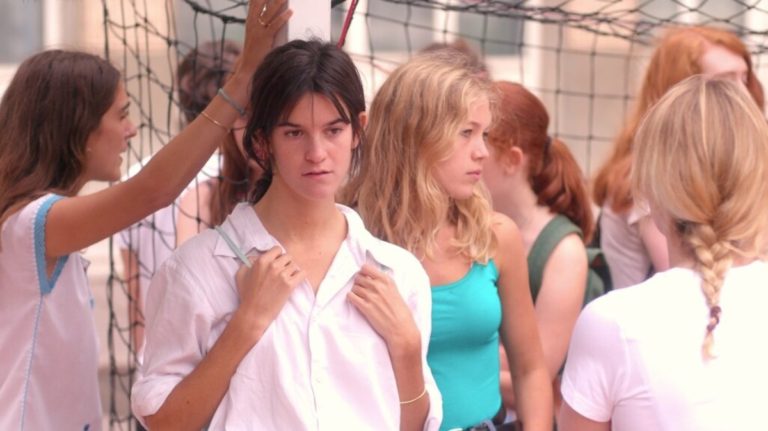
Movie Review: “Spring Blossom” Depicts a Teen’s Volatile Infatuation


Director: Suzanne Lindon
Writers: Suzanne Lindon
Stars: Suzanne Lindon, Arnaud Valois, Florence Viala, Frédéric Pierrot, Rebecca Marder

Synopsis: 16-year-old Suzanne is bored with people of her age. One day, she meets an older man on her way to high school. Despite their age difference, they fall in love.

[/info]

20-year-old Suzanne Lindon has gone and impressed us all. The young filmmaker’s Spring Blossom was one of the films selected as part of the 2020 edition of the Festival de Cannes, and even though it was not screened in the south of France, the film now carries a seal of approval that is unbeatable and impressive for the directorial debut of an emerging talent.

Spring Blossom – also written and led by Lindon – seems to easily reflect a not-so far away reality of Lindon’s: the fleeting experience of first love, or rather the juvenile crush we feel as we awaken to the sexual and emotional attraction towards someone else. Suzanne (Lindon) is a 16-year-old that has a placid life in Paris. She is constantly surrounded by friends and a seemingly happy family. Nevertheless, it is evident that something is missing in her innocent life. Lindon makes a fantastic job presenting this alienation.

While her classmates and girlfriends talk about silly things, Suzanne is in a reverie. She is disconnected, even bored of her peers. There seems to be an invisible wall that prevents Suzanne from being interested on the petty existence of her classmates, a problem that prevents her from making small talk or engaging in the events that submerge her friends in the chaotic experience of a teen (her futile attempts to have fun at a party are excruciatingly recognizable). Even when she is surrounded by people, the camera makes it clear that she is always alone, not even connecting with her loving parents or energetic sister.

Unsurprisingly, one day Suzanne develops a fascination for an actor that is presenting a play in the local theatre, just a couple of streets away from her home. What starts is an awkward and juvenile obsession that seems to work in her favor when Raphael (Arnaud Valois) – the object of her awakening interest – appears to be interested in her too. Thus, the teenager and the 35-year-old actor slowly develop a sexually tense but chaste relationship.

Even though the film thankfully avoids the grey area of presenting a sexually charged story between teen and man with such an age gap, the interactions amongst them and the feelings that they develop for each other feel conflicting and uncomfortable. They are tender and careful, but it is unfathomable to think that this guy would be interested in a girl that only giggles and stares at him. More importantly, some instances of grooming start to appear. Lindon dangerously flirts between an innocent and a troublesome bond. This is probably the main issue with the story. While it successfully presents the shallowness and intensity of Suzanne’s emotions, Raphael remains a mystery.

What kind of connection could he have with this girl? We soon learn that Raphael is exasperated of acting in the same play night after night. He is tired of acting; she is tired of her friends and her surroundings. It seems that the only thing that joins them is boredom, and unfortunately, the story does not shed light in this profound connection between teen and artist.

Instead, Lindon tries to convey the growing emotional link through choreographed and unexpected dance routines between them, but these scenes feel shallow, substituting real emotions. Furthermore, they seem more of a shortcut than an exploration or consummation of the relationship.

The movie looks discreet and small in its scope, although the messages that it tries to convey are complicated. Somewhere in the second part of its brief 73 minutes, it starts to falter. The dialogues become minimum, the editing confusing and Suzanne’s emotional turmoil inexplicably more intense. We understand that she is going through something. Could it be extreme love, a new wave of boredom, or a desperate realization of the fate of this relationship? We do not really know.

While these contrasting feelings reflect the overwhelming experience of discovering attraction and love at such an early age, the narration becomes clumsy and incomplete. It is impossible not to distinguish the novice effort of the filmmaker behind the camera. The movie reflects Lindo’s naiveté and youth.

Spring Blossom is an intriguing debut that shows curiosity and an understanding of youthful minds. The film starts strongly, with a beginning that is as exciting as it is promising, and while the film is far from perfect, it reminds us of the clumsiness, intensity, and ephemeral nature of young infatuation.

Grade: C+

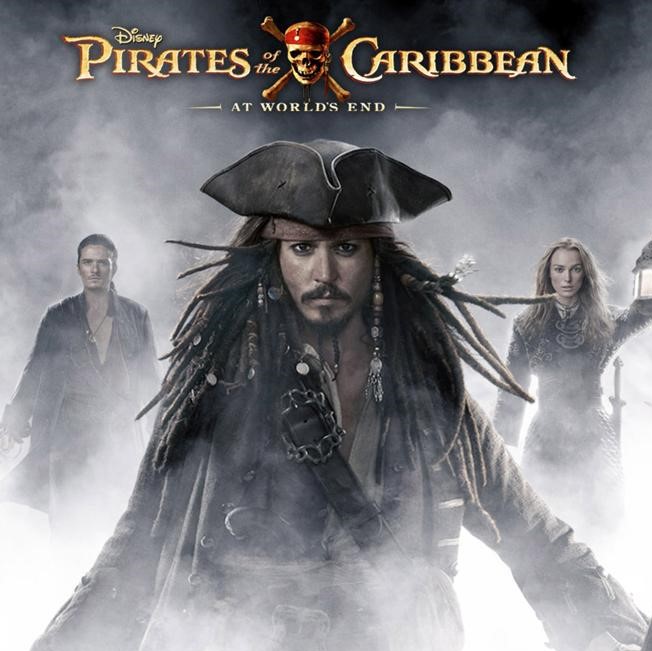
Podcast: Pirates of the Caribbean: At World’s End / Those Who Wish Me Dead – Extra Film

This week on Extra Film, Ryan and Jay continue their Gore Verbinski Movie Series with Pirates of the Caribbean: At World’s End, and they also review Taylor Sheridan’s new film Those Who Wish Me Dead!

In the film episode involving the Pirates Trilogy, the boys take a look at the 2007 film At World’s End. Picking up right after the last one, we see Verbinski and his team continue to expand the Pirates world while closing out everything we have seen in the previous two installments. While Jay like some aspects of it, he still had issues with the film 45 minutes of the film. As for Ryan, he adored this entire film, thus is made for a fun discussion on what works and doesn’t work in this final Pirate chapter.

In the back half of the episode, the guys review the action drama, Those Who Wish Me Dead. Written and directed by Taylor Sheridan, this new film finds the acclaimed storyteller creating an action vehicle for the talented Angelina Jolie to return to the big screen with. But unlike his early projects, Sheridan isn’t able to make this film very compelling, thus Ryan and Jay end up breaking down the limitations he has and what he needs to do to change this trajectory he is on.

Thanks for listening!

– Movie Review: Pirates of the Caribbean: At World’s End (4:08)
Director: Gore Verbinski
Screenplay: Ted Elliott, Terry Rossio
Stars: Johnny Depp, Orlando Bloom, Keira Knightley, Geoffrey Rush

– Movie Review: Those Who Wish Me Dead (55:14)
Director: Taylor Sheridan
Screenplay: Michael Koryta, Charles Leavitt, Taylor Sheridan
Stars: Angelina Jolie, Nicholas Hoult, Finn Little, Jon Bernthal

– Music
Drink Up Me Hearties – Hans Zimmer
Lighthouse – William Prince
The Return of the Eagle – Atli Örvarsson

We try to make this the best movie podcast we possibly can and we hope you enjoy them. Subscribe today on iTunes, Spotify, or Stitcher, and please leave us a review on iTunes. You can also find us on Soundcloud, PlayerFM, and TuneIn Radio as well. We really appreciate all your support of the InSession Film Podcast.

Subscribe to our Podcasts RSS
Subscribe to our Podcasts on iTunes
Listen on Spotify
Listen on Stitcher
Pirates of the Caribbean: At World’s End / Those Who Wish Me Dead – Extra Film

[divider]

To hear this Extra Film episode and everything else we do, download our apps on the Amazon Market for Android and the Podcast Source app on IOS devices. The mobile app covers all of our main shows, bonus podcasts and everything else relating to the InSession Film Podcast. Thanks for your wonderful support and for listening to our show. It means the world to us.

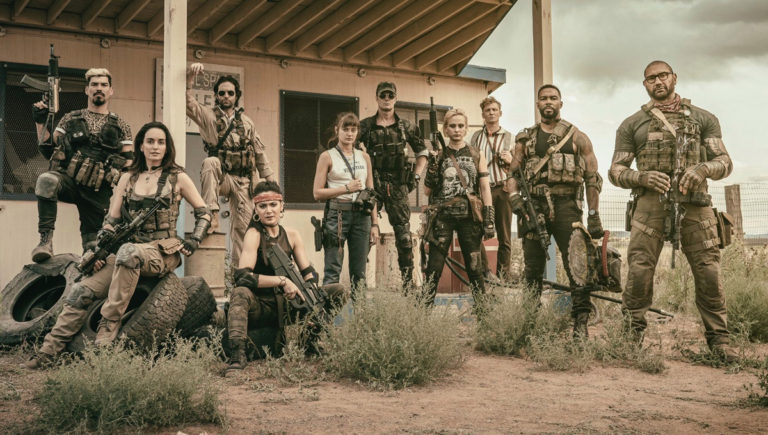
Movie Review: ‘Army of the Dead’ cannot decide on a tone for the over-stretched story


Director: Zack Snyder
Writers: Zack Snyder, Shay Hatten, Joby Harold
Stars: Dave Bautista, Ella Purnell, Omari Hardwick, Ana de la Reguera, Matthias Schweighöfer, Tig Notaro

Synopsis: Following a zombie outbreak in Las Vegas, a group of mercenaries take the ultimate gamble, venturing into the quarantine zone to pull off the greatest heist ever attempted.

[/info]

The past few months have been quite a positive turnaround for Zack Snyder. Having finally gotten to release his version of the Justice League movie and for it to get positive reviews across the board from fans and critics alike, it is the perfect time to continue that momentum and release his latest film Army of the Dead. Overall, the marketing for this film by Netflix has been fantastic, with some of the best poster designs and trailers of the past year. Even if you are not a typical Snyder fan, it seemed like this film would be one that anyone could enjoy.

Before getting more critical of the film, it is important to highlight the good aspects of this film. This film primarily is able to work because of the performances from most of the actors. This is a packed crowd, and yet each member of the cast is given time to shine and to add their personality to this story. In particular, it is becoming harder in Hollywood to ignore Dave Bautista and this is his best performance to date. Being given a meaty role that not only has to be the action hero lead but have this inner conflict that he faces during an apocalypse gives Bautista a lot to juggle at once, but he shines and demands to be taken seriously.

Whilst it was certainly not a perfect replication at times, I personally want to applaud Zack Snyder for the work that he put in post-production to remove a previous cast member out of this film and recasting. It is obviously a lot of hard work to recast someone and try and place them into the film all during post-production, but the work done with Tig Notaro was phenomenal and what a person to replace the role with. It honestly felt like she should have been there from the start, and the team behind the post-production did a wonderful job placing her in. Recasting that late into the film’s production is something that obviously no studio wants to deal with, but Army of the Dead shows that it is possible and that it may just be the best option.

Aside from the incredible zombie tiger that is highlighted in the trailer, it was disappointing how lacking the creativity was within the design of the film. With a landscape to use such as Las Vegas and in a world where there is an apocalypse happening, the world for the most part felt bland and unoriginal. Most of the visual work went into bringing that zombie tiger to life and little attention was brought to having fun with the actual zombie designs. Not only that, but most of the cinematography resorted to slow-motion shots and explosions, trying to play off of the major blockbusters but doing little to make it fun or original.

Thinking back on the film, it is still unclear what the tone of the film was meant to be. So many of the direction choices by Snyder lead me to believe that he wanted to have fun with the subject matter and mock the formula of the zombie genre. The opening scene of the film, which establishes the lore of zombies into this world, has an awkward humorous tone to it that turns into a Michael Bay-style blowout. When this scene transitions to the official opening credits, it felt like it was cut in a way to be entertaining and to make fun of the genre, but it was hard to fully embrace the style.

This is heavily contrasted in the main storyline of the film, which is actually a touching story about rekindling friendships, family connections, and falling in love with people from your past. There is a heart to the story, and the actors do a good job with what they are given to work within this script. However, the tonal shift between these serious moments and the zombie apocalypse itself is so jarring that it is hard to enjoy. Whilst Snyder may have written and directed this film, it does not come across that way on the screen as it just feels like he forced his style of filmmaking onto a more serious and heartfelt script.

We all know that Zack Snyder likes to tell a lot within his films and give the audience as much time as possible in his worlds. Whether Justice League needed to be four hours is one question, but this was not a film that needed to be 150-minutes long. For how simple and overdone the main structure of the story is, the runtime was stretched out through the use of unnecessary montages and slow-motion shots, both of which did little to actually add context and heart to this story. When thinking of zombie films from the past few years, including Zombieland: Double Tap and The Dead Don’t Die, they clock in between 90-minutes and 110-minutes. This film could have done the exact same thing and it probably would have fixed my major issues within it.

Netflix is a studio that clearly loves to give their directors creative freedom to do whatever they like with their films, and in cases such as Martin Scorsese and David Fincher, it certainly can work. However, people do have issues with the runtime and editing of both of their Netflix films and there are a lot of issues that can be pointed out with Zack Snyder’s directorial choices in his Netflix work. If this film had a shorter runtime and a clearer direction on whether this was a serious version of a zombie movie or a humous parody of what the genre has become, then there would have been a good film here. Sadly, the final result is one that leaves me burnt out and still wishing for a good revival of the genre.

Grade: C-

Movie Review: ‘Enfant Terrible’ Is Not Your Standard Biopic


Director: Oskar Roehler
Writers: Klaus Richter
Stars: Oliver Masucci, Hary Prinz, Katja Riemann, Jochen Schropp

Synopsis: The life and the impact of iconic German New Wave director, Rainer Werner Fassbinder.

[/info]

For every great biopic, there are at least 10 terrible ones. One of the reasons that biopics are an easy target for harsh criticism is the similar notes they tend to hit. Of course, this isn’t always the case. There seems to be pressure to cover absolutely everything about a life, especially if that person is quite celebrated. With sites like Wikipedia being not only known, but used by just about literally every person on a daily basis, there is no shortage of information. So, this poses an extra challenge for filmmakers. If I can look up all of the details, what do I need you for? This is why even a good biopic needs vision behind the camera and connected to the script. But even this is no guarantee of greatness. 

And no guarantee of greatness brings us to one of the latest biopics available to see, Enfant Terrible. Oskar Roehler’s film about the life and impact of fellow director Rainer Werner Fassbender does manage to avoid the usual pitfalls of the biopic. There is neither a focus on his childhood nor any concern on making him likable. Fassbender (Oliver Masucci) is portrayed as a difficult man, a force of nature and of destruction. He wounds everything in his path, including himself. From his introduction, he is full of himself, overly confident, and cares not for subtlety or kindness.

In an interesting decision, Roehler and screenwriter Klaus Richter seem to actively avoid making Enfant Terrible actively cinematic. If you are looking for a history lesson in how Fassbinder of the German New Wave made his films, look elsewhere. In fact, the film opens as Rainer takes over control and direction of a stage play. This makes sense, of course, given not only his history, but the relative ease of taking experimental chances on the stage. But, for better or worse, the entire film feels a bit like a stage play, divorced from any sense of realism.

But I mean it when I say better or worse, as there is plenty of both here. Among all these adjectives listed previously, Fassbinder is also shown to be a man of appetites. Roehler makes this clear not only through his proclivity for sex, both casual and relatively committed but also through the presentation of Masucci’s body. Repeatedly, Masucci is either topless or shown with an open shirt. This allows him to display an obvious belly. But, in a perhaps drastic change from our own cultural norms, this is not played for laughs. Fassbinder is both an object of desire and a man on the prowl. He consistently takes lovers and the film does not shy away from this, both in its visuals and in moments of dialogue. 

Although this is refreshing to see, it is also a key to his repeated self destruction. We are witnesses to his many betrayals by men but despite that, we are never fully in his corner. Our witness status to the way he treats people in general stops us from catering to his whims. When people lash out or leave him, it is understandable. This likely goes back to Roehler and Richter’s choice to avoid giving full context to Fassbinder’s mind and experience. 

As a relative newcomer to the world of Fassbinder and a fan of film in general, it may have been preferable to have a greater understanding of his directorial choices and what impact his fame truly had on his psyche. Now, the film does mention that his films become popular, but it almost feels like it does so in a glancing way. Roehler is much more interested in the live action car crash that is his love life. And again, even these moments that touch upon his career feel much like a stage play. Suddenly, we are at dinner and we find that someone important likes his work and he breaks down. This is one of the more human and wonderful acting moments from Masucci, but it is paired with some of his worst behavior. So, like life, this powerful moment is undercut by a consideration of whether we should be rooting for him to succeed or fail. Like all great artists, Fassbinder is not wholly good or bad. He is a walking contradiction. A man who deeply desires real love, but is hamstrung by his choices to barely know his lovers before inviting them into his life. There is a palpable need to both be understood and to react violently when he is not.

Enfant Terrible is certainly not your standard, boring biopic. Roehler makes interesting, focused choices in his direction that draw us in, despite having moments in which we hate his subject. The stage play dynamic is at once both intimate and distant. But for what it’s worth, this film makes one even more interested in understanding and viewing more of Fassbinder’s work. And unlike many biopics, it leaves us with little interest in reading a Wikipedia entry on the man. Enfant Terrible is able to paint the picture of a terrified, complex, deeply flawed man who has a lot to give to the world of film, even if maybe he should have given to himself and his compatriots a bit more. 

Grade: B

Movie Review: ‘Oxygen’ is a Tense Thriller Led by Mélanie Laurent


Director:  Alexandre Aja
Writers: Christie LeBlanc
Stars: Mélanie Laurente

Synopsis: A woman wakes up in a cryogenic chamber with no recollection of how she got there, and she must find a way out before running out of air.

[/info]

It’s always a challenge to craft a film with one character in a confined space that features enough effective narrative beats to maintain interest and intensity. Two years after he induced fear with a story of a father and daughter trapped in a hurricane-damaged house with alligators in Crawl, French director Alexandre Aja takes on the task in the new Netflix film Oxygen. The film combines the claustrophobic nature of Buried with the conversational aspects of Locke to deliver a mysterious story of a woman inexplicably trapped in a cryogenic chamber. 

This woman, Dr. Elizabeth Hansen, is played by Mélanie Laurent. The film begins with her waking up in the chamber, panicking and clearly unsure of how she got there. In fact, she’s not even sure who she is. We’re first led to assume that she is in a hospital, but even this becomes questionable as the film goes on. The biggest dilemma, as the title suggests, is that she is running low on oxygen and has just under an hour to get out before she asphyxiates. Her only hope is to work with the AI that controls the pod, MILO, who is voiced by Mathieu Almaric. Through MILO, she is able to make phone calls, research information about herself, and control the chamber with hopes of extending her time.

That’s about as far as one can go with the plot without revealing a surprising detail, as the film is filled with twists even early on. This is par for the course in a film like this, as we are completely in the dark alongside Dr. Hansen. Aja and screenwriter Christie LeBlanc are able to achieve a nice balance in which Hansen can communicate with others from inside the pod, while maintaining the mystery of who exactly she is talking with. Inside this claustrophobic piece of advanced machinery (the film clearly takes place in the future), Hansen’s questions are almost endless, and the answers are rarely delivered explicitly. It’s a simple yet effective device that allows the narrative to flow without feeling overly tired. 

Still, that’s not to say that the film completely avoids the trouble that can come with forging a narrative for a challenging story like this. MILO is a fascinating character on its own, and Amalric’s fruitful voice work creates a sense that it may become a sort of variation on HAL 9000 from 2001: A Space Odyssey. But the existence and role of MILO also creates some discernible conveniences in the plot. Though MILO is mysterious and doesn’t always give Hansen exactly what she’s looking for, it’s pretty clear that the AI will always be the avenue to any sort of success she finds in her struggle, and it leaves a bit less to the imagination. 

In addition to an effective script, the use of the camera is also essential to sustain intrigue as we sit inside a small pod with Hansen. Fortunately, Hansen rarely allows it to stay static. We certainly spend plenty of time in closeup with Hansen, catching every emotion displayed by Laurent, but it also shifts to explore the chamber and the actions she takes to survive in it. Though this seems odd for such a small setting, the chamber itself is also quite complex, and it helps to create a sense of space. Though at times even this may go a bit too far, such as a scene in which we inexplicably travel in circles with Laurent and the top of the pod as our center points while she makes a phone call. 

Last but certainly not least, a film like this lives and dies with the performance of its lead, who we spend the entire runtime with. And in this case, the film undoubtedly lives. Laurent dives into this role at full force, adding to the sense of claustrophobia created by the setting. One of the most lovable things about this character, and the performance, is that she’s not presented as some sort of superhuman. She is unquestionably very intelligent, and that comes with a confidence that she can somehow work her way out of this situation. But she still displays the fear and anxiety that we should expect from anybody in a strange situation like hers. In short, she’s allowed to cry heavily, panic, and exhibit a sense of hopelessness. It results in a much more believable and grounded character that is easy to root for. 

Alexandre Aja’s career has largely consisted of variations of horror films, from ultra-violent thrillers to creature features. Oxygen isn’t really a horror film, but it does deliver a similar case of uneasiness. It’s certainly recommended that those who are very claustrophobic and those who have a fear of needles proceed with caution. However, what really sticks with me after the film is the lead character and the ever-shifting plot. Granted, the film probably has too many wild twists for its own good, and the contrivances are severely noticeable at times. It’s not one that reinvents the wheel or results in a superb personal reflection, but it’s entertaining enough to hold its own with a challenging premise. 

Grade: B-

Poll: What is your favorite ‘of the Dead’ zombie movie?

It’s not just all the blood, guts, and brain matter that standardizes the best zombie flicks; for many of them, it is also their titles. George A. Romero didn’t just create a new genre movement back in 1968, he redefined the word ‘dead’ as it relates to horror cinema, to the point that whenever moviegoers see any new movie that has ‘dead’ somewhere in the title, their first thought is usually, “Is this a zombie movie?” That trend continues this weekend with Zack Snyder’s Army of the Dead, here to remind us that the living dead have been hogging movie titles for the last 50 years.

So rather than simply ask what your favorite zombie movie is, let’s more specifically hear what your favorite ‘of the Dead’ zombie movie is. And yes, we are including ‘of the Living Dead’ too.