Home Blog Page 183

Podcast: Black Widow / No Sudden Move – Episode 438

This week’s episode is brought to you by the InSession Film Store. Get an ISF t-shirt today!

This week on the InSession Film Podcast, Nicole Ackman from Next Best Picture joins us to discuss Marvel’s Black Widow, and we review Steven Soderbergh’s latest in No Sudden Move!

Big thanks to Nicole for joining us once again! She’s a lovely guest and always brings great passion to the show, but this week was even more diverting. Her thoughts on Black Widow are not to be missed, and it made for a really fun conversation. And speaking of adoration, our love for Soderbergh shines once again in our review of No Sudden Move.

On that note, check out this week’s show and let us know what you think in the comment section. Thanks for listening and for supporting the InSession Film Podcast!

– Movie Review: Black Widow (8:28)
Director: Cate Shortland
Writers: Eric Pearson (screenplay by), Jac Schaeffer (story by), Ned Benson (story by)
Stars: Scarlett Johansson, Florence Pugh, David Harbour

– Notes / Discussion (1:29:32)

For our break segment this week, we keep it pretty simple. When Marvel and Soderbergh are on the schedule, it doesn’t leave much time for much else, so a few notes for our Patreon supporters and we have a Loki livestream coming soon to YouTube.

[divider]

RELATED: Listen to Episode 423 of the InSession Film Podcast where we discussed The Tree of Life!

[divider]

– Movie Review: No Sudden Move (1:45:06)
Director: Steven Soderbergh
Writers: Ed Solomon
Stars: Don Cheadle, Benicio Del Toro, David Harbour

Show Sponsor: First Time Watchers Podcast

– Music

Natasha’s Lullaby – Lorne Balfe
From the Shadows – Lorne Balfe
No Sudden Move – David Holmes
The Return of the Eagle – Atli Örvarsson

Subscribe to our Podcasts RSS
Subscribe to our Podcasts on iTunes
Listen on Spotify
Listen on Stitcher
InSession Film Podcast – Episode 438

[divider]

Next week on the show:

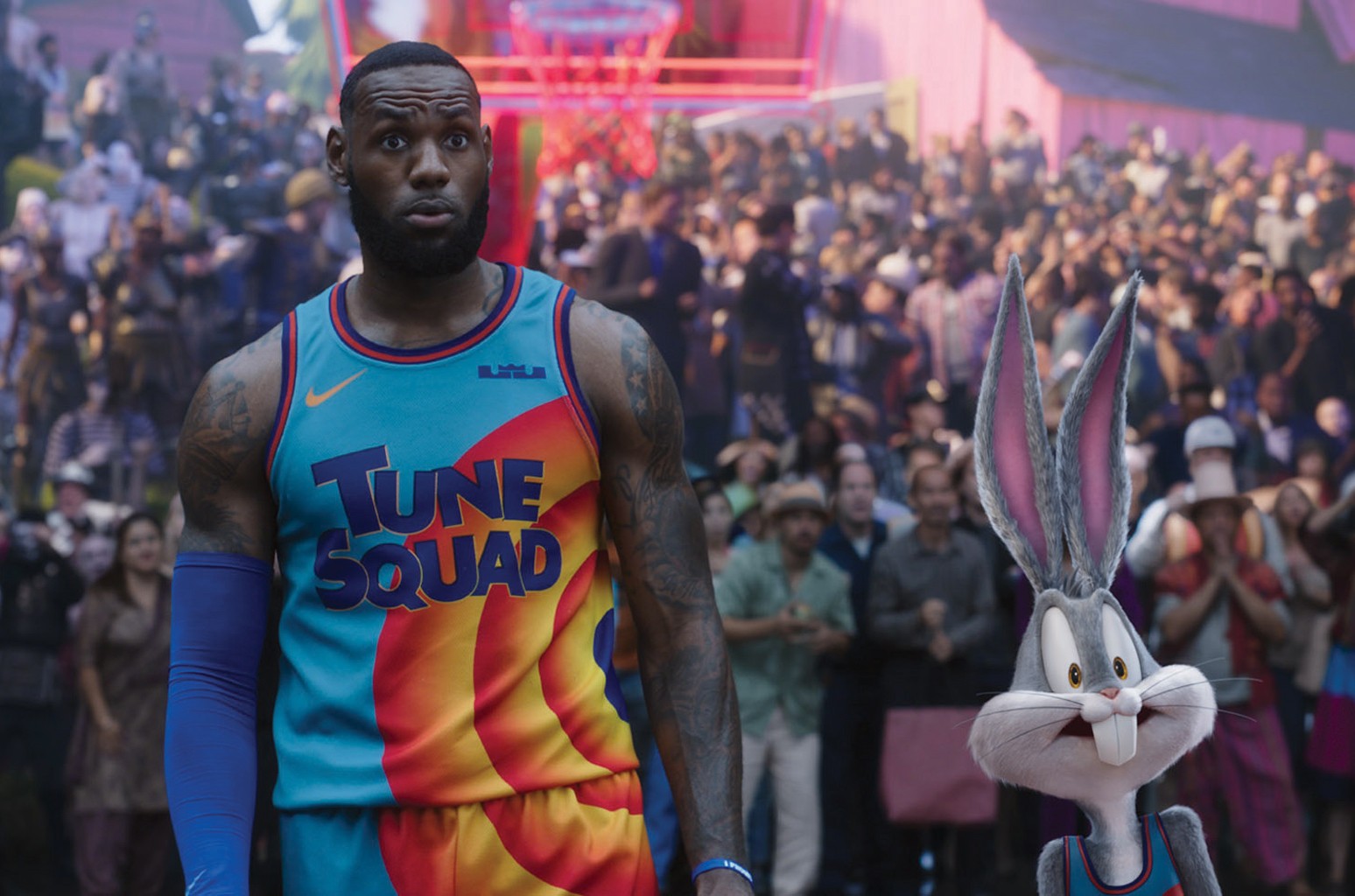
Review: Space Jame: A New Legacy
Top 3: TBD

[divider]

Help Support The InSession Film Podcast

If you want to help support us, there are several ways you can help us and we’d absolutely appreciate it. Every penny goes directly back into supporting the show and we are truly honored and grateful. Thanks for your support and for listening to the InSession Film Podcast!

VISIT OUR DONATE PAGE HERE

Movie Review: ‘Fear Street Part 2: 1978’ is a Muddled Middle Chapter of the Netflix Horror Trilogy


Director: Leigh Janiak
Writers: Leigh Janiak, Zak Olkewicz
Stars: Sadie Sink, Emily Rudd, Ryan Simpkins, McCabe Slye, Brandon Spink, Chiara Aurelia, Eden Campbell, Ted Sutherland

Synopsis: Shadyside, 1978. School’s out for summer and the activities at Camp Nightwing are about to begin. But when another Shadysider is possessed with the urge to kill, the fun in the sun becomes a gruesome fight for survival.

[/info]

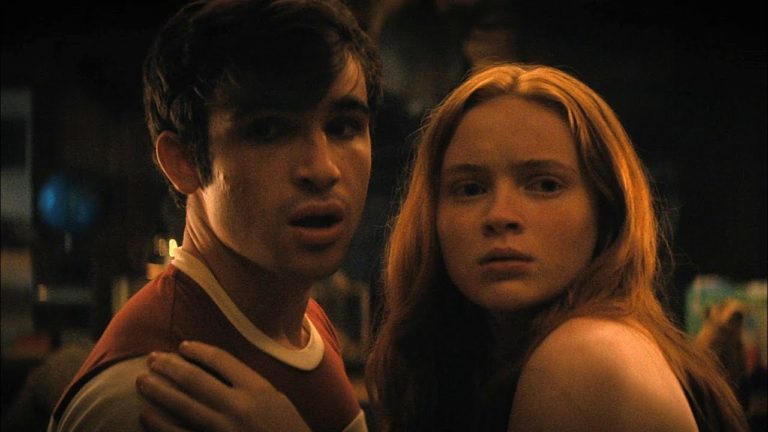
Fear Street Part I: 1994 was a slick and super fun breath of fresh air in the horror slasher genre that successfully represented the spirit of R.L. Stine’s classic thriller series while at the same time gave us more gore, more thrills, and sharper characters than many of us could have expected. I had a few qualms with the first installment in Netflix’s new Fear Street trilogy—I couldn’t deny the occasional lull in the middle hour—but overall it worked beautifully, with a particularly memorable LGBTQ relationship that marked the heart of the story.

Now a week later we get the second installment—Fear Street Part Two: 1978—and I am sorry to say the quality has dipped a bit in this occasionally fun but mostly empty exercise in terror. The new story set sixteen years prior to the events of the first movie has a similarly polished style, solid actors, some neat kills, a terrific soundtrack—but too much of the storytelling is muddled and inconsequential, and, unlike the first movie, it’s hard to care about the outcomes of the characters.

The opening is one of the best parts of Fear Street Part Two: 1978—because we actually start with the characters from the previous movie. I admired that instead of just throwing us into an alternate story, director and co-writer Leigh Janiak gives us a few more moments with the core characters we loved from the first installment (including Deena and her brother Josh), providing a clear and necessary continuity. But when another Shadyside resident reveals she survived a massacre many years ago involving another possessed murderer, the real story begins, a near two-hour-long flashback in a sense that’s meant to provide additional context as to what took control of the villains in the first movie.

At first, the new location of Camp Nightwing is a welcome one, the first few scenes offering the look and feel of so many iconic horror films of the period like Friday the 13th and The Burning, not to mention the more recent limited series American Horror Story: 1984. Very quickly we’re introduced to dozens of characters, including Ziggy (Sadie Sink of Stranger Things), an easy target of the other campers, and Ziggy’s sister Cindy (Emily Rudd), who has no idea her boyfriend Tommy (McCabe Slye) might soon be turning to the dark side.

The best part of this second installment by far is the lead character of Ziggy. She has an ease and confidence that make her compelling to watch even in a story of little consequence, especially when she goes after what she wants, like the cute camp counselor Nick (Ted Sutherland) who’s not supposed to kiss the younger campers. He’s a Stephen King fanatic who claims his second-favorite of his books is ‘Salem’s Lot and his favorite of all is Carrie (a weird observation from the character since in 1978 King had only released four books). They have a compelling romantic chemistry that unfortunately isn’t given much screen-time to be developed, with so many other characters and killings to get to.

If you can get past the first forty-five minutes, the suspense (and the slashings) delivers the goods of what you might be searching for in a movie like this, but since the characters aren’t as well-defined this time, given that the ensemble is so much larger, the storyline mostly rushes and goes through the motions and doesn’t offer any major surprises aside from the occasional glorious beheading. There’s a lot of running and screaming through the woods, typical POV shots from the killer, explicit sex scenes, axes to the head, overblown music from Marco Beltrami—all of which could have been a blast in a better movie but here feels tired, especially in a film with characters this slight and an overlong run-time.

What doesn’t help is the odd lack of urgency to the storytelling because everything happening in Fear Street Part Two: 1978 is a mere flashback to the events in Fear Street Part 1: 1994, which was a turn-off for me from the beginning. Even though the first installment is a period film, too (one that more authentically captures its specific year), there’s an immediacy and propulsive nature to the narrative that always makes it feel like it’s happening right now. Even in the scenes with the most tension in Fear Street Part Two: 1978’s second half, the overall structure always put me at arm’s length, like I was watching someone tell me a story rather than watching the story itself.

Fear Street Part Two: 1978 isn’t a complete misfire by any means, and if you enjoyed the first part of the trilogy, odds are you’ll find things to like in this one, too. Janiak offers some terrific visuals toward the end—a killer in an empty field wearing a creepy human mask is a sight I won’t soon forget—and the Final Girl trope from so many horror films is given a unique twist that keeps you momentarily guessing. But by the conclusion, we’ve returned to the beloved characters from the first movie, and all I could think as the credits began to roll on this one was that I wish Fear Street Part Two: 1978 had been a direct sequel that gave us more of 1994 and less of 1978.

Having said all this, I’m not giving up on the trilogy yet. Even though middle chapters tend to be the best in so many trilogies (The Godfather Part II, The Empire Strikes Back, Before Sunset), there is your occasional The Lost World: Jurassic Park. Will Fear Street Part Three: 1666 give this near-six-hour story a proper send-off? With the creative and unexpected surprise seen right before the credits, signs definitely point to yes.

Grade: C

Review: ‘Tom Medina’ Is the Enigmatic Portray Of a Wild Drifter


Director: Tony Gatlif
Writers: Tony Gatlif
Stars: David Murgia, Slimane Dazi, Suzanne Aubert, Karoline Rose

Synopsis: In the mystical French region of Camargue, Tom Medina turns up, on probation, on the doorstep of big-hearted Ulysses. Tom dreams of becoming a good person. But he’s thwarted by the hostility flung in his general direction, which shows no sign of abating.

[/info]

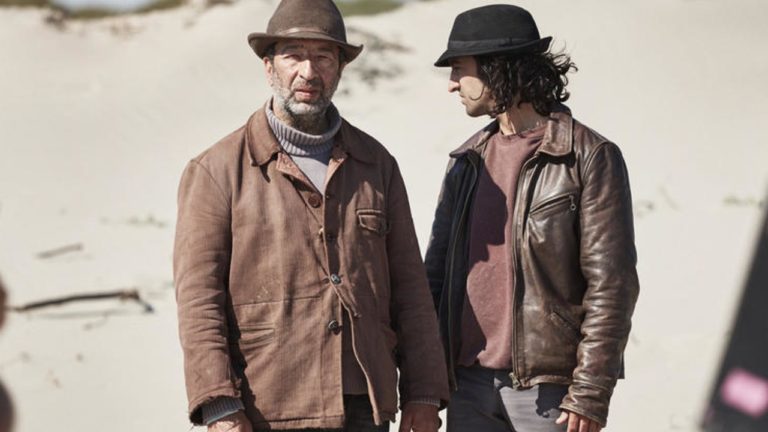
Tom Medina, the main character of Tony Gatlif’s new film, is a puzzle. He is an eccentric man with a lot of energy and imagination. He’s having trouble finding his place in an unforgiving world and is treated by everyone as a loser; it’s hard to argue with them as he rolls over mud and says that his greatest dream is torturing bulls in an arena. But, is that it? What hides behind the jokes, hollow goals, and the unpredictable attitude of this drifter? Who is really Tom Medina?

The film is set in the Camargue, a marshy region in the South of France notable for its variety of fauna. Tom Medina (David Murgia) has been sent here by a juvenile tribunal to work under Ulysse (Slimane Dazi), a man with a heart of gold who tries to rehabilitate problematic men in his ranch. Tom struggles to settle though; besides his stubborn attitude, a traumatic past blocks his progress, and visions of shiny bulls haunt his dreams. He’s soon drawn toward Suzanne (Suzanne Aubert), a young activist that lives in the street and longs to reunite with her child. She sparks a new sense of life and purpose in Tom, who tries to fight against the stamp society has put on him.

The concept of a man finding in nature the motivation to rehabilitate his condition has shades of Laure de Clermont-Tonnerre’s The Mustang. However, Tom Medina doesn’t use horses, but the tranquility and vastness of the Camargue instead. It’s a place brimming with life; in its fauna, Tom finds symbols of strength that, if he manages to overcome, might help him find his purpose.

Tom is like a bull: difficult to tame and at the mercy of human aggression and squared mentality. If there’s a crime in the zone, he’s the first one to be blamed due to his reputation. This has created a cycle of humiliation that Tom is tired of. How can he dream and pursue his goals under such circumstances? He has learned not to trust anyone, not even kind Ulysse who gives him speeches and constantly motivates him. Suzanne seems to be the only figure able to inspire him.

Tony Gatlif’s cinema has often tried to explore his own history and background as an Algerian Gypsy and Tom Medina is not the exception to the norm. It’s inspired by the educator who helped him after fleeing Algeria, as well as his own testimonies of migration. And just like in his previous work, music plays an important role.

Throughout Tom Medina, we listen to powerful songs that represent Tom’s wild soul. Gatlif wrote the lyrics and then recorded the music with Gipsy Kings’ singer Nicolás Reyes. This talent combo resulted in a collection of catchy, energetic, and untamed songs that use both flamenco and electric guitar, as well as wind instruments, pipes, and sax. Singer Karoline Rose – who plays Ulysse’s daughter, Stella –  was also involved in the creative process; her singing scenes are not only memorable and electric, but they also provide moments of connection with Tom, whose wild nature lights up at the sound of these tunes. It’s a shame that Stella’s character gets lost in the story.

The shooting of the film was interrupted by lockdown which triggered script alterations. This is probably why the story is so unfocused. We are introduced to ambiguous characters, ideas, and concepts whose development would have enriched the plot, but are left meandering in a sea of emotions. The explanation of Tom’s backstory, inspired by Katlif’s experience watching the arrival of a group of migrants arriving at a beach in Greece, lacks understanding and doesn’t mesh organically with the story. The mystic elements don’t add much either and are quickly forgotten, only to return in the form of a forced dialogue about telluric energy. 

Despite its missteps, Tom Medina succeeds in captivating through a story of a man fighting against destiny brought to life by a vibrant David Murgia and the support of Patrick Ghiringhelli’s gorgeous cinematography. 

Tom Medina was screened as part of the Cinema de la Plage program at Cannes 2021.

Grade: C

Cannes 1969: The Year Of Sudden De-Politicalization

The question of movies becoming political has existed since the invention of movies and has been subject to debate. Can escapism co-exist with realism or do movies have to lean in one direction. Most movies are escapist by nature, but it’s the realism that speaks the loudest. Cannes has been a perfect venue for both directions and their collision is always unavoidable. But in the late 60s, things in the world seemed to be in an uproar about everything. Vietnam, Czechoslovakia, MLK and RFK, consumerism, patriotism: everything that was normal in the past decades was collapsing in the tug of war with a younger generation who were more open-minded. For France, the events of May ’68 would lead to two contrasting results for the Cannes Film Festival.

The Year Prior

Cannes ’68 ended not long after it started when France found itself in a state of emergency in May of 1968 due to nationwide strikes on everything from the Vietnam War, censorship, workers’ rights, police brutality, and the presidency of the controversial General Charles de Gaulle. Images around the world saw Paris as a war zone. Clearly, it was not the time to have a film festival along the Mediterranean when the country was at a standstill and France’s biggest names, especially Francois Truffaut, stood in front of the screen and demanded the festival be stopped. More than halfway through as the organizers agreed to do so.

The cancelation could have killed the festival entirely because the unrest was so damaging and the tactics by Truffaut caused such a scandal that he was persona non grata from the festival for years. However, it came back the next year to rebuild its importance. The Directors’ Fortnight section was created that year to play a separate slate of films of shorts, feature films, and documentaries with political importance and remains so today. Luchiano Visconti was the Jury President and had American director Stanley Donen (Singin’ In The Rain) and producer Sam Spiegel (Lawrence of Arabia) on board too.

Ådalen 31 v. Z

But as quickly as they tried to avoid the politics, the festival was immediately confronted by it with two movies that grabbed the audience immediately. From Sweden, Ådalen 31 is the true story of labor unrest in a sawmill region that ends in tragedy and a family sits in the center of it. For writer/director Bo Widerberg, it serves as a reminder that the social democratic-friendly country, even under the popular Prime Minister of the time, Olaf Palme, had its own problems in the past similar to the French wildcat strike of ’68. The true events behind the shootings reignited debate about the violence between demonstrators and police, something still very common today.

(Picture of posters for both movies side by side)

In Costa-Garvas’ Z, it’s a hyperkinetic assassination mystery when a popular politician (Yves Montand) is killed in public view, and a sharp investigator (Jean-Louis Trintignant) finds out his murder was something beyond political hyperbole. Instead, they learn how deep the conspiracy goes and where the power lies. The story is loosely based on real events in Garvas’ native Greece in 1963, where damning evidence against the military resulted in a coup that exiled Garvas for years while the junta reigned harshly for several years. (The Greek junta took over in 1967 and ended in 1974.) It was a hit with audiences, not because it was a feel-good film, but it was entertaining and captured the zeitgeist of the times with global assassinations happening around the world.

That Dark Horse Known As if… 

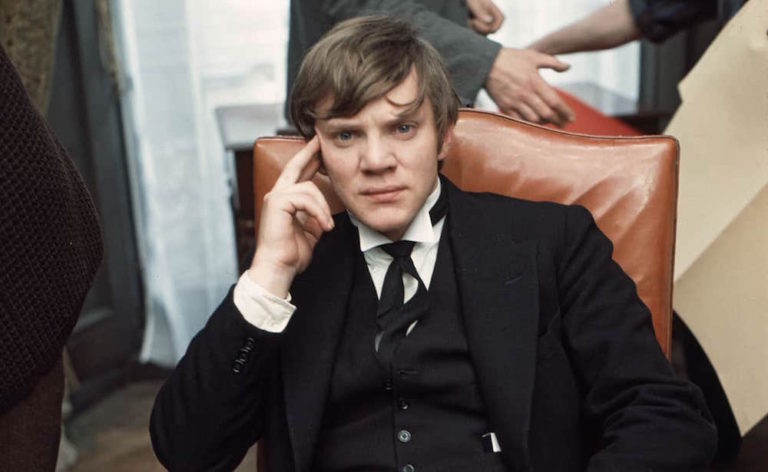
Then, there was Lindsey Anderson’s scandalous dark satire on the privileged boarding schools that poked the status quo with a dose shocking reality. It was the debut of Malcolm McDowell, who gave a spectacular performance that doubled as an audition for Stanley Kubrick’s A Clockwork Orange two years. Anderson had anarchist views personally and David Sherwin’s script played into his ideas on how to shoot it and get away with its homosexual tones, rebellious sequences that some accused the film of promoting minor delinquency and play up to the climatic violent showdown. The surrealism, clearly influenced by Jean Vigo’s Zero de Conduite, is a layer of freakish nature drawing parallels to real life as the 1960s were drawing to a close.

When it came to the vote, many predicted the two highly politicized films would be the top winners. And they would be, but neither for the Palme d’Or. Instead, it was Anderson’s if… that came out on top to applause and some scattering of boos. According to Malcolm McDowell, when the movie won, he and many were surprised that a film that caused a stir in the UK (and received an X-rating) took it over two socially important movies. But that was because the jury was in a deadlock between the two movies, as well as those who had strong objections to giving the top prize to either side because of the political message it would send just one year after the cancellation. Eventually, the jury decided to give the top prize to if… as the compromise pick. Ådalen 31 would be rewarded the Grand Prix as second place and would win the Jury Prize plus Best Actor for Trintignant.

Claudia Rose Cardinale | Claudia cardinale, Italian actress, Lindsay  anderson

The win for the scathing satirical British film over two highly politicized works kneecapped the revolution in political cinema, just as things will still fresh and bloody in everyone’s mind. Entering 1970, things had calmed down in France to its regular temperature and Cannes continues its highly successful run of movies played, debated, and heckled by everyone. As much as 1968 was a massive turning point in the festival’s history, the year after also planted its stake in the ground to which direction they were going.

Follow me on Twitter: @brian_cine (Cine-A-Man)

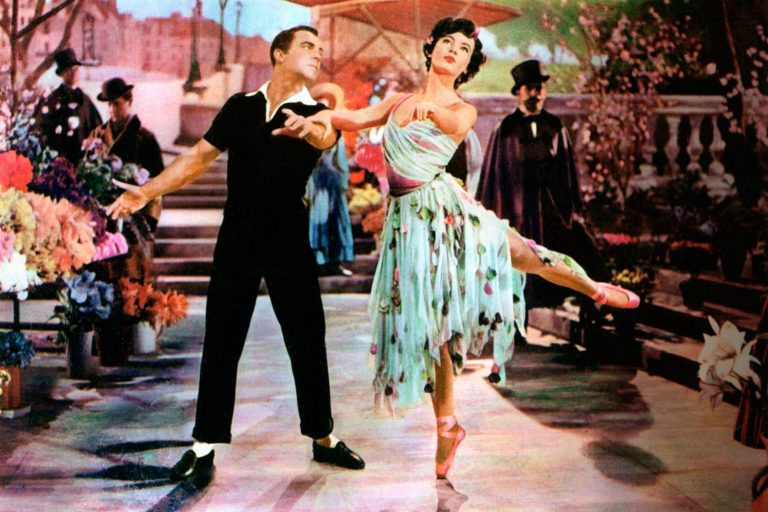
Op-Ed: AFI’s 100 Years…100 Passions – ‘An American in Paris’ (#39)

I will be watching and reviewing all of the films included on AFI’s 100 Years…100 Passions list. The list contains the 100 greatest love stories in American cinema and I plan to consider how our views on romance and social issues have changed over the years as well as judge whether the romances in these films actually made me swoon. As a fan of the romance genre, I expect to love each and every one of the nominees but I also don’t know if I would consider all of them romantic.

Most people don’t watch musicals for the moments in between the song and dance numbers. They want a loose plot and occasional dialogue scenes that will provide a solid framework for catchy tunes, impeccable choreography, and slick, flashy camerawork that will immerse them in the fantasy of being able to randomly break out into song. The songs actually manage to drive the plot forward and cover significant themes when they have been successfully incorporated into a story. It shouldn’t feel like the plot is being interrupted when everybody starts singing, and the songs shouldn’t just repeat the message that has already been conveyed by dialogue. The dialogue scenes should be full of snappy, irreverent lines that make you laugh, as well as providing some breathing room amidst all of the showstoppers. 

Apparently, Alan Jay Lerner didn’t get the memo because most of the musicals that he worked on are bloated messes that don’t seem to have much of a point. It often feels like Lerner hurriedly wrote down a couple of his ideas and then submitted his ramblings as the finished version of the script. When I read that he did write this script in the twelve hours before his wedding day, it made sense. I could just imagine him quickly typing out vague outlines of the opening scenes and setting up a clear story arc, before taking a quick break and proceeding to lose track of where the plot had been going. The story ends up veering all over the place, the female lead’s motivations and feelings are never considered and characters and plot lines are randomly dropped in the second act. All of this could have been polished and streamlined if anybody had been there to rein Lerner in. Of course, this was made in Hollywood in the 1950s and they didn’t particularly care about the quality of the products they were selling to the masses. This project reeks of bland commercialism and displays little of the artistry and ambition that makes Singin’ in the Rain (1952) an enduring classic. 

The plot here is far less sturdy than that which allowed Stanley Donen to explore Hollywood’s difficult transition into making sound films and the pains of losing your identity whilst gaining stardom. Lerner decided to tell a story about star-crossed lovers who are separated because she is already involved with another man. He centers painter Jerry Mulligan (Gene Kelly), a goofy American who enjoys living in Paris and hanging out with his eclectic group of friends. He is a layabout who is content to earn very little money and subside on the financial support of wealthy patrons. He finds himself gaining a new lease on life when he encounters Lise Bouvier (Leslie Caron), an impudent French girl, and immediately finds himself smitten with her. She slowly finds herself returning his affections and is upset by the knowledge that she can never truly be with him. Her romantic involvement with Henri Baurel (Georges Guétary) ensures that she and Mulligan can’t simply run off together. For the first time in his life, Mulligan must deal with real disappointment and loss. 

An American in Paris - Variety

With that fairly simple plot, Lerner gave himself the perfect opportunity to tell the story of a man trying to turn into a more mature, ambitious version of himself. In order to be with Bouvier, he has to hold down a real job and learn how to be a one woman man for the first time in his life. Lerner seems to be going down this path during the first half of the film but then completely abandons any pretence of giving Mulligan a character arc. He is given everything that he has ever wanted at the end of the film and hasn’t had to make any sacrifices in order to receive any of it. He’s essentially inert and a bevy of random supporting characters are often asked to take center stage in scenes involving his character. Mulligan is woefully underdeveloped, but Bouvier is reduced down to being a pretty little ornament, who belongs to the men who date her. These two ‘characters’ are totally lacking in substance and it is impossible to root for them to fall in love when they seem incapable of experiencing real emotions. Lerner never makes the effort to go beneath the surface or introduce any depth to his writing. This is why it is a travesty that he won an Academy Award for spewing out this crap. 

The writing is what really holds this back from being enjoyable, as it is impossible to ignore the fact that it is so shoddily put together. Vincente Minnelli’s direction doesn’t give it that extra spring in its step that might have made it easier to overlook all of the inconsistencies on display. He gets to have a ball with the final ballet scene but he doesn’t tap into any of the emotion that should be vibrantly pulsating off of the screen. It also seems as though he didn’t offer Caron, appearing in her first film, enough support. She is painfully amateurish and awkward on-screen. When she stands next to Kelly, a polished professional, she gapes at him and fires ill-timed glares at his face. With a bit more guidance, I have a feeling that Caron could have projected sensuality and grace, rather than gormlessness. Minnelli’s attention is mostly directed towards the grand sets, the choreography, and the bright colors that drench almost every frame. He loses track of some of the most important elements of the film, and he creates a piece of art that fails to connect with its audience. 

It is fitting that Singin’ in the Rain has eclipsed this musical’s reputation and An American in Paris (1951) now lives in the shadow of its more famous follow-up. There isn’t a whole lot to recommend this one and it feels like a product of its time that represents some of the flaws of the studio system. The love story fails completely and I laughed when I realized that the film was on this prestigious list. Maybe some looked at this with rose-tinted glasses? Everybody is fond of Kelly and Minnelli’s stature as a director has only grown in the years since his retirement. We need to stop giving subpar films a pass because they were made by respected individuals. Free yourself from being disappointed by this overrated white elephant. 

Criterion Crunch Time: ‘Pierrot Le Fou’

When it comes to movies streaming on The Criterion Channel, there are some that I’m vaguely interested in. But then there are others that are so known, so a part of the collection, that I almost feel like I must cover it in this column. This month provides both that opportunity and that challenge. One such movie is Pierrot Le Fou. Not only directed by Jean-Luc Godard, but also often casually listed as one of the greatest films, and best directed films, ever. So, to state that I feel some slight pressure in talking about this is a grand understatement.

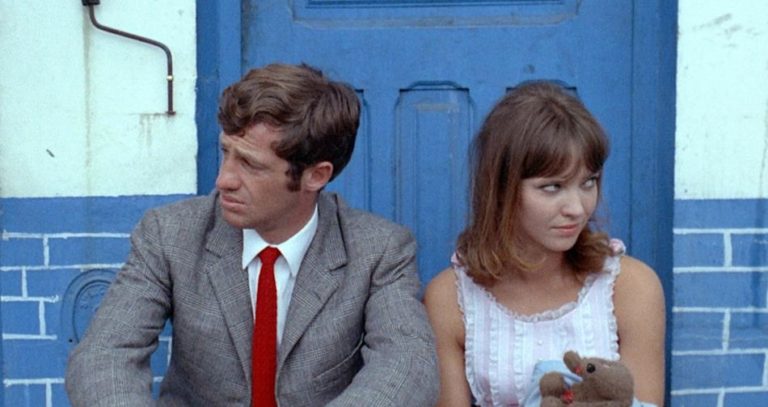
Although this movie defies the idea of a plot synopsis, here’s the gist. Ferdinand (Jean-Paul Belmondo), a quite unhappily married man, runs into his old flame, Marianne Renoir (Anna Karina), who happens to be babysitting his child. As he makes the decision to leave his family, he and Marianne discover a corpse in her apartment and soon they are on the run from the OAS, a far right French paramilitary organization. But even as I write this, very little of that matters. Pierrot Le Fou is many things, most especially an investigation in love, art, and pain.

Despite that very heavy description, most of Pierrot Le Fou is surprisingly light, until it very much is not. The difference between Ferdinand (also called Pierrot, but only by Marianne) when he is stuck at a party with his wife and when he is with his love is not only noticeable but palpable. Godard, clearly a genius (we’re not breaking new ground here), manages to show us what it is like to be in love, to be purely infatuated, as we are launched into this feeling with Ferdinand. Godard manages more feeling with two people sitting stationary in a motor vehicle than most directors could manage with an obvious love scene. The manner in which the film is framed makes us feel as if there are only two people in the world. And if that isn’t the beginnings of love, I don’t know what is. Yes, they are being chased by nefarious characters, but that is easily forgotten as they traipse through the woods together. Much of this is purely due to Godard’s decisions. Even when these two are accompanied by others, the intense focus he employs forces us to only focus on Ferdinand and Marianne.

Even more so than most films, the casting of the two leads is of dire importance in Pierrot Le Fou. In researching the film, there were many different options and thought processes for these two characters. Originally, American Richard Burton was the first choice for Ferdinand, but I wouldn’t have it any other way. Belmondo’s face, full of character, allows us to imagine what he has gone through to get to the point where he is willing to leave his family. Was he truly unhappy? Or merely felt trapped? Godard is trusting us to fill this in however we see fit. On the other hand, Anna Karina embodies the chaos of love so perfectly that it hurts.

I don’t mean this in a performative way. Karina plays two styles equally well. She is obviously beautiful and alluring, which makes his willingness to be with her an obvious choice. The moment in which she sings Ma Ligne de Chance toes the line between childishness and coquettishness so purely that we both understand his annoyance and his eventual decision to give in to her, which he, of course, will repeat for practically the entire runtime. But it should be noted that Pierrot Le Fou is not just about the joy of love, but the ability of those we love to destroy us. Marianne’s distance, which is also alluring in its own right, points to the sour end that every viewer can likely feel coming. 

Speaking of that ending, it is imperative to talk about in any discussion of Pierrot Le Fou. There is no pain as sharp, as disorienting, as purely wounding as the end of love. When Ferdinand finally understands that he has been used, now discarded by Marianne, it is impossible not to be moved by his stumbling understanding of what this means and what he has done in reaction. Finding that he has been tossed aside, he is driven to violence, one of the only examples of visceral, active violence in the entire film. But his reaction to committing this act is not to revel in the bloody mess, but to punish himself.

In both a tragic and comic moment, Ferdinand paints his face and then wraps his head in dynamite. In his sorrow, he lights the fuse. But the choice that Godard makes here is stunning in its turn from these mixed emotions to pure tragedy. Just before his end, you can hear Ferdinand change his mind, but it does not save him. Who among us has not thought of (or actually done) something damaging and foolish to ourselves? In this moment, Ferdinand plays the fool for Marianne one last time and it costs him literally everything. 

Pierrot Le Fou is quite obviously a film that will reward subsequent viewings. However, it is also one of those movies that, on first experience, has a wildly powerful impact. There are certain images, some static and some full of balletic movement, that are among the most memorable I have seen on a screen. There is always a worry that a film as known as this one will disappoint. But in this case, that concern is assuaged within the first few minutes. Some films stick with you, whether you like it or not. Pierrot Le Fou has a reputation for being one of the greats, and it happily meets and exceeds those high expectations.

Movie Review (Cannes Film Festival): ‘Babi Yar. Context’ does not want us to forget


Director: Sergei Loznits
Writer: Sergei Loznits

Synopsis: Nazi troops massacred 30,000 Jews over a three-day period in September 1941. The film reconstructs the historical context of this tragedy through archive footage.

[/info]

It is difficult to talk about something as tragic as the Holocaust. Even though it occurred more than 80 years ago, the scars and heartbreak are still present, more so amongst the millions of people that lost loved ones during this massacre. Nevertheless, it is important that we – as a global community – never forget what happened, notwithstanding the pain it may cause to remember it.

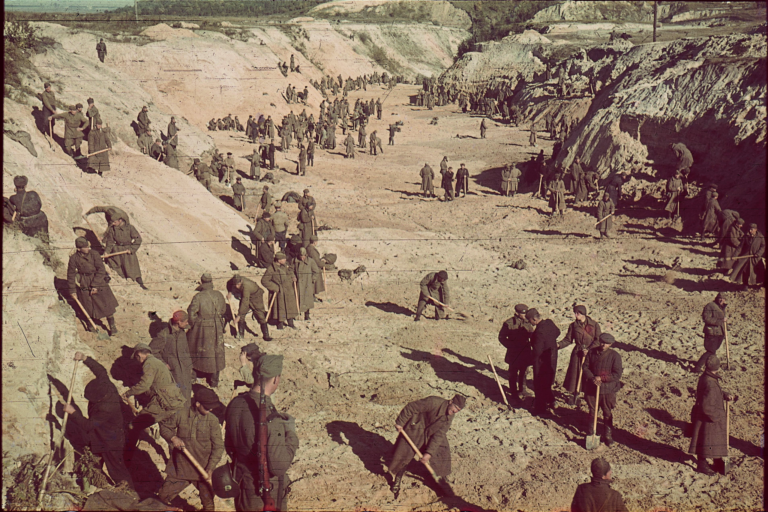
This idea is what drives Babi Yar. Context, a documentary by Ukrainian filmmaker Sergei Loznits, and having a special screening during the Festival de Cannes 2021. It chronicles the German invasion of Ukraine and the assassination of 30,000 Jews on September 29-30, 1941, in Babi Yar, Kiev. Stated clearly in its name, the film provides context to these days of massacre, including the arrival of the Germans in Soviet land months prior, the conquest of the cities of Lviv and Kiev, the killing itself, and the reconquest of both cities by Soviet troops in 1943.

Using nothing more than archival footage, Loznits takes us back in time and allows us to see the people’s routines and every-day activities, and later, as the Nazis arrive, their complete transformation. The footage, mostly taken from amateur recordings of German soldiers and officers, and presented in a 4:3 aspect ratio, traces the burning of houses, the use of bombs, and the way that women rescued their husbands from POW camps, now expected to resume their lives as civilians and serve the Third Reich.

There are no interviews, nor narrations. Instead, the filmmaker relies exclusively on the images that are presented, as well as sounds and conversations that sporadically appear. This decision, similar to what Peter Jackson did in his World War One documentary, They Shall Not Grow Old (2018), is challenging but admirable. Narration is not needed when the images speak for themselves. Loznits offers transitions through black backgrounds with brief explanations, giving more context to the context that we see on screen.

We get to see the faces, reactions, and casual actions of people that are probably long gone, but that unwittingly are now part of history. Their mere appearance on screen is now precious because we can appreciate the way life was conducted during this pivotal time in history. In this regard, the archival discovery and the research done by Loznits and his team – with emphasis on archival researchers Victor Belyakov and Corinna von List – is astounding and worthy of recognition.

With the finding of this footage, they provide us with new sources of study and knowledge. Recovered from public and private archives in Russia, Germany, and Ukraine, these images were extensively restored. It is astounding that we can see videos of Germans bombing towns, Soviets bombing Kiev’s central street, or people giving their testimonies in court. On its own, Babi Yar. Context is profoundly valuable.

While the documentary is exempt of judgment, it is impossible not to feel anguish and pain by the views presented. Babi Yar. Context speaks to our humanity and the many failures that happened before, during and after the massacre by neighbors and non-Jewish citizens. People clap as the Nazis arrive, celebrating their new generals and pasting Hitler’s face in buildings and streetcars. Then, as the Soviets recover power, they clap again for these leaders. Loznits highlights that there was no resistance from Ukrainians once the massacres started. The filmmaker mourns the lives that were lost, as well as the humanity and empathy that was absent from witnesses. A newspaper clip celebrating the decimation of more than 33,000 Jews is the final straw in this heart-breaking feature.

While the first hour of the documentary is filled with images of the life before September 1941, the second half becomes more harrowing by offering pictures of the clothes of the victims in Babi Yar – the only colored images of the film –, as well as footage of the trials of several Nazis in 1946. The testimonies exposed here, by witnesses and accidental survivors, are worthy of nightmares. The descriptions are thorough, and the trauma is profound. Again, Loznits is focused on showing the real and unadorned terror of the Holocaust, going as far as including the public executions of those found guilty. Just as before there were people on the streets celebrating the arrival of Nazism in the Soviet Union, now there are around 20,000 people seeing the execution of a dozen men.

Babi Yar. Context urges the audience to not forget the tragedy that happened in Kiev 80 years ago. The tragedy of the assassination of 30,000 people, as well as the indifference and cruelty of neighbors and friends. With fewer and fewer survivors left, documentaries such as this become vital for the remembrance of our past and the avoidance of the same mistakes in the future. We simply cannot forget in a time when it seems that we are getting uncomfortably closer to the tragedy of our past.

Grade: A


Movie Review: ‘No Sudden Move’ is Brought Down by a Lackluster Script


Director: Steven Soderbergh
Writer: Ed Solomon
Stars: Don Cheadle, Benicio del Toro, David Harbour, Jon Hamm, Amy Seimetz, Noah Jupe, Brendan Fraser, Kieran Culkin

Synopsis: When a trio of criminals are hired to steal a mysterious document from a corporate office in Detroit in 1954, it triggers an avalanche of double-crosses, pitting gangsters against each other against a backdrop of corporate greed.

[/info]

Despite having delivered some of Hollywood’s most traditionally successful films of the twenty-first century so far, Oscar-winning director Steven Soderbergh continues to be one of the most enigmatic and unpredictable artists working today. Akin to a cinematic shark, he keeps moving from genre to genre, medium to medium, forcing new challenges on himself, never pandering to expectation. With films as disparate in tone and subject as Sex, Lies and Videotape, Traffic, Ocean’s Eleven, Solaris, Contagion, Magic Mike, Behind the Candelabra, Logan Lucky and Let Them All Talk, Soderbergh continues to break new ground and reinvent himself, sometimes for the better, sometimes not. In 2020, Soderbergh took on perhaps the most challenging project of all, serving as one of the producers for the pandemic Oscars. Although he signed up to co-produce the annual awards extravaganza prior to COVID-19, there possibly was no artist better suited for the flexibility and creativity needed to mold a show out of literally nothing. While the show itself fell flat in the end, Soderbergh’s contributions were hailed as the only part of the production that had any life.

It is because of Soderbergh’s immense talent and ability to shape ordinary rocks into diamonds that every new film by the auteur is met with such high expectations. Which is why his latest film, No Sudden Move, is such a rare disappointment.

The concept of cool criminals wasn’t invented by Steven Soderbergh, but his Ocean’s series of films, beginning with Ocean’s Eleven in 2001, certainly defined it for a generation of moviegoers. No Sudden Move is carved from the Ocean’s mold and borrows more than a little from it, but it isn’t able to find the traction necessary to hold together as a consistent or cohesive enough cousin to the iconic heist franchise.

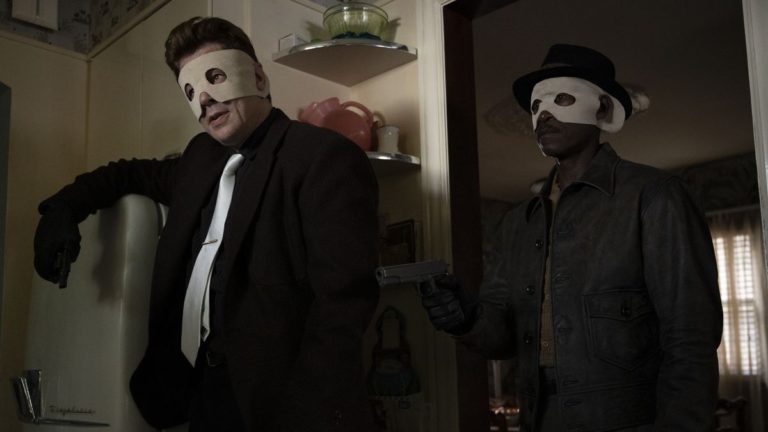
Set in 1954 Detroit, gangster Curt Goynes (Don Cheadle) is newly released from prison and needs some cash to get out of town. He is recruited, along with two other guys, Ronald (Benicio del Toro) and Charley (Kieran Culkin), to do what seems to be a quick and easy job, babysitting a mother and her two children while Charley escorts the father to his office to retrieve a document from his boss’s safe. When the document isn’t there, a whirlwind of double-crosses and deceptions ensue, as gangsters, cops, and businessmen all get involved in a search for the mysterious document and will stop at nothing to get it.

To Soderbergh and screenwriter Ed Solomon’s (Now You See Me) credit, they make every attempt to expand on a familiar genre with interesting angles and ideas, adding in layers of corporate greed, political influence, socio-economic status, and race relations to a gangster heist film. But their reach exceeds their grasp as the many twists and turns of plot and character are too nebulous and messy, causing confusion and making the film difficult to engage in. Curt’s story is ostensibly the central one, but too little time is dedicated to his arc for the audience to feel invested in his ultimate fate. It is great to see Don Cheadle in such a substantial starring role again, but the missed opportunity to give this talented actor much more to work with is disappointing.

What is absolutely not disappointing is the cast that Soderbergh assembles around Cheadle. As if del Toro and Culkin weren’t enough, No Sudden Move features a cast that any director would covet, including Ray Liotta, Brendan Fraser, Jon Hamm, Matt Damon, David Harbour, Noah Jupe, and Amy Seimetz. Harbour and Damon are particularly good, but the casting of Liotta and Fraser in roles that let them truly sink their teeth into the material is the most gratifying element of this film, and it’s especially fun seeing Liotta play a gangster again, thirty-one years after his star-making turn in Goodfellas. Sixteen-year-old Jupe continues his run of distinguished roles, No Sudden Move following up noteworthy turns in Ford v Ferrari, A Quiet Place Part II and last summer’s HBO hit series The Undoing. Harbour and Hamm remind us how a movie set in the ‘50s just can’t work without them, and Seimetz continues a new tradition of seeing directors deliver noteworthy performances, following last year’s incredible work in front of the camera by directors Marielle Heller, Bo Burnham, and Emerald Fennell.

While the collection of actors is fun and Soderbergh deserves points for ambition and for a new approach to a familiar genre, in the end, it’s the unfocused screenplay that lets No Sudden Move down, resulting in a well-acted, great looking film that, despite all the tasty elements, leaves you empty.

Grade: C

https://www.youtube.com/watch?v=bRD1xr-dmfQ

Movie Review: ‘Scales’ is a Saudi feminist parable that deserves attention


Director: Shahad Ameen
Writers: Shahad Ameen
Stars: Basima Hajjar, Ashraf Barhom, Yaqoub Alfarhan, Fatima Al Taei, Haifa Al-Agha, Ibrahim Alhasawi

Synopsis: Set in a dystopian landscape, Scales is the story of a young girl who stands alone against her family and overturns the village tradition of sacrificing the female children.

[/info]

Shahad Ameen presents a feminist parable with Scales, a challenging narration about a girl that is supposed to be sacrificed for the well-being of her town, but that instead proves that she is destined to live. Not to be interpreted as optimistic or celebratory, the film is a tale about what it means to be a girl or a woman in this world, something that acquires a more urgent meaning when we consider that the filmmaker herself is from Saudi Arabia, a country that has started to take baby steps towards the liberation of its female citizens.

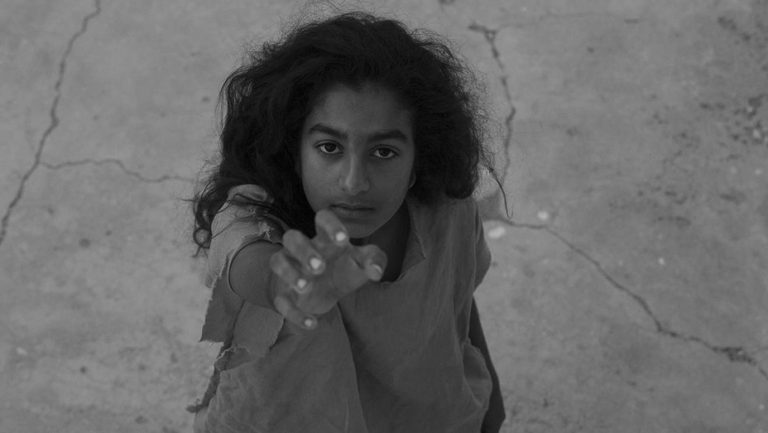
Filmed in black and white by João Ribeiro, its photography is probably the most astounding aspect of the film, which captures in beautiful frames the desolate landscape of an undefined island (filmed on location in Musandam, Oman) populated by seamen and women that stay inland. Austerity is everywhere, giving the film the air of existing under a minimalist perspective where sea and humans have a close, but castigated relationship.

There is no accompanying music, only the sound of the waves, the air, and frequent local chants (“Oh mighty sea, our sacrifice is small, from the depth of your water and your sand, bless us with your maiden, we need her strength.”) These lyrics give a clue of the role of women in this place: both undervalued and vital for everyone’s survival.

As the audience is welcomed in the film, the camera follows Muthana (Yaqoub Alfarhan) as he takes his newborn girl, Hayat, to the sea as part of the local ritual. She is meant to be sacrificed to the sea creatures so the village can continue with their fishing expeditions. Ameen – who is also the writer – is not interested in offering context or explanations about this dark tradition. Instead, she only shows the practice through haunting camera directions that make us feel as if we were the ones about to be drowned.

Just as Muthana is ready to let go of his daughter, he has a change of heart and rescues her instead. The story jumps 12 years in time to find Hayat (Basima Hajjar) as a teenager, constantly harassed and blamed for the bad fortune of the island. Everyone – including her mother but not her father – is asking her to walk into the sea and proceed to her own demise.

The message of the film is its most important feature. A clear feminist story about the burden of being a woman in patriarchal societies, Scales is a condemnation of the unfair treatment of women as well as a celebration of Hayat’s life and endurance. She is determined to survive, no matter how many times she is made to believe that she should not be alive, even doing unthinkable things in the sake of showing her worth. This is a cold reminder of the exhausting high standards under which women live. We cannot just exist. We need to prove that we are worthy of living by excelling in whatever we do.

While Hayat’s story is one of strength, it is impossible to ignore the fate of the other girls around her. The camera does not shy away from crude and harrowing scenes of the sacrifice of girls, their transformation into sea creatures, and the way that the same people that used to be family are now hunting them. These girls are never safe, even after they sacrificed themselves for others. In this regard, Scales offers valuable lessons through every female character that appears on screen, sometimes reminding us of the weight of traditional values, others of the suppression of femininity in order to survive, and others of the resoluteness and strength of our survival instincts.

While the messages of the film are powerful, the execution is challenging. Its abstract essence demands patience and blind acceptance from the viewer. Consequently, its value resides on its message and the mere fact of its existence (a rebellious fable written and directed by a Saudi woman).

Presented through beautiful photography and accompanied by a vocal chorus that offers some energy to the otherwise austere story, Scales is a feminist story that deserves attention.

Grade: B-

Classic Palme D’Or Review: ‘The Mission’ Pits Faith Against an Empire (1986)

For generations, men and women have traveled the globe to explore their faith and spread their ideologies. Battles in the name of God take many forms. An introspective exploration of the soul and our actions can lead us to dark places within our psyche. Yet, visceral and physical violence perpetrated in the name of religion has scarred our world dozens of times over. Many auteurs seek to bridge these two extremes, revealing the profound moments of faith and character in the darkest moments of human existence. 

Few films marry the two extremes like Roland Joffé’s The Mission from 1986. Anchored by Joffé’s direction, the Palme winner of 1986 combines magnificent performances with jaw-dropping cinematography. Focusing on two men, a former soldier, and a Jesuit priest, The Mission explores forgiveness, loss, and the punishments we take to reveal our character. Every bit as ambitious as his debut, Joffé finds God and purpose in the jungle but fails to bring out ingenious narratives that would have elevated the story.   

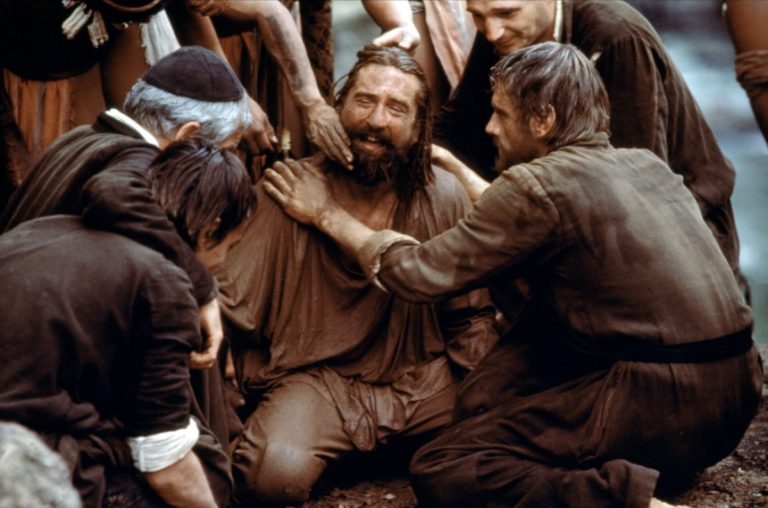
Set in the 1750s, a team of missionaries climbs through the jungle to meet the Guarani people. The indigenous tribe is resistant to outsiders. After watching the first missionary fall over a waterfall while tied to a cross, the film introduces Father Gabriel (Jeremy Irons) and Father John (Liam Neeson). Slaver and former Spanish Captain Mendoza (Robert De Niro) discovers Father Gabriel’s arrival, causing his return to the local village. After Mendoza finds his wife and brother have begun an affair, he slays his brother in the streets. Gabriel counsels Mendoza and offers him solace in the service of God. After Mendoza takes vows to becomes a Jesuit priest, the mission they’ve fought so hard to protect becomes a pawn in negotiations between the Catholic Church, Spain, and Portugal. 

Joffé approaches the philosophical text with patience. He relies on narration and a frustrating framing device, but the omniscient storyteller disappears into the background of the beautiful camerawork on display. The narration, despite serving as skillful exposition dumps from Robert Bolt, rarely adds relevant context. As a result, the images captured by cinematographer Chris Menges become more impactful as a storytelling device than any dialogue. Menges would take home his second Oscar, just two years after his win for Joffé’s The Killing Fields. The questions posed by Bolt’s screenplay feel dated, and it’s one of Joffé’s rare missteps with the construction of the film. 

The first half of The Mission builds slowly, and Joffé conveys the sweat-drenched humidity of the jungle in every shot. As we watch the men struggle to find purpose and redemption, the wilderness becomes a literal and metaphorical labyrinth to traverse. As Mendoza grapples with his new life, he pushes through anguish to find deeper, personal truths. While perhaps a bit obvious, it is no mistake that Joffé shoots the emotional breakdowns in or around rivers. The symbol of life beginning anew in paradise serves the biblical and broad metaphors of The Mission

The score from Ennio Morricone adds to the ethereal soundscape of the jungle. He seamlessly transitions between a traditional Western sound and the more specific sounds of the tribe. He utilizes the combination of strings and flutes to create a rising and religious undertone to the film. The use of drums and chants helps plant us in the local communities of the Guarani to life. Yet his chants take on a hymn-like quality, not unlike the ones you may hear from a church chorus. Morricone adds unique and subtle flourishes to sell individual moments of triumph as he traverses through the two sounds. 

The push and pull between philosophies come from De Niro and Strong, and the actors are in peak form. While De Niro feels miscast, it is clear that was intentional. Not only does he brings a much-needed intensity to the film, but the Mendoza character must be a fish out of water. In the mid-1980s, few actors in Hollywood could oscillate between a murderous thug and an introspective priest. There are moments that the casting does not work, but De Niro’s movie star baggage brings depth to the choices he makes. 

The wise and heartbreaking Strong dominates the screen with a different kind of intensity. When Strong speaks, he draws you in with his wisdom and grace. However, his repressed anger boils over, highlighting his struggle with his own belief. The all-consuming questions about serving God and saving the indigenous Guarani eat away at Strong. His ability to communicate his frustration and his subtle guilt makes The Mission one of Strong’s most underrated performances of his career. 

Despite Strong and De Niro conquering the film as a two-hander, the remaining cast does not live up to The Mission’s leads. Ronald Pickup and Chuck Low provide interesting but cartoonish villains for most of the screen time. Pickup’s evil comes across with more nuance, but the two actors rarely fit the period setting. Ray McAnally plays his relatively straightforward role well but never rises above what is on the page. He brings an unearned melancholy to the role, especially given his character’s power over the film. Aidan Quinn also comes across as miscast, but his character’s fleeting role in the movie leaves us with little emotional connection to his fate. Even Neeson, who had already starred in several films, feels underutilized. 

The 1980s rarely cast non-white men in lead roles, and that remains true in The Mission. Actors of English, Irish, and American descent play Spaniards and South American colonists. While there were many indigenous actors on set, few get any character development. The “White Savior” trope runs rampant throughout the film and directly pushes against the heroic framing of the Jesuit priests. We hear the members of the tribe embrace Christianity, but only through dialogue translated by Strong’s character. The lack of speaking parts afforded to these actors makes it impossible to ignore the colonial actions of the priests.

While The Mission would win the Palme, there were undoubtedly exciting alternatives for the Jury. Perhaps the most obvious was The Sacrifice, another faith-driven narrative that would be the final film for Andrei Tarkovsky. This film would win the Grand Prix, but its message is more palatable than The Mission in thirty-five years since its debut. Martin Scorsese’s After Hours might have felt too slight compared to The Sacrifice or The Mission, yet it remains one of Scorsese’s few underrated films. The Plácido Domingo-led Otello had a blackface problem, but it received considerable attention from several awards bodies upon its release. Finally, Neil Jordan’s Mona Lisa gave Bob Hoskins a platform for a powerhouse performance. Hoskins would share the Best Actor prize but would miss out on the Oscar at the end of the year. The 39th Cannes had plenty of depth and makes The Mission‘s win feels like a relic of a bygone era. 

Keep an eye out for more retrospectives of previous Palme winners in the weeks ahead! 

Movie Review: ‘Black Widow’ is a Triumphant Return for the MCU Cinematic Experience


Director: Cate Shortland
Writers: Eric Pearson (screenplay), Jac Schaeffer (story), Ned Benson (story)
Stars: Scarlett Johansson, Florence Pugh, David Harbour, Rachel Weisz

Synopsis: Natasha Romanoff, aka Black Widow, confronts the darker parts of her ledger when a dangerous conspiracy with ties to her past arises. Pursued by a force that will stop at nothing to bring her down, Natasha must deal with her history as a spy, and the broken relationships left in her wake long before she became an Avenger.

[/info]

After ten years of constant content from Marvel Studios, the pandemic put that train into a pause as a lack of cinemas meant a lack of blockbuster films. This pause is one that might have been unplanned, but it gave fans who felt overwhelmed by the amount of superhero content and were starting to develop fatigue some time to feel refreshed and ready for the new films to release. That time has finally come as Marvel’s first film since summer 2019, Black Widow is releasing.

Over the past year, it has felt like Marvel has changed tactics in regard to their structure and approach to the overall franchise. With the addition of their Disney+ TV shows including WandaVision and Loki, the direction of the MCU is now focusing on specific characters and their stories, rather than making each project integral to understanding the rest of their upcoming slate. This is a smart move, as with so much content building up there will be people who choose not to dip into every new project. Black Widow is a perfect example of that being put to practice, and I am glad they took that approach here.

When a Black Widow movie was finally announced, many fans were happy as one of the most important players of the MCU was finally getting a spotlight and a true chance to shine, but there was also the question of why now. It felt late in the game for the character of Black Widow to be further explored and with the events of Avengers: Endgame, it also had the worry of not making any development within the MCU. Thankfully, the film is aware of this, and whilst it does add a few moments within the story that will be relevant for the future of the MCU, it primarily focuses on what the fans wanted: a deeper insight into the character of Natasha Romanoff.

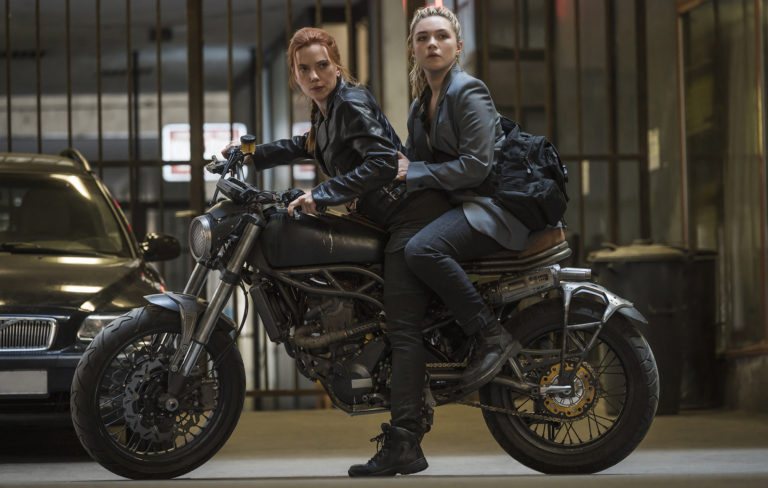
This story is a lovely way for Scarlett Johansson to get a final farewell to Natasha, and it is clear how much she cares about this role. She gives her all in what is her best performance in the role, with a story that requires not only the emotion behind her story but also a lot of demanding action sequences that come together so well. She is not the only star in this film though, as Florence Pugh makes her entry into the MCU in a way that is hard to ignore. Her character, Yelena, is one that I certainly cannot wait to explore further.

What director Cate Shortland does so well with Black Widow is the balance of tones within the story, something that Marvel has struggled a little bit with their latest TV projects. Considering the background of Natasha and the red room, the more serious tone that stays on the surface of the film is important to keep up that story. In particular, the opening scene and title credits are much darker than what is expected from Marvel, but it also highlights how important this story is and how important Natasha’s background is. The narrative is compelling and manages to keep your attention for the 2+ hour runtime without it dropping once.

However, this is not just a movie about this serious topic and having to face the issue at hand. It is a Marvel movie and it has to be entertaining, which is what Black Widow manages to balance out. There is still a lot of comedy within this story, particularly with David Harbour’s Alexei. There are also comedic moments that tie in with the story and making fun of the superhero trope, with one recurring joke managing to land even on the fourth time.

There are a couple of small issues that I did have with Black Widow that stop this from being one of the top-tier Marvel films. I do think some of the relationships are rushed, particularly in the second half, and Taskmaster is given little time to develop as a villain. Whilst his story is technically run throughout the MCU and with Natasha’s past, it is also one that should have had more screen time and would have added more weight to both Natasha and Yelena’s journey within this film.

I was one of the people who was going into Black Widow not getting my hopes up too much but came out pleasantly surprised. It is the first time from Marvel since Captain America: The Winter Soldier that I felt the story was going beyond the superhero genre and the darker tone works perfectly for this story and the issues that the film addresses. In a sea filled of simply “good” reviews, I want to pitch in one that calls Black Widow great.

Grade: B+

Poll: What is your favorite female-led action film?

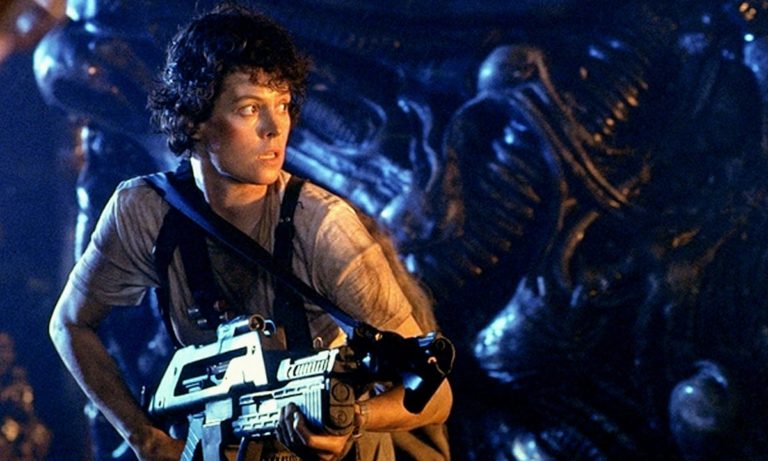
With Black Widow coming to theaters this weekend, let’s talk about female-led action films. It’s a genre that’s had its fair share of greatness, even if there aren’t nearly as many as there should be. However, it’s hard to deny the likes of Aliens, Crouching Tiger, Hidden Dragon, Kill Bill, Mad Max: Fury Road and The Hunger Games. There are others like Foxy Brown and Hanna that have strong arguments as well. Or maybe you’re in the camp for Tomb Raider, Charlie’s Angels or Charlie’s Angels?

Either way, there’s plenty of great options and we’d love to hear from you. What is your favorite female-led action film?


Classic Film Review: ‘The Man Who Shot Liberty Valance’ Is Still Depressingly Relevant


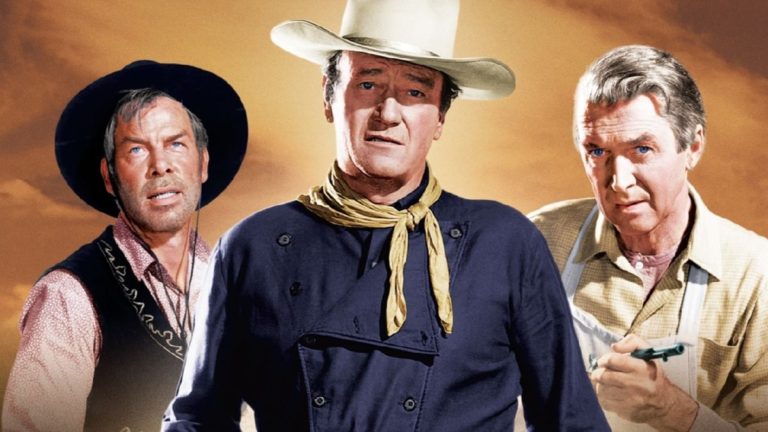
Director: John Ford
Writers: James Warner Bellah and Willis Goldbeck
Stars: John Wayne, James Stewart, Lee Marvin, Vera Miles, John Carradine, and Andy Devine
Synopsis: Liberty Valance, a dangerous cowboy, threatens the residents of a small town. He faces resistance from Tom Doniphon, who wants to take him down with violence, but the situation is complicated when the intellectual Ransom Stoddard is introduced into the mix. Stoddard and Doniphon have to fight to determine what the future of their society will look like.

[/info]

The Man Who Shot Liberty Valance (1962) has a real stunner of a finale but, my goodness, does it take its time getting there. You have to sit through several hours of James Stewart delivering dry lectures to dead-eyed children and Vera Miles’s inexpressive face wobbling around on the screen. You know that important information is being communicated but it is hard to stay engaged when so many scenes feel like they could come out of one of those government sponsored educational videos that is meant to teach children about life on the frontier. This means that the last thirty minutes provide a thrilling, unexpected adrenaline rush. Everything suddenly kicks into gear and John Ford brings the big guns out to play. I can see why the contemplative nature of Ford’s storytelling has made this a favorite of critics, I just wish that it were slightly less uneven. 

The small town of Shinbone serves as the setting for the story and when the film opens, the town has been terrorized by Liberty Valance (Lee Marvin) for many years. He is a dangerous cowboy who wants to control various frontier towns and the locals are too afraid to stand up to him. Tom Doniphon (John Wayne) believes that Valance can only be defeated if he is able to violently overwhelm him. His views are contradicted when an idealistic young lawyer, Ransom Stoddard (James Stewart), arrives in town. Stoddard believes that education and intellectual debate could create social progress and remove the need for violence in resolving arguments. The two men are frequently in conflict and Doniphon goes berserk when he notices that his girlfriend, Halle (Vera Miles), has developed feelings for Stoddard. When Stoddard is forced to defend himself during one of Valance’s attacks, his actions have a long-lasting impact on both of their lives. 

Ford derives a lot of power out of the tragicomedy behind the film’s final scene. Stoddard is a man of principle and he has left behind a positive legacy as a politician. He has used his reputation as a defender of innocent small-town people who was willing to use violence in order to get the job done. The myth that grew out of the story of him murdering Valance, has done more to help his reputation and further his political career, than any of the speeches that he has given about his interest in education. In some ways, it is positive that he has been able to create real change and civilize a part of the country that had been wild and anarchic for such a long time. At the same time, he hasn’t quite managed to stop people from mythologizing the uncivilized Old West, in which violence was romanticized and people ostensibly had more freedom. Even though progress appears to have swept through the area, the Stoddards of the world are still at risk of being called weak by men who claim that they follow the rules of the Old West. Society is always on a knife’s edge and our nostalgia for the past can prevent us from appreciating the joys that can come with an increased level of stability. 

There is still a layer of sweetness that hangs over the proceedings, as Stoddard did manage to convince Doniphon to respect his viewpoint rather than dismissing it out of hand. On a small scale, it is still possible for people to engage in respectful debate and treat one another cordially while acknowledging the fact that they do not agree on a lot of important issues. On a larger scale, he seems to mourn the fact that Stoddard will be best remembered for something that he did not do. The achievements that matter to him, will be forgotten by most. The iconic line, “This is the West, sir. When the legend becomes fact, print the legend,” is often used as a laugh line of sorts. With a wry smile, fans of Westerns will pull it out as an example of the genre’s unique power to shape the average American’s view of history. Within the context of the film, it seems much sadder than that. The line displays the fact that human beings are programmed to respond to legends more readily than they do to nuanced, detailed versions of events. There is nothing insignificant about humanity’s inability to move beyond myths and legends. 

The finale gives you so much to chew on in the way of deconstruction of Western myths and the eternal conflict between anarchism and civilized society. It’s easy to end the film on a high and forget the fact that you were close to nodding off during the scenes that preceded this ending. This isn’t as perfectly engineered as one of Ford’s pulpier dramas. It doesn’t have the relentless energy of, say, Stagecoach (1939), which, for all its flaws, manages to explore at least four major themes whilst also presenting the audience with engaging, likable characters and subplots that were pleasant diversions. On multiple levels, it kept the audience entertained, and The Man Who Shot Liberty Valance doesn’t quite reach the same level. 

Rating: B-

List: Top 5 Movies of 2021 (So Far)

This week on Episode 437 of the InSession Film Podcast, as we do every year at this time, we discussed our Top 5 movies of the year so far. It’s been an odd year as things begin to normalize more than last year, so it may not be the deepest year for film, but its had its fair share of gems. A few of them may even end up as contenders at the end of the year during our Awards Show. So, it was a lot of fun, and a bit challenging, figuring out our lists and where we stand at this point in the film year. That said, what would be your Top 5?

NOTE: On Episode 437 we only discussed our Top 5 movies of the year so far, however, as you’ll see below, we have listed our full Top 10 as it stands right now.

JD:

1) Inside
2) Undine
3) Flee
4) In & Of Itself
5) No Sudden Move

6) Luca
7) Coda
8) The Dig
9) Some Kind of Heaven
10) Barb and Star Go To Vista Del Mar

[divider]

Brendan:

1) Luca
2) Summer of Soul
3) Undine
4) In & Of Itself
5) Barb and Star Go To Vista Del Mar

6) Inside
7) A Quiet Place Part II
8) Shiva Baby
9) Supernova
10) The Dig

Honorable Mentions (Combined)

Mass, Saint Maud, The Killing of Two Lovers, The Mitchells vs The Machines, Wrath of Man, Pleasure, The Courier , On the Count of Three, In the Heights, How It Ends, Zack Snyder’s Justice League, Friends: Reunion, Oxygen

Hopefully you guys enjoyed our lists and if you agree or disagree with us, let us know in the comment section below. This list is obviously going to differ based on your own personal taste and what you’re looking for in these films. That being said, what would be your Top 5? Leave a comment in the comment section or email us at [email protected].

For the entire podcast, click here or listen below.

For more lists done by the InSession Film crew and other guests, be sure see our Top 3 Movie Lists page.

Podcast: Summer of Soul / Top 5 Movies of 2021 (So Far) – Episode 437

This week’s episode is brought to you by Warby Parker. Sign up today and get a 5 day Home Try-On, complete with 5 pairs of glasses to choose!

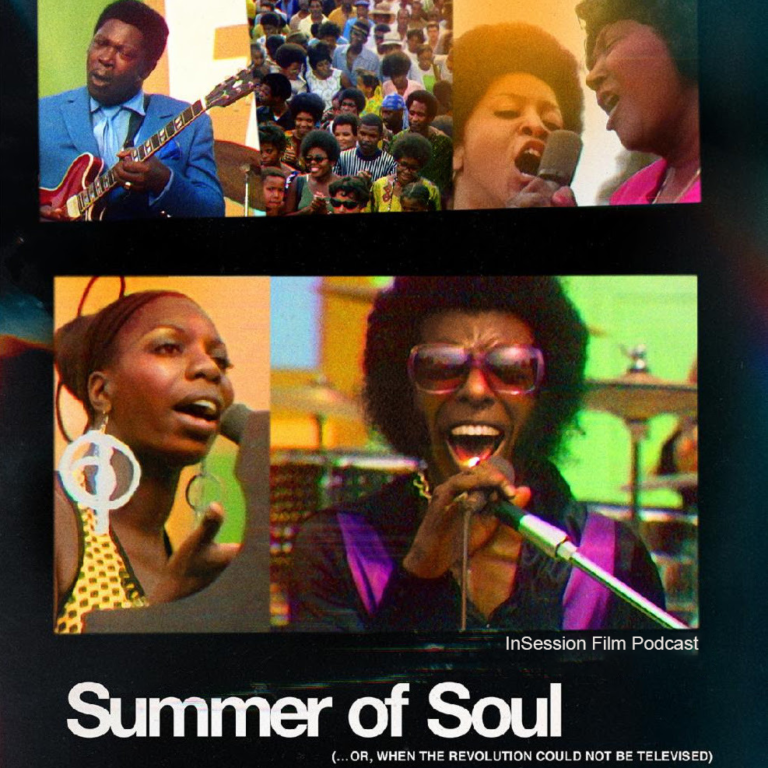
This week on the InSession Film Podcast, we review Questlove’s directorial debut documentary Summer of Soul and we discuss our Top 5 movies of 2021 so far! Plus, JD gives a few more thoughts on F9 and the Amazon sci-fi original The Tomorrow War.

This is one of our favorite shows we get to do each year. Perhaps some of these films will be missing from our year-end list, but it’s always fun to see what movies stand out at the mid-point of the year. At the beginning of the year, the industry was still reeling from the effects of COVID-19, but things are starting to normalize a little bit, which has made for an interesting year so far. Some of the best films of 2021 so far are documentaries, with some claiming that Summer of Soul is the best one we’ve seen yet. So, it was great getting to talk about it and what makes it so unique.

On that note, check out this week’s show and let us know what you think in the comment section. Thanks for listening and for supporting the InSession Film Podcast!

– Movie Review: Summer of Soul (6:30)
Director: Questlove

– Notes / The Tomorrow War / F9 (45:23)
For our break segment, as mentioned above, JD offers up a few more thoughts on F9 after hearing the discussion on last week’s show. And he also talks briefly about the Amazon original sci-fi film The Tomorrow War.

[divider]

RELATED: Listen to Episode 423 of the InSession Film Podcast where we discussed The Tree of Life!

[divider]

Top 5 Movies of 2021 (So Far) (1:21:20)
It’s hard to believe, but here we are at the midway point of the year. It’s been an odd year as things begin to normalize more than last year, so it may not be the deepest year for film, but its had its fair share of gems. A few of them may even end up as contenders at the end of the year during our Awards Show. So, it was a lot of fun, and a bit challenging, figuring out our lists and where we stand at this point in the film year. That said, what would be your top 5?

Show Sponsor: First Time Watchers Podcast

– Music

Everyday People – Sly & The Family Stone
White Woman’s Instagram – Bo Burnham
Meet Luca – Dan Romer
The Return of the Eagle – Atli Örvarsson

Subscribe to our Podcasts RSS
Subscribe to our Podcasts on iTunes
Listen on Spotify
Listen on Stitcher
InSession Film Podcast – Episode 437

[divider]

Next week on the show:

Review: Black Widow
Top 3: TBD

[divider]

Help Support The InSession Film Podcast

If you want to help support us, there are several ways you can help us and we’d absolutely appreciate it. Every penny goes directly back into supporting the show and we are truly honored and grateful. Thanks for your support and for listening to the InSession Film Podcast!

VISIT OUR DONATE PAGE HERE

Op-ed: What to Look Out For At Cannes This Year

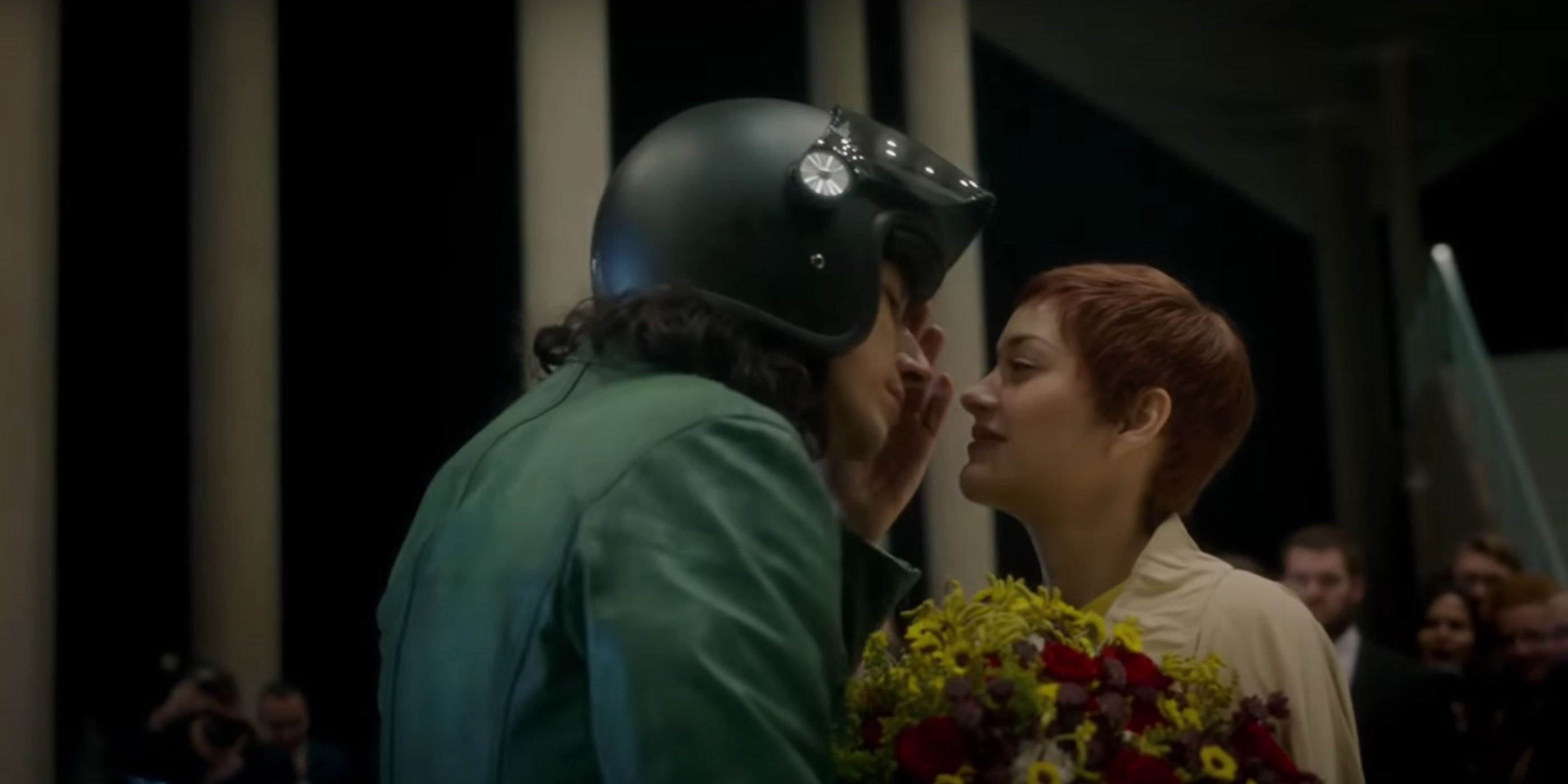
One year after being canceled, the movie world goes back to the Mediterranean for the 74th annual Cannes Film Festival. Spike Lee is the head of the jury and Leos Carax is back after a nine-year gap from his previous movie, Holy Motors, to open the festival with his first musical and English-language film, Annette. It stars Adam Driver and Marion Cotillard as a husband and wife whose daughter is born with an unexpected gift. That is just one film to keep an eye on. The rest of the list has its collective array of languages, genres, and categories where the global world reconvenes to celebrate the best of cinema in the midst of massive pandemic. Plus, Jodie Foster will be getting an honorary Palme d’Or, joining Jane Fonda, Clint Eastwood, Agnes Varda, and Alain Delon among those who have been awarded as such.

Annette: New Trailer Reveals Release Date for Upcoming Musical

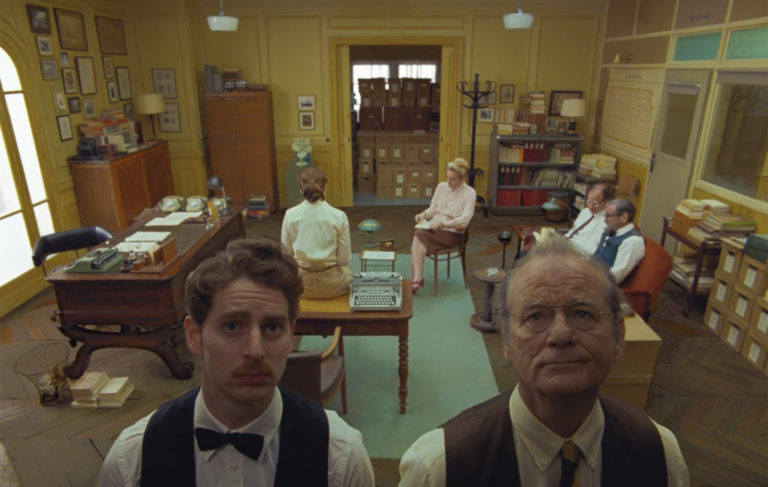
The biggest one we are all curious about is Wes Anderson’s The French Dispatch, a tri-storyline around the foreign bureau of a Kansas newspaper and the paper’s editor played by Anderson collab Bill Murray. The paper is inspired by one of Anderson’s favorites, The New Yorker, and takes out stories from the past set around France’s historical moments and colorful characters with the orgy of amazing actors in Anderson’s romp. Sean Penn is back in the director/actor’s position and starring along with her daughter, Dylan, in Flag Day, about a con artist and the relationship with his daughter. Penn also has his Milk co-star Josh Brolin, plus Eddie Marsan and Miles Teller. Also coming back is Sean Baker four years after The Florida Project with Red Rocket, the story about an ex-porn star who returns back to his small hometown in Texas.

Matt Damon will stop at nothing to save his daughter in 'Stillwater' first  trailer | EW.com

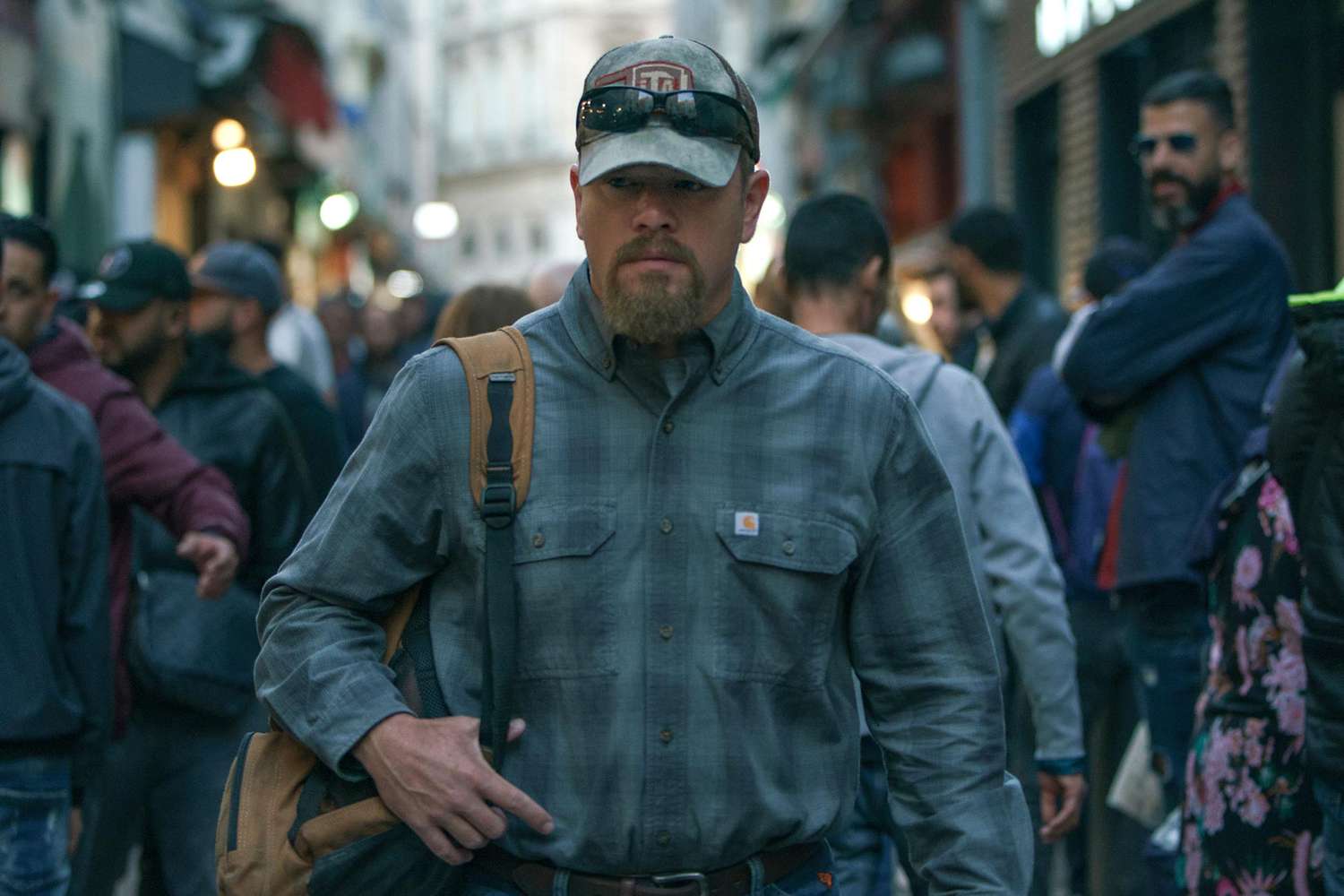
Two American films being shown out of competition come from Todd McCarthy and Todd Haynes. McCarthy has his crime drama Stillwater starring Matt Damon as an oil driller who learns his daughter (Abigail Breslin) has been arrested, accused of killing her girlfriend in France. Moving to France, he struggles with the country’s legal system and the language while trying to prove his daughter’s innocence. Haynes goes from drama to documentary with The Velvet Underground about the band of the same name, famous for being part of Andy Warhol’s creation and fronted by the late Lou Reed. Just recently, F9 was announced to make a special appearance as the incoming blockbuster and who knows how the judgmental French crowd will think of the next chapter in the franchise. 

Red Rocket' First Look: Sean Baker Returns After The Florida Project |  IndieWire

Outside of the United States, other major directors are coming back with more statement works. Oscar-winner Asghar Farhadi returns with A Hero and Amazon Studios has already bought the rights to distribution; Farhadi has yet to win the Palme d’Or, so he could breakthrough here. Mia Hansen-Løve is one of four female directors in the competition with Bergman Island starring Vicky Krieps, Tim Roth, and Mia Wasikowska in a drama shot on the Swedish island of Faro, home to Ingmar Bergman. Previous Palme d’Or winner Jacques Audiard returns with Paris, 13th District in which he co-wrote with Portrait of a Lady On Fire director Celine Sciamma; Audiard previous made his English-language debut with The Sisters Brothers. Another former Palme d’Or winner, Thailand’s Apichatpong Weerasethakul, has his English-language debut, Memoria, starring Tilda Swinton.

The festival is underway after missing out last year. Normalcy is just about here again and it is a great feeling to hear the news about what is happening along the French Riviera again. Vive le cinéma!!!

Follow me on Twitter: @Brian_cine (Cine-A-Man)

Movie Review: ‘Occupation: Rainfall’ is Admirably Ambitious but Deeply Derivative.

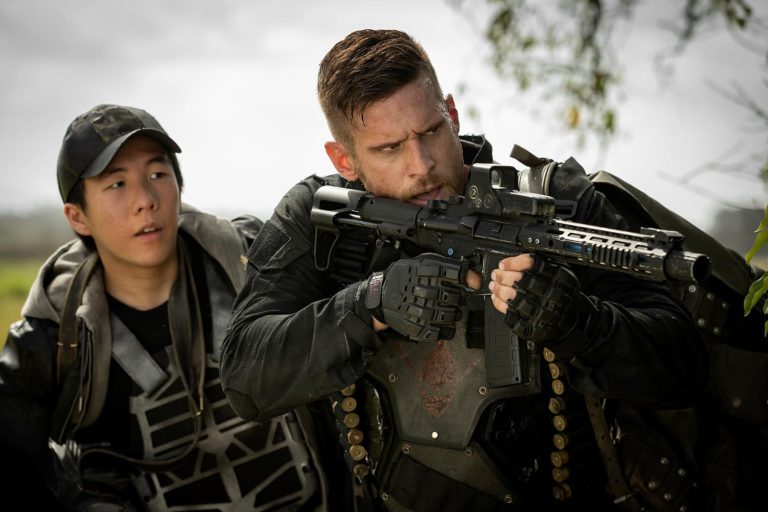
In the age of superhero movies bankrolled by an oligarch with mouse ears, it’s unusual to find an original project that packs so much passion, ambition, and scale with so little budget. Yet Luke Sparke had only around $20 million to create the sequel to his 2018 debut Occupation, itself made for under $10 million. Despite the fact that $20 million is probably what the catering alone cost on movies like Endgame, Occupation: Rainfall still manages to look gloriously epic (if a little underlit at times).  The production value here is truly a step up from the original. The effects hold up, the set designs are impressive, and the costume designs actually much more detailed than you might imagine. It all adds up to a movie that looks the part, even if it falters slightly in some other ways.

Occupation: Rainfall takes place a few years after the original which saw an alien invasion, who came to be known to the citizens of Earth as The Greys, take place in Australia, as a group of ordinary civilians take up the fight against them. Now those civilians are battle hardened and gruff. Matt (played by Dan Ewing) leads the resistance alongside Amelia (Jet Tranter), her brother Marcus (Trystan Go), and defected Grey soldier Gary (Lawrence Makoare), whom everyone seems to treat with disdain. They hear of an alien code word called Rainfall, which they believe could be a clue to the Greys’ plans. They set off into the wasteland in search of answers, while Amelia stays behind to help survivors and clashes with Commander Hayes (Daniel Gillies) who intends to employ a scorched earth tactic to destroy the Greys once and for all.

We see very little in the way of character development this time around. Sparke seems to be done with building his characters and is far more invested in the bells and whistles. This is not necessarily a bad thing: the acting in the original was a little sketchy, and nothing much has changed here. Add to this that these actors have to deliver clangy dialogue which even the best in the business would struggle to pull off. There are a few notable exceptions to this: New Zealand legend Temuera Morrison (he of Jango Fett fame in the Star Wars prequels) is back, and is as solid and dependable here as he was the first time around. Jason Isaacs and Ken Jeong even make an appearance pulling off an odd-couple comedy shtick, with varying results; the former as an alien named Steve who is fond of both Hawaiian shirts and pop culture references.  Unfortunately, cameos from the likes of Morrison, Isaacs, and Jeong can’t elevate Occupation: Rainfall above a certain level. Though the production value has improved, the writing hasn’t. Throughout its two-hour runtime, Rainfall feels derivative – taking its cue from much better works and applying them lazily here, a sort of cut-and-paste of clichés which threaten to make the eyes roll at times. You’ve seen and heard this all before.

The pacing is amped up significantly from the first one, and the net widened to include such things as alien space horses and all manner of other creatures. The opening scenes have a little bit of a cantina feel to them, and there’s genuine excitement that maybe you’re about to watch something brilliantly original and fresh until the narrative – what exists of it – hampers the tone.

A third act revelation means we may not be done with the Occupation universe yet, and there’s hope that – should Rainfall do well – Sparkes might get the budget he needs to wrap things up. For though the dialogue is flat, the plot cliched, and the acting just on the wrong side of B-movie, it’s so admirably ambitious that you can’t help but root for it a little. If only there were more independent movies out there who would reach for the stars. Alas, Rainfall comes some way short of success, but it looks beautiful and tries hard, and for that, it should be applauded.

Signature Entertainment presents Occupation Rainfall in Cinemas and on Digital from 9 July.

Grade: D+

Movie Review: ‘Rock, Paper, and Scissors’ Lacks Originality and Momentum


Director: Martin Blousson, Macarena García Lenzi
Writers: Martin Blousson, Macarena García Lenzi
Stars: Agustina Cerviño, Valeria Giorcelli, Pablo Sigal
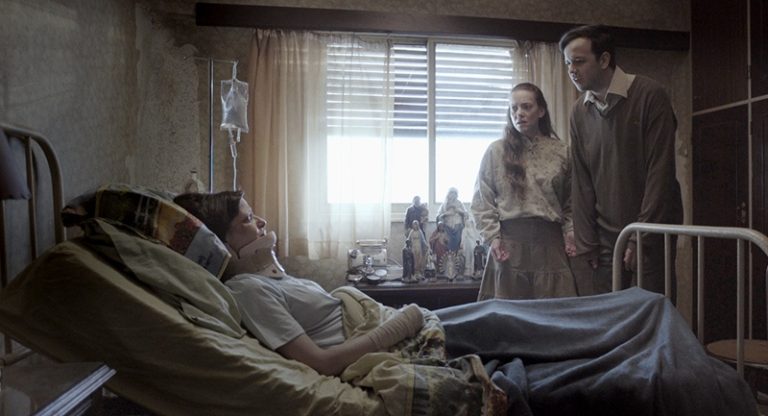
Synopsis: Two siblings who live in the house of their recently deceased father are visited by their paternal half-sister to discuss arrangements after his death. After a fall, the half-sister must be cared for by the siblings.
[/info]

There are many criticisms, that depending on the context, hold little to no water with me. One of those is “You’ve seen this story before.” This can mean any number of things. Among them are that it feels reminiscent of other films, fits squarely within a genre, or is a universal story. Because yes, there are only so many types of stories available for us to tell. But no, they are not all the same, even if there are similarities. So, as in all things, the experience of a film is not so much dependent on the story being told, but rather in the way it is told. One of those types of stories is a person trapped with possibly dangerous people due to an infirmity of some sort. The most obvious example is, of course, Misery, but there are countless others. Some stand out and some do not and the new film Rock, Paper, and Scissors is sadly the latter.

The main problem with Rock, Paper, and Scissors is not so much the story we have heard before, but the pacing. There is nothing wrong with a slow burn, but in order to keep the viewer’s attention, this makes for a much larger challenge. In the opening, there is clearly awkwardness between two siblings living in their recently deceased father’s house and their half-sister, who has come to divvy up property. The siblings, Jose Maria (Agustina Cerviño) and Jesus (Pablo Sigal), open the film clearly socially inept and the power seems to be in the hands of the half-sister, Magdalena (Valeria Giorcelli). This introduction, in which it is learned that they cared for their father after a failed suicide left him an invalid, is the most interesting bit of work from the three leads. It allows Giorcelli (and us) to watch the siblings interact and wonder what exactly is wrong. However, after she falls down the stairs, much of the suspense quickly unravels.

Directors Martin Blousson and Macarena García Lenzi use Jose Maria’s focus on the story of Dorothy from The Wizard of Oz as merely a stand-in for a semblance of character work from either of the siblings. On the bright side, it does allow for some interesting visual choices. It is never easy for a talented director to offer visuals made to represent amateurish work on the part of one of their characters. They manage this feat and it does allow us to question the state of mind of Jesus without simply stating facts. After the aforementioned fall, the film places Magdalena as a patient and Jose Maria as her caretaker. As Jesus mainly takes a back seat, the audience slowly is introduced to backstory about the deceased father and the relationship between Magdalena and Jose Maria grows.

But sadly, none of this is quite enough. Due mostly to the achingly slow pace, and a few abrupt moments of change, there is an almost complete lack of urgency to Rock, Paper, and Scissors. There are interesting moments here and there, but they would work better in a vacuum than in the context of the film. These shocking moments seem to be there as if the directors sense that this is the moment where the audience is beginning to shift in their seats. They are not organic and are akin to jump scares in more standard horror fare. This really is a shame because both Giorcelli and Cerviño are providing subtle work that deserves its own spotlight. The character of Jesus is seemingly forgotten for most of the runtime and only makes random appearances to provide a fairly obvious antagonist with little reason to exist aside from this.

Like any movie of this sort, Rock, Paper, and Scissors provides its share of surprises, twists, and turns. And yet, because of the lack of forward momentum, it becomes difficult to care about the reveals. They are not predictable, but there is no reason to concern ourselves with them. Frankly, it is a consistent challenge in films where one of your lead characters is mostly bedridden. There is a distinct lack of action inherent in that scene partner. It is, in most cases, left up to the directors, through shot composition and creative movement, to keep an energy to the filmmaking. Martin Blousson and Macarena García Lenzi attempt this through fantastical moments and mildly out of place angles in small moments. However, the majority of the film is relatively static, which makes these scenes suffer. Their work with their actors should be commended, but the film itself needs a push forward that it absolutely never receives.

The most painful movies are not those that are actually bad. Instead, it is the films that have a kernel of a good idea. Rock, Paper, and Scissors is one of the upsetting latter. It boasts good to great performances throughout, has moments of dread, and is genuinely shocking. And yet, these things never coalesce to make a film that will have a lasting impact. It is not a waste of time by any stretch but will leave you wanting more, or if not more, wanting different.

Grade: C

Podcast: Dune (1984) / Zola – Extra Film

This week on Extra Film, Ryan and Jay continue their David Lynch Movie Series with his sci-fi epic Dune (1984) and they discuss the newest indie from A24 Zola!

After a stellar start in the movie, this is where the boys start to part on Lynch just a little bit. Known for being one of the most memorable box office disasters of all time, Dune (1984) showed the world what happens when you hire David Lynch to make a big-budget sci-fi film, and what it is like to watch a movie that the studio messed with so much, Lynch doesn’t even consider it one of his films. Yet with this, as Ryan talks about why he doesn’t really care for it a lot, in comes Jay with his take on why the cult classic is actually good. This leads to a very entertaining review.

In the back half of the episode, the guys review the latest indie to come from the studio A24, Zola. Based on a popular Twitter thread, Zola tackles race, sex and technology used within our modern world through a story about a stripper and her ‘friends’ trip in Florida and how it all goes wrong. Much like the first review in this episode, Jay really dug the film, and Ryan didn’t really care for it, leading to a big disagreement on a movie some consider one of the best of the year 2021 so far.

Thanks for listening!

– Movie Review: Dune (1984) (6:28)
Director: David Lynch
Screenplay: David Lynch
Stars: Kyle MacLachlan, Patrick Stewart, Brad Dourif, Virginia Madsen, José Ferrer, Sting, Linda Hunt, Max von Sydow

– Movie Review: Zola (1:01:49)
Director: Janicza Bravo
Screenplay: Janicza Bravo, Jeremy O. Harris
Stars: Taylour Paige, Riley Keough, Nicholas Braun, Ari’el Stachel, Colman Domingo

– Music
Opening Theme- Toto
Angie Rose – 7 Gold Chains
The Return of the Eagle – Atli Örvarsson

We try to make this the best movie podcast we possibly can and we hope you enjoy them. Subscribe today on iTunes, Spotify, or Stitcher, and please leave us a review on iTunes. You can also find us on Soundcloud, PlayerFM, and TuneIn Radio as well. We really appreciate all your support of the InSession Film Podcast.

Subscribe to our Podcasts RSS
Subscribe to our Podcasts on iTunes
Listen on Spotify
Listen on Stitcher
Dune (1984) / Zola – Extra Film

[divider]

To hear this Extra Film episode and everything else we do, download our apps on the Amazon Market for Android and the Podcast Source app on IOS devices. The mobile app covers all of our main shows, bonus podcasts and everything else relating to the InSession Film Podcast. Thanks for your wonderful support and for listening to our show. It means the world to us.

Movie Review: ‘America: The Motion Picture’ is a Painfully Unfunny Meta-Animated Comedy


Director: Matt Thompson
Writers: Dave Callaham
Stars: Channing Tatum, Jason Mantzoukas, Olivia Munn
Synopsis: A chainsaw-wielding George Washington teams with beer-loving bro Sam Adams to take down the Brits in a tongue-in-cheek riff on the American Revolution.
[/info]

There was no reason for America: The Motion Picture to disappoint. Teaming up Lord/Miller with Floyd Country Productions, the company behind FX’s Archer, was a stroke of genius. Phil Lord and Christopher Miller have always excelled at meta-comedy. The films they’ve produced and directed in this subgenre are always a thrill to watch (The Mitchells vs. The Machines, which came out in April, is still the best animated film of the year). And with a stacked cast of Channing Tatum, Olivia Munn, and Andy Samberg to boot, the talent is there to make the material at least somewhat palpable. Yet, nothing clicked. It desperately wants to be a ‘Murica F– Yeah parody of how the United States was founded, yet none of it is funny, entertaining, or particularly memorable.

In an alternate timeline where civilians are aware of current pop-culture trends inside a period piece setting, Abraham Lincoln (Will Forte) gets killed by Benedict Arnold (Samberg), who has sided with the British and plans to topple what Lincoln has called “America.” Grief-stricken by the death of his friend, George Washington (Tatum) hatches a plan to team up with the most brilliant minds and fighters of the colonies for it to be freed from tyrannical British rule. Coincidentally, Washington and his team members, Samuel Adams (Jason Mantzoukas), Thomas Edison (Munn), Paul Revere (Moynihan), Geronimo (Raoul Trujillo), and John Henry (Killer Mike) will also found America, “the land of the free and home of the brave,” in the process. Unfortunately, though, things will become a lot more complicated than it seems.

The film’s only funny joke happens near the end after America is founded on July 4th, 1776. The civilians list the plethora of problems America will have in history regarding gun violence, racial inequality, and equal rights. George Washington looks at the camera, in exasperation, and says, “Oh, God, we’re going to f– this up, aren’t we?” It’s funny, in part because we all know that the United States prides itself to be “the greatest country in the world,” yet is a country rooted in endless problems. To name a few; colonialism, Indigenous reconciliation, systemic racism, and conservative politicians incapable of realizing that society, as a whole, has become more progressive and want to backtrack decades of advancement that gave everyone, no matter their sexual orientation and ethnicity, equal opportunities and rights. The rest of the film is filled with mean-spirited jokes, whether extremely racist or misogynist, that aren’t funny, even if it points out America’s innumerable problems through them. It still doesn’t make them any less offensive and terribly uncomfortable to watch.

If the film doesn’t make you uncomfortable, you’ll likely cringe in horribly dated pop-culture references that have been done way too many times in better parodies. For example, the British are painted as the Empire, with Simon Pegg’s King James blatantly imitating James Earl Jones’ menacing tone as Darth Vader, with British soldiers as useless as Stormtroopers (as if that wasn’t obvious enough, Abraham Lincoln eventually shows up as a Force Ghost). More obsolete meta-jokes, such as Benedict Arnold’s carriage transporter literally being Jason Statham’s Frank Martin (AKA The Transporter), or references to Blue Man Group, Netflix, selfies, Fast & Furious, Robocop, and more, try to infuse some laughs to the ones that understand the film’s innumerable references. Still, even the ones that do might find it tiresome and uninspired.

It also doesn’t help that the movie’s animation is extremely lifeless, as it tries to mix the grandeur of a Ralph Bakshi production with the monotonous movement of Archer. Scenes that should look epic in scale, such as the big final battle, are horribly rendered with a rough frame rate that showcases the cheapness of the animation. The trailer showcased a polished 2D-animated adult film that would not only look grandiose in scope but would fully bathe in its ‘Murica F–Yeah premise. It desperately tries to replace the United States’ traditional national anthem with Lynyrd Skynyrd’s Free Bird. Still, even with smart musical cues like this one, everything about the movie feels terribly distant. We’re neither engaged in the jokes nor the animation, so it feels tough to care about the film’s revisionist telling of how the United States was founded.

The actors do, however, give credible vocal performances. I especially enjoyed Andy Samberg as Benedict Arnold, who seemed to be the actor that had the most fun with his character. Olivia Munn is also excellent here as Thomas Edison, who strives by “science” to defeat the British. I’ll admit that using beer as America’s staple drink, which is the opposite of tea, led me to a chuckle or two, but it certainly wasn’t enough for me to get invested in America: The Motion Picture.

It’s a film that desperately tries to make us laugh but fails miserably with horribly dated pop culture and meta-references, soulless animation, and many offensive stereotypes to boot. If you want a perfectly raunchy adult animated comedy that isn’t afraid of being terribly offensive but also unabashedly hilarious, there’s only one film to watch this weekend: Team America: World Police. Now that’s a movie.

Grade: D