

Home Blog Page 147

Karel Zeman: An Unsung Animation Legend

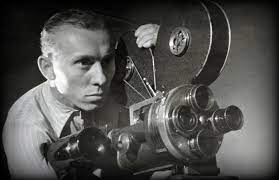
Karel Zeman died in 1989, several months before the Velvet Revolution, which saw the communist regime in Czechoslovakia stand down and democracy return. It was sad that Zeman didn’t live to see the Iron Curtain come down because he would have been among the first to show his movies to a whole new generation. Called the “Czech George Méliès” by critics, Zeman saw the Frenchman, a pioneer of cinema in the 1900s, as his biggest influence. But whereasMéliès is part of film history textbooks, Zeman is a footnote despite his body of work being one of the most impressive in the history of animation.

Zeman was born in 1910 and moved to France to work in advertising in the 1920s and 30s. There, he began using animation before returning home in 1936, three years before all of Czechoslovakia was annexed by Nazi Germany, and would import his techniques for local ads. While the war was happening, Zeman met film director Elmar Klos and hired him to work in his studio in the city of Zlin. Hermína Týrlová, who is considered “the mother of Czech animation,” worked with Zeman on her short children’s films before Zeman became head of his own production company.

In 1952, Zeman would produce his first full-length feature, The Treasure of Bird Island. Based on a Persian fairy tale, he would begin his standout animation by combining two and three-dimensional drawings, including puppetry, to construct an orthodox fix that advanced what an animated film could be. His second full-length feature would start the string of work which is known as Zemanesque in his home country. Starting with Journey to the Beginning of Time, Zeman mixed animation with live-action, filming real actors on-set or on location as part of the story. In Journey, a group of kids finds themselves rowing down a river going back to prehistoric times and confronting extinct raptors. Steven Spielberg cited the film as an influence in making Jurassic Park. 

Zeman didn’t have the big budgets that Hollywood films did. He would construct his movies with an original aesthetic made from scratch. Colors, sounds, and visual gags play up to Zamel’s chaos where every shot is a surprise. He would meticulously draw up every set design, something totally different to invent another universe that had never been seen before on the screen. His follow-up, Invention for Destruction, is based on a Jules Verne novel that combines science fiction with the pirating genre. It is not a direct adaptation of the novel and Zeman provides a love letter of inspiration from George Méliès. Carefully looking at the original designs from Verne’s novel and vintage illustrations, Zeman keeps the visual style as faithful as possible while using every trick in the book for consistency. 

The Fabulous Baron Munchausen was next, playing an important role in the career of director Terry Gillam, who also started out with animation. (Gilliam would direct his own version of Baron Munchausen which ended up being a notorious flop and filled with production problems.) Zeman’s version feels like an acid trip with all the characters of different eras crossing paths at once. It does not stop altering itself with the pastel colors, either being changed by the scenes or simply melting with each other. The centuries of history are blended into one large anachronist story, fitting for the character of Baron Munchausen. His next film, A Jester’s Tale, took a slightly political tone as a satire set during the Thirty Years’ War with a tone for pacifism; The Stolen Airship is another Jules Verne adaptation shot mainly in black-and-white but did not have similar feedback as his previous films. 

1968 would be a tumultuous year for Czechoslovakia. The “Prague Spring” was crushed by the Soviets who opposed the country’s growing dissociation from communist rule and figures once part of the country’s arts and literature groups found themselves out of work and censored completely. Zeman avoided the purge, but after his 1970 film On the Comet, he was forced to scale back his projects thanks to tighter budgets and stricter script approval from the government. He went to do more traditional animation movies and TV shows, preferring cutout techniques over hand-drawn ones which were commonplace and were cheaper and faster to create. His last film, The Tale Of John And Mary, was released in 1980.

Zeman spent the last decade of his life unable to get any more of his scripts produced and was relegated to an ambassador of Czech film and animation. He was awarded the Order of the Republic by the Czech government and was allowed to travel abroad where his work was exposed to Tim Burton and Wes Anderson, both of whom had homages to Zeman in their own films. Only after Zeman died and Europe was unified with the end of communism were his films given a full retrospective by many filmgoers and critics. In the capital of Prague, a museum dedicated to Zeman’s work opened in 2012. He is, all these decades later, considered, without question, one of the greatest animators of all time.


Follow me on Twitter: @brian_cine (Cine-A-Man)
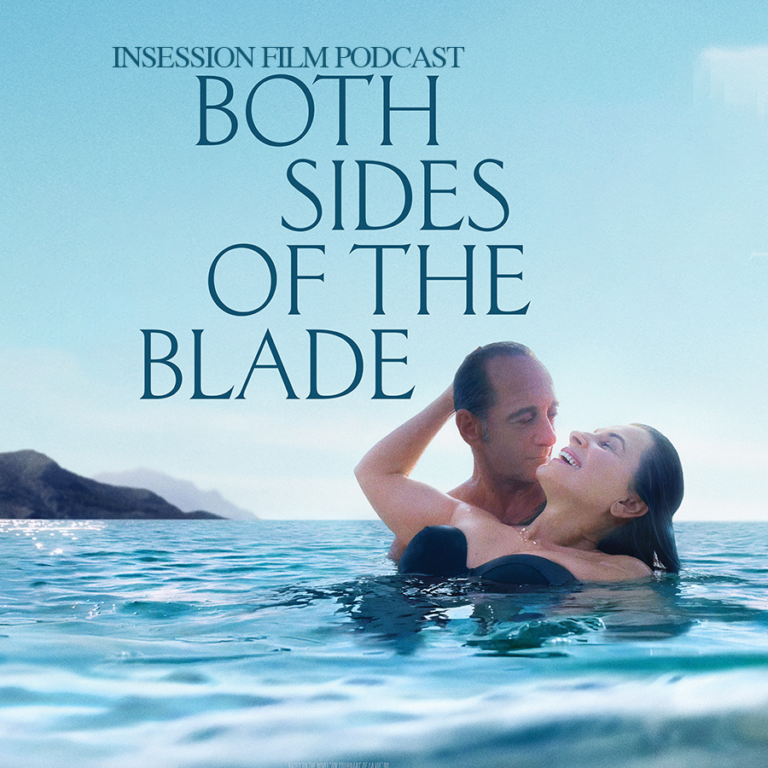
Podcast: Both Sides of the Blade / Ocean Waves – Episode 497

This week’s episode is brought to you by Athletic Greens. Get a FREE one year supply of Vitamin D and 5 travel packs today!

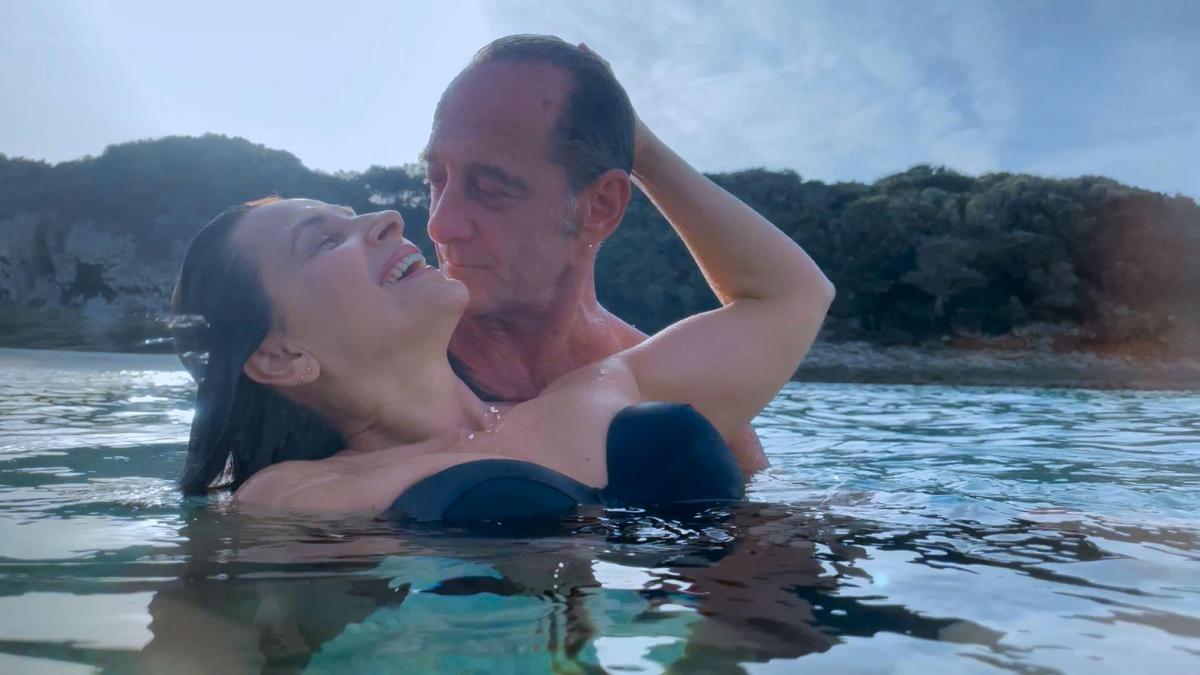
This week on the InSession Film Podcast, Ryan fills in for Brendan as we review Claire Denis’ new film Both Sides of the Blade and continue our Studio Ghibli Movie Series with the 1993 TV film Ocean Waves!

A big thanks to Ryan for filling in this week, especially since he’s a big Studio Ghibli fan and we’re talking about one of the lesser seen Ghibli films. Apologies to Ryan for that, but he was a wonderful co-host as he always is and we had a great time talking about the melodrama of these two movies. Both Sides of the Blade and Ocean Waves weirdly have a lot in common, and while we didn’t intentionally plan for that, it’s always fun when it works out that way.

On that note, check out this week’s show and let us know what you think in the comment section. Thanks for listening and for supporting the InSession Film Podcast!

– Movie Review: Both Sides of the Blade (7:39)
Director: Claire Denis
Writers: Claire Denis
Stars: Juliette Binoche, Vincent Lindon, Grégoire Colin

– Notes / Discussion (53:49)

This week for our break segment, we briefly talk about Taxi Driver and why it’s cool to say that it’s your favorite Martin Scorsese movie. We also discuss the new John Boyega movie Breaking and JD gives his thoughts on Uncharted after finally catching up with that disaster.

[divider]

RELATED: Listen to Episode 484 of the InSession Film Podcast where we discussed Top Gun: Maverick!

[divider]

– Studio Ghibli Movie Series: Ocean Waves (1:16:36)
Director: Tomomi Mochizuki
Writers: Kaori Nakamura
Stars: Nobuo Tobita, Toshihiko Seki, Yōko Sakamoto

Show Sponsor: First Time Watchers Podcast

– Music

Both Sides of the Blade – Tindersticks
Ocean Waves – Shigeru Nagata
The Return of the Eagle – Atli Örvarsson

Subscribe to our Podcasts RSS
Subscribe to our Podcasts on iTunes
Listen on Spotify
Listen on Stitcher
InSession Film Podcast – Episode 496

[divider]

Next week on the show:

Review: Three Thousand Years of Longing
Top 3: N/A
Studio Ghibli Movie Series: Pom Poko

[divider]

Help Support The InSession Film Podcast

If you want to help support us, there are several ways you can help us and we’d absolutely appreciate it. Every penny goes directly back into supporting the show and we are truly honored and grateful. Thanks for your support and for listening to the InSession Film Podcast!

VISIT OUR DONATE PAGE HERE

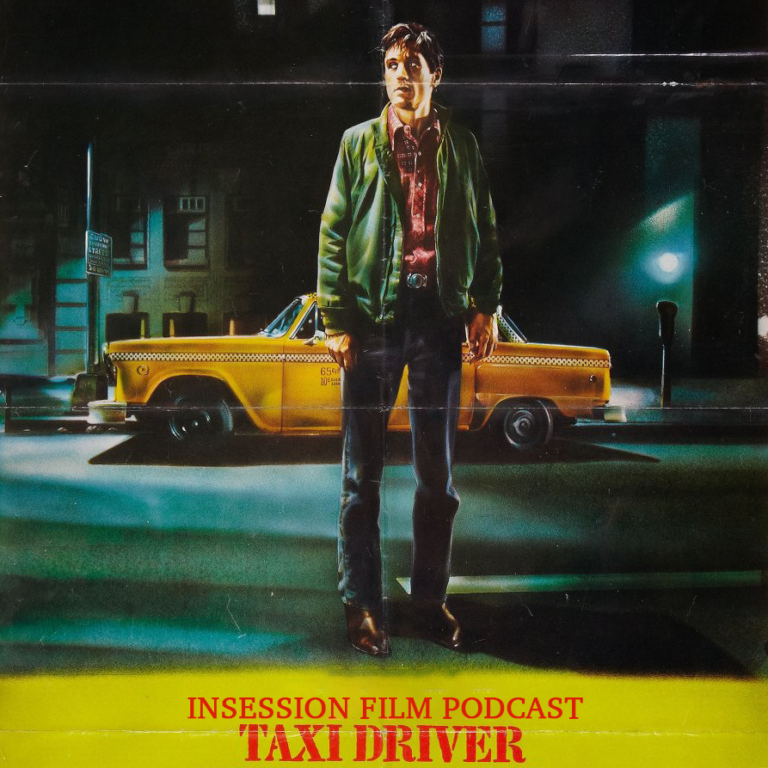
Podcast: Taxi Driver / The Last Waltz – Extra Film

This week on the Extra Film Podcast, Ryan and Sophia continue their Martin Scorsese Movie Series with his iconic 1976 film Taxi Driver and his underrated documentary The Last Waltz!

Taxi Driver is considered by many to be one of the best films ever made, and it’s obviously been analyzed to death, however we had a great time discussing it and why its impact is still being felt today. We all know the famous lines from this movie. We know its prominent images. Bernard Herrmann’s legendary score. There’s a reason people continue to talk about it and we did our best to live up to that standard. The Last Waltz, on the other hand, is less talked about Scorsese. But we make the argument that it’s actually one of his best movies.

On that note, check out this week’s show and let us know what you think in the comment section. Thanks for listening and for supporting the InSession Film Podcast!

– Movie Review: Taxi Driver (5:52)
Director: Martin Scorsese
Writers: Paul Schrader
Stars: Robert De Niro, Jodie Foster, Albert Brooks, Harvey Keitel

– Movie Review: The Last Waltz (1:08:34)
Director: Martin Scorsese
Stars: Rick Danko, Levon Helm, Garth Hudson

– Music

Taxi Driver – Bernard Herrmann
Helpless – The Band
The Return of the Eagle – Atli Örvarsson

Subscribe to our Podcasts RSS
Subscribe to our Podcasts on iTunes
Listen on Spotify
Listen on Stitcher
Extra Film – Taxi Driver / The Last Waltz

[divider]

To hear this Extra Film episode and everything else we do, download our apps on the Amazon Market for Android and the Podcast Source app on IOS devices. The mobile app covers all of our main shows, bonus podcasts and everything else relating to the InSession Film Podcast. Thanks for your wonderful support and for listening to our show. It means the world to us.

Women InSession: Wild About Kate Winslet (Part 2) – Episode 6

This week on Women InSession Podcast, Kristin Battestella, Zita Short and Amy Thomasson get together to talk about the latter years of Kate Winslet’s career! It hasn’t been a seamless journey, but she’s still doing some great work.

For reasons we get into during the discussion, Winslet’s career in the last decade or so has been a little up and down. She’s done more TV work and hasn’t seen the same prominence on the silver screen as she did in the early days. Regardless of how it went down, we talk about her recent career trajectory and why she’s still a great performer.

On that note, check out this week’s show and let us know what you think in the comment section. Thanks for listening and for supporting the InSession Film Podcast!

– Wild About Kate Winslet (Part 2)

– Music

The Return of the Eagle – Atli Örvarsson

Subscribe to our Podcasts RSS
Subscribe to our Podcasts on iTunes
Listen on Spotify
Listen on Stitcher
Women InSession – Titanic Retrospective

[divider]

To hear this Extra Film episode and everything else we do, download our apps on the Amazon Market for Android and the Podcast Source app on IOS devices. The mobile app covers all of our main shows, bonus podcasts and everything else relating to the InSession Film Podcast. Thanks for your wonderful support and for listening to our show. It means the world to us.

Criterion Collection Releases: September 2022

Le Corbeau (1943)

Henri-Georges Clouzot’s early noir piece was filmed under Nazi rule in France and was condemned right, left, and center for various reasons. After the country’s liberation, when Clouzot was banned from filmmaking for allegations of collaboration, the movie was given a second look and seen as a great film with the message of paranoia in a closed setting and the pain caused by those who name names in order to stay “safe.” It’s about the dangers of these poison pen letters that reveal corruption in all facets of life, setting the tone for his future masterpieces in The Wages of Fear and Diabolique. 


Blow Out (1981)

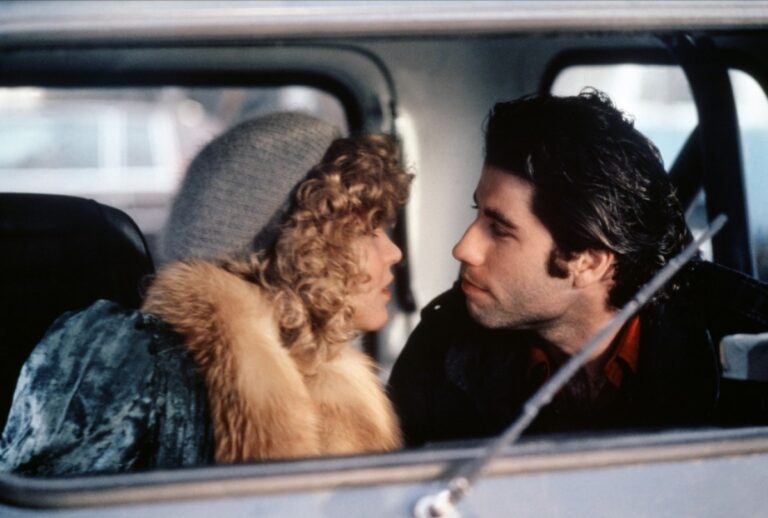
Also getting a re-release is Brian DePalma’s neo-noir within the post-production process of a sound engineer (John Travolta) who happens to hear proof of an assassination. Realizing the evidence he possesses, he and a witness (Nancy Allen) who is clearly in danger now must evade a hitman who looks to silence them both. Set in DePalma’s hometown of Philadelphia during the 4th of July celebrations, it’s an exhilarating cat-and-mouse chase that did not get attention upon its release and only decades later did its reputation grow.


Exotica (1994)

Atom Egoyan’s erotic drama features a variety of characters in a Toronto strip club seeking solace. A grieving father becomes obsessed with a stripper as the club’s emcee watches on in jealousy; the two have a deeper connection with him that is wrapped around the love triangle. Starring Bruce Greenwood, Elias Koteas, and Mia Kirshner; it is not a film about sex, but about the emotional impact, a setting provides with its cathartic assistance in healing trauma. It would make Egoyan a major international director leading up to his magnum opus, The Sweet Hereafter.


Take Out (2004)

Independent film master Sean Baker made his sophomore effort with Shih-Ching Tsou, who has gone on to be Baker’s producer in his subsequent films. It’s a striking piece of neorealism, following a Chinese immigrant living in New York who gets in trouble with the people who smuggled him here and must quickly collect the money he owes. On a shoestring budget, Baker and Tsou used non-professionals, a skeleton crew, and shot in an actual Chinese restaurant with small, digital cameras where real-life cooks were themselves illegal immigrants and Baker avoided capturing their identities. 


Sound Of Metal (2019)

Darius Marder’s directorial debut is a triumph with his Oscar-winning portrayal of a drummer (Riz Ahmed) who suddenly goes deaf and must adapt to a new life within a deaf community. It’s a harsh dose of the new reality he struggles with, but the movie fantastically captures the environment of being in a totally silent setting. Paul Raci is the leader of the community as a person who can speak but has lost hearing (he is a real-life CODA before that movie came out) and is so valuable in that role. Being an Amazon release, the streamer was bound to get a Criterion release from the start and it is here.


Martin Scorsese’s World Cinema Project No.4 

The next volume of films courtesy of Scorsese’s Film Foundation features six more international films that are getting a new breath of life for viewers. Two films from the 1930s: Argentina (Prisioneros de la Tierra), Hungary (Two Girls on the Street); one of India’s first post-independence (1947) films, Kalpana; and three 70s dramas originally thought as lost: Iran (Chess of the Wind), Cameroon (Muna moto), and Angola (Sambizanga). Once again, Scorsese puts out their discoveries that make cinema such a global asset. 

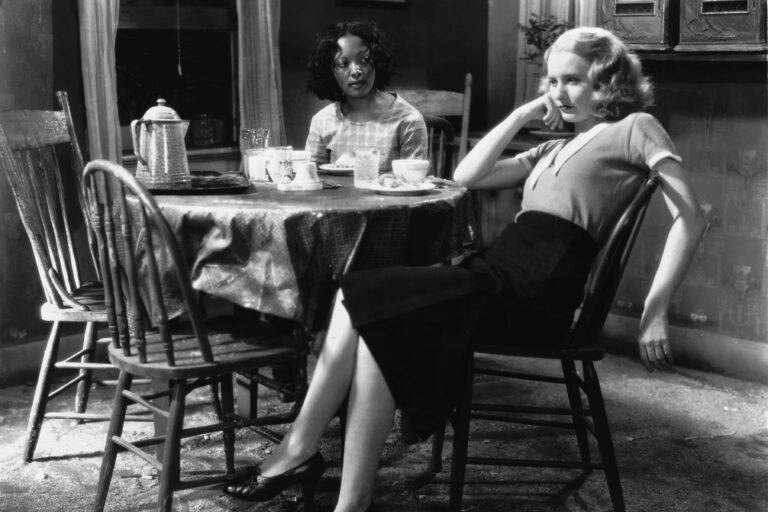
Prisioneros de la Tierra is considered the first great Argentinian film, but the surviving prints were found in Paris and Prague. It was given its rebirth in 2019, marking 80 years since its original release. Two Girls On The Street is a comedy by Andre De Toth, who would move to the United States and make a name in Hollywood with films like Pitfall, Last of the Comanches, and the successful 3D film from the 1950s, House of Wax. In Kalpana, writer/director/choreographer Uday Shankar made his only film with this fantasy-musical ballet that survived a fire in India’s National Film Archive Vault and was restored by Scorsese’s Film Foundation in 2010. 

Sambizanga was directed by one of the first female directors in Africa, Sarah Maldoror. It is a docudrama about the Angolan War of Independence (1961-74), which noted film historian Mark Cousins called one of the best films to ever come from the continent. Muna Moto is a village story about love prohibited due to dowry politics but does not stop the young man from kidnapping the woman he loves and fleeing traditions. Chess of the Wind is set around an aristocratic family disputing over the family jewels, but the film was briefly released before being ransacked by the Iranian Revolution in 1979; it was miraculously rediscovered in 2014, restored, and rereleased in 2020.


Follow me on Twitter: @brian_cine (Cine-A-Man)
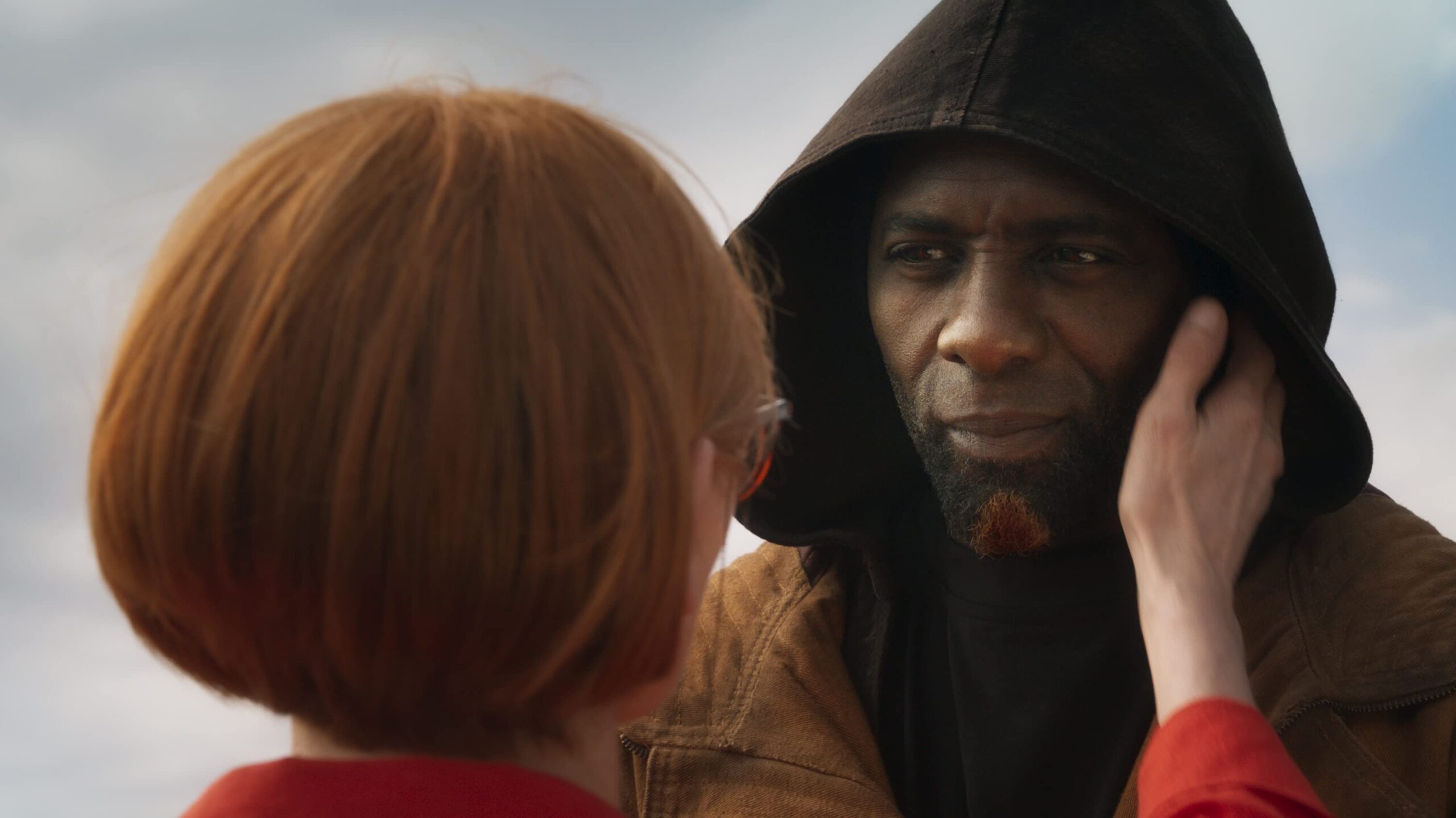
Movie Review: ‘Three Thousand Years of Longing’ Conjures Minimal Magic or Sparks of Romance


Director: George Miller

Writer: George Miller, Augusta Gore

Stars: Tilda Swinton, Idris Elba

Synopsis: A lonely scholar, on a trip to Istanbul, discovers a Djinn who offers her three wishes in exchange for his freedom.


Even though Three Thousand Years of Longing is yet another addition to George Miller’s eclectic filmography, it ends up being a disappointing affair, mainly due to the subpar writing and rushed pacing, causing the audience to lose the sense of connection needed to bask upon the romantic tales being told.

Seven years have passed since the 77-year-old Australian filmmaker, George Miller, graced the biggest theater screens in the world with the revolutionary and Oscar-winning sequel-reboot of a franchise that was left in the dust for many years, 2016’s Mad Max: Fury Road, aka. one of the best action movies of all time. That film was concocted via a molotov cocktail of pure adrenaline, heat, severity, and frenzy – the end product finalized as a riveting and feral experience that sparked each cinema goer’s mind with the possibilities of action filmmaking. Because of his masterful achievement in crafting such a remarkable and breathtaking feature, eyes have been on him to see what will be his next move. Then, of course, he announced a prequel to Fury Road, titled and centering on the character that Charlize Theron played, Imperator Furiosa. Yet, what has he been doing since? There has to be something else in the works. 

Indeed, this was the case. Miller had been working on another feature while he prepared to go back into the world of Mad Max with Furiosa, Three Thousand Years of Longing, based on the short story by A. S. Byatt, ‘The Djinn in the Nightingale’s Eye’. When the trailer was first released, it was sold it as a chaotic and hypnotizing love story between a djinn and a human. This can be described as Miller’s approach to a rom-com; it is him going into a more schizoid fantasy state that lurked in some of his past projects, like The Witches of Eastwick (1987) and his input in Twilight Zone: The Movie (1983). I admire him because, unless he’s making a sequel, Miller doesn’t make the same movie twice. Instead, he prefers to craft new stories to put the audience into a cinematic trance, so they can explore the vastness of the worlds he is curating. Having said this, it seems fitting that his latest centers on a story about storytelling – a narrative about narratology. 

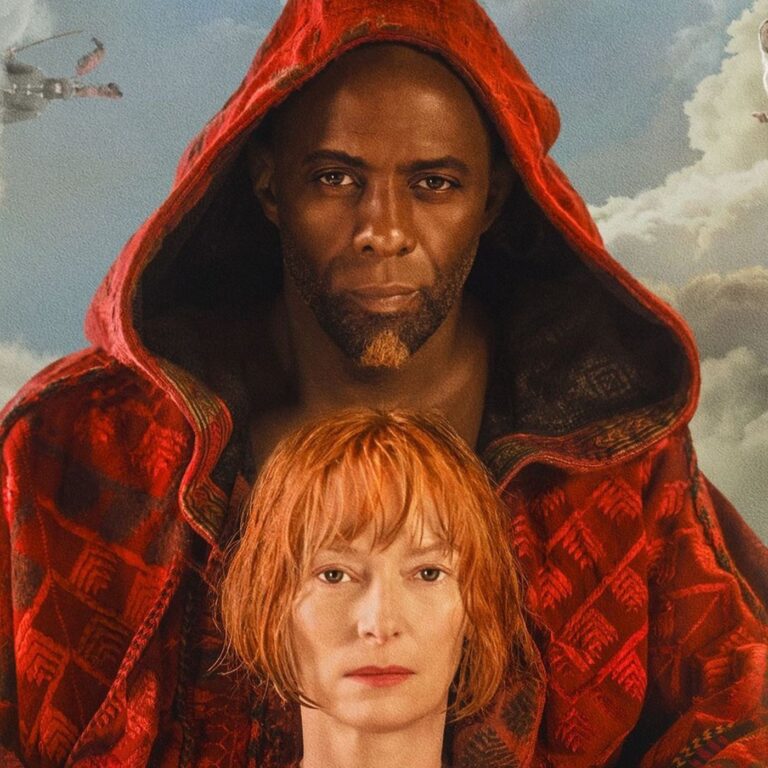
Three Thousand Years of Longing is another distinctive addition to his eclectic, mixed, weirdly fascinating filmography. Unfortunately, it leans more toward the misfire side of his selection rather than his triumphs, leaving a bitter aftertaste once the credits roll – a disappointing affair of fantasmical romance. The movie revolves around a London-based academic, Alithea Binnie (Tilda Swinton), who visits Istanbul to attend a conference, and along the way, goes to the city’s Grand Bazaar, one of the largest and oldest markets in the world. As she searches for possible trinkets to take with her, Alithea picks up a memento as a token from her time there. Once she cleans the object, a Djinn (Idris Elba) appears. He offers Alithea three wishes because he’s grateful for being freed from his imprisonment in the keepsake. Alithea knows a lot about storytelling and narratology, telling him that no story revolving around granting wishes won’t end up nicely; something could backfire.

Alithea is content with her life, so she chooses not to make any wishes. The Djinn reacts with intrigue yet confusion, so he tries to change her mind by telling stories about how he got imprisoned, his life story – containing CGI-heavy sequences meant to showcase the hefty directorial hand that Miller has, as well as his cinematic prowess. The stories he tells her are about traitorous kings, beautiful princesses, and the evil lurking in the sands. The tales represent the affinity between love and death, as well as drama and devotion. He ultimately reveals that the only way for him to be free is for her to make three wishes. Initially, the audience is hooked on what’s slowly being developed in the narrative, mainly due to Tilda Swinton and Idris Elba being great screen presences (particularly the former). However, as it continues, you begin to lose interest quickly because of its messy structure and hurried pacing, hence Three Thousand Years of Longing forfeiting its sense of connection and relatability needed to wallow upon these romantic stories being told. 

The stories told are supposed to be enthralling, engaging, and in some ways, unrealistically expressive, so the audience could be entertained while being swayed by the romantic flamboyance of these mystical tales. In Miller’s latest, the opposite happens, unfortunately. Not only are these stories lacking in any sense of heft, but they are covered in poor and unsightly visual effect graphics that lull the audience into a state of indifference when you are supposed to be charmed by it all. And you are, to some extent, because Elba and Swinton’s talent uplifts the wonky dialogue. Yet, at the same time, the pairing doesn’t have chemistry with each other, making their quickly-developing affinity, which revolves around a somewhat problematic master-slave dynamic, feel unbelievable. It also doesn’t help that the human character, Alithea, is an uninteresting lead since she doesn’t want anything in the world; she’s content with her life. Her depiction of reality feels so heightened that it is hard to connect with her on an emotional and humanistic level. 

The only aspect where you might connect with the character is her sense of neglect for loneliness. So, when you don’t believe, or care enough for, in the “pulsating” love being built around the tall tales and the one with Alithea and the Djinn, what’s left for the audience to be mesmerized by? Of course, it is a charming and occasionally lovable narrative, but it is the approach and structure where it falters the most. There’s little to no magic left in Three Thousand Years of Longing when it is all set and done. However, it is not an outright disaster; quite a few elements would entice cinemagoers, apart from the performances. George Miller makes a few interesting observations about the impact storytelling has on human evolution and how it helps us make sense of this strange world filled with constant wonders and immoralities. However, his most exciting ideas and observations are left in the dust, as they are not given the proper time to develop, or at least the characters in the film could have pondered the link between existence and storytelling in a far more intriguing fashion. 


Grade: C


Indecent Exposure: The History Of The National Legion Of Decency

In the 1930s, the Production Code led by Will Hays was formed as a board to certify films that were considered safe for distribution. That meant no overt sexual content, no obscene language, and no themes that could be considered offensive to the public. While it was implemented to be self-regulating for studios to follow, the influence of the Catholic Church in big cities loomed over and wanted to label each film as watchable to millions of followers. They opposed any federal censorship and instead chose to refer to their own rating system, decades before the MPAA was formed, to advertise for public awareness. So, in 1934, Archbishop John T. McNicholas from Cincinnati helped establish The Catholic Legion of Decency. 

Soon, it was renamed the National Legion of Decency as other denominations caught on and supported the idea. All readers were told to “remain away from all motion pictures except those which do not offend decency and Christian morality.” The initial rating system was a scale from A to C, with A being morally acceptable, B being acceptable but with objections on certain content, and C being morally unacceptable. Anything with a C, practicing Christians were directed to stay away from. Most films that got hit with a C usually came from abroad as European films were more open on certain subjects, which the Church opposed because there were redeeming features in the story.

The 1930s and 40s were a time for many American independent companies to produce exploitation works on taboo subjects including drug usage, child marriage, white slavery, and venereal diseases. While they were considered educational films and permitted to be released, the Legion of Decency gave the films a C rating because they were still immoral to watch and did not want to give their followers the idea to try them out. Major Hollywood releases were also listed with a C rating, including Howard Hughes’ The Outlaw, Frank Borzage’s Strange Cargo, and Greta Garbo’s final performance on film, Two-Faced Woman. Those films were later rerated B after the studios accommodated changes to Legion’s liking.  

Moving into the 1950s, more European films were flooding the market and more Hollywood films were putting in challenging content that tested the Legion. In 1957, Pope Pius XII spoke on the subject of evolving content in movies, stating that people should talk about promoting good films rather than simply condemning those that are morally unacceptable. In turn, the Legion of Decency revised its ratings. While B and C remained, the A rating was split into subcategories. A-I was listed for all audiences, equivalent to today’s G rating. A-II was listed as a film suitable for children but with some mature content, a PG/PG-13 rating today, while A-III was listed to be a film just for adults. Later, the A-IV rating was added for adults but content that stretched the boundaries of being morally acceptable.

Even with the expansion of these ratings in accommodating the growing diversity in content in movies, the Legion, along with the Hays Code, was becoming obsolete. More people, even those who described themselves as Catholics or with another denomination, were still heading to see films labeled as morally offensive. Even though the Legion’s reviewers would see a film multiple times, their reasons for giving a certain rating would see its critics call them out for being too conservative, or even too liberal in contradicting what they consider as being immoral. A schism was forming between traditionalists and moderates, as well as people outside of the Church who accepted secular values in mainstream cinema. By 1965, when the Second Vatican Council liberalized certain matters of the Catholic Church, the Legion lost all influence.

Restructured as the National Catholic Office for Motion Pictures, they would remain irrelevant as the scene shifted to the MPAA system that allowed almost everything to be displayed. In 1978, the old B and C rating would merge to become the current O rating (for morally offensive) and A-IV would be relabeled L for a limited adult audience in which its content is not immoral, but could be considered troublesome to certain viewers. In 1980, the Legion and its rebrand folded and its archives were picked up by the United States Conference of Catholic Bishops’ Office for Film and Broadcasting. Today, the rating system is still in effect, provided by the Catholic News Service which recently announced that they will cease operations at the end of this year.  

This means that at the end of this year, there will be no successor to continue the National Legion of Decency’s own rating system unless one is created. The relics of it have almost been long forgotten to the past of film history and censorship with the Hays Code. For those who never knew, as many fear the line separating church and state is eroding today, there was a time when the church did play an influential role in advising its members on what to see or not. They forced the studios to make adjustments that gave them their blessing for church members to watch their pictures. Imagine if the church had this kind of influence today on Hollywood studios? LGBT themes would be cut, any movie deemed celebrating drugs would be a no-go, and violence that is grotesquely graphic with no reason would be seen as poison to those watching it. But the era of decency, as it was thought of 90 years ago, is long dead.


Follow me on Twitter:  @brian_cine (Cine-A-Man)
Poll: What is Juliette Binoche’s best performance?

Juliette Binoche is one of the greats, it’s that simple. Born in Paris, the actress has scored accolades including an Academy Award, a BAFTA, a Silver Bear, a Cannes Film Festival Award, Volpi Cup, a César Award, and even a Tony nomination. Her filmography effortlessly alternates between art-house and mainstream, as well as French and English-speaking films. It’s not everyday we see an actor who can “do it all” as they say, but Juliette Binoche is one who can.

With that said, what do you think is Juliette Binoche’s best performance?


Podcast: Y tu mamá también / Porco Rosso – Episode 496

This week’s episode is brought to you by Top Gun: Maverick. Follow us on social media for your chance to win a digital copy of the film!

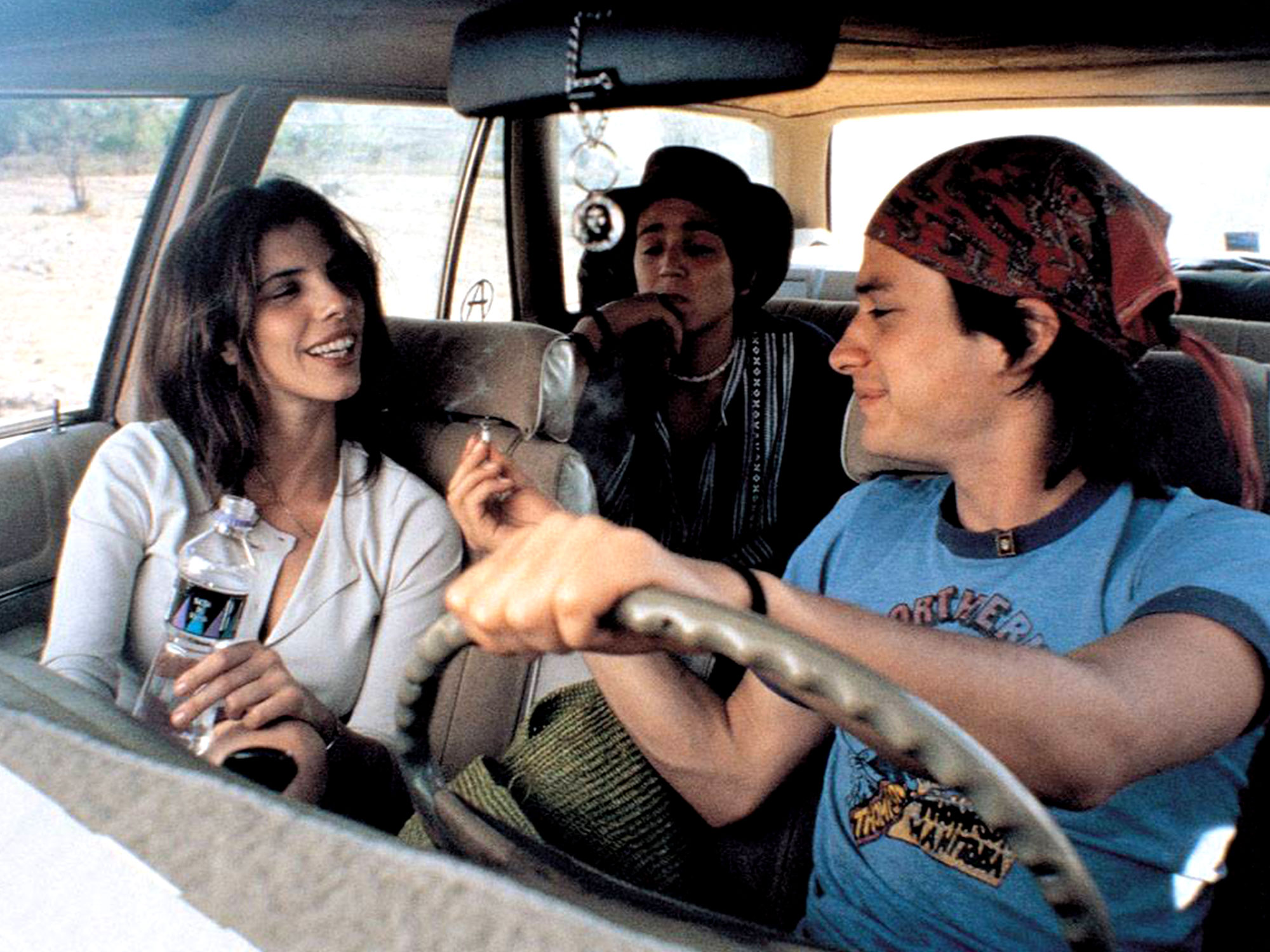
This week on the InSession Film Podcast, we prepare further for our 2002 Retrospective by discussing Alfonso Cuarón’s Y tu mamá también and continuing our Studio Ghibli Movie Series with Hayao Miyazaki’s 1992 film Porco Rosso!

This episode is exciting in a couple of different ways. For one, it’s always a great time when we get together to talk Alfonso Cuarón. His 2013 film Gravity came out during our first year and was one of our favorites of that year. Similarly, Roma was hailed at our 2018 InSession Film Awards and is arguably his best movie. During our 2006 retrospective, Children of Men was heavily discussed as it made both Brendan and JD’s Top 5. Both hosts claim that The Prisoner of Azkaban is one of the very best, if not *the* best, Harry Potter movie. The guy only knows how to made incredible cinema. And Y tu mamá también is no different. Then, as if that wasn’t fun enough, our review of Porco Rosso ended up being a really big surprise for both JD and Brendan. To say there is a lot of passion on this show is putting it mildly.

On that note, check out this week’s show and let us know what you think in the comment section. Thanks for listening and for supporting the InSession Film Podcast!

– Movie Review: Y tu mamá también (7:39)
Director: Alfonso Cuarón
Writers: Alfonso Cuarón, Carlos Cuarón
Stars: Maribel Verdú, Gael García Bernal, Diego Luna

– Notes / Discussion (53:49)

This week for our break segment, we talk briefly about Martin Scorsese and the beginning of the new series about him on Extra Film. We also talk about a point that Ryan and Sophia made about him in regards to Marvel and the discourse we’ve seen the last few years.

[divider]

RELATED: Listen to Episode 484 of the InSession Film Podcast where we discussed Top Gun: Maverick!

[divider]

– Studio Ghibli Movie Series: Porco Rosso (1:16:36)
Director: Hayao Miyazaki
Writers: Hayao Miyazaki
Stars: Shūichirō Moriyama, Tokiko Kato, Akemi Okamura, Akio Ōtsuka

Show Sponsor: First Time Watchers Podcast

– Music

Si No Te Hubieras Ido con letras – Marco Antonio Solis
Porco Rosso – Joe Hisaishi
The Return of the Eagle – Atli Örvarsson

Subscribe to our Podcasts RSS
Subscribe to our Podcasts on iTunes
Listen on Spotify
Listen on Stitcher
InSession Film Podcast – Episode 495

[divider]

Next week on the show:

Review: Both Sides of the Blade
Top 3: N/A
Studio Ghibli Movie Series: Ocean Waves

[divider]

Help Support The InSession Film Podcast

If you want to help support us, there are several ways you can help us and we’d absolutely appreciate it. Every penny goes directly back into supporting the show and we are truly honored and grateful. Thanks for your support and for listening to the InSession Film Podcast!

VISIT OUR DONATE PAGE HERE

Ranking: Zita Short’s Top 10 Fantasy Films

George Miller fans across the nation have been eagerly anticipating the release of Three Thousand Years of Longing ever since it first premiered at the Cannes Film Festival. Miller has experimented with the conventions of the genre in the past and even adapted John Updike’s The Witches of Eastwick into a film. In anticipation of the release of Miller’s new opus, I felt that it would only be right to discuss a handful of classic entries in the genre.

10. The Tree of Life

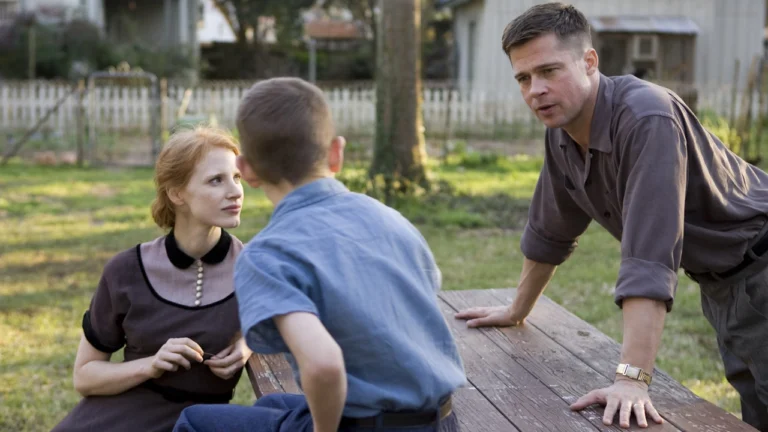
Terrence Malick’s early-2010s output polarised critics and audiences. Longtime fans of his lyrical, highly philosophical arthouse films were delighted by the fact that he had given up on traditional narrative filmmaking altogether. However, individuals who were less enamore of his trademark aesthetic were more inclined to mock the ever so slightly pretentious touches that could be found in his meticulously crafted tone poems. The Tree of Life is one of those Malick epics that requires its audience to completely give themselves over to his vision. If you’re willing to tolerate the utterly extraneous sequences set in the present day, you will be rewarded with compositions of extraordinary visual splendor and moving passages that capture the fraught bonds between different members of an ordinary Texan family. This is the sort of sprawling, ambitious masterwork that rarely receives funding from a major film studio and you’ve got to admire Malick for sticking to his guns.

9. Big

This outrageously funny body exchange comedy is primarily remembered as the blockbuster that cemented Tom Hanks’s status as America’s most beloved movie star. His zany, imaginative performance remains immensely likeable and Elizabeth Perkins turns in a layered, finely modulated turn as a depressed yuppie. Director Penny Marshall can also be credited with bringing a surprisingly sensitive touch to the picture. Big  is warm-hearted and sweet without ever losing its edge and it engages adult viewers on an intellectual level in a way that few family films do.

8. The Emperor’s New Groove

This tossed off Disney classic exceeded expectations upon first release. The film had been in development hell for seven years and went through several extensive rewrites before developing into the gloriously anarchic romp that children of the early 2000s came to know and love. Instead of coming across as a hastily put together mess, it emerged as a fast paced lark that gets away with avoiding the strictures of a traditional three act structure. It’s one of those near-flawless masterpieces that makes you wonder why every troubled production doesn’t result in a sensational finished product.

7. The Exterminating Angel

Luis Buñuel’s boundary pushing exercise in surrealism ushered in a new age of satires about the selfish behavior of aristocrats and served as a significant influence on future entries in the horror genre. The screenplay takes a fairly simple premise and uses it as a jumping off point to explore the privileges enjoyed by the wealthy and the brutality that they must exhibit in order to remain in a position of power. Gabriel Figueroa’s cinematography is hauntingly beautiful and Silvia Pinal’s odd performance has a highly disturbing effect. It can even claim to have inspired a highly successful opera. You can’t say that about most Mexican arthouse classics.

6. The Blood of a Poet

Jean Cocteau was never especially concerned with producing accessible art but The Blood of a Poet is slightly less impenetrable than the trippy, near-incomprehensible Orpheus. Everybody is aware of the iconography associated with the film, from the justly celebrated shot of a woman’s mouth speaking out of a man’s hand to the delirious vision of an artist falling into a door that suddenly transforms into a pool. These individual moments come together to produce a stunning fifty-two minute fever dream of a film. There’s a reason why he is consistently ranked among the most influential directors of all time.

5. The Purple Rose of Cairo

Mia Farrow delivers one of her most deeply affecting performances in this bittersweet romantic comedy about a Depression-era housewife who takes refuge from the mundanity of her day-to-day life in the wonderful world of cinema. The high concept premise ends up taking a backseat to the period-specific mise-en-scène and analysis of the role that entertainment plays in shaping the identity of middle-aged women. The screenplay expertly deconstructs the appeal of whimsical fantasies and benefits from the fact that it’s only eight-four-minutes long.

4. Peter Ibbetson

Peter Ibbetson is primarily distinguished by Charles Lang’s cinematography, which perfectly conjures up the dreamy, hallucinatory atmosphere that leaves audience members on edge. For most of its running time, this fanciful experiment plays around with several different tones and flip flops between weary romanticism and nihilistic despair. All of this tonal inconsistency eventually adds up to something brilliant, instead of devolving into madness. This is that rare chick flick that will appeal to viewers of all ages. It still pierces through the defences of cynical viewers who insist that realism should be valued above all else.

3. The Double Life of Véronique

The Double Life of Véronique deals with weighty themes but never feels heavy-handed in the manner of other projects that attempt to introduce poeticism into the cinema. This film is never pompous and features subtle, evocative homages to works that inspired it. Krzysztof Kieslowski deploys a surprisingly light directorial touch while weaving allusions to his previous films into the plot. It’s difficult to pin down exactly what Kieslowski is trying to get at, but this is one of those cases in which the journey is the destination.

2. Pandora and the Flying Dutchman

Pandora and the Flying Dutchman might be the most visually ravishing picture that Jack Cardiff ever worked on. That’s really saying something when you consider the fact that he applied his considerable skillset to The Red Shoes, Black Narcissus, and A Matter of Life and Death. He crafts unbelievably beautiful images that convey the full sweep of the melodramatic love story at the film’s center. It doesn’t hurt that the lovers are played by James Mason and Ava Gardner, who were both at the height of their comeliness in the early 1950s.

1. Portrait of Jennie

The troubled personal life of legendarily maniacal producer David O. Selznick has all but overshadowed his work within the film industry. He achieved great success with Gone with the Wind and Rebecca but his self destructive tendencies dragged him down and the projects that he produced during the latter half of his career are typically written off as acts of sheer folly. The media coverage of the conflict between Selznick and his collaborators ended up obscuring the fact that a hidden gem like Portrait of Jennie benefits from the fact that it seems to be at war with itself. Selznick’s vision for this film was clearly different than that of director William Dieterle and cinematographer Joseph H. August but they were able to create something that is more than the sum of its parts.

Movie Review: ‘Beast’ is Exactly What You Think It Is


Director: Baltasar Kormákur
Writers: Ryan Engle
Stars: Idris Elba, Iyana Halley, Leah Sava Jeffries, Sharlto Copley

Synopsis: A father and his two teenage daughters find themselves hunted by a massive rogue lion intent on proving that the Savanna has but one apex predator.


Sometimes, you get exactly what you ask for. The person vs animal subgenre has a storied history, but does not always result in exactly fine filmmaking. Much has been made of the best of these, in Jaws, in which the limitations created a work of brilliance. But this genre, with the likes of Grizzly, Rogue, Razorback, and Anaconda, does not quite conjure dreams of Oscar glory. And sure, sometimes it is fun to get surprised by a film that is more than the sum of its parts. But the latest in this vein, Beast, is certainly not that.

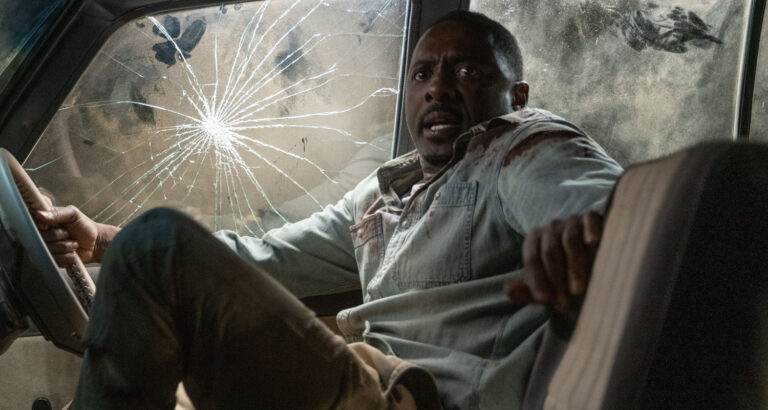
Now that may sound like an insult, but there is an inherent joy in receiving exactly what you are expecting at the movie theater. Beast follows Dr. Nate Samuels (Idris Elba), whose wife has recently died. Nate is attempting to reconnect with his teenage daughters, Mer (Iyana Halley) and Norah (Leah Jeffries) after this loss. He takes them to South Africa, where their mother is originally from. Through a series of adventures, a rogue lion attacks the family, along with Nate’s friend, Martin (an incredibly subdued Sharlto Copley). All of this is to say that, yes, Idris Elba fights a lion. And that is exactly the movie you get, for better or worse.

Much of the extraneous detail that surrounds this battle, frankly, does not work. The script, penned by Ryan Engle, is mostly a mess. Halley and Jeffries are both talented young actors, but they are hampered consistently by dialogue that feels forced at best. However, the chemistry between Elba and his on screen daughters carries the audience past this and their relationship is mostly believable. But does the plot of a rogue lion make any more sense than it would appear? Also no, but honestly, once the action picks up, none of that matters. The direction of these sequences by Baltasar Kormákur is certainly not the best you will see, but the special effects work in high speed headed by Lise-Maria Bothma is truly worth the price of admission. 

Earlier CGI work, which focuses on Martin being “hugged” by adult lions, feels iffy, particularly their work on the hair on the lion’s manes. But again, does that really matter when Idris Elba fights a lion?  Speaking of Elba, his physicality as an actor truly is what carries Beast. Because of his massive size, there are moments where you believe he can hold his own, at least long enough to save his daughters. Casting an average size man would immediately make an already fantastical moment even more unbelievable. Speaking of unbelievable, let’s return to that screenplay.

Your mileage may vary here, as this is certainly not a thinking person’s movie. You have to buy that this lion would want to take revenge on humans for killing his entire pride. This is the conceit, and if you can’t get on board, then Beast is just not for you. However, the last third of the movie will test even the biggest fans of silly survival movies. Without giving too much away, we have to accept that, despite being lost in the gigantic scope of South Africa, Dr. Nate and his kids will definitely find their way to where they need to be. Oh, and don’t worry, he also will quickly become an expert in tracking, creeping, and escaping every situation. Again, pretty expected, but be prepared for some giant sized leaps in logic to get to the final confrontation.

But you know what, after watching that confrontation? Worth it! Again, Elba is a fantastic physical actor, and the CGI mostly holds up in this elongated scene. It is especially impressive as it takes place in basically open land, without places to hide and cut away. Everything leading up to this is mostly filmed at night, and is much more forgiving of the special effects. This build lends itself to more positive feelings towards Beast as it allows us to look forward to what we know is coming. That is not to say they are not some mild surprises, emphasis on mild. The ins and outs of the character of Martin offer some fun, and it is a respite from the mostly unnecessary dream/memory visions of our protagonist’s wife. Many of these extensions reek of desperately trying to fill a blessedly short runtime, but they are truly unnecessary. 

Not every movie is going to change your life. Some of them just have movie stars fighting a creature they could not possibly fight in real life. But, in many of these cases, the movie is just fun. Will we remember Beast for more than a day after we see it? Probably not. But did I have a blast in the theater? Most definitely. When you hear “Idris Elba fights a lion” you already know if you want to see it. If that phrasing interests you at all, then you are going to have a fun 90 minutes. 

Grade: B-

Op-Ed: Getting Turned on at Home: An Argument for NC-17 Streaming

Since the MPA (Motion Picture Association, formerly MPAA, the extra A being for American, dropped in 2019 to be more international) was founded in 1968, the organization has worked to provide a clear guide to people looking to go to the movies. The ratings, G, PG, PG-13 (introduced in 1984), and R are commonplace at any urban, suburban, or rural movie house. However, the highest rating, NC-17 (until 1990 it was X), is incredibly rare. Most films that achieve this rating upon first viewing go back to the editing suite to shave, trim, and cut until they get to the R rating that will allow them to be in major theater chains.

The handful of films that were originally stamped NC-17 wouldn’t surprise anyone. The list contains  Casino, Pulp Fiction, and South Park: Bigger, Longer & Uncut to name a few. The list is also indicative of the MPA’s bias toward certain filmmakers and ideas. MPA certainly has their red pens poised for films that choose to tell a story outside of the heteronormative box. It’s telling that the only film directed by Mel Gibson to get the initial stamp of NC-17 is Braveheart, his first. His subsequent films The Passion of the Christ, Apocalypto, and Hacksaw Ridge, all just as violent, were passed with an R. I’d love to meet the rater who nodded with approval when a soldier in Hacksaw Ridge picks up the still writing torso of his fallen comrade to use as a shield, but balked at Chloë Sevigny’s character enjoying cunnilingus in Boys Don’t Cry (as related by filmmaker Kimberly Peirce in the film This Film is Not Yet Rated). The indies that have to recut are losing money, time, and momentum. The studios have the extra cash to protect their bottom line and will likely profit off the notoriety later. If they do accept the stamp of “disapproval” it will because they know they can make money from it.

In the infancy of the MPA, the ratings body bestowed an X rating (the precursor to the NC-17) on Midnight Cowboy. The film kept the rating and instead of boycotts, hysteria, or pandemonium, people lined up to see it (this saga is well told in Glenn Frankel’s terrific book, Shooting Midnight Cowboy). The audience wanted to taste the forbidden fruit. The MPA later expanded its guidelines and re-rated Midnight Cowboy as R, but the moment had changed how people viewed movies for adults and the staggeringly broad age range that makes up adults. It wasn’t until the middle of the ’70s that they realized the truly amazing power of the tween and teen demographic, but that’s a story for another article. The cultural shift of the time eventually settled into the audience’s comfort with the R rating.

While there have been several films since Midnight Cowboy to wear the NC-17, it’s incredibly rare that these films achieved any sort of financial success. It was with the advent of home video that people began to recognize these films. In the 2000s it even became en vogue to advertise unrated versions of the film that had more salacious scenes than the R rated version would allow. Though rental services like Blockbuster, would force an edited, R rated version in order to carry it on their shelves, there were other stores and of course just purchasing the film outright. Some NC-17 films have taken on a cult following since their release to keep them generating a small amount of income as the years go on. In every major city, there’s likely a showing of Showgirls at least once a year to a raucous crowd. David Cronenberg’s Crash, The Evil Dead, and Beyond the Valley of the Dolls all kept their rating and continue to live on in the cultural milieu. They get a certain notoriety and a certain buzz, which is why when it was announced that Netflix has a film on its slate for fall release which accepted an NC-17 rating, it was big news.

Netflix is one of the only streaming services that is purely a streaming service that occasionally exhibits in a theater. They don’t have a successful cell phone business or a chain of grocery stores, they’re just creating and exhibiting episodic and feature entertainment. So, why don’t they do this more often? Why don’t they delve more deeply into more mature filmmaking? Premium cable networks and other streamers have been pushing the boundaries of taste and ideas toward simulated sex in episodic television for decades. The creators of Game of Thrones even coined the term sexposition, which is when they wanted viewers to pay attention to the complicated political dealings they’d have characters having sex, or at least in a state of undress, while explaining it. There isn’t so stark (pun absolutely intended) a difference between Game of Thrones and an NC-17 film.

An NC-17 is most often given for brutal violence and explicit sexuality. Though, that kind of sexuality and brutal violence means that the film will be in a niche subgenre and appeal to specific filmgoers rather than a wider audience. In other words, an NC-17 film is likely to be a downer. It’s the rare NC-17 that has a happy, loving couple engaging in sex or people commiting violence for the “right” reason. The rating is associated with seediness, not only in the fact that there is a strict restriction on the age at which one can see it, but also because they are telling stories that go against the grain and explore the darker sides of the psyche. One notable exception, and one commercially successful film with the rating, is Blue is the Warmest Color. The film is a love story, and while it has its ups and downs, the two women at the center do have a relationship based on normative behavior. While I haven’t yet seen Blonde, the film Netflix will be releasing later this year, the story is a familiar enough one to know that it’s not going to be an uplifting portrait of a young starlet.

If successful, though, Netflix should seize this opportunity. It should seek out films like Blonde, films not afraid to explore sexuality and the human body. It should be an opportunity to move away from the downers, too. It should be an opportunity to elevate the sex comedy. Bring the sex comedy away from being exploitative of women and into the burgeoning world of enthusiastic consent, ethical non-monogamy, and polyamory. Romantic comedies, romantic dramas, erotic thrillers, the potential for expansion and growth (again, pun absolutely intended) is endless. These films don’t have to shame, or even Shame a beautiful downer of an NC-17, they can be the unshameful guilty pleasures. They can be something to turn on (yep, still intended) when the kids go to bed and for people to whisper about at the water cooler. And, for goodness sake, they can be a way for a woman to have a believable orgasm in a heterosexual love scene on screen!

The other issue with most NC-17 films is that they are overwhelmingly within the male gaze and, likely, with a male audience in mind. Many of the stories are exploitative and destructive to the women on screen. I am excited about Blonde, the filmmakers and actors are terrific, but it is still a woman’s story told by men. To go back to Blue is the Warmest Color, it is a film about two women falling in love, engaging in sex, but it is very obviously made by a man and, if we’re honest, made for men to watch. If Netflix does make this shift, if it does embrace, or at least does not shy away from, the NC-17, they need to broaden their minds of whose ideas they accept, whose stories they want to support.

The NC-17 rating is tailor made for home viewing. No one will look at you when you buy the ticket, no one will see you walk into that theater, no one else has to know. It would be nice to live in a society that doesn’t get so squeamish or at least associate such deep shame to someone else’s entertainment choice. With a streamer embracing mature content, as most already have with their episodic offerings, we can feel at ease with sitting down on the couch and settling in. We can have our hearts race and our mouths get dry while also enjoying a well told and well shot story. These things don’t have to be mutually exclusive. 

Podcast: James Cameron Movie Series

There have been many Movies Series on the Main Show and Extra Film but none have been as wildly fascinating as what Ryan and Jay uncovered during the James Cameron Movie Series. For context, Ryan is on the record as stating that Cameron is one of the worst directors of all time, with most of his films rubbing him the wrong way. Jay on the other hand likes Cameron’s work but isn’t over the moon about it as many others are. So in an exercise of growth and maturity, as well as to prepare for the latest Avatar film hitting theaters in 2022, the boys take an objective look at the man who claimed he was “the king of the world.” The results in these episodes were shocking and massively entertaining. You aren’t want to miss these.

The Terminator (Revisited), 1984

Listen to our review below as heard on Extra Film.

Aliens (Revisited), 1986

Listen to our review below as heard on Extra Film.

The Abyss / Terminator 2: Judgment Day, 1989/1991

Listen to our review below as heard on Extra Film.

True Lies 1994

Listen to our review below as heard on Extra Film.

Titanic / Avatar, 1997/2009

Listen to our review below as heard on Extra Film.

Podcast: Mean Streets / Official Competition – Extra Film

This week on the Extra Film Podcast, Ryan and guest host Sophia Ciminello (from the Oscar Wild Podcast) begin their Martin Scorsese Movie Series with his 1973 film Mean Streets and they also discuss the Spanish comedy Official Competition!

James Cameron was a lot of fun, but it’s now time to move onto the next series and boy this one will be a doozy. Scorsese is, of course, one of cinema’s most prolific filmmakers and a favorite of ours as well. There’s no denying his craft and prowess, so this will be as challenging as it is exciting. And while Jay is out on father duty, we couldn’t be more honored to have Sophia step in his place. She’s a wonderful host on her own podcast, and moved in seamlessly as Ryan’s partner in crime on this episode.

On that note, check out this week’s show and let us know what you think in the comment section. Thanks for listening and for supporting the InSession Film Podcast!

– Movie Review: Mean Streets (6:45)
Director: Martin Scorsese
Writers: Martin Scorsese, Mardik Martin
Stars: Harvey Keitel, Robert De Niro, David Proval

– Movie Review: Official Competition (1:28:43)
Director: JGastón Duprat, Mariano Cohn
Writers: Mariano Cohn, Andrés Duprat, Gastón Duprat
Stars: Penélope Cruz, Antonio Banderas, Oscar Martínez

– Music

Jumpin’ Jack Flash – The Rolling Stones
The Rich and Poor – Keith Jarrett
The Return of the Eagle – Atli Örvarsson

Subscribe to our Podcasts RSS
Subscribe to our Podcasts on iTunes
Listen on Spotify
Listen on Stitcher
Extra Film – Mean Streets / Official Competition

[divider]

To hear this Extra Film episode and everything else we do, download our apps on the Amazon Market for Android and the Podcast Source app on IOS devices. The mobile app covers all of our main shows, bonus podcasts and everything else relating to the InSession Film Podcast. Thanks for your wonderful support and for listening to our show. It means the world to us.

Women InSession: Wild About Kate Winslet (Part 1) – Episode 5

This week on Women InSession Podcast, Kristin Battestella and Amy Thomasson get together to talk about the early years of Kate Winslet and the magnetism she brought to screen at the beginning of her career!

Kate Winslet is one of the most fascinating actresses we’ve seen over the years. She has an eclectic body of work, but regardless of the movie, she demands the screen. Her beauty and demeanor have always rendered a captivating screen presence. She’s also not afraid to be exposed in front of the camera, so it’s impossible to not talk about her and the sex that accompanies many of her films. The girls talk about that and much more in this conversation.

On that note, check out this week’s show and let us know what you think in the comment section. Thanks for listening and for supporting the InSession Film Podcast!

– Wild About Kate Winslet (Part 1)

– Music

The Return of the Eagle – Atli Örvarsson

Subscribe to our Podcasts RSS
Subscribe to our Podcasts on iTunes
Listen on Spotify
Listen on Stitcher
Women InSession – Titanic Retrospective

[divider]

To hear this Extra Film episode and everything else we do, download our apps on the Amazon Market for Android and the Podcast Source app on IOS devices. The mobile app covers all of our main shows, bonus podcasts and everything else relating to the InSession Film Podcast. Thanks for your wonderful support and for listening to our show. It means the world to us.

Poll: What is your favorite Wolfgang Petersen film?

Sometimes we sadly don’t give enough credit to filmmakers until they’re gone. Earlier this week we lost the German born Wolfgang Petersen, and looking at his rather brief filmography, it’s immediately clear we haven’t been talking about him enough. Nominated for two Oscars, Petersen as an action director was one of the most consistent, particularly in the 80’s and 90’s. Many site Oscar nominated Das Boot as his best work, yet most millennials are likely still seeking therapy over Artax in The NeverEnding Story, and even Outbreak has become frightfully ahead of its time now.

Long story short, we lost someone who should be talked about as one of the greats, so let’s celebrate his filmography this week. What is your favorite Wolfgang Petersen film?


Football Is Life: 5 Films About The Beautiful Game

This autumn is the FIFA World Cup, usually a summer event that would take place later in the year with the venue being in Qatar. While it is a desert nation built on sun and sand, soccer does not need to be played in a certain type of place. It is played in the cold and indoors, the wet, at high altitudes, and within terrain that has a flat surface. Every four years, the world’s best countries (except the Italians recently, for whatever reason) get together to fight for the world championship. As we get close to being soccer fans temporarily out of national pride, here are some movies that stir up these passions from all over.


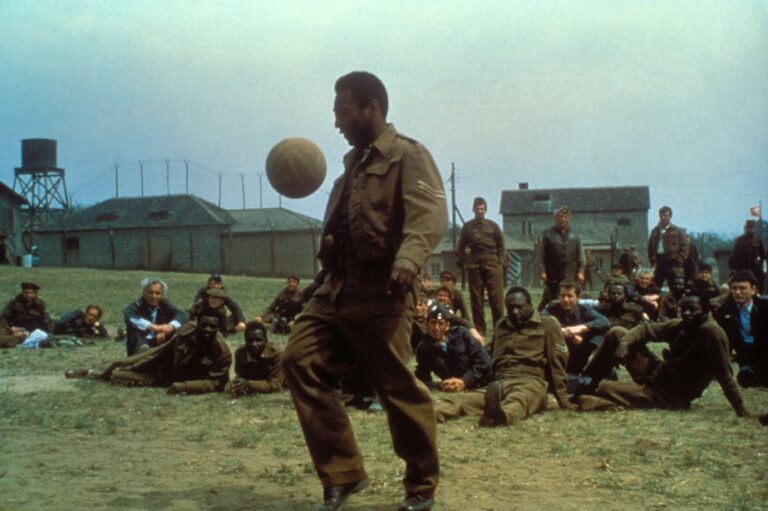
Escape To Victory (1981)

Loosely based on the fictitious “Death Match” story in Ukraine, John Huston directed Sylvester Stallone, Max von Sydow, Michael Caine, and a group of former professional footballers in a tale of survival between the Allies POWs versus the German officers. Pele, Bobby Moore, Osvaldo Ardiles, and other former veteran stars came out in various roles, but most importantly, to actually show real soccer instead of faking it. The film itself is a remake of the Hungarian drama Two Half Times In Hell which has its own spin on the story, one that is a repeated myth of what really happened yet remains part of soccer folklore.


Fever Pitch (1997)

There is the Farrelly Brothers version regarding the Boston Red Sox, but screw that, the original version starring Colin Firth is a lot better. Based on Nick Hornby’s memoir about being a lifelong fan of soccer club Arsenal, he creates a story about a passionate Arsenal fan and school teacher who balances his fandom and his new romance with another teacher. Set prior to the formation of the Premier League, it is a piece of soccer fandom from another era weaved in with a romantic comedy on showing passion with your partner as much as a whole squad of men. 


One Night In Turin (2010)

If you want to know what heartbreak in soccer feels like, look no further than this moment-in-time narrative following the England national squad during the 1990 World Cup semifinals. (Or, you can watch the replay of the 2020 Euro finals with England, but that’s the Euros, this is the World Cup.) The socio-political climate in England and their opponent, West Germany, is apparent and the footage is archival, coupled with Gary Oldman’s narration. No interviews, just the action as it happened. All of the key figures in this story are neither given support nor made to be villains in James Erskine’s gripping documentary.


Next Goal Wins (2014)

Yes, there is the anticipated feature from Taika Waititi starring Michael Fassbinder and Elizabeth Ross which is now slated to come out next year, but the original documentary has the story behind the upcoming film. Thomas Rongen, who had a successful playing and coaching career up to 2011, was hired to take up the American Samoa squad, a team at the bottom of the barrel in teams’ global rankings. A decade earlier, they lost 31-0 in a World Cup qualifier; that is not a typo, that was the score. The documentary captures the team’s resilience in the face of defeats to keep playing as Rongen seeks to lead the major underdogs all the way in qualifying for the World Cup.


Diego Maradona (2019)

After winning the Oscar for his documentary Amy, director Asif Kapadia went after one of the most beloved soccer players in the world and one of the most controversial ones, too. Maradona, who led Argentina to win the World Cup in 1986 and led the Italian club Napoli to multiple titles in Serie A, is shown through actual footage with a voiceover by the man himself and by those who knew him the best. Covering his time playing throughout the 1980s until his fall from grace due to drug abuse in the early 90s, Kapadia captures in a timeframe the genius, the greatness, and the religious furor Maradona was, and still is decades later.


Follow me on Twitter:  @brian_cine (Cine-A-Man)
Podcast: Signs / Kiki’s Delivery Service – Episode 495

This week’s episode is brought to you by Paws of Fury: The Legend of Hank. Follow us on social media for your chance to win a digital copy of the film!

This week on the InSession Film Podcast, we prep for our 2002 Retrospective by reviewing M. Night Shyamalan’s Signs and continue our Studio Ghibli Movie Series (along with guest Christian Eulinberg) as we discuss Kiki’s Delivery Service!

Huge thanks to Christian for joining us on the show once again. He’s a big Studio Ghibli fan and was eager to jump on the series with us. He especially loves Kiki’s Delivery Service and was the perfect guest for our conversation. Our discussion of Signs was equally rewarding. We’ve talked about the film on previous Top 3 segments, but have never had the opportunity to give it a full deep dive and we had a lot of fun revisiting the film.

On that note, check out this week’s show and let us know what you think in the comment section. Thanks for listening and for supporting the InSession Film Podcast!

– Movie Review: Signs (5:33)
Director: M. Night Shyamalan
Writers: M. Night Shyamalan
Stars: Mel Gibson, Joaquin Phoenix, Rory Culkin, Abigail Breslin

– Notes / Discussion (59:11)

This week for our break segment, we talk a little about James Cameron’s filmography and how much fun we had with Ryan and Jay’s series over the last month or so. We also rank his movies and briefly debate which one is his best.

[divider]

RELATED: Listen to Episode 484 of the InSession Film Podcast where we discussed Top Gun: Maverick!

[divider]

– Studio Ghibli Movie Series: Kiki’s Delivery Service (1:20:44)
Director: Hayao Miyazaki
Writers: Hayao Miyazaki
Stars: Minami Takayama, Rei Sakuma, Kappei Yamaguchi

Show Sponsor: First Time Watchers Podcast

– Music

In the Cornfield – James Newton Howard
Kiki’s Delivery Service – Joe Hisaishi
The Return of the Eagle – Atli Örvarsson

Subscribe to our Podcasts RSS
Subscribe to our Podcasts on iTunes
Listen on Spotify
Listen on Stitcher
InSession Film Podcast – Episode 495

[divider]

Next week on the show:

Review: Y tu mamá también
Top 3: N/A
Studio Ghibli Movie Series: Porco Rosso

[divider]

Help Support The InSession Film Podcast

If you want to help support us, there are several ways you can help us and we’d absolutely appreciate it. Every penny goes directly back into supporting the show and we are truly honored and grateful. Thanks for your support and for listening to the InSession Film Podcast!

VISIT OUR DONATE PAGE HERE

Movie Review: ‘Day Shift’ is Clunky and Creaky, but with B-Movie Charms


Director: J.J. Perry
Writers: Tyler Tice and Shay Hatten
Stars: Jamie Foxx, Dave Franco, Snoop Dogg

Synopsis: A hard-working, blue-collar dad who just wants to provide a good life for his quick-witted 8-year-old daughter. His mundane San Fernando Valley pool cleaning job is a front for his real source of income: hunting and killing vampires.


Most of Day Shift’s jokes don’t land, and it is creaky and clunky during its entire runtime. However, its B-movie charms, Robert Rodriguez-ish directorial decisions, and self-aware shoddiness make it a slightly entertaining feature. 

Vampires have been a significant part of society’s culture, whether through literature or film. At least in the latter case, they have been around since almost the beginning of it all; from the silent classics like Nosferatu (1922) and Vampyr (1932) to the 80s cult hits Near Dark and The Lost Boys (both released in 1987), these monstrous creatures have sparked the interest of many, and made their way onto the high standings in the horror genre. Although there have been many directions and styles in which the films are made about vampiric beings, I have always been interested in the ways in which Grindhouse pictures and B-movies implement them. Of course, some of the primary examples are Mario Bava’s revisionist Planet of the Vampires, Paul Morrissey’s Blood for Dracula, and Vampyros Lesbos, but the one that has caught people’s eyes the most is Robert Rodriguez’s From Dusk Till Dawn. And although I’m not the biggest fan of said film, I must admit that it inspired plenty of people to create more “haphazard” action vampire pictures. 

With this comes J.J. Perry’s Day Shift, brought to us by Netflix. Knowing that it comes from the streaming service powerhouse, although their subscriber numbers are plummeting by the millions in the past few months, it leaves me with some doubt if this will be any good. The reason why I have that sentiment in mind is that most of their Hollywood A-lister pictures (not helmed by a proper director or filmmaker) are disposable. These movies fit the streaming platform, but they don’t leave any spark on you while watching – making them highly forgettable. Nonetheless, there was some excitement on my part because it is an action vampire movie, which, if done correctly, could derive some entertainment. And Day Shift does have sparks of entertainment and some directorial techniques that remind me of some of the aforementioned films, but, in the end, these end up being hollow. It is a strident feature, with a primarily unfunny script, that even its B-movie trappings can’t elevate to higher ground. 

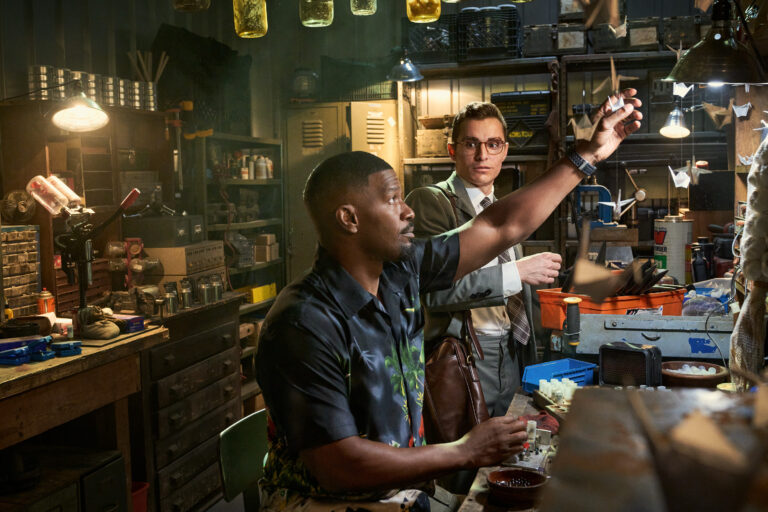
Day Shift is set in Los Angeles, where a vampire hunter named Bud Jablonski (Jamie Foxx) is working day and night killing creatures and snatching their fangs to sell them. Who would want those fangs? What is their use? None of that is explained thoroughly, but it sure makes Bud a lot of money, depending on the rarity and age of the vampire subspecies they are from. He has a daughter, Paige (Zion Broadnax), who means the world to him and his ex-wife, Jocelyn (Meagan Good). However, they are short on cash to pay for their kid’s tuition and braces. If Bud doesn’t find the money in seven days, her daughter and ex-wife will move to Florida to live with Paige’s grandma. With no other option, Bud reaches out to his buddy at the vampire union, Big John (Snoop Dogg), to get a couple of hit jobs to secure easy cash. Unfortunately, things start to go south once he crosses paths with Audrey (Karla Souza), a head vampire who plans to take over the valley.

J.J. Perry’s approach to Day Shift is mainly focused on presenting it as a B-movie from the late 90s and early 2000s, where the narrative doesn’t make much sense on its own, but its horror-action combination enthralls because of its self-aware shoddy charms. Some of its action sequences and other takes are inspired, style-wise, by the works of Robert Rodriguez; like Planet Terror, Desperado, and Machete, yet without the total collision of hyper-violent exaggeration and control of intensity. But, of course, J.J. Perry is no Rodriguez. Still, he tries his best to emulate that Grindhouse-esque vision and the directorial panderings of the filmmakers from that subsection in cinema’s history by also adding some dashes of Blaxploitation, primarily taking notice of Bill Gunn’s cult-classic Ganja & Hess and Spike Lee’s 2015 remake of said movie, Da Sweet Blood of Jesus. Although it contains those wonky charms to some extent, this high-priced gloss covers the entire picture due to its 100-million-dollar budget. There are two specific reasons why this holds the movie back from its engagement factor potential. 

First, that high-budgeted veneer causes those B-movie aesthetics to lose their griminess and rough-around-the-edges yet entertaining bonkers energy. The film begins with an action scene that leaves more to be desired, a self-aware untidy fight scene with terrible remarks and visual effects (which remain a big problem for its last act) that I actually enjoyed, even with its faults. I was going with it; however, as it transgresses, it keeps dwelling in a more generic, albeit nonsensical, side that slowly eliminates what I found interesting and amusing in the first place. It also makes me reminisce about the good old days of using practical effects as these creatures have no tactility. And to be completely honest, even though he is not the best rapper-turned-actor in the world, Day Shift would have benefited from more Snoop Dogg scenes. The movie would have been vastly improved if its central pairing was him and Jamie Foxx instead of adding Dave Franco, who is doing the same smart playing bumbly stupid performance as the latter’s companion. 

Second, despite that gloss, Day Shift doesn’t look like it is worth nearly that much. So, the question now stands – where did the money go? Its action sequences mostly revolve around small closed settings, with the exception of an unneeded car chase, and none of them have that moment in which the viewer says, “that looks expensive”. Those B-movies achieve more with less because of restraint, either by monetary reasons or producers knocking on their door – the legend Roger Corman comes to mind since he’s known for “holding back” filmmakers, so they go through the directing learning process. And Netflix keeps showering filmmakers with big budgets who haven’t made a film of that size, hurting their chances of success because they don’t know exactly what to do. Ridley Scott once stated that it is for the best of the filmmaker to start off with smaller budgets and keep crawling up the ladder, eventually reaching that triple-million digit, which J.J. Perry hasn’t done. Nonetheless, Day Shift arrives and quickly flies by your mind a couple of hours after watching. Is it a total disaster? No, there are plenty of entertaining scenes and somewhat funny jokes. However, it truly is disposable, like most of Netflix’s original movies. 

Grade: C


Movie Review: ‘They/Them’ Is a Profoundly Misguided Slasher Picture


Director: John Logan

Writer: John Logan

Stars: Kevin Bacon, Anna Chlumsky, Theo Germaine, Carrie Preston, and Quei Tann. 

Synopsis: A group of teenagers at an LGBTQ+ conversion camp endures unsettling psychological techniques while being stalked by a mysterious masked killer.


They/Them should be lauded for its inclusive cast and crew, predominantly comprised of gay, trans, and non-binary actors and directed by an openly gay filmmaker. But the praise pretty much stops here, as John Logan’s directorial debut is one of the most embarrassing films of the year. It desperately wants to be the LGBTQ+ version of classic slashers like Friday the 13th and Sleepaway Camp, and yet its slasher focus is a pure afterthought. Logan wrote Gladiator, The Aviator, and Hugo, which were all nominated for Academy Awards, and could’ve crafted a great slasher with They/Them. But since he ignores the slasher aspect for most of the film, the rest of it is a dull and thinly-developed character drama. 

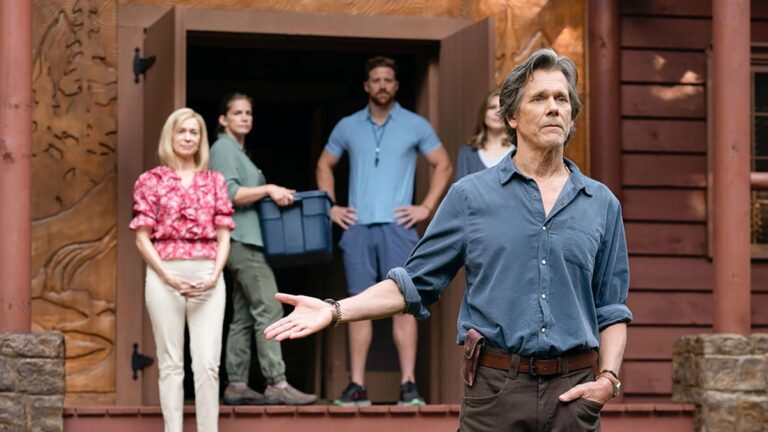
The movie instead follows a group of LGBTQ+ teens arriving at Whistler Camp, a conversion camp led by Owen Whistler (Kevin Bacon). Immediately, he tells them that he will not forcefully convert them if they do not want to be converted and understands that many of them are here because their parents forced them to. He also assures the teens that this is a safe and inclusive space, even if he consistently (and purposefully) misgenders Jordan (Theo Germaine), a non-binary teen who uses they/them pronouns. And the movie follows Jordan as its sole protagonist, who progressively uncovers the dark nature of the camp and sees something sinister lurking underneath Owen’s “friendly” and “inclusive” persona. Meanwhile, a serial killer is on the loose and slowly starts to kill the camp’s employees. But since the film never truly focuses on the killer (which may be the sole reason why people are watching this), the stakes feel low, and the rest of the movie is a slog to watch. 

Logan focuses on Owen’s psychological of the campers through micro-aggressions before he moves into pure physical torture through aversion therapy. The scene is difficult to watch, but when the campers suddenly break into a rendition of P!NK’s F**ing Perfect, for absolutely no apparent reason, one wonders what the movie actually wants to say about gender identity. And it becomes clear that Logan has nothing meaningful to say about any of the themes he presents and prefers to subject its characters to exploitative scenes of torture until the killer appears and starts his [off-screen] killing spree. 

That’s right, most of the film’s murders are done off-screen, despite its TV-MA rating. And when the main aspect of the movie fails, everything else will also inevitably fail. The LGBTQ+ characters are poorly written and developed. Jordan is the strongest character in terms of development because the audience spends the most time with them, but it still isn’t enough for us to care about anyone involved. We never feel like the characters are in imminent danger, since the movie never adopts the structure a slasher like this should have. One body gets discovered, which puts the camp on high alert, with the murderer taking down other people one by one until the stakes become real. But since the killer rarely appears in the movie, the emotional catharsis Logan attempts to build never occurs. 

That being said, the actors do a good job with their respective roles, particularly Bacon who is profoundly chilling as Whistler. Immediately, the audience knows that he cannot be trusted, and slowly reveals his persona to the campers through a riveting, scene-chewing performance. He also shares great chemistry with Anna Chlumsky, who plays the camp’s nurse, Molly, who helps Jordan attempt to leave with other campers. Germaine has the most gripping arc as Jordan, even if the character itself is mildly developed. They’re only more interesting than the other characters, because the audience spends the most time with Jordan. 

With poorly developed characters, a story that leads nowhere, and the main attraction of the film (a summer camp slasher) being a complete afterthought, They/Them fails at virtually every aspect of good filmmaking. And while Kevin Bacon, Anna Chlumsky, and Theo Germaine give fully committed performances, it isn’t enough to save the film as one of the biggest bores of 2022 and a pretty good candidate for the worst movie of the year. If it wasn’t for the performances mentioned above, it would likely sit at the top spot in my book. 


Grade: D-