


Home Blog Page 146

Movie Review (TIFF 2022): ‘One Fine Morning’ Delicately Drifts Amidst Love and Loss


Director: Mia Hansen-Løve

Writer: Mia Hansen-Løve

Stars: Léa Seydoux, Pascal Gregory, Melvil Poupaud

Synopsis: With a father suffering from neurodegenerative disease, a young woman lives with her eight-year-old daughter. While stuggling to secure a decent nursing home, she runs into a friend who although being in a relationship, embarks an affair.


Mia Hansen-Løve’s latest, the beautiful and melancholic One Fine Morning, breaks your heart, immediately picking it up and holding it together, due to its humanistic and delicate approach to the affinity and oppositeness between love and loss, with an outstanding Léa Seydoux right in the middle of it.

There are some filmmakers you tend to love more and more as you grow up because of your life experiences and understanding of the world. For me, that happened with Mia Hansen-Løve. How she delicately curates her films with personal touches and different philosophies on love, aging, and passion while not succumbing to the archetypes (no melodrama nor sappiness) most filmmakers apply to their features is unparalleled in today’s age. Because it relies on a more humanistic sensibility rather than an entirely fictitious one, it creates a more profound and effective experience for the viewer. Her airy and soft, yet grounded directorial hand presents the many facets of love within the complex circumstances that life throws at us in a beautiful and melancholic way, with a dreamy atmosphere. The manner in which she translates feelings with acute precision into a cinematic format is just magnetic, as presented in her previous work, Things to Come (2016) and Goodbye, First Love (2011).

This same element is present in master Éric Rohmer’s filmography, whom Hansen-Løve (among other filmmakers across the world like Joachim Trier, Ryuske Hamaguchi, and Hong Sang-soo) has been inspired by. Although her work is not to the same degree as some of Rohmer’s masterpieces (The Green Ray, Claire’s Knee, Pauline at the Beach), Mia is slowly making her way to be the best out of the bunch, inspired and encouraged by him. And this sentiment has increased since her latest feature and follow-up to last year’s richly metatextual Bergman Island, One Fine Morning, expands her repertoire into a stronger stature. This time around, Hansen-Løve reflects on adultery, mortality, and finding happiness amidst solemn despondency in a way that is reminiscent of Things to Come, yet with a rich and multi-layered vignette-esque mechanism. One Fine Morning may be as warm as the summer sun hitting the Parisian streets, but it has a melancholic dew layered across each segment. The film is a bittersweet slice of life from a brilliant filmmaker who is at her most comforting and heartwarming when she’s delivering these types of films – the ones that break your heart and later on pick it up and hold it back together again. 

Mia Hansen-Løve’s latest feature centers around Sandra Kinsler (Léa Seydoux), a widowed mother of an eight-year-old daughter who’s caring for her ailing and emotionally unavailable father, George (Pascal Gregory). His neurodegenerative disease is causing him to lose the capacity for his day-to-day life; hence Sandra visits him often to look after him. While looking for a safe place to look after him, Sandra runs into Clément (Melvil Poupaud), an old friend. Even though he is married and has a child of the same age as Sandra’s child, the two of them become lovers, indulging in an affair. Through the adulterous flares of passion, Sandra ponders if she will ever face the same fate as her father – whether her daughter will go through the same situations she is going through – as his memory slowly fades away. Clément reminds her about enjoying the small moments she can, which tends to the director’s light touch while dealing with complex emotions. It celebrates the little things that make life worth living and the unknowns of the heart and what it wants. 

One of the first scenes of the film features Sandra making her way to her father’s apartment, which is accompanied by a piano score resemblant to the one used in Ingmar Bergman’s feature, The Touch (1971). It is a coincidence that she uses such an instrumental motif, as her previous feature was set on the island of Fårö. With only a couple of minutes into the feature, you begin to think about what will be the tone and mood being presented throughout the rest of it. A resemblance with Hansen-Løve’s 2009 feature, the under-seen Father of My Children, arises from its visuals (how cinematographer Denis Lenoir shoots the Parisian streets) and the element of fragmented father figures, as well as its family dynamics. After further research, it seems that Mia works from personal experiences, as her father suffered a similar disease. It is even more devastating because she presents her own doubts and questions about existence, aging, and the effects of dealing with such situations. 

She uses Seydoux, who delivers an outstanding performance (which stands tall even amongst her impressive work in the past years), as a vessel to portray her sadness while adding occasional jolts of happiness to curve the narrative from a dramatic state to a humanistic account. Recent films have been about the deterioration of the mind with different styles and cinematic techniques (Florian Zeller’s The Father and Gaspar Noé’s Vortex). Still, Hansen-Løve’s composition is more vast and alluring, although slighter, than theirs because of its delicacy and warmth. In an interview with Deadline at this year’s Cannes Film Festival, Mia Hansen-Løve said that she “wrote this film (One Fine Morning) out of necessity”. She wanted to deal with the topics of both love and loss and the dread-inducing yet titillating connection and separation (oppositeness) between the two – figure out the meaning behind that and if there’s a “secret dialogue” that is developed through life’s harsh experiences. I think she presents these topics of the toll of time and how love evolves through it competently and in a humanistic fashion. 

Dismay is the leading player in all of these features that deal with dementia, and there’s no escaping that feeling. Of course, it will be heartbreaking seeing a loved one not recognize you anymore, but it all depends on how the film deals with the situation. Noé may have had a more brutal approach, and Zeller focused more on capturing that illness through the disorientation of a claustrophobic apartment.  However, One Fine Morning is different, without the use of theatrical approaches, monologues, or exaggerated emotions, and promotes a grounded approach to feel the punches in our chest as we relate to the situations more here than in a feature that dwells in the aforementioned dramatic techniques. It develops these feelings with a tactile hand that caresses your soul, making sure that it is true-to-life rather than proposing fictitious behavior. There will be occasions in which life will throw you some of the worst situations imaginable. When facing these harrowing experiences (like the death or deteriorating condition of a loved one), you feel in even more need of love and affection – finding ways to escape the heartache of watching someone suffer. 

Life’s opposite pulls bring a trajectory filled with ups and downs, where one might want to search for euphoria. For Sandra, it came with the reconnection with an old friend turned lover, but for others, it might be a bit harder to search for those mechanisms to grieve and lament our own or others’ future. This is what Hansen-Løve wants us, the audience, to reflect on afterward, the possibilities of what life may bring and how to deal with them. Its subplots about infidelity and guilt may leave a bit more to be desired since that theme is not well developed. Nonetheless, the rest excels with ease and intricacy. One Fine Morning doesn’t surpass last year’s Bergman Island, which I think is her best feature (tied with Goodbye, My First Love), but it offers the viewer a glimpse of another shade of her filmmaking oeuvre and panache. Hansen-Løve’s talents increase as she keeps concocting beautiful and honest tales of devotion, loss, and the turmoils behind them, becoming one of my favorite (and fascinating) filmmakers of this modern generation. 

Grade: A

 

Movie Review: ‘Hold Me Tight’, Where Nothing is as it Seems

[info[

Director: Mathieu Amalric

Writer: Mathieu Amalric

Stars: Vicky Krieps, Arieh Worthsalter, Anne-Sophie Bowen-Chatet, Sacha Ardilly

Synopsis: Clarisse is a woman on the run from her family for reasons that aren’t immediately clear. This portrait of a woman in crisis alternates between Clarisse’s adventures on the road and scenes of her abandoned husband Marc as he struggles to take care of their children at home.


At dawn, Clarisse (Vicky Krieps, showcasing why she is one of today’s greatest actors) gets ready to leave behind her husband Marc (Arieh Worthsalter) and two children (Anne-Sophie Bowen-Chatet, Sacha Ardilly). She prepares her scant belongings, takes final mental pictures of the faces of her family, plays one last note of the piano that she will never hear again and looks around the home that will continue to nourish without her presence and love. While sad, there is a certain optimism and excitement in her face.

In ‘Hold Me Tight’, the sixth directorial effort of French actor Mathieu Amalric, mystery and uncertainty accompany every piece of the film, creating a puzzle that slowly evolves into an emotional silhouette of loss, grief, and love. While it starts with an apparent act of treason and crisis, it slowly shows its true colors and proves that precisely the complete opposite feelings inspire Clarisse’s actions. This clarity, presented in the middle, completely transforms the story, Clarisse’s emotional stability and the family she quit in such an eager way. The discovery of this ulterior motive is the guttural punch of the film, for what could have happened that could make Clarisse such an empathetic figure precisely because of her decision to abandon her loving family?

The script, written by the director himself and based on the play “Je reviens de loin” by Claudine Galea, is both an enigma and an ode to love. Built in a playful, frenzied way, it offers confusion as well as clarity, joy as well as sadness, understanding of its protagonist as well as harsh questionings that eventually evolve to sympathy. As it slowly peels its true story – the big mystery that would make sense of Clarisse’s actions – everything that happens on screen acquires a new meaning, too profound and overwhelming to remain indifferent. Hold Me Tight may be the most emotionally draining, and yet, loving film of 2022. 

Using a non-linear narrative, the film takes place more in the head of Clarisse than in the disenchanting truth of real life. Clarisse carries on with her existence imagining her family in their routine, first struggling without her and then getting used to her absence, her daughter Lucie mastering her piano and becoming an expert, and her son Paul going through his rebellious period. She even has conversations with Marc, showing that her desire and love are as profound and alive as the day they met. In her mind, Clarisse finds solace, a threat of oblivion and the strength that allows her to carry on.

This film is deeply dependent on all its pieces working perfectly, each one having its moment of glory organically and discreetly within the story. Amalric and his team treat this story with such precision that the patience with which it was created is tangible. The editing by François Gedigier and the sound mixing by Stéphane Thiébaut are vital for Clarisse’s imagination to come to life. The film goes to the past, jumps to the future, takes place in reality and the imagination, with each moment clear and distinguishable from the other. Considering that the film unravels its essence throughout sequences of dreams, daydreaming, memories, and facts; it is an editing miracle that everything is understandable, coherent, and more importantly, emotionally affecting. For its part, constant sounds and conversations conquer the ears as independent images fill the screen. In this film, the sound is as vital as the images. Even the house where the majority of the story takes place is filled with clues and memories of a real family that evolves as the days, months and years pass. Each detail is gently taken care of.

Hold Me Tight is a gentle and heartbreaking story about love and moving on. Using techniques and narrative tools that remind of Eternal Sunshine of the Spotless Mind and I’m Thinking of Ending Things, the story mostly takes place inside the mind of an unstable woman that yet has never been as awake and conscious as she is at present. Once the film uncovers what it really is, its majesty and emotional relevance gives a new meaning to Clarisse’s story and her monumental decision to leave.


Grade: A


Movie Review (TIFF 2022): ‘Godland’ is Brutal and Unforgiving


Director: Hlynur Pálmason

Writer: Hlynur Pálmason

Stars: Ingvar Sigurdsson, Friðrik Friðriksson, Ísar Svan Gautason

Synopsis: In the late 19th century, a young Danish priest travels to a remote part of Iceland to build a church and photograph its people. But the deeper he goes into the unforgiving landscape, the more he strays from his purpose, his mission and morality.


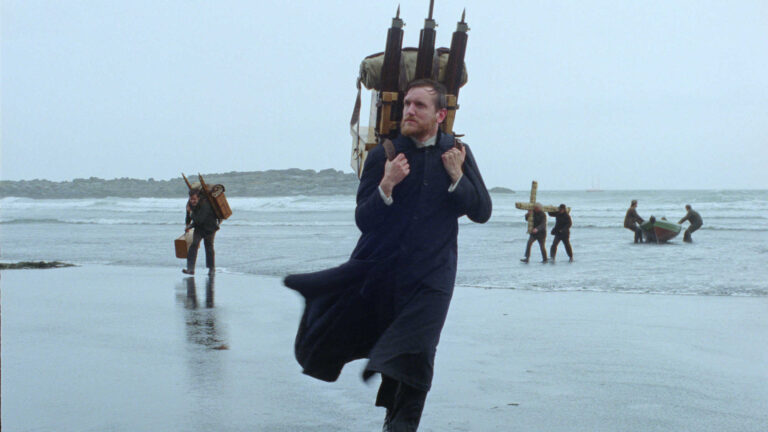
Godland’s nature is brutal and unforgiving, carried by Hlynur Pálmason’s muscular yet poetic directorial hand and Maria von Hausswolff’s ravishing cinematography. 

Many films screened in the Contemporary World Cinema selection at this year’s Toronto International Film Festival (TIFF) have been great delights. However, Icelandic writer-director Hlynur Pálmason’s latest feature, Godland, stands out for multiple reasons (cinematography, screenplay, performances), but it is its devastating and beautiful examination of one’s purpose in life and confrontations with morality when they arrive on unfamiliar grounds. In addition, it is also a critique of the colonizer ethos that has transpired in the past. He isn’t quite well known in the United States, but Pálmason is a director with a poetic yet austere directorial vision. His style is distinctive, and on occasion muscular, but takes inspiration from great filmmakers like Werner Herzog (Aguirre, The Wrath Of God), Carlos Reygadas (Silent Light), Carl Theodor Dreyer (Days of Wrath), and Terrence Malick (A Hidden Life). However, his panache leans more toward Herzog than the other two. There are some distinctions between Pálmason and Herzog’s work – the inclination toward atmospheric dread, the abrasiveness of its pacing, and the acute use of scenery and location.

Those aspects can be seen in his previous features, A White, White Day, and Winter Brothers, but it is even more present and polished in his latest, Godland. A few months ago, Pálmason showcased his simple yet brilliant short film Nest, which broke the hearts of those who watched it. Now, he delivers his second project of the year – a spiritual fable set at the end of the 19th century about the Protestant religion’s ethos and ethics. It focuses on a man whose morality will be challenged as he’s forced to survive in an unfamiliar land. At the center of this story is a young Danish priest named Lucas (Elliott Crosset Hove), who has been chosen to build a church in the chilly north of Iceland before the winter hits. He also has to document the local communities there via photographs. He may be a skilled photographer, but Lucas will have other things to worry about once he makes his way to Iceland, other than the hostile environment and midnight sun – a phenomenon in which the sun remains visible for the entire day, never fully setting. 

This brimming sunlight amidst a chilly atmosphere creates a sensation that feels as if time is standing still, even though it is evident that it’s still transpiring. And the simmering volcano, which is always tempting to make an appearance in the background adds to the brooding and unforgiving nature of the Icelandic environment. Lucas’ journey, however, will be much more complicated than he expected, even with a native guide as assistance, but not for the reasons one would expect. There are confrontations with the powers of nature, causing a few deaths due to the strenuous climate and Lucas and crew not being fully prepared for such a trip. Yet, the biggest quarrel that Lucas has to face is with his morality. What happens to humans when they are pushed to their limits? His religious hierarchy cracks once he’s overburdened by the challenging demands of the journey for enlightenment – showing sides that conflict with his beliefs (pretensions and misconceptions). 

Once he starts forging relationships with the townsfolk, especially a local’s two daughters, Anna (Vic Carmen Sonne) and Ida (Ída Mekkín Hlynsdóttir, who is turning into one of the best young actresses of today’s generation, in my book), things take a turn for the worse, beginning the final steps in Lucas’ virtuous demise. The dynamics the young priest has with the various characters in the film add to the element of slowly-boiling heavy-hearted despair. Confrontations arise from the feud between Danish and Icelandic people regarding their opinions on what civilization is supposed to be and how religion features in it. Lucas grows impatient as he wants to reach his goal of building a church “for the people”. However, he isn’t acknowledging their beliefs and way of living their daily lives, hence countering his “religion has all the answers” message. Seeing a person gradually reach his lowest spiritual point imaginable is devastating. As nature breaks the body, the people’s notions shatter his mind, drained of his being – developing the well-known theme present throughout Godland’s entirety, nature versus nurture. 

With a directorial hand fueled by atmospheric dread and the simmering active volcano, Hlynur Pálmason delivers a demanding and utterly fascinating lengthy grim story about the colonizer’s toxic vanity. Pálmason takes some of the themes he used in his previous features, masculinity and their tale of vengeance, and puts them into a narrative that revolves around religion, sacrifice, and apostate. You see how his mission transitions into something that doesn’t reflect what the “words of the Lord” would say, contradicting his initial persona and marking the film’s title, Godland, as ironic. Days turn to weeks, and weeks turn to months; we see the reflection of the passing of time through animal carcasses, the buildings changing their color (or deteriorating), and the beautiful shots of the landscape. The purpose of this is to submerge Godland with proper amounts of eeriness and aversion, captured beautifully by cinematographer Maria von Hausswolff. The 4:3 aspect ratio used here creates another layer to the film, as the look reflects the photographs that Lucas makes once in a while. 

To juxtapose with Hausswolff’s style of shooting, Pálmason takes time to bask in the process of taking these pictures, with seconds of stillness before the camera operates and the scenery popping each time around. There’s also a scene on a beach that reminds me of Jane Campion’s The Piano, as Lucas arrives on the shores with a deer-in-headlights face, not knowing what to expect as his journey has just begun. Godland contains some somewhat predictable narrative decisions, but Pálmason is confident in his craft and Elliott Crosset Hove delivers a hefty yet subtle multi-layered performance that is impressive all throughout. This is the type of film that some people might be impatient with, as its pacing is slow and brutal at the same time. However, if you take time to bask in it, you will be treated with a magnificently crafted feature – the work of a filmmaker who is slowly paving the way to create his masterwork. 


Grade: A


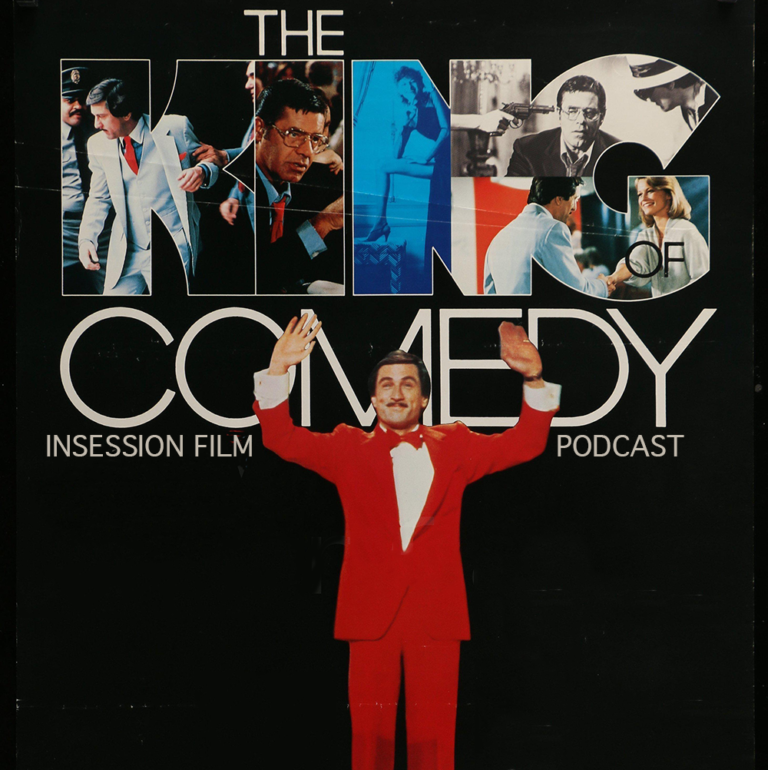
Podcast: The King of Comedy (Revisited) / After Hours – Extra Film

This week on the Extra Film Podcast, Ryan and Sophia continue their Martin Scorsese Movie Series with one of his best films The King of Comedy and they also review After Hours!

This isn’t our first rodeo discussing The King of Comedy as we did feature it in the lead up to Joker a few years ago, but we felt in the context of this series it was necessary to bring it back again. Especially since Sophia is a big part of this series and her dynamic added a lot to the conversation. After Hours was also a lot of fun given the potential spiciness of the takes at hand.

On that note, check out this week’s show and let us know what you think in the comment section. Thanks for listening and for supporting the InSession Film Podcast!

– Movie Review: The King of Comedy (6:02)
Director: Martin Scorsese
Writers: Paul D. Zimmerman
Stars: Robert De Niro, Jerry Lewis, Diahnne Abbott

– Movie Review: After Hours (1:00:24)
Director: Martin Scorsese
Writers: Joseph Minion
Stars: Rosanna Arquette, Verna Bloom, Thomas Chong

– Music

Between Trains – Robbie Robertson
After Hours – Howard Shore
The Return of the Eagle – Atli Örvarsson

Subscribe to our Podcasts RSS
Subscribe to our Podcasts on iTunes
Listen on Spotify
Listen on Stitcher
Extra Film – The King of Comedy / After Hours

[divider]

To hear this Extra Film episode and everything else we do, download our apps on the Amazon Market for Android and the Podcast Source app on IOS devices. The mobile app covers all of our main shows, bonus podcasts and everything else relating to the InSession Film Podcast. Thanks for your wonderful support and for listening to our show. It means the world to us.

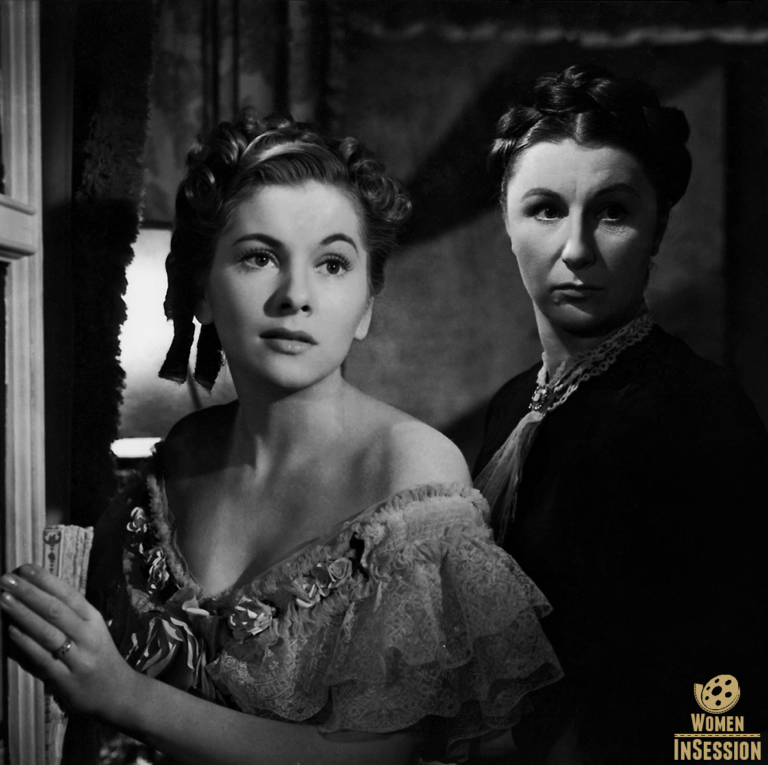
Women InSession: Alfred Hitchcock in the 30’s & 40’s – Episode 7

This week on Women InSession Podcast, Kristin Battestella and Zita Short discuss the early years of the great Alfred Hitchcock and his movies of the 1930’s and the 1940’s!

Hitchcock is obviously well known for his classics in the 50’s and 60’s, but his early work is very interesting too. On this episode we talk about that and why in some ways his early output could be better than his more well known films.

On that note, check out this week’s show and let us know what you think in the comment section. Thanks for listening and for supporting the InSession Film Podcast!

– Alfred Hitchcock Discussion

– Music

The Return of the Eagle – Atli Örvarsson

Subscribe to our Podcasts RSS
Subscribe to our Podcasts on iTunes
Listen on Spotify
Listen on Stitcher
Women InSession – Alfred Hitchcock in the 30’s & 40’s

[divider]

To hear this Extra Film episode and everything else we do, download our apps on the Amazon Market for Android and the Podcast Source app on IOS devices. The mobile app covers all of our main shows, bonus podcasts and everything else relating to the InSession Film Podcast. Thanks for your wonderful support and for listening to our show. It means the world to us.

‘Barbarian’ is a Fun and Twisty Ride That Struggles to Stick the Landing


Director: Zach Cregger

Writer: Zach Cregger

Stars: Georgina Campbell, Justin Long, Bill Skarsgård

Synopsis: A woman staying at an Airbnb discovers that the house she has rented is not what it seems.


There’s an unparalleled glee that can occur when watching a finely-crafted horror film. Many may believe this to be the elation received from the efforts to dive deeper into stronger thematic commentary, aiming to link dreadful settings with profound emotional disclosures. While such storytelling is greatly appreciated, there is still a particular joy to be found in more broad pleasures, when the thrills lean more into spectacle and produce a more universally entertaining presentation. The ambition to Barbarian is not within its reach for catharsis but rather the assembly of its interwoven narrative. Its efforts are not completely successful, but they are incredibly captivating and delightful to uncover.

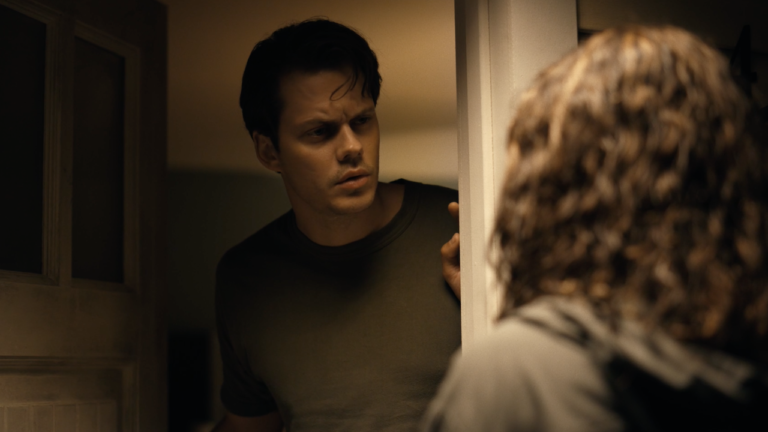
As the film opens, Tess (Georgina Campbell) has just arrived at a small home in the middle of a decrepit Detroit neighborhood. She has come to stay at an Airbnb that she has rented, but notices she is unable to enter the property. That is because the location was double-booked, and another resident is already there. Theo (Bill Skarsgård) is just as confused at this situation, and he and Georgina decide to temporarily cohabitate until this ordeal can be resolved the following day. However, as they settle into their new surroundings, an ominous feeling descends upon them. This house has secrets of its own which will ultimately reveal themselves, and this eventually leads to horrifying conclusions.

Part of the thrill when watching these events unfold is the mystery of not being fully aware of what direction this narrative is hurtling toward. The simple set-up leads to more discoveries which guide the audience through one unpredictable turn after another. Writer-director Zach Cregger has a confidence in the filmmaking which plays with those expectations, setting a moody atmosphere that utilizes its sparse setting to great effect. Every out-of-focus shadow in the background heightens the tension, and the unassuming production design is actually a valuable asset in crafting this frightening perspective. The soundscape is also exceptional in its execution, and Cregger’s overall direction is wholly engrossing in the creation of a suspenseful exercise.

The twisty nature of the plot is both the source of the film’s greatest strengths and weaknesses. While it is exhilarating to mine through every new revelation that is thrown one’s way, the excessive declarations eventually wear off their novelty. As the finale starts to emerge, the screenplay feels stifled, as if it has explored every avenue it can and therefore has little room to keep up its advancing momentum. The threads, which were compelling to follow in the beginning, become frayed at the ends and don’t land with much impact. This also makes the more comedic tonal shifts peppered throughout all the more jarring and unpleasant. That isn’t to say there aren’t engaging elements, but it becomes clear that for all the cleverness this script has, it eventually does collapse in on itself and contains far less power than when it started.

Campbell has a grounded presence that makes her quite the capable protagonist. There’s a realistic personality to her portrayal, ever the key to portraying an effective horror heroine. She doesn’t have many opportunities to showcase an amazing performance, but she does inhabit an absorbing anchor. Skarsgård is able to infuse his role with an aura that is both endearing yet suspicious, a perfect calibration to ratchet up the tension while also having a disarming demeanor. It’s a quality he so naturally possesses as an actor, and it is well-utilized here. Justin Long is the other notable member of this cast, making an appearance later in the film as a person with another connection to the property. While his introduction is oddly presented and the source of most of the laborious humor, Long’s performance is enticing. His character placates to a nicety that covers a toxic and insidious core, and he peels back these layers in a method that is impressive. All the actors do a commendable job at keeping one invested right along with the journey their characters are forced to endure.

No doubt that it is best to go into Barbarian knowing as little as possible. That unearthing is part of what makes this piece so enthralling. The expedition through these many facets of the story are what make it an exciting venture, building upon that foundation that pushes one further towards finding out just what direction one will be pulled towards next. It is a shame that such energy could not be sustained, and it loses a great deal of steam by the time the end is reached. However, it is still an amusing excursion regardless, and a shining example of how wildly entertaining the genre can be. If the film’s finer details can be avoided, the experience will be that much more rewarding.

Grade: B

‘There Will Be Blood’ and the Enduring Evil of Daniel Plainview

0

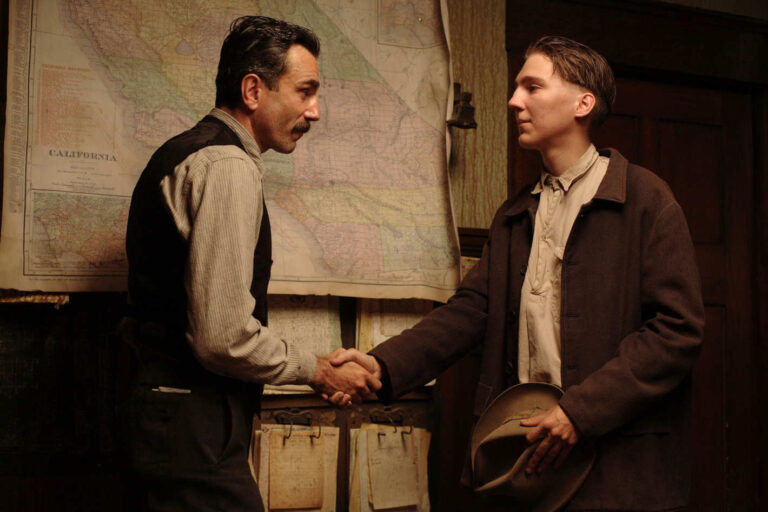
Much in the world has changed since the summer of 2007, yet the timelessness of many of the films that year has proven the staying power of immaculate cinema. 15 years ago, the world was graced, or rather cursed, with the arrival of Daniel Plainview in There Will Be Blood. In what is perhaps Paul Thomas Anderson’s masterwork, Daniel Day-Lewis embodies the core American ideals upon which this country was founded: greed, evil, selfishness. As 158 minutes stretches out over the course of 30 years, the infinite lifespan of greed makes itself vehemently apparent. In the 15 years since its release, There Will Be Blood has only grown in its brilliance. And, in a most genius decision, the first 15 silent minutes of this film serve as the most fitting introduction imaginable to one of cinema’s most dastardly and realistic characters to ever exist.

Daniel Plainview practically lives underground. Covered head to toe in grime, his silence speaks volumes. Through grunts, hocks of spit, and greedy mutterings of discovery, he’s indistinguishable from a creature found in a cautionary fairy tale. Only There Will Be Blood is most certainly not a fairy tale, but instead, a wholly realistic look at a specific type of individual that built the very foundations of capitalism – and all the evil that comes along with that. After literally dragging himself and his score through the dirt, we witness Plainview build himself up. He is no longer alone in some hole in the middle of nowhere, but has made enough to assemble a small team, surely all hoping to either get rich or simply make enough money to feed themselves and their families. And if Plainview’s later speeches are any indication, it can be assumed that he said whatever he had to in order to get them to dive into the depths of the dirty earth alongside him. Even the acts that could be seen as charitable are eventually torn down by his own admission. In a way, it seems as if even he is incapable of lying to himself for too long in the name of the greater good. One way or another, the reasoning behind his actions always comes out. Most telling is that it never comes out by way of fear, but instead, pride.

Daniel Plainview is a proud man. He wholeheartedly understands exactly who he is, and it doesn’t seem to scare him in the slightest. On the contrary, he appears to be excited by it. In what is one of the more iconic moments of the film, there is a fiery accident that would serve as a distinct problem in another film; yet this is no ordinary film. Bathed in oil and pitch black darkness, Plainview has a look of enlightenment on his face. As a raging fire lights up the sky and offers a glimpse of Day-Lewis’ barely contained excitement, it seems as though nothing else matters. In many ways, he appears to be the literal face of evil. As Jonny Greenwood’s score descends into a repetitive drum pattern, it feels as if the very earth cracked open to unleash the corrupt spirit that lingered beneath the ground. Or perhaps, this accident is all that Plainview felt he needed in order to be his true self, the one that has been festering just beneath the surface.

A viewing of There Will Be Blood is akin to watching a dance with the Devil. As many individuals cross paths with Plainview, we see just how easily he can take advantage of them. In his quest to prevent everyone else’s success, he will even go as far as receiving a baptism from the hands of Eli Sunday, played by a deeply impressive Paul Dano. As Plainview gets on his knees begging for forgiveness in the name of securing a business transaction, it’s difficult not to conjure images of William Friedkin’s The Exorcist. As Linda Blair’s possessed Regan openly ridicules the priests attempting to save her soul, Plainview mocks the church itself and all within it. As the water washes over his head, his grin grows and the evil within him appears to become vitalized. Just as Greenwood’s score full of strings embodies a sense of new frontiers ready to cautiously be explored, there is a looming sense of danger behind every choice made in the film. Certain moments feel no different than a full-fledged horror film. After all, we are witnessing a battle for the soul of a man who is nothing if not deeply compelling. Through a more realistic lens however, Plainview’s soul was lost long ago. Perhaps we are just subconsciously hoping he is able to find some semblance of redemption.

As the years quickly go by, and Plainview has to deal less and less with “those people,” it is evident that he is becoming increasingly detached from reality. He openly admits to being disgusted by even the inspiring moments of his past, and he never resorts to opulence as a way of proving himself. Instead, it’s just a byproduct of his nature: crushing his competition. He spends his later days in a rudimentary shooting gallery in his home or sleeping on the floor of his bowling alley. Even at his most despicable, some yearn to be merely a fraction of the behemoth Plainview clawed himself into becoming. Yet, despite their desperate attempts, they quickly crumble under the morally hollow Plainview.

There are few contemporary directors who craft character pieces as compelling as PTA can, but when matched with the sheer intensity and insanity that Day-Lewis brings to the role, the impact is undeniable. 15 years later, There Will Be Blood remains one of the greatest American films to ever be crafted. And the idea of Daniel Plainview, as wicked as he may be, has only multiplied and thrived in the years since.

The Volcanic Love Story Of Ingrid & Roberto

Say what you want regarding today’s actors and influencers dating amongst themselves, none of them have chemistry to the marriages and affairs of many decades ago. Ben Affleck and Jennifer Lopez reunited and married? Every relationship the Kardashians have been in? Not even those who have seen their marriages last a long time have come close to one of the most internationally sought-after couples. In 1950, it was considered taboo and a clash of cultures to see two different figures together. The affair threatened to ruin their lives, but both Ingrid Bergman and Roberto Rossellini would put their love on camera in a series of films that are highly regarded today.  


A Letter To An Open Affair

Ingrid Bergman was an Academy Award-winner (for Gaslight) and starred in numerous hits by the late 1940s, ten years after coming over from Sweden. Her clean-cut reputation and screen persona made her symbolic of the perfect actress thanks to her performances in Casablanca, The Bells of St. Mary’s, Notorious, and Joan of Arc.  Roberto Rossellini was at the forefront of the Italian neorealist movement born out of the country’s ruins following World War II. His film, Rome Open City, kickstarted a revolution in storytelling which was followed by other filmmakers and admired by many viewers. Although not religious and with close relations to Christian Democrats and socialists, Rossellini was a bridge to Catholic morals in a changing Italian society separating itself from the church. Bergman was one of those admirers who loved his work and sent him a letter in 1948. It said:


Dear Mr. Rossellini,

I saw your films Open City and Paisan and enjoyed them very much. If you need a Swedish actress who speaks English very well, who has not forgotten her German, who is not very understandable in French, and who in Italian knows only “ti amo,” I am ready to come and make a film with you.


With the chance to work with one of the most beautiful and most respected actresses in the world, Rossellini invited her to Italy. In making a deal with RKO Pictures for international distribution, his next production and first with Bergman was Stromboli. In traditional neorealism, non-professional actors and locals played various roles and the movie was shot on location on the titular island with its active volcano. (During the shoot, Stromboli did erupt but nobody was seriously harmed.) The film follows a European refugee from the East who is freed from an internment camp and marries an Italian ex-POW who takes her back to his home on the island. For the woman finding a new sense of freedom, the island is harsh, the people are boorish toward the foreigner, and she becomes more isolated in her life. 


Movies By Marriage

It became obvious to onlookers that the couple, both of whom were married with children, were falling in love. The relationship bore a child, a son named Robin, nine months after filming began, and it would follow later with twin daughters, Isabella and Ingrid. They would divorce their spouses and marry each other while the international press covered the romance that banished Ingrid from Hollywood as an immoral person and was even derided in her native Sweden. One U.S. Senator even denounced her on the Senate floor as a “public concubine.” However, the two would move on with their love and collaborate on several more movies together. 

The first follow-up after Stromboli was the drama Europe ‘51 released in 1952. It was a post-neorealism story as it remained shot on location while using more professional actors, notably Alexander Knox, Ettore Giannini, and Giuletta Masina, wife of fellow director Federico Fellini. The film follows an industrialist’s wife who is declared insane after the tragic death of their son and then walks through Rome where she sees a more distressing side of life. It is political, charging the status quo with abandonment, including towards their own children while the working class doesn’t reap the benefits of Italy’s economic boom. It was too political for Italian censors, who asked Rosselini to edit several minutes of the film for general release. Years later, the restored version with politically sensitive content was shown.

In 1954, the last films they did together would be released, Journey To Italy and Fear. While the latter film is a noir attempt in capturing Germany’s own moral reconstruction, Journey To Italy is considered by some to be Rosselini’s masterpiece for this modernist turn of marriage in doubt. In it, Bergman and George Sanders play a couple who travel to Naples to inherit a home from a deceased relative. Bergman’s character, an Italian woman, feels distant from her English husband and suddenly discord between the two becomes apparent. The story is free-flowing and, to keep the actors on their toes, they were given their dialogue only minutes before they would shoot the scene. Imagery, like scenes in Pompeii where dead bodies are locked together, is unearthed, replacing dialogue. In a short time span, an odyssey that quickly tore the couple apart has seemed to be reattached.  


Splitting Up

A reversal of fortune would come for both Rosselini and Bergman that would end the relationship. Rossellini’s possessive nature prevented her from working with other directors and saw a return to Hollywood to be ruinous for her. After several years away, Bergman would make a dramatic comeback in Hollywood when she won her second Academy Award for her performance in Anastasia. Despite the affair, it was apparent now that people were welcoming her back with open arms as those who had worked with her had been on her side the whole time. Meanwhile, the neorealist movement was long gone and Rosselini would struggle to reach the heights of his power again. The latter films were not commercially successful and critics began to tire of his movies as repetitive. 

In 1957, Rosselini was invited to India to make a documentary about the emerging country post-independence. There he would begin a new affair with a writer, Sonali Senroy Dasgupta, who was married to a local film director. As with Bergman, it was a massive scandal, particularly in India, which saw Rosselini as someone who would dishonor India, forcing Dasgupta to flee to Italy. Bergman and Rosselini divorced later that year, permitting Bergman to move back to Hollywood while Rosselini and Dasgupta would marry soon after. The two would remain friends following their divorce as Bergman would go on to win a third Oscar while Rosselini, finishing his career in TV, would find himself as a cited influence to future generations of directors in Italy and around the world.

Seventy years later, the collaborative years between the two have aged well and are part of Italian cinema’s heritage. Many critics of the time blamed Rosselini for ruining her career and chose to shadow boycott any good review of later works. However, the clan from Cahiers du Cinema in France held Rosselini and these movies in high regard and more film critics looked at them with the same belief, that this was a great era for the director and his wife. Plus, Bergman always gave a performance that captured the fleeting isolation in her characters which was partly influenced by their own marriage. It ended in divorce, but the legacy of their films together is inseparable.


Follow me on Twitter: @brian_cine (Cine-A-Man)

Podcast: The Rings of Power (Episode 2) – Patreon Bonus Content

Listen!

For this week’s Patreon Bonus Content, the great Christian Eulienberg joins JD do discuss Episode 2 of the new Amazon show The Lord of the Rings: The Rings of Power!

If you’re already a Patreon supporter, you can listen to this episode NOW on Patreon by clicking here.

Sign up today to get early access and hear the entire episode!

[divider]

HELP SUPPORT THE SHOW

To hear our bonus content episodes early, subscribe now on Patreon. In many cases, though, we offer our bonus content for free after a certain period of time and we do encourage (and very much appreciate) a small donation of $0.99 as a way to help support the show if signing up on Patreon isn’t for you. Click on the PayPal button below to donate and thanks so much for your support. You can also hear much of our Bonus Content via our mobile apps. See the information at the bottom of the post for more details.


One-Time Donation


[divider]

Mobile Apps!

Listen to all of our bonus content on our apps for just a one-time fee! Whether you have an iPhone, Android or Windows phone, our apps are available in many different ways that is convenient for you. With our mobile app, not only can you listen to all of our bonus content, but our main shows and our Extra Film podcasts as well. Click here for more info!

If you don’t want to purchase our bonus content, but still want to support us, there are other you can help us out. Click here for more info.

Poll: What is your favorite film of 2002?

Another September, that means another annual retrospective for the InSession Film podcast. Every year, JD and Brendan take a look back at prior years and dissect the films those years had to offer. Were there any forgotten masterpieces, how did the box office look back then, and how did the awards season shape up? This time the main show will be looking at the films of 2002, all of which are currently celebrating twenty years. And looking at the list 2002 had to offer, there is a lot to celebrate indeed.

Let’s kickstart this retrospective by hearing from all of you. What is your favorite film of 2002?


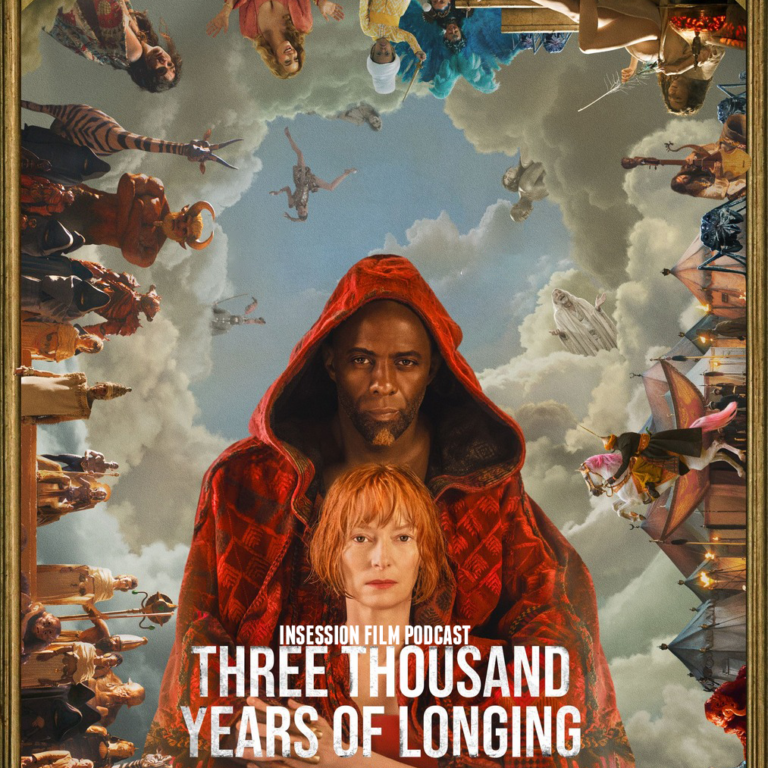
Podcast: Three Thousand Years of Longing / Pom Poko – Episode 498

This week’s episode is brought to you by StoryWorth. Sign up now and get $10 off your first order!

This week on the InSession Film Podcast, Jacob Throneberry from Oscars Central joins us to discuss George Miller’s new film Three Thousand Years of Longing and we continue our Studio Ghibli Movie Series with Pom Poko!

A huge thanks to Jacob for joining us this week. We are big fans of his work and it was a pleasure to have him on the show. We had a lot of fun talking Three Thousand Years of Longing and debating if it achieved what it set out to do. Regardless of what you think about the film, it continues to add to the mystique that is George Miller’s filmography. As for Pom Poko, what a while movie for Isao Takahata. It’s unlike anything else in his cannon and we’re all the better for it.

On that note, check out this week’s show and let us know what you think in the comment section. Thanks for listening and for supporting the InSession Film Podcast!

– Movie Review: Three Thousand Years of Longing (7:36)
Director: George Miller
Writers: George Miller, Augusta Gore
Stars: Idris Elba, Tilda Swinton

– Notes / Discussion (1:04:04)

This week for our break segment, we talk a little Martin Scorsese as Ryan and Sophia continue their series on Extra Film. We also give some brief thoughts on the first two episodes of Amazon’s The Lord of the Rings: The Rings of Power, and how it sets a good foundation for the series moving forward.

[divider]

RELATED: Listen to Episode 484 of the InSession Film Podcast where we discussed Top Gun: Maverick!

[divider]

– Studio Ghibli Movie Series: Pom Poko (1:30:18)
Director: Isao Takahata
Writers: Isao Takahata
Stars: Kokontei Shinchou, Makoto Nonomura, Yuriko Ishida

Show Sponsor: First Time Watchers Podcast

– Music

Djinn Theme – Junkie XL
Itsudemo Dareka G – Shang Shang Typhoon
The Return of the Eagle – Atli Örvarsson

Subscribe to our Podcasts RSS
Subscribe to our Podcasts on iTunes
Listen on Spotify
Listen on Stitcher
InSession Film Podcast – Episode 496

[divider]

Next week on the show:

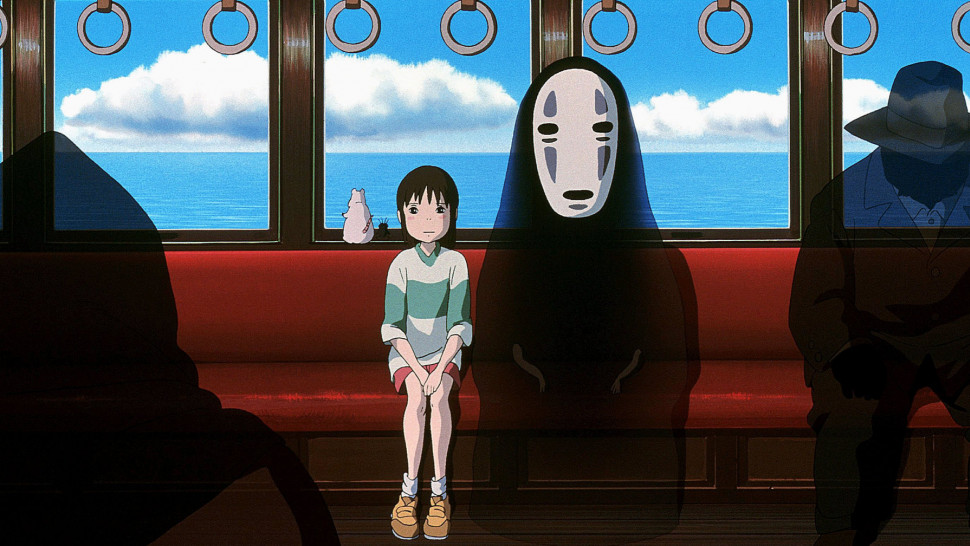
Review: Spirited Away
Top 5: Movies of 2002
Studio Ghibli Movie Series: —


[divider]

Help Support The InSession Film Podcast

If you want to help support us, there are several ways you can help us and we’d absolutely appreciate it. Every penny goes directly back into supporting the show and we are truly honored and grateful. Thanks for your support and for listening to the InSession Film Podcast!

VISIT OUR DONATE PAGE HERE

Movie Review: ‘After Ever Happy’ Is a Joke


Director: Castille Landon

Writer: Sharon Soboil

Stars: Josephine Langford, Hero Fiennes Tiffin, Chance Perdomo, Stephen Moyer, and Mira Sorvino. 

Synopsis: As a shocking truth about a couple’s families emerges, the two lovers discover they are not so different from each other. Tessa is no longer the sweet, simple, good girl she was when she met Hardin — any more than he is the cruel, moody boy she fell so hard for.


*Warning: The following review may contain spoilers for After Ever Happy.*

Another year, another After movie. If you’ve been following the press tour for this one, stars Hero Fiennes Tiffin and Josephine Langford are trying to convince you that this is the franchise’s last installment. It would make sense since this is the last book of Anna Todd’s Wattpad-to-novel series, save for a prequel novella titled “Before”. However, it seems that the movie franchise has no end in sight, as the latest chapter in the uneventful saga, titled After Ever Happy, seemingly randomly ends with “to be continued…”

I wasn’t the only one who blurted out a WHAT?!? at my screening the moment it appeared. What is there to continue? What other facets of Tessa (Langford) and Hardin’s (Fiennes Tiffin) lives are there to tell? All they have been doing for the past three films is yell at each other, break up, make out, get back together, yell at each other, break up, make out, get back together, yell at each other, break—well, you get the idea. You’d think this one would be different since it was revealed in last year’s After We Fell that publisher Christian (Stephen Moyer) is Hardin’s real dad, but no. 

That “huge” revelation gets brushed off within the movie’s first ten minutes. Hardin doesn’t accept Christian as his father and tries to burn his house down (because I guess that’s what edgy teenagers do), until he arrives and decides to forget about it, while Christian lets him go. It is what it is, and there’s nothing he can do about it. Then the rest of the movie is nothing but a will they/won’t they challenge between Hardin and Tessa, as they keep dumping each other, and then getting back together by having steamy bouts of sex which immediately recall Tommy Wiseau’s The Room: kitschy pop blares out of the speakers, while the characters engage in the most flaccid form of sexual tension possible. Honestly, think the spiral staircase sequence from The Room, and you’ve got your After Ever Happy sex scenes. 

It’s a major problem when both leads have little to no chemistry together. It doesn’t help that both characters are horrible people in their own right. Tessa only thinks about herself, while Hardin is just a bloated, erratic mess. Throughout viewing the franchise, I kept asking myself, “Who would ever want to be with such a hothead?” Anytime Tessa literally speaks to another man, Hardin lashes out at them and starts a brawl. Why? Because he loves Tessa so much that the mere thought of her with anyone else (even Hardin’s half-brother Landon, played by Chance Perdomo) drives him mad. And then he yells TESSA (!!!) and how much he loves her while consistently saying the F-bomb every two seconds. Rinse and repeat until the movie decides to go “to be continued…”

The only thought that would race in my mind throughout After Ever Happy was that Tessa would finally dump Hardin once and for all, even if the character does his best to “reshape” himself. But like a virus, it always comes back whenwe least expect it. He’s the cinematic equivalent of COVID-19. Every time we think, “oh, thank God it’s over,” it roars back with a brand-new mutation to latch ourselves to our bodies again. And just like the pandemic, which currently has no end in sight and makes up a brand new sequel for the “Afternators,” the After franchise never wants to end and will retread the sameplot (if there is any) elements to make as much money as possible until audiences grow tired of Tessa and Hardin’s unnecessary problems they create in their tumultuous relationship. Because guess what? They will end up together, even amidst their constant lashing out. 

It’s particularly frustrating to see Stephen Moyer and Mira Sorvino dragged into this mess because they’re talented actors who deserve better. Thankfully, they’re not in the movie for very long, and their limited performances cannot lift After Ever Happy from being the dreadful bore it is. We learn nothing new from the characters, both Langford (and her Sue Storm from Fant4stic wig) and Fiennes Tiffin feel like they belong in two different movies, with no chemistry attached to their arcs, and the movie is an entirely cyclical affair based on Tessa and Hardin dumping each other and then becoming a couple again through sex. It’s the exact same thing as the last three movies, and I cannot possibly fathom sitting through another one of those again. Though one thing is clear, both Tessa and Hardin need therapy. And fast. 


Grade: F


Two Great, Two Ho-Hum Alfred Hitchcock

Believe it or not, not all Alfred Hitchcock films are great Alfred Hitchcock films. Here’s a tit for tat featuring two worthy early Hitchcock thrillers and two of his ho-hum period pieces that miss the mark.


The Lady Vanishes

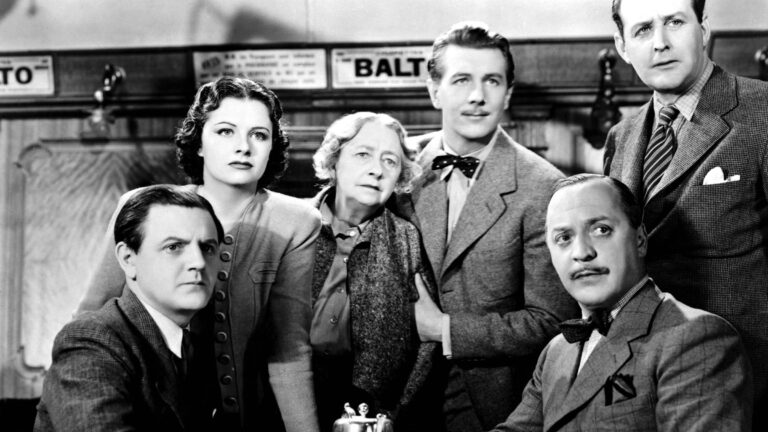
Who has or hasn’t seen the lady in question causes railcar mayhem in this 1938 mystery as travel delays and assorted languages invoke the tourist hustle and bustle. A rambling governess, saucy maids, and cranky Englishmen commandeering the phone just to ask the for the cricket scores introduce the scandalous bare legs, stoles, caviar, and champagne. Men in bed together is jolly good innuendo amid Americans getting preferential treatment, newspaper sensationalism, and intensifying continental troubles. Incognito affairs, musicians, doctors, magicians, and foreign diplomats are all interconnected. However, a hit on the head begets a kaleidoscope of confusion, unfamiliar faces, and slight of hand illusion. Some genuinely don’t recall seeing the eponymous woman; but lies, lawyers, ulterior motives, and that unreliable bump on the head cast doubt about who’s on what side. Train whistles pepper the constant travel hum, rail montages, rear projection, and black and white photography – keeping the confined setting fittingly well paced with perilous comings and goings between cars. Although some magic tricks, sardonic comedy, and humorous cargo should have happened before the seriousness and nondescript bad guys and contrived leaps help the shootouts; tea in the dining car alone and suspicious wine glasses escalate to political secrets, nationalist conspiracies, and international chases.


Jamaica Inn

Charles Laughton (The Private Life of Henry VIII) and Maureen O’Hara (The Quiet Man) star in this 1939 adaptation of Daphne du Maurier’s tale brimming with nineteenth century lawlessness, shipwrecks, and the perilous Cornish coast. Blustery waters, sailor screams, and ye olde montages are well done as dangerous carriages, pub plotting, and racketeering add brutality for our spunky niece and her lecherous uncle. Who is double crossing whom and pocketing a percentage? Eavesdropping, spying from above, and perspective camera angles are early Hitchcock hallmarks along with up close knives, a wrongly accused man, and winding stairs. Potential opposites attract banter sets off the rescues, ironic twists, surprises, and enemies in disguise. Unfortunately, it’s tough to tell the henchmen apart amid chatty smuggling delays that are neither scary nor scandalous. Regency marriages are rough, and women both help or hinder the crimes as needed or just remain helpless. The usually on point Laughton’s fake nose and obvious eyebrows become Doctor Evil ham thanks to ridiculous scene chewing parody, and the inexplicably comedic villain makes the audience excruciatingly aware of the uneven cat and mouse. While suspenseful if you aren’t familiar with the story, this never fully achieves a truly gothic ominous.


Lifeboat

English playing cards and dead Germans in the flotsam and jetsam herald the nationalism, torpedoes, sunken ships, u-boats, and wartime gray of this 1944 self-contained thriller. Dirty sailors, self-absorbed survivors, famous dames, and babies crowd the tiny titular boat as multiple melodramas happen fore and aft thanks to superb rear projection, foreground zooms, background silhouettes, and strategic intercutting capturing all angles. Fog and water sprays compound the undrinkable seas, precious rain, and testy interrogations. Colloquialisms, accents, and translations set off the insinuating conversations and double meanings of repeated “Some of my best friends are…” claims. A compass, typewriter, diamond bracelets, brandy, and newspapers add tangibles to the unexpected camaraderie, for “dying together is more personal than living together.” The diverse ensemble discusses shell shock, lacking supplies, and the burial at sea prayers they don’t know as cold, wet, sleepless vignettes allow the stranded to come clean. Having a then realistic rather than evil archetype Nazi character is understandably controversial, but do they toss the enemy overboard? Strong, smoking, sexy, clad in furs Tallulah Bankhead (Devil and the Deep) is kissing or angry in the same scene, dynamic alongside violent mutinies and sudden twists. Lost materialism gives way to symbolic shoes, bare feet, shirtless men, tattoos, and amputations. Intense poker, lipstick, and flirtations increase as beards grow and tables turn amid storms, hunger, delirium, and suspicion in a no win situation that remains gripping from beginning to end.


Under Capricorn

Ingrid Bergman (Casablanca) and Joseph Cotten (Shadow of a Doubt) can’t save this overlong 1949 mystery with a clunky narration setting the 1831 Australian scene. Irish history, wealthy governors politicking, and shady land deals are yawn worthy and wooden. The first fifteen minutes of convicts turned businessmen bathing in a barrel should have been excised in favor of the newly arrived scoundrel eavesdropping on a suspect dinner at the creepy manor. Abused staff and an aloof wife discuss the past at the expense of the present, repeating what was just said amid the drinking and social shunning while others freely reveal secrets to strangers. Hitchcock uses long takes, zooms, tracking cameras, and new techniques here in his second Technicolor film. Unfortunately, the colorful Victorian frocks meets Wild West frontier carriages make for a stilted setting with seemingly shocking shrunken heads rolling at their feet that are just plain silly. Strong-chinned dull men, swelling crescendos, and fainting women are typical period piece groans. One can see what Hitchcock is attempting with characters bound to the visual frame paralleling their inescapable history, but it only draws attention to the surprisingly thin story. Despite horse chases, who really shot whom revelations, and deportation threats; the drama never peaks. Supposedly scandalous love triangles, elopements, poisons, and deaths happen off screen before an abrupt resolution. Only the divine uninterrupted tiara ball sequence captures the guilt and performance so lacking in the rest of the film.  


Movie Review: ‘Me Time’ is the Bad Type of Self-Care


Director: John Hamburg

Writer: John Hamburg

Stars: Kevin Hart, Mark Wahlberg, Regina Hall

Synopsis: Follows a dad who finds time for himself for the first time in years while his wife and kids are away. He reconnects with a friend for a wild weekend.


There are few things as sacred in the Miller household besides football on Sundays and the family dinner that follows afterward. On par with those is the great remote drop when I Love You Man shows up when channel surfing. You cannot talk about the transition of 21st-century comedies without running across a classic John Hamburg comedy. The man has defined the new buddy comedy in the past decade. From writing modern comedy classics like Zoolander and Meet the Parents to that endearing Paul Rudd vehicle, the man’s resume for sophomoric comradery is unmatched. Yet, all the charm, laughs, chemistry, and heart we have treated to in his previous films seems to have been mysteriously forgotten in Hamburg’s latest comedy, Me Time.

Here, the story follows Sonny Fisher (Kevin Hart), an adoring stay-at-home father of two. His wife, Maya (the wonderful Regina Hall), is a highly sought-after and successful architect who is the breadwinner. The Fishers make a wonderful team.  Maya ensures they have a roof over their head, and Sonny ensures the family runs smoothly. He parents his kids, Ava and Dash, like a Swiss watch. He is making certain Dash practices the piano every day. (Dash would rather listen to Bill Burr sets, a nice touch). He is also on every school committee imaginable. However, Sonny has not gotten a well-deserved break in years. Furthermore, Maya realizes she is missing her kids growing up.

That is where Huck Dembo (Mark Wahlberg) comes in. Sonny’s oldest and dearest friend, he stopped hanging out with because Huck lives life on the edge. With a family and even proper training, Sonny can no longer afford to dive off a cliff in a wingsuit anymore. However, with Huck about to celebrate his 44th birthday in a couple of days, Maya sees an opportunity for Sonny to experience some much-needed self-care. She can also take her kids for the weekend. Of course, things go off script, and the ride is bumpier than ever.

Hamburg also wrote Me Time‘s script. A collection of lazily strung-together scenes and ideas with zero subtext and are practically laugh-free. From mixing family comedy jokes like tripping on turtle feces to illogical nonsensical comedy like fighting off a mountain lion with an EpiPen; none of it works or comes close to humorous or even amusing. You also have an alarming issue of situations that pop up with no purpose.

For instance, Hart’s Sonny accuses his father-in-law of cheating on his wife without any explanation before or after. The duo also enters Maya’s most valuable client’s (Luis Gerardo Méndez) home without explaining how they drove into the complex past security or broke into the house. Then, there is Jimmy O. Yang’s completely useless Stan Berman, who has no other reason for existing other than giving the film a false sense of purpose.

While Hart’s energy remains infectious and Wahlberg’s trademark turn of spinning comedic roles in a sweet and naïve manner can be endearing, the dialogue remains aimless and inconsequential. In fact, the only time a joke works — by a sorely underused Anna Maria Horsford and John Amos — the rest of the lifeless script sticks out like a sore thumb.

Hamburg’s best movies, while operating on a level of illogical premises, had characters seeking to communicate and understand each other. This has been best accomplished while combining well-structured comedic scenes paired for more significant effect and payoff. That is how you make a winning comedy that finds the heart of the matter.

Like Barbara Lowe says, this way, you will never walk away disappointed.


Grade:  D+


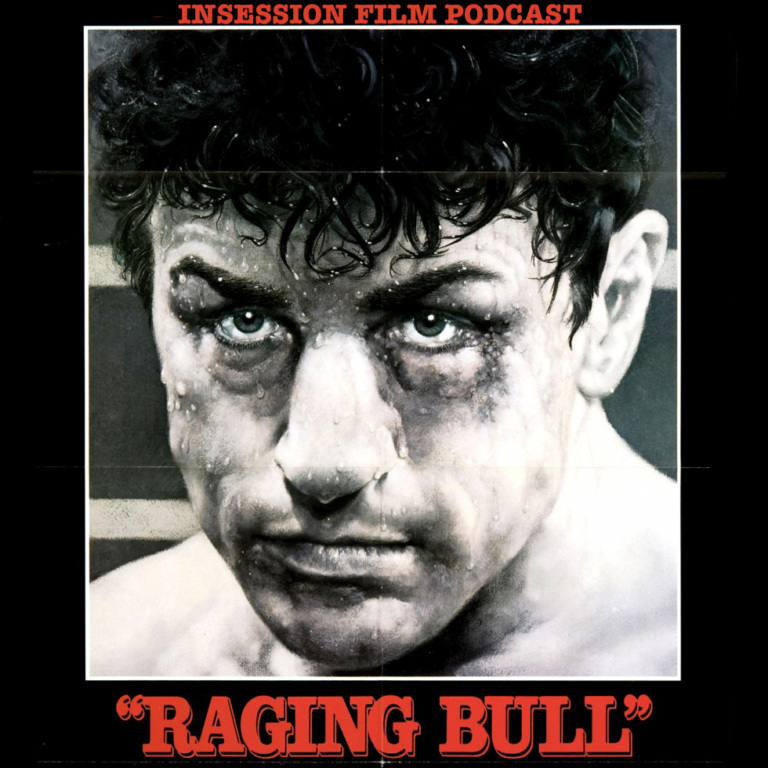
Podcast: Raging Bull / Ordinary People – Extra Film

This week on the Extra Film Podcast, Ryan and Sophia continue their Martin Scorsese Movie Series with his 1980 film Raging Bull and also discuss Robert Redford’s Best Picture winning film Ordinary People!

This week’s show is an interesting one as Raging Bull is considered to be, not just one of Scorsese’s best movies, but one of the best films ever made. However, we argue the validity of Ordinary People winning Best Picture that year over Raging Bull and the other great films nominated for Best Picture. Both films have plenty to offer, but Ordinary People is arguably the best Best Picture winner of its decade.

On that note, check out this week’s show and let us know what you think in the comment section. Thanks for listening and for supporting the InSession Film Podcast!

– Movie Review: Raging Bull (5:52)
Director: Martin Scorsese
Writers: Paul Schrader, Mardik Martin
Stars: Robert De Niro, Joe Pesci, Cathy Moriarty

– Movie Review: Ordinary People (1:08:34)
Director: Robert Redford
Writers: Alvin Sargent
Stars: Donald Sutherland, Mary Tyler Moore, Judd Hirsch, Timothy Hutton

– Music

Taxi Driver – Bernard Herrmann
Helpless – The Band
The Return of the Eagle – Atli Örvarsson

Subscribe to our Podcasts RSS
Subscribe to our Podcasts on iTunes
Listen on Spotify
Listen on Stitcher
Extra Film – Raging Bull / Ordinary People

[divider]

To hear this Extra Film episode and everything else we do, download our apps on the Amazon Market for Android and the Podcast Source app on IOS devices. The mobile app covers all of our main shows, bonus podcasts and everything else relating to the InSession Film Podcast. Thanks for your wonderful support and for listening to our show. It means the world to us.

Podcast: The Rings of Power (Episode 1) – Patreon Bonus Content

Listen!

For this week’s Patreon Bonus Content, the great Christian Eulienberg joins JD do discuss Episode 1 of the new Amazon show The Lord of the Rings: The Rings of Power!

If you’re already a Patreon supporter, you can listen to this episode NOW on Patreon by clicking here.

Sign up today to get early access and hear the entire episode!

[divider]

HELP SUPPORT THE SHOW

To hear our bonus content episodes early, subscribe now on Patreon. In many cases, though, we offer our bonus content for free after a certain period of time and we do encourage (and very much appreciate) a small donation of $0.99 as a way to help support the show if signing up on Patreon isn’t for you. Click on the PayPal button below to donate and thanks so much for your support. You can also hear much of our Bonus Content via our mobile apps. See the information at the bottom of the post for more details.


One-Time Donation


[divider]

Mobile Apps!

Listen to all of our bonus content on our apps for just a one-time fee! Whether you have an iPhone, Android or Windows phone, our apps are available in many different ways that is convenient for you. With our mobile app, not only can you listen to all of our bonus content, but our main shows and our Extra Film podcasts as well. Click here for more info!

If you don’t want to purchase our bonus content, but still want to support us, there are other you can help us out. Click here for more info.

Film at 25: “Mimic” a Rare Misfire in Guillermo Del Toro’s Remarkable Career


Director: Guillermo Del Toro

Writers: Guillermo Del Toro, Matthew Robins

Starring: Mira Sorvino, Jeremy Northam, Charles S. Dutton, Josh Brolin

Synopsis: Three years ago, entomologist Dr. Susan Tyler genetically created an insect to kill cockroaches carrying a virulent disease. Now, the insects are out to destroy their only predator, mankind.


Oscar-winning director Guillermo Del Toro has created lots of memorable fantasies with awesome creatures, colorful characters, and stunning nightmare worlds. He puts a unique directorial stamp on every film he makes, and for the most part, he has succeeded, especially with his 2006 masterpiece Pan’s Labyrinth, the extraordinary ghost fable The Devil’s Backbone, and the sumptuously made The Shape of Water, the film that won Del Toro his Academy Award for Best Director. 

But the one film he made that never came together in the way he wanted was the Dimension Films science fiction thriller Mimic, starring Mira Sorvino and Jeremy Northam, released twenty-five years ago in August 1997. The horror genre was booming in popularity that year, following Wes Craven’s 1996 smash hit Scream, and with the oncoming I Know What You Did Last Summer and Scream 2. Meta slasher films about teens were all the rage, but thrillers with evil creatures, with plenty of science fiction tossed in for good measure, didn’t have the same kind of pull for audiences. Around this time we got The Relic, Event Horizon, and Phantoms, all with good casts and clever premises that, for one reason or another, didn’t make much of an impact at the box office.

Mimic was another of those creature features, but this time we had the visionary Guillermo Del Toro behind the camera, hot off his acclaimed 1993 debut Cronos. Based on the short story by Donald A. Wollheim, Mimic tells of cockroaches carrying a virulent disease that are slowly morphing and growing, and soon set out to destroy mankind, Dr. Susan Tyler (Mira Sorvino) and Dr. Peter Mann (Jeremy Northam) setting out to stop them before it’s too late. The plot is absurd, but Del Toro’s eye for stunning visuals and the gathering of a solid cast that also includes Giancarlo Giannini, Charles S. Dutton, Josh Brolin, and F. Murray Abraham elevate the material over some of the other similarly-themed genre films of the time.

Some elements in the film work better than others. Sorvino, just a year after her Best Supporting Actress Oscar win for Mighty Aphrodite, gives an engaging and believable performance, even if her character is slightly underwritten, and even if her chemistry with Northam is almost nonexistent (the two actors reportedly couldn’t stand each other while filming). The action is also top-notch, especially when a giant cockroach swoops up Sorvino in the middle of a subway station, and when an explosion rocks a New York City street from beneath, cars launching into the air. The concept has some intrigue, kind of an expanded X-Files episode directed by a mad genius and featuring two Academy Award-winning actors. 

However, after watching both the 1997 version and Del Toro’s preferred 2011 Director’s Cut, I didn’t find much else to recommend about Mimic. The pacing in both versions has a snail’s pace in the first half that isn’t helped by pedestrian dialogue, and Jeremy Northam’s woodenness brings the narrative to a crashing halt at times. The movie is also absurdly dark once the characters navigate those underground subway tunnels, some of the events difficult to see, let alone be gripped by. 

Del Toro has stated with no ambiguity that he hated making Mimic, disowning the film upon its release after a production fraught with tension and constant clashing with Harvey and Bob Weinstein. The latter apparently paid lots of visits to the set, making unreasonable demands about what should be shot, and threatening to fire Del Toro if he didn’t get his way. Once production wrapped, Bob Weinstein oversaw a lot of the post-production process, and Del Toro’s vision became compromised before the film hit theaters. There’s a slickness and a lack of focus to many scenes that don’t feel like they’re of Del Toro’s making, and ultimately Mimic doesn’t cohere the way so many of his other better movies do. 

The reviews were not all bad at the time, Roger Ebert giving the film a rave and saying “Mimic makes the old seem new, fresh and scary,” but the film landed with mostly a thud at the box office, only pulling in 25 million on a 30-million-dollar budget. Its release in the dumping ground of late August probably didn’t help, but if Del Toro had been able to put on the screen exactly what he’d intended from the beginning, everyone would have been better off in the long run. 

He was able to pull together a few deleted scenes as well as remove second-unit shots he never liked for his later Director’s Cut, but Mimic was never able to be salvaged completely, and so if there’s one saving grace about this mediocre movie, it’s that the terrible experience Del Toro had making it put him back on the path of more personal stories like The Devil’s Backbone and Pan’s Labyrinth. Mimic, alas, was a mere hiccup in what has proven to be an astonishing career. 


Hitchcock in the 1930s

Though often under-produced with innate poor quality, these early Alfred Hitchcock British films from the thirties are peppered with familiar Hitchockian nuggets and all the expected suspense.


Murder!

Screams, Beethoven overtures, and Wagner on the radio accent the hysterical finger pointing and polluted crime scene of this 1930 whodunit. Messy households high and low gossip about rival actresses and the facts are secondhand – a fireplace poker, bloody dresses, a brandy flask. Wry British humor and pre-Code wit wink at the regular people in extreme circumstances and scandals behind closed doors. The back and forth domestic settings, prop doors, backstage interrogations, pantomime, and cross dressing innuendo create a stage-like design to match the caper within a caper, pomp and circumstance trials, wigs, and robes. The pipe smoking alpha male, old ladies in pearls, the cowering man, a sophisticated psychology woman, and the dirty old man who thinks a good looking actress should get a free pass divide the jury as they deliberate on our lady killer’s well bred family and a possible fugue state. There are obvious twists and clues the police miss. Women at home serving the man attitudes are dated and onscreen cursive notes feel like silent film holdovers amid roundabout exposition scenes and lagging transitions. However devil or angel on the shoulder camera cuts, voiceovers, and intense zooms set off the well edited jury interplay and doubts in the mirror. Public opinion and armchair investigators linger over what should be an open and shut case before the surprisingly modern meta and fitting circus topper.


The 39 Steps

This landmark 1935 Hannay adaptation from the novel by John Buchan features Robert Donat (Goodbye, Mr. Chips) and all the mistaken man, foreign intrigue, and Hitchcockian macguffins to come. Cheeky dance halls and marriage jokes contrast chases, gunshots, and shadow men amid mysterious maps of Scotland, missing fingers, and knives in the back. Fedoras, trench coats, newspapers, and ticking clocks accent the mercenary espionage and air defense hush hush as danger tops each scene with suspicious phone booths and perilous bridges. Police are knocking at the door and women are both helpful or harmful depending on the alias or location. Whom do you trust when no one is who they seem? A spy must always be on the lookout even in the perceived rural calm as handcuffs, hymnal twists, romance, and false arrests escalate. News travels fast thanks to trains, airplanes, and rapid waters while superb cabin car photography and railroad scenery set off the ironic parades, impromptu speeches, cheering crowds, and charismatic escapes. Filming through doors, Art Deco lines, and silhouetted figures add style to the somewhat rough around the edges production and now recognizable cliches as the winks come full circle for a great undercover adventure.


Secret Agent

General Peter Lorre (M) and Captain John Gielgud (Arthur) star in this 1936 adaptation of W. Somerset Maugham’s tales alongside Great War funerals, one armed soldiers, and empty coffins. The German Expressionism is Bond before North by Northwest was Bond thanks to false passports, fake headlines, a man named “R,” and double agents. Despite distant bombs, nearing explosions, and wartime scale; the hotel meetings, secret messages in the chocolate wrapper, and candlelight signals make for an intimate one man mission. Intense factories, train confrontations, and telegram intertitles with translated codes send Gielgud’s charming novelist cum spy to exotic continental casinos with button clues and more flirtatious farce with Madeleine Carroll (also of The 39 Steps). Some over the top humor, however, is unnecessary – Lorre’s exasperated quips and subtle sardonic are much better with the menage mood. Despite his bickering couple and sidekick banter, his killer hand should not be underestimated. Telescope shots, howling dogs, glum church organs, and mountain photography add suspense as do Hitchcockian staircases and on the run, reluctant heroes. Who is the rival agent we’re seeking? Have we met him already? In spite of some obvious formulaic and an abrupt end, this potboiler doesn’t talk down to the viewer as suspicions and languages build to a tense finale.


Sabotage

Not to be confused with Hitchcock’s Secret Agent or later Saboteur, this 1936 thriller based on The Secret Agent by Joseph Conrad opens with blackouts, flashlights, dark skylines, and patrons wanting their money back from the down picture show. Shadow schemes and askew camera angles add to the power tampering suspicion while tense notes follow a mysterious man in black as he returns home, washes his hands, and claims innocence. Professional, public, and domestic differences are intertwined with families living above the bustling marketplace and grocers who aren’t what they seem. Scotland Yard whispers of trouble abroad, and shadowed men with their backs to the camera converse over promised payments. Creepy packages, trick bird cages, and threatening “sleeping with the fishes” messages are a tongue in cheek nod to the nature of cinema as covers are blown and men scatter. Clueless wives are oblivious to being used for information in dynamic handsome detective versus cruel husband sequences. The innocuous cinema, aquarium, and pet shop each have seemingly innocent ingredients used for making bombs, and onscreen days of the week countdown for the preoccupied public hoodwinked by what’s in plain sight. Though busy early and somewhat meandering with convenient plot points unanswered, the questions on who is behind these plans and why become eerily provocative when a child delivers a fatal ticking package in the crowded market. Delays, detours, puppies, stoplights, traffic jams, and parades culminate in a nail biting finish as the threats hit home.


Poll: What is your favorite George Miller film?

George Miller is a madman. The best way to describe the Australian’s filmography is sheer insanity, as only he could follow up two animated penguin musicals with what might be the greatest action movie of the century. His films are pure imagination, filled with fantastical yet grotesque imagery, building worlds unlike any filmmaker who ever lived. With his latest Three Thousand Years of Longing now playing in theaters, let’s look back at his crazy filmography.

What is your favorite George Miller film?


Karel Zeman: An Unsung Animation Legend

Karel Zeman died in 1989, several months before the Velvet Revolution, which saw the communist regime in Czechoslovakia stand down and democracy return. It was sad that Zeman didn’t live to see the Iron Curtain come down because he would have been among the first to show his movies to a whole new generation. Called the “Czech George Méliès” by critics, Zeman saw the Frenchman, a pioneer of cinema in the 1900s, as his biggest influence. But whereasMéliès is part of film history textbooks, Zeman is a footnote despite his body of work being one of the most impressive in the history of animation.

Zeman was born in 1910 and moved to France to work in advertising in the 1920s and 30s. There, he began using animation before returning home in 1936, three years before all of Czechoslovakia was annexed by Nazi Germany, and would import his techniques for local ads. While the war was happening, Zeman met film director Elmar Klos and hired him to work in his studio in the city of Zlin. Hermína Týrlová, who is considered “the mother of Czech animation,” worked with Zeman on her short children’s films before Zeman became head of his own production company.

In 1952, Zeman would produce his first full-length feature, The Treasure of Bird Island. Based on a Persian fairy tale, he would begin his standout animation by combining two and three-dimensional drawings, including puppetry, to construct an orthodox fix that advanced what an animated film could be. His second full-length feature would start the string of work which is known as Zemanesque in his home country. Starting with Journey to the Beginning of Time, Zeman mixed animation with live-action, filming real actors on-set or on location as part of the story. In Journey, a group of kids finds themselves rowing down a river going back to prehistoric times and confronting extinct raptors. Steven Spielberg cited the film as an influence in making Jurassic Park. 

Zeman didn’t have the big budgets that Hollywood films did. He would construct his movies with an original aesthetic made from scratch. Colors, sounds, and visual gags play up to Zamel’s chaos where every shot is a surprise. He would meticulously draw up every set design, something totally different to invent another universe that had never been seen before on the screen. His follow-up, Invention for Destruction, is based on a Jules Verne novel that combines science fiction with the pirating genre. It is not a direct adaptation of the novel and Zeman provides a love letter of inspiration from George Méliès. Carefully looking at the original designs from Verne’s novel and vintage illustrations, Zeman keeps the visual style as faithful as possible while using every trick in the book for consistency. 

The Fabulous Baron Munchausen was next, playing an important role in the career of director Terry Gillam, who also started out with animation. (Gilliam would direct his own version of Baron Munchausen which ended up being a notorious flop and filled with production problems.) Zeman’s version feels like an acid trip with all the characters of different eras crossing paths at once. It does not stop altering itself with the pastel colors, either being changed by the scenes or simply melting with each other. The centuries of history are blended into one large anachronist story, fitting for the character of Baron Munchausen. His next film, A Jester’s Tale, took a slightly political tone as a satire set during the Thirty Years’ War with a tone for pacifism; The Stolen Airship is another Jules Verne adaptation shot mainly in black-and-white but did not have similar feedback as his previous films. 

1968 would be a tumultuous year for Czechoslovakia. The “Prague Spring” was crushed by the Soviets who opposed the country’s growing dissociation from communist rule and figures once part of the country’s arts and literature groups found themselves out of work and censored completely. Zeman avoided the purge, but after his 1970 film On the Comet, he was forced to scale back his projects thanks to tighter budgets and stricter script approval from the government. He went to do more traditional animation movies and TV shows, preferring cutout techniques over hand-drawn ones which were commonplace and were cheaper and faster to create. His last film, The Tale Of John And Mary, was released in 1980.

Zeman spent the last decade of his life unable to get any more of his scripts produced and was relegated to an ambassador of Czech film and animation. He was awarded the Order of the Republic by the Czech government and was allowed to travel abroad where his work was exposed to Tim Burton and Wes Anderson, both of whom had homages to Zeman in their own films. Only after Zeman died and Europe was unified with the end of communism were his films given a full retrospective by many filmgoers and critics. In the capital of Prague, a museum dedicated to Zeman’s work opened in 2012. He is, all these decades later, considered, without question, one of the greatest animators of all time.


Follow me on Twitter: @brian_cine (Cine-A-Man)