

Home Blog Page 208

Classic Movie Review: ‘Harvey’ – Because We All Need a Pooka Right Now

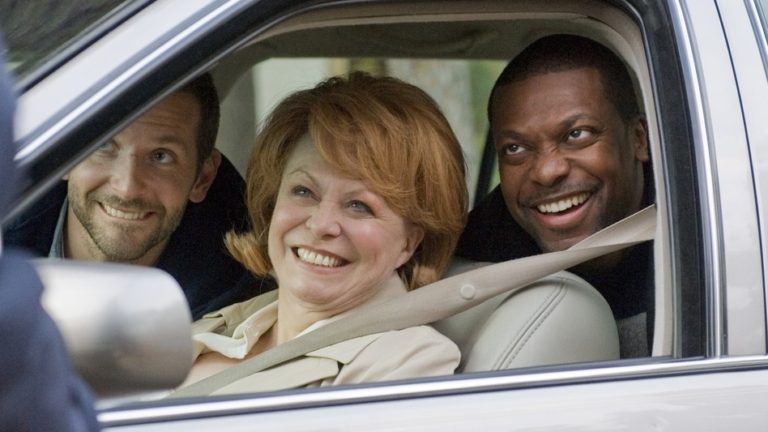
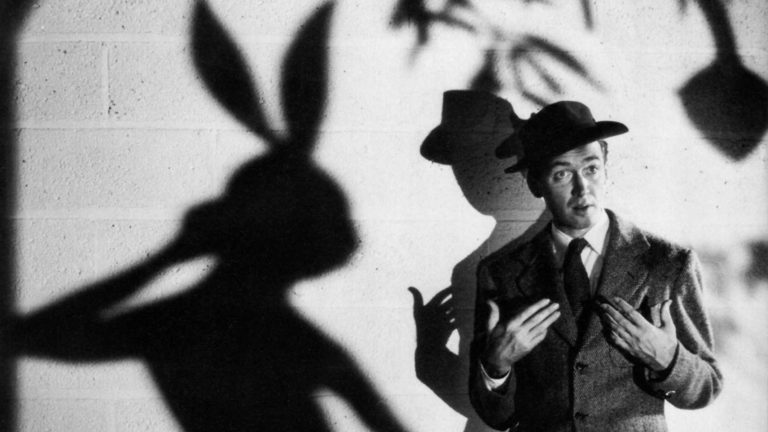
Mild-mannered Elwood P. Dowd (James Stewart) opens doors, buys drinks for everyone, and invites one and all for a chat before introducing them to Harvey, a seven-foot invisible pooka rabbit that only Elwood can see and hear. He carries an extra hat and coat for his friend, too, but his hare-brained introductions ruin the society plans of his flustered older sister Veta Louise Simmons (Josephine Hull). She’s determined to commit Elwood thanks to Harvey, but she ends up with more than she bargains for when she and the sanitarium staff have several serious miscommunications about who really sees Harvey and whether or not the mischievous sprite is real…

Birds sing and every day is a beautiful day to open Henry Koster’s (The Bishop’s Wife) 1950 adaptation of the Mary Chase (Sorority House) award-winning play Harvey, yet fleeing maids, day drinking, and embarrassed family suggests something is afoot. Coming from the stage means the nuanced dialogue happens fast with few sets per act and witty characters carrying the humor. There’s no laugh track, editing, crescendos, or special effects as neon signs to hit the audience over the head with what’s supposed to be funny. One minute we can chuckle at the girdles, let’s do lunch fakes, and proper ladies peeking through the pocket doors or smile with the leisurely stroll for two the next. The distinction between who’s worried about appearances and who’s stopping traffic to help someone who isn’t there across the street is immediate, however, Harvey also requires multiple viewings to catch all the backhanded lines, perfectly timed deadpans, and clever visual asides as smiling faces turn sour upon being introduced to our pooka. Rather than relying on tricks, Harvey’s presence is made known thanks to doors that won’t close because he’s in the way. The camera keeps the invisible rabbit in the scene, panning up to his height and accenting the performances as unique supporting players come and go – a stalling cook deliberately making extra entrances to serve dinner or the wealthy old lady who greets everyone by saying she thought they were dead.

Sense and Sensibility hides the liquor on the shelf and the sibling turnabouts, exaggerated exploits, and charming confusion mount with lovesick nurses, wrangling orderlies, deluded doctors, and pesky cabbies. How does one explain Harvey to a psychiatrist? Exposition is superbly disguised as beleaguered confession while frilly women hit strong men with their pocketbooks and physicians miss the humor in plain sight. Everyone’s in a fast-paced rush, leaving laid back Elwood no time to introduce his dearest friend. Viewers, on the other hand, spot the gestures and winks when Harvey’s in the foreground but those onscreen do not, yet the audience is left to make up our own minds about who is frazzled and imagining things or not. Bittersweet scenes contemplating elderly wishes versus youth, high spirits, and drunken coincidence add ambiguity. When asked to recount the night’s events, Elwood wonders where the time has gone because so much fun was had. Let’s warm ourselves in golden moments, enter as strangers, and leave as friends! Harvey lets one talk about their hopes, regrets, accomplishments, and mistakes because nobody ever brings anything small to the bar. A photo shows reality, but a painting shows reality and the dream of it, so why do the doctors want to make Elwood face reality? Is Harvey merely a placeholder for a deeper illness? Is it all a hallucination some serum can make disappear? Is such treatment worthwhile if it changes charming outlook into bitter normalcy? What if the pooka power is real? One can choose to be oh so smart or just pleasant. If we’re all tired of being the former, why not be the latter? Harvey provides both comforting, quirky wonder and thought provoking solace. Is Elwood P. Dowd willfully ignorant in his delusion or innocently unaware no one else understands Harvey? Does it matter?

Compared to acclaim found in Mr. Smith Goes to Washington, The Philadelphia Story, or It’s a Wonderful Life, Jimmy Stewart’s Best Actor nomination here may seem surprising. In Harvey, however, he’s performing for two thanks to the absent titular star. Stewart keeps up the casual dialogue and double mannerisms, providing a real authenticity when interacting with thin air. Elwood tells someone when they are in Harvey’s way – he knows people are disturbed about Harvey but not to worry, “he stares that way at everybody.” Today, Elwood P. Dowd would either be an internet sensation with fifteen minutes of fame or he’d be a crazed news headline. Dowd, however, treats old kooks and jailbirds with equal grace, inviting anyone home for dinner. A mix up isn’t a mistake, just a chance for friendship to begin, and although he always offers his business card, Elwood doesn’t do anything but call ahead to the bar for his regular booth, have a drink or two, play the jukebox, and make people smile.

Harvey (1950) directed by Henry Koster • Reviews, film + cast • Letterboxd

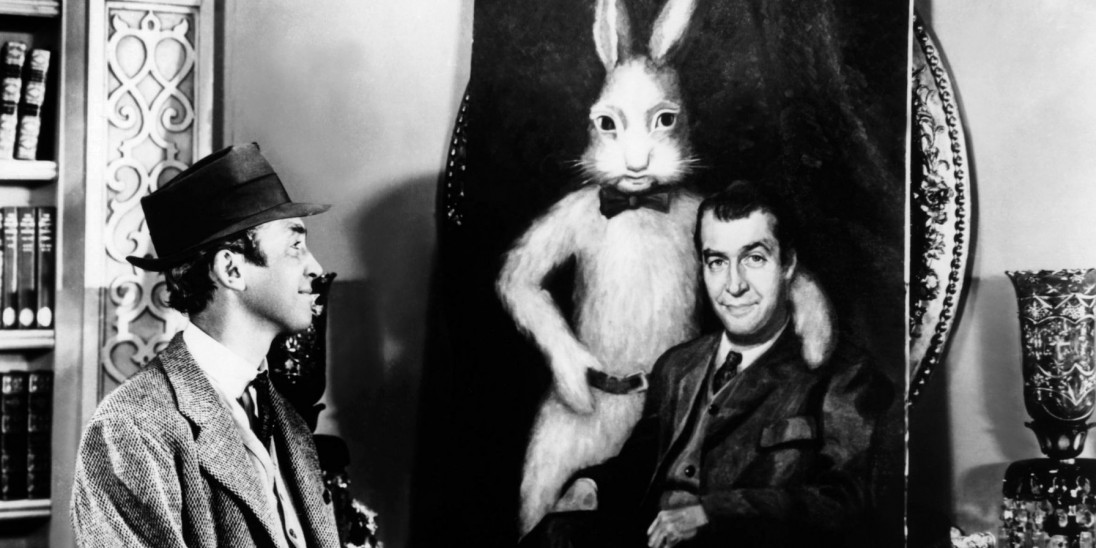
Once he introduces folks to Harvey and they don’t come back, well then they’re just envious. Others say he’s done nothing with his life, but Elwood does good wherever he goes. Isn’t that a life well lived? He was devoted to his mother and she left everything to him, and now at forty-two Elwood says he spent thirty-five years facing reality but he won life over when he met Harvey. Elwood wants everyone to have a say so no one gets left out – even if there’s a conflict. He doesn’t care for an antidote that will make him see reality, but if his family is being hurt by his behavior, Elwood will do the right thing at the expense of himself. Harvey, meanwhile, wants to go to a specific tavern, so that’s where they go for their two martinis. If newcomers at the bar claim the empty stool will pay for their drinks, Elwood insists Harvey would be delighted. He never wears the fedora with the earholes cut for him, but Harvey does know Veta is not fond of him and has parties without telling Elwood. Often Elwood repeats what Harvey says, but sometimes not everything he says should be repeated and Harvey apparently makes interjections when Dowd reads aloud. Others have to learn what a pooka is by looking up the old Celtic fairy animal lore – leaving them open to Harvey’s mercurial acts – but most importantly, he’s Elwood’s best friend. They met under a back alley lamp post and Harvey’s been with Elwood since his mother died simply because he prefers Elwood’s company. Veta faints aghast at his portrait, but Harvey’s known to stop clocks and go anywhere with anyone for as long as you want with no time passing when you get back. He overcomes the objections of time and space while we waste time on the technicalities instead of embracing the miracle of having a good time no matter where you are.

Veta Louise Simmons unties her robe to reveal the fancy dress underneath, for she’s ready to party with respectable people once her younger brother leaves. He’s peculiar, but it isn’t his fault. Harvey is really to blame, and the excellent Josephine Hull reprises her role from the stage production here as a Best Supporting Actress winner. Veta is flighty to start, desperate to be in the society column but on edge when guests inquire if Elwood is seeing anyone these days. She a flaky fake, but viewers don’t hate Veta because her neurosis stem from Elwood’s innocent interference when he introduces his pooka to the room. Her try hard is in hopes of marrying her daughter off well, but when Veta makes plans to commit Elwood, her distraught confession that she too sometimes sees Harvey puts her in the mental ward. She’s afraid of the scandal, shocked at the filthy questions asked during her rest home experience, and plans to sue – hysterical, faint, and broken by the ordeal – but Elwood laughs at the whirlwind day she’s had because of him.

Ultimately, Veta realizes it’s nobody else’s business if they live with Harvey so long as her brother remains an aloof generous person. Victoria Horne’s (The Ghost and Mrs. Muir) Myrtle Mae also initially wishes her Uncle Elwood would quit cramping her style. Without a normal life, she has no chance for a man or any independence. When their parties go awry, she’s ready to explode in more ways than one. Her mother thinks she is sweet and has plenty of wealthy grandson prospects, but Myrtle is cranky and tired of her family ruining her acquaintances. After one too many embarrassments, she’s ready to pack, leave, change her name, and go to another city. When she hears her mother’s torrid experience with a man dragging her upstairs, taking off her clothes, and dumping her in the tub, Myrtle wants to know how young he was. She’s not afraid of Jesse White’s (Death of a Salesman) gruff and manhandling Wilson, and the flirtations with the orderly commence despite Veta’s protests. Harvey’s ensemble is equally flummoxed at the goings-on, from the family lawyer and the sanitarium gatekeeper to not one but two cab drivers and Charles Drake (Winchester ’73) as attending psychiatrist Doctor Sanderson. He understandably thinks the hysterical sister is the one who should be committed, but he’s totally wrong in his diagnosis as well as his looking the other way at Peggy Dow’s (Bright Victory) hopelessly in love Nurse Kelly. She thought Veta was on the up and had Elwood dragged to the baths. The staff ends up tagging along on an adventure with Elwood to avoid being sued, but he ends up playing matchmaker instead – because people are often blind to loveliness when they shouldn’t be. Cecil Kellaway’s (Guess Who’s Coming to Dinner) overseeing Doctor Chumley usually doesn’t attend to patients either, but he begins to see Harvey before lying on his own couch to dream of the pooka possibilities.
Film - Harvey - Into Film

Jovial music sets the tone for Harvey amid classic cars, retro phones, and repeated little things that keep on giving – like when every person stops and picks flowers despite a sign saying not to do so. The wrought iron fence, ornamented lawn, and grand manor home suggest a pleasant, vintage neighborhood, yet the gates and gardens of the polite sanitarium are not that dissimilar. Lace linens, afternoon opera, furs, feathered hats, and the ladies’ social club look so sophisticated thanks to Orry-Kelly (Some Like It Hot) gowns while fedoras and trench coats create a firmly forties masculine silhouette. Dames and dolls colloquialisms and polite greetings match the nurse’s uniforms and sense of Leave It to Beaver safety and nostalgia while the blu-ray release keeps the black and white crisp. The antique furniture and style provide a very specific time and place, and today we can’t replicate this innocent veneer. Of course, not everything then was as simple as it seems, and innuendo-laden quips and winks shrewdly circumvent The Hayes Code even if the number of drinks drunken can’t be shown and the couples never kiss. Besides, $2.75 for a cab? Yes, please!

When watching Harvey, I personally enjoy trying to keep track of all the people Elwood invites to dinner tomorrow night. As children, I sent my nieces into Harvey cold. At first, they wondered what was wrong with him and why would it bother his family if he’s weird? Thereafter, however, they would repeatedly ask to watch the movie about the man and his invisible rabbit. With our real-world so bleak, this time I choked up at those preferring bliss wherever it may be found. Harvey is a charming comfort, humorous yet inspiring. This is not laugh out loud a minute, and the hysterical ladies will be cliché to some. However, the wondrous what if remains timeless. This is a very adult story filled with miscommunications, mixed romance, underlying bitterness, and social commentary but the golly gee keeps Harvey young. When the bartender is asked if Dowd drinks alone, he says there are two schools of thought on that, and it is up to us to decide which one we believe. Maybe we should all be a little more like Elwood P. Dowd and befriend our own devil may care pooka because we could sure use one right about now.

Poll: What is Amy Adams’s best performance?

Over the years, we as film critics and cinephiles have developed many questions for the Academy, most of which have a similar theme – “Where is so-and-so’s Oscar?!” Many people (actors, directors, writers, composers, editors, and designers alike) fall into that category of “so-and-so”, and one name leading the acting category is Amy Adams. Having first appeared in Drop Dead Gorgeous all the way back in 1999, Amy Adams has since garnered 6 Oscar nominations, as well as one of the biggest acting snubs in Oscar history (seriously, how?). Now with the likelihood of garnering her seventh nomination this year for Hillbilly Elegy (a film ironically being met with less than stellar critical acclaim), we decided to use this as an opportunity to continue questioning the Academy, because it’s fun.

With that said, what do you think is Amy Adams’s best performance?


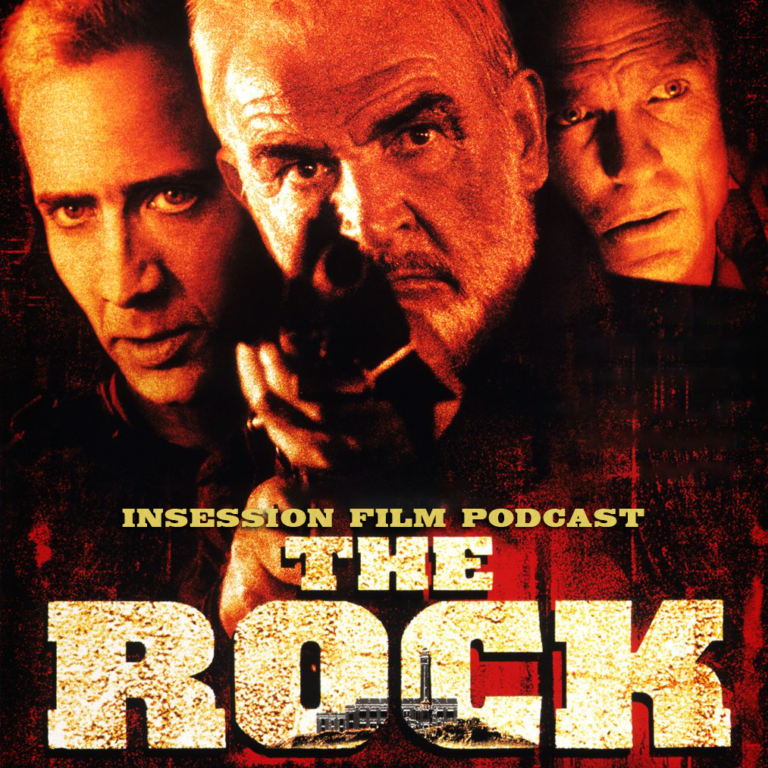
Podcast: The Rock / Top 3 Team-Up Movies – Episode 403

This week’s episode is brought to you by Patreon and our awesome listener’s like you. Sign up now and get some fun rewards!

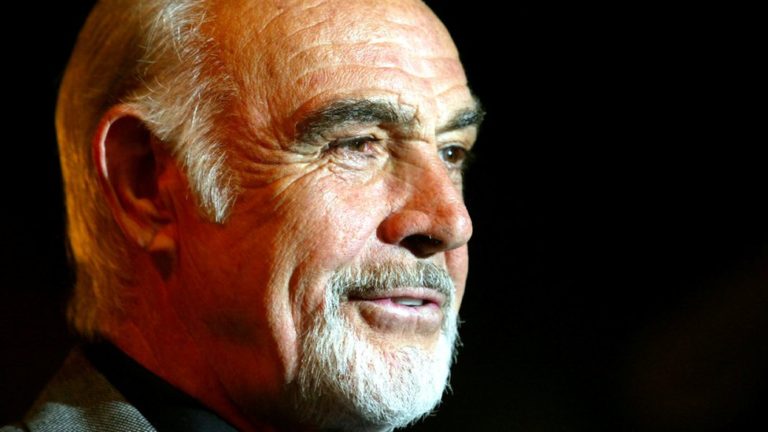
This week on the InSession Film Podcast, Ryan fills in for Brendan as we honor the life and career of Sean Connery by talking about one of our favorite Connery films in The Rock! We also discuss our Top 3 team-up movies and a few other films we’ve recently screened.

This week’s show is a bit long, it was Ryan and JD after all, but we hope you enjoy the conversation regardless. Connery was a magnetic screen presence and he will most definitely be missed. He had an extensive career that we will always be able to enjoy, including, and especially films like The Rock. It may not be his best, but it’s one of his most entertaining performances. Additionally, it was great to have a Top 3 this week as it’s been awhile since our last outing. So, forgive the length, we promise joy is to be had.

On that note, check out this week’s show and let us know what you think in the comment section. Thanks for listening and for supporting the InSession Film Podcast!

– Movie Review: The Rock (9:20)
Director: Michael Bay
Writer: David Weisberg, Douglas Cook, Mark Rosner
Stars: Sean Connery, Nicolas Cage, Ed Harris

– Notes / On the Rocks / Stop Making Sense / Rebecca / Dick Johnson is Dead (1:06:42)
This week for our discussion segment, as noted above, we talked about a few films we recently caught up with. Specifically, JD talked about Sofia Coppola’s On the Rocks and the Jonathan Demme documentary Stop Making Sense. Ryan, on the other hand, talked about Ben Wheatley’s Rebecca remake and the Kirsten Johnson documentary Dick Johnson is Dead.

[divider]

RELATED: Listen to Episode 393 of the InSession Film Podcast where we discussed Batman and Batman Returns!

[divider]

Top 3 Team-Up Movies (1:32:18)
Long-time listener’s of the show may remember, and if you do God bless you, that we did our Top 3 Movie Teams on Episode 76 way back in the day. So, our list this week is certainly cousins to that exercise. However, this time around we wanted to focus more on the films themselves as well as the teams. Also, team-up movies could just be two or three people, versus “teams” which typically consisted of more individuals. That does make this a bit of a broad list as there are countless films that could fall in this category, but that challenge is what made it fun as well. With that said, what would be your Top 3?

Show Sponsor: First Time Watchers Podcast

– Music

The Rock Theme – Hans Zimmer
Life During Wartime – The Talking Heads
Pi’s Lullaby – Mychael Danna
The Return of the Eagle – Atli Örvarsson

Subscribe to our Podcasts RSS
Subscribe to our Podcasts on iTunes
Listen on Spotify
Listen on Stitcher
InSession Film Podcast – Episode 403

[divider]

Next week on the show:

Main Review: Edward Scissorhands
Top 3: N/A

[divider]

Help Support The InSession Film Podcast

If you want to help support us, there are several ways you can help us and we’d absolutely appreciate it. Every penny goes directly back into supporting the show and we are truly honored and grateful. Thanks for your support and for listening to the InSession Film Podcast!

VISIT OUR DONATE PAGE HERE

Op-ed: 100 Years…100 Passions – ‘Love Story’ (#9)

0

I will be watching and reviewing all of the films included on AFI’s 100 Years…100 Passions list. The list contains the 100 greatest love stories in American cinema and I plan to consider how our views on romance and social issues have changed over the years as well as judge whether the romances in these films actually made me swoon. As a fan of the romance genre, I expect to love each and every one of the nominees but I also don’t know if I would consider all of them romantic.

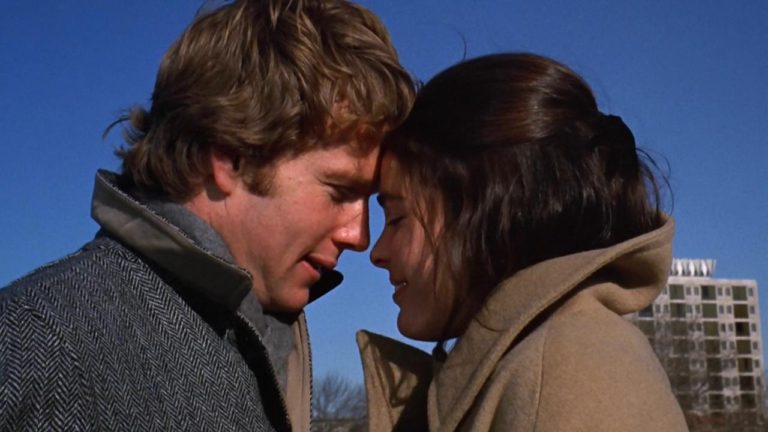
When it came to last week’s entry on AFI’s list, Love Is a Many-Splendored Thing (1955), I was fascinated by the production of the film due to my interest in Jennifer Jones’s personal life and the ways in which her marriage impacted the romantic dramas she appeared in. I can’t say that I care about the union between Ali MacGraw and Robert Evans so I have almost no emotional investment in Love Story (1970) which is a far more conventional tearjerker. This film is most interesting when viewed as a holdover from the 1960s as it was made in a decade of experimentation and innovation and yet Love Story feels like it could have been made in the era of the studio system. It tells a very basic story about a young couple from different sides of the tracks falling in love and getting married before one of them slowly dies and the audience cries as the happiness experienced by this young couple is destroyed. This is a template that does work and I am susceptible to tearjerkers but I need to invest in the characters and believe in the situation and in this case, I found myself utterly bored by the two protagonists and shaking my head in disbelief at the scenes in which we a watch a dying girl growing even more beautiful.

Last week I talked about a big studio production from the 1950s and it was full of all of the tropes that we associate with that era as it was shot in a foreign location, it featured two major stars and it clumsily dealt with important themes like race. When we think of romance in the 1950s we do think about that sort of film as it was an era in which the studio system was shaky but still dominant and conservative politics reigned. You did get stories about blandly attractive youths who are kept apart for arbitrary reasons getting together before one of them starts to suffer from some disease and both of them get to act noble and serious. This is why a lot of people dismiss the 1950s as a time in which studios were afraid of stepping away from formulas and trying to do something new.

The 1970s are looked at differently as cinephiles will fondly wax poetic about the wonderment of that brief period in which directors like Hal Ashby, Francis Ford Coppola, Sidney Lumet, and Brian De Palma were able to get big studios to invest in their weird, irreverent projects. You typically think of character studies, gangster films, and paranoia thrillers when you think back to this time but you also had kooky little romantic comedies that have come to be regarded as classics. Harold and Maude (1971), Minnie and Moskowitz (1971), and What’s Up, Doc? (1972) all feel a little offbeat and inventive because they were produced by directors with unique artistic visions and those directors had the nerve to challenge audiences. I think that we would all like to pretend that these were the only romances that were being made during these time and these are films that still appeal to modern audiences and their weirdness means that there is still a reason to watch them as they could not have been produced at any other time.

Love Story (1970) | The Film Spectrum

Unfortunately, we must admit that while the 1970s were a great decade for cinema it was also a time in which ridiculous, overlong Irwin Allen disaster movies were massive hits and terribly unfunny, sexist comedies adapted from Neil Simon plays were released every year. These productions were not politically progressive and they might as well have been made in the 1950s as women were often presented as sex objects, people of color were pushed into the background, and cliché plots were presented as ‘deep and meaningful’ without a touch of irony or self-reflexiveness. Love Story could have been released in 1955 as it is a shamelessly manipulative tearjerker and it doesn’t aim to do anything new. It feels like a holdover from that decade and it was likely successful because parents were comfortable letting their young daughters watch it. There is a sex scene but for the most part it encourages people to adopt traditional values as two young virginal people get married but the girl’s father gets to give his daughter away and these young people have the sort of perfect marriage that people were told they should have in the 1950s.

The Motion Picture Production Code played a major role in censoring Hollywood films between 1934 and 1968 and it helped to cut nudity, frank explorations of sexuality and relationship issues, and people of color out of cinema. In the 1960s everything started to change and directors started to seriously push back against it with films like Who’s Afraid of Virginia Woolf? (1966) proving that audiences were hungry for cinema that featured curse words and conversations about sex, alcoholism, and painful marriages. In 1969, the industry went wild and films were released that broke every taboo as nudity was suddenly acceptable and producers were eager to cash in on this. There was still a large section of society that disapproved of depictions of sexuality and there were also racists in society who only wanted to see pretty white people who looked and acted as they did. They wanted to see traditional family films that did not push any boundaries and big studios tried their hardest to attract these audiences by pushing out musicals full of ‘pure’ characters. Love Story was almost certainly produced to appeal to this audience and it ticks all the boxes as it does not offend anybody and it ends up seeming so dull because of that.

I already explained the basic outline of the plot but the film concerns wealthy university student and ice hockey player Oliver Barrett, Ryan O’Neal, who has a strained relationship with his overbearing and emotionally distant father, Ray Milland. He falls in love with poor student Jenny Cavilleri, Ali MacGraw, and they are married even though Barrett’s father disapproves of their relationship. They are happy together but she develops a life-threatening illness and Barrett is forced to go to his father so that he can obtain the money that will pay for her treatment. She dies but Barrett has learned about the power of love.

My primary issue with this film is the writing of the characters. At the beginning of the film, we hear O’Neal saying “What can you say about a 25-year old girl who died? That she was beautiful. And brilliant. That she loved Mozart and Bach. And the Beatles. And me.” This is a line that suggests how flat and generic that these characters are going to be. What American girl who was alive in the 1970s didn’t like The Beatles? Cavilleri would be more distinctive if she wasn’t a fan of the Fab Four or if she took an interest in a band that wasn’t so aggressively mainstream. If she revealed that she was actually a big fan of Poco and regularly listened to “Just In Case It Happens, Yes Indeed” then I might have thought of her as a more distinctive figure. She is meant to be poor and slightly resentful of the rich kids who surround her at university but other than the opening scene in which she throws weak insults at the boy she likes we don’t see anything that supports the idea that she has a chip on her shoulder. If she had been more insecure about her social position and how poor her father is then there might have been more conflict in her relationship with her rich husband. She could have listened to music that established her working-class background and it could have made her seem different to the rich girls at university who like music that everybody listens to. Instead of giving her any flaws or insecurities, they turn her into a cute young woman who could be any girl in the audience.

The Movies Recommended: Love Story (1970 film) | Love story movie, Romantic  movies, Romantic movie quotes

I get the fact that you want to relate to the characters in the film and because this was a mainstream production it needed to appeal to a very wide audience but did this mean that the main characters needed to have no character traits. Maybe teenage girls looked at her and liked her because she was pretty and every other character in the film seemed to love her but surely they yearned to experience some of the struggles they went through in day-to-day life. Before she begins dying from a mysterious illness she is just an attractive model who features in scenes that could have come out of a jeans commercial. She drops the snark that she possessed in the opening scene almost immediately and starts to adopt mannerisms that were clearly meant to be whimsical and sweet. MacGraw is an actress of limited talent who never gave a performance that was reliant on anything more than her natural beauty. She isn’t working with much here but she lacks presence as a movie star and started to get on my nerves pretty quickly. She frequently wrinkles her nose and I could sense that she thought this made her look cuddly and worthy of our affection. I just wanted to slap her character whenever she did this and I kept wondering when she was going to start behaving like a human being who isn’t happy 100% of the time.

When she gets sick she starts to act like Greta Garbo and I became even more irritated as she is lit to the heavens and the camera admires her while she is in this suffering, weak position. We are meant to think that there is something glamorous and aspirational about this youthful, highly attractive girl who stoically deals with something that would presumably cause her great pain. We are never allowed to understand how this illness and the slow approach of depth is impacting her on a psychological level. She is saintly in the way that she simply accepts these things and her husband is allowed to express all of the anger while she angelically sits back and counsels him whenever he expresses doubts or concerns. I just don’t think that this is an accurate depiction of what it must feel like to be young, in love, and near-death and it makes young girls think that dying young is a romantic idea. This is a highly problematic notion that was heavily popularized during the 1960s and 1970s as a lot of countercultural icons died young. Dying young allows people to remain young, beautiful, and idealistic forever and it also lets people imagine what they could have been rather than dealing with what they truly were. It is disgusting that the screenwriters chose to turn dying young into something glamorous and their refusal to properly come to terms with how hard it would be to die at this age is angering.

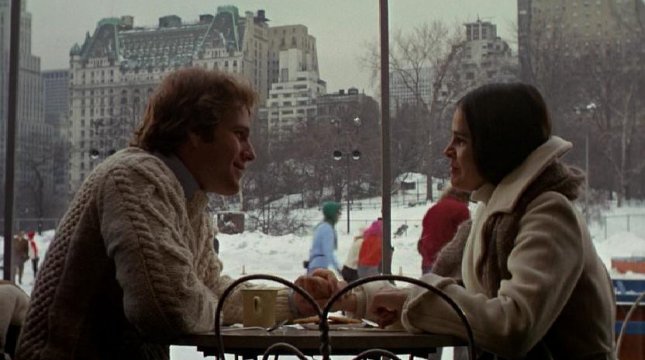
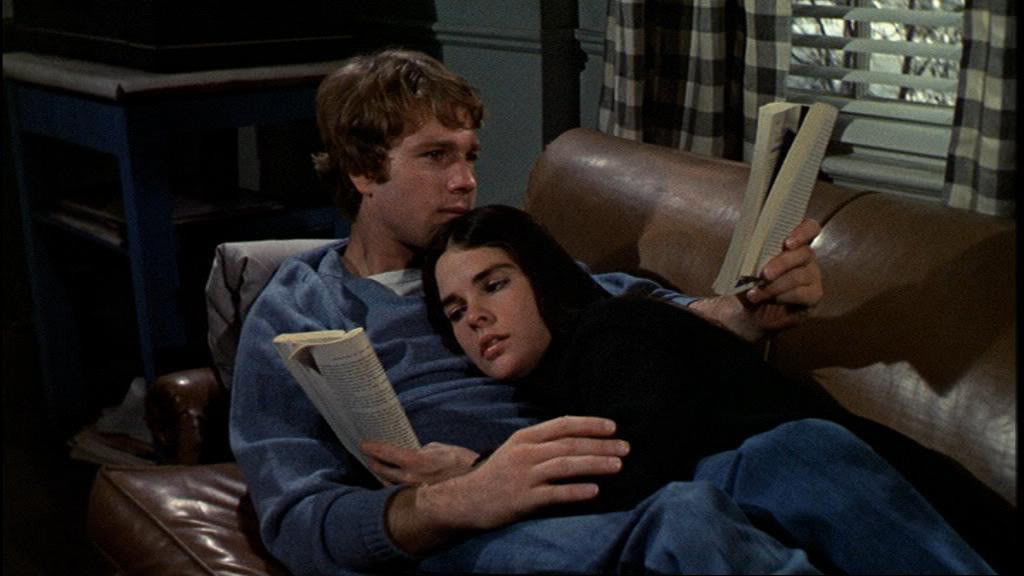
This film also falls into the trap that Love Is a Many-Splendored Thing fell into as its midsection is essentially just an extended montage of two attractive people who are in love doing different activities while looking gleeful. In both cases, these scenes are not used to tell us more about the characters, their personalities, or why they are attracted to one another. They both look nice and they go to scenic areas but this series of fun activities starts to seem boring and repetitive after some time. The characters rarely get to talk and their ‘connection’ ends up seeming so shallow. Yes, they like having sex with one another and the cinematographer is very eager to show us that they both have nice bodies but neither of them seem at all anxious about sleeping together. I don’t think that this was realistic as both characters would seem to be sexually inexperienced based on the limited information we are given and I haven’t met any people in their early twenties who are as confident as these characters. They are meant to be extremely attracted to one another so I assumed that they would be uncomfortable presenting their bodies to one another because they are eager to please the person they are with. This does not turn out to be true and we get a fantasy sex scene in which everything works out perfectly for them. Again, this was probably feeding into the desires of the teenage girls in the audience who wanted to believe that their sexual experiences would be perfect someday but the scene would have been more interesting if it had explored the difficulties that young people face when they have sex with somebody they actually like.

The Ace Black Movie Blog: Movie Review: Love Story (1970)

The other activities they perform also lack specificity and that stupid montage of them flopping around in the snow did not put a smile on my face. I also want to touch on that awful, awful line that MacGraw’s character delivers as she says “Love means never having to say you’re sorry” and we are meant to think that this is wise and romantic. Anybody who has ever been in love, whether in a romantic or platonic sense, will know that this statement is factually incorrect. When you love people you often fight with them because you know that your bond with them is strong enough to overcome minor disagreements. You also end up fighting because you have to make some of the most important decisions of your life together and this inevitably creates conflict as you are both under stress when you have to make choices that could irrevocably change your lives. You end up saying sorry to the people you truly love every single day because you end up feeling guilty for arguing with them and because you want to see them happy again you decide to apologize for your rude and inappropriate conduct. If I approached my mother after arguing with her and told her that I shouldn’t have to say sorry to her because I love her I do not think that she would be very happy with me. MacGraw’s platitudinous line is meant to tie everything together and make us weep but she doesn’t impart anything of meaning to the audience when it comes to the experience of being in love.

If I am going to go even further in comparing this to the sort 1950s melodrama that I looked at last week then I would say it falls short in terms of the way it is written and the way it looks. I wouldn’t say that the 1950s were the apex of great screenwriting in Hollywood as you got formulaic scripts full of lines that felt overwritten rather than coming across as breezy and natural. At the same time, there is often a fascinating artificiality to dialogue from 1950s melodrama as a film like Pandora and the Flying Dutchman (1951) are full of lines that stretch the bounds of the imagination before becoming so otherworldly and thrillingly odd that you can’t help but be seduced by them. In that film, Ava Gardner’s character says “Yes, I would. I’d die for you without the least hesitation. I know that sounds extravagant. But, I thought about it and I meant it. I’d give up my life for you. That’s the measure of my love. And you? What would you give up?” She delivers lines that are full of platitudes but they take on grandiose proportions and the film never pretends that these are things that people would say in real life. Love Story wants to be realistic and grounded and all of MacGraw’s lines are delivered with a solemnity that made me want to roll my eyes. She delivers bad dialogue in the worst way possible as she acts like she is saying something that is really original and insightful and doesn’t have the sense to realize that she’s in a Hollywood melodrama and not an Ingmar Bergman family drama.

Love Story - Movie Forums

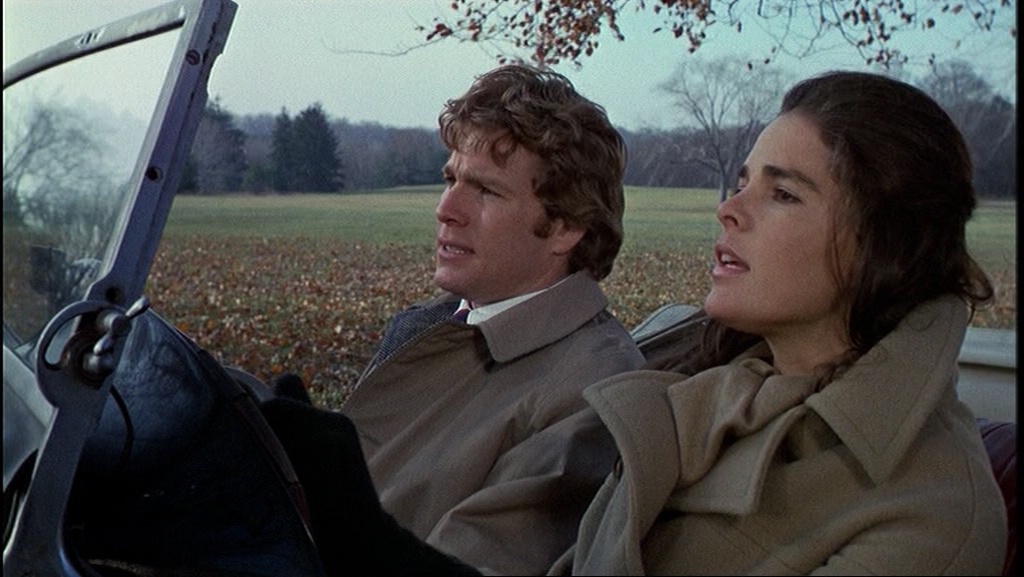
The cinematography is another big issue in this film as we usually look towards romances to give us imagery that evokes the passion and excitement of being in love. So often romances are set in exotic locations where shots of beaches and notable landmarks can be used to highlight the fact that these people are living in a fantasy land of sorts. They usually aren’t trapped in the suburbs where the cinematographer would have to make the broken roof of a tract house look visually stunning. Love Is a Many-Splendored Thing was not great but at least there was something romantic about the sight of a single tree wavering in the wind at the top of a hill while two lovers frolic around in the grass. Those visuals were what got me through that film but with Love Story I often found myself marveling at just how bland it looked. Brown and white seem to be the only colors that Richard Kratina wanted to highlight so we get plenty of MacGraw and O’Neal wandering around in beige jackets while the snow falls behind them. There is nothing remotely exotic or exhilarating about this! Perhaps these utterly boring colors are meant to represent these lifeless, un-engaging characters rather than adding any texture or detail to the university campus they inhabit.

The production values here are not very strong as the imagery is bland and unmemorable, the costumes don’t tell you anything about the characters and the production designers seemingly forgot what it was like to be a university student. There are posters plastered everywhere in this university but we don’t feel like we are immersed in day-to-day life at this university at any point. Barrett plays ice hockey and appears to be good at everything but we only get brief scenes in which he interacts with members of the student body who are not his wife. It is fun to see Tommy Lee Jones playing his roommate as you would never think that he would go on to become one of the most respected actors of his generation based on his role in this film. He looks too craggy, even as a 24-year old, to be a traditional leading man and you can see why the more traditionally attractive O’Neal was given the leading role in this film. Jones looks like a slightly dangerous older guy who might psychologically torture you on the way home from your first date. I kept entertaining the idea of what this film would look like with Jones in the O’Neal role and while the former wouldn’t be a perfect fit for the part I do think that he would have given a more interesting performance than O’Neal.

I want to close out this article by acknowledging the fact that I was once weak enough to give Love Story a three-star review. Back in the days when I had barely seen any films I was horribly uneducated and I didn’t know what constituted a good romantic drama. Superficially, Love Story had everything going for it and I was blinded by that so I dared to call it passable entertainment that would satisfy the needs of its target audience. I now have more respect for teenage girls and I realize that they could be consuming better entertainment as classic tearjerkers like Shadowlands (1993) exist and they will intellectually engage young women as well as making them feel sad when one half of the central couple dies. I hate myself for having so little self-respect in the past as I should have realized that there were better options out there rather than settling for something as poorly made like this.

I completely hated this film but I can completely see why AFI placed it so high on their list. They are a group of squares who would be resistant to any film that pushed back against the status quo. They are comfortable with something like Bonnie and Clyde (1967) because it is no longer a cause celebre and even the most mainstream critics have embraced it but they can’t handle anything from the 1990s that goes against the grain. Love Story was also a big hit in its day and I have to assume that a lot of AFI voters were part of its target audience when it was released. They were probably swept up in it at the time because it became such a sensation and in voting for it they are displaying the fact that they are nostalgic for a time in which something as unexciting and uninventive as Love Story could be a massive hit. It remains fairly well known as an example of the weepie genre even if modern teenagers aren’t actually watching it and while it doesn’t have critical support behind it I do think that some people still have warm feelings towards it. There are several entries on the list that got in based on populist support alone as the AFI voters didn’t seem to take the opinions of critics very seriously. Obviously, I wouldn’t have placed Love Story on the list at all but I do think that the high placement of the film is a sign that the voters often made poor choices when putting together their ranking.


Next week I’ll be taking a look at a film that has consistently attracted the admiration and love of audiences since it was first released in 1942. It is incredibly daunting to think about writing about such a revered piece of work and I fear the backlash that will be directed at me if I go against the traditionally held views of most cinephiles. Hopefully, I can make my feelings on this beloved film clear and I will try to put aside my strange aversion to Ingrid Bergman while I watch it again next week.

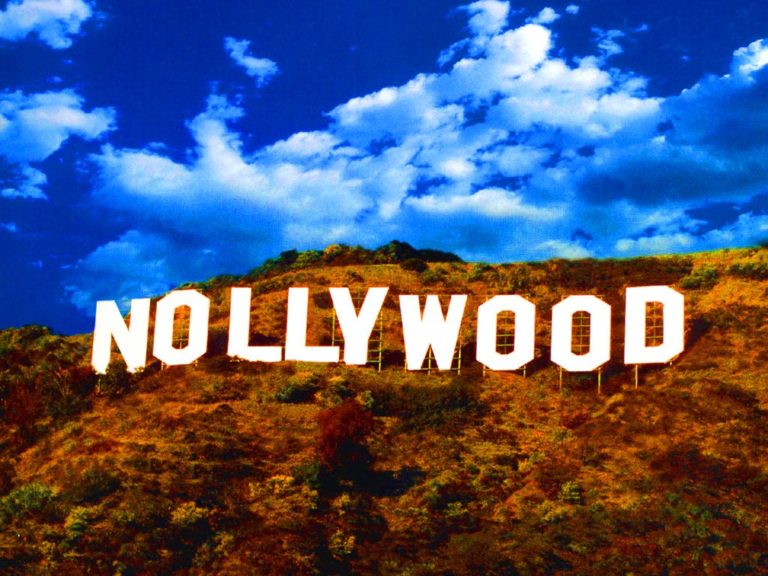
Nollywood: Nigeria’s Own Industrial Boom

For many African native actors, getting to work in Europe or North America is a pipe dream. Only a select few make the successful jump over to where the pot of gold in acting comes from. For African-produced stories, because it is a Third World continent, it does not have the same output as it would be in any First World nation. Most African countries have low output and not much of a thriving base. Except here. In Nigeria. The most populous country in Africa, the home to 250 ethnic groups. Welcome to Nollywood.

Colonial Years

In the early 1900s, the first motion pictures arrived and were exhibited in Nigeria. Herbert Macaulay, a native politician who became the founder of Nigerian nationalism, invited over a Spanish film company who toured Western Africa showing the new medium to African natives. It quickly became popular and more European exhibitors came. The British Government used movies to raise money during the First World War, as well as espouse their culture to assimilate Nigerians. Regardless, people came to fill the halls every time a movie was playing.

In 1926, the first Nigerian film was released. Palaver was about a love triangle between an English nurse, a British officer on duty, and a local tin miner. While it is noted that locals were cast in the film, Palaver was also a movie that portrayed Africans as cannibals and savages who needed to be controlled because they were not civilized. A film that was successful and set in Nigeria was 1935’s Sanders of the River starring Paul Robeson, Leslie Banks, and Nigerian native Orlando Martins, an actor who did make the move to London. Robeson, an American living in London at the time, was tricked into believing the film would show Blacks as normal people but disowned it when the final cut showed them, including his character, as childish and abusive.

In the 1940s, the establishment of big commercial cinema houses… In 1954, as the push for independence grew, the Nigerian Film Unit was recognized as an essential entity, playing movies to 44 established cinemas that were free for the audience. The first copyrighted movies made by them was 1957’s Fincho, which was also the first Nigerian film that was shot in color. With non-professional actors, the story followed the titular character who struggles with industrialization and the threat to traditional jobs caused by it. By this point, the colonial era was about to end.

The Golden Age

After winning independence in 1960, Nigerian cinema expanded quickly as well as the import of numerous American, Indian, and Japanese films into the country. The growth was pushed by many stage actors and directors who came over to movies and TV, which were supported by the government. However, foreign control on movie theaters and continuous imports from abroad threatened the Nigerian market, so in 1972, President Yakubu Gowon signed the indigenization decree that declared several sectors of the Nigerian economy would keep out all foreign investment. This meant Nigerians would be in the key roles in the industry. Some of the names that would be in the center of this include Ole Balogun, Hubert Ogunde, Moses Olaiya, and Wole Soyinka, the latter of whom won a Nobel Prize for Literature in 1986.

Also in the 70s was an economic boom in the country because of the high sales of petroleum that came after the global oil glut. More money meant the middle class grew by buying TVs and visiting the cinemas a lot more and some economic incentives for foreign productions to come over. In 1979, the government recognized Nigeria’s cinema industry as permanent to the country’s cultural identity and formed the Nigerian Film Corporation (NFC) to regulate all showing of films. The Golden Age would slow down throughout the 1980s before it nearly collapsed in the 90s.

New Nigerian Cinema – aka “Nollywood”

The decline of the country’s movie industry was caused by a sharp economic downturn, government instability, and the rise of VHS where movies were made inexpensively and went straight-to-video for instant consumption. By 2000, with the film industry going bankrupt, many sought to bring back to glory years and help revamp the falling of old cinemas in the country. This included upgrading and building new movie theaters and getting new investment in productions that would raise the quality of their films where people would be encouraged to go to the theatre to see them.

https://www.youtube.com/watch?v=nORc0bGvbTo

In 2006, an initiative called “Project Nollywood” was started by the Nigerian Government and provided over ₦100 million (or $781,000) to filmmakers to produce the films they want, distribute them, and provide formal training for future directors. The sobriquet Nollywood was first used in 2002, although where it came from isn’t known. But to Nigeria, it became a word of pride to describe their industry as these new movies brought critical and commercial acclaim to a global audience. Films such as Amazing Grace (2006), Through The Glass (2008), The Figurine (2009), Ije (2010), and Half of a Yellow Sun (2013) raised the profile of Nollywood throughout Africa and the world. By 2014, the industry was worth an estimated USD$5.1 billion, third behind India and The United States.

One of the reasons Nollywood is massive is because it represents a continent where the stories are similar to many in other countries. Actors from all over fly to Nigeria for work and have caught the attention of Africans who have moved to Europe. Small groups of Nollywood fans are even in the United States and Canada. Nigeria has its own Actors Guild and Directors Guild, and besides the Nolly Awards (their version of the Oscars), the Africa Movie Academy Awards were established as a celebration to all African film industries. But it wouldn’t be until 2019 would they submit a film, Lionheart, to the Academy for consideration as Best International Feature. The film was disqualified because most of the dialogue was in English but is such an unfair punishment because English is their main language. Hollywood needs to open up to Nollywood and so do us, the cinephile because there’s a fountain of films that have to be openly tapped.

Follow me on Twitter: brian_cine (Cine-A-Man)

Movie Review (Raindance): ‘Stardust’ is Lacking in Music, Heart and Soul


Director: Gabriel Range
Writer: Christopher Bell, Gabriel Range
Stars: Johnny Flynn, Marc Maron, Jena Malone

Synopsis: Stardust chronicles the young David Bowie’s first visit to the US in 1971 – a trip that inspired the invention of his iconic alter ego Ziggy Stardust.

[/info]

This may be a bio-pic about David Bowie, but I want to start this review by making a disclaimer. Unlike other biopics in the past two years, particularly Bohemian Rhapsody and Rocketman, Bowie’s family had no involvement with the project. In fact, Bowie’s son Duncan Jones has been open about not supporting this project from the start. In 2019, it was confirmed that this film was not granted the right to use Bowie’s music in any part of the film. This will be a fair review of the quality of the film itself, but the disclaimer is worth noticing if you are a fan of Bowie and wanted to see the film purely for support of his work.

When the trailer dropped for this film a few weeks ago, many of us looked at it and realized what we were getting into a mess capitalized by the success of bio-pics of the beloved musicians in the 1970s. I will full on confess: I am a defender of Bohemian Rhapsody. It’s not a technical masterpiece and it certainly didn’t deserve the Oscars that it won, but it was a celebration of Queen and a lot of fun whilst doing so – especially the recreation of the Live Aid concert. Many of us will agree, however, that Rocketman was a strong bio-pic filled with heart, a compelling story, and a wonderful leading performance by Taron Egerton as Elton John, something he helped create from start to finish (and fought with several countries to be allowed to show the way he wanted it).

Quite simply, there is none of that in Stardust. If there is one good thing about this biopic, it is the casting of Marc Maron as Ron Oberman. Maron not only brings the energy up in this film, but he is believable and he really does care about this project. It is known to fans of Bowie that Maron is a huge supporter of the singer, and it was clear that he took on this project with good intentions and gave his best. When he was on screen, I found myself engaged with his performance and what his driving force was throughout.

The rest of the cast, however, each feel like they are in a completely different film. Johnny Flynn is disappointing, feeling held back and giving a monotone performance. He isn’t engaging when he performs, he isn’t engaging when holding conversations or putting his point across. He doesn’t feel like David Bowie or his alter ego, Ziggy Stardust. Whilst I have liked previous performances given by Jena Malone, she also doesn’t fit here in the role of Bowie’s wife, Angie. Whilst Flynn is held back and restrained, Malone feels like she is trying to give an Oscar-worthy performance in every scene and over-performs every moment, from the screaming to the crying.

Given the fact that the actors all gave different performances and none of them fit together, the tone of the film just did not work either. The start of the film sets up the concept of why Bowie is in the US, but it takes a ridiculous turn to try and get around the fact that they weren’t allowed to use his catalog. The premise of the film is that because David Bowie and his team were stupid enough to not get a work permit visa for the country, he is not allowed to promote his music in any way, resorting to covers and quiet talk. When this exposition was laid out originally in an airport sequence, I was shaking my head at how ridiculous they were making Bowie look. When the explanation as to why that was a plot point was revealed later in a dinner sequence, I laughed at how much of a stretch the filmmakers took to get the story to make sense without his music.

It was not only the script that was badly written. The film was just over 100 minutes long, and the bad writing and dull tone made this feel a lot longer than 100 minutes long. This bio-pic is meant to present Bowie discovering his alter-ego, and there should be a major arc and character development that comes with that. Sadly, all of that is lacking with none of Bowie’s music and instead insignificant gigs filled with cover songs and overdrawn dialogue that have no passion behind them.

I would forgive this film a little for being badly written or edited if the visuals were captivating or strong. That is not even the case here. For a film focusing on the creation of Ziggy Stardust, I do not get why the color palette is so bland. There are just scenes of washed-out browns and sandy-colored rooms and it just makes each scene feel faded and washed out. The make-up and hairstyling throughout are badly done, not just with Bowie but the supporting cast as well. The film starts with a captivating shot of Bowie in the spacesuit as a dream sequence, but from there it never has the innovation to do anything of that quality visually again.

I knew I would be disappointed with this film going into the screening, but even then I didn’t expect it to be this bad. I was trusting the actors to at least care about the performances and story, but I only found Marc Maron’s performance to be engaging. This film does not show David Bowie in a good light, and I can understand now why his family would be so hesitant to put their brand and music behind a project like this. If you are going to make a biopic about somebody as beloved as David Bowie is, at least respect him and not go down the traditional route. A David Bowie bio-pic should perform on the level of Rocketman, but this might just be one of the worst biopics to be made. For those who disliked Bohemian Rhapsody, you will be in for a ride with this one.

Grade: D

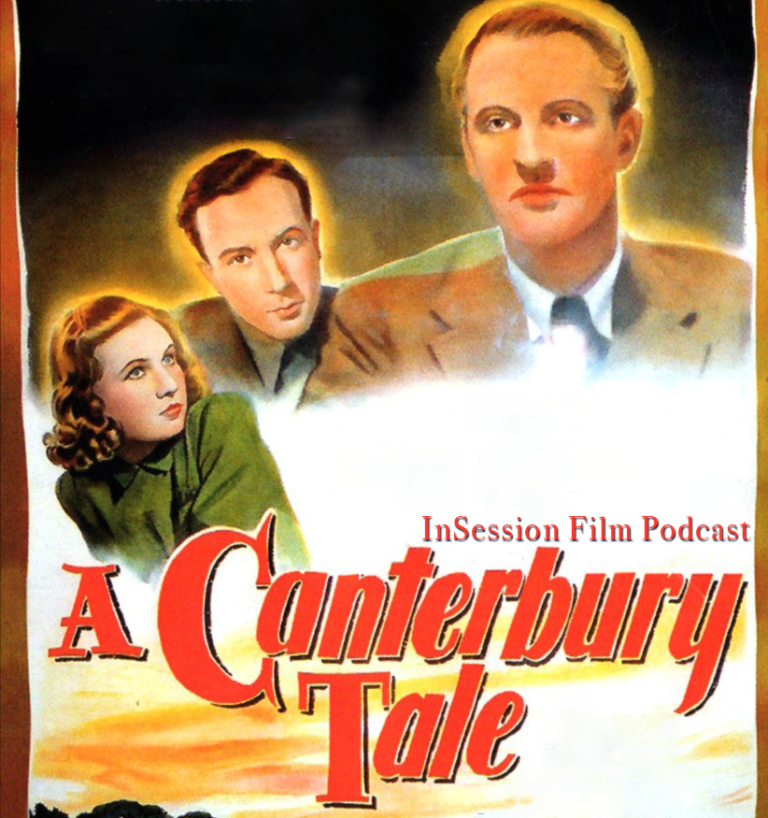
Podcast: A Canterbury Tale / The Wolf of Snow Hollow – Extra Film

On this week’s Extra Film, Ryan and Jay continue their Michael Powell / Emeric Pressburger Movie Series with A Canterbury Tale and they also review The Wolf of Snow Hollow!

With their first review of The Life and Death of Colonel Blimp, Ryan and Jay tackled one of the best films of the director’s career. The Extra Film boys take a stroll to the English countryside during WWII with A Canterbury Tale. A more modest film this week, with the hosts seeming to like it for the most part but not over the moon for it. It leads to a quick, detailed discussion about this mostly forgotten film.

In the back half of the episode, the boys take a look at The Wolf of Snow Hollow. Director Jim Cummings follows up his stellar debut Thunder Road with another cop drama about a small town facing the ramifications of a serial killer on the loose. While The Wolf of Snow Hollow might be getting high praise from many critics, but Ryan and Jay have big expectations for Cummings, and sadly, this project has let them down. One of them even goes on to call it one of the worst films of the year. Listen to the show to see which host it is who says this.

Thanks for listening!

– Movie Review: A Canterbury Tale (4:45)
Director: Michael Powell, Emeric Pressburger
Screenplay: Michael Powell, Emeric Pressburger
Stars: Eric Portman, Sheila Sim, Dennis Price, Kim Hunter

– Movie Review: The Wolf of Snow Hollow (42:34)
Directors: Jim Cummings
Screenplay: Jim Cummings
Stars: Jim Cummings, Riki Lindhome, Chloe East, Jimmy Tatro, Robert Forster

– Music
Allan Gray
Valen – Little Red Riding Hood
The Return of the Eagle – Atli Örvarsson

We try to make this the best movie podcast we possibly can and we hope you enjoy them. Subscribe today on iTunes, Spotify or Stitcher, and please leave us a review on iTunes. You can also find us on Soundcloud, PlayerFM, and TuneIn Radio as well. We really appreciate all your support of the InSession Film Podcast.

Subscribe to our Podcasts RSS
Subscribe to our Podcasts on iTunes
Listen on Spotify
Listen on Stitcher
A Canterbury Tale / The Wolf of Snow Hollow – Extra Film

[divider]

To hear this Extra Film episode and everything else we do, download our apps on the Amazon Market for Android and the Podcast Source app on IOS devices. The mobile app covers all of our main shows, bonus podcast’s and everything else relating to the InSession Film Podcast. Thanks for your wonderful support and for listening to our show. It means the world to us

Movie Review: ‘Pixie’ Is a Fun but Convoluted Irish Heist Caper


Director: Barnaby Thompson
Writer: Preston Thompson
Stars: Olivia Cooke, Ben Hardy, Daryl McCormack, Colm Meaney, Alec Baldwin

Synopsis: To avenge her mother’s death, Pixie masterminds a heist but must flee across Ireland from gangsters, take on the patriarchy, and choose her own destiny.

[/info]

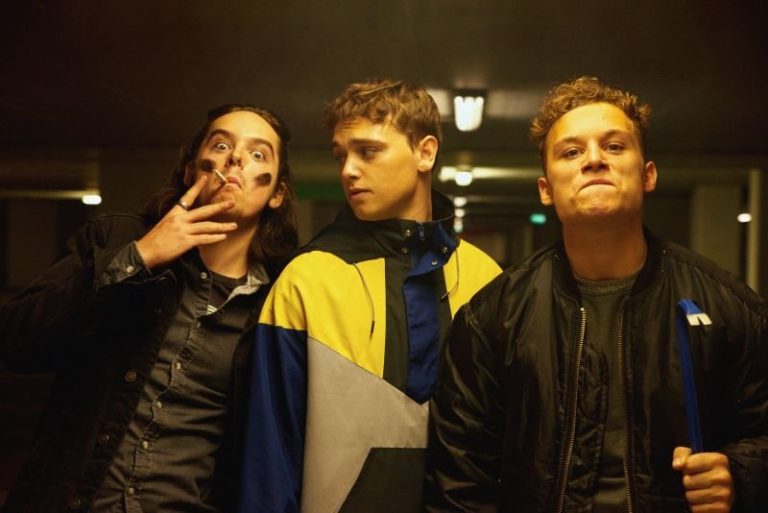
If Guy Ritchie were to direct a movie written by Martin McDonagh, based on Pedro Almodóvar’s Y Tu Mamá También, it might look something like Pixie. Featuring a spirited performance by Olivia Cooke and boasting a colorful cast of characters (including Alec Baldwin as a gun-toting Irish priest) Pixie feels more like a late nineties/early noughties heist caper than anything else. There’s typical elements of Irish humor here (including a blink-and-you’ll-miss-it appearance by Father Ted’s Pauline McLynn) and a typical McGuffin in the form of a bag of drugs which everyone wants to get their hands on, so you feel you’re very much on familiar ground as far as British comedies go. However, although it doesn’t do anything new and instead follows some clichéd (and convoluted) plotting, Pixie is still a fun endeavor and worth the watch.

Olivia Cooke plays the terminally charismatic Pixie, daughter of a local crime boss. She’s looking to run away to San Francisco and enlists the help of friends Frank and Harland to sell a bag of drugs she stole from a cabal of priests in order to fund her escape. Along the way, she must contend with her homicidal brother (Turlough Convery), a drug dealer with a factory front (played by Dylan Moran, giving the effect of Bernard Black having gone into the drug business), and a vicious hitman (Ned Dennehy) who will stop at nothing to kill his target. As the trio make their way across the Irish coastline, looking for solutions, they develop a bond and friendship that might just get them out of this mess.

It all makes for some raucous moments and is carried almost entirely by Cooke, who’s effortless, megawatt charisma lights up every scene. The dialogue – especially hers – is snappy and desert-dry, emphasizing the Irish roots which it champions. Unfortunately, the plot itself isn’t as snappy. Instead, it is often convoluted and tangential, feeling like it doesn’t really know where it wants to go. A third-act denouement tests the limits of suspension of disbelief, feeling wasteful (especially of Baldwin, who gets very little to do), and wraps everything up in a way that’s a little too trite.

You feel the ostensible heart of Pixie isn’t actually Pixie herself, but Frank and Harland. The hapless duo stumbles unwittingly across the drugs, bringing them into Pixie’s orbit. They both vie for her affections, in one way or another, and have a clear bond which comes out through their dialogue. It’s a shame, then, that so much of their dialogue feels stilted and childish. There is very little in the way of emotional growth or character growth; perhaps only Colm Meaney as Pixie’s father manages to wring pathos from the script.

As mentioned, fans of Guy Ritchie will find much to enjoy here; Pixie’s sparky dialogue, a hyper-stylish shootout near the end, and fast, quirky edits all call to mind Ritchie’s best oeuvre.  There’s lots of fun here, but there’s a sense director Barnaby Thompson wasn’t interested in pushing the boundaries of the genre. Rather, he sticks with tried and tested methods and, while you may have seen them all before, if you’re a fan of the genre you won’t leave Pixie feeling shortchanged.

Grade: C


Criterion Crunch Time: ‘Shampoo’

Welcome back to another month of Criterion Crunch Time, where we highlight movies that are leaving the Criterion Channel at month’s end. The first movie I chose to highlight is Hal Ashby’s Shampoo. Now, I would love to tell you that this was picked because of the election occurring right now, but frankly, that would be giving me way too much credit. Sometimes, things just work out that way. For many of you, the election will still be happening in the background, much like the events of this movie.

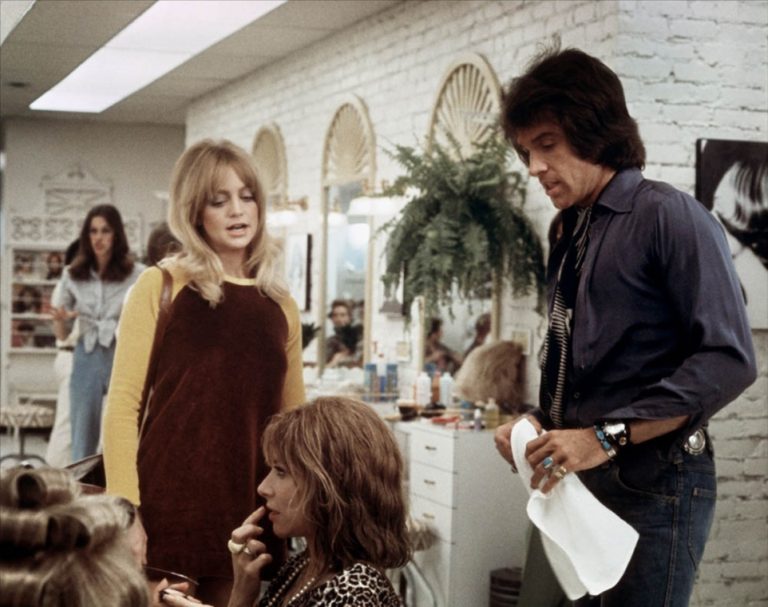
Perhaps counterintuitive (at first) to that election subplot, Shampoo follows the exploits of George Roundy (Warren Beatty) as he attempts to start his own hairdressing salon, and also have sex with every beautiful woman that crosses his path. And in his case, this is absolutely every woman he comes in contact with. For the purposes of brevity, these women include his girlfriend Jill (Goldie Hawn), his married lover, Felicia (Lee Grant), and Jackie (Julie Christie), who is George’s pseudo-ex-girlfriend and the mistress of Lester (Jack Warden), who happens to be Felicia’s husband.  You got all that? Good, now we can really dive in.

Director Hal Ashby sets the scene for this movie perfectly. In the very first scene, two things are occurring simultaneously. First, we are informed that it is the eve of the presidential election that will end with Richard Nixon winning the office. And secondly, George is entangled in a sex scene with Felicia. This strange juxtaposition absolutely sets the perfect tone. Shampoo is, shockingly, a movie about many things. It features a promiscuous man who is clearly covering insecurity and sadness with his daily bacchanal of women. It details a split world, in which one can attend a swanky elite party where they swig champagne and then move on down the road to experience a counterculture filled with illicit drugs, all the while not indicting either group.

More directly, Shampoo does something that is almost impossible. It makes you feel pity for Warren Beatty (and his horrible Wolfman hair), after he has had sex with Lee Grant, Goldie Hawn, and Julie Christie. There are two specific moments that manage this, in the midst of a purported sex comedy. The scene in which he tells Jackie that he is truly afraid that his girlfriend will eventually leave him is oddly heartwarming and intimate. He knows his faults, and knows that she needs a man that is both successful and, more importantly, stable. It shows a side of the stereotypical cad that we almost never see. That insecurity, that reality endears him to us. And obviously to Jackie, as they end up having sex, all the way up until her husband arrives and they need to cover up. Hey, he may be insecure, but this is still a sex comedy, and that is still Julie Christie. 

But the success or failure of Shampoo does hinge on that long night of parties mentioned earlier. Fueled by champagne and jealousy, all of George’s plans and romantic interests all meet and smash into each other in the most awkward of way. And honestly, it clears the way for the best moments of the greatest performance in the movie. Julie Christie could easily get by in this film by being gorgeous, and she is that. But she is so much more. Clearly game for just about anything, Christie goes all-in on this scene, ranging from death glares and mouthing her jealousy across the table, all the way to literally climbing under the table and, at the very least, insinuating fellato. And yet, it is never a ridiculous performance. She truly has mastered the ability to be a part of the upper class and be able to focus her desire into a singular performance.

As the film moves to the counterculture party, director Hal Ashby never takes the easy way out. It would have been simple to only focus on how out of place the rich folks are among the crazy hippies. There are small moments of that, highlighted by Lester struggling with the choice to get into the hot tub with a few strangers. It also makes the interesting choice of showing that, if anything, the young, sexually free people at the party are doing much the same thing as the elite, just a bit more honestly. No cheating, no lying, just being clear about what they want. This all culminates, of course, into our protagonist George having sex with Jackie on the floor. But no happy endings here, as Jill sees this and promptly throws a chair at the window. 

Speaking of a lack of happy endings, that is what pushes Shampoo from good to very good. If our man, George, ended up with any of these women, the film falters. Jill clearly needs someone stable, a version of George that he is not ready to be. Felicia is married and relatively settled, despite her dalliances with George. And Jackie? Well, he tried. George does give the grand gesture and state that he wants to be with her. But does he truly? Or is he just afraid of being alone? I side with the latter. Jackie, probably his most serious relationship, is also safe as she knows and accepts who he is and likely always will. But she is also enmeshed with married Lester and believes that he will divorce his wife to be with her in the end. So, sad, unfocused, confused George is left alone, hammering home the point that he needs to make real changes. Yes, his life is filled with affairs with beautiful women, but that clearly is not enough. If those changes are not made, George will drift through his charmed life, terribly unhappy.

Shampoo is the exact kind of film I look for from Criterion. A mix of genres and tones, a lauded director that many have forgotten about, and starring some of the best actors of a generation. Although that mashup of tones can be difficult for some and the film takes a few minutes to really dive into the plot, it all coalesces together in a rewarding way. If you ever wondered why actors like Warren Beatty and Julie Christie were lauded for their appeal, and not purely closeups of their beautiful faces, Shampoo is one to put on your list. Beatty cruising down the road on his motorcycle and Christie celebrating her newest hairstyle absolutely still have an impact even today. I highly recommend watching this one before it leaves the Criterion Channel in just a few weeks!

Up next week, Red Road from director Andrea Arnold!

Op-ed: 100 Years…100 Passions – ‘Love Is a Many-Splendored Thing’ (#85)

I will be watching and reviewing all of the films included on AFI’s 100 Years…100 Passions list. The list contains the 100 greatest love stories in American cinema and I plan to consider how our views on romance and social issues have changed over the years as well as judging whether the romances in these films actually made me swoon. As a fan of the romance genre, I expect to love each and every one of the nominees but I also don’t know if I would consider all of them romantic.

This might be one of the more obscure entries on the list as it is not a widely discussed classic amongst cinephiles and mainstream audiences generally turn towards something like An Affair to Remember (1957) when they think of 1950s romance. I had seen it once before and I can’t say that I loved it when I first saw it but I approached it more hopefully this time as my love for its leading lady has only increased over time. I thought it would be interesting to consider this entry on the list first as it is fairly forgotten and it would be fun to talk about why modern audiences don’t respond to it. I decided to view it through the lens of Jennifer Jones as it was an important milestone in her career and helped to continue her run as a box office queen and movie star.

Jones has always been one of my favorite actresses as she was able to project a vulnerability on screen that was rare among actresses of the 1940s. She wasn’t some girlish male fantasy who felt discomfort in the face of the sort of obstacles that only women in movies tackle. She felt like a real woman as she defied her mother’s orders in The Song of Bernadette (1943) but she was also able to be deliciously campy in something as wild and overblown as Duel in the Sun (1946). Her natural beauty and presence helped her to become a star but she has remained famous because she was able to project a certain anxiousness on-screen that touched insecure women like myself.

For better or for worse her legacy will always be tied to her second husband, David O. Selznick, who was notable as the producer of classic films like Gone with the Wind (1939) and Rebecca (1940). He was also infamous for his erratic behavior behind the scenes as he tried to micromanage the productions he worked on, wrote long memos to directors while high on amphetamines, and launched extravagant campaigns to promote some of his crazier passion projects. Jones began her career under her birth name, Phyllis Lee Isley, but she met Selznick in 1941 while still married to Robert Walker and the two began an affair after she signed a seven-year contract with him. He was also married with children but he left his wife, Irene Mayer, to be with Jones, and the two were married in 1949. He had a strong hand in guiding her career and was involved in the production of most of the films she appeared in during the 1940s and 1950s.

Their collaborations became infamous as others thought that Selznick was obsessed with Jones and were concerned with the fact that he placed so much emphasis on her in his films. She achieved overnight success with The Song of Bernadette (1943) which earned her the Academy Award for Best Actress as well as being a massive box office hit. As time went on it became more and more difficult for people to tolerate working with Selznick and when he produced the box office flop The Paradine Case (1947) it made it harder for him to finance projects. This limited Jones’s opportunities but directors were also concerned about working with her as they knew that Selznick would interfere with the production of their film. Director Henry King, who directed Jones many times, said of their relationship, “David lost all judgment. He always thought that the more there was of Jennifer, the better the film would be.” She began to find it difficult to earn the juicy roles she had received in the early 1940s and financial failures like Portrait of Jennie (1948), Beat the Devil (1953) and Terminal Station (1953) caused her to be seen as a has-been who had brought down her husband.

Many of the failures she made during this difficult period of her career are now seen as classics as Beat the Devil is beloved as a campy romp that is fully aware of how silly its story it is. Critics at the time did not understand its tone and they lambasted Jones for being too over the top. A lot of Selznick’s productions featuring Jones also seemed to represent their real-life relationship as they are regularly concerned older men who met the beautiful but shy Jones and quickly became obsessed with her. Portrait of Jennie is about an artist who turns Jones into his muse but when he starts painting her he can’t stop and his obsession with her ruins his health and his career as he can’t find a way to express the momentousness of his love for her. It isn’t a stretch to say that Selznick might have been using these male characters as a surrogate for himself and these films might have been his way of showing Jones how much he adored her even if his love for her was unhealthy. Portrait of Jennie is a fascinating romantic drama because it deals with the complicated relationship that exists between an artist and his muse and Jones gives a stunning performance in the film because she seems to be drawing from real-life experiences. There is something disturbing about the story that the film tells but you believe in the wild, reckless passion that the characters feel and you are swept up in their fervent ardor for one another.

By 1955, her career was languishing and because she was 36 years old she was close to being put out to pasture by Hollywood. This was an era in which it was exceptionally difficult to be an actress over 30 as the youth was especially prized at this point in time with young female stars like Audrey Hepburn and Leslie Caron getting most of the big leading roles. Women were usually expected to appear in romantic dramas or comedies in which their sex appeal was emphasized. Most of these romances dealt with May-December romances in which considerably older leading men such as Gary Cooper romanced young women like Hepburn. Jones wasn’t young enough to play one of the gamine youths that Hepburn popularized and she wasn’t cutesy enough to be believable as a little girl. She also wasn’t a sex symbol despite her highly sexualized role in Duel in the Sun as she was still seen as the saintly Bernadette in the eyes of some audience members. This meant that mounting a comeback would be exceptionally difficult for her as she was in an industry that was hostile towards her for a variety of reasons.

Her big comeback role did fortuitously arrive in the form of Doctor Han Suyin. The rights to her 1952 memoir, entitled “A Many-Splendored Thing”, had been bought by 20th Century Fox and the film eventually fell into producer Buddy Adler’s hands. In 1955 this was highly controversial material as Suyin was a Eurasian woman and her memoir documented her affair with a white American man who had been legally married although separated from his wife when they were romantically involved. The Motion Picture Production Code banned both miscegenation, sexual relations between white people and people of color, and depictions of adultery that appeared to endorse the behavior. The original memoir was largely concerned with Suyin’s career as a doctor and her efforts to help children regain their health but producers felt that a love story would be more marketable. They shifted the focus away from Suyin’s career onto her love life and screenwriter John Patrick produced a script that managed not to offend censors at the time.

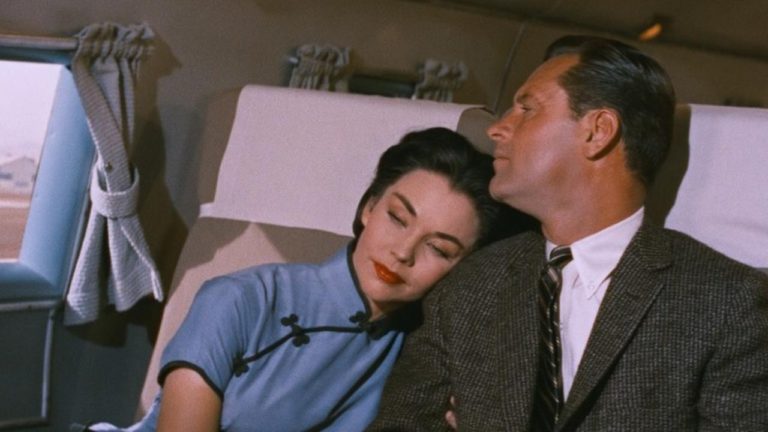
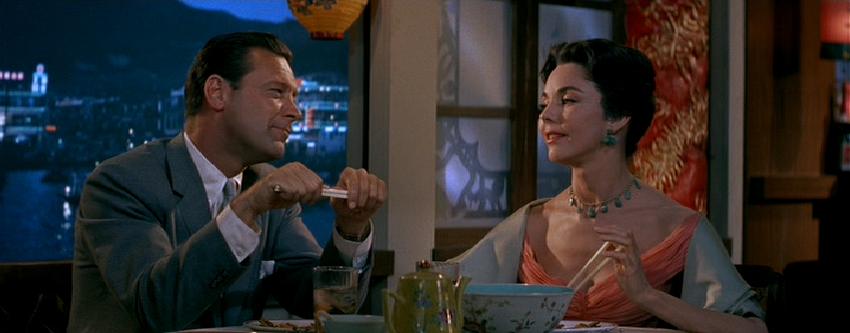
The film now concerned Suyin, a Eurasian doctor, who lives in Hong Kong during the late 1940s. She is seen as a career-driven woman but when she meets American reporter Mark Elliott, William Holden, she falls in love with him even though he is still legally married to his wife. They fight against prejudices in order to continue their affair and are happy together before his tragic death ends their love affair. This story fits into the traditional mold of the “Woman’s Picture” during the 1950s as it forces a woman to fashion her entire life around the man she is with and presents a life based around a career as unhappy and unfulfilling. The producers did satisfy the unfortunate desires of audiences at the time as they responded to the film positively and helped it to become the sixth highest-grossing film of the year. It was also critically well-received as Variety called it “As simple and moving a love story as has come along in many a moon.” These reviews and its financial success turned it into an awards contender and it became a Best Picture nominee as well as earning comeback queen Jones a Best Actress nomination.

Because of all of this acclaim, you would think that the film was actually worth watching but it has not aged well in many ways and it sends problematic messages about race. The most troubling element of the film has to be it’s treatment of race as they cast Jones, a white woman, as a Eurasian character and painted her face to make her look like a stereotypical Asian. This was a common practice at the time and it was used to get around the Production Code as censors thought that having a white actor cast as a person of color made miscegenation acceptable. Producers almost never considered casting two actors of color as the leads in a romantic drama so they would cast white actors to play people of color and this would allow them to get past the censors. They were also responding to racist audiences at the time as there was a lot of anti-Asian sentiment in the United States and many white audience members were white supremacists who thought that white people should not be romantically involved with people of color. This was a highly problematic view that held cinema back but it does explain why Jones and not a Chinese actress was cast in this role.

Her casting makes Love Is a Many-Splendored Thing difficult to watch today as you feel uncomfortable with the obvious racism of the film. It is even more disgusting because the people who made the film clearly thought that it was helping to fight racism and they try to target the racism that existed in the late 1940s within the film. We see Elliott being told that he should not get involved with a woman of Chinese descent by his friends but this conflict only appears briefly. They also have Jones say that she is “Eurasian” frequently and it makes you think that the filmmakers thought that audiences would like her more than a ‘real’ Asian if she kept telling them that she was half-white. They try to draw a distinction between people who are fully Asian and Eurasians and they also try to act like Eurasians would live just like white people. This was a common issue with prestige pictures about race from this era as they tried to take racial minorities and convince white people to accept them by claiming that they were just like white people. This just isn’t true as in order to be racially tolerant you have to accept the fact that cultures are different and people from different countries and communities will be different from you. Love Is a Many-Splendored Thing does not ask its audience to consider the fact that Chinese culture is different from American culture and Suyin immediately accepts all of the trappings of Elliott’s lifestyle.

This film would have been improved if they had cast a Chinese actress in the leading role and if they had dealt with racism more sensitively it would have been appreciated. At a time when the Chinese were subjected to horrid abuse in the United States, it might have been powerful to see a mainstream romantic drama that accurately depicted aspects of their culture as well as dealing with racial conflict. It feels like Love Is a Many-Splendored Thing is only interested in exploring these ideas on a surface level and this means that it doesn’t make the important statement that it wants to make. It is still valuable as documentation of the racism that was highly prevalent in the film industry at this point in time but for fans who just want to sit down and enjoy a film this aspect of it makes it almost unwatchable.

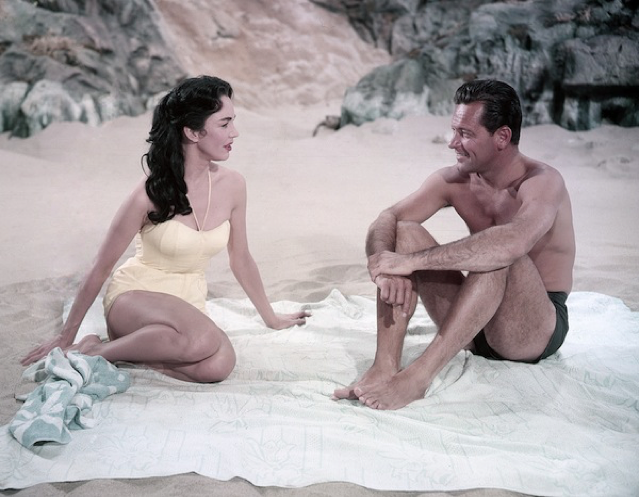
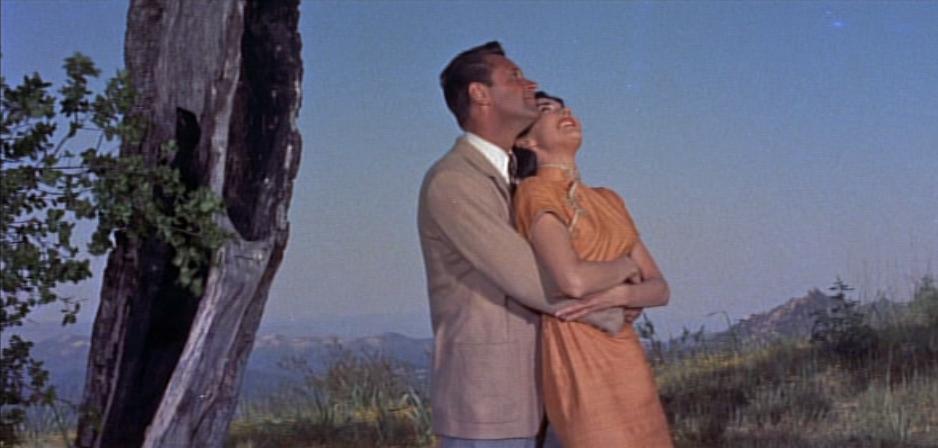
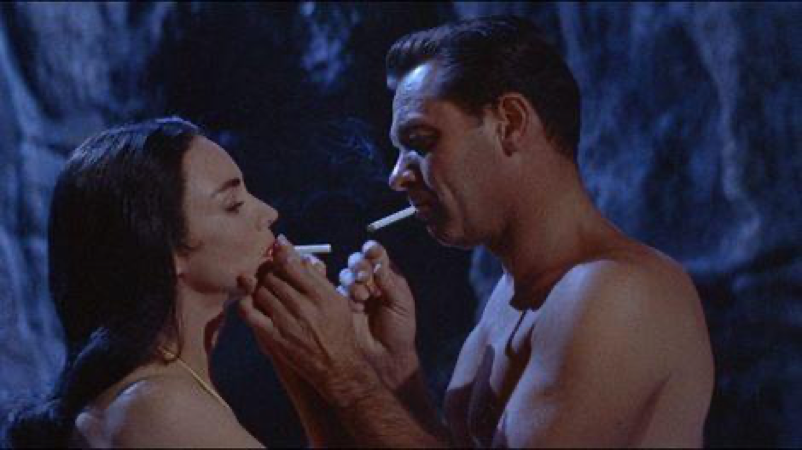
This is by far the biggest issue with the film but now I get to the criteria that I am supposed to judge the film on and as a romance, I don’t think it works. As previously discussed most of the great romances that Jones appeared in dealt with relationships that involve obsession and co-dependent relationships. We get a fairly simple, bland love story here that doesn’t ever come to life. The two lovers are meant to be kept apart by the racism that exists in their society but they overcome this very easily and we are stuck with scenes in which they galivant around on beaches and smoke cigarettes together. The majority of the film is just scenes in which the two of them have fun together without ever facing conflict or really considering the future of their relationship. From the outset, we know very little about these characters as Suyin is a pretty young woman who is too focused on her career but we are told all of these things in exposition and when we actually spend time with her we don’t get to know more about her. She is left to be sweet and she regularly makes eyes at her love interest but we don’t understand what draws her to him.

Elliott is a character who is even more ill-defined as we know that he is the sort of strong, stoic man who was commonplace in 1950s cinema but we know almost nothing about his failed marriage and he hardly ever opens up. If we got to know about his past relationship wounded him it would have been interesting as he could have struggled to fall in love again because he does not trust people. They don’t go down this avenue and Elliott seems to fall in love with Suyin at first sight. Again, we don’t know what it is that he likes about her beyond the fact that she looks very pretty. There are close-up shots of both of their faces that are held for a long time as we see the two of them regarding one another from across the room and clearly indicating that they are attracted to each other. These shots are typical of romantic dramas from the 1950s but unlike something like Pandora and the Flying Dutchman (1951), in which these shots represent the unfulfillable desires that both characters have, this film does not put these shots to good use.

We know almost nothing about these two so when they get together, we don’t really care. We also find ourselves not giving a damn because Jones and Holden have little to no chemistry, and they seem like two people who are entirely incompatible. This may have been because the two of them did not get along behind the scenes as they fought frequently and Jones had to contact her in husband in order to retain some control on set. Sometimes co-stars who hate one another do end up generating great chemistry as the friction between them ensures that both of them give highly charged performances. That did not happen in this case as Jones and Holden both give fairly muted turns and don’t seem excited even though they are allegedly playing people who are madly in love. Personally, I blame Holden for dragging some of their scenes down as I have never found him very compelling as a romantic lead. He was good at playing cynical, angry losers who were mad at the world so seeing him as a sappy romantic just felt wrong. Their lack of chemistry means that all of the scenes where they frolic around in exotic locations do not feel romantic as there is nothing between them and you want to squirm when they awkwardly kiss.

I am glad that this revived Jones’s career as she probably wouldn’t have made The Barretts of Wimpole Street (1957) if this hadn’t been a success and that features one of her best performances. I always feel like she deserved better roles in the late 1950s as the parts seemed to dry up even though she was still very talented and beautiful. The box office failure of A Farewell to Arms (1957) killed her momentum after her comeback in 1955 and she didn’t have the resurgence that she deserved. She worked a lot less in her later years and was given terrible parts in the 1960s that did not allow her to show off her acting skills. If she had been given better parts during that era I think she might have been more remembered today as those who don’t follow classic cinema have not heard of her. This is regrettable as she deserves to be placed in the same league as Olivia de Havilland and Joan Crawford in the minds of film fans. Having said all that I can’t see why Love Is a Many-Splendored Thing was the film that allowed her to bounce back as it features one of her weakest performances. She is forced to sit still frequently and stare at everything with an expression of awe on her face. The writing does not allow her to add any depth to her character and she is never given the opportunity to bring her unique nerviness and fragility to the part.

I have already been through all of the things that I hated about Love Is a Many-Splendored Thing so now I would like to note the elements of the production that I did appreciate. I would argue that the cinematography was impressive and the location scouts did a good job as Hong Kong was used to great effect. The legendary hilltop that serves as the location of some of their most romantic trysts was actually located in rural California but it is an awfully lush hill nonetheless. Occasionally it starts to feel like a travelogue as we spend minutes at a time simply admiring locations but that was an important element of 1950s cinema as a lot of audience members did not have the money to pay for air travel and the thought of seeing other countries was absolutely thrilling. I must also note that the blue waters of the beach and the greenery surrounding some of the houses the characters visit are more engaging than the characters so I was happy whenever the cinematographer decided to show off his skills.

I must also acknowledge the fact that I did love the cheesy theme song, “Love Is a Many-Splendored Thing”, as Andy Williams performed it with characteristic zeal and the sentimental lyrics were so unabashedly silly that they put a big, goofy grin on my face. The song takes on a wistful tone that the film never quite adopts and it looks back on their relationship as a tragedy rather than treating it as an excuse to have Holden take his shirt off. The song isn’t great and it is very of its time but at least it completely commits to being schmaltzy and knows exactly what it is. It reaches heights that the film never even approaches and more tender-hearted viewers might even be moved when Williams croons “Two lovers kissed and the world stood still

I really don’t see why this made the list of the top 100 American romantic films as the central romance is deeply uninvolving and even the minor virtues of the production can’t lift it above mediocrity. The nasty streak of racism also hurts it and makes it difficult to watch today as you have to get over the prejudices that were so common in the 1950s. This is not the best way to start off my exploration of the 100 Years…100 Passions list but I assume that everything will improve from here. I do expect to see films that involve racism, sexism, and other unfortunate prejudices that were common when they were produced but I hope that those films at least succeed in constructing a basic love story.

Next time I will be analyzing Love Story (1970) which captured the hearts and minds of audiences in the early 1970s and remains popular today due to the infamous quote, “Love means never having to say you’re sorry.”

Podcast: David Fincher Movie Series Awards – Patreon Bonus Content

Listen!

Ryan and Jay’s David Fincher Movie Series was a lot of fun, and to wrap it up they got together for some bonus content where they talked about the series as a whole, discussed the performances and ranked all 10 of Fincher’s films. Check it out!

If you’re already a Patreon supporter, you can listen to this episode NOW on Patreon by clicking here.

Sign up today to get early access and hear the entire episode!

[divider]

HELP SUPPORT THE SHOW

To hear our bonus content episodes early, subscribe now on Patreon. In many cases, though, we offer our bonus content for free after a certain period of time and we do encourage (and very much appreciate) a small donation of $0.99 as a way to help support the show if signing up on Patreon isn’t for you. Click on the PayPal button below to donate and thanks so much for your support. You can also hear much of our Bonus Content via our mobile apps. See the information at the bottom of the post for more details.


One-Time Donation


[divider]

Mobile Apps!

Listen to all of our bonus content on our apps for just a one-time fee! Whether you have an iPhone, Android or Windows phone, our apps are available in many different ways that is convenient for you. With our mobile app, not only can you listen to all of our bonus content, but our main shows and our Extra Film podcasts as well. Click here for more info!

If you don’t want to purchase our bonus content, but still want to support us, there are other you can help us out. Click here for more info.

Poll: What is your favorite election-themed movie?

Unless you’ve been hiding under a rock for all of 2020 (if you were, we might envy you), you should very well know that this November was not just home to another presidential election, but one many people would consider as the most important election of our lives. As a film site, it is sometimes hard not to talk politics when it comes to cinema (as all art is inherently political in some way), but that is not the intent of this specific post, nor will it provide any commentary on our current political and social landscape. Instead, we are simply using this year’s Election Day as inspiration to discuss the very best movies involving elections and political campaigns, and to celebrate how good these films are; we certainly need to find reasons to celebrate anything we can this year.

With that said, what do your favorite election-themed movie?


United Artists: By Artists, For Artists

Once upon a time, there was a new studio that was created to stand out from the other studios where moguls ran the show. It was a place made to be free from the grasps of men like Zukor, Meyer, and Lasky, and studios like Biograph and First National, who wouldn’t raise the budgets or give creative freedom to its directors. The premise was allowing its creators to control why they did in their movies and distributing them the way they saw fit instead of attaching themselves to commercial studios, who only saw the money. This place was called United Artists (UA), and 101 years ago, four major Hollywood figures got together to compete against the big names.

The Rebels

Charlie Chaplin was the biggest comedy star in the world with his numerous movies of The Tramp in various situations that crossed countries and languages. His asking salary went higher every year and First National was his fourth studio to sign with as they were willing to pay him what he wanted and give him some freedom. Chaplin built his own studio (now owned by The Jim Henson Company) and went ahead to shoot A Dog’s Life and Shoulder Arms in 1918. When it came to a bigger budget the following year, First National denied him. Mary Pickford also was contracted by First National, but when her contract was expiring, she received no sign for a contract renewal. Her future husband, Douglas Fairbanks, was also in a similar situation with the Famous Players-Lansky company.

Meanwhile, director D.W. Griffith, whose films The Birth Of A Nation and Intolerance made him the most famous director in the world, was still facing backlash over his racist portrayals in the former film and had lost a lot of money while doing the latter. Studios sought to control Griffith’s expensive productions if they hired him, which Griffth refused to allow. All four players got together, feared the growing Hollywood system that would cap their ability to make movies, and decided to band together, establishing United Artists on February 5, 1919. Each has 25% of the company’s shares and established its headquarters in New York City.

Opening Struggles

The first film under the UA banner was Douglas Fairbanks’ His Majesty, The American, which was successful. However, by not going public and selling shares, UA’s funding was restricted to coming from theater owners buying future releases and small private investments, leading to just five films a year being made in their first five years. Some of those films include Griffth’s Way Down East, Little Lord Fauntleroy with Mary Pickford, and The Thief of Bagdad staring Fairbanks, one of the best silent films of the 1920s and among Fairbanks’ best performances. In 1924, Griffith sold his shares due to his own financial debts and UA signed Joseph Schneck as President, who brought with his wife, actress Norma Talmadge, and brother-in-law, Buster Keaton.

Slowly, United Artists were building a brand as they bought their own theatres for their future releases and signed well-known independent producers to release through UA. This included Howard Hughes, Samuel Goldwyn, Walt Disney, and David O. Selznick. But even as Hollywood adapted sound and the continuing major success of their films, the operations were still disorganized and constant conflicts led to their departure from UA as they signed with competing companies. Two events of misfortune affected the company in 1939: the death of Fairbanks and the missed opportunity to distribute Gone With The Wind which eventually went to MGM.

A Studio Without The Studio

In the 1940s, the Society of Independent Motion Picture Producers was founded by Pickford, Chaplin, Goldwyn, and Selznick among many others. Its purpose was to fight the studio industry and its practices in producing, distributing, and exhibiting movies, starting with suing Paramount for their monopoly on movie theatres in Detroit. In 1948, the Paramount Decree, as it was called, from the U.S. Supreme Court ordered studios to sell their theater chains. Recently, the Department of Justice successfully removed the decree, threatening independent theatres which will be harmed by this reverse and undermining the entire purpose of independent cinema.

Despite the legal success, UA was still struggling financially, so Pickford and Chaplin accepted a pitch by producers Arthur Krim and Robert Benjamin where, if they produced a profit in three years, they could own half of the studio. The gamble worked thanks to hits like The African Queen and High Noon. Their premise was simple: give money to independent producers, use the leased lot at the old Pickford/Fairbanks Studio (which they did not own), and avoid the costs of maintenance and production staff. But the rise of television threatened the entire industry and Pickford, who had long retired, and Chaplin, now exiled from the U.S. over his political beliefs, sold their shares to Krim and Benjamin for over $4 million. Still, UA pressed on, making Best Picture winner Marty and the courtroom drama masterpiece 12 Angry Men – both of them adapted from television, ironically.

The Peak And Hard Fall

United Artists finally went public with their shares, and as major studios were struggling, UA was prospering with many major hits and Oscar winners, most notably the James Bond franchise. They also went into television production and music. In 1967, like other studios, a major company bought every stock in the form of Transamerica. Under their ownership with the Krim and Benjamin in charge, United Artists had their greatest success in the 1970s, winning three consecutive Best Picture Oscars in One Flew Over The Cuckoo’s Nest, Rocky, and Annie Hall. Their highest-grossing film was Cuckoo, making $163 million at the box office. They even released two X-rated films (non-pornography) in Midnight Cowboy and Last Tango In Paris that deal with controversy, but with continued commercial acclaim.

index_Galeria_logos U

Despite it all, Transamerica, growingly unhappy with the different subject matters being released and the annual costs, tried to curb what they could make and how much money being spent on productions. In 1978, the battle came to a head when Krim, Benjamin, and other top executives at UA left to form Orion Pictures. Under new leadership, UA immediately picked up the script to Heaven’s Gate by newly minted Oscar-winner Michael Cimino. The western quickly went over budget, costing an astonishing $44 million ($138 million today), and the stunning critical and commercial disaster from it destroyed UA’s reputation – and bank account. A humiliated Transamerica sold them and UA was consolidated with MGM in 1983. Then, in 1986, when Ted Turner bought the merged unit for $1.3 billion, he resold most of UA’s assets for $480 million. In turn, United Artists, founded by artists for artists to be independent of corporation interference, was now defunct.

Remenants Of Today

The United Artists seen today is a spin-off of another spin-off originating from the 1980s and 90s as it was bought, sold, restructured, and renamed several times. It was still attached to notable films like Showgirls, Bowling for Columbine, and Hotel Rwanda, but has not released a film under the UA banner since 2009 – the remake of Fame and the comedy Hot Tub Time Machine being the last two. Since then, the company is just a brand connected to releases, but not necessarily a United Artists film. Its most recent reincarnation was in 2018 as United Artists Releasing, owned equally by MGM and Annapurna Pictures. The first former release with the brand was the animated film, Missing Link. Others that have been released or will be released with the brand include Booksmart, Bill & Ted Face The Music, and the Bond film making its reunion with UA, No Time To Die.

If the four founders were alive, they would be vastly disappointed in what has become of their major creation. Yet, they would be happy that other independent studios have come out and the flux of indie filmmakers which make them as mainstream as the major studios. The studio system they despised has been long gone, yet these studios are now making billions and relying solely on commercial projects to bring in the money, in theatres, and streaming. The legacy of United Artists is that they were the first company where the creators were, “taking over the asylum,” as one studio head put it in 1919. And for these legends who put down the money to make the dream happen, it is embedded in Hollywood culture forever.

Follow me on Twitter: @brian_cine (Cine-A-Man)

Podcast: Wolfwalkers / Over the Moon – Episode 402

This week’s episode is brought to you by ExpressVPN. Sign up today and get 3 months FREE with a 1-year package!

This week on the InSession Film Podcast, we discuss the new Cartoon Saloon film Wolfwalkers and the latest from Netflix Animation in Over the Moon! JD also gives his thoughts on Borat Subsequent Moviefilm, The Forty-Year-Old Version and The Personal History of David Copperfield.

This week’s episode quintessentially reflects why we love animation and films that depict other cultures. Both Wolfwalkers and Over the Moon feature mythology that we didn’t know about previously, making them great learning experiences for those who are unaware the lore they’re tapping into. And for reasons you’ll hear in our reviews, when you couple that with the visual animation, the music, performances, and other technicalities, it renders unique cinema that we absolutely cherish. So, as you could imagine, we really enjoyed this week’s show.

On that note, check out this week’s show and let us know what you think in the comment section. Thanks for listening and for supporting the InSession Film Podcast!

– Movie Review: Wolfwalkers (6:10)
Director: Tomm Moore, Ross Stewart
Writer: Jericca Cleland (story and script consultant), Will Collins (screenplay), Tomm Moore (story), Ross Stewart (story)
Stars: Honor Kneafsey, Eva Whittaker, Sean Bean

– Notes / Borat Subsequent Moviefilm / The Forty-Year-Old Version / The Personal History of David Copperfield (40:11)
This week for our discussion segment, as noted above, JD gave his thoughts on Sacha Baron Cohen’s latest stunt in Borat Subsequent Moviefilm. He also gave his thoughts on Radha Blank’s directorial debut in The Forty-Year-Old Version and Armando Iannucci’s latest The Personal History of David Copperfield.

[divider]

RELATED: Listen to Episode 393 of the InSession Film Podcast where we discussed Batman and Batman Returns!

[divider]

– Movie Review: Over the Moon (1:09:40)
Director: Glen Keane, John Kahrs
Writer: Audrey Wells (written by), Jennifer Yee McDevitt (additional screenplay material by), Alice Wu (additional screenplay material by)
Stars: rycen Hall, Ruthie Ann Miles, John Cho, Sandra Oh

Show Sponsor: First Time Watchers Podcast

– Music

Running With The Wolves – AURORA
Wolfwalkers – Bruno Coulais
Rocket to the Moon – Cathy Ang
The Return of the Eagle – Atli Örvarsson

Subscribe to our Podcasts RSS
Subscribe to our Podcasts on iTunes
Listen on Spotify
Listen on Stitcher
InSession Film Podcast – Episode 402

[divider]

Next week on the show:

Main Review: Mank
Top 3: N/A

[divider]

Help Support The InSession Film Podcast

If you want to help support us, there are several ways you can help us and we’d absolutely appreciate it. Every penny goes directly back into supporting the show and we are truly honored and grateful. Thanks for your support and for listening to the InSession Film Podcast!

VISIT OUR DONATE PAGE HERE

Top 10: Political Movies

In the era of Donald Trump, it is more important than ever that we become politically engaged and align ourselves with movements that will help to stop injustice around the world. He is a hateful leader who has expressed offensive views on almost every minority group and as he tries to ruin the lives of the most vulnerable members of society it is valuable to remember that there is a way to stop him. I am a New Zealander so I am not as directly impacted by his actions and statements as many Americans are but I am still disgusted by the comments he has made. As the U.S. Presidential Election approaches, I hope that Americans are able to push back against him by pushing him out of a position of power. In order to understand more about politics, I think it is useful to watch certain films as they tell us a lot about political problems that existed in certain eras and the ways in which people chose to deal with these issues. I’m not saying that filmmakers know exactly how nations should be governed but they produce art that comments on politics and in this time of turmoil we must look towards art that speaks to our current society.

Nicholas and Alexandra Review | Movie - Empire

10. Nicholas and Alexandra

This 1971 political drama concerns Tsar Nicholas II and his family who are eventually executed at the hands of the Communist revolutionaries as part of the Russian Revolution. This film is interesting as a criticism of the idea of a monarchy as it shows how this system can produce weak, incompetent leaders who are unable to satisfy the needs of their subjects. Nicholas is presented as somebody who is not fit to be King and even though he is a loving family man he is not treating the people of Russia correctly. He lives off of the money that poor proletariats generate without doing much work himself and he is hopelessly out of touch with the needs of the common man. The revolutionaries who replace him are not presented as more capable leaders as they have such a fervent belief in their ideology that they are willing to go to extremes. This is a sad, sad true story and while this biopic does take some liberties in telling this story it makes its points effectively. It is not right to have an unskilled political leader who is sheltered from the problems of everyday people but revolutionaries must also learn to temper some of their beliefs to avoid engaging in extremism.

The Affairs of Cellini | George Eastman Museum

9. The Affairs of Cellini

I would call this a considerably lighter political film as it doubles as a screwball comedy but it does have a lot to say about politics. It is about an affair that involves artist Benvenuto Cellini, Fredric March, and the Duchess, Constance Bennett, the wife of the Duke of Florence, Frank Morgan, who ends up trying to kill the artist when he learns about his wife’s affair even though he has been unfaithful to her. We see a political leader who is more invested in womanizing that dealing with financial matters or other heads of state and while he is a cartoonish buffoon we can still look at this as a cautionary tale. He doesn’t really want to kill his wife’s lover and would like to go on living a sexually liberated lifestyle but his associates pressure him to take action and he almost has Cellini executed because of this simple form of peer pressure. When we look at a lot of modern political leaders we notice how they make decisions based on what their cronies tell them rather than doing what they choose to do and we are all frustrated by this way of thinking. Maybe if a politician like Jim Bolger had seen this film he wouldn’t have been so susceptible to the demands of the people around him.

How “Starship Troopers” Aligns with Our Moment of American Defeat | The New  Yorker

8. Starship Troopers

Paul Verhoeven is known for making critically acclaimed satires as even the widely maligned Showgirls (1996) has its defenders on the basis of it being a takedown of highly sexed erotic thrillers from the 1990s. He made this anti-war satire just a year later and based it on Robert Heinlein’s novel of the same name which serves as a straight-faced defense of a society based entirely around the military. Verhoeven chose to parody the jingoistic beliefs that Heinlein seems to support in his novel and mocks the propaganda films made by various countries in times of war. He attacks politicians who force young people to join the military against their will before sending them off to kill animals who have done nothing wrong. In some ways, his satire was too convincing as several critics were not in on the joke when they reviewed it in 1997 and thought it was the sort of pro-war propaganda picture it was trying to mock. All these years later we can appreciate it for what it really is and notice the subtle comments it makes on the dangers of following along with leaders in a fascist society.

Missing (1982) – MUBI

7. Missing

Costa-Gavras made far more radical political thrillers than this but I think this was one of his sharpest efforts as it is able to package its political message within an engaging human story. It’s all about Beth Horman, Sissy Spacek, and her search for her reporter husband Charles, John Shea, who has been murdered by Chilean officials in the middle of the Chilean coup of 1973. She is aided by her father-in-law Ed, Jack Lemmon, and the two clash before banding together to ask tough questions of the American and Chilean governments. The film aims to depict two people with opposing political views growing closer as they realize that they share basic morals that must be defended in the face of a corrupt political movement. Horman and Ed realize that they must publicize the execution of Charles so that Americans start to learn about the problems in Chile. I am sure this was a thought-provoking film at the time and by all accounts, it did make some impact in the United States as people started to understand the seriousness of the political conflicts that raged on in Chile.

Isadora

6. Isadora

On paper Isadora (1968) is just a standard biopic about the life of dancer Isadora Duncan but it manages to cover the time she spent in the Soviet Union in great detail. She traveled to the country in 1921 in order to open up a dancing school and expected the government to provide her with the funds to buy equipment that would help children learn how to perform. When she arrives she realizes she has only been gifted with a large but empty building without any furnishings and she finds starving children in the street who have only shown up at the school because they need to be fed. She can’t reach out to the government for money and sees the suffering that the Communist regime is causing as people are barely surviving and schools don’t have enough resources to operate properly. Duncan is so selfish that she ends up abandoning her plans of opening up a school altogether so she can spend time with wealthy intellectuals but we do see a brief glimpse of what life in the Soviet Union was like in the 1920s and a serious discussion of the shortcomings that the Communist system displayed.

The New World (2005)

5. The New World

You wouldn’t necessarily call Terrence Malick the most political filmmaker in the world but when he set out to tell the story of Pocahontas he was able to weave some real political commentary into it. He is able to trace Pocahontas’s journey from being a happy young Native American woman who is at home in her own community to her adult life as somebody who has had to give up her cultural traditions. He doesn’t make this a simple story of a woman having everything ripped away from her as she is seen to be quite happy with her loving husband and children but we also sense the fact that she has lost a key part of her identity. She, like so many other Native Americans, was not able to hold onto her own culture when she was forced into engaging with European settlers and ended up having to assimilate into their society instead of remaining a part of her own. Some will claim this story is more personal than political but we see the political leaders of the two warring groups in this conflict and how they choose to approach one another. This is all seen from Pocahontas’s perspective but these disputes are an important part of her life and she ends up representing the experiences of other Native Americans as the things that define her are taken away.

JFK - Un caso ancora aperto: il film di Oliver Stone stasera in tv su La 7

4. JFK

Oliver Stone made several controversial films about political figures and I did seriously consider placing Nixon (1995) on this list but I ended up swapping it out for this 1991 cause célèbre which reignited a debate about the assassination of John F. Kennedy. Obviously, this is a film based on conspiracy theories and there is evidence against a lot of the assertions that Jim Garrison made but I interpret this film as an attack against institutions that don’t allow an independent investigation. The government expected the American people to simply accept the conclusions they had reached about the assassination even though they provided some questionable answers to a lot of the questions that people asked. You might not agree with Stone but you have to admire the filmmaking craft on display here and some elements of Garrison’s argument make sense. People do need to question the government sometimes and this film makes a good case for an independent investigation.

Watch Becket | Prime Video

3. Becket

This might not be for people who hate costume dramas but if you enjoy scenery-chewing performances from great actors like Peter O’Toole and a smartly written script courtesy of Jean Anouilh you will be satisfied by Becket (1964). It also has a lot to say about the importance of separating church from state as we see the negative influence that religion can have on a political leader in this film. When a certain religious movement and a political leader are tied together too closely it causes all sorts of strife. We might not have Kings and Queens assassinating archbishops nowadays but we do see issues arising from theocratic leadership styles in certain nations. I’m not saying that Becket is the sort of feel-good crowdpleaser you want to watch on a rainy day but if you really want to think about the conflict between religious and political movements and the necessary separation between them then this will be for you.

Remains Of The Day , The Review | Movie - Empire

2. The Remains of the Day

You can’t talk about great acting without thinking of The Remains of the Day (1993) as Anthony Hopkins and Emma Thompson do some of their best work as a butler and a housekeeper who are kept apart because of his hangups about propriety. Lurking behind the love story is another, more political storyline about Nazi sympathizers who existed within British high society. It is disturbing to watch supposedly well-educated people being so easily taken in by the rhetoric of horrible fascists who espouse racist beliefs. It is a reminder of the fact that those we lionize can end up adopting political views that are simply wrong and we can’t just accept them as right because the people who support them are educated and seemingly intelligent. We see anti-Semitism on the rise in Britain today and this film serves as a timely reminder that we must stop those with power from spreading this awful prejudice. Even if those who support it are rich, famous, and supposedly smart they are not right.

Locals and Crew Tell the Tale of Kubrick's Massive Production of 'Barry  Lyndon' in Ireland

1. Barry Lyndon

Some might balk at my decision to place Barry Lyndon (1975) first because most don’t interpret it as a political film but I see it that way. It is about the ways in which people rise to positions of power because of luck and the fallibility of politicians. The main character is not a political figure and he spends a great deal of his time seducing women rather than considering deep and meaningful issues but politicians help him rise to a position of power. He will stumble into situations where men who are powerful choose to let him rise up the ranks even though he is a scoundrel and a bad gambler. They are seen to have poor taste and they are hardly great judges of character. This is the sort of scathing indictment that we rarely see in films and in a time when we don’t trust politicians it seems like Barry Lyndon speaks to modern voters who feel completely disillusioned with the politicians who are meant to represent them.

If you have any feelings on this list please feel free to comment below. I love to hear feedback on my work and if you have any suggestions for great politically-themed films it would be great to hear them.

Movie Review (Raindance): ‘Here Are the Young Men’ is a Tough, Mostly Important Watch


Director: Eoin Macken
Writer: Rob Doyle, Eoin Macken
Stars: Anya Taylor-Joy, Dean-Charles Chapman, Ferdia Walsh-Peelo

Synopsis: Dublin teenagers Matthew, nihilistic Rez, and the deranged Kearney, leave school to a social vacuum of drinking and drugs, falling into shocking acts of transgression.

[/info]

When looking through the films that were showing at the 2020 Raindance Film Festival, there were some standouts that I knew I had to watch. Even in a line-up that had the publicized bio-pic Stardust showing at the start of the festival, it was the closing film that had me the most intrigued. Here Are the Young Men does not only have an incredible cast of actors that I have loved over the past few years and deserve more recognition than they get but is the sort of storytelling and film that I naturally gravitate towards.

If you are not already paying attention to the cast in this film, you need to after seeing Here Are the Young Men. Dean-Charles Chapman was incredibly strong last year in 1917, but he gives an even better performance here as Matthew, a teenager who is dragged down a pathway he knows he shouldn’t be going down. I may be one of the biggest fans of the 2016 hit Sing Street, so it was no surprise that I was anticipating the performance from Ferdia Walsh-Peelo. He has quickly matured over the past few years and gives the most heartbreaking performance of the entire film as Rez, which is saying something for a film with this many great performances. I don’t even think I need to talk about how great Anya Taylor-Joy is here, but it may just be my favorite performance from her yet.

There was one person in this cast that I had not seen before this film, and that was Finn Cole. He does have fewer credits to his name (most notably appearing on the British TV series Peaky Blinders), but after this performance, I have a feeling we will see him in more projects going forward. Although I do not love every single scene that he is in, he is the one that drives the narrative forward and gives the most complex performance, despite how simple his character may appear on the surface. Without his performance as Kearney, this film simply would not work.

It is important to note going into this film what the story is and the subject matters it is aiming to handle. This is a very mature and dark film, and some of the content may be shocking or disturbing for a general audience. This film features issues including but not limited to: drugs, alcohol, rape, murder, war, death of a child, and attempted suicide. These are not subject matters that the film takes lightly, either showing the issue happening on screen or reflecting on the impact of those subject matters once they occur. Some of these issues are handled well and maturely, but there are some choices that I did question in terms of tone and narrative.

When the film handles these subjects right, they hit emotionally. The film manages to grasp the attention of the audience within the first ten minutes, making it clear the motives and personalities of the three leading men and what we should make of each one. It gives the film a clear pathway, jumping from Matthew, who is the character that is easiest to connect to, back to Kearney, who we can see has not had the best childhood but is still hard to relate to or sympathize with due to his actions and beliefs. When the film focuses on the real issues and the narrative moving forward, the story is incredibly hard-hitting and it is effective in tone and editing.

However, this is not the only style of filmmaking that is on display with Here Are the Young Men. There are also uses of fantasy aspects, particularly focused on the television. There are some small sequences where footage appears on the television that reflect what’s going on inside of a character’s head, and those sequences do work. However, they also use a television set of a talk-show to have Kearney express his feelings and to show his journey. Every time the film cuts to this set and focuses on this tone, the overall film falls in quality. The tone is so badly done here, coming off as over-produced and arrogant, but that does not match with the subject matters that are talked about, such as rape and murder. It feels incredibly off-putting to have a character talk about the murder and rape of a woman whilst an audience can be heard cheering in the background. Luckily, these sequences are only a short amount of the film and the rest of the story does hold up, getting back to the real representation of the story afterward.

This is a solid direction from Eoin Macken, with an overall strong script and some wonderful performances. Whilst I understand what Macken was trying to achieve with some of the fantasy sequences, they did not work for me at all. I can look past them though when the rest of the film is as well told as this is, and the performances and story had me invested until the very end. A strong choice for Raindance to end their 2020 festival on.

Grade: B-

https://www.youtube.com/watch?v=7J3fuUhguDo

In Memoriam: Sean Connery Passes Away at 90 Years Old

Sir Thomas Sean Connery

(August 25, 1930 – October 31, 2020)

There are few actors in the history of Hollywood that are as easily recognizable or iconic as Sir (Thomas) Sean Connery. Though most widely known for his time as James Bond, Connery had a long and diverse career on the big screen. His charm, good looks, and smooth Scottish accent were a combo that won over the hearts of many. In his lifetime Connery earned an Academy Award for Best Supporting Actor, a BAFTA for Best Actor, and three Golden Globes. He was even voted People magazine’s “Sexiest Man Alive” in 1989 at the age of 59. 

The film that launched Sean Connery’s career was the very first James Bond movie, Dr. No (1962). Until then he had worked mostly in television, done three or four movies, and had only one starring role to his name – Darby O’Gill and the Little People (1959). The Bond franchise made Sean Connery a household name and allowed him to have his pick of movies afterward. He appeared in some of the greatest Bond films- Goldfinger (1964), From Russia with Love (1964), and Thunderball (1965). One of my favorite things about Connery is that he embraced his role as the suspiciously attractive older guy with an interesting accent in his later films. These post-Bond films are the ones I’d like to highlight and hopefully encourage more people to watch. 

Outside the Bond films the two roles that Sean Connery is probably best known for are Jim Malone in The Untouchables (1987) and as Henry Jones Sr. in Indiana Jones and the Last Crusade (1989). Connery won an Oscar and a Golden Globe for Best Supporting Actor for The Untouchables. In both films, he was the endearing side character that audiences became attached to (sometimes more than the main character…) Indiana Jones and the Last Crusade is another fan-favorite film of Connery’s. He appears in the third Indiana Jones movie as Harrison Ford’s father. Even though the two are only twelve years apart, they play a convincing, entertaining, and endearing father and son duo. Connery appeared in a number of critically acclaimed films, films like The Longest Day (1962), The Hunt for Red October (1990), Murder on the Orient Express (1974), and The Man Who Would Be King (1975). 

My favorite of his films are the ones that don’t necessarily get the best reviews or win awards. Movies like Dragonheart (1996) where he voices Draco the dragon in what is best described as a medieval buddy cop movie with Dennis Quaid. Or Highlander (1986) the movie (and subsequent tv show) with the greatest theme song of all time (Princes of the Universe by Queen). In Highlander Connery plays a Spaniard without even remotely attempting to hide his Scottish accent and is a beloved mentor to the main character. Other recommendations include Time Bandits (1981), Zardoz (1974), and The League of Extraordinary Gentlemen (2003).

Connery is also commonly impersonated, most famously by Darrell Hammond on Saturday Night Live. Though he was a deserving and talented actor, this SNL skit and his role as Bond are sometimes the only knowledge of Connery someone has. Everyone knows that Sean Connery was and forever will be the best James Bond, but he was also great in other films.

My favorite of Sean Connery’s movies is The Rock (1996). It’s my favorite of his movies, my favorite of Michael Bay’s and Nicolas Cage, and it’s my favorite movie of all time. The Rock is the epitome of an American action flick. It expertly blends 90s action with Connery’s out-of-retirement spy swagger and Cage’s quirkiness. Those two were perfectly cast and their odd couple is one of the best on-screen team-ups ever. In times where I feel the need to watch a Sean Connery movie, it’s not the Bond films I go to, it’s The Rock.

2020 has been a hard year, we’ve lost a lot of great people and now we, unfortunately, have to add Sean Connery to that list. Connery wasn’t a perfect man, but he holds a special place in many hearts. Honor him and remember him with his films, all of them, watch the ones you’ve never seen. He will be missed, but he left us a lot to cherish and remember.

Podcast: The Life and Death of Colonel Blimp / Borat Subsequent Moviefilm – Extra Film

On this week’s Extra Film, Ryan and Jay begin their Michael Powell / Emeric Pressburger Movie Series with The Life and Death of Colonel Blimp and they also review Borat Subsequent Moviefilm!

Another week, another start of a brand new movie series. Michael Powell, Emeric Pressburger are known as one of the most influential duos in cinema history. Their work inspired previous movie series director David Lean and the modern-day master, Martin Scorsese. With this first review of The Life and Death of Colonel Blimp, Ryan and Jay introduce these two directors and tackle one of the best films they’ve discovered this year. The Life and Death of Colonel Blimp might just be the best first film they’ve covered in a movie series, and you aren’t gonna want to miss it.

In the back half of the episode, the boys make their way towards Borat Subsequent Moviefilm. Sacha Baron Cohen brings back his famous character for another go-round of crazy antics in America. This time though, Baron Cohen has help from the wonderful Maria Bakalova, who plays his daughter. Maybe not as surprising as the first, but it still hilarious to watch, though Ryan and Jay get into whether or not the film works as a whole.

Thanks for listening!

– Movie Review: The Life and Death of Colonel Blimp (6:28)
Director: Michael Powell, Emeric Pressburger
Screenplay: Michael Powell, Emeric Pressburger
Stars: Anton Walbrook, Deborah Kerr, Roger Livesey

– Movie Review: Borat Subsequent Moviefilm (57:59)
Directors: Jason Woliner
Screenplay: Peter Baynham, Sacha Baron Cohen, Jena Friedman, Anthony Hines, Lee Kern, Dan Mazer, Erica Rivinoja, Dan Swimer
Stars: Sacha Baron Cohen, Maria Bakalova

– Music
Overture The Hebrides (Fingal’s Cave)
Kalasnjikov – GORAN BREGOVIC
The Return of the Eagle – Atli Örvarsson

We try to make this the best movie podcast we possibly can and we hope you enjoy them. Subscribe today on iTunes, Spotify or Stitcher, and please leave us a review on iTunes. You can also find us on Soundcloud, PlayerFM, and TuneIn Radio as well. We really appreciate all your support of the InSession Film Podcast.

Subscribe to our Podcasts RSS
Subscribe to our Podcasts on iTunes
Listen on Spotify
Listen on Stitcher
The Life and Death of Colonel Blimp / Borat Subsequent Moviefilm – Extra Film

[divider]

To hear this Extra Film episode and everything else we do, download our apps on the Amazon Market for Android and the Podcast Source app on IOS devices. The mobile app covers all of our main shows, bonus podcast’s and everything else relating to the InSession Film Podcast. Thanks for your wonderful support and for listening to our show. It means the world to us

Chasing the Gold: Why Jacki Weaver Should Have Won the Oscar for ‘Silver Linings Playbook’

When you think Jacki Weaver you think of a few things. A naturally comedic force from Australia that got her Hollywood break in her early sixties with her Oscar nomination for Animal Kingdom, a tour de force talent that can truly do no wrong, and for many a head-scratching 2nd Oscar nomination for Silver Linings Playbook. The last one there actually makes me quite upset because people don’t give her the credit she deserves for what I consider one of the best supporting turns of this last decade, a performance I’ve championed since I first saw it in theaters when I was a young lad of 20. When Silver Linings Playbook first came out in 2012, I remember it being one of my favorite films of the year that boasted really good performances from most of its cast. Was it my favorite film of 2012? Absolutely not. That honor would be reserved for the absolutely breathtaking Beasts of the Southern Wild (that’s a whole different retrospective piece that I might have to come back to down the line to tell you why Quvenzhane Wallis was robbed of that Oscar). I remember seeing Silver Linings Playbook and it was one of those few times that I left the theater absolutely thrilled to where I was instantly on the phone with friends trying to explain to them what I saw (usually I like to let the movie settle for a few hours before I talk about it) and I kept referring to the brilliant glue of the entire movie that was Jacki Weaver.

When awards season had gotten underway that year there seemed to be a clear cut winner from the getgo and that was Anne Hathaway in Les Miserables. The musical itself and the film I’m not a fan of and honestly I’m not a fan of the performance Anne gives here as Fantine here either, so I was really disappointed all season long, but as the season progressed before the Oscar nominations came out I noticed one of my favorites missing from the conversation completely and that was Jacki. I couldn’t fathom how she wasn’t gaining any traction anywhere, this was a brilliant performance. Now I would like to point out that this was at a time where I didn’t read critics blogs, or follow Oscar buzz online so I wasn’t really into the “know” of what other people thought about Jacki here, it wasn’t until a few years later that I found out that people consider this a “coat tail” Oscar nomination, and that it’s really hated on for unjust reasons. 

Come Oscar nomination morning though one of my 3 main wishes for Oscar 2012 came true, “And the nominees for Best Supporting Actress are- Amy Adams in The Master, Sally Field in Lincoln, Anne Hathaway in Les Miserables, Helen Hunt in The Sessions, Jacki Weaver. I screamed with joy up and down actually spilling my coffee on my living room floor, she did it! She got her second nomination, she DESERVES TO WIN!…and then she didn’t. 

In “Silver Linings Playbook” Jacki Weaver plays Dolores Solitano, a mother to two grown sons and a wife to a neurotic man who may be closer to her youngest son in more ways than one. We meet her early on in the film as she picks up Pat Jr. played by Bradley Cooper from the mental hospital he’s been staying at and almost instantly we get some solid acting chops from her as she’s tricked by Pat Jr. and has a moment to shine in her Oscar clip scene of her telling him she’s going out on a limb getting him out. (I would like to comment here that people who seem to take issue with this nomination like to point out that this is the only “moment” she has in the film, it’s not, but stay tuned). This is however the only time in the film where she has a “moment” to herself and what I mean by that is there isn’t another time in the film where she carries a scene as she’s sharing the screen the rest of the way through with others. 

Now here’s where I challenge anyone who doesn’t agree with what I’m saying from here on out- go back and watch this movie after you read this piece and tell me I’m lying. What Jacki Weaver does here compared to anyone else in her movie let alone her lineup is that she becomes the audience. What do I mean by that? Well, lemme break it down for you. 

If you look back at the lineup she’s in this year- Amy, Sally, Anne, and Helen are all fully rooted characters like Jacki but they are just that, they’re characters and none that we ever feel connected to in the way of “oh, that’s me” but with Jacki, she is literally the audience. She’s watching her family and her surroundings fall apart and build back up in real-time as we are and reacting, in essence, the same way we are to the story. With Amy, we don’t get that because most of us haven’t been the leader in a cult. With Sally, we don’t get that because we weren’t Mary Todd Lincoln. With Anne, we don’t get that because life isn’t Les Miserables the musical, and with Helen Hunt, most of us had never heard of this line of work. So the most relatable character and work here is Jacki Weaver’s in Silver Linings Playbook

My second point is this- many people wanna say “What did she do outside of making crabby snacks & homemades?” Okay, (also what the hell is a HOMEMADE?! No one seems to know this, help!), if you have to ask this question that I’m gonna be bold and say this type of performance goes right over your head because all you’re attracted to is a shiny object at the end of a string to keep you amused. When you go to rewatch this movie, pay attention because what you’ll notice is that every scene she’s in you can’t take your eyes off her. She literally is a gravitational pull, from her mannerisms to her physical acting, to her remarks she is jaw-dropping. Do you know how hard it is to pull all the attention away from a fistfight between De Niro & Cooper with you in the background screaming and getting yourself in the mix? HARD. Don’t believe me? You try it then! You can’t. Weaver is truly able to command every scene she’s in despite the scenes not being about her. 

THIS IS WHY SHE DESERVED HER SECOND OSCAR FOR SILVER LININGS PLAYBOOK!

She didn’t need a “scene” or an “Oscar moment” because her entire role is full-bodied and a “moment”. Every time she’s on-screen she’s electrifying and she gives us the feeling of “there’s something about her” that we all feel comfy with and she’s the only one in her lineup to cause such a reaction. Why? Again, because her role is the only one we can relate to and as an audience member watching this movie she essentially is US. I mean it’s fascinating the number of times I’ve watched this movie back in the 8 years since it’s release and I’m noticing new ticks and gestures and moments that cause her to stand out amongst her peers in the film, it’s truly fascinating. 

When the night of the Oscars came to be we all knew who had the Supporting Actress Oscar locked and as much as my brain knew my heart was still holding on for hope. Hope that the Academy would do the right thing and reward the Oscar based on merit over the campaign and when it didn’t happen I was extremely sad, in retrospect that whole ceremony became a bummer for me, Quvenzhane losing, Beasts of the Southern Wild losing Picture, Director, and Screenplay as well, Jacki losing, and more. But for some reason, the Jacki loss stung for a while and still to this day kind of does and I think that’s mainly because people tend to shrug this nomination off as undeserved which is completely unfair because Jacki is doing the most work without being over the top. She should have two Oscar wins under her belt by now, this and Animal Kingdom back in 2010, and the fact that she hasn’t had any Oscar type roles since Silver Linings Playbook makes me a bit sad that we might not see her ever get on that stage, but the least I can do is continue to champion this performance and try to explain why it’s truly one of the best in this category this past decade. 

When it comes to the lineup itself I would rank it as such: 5- Helen Hunt (category fraud, she’s a lead and I automatically disqualify a performance in the wrong category no matter how good or bad. It’s not fair to the actual supporting players) 4- Anne Hathaway, 3- Amy Adams, 2- Sally Field, 1- Jacki Weaver – for me this will always be the correct order of this lineup. 

Classic Film Review: ‘Mr. Smith Goes to Washington’ Illustrates the Politician We Deserve

The year was 1939. Hitler was in power, Britain just declared war with Germany, and the United States was playing jump rope with the possibility of going to war. So upon hearing the premise of Frank Capra’s Mr. Smith Goes to Washington, politicians argued that a film of this type should not be released as it would paint a bleak picture for audiences that these situations actually happen within the government. Joseph Kennedy Sr., Ambassador to Great Britain, sent a telegram to Will Hays, head of Distributors of America, and exclaimed that Mr. Smith was in his opinion, “one of the most disgraceful things I have ever seen done to our country.” However, contrary to Mr. Kennedy, Mr. Smith isn’t a negative piece of propaganda, but rather a story of an idealistic man looking to do good for his country.

Jefferson Smith (Jimmy Stewart) is an honest man, a tad naïve, and more than a little wet behind the ears. He’s a hopeful idealist as his sweet nature has brought him to be a leader of the Boy Rangers. After the death of his state’s senator, Smith is appointed by the senate through the recommendation of the state’s senior senator, Joseph Paine (Claude Rains). Paine, a once good man, has over time become poisoned by political corruption. Along with an intimidating man, Jim Taylor (Edward Arnold), the men reveal themselves to be the epitome of back door dealings within the government. Their plan is to influence Smith to vote for a bill that would initiate the construction of Willet Dam. But these scheming politicians have underestimated the strength of Smith, who upon finding out about this bill, fights for what is right.

Based on Lewis R Foster’s unpublished story, The Gentleman from Montana, you won’t hear states’ names or the character’s political affiliation in Mr. Smith. I’m sure you can paint that picture yourself. Jimmy Stewart is no stranger to playing the “good guy” in films. He inherited the role after Gary Cooper’s schedule conflicted with other projects. We see Stewart as a 30-year-old man at the beginning of his career — fairly new to the film industry world.  His newbie persona translates perfectly to his performance of Smith as an equally wide-eyed man entering his career for the first time. Smith’s passion for his country is a breath of fresh air. The rest of the D.C elite don’t seem to have that anymore. They have taken advantage of the history that envelopes them, and become too comfortable with their positions of power. Smith begins to change people’s outlook on the government with his vibrant enthusiasm, and the belief that the government can lookout for those “lost causes” if they only tried. He even begins to tear away the hard exterior of his secretary Clarissa Saunders (Jean Arthur) as they sit in his office writing a new bill for a summer camp that would benefit young boys around the country. But where is the location for this new camp? You guessed it, a quarter-mile on both sides of Willet Creek — Senator Paine’s location of the new dam. Mr. Smith is a good-hearted film, filled with romanticism for our country. So why the political objections?

A while ago, I read an analysis of Mr. Smith being told as a radical view of politics. The author of wrote that Smith’s views are bordering on Fascism. You can dive deep into the message classifying Smith as unfit, or maybe even a radical if you so choose. But I say to those people, you’ve missed the true message at the center of the movie.

This is director Frank Capra’s opus for the country he so loved. He dissects the process and sheds light on roadblocks of political corruption, too often holding back this country from being a sincere land of opportunity. So while some may find negativity in Capra’s direction, I find love. In the scene when Smith first arrives in Washington D.C., he takes a tour of the capital, soaking up the monuments of our forefathers (including the Lincoln Memorial). Capra himself is in awe.

Capra often portrayed his characters with heavy-handed messages, which critics at that time dubbed “Capra-corn.” But the Sicilian born director prided himself on living in the United States. Now this idealistic outlook may seem more like a blur now. But through Capra’s eyes, we imagine the hopes that our forefathers had one day dreamt for us. Using our voices to stand up for those that need our help.
Mr. Smith garnered a total of 11 Oscar nominations (including Best Picture). This in a more than stacked Oscars ceremony honoring those films released in what film scholars would call the best year for film. Mr. Smith Goes to Washington is a must-see classic. A classic that still powerfully resonates in today’s world. Maybe Smith’s love and admiration outlook for the government may seem too distant to fully grasp, but I believe there is hope. As the Colombia Pictures logo transitions to the screen at the end of the film, we sit, brought back to the harsh reality of our government’s current state, and the outcome of an important election. We sit in silence, hoping that our government of the people, by the people, for the people, shall not perish from this earth.

Grade: A