

Home Blog Page 168

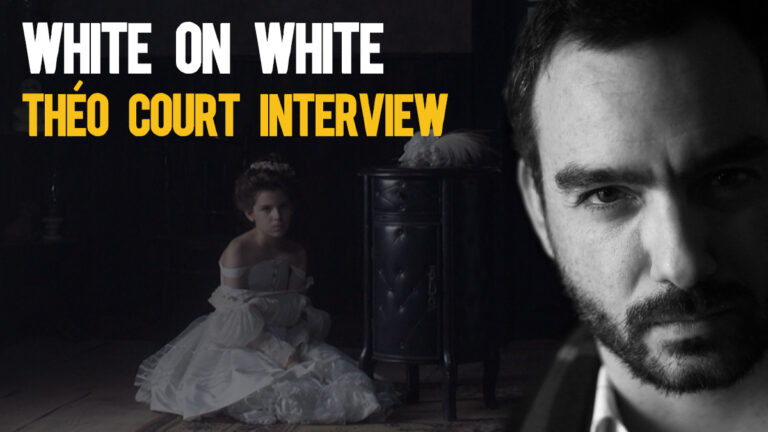
Manipulating History Through Art – An Interview with ‘White on White’ Director Théo Court

In the southernmost region of South America, extending over Chile and Argentina, you can find Tierra de Fuego, an archipelago with a sub-antarctic climate that, between 1883 and 1906, attracted many Europeans due to a gold rush. One of them was Julius Popper, an infamous Romanian explorer who, besides getting rich as a gold digger, participated in the genocide of the Selk’nam Indigenous tribe living in the zone. His perpetration was captured in a series of manipulative photographs that artistically staged him and his company as all-mighty conquerors proudly standing over the dead bodies of Indians, depicted there as savages. 

“Those first photos of colonizers are somehow transgressive images trying to manipulate a despicable act and turn it into a heroic act. From there, I asked myself: Who is that man behind those images? Who was complicit in this representation?,” told us Chilean-Spanish director Théo Court, who took Popper’s photos and their anonymous photographer as the inspiration to create the award-winning White on White, a slow-burn distressing film that highlights the violence perpetrated by colonizers on Tierra de Fuego through the eyes (and lens) of a photographer and his moral degradation.

With unsettling focus, Alfredo Castro (Neruda) plays the titular role of Pedro, a photographer sent to Tierra del Fuego to take pictures of the young soon-to-be bride of “Mr. Porter”, a mysterious and rich landowner. “He’s a voyeur who shows his purposes through art,” said Court about his protagonist who, despite never lifting a gun and being only there to take photos, uses his art to manipulate, stage, and control thus becoming a perpetrator of atrocities toward women and the local Indigenous population. For Pedro, beauty and aesthetic perfection come before morality.  

Without the need of depicting explicit violence, White on White creates a quiet, yet very powerful and disturbing reflection on the ways art can be used as a tool to manipulate history. 

To learn more about the film, which is Chile’s submission in the 2022 Best International Feature Oscar race, I spoke with director Théo Court about his inspirations, the work behind the most uncomfortable scenes, the tough shooting in icy Tierra de Fuego, the astonishing cinematography, and more.

Ricardo Gallegos: White on White’s central idea came from Julius Popper’s photos. After obtaining the inspiration, how did they shape the script and its story about colonization and image manipulation?

Théo Court: The film was born from the photos of Julius Popper. Those first photos of colonizers are somehow transgressive images trying to manipulate a despicable act and turn it into a heroic act. From there, I asked myself: Who is that man behind those images? Who was complicit in this representation? And the idea for the Pedro character started to take shape Then, came another inspiration: a photographic series by Lewis Carroll, writer of Alice’s Adventures in Wonderland, who has a rather ambiguously sexual and erotic photographic collection about girls. I liked the idea of this character who is obsessed with capturing certain moments of beauty which in turn transforms and leads him to hide the despicable act of killing through representation and manipulation.

RG: The movie has a couple of uncomfortable scenes in which Pedro is taking photos of Sara, who is practically a teenager. How did you approach actors Alfredo Castro and Esther Vega so that they can comfortably execute such a difficult scene?

TC: I worked with Esther and her mother, explaining how far the scene would go so that she did not get very nervous. However, I did want a certain nervousness from her in the scene because, naturally, I was looking to transmit that reaction in the film. I showed her precisely the photo that we were trying to recreate, Carroll’s photo of Alice lying on a couch. Of course, I also worked with Alfredo to establish where the scene would go.

RG: The Pedro character is complicated and quite real. He is a man who’s only committed to photography and his art, regardless of the moral aspect of what he captures with that art. How did you build this character?

TC: I worked on it a lot with Alfredo. We had many meetings and script readings with him. We began to realize that, as a photographer, there had to be a certain distance. That is why the film constantly maintains a relative distance from the landscape, from what is happening, from the events. And somehow, Pedro’s inner desire was only demonstrated in his representations, in his art. It is a duality. He’s a voyeur who shows his intentions through art.

RG: What does the character of Mr. Porter mean and why did you decide to have him as an omniscient figure? 

TC: He is an omniscient figure, a kind of moral God. Everyone carries out this man’s orders. Everyone wants to participate in his company to own something. When I was writing the script, I kept remembering the Count Westwest character from Franz Kafka’s “The Castle”, someone who is constantly dominating from above, imposing a morality or, in this case, amorality. I liked it as an expression of the value systems that contemporary society is exposed to. We are managed by something, maybe the Central Bank … There is an omniscient power that dominates us in some way and we do not know what he is like, what face he has, or who he is.

RG: White on White’s cinematography captures the beauty of inhospitable natural landscapes but also communicates a moral void.  How was your work with José Ángel Alayón to achieve this?

TC: José is also the executive producer of the film. We talked a lot about the subject of natural lights, of bringing in the light that was used at that time: chandelier lights, torches, and the natural light that the Tierra del Fuego landscape provides, which is very beautiful because the sun is always sideways. It’s almost magical.

We worked a lot with exteriors, interiors, and light explosions. The gloomy interiority was inspired by Dutch Baroque paintings. We were always looking for contrasts between interiors and exteriors, as well as different cinematography. I feel that the images we see in HD movies are all very similar. We tried to occupy seventies optics and play with light limits to find another type of sensation, something epidermal between the touch of the image and the characters.

RG: What complications did you have while shooting in Tierra del Fuego? It’s a place that seems inhospitable and icy. I imagine that transportation, for example, was very complex.

TC: It was very difficult. In the Chilean part of Tierra de Fuego (there is an Argentine and a Chilean part) there has never been a shooting with large crews because, firstly, there are no production logistics. There is no place to sleep. There are a few fishing lounges and little else. Absolutely everything is closed during winter. There are practically no people, there are very few inhabitants in that area. It was very complicated, especially the production logistics and the use of vehicles. It took us two weeks to transport two trucks of art, lighting, and machinery. The whole weather thing was difficult. The roads were cut off several times due to the ice and some trucks fell into ditches. 

However, we used all of this to fulfill our purpose, which was to communicate this idea of the conquering of inhospitable landscapes through image. For me it was important to have that approach with the crew, to seek the empirical experience of living that landscape.

RG: I read that it was so hard to shoot that some of the extras in the film were also part of the production team…

TC: That’s right. I talked about it with some team leaders, especially with the art team which was quite large. I asked the art director to find me people who somehow had European features because we were going to have very few people in that location. Many of the people who ended up acting as mercenaries in the film were part of the technical team too. 

RG: How are the Indigenous genocide themes treated in Chile?

TC: Official history has not addressed it. It is an underground issue, so much so that the remaining Selk′nam community is trying to force this issue to be discussed, so that the Senate imposes the law. Official history does not speak about it, but many books have come out to talk about these genocides, about Braun Menéndez, the great landowner in the area responsible for many exterminations.

RG: What does the industry need to do to push towards the visibility of this issue?

TC: Between the famine, the European diseases, and the massacres that the film portrays, 5,000 individuals were exterminated in 15 years. This culture has not been completely exterminated. It’s necessary to give visibility to that territory and the remaining people who are fighting to be recognized as an ethnic group.

RG: What can you tell me about the Chilean film industry? How did the pandemic affect it?

TC: We are in a prolific time. Many films are coming out, there are many viewpoints and a lot of hard work. As we know, making films in Latin America is not easy because of the cost and the fact that the financial support we get is not always enough. Even so, Chile is having a plurality of very interesting views and unexpected portraits that were previously forgotten. As a result, there’s artistic wealth in the Chilean film industry. The pandemic affected everyone. White on White stopped in its tracks; its path through film festivals and distribution was going pretty well until everything stopped. The film was unable to move forward for eight months.

RG: How do you feel about your film being selected to represent Chile at the Oscars?

TC: I’m very honored that the Academy has selected us to represent Chile. It’s a film outside of the traditional storytelling cannon, a film with little narrative causality, with a mystery edge and many layers. It also has a certain contemporary urgency in our country due to many factors. I think that will give it strength.

White on White won the Orizzonti Best Director and FIPRESCI Awards at the 2019 Venice Film Festival. It’s Chile’s submission for the 2022 Oscars and will open on December 10 at Cinema Village in New York and at the Laemmle Monica Film Center in Los Angeles.

Movie Review: ‘Being the Ricardos’ is showy but superfluous


Director: Aaron Sorkin.
Writer: Aaron Sorkin.
Stars: Nicole Kidman, Javier Bardem, Nina Arianda, J.K. Simmons, Alia Shawkat, Jake Lacy, Clark Gregg, Tony Hale.

Synopsis: Lucy and Desi face a crisis that could end their careers and another that could end their marriage.


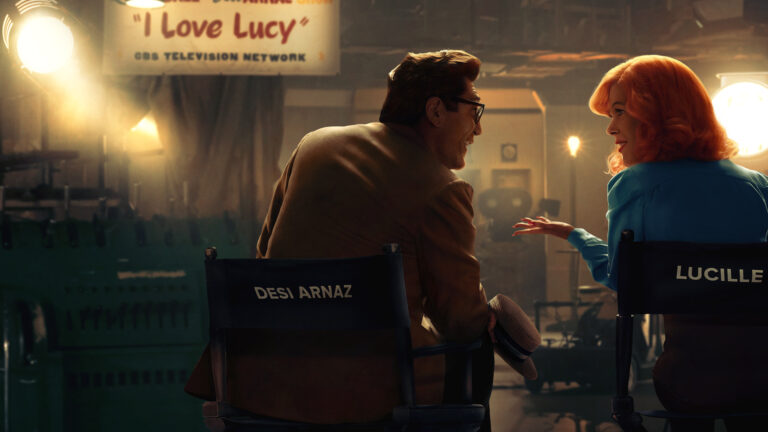
Considering that Lucille Ball is one of the most distinguished figures in the United States’ entertainment history, it is a miracle that she hasn’t gotten the biopic treatment…until now. Aaron Sorkin, coming back after his awards vehicle The Trial of the Chicago 7 (2020), arrives with his latest awards vehicle, Being the Ricardos. The film takes place in a week of Ball’s life, following her relationship with her husband, Cuban entertainer Desi Arnaz, and her role in American politics as she is exposed as a communist, the worst thing that could happen to someone in those times.

The film starts somewhere in the 1970s with interviews with Madelyn Pugh, Bob Carroll, and Jess Oppenheimer, writers, and showrunner of “I Love Lucy”, respectively, who witnessed the chaotic week at the center of the story, set in September 1952. “I Love Lucy” is the most successful TV show in the United States and its stars, Lucille Ball (Nicole Kidman) and Desi Arnaz (Javier Bardem), form a seemingly strong marriage. Nevertheless, one Sunday evening things start to break down. Lucille suspects that her husband is cheating on her, propelled by the gossip in the latest tabloids; and, to make things worse, they hear on the radio that Ball is being accused of being a communist.

The next week, presented according to the show’s activities – Monday: the table read, Tuesday: blocking rehearsal, Wednesday: camera blocking, Thursday: run-throughs, Friday: show night –has Ball trying to save her marriage through business decisions, while Arnaz uses his power to try to kill the story about his wife. Sometimes, Sorkin takes us further in the past, showing their love story and Ball’s path that drove her to her own TV show. Unsurprisingly, Sorkin tries to cover too much story through too many devices. Surprisingly, though, these mostly work.

The script, written by the filmmaker himself, presents challenging timelines with jumps in time that work through the never stopping tone of the film (one of Sorkin’s distinctive traits). The filmmaker is well known for his ability to write dialogues and Being the Ricardos is a prime example of this. Fast and provocative, they are delivered with proficiency by the cast.

Nicole Kidman and Javier Bardem are enthusiastic, intense, and funny, challenging each other. Kidman brings to life this actress as a creative genius, imagining the show as she rehearses her lines, and having a second instinct that tells her that something is wrong with the scripts, even though she still doesn’t know the exact problem. She is forceful and decisive, sometimes coming face to face with Oppenheimer (Tony Hale). While the main duo is strong, Nina Arianda as Vivian Vance, the actress that suffers under the gigantic shadow of Ball, and J.K. Simmons, as the other actor of the show that is too opinionated, constantly outshine the stars of the movie.

The film offers a glimpse of the old Hollywood. The production design by Jon Hutman transports us back to the 1950s right in the middle of TV sets, offices, streets, and houses. The costume design by Susan Lyall shines in Kidman’s tall and svelte frame. In this aspect, Being the Ricardos is a memorable and delightful celebration of the past.

Nevertheless, it also displays the vices of the entertainment industry. The executives are adamant that Lucille’s just announced pregnancy isn’t shown or alluded to in the show, something that becomes a special cause for the marriage. Ball and Arnaz are presented as two characters advanced for their time, fighting for causes of representation and naturality on screen that make them sort of trailblazers. Especially, Lucille is this kind of vigilante that protects her husband and exhibits the racism that shapes the way executives and peers see him. Still, it is noticeable that she sees him under an uncomfortable light as well, promoting stereotypes of his origins and culture. The film presents multiple racist attitudes that are directed towards Arnaz, a man that is supposed to be the most powerful person in the room, but that is constantly judged for his un-Americanness.

Many things have already been said about Javier Bardem’s casting as Arnaz. While the Spanish actor’s performance is one of the best things of the film (even if his accent slips), once you see it, you understand why Sorkin didn’t have the sensitivity or tactfulness to cast a Cuban, or at least, a Latin American actor. The same thing that the story tries to expose, Sorkin uses as a recurring joke.

Throughout the film, there is a debate amongst the writers whether to use traditionally American or Hispanic names for a joke in the show. Madelyn Pugh (Alia Shawkat), one of the writers of the show, offers snarky comments about her incapacity to distinguish between nationalities, ethnic origins, and regions, effectively reflecting Sorkin’s inability to comprehend the importance of casting a Latin American actor in a Cuban role and the disappointment of casting a Spanish actor instead. Being the Ricardos doesn’t know how to distinguish a Cuban person from a Spanish, Mexican or Turkish one. These jokes and decisions neglect Latin Americans’ individuality and identity, showing that we are interchangeable and punching lines for the story and Sorkin himself.

Being the Ricardos is Sorkin’s best effort as a director. Kidman and Bardem’s performances are energetic and exhilarating. Wisely, Sorkin isn’t too interested in the “I Love Lucy” show, instead of focusing on the drama behind the scenes. While the events of the film are engaging, there are indications that show that Sorkin is more interested in impressing with his script or giving ecstatic moments of patriotism than in offering valuable and deep insights about the industry. The filmmaker is not interested in criticizing the old ways or offering new paths for the future. His only appeal are showy performances and thrilling dialogues.

Grade: C+

Poll: What is your favorite Guillermo del Toro film?

No one loves monsters more than Guillermo del Toro. Born in Guadalajara, del Toro’s films can often be described as fairy tales, even including his comic book adaptations, to an extent. And for how frightening and sometimes repulsive his characters look, del Toro always finds beauty in the grotesque; I guess you could call that his trademark. He is also one of the nicest and sweetest filmmakers working today, so there’s that too. His latest Nightmare Alley may not include fauns, ghosts, half-demons, kaiju, or amphibian men, but it maintains his love for the gothic.

With that said, what is your favorite film directed by Guillermo del Toro?


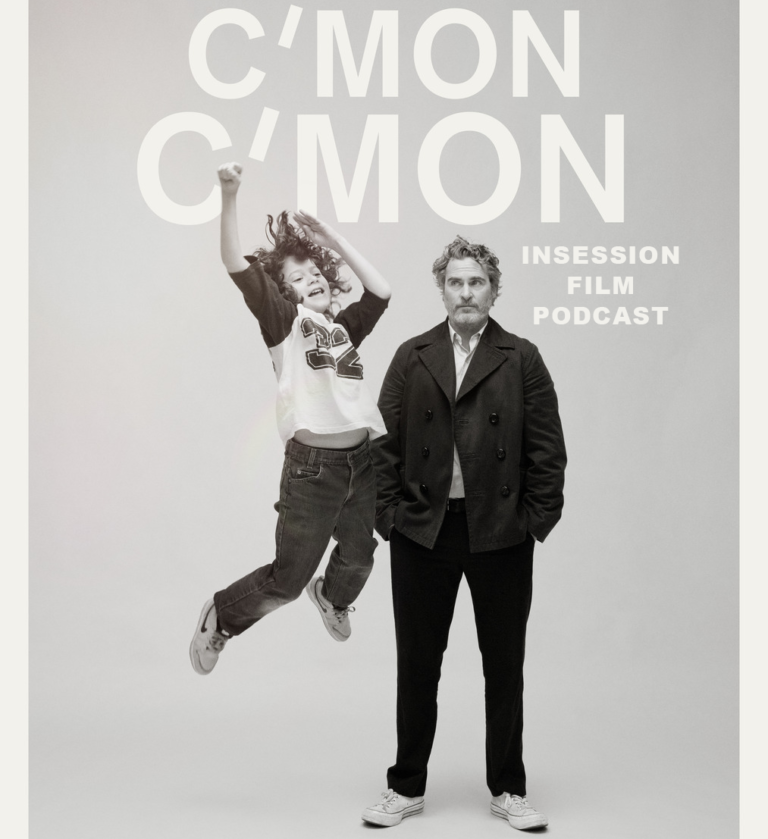
Podcast: C’mon C’mon / Being the Ricardos – Episode 459

This week’s episode is brought to you by StoryWorth. Sign up now and get $10 off your first order!

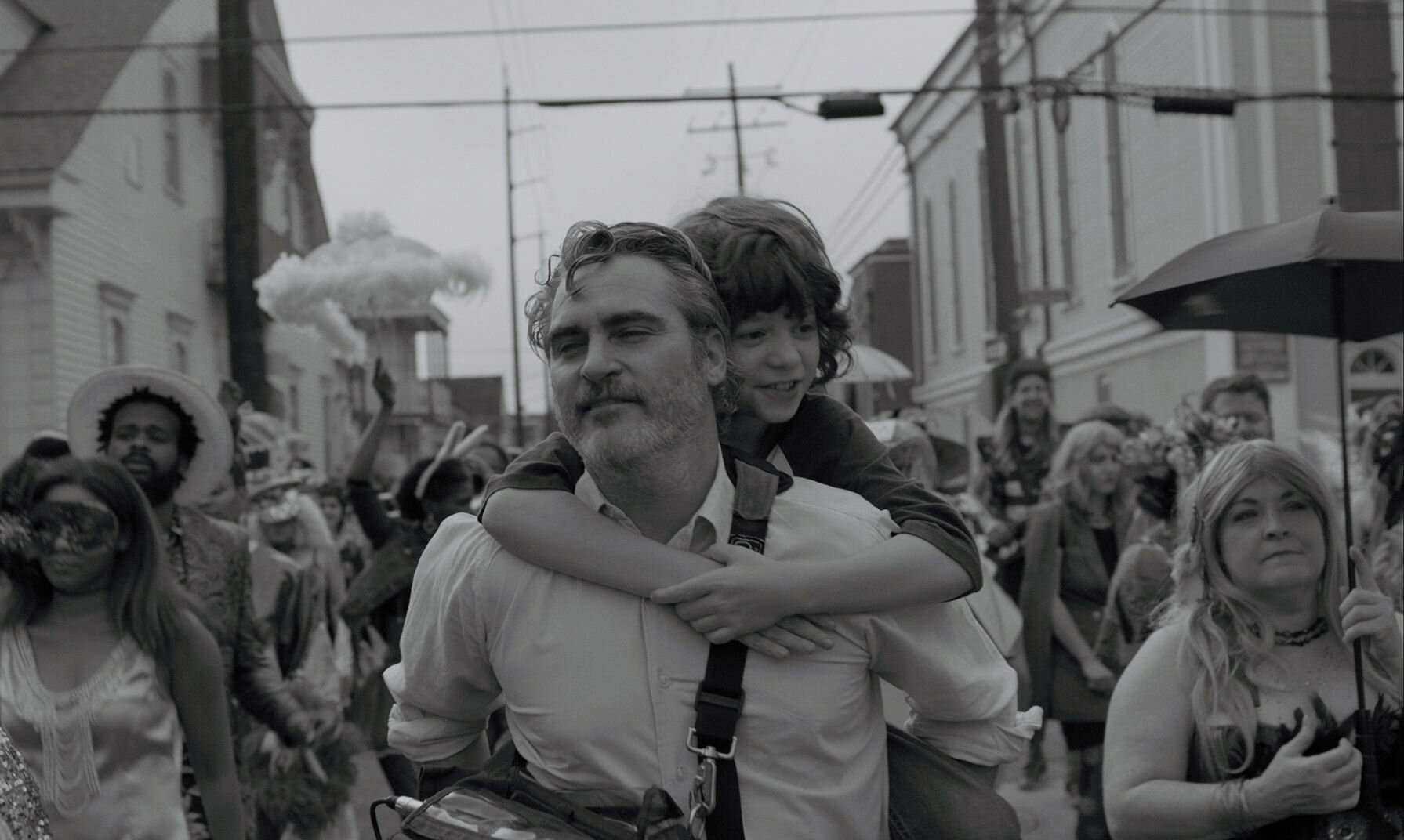
This week on the InSession Film Podcast, we discuss Mike Mills’ new film C’mon C’mon and also Aaron Sorkin’s latest directorial effort Being the Ricardos!

This week’s episode may be straightforward structurally speaking, but it’ll go down in InSession Film lore regarding #JDTears as C’mon C’mon joins the ranks of Midnight Special, First Man, and many others over the years. So, that’s fun. We also have a great time guessing the Rotten Tomatoes score for Being the Ricardos as we recorded our review before the embargo lifted. But it’s a film that seems split online, so to see that represented in the aggregate is no surprise. At any rate, we hope you enjoy both of these discussions as we did our best to be thorough with them.

On that note, check out this week’s show and let us know what you think in the comment section. Thanks for listening and for supporting the InSession Film Podcast!

– Movie Review: C’mon C’mon (8:01)
Director: Mike Mills
Writers: Mike Mills
Stars: Joaquin Phoenix, Woody Norman, Gaby Hoffman, Scoot McNairy

– Notes / Discussion (56:19)

For our break segment this week, we forgo any usual catch-up reviews to instead plug our latest Patreon Bonus Content episode where we finally give our thoughts on Ema, Titane, Riders of Justice, Old Henry, Zola, The Sparks Brothers and Crimes & Penalties. Be on the lookout for it soon!

[divider]

RELATED: Listen to Episode 456 of the InSession Film Podcast where we discussed Belfast!

[divider]

– Movie Review: Being the Ricardos (1:17:05)
Director: Aaron Sorkin
Writers: Aaron Sorkin
Stars: Nicole Kidman, Javier Bardem, Nina Arianda, J.K. Simmons, Alia Shawkat, Jake Lacy

Show Sponsor: First Time Watchers Podcast

– Music

Hopper’s Theme – Bryce Dessner
Happy Sad Empty Full – Bryce Dessner
The End Of A Dream – Daniel Pemberton
The Return of the Eagle – Atli Örvarsson

Subscribe to our Podcasts RSS
Subscribe to our Podcasts on iTunes
Listen on Spotify
Listen on Stitcher
InSession Film Podcast – Episode 459

[divider]

Next week on the show:

Review: West Side Story
Top 3: N/A
Review: Nightmare Alley

[divider]

Help Support The InSession Film Podcast

If you want to help support us, there are several ways you can help us and we’d absolutely appreciate it. Every penny goes directly back into supporting the show and we are truly honored and grateful. Thanks for your support and for listening to the InSession Film Podcast!

VISIT OUR DONATE PAGE HERE

Interview: Alex Wolff (‘Pig’)

0

Perhaps one of the most surprising elements in a year packed with beautiful and brilliant movies was a feature starring Nicholas Cage and a pig. From its logline – a hermetic farmer’s prized truffle pig is kidnapped, leading him to seek revenge and rescue his swine companion – to the posters showing a suitably gruff, heavily bearded Cage staring darkly into the camera, suggested it would be the kind of ballsy, nonsensical movie Cage has become known for in his late stage career.

Indeed sandwiched as it was between two of Cage’s more aggressively bonkers efforts – Willy’s Wonderland, in which Cage battles murderous animatronics in a restaurant that would horrify Chuck-E-Cheese, and Prisoners of the Ghostland in which Cage’s testicles are fitted with charges that will blow them off in five days if he doesn’t apprehend a sex slave and return her to her master – you would have been forgiven for writing Pig off entirely as another check-cashing exercise for the star.

However, Pig proves to be a work of quiet, subtle genius. Methodically paced and utilizing a far more understated style of acting than expected, Pig shows that Cage is still able to carry more serious works of substance than we’ve seen from him in years. It has also surprisingly garnered awards nominations, even walking away with Best Feature from the Gotham Awards.

And yet there is another story in Pig. The rise of a talented young actor for whom 2021 saw him appear in two top-tier movies, the other being M. Night Shyamalan’s Old, in which he convincingly played a six year old in the body of a teenager. Alex Wolff, known for popular Nickelodeon series The Naked Brothers Band, in which he starred alongside his brother Nat, plays Amir, a young entrepreneur who guides Cage’s wild farmer, Robin, through the urban jungle in search of his pig. Wolff plays Amir as slightly cynical and perhaps jaded, yet wide-eyed with admiration for Robin. It’s a similar dynamic to how Wolff himself views Cage, having worked with him for the first time, as well as the generational divide between both Robin and Amir, and the same again for Cage and Wolff.

“It doesn’t come up very much, to be totally honest,” Wolff says when InSession Film meets with him. “When you’re an actor, people like to craft your story and build your image. I think we’re just day-by-day. For Nic it felt like just yesterday he was doing Raising Arizona, [and] for me all these movies just started happening. What you connect on, for me, is more your taste in film. And we  have the same taste in film; both big Bergman obsessives and Bellini fans, big fans of Carnival of Souls and Ugetsu, these styles of filmmaking. That forced us to bond over our similar tastes. It informs our choices of career.”

It’s an interesting idea; two actors who share a love of a certain style of filmmaking and whose love of that style informs their career path. It suggests a confluence of two very similar trajectories. Is it something Wolff and Cage discussed often? “We don’t talk about careers that much,” Wolff demurs, “what a boring waste of two really passionate, interesting people to be talking about our fucking careers! It’d just be really boring to me. I’m just happy to be with a person I feel close with, to talk art with.”

Throughout our conversation. Wolff is animated and lively, he is clearly a very passionate person with a love for movies which shines through. You imagine him bringing that kind of passion into his characters, investing them with a deep sense of self, a confidence and purpose that is not unlike Wolff’s own. Indeed Amir presents as a flashy confident young man, full of swagger. How did Wolff prepare for such a role, and what did he imbue Amir with that wasn’t necessarily on the page?

“It’s different for each movie,” Wolff says, “sometimes you show up, you have a day to prepare, then you get your clothes, and that kind of is the thing that informs your character. If you close your eyes and picture Italy; even if you’re not there these images come to mind, these smells, these tastes. I think it was like that for Amir, it was so vivid. You didn’t even have to intellectually think about it that much; of course he’s wearing rings, of course he’s wearing a gold watch, of course his hair is slicked. And then the moustache. Michael was like “would you do facial hair?” I’m like, perfect! I think [the filmmakers] wanted to steer it into a little more loud and eurotrashy, but I thought he wanted to be more crisp and serious. You know that thing they say in fashion, take one thing off before you walk out the door? Well he never does. He puts one more thing on. It’s so obvious how pathetic and vulnerable he is, but I really wanted it to be like on the surface you feel this kind of togetherness [because] it wouldn’t be as much fun to watch him crack open.”

It is fairly obvious how shallow Amir appears from the start, as we see him listening to a discussion of classical music in a way that feels completely disingenuous to his persona. “Listening to people talking about classical music in lieu of real classical music,” Wolff responds, “can you think of anything more pretentious? At the same time, if you want to appear intelligent, if you want to learn about classical music, you can see how his mind would think that [would be a good idea].”

Despite the generational differences, it’s clear Cage and Wolff got on well. What did Wolff learn about the craft of acting during his time with Cage? “I think I learned as much from him personally as I did as an actor.” Wolff responds, “I started knowing one world of acting, and he introduced me to a whole universe of acting. I remember doing one scene where he’s talking about the wave, and how the wave’s gonna come and wash away everything, putting everything in perspective. And right before [the scene], he said something like “watch this” and did a take, and this motherfucker built a wave for me to see. I’m not exaggerating, as he was talking I was seeing the wave, and right after I said “you just made me see…”, and he said “I know.”  I was like, okay so you’re some kind of wizard. You’re not a person, you’re an artist-wizard. So I took so much from that. Like, I gotta really go in, because he is. He’s making me see shit that’s not there. That’s real acting. Words can’t describe it. It was profound.”

What about the reverse? Acting is, of course, reacting. How important was Wolff’s performance to lifting up Cage’s performance. “I have to be loose,” Wolff says, “I have to not put too much pressure on something. Or else you just tense up, you know? You’re human.”

Speaking of humanity, how does something like Pig compare to Wolff’s other work, such as Hereditary, it terms of the emotions it evokes and what it requires from him as an actor? At this question. Wolff takes a big pause to consider. “I think,” he finally says, “if you’re going to think about things in terms of humanity, it all starts with small things. With people and connections. It’s a fool’s errand to try and make a movie that addresses anything holistically, as a people. Movies really hit everywhere. Hereditary really connected with people’s innermost terrors; that was a very, very specific, very personal thing. I think that Pig is even smaller, even more personal. I think that collectively it’s up to people to decide. People like you who, maybe, are better at surmising what things mean, to brand this movie for what it says about humanity. Our job was to say what we wanted to say about these people in that moment. Even then, it’s not our job to say anything, it’s our job to exist; and it’s the director’s job to put these two existences together.”

“I think that anytime a movie doesn’t work it’s usually about trying to appeal to something wider, to do something that’s not honest, and not personal, and not specific. That’s been my experience. What I take away from Pig is that, holy shit, you can get as specific as a story about truffles, and these two really specific guys and still connect to a wide audience. You’re only going to get to the core of humanity the deeper you dive into yourself’.”

Wolff has an analytic mind that you feel would also be suitable for working behind the camera. It’s no surprise that in 2019 he made his directorial debut with The Cat and the Moon, a coming-of-age story about a suicidal young man who moves to New York. It’s tenderly made and allows its characters room to breathe and their stories to unfold. One wonders how Wolff’s experience behind the camera informed his experience in front of it for Pig. “I saw that being a director, from the top of the food chain, you can really set an example of love and being gentle and being warm,” he says, and once again his passion comes forth. It’s clear how much this means to him.

“It’s bullshit when the head of a hierarchy is trying to be dogmatic and yell at everybody. I always thought “oh, I don’t understand that pressure”, but when I got to that point I realized you don’t have to do that, and actually it really behooves your set and your film to make your actors feel really held. I go the extreme, I wanna be so in love with these actors that by the time the movie’s over, I wanna go lay in bed for months and not do anything else. You know when you wake up from a dream and everything about it was magical and it hurts just to not be there anymore? That’s how I want my sets to be.”

“As an actor I think it starts with you to spread that energy, especially as you become more respected as a person when you walk on set. You’re not just a complete no name, you have a bit more power to spread a positivity and warmth and a looseness. That’s what I took to Pig – let’s keep everything open, let’s keep everything free.”

With that our time is up and Alex heads off for his next appointment. As he goes, it’s hard not to think his energy, optimism, and passion for the world of filmmaking will see him go far; that we may be seeing an actor at the beginning of what could become a bright, exciting future. That his love and knowledge of film might inform some future classics. That, like his character Amir, beneath the swagger and confidence, there is much more to see.

Top Ten: Directorial Debuts

0

To be a film director is surely the highlight of many a career, to be successful in such a specialized and let’s be real here, a relatively small sector for visionaries to be lucky enough to get there works out there is incredibly difficult. To establish oneself as a fearsome director takes dedication, determination, gallons of creative juices just bubbling away, and a little bit of stubbornness probably wouldn’t go a miss as well. However, there are some out there that hit the nail on the end from the get-go – those lucky son of a guns – and that got me thinking about some big names in the directing world; what were their debut films like? And which are the best of the best? So, here is my… controversial (I’ve got to think a little out of the box haven’t I) top ten directing debut films.

RatCatcher - Tommy Flanagan - 1 - video Dailymotion

10) Ratcatcher (1999) – Directed by Lynne Ramsay

The first film on my list is the exquisite Ratcatcher, an urban tale set in the murky streets of Glasgow during one of the city’s tougher financial periods. It follows a young boy, a stranger in his own home, who uses his imagination to project a better life for himself and those around him and escape those unmerciful streets. Lynne Ramsay (who went on to make We Need to Talk About Kevin, and You Were Never Really Here) captures the very essence of her hometown and the beautiful innocence of a lost youngster. It is almost a horror film of sorts – projecting the horrors of real life is as scary as anything else – coupled with its humor, its sadness, its joyous wonder, Ratcatcher really does have it all – an absolute treasure trove of stylistic greatness.

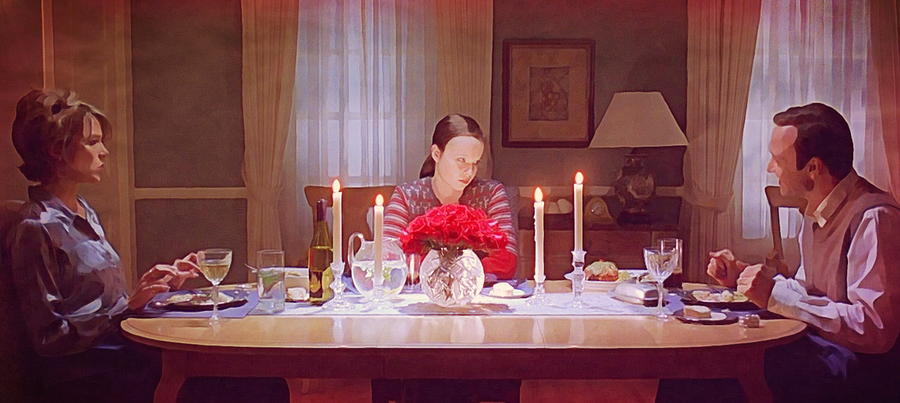
American Beauty movie scene Painting by Artista Fratta

9) American Beauty (1999) – Directed by Sam Mendes

A film I could have easily left out because of a certain sexual deviant, but when you look at this film from a pre-2017 viewpoint, you understand how artistically masterful it really is – albeit still kind of creepy. Sam Mendes’s film debut was a generational phenomenon and is probably his greatest film (although, I am a sucker for Road to Perdition), one hell of a debut, right? The score by Thomas Newman is unforgettable; it is beautiful and thought provoking, you become lost in thought. It was a film lecturer wet dream this film before Spacey’s sexual misconduct, and with that, the film has now become tainted because of the subliminal, and strikingly similar messages throughout. As a straight-up film though, American Beauty is still gargantuan, and that shouldn’t be forgotten.

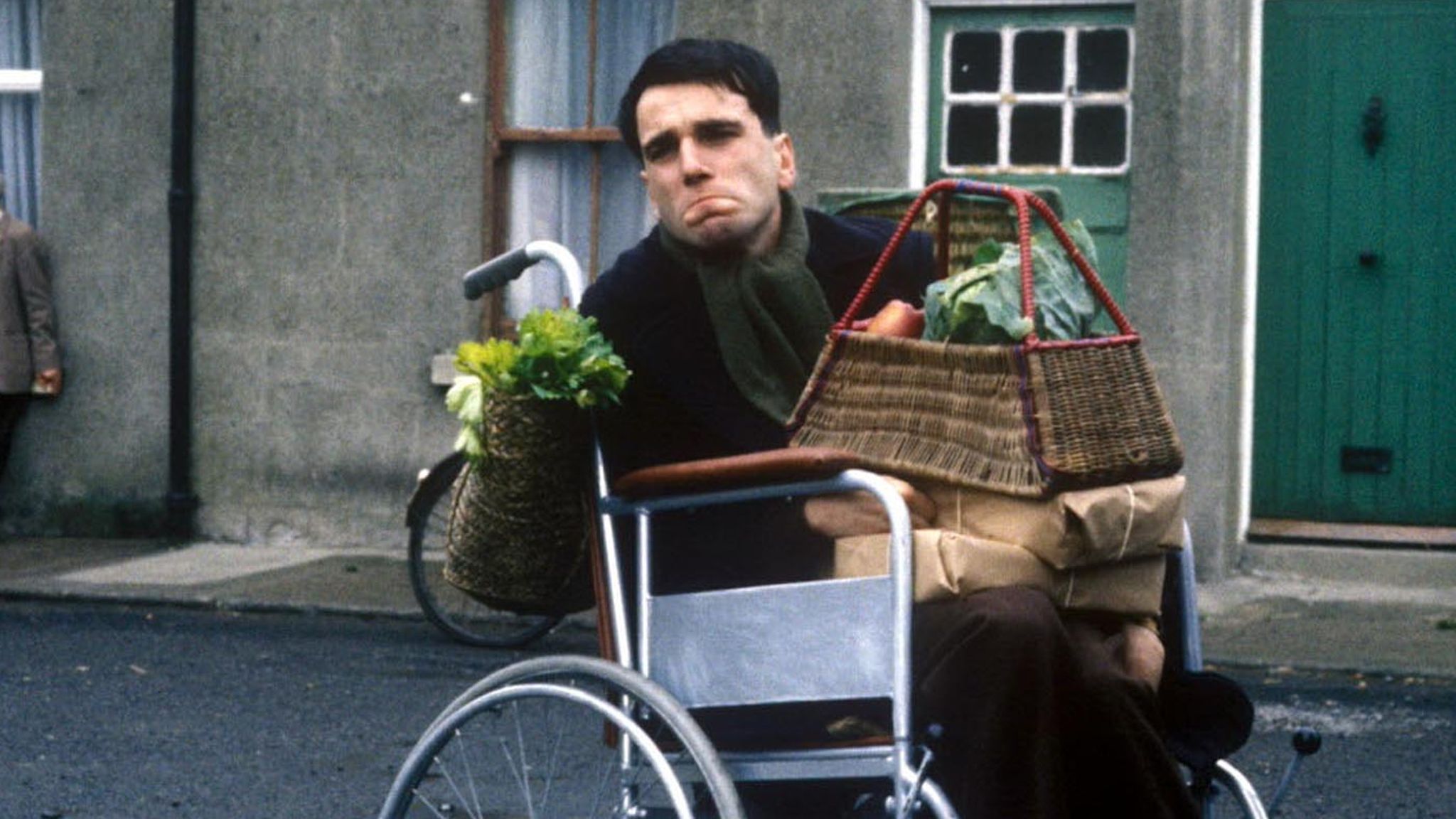
My Left Foot director backs calls for actors to stop 'cripping up' and  would cast disabled actor in Daniel Day-Lewis' role if film was made today  | Ents & Arts News |

8) My Left Foot (1989) – Directed by Jim Sheridan

The first thing that enters my thoughts when thinking about My Left Foot is the magisterial performance from Daniel Day Lewis – a Sheridan regular from then onwards. His representation of the poet and author Christy Brown is mesmeric, a performance only possible by someone as dedicated and skillful as Lewis. Away from that though and the film is an absolute blast from start to finish; it is poignant, reflexive, inspiring, and incredibly witty – that classic Irish humor that you could take offense to if you didn’t understand it. Sheridan perfectly encapsulates that era of the Emerald Isle; its ruggedness, those poverty-stricken families, but more importantly, the togetherness and the community spirit that will lift any spirits. One more thing, if your debut film results in two Oscar winners (the wonderful Brenda Fricker is unforgettable as well) then you are off to a decent start.

Nine Reasons to Watch 'Thunderbolt and Lightfoot' | KCET

7) Thunderbolt and Lightfoot (1974) Directed by Michael Cimino

The debut film from Michael Cimino is one of the great buddy movies of all time. The man who brought us the incandescent, The Deer Hunter, as well as the monstrosity that is Heaven’s Gate (we can learn to forget such frightening sights), treated us to a bromance between Oscar-nominated Jeff Bridges and cinema legend Clint Eastwood. Their chemistry is endearing but electric, as they travel the great American West together – it doesn’t get any more poetic than that. I wrote about this film recently whilst revisiting it and I was so enamored by it still, to a point where it was in my thoughts for days after. The relationship between young and old, brazen, and calm, is what carries this film to lofty heights, and it looked as though Cimino would only go from strength to strength, when in fact he only had about two good years.

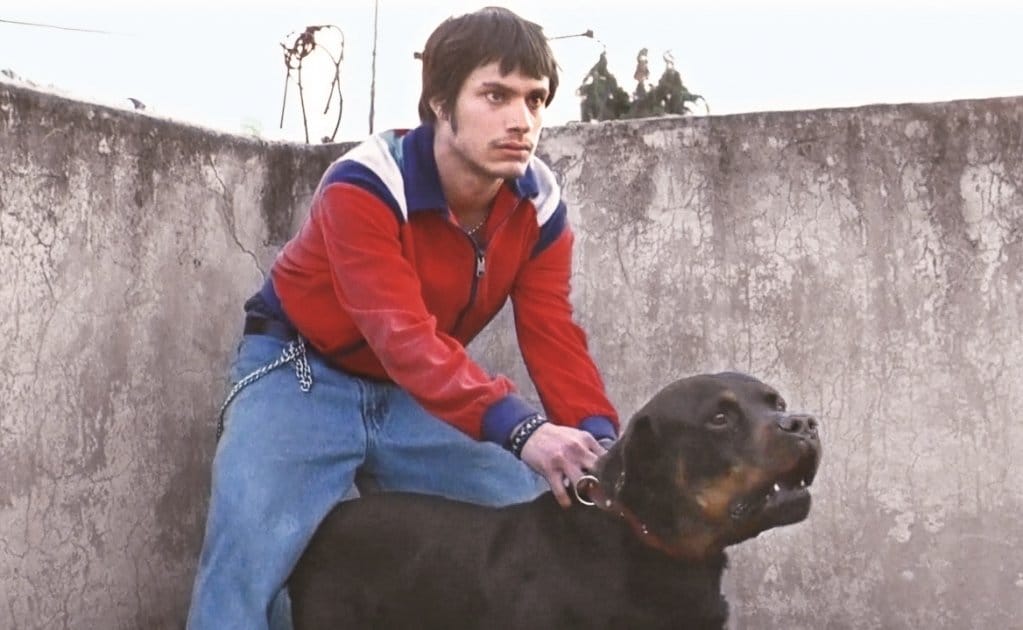
Amores Perros" turns 20 - HIGHXTAR.

6) Amores perros (2000) Directed by Alejandro González Iñárritu

The first installment in Iñárritu’s “Trilogy of Death” is without question the best of the lot, making use of the multi-narrative hyperlink cinema that hit the early 2000s like a neutron bomb, also features an ensemble cast of Latin superstars. Three intertwining stories – a triptych if you want to use the fancy lingo – connected by a car crash, and the representation of dogs (which is something I can really get behind) in a variety of ways. It was a ground-breaking film that its successors couldn’t quite live up to in what is otherwise still a very underrated trilogy. Now, Iñárritu is known for Birdman and The Revenant, but I will argue to the death that Amores perros is still his greatest film, it is certainly the most rugged and the most intense, and that really is saying something.

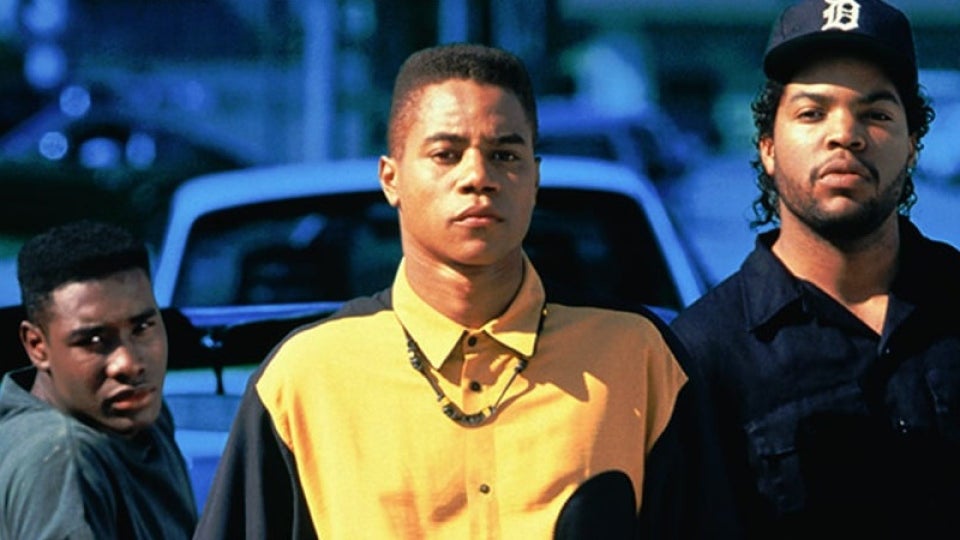
Boyz n the Hood' 30 Years Later: The Cast Then And Now - Essence

5) Boyz n the Hood (1991) Directed by John Singleton

Is this the greatest film set in the hood of all time? Well, if it isn’t then I’m yet to a see a more compelling emotional thrill ride than Boyz n the Hood. It is the blueprint for how a gang drama should be; possessing great characters, a great representation of loyalty, friendship, and heartbreak, and there are some truly remarkable life lessons that we could all listen to. This is the late John Singleton’s best film by a country mile (in a largely disappointing filmography it must be said), however, this is one of the greatest coming of age films of all time, and what is more impressive is how well it has aged; a timeless classic that was beautifully symbolic to a whole generation of young people. It is the cornerstone for great black dramas and should be revered for its significant importance for a new wave of filmmaking.

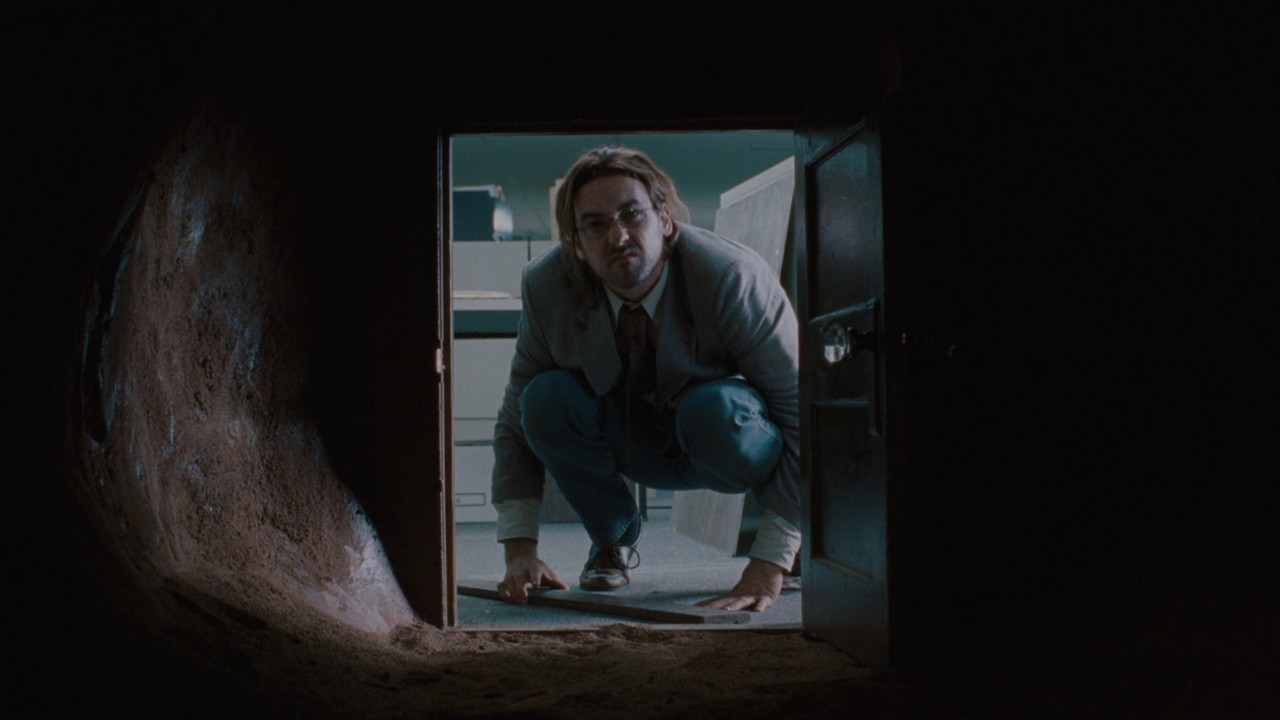
Being John Malkovich (1999) | MUBI

4) Being John Malkovich (1999) Directed by Spike Jonze

1999 seems to be the year for beginning directors, especially in my list. One of the films of the year though was the unforgettable and truly one of kind head smasher that is Being John Malkovich. To create something so bizarre and wonderfully unique, and for it to be your debut feature film is seriously impressive, but Spike Jonze is a seriously impressive director – what does help is having the genius of Charlie Kaufman by your side – just look at the films he has created since Adaptation., Where the Wild Things Are, Her. His small resume of directing credits is a blessing of the weird and wonderful, with them all being exceptional in different ways. Is Being John Malkovich Jonze’s best? Who knows, but it’s goddam brilliant, nonetheless.

Badlands movie review & film summary (1973) | Roger Ebert

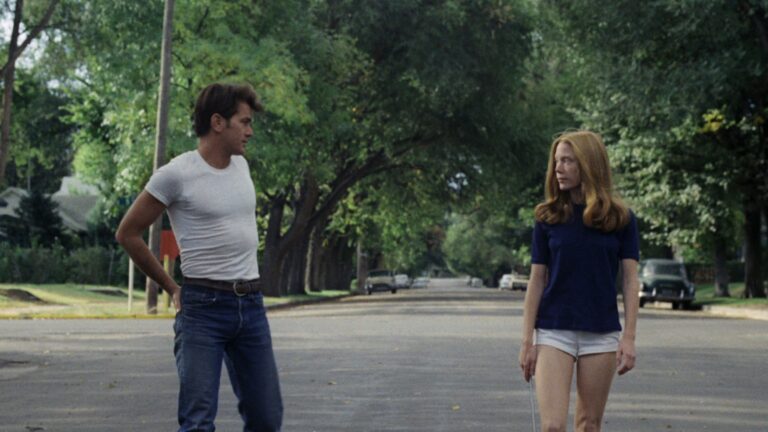
3) Badlands (1973) Directed by Terrence Malick

I guess I’m supposed to stay slightly unbiased when creating a list like this, but Badlands is one of my favorite films of all time. Terrence Malick’s debut film is so unlike any of his others – his films are known to be… experimental let’s say, exploring themes of a transcendence nature. Badlands on the other hand strips away all of that and focuses on the carefree nature of life, with two young adolescents on the run from the law after a love fuelled murder spree that takes them across country. Sissy Spacek is joyous as a young girl blinded by sheer passion for Sheen’s character, but the cinematography and the music are what binds all this together to create a wonderful piece of art and human observation. It’s my favorite Malick film, it’s his most understandable, it is a beautiful slice of cinema.

Reservoir Dogs Review | Movie - Empire

2) Reservoir Dogs (1992) Directed by Quentin Tarantino

There can’t be a list such as this that doesn’t include Reservoir Dogs, an obvious choice yes, but it’s just so damn good. What first begins as normal human interaction around the breakfast table, discussing topical subjects (very common in Tarantino’s films) soon turns into absolute chaos where we are now wondering, how, why, and what the hell happened? The performances are brilliant from everyone (everyone still left alive that is) and the violent is brutal and intuitive. It is an iconic film – one of the best of the decade – and like no other before it, and it led to a starring career for Tarantino as one of Hollywood’s most famous names. His films are always open to interpretation and fans will argue to the death about which is their favorite, but Reservoir Dogs will always be high on peoples lists, that’s for sure.

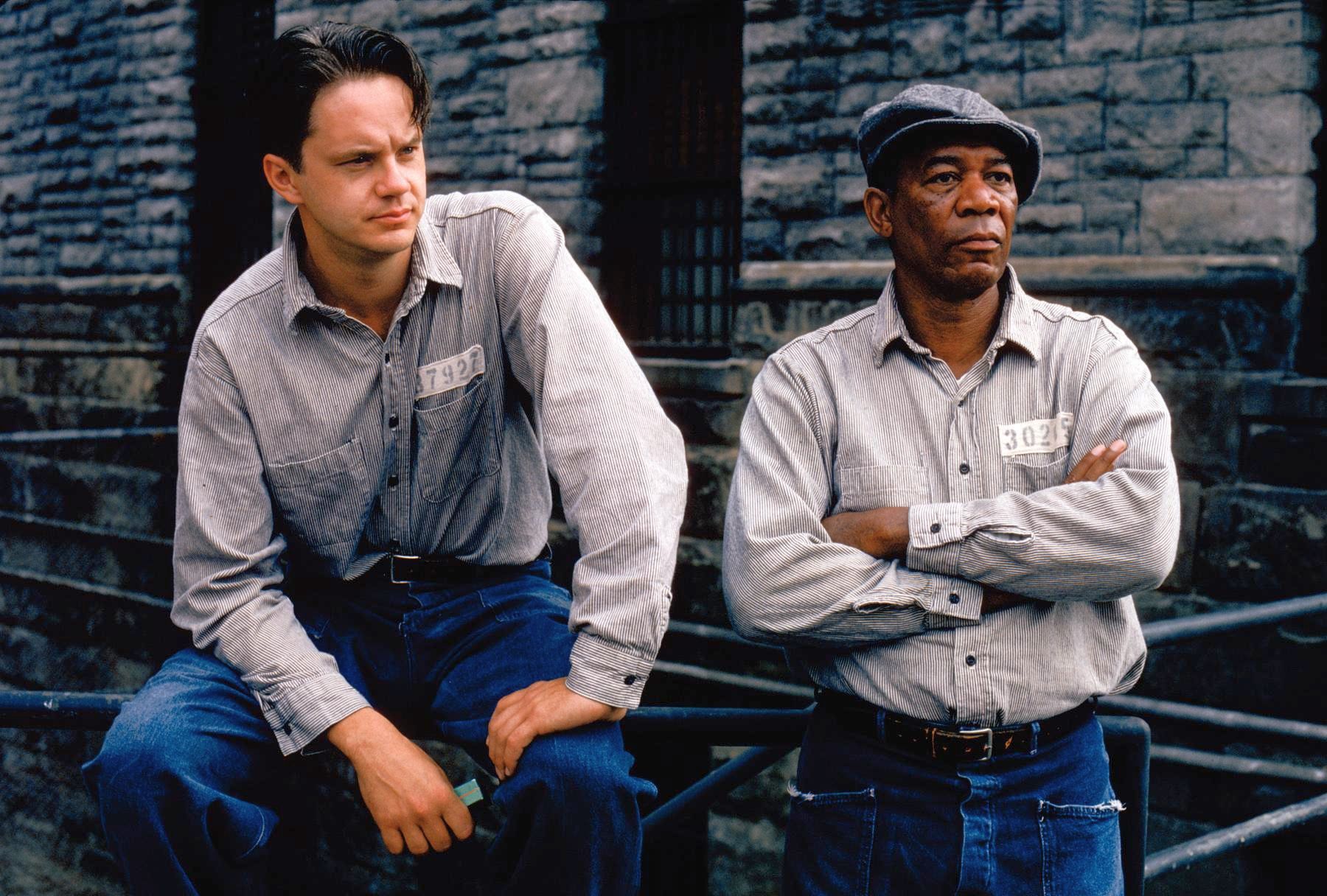
The Shawshank Redemption (1994) - IMDb

1) The Shawshank Redemption (1994) Directed by Frank Darabont

The word masterpiece is thrown around far too often these days, but for The Shawshank Redemption, it fits perfectly. It is a majestic, emotional, epic story about hope and friendship that stands the test of time, the relationship between Andy and Red is one of the great on-screen bromances. To create such an iconic film – often in peoples greatest films lists – is a testament to Darabont’s interpretation skills and the fact its based on a Stephen King story. It really is an emotional rollercoaster (yeah that’s right, I said it), it evokes a sense of human will that stops us from going crazy. Roger Deakins does his usual great work from behind the camera, and that man Thomas Newman again offers us a treat for the ears that has made him one of the great film composers. This might be an obvious choice, but its magnetism is hard to ignore and deserves the recognition of my top spot.

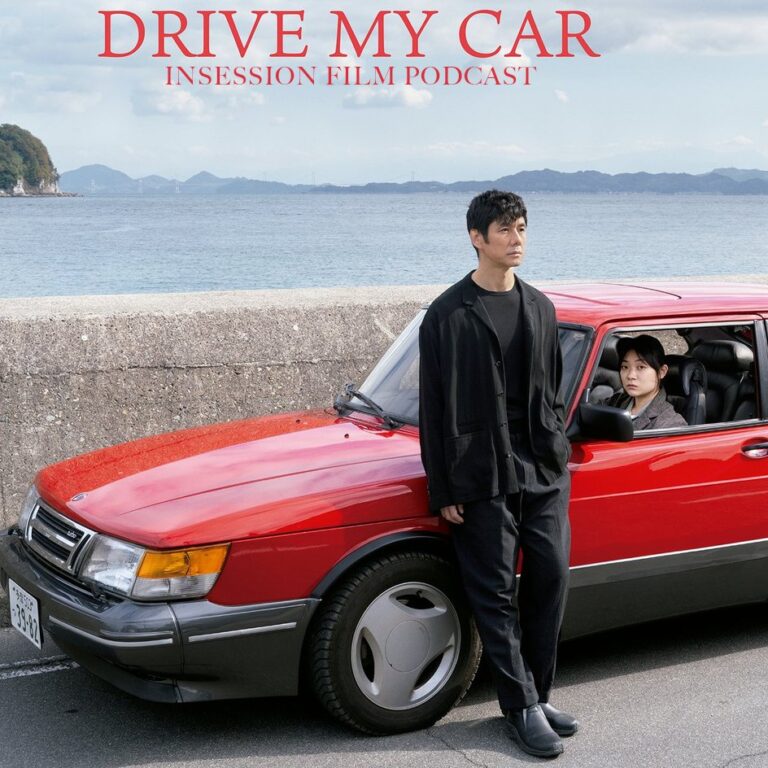
Podcast: Tie Me Up! Tie Me Down! / Drive My Car – Extra Film

This week on Extra Film, Ryan and Jay continue their Pedro Almodóvar Movie Series with Tie Me Up! Tie Me Down! and then they discuss Drive My Car!

The boys are back to talk about their next Almodóvar with Tie Me Up! Tie Me Down!, a controversial dark comedy about a man kidnapping a woman and grooming her to fall in love with him. Provocative doesn’t begin to describe a movie that is better to talk about than what might be on screen, given the questionable subject matter. But it is fascinating and the boys had a good discussion.

In the back half of the episode, the boys dive into Drive My Car, the latest film from director Ryusuke Hamaguchi. At nearly three hours long, Ryusuke Hamaguchi takes us on a journey of grief and acceptance through the use of art. It’s one of the best films of the year, and both Ryan and Jay really responded to how this moving film worked for them

Thanks for listening!

– Movie Review: Tie Me Up! Tie Me Down! (4:59)
Director: Pedro Almodóvar
Screenplay: Pedro Almodóvar, Yuyi Beringola
Stars: Victoria Abril, Antonio Banderas, Loles Léon, Francisco Rabal

– Movie Review: Drive My Car (50:05)
Director: Ryusuke Hamaguchi
Screenplay: Ryusuke Hamaguchi, Takamasa Oe
Stars: Hidetoshi Nishijima, Reika Kirishima

– Music

Atame ! ( Le’gami ) – Ennio Morricone
The Passenger – Iggy Pop
The Return of the Eagle – Atli Örvarsson

We try to make this the best movie podcast we possibly can and we hope you enjoy them. Subscribe today on iTunes, Spotify, or Stitcher, and please leave us a review on iTunes. You can also find us on Soundcloud, PlayerFM, and TuneIn Radio as well. We really appreciate all your support of the InSession Film Podcast.

Subscribe to our Podcasts RSS
Subscribe to our Podcasts on iTunes
Listen on Spotify
Listen on Stitcher
Tie Me Up! Tie Me Down! / Drive My Car – Extra Film/a>

[divider]

To hear this Extra Film episode and everything else we do, download our apps on the Amazon Market for Android and the Podcast Source app on IOS devices. The mobile app covers all of our main shows, bonus podcasts and everything else relating to the InSession Film Podcast. Thanks for your wonderful support and for listening to our show. It means the world to us.

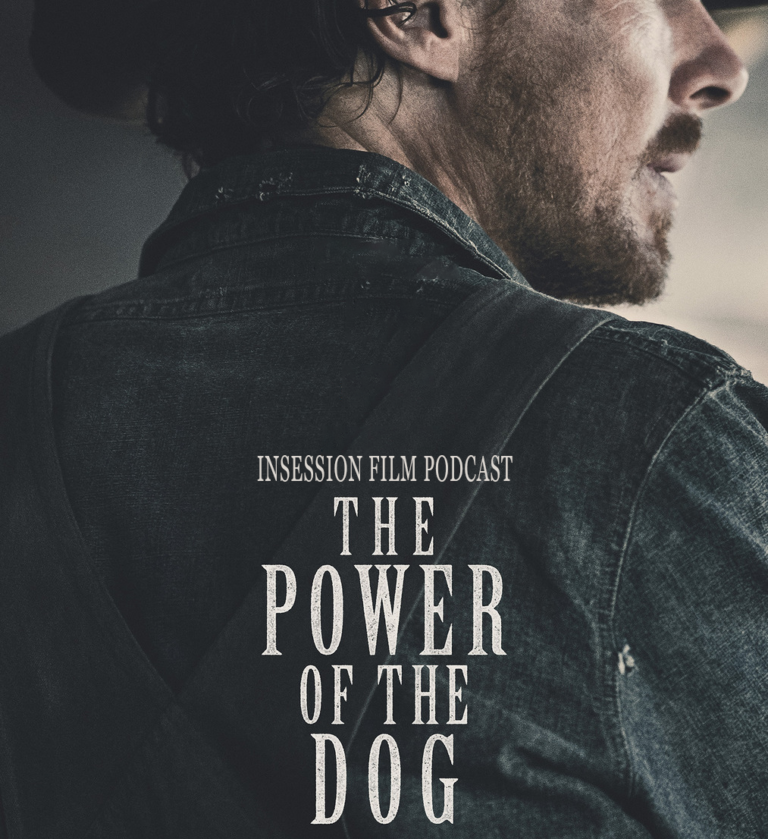
Movie Review: Jane Campion’s ‘The Power Of The Dog’ is Bold and Vigorous


Director: Jane Campion
Writer: Jane Campion, Thomas Savage (based on the novel by)
Stars: Benedict Cumberbatch, Kirsten Dunst, Jesse Plemons, Kodi Smit-McPhee, Thomasin McKenzie

Synopsis: Charismatic rancher Phil Burbank inspires fear and awe in those around him. When his brother brings home a new wife and her son, Phil torments them until he finds himself exposed to the possibility of love.


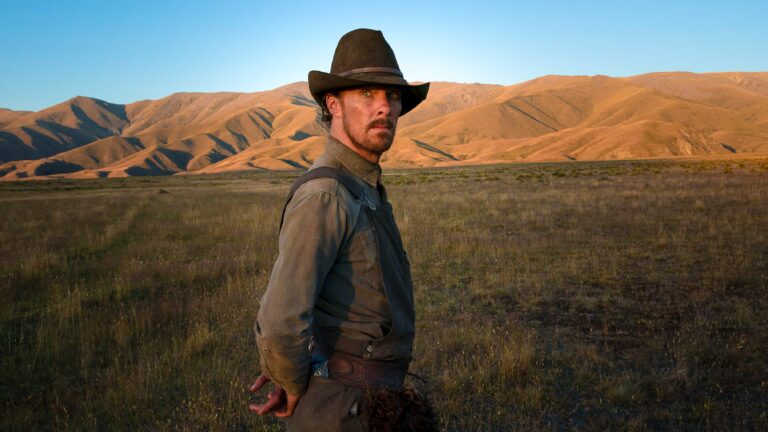
Jane Campion returns to the big screen after twelve years away to adapt Thomas Savage’s Western novel, a deconstruction of the genre with a patriarchial story of control. Benedict Cumberbatch plays Phil Burbank, a raw leader on his Montana ranch that his co-workers approve of and work under him with total confidence. He shows that he’s a man who is in control, loves it, and doesn’t need a whip to keep people in line. The story turns into a series of mind games when his brother (Jesse Plemons) returns with his new wife, Rose (Kristen Dunst), and her doctor-studying son, Peter (Kodi Smit-McPhee).

Accompanied by Jonny Greenwood’s string-streaking score and Ari Wegner’s deepened cinematography, which might as well win the Oscar at this point, Campion puts on a show that never rushes itself and cuts into several chapters to establish the pace. The film was shot entirely made in New Zealand, Campion’s home country, but you’d be immediately fooled if no one told you that. The American West is on display with the usual tricks of horse riding, lasso waiving, and cattle driving. The difference here is no gun is needed to shed some blood and make a point. There is no John Wayne or Gary Cooper-like figure there making a stand against the bad guys. This is a jungle with only one person taking the spotlight: Phil Burbank.

The Burbank brothers work well together in the cattle business, but the alpha finds his younger brother with his new wife and son encroaching on their territory. They are an unwelcome sight, but instead of shooing them away, Phil decides to make it uncomfortable for both the wife and son, especially the son as Phil implies his mannerisms mean he’s probably not a real man. So he decides to take Peter into his territory, the one he knows, and challenge Peter to survive it. To Phil, as Cumberbatch expresses so brilliantly with hard whiskey and comfortably naked (spoiler alert) in the open, Peter needs to be strong and rugged even to be a doctor instead of trying to shy away from the open range. For Rose, Dunst’s subtlety is perfect as the psychosexual tension coming from Phil shakes the inner peace in her new life. It’s Dunst’s best performance to date.

Campion’s adaptation is bold, using the rolling sands to tow the undercurrent of discontent by one man, the one who holds the power. This is in contrast to the erotic love triangle in Campion’s masterpiece, The Piano, but instead, a homoerotic rodeo touching on all the machismo in the Western world. There’s a cult of personality, less on Phil but on a deceased person named Bronco Henry who’s been dead for years. This part of America conjures up a radically different feeling compared to the cities, one that is awfully quiet and sometimes eerie. Phil Burbank is the personification of the Western anti-hero who does not need to raise his voice to make his presence known and Jane Campion puts it on the screen with intimidating intentions.

Grade: A-

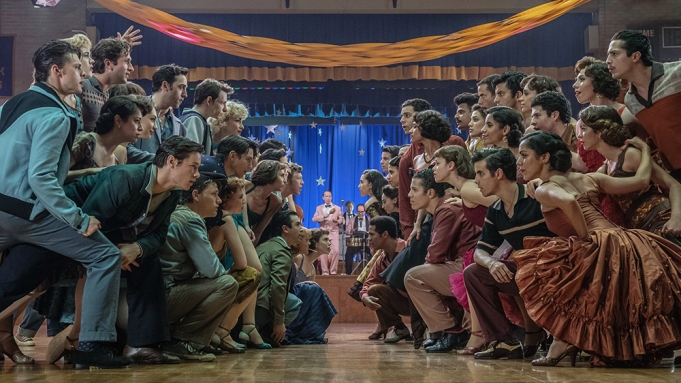
Movie Review: ‘West Side Story’ is a Loving Remake That Finds Its Own Voice


Director: Steven Spielberg
Writer: Tony Kushner
Stars: Rachel Zegler, Ansel Elgort, Ariana DeBose, David Alvarez, Mike Faist, Rita Moreno

Synopsis: Two teenagers from different ethnic backgrounds fall in love in 1950s New York City.


It’s easy to believe Steven Spielberg can do anything. Arguably the world’s most beloved living director, Spielberg has proven, time and time again, that he can tackle any genre, any subject, any style, and make it work. As if his filmography hadn’t already proven the point, in 1993 Spielberg showed the world the true breadth of his skills by delivering not only one of the biggest blockbuster action films of all time, Jurassic Park, but also arguably one of the most masterful dramas of all time, Schindler’s List. For most directors, having made those two films in the span of an entire career would be legendary enough, but Spielberg made Jurassic Park and Schindler’s List IN THE SAME YEAR. One can either feel sorry for all the other directors he has challenged by setting the bar and continuing to elevate it higher, or be excited by what he inspires in his fellow artisans, daring themselves to expand the limits of their visions, comfort zones and capabilities. There is no doubt Steven Spielberg only makes the world of cinema a better place.

The crazy thing is, not only is Spielberg talented, but it seems he is fearless as well. At 74 years of age, Spielberg could easily rest on his laurels, having accomplished nearly everything there is to accomplish in his chosen profession. Instead, he decided to put his entire career on the line by doing two crazy things at the same time: make a musical (which he’s never done) and remake one of the most beloved films of all time. When it was announced that Spielberg would be remaking West Side Story, the 1961 Best Picture Oscar winner, one of only a few films in history that everyone agrees is a masterpiece, some wondered if Spielberg’s lucky streak had finally come to an end. How on earth could anyone do that? Or, more importantly, WHY would anyone do that?

As it turns out, we should have all trusted in Spielberg. We should have known he’d never let us down.

It is impossible to watch the new version of West Side Story and not continually compare it to the 1961 original. But there does come a point, about halfway through, where Spielberg finds a way to separate himself and firmly establish his own voice and his own perspective on the classic. While the basic setup, story and structure of the film do stay true to the original, it is in the telling of the story and the writing that allows this new version to find its way and breathe its own air.

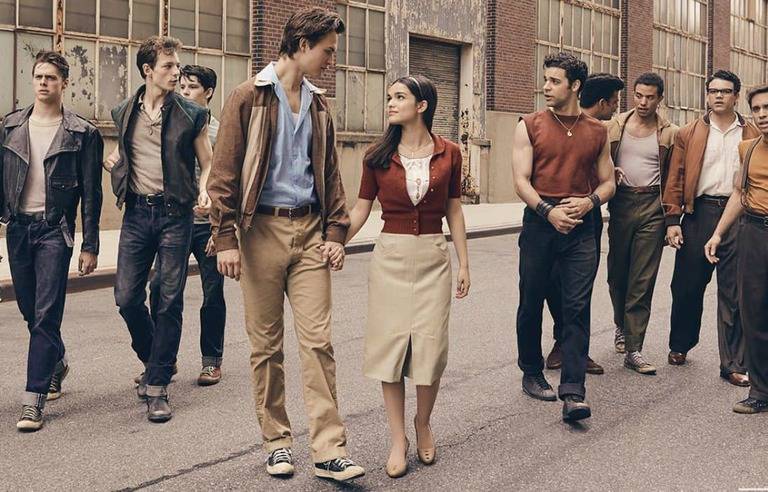
Still set in New York City in the 1950s, West Side Story tells a version of Shakespeare’s Romeo and Juliet, with two young lovers, Tony and Maria, falling in love, despite each being part of rival gangs that fight for the same area of a decaying neighborhood in New York City. Maria is sister to Bernardo, the leader of the Sharks, a gang of Puerto Rican immigrants who are constantly fighting not only for turf, but for respect in their adopted country. Tony, meanwhile, is a founding member of the Jets, a gang of white kids who feel the Sharks have invaded and taken over their neighborhood. The Jets are led by Riff, Tony’s bitter best friend, who has a personal vendetta against Bernardo, and is looking for a fight. When Maria and Tony are immediately drawn to each other across a dance floor and steal a forbidden kiss, the war between the two sides escalates and the battle lines are drawn, with Tony and Maria caught in the middle.

Although it would be hard to improve on a story based on a Shakespeare play, somehow screenwriter Tony Kushner manages to build a fuller and more emotional connection through the story than in the original film. While the original film feels more built on the musical numbers, this version really takes the time to establish the characters and get the audience to feel as if they are in the world of the film, starting with an opening montage that powerfully establishes the setting and draws the audience in. Cinematographer Janusz Kaminski establishes the gritty, grainy underbelly of New York City using shadow and close-ups and exquisite camera movement. By the time we are even introduced to the characters, we are already there with them, in their world, feeling as if we’ve always been there and we know exactly who they are. And this is only in the first ten minutes.

Setting aside the musical numbers for now, West Side Story delivers a fuller, richer story than its predecessor, and that’s where it really separates itself. Between the musical numbers, there is a real effort to communicate theme and history, personal relationships and group dynamics. Issues of racism and sexism, even transphobia, are handled deftly, allowing them to enrich the plot, not detract from it. The actors feel as if they were cast for their whole embodiment of the characters, not just the singing and dancing parts of them.

An interesting side effect of Kushner’s more illuminating and richer examination of the original story is the realization of how lopsided the story really is in favor of the Jets. When you think of the original film, it feels as if the Jets and Sharks are equal players in the story, but when you see it truthfully, it’s clear that the most significantly written characters are Jets and the Sharks are merely serving as the supporting players. The Jets get three huge numbers, “Jet Song,” “Officer Krupke” and “Cool” while the Sharks get “America.” Granted, “America” is by far the best number in the film, and one of the best musical numbers ever written, period, it is still lopsided, and it’s something I never noticed before, despite having seen the original film a hundred times. It is Kushner’s screenplay that achieves this fuller, more textured, more honest and more revealing experience, and a true testament to his unique genius.

But what also greatly aids in the flushing out of the story are some absolutely magnificent performances which allow the fuller, more realized screenplay to come to life. While everyone on screen is perfectly cast and all play their part perfectly in creating the world of this film, there is no denying the fact that Ariana DeBose, who plays Bernardo’s girlfriend Anita, and Mike Faist, who plays Riff, steal the screen from everyone each time they are on it. DeBose is fiery and passionate, strong and elegant in her performance as a woman torn by love. In the role made famous by Rita Moreno—and won Oscar for it—DeBose makes Anita her own, never once imitating the legendary Moreno, who herself has a part in the film. It must not have been easy for DeBose to deliver in a key emotional moment playing Anita when the original Anita was standing right there, but she conquers the uniquely meta moment with poise and power.

As for Mike Faist, he flat-out steals the movie. His Riff is sneering and bitter, vengeful and pathetic, haunting and sorrowful. Faist delivers every line with a casual arrogance that is perfectly calibrated, perfectly timed, perfectly weighted. You can feel his character’s history, his pain, his hopelessness, and yet you can also feel his love for his Jets, and especially for Tony. Faist is able to layer a depth below the hard outer shell of Riff and in the brief moments he lets it crack open, we are able to see Riff for the complicated and emotional character he really is.

No matter how many ways this new version of West Side Story may separate itself from the original, the one way it follows perfectly is in the fact that the supporting cast is all stronger than the two main actors, around which the film is built. Ansel Elgort, who plays Tony, and Rachel Zegler, who plays Maria, are both fine and deliver satisfactory performances, but they are the least interesting and the least believable. Elgort never looks comfortable and Zegler, while she is charming, is betrayed a bit by her inexperience. There is no chemistry between them, which is disappointing, but they do deliver the songs well, and Elgort particularly does well to navigate Spielberg’s demanding direction during the famous balcony scene, which takes place on a fire escape, and requires Tony to climb up and down and through and over multiple levels of production designer Adam Stockhausen’s complicated set piece, which is, frankly, Elgort’s most impressive performance in the film.

In the end though, nobody is going to West Side Story to see Ansel Elgort climb a fire escape. Everyone is there for the music, the singing and the dancing. Choreographer Justin Peck based the dance sequences on the original Jerome Robbins choreography, and the numbers are thoroughly enjoyable, if not truly eye-popping. There could have been much more dancing, but what is there is effective. The best number, not surprisingly, is “America,” which does live up to the pressure and delivers with gusto. I had to fight the urge to stand up and cheer and applaud at the end of the number, as it never fails to elicit pure joy.

There is no denying that there are few challenges as great as remaking a film as perfect as West Side Story is. But, in Steven Spielberg, you have a director who is not only fearless, but understands that it is possible to embrace the original and still find new ways to expand on it. It’s fine to be skeptical, but just know that there is so much love and tribute paid to the original in this new version of West Side Story that, even if you’re a purist, there will be something, somewhere, in it that just might win you over.

Grade: B+

https://www.youtube.com/watch?v=CbUM27qw6a8

In Memoriam: World AIDS Day To Those We’ve Lost

On December 1, 1988, the first international World AIDS Day was recognized to bring awareness to the still-incurable disease. It had been seven years since AIDS was first identified but the prejudices remained and any form of medicine to fight the illness remained out of sight. By this point, the disease was no longer the “gay cancer” with attached a wrongful stigma to it, but something that anyone could contract. In Hollywood, Rock Hudson was the first major celebrity to die of the disease in 1985, but there were many others to fall ill to the horrific plague which, as of 2020, more than 36 million people have died. Another 38 million are living with HIV today.

In recent years, there have been other high-profile names from the movie world who have come out publically as living with HIV. Queer Eye’s Johnathan Van Ness, Pose’s Billy Porter, and Charlie Sheen have come out as living people with the virus without shame. Back in the 1980s, people could not and would not announce it for fear of having their careers ended and the massive social stigma of having HIV/AIDS. In effect, many died without revealing their cause; legendary choreographer Alvin Ailey had his death attributed to a blood disorder to protect his living mother while director Jacques Demy’s death was contributed to cancer before wife Agnes Verda confirmed it to be AIDS years later. 

This year marks the thirtieth anniversary of two major figures with the illness. Magic Johnson shocked the world by retiring from professional basketball after testing positive but is still with us today. Just two weeks after his announcement, Queen frontman Freddy Mercury confirmed he had AIDS and died the following day. Here are those in cinema history who we lost to the disease and whose legacies should not be forgotten:

Nestor Almendros 

One of the most highly respected cinematographers of the 20th-century, the Spanish-born Almendros moved to Cuba to join his father, fleeing a country repressive and homophobic, only to go to another country that was equally oppressive and homophobic. He then moved to France where he worked with Eric Rohmer and Francis Truffaut among others, getting the attention of Terrence Malick who hired him for Days Of Heaven. With his use of natural light predominately, Almendros won the Oscar for Best Cinematography. He then worked with Robert Benson on Kramer vs. Kramer and Alan Pakula on Sophie’s Choice, both films also winning Oscars. Following his death in 1992, the Nestor Almendros Award for Courage in Filmmaking award was established by Human Rights Watch International.

Ian Charleson

The Scottish native was primarily known for his stage work in the 1970s, performing for the Royal Shakespeare Company at the West End and then the Royal National Theatre, the setting made famous by another Shakespearean actor, Sir Lawrence Olivier. Charleson had only done TV movies when he was approached to play sprinter Eric Liddell in Chariots Of Fire which went on to win Best Picture at the Oscars. He would then be cast in Richard Attenborough’s Gandhi as the priest who allies himself with the Indian independence leader and that film would also win Best Picture, making Charleson a star worldwide. Upon his death on January 6, 1990, Charleson asked that his death be confirmed as AIDS to publicize the disease, making him among the first British entertainment stars to acknowledge it as the cause of death.

Brad Davis

In 1978, an unknown actor from Tallahassee, Florida became a major star with his breakout performance in Midnight Express, the true story about a drug smuggler who has to survive in a Turkish prison and attempt to escape his hell. In real life, Davis was fighting his personal demons in heroin abuse and alcoholism, as well as the trauma from being abused by his own parents. Coincidently, he co-starred with Ian Charleson in Chariots Of Fire before taking the titular role in Rainer Fassbinder’s final film, Querelle, and was on stage for Larry Kramer’s AIDS drama, The Normal Heart. Diagnosed with HIV in 1985, he and his wife kept it a secret from everyone so he could keep getting work and died in 1991 from an assisted suicide by drug overdose.

Denholm Elliot

In pop culture, he will be remembered for his role as museum curator Marcus Brody in Raiders Of The Lost Ark and The Last Crusade, a friend of Indiana Jones who helps get the much-sought artifacts to be evaluated by “top men.” Elliot however had a much fruitful career as a supporting actor in more than 125 TV and film credits which included Alfie opposite Michael Caine, Bad Timing directed by Nicholas Roeg, Trading Places opposite Dan Ackroyd and Eddie Murphy, and the Merchant-Ivory adaptation of A Room With A View which earned Elliot an Oscar nomination. Elliot, who was bisexual and in an open marriage, died of AIDS-related tuberculosis in 1992, aged 70.

Howard Rollins

Rollins, a native of Baltimore, had done mostly TV when he was cast by Milos Forman as a pianist who is fed up being randomly scolded for being black in Ragtime. His performance, opposite of the great James Cagney playing the NYC Police Commissioner, earned him critical acclaim and an Oscar nomination, leading Rollins to be cast as the lead in Norman Jewison’s A Soldier Story, which was nominated for Best Picture. Rollins went on to be cast as Virgil Tibbs in the TV series adaptation of In the Heat of the Night, but his alcoholism and drug addiction affected his career and was fired from the show. Although he successfully went to rehab, Rollins was diagnosed as HIV-positive and died several weeks later of AIDS-related lymphoma. He was 46.

Other Notable Deaths

  • Emile Ardolino, film director – d. 1993 (Dirty Dancing, Sister Act)
  • Howard Ashman, composer – d. 1991 (The Little Mermaid, Beauty And The Beast)
  • Leonard Frey, actor – d. 1988 (The Boys In The Band, Fiddler On The Roof)
  • James Lyons, film editor – d. 2007 (The Virgin Suicides, Far From Heaven)
  • Michael McDowell, screenwriter – d. 1999 (Beetlejuice, The Nightmare Before Christmas)
  • Cookie Mueller, actress – d. 1989 (Multiple Maniacs, Pink Flamingos)
  • Anthony Perkins, actor – d. 1992 (PsychoMurder On The Orient Express)
  • Kurt Raab, actor – d. 1988 (The Merchant Of Four Seasons, World On A Wire)
  • Tony Richardson, film director – d. 1991 (A Taste Of Honey, Tom Jones)
  • Vito Russo, film historian – d. 1990 (The Celluloid Closet)

Follow me on Twitter: @brian_cine (Cine-A-Man)

Poll: What is the best black & white film of the 21st century so far?

Within our digital age, it’s quite ironic how various forms of art have favored retro over modern. With music it has been the resurgence of vinyl records, and with film it has been the growing popularity of black & white, even to the point of re-releasing films like Mad Max: Fury Road and Logan in their respective “chrome” editions. This year alone saw the release of five (yes, FIVE) new releases in black & white (Malcolm & Marie, Belfast, Passing, the documentary Gunda, and now C’mon C’mon), and as I write this blurb I actually wonder if I’m still missing some. This utilization of black & white cinematography isn’t going away any time soon, and in some cases (as with the films below) it has yielded some beautiful films.

What do you think is the best black & white film of the 21st century so far?


Podcast: The Power of the Dog / House of Gucci – Episode 458

This week’s episode is brought to you by ExpressVPN. Sign up today and get 3 months FREE with a 1-year package!

This week on the InSession Film Podcast, we discuss Jane Campion’s new film The Power of the Dog and also Ridley Scott’s latest in House of Gucci! Plus, JD gives his thoughts on King Richard and Tick, Tick…Boom!

Another big thanks to Ryan for filling in once again this week as Brendan wasn’t able to see House of Gucci in time for this review. It’s always great to have him on the show, but he brings something a little extra on this episode. As for The Power of the Dog, could it be one of the year’s very best films? Well, after our conversation, we just may buy into that notion. Please forgive the length, it’s another long episode, but we’re confident you’ll enjoy all the discussion.

On that note, check out this week’s show and let us know what you think in the comment section. Thanks for listening and for supporting the InSession Film Podcast!

– Movie Review: The Power of the Dog (6:58)
Director: Jane Campion
Writers: Jane Campion
Stars: Benedict Cumberbatch, Kirsten Dunst, Jesse Plemons, Kodi Smit-McPhee, Thomasin McKenzie

– Notes / King Richard / Tick, Tick…Boom! (59:00)
For our break segment this week, after missing last week’s show, JD offers up his thoughts on Will Smith in King Richard and how he deserves all the Oscar hype around his performance. He also discusses Tick, Tick…Boom! and why he liked it more than the fellas did per their review on Episode 457.

[divider]

RELATED: Listen to Episode 456 of the InSession Film Podcast where we discussed Belfast!

[divider]

Movie Review: House of Gucci (1:24:16)
Director: Ridley Scott
Writers: Becky Johnston, Roberto Bentivegna
Stars: Lady Gaga, Adam Driver, Jared Leto, Jeremy Irons, Salma Hayek, Al Pacino

Show Sponsor: First Time Watchers Podcast

– Music

West – Jonny Greenwood
Sweet Dreams – Annie Lennox
The Return of the Eagle – Atli Örvarsson

Subscribe to our Podcasts RSS
Subscribe to our Podcasts on iTunes
Listen on Spotify
Listen on Stitcher
InSession Film Podcast – Episode 458

[divider]

Next week on the show:

Review: C’mon C’mon
Top 3: N/A
Review: Being the Ricardos

[divider]

Help Support The InSession Film Podcast

If you want to help support us, there are several ways you can help us and we’d absolutely appreciate it. Every penny goes directly back into supporting the show and we are truly honored and grateful. Thanks for your support and for listening to the InSession Film Podcast!

VISIT OUR DONATE PAGE HERE

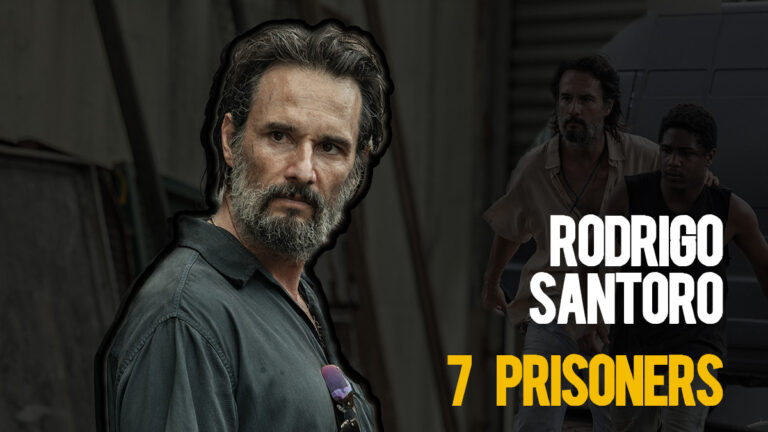
The (Im)Possible Contenders – Rodrigo Santoro, Best Supporting Actor – ‘7 Prisoners’

The (Im)Possible Contenders is intended to be a collection of features highlighting great films, performances, and craftsmanship that should be in the awards conversation, but due to their international, non-fiction, or independent nature, are unfairly ignored or not taken seriously by either voters or powerful outlets. This is an invitation to give these great films a chance. They might not get any sort of buzz, but they are worth your while. 

For Your Consideration, the (im)possible contender this week is Rodrigo Santoro for Best Supporting Actor in 7 Prisoners.

In Alexandre Moratto’s harrowing portrayal of modern-day slavery, 7 Prisoners (now streaming on Netflix), Brazilian actor Rodrigo Santoro plays Luca, a ruthless man who runs an illegal scrapyard with the aid of corrupt police officers and politicians. His workforce consists of four new arrivals led by 18-year-old Mateus (Christian Malheiros), who, after realizing the hell he’s in, soon earns Luca’s trust as his second-in-command in the hopes of facilitating his and his friends’ liberation. 

Gone is the Rodrigo Santoro that was named among People’s magazine and E!’s sexiest men alive. Here, he’s transformed into a bearded, diabolical oppressor and human trafficker who commands attention. Luca is vile and cruel, but never one-dimensional thanks to Santoro’s compelling performance. His entry into frame changes the mood of any scene instantly as his presence signals grave danger, but also a twisted glimmer of hope. His confidence creates terrifying obedience and his diabolical charisma is highly effective in portraying the complex power schemes through which the enslaved becomes subordinate.

Santoro takes full advantage of the depth granted to his character by the script (written by Moratto and Thayná Mantesso). As Luca and Mateus start to get closer and the morals of the story become more complex, we learn about the former’s life story and his motivation to operate in such hideous ways. Moratto doesn’t want you to like Luca, but to understand where he comes from and see through his manipulative discourse. Santoro pulls out this risky maneuver with masterful precision: he becomes a cunning puppet master of unspeakable deeds.

In case you can’t remember his face due to his terrifying transformation in 7 Prisoners, here’s a reminder that Santoro is no stranger to Hollywood. After earning rave reviews for portraying a teenager confined in a mental institution in Laís Bodanzky’s Bicho de Sete Cabeças in 2000, Santoro started appearing in Hollywood films such as Charlie’s Angels: Full Throttle, Love Actually and Zack Snyder’s 300, where he played Xerxes. But throughout it all, he’s kept coming back to Brazil, performing in award-winning films and telenovelas.

Alexandre Moratto first learned about Santoro’s depth and dynamism as a performer after watching Héctor Babenco’s Carengiru (2003) where he plays a transsexual prisoner. Moratto was further impressed by Santoro’s work ethic when he learned Russian to play a translator for the lead role of Cuba’s 2020 Oscar pick Un traductor.

However, the experience wasn’t easy for Santoro, who immediately hated the character after reading the script. In an interview with Screen Rant, he described his experience shooting the film as “painful.”

“It was very painful to play him, because of the way the character is and the things that he does. I would come back home and try to unplug, and it wasn’t easy. I felt really bad during the shoot, just because my instrument is my own body and my emotions. It kind of stayed with, and it’s been a learning experience,” he recalled in the interview.

FYC: Other categories that 7 Prisoners deserves to fight for

Although this piece is focused on Rodrigo Santoro as Best Supporting Actor, 7 Prisoners should undoubtedly be competing for categories such as Best Picture, Direction, Actor, and Production Design.

The case for Best Picture: 7 Prisoners is inspired by real-life cases of human trafficking; in fact, one of its cast members is a survivor. This is a film that doesn’t have metaphors, heroes, or winners. Its power stems from the fact that it portrays with raw authenticity a real-life problem that is out there and getting bigger each day. It’s a devastating and compelling moral thriller with no easy answers.

The case for Best Direction: Moratto creates a deep immersion into the claustrophobia, horror, and utter hopelessness of human trafficking. Through masterful command of his cinematographic tools at hand, he explains how exploitation works while presenting thought-provoking moral conundrums, one after another. Also, his precise actor direction is key to conveying the shifting power dynamics at play. And most importantly, he never succumbs to heroism, moralistic hypocrisy, or your stereotypical American happy ending. He remains firm in depicting human exploitation exactly as it is: violence. 

The case for Best Actor: Mateus is a young man who starts with honest and pure intentions, but is forced into a struggle with his conscience, eventually becoming a cog of a disturbing reality. The expressive and naturalistic performance of Christian Malheiros allows us to further understand the moral complexity of the situation, while his mix of vulnerability and determination convinces you to temporarily root for him even though you know where his character is headed. A tremendous performance.

The case for Best Production Design: The junkyard where Mateus and his friends are imprisoned was built from scratch by production designer William Valduga. “We couldn’t find a junkyard because they are all active locations, they live off scrap metal so you can’t just tell them ‘we are going to shut you down for several months to shoot a movie,’” explained director Moratto in The Director’s Cut podcast, who praised Valduga’s research passion to ensure every little detail was accounted for. The result is an authentic set that enhances the claustrophobia and hopelessness of the situation. 

7 Prisoners is streaming on Netflix. You can check its Netflix FYC profile here.

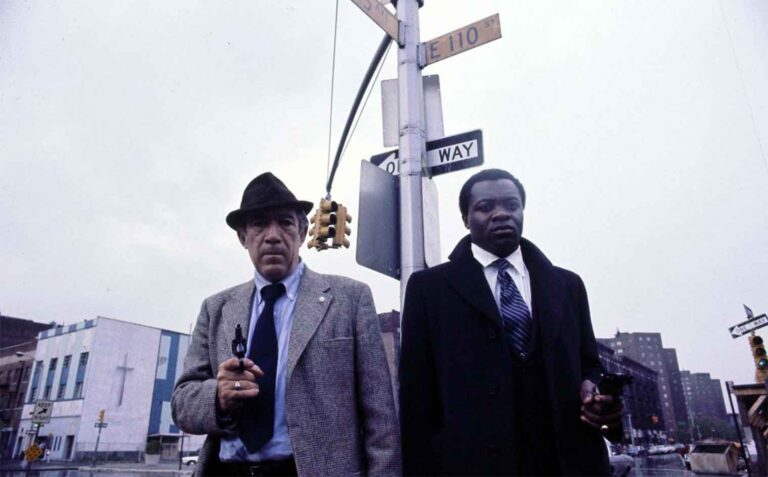
Criterion Crunch Time: ‘Across 110th Street’

Genre is an interesting beast and we can come to it for different reasons. Blaxploitation can, of course, be problematic in its representation of Black culture, but is also particularly interesting, especially as a time capsule. Additionally, it offered a sense of freedom and agency previously unheard of for Black creators, as well as audiences. Similar to many obnoxious cinephiles of my age, my introduction was interviews from Quentin Tarantino. And say what you will about his comfort with certain slurs, but Tarantino did shine a light on underseen films and genres, blaxploitation included. Whether it be the relatively famous Shaft films or lesser known actual classics like Sweet Sweetback’s Baadasssss Song (also available on Criterion as part of the Melvin Van Peebles Collection), there are great watches to be found within that work. And leaving the Criterion Channel this month is a film derivative of blaxploitation, Across 110th Street.

Across 110th Street is known most for its music, from soul superstar Bobby Womack. There is good reason for this, even beyond the titular track. The entire film is filled with memorable music, both listened to in a silo and in the context of the film. Womack’s instrumentation and vocals provides Across 110th Street with not only a pumping heart but also a sense of reality, also aided by the decision to film it in actual locations, as opposed to sound stages. One only has to listen to that title track for about ten seconds to get an immediate feel for the film and the setting.

But this film is more than its music. It is most importantly (and most obviously) a film about race, poverty, and the insurmountable odds against young Black men in this situation. Across 110th Street begins with Jim Harris (Paul Benjamin) and his crew attempting to steal a large amount of money from a Mafia controlled bank posing as police officers. After this inciting event, the chase is on, Jim is hunted by both the Mafia and the police throughout the runtime. In perhaps the film’s most affecting scene, Jim details exactly why he has turned to criminal activity. A middle-aged Black man with a record of incarceration, health issues, and no education has few options and feels trapped. It feels rare to see a performance of frustration and helplessness, paired with masculinity. We immediately understand the terror and lack of choice. Would any of us want to work ourselves to the bone in a dead end job, knowing that we would probably die broke in the same neighborhood? Across 110th Street never judges Jim, but also lets him understand that no options are easy or free.

But no discussion of Across 110th Street would be complete without mention of the film’s two major stars or its difficult relationship with law enforcement. The plot follows Lieutenant Pope (Yaphet Kotto) and Captain Mattelli (Anthony Quinn) as they track Harris. Two police officers of different racial backgrounds might not strike the audience as an interesting choice, but the screenplay from Luther Davis offers a new twist. Instead of the Black officer being a wild card and his opposite being a “by the book” stereotype is flipped. This is especially impressive because both Kotto and Quinn are large intimidating men, in a near constant standoff. Pope is placed in charge because of both political machinations and due to Mattelli’s age and past. Mattelli, unsurprisingly, is upset by this, but is also almost unflinchingly racist, so this causes a number of problems. It takes a strong actor like Kotto to stand toe-to-toe with Quinn and still be a character we root for. Although he usually does the right thing, he also will not allow anyone, regardless of background, to walk over him. Kotto and Quinn’s yelling matches are things of legend and would make Across 110th Street worth watching all on their own.

Across 110th Street is not a film that was particularly well liked upon release, and it is easy to understand why. It is a lean, mean movie with almost no likable characters and a wildly cynical worldview. In a scene that leads to Jim Harris’s location being discovered, the last member of his crew is murdered, hung upside down, and dropped, in an inversion of a lynching. The racist mobsters perform this without a second thought and it is just one moment of helplessness that hammers home this repeated theme of inescapability. Although the leader of these men, Nick D’Salvio (Anthony Franciosa) is punished and killed at Harris’s hands, this occurs after his girlfriend is also shot. And as is expected from this film’s cynicism, Harris is gunned down by police, and by a previously unknown officer at that.

Across 110th Street is almost devoid of positivity and aspirations of hope. It will not make you feel good about policing, race, relationships, or upward mobility. But it is an important representation of a segment of experience characterized by the lack of all these things. Additionally, the performances of Kotto and Quinn focus the film in a manner that does not inspire a sense of falseness, and reminds us of how far we have to go.

Podcast: Sergio Leone Movie Series

Known for being the master of the spaghetti western and someone who revolutionized and revitalized a dying genre, Sergio Leone is one of the greatest masters of genre filmmaking of all time.  With a short filmography that spans only a couple of decades, he made vivid movies with unconventional methods and, by doing so, made masterpieces and brought the acting legend Clint Eastwood to the world. Listen to the series below and hear Ryan and Jay discuss a master at work.

A Fistful of Dollars, 1964

Listen to our review below as heard on Extra Film.

<

For a Few Dollars More, 1965

Listen to our review below as heard on Extra Film.

<

The Good, the Bad and the Ugly / Once Upon a Time in the West, 1966/1968

Listen to our review below as heard on Extra Film.

Once Upon a Time in America, 1984

Listen to our review below as heard on Extra Film.

Movie Review: ‘Tick, Tick… Boom!’ has a Shining Star, but Lacks Spark Throughout


Director: Lin-Manuel Miranda
Writer: Steven Levenson
Stars: Andrew Garfield, Alexandra Shipp, Robin de Jésus, Vanessa Hudgens

Synopsis: On the cusp of his 30th birthday, a promising young theatre composer navigates love, friendship, and the pressures of life as an artist in New York City.


Over the past five years, Lin-Manuel Miranda has become a household name for musical lovers and theatre fans. After taking the world by storm with his theatre production of Hamilton: The Musical – something the public could access from their television screens when a recording of the production was put onto Disney+ last year – Miranda has cemented his work into film with his musical talents being showcased in Moana, as well as his first theatre show In the Heights being made into a feature film. With being such a big fan of the work that Miranda has done over the past few years, and with In the Heights being one of my top films of the year so far, I ended up feeling disappointed with his feature directorial debut, Tick, Tick… Boom!

This is not to say that the film is bad because, overall, there is plenty to enjoy with this musical. The main praise from critics and fans alike has been directed to Andrew Garfield, and it is clear to see why. Garfield gives the performance of his career as Jonathan Larson, a composer, and playwright who penned Rent: The Musical. Not only does he shine in the many musical numbers he has, but it is his presence and range of emotions that help guide the story and illustrate the struggles that Larson went through in his short lifetime.

As subject matters for biopics go, Jonathan Larson is certainly one that is worthy of a feature film. Whilst many of us know the work that he did, especially on Rent, there are plenty of things we did not know about the man behind it all. What he had to go through and what he had to see with his friends around him, hitting on subject matters such as the AIDS crisis, was tragic and this film handled those moments especially well. It is easy to see why a film like this has resonated with so many people.

There is one song in this film that stands out from the rest, and it is ‘Sunday’. The arrangement of this song not only has a ‘who’s who’ list of cameos from Broadway – including a few from Hamilton: The Musical – but actually blends reality and fiction in the way most movie musicals aim to achieve. The staging feels dynamic as the diner that Larson works in opens up and turns into a stage, with everyone dancing and singing in a way that is infectious.

Unfortunately, I struggled to connect to the rest of the songs on the tracklist. Whilst others may be praising ‘30/90’ and ‘Therapy’, they have already left my head and the film left me with no intention of putting the soundtrack on my Spotify. Sure, they were performed well by the cast, with Alexandra Shipp and Vanessa Hudgens adding some great vocal performances to the songs, but they didn’t feel dynamic. Part of that also comes from the staging of the songs, seeming as if it was taken directly from a stage production.

One of the aspects that I was most looking forward to heading into the film was the staging and cinematography. Despite being a recording of a stage production, Hamilton: The Musical had some fantastic use of cinematography, and Miranda’s attention to detail with the staging is what makes the show incredible to this day. Additionally, the cinematographer behind this film Alice Brooks also worked on In the Heights, which excels in visual style and gorgeous cinematography. Whether it was the pairing of Miranda and Brooks or a clash of visions, sadly Tick, Tick… Boom! looks flat and washed out in most scenes, with even the dream sequences lacking a pop of color and the musical magic that would help enhance the story.

Perhaps I had higher expectations than most entering Tick, Tick… Boom! because of my love for Lin-Manuel Miranda and everything he has done before this. Maybe as a musical fan, I expected to love this considering I was sold on the concept on paper. Perhaps seeing the high praise this film got from NYFF and the constant love for the music set my expectations even higher than they needed to be. Whatever the case is, I would still say that the film is good and will connect with so many people, but it just wasn’t what I was looking for. If anything, I think the material would work better as a stage production, purely letting Jonathan Larson shine with a single spotlight. I would love to see Garfield play the role again soon if that is the case.

Grade: C+

Movie Review: ‘Last Night in Soho’ is the Most Frustrating Miss of the Year


Director: Edgar Wright
Writers: Edgar Wright, Krysty Wilson-Cairns
Stars: Thomasin McKenzie, Anya Taylor-Joy, Matt Smith, Terrence Stamp, Dianna Rigg, Michael Ajao, Rita Tushingham

Synopsis: An aspiring fashion designer is mysteriously able to enter the 1960s where she encounters a dazzling wannabe singer. But the glamour is not all it appears to be and the dreams of the past start to crack and splinter into something darker.


For almost two decades, the cult of Edgar Wright has continued to grow. The famed director and cinephile is a man after our hearts. He loves pulpy crime flicks, horror homage, and the organic comedic set-ups in his worlds. After breaking out on television, his Cornetta trilogy and Baby Driver films endeared him to the general public. His very public divorce from Marvel over Ant-Man further earned him street cred amongst the filmgoing community. Wright’s ascension as a figure within cinephile circles cannot be ignored. From Letterboxd checklists to frequent podcast appearances, Wright has ingrained himself into the community like Scorsese or Del Toro before him. However, inconsistent films have prevented him from becoming a household name.

Hot off the tenth anniversary of his true masterpiece, Scott Pilgrim vs. the World, Wright returned to theaters with a thriller set in the fashion world. His latest, Last Night in Soho, is a triumph of craft and visuals. Sadly, the De Palma and Argento homages can only take us so far. Instead, Soho comes crashing down in the final act, thanks to a surprising reliance on CGI and poor storytelling. In addition, Wright continues his struggles with writing women, and for Last Night in Soho, this proves to be a fatal blow.

Picking up in modern London, Last Night in Soho focuses on burgeoning fashion student Eloise (Thomasin Mackenzie). Eloise earns acceptance into London’s premier fashion school but quickly finds herself an outsider. Eloise opts to rent a room off-campus from the kind and elderly Ms. Collins (Dianna Rigg).  As she sleeps, she’s transported into the body of Sandie (Anya Taylor-Joy), a girl finding her way in the cabaret scene of the 1960s. Eloise begins to lose her grip on reality, with the ghosts of Sandie’s past haunting her in the present.

Wright’s ability to draw from films of his youth and genre favorites remains unparalleled. At any point, one can see the influence of Antonioni’s Blow-Up or Powell’s Peeping Tom on the edges of the screen. The menace and danger of present-day London overwhelm Eloise quickly. An over-eager and dangerous cabbie scares her from her first moments in town. Subsequent interactions with men and her classmates only heighten her anxiety. Wright traps her in a concrete jungle and the bland aesthetics of dorm life, a stark contrast from the highly decorated cottage where we meet her in the film’s intro. Despite attending fashion school, Wright zaps her environment of any taste or individuality that would shine through. Instead, he surrounds her with vapid wannabes and future “influencers.”

Expertly, Wright contrasts this with the brilliant neon and bright lights of the 1965 Soho district (dated with a giant poster of Thunderball). Here, bright colors dominate the clubs and dance floors. Music rockets off the walls and the bustle of the city helps the world come to life. The lively soundscape and visual aesthetics transport us and enrapture Eloise. Unfortunately, her nostalgic leanings become an outright obsession. She quickly withdraws from her friends (Michael Ajao) and family (Rita Tushingham) in favor of her fantasy world.

Eloise’s love of the 1960s causes her to lose touch on reality, a rather unsubtle and clumsy metaphor. Wright’s critique of nostalgia in Last Night in Soho rings hollow. Wright might be one of the few directors able to get original films off the ground, but his movies brim with references to days past. As a director that has openly trafficked in nostalgia, one may read his sudden change as growth and maturity as a filmmaker. Yet, the ending of the film throws that reading out the window.

Additionally, Wright attempts to comment on current gender dynamics in a stunning unsuccessful narrative. It is impossible to discuss the failures of this film without spoilers. Still, the problems begin to cascade on themselves in the second and third acts, so please skip the following three paragraphs if you wish to avoid them.

Earlier in the 1960s, a very obvious cameo from Sam Chaflin begins to unravel the film. While Eloise has zeroed in on a modern-day creep, Lindsay (Terrence Stamp), as an alter ego of 1960s pimp Jack (Matt Smith), Chaflin’s appearance immediately undercuts the tension. Casting a known presence in the role immediately signaled importance to the part. When she finally confronts Lindsay, she discovers he was a police officer, not a pimp. The reveal creates distrust in our protagonist, a dangerous game when discussing sexual assaults and those who are victims of it. This failed twist leaves only one other legacy actor in the film, immediately undercutting any suspense around Rigg’s Ms. Collins.

Once Eloise chooses to leave London, the Jenga tower crumbles. Not only is it revealed that Sandie and Ms. Collins are one-in-the-same, but that she has killed all the men who sexually assaulted, including Jack. However, rather than being seen as a woman who took power back into her own hands, the film then turns Sandie/Ms. Collins into a ravenous villain.

The ghosts suddenly become pitiful men asking for help, and while Eloise does not help them, the narrative is already become damaged beyond repair. The randomly sympathetic/pathetic ghosts are defanged even further, and the victim of assault has become the monster of our story. This choice is both offensive and an extremely dangerous narrative to weave into this movie. Given that Eloise’s blind accusations towards Lindsay proved false, one may also question any perceived impropriety from other men in the film. It becomes a slippery slope moment, and the tone-deaf sequence prevents Soho from holding any moral high ground.

While Soho struggles with its storytelling and metaphor, the craft team delivers some of the year’s best set pieces and sequences. Once again, Julian Slater continues his collaborations with Wright to stunning success. His ability to build and develop soundscapes creates a musicality in Wright’s films. He remains at the absolute top of his game here. Slater’s role cannot be understated here, just as his contribution was integral to the success of Baby Driver before.

Cinematographer Chung-hoon Chung develops stunning pictures throughout the film. The use of light, especially blues and reds, serves Soho’s metaphors and homages while providing a unique visual palette. It’s fair to say that no film in 2021 looks like Last Night in Soho, and that is due to his outstanding work. The use of mirrors and the tricky camera placements only make the cinematography stand out more.

More superlatives need to go to production designer Marcus Rowland and art director Tim Blake, who expertly craft set piece after set piece. The vast differences in environments, especially inside of pubs and clubs, helps create emersion. Even in Eloise’s dreams, they add small touches that ground the film in its setting.

Perhaps most frustrating from Wright’s visual palette are the downright poor visual effects. Ghosts populate the film, and at times they work to perfection. However, this almost always comes from their uses as physical beings seen in mirrors or room corners. As Eloise descends further into madness, these ghosts become shadowy CG blobs. While the metaphor of nameless, faceless disgusting men is obvious, these creatures are the epitome of the CG sludge.

When Del Toro moved from the practical effects of Pan’s Labyrinth to the CG-heavy effects of Crimson Peak, the difference was palpable. Wright runs into the same issues here. While Covid might have been to blame, initial photography concluded in August of 2019. Unlike Del Toro, these creatures are not scary, do not work visually, and negatively stand out in an immaculately crafted world.

Last Night in Soho will find an audience on home video, if only because Wright’s fans will find highlights to celebrate. The performances from McKenzie and Taylor-Joy are superb, and the crafts are gorgeous. However, it is a shame that Wright’s storytelling falters, and his choices leave the film with almost no tension whatsoever.

Grade: C-

Podcast: Women on the Verge of a Nervous Breakdown / Benedetta – Extra Film

This week on Extra Film, Ryan and Jay begin their Pedro Almodóvar Movie Series with Women on the Verge of a Nervous Breakdown and then they discuss Benedetta!

After wrapping up Sergio Leone’s filmography last week, the boys are back to talk about their first entry in their final film series of the year, Pedro Almodóvar. With Women on the Verge of a Nervous Breakdown, Almodóvar tackles the complexities of what a woman is going through when they are vulnerable and looking for the love they deserve. In a hilarious romp, Almodóvar is able to make you feel all the emotions of these characters while laughing at their manic situations. It’s a gem.

In the back half of the episode, the boys dive into Benedetta, the latest film from director Paul Verhoeven. Building off the acclaims from the festival season, Benedetta lives up to its absurdist promises and offers one of the funniest movies of the year. Listen to the conversation by Ryan and Jay to hear their positive reactions to the movie.

Thanks for listening!

– Movie Review: Women on the Verge of a Nervous Breakdown (4:59)
Director: Pedro Almodóvar
Screenplay: Pedro Almodóvar
Stars: Carmen Mauran,Antonio Banderas, iJulieta Serrano

– Movie Review: Benedetta (50:05)
Director: Paul Verhoeven
Screenplay: David Birke, Paul Verhoeven
Stars: Virginie Efira, Lambert Wilson, Daphne Patakia, Charlotte Rampling

– Music

Overture – Bernardo Bonezzi
Chants for the Feast – Hildegard of Bingen
The Return of the Eagle – Atli Örvarsson

We try to make this the best movie podcast we possibly can and we hope you enjoy them. Subscribe today on iTunes, Spotify, or Stitcher, and please leave us a review on iTunes. You can also find us on Soundcloud, PlayerFM, and TuneIn Radio as well. We really appreciate all your support of the InSession Film Podcast.

Subscribe to our Podcasts RSS
Subscribe to our Podcasts on iTunes
Listen on Spotify
Listen on Stitcher
Women on the Verge of a Nervous Breakdown / Benedetta – Extra Film

[divider]

To hear this Extra Film episode and everything else we do, download our apps on the Amazon Market for Android and the Podcast Source app on IOS devices. The mobile app covers all of our main shows, bonus podcasts and everything else relating to the InSession Film Podcast. Thanks for your wonderful support and for listening to our show. It means the world to us.

How Was This NOT Nominated for Best Picture? (2009)

The Academy Awards of 2010 honored The Hurt Locker as Best Picture, and gave its director, Kathryn Bigelow, the first female Best Director award. The Best Picture nominees ranged from major technological achievements, such as Avatar, to a retelling of history with Inglourious Basterds. All in all, it is not a lineup I am particularly impressed with. Many of the Best Picture nominees stirred emotions in audiences (particularly Up and Precious: Based on the Novel ‘Push’ by Sapphire). However, I truly believe the film 500 Days of Summer should have been one of the Best Picture nominees.

The plot of 500 Days of Summer is deceptively simple. Boy-Meets-Girl, Boy-Loses-Girl, with the always dreamy romantic Joseph Gordon-Levitt and the uber manic pixie dream girl Zooey Deschanel. Directed by Marc Webb, and written by Scott Neustadter and Michael H. Weber, this story actually puts a new and fresh look at love and relationships. And really, how often do we see something like that? 500 Days of Summer is told in a non-linear manner, and we are told how many “days” the relationship has been going on before each scene. We know from the start that the couple is doomed. We see how they meet, and how Tom (Gordon-Levitt) falls madly in love with Summer (Deschanel). Unlike many romantic comedies, this film uses the device of an unreliable narrator, so we see that Tom has a very skewed version of the relationship. Tom idealizes Summer, and is convinced that she is the one for him, despite the fact that she (and the viewer) know that she does not feel the same way about Tom. She is open about her feelings, and Tom cannot accept or see this for himself. This is most evident in their breakup scene, where he is shocked that she isn’t happy in the relationship, and how they fight all the time, and he has no idea what she is talking about. The audience understands from this exchange, that these two do not see things the same way. How often do we see this in a film? In most films we are shown exactly what happens, and there is usually one “hero” and one “villain” in a relationship. While we feel for Tom, because he is so likable it’s difficult not to, we also realize that he isn’t seeing things clearly. The scene that truly elevates this film from other films is the side-by-side scene showing Tom at a party, in which he believes they will fall back in love, and they will have a happy ending. It shows the reality of the day vs his expectations.  Watching this scene brought tears to my eyes, because most of us have completely been in this situation, and have never seen it on film before. This film is charming, funny, but also completely heartbreaking, and one of the few films I believe really captures this particular feeling. It has a terrific script, great music, and is well acted. It absolutely deserved a Best Picture nomination.

What film should have been taken out to make room for 500 Days of Summer? This year is one of the easiest years to pick from.  Without any hesitation, The Blind Side should absolutely not have been nominated for Best Picture. Starring Sandra Bullock (who somehow managed to get a Best Actress win) as a conservative, rich, Christian woman; this film is based on the true story of Michael Oher (played by Quinton Aaron), who was adopted by the Tuohy family, and went on to play professional football. This film was almost painful to watch because one is aware of how we are supposed to feel while watching it. It’s designed to inspire people with a tale of a poor, black teenager with a drug-addicted mother, who was rescued from homelessness by a rich white family. I appreciate that this is a true story. I did not appreciate, however, the way Oher is portrayed. He doesn’t talk very much, and while they have some scenes that show him being intelligent (they find a poem he wrote in the trash can), he is treated like some magical creature, instead of an actual human being. He’s referred to several times in the film as “Ferdinand the Bull”, from the children’s story, because Ferdinand was huge, but gentle. Oher doesn’t seem to have agency of his own, he just sort of drifts along and does what everyone tells him to do. In the film, it shows how he doesn’t really even understand the concept of football. He just plays because his school and adoptive family push him into it. He’s never asked if it’s what he wants to do, until the very end of the film. Oher himself came out after the film release and pointed out that he did, in fact, know about football and had played before he met the Tuohys. 

The movie is less about Oher, and more about how amazing the Tuohys are for being saviors to this “tragic” black teenager. Subtlety is not something the screenwriters have apparently ever heard of. The movie seems to be scene after scene of Leanne Tuohy with her friends sitting around at lunch telling her how wonderful and amazing she is for adopting Michael. The movie also chooses to shove the Tuohy’s son, SJ (played by Jae Head), into the “adorable kid” role. Sadly, SJ is not an adorable kid. He treats Michael like a novelty, and again, not as an actual human being. The scene where he teaches the quiet Michael about what football is, and how to play it, is beyond cringeworthy. The scenes where, for some reason, he is allowed in on Michael’s meeting with various college coaches, and make demands of them, is even more embarrassing to watch. And, sadly, it’s obvious the director was really trying to make this poor kid cute and likable. I understand that this film appeals to much of America, especially white, conservative Christians who love football.  However, this is truly a mediocre film at best, and a nauseating white-savior movie at worst. There is no way this film was worthy of a Best Picture nomination. 

Poll: What is the best film about fashion?

In vogue. Chic. Fashion-forward. Or, as put by Elsie Fisher, “Gucci!” The most fashionable code words can also describe the most fashionable films. Perhaps Ridley Scott’s latest House of Gucci won’t fall into that same camp, but it does portray one of real-life’s most fashionable empires, prompting us to look at the world of fashion as depicted in film. What defines a film as being “about” fashion may be a bit loose, but there are many films that use the fashion world as an important needle and thread when weaving its story and themes. Reynolds Woodcock would be proud.

With that said, what do you think is the best film about fashion?