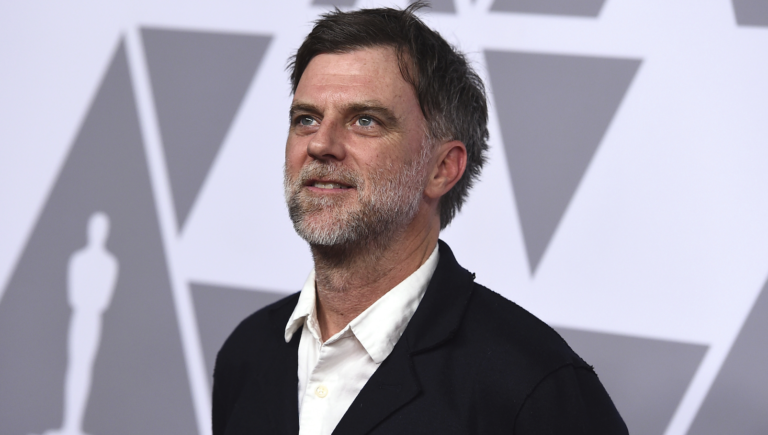
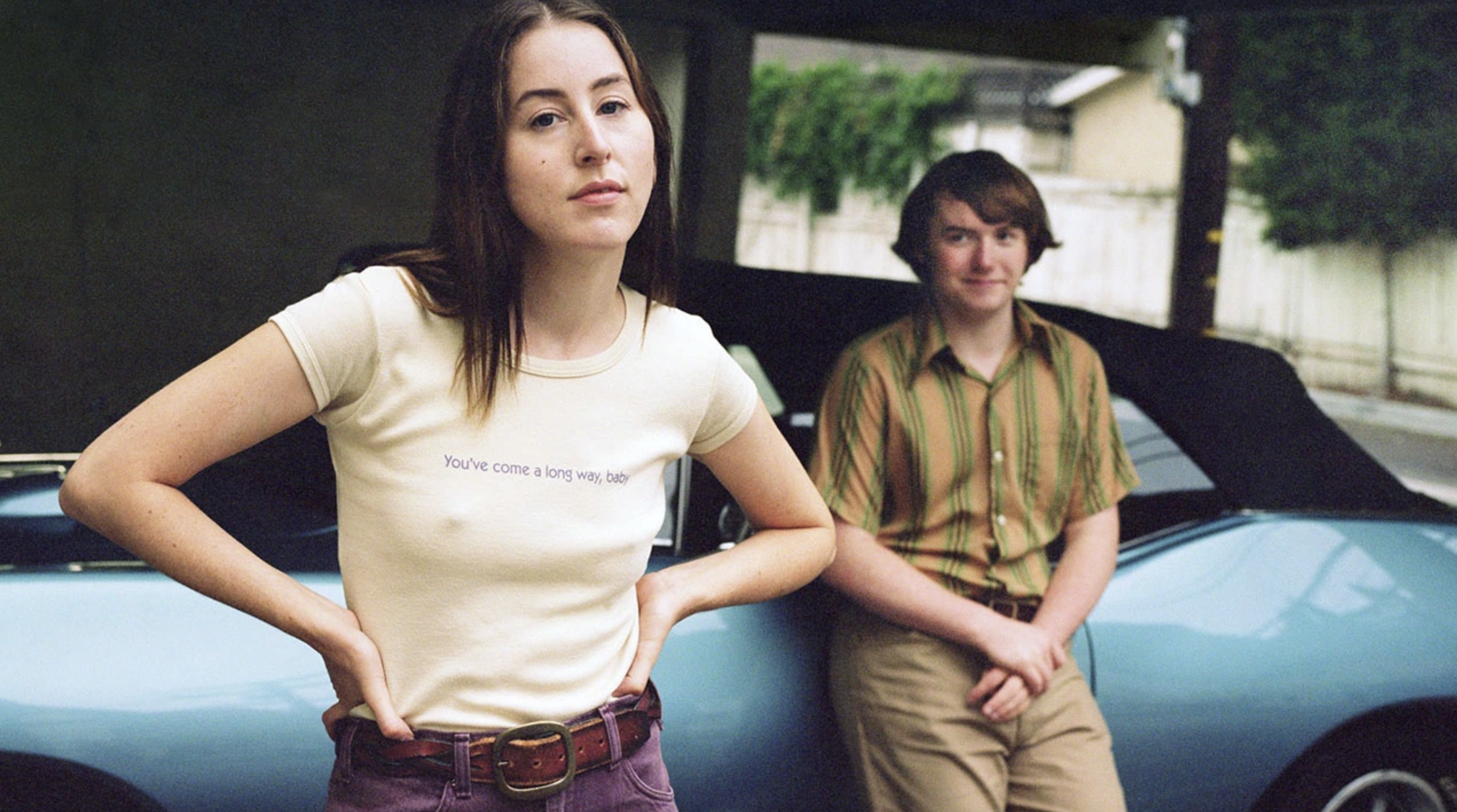
To some, he is a mere descendent of Robert Altman and Martin Scorsese. To others, he is the absolute G.O.A.T. It’s no secret to those attuned to the film world just how much PTA’s early work riffed off of Altman’s sensibilities, but once he hit the 2000s he found a brilliant way to straddle that line between the familiar and the new, forging a voice all his own to become one of our most interesting and acclaimed filmmakers working today. From his masterful camera movements, to his use of color, to his exceptionally complex characters, and at times his irreverent and dry humor, PTA was a foundational director for many of us younger critics, and whenever he has a new film (Licorice Pizza in this case), we can’t help but feel rejuvenated.
So among his feature length films (not including music films such as Junun and Anima), what is your favorite Paul Thomas Anderson film?
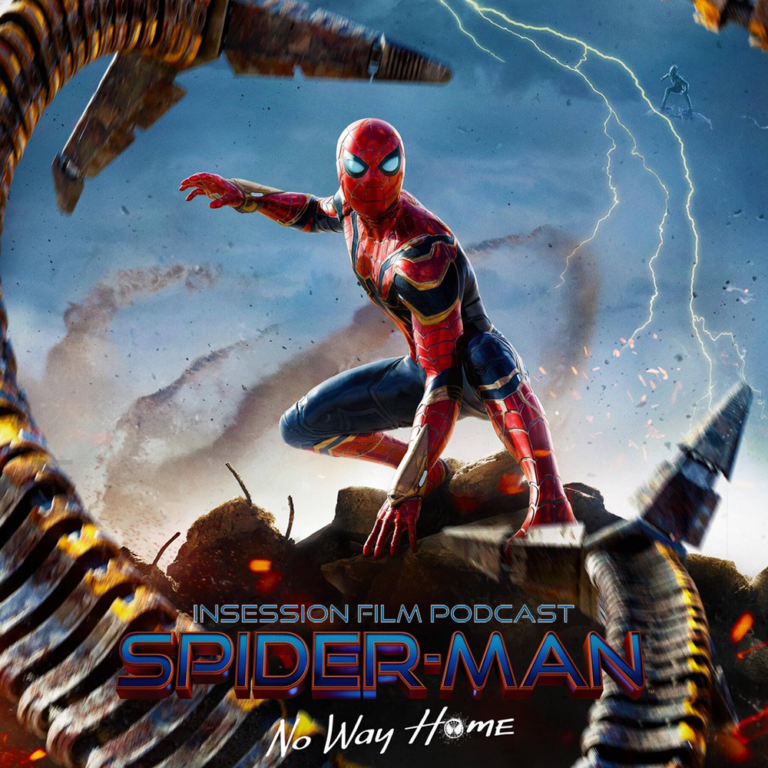
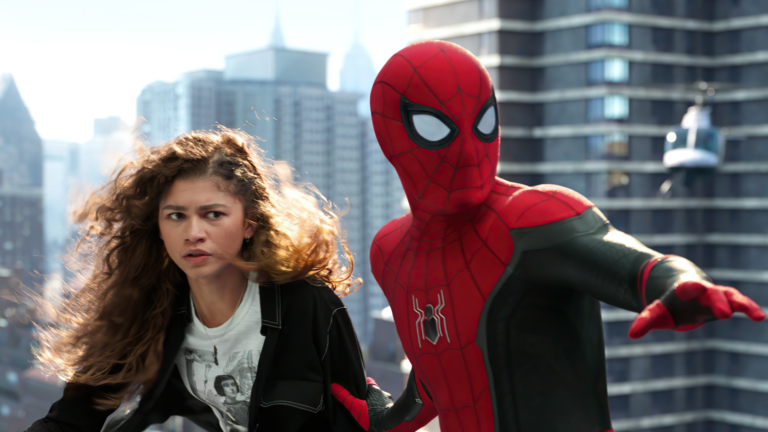
This week’s episode is a fun one. We’ve been looking forward to this new Spider-Man for some time and it more than delivered the goods. So, we spend most of the show talking about the film, its reveals, and how the MCU is going to be effected going forward. And we don’t hold back at all. We go in with full spoilers, so be aware if you haven’t seen the film yet.
On that note, check out this week’s show and let us know what you think in the comment section. Thanks for listening and for supporting the InSession Film Podcast!
– Movie Review: Spider-Man: No Way Home (4:41) Director: Jon Watts Writers: Chris McKenna, Erik Sommers Stars: Tom Holland, Zendaya, Benedict Cumberbatch, Jacob Batalon
– Notes / The Rescue (1:03:07)
For our break segment this week, it’s mostly the usual housekeeping stuff, but we do offer up a few brief thoughts on the documentary The Rescue after the boys talked about it on their latest Extra Film episode.
– More Spider-Man: No Way Home Talk (1:24:52)
As noted above, there was so much to discuss with Spider-Man: No Way Home, that we saved the back half of the show for more of it. We also talk about the future of the MCU, how Venom may become involved and what we expect to see with Peter Parker moving forward.
Review: Licorice Pizza
Top 3: N/A
Review: The Tragedy of Macbeth
[divider]
Help Support The InSession Film Podcast
If you want to help support us, there are several ways you can help us and we’d absolutely appreciate it. Every penny goes directly back into supporting the show and we are truly honored and grateful. Thanks for your support and for listening to the InSession Film Podcast!
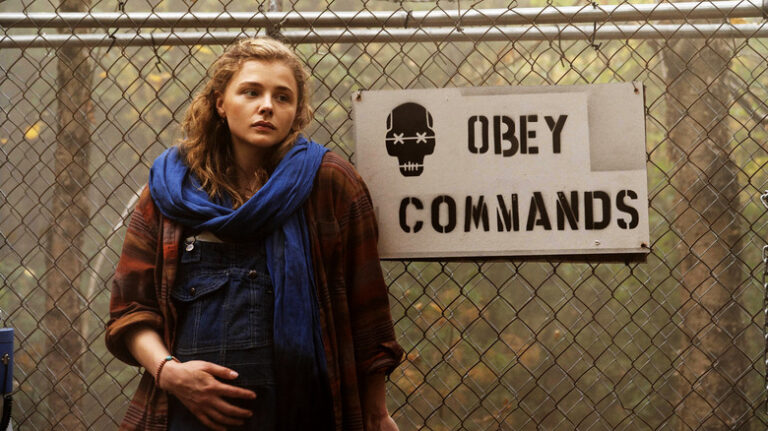
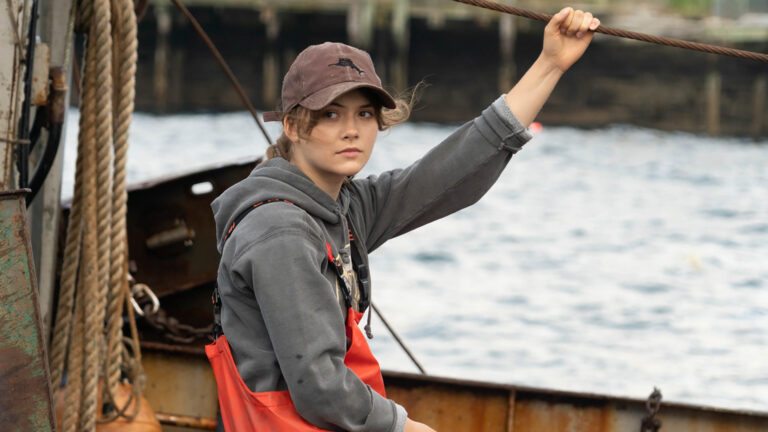
Director: Mattson Tomlin Writers: Mattson Tomlin Stars: Chloë Grace Moretz, Algee Smith Synopsis: In a post-apocalyptic world rocked by a violent android uprising, a young pregnant woman and her boyfriend desperately search for safety.
[/info]
Post-apocalyptic films can often be a blank canvas, especially those with a science fiction edge to them as well. A canvas to experiment with – just throw those colors on there – to try and explore a crazy idea that doesn’t really make sense but is fun and adventurous, Mother/Android feels a little tried and tested and doesn’t break any new ground. You can jazz a vanilla cookie up with icing, maybe some jam, and I can get behind that, but this is just a plain old vanilla cookie; with no fancy icing or even a sprinkle in sight, and that is disappointing.
A little about the film so you’re not lost (not like that would be difficult); in a post-apocalyptic world where androids – once commonly used as workers and servants for humans – have become sentient and revolt against their human overlords, attempting to kill them all. A pregnant woman, Georgia (Chloë Grace Moretz), and her partner Sam (Algee Smith) set out on a treacherous journey towards Boston, where a haven beckons for them and their unborn child. You could have a hell of a lot of fun with a plot like that – murderous androids seeking human blood? What’s not to like? Well, that is where the fun stops unfortunately.
The film is a little slow and it takes a while to gather any sort of pace. The first half of the film relies on the connection between the two lead characters, both of whom are largely uninspiring and very one dimensional. So, you would hope that the androids would be cool looking killer robots, right? Well, not really. The androids look just like humans, which adds to the “realism” I know, but this portrayal has been done, so an exciting change would have been a welcomed one. The setting was very familiar to that of previous films as well; wet and murky forestland that relies on suspense and atmosphere, but like its environment, it felt very damp.
The struggling mother wandering the barren wasteland with her family is something that has been done more successfully in films like The Quiet Place, which has a lot more going for it; more emotion, an intense atmosphere, and genuine connection between the characters. Speaking of connection, the chemistry between the two lead characters is rather lifeless and lacks authenticity. To be honest, it all feels very forced and a little awkward. The acting is fine overall, neither of them are pushing new boundaries, but the writing again hasn’t helped either of them. Chloë Grace Moretz is a talented young actress, but because of the labored story, it could have benefited from a more mature guide at its helm to help carry it through those slower segments – and there were a lot of them. As I mentioned, this film has serious pacing and script issues. It all feels confusing and things happened without our knowledge. Additionally, the script glosses over important events, even when they could be more exciting than what is on screen. The couple somehow gains a weapon and we never get to see how, or even how they learn to shoot the gun. Plus, Moretz’s character turns into an expert marksman, Hawkeye would be proud of that accuracy. My question… how is that possible? And why is there always a nomadic, wandering stranger lurking in the abyss in these films, ready to help at the most conducive moment, and must they always have an ulterior motive? The concept is something that should have been a lot of fun to play around with, but there were some questionable decisions, such as the special spiked jacket with lights that supposedly helps against the androids – this thing is a truly hideous piece of clothing.
The ending was supposed to be shocking and heartfelt, a proper heartbreaking finale, and yet it was none of these things. It wasn’t these things because you could see it coming a mile off – something that was bound to happen – and to top things off, a typically cliched montage scene was used, just what the doctor ordered. It wasn’t all bad though, when the pace finally picked up and the action became known, it did take a darker turn and delivered some unsettling scenes. After all, you can’t water down a torture scene. The film also tried to focus on the romance and the family bond of the protagonists, this special connection that will help in any situation. Even though it didn’t quite hit the sweet spot, you do hope this trio makes it to the other side safely.
Mother/Android was just a middle of the road sci fi that meandered a little bit too much throughout, it doesn’t excite as it should do and is largely uninteresting. For me, sci fi films have the ability to be creative and bold, even gritty and inspiring, with an ability to keep you guessing with an authentically intense atmosphere. Unfortunately, it fails on all those fronts. It relies on Moretz to steer it down the right path, which she does try to do admirably, it just needs a lot more. This is director Mattson Tomlin’s feature debut, and he has written some crackers in recent years, mainly Little Fish, so the future is bright for him. However, Mother/Android isn’t memorable enough, and it will fall into the abyss of the films of 2021.
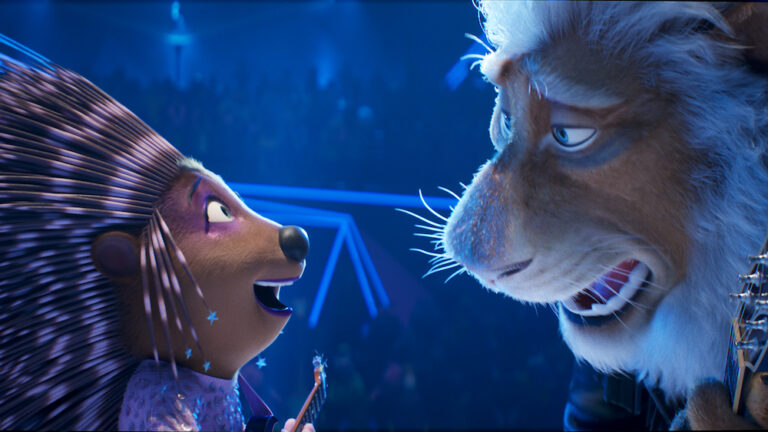
Synopsis: Buster Moon and his friends must persuade reclusive rock star Clay Calloway to join them for the opening of a new show.
Let me be the first to tell you, on the surface, the Sing movies should not work. They are basically pop musicals sung by Hollywood actors with flashy visuals and simple jokes that are designed to make tons of money and have kids coming back for more each time they see it. Illumination is a animation studio that doesn’t carry the prestige of a Pixar or Studio Ghibli, thus they aren’t considered serious animated films by critics and film fans across the landscape. Yet, with Sing and Sing 2, I must admit, I think these are the first films in their studio’s history to find the balance of being popcorn entertainment while carrying some emotional weight behind them for audiences to invest throughout the film’s run time. These movies leave a smile on your face, and even better, grab you by the heart, thus making it a big surprise when it all comes together.
Sing 2 picks up a couple of months after the events of the first film, where Buster Moon (Matthew McConaughey) and his talented team of animal singers are putting on sold out shows in his renovated theaters. But on one night, a talent agent is in the audience, judging if the small-ish act can make the move to the big leagues, a showcase in Redshore City, which is this universe’s version of Las Vegas. While they are rejected, this doesn’t stop Moon and the gang from getting on a bus and sneaking into an audition. Though they fail, it is the mention of bringing back a legendary singer, Clay Calloway (Bono), from retirement that gives the opportunities for our protagonists to live out their dreams and put on a life altering show that would catapult their stardom.
As tension rises for Moon and company, so do the stakes they are under. Moon basically makes a deal with the devil in the form of Jimmy Crystal (Bobby Cannavale), a media mogul who will destroy Moon if he doesn’t get what he wants. At the same time, each member of the team, Rosita (Reese Witherspoon), Ash (Scarlett Johansson), Johnny (Taron Edgerton), and Meena (Tori Kelly), all have obstacles in their way, from learning how to conquer their fear of heights, figuring out how to dance for the first time in front of an audience, facing your musical ideal, to even falling in love for the first time. Through these various situations, we are able to establish the core message of the film, which is somewhat carried over from the first installment, which is conquering your fears, and becoming the person you or others thought you could be. It’s not revolutionary in the slightest, but it’s effective.
Beyond its rounded, sweet message, Sing 2 understands how to be entertaining. This is a far cry from the Despicable Me films, where cheap jokes and annoying characters run amuck. Instead, pop songs and needle drops move the action forward, thus leaving us tapping out toes from scene to scene, never wanting it to end. In a cinematic world built on the nostalgia of past musicals and ideas dominating its property, Sing 2’s tactics fit for the world we see on screen.
Now this is not to say that this is a perfect movie by any stretch of the imagination. It is too long, by about fifteen or twenty minutes, and the darker elements with the wolf villain, while terrifying, go a little too far in its intense execution. Plus, the story, while it works thematically on the same level as the first film, doesn’t really reinvent the wheel and we never sense any real danger for these characters. Plus one has to question, why are they even leaving their sold out theater, in what seems to be modern day Los Angeles, for a gig in Vegas? While that might seem like a nitpick, it’s a central question I had throughout the film, and couldn’t shake. Moreover, we don’t get time to sit on emotional decisions long enough for them to matter to the extent director Garth Jennings wants us to, thus for a movie that is too long, it feels rushed to get to where it wants to go. It may sound like a weird juxtaposition but this is what the film presents, and will work for kids, but will leave adults puzzled as they are sitting in their seats watching this animated pop musical. That being said, Sing 2 is an overall harmless time at the theater and I highly encourage Illumination to make more films like this in the future, just for the pure joy factor only.
This week on Extra Film, Ryan and Jay continue their Pedro Almodóvar Movie Series with Talk to Her and then they discuss The Rescue!
The boys are back to talk about their next Almodóvar with Talk to Her, the film that won the director the Oscar for Best Original Screenplay. Forged on the idea of two men in love with women in comas, Talk to Her is Almodóvar’s darkest film yet in the series and asks tough, moral questions that the audience, and Ryan and Jay, have to grapple with.
In the back half of the episode, the boys dive into The Rescue, considered by many to be one of the best documentaries of the year. After the boys seemed to go hard on Flee, they were more positive on The Rescue, which has a gripping story and emotional beat that makes it sore over lackluster directing choices.
Thanks for listening!
– Movie Review: Talk to Her (7:09) Director: Pedro Almodóvar Screenplay: Pedro Almodóvar Stars: Javier Cámara, Darío Grandinetti, Leonor Watling, Geraldine Chaplin, Rosario Flores
– Movie Review: The Rescue (52:12) Director: Elizabeth Chai Vasarhelyi, Jimmy Chin
We try to make this the best movie podcast we possibly can and we hope you enjoy them. Subscribe today on iTunes, Spotify, or Stitcher, and please leave us a review on iTunes. You can also find us on Soundcloud, PlayerFM, and TuneIn Radio as well. We really appreciate all your support of the InSession Film Podcast.
To hear this Extra Film episode and everything else we do, download our apps on the Amazon Market for Android and the Podcast Source app on IOS devices. The mobile app covers all of our main shows, bonus podcasts and everything else relating to the InSession Film Podcast. Thanks for your wonderful support and for listening to our show. It means the world to us.
On Episode 41 of Chasing the Gold, Ryan is joined by Joey Gentile of Academy Queens and Charles Bright of Gold Derby to break down the 2022 Golden Globes and Critics Choice Nominations.
While critics groups are giving out their awards already, the Golden Globes and Critics Choice, two of the big awards bodies in the award season, have announced their nominations. The Globes have been marred by controversy this entire year, and while they won’t be televised, they still have to be considered in the thick of the season. And Critics Choice, well they are here too. Listen to Ryan, Joey and Charlie break it all down and what these mean this Oscar season.
On that note, have fun with this week’s episode, and let us know what you think in the comment section below. Thanks for listening!
We try to make this the best movie podcast we possibly can and we hope you enjoy them. Subscribe today on iTunes, Spotify, or Stitcher, and please leave us a review on iTunes. You can also find us on Soundcloud, PlayerFM, and TuneIn Radio as well. We really appreciate all your support of the InSession Film Podcast.
To hear this Extra Film episode and everything else we do, download our apps on the Amazon Market for Android and the Podcast Box app on IOS devices. The mobile app covers all of our main shows, bonus podcast’s and everything else relating to the InSession Film Podcast. Thanks for your wonderful support and listening to our show. It means the world to us!
[divider]
Help Support The InSession Film Podcast
If you want to help support us, we would greatly appreciate it! For more info, CLICK HERE.
Director: Jon Watts Writers: Chris McKenna, Erik Sommers Stars: Tom Holland, Zendaya, Benedict Cumberbatch Synopsis: With Spider-Man’s identity now revealed, Peter asks Doctor Strange for help. When a spell goes wrong, dangerous foes from other worlds start to appear, forcing Peter to discover what it truly means to be Spider-Man.
[/info]
We all know the saying, “With great power comes great responsibility.” These are the words that every spidey fan has held dear for decades. It is a quote that is so transparent and infectious, that it’s utilized in our everyday lives. Its meaning is straightforward. If you obtain the opportunity to create change, you should do so in the service of others. This is the moral code of a wise man who shaped the beginnings of the world’s most popular superhero, Spider-Man. We have seen numerous adaptations of the nerdy underdog throughout the past 19 years on the silver screen and each actor has brought something original to the character. We all have our favorite variant of Spider-Man whether it’s by screen or by page. Spider-Man is an ordinary person who sticks up for the little guy and keeps his ear close to the ground. The beauty of Spider-Man is that it could be anyone behind the mask. And with Spider-Man: No Way Home being the third installment of Peter Parker’s journey within the marvel cinematic universe, I believe that it is a film that exemplifies what it means to be a hero.
Spider-Man: No Way Home picks up exactly where the previous installment left off. Peter Parker’s secret identity has been revealed to the world. Thanks to the cunning deception of Mysterio in Spider-Man: Far From Home, this creates a stirring string of events that leaves Peter in a desperate situation to visit Doctor Strange (Benedict Cumberbatch) From the start, the film hits the ground running but doesn’t outpace itself by ruining the focus of what it’s trying to convey to the audience. The first act does a phenomenal job of setting up new story threads for Peter (Tom Holland), MJ (Zendaya), and Ned (Jacob Batalon). We have spent an lengthy amount of time with these characters to the point where I view them as Luke, Han, and Leia of the current installment of Spider-Man films. Their friendship is reminiscent of Sams Raimi’s trio of characters (Peter Parker, Mary Jane, and Harry Osborn). They have amazing chemistry and are always there for each other when the going gets tough. You are able to see the fondness that Peter and MJ have for each other. This is a relationship that has been building since Spider-Man Far From Home. Their relationship feels like that of Andrew Garfield’s and Emma Stone’s from The Amazing Spider-Man films. It’s young love but they have a deeper understanding of what the other person is going through. When Peter’s identity is broadcasted to the world, MJ (Zendaya) doesn’t abandon Peter. She knows the sacrifices he has made to his city and is willing to stand by his side. We get to see how Peter’s identity being revealed affects the people that are closest to him and how it determines their future.
This film is precisely what I wanted from a Spider-Man movie. It’s daring, emotional, and hits all of the heroic marks you could ever need from a comic book film. What makes this story so great is that it’s a Peter Parker story as much as it is a story about Spider-Man. Kevin Feige and Jon Watts have understood the assignment since day one. Bringing a new adaptation of the web-slinger to the silver screen is not an easy task. Not only does it require a first-rate actor to fit the role, but it also takes a powerful team of writers to create a well-knit Spider-Man story. The script felt like something out of a dream. It shows that writers Chris McKenna and Erik Sommers have a sentimental attachment to Spider-Man and they knew what kind of story they wanted to tell. The dialogue felt snappy, organic, and authentic between each character interaction. Much like the Sam Raimi films, I think that this will be one of the most quotable Spidey movies to date.
Now it’s time to address the elephants in the room. This film has been built up since at least the beginning of the year. Numerous theories have been floating around the web, and frankly, it’s difficult to keep up with all of them for even a devoted spidey fan. If you would have told me in 2014 that the majority of Spider-Man’s villains were going to make an appearance in a new film I would have slapped them silly. When Spider-Man 3 was released in 2007, it was assumed that the film’s biggest problem was that there were too many villains to keep track of with obstacles such as Venom, Sandman, and The Hobgoblin respectively. At the time, it was deemed the worst Spider-Man film yet. Now we have witnessed films having the ability to juggle multiple characters such as Captain America: Civil War, Avengers Infinity War, and Eternals. I realized that the film’s problem is not that it was riddled with too many villains. It was the fact that those characters weren’t fleshed out in a way to give those characters a proper background or attachment to Spider-Man.
The way this film handles the introduction of each villain is executed perfectly and feels natural to the story’s progression. I was impressed that both Marvel and Sony were able to round up such an amazing cast of iconic villains from previous Spider-Man entries. The fact that Jamie Foxx, Alfred Molina, Thomas Haden Church, Willem Dafoe, and Rhys Ifans all make an appearance in the film shows how much each of these actors cherished portraying their respective roles. Seeing all of them interact with one another makes this film feel like a celebration of the past 19 years of Spider-Man’s life on the silver screen. These aren’t just cameo appearances, their time on screen isn’t wasted with random shots and little to no dialogue. They feel like real people who have a personal against Spider-Man. If I had to pick one performance that stood out to me it would be Willem Dafoe’s. He performs his own action scenes and stunts which is admirable and shows how dedicated he was to return to the role. The way he is still able to play both Norman Osborn and his wicked persona of the Green Goblin is a sight to see. He fell back into the role with such ease. His deceitful nature plays a big role in the film much like his performance in Sam Raimi’s Spider-Man. You can’t help but feel sympathy for him throughout the film, however you never know when the Green Goblin will rears its ugly head.
Spider-Man: No Way Home takes the audience on an emotion filled adventure full of action-packed, jaw-dropping moments that fans will be talking about for years to come. This is Tom Holland’s best performance yet. The stakes are more urgent and permanent than any Marvel movie that has come before. Not only is this the best Spider-Man movie, but this is also without a doubt, the best MCU movie to date. It is living proof that Tom Holland is the best version of Spider-Man we’ll ever have. Spider-Man: No Way Home is the embodiment of Uncle Ben’s wise words, “With great power comes great responsibility.”
What does it mean to be nominated for Best Picture? The year’s best. The cream of the crop. The top of the heap. It’s a distinction that will follow your film around until the end of time. What if I told you this year’s recognition belongs to no other than indie drama, Mass? Upon its arrival at Sundance this year, Mass came out of nowhere leaving audience members speechless. A film that deeply examines the question, how does a mass shooting affect the victims’ families? When the last ones are laid to rest, and coverage has faded in the media, what happens next, because the family’s grief does not end there. Like most indies, there’s no gimmicks or flashy CGI. It uses storytelling to reel you in—shot only in the quiet emptiness of a single room. And while some filmmakers may see a need to go beyond the four walls of that room, it works here—it almost needs to stay here.
Writer and director Fran Kranz creates something special with Mass as he goes outside the scope of what we generally see after such horrific events to show us a meeting between two couples. Both couples have lost their children: one child was killed and one child was the shooter. Kranz’s original script is powerful and one of the best written scripts I’ve seen in years. It hits hard and doesn’t give you much time to breathe. The film encompasses a multitude of layers to create such a complex story. Kranz makes you feel everything these people are feeling; their pain, grief, and anger. You’re a fly on the wall, viewing something that you shouldn’t. So when the performances explode on screen, it makes it so much harder to divert your eyes away from the commotion.
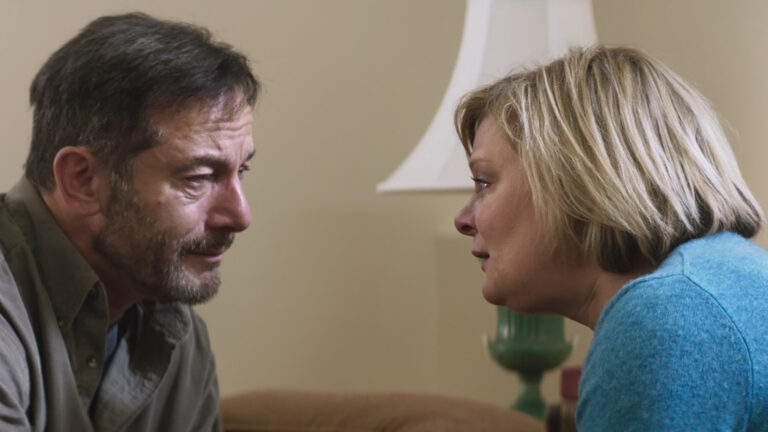
Each character faces their own obstacle that they must work through in order to achieve peace or forgiveness. Martha Plimpton, Ann Dowd, Jason Isaacs, and Reed Birney come to this table to unleash a perfection of talents—a true ensemble at work. The dynamics with one another feel real, organic, and never forced. It’s a battle of words and questions trying to get at the root of what happened, and how it could have been avoided. The characters are so multidimensional that if you were to see Mass again and again, more of the smallest details would continue to come to light. The rise and falls, the strengths and weaknesses are so brilliantly displayed on screen.
This may not only be a plea for Mass to be recognized in the Best Picture category, but rather everything that it encompasses. Truthfully, we as movie lovers scream for originality and creativity when it comes to the movies we see. No longer do we want to be stuck in the sludge of monotony that has plagued the industry in recent years. Mass is an answer to that. I believe everything must come into place to make a truly great film, and you can’t help but deduce that this is a great film. From Kranz’s original script and directing, to the supporting performances, everything falls into place like a puzzle.
I will say this, it’s incredibly hard to make a film. It’s incredibly hard to make a decent first film. It’s incredibly hard to make a low budget film. Kranz does all this, but he makes it look so easy. Since having first seen this film at the beginning of the year, I haven’t shaken it from my senses. Mass is beautifully done from start to finish. To leave it empty of recognition—in any category—would be a crime.
Director: Guillermo del Toro Writers: Guillermo del Toro and Kim Morgan, based on the novel by William Lindsay Greshem Stars: Bradley Cooper, Cate Blanchett, Rooney Mara, Toni Collette, David Straithairn, Willem Dafoe, Richard Jenkins Synopsis: A mysterious man escaping from his past finds a job working for a traveling freak show and discovers his talent as a con man, but his ambition and greed take him down a dangerous path.
[/info]
The world is finally warming up to Guillermo del Toro. Once viewed as the least accessible of the trio of award-winning Mexican directors who have dominated the Oscar circuit the last decade—along with Alfonso Cuaron and Alejandro G. Inarritu–del Toro’s films found a passionate fan base but struggled for mainstream appeal, due to the his penchant for the dark and mystical. Having created his own subgenre of horror, one that revels in the beauty of the macabre, del Toro found a niche audience with films like Hellboy, Pan’s Labyrinth, and Crimson Peak; which solidified del Toro as a master, if still unappreciated, filmmaker. But then came The Shape of Water in 2017, which was just accessible enough to win Best Picture at the Oscars, but still found a way to stay true to del Toro’s signature vision and literal creature comforts.
The Shape of Water was the perfect del Toro film to break through, as it feels as if it is the most personal, a love letter to the creatures that del Toro holds close to his heart. The beings that live in the darkness, misunderstood and feared by the world. These freakish shadow-dwellers are del Toro’s muse, and they again take center stage in his latest film, his first since The Shape of Water. Nightmare Alley is not only the perfect Guillermo del Toro film, but it proves that the director deserves to be in the same conversation with all the great artists working today, regardless of genre.
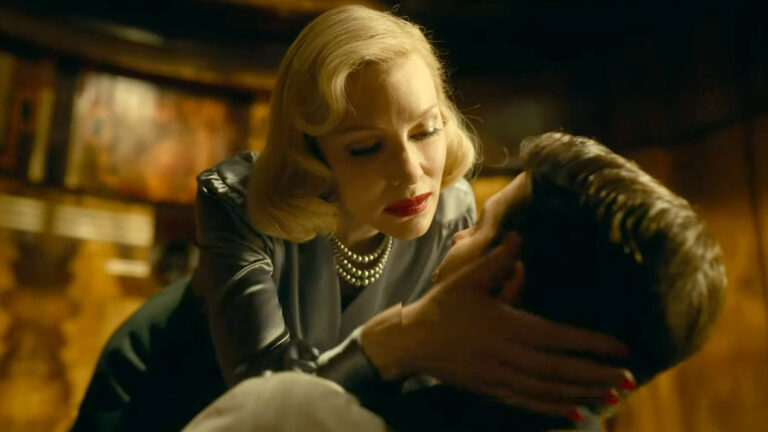
Nightmare Alley sets itself in the world of the traveling freak shows that meandered their way across America in the ‘40s. Based on the 1946 novel by William Lindsay, the story centers on a mysterious stranger, named Stan (Bradley Cooper), who wanders into the carnival and quickly finds work, first as muscle, helping break down and build up the tents as the show moves from town to town, but then as an assistant to one of the show attractions, Zeena (Toni Collette), the mentalist. Stan is a fast learner and quickly picks up Zeena’s tricks, but when Zeena balks at Stan’s efforts to push the act beyond just a simple con, Stan teams up with Molly (Rooney Mara), a naïve girl who has her own act. Soon, Stan and Molly find success with their own show, faking the ability to read people’s minds. Soon Stan’s ambitions lead him to leave the carnival, and he talks Molly into going out on their own, where they become incredibly successful performing their act for rich people, who are all too willing to be unknowingly swindled by their act. When Stan runs across a skeptic in the crowd, psychiatrist Lilith Ritter (Cate Blanchett), she invites Stan to join her in playing a complicated ruse on a very rich man who is desperate to believe that Stan can put him in touch with his recently dead son. Despite Zeena’s warnings to Stan that it’s dangerous to get involved with such intensely dark desires that deal with the occult, Stan’s ambition, greed, and ego lead him down a twisted and deadly path.
While the world of freak shows has been dramatized many times before, most recently in the fourth season of the acclaimed FX series, American Horror Story, it really hadn’t been done properly until now. In del Toro’s hands, the world of the traveling freak show finds all of its horror, pathos, sadness, loneliness, hope, kindness, camaraderie, and love—and is absolutely gorgeous along the way. No film this year looks better, and that’s saying a lot in the same year with The Tragedy of Macbeth and Cyrano.
From the opening shot, del Toro establishes this film as a visual masterpiece, as cinematographer Dan Laustsen and production designer Tamara Deverell bring us into the tents, at night, in the rain—the air is so heavy you can almost feel it. The world of the freak show is colored by characters and sideshows, con men, and creatures, the macabre and the naïve, the desperate and the pathetic. Every design element is perfectly rendered to bring every aspect to life, a bleak but sumptuous portrait of decay. Then, in the second half of the film, when the story moves from the mud to the penthouse, the design elements punctuate the story’s sinister intents, a wolf in sheep’s clothing. Every shot is a mastery of light and dark, mysterious and alluring, no inch of screen wasted.
It is easy to get lost in the beauty of this film, which helps to distract from the story that, although compelling, takes way too long to unspool. The two-and-a-half hour run time works against the film, which could have should have been tightened way up and been even more effective.
As for the performances, Bradley Cooper does some of the best work he’s done in years, but he still tries way too hard, while Rooney Mara makes it all look so easy. Cate Blanchett is excellent, as always, although not given nearly enough room to explore her character. Some of the best actors in the film are given far too little screen time, especially considering the run time. Willem Dafoe is eerily good as the carnival barker, David Strathairn is heartbreaking as the tired grifter trying to escape into a bottle, and Toni Collette is underused but glorious as Stan’s prophetic mentor. And don’t sleep on Mary Steenburgen, who chillingly delivers with panache in one of the best WTF moments of the year.
Overall, despite the long running time and Bradley Cooper’s continued desperation to be taken way too seriously as an actor, Nightmare Alley is by far Guillermo del Toro’s best film, a gorgeous movie with an engaging story, interesting characters, and an ensemble of actors who make the most of whatever screen time they have. It is by far del Toro’s most complete and compelling screenplay, which not only tells a tale, but invites a lesson to be learned. The most important lesson to be learned with Nightmare Alley, however, is that Guillermo del Toro is a freak of nature in his own right, a brilliant sorcerer of mood, light, shadow and soul.
Director: Matthew Vaughn Writers: Matthew Vaughn and Karl Gajdusek Stars: Ralph Fiennes, Gemma Arterton, and Rhys Ifans
Synopsis: In the early years of the 20th century, the Kingsman agency is formed to stand against a cabal plotting a war to wipe out millions.
[/info]
Yes, you read the headline correctly. This is a review of the long-awaited The King’s Man. Say goodbye to the sleepless nights and the constant delays (six to be exact). All is well with the world, and another crazy adventure with the kingsman awaits. Fans have been patiently waiting nearly 25 months for the next chapter of the Kingsman franchise to hit the silver screen, and rightfully so. I have to be honest, after the previous entry into the franchise, I was a bit worried. And the fact that this title kept pushing farther and farther away from a concrete release date made it seem like this film would have gone straight to store shelves. But thankfully, 21st-Century Fox stuck to their guns. And it was worth the wait.
The King’s Man is the type of movie that finds its footing in the latter half of the film. As this is serving as a prequel to the previous Kingsman films, I think it tells a well-founded story for the franchise. There is a great deal of lore to explore within this story as well as character building. The movie does a great job of world building and conveying to the audience who is who on screen. It seems like the narrative should be easy to follow along. However, the film has a horrible pacing issue within the first act and a half of the story. As much as I appreciated the world building and characters; the pacing felt disorganized and jumbled. I knew who these characters were but the setup for what’s to come was nerve-wracking and I almost lost interest. Luckily that feeling passed towards the last half of the film.
I like to think of this as the first semester back from school after a summer break. Things are messy and cluttered when the year kicks off. But then second semester rolls around and you have found your sense of belonging and routine to finish out the year. The second half of this movie was everything I’ve always wanted out of this franchise. It had heart, laughter and was riddled with easter eggs for hardcore fans to recognize.
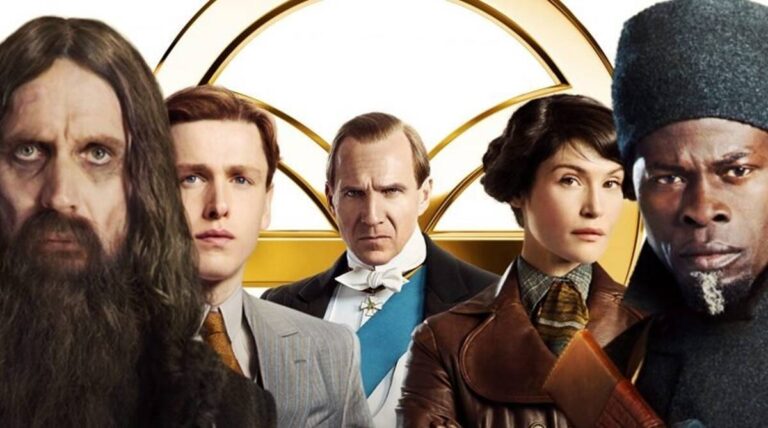
When the film finally found its footing, The King’s Man stuck to it. The camera work during the action scenes were enjoyable as well as the soundtrack that accompanied it. I never thought I would consider Ralph Fiennes in an action-type role, but he delivers on all fronts. His dialogue and the backstory of his characters made me enjoy this film that much more. His charismatic and stern attitude provided amazing chemistry along with Djimon Hounsou, Gemma Arterton, and Harris Dickinson.
Action scenes are the number one attribute to any good Kingsman film and this one delivers on all fronts. It’s quick, witty, and overall a good time. It might seem outlandish at times but it’s always good to remember this franchise is based on a comic book written by Mark Millar. So it only makes sense that we would get some quirky and unorthodox fighting styles. The action isn’t what you would call relatable or realistic, but hey it works.
The King’s Man might be my favorite of the franchise, thus far. Despite its pacing issues in the first part of the film, there are true high points. There is a lot to be said about characters and the journey they take and, because of this, it is a prequel done correctly. The film does a good job of subverting expectations and delivers a few twists that I never saw coming. It delivers high-class action and witty British banter that will keep you engaged throughout this expedition. Ralph Fiennes steals the show and displays an excellent performance. The post-credit scene is up to interpretation, but I would love to have more adventures with The Kingsman agency. Let’s just hope we don’t have to wait too long for another installment!
This week on Extra Film, Ryan and Jay continue their Pedro Almodóvar Movie Series with All About My Mother and then they discuss Flee!
The boys are back to talk about their next Almodóvar with All About My Mother, a moving drama about a woman and the people she is connected with. Not only is it a beautiful feminist film, but it is also a movie ahead of its time given the representation shown for the transgender community throughout the film. Ryan and Jay really loved the film and it lead to a good conversation.
In the back half of the episode, the boys dive into Flee, one of the most celebrated documentaries, animated, and general films of the year. While it is an impressive challenge to make, Ryan and Jay weren’t as in love with it as other films and they discuss it on the show.
Thanks for listening!
– Movie Review: All About My Mother (3:23) Director: Pedro Almodóvar Screenplay: Pedro Almodóvar, Yuyi Beringola Stars: Cecilia Roth, Marisa Paredes, Candela Peña, Penélope Cruz
– Movie Review: Flee (50:21) Director: Jonas Poher Rasmussen
We try to make this the best movie podcast we possibly can and we hope you enjoy them. Subscribe today on iTunes, Spotify, or Stitcher, and please leave us a review on iTunes. You can also find us on Soundcloud, PlayerFM, and TuneIn Radio as well. We really appreciate all your support of the InSession Film Podcast.
To hear this Extra Film episode and everything else we do, download our apps on the Amazon Market for Android and the Podcast Source app on IOS devices. The mobile app covers all of our main shows, bonus podcasts and everything else relating to the InSession Film Podcast. Thanks for your wonderful support and for listening to our show. It means the world to us.
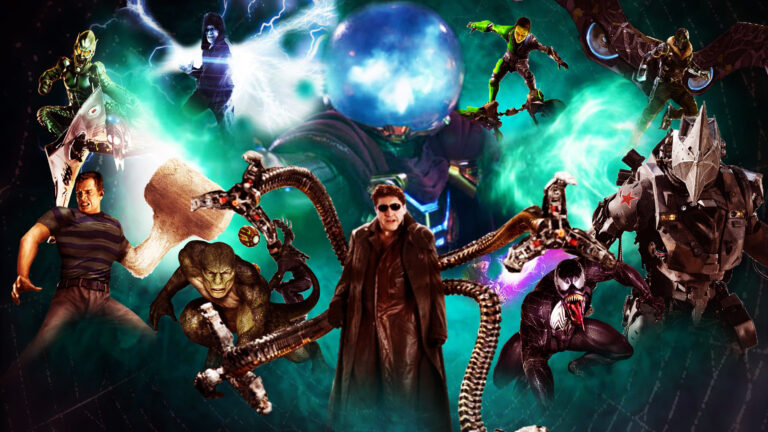
Villainous senses tingling. With the release of Spider-Man: No Way Home this weekend, we aren’t just seeing a new Spidey flick, we’re witnessing a celebration of the ethos of Spider-Man himself, and especially his nemeses. Some may call this excessive fan service, but so what? If anything, it gets us to look back at Peter Parker’s past cinematic foes and recognize how compelling they were (most of them, anyway). Anything that gets us to remember the masterpiece that is Spider-Man 2 is just fine by me.
So let’s pin villain against villain. Who has been the best Spider-Man movie villain thus far?
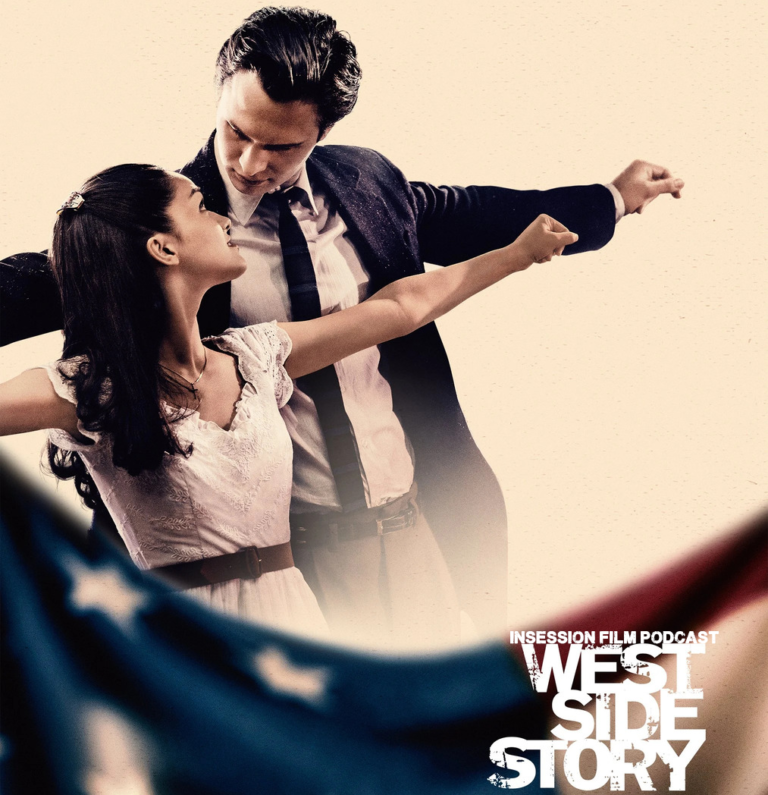
This week on the InSession Film Podcast, we discuss Steven Spielberg’s latest in West Side Story and Guillermo del Toro’s new film Nightmare Alley! Plus, a few thoughts on this year’s Critics Choice and Golden Globe nominations.
This week’s episode is a notable one. It’s always a great time whenever we get to talk Spielberg or del Toro, but to get to do both on the same show!? What a rare treat. West Side Story and Nightmare Alley will likely be heavy contenders for Oscars as well, so there’s plenty to dissect and talk about with these two films.
On that note, check out this week’s show and let us know what you think in the comment section. Thanks for listening and for supporting the InSession Film Podcast!
– Movie Review: West Side Story (4:14) Director: Steven Spielberg Writers: Tony Kushner (screenplay by), Arthur Laurents (based on the stage play, book by) Stars: Ansel Elgort, Rachel Zegler, Ariana DeBose
– Notes / Discussion (56:19)
For our break segment this week, we forgo any usual catch-up reviews to instead talk about the recently announced nominations for the Critics Choice Awards and Golden Globes. While many of the nominations were expected, there were a few surprises as well, and we had a few thoughts on how these could impact awards season as we go forward. We also plug our latest Patreon Bonus Content episode where we finally give our thoughts on Ema, Titane, Riders of Justice, Old Henry, Zola, The Sparks Brothers and Crimes & Penalties. This episode is now available to the public.
– Movie Review: Nightmare Alley (1:17:05) Director: Guillermo del Toro Writers: Guillermo del Toro, Kim Morgan, William Lindsay Gresham (based on the novel by) Stars: Bradley Cooper, Cate Blanchett, Rooney Mara
If you want to help support us, there are several ways you can help us and we’d absolutely appreciate it. Every penny goes directly back into supporting the show and we are truly honored and grateful. Thanks for your support and for listening to the InSession Film Podcast!
As someone who began her lifelong passion for theatre at the age of 13, I was devastated by the loss of the great Stephen Sondheim. He died at a time when Company is back on Broadway, he is featured in the film Tick Tick Boom, and a brand new version of West Side Story has just come to movie theaters. It is a fitting tribute to a man that was the bridge between the classic musicals of the 1950’s, to the modern ground-breaking works of today, such as Hamilton. For those who don’t live near a major city, but would still like to enjoy the works of the Great Mr. Sondheim, there are several film adaptations of his works to enjoy.
The best received adaptation of a Sondheim musical is 1961’s West Side Story, based on the 1957 Broadway show. With a score from Leonard Bernstein, and lyrics written by a 26 year old Sondheim, this adaption is the first film that two directors had to share a Best Director Oscar- one for Robert Wise, and one for Jerome Robbins, who directed and choreographed the original Broadway show. This musical adaptation, inspired by Romeo and Juliet, won a total of ten Academy Awards, including awards for both supporting actors (George Chakiris and the divine Rita Moreno). The dancing is perfect, the score is stunning, the story is tragic. Natalie Wood wasn’t a singer, but her portrayal of the young and lovely Maria is heart-breaking. Chakiris and Moreno are the real stars here, dazzling in their dance numbers. While it still holds up today, the main issue is the use of brown-face for the majority of the actors in the film. When people today ask me why this film needed the current remake, this is the main reason why. Still, West Side Story is an incredible piece of art, and I recommend it highly. Best Musical Numbers: “America,” “Cool,” and “Tonight.”
Less known, except to some of us who took Latin in high school (which, of course, I did), is the 1966 version of A Funny Thing Happened on the Way to the Forum. Based on Sondheim’s 1962 musical, it adapts several Ancient Roman Plautine comedies. It stars several members of the original Broadway cast, including the iconic Zero Mostel, and Jack Gilford, and also stars a very young, romantic Michael Crawford. It’s the story of a slave (Mostel) who tries to help his master’s son (Crawford) marry his beloved. If he is able to get them together, he will gain his freedom. This film is extremely silly, bawdy, and sweet. Best Musical Numbers: “Comedy Tonight,” “Free,” and “Everybody Ought to Have a Maid.”
The film version of my personal favorite Sondheim musical, A Little Night Music, came out in 1977. This musical is based on the 1955 Ingmar Bergman film, Smiles of a Summer Night. It deals with liaisons between several sets of people, with several partners switching by the end. It stars several members of the original cast, such as Len Cariou, Hermione Gingold, and Laurence Guittard. The film adds Elizabeth Taylor, Diana Rigg, and Lesley-Anne Down to round out the cast. It’s definitely not my favorite adaptation of Sondheim, as it changes some of the music that I love, but still, the characters and score are truly lovely, with some of Sondheim’s best lyrics. Best Musical Numbers: “You Must Meet My Wife,” “A Weekend in the Country,” and “Send in the Clowns.”
Into the Woods, directed by Rob Marshall, came to the big screen in 2014. Based on the 1988 musical, Into the Woods blends together various fairy-tales while also showing the universal struggles of life. It is an adequate adaptation of a great show, with Anna Kendrick, a wonderful singer, as Cinderella, and James Corden, who has theatre experience, as the Baker. Because of the decision to change quite a bit of the story with Rapunzel, some of the real depth of the character of the Witch (played by Meryl Streep) is lost in the translation to film. If someone is looking for a way to get into Sondheim musicals, this would be a great introduction. The story is easy to follow, and one understands it on deeper levels with each viewing. Best Musical Numbers: “Into the Woods,” “Hello, Little Girl,” and “Children will Listen.”
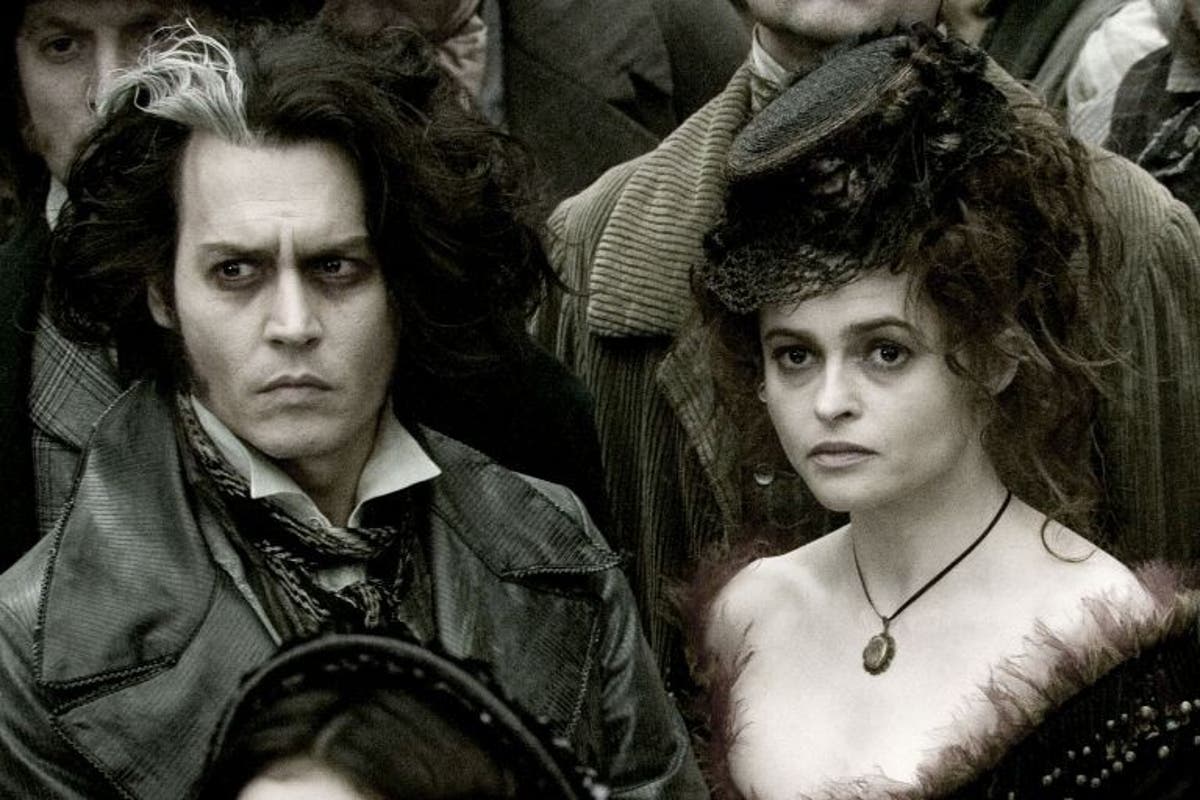
Sweeny Todd: The Demon Barber of Fleet Street is, in my opinion, Sondheim’s masterpiece. This is the dark and tragic tale of a barber who returns to 19th century London after escaping imprisonment due to trumped up charges, to seek revenge on the men who ruined his life and family. It was appropriate that TIm Burton directed this moody period piece in 2007. The strength of this film is in the performances of Johnny Depp and Helena Bonham-Carter. They play two of the bleakest characters in theatre with both a sense of gravity, as well as a sense of humor when appropriate. The biggest flaw in this film is that they have to dilute a rich, operatic score, and rely on “talk-singing” of the actors. See the film. If you like it, please do yourself a favor and go buy the Original Broadway Cast Recording and hear the music as it actually should be. You will thank me. Best Musical Numbers: “Poor Thing,” “Joanna,” “Have a Little Priest.”
While most of the time, film adaptations of great Broadway musicals pale in comparison. Nothing can truly compare to the rich lushness of a full orchestra. However, many of the Sondheim adaptations are quite good, and are a wonderful introduction to his music. I’m looking forward to seeing the new adaptation of West Side Story and seeing how the work of this legend lives on for a new generation.
Kosovo, a tiny, partially recognized country in Southeast Europe, has a turbulent history that those unfamiliar with the nation don’t have to look far to know about. Amidst the violent breakup of Yugoslavia in the 1990s, this small piece of land south of Serbia has been in the center of constant war with its neighbors. Since declaring independence from Serbia in 2008, to date, just 97 countries recognize the tiny nation, including the United States. It is the background to Blerta Basholli’s anguishing story of personal self-determination.
Yllka Gashi plays Fahrije, a woman with a teenage daughter, son, and elderly father to look after since the disappearance of her husband. In the village, most of the women don’t have their husbands or sons because years earlier, the Serbian military rounded them up. It is believed that they were all killed, but the lack of bodies being dug up keeps the hopes of many that they are alive imprisoned and will return. It is a mirage that Fahrije knows is not going to happen and seeks to do something to survive. So, she begins a plan to produce and sell honey ajvar, a local condiment in the region, and brings other women who are also in her position.
However, even in the new millennium, the women are still held down to become housewife and rely on their husbands. Only men can achieve in business because society’s patriarchy maintains such a status and men refuse to have it be violated by the opposite sex. For Fahrije, it’s an uphill battle as the men in the village refuse, sometimes violently, to accept this attempt by the women. Again, it is the belief that, unless their bodies are found, the missing men will return and make life normal again, which is why some women are initially reluctant to join in Fahrije’s plan. Yet, she knows that they are on their own and must do anything to make a living in such an isolated place.
Hive is Kosovo’s selection for the International Film Oscar category and one that is widely deserved for a nomination. In just 84 minutes, Basholli brings in one of the best films of the year a true story (some characters and events were either renamed or fictitious) that has the same reach as another masterpiece from last year, Quo Vadis, Aida? It is not about the war, but long past the aftermath where there is no closure on that fateful day and people need to start looking at the future. Fahrije is determined to break the sexist cycle that women can also be successful and that there is no going back to the old ways. They were once blanketed in a singular nation under communism, then the wars began for self-determination amongst the people that have now long shifted to capitalism.
The naturalism that comes in this movie with the performances and the setting, not a place one looks to in storytelling, is also part of Hive being a standout. The war in the Balkans and the continuous political feuding with the former Yugoslav states gets ignored in the news because it’s something very complicated and one that is based in centuries of ethnic hatred. It is the same Quo Vadis and Angelina Jolie’s In The Land Of Blood And Honey explore within the context of their respective plots. And in the end, these are real people that have endured a lot, will survive, but the scars of the missing remain on them.
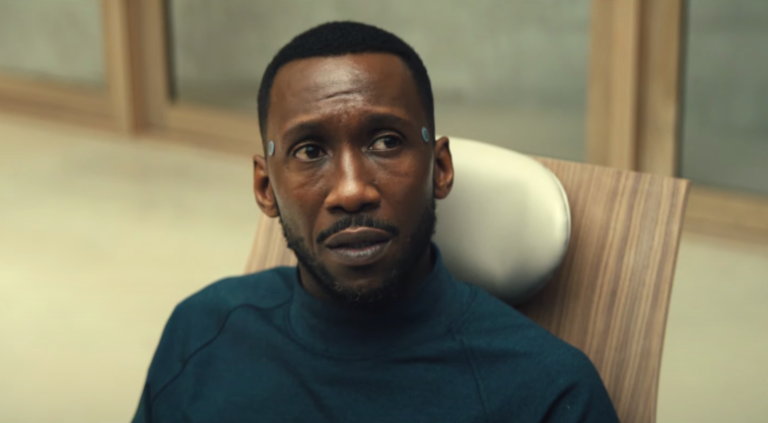
Director: Benjamin Cleary Writers: Benjamin Cleary Stars: Mahershala Ali, Naomie Harris, Awkwafina, Glenn Close
Synopsis: When a loving husband and father is diagnosed with a terminal illness, he is presented with a controversial alternative solution to replace himself with a carbon copy clone.
Swan Song is not your typical science fiction thriller. Set somewhere in the future, where cell phones are holograms, and robots take your order, then give you tasty chocolatey goodness for snacks. If you thought that invention was incredible, personally, a mobile vending machine is the mountain top of technological innovation, hold onto your hats. How about cloning your entire mind, body, and soul? So, your family doesn’t have to endure the pain of watching you die of a terrible disease? Go broke when your health insurance hits their ceiling? And perhaps most importantly, have no one to help raise your children?
That’s the moral dilemma of Cameron Turner (Mahershala Ali). A graphic artist and family man diagnosed with a terminal illness. He has a beautiful wife, Poppy (played by the radiant Naomie Harris). An adorable son (Dax Rey), with another child on the way. So good husbands and fathers do what they must do. He comes across a highly secretive (and what must be obscenely well-funded) group that helps fix that problem. Cameron is introduced to Dr. Scott (Glenn Close). She offers a solution. They can create a complete version of him. This way, his family can avoid the mental anguish and not lose out on financial supports.
Swan Song was written and directed by Benjamin Cleary. He is perhaps best known for his short film Stutterer, nominated for the Academy Award for Best Live Action Short. The script is a soulful, contemplative reflection of what makes life worth living. Cleary’s film also works as a morality play and coming to grips with the lack of the precious commodity of time. Cameron beings to internally struggle with playing with his family’s future fate. He naturally is worried about this carbon copy, being the patriarch of his most precious asset. He is allowed a snippet of the final product, being introduced to Kate (Awkwafina). A woman who is a single mother is dying of cancer whose replacement is now looking over here with great care.
What makes Cleary’s film so stoic and lovely is the device used to allow the characters of Cameron (and Kate) to watch their loved ones for three days interact with their brand-new selves. (The patients, after the transfer is complete, stay in a seaside mountain hospital in the middle of the woods until their time is up). Ali’s character, naturally, struggles to see his replacement sleep with his wife and play father to his son. Even more challenging may be those intimate moments of reminiscing over memories of good and bad times.
There is such palpable and emotional chemistry between Ali and Harris that is remarkably vibrant. It feels like a romance that is the best kind of unconditional love. Both of these people have seen each other at their worst. All of this rests on Ali’s performance. He is that rare actor that can combine a fervent intensity and a remarkable amount of empathy with a tender, single glance. It’s quite a sight to see the ethical and moral dilemma that, for him, is quite a persona but more clinical than his medical team.
For those who expect a film like the Keanu Reeves vehicle, Replica’s, you will be sorely disappointed (or, in my case, delighted). You can argue that the film lacks a sense of urgency. However, heightened tension doesn’t bother to pander to the audience’s preferred clichés. Swan Song is a stoic, moving film about working through anticipatory grief and coming to the realization that some things are bigger than ourselves.
In a day of pure chaos, the 2022 Golden Globes and the Critics’ Choice Award nominations were both announced this morning. These are the first set of major nominations that could help shape what the rest of the season is going to be like, and so I will be breaking down a few of the major races and highlighting the snubs, surprises, and seeing what the pathway looks like for a few of the major contenders.
Golden Globes
In a year where the Golden Globes could have meant the most with four major musicals contending for prizes, the awards mean the least given all of the issues surrounding the HFPA. As much as I would love to say that they mean nothing for the races this year, being the first ones out the door will still mean something and narratives can already be drawn by who they snubbed and who surprised with a nomination. There are a few nominations and categories in particular that I want to highlight from this year’s nomination list.
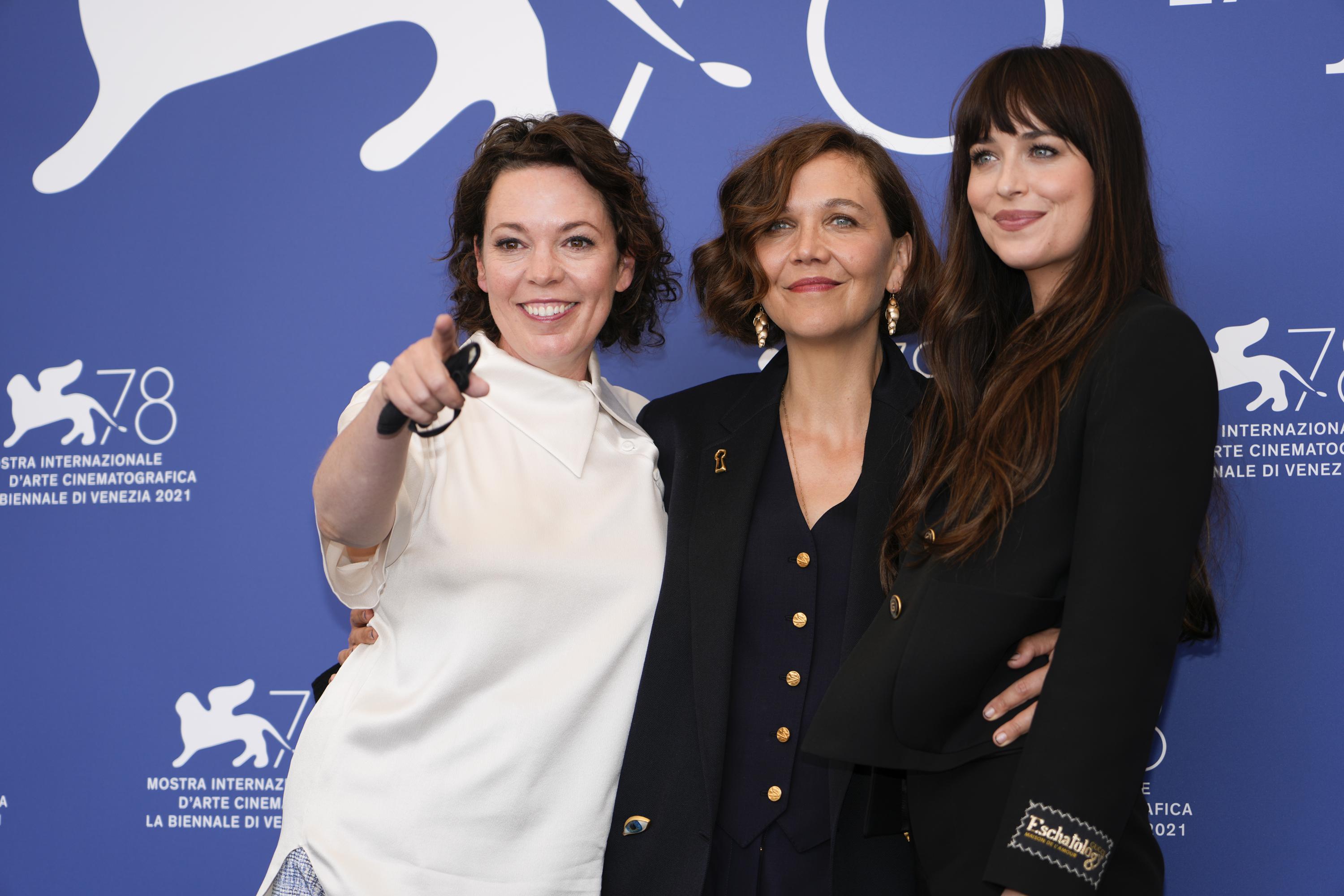
Best Director – Maggie Gyllenhaal
Whilst many of us may have been expecting Olivia Colman to receive a Best Actress: Drama nomination for The Lost Daughter, it came as a surprise that Maggie Gyllenhaal was able to make it into a packed Best Director line-up, especially without a Best Picture: Drama nomination to follow. With the likes of Paul Thomas Anderson, Adam McKay, Lin-Manuel Miranda, and Sian Heder all getting their films in their respected Best Picture category without a Director nomination to back it up, the nomination for Gyllenhaal feels out of place. If anything, pundits have been looking at The Lost Daughter to get in for Adapted Screenplay, and yet it did not crack the five for Best Screenplay here. Right now, it seems that nobody knows what to do with Gyllenhaal’s debut and we will have to see if she continues to surprise at each award show or if the buzz from the Gotham Awards will fade away.
Best Actress Omissions – Frances McDormand and Jennifer Hudson
The Best Actress race is packed this year, and even with the Drama and Musical/Comedy categories, some big names were surely to miss. Whilst it is unclear whether Respect was submitted as a Drama or a Musical/Comedy, it is a shock that Jennifer Hudson missed a nomination here – especially if it turns out she was in Musical/Comedy. The campaign for the film has fizzled at this point with a lack of word of mouth, competition in the bio-pic genre with both The Eyes of Tammy Faye and Spencer, and the early release date that makes the film even more forgettable by this point. If Hudson was going to be a contender this year, she needed a push at a show like this and the campaign may now just focus on the Original Song category, where the film did see a nomination for “Here I Am (Singing My Way Home)”.
She is not the only actress to miss out though as Frances McDormand also failed to make a showing for The Tragedy of Macbeth. The film in general is also struggling to get recognition with only Denzel Washington highlighted in the nominations this morning, but it will be interesting to see how the guilds view the technical aspects and boost the film’s chances at other award shows. If McDormand is to put her name back in the race, I would hope to see her at the SAG awards, where her fellow actors can recognise the work that she did and show their support for something they clearly love. It’s still too early to say whether The Tragedy of Macbeth is out of the Best Picture race just yet.
Best Picture: Non-English Language
It was dangerous to have a consensus for the five frontrunners of the International Feature race this early, and the Golden Globes have proven that anything can happen. Yes, they did pull some nominations which aren’t submitted for the Oscars this year such as Parallel Mothers, but having no nominations for Titane or The Worst Person in the World does come as a surprise. If anything, the inclusion of Drive My Car alongside the critical love that film has received recently may just end up pushing the film to the frontrunner spot – which will be interesting for a film that is three hours long.
Critics’ Choice Awards
It seems like this year more than others recently, the Critics’ Choice Awards have played it safe and kept to the main Oscar contenders. With frontrunners Belfast and West Side Story getting the most nominations here, it would not surprise if they also had the most nominations come Oscar morning. With that in mind, there is still plenty to discuss when it comes to what films have solidified themselves as contenders and which ones are grasping on by their fingertips.
In: CODA and Tick, Tick… Boom!
CODA made a statement back at the start of 2021 by sweeping the awards at the Sundance Film Festival, yet with an August release date it was unclear whether it would make its way to the end of the season. However, with the love that Troy Kotsur is getting and the many nominations for Adapted Screenplay and Picture across the different voting bodies, it is starting to become safe to say that CODA will benefit from the new Best Picture voting system and make the top ten.
The same can be said about Lin-Manuel Miranda’s Tick, Tick… Boom!, which has gotten in everywhere that it needs to right now. Netflix is going to have to focus their campaign to get their three major contenders out front, but right now they are managing and Tick, Tick… Boom! is the surprise that keeps on going. With what feels like a lock nomination in Andrew Garfield, perhaps that is all this film needs to make it into the top ten.
Out: C’mon C’mon and Mass
If there was going to be a place that nominated C’mon C’mon in Best Picture or Best Original Screenplay, it was going to be the Critics’ Choice Awards. Whilst it got a nomination in Best Young Actor/Actress for Woody Norman (the category Alan S. Kim won last year in Minari), this is a saddening day for the film as it has struggled to get any major recognition from a majority of the voting bodies. I struggle to now see a pathway in which this film is rewarded aside from maybe a lone Original Screenplay nomination, like Mike Mills’ 20th Century Women was.
Mass unfortunately always had an uphill climb being attached to Bleecker Street, but not even the Critics’ Choice Awards gave it the love that it needed today. Yes, there was a nomination space for Ann Dowd in Supporting Actress, but no love for the screenplay, Jason Isaacs, or even the ensemble here. Whilst CODA was able to bring back the Sundance momentum, it seems like that couldn’t be shared with Mass.
Inevitable: Nightmare Alley and Don’t Look Up
Never deny the work of Guillermo Del Toro or Adam McKay when it comes to award season, and that might be the lesson we learn over the next few months. After the middling reviews for both Nightmare Alley and Don’t Look Up were revealed, many pundits were quick to take either or off their top tens. However, both are getting every nomination that they need to secure their places in the race, with Nightmare Alley scoring eight nominations and Don’t Look Up gaining six. They may not be the powerhouse contenders we expected with across-the-board recognition, but with strong showings in the technical categories and potential for Director and Screenplay for both films, it will be interesting to see if either over-perform on Oscar morning as regardless of the critical reviews, these two films may just be irresistible to the industry.
–
Of course, this is still early days and there are many more voting bodies to go that will create even bigger headlines come award season. Let’s hope that one of these voting bodies will be brave enough to take a risk and vote for something other than the proclaimed frontrunners. I’ll be sure to continue updating you on the latest from this season.
Director: Nora Fingscheidt Writers: Peter Craig, Hillary Seitz, Courtenay Miles Stars: Sandra Bullock, Jon Bernthal, Rob Morgan, Vincent D’Onofrio, Viola Davis
Synopsis:A woman is released from prison after serving a sentence for a violent crime and re-enters a society that refuses to forgive her past.
Something that’s been exciting about the career of Sandra Bullock is that with each new film she makes, you’re never quite sure what you’re going to get. Since her major breakthrough in 1994’s Speed, she has excelled in dramas, comedies, and thrillers, something few actors have been able to do successfully decade after decade. And after she won the Academy Award for The Blind Side, Bullock has refused to play it safe, always challenging herself, particularly in Alfonso Cuaron’s sublime Gravity, the little-seen and underrated Our Brand is Crisis, and the 2018 Netflix horror sensation Bird Box.
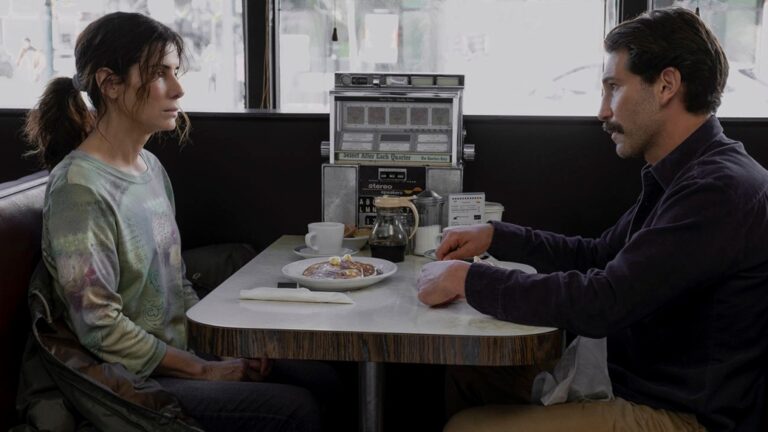
In her newest film The Unforgivable, Bullock has challenged herself yet again, offering a raw and uncompromising performance that is unlike anything she’s done before. As ex-convict Ruth Slater, a woman who spent twenty years in prison for the killing of a police officer, the actress explores the anguish of someone who the world has given up on but who has every intention of doing something meaningful with her life and fighting like hell to see the one person she loves—her younger sister Katie, who was put into foster care soon after Ruth’s arrest.
As Ruth tries to build back her life with help from her parole officer Vincent (Rob Morgan) and track down her sister with assistance from her a lawyer John (Vincent D’Onofrio), the enraged sons of the man she killed begin stalking her on the streets and at her work. And John’s wife Liz (Viola Davis), who lives in the house Ruth once called her own, wants her husband to have nothing to do with her case. As the film reaches its third act, we learn a major surprise about the shooting of that cop twenty years ago, and there’s no telling if Ruth will ever get the chance to hold her sister in her arms again.
The Unforgivable works best as a dramatic showcase for its star, Sandra Bullock, who’s never played a character this unlikable, angry, and beaten down. She’s not afraid to show the worst sides of Ruth, the violent tendencies she has after having been in prison for so long, the irritated vibes she gives off to almost everyone around her. Throughout the narrative, she slams people’s faces into walls if she thinks she’s been wronged, and she can’t silence her profane mouth in moments when she’s supposed to present a warm, calm demeanor, like the scene where Ruth meets with Katie’s foster parents and blows up in their faces when she suspects they withheld the letters she wrote to her sister from prison.
Directed by Nora Fingscheidt and with a screenplay by Peter Craig, Hillary Seitz, and Courtenay Miles, the film works as well as it does due to Bullock’s impressive performance, along with the terrific turns from its supporting cast, especially Jon Bernthal as her work friend and potential love interest Blake, Will Pullen as one of the two murdered cop’s distraught sons, and the divine Viola Davis, who shares the film’s best scene with Bullock on a front lawn where Liz and Ruth go toe-to-toe on their opposing desires and beliefs, their intense screaming match stopping only when Ruth makes a surprising revelation about Katie.
The story works beautifully when it quietly explores Ruth’s life after prison, showing her at work, and sharing updates with her parole officer, and finding comfort in a man who might see beyond her tortured past. Where the script lets the actors down occasionally is any time the plot veers into familiar genre conventions, particularly with a kidnapping toward the end that feels rushed and forced. There’s also too much emphasis on the day the police officer was shot, director Fingscheidt flashing back on brief moments from the traumatic event over and over to the point of absurdity. Sure, it’s better to show us tiny glimpses of the day rather than one long flashback scene toward the end, but at times the film doesn’t have a chance to breathe because the flashbacks keep tugging us backward when most of the time we want the narrative to keep pushing us forward.
But despite some confusing editing and a couple heavy-handed plot developments getting in the way, The Unforgivable is an engaging, worthwhile drama, one I can’t deny made me cry at two different parts, and most of that is due to Sandra Bullock’s uncanny ability to fully inhabit this damaged character from the inside out, making you root for Ruth even when she’s at her lowest point. How many actresses of her stature would have even bothered with subject matter and a character like this at a point in her career when she could have just signed on to a middle-of-the-road comedy and called it a day?
For the longest time she was an actress few ever took seriously, many wanting her to stick with what she did best—comedies like While You Were Sleeping and Miss Congeniality—and do away with somber dramas like In Love and War and 28 Days. It took her awhile to find her voice as a dramatic actress, but she’s currently performing at the highest level of her skills and talent, and in The Unforgivable she delivers a sensational Oscar-worthy performance, disappearing into a role that’s nothing like Leigh Anne Touhy in The Blind Side or Ryan Stone in Gravity or Malorie in Bird Box. This story of redemption, pain and regret could have been a maudlin slog with a lesser actress inhabiting Ruth Slater, but in the hands of Bullock, it’s simply a must-see.
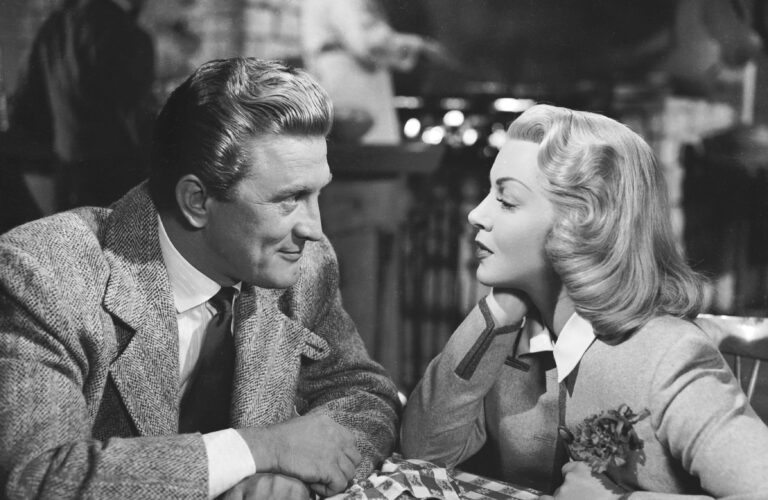
The Criterion Channel has a mostly earned reputation for having a large collection focused mostly on “art house cinema.’ But as time passes, this definition likely changes. Let’s take Oscar-nominated films as an example. In the current time, many of these films are not exactly blockbusters or crowd-pleasers. I mean, last year Nomadland won, and that mostly was watched by cinephiles and not “normal people.” But this wasn’t always the case. In the past, the Oscars were sometimes more of a celebration of the studio system which focused on money and star making performances. And that perfectly brings us to the focus of this column in The Bad and the Beautiful. This megawatt picture leaves the service at the end of this month and I hope it will absolutely be worth your time, so let’s jump in.
Much like films such as Citizen Kane, this film follows the events and they are revealed in flashback. Our lead, Jonathan Shields (Kirk Douglas), a once powerful movie producer who wants to get a film made, but cannot do it without the help of a handful of people who he has wronged. Each of them; director Fred Amiel (Barry Sullivan), screenwriter James Lee Bartlow (Dick Powell), and starlet Georgia Lorrison (Lana Turner) all have a bone to pick and outright refuse to speak to him, even through his go between Harry Pebbel (Walter Pidgeon). This sets in motion a series of stories, connected through the making of one, particularly large and unwieldy picture.
The Bad and the Beautiful is big and unwieldy. It survives on honest to god star power, the likes of which we don’t see much anymore. I found myself actually wishing it was longer and had more room to breathe. Douglas, in an Academy Award nominated performance is breathtaking. The moment he finally struts on screen in flashback, you know that he owns the screen. Director Vincente Minnelli seems to be quite aware of this too, as he allows the camera to linger on him, even in a role that could be unlikable, minus the movie star charisma. To give you the idea of the kind of performance we have on our hands, the role was originally planned for Clark Gable, the ultimate bad boy who we find ourselves magnetically pulled towards. Douglas is good throughout, but his work with the stunning Lana Turner is of particular note.
Turner was already a massive star at this point, both through roles with Clark Gable as co-star but also from her femme fatale turn in The Postman Always Rings Twice (featured previously in this column). Turner is an actor that seems to refuse to be pigeon holed. After that stunning turn in Postman, it would be easy to simply focus on more noir type performances, but this is different. In her sadly short arc here (there is just not time for much more), her portrayal of shy naïveté, tragedy, romance, and raw anger and regret are all on display, and never feels out of control or too dramatic. In a film full of very good actors, she stands out, especially when she and Douglas go toe to toe.
Another thing to love about The Bad and the Beautiful is that in all of its largess, it refused to only focus on the romance, which must have been tempting with these two beautiful stars. But Shield’s relationship with his director and close friend, Fred Amiel, might be even more heartbreaking than lost love. At the outset of the films, Shields and Bartlow are working for Pebbel on less than inspiring films. They are successful for what they are, but made on the cheap. Finally, they come up with an idea for something grander. Shields pitches it, with the understanding that Amiel will direct. After all, Amiel helped the project be ten times the film it would have been with just Shields’ input. But at the slightest provocation, greed drives the wedge between the two. Shields allows a more experienced director to take his place, relegating his friend to more behind the scenes work. Both the pain and acceptance on Barry Sullivan’s face play out quickly but nonetheless is gutting.
The Bad and the Beautiful is a film in which it is impossible to have a happy ending. If the three in the opening scene decide not to work with Shields, there are no good feelings, mainly because Douglas is so engaging. If they do work with him, a pretty hideous character comes out on top. In a brilliant move from the screenplay, penned by Charles Schnee (with story work from George Bradshaw), it allows for a bit of both. All three say no to working with Shields, but eavesdrop on a conversation about his next film and are all eager. Will they fall back into Shields’ web for more success and fame, or will they hold true? This world goes on without us, and a mostly anti-Hollywood film can be read in more than one way, which is wildly more interesting than anyone more specific ending.
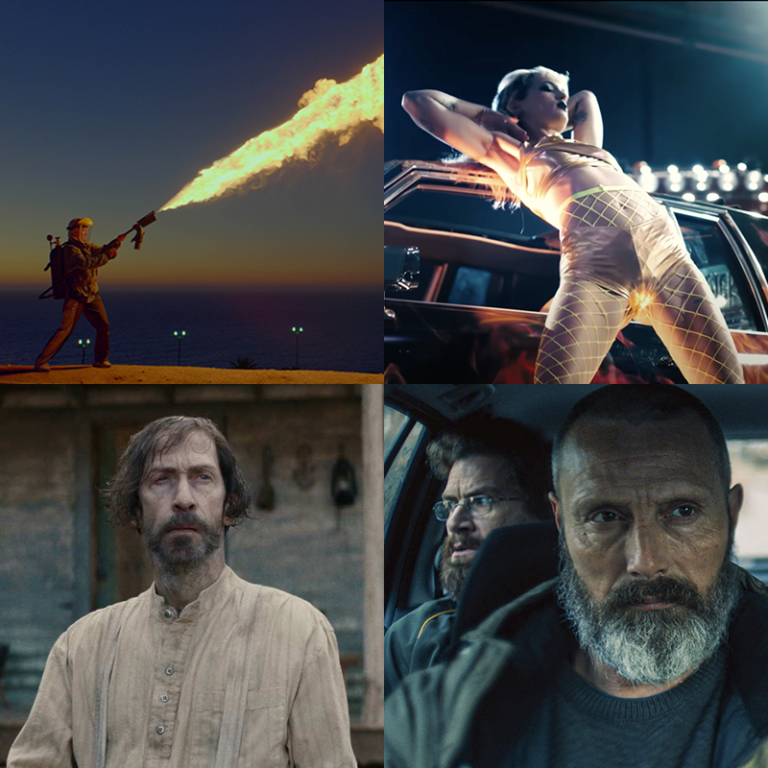
For those who have listened to the Main Show in recent weeks, you probably noticed that we’ve been very busy reviewing many of the notable film that have been released. However, in that time we’ve seen many more that we’ve been itching to talk about, so we dedicated another Patreon Bonus Content episode to doing just that. On this episode we give our thoughts on Pablo Lorrain’s Ema, Julia Ducournau’s Titane, the A24 film Zola, the western Old Henry and also the Mads Mikkelsen-starring vehicle Riders of Justice. We then end things by discussing two documentaries in The Sparks Brothers and Untold: Crimes & Penalties.
Stay tuned as we have more films to discuss in Part 3, coming soon!
To hear our bonus content episodes early, subscribe now on Patreon. In many cases, though, we offer our bonus content for free after a certain period of time and we do encourage (and very much appreciate) a small donation of $0.99 as a way to help support the show if signing up on Patreon isn’t for you. Click on the PayPal button below to donate and thanks so much for your support. You can also hear much of our Bonus Content via our mobile apps. See the information at the bottom of the post for more details.
[divider]
Mobile Apps!
Listen to all of our bonus content on our apps for just a one-time fee! Whether you have an iPhone, Android or Windows phone, our apps are available in many different ways that is convenient for you. With our mobile app, not only can you listen to all of our bonus content, but our main shows and our Extra Film podcasts as well. Click here for more info!
If you don’t want to purchase our bonus content, but still want to support us, there are other you can help us out. Click here for more info.