

Home Blog Page 226

Featured: Criterion Cruising – 13th Version On Friday The 13th

I am not superstitious, so to release my 13th piece on my Criterion Cruising list this thirteenth day should not spook you. After all, we got another selection of films that have been part of the Criterion Collection before in different genres. So, what do I have for you, my readers?

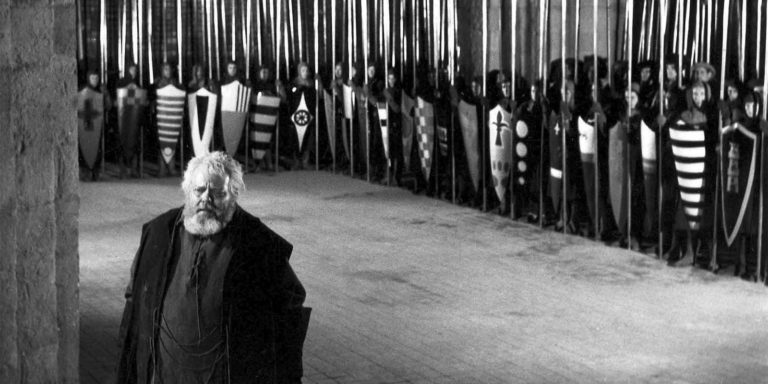
Chimes At Midnight (1967)

One of Orson Welles’ biggest struggles to make (of course, The Other Side Of The Wind takes the cake), he centers the story around the character Falstaff and his close friendship with Henry V, then known as Prince Hal. Using five different Shakespeare’s plays plus Holinshed’s Chronicles, Welles created an original work of art that received positive reviews at Cannes but was then disregarded by critics. Regardless, it was Welles’ favorite film to make, especially when he pretended to shoot a version of Treasure Island so he could get funding to make Midnight, and his production was saved by Harry Saltzman, one of the original James Bond producers. Legal issues kept the film out of sight for 50 years until Criterion bought the rights, restored it, and released it in 2016. Attached is a Q & A of the film with co-star Keith Baxter, who played Prince Hal.

Oliver! (1968)

https://www.youtube.com/watch?v=VogHwP0C5VY

The film adaptation of the popular musical from Lionel Bart based on the famous novel by Charles Dickens was the first Best Picture winner in the MPAA era (it was rated G in contrast to its winning successor, Midnight Cowboy, which was rated X) and the legendary Carol Reed took home his Best Director Oscar. Coincidently, his nephew was Oliver Reed, who starred as Bill Sikes, the malicious antagonist in contrast to Fagin, the common thief and gang leader of the homeless kids Oliver Twist joins. It is a musical that appeals to all and is wonderfully directed through the dirty streets and the wealthy lands of London.

The Black Stallion (1979)

The first of only six directed features, Carroll Ballard’s feature debut (he made documentaries prior) follows a boy who survives a shipwreck becomes friends with a beautiful horse on an island. When the two are rescued, he learns how to ride it for major competitions with the help of a retired jockey. Ballard took risks, some that would never happen today, and captured (with the help of DP Caleb Deschanel) a magical story similar to star Mickey Rooney’s other horse film, National Velvet. The film got its producing backing from Ballard’s friend, Francis Ford Coppola, who was busy salvaging the mess that was Apocalypse Now, and the script was co-written by Melissa Mathison, who would be hired by Steven Spielberg to write E.T. 

Local Hero (1983)

Writer-director Bill Forsyth’s charming dramedy on becoming a new man amongst a new set of people is a tale of the little guy fighting the corporation he was supposed to represent. This isn’t Dark Waters or Promised Land, but a comedy-drama about finding yourself in a place far from home that seems perfect to be a part of. That is the irony of the title, where an oil executive with a Scottish-sounding surname, who isn’t really Scottish, goes to a village where his company and the eccentric boss want to buy and built an oil refinery there. Starring Peter Reigert, Burt Lancaster, Fulton Mackay, and Peter Capaldi.

Close-Up (1990)

Based on a true story, a man pretends to be a famous filmmaker in order to meet people who he tried to convince to star in his movie. Abbas Kiarostami first intended it to be a documentary on the would-be imposter, Hossain Sabzian, filming his trial, then intercut it with a reenactment of the meeting portrayed by Sabzian and the actual family who were being conned. Kiarostami’s quick, bold thinking (he read the case in a magazine, quickly called Sabzian, and spoke to everyone involved) was an acclaimed tale of cinephilia and fulfilling a desire that was in the Top 50 of Sight & Sound’s Best Movies Of All Time.

In Memoriam: Max Von Sydow

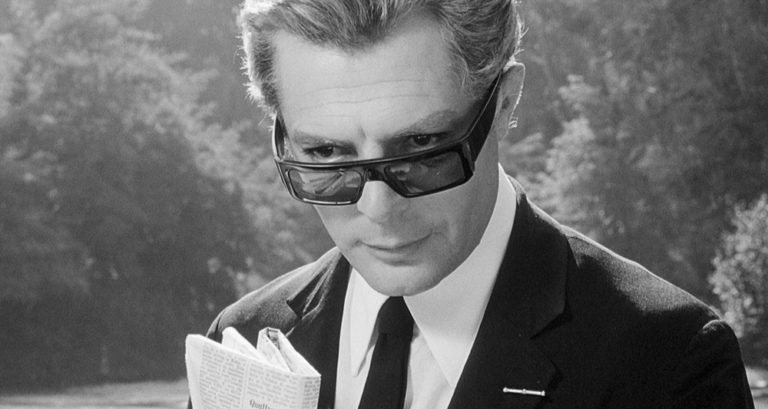
We lost the great Max von Sydow this past Sunday, aged 90. In a career spanning 70 years, he was first seen collaborating with the great Ingmar Bergman for 11 movies before crossing over to Hollywood starting in the mid-60s. Father Merrin in The Exorcist, Jesus in The Greatest Story Ever Told, the knight battling death in chess in The Seventh Seal, a mute old man in Extremely Loud and Incredibly Close, the patriarch moving his whole family to America in The Emigrants and The New World. The aging resistance fighter in Star Wars: The Force Awakens, and, in more recent times on TV, the Three-Eyed Raven on Game of Thrones. His range was something to admire and how seriously he took every role that made him stand out. It’s a big loss for global cinema, but the depths of his work will forever be enshrined as being a pound-for-pound standout. Farväl, Herr von Sydow.

Follow me on Twitter: @brian_cine (Cine-A-Man)
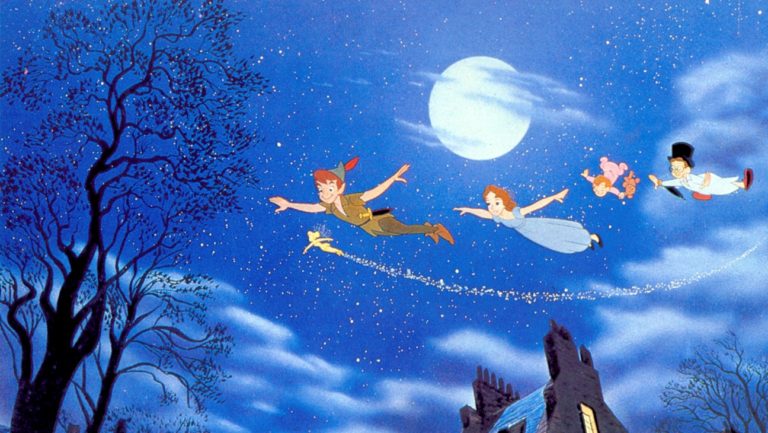
Poll: What is your favorite movie based on/inspired by J.M. Barre’s ‘Peter Pan’?

This weekend on Episode 369 we’ll be discussing the latest film from Benh Zeitlin in Wendy, his interpretation of the classic Peter Pan story. There have been quite a few adaptions over the years, some for better and some for worse, but nonetheless interesting films that continue to tell the tale of children refusing to grow up. With that as inspiration for our poll this week, what is your favorite movie based on the J.M. Barre classic Peter Pan?

Vote now!


Podcast: Onward / La Strada – Episode 368

This week’s episode is brought to you by the InSession Film Store. Get your IF t-shirt today!

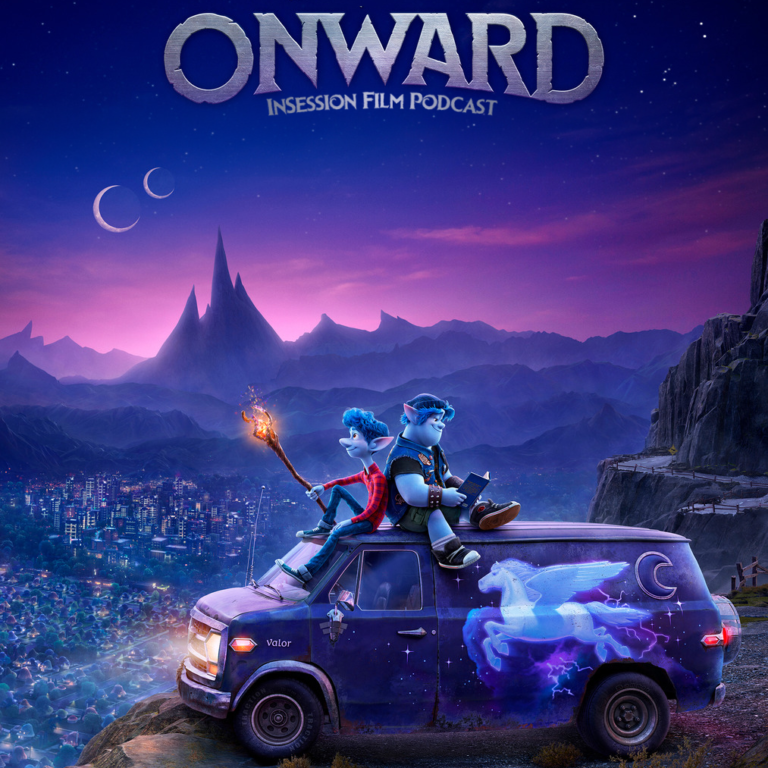
This week on the InSession Film Podcast, we review Pixar’s latest in Onward and we begin our Federico Fellini Movie Series by discussing his 1954 film La Strada!

It’s always an exciting time when we’re beginning a new movie series. They’re among our favorite segments we do on the show and Fellini is a blindspot that we needed to remedy. And as you’ll hear on the show, we’re already reaping the rewards of that decision. It’s even more enjoyable when another Pixar adventure is in the mix as well. Onward may not be Pixar’s best, but it certainly has a lot to offer and we had a fun time dissecting its best elements.

On that note, check out this week’s show and let us know what you think in the comment section. Thanks for listening and for supporting the InSession Film Podcast!

– Movie Review: Onward (4:29)
Director: Dan Scanlon
Writer: Dan Scanlon, Keith Bunin, Jason Headley
Stars: Tom Holland, Chris Pratt, Julia Louis-Dreyfus

– Notes / Discussion (46:09)

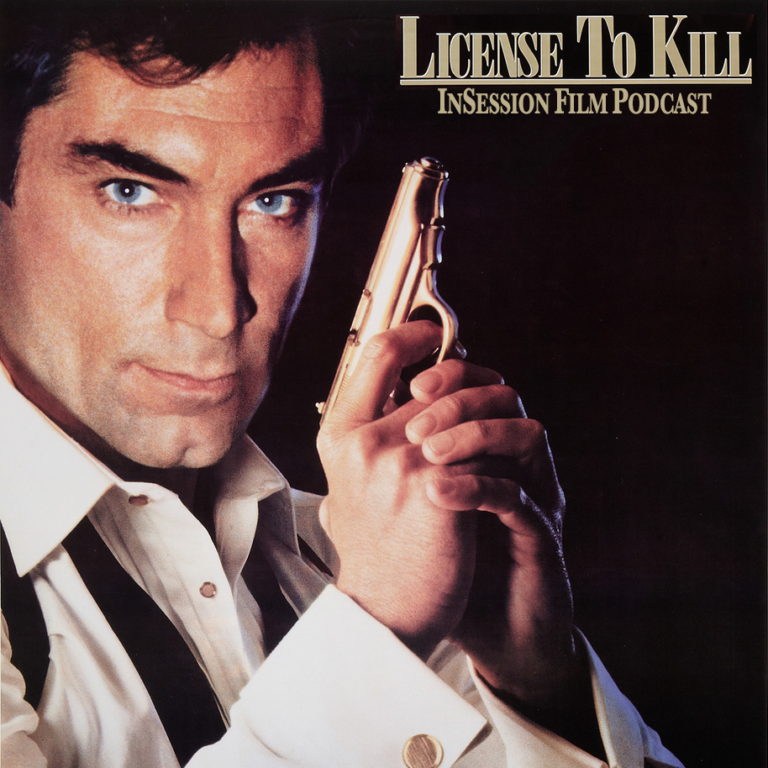
As you may have heard on Extra Film this last week, Ryan and Jay reviewed the Timothy Dalton-led Bond film License to Kill, a film that JD caught up over the last week as well. He offered up his thoughts and why he thinks it’s potentially a Top 5 Bond film. We also plug a new t-shirt partner and some upcoming bonus content that you’ll want to check out.

[divider]

RELATED: Listen to Episode 360 of the InSession Film Podcast where we discussed our Top 10 Movies of 2019!

[divider]

– Federico Fellini Movie Series: La Strada (1:04:29)
Director: Federico Fellini
Writer: Federico Fellini, Tullio Pinelli, Ennio Flaiano
Stars: Anthony Quinn, Giulietta Masina, Richard Basehart

Show Sponsor: First Time Watchers Podcast

– Music

Share My Life With Him – Mychael Danna, Jeff Danna
Wish I Could Spend The Day With You – Mychael Danna, Jeff Danna
La Strada – Nino Rota
The Return of the Eagle – Atli Örvarsson

Subscribe to our Podcasts RSS
Subscribe to our Podcasts on iTunes
Listen on Spotify
Listen on Stitcher
InSession Film Podcast – Episode 368

[divider]

Next week on the show:

Main Review: Wendy
Federico Fellini Movie Series: Nights of Cabiria

[divider]

Help Support The InSession Film Podcast

If you want to help support us, there are several ways you can help us and we’d absolutely appreciate it. Every penny goes directly back into supporting the show and we are truly honored and grateful. Thanks for your support and for listening to the InSession Film Podcast!

VISIT OUR DONATE PAGE HERE

Movie Review: ‘The Invisible Man’ is a haunting film about abuse and the importance of believing women


Director: Leigh Whannell
Writer: Leigh Whannell
Stars: Elisabeth Moss, Oliver Jackson-Cohen, Harriet Dyer, Aldis Hodge, Storm Reid

Synopsis: When Cecilia’s abusive ex takes his own life and leaves her his fortune, she suspects his death was a hoax. As a series of coincidences turn lethal, Cecilia works to prove that she is being hunted by someone nobody can see.

[/info]

In Hollywood, nothing ever really dies. Whether it is a beloved character, or an entire universe, even if it fails, it will definitely be back. As recently as 2017 with The Mummy, there was an ill-fated attempt to reboot the world of Universal Monsters, even moving to the point of casting all of the monsters. Despite the star power of Tom Cruise, it failed, and with its death came the end of the entire connected universe plan. And yet, as we fast forward to 2020, at least one of the monsters has returned. With the help of Blumhouse Productions, and director Leigh Whannell have expertly revived The Invisible Man.

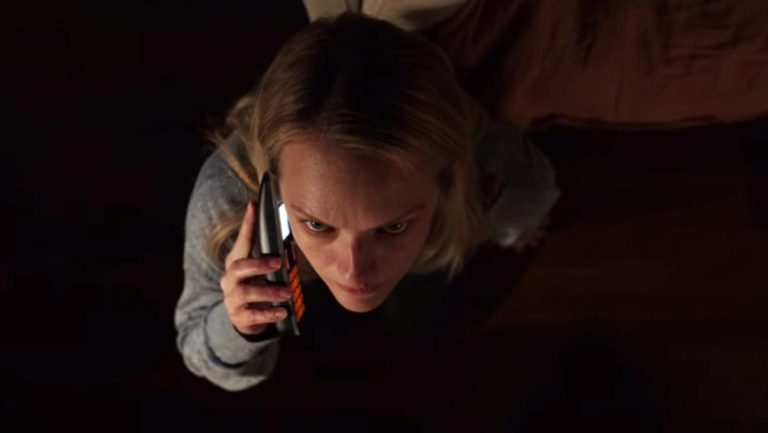
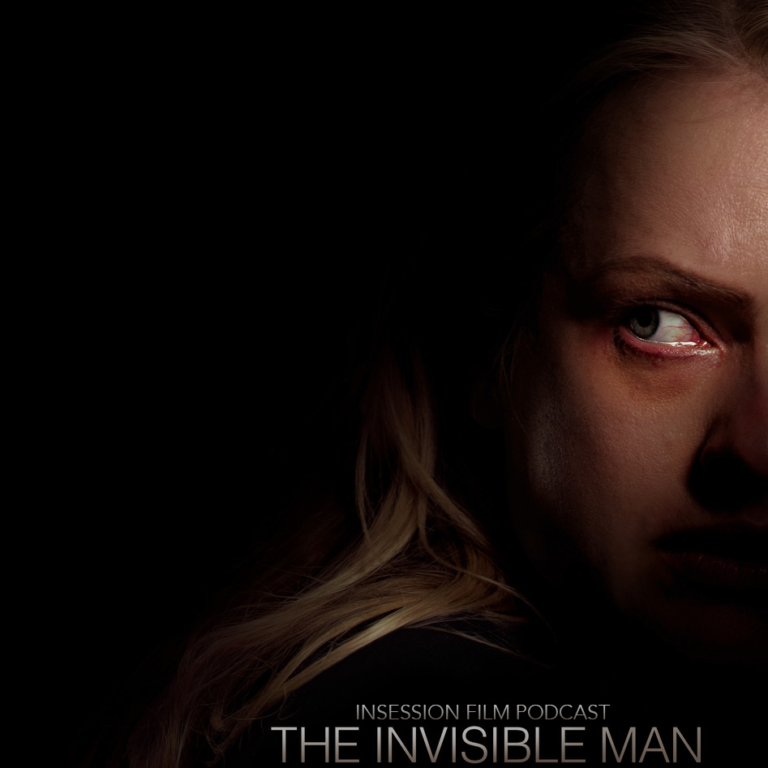
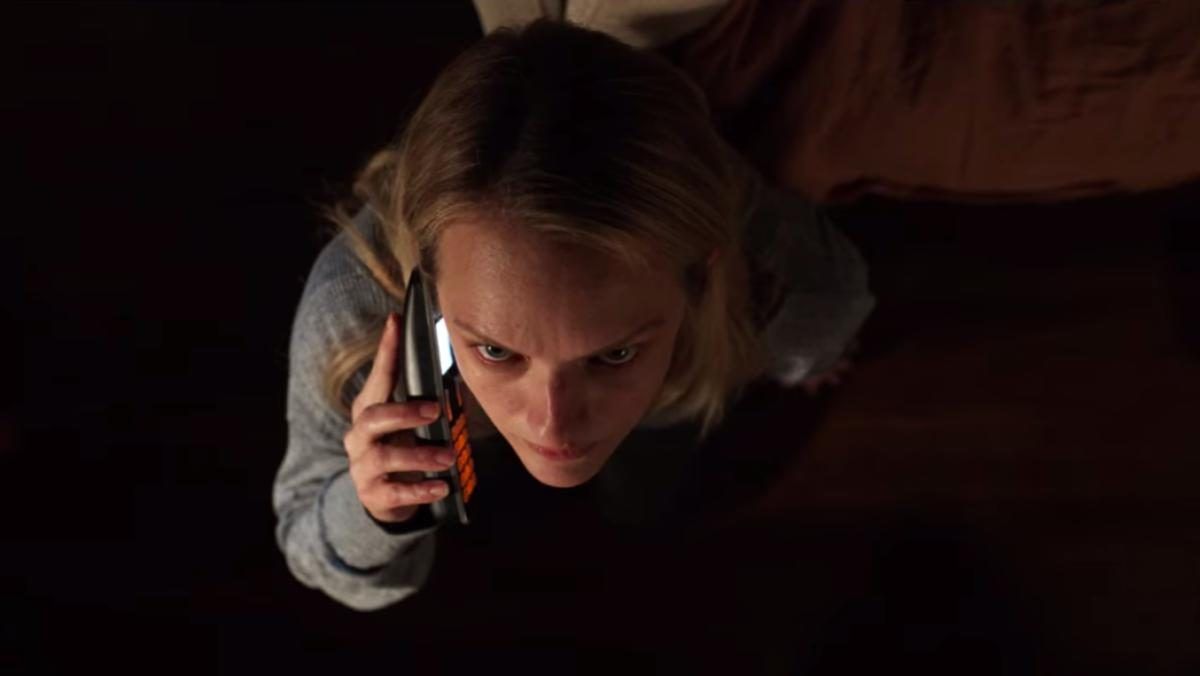
Among the many smart decisions made by Whannell and company is the focus on Cecilia (Elisabeth Moss). In most iterations of The Invisible Man, the first half of the film is detailing whatever crazy experiments take place which lead to the creation of the monster. Here, instead, both the opening scene (and the majority of the film, frankly) tell the story of a woman escaping an abusive relationship. That first scene is, indeed, one of the most tense few minutes of film you will see all year. Whannell uses both sound and shadow to replicate the fear that Cecilia must be feeling in that moment. Not to solely focus on that first scene, but probably the best choice made is to never truly show what Adrian (Oliver Jackson-Cohen) has done specifically. Instead Whannell leans on Moss, one of our best working actors. Every bit of stress and pain etched in her face tells us what we need to know. To hammer the point home, the fact that his dog has a shock collar should tell you how he treats people and animals he supposedly loves.

Through most of the rest of the movie, the audience (obviously) doesn’t see the titular villain. Although this is a monster movie, and an effective one at that, it doubles as a near perfect example of being in an abusive relationship. When an abuser puts on the costume of a “good guy,” it becomes easy for outsiders to disbelieve the reality of the situation. This is, of course, especially true if the person telling that truth is a woman. So, yes, there is a great deal of science fiction at work here, but it is also a sadly relatable story.

After the excellence of Upgrade, Whannell mastering genre work should be no surprise. For fans of his, there are some Upgrade-y moments of camerawork that didn’t quite mesh with this film, but that is a mild critique of otherwise masterful direction. He plays with both constricted and expanded space in the frame to simultaneously make you feel general horror fear and specific invisible attacker fear. When the camera is focused just in front of Cecilia, will the villain attack from out of frame? When the camera goes wide, what in the environment is about to move in impossible ways? In that latter situation, Whannell again uses shadow to great effect. So much so that you may find yourself squinting and wondering if you really did see something move, just like Cecilia.

While Moss is damn near perfect, as per usual, this is not quite a one woman show. Both her sister, Emily (Harriet Dyer) and her friend, James (Aldis Hodge), who are both police officers are wonderful additions to the cast. Hodge, who is having a fantastic run after a supporting role in Clemency, plays both the tough cop and the caring friend and father with equal believability. He and his daughter Sydney (Storm Reid) provide both some much-needed support for Cecilia, as well as people for our lead to care about when things inevitably go south. The relationship with her sister is probably the most complex in the film, and provides a moment late in the film that will likely leave audiences shaken as they leave the theater.

Blumhouse has proven once again that if you have a talented director willing to work within a small budget, you can get away with an alarming film not being a CGI fest. There is an old adage that our imaginations can come up with images much more frightening than the visual medium can ever provide. The Invisible Man, aptly, is the perfect example of this thought process. For once, an Invisible Man film doesn’t focus on the man becoming a monster. Instead, it manages to lean on the ideas of believing women (and survivors in general), even when that belies logic or our own personal experiences with them. The Invisible Man is a much better film than expected, and quickly moves past simple genre to become a movie that should make you viscerally feel what it is like deep in the throes of a dangerous relationship.

Overall Grade: A-

[divider]

Hear our podcast review on Episode 367:

[divider]

Podcast: License to Kill / Emma. – Extra Film

This week on the InSession Film Podcast: Extra Film segment, Ryan and Jay continue their discussion on Bond and cover a Jane Austen adaptation. It’s a pair of movies that could not be more different!

The guys cover the (short-lived) Timothy Dalton era of Bond as the April 10th November 25th release of No Time to Die fast approaches! The Dalton films are fairly divisive, among Bond fans. Jay comes at them with a fresh perspective and Ryan found himself re-evaluating the films a bit. They are… weird. And violent. And crazy. But are they good?

Then, the discussion shifts to Emma., the latest Jane Austen adaptation. Anya Taylor-Joy stars as the titular character, but one of the hosts has a big problem with her performance. In his eyes, is it able to overcome that? Listen to find out!

Thanks for listening!

– Movie Review: License to Kill (4:01)
Director: John Glen
Screenplay: Michael G. Wilson, Richard Maibaum
Stars: Timothy Dalton, Carey Lowell, Robert Davi, Talisa Soto, Anthony Zerbe, Benicio del Toro

– Movie Review: Emma. (40:06)
Directors: Autumn de Wilde
Screenplay: Eleanor Catton
Stars: Anya Taylor-Joy, Johnny Flynn, Josh O’Connor, Callum Turner, Mia Goth

– Music

License to Kill – Gladys Knight
Emma – Soran
The Return of the Eagle – Atli Örvarsson

We try to make this the best movie podcast we possibly can and we hope you enjoy them. Subscribe today on iTunes, Spotify or Stitcher, and please leave us a review on iTunes. You can also find us on Soundcloud, PlayerFM and TuneIn Radio as well. We really appreciate all your support of the InSession Film Podcast.

Subscribe to our Podcasts RSS
Subscribe to our Podcasts on iTunes
Listen on Spotify
Listen on Stitcher
License to Kill / Emma. – Extra Film

[divider]

Mobile App

To hear this Extra Film episode and everything else we do, download our apps on the Amazon Market for Android and the Podcast Box app on IOS devices. The mobile app covers all of our main shows, bonus podcast’s and everything else relating to the InSession Film Podcast. Thanks for your wonderful support and for listening to our show. It means the world to us!

Featured: Criterion Cruising – The Dozenth Time

I recently completed 200 movies through the Criterion Channel, which seems ridiculous considering that it hasn’t been a full year since the site started up. But when you have that much free time on your hands, watching one every day and sometimes two in one day (I’ve had a couple of quadruple showing days) happens and you explore some more. For this edition, there were a few more Criterion edition releases that caught my attention, as well as certain themes that come up. Here are the few necessary to take a close look at.

Dead End (1937)

William Wyler directed the likes of Joel McCrea, Sylvia Sidney, and a young Humphrey Bogart in this crime story within the New York slums by the Queensboro Bridge. It sits across an area where the wealthy live, contrasting the major gap of classes (Elizabeth Warren, anyone?) after the Great Depression. A gang of kids who live on the streets sees two different ways in front: the gangster life, played by Bogart, and the clean life, played by McCrea, who is educated but struggles to make ends meet. The universal theme is survival by any means. Dead End is exactly that for those who grow up in those parts at that time.

The Italian Job (1969)

Among a trio of Michael Caine films available, the original version of this crime caper is very different from the remake done in 2003. This version is comical, where the protagonist, Charlie, is charming and charismatic enough to gather his crew of various talents and take them into a daring robbery in the city of Turin, underneath the noses of the Mafia. He gets the support from a jailed mob leader, played by Noel Coward, and proceeds with his daring plan, which includes some sweet vehicles and a creative car chase to the mountains, where an unexpected moment, in the end, leaves it all on a cliffhanger – literally. It’s a lot better than the Mark Wahlberg-Charlize Theron version and gives us the funny put off after a test goes wrong, “You’re only supposed to blow the bloody doors off!”

THX 1138 (1971)

This was George Lucas’ debut thanks to his collaboration with Francis Ford Coppola’s company, American Zoetrope. It is a fascinating sci-fi thriller where people are given numbers as names, fed drugs to be kept under control, and sexual intercourse is illegal. The titular character (Robert Duvall) takes the drugs of his female roommate, opening his mind to the feelings that are banned and causing problems towards the authoritarian government. You can see the foundations of Lucas’ mind when he made his Star Wars soap opera several years later and where Lucas’ genius lies in opening up the sci-fi genre into a narrative art form, which Kubrick’s 2001: A Space Odyssey didn’t do.

The Friends Of Eddie Coyle (1973)

Played by the brilliant Robert Mitchum, the titular character is a felon about to be sentenced for armed robbery, but is given the chance to be an informant on the criminal gang he works for in Boston. As he continues to take part in the gang’s robbery spree, Coyle has to weigh the loyalties of his only friends and the possibility of getting no jail time for being a snitch. Based on the novel by George V. Higgins, it’s a noir deep in the Boston’s underworld once controlled by the likes of James “Whitey” Bulger of how gangsters operate and how law enforcement use the small-time crooks to try and nab the big fishes that always getaway (just like Bulger in real life). A few years later, director Peter Yates would direct a more light-hearted movie which earned him an Oscar nomination, Breaking Away. 

L’Enfant (2005)

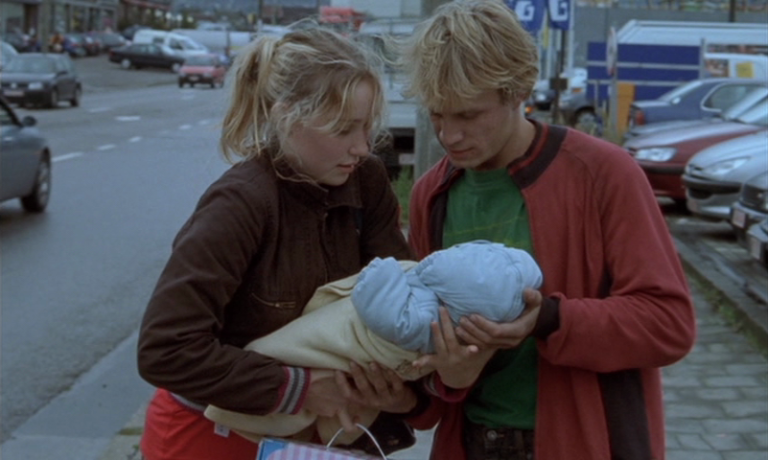
Literally, “The Child,” this was the second Palme d’Or win for the Dardenne Brothers. A young couple living on welfare and petty theft from the man discovers themselves becoming expecting parents. When the man makes a critical choice regarding the baby’s future, it begins a rocky path to a choice of obligation for the mother. This was Belgium’s entry into the Oscars for Best International Feature, and yet, no Dardenne picture has been nominated with the exception of a Best Actress nod for Marion Coultard in Two Days, One Night.

Follow me on Twitter: @brian_cine (Cine-A-Man)
Movie Review: Buckle up and ride the ‘Give Me Liberty’ express


Director: Kirill Mikhanovsky
Writer: Alice Austen, Kirill Mikhanovsky
Stars: Lauren ‘Lolo’ Spencer, Chris Galust, Maxim Stoyanov

Synopsis: In this freewheeling comedy, medical transport driver Vic risks his job to shuttle a group of rowdy seniors and a Russian boxer to a funeral, dragging clients like Tracy, a young woman with ALS, along for the ride.

[/info]

As someone who gets quite anxious at just the thought of being even slightly late for anything, I found the premise of Give Me Liberty pretty stressful. Furthermore, I also for a time, like our protagonist, used to drive van-loads of loud, capricious people around while they occasionally yelled at me. So my sympathies were absolutely with him from the jump.

My passengers were entitled film and commercial producers; I was their production assistant. Vic (Chris Galust), on the other hand, drives a medical transport vehicle. His disruptive folks onboard, though, are not his regular passengers but rather a small mob of elderly Russians who commandeer his van when the bus that was supposed to take them to a funeral for a friend doesn’t show up.

They’re the other residents from the apartment building where Vic lives with his possibly senile grandfather. He cares about them, so he risks his job to chauffeur them across town to the cemetery, while attempting to pick up and drop off his legitimate passengers along the way… Lots of humor ensues.

Director Kirill Mikhanovsky assembled a relatively large cast of non-professional actors for his latest venture. Reportedly, many of these folks came from a Milwaukee vocational school for persons with disabilities and a community of Russian immigrants. The performances of this ensemble cast have an unencumbered nature to them—a sort of instinctual naturalism that years of perfecting a craft can beat out of some artists.

A true standout among this vibrant cast of characters is a young woman named Tracy (Lauren “Lolo” Spencer). Spencer is one of this film’s main breakout scene-stealers. She’s a welcome dose of comedic relief in this already-madcap caper. Tracy is a lively and resolute presence in Vic’s van as someone not to be crossed—or else her sharp tongue will slice you in half. See, unlike most of these passengers, she’s actually supposed to be riding. Her saltiness at being delayed is delightfully palpable and great fun to watch. Spencer proves that she deserved that Film Independent Spirit Award nomination, and I wish her a fruitful career.

The other supporting standout comes in the form of the marvelously chaotic Dima (Maxim Stoianov). As ridiculous as Give Me Liberty gets at times—and it can get ridiculous—the audience can always count on Dima to up the ante and thereby somehow ground the goings-ons. Part of me doubts that such a magnanimous person could even exists, but it works nonetheless. In the vein of Peter Stormare, Stoianov feels like a type of character actor who, if he plays his cards right, could have a monopoly on all of Hollywood’s vaguely Eastern European roles—the funny ones as well as the villainous ones. Because he deserves them.

Of course the outright star of the film is Galust, who is simply wonderful in his debut turn, giving a beautifully understated yet multi-faceted performance. Film Independent deemed him worthy of a nomination for Best Male Lead, and I’m inclined to agree. Galust is able to carry Give Me Liberty with a commanding performance that never slips into showy territory. He has a warm stoicism that feels very at home in this era of confident, low-key young actors… (We all ought to be so grateful that Dane DeHaan and Timmy Chalamet have brought this love child of theirs into the world, for the sake of indie cinema and for our eyes.)

As a storyteller, Mikhanovsky definitely does not shy away from the real world issues that plague all corners of the United States. For what is in many respects a “road movie,” the characters of Give Me Liberty do not travel very far—just a handful of in-town miles—because they keep encountering detours caused by protests. The non-white civilians of Milwaukee have had it with the police violence in their city, and their justifiable urban disruptions create obstacles for our protagonists—obstacles that must be addressed in order to move forward. If for nothing else, Mikhanovsky must be commended to for the representation found in his film.

The folks of Film Independent chose Give Me Liberty as the winner of their John Cassavetes Award, which is given to the filmmakers of the best film with a budget below $500,000. And let me tell you… half a million dollars may sound like a substantial sum, but it’s truly not very much money in the production world. The lines of expenditures add up pretty quickly. Looking at it, Give Me Liberty is undoubtedly a low-budget picture, but Mikhanovsky’s shoestrings must also be magic wands, because with an ensemble and geographic footprint of this size… Wow! I just hope the entire cast and crew were paid well, or paid period. (I’m doubtful, though.)

Bottom line: Give Me Liberty is an eccentric little comedy with plenty of barely contained haywire and whole lot of heart. Plus, I’ve been to Wisconsin, and let’s just say I can see the events of this story unfolding there. Take that as you will.

Overall Grade: B+

[divider]

Poll: What would you like the last film of our Federico Fellini Movie Series to be?

This week for our poll, we are looking ahead to our new Movie Series on Federico Fellini, and we need your help in landing the eighth and final film in our series. The first seven films in our series will include La Strada, Nights of Cabiria, La Dolce Vita, 8½, Juliet of the Spirits, Roma and Amarcord.

With that said, which film should we discuss to conclude the series? Vote now!


List: Top 3 Actress Performances in Horror Films

This week on Episode 367 of the InSession Film Podcast, inspired by Elisabeth Moss’ great performance in The Invisible Man, we thought it would be fun to discuss the best actress performances in horror films. The horror genre may not be for everyone, but the one thing you can’t deny regardless of how you feel about it, is that it’s rendered some phenomenal performances over the years. And given how many films are structured narratively, it’s a genre that especially gives opportunity to actresses, who most often find themselves in some sort of traumatic situation. As a result, so many of the best performances to come from horror films are on the female side, and we wanted to highlight that this week with our lists. There are dozens and dozens to choose from, but we had a ton of fun discussing what makes these performances so evocative. That said, here are our lists:

(Note: Please keep in mind that we each had different criteria for our selections)

JD

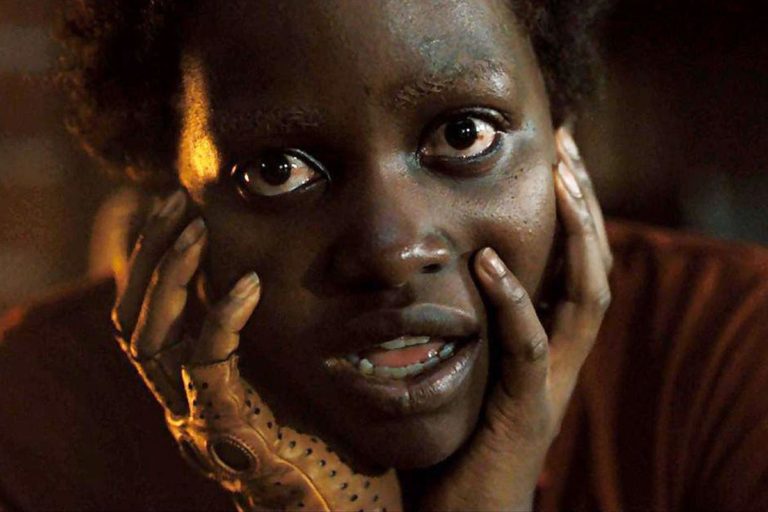
1) Lupita Nyong’o – Us
2) Belén Rueda – The Orphanage
3) Essie Davis – The Babadook

Brendan

1) Bette Davis / Joan Crawford – What Ever Happened to Baby Jane?
2) Shelley Duvall – The Shining
3) Isabelle Adjani – Posession

Valerie

1) Toni Collette – The Sixth Sense
2) Shahadi Wright Jones / Evan Alex / Madison Curry – Us
3) Morfydd Clark – Saint Maude

Honorable Mentions (Combined)

Sissy Spacek / Piper Laurie – Carrie
Linda Blair / Ellen Burstyn – The Exorcist
Sigourney Weaver – Alien / Aliens
Ellen Bursten – Requiem for a Dream
Toni Collette – Hereditary
Florence Pugh – Midsommar
Maika Monroe – It Follows
Anya Taylor Joy – The Witch
Samantha Eggar – The Collector
Samantha Eggar – The Brood
Audrey Hepburn – Wait Until Dark
Heather O’Rourke – Poltergeist
Kathy Bates – Misery
Jamie Lee Curtis – Halloween
Janet Leigh – Psycho
Aisling Franciosi – The Nightingale
Naomi Harris – 28 Days Later
Mia Farrow – Rosemary’s Baby
Jodi Foster – Silence of the Lambs
Jessica Harper – Suspira
Emily Blunt – Quiet Place
Ivano Baquero – Pan’s Labyrinth
Natalie Portman – Black Swan
Shauna Macdonald – The Descent
Kirsten Dunst – Interview with a Vampire
Marcia Gay Harden – The Mist
Shelley Hennig – Unfriended
Heater Langenkamp – A Nightmare on Elm Street
Elsa Lanchester – Bride of Frankenstein
Charlotte Gainsbourg – Antichrist

Hopefully you guys enjoyed our lists and if you agree or disagree with us, let us know in the comment section below. As is the case with a topic like this, depending on your tastes and criteria, your list could end up being very different than what we talked about. That being said, what would be your Top 3? Leave a comment in the comment section or email us at [email protected].

For the entire podcast, click here or listen below.

For more lists done by the InSession Film crew and other guests, be sure see our Top 3 Movie Lists page.

Podcast: The Invisible Man (2020) / Top 3 Actress Performances in Horror Films – Episode 367

This week’s episode is brought to you by Casper. Sign up today and get $50 toward your first purchase!

This week on the InSession Film Podcast, film critic Valerie Complex joins us to discuss the new remake of The Invisible Man and our Top 3 actress performances in horror films. We also reveal the topic of our latest Movie Series, which begins next week.

We are super grateful to Valerie for joining us this week. She’s one of the best film critics out there and it was a pleasure to finally get her on the show. We had a great time discussing The Invisible Man, but especially the top 3 this week, her enthusiasm for the topic was contagious.

On that note, check out this week’s show and let us know what you think in the comment section. Thanks for listening and for supporting the InSession Film Podcast!

– Movie Review: The Invisible Man (4:36)
Director: James Whale
Writer: H.G. Wells (novel), R.C. Sherriff (screenplay)
Stars: Claude Rains, Gloria Stuart, William Harrigan

– Notes / Reveal of New Movie Series (47:56)
We’ve been planning our newest Movie Seires for about a month now and we’re really excited to get into it. It’s a filmmaker we’ve discussed on the show once before, but we have way too many blindspots given his legendary career, so we felt now was the time to remedy that gap. It begins next week, so get ready, it’s going to be a hell of a time as we dive right in.

[divider]

RELATED: Listen to Episode 360 of the InSession Film Podcast where we discussed our Top 10 Movies of 2019!

[divider]

Top 3 Actress Performances in Horror Films (1:06:48)
The horror genre may not be for everyone, but the one thing you can’t deny regardless of how you feel about it, is that it’s rendered some phenomenal performances over the years. And given how many films are structured narratively, it’s a genre that especially gives opportunity to actresses, who most often find themselves in some sort of traumatic situation. As a result, so many of the best performances to come from horror films are on the female side, and we wanted to highlight that this week with our lists. There are dozens and dozens to choose from, but we had a ton of fun discussing what makes these performances so evocative. That said, what would be your Top 3?

Show Sponsor: First Time Watchers Podcast

– Music

Escape – Benjamin Wallfisch
It Follows – Disasterpiece
I Got 5 On It – Michael Abels, Luniz
The Return of the Eagle – Atli Örvarsson

Subscribe to our Podcasts RSS
Subscribe to our Podcasts on iTunes
Listen on Spotify
Listen on Stitcher
InSession Film Podcast – Episode 367

[divider]

Next week on the show:

Main Review: Onward
Top 3: TBD

[divider]

Help Support The InSession Film Podcast

If you want to help support us, there are several ways you can help us and we’d absolutely appreciate it. Every penny goes directly back into supporting the show and we are truly honored and grateful. Thanks for your support and for listening to the InSession Film Podcast!

VISIT OUR DONATE PAGE HERE

Movie Review: ‘The Assistant’ is an unconventional, but potent horror film on abuse


Director: Kitty Green
Writer: Kitty Green
Stars: Julia Garner, Matthew Macfadyen, Makenzie Leigh

Synopsis: As Jane follows her daily routine, she grows increasingly aware of the insidious abuse that threatens every aspect of her position.

[/info]

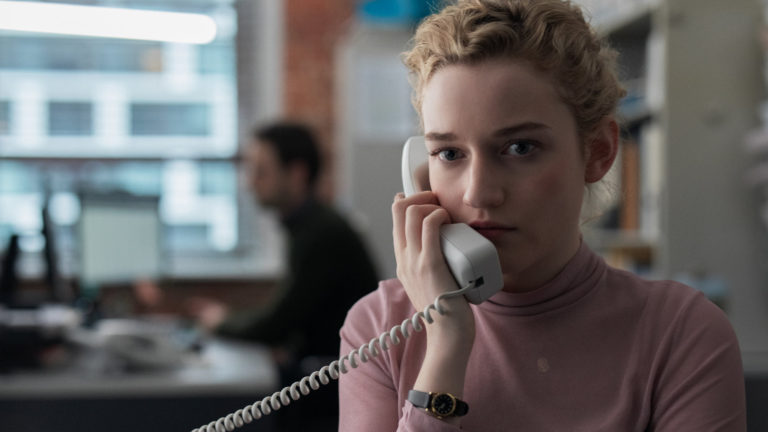
Kitty Green’s The Assistant may not be your traditional horror film, but watching it will give you the same overwhelming sense of dread and anxiety that one experiences watching a horror film such as The Invisible Man. Like The Invisible Man our main character Jane (played by the exceptional Julia Garner), is tormented by an unseen threat and like Elisabeth Moss’ Cecilia, she is also subjected to gaslighting. The monster of Green’s The Assistant may not be exactly ‘invisible’ but we never truly see him in full, he is simply a fleeting image that brushes pass the desk, or a deep voice that barks insults down the phone. However, this isn’t to say that the ‘monster’ in The Assistant isn’t less of a threat, because if anything, He (the boss) is just as monstrous as Adrian Griffin.

It’s interesting to have both these films emerge at the same time, both films capture the daily horrors that women have to encounter and also capture the imbalance of power between men and women. The Assistant is just as effective as The Invisible Man as Green manages to fully immerse you into this bleak, cold world and as the narrative develops your heartbeat begins to quicken and your palms begin to sweat. There’s no other way to describe the experience of watching The Assistant without liking it to a horror film, and when we realize that the world in which the film takes place in is a reflection of our own then the film becomes even more haunting.

The film follows Jane, a recent college graduate and aspiring film producer, who has just landed her dream job as a junior assistant to a powerful entertainment mogul. Everyone around her including her own parents remind her how lucky she is for landing such a role. It’s a tough, brutal world where hundreds of graduates are fighting for one job. Jane is one of the fortunate one, or is she? Her day is much like any other assistant, she’s the first one in and the last to leave. We watch her making coffee, ordering lunch, arranging travel accommodations and taking phone messages. Everyone seems to take advantage of Jane in some shape or form, in one scene we watch her quietly wash up another woman’s plate and be criticized for getting a turkey sandwich instead of chicken.

As we follow Jane throughout her daily routine, we watch as she grows increasingly aware of the abuse and toxicity that runs rampant throughout her workplace. The arrival of another assistant played by Mackenzie Leigh (a pretty female waitress with no experience) sets off alarm bells, especially when the boss disappears to pay the new assistant a visit at the hotel where she’s staying. Disgusted, frustrated and angry, Jane pays a visit to Wilcock (Matthew Macfadyen) in Human Resources, in order to express her concerns. However, it quickly becomes evident that Jane is completely alone.

There’s so much to unpack with this film, even though Jane works in the film industry, the office where the story takes place could be any workplace in any town. The story feels so eerily relatable to anyone (regardless of gender) who has found themselves working in a toxic environment. When we see Jane smoking in the snow (one of the very few shots that take place outside), it isn’t hard to recall a time and place where we’ve tried to cope with the stress that we’ve endured. The character of Jane is so brilliantly written because she feels like an empty shell that we can project our own experiences onto, and Garner’s performance is so subtle, and she contains such raw emotion that if she isn’t nominated for an Oscar then it would be a crying shame.

Tension is built by having the camera slowly close in on Garner’s face, and she manages to convey so much with the simple action of biting her lip or closing her eyes. This isn’t a film with a big showy off performance, because this doesn’t represent the character of Jane who is this silent, thoughtful individual who will always be the outsider in this toxic world. Her interactions with her colleagues, two other (male) assistants are interesting, because even though they seem thoughtful (assisting her with writing not one but two apology emails to their boss), the other two assistants seem to exclude her from their world (although this may not be intentionally).

The office where the film takes place is modeled on Miramax and the boss is clearly Harvey Weinstein, although these comparisons are never mentioned throughout the entire course of the film. Green spent a year interviewing employees about the structure of the office and the complexities of who did what and what their job role entailed. It’s clear that a great level of detail has been paid in recreating this workplace. Green’s previous films have been documentaries so the film has a documentary, ‘fly-on-the-wall’ appearance and approach to storytelling. It looks and feels so real because it *was* real.

Although, the character of Jane is never the subject of sexual abuse, she is still a victim of gaslighting, as well as verbal and mental abuse. And there are many more Jane’s out there who are experiencing the same trauma. Hopefully, The Assistant will help continue the conversation, because even though Weinstein may be facing time behind bars, he isn’t the only predator out there.

Overall Grade: A

[divider]

Movie Review: ‘Emma.’ is a highly enjoyable romp


Director: Autumn de Wilde
Writer: Eleanor Catton (based on the novel by Jane Austen)
Stars: Anya Taylor-Joy, Mia Goth, Johnny Flynn, Bill Nighy

Synopsis: In 1800s England, Emma, a well meaning but selfish young woman meddles in the love lives of her friends.

[/info]

Jane Austen’s Emma has had several adaptations (both on the small and the big screen) over the years, from the likes of Amy Herckerling’s 1995 film Clueless, to the Gwyneth Paltrow led vehicle in 1996 and even an Indian modern-day adaptation called Aisha. There’s something about this novel and it’s protagonist which people can still relate to despite the novel being first published over 200 years ago. Emma Woodhouse isn’t an easy character to like or even root for, even Austen herself stated that “I am going to take a heroine whom no one but myself will much like.” However, as the narrative develops, you can’t help but fall under Emma’s spell. Even though Emma is a character that was written in the early 1800s, she feels incredibly contemporary as a woman who is headstrong, and very independent in a world where women had no rights and were still considered the property of men.

Autumn de Wilde’s directorial debut is the latest adaptation of Austen’s novel, and looking at Emma you wouldn’t believe that this was de Wilde’s first feature. The film is so exceptionally well crafted and so vividly gorgeous to gaze upon that it will not fail to impress even the most hardened critic. Prior to Emma, de Wilde has worked in photography, learning the craft from her father Jerry de Wilde who is known for this photographs of Jimmi Hendrick among others from the 1960s music scene. It’s clear from Emma, that de Wilde pays close attention to detail and understands the art form that is cinema.

Anya Taylor-Joy stars as the titular character and truly shines here. Taylor-Joy burst onto the scene in Robert Eggers’ The Witch, and continued to impress us with her role in M. Night Shyamalan’s Split and Glass as well as starring in the criminally underseen Thoroughbreds. Here, she is perfectly cast as Emma Woodhouse, a young woman who interferes in the love lives of her friends and peers around her. Emma has no wishes to marry, but sees it as her duty to play the role of matchmaker and her latest quest is to find a suitable husband for her new friend Harriet (Mia Goth).

Her matchmaking is often criticised by George Knightley (Johnny Flynn) a neighbor who is the complete opposite of Emma and is the only one that isn’t afraid to call her out. Aside from matchmaking, Emma also cares for her father (a wonderful Bill Nighy) who is concerned about catching a chill and getting sick. There are also wonderful performances from the rest of the supporting cast such as Miranda Hart as the rather chatty Miss Bates, Josh O’Connor as Mr. Elton (who Emma is keen to set up with Harriet), and Callum Turner as Frank Churchill (the object of Emma’s affections). However, with so many characters involved it can be hard to keep track.

Aside from the excellent performances by the cast, there is much praise for Eleanor Catton’s script which captures the spirit and wit of Austen’s novel. Christopher Blauvelt’s cinematography captures the beauty and soul of the English countryside. However, the real champion of this film is Alexandra Byrne’s costumes which are so stunning that you can’t help but gwap at them in awe. Byrne is best known for her work on several period dramas such as Elizabeth, The Phantom of the Opera, and Mary Queen of Scots, as well as designing the costumes for an array of Marvel films. Byrne’s costume design and the production design by Kave Quinn, art direction by Alice Sutton, set decoration by Stella Fox and all those working in the makeup department, should be praised for creating such an immersive and breathtakingly beautiful world. 

Overall, Emma is a highly enjoyable romp and is the perfect way to spend a rainy afternoon. Although, some may find the film’s pacing rather slow, and those who aren’t fans of period dramas may struggle to connect to the film. However, there’s no denying the fact that Emma is one of the most visually impressive films to come along in a long while and with the likes of Little Women and Portrait of a Lady on Fire, the costume period drama is clearly having some sort of renaissance, which is very exciting indeed!

Overall Grade: B+

[divider]

Hear our podcast review on Extra Film, coming soon.

[divider]

Movie Review: Watch ‘The Lodge’ before your next family getaway, seriously


Director: Severin Fiala, Veronika Franz
Writers: Severin Fiala, Veronika Franz, Sergio Casci,
Stars: Richard Armitage, Alicia Silverstone, Riley Keough, Jaeden Martell

Synopsis: A soon-to-be stepmom is snowed in with her fiancé’s two children at a remote holiday village. Just as relations begin to thaw between the trio, some strange and frightening events take place.

[/info]

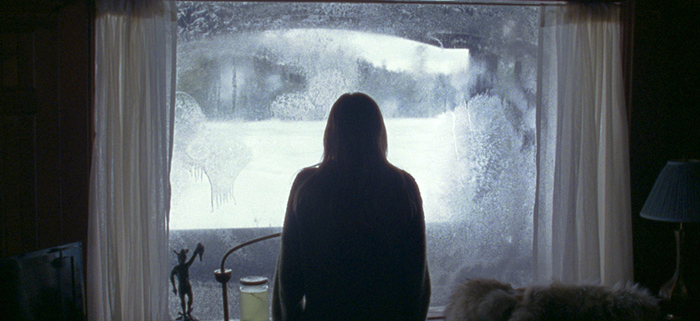
If just the thought of spending several blizzard-bound days trapped in a secluded cabin in the woods with no one but your fiancé’s two rude children is all it takes to send shivers up and down your spine, then The Lodge might be too much for you. Because those bratty kids are just the beginning of the terrors that unfold.

What makes Severin Fiala and Veronica Franz’s latest film special is the horror in The Lodge is devised almost entirely atmospherically; the icy mood mirrors the chilly setting perfectly. Now, there is absolutely nothing wrong with a well executed jump scare—in fact, in many ways jump scares are their own art form—but the nightmare here is brewed organically, sort of. Fiala and Franz confidently take their time to build the tension—every beat methodical—so the gut-punch of a pay-off is earned on its own terms.

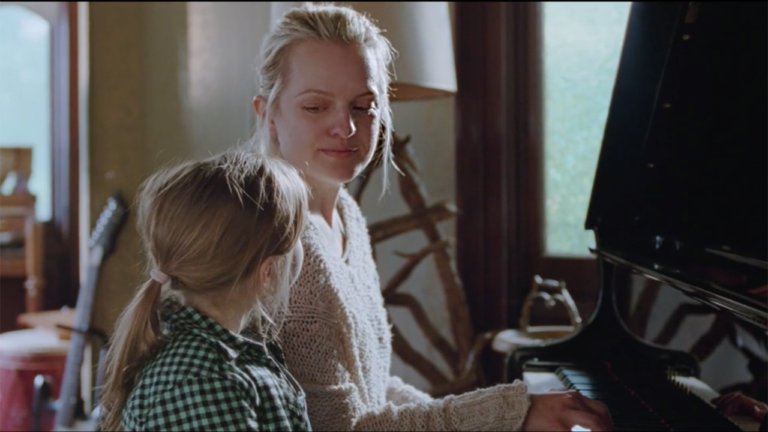
Riley Keough plays Grace, a protagonist that this film waits for a bit to introduce. So when we finally meet Grace, we already have impressions of who we think she is, thanks to Aiden and Mia’s delve into her troubling past. Turns out, their soon-to-be-stepmother is the sole survivor of her father’s cult’s mass suicide. Jaeden Martell and Lia McHugh play the discourteous youngsters who wish to convince their father and the audience early on that Grace is psychotic.

Aiden and Mia’s ire is understandable. Their investigative-writer father, played by Richard Armitage, cheated on their mom with the subject of his latest sensationalistic book, then asked for a divorce in order to be with this disturbed young woman instead the mother of his children. In playing Laura, the rejected wife, Alicia Silverstone is tasked with establishing the feeling of utter unease that this story carries from start to finish. She embodies dread so thoroughly in the opening scenes that there’s no doubt that this will be a painful moviegoing experience. Her ubiquitous unrest looms, like a specter, even when she’s not on screen.

As her children, Martell and McHugh might play the most interesting characters in The Lodge. While Silverstone is the mood incarnate, Martell and McHugh are the themes incarnate. Aiden and Mia spend the whole runtime in mourning for what used to be their idyllic home. So much of the film’s horror stems from idea of the dissolution of family—and the cruel acts that such a schism could drive people to commit. Because Aiden and Mia blame Grace for what has become of their family, and are quite mean to her in turn: they ignore her, refuse her gestures of goodwill, and actively alienate her.

Keough delivers an eerily rendered performance as Grace. She crafts a character who’s easy to sympathize with, even if you too blame her for breaking up this family—although, if you really want to get into it, that’s Richard’s fault actually. Grace, a victim of deep psychological trauma, just wants a normal life with a normal family as she moves on and gets better. But if the horror films of decades past have taught us anything, it’s the fact that getting snowbound in a piously decorated lodging that’s larger than it ought to be—while somehow still inciting an air of claustrophobia—is not good for anyone’s mental health.

To exacerbate matters, with the snowstorm comes a seemingly otherworldly menace. The cabin’s power vanishes. The clocks keep changing. Belongings disappear, including Grace’s medication. Upon being deprived of her pills—on top of Aiden and Mia’s bullying and the abode’s abundance of triggering religious iconography—Grace’s darkest memories buoy and anxieties escalate. By this point in the story, Fiala and Franz have already steeped this film so thoroughly in an almost unbearable tea of disquiet that the approaching terrors feel a long while coming.

Frequent Yorgos Lanthimos collaborator Thimios Bakatakis frames every shot so as to evoke total discomfort. So many angles feel ever so slightly off, to a purposefully distressing effect—a signature technique of Gilbert Taylor’s. Simultaneously, he plays with shades of blue and grey to convey a sense of foreboding, a unsettling coldness that masquerades as serenity. This visually represents how far the directors want us to stay from these characters, because we’re never really supposed to know them or what they’re thinking, not really; it adds to the mystery. Bakatakis also utilizes the full spectrum of light on his painter’s palette from scene to scene: from chiaroscuro keys to emanate a distrustful presence, to dim fills that further elicit the murkiness of the plot, and back again.

Moviegoers keen on plot will likely disapprove of the logic, or lack thereof, within The Lodge. On a surface level, many of the characters’ choices will probably read as unrealistic, or downright silly. The third-act reveals might seem unbelievable, or completely asinine. The resolution’s reluctance to answer all questions may drive some mad. But that’s all perfectly fine. Because, to borrow from Aristotle, plot is not this film’s primary dramatic element. The Lodge is rooted in thought and theme; it’s emblematic. So don’t get too hung up on rationality. Basically, to misquote Margo Channing, “Buckle up, it’s going to be a bumpy ride.”

If a conceptual narrative is not enough, the shortcomings of the script are also saved through the actors. Riley Keough proves once again that she’s a star on the rise—she’ll knock the hell out of you when you least expect it. Jaeden Martell’s performance is deceptively calculated, and one that viewers would probably get more out of on a second watch. Lia McHugh, with her devastating turn as a vexed daughter in mourning, shows why she should be on every casting director’s radar. And Richard Armitage… is very dashing.

The Lodge is not for everyone. It’s not even for every horror enthusiast, as a guileful and sneakily cerebral picture about how our pain can push us to inflict pain upon others, especially those closest to us. Hurt people hurt people, as the adage goes. At the very least, let’s all agree that it’s always nice to add another grim film to the Christmas scary movie canon. Because nothing gets me in the yuletide spirit quite like a moody chiller about a cataclysmal family.

Overall Grade: B

[divider]

Hear our podcast review on Episode 366:

[divider]

Podcast: The Spy Who Loved Me / The Last Thing He Wanted – Extra Film

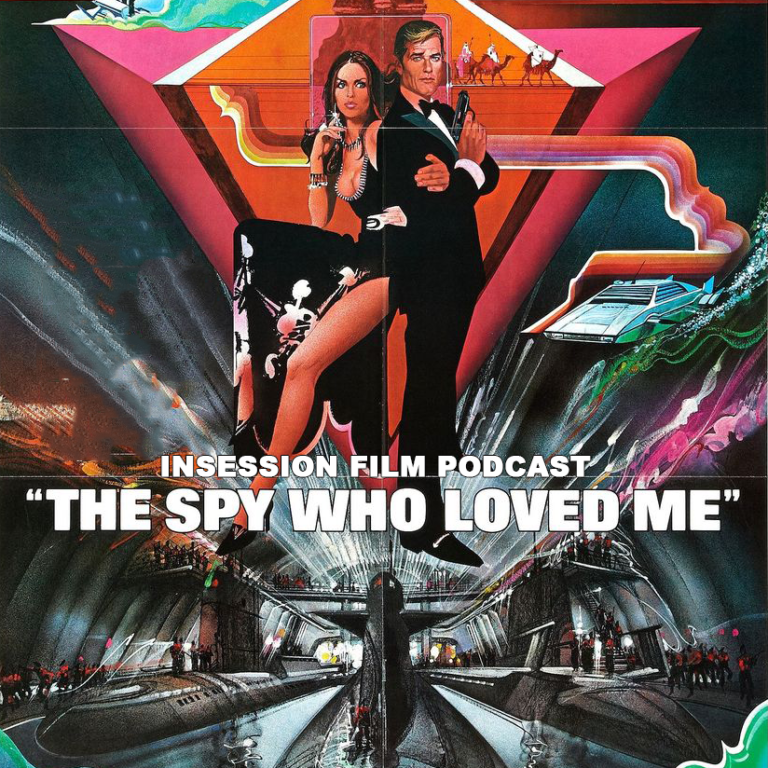
This week on the InSession Film Podcast: Extra Film segment, Ryan and Jay are back to agree with each other on a pair of films. The Bond series continues with The Spy Who Loved Me and in the back half of the episode, they review the Netflix film, The Last Thing He Wanted.

The boy’s transition to the Roger Moore era of James Bond with The Spy Who Loved Me, which is considered to be the best film of his seven outings as 007. While they disagreed last week on George Lazenby’s effort as the famous British spy, they come back together, saying that they Moore might not be for them. With a lackluster script and wooden performance from Moore, the guys grill the supposed best Bond film of the 1970s.

Then Ryan and Jay discussed The Last Thing He Wanted, the latest film from director Dee Rees. Though her last film, Mudbound, received massive critical acclaim, this project has suffered some of the worst reviews of the year so far. Listen and see if the Extra Film guys agree with the negative praise or go against the curve.

Thanks for listening!

– Movie Review: The Spy Who Loved Me (3:49)
Director: Lewis Gilbert
Screenplay: Christopher Wood, Richard Maibaum
Stars: Roger Moore, Barbara Bach, Curd Jürgens, Bernard Lee

– Movie Review: The Last Thing He Wanted (37:17)
Directors: Dee Rees
Screenplay: Dee Rees, Marco Villalobos
Stars: Anne Hathaway, Ben Affleck, Willem Dafoe, Toby Jones

– Music

Nobody Does It Better – Carly Simon
Escape (I Need a Break) – Whodini
The Return of the Eagle – Atli Örvarsson

We try to make this the best movie podcast we possibly can and we hope you enjoy them. Subscribe today on iTunes, Spotify or Stitcher, and please leave us a review on iTunes. You can also find us on Soundcloud, PlayerFM and TuneIn Radio as well. We really appreciate all your support of the InSession Film Podcast.

Subscribe to our Podcasts RSS
Subscribe to our Podcasts on iTunes
Listen on Spotify
Listen on Stitcher
The Spy Who Loved Me / The Last Thing He Wanted – Extra Film

[divider]

Mobile App

To hear this Extra Film episode and everything else we do, download our apps on the Amazon Market for Android and the Podcast Box app on IOS devices. The mobile app covers all of our main shows, bonus podcast’s and everything else relating to the InSession Film Podcast. Thanks for your wonderful support and for listening to our show. It means the world to us!

Featured: New Criterion Releases – March 2020

For the third month of the year, with a full thirty-one days, Criterion has out four new releases and two re-editions. Spike Lee has a unique take on the infamous minstrel show, a Soviet-produced classic, a radical documentary, a film noir behind the color, a Golden Age musical on the river, and Babs. Yes, she is finally respected. A few are recognized immediately while some may be unknown classics finally getting exposure in the Collection.

Show Boat (1936)

Based on Edna Farber’s novel, it was adapted as a Broadway musical by lyricist Oscar Hammerstein and his first collaborator, Jerome Kern. The first film version in 1929 struggled from being silent originally to adding sound and music to it. This version planned out as a full musical used most of the original Broadway cast and was directed by James Whale, who did Frankenstein and whose life was portrayed in Gods And Monsters. It is about a traveling stage production who cruises through the Mississippi River in a 40-year span, discussion matters of race in the Jim Crow South and forbidden love. Irene Dunne (The Awful Truth) and Paul Robeson, one of the most celebrated artists of the 20th century, star in this undervalued 30s musical; Robeson and his baritone voice can be heard with the clip above.

Leave Her To Heaven (1945)

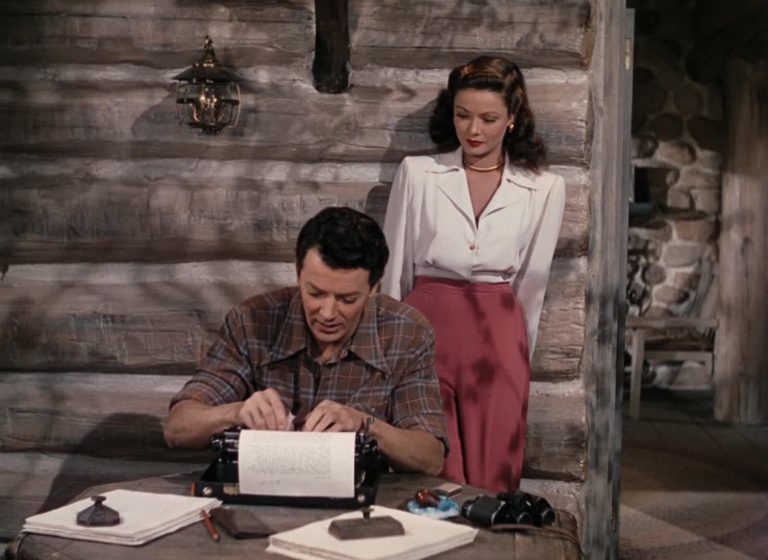
The Technicolor noir features Gene Tierney as a socialite who seduces a novelist (Cornel Wilde) into marriage before turning against him with consuming jealousy over his fame as well as his family who doesn’t accept her. It had to be in color to show the absolute contrast of what wonderful life was and yet the sinister under the lake behind Tierney’s sunglasses. For 20th Century Fox, to release this noir masterpiece on Christmas Day would make it the studio’s highest-grossing film of the decade and the character of Ellen Harland amongst the most fearful femme Fatales ever created.

The Cranes Are Flying (1957)

Winner of the Palme d’Or, Mikhail Kalatozov directs a WWII tale about love separated and envied when a Soviet soldier has to separate from his love, Veronika, who has to wait for any news about him when listed as “missing in action.” Meanwhile, Veronika is attacked and compelled to marry another person, feeling ashamed about what happened. It is heartbreaking as it is the Soviet way of their patriotism, real in their pain of being under siege and real in the personal trauma of waiting for their loved one to come home if he will come home.

Salesman (1969)

Albert and David Maysles, along with Charlotte Zwerin, produced an interesting look at the door-to-door workings of four people who sell expensive Bibles in Florida and Massachusetts and meet up in Chicago for a critical sales meeting. On the surface, it sounds strange to follow an extinct profession, but it becomes very much a human story when it circles around one person, in dire need to make ends meet. It is the camera and its subject gong around attempting to find salvation both religiously and economically as the American Dream is the one also closing the door in his face The brothers and Zwerin would go on to document Gimme Shelter and the Maysles themselves would dive into the dysfunctional lives of the mother/daughter both named Edith Beale in Grey Gardens.

The Prince Of Tides (1991)

Babs is finally in the Collection! While Yentl was showing for a time on the Criterion Channel, her sophomore directing effort about a man who has to face his own trauma while meeting a psychiatrist who can help the same pain afflicted on his sister. It is Nick Nolte’s greatest performance. The emotions melt off his face and he finds himself in the dark of a fateful night while also finding solace and a reason to celebrate life again. For Streisand, it was another showcase of her talent to direct a movie, yet after The Mirror Has Two Faces, she has not given a chance to direct a feature.

Bamboozled (2000)

Spike Lee. Mocking racism. In the modern-day. This was a script only he could have come up with. A minstrel show in the year 2000, where a TV channel employee (Damon Wayans) develops it and use traditional racist jokes, black actors in blackface, and cartoons with stereotypes of African-Americans. What?!?!? It wasn’t a hit critically or commercially like BlacKKKlansman, but in time it has become a cult classic, commenting on how even in today’s media, people still put on a caricature of the Black community that is still offensive that we still haven’t learned from.

Follow me on Twitter: @brian_cine (Cine-A-Man)
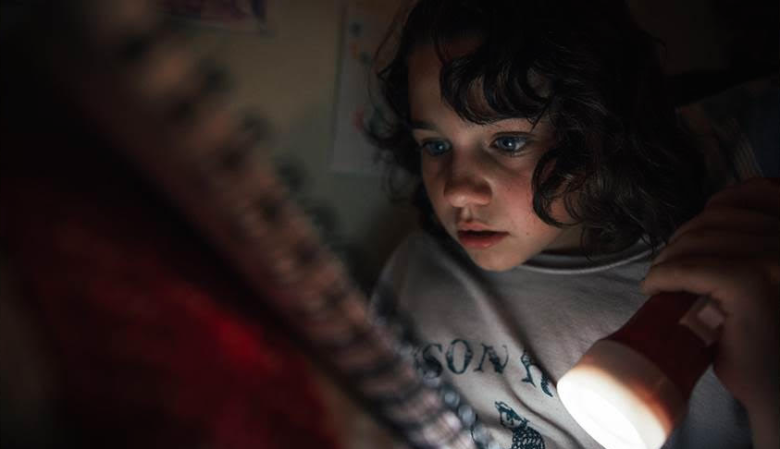
Poll: What is Elisabeth Moss’ best performance?

Elisabeth Moss is a national treasure. She may not have the awards or popularity as other actresses, but she’s as great as anyone working today. And if you ask us, she not only gave the best performance of 2019, she gave an all-decade performance in Her Smell. It’s a performance that we’ll remember for a long time to come, but she’s great in everything she does. Perhaps she’s more well-known, broadly speaking, for her TV roles in The Handmaid Tale and Mad Men, however her film work is equally as captivating. Not only Her Smell, but Queen of Earth, The One I Love, Us, The Square and other artistic endeavors that are fascinating. This weekend we’ll get to see her unravel in the new Invisible Man remake, and according to those who have seen it already, not much has changed in that regard. So, for our poll this week it only made sense to make it about Moss. However, we are not including her TV work since we mostly focus on film.

With that said, cast your vote and use the write-in option if your pick isn’t listed in the options below!


Movie Review: ‘Sonic the Hedgehog’ is an entertaining children’s film


Director: Jeff Fowler
Writers: Patrick Casey, Josh Miller
Stars: Ben Schwartz, James Marsden, Jim Carrey

Synopsis: After discovering a small, blue, fast hedgehog, a small-town police officer must help it defeat an evil genius who wants to do experiments on it.

[/info]

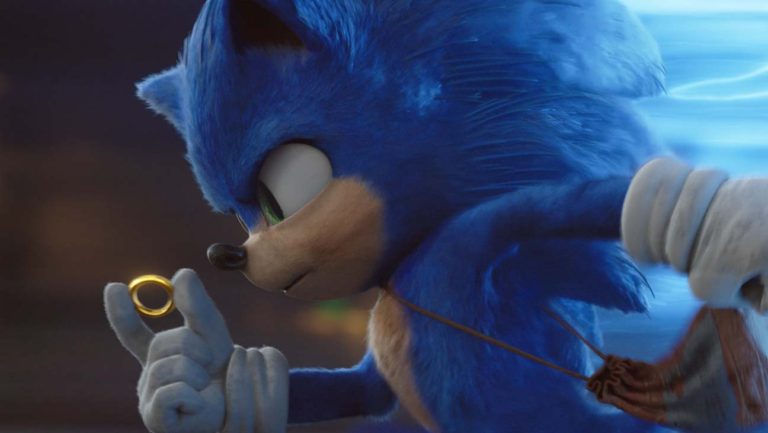
Movies based on video games have been getting our hopes up and crushing them since the early 1990s. The latest video game character to grace the big screen is Sega’s Sonic the Hedgehog. This film comes with a lot of baggage due to Sonic’s less than desirable character design released around April of 2019. It caused outrage on social media and the barrage of negative reactions lead to a complete VFX overhaul and delay of the film. Luckily the new design seems to be a hit and the film wasn’t as bad as expected.

Sonic the Hedgehog tells the story of Sonic (Ben Schwartz)- a blue space hedgehog with superspeed hiding out on Earth. After accidentally causing a power outage affecting the entire town, Sonic attracts the attention of insane evil genius Dr. Ivo Robonik (Jim Carrey); a man who loves his robots more than people and is hellbent on catching whatever new creature caused the power outage. Sonic teams up with local cop Tom (James Marsden) to run from the robot wielding madman, find his rings, and escape to a safer world.

This movie was fast-paced and lots of fun from the get-go. It’s filled with nods to the original games and tons of pop culture references. The downside of that is anyone who did not grow up playing Sega or is not a 6 to 12-year-old boy may miss out on the humor. But even if you are forced to watch this with a child or Sega loving friend, there is something for everyone in this film. The action sequences are great, the VFX team did an amazing job redesigning Sonic and recreating his moves from the games for the big screen. It wouldn’t surprise me if Sonic the Hedgehog ended up on the Visual Effects Oscar shortlist at the end of the year. The voice actor, Ben Schwartz, also did a great job with Sonic. Definitely brought the same attitude and humor from the games. Jim Carrey embraced his ridiculousness for his role as Robonik, sometimes going a bit overboard- but if you can’t go overboard as a video game bad guy, when can you? If they do decide to do a sequel, I would love to see Carrey again. The only problem I really had with the film was the mass quantity of product placement. There were so many brand names visible or called out by characters that it started to get distracting and become annoying. I understand films need money, but this was overkill. The rest of the film is pretty mediocre; it’s entertaining, but nothing spectacular. The story is simple, the supporting cast is fine, but it’s a movie obviously marketed towards preteen boys so that’s okay.

Is Sonic the Hedgehog the best video game movie ever? No. Is it better than a good number of its predecessors? Yes, it is. If you grew up with Sega or have kids, then go give Sonic a shot on the big screen. The effects alone are worth the price of a ticket. It didn’t work all that well for me, I was a Nintendo kid and am way outside this movie’s target audience. Overall, it’s an enjoyable flick that exceeded expectations and whose VFX artists deserve any and all accolades coming to them. There is also a mid-credits scene so make sure to stick around for that.

Overall Grade: C+

[divider]

Podcast: The Invisible Man (1933) / The Lodge – Episode 366

This week’s episode is brought to you by Audible. Sign up today and get a free audiobook!

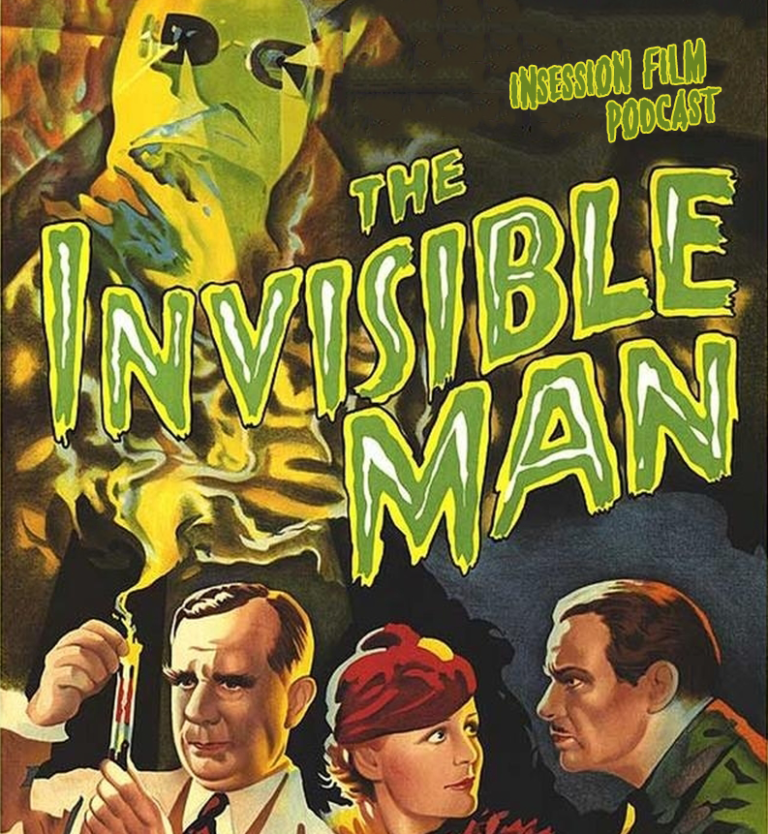
This week on the InSession Film Podcast, we discuss the 1933 James Whale classic monster movie The Invisible Man and also the new horror film The Lodge! JD also offers up a few thoughts on the Netflix rom-com To All the Boys: P.S. I Still Love You!

This was a really fun show. Getting to revisit the original Invisible Man is always a treat and with the remake coming up, it felt appropriate to dive more into why we are fans of the film. And as some of you may know, Brendan and JD don’t always disagree, but The Lodge did offer up some interesting debate that was pretty refreshing.

On that note, check out this week’s show and let us know what you think in the comment section. Thanks for listening and for supporting the InSession Film Podcast!

– Movie Review: The Invisible Man (4:53)
Director: James Whale
Writer: H.G. Wells (novel), R.C. Sherriff (screenplay)
Stars: Claude Rains, Gloria Stuart, William Harrigan

– Notes / To All the Boys: P.S. I Still Love You (37:07)
As noted above, JD was able to catch up with the Netflix rom-com sequel To All the Boys: P.S. I Still Love You, the sequel to the very charming film from a few years ago To All the Boys I’ve Loved Before and decided to give his thoughts on the film. It wasn’t planned, but in a moment of catharsis, he also offered up his review of Roland Emmerich’s war film Midway.

[divider]

RELATED: Listen to Episode 360 of the InSession Film Podcast where we discussed our Top 10 Movies of 2019!

[divider]

– Movie Review: The Lodge (59:46)
Director: Severin Fiala, Veronika Franz
Writer: Severin Fiala, Veronika Franz, Sergio Casci
Stars: Richard Armitage, Alicia Silverstone, Riley Keough, Jaeden Martell

Show Sponsor: First Time Watchers Podcast

– Music

The Invisible Man – Heinz Roemheld
Then He Kissed Me – The Crystals
The Lodge – Danny Bensi
The Return of the Eagle – Atli Örvarsson

Subscribe to our Podcasts RSS
Subscribe to our Podcasts on iTunes
Listen on Spotify
Listen on Stitcher
InSession Film Podcast – Episode 366

[divider]

Next week on the show:

Main Review: The Invisible Man (2020)
Top 3: TBD

[divider]

Help Support The InSession Film Podcast

If you want to help support us, there are several ways you can help us and we’d absolutely appreciate it. Every penny goes directly back into supporting the show and we are truly honored and grateful. Thanks for your support and for listening to the InSession Film Podcast!

VISIT OUR DONATE PAGE HERE

Podcast: On Her Majesty’s Secret Service / Buffaloed – Extra Film

This week on the InSession Film Podcast: Extra Film segment, Jay and Ryan vehemently disagree on a pair of films. The Bond series continues with On Her Majesty’s Secret Service and the VOD film, Buffaloed, gets a spotlight shown on it as Dumpuary finally inches to a close.

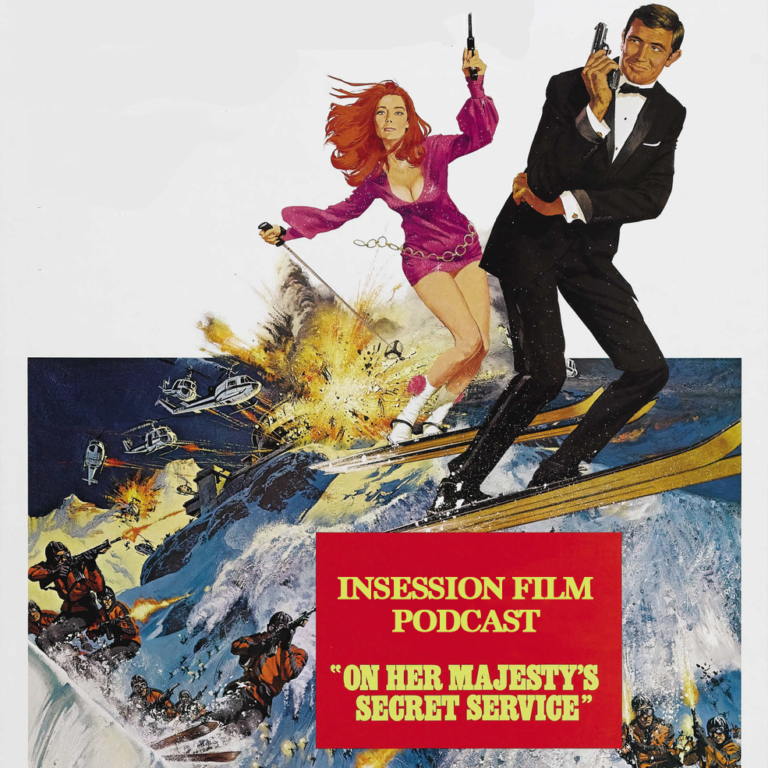
On Her Majesty’s Secret Service is, perhaps, the most divisive of all the Bond films, so it makes sense that the guys have very different opinions on the film. It is the only film that features George Lazenby as James Bond and the first film to really explore the cost of violence in the world of 007. The more artful version of the universe works for some, but many fans can’t get over Lazenby’s take on the character and the longer, more patient movie. The disagreement makes for a very entertaining discussion!

Then Jay and Ryan discuss Buffaloed, a Zoey Deutch vehicle about the crooked world of debt collection. It has been a bit of a critical hidden gem early in the year, getting praise for its style and performances, but, once again, opinions are split on InSession Film. Listen to find out who is on each side!

Thanks for listening!

– Movie Review: On Her Majesty’s Secret Service (3:03)
Director: Peter R. Hunt
Screenplay: Richard Maibaum
Stars: George Lazenby, Diana Rigg, Telly Savalas, Bernard Lee

– Movie Review: Buffaloed (47:59)
Directors: Tanya Wexler
Screenplay: Brian Sacca
Stars: Zoey Deutch, Judy Greer, Jermaine Fowler, Jai Courtney

– Music 

On Her Majesty’s Secret Service – John Barry
How You Feel – Wargirl
The Return of the Eagle – Atli Örvarsson

We try to make this the best movie podcast we possibly can and we hope you enjoy them. Subscribe today on iTunes, Spotify or Stitcher, and please leave us a review on iTunes. You can also find us on Soundcloud, PlayerFM and TuneIn Radio as well. We really appreciate all your support of the InSession Film Podcast.

Subscribe to our Podcasts RSS
Subscribe to our Podcasts on iTunes
Listen on Spotify
Listen on Stitcher
On Her Majesty’s Secret Service / Buffaloed – Extra Film

[divider]

Mobile App

To hear this Extra Film episode and everything else we do, download our apps on the Amazon Market for Android and the Podcast Box app on IOS devices. The mobile app covers all of our main shows, bonus podcast’s and everything else relating to the InSession Film Podcast. Thanks for your wonderful support and for listening to our show. It means the world to us!

Featured: The Shared Universe Of Universal’s Classic Monsters

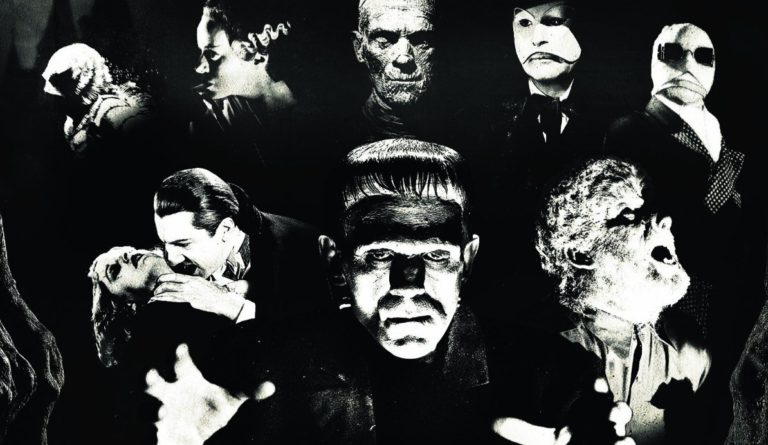
With the modern retelling of H.G. Wells’ The Invisible Man coming out, it’s a good time to recognize the early success of Universal Studios’ of creating the first sharted world in Hollywood. Before Marvel and DC Films, there was a string of horror, sci-fi, and thriller pictures from 1923’s The Hunchback Of Notre Dame to 1956’s The Creature Walks Among Us. It wasn’t planned, but the standard for the genres was inserted that other studios would have to follow up on and established the careers of Boris Karloff, Lon Chaney Sr. and Jr., Bela Lugosi, Claude Rains, Edward Van Sloan, and Colin Clive.

Silent Starts

After The Hunchback Of Notre Dame, Universal’s second and final major silent horror film was 1925’s The Phantom Of The Opera. Both starred Lon Chaney Sr. in the main roles as Quasimodo and The Phantom with the full support of Universal head Carl Laemmle. Laemmle met Phantom author Gaston Leroux and bought the rights to his novel almost instantly and the young, charismatic Irving Thalberg pitched Hunchback to Laemmle as part horror, part love story, and part spectacle with extravagant production design. Thanks to these two films, Chaney Sr. became a top-billing star. Phantom was more noted because of the famous reveal of The Phantom’s horrid face (this is not musical by any means) and the massive construction of Soundstage 28 to purposely build the Paris Opera House. Yes, young people, they had to build these massive structures.

Dark Thirties

In the midst of the Great Depression, Universal came out with some of their peak works that remain on the top of iconic horror characters in cinema. In 1931, both Dracula and Frankenstein were released. Laemmle’s son, Carl Jr., had taken over as head of the studio, Garrett Fort wrote both scripts, and Frankenstein introduced us to director James Whale, who later be immortalized in 1998’s Gods And Monsters. With Dracula, Lugosi got the role based on his success with the play version years earlier, but the concern was for a full-length supernatural movie an audience had never seen, as well as Carl Jr’s. lavish spending (which got him and his father thrown out of Universal years later). The massive success led to several spin-offs including Dracula’s Daughter and Son of Dracula and made Bram Stoker’s creation the quintessential vampire for later films. On a side note, a Spanish version was made simultaneously on the same sets with Carlos Villarías in the titular role.

With Frankenstein, based on Mary Shelley’s novel and Peggy Webling’s play, the mad scientist story came alive thanks to Colin Clive playing the titular character who digs up dead bodies with his hunchback assistant Fritz to bring back alive a human using electrical powers. Of course, it works, leading to the famous line by Frankenstein, “It’s alive!” While it was a massive success, the scene involving Frankenstein’s monster and the little girl got the film cut or banned outright in some states, as well as another line by the mad doctor, “In the name of God? Now I know what it feels like to BE God!” Sounds silly, but felt very blasphemous to many. But what James Whale does in crafting such a beautiful, yet sinister picture is made with such care and does not feel totally grotesque. Whale would direct the sequel Bride of Frankenstein, but had no part in Son of Frankenstein nor in Ghost of Frankenstein. 

Also released this decade was the original The Invisible Man, also directed by Whale and starring Claude Rains, who would later star in the sound remake of Phantom of the Opera, and Gloria Stuart, who would gain her biggest role more than 60 years later in Titanic. Before Brendan Fraser and Tom Cruise, The Mummy came out in 1932 with Boris Karloff playing the Egyptian high priest Imhotep wrapped like a mummy who calls himself Ardath Bey when free and endangering others. The discovery of King Tutankhamun’s tomb and the supposed curse of those who disturbed it inspired the idea and would be followed with four sequels in the 1940s and get a comedy injection in Abbott And Costello Meet The Mummy in 1955.

The Sequel Era (1940 – 50s)

The last noted 1930s horror film is Werewolf of London, starring Henry Hull as a wealthy English botanist who is bitten by a werewolf while in Tibet that later changes him slowly when he returns back home. In 1941, a separate werewolf picture was made that added another layer to the monster universe, The Wolf Man. Lon Cheney Jr. plays a man who returns home following the death of his brother and seeks to reconnect with his father, played by Claude Rains. When the man saves a young woman from a wolf attack and is bitten, the legend consistently recited in the film turns on him. The next slate of films were sequels and crossovers, such as 1943’s Frankenstein Meets The Wolf Man, 1945’s House of Dracula, which includes Frankenstein’s monster and the Wolf Man, and four Bud Abbott and Louis Costello films where the comics meet up with each of the horror figures. Spoiler alert: they still couldn’t answer to who’s on first.

The last original story for the monster universe was 1954’s Creature From The Black Lagoon, a black-and-white 3D feature about a geology expedition gone awry when the creature, the “Gill-man,” comes out to attack the humans who have invaded his habitat. 3D may have been an early fad, but it played a major role in the success of the film. The following year, it would have its sequel, Revenge Of The Creature, and the final of the trilogy which is considered the last of Universal’s Classic Monsters series, 1956’s The Creature Walks Among Us. Of note, Henry Mancini (The Pink Panther) would score all three films and would be a major influence on Guillermo del Toro’s The Shape of Water.

Universal would remake a few of these classics with The Mummy trilogy (1999-2008) and Van Helsing (2004), and now is in the middle of the reboot era. The Tom Cruise-Russell Crowe version of The Mummy wasn’t liked, we know about Elizabeth Moss’ fear of her deceased, abusive ex in the reimaging of The Invisible Man, and on its slate are the remakes of Frankenstein, The Invisible Woman, and a spinoff of Dracula called Renfield directed by Dexter Fletcher. Instead of the comic book trend, Universal is going into their docket of horror legends and, considering the massive success of Jordan Peele’s Get Out and Us, people do want great horror films that are not slasher flicks. The next decade could be a bankroll of hits for Universal.

P.S. – Right as I finished writing this, I just came upon a 2+ hour documentary narrated by Kenneth Branaugh about the stories behind Dracula and Frankenstein at Universal. So, if you see my writing a shite, just watch this.

https://www.youtube.com/watch?v=a-x55olTCDk

Follow me on Twitter: @brian_cine (Cine-A-Man)