

Home Blog Page 212

Op-ed: The Man Disgraced From Hollywood With The Famous Surname

Fox is a powerhouse name. There’s Fox News, 20th Century Fox, Fox Broadcasting Company, and Fox Sports. The news is owned by the Murdochs and the entertainment was just bought up by Disney. It’s a name synonymous with Warner, Meyer, Weinstein (for better or for extremely worse), and Zanuck. But while the profiles of the men behind the name are highly publicized, the man who established the Fox brand never received the fame and credit for it and for good reason.

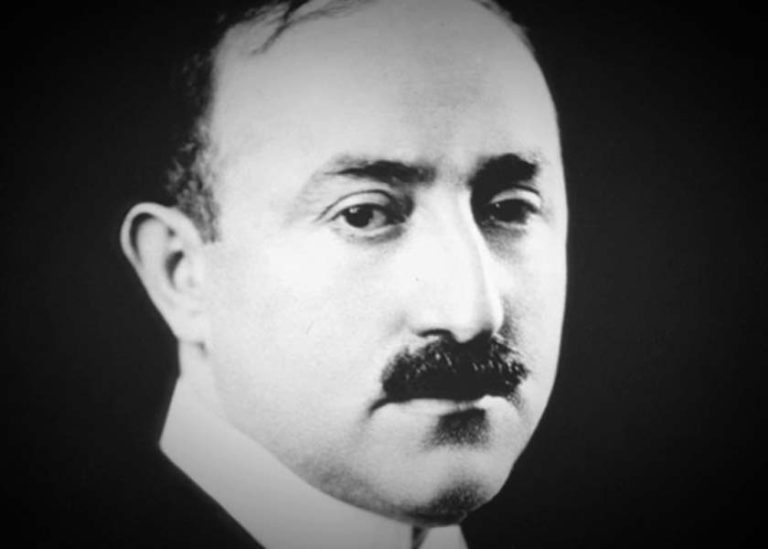
William Fox

Born Vilmos Fuchs on January 1, 1879, the Hungarian-born Fox came with his family to America at just nine months and settled in New York City. Early in his young life, he sought an entrepreneurial career, getting involved in entertainment and purchasing small theatres to make a small chain of them. Moving to New Jersey with his wife and children, Fox bought movies from various studios to show in his theatres exclusively, now growing in size of occupancy besides the number of theatres. He then founded the Greater New York Film Rental Company as an independent distributor and successfully sued companies who attempted to form monopolies on distribution.

Later on, Fox made a deal with Balboa Studios to distribute their movies exclusively, which featured Buster Keaton and Fatty Arbuckle in their early comedies. However, realizing he couldn’t be dependent on just buying rights to films, Fox shifted his newly-renamed Fox Film Corporation to be a studio, setting up shop in Fort Lee, New Jersey, and Staten Island. Not long after, he joined other studios in moving West to Hollywood to where movies were made more cheaply and with better weather. With his executive assistant, Sol Wurtzel, Fox Film was permanently established in California by 1917.

The Small Studio

Compared to the early powerful studios, Fox didn’t make big splashes at all, partly because they never signed major actors to contracts. Still, they produced a steady flow of small, but profitable films. In the early 20s, they found their niche in the Western genre, signing on early cowboy star Tom Mix, Will Rogers, and assigning an unknown director named John Ford to multiple Westen pictures. As sound was still being made to mix with movies, Fox made a bigger studio and established Fox Movietone based on the Movietone sound system created by Theodore Case. An earlier version of Fox News was the newsreels bringing in stories from all over the country and the world, and after being renamed Fox Movietone News, it would continue on until 1963.

One of its first biggest hits critically and commercially was the romantic drama Sunrise: A Song of Two Humans. William Fox hired German expressionist director F.W. Murnau to come to Hollywood and make his own expressionist film in the Hollywood system. Starring George O’Brien and Janet Gaynor, the film would become among the first to used sound effects with the Movietone system while on the surface it would still be a silent picture. At the first annual Academy Awards, Sunrise would win Best Cinematography, Best Actress for Gaynor (alongside her work in 7th Heaven and Street Angel), and Best Unique and Artistic Picture, the only time the Academy gave such an award. It was considered a tie with Outstanding Picture winner Wings, but the latter award would be renamed Best Picture, thus making it a higher honor.

Takeover And Banishment

Still riding the high from the success of Sunrise, Fox sought to expand his empire by buying the stocks of the recently-deceased Marcus Loew, former head of MGM. However, MGM bosses Louis B. Mayer and Irving Thalberg had no such stocks and were furious to see another studio head tamper with another studio as they figured out Fox was trying to merge the two studios. Mayer convinced the Justice Department to investigate Fox for antitrust violations to hold up the merger. Two major events would bankrupt Fox after. First, a serious car accident which took him months to recover. Second, while still recuperating, Wall Street crashed on October 29, 1929, virtually making Fox broke. The merger never happened and, in 1930, a hostile takeover stripped the man from his own namesake company, and five years later, Fox Films would merge with Twentieth Century Pictures to become Twentieth Century Fox.
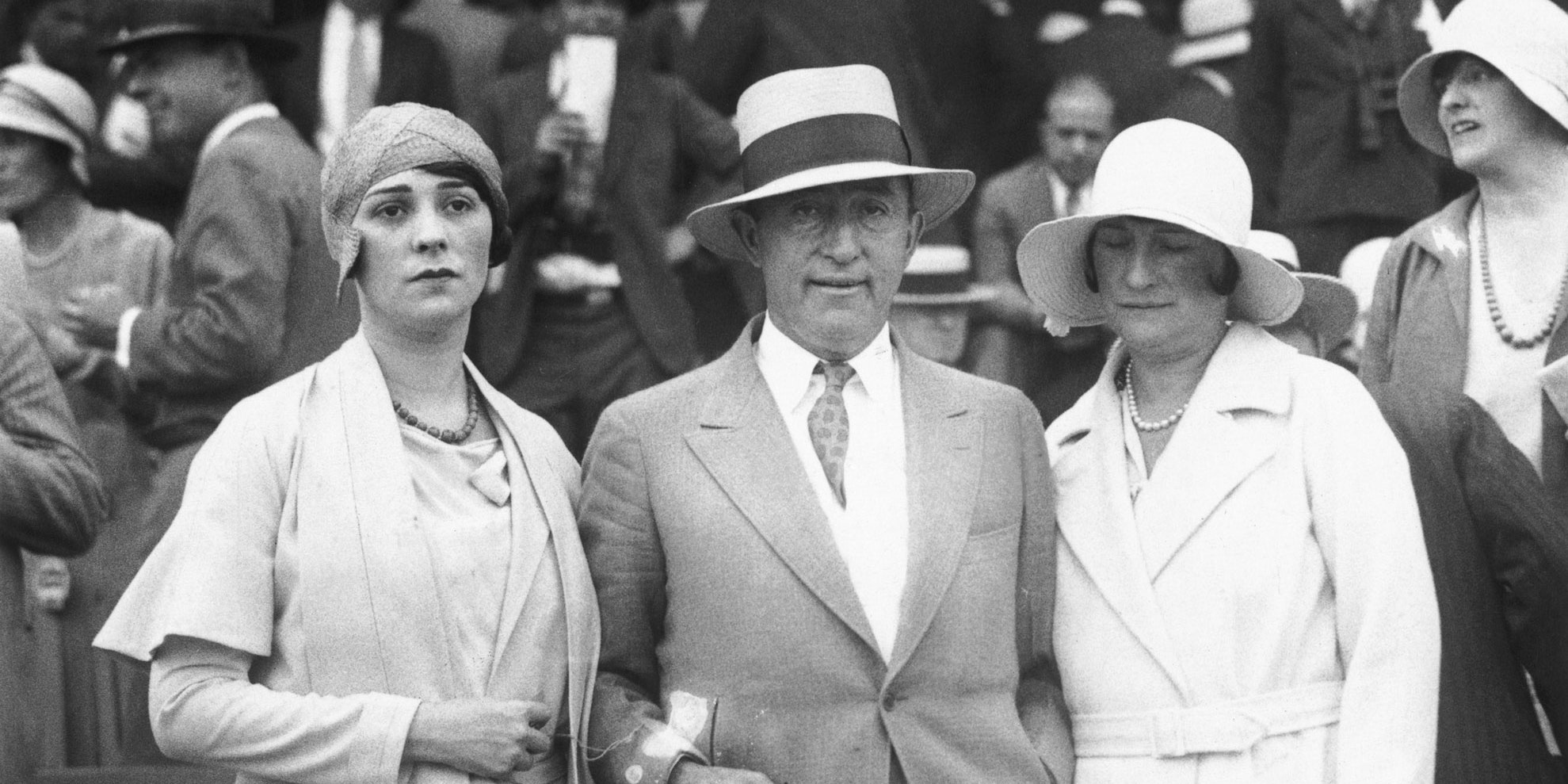
With no connection anymore to the business, Fox fought the government and bankruptcy hearings simultaneously. In 1933, he co-authored a book with Upton Sinclair where he talked about his life and his strong belief that Wall Street conspired against him when he bought the stocks to MGM. In 1936, still in legal limbo, Fox committed perjury during a bankruptcy hearing and tried to bribe the judge in the case, resulting in being charged with conspiracy to obstruct justice and defraud the United States. In 1943, Fox was sentenced to over five months in prison, putting the nail in the coffin in a semi-lustrious career. Dying in New York City in 1952, his death went without a whimper, unnoticed by Hollywood, and without anyone of importance attending his funeral.

Legacy Of Nothingness

https://www.youtube.com/watch?v=S9VL_WyZjrQ

William Fox never fathomed his name would carry over to such power a century later. And yet, he is forgotten because of the lack of success and his quick downfall during his reign. 20th Century Fox was built under Darryl F. Zanuck as the man whose name is part of the company sat bitter, alone, broke, and then in jail. It’s very sad because he was the victim of studio politics and no one came to help him. John Ford went on to make some of the greatest Westerns. His right-hand man, Sol Wurtzel, would stay on and have major success as a producer, completely forgetting his old boss. And the big-name actors Fox never could sign followed Zanuck to the reformed studio. Probably the best symbol of Fox’s demise was the massive fire in 1937 inside a film storage building that destroyed 75% of Fox’s feature films from before 1930. Like a lost film, you’ve heard of William Fox now and what he did, but the extent of his work has never really been known – or even sought out.

Follow me on Twitter: @brian_cine (Cine-A-Man)
Movie Review: ‘Black Box’ is a Twisty Welcome from the Blumhouse


Director: Emmanuel Osei-Kuffour
Writers: Wade Allain-Marcus, Stephen Herman and Emmanuel Osei-Kuffour
Stars: Mamoudou Athie, Amanda Christie, Phylicia Rashad, Tosin Morohunfola, Charmaine Bingwa, Troy James

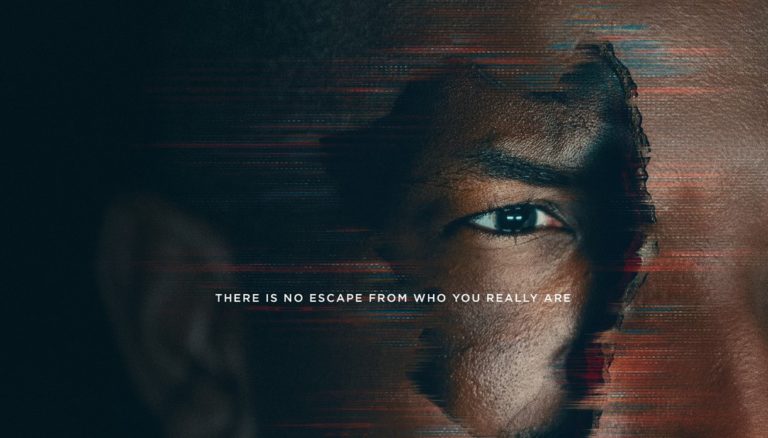
Synopsis: After losing his wife and his memory in a car accident, a single father undergoes an agonizing experimental treatment that causes him to question who he really is.

[/info]

Memories are murderous. Or they only do when accessed via the brain-powered Oculus Rift named Black Box, which is also the name of one of four horror-tinged stories in Amazon Prime Video’s Welcome to the Blumhouse. Tuesday will see the film premiering alongside The Lie — then next week it’s Evil Eye with Nocturne — and whether you’re a “first come, first serve” watcher or a “now that you all have gathered” one, it’s wise to begin the ride with this. Anthologies always benefit when the starting entry is strong, and that is what Black Box is in this case.

Press photographer Nolan (Mamoudou Athie) hasn’t fully recovered from a car accident that killed his wife long ago, oftentimes his mind would prompt him to stare into space or forget things altogether. Fortunately, this hardship is somewhat alleviated because Nolan’s daughter Ava (Amanda Christie) is consistent and charmingly persuasive in helping him relearning parenting duties and professional skills. To return to form all the way, though, Nolan must agree to commit to the titular experimental treatment designed by Dr. Brooks (Phylicia Rashad) — sit down, EEG cap on, don a VR headset-like device, relive key life moments, and rinse and repeat until full recovery. As you can probably tell, Nolan will have more work to do than the usual patient as he claims that, on certain occasions, he is living someone else’s memories and that he would meet the menacing, crunchy Backwards Man (contortionist Troy James, last year fueling posture-related nightmares being the Jangly Man in Scary Stories to Tell in the Dark).

Out of the four films, Black Box can claim itself as the most inventive, or at the least the one that flirts with invention. Did writers Wade Allain-Marcus, Stephen Herman and Emmanuel Osei-Kuffour (who also directs) watch 2014’s Transcendence and think that they could aim where it missed? Or did they want to see what blending the medical elements in Upgrade and Get Out will bring to the table? A different reason entirely? Whatever the answer may be, they have achieved success in creating a story that visualizes one’s processing of trauma and has the ability to engage. Even if the stronger-to-strongest beats of drama, investigation, and horror can’t meet or exceed their full impact — Osei-Kuffour would ask editor Glenn Garland to cut away when not doing so would have been more ideal — Black Box stays enticing because it’s a puzzle. Only until the reveal when you’re about two-thirds of the way through, but the change applies to how you’d solve the film and not how you’d see it as. If you are to pause the solving, you may feel a burning, tugging sensation to not leave the picture incomplete.

Athie and Rashad also intensify this. Instead of having another frustratingly early exit like in Underwater, released eons ago in January, the actor gets to lead here and proves to be a gripping guide for us. Yes, even when Athie seems more comfortable portraying a Nolan who can’t be there for life than a Nolan who’s trying to uncover a dark truth. The veteran Houstonian actress, on the other hand, is sure-footed throughout, always fusing mystique into her doctor (with a semi-God complex) character — mainly through controlled diction. Her performance, by extension, gives you the willingness to sink deeper into the Black Box and trust in her guidance however ominous she can get. And, of course, just for so long before we find out why the characters are right to prefer their pasts all stowed away.

Overall Grade: B

[divider]

Movie Review: ‘Evil Eye’ Sees its Core Bruised by Weak Craft


Directors: Elan Dassani, Rajeev Dassani
Writer: Madhuri Shekar (also based on the Audible book by)
Stars: Sunita Mani, Sarita Choudhury, Bernard White, Omar Maskati

Synopsis: A superstitious mother is convinced that her daughter’s new boyfriend is the reincarnation of a man who tried to kill her 30 years ago.

[/info]

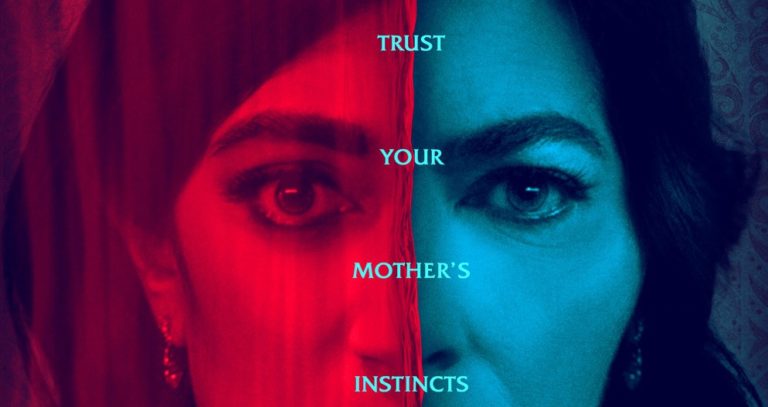
When it comes to relationships, Asian mothers tend to have more sway than the ever-evolving algorithms of dating apps, the guys from the Adjustment Team and maybe kismet itself. Pallavi (Sunita Mani) knows this, and not even the miles between her and mom Usha (Sarita Choudhury) — or New Orleans, U.S. and Delhi, India — are too many for romantic advice. From Pallavi’s many sighs and blank affirmations, it’s safe to assume that she has heard them all. But since she is the lead of Evil Eye, one of four tales of Welcome to the Blumhouse, maybe the time for her to really listen is nigh.

Like the bagua mirror often seen in Chinese and Vietnamese households, the evil eye is a charm that, sinister name aside, brings protection to those who possess it (and with its gaze curses folks intending to harm them). That much mystical context, combined with the plot being Usha fearing that her abusive boyfriend has been reborn into Pallavi’s new, dashing match Sandeep (Omar Maskati) to cause greater misery, Evil Eye seems to be eyeing for the title of episode with the most pronounced supernatural element. Turns out, it’s not. For better and worse.

The absence of paranormal imagery speaks to the trust directors Elan and Rajeev Dassani have placed in the story, based on an Audible book from Madhuri Shekar (who also writes the script) and co-produced by Priyanka Chopra Jonas, particularly the gray area where older generations’ concerns become the younger ones’ cages. Even without a reincarnated abusive man, there is plenty of danger and fear lurking beneath the drama when teachings framed as experience go unheeded. When the needs of mine outweigh the needs of more. When there is no way of knowing whether decisions made with more individualism than collectivism, what you’ve been growing up with, in mind lead to progress or peril. Between the child or children living abroad and the parent or parents back home, one party can’t help but think that the other is “casting” an evil eye on every life choice made. Much of this strong subtext shows up in the daughter-mom long-distance calls in Evil Eye, and in all of them Mani and Choudhury — especially Choudhury — always exhibit the right emotional emphases.

But to see that will require the viewer to overlook the diminishing craftsmanship. That aforementioned trust in the story? The Dassanis can’t quite translate it into compelling visuals, especially for the phone calls where it’s simply a cut to person A speaking and then person B. Only one receives a special, and smart, composition, but the focus by this point will be less on the meaningful things said and more on why plenty of the ones before didn’t receive the same stylistic polish. How Jaume Collet-Serra does it in Non-Stop or The Shallows can be showy, though the distance — literal and proverbial — between the speakers is heightened and the film’s flow stays uninterrupted. 

Moreover, if the evil eye is as powerful as the characters claim to be, just a pinch of supernatural or supernatural-adjacent imagery will not hurt — especially when more horror films could use aesthetics as colorful as what production designer Ryan Martin Dwyer has provided here. That pinch will also render Sandeep a better threat; as much as Maskati tries to moderate his tone or adjust his gaze, the filmmaking doesn’t support his performance, and as a result Sandeep’s literally revived villainy is far from a guessing game. It would have added more work to the brain, which is deep into trying to answer the question “As a mother, does Usha really know best?” It would have made Evil Eye’s blinking throughout 90 minutes a bit livelier.

Overall Grade: C+

[divider]

Chasing the Gold: Best Original Score Analysis (2021 Oscars)

The category of Best Original Score is one of the favorites of Oscar night, with the category often home to iconic music that helps elevate a film from great to legendary. Scores are one of the most appreciated aspects of any film and this category aims to reward the standout, often impossible to choose.

This year is no exception and there are plenty of legendary composers whose pieces are waiting to be heard in this unprecedented year. This year feels primed to be a mix of first-time nominees and acclaimed previous nominees and winners, culminating in what should be an exciting and unpredictable race. Here are the predicted nominees:

Mank

Trent Reznor and Atticus Ross are responsible for one of the greatest scores of the last two decades, with The Social Network having won the pair their first and only Oscar. Their collaborations with David Fincher have been exquisite, with The Girl With the Dragon Tattoo and Gone Girl also earning the musicians Golden Globe nominations. Mank has all the credentials to be a top tier Oscar contender and one of Fincher’s most competitive films since the aforementioned The Social Network, so it’s extremely likely that Reznor and Ross find themselves as the early frontrunners on paper. Their unique music style helps them stand out any given year, and this year will be particularly special. Reznor and Ross also have composed Pixar’s Soul, and while it’s not unheard of for the Original Score category to feature more than one film from the same composer, Mank feels more like their Oscar vehicle. Mank is going to be a big below-the-line, and this could be the best opportunity for gold.

The Trial of the Chicago 7

The big Oscar frontrunner in Best Picture, Aaron Sorkin’s The Trial of the Chicago 7 feels like it’s going to be competitive in almost every category its eligible for, and Best Score is no exception. British composer Daniel Pemberton has been a steady and reliable musician in the industry over the years, earning himself a Golden Globe nomination last year for Motherless Brooklyn, however, missed out on a first Oscar nomination. While the correlation between Picture winners and Score nominations is pretty inconsequential, it’s difficult to believe that Pemberton’s score will just be ignored. The Netflix release means the film will be seen widely by Academy voters, especially in a year where cinema trips and attending in-person screenings won’t be a risk everyone is willing to take. Expect Pemberton to show up here and confirm Sorkin’s raved film to confirm itself as one of the big Picture frontrunners.

News of the World

It’s been some time since we’ve had a major Western Oscar contender, and News of the World feels like it will be the first in a while. Starring the beloved Tom Hanks, News of the World has all of the tools on paper to have a successful Oscar run (providing the quality is up to scratch), with Captain Phillips director Paul Greengrass at the helm. Western scores have long been iconic and James Newton Howard has the quality to provide another classic. Howard has received an incredible 8 Oscar nominations but is yet to win and there must be a sense that he’s overdue, although composers rarely find themselves in the spotlight the same way as an overdue actor. Nevertheless, Howard has the respect of the industry and also feels like he’s in this race to win it, rather than just be a filler. Defiance and Michael Clayton are among his previously cited scores, and the Western theme of News of the World will allow Howard to try something different which could very much work in his favor.

Ammonite

Outside of these top three contenders, the fourth and fifth spots feels up for grabs with the absence of Dune. Right now we’re tipping Ammonite. Composers Dustin O’Halloran and Volker Bertelmann produced a gorgeous score a few years ago with Lion and it rightly earned them a first Oscar nomination. The pure emotion in their music helped heighten the dramatic moments of the film starring Dev Patel, and Ammonite feels like it’s equally as likely to be a tear-jerker. O’Halloran is also a previous Emmy winner for Transparent proving the respect he’s gained in the industry, and Ammonite feels like it could show up in a couple of below-the-line categories. It certainly won’t compete with the aforementioned big hitters, but certainly is a strong possibility for a nomination.

Tenet

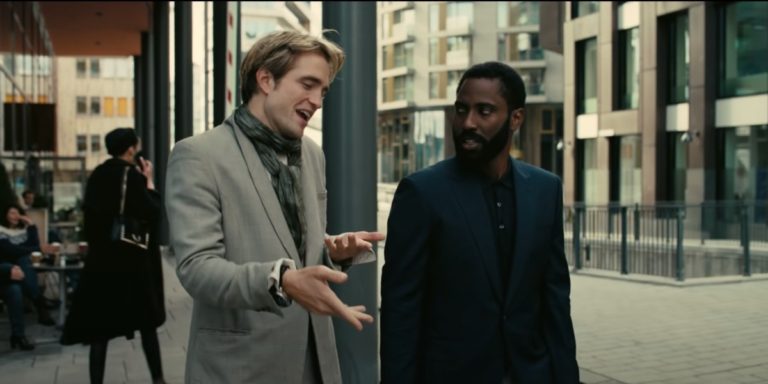
Composer Ludwig Göransson won his first Oscar on his first nomination for his stunning Black Panther score, and now he finds himself as a potential contender again this year for Tenet. Nolan films have often performed strongly in the Original Score category, and there’s plenty of love for the Tenet soundtrack to suggest he’s in with a shot. What hurts Göransson is the negativity surrounding Tenet’s sound mixing, and while that has nothing to do with his splendid score, some of that negativity may carry over and prevent Tenet from performing well in either music or sound category. With the uncertainty surrounding the final two nomination slots, there’s a very good chance that Tenet takes the spot Dune had been expected to get.

Also In Contention…

Da 5 Bloods

Terence Blanchard is one of the most underrated composers working today, with his BlacKkKlansman score a couple of years ago deserving of its nomination and perhaps should have won. While Spike Lee’s Da 5 Bloods is unlikely to perform quite as well as BlacKkKlansman did, Blanchard is still in this race. His beautiful score is the film’s strongest aspect (along with Lindo’s performance) and has no doubt been watched by many of the Academy, especially given the circumstances and the fact it was released on Netflix. As stated many times, that fifth slot feels wide open, and Blanchard could easily pick up a second Oscar nomination.

Soul

With Dune out of the race, perhaps now is the best chance for Reznor and Ross to find themselves double nominated, just as Alexandre Desplat did in 2014 when he won for The Grand Budapest Hotel and competed with his own The Imitation Game score. The musicians certainly have the star power and industry credibility to do so. With Onward and Soul, Pixar feels like it may find itself in this Original Score race somehow, and Soul feels like the bigger of the two in terms of Oscar’s credibility. It still has tough competition to make the five, but the path has been made a little easier and more possible and would not be a surprise come Oscar nomination morning.

Chasing the Gold: Best Visual Effects Analysis (2021 Oscars)

Last year, 1917 was awarded the Oscar for Best Visual Effects — beating out Avengers: Endgame. They even did it without having the Infinity Gauntlet. Okay, so all jokes aside, it’s the first time since 2009 that Marvel has gone a whole year without releasing an entertaining superhero flick. In fact, most of the summer blockbuster movies, the ones dripping with effects, have been pushed back to 2021. To say the least, this year’s visual effects category will look incredibly different.

The top visual effects contender this awards season is Christopher Nolan’s, Tenet. It’s the biggest film to come out of 2020, so far, and has no doubt cleared its path for a sure nomination. The work that was put into the film is nothing short of astonishing. With a VFX shot count of less than 300, one can easily marvel at the genius work from visual effects supervisor, Andrew Jackson — with whom Nolan credits all the VFX work. Tom Hanks’ World War 2 naval epic, Greyhound, is another almost concrete prediction with Peter Bebb, Sebastian Von Overheidt, and Michael Grobe supervising the VFX. Other possible nominees, from this year’s releases, could be Disney’s Soul, The Call of the Wild, and if I may be so bold, Sonic the Hedgehog. But to be honest, these last-minute additions may only be inserted into this category in order to fill out the nominees.

So what does it mean for the rest of the category? Wonder Woman 1984 could be a possible contender. The film currently has a release date for Christmas Day 2020; but as time goes by, one may say that this release date is rather optimistic. And because of that, I can’t see putting 1984 on the list of predictions. I will say the next strong contenders are Disney’s Mulan, and Netflix’s, The Midnight Sky. Mulan showed some dazzling VFX work with its battle scenes when it premiered to Disney+ audiences this past September. As for George Clooney’s, Gravity-inspired, Midnight Sky, it may be the film to fill that sci-fi void in our hearts. The recent photographs for the film gives us only a hint of the beautiful VFX work on display.

We go day to day wondering which action-packed movie will be pushed back to 2021. With the recent news of theater closures, the reality of any more blockbuster movies appearing on the docket for 2020 seems bleak. If there’s a silver lining here somewhere, it’s that the 2022 visual effects award category will be packed.

Best Visual Effects Predictions (As of October 10th, 2020)

  1. Tenet
  2. Greyhound
  3. The Midnight Sky
  4. Mulan
  5. Sonic the Hedgehog

Movie Review (LFF): ‘Undine’ is Too Slippery to Fully Capture the Heart


Director: Christian Petzold
Writer: Christian Petzold
Stars: Paula Beer, Franz Rogowski, Maryam Zaree

Synopsis: Undine works as a historian lecturing on Berlin’s urban development. But when the man she loves leaves her, the ancient myth catches up with her. Undine has to kill the man who betrays her and return to the water.

[/info]

With her deep eyes and a flock of red hair, the ethereal Undine (Paula Beer) enchants from the moment you see her. For the men drawn into her whirlpool presence, it’s love at first sight. Blending genres to various successes, Undine is a romantic fantasy that begins with a turbulent breakup. Johannes (Jacob Matschenz) is having an affair. It’s the last thing Undine needs to hear before she gives a history tour at work. Undine warns Johannes that if he breaks up with her, he will have to die. As he did with his inventive wartime drama, Transit (2018), German director Christian Petzold meshes past and present in a somewhat diluted romance that allures as much as it disappoints.

This is loosely a cinematic transplant of Friedrich de la Motte Fouqué’s classic fairy-tale, where a water spirit comes to land to marry and obtain a soul. The catch is that the romance is forever, break it and the cost is death. Paula Beer is perfectly cast as the enigmatic Undine, able to shift illusively between a lover who sometimes feels like a ghost, as well as a silky predator capable of sudden violence. You see these glimpses in her eyes, in the off-kilter walk and, later, during a midnight swimming pool diversion that’s lit up like a home invasion thriller. But at its core, this is a love story, of a man and a woman, and Berlin, the heart of Germany. Whatever iciness shimmers in Undine’s watchful gaze, it is melted almost entirely by the arrival of Christopher (Franz Rogowski).

Quite possibly Joaquin Phoenix’s German doppelganger – possessing the same ability to shift between unstable intensity and easy warmth – Rogowski has a huge screen presence and natural likeability. This is an ideal role for the actor to slip into and one that’s just as easy for the audience to get behind. Enraptured during one of her talks about the modern reconstruction of Berlin, Christopher, with childlike curiosity, follows Undine to the café where her boyfriend has just broken up with her.

As much as the film swims between the lines of tragic romance and fantasy, there is – adding to Petzold’s kaleidoscopic sense of style – a much welcome undercurrent of comedy, which helps ground the film in its exploration of Berlin as a place of rebirth and one that still bears its historical scars.

Undine and Christopher’s first encounter is clumsy, playful, reflective of the fairy tale that underpins this film, and they end up smashing into a fish tank, collapsing beside each other, breathless and drenched. You can add this moment to the endless list of water scenes as ritualistic displays of cleansing and, in Petzold’s confident hands, it comes across as a whimsical moment of romantic conception. Before this, however, Undine hears a figurine diver call out to her from within the tank, planting Petzold’s romance firmly in the realm of fantastical possibilities. And although their romance feels too easily conjured as if they have sunk right to the deep end where no spark can crackle, this is a fairy tale, so there are no rules and anything goes.

Anybody hoping for a mermaid story complete with dramatic transformation, or even one with sharp teeth, is going to be disappointed. Petzold is reluctant to follow the film’s supernatural mysteries, of which there are plenty. It’s quite fitting Undine ends in a moment of murky darkness; this is likely how most will feel once the bubbles peter out. Perhaps more will be revealed upon a second viewing; after all, diving is all about sinking deep for the biggest treasures. Still, in a film featuring two enigmatic stars in front of the camera and a director brimming with confidence, it is a shame that the film’s mythology never moves beyond vague, dream-like underwater sequences, albeit they are magically shot by regular collaborator Hans Fromm — a giant catfish named Gunther carrying an unconscious Undine to the surface is sublime. Undine needed more of this, and less of its history lessons.

The historical underpinning of Undine is where Petzold’s juggling act doesn’t quite come off; with the romance, the comedy, water worlds, and tragedy, there’s a little too much of everything spread too thinly. Petzold wrote the script, and thematically, what the director has done here is interesting – in his head, it might have felt like a winner. Despite mostly losing me, and finally boring me — especially the second and third time you hear Undine’s lecture — the way in which Petzold has contrasted the nature of a fairy-tale retelling within the present context of a city under reconstruction is admirably clever. Fairy tales like Undine are timeless, they are cultural touchstones. By making Undine the water nymph a researcher on Germany’s architecture, Petzold has created a strange, unifying bridge between the ancient worlds scaling beneath the sea – the ones found in our stories – and the constantly shifting, developing modern world. Combine this with the handily written plot point that has Christopher, the lover of Petzold’s retelling, operating as a deep-sea diver who fixes broken turbines, and you a lot of compelling connections swirling around.

Like the heroine at its heart, this is a slippery film. A lot of things impress, but just as much goes nowhere satisfying. And since it drifts to a weightless, meandering conclusion, it’s easy to come away feeling the various elements don’t add up in the way that was initially promised. Its two stars are major talents. Petzold is another. Following the remarkable Transit, I was hoping for something a little sharper than this. However, as an enchanting love story that dreamily overlaps the old with the new, Undine just about works.

Grade: C+

Movie Review (NYFF): ‘French Exit’ is a Melancholic Love Story between Mother and Son


Director: Azazel Jacobs
Writer: Patrick Dewitt
Stars: Michelle Pfeiffer, Lucas Hedges, Valerie Mahaffey, Imogen Poots, Susan Coyne, Danielle Macdonald, Isaach De Bankolé, Daniel Di Tomasso, Tracy Letts.

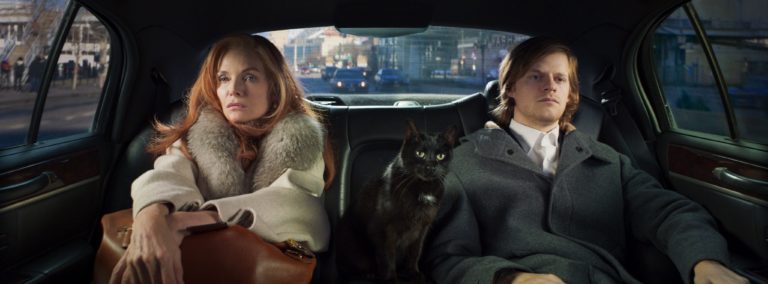
Synopsis: 60-year-old penniless Manhattan socialite, Frances Price, cashes in the last of the possessions and goes to Paris to live out her twilight days, accompanied by her directionless son Malcolm and a cat named Small Frank, who may or may not embody the spirit of Frances’s dead husband.

[/info]

French Exit, the latest movie by director Azazel Jacobs, speaks kindly to my soul. This film, with its elegance, quirkiness, and sardonic humor, happens to be a beautiful love story between mother and son that find each other and never let go. However, this is not all that the movie offers. At its core, it is about lonely people and the way they unexpectedly connect.

The story, adapted by Patrick Dewitt from his own novel, follows Frances (Michelle Pfeiffer) and Malcolm (Lucas Hedges). She is a socialite that has been a widow for twelve years and now finds herself in the last stage of her life without any money left in her bank account. He is her son that goes through life with a depressing and wandering attitude, always there in a taciturn and shadowy way. He is useless in life but loyal to the woman who rescued him from a boarding school when the patriarch (Tracy Letts) of the family suddenly died and who, according to the family of two, now possesses the body of the family cat, Small Frank.

The life of Francis is defined and shaped by money. From the first moment we meet her we understand that she lives in a special bubble where anything is possible and where she can do whatever she wants. However, these glory days are over and belong in the past, coming to life in the present through wild and eccentric stories told by those around her in awe of her presence.

Now she is tired, hopeless, and, for the first time, stripped from the things that defined her place in society. However, she still has her personality, one of the most compelling and captivating profiles in any movie of the year, brought to life by an exquisite Michelle Pfeiffer, dressed in awe-inducing costumes by Jane Petrie. Her presence is instantly felt, her sassiness is enjoyable, and her sense of self is inspiring.

This woman, certainly privileged, is fearless and charming and shares a beautiful and co-dependent bond with her grownup son, Malcolm. Together they form a duo that is stoic, sharp, and highly entertaining. Therefore, it is a pleasure to follow their long trip from New York to a friend’s apartment in Paris. Precisely this change in scenario is the one that brings an extravagant and adorable storytelling and production design that recalls the work of Wes Anderson. A bleaker and darker Anderson with a sharper and affecting script.

They are rapidly surrounded by lonely and love-hungry people, including a widow that has been a lifelong fan of Frances, Mme Reynard (Valerie Mahaffey); a clairvoyant that travels in the same ship as the family, Madeleine (Danielle Macdonald); a private detective who develops a sweet bond with clingy Mme Reynard, Julius (Isaach de Bankolé); Malcolm’s ex-fiancé, Susan (Imogen Poots), who is followed by her new boyfriend, Tom (Daniel di Tomasso); and the owner of the apartment, Joan (Susan Coyne), best friend of Frances who rushes to Paris once she hears our protagonist is thinking about ending her life. Brought together by unusual circumstances, they seem to share a bond that no one wants to break apart, creating a new thread of co-dependency between all of them.

Although the movie is extremely enjoyable, its tone is melancholic, and its main characters are going through their own personal struggles, with great emphasis on Frances and her lack of interest in life. At this point, the exploration of the relationship between Frances, her dead husband, and Malcolm provides a new layer of significance in the relationship between mother and son.

There is a shared attitude between these two of blank existence and complete indifference towards everything that happens around them. They are just there, together, and oblivious of the rest of the world. Nonetheless, this couple is the heart and soul of the movie. They love each other, they are there for each other and they are equals. It may not be the healthiest relationship, but it is one that is wholesome and reciprocal.

Pfeiffer and Hedges shine together, effectively bringing to life the sense of complicity and belonging that exists in a dysfunctional but loving family. There is a specific scene – maybe the most emotional of the movie – where Frances and Malcolm talk about their relationship and how much they mean to each other. There is so much tenderness and love in this exchange that it is impossible to remain immune to this eccentric pair.

With beautiful reflections about love and life, aided by romantic views of Paris in the winter, French Exit offers a sensitive and empathetic lens on someone that is suddenly at odds with her life. The process of acceptance and maturity that Frances goes through during her exile in Paris is humbling and enriching for her and her son. Together, Michelle Pfeiffer and Lucas Hedges, offer a beautiful story about two people that find each other after years apart creating an enviable and unbreakable bond.

Grade: A

Movie Review (LFF): ‘Shirley’ is a Fun New Twist on a Bio-Pic


Director: Josephine Decker
Writer: Sarah Gubbins
Stars: Elisabeth Moss, Odessa Young, Michael Stuhlbarg, Logan Lerman

Synopsis: A famous horror writer finds inspiration for her next book after she and her husband take in a young couple.

[/info]

Whilst I am not sure how many people are aware of who Shirley Jackson was, but it was nice for the film to bring up the fact that she wrote a short novel called “The Lottery”. This is actually a story that I read when I was younger, and became extremely fascinated by the premise and how dark it was. If you are also aware of this short story, you will know how the author could be seen as insane and messed up. It’s what makes this portrayal of Shirley Jackson believable.

This is a very different version of a bio-pic than most, in that this story is grounded in fiction. Whilst the characters are based on reality, with Shirley’s real-life partner Stanley Hyman being portrayed here as well, this reality is blended with a twisted and dark narrative. This works well in this case because of Jackson’s background and the twisted stories that she wrote. It is always refreshing to see a director take a new approach to the standard biopic.

The only thing I knew about this film going into the screening was Elisabeth Moss, who has been having one incredible year after her performance in The Invisible Man. Her role here is incredibly complex, and it may just be better than her performance in The Invisible Man. She not only has to play someone who was as much of a genius as Shirley Jackson was but also portray the man mental issues that she had in her lifetime. This is a hard balance to get, but Moss does extremely well and is able to carry the film.

There are other actors who help drive the narrative in this film, and I was honestly surprised going in as blind as I did that Logan Lerman was in this, playing the husband Fred. He is an actor that has had a tough time breaking out of the young-adult stereotype, after his appearances in both The Perks of Being a Wallflower and the Percy Jackson franchise. However, it is refreshing to see him going out of that genre and playing a much more mature role here, and all of the cast around Moss does a great job selling this twisted story.

There are so many twists and turns that this story takes, and some of them work really well. The strongest moments of the film focus on the relationship that develops between Shirley and Rose (played by Odessa Young), the wife that is invited to stay in Jackson’s home. Not only is the relationship between them so complex, to the point that it is left up to interpretation on how Shirley really feels about Rose, but they are given the majority of the film to carry.

It is, however, when the film breaks away from Shirley that the quality drops. The premise of the story is based on her having a writer’s block, being fascinated by this missing case story, and using this visiting couple to cause trauma to them and try to relieve that block that she has. I struggled to care about what Shirley’s husband Stanley (played by Michael Stuhlbarg) was plotting throughout the story, and I was not bothered about any of the storylines involving the university with that. Whilst the performances were good and it felt important to see both sides of the plot, Stanley’s character felt more powerful at the start when he was simply a husband looking after his mentally-ill wife.

Due to the range of storylines that don’t exactly fit together, the pacing can feel off at times. I did feel the film drag in the middle, but that is the weakest section of the film and it does not reflect the overall quality of the film. This is a film that has a captivating opening and a haunting close, which I loved both. I do wish it was tightened up in between, either with a shorter runtime or further development of the side stories.

When a director makes a bold choice to tell the story of an icon in a different way, I always appreciate it. I am done with the traditional bio-pics. I want refreshing spins on them, and this is one of them. To explore the mind of Shirley Jackson as if she was writing this story as fiction is incredibly smart. Before you go into this film, I do recommend you check out her short story “The Lottery”. Not only is it a fantastic short story in itself, but it will give you an idea of why this format of telling a bio-pic as if it was a twisted story worked so well for me.

Grade: B

[divider]

Podcast: The Girl With the Dragon Tattoo/ Possessor – Extra Film

On this week’s Extra Film, Ryan and Jay continue their David Fincher Movie Series with The Girl with the Dragon Tattoo, and then they review the latest indie thriller, Possessor.

Following their discussion The Social Network, the Extra Film boys dive into one of Fincher’s most underrated films, The Girl with the Dragon Tattoo. Based on the international best-selling novel of the same name, Fincher takes a darker approach to this project than the one before and turns this “blank check” film into a referendum on the state of technology and how it can be used for good against the forces of evil. Lead by two extraordinary performances from Rooney Mara and Daniel Craig, The Girl with the Dragon Tattoo has aged like a fine wine and plays as another stellar film from Fincher. Both Ryan and Jay really enjoyed their rewatch, with one more Fincher film left in their series.

After that, the boys turn to Brandon Cronenberg’s Possessor. From the mind of the son of David Cronenberg, Brandon Cronenberg takes us into the world of a secret organization that plants agents into random people’s bodies so they can assassinate anyone they want. While Possessor looks very cool and has a fine tone, the overall film feels like a bunch of ideas thrown on the screen with no connective tissue. Possessor debuted at Sundance to big acclaim, and while Jay liked it more than Ryan, it didn’t get a ringing endorsement from either host. With that said, they still can’t wait to see what Brandon Cronenberg does next, considering he has his dad’s eye for creating an interesting cinematic world.

Thanks for listening!

– Movie Review: The Girl with the Dragon Tattoo (4:17)
Director: David Fincher
Screenplay: Steven Zaillian
Stars: Daniel Craig, Rooney Mara, Christopher Plummer, Stellan Skarsgård, Robin Wright

– Movie Review: Possessor (1:05:57)
Directors: Brandon Cronenberg
Screenplay: Brandon Cronenberg
Stars: Andrea Riseborough, Christopher Abbott, Rossif Sutherland, Tuppence Middleton, Sean Bean

– Music

Karen O with Trent Reznor & Atticus Ross – Immigrant Song
Pusher Music – Guilt
The Return of the Eagle – Atli Örvarsson

We try to make this the best movie podcast we possibly can and we hope you enjoy them. Subscribe today on iTunes, Spotify or Stitcher, and please leave us a review on iTunes. You can also find us on Soundcloud, PlayerFM, and TuneIn Radio as well. We really appreciate all your support of the InSession Film Podcast.

Subscribe to our Podcasts RSS
Subscribe to our Podcasts on iTunes
Listen on Spotify
Listen on Stitcher
The Girl With the Dragon Tattoo/ Possessor – Extra Film

[divider]

To hear this Extra Film episode and everything else we do, download our apps on the Amazon Market for Android and the Podcast Box app on IOS devices. The mobile app covers all of our main shows, bonus podcast’s and everything else relating to the InSession Film Podcast. Thanks for your wonderful support and for listening to our show. It means the world to us!

Movie Review (NYFF): ‘Time’ is First-Hand Testimony about the Injustice of the American Penal System


Director: Garrett Bradley

Synopsis: Fox Rich, entrepreneur, abolitionist, and mother of six boys, has spent the last two decades campaigning for the release of her husband, Rob G. Rich, who is serving a 60-year sentence for a robbery they both committed in the 90s.

[/info]

Time is an eye-opening documentary that presents the story of more than two million people in the United States through the personal testimony of a Black family. Using homemade videos that take us back into the past, the story is a personal one about love, determination, and emotional atonement, while fighting against the system that is too severe and inhumane with those that can’t afford to play with its perverted rules.

This is the story of Rob and Fox Rich, a couple that 20 years ago decided to rob a bank and got caught. While Fox was released from jail soon after, Rob was sentenced to 60 years in prison without the possibility of probation, parole, or suspension of sentence.

While Rob is the one behind bars, we focus on Fox Rick, the one that has been fighting without a break for his freedom. We meet a woman that is determined to free her husband, and after 20 years in the fight, things do not seem to be too enthusiastic. However, she prevails.

The movie, through a non-linear narrative, tells the life of the family before the fortuitous decision that led them to rob a bank. Then, it meets with Fox Rick in the present as she works as a saleswoman while being a public speaker and an activist for her husband’s cause.

This project works more as a personal story of strength and determination than as an exhibition of the injustices of the system. We learn about the vices and failures of the penal system through the fight of this family. We appreciate their love through their sacrifices and incessant efforts to create some leverage in Rob’s struggle. And we distinguish the struggle they continue to endure given that statistics are not in their favor.

The movie invests a lot of time in Fox’s empowerment. We witness the evolution of a woman that was overwhelmed by the responsibility of raising six boys on her own to a mother that is a public speaker, an activist, a worker, and a faithful wife to the husband that may never be free again.

It also spends limited time on the sons of the couple who are inspired by their father’s circumstances and are determined to improve their lives and help those in need – going against the odds that were unjustly set upon them just by being children of incarcerated people. We see them becoming doctors and leaders in high school, aware of what happened, and using this as a tool of development and not of discouragement.

Fox’s activism may be her most interesting profile, especially when she explains her point of view on her crime and the way the system continues to fail her family and millions of unprivileged people in America. She sees the American penitentiary system as a remnant of the slavery system. Consequently, she considers herself an abolitionist. Her speeches in the matter are eye-opening and extremely moving, making this documentary a must-see for those interested in learning about systemic racism and the incarceration issue in the US.

Through a black and white cinematography accompanied by beautiful piano pieces, we see the personal struggle of Fox Rich and her family. The movie jumps in time, sometimes presenting Fox Rich and her children while they go through important moments of their lives without their father – birthdays, graduations, debates –that are kept in tape for Rob to see once he is freed, and sometimes in her quest for answers and possible solutions, even though she constantly deals with rejections and an indifferent bureaucracy.

Time is a deeply moving and personal story of a family that stays together through the worst period of their lives. No matter how many injustices and frustrations they deal with, they stick together, led by an abolitionist that has learned so much about the system because of her personal experience with it. This film is a sentimental and moving proof against the rotten penal system of the United States, but above all, it showcases the human strength and determination of those that live with a just cause.

Overall Grade: B+

[divider]


Movie Review (LFF): ‘Shadow Country’ is an Affecting Look at a Damaged Community


Director: Bohdan Sláma
Writer: Ivan Arsenjev
Stars: Magdaléna Borová, Cyril Drozda, Csongor Kassai

Synopsis: How to reconcile with killings committed by your own neighbors? How to face growing evil that nobody stands against? What can human will overcome and what is the value of humility and hope?

[/info]

Guilt and regret reverberate through Shadow Country, a historical drama that spans from the 1930s to the 1950s set in a small Czech village. We are told the area, Vitorazsko, was split between Czechoslovakia and Austria, leading to shifting and split sense of identity amongst the villagers. This is only exasperated when the Nazi occupation forces the residents to choose between assimilating with the fascist powers or opposing them. By the film’s midpoint, we have reached 1945 and the Czech partisan government rules over the town, exiling or imprisoning any villagers with German identity or Nazi sympathizers. The titular shadows that haunt the characters are the dark shapes of their own mistakes and actions, creeping after them wherever they go. 

Gorgeously captured in black-and-white, the main strength of the film comes from cinematographer Divis Marek. In this collaboration with director Bohdan Sláma, Marek opts for frequently using long, unbroken shots consisting of multiple set-ups and angle changes. This gives the actors free reign to dictate the energy of the scenes with their performances, subtly changing the power balance of the unsteady calm that settles over the town with a sly insult or undercutting question. In addition, the use of crisp black-and-white images tie closely with the major themes of the film. Who is in charge changes so frequently, and the definitions of what is right and wrong are always fluctuating, meaning morality is more complex than being black and white. There are many more shades of grey to the behaviors of this small community.

Most of the film’s unnerving tension comes from the behavior of the villagers. As the overarching powers come and go, first the Third Reich, then the Partisans, and finally the Soviets, most of the characters find some opportunity to better their personal situation or shelter themselves from persecution. Sláma and screenwriter Ivan Arsenyev make it clear that the evil of the Nazis and the miscarriages of justice by the guerrilla Partisans are not responsible for the village tearing itself apart, rather they simply facilitate an environment where preexisting hatred is given permission to be on full show.

From the opening scenes, you get the sense that under the surface of the pleasant village life lies corruption and selfishness. During a jovial baptism celebration, after one man spies on a woman’s infidelity, he sidles up to her and in hushed tones tells her that if she won’t sleep with him, he’ll tell her husband what he saw. We see repeated instances throughout Shadow Country of individuals not thinking about what is morally right, but what will improve their own position. Upon being confronted with injustice, some people choose not to challenge it, but instead to see if they can exploit it for their own benefit. 

Because of the grand, sweeping movements of history, the characters don’t particularly have that much agency over the story. They’re at the whim of greater forces and spend the runtime trying to keep a low profile as their world is stripped down piece by piece. While the pacing of the drama is slow, time jumps are frequent, meaning we get to see transformations not only in setting but in character. The most compelling comes from the resistance fighter Josef (Csongor Kassai) who returns from a concentration camp resolved to expunge the village of anyone who helped the Nazi rule. It’s through Josef’s perspective that we see the exile and execution of the villagers with the authority of the Partisans, and Kassai brilliantly portrays Josef’s internal battle between wanting revenge for wartime atrocities with his desire to return the village to the state it was before the war. He can’t recognize that trauma has transformed him and his community, and by the end, he doesn’t even resemble the man he started as. 

Sláma uses the time jumps effectively, cutting from moments of great pain and crisis to scenes where characters have been transformed, their old selves gone and irretrievable. By skimming through the 15 years the film takes place over, Sláma only confirms that these people, and their lives, are lost to time, uncared for and forgotten. There’s no going back to how things once were.

Cutting through time like this has some drawbacks though. It can be difficult to trace the large swathes of characters at different periods of their lives, and weak characterization means it’s easy to get a bit lost. Sometimes the film has to pointedly remind the audience of significant relationships, which robs scenes of their intended emotional poignancy. One character who takes center stage in the first act is relegated to a background extra by the end, a problem that would have been solved by a tighter narrative focus. 

But while the distinguishable details of the ensemble characters may not be memorable, their silent shouldering of the pain they’re subjected to is. The collective trauma that rings through the film is affecting and thought-provoking, and Sláma pointedly investigates the impact that acting in cruel, self-interested ways can have on others. While it suffers slightly from an unfocused narrative, Shadow Country succeeds in its main objective – showing the indelible moral stain that permitting abuses of power has on your character.

Grade: B+

Movie Review (LFF): ‘A Day-Off of Kasumi Arimura’ is Another Beautiful Creation from Hirokazu Koreeda


Director: Hirokazu Koreeda
Writer: Sakura Higa
Stars: Kasumi Arimura, Jun Fubuki, Shinnosuke Mitsushima

Synopsis: Playing a fictional version of herself, actor Kasumi Arimura enjoys a day off in this charming example of Hirokazu Koreeda’s rarely seen television work.

[/info]

After seeing the first episode of Hirokazu Koreeda’s latest television venture, the soothing, delicately confident A Day-Off of Kasumi Arimura, the easiest recommendation I can give is that I only want to see more. It’s an unsurprising gut-reaction towards a director whose entire filmography has been built around tugging heartstrings, and, by now, he knows how to balance comedy and domestic drama better than anyone. A somewhat surprise inclusion to the 64th London Film Festival, this is a rare glimpse of Koreeda’s talent on the small screen, and, like Shoplifters (2018) and Like Father, Like Son (2013), fans of the director’s work will be pleased to know it’s just more of the same, a bitter-sweet, understated and multifaceted exploration on family and identity. Even in the reduced runtime of a 40-minute slice of television, this is a real treat from the Japanese director, and as spiritually fulfilling as you’d expect.

The basic premise is that this eight-episode show will tell separate stories each turn, all concerning what Kasumi Arimura (playing herself) will do on her day off from work. It sounds a little too cute, and it is, but the tenderness is perfectly balanced with an undercurrent of simmering tensions. As somebody unfamiliar with Arimura’s work as an actress, there’s no way of knowing how she’s approaching this blend of fact and fiction, but what is clear is that she brings an intelligent charm to everything on screen. In fact, all of the cast give natural performances, allowing for easy immersion and imbuing A Day-Off of Kasumi Arimura with the warmth of a cozy blanket and hot chocolate evening drama.

In this first episode, Kasumi returns home to see her mother (Fubuki Jun) after the production of her latest venture has been canceled. A few early seeds are sown that reappear in interesting ways, such as a recurring joke about colds – and I imagine things like this will be a regular template for each of the different episodes. A brief interaction with a boy hiding from his father at the train station reveals a bristling maternal instinct in Kasumi. She guards this fiercely, deep-rooted sadness slipping out in complicated flashes, particularly prompted by the resurfacing of long-buried memories and interactions with a brother (Mitsushima Shinnosuk) she seemingly hasn’t seen for many years.

Memories play a key role, both in terms of how we view them in isolation as comfort shots, but also in the way that other people can distort their meaning. A simple example is the homemade sweets that Kasumi keeps receiving in the post from her mother while she’s busy starring in films in Tokyo; Kasumi hasn’t really liked these since childhood, but to her mother, there’s no difference, she’ll always be her little girl. The nature of ownership is further unpicked during an awkward dinner table exchange. Kasumi’s brother proudly retells a story involving his own daughter, six years old, taken to the tallest building in Japan as a moment of bonding and joy. The problem is that Kasumi has the same memory with her father when she was a six-year-old girl, and so one memory has become another’s. ‘I felt like my memory had been taken away from me,’ she tells her mother in a rare moment of emotional exposure.

The narrative, like all of Koreeda’s work, is built up of these tiny doses of humanity, and all the ways in which one can subtly, significantly impact the other. Episode one in isolation is a gently affecting portrait of parenthood and grief, and while Koreeda’s handprints feel all over it, the script owes its debt to Sakura Higa, drifting seamlessly between honest reflection and whole-hearted connection.

This is not going to be for everyone, perhaps too ordinary, too soft and quiet compared to what many audiences are used to, although for those that do enjoy Koreeda’s work, or those – as many likely are – searching for comforting entertainment, this is a refreshing break from the standard full-throttle, factory-spun drama that dominates television. A Day-Off of Kasumi Arimura has no interest in showy outbursts or crafted action. And while it doesn’t waste your time, it doesn’t explode into life either. The show is little more than an invitation into a particular corner of the world, and the delight is that you simply get to be there.

While the charm is inherently baked into the naturalistic performances and sedate pacing, the show is aided by a gentle, plucky soundtrack that fits nicely with the pastel color palette, all these layers singing to the same tune and ensuring that you never forget what you’re watching. However carefully it wanders into serious drama, it always feels soothing. With its intimate character moments and steaming plates of delicious food, this is, in many ways, not so far from Joji Matsuoka’s Midnight Diner, which has found its own cozy corner on Netflix. If you like that, you’ll have a good idea of whether or not this for you.

In the end, as is the case with Koreeda’s best work, it’s the subtle complexity that stands out; a richly textured exploration of humanity, with spaces you can sink into, filled with characters you simply want to spend time with. A Day-Off of Kasumi Arimura is a slow burn, but it burns bright, and by the end of it, all I wanted to do was lean closer to the flame.

Grade: B+

Movie Review (LFF): ‘Siberia’ is Style and Symbolism over Story and Substance


Director: Abel Ferrara
Writer: Abel Ferrara, Christ Zois
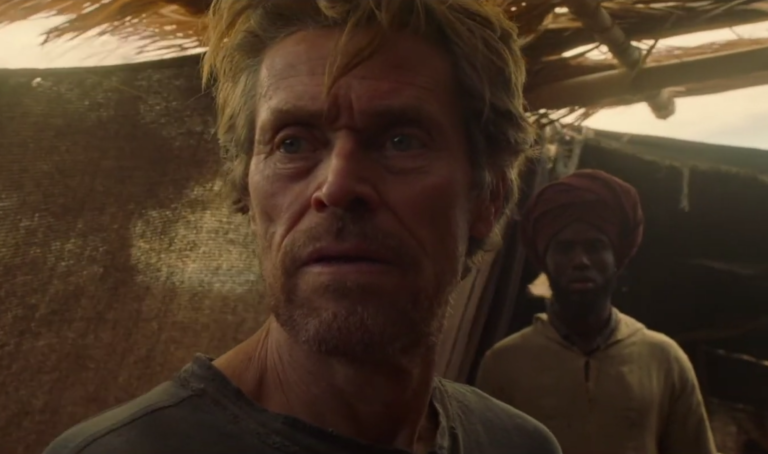
Stars: Willem Dafoe, Dounia Sichov, Simon McBurney

Synopsis: A barman in Siberia heads to a nearby cave where he explores his dreams and memories.

[/info]

Well, where do I even begin with this review? I was not familiar with the works of Ferrara, and that will most likely be a major reason why this film did not click for me. He has a very unique style to his form of storytelling, known for using provocative and often controversial content in his films. Siberia is no different, as there are very graphic nudity and sex sequences shown throughout and often with no context. It was quite something to watch when I went in with no context or prior knowledge of the filmmaker. I usually think it is better to go into films as blind as you can, but that is certainly not the case with this one.

I will start with the two main positives of the film before I go on about my issues. Number one: Willem Dafoe. I always admire how ambitious he is with his storytelling, from his performances to the films that he chooses to star in. He never goes for the safe pick, with only the last few years doing The LighthouseAt Eternity’s Gate, and The Florida Project. This is another time where he is leading the film and giving a fantastic performance whilst doing so, single-handedly carrying the film. Number two: the cinematography. Even if I was struggling to understand what was going on in the film, it was beautiful to watch. The panning shots of the landscape, particularly the mountains, are breathtaking.

However beautiful the film is to watch, it was not enough to keep me engaged with the story. Well, I would say the story, but this film had a lack of one. I actually struggled to find a synopsis for this film, because the only narrative of this film is of the barman hopping in and out of sequences. These sequences had no real connection outside of Dafoe, and that left a lacking of character development or story progression. Whilst I know there are some people who will find that refreshing and unique, it took me out of the film and wanting so much more.

This is a film that is based around the style and symbolism. I am sure that there is a reason that Dafoe’s character interacts with people who speak a foreign language, meaning the audience cannot understand a single bit of dialogue. I am sure there is a reason why so much nudity is featured in this film, as well as graphic sex. I am sure there is a reason why there is so much symbolism in a fragmented film like this. Whether it was the fact that I did not care for the barman after the first few scenes or the format of the storytelling, the style and symbolism took over and it was way too much.

This film is a short and sweet 90 minutes long, which I would usually not complain about. However, the lack of story and choppy editing made this go by so slowly. Somehow, the 128 minutes of a film I watched a few days ago went by so much quicker than this one. I wanted to pause and give up on this film on several occasions because it only took me ten minutes to realize that this was not going to work. If I could see this concept working as a film, it would have been in the format of a short 20-30 minute film. Have the character not be the focus on the development and show one or two of these mini dream sequences that the barman goes through. Not only would the same message and themes be communicated in a shorter amount of time, but I think it would have fixed a lot of the pacing and writing issues that I had with this story.

Could this negative review and view of Siberia be because of my lack of understanding of Abel Ferrara and his work? Perhaps, and I am intrigued to one day go back and check out his other works. However, this just did not connect with me at all. I struggled to understand what was going on, I was struggling to find a reason to care about the character or any of the dreams that he was in, and I was struggling to make it completely through the short runtime. Maybe one day I will be ready to give this film or director another shot, but I will wait a little bit before jumping back into that sort of world.

Overall Grade: D

[divider]


Movie Review (LFF): ‘Stray’ is Strong, Subtle Filmmaking – to a Fault


Director: Elizabeth Lo

Synopsis: The world of Zeytin, a stray dog living life on the streets of Istanbul.

[/info]

Perspective is important when crafting a narrative, even a documentary one, and while Elizabeth Lo‘s film Stray makes a bold choice grounding us in the perspective of the ownerless dogs that freely roam the streets of Istanbul, it’s not an entirely successful one. In response to protests about the high level of animal cruelty in the country, in 2017 the Turkish government made it illegal to kill or imprison stray dogs. The result is countless canines wandering the city like nomads, sleeping where they can, and eating what they find. Dogs don’t have much understanding of narrative structure, so our journey along with them feels a stream of consciousness in nature, the camera reacts to their instinctive behaviors and follows wherever they choose. But as we further explore the city and the circles these dogs reside in, you can’t help get the feeling that the more compelling stories exist on the periphery of what Lo is showing us.

From the opening shots of Zeytin, our canine protagonist, you’re taken by the intensity of their stare. Animals in the film are often being manipulated off-camera, trained to move in the ways the script demands of them, and acting with little autonomy of their own. Lo’s film, by contrast, allows her subjects to move wherever they please, she never pushes them in one direction or guides their movements. When Zeytin wanders out into the middle of a busy road, so does Lo’s camera, straight into the path of oncoming traffic that Zeytin seems ambivalent towards. These dogs have more freedom than we’re used to seeing, and this usually domesticated animal is quite comfortable being a lone wolf in a city that’s largely impassive towards him.

But audiences will certainly not be impassive towards these dogs. Zeytin makes for an engaging character whose still expressions and staring eyes rope us in and make us constantly guess what exactly is going on inside their head. They seem disinterested and unaffected by the snatches of conversations the microphone picks up on while traversing the city. The most amusing moment comes when Zeytin has the same bored, flat expression as a woman whose jealous boyfriend is complaining that she followed someone back on Instagram. Zeytin clearly has bigger things to worry about.

Because life as a homeless dog is pockmarked with violence and hunger. Lo’s camera lingers on Zeytin’s stringy legs and wiry body, and other packs of wild animals snarl and pounce after staring each other down for only a matter of seconds. Just as there are no restrictions to Zeytin’s life, so too are there no protections. They will curl up vulnerably on broken stone, barely sheltered from the elements, and at the whim of any possible attackers that come their way. Lo takes the inherent sympathy and attachment audiences are likely to have to on-screen animals and reveals a world where it’s very possible that the dog might die, and there will be no-one but us, a distant audience, to care.

The lack of care for a vulnerable life is a throughline of Lo’s film. Paying attention to the background is crucial to pick up on the subtle social commentaries at play. We hear voices amplified by megaphones offscreen for the National Movement Party, Turkey’s far-right ultraconservative camp, campaigning for an upcoming election. The dogs traipse behind bands of Syrian refugees, some who complain they can’t obtain a work permit, others who are teenagers trying to sleep on a construction site. The needs of these boys are repeatedly undermined and ignored, and it’s through their communion with the stray dogs of the city that we gain the most valuable insight into the life of outsiders in Istanbul.

But while this angle is undoubtedly a strength of Stray, there also lies an inherent weakness. The treatment of the refugee characters, how these vulnerable people are being treated, and the way the crisis is systematically ignored by the city, is too subtly handled by Lo. As soon as we meet the refugee teenagers, you’re left wondering why the film is still so fascinated by the dog characters, and continuing to spend time with the animals feels like a wasted opportunity. Dealing with complex political themes in a subtle, creative way is obviously a strength of Lo’s filmmaking, but the subject of refugees fleeing war needs a much more urgent stance than what we take away from the film. What’s more, the limited perspective the film takes, where the dogs dictate where the camera goes and the humans are often relegated to the background, means that there’s not nearly enough engagement with the crisis itself, because Zeytin can’t understand and is uninterested in the political landscape they exist within. If the refugees are meant to be the center of the story, they’re not present enough, and if they’re not, then they should be. 

You could argue this is an intentional choice by Lo. Our society repeatedly will ignore the needs of the extremely vulnerable and make them feel like they don’t deserve a place among us. In rooting Stray firmly in the narrow point-of-view of its dog characters, Lo is asking us why, in Turkey, animals are giving protection when human life is pushed aside and ignored. You’re just left wishing she had argued this case in a more direct way.

Grade: B

Movie Review (LFF): ‘Honeymood’ is an Pleasant, Offbeat Odyssey


Director: Talya Lavie
Writer: Talya Lavie
Stars: Avigail Harari, Ran Danker, Dan Amroussi

Synopsis: Following a fight in their honeymoon suite on the night of their wedding, a bride and groom embark on a surreal urban odyssey through the streets of Jerusalem.

[/info]

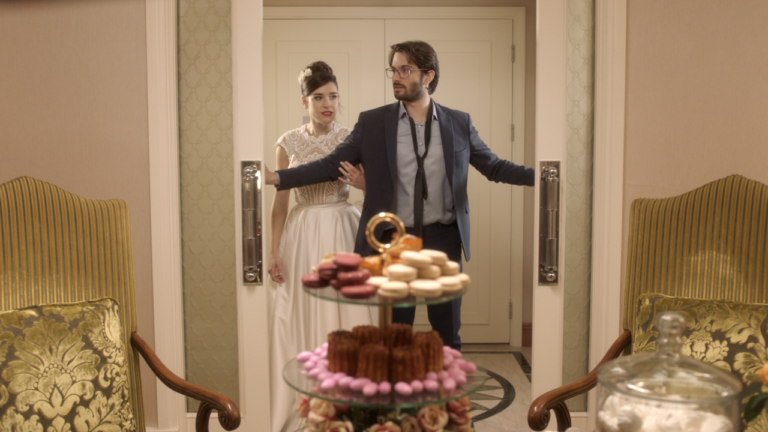
It can be difficult striking the exact right tone in a dramedy, so it’s commendable that writer-director Talya Lavie manages to pull it off in her wedding night feature Honeymood. With obvious skill, she guides the audience through the nighttime streets of Jerusalem following a bride, Eleanor (Avigail Harari), and groom, Noam (Ran Danker), on a seemingly unimportant mission that gradually reveals the couple’s insecurities about themselves and misgivings about each other.

When Eleanor finds that Noam’s ex-girlfriend has gifted him a compass ring, her jealous, anxious mind assumes the worst and thinks their whole marriage will be cursed if they don’t return the inappropriate gift that night. Eleanor, chirpy, animated, and with a bubbly determination, spends the first act dragging her more obstinate husband from one location to another, and with every turn, another distraction appears to keep them away from their hotel suite a bit longer. The film is charming and amusing, anchored by the compelling and fractious relationship, even if the drama is a shade too contrived at points, and the frenetic urgency of the opening act gets lost along the way.

Lavie chooses to not show us any of the actual wedding, but its impact is shown clearly through the two main characters. Eleanor and Noam start the film giddy with the aftereffects of the celebrations before gradually unwinding under the stressful weight of the day they’ve just experienced. Their constant bickering wears them down as they move around the city, meeting a variety of colorful characters who all share unwanted advice on their marriage. This means as the couple split up and come back together, they carry fresh revelations about whether or not things will work out for them.

A lot of the film’s joy comes from the two performances at the heart of it. Danker plays Noam with a bitter, snarky cynicism, who is always uncomfortable talking to others and avoids being honest. His finest acting moment comes when he’s carefully trying not to say mean things about Eleanor’s ex’s painful short film. Harari, by contrast, has a wide-eyed eagerness and wild energy, a perfect choice for Eleanor’s knack for oversharing without a filter. Their relationship is perfectly summed up by the image of them walking down the street, him flatly staring ahead and her wrapped around his arm, pressing her face onto him. “I wish someone stapled us together,” she tells him. It’s this perfect blend of hopelessly romantic and unhealthily clingy that makes her so endearing.

Past the central two, Lavie’s script is filled with dynamic characters, each with a generous helping of personality. Noam finds his night haunted by his overbearing parents, who watch over him intensely and give half-baked pearls of wisdom. Noam’s deadpan expression as they chatter away at him cements how much he’s had to deal with annoying advice from people he would never think of listening to. In contrast to Eleanor, who enjoys copious amounts of attention, Noam is much more of an introvert, an individual rooted in his own way of doing things. The audience starts to wonder, if they’re so different, how is their marriage ever going to work out?

This comes into play most with the inclusion of Noam’s ex-girlfriend Renana (who sent him the compass ring that set off all the events). His apartment is littered with her belongings, and the scene where she arrives to clear it out highlights how at ease and relaxed he is around her. He’s not irritated by Renana like he frequently is by Eleanor. On the first night of their new life together, Noam is confronted with the past in a way that makes him skeptical about the future.

The comedy never feels like an intrusion to the drama though. No-one is overly wacky or silly, the characters are just so at odds with one another that their verbal sparring feels like natural conflict for the scenes. Not all of the humor is gentle though. More than once in the film, Eleanor is harassed by men, first by her ex, then by a stranger in the street, and both times the scene includes a comic beat at the end. But it always feels like this comedic inclusion is reducing a serious problem to cheap laughs, and the audience is likely to feel a bit uncomfortable in these moments.

In addition, around the midpoint of the film, it starts to feel a little lost. Eleanor and Noam wander off on their own and get embroiled with strange people, all of whom conveniently illuminate a personal dilemma they’re going through and therefore provoke startling epiphanies about what Eleanor and Noam want in life. The drama in these scenes feels a little forced and it’s never particularly subtle. It feels disingenuous, however, to complain about the coincidences that make up the story. The film verges into magical realism at points that it’s clear that the plot is made of whimsical, contrived happenings is kind of the point. And while there may not be a whole lot of tension throughout the film, it’s pleasant enough to just enjoy the oddball journey we’re taken through.

This is mainly because Lavie paints such a detailed portrayal of the setting. Jerusalem at night is brought vibrantly to life by the characters who populate it. Superstitious taxi drivers, waltzing bodyguards, and insolent students all provide large enough distractions for Eleanor and Noam, but their journey, despite how annoyed they are with each other, is really about whether or not they’ll come back together. It’s rare to see a movie about people getting cold feet after the wedding has taken place, but Honeymood tackles it admirably, balancing charismatic, dynamic characters with a decidedly introspective story. We don’t learn much about anyone other than the newlyweds, but Lavie makes a decent case for why that’s enough.

Grade: B

Movie Review: ‘Ava’ is a Puzzle Missing All its Pieces


Director: Tate Taylor
Writer: Matthew Newton
Stars: Jessica Chastain, John Malkovich, Common, Geena Davis, Colin Farrell, Joan Chen

Synopsis: An assassin becomes marked for death by her own black ops organization after questioning orders and breaking protocol.

[/info]

When I saw the trailer for Ava, I believe, late last year; I instantly was intrigued for many reasons. Mainly for Jessica Chastain in a kick-ass spy styled role where I could root for her and see her tap back into a genre she’s quite good in (for those who haven’t seen her in The Debt, I encourage you to do so). You also had Joan Chen, John Malkovich, Colin Farrell, and Geena Davis, an excellent cast. But then it seemed to become a plague almost in the realm of being released. It had a late 2019 release date, and then became delayed to early 2020 and then delayed again before COVID happened. So it was postponed again, and then it became randomly dumped onto VOD, then quickly deleted and became unavailable. When I said I wanted to review it whenever it came out, we contacted to distributor to see if they had any screeners, and they weren’t giving any out. This is never a good sign for a movie, as it means they have lost faith in the project. So then I hoped I would be able to see it eventually and then review it here, and low and behold, on a random day last week, as I walked back to my apartment with my Chipotle in tow, I passed a Redbox and what caught my eye but Ava. There she was, just waiting to be picked and watched and reviewed, so here it is.

Ava tells the story of a woman who is a trained assassin whose job it is to travel to whatever destination is assigned to her and kill her target point-blank, which she does flawlessly except she likes to break protocol by asking the victims- “Why does someone want you dead? What did you do?”- which is a big no-no that she’s been reprimanded for in the past. The nice thing about the film is that in these main parts of the assassinations are where we get to truly see Chastain shine in a genre she dominates effortlessly. It’s as if she was “born to play” action specifically, which is funny because I haven’t seen a single genre she can’t play. The best way I can describe her in big gun shooting and physical fighting scenes is like an ice skater in the Olympics, graceful, beautiful, and absolutely kick-ass. I found myself thinking throughout these scenes that she could and should play Jane Bond if the 007 series ever took that route. The action scenes here are really something spectacular, and it’s not just Chastain that comes through here, it’s also Joan Chen who makes badassery look so cool, it’s John Malkovich who doesn’t let age make the fact that he can kick ass, it’s all-around solid except Colin Farrell who for some reason makes it fell “off” and that pains me to say as I’ve been a massive fan of Colin’s since 11-year old I found his homemade tape….

Anyway, while the action scenes here work and are interesting enough to keep one entertained, the rest of the story feels like something is “missing” and what I mean by that is the backstory to the character of Ava. We find out that Ava is a recovering alcoholic who comes from an extremely troubled past in Boston who hasn’t seen her family in 8 years and comes home to reconcile with her mother and sister, who is now engaged to Ava’s ex-boyfriend, played by Common. Ava’s mother is played by Geena Davis, who seems to be having a blast with such a cynical character, and then her sister is played by Jess Wexler, who I’m pretty sure would be the shoo-in for Razzie’s Worst Supporting Actress award for this. I haven’t cringed at line delivery’s like this in a LONG time.

Now with all this backstory here of a troubled past, you would think that Ava would be an entertaining ride, and like I’ve mentioned above, half of it is in the form of the action. Still, for some reason, the rest of the movie just doesn’t mesh with the tone of who she is and therefore feels very forced and uninteresting. The issue here, too, is that the Boston chapters of this movie feel like filler if there ever was a pure definition of filler and feels very unnecessary. This isn’t great when it takes up about 60% of the movie, which is a bummer because the potential of how Ava became Ava could be so compelling but instead were being force-fed a narrative that is so generic and just plain bad. Bad girl on the wrong side of the tracks becomes top assassin? Drew Barrymore did this backstory in its entirety in Charlie’s Angels. The only plus side to the Boston chapters of this story is Joan Chen, whose character is a lot of fun despite her limited screen time and who deserves more. PUT JOAN CHEN IN MORE MOVIES, YOU COWARDS!

Listen, I love Jessica Chastain. She is genuinely one of the best actors to breakthrough in this last decade. Not to mention that she should have a minimum of six Oscar nominations already with at least four wins for The Help, Miss Sloane, Molly’s Game, and The Tree of Life, but the woman needs a new agent because she needs a HIT so badly. She hasn’t had a hit based on her being the lead alone since Zero Dark Thirty almost ten years ago. None of her movies have “stuck” at the box office, which is a shame because Miss Sloane and Molly’s Game were terrific. IT Chapter 2 wasn’t “her” film but was a hit, and with The Zookeeper’s Wife, Miss Sloane, Molly’s Game, and Woman Walks Ahead bombing and now Ava being dumped to VOD, she’s in SOS mode here career-wise. I genuinely hope she can pull something out, cause she deserves it.

In the end, this movie feels like a 1000 piece puzzle that you assemble with ease on the sides of it, but you find out you’re missing 200 centerpieces of the mystery, and you just give up. I understand why Ava was forgotten about and just sent directly to video because, honestly, it’s not good. Is it fun? Sure, it is, and Chastain doesn’t need to prove herself anymore because she’s capable of the work, but this would’ve been another bomb at the box office for her, and maybe this dump to video actually saved her a bit? Who knows, but seriously Jess, you need a new agent and STAT because you deserve so much better.

Overall Grade: C

[divider]

Movie Review (LFF): ‘Herself’ is an Emotional Drama Strengthened by Stellar Performances


Director: Phyllida Lloyd
Writer: Malcolm Campbell, Clare Dunne
Stars: Clare Dunne, Harriet Walter, Conleth Hill

Synopsis: Young mother Sandra escapes her abusive husband and fights back against a broken housing system. She sets out to build her own home and in the process rebuilds her life and rediscovers herself.

[/info]

Irish cinema has grown from strength to strength over the last few years, and the wealth of talented filmmakers and actors coming from the country is making it hard to ignore. In the last few years, films such as Brooklyn, Sing Street, and Once have captured the hearts and imagination of audiences all over the world, with the latter even winning the Academy Award for Best Original Song. With Herself comes another Irish drama that is filled with a lot of heart as well as a wealth of fantastic performances.

The story centers around Sandra (Claire Dunne) who flees from her abusive husband Gary (Ian Lloyd Anderson) and seeks to find a better and safer life for her two daughters. Frustrated by the housing system, she comes up with the idea of building her own home, seeking out a blueprint, a list of materials, and a budget of €35,000. Along this difficult journey, Sandra receives help from many, including Peggy (Harriet Walter), a woman who her mother used to clean for and offers to use the space in her garden to build the house, and Aido (Conleth Hill) who she first meets standing up for her at a DIY shop.

The strongest aspect of Herself is the fantastic ensemble performances and the relationships that Sandra has with them. Irish stage actor Dunne is undeniably excellent in the leading role, who shows the vulnerability of Sandra while also showing her tough, never-say-die attitude. It’s a performance reminiscent of Brie Larson’s Oscar-winning role in Room in the way she portrays multiple layers on the back of an abusive relationship. Hill is unrecognizable from his days as Lord Varys in Game of Thrones and is a welcome breath of fresh air to the film after an uncomfortable start. Walter is no doubt the MVP however, a tough no-nonsense thinker who protects and comforts Sandra throughout the film in a way we wish we could as the audience. Her calm and graceful performance carries the film through its darkest moments and will be marked down as another stellar performance from a veteran of the screen.

Phyllida Lloyd’s direction is assured and confident, handling the film’s most delicate moments with enough care to allow us as the audience to become invested. The first few minutes are extremely tough to sit through, but understandably important to give insight into Sandra’s abusive past and to demonstrate the difficulties she’s been through. These moments crop up throughout the film and often lead to jarring changes of tone, especially when reliving past experiences.

There’s also a feeling of heightened reality throughout, which can distract from the gritty realism of some of the film’s emotional scenes involving Sandra not wanting to send her daughters back to Gary to visit. How quickly and efficiently the house comes together feels rushed, especially given the lack of experience of some involved.

The screenplay is another of the film’s strongest aspects, with the screenplay from Malcolm Campbell and leading lady Claire Dunne filled with engaging dialogue and intriguing plot points. It’s clear watching with the knowledge that Dunne co-wrote the script just how much she gets the character of Sandra, from her mannerisms to the way she interacts with particular characters. Much like Lloyd’s direction, the script is delicate and handles a tough subject matter extremely well, even if the tone from scene to scene feels uneven. It also struggles to demonstrate the passing of time occasionally, however, it’s easy to become swept into the emotion of particular scenes that this isn’t much of an issue.

The film’s soundtrack is great by itself but sometimes feels out of place and a distraction considering the tone of the rest of the film. While The Killers’ Run for Cover works very well, there are other instances of pop songs playing over particular action sequences that don’t quite fit.

The ending catches you off-guard, a bittersweet conclusion that is both satisfying and unsatisfying depending on which story thread you find yourself most invested in. The most important point though is that all loose ends are tied up, whether it be through what is seen on screen or what is explained through dialogue.

Overall, despite an occasionally uneven tone and distracting soundtrack, Herself works because of the strength of its ensemble and the heart it carries. Dunne will no doubt be offered future leading roles and is certainly an actress to keep an eye on, while Walter is worthy of citations come awards season, even if it’s some of the smaller ceremonies. Herself has a lot of heart and when focused on a character who’s been through so much but refuses to lie down and give up, it’s hard not to admire. Another solid selection by the London Film Festival and will help bring eyes to a potential new star.

Grade: B

Poll: What is the best performance of the 21st century NOT nominated for an Oscar?

After choosing to review Lars Von Trier’s Dancer in the Dark on Episode 399, in honor of its 20th anniversary, it got us thinking about Björk’s Cannes-winning performance and how it got no recognition by the Academy. And unfortunately, she is far from alone. Since the year 2000 there have been hundreds of acting snubs at the Oscars, in both the leading and supporting categories, and we thought this would be the perfect opportunity to highlight not just the best snubs, but some of the best performances of the century period. Get ready for a doozy of a poll, as there was no holding back.

With that out of the way, what is the best performance of the 21st century NOT nominated for an Oscar?


Op-ed: Ain’t Baseball Great?

“You can’t sit on a lead and run a few plays into the line and just kill the clock. You’ve got to throw the ball over the damn plate and give the other man his chance. That’s why baseball is the greatest game of them all.” – Earl Weaver

I love football. No, you didn’t read the title wrong–this is an article about baseball films. No–I’m not trying to be cute and yell “touchdown!” when someone hits a homerun–so hear me out, because I promise I’m going somewhere with this. I am a huge Baltimore Ravens fan and have been extremely loyal to them for 20 years. I have season tickets and almost never miss attending a home game (only two in those 20 seasons). I was willing to spend whatever money I needed to so I could be at Super Bowl XLVII, and I did it–I was there when the confetti fell. I love football, and the Super Bowl was an amazing, once in a lifetime experience that I would not trade for the world. I will never forget it. That being said: I would sell my soul for a Baltimore Orioles World Series Championship in my lifetime. Baseball is my first love.

Like most American children, I grew up on baseball. Before the now popular sports like soccer and lacrosse took off, every American child was signed up for tee-ball every spring. That is when and how I fell in love with the sport. Of course, I transitioned to competitive fastpitch softball when my tee-ball days expired, but it all started with baseball. Every spring I look forward to Opening Day at Camden Yards, the best ballpark in baseball (this is not up for discussion). I get strange looks from most people when I say that I actually love to watch baseball, as most people find it boring. My most controversial sports opinions are that I do not think curling is a sport* and I believe playoff baseball is the most exciting round of playoff games. As the strangest year in sports (and the world?) somehow continues, I got to thinking about how much I love October baseball, but how weird this year has felt not being able to attend any game or event in person. This led me to reflect and rely on my favorite baseball films to get me excited.
*Curling is literally a coffee pot being thrown down an ice rink with brooms.

My top 5 baseball films and why:

5. The One About Being a Fan – Fever Pitch (2005)

Would I be an Orioles fan if I didn’t loathe the Boston Red Sox? While I’m at it–the Yankees suck, too. I think we can all agree on that. Is it possible to hate the Red Sox and love Fever Pitch? Absolutely. What makes this baseball film so great is that is centers around Ben (Jimmy Fallon) who is not just a Red Sox fan–but the definition of a fanatic. His life centers around the Boston Red Sox. He ranks the Red Sox more important than sex and breathing. There is a moment when Ben has an epiphany that perfectly sums up what life is like being a dedicated, loyal fan of any sport. Even if and when your team loses, they still somehow never let you down and that is what keeps people coming back. They are consistent: every season they are here and if a game gets canceled they make it up to you, Ben says, like a real family. That is what it’s like to be committed to your team even though losing seasons, hardships, and curses. Plus, I think Jimmy Fallon and Drew Barrymore have incredible chemistry overall throughout this narrative, and the craziness of the Red Sox actually defeating the “Curse of the Bambino” to close out the film will give you chills, even if you loathe the Red Sox as I do.

4. The One About Being the Underdogs – Major League (1989)

Most underdog stories in sports are tearjerkers, right? A heartfelt story with a character that faces adversity and then triumphs in an emotional way. That is definitely the opposite of what Major League is, and that is why I love it. This is not meant to be an inspiring, uplifting, emotional story. This is about the gritty washed up “has been and a couple of never will be’s” given an unexpected chance and barely scraping by, yet still coming out on top. The characters are gritty misfits and oddballs and yet still loveable. They are not only underdogs because they are not the best team on paper–but even their owner wants them to fail. She desires their failure so she can move the team out of its current home city, Cleveland, and to Miami instead. When this is discovered, it is what ends up rallying the team to come together and prove everyone wrong, especially their owner. The best part is the end of the film because it stays true to the gritty persona it has created over the course of the narrative. This game is a big game, an important one–but it’s not the World Series. They win, but not with a big, show-stopping walk-off homerun. No, the has-been catcher with bad knees legs out a bunt to score the winning run. It’s not pretty, but it works. Just like the characters and the story. Plus, there are many funny, memorable moments that just heightens the viewing experience.

3. The One about Childhood Nostalgia – The Sandlot (1993)

Every 4th of July just before the fireworks begin I say, “time for the only night game of the year!” to see if anyone knows what I am referencing. The real ones know. Of course, The Sandlot is the one that pulls at my childhood heartstrings. Remember the days when you would meet up with your friends and play outside until the sun went down and you only went home because you were hungry? I miss those days. This film is so great because this kid, who had no friends and no connections, made a life because of baseball, neighborhood backyard baseball at that. The entirety of the film just undeniably feels like summer. Yes, the premise of the narrative is silly–but that is what it is like to be a kid. The end-all-be-all was losing the one baseball in possession and then wanting to fit in so badly and save the day that you go a get your dad’s baseball signed by the most famous player of all time and then you lose that, too? Absolutely devastating and funny. When the narrative comes full circle, Benny “The Jet” Rodriguez making it as a professional ballplayer, and Scotty Smalls following him as an announcer it just warms my heart. It captures the full circle of falling in love with a sport as a child and it carrying you through your whole adult life.

2. The One about the Game – Moneyball (2011)

How can you not be romantic about baseball? Some teams make it about the players in contrast to making it about the game. The star athletes with well-known names are what draws crowds, fans, and put butts in seats, and the front office knows that. But what else puts butts in seats? Wins. It doesn’t matter who is hitting the ball and scoring the runs, as long as they’re doing it. That is where the value is even if it isn’t sexy. Moneyball displays this perfectly through the mastery of dialogue by an Aaron Sorkin script, and the profile of a man who truly loves the game. This story is about how this man, Billy Beane, portrayed by Brad Pitt in his most underrated roles, went against the odds and looked completely at the statistics and numbers. His obsession and superstitions are relatable and empathetic. The story becomes emotional although it is cold in many ways. The growth of friendship between Billy Beane and Peter (Jonah Hill) and their belief in the approach of creating a winning team is contagious–the audience believes in it, too. So when it happens and there is success, it is our win too.

1. The Best of All – A League of Their Own (1992)

The one about women playing baseball. Call me biased, however, I truly believe this is the definitive baseball film–the best of them all. A perfect combination of the all aforementioned qualities that make the other baseball films great, this has it all and more. This film is based on a true story with a rich history of the sport included, too. During the war, a lot of professional baseball players were pulled away from the sport, and the All-American Girls Professional Baseball League (AAGPBL) was created. Obviously, I resonated with this story so strongly because I know what it is like to be a woman athlete. I understand that women in sports are treated completely differently than men in sports, both amateur and professional.

I know this film by heart, front, and back, and I actually apologize to everyone I watch it with because I cannot help but recite so many lines as they are delivered. The most famous line, of course, is the one most people know delivered by none other than America’s film dad, Tom Hanks: “There’s no crying in baseball!” The beauty of A League of Their Own is the story-telling and direction by Penny Marshall. The film’s pace, starting in the future and telling the narrative through a flashback allows the audience to see the entirety of the experience, ending with the real-world reveal and induction of the AAGPBL into the Baseball Hall of Fame. Women playing softball, being recruited to play in this newly created baseball league. Action montages, hitting streaks, slumps, errors, getting traded to other teams. Women expected to be feminine and athletic, women struggling with love and loss of their partners at war, sibling and team rivalry, an emotional underdog triumph–this film really does have it all.

There are many films about baseball that deserve to be on a list for a good reason, but this list is mine. Honorable mentions go to Major League II (1994), 42 (2013), Rookie of the Year (1993), Hardball (2001), and The Rookie (2002). I could go on and on, like many other fans of the game and films. They say you never really get over your first love, and I am so glad baseball is mine.

Criterion Crunch Time: ‘Only Angels Have Wings’

Welcome to a new month of Criterion Crunch Time. It’s time to find four more movies leaving the Criterion Channel. One of the great things about this service is finally checking out those movies on your List of Shame. We’ve all got them, and many times they are much older films. This is not the place to get into the battle of streaming services, but let’s just say that Criterion Channel is one of the very few places you can stream movies made before 1980. And we are certainly starting this month well before the ’80s! Now on to one of the films on my personal list of shame, Only Angels Have Wings from way back in 1939.

Only Angels Have Wings, from widely acclaimed director Howard Hawks (Bringing Up Baby, Rio Bravo, and many others) focuses on the adventures of a mail freight company in a remote South American location. We are ushered here by the introduction of Bonnie Lee (Jean Arthur) being followed for her beauty off of a literal banana boat by pilots Joe (Noah Beery, Jr.) and Les (Allyn Joslyn). After some unfortunate mild racism (“I’m so grateful to hear something that doesn’t sound like pig Latin.”), we are treated to wonderfully balanced flirtation between the three and good-natured competition for her attention between Joe and Les. This is no easy task and shows the masterful direction from Hawks, as well as some underrated acting, particularly from Arthur. The character of Bonnie is actually a quite difficult one to play. She has to be bubbly and charming, open to flirtation without seeming like a sexpot, and moving forward in the film; be able to show true emotional range due to sudden loss. Arthur manages to cover all of this in the first half-hour, and even improves from there.

Only Angels Have Wings also expertly sets up high stakes, all while surrounded by the fun flirtation of the introduction. We quickly learn that these men often fly in conditions no sane pilot would because they would lose their contract if they did not. This directly leads to the death of Joe, who desperately wants to land, in order to take Bonnie Lee out for a nice steak dinner. It is heart-wrenching to hear the hope in his voice over the radio over finally making that landing, only to see him crash through trees next to the fogged over runway. Seeing the terror on Bonnie’s face as a counterpoint to the stone faces of the men on the ground is particularly affecting, and a shocking change in tone from everything leading up to that moment

Many older films fail for modern viewers because we may be spoiled when it comes to action and cinematography. But Only Angels Have Wings is a true exception here. The work of cinematographer Joseph Walker was honored with an Academy Award nomination and it is clear why even now. The numerous crash sequences are incredibly harrowing, regardless of when it was filmed. Although experienced viewers may be able to see exactly how he is pulling these tricks, the combination of his work and the tremendous performances absolutely are impactful and meaningful. Plus, the death of Joe in the first act sets up the idea that we have no idea who will survive as the runtime pushes on.

But we have gone far enough here without mentioning two of the more important actors in this film. Just before Joe’s death, we are introduced to Geoff (Cary Grant). Grant feels like a bit of a precursor to Bogart in Casablanca in this role, but with that quintessential Grant flair. Geoff runs the outpost and is gruff, to the point, and seemingly damaged beyond repair by the love of his life leaving him. As his relationship with Bonnie Lee changes from contentious (he refuses to mourn for Joe) to friendly and finally to out and out romantic, there is an utterly fantastic scene between the two wherein she digs for information about the infamous Judy. Although Geoff tries to avoid her questions by continuing to ask “who” whenever she gets a bit too close to the truth, Bonnie and the audience find out that she left him because his job is just too dangerous. This, of course, leads him to take on more and more dangerous jobs. This, other than Cary Grant being Cary Grant, is what ultimately makes him a likable character. Yes, he willingly sends young men to their possible deaths in the fog. But when things get too dangerous, he is the one that goes up himself.  But this began with talking about Judy, a character who I never thought would make an appearance. She is a powerful character even with her just being spoken about in hushed tones. But when she does finally appear, things certainly pick up emotionally.

Now, sometimes it feels as if we don’t have this much anymore (probably because the studio system is gone, for now), but old Hollywood was fantastic at making honest to god movie stars. When Rita Hayworth (in her first meaningful role, no less) steps onto the screen, that my friends is a movie star. It is not just her looks, and she is absolutely stunning. It is her presence, and also her willingness to play a surprising range in a limited amount of time on screen. A scene with an inebriated Judy slowly dealing with her relationship with Geoff immediately makes her a real person, and not just the woman who hurt one of the protagonists. Judy returns at just about the worst time for our lead romance, not only complicating things between them, but also bringing along her new flyboy husband, Bat MacPherson, who just happens to have done something terrible that makes him hated in the entire industry. If there is a weakness in the film, it is trying to imagine Bat and Judy together, especially in comparison to Cary Grant.

It should also be mentioned that Bat, hated for bailing out to save his own life while his mechanic died, has his own journey that is surprisingly effective. Having this arc also enables Geoff to move on from Judy and to focus on Bonnie. It is also admirable that Geoff never becomes a matinee idol type. Even when he is admitting his feelings for Bonnie, he uses a gambit that she only sees after he is out the door on another dangerous mission. The script, penned by Jules Furthman, allows him to both be in love and stay true to his independence and his own personal image of himself as a bit of a scoundrel. That moment when Bonnie realizes what he has done just endears her (and us!) to him even more.

As I look back on why I love Only Angels Have Wings, the word that keeps popping up is balance. Bonnie Lee’s romance and grief, Geoff’s gruff nature and charm, Bat MacPherson’s amazingly complete character arc, and even Judy’s attraction for flyboys and desperation to be safe. All of these precarious balancing acts work just about perfectly, and so does the movie. Only Angels Have Wings is also precarious, an action film, filled with romance. This split genre has been attempted numerous times and usually fails. Even the best seem, well, out of balance. In this film, the action is high wire and keeps you on the edge of your seat, but the romance keeps you wanting all of these men to arrive home safe, even when they can’t admit to themselves that they want it too.

Join us next week as we watch Albert Brooks’s Mother, one of his many movies leaving Criterion Channel at the end of this month.