Director: Garth Davis Writers: Saroo Brierley (adapted from the book “A Long Way Home” by), Luke Davies (screenplay) Stars: Dev Patel, Nicole Kidman, Rooney Mara, Sunny Pawar
Synopsis: A five-year-old Indian boy gets lost on the streets of Calcutta, thousands of kilometers from home. He survives many challenges before being adopted by a couple in Australia; 25 years later, he sets out to find his lost family.
[/info]
If you’re going to watch Lion, bring your tissues. Garth Davis’ directorial debut isn’t perfect but it brings an emotional wallop that is impressive for a first time director. The story of Lion is familiar to a lot of people by now, but even if you know the story, that does not stifle its pathos. The first half of the film is damn near flawless in the way Davis explore’s Saroo’s lostness, both internally and outwardly. The second half isn’t quite as crisp, but Davis still offers a robust climax that serves this story very well.
Young Saroo (played by newcomer Sunny Pawar) is living in a small village in India with his Mom, brother and sister. One day, he follows his brother to a train station, where he accidentally boarded a stationary train that started traveling after he fell asleep. A few days later, Saroo found himself in an unfamiliar place (Calcutta) with nowhere to go. Eventually, after surviving many months on his own, he is found and adopted by a couple in Australia. 25 years later, adult Saroo (Dev Patel) decided to find out what happened to him as a little boy and his lost family.
Dev Patel gives a strong performance here that could garner him an Oscar nomination for Best Supporting Actor. However, it’s newcomer Sunny Pawar that truly make Lion the emotional powerhouse that it is. The way Pawar is able to convey fear, confusion and longing, all without saying much is strikingly visceral. And the moments of dialogue he does have, calling out for his mom and brother, is devastating. Pawar is able to illustrate a lot of emotion in his eyes, which renders his adoption scenes even more powerful. Even the film’s climax resonates more because of how Pawar’s performance lingers in your mind. Patel also makes that sequence work as well, but Pawar (as well as an underrated Abhishek Bharate) is the key to this film working emotionally.
Speaking of Patel, the film does fizzle out slightly in the back half once he shows up on screen. Part of the problem is how the script meanders in its storytelling, trying to build up several plot points into a restricted space. The first half of Lion spends so much time on young Saroo and his challenges of being lost, which is perfectly constructed, but it doesn’t allow for all of the material that Luke Davies’ screenplay wants to explore in the back half. As a result, Saroo’s relationship with Lucy (Rooney Mara) isn’t fleshed out very well and Nicole Kidman’s Sue Brierley loses screen time that could have been impactful. Additionally, Davis’ uses symbolism and flashback to help bring connective tissue that was unnecessary.
Despite those missteps, the film’s back half does feature some great moments of catharsis that would be a disservice to reveal here. I’ll simply say that Patel does a great job of making Saroo’s turmoil feel real. His conflict is understandable and his motives are true.
Lion is a film that will rip your heart out, but in all the best ways possible. Saroo’s journey is one full of sadness, hope and life. The way he learns to define “home” is powerful and inspiring to those who feel isolated and alone. Davis is a filmmaker with huge potential, and after watching Lion, I’m already signed up to see what he’s going to do next. As for Pawar, he’s one of 2016’s biggest surprises and he gives a performance I will soon not forget.
All the way back on Episode 185, when we discussed our Top 5 Fall Films of 2016, I had Martin Scorsese’s Silence at my #1 spot. And for a lot of reasons, Silence is still very high for me, but on a true list that spot was held for A Monster Calls. During that discussion on #185, I didn’t include A Monster Calls on purpose, given how much I’ve talked about the film on previous shows. However, it’s J.A. Bayona’s new film that truly has me more amped up than any other film to come out this fall/winter season. For two major reasons. First, I’m a big fan of The Orphanage, which is one of the best horror films of the 21st Century so far. It is equally terrifying as it is emotionally thriving. Bayona is a director that clearly knows how to construct his vision in a way that captivates the audience. Secondly, the trailer for A Monster Calls is one of the best I’ve ever seen, period. The trailer is a work of art. It tells its own story and is one of the most moving experiences I’ve ever had watching a film trailer. To this day, as I write this, I sob every single time I watch it. For those two reasons, A Monster Calls is a highly anticipated film for me and I cannot wait to see it this weekend.
Another reason to be excited for A Monster Calls is Felicity Jones. Forget her in Rogue One: A Star Wars Story. She was fine there, but is on a completely different planet (pun intended) when it comes to her performance in Bayona’s new film. At least based on the trailer. That line she has about “breaking things” nearly kills me every time I hear it. I have no doubt that she will be one of the best things about A Monster Calls. I don’t know much about Lewis MacDougall, but from what I’ve seen he also looks pretty good here as well. Additionally, this film features the likes of Sigourney Weaver, Toby Kebell and Liam Neeson. Pretty great cast if you ask me.
Speaking of Neeson, his character of The Monster is one of the most intriguing elements of this film for me. A Monster Calls isn’t just about a boy struggling to cope with his mom’s illness, it’s about *how* he goes about it. Now, let me reiterate, I haven’t read the book and I’ve only seen the trailer, so this idea I’m about to explore is purely based off of my interpretation of the film’s marketing. It looks to me that MacDougall’s character of Conor finds his coping mechanisms through his imagination by conjuring this “monster” if you will. Which to me, has these spiritual undertones that provokes a whole other level of emotion for me. I don’t care to get into religious beliefs in this article, so I’ll just say, that aspect has be very curious. Neeson’s voice acting is not only good, but in some ways, it also amplifies this notion. He has a deep, caring and other worldly voice that works for the character while maintaining this idea of spirituality that I’m hoping the film explores.
It’s for all those reasons why I’m super excited that we are ending our 2016 campaign on A Monster Calls. This will be our last main review before our annual InSession Film Awards and Top 10 show that we will be doing on Episode 204. If Bayona pulls through and the film lives up to my expectations, it couldn’t be a better fit to my 2016.
What about you though? Are you excited for A Monster Calls?
[divider]
Here’s what else you can expect this weekend at the box office:
For our poll this week, we are talking movie trailers for 2016. Now to be clear, we are talking *only* movies from 2016. So the new trailers for Guardians of the Galaxy Vol 2 and Logan, for example, are disqualified for this poll. If you’re wondering how this topic was chosen, it’s because this weekend on Episode 203 we’ll be discussing A Monster Calls, which is hands down one of the best trailers of 2016. In fact, every time I see the trailer, I sob uncontrollably. It’s so good. We saw a lot of other great trailers this last year, making this poll more difficult than you’d think.
This week on Episode 202 of the InSession Film Podcast, we discussed our Top 3 best shot films of 2016. Cinematography is one of our favorite categories we get to discuss at the end of each year. There are many elements that make a movie, but visual wonder and evocative imagery is one of the most essential. And on this week’s show, we discuss the films that highlight that idea the most from 2016. This year featured imagery that we’ll remember for years to come.
On that note, which movie discoveries would make your list? Here are the one’s that made ours:
*Keep in mind we have different criteria for our lists as well*
JD
1) Linus Sandgren – La La Land
2) James Laxton – Moonlight
3) Jarin Blaschke – The Witch
Brendan
1) Jarin Blaschke – The Witch
2) Linus Sandgren – La La Land
3) Michael McDonough – Sunset Song
Honorable Mentions (Combined)
Chung Chung-hoon – The Handmaiden
Natasha Braier – The Neon Demon
Bojan Bazelli – Pete’s Dragon
Larkin Seiple – Swiss Army Man
Roger Deakins – Hail, Caesar
Emmanuel Lubeski – Knight of Cups
Emmanuel Lubeski – Last Days in the Desert
Bradford Young – Arrival
Adam Stone – Midnight Special
Drew Daniels – Krisha
M. David Mullen – The Love Witch
Steve Cosens – Born to Be Blue
Zach Kuperstein – The Eyes of My Mother
Nicolas Pesce – The Eye of My Mother
Sturla Brandth Grøvlen – Rams
Hopefully you guys enjoyed our lists and if you agree or disagree with us, let us know in the comment section below. There are a other great candidates as well, depending on your own criteria and how you define this specific category. That being said, what would be your Top 3? Leave a comment in the comment section or email us at [email protected].
This podcast is brought to you by Paypal and our awesome listener’s like you!
This week on the InSession Film Podcast, Brian Tallerico from RogerEbert.com joins us to discuss Hidden Figures, starring Octavia Spencer and Janelle Monáe. We also discuss the best shot films of 2016 and feature a fun discussion segment where we talk about the funniest moments of the year as well.
Huge thanks to Brian for joining us this week. We’ve been huge fans of his work for awhile and it was a pleasure to finally have him on the show. As you’ll hear on the show, go support Hidden Figures this weekend. We need movies like that to make money so we get more like them.
On that note, check out the show and let us know what you think in the comment section. Thanks for listening and thanks for supporting the InSession Film Podcast!
– Top 3 Best Shot Films of 2016 (34:31)
Cinematography is one of our favorite categories we get to discuss at the end of each year. There are many elements that make a movie, but visual wonder and evocative imagery is one of the most essential. And on this week’s show, we discuss the films that highlight that idea the most from 2016. On that note, what would be your top 3?
– Funniest Moments of 2016 (1:16:01)
This was supposed to be our Top 3 last week on the show, but due to scheduling, we obviously had to change that. So instead, we thought we would simply have a laid back discussion this week where we talked about the funniest moments we experienced this year in film.
Main Review: A Monster Calls
Top 3: Best Scenes of 2016
[divider]
Help Support The InSession Film Podcast
If you want to help support us, there are several ways you can help us and we’d absolutely appreciate it. Every penny goes directly back into supporting the show and we are truly honored and grateful. Thanks for your support and for listening to the InSession Film Podcast!
Director: Denzel Washington Writers: August Wilson (screenplay), August Wilson (based upon his play) Stars: Denzel Washington, Viola Davis, Stephen Henderson
Synopsis: A working-class African-American father tries to raise his family in the 1950s, while coming to terms with the events of his life.
[/info]
Fences is an intimate and emotional onslaught. It’s filled to the absolute brim with powerful performances and flawless writing from August Wilson. Fences merges the stage with the screen with a bit of rough patches, but overall making for a rather powerful film about human life. Denzel Washington’s clear direction and heart-wrenching performances from both he and Viola Davis make Fences a powerful emotional tale.
Fences revolves around the life of Troy Maxon (Denzel Washington) and his wife Rose Maxon (Viola Davis). The film has no plot what so ever, it just is a simple straight forward telling of their lives. However, as the film unravels we see more and more of the complications that Rose and Troy encounter. From the situations that the two encounter as a couple, to the independent struggles that they face. Despite the lack of plot, this doesn’t take away from the overall enjoyment of the film.
The most potent, and important, strength of the film is the performances and Washington’s direction. Not only does Washington know exactly what he wants from all of his actors, but he allows the actors to command the entire film. On the technical side of the film, it is a rather minimalist one. Nothing fancy is done with the camera, the lighting is mostly natural lighting, and the production design is simple. The focus of the film is kept on the performances, and the content of the film. And boy do Washington and Davis just absolutely bring the audience on a roller coaster of emotions. They make us laugh so much it hurts, they bring a smile to our face, and then finally they make us cry our eyes out viciously. The two interact with each other so well that it feels like we aren’t watching a film, we’re just seeing the two of them interact. And this feeling of taking us out of the film, is part of the reason the film feels so intimate.
The only thing that does drag down the film a bit is the screen to stage anxiety. Fences is a famous play written by August Wilson in 1983. And often when famous pieces of the stage take their shot at the screen, they forget that they are making a film. So in turn, they almost go beat by beat of the play for the film, and this bogs down the movie, especially with a grueling run time. This is one of the more accurate adaptations however, embracing its limitations fully and assuring that we are only focused on the actors. But, the entire duration of the film is just characters having conversation over and over, and even for people who enjoy that style of film it does get tiring after sometime.
Another thing that manages to be rather surprising about the film is how incredible the screenplay is. Wilson died in 2005, but is still credited with the screenplay. Now, I’m unsure if the screenplay is just a direct copy of the play, but if so then Wilson deserves so much attention from the public eye. The conversations flow so naturally, and the dialogue hardly feels like it was crafted by another person. Not only does the dialogue flow, but the interactions feel incredibly personalized depending on which character is in which scene. The conversations between Rose and Troy have a much different vibe from the conversations with Troy and his son. No matter which characters are currently interacting, they all have their own feel and emotion attached to them. Fences is a powerful, emotional drama piece. Denzel Washington’s amateur style of direction is flawless, and fits perfectly with August Wilson’s intimate screenplay. On top of everything else Washington and Viola Davis deliver both powerhouse performances. Despite a grudgingly long run time, the film still has powerful emotion and an intimate connection with it’s characters.
This week on the InSession Film Podcast: Extra Film segment, we discuss Denzel Washington’s Fences and also Lion starring Dev Patel and Nicole Kidman.
This week’s show is the last of 2016, which rounds out a pretty good year in cinema. Sure, the summer wasn’t great but the indie circuit has been terrific all year, which is something we like to highlight on Extra Film. And we top of this segment with two films that are getting a lot of awards buzz right now.
On that note, have fun listening to this week’s Extra Film segment and let us know what you think in the comment section below. Hope you enjoy and thanks for listening!
– Fences Movie Review (7:58) Grades
Brendan: B-
Vince: A+
– Lion Movie Review (46:59) Grades
Brendan: C+
Vince: B
We try to make this the best movie podcast we possibly can and we hope you enjoy them. Subscribe today on iTunes and Stitcher and please leave us a review on iTunes. You can also find us on Soundcloud, PlayerFM and TuneIn Radio as well. We really appreciate all your support of the InSession Film Podcast.
To hear this Extra Film episode and everything else we do, download our apps on the Amazon Market for Android and the Podcast Box app on IOS devices. The mobile app covers all of our main shows, bonus podcast’s and everything else relating to the InSession Film Podcast. Thanks for your wonderful support and listening to our show. It means the world to us!
[divider]
Help Support The InSession Film Podcast
If you want to help support us, we would greatly appreciate it! For more info, CLICK HERE.
This week on Episode 202, we’ll be discussing the best shot films of 2016, and we thought it would be a great poll question as well. This year saw many films with lush imagery that could qualify for this list. We narrowed it down to several films that we feel would get the most votes, but there is a write-in option if you think we missed one.
This week on the InSession Film Podcast, we review Damien Chazelle’s La La Land, starring Emma Stone and Ryan Gosling, a film that is sweeping the nation right now. In the second half of the show, our good friends Tim Costa, Matt Neglia, Jason Michael and Lee Brady join us to help celebrate our 200th Episode. We had some fun banter talking about our favorite films and movie-going experiences since 2013 (the year InSession Film launched).
Not only did we want to say thanks to our great guests this week, but also our great listener’s who tune in every week. Your support means the world to us and we wouldn’t of made it this far without your great generosity. Thanks for listening to us and we can’t way to do 200 more episodes.
On that note, check out the show and let us know what you think in the comment section. Thanks for listening and thanks for supporting the InSession Film Podcast!
– La La Land Movie Review (6:50) Grades
JD: A+
Brendan: A
– 200th Episode Celebration (48:05)
As mentioned above, we invited some friends over and we simply talked about our favorite films and experiences since 2013, the year we launched InSession Film. We mentioned everything from Under the Skin to Her to Mad Max: Fury Road, and even Die Hard 5 made a small appearance. We hope you have as much fun listening as we did recording this segment.
Main Review: Hidden Figures
Top 3: Best Shot Films of 2016
[divider]
Help Support The InSession Film Podcast
If you want to help support us, there are several ways you can help us and we’d absolutely appreciate it. Every penny goes directly back into supporting the show and we are truly honored and grateful. Thanks for your support and for listening to the InSession Film Podcast!
Synopsis: An uncle is forced to take care of his teenage nephew after the boy’s father dies.
[/info]
Kenneth Lonergan is a writer and director that should be on your radar if he isn’t. Between You Can Count on Me, Margaret, and now Manchester By the Sea, Lonergan has cemented himself as a director that we need to keep an eye on. Manchester By the Sea has its fair share of built up hype behind it, and if you ask me, it completely lives up to the bill.
Lee Chandler (Casey Affleck) has moved to Boston in an attempt to escape his past. However, he is forced to revisit Manchester once his brother dies. Once there, as he’s arranging the funeral, his past starts to haunt him while he is also taking care of his nephew, Patrick (Lucas Hedges).
Lonergan’s script isn’t too hefty in terms of plot, but boy, is it nuanced in terms of emotional development. And Casey Affleck carries the weight of that in ways that are devastating, yet captivating. If he does indeed win the Oscar for Best Actor, I would argue it’s entirely valid. Affleck is at his absolute best, in all facets of what he’s asked to do. Lee is a broken man living a life full of guilt and blame, which is emulated in agonizing ways in Affleck’s performance. Michelle Williams also gives a heartbreaking performance. She isn’t in the film much, but when she’s there, she’s a powerhouse. The few scenes Affleck and Williams share will go down as some of the most potent of 2016.
Manchester By the Sea, at its heart, tackles grief in visceral ways that will be too real for some audiences. The difficulty of living with regret and shame is not too distant for some. The way Lonergan taps into those ideas is powerful and it rings true in one line near the end of the film, where Lee admits to Patrick why he can’t live in Manchester anymore. It would be a disservice to reveal that line here, but when you hear it, the hair on your arms will raise.
The city of Manchester also adds an interesting dynamic to this film. Lonergan uses setting to give pathos to this film, as it relates to how we couple our griefs to certain times and places. This idea is crystallized tragically in one scene were Lee coincidentally runs into Randi (Michelle Williams) on the street (Manchester is a small town after all), which leads to a moment where both of these characters have to grapple with the reality of their own regrets. It’s heartbreaking to watch and Lonergan does not waste the moment.
Manchester By the Sea may be a somber and dour experience, but it’s one full of hope that people can survive grief. It’s a film that offers the idea that we can learn about new coping processes that we didn’t know existed before. The experience may be arduous at times, but it’s very affecting and ultimately satisfying. Lonergan’s direction is perfectly reeled in, allowing for the film’s dynamic and nuanced performances to shine and reverberate the real pain these character endure. Manchester by the Sea is without a doubt, one of the year’s best films.
Director: Justin Kurzel Writers: Michael Lesslie (screenplay), Adam Cooper (screenplay) Stars: Michael Fassbender, Marion Cotillard, Jeremy Irons
Synopsis: When Callum Lynch explores the memories of his ancestor Aguilar and gains the skills of a Master Assassin, he discovers he is a descendant of the secret Assassins society.
[/info]
Remember when the video game to movie adaptation were a huge thing? Everybody got really excited about it at first, as the genre was prepared to combine two types of fandom together. It was real popular in the early to mid 2000’s, but since then, the genre has slowly fallen off due to minimal successes. But we’ve received two separate video game adaptations this year, and more on are the horizon. These adaptations have proven to fall short in the audience’s eyes’, and Justin Kurzel’s Assassins Creed joins the club of poor video game movies.
Assassins Creed follows the story of Callum Lynch (Michael Fassbender). Callum is sentenced to death, being convicted of a gruesome murder. However, on a stroke of good luck, when Callum is injected he is not killed. Instead, he is made unconscious and sent to a research facility run by Rikkin (Jeremy Irons) and Sofia (Marion Cotillard). Sofia has created a machine called the Animus, which allows people to live in the memories of their ancestors. Callum is linked to a legendary assassin named Aguilar, and Sofia and Rikkin believe Callum can find an ancient artifact that will make them rich beyond their wildest dreams.
First and foremost, the plot is far too elaborate. The story is incredibly original, and proves to have a rather strong starting point. But the good first 45 minutes of the film is nothing but pure exposition and the asking of many questions. The argument could be made that because the plot is so complex, this warrants a good amount of explanation. But in widely popular science fiction films like Inception, the exposition pays itself off through the characters. In Assassins Creed, the characters don’t necessarily learn anything about the world that they’re thrown into. They just have an opinion on the situation, and their opinions are not necessarily justified.
One, and possibly the only saving grace, is the action. Whenever we do get past the consistent exposition in the screenplay, the film does get rather exciting. In the scenes where we go into the past and witness the story of Aguilar and the assassins’ he was with, the film takes on a whole other level. The action is executed flawlessly. Not only is the choreography of the action near perfect, but how the scenes are filmed and edited together is even more exciting. From the way all of the actors flip, and soar from one building to another, to the crazy twists and acrobatics when fighting with other people. Kurzel tackles a blockbuster action film with a lot of intensity, he just lacks in a few of the other areas of the film.
Perhaps the most disappointing aspect of Assassin’s Creed, is the cast and crew attached to the film. Justin Kurzel directed a film adaptation of Shakespeare’s Macbeth in 2015 and that film was flawless, if you ask me. And with the acting powerhouses of Fassbender, Cotillard, and Irons, it’s hard to believe that this project could fall apart. There is just so much that falls through in the screenplay and character development that it’s hard to even remotely connect with any of the characters. Whenever there is an emotional development with a character, there’s no context. The characters are just getting angry or depressed for no reason at all.
Assassins Creed holds all the chops to be a great blockbuster period piece, but falls rather short. With a grudging screenplay, which in turn makes the runtime feel grudging as well. Despite a glorious cast attached, and some really exciting action, Assassins Creed does not hold up to the hype. Fans of period pieces could enjoy the overall look of the project, but if you were hoping for a bit more punch in your end of the year blockbuster you will not be receiving it with this film.
This week on the InSession Film Podcast: Extra Film segment, we discuss Andrea Arnold’s new film American Honey and also this year’s Palme d’Or winner I, Daniel Blake!
The thing that is interesting about these two films being coupled together, is that they were competing against one another in the main competition at Cannes earlier this year. As stated above, I, Daniel Blake took the top spot, but American Honey has been highly praised all year as well. So, it was great to finally see them and discuss on the show.
On that note, have fun listening to this week’s Extra Film segment and let us know what you think in the comment section below. Hope you enjoy and thanks for listening!
– American Honey Movie Review (7:56) Grades
JD: B
Vince: A
– I, Daniel Blake Movie Review (52:03) Grades
JD: A-
Vince: A
Brendan: A-
We try to make this the best movie podcast we possibly can and we hope you enjoy them. Subscribe today on iTunes and Stitcher and please leave us a review on iTunes. You can also find us on Soundcloud, PlayerFM and TuneIn Radio as well. We really appreciate all your support of the InSession Film Podcast.
To hear this Extra Film episode and everything else we do, download our apps on the Amazon Market for Android and the Podcast Box app on IOS devices. The mobile app covers all of our main shows, bonus podcast’s and everything else relating to the InSession Film Podcast. Thanks for your wonderful support and listening to our show. It means the world to us!
[divider]
Help Support The InSession Film Podcast
If you want to help support us, we would greatly appreciate it! For more info, CLICK HERE.
When Damien Chazelle hit the scene in 2014 with Whiplash, he took the world by storm. The film was nominated for five Oscars, winning the Best Supporting gold statue for J.K. Simmons in one of the most iconic roles of recent memory. The film also won Oscars for Film Editing and Sound Mixing as well. That is to say, for a directorial debut (at least for a major feature film), it’s hard to beat what Chazelle did with Whiplash. And now, here we are with La La Land, a film that many critics are claiming is the best film of 2016. Just two years after the huge success of Whiplash, it seems that Chazelle has outdone himself. If that is true, we could be looking at one of the best directors we’ll see in the next 20-30 years.
On the surface, La La Land looks to be a vastly different film than Whiplash, which would showcase the kind of range Chazelle has as a director. Both films will feature jazz in some way, but Whiplash at its core, was almost a horror film in the way it depicted its intense drama. La La Land seems to juxtapose that in terms of tone and will be more of a traditional Hollywood musical. And if you ask me, that sounds pretty exciting. I’m a fan of musicals in general, and you attach Chazelle’s name to it, and I’m there. Additionally, I’ve heard good things about his “school project” film Guy and Madeline on a Park Bench, which was also a musical. So, he’s no stranger to this material. In fact, the more you read about Chazelle, the more you start to understand that this type of filmmaking is a passion of his, and now he’s been given more resources. If you’ve seen the trailers for La La Land, it seems that he has fully taken advantage of that. The film looks absolutely gorgeous on all fronts. As a result, some critics are claiming La La Land to be an instant classic that will stand the test of time.
La La Land is also enticing because it stars Ryan Gosling and Emma Stone. Not only are these two incredible actors, but this is the third time they’ll be romancing each other on screen, and there is a clear chemistry there. There is no doubt that La La Land‘s dramatic undercurrent will be felt due to the prowess of Stone and Gosling acting abilities. The question is mostly around how they work in the setting of a musical. The song and dance elements look transcendent in the trailer, so I’m not dubious, but I can’t recall them ever doing a musical before. I’m just curious to see how they settle in to the rhythm of a musical, something I’m sure they will both handle well. The awards buzz around their performances seem to hint that they nail it, which is even more exciting.
La La Land, according to our friend Matt Neglia, is a lock to win Best Picture at next year’s Oscars. I know that may build certain expectations, but it’s hard to hear that and not anticipate the hype. This film was in my Top 10 most anticipated at the beginning of the year for a reason. I’m sure it’s a good film. But how good? That is the question we’ll debate this weekend on Episode 201.
What about you? Are you excited for La La Land?
[divider]
Here are other films coming to the box office this Holiday season:
Passengers
Assassin’s Creed
Sing
Fences
Why Him?
Lion (limited)
I, Daniel Blake (limited)
20th Century Women (limited)
I was sitting on my bed this morning, feeding my 2.5-month old daughter while my wife watched The Santa Clause. And since it is still the month of insert-festive-celebration-of-your-choice-here, I figured I’d pick something connected to The Santa Clause. Indeed, I did really enjoy it when I first saw it. But then it hit me that it would be funnier to cover another Tim Allen film instead. So, here is my nostalgic look-back at Jungle 2 Jungle!
This film should not be one I like as much as I do. As cold-hearted and unfeeling as I am now (Seriously, ask anybody!), I was more so at the tender age of 10. Now I may not have seen this in the cinema, but this film came out then and I don’t recall the exact age I watched it first so 10 will have to do for now. Anyway, at its heart this film is a story about a man coming to love his son and the son falling in love. Oh yeah, there’s also a Russian mobster who sells caviar, a gold-digging fiancée and urination into a fake plant. So classy all the way here.
Maybe I should pause and say that I know it’s not a good film. It was an American remake of a French film (never a good start) made by Disney in the 90’s. It stars Tim Allen, who I really enjoyed in Home Improvement and the previously mentioned TSC but had never seen in anything else, and Martin Short. For those who were raised in the US, Martin Short was not widely known to people growing up overseas. The only things I have seen with him in outside of actively looking for films are Father Of The Bride and Mars Attacks!. So two guys with limited film back-catalogues in a Disney film about a boy raised in the jungle moved to the “urban jungle” of New York. Yeah. It’s pretty much as well done as you’d expect.
However, despite all that, it’s still a film I think about fondly from time to time. It’s silly, it’s not too serious and I think it’s definitely one of those films that was an instant classic if you were the right age when you saw it. Tim “The Tool Man” Taylor finally doing something that wasn’t all slapstick and mugging (I defy you to watch The Santa Clause and tell me that he’s not still doing the occasional Tim Taylor-ism). Sam Huntington was really good as Mimi-Siku. And I’m not saying he was good for a kid. He was, possibly, the best actor in the film. And I’m not trying to say that in a negative way, it’s just a fact. It’s a film that is willing to go with a ridiculous premise and give it a ridiculous “villain” to go along with it.
I know that reading my thoughts will not change anyone’s minds about the film if they’ve already seen it. However, I will urge anyone who hasn’t yet seen it to give it a go. And if you do, try to go into it remembering the time it was made. Yes, it’s strange. Yes, it’s not an example of brilliant acting. Yes, I admit it’s not even that great. But it’s fun. It’s charming. It does the main focus right. The heart is there, beating away despite all the cheese dripping from it. You may not love it, but I do. And after all, that’s the only thing that matters.
So, as I’ve randomly decided for these “reviews”, I need to assign a score. And this one leaves me with no choice but to give it a Nostalgic Feeling rating of…..
12-Year Old Me Chilling On The Sofa After School
And so, after all that, there’s only one thing left to say;
We offer our bonus content for free, but we do encourage and appreciate a small donation of $0.99 as a way to help support the show. Click on the PayPal button below to donate and thanks so much for your support. You can also hear all of our Bonus Content via our mobile apps. See the information at the bottom of the post for more details.
[divider]
Listen!
This week for our Episode 200 InSession Film Podcast: Bonus Content, Matt Neglia from Next Best Picture joins us for another edition of And the Winner Is… where we break down the latest from the Critic’s Choice Awards, the Golden Globes and the SAG nominations. Check it out!
Listen to all of our bonus content on our apps for just a one-time fee! Whether you have an iPhone, Android or Windows phone, our apps are available in many different ways that is convenient for you. With our mobile app, not only can you listen to all of our bonus content, but our main shows and our Extra Film podcasts as well. Click here for more info!
If you don’t want to purchase our bonus content, but still want to support us, there are other you can help us out. Click here for more info.
This weekend on Episode 201, we’ll finally be getting a chance to celebrate the fact that crossed 200 episodes on the show. We have some great guests joining us and it’s going to be a lot of fun as we reflect back on the InSession Film era so far. As part of that celebration, we’ll be talking about the best films we’ve seen since 2013, the year we started this experiment. For our poll this week, it just made sense that we would ask you all the same question.
Now, we understand there are 50-100 options that we could have been included on this list. However, we wanted to focus on the films that we considered to be the best films of that year and also the films that help define that year. For better or worse, Alejandro González Iñárritu’s Birdman and The Revenant had a hand in that. So, we get that a lot of you hate those films and would laugh at their inclusion here, but it’s hard to ignore how important they were to their respective years.
With that in mind, what is the best film since 2013 in your mind? Also, there is a write in option if you have something different than what is listed here.
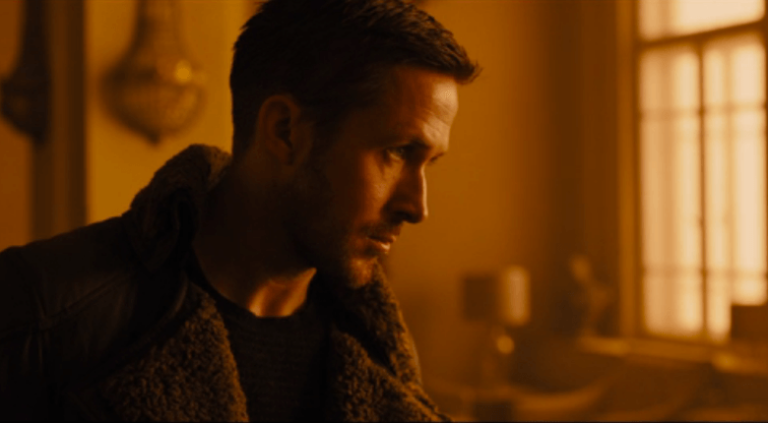
If you’ve ever listened to the InSession Film Podcast, you’ll know we are *huge* fans of director Denis Villeneuve. From Incendies to Sicario to Arrival this year, he’s a director easily batting 1.000 for us. Not only is he perfect at the plate, but he’s knocking out home-runs left and right. So, to hear that he is taking on the Blade Runner sequel is pretty exciting. If you ask us, he’s a director that understands character and how to build understated approach. Simply, he will fit in perfectly in the Blade Runner world.
That said, this post isn’t to rave more about Villeneuve, even though I’m already guilty of that. I want to talk about the cinematographer Roger Deakins, who has worked with Villeneuve before on Sicario and Prisoners. He has created some of the beautiful and riveting cinematography in his career and will no doubt go down as one of the best. The man has been nominated for 13 Oscars with ZERO wins. How in the world is that possible!? Sure, one could argue that maybe in all those losses there was a “more” deserving winner. But one could argue that he did deserve to win on a few of those occasions. Either way, the man has been nominated countless times and needs that gold on his mantle.
After watching the trailer below, how in the world can he be beaten for this work? Surely, there isn’t anything that could possibly beat this correct? Regardless of how the film turns out, the imagery in STUNNING. So, together, join me as we all sing; GIVE ROGER DEAKINS AN OSCAR!
This podcast is brought to you by our awesome listener’s like you! Thank you to all who listen to our Bonus Content and help support the show!
This week on the InSession Film Podcast, Jason from the AtlanticSC Podcast joins us to talk Rogue One: A Star Wars Story, the first anthology film to come from Disney/Lucasfilm which expands the canon of Star Wars outside the saga films. We feature both a non-spoiler review of the movie and a spoiler-filled discussion to help break down what it all means. We were also surprised by the guys at First Time Watchers with a great gift that we unwrap on this week’s show too.
Huge thanks to Jason for joining us this week, who was absolutely perfect for this week’s show. He’s a huge Star Wars fan and one of our biggest supporters, so it was a pleasure to have him featured on this particular episode. As expected, we go a little long again this week, but we are confident you will love the conversation and the depth we go to on Rogue One. Also, the FTW tribute is amazing.
On that note, check out the show and let us know what you think in the comment section. Thanks for listening and thanks for supporting the InSession Film Podcast!
– Rogue One: A Star Wars Story Movie Review (4:34) Grades
JD: B-
Brendan: C+
Jason: A
– Tribute from First Time Watchers (1:02:35)
If you listen to our show, you know that we are great friends with the First Time Watchers Podcast. Well, they have certainly outdone themselves. As a tribute to our milestone of reaching 200 episodes, they put together a fun montage of our last 100 episodes and it’s the best gift anyone could have given us. It’s really great and we couldn’t thank them enough for doing this. We hope you enjoy it as much as we did!
– Rogue One SPOILERS (1:38:46)
To round out the show this week, we discussed Rogue One further in fun, spoiler-filled territory to help break down what it all means.
If you want to help support us, there are several ways you can help us and we’d absolutely appreciate it. Every penny goes directly back into supporting the show and we are truly honored and grateful. Thanks for your support and for listening to the InSession Film Podcast!
This week on the InSession Film Podcast: Extra Film segment, we discuss Christine starring Rebecca Hall and Miss Sloane starring the great Jessica Chastain.
This year has featured some stellar leading female performances, making it one of the richest and deepest category’s this awards season. Chastain and Hall, respectively, make big statements as they add their name into the ring as well. They may get left behind when it’s all said and done, but no doubt that both of them are riveting and deserving of recognition.
On that note, have fun listening to this week’s Extra Film segment and let us know what you think in the comment section below. Hope you enjoy and thanks for listening!
– Christine Movie Review (8:44) Grades
JD: A-
Vince: A
– Miss Sloane Movie Review (46:36) Grades
JD: B
Vince: C
Brendan: B
We try to make this the best movie podcast we possibly can and we hope you enjoy them. Subscribe today on iTunes and Stitcher and please leave us a review on iTunes. You can also find us on Soundcloud, PlayerFM and TuneIn Radio as well. We really appreciate all your support of the InSession Film Podcast.
To hear this Extra Film episode and everything else we do, download our apps on the Amazon Market for Android and the Podcast Box app on IOS devices. The mobile app covers all of our main shows, bonus podcast’s and everything else relating to the InSession Film Podcast. Thanks for your wonderful support and listening to our show. It means the world to us!
[divider]
Help Support The InSession Film Podcast
If you want to help support us, we would greatly appreciate it! For more info, CLICK HERE.
Director: Pablo Larraín Writers: Noah Oppenheim Stars: Natalie Portman, Peter Sarsgaard, Greta Gerwig, Billy Crudup, John Hurt
Synopsis: Following the assassination of President John F. Kennedy, First Lady Jacqueline Kennedy fights through grief and trauma to regain her faith, console her children, and define her husband’s historic legacy.
Jackie is a speculative historical drama that seeks to give us a peek into the hypothetical goings on of Jacqueline Bouvier Kennedy in the week following the assassination of John F. Kennedy in Dallas on November 22, 1963. The First Lady has taken up temporary residence at the Kennedy family compound in Hyannis Port, MA, where she is visited and interviewed by a journalist working for Life Magazine for an exclusive exposé. Keenly aware of how perception dictates reality, Jackie consents for the interview on the hope that her words will assist the nation in the healing process, but still talks only on condition that she has final say on what gets published and what he must leave out of the article.
Directed by Chilean filmmaker Pablo Larraín, working in the English language for the first time from an original screenplay by Noah Oppenheim, the events that transpire are delivered in nonlinear fashion, separating from the grief-ridden feelings for occasional flashbacks, offering us occasional glimpses into the past for such memorable public appearances from Mrs. Kennedy, such as the highly viewed CBS television special in 1962, in which she hosts a tour of the White House after making some significant, highly publicized renovations to the interior decor.
A significant portion of the narrative involves Jackie’s exploration in trying to bolster the historical and cultural legacy of her husband’s presidency. After realizing that other presidents that were assassinated while in office, James Garfield and William McKinley, are scarcely remembered by many Americans, she looks toward the one that is most famous, enough to land his visage on two major forms of American currency and more than one national monument, Abraham Lincoln. Using the revered former president as the template, Jackie decides to draw upon the funeral procession for Abraham Lincoln through the capital as the template for what she wants done for Jack. If the American people are touched by what they see, perhaps he will be remembered warmly and fondly by those moved by the fairy tale story that has become their narrative: ‘Camelot’ — a term for JFK’s presidency first used by Jackie after in her post-assassination interview with Life Magazine’s Theodore H. White, inspired from a 1960 Tony Award-winning Broadway musical borne from Arthurian legend.
Not everyone sees it this way, including John’s brother, then Attorney General, Robert Kennedy, who thinks that the country couldn’t endure another tragedy befalling them, and thinks Jackie should shield herself and the kids as much as possible from wide open public spaces. Heedless, she thinks it is important to preserve the dream for the country that her husband had been trying to achieve; Bobby thinks Jack had been killed too soon in his presidency for anyone to remember his accomplishments, especially since many of them (the space program and civil rights progression) will be credited to someone else, now that he’s no longer there. Even such things as the Cuban Missile Crisis and the Bay of Pigs may be seen as mishandled endeavors if Kennedy’s public image is less than positively idealized in the eyes of American people.
Many of the themes within Jackie deal with such things as the need for having a public persona, even managing and maintaining the illusion for how she deals with her public appearances during her time of grief. For years, she has been groomed for the public spotlight, fully understanding that all of her life, outside of any room she would be in with her family or closest of advisers, would be a veritable theatre stage, where she would be required to give the demure but dedicated performance as the First Lady of the United States. But that role had been, from inception, meant to be a satellite to the main star of the show, President John F. Kennedy, and when that star is no longer available to finish out his role, Jackie decides to do the best she can in giving the production a grand finale worthy of her husband’s memory, and one that will please the audience looking for some shred of a happy ending on which to cling.
A seemingly dauntless Natalie Portman is fantastic in the lead role, offering a breathy voice akin to Marilyn Monroe when speaking for cameras (one may muse about the irony of that), and more assured, less affectatious in her private moments. It does take a scene or two to get used to Portman’s portrayal and accent, which some viewers could initially confuse for a hammy, at least until they go back to watch clips of the real-life Jackie Kennedy, where one can see that Portman has done a remarkable job capturing her speech patterns and demeanor. If it still comes across as artificial, that’s because it’s meant to be — a woman, untrained in dramatic performance, thrust into the public spotlight, having to play a role for a ravenous public that follows her every utterance. Another Oscar nomination for the actress seems a given, raising the level of the performance from one that could have been more of a caricature in lesser hands to one that is ultimately richly presented and emotionally resonant. The multifaceted but enigmatic Jacqueline Kennedy is indeed a challenging role, and Portman rises to the occasion and then some.
Nearly as influential in the overall effect of the piece is the eerie but gripping score from Mica Levi, who came to prominence for her mesmerizing debut score to Under the Skin, striking somber and displaced chords to capture the sad and off-putting mood of the period within the mindset of a grieving widow who sees the need to soldier on in public for the sake of the country. The film is at its best in its off-center presentation of the enigmatic figure as presented by Larraín, only descending back to Earth when narrative devices are used to draw out Jackie’s story, such as the Life Magazine interview, or a visit with a priest in which a good deal of her inner thoughts on the state of her marriage to Jack, are drawn out to piece it all together.
Also striking is the look of the film, featuring a grainy, intimate veneer from Stephane Fontaine, favoring hand-held camerawork and close-ups, with an aspect ratio and soft-edged film stock appropriate for its era. A particular highlight is the recreation of events that utilize the real-life Jackie, such as the tour and the funeral, where we see the authentic Mrs. Kennedy in the long-shots, while replacement recreations are woven seamlessly in featuring Portman for the closer shots. The unnatural effect of the score and photography may prove distancing for some viewers, mainly those unaccustomed to indie film production pedigree, that they might find the presentation disengaging, but for those open to it, they do provide a hypnotic element that can’t be denied, capturing the disorienting effect of Jackie’s internalized, unresolved psychological trauma.
Jackie was also known for her elegant, fashionable look, and that’s certainly a key consideration here, as we see Jackie in her pillbox hat and (now) vintage Chanel. This is important in terms of addressing the public on television, as well as during the aftermath, and is capped off with a symbolic scene in which Jackie’s fashions are in storefront windows everywhere, with the public not only embracing Jackie as a public figure to admire, but also, in its own way, wishing to be more like her.
With more emphasis on impressionism than in faithful recreation, letting the mood and psyche of the Mrs. Kennedy spill out into the mood and psyche of the narrative film itself, Larraín employs a good deal of dramatic license in order to tell his story in order to paint one of the most unknown of widely known figures of the 20th Century in a complex and fascinating light. While the presidency of her husband is seen as a fairy tale come to life, albeit with a very unhappy ending, it is in good part because Jacqueline Kennedy dutifully and faithfully provided one more loving act for her husband, and bestowed upon a shocked and grieving country a potent bit of mythmaking to get them through the darkest of hours.
Overall Grade: A-
[divider]
Hear our podcast review on a previous Episode 198: