

Home Blog Page 16

Movie Review: โ€˜Jack Ryan: Ghost Warโ€™ Brings Back John Krasinski for a Massive Dud


Director: Andrew Bernstein
Writers: Aaron Rabin, John Krasinski
Stars: John Krasinski, Wendell Pierce, Michael Kelly

Synopsis: Jack Ryan reunites with CIA operatives to navigate a treacherous web of betrayal against an enemy who knows their every move, facing a past they thought was long put to rest.


The television series-to-movie pipeline seems to be in full effect this year, with Peaky Blinders: The Immortal Man, The Mandalorian and Grogu, and Jack Ryan: Ghost War, which attempts to carry over what was laid out across multiple seasons of television into an isolated big-budget feature film. Unlike The Mandalorian, though, Jack Ryan: Ghost War understands that the fanbase of Carlton Cuse and Graham Rolandโ€™s televisual expansion of Tom Clancyโ€™s best-selling novels will not go to the cinema to see John Krasinskiโ€™s grand return as Dr. John P. Ryan. As such, Andrew Bernsteinโ€™s film was released exclusively on Prime Video, and it might have saved the franchise from further damage, because it looks and feels exactly like an extended episode of one of Prime Videoโ€™s biggest series. 

Bernstein is no stranger to the Ryanverse, having directed several episodes of the television show, but he doesnโ€™t adapt the televisual language to feature-film conventions. Some may argue that since this is a straight-to-streaming movie, it doesnโ€™t need to look like an actual film youโ€™d see in a cinema, which is a problem in and of itself. Even if we ignore what has transformed the visual medium of cinema into television, on both the big and small screen, Jack Ryan: Ghost War doesnโ€™t capture the cinematic thrills of John McTiernanโ€™s The Hunt for Red October and Philip Noyceโ€™s Patriot Games and Clear and Present Danger. 

Bernstein will certainly rip off one key sequence from Patriot Games and hope the audience wonโ€™t notice, which acts as the catalyst for the filmโ€™s events, as Jack Ryan (Krasinski), having fully abandoned his life as a CIA analyst, is recruited back in after acting director James Greer (Wendell Pierce) asks him a favor. With Mike November (Michael Kelly), the two travel to Dubai to meet MI6 officer Nigel Cooke (Douglas Hodge), but are caught in an altercation with Liam Crown (Max Beesley), a black ops soldier with a close connection to Greerโ€™s past. 

Jack will have to team up with MI6 agent Emma Marlow (Sienna Miller) to uncover a global conspiracy related toโ€ฆsomething?  I genuinely had no idea what the movie was about, other than Crown is bad and must be stopped. I guess this is what happens when streaming โ€œcontentโ€ isnโ€™t concerned with giving audiences something of actual substance, even if the series functions well as engaging espionage entertainment. 

The movie has its fair share of effective action sequences, but it never lays out whatโ€™s most important about the plot: Jack must dismantle, or how close Greer and Crown were before the latter began engaging in rogue activities. Aaron Rabin and John Krasinskiโ€™s screenplay will certainly try to explain it via a step-printed flashback thatโ€™s far more convoluted than youโ€™d imagine, but there isnโ€™t a single scene โ€“ or moment โ€“ in Jack Ryan: Ghost War where we feel a sense of urgency about whatโ€™s going on. 

In the fourth season of the television show, Ryan has made it very clear that he is done with working for the CIA and is pursuing a more stable life. Because we need him to return, Rabin and Krasinski come up with a half-baked explanation, while November arrives as a deus ex machina of sorts, and weโ€™re back in business as if he never left the force in the first place. Thereโ€™s no evolution in the characterโ€™s line of thinking, even if he repeats ad nauseam that heโ€™s but a simple โ€œcivilianโ€ now and has no connections with the CIA whatsoever. This couldโ€™ve worked if there had been a push-pull between Jack wanting to stay in New York away from the field and Greer being in legitimate danger, but there isnโ€™t any of that. 

Ryan returns to the CIA because Greer asks him to, without actually knowing why he should be the one to go to Dubai with November, even if he wants no part of this life. Thereโ€™s a fine line between suspending your disbelief and narrative sense that the screenplay continually breaks, and as much as โ€œthings happenโ€ for 107 minutes, nothing of real consequence occurs because we have no idea whatโ€™s going on. Why does Crown want to specifically target CIA director Elizabeth Wright (Betty Gabriel, whose talents are wasted after being the best parts of seasons three and four), other than wanting to inflict pain upon Greer, even though we have no clue why Greerโ€™s past suddenly comes to haunt him? 

There is something pretty significant that happens early on in the film that pissed this critic off, because it makes no sense to commit such an act other than laying the table for a pivotal narrative turn in Clancyโ€™s books that the series smartly avoided. However, in the interest of not giving anything away, this critic will avoid mentioning it. The action, while bountiful, is also shot and edited with zero cinematic pulse or verve. When the show has more well-mounted set pieces than a movie, regardless of whether itโ€™s a streaming exclusive, there is a problem. 

Bernstein doesnโ€™t know where to place, block, and move the camera, nor does he understand how to edit said action. They frequently become nauseating and unimpressive. The final machine gunfight, which couldโ€™ve been tactile and genuinely thrilling, turns out to be a boring show of force that does culminate in a darkly funny kill, but takes forever to get to that explosive moment.

The movie is only watchable because John Krasinski is a great Jack Ryan. Heโ€™s probably the best iteration of the character after Harrison Ford. How he captures the characterโ€™s analytical and tactical skills so well remains compelling to this viewer, and the chemistry he shares with Pierceโ€™s Greer and Kellyโ€™s November never falters. It must have been daunting for Wendell Pierce to portray the character after James Earl Jones defined him in the original trilogy, but the way heโ€™s added texture over the years and made him far more complex and three-dimensional than we thought is honestly commendable. 

Miller is also a great addition to the cast, and springs into action effectively, although sheโ€™s far more underdeveloped than other female characters of the show, such as Betty Gabrielโ€™s Wright, Abbie Cornishโ€™s Cathy Mueller, and Nina Hossโ€™ Alena Kovac. Still, sheโ€™s more interesting than Beesleyโ€™s one-note Crown, a villain whom I still have no idea what his motivations are and what he was trying to accomplish. Iโ€™m usually one who doesnโ€™t care much about plot efficiency and looks at cinema through its thematic and visual lens, but even I have my limits. He doesnโ€™t make sense, and this entire film seems to exist only to capitalize on the Jack Ryan IP, with little to no purpose.

The new regime at Paramount, however, wants to expand upon Clancyโ€™s Ryanverse โ€“ and do so imminently โ€“ so we might see more movies and television shows developed directly as a result. While I would certainly consider myself a fan of Clancyโ€™s work, milking it to no end will only yield diminishing returns. If youโ€™re only making Jack Ryan (or Ryan-adjacent) โ€œcontentโ€ just to fill the gap, youโ€™re not going to get the audience to watch more of it. Youโ€™ll only make junk like Jack Ryan: Ghost War that people will immediately forget and wonder why they even watched it in the first place. Krasinski is a great Jack Ryan. Itโ€™s a shame the work he did for the character wonโ€™t be as fondly remembered as Harrison Ford or Alec Baldwin, simply because the show (and film) around him isnโ€™t very good.

Grade: D+

Movie Review: ‘Toy Story 5’ Never Breaks the Successful Mold


Directors: McKenna Harris, Andrew Stanton
Writers: Andrew Stanton, McKenna Harris
Stars: Tom Hanks, Tim Allen, Joan Cusack

Synopsis: Woody, Buzz, Jessie and the rest of the gang’s jobs are challenged when they’re introduced to electronics, a new threat to playtime.


Whether it’s James Bond, Fast and Furious, Saw, or the Rocky movies, sequels can’t deliver the exact same thing and expect audiences to jump at the opportunity. Filmmakers have to be able to shift the franchise in a direction that will feel fresh and exciting to their existing audience. Andrew Stanton’s Toy Story 5 might not reinvent the genre, but the message and impact more than justifies the film’s existence.

For the fifth entry in a very well-known and commercially profitable franchise (over $3 billion for the first four films), the filmmakers are more than willing to take some chances while still keeping relatively close to the formula they have created. While many of the characters are sidelined for a good chunk of the film, the core group is still intact. It’s as big of a swing the filmmakers could take while still remaining true to the brand, while keeping their core group of fans serviced.
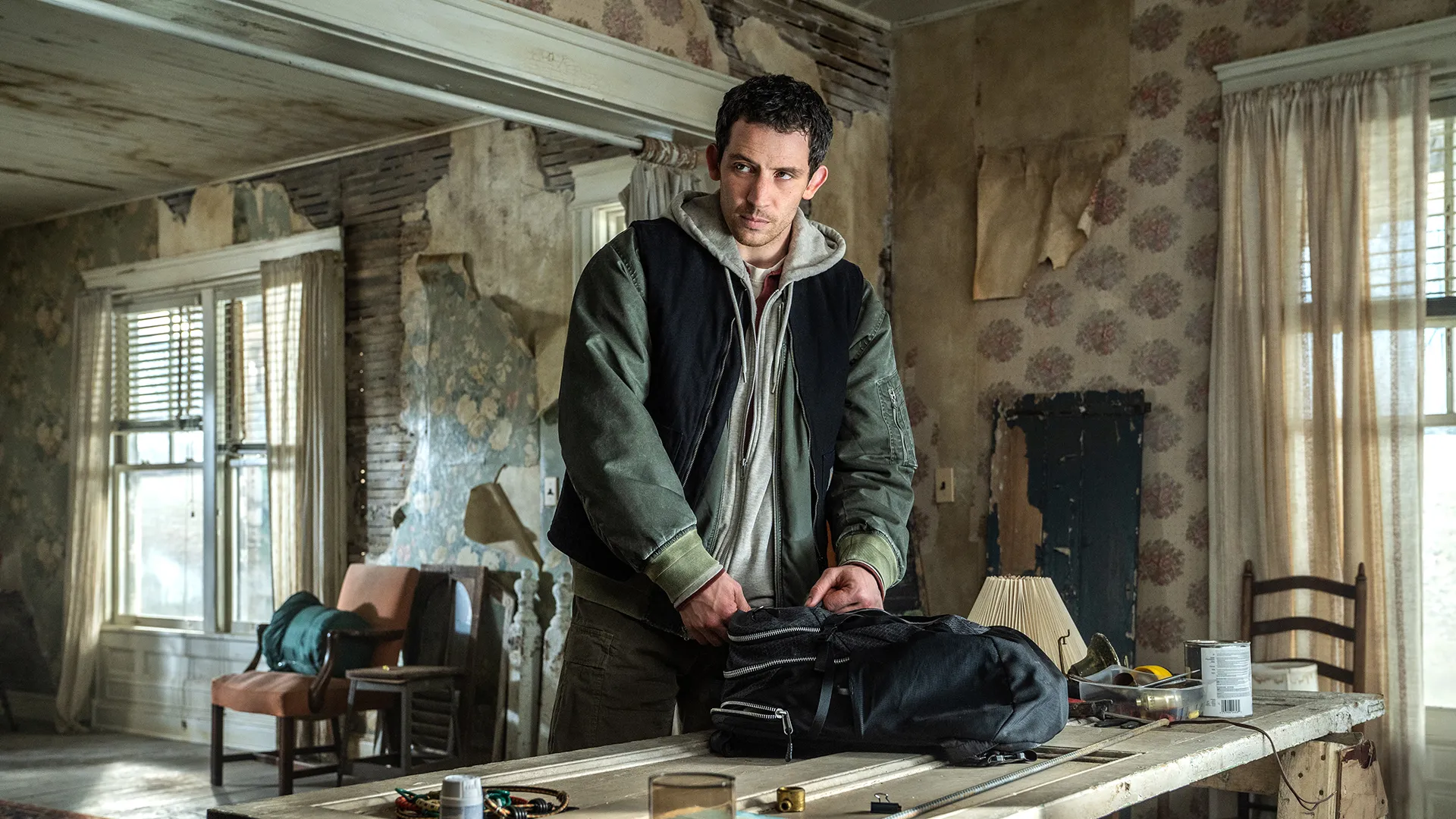
After all, this is still a Disney movie. The Mouse House isn’t about to let a multi-billion dollar franchise run amok with too big of ideas. And Stanton (the co-writer of the four previous films) isn’t about to potentially poison the well with something to alienate a very well-established base of moviegoers. That being said, this is not a cowardly film. The message resonates and doesn’t make any sort of grand statement on the state of child development or device proliferation. It’s not taking any real stands, but I don’t see why we would expect that from the fourth sequel to a 31-year-old film.

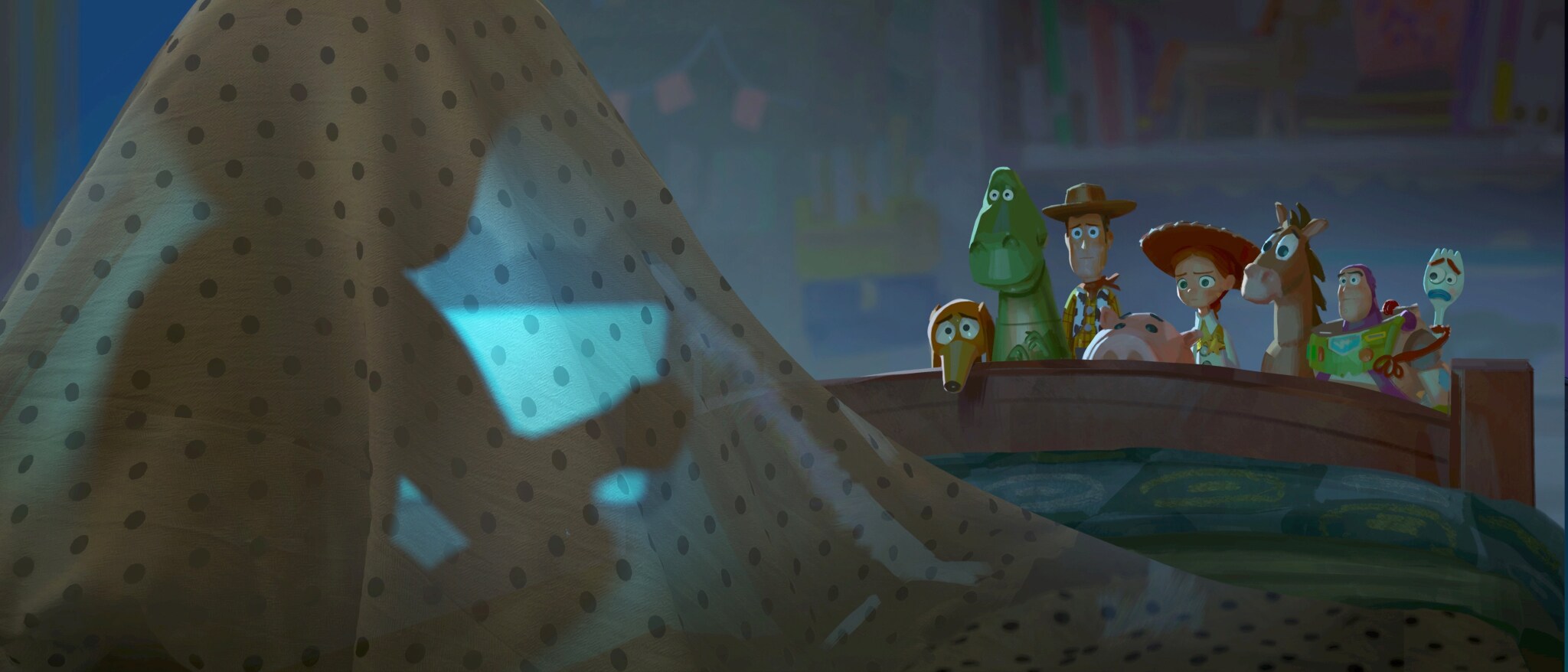
The film’s plot focuses on the toys owned by young Bonnie. Led by Jessie (voiced by Joan Cusack) with Buzz Lightyear (Tim Allen) as her second-in-command, the toys attempt to bring Bonnie out of her shell and interact with other kids. Bonnie’s parents recognize her seclusion and buy her a tablet named Lilypad (Greta Lee). Bonnie’s infatuation with the tech leads the toys to believe their time has come to be replaced.

Jessie still wants Bonnie to interact with kids face-to-face, while Lilypad arranges a playdate. Jessie and Bullseye get lost on the way and end up at the home of Jessie’s former owner. Jessie aligns with tech toy Smarty Pants (Conan O’Brien) to reconnect with Bonnie, while Woody (Tom Hanks) returns to the room to find Jessie and help put a stop Lilypad’s schemes to replace the toys.

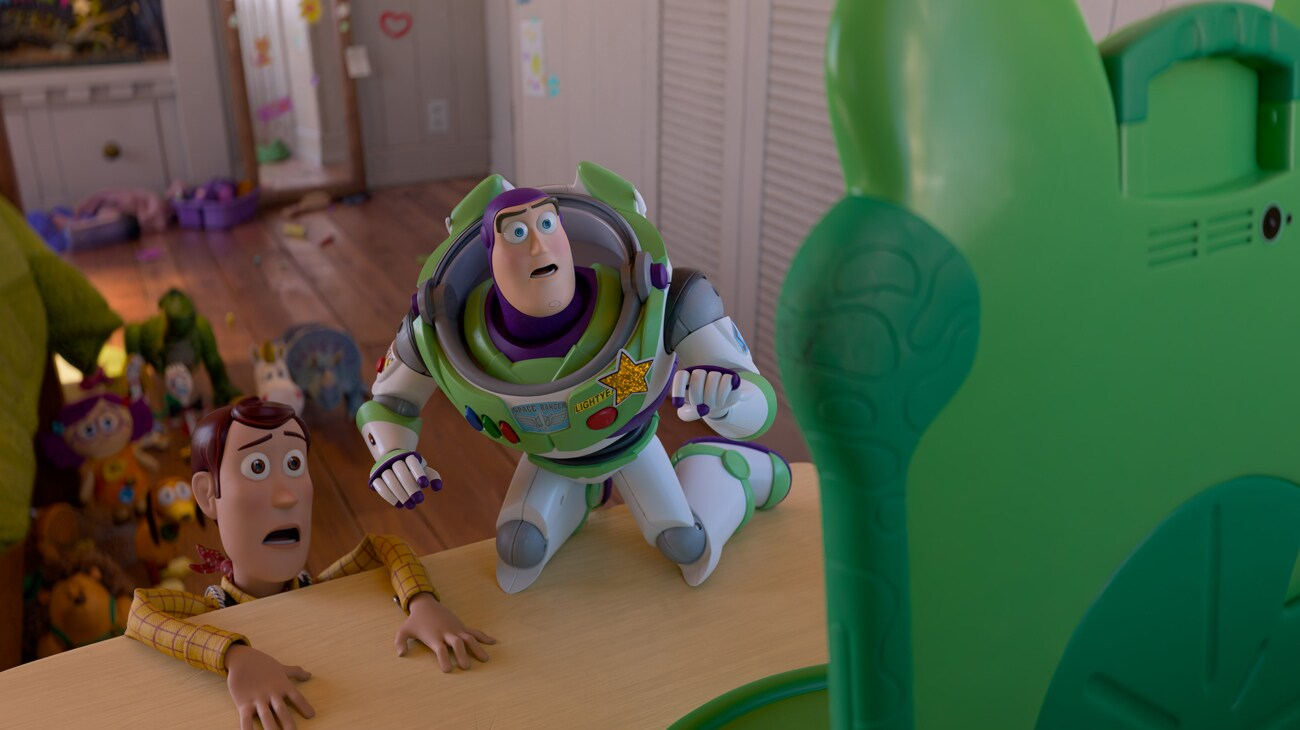
Woody and Buzz Lightyear in Disney and Pixar’s TOY STORY 5. Photo courtesy of Pixar. ยฉ 2026 Disney/Pixar. All Rights Reserved.

The Toy Story films have always been about more than just a group of toys coming to life when kids aren’t looking, and this one is no different. The introduction of tech to young impressionable minds is at the top of mind for the filmmakers, but played with a deft touch. You can very easily see a version of this film that frames technology as a pure evil or at the very least a nuisance. The film begins that way, but slowly unravels a truth about prejudice and harmony between the analog and the digital. It’s a nice balance between making a point to parents without going over the heads of kids.

There are other themes that the film touches on but doesn’t explore too deeply, such as prejudicial thinking, alienation, bullying, and child anxiety. These are all lightly approached, but never drilled down on. This is where the film lands in that middle ground. The idea of a child being unable to make friends is a big theme, but that is tempered by the adventures of a group of shipwrecked Buzz toys. The film wants to be both a vessel for nostalgia while approaching bigger ideas. It never dips too much into the nostalgia to be annoying, but it also never explores the ideas enough to be transcendent.

But, at the end of the day, this is a kid’s movie. People like me might have been a kid when the first film came out and now are bringing my own children to the theater, but it’s still squarely aimed at a younger audience. There is a loosely connected subplot involving a group of factory-setting Buzz toys that seems solely intended to fix the plot when needed. Along the way, they do the usual “Star Command” and “Emperor Zurg” pronouncements. It’s all light comedy for the sake of simple comedy. Without this subplot, the film might flow much better, but it also would write the film into a corner.

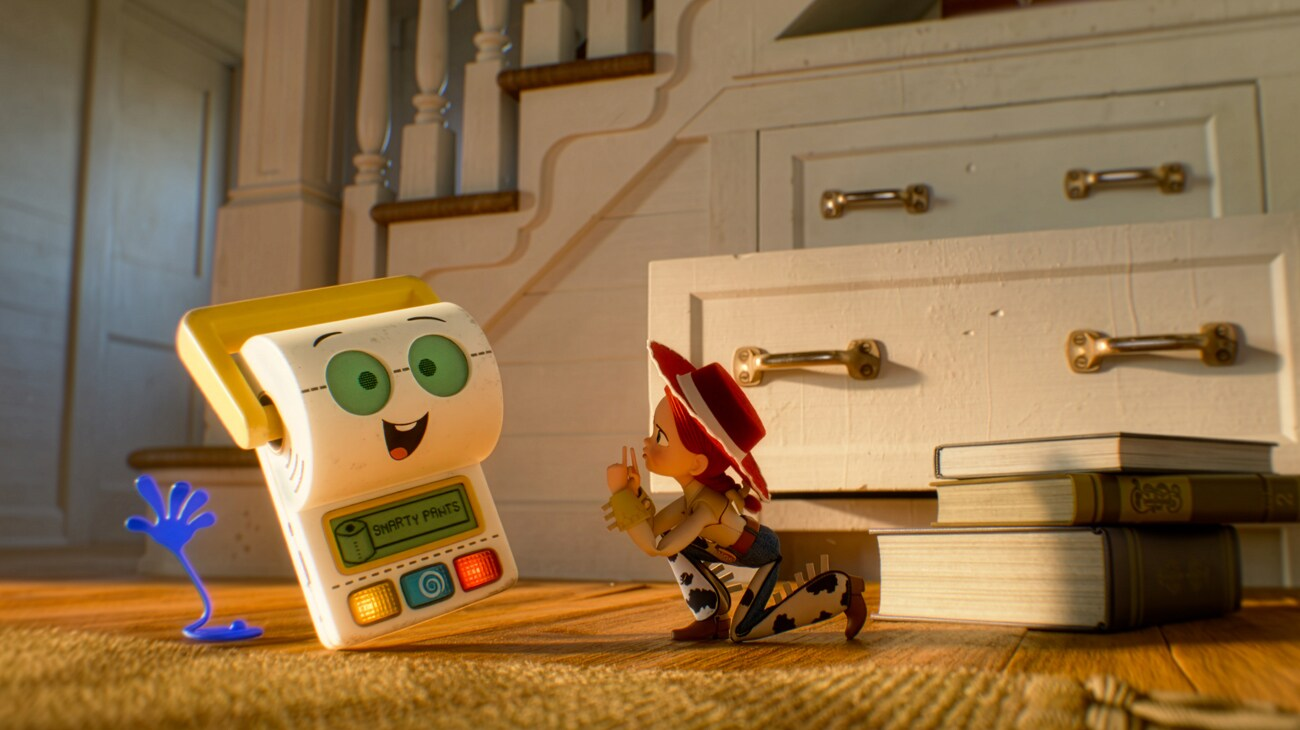
Smarty Pants and Jessie in Disney and Pixar’s TOY STORY 5. Photo courtesy of Pixar. ยฉ 2026 Disney/Pixar. All Rights Reserved.

All of it barely matters, because the things the film puts narrative focus on gets all the attention. The push-pull between Lilypad and the toys sucks up all the thematic air. Again, this is a kid’s film for kid attention spans. They don’t want to overdo it. One big theme is enough. More than anything, this is a Jessie movie. If you like Jessie as a character, this film should be up your alley. If Jessie isn’t someone you particularly like watching, this is a tough ask. For the first time in the series, Buzz and Woody become secondary to the plot. Jessie’s abandonment issues from the second film continue to linger in the fifth film.

All the voice actors continue their long and storied history of character excellence, with Cusack getting the star role this time around. Lee is a nice addition to the film, increasing the tambor in her voice to nail the deadened nicety of an automated device. O’Brien similarly does not default to his usual voice and delivers a nice performance of zany chaos. Craig Robinson and Shelby Rabara also do a nice job in their debut roles.

Toy Story 5 is exactly the kind of slightly-better-than-middle-of-the-road film Disney wants to give you. It won’t break the mold, but it shouldn’t annoy parents too much. It’s a fine entry in the franchise, just without the emotional highs of some of the previous installments.

Grade: B

Chasing the Gold: The Importance and Impact of Floyd Normanโ€™s Honorary Oscar


The Academy of Motion Picture Arts and Sciences announced its honorary award recipients for its annual Governors Awards. This yearโ€™s recipients include director/producer Ridley Scott and actress Glenn Close. Two household-name industry professionals in the world of cinephiles and film fans. But the last recipient of this prestigious award is industry veteran Floyd Norman. For those who may not be familiar with the name, Floyd Norman is an Animator/Writer/Storyboard Artist with a 60-plus-year career in American animation, working for studios such as Disney Animation Studios and Pixar Studios. Floyd Normanโ€™s Governors Award represents more than a celebration of a single artist. Itโ€™s a recognition of animationโ€™s often overlooked pioneers. And a landmark moment for black creatives whose contributions to the medium received little acknowledgment from the Academy.  

In 1956, Floyd Norman became the Disney Studioโ€™s first Black animator with career credits to features such as Sleeping Beauty, The Jungle Book, The Hunchback of Notre Dame, Mulan, and Monsters, Inc. But what is it about Floyd Normanโ€™s legacy, career, and reflection off from the industry that deserves its own closer look based on the significance of this award? 

Now this isnโ€™t to undersell or underappreciate his co-recipients who are also deserving. Nonetheless, both have been nominated multiple times over multiple decades. Even the gifted Producers, Christine Vachon and Pamela Koffler, recognized for the Irving J. Thalberg Memorial Award, are previous nominees. This makes Floyd Norman the only winner this year to never have been recognized by the Academy in any shape or form until now. That creates its own sharp story of what an Honorary Award could be: someone who never worked in a lane that couldnโ€™t give them the ability to be nominated for any of the 24 categories. 

The award is layered with various other recognitions. Animation in general has been in a tug-of-war for decades, either advocated or discredited as โ€œreal moviesโ€ to be taken seriously. Ever since the dawn of the first hand-drawn animated feature (Snow White and the Seven Dwarfs), animation has carried a stigma of being simply cartoons made for children or family-friendly entertainment, which questions its prestige on a level with live-action nuts-and-bolts picture-making. Even in recent years, industry live-action directors such as Guillermo del Toro have used their platforms to advocate for animation as real cinema. For decades, Animation had a place at the Academy, but validation had boundaries, with recognition mostly in the music and shorts categories. Strivings have been made, such as the birth of Animated Feature and minor recent above-the-line recognition (Screenplay and Best Picture), but only a fraction of the broader scope of the Academyโ€™s ninety-plus-year existence is still seen as ongoing advocacy. The Governor Awards have recognized only a few animators, including Hayao Miyazaki and, more recently, Floyd Norman, out of dozens of recipients. 

This isnโ€™t just a win for the Animation community but for Black creatives in both live action and animation. When Floyd Norman was building his credits working directly under Walt Disney Productions, it was an era when Black people in Hollywood were mostly seen as secondary or supporting characters on screen. As for creatives behind the scenes, they were rarely seen in roles beyond creative advice and lower-level support within departments. That being said, they still mostly operated in segregated environments or encountered gatekeeping actions from established white officials on said productions. Floyd Norman didnโ€™t simply break through barriers that kept many Black artists from opportunities before the Civil Rights Act. In the 1950s, one of Floyd Normanโ€™s first jobs was as a clean-up artist, working between frames and on character movements for Sleeping Beauty. While working at Disney, Floyd would draw gag images and post them around the office to poke fun at Disney Executives. Instead of consequences for his actions, Walt Disney saw his storytelling prowess and promoted him to the Art Department for The Jungle Book. Floyd Norman didnโ€™t sit in the background and punch in and punch out. He took initiative. He took risks by advocating for himself through humor and drawings that made him visible in a room full of others, where he belonged, to tell stories. 

He sustained a remarkable career across multiple generations of animation, remaining relevant through dramatic changes in technology and culture. During the 1960s, heโ€™d go on to create his own production company for educational motion pictures on black history, which led to television opportunities through the 1970s and 80s. It was his longevity working in and out of Disney that made his six-decade-plus career so exuberant. However, regarding the Academy, history and strivings are still being made (even recently, Ryan Coogler being one of two Black men to win Best Original Screenplay); only two Black filmmakers have ever been credited for Animated Feature nominations. Kemp Powers for Spider-Man: Across the Spider-Verse and Peter Ramsey, who is the only Black Animator in history before Floyd Norman to receive a gold statue for Spider-Man: Into the Spider-Verse. That makes Normanโ€™s win another great step in the right direction, showing that African-descent animation artists and storytellers are seen not just as a collaborative effort in the crowd, but as individuals who receive recognition and appreciation from peers in the industry. 

Floyd Norman is a legend in his field who was for years seen as an unsung force in multiple generations of Animated memories. His work and continuous inspirational advice and mentorship to younger artists from the 1990s to the 2020s. Spanning both 2D and 3D animation to follow dreams, work hard, and create magic. And thatโ€™s what makes him a worthy honorary winner.

Movie Review: ‘Landship’ Turns the Battlefield Into a Pressure Cooker


Director: Callum Burn
Writers: Andrew Burn, Callum Burn
Stars: Vin Hawke, Sam Dowdy, Matthew Canny

Synopsis: Stranded and slowly sinking into the fetid mud of Passchendaele, the crew of a British WW1 Tank fight for their lives against an insidious and determined enemy.


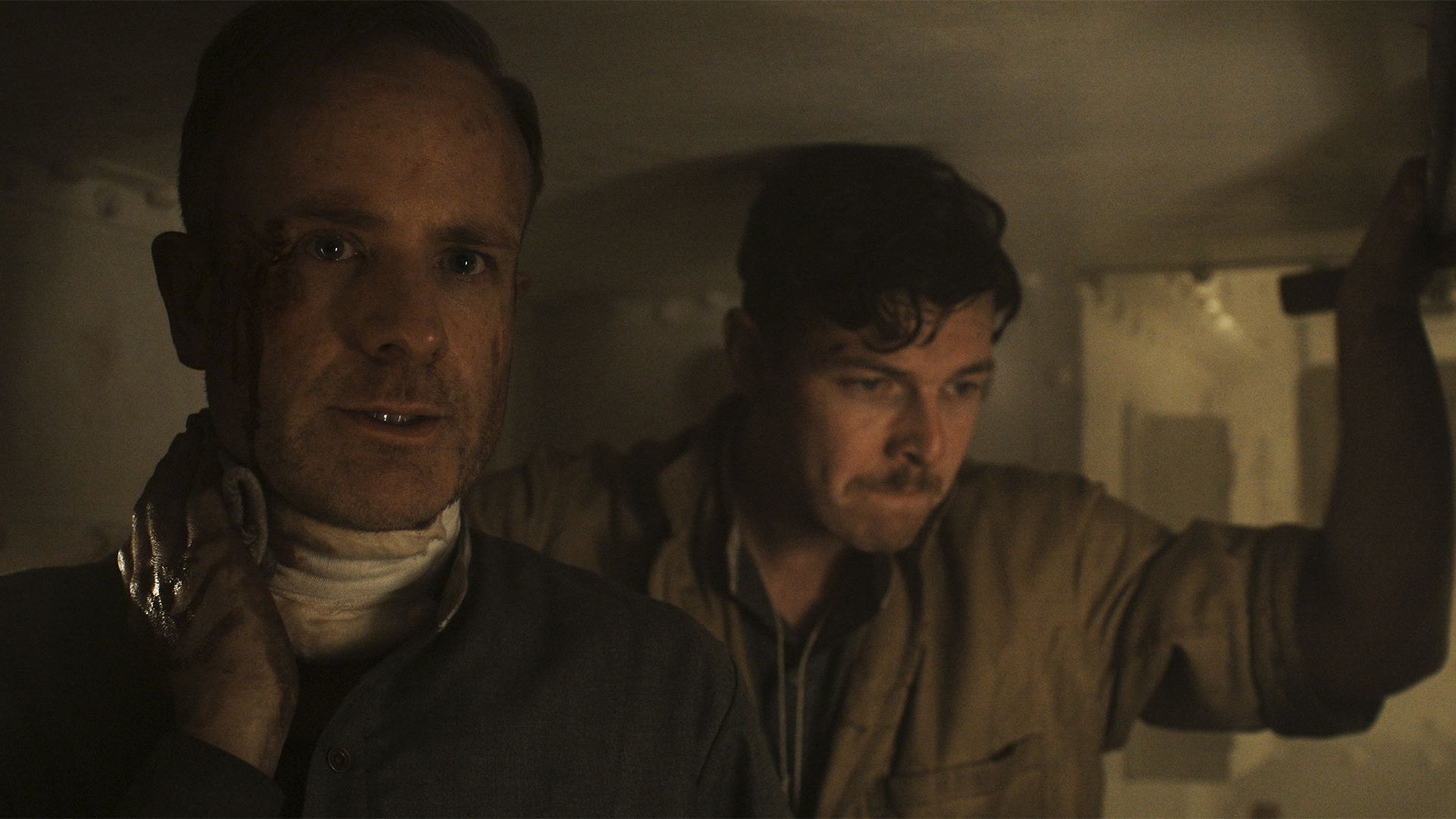
War films often aim for spectacle and scale, and they need to, as nothing will ever come close to what people experience in real life. Good war films usually include vast battlefields, endless explosions, sweeping shots, and attempt to showcase history unfolding in real time. Landship, however, takes a far more claustrophobic approach, and itโ€™s all the better for it. Rather than trying to recreate the entire chaos of World War I, director Callum Burn aims to trap viewers inside it, narrowing the focus to a single British MKIV tank crew during the Battle of Passchendaele. The result is a lean, mud-soaked survival thriller thatโ€™s interested in endurance.

Set in 1917, during one of the warโ€™s most brutal offensives, the film follows a nine-man crew tasked with destroying heavily fortified German bunkers. Naturally, things go wrong almost immediately. Their tank becomes stranded in a shell crater only yards from enemy lines, leaving the men exposed to relentless gunfire, poison gas, starvation, and the psychological strain of being trapped inside what increasingly feels like a metal coffin.

Itโ€™s a strong premise, but itโ€™s not one we havenโ€™t seen before. Fury sees a group of men fight their way across Germany in April 1945, in a tank. Whilst Fury did rely heavily on spectacle, this film builds tension through atmosphere. The inside of the tank is cramped, filthy, deafening, and increasingly unbearable as the hours drag on. Everything feels damp, rusted, exhausted, and on the verge of collapse.

Performance-wise, the whole cast does solid work carrying the filmโ€™s emotional weight. Vin Hawke gives the film a grounded center, with some very emotional moments, while David Dobson and Matthew Canny help create a believable sense of camaraderie among the crew. These men are frightened, exhausted, irritable, and often uncertain, and are not portrayed as mavericks with heroic archetypes. Their chemistry is strong, and youโ€™ll root for all of them throughout the film.

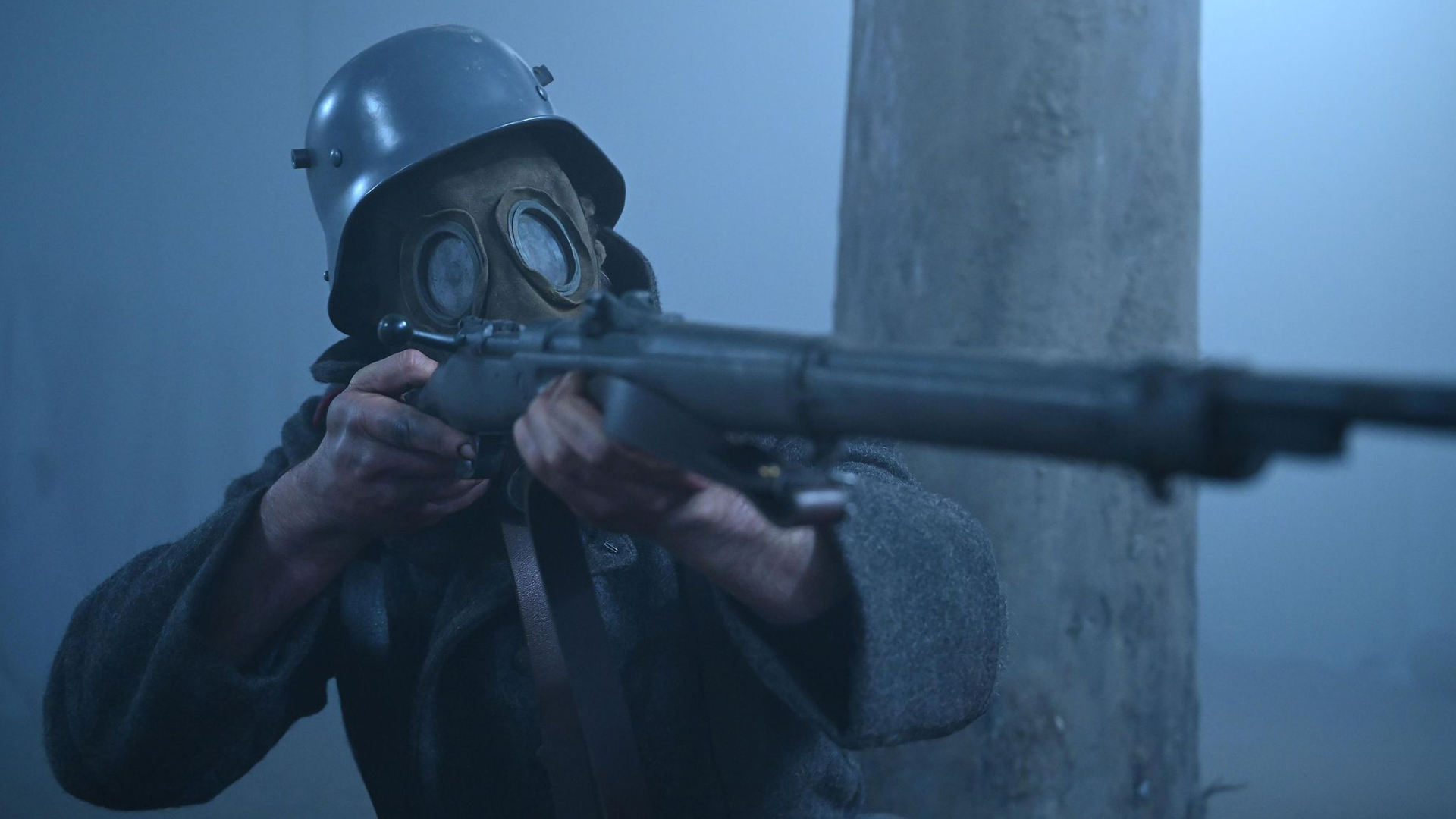
The cinematography is dark, dusky, and heavy. All contribute to the presence of intensity and fear. Thereโ€™s a particularly unnerving scene where one of the characters is out of the tank (what feels like their safety net) and is walking around in vast fog looking for an enemy, who eventually finds him first.

Fans of military history will likely appreciate the effort that has gone into recreating the MKIV tank and the grim conditions of Passchendaele itself. The production design captures the miserable reality of trench warfare remarkably well without making it feel polished or too โ€œHollywoodโ€ (in a studio, over the top).

What surprised me most was how psychological the film becomes as it progresses. Once the initial combat chaos settles, Landship shifts into something closer to a pressure-cooker drama. Shellshock, paranoia, and emotional exhaustion slowly begin eating away at the crew from the inside. The film understands that prolonged fear can become just as dangerous as bullets.

That said, the film occasionally struggles with pacing. At 89 minutes, it remains admirably tight, but there are sections in the middle where the repetitive nature of the situation slightly stalls momentum. The confinement that makes the film so effective also limits how visually dynamic it can remain for the full runtime. A few scenes begin to blur together, even if that monotony is arguably part of the point.

Thereโ€™s also a slight imbalance between character development and action. While the ensemble works well collectively, not every crew member is given enough individual depth to leave a lasting impression. Some characters inevitably become more memorable than others simply because the film doesnโ€™t quite have the time to fully explore all nine men equally. But what is lovely is that at the end of the film, each man is named and what happened to them, for example, if they died in battle and what medals they were awarded. There are also some statistics – this really hits home and gives the film even more emotional weight.

Landship may not reinvent the war genre, but it doesnโ€™t need to. Itโ€™s a strong contribution to the war film roster. Fans of the war genre will love being taken back to a time, a war, a place where they feel actively part of the history and action from the safety of their homes. Landship is filled with tension, grit, and psychological strain, creating an intimate, memorable war film.

Grade: B+

List: Top 5 Secret Identity Movies

This week on Episode 690 of the InSession Film Podcast, we discussed our Top 5 secret identity movies! With Masters of the Universe coming out this weekend, we thought it would be fun to talk about our favorite secret identity movies. This is a list weโ€™ve never done before and there are surprisingly many different angles to this topic. As a result, it did narrow our criteria slightly, but we still came to the table with some great films and we had a blast breaking down our picks. That said, here are our lists:

(Note: Please keep in mind that we each had different criteria for our selections)

JD
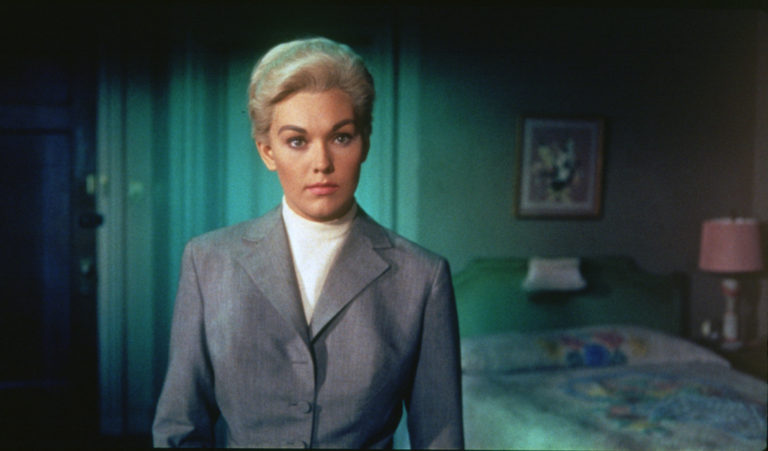
1) Vertigo
2) The Bourne Trilogy
3) Mulan
4) Catch Me If You Can
5) Some Like It Hot

Megan
1) Working Girl
2) You’ve Got Mail
3) Vertigo
4) A History of Violence
5) The Parent Trap (1961)

Honorable Mentions (Combined)
The Mask of Zorro, Point Break, 21 Jump Steet, Dark Man, BlackKksman, Fight Club, Enemy, Mrs. Doubtfire, Yentl, Tron Legacy

Hopefully you guys enjoyed our lists, and if you agree or disagree with us, let us know in the comment section below. There are obviously more great secret identity movies that we didn’t have time to mention. That is to say, your list could look very different than ours given the great films and memorable sequences we saw over the last year. That being said, what would be your Top 5? Leave a comment in the comment section or email us at [email protected].

For more lists done by the InSession Film crew and other guests, be sure see our Movie Lists page.

Listen to the full episode here

Op-Ed: ‘The Cable Guy:’ Its Future is Rewritten 30 Years Later


Director: Ben Stiller
Writer: Lou Holtz Jr.
Stars: Jim Carrey, Matthew Broderick, Leslie Mann

Synopsis: A designer makes a grievous mistake when he rejects the friendship of a borderline cable guy.


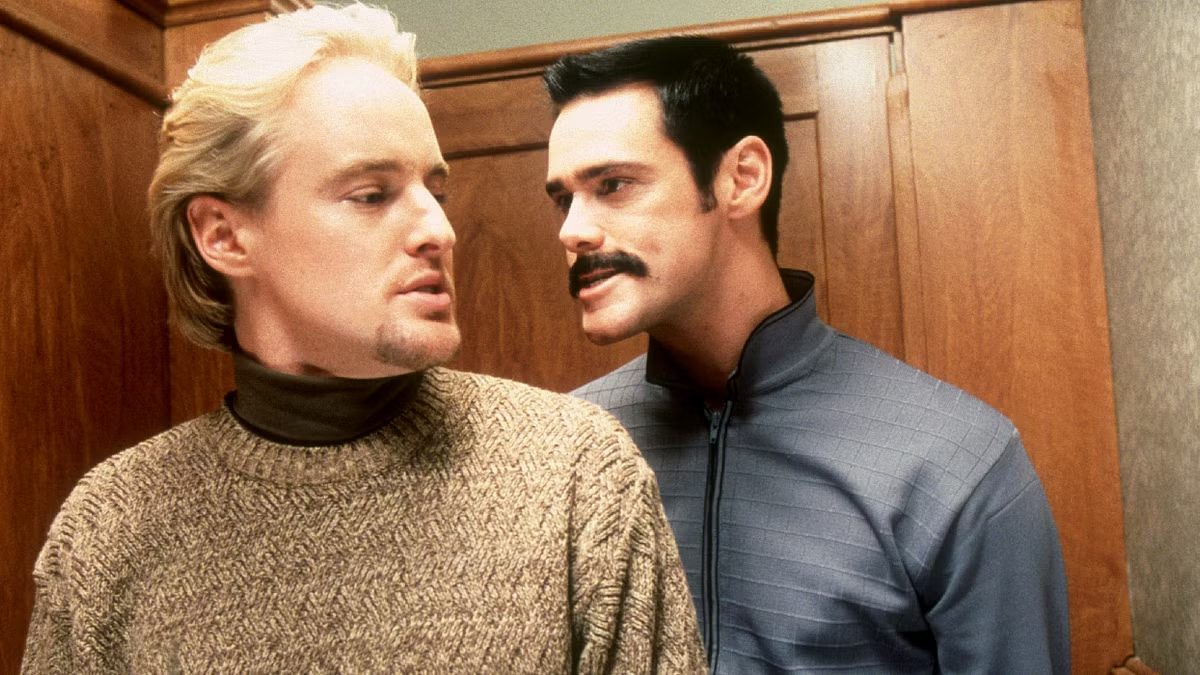
There is a universe in which The Cable Guy, directed by Ben Stiller, was what screenwriter Lou Holtz, Jr. envisioned. He saw a wacky buddy comedy and the studio heads at Columbia saw a vehicle for newly minted movie star Chris Farley. Then along came Jim Carrey. The certified box office champion swooped in to scoop up a $20 million paycheck and bring on a creative team with a greater depth of vision than Holtz’ original script.

As writer Bernard Weintraub details in his New York Times article, “How a Sure Summer Hit Missed,” published less than two weeks after The Cable Guy‘s premiere, The Cable Guy was never meant to be a dark comedy that dissects our voyeur and tabloid culture. Weintraub details that Lou Holtz, Jr. didn’t realize that when Carrey came on board, he would be bringing his own team and leaving him out in the cold. The team included Stiller as director and young writer Judd Apatow for some extensive rewrites.

It’s true that even though the domestic box office was healthy, the international and home video sales even more so, the film is still seen as a sort of failure. You really can’t attribute that to the movie itself, but to people’s attitudes at the time. This dark comedy is a swing for the fences and a far cry from anything Carrey had been known for. The themes of alienation, loneliness, and a culture which on the surface is wrapped in a puritan cloth, but enraptured by the lurid details of sex and murder, are deeper than most comedies would attempt. It’s a bleak view of the toll that a lack of human compassion can have on a person.

What the audience wanted and hoped for from a new Jim Carrey movie at the absolute peak of his fame was more of the same. He had had a string of hits and became a household name. When people saw The Cable Guy, they likely didn’t understand that this was a much more nuanced character than Carrey had played before. They didn’t like what they thought of as a bait and switch. New York Times critic Janet Maslin especially didn’t like it as she puts in her review, “Though this should have been an opportunity for Carrey to expand upon his runaway success and solidify long-term stardom, ‘The Cable Guy’ instead offers the shocking sight of a volatile comic talent in free fall.” The morally gray version of Jim Carrey was too much for the 1996 audience to handle. Though they’d seen him play jerks and one uncomplicated villain, The Riddler in Batman Forever, they didn’t understand that the manic, zany energy he puts on screen has a complex layer of menace underneath.

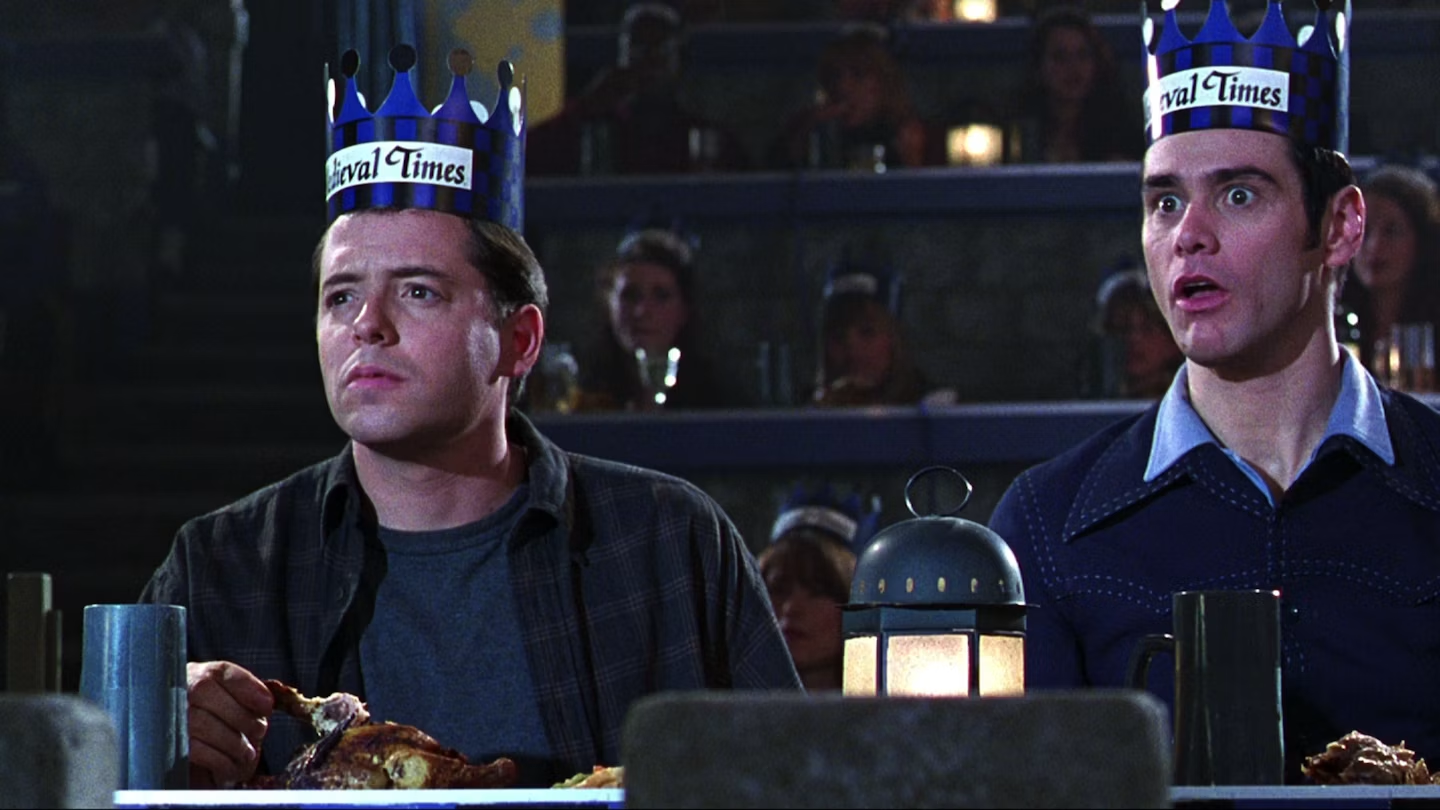
Thirty years from its initial release, The Cable Guy is ripe for a reassessment as a dark comedy classic and one of Jim Carrey’s best roles. Carrey imbues Cable Guy, the character who is never given a true name, with a complexity that you could lose in his very Carrey behavior. It’s unhinged, deranged, and, ultimately, relatable. In the world of 1996, Cable Guy understood the capacity for the world to connect. He understood that the one-way nature of television could evolve. He wants that more than anything because he needs that connection he’s never had. The idea of the camaraderie and friendship he’s only seen portrayed by actors on TV is intoxicating to him. Cable Guy is a tragic figure.

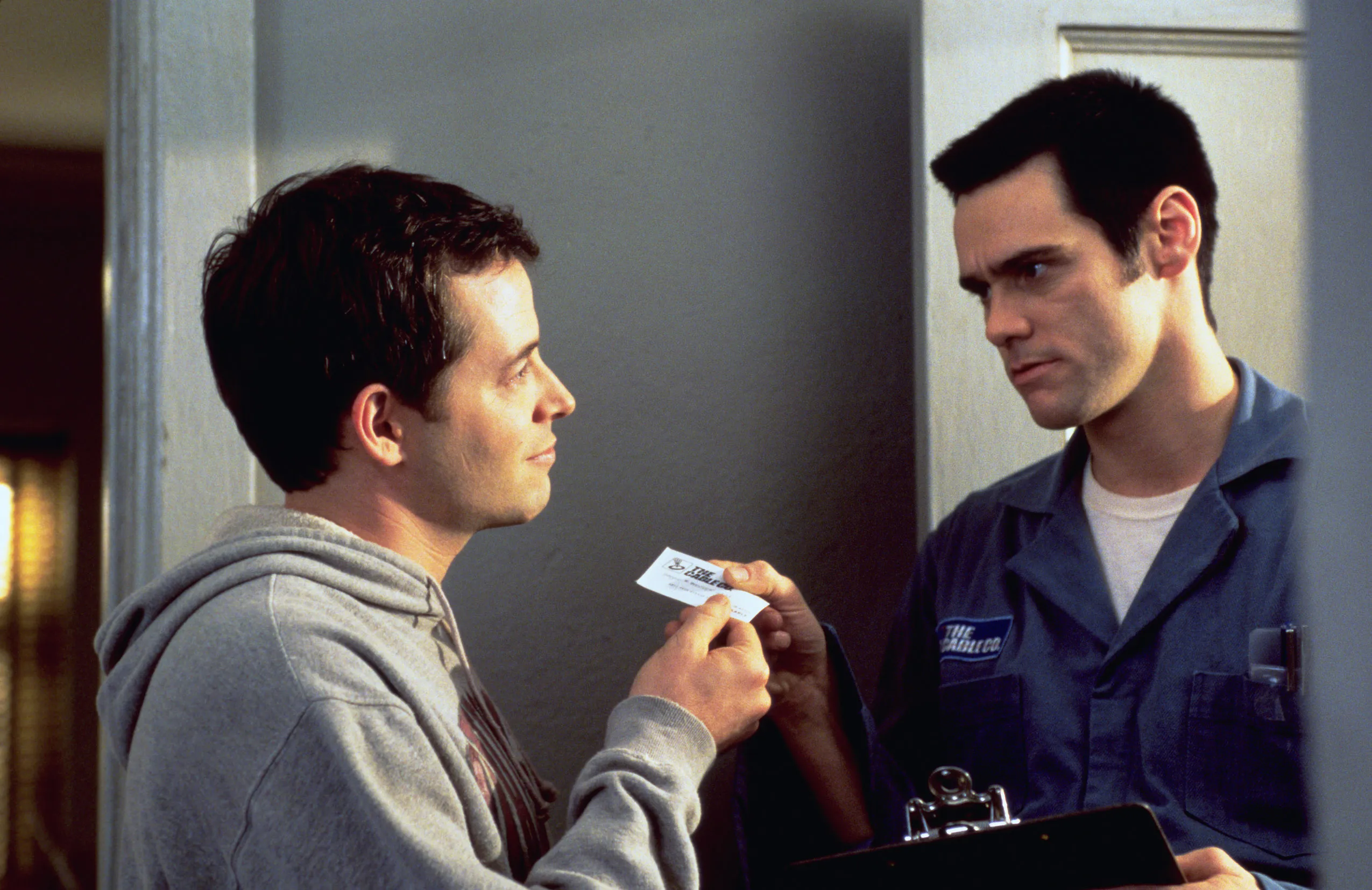
A small act of kindness from Steven (Matthew Broderick), something that Steven threw away, tossed out without even thinking twice about, is all it takes for Cable Guy to latch on. Yes, it’s deranged and sociopathic, but what can we really expect from a man who never received attention or affection from the people who were supposed to be loving and raising him? His screw loose isn’t out of nowhere, it comes from a lack of empathy. He even chose a profession, albeit one he’s doing illegally, that allows him to experience other people’s lives as if they are characters he’s watching, hoping he’ll be invited over for the recurring guest spot in their life, but what he mostly gets is an ungrateful shove out the door when his job is done.

The Cable Guy is quite a bit anachronistic 30 years on as most of what we consider television is now streaming anytime and anywhere through the internet. Even some live sports games have become exclusively streaming events. Yet, its darkness and willingness to take comedy further from setups and pratfalls and into a demented space is not at all foreign to today’s audience. You can see The Cable Guy’s DNA, if not a bit of direct influence, in last year’s anti-buddy comedy, Friendship or just pick any horror comedy coming out. All of them take the concepts and deeper emotional core of this film to the next level. What today’s audiences may think is that The Cable Guy is a bit too tame. There’s no real blood and the violence Cable Guy and Steven inflict on each other has a pulled punch quality that belies the madness of each character, one with it ingrained and the other driven to it.

There is beauty in The Cable Guy being of its time. It’s proof that Judd Apatow has always preferred up to the minute references, see the O.J. Simpson/Menendez Brothers-like trial played out in the background as well as direct comparisons to Goldeneye and Waterworld released the year prior. It’s also clear the film’s themes of connection, empathy, and our exploitation of others for our own gain are still universal. This is especially true as now we all have little joy rectangles that sap our entire attention and turn us into narcissists who believe we are the most important person in the universe. Like those glued to their TVs at the climax of this film, we forget ourselves in the midst of our screens and feel a disconnect with the real people that grace them.

Like many people my age, my parents were a bit Jim Carrey’d out when The Cable Guy came around. Newspaper reviews and word of mouth likely solidified their stance on not wanting to pack up the family in the car for a day at the movies. So, I found it where it was always meant to be, on cable. Obviously in the TV edit, the language was toned down, but the brunt of the film was there and its impact shaped my taste in comedy from then on. I began to prefer the more acerbic Jim Carrey roles and it helped me to recognize and evangelize his depth in The Truman Show and Eternal Sunshine of the Spotless Mind. Those random times when I would catch the last half of the film I also developed a real interest in Matthew Broderick’s more prickly roles like Election or any time he teamed up with Kenneth Lonergan. The Cable Guy is a showcase of so much established and emerging talent that its legacy is undeniable.

The future of The Cable Guy needs to be written by the cable people who grew up watching and loving it there. It can’t remain in the hands of those that didn’t understand the feat that it pulls off. The barbed wit, the truly exceptional style of Ben Stiller’s direction, and the murderer’s row of talented actors and comedians who make the most of brief roles in the film make this a film worth revisiting. For those who haven’t seen it, or haven’t seen it in a while, it’s worth plopping down in front of the tube for a look at this gonzo take on friendship and the tabloid monoculture.

Movie Review: ‘Honeyjoon’ Finds Happiness in the Face of Grief


Director: Lilian Mehrel
Writer: Lilian Mehrel
Stars: Ayden Mayeri, Amira Casar, Jose Condessa

Synopsis: June and her Persian-British mom Lela travel to the romantic Azores for a grief anniversary, with contrasting ways of coping. A hot-and-deep surfer takes them on a tour as we surf the waves of life, loss, flirting – an unforgettable ride.


Happiness is a fascinating concept. We view it as one of our basic emotions, but it’s more elusive than we give it credit for. It’s also far more subjective than it should be. Our happiness is different from your happiness is different from their happiness. Let’s not get started on how angry other people’s happiness can make us. Honeyjoon, while a film about a grief anniversary, grapples with happiness or at least how we interpret happiness in another person.

Lilian Mehrel’s script is very funny with a deep poignancy to it. She balances her characters perfectly between two poles of grief. Lela (Amira Casar) is very much a doom scrolling wallower who wants to bring down the mood of everyone to her level. On the other hand is June (Ayden Mayeri) who wants to move forward by finding joy in living life beyond grief. These poles create a terrific conflict and make for an even better catharsis between mother and daughter.

The two leads of Honeyjoon are just perfect for these roles. Amira Casar has impeccable timing which turns her cringe-inducing lines into very funny moments. Casar plays these moments very straight and like the woman of conviction Lela is. Lela’s a woman broken by a loss that came too soon, but she is still a person with great empathy for the terrors other people experience in the world. Casar takes us on a terrific emotional roller coaster with the deftness of a skilled craftsperson.

Ayden Mayeri is a skilled comedic actor with a way of getting us to see the emotional strain of June’s relationship with her mother. Mayeri, as June, is charming and a bit hapless. This leads to a spectacular running bit of June flirting with the eligible bachelors she meets and striking out as they are all aloof service professionals. It’s obvious her life isn’t going the way she planned, but she still has a sense of optimism about it. She knows she can do it if she just puts herself out there. Yet, when June is at her lowest, Mayeri really delivers there, too. Mayeri has a strong sense of this character and is able to bring out an inner turmoil that is affecting on screen.

As fun and poignant as the film is, there are still many unanswered questions. Like a lot of films, we don’t particularly need the answers, yet it feels like there’s something missing. These characters are very lived in and nuanced, but they lack some concrete details that would have added much more to the tapestry of the film. It can be hard to get everything in when a film is only 75 minutes, but a couple of more minutes of backstory couldn’t have hurt.

Honeyjoon embraces the past and the present in various ways, but none more intriguing than its use of different film mediums. For the ethereal landscapes of the flashbacks, Mehrel and cinematographer Ines Gowland use physical film. It gives these shots texture and ambiance that couldn’t be found in the present’s digital medium. Interspersed with these two are several clips of vertical footage shot from a smart phone. While this could be annoying to mix in the harsh HD with the crisp digital, these scenes add a component of realism to this trip. 21st century humans document their lives in a way that no other past humans did. These scenes make us feel as if we are seeing what it would have been like to follow this story on June’s social media pages. The out of context shots and the ones that show us a version of happiness are how we would try and understand June’s experience. It’s a wonderful blend of techniques.


Honeyjoon is a very good comedy that tackles some difficult issues. The leads are perfect and while the film as a whole leaves us wanting more, what we get is very enjoyable. The film will make you think about the happiness we project versus the happiness we actually feel and how there’s often a thin line between the two.

Grade: B

Movie Review (Cannes 2026): Bertrand Mandico Throws Blood, Glitter, and His Celluloid Dreams in โ€˜Roma Elasticaโ€™


Director: Bertrand Mandico
Writer: Bertrand Mandico
Stars: Marion Cotillard, Noรฉmie Merlant , Martina Scrinzi

Synopsis: In 1982, an actress on the verge of collapse goes to Rome to shoot what may be her last film.


Upon playing one of his films, you already notice Bertrand Mandicoโ€™s unique sense of style and storytellingโ€“his kitsch and provocative vision filled with glamour and gore. The look of his films canโ€™t be imitated. Only Mandico can conjure these off-the-wall concoctions and make them into something strangely beautiful. Excess and artifice merge into a dreamlike experience. Mandico has crafted ballets based on Stravinskyโ€™s Petrouchka, with a hellhound guiding you; a short film about the beauty of our bodies through the lens of a world in complete decay; and a sci-fi western psychedelia with sensual assassins and Dune-inspired nomadic landscapes. All of these sound like projects that shouldnโ€™t and couldnโ€™t work due to their clashing styles and genres. But in Mandicoโ€™s hands, they somehow do and fascinatingly so. 

While not for everybody because of his tendency to be explicit and bloody, Mandicoโ€™s cinema expresses a boundless fascination with transformation. Beneath the layers of camp, eroticism, and surrealism lies an artist who is consistently searching for new ways to reimagine the medium through his vision. Whether audiences embrace that is another matter entirely. But nobody can deny the singularity of a Bertrand Mandico picture. He has also done his own versions of stories told countless times, like his gender-flipped โ€œadaptationsโ€ of โ€œLord of the Fliesโ€ and โ€œConan the Barbarian.โ€ For his next challenge, he tackles the self-reflection of an artist on the verge of dying, both literally and metaphorically, utilizing Federico Felliniโ€™s grand works 8ยฝ and Roma as the guide for a hallucinatory meditation on creativity, legacy, and the anxieties that accompany an artistic life. 

Roma Elastica (screening out of competition in the Midnight section at the 2026 Cannes Film Festival) has the usual provocative flair and glittering flash of Mandicoโ€™s filmmaking, but with Felliniโ€™s personal and contemplative touch to create a madcap yet enthralling portrait of an actress and the power cinema has over her. Marion Cotillard plays an aging, slowly dying actress, Eddie Mars (Mandico always gives his characters slick names, like Kate Bush and Apocalypse), whose golden years have passed, yet her dedication to the craft remains at an all-time high. It is probably because Mars knows her time is running out; she has been diagnosed with a brain tumor that is striking hard and fastโ€“Mars is harboring the last strength she has for her last projects. 

These arenโ€™t the projects she envisioned to be her last, B-grade horror sci-fi flicks with tons of sex and violence, but Mars will treat them like films made by the most acclaimed director. All she wants at this point is peace and screen immortality, and she will get it no matter what. She hops from the U.S. to Rome, with her assistant, bodyguard, and only friend Valentina (Noรฉmie Merlant), where her last set awaits. But what occurs upon setting just a mere step in the immortal city will leave her mentally unstable, with reality and fiction blurring continually without her even knowing what is actually going on, if itโ€™s inside her head or happening in the film. Mandico paints Mars, during her midlife crisis and forthcoming death, as an artist struggling to embrace the chaos of life and cinema. 

Mars understands that the idealized vision for her artistic and personal life didnโ€™t turn out as she had envisioned. The peace and balance Mars seeks will arrive upon embracing the imperfections that arise on set or at home. As such, Mandico utilizes Felliniโ€™s 8ยฝ, with each filmmaker having their central characters pick up the fragmented pieces of their psyches and lives. But rather than using personal anecdotes and memories as the passageway for their configurations, as Fellini did, Mandico uses filmic references to do so, creating a tribute and exploration to the directors and artists that influenced him, from the Italian master Michelangelo Antonioni to the B-movie craftsman and horror masterminds Lucio Fulci and Mario Bava. These arenโ€™t just enjoyable references for cinephiles and horror connoisseurs, but essential pieces of the filmโ€™s emotional and artistic framework. Through them, Mandico maps out Marsโ€™ inner world, revealing how artists often process their fears and desires through the works that shaped them. 

Roma Elastica may be a tad grotesque and explicit for some viewers, as is the entire Mandico catalog, which will distance manyโ€“not to mention the multitude of people who walked out of this film during its Cannes premiere. However, that is his way of expressing love and admiration for the masters who helped shape his sense of style, in all its unique and bloody beauty. Mandico also references another Fellini joint, Roma, one of his most underrated pictures. It is also a blend of the personal with the surreal, but with conversations about the ravages of time, religious pageantry, and the clash between traditions and new cultural traits. The French provocateur uses such an exploration of the past and present to talk about cinema today and the one he grew up with.ย 


As Fellini contrasted Romeโ€™s legacy with its current societal changes, Mandico does the same with the art form we all love and adore, and should protect. Nostalgia is tested amongst the unknowable future of cinema, Mandico finding himself caught between reverence for the artists who inspired him and curiosity about where the medium might go next. In contrast to his previous work, Roma Elastica feels more like an array of well-dressed, stylized set pieces than a contribution to a complete narrative. Each segment is too loose to actually cohere into a satisfying dramatic wholeโ€“an excuse for Mandico to indulge in visual and cinephile digressions. However, the vision behind each creation, whether costume and makeup work or practical effects and set, is so innovative that you canโ€™t help but be entranced.

Grade: B

Movie Review: ‘Kraken’ Delivers Nordic Monster Mayhem With Style


Director: Pรฅl ร˜ie
Writers: Vilde Eide, Kjersti Helen Rasmussen, Natasha Arthur
Stars: Sara Khorami, Mikkel Bratt Silset, Ingvild Holthe Bygdnes

Synopsis: A marine biologist is doing research on a fish farm when she encounters several strange occurrences. Along with the brutal deaths of two teenagers, all signs point to the deep fjord; can there be more to the depths than the eye can see?


From the enduring success of Jaws to modern crowd-pleasers like The Meg, thereโ€™s something undeniably entertaining about humans battling creatures far beyond their understanding. Creature features can lean into camp, horror, suspense, or even social commentary depending on the filmmaker. Kraken, directed by Pรฅl ร˜ie, simply keeps things grounded in atmosphere and tension, producing a high-end quality monster horror film.

Set against the haunting backdrop of Norwayโ€™s deepest fjord, Kraken tells the story of a marine biologist investigating strange activity around a fish farm who soon finds herself drawn into a series of increasingly disturbing incidents, including the brutal deaths of two teenagers. As rumors spread and the water becomes more dangerous, it slowly becomes clear that something ancient may be lurking beneath the fjordโ€™s icy depths.

The premise itself is fairly straightforward, but the film benefits enormously from its setting. The fjord landscapes are stunning yet ominous, and the cinematography makes excellent use of the cold blue-grey color palette. Even before the monster fully reveals itself, the vast, unknown environment creates a quiet suspense. The dark water, towering cliffs, and near-constant mist create a naturally unsettling atmosphere. Unlike many modern creature features that rush toward nonstop action, Kraken allows suspense to simmer. The monster itself, when it does arrive, is big and booming, and thankfully the CGI isnโ€™t poor or tacky and doesnโ€™t take away from the beautiful use of shots in the film.

The script is quite clever, offering audiences a look into the way of life in Norway’s fish farming industry. Thereโ€™s also something refreshing about how seriously the film takes its folklore elements. Rather than turning the mythology into cheesy exposition, Kraken folds Nordic legend into the narrative organically. It gives the story a slightly more haunting quality than the average monster film, grounding the creature within local history and superstition rather than simply presenting it as another oversized, unconvincing CGI threat.

Sara Khorami anchors the film as the increasingly desperate marine biologist trying to make sense of the growing chaos around her. She brings enough intelligence and emotional realism to stop the character from becoming another generic horror protagonist constantly making terrible decisions. Mikkel Bratt Silset, ร˜yvind Brandtzรฆg, and Jenny Evensen all contribute solid supporting performances, helping the film maintain a believable emotional core even when things become increasingly monstrous.

When you hear the word โ€˜Kraken, you may think of the delicious rum alcoholic drink, or the spectacular CGI work from Pirates of the Caribbean; either way, itโ€™s something exotic and exciting. This film doesnโ€™t live up to the drama as it opts for a quieter, more intense and suspenseful take on the creature feature. Which isnโ€™t a bad thing. Modern monster movies often ruin their creatures by showing too much too early, but Kraken keeps enough mystery intact to preserve the fear factor. The creature isnโ€™t constantly thrown onto the screen every few minutes. There are several genuinely suspenseful sequences involving boats, underwater shadows, and sudden bursts of violence that make excellent use of the setting.

That said, the film occasionally falls into familiar genre patterns. Some supporting characters exist largely to become monster fodder, and certain plot developments are fairly predictable if youโ€™ve watched enough creature features. There are moments where the pacing drags slightly in the beginning and middle section as the film juggles many ideas and audiences are waiting for something exciting to happen. With a respectable runtime of one hour and thirty minutes, Kraken is a smart, atmospheric addition to the creature-feature genre. By combining Nordic folklore, strong visual atmosphere, and well-paced suspense, Pรฅl ร˜ie delivers a slick Nordic horror film. This is a must-watch for creature feature fans and fans of the monster horror genre. It might make you think twice before booking a Norwegian Fjords Cruise.

Grade: B

Podcast Review: Power Ballad

On this episode, Megan is joined by Shadan Larki to discuss John Carney’s new filmPower Ballad! Carney’s music movies have generally been remarkable comfort food for us, and his latest does provide that, but perhaps fails to offer much beyond that. What did you think of the movie?

Review:Power Ballad

Director: John Carney
Writers: John Carney, Peter McDonald
Stars: Paul Rudd, Nick Jonas, Peter McDonald

Subscribe to our Podcast RSS
Subscribe to our Podcasts on Apple Podcasts
Listen on Spotify
Listen on iHeartRadio
InSession Film Podcast – Power Ballad

Movie Review: ‘Far From Maine’ is a Love Letter to Bygone Friendships


Director: Roy Cohen
Stars:ย Roy Cohen, Aseel Asleh, Tobias Saumel Stein

Synopsis: Haunted by the killing of his Palestinian childhood friend by Israeli police in 2000, Arab-Jewish, queer filmmaker and activist Roy Cohen revisits their friendship in an intimate cinematic letter written during Israel’s war on Gaza.


Ever since No Other Land snagged that Best Documentary Feature Film at the 97th Academy Awards, the Israel-Gaza war has become a rich source for people to sink their teeth and dig deeper about the complicated history in the region. All eyes were on Yuval Abraham and Basel Adra, the two brave filmmakers. The idea itself fascinated the world; two friends, an Israeli and a Palestinian, both committed to this cause, intent on letting the Western world witness the reality of the drastic situation in Gaza post-war.

Without No Other Land, there wouldnโ€™t be a widely praised documentary on the Israel-Gaza world, created from the empathetic perspective toward Gaza. This is not something that was remotely possible before the existence of this film. Just like No Other Land, Arab-Jewish filmmaker Roy Cohenโ€™s intimate portrayal of grief and lost friendship in a morally corrupt world, Far From Maine, is his love letter to his late friend Aseel Asleh, who was murdered in their youth by Israeli police. But itโ€™s also Cohenโ€™s attempt to find hope amidst the darkness of a hopeless world, shaped by the greed of political leaders and the depravity of war leaders.

The documentary runs like a series of heartfelt poignant letters from Cohen to the deceased Asleh, the fact that Cohen finds no one more fitting than his dead friend to express his raw feelings about bringing his partner to live with him in Tel Aviv and how that reflects on his place in the world as a queer Jewish activist against the genocidal actions of his government. Cohen masterfully weaves situations from his real life, with examples of the hardships that the Palestinians are going through. He compares the safety and comfort of his situation with the fear and instability that Palestinians experience, looking for moral clarity of his decision to stay in Israel, the only home he wants to stay in.

When footage of Asleh appears, our heart shatters. There goes a young man who couldโ€™ve lived a life parallel to Cohen, but in a different part of the same country that comprises a home to both. At a certain point, it appears like Cohen has survivorโ€™s guilt. He once described Asleh as someone with far more charisma and talent than him, and one wonders if Cohen is guilty that only because of the toss of a coin, one belonged to Israel, the other to Palestine, and of course, the less privileged and fortunate one was the one to pass away at a very young age, even though he couldโ€™ve been the one more deserving of success and spotlight.ย 

Far From Maine is not an easy movie to watch, as is anything about a war that has been going on for three years now. Countless women and children have been murdered, and thousands are in mourning, even non-Palestinians like Cohen, but the bodies keep piling up, and the future looks foggy, with no end to the total catastrophe in sight. But if not for the voices of honest men like Cohen and Abraham before him, the world would lose that silver lining of bravery, courage, and truthtelling. After the unfortunate event at Tribeca Film Festival, bigger and wider release of films like Far From Maine is no longer a luxury, but a must. For the future generations to learn the reality of the situation for the less privileged citizens of the world.

This documentary has never accepted any Israeli investment, public or private. It aims to give voice to the voiceless, even if they are, like Asleh, dead.

Grade: A

Movie Review (Tribeca 2026): ‘Memorizu’ Remains Everlastingly Beautiful


Director: Miiku Sakanishi
Writer: Miiku Sakanishi
Stars: Tasuku Emoto, Moeka Hoshi, Yรป Kashii

Synopsis: After his father-in-law breaks his leg, Yuta travels to a rural town in Kyushu to lend a hand at the photo studio he runs in this beautiful meditation on memory, time, and the power of images to connect people and family.


The opening of Memorizu, the debut feature from Miiku Sakanishi, takes the form of a static shot looking out the window of a ferry headed towards Kyushu. After a few seconds, the first of many cuts arrives, depicting a nearly identical image. The wide expanse of crashing waves and a foggy horizon remains; the only difference in each image is the random ferry passenger sitting just within frame next to the window. With each new cut, Sakanishi captures a variety of reactions: some look out into the great void, while others take photos. Others ignore the view entirely while they tinker away on their phone or laptop. This window is open to all passersby on the ship, and through this introduction, audiences of the film are instantly pulled into the role of an onlooker. We all see the same picture framed within the large window as we look out into the sea. But just because everybody is seeing the same thing doesnโ€™t necessarily mean everybody is conjuring the same thoughts from that specific experience. Therein lies the meditative nature of Memorizu, a slice-of-life film which examines how we engage with the constant flow of time in relation to the people and places right in front of us. It wonโ€™t be the last time Sakanishi crafts this type of image.

The frame-within-a-frame cinematography of this film becomes quite the repeated motif across its contemplative runtime. Sakanishi frequently relies on picturesque landscape shots featuring his central characters looking outwards, facing away from the camera. More often than not, these stagnant images feature background extras or production design choices which lend to the notion of external stories being witnessed devoid of context. As audiences and characters alike ponder what exactly the circumstances theyโ€™re witnessing are, itโ€™s a reminder of stories existing beyond our own direct lives. Even still, they can undeniably have an effect on us in some way, shape, or form. This connective tissue between a person and a particular moment can be directly linked to how Sakanishi begins his film after what would typically be the inciting incident of a story. 

We come to learn that Makoto (Issey Ogata) has fractured his leg. Unable to run his photo studio alone while going through a lengthy recovery period, son-in-law Yuta (Tasuku Emoto) travels from Tokyo to help out. This simple set-up is slowly revealed over time. While the table-setting of Memorizu can feel a bit drawn-out, itโ€™s ultimately in service of the central themes running through the remainder of the film. Once Yuta and Makoto are working alongside one another, Memorizu begins to take on a reflective life of its own. With Makoto essentially being forced to slow down due to his injury and age, Yuta takes long walks and brings a nervous, yet exuberant, energy to the seemingly quiet, relaxed photography shop. Perhaps the filmโ€™s greatest narrative strength is the relationship between Yuta and Makoto; thereโ€™s few comedy set-ups more effective than a flustered young individual trying their best to impress a gruff in-law. Although Memorizu never veers into the territory of full comedy, it contains several moments worthy of chuckles, all of which do a great job of endearing the audience to these characters. In doing so, Sakanishi slyly imbues this story with the fleeting notion of memories being made while others are actively being lost.

Concurrently depicted alongside Yutaโ€™s trip to Kyushu are his wife, Yuki (Moeka Hoshi), and young daughter, Hana, who remained in Tokyo. Their relationship is admittedly explored quite little in the film, leaving the scenes following Yuki and Hana to fall a bit flat. But thereโ€™s also something to be said about this lack of connection thatโ€™s baked into the text of the film. Sakanishi makes the primary form of contact between the couple largely take place via iPhone footage. Yuta will often pull his phone out to capture a photo or video of something that charmed him. It can be as innocuous as a sign post or something as visually striking as a woman biking down a path surrounded by massive fields enveloping the frame. Whenever Memorizu relies on this iPhone footage, many shots of which we see the characters actively capturing, itโ€™s as if the audience too is watching these spontaneous moments with a sense of longing. It captures the feeling of noticing something that invokes the memory of a loved one quite wonderfully. Thereโ€™s an aching quality permeating across all of Memorizu, due in large part to the cinematography. Itโ€™s a film which innately understands the power of capturing a specific image. More importantly, itโ€™s a film that interrogates some of the many reasons as to why that power grabs hold of anybody with access to a camera. Itโ€™s quite fitting considering the filmโ€™s primary setting is that of Makotoโ€™s photo studio.

With each new image captured by the characters either digitally or on film, these photos take on more than just the title of keepsake. They are moments frozen in time, specifically designed to remind us of somewhere, something, or someone. As cameras have become more ubiquitous in contemporary society, thereโ€™s something to be said about whether or not people have become conditioned to not allow a moment to exist solely outside the confines of a photo or video. Memorizu has a particularly great moment that comically criticizes exactly that notion. But it feels as if, almost pointedly, Memorizu avoids delving into that contemporary dilemma. Sakanishi appears far more interested in the distinct gift we have been granted: to be able to reflect on our memories through a physical, or digital, artifact. In a striking montage of sorts during the third act, we see specific moments captured on film having life breathed into them by way of harnessing memories that might have been otherwise lost. Our past is ultimately made up of the fleeting pieces of memories still held onto. The innate desire to crystallize moments through captured photography indicates just how badly we want to grasp whatever it is we still have left of something or someone. As time softens us all, we can take solace in the opportunities granted to us in order to reflect on a life lived with memories unearthed from the corners of our mind. Despite the methodical pace of Memorizu occasionally serving as a disconnect for its audience, its essential thesis remains everlastingly beautiful.


Memorizu celebrated its world premiere at the 2026 Tribeca Festival in the International Narrative Competition category.

Grade: B-

Movie Review: โ€˜Propeller One-Way Night Coachโ€™ is a Baffling Directorial Debut


Director: John Travolta
Writer: John Travolta
Stars: Clark Shotwell, Kelly Eviston-Quinnett, Ella Bleu Travolta

Synopsis: Propeller One-Way Night Coach follows young aviation enthusiast Jeff and his mother on a cross-country flight to Hollywood that transforms into a life-changing journey filled with unexpected moments.


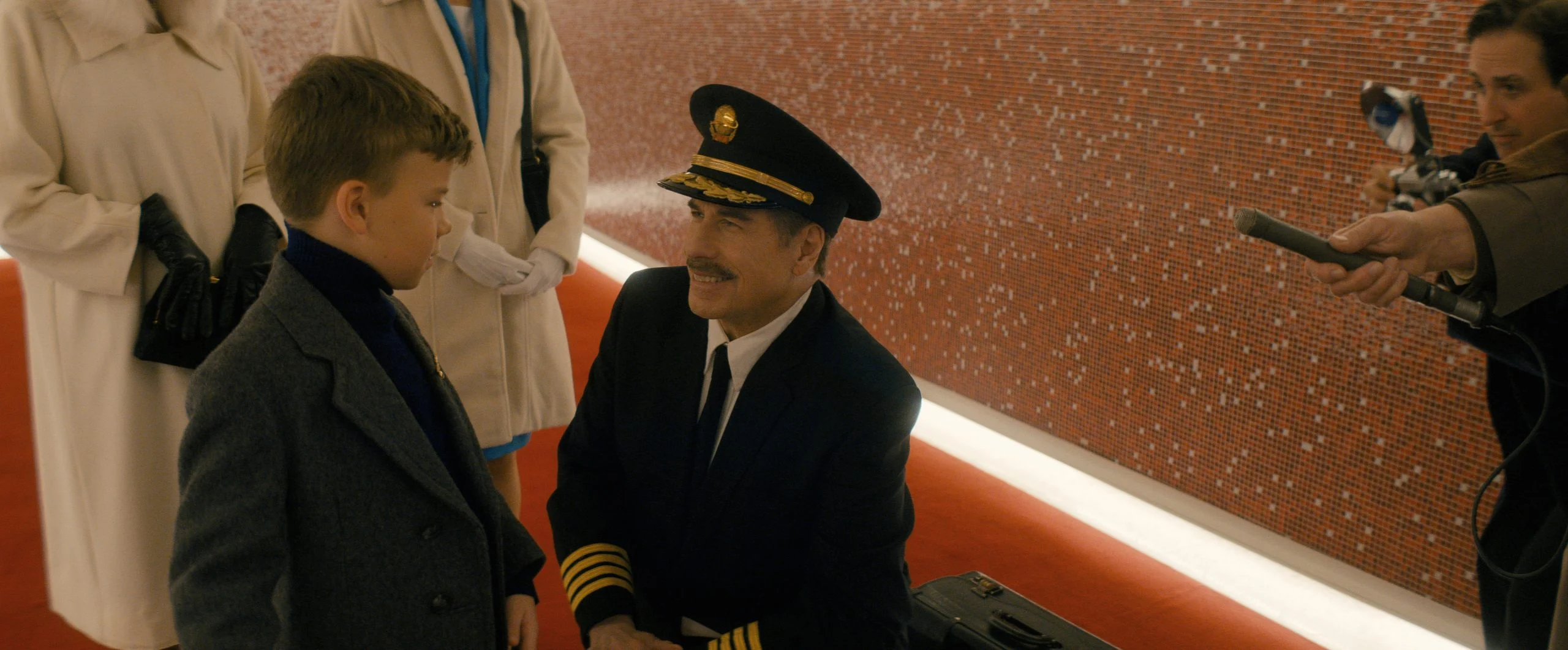
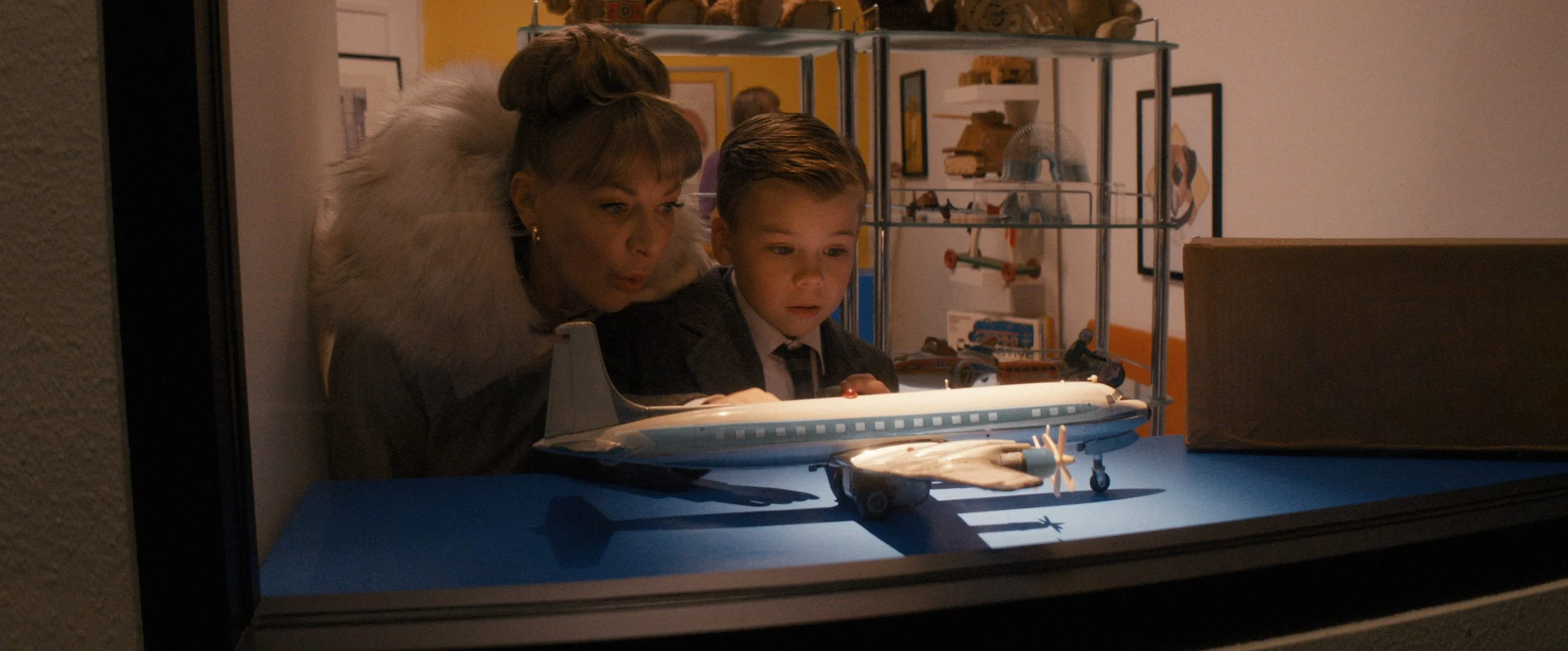
John Travoltaโ€™s brain is indecipherable. That much is clear after viewing his feature directorial debut, Propeller One-Way Night Coach, based on his book of the same name, which follows the cross-country adventure of a young aviation enthusiast named Jeff (Clark Shotwell), on his first-ever flight. Travolta himself is a certified pilot and holds several licenses to fly commercial aircraft, and his love of aviation has been a part of his life ever since he was a child. Itโ€™s only natural for him to convey this passion in an hour-long film (which is more or less a television special, but since it premiered at Cannes, the word โ€œfilmโ€ will be frequently used in this review). 

Unfortunately, most of whatโ€™s on screen is completely devoid of interest in anything being filmed, which is a shame, considering how skillful heโ€™s always been at operating himself in front of the camera. Behind the camera, Travolta struggles to bring to life images that evoke the same awe-inspiring wonder Jeff feels on his first plane ride, by interacting with the pilots and stewardesses, eating food he isnโ€™t necessarily accustomed to, and even sleeping on his own berth. Who remembers the first time they boarded a plane (or a train) for the first time when they were a child? These larger-than-life modes of transportation instill in us a sense of real adventure, before we discover new places.

That sense is never captured in Travoltaโ€™s rambling semi-autobiographical project. Instead of letting his retro-inspired images with intricate production design recalling the work of Jacques Tati speak for themselves, the writer/director speaks as an older version of Jeff through endless voiceover narration that ranges from mildly amusing to overbearingly annoying. Consider the scene where he introduces flight attendant Doris (played by Travoltaโ€™s real-life daughter, Ella Bleu). Travolta films her in slow-motion, almost like she will be the next big movie star, and the accompanying narration (through Jeffโ€™s mind) describes how beautiful she is and how heโ€™d like to marry her. Strange way to describe your daughter to the world, sure, but the narration is totally unneeded at any given moment. You get the idea that Jeff is infatuated by her through the use of slow-motion โ€“ why add things via Travoltaโ€™s own voice that simply donโ€™t belong?

You would think that, after fifty years in front of the camera and working with some of cinema’s greatest formalists โ€“ Terrence Malick, Quentin Tarantino, Mike Nichols, Brian De Palma, and, of course, John Woo โ€“ that Travolta wouldโ€™ve been able to incorporate what he learned with each of these artists and develop a language of his own. Minus garishly-conceived CGI establishing shots and a vintage emulsion to the filmโ€™s colors, there isnโ€™t a single frame in Propeller One-Way Night Coach that possesses Travoltaโ€™s same earnestness found as one of Hollywoodโ€™s greatest performers. In many scenes, he has no idea where to place his camera, and the shot-reverse-shot conversations between characters feel awkward and stilted. 

Shotwellโ€™s portrayal of Jeff recalls Bobby Driscoll’s charm in the 1950s, but his line deliveries donโ€™t have the same impact. Every other performer doesnโ€™t have much to work with, other than trying desperately to sell a screenplay to the audience that gives them absolutely no favors. Some dialogue exchanges feel downright alien to basic human interactions, especially in the pictureโ€™s back half. Never has an hour-long movie felt so interminable, going around in circles until an inevitable conclusion thatโ€™s admittedly moving because of how personal it is for Travolta, but the end result still leaves much to be desired. 

Still, his tribute to his late wife, Kelly Preston, and son, Jett, feels appropriate given the project’s personal nature. One hoped it wouldโ€™ve been so much better than whatโ€™s on screen, because you can tell how much Travolta cares about the source material, and aviation as a whole. If only he could translate this same passion on screenโ€ฆ

Grade: D-

Movie Review: In โ€˜Leviticus,โ€™ The Greatest Fear Is Desire Itself


Director: Adrian Chiarella
Writer: Adrian Chiarella
Stars: Joe Bird, Stacy Clausen, Mia Wasikowska

Synopsis: Two teenage boys must escape a violent entity that takes the form of the person they desire most โ€” each other.


If The Holy Bible was a legislative doctrine โ€“ and, with apologies to our American cohabitants from a grave collection of jurisdictions, it is decidedly not โ€“ weโ€™d already be residing in Hell. Maybe we already are. But in either case, the truth remains: The Bible is a document that classifies the people it preaches to in ways that are not only outdated (supposing that they were ever all that โ€œdatedโ€) but restrictive. Classification is inherently restrictive, which explains why a skim of the foremost religious text will note that slavery, genocide, and the forced marriage of survivors to their rapists are all kosher practices.

Also permitted is homophobia โ€“ worse yet, the damnation and death of those who love a member of the same sex. Leviticus 20:13 reads, โ€œIf a man also lie with mankind, as he lieth with a woman, both of them have committed an abomination: they shall surely be put to death; their blood shall be upon them.โ€ This Old Testament verse is an apt reference point, then, for Australian writer/director Adrian Chiarellaโ€™s feature debut; even more aptly, Leviticus takes its title from the book in which it sits, growing more and more antiquated with time. Yet despite that worldโ€™s ever-churning evolution continues to creep in this petty pace from day to day, hatred toward members of the LGBTQ+ community creeps as well, and Chiarella was sure to make note of that ugliness back in April when he introduced his filmโ€™s Opening Night screening at the New Directors/New Films Festival, telling audience members that they would โ€œsee scenes of homophobia and anti-queer violence in [his] filmโ€ฆ and those scenes [would] be depicted through the lens of the horror genre.โ€ Chiarella went on to encourage viewers to recall the legacies of artists like F.W. Murnau, Mary Shelley, James Whale, and Clive Barker, all โ€œqueer storytellers who truly shaped horror into the powerful genre it is today.โ€

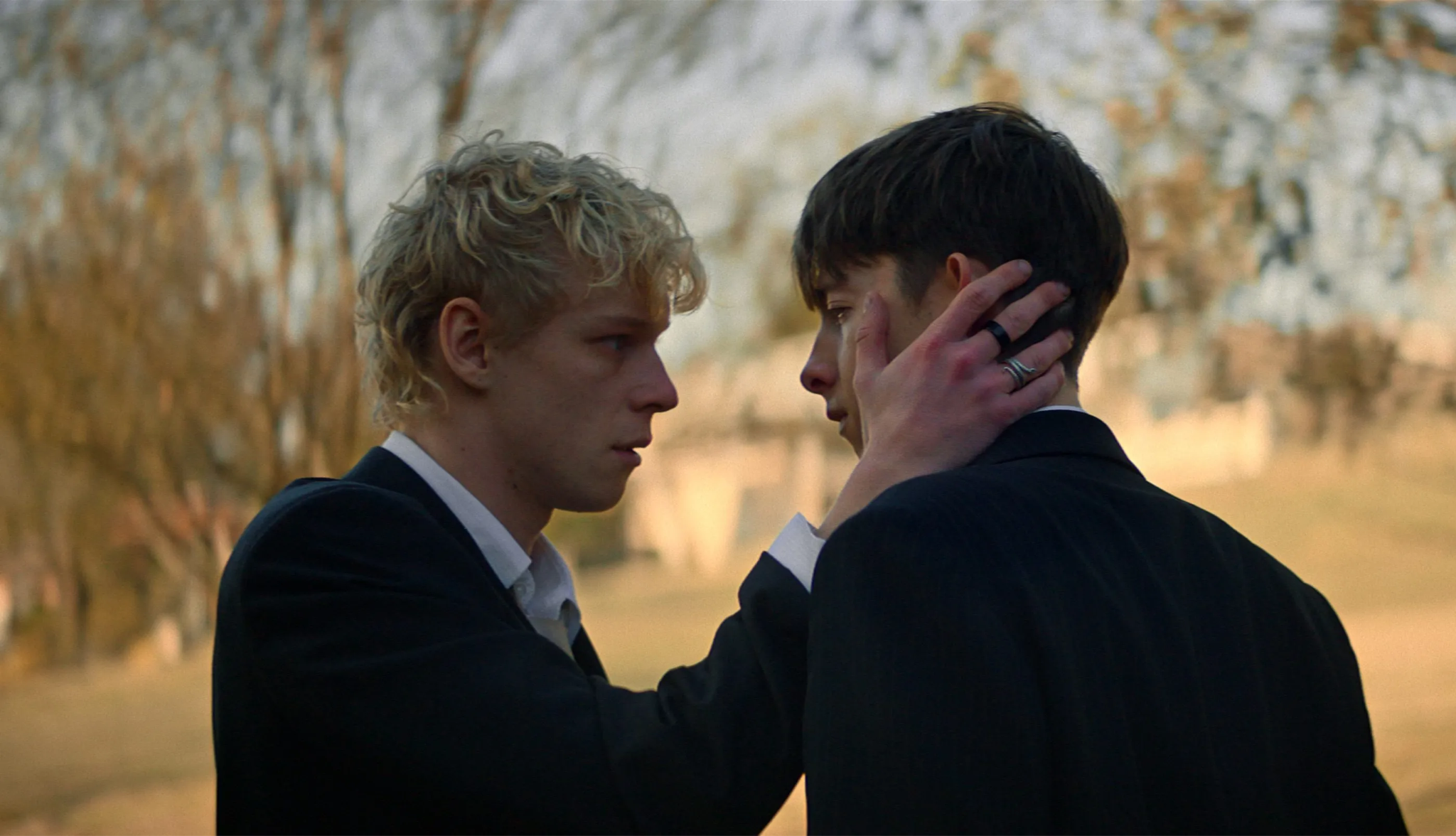
Instead of taking inspiration from these artists in the forms of Murnauโ€™s Count Orlok or Clive Barkerโ€™s Pinhead, Chiarella digs beneath the surfaces of those terrifying presences and taps into something altogether more frightful: The sensation of intense desire, the kind that paralyzes and hypnotizes, that renders everything else in oneโ€™s life moot, at least until it is satisfied. Itโ€™s not long before we see Naim (Joe Bird) operating in this exact state as he grows closer to Ryan (Stacy Clausen), a classmate who lives across the street from the house Naim and his mother (Mia Wasikowska) now call home in a small Australian town. As it is only wont for two teenaged not-quite-men to do, their afternoon activities at a local abandoned mill begin with the duo seeing who can throw the heaviest object across the building and evolve into an impromptu wrestling match. Yet their delicious, sexually charged flight-or-flight rendezvous ends with a passionate kiss, one that hints at something the audience has already picked up on: Not only that Naim and Ryan are queer, but that a place like this โ€“ barren, filthy, isolated โ€“ is where they are the safest to be themselves, and with one another. 

Just as it didnโ€™t take long for the connection between our main protagonists to be established in an introductory stage, Chiarella swiftly presents the challenges theyโ€™ll face should they proceed in engaging in a romantic relationship. For starters, their town is all but defined by the Christian parish that attracted Naimโ€™s mom to the area in the first place; everyone in the town is a member, and no one is exempt. (Certainly not the young men in its โ€œcongregation,โ€ those of which it seems to target with its proclamations and most devilish practices.) Its emotional pastor (Ewen Leslie) is like plenty weโ€™ve seen before in cinema, and certainly within the confines of the horror genre: Charming and powerful with a cunning, cutting edge to his sermons that targets those who donโ€™t blindly follow his creed. Not helping matters is the introduction of a Deliverance Healer (Nicholas Hope), who it appears is no stranger to this town nor the queer youth that reside there. His job, as both he and the community see it, is to cast out the sinful desires that fester within their souls. When Ryanโ€™s sexuality becomes public knowledge, the sequence that follows is a gruesome act of torture, but not one that merely leads the teen to fear his own identity, but something he can only see due to the Healerโ€™s spell: The person he wants most, only an invisible, menacing variant that uses love as a weapon designed to deliver maximum pain.

Not only are Bird and Clausenโ€™s performances particularly strong โ€“ their distinct interpretation of young love leans closer to longing than it does to the typically giddy butterfly-laden crushes we see in many lesser teen-led romantic narratives โ€“ but itโ€™s striking how seamlessly they pivot from one mode of emotional ferocity (amorous passion) to the other (still a passion, but a vicious one). That could be due to horrorโ€™s bylaws; itโ€™s often that a romantic couple takes center stage in a fright fest, but rarely is it done well. In 2026 alone, weโ€™ve seen Obsession succeed but Passenger, Corporate Retreat, and, er, The Bride! falter. Leviticus is something entirely different, a work of true terror and of sincerity. It is because of that that it eschews direct comparisons to โ€œsimilarโ€ works, using horror as its draw but not its only discovery upon viewing. 

Also evident is how assured Chiarella is in understanding his influences more than he borrows from them. Itโ€™s a feat that shouldnโ€™t go unnoticed, especially considering how fond we tend to be of adorning fresh filmmaking faces as genre kings and queens before theyโ€™ve even ascended to prince/esshood just because one shot in their picture recalls The Shining. He may revere the likes of Murnau, Shelley, Whale, and Barker, but heโ€™s not telling their stories, nor is he trying to. Thatโ€™s what makes it especially disheartening to read and hear accounts of the film that liken it to David Robert Mitchellโ€™s It Follows, a film that similarly deals with how your past liaisons come back to haunt you, but charts an entirely different path in doing so.ย 


Worse yet, the streaming television hit Heated Rivalry has been mentioned in what I can only assume is a few desperate attempts at SEO-mining, but what Chiarella is doing is far too sophisticated and amorous to be reduced to a formulaic tale of two young, gay men attempting to find themselves individually and sexually only for a litany of challenges to appear along the way. It honors that trope, and can occasionally be just as expositional as those projects in its plot explanations, but does plenty more to create something profound that surges past the latest YA adaptation of note. Limiting its reach by making broad associations misses the point. If weโ€™re to take anything from Leviticus, it shouldnโ€™t be that these stories share commonalities, but that they each carry their own value and exercise such in ways that touch audiences new and seasoned to the form. It just so happens that Leviticus does so in a way that looks beyond the works that came before it, brilliantly and brutally so.

Grade: B+

Movie Review: ‘An Autumn Summer’ is Frustratingly Magical


Director: Jared Isaac
Writer: Jared Isaac
Stars: Mark McKenna, Lukita Maxwell, Louise Barnes

Synopsis: In a magical lake town, one couple and four best friends spend the final month before college chasing an endless summer.


Recently, and soon enough, millions of teenagers all around the world are graduating high school. This sudden breath of fresh air is hitting them and every aspect of their lives is changing. It’s a sense that all of life’s trivialities have suddenly been solved and there is a weight off their shoulders. Yet, there’s also this huge black cloud of “the future” just waiting to burst. This is the feeling captured in the film An Autumn Summer.

While there is a story and plot, An Autumn Summer functions mostly as a mood piece. The characters don’t say everything they’re thinking. We who have been through this transitional period know exactly what they’re thinking from the looks on their faces. When it does come down to it and we come to know that these four who are so close are going to be split apart, the mood shifts and that black cloud they didn’t want to speak of moves ever nearer. Their easy camaraderie and deep affection shifts from playfulness to a desperate need to hold on.

Jared Isaac’s script is impactful that way. In his hands, summer is a magic bubble. The final month of summer is the hardest. Creating time, making memories, and holding onto magic before the gossamer thread of that time slips away. Isaac, when directing his script, makes us feel every word, touch, and moment like a gentle, but perpetual wave lapping at our feet in the surf as the tide recedes.

Isaac, with the help of cinematographer Brandon Somerhalder, makes us feel the breeze from the lake or smell the flowers and grass with their visuals. It’s a lush vista of water, green forests, and welcoming sandy beaches. The interiors also feel as if we’re home even if we’ve never been there before. It looks, as the characters feel, like we’ve been transported somewhere unearthly and magical. Then, editor Daniela Ovi’s montages make the magic feel lived in and grounded like it could be a memory from any one of us.

That is where the film loses ground, though. Each of the characters are unique and they have their own stories to tell, but it all feels like the film is floating without much concrete detail to go on. It feels as if everyone is putting on an affectation. This can be explained away as a coping mechanism for the big change that is hitting them all at once, but it’s hard to get too attached to these characters. They don’t feel like they exist in our world even if they’re meant to. With that in mind, the film languishes in disconnected days of summer fun in between the bigger elements of the plot. A lot of it could feel irritatingly solipsistic and like we were invited to a party, but completely ignored if it weren’t for the four main actors.

All of the actors playing teens in this film are excellent and have a comfort with each other that is palpable and feels very real. Though, Lukita Maxwell stands out amongst them. As Cody, she has more of the heavy emotional lifting because it’s obvious from the first scenes that she’s grappling with something more than separation. Cody and Kevin (Mark McKenna) are dating and going to different schools, so then it’s up to the two of them to decide to try to continue dating or to move beyond that relationship and into something else. Maxwell pulls off a great feat of introspection and angst. She’s able to bring a much needed dose of reality to this gauzy summer film.

An Autumn Summer is frustratingly magical. It’s easy to sink into its warmth and memory, but can be trying when you want answers or details that are never forthcoming. That is the blessing and the curse of characters who know each other so well. There’s a short hand, but anyone watching feels left out. The film can be forgiven its faults as it conjures the feeling of when summer had promise and the fear of summer’s end in equal loving measure.

Grade: B

Podcast Review: Masters of the Universe

On this episode, Megan is joined by ISF writer Josh Martin to discuss Travis Knight’s latest film Masters of the Universe! The film famously was in production hell for years, but it’s finally here and boy there is lots to discuss. Some good, some bad and whole lot of in-between.

Review:Masters of the Universe

Director: Travis Knight
Writers: Chris Butler, Aaron Nee, Adam Nee, David Callaham
Stars: Nicholas Galitzine, Camila Mendes, Jared Leto, Idris Elba

Subscribe to our Podcast RSS
Subscribe to our Podcasts on Apple Podcasts
Listen on Spotify
Listen on iHeartRadio
InSession Film Podcast – Masters of the Universe

Movie Review: ‘Disclosure Day’ is a Hopeful Swing


Director: Steven Spielberg
Writers: David Koepp, Steven Spielberg
Stars: Emily Blunt, Josh O’Connor, Colin Firth

Synopsis: If you found out we weren’t alone, if someone showed you, proved it to you, would that frighten you?


Disclosure Day, the latest film from the great Steven Spielberg, is nothing like youโ€™d expect. Which, in todayโ€™s age of spectacle filmmaking, feels like an act of cinematic bravery. Tricking you in the first act into thinking this is going to be an invasion thriller, the movie instead becomes an existential crisisโ€”not for an individual, a group, or a community, but for the entire human race โ€”which can be profound.

The experience is unlike anything Mr. Spielberg and his scribe-disciple, David Koepp, have done in quite a long time. Marking the fifth time Koepp has written a script for Hollywoodโ€™s great mythmaker, the movie plays with its themes patiently and pointedly, focusing more on bringing people together than tearing them apart; relying on the magic of filmmaking and the human heart. 

Yes, roll your eyes, but Disclosure Day is almost hopelessly optimistic, taking real chances as it jumps back and forth with edge and tone, not to mention science-fiction subgenres that work against each other. Yet, all of this is held together by Oscar nominee Emily Bluntโ€™s performance in a role more challenging than it appears, as she has to be the heart, soul, dramatic heft, and comic relief.

The story follows Margaret Fairchild (Emily Blunt), a bubbly and phony meteorologist who loves to shake what God gave her while predicting hail for the greater Kansas City metro area. Restless and unable to be content with her place in the world, she has her boyfriend, Jackson (Thunderbolts*โ€™ Wyatt Russell), film her audition tape for the weekend newscaster desk position.

Meanwhile, the night before, government cybersecurity whistleblower Daniel Kellner (The Mastermindโ€™s Josh Oโ€™Connor) arranges an exchange of classified pictures and digital files he stole from federal agents, who have abducted his girlfriend, Jane (Flora and Sonโ€™s Eve Hewson), to recover the top-secret information. 

Leading the way is Noah Scanlon (Colin Firth), head of an ultra-secret corporate entity known as Wardex, which is keeping this information from being disclosed to the world. Due to some clever thinking, Daniel escapes with Jane and goes on the run, with help from Hugo Wakefield (Running Manโ€™s Colman Domingo), who leads a resistance movement determined to bring Wardexโ€™s crimes to light.

What happens next? Well, after a red cardinal lands on Margaret’s kitchen table, the popular on-air personality can suddenly read minds and speak a handful of languages. Then, on air, and before she can tell Taylor Swift and the Cowtown community about tomorrowโ€™s warm front coming their way, she blacks out and begins speaking in tongues, in a language only one other person can understand.

Reportedly, Mr. Spielberg came up with the story for Disclosure Day almost a decade ago. Some may see the film as loosely evoking the โ€œDark Forestโ€ theory, particularly in the way it uses nature, including animals from the woods, as a mysterious form of communication. However, Spielbergโ€™s film is ultimately less interested in cosmic paranoia than in unity, turning a familiar science-fiction fear into something more hopeful.

Of course, pushing up against that hope is fear and concern over weaponization. The movie spends too much time obsessed with Firthโ€™s ability to chase his enemies with a technology that will remain nameless, going to that well far too many times. Then there is the storytelling get-out-of-jail-free card that studios like Marvel love to use, like opening a portal to avoid writing themselves into a corner. 

Here, unexplained powers are used in almost any situation. Yet, in one particular scene that at first bothered me, I later found it completely refreshing and unexpected, which is rare in todayโ€™s big-budget genre landscape. The story is layered, almost intimate, and approaches a Spielberg  summer blockbuster with tender care that only the Bearded wonder could get away with. 

Thatโ€™s not to say the film does not have its clear faults, including a second act that runs far too long and a tendency to overplay its hand when it comes to the telekinetic subplot(s). Then there is the contrived moment where Oโ€™Connorโ€™s Kellner hands the most important weapon over to someone who clearly should not be trusted, a choice made only to force the object back into the third act.

In the end, Disclosure Day’s hopeful, genre-bending swings outweigh the tonal shifts, second-act issues, and the convenient telekinetic detours used to keep the story moving. The difference here is that these devices are used to evoke empathy, which is used just as much to set up the audience for a resonant, satisfying experience that ultimately seeks connection rather than provocation. In the cynical age we live in, Spielberg reminds us that his greatest special effect can be: hope.ย 


You can watch Disclosure Day exclusively in theaters starting June 12th!

Grade: B+

Classic Film Review: ‘Cars’ is a Confusing Pixar Classic That Remains a Charming Change of Pace


Directors: John Lasseter, Joe Ranft
Writers: Dan Fogelman, John Lasseter, Joe Ranft
Stars: Owen Wilson, Bonnie Hunt, Paul Newman

Synopsis: On the way to the biggest race of his life, a hotshot rookie race car gets stranded in a rundown town and learns that winning isn’t everything in life.


I canโ€™t remember exactly how old I was when I first watched Cars. At the time of its 2006 release, I was turning two years old and likely hadnโ€™t yet taken my first trip to Radiator Springs. In fact, I canโ€™t remember the first time I watched this confusing Pixar Classic at all; I do know, however, that Iโ€™ve seen it enough times in the 20 years since then that my family has essentially prescribed it to my person as a personality trait.

Of course, Iโ€™m not a kid anymore (even if I still own and play my GameCube copy of Cars – an equally thrilling experience), but this is a movie that I still find myself going back to more than any other cornerstone of Pixarโ€™s storied catalogue. You could (rightfully) call this bias, but Cars is still my favorite Pixar movie and, even if I know it isnโ€™t the best one, Iโ€™m happy to re-review this thing two decades down the line and spill my guts in digital print. Thereโ€™s something about Cars, especially in the context of the time in which it was released, that sets it apart from Pixarโ€™s other earlier works. It has all the trademark story beats, with a heavy swing of emotion in the third act taking special center stage. But the small-town feeling of the aforementioned Radiator Springs, filled with memorable personalities and homey visuals, is what I believe does the ultimate trick.

Itโ€™s a common point of criticism to note that thereโ€™s no specific reason for these characters to be cars in the wider context of this narrative, but Iโ€™m not sure I can imagine a story about a hotshot airhead finding his heart in a small town working better than one in which he literally cannot leave it. Lightning McQueen is physically trapped in Radiator Springs and – again, literally – has to slow down to find the finer things. Itโ€™s on the nose, sure, but as a rip-roaring kiddo worried about how fast I could turn the corner in my kitchen without slipping on the hardwood floor, this is the first movie that I remember having the same effect on me as it does on its main character. My mind goes back to Lightningโ€™s hillside drive with Sally, where things literally grind to a slow-motion stop as this city boy (Sargeโ€™s words) experiences that beauty for the first time.

It also helps that the movie looks great; neon lights and spinning signs define the rare sort of project that has a trademark feel, even this long after its release. Cars could be recognized in swathes of paint and landscape portraits and, similarly, the racing sequences remain absolutely breathtaking. The voice cast goes a long way in hammering home that effect on both ends of the spectrum of momentum, too.

Owen Wilson is brilliant and vocalizes Lightningโ€™s slow-down in his own right, but Paul Newmanโ€™s Doc Hudson is truly an all-time outing in any one of Pixarโ€™s movies. The flashback to Docโ€™s days as a racer, over which Newman tragically whispers the reason he quit in the first place, is Carsโ€™ beating heart. And when that heart starts racing, โ€œFloat like a Cadillac, sting like a Beemerโ€ should still have you doing backflips in your seat.

Is it contrived, and a little hokey? Absolutely, but itโ€™s also entirely self-serious and wonderfully committed to the message that itโ€™s selling to an audience of children that, like myself, hadnโ€™t sat still for a moment prior to that โ€˜Real Goneโ€™ drop on the opening scene. Cars remains a weird, almost unimaginable turn of events for Pixar, even 20 years later; but it also remains my favorite of the bunch and, in the eyes of many, a crucial part of the companyโ€™s historic early run. If you somehow werenโ€™t won over by the credits, John Mayerโ€™s โ€˜Route 66โ€™ cover should be the nail in the coffin for any well-meaning viewer. Iโ€™ll always settle for a slow-down with Cars.

Grade: A

Movie Review: ‘Power Ballad’ Overcomes Its Flaws With Emotion


Director: John Carney
Writers: John Carney, Peter McDonald
Stars: Paul Rudd, Nick Jonas, Peter McDonald

Synopsis: Rick, a washed-up wedding singer, and Danny, a fading boy band star, bond over music and a late-night jam session. When Danny turns Rick’s song into a hit, Rick sets out to reclaim the recognition he believes he deserves.


Sometimes, a film comes along where you gladly overlook its flaws because you become swept up in its enjoyable, even rousing, nature. That’s the best way to sum up Power Ballad; a joyous, heart-swelling crowd-pleaser. From writer-director John Carney, the film is effective, almost devastatingly so, when it comes to poignancy. This is a trait in most of Carneyโ€™s work that has struck a chord, over and over again.ย 

ย 

This all culminates in a moment that tugs at your heartstrings in a way that may depend heavily on the stage of life you’re currently in. What cannot be argued, however, is that Power Ballad features two very strong performances at its center, exploring both sides of the price of fame, ambition, and recognition. That is especially true when it comes to its star, Paul Rudd, who finds the earnestness in pity. 

Rudd is a performer who specializes in man-child roles that often come full circle, revealing what is truly important in life. That comes full circle in his latest, which is by no means revolutionary. Yet, when done well, Power Ballad is that type of movie; offering an experience that, for me, is the type of movie made for a lazy Sunday afternoon. The kind that makes you appreciate what you have or long for what you don’t.

The story follows Rick Power (Rudd), the lead singer of a wedding band based in Dublin, Ireland. An American who found himself migrating to the Land of Saints and Scholars when he met Rachel (Marcella Plunkett), started a family, and had a daughter, Aja (Beth Fallon), now a jaded teenager. Rick gave up his dream of headlining Madison Square Garden with his ’90s rock band, Octagon, and is now relegated to the scrap heap of history.

Now plying his trade by celebrating the nuptials for those across the Emerald Isle with The Bride and Groove, alongside his best mates, including his goofball pal Sandy (The Penguinsโ€™ Peter McDonald). While performing at a castle wedding, they meet Danny Wilson (Midwayโ€™s Nick Jonas), a guest working on a solo album after a successful career with a famous boy band. The bride begs Rick to let Danny perform, impressing the group with his ability. 

However, what Rick doesn’t realize is that the young pop star is equally taken with his talent. After the wedding, the two share a drink and a smoke, trading stories, swapping melodies, and smoothing out the rough edges of unfinished songs, including a ballad he wrote years ago, “How to Write a Song (Without You).” They part ways the next morning, with Danny leaving behind a prized guitar, but taking something far more valuable in return. 

Power Ballad has its detractors, many of whom point to the film’s and much of Carney’s work’s reliance on sentimentality. However, the script, written by Carney and McDonald, explores different facets of reinvention, ambition, and, in Rick Power’s case, legacy. More broadly, the film is funny, soulful, and joyous, placing its two lead characters in unfamiliar territory: one chasing fame and success, the other seeking fulfillment.

What makes Carney and McDonald’s script so satisfying, and distinct from others like it, is that both men ultimately discover that fame and success mean little without fulfillment. The film does rely on coincidences and remarkably understanding characters to move the story along and reach its third-act revelation, but the finale is so wondrous and emotionally fulfilling that you almost forgive whatever contrivances the script employs to get there.

Whatever you think of Power Ballad, it is rare to find a film that is both smart and sweet without falling face-first into the easy trap of cynicism. Nick Jonas is electric, but he also finds nuance in a character who could have easily been one-note. Rudd is wonderful here, bringing warmth to a man living with regret without ever resorting to playing him as a sad sack, instead finding the bittersweet beauty of contentment. Rudd and Jonas shine throughout, with a wondrous finale delivering an emotional payoff that earns its encore.

You can watch Power Ballad exclusively in theaters on June 5th!

Grade: B+

Movie Review: โ€˜Scary Movie (2026)โ€™ Basically Forgets To Be A Funny Movie


Director: Michael Tiddes
Writers: Marlon Wayans, Shawn Wayans, Keenen Ivory Wayans, Rick Alvarez, Craig Wayans
Stars: Marlon Wayans, Shawn Wayans, Anna Faris, Regina Hall

Synopsis: Twenty-six years after outrunning a suspiciously familiar masked killer, the Core Four are back in the killerโ€™s crosshairs and no horror movie IP is safe.


It may seem silly to say it at face value, but it’s truly a high-wire balancing act to make a truly great comedy, let alone a spoof movie. Not only does there need to exist a clever inversion of whatever genre of film it’s spoofing, but it must accomplish such a joke about a joke per few seconds of fame, and classics like Airplane and The Naked Gun films manage to capture this so effortlessly. Considering the absolute hot streak the horror genre has been on within the past decade and the multitude of changes it’s gone through, it’s a wonder why a new Scary Movie from the Wayans brothers wasnโ€™t on the table sooner. Fret not, however, because for all intents and purposes the new Scary Movie acts as the Wayans’ excuse to reference and joke nearly every film, cultural moment, and historical event that has happened since the franchise was taken from them in the early 2000s for better and for worse (mostly worse!). 

Say what you will about the many flaws to find within the first two Wayans-helmed films of the franchise, but those films did have a certain charm to them, especially within their wackiest of moments that this new film canโ€™t really capture. Jokes in the film tend to work whenever it just plays to a simple visual gag within its constant barrage of skits and less so in its attempts to joke about real-life events that are already outdated or mean-spirited attempts at taking jabs at the youth of today that come across as certified โ€œhow do you do, fellow kidsโ€ moments. Not every joke is a complete whiff, but the experience of watching Scary Movie is nearly as exhausting as the absolute worst the spoof genre has to offer.

The Scary Movieโ€™s never really had much of a cohesive storyline per se, with the focus obviously being on the parodies themselves, and the same remains true here, as any story the film has is a mix of the narratives mainly following Scream (2022) in particular, with a dash of Scream VI and Halloween 2018 on top. The filmโ€™s main purpose is to act as a referendum on the recent string of reboots/legacy sequels that have been more popular in the genre recently, as a new Ghostface is targeting our characters from both old and new generations. 

The main cast of the original Scary Movie films all return including Shorty (Marlon Wayans) who’s now a crypto-pilled Twitch streamer, Ray (Shawn Wayans) the gay guy who they constantly like to make jokes about how he’s gay, and, of course, Cindy Campbell (Anna Faris) and Brenda Meeks (Regina Hall) who are both outfitted as Laurie Strode from Halloween and Ma from Ma, respectively. Sara (Olivia Rose Keegan) and Tuesday (Savannah Lee Nassif) are Cindyโ€™s daughters, and Cameron Scott Roberts plays Sara’s incredibly suspicious boyfriend as new blood blends with the old, and no horror movie (or movie in general) is safe from a parody.

Look, there is a certain fun to the fact that most Scary Movies, including the originals, are just a collection of quick sketch ideas that fill up 80 minutes, but Scary Movie completely forgets why the cohesion between parody and jokes even worked within the franchise in the first place. The originals understood that within the parody, there also existed clever ways to tie each parody together that further added to either a separate joke or strengthened the take on the specific set of movies they were tackling. Here, there are so many references to movies and media that aren’t even horror-related that it’s hard to even latch onto a clever gag when one passes, since piles of โ€œjokesโ€ wanting you to laugh at something because youโ€™re familiar with it exist in its place. Yes, Scary Movies have never been about โ€œplot,โ€ but there was a specific cadence to what was chosen to be parodied. When youโ€™re just throwing another reference at the wall, it isnโ€™t the same in the slightest, and it makes the misses a lot more noticeable.

This topic only deepens what is probably the biggest problem with the film, in that it somewhat exists in the same space as the later Scary Movie films or the worst of Jason Friedberg and Aaron Seltzer movies that nearly killed the spoof genre by not understanding the difference between a reference and an actual joke. At least even when they were painfully unfunny or egregiously outdated, the first two films told jokes; here, whether it’s M3GAN, Weapons, Get Out, or The Substance, the reference to the “remember that!โ€ The media is the only type of humor the movie can provide. More often than not, when the movie actually utilizes a cute setup for a visual gag or implements a cameo in a fun way, like its opening parodying Scream VI, it’s actually funny! The Wayans, instead, however, opt for an โ€œedgyโ€ brand of humor to our modern culture that’s supposed to be scathing or offensive to Gen Z and touch, and either come across as incredibly outdated (they/them jokes in the big 26โ€™?) or obvious, like COVID jokes that are SNL-level at best.


It’s a shame that after getting their franchise back after it was essentially snatched from their hands, the Wayans brothers could barely register a modern spoof that’s better than the absolute worst of the franchise, which mistakes references for humor and touching upon every cultural moment within the past 10 years is a good substitute for actually telling jokes. It has its moments of clever bits, in particular its ending reveals, and Faris and Hall, as always, are comedic gold, but watching the new Scary Movie is basically the equivalent of viewing an extended YouTube skit that haphazardly strings together references from movies you may or may not remember, which makes for about a 20% hit ratio in the funny department.

Grade: D+