Director: Callum Burn
Writers: Andrew Burn, Callum Burn
Stars: Vin Hawke, Sam Dowdy, Matthew Canny
Synopsis: Stranded and slowly sinking into the fetid mud of Passchendaele, the crew of a British WW1 Tank fight for their lives against an insidious and determined enemy.
War films often aim for spectacle and scale, and they need to, as nothing will ever come close to what people experience in real life. Good war films usually include vast battlefields, endless explosions, sweeping shots, and attempt to showcase history unfolding in real time. Landship, however, takes a far more claustrophobic approach, and it’s all the better for it. Rather than trying to recreate the entire chaos of World War I, director Callum Burn aims to trap viewers inside it, narrowing the focus to a single British MKIV tank crew during the Battle of Passchendaele. The result is a lean, mud-soaked survival thriller that’s interested in endurance.
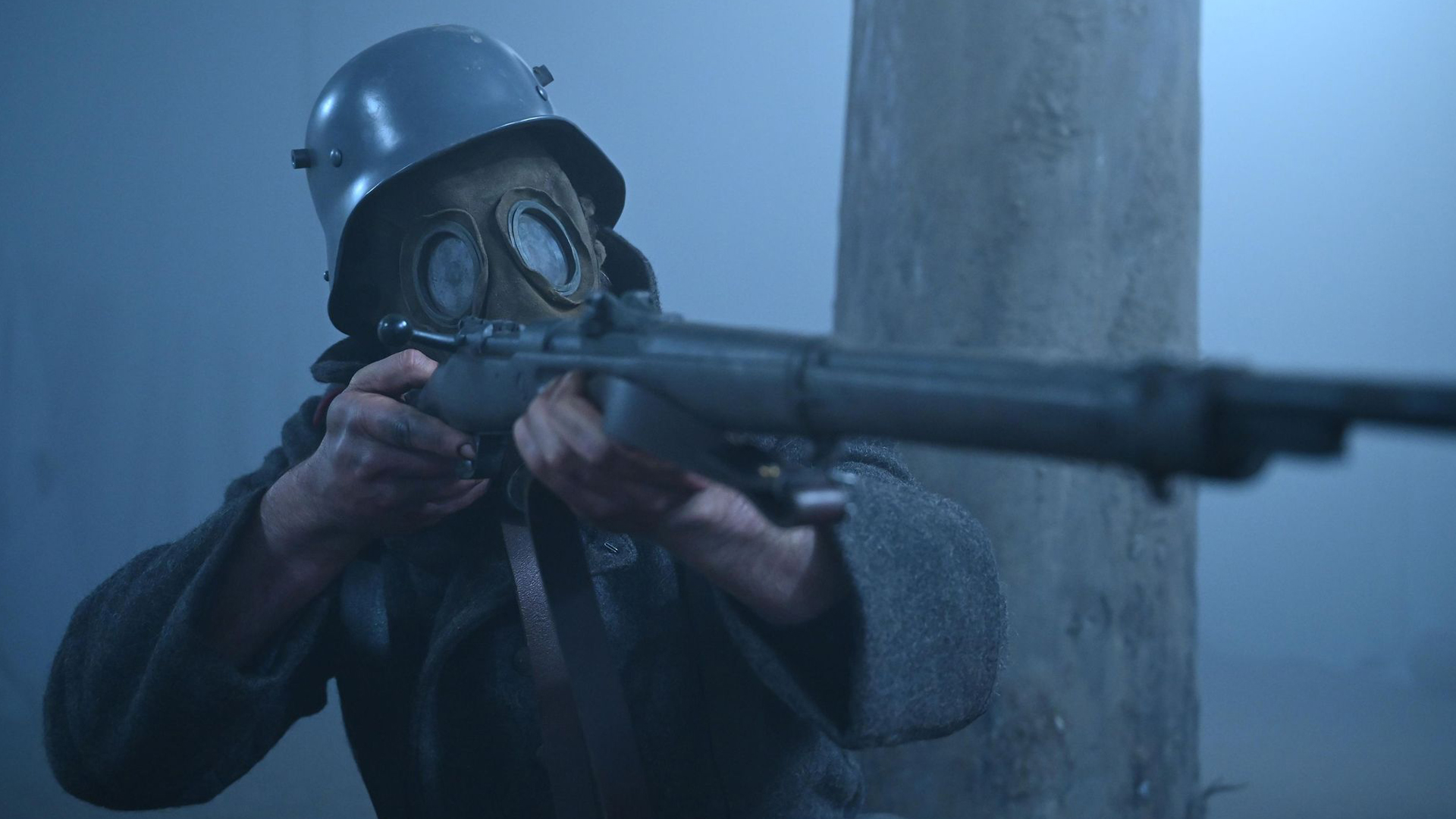
Set in 1917, during one of the war’s most brutal offensives, the film follows a nine-man crew tasked with destroying heavily fortified German bunkers. Naturally, things go wrong almost immediately. Their tank becomes stranded in a shell crater only yards from enemy lines, leaving the men exposed to relentless gunfire, poison gas, starvation, and the psychological strain of being trapped inside what increasingly feels like a metal coffin.
It’s a strong premise, but it’s not one we haven’t seen before. Fury sees a group of men fight their way across Germany in April 1945, in a tank. Whilst Fury did rely heavily on spectacle, this film builds tension through atmosphere. The inside of the tank is cramped, filthy, deafening, and increasingly unbearable as the hours drag on. Everything feels damp, rusted, exhausted, and on the verge of collapse.
Performance-wise, the whole cast does solid work carrying the film’s emotional weight. Vin Hawke gives the film a grounded center, with some very emotional moments, while David Dobson and Matthew Canny help create a believable sense of camaraderie among the crew. These men are frightened, exhausted, irritable, and often uncertain, and are not portrayed as mavericks with heroic archetypes. Their chemistry is strong, and you’ll root for all of them throughout the film.
The cinematography is dark, dusky, and heavy. All contribute to the presence of intensity and fear. There’s a particularly unnerving scene where one of the characters is out of the tank (what feels like their safety net) and is walking around in vast fog looking for an enemy, who eventually finds him first.
Fans of military history will likely appreciate the effort that has gone into recreating the MKIV tank and the grim conditions of Passchendaele itself. The production design captures the miserable reality of trench warfare remarkably well without making it feel polished or too “Hollywood” (in a studio, over the top).
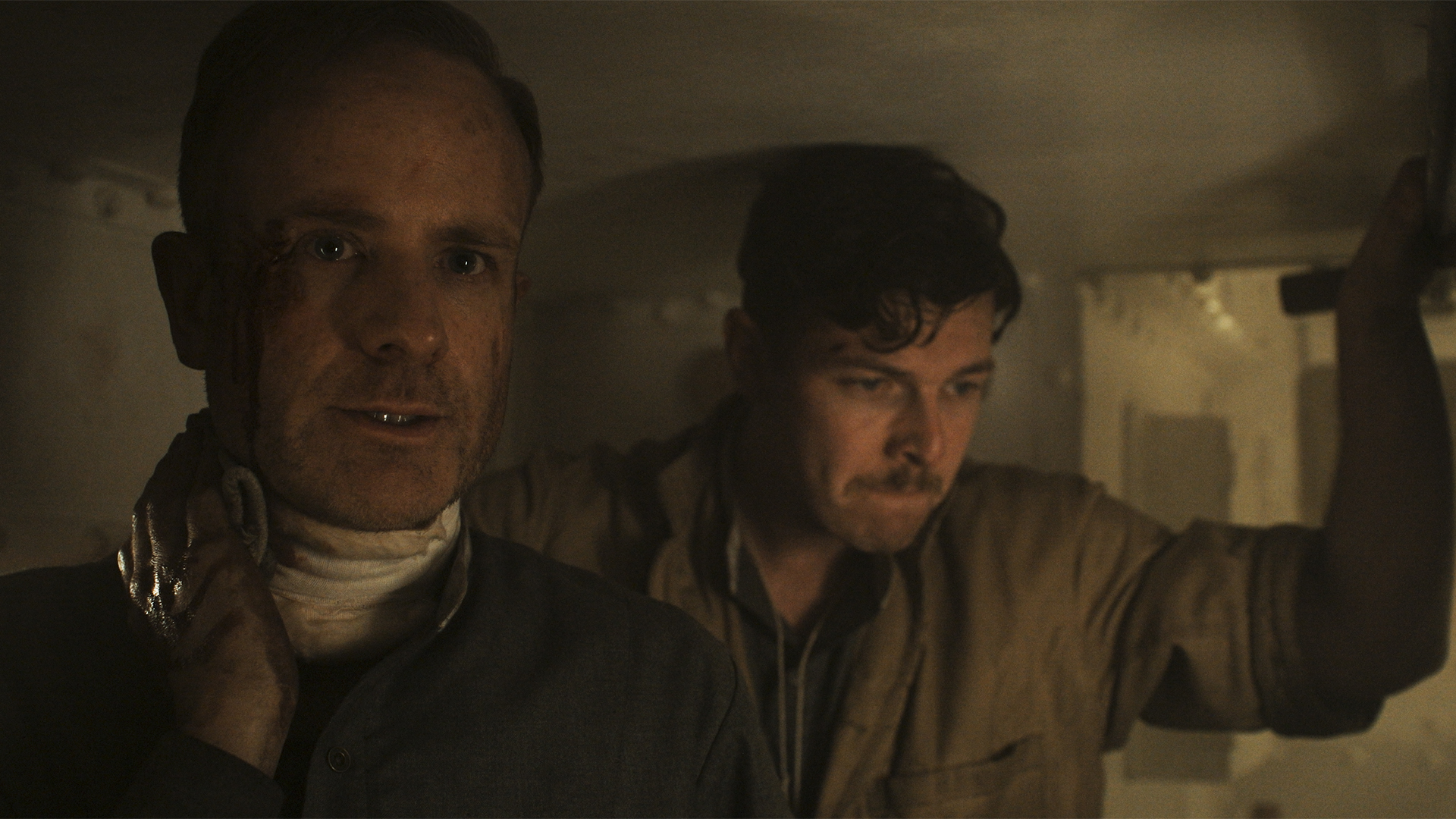
What surprised me most was how psychological the film becomes as it progresses. Once the initial combat chaos settles, Landship shifts into something closer to a pressure-cooker drama. Shellshock, paranoia, and emotional exhaustion slowly begin eating away at the crew from the inside. The film understands that prolonged fear can become just as dangerous as bullets.
That said, the film occasionally struggles with pacing. At 89 minutes, it remains admirably tight, but there are sections in the middle where the repetitive nature of the situation slightly stalls momentum. The confinement that makes the film so effective also limits how visually dynamic it can remain for the full runtime. A few scenes begin to blur together, even if that monotony is arguably part of the point.
There’s also a slight imbalance between character development and action. While the ensemble works well collectively, not every crew member is given enough individual depth to leave a lasting impression. Some characters inevitably become more memorable than others simply because the film doesn’t quite have the time to fully explore all nine men equally. But what is lovely is that at the end of the film, each man is named and what happened to them, for example, if they died in battle and what medals they were awarded. There are also some statistics – this really hits home and gives the film even more emotional weight.
Landship may not reinvent the war genre, but it doesn’t need to. It’s a strong contribution to the war film roster. Fans of the war genre will love being taken back to a time, a war, a place where they feel actively part of the history and action from the safety of their homes. Landship is filled with tension, grit, and psychological strain, creating an intimate, memorable war film.