


Director: Maggie Gyllenhaal
Writer: Maggie Gyllenhaal
Stars: Jessie Buckley, Christian Bale, Annette Bening
Synopsis: In 1930s Chicago, Frankenstein asks Dr. Euphronius to help create a companion. They give life to a murdered woman as the Bride, sparking romance, police interest, and radical social change.
The Bride!, for all intents and purposes, throws nothing but punches and refuses to sugarcoat a single frame in Maggie Gyllenhaal’s remarkable, fresh take on Mary Shelley’s creation. That hardly means the movie is easy to sit through. Gyllenhaal’s sophomore effort ( her first was the incredible Netflix film The Lost Daughter) is grueling, repellent, hideous, and depraved at times. Skulls are crushed. Limbs are ripped. Tongues are torn.
However, The Bride! is also feverishly funny and unhinged, the type of gothic controlled chaos whose violence, as Roger Ebert describes in his review of Quentin Tarantino’s Pulp Fiction, is like amusement park violence. Gyllenhaal does a remarkable job of creating a world of ugly people with even uglier souls that is savage, seductive, and subversive. And no, we are not just talking about the main characters.
The Bride! reflects the classic source materials in a kinetic, highly stylized way. Monsters are not born, they are made. The grotesque creatures are curious, sensitive, and full of untapped compassion, longing for companionship, whose violence is sparked by a world that uses isolation, humiliation, and abandonment to shape them. This Frankenstein’s monster and his bride are products of their environment, living down to the expectations society has set for them.
This story takes place in 1930s Chicago, where Ida (a phenomenal Jessie Buckley) is enjoying a heavy night of drinking and shellfish in a swinging mob speakeasy. She throws a fit, yelling at the local mob boss, Lupino (Superman’s Zlatko Burić), who tells his henchmen to get rid of her. Clyde (Past Lives’ John Magaro) and James (Air’s Matthew Maher) slap her around and eventually push her down the stairs because she won’t shut that filthy mouth of hers.
Ida falls head over heels, literally, as her skull bounces off several steps until she meets the hard cement floor, snapping her neck. She is buried and forgotten. That is, until Frankenstein’s monster (Academy Award winner Christian Bale) arrives at Dr. Euphronius’s (the iconic Annette Bening) home to ask her to feel compassion for him. Euphoria is well known, perhaps infamously, for reinvigorating the dead.
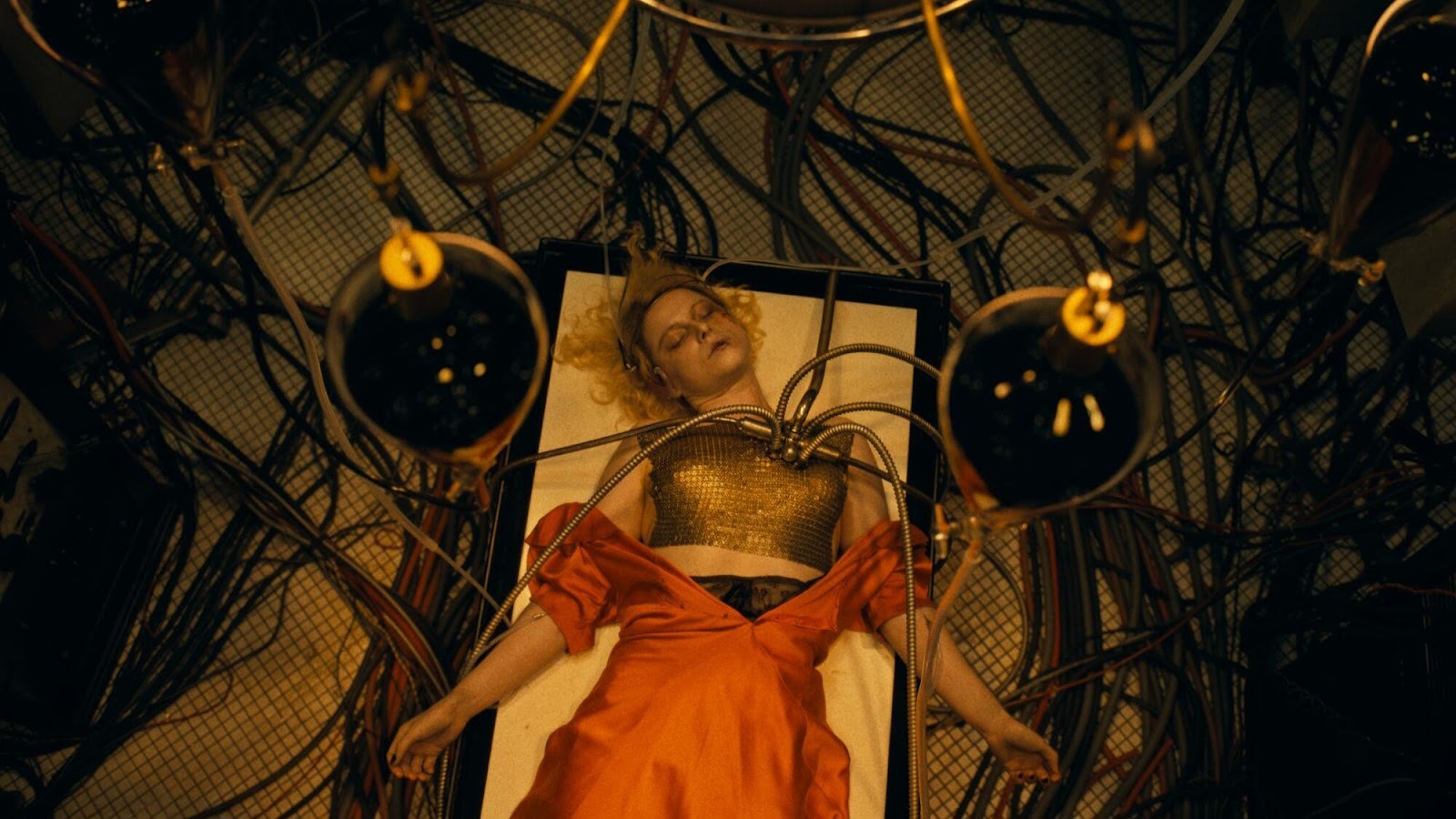
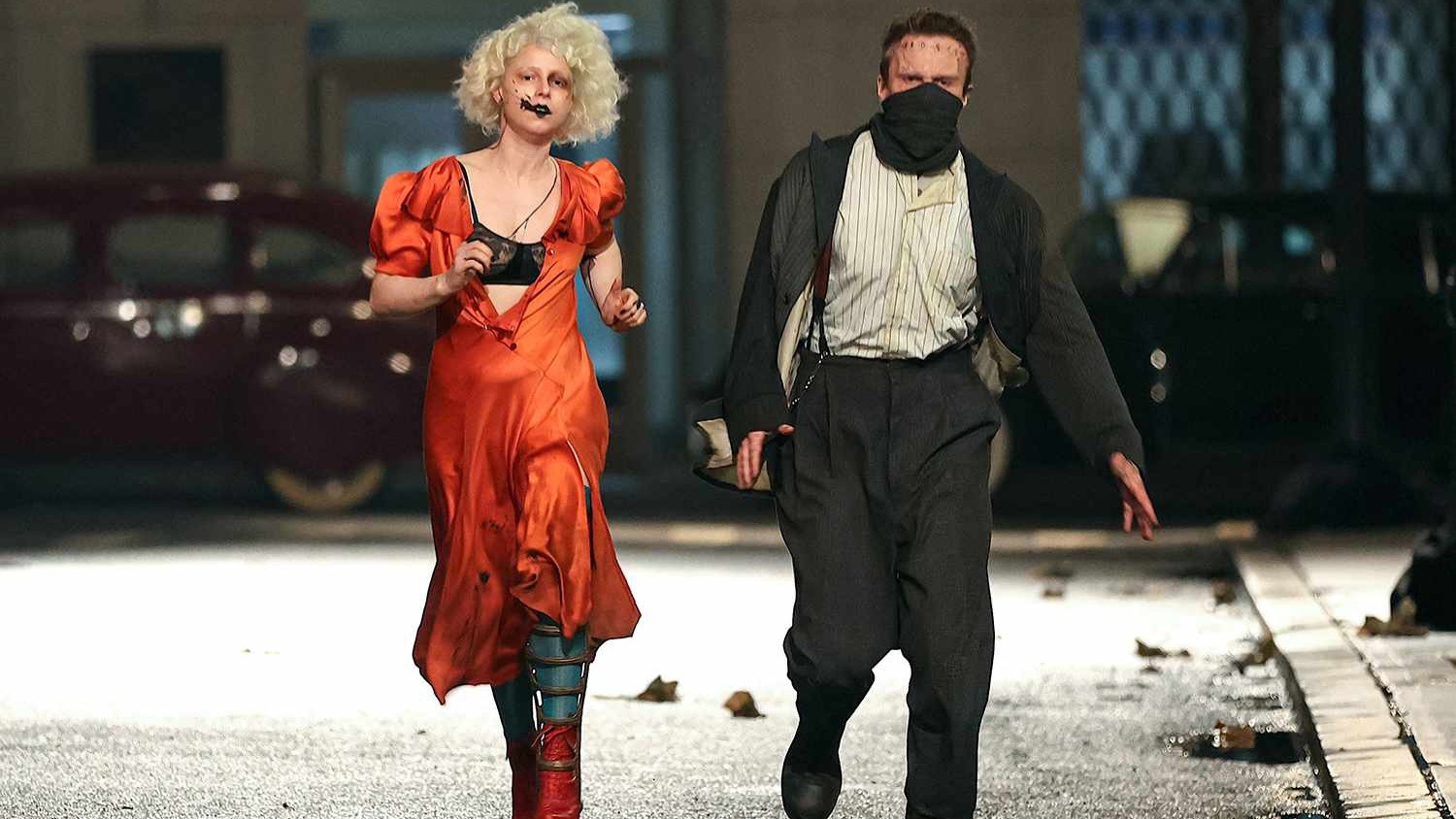
So they do what any normal people would do: they go grave robbing, coming across an exquisite-looking dead woman with wild blonde hair in a silky orange cocktail dress that will surely pique the monster’s interest. The wild and reckless Ida is reborn, without a memory of who she was before. The Monster is taken back by The Bride’s chaotic vitality, and a tragic creation that turns out to have a streak of anarchic spirit that cannot be tamed.
The Bride! works because of Jessie Buckley’s performance. Her portrayal is like a stick of dynamite; volatile, sensual, and feral, a far cry from past Frankenstein adaptations. Buckley’s take on the classic character can be viewed through a feminist lens: Ida’s behavior before and after her death is a rebellion against the rules society has designed for her, refusing to stay within the walls that seek to box her in.
Of course, Bale makes you feel for a character who becomes a gluttonous consumer of love and friendship. Now drunk on companionship, he has a remarkable way of making you feel for the character, then be frightened or disgusted by him. For example, the switch from endearing shyness can, in a split second, turn into monstrous rage. While the story clearly has a horror undercurrent, Bale’s turn drives the search for a cure for loneliness and identity, which is viscerally felt.
Gyllenhaal also makes the film a family affair, with her brother Jake playing a Fred Astaire–like Golden Age of Hollywood star who helps the Monster through hard times. Her husband, Peter Sarsgaard, plays Det. Jake Wiles, who, along with Penélope Cruz’s Myrna Mallow, Jake’s assistant, investigates Frank and the Bride. Unfortunately, that subplot feels forced rather than delicately layered into the story.
While entertaining, unfortunately, that investigation feels less like a natural extension of the story and more like a narrative obligation. Also, while the feminist rebellion angle is clearly felt throughout the film, Gyllenhaal does find herself doubling down by creating an antihero character out of Ida, with people following her in the media. The layer of subtext is hardly subtle and self-indulgent.
Though you cannot argue that the film always keeps you engaged and entertained, no matter how vile the movie can be, it becomes thought-provoking. Ultimately, The Bride is worth watching for the lens Maggie Gyllenhaal uses to tell the story and for Jessie Buckley’s electric performance. Maggie Gyllenhaal, beneath all the style and terrific performances, finds the humanity beneath the grotesque.
You can watch The Bride exclusively in theaters starting March 6th!