



Director: John Travolta
Writer: John Travolta
Stars: Clark Shotwell, Kelly Eviston-Quinnett, Ella Bleu Travolta
Synopsis: Propeller One-Way Night Coach follows young aviation enthusiast Jeff and his mother on a cross-country flight to Hollywood that transforms into a life-changing journey filled with unexpected moments.
John Travolta’s brain is indecipherable. That much is clear after viewing his feature directorial debut, Propeller One-Way Night Coach, based on his book of the same name, which follows the cross-country adventure of a young aviation enthusiast named Jeff (Clark Shotwell), on his first-ever flight. Travolta himself is a certified pilot and holds several licenses to fly commercial aircraft, and his love of aviation has been a part of his life ever since he was a child. It’s only natural for him to convey this passion in an hour-long film (which is more or less a television special, but since it premiered at Cannes, the word “film” will be frequently used in this review).
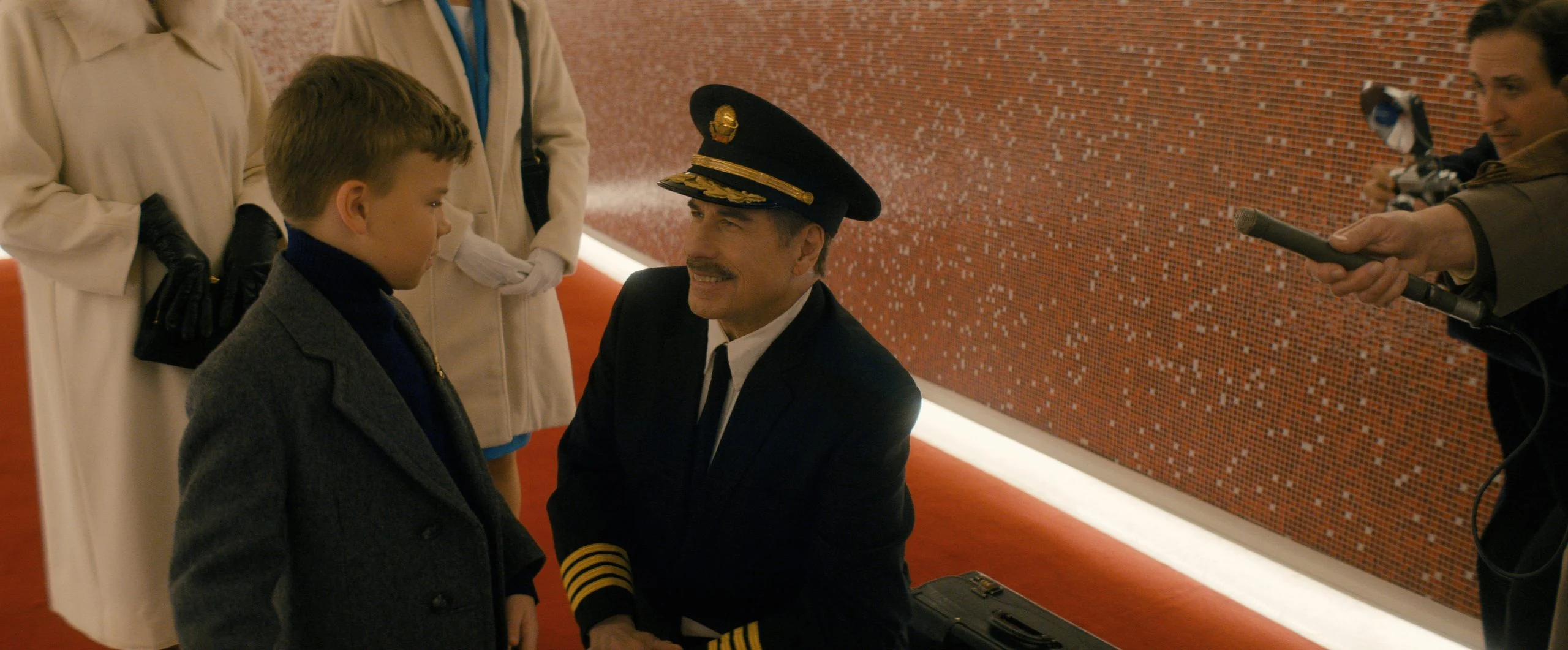
Unfortunately, most of what’s on screen is completely devoid of interest in anything being filmed, which is a shame, considering how skillful he’s always been at operating himself in front of the camera. Behind the camera, Travolta struggles to bring to life images that evoke the same awe-inspiring wonder Jeff feels on his first plane ride, by interacting with the pilots and stewardesses, eating food he isn’t necessarily accustomed to, and even sleeping on his own berth. Who remembers the first time they boarded a plane (or a train) for the first time when they were a child? These larger-than-life modes of transportation instill in us a sense of real adventure, before we discover new places.
That sense is never captured in Travolta’s rambling semi-autobiographical project. Instead of letting his retro-inspired images with intricate production design recalling the work of Jacques Tati speak for themselves, the writer/director speaks as an older version of Jeff through endless voiceover narration that ranges from mildly amusing to overbearingly annoying. Consider the scene where he introduces flight attendant Doris (played by Travolta’s real-life daughter, Ella Bleu). Travolta films her in slow-motion, almost like she will be the next big movie star, and the accompanying narration (through Jeff’s mind) describes how beautiful she is and how he’d like to marry her. Strange way to describe your daughter to the world, sure, but the narration is totally unneeded at any given moment. You get the idea that Jeff is infatuated by her through the use of slow-motion – why add things via Travolta’s own voice that simply don’t belong?
You would think that, after fifty years in front of the camera and working with some of cinema’s greatest formalists – Terrence Malick, Quentin Tarantino, Mike Nichols, Brian De Palma, and, of course, John Woo – that Travolta would’ve been able to incorporate what he learned with each of these artists and develop a language of his own. Minus garishly-conceived CGI establishing shots and a vintage emulsion to the film’s colors, there isn’t a single frame in Propeller One-Way Night Coach that possesses Travolta’s same earnestness found as one of Hollywood’s greatest performers. In many scenes, he has no idea where to place his camera, and the shot-reverse-shot conversations between characters feel awkward and stilted.
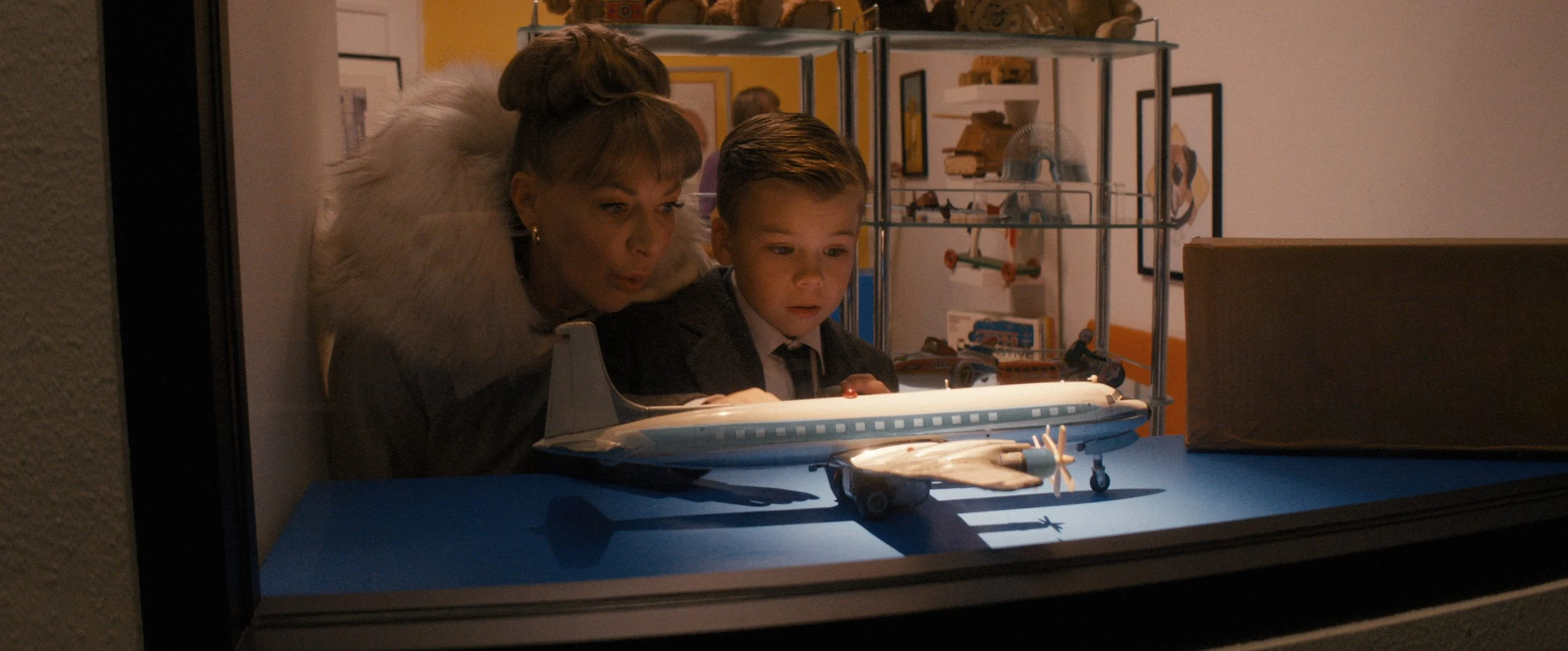
Shotwell’s portrayal of Jeff recalls Bobby Driscoll’s charm in the 1950s, but his line deliveries don’t have the same impact. Every other performer doesn’t have much to work with, other than trying desperately to sell a screenplay to the audience that gives them absolutely no favors. Some dialogue exchanges feel downright alien to basic human interactions, especially in the picture’s back half. Never has an hour-long movie felt so interminable, going around in circles until an inevitable conclusion that’s admittedly moving because of how personal it is for Travolta, but the end result still leaves much to be desired.
Still, his tribute to his late wife, Kelly Preston, and son, Jett, feels appropriate given the project’s personal nature. One hoped it would’ve been so much better than what’s on screen, because you can tell how much Travolta cares about the source material, and aviation as a whole. If only he could translate this same passion on screen…