This week on the InSession Film Podcast, inspired by the release of Disclosure Day, we do a Steven Spielberg movie draft as we discuss his best movies! Also, with Sunrise on the Reaping coming out later this year, we have a small Hunger Games retrospective after JD caught up with the books and we discuss the great Clint Eastwood after he retired at the age of 96.
– Hunger Games Retrospective (5:30) This might seem a bit random, but as noted above, JD finally caught up with the the books and we wanted to discuss the them in relation to the movies. The Hunger Games not only hold up extremely well, but in the world we live in today they hit even harder. It’s also an incredible example of why we have an Oscar for Best Casting now because there are some inspired picks among the cast.
– Clint Eastwood (55:39) At the ripe age of 96, Clint Eastwood has officially retired from making movies. An absolute legend in cinema and we wanted to take a few minutes to discuss his legacy. Opinions vary on him from movie to movie, but that’s exactly what makes him so captivating. Outside of Unforgiven and Letters from Iwo Jima, it feels like every other film in his filmography will swing back and forth depending on who you ask. JD is especially a big fan.
– Steven Spielberg Draft (1:08:45) We’ve talked a bunch over the years about Steven Spielberg, including our dedicated movies series a few years ago, so we thought it would be fun to do a draft this time around. As usual, we went ten rounds in this draft, talking about Spielberg’s best films and what makes his legacy so unique. We had a ton of fun with this one. Who do you think won this draft between JD and Megan?
If you want to help support us, there are several ways you can help us and we’d absolutely appreciate it. Every penny goes directly back into supporting the show and we are truly honored and grateful. Thanks for your support and for listening to the InSession Film Podcast!
On this episode of Chasing the Gold, Shadan is joined by Ben Miller to discuss the current state of the Oscars in a post-Cannes world! Now that we’ve seen the prestigious Cannes Film Festival play out, we can speculate with more insight on how things may shake out when it’s all said and done. Obviously, there is a ton to see yet, but we wanted to talk further about where we stand now after the festival.
Check out this week’s show and let us know what you think in the comment section. Thanks for listening and for supporting the InSession Film Podcast!
Cannes might have solidified the awards statuses of All of a Sudden and Fjord, but that’s only two films of the two dozen or so in the running. We still seem to be throwing darts at some big films coming in the next few months. The Odyssey is the one I am keeping the closest eye on, as the Nolan devotees can only do so much if the film gets middling reviews. I am less enthusiastic about Wild Horse Nine than most everyone else I know, with the same going for The Social Reckoning. One thing I do know…Sandra Hüller will probably be a presence on the campaign trail for one of her four awards-potential projects.
We probably will have to wait until September until we can officially start kicking things out of the way. Here is where I see the race as of June 2026.
Best Picture:
Digger
The Odyssey
Dune: Part Three
Project Hail Mary
Josephine
Fjord
All of a Sudden
Saturn Return
A Long Winter
Werwulf
The Adventures of Cliff Booth
Being Heumann
Wild Horse Nine
Paper Tiger
The Social Reckoning
Best Director:
Christopher Nolan, The Odyssey
Alejandro G. Inarritu, Digger
Beth de Arujo, Josephine
Cristian Mungiu, Fjord
Ryusuke Hamaguchi, All of a Sudden
Denis Villenueve, Dune, Part Three
Greg Kwedar, Saturn Return
Christopher Lord and Phil Miller, Project Hail Mary
Robert Eggers, Werwulf
David Fincher, The Adventures of Cliff Booth
Best Actor:
Tom Cruise, Digger
Sebastian Stan, Fjord
Ryan Gosling, Project Hail Mary
Charles Melton, Saturn Return
Dominic Sessa, Tony
Brad Pitt, The Adventures of Cliff Booth
John Malkovich, Wild Horse Nine
Rami Malek, The Man I Love
Adam Driver, Paper Tiger
Matt Damon, The Odyssey
Best Actress:
Renate Reinsve, Fjord
Virginia Efira, All of a Sudden
Cynthia Erivo, Prima Facie
Ruth Madeley, Being Heumann
Mason Reeves, Josephine
Rachel Brosnahan, Saturn Return
Mikey Madison, The Social Reckoning
Scarlett Johansson, Paper Tiger
Inde Navarrette, Obsession
Sophie Okendo, Clarissa
Best Supporting Actor:
Jeremy Strong, The Social Reckoning
John Goodman, Digger
Mark Ruffalo, Being Heumann
Will Poulter, Saturn Return
Channing Tatum, Josephine
Antonio Banderas, Tony
Yahya Abdul-Mateen II, The Adventures of Cliff Booth
Director: Jonathan Zuck Writers:Dick Grunert, Ryan R. Johnson, James Kondelik Stars: Alice Eve, Eric Michael Cole, Jim Klock
Synopsis: A newlywed couple joins friends on a Mediterranean yacht excursion, only to find themselves caught between a predatory shark and a psychopathic killer in their midst-transforming a sun-drenched escape into a fight for survival.
Shark films occupy a fascinating corner of cinema. For every genre-defining masterpiece like Jaws, there have been countless imitators hoping to capture the same magic. Some have succeeded surprisingly well. Films such as The Shallows and Deep Blue Sea understood that audiences come for the sharks but stay for the tension. Others have embraced outright absurdity, with everything from Sharknado to giant prehistoric predators leaping through blockbuster spectacles. Yet for every memorable shark movie, dozens disappear without a trace, lost somewhere in the murky depths between suspense and silliness. Thankfully, Chum falls into the more entertaining category. It embraces its ridiculous premise with enough enthusiasm to make for a surprisingly enjoyable film.
The setup is wonderfully chaotic from the start. It wastes no time in action and drama, letting audiences know exactly what this film is about. What should be a dream wedding in the sun-drenched beauty of Malta quickly spirals into a nightmare when a deadly shark begins circling the celebrations. If that wasn’t enough trouble, a mysterious fisherman with his own sinister agenda enters the picture, turning a survival story into something far more unpredictable. Suddenly, the wedding guests find themselves trapped between a hungry predator in the water and a dangerous human threat on land. It’s a premise that sounds like several different films stitched together, and in many ways, that’s exactly what makes Chum entertaining.
Visually, the film benefits enormously from its setting. Malta provides a beautiful backdrop that contrasts nicely with the increasingly bloody events unfolding throughout the story. The crystal-clear waters and picturesque scenery create a false sense of security that the film gleefully destroys whenever possible. The music is very important and used extremely well in building the suspense in this film, as well as creating the overall party and easy vibe the characters are feeling before dread and despair set in.
Alice Eve brings welcome credibility to the production, delivering a committed performance even when the script occasionally veers into familiar genre territory. She’s joined by a solid ensemble that helps bring this story to life – convincingly. Nobody plays the material as a joke, but neither does anyone take it so seriously that the fun disappears.
One of Chum’s more enjoyable qualities is its willingness to add extra layers to what could have been a straightforward shark attack movie. The inclusion of the fisherman subplot introduces an additional threat that keeps the narrative moving whenever the shark isn’t actively causing problems. This dual-threat approach gives the film a slightly different flavor from many of its aquatic horror contemporaries.
That said, the screenplay occasionally struggles to juggle all of its moving parts. The shark, the fisherman, the wedding drama, and the relationship tensions don’t always fit together seamlessly. There are moments where the film feels torn between being a creature feature, a survival thriller, and a relationship drama.
The shark effects themselves are a mixed bag. At times, the creature looks genuinely intimidating, particularly when glimpsed beneath the water’s surface. At other moments, budget limitations become more noticeable. Thankfully, the film’s overall aesthetic allows for this without it being cheesy or cheap. Just watch out for some pieces of dialogue and how they’re executed; it can be pretty basic, but that’s what we love B-movies for.
What works particularly well is the pacing. At just 87 minutes, Chum isn’t as dull as dishwater. The film moves quickly from one crisis to the next, keeping audiences entertained without getting bogged down in unnecessary exposition. The body count steadily rises and not just in the form of added side characters you know are there to be shark bait.
It’s messy in places, occasionally predictable, and sometimes held back by its budget, but it’s also entertaining, self-aware, and surprisingly suspenseful. In a crowded sea of shark movies, Chum manages to avoid sinking entirely and instead offers a fun, blood-soaked diversion that knows how to have a good time. A must-watch for shark-thriller fans!
Director: Ol Parker Writers:Brett Goldstein, Joe Kelly Stars: Jennifer Lopez, Brett Goldstein, Betty Gilpin
Synopsis: Jackie, President and CEO of Air Cruz, runs a tight ship in her business, including a rigid anti-fraternization policy for all her employees. When a new sexy lawyer begins working for her, that policy becomes very tested.
Netflix’sOffice Romance is a throwback to the golden age of ’90s rom-coms. With two charming, good-looking leads, chemistry that practically burns up the screen, and just enough raunchy humor, it offers the kind of crowd-pleasing romance that should appeal to a wide range of audiences, something the streaming giant specializes in.
The appeal here, and what elevates the movie, is that Office Romance was written by Ted Lasso’s Brett Goldstein, who brings his signature brand of winning comedy, making this fairly straightforward, low-risk romantic comedy worth taking a chance on. Combined with the megastar wattage of Jennifer Lopez, you have a movie that’s endearing instead of cheesy.
Then there are dashes of gross-out humor, including a childbirth scene shot with guerrilla-style camerawork, that gets right in the middle of the action; a gag that may either win audiences over or send them running for the exits. Either way, the new streaming film will charm the audience it was made for, with Goldstein bringing some unexpected wit and humor that the genre is known for.
The story follows Jackie Cruz (Lopez), the chief executive officer of the airline Air Cruz, which is trying to expand into the Dallas/Fort Worth market. Securing gates at a major airport is like finding shelf space in a big-box store, where you need to punch, scratch, and elbow your way into obtaining them, but it’s even harder to keep them.
When a rival airline sues Jackie and her father, “Captain” Jack (Edward James Olmos), who founded the company, in an effort to slow their momentum, Jackie turns to her top lawyer, Peter Vance (Get Out’s Bradley Whitford). However, after Peter ends up in the hospital from choking on a breakfast burrito, they call in his replacement, Daniel (Brett Goldstein), to handle the deposition.
Daniel is immediately taken aback by Jackie’s immense beauty, fumbling his words, and the only legal shop talk he can come up with is complimenting Ms. Cruz’s fancy shoes. However, after he clears his head, he handles the legal proceeding with ease, impressing Jackie, who shakes his hand and begins to give Mr. Blanchflower an unexpected, uh, standing ovation.
That’s the setup, and now the regrettable pun of here’s the carrot, that is really as complex as Office Romance becomes, putting much of the focus on the chemistry between the leads, and folding in an inane plot of will they or won’t they blow their cover of being involved in strictly forbidden workplace trysts. You really cannot take your eyes off them, becoming more with each passing scene.
Director Ol Parker (Ticket to Paradise) never falls into the trap of self-importance or pretentiousness. If anything, you wish the script from Brett Goldstein and Joe Kelly (Saturday Night Live) put more effort into the plot, instead of relying on corporate governance issues as a key component of the story. It’s a predictable development that audiences will see coming from a mile away.
Office Romance is nothing special, losing steam by the end of the film, but for fans of the genre and Lopez, the “classic” ending feels almost like an homage to the rom-coms of Meg Ryan, Julia Roberts, and Sandra Bullock. Sure, the plot is basic, and some irreverent comedy bits and subplots seem out of place. Yet, if we choose to find them refreshing, the combination of Goldstein’s warm and anything-but-cynical writing makes this film rise above the formulaic premise for the audience the movie is intended for.
You can stream Office Romance exclusively on Netflix starting June 5th!
On this episode, JD and Megan discuss Boots Riley’s latest film I Love Boosters! As you might expect, it’s weird, funny and completely brazen in its satire. Perhaps won’t be for everyone, but you have to love the ambitious swings Riley makes in his movies.
Synopsis: A young mother and son’s walk on Wimbledon Common ends with a shocking murder in plain sight.
Netflix has spent years building an impressive catalogue of true-crime documentaries, and audiences continue to show an almost endless appetite for them. Part of the appeal lies in our natural curiosity; we’re fascinated by mysteries, investigations, and the search for justice. Yet, the more recent entries in the genre do more than simply recount shocking events. They explore the people at the heart of the story and examine the lasting consequences of tragedy. Good examples of this are Kidnapped: Elizabeth Smart and The Perfect Neighbor, both of which are available to watch on Netflix. The Murder of Rachel Nickell is one of the more thoughtful and emotionally affecting true-crime documentaries I’ve seen, where, after 34 years, the grief and tragedy feel new.
In July 1992, Rachel Nickell was brutally murdered while walking across Wimbledon Common with her two-year-old son. She was stabbed 49 times and left with her son, Alex, clinging onto her body. This story shocked the nation, and the search for justice became almost as controversial as the crime itself, with police focusing on and charging an innocent suspect who was later acquitted. The case remained unsolved for years before advances in forensic science allowed investigators to revisit the evidence. In 2008, Robert Napper, already being held in a secure psychiatric hospital for separate murders, admitted responsibility for Rachel’s killing, finally bringing a measure of closure to a case that had exposed serious flaws in the original investigation.
While many viewers may already be familiar with the broad outlines of the case, the documentary does well in gently explaining what happened, whilst making Rachel’s loving and caring personality shine through. We hear from news reporters, detective sergeants, child and adolescent psychiatrists, and most importantly her partner, and father of their child, Andre. His grief feels tangible, but so does the resilience. As the documentary develops, you do want to hear from Alex and towards the end, that craving is satisfied. His views, experience, and truth give this documentary an edge and honesty.
The film is determined to place Rachel at the center of the narrative. There are home videos, photos, and family members and loved ones provide moving reflections that add emotional depth to the story. True-crime documentaries often risk becoming stories about killers, police investigations, or courtroom drama. Here, Rachel is presented first and foremost as a person: a daughter, a partner, a mother, and someone whose life was abruptly and senselessly taken away. That decision gives the documentary a sense of purpose beyond simply revisiting a notorious crime.
The investigation itself remains deeply compelling. The film carefully unpacks the challenges detectives face and the consequences of decisions made under intense public scrutiny. As the case unfolds, viewers are reminded that solving crimes is rarely as straightforward as television dramas suggest. Mistakes, assumptions, and pressure can all shape outcomes with lasting repercussions. One of the most difficult aspects was interviewing young Alex, as he was a witness, but they needed to protect him. There is footage from the interview which is very compelling, emotional, and distressing to watch. These sections will definitely make you question your morals and what you would do as a parent, an investigator and as the psychiatrist.
Visually, the production is polished without feeling overly stylized. Archival footage, interviews, and carefully chosen imagery are blended effectively. The pacing is deliberate, allowing viewers time to absorb the emotional weight of the story without losing momentum.
There are moments when the documentary could have explored certain aspects in greater detail. Some viewers may wish for a deeper examination of the wider social and media landscape surrounding the case, particularly how public perception influenced events as they unfolded. And the constant threat of violence towards women from the 1990’s to now. The Murder of Rachel Nickell is a sensitive, compelling, and often heartbreaking piece of filmmaking. While it contains all the elements that draw viewers to true crime, it never forgets the human story at its core. In a genre that can sometimes prioritize mystery over meaning, this documentary chooses empathy instead, and is all the more powerful because of it. The Murder of Rachel Nickell serves as a reminder that behind every headline lies a family forever changed. It asks audiences to look beyond the crime itself and consider the lives affected by it.
This week on the InSession Film Podcast, inspired by the release of Masters of the Universe, we talk about our top 5 secret identity movies! We also dive into the incredible box office for Backrooms and Obsession. And we briefly discuss the news that Taylor Swift is doing an original song for Toy Story 5.
– Backrooms / Obsession Box Office (5:32) It was arguably the most significant box office weekend we’ve seen since Barbenheimer a few years ago with Backrooms and Obsession continuing to dominate in what felt like a Hollywood-taking-notice kind of way. Will the studios take away the wrong lessons from it? Probably. But we felt it was necessary to dive into it and talk about what may come out of all of this.
– Taylor Swift 47:27) One of the biggest news to drop this week outside of the box office results was the report that Taylor Swift will be writing an original song for Toy Story 5 that will be dropping later this week. Could this be how she wins an Oscar? Perhaps, but either way expect the discourse to be a clown show.
– Top 5 Secret Identity Movies (1:03:01) With Masters of the Universe coming out this weekend, we thought it would be fun to talk about our favorite secret identity movies. This is a list we’ve never done before and there are surprisingly many different angles to this topic. As a result, it did narrow our criteria slightly, but we still came to the table with some great films and we had a blast breaking down our picks. With that said, what would be your Top 5 secret identity movies?
If you want to help support us, there are several ways you can help us and we’d absolutely appreciate it. Every penny goes directly back into supporting the show and we are truly honored and grateful. Thanks for your support and for listening to the InSession Film Podcast!
Director: Rajat Kapoor Writer:Rajat Kapoor Stars: Vinay Pathak, Koel Purie, Neil Bhoopalam
Synopsis: A seemingly perfect anniversary party at an old mansion turns into a deadly game of secrets when the most hated guest, Sohrab Handa, is found murdered. As the night unfolds, friendships crack, loyalties shift.
The “whodunit” genre is one that is filled with incredibly memorable and dense mysteries, ranging from classics like Rear Window, Se7en and Clue to recent releases like the Knives Out trilogy and A Haunting in Venice, and sprawling across different film regions of the world. Oftentimes, it is the most entertaining, keeping the audience guessing as to who may have been involved in a high-profile murder and who might have finally done the deed. Many a time, “whodunit” murder mysteries also carry a somewhat theatrical flair to them, as characters are often in confined locations where the crime took place, and have to talk amongst themselves to figure out the truth, especially as tensions begin to escalate. It would only make sense then, that someone who is a theater actor/director would take a crack at the genre, which is where Rajat Kapoor enters with his film, Everybody Loves Sohrab Handa.
The plot is simple: on a weekend celebrating their 10th wedding anniversary, Raman and Jayanti Chawla (Neil Bhoopalam and Palomi Ghosh) invite a group of their friends and colleagues to a mansion on the outskirts of town to join in on the festivities. The most prominent of these guests is Raman’s business partner Sohrab Handa (Vinay Pathak), who is far from the nicest person in the bunch, as he often berates and insults everyone around him and acts superior to the rest of the crowd. That night, after the celebration has died down, Handa is found dead, seemingly murdered. As the police arrive and the guests are confined to the mansion while questioning begins, it becomes clear that every single person present had something against Handa, and enough reason to want to kill him if the opportunity arose.
Taking place over the duration of a single day, Everybody Loves Sohrab Handa often feels like an Agatha Christie play brought to life. Kapoor’s background in the theater medium allows him to present an extensive amount of dialogue-driven moments where characters are limited to only a few rooms of the mansion in total, while ramping up the tension as everyone begins to point fingers at one another to see who would have the most compelling reason to kill Handa. This approach from Kapoor leads to some incredibly strong performances, particularly from Pathak, who is most known by audiences as a terrific comedic actor. Here, playing the unlikeable and disrespectful titular character, he gets to display his more dramatic and serious chops considerably, leading to one of his best performances in years. Kapoor, starring as Chandra, a psychologist who is slowly beginning to understand how fundamentally flawed and messy everyone seems to be, from people like Madhavan (Ranvir Shorey) and his girlfriend Nazia (Kankana Chakraborty) who seem to be seeing each other under suspicious circumstances, to Kumar (Danish Hussain), a news anchor who seems to escalate everything to get views and rile his audiences up, and of course Handa, who continually deteriorates with every scene.
Where Everybody Loves Sohrab Handa also succeeds is in its sense of claustrophobia. Once the inspector, Afzal Qureshi (Saurabh Shukla), arrives to find the killer, Rafey Mahmood’s cinematography is often with close quarters of every character, while also providing some great moments that showcase the surroundings of the mansion, including a wonderfully candlelit moment in the evening, and even providing some clever POV sequences like an extended one-shot which lays out the whole scene and showcases all the characters. The production design is also effective in this regard, making every room feel lived in and every object tangible. There is an attention to detail captured by the camera and Kapoor’s direction that makes the situation far more immersive.
The dialogue is mostly crisp and allows for some great interactions as well, especially when exposing the emotional deterioration of each character, and providing a reason for the distrust between every guest. By the halfway mark, everyone has a reason to hate each other, let alone Handa, and help provide extensive motivations and suspicions to make the mystery more bizarre. And yet, the actual murder mystery angle of the story feels a bit undercooked. On a thematic and narrative level, Everybody Loves Sohrab Handa often introduces ideas like the reasoning behind why Handa may be how he is and the backgrounds of other characters building into the mystery, such as with Handa’s father Baba (M.K. Raina), with whom he seems to have a tumultuous relationship, and his quieter brother Arun (Chandrachoor Rai), who also seems to have troubles of his own, but it doesn’t develop many of those aspects past these shallow points. As a result, when the movie begins to explore a few things in later parts of the movie, they do not quite land as effectively as they could. Adding to that, many of the supporting characters do not get much development and screen time to flourish beyond an initial setup, such as with Shorey and Chakraborty’s storyline, which is addressed in bursts, but is relegated to the side after some time.
Towards the end of Everybody Loves Sohrab Handa, however, what also fizzles out is the final reveal, which almost feels like an afterthought and significantly underdeveloped. Save for one moment that only mildly hints at something deeper, the jump to the answers feels less earned. And yet for all its flaws, it never ceases to entertain and keep up a solid momentum. While nowhere near a perfect whodunit murder mystery, it is still a compellingly acted, well directed and lensed thriller that has some excellent moments of dialogue sprinkled in to make the performances shine. Everybody may not love the movie, but it is a fun enough watch.
Director: Marine Atlan Writers: Marine Atlan, Anne Brouillet, Wilhelm Jensen Stars: Colas Quignard, Suzanne Gerin, Mitia Capellier
Synopsis: A group of high school students sets off on a school trip to discover the ruins of Pompeii. They are seized by a sense of vertigo. They allow themselves to be overwhelmed by desire and anger, until they surrender completely.
Most schools offer field trips near the end of your high school tenure to take you out of the curriculum and to provide students with new experiences. Although we sometimes take these trips for granted when young, they stay with us one way or another. The memories you had during these hours, days, or weeks come back on future trips, and maybe they change how you think about yourself or others. For the kids in the senior class of Mrs. Mercier (Antonia Buresi) in Marine Atlan’s superb La Gradiva (screening in the Semaine de la Critique at the 2026 Cannes Film Festival), it is a trip to Naples that will change their lives and reinvigorate them in the future.
French cinematographer-turned-filmmaker Marine Atlan uses this trip through the ruins of Mount Vesuvius, with the haunting plaster casts of the eruption back in AD 79 in the background, to explore the end of adolescence and the shift towards adulthood, as these kids will, in months, distance themselves from each other and go their separate ways. The trip, in and by itself, is a guide to help dissipate or release these repressed emotions these kids have before the rest of their lives begin. It is a testament to young love and acceptance, one that will question them in their romantic endeavors and existential crises. A few days away from home will spark a light inside them, illuminating feelings and desires they have struggled to articulate to their loved ones or classmates.
They become aware of their own fleeting youth. Altaln capsules this fragile moment with tenderness and understanding. While La Gradiva follows a big class of students, all of whom have their moment to express themselves and show their personalities, Atlan focuses mostly on two of them: Toni (Colas Quignard) and Suzanne (Suzanne Gerin). We meet them lurking as Toni’s close friend, James (Mitia Capellier-Audat), is trying to hook up with Angela (Hadya Fofana) on the train to Naples. From this moment, we learn a thing or two about them. Toni and Suzanne have personal issues that affect them emotionally. While the former struggles to find himself, the latter feels out of place and sees herself as less than the rest.
How does this lead to James? Well, the two are insecure younglings who want to be and feel adored by someone who loves them for who they are. They are lonely souls who carry the weight of being outcasts, Toni being the only openly gay kid in his class, and Suzanne staying on the outskirts until she reaches college, preferring a solitary lifestyle rather than one in groups. One desires companionship while the other a sense of endearment. However, the two of them are searching for the same thing: a human connection. Their journeys are less about romance and more about the desire to belong somewhere and someone. The two end up together against their will, paired for one of the many activities on the trip, but fate has called them up.
They ignore each other at first, yet when they realize their pain is rooted in a similar place and tied to one another in various ways, they begin to forge a beautiful friendship. La Gradiva offers a portrait of the stage between innocence and adulthood; the former is lost to make way for the latter, encompassing the tricky situations in which teens are left to decide who they want to be but cannot figure out exactly how to do so. Teens at this stage cling to another lost teen for answers and to figure things out, but it leads to further disparity and uncertainty. This is a time all of us have gone through, or if you’re a younger reader, will go through, and it is one of the most difficult–going onto a new stage in life, leaving behind the past and venturing forth by yourself.
It is a release that is both liberating and painful. This period between senior year and college marks the end of something for every student. Friendships, relationships, and home countries are left behind for a while, and then great changes come, because this is where you can truly find and understand yourself. The teacher of this class, Ms. Mercier, tries hard to inspire the students with her lectures and talks about art, nature, and the rich history behind every corner and landmark of Pompeii. She delivers them with great passion and enthusiasm, preaching about the beauty and timelessness of the place they are visiting. But the students listen with the backs of their ears, not because they want to ignore her or feel indifferent about the topics, but because they have bigger worries, and the feeling of running out of time is crawling up their spines.
A group of high school students sets off on a school trip to discover the ruins of Pompeii. They are seized by a sense of vertigo. They allow themselves to be overwhelmed by desire and anger, until they surrender completely.
Ms. Mercier knows that no matter what words she uses or inspirational quotes she throws at them, they are not going to heed that wisdom and, with the little time they have, rely on each other to figure things out. You can see it in her eyes: Buresi’s performance is defined not by what we see but by what she conceals. She has already gone through this phase and knows what it entails. From the moment they arrive in Naples, Ms. Mercier recognizes that feeling of restlessness and unease for the future. It oozes from their pores and becomes instantly noticeable, no matter how well they act the part, like Toni and Suzanne, who fake appearing cheerful while being unable to express what they are feeling on the inside.
These scenes are gut-wrenching because of how genuine and realistic Atlan portrays the kids’ hidden (and unhidden) pain. You remember your own experiences and how it felt to go through those days of uncertainty and goodbyes. There was a sense of liberation, with a twist of melancholy. Those conflicting emotions linger for a long time. It shapes how teenagers see themselves and the future that awaits them. Atlan understands that growing up is not a break from childhood, but rather a gradual process. It is in Atlan’s portrayal of our fears and desires when young that La Gradiva is so entrancing and effective, offering a beautiful meditation on the bittersweet inevitability of growing up.
“For those seeking a sweetly unusual take on navigating grief, Iglesias’s debut is more than worth the watch. Its heartfelt approach to life’s most difficult aspects doesn’t judge how people grieve. Rather, it accepts the many ways grief shapes those who experience it with captivating performances and warm summer rays.”
Nadine Whitney was lucky to speak with Lucía Aleñar Iglesias about the moods she creates around grief and growing up during a Mallorca summer.
Nadine Whitney: Hi Lucía. The first thing I’d like to talk to you about is the title, because for people who are not Spanish speakers it is confusing, Forastera translates to ‘outsider’ or ‘stranger.’ Is that correct?
Lucía Aleñar Iglesias: I think that the direct translation is outsider, foreigner. But in Mallorca, the island where the film is set, the term has like a very specific connotation. The locals use it to refer to the Spaniards from the peninsula who traveled to Mallorca to to visit, and even the Spaniards that are not from the island that even live there are still forasteros; they’re still foreigners, which I always found interesting. My father’s side of the family is from there, so I spent most summers of my childhood visiting family there, and that term was one of those like first words that I learned. It stuck with me. I found it very interesting and it gave me lot to think about.
NW: Your answer leads into something I was going to ask you because the setting feels very lived in, very inhabited, like you personally spent a lot of time in that area. How much of this of the comes from your experience of being in Mallorca?
LAI: Well, the story is fiction, but I definitely felt very inspired by my years as a kid spending summers there. I think there was something like having the privilege of having this kind of relationship with a place that is constant but not permanent. A place that you go to for a couple months out of the year makes it kind of like a bubble of sorts; like sort of a parallel world for you or for me as a kid. It certainly was very inspiring too; in that it is one of the most idyllic places I’ve ever visited. I felt drawn to the idea of setting the very heavy or you know, dark subject matter in a place that is so breathtaking. How could you feel sad, overlooking the ocean? But sad things happen everywhere and all the time. So, it was like an interesting contrast visually that I was also really drawn to playing with in the film.
NW: I also felt the emotional resonance of staying with a grandparent or grandparents, because that’s something that I did throughout my childhood as well. That also creates a parallel world where you’re not so much being parented by them, just cared for by them. It’s a very different dynamic from the one you have with your parents. Is that something you’ve experienced with your own grandparents and relatives?
LAU: Totally, I think I think that exactly what you said. There’s a supervision element with grandparents, but there’s also a great freedom, and they’re there to sort of take care of you, and there’s less of direct parenting. Yes, the relationship and the dynamic are quite interesting. I was very interested in introducing Cata (Zoe Stein) before all of what happens in the film. Even in those first moments, like there’s an insolence to her. She’s got an attitude that maybe she wouldn’t have if her parents were around. As the movie progresses, and as she’s allowing herself to step into this character (a version of Catalina), to wear these clothes, and the like. I think it is the fact that this intergenerational relationship is a lot looser and freer is what gives her, and gives Tomeu, her grandfather, the permission to treat each other in a different way.
NW: There is yet very much a sense that Cata feels that she can step into being Catalina because she’s having similar experiences to her grandmother, for example, the parallel with octopus. Also, because her mother Pepa has a fraught relationship with her own father, Tomeu, she can a buffer between them. Cata is also avoiding grief because she stepped into caring for everyone else in family unit.
LAI: For Cata, there’s an element that I was very interested in by hinting towards that there’s a little bit of guilt for her too: in terms of not having spent enough time with this person, and not really knowing who they were, and not being the grandchild that you know would cook with her, and would spend time with her like her little sister Eva would. The apparent connection that she chases and is very curious about is to become empowered and becomes that sort of glue that you speak of. The middle person between the adults who are grieving very differently.
She gives herself a new responsibility, or a chance to like step into a different role, and I think at that age (17), particularly as a teenager, you’re sort of trying many hats on and like figuring yourself out. And although it seems quite strange, that’s the point. Although it’s quite strange, it’s still enticing for her.
NW: At the heart of the story is coming-of-age. Cata’s got a holiday boyfriend, Max, she’s sneaking off, and enjoying being an older teenager with. She does experience quite a lot of freedom up until the point where she loses Catalina. The film twins both the rituals of coming of age with the rituals of grieving,
LAI: I think something that happens too, through this, this particular way of grieving is that the grief and the “play pretend” is more stimulating for her imagination, and for her growth. She’s able to create space emotionally for herself that she can’t create with Max. Their romance is not as profound as what she’s able to, to kind of explore and foster the sort of tenderness that she’s encountering with her grandfather.
NW: Cata is becoming an adult, but an adult who already has defined roles in a family is a slippage into growing up immediately but it’s also pretend.
LAI: This sort of coming into a role is really interesting to me. Cata finds that in playing her grandmother there’s sort of a strict place for her. It’s a nice tension for the character, who is presented as this teenager with an attitude who’s a little bit insolent, definitely opaque in her emotions, and is able through playing this character that was more or less contained, let’s say, as her grandmother, opens up the family structure.
NW: It gives her the ability to mother her mother. Pepa is very, very stressed in general, and coming to deal with the death of her mother, she’s not sure what to do with herself
LAI: It’s very hard to synchronize those emotions with your entire family, for because grief is such a personal journey, right? It’s hard to kind of meet each other in the same place, and so it makes for a lot of conflict, but also, I think an opportunity for compassion. Both of which I was exploring in the film.
NW: I think you’ve done a wonderful job. Forastera is haunting piece, but it’s a warm piece. So, you have the darkness and the light: and you have Zoe Stein, who I have to say is extraordinary. I see that she was in the short film that became the feature. I was blown away by her work. It’s such a complex role, and her performance is astonishing.
LAI: She’s astoundingly good, and I feel very lucky to be able to make a first feature, but also to make it with someone that I’ve worked with before and that I have a shorthand with. And I don’t know, I feel very lucky to have that relationship with and to be exploring this character together once again.
Zoe’s just so good at expressing to the camera without giving anything away. She has just a magnetism and a presence that’s really, really wonderful. It’s just a talent that you either have or don’t. She’s a very hard worker. She led the film so, so well.
We worked very hard. I had an amazing team of talented artists that were able to help me get that haunted quality that we were trying to achieve. But the haunted quality is still very luminous, and I feel very lucky that the team understood that or was able to interpret that with me in this way. We were able to build this visual world with that in mind; there’s like an eeriness that is unsettling, but it’s also beautiful, I hope.
NW: If you were to be able to like to speak to any audience and say, “Here’s what I would like for you to take from the film.” What would you most like to have them concentrate on?
LAI: I think that this is a journey through grief that is at times haunted, but also playful, and that it’s hopefully full of empathy for the people in the film, and that it transmits that empathy to the people watching.
Director: Ildikó Enyedi Writer:Ildikó Enyedi Stars: Tony Leung Chiu-wai, Luna Wedler, Enzo Brumm, Léa Seydoux
Synopsis:At the heart of an old German university grows a majestic ginkgo tree, its lifespan measured in centuries. As the years pass, the distinguished plant bears witness to the private lives of those who seek shade under its boundless branches. Over time, each is transformed by the quiet, enduring, and mysterious power of nature.
One of the foundational aspects of being alive is the need for connection. Even individuals prone to introversion typically have at least a few close people they trust enough to be a part of their little community. What qualifies as connection is often extremely personal, and it is not always going to translate to an obvious, grand spectacle. DirectorIldikó Enyedi is seemingly fascinated by the unseen, and perhaps unknowable, forces that bring us together. In 2017’s Oscar-nominated On Body and Soul, two outsiders found themselves drawn to one another when they realized they were meeting each other every night in their dreams. Now, in her long-awaited follow-up, Silent Friend, she transitions out of the mystical space of dreams and into the awe-inspiring wonder of the natural world. With so much emphasis often put on technology as the grand uniter of the world, it is rewarding to be reminded that, even when we feel at our most alone, we are always connected to something larger than ourselves.
Our story begins in the present era, as we serpentine through the neural pathways of an infant whose parents are aiding the work of a curious researcher. This observer is Tony (Tony Leung Chiu-wai), a neuroscientist from Hong Kong who is visiting a historic German university in early 2020. As you may guess from the date, Tony gets stranded on campus during the pandemic lockdown, completely alone outside of a territorial groundskeeper (Sylvester Groth) who eyes Tony with almost comical suspicion at every turn—an odd development for a film so steeped in subtlety. Unable to continue his research into the brain activity of babies, Tony pivots to a most unlikely subject: a noble ginkgo tree that has slowly been making itself a prominent fixture in the space since it was planted in 1832. Tony believes that he can measure the organic waves emanating from the tree to glean something about the complex internal life within this mighty presence.
Silent Friend is presumably one of only a handful of films in history that has a “Featured Plants” section in the closing credits, rightfully giving these plants the respect they deserve as pivotal characters in their own right. Enyedi gives us glimpses of the tree’s experience, from the stimulating fireworks of a hard rainfall to the unremarkable inevitability of someone losing their lunch over its roots after too much to drink. With such a long lifespan, this ginkgo tree has seen it all, and, as such, it acts as our shepherd to two other distinct time periods.
The oldest memory it shares is from 1908, when we meet Grete (Luna Wedler), who has just been admitted as the first female student at the university. Her story is the most overtly dramatic, especially in an introductory scene in which a panel of professors grills her on scientific procedures with a healthy dose of cutting sexism not even attempting to mask their disdain. The tightrope that Grete and Wedler have to walk to remain composed in the face of such an exasperating barrage is captivating to observe. In a movie with Tony Leung Chiu-wai, it is hard to emerge as the MVP, but Wedler certainly puts up a fight throughout her journey of persecution and self-discovery. Yet, even within this seemingly familiar arc, the movie does not take the most obvious roads, taking cues from the reserved nature of its central monolith.
We also spend time in 1972 with Hannes (Enzo Brumm), an aloof, young German student who appears eager to leave his simple farm life behind, even to the point of being dismissive of plant life altogether in one instance. Of course, this shifts a bit as he develops a friendship with Gundula (Marlene Burow), who has a passion for botany. Of the three stories, this one is the slowest to gain momentum, but it pulls its weight once Hannes begins to house-sit for Gundula and take care of a geranium on which she is experimenting. The movie shows such love and respect for plant life that you will find yourself wondering why you are holding your breath and gripping your seat as you await to see if any misfortune falls upon this flower.
The major barrier for many audience members will be the slow, luxurious pace of the movie that urges you to take time and truly observe every inch of the screen. The sentiment is lovely, yet even as someone who has bought into the narrative, you really start to wonder if the film necessarily needed to clock in at two-and-a-half hours. Enyedi and cinematographer Gergely Pálos combat the restlessness somewhat by keeping things visually interesting. While the modern time period has a crisp digital aesthetic, things get more hazy and imprecise in the ‘70s as the footage switches to 16mm, and, finally, black-and-white 35mm for Grete’s section in 1908. Each time period swirls together and fades in and out of one another in the editing process, lending credence to the belief that, even if we might feel isolated, we are all part of a larger story.
Silent Friend is an extremely thoughtful and ambitious narrative that eschews easy sentimentality in favor of something more meditative and cerebral. All the pieces are here for greatness, yet it comes up just short by playing things a little too emotionally cool and not completely earning its massive runtime. Plus, having Léa Seydoux in your film and confining her to a handful of expository Zoom calls with Tony Leung Chiu-wai feels like some sort of crime against the gods of cinema. Nevertheless, Ildikó Enyedi continues to earn our admiration for the way she approaches humanity and connection in ways that are not easily quantifiable. It is a work that lingers with you and makes you extra mindful that, even when no one else is in sight, life is all around you.
Director: Travis Knight Writers:Chris Butler, Aaron Nee, Adam Nee Stars: Nicholas Galitzine, Camila Mendes, Idris Elba
Synopsis: A young man on Earth discovers a fabulous secret legacy as the prince of an alien planet, and must recover a magic sword and return home to protect his kingdom.
When it comes to Masters of the Universe (or rather He-Man and the Masters of the Universe), Mattel’s premiere toy-line turned media franchise, the power hasn’t always been there. Despite some small successes on the small screen with few various animated series – including one starring his female counterpart She-Ra – the silver screen attempts at He-Man and friends have been fraught at best. Starting with the box-office failure of 1987’s Masters of the Universe starring Dolph Lundgren, the idea of another stab at bringing Eternia back to life via a complete reboot has been held hostage by development hell. Everyone from John Woo (yeah, that John Woo) to Netflix and Noah Centineo being involved with it getting so close off the ground, only for it never to materialize.
Luckily, director Travis Knight’s Masters of the Universe is a fun, engaging, yet surprisingly earnest ride from beginning to end. With Knight’s MOTU, along with Kubo and the Two Strings scribe Chris Butler, Knight balances a traditional fish-out-of-water story and high-octane action with ease. Butler’s script also echoes tonal elements of Thor: Ragnarok – in which the film uses situational humor to downplay or uplift serious moments. This works, but also doesn’t always succeed at times. But, this is too far in-between. Yet, the film surprisingly strikes a balance between this type of humor with genuine earnestness, most of which is due to reverence for the source material.
This is also extended into other areas with production designer Guy Hendrix Dyas (Maria) applying a faithful look to the world of Eternia. Dyas’ production designer also goes in line with what costume designer Richard Sale (Jurassic Park: Rebirth) is cooking, in which bright and pure colors are on full display. Additionally, this is also present in the cinematography with director of photography Fabian Wagner (Venom: The Last Dance) giving the film a glowing bright aesthetic. At times though, this does clash with some of the VFX work – with some of it not computing well. But, for the most part, visual effects supervisors Tim Burke (The Little Mermaid) and David Vickery (Jurassic Park: Rebirth) along with VFX companies Industrial Light & Magic, Double Negative, Rodeo FX, Cinesite, Untold Studios, and Host VFX manage to supply the film with an insane wealth of effects, balancing both digital and practical at the same time.
But, the one area that does an insane amount of heavy lifting is the score (and by extension – the soundtrack). Composer Daniel Pemberton – fresh off of the incredible Project Hail Mary – in collaboration with Queen guitarist Brian May combine ’80s synth with a heavy electric guitar presence. Thus, amplifying scenes that should be basic into a fun, jovial ear-worm. Now, in regards to the soundtrack, music supervisor Kier Lehman (Spider-Noir) included some major needle-drops. (Some of which, I refuse to spoil.) Others, were surprising in nature asking “How is this song in this movie?”
As for the cast, Nicholas Galitzine (Bottoms, The Sheep Detectives) leads with an interesting balance. Portraying both Prince Adam (or in this case, just Adam) and He-Man, he uses broad humor to breakdown and display the character’s personality. We see this especially with the fish-out-of-water aspect of the film, for which Galitzine excels at. Once he starts to turn into He-Man himself, Galitzine takes a very Superman-like approach, honoring the film’s main messaging. However, when it comes to the rest of the ensemble, most are game and feel right. Examples include Camila Mendes (Riverdale) – whose dynamic between her and Galitzine is fun, Idris Elba (Zootopia 2) – who as Duncan provides a combination of strength, humor, and heart, but most especially with Mendes’ Teela, and Alison Brie (Together) – whose Evil-Lyn straddles the line between menacing and somewhat sympathetic. But, a standout that is present (and one that I’m hesitant to include because of all the baggage this particular individual has) is Jared Leto (Tron: Ares). As Skeletor, Leto combines Shakespearean wit and gravitas with elements of camp. This not only recognizes the character’s flair for the dramatic, but also represents Leto’s Skeletor as being a formidable foe in the form of Galitzine’s He-Man. In other, more simpler words – he’s actually pretty good (God, everything about writing that felt wrong).
By embracing the absurdity of its source material and showing reverence and respect for the cartoon, Knight’s Masters of the Universe is a fun, yet surprisingly earnest ride. One that balances high-octane and hilarious humor. Not to mention, the VFX, score, cinematography, and production designer all help bring the world of Eternia to life. Finally, the cast led by Galitzine not only feels right, but in some cases, feels too right (looking at you, Leto). To quote He-Man himself: By the power of Grayskull, this film simply does…have the power.
On this episode, JD and Megan discuss Kane Parsons’ debut film and box office sensation Backrooms! It is A24’s biggest hit so far and perhaps a turning point in Hollywood. We have a lot of fun breaking this one down. JD’s son Sam also joins us to offer his thoughts as well.
Review:Backrooms
Director: Kane Parsons Writers: Will Soodik Stars: Chiwetel Ejiofor, Renate Reinsve, Mark Duplass
Director: David Wain Writers: Ken Marino, David Wain Stars: Zoey Deutch, Jon Hamm, Ken Marino
Synopsis: When her fiancé uses their “celebrity pass” agreement, Midwest bride Gail Daughtry travels to Hollywood seeking revenge by pursuing her own celebrity encounter.
Gail Daughtry and the Celebrity Sex Pass is David Wain’s first theatrically released film in over a decade. That fact alone should be all that’s necessary to get audiences out of their homes. And yet, Wain’s latest isn’t merely opting to coast on the barren wasteland of options that is the pure comedy film to fill seats. Instead, this film weaponizes two surefire elements of contemporary cinema to maximum effect: an overabundance of recognizable cameos, and the immensely charming screen presence of the wonderful Zoey Deutch, a key quality she has proven to wield time and time again. With this out-and-out comedy, Wain and co-writer Ken Marino place Deutch in the titular role and allow her to shine in the city of stars. And needless to say, the city of Los Angeles is shining quite bright with the amount of stars out on this go-around. Shooting entirely in LA, aside from being wonderful for the industry at large, all but guarantees the call sheet has room for somebody audiences love being both accessible and available for a quick day shoot. And the wonderful ensemble wastes no time in flexing its extensive range by starting off with a delightfully silly introductory note from Fred Melamed as a Midwestern mailman and the film’s wry narrator.
From the very first words written for this film, Wain and Marino waste no time setting up their particular brand of comedy. This is a goofy film, but it never comes across as thoughtless. It’s these qualities which have always allowed Wain’s sense of humor to excel, even going all the way back to the days of the comedy trio, Stella. For all the random asides and absurdist breaks present in his oeuvre, there’s a crisp, clear, and distinct through line in the comedy which works wonders. The sharpness of Gail Daughtry lies in how often the comedy veers towards the most obvious path for laughs, yet it still manages to shock and surprise the audience along the way. Within the familiar comedy tropes that can become boring lies the potential to subvert audience expectations. It’s a challenge the comedian filmmaker takes on whenever granted the opportunity. And Wain can just as easily serve up exactly what’s expected from any given payoff should the moment deem it necessary. That balance is handled particularly well in this film, knowing when to utilize subtlety versus brashness. And of course, it certainly helps to have such a bevy of talent handling this sort of material on the screen.
Deutch is dialed all the way up as the titular Gail Daughtry. It’s a name she ensures everybody she meets in Los Angeles won’t forget in one particularly great recurring bit. The assignment is exactly what one might expect from the logline: this is a pure archetypal performance. It’s the exact bread-and-butter characterization which Wain and co. perfected with the masterful Wet Hot American Summer. But that intentional and overtly recognizable character building doesn’t carry the negative qualities which might be associated with describing a character as one-note. In fact, it’s often sincere and charming.
Deutch isn’t just giving a heightened performance because it’s what the film and character requires. Rather, it’s a precise understanding of what makes her such a beloved performer. So many of her performances revolve around a charm and innocence that remains infinitely endearing. As Gail, Deutch is able to weaponize an unexplored, Midwestern naïveté in a way which makes her character’s fish out of water adventure a genuine joy. It also allows Wain to poke fun at the oft-hollow nature of Los Angeles’ general vibe and celebrity culture at the same time. But that doesn’t mean the luster of the city is any less dull just because it’s the target of his mockery. Just like Wet Hot American Summer, Gail Daughtry is the result of a team that recognizes the absurdity of a place, yet nevertheless understands its immense power and has a soft spot for its purpose. Within that dichotomy, Wain, Marino, and the entire cast of comedians and celebrities mine its potential to be a comedic playground for all it’s worth.
Despite having an absolute blast with it, Gail Daughtry is, quite frankly, a bit of an absurd film. That’s largely meant to be taken complimentary. Wain has given us a comedy film purely for the sake of comedy. Essentially every line of dialogue is a joke, and there’s physical comedy galore in the moments lacking dialogue. One physical gag involving John Slattery, playing himself, is likely to end up as one of the funniest scenes of 2026. Yet it’s a joke sequence that is as absurd as they come, heightened to the absolute maximum. It’s taken to the point where it will almost certainly alienate some audiences. That’s not a criticism, but rather an exciting observation that Wain, for all his expertise in broad comedy, is still liable to include bits of humor that largely exist because specifically he finds them funny. It’s admirable, even when the quality of the film can sometimes falter because of this determination.
It becomes increasingly more evident across the 90-minute-runtime of Gail Daughtry that everything else in the film ultimately comes second to the jokes. Where it works to great effect in a film like Wet Hot American Summer, that film has a much looser narrative to operate atop. The narrative of this film isn’t complex nor wide-ranging, yet it is more confined simply because of the built-in dilemma of the logline. So whenever Wain departs to the outer edges of that narrative path, sometimes for over-extended sequences, the film can feel a bit rockier than its brisk, more carefree first half. Despite some steam being lost along the way, there’s plenty of intentional dead air for Wain and Marino to work within throughout the film. It’s arguably the space their comedy style works best in, letting the audience become bewildered by every particular choice being made for the sake of laughs. Although it sticks out like a bit of a sore thumb, there’s one great sequence which completely breaks the reality (and cinematic style) of the film entirely. While it can be a bit jarring because it’s a style never returned to, one key joke is guaranteed laughs and is obviously only in the film because it’s such a surefire hit. It’s the type of decision which, again, makes Wain the great comedy filmmaker that he is. For those showing up hoping to laugh, it’s hard to imagine being disappointed by this outing aside from realizing we so rarely get films quite like this theatrically released anymore.
Gail Daughtry and the Celebrity Sex Pass is celebrating its New York premiere at the 2026 Tribeca Festival.
Director:André Øvredal Writers:Zachary Donohue, T.W. Burgess Stars: Lou Llobell, Jacob Scipio, Melissa Leo
Synopsis: After a young couple witnesses a gruesome highway accident, they soon realize they did not leave the crash scene alone, as a demonic presence called the Passenger that won’t stop until it claims them both turns their van life adventure into a nightmare.
Many audience members equate “horror movies” with “jumpscares,” but there’s nothing more boring in this economy of listless cinema than a technique that transforms an experience of pure agony and terror into a theme park ride. Jumpscares don’t make a movie scary – the atmosphere and sense of tension do. Look at Ian Tuason’s undertone as a note-perfect example of how to employ a jumpscare through its aural designs, and compare it to André Øvredal’s latest misfire, Passenger. In this film, jumpscares are overused to distract the audience from its nonsensical plot, to the point where it becomes a festival of “BAAAAAAAAAAAAAAAAAAH!” moments that permanently blast your eardrums forever.
It’s a real shame, because there are two excellent sequences in this movie that show how capable a filmmaker Øvredal is at establishing tension through the visual medium of cinema. One sees protagonist Maddie (Lou Llobel) walk into a vast parking lot to her camper van. Ever since she was the witness of a horrible accident with her fiancé, Tyler (Jacob Scipio), Maddie has been seeing visions of a demonic entity dubbed “The Passenger” (Joseph Lopez), who has been tormenting them by continually distorting space and time until they no longer recognize what is real.
With the aid of cinematographer Federico Verardi, Øvredal circles his camera around Maddie as she walks around this expansive parking lot to reach her van, but she’s hearing ominous footsteps of an unseen creature. Every time she tilts her head back, the van gets further away from her. It’s an incredible sequence that perfectly establishes the creature’s mechanics and the aesthetic impulses of the picture, without relying on cheap jump scares to scare people…until Maddie reaches her van, turns on the vehicle’s touchscreen and, well, I don’t need to tell you what happens next, right?
The same thing happens later in the movie, when Maddie and Tyler watch William Wyler’s Roman Holiday, and the Passenger appears on their screen, looking to rip it wide open. Instead of using their flashlights to investigate the demonic being’s whereabouts, they instead look at the dark woods through the projector, which hasn’t stopped playing the film. The faces of Audrey Hepburn and Gregory Peck eventually bleed out on the trees and coalesce on the Passenger, creating the most evocative (and jaw-dropping) visual juxtaposition of Øvredal’s entire career. And yet, the sequence still ends on a dumb jumpscare, almost as if the Norwegian filmmaker can’t help himself and doesn’t feel confident that he can sell this sequence of pure atmospheric terror on its own.
Why the insistence on such a tired trope to fill your entire runtime with? This is also what sank (pun intended) Øvredal’s last movie, The Last Voyage of the Demeter. Instead of building atmosphere and leading to rewarding – and scary – sequences, Øvredal uses jump scares to distract audiences from a lack of a compelling hook and a story that makes narrative sense. Of course, in horror movies, you have to suspend your disbelief. Demonic occurrences do not happen in real life (until proof of the contrary), so it becomes necessary to throw some logic out of the window.
However, as Øvredal and screenwriters Zachary Donoghue and T.W. Burgess begin to expand on the lore of the passenger and link it to the Catholic figure of Saint Christopher, the Patron Saint. The use of Biblical imagery is always welcomed in horror films, until we realize that Øvredal is doing nothing (and I mean nothing) with the parallel he presents, other than haphazardly linking the Passenger to scripture and wasting the talents of Melissa Leo as an exposition-delivery machine who will tell the protagonists that the creature can be weakened if it’s brought to a specific Church no one can find. Of course, that character disappears from the picture as soon as important pieces of exposition have been fully delivered, but none of what she says has any significance.
It’s hard to go into deeper detail on the religious parallels of the film without spoiling anything, but let’s just say it retroactively makes The Passenger less scary, because Øvredal contradicts many of the entity’s parameters that were introduced in the thrilling parking lot and projector sequences. The film’s climax is an explosive confrontation that wants to add a demonic dimension to Steven Spielberg’s Duel, but let’s just say it falls much flatter than Demeter, even if it’s at least more aesthetically polished than Øvredal’s previous entry in the world of transportation horror (his next movie is going to be set on a plane, right?).
At least Llobel and Scipio give impassioned performances and keep the movie relatively engaging until its final moments, which removes all the romantic tension the two actors thoughtfully built. Passenger is more engaging than The Last Voyage of the Demeter because it sees Øvredal evolve his techniques away from trying to become the next Guillermo del Toro. However, he needs to do away with jumpscares for good, or at least know when to use them. All of them are predictable. All of them are boring. And none of them actively enhance the story; they only highlight the movie’s cracks even more. If you’re going to do Catholic horror, please engage with the images you’re crafting. Otherwise, what’s the point?
On this episode of Chasing the Gold, Shadan is joined by Brandon Lewis to recap the 2026 Cannes Film Festival, the crazy discourse in its aftemath and what films will make an impact on this year’s awards season!
Check out this week’s show and let us know what you think in the comment section. Thanks for listening and for supporting the InSession Film Podcast!
The Palme d’Or is the prestigious award given to a film at the Cannes Film Festival in France. Winning this award can significantly raise a film’s profile early in the year and make it a must-see for audiences worldwide. Recently, it has also become an award that leads to Oscar success.
However, this was not always the case. Before 2019, only two films — The Lost Weekend (1945), when the top prize was known as the Grand Prix rather than the Palm d’Or, and “Marty” (1955) — won both the top prize at Cannes and the Oscar for Best Picture. Even in the 21st century, the Palme d’Or did not guarantee Oscar recognition; from 2000 to 2018, only three films — The Pianist (2001), The Tree of Life (2011), and Amour (2013) — managed to convert their Cannes success into a Best Picture nomination.
Yet, ever since Parasite won the Palme d’Or in 2019 and went on to win Best Picture in 2020, the award has increasingly seemed like a catalyst for Oscar success. Now, it almost guarantees that the film winning the Palme d’Or will appear on the Academy’s ballots the following year. Since 2019, including Parasite, 4 winning films have gone on to be nominated for Best Picture – Triangle of Sadness (2022), Anatomy of a Fall (2023), Anora (2024), which went on to win Best Picture. In just 6 years, there were more Palme d’Or Best Picture nominees than in the 18 before, and it marks a trend in an Academy-friendly direction for the coveted film festival.
This year, Christian Mungiu’s Fjord left Cannes with the Palme d’Or, and given the early Oscar buzz the film was getting beforehand, this win all but locks up a nomination for the Romanian drama. Fjord tells the story of a Romanian-Norwegian conservative family who move to the mother’s Norwegian hometown. Upon arriving in the Norwegian village, the family comes under scrutiny and is investigated by the local Norwegian judicial system.
Assuming Fjord has a Best Picture nomination locked up, the focus now turns to how many other nominations the film can receive. Writer/director Christian Mungiu has yet to break through at the Oscars. His previous film, R.M.N., was highly rated in 2022, earning a staggering 97% on Rotten Tomatoes, but it never gained significant awards traction. His previous 2007 Palme d’Or-winning film, 4 Months, 3 Weeks and 2 Days, earned the director critical acclaim and a Golden Globe nomination for Best Foreign Language Film. But, that didn’t translate into any wins or Oscar nominations. So, while the filmmaker has yet to breakthrough with The Academy, it is evident that Mungiu has a strong portfolio, and has been on the cusp of an Oscar nomination for quite some time. Alongside Best Picture, it is safe to say he will be nominated not just for Best Director but also for Best Original Screenplay. The directors’ branch has consistently nominated a foreign director who has yet to receive a nomination. In Original Screenplay, each winner since 2020 has won this award while also being nominated for Best Director. It seems as though now more than ever, filmmakers are being awarded for writing and directing their films – each Best Director winner this decade also wrote the screenplay for their films – and Mungiu, having writing and directing credits, falls in line with the current trend, making both of these nominations slam dunk picks.
It’s also safe to say Fjord will pick up a nomination for Best International Feature, with Romania or Norway likely to submit the film for contention. The 2019 documentary Colectiv became the first, and only, Romanian film to receive a nomination for Best International Film in 2021; Norway has had a better showing, even winning the award last year for Sentimental Value. However, because Fjord won the Palme D’Or, under the new guidelines set forth by the Academy of Motion Picture Arts and Sciences, it becomes immediately eligible in the Best International Film category alongside Yellow Letters (Golden Bear, Berlin) and Shame and Money (World Cinema – Dramatic, Sundance). So, even if there were a chance either country would opt to go a different route with their submission (crazier things have happened in the past), Fjord would still be a contender, making this nomination another virtual lock.
Renate Reinsve followed up her star-making performance in The Worst Person in the World, with last year’s Best International Feature winner, Sentimental Value. The actress is now looking to earn another Best Actress nomination for playing Lisbet Gheorghiu. She is already being labeled the early favorite in Best Actress. Alongside her is Sebastian Stan as Mihai Gheorghiu. Stan is an actor who has been in the industry for far longer than his co-star but has only managed one nomination for his performance as Donald Trump in 2024’s The Apprentice. The actor has spoken about his longing to make a film in Romanian, and it seems his chance might earn him a second Best Actor nomination. It seems likely that there is a spot waiting on the ballot for these two actors in their respective categories.
While it is still early to tell whether Fjord will stand the test of the year and come out with Oscar gold in the end, winning the Palme d’Or is a massive boost for the film, cementing itself as one of the earliest Oscar favorites of 2026.
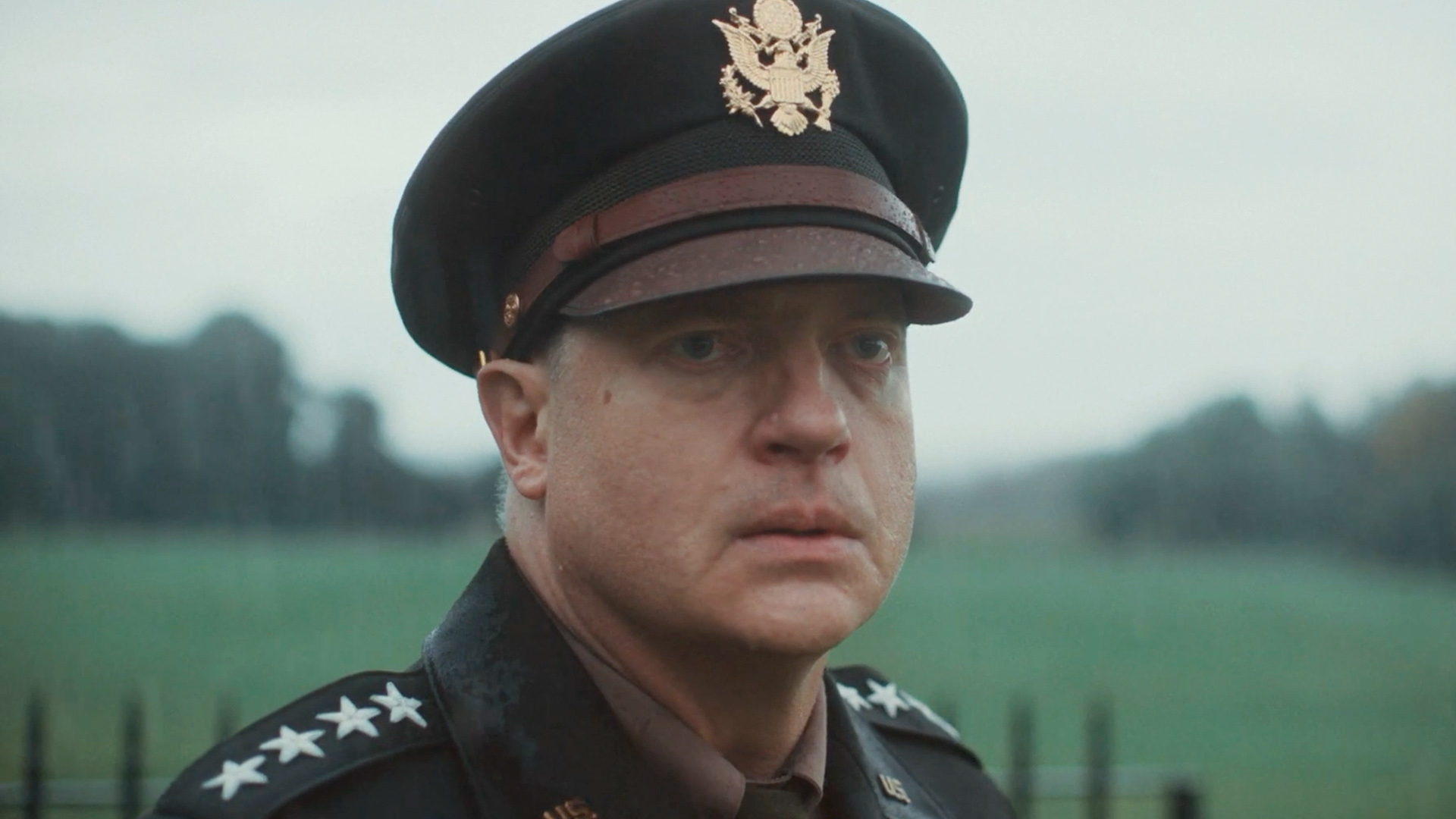
Director:Anthony Maras Writers:David Haig, Anthony Maras Stars: Andrew Scott, Brendan Fraser, Kerry Condon
Synopsis:In the tense 72 hours before D-Day, General Dwight D. Eisenhower and Captain James Stagg face an impossible choice, launch the most dangerous seaborne invasion in history or risk losing the war altogether.
Our lives revolve around weather. We are beholden to the strange, unpredictable, and changeable patterns that swirl above our heads and are entirely out of our control. Humans have attempted to predict the weather for thousands of years and it’s rarely more than an approximation. We have technology now that maps, moves, and gets ahead of weather systems, but we still have to run inside if black clouds roll in during our picnic because things change in fractions of degrees that no computer can calculate fast enough. We never think about how the weather can affect war, though. Humans have fought in every kind of weather there is, but something so precise as a seaborne invasion cannot be left to just looking up at the sky. Pressure puts the credit for the success for the landing of the Allied Expeditionary Force on D-Day to the meteorologists who found a lucky break in the weather.
As fascinating as the weather is, meteorologists are often not fascinating people. There’s a reason why when people have run out of small talk, they often remark on the weather as a last resort. Though, writers Anthony Maras and David Haig, whose play is the basis for the screenplay, do find many ways to amp up the drama. These ways are hit and miss at some points. Often it ends up with sniping, bloviating, and shouting, which feel a bit forced at times. Though, Damian Lewis’ delightfully smarmy turn as General Montgomery is all those things and the film is better for it every time he’s on screen. We lose much of the tension as we know the historical fact that this invasion was a success.
What keeps the tension from disappearing entirely is the way in which human empathy comes into the decision making. Often when war films focus on the higher ups, they lose touch with the actual fighting men or even civilians in harm’s way. Maras and Haig have built in small scenes to keep this kind of pressure on those in charge. There are interspersed scenes of the enlisted men camped at the headquarters, mixed with colorized footage of soldiers from the time of the actual invasion that bring into focus that this undertaking will cost the lives of some of these men.
That’s where the excellence of Maras’ direction comes in as well. He and cinematographer Jamie Ramsay start the film with the face of a young soldier wounded during a disastrous training exercise. Slowly, they pull back so we see the blood washing up with the surf and the dozens of bodies of dead and wounded soldiers. We never forget the faces of these men as Maras’ camera never lets us.
It even shows up in the edit as well. Editing was done by Maras and he was able to make the final scenes that depict the invasion as well as the reaction of the top brass in the bunker really resonate. That’s hard to do when history tells us what happened on June 6, 1944 and when Steven Spielberg gave us a gruesome, if realistic depiction of what it was like on the beach at D-Day. Yet, Maras finds the faces again. A man or two we saw in camp are followed as they struggle up the beach. We see their reactions to the battle around them mixed with the hectic shouting into phones and radios at the command bunker. Then the weather breaks just as hoped and the men find their way to taking out the machine gun nests that have been killing their comrades. It’s an excellent piece of intercutting action that achieves an exciting and emotional forward momentum.
Pressure is a well acted, tense, and emotionally powerful film about one of the greatest achievements in military history. You can forgive it for being a bit slow in places and for being a bit high and mighty in others because the pros far outweigh the cons. It’s a film you know the historical ending of, but it hits far differently when the human effects of the war take center stage.
Halfway through the year now and Criterion is dropping a whopping NINE releases in June. The Barnes & Noble flash sale is happening next month, everything is going to be at a devious 50% off, prime time to up your collection (especially if you’re seeing what Criterion is dropping in July – insane cinema on the way). Criterion is releasing two 4K+Blu-Ray upgrades, two new Blu-Ray releases, one new Criterion Premieres release, three new 4K+Blu-Ray releases, and a Blu-Ray upgrade to a long out-of-print Eclipse boxset.
Five Easy Pieces (1970)
Five Easy Pieces was the first step to the formation of the cinematic studio, BBS Productions. A major pillar of the New Hollywood movement, Five Easy Pieces starred Jack Nicholson in what would be one of his breakout roles (that with the BBS-produced masterpiece Easy Rider). The film follows Nicholson as a former piano prodigy and now oil rig worker who returns home after learning his father is dying. These early Jack Nicholson films, and the films of BBS in general, are gritty and never shy from the reality and pain of life. Five Easy Pieces is a tough pill to swallow in cinematic form and is foundational to what the modern American film would look like. Five Easy Pieces is a 4K+Blu-Ray combo pack featuring a new 4K digital restoration.
Charade (1963)
The ’60s era of Stanley Donen’s films I’d best categorized as ‘martini cinema’. Decadent visually, witty in dialogue and characterization, and sensible fashion that rarely is superseded all these years later. Charade is the epitome of this mantra, gin and dry vermouth is screaming to hit your lips as you watch Charade. Audrey Hepburn & Cary Grant in a screwball romantic comedy spy thriller? I don’t even need to spell it out anymore, this is the type of stuff everyone needs in their collection. Charade is a 4K+Blu-Ray combo pack featuring a new 4K digital restoration.
West Indies: The Fugitive Slaves of Liberty (1979)
Prior to this film’s inclusion in the collection, I was unfamiliar with it. But an African musical about French imperialism in Africa sounds, pardon my French, kickass. Even in the snippets I watched while researching the film it oozed the confidence and boldness that is needed to make an audacious anti-imperialism musical work. West Indies: The Fugitive Slaves of Liberty is one of the largest films to come out of Africa and the production value seems to show for every penny used on its USD $1.5 million budget. I am now immensely interested in this release, and I think you should make it a priority of yours as well. West Indies: The Fugitive Slaves of Liberty is a Blu-Ray release featuring a new 4K digital restoration.
High Art (1998)
Similarly to West Indies: The Fugitive Slaves of Liberty, High Art is a film that I wasn’t familiar with prior to its announcement of being added to the collection. High Art is one of the few films from filmmaker Lisa Cholodenko and is highly regarded by legendary critics such as Roger Ebert and Janet Maslin. High Art follows a young editor of a photography magazine, named Syd, intertwining with retired, renowned, and heroin addicted photographer Lucy. Similar to love jones, this film seems like a case where a brilliant film debut doesn’t propel the filmmaker forward enough to maintain a consistent and lucrative career (to add, I adore love jones, so that pains me to see). The praise alone intrigues me to seek this out, and it should for you as well. High Art is a Blu-Ray release featuring a new 4K digital restoration supervised and approved by director Lisa Cholodenko.
Magellan (2025)
In a new release from Criterion’s ‘Criterion Premieres’ line of films, Magellan is a freshly released film from Filipino filmmaker, Lav Diaz. Magellan follows explorer Ferdinand Magellan on his odyssey across the Pacific Ocean which captures the imperialism and Christian imposition that followed. The film premiered at the Cannes Film Festival in 2025. Criterion Premieres is a line of films that releases new Janus Film releases with minimal special features and Magellan will release on Blu-Ray and DVD.
Hairspray(1988)
Hairspray was the final collaboration between John Waters and Divine. A collaboration of which would go on to be one of John Waters’s biggest films. Hairspray was adapted into a Broadway musical and would go on to win 8 Tony awards, and has cemented itself as one of the greatest musicals of all time. Criterion’s release of the original John Waters classic is a milestone of preservation and is easily John Waters’s most accessible film. Furthermore, any Waters film with Divine is lightning in a bottle – which is insane considering there are multiple Waters/Divine films and Hairspray is no different. Hairspray is a 4K+Blu-Ray combo pack featuring a new 4K digital restoration supervised and approved by director John Waters.
Desperate Living(1977)
John Waters is a one-of-one filmmaker. While Waters’s frequent collaborator and muse, Divine, does not star in this film, Desperate Living is just as outlandish and trashy as you would hope. Desperate Living is the third and final film of Waters’s “Trash Trilogy” (which also includes Criterion releases Pink Flamingos and Female Trouble) and holds true to its trash moniker. Rabies, phalloplasty and a subsequent penectomy, and a shantytown ruled by a fascist Queen – Desperate Living has all of the depravity your sick heart has been searching for. Desperate Living is a 4K+Blu-Ray combo pack featuring a new 4K digital restoration supervised and approved by director John Waters.
It Was Just An Accident(2025)
I’m not going to pretend like I know anything about this film. I attempted to stay completely spoiler-free because I do want to see It Was Just An Accident, I just haven’t gotten to it yet. With that said, I admire the film’s director, Jafar Panahi, immensely. Pursuing art while being persecuted for doing so has to be one of the bravest displays I’ve ever seen and that alone compels me to purchase this release despite my lack of knowledge on what occurs in it. That’s all, I will be buying in support of Panahi and I can’t wait to (finally) watch this. Go buy this. It Was Just An Accident is a 4K+Blu-Ray combo pack featuring a new digital restoration approved by director Jafar Panahi.
Eclipse Series 6: Carlos Saura’s Flamenco Trilogy
Filmmaker Carlos Saura was one of Spain’s greatest auteurs – along with Luis Buñuel and Pedro Almodóvar. While Saura started his film career in neorealism, he transitioned to films that merged drama with music and dance. Criterion had this set previously during its initial Eclipse run, but went out of print and remained that way for some time. Now, with this boxset, the films of Carlos Saura are now more accessible than ever – including his incredible Flamenco trilogy. Each film adapted from existing works in the style of flamenco, and is one of the most inventive pieces of art put to film. The films in this set are Blood Wedding, Carmen, and El Amor Brujo and they are all featured in a Blu-Ray box set.