


Directors: John Lasseter, Joe Ranft
Writers: Dan Fogelman, John Lasseter, Joe Ranft
Stars: Owen Wilson, Bonnie Hunt, Paul Newman
Synopsis: On the way to the biggest race of his life, a hotshot rookie race car gets stranded in a rundown town and learns that winning isn’t everything in life.
I can’t remember exactly how old I was when I first watched Cars. At the time of its 2006 release, I was turning two years old and likely hadn’t yet taken my first trip to Radiator Springs. In fact, I can’t remember the first time I watched this confusing Pixar Classic at all; I do know, however, that I’ve seen it enough times in the 20 years since then that my family has essentially prescribed it to my person as a personality trait.
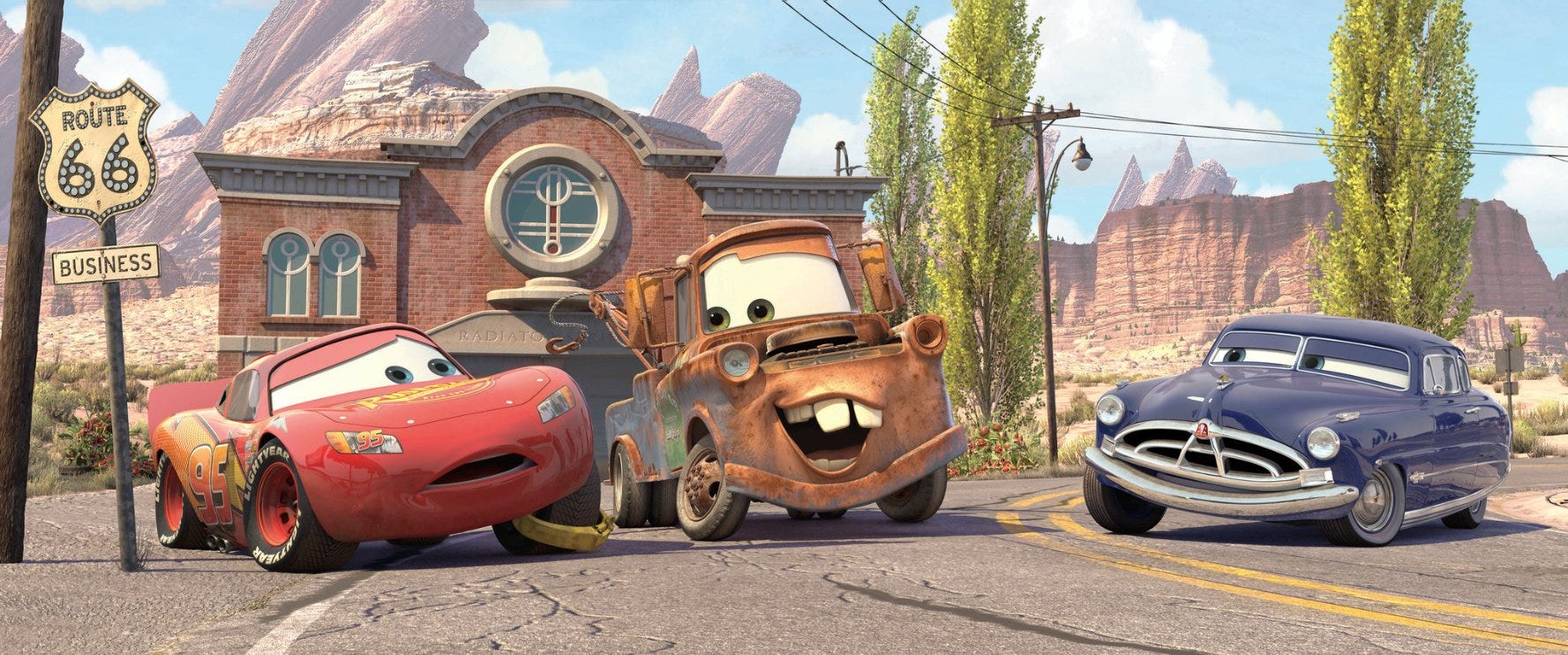
Of course, I’m not a kid anymore (even if I still own and play my GameCube copy of Cars – an equally thrilling experience), but this is a movie that I still find myself going back to more than any other cornerstone of Pixar’s storied catalogue. You could (rightfully) call this bias, but Cars is still my favorite Pixar movie and, even if I know it isn’t the best one, I’m happy to re-review this thing two decades down the line and spill my guts in digital print. There’s something about Cars, especially in the context of the time in which it was released, that sets it apart from Pixar’s other earlier works. It has all the trademark story beats, with a heavy swing of emotion in the third act taking special center stage. But the small-town feeling of the aforementioned Radiator Springs, filled with memorable personalities and homey visuals, is what I believe does the ultimate trick.
It’s a common point of criticism to note that there’s no specific reason for these characters to be cars in the wider context of this narrative, but I’m not sure I can imagine a story about a hotshot airhead finding his heart in a small town working better than one in which he literally cannot leave it. Lightning McQueen is physically trapped in Radiator Springs and – again, literally – has to slow down to find the finer things. It’s on the nose, sure, but as a rip-roaring kiddo worried about how fast I could turn the corner in my kitchen without slipping on the hardwood floor, this is the first movie that I remember having the same effect on me as it does on its main character. My mind goes back to Lightning’s hillside drive with Sally, where things literally grind to a slow-motion stop as this city boy (Sarge’s words) experiences that beauty for the first time.
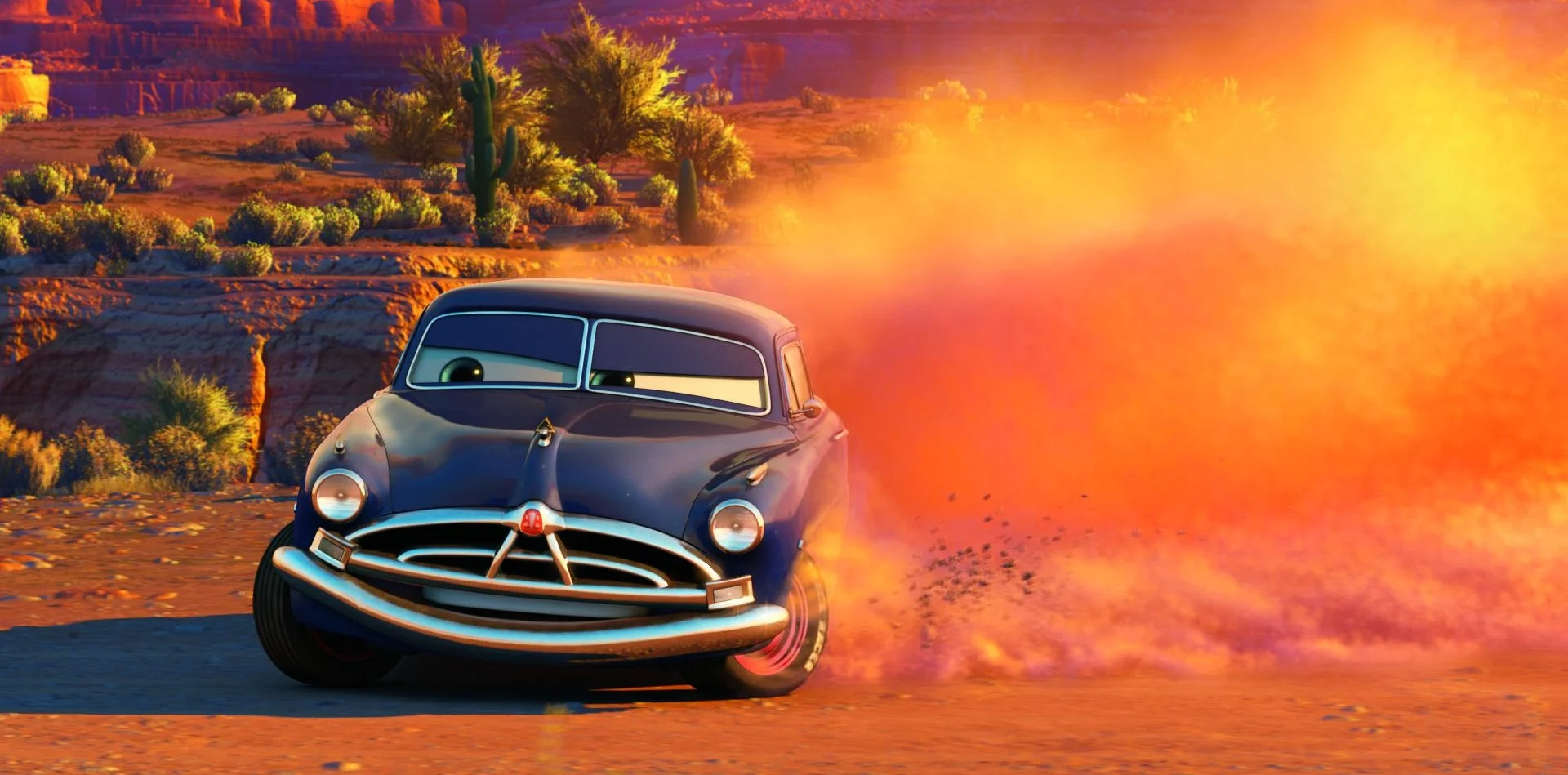
It also helps that the movie looks great; neon lights and spinning signs define the rare sort of project that has a trademark feel, even this long after its release. Cars could be recognized in swathes of paint and landscape portraits and, similarly, the racing sequences remain absolutely breathtaking. The voice cast goes a long way in hammering home that effect on both ends of the spectrum of momentum, too.
Owen Wilson is brilliant and vocalizes Lightning’s slow-down in his own right, but Paul Newman’s Doc Hudson is truly an all-time outing in any one of Pixar’s movies. The flashback to Doc’s days as a racer, over which Newman tragically whispers the reason he quit in the first place, is Cars’ beating heart. And when that heart starts racing, “Float like a Cadillac, sting like a Beemer” should still have you doing backflips in your seat.
Is it contrived, and a little hokey? Absolutely, but it’s also entirely self-serious and wonderfully committed to the message that it’s selling to an audience of children that, like myself, hadn’t sat still for a moment prior to that ‘Real Gone’ drop on the opening scene. Cars remains a weird, almost unimaginable turn of events for Pixar, even 20 years later; but it also remains my favorite of the bunch and, in the eyes of many, a crucial part of the company’s historic early run. If you somehow weren’t won over by the credits, John Mayer’s ‘Route 66’ cover should be the nail in the coffin for any well-meaning viewer. I’ll always settle for a slow-down with Cars.