This week on the InSession Film Podcast: Extra Film segment, we discuss the great Robert Pattinson in Good Time and The Vern joins us to break down Aubrey Plaza in Ingrid Goes West!
Big thinks to Vern for joining us on Extra Film this week, he was a great guest as always. We don’t always have guests for this particular show, but he was there to help us in a pinch since neither Brendan nor JD had seen Ingrid Goes West yet. It was really fun to discuss both of these unique indie films that feature two of the best performances we’ve seen so far this year.
With that said, have fun listening to this week’s Extra Film segment and let us know what you think in the comment section below. Thanks for listening!
– Movie Review: Good Time (6:26) Grades
Brendan: C+
Vince: A-
– Movie Review: Ingrid Goes West (35:44) Grades
Vern: B-
Vince: A-
We try to make this the best movie podcast we possibly can and we hope you enjoy them. Subscribe today on iTunes and Stitcher and please leave us a review on iTunes. You can also find us on Soundcloud, PlayerFM and TuneIn Radio as well. We really appreciate all your support of the InSession Film Podcast.
To hear this Extra Film episode and everything else we do, download our apps on the Amazon Market for Android and the Podcast Box app on IOS devices. The mobile app covers all of our main shows, bonus podcast’s and everything else relating to the InSession Film Podcast. Thanks for your wonderful support and listening to our show. It means the world to us!
[divider]
Help Support The InSession Film Podcast
If you want to help support us, we would greatly appreciate it! For more info, CLICK HERE.
This weekend kicks off the Fall Movie Season for most cinephiles and leading the charge this year is…Close Encounters of the Third Kind? The Steven Spielberg film? That can’t be correct.
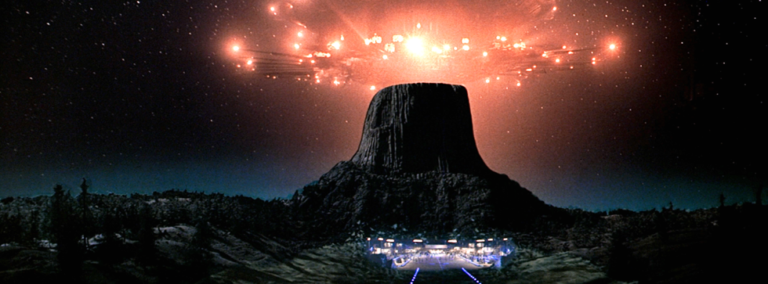
Well, as it turns out, it is. Of course there are new releases this weekend, such as Justin Chadwick’s Tulip Fever and Michael Apted’s Unlocked, but those films will only add to an already disappointing year at the box office. The weekend’s big release is actually a re-release of Spielberg’s classic 1977 film, Close Encounters of the Third Kind for it’s 40th anniversary! If you ask me, not only is Close Encounters one of Spielberg’s best films, I’d argue it’s one of the best films of all-time. And as many of you may know, I wasn’t around in 1977 to see this in all its glory then, so to see it on the big screen now is such a delicious treat.
Close Encounters for me is a transcendent experience that combines wonder, startling terror, gripping emotion and stunning characterization that leaves you breathless by the end. The way Spielberg stages each scene is spellbinding and visually magnetic. The score by John Williams is masterful and iconic. The performances all around are fantastic. Richard Dreyfuss, in particular, gives one of the best performances – if not the best – of his career.
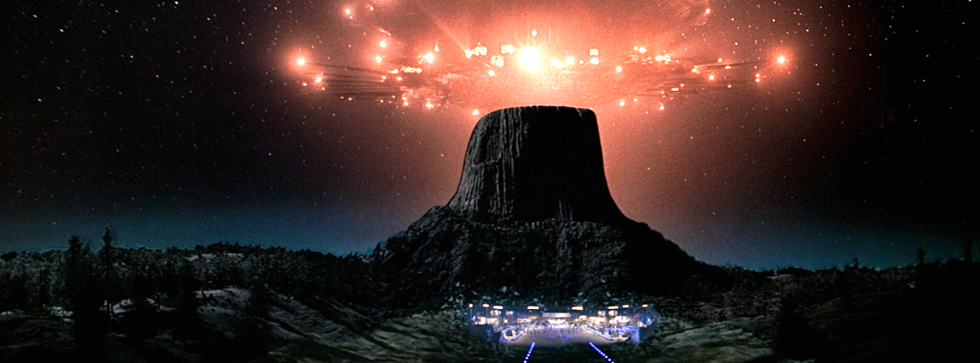
The fact that we are getting a chance to experience this in theaters has me salivating for a mound of mashed potatoes. The only thing that could make this better is if I could see the film at Devil’s Tower in Wyoming, which is apparently a thing that is actually happening. Sadly I will probably not make that screening, but a 4K big-screen experience isn’t too bad either. And boy I cannot wait.
What about you? Will you be seeing Close Encounters of the Third Kind in theaters?
[divider]
There’s not much else available, but here’s what you can expect this weekend at the box office:
Tulip Fever Unlocked (limited) Goon: Last of the Enforcers (limited)
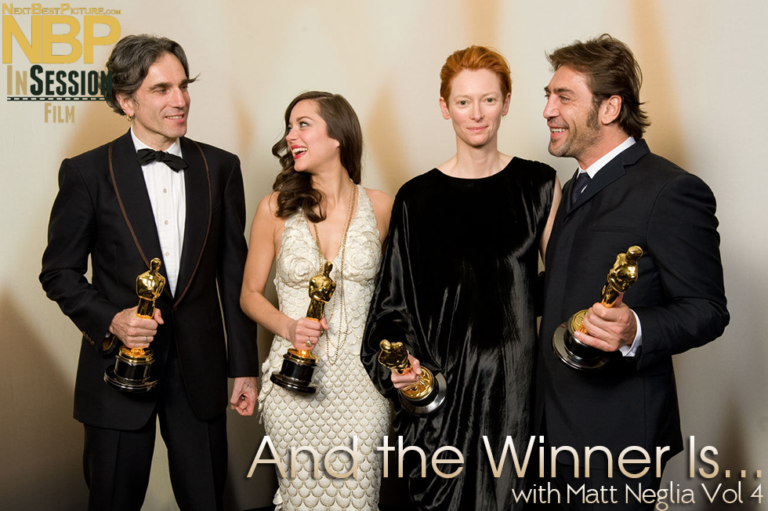
This week for our Episode 236 InSession Film Podcast: Bonus Content, Matt Neglia from Next Best Picture joins us to discuss the awards season for the films of 2007, as we tie in this discussion to our 2007 Retrospective. It was a lot of fun, check it out!
We offer our bonus content for free, but we do encourage and appreciate a small donation of $0.99 as a way to help support the show. Click on the PayPal button below to donate and thanks so much for your support. You can also hear all of our Bonus Content via our mobile apps. See the information at the bottom of the post for more details.
[divider]
Mobile Apps!
Listen to all of our bonus content on our apps for just a one-time fee! Whether you have an iPhone, Android or Windows phone, our apps are available in many different ways that is convenient for you. With our mobile app, not only can you listen to all of our bonus content, but our main shows and our Extra Film podcasts as well. Click here for more info!
If you don’t want to purchase our bonus content, but still want to support us, there are other you can help us out. Click here for more info.
We hope everyone had a great summer movie season, it was certainly full of good films and perhaps even a few that could turn into classics – looking at you Dunkirk! I’m not sure where the time goes, but the fall is finally upon us. The fall-winter movie season is always full of speculation when it comes to awards, but even outside of that, the year could (and should) end on a spectacular note. There are some great gems heading our way, and hopefully they live up to the bill.
That said, what film are you most anticipating outside of that little flick called Star Wars: The Last Jedi?
Or so goes the line, paraphrased, from William Shakespeare’s The Tempest. For many of us Shakespeare is something we ditched after high school English classes; or so we thought. From the books we read, movies we watch, to expressions we use regularly, we take the old bard and his influence with us. Not only the old bard, but as well those things we learned in school from our teachers.
My most memorable class in high school was English class. Other classes are memorable too, but most subjects teach you the rules. English has its rules too, but what it most teaches you is how to put your thoughts into words; how to be yourself.
Sean Riley is a teacher of English class. Born in Baton Rouge, a graduate of USM living in Mississippi, from childhood he has had a love of movies. Working on student films in college and short subjects later in life, Sean has kept himself involved in film. The one thing he had not done, though, was take that leap into making a full length feature film…
…Until now.
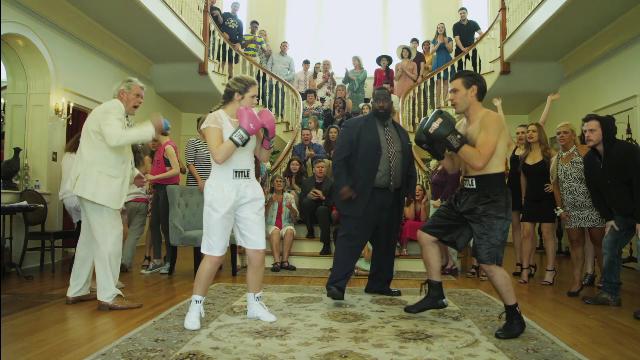
Fighting Belle is a movie made in Mississippi. With filming in Ocean Springs, Pass Christian and Gulfport its heart is truly ensconced in the Mississippi Gulf Coast. With cast and crew from the South, its Southern flavor and charm are not imported or ‘put on’ as it would be in a Hollywood production but are a natural part of the movie.
Fighting Belle is the story of Delilah, a beautiful Southern Belle with a loving heart who has her life plans in order, including her wedding day. But that one biggest day in her life hits a bump in the road as she’s left at the alter. Her bubble has been burst, but she has a plan to get even by challenging her ex-groom to a rematch of sorts, but with boxing gloves this time.
“A southern fried romantic comedy with a distinctly different approach to finding love succeeds in delivering a one-two punch with a wonderful performance by Jessica Harthcock and excellent direction by Sean Riley.”
“… an entertaining movie with solid acting, snappy dialogue, and a fresh new take on the concept of getting even. Jessica Harthcock makes Delilah’s transformation funny and yet believable, and all the characters get their own chances to shine. It’s a strange combination of warm southern charm and ice-cold revenge that somehow works beautifully.”
Sean Riley is still teaching; in the classroom and out of the classroom. The biggest lesson he is teaching to students of all ages is dreams are only dreams if you don’t reach for your goals in life and make them a reality. Fighting Belle is a romantic comedy about people realizing their dreams. From writing to directing to producing, Fighting Belle is the stuff dreams made.
Fletch: Before this stage in your life of making your first feature film you had a successful career as a teacher. What subject did you teach and, because your students probably want to know, how did you do in that subject in school?
Sean Riley: English–seventh through 12th grade–primarily high school. I seem to remember being an average student. Sadly, outside of the occasional creative writing assignment and interesting piece of literature, I wouldn’t say that I was necessarily inspired by any of my English teachers.
Fletch: When did you first get involved in filmmaking?
Sean Riley: I’ve been obsessed with movies for as far back as I can remember I think it was when I was doing some recreational reading in middle school when it dawned on me how visual a book could be in my own mind. Soon after I learned what a director did. Something clicked in my mind that this might just be the career path for which I was born. My bedroom became a film study. I watched everything I could get my hands on–from Chinatown to Steven Seagal movies. I ordered screenplays from the back of Premiere magazine, saved up and bought a Brother electric typewriter, and hammered out the worst screenplays imaginable. In high school I goofed with friends making video sketches and eventually studied film formally at the University of Southern Mississippi.
Fletch: Who would you say inspired you to want to make films?
Sean Riley: Michael Mann, Alan Parker, Walter Hill, the Coen Brothers, Adrian Lyne, Mickey Rourke, to name a few.
Fletch: People make career changes all the time, especially in their 20s, but pushing 40 not so much. Why grab the reins now?
Sean Riley: Thanks for making me feel old! Really, though, I don’t consider filmmaking to be a career change so much as the culmination of my life choices and obsession. I tried to bottle my filmmaking aspirations for a good part of my life, but it wouldn’t be denied. It’s such a large part of who I am as a person that it ultimately seemed to finally just erupt. Fortunately, I was able to start a family and establish a career in education along the way, which has made me a more complete person and provided me with extraordinary life experience. I can’t imagine what I would have had to say as a filmmaker in my 20s.
Fletch: Being this is your feature film breakout as a director, a lot of independent filmmakers would have started in easier territory, such as horror. A romantic comedy, to me, would seem like a more challenging first path to take as a filmmaker. Had you considered other genres?
Sean Riley: I think every first-time filmmaker has considered the horror genre. But like the stock market, I think there’s a lesson in trying to time the film market. So much comes down to having a great screenplay. Filmmaking is so laborious and expensive. Why would you want to marshal the troops without a solid foundation? A first-class screenplay allows you to start with a leg up on the competition because it seems like there are so few out there that make it to feature film status. I didn’t have money, name actors, or veteran crew, but I did have a wonderful and unique screenplay by Aimee Parrott and Antonio Gangemi, so I decided to roll the dice with that one sales point. So many people and articles argued vehemently about making a romantic-comedy, but you know what? When it came time to talk with distributors after Fighting Belle was complete, guess which long-popular genre had started to cool and which long-maligned genre was suddenly in demand.
Fletch: When you were looking for a script to shoot were you specifically looking for one with a Southern accent, so to speak?
Sean Riley: Well, I was looking for a script that I felt I could shoot economically. That’s for sure. I wasn’t looking for something “Southern,” per se. Just something I felt I could shoot locally with the resources on hand. It just so happened that this script, written by a couple of New Englanders living on the West Coast, was having trouble finding someone to take it on. Fortunately, being a Mississippian now, I was at ground zero to pull it off.
Fletch: Mississippi is not the first place people think of when they think of the film industry, shocking as that may be. How did you connect with others to make your film?
Sean Riley: Mississippi is a really well-kept secret. We’re within driving distance of New Orleans and Atlanta, two major hot beds of motion picture production to pull from. Fortunately, there’s a small but talented base of filmmakers throughout the state and especially in the Coastal area. I worked with my cinematographer, Chaz Singleton, and my Assistant Cameraman, Chad Raines, on a short film called “The Perfect Tense” that had made a few festivals the year prior. Having worked with them, I felt I knew what I could accomplish at a more ambitious level. From there, I began researching state and regional talent agencies and websites to handpick my cast.
Fletch:Fighting Belle has quite a bit of Southern flavor embedded in the humor. Was this in the script originally or did you and/or the cast inject your own touches of Southern style into it?
Sean Riley: Certainly the lion’s share was already embedded in the original script. I added a few touches here and there. The characters in the script were very large caricatures. I tried to cast those who embodied the spirit of those characters, with a few exceptions.
Fletch: Two of your locations you use extensively in Fighting Belle are a Southern mansion and a gym. There were also locations such as the boutique. When approaching local businesses in the area for location scouting were they pretty open to the idea or did you get some strange looks along the way?
Sean Riley: I was no-called, sent on my way, and strong armed by my share of property owners. Fortunately, there were a few brave, generous souls who welcomed us with open arms. Those are the locations you see in the film. The Julep Room bar location was a last-minute switch because it’s just an amazing location and I had to have it. I worked and worked to secure an old-timey drug store with a soda fountain for that scene but ultimately was turned down. I think we wound up with a better location instead.
“Fighting Belle” set shoot, Sept. 10 and 11
Fletch: Jessica Harthcock was simply fantastic in her performance in the lead role. In a conversation I had with you previously I mentioned that I was embarrassed as a reviewer that I did not pick up on this right away, simply because she was so natural that she seemed effortless in her performance. I think somebody once said that you can tell a good actor by the effort they put into their work, and a great actor when you can’t see that effort. When casting for the lead, was there a moment or something that stood out about Jessica that said she was the one for the role? How was it working with Jessica?
Sean Riley: I spent a really long time trying to find the perfect Delilah. The entire movie rested on that one casting choice since the character appears in almost every scene and carries the entire movie. Delilah is such a huge character that not many actors could pull it off. I was out of options and noticed her on my Facebook friend list. I didn’t know her personally but knew we had a distant Mississippi filmmaking connection. I had nothing left to lose and sent her a message in desperation around midnight one weekday. She answered immediately, and I had an audition waiting in my email box the next day. I was floored when I saw the audition. Jessica had nailed the part better than even more established actors at the time I had auditioned. I immediately showed my wife, Candy, and we agreed that she was the one.
On set, Jessica was a consummate pro. She absolutely nailed her scenes, which saved a lot of valuable shooting time and money. I quickly learned that she was someone I could trust and depend on as a director and producer. Always positive on set and willing to try anything crazy I threw at her–and there was no shortage of craziness that I threw at her. Directors would be fools to not consider her.
Fletch:Fighting Belle is also a boxing movie, has wedding scenes involving large groups of people, a scene shot into a mirror, and some really good scene structure and composition, none of which I imagine are on anybody’s ‘easy list’ of things filmmakers do. What was most challenging to you?
Sean Riley: Surprisingly, I would say the first boutique scene and the charity event scene. Somehow we got turned all around with screen direction while in the boutique. The sun was going down outside, and the blocking just wasn’t working. We probably spent 2-3 hours on just that one scene. Fortunately, we shot the other two boutique scenes directly after, and they pretty much went off without a hitch.
The charity even scene was difficult because it was intended to be such a bigger set piece, complete with waltzing and the whole nine yards. When it came time to shoot the scene, 90% of my extras, those who had just finished filming the opening wedding scene, were nowhere to be found. One of my many guardian angels on the shoot, extra-turned-stills photographer-turned PA, Dee Dempsey, told me that an extra had told the others that shooting was done for the day. I was about to give up but assembled the few remaining saints that had stuck around. I quickly tore down the scene, mentally, to its essential ingredients, blocked off a small area of the ballroom, and salvaged a sure disaster.
Fletch: You’ve done short films, now your first feature film. I understand that you are now working on a series of podcasts and have some other film projects on the horizon?
Sean Riley: I want to take a little break from filmmaking and let a new script idea incubate. I’ve been inventorying new interests and have recently cultivated an interest in podcasting. I’m developing a podcast called Second Acts Podcast, which explores how early success has shaped and defined the current lives of entertainers. My first interview is with Joel M. Reed, the cult director of Blood Sucking Freaks, whom I met surreptitiously through Fighting Belle. I hope to invite many more unique guests on the podcast. Be sure to “Like” our Facebook page at https://www.facebook.com/secondactspodcast/ in anticipation for the inaugural episode. And, of course, if you haven’t already, I’d love for you to check out Fighting Belle on Amazon Video and drop me a line with your thoughts.
I want to thank Sean Riley for taking the time to answer questions, and of course providing us with an entertaining movie like Fighting Belle. I’m sure all of us hope to see even more films and projects coming from him and the wonderful and talented cast and crew of Fighting Belle.
This week on Episode 236 of the InSession Film Podcast, we continued our year-by-year retrospective series by taking a look at 2007, one of the best years in the modern era for film. In fact, one could argue (and we did on the show) that 2007 is the deepest year in terms of quality that we’ve seen this century so far. From There Will Be Blood to No Country to Old Men to Zodiac and beyond, it was quite the year for movies. And given that it was such a robust year, narrowing down that vast amount of great films to a Top 10 – and arranging them into some sort of order – was impossibly difficult. In most years, the films in our 6-10 would easily find a spot in a Top 5 for us. As rewarding as this exercise was, the challenge of conjuring a list with these films was a bit cumbersome. However we were ultimately very satisfied with our selections and we hope you enjoy them as well.
NOTE: On #236 we only discussed our Top 5 movies of 2007, so be sure to listen to the show to hear us discuss why these particular films were the very best of that year. However, as you’ll see below, we have listed our full Top 20 lists from 2007.
JD
1) Once
2) No Country for Old Men
3) Zodiac
4) There Will Be Blood
5) Juno
6) Ratatouille
7) Atonement
8) The Orphanage
9) The Assassination of Jesse James by the Coward Robert Ford
10) This is England
11) The Diving Bell and the Butterfly
12) Harry Potter and the Order of the Phoenix
13) Away From Her
14) Gone Baby Gone
15) Into the Wild
16) The Bourne Ultimatum
17) Hot Fuzz
18) Persepolis
19) The Savages
20) The King of Kong
Brendan
1) There Will Be Blood
2) The Diving Bell and the Butterfly
3) Ratatouille
4) Zodiac
5) The Assassination of Jesse James by the Coward Robert Ford
6) Once
7) Into the Wild
8) Away From Her
9) The Orphanage
10) No Country for Old Men
11) Atonement
12) The Lives of Others
13) Harry Potter and the Order of the Phoenix
14) Before the Devil Knows You’re Dead
15) The Bourne Ultimatum
16) This is England
17) Knocked Up
18) American Gangster
19) Persepolis
20) Superbad
Hopefully you guys enjoyed our lists and if you agree or disagree with us, let us know in the comment section below. Clearly there are a lot of other contenders from 2007 that battled for our lists, that just missed the cut. That being said, what would be your Top 10? Leave a comment in the comment section or email us at [email protected].
This week’s episode is brought to you by MoviePass, sign up today for just $9.99/month and see unlimited movies! This week’s show is also sponsored by the movie Road to the Well, now streaming on Amazon Prime!
This week on the InSession Film Podcast, we continue our year-by-year retrospective series by reviewing Paul Thomas Anderson’s There Will Be Blood and discussing our Top 5 movies of 2007!
As you’ll hear on the show, and as you’re probably aware of already, 2007 was such a rich year for film. It is arguably the deepest year we’ve seen this century in terms of quality, making this retrospective a very satisfying experience. We hope you enjoy our reminiscing and the discussion we had on these great films.
On that note, check out this week’s show and let us know what you think in the comment section. Thanks for listening and for supporting the InSession Film Podcast!
– Movie Review: There Will Be Blood (15:30) Grades
Brendan: A+
JD: A
– Top 5 Movies of 2007 – Picks #5 / #4 / #3 (59:43)
As mentioned above, 2007 was a robust year for film and narrowing that down to a Top 5 was impossibly difficult. In most years, the films in our 6-10 would easily find a spot in a Top 5 for us. As rewarding as this exercise was, the challenge of conjuring a list with these films was a bit cumbersome. However we were ultimately very satisfied with our selections and we hope you enjoy them as well.
– Top 5 Movies of 2007 – Picks #2 / #1 (1:35:46)
To finish our 2007 retrospective, we discussed our favorite films films of that year in this last segment. We also discussed our 6-20 selections, rounding out our Top 20.
On that note, what would be your top 10 movies of 2007?
Main Review: Close Encounters of the Third Kind
2017 Fall Movie Preview
[divider]
Help Support The InSession Film Podcast
If you want to help support us, there are several ways you can help us and we’d absolutely appreciate it. Every penny goes directly back into supporting the show and we are truly honored and grateful. Thanks for your support and for listening to the InSession Film Podcast!
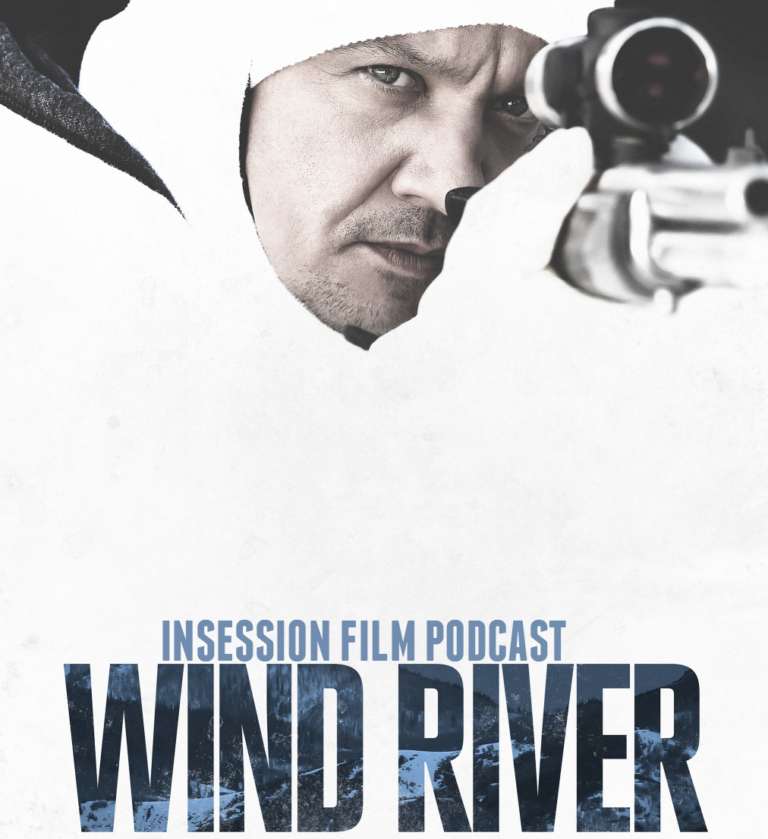
This week on the InSession Film Podcast: Extra Film segment, we discuss Taylor Sheridan’s Wind River starring Jeremy Renner and also the quirky comedy Brigsby Bear!
These two films couldn’t be more different from one another and that’s one of the more fun aspects to this week’s show. While neither are perfect, they’re both worth seeking out before they leave theaters, and we hope you enjoy them as we did! Also, JD gives his thoughts on Magic Mike since he was out last week on the show.
With that said, have fun listening to this week’s Extra Film segment and let us know what you think in the comment section below. Thanks for listening!
– Movie Review: Wind River (7:29) Grades
JD: A-
Vince: A-
– Movie Review: Brigsby Bear (41:02) Grades
JD: B
Vince: A-
We try to make this the best movie podcast we possibly can and we hope you enjoy them. Subscribe today on iTunes and Stitcher and please leave us a review on iTunes. You can also find us on Soundcloud, PlayerFM and TuneIn Radio as well. We really appreciate all your support of the InSession Film Podcast.
To hear this Extra Film episode and everything else we do, download our apps on the Amazon Market for Android and the Podcast Box app on IOS devices. The mobile app covers all of our main shows, bonus podcast’s and everything else relating to the InSession Film Podcast. Thanks for your wonderful support and listening to our show. It means the world to us!
[divider]
Help Support The InSession Film Podcast
If you want to help support us, we would greatly appreciate it! For more info, CLICK HERE.
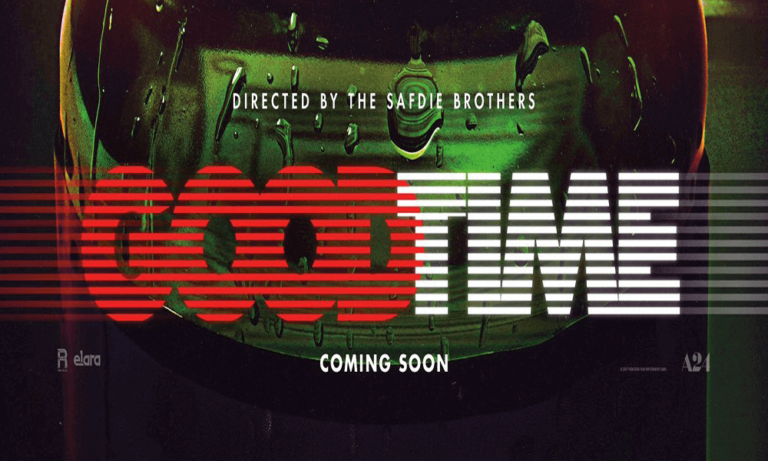
Director: Josh Safdie, Ben Safdie Writers: Josh Safdie, Ronald Bronstein Stars: Robert Pattinson, Ben Safdie, Jennifer Jason Leigh
Synopsis: A bank robber finds himself unable to avoid those who are looking for him.
[/info]
Good Time is a void-like odyssey that will leave many people in a haze. The Safdie Brothers craft a brazen semblance that overlaps in to an overwhelming feeling of surrealism. This component is established rather early in the film, while they simultaneously introduce the dismal atmosphere that tends to creep up on you from time to time. Between both of these, there’s constantly a shell of exhaustion encapsulating the movie regardless of whatever scene is playing out.
There are those rare films that can make good use out of every scene presented in the movie. But every scene in Good Time, has a purpose. All movement put forth by every character is brisk. It never allows you to take a break. There are definitive moments that feel like you’re currently in frame, observing every second with sweat filled palms and an adrenaline filled body, waiting for something to escalate. This can be said for both the film’s surface conflict, and Robert Pattinson’s characters internal conflict. There’s always something to pay attention to. In fact, each complication will tend to collide with one another during a certain point in the film.
Robert Pattinson gives without a doubt one of the best performances of 2017 thus far. He’s entrancing every second he speaks a new line of dialogue. He completely embodies the grime and guilt of the situation he’s battling through in the film, not just physically but mentally. Ben Safdie is credited as a co-director but also portrays Pattinson’s characters brother. The emotional weight that’s lugged between the sincere bond of their brotherhood is harrowing as a viewer. It feels like salt in the wounds by the finale too.
There’s truly a lot of due credit to give for a project like this. Between the directing, writing or acting, the Safdie Brothers deserve every ounce of it, as you have to respect their audacity for a lot of the choices they opted out to. The synth pop soundtrack echoes throughout each scene along with the luminous neon aesthetic. The psychedelic cinematography mixed with every other advancement you can think of in the technical department. Everything they accomplished is unparalleled. This should definitely put each of them on the map of up and coming directors to keep an eye on.
When running down Good Time, it’s virtually impeccable from every aspect. It’s soaked in upbeat music and editing. It never has an over abundance of plot points nor does it ever feel like it’s attempting to be something more superior than what it wants to be. This couldn’t have been as good as it was without taking the direction it did.
To conclude, although a film from this genre may not be the most appealing to some, the cast and crew is really deserving of all the support it should get. It’s also an essential experience to see this in theaters. An exhilarating stimulation of emotion and intensity.
Overall Grade: A+
[divider]
Hear our podcast review on Extra Film, coming soon.
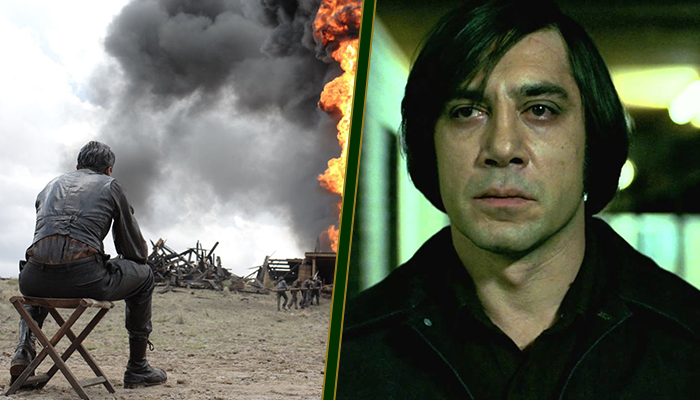
As you may have heard on a few recent episodes of the InSession Film Podcast, this weekend on Episode 236 we’ll be continuing our year-by-year retrospective series by diving into the films of 2007. In many cinephile circles, 2007 is considered to be one of the best years in film ever to be recorded, and for good reason. It was a very, very deep year with arguably several films that would be vying for a spot in the Top 5 films of this century so far. The two-headed monster that would be at the top of that list would of course be Paul Thomas Anderson’s There Will Be Blood and the Coen’s No Country for Old Men. As far as a one-two punch goes, it doesn’t get any better than those two films.
No Country for Old Men may have won the Oscar for Best Picture that year, but in truth, it’s a toss up between each film if you’re going to argue which was is “better.” If our poll this week is any indication, we aren’t the only one’s who feel that way as the votes right now are very much split between the two films. It should be fun to see where they rank in our lists this weekend, as I’m sure we’ll be diving heavily into both at one point or another.
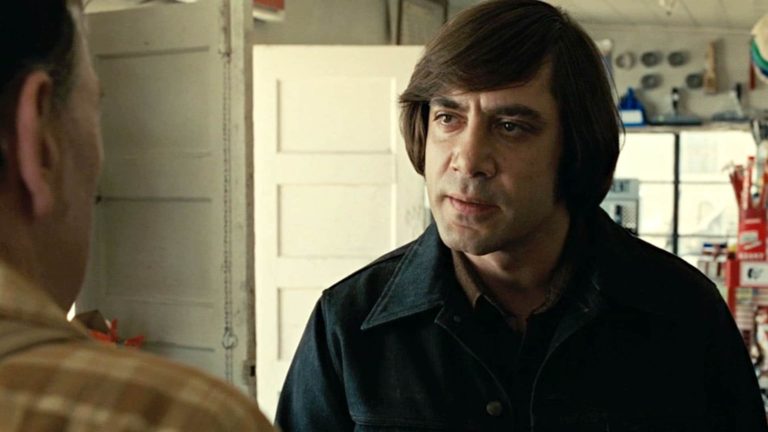
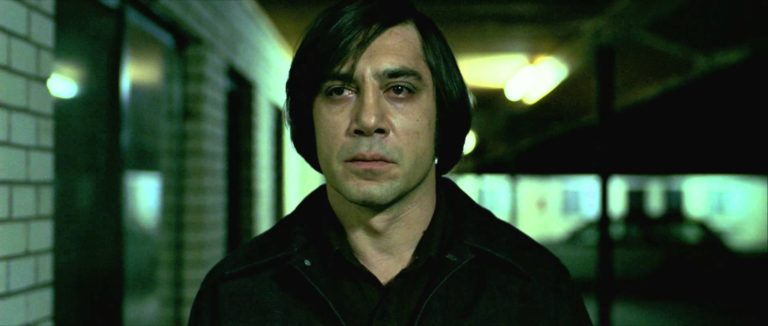
Remembering back to 2007, I was more familiar with the Coen brothers at the time, with films such as Fargo, The Big Lebowski and Raising Arizona being in rotation amongst my friends. In fact, There Will Be Blood may have been my introduction to Paul Thomas Anderson. I was aware of Boogie Nights and Magnolia, but I didn’t catch up with those films until later, as well as other PTA films. So at the time No Country for Old Men subjectively had more of my attention, especially given how jarring No Country was for me as it upended my previous experience with the Coen’s. Fargo had its fair share of dark moments, but overall it was balanced with some biting humor. Lebowski, Arizona, and O Brother, Where Art Thou? a few years previously were more in the comedic realm than drama. So for me, the Coen’s weren’t filmmakers that defined themselves by tense thrillers. And….I had nightmares over Anton Chigurh. Good God was Javier Bardem terrifying in that film, and if you know how the film ends, his performance lends itself well to nightmares. I’m sure that’s part of the reason he won an Oscar that year, all the voters were scared to death. Either way, it was a viscerally memorable experience given how different it was for me in regard to the Coen’s, but also because the film doesn’t feature a false note, or at least that’s what I would argue. It’s a breathtaking picture.
All of that said, despite less familiarity with PTA, I was also blown away by the prowess of There Will Be Blood and Daniel Day-Lewis’ performance. It’s a film that has been studied heavily since 2007, so I won’t go into it too much here, but I will admit that I agree with most of the essay’s out there about this film’s evolution into American capitalism and the commentary PTA is making with his exploration of Daniel Plainview. But more than that, what struck a chord with me the most, is the humanity at the center of all of that subtext. The progression of Plainview as a person is equally as fascinating to me.
2007 had a lot going for it in terms of film, and again we’ll dive into that heavily on Episode 236, but no doubt that it will be defined by these two great films. That said, where do you sit on the the debate between these two films. Let us know in the comment section below and stay tuned for our Retrospective.
[divider]
If you’re looking to the theaters this weekend, here’s what you can expect to see:
Leap!
All Saints Terminator 2: Judgment Day 3D (limited) Birth of the Dragon (limited) Death Note (Netflix)
This weekend on Episode 236 we’ll be diving into our 2007 Retrospective, which features some of the best films we’ve seen this century. In particular, it was the year that sparked the rivalry between There Will Be Blood and No Country for Old Men, two major films from that year. For many people, it’s a coin flip or decided by nitpicking each film beyond what is necessary. And we can sympathize with that dilemma, both films truly are spectacular and easily some of the best work we’ve seen in the last ten years.
So, with that in mind, we decided to pin them up against one another for this poll. Of the two films, which one do you think defines 2007 the most? No Country for Old Men may have won the Oscar for Best Picture, but There Will Be Blood is universally as loved, arguably more so. Where do you sit? Vote now!
Director: Steven Soderbergh Writers: Rebecca Blunt Stars: Channing Tatum, Adam Driver, Daniel Craig
Synopsis: Two brothers attempt to pull off a heist during a NASCAR race in North Carolina.
[/info]
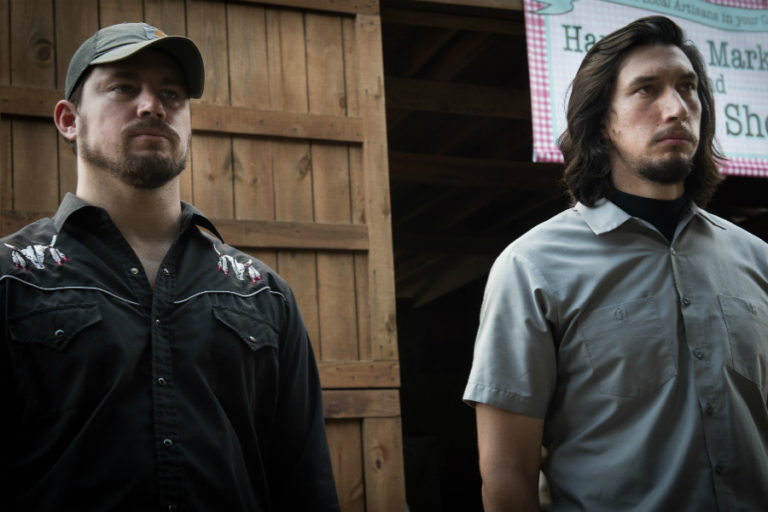
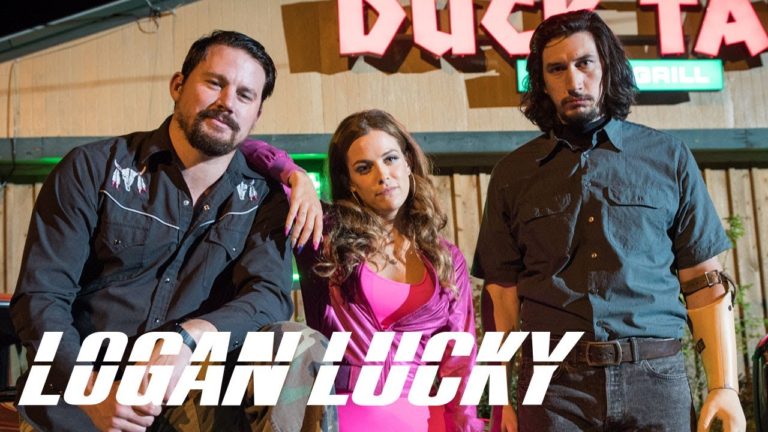
Logan Lucky is a blast from start to finish. With the return of Soderbergh to his Ocean’s Eleven roots in the resurfacing of his career, this all feels destined to happen. Tatum, Driver, and most importantly Daniel Craig create a fresh aura of comedic elements amongst a genre that was in need of something more light-hearted. While Soderbergh indeed delivers in the tonal department, it’s only the icing on the cake for this film.
The movie transpires just as any heist film progressively would but the brilliance of the screenplay actually helps out the one hour and fifty-nine minute runtime it currently tops out at. This films writer is credited as Rebecca Blunt. However, many sources say that Blunt quite possibly may be an entirely fictitious person. Whether she or Soderbergh penned the script, it’s incredibly clever nonetheless. It consists to a certain degree of that dry/witty humor that some may not find that amusing (especially for a movie like this), but for certain parts it might borderline on light slapstick humor. Whichever it may be, it makes for uproarious moments of laughter from our main protagonists.
Channing Tatum and Adam Driver make the ideal duo of the stereotypical dim-witted, country brothers. They fit their characters to a tee but also, this can be said for the rest of the supporting cast. Daniel Craig, Riley Keough, Katie Holmes and a very brief role for Seth Macfarlane maneuver a very good comedic presence into the film’s central core no matter how much screen time is given to each of them. You won’t mind cutting away from one of the main characters or from one of the main problems currently on-screen because each character carries the same level of interest that you don’t mind exploring.
By no means, is Logan Lucky a perfect film. It’s a very entertaining, jocular outing from Steven Soderbergh but I’d be lying if I said it didn’t carry any flaws. As stated before, the supporting cast really benefits the film’s progression but Hilary Swank’s character feels shoehorned in. After the climax, the movie comes to a bit of a halt. It slows down in preparation of the denouement but in the remaining conclusion of the third act, Swank’s antagonist is introduced. I understand why Soderbergh features her character as it’s a lesson to show that no actions comes without consequences. But it ends up feeling a bit bloated and sloppy by the time the film ends. Her character could’ve been reduced to a few scenes or could’ve just been handled better and it wouldn’t have hurt the film at all.
All in all, Logan Lucky contains some of the best comedic performances and rising action/climax put to screen this year. While it does have its flaws, it’s definitely a more than fun experience at the movies that will please audience members around.
This week on Episode 235 of the InSession Film Podcast, inspired by Steven Soderbergh’s Logan Lucky, we discussed our favorite heists in films. Any time you talk about Soderbergh and a new film, there’s a good chance a heist was involved. Even without knowing what Logan Lucky was about, you could probably assume that based on his past resume, so this just made sense. We have seen some great heists in the past, even in bad films, which makes this particular list even more compelling since we are talking about the actual heists themselves. On that note, what movies would make your list? Here are the one’s that made ours:
**Please keep in mind that we each had different criteria for our selections**
Brendan
1) Stealing the Data – Mission: Impossible
2) Casino Heist – Ocean’s Eleven
3) Bank Robbery – Bonnie & Clyde
Vince
1) Casino Heist – Ocean’s Eleven
2) Stealing Secrets/Dreams – Inception
3) Federal Reserve Heist – Die Hard with a Vengeance
Kevin
1) Stealing the Death Star Plans – Rogue One
2) Stealing Secrets/Dreams – Inception
3) Tricking the Bank – Hell or High Water
Honorable Mentions (Combined)
Various heists in Indiana Jones, National Treasure, The Founder, Mad Max: Fury Road, Bandits, The Italian Job, Fast Five, Sneakers, 11 Harrowhouse, Drive, The Sting, Baby Driver, Point Break, Out of Sight, Inside Man
Hopefully you guys enjoyed our lists and if you agree or disagree with us, let us know in the comment section below. Depending on how you define “heist” and in what context you prefer, your list could look very different than what we conjured here with our picks. That being said, what would be your Top 3? Leave a comment in the comment section or email us at [email protected].
This week on the InSession Film Podcast, Vince Leo fills in for JD and we are joined by Kevin Thompson from the Cinema Geeks Podcast to talk about Steven Soderbergh’s latest, Logan Lucky. We also discuss our Top 3 heists in films and we give our thoughts on the 2017 summer movie season!
Big thanks to Kevin for dropping by once again, it’s always a pleasure to have him on the show. We had a great time talking about Soderbrgh once again and why movie heists are so much fun to watch on the big screen. Also, stay tuned for bonus content as we will be finishing up our Satyajit Ray Movie Series soon.
On that note, check out this week’s show and let us know what you think in the comment section. Thanks for listening and for supporting the InSession Film Podcast!
– Movie Review: Logan Lucky (6:35) Grades
Brendan: B
Vince: C+
Kevin: B
– Top 3 Movie Heists (35:01)
Well since we are discussing a film by Steven Soderbergh this week, that means there is probably a heist involved. Even without knowing what Logan Lucky was about, you could probably assume that based on his past resume. So with that in mind, we of course had to talk about our favorite heists in film. We have seen some great heists in the past, even in bad films, which makes this particular list even more compelling since we are talking about the actual heists themselves. That said, what would be your top 3?
– Grade of the Month Summer (1:15:54)
This week for our discussion segment, we spun our “Grade of the Month” segment and instead focused on grading the summer overall as we wind down and look forward to the fall season. This summer featured some major flops – as we see every year – but it also featured some pretty great films as well that will likely stick around until the end of the year. What did you think of the 2017 summer movie season?
Main Review: There Will Be Blood
Top 5: Movies of 2007
[divider]
Help Support The InSession Film Podcast
If you want to help support us, there are several ways you can help us and we’d absolutely appreciate it. Every penny goes directly back into supporting the show and we are truly honored and grateful. Thanks for your support and for listening to the InSession Film Podcast!
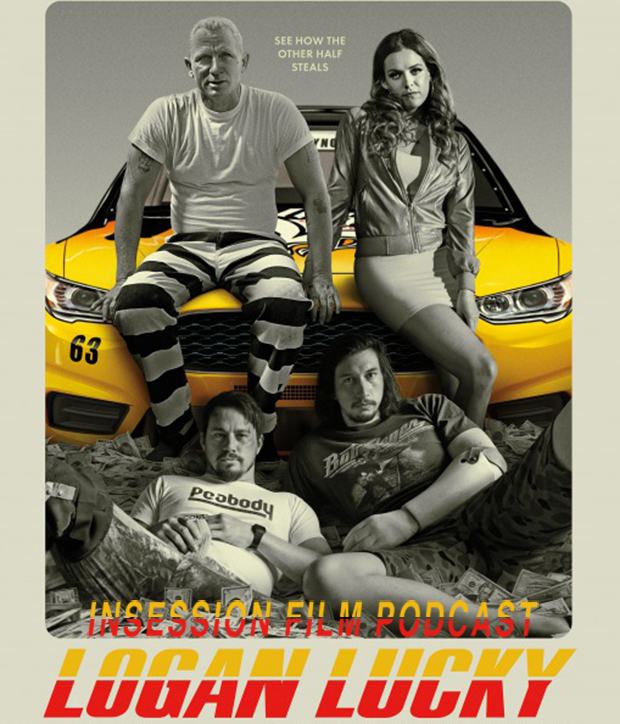
This week on the InSession Film Podcast: Extra Film segment, inspired by the return of Steven Soderbergh (assuming he ever really retired), we discuss his latest NASCAR heist flick Logan Lucky, starring Channing Tatum, Adam Driver, Riley Keough, and “introducing” Daniel Craig. We also review the French indie film The Midwife, starring Catherine Frot and Catherine Deneuve.
As stated above, it’s hard to argue that Soderbergh ever really retired; since his TV-movie Behind the Candelabra he spent his time directing the Cinemax show The Knick with Clive Owen before coming back with a new feature film, only four years after his previous feature (Side Effects). This made it exciting to dive into one of his most popular recent films, as well as being a first time watch for Vince.
With that said, have fun listening to this week’s Extra Film segment and let us know what you think in the comment section below. Thanks for listening!
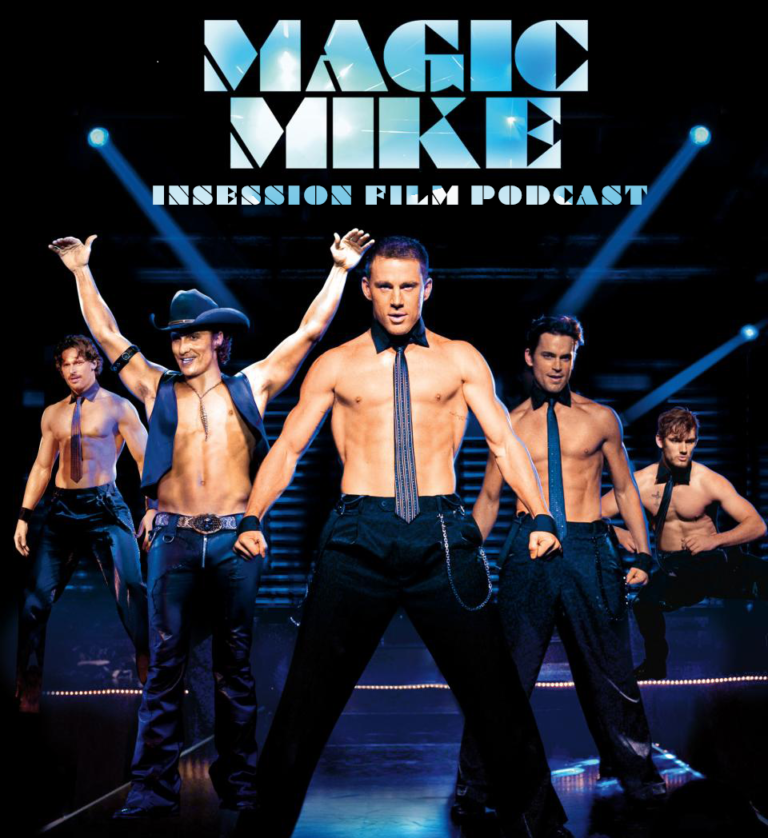
– Magic Mike Movie Review (3:59) Grades
Brendan: B+
Vince: B+
– The Midwife Movie Review (33:01) Grades
Brendan: C
Vince: B-
We try to make this the best movie podcast we possibly can and we hope you enjoy them. Subscribe today on iTunes and Stitcher and please leave us a review on iTunes. You can also find us on Soundcloud, PlayerFM and TuneIn Radio as well. We really appreciate all your support of the InSession Film Podcast.
To hear this Extra Film episode and everything else we do, download our apps on the Amazon Market for Android and the Podcast Box app on IOS devices. The mobile app covers all of our main shows, bonus podcast’s and everything else relating to the InSession Film Podcast. Thanks for your wonderful support and listening to our show. It means the world to us!
[divider]
Help Support The InSession Film Podcast
If you want to help support us, we would greatly appreciate it! For more info, CLICK HERE.
Director: Destin Daniel Cretton Writers: Destin Daniel Cretton (screenplay), Andrew Lanham (screenplay) Stars: Brie Larson, Woody Harrelson, Naomi Watts
Synopsis: A young girl comes of age in a dysfunctional family of nonconformist nomads with a mother who’s an eccentric artist and an alcoholic father who would stir the children’s imagination with hope as a distraction to their poverty.
[/info]
The Glass Castle is a minimalistic emotional story that is rather heartwarming. With fantastic performances from a brilliant ensemble, Destin Daniel Cretton once again proves that he understands how to utilize multiple actors in a limited setting. Hot off the success of his indie film, Short Term 12, Cretton has now solidified himself as an intimate filmmaker. The film does have a few flaws here and there but all in all, The Glass Castle makes for a satisfying drama piece.
Based upon the novel by the same name, The Glass Castle tells a coming of age story of Jeannette (Brie Larson). Jeannette is forced to raise herself and her siblings while traveling all over the country with her dysfunctional parents Rex and Rose Mary (Woody Harrelson, Naomi Watts). The novel is based on the real life events of Jeannette Walls and the film is adapted with palpable detail. The story is masterfully crafted on the film format but it does have a few humps here and there.
Instead of being told like a typical biopic the film jumps back and forth between Jeannette’s childhood, teen years and her current adult life. Instead of going from one point in her life to another, Cretton moves the film around constantly making it feel much more alive. This film succeeds admirably on keeping its audience interested in its characters and the deeper message at hand. Cretton never takes the focus off of the relationship between the characters for a second making the film all the more enjoyable.
Though the film may be a great character study it does lack in its screenplay in a few areas. Some of the jokes don’t land as well as intended and some moments feel a bit too fabricated or awkward. Even though the energy is kept up through a majority of the film it’s these small moments of disconnect that bring you out of the moment. Despite the screenplay being a bit rocky it does not hinder the overall message of the film. We do receive these moments of disconnection or over saturation but the emotional center of the movie remains perfectly intact.
One thing that this film solidifies for Cretton is that he is one of the best ensemble directors working. He completely understands how to utilize multiple characters with multiple personalities and mix them all together in one big boiling pot. Each character has a different vibe or energy about them and it makes the film much more layered. Instead of a bunch of different actors acting under the same umbrella, Cretton gives each of these talented actors the chance to showcase their strengths. Brie Larson is incomparable as always, Woody Harrelson gives one of his best performances in recent memory and Naomi Watts delivers another methodical nuanced performance. Each actor in this film plays into the emotional core of the movie and that is a fantastic approach to something as emotionally depth as this.
The Glass Castle has a strong emotional center that is ultimately catered by its brilliant characters. Cretton proves that he is not a one hit wonder with this film and he tells Jeannette Walls’ story on an immensely effective level. The Glass Castle may not be a film that will stand the test of time but it definitely is one to not kick to the curb. It may not be a groundbreaking or life changing film but it definitely is emotional and heartfelt.
Summer 2017 has arguably been the best we’ve seen this decade for movies, and perhaps of the century so far as well. While we didn’t love Guardians of the Galaxy Vol 2 as much as everyone else, it kicked off the summer very well for most people. We also saw the likes of Wonder Woman, Baby Driver, Spider-Man: Homecoming, War for the Planet of the Apes, Dunkirk and Detroit, all films that range from good to really great. Additionally we saw some fantastic indie films this summer such as It Comes at Night, Okja, A Ghost Story, The Beguiled, The Big Sick and for many Lady Macbeth. The summer still has a few week’s left with some promising films that could only amplify this notion, one of those being Steven Soderbergh’s Logan Lucky.
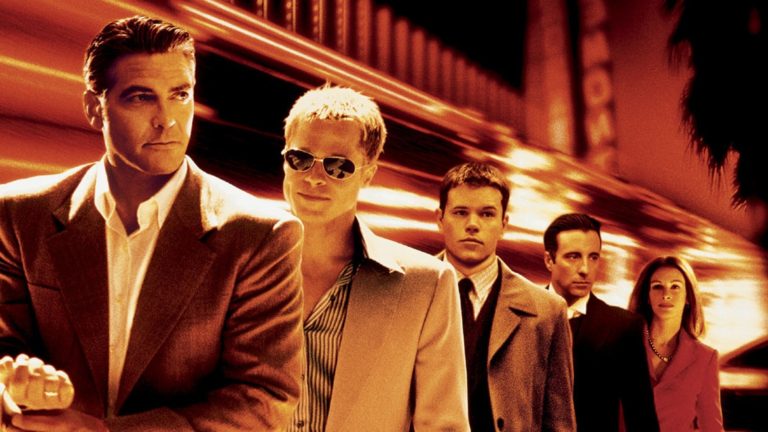
I am a big fan of Soderbergh overall and the fact that he came out of “retirement” for this film is beyond exciting to me. Indeed, that’s exactly why Logan Lucky made my Top 10 most anticipated films for the entire year. Soderbergh is a director that has a wide range, which is what I love about him, and he’s great at operating in various spaces. He’s made some though-provoking films that I endlessly adore – Solaris and Out of Sight for example – but equally he’s rendered some of the most fun I’ve had in a theater. Ocean’s Eleven and Magic Mike are two of the funnest movies I’ve experienced in a theater. Ocean’s Eleven in particular could not be more pertinent to Logan Lucky, another film centered around a heist.
This time though, Soderbergh is forgoing the vibrant elegance of Las Vegas, and instead Lucky is taking us to North Carolina and the world of NASCAR. That isn’t to say anything negative about that setting, but rather it’s just very different than the Vegas aesthetic, and personally I’m very excited for that shift. There’s something about that premise – a heist at a NASCAR race – that is refreshing and full of potential. And in the hands of Soderbergh? Yeah, this could be special and perhaps the best way to end the Great Summer of 2017 (for movies anyway).
One thing that is certain in a Soderbergh film is that it will feature a great cast. Well, Logan Lucky is absolutely tapping into that fact is some fascinating ways. This film will feature an unrecognizable Daniel Craig, Channing Tatum, Adam Driver, Riley Keough, Katie Holmes, Seth MacFarlane, Katherine Waterston, Hilary Swank, Macon Blair, and even Jeff Gordan makes an appearance. So, that cast is pretty alluring and I’m excited to see how they work together here. In particular, I’m very excited to see Craig, Tatum and Driver operate in this setting and the chaos that comes as a result. Good lord this is going to be a lot of fun.
What about you? Are you as excited for Logan Lucky as I am?
[divider]
Here are other titles coming to theaters this weekend:
The Hitman’s Bodyguard Lemon (limited) Patti Cake$ (limited) 6 Days (limited)
Happy Logan Lucky week! We are big fans of Steven Soderbergh and could not be more excited that he came out of “retirement” for another go-round. We’ve seen him do heist movies before, but this time he’s forgoing the pristine and elegant proceedings of the Ocean movies, and this time we’re heading to North Carolina and the NASCAR circuit. And honestly, I can’t wait to see what he does with that setting. With all of that said, using Logan Lucky as inspiration, what film do you think sits at the top as the best heist movie?
The story of Dunkirk the film is an interesting one. Christopher Nolan, in a recent interview with the BBC, said that this was a British story told with American money, which makes it extremely unusual. The story of Dunkirk has been told on screen before, most notably in Dunkirk with John Mills, but has also been in the background of other films such as Atonement with James MacAvoy. In all these cases the films are relatively low budget, and the sheer scale of the Dunkirk disaster has not been portrayed before. Chris Nolan said, in the same interview, that Dunkirk is one of the greatest stories that has yet to be told and that his film was his best effort to convey the experience.
The film is a huge success, conveying a sense of tension, dread, fear and sudden death from all directions. The reality of Dunkirk was far far worse.
The story of Dunkirk is woven deep into the social fabric of Britain. My generation (I was born in the 70s) grew up on the story of how a group of gallant civilians saved an army from annihilation by the Nazis; my grandparents all fought in the war, my uncles and aunts all lived that experience, I grew up with a distrust of Germans and Europeans, of the sense that Britain saved the world, that the French were weak and feckless, the Germans were warlike and untrustworthy, a sense of resentment over a perceived lack of thanks for our efforts and sacrifice to liberate these European countries. This sense of moral superiority survives to this day -England soccer fans still taunt their German rivals by shouting “two world wars, one world cup” however incorrect that may be.
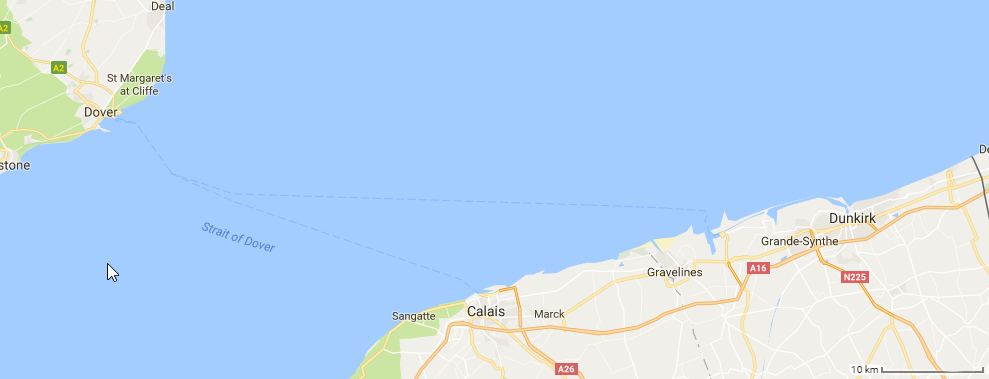
Figure 1 :Map of the English Channel
Why does Dunkirk run so deep through our national psyche? Why is this such a big thing? In this article I try to explain how the British view the events of Dunkirk, and why we view them in such a way. I’ll touch on our relationship with the sea and other nations of Europe, and the peculiar mindset that afflicted the British between the wars, and after the Second World War.
The Sea
One thing to remember about Britain is that our nation is shaped by our relationship with the sea. Britain is, and always has been, a nation of seafarers. A trading nation happy to subjugate and trade with the wider world far beyond the horizon and defend that relationship through projection of Naval Power. Not for nothing is the Royal Navy referred to as the Senior Service – it is and always has been the core of the nation’s defence.
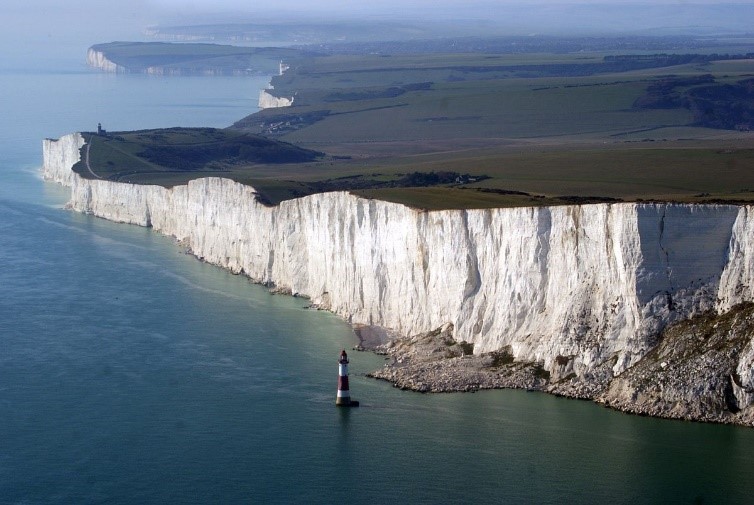
Figure 2:Beachy head, Sussex – One of the famous white cliffs
We are an island nation, we have a natural defense in the seas that surround our coasts. The south of England, closest to the continent of Europe, is largely made up of cliffs of chalk and limestone. What low lying land there is on the south coast is salt marsh, what few natural harbors that exist – notably Plymouth and Portsmouth – were largely taken over by the Royal Navy. Our natural defences have deterred the dreams of many Emperors and Kings through the centuries. Even the Romans, who had conquered all of Western Europe by 52 BC, but it was nearly 100 years later, in 43 AD, that the Emperor Claudius finally bringing his legions to Britain. The last time we were successfully invaded was the Norman conquest of 1066- nearly a thousand years ago.
The Foreign Policy
As an Island nation we have long followed the foreign policy of splendid isolation. For centuries we have not involved ourselves with conflicts on the continent (that’s how Brits refer to the mainland Europe – another example of the ‘us-and-them’ mentality we have) unless there was a clear benefit.
For example the assault of the Spanish Armada in 1588. Spain (Catholic) was annoyed with English-sponsored piracy in the Caribbean and the fact that Britain was ruled by a Protestant monarch (Elizabeth I) instead of her older sister Mary (who was a Catholic). The English foreign policy was to harass Spanish treasure galleons in the Caribbean, but otherwise was not fussed about what the Spanish thought – splendid isolation.
When the Armada appeared in the English Channel, things suddenly looked very serious. There was a sudden and very real threat of invasion, especially when the ships anchored of Calais to wait for the arrival of the Spanish army. The Royal Navy attacked with fireships (at Gravelines, about five miles west of Dunkirk), scattering the Spanish fleet, then followed up with a serious battle on the remnants of the fleet, forcing the Spanish north, up between Scandinavia and the East coast of Britain and causing them to round the wild coasts of Scotland. In September. They arrived in the channel with plans of invasion, three months later they were left trying to survive. Many did not. The Armada was destroyed as it rounded Scotland thanks to a series of storms. The British has committed to just two military actions.
The start of the 20th Century
Splendid Isolation, as a policy, began to weaken after the French Revolution and the joint British/Prussian defeat of the French Emperor Napoleon (finally settled at the Battle of Waterloo in 1815). Britain began to ally with many of the continental countries, most notably old enemy France (the Entente Cordiale of 1904). This alliance between Britain and France concerned the new country of Germany (created in 1871) who felt threatened by the new superpower to their West.
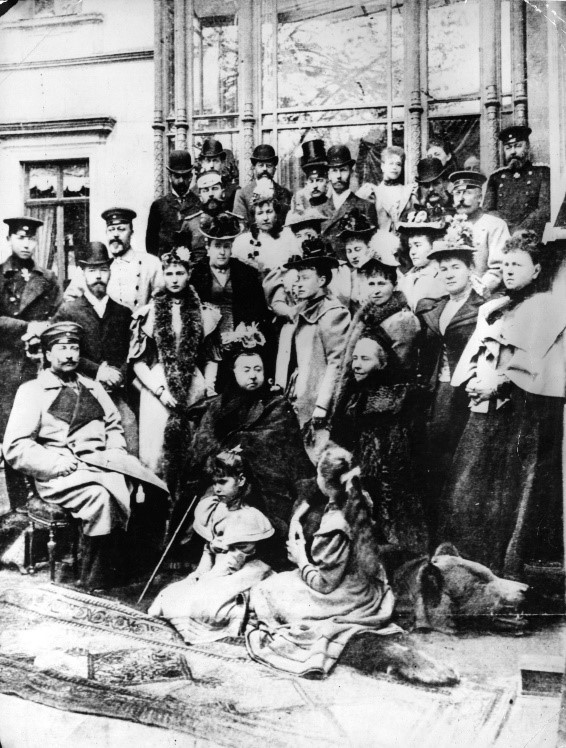
Figure 3:Queen Victoria of England(seated middle) and her family including Kaiser Wilhelm (with moustache and peaked hat, seated, to the left of the Queen) and Tsar Alexander of Russia (in hat standing just behind the Kaiser), and the then Prince of Wales, later King Edward VII, stand directly behind the Tsar with the beard in the military uniform.
Kaiser Wilhelm, the slightly unstable leader of the new Germany, was a committed Anglophobe. He loved Britain, and celebrated his close relationship with his grandmother Queen Victoria, herself of German extraction. Wilhelm believed and hoped that Britain would not change its centuries old policy of splendid isolation when Germany declared war on France at the start of what became the First World War. His gamble failed, and the moment Britain committed to support France (by sending the British Expeditionary Force (BEF)), the war was guaranteed to grind to a halt along a frontier as two equal armies hit each other face on and stalled. The tragedy of the First World War was that it ground on for five years and wasted thousands of lives.
The rise of the Nazis and the British perception
The rise of nationalism and ultimately the collective insanity of National Socialism (as advocated by the Nazi party) during the 1930s made the British position at the start of the Second World War easier to define: stand up to fascism. Compared to the confusing, irrational, house-of-cards collection of alliances and agreements that drew all the combatants into the horror of the First World War, the rationale behind the British involvement in the Second World War is much easier to understand.
This idea lies at the root of the National belief that the British saved the world. It leads directly to the actions that led to Dunkirk and is still at the core of much of the populace’s beliefs to this day. The vote to leave the European Union in 2016 was undoubtedly coloured by this belief, though I should point out that many many other factors came into play.
It should also be pointed out that in the twenty years between the two wars, Britain was not keen to get involved in another war. It sat on the sidelines during the brutal Spanish Civil War (which installed fascist dictator Franco on the throne) and refused to get involved during the rise of fascist dictator Benito Mussolini in Italy. Hitler was a different issue. Germany sat at the heart of Europe, and was (and still is) the industrial powerhouse of the continent, with huge technological and natural resources (though not oil) and a brilliant populace. Germany had been humiliated by the terms of the armistice that ended the First World War, it was forbidden to have an army or Airforce over a certain size and denied a Navy altogether. It also suffered economically, with rampant inflation of prices and mass unemployment.
Hitler stood before Germany and promised to make it great again. Once elected he began work on a number of capital projects – a huge interstate building program, new ships and planes, new airports and cities. He employed thousands, balanced the economy, and moved Germany back into positive economic growth again. Then he began building up the German military again, against the armistice agreement. To the nations surrounding Germany, this was concerning. Hitler then began aggressive moves. He annexed the country of Austria (which is very close to Germany in language, beliefs as well as geographically and being Hitler’s birthplace), then moved into northern Czechoslovakia claiming it as morally German. In both cases Britain and France, both wary of another war, protested, but did no more.
The scars of the First World War
Why did Britain and France do this? Well, it comes back to another part of the British psyche that stems from the First World War and it is to do with the huge amount of death the country experienced
The wounds of the First World War were still raw in British society, the fear of another round of wasteful stagnant conflict terrified the British. The First World War was the first war to actually be understood by the general population, to be followed in newspapers, to be seen in early newsreels. It was also the first war to impact our national culture, the advent of famous War poets such as Wilfred Owen and Siegfried Sassoon with their melancholic verses and tragic deaths brought home to the nation the sheer horror of the war. The Victorian era, which ran (very roughly) from the Battle of Waterloo to 1900, was the first social era to celebrate, or even acknowledge, death and set the pattern of mourning their loss.
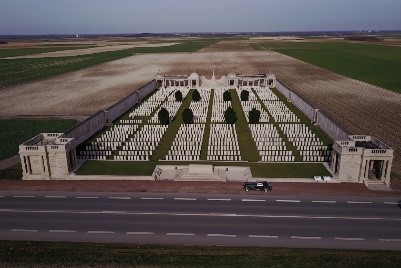
Figure 4: Dud Corner cemetary, home of the Loos memorial (the walls around the site)
This led, directly, to the First World War being the first major war to maintain records of those who died, and to celebrate and remember their sacrifice. We have a national minute’s silence every year at 11:11a.m. on the 11th November (11/11) – the date and time of the ceasefire that ended the First World War. If you visit Britain in November you will see a lot of people wearing small red flowers. These are poppies, the first flowers to bloom amid the carnage of the trench battlefields, and adopted as the symbol of remembrance. Every soldier who died in the First World War (also known in Britain as ‘The Great War’) has their name recorded somewhere in one of the cemeteries established by the Commonwealth War Graves Commission (established in 1917) either as a marked grave, where a body has been recovered and identified, or as a name on a wall where no remains have been found. To visit one of these immense cemeteries in the bleak farmland of Northern France is a humbling experience, and thousands would have done so, to pay homage to lost friends or loved ones. It is a tradition that continues to this day. My Great Uncle Teddy is named on Loos Memorial having been killed in the Battle of Fromelles aged 22. He has no known grave.
Back in Britain, this practice was continued with the thousands of individual war memorials that exist in almost every British village and parish church listing the names of the local men who went to France and never returned.
Make no mistake, the wounds of the First World War run very very deep. The war affected everyone, from the wealthiest Lord to the poorest peasant. The country sent an entire generation away to fight and lost most of them. Advances in battlefield medicine meant that many did come back, wounded and suffering, but alive. Remember in Downton Abbey when they turn the big house into a hospital? That happened all over the country, bringing the horror of war home to the general populace. Wounded soldiers would have been a common sight.
Figure 5:Typical English Villiage War Memorial
Those who returned came back with a variety of wounds and ailments the like of which had never been seen before – wheelchairs and prosthetic limbs were seen for the first time, as were diagnoses of new mental illnesses such as shellshock.
This experience affected the British national soul in an unusual way; our attitude to those with disabilities. Britain is at the forefront of medicine to treat those with disabilities to this day. Our surgeons pioneered plastic surgery and physiotherapy. We devised the first ever Disability games at Stoke Mandeville Hospital in 1948, something that has gone on to become the Paralympic Games, one of the largest sporting events in the World. In London 2012, the Paralympic Games sold the same number of tickets as the Olympic games held a few weeks before, and Paralympic sport gets coverage on national TV. We have national organisations such as the Royal British legion and Help for Heroes who provide support, care, and rehabilitation for wounded members of our Armed Forces, and more recently HRH Prince Harry has been involved in organising the Invictus Games a multi-sport tournament for wounded servicemen and women from around the world. Arguably Britain leads the world in our attitude to those with disabilities and it all stems from the special horror of the First World War.
The policy of appeasement
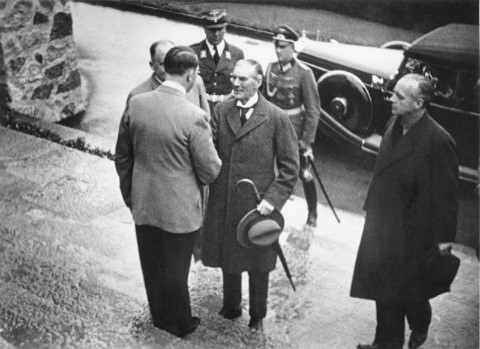
Prime Minister at the start of the Second World War was a chap called Neville Chamberlain. He was a highly experienced politician and when he assumed the position of Prime Minister in 1937 nearly all of his time and effort was directed towards handling Hitler’s Germany.
Figure 6: Chamberlain meets Hitler at the Bergof, Sept. 1938. Credit: By Bundesarchiv, Bild 183-H12478 / Unknown / CC-BY-SA 3.0, CC BY-SA 3.0 de, https://commons.wikimedia.org/w/index.php?curid=5433934
Chamberlain had a big problem. Since the First World War, the British Army had reduced spending on its armed forces (as you do in peacetime). However this had meant that all three arms of the military had fallen behind technologically, especially when considering the propaganda videos being issued by Germany showing high-tech tanks, armoured cars and motorbikes. In the mid-1930s Britain woke up to this deficit and began work on mechanising their own army. However such a project takes a long time to deliver and was still grinding along as the Munich Crisis was happening. Chamberlain adopted a policy of appeasement, an attempt to mollify and diplomatically corral Hitler, which was widely denied once war broke out. However more recent historians believe that Chamberlain was trying delaying tactics, in order to give the British Military as much time as possible to re-arm and re-equip before war broke out.
However the feeling that still pervades the British mentality today was that Chamberlain was hoodwinked and tricked by Hitler, made to look foolish and weak. Then, once war had broken out, it was Britain that swung to the rescue of Europe under the leadership of Winston Churchill. In fact it now appears that Chamberlain thought war was highly probable and was attempting to either find a peaceful solution or to get as much time as possible before war broke out to get his country as prepared as it could be.
The Phoney War
When the Wehrmacht invaded Poland on 1st Sept 1939 no major military power came to their aid, despite their being defensive agreements between the Poles and both Britain and France. The German army overwhelmed the country in a mere six weeks. The legend of the Blitzkrieg or lightning war, was born.
There then came a period of, well, nothing much. Despite a state of war existing between Germany, Britain and France, not much fighting actually occurred: The French moved into the Saarland to help the Poles, but swiftly retreated, a few ships were sunk (including the Graf Spee), a few skirmishes occurred, but in the main war not much. This period of time is called the Phoney War.
Immediately after hostilities commenced, the British sent a new British expeditionary Force (BEF) to France.
The BEF was small, just 13 divisions – about 500,000 men – but this was still half the entire British Army. It was also, arguably, the most modern army in the world. The battledress issued was state of the art, the rifles cutting edge, the tin helmet the envy of the world. It was almost entirely mechanised: unlike the German army the British had eliminated the horse from its ranks, replaced by lorries, tanks and armoured cars. The downside to being this advanced was things hadn’t been produced in enough quantities to fully equip everyone. Just six months before a German military attaché had witness British troops marching with broom handles as they didn’t yet have rifles. Chamberlain knew this and it now seems likely that his policy of appeasement was also playing for time to fully equip the army.
During the Phoney War two major things did happen: Finland was invaded by Russia (who, at the time, were allies with Hitler’s Germany), and the Germans invaded Norway. The Russian invasion caused much consternation in London and Paris, but ultimately by the time they had both mobilised to do something to help the Finns, the offensive was over and Stalin’s Russia had won.
Norway was a different matter. The British, worried that their traditional route to the sea from their Scottish bases would be compromised by having to sail down the North Sea past a hostile shore. The British sent troops to Norway in a number of poorly executed attacks, all of which came to nothing except to undermine confidence in Chamberlain’s government. On the 10th of May 1940, having faced a vote of no confidence in the House of Commons, Chamberlain resigned the premiership and the king appointed Winston Churchill, a vocal opponent of Chamberlain’s policy of appeasement, as Prime Minister.
This is the start of the legend of Churchill: the War Leader. He took his post on 10th May 1940.
On the same day, the Germans attacked France.
The invasion of France and the retreat to the sea
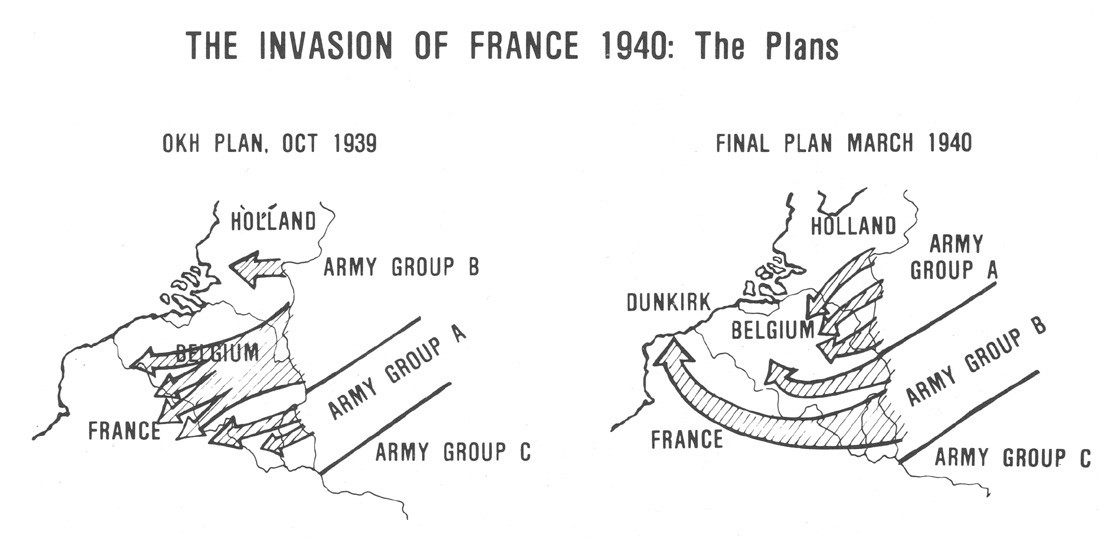
The legend of the invasion of France has it that German tanks and infantry were faster to the field, and were more powerful when they got there. This is only partly true. It is true the Blitzkreig tactics of air assault followed up by swiftly moving armour and soldiers was incredibly successful, but it wouldn’t have been enough to smash the huge French and British armies massed on the border or behind the heavily fortified Maginot line.
Figure 7:The final German assault plan 1940. Army Group A hit the BEF and French head on, Army Group C held the frontier opposite the Maginot line, Army Group B attacked through the Ardennes forest and caused the most damage.
The success of the German army during the battle of France can be attributed primarily to their offensive through the wooded valleys and hills of the Ardennes region of southern Belgium – between the two major allied armies. No army, no matter how strong, can survive attack on their flanks (or sides). Thus the combined French, British, and Belgian armies had no choice but to retreat. The small Dutch army had been utterly bypassed by the Nazi offensive, the Belgians retreated roughly due north to the Belgian coast (and held out around the fortress city of Liege for another three months). The French and British retreated west towards the French border – fighting ferocious rear-guard actions at a number of natural obstacles along the way. These battles, along the Meuse for example, were held over much of the terrain the First World War fought over. Not for nothing is Northern Europe thought of as being bathed in blood.
The effect of the German attack on the British national mentality
To the British, then and now, the thoughts of the events of May 1940 raises dread and fear. Half the army was cut off on a hostile continent, nothing appeared to be able to stop the advance of the Germans, and invasion seemed likely. Invasion. It had been a thousand years since Britain had last been invaded, but here it seemed inevitable. With just half the army available, how could anyone repel such an assault?
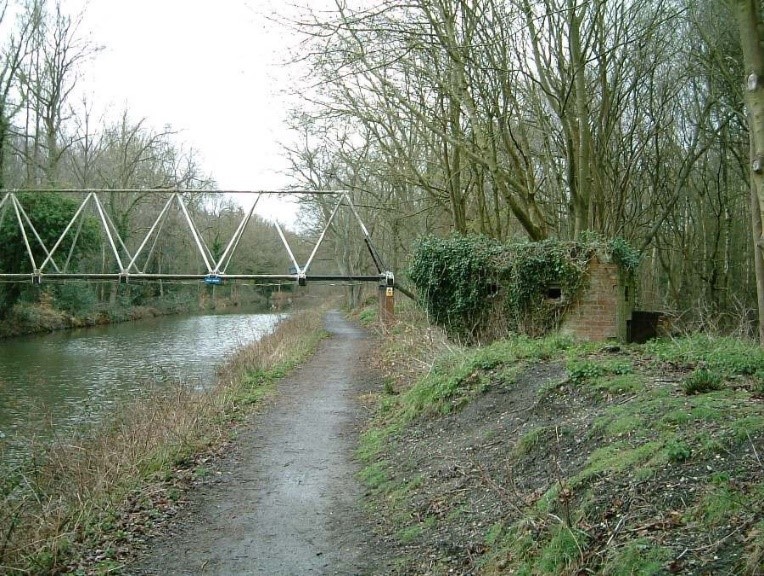
Figure 8: Typical Pillbox by a canal
Morale plummeted amongst the British public. Defensive lines were drawn up, defensive structures were built and many still dot the English countryside to this day – concrete pillars to stop tanks, small bunkers called pillboxes on canals and rivers – they were often the playgrounds of my youth. I grew up in the shadow of Dunkirk.
Figure 9: Typical Tank traps defending a bridge
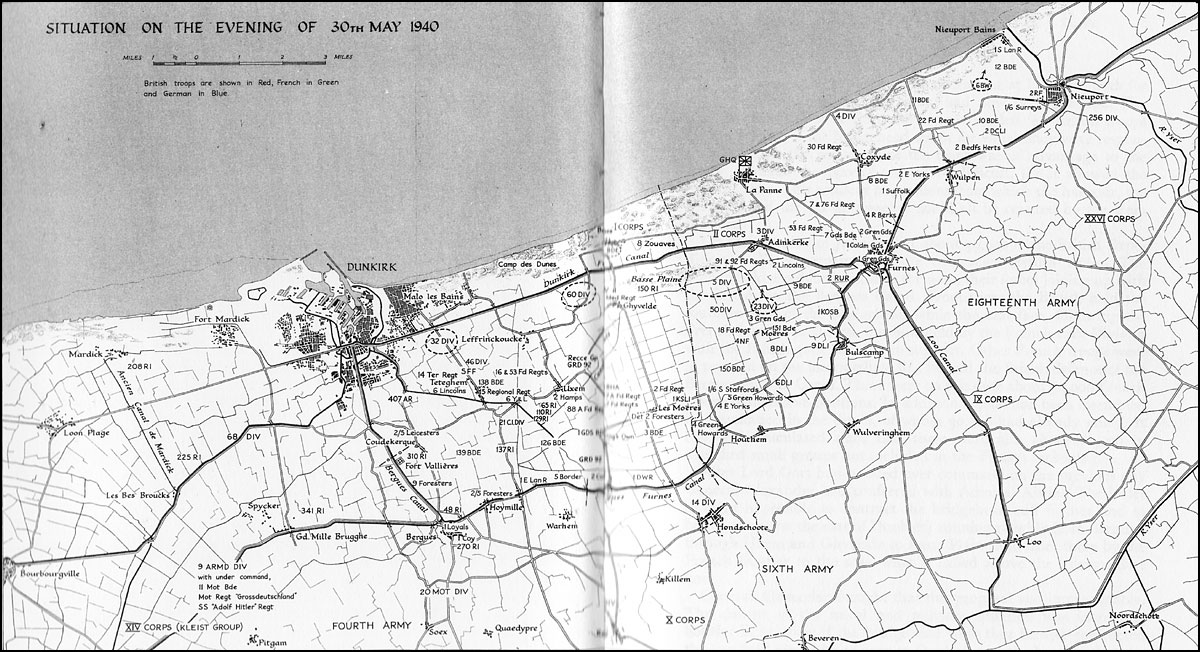
So, encircled, the British and one of the two French armies found themselves on the beach at Dunkirk. A corps of British soldiers and one of the French armies established a perimeter and reinforced it. With their backs to the sea, all the army could hope for was evacuation.
The sea. Backs to the sea. Here is where Dunkirk resonates with the British. The sea had been our nation’s benefactor, or protector, the source of our wealth and our security. Now it was an obstacle, it had turned against us. It was preventing us from continuing our retreat and protecting our nation. The sea was now going to cost the country our army, and make it easier for the seemingly unstoppable German forces, who had taken Czechoslovakia, Austria, Norway, Poland, the Netherlands and Belgium already, from swarming across the channel. Our capital is just thirty miles from the south coast.
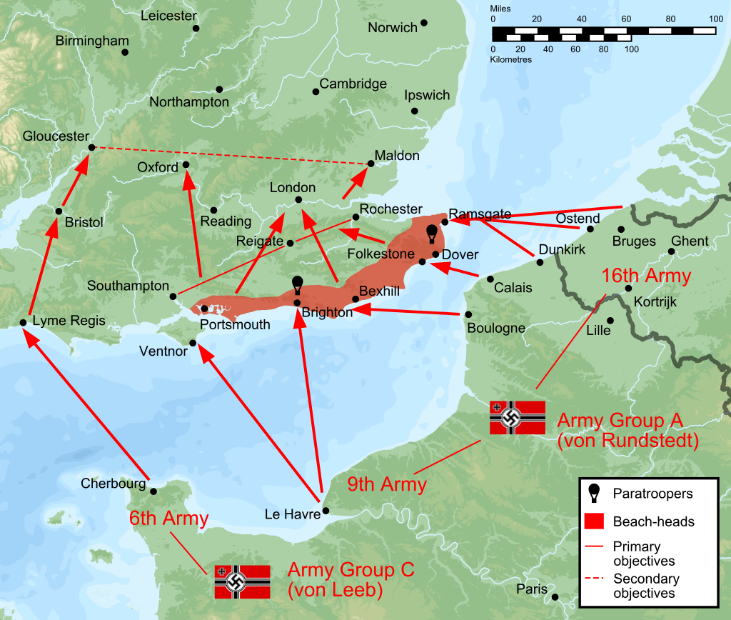
Figure 10: German invasion plan for the UK 1940
The battle for Dunkirk was a battle for survival, as the film rightly shows, but what may be missed by viewers from other countries is that it is a metaphor for the survival of our entire country, our entire way of life, of London, of everything that makes us, well, us.
If the evacuation at Dunkirk had not have happened. Britain would have been invaded. An invasion we would probably lose.
The Dunkirk Evacuation – the Sea
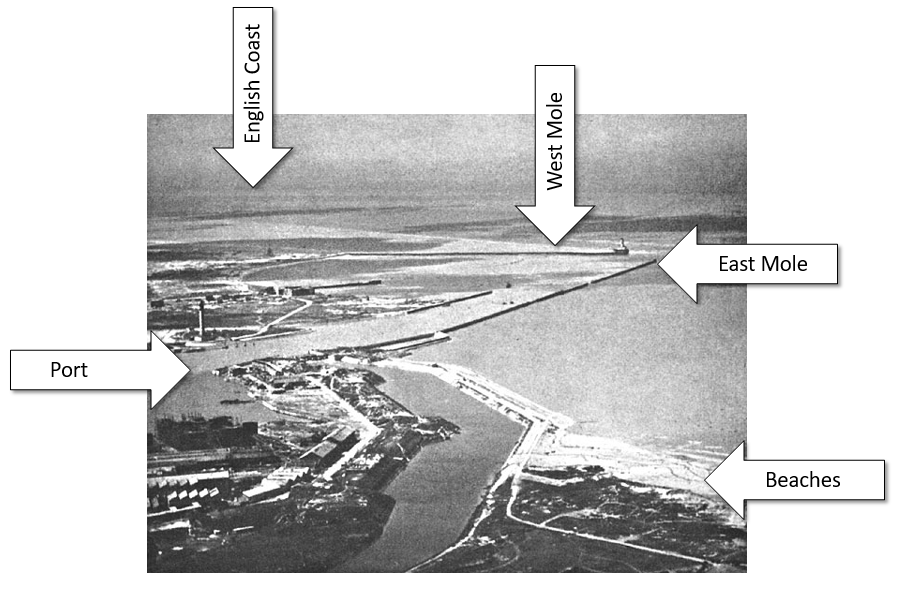
Let’s now look at the events of the evacuation itself. It is estimated that 400,000 men were inside the Dunkirk perimeter. To the east of the town were sand dunes behind which were flat marshes. To the west of the town was the port. The perimeter ran from the marshes through the streets of the town and included the docks and was ferociously defended by the French. Immediately the Germans targeted the port and destroyed it (those at the fires seen in the film from the mole) from the air. There was now no deep water dock for larger ships to tie up against. The forty-seven destroyers (the large warship seen in the film) could not get close to take anyone off. All they had were their launches.
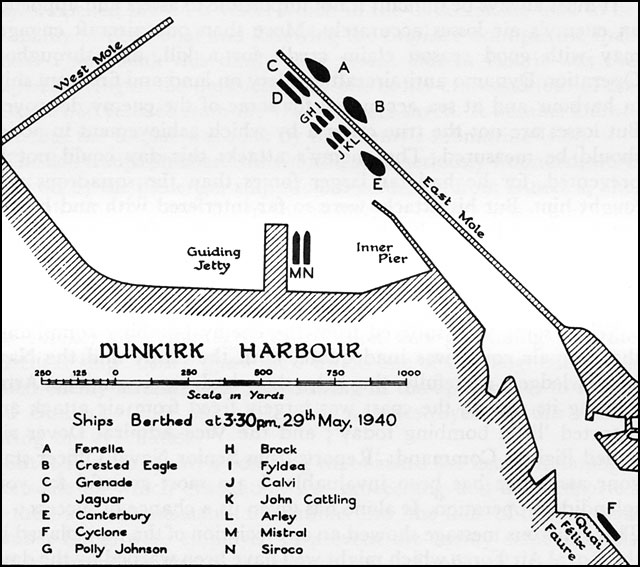
By day two it was discovered that the moles were capable of being used as rudimentary docks. The moles were outer breakwaters designed to create a wider sheltered zone outside of the port. Never designed for the loading or unloading of ships, the moles were just long piles of stones and rocks topped with a simple wooden walkway. There were two moles, east and west, with the East mole being a mile long. Small coastal pleasure boats could tie up against the mole, as could larger coasters, ferries and hospital ships. Over 180,000 men were evacuated from the East mole alone, the most successful part of the whole operation.
Figure 11:View of Dunkirk Harbour, 1940
Both moles were, however, cruelly exposed to artillery and air attack. On the 29th May the Destroyers HMS Grenade and HMS Jaguar were tied up, with six trawlers and the passenger ships Fenella, Crested Eagle and Canterbury. The German air assault began at 3pm and ran until 8 in the evening during which all the ships were damaged or sunk, with only the Jaguar and the Canterbury able to limp back to Britain. Off the beaches, at the same time, the Stukas badly damaged the destroyers Gallant, Greyhound, Intrepid and Saladin, as well as the sloop Bideford. The passenger ships Normania and Lorina were sunk, as was the merchantman Clan Macalister and the armed boarding vessel King Orry as well as many smaller craft.
The core of the Dunkirk operation lasted a week. At any point during the operation there were between 20 and 40 Destroyers patrolling the seas off the beach. With the loss of the port at Dunkirk, those ship could do nothing but wait, and watch, and do the best they could to defend the troops on the beach. Imagine how the officers and crews of those ships felt. Occasionally they attempted to shell the Germans army outside of the perimeter but without accurate spotting, they could not be sure they were not killing allied troops. All those warships could really do was defend against air attack and wait to take people off. All the while being attacked by bombers (the twin engine Heinkel in the film) and their defending fighters, but there weren’t just single planes, there were swarms.
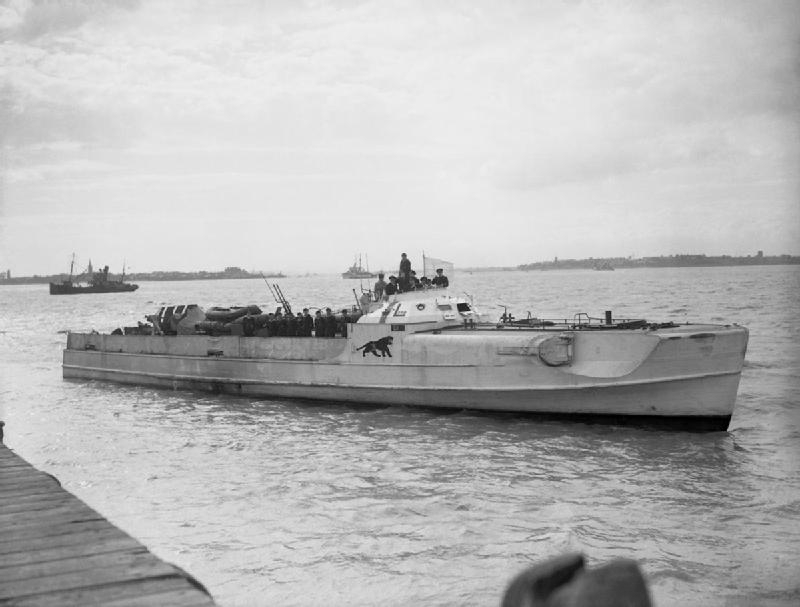
Figure 12: German S-boat
There were also the occasional U-boat attack though the shallow water prevented them from doing their worst. Much more threatening was the S-boat (which the allies labelled E-boats), heavily armed speedboats capable of charging through a fleet of capital ships at fifty miles an hour, throwing torpedoes, sowing mines and strafing fragile craft. S-boats are not seen in Nolan’s film, but they were there, frequently attacking at night, and causing chaos. During the battle, nine destroyers were sunk and nineteen damaged.
There were bigger ships at Dunkirk, but the shallow water and narrow confines of the English Channel made it too much of a risk to deploy them (remember there were extensive minefields which restricted operations further). The Dover straits were shortly to become known as Hellfire corner due to the sheer ferocity of the battle that raged on and above the narrow strip of sea for the rest the year.
The Dunkirk Evacuation – the little ships
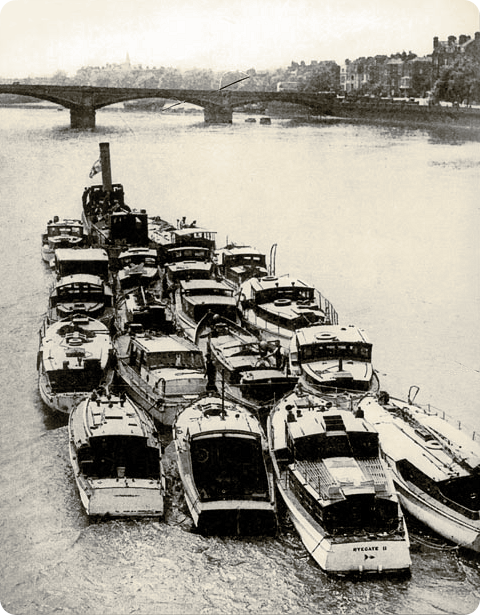
Despite the valour and sacrifice of the Royal and Merchant Navy at Dunkirk, the legend in the UK is of the so-called little ships: these are the pleasure cruisers, private yachts, barges and launches of private ownership that were pressed into operation to evacuate troops stuck on the beaches at Dunkirk.
On the 27th May, the second day of the evacuation, the British ministry of shipping telephoned boat builders all around the South Coast and asked them to collect all boats of shallow draft that could navigate shallow waters. In total it is estimated that over 700 vessels took part in the operation and many still exist today.
Figure 13:Collection of ‘little ships’ being towed down the Thames on their way to Dunkirk
The little ships were frequently piloted by their owners and many were killed during the operation. The majority of the 226 ships sunk during the operation came from the ranks of the little ships. No-one knows how many were killed.
However here is something else that resonates with the British about Dunkirk – the bravery of the ‘citizen sailors’ who answered the Navy’s call. There is no doubt of their heroism.
For example, the story of the Royal Daffodil II which evacuated 7,461 people from Dunkirk in five trips despite being hit by a bomb which exploded below the waterline.
Or the Medway Queen a paddle steamer which made seven trips, rescuing over 7,000. It had been requisitioned before the operation by the Navy and equipped with an ancient 12 pounder gun, but on seeing the carnage on the beaches, encouraged the troops to bring their Bren light machine guns and, now armed to the teeth, managed to shoot down three enemy aircraft, penetrated the shattered harbour at Dunkirk at one point, and even took men directly off the beaches.
Or the Sundowner, which was owned and sailed by Charles Lightoller – the most senior officer to survive the Titanic Disaster, who volunteered himself and his son to sail to the coast. The story of the Sundowner appears to be the basis for the Mark Rylance story in Chris Nolan’s film.
At sea, the evacuation was hell.
The Dunkirk Evacuation – the Land
The movie shows us a lot of the mole and some of the wide flat beaches in front of the town. In fact the beaches stretched for some considerable distance beyond the town and were largely backed by sand dunes. It was in these dunes that the majority of troops sheltered as it was marginally more protected than standing on the open flat beach.
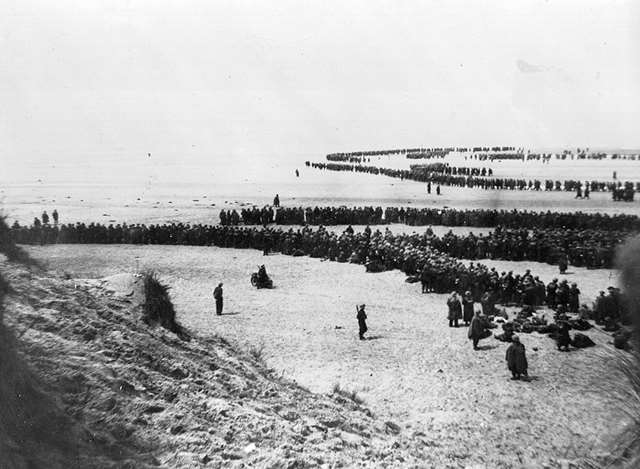
However the soldiers did have to stand, in orderly lines, waiting patiently to climb on a boat for salvation. 400,000 men standing in queues on a wide shallow beach, looking across the sea at safety. As they stood on the beach they were subjected to relentless aerial assault, constant Stuka attacks (the screaming aircraft from the film) and strafing runs by Messcherschmidt 109s. No cover. No hiding place. Just fall to the floor and hope for the best. Then, when the attack was over, stand up and re-join your queue. Wait for salvation. Wait for the next attack. Tedium. Terror. Tedium. Terror. Frustration. Fear. Imagine, for a moment, what that was like.
At least you could hear the planes coming, the artillery strikes arrived without warning. The Germans had it easy, all they had to do was shell the beach.
The stoicism of the Dunkirk troops is celebrated in the UK. There is no story of a breakdown in discipline, even though situation in France was very carefully stage managed by the British government, papers were banned from reporting and a tight grip was made on the news, supplanted with stage managed propaganda. It is this propaganda that remains in the British collective memory.
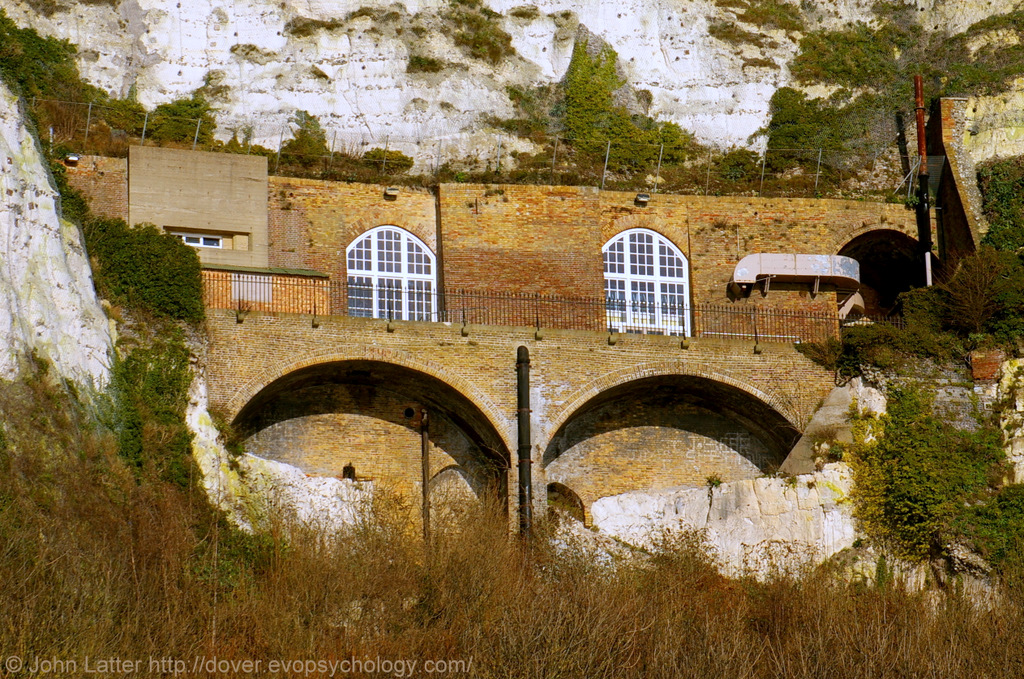
Figure 14: Troops on the beachFigure 15:Balcony below Dover Castle from where Operation Dynamo was run
Imagine the frustration of those stuck on the beach. Kenneth Branagh, the character used to give you a sense of the overall situation, says at one point “You can almost see it from here.” meaning the South Coast of England. Dunkirk, on a clear summer’s day, you can indeed see the Kent coast as a thin strip on the horizon. Operation Dynamo, as the Dunkirk evacuation was codenamed, was run from some Napoleonic era tunnels under Dover Castle. From the balcony in the cliffs below the medieval walls (and Roman lighthouse) officers equipped with a decent set of binoculars could actually see the beaches at Dunkirk, could see their army, but just couldn’t reach them. Imagine the sense of frustration and impotence those officers felt.
The Dunkirk Evacuation – the Air
Which brings us to the air. The RAF Fighter Command flew over 3,000 sorties during that week, and encountered the much vaunted Luftwaffe. On paper, the Luftwaffe should have won easily – it had many more aircraft, all of which were mounting much heavier guns. The ME109 (the yellow nosed fighter seen in the film) mounted two cannon in the wings and two 7.62mm machine guns in the nose. The British had eight 7.7mm machine guns, the cannon on the German fight fired a bigger shell with an explosive charge, so took fewer hits to down an enemy.
However the British not only had Spitfires and the tougher, but slower Hurricane (not seen in the film), but they also had radar – a new technology that allowed the fighters to be sent accurately to intercept incoming Nazi attacks. The RAF effectively tested its new management system during Dunkirk, and refined it further It was this system, along with the superior fighter aircraft, helped Fighter Command to frustrate the Luftwaffe’s assault during the summer – despite being outnumbered and outgunned.
Towards the end of the film a soldier attacks an airman, saying “Where the hell were you then?” The RAF actually fought most of its battles out over the sea, encountering bombers, dive bombers and fighters attacking ships in the channel. Only a few planes made it to the beaches, leading to much animosity between the army and the Airforce. In fact the RAF fought hard, shooting down three times as many aircraft as the Germans managed.
Also crucial during the Dunkirk operation was the further refinement of RAF Search and Rescue Force, a fleet of high speed launches that sped out into the channel and hauled downed pilots from the sea and returned them home as quickly as possible. During the Battle of Britain it was not unheard of for pilots to be shot down early in the morning and being returned to their squadrons and flying again in the afternoon. The German pilots frequently drowned. This helped preserve the desperately small force of trained fighter pilots.
Fighter Command pilots who fought during the Battle of Britain (which began at Dunkirk and ran until the end of September 1940) are venerated in the UK as “the Few”, taken from Churchill’s second famous speech at the end of the Battle of Britain in September 1940: “Never before in the field of human history has so much been owed by so many, to so few.” Not for nothing is Dunkirk thought of as the start of the Battle of Britain. The invention of radar and its combination with an effective command and control system and robust communication network with the pilots was the key to the defence of Britain during the Second World War.
The combination of these three elements, Command and Control, the Spitfire, the Few is the stuff of legend in Britain. It is the basis of the legend of us standing alone against tyranny, alone against fascism, the saviour of Europe just gathering itself to fight back while defended by heroes. This entire legend, myth or not, began with Dunkirk and still resonates today.
Churchill
Which brings us to Winston Churchill, the talismanic war time prime minister. A man venerated as a national hero, voted the greatest Briton of all time in a BBC poll, a man whose statue stands alone in Parliament Square, staring at the Palace of Westminster. Dunkirk is the start of the Churchill myth.
It was clear as the Nazi armies rolled through Poland and the ‘Phoney War’ came to an end that Chamberlain’s policy of appeasement had failed and that Britain was at war. The various political parties immediately voted to put aside party politics and established a war cabinet to last for the duration of hostilities. Chamberlain excused himself from leading this new organisation and the cabinet immediately and unanimously voted Churchill, a highly experienced minister, as Prime Minister.
Three days later after accepting the job, Churchill made his first speech to Parliament as Prime Minister. The speech was legendary, known today as the “Blood, toil, tears and sweat” speech it electrified Parliament and galvanised the British People. This was a man saying that the country was at the start of a war, a war that was going to be painful, but one that that just. It is worth quoting one passage in full:
“You ask, what is our aim? I can answer in one word: Victory. Victory at all costs—Victory in spite of all terror—Victory, however long and hard the road may be, for without victory there is no survival.”
With that one speech Churchill had the country in the palm of his hand. He held the hopes and fears of everyone, but he also seized their support. He won their trust and their faith, reinforced it over the next few years, and, most importantly, never betrayed the faith the British people put in him.
By the end of Dunkirk, he was a legend.
Conclusion
Dunkirk, the movie, tells just a snapshot of what Dunkirk, the event, means to us Brits. It is the start of our nation’s self-delusion that we are the saviors of Europe, which Europe somehow owes us for coming to their aid.
It is also the most recent point our livelihood felt threatened, that our country might fall, and this was no idle fantasy – it was horrifyingly real. The last time we’d been threatened was the Spanish Armada, which led to the legend of Elizabeth I, Elizabeth Gloriana. The last time anyone had succeeded, we’d been armed with arrows, but this was actually likely to happen.
It was a point that re-defined our relationship with the sea, so long our protector and our provider, the sea at Dunkirk was as much our enemy as the German army.
It was the point that showed that the Nazis could be stopped, or at least slowed. The victories in the air especially, gave Fighter Command faith that they could defeat the Luftwaffe in the air. That summer, they did, and so Dunkirk was the start of the legend of The Few.
It was the point that defensive structures were hurriedly built across England’s green and pleasant land, structures that survive to this day. Ugly, purposeful structures that last as a reminder of how close we came.
It was the nail in the coffin of the policy of splendid isolation. It was the start of Britain as part of the international community, not dictating to it. It was, essentially, the start of Modern Britain on the geopolitical stage.
It was the end of the period of mourning after the First World War, and the start of a renewed, powerful nation. It was the start of a national sense of purpose that hadn’t been seen since the end of the First World War, and hasn’t been seen since the end of the Second.
It was the start (eventually) of a golden age, a time many look back on fondly. My parent’s generation, growing up in the shadow of the war, saw a new Britain evolve, one that was shiny and hopeful, they have experienced prosperity the likes of which had never been seen before.
It was the end of the retreat, as far as the British were concerned, and the start of the fight back.
[divider]
Hear our full review of Christopher Nolan’s Dunkirk on Episode 231:
This week on Episode 234 of the InSession Film Podcast, inspired by The Glass Castle, we decided to talk about our favorite movie nomad characters. Depending on your criteria, this could have gone in several different directions, but we landed with some pretty great films and characters on our lists. Hopefully you enjoy them as much as we did. On that note, what movies would make your list? Here are the one’s that made ours:
**Please keep in mind that we each had different criteria for our selections**
JD
1) Travis Henderson – Paris, Texas
2) Wendy – Wendy and Lucy
3) Jesse – Before Sunrise
Brendan
1) Travis Henderson – Paris, Texas
2) Chris McCandless – Into the Wild
3) Billy / Wyatt – Easy Rider
Honorable Mentions (Combined)
Llewyn – Inside Llewyn Davis
Dwight – Blue Ruin
Kit / Holly – Badlands
Mud – Mud
Mike / Scott – My Own Private Idaho
Ben – Captain Fantastic
Max – Mad Max
Forrest – Forrest Gump
Seita / Setsuko – Grave of the Fireflies
Jack Dawson – Titanic
Hopefully you guys enjoyed our lists and if you agree or disagree with us, let us know in the comment section below. Depending on how you define nomad, your list could look very different than what we conjured here. That being said, what would be your Top 3? Leave a comment in the comment section or email us at [email protected].