This week’s episode is brought to you by the So I Married a Movie Geek podcast! It’s a wonderful show that we highly recommend, subscribe today!
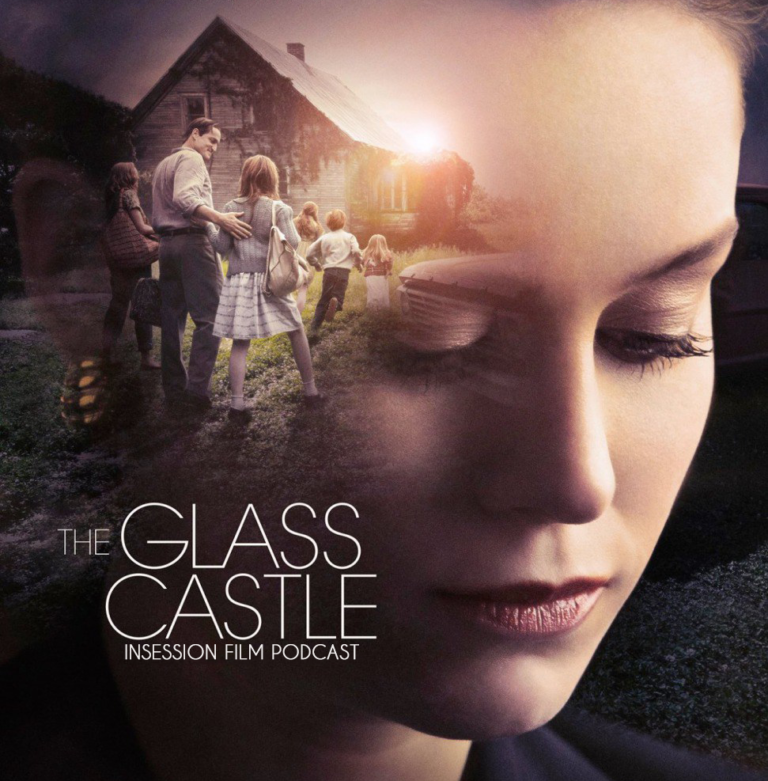
This week on the InSession Film Podcast, we discuss the latest film from Destin Daniel Cretton in The Glass Castle and also our Top 3 movie nomads. And finally to top off this week’s show, we continue our Satyajit Ray Movie Series with the 1964 film The Big City.
No guest this week but we had a lot of fun talking about Woody Harrelson, whatever the heck a nomad is and why Satyajit Ray is the master. The Glass Castle may have been somewhat disappointing, but it also gave us an excuse to finally review Short Term 12 on the show, so it’s still a winner in our book.
On that note, check out this week’s show and let us know what you think in the comment section. Thanks for listening and for supporting the InSession Film Podcast!
– Movie Review: The Glass Castle (6:25) Grades
JD: B
Brendan: B
– Top 3 Movie Nomads (41:09)
Using The Glass Castle as inspiration, we decided to talk about our favorite movie nomads this week. Depending on your criteria, this could have gone in several different directions, but we landed with some pretty great films and characters on our lists. Hopefully you enjoy them as much as we did. That said, what would be your top 3?
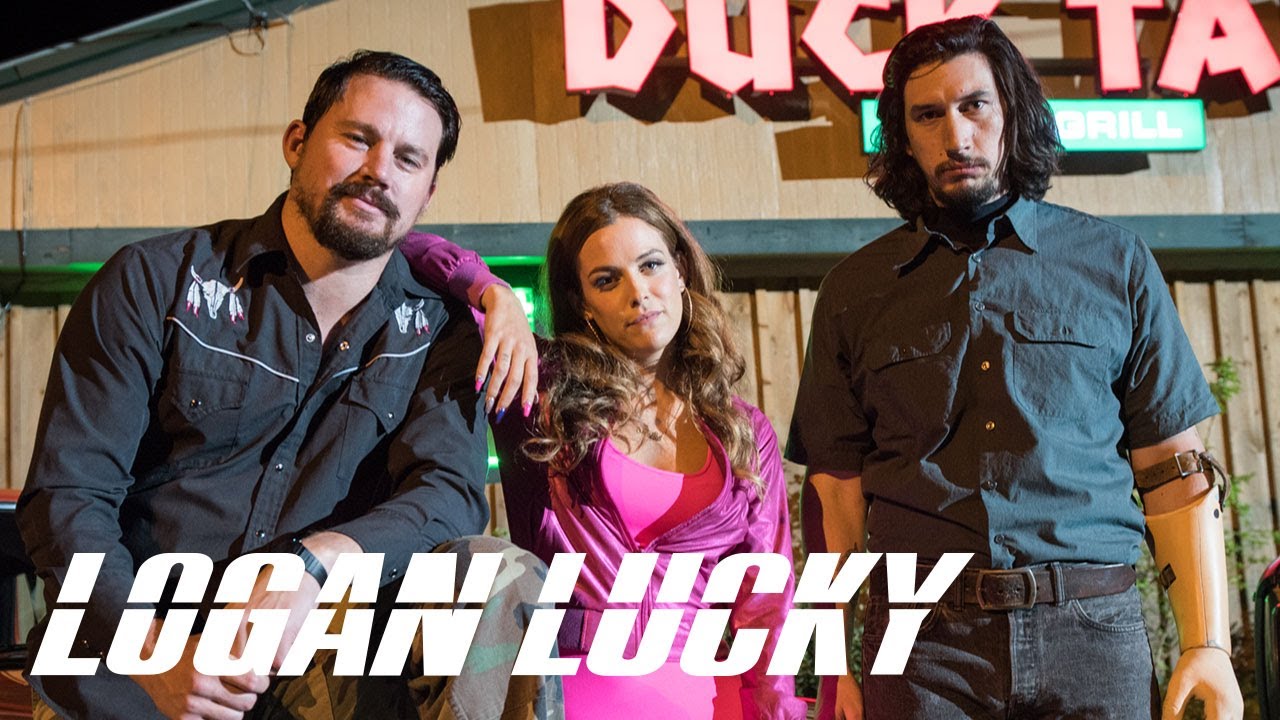
Main Review: Logan Lucky
Top 3: TBD
Satyajit Ray Movie Series: Charulata
[divider]
Help Support The InSession Film Podcast
If you want to help support us, there are several ways you can help us and we’d absolutely appreciate it. Every penny goes directly back into supporting the show and we are truly honored and grateful. Thanks for your support and for listening to the InSession Film Podcast!
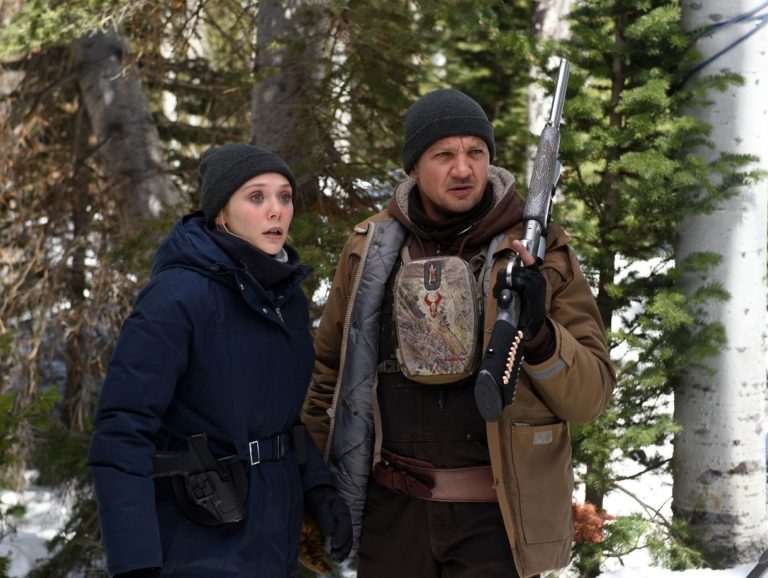
Director: Taylor Sheridan Writers: Taylor Sheridan Stars: Kelsey Asbille, Jeremy Renner, Julia Jones, Elizabeth Olsen
Synopsis: An FBI agent teams with a town’s veteran game tracker to investigate a murder that occurred on a Native American reservation.
[/info]
The contrast in the opening moments conjures a marrow-deep chill: Twenty-something Natalie (Kelsey Asbille), exhausted and bloodied, running barefoot through moonlit snow while a voice gently recites some sunny poetry. Or lines of a eulogy. She eventually succumbs to the cold, frozen by the tree line with little semblance of serenity. Judging from how often and how many ways the austerity (this version) of Lander, Wyoming is shown, Natalie’s death is rendered as the definition of “a statistic,” a “c’est la vie” thing around these parts.
Casualties of the drug war in Sicario, the working class in Hell or High Water and now Native Americans – writer Taylor Sheridan’s third entry in the thematically connected American Frontier series again focuses on a (arguably purposefully) sidelined demographic, translating its plight into a two-parts engrossing narrative and one-part biting commentary. In terms of timeliness, Wind River overtakes Sicario and Water, what with trending items of late being the ongoing tussle concerning the Dakota Access pipeline and this tone-deaf tweet “helping” to preserve the country’s storied mistreatment of tribespeople.
While the reservation – whose name is also the film’s title – is the central setting, there is more reason to call it “prison” as the whodunit goes on. Everyone walking around Lander, not just those on that designated patch of land, has seen the elements deprive them of warmth, prospects and connection. Stern game tracker Cory Lambert (Jeremy Renner), after a “coyote repelling” session, goes home to news that his ex-wife Wilma (Julia Jones) will leave for good, toward a new job and scenery that won’t revive their late daughter. Novice FBI agent Jane Bremmer (Elizabeth Olsen) is the only form of support dispatched to the town’s local police; her experience and bewilderingly ill-suited clothing for the climate reflect how much the powers-that-be care for the natives. The demeanor of Natalie’s parents, particularly her father Martin (Gil Birmingham), suggests they have accepted the idea that they are prey to the land’s cruelty, but to see the daughter “chosen” as its first meal – can anyone prepare for it? In a gut-wrenching sequence, Jane, following the rulebook, ignores Martin’s line that his wife is still unfit for questioning, entering her bedroom and becoming stunned at the sight of a grief-stricken mother repeatedly slicing her wrist.
After this is a heart-to-heart, father-to-father discussion about “taking the pain,” now that Martin is living with the kind of sorrow that has haunted Cory for the past three years. Despite the lines’ leanness and the performers’ on-point delivery, this one of a couple moments of “on-the-nose”-ism highlights the weaker aspect in Wind River‘s screenplay, an issue that is also proof of a little-altered creative vision. Since Sheridan is also in the director’s chair here – just not for the first time as said by most publications, publicity and Sheridan himself (look up a 2011 horror called Vile) – what is on the page may get to leap on-screen unscathed. Still, the core mystery would have received extra potency had the film channeled Sicario’s economical beauty wherein things observable – acting, movement, framing and pacing – are prioritized over dialogue and its tendency to spoon-feed information.
Renner’s finest performance to date, Olsen’s ever-present vivacity and the surprisingly sharp humor (conveyed with mastery by Graham Greene as the reservation’s sheriff) — the dialogue-heavy nature allows these to surface, and with them the themes of gender politics, “out-of-water”-ness and cultural disparities. Sicario communicates them with elegance. Hell or High Water speaks more, though the showing reigns supreme. From the look of it, d.o.p. Ben Richardson and composers Nick Cave & Warren Ellis continue that pattern with cool-headed capturing of the bleach-white terrain and an airy score laced with eerie whispers, respectively. Richardson and Sheridan can also astonish with their ability to stage a gunfight, doesn’t matter if it occurs within the perishing walls of a drug den where young future-squanderers frequent or out in the open next to a grand oil rig that sullies the landscape.
At one point on the ride down Wind River, Cory finds Martin performing a death ritual, the latter’s face painted and spirit feeling the breeze. It is later revealed that Martin is doing everything off-the-cuff, uncertain of his proceedings since there are no elders left to supervise him. Both the guys’ (and ours’) laughter promptly morphs into a minute of reflection, of how the thirst for growth of one society can deracinate the prints that give existence to another. Martin seeks peace for Natalie, but where he does it isn’t far from a multi-lane freeway. Such a contrast forces us to ask whether Native Americans of the reservation, or Native Americans, will see a time when they are completely spared from the white man’s reaping.
Until then, Sheridan’s work cinematically addresses one of the coldest crimes to have ever been committed (and is still happening) on this star-spangled soil. And the statistics for it are under-reported.
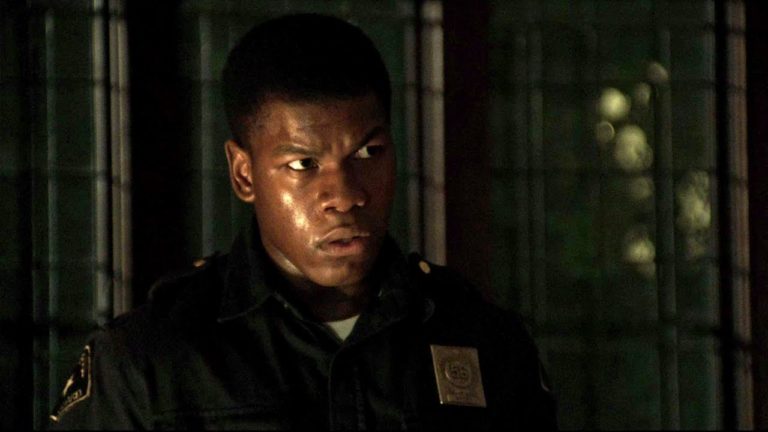
Director: Kathryn Bigelow Writers: Mark Boal Stars: John Boyega, Anthony Mackie, Algee Smith, Will Poulter
Synopsis: Amidst the chaos of the Detroit Rebellion, with the city under curfew and as the Michigan National Guard patrolled the streets, three young African American men were murdered at the Algiers Motel.
[/info]
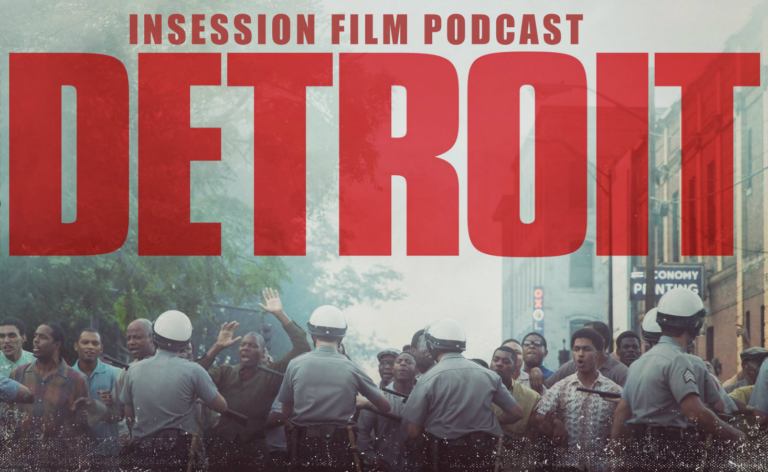
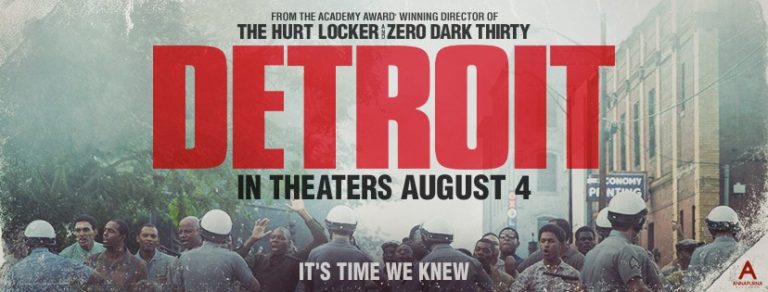
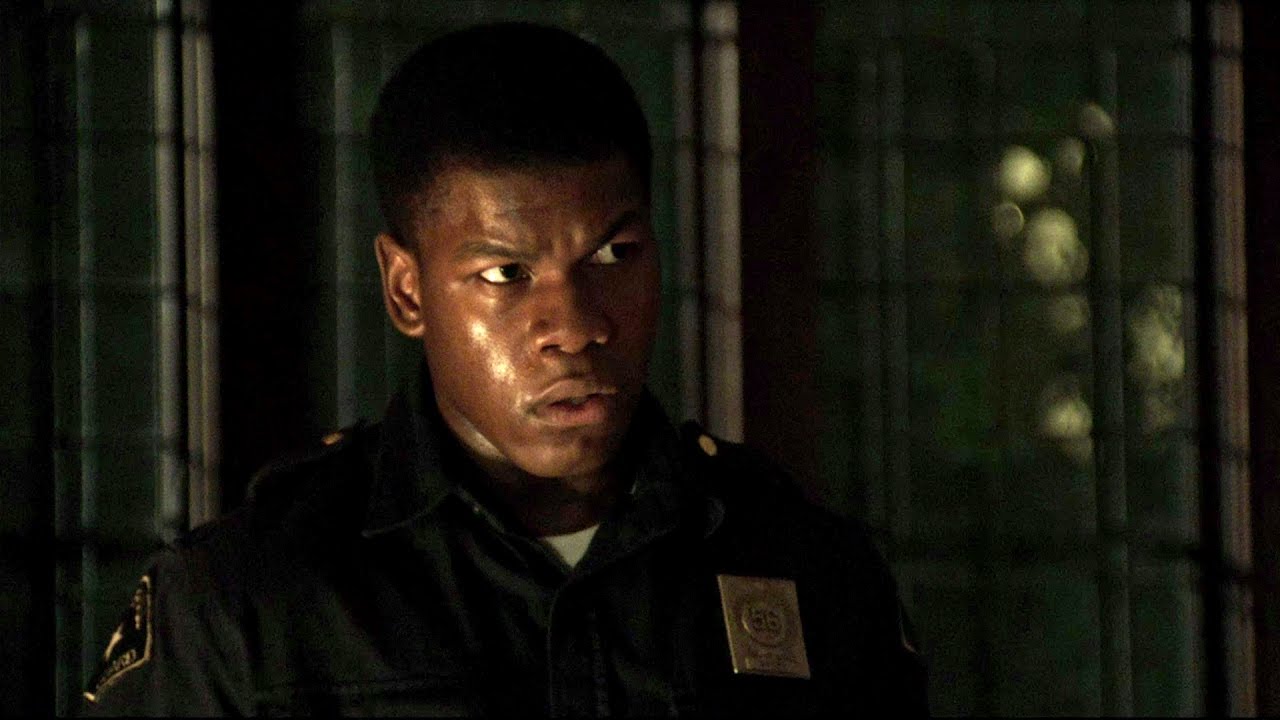
Detroit is a bleak, difficult film that finds its messaging a bit scrambled. From its docu-drama visual style, to its troubling torture scenes, Detroit attempts to fall under the historical epic category but instead finds itself in the “poorly made and disrespectful” category. The film does no justice for the historical events it is based off of, in fact it actually treats the events with little to no emotion. To some, Detroit may be an important film but since it is overflowing with violence, disrespect and false emotion that importance will be lost among many viewers.
Detroit begins with the riots that occurred in mo-town during the 1960’s. Jumping back and fourth between when the riots began and a rather specific event within the timeline of said riots. After highlighting the start of the events the film jumps into the incident at the Algiers Motel, where a group of police officers harass a group of African Amercian teenagers. The film has no real message whatsoever, there is no real beginning middle and end, it is one of the messiest films within recent memory.
Not only is there little to no story but the film just shows blatant disrespect toward the actual events. The movie is lit incredibly dark and sickly, the camera shots are shaky and uncoordinated and the film is edited almost like a horror movie. Instead of trying to prove a point like most historical films, Detroit just glorifies one horrible event after another. Instead of treating these terrible moments of torture and violence with grace and respect, the movie glorifies them. The one thing that this movie forgets to do is show us that the violence is wrong. Obviously, we’re humans we understand that the events that occur in the movie are immoral. But in film when exposed to moments of darkness and horror there should be some sort of saving grace. Detroit completely shies away from this. Instead of attempting to cheer up its audience it brings them even lower the longer the film drags on.
It gets to a point where the film almost has no redeemable qualities. The performances are nuanced and bring a certain energy to the film but this only occurs in rare spots during the film. The film is even crafted in an almost amateur matter which is shocking considering Kathryn Bigelow is in the directors chair. Bigelow has crafted some of the most exciting political films in recent memory and her visual style is typically focused and subtle. However in Detroit she strays from this and makes something much more amateur. It is almost disappointing to see something so flawed from such a talented director.
Detroit is an ill managed, chaotic film that cannot seem to make up its mind. Instead of focusing on a specific subject to discuss the film jumps around and around. Proving to be more disrespectful than an actual love letter to the historical events it is based off of, the film lacks in almost every aspect. There some small moments where the performances are done well but those moments are few and far between. The filmmaking craft is lackluster and Kathryn Bigelow has no made her first down right bad film. Detroit gives the illusion of importance but actually proves to be more frightening and disrespectful.
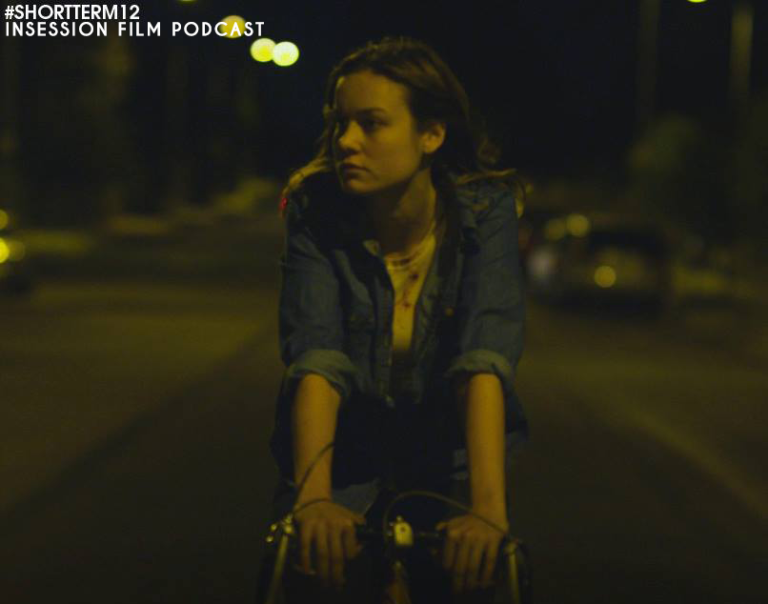
This week on the InSession Film Podcast: Extra Film segment, inspired by the new film The Glass Castle hitting theaters this weekend, we discuss writer-director Destin Daniel Cretton’s 2013 film Short Term 12, also starring Brie Larson. We also review the overlooked indie film Wakefield, starring the great Bryan Cranston.
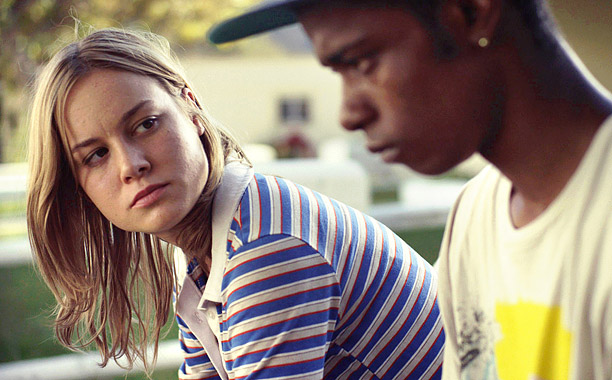
This week’s review of Short Term 12 is loooonnnngggg overdo. We somehow missed the opportunity back in 2013, but when learning of Cretton’s new film, we knew we had to take advantage and hopefully we delivered. We are big fans of the film and had a ton of fun diving into our deep love for its emotion and great performances.
On that note, have fun listening to this week’s Extra Film segment and let us know what you think in the comment section below. Thanks for listening!
– Short Term 12 Movie Review (10:09) Grades
Brendan: A
JD: A
– Wakefield Movie Review (43:57) Grades
Brendan: B-
JD: B-
We try to make this the best movie podcast we possibly can and we hope you enjoy them. Subscribe today on iTunes and Stitcher and please leave us a review on iTunes. You can also find us on Soundcloud, PlayerFM and TuneIn Radio as well. We really appreciate all your support of the InSession Film Podcast.
To hear this Extra Film episode and everything else we do, download our apps on the Amazon Market for Android and the Podcast Box app on IOS devices. The mobile app covers all of our main shows, bonus podcast’s and everything else relating to the InSession Film Podcast. Thanks for your wonderful support and listening to our show. It means the world to us!
[divider]
Help Support The InSession Film Podcast
If you want to help support us, we would greatly appreciate it! For more info, CLICK HERE.
Director: David F. Sandberg Writers: Gary Dauberman Stars: Stephanie Sigman, Miranda Otto, Lulu Wilson
Synopsis: Several years after the tragic death of their little girl, a dollmaker and his wife welcome a nun and several girls from a shuttered orphanage into their home, soon becoming the target of the dollmaker’s possessed creation, Annabelle.
[/info]
Let’s not hover around the haunt: Annabelle’s first solo appearance is detritus. Of its 99 minutes, 6 are somewhat watchable, but bear in mind that they don’t arrive in consecutive order. Rather than making the shadows worrisome and unclenched an exquisite feeling, Annabelle motivates the body to do activities it tends to delay – make the next meal, check off those unread emails, finish assignments and so on – to reclaim your time.
Startlingly, nothing of the sort happens with Creation.
The film focuses on a group of orphan girls being relocated to a settlement distant from civilization, a move that recalls the opening of The Devil’s Backbone and Pan’s Labyrinth. This new place, a capacious abode of toymaker Samuel Mullins (Anthony LaPaglia) and his wife Esther (Miranda Otto), doesn’t take long to make a positive impression, particularly to Sister Charlotte (Stephanie Sigman) who oversees the girls and to polio-stricken Janice (Talitha Bateman) who is pleased with the stair lift that can safely move her between floors. With these many doors and crannies, Janice and BFF Linda (Lulu Wilson) promptly let the curious bug take over, entering the not-to-be-entered adjacent room once inhabited by the Mullins’ daughter, Annabelle aka “Bee” (Samara Lee – what a name!), who 12 years ago died in a car accident. Moving on seems optional for Bee when she is permitted to move into the titular creepy, porcelain and vacant-eyed doll. So was that even Bee?
Right from the impressively staged shocker of a prologue, Creation welds merit to two things: that the film will finally serve horror and thoughtfulness will be behind every frame. Director David F. Sandberg’s job here is easy – clear the ankle-high bar that Annabelle has set – yet we should be glad that he is on set with the over-achiever mentality. Similar to the Ouija series with Origin of Evil, the preceding installment’s shameless cash-in nature is replaced with a director who comprehends the genre. As doctors everywhere would claim, a break before giving the plaything another go can improve the quality of the experience, having found the time to reflect on mistakes and successes (mostly the former in Annabelle‘s case). Alternatively, just add Wilson to the cast as director Mike Flanagan has done, the 11-year-old starlet whose possessed – pun extremely intended – performance in Origin of Evil was an absolute highlight.
The knack to convincingly portray terror breaches cinematic universes in a different actress, too, as Bateman is the real-life sister of Lights Out’s child actor. While Janice’s physical drawback (Janice has a crutch) can be interpreted as a genre gimmick, Bateman’s sensitivity convincingly reframes it into another layer of frailty for her character, who at one point is dropped from considerable height after failing to escape the demon. Even when Janice no longer has a choice to hobble away from the fear (and becomes the source of it instead), Bateman still bewitches when she monstrously lashes out at the rest of the household.
Save for replications of The Conjuring’s possession scene and Lights Out’s violent pull into darkness, Sandberg packs Creation with jolts that petrify mainly – and, at this point in the genre, nearing novelty – through construction. This is Sandberg’s greatest strength, and those who have dared watch his ponysmasher shorts can agree, one that never fails to brew the sincerest form of dread. He understands that the violin’s unholy plucks won’t twist eardrums as much as the increasingly rapid footsteps barreling toward the character. Why settle upon the screeching entity when heightening the panic-o-meter better is a mute, walking white sheet? And when need be, switch things up – have light bulbs loosen themselves, or reveal evil being there with just a glowing pair of eyes in the darkness. To guarantee the tastiness of Creation’s bag of freaky tricks, on board with Sandberg are key players who have contributed plenty to today’s horror landscape, including Insidious’ series production designer Jennifer Spence and director Alexander Aja’s regular d.o.p. Maxime Alexandre.
Such flourishes can be seen as Sandberg filling in for the lackluster-at-worst and detached-at-best efforts from writer Gary Dauberman, a holdover from Annabelle. There is no going around the characters’ thinness and the scare-to-scare plotting as a result, but luckily passion fuels the performers’ delivery and recognition of the ingredients behind a veritable scare – simplicity and obscurity – are there in the director. Had these two are absent (again), Creation would have really dented the soundness of this “The Conjuring Universe”: profitable, but on unworthy substance.
Yet, in the same breath that Creation is not a time-waster, its major returns this time will be justified. In theory, Sandberg and company needn’t care for anything else besides their own film, but their efforts have made Annabelle an essential watch. At least up until John R. Leonetti’s footage meets the pre-sequel.
Last week on the Episode 233, we talked about Kathryn Bigelow’s Detroit, a film that we had been looking forward to for a long time. Bigelow’s Zero Dark Thirty was one of the films that provoked us to launch InSession Film in 2013, and it was great to finally have her back so we could discuss her on the show. Similarly, in our first year of operation we saw the release of Short Term 12, one of the best films to come out that year. It was also the film that launched Brie Larson into stardom. Unfortunately though, we never found the opportunity to review that film on the show, a regret that we are going to remedy this week on Extra Film (stay tuned). So imagine our excitement when we found out that Short Term 12 writer-director Destin Daniel Cretton would be teaming up with Larson again for The Glass Castle, hitting theaters this week.
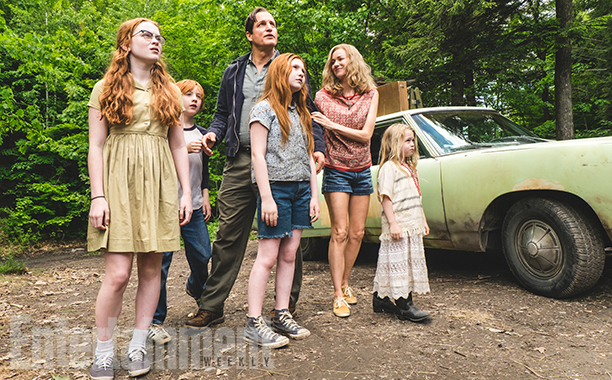
If you’re not familiar with The Glass Castle, it’s about a dysfunctional family of nomads who conjure up imagination as a way of escaping their poverty. On the surface, the film looks a bit schmaltzy (based on the trailer anyway) as we see how this dynamic of dream vs reality interweave itself throughout this family as the kids get older. It appears that Jeannette (Larson) will be the central focus as the film explores how she escaped that family life to create one of her own. I will say though, while the material here could lend itself to mundane melodrama, I can’t help but be optimistic given the prowess of Short Term 12. Cretton has already proved himself once – with Brie Larson at the center – so there’s no reason for me to not trust him. I am curious how he is going to manage the potential pitfalls of the story here, in particular the familiar tropes and cliche’s that the trailers amplify quite heavily.
Despite all of that, The Glass Castle still has a lot of potential, especially because of this cast and crew. Outside of Cretton and Larson, the film also features Woody Harrelson, Naomi Watts, Max Greenfield, Sarah Snook, among others. I don’t know about you, but those are names I can easily get on board with and they are great talents that can also transcend the aforementioned melodrama.
Subjectively speaking, I’m also a sucker for a good father-daughter/son story. So…there’s a good chance that I respond to this film emotionally even if the film isn’t that great objectively. I can’t help myself, it’s inherently a part of me. If that’s the case, it should make for an interesting discussion on Episode 234.
What about you? Are you excited for The Glass Castle?
[divider]
Here’s what else is coming to theaters this weekend:
Annabelle: Creation Nut Job 2: Nutty By Nature Naked (Netflix) Ingrid Goes West (limited) The Trip to Spain (limited)
Director: David Lowery Writers: David Lowery Stars: Casey Affleck and Rooney Mara
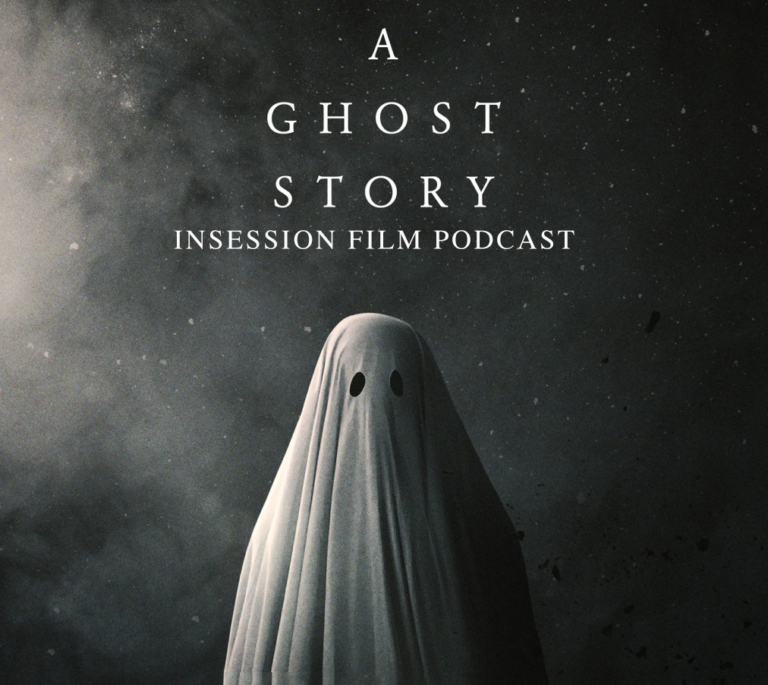
Synopsis: In this singular exploration of legacy, love, loss, and the enormity of existence, a recently deceased, white-sheeted ghost returns to his suburban home to try to reconnect with his bereft wife.
[/info]
It is believed by some (perhaps many) that there is a life and an existence beyond the physical; what’s unknown is what sense of humanity (if any) crosses over with us. Are our experiences and emotions still similarly felt? Are they continually shared alongside other beings? Or is it an absence of feeling? Perhaps this inhuman experience is still a human one after all, and it is that exploration in humanity that permeates through David Lowery’s (Pete’s Dragon and Ain’t Them Bodies Saints) A Ghost Story, and out-of-body fable and meditation on the passage of time, closure, grief, and commemoration.
Sounds familiar to you? Perhaps this has become the formula for many “ghost films” these days, but Lowery flips the traditional ghost story notions on its head, reversing the polarity of their typically hokey messages that the memory and legacy of those who have passed on will live forever. Not only have these notions of memorial immortality become tiresome, but I question the validity in it. Does it really last, or is our legacy as mortal as our human selves? A Ghost Story states that perhaps it’s not just our ability to endure and preserve our legacy, but knowing that memories eventually die is maybe the closure we need to hear. It is also downright beautiful.
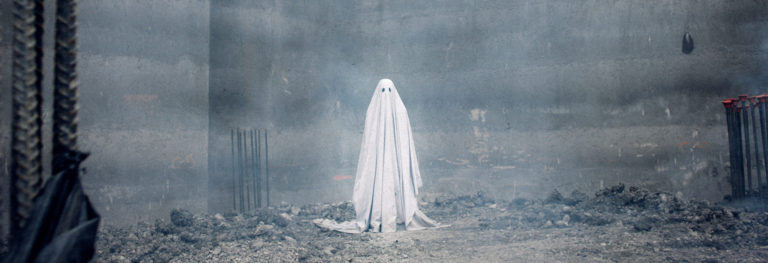
“Beautiful” may leave you in a head-scratch, especially if you’re familiar with the plot of A Ghost Story. Casey Affleck and Rooney Mara portray a loving couple, living together in what appears to be rural Texas. Affleck dies in a tragic accident, but chooses to remain a watchful eye as an out-of-body entity, complete with a child-like bedsheet and scissor-cut holes for eyes (surprisingly, there’s actually a narrative and medical reasoning for this). It’s a recognizably silly concept, something David Lowery himself is arguably aware of too, and yet the film achieves a striking balance in relishing in its weirdness while also transcending it. I already mentioned how Lowery inverts our preconceived notions of traditional ghost stories, and he continuously does that by turning A Ghost Story into more than just a meditation, but also an observation.
Affleck remains as a watchful eye on his lost love that continues for decades, experiencing time’s ultimate cruelty, observing without the ability to act (well, despite a few angry outbursts involving some kitchenware). As the audience, Lowery forces us to do the same thing; we connect with our central ghost as a mortal being (I swear I felt him emoting through those hole-cut eyes) and observe with him. We look for things hidden that may provide new meaning. We feel the weight of time through Affleck’s conversation with another ghost also awaiting closure; the use of subtitles could’ve backfired horribly, but instead maintains the film’s calmness. And that’s the strength in how A Ghost Story continuously transcends, in its favoring of patience and tranquility above all else (through its use of various long takes), and appropriately so, when time itself is arguably your main antagonist.
And for its sheer minimalistic approach, the film is a technical marvel in its own way. Andrew Droz Palermo’s cinematography and boxed-in aspect ratio creates an aura of imprisonment, and is still strikingly gorgeous in its emptiness. Daniel Hart’s score is pivotal in backing the film’s realism, and is arguably one of the best scores of the entire year; not to mention Hart’s own band Dark Rooms and their symbolically beautiful song “I Get Overwhelmed” (heard in both the film and its trailer). Then there’s Rooney Mara’s delicate performance; many will come out of A Ghost Story talking about the already infamous pie-eating scene, in which Mara devours an entire pie for over 5 minutes, in an uncut and stationary shot. We observe as Affleck’s ghost observes, and eventually witness a progression from guilt to punishment to grief, and that seamless escalation is beyond magnetic. It’s a moment many won’t soon forget (including Affleck’s ghost, despite his now inhuman existence), and that notion of forgetting is where A Ghost Story won me over.
It takes a lot for a film to elicit such wonderment in its audience, and in my case I found myself actively digging for repressed memories I may have forgotten during my lifetime. Not for nostalgia’s sake, but to see if I had the ability to do so. But failing to rekindle with such memories never feels like failure, but is instead something natural; A Ghost Story’s main moral is to inform of the mortality of remembrance, and as a result I was nearly weeping through much of the film’s back half. Memory as a human conflict parallels both worlds (our world and the next), and deliberately so, as the film’s final moments show the inevitability of forgetting; it depicts an ancient story of its own legacy that has been lost in time, as well as a moment shared between Affleck and Mara that Affleck’s ghost has already forgotten took place. All we can do is endure, in this life or the next. But would that make it any less human?
The last few weeks have been quite interesting for us at InSession Film. As noted here, we are big fans of Kathryn Bigelow and it was great to finally have her back last week with Detroit. It was the first time we had a chance to discuss her on the show. Similarly, in our first year of operation (2013), we saw the release of Short Term 12, one of the best films to come out that year and it also launched Brie Larson into stardom. Unfortunately though, we never found the opportunity to review that film on the show back then. So imagine our excitement when we found out that Short Term 12 writer-director would be teaming up with Larson again for The Glass Castle, hitting theaters this week. And that’s what were using as inspiration for our poll this week.
Specifically, we are matching up Larson’s performance in Short Term 12 with her Oscar-winning performance in Room. One could argue she should have been nominated for 12, but either way, you can’t go wrong here in our opinion. That said, you have to pick one, so choose wisely!
This week on Episode 233 of the InSession Film Podcast, inspired by Kathryn Bigelow’s Detroit, which depicts a real-life historical event, we decided to talk about our favorite movies that have depicted other U.S. historical events over the years. There have been countless films to tackle this particular topic, showcasing U.S. history from the 1700’s all the way through modern day, so there was a lot to consider here. On that note, what movies would make your list? Here are the one’s that made ours:
**Please keep in mind that we each had different criteria for our selections**
JD
1) United 93
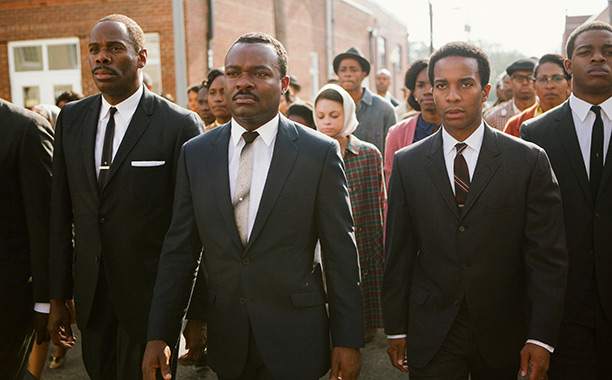
2) Selma
3) Born on the Fourth of July
Brendan
1) Zodiac
2) The Battle of Algiers
3) The Assassination of Jesse James by the Coward Robert Ford
Michael
1) Lincoln
2) Reds
3) All the Presidents Men
Honorable Mentions (Combined) Zero Dark Thirty, The Big Short, The Patriot, Saving Private Ryan, Milk, Miracle, 12 Years a Slave, Captain Phillips, BLack Hawk Down, Apollo 13, The Social Network, Spotlight, Bonnie and Clyde, Argo, All Quiet on the Western Front, Grapes of Wrath, Twelve O’Clock High, Remember the Titans, Frost/Nixon, JFK, Titanic, Good Night and Good Luck, Forrest Gump
Hopefully you guys enjoyed our lists and if you agree or disagree with us, let us know in the comment section below. If you’re a fan of Nolan like we are, this list was pretty difficult to narrow down. There are so many great scenes that reflect his directing style, depending on what speaks to you the most. That being said, what would be your Top 3? Leave a comment in the comment section or email us at [email protected].
This week’s episode is brought to you by Patreon.com and our awesome listener’s like you! Sign up today and get some cool prizes in the process!
This week on the InSession Film Podcast, Michael Schwartz from Next Best Picture joins us to discuss Kathryn Bigelow’s Detroit and our Top 3 movies based on U.S. historical events. We also continue our Satyajit Ray Movie Series with his 1958 film, The Music Room!
Big thanks to Michael for joining us this week, he was an awesome guest and we loved having him on the show. We had a great time talking about Kathryn Bigelow, the first time she has been formally discussed on the show since Zero Dark Thirty came before the launch of InSession Film, so this was quite the treat for us. Also, stay tuned until the end where JD gives a fun story about his Hans Zimmer experience.
On that note, check out this week’s show and let us know what you think in the comment section. Thanks for listening and for supporting the InSession Film Podcast!
– Movie Review: Detroit (7:31) Grades
JD: B+
Brendan: B+
Michael: B+
– Top 3 U.S. Historical Event Movies (40:06)
Inspired by Detroit, which depicts a real-life historical event, we decided to talk about our favorite movies that have depicted other U.S. historical events over the years. There have been countless films to tackle this particular topic, showcasing U.S. history from the 1700’s all the way through modern day, so there was a lot to consider here. That said, what would be your top 3?
Main Review: The Glass Castle
Top 3: TBD
Satyajit Ray Movie Series: The Big City
The Glass Castle
[divider]
Help Support The InSession Film Podcast
If you want to help support us, there are several ways you can help us and we’d absolutely appreciate it. Every penny goes directly back into supporting the show and we are truly honored and grateful. Thanks for your support and for listening to the InSession Film Podcast!
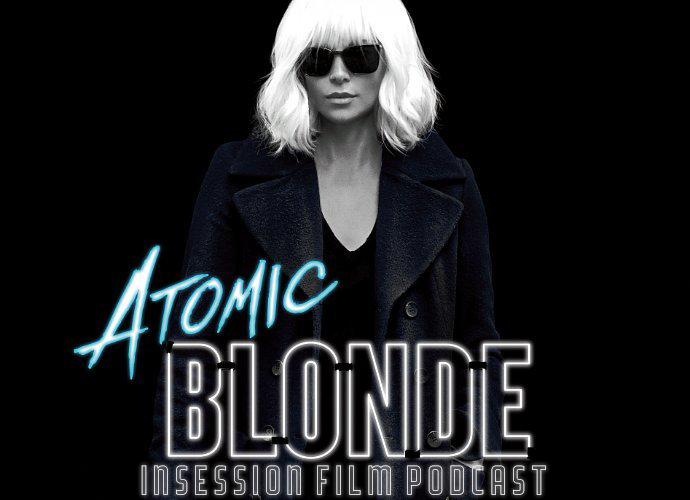
This week on the InSession Film Podcast: Extra Film segment, Vince and JD are off and filling in this week is Tim Costa from the First Time Watchers podcast. God help us all. No, seriously, he was great and we appreciate his help as he and Brendan discuss Atomic Blonde, starring Charlize Theron. The fellas also discuss the new original film from Netflix, The Incredible Jessica James.
We joke about Tim often, especially given his feelings about Brendan, but we do appreciate him filling in this week. He was a great guest and he restrained himself enough for the conversation to be quite excellent. So thanks for that Tim.
On that note, have fun listening to this week’s Extra Film segment and let us know what you think in the comment section below. Thanks for listening!
We try to make this the best movie podcast we possibly can and we hope you enjoy them. Subscribe today on iTunes and Stitcher and please leave us a review on iTunes. You can also find us on Soundcloud, PlayerFM and TuneIn Radio as well. We really appreciate all your support of the InSession Film Podcast.
To hear this Extra Film episode and everything else we do, download our apps on the Amazon Market for Android and the Podcast Box app on IOS devices. The mobile app covers all of our main shows, bonus podcast’s and everything else relating to the InSession Film Podcast. Thanks for your wonderful support and listening to our show. It means the world to us!
[divider]
Help Support The InSession Film Podcast
If you want to help support us, we would greatly appreciate it! For more info, CLICK HERE.
Director: Nikolaj Arcel Writers: Akiva Goldsman (screenplay), Jeff Pinkner (screenplay) Stars: Idris Elba, Matthew McConaughey, Tom Taylor, Jackie Earle Haley
Synopsis: The last Gunslinger, Roland Deschain, has been locked in an eternal battle with Walter O’Dim, also known as the Man in Black, determined to prevent him from toppling the Dark Tower, which holds the universe together. With the fate of the worlds at stake, good and evil will collide in the ultimate battle as only Roland can defend the Tower from the Man in Black.
[/info]
Steadfast has been the titular structure, the nexus of time and space, to readers of writer Stephen King’s seven-part, near 4,000-page book series. As turning over parchment (or swiping, if on e-readers) is increasingly becoming an elitist activity, it is just a matter of time before Hollywood elects itself to visualize King’s “magnum-opus” words. Took 10 years and many hands, but it happened. Relief is yet in sight, however, when friends who adore the series all brand it with depressing phrases – “unfilmable,” “no particular genre,” “hard to describe,” “where to begin” and so on – wondering if the brains translating it for moviegoers will be on the same level of creative drunkenness as The King.
Unfortunately, and dishearteningly, Sony Pictures’ The Dark Tower is dry.
After Babylon A.D., this is the second time that a runtime of 90 minutes ruins the world of a promising fantasy material. No matter how skilled one is, that much time is never sufficient to cover Mid-World, a sprawling and distinct setting where the futuristic, Wild West and mystical coexist. Or anything, really. Eleven-year-old “Keystone Earth”-ling Jake Chambers (Tom Taylor) has a lot of short, frenetic dreams – about Mid-World, tower-protecting Gunslinger Roland Deschain (Idris Elba), a hellish dimension and tower-destroyer Walter/Man in Black (Matthew McConaughey) – but after he has awakened the film seems to be stuck on fast-forwarding. It benefits Jake, however, in the sense that his journey to stop the tower from falling and evil invading is never a drag. On the other hand, Roland, the last of his kind who witness the face of his father (Dennis Haysbert) advancing toward death due to Walter, The Dark Tower gifts him with the timeless mantra of Sweet Brown. He seems to be just there to accompany Jake.
In the film, Jake gets the VIP treatment, having a strong enough “shine” (or telepathy – maybe, the film doesn’t confirm) that can pierce dimensions and vanquish an utterly superfluous House Demon. Such is also the source (another maybe) that can be used to bring down the tower via a Death Star-esque ray in one hit, rather than having the fake-skin cronies to abduct a lot of kids and use a number of them when it is demolition time. How can a child’s mind, per the title cards, be weaponized? No clue. How is Walter connected to the evil dimension? Unknown. Still, it is great to see Walter delivered the line “You are the full package, as advertised” to Jake with as much happiness as owning a Lincoln. Or cooking chicken.
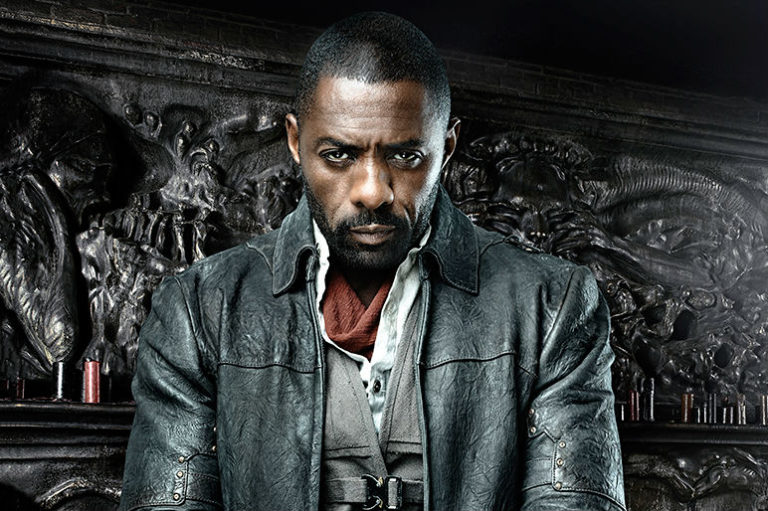
We never see the final product, but The Dark Tower’s big bad has the potential to be a suave, GQ-ready and inter-dimensional all-star chef. There is a lot of pleasing hilarity in the film, most of which comes from McConaughey’s deft balancing between playful and ominous, commanding a person to “hate,” “stop breathing” or “kill” with a seductive twist. The Texan actor is a great foil for Elba, who – as usual – dominates the screen with just his stern presence or, surprisingly, magical deadpan delivery. Roland, despite the pain and shaken faith, has a heart, and the actor brings the warmth forward with his eyes. Having this quality duo around is vital to compensate Taylor’s performance, which is OK but gets really constrained at key moments.
As for the fantastical beats, they strive to be small in a world that King has made colossal. Action sequences are tightly staged and framed, and the less CGI employed the better they are. A recent revisit of A Royal Affair shows director Nikolaj Arcel being much more comfortable around character-driven moments, as is his regular d.o.p. Rasmus Videbæk, but since they are already flawed here, accepting the chases, gunplay and fisticuffs for what they are can still leave a substantial void. Hunting down references to King’s other writings may alleviate that. Somewhat. Try this game with alcohol, maybe?
Come to think of it, the personal teetotal status may have to be broken due to three revelations linking The Dark Tower to the RoboCop remake. This will be another occasion where Sony Pictures lets down an acclaimed foreign filmmaker with post-production decisions, extinguishes the possibility of diversity in casting due to underwhelming project and dents the talented Jackie Earle Haley’s career. So much security was courted to ignite the long-dormant project, but it couldn’t even prevent the tower – at least its big-screen version – from following the ways of Babel.
For those that keep up with my monthly posts may have noticed that July’s was absent. This is not because July had nothing to talk about, but was due to simple negligence on my part. In fact, it was a regrettable negligence. Many of you fine moviegoers will agree that the month of July was a monster; the trilogy closing War for the Planet of the Apes, Christopher Nolan’s WWII epic Dunkirk, David Lowery’s hauntingly beautiful A Ghost Story, the innocent fun of Spider-Man: Homecoming, Kumail Nanjiani’s culturally significant The Big Sick, need I say more? To call these films great summer entertainments is a disservice; these are works that we’ll more than likely still be talking about come year’s end, whether Nolan has a chance at finally earning a Best Directing Oscar, or if the Academy will be ready to honor Andy Serkis in some way or another, or if I see a movie that makes me cry harder than A Ghost Story.
Can August live up to July’s trend of high standards? I guess that depends on where you look.
Following the heels of Dunkirk, August sees another commercial depiction of a powerful historical event; Kathryn Bigelow reunites with writer Mark Boal (The Hurt Locker and Zero Dark Thirty) to dramatize the 1967 civil rights riots in Detroit. Already garnering high praise, could this be yet another big summer release gearing for a hard hitting Oscar campaign? If the early buzz is any indication, a betting man would be stupid to bet against that.
After Detroit, however, commercial entertainment becomes a bit tricky. While the return of Steven Soderbergh with Logan Lucky is guaranteed to garner excitement (who doesn’t want to see Channing Tatum, Adam Driver, and a barely unrecognizable Daniel Craig in a NASCAR heist flick), is anyone really excited for The Dark Tower? How about Annabelle: Creation (despite positive early buzz)? This is where knowing where to look becomes important; more specifically, it’s the indie circuit once again (what else is new).
Already a Sundance darling, Taylor Sheridan’s (writer of Sicario and Hell or High Water) directorial debut Wind River sees Elizabeth Olsen and Jeremy Renner amidst a hellish murder mystery within the snowy plains of Wyoming. And if that isn’t enough to satisfy your love for Elizabeth Olsen (you love her, trust me), how about seeing her team up with Aubrey Plaza in yet another Sundance hit with Ingrid Goes West? A very different film than Wind River, but perhaps a riot nonetheless. And already generating an incredible amount of buzz, Kogonada’s debut dramedy Columbus brings together John Cho and young beauty Haley Lu Richardson for a series of familial hardships set in Columbus, Indiana.
Wait, there’s more? After its critical success at Cannes, A24’s crime drama Good Time will begin its limited run this month, which already has Robert Pattinson joining the Oscar race (he’s a great actor, folks). As we continue to look, to those that were big fans of Short Term 12 (I’ll be one to raise my hand here), Brie Larson reunites with writer/director Dustin Daniel Cretton for The Glass Castle, the true story about Jeanette Walls who was raised by a dysfunctional family of nonconformist adventurers; the film also stars Naomi Watts and Woody Harrelson (okay, now you’re excited). And how about another round of your favorite snarky improvisers touring Europe? Steve Coogan and Rob Brydon return for The Trip to Spain which is slated for a limited release this month.
The indie circuit will more than likely save the month of August, closing a rather hit-or-miss summer with enough hits to go out on a high note. Now we have September to look forward to, the autumn version of the January wasteland; it’ll be a problem if September’s only good release is the 40th Anniversary of Close Encounters of the Third Kind. Here’s hoping a killer clown and some British spies are worth the wait.
Summary of films to look out for this August:Detroit, Logan Lucky, Wind River, Ingrid Goes West, Columbus, The Glass Castle, Good Time, The Trip to Spain.
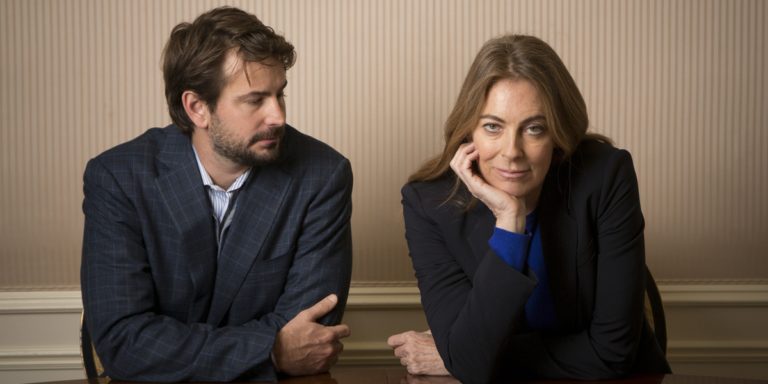
Detroit is one of those films that we’ve been anticipating for some time. The last time that Kathryn Bigelow graced our presence was with Zero Dark Thirty back in 2012, just before we launched InSession Film. In fact, it was one of the films that year that provoked us to start this little venture of ours, that’s how much we loved that film. We are big fans of Bigelow overall and have been waiting patiently for her next film so we could talk about her on the show. Not only does Detroit give us our Bigelow fix, but also our Mark Boal fix. Before their collaboration on Zero Dark Thirty, the two of them created this little film that won an award or two called The Hurt Locker. I heard it was pretty good. So to see them back together again for Detroit is pretty exciting.
Speaking subjectively, I’m also excited for Detroit because it’s an important event that doesn’t get talked about enough. Being from Michigan, I remember vividly hearing about this in school, but as I got older it became apparent that it wasn’t quite as known everywhere. Perhaps I’m speaking myopically, but in my experience, it seems to be an event that fell through the cracks compared to some of the more well known events of the late 1960’s. Either way, the “Algiers Motel Incident” is a story that unfortunately feels as appropriate today as it was in 1967. In the hands of someone like Bigelow, I fully expect that the film to be viscerally gripping, and for some, it will probably be emotionally overwhelming.
Additionally to all of that, Detroit stars John Boyega, Anthony Mackie, Jason Mitchell, Jacob Latimore, Jack Reynor and Will Poulter among others. The cast here is really quite great overall and I look forward to seeing how this young cast gels here.
I’m also very intrigued by what James Newton Howard brings to this film musically. Newton Howard is a composer that – for me – has been able to render some really moving scores that simultaneously incorporate elements of visceral tension, something that would be appropriate here. This story also has a harrowing nature to it and I think he could capture that well too based on his previous work, in particular his work with M. Night Shyamalan.
There is a lot to look forward to with Detroit. It won’t be an easy watch nor a fun one, but the film will hopefully pack a wallop in terms of significance. In that regard, I can’t wait to see what Bigelow and Boal have stirred up here. What about you? Are you excited for Detroit?
[divider]
Here’s what else is coming to theaters this weekend:
The Dark Tower Kidnap Wind River (limited) An Inconvenient Sequel: Truth to Power (expanding)
For my latest guest appearance, I joined Jay over at The Lambcast, alongside Simon Appleton and Richard Kirkham, to talk about Christopher Nolan’s Dunkirk. We had a really great time and a fun discussion on both the film and the historical context of what happened at Dunkirk.
This week for our poll, inspired by the new film Detroit, we’re talking about Kathryn Bigelow and Mark Boal – the director and writer of Detroit. Of course, this is the third collaboration between Bigelow and Boal, coming off the heels of Zero Dark Thirty and The Hurt Locker. So it felt appropriate to pin those two films up against each other. Of the two, which film do you prefer?
Director: Matthew Heineman Stars: Abu Bakr Al-Baghdadi, Hamoud, Hassan
Synopsis: A documentary that follows the efforts of “Raqqa Is Being Slaughtered Silently,” a handful of anonymous activists who banded together after their homeland was taken over by ISIS in 2014.
[/info]
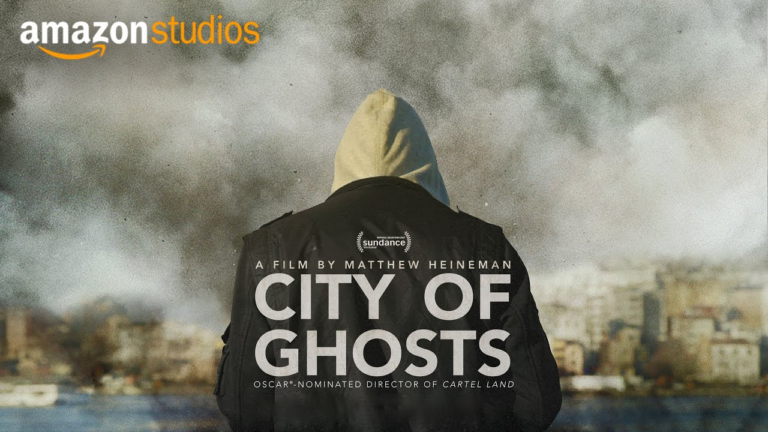
This astonishing new documentary from the team behind 2015’s Cartel Land owes much to that earlier film. Though its myriad cast and infernal setting stand as bold silhouettes atop the ramparts, it’s the film’s cinematic scope that peers out, conspicuous in its self-awareness. Cartel Land leaped into a topic oft-explored by feature-length – to say nothing of Breaking Bad – incursions into the US-Mexico drug war (Sicario, Narco Cultura). City of Ghosts has no such touchstone. Raqqa’s rubble-strewn streets may recall prime-time news reportage, but its thriller narrative expunges all doubt this story belongs anywhere but in the theatre.
This deeply personal account follows anonymous activist group “Raqqa is Being Slaughtered Silently” (RBSS), from its reactionary inception as ISIL Wahhabism takes hold in the city, to eventual flight to western Europe. There is no three act structure here; no big pay-off nor grand resolution. Indeed, City of Ghosts’ parting gift is quite literally delivered in the maternity ward, the most silver of linings in a sunless sky. Bookended by an award ceremony at which RBSS are being honored, one journalist remarks, “So serious, my friend.” Outwardly concealed by the glamour of the occasion, the broiling discomfort is evident. Acknowledged these men ought to be, but through the prism of western opulence, at once jarring and antithetic, the lack of empathy is accentuated.
There is no sanitized footage here. As we alternate between the recent past and present, we do also the dolly-less photography of Heineman and primitive mobile phone mp4s of Raqqa’s horrors. Seamless intercutting only adds to the immersion, all-but removing entirely the safe detachment in which we might find refuge with our activists. We are invited to public executions without the cautionary warnings we might expect and, in one shocking sequence, witness a son recounting his father’s murder on a laptop, our eyes darting between LCD display and viewer as we struggle to reconcile the world in which these young men have grown, with our own. Therein lies the masterstroke of this documentary: for all its depictions of a world with which we may think we’ve an objective, if tenuous grasp, City of Ghosts injects humanity. In spades. Punctuated by an urgent score and brief moments of communal mirth, the sterile, Syrian shaped bubble with which we’re familiar is burst. Like Cartel Land and Escape Fire before it, the application of “characters” in whose shoes we can trudge for ninety minutes adds colour to a black-and-white album.
With Alex Gibney (Zero Days, Going Clear: Scientology & the Prison of Belief) on board as executive producer I sincerely hope City of Ghosts reaches its deserved audience. A limited theatrical release may mean a reliance on word-of-mouth advertising to find a home, with Amazon having secured worldwide rights for its distribution, including its Prime Video platform. And find it you must, for City of Ghosts is proof that simply pointing a camera in the right direction makes for the most engaging drama.
This week on Episode 232 of the InSession Film Podcast, inspired by A Ghost Story and the way it uses time to tell its story, we felt compelled to talk about our favorite movies that feature time as a major element. This doesn’t necessarily mean “time travel” per se, although that could be a component, but there are several ways to utilize time in films. In fact, there are a few filmmakers that have made a career in exploring this, such as Christopher Nolan (as we talked about last week on the show) and Richard Linklater, for example. Hopefully our lists convey this and how time can be emulated in various ways.
On that note, what movies would make your list? Here are the one’s that made ours:
**Please keep in mind that we each had different criteria for our selections**
JD
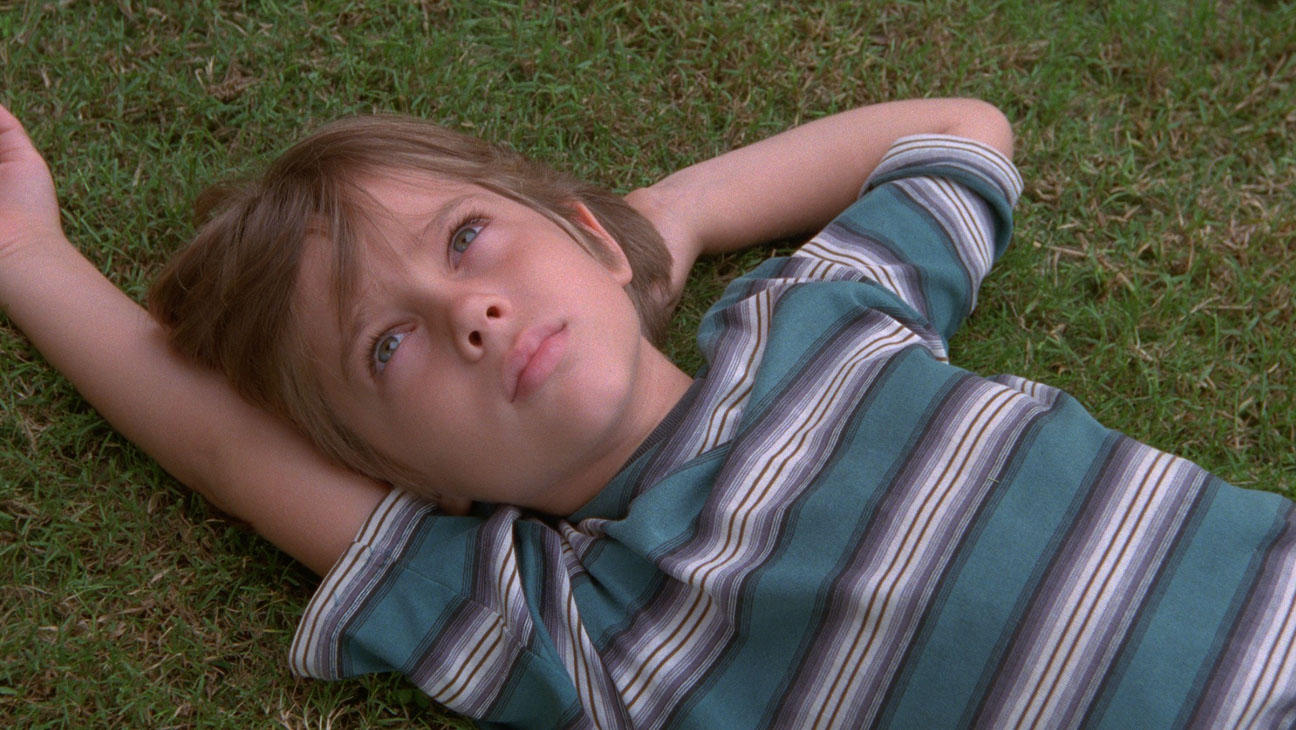
1) Boyhood
2) Letter from an Unknown Woman
3) About Time
Brendan
1) Synecdoche, New York
2) Up
3) Cleo from 5 to 7
Honorable Mentions (Combined) Tree of Life, Citizen Kane, Inception, Dunkirk, Momento, Arrival, Midnight in Paris, Looper, Back to the Future, Primer, The Mirror, Pulp Fiction, 2001: A Space Odyssey, Locke, Victoria, 127 Hours, United 93, Bambi, Run Lola Run, 500 Days of Summer, X-Men: Days of Future Past, 12 Monkeys, Edge of Tomorrow, Groundhog Day, Zero Dark Thirty, Goodfellas, Hugo, Pather Panchali,Before Trilogy
Hopefully you guys enjoyed our lists and if you agree or disagree with us, let us know in the comment section below. If you’re a fan of Nolan like we are, this list was pretty difficult to narrow down. There are so many great scenes that reflect his directing style, depending on what speaks to you the most. That being said, what would be your Top 3? Leave a comment in the comment section or email us at [email protected].
This week’s episode is brought to you by the InSession Film Store! Get your IF t-shirt today!
This week on the InSession Film Podcast, we get ghostly as we discuss David Lowrey’s new film A Ghost Story, starring Casey Affleck and Rooney Mara. We also discuss our Top 3 movies about time and we continue our Satyajit Ray Movie Series by concluding the Apu Trilogy with a review of Apur Sansar.
Hopefully this comes through in our discussion, but A Ghost Story truly is a unique experience that is unlike anything you’ll see this year. We can’t urge you enough to see it as soon as you can. Also, this week’s show is slightly bittersweet in the sense that we wrap up the Apu Trilogy, a series of films that we have really enjoyed talking about. However, there is more Satyajit Ray to come in the next few weeks!
On that note, check out this week’s show and let us know what you think in the comment section. Thanks for listening and for supporting the InSession Film Podcast!
– Movie Review: A Ghost Story (5:02) Grades
JD: A
Brendan: A+
– Top 3 Movies About Time (36:06)
Inspired by the way A Ghost Story uses time to tell its story, we felt compelled to talk about our favorite movies that feature time as a major element. This doesn’t necessarily mean “time travel” per se, although that could be a component, but there are several ways to utilize time in films. In fact, there are a few filmmakers that have made a career in exploring this, such as Christopher Nolan (as we talked about last week on the show) and Richard Linklater, for example. Hopefully our lists convey this and how time can be emulated in various ways. That said, what would be your top 3?
Main Review: Detroit
Top 3: TBD
Satyajit Ray Movie Series: The Music Room
[divider]
Help Support The InSession Film Podcast
If you want to help support us, there are several ways you can help us and we’d absolutely appreciate it. Every penny goes directly back into supporting the show and we are truly honored and grateful. Thanks for your support and for listening to the InSession Film Podcast!
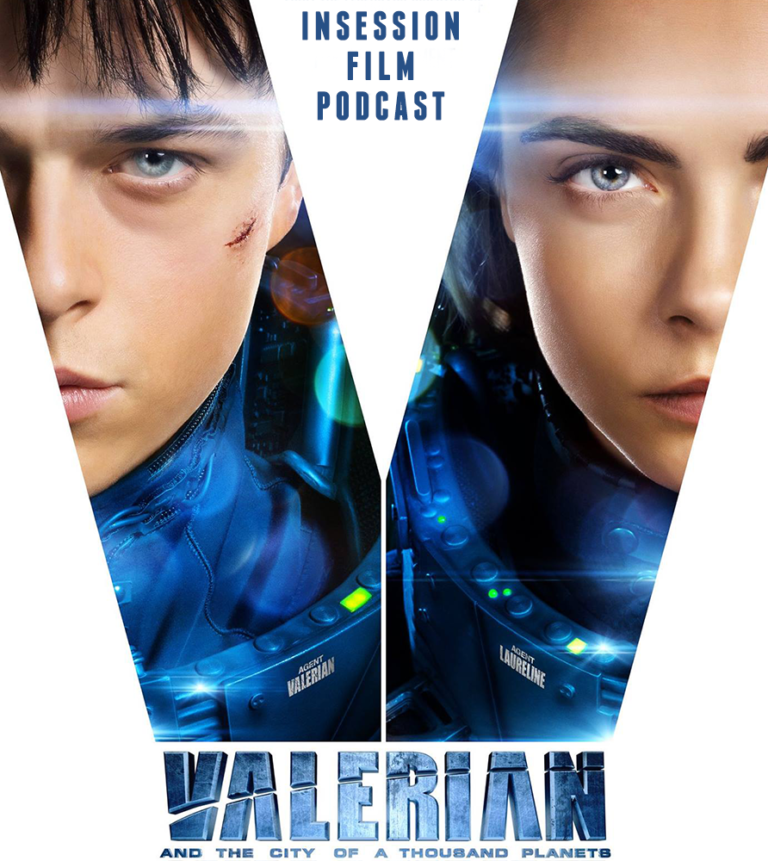
This week on the InSession Film Podcast: Extra Film segment, we discuss Luc Besson’s high-budget independent film Valerian and the City of a Thousand Planets, as well as the latest original film from Netflix To the Bone.
Fair warning; there is a lot of Ethan Hawke love on this week’s show. We may have found our new favorite Ethan Hawke, and his name is Jolly the Pimp. What do we have to do to get a whole movie with that character? If Valerian gave us anything, it was arguably the best two minutes of cinema we’ve seen all year.
On that note, have fun listening to this week’s Extra Film segment and let us know what you think in the comment section below. Thanks for listening!
– Valerian and the City of a Thousand Planets Movie Review (13:22) Grades
JD: B-
Vince: D
– To the Bone Movie Review (50:13) Grades
Brendan: C
Vince: C
We try to make this the best movie podcast we possibly can and we hope you enjoy them. Subscribe today on iTunes and Stitcher and please leave us a review on iTunes. You can also find us on Soundcloud, PlayerFM and TuneIn Radio as well. We really appreciate all your support of the InSession Film Podcast.
To hear this Extra Film episode and everything else we do, download our apps on the Amazon Market for Android and the Podcast Box app on IOS devices. The mobile app covers all of our main shows, bonus podcast’s and everything else relating to the InSession Film Podcast. Thanks for your wonderful support and listening to our show. It means the world to us!
[divider]
Help Support The InSession Film Podcast
If you want to help support us, we would greatly appreciate it! For more info, CLICK HERE.