

Home Blog Page 259

Movie Review: ‘Blaze’ is a unique and thought provoking music bio-pic


Director: Ethan Hawke
Writers: Ethan Hawke, Sybil Rosen
Stars: Ben Dickey, Alia Shawkat

Synopsis: The life of musician Blaze Foley.

[/info]

Musical bio-pics are films that we claimer to, with their unique perspective of the artist and the music that we have grown the love throughout the decades of content brought forth by said musician. But while most of the films about musicians we know are mostly safe and conventional, it’s the ones about the forgotten figures in music history that give us more insight into the mind of a musician, leading the audience compelled by what they have seen. Films like Inside Llewyn Davis and Born to be Blue give us thought provoking introspection into segments of fictional and nonfictional characters, and show us the real hardship of what it takes to be a musician – especially the baggage that life carries. In steps the new film Blaze by actor, now writer-director, Ethan Hawke, that blends together of a perfect Texas cocktail of old school music bio-pic film ideas with the thought provoking moments of movies we have seen come out within the last couple of year that are breaking the mold.

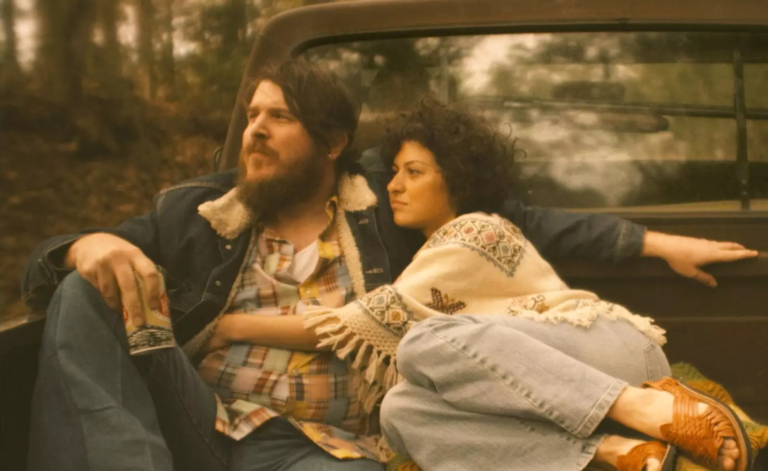
Blaze follows the life of country-blues musician Blaze Foley told in three nonlinear sections. The first follows Blaze (Ben Dickey) recording a live album in a small honky tonk bar that he plans to send to Merle Haggard for him to hear his music but also the story of his life. While this is going on, we get look backs to the main story of the film which follows Blaze’s love affair with the love of his life Sybil Rosen (Alia Shawkat) and how she inspired him and his musical career for better or for worse. While this is going on, we are also cutting back to an interview with two of Blaze’s friends (Josh Hamilton and Charlie Sexton) that fills in the holes of the remaining parts of Blaze’s life. The information gathered in all three sections amount to a messy life full of heart break and despair but that is the point, Blaze’s life is not a perfect one, just like many artists before and after that have left this Earth. He comes from a family of alcoholics and broken hearts, led by his father, briefly played by Kris Kristofferson, who barely remembers who Blaze is unless Blaze is playing his music. His relationship with his sister is strained and that becomes a common theme for anyone that tries to get close to him in his life, leaving his songs as the only memories he has of Sybil and the time they had together.

The music is what defines Blaze and yet it is his downfall, causing it to lead to be his own destructive tornado and lose just about everything in his life. Just like Llewyn in that Coen Brother masterpiece, the decisions Blaze makes throughout his life haunt him and led him down a road where there wasn’t much coming back from. The two films are like wild brothers of each other but the thing that makes Blaze’s story more layered is that we get an origin story of how he became who he was in the scenes with Sybil in the tree house, the parts that were taken directly from Rosen’s novel for which the film was inspired by. We see how the man rises from nothing and give shown by the woman he loves that he can make it in this crazy world of music, only to see it backfire and lay to dust his chance of happiness in this world. His music was his weapon and his curse and we see that played out beautifully throughout the film.

Hawke, who earlier this year turned in one of the most thought provoking, transformative performances of the year in First Reformed, gets Dickey, a friend of Hawke’s for the last twenty years who had no acting credits to his name before making this film, to give one of the rawest performances I have seen someone give within film this year. Dickey brings all the emotional turmoil and devastation someone can go through within not being every good enough to get out of their own way and make music that Dickey must have struggled within his own musical experiences in order for it to feel so real on the screen. Dickey is helped by a mostly great screenplay by Hawke and Sybil Rosen, whose realistic approach to the character make it seamless for Dickey to step in and transform into this music legend. The supporting cast is pretty good but is mostly out shined by Sexton, who brings songwriting legend Townes Van Zandt to the screen with so much unpredictability, you have no idea where this performance is going to go next. Sexton, together with Dickey performance, elevated this film into a different conversation than standard music bio pics.

The direction and the editing are the unsung hero of this film, and with the films nonlinear structure, it could be really easy to lose track of the story but you never feel lost. You feel like you are in a more than capable hands which is a little unreal considering that Hawke really hasn’t directed a lot of films over his career. While at my screening, Hawke talked about being influenced a lot when making this film by the style of his longtime collaborator and friend Richard Linklater. His comments made a lot sense because of Linklater’s knack of character development and the master of making his characters feel as real as possible, which I felt a lot when watching this film. But while Hawke has made a very good film here, there is only one problem to it, and that the film doesn’t know how to end. The last twenty minutes of the film, while moving and heartbreaking, is a jumbled mess that does drag along for a while, leading me to wonder if they had multiple endings and just used them all. That being said, Blaze is a very unique story and experience and proves that Ethan Hawke doesn’t just have to act in order to impress audiences.

Overall Grade: B+

[divider]
List: Top 3 Ghost Story Films

This week on Episode 290 of the InSession Film Podcast, inspired by The Little Stranger, we thought it would be fun to talk about ghosts in film. Ghosts have been featured in many films over the years, and in many different forms, so narrowing down the list to three was a good challenge. It’s even more difficult when some of the best films the last 20 years are ghost story films. That said, here are our lists:

(Note: Please keep in mind that we each had different criteria for our selections)

JD:

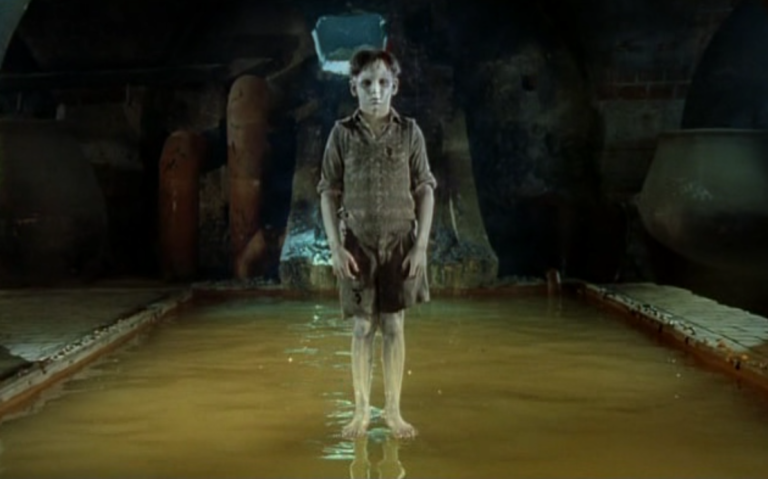
1) The Devil’s Backbone
2) The Sixth Sense
3) A Ghost Story

Brendan:

1) The Devil’s Backbone
2) 1408
3) Casper

Josh:

1) The Haunting
2) Beetlejuice
3) Poltergeist

Honorable Mentions (Combined)

The Shining, The Orphanage, The Ring, It Follows, The Conjuring, Crimson Peak, The Babadook, Personal Shopper, Under the Shadow, The Innocents, The Others, Ghost, Ghostbusters, A Christmas Carol

Hopefully you guys enjoyed our lists and if you agree or disagree with us, let us know in the comment section below. As noted above, ghosts have haunted audiences in films for a long time and there’s many films that we sadly passed over. That being said, what would be your Top 3? Leave a comment in the comment section or email us at [email protected].

For the entire podcast, click here or listen below.

For more lists done by the InSession Film crew and other guests, be sure see our Top 3 Movie Lists page.

Featured: TIFF 2018 Daily Dispatch – Day 5

If Beale Street Could Talk


Director: Barry Jenkins
Writer: Barry Jenkins
Stars: Kiki Layne, Stephan James, Regina King

Synopsis: The film follows an African-American woman who sets out to clear the name of her wrongly-convicted husband and prove his innocence before the birth of their child.

[/info]

Blame unrealistic expectations, but I appear to be the lone contrarian who didn’t fall in love with Barry Jenkins’ follow-up to Moonlight. To say that I connected emotionally with the Oscar winning film is an understatement, so much so that I confessed to the woman sitting next to me in this morning’s If Beale Street Could Talk screening that she should prepare for me to make a spectacle of myself.

But watching his new film I felt…nothing. A few smiles and chuckles, but no emotional gasps and certainly no water works.

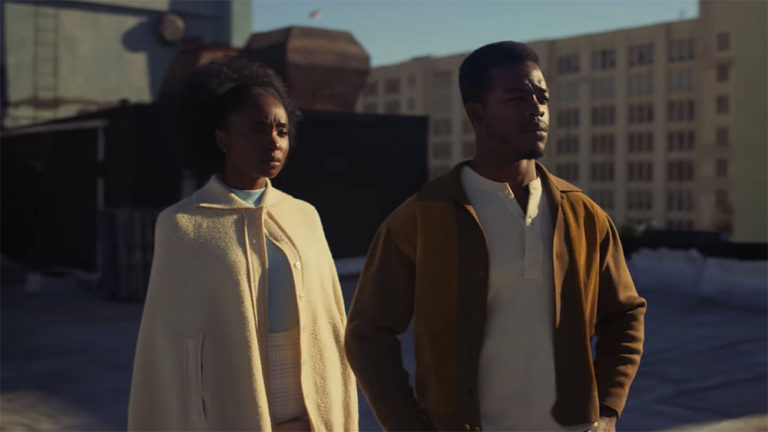
There’s no denying that Jenkins’ adaptation of James Baldwin’s 1974 novel about a pair of young lovers whose lives are derailed by a false arrest is exceptionally well-made and, sadly, extremely topical for modern times. Childhood sweethearts Tish (Kiki Layne) and Fonny (Stephan James) have got their whole lives ahead of them – they’re about the move into their first real home together and Tish is secretly pregnant – when Fonny is falsely accused of rape and incarcerated. The details of the case are explained by Tish in voice over with accompanying pictures and maps, and it’s immediately evident that Fonny could not have been involved and he’s been unfairly targeted by a racist criminal justice system. The rest of the film details Tish and her family’s attempts to free him from jail, while in flashbacks we see how Tish and Fonny’s relationship developed prior to the inciting incident.

Jenkins’ script is smart, funny and frank and his directorial work is even better. If Beale Street Could Talk has a lived-in period-realistic feeling that isn’t overdone (set design and costumes, particularly Tish’s, are immaculate) and Jenkins knows exactly how to shoot his actors to imbue the film with a sense of intimacy. The first time that Tish and Fonny make love in his Bank St basement apartment during a rain storm is among the most romantic scenes of the year – perfectly paced, sensuous and ably capturing the awkwardness and anticipation of pre- and post-coital encounters.

And yet…

Both of the young leads are good, but they’re not on par with the performances in Moonlight. There’s no Mahershala Ali in this film; no Janelle Monae, Ashton Saunders, Trevante Rhodes or Andre Holland. None of the performances bowled me over, or made me tear up. As much as I care for Tish and Fonny, I wasn’t incredibly invested in their success as a couple and that’s a huge issue. Beale Street fails to envelop the audience in their romance or their plight; as a result the film is more of a social issues film, drawing conflict from the troubling social and racial implications. Whereas Moonlight embedded its social conscience around homophobia, internalized hatred and coming out into its narrative, Beale Street keeps them divorced.

As the film progresses the focus in both timelines turns primarily to Fonny’s arrest and incarceration. This makes sense narratively, but foregrounds the social injustice elements of the film and not the characters. There’s a need for more quiet moments, like when Tish’s father Joseph (Colman Domingo) holds his daughter’s head to his chest to soothe her morning sickness, and fewer sojourns with Regina King to Puerto Rico to track down a key witness for the defense. And I say this as someone who might as well be the President of the Regina King fan club!

Virtually every other critic has praised Beale Street for its technical and emotional mastery, so I am well aware that I am in the minority. And don’t get me wrong: it is a good film. It’s just not a great film. Perhaps it’s simply best to go into the new film without expectations, rather than continually wait for it to reach the same apex as its predecessor because unfortunately If Beale Street Could Talk is no Moonlight.

Grade: B

Podcast: The Little Stranger / Top 3 Ghost Story Films – Episode 290

This week’s episode is brought to you by Casper. Get $50 toward any mattress purchase today!

This week on the InSession Film Podcast, Josh Parham from Next Best Picture joins us to discuss The Little Stranger and our Top 3 ghost story films! JD also gives his thoughts on Searching and Juliet, Naked.

Big thanks to Josh for joining us, it was a pleasure to finally get him on the show. We are big fans of his work over at NBP and he did not disappoint. Thankfully, because our featured review this week was full of disappointments. Despite that though, we had a lot of fun talking ghost story films and the potential of The Little Stranger.

On that note, check out this week’s show and let us know what you think in the comment section. Thanks for listening and for supporting the InSession Film Podcast!

– Movie Review: The Little Stranger (4:56)
Director: Lenny Abrahamson
Writer: Lucinda Coxon, Sarah Waters (novel)
Stars: Domhnall Gleeson, Ruth Wilson, Will Poulter

– Notes / JD Reviews (43:58)

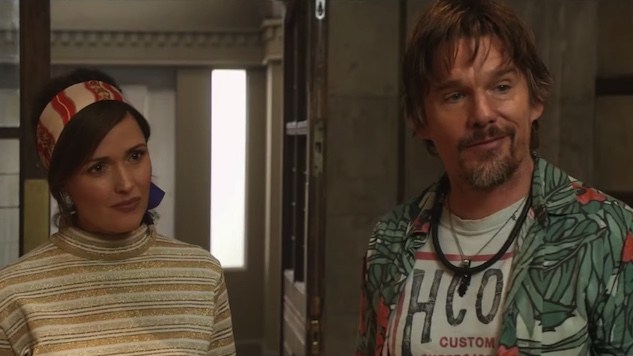
As mentioned above, since JD missed out on last week’s Extra Film, he gave his thoughts on Searching, starring John Cho, and the romantic-comedy Juliet, Naked, starring Rose Byrne and Ethan Hawke.

[divider]

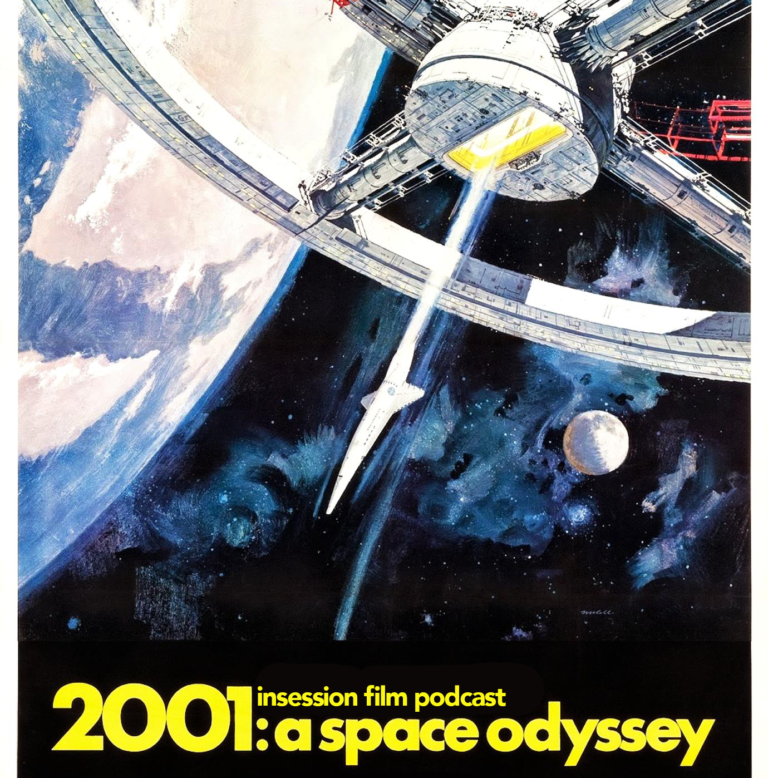
RELATED: Listen to Episode 289 of the InSession Film Podcast where we discussed 2001: A Space Odyssey!

[divider]

Top 3 Ghost Story Films (1:00:26)
Ghosts have been featured in many films over the years, and in many different forms, so narrowing down the list to three was a good challenge. It’s even more difficult when some of the best films the last 20 years are ghost story films. That said, what would be your Top 3?

Top 3 Sponsor: First Time Watchers Podcast

– Music

To Hundreds – Stephen Rennicks
Malcolm is Dead – James Newton Howard
Casper’s Lulliby- James Horner
The Return of the Eagle – Atli Örvarsson

Subscribe to our Podcasts RSS
Subscribe to our Podcasts on iTunes
Listen on Stitcher
InSession Film Podcast – Episode 290

[divider]

Next week on the show:

Main Review: The Predator
Top 3: TBD

[divider]

Help Support The InSession Film Podcast

If you want to help support us, there are several ways you can help us and we’d absolutely appreciate it. Every penny goes directly back into supporting the show and we are truly honored and grateful. Thanks for your support and for listening to the InSession Film Podcast!

VISIT OUR DONATE PAGE HERE

Featured: TIFF 2018 Daily Dispatch – Day 4

It’s about that time in the festival where I start to lose track of the days (is it still the weekend? Have I eaten a vegetable recently? Do I live at the Scotiabank?). Thankfully the diversity and quality of the festival is holding up. Let’s dig in:

Ben Is Back


Director: Peter Hedges
Writer: Peter Hedges
Stars: Julia Roberts, Lucas Hedges, Courtney B. Vance

Synopsis: The film follows Ben Burns, who returns home to his unsuspecting family one fateful Christmas Eve. He is welcomed by his wary mother, Holly, who learns that he is still very much in harm’s way and must prevent the family’s downfall.

[/info]

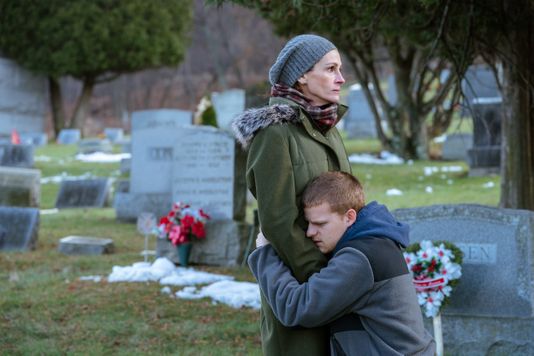
Ben Is Back is two films for the price of one. One film focuses on the family turmoil caused when Ben (Hedges), the drug addict black sheep of the family, turns up unannounced on Christmas Eve and throws everything into turmoil. The second film is a crime thriller that follows Holly (Roberts) and Ben as they descend into the criminal underworld for the night.

How does one film become the second? Unfortunately not well, which is what makes Ben Is Back such an oddly polarizing film. The first half, which more or less coincides with the daytime activities of the Burns family, is emotionally and dramatically rich; Ben’s addiction turns everyday activities such as shopping at the mall or searching for a box in the attic into trigger points that could cause an outburst or a relapse. Additionally, the tension produced by the forced holiday frivolity and the way everyone walks on eggshells not to upset the peace is immensely relatable to anyone who has shared a holiday with family.

The first half of the film is capped at the church Christmas concert when Ben has a breakthrough. Things immediately go sour when the family returns home to discover there’s been a break-in, prompting Holly and Ben to hit the road on a reconnaissance mission that takes them into the dark, unsavoury parts of town. This second half of the film feels like a completely separate feature that just happens to include a few of the same characters and their backstories.

It’s an utterly baffling creative decision considering how successful the first half of the film is. There’s more than enough narrative meat to justify continuing to explore how the family adjusts to Ben’s unexpected appearance and tonally the shift from the first half to the second is jarring and unexpected.

The fact that the film works at all is attributable to Roberts and Hedges. Roberts and her megawatt smile is typically associated with romantic comedies, so this rare dramatic performance initially feels like a departure for the star. Holly is a great character for Roberts to sink her teeth into: the role requires a combination of vulnerability, exasperation, resilience and fake it ’til you make it cheer. She’s clearly terrified that without her support and intervention, Ben will end up dead and she loves her son so much that she is committed to doing everything she can to help him without ruining his life by calling the police.

As Ben, Hedges delivers yet another outstanding performance. It’s surprising to hear that Boy Erased is the vehicle garnering him potential awards buzz (credit the topic and his larger role) considering that Ben Is Back is the stronger of the two roles. Without a doubt, the character of Ben allows Hedges to show a much greater dramatic range. He’s such a complex character: filled with self-hatred and regret, but susceptible to his vices and unwilling to believe that he (with the help of others) will find a way through.

Ultimately Ben Is Back is a frustrating viewing experience because it truly does feel like two non-complementary films. The first is powerful, emotional and rich; the second is dark, grim and saggy. Had Hedges (the writer/director) stuck with the first half throughout, Ben Is Back would be a much more successful film.

Alas, this is what we get.

Grade: First Half: A- / Second Half: C

Movie Review: ‘Peppermint’ is a horrible mix of cliches, bad dialogue and villain caricatures


Director: Pierre Morel
Writers: Chad St. John
Stars: Jennifer Garner, John Gallagher Jr., John Ortiz

Synopsis: Peppermint is a revenge story centering on a young mother who finds herself with nothing to lose, and is now going to take from her enemies the very life they stole from her.

[/info]

When I first saw a trailer for Peppermint, I thought to myself, “Jennifer Garner playing Frank Castle? I’m in!” I grew up with Garner kicking ass on Alias and I’m a big fan of the moral ambiguity and overall grittiness of the Netflix Marvel shows, so even if it looked a bit predictable and derivative, I was ready for the ride. And, for the most part, I wasn’t wrong, but I was disappointed.

Peppermint is an interesting mix of several classic action movies and TV shows, including the Daredevil and Punisher Netflix shows (a particularly bold move considering Garner’s noncanon link to the franchise), the Death Wish franchise (another bold move releasing Peppermint so close to the newest installment), the Kill Bill movies, Die Hard, and Fight Club, among others. I think it’s worth noting that the general critical consensus for Peppermint is fairly low (13% Rotten Tomatoes score and a Metacritic rating of 29, as of the writing of this review) while audiences seem to be receiving it fairly well (81% audience score on Rotten Tomatoes). I think, in general, action film fans have fun seeing the tropes and genre elements play and see the reuse of tropes as more of an homage than a ripoff, while critics (myself admittedly included) tend to find the reuse of the same tropes tiring, lazy, and predictable. Neither side is wrong, it’s just a difference in perception. If the genre in question were one of my favorites, like sci-fi or horror, I’d be on the other side of the line, for sure.

Personally, when it comes to this movie, I could have sat back and enjoyed things like Garner’s character Riley North channeling Tyler Durden for no apparent reason or imagery almost exactly mirroring images from season two of Daredevil if the script had been a little tighter and more thought out. Instead of carefully crafting characters and plot, Peppermint just throws in various archetypes and tropes together in a kitchen sink stew, stirs till it bubbles, and dishes it out. Garner’s character jumps to the crazed revenger archetype with no subtlety or explanation and neither she nor the script can seem to figure out if she’s a misunderstood vigilante hero, an anti hero, or a downright villain. The law enforcement characters have some of the most stereotypical, stiff dialogue I’ve ever heard and the villains of the movie are one-dimensional, archetypal, and downright racist caricatures whose only character descriptors include “Mexican” and “ drugs”, though they notably weren’t members of the Drug Cartel.

The plot of Peppermint also meandered quite a bit, spending way too much time on Riley North’s past when all we really needed to see was a happy memory montage, the tragic deaths, and a courtroom scene to seal the seal. Bam. Setup complete in 10 minutes, top. Instead, we spent the entire first act following Riley around when we know full well how things are going to go. Once things finally kick into gear in the second act, we spend so much time with the police officers and the villains that we almost forget about Riley.

Really, all this movie needed to do to meet my expectations was spend more time with Riley post-tragedy, not only so that we understand her character a little better but also because Garner carries this movie. The fact that we spend so much time away from her makes me think that someone somewhere down the line didn’t have faith that she could carry it. I have my suspicions as to why that might be, but suspicions aside, it was the wrong call. This movie needed way more Garner and, hey, let’s cut out the racist villain caricature while we’re at it.

It’s slightly more understandable when it comes from studio-era espionage thrillers, but it’s 2018. Do we really need Hollywood movies perpetuating negative stereotypes that are already being perpetuated on a national, political level?

Anyway, easily the biggest takeaway of this movie, for me, is that Garner still kicks ass. Alias might not hold up as a super awesome show in this golden age of television, and Elektra certainly stunted Garner’s chance at being a big screen badass, but 13 years later, she’s back and she kills it. The script may lack emotional depth and any sort of subtly, emotionally or otherwise, but she’s able to make up for a lot of that with her facial expressions and body language throughout the film. The action set pieces are actually pretty awesome, too. If I sound surprised, it’s because I am. I’m a big fan of superhero action and hand-to-hand combat, but when it comes to gun fights, my attention wanes quickly. But the action in this movie kept my attention. Even when it was at its most ridiculous and unbelievable, it was fun enough to make it worth my time.

For as awesome as Jennifer Garner and the action set pieces throughout this movie are, though, the rest of the movie, unfortunately, does too much harm to the quality of the movie overall to make this movie one I would recommend aside from to the biggest of action flick fans. Maybe if the villains weren’t so offensive I could’ve gotten past the cliches and bad dialogue but, alas, that is not the case. I’m not writing Garner off as an action star, but I am giving this movie a hard pass.

Overall Grade: D+

[divider]

Movie Review: Paying to see ‘The Nun’ should be considered a sin


Director: Corin Hardy
Writers: Gary Dauberman (screenplay by), James Wan (story by)
Stars: Demián Bichir, Taissa Farmiga, Jonas Bloquet

Synopsis: A priest with a haunted past and a novice on the threshold of her final vows are sent by the Vatican to investigate the death of a young nun in Romania and confront a malevolent force in the form of a demonic nun.

[/info]

Why doesn’t Hollywood ever just quit while they are ahead?

It seems that no matter how many times critics have sounded the alarm, studios keep pushing the envelope, essentially bleeding whatever creativity left out of a particular narrative at the expense of creating an entertaining product. Why should it even matter any to a studio if fans will flock to any release just because it is associated with a particular cinematic universe? According to Imdb.com, The Conjuring and The Conjuring 2 brought in a combined $618 million worldwide in ticket sales. The difference between those movies and The Nun is how engrossing their narratives are. ‘The Conjuring’ follows the exploits of Ed and Lorianne Warren as they investigate the paranormal. Patrick Wilson and Vera Farmiga are stellar, and director James Wan seamlessly weaves in those elements of horror. The Nun is a drastic departure from what has worked.

Director Corin Hardy’s initial foray into The Conjuring cinematic universe relies upon the alleged popularity of an element of terror found in the first two films. Neither of those first two films is built around The Nun, she’s just an element of horror which others have to contend with. What made Wan’s creation interesting wasn’t who this paranormal beast was but how her presence affected others.

Had The Nun actually been an origin story, it would have made the many issues plaguing the film palatable. Instead, we are left to follow a priest with a past and a novitiate (who is on the verge of taking her vows) as they travel to Romania to investigate news of a nun who committed suicide. Wan and Gary Dauberman’s narrative doesn’t lay any groundwork as to the origin of the demon or why it’s even locked in catacombs under the convent. A difficult decision to be sure.

At no point does it make sense to include the Novitiate on this journey either. Initially, it appeared as if she was to become this hideous beast knows as The Nun, but that’s disproven towards the last 20 minutes of the film. So we are left with a meandering tale which goes from one predictable jump scare to the next. Visually, The Nun is far from appealing. For starters, the abbey was constructed by the least inspired architects in Romania (that’s the only justification for the church’s dull appearance). The use of lighting is meant to heighten the tension of the film but in reality becomes a distraction as it’s hard to see most of The Nun. Maybe they were doing us a favor?

Demián Bichir portrays Father Burke (the priest sent from the Vatican to investigate what’s occurring in Romania), and his performance was pedestrian at best. However, if Oscars were given just for facial expression on camera, then Bichir would easily be the front-runner. Taissa Farmiga’s portrayal of Sister Irene was lackluster which is why no one cared about her plight. If The Nun is going to sidestep the apparent need for a true origin story for this narrative then at least frame the story so the audience will give a damn whether or not Sister Irene dies!

Overall, The Nun is an uninspired poorly constructed lifeless attempt at capitalizing on past successes resulting in a film which is more likely to put audiences to sleep than scare them. This is a blatant attempt at selling a “franchise” rather than an actual film. What’s sad is The Nun will likely be the #1 movie in America this weekend, but that doesn’t change how Hardy’s film is the embodiment of failure.

Overall Grade: F

[divider]

Featured: TIFF 2018 Daily Dispatch – Day 3

The third day of the Toronto International Film Festival included two major awards hopefuls. So how did the more conventional domestic films fare? Let’s check ’em out:

A Star Is Born


Director: Bradley Cooper
Writers: Bradley Cooper & Eric Roth
Stars: Bradley Cooper, Lady Gaga

Synopsis: A musician helps a young singer find fame, even as age and alcoholism send his own career into a downward spiral.

[/info]

A caveat right off of the top: without having seen any of the three previous versions of this tale-as-old-as-time, I can’t comment how actor-turned-director Bradley Cooper and co-screenwriter Eric Roth fare in comparison. All I can say is that the 2018 iteration of A Star Is Born is a well-executed film about the ups and downs that accompany celebrity, addiction and fame in the public eye.

Ally (Gaga) works a shitty job, but her dreams come alive when she moonlights as an amateur live singer every so often in a gay bar. One night Jackson Maine (Cooper) stumbles in looking for a drink after his set and is immediately enraptured by Ally’s voice.* What follows is an extended meet cute: boy takes girl to cop bar, girl punches cop in the face, guy buys her frozen peas to ice her right hook. In no time at all, Jackson is asking Ally to fly to his concert and bringing her on stage to duet with him. Overnight she becomes a YouTube sensation.

*The fact that she sings La Vie En Rose at a gay bar is one of the film’s biggest suspensions of disbelief. It’s completely the wrong song for the venue and for Jackson to obsess over.

The hyper accelerated or unclear timeline is one of A Star Is Born‘s most challenging elements. Events get compacted into the span of days or weeks (Ally is just immediately on tour with him?) which makes watching the seasons or the maturation of their pet dog Charlie instrumental to the proceedings. Theirs is a whirlwind romance, which works passably well despite some iffy chemistry between the leads. Not unlike Boogie Nights, the highs in A Star Is Born (ie: the first half) are very high, while the lows (the latter half) include drawn-out and repetitive elements that are so telegraphed and predictable they simply feel sad.

Still, these minor complaints are apt to be inconsequential considering the star power of the two leads and the wish fulfillment nature of the narrative, which quickly finds Ally’s career explode into music videos, SNL guest spots and the Grammys.

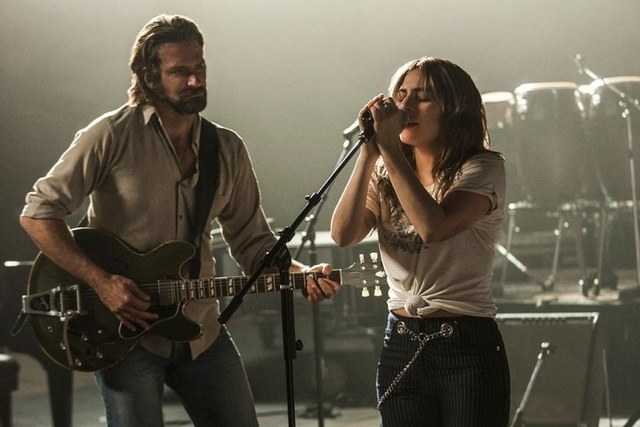
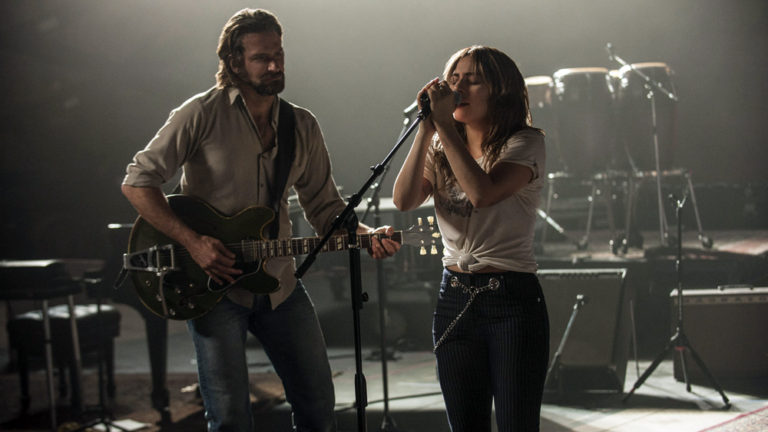
Gaga is a revelation in the role: her ingenue is effectively convincing, and she has never sounded better. The film contains several legitimately emotional moments that simply feature Gaga singing. The most affective occurs early on when Jackson pulls Ally on stage to sing with him: the camera is tight on her face throughout, showcasing the range of emotions (shock, amazement and delight) as she’s experiencing them. It’s the definition of movie magic.

Cooper is serviceable in a role that requires both charisma and fireworks. As good as Cooper is, however, as a character Jackson never quite takes flight – it’s never fully clear if he can’t control his vices, needs Ally’s firm hand to stay the course or if he is jealous of her success. Considering the film rests firmly on the shoulders of two leads, it might have been wiser for Cooper to stay behind the camera and gone with a leading man better equipped to give the material his all. This is especially apparent when Cooper acts with with Sam Elliot as Bobby, Jackson’s former manager. Elliot is magnificent; he makes every ounce of Bobby’s weariness and concern for Jackson feel tangibly real. He’s a lock for a supporting actor nod.

Ultimately A Star Is Born is fine. It’s well acted, well directed, has a number of solidly catchy songs and a narrative as old as Hollywood (though the film is strangely dismissive of pop music). A Star Is Born doesn’t set out to reinvent the wheel or innovate the medium, but it’s entertaining and judging from the rapturous reviews and audience anticipation, A Star Is Born will be a major box office and awards contender when it debuts in theatres.

How big will it be? It’s quite possible that the sky is the limit. This is one tent pole that’s worth keeping an eye on in the months to come.

Grade: B

[divider]

Nicole Kidman, Lucas Hedges

Boy Erased


Director: Joel Edgerton
Writer: Robert Rodat
Stars: Lucas Hedges, Nicole Kidman, Russell Crowe, Joel Edgerton

Synopsis: The son of a Baptist preacher is forced to participate in a church-supported gay conversion program after being forcibly outed to his parents.

[/info]

I am of two minds on Boy Erased, the gay conversion drama based on the real life memoir by Garrard Conley. On one hand the film is shining a light on what is sadly still a relevant topic that affects thousands of LGBTQ youth in the US. On the other hand, it is just as much of a white, middle class fantasy as Love, Simon, the groundbreaking gay teen romance from earlier this year that handed its lead character a “get out of conflict” card courtesy of his privilege.

The history of queer cinema is nearly devoid of “happily ever afters”; AIDS tragedies and drug/hooking coming out stories were the bread and butter throughout most of the 90s and 00s. What is so revelatory about Love, Simon is that it allows, and even normalizes, queerness and the possibilities of finding romance for youths. The cost required for such an outcome, however, is the presence of sweater-clad, staunchly middle class, white parents.

Boy Erased problematically traffics in the same realm. The film opens with a slow pan across a group of teenage boys and girls reciting the rules that govern Loving Action, the 12 day “refuge program” that encourages its participants to hide the details of the program from their parents, adopt the words “change” and “sin” in their daily vocabulary and refrain from touching anyone, including themselves, since they may carry a perverted intent.

The rules and the staff’s belligerent and abusive treatment of its charges are clearly meant to be inflammatory and frightening (Edgerton uses a score better suited for a thriller to ensure the proper affect), but to audiences who have seen the intersection of religion and homosexuality depicted on film before, there’s hardly anything new here. Even the formal narrative structure, with its focus on the 12 days of treatment with flashbacks to Jared’s coming out experiences with two men at College, feels by the book and formulaic.

As Jared, Hedges continues to cement his reputation as one of the most outstanding dramatic actors of his generation. Boy Erased doesn’t ask him to deliver anything close to the searing depiction of grief he demonstrated in Manchester By The Sea, but as the audience surrogate, Hedges is suitably confused, frustrated and, ultimately, angry at the response his queerness engenders in his deeply religious parents and the staff at Loving Action.

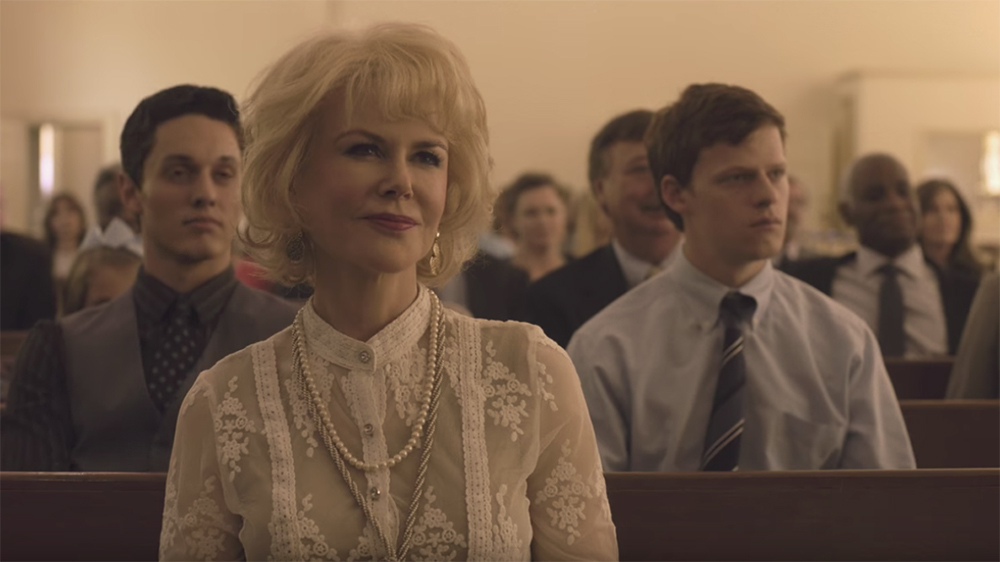
As his conflicted mother, Kidman also acquits herself well, though she is brandished with a Nancy Grace-style wig and jewelry that wears her more than she wears it. The final member of the family trio, Crowe, is mostly absent for the film and ultimately given little to do. Audiences hoping for a Love, Simon or Call Me By Your Name parent to child confession will find themselves disappointed; both Kidman and Crowe get brief soliloquies, but they barely register on the emotional barometer.

And therein lies the problem with Boy Erased. The film is perfunctory in all regards, but there is no fire or vitality in the proceedings. It feels sanitized and safe, as though the subject was important enough to justify washing the narrative clean of potentially challenging or confrontational elements. Using a privileged white protagonist with at least one protective parent is inherently detrimental to the film’s success; in comparison to the others, Jared barely struggles at the refuge which makes him – and by extension the audience – a visual standby. When it gets too tough, he’s not beaten or sent to the permanent housing, he [Spoilers] calls his mother and goes home and writes a bestselling memoir about it [End Spoilers].

Sadly Boy Erased feels designed for audiences who have an interest in topical subjects and want to pat themselves on the back for being progressive. It’s good that the film exists so that it can highlight the staggering statistics of how many states allow conversion therapy and how many affected LGBTQ youth there are, but its privileged fairytale narrative – regardless of actual source material – does not reflect the stark reality that real youth may face such as homelessness and suicide.

These elements exist in Boy Erased, but they only happen to other people. There’s nothing quite as Hollywood as that.

Grade: C+

Featured: TIFF 2018 Daily Dispatch – Day 2

The second full day of the Toronto International Film Festival brought two major awards contender and one major disappointment. Let’s check ’em out:

Shoplifters


Director: Hirokazu Kore-eda
Writer: Hirokazu Kore-eda
Stars: Lily Franky, Sakura Ando

Synopsis: After one of their shoplifting sessions, Osamu and his son come across a little girl in the freezing cold. At first reluctant to shelter the girl, Osamu’s wife agrees to take care of her after learning of the hardships she faces. Although the family is poor, barely making enough money to survive through petty crime, they seem to live happily together until an unforeseen incident reveals hidden secrets, testing the bonds that unite them…

[/info]

Cannes is a very different festival compared to TIFF, so there’s no guarantee that the film that wins the Palme D’Or at the former will play well at the latter. If the applause that greeted Hirokazu Kore-eda’s latest opus is any indication, Japan has a great shot at the Foreign Film Oscar this year.

The title Shoplifters applies to nearly every character in the Shibata family. The film opens with a grocery store theft that establishes how patriarch Osamu (Lily Franky) and his son Shota (Jō Kairi) work in tandem to execute their heists. On their way home with the spoils, they come upon a young girl Yuri (Miyu Sasaki) who is being neglected and abused by her parents. They offer her shelter in their crowded home for the night, but instead of returning her the next day, they simply adopt her as their own and carry on.

The fact that the family is effectively kidnapping is addressed briefly and then dismissed. Much of Shoplifters operates in this fashion: obviously illegal and ill-advised actions are passed over by the family, all of whom have a scam or two on the go to keep the coffers full enough to keep them afloat. The fact that this isn’t problematic is 100% of the appeal because these actors, their adventures and the easy-going mood that Kore-eda creates makes the film infectiously delightful, full of joy and pleasurable to watch.

Even at 2+ hours, the film never lags, which makes the inevitable march towards disaster and discovery all the more painful the longer we spend in the company of the Shibatas. Their love and affection for each other is contagious (particularly Sakura Ando as matriarch Nobuyo). Even when the truth is revealed in the film’s fourth quarter and undermines everything we thought we knew, it only reinforces the pathos and sympathy we have for this family of thieves. That’s the power of Shoplifters.

Grade: A

[divider]

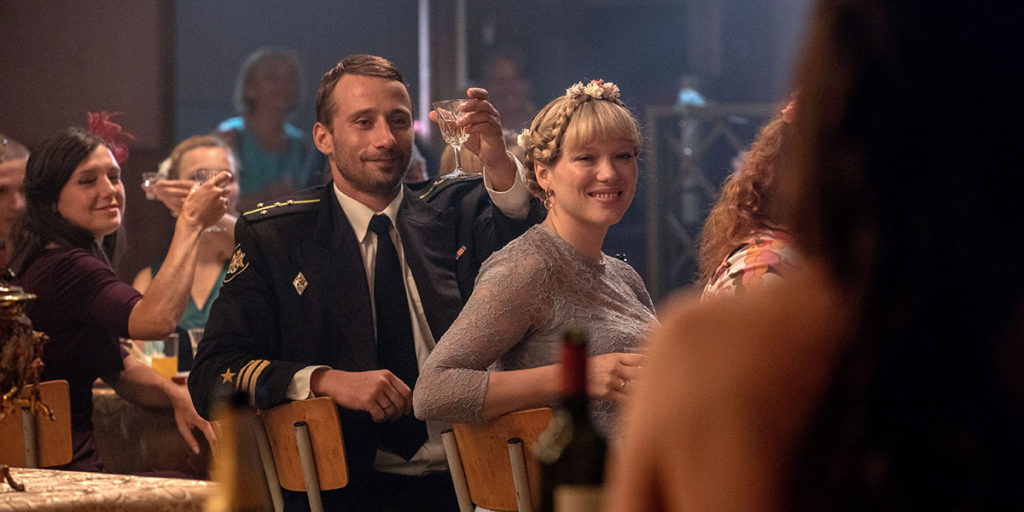
Kursk


Director: Thomas Vinterberg
Writer: Robert Rodat
Stars: Matthias Schoenaerts, Léa Seydoux, Colin Firth

Synopsis: Follows the 2000 K-141 Kursk submarine disaster and the governmental negligence that followed. As the sailors fight for survival, their families desperately battle political obstacles and impossible odds to save them.

[/info]

What if you made a disaster/rescue flick…but had nothing new to contribute to the sub genre? That’s the unfortunate situation that Kursk finds itself in, which is especially disappointing given how talented Vinterberg is as a director.

Based on Robert Moore’s book A Time to Die, the film dramatizes the 2000 Russian submarine disaster when an entire crew of men were trapped at the bottom of the Barents Sea during a routine naval exercise. Not unlike other films mining the same dramatic territory, Kursk divides its time between the men struggling to stay alive under increasingly dire circumstances, the helpless wives and children they left behind and the rescue efforts. The latter element is the only remotely unique plot device the film has to offer as the political relations between Russia, the UK and Norwegian governments prevented collaborative efforts that might save the stranded men.

Unfortunately that point, and every other point in the film, are repeatedly belaboured over and over and OVER again to the point of exhaustion. At over two hours in length, Kursk is devoid of fresh ideas which makes the film feel interminably long. Despite best efforts by the cast, there’s simply nothing interesting for the characters to play and the odd decision to have an international cast of non-Russians play Russians in an English-language production simply doesn’t work. Kursk is an all around mess and, most damning of all, boring.

A very big disappointment coming from Vinterberg.

Grade: D

[divider]

Transit


Director: Christian Petzold
Writer: Christian Petzold
Stars:  Franz Rogowski, Paula Beer, Godehard Giese

Synopsis: When a man flees France after the Nazi invasion, he assumes the identity of a dead author whose papers he possesses. Stuck in Marseilles, he meets a young woman desperate to find her missing husband – the very man he’s impersonating.

[/info]

In the fictitious world of Transit, WWII conflicts are transported to modern times as German war refugees are hunted down by police throughout France, then rounded up in cleanses and raids. When the film begins Georg (Franz Rogowski) runs an errand delivering letters to Weidel, an infamous German writer in exchange for passage out of Paris. Upon arrival, he discovers that the writer is already dead, so Georg packs the manuscript and letters in anticipation of fleeing the city with an injured friend.

After a rocky trip that includes his friend’s death, George disembarks in sun drenched Marseilles and meets an unusual collection of characters including the friend’s wife and son, a conductor, a former architect babysitting a pair of dogs, and Marie (Paula Beer), an attractive woman who continually mistakes Georg for her husband. 

When Georg discovers that Weidel had the titular transit documents required for passage to Mexico, he inadvertently assumes the dead man’s identity. In short order he also discovers that Marie is the Weidel’s estranged wife who is desperately seeking to escape Marseilles with her new doctor boyfriend (Godehard Giese).

Transit is filled with stories within stories. Passages from Weidel’s novel reflect the events befalling Georg, so much so that the omniscient narrator (the local barman – a non-entity in the film) literally comments on it. Each of the refugees has their own tale to tell to consulate authorities, but while characters dip in and out of the narrative on a whim, no one ever seems to arrive or leave Marseilles. They’re trapped in a gorgeous sunny port of Hell, doomed to plot their escape and repeat events like a never ending wartime ouroboros. 

One of the film’s most striking technical elements is how the production design play tricks: the mix of period fashion and 21st century architecture and contemporary cars creates a  fascinating “out of time” effect. If I had one wish, it would be that Rogowski were a little more dynamic. Georg is a strangely passive protagonist; even when he is driving the narrative, Georg’s demeanour and temperament never seems to change. Still, Petzold’s continued obsession with the small stories of individuals caught up in larger German conflicts remains compelling viewing and Transit is easily the most thought provoking film of the festival thus far.

Grade: A-

Podcast: Searching / Juliet, Naked – Extra Film

This week on the InSession Film Podcast: Extra Film segment, we discuss Searching starring John Cho and Juliet, Naked starring Rose Byrne and Ethan Hawke.

JD and Ryan have the week off, so Brendan and Jay hold down the fort with some interesting responses to these two films. Their review of Searching is particularly compelling given the abundant praise the film has received overall.

On that note, have fun with this week’s Extra Film segment and let us know what you think in the comment section below. Thanks for listening!

– Movie Review: Searching (4:43)
Director: Aneesh Chaganty
Writer: Aneesh Chaganty, Sev Ohanian
Stars: John Cho, Debra Messing, Joseph Lee

– Movie Review: Juliet, Naked (43:02)
Director: Jesse Peretz
Writer: Evgenia Peretz, Jim Taylor
Stars: Rose Byrne, Chris O’Dowd, Ethan Hawke

– Music

New User – Torin Borrowdale
20th Call Of The Day – Ryan Adams
The Return of the Eagle – Atli Örvarsson

We try to make this the best movie podcast we possibly can and we hope you enjoy them. Subscribe today on iTunes, Spotfiy or Stitcher, and please leave us a review on iTunes. You can also find us on Soundcloud, PlayerFM and TuneIn Radio as well. We really appreciate all your support of the InSession Film Podcast.

Subscribe to our Podcasts RSS
Subscribe to our Podcasts on iTunes
Listen on Spotify
Listen on Stitcher
Searching / Juliet, Naked – Extra Film

[divider]

Mobile App

To hear this Extra Film episode and everything else we do, download our apps on the Amazon Market for Android and the Podcast Box app on IOS devices. The mobile app covers all of our main shows, bonus podcast’s and everything else relating to the InSession Film Podcast. Thanks for your wonderful support and listening to our show. It means the world to us!

[divider]

Help Support The InSession Film Podcast

If you want to help support us, we would greatly appreciate it! For more info, CLICK HERE.

Featured: TIFF 2018 Daily Dispatch – Day 1

Greetings from the Scotiabank Theatre in downtown Toronto! This is more or less my home for the next ten days as the press descend on the biggest film festival in Canada.

Day one had its share of ups and downs, but let’s kick it off with:

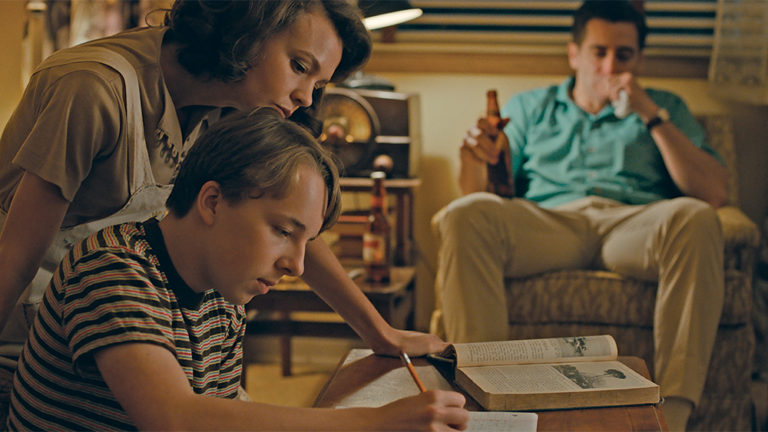
Wildlife

Directors: Paul Dano
Writer: Paul Dano, Zoe Kazan
Stars: Jake Gyllenhaal, Carey Mulligan, Ed Oxenbould

Synopsis: A boy witnesses his parents’ marriage falling apart after his mother finds another man.

Carey Mulligan is the linchpin holding the narrative together in this straightforward 1960s-set domestic drama from Paul Dano. Gyllenhaal is Jerry, an entitled man whose pride forces the family to continually move around in search of better opportunities. When Jerry makes an impromptu decision to go fight an out of control wildfire rather than face the consequences of his decision, the film’s focus turns to Mulligan’s Jeanette and her slow unraveling. In this capacity Dano’s directorial debuts finds its footing; Jeanette is a fascinating woman who cant help but confide all of her private thoughts and fears (inappropriately) in her 14 year old son Joe (Ed Oxenbould). 

Unfortunately as far as protagonists and audience surrogates go, Joe is more than a little bland. Oxenbould’s performance is less bad than underwhelming; nothing about Joe is memorable, so seeing him get caught in the center of his parents’ increasingly poor decisions doesn’t resonate as strongly as it should. Alas this and Dano’s reluctance to cut a tighter edit makes the film feel unnecessarily long. 

Grade: B-


Ah-In Yoo, Jong-seo Jeon, Steven Yuen

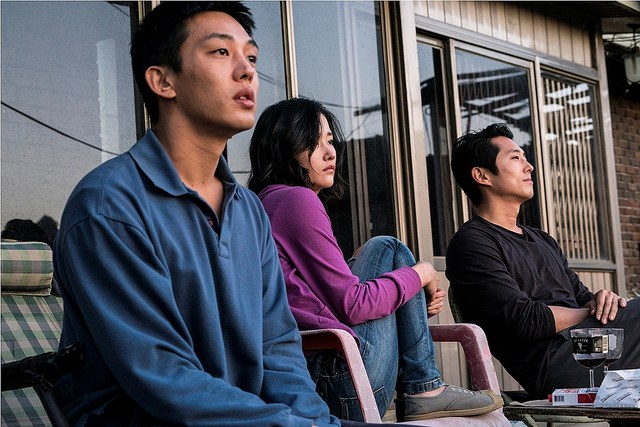
Burning

Directors: Chang-dong Lee
Writer: Jungmi Oh, Chang-dong Lee
Stars: Ah-In Yoo, Steven Yeun, Jong-seo Jeon

Synopsis: Jong-su, a part-time worker, bumps into Hae-mi while delivering, who used to live in the same neighborhood. Hae-mi asks him to look after her cat while she’s on a trip to Africa. When Hae-mi comes back, she introduces Ben, a mysterious guy she met in Africa, to Jong-su. One day, Ben visits Jong-su’s with Hae-mi and confesses his own secret hobby.

You’d be forgiven for thinking that director Chang-dong Lee’s film was a thriller based on the way the film has been marketed, but the film is actually much more of a drama with occasional unusual developments.

After an unexpected run in, Jongsu (Ah-In Yoo) strikes up a relationship with childhood friend Haemi (Jong-seo Jeon). Following their date, Haemi reveals that she is taking a trip to Africa and asks Jongsu to watch her cat. When she returns from her trip, however, she has a male companion, Ben (Steven Yuen). Jongsu quickly becomes the third wheel in the relationship, tagging along on dates and crashing house parties – though there’s a recurring insinuation that something is off about Ben.

Burning is playing the long game when it comes to revealing its hand; it’s not until the start of the third act that an inkling of Ben’s agenda is revealed and even then the screenplay staunchly refuses to spell things out, though keen viewers will pick up visual and verbal cues throughout. 

The film is also strangely bloodless – there’s virtually no violence, as director Lee prefers to train his lens on the dramatic tension contained within conversations. In this capacity Yoo is responsible for shouldering the vast majority of the film while Yuen is suitably charming, charismatic and deceptive.

Grade: B


Amy Nostbakken, Norah Sadava

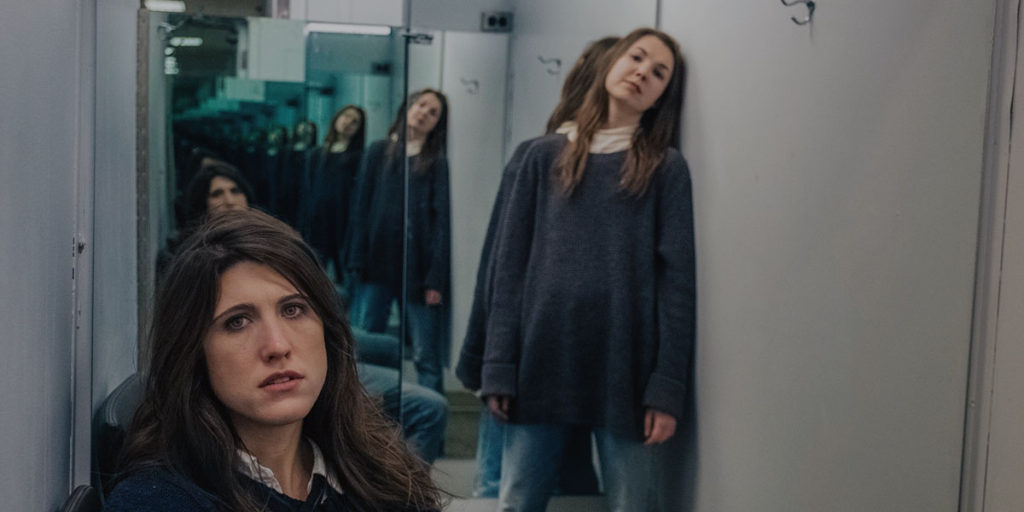
Mouthpiece

Directors: Patricia Rozema
Writer: Amy Nostbakken, Patricia Rozema
Stars: Maev Beaty, Paula Boudreau, Sarah Camacho

Synopsis: Cassandra, who is portrayed by the two women, expresses the opposing voices that exist inside the modern woman’s head, during a 48-hour period as she tries to organize the affairs for her mother’s funeral.

Grief is a powerful motivator in Patricia Rozema’s adaptation of the hit Canadian play. Cassandra (played by both of the original playwrights, Amy Nostbakken and Norah Sadava) learns early in the film that her mother, with whom she had a mildly tumultuous relationship, has died and the news throws her into an internalized tailspin.

Anchored by lived-in performances by Nostbakken and Sadava, the film has a tiny, intimate feel. It covers only a few days as Cassandra moves around Toronto, securing flowers, food, selecting a casket and picking out her mother’s dress – all while picking apart their relationship in order to construct the eulogy. Key components of the theater experience remain intact, including synchronous movement and speech between the actresses, the use of mirrored imagery to denote their sameness and an internal dialogue between the pair that is alternately vicious, witty and wry. 

The introduction of a visualized holiday conflict to center the mother/daughter drama around, as well as the use of other actors to open up the stark, minimalist world of the play works to make the film more cinematic, though the translation does lose some of the play’s raw, visceral power. While the result is less emotional and confrontational, MOUTHPIECE remains a solid adaptation that ably captures the spirit of the play and marks a welcome return to the spotlight for one of Canada’s most important female directors.

Grade: A-

Featured: Rockumentaries From The 60s

I’m a classic rock guy. Even though I am 28 years old, I was introduced to bands like The Rolling Stones, Led Zeppelin, and U2, and solo artists like Elton John, Bob Dylan, and Eric Clapton by my parents. The new stuff today? Let’s just say it’s not my cup of tea. I like to joke that I was born in the wrong era because I’m way behind on current trends with music, TV, some social media, and even movies. I’m of the opinion that most movies of today are not that good in quality; some are, most aren’t. But, let’s stick with the rock music and movies for the moment because their work has been immortalized on natural celluloid, capturing some of the most exciting, blazing, and for one film, a deadly moment in rock history.

Don’t Look Back (1967)

Actually, there is no apostrophe in “don’t,” but I’m getting bothered by Grammarly, so I’ll put it there. But D. A. Pennebaker’s capture of Bob Dylan’s England tour in 1965 puts you right next to the man himself. It starts off with his famous music video for “Subterranean Homesick Blues” and his cue cards. As the blossoming legend, we know him as today, the 20-something at the time is bold and charming, but a bit smug and confrontational at times. Multiple musicians make cameos as we see Dylan go venue to venue playing his hits. It is all summed up at the end when he reads a critic describing his work as one of an anarchist. Dylan replies, “Give the anarchist a cigarette!”

Monterey Pop (1968)

https://youtu.be/5UZwsXGkxfg

Pennebaker followed that up with his coverage of the legendary concert that served as the warmup to Woodstock. Initially, it was to be a documentary on ABC, Pennebaker got an advanced reel-to-reel recorder from The Beach Boys for the sound to give audiences in theatres the surround sound as if the show was live. The Mamas & The Papas, Simon & Garfunkel, and The Who were among those who performed for the thousands and thousands that came, igniting what would be as the Summer of Love. But the most legendary performance of all was Jimi Hendrix, who played his rendition of “Wild Thing” at high volumes, presented himself in a vivid, colorful, and sensual fashion, humping and plucking the guitar with his teeth, For his finale, Hendrix smashed his guitar, put lighter fluid on it, and set it ablaze. He then fell on his knees and made the fire rise above him, sending the crowd into a frenzy with something they had never seen before.

Gimme Shelter (1970)

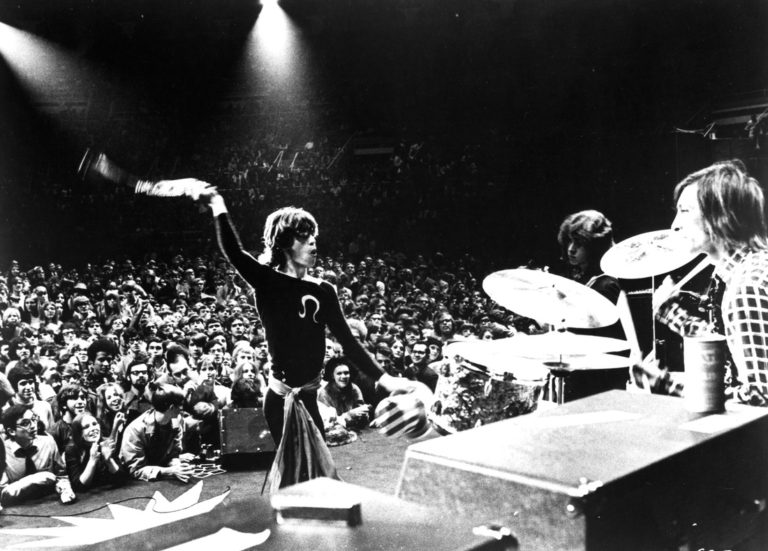
The Rolling Stones got into the action with their own concert film, but it would turn out to be something absolutely different than they expected. Instead of going to Woodstock, they performed their free concert at Altamont in California. Issues of crowd control and the idea of hiring the Hell’s Angels as security quickly arrived. Fights broke out along the stage in which Jefferson Airplane’s Marty Balin took an array punch and The Grateful Dead backed out of performing when told of the violence. The Rolling Stones came on at night and, during the performance of “Under My Thumb,” a cameraman catches the tragic moment when an 18-year-old concertgoer pulls out a gun and a Hells Angel member stabs him to death. In JFK fashion, when Mick Jagger watches it in the editing room, we see it played, rolled back, and played in slow motion. The end of the “Flower Power” generation – and the 60s – is in front of us.

Woodstock (1970)

An epic of documentary proportions, the three-day festival touched upon the shows and the audience, immortalizing what was legendary about the performance and the entire era. From Richie Havens opening it to Jimi Hendrix closing it with his also legendary rendition of the Star Spangled Banner, it is able to successfully make the show a nutshell showing, even though we’d want more after 3 hours (120 miles of film and 16 cameras were utilized). It was also a smash at the box office, grossing over $50 million. It included two Oscar nominations, including a film editing nod for Thelma Schoonmaker, who took the footage partially shot by friend Martin Scorsese and improvised cuts of reaction shots, close-ups, and split-screens mixed in with crisp-clear sound. It may be the ultimate concert film.

The late 1960s was a time to rock and to inspire a new generation of rockers and fans for the years that followed. Thankfully, a few people were around with cameras and became flies on the wall to capture the action from legends that are now dead. These rockers are immortalized forever in their music and in vision with these incredible pieces of footage that have survived and continue to be an influence to documentary music and relive decades of concerts for the future generations that have followed since.

Follow me on Twitter: @BrianSusbielles

Poll: What is your favorite period horror film?

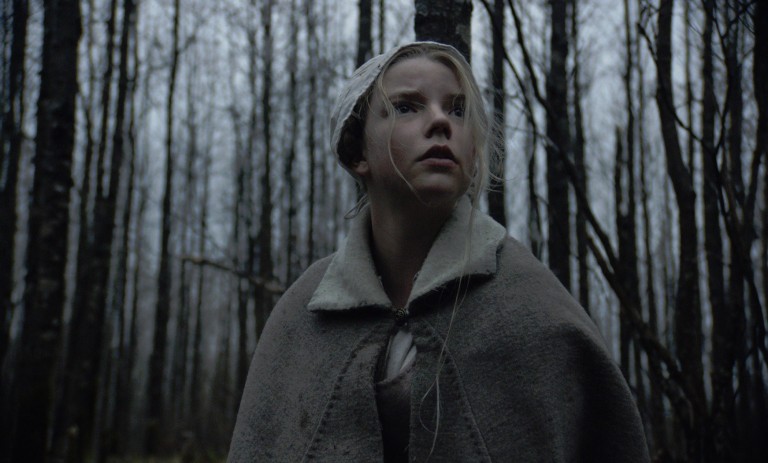
This weekend on Episode 290, we’ll be reviewing Lenny Abrahamson’s latest film The Little Stranger, starring Domhnall Gleeson. Using that film as inspiration for our poll, we thought it would be fun to talk about the best period horror films we’ve seen over the years. Whether you’re talking about classics such as Bram Stoker’s Dracula or recent masterpieces such as The Witch, the sub-genre has seen some great contenders.

With that said, what is your favorite period horror film?


List: Top 5 Predictions for Fall 2018

This week on Episode 289 of the InSession Film Podcast, we discussed our predictions for the 2018 fall movie season. As we did for the summer, instead of simply naming the films that we are most anticipating, we decided to branch out and talk about the questions that are lingering for us as we head into the fall and how that translates to our predictions for the new season.

**Please keep in mind that we each had different criteria for our selections**

JD

1) This year’s Fall/Winter Movie Season will supplant 2018 as the objective best year for film this decade.
2) Shoplifters – will finally be the film to get Hirokazu Kore-eda an Oscar nomination (maybe even a win?).
3) A Star is Born – will be this year’s American Hustle or La La Land or The Revenant or Birdman, in the sense that it’s a good movie (potentially great movie) that becomes hated on Film Twitter for reasons that continue to baffle me.
4) The Other Side of the Wind – will prove that Orson Welles had one more hidden gem left in him.
5) Bumblebee – will prove that Transformers can exist and thrive outside of Michael Bay.

Brendan

1) This year’s Fall/Winter Movie Season will supplant 2018 as the objective best year for film this decade.
2) First Man and The Old Man with a Gun – will make Damien Chazelle and David Lowery 4-for-4 as directors.
3) The Favourite – will prove that The Academy is embracing weirdness in film.
4) Netflix will now be taken seriously as an Awards Season contender with films such as Roma, The Other Side of the Wind, 22 July, Hold the Dark, The Ballad of Buster Scruggs, Girl, and Happy as Lazzaro.
5) The fall/winter blockbusters will mostly disappoint.

Honorable Mentions (Combined)

Other films that we are highly anticipating – Widows, If Beale Street Could Talk, Beautiful Boy, Boy Erased, The Front Runner, Backseat, Under the Silver Lake, Wildlife, Mid90s, Cold War, Non-Fiction, Burning, Bad Times at the El Royale, The Sisters Brothers, Suspira, Halloween, Serenity, Can You Ever Forgive Me?, Mary Magdalene, Madeline’s Madeline, High Life, Ralph Breaks the Internet, Creed II, Mary Poppins Returns, Loveling, Capernaum, Kindergarten Teacher, Destroyer, Vita and Virginia, Blaze

Hopefully you guys enjoyed our lists and if you agree or disagree with us, let us know in the comment section below. Clearly there are a lot of other films coming out this fall that we skipped over for one reason or another. That being said, what would be your Top 5? Leave a comment in the comment section or email us at [email protected].

For the entire podcast, click here or listen below.

For more lists done by the InSession Film crew and other guests, be sure see our Top 3 Movie Lists page.

Movie Review: A24’s ‘A Prayer Before Dawn’ is a brutal vision of isolation, addiction and salvation


Directors: Jean-Stéphane Sauvaire
Writer: Jonathan Hirschbein, Nick Saltrese
Stars: Joe Cole, Pornchanok Mabklang, Vithaya Pansringarm

Synopsis: The true story of an English boxer incarcerated in one of Thailand’s most notorious prisons as he fights in Muay Thai tournaments to earn his freedom.

[/info]

When you’re watching Jean-Stéphane Sauvaire’s A Prayer Before Dawn don’t blink, though you may feel the urge to. Otherwise you may miss one of the most unflinching and visceral visual experiences offered up this year. Based off a book written by Billy Moore surrounding the time he spent incarcerated in a Thai prison A Prayer Before Dawn brutally captures Moore’s time there and the toll it took on him mentally and physically. Joe Cole’s performance as Moore, an apathetic British boxer turned addict and thrown into a prison in a foreign land is phenomenal and one that deserves our attention.

A Prayer Before Dawn is gritty, violent and extremely emotional. Most of the film Moore prowls the screen with a silent expressionless gaze, the camera inches from his face, but there are moments when he is bursting with anger or/and despair. A potent energy saturates almost every moment and Sauvaire’s decision to film with a handheld magnifies the intensity and quite honestly is one of the most brilliant utilization of this technique I have ever seen. The cinematography is claustrophobic with tight shots, dark settings and discomforting angles. Throughout I couldn’t take my eyes of the screen and felt deeply disappointed that this film didn’t have a wider theatrical release as seeing it theaters would have made for an extraordinary experience.

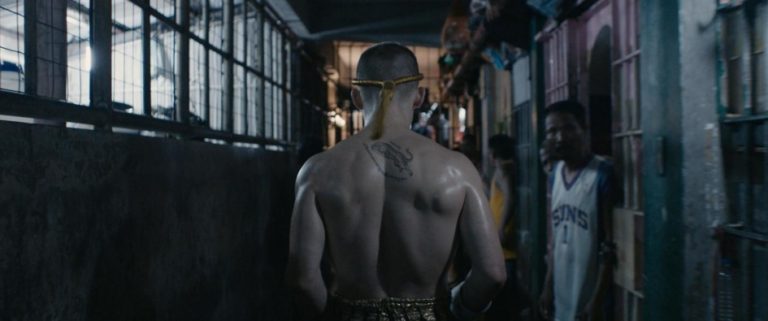
The film has very little dialogue especially from Moore. Often times alongside the chaos on-screen the audio is filled with incoherent shouting or grunting and the sound of flesh on flesh pounding. Even the score compliments this at times as only an electric hum hanging over the inaudible dialogue or a tense rhythmic ticking. The film is brutal on every one of your senses. The dialogue that is spoken is primarily in Thai with no subtitles provided allowing the audience a conduit for the alienation and confusion felt by Moore. He easily stands out on-screen against the darker skinned Thai inmates many of whom are tattooed head-to-toe. This distinction, along with the constant language barrier, further accentuates his isolation not just conceptually but visually, like a pale dot against a black canvas. Although surrounded by others in a similar plight as himself, he is very much alone.

The supporting cast is magnificent although not much significant screen time is spent with them, the story and camera swing primarily around Moore. Still though even the small amount time they are given is eye-opening and provides a deeper sense of them as human beings. Pornchanok Mabklang as Fame is a love interest for Moore and short conversations with her not only give her character some depth but also allow us some insight into Moore’s life outside prison. There is also a short scene where Moore listens on as some of the other kick-boxers relate to him how they ended up there and one particular inmates story (an un-cast actor) is rather tragic. It provides an opportunity for him to connect with the other inmates and for us to see them as more than just enraged and weary souls. The scene is poignant and brief moment where the film allows itself to slow down.

The films primary weakness is the uncertainty around Moore’s background prior to his imprisonment. Prayer kicks off before Moore’s arrest giving us flashes of him boxing as well as his drug use but nothing more is provided. I was never certain what he was doing in Thailand, how long he had there, how long he had been boxing or taking drugs, whether the boxing was simply a means to expense his drug habit or something he considered professionally. None of this information is presented to the audience. Some of the gaps can be filled from subtle details or common sense deduction while some requires imagination and assumptions on the part of the viewer. This shouldn’t take away from the viewing experience but will leave those with curious minds wondering.

Not many films have the ability to touch you while at the same time showing you such horrible human brutality. A Prayer Before Dawn succeeds in this by allowing it to be more than just a prison film or a boxing film. It is a film about coping and finding your own form of salvation regardless of the severity of your circumstance. Sometimes that salvation will come in the form of violence or forgiveness and sometimes in a surprising companionship.  Whatever the course part of the process is learning to live with decisions you have made.  Accepting those decisions and putting them behind you is the first step in moving past the person you were and accepting the person you would like to become. The film captures this process as we witness Moore learning to accept his situation and make attempts to regain control his life and transform into a better form of himself physically and spiritually. If you haven’t had the pleasure of seeing A Prayer Before Dawn yet do your inner cinephile a favor and make this the next film you watch.

Overall Grade: A-

[divider]

Podcast: 2001: A Space Odyssey / Top 5 Predictions for Fall 2018 – Episode 289

This week’s episode is brought to you by Audible.com. Get a free audiobook and 30-day trial today!

This week on the InSession Film Podcast, we discuss Stanley Kubrick’s classic 1968 film 2001: A Space Odyssey as it’s back in theaters for its 50th anniversary. We also preview the fall movie season with our Top 5 predictions for the films we’ll be seeing this fall (and December) to finish out the year.

This is the second year in a row that we’ve kicked off our Fall/Winter campaign by discussing a classic movie that recently celebrated a milestone, while also giving our predictions for the new season. Last year we talked about Close Encounters of the Third Kind before diving into the same Top 5, so maybe this will become a new tradition around here.

On that note, check out this week’s show and let us know what you think in the comment section. Thanks for listening and for supporting the InSession Film Podcast!

– Movie Review: 2001: A Space Odyssey (4:16)
Director: Stanley Kubrick
Writer: Stanley Kubrick, Arthur C. Clarke
Stars: Keir Dullea, Gary Lockwood, William Sylvester

Top 5 Predictions for Fall 2018 – Part 1 (1:01:24)
As we did for the summer earlier this year, instead of simply naming the films that we are most anticipating, we lay out a few predictions we have for the fall and winter movie season – which looks really promising this year.

Top 5 Sponsor: First Time Watchers Podcast

[divider]

RELATED: Listen to Episode 288 of the InSession Film Podcast where we discussed Borat and our Top 5 Movies of 2006!

[divider]

– Top 5 Predictions for Fall 2018 – Part 2 (1:33:42)

For our final segment this week, we continue our fall predictions with our last two selections and we list some honorable mentions in regards to other films we’re very excited to see before year’s end.

On that note, what are your predictions for the 2018 fall movie season?

– Music

Also sprach Zarathustra – Richard Strauss
Bumblebee – Steve Jablonsky
Beautiful Boy – Simon de Voil
The Return of the Eagle – Atli Örvarsson

Subscribe to our Podcasts RSS
Subscribe to our Podcasts on iTunes
Listen on Stitcher
InSession Film Podcast – Episode 289

[divider]

Next week on the show:

Main Review: The Little Stranger
Top 3: TBD

[divider]

Help Support The InSession Film Podcast

If you want to help support us, there are several ways you can help us and we’d absolutely appreciate it. Every penny goes directly back into supporting the show and we are truly honored and grateful. Thanks for your support and for listening to the InSession Film Podcast!

VISIT OUR DONATE PAGE HERE

Movie Review: Ben Kingsley is stunning in ‘Operation Finale’


Directors: Chris Weitz
Writer: Matthew Orton
Stars: Oscar Isaac, Ben Kingsley, Mélanie Laurent, Haley Lu Richardson

Synopsis: A team of secret agents set out to track down the Nazi officer who masterminded the Holocaust.

[/info]

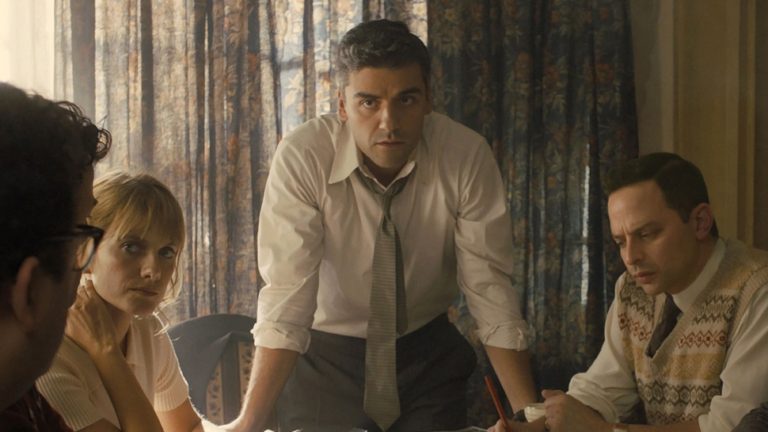
Chris Weitz’s Operation Finale is an engrossing look at the apprehension of Nazi war criminal Adolph Eichmann who was hiding in Argentina. While Matthew Orton’s script does take some poetic license concerning the details involving the safe house, the film’s narrative brought out the best in Oscar Issac (who plays Mossad agent Peter Malkin) and Oscar Winner Ben Kingsley (who plays the aforementioned Eichmann). The exchanges between Issac and Kingsley are simply marvelous as they go back forth during a good portion of the second and third acts of the film. However, those of you who plan on seeing the film, please don’t go in expecting some military-centric tale.  “Operation Finale” isn’t about the plan to snatch Eichmann (in fact that occurs towards the beginning of the film). Weitz’s film is about the psychological impact his apprehension had on Israel and the world. 

The narrative of the film is relatively straightforward. Malkin (Issac) is a Mossad agent who has spent the better part of a few years tracking Nazi criminals and bringing them to justice. Sometimes, justice is delivered rather swiftly as they try and escape being captured. Israeli intelligence gets word of a possible location for Adolph Eichmann and can confirm that it is him rather quickly. A team of agents is then sent to Argentina to develop a plan to take him back to Israel where he will stand trial. They quickly realize that capturing a Nazi is easy but getting to a plane is proving to be somewhat tricky.

Operation Finale does strike some of the same notes found in Argo. A portion of the film is dedicated to Israel’s governmental bureaucracy which does slow down the pace of the piece. Operation Finale works when the focus is placed on the trauma rife throughout the Jewish community because of World War II. There wasn’t one person on that team of Mossad agents who didn’t want to put a bullet in Eichmann’s head. However, they had to show restraint or risk stooping to the level of their former oppressors.

Would have liked to have seen more instances of this conflict in the film. The only time that struggle was on display was when Malkin and Eichmann were in the same room. Kingsley was perfect playing the former high ranking Nazi Officer. He portrayed the infamous Nazi Officer as this seething, boiling cauldron of hate. While in hiding he’s had to repress who he is so he won’t draw attention to himself. Eichmann’s ego won’t allow him to be at peace with this. In his mind, he should be able to do as he wants. It’s not until he’s being interrogated at the safe house by Mossad agents that we get a glimpse of what made him a monster.

Issac is strong as Malkin, but one can’t help but wonder if there weren’t better options to play the infamous Mossad agent. Kingsley’s performance was magnificent. Alexander Desplat’s score hit all the right notes reflecting the pain of the Jewish community and their thirst for healing. Javier Aguirresarobe’s cinematography was effective but indeed could have been used more to heighten the tension of the piece.

Overall, Operation Finale is a fine film which easily could have been breathtaking. Needless exposition and the narrative going in odd directions (did we need to know more about Finkle’s ex-girlfriend?) really detracted from the overall quality of the piece. Should everyone see it? Yeah, Kingsley’s performance is well worth the price of admission.

Overall Grade: B-

[divider]

Featured: Most Anticipated Films of TIFF 2018

0

Hi folks! We’re only days away from the start of the Toronto International Film Festival, so it seems like an ideal time to introduce myself as your on the ground film critic for InSession Film for TIFF 2018.

This year’s festival runs for ten days from Thursday, September 6 through Sunday, September 16. This year, the festival programmers appear to be leaning more heavily than ever into big name, crowd-pleasing films (for the last few years, the TIFF People’s Choice winner has historically gone on to – at minimum – a best picture nomination). This means that many of the films on JD’s recent “Most Anticipated Films for Fall 2018” post are being screened, including films by directors such as Steve McQueen, Barry Jenkins, Damien Chazelle, Alfonso Cuarón, Bradley Cooper, Paul Dano, Jonah Hill, Joel Edgerton, David Lowery, Pawel Pawlikoswki, David Gordon Green, Claire Denis, Hirokazu Kore-eda, and Jason Reitman.

Rather than repeat JD’s list, here are a few of the other films that I am most excited to check out:

Transit

I am completely obsessed with the work of German director Christian Petzold, who has the uncanny ability to tell personal stories embedded within large scale historical narratives. Transit is adapted from Anna Seghers’ Second World War refugee novel, and according to TIFF, “weaves a haunting tale of identity, exile, and emigration in this thrilling love story, set during an unspecified time that bears an eerie resemblance to the present day.”

[divider]

22 July

I don’t know much about Norway’s deadliest terrorist attack, “when 77 people were killed after a far-right extremist detonated a car bomb in Oslo before carrying out a mass shooting at a leadership camp for teens.” It sounds bleak, but I trust director Paul Greengrass – who helmed the similarly themed United 93 to great effect.

[divider]

Nicole Kidman, Destroyer

Destroyer

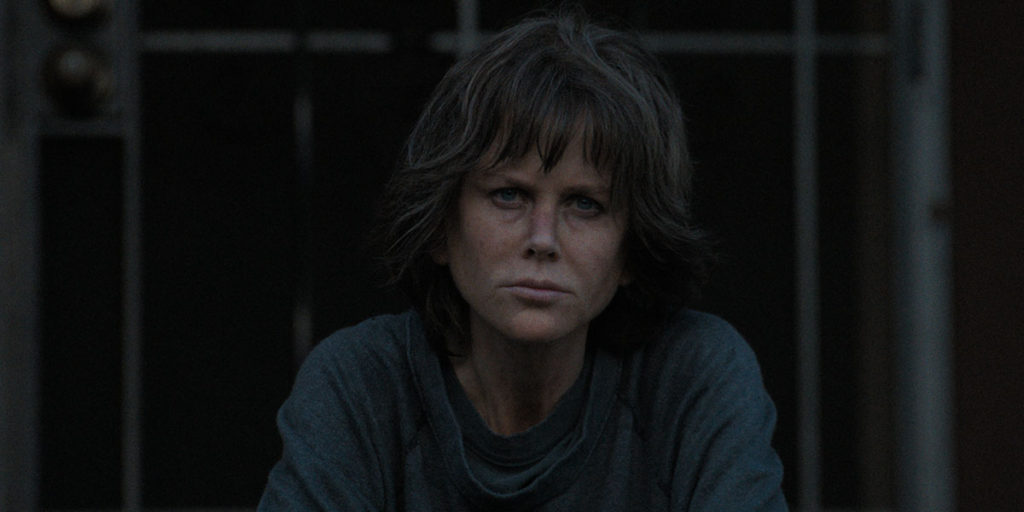
The early reviews out of Venice are mixed for Karyn Kusama’s latest film (though they are rapturous for star Nicole Kidman’s lead performance). Considering the film’s noir influence and Kusama’s track record with Jennifer’s Body and The Invitation (possibly my favourite genre film of the last decade), Destroyer is a top 3 TIFF pick for me.

[divider]

MOUTHPIECE

Canadian filmmaker Patricia Rozema “adapts the award-winning two-woman play by Amy Nostbakken and Norah Sadava, about an aspiring writer attempting to reconcile her feminism with the conformist choices of her mother following her mother’s sudden death.” I’m really intrigued to see how Rozema adapts such a minimalist, emotionally-fueled narrative and whether the play’s power will translate to the big screen.

[divider]

Kursk

Kursk “recreate[s] the tragic final hours of the real-life nuclear submarine explosion that left the ship stranded at the bottom of the Barents Sea”. I know next to nothing about the famous tragedy, but the talent (Matthias Schoenaerts, Léa Seydoux, and Colin Firth) and even more significantly the director (Thomas Vinterberg, The Hunt) make this a “Must See” at the festival.

[divider]

I’ll be covering these and many other films as part of my Daily Dispatches from TIFF. It will all kick off Thursday!

Movie Review: Tedium and elegance accompany ‘The Little Stranger’


Director: Lenny Abrahamson
Writer: Lucinda Coxon; Sarah Waters (novel)
Stars: Domhnall Gleeson, Ruth Wilson, Will Poulter, Charlotte Rampling

Synopsis: After a doctor is called to visit a crumbling manor, strange things begin to occur.

[/info]

The Little Stranger could have been a winning haunting. Should have.

A capable cast? Check. Material about people trapped in restricted spaces to be handled by a filmmaker who’s pretty much well-versed in that department? Major check. Yet, the final product is so perplexingly unengaging that one will wonder whether Lenny Abrahamson has his heart in all this way, way more than whether if the establishment has an (alleged) unwelcoming-presence problem.

Hundreds Hall used to be pristine. This is where fêtes were held and the well-dressed gathered. Now it’s a dour, lavish prison for members of the family who lives there — matriarch Angela Ayres (Charlotte Rampling), daughter Caroline (Ruth Wilson) and son/younger brother Roderick (Will Poulter) — to listlessly live out the day, now and then think of a way out and, this being most often, to sense things that aren’t there. These darknesses are shared with Dr. Faraday (Domhnall Gleeson), who visits the Ayres often to treat Roderick’s war-induced PTSD. Little does everyone know, though, is that the doctor and the building is linked: When young, out of fascination with the estate, he snapped off an ornamental acorn as a souvenir. Flashbacks to this moment are often; it’s more or less the hall’s first step into decay…

So is the ghost in all this the metaphorical variant? What about Angela’s continuous claims that a disembodied “Susan” has been scribbling her initials behind her wardrobe and ringing all the servant’s bells in unison? It’s both in The Little Stranger, but the answer will not satisfy since Abrahamson doesn’t know how to deliver it.

For the former, he often displays indifference, making images brood at levels higher and lengths longer than necessary and bending the spotlight toward mood more than messages. It’s an outright betrayal to the effort writer Lucinda Coxon, who’s adapting this from author Sarah Waters’ 2009 book, has spent to sculpt the Ayres as shadows who believe that they still mean something today and will last tomorrow. The refusal to see where time has been zealously chipping at them — questionable mentality, declining fitness, eroding wealth and creaky dwelling — is astounding. While these ideas do get to speak, do know that Abrahamson will prevent them from reaching the ideal volume.

As for the latter, there are two sequences validating something supernatural in The Little Stranger — a bookcase that sets itself on fire while the narration suggests a person has done it; Angela is trapped in a room that shakes her into panic — that conjures legitimate uneasiness. From the freedom in the cutting to where the camera gets to be in the room, it seems Abrahamson is a liberated individual here. But since this isn’t the story’s focus, freedom is short-lived. Back toward over-expressed atmosphere we go. The chills from earlier, meanwhile, evaporate.

Had it not been for the performers — the properly utilized one, so apologies to Rampling and Poulter — the film would be a total loss. Though Gleeson is masterful at making Faraday an enigma we’ll always be compelled to decipher, it’s Wilson’s turn as Caroline that deserves your attention. With precise gazes and speech, she brings into view the growing weight on her shoulders, on her spirit from having to keep everything standing. Commendable, but the result won’t serve her.

And that’s how The Little Stranger grants you a sleepless night.

Overall Grade: D+

[divider]

Podcast review coming soon!

[divider]

Movie Review: ‘Juliet, Naked’ reminds us all what matter most


Directors: Jesse Peretz
Writer: Phil Alden Robinson, Jim Taylor, Nick Hornby (based of the novel by)
Stars: Ethan Hawke, Rose Byrne, Chris O’Dowd, Megan Dodds, Jimmy O. Yang

Synopsis: Juliet, Naked is the story of Annie (the long-suffering girlfriend of Duncan) and her unlikely transatlantic romance with once revered, now faded, singer-songwriter, Tucker Crowe, who also happens to be the subject of Duncan’s musical obsession.

[/info]

Jesse Peretz’s Juliet, Naked is a lovely tale about waking up from a listless existence and taking control of your life. This adaptation of the Nick Hornby challenges the audience to think about their own lives. What would you do if after twenty years there was still voids in your life? Would you power through the mistakes or try and make things right?

The film centers around the cult-like following of Tucker Crowe (Ethan Hawke) fans and how every moment of their lives is dedicated to knowing about his life. Most of the time these fans chat on message boards debating where he went into hiding after walking out on a gig in Minneapolis. One such fan is a middle-aged teacher of film and television studies named Duncan (Chris O’Dowd) who teachers at a University near the British coastal town of Sandcliff. When he’s not giving lectures about the brilliance of The Wire, he’s at home with his long-time girlfriend Annie (Rose Byrne) working on his shrine to Crowe. When the two were much younger, this was acceptable but not as they get older their needs have changed. Annie wants to have a family, and it appears Duncan needs more Crowe in his life. One morning a package arrives from Tucker’s old label addressed to Duncan. Annie opens it and a CD copy of Crowe’s biggest hit “Juliet” fall out. When she starts to play it, we immediately see that this is the original demo for the song. Of course, Duncan listens to the tape and immediately thinks that it’s a masterpiece while Annie thinks it is “flaccid.” Duncan posts his review online, and Annie submits her’s leading to a fascinating connection which could change everything.

What I found most enjoyable about the film is how the narrative isn’t constructed like your typical romantic comedy. Juliet, Naked isn’t really about anyone finding romance it’s more about the sense of loss each of these three has felt. Tucker is living in the garage of one his ex-lovers trying to finally be the father he hasn’t been for the last twenty years. Hawke has these moments on camera where the audience can see the anguish in his eyes over all those moments he just let slip away. Annie in the first quarter of the film seems to go along with whatever Duncan wants, and there comes the point early when she realizes this but doesn’t know how to handle it. Speaking of Duncan, Crowe’s biggest fan does get an opportunity in the film to share with Hawke’s character what his music has meant to him. However, the reaction he received from Hawke’s character was nothing short of heartbreaking.

The performances in Juliet, Naked were undoubtedly solid. The pacing of the film was effective as well (there was no need for the film to be much more than 93 minutes). Cinematography and musically is where Juliet, Naked seem to lag a little. Overall, the film is fine and indeed a safe date night film and one which will leave most audience members pleased.

Overall Grade: B-

[divider]