


Home Blog Page 253

Movie Review: ‘Luke & Jo’ is another victory for Josh Overbay


Director: Joshua Overbay
Writer: Andie Morgenlander, Joshua Overbay
Stars: Erik Odom, Andie Morgenlander, Dustin Whitehead

Synopsis: Two artists collide at the lowest point in their lives and they form a deep emotional bond that alters them both in unanticipated ways.

[/info]

Joshua Overbay stunned us in 2014 with As It Is In Heaven, one of the better movies about spirituality we’ve seen in recent years. Well Overbay is back with a new film, Luke & Jo, a stark departure from the rural nature of Kentucky to a suburban drama about two lost individuals who bond over their similar dilemmas. But like As It Is In Heaven, Luke & Jo is handled with grace and diligently explores what drives the emotional displacement in both Luke and Jo.

Luke (Erik Odom) is a married man and an aspiring screenwriter who travels to Hollywood where he’s hoping to meet producers who would be willing to look at his latest script. Jo (Andie Morgenlander) is a struggling musician who can’t seem to get her life in order. The two of them randomly come across each other at a local bar and strike up a friendship after learning about how comparable their lives are. The relationship gets even more complicated as Luke, whose marriage is on the fringe, begins to flirt with thoughts that test his morals.

The biggest strength of Juke & Jo lies within Overbay and Morgenlander’s script, which wonderfully balances both arcs of Luke and Jo, while dabbling into themes of temptation, depression, isolation, ambition and one’s inability to cope. The conflict in both characters evoke a pathos that many people will be able to connect to as they begin find hope in each other. However, what makes the script even more transcendent is how Overbay and Morgenlander upend that hope with the harsh realities of life. Back in 2014, the ending to As It Is In Heaven was by far one of the best endings of that year, and once again Overbay delivers on something magical. Instead of lingering in sentimentality or being spiritual cloy, he ambiguously offers a dichotomy that leaves us wondering what happens next for Luke and Jo.

This is amplified by great direction and cinematography as well. Much like the dialogue, a lot of imagery in Luke & Jo was improvised to make the naturalistic components to the film even more palpable and evocative. And boy, did they succeed. In one scene, as Luke and Jo are walking through the town and talking, the camera tracks with them glistening in the city lights and it gorgeously captures their bond in the moment. This is a motif we see constantly throughout the film. The camera isn’t overly active or calling attention to itself, but rather being another natural participant alongside our main protagonists.

Erik Odom gives a solid performance as Luke. There are perhaps a few instances where he’s unable to deliver on his Luke’s most extreme emotions, but when focused on the internal ramblings of the character, Odom is more than servicable. Andie Morgenlander is excellent as Jo. She’s constantly on the fringe, but never to the point of being detached from reality. She is wanting more out of life but not sure how to attain it, and Morgenlander taps into that struggle with a robust poignancy that comes through with intense vigor. The chemistry of Morgenlander and Odom is very good, giving credence to that final scene and its ambiguity.

Luke & Jo is a small film that continues to show promise for Joshua Overbay. Yeah, you could nitpick a few things here and there that are a result of being on a micro-budget, but if you push those aside there is some real depth on display here. In a pivotal scene where Luke has a meeting with a producer, Overbay orchestrates symbolism and narrative storytelling in some rather remarkable ways. I can’t imagine what he’d be able to do with a real budget. If he’s able to get his hands on some real money, watch out.

Overall Grade: A-

[divider]

Luke and Jo Official Trailer from Solis Films on Vimeo.
Movie Review: ‘Mowgli: Legend of the Jungle’ is a familiar story with more questions than answers


Director: Andy Serkis
Writer: Callie Kloves (screenplay by), Rudyard Kipling (based on the stories of)
Stars: Christian Bale, Cate Blanchett, Benedict Cumberbatch

Synopsis: A human child raised by wolves must face off against a menacing tiger named Shere Khan, as well as his own origins.

[/info]

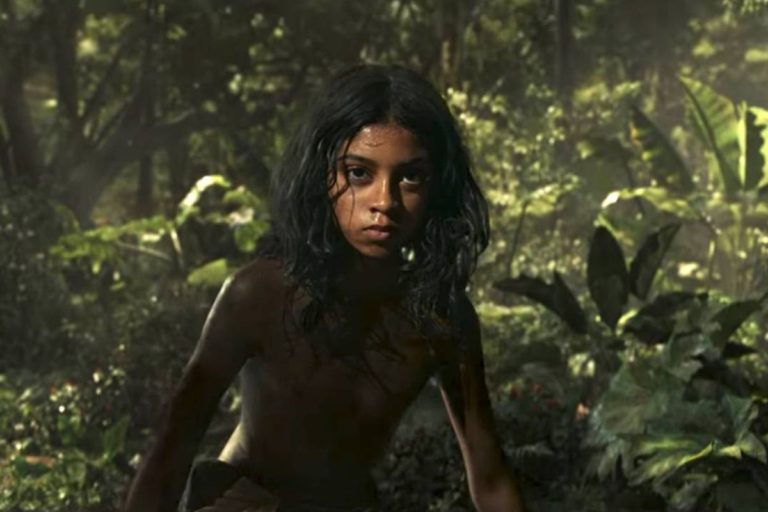
Things get complicated when one is stuck between two worlds. Much like the title character of Mowgli: Legend of the Jungle, the film itself seems to be trapped between two worlds: the world of men and the jungle. With the film, on one side it’s the source material, Rudyard Kipling’s 1894 collection of stories known as The Jungle Book, and on the other side is the duality of Disney’s animated film (1967) and a live action version (2016). Also allowing this film to be caught between two worlds is the fact that while Mowgli has all the names attached that would make it a blockbuster theater release, it instead drops on Netflix with only slight fanfare. So, somewhere between the darker source material and a lively sing-a-long as well as a Hollywood spectacle debuting on the small screen, Mowgli: Legend of the Jungle sits in no-man’s land, and no-man’s land is not a great place to be.

The story is familiar enough. Mowgli, an orphaned boy, grows up among wolves and other jungle creatures to one day battle the threats of a deadly tiger who killed his parents and the existential dangers of an encroaching man village. There is true power in this story, a story of identity, belonging, and change. However, the story gets muddled and lost among deep plot holes and unanswered questions. The familiarity of this story is a weight this film cannot handle. In trying to be different, it fails at almost every turn. Mowgli tries to be darker more realistic than the Disney version, but why? The ‘why do we need this’ question hangs over the whole film. Is it needed to work as a tentpole for future Mowgli films?  Is it needed to present and new side to the story (which it does not)? Is it needed because all that singing gets in the way? Seemingly, there are no answers to these riddles. This film has no point; if it did, it probably would have been a theatrical release.

So, what could be the point? Perhaps it’s the use of motion capture technology for which director Andy Serkis is best known. So, if you have big-name actors like Cate Blanchett, Benedict Cumberbatch, and Christian Bale, then what better way to showcase their talent then letting them act their performance instead of merely lending a voice.  The problem with this is it creates an image that is exceedingly creepy. A panther’s face with the characteristics of Christian Bale seems like an excellent idea on paper. However, in execution it is disturbing at best. Sometimes it feels as though the floating, talking heads are unattached to bodies, making the images seem disconnected and eerie. Nothing about these images conveys the heart and soul needed to disseminate this story. Instead, the viewer is left distracted by the anthropomorphic depictions and unable to invest oneself into the film completely. If I had paid money to see this on the big screen, I would have been deeply disappointed. However, on Netflix, alongside much more quality entertainment, Mowgli: Legend of the Jungle just seems like another juxtaposition of moving images to watch when all other options are exhausted.

Overall Grade: C-

[divider]

Poll: What is your favorite Yorgos Lanthimos film?

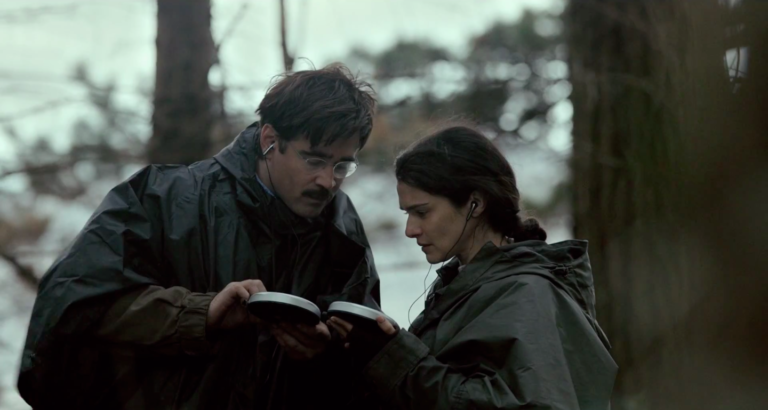
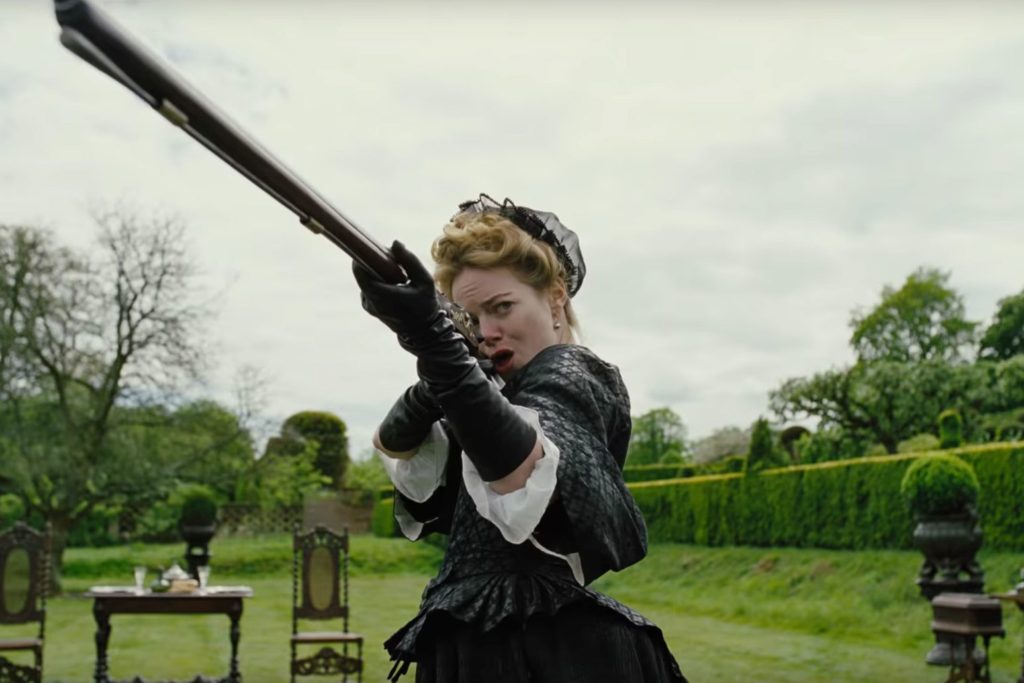
This week for our poll, we are talking about the films of Yorgos Lanthimos. The Favourite is among our most anticipated films of the year and we are eager to dive into it on Episode 304 this weekend. Understandably, Lanthimos isn’t for everyone, but if you’re like us, this poll isn’t an easy decision.

That said though, what is your favorite (no pun intended) Lanthimos film?

Movie Review: ‘Shoplifters’ calmly but beautifully examines familial choice over lineage


Director: Hirokazu Koreeda
Writers: Hirokazu Koreeda
Stars: Lily Franky, Sakura Andô, Mayu Matsuoka, Kirin Kiki, Jyo Kairi

Synopsis: A family of small-time crooks take in a child they find outside in the cold.

[/info]

“Giving birth automatically makes you a mother?” – Sakura Andô as Nobuyo Shibata

Nobuyo’s challenging question forces us to reconsider our predetermined definition of family, and serves as the thematic through-line for Hirokazu Koreeda’s latest drama, the Palme d’or winning Shoplifters.  Following a poverty-stricken Tokyo family, who must resort to shoplifting just to gain the most minimal form of nourishment, they take in (or, steal?) a scarred 5-year-old girl left in the cold in front of her own home.  That plot synopsis might make Shoplifters sound more like a “movie”, but for those familiar with Hirokazu Koreeda’s best work (After Life, Nobody Knows, Still Walking, and Like Father, Like Son), the film nevertheless still continues his tradition at subtly deconstructing our perceptions of what defines a family, possibly in his best and most open-minded ways yet.  If anyone commits the biggest theft here, it’s arguably Koreeda himself, as Shoplifters has a way of sneaking up on you like a thief in a supermarket.

Despite its grander premise, Shoplifters is very much a Hirokazu Koreeda film, favoring stillness over melodrama.  There’s a natural tranquility to Koreeda’s films, making his work feel like casual experiences, forcing those to dwell in what’s devastatingly familiar.  In Shoplifters, thievery and poverty come off like second-nature for this family, as if none of this is new for any of them; there’s a longevity in their hardships, a tragic history which we never see for ourselves, heightening the film’s saddening interior by keeping things momentary and within a specific fragment of time.  We are introduced to this family during a playfully choreographed act of shoplifting by father-figure Osamu (Lily Franky) and his little boy Shota (Jyo Kairi), followed by a comically written dinner with the rest of the household, including mother-figure Nobuyo (Sakura Andô, who gives one of the year’s best supporting actress performances), oldest child Aki (Mayu Matsuoka), and their pension-providing grandmother Hatsue (Kirin Kiki), who has her own separate familial past that makes for an interesting dichotomy with the rest of this household.  There’s no exposition, but each of these actors give their respective characters their own distinctions that Koreeda wants us to observe; he loves making his audience feel like flies on a wall, and for those willing to give in to its calmness, you’ll probably love it too.

From there, very little conflict occurs at the macro level, even after taking in young Yuri (Miyu Sasaki) from the cold.  This family’s introduction is deliberately right in the middle of their hardships without any setup, with the rest of the film spent observing this household gradually behave more like a family with each passing day.  Many examples of this are sprinkled through the film like a series of vignettes; Shota and Yuri go on their own exciting adventures through Tokyo together (even questionably teaching her how to shoplift with them), Aki morally struggles over her source of income, and Osamu and Nobuyo gradually redefine their roles as “parents”.  In the process, Shota slowly transitions from selfish child to big brother, Osamu and Nobuyo become more intimate with one another (a great moment of such intimacy is first met with confusion, as if this is an act of sexual awakening for each of them), and Aki wrestles with the choice she has made to live with this particular family despite another life she may have.

And that’s the key word in all of this; choice.  I will not dare reveal the specifics, but Shoplifters crystalizes with a revelation that recontextualizes the film’s definition of family, whether a family by choice is perhaps more of a family than those by blood.  But Koreeda relishes in the questions instead of the answers; were these familial bonds on display in fact genuine, does a loving relationship surpass growing up in a stable environment, and was it right to bring a young girl like Yuri into a family of thieves?  We trust the love and affection these people share with one another, but we also feel fooled in their familial believability, and the point is to sense that tug of war.  A pivotal scene burning Yuri’s old clothes serves as this moral turning point, not just for all these characters, but in Yuri’s informal adoption into this family; we are moved by their acceptance in one another, while simultaneously questioning if we should be moved by it at all.  And this is the mark of a great film, when you find yourself questioning notions that the film may not even be directly asking you, but Koreeda gives you permission to look for them.

As we circle back to Nobuyo’s aforementioned question, does giving birth in fact automatically make you a mother? To put it more generally, as a family by choice over lineage, does that make these bonds any less familial? Koreeda seems to think not, but he’s not trying to forcibly convince you of that.  In one scene, grandma Hatsue agrees that you usually can’t choose your own parents, to which Nobuyo answers by saying, “Maybe the bond is stronger when you choose them yourself.”  It may sound like Nobuyo has just answered her own questioned, but the key word there is “maybe”, and that uncertainty matters. 

Not since Satyajit Ray introduced us to the world of Apu in Pather Panchali back in 1955 have we seen such cultural specificity on economic hardship and family, with an emotional calmness that feels heavily inspired by the Ghibli roots of Isao Takahata.  I’m not going to generically say that the film stole (ahem, shoplifted) my heart, but it gave me something in return – an additional outlook on familial relations.  The best movies teach you something you may not have already considered, and Shoplifters might do just that for many people, especially families. Embrace it. 

Overall Grade: A

[divider]

Hear our podcast review on Episode 302:

[divider]

Podcast: Roma / Cold War (Part 2) – Episode 303

This week’s episode is brought to you by GoDaddy. Sign up today and save 30% on your order!

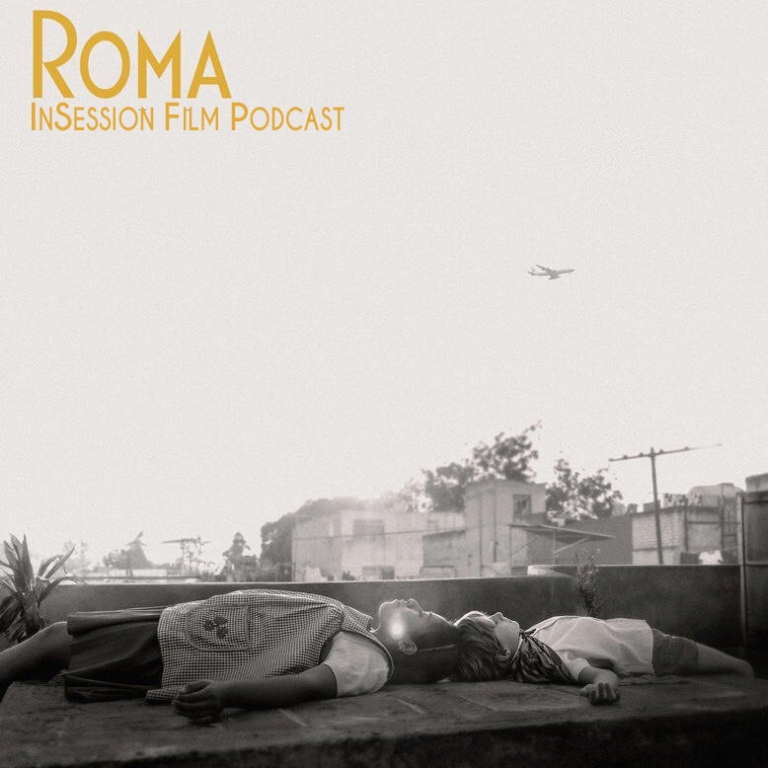
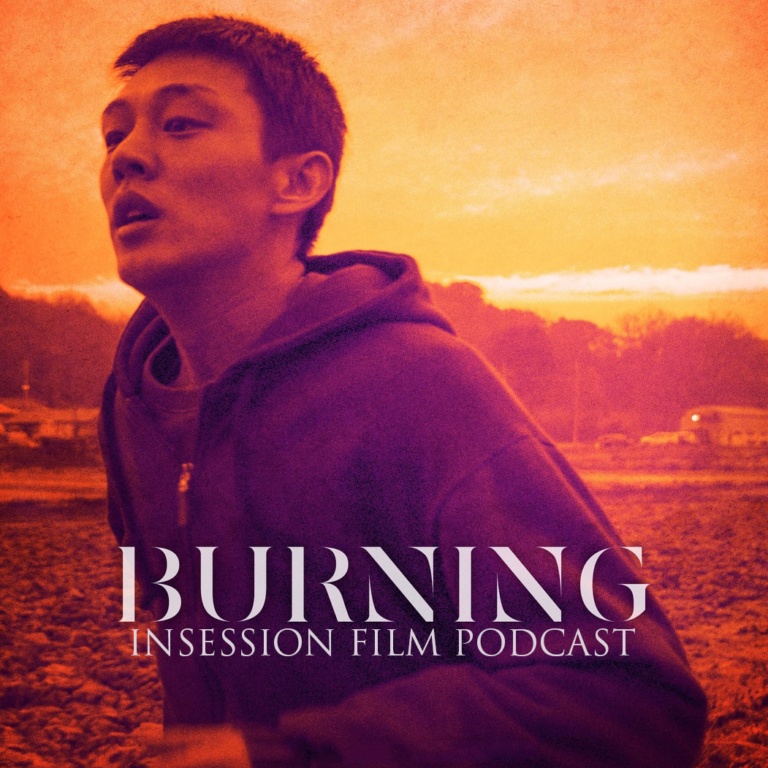
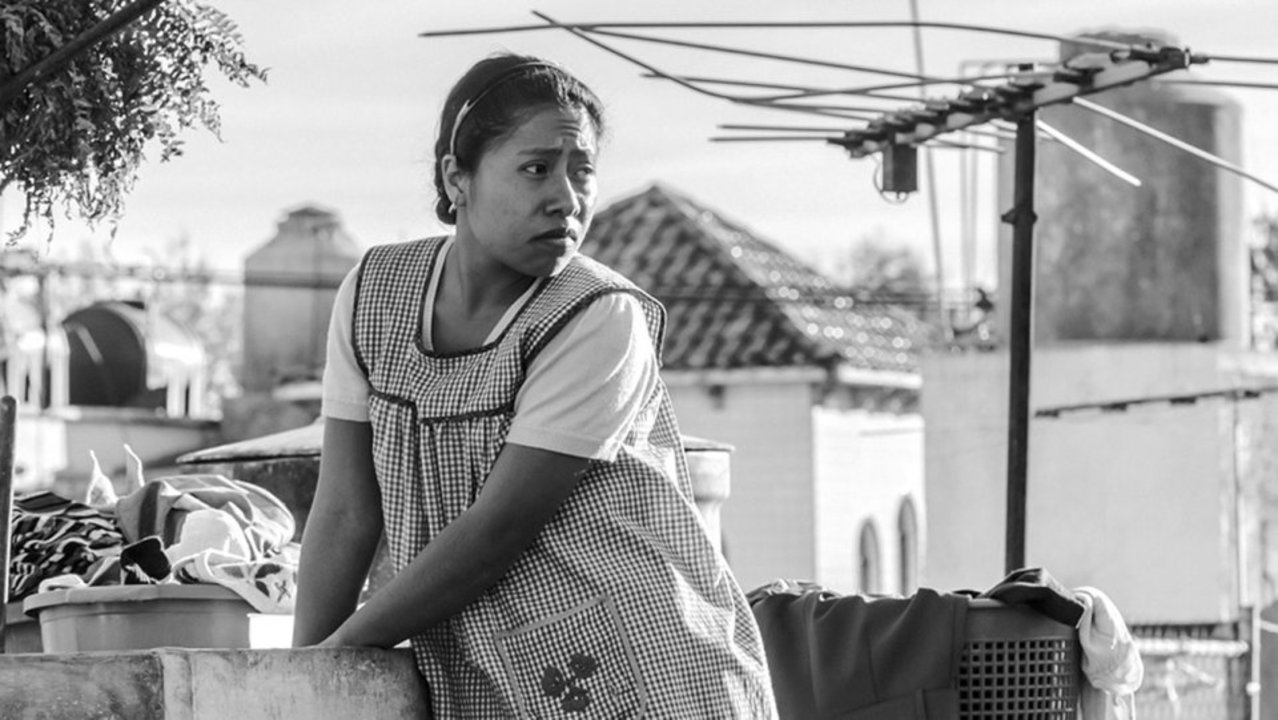
This week on the InSession Film Podcast, we review the latest film from Alfonso Cuarón in Roma and we also dive into Paweł Pawlikowski’s Cold War as both Brendan and JD had passionate thoughts on the film (and JD was supposed to be on Extra Film last week, but was unable to due to unfortunate technical issues). Brendan also reviews Ethan Hawke’s Blaze while JD enters into the Burning ring to give us his thoughts. Finally, we thought it would be fun to talk about this year’s crop of Golden Globes nominees as well given the not-so-surprising-but-still-wtf choices that were announced last week.

No Top 3 again this week as we are still playing catch-up, but we will get to our year-end lists pretty soon. We are changing things up a bit but the same spirit of celebration will still be prevalent. That is to say though, this week’s episode is a full one and we had a lot of fun catching up some great foreign films and talking the Globes.

On that note, check out this week’s show and let us know what you think in the comment section. Thanks for listening and for supporting the InSession Film Podcast!

– Movie Review: Roma (6:03)
Director: Alfonso Cuarón
Writers: Alfonso Cuarón
Stars: Yalitza Aparicio, Marina de Tavira, Nancy García García

– Notes / Burning / Blaze / Golden Globes Reaction (47:04)

As mentioned above, we are playing catch up and that means we had some films we wanted to re-visit. JD caught up with Lee Chang-dong’s Burning and had some praise for that film. Similarly, Brendan was (mostly) singing praises for Ethan Hawke’s Blaze after seeing it over the weekend. Of course, we weren’t entirely positive about the Golden Globe nominations, but they didn’t get all wrong (believe it or not).

[divider]

RELATED: Listen to Episode 295 of the InSession Film Podcast where we discussed First Man!

[divider]

– Movie Review: Cold War (1:15:54)
Director: Pawel Pawlikowski
Writers: Pawel Pawlikowski
Stars: Joanna Kulig, Tomasz Kot

– Music

The Great Gig In The Sky – Pink Floyd
Bohemian Rhapsody – Queen
Two Hearts Four Eyes – Joanna Kulig
The Return of the Eagle – Atli Örvarsson

Subscribe to our Podcasts RSS
Subscribe to our Podcasts on iTunes
Listen on Spotify
Listen on Stitcher
InSession Film Podcast – Episode 303

[divider]

Next week on the show:

Main Review: The Favourite / Spider-Man: Into the Spider-Verse
Top 3: N/A

[divider]

Help Support The InSession Film Podcast

If you want to help support us, there are several ways you can help us and we’d absolutely appreciate it. Every penny goes directly back into supporting the show and we are truly honored and grateful. Thanks for your support and for listening to the InSession Film Podcast!

VISIT OUR DONATE PAGE HERE

Movie Review: ‘The Christmas Chronicles’ is a family Christmas tale that leaves some to be desired

A favorite Christmas tradition of mine is when we are at my in-law’s house and we watch old home videos from when my wife was just a little girl. These videos are a window into another world – one where you see previous versions of the people you know and love. The videos are nostalgic, but they are also a gift to those of us who weren’t around to share the actual memories. We get to feel like we’re a part of it, if only for a little while.

The new Netflix holiday film, The Christmas Chronicles, begins with home videos like these. They introduce us to the Pierce’s – father, Doug (Oliver Hudson); mother, Claire (Kimberly Williams-Paisley); and their daughter, Kate (played by Kaitlyn Airdrie at the beginning and by Darby Camp for most of the film); and son, Teddy (played by Jesse Gervasi, David Kohlsmith, and Jack Bona at the beginning and Judah Lewis for most of the film).

At the outset of this review, let me say that I found the writing of the film to be suspect at best. Some of the character dialogue was blatantly included only for the purpose of reminding us about important plot points. For instance, after the opening family videos, we quickly learn that Doug has died. As the film continues, multiple characters make comments pointing out the fact that Doug is no longer with the family. It isn’t subtle, and it’s clear that it is only meant to raise the emotional stakes for us as the audience. I don’t think a family would really talk this way, especially around Christmas. Having said that, the film eventually gets to a place where it deals with the impact of losing a father, especially when it comes to Teddy’s character. But much of the dialogue along the way is wooden and blatantly expository.

Now that we have that out of the way, I must admit that The Christmas Chronicles is a fun, family film. For anyone looking to fire up a modern, Christmas tale that everyone can enjoy, this is sure to at least not ruffle any feathers. Kate and Teddy begin the film as distant siblings, but they are quickly sucked up into an adventure that they never would have dared to dream up. Before they know it, they are riding in Santa’s sleigh with the bearded man in red right there in the flesh. Just as quickly, they are the culprits behind Santa’s sleigh crashing, the presents being lost, Santa’s magic hat nowhere to be found, and Christmas in serious jeopardy.

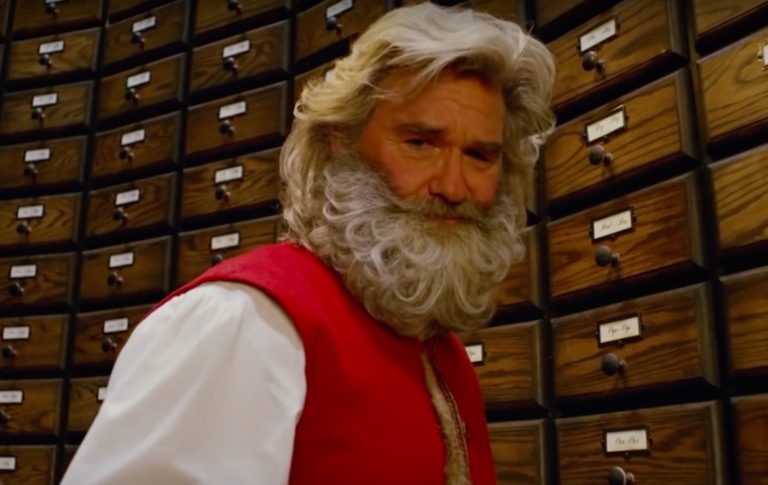
One of the film’s highlights is Kurt Russell as Santa. The film goes to great lengths to differentiate this version of Old St. Nick from the ones you see on Christmas cards. He is not an old fat man, and he doesn’t seem to have much of a problem with bending the law a bit. But Russell imbues the character with that same ineffable magic that we all know and love.

My favorite character in the film is Kate. Yes, she is a common character in films such as this – the constant believer in the magic of Christmas. But Camp plays her well, and it is her performance upon which the film hinges. Teddy is like us – the cynic who believes by the end. But for thefilm to work, we need to see someone who has always believed. Kate is the true hero of the story.

Having said that, Teddy is certainly the character that takes the biggest journey. There is a moment at the end of the film when he opens his present that is the really the whole point of the film – belief not just in the magic of Christmas, but belief in ourselves too.

Elves and various other characters show up along the way as well. Many of them are not given much to do other than pop in for a few minutes and add to the fun. I was most disappointed in the way that Claire’s character was handled. As Kate and Teddy’s mother, you would hope she might play a bigger role, but the film gives her barely anything.

I guess that’s where the film ultimately falls short for me. Its message of belief in oneself is certainly a worthy one, especially when viewed in light of the trauma that the Pierce family has been through. But that belief must be reinforced by those around us. It happens in community, the most important of which is family. For anyone who has lost a family member, we obviously share Teddy’s wish that we will be able to speak to them again. But, unfortunately, it is just that – a dream. I thought that the film would do what so many of these films do and show how the magical tale brought the family closer. But this film doesn’t really do that. We see them opening presents at the end, and we see how Teddy now believes in himself, but we aren’t shown anything to make us think the Pierce family unit has changed much since the beginning of the film.

The film has moments of humor and light. While I could never shake my issues with the writing, even my analytical brain couldn’t help but get swept up in the story by the end (especially with help from a perfect cameo at the very end of the film). All in all, this is a fine Christmas film to watch with the family even if it is clear that the components of a much better film are there with a few loose threads just waiting to be tied up.

Overall Grade: C-

[divider]

Podcast: Burning / Cold War – Extra Film

This week on the InSession Film Podcast: Extra Film segment, Jay and Ryan get together to discuss two of the most celebrated foreign films of the year, Burning (Brendan joins for this review) and Cold War

It has been a terrific year for foreign film, but these two films have received about as much acclaim as any other foreign film released this year. Korean auteur Lee Chang-dong has ventured into the land of mystery with Burning, a challenging film that explores a wide array of themes. It has made its way on to many “Best Of” lists this year, but do Ryan, Jay , and Brendan feel it is worthy? 

Similarly, Cold War has been celebrated for its presentation in Cold War Poland. Pawel Pawlikowski’s compact period drama features stellar performances, beautiful cinematography, and very moving moments, but is it one of the best of the year? Listen and find out!

Listen to the show and let us know what you think about both films in the comment section below. Thanks for listening!

– Movie Review: Burning (7:52)
Director: Lee Chang-dong
Writers: Oh Jung-mi, Lee Chang-dong
Stars: Yoo Ah-in, Steven Yeun, Jeon Jong-seo

– Movie Review: Cold War (42:02)
Director: Pawel Pawlikowski
Writer: Pawel Pawlikowski, Janusz Glowacki
Stars: Joanna Kulig, Tomasz Kot

– Music 
Two Hearts Four Eyes – Joanna Kulig
Burning – Mowg
The Return of the Eagle – Atli Örvarsson

We try to make this the best movie podcast we possibly can and we hope you enjoy them. Subscribe today on iTunes, Spotfiy or Stitcher, and please leave us a review on iTunes. You can also find us on Soundcloud, PlayerFM and TuneIn Radio as well. We really appreciate all your support of the InSession Film Podcast.

Subscribe to our Podcasts RSS
Subscribe to our Podcasts on iTunes
Listen on Spotify
Listen on Stitcher
Burning / Cold War – Extra Film

Mobile App

To hear this Extra Film episode and everything else we do, download our apps on the Amazon Market for Android and the Podcast Box app on IOS devices. The mobile app covers all of our main shows, bonus podcast’s and everything else relating to the InSession Film Podcast. Thanks for your wonderful support and listening to our show. It means the world to us!

Featured: The Long Journey Home – Jan Troell’s The Emigrants/The New Land

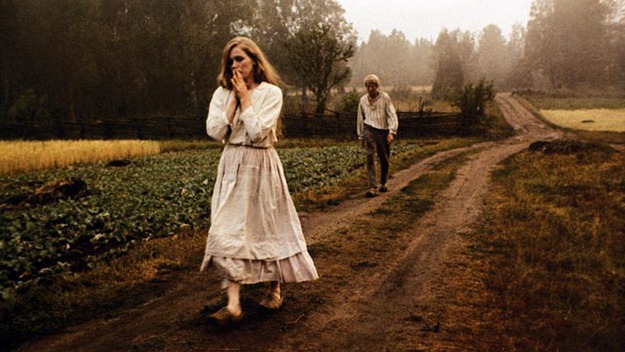
Of stories about immigration and leaving for a better life, on hardship and triumph, these films are the ultimate standout on a family journey to place new seeds in a sometimes unforgiving terrain with a brand new language. For director Jan Troell, it is the dream in America in its full view that was seen by people all over the continent and Sweden is extremely noted. In its 6.5 hours combined story, the saga that is The Emigrants and The New Land of the Swedish family’s conversion into the American psyche and cutting off almost all the ties with their homeland – a universal story about those who came to America in the 19th century.

Uprooted From Their Native Soil

The family at the center of the story are the Nilsson’s made up of Karl Oskar (Max von Sydow) and his wife, Kristina (Liv Ullmann), their four children, and Karl Oscar’s brother Robert (Eddie Axberg). Sweden in the 1850s was conservative under the restrictive monarchy and the power of the church that allowed villages to have their own laws. In Sweden, agriculture is all they have, not budging with the industrial revolution or the liberal ideologies that decentralized religion. With the Nilsson’s, living in the countryside where all they know is their farm and their tiny village, the land is weak and nothing can grow anymore. The family has to endure starvation and the death of a child, which is the last straw for them to finally make the escape. With very little knowledge of what is in America and if the promise of riches is true, the Nilssons pack up for the long voyage.

They are joined by Kristina’s uncle Danjel (Swedish for Daniel), a pastor who is considered a heretic for his style of Christianity which he and his family show humanism to a prostitute, Ulrika (Monica Zetterlund), who also goes with them to the new world. Robert’s friend, Arvid, is another farmer who comes along as one big group across the Atlantic and the marshlands in the Midwest. They learn about Minnesota through a couple who are going there to join their son. It is here where the road becomes rockier than an ocean as disease, doubt, and death plague them on the journey across. It is the same by steamboat and train heading inward. And once they settle in, it becomes a test of endurance from not the weather, but from the Sioux who are at war, the unusual terrain out West, and integrating themselves with new people.

All About The Family

As terrible as it may be, everyone has each other to get through the rough time. Throughout the film, the love for Karl Oscar and Kristina deals with the treachery of seeing setback after setback, hope diminished and relit. For the rebellious Robert, who does not think of conforming to be like his brother, it is Arvid, and they trust each other moving along with grand ideas, from moving to the first place to a disastrous, tragic hike for gold towards Colorado. Even with Ulrika, a woman who is trying to shed off her past as a prostitute and looking to Danjel as a cleansed woman, fits in, even though there is high distrust to her from Kristina especially. On the ship, Kristina blames her for bringing lice on the ship, even though Ulrika is physically clean. Later, there is a trust formally established when Ulrika finds their child that gets briefly lost on the steamboat. When condemned by others for marrying a Baptist – not a Protestant or Lutheran – Kristina defends Ulrika’s honor. The connection from one person to another is a common theme in the film because there is no one to trust but themselves as they start to explore this new terrain.

External Beauty And Hostilities

https://www.youtube.com/watch?v=BM_mvpp3mTQ

The two movies entrench themselves with the historical setting in both countries. The old land is desolate and full of rocks, the new land is untampered with fertile soil overlooking a lake. At the same time, surrounding Sioux who is angry at the new immigrants for swamping their territory (the 1863 Sioux Uprising and its mass execution is portrayed) brings a new type of danger to the Nilsson clan and everyone nearby. The American Civil War is touched upon but not spoken in depth; the danger of just wanting to have more children and the disregard for the risk of it by Kristina underscores her devotion as a mother and Christian into expanding the family after various tragedies and miscarriages. With the wealth of the new home comes a hefty price.

In the original four novels written by Vilhelm Moberg, the fight for social justice in Sweden could not have been won in the 19th century due to the strict conservative rules. As reflected by the historical result of the country, millions left, leaving the country short on labor and forcing change at the turn of the century. Moberg’s works always focused on the dispossessed and their traditions while struggling every day. Jan Troell beautifully creates that from script-to-screen (he also was his own DP and editor) and meticulously handles the backstory of the Nilssons with great bravery in this massive undertaking of the time – one that earned an Oscar nomination for Best Picture.

Follow me on Twitter: @BrianSusbielles (Cine-A-Man)

Featured: 2018 Golden Globes Nominations Predictions

0

On Thursday, the Hollywood Foreign Press Association will announce their nominees for the 2018 Golden Globe Awards. You can listen to our Ryan McQuade’s (and his lovely guest Josh Parham) predictions on our latest Patreon Bonus Content episode, but in the meantime JD Duran and Jay Ledbetter decided to toss out there predictions for nominees below. Check it out!

Best Motion Picture – Drama

JD:

Black Panther
BlacKkKlansman
Bohemian Rhapsody
If Beale Street Could Talk
A Star Is Born

Jay:

A Star Is Born
BlaKkKlansman
If Beale Street Could Talk
Widows
Bohemian Rhapsody

[divider]

Best Motion Picture – Comedy or Musical

JD:

Crazy Rich Asians
The Favourite
Green Book
Mary Poppins Returns
Vice

Jay:

Green Book
The Favourite
Vice
Eighth Grade
Paddington 2

[divider]

Best Director

JD:

Spike Lee – BlacKkKlansman
Bradley Cooper – A Star Is Born
Alfonso Cuarón – Roma
Barry Jenkins – If Beale Street Could Talk
Yorgos Lanthimos – The Favourite

Jay:

Spike Lee – BlacKkKlansman
Bradley Cooper – A Star Is Born
Alfonso Cuarón – Roma
Barry Jenkins – If Beale Street Could Talk
Yorgos Lanthimos – The Favourite

[divider]

Best Actor in a Motion Picture – Drama

JD:

Bradley Cooper – A Star Is Born
Ryan Gosling – First Man
Ethan Hawke – First Reformed
Willem Dafoe – At Eternity’s Gate
Rami Malek – Bohemian Rhapsody

Jay:

Bradley Cooper – A Star Is Born
Ethan Hawke – First Reformed
Willem Dafoe – At Eternity’s Gate
Rami Malek – Bohemian Rhapsody
John David Washington – BlackKklansman

[divider]

Best Actress in a Motion Picture – Drama

JD:

Glenn Close – The Wife
Lady Gaga – A Star Is Born
Viola Davis – Widows
Nicole Kidman – Destroyer
Melissa McCarthy – Can You Ever Forgive Me?

Jay:

Glenn Close – The Wife
Lady Gaga – A Star Is Born
Viola Davis – Widows
Melissa McCarthy – Can You Ever Forgive Me?
Natalie Portman – Vox Lux

[divider]

Best Actor in a Motion Picture – Comedy or Musical

JD:

Christian Bale – Vice
Henry Goulding – Crazy Rich Asians
Lin Manuel-Miranda – Mary Poppins Returns
Viggo Mortensen – Green Book
Robert Redford – The Old Man & the Gun

Jay:

Christian Bale – Vice
Lin Manuel-Miranda – Mary Poppins Returns
Viggo Mortensen – Green Book
Robert Redford – The Old Man & the Gun
Ryan Reynolds – Deadpool 2

[divider]

Best Actress in a Motion Picture – Comedy or Musical

JD:

Emily Blunt – Mary Poppins Returns
Olivia Colman – The Favourite
Elsie Fisher – Eighth Grade
Kathryn Hahn – Private Life
Constance Wu – Crazy Rich Asians

Jay:

Emily Blunt – Mary Poppins Returns
Olivia Colman – The Favourite
Elsie Fisher – Eighth Grade
Regina Hall – Support the Girls
Charlize Theron – Tully

[divider]

Best Supporting Actor in a Motion Picture

JD:

Mahershala Ali – Green Book
Timothée Chalamet – Beautiful Boy
Adam Driver – BlacKkKlansman
Sam Elliott – A Star Is Born
Richard E. Grant – Can You Ever Forgive Me?

Jay:

Mahershala Ali – Green Book
Sam Elliott – A Star Is Born
Richard E. Grant – Can You Ever Forgive Me?
Hugh Grant – Paddington 2
Michael B. Jordan – Black Panther

[divider]

Best Supporting Actress in a Motion Picture

JD:

Amy Adams – Vice
Nicole Kidman – Boy Erased
Regina King – If Beale Street Could Talk
Emma Stone – The Favourite
Rachel Weisz – The Favourite

Jay:

Amy Adams – Vice
Regina King – If Beale Street Could Talk
Emma Stone – The Favourite
Michelle Yeoh – Crazy Rich Asians
Claire Foy – First Man

[divider]

Best Screenplay

JD:

BlacKkKlansman
The Favourite
If Beale Street Could Talk
Green Book
Vice

Jay:

The Favourite
Roma
First Reformed
If Beale Street Could Talk
Green Book

[divider]

Best Original Score

JD:

First Man
If Beale Street Could Talk
Mary Queen of Scots
Black Panther
Widows

Jay:

First Man
Widows
Black Panther
Isle of Dogs
BlackKklansman

[divider]

Best Original Song

JD:

“Shallow” – A Star Is Born
“Revelation” – Boy Erased
“Trip A Little Light Fantastic” – Mary Poppins Returns
“Ashes” – Deadpool 2

Jay:

“Shallow” – A Star Is Born
“All the Stars” – Black Panther
“The Girl In The Movies” – Dumplin’
“The Place Where Lost Things Go” – Mary Poppins Returns

[divider]

Best Motion Picture – Animated

JD:

Dr. Seuss’s The Grinch
Incredibles 2
Isle of Dogs
Ralph Breaks the Internet
Spider-Man: Into the Spider-verse

Jay:

Dr. Seuss’s The Grinch
Incredibles 2
Isle of Dogs
Ralph Breaks the Internet
Spider-Man: Into the Spider-verse

[divider]

Best Motion Picture – Foreign Language

JD:

Roma
Cold War
Shoplifters
The Guilty
Burning

Jay:

Roma
Cold War
Shoplifters
The Guilty
Girl

Podcast: 2018 Golden Globe Predictions – Patreon Bonus Content

Listen!

On Thursday, the Hollywood Foreign Press Association will announce their nominees for the 2018 Golden Globe Awards. For our lovely Patreon subscribers, Ryan McQuade’s and guest Josh Parham (from Next Best Picture) predicted the films/actors they expect to see nominated later on this week. And now, this episode is available to the public!

*Note: This episode is now available to the public.

Listen to this episode on Patreon by clicking here.

[divider]

HELP SUPPORT THE SHOW

To hear our bonus content episodes early, subscribe now on Patreon. In many cases, though, we offer our bonus content for free after a certain period of time and we do encourage (and very much appreciate) a small donation of $0.99 as a way to help support the show if signing up on Patreon isn’t for you. Click on the PayPal button below to donate and thanks so much for your support. You can also hear much of our Bonus Content via our mobile apps. See the information at the bottom of the post for more details.


One-Time Donation


[divider]

Mobile Apps!

Listen to all of our bonus content on our apps for just a one-time fee! Whether you have an iPhone, Android or Windows phone, our apps are available in many different ways that is convenient for you. With our mobile app, not only can you listen to all of our bonus content, but our main shows and our Extra Film podcasts as well. Click here for more info!

If you don’t want to purchase our bonus content, but still want to support us, there are other you can help us out. Click here for more info.

Poll: What is the best black & white film of the 21st Century?

This weekend on Episode 303, we are going to be talking about one of our most anticipated films of the year in Alfonso Cuarón’s Roma. He is one of the best filmmakers working today and with Roma he’s gone back to his Mexican roots with a family drama. As you probably know, it’s also shot in black and white and looks quite beautiful. With that as inspiration for our poll this week, what is the best black and white film of the 21st century so far?

Vote now!


Podcast: Shoplifters / Creed II – Episode 302

This week’s episode is brought to you by Patreon and our awesome listner’s like you. Sign up today and get some cool rewards!

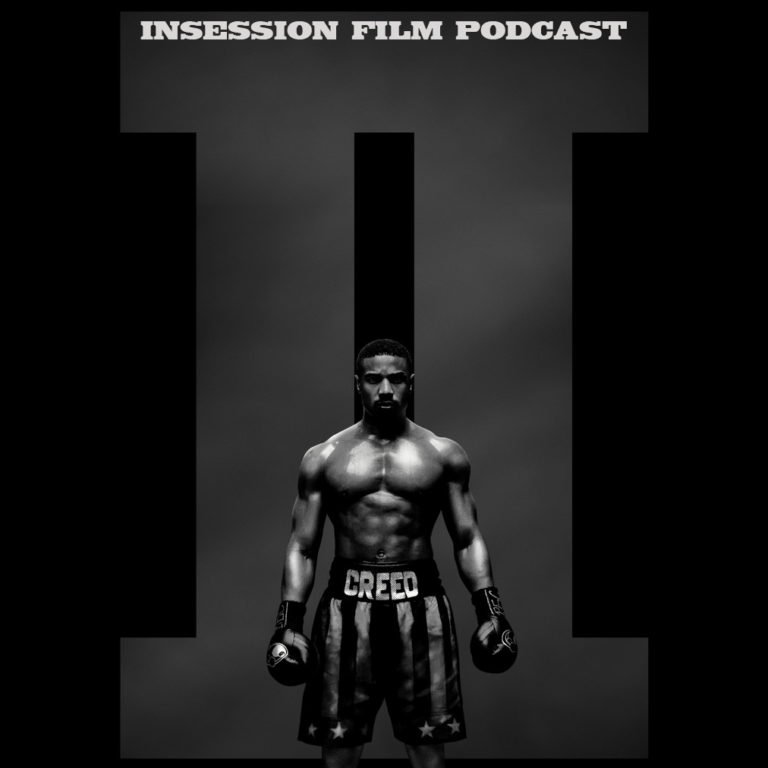
This week on the InSession Film Podcast, we discuss Hirokazu Kore-eda’s Palme d’Or winning film Shoplifters and also the latest sequel in the Rocky franchise, Creed II. During the break, we play catch up and go over a few documentaries we recently screened, and JD gives his thoughts on Ralph Breaks the Internet and Green Book.

After lots of celebrating last week on the show, we are back into the swing of things this week, minus our usual Top 3 segment. We haven’t done a list in awhile, but it’s that time of year where we are trying to catch up on all the great films being released leading up to the usual year-end wrap up fun. We’ll get back to our Top 3’s soon enough, but for now, lots of film discussion!

On that note, check out this week’s show and let us know what you think in the comment section. Thanks for listening and for supporting the InSession Film Podcast!

– Movie Review: Shoplifters (3:54)
Director: Hirokazu Koreeda
Writers: Hirokazu Koreeda
Stars: Lily Franky, Sakura Andô, Mayu Matsuoka

– Notes / Catch-Up Reviews (39:07)

As mentioned above, we recently caught up with some documentaries that we wanted to talk about. Brendan finally saw Three Identical Strangers and Minding the Gap, while JD recommends Shirkers and They’ll Love Me When I’m Dead (both on Netflix). JD also saw Ralph Breaks the Internet and Green Book and thought it would be fun to give some thoughts on those two as well.

[divider]

RELATED: Listen to Episode 295 of the InSession Film Podcast where we discussed First Man!

[divider]

– Movie Review: Creed II (1:02:37)
Director: Steven Caple Jr.
Writers: Cheo Hodari Coker, Sascha Penn, Juel Taylor, Sylvester Stallone
Stars: Michael B. Jordan, Sylvester Stallone, Tessa Thompson

– Music

Living Sketch – Haruomi Hosono
Runnin – Ludwig Göransson
The Return of the Eagle – Atli Örvarsson

Subscribe to our Podcasts RSS
Subscribe to our Podcasts on iTunes
Listen on Stitcher
InSession Film Podcast – Episode 302

[divider]

Next week on the show:

Main Review: Roma
Top 3: N/A

[divider]

Help Support The InSession Film Podcast

If you want to help support us, there are several ways you can help us and we’d absolutely appreciate it. Every penny goes directly back into supporting the show and we are truly honored and grateful. Thanks for your support and for listening to the InSession Film Podcast!

VISIT OUR DONATE PAGE HERE

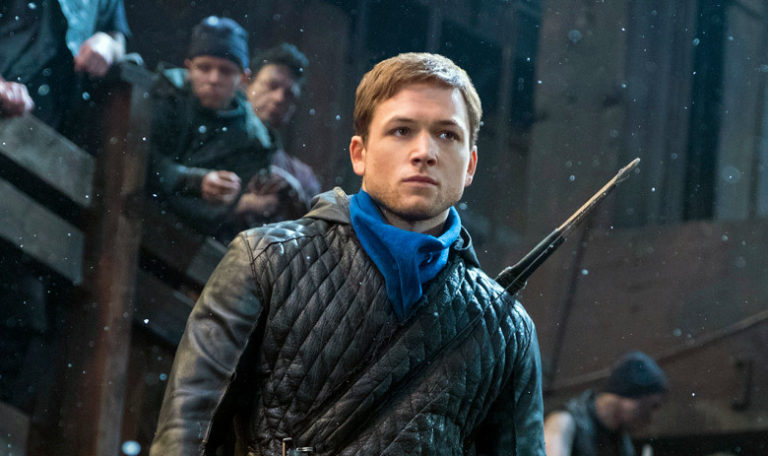
Movie Review: ‘Robin Hood’ is a failure on many levels


Director: Otto Bathurst
Writer: Ben Chandler and David James Kelly
Stars: Taron Egerton, Jamie Foxx, Ben Mendelsohn

Synopsis: A war-hardened crusader Robin of Loxley and his Moorish commander mount a revolt against the corrupt Sheriff of Nottingham.

[/info]

There have been dozens of Robin Hood movies over the years, the first being a silent, black and white film in 1908. Some of the more notable films are Errol Flynn’s The Adventures of Robin Hood (1938), Robin Hood: Prince of Thieves (1991) with Kevin Costner, Disney’s animated Robin Hood (1973), and Robin Hood: Men in Tights (1993) starring Cary Elwes. This latest version isn’t the best addition to the long list of Robin Hood films, but it’s probably not the worst either.

The plot of this Robin Hood doesn’t differ too much from most of its predecessors, other than to ditch the traditional role of Little John (Jamie Foxx) and morph him into Morgan Freeman’s character from Robin Hood: Prince of Thieves. Not sure why they did that, but he wasn’t the only “Merry Man” to get a backstory makeover. In general, it’s a predictable Robin Hood plot that should have been an easy, action packed, decently casted success, but it was ruined by its multitude of anachronisms, lack of character building, and wonky plot.

There have been a handful of period piece movies that have successfully included historically inaccurate elements. My favorite example is A Knight’s Tale (2001). It embraces its campy/fun vibe, includes modern music, and things that just would not have happened in medieval England, but somehow it works. Robin Hood, which clearly states it takes place during the Third Crusade (1189-1192), has so much historical weirdness that it is unforgivable. It can’t decide if it wants to be a real historical action movie or accept its fate as a bargain bin, popcorn flick. Some examples of historical inaccuracies that ruined the movie; things constructed with steel beams and rivets (an Industrial Revolution invention), medieval grenade launching crossbows, Call of Duty style Middle East warfare, a gambling party including roulette which wasn’t invented until 1655, an attempt at a motivational metaphor around the word “firedamp” which originated in 1662, etc. The costumes were also inaccurate but I’m usually okay with that when they are done tastefully. The hoodie style jacket Robin wears was a stretch but it kind of worked. I feel like this film would have been better off it they had tried a slightly modern take instead of setting it in the 12th century.

The anachronisms weren’t the only things wrong with this film. While some of the cast was decent, Marian (Eve Hewson) and Will Scarlet (Jamie Dornan) were flat and unlikable. I still haven’t decided if I liked Jamie Foxx in this yet. He wasn’t bad, he had a good mix of comedic relief and action moments, but I feel like they tried way to hard to make him Morgan Freeman. I also had an issue with some of the action sequences- one at the end where they blatantly ripped off one of my favorite heist movies, and the crusade street fighting that was pulled right from a first person shooter game or Black Hawk Down (2001).

This movie wasn’t entirely bad, I did like Taron Egerton as Robin Hood, even if he looked a little young. Ben Mendelsohn did his best with the script he was given to portray the evil Sheriff of Nottingham. I kept waiting for his character to get better, luckily he does get to show off his bad-guy skills towards the end of the film. Friar Tuck (Tim Minchin) was also a nice addition to the cast. I’m not sure what else I’ve seen him in, but he was probably the best character in the movie.

Another positive would be some of the action scenes. There were some slow-motion, fighting bits that could have easily been overdone but I think they were interesting and well edited. They also had a few fights that were up close and personal that gave me a Game of Thrones season six vibe.

Robin Hood is simply not a good movie. It would have probably been better off direct to Netflix or Amazon Prime. It has its moments where it is entertaining, but overall it’s a Guy Ritchie film wannabe, with a messy plot, that fails on many levels, and is only saved by Taron Egerton’s good looks and a snarky Friar Tuck.

Overall Grade: D+

[divider]

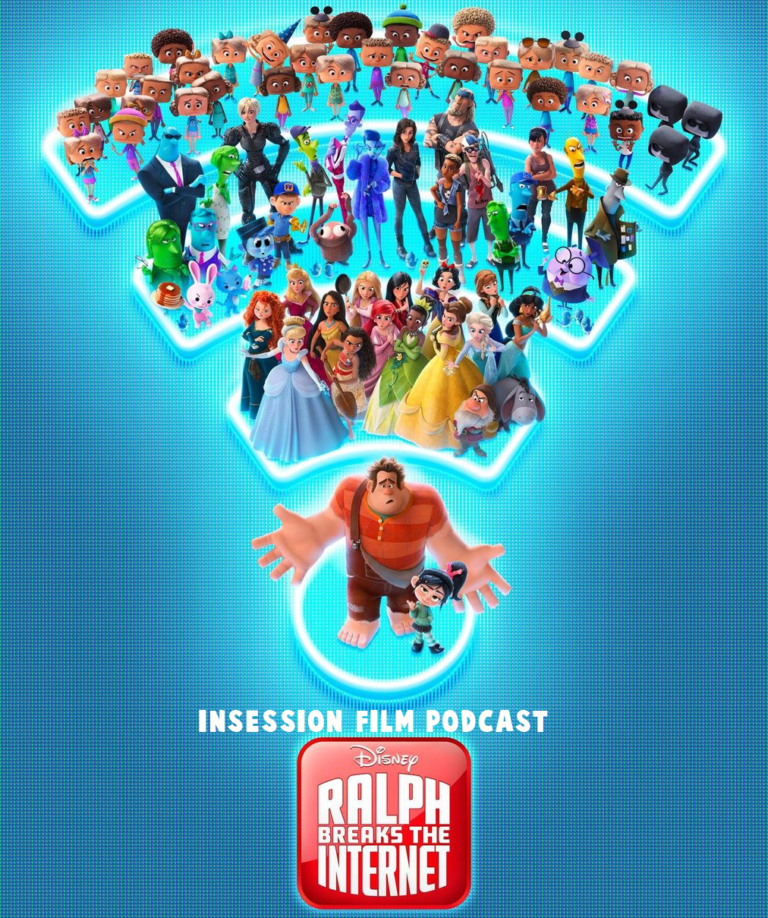
Podcast: Ralph Breaks the Internet / Mirai – Extra Film

This week on the InSession Film Podcast: Extra Film segment, Jay and Ryan get together for an animated extravaganza as they discuss Disney’s Ralph Breaks the Internet and the Japanese anime film Mirai.

It’s been an up and down year for animation in 2018, but these two films do up the ante as far as best animated film goes this year. For reasons they go into, you may be surprised by which film they really liked out of the two – although there’s overall more positivity this week than normal.

Listen to the show and let us know what you think about both films in the comment section below. Thanks for listening!

– Movie Review: Ralph Breaks the Inernet (6:56)
Director: Phil Johnston, Rich Moore
Writers: Rich Moore, Phil Johnston, Jim Reardon, Pamela Ribon, Josie Trinidad
Stars: John C. Reilly, Sarah Silverman, Gal Gadot

– Movie Review: Mirai (42:58)
Director: Mamoru Hosoda
Writer: Mamoru Hosoda
Stars: Haru Kuroki, Moka Kamishiraishi, Gen Hoshino

– Music

Best Friends – Henry Jackman
Marginalia #2 – Masakatsu Takagi
The Return of the Eagle – Atli Örvarsson

We try to make this the best movie podcast we possibly can and we hope you enjoy them. Subscribe today on iTunes, Spotfiy or Stitcher, and please leave us a review on iTunes. You can also find us on Soundcloud, PlayerFM and TuneIn Radio as well. We really appreciate all your support of the InSession Film Podcast.

Subscribe to our Podcasts RSS
Subscribe to our Podcasts on iTunes
Listen on Spotify
Listen on Stitcher
Ralph Breaks the Internet / Mirai – Extra Film

[divider]

Mobile App

To hear this Extra Film episode and everything else we do, download our apps on the Amazon Market for Android and the Podcast Box app on IOS devices. The mobile app covers all of our main shows, bonus podcast’s and everything else relating to the InSession Film Podcast. Thanks for your wonderful support and listening to our show. It means the world to us!

Featured: Foreign Noir – Darkness Over The World

Film noir is a genre that had the aesthetics in the years before the 1940s when a swarm of crime dramas came out that in natural black-and-white, focused on the cynical nature of humans, and the common desire for money with a side of a gorgeous woman. We know about the American classics and they are truly among the greatest of this period: The Maltese Falcon, Double Indemnity, The Big Sleep, In A Lonely Place, and Touch of Evil among others. It is a genre that features masculinity, innocent people going down the wrong path, women of interest, and the common criminal who goes out there doing what he knows best – stealing and backstabbing others. The words “film noir,” are French, so no surprise the French have a solid list of films of that genre, but there are others along with the French that defines the genre extremely well.

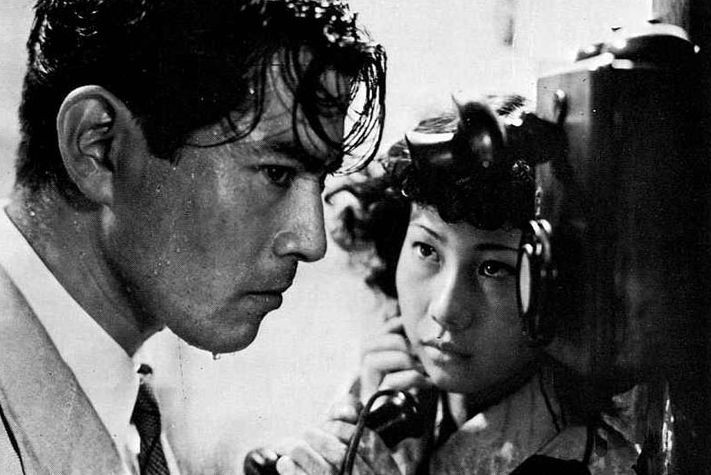
Stray Dog (1949)

Akira Kurosawa may be known for his samurai films, but he made his first impression with contemporary stories on the streets of Tokyo. The legendary Toshiro Mifune plays the rookie cop whose gun is stolen and used in a murder. He and a veteran cop, played by Takashi Shimura, go on the hunt during a heatwave that also defined the early years of post-war Japan of early disenchantment. It is also a buddy cop picture within the police procedure genre that takes us slowly to the underworld (which he would visit again in High & Low) where criminality is survival that raises the heat on the screen. His previous film, Drunken Angel, is another noir film that should be looked at.

Rififi (1955)

Jules Dassin made great crime dramas back in the United States with Brute Force and The Naked City. He was then blacklisted during the Red Scare and exiled himself to France. His budget was low, there were no major stars, and he wasn’t totally fond of the source material, but he directed what is a masterful work on a group of thieves who plan and execute a very difficult heist, only to backfire by each others’ greed. It wasn’t the first French noir film (Touchez Pas Au Grisbi by Jacques Becker is considered the starter), but it can be argued as certainly the best. The thirty-minute heist sequence shot in almost complete silence as Dassin lays out the details of the heist as well as the conscience of the characters as everything falls from under.

Elevator to the Gallows (1958)

Louis Malle’s debut film features two lovers whose plan to kill the husband but goes haywire when the man is trapped in the elevator after the elevator is switched off. Another couple on the run steal the man’s car and his gun, which is then used later to kill a visiting German couple. It is a four-way of lovers on the run with one couple failing to kill and a frolicking couple doing the killing and the mistaken identity factor that crosses over between the couples. The finale is the meaning of the title – a bitter irony to the events that lead up to the climax. On top of everything, the jazzy score comes courtesy of Miles Davis.

Le Cercle Rouge (1970)

Jean-Pierre Melville had a knack for the genre as most of his works dealt with criminals and loyalty being tested with Bob le Flambeur and Le Samouri. Here, two ex-cons and a former cop collaborate to rob a prestigious jewelry store but find early trouble when they muscle a rival gangster and kill some of his men. Melville had never made heist film abut desired to do so after seeing John Huston’s The Asphalt Jungle and Dassin’s Rififi. The three criminals come from different paths and are meeting to do this risky job and equally test out who is honorable and not willing to turn heel on each other. It is about individual success and wanting to cash out rich instead of staying in the realm of failure.

The American Friend (1977)

This and Le Cercle Rouge are neo-noirs, the more modernized version of film noir. Still, Wim Wender’s adaptation of a Patricia Highsmith novel starring Bruno Ganz and Dennis Hopper is still simplistically crazy at the core. The tri-lingual story features Tom Ripley befriending a terminally ill man and gets him to play a hitman. The man gets seduced by Ripley’s con-man ways of thinking he can now get away with murder on Ripley’s behalf. The mood and violence say noir but the relationship between the two gentlemen don’t seem like it. As Wenders said about Highsmith’s writing, “Her novels are really all about truth, in a more existential way than just ‘right or wrong.’” The story carries with layer upon layer being placed on top as the story reaches its climax.

Film noir is not constrained to the 40s and 50s and it is certainly not just an American genre. It is something relatable and featuring certain characteristics that provide the mood regardless of country. The film noir is thrilling and has its own procedure in falling a crime in progress and how individuals think they are smart enough to go forward with a plan that mostly goes wrong. Camera work and hard-boiled pulp writing fill in the scenario. Murder goes along with the story quite well. It is a genre that is universal.

Follow me on Twitter: @BrianSusbielles

Movie Review: ‘Suspiria’ dances an imperialistic, yet beautiful, ballet


Director: Luca Guadagnino
Writers: David Kajganich, Dario Argento (characters), Daria Nicolodi (characters)
Stars: Dakota Johnson, Tilda Swinton, Mia Goth, Chloë Grace Moretz, Elena Fokina

Synopsis: A darkness swirls at the center of a world-renowned dance company, one that will engulf the artistic director, an ambitious young dancer, and a grieving psychotherapist. Some will succumb to the nightmare. Others will finally wake up.

[/info]

“Love and manipulation, they share houses very often. They are frequent bedfellows.” – Dr. Josef Klemperer

In this case, that house could be the Markos Dance Academy itself, or even all of 1977 Berlin, which saw the events of the German Autumn and the kidnappings by the Red Army Faction (RAF). These acts were carried out due to anti-imperialist beliefs, and those notions challenging colonialism run through Luca Guadagnino’s Suspiria. This is barely a remake, and despite dancing around the bare bones of Dario Argento’s 1977 giallo classic (with a nice historical tribute to Argento’s film setting this one during that same year), Guadagnino has made a different film with a different agenda, from gothic horror to social nightmare. It’ll also make you squirm, whether you like it or not.

Like Argento’s film, Suspiria follows one Susie Bannion (this time played by the always commanding Dakota Johnson), now running from her Mennonite family in Ohio to join to a mysterious dance academy run by Tilda Swinton’s Madame Blanc (one of at least three characters she portrays here). Ballet takes on two forms here, artistic expression and (of all things) witchcraft, and it’s clear that this academy would be more accurately defined as a coven. This coven suggests its own imperialistic battle between the women who govern it, challenging each other over who should maintain control; a horrific curse against one such opposition (Olga, played by Elena Fokina) leads to a bone-crushing ballet sequence that’ll make the queasiest of people pass out, an agonizing example of the film’s glorious aesthetics.

The social and political parallels may be quite clear, but are nonetheless felt. Susie is perhaps running from her own history of religious colonialism and abuse, or maybe that’s just how she perceives it to be. Perhaps a similar history can be shared among the women of this coven, leading them to act out in the ways that they do. With this in mind, it’s no coincidence that Suspiria is a female dominated film, depicting those who feel the need to offer strength and protection amongst each other, and rightfully so, given our current social climate; a through-line within the film asks people to “believe women”, openly enforcing the film’s notions on femininity. This is further explored through the film’s only prominent male character, Dr. Josef Klemperer (Tilda Swinton again), who attempts to intervene for those seeking outside help; he is driven by guilt due to the tragic political history involving his late wife, and Swinton’s performance provides a pathos that lingers from the film’s opening scene to its concluding epilogue. I think we can finally acknowledge that Tilda Swinton is in fact a chameleon.

Films with this much ambition are easily respected and appreciated, but not always perfect; thankfully Suspiria works much more than it doesn’t. It does, however, stumble in some of its editing choices, particularly during Act One, where it seems clear that Guadagnino had initially shot a much longer film and was pressed for keeping things within a reasonable running time; an initial conversation between Klemperer and Patricia (Chloë Grace Moretz), for instance, seems constantly interrupted by insert shots in order to shorten the actual conversation, and it can feel distracting. The final act as well (Act Six) also wraps up many of the film’s central themes with a revelation that narratively seems to come out of nowhere, even when it is surrounded by a most over-the-top climax that could have veered dangerously close to self-parody. But somehow Guadagnino makes it work emotionally; Suspiria is once again a very sensory experience (with nightmare sequences that sear to the brain), and his use of music (courtesy of the great Thom Yorke) mysteriously gives that final act dramatic validity that would have seemed impossible on paper (the song “Unmade” in particular is hauntingly gorgeous).

As an interconnected tale of imperialism, emotional manipulation, and femininity, Luca Guadagnino’s Suspiria is one social nightmare of a movie, one that marries 1977 Berlin with witchcraft as a means of granting one their free will. Perhaps these witches were once victims of abuse in their own respective ways, only to now become inadvertent culprits of those same colonial and dominating ways within their own coven; and how ironic that it’s a certain “goddess of death” that intervenes and grants these women the freedom to govern themselves.

Dance everyone, dance. It’s so beautiful.

Overall Grade: B+

[divider]

Hear our podcast review on Episode 298

[divider]

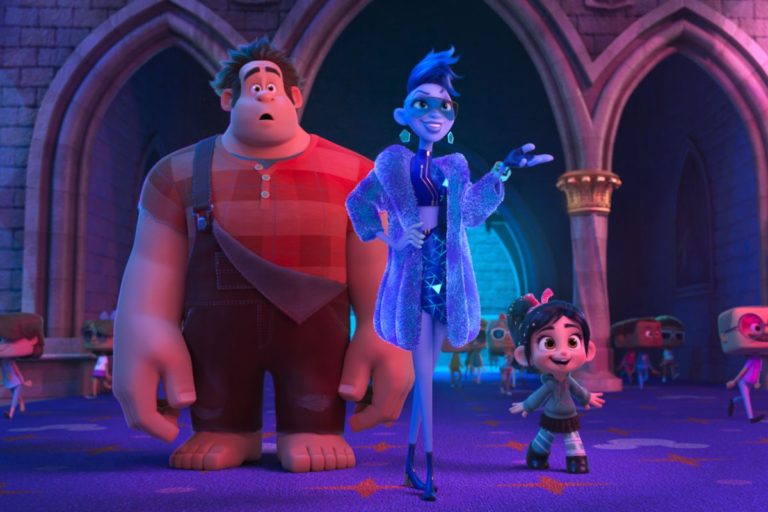
Movie Review: ‘Ralph Breaks the Internet’ is a fun movie with wonderful messages


Director: Phil Johnston, Rich Moore
Writers: Rich Moore, Phil Johnston, Jim Reardon, Pamela Ribon, Josie Trinidad
Stars: John C. Reilly, Sarah Silverman, Gal Gadot

Synopsis: Six years after the events of “Wreck-It Ralph,” Ralph and Vanellope, now friends, discover a wi-fi router in their arcade, leading them into a new adventure.

[/info]

Disney has been recently acquiring the rights to entertainment companies like Marvel, Lucasfilm, and soon Fox. This monopoly over a mass amount of pop culture and beloved fandoms has had a lot of people worried what Disney is going to do with them. Ralph Breaks the Internet is a fantastic example of what good came come of it.

This movie is packed full of references and easter eggs for all ages. I saw all my favorite Disney princesses, lolcats, Jason Mantzoukas, and references to video games I’d completely forgotten I had as a kid (Twisted Metal). I need to watch it at home, 5 feet from my tv, pressing pause every two seconds to find everything Disney threw in there. It follows our heroes from the first film, Ralph (John C. Reilly) and Vanellope (Sarah Silverman), as they explore the internet to save Vanellope’s game from being unplugged for good. During their adventures they encounter Ebay, Oh My Disney, Google, YouTube, Pinterest, ClickBait, Spam, and everything else you can imagine is on the internet and is appropriate for children.

The film includes many of the same characters from the first film and adds a handful of new ones. My favorites being Taraji P. Henson as Yesss the algorithm and Alan Tudyk as the search engine KnowsMore. Gal Gadot also makes an appearance as Shank – a character that reminds me of her role in the Fast and the Furious series. Most of the cameo roles are also voiced by their original actors. I loved how they managed to include so many well-known characters and pop culture references and the film was sill coherent and watchable. This movie could have easily turned into a gigantic, confusing, Disney mess.

Another positive for me were the messages embedded in the film. They managed to slip in tips on good internet behavior / etiquette while explaining about trolls and bullies. The overall theme was about being a good friend, feeling insecure, and how to not let that hold each other back. It was cute and well done. The animation techniques continue to amaze me. I watched the first movie about two hours before seeing the sequel and love the transition between retro and modern art styles. They continue that back and forth in this film with the added challenge of Pixar, classic Disney, and Marvel characters.

I can’t think of any negatives for this movie. The mass amount of advertisements, product placement, and references to other Disney characters might be a bit much for some. But that aspect of the film is made very clear in the trailers, so if you don’t like that sort of thing, then this movie probably isn’t for you… My stepdad who can’t stand animated movies, and has a specific distaste for Disney, actually saw this with me and laughed out loud many times. I don’t think he’ll admit to “liking” the movie but he will say it’s “not bad”.

Overall I think Ralph Breaks the Internet is a great film for kids and adults. It has a positive message, a wide array of nerd references to look for, and is genuinely fun to watch. It’s definitely another contender for Best Animated Feature so it will be interesting to see how that plays out this awards season. Until then, I will probably go see it again. If you choose to see it in theaters please, please stay until the very end of the credits.

Overall Grade: A

[divider]

Hear our podcast review on Extra Film soon!

[divider]

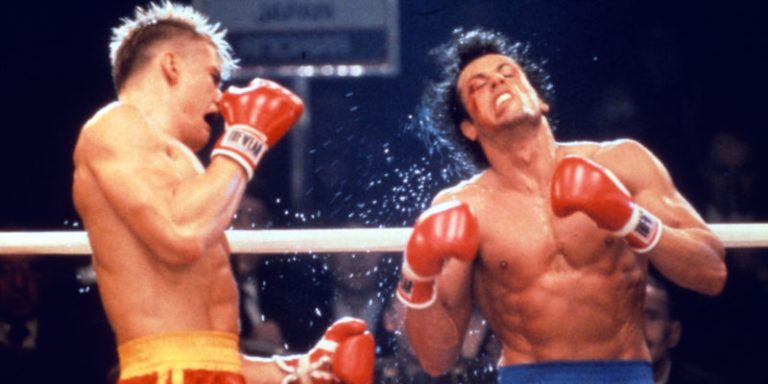
Poll: What is your favorite Rocky sequel?

Over the Thanksgiving weekend, we saw the release of Creed II in theaters. We’ll be discussing the film in full on Episode 302 this coming weekend, and we are using as inspiration for our poll this week. Specifically, we are focusing on the sequels in the Rocky franchise. There is one caveat however; we are not including Ryan Coogler’s Creed. Whether it be objective quality or recency bias, we think that film would run away with the poll so we opted to exclude it from contention.

That said, which Rocky sequel is your favorite?


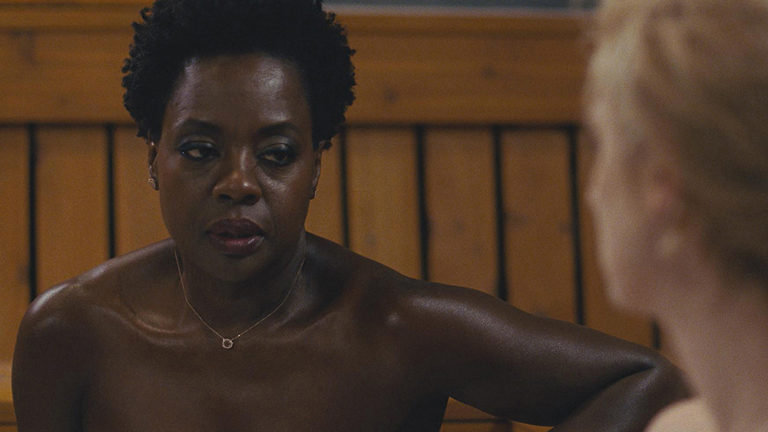
Movie Review: These ‘Widows’ are here to thrive and not to grieve


Director: Steve McQueen
Writers: Gillian Flynn, Steve McQueen; Lynda La Plante (based on)
Stars: Viola Davis, Elizabeth Debicki, Michelle Rodriguez, Cynthia Erivo, Colin Farrell, Brian Tyree Henry, Daniel Kaluuya, Carrie Coon

Synopsis: Set in contemporary Chicago, amid a time of turmoil, four women with nothing in common except a debt left behind by their dead husbands’ criminal activities, take fate into their own hands, and conspire to forge a future on their own terms.

[/info]

When the widows come knocking — masked and armed — the right thing to do is to roll out the carpet that leads to the safe.

Simply put, Widows is a ride. The film is your favorite theme park’s “deceitful attraction,” one that abandons its minimal-in-thrills guise the moment it’s in motion. Imagine boarding one of those teacups and then discovering there are boosters on the sides — that is how it is going to be from minute one. As for accompanying music? It will be commentaries both potent and pointed (and give merit to the argument that 20th Century Fox has mistimed this film’s release i.e. after midterms).

This Widows is a feature-film, Chicago-set version of the 1983 British series, and on a similar no it asks you to cross out all the husbands from the get-go. After some hurried morning embraces and equally so breakfasts, the four men are off to procure cash, illegally and with artillery, not knowing that today will be their last time. Melancholy promptly comes knocking on the wives’ door, of course, and for one of them — Veronica Rawlings (Viola Davis) — there is that plus politically tinged menace in the form of Jamal Manning (a masterfully intimidating Brian Tyree Henry) and his hitman brother Jatemme (a freaky Daniel Kaluuya). Per Jamal’s telling, the heist that Veronica’s husband (Liam Neeson) led was supposed to add $2 million to his campaign coffers, which should give him an edge over a legacy politician (Colin Farrell, properly weaselly), and since the cash isn’t here it’s now her job. With that much danger and threat, she won’t do it alone…

The four leads — Davis, Michelle Rodriguez, Elizabeth Debicki and Cynthia Erivo — are living winds, brewing affecting storms when the stacked script from Gillian Flynn and director Steve McQueen approaches chaotic beats or jolting gusts in calmer times. That said, it’s easy (yet wonderful!) to not sure which is which when the surprises arrive, which are gasp-inducing by design but — true to McQueen’s style — are delivered without any fluff. Davis and Debicki are the definite highlights in the cast here; as Veronica, the former capable of discreetly turning others’ underestimation into a power source and make that hoping of reaping what’s sown into a surety. Regarding Debicki, there is much engrossment to be found in seeing her Alice evolving from a frail heron — she is abused by both her mother (Jacki Weaver, rechanneling her Animal Kingdom days) and her husband (Jon Bernthal) — to one who can use that image to conquer the opposition.

Through that, however, the commentaries shine. Widows is a “heist film,” true, but during the planning it has the means to prove that it’s more; certain beats replicate first-page headlines and, in the bigger picture, an increasingly devastating transactional culture. In moments addressing these McQueen displays more ease and elegance. Brief flashbacks shock. What begins as a one-take that’s semi-confounding from a technical standpoint ends as a potent visual thesis on the ripples of corrupted power plays. Not that the grander set pieces aren’t affecting — credit to McQueen’s upfront style — but in this area the signs of unfamiliarity are seen. They’re fleeting, thankfully, since backing the director are Joel Walker and his smart editing plus Sean Bobbitt who dips every frame in contemporary grit.

Though worlds apart, Widows is in the same neighborhood with First Man (which our writer, Ryan McQuade, loved) as a quality show that is struggling at the box office. How odd, seeing there is no flag-in-absentia incident or anything of the sort to scream at? Whatever the case, the film’s current performance reflects a willingness to let anything coming for your wallet instead of those who, like these widows, will do that through thrilling movements and edifying conversations.

Overall Grade: A-

[divider]

Hear our podcast review on Episode 300:

[divider]

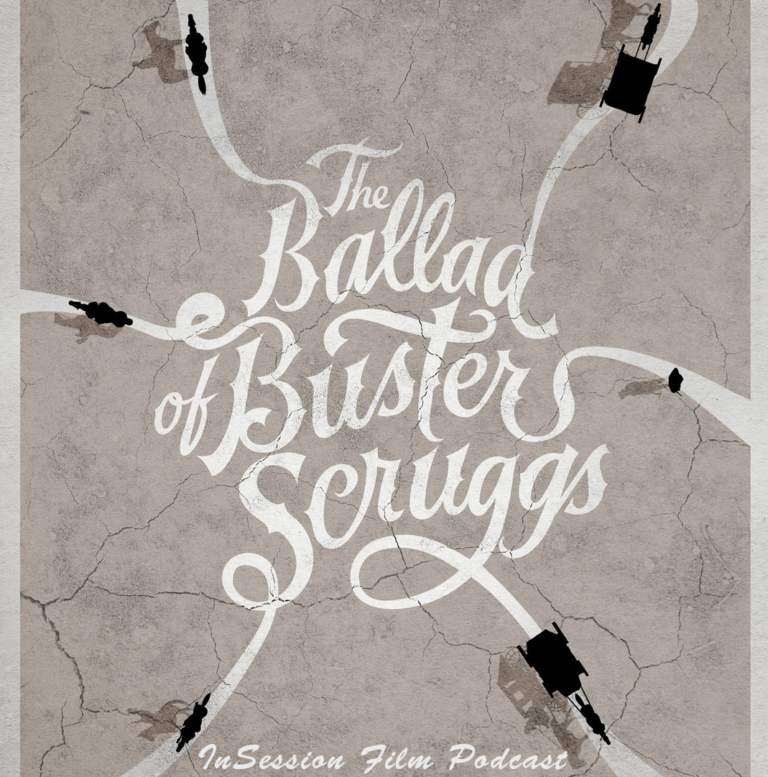
Podcast: The Ballad of Buster Scruggs / 300th Celebration Shenanigans – Episode 301

This week’s episode is brought to you by Patreon and our awesome listner’s like you. Sign up today and get some cool rewards!

This week on the InSession Film Podcast, Ryan and Jay join us on the Main Show to review the Coen brothers’ latest film The Ballad of Buster Scruggs and we celebrate 300 episodes by having a fun discussion about the films that have shaped us as cinephiles.

Big thanks to Ryan and Jay for jumping on this week to help us celebrate this milestone. It made for a longer show than normal, but when starting this venture, 300 episodes felt like it was impossible. So we wanted to do something interesting and unique to really soak in the moment, and we hope the conversation gave you some insight into why we love movies so much. Cheers!

On that note, check out this week’s show and let us know what you think in the comment section. Thanks for listening and for supporting the InSession Film Podcast!

– Movie Review: The Ballad of Buster Scruggs (6:05)
Director: Ethan Coen, Joel Coen
Writers: Ethan Coen, Joel Coen
Stars: Tim Blake Nelson, James Franco, Tom Waits, Liam Neeson, Zoe Kazan

– Notes (59:22)

Nothing crazy this week in terms of notes or extra discussion. We review our latest Extra Film and preview what’s coming next week (which you can see below).

[divider]

RELATED: Listen to Episode 295 of the InSession Film Podcast where we discussed First Man!

[divider]

– 300th Celebration Shenanigans (1:05:18)

We were not able to celebrate last week since we had too much on the slate, so we thought this week would be perfect. We talk about our backgrounds as cinephiles, what films have shaped us over the years and which one’s stand out as the best of all-time. It was a lot of fun and we hope you enjoy it as much as we did!

– Music

Cool Water – Tim Blake Nelson
When A Cowboy Trades His Spurs For Wings – Willie Watson, Tim Blake Nelson
Little Joe The Wrangler (Surly Joe) – Tim Blake Nelson
The Return of the Eagle – Atli Örvarsson

Subscribe to our Podcasts RSS
Subscribe to our Podcasts on iTunes
Listen on Stitcher
InSession Film Podcast – Episode 301

[divider]

Next week on the show:

Main Review: Shoplifters / Creed II
Top 3: N/A

[divider]

Help Support The InSession Film Podcast

If you want to help support us, there are several ways you can help us and we’d absolutely appreciate it. Every penny goes directly back into supporting the show and we are truly honored and grateful. Thanks for your support and for listening to the InSession Film Podcast!

VISIT OUR DONATE PAGE HERE