

Home Blog Page 245

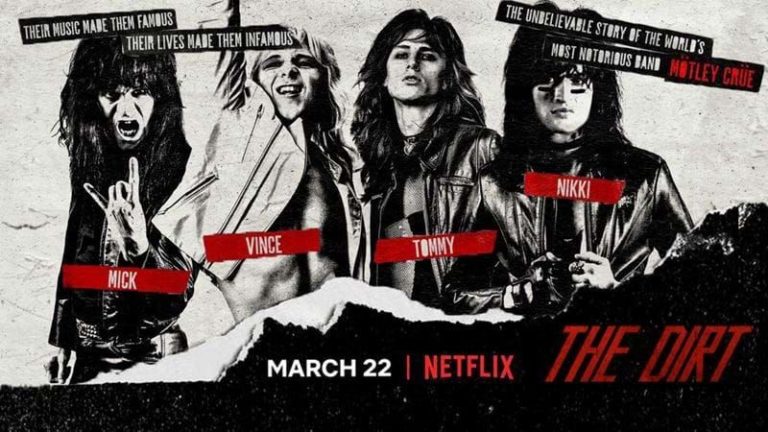
Movie Review: ‘The Dirt’ lives less on the “Wild Side”, and is just more of the “Same Ol’ Situation”


Director: Jeff Tremaine
Writers: Amanda Adelson, Rich Wilkes
Stars: Douglass Booth, Iwan Rheon, Daniel Webber, Machine Gun Kelly

Synopsis: The story of how Mötley Crüe came to be one of the most notorious rock ‘n roll groups in history.

[/info]

“Kneel down ye sinners to streetwise religion. Greed’s been crowned the new king. Hollywood dream teens. Yesterday’s trash queens. Save the blessings for the final ring. Amen.” (“Wild Side”, Mötley Crüe)

And a life on the wild side they lived. Formed by Nikki Sixx, Tommy Lee, Mick Mars, and Vince Neil (not their official names, as I’m sure you could tell), this gang of misfits would eventually dub themselves as the “world’s most notorious rock band”. Whether you agree with this notion is certainly up for debate, as the Hair Metal movement has since become notorious in its own right (almost like a taboo genre), churning out the most overly processed, superficial, and phony rock music of its time; the literal embodiment of sex, drugs, and rock and roll. Bands like Skid Row, Poison, Ratt, and Warrant were a youth gone wild who wanted nothing but a good time, a routine they circumnavigated round and round (maybe even chowing down on some cherry pie in the process).

I may have a bit of soft spot for 80’s Hair Metal, but even I can admit how stale many of these acts were. But amidst all the lipstick and leather pants, Mötley Crüe at least stood out. Releasing their debut album Too Fast for Love in 1981 (a genuinely great album in this writer’s opinion), Mötley Crüe in many ways predated and kickstarted the Glam Metal movement, nor did they fully succumb to the branded machine the genre would eventually turn into (aside from their wildly overrated hit album Dr. Feelgood in 1989). This motley crew were not pretty boys out for glamour, they were out for blood and anarchy, perhaps the closest thing to punk that the Sunset Strip ever housed.

Blood and anarchy are what fueled the band’s autobiography The Dirt: Confessions of the World’s Most Notorious Rock Band (the basis for this film adaptation now up on Netflix). That novel (which is a great read for any fan of rock and roll) represented a now older gang of misfits looking back on the nasty choices they made in the 1980s, with a strange blend of admiration and regret. This made for an interesting dichotomy, about a band who has become increasingly self-aware of their debaucherous lives; the pain it caused themselves and others, while still seemingly prideful in their actions. Whether they are still proud, it cannot be denied the vulgarity the band stood for (if we are to take their words truthfully). Just as they sang, Mötley Crüe lived life on the “Wild Side”, and their autobiography noted that.

But within our current landscape of music biopics, The Dirt just feels more like the “Same Ol’ Situation”.

It doesn’t open up that way, as the first five minutes of The Dirt should feel like a breath of fresh air for anyone who thought Bohemian Rhapsody played it way too safe. I won’t describe what happens here just for the sake of censorship, but it proves the Crüe’s life of disgusting debauchery, and demonstrates exactly why the band brought on Jeff Tremaine (of Jackass and Bad Grandpa fame) to direct.

…THEN The Dirt plays it safe.

“Safe” is the last word I thought I would use when describing a film about Mötley Crüe; but for all the Crüe’s depravity, it never feels more than merely implied. Amanda Adelson and Rick Wilkes’ screenplay does exactly what all modern music biopics should not do, adapting the band’s Wikipedia page instead of their novel. The band’s decadence and anarchistic motivations are directly explained to each other and to the audience, many times lazily breaking the fourth wall to do so, or with more voiceover narration than Robert McKee from Jonez and Kaufman’s Adaptation could stomach. The dirty implications themselves aren’t enough to leave an impact, and The Dirt just lays face down in the dirt because of it; perhaps we needed more of Ozzy Osbourne snorting fire ants and drinking his own (and Nikki Sixx’s) bodily fluids. For a film called The Dirt, it certainly could have (and should have) been dirtier.

Perhaps even more of the blame should be given to Jeff Tremaine, who makes his biggest transition to scripted features with The Dirt. The Sunset Strip in the 1980’s was its own cultural world, but nothing in The Dirt seems to understand that; the aesthetics are both too superficial and too clean, rendered so modernly that this could have taken place in the 2000’s. The film seems aware of this too, as its depth of field is so tight, contained, and quickly edited as if to desperately mask its failed sense of place. But nothing can compare to the film’s manipulative conclusion depicting this gang for what they always were – a family. I won’t discredit the real-life bandmates themselves, as I’m sure they truly feel this way about one another (and to be fair, their hardships involving Nikki Sixx’s mother, Vince Neil’s daughter, and the death of Hanoi Rocks drummer Razzle are necessarily explored); but within the context of The Dirt it all feels disingenuous, brief, tonally off-balance with the film’s degeneracy, and so saccharine that it may have actually been more disgusting than watching Ozzy Osbourne drinking urine.

The Dirt has some good scenes, especially when director Jeff Tremaine lets loose. The concert scenes are sometimes very electric (the band’s legendary first gig is a high point), a go-pro style sequence involving Tommy Lee’s daily routine is rather inspired, and not all the performances suffer under the weight of the material (Iwan Rheon as Mick Mars is arguably the only more than serviceable performance). And in these moments, The Dirt had musical potential. And that potential was precisely why I was shamefully excited for this film; perhaps even nostalgically so, as Mötley Crüe was one of those bands my high school friends and I would endlessly play along to, in leather pants of course (I realize I was born in 1989, don’t judge). Alongside my affection for the band’s novel, it’s easy to at least admire the film’s attempt at debauchery, something Bohemian Rhapsody deliberately chose to shy away from. But I urge anyone (even Mötley Crüe themselves) to watch The Dirt and decipher what makes this narrative different than the experiences of any other hard rock band.

Maybe it’s only appropriate that The Dirt ends up being the kind of music biopic that it is, a direct reflection of what 80’s Hair Metal became – overly processed, superficial, and phony. It so desperately (and tritely) tries to kickstart our hearts, but it lacks the looks that kill.

Overall Grade: C-

[divider]
Podcast: Steven Spielberg / Netflix Debate – Chasing the Gold Ep. 11

On Episode 11 of Chasing the Gold, Ryan is joined by Clayton Davis of Awards Circuit to talk about the Steven Spielberg, Netflix debate that has us questioning the rules of Best Picture eligibility.

There are many opinions floating out there on this topic, and with the film industry evolving and moving to streaming more and more, it makes for a fascinating conversation. Some people hate it, others are okay with this new trend. Either way, it’s going to be interesting to see where it all ends up. Ryan and Clayton dig into the nuance of it all on this episode and the ramifications that we could see down the road depending on what The Academy decides to do.

On that note, have fun with this week’s Chasing the Gold and let us know what you think in the comment section below. Thanks for listening!

– Steven Spielberg / Netflix Debate (1:00)

– Music

The Return of the Eagle – Atli Örvarsson

We try to make this the best movie podcast we possibly can and we hope you enjoy them. Subscribe today on iTunes, Spotfiy or Stitcher, and please leave us a review on iTunes. You can also find us on Soundcloud, PlayerFM and TuneIn Radio as well. We really appreciate all your support of the InSession Film Podcast.

Subscribe to our Podcasts RSS
Subscribe to our Podcasts on iTunes
Listen on Spotify
Listen on Stitcher
Steven Spielberg / Netflix Debate – Chasing the Gold

[divider]

Mobile App

To hear this Extra Film episode and everything else we do, download our apps on the Amazon Market for Android and the Podcast Box app on IOS devices. The mobile app covers all of our main shows, bonus podcast’s and everything else relating to the InSession Film Podcast. Thanks for your wonderful support and listening to our show. It means the world to us!

[divider]

Help Support The InSession Film Podcast

If you want to help support us, we would greatly appreciate it! For more info, CLICK HERE.

Movie Review: ‘The Public’ is inspiring and rewarding


Director: Emilio Estevez
Writers: Emilio Estevez
Stars: Emilio Estevez, Jena Malone, Alec Baldwin, Michael Kenneth Williams

Synopsis: An act of civil disobedience turns into a standoff with police when homeless people in Cincinnati take over the public library to seek shelter from the bitter cold.

[/info]

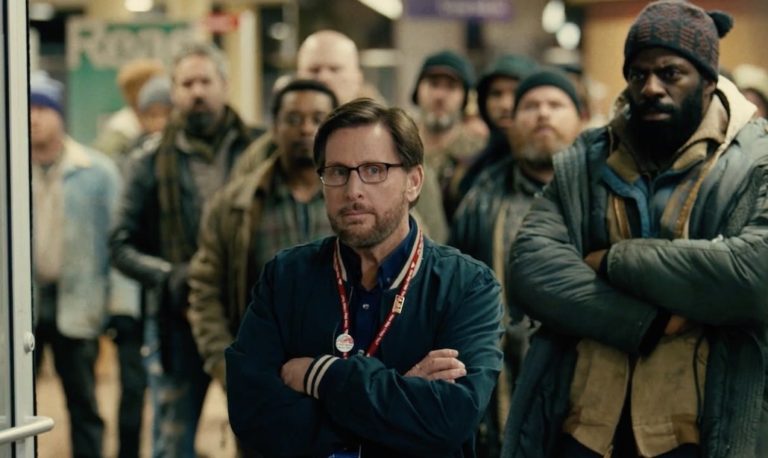
The Public is about the relationship between librarians and their patrons, specifically ones that are homeless. Before I saw this movie, I was unaware that public libraries were being used as makeshift homeless shelters during the day. People with nowhere else to go, especially when it’s cold, will go to the libraries to stay warm, have a good conversation, read, use the computers, etc. Then when the library closes, they leave, and are back waiting before the doors open in the morning. This is apparently a common occurrence in libraries all across the country, especially in areas with a large homeless population. This film does a beautiful job telling that story from all points of view; focusing mainly on the librarians and how this affects their job on a daily basis. The film takes place (and was mostly filmed) at The Public Library of Cincinnati and Hamilton County during a cold snap. In the beginning of the film they periodically show news clips about the extreme cold weather and about people on the streets dying of exposure. The cold and lack of shelter space leads a group of homeless patrons to stage a peaceful protest and refuse to leave the library at closing. The protest evolves into a standoff with police, political figures show up, library staff has to choose sides, and the media is scrambling trying to figure out what’s going on.

The film features strong performances from the lead and supporting cast. My favorites were Jena Malone, who plays a quirky librarian named Myra, and Michael Kenneth Williams who is a kind of spokesperson for the group of homeless men who refuse to leave the library. He does a great job providing comedic relief, as well as being the main point of view and storyteller for the homeless characters in the film. Emilio Estevez also does a good job as librarian Stuart Goodson. Goodson has a relationship with his homeless patrons and plays an integral role in the protest. This is not a subtle film, Estevez has the films messages out in the open, multiple times, in a variety of places. He is clear about his feelings about libraries being “the last bastion of democracy” and not to judge someone based on their social standing- even the title can have a double meaning within the movie.  Some critics have called the film a bit “preachy”, but I don’t feel it is.

Some negatives for me would be with the character development. This film is packed with good actors and interesting characters, but maybe it was too ambitious with the story to give them a chance to shine. I really liked Alec Baldwin as the police negotiator, he had a good backstory, but I wanted more. Christian Slater plays a jerk, I feel like that’s his go-to role now? I also wanted to learn more about the homeless patrons. We get to know a few of them, but I wanted more of their stories. The other character that was lacking was the library administrator/boss man Anderson (played by Jeffrey Wright). Wright is such a strong actor, and we didn’t get enough of him in this film.

I saw The Public at a local film festival (Alamo Drafthouse Lost Weekend XI) and was lucky enough to have a Q&A with writer/director Emilio Estevez after the showing. A big thing I took away from this film and the Q&A was there are no such thing as “homeless people”, there are people who are experiencing homelessness. There was an emphasis on making sure everyone, no matter their current situation, is seen as a human being, the same as everyone else. I believe the exact phrase I heard in the Q&A was they wanted this film to “celebrate humanity”. Emilio Estevez did a 30-city tour for the film at libraries, for homeless advocacy groups, and at film festivals. I enjoyed listening to him talk afterwards, he was obviously very passionate about the film and its subject matter. He talked about the 12-year process to get the film made, how he spent lots of time in libraries (incognito in a hoodie) for research and learning about the almost sacred relationship between librarians and their patrons.

Even with the flaws, I love this movie. It told a story I had no idea I needed to hear and inspired me to try and find a way to get more involved. It did a great job humanizing its characters. Librarians don’t just sit around and read books all day, and homeless people aren’t just crazy beggars like they’re portrayed in so many other films. It also doesn’t paint the other side – the police, politicians, media – as negative. It’s filled with strong, relevant messages while still being fun and watchable. It was one of my favorites of the film festival and I really hope others get a chance to support and love this film too.

Overall Grade: A

[divider]

Featured: Andrzej Wajda’s War Trilogy

A survivor of the Polish occupation by the Nazis, Wajda recreated stories of the Resistance against their occupiers as his entrance into global cinema. His three movies – A Generation, Kanal, and Ashes And Diamonds – are the masterpieces of ground-level guerilla battles Wajda witnessed in his homeland. As Poland got out the grasp of Stalinism, more independence within the socialist thought was given, including a formal Polish film school. Wajda was one of its first graduates. He wrote the stories with surviving Resistance members and collaborated with his fellow directors from film school, notably Roman Polanski in A Generation. At a time of political autocracy, Wajda’s work was of Polish pride and slow transition from full communist propaganda to the more traditional style storytelling that pulled itself out of the political muck the country would be in until 1989.

A Generation (1955)

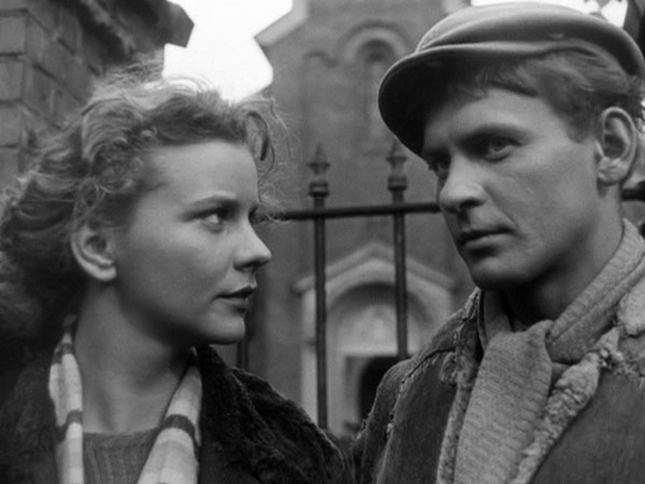
A young man living in on the outskirts of Nazi-occupied Warsaw is lured into the underground resistance and meets a beautiful girl. He immediately has to balance the dangers of saving his family, the girl he likes, and his own neck with the perils of being chased down by the Nazis. For Poles in the factories, they have to make weapons for the Germans but find a way to foil their plans knowing sabotage was an automatic death sentence, as well as being a communist, the group of people who the resistance. The romanticism is short-lived and socialist realism is installed in the common tragedy that befalls for resistance members. The setting of Poland in World War II would be repeatedly visited by Wajda throughout his career, although his characters were more aware of their actions and the patriotism was toned down after this film.

Kanal (1957)

https://www.youtube.com/watch?v=7LnLszHOLNs

Literally “Canal,” as in the sewers, the Warsaw Uprising in 1944 is in its final days as the Nazis begin to round up surrendering soldiers. A narrator and establishing shot shows us the dire scenario the people are in. The Soviets are waiting for the Uprising to end before they invade the rest of Poland to finish the rest of their planned annexation. Those who choose to fight on have no choice but to actually go underground and in the mud and shit to reach a safe area away from the Nazis. However, the sewers are a maze and the large group splits up in confusion, making it almost everyone for themselves. The legendary sewer chase scene in The Third Man was clean and big while Kanal presents the one-way exit as claustrophobic, smelly, and water up to their knees. Separately, there are love scenarios within the resistance and what they plan to do when they come out, hopefully, free and victorious from the sewers. When they reach an end, it is actually a dead end – literally. Again, the realism of trying to escape is enacted.

Ashes And Diamonds (1958)

https://www.youtube.com/watch?v=4ypycSAPFgA

On the last day of World War II, a new conflict is about to begin between Polish exiles and the newly occupying Soviet troops. Maciek, a long-time resistance fighter who has to wear sunglasses outside because he’s spent so much time underground, emerges having failed to kill the new Soviet communist party secretary and to complete the job. By this point, Maciek has questioned whether or not to continue his fight, especially after meeting a barmaid who tells him that he could come out with a new life in a peaceful world. This was arguably Wajda’s finest film of his entire career as it was separated from the Soviet influence to give a character who was more freed from his convictions. It also provided a contrast in political views when we hear of Maciek’s surrogate father talk about his family’s right-wing support a decade earlier. The film’s title comes from a poem inscripted in a bombed out church Maciek and the barmaid find that symbolize the beauty that could come out of the war’s anger inflicted upon its survivors, especially Maciek.

Wajda was the first of a string of great Polish film directors followed by Roman Polanski and Krzysztof Kieslowski. His later work such as Promised Land, Man of Marble, Maids of Wilko, Danton, and Katyn reflect the Poland of past and what they were going through. Poland’s history has been attempted to be rewritten by people outside the nation and Wajda has been present to use his power, to tell the truth. Wajda’s War Trilogy was the first blows in his master to tell of Poland’s darkest time and the introduction to a new generation of Eastern European-based maestros.

Follow me on Twitter: @BrianSusbielles

Podcast: No Country for Old Men – Ep. 320 Bonus Content

Listen!

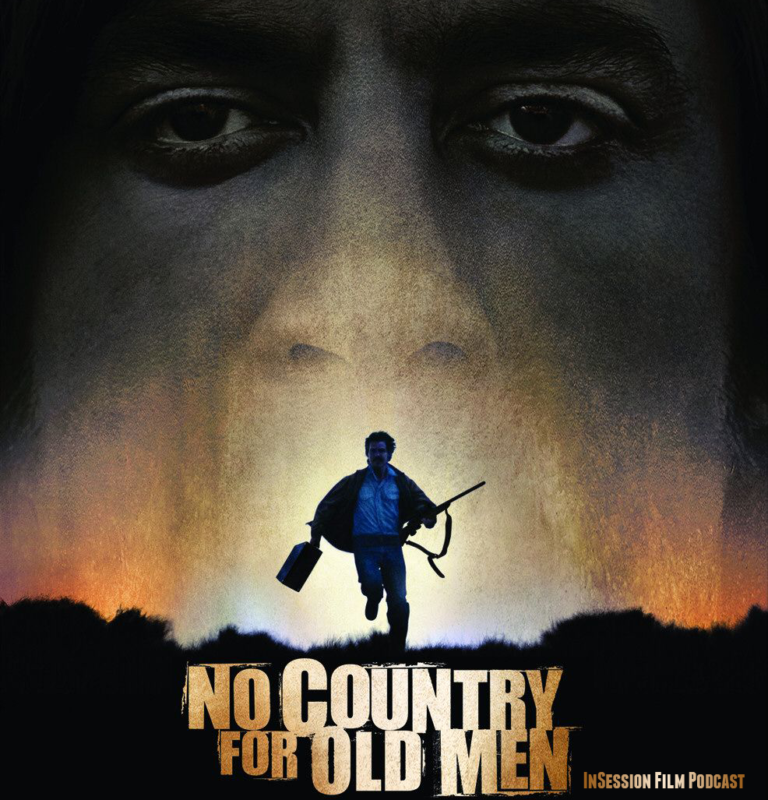
For our Episode 320 Bonus Content, we continue our Patreon Series with a suggestion via Ethan where we discuss the 2007 Oscar-winning film No Country for Old Men!

*Note: While this review originates from a Patreon subscriber, it is available to the public on our main show feeds.

[divider]

HELP SUPPORT THE SHOW

To hear our bonus content episodes early, subscribe now on Patreon. In many cases, though, we offer our bonus content for free after a certain period of time and we do encourage (and very much appreciate) a small donation of $0.99 as a way to help support the show if signing up on Patreon isn’t for you. Click on the PayPal button below to donate and thanks so much for your support. You can also hear much of our Bonus Content via our mobile apps. See the information at the bottom of the post for more details.


One-Time Donation


[divider]

Mobile Apps!

Listen to all of our bonus content on our apps for just a one-time fee! Whether you have an iPhone, Android or Windows phone, our apps are available in many different ways that is convenient for you. With our mobile app, not only can you listen to all of our bonus content, but our main shows and our Extra Film podcasts as well. Click here for more info!

If you don’t want to purchase our bonus content, but still want to support us, there are other you can help us out. Click here for more info.

Movie Review: ‘Unicorn Store’ is a colorful directorial debut for Brie Larson


Director: Brie Larson
Writers: Samantha McIntyre
Stars: Brie Larson, Samuel L. Jackson, Joan Cusack

Synopsis: A woman named Kit receives a mysterious invitation that would fulfill her childhood dreams.

[/info]

Movies have long been an art form focused on the power of dreams. In Brie Larson’s directorial debut Unicorn Store – recently released on Netflix – dreams propel the narrative, but they are not felt deeply enough to make the impact for which the film reaches. That’s not to say this is a sub-par film. I enjoyed it quite a bit, and Larson shows clear directorial talent. But from weakly-written characters to an ending that doesn’t fully stick, this film holds itself back from being what it could be.

The story centers on Kit (Larson), who we learn in the film’s opening scene is a failed artist who now lives at home with her parents Gene (Bradley Whitford) and Gladys (Joan Cusack). Kit’s art was centered on unicorns and glitter, a fascination born during her adolescent days. She still harbors those artistic dreams, but she is now faced with becoming an adult and the realities that come with that transition. She takes a temp job at a PR firm led by the off-putting Gary (Hamish Linklater). At the same time, she finds that her childhood dreams may not be completely lost and they may not even, in fact, be dreams.

Let’s start with the good. This film is riddled with strong acting talent, and the actors prop up the characters as they are written. Larson, who the Academy Award for Best Actress for her performance in Room, gives a strong leading turn as Kit. I feel compelled to include the reminder of her acting acclaim since clearly there are some who think she is not qualified. Whitford (a personal favorite of mine since his West Wing days), the prolific Samuel L. Jackson and Linklater all give strong performance. However, the performance of the film comes from Cusack in a scene-stealing turn as Kit’s mother, Gladys. She is hilarious, using her famous comedic timing to perfect effect. The scenes that she is in are some of the best in the entire film.

As a writer who also works in the PR department at a marketing agency, I was able to resonate with a lot in this film. I particularly like the notion that childhood dreams are not trivial matters to be tossed aside in adulthood but rather, those dreams might just lead us into the very success we seek as we grow older.

However, I think the film struggles to make Kit’s dreams any more than fodder for the film’s plot. I never really felt invested in her chase, and there wasn’t enough emotional resonance for the film to work 100%.

I also think that the relationship between Kit and Virgil (Mamoudou Athie) needed to be more powerful. I didn’t feel the chemistry there that absolutely must be there for the film’s payoff to work. Again, I think the blame there rests more on the writing than the acting, as I thought both Larson and Athie give fine performances.

I enjoyed the first half of this film much more than the ending. I think that’s because – due to some of the ways I personally resonate with the story – I felt like the film was setting itself up well. It fails to stick the landing, though. That doesn’t make me totally forget that the film had a strong setup, but it did leave a sour taste.

There’s a lot to like about this film. Visually, Kit’s artistic bent opens up a bevy of colorful visual choices. The acting is strong across the board. It is a fun story that is surely more interesting than much of the other content on Netflix. And it’s always fascinating to see a strong actress or actor take the plunge into directing. For all those reasons, Unicorn Store is a good film. Just keep your expectations in check going in, as for all its strengths, its weaknesses ultimately hold it back.

Overall Grade: B

[divider]

Poll: What is your favorite Laika Studios film?

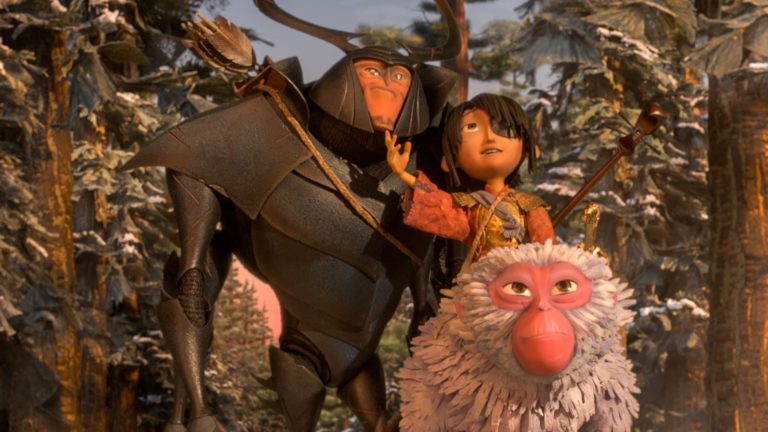
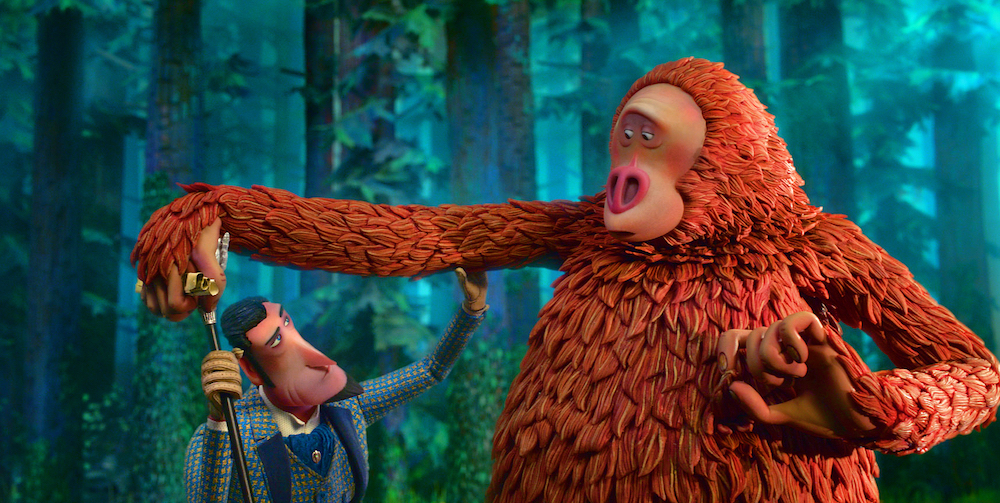
This weekend on Episode 321 we’ll be discussing Missing Link, the fifth film from Laika Studios, who is doing their best to keep stop-motion animation alive. If you ask us, they haven’t made a bad film yet and we hope that trend continues this weekend. With that said, we are keeping things pretty simple for our poll this week. What is your favorite Laika Studios film?

Vote here!


List: Top 3 Adult-Child Friendships

This week on Episode 320 of the InSession Film Podcast, inspired by Shazam!, we decided to talk about the best adult-child friendships in film. Adult-child friendships are not only a trope that many films have used, but they’re some of the best relationships we’ve seen in film over the years. There’s something endearing about it and there’s often some sort of poignant message that makes the journey we go on with these characters all the more affecting. Meaning, there were tons of great options for this list and we enjoyed dissecting the films/friendships that rose to the top for us.. That said, here are our lists:

(Note: Please keep in mind that we each had different criteria for our selections)

JD

1) Osamu / Sobuyo / Shota / Yuri – Shoplifters
2) Louis / Lestat / Claudia – Interview with a Vampire
3) Owen / Duncan – The Way Way Back

Brendan

1) Marty / Doc Brown – Back to the Future
2) M. Gustave / Zero – The Grand Budapest Hotel
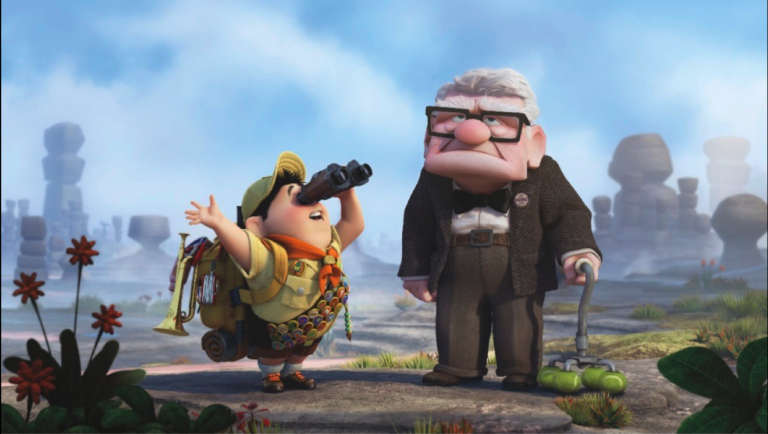
3) Carl / Russell – Up

Honorable Mentions (Combined)

Adult-child friendships in Star Wars, The Kid, Logan, Léon: The Professional, The Wizard of Oz, Dead Poets Society, Good Will Hunting, Indian Jones and the Temple of Doom, Our Little Sister, True Grit, Mr. Holmes, Hunt for the Wilderpeople, Jurassic Park, Spider-Man: Into the Spiderverse, Spider-Man: Homecoming, Mary Poppins, Karate Kid, T2, The Sixth Sense, Moana, Wreck-It Ralph, Big, Joe, Mud, Harry Potter, The Hunger Games, About a Boy, St. Vincent, Secondhand Lions, Finding Forrester, The Jungle Book, Big Daddy, Bad Words

Hopefully you guys enjoyed our lists and if you agree or disagree with us, let us know in the comment section below. As noted above, there are a tons of other films and friendships available for this list and there’s a good chance we missed something that would make your list. That being said, what would be your Top 3? Leave a comment in the comment section or email us at [email protected].

For the entire podcast, click here or listen below.

For more lists done by the InSession Film crew and other guests, be sure see our Top 3 Movie Lists page.

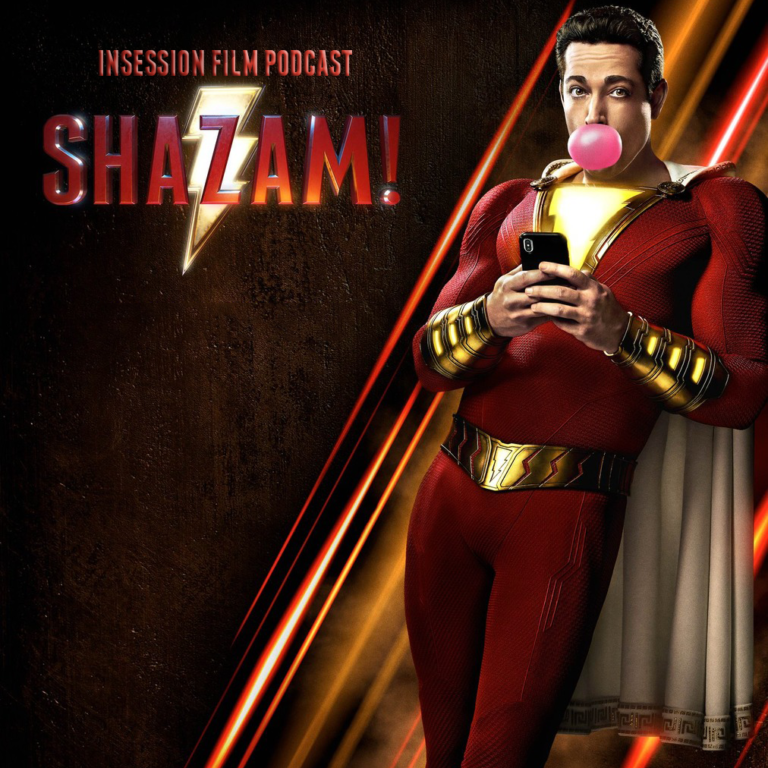
Podcast: Shazam! / Top 3 Adult-Child Friendships – Episode 320

This week’s episode is brought to you by the Grammarly. Download the app for free today!

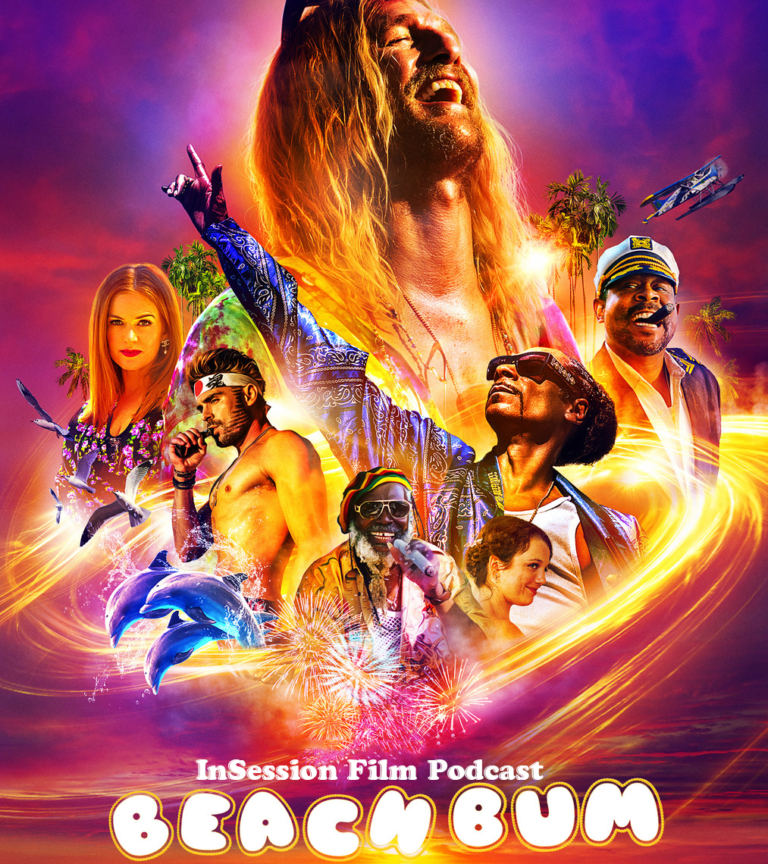
This week on the InSession Film Podcast, we discuss the latest film to hit the DCEU in Shazam! and our Top 3 adult-child friendships in film! We also give brief thoughts on The Beach Bum, The Dirt, Unicorn Store and The Highwaymen.

The DCEU has come a long way since its beginnings in 2013 with Man of Steel. Some may still prefer their darker tone, but we are big fans of the humor and charm we’ve seen in the last three films they’ve put out. Hopefully they can keep this momentum going. Shazam! was fun to talk about and it inspired an interesting top 3 discussion that was equally as gratifying.

That said, check out this week’s show and let us know what you think in the comment section. Thanks for listening and for supporting the InSession Film Podcast!

– Movie Review: Shazam! (3:55)
Director: David F. Sandberg
Writers: Henry Gayden
Stars: Zachary Levi, Mark Strong, Asher Angel

– Notes / The Beach Bum / The Dirt / Unicorn Store / The Highwaymen (39:19)
As mentioned above, JD and Brendan both got a chance to catch up with Harmony Korine’s latest in The Beach Bum and were excited to give some thoughts on it. Brendan also caught up with the Mötley Crüe biopic The Dirt, while JD was able to see Brie Larson’s Unicorn Store and John Lee Hancock’s The Highwaymen. Funny enough, all three of those are up on Netflix as well.

[divider]

RELATED: Listen to Episode 316 of the InSession Film Podcast where we discussed Captain Marvel!

[divider]

Top 3 Adult-Child Friendships (1:05:45)
Adult-child friendships are not only a trope that many films have used, but they’re some of the best relationships we’ve seen in film over the years. There’s something endearing about it and there’s often some sort of poignant message that makes the journey we go on with these characters all the more affecting. Meaning, there were tons of great options for this list and we enjoyed dissecting the films/friendships that rose to the top for us. That said, what would be your Top 3?

Top 3 Sponsor: First Time Watchers Podcast

– Music

Shazam! Theme – Benjamin Wallfisch
Married Life – Michael Giacchino
Duncan’s Theme – Rob Simonsen
The Return of the Eagle – Atli Örvarsson

Subscribe to our Podcasts RSS
Subscribe to our Podcasts on iTunes
Listen on Spotify
Listen on Stitcher
InSession Film Podcast – Episode 320

[divider]

Next week on the show:

Main Review: Missing Link
Top 3: TBD

[divider]

Help Support The InSession Film Podcast

If you want to help support us, there are several ways you can help us and we’d absolutely appreciate it. Every penny goes directly back into supporting the show and we are truly honored and grateful. Thanks for your support and for listening to the InSession Film Podcast!

VISIT OUR DONATE PAGE HERE

Movie Review: ‘Us’ is a haunting look at the forgotten in America


Director: Jordan Peele
Writers: Jordan Peele
Stars: Lupita Nyong’o, Winston Duke, Elisabeth Moss, Evan Alex, Shahadi Wright Joseph

Synopsis: A family’s serene beach vacation turns to chaos when their doppelgängers appear and begin to terrorize them.

[/info]

When Jordan Peele’s debut film Get Out came out a couple of years ago, I didn’t see it till it had left the theater. When I finally saw it, I thought it was a real fun horror movie with social messages that rang true to the time we were living in. I think I gave the movie a B letter grade. But as the months went on, I couldn’t get it out of my head, thus when I went back and I rewatched it, the letter grade bumped up. When I saw it again last year, I realized I had made a mistake in not putting it in my top 10 and would rank it really high if I went back and did that exercise again.

So when I was given the opportunity to go to South by Southwest for this website, I felt there was no better way to watch his follow-up, Us,  than by watching it at the world premier with a massive audience that would be clamoring to see what Peele gives us next. And by the time the end credits rolled up on the screen, I sat in my seat speechless, wondering what it was I had just seen. It took me weeks and a rewatch of the film outside of the festival to finally settle on how I feel about Us, which I think is one of the smartest films in years and one of the most layered horror films of all time. Peele takes everything we loved about Get Out and doubles down with a message about how are country is broken and that the real people we should be worried about is the person you see in the mirror.

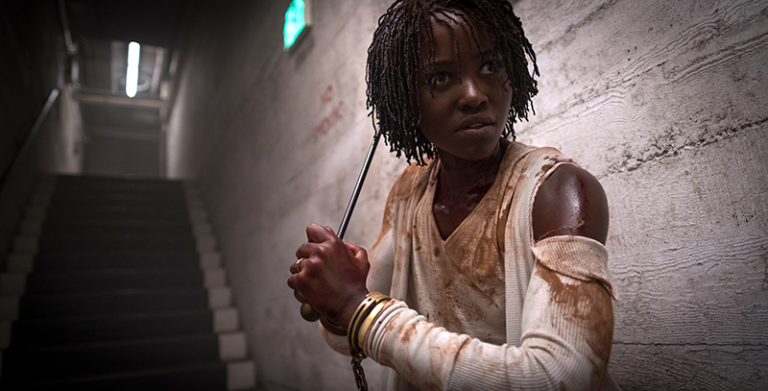
Us follows Adelaide (Lupita Nyong’g), who is a wife to Gabe (Winston Duke) and mother of two to Zora and Jason (Shahadi Wright Joseph, Evan Alex). When Adelaide was young, she experienced a traumatic event where she confronts what looked to be a copy of herself while being at a carnival near the beach with her parents. That moment shaped her life to what it is today and how she raises her two children. While on an annual family vacation, Gabe suggest that they all go to the beach for the day with their friends the Tyler family (Elisabeth Moss, Tim Heidecker, Cali and Noelle Sheldon). Adelaide doesn’t want to go, knowing it would be the exact same beach as the one from her nightmare encounter but she caves and goes with her family.

They arrive at the beach and spend some time there before Jason wonders off and Adelaide maniacally looks for him and, when she finds him, demands that they go back to their house in fear of something similar that happened to her happening to Jason. They get home, spend a normal cozy night together, and before they go to sleep, Jason comes into his parent’s room and tells them that there is a family standing at the top of their drive way. But it is not just a family, it is a family of doppelgangers who are in red jump suits with shape gold scissors in their hand. They are here for an awakening of the world that Adelaide and her family live in and what soon follows is some of the best storytelling of the years that will not be spoiled in this review so don’t worry.

What I will talk about are the themes of the film, and some of the messages that I felt Peele was trying to talk about within the characters and story that we saw on the screen. While Get Out is about race in American, Peele takes Us to a different level in discussing the true state of America as it is right now. These doppelgangers, or the Tethered as they are called in the film, represent so many things that are wrong with America today. When it comes to the unheard people who live in the middle part of the country, the untold stories that are never told on the news, and the rage that one gets when the people you lived with your whole life are suffering at the hands of others that don’t even think that you exist. And thus the uprising that we see in the film is one that we can relate to, with many people feeling so enraged when having discussion about changing the world that they would strangle each other just to get their points and message across. There is also a call back to Hands Across America, used in an effectively creepy way to show not just the symbolism of the border wall discussion that is going on in modern American politics but it also shows this attachment to the ideas of the past and not moving on with new ideas and policies for the modern world we live in. With this attachment to the past, the Tethered cling to the idea of getting this country back and doing whatever it means necessary to be the ones in charge.

Beyond just the themes of the movie are the performances from the cast but especially Lupita Nyong’g, who is compelling as Adelaide and completely deranged, evil and sympathetic as Adelaide’s doppelganger Red. It’s is really hard to give two performances within the same film and give them so much pathos and memorability and yet she nails every scene she is in, giving the best performance in a horror film since Linda Blair in The Exorcist, yes she is that good. It’s crazy to think that this is her first lead actress performance of her career but it is and she knocks it out of the park. The kids are stellar in the film, working great alongside Nyong’g and Duke, giving us a lot of fun moments.

But speaking of fun moments, if Lupita wasn’t in this movie, the performance we would be talking about in this movie would be from Winston Duke, who does a complete one-eighty from his performance in Black Panther last year, and gives us so many hilarious moments that really bring levity to the darker tones that are consistent throughout the film. The actors playing the Tyler family are solid, with Elisabeth Moss shining over the bunch and really giving us a smaller version of what Lupita was giving us in her performance. But while the focus of the film is never on them, they do a great job with they are given and put in some pretty solid work.

Besides the performances, the biggest thing that stood out in Us was the maturity in Jordan Peele’s direction. While the script has a lot to say, and isn’t as clean as Get Out (which is the point), it is the direction in Us that, in my opinion, is leaps and bounds ahead of his debut. The colors of the fun house mixed with the close-ups are similar to the Sunken Place scene but they feel more terrifying and beautiful than that memorable scene, reminding me of the close-ups Barry Jenkins has in Moonlight and If Beale Street Could Talk. The ending of the film has one of the best shot sequences where Adelaide and Red face off, with dynamite editing mixed with a perfect score from Michael Abels. The scene is very much an early contender for scene of the year for me and Abels score could be an early contender for best score as well considering how hypnotizing yet elegant it is.

I could write a whole book about how much I love this movie but I will leave you with this final thought. Us has shown me that Jordan Peele is slowly becoming one of my favorite directors working today. I love how he understands how to attract audiences to smart, audacious genre movies better than anyone right now. I continue to be in awe of him and keep thinking that we are seeing someone grow into the next big thing in front of our eyes by their own rules. And just like that audience that I saw this movie with for the first time at SXSW, I can’t wait till his next film comes out so I can be just like them, being all in and knowing what I’m about to get into with this audience. I want to feel like this because I’m all in on what Peele is selling right now and I’m buying stock in him as the future storyteller of this generation.

Overall Grade: A

[divider]

Hear our podcast review on Episode 318:

[divider]

Podcast: The Beach Bum / Dragged Across Concrete – Extra Film

This week on the InSession Film Podcast: Extra Film segment, Ryan and Jay discuss a pair of provocative films that have garnered very polarizing responses.

First, the guys discuss the latest film from Harmony Korine, The Beach Bum. The film stars Matthew McConaughey as, well, a beach bum. McCounaghey plays Moondog, a hard-partying poet with a pension for weed and PBR. The zany comedy is surprisingly straightforward on the surface but Jay and Ryan break down the darker underbelly of the film throughout their conversation.

Then, the talk shifts to S. Craig Zahler’s Dragged Across Concrete, a film drowning in controversial decisions. Mel Gibson and Vince Vaughn star as problematic cops. Is it controversy for controversy’s sake, or is it a worthwhile exploration of the state of America? Ryan and Jay have differences of opinion, which makes for a great segment.

On that note, have fun with this week’s Extra Film segment and let us know what you think in the comment section below. Thanks for listening!

– Movie Review: The Beach Bum (8:14)

Director: SHarmony Korine
Writer: Harmony Korine
Stars: Matthew McConaughey, Snoop Dogg, Isla FIsher

– Movie Review: Dragged Across Concrete (42:12)

Director: S. Craig Zahler
Writer: S. Craig Zahler
Stars: Mel Gibson, Vince Vaughn, Tory Kittles

– Music

Moonfog – Jimmy Buffet
Street Corner Feline’s – O’Jays, Eddie Levert, Walter Williams
The Return of the Eagle – Atli Örvarsson

We try to make this the best movie podcast we possibly can and we hope you enjoy them. Subscribe today on iTunes, Spotfiy or Stitcher, and please leave us a review on iTunes. You can also find us on Soundcloud, PlayerFM and TuneIn Radio as well. We really appreciate all your support of the InSession Film Podcast.

Subscribe to our Podcasts RSS
Subscribe to our Podcasts on iTunes
Listen on Spotify
Listen on Stitcher
The Beach Bum / Dragged Across Concrete – Extra Film

[divider]

Mobile App

To hear this Extra Film episode and everything else we do, download our apps on the Amazon Market for Android and the Podcast Box app on IOS devices. The mobile app covers all of our main shows, bonus podcast’s and everything else relating to the InSession Film Podcast. Thanks for your wonderful support and listening to our show. It means the world to us!

Featured: Left Bank Cinema – The Other French Wave

Francois Truffaut and Jean-Luc Godard are the two most common names out of the French New Wave subject but there were a few others who did not feature the same radical style as them. The famous Cahiers du Cinema emerged from the right side of the Seine River while other directors emerged from the other side, hence the Left Bank. These directors were not heavy on cinema and were a bit older. Their work was also more on the radical side in style but was still reading up on traditional literature and art. Still, the Right Bank championed their work and drew out some notable directors who created impressive works.

Alain Resnais

Resnais began with short films and made a strong statement in his 30-minute Holocaust documentary Night And Fog. Instead of traditional documentary work, Resnais intercutting of historical evidence of the concentration camps with colored tracking shots of the actual sites stunned many and received universal acclaim. The same year Truffaut’s 400 Blows was released, Resnais came out with his first feature film Hiroshima Mon Amour, a story about an affair between a Japanese businessman and a French woman, played by Emmanuelle Riva. His next film, Last Year At Marienbad, dealt with a past affair in which the man asks the woman if she remembers their encounter if she is the right woman, that is. Resnais tales of memory is hypnotic and confounding, but some were baffled upon release. Resnais took the political route deeper into the 1960s before returning to dramas drawn upon in musicals, theatre, and pop culture in general.

Jacques Demy

Demy was a lover of the fairy tale and the Hollywood musical. Bay of Angels, The Umbrellas of Cherbourg, The Young Girls of Rochefort, and Donkey Skin featured the themes of fate, coincidence, and romance that would either succeed or fail. His works of musicals and melodramas will full of color as if the beach settings were a fantasy land, and his collaboration with musician Michel Legrand stirs the soul of each picture. Cherbourg was Demy original sung-through musical of a love affair doomed while Rochefort, which brought on song-and-dance legend Gene Kelly in a supporting role, featured two young sisters who cross paths with men of interest in the town square. Towards the last several years of his life (he died of AIDS in 1989), Demy made the darker toned, politically inclined sung-through musical A Room In Town. Demy was about making the magic come to life and keeping is in the vivid and sunshine singing or dancing. It should also be noted that he was married to the next director below.

Agnes Verda

Verda was married to Jacques Demy until his death in 1989. The two sides did not cross over in each other’s work, showing Verda’s incredible independence as a film director which went through until recently with her Oscar-nominated Faces Places. She made a splash with Cleo From 5 to 7, a story about a woman who wonders for two hours waiting for the results of a test. Cleo is a beautiful woman, two young to be dying, but she ponders about the possibility of a sudden death and goes to different places while examining the standing of women in society. More than twenty years later, Verda made a splash again with Vagabond, where a female drifter’s last days before dying in a field is told in flashbacks, revealing another portrait of an independent woman who fights to the last moment to be on her own. Verda’s recent passing one day short of her 91st birthday is the fall of among the last icons of this era; only Godard is alive.

Chris Marker

He was an all-in-one filmmaker: writer, director, editor, photographer, and so-on. In the fifties and early sixties, Marker started by making documentaries that were experimental and filmed in Russia, Israel, and Cuba, his own type of travelogue. Two films of his stand out La Jette and Sans Soleil. Marker’s La Jetée is a short film but a brilliant one about time travel told in still images – just photographs and no moving shots – of a world where the fears of a war take over and the desire to go back into the past to fix the wrongs turns into an illusion. This would be the basis of Terry Gilliam’s sci-fi film 12 MonkeysSans Soleil was released twenty years later and moved into color, where Marker takes us to Japan and Africa in a cinematic essay rather than a documentary mixing original and documentary footage with no sync sound.

Other writers and directors such as Henri Colpi, Marguerite Duras, and Jean-Pierre Melville were also associated with the Left Bank. It is a different style, one less Bohemian, compared to the flying, youthful group of storytellers across the Seine. At the center of the French New Wave is being inexpensive but showing high production value. The Left Bank stood out with its own formality and experimentation that was slightly less seen than the heavy hitters of Truffaut, Godard, and Claude Chabrol. However, they are extremely fascinating pieces that only diversify the creation poured into the 50s, 60s, and beyond that came from France and remain in the canon of cinema history.

Follow me on Twitter: @BrianSusbielles (Cine-A-Man)

Movie Review: ‘One Cut of the Dead’ is a horror masterpiece


Director: Shin’ichirô Ueda
Writers: Shin’ichirô Ueda
Stars: Takayuki Hamatsu, Yuzuki Akiyama, Harumi Shuhama

Synopsis: Things go badly for a hack director and film crew shooting a low budget zombie movie in an abandoned WWII Japanese facility, when they are attacked by real zombies.

[/info]

One Cut of the Dead is a Japanese film (in Japanese with English subtitles) that is part horror, part comedy. The plot is fun to describe, it’s about a live streamed tv zombie apocalypse movie, who’s film crew runs into real zombies while filming. The movie can be split into three parts- First, the entirety of the low-budget One Cut of the Dead film (which is done as one 37-minute continuous shot). Then, the film zooms back a month prior to filming and shows you how this movie came to be and gives you background on the characters. Finally, the movie wraps with the hilarious “behind the scenes” look at the live tv broadcast and all the craziness that happened while making the movie. It’s a movie inside of a movie inside of a movie. It’s weird to describe but go watch it and it will make sense.

I cannot express how much I love this movie. I am so grateful I got to see it on the big screen and that I went in mostly blind as to what I was going to be watching. All I knew is that it was Japanese zombie movie that my friend highly recommended. This film is the perfect balance of cheesy zombie gore and camp that keeps you eager to see more. Once the film got going, I did not stop laughing, I’ve never seen anything quite like it. They managed to fill the movie with jokes and mayhem, while also giving you a good background on the characters. Takayuki Hamatsu, who plays the film’s director Higurashi, was a stand out for me. His energy, facial expressions and comedic timing were just as good (if not better) than any well-known comedic actor working today. My other favorite was Harumi Shuhama who plays the director’s wife, Nao. She added some great comedic bits to the film. I love the format of the film, how they kind of unofficially split it into three sections, it was something different for me. The music also stood out and was a great feature of the film.

One Cut of the Dead hasn’t had a wide release yet. It has been making its way around film festivals, primarily in Asia, since November of 2017. It’s been well received at its screenings and has been racking up great reviews and ratings for two years. I know it was one of the fan favorites at the film festival, Winchester Film Club’s Lost Weekend XI, where I was lucky enough to see it. I heard stories about a pirated copy appearing on Amazon and it causing problems with the films distribution. I hope these are resolved in the future and people can see this film. I know an American/English remake is in the works, but I am confident it will not have the charm the original holds.

One Cut of the Dead has definitely made its way onto my “Favorite Movies of All Time” list. It has re-sparked my interest in Japanese films, so I will need to go out and discover more to enjoy. A prominent feature of this film is its 37-minute continuous shot, as well as its masterful balance of zombie gore and humor. I highly recommend this movie to anyone who has the chance to see it.

Overall Grade: A+

[divider]

Podcast: The Silence of the Lambs – Ep. 319 Bonus Content

Listen!

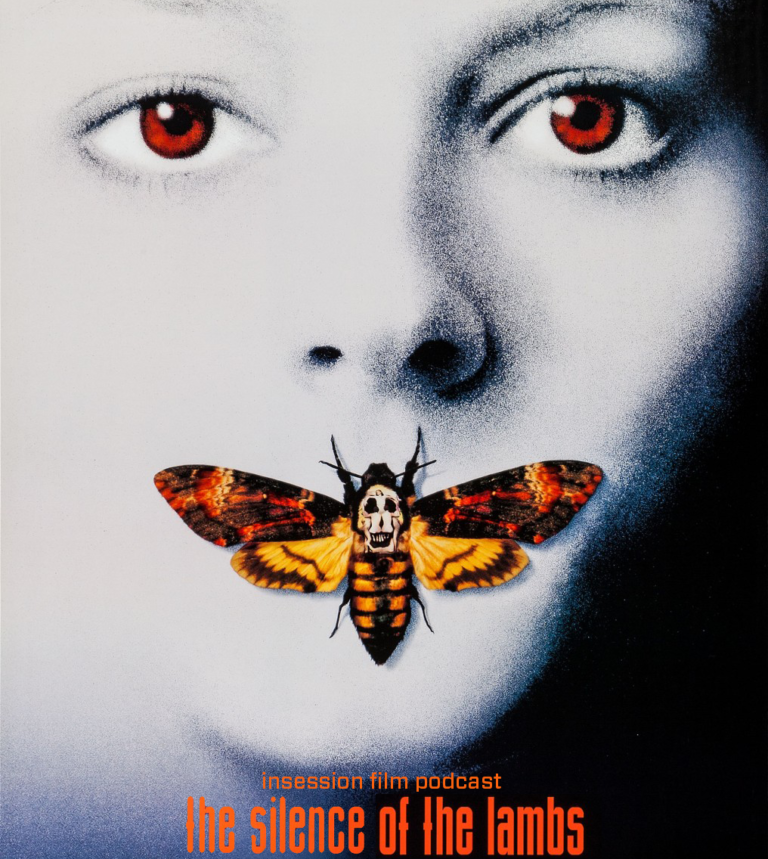
For our Episode 319 Bonus Content, we continue our Patreon Series with a suggestion via Joshua Connolley where we discuss the 1991 Oscar-winning film The Silence of the Lambs!

*Note: While this review originates from a Patreon subscriber, it is available to the public on our main show feeds.

[divider]

HELP SUPPORT THE SHOW

To hear our bonus content episodes early, subscribe now on Patreon. In many cases, though, we offer our bonus content for free after a certain period of time and we do encourage (and very much appreciate) a small donation of $0.99 as a way to help support the show if signing up on Patreon isn’t for you. Click on the PayPal button below to donate and thanks so much for your support. You can also hear much of our Bonus Content via our mobile apps. See the information at the bottom of the post for more details.


One-Time Donation


[divider]

Mobile Apps!

Listen to all of our bonus content on our apps for just a one-time fee! Whether you have an iPhone, Android or Windows phone, our apps are available in many different ways that is convenient for you. With our mobile app, not only can you listen to all of our bonus content, but our main shows and our Extra Film podcasts as well. Click here for more info!

If you don’t want to purchase our bonus content, but still want to support us, there are other you can help us out. Click here for more info.

Poll: What is your favorite film in the DCEU thus far?

Shazam! That will be the film we discuss this weekend on Episode 320, which is an interesting departure tonally from the likes of Man of Steel or Batman vs Superman. There will be a lot to talk about and it should hopefully make for an energetic and vibrant show. Using Shazam! as inspiration for our poll this week, we are simply asking; what is your favorite film in the DCEU thus far?

Vote now!


Movie Review: ‘The Highwaymen’ is a strong film, even if not an ultimately great one


Director: John Lee Hancock
Writers: John Fusco
Stars: Kevin Costner, Woody Harrelson, Kathy Bates

Synopsis: A pair of Texas Rangers come out of retirement to catch the infamous outlaws Bonnie and Clyde.

[/info]

As I watched The Highwaymen, Netflix’s new film directed by John Lee Hancock, my mind often drifted to Colonel Nathan R. Jessup, the character played by Jack Nicholson in A Few Good Men. He’s largely known for uttering one of the most iconic lines in movie history, but that’s not necessarily what brought him to my mind here. What makes him such a great character is that Aaron Sorkin wrote him as a man who believed firmly in something most of us would not. Colonel Jessup believed that since the enemy has no problem breaking the rules, you need men on the front lines who would break the rules too – no matter who might get hurt in the process.

That notion of fighting the enemy on their terms is the beating heart of The Highwaymen. Here is a story of the men who brought down Bonnie & Clyde. There are other narratives going on at the same time, but the film’s main plot centers around the hunt for that famous criminal couple.

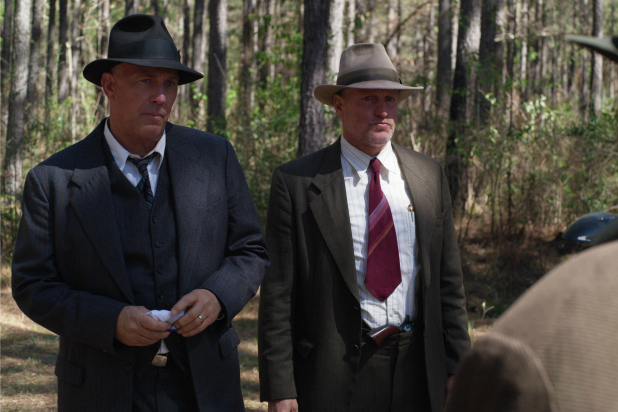
The men doing the hunting are Frank Hamer (Kevin Costner) and Maney Gault (Woody Harrelson). This is the true story of how these former Texas Rangers hunted down the famed Bonnie & Clyde. The historical aspect of the film is fascinating, both from an American history perspective and from that of cinematic history. Bonnie Parker and Clyde Barrow are shown here to be a historical flashpoint. The times began to change when we exalted violent criminals. Of course, the famous 1967 film Bonnie and Clyde is one of the most influential films of all-time for the ways it carried the French New Wave into American cinema, particularly in the way it handled its lead characters.

One choice I thought was a good one in The Highwaymen was that Bonnie & Clyde are mostly relegated to the margins of this film. We see their movements and some of their crimes, but it is mostly their trail and their influence that are important to this story. There are various points in the film when the masses laud Bonnie & Clyde while Hamer & Gault look on in disgust. These Texas Rangers had seen the times change before their eyes, and they are now attempting to hold on to the last vestiges of justice.

In that sense, this film pays homage to another great film – No Country for Old Men. In that film as in this one, you have law enforcement coming to terms with the new way of the world. However, where No Country had an incredible respect for its audience’s ability to piece things together themselves, this film chooses instead to underline moments of importance. It may be a minor quibble, but it holds this film back from being as good as it could have been.

The reason you can see glimmers of greatness here are surely due to the quality of the cast. Costner and Harrelson are both fine in the lead roles playing parts for which they seem tailor-made. But the supporting cast is filled out nicely by Kathy Bates, John Carroll Lynch (a personal favorite of mine), Kim Dickens, and William Sadler, among others. Given the historical importance of these characters, it would be easy to cross the line into larger-than-life caricature. But all the roles felt lived-in, and the acting talent is surely to thank for that.

This film also wants to be a buddy cop film – but this is probably where I felt the film fell short the most. It skimps on that part of the story. Without giving away any spoilers (though this story is so well-known that it may be spoiler-proof), the ending looks to leave us with a focus on the relationship between our two main characters. That relationship between the two highwaymen (though that is the title of the film) is really not that big a part of the story. It is sprinkled in at key moments, but I would have liked to see more of it. Most of the film is focused on the chase. While someone might push back on me and say that their relationship is revealed through that chase, I felt there was more that could have been unearthed. Most of this film plays like a straight crime chase film, and I think the buddy cop element could have given it more emotional resonance.

Still, I am a sucker for historical stories, and I was definitely entertained by this film. It is a thrilling tale, and the film went the added step of giving some consideration to the philosophical questions that its story might bring up. If there really are soulless violent, criminals out there, do we need those protecting us to get down on their level and break the rules in order to stop them? After watching this film, I’m pretty sure of how the main characters would answer that question. But the power of The Highwaymen is that it allows room for the viewer to draw their own conclusions too.

Overall Grade: B

[divider]

List: Top 3 Tim Burton Scenes

This week on Episode 319 of the InSession Film Podcast, inspired by Disney’s latest live-action remake in Dumbo, we thought it would be fun to talk about the best Tim Burton scenes. Burton’s career lately has been disappointing, but what we did in the late 80’s and in the 90’s is quite great and still very entertaining. Between Beetlejuice, Edward Scissorhands, Batman, Batman Returns, Ed Wood, Big Fish and few others, there are many great scenes to consider for this exercise. JD in particular did a lot of homework in preparation, and the payoff was somewhat cathartic. The lists that both JD and Brendan came up with is also very interesting for reasons you’ll hear at the end of the segment (and see below). That said, here are our lists:

(Note: Please keep in mind that we each had different criteria for our selections)

JD

1) Will Finishes Ed’s Story – Big Fish
2) The Making of Glen or Glenda / Bride of the Monster / Plan 9 from Outer SpaceEd Wood
3) Kim’s Ice Dance – Edward Scissorhands

Brendan

1) Kim Finishes Her Story – Edward Scissorhands
2) Ed Bloom’s Funeral – Big Fish
3) The Making of Bride of the MonsterEd Wood

Honorable Mentions (Combined)

Various other scenes in Batman, Batman Returns, Edward Scissorhands, Ed Wood, Big Fish, Sweeney Todd, Pee-wee’s Big Adventure, Big Eyes, Beetlejuice, Mars Attacks!, Sleepy Hollow, Charlie and the Chocolate Factory

Hopefully you guys enjoyed our lists and if you agree or disagree with us, let us know in the comment section below. As noted above, there are a many great scenes from Burton’s career that are eligible for this list, and perhaps we missed some that would be on yours. That being said, what would be your Top 3? Leave a comment in the comment section or email us at [email protected].

For the entire podcast, click here or listen below.

For more lists done by the InSession Film crew and other guests, be sure see our Top 3 Movie Lists page.

Podcast: Dumbo / Top 3 Tim Burton Scenes – Episode 319

This week’s episode is brought to you by the GoDaddy. Sign up today and get 30% off your order!

This week on the InSession Film Podcast, we discuss Disney’s latest live-action film in Dumbo and our Top 3 Tim Burton scenes. We also give some brief thoughts on the Gasper Noé film Climax as well Sebastián Lelio’s Gloria Bell.

Dumbo may not have been the film we wanted it to be, but as you’ll hear on the show, we had a lot of fun doing homework this week in prep for our Tim Burton scenes conversation. His career may have fizzled out in the latter half, but the first half of his career is great and we wanted to celebrate that.

That said, check out this week’s show and let us know what you think in the comment section. Thanks for listening and for supporting the InSession Film Podcast!

– Movie Review: Dumbo (4:43)
Director: Tim Burton
Writers: Ehren Kruger
Stars: Colin Farrell, Michael Keaton, Danny DeVito

– Notes / Climax / Gloria Bell (39:46)
As mentioned above, JD and Brendan both got a chance to see Climax and Gloria Bell, and wanted to offer up some brief thoughts on those two films. We also honor the late-great Agnes Varda who recently passed away.

[divider]

RELATED: Listen to Episode 316 of the InSession Film Podcast where we discussed Captain Marvel!

[divider]

Top 3 Tim Burton Scenes (1:07:17)
Tim Burton’s career lately has been disappointing, but what we did in the late 80’s and in the 90’s is quite great and still very entertaining. Between Beetlejuice, Edward Scissorhands, Batman, Batman Returns, Ed Wood, Big Fish and few others, there are many great scenes to consider for this exercise. JD in particular did a lot of homework in preparation, and the payoff was somewhat cathartic. The lists that both JD and Brendan came up with is also very interesting for reasons you’ll hear at the end of the segment. That said, what would be your Top 3?

Top 3 Sponsor: First Time Watchers Podcast

– Music

Dumbo Theme – Danny Elfman
Batman Theme – Danny Elfman
Ice Dance – Danny Elfman
The Return of the Eagle – Atli Örvarsson

Subscribe to our Podcasts RSS
Subscribe to our Podcasts on iTunes
Listen on Spotify
Listen on Stitcher
InSession Film Podcast – Episode 319

[divider]

Next week on the show:

Main Review: Shazam!
Top 3: TBD

[divider]

Help Support The InSession Film Podcast

If you want to help support us, there are several ways you can help us and we’d absolutely appreciate it. Every penny goes directly back into supporting the show and we are truly honored and grateful. Thanks for your support and for listening to the InSession Film Podcast!

VISIT OUR DONATE PAGE HERE

Movie Review: Dumbo is not the star of ‘Dumbo’ and that’s a big problem


Director: Tim Burton
Writers: Helen Aberson (novel), Ehren Kruger (screenplay)
Stars: Colin Farrell, Michael Keaton, Danny DeVito

Synopsis: A young elephant, whose oversized ears enable him to fly, helps save a struggling circus, but when the circus plans a new venture, Dumbo and his friends discover dark secrets beneath its shiny veneer.

[/info]

While the messages of friendship, heartbreak, and overcoming adversity resonate throughout Tim Burton’s Dumbo, the delivery system of such messages is cumbersome, ineffective, and to no one’s surprise, pointless.  This is to be our new norm. Disney will keep pumping out live-action remakes of their beloved animated classics until the box office dries up.  2019 alone has three such releases (four if you count the sequel to 2014’s Maleficent).  As Disney racks up talented directors to tackle these pictures, the hope is that the quality of the remakes will increase, therefore driving box office numbers.  Unfortunately, that correlation has not come to fruition. Tim Burton’s Dumbo is just another mediocre interpretation of previously tread material.

Dumbo, based on the 1941 animated film of the same name, maintains the same basic premise as its seventy-eight-year-old cousin. A baby elephant born with enormous ears discovers he can fly, thus saving the circus and his mother. In some cases, the original animated film is about as long as that previous sentence. Clocking in at sixty-three minutes, the original Dumbo doesn’t even tackle the topic of flight until around minute fifty-three.  The build up of the film reaches its climax with the discovery of his ability to fly, thus saving the things here ostensibly cares about (we don’t know, because Dumbo doesn’t talk). The episodic nature of the animated film made it feel whimsical and fun (all racist allusions aside). However, Tim Burton’s Dumbo feels like a five-hundred-pound elephant in the room that sits firm and never moves forward.

One key difference of the film vs. the original is that Burton uses the point of view of humans to tell Dumbo’s story. Cleverly, the 1941 film used the animals themselves to drive the story. Through the eyes of Dumbo and Timothy Q. Mouse, we witness the innerworkings of the circus through the translucent sides of a tent. In this way, Dumbo is separated from the humans, living in his own world with his own stakes. In the 2019 version, the story is mishandled by a group of characters that seem to be hyperbolic variations of the characters they are meant to play. Through these inefficient characters, Dumbo’s communications are announced to the point of exhaustion. Nothing is subtle with these interactions. Dumbo’s thoughts and feelings, though easily understood through context, are bludgeoned into the audience, even with the understanding that this is a children’s film. This insult of intelligence is unreconcilable. With that being said, there are many other faults that haunt this film.

The characters that inhabit this decidedly Burtonesque realm seem forced and each has an inexplicably terrible accent, which is all the more frustrating once one thinks of the career that Tim Burton has had directing some of the best actors in generations.  Michael Keaton’s pseudo-Disney is weak as a villain and his constantly changing accent is frustrating to say the least. Eva Green is magical but seems wedged into a story that doesn’t require her. Danny DeVito is a saving grace, but his comedic breaks are few and far between. Colin Farrell’s Holt Farrier is sad but unassuming and brings zero charm where there needs to be. The effects and sets of the film are subdued when compared to other Burton films. Although there is beauty in the set design, it still feels heavy and constructed and in no way ever seems to fit with the story.

As stated earlier, the story shares messages with the original, but is extremely incohesive and tries to do way too much with the material.  There are too many character arcs that need resolution. Dumbo is the star; let his story take the lead. However, the plot gets muddled down with human greed, loss, and arrogance. If Dumbo’s story was allowed to flourish, this version of Dumbo would have soared.  Unfortunately, the filmmakers cannot seem to get out of their own way and Dumbo crashes before it takes flight (which is about minute ten by the way).  In this way, all the wonder is lost and the magic is spent.

Overall Grade: D+

[divider]

Hear our podcast review on Episode 319, coming soon!

[divider]

Movie Review: ‘Shazam!’ is a fun coming-of-age superhero film


Director: David F. Sandberg
Writers: Henry Gayden, Darren Lemke
Stars: Zachary Levi, Mark Strong, Jack Dylan Grazer, Asher Angel, Djimon Hounsou

Synopsis: We all have a superhero inside us, it just takes a bit of magic to bring it out. In Billy Batson’s case, by shouting out one word – SHAZAM! – this streetwise fourteen-year-old foster kid can turn into the adult superhero Shazam.

[/info]

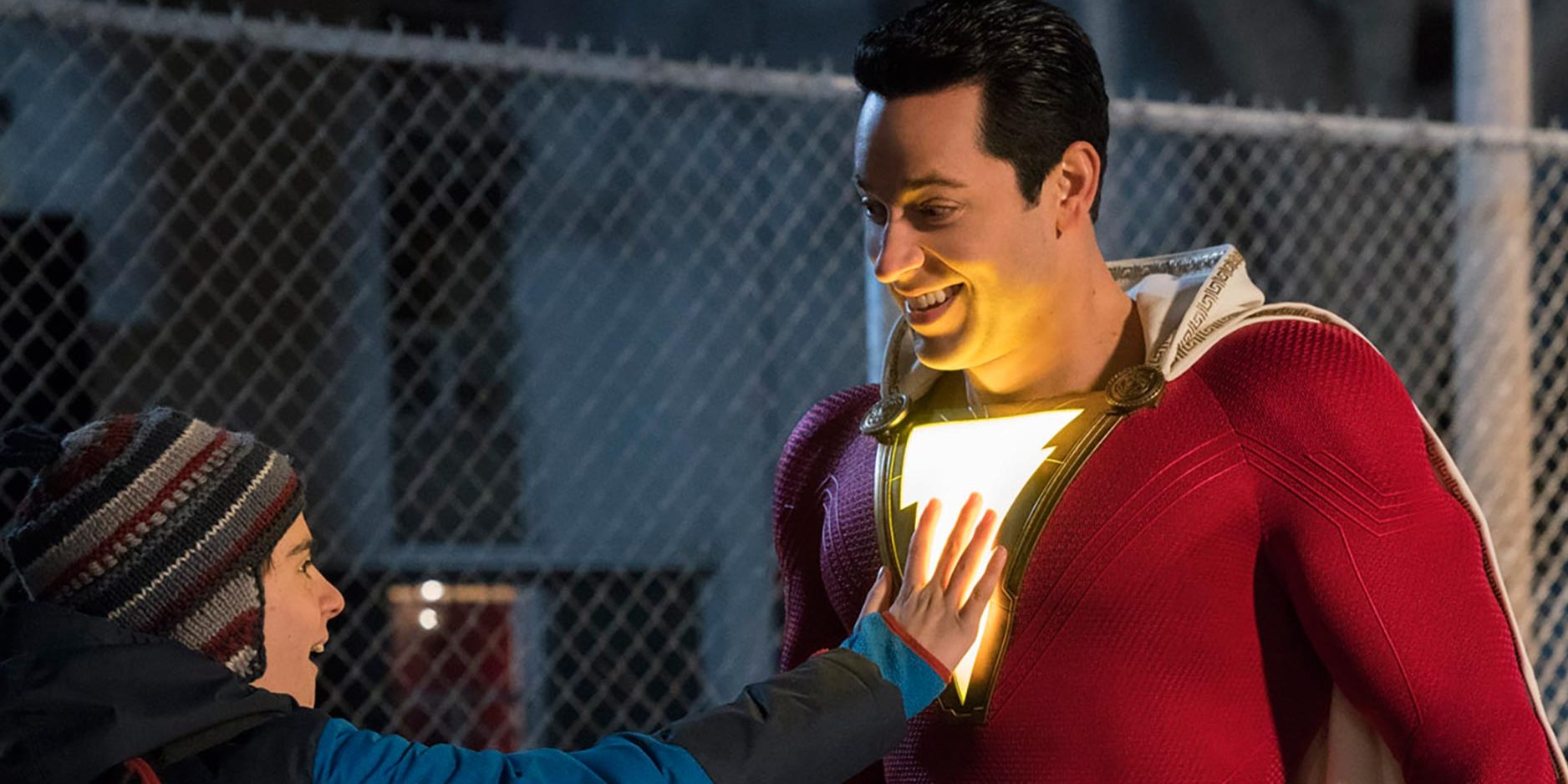
Shazam! introduces us to another superhero and supporting characters from the DC universe. It’s both an origin story and a great coming-of-age film. While most DC films have been darker in nature, Shazam! is a fun and mostly kid appropriate movie. This change of style works for this character, but I’m not sure how he will fit in the bigger DC picture, or if they are even planning to do that in the future.

Shazam! tells the story of Billy Batson (Asher Angel); a teenage orphan with a habit for running away from foster families to search for his birth mother. Eventually he is placed with the idyllic Vazquez family and their other five foster kids- Freddy, Darla, Mary, Eugene, and Pedro. One day after an escape attempt, Billy ends up on the subway and is magically transported to a different realm. There he finds a wizard (Djimon Hounsou) who tells Billy he is the “chosen one” and needs his help to save the world from the evil Dr. Thaddeus Sivana (Mark Strong) and the seven deadly sins. The wizard transfers his powers to Billy, so now when he says the wizard’s name -Shazam!- he transforms into the buff, adult, red-costumed superhero (Zachary Levi).

My favorite thing about this movie is the relationship between Billy and his foster brother Freddy (played by the scene stealing Jack Dylan Grazer). At the beginning of the film Billy has trust issues and no desire to belong to a foster family. Freddy slowly wins him over with his crazy amount superhero knowledge, his loyalty, and his” never give up” attitude. Freddy is easily one of my favorite characters in the film. He stands out, even when sharing the screen with Zachary Levi and Mark Strong. He serves as a sort of wisecracking mentor to adult superhero Billy while he’s learning the extent of his powers and choosing a superhero name. I look forward to seeing him in more films. The other foster siblings are also good in their limited roles; I especially liked the video game obsessed Eugene, and the adorable little sister Darla.

Mark Strong is always good when cast in an antagonist role. I know he likes being the bad guy and always does the best with what he’s given. I wasn’t a huge fan of the other villains in this movie, The Seven Deadly Enemies of Man (Seven Deadly Sins), I feel like they weren’t represented well. Usually you can easily pick out which one is which sin, but in this case only Gluttony was obvious. In the comics they’re much easier to identify, so I’m not sure why they got this gargoyle-like redesign for the film.

Along with the fun origin story for our hero, we also get a great message about family. The film shows us that family isn’t necessarily what we’re born into, it’s who we choose to be with and who embraces us. It’s a great coming-of-age story for Billy as he grows up (emotionally and physically) as Shazam.

Overall, Shazam! is a fun movie with mature themes sprinkled in. It embraces the camp and humor this character needs to succeed on the big screen, even poking fun at previous DC heroes and films. There are great lead and supporting characters, some cameos, and even a funny scene stealing Santa. I’m not sure where Shazam will fit into the DCU, but I’m looking forward to more films. There are two post credits scenes so make sure to stay until the very end.

Overall Grade: B

[divider]

Hear our podcast review, coming soon!

[divider]