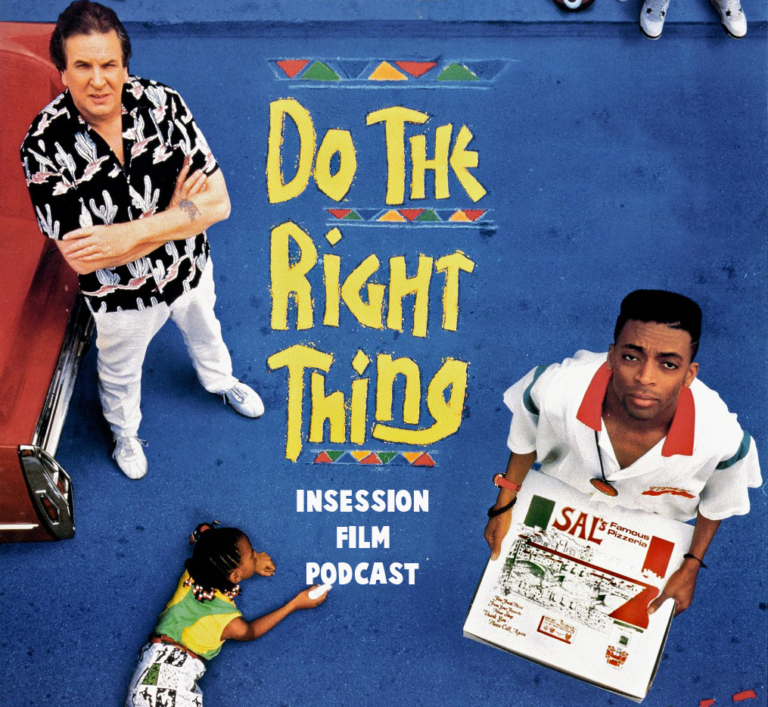
This week for our Episode 286 InSession Film Podcast: Bonus Content, we are joined by Ryan McQuade as we honor another Patreon donation by reviewing Spike Lee’s 1989 masterpiece, Do the Right Thing!
We offer our bonus content for free, but we do encourage and appreciate a small donation of $0.99 as a way to help support the show. Click on the PayPal button below to donate and thanks so much for your support. You can also hear all of our Bonus Content via our mobile apps. See the information at the bottom of the post for more details.
[divider]
Mobile Apps!
Listen to all of our bonus content on our apps for just a one-time fee! Whether you have an iPhone, Android or Windows phone, our apps are available in many different ways that is convenient for you. With our mobile app, not only can you listen to all of our bonus content, but our main shows and our Extra Film podcasts as well. Click here for more info!
If you don’t want to purchase our bonus content, but still want to support us, there are other you can help us out. Click here for more info.
Director: Jon M. Chu Writers: Adele Lim & Peter Chiarelli; Kevin Kwan (novel) Stars: Constance Wu, Henry Golding, Michelle Yeoh, Awkwafina, Ken Jeong, Lisa Lu, Ronny Chieng, Nico Santos, Gemma Chan, Sonoya Mizuno, Harry Shum Jr.
Synopsis: This contemporary romantic comedy, based on a global bestseller, follows native New Yorker Rachel Chu to Singapore to meet her boyfriend’s family.
[/info]
They have always existed — the Asians who indulge, with looks fitting for a life-long GQ photoshoot, live in homes that turn 90210 into random digits and have pockets deep enough to buy deeper pockets — but it’s their foil that has the higher profile. You know, the Asians who tirelessly work or study, know a kick or two, low in physical appeal, Airbnb-rized their cultural attributes, and don’t mind being evergreen sponges for is-that-even humor? You know, the usual Asians whose presence ironically contributes to this ethnic-specific drought? This is a picture in need of an update, and what Crazy Rich Asians brings is exactly that, even if the patch notes can be summed up as “new hand” more than “reinvented game.”
The cards won’t underwhelm, however. Taking what NYU economics professor Rachel Chu (Constance Wu, both tender and sharp) advises to her game theory class to heart, director Jon M. Chu and company adapt Kevin Kwan’s bestseller, which is loosely based on the author’s charmed upbringing, with the winner mentality. Every move everyone makes, as a result, is an attention-getter, all designed to inspirit the inner tourist, foodie, interior designer and fashionista. It seems fair to warn that the film shouldn’t be seen on an empty stomach or after an itinerary-less month, unless you find it all right to have the renowned street eats of Singapore and handmade dumplings make you misbehave, or have the beaches and architectural marvels rouse the wanderlust bug. By default, d.p. Vanja Cernjul and editor Myron Kerstein like to gaze and not peek at all the tasty exhibits. Traveling does wonders, and so a major thank-you should be given to Rachel’s beau Nick Young (Henry Golding, with an infectious smile) for suggesting a journey farther east than Queens — his childhood friend is about to become a husband and has asked Nick to be the best man — and authoring a wondrous, eye-opening and mind-broadening travel zine. Art also gets to imitate life as prior to acting Golding is a travel host for BBC (nice touch if intended, casting department, though for sure it still can’t sit with the purists).
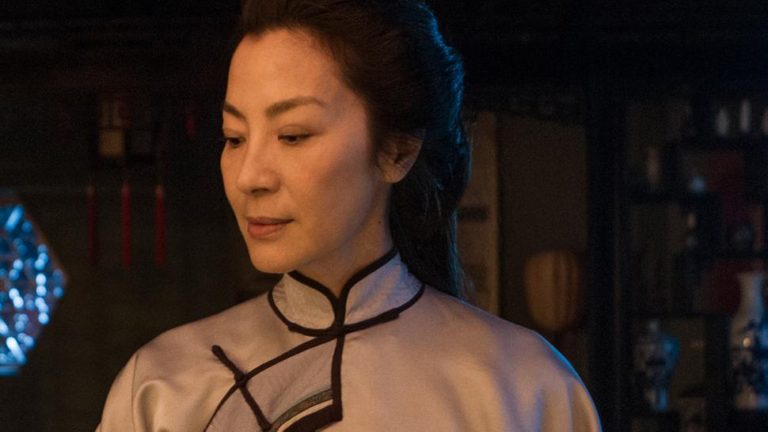
Yet, all eyes should (and will) be on Rachel more often. “All” refers to the populace awaiting her arrival on the island country, scrutinizer mode preemptively activated — including Nick’s mother Eleanor (Michelle Yeoh, entrancing), her mother (Joy Luck Club’s Lisa Lu), Eleanor’s entourage, and every yet-spoken-for belle — and the viewers. Rachel is Chinese-American, and it’s the latter that Eleanor disapproves. For the matriarch, the western world’s hands-off lifestyle that has been ingrained in Rachel contrasts, and thus threatens, the harmony of class and of family that Eleanor determines to preserve. To eternally accentuate. Wu delights as she maintains a delectable sense of control throughout, going from (unknowingly) being an anchovy in barracuda-infested waters to one with better armor/dress (principal costumes or not, the wardrobe Mary E. Vogt provided is the bee’s knees). Crazy Rich Asians is no wuxia film, that’s a certain, but the argument can be raised; verbal exchanges between Rachel and Eleanor have power and poetry in them akin to swords, and where the exchanges happen are in places appropriate for battle (they are just palaces and gardens with a modern touch!)
Success doesn’t come knocking on the daily, expectedly — in a mahjong-driven moment with Yeoh at one point — though we will never cease to desert Team Rach day or night, in Newton Food Centre or on a private island (the site of a gutting, pun intended, bachelorette party). Not unlike reality and not exclusive to Asians, her idea of “home” or “roots” will buckle when tested; her sense of purpose, since it isn’t so dependent on the past or future, will be alien; her search for the aforementioned two will be beleaguered by prying eyes and acidic lips. Worry not, however, since she’s not alone in this trial-by-culture: Rachel’s Ellen-esque college mate, Peik Lin (Awkwafina, most spirited), and eventual ally, Oliver T’sien (Nico Santos, to the teeth with fire retorts) also tag along, sharing what they have seen and done on the moneyed theater so our fresh-off-the-Big Apple lead can survive (and, when able, offer some gut-busting respites).
It can be apparent where the script exerts more force than others, mainly to keep a particular joke afloat or a value anchored. What gets traded are the smoothness of the pacing and the space for certain roles. But our writers always manage to recapture our attention at a moment’s notice with their illustrating of visited dynamics through new voices and navigating well-worn avenues using new maneuvers. The best example of this has to be the London prologue where the Youngs and their relatives checking into a hotel drenched and adorned in Louis Vuitton suitcases. There, they meet prejudice. Then, they emerge with pride. This also marks the last time someone else controls the destinies of foreigners in this film. Mother doing that to her son, on the other hand…
Chu also deserves kudos for letting the sets from Nelson Coates be the production’s more pronounced aspect; the toning down of the noise and glitz amplified in two Step Up sequels and Now You See Me 2 pushes Crazy Rich Asians away from the Baz’s “Singaporean Gatsby” banner and closer to a world of its own. Not quite there yet, of course, but let’s not force baby steps to be giant leaps on their first day. Be glad they are here at last, and with enough power to ignite something more.
Overall Grade: A
[divider]
Check out our podcast review on Episode 287, coming soon!
This week for our poll, inspired by her new film Crazy Rich Asians, we are talking about the great actress Michelle Yeoh. Perhaps best known for her work in Crouching Tiger, Hidden Dragon and Tomorrow Never Dies, Yeoh is a great actress that demands the screen. She’s very exciting to see, and her role in Crazy Rich Asians looks very appetizing as well.
With that said, what is your favor film starring or co-starring Michell Yeoh? Vote now!
Jean Vigo (1905-1934) was only 29 years old when he died of tuberculosis. The son of an infamous anarchist who was murdered for his outspoken opposition to the First World War, Vigo endured a rough, sickly childhood in a boarding school, contracted the disease that would kill him, and be able to make four films, the last of which was his only full-length feature. Yet, the directors and authors of the French New Wave would cite him as a major influence in their industry because Vigo was a director ahead of his time. The last four years is when he made his short resume, all poetic and slightly surreal in tone, and his rebellious nature is visible in these works.
First came À propos de Nice, or About Nice, in which Vigo made this silent 25-minute documentary with Boris Kaufman. Kaufman worked with Vigo in all of his works, moved to the United States, and win an Oscar for his cinematography in On The Waterfront, and work with Sidney Lumet on seven different features starting with 12 Angry Men. Nice, the beautiful Mediterranean coast town just (number) miles from Cannes, was as much then a major vacation spot in the summer. Here, Vigo and Kaufman don’t make the city as a place to come but instead attacks the society that comes there for not recognizing the reality of the Great Depression. Nice is a burlesque show with hidden shots of people having a good time while outside the city there are slums. It was followed by an even shorter film, a five-minute piece on Olympic swimmer Jean Taris. Like the fancy editing of Nice,it gets inventive with close-ups, freeze-frames, underwater shots, and reverse motions on Taris’ diving and swimming techniques.
The last two raised the stakes on his ability to tell stories. The first is arguably his most notable, a scathing attack against boarding school and a message of anger to what he felt was their fault of him contracting his fatal illness. “Shame on those who, during their puberty, murdered the person they might have become,” Vigo wrote. Zero for Conduct is a forty-minute story of four boys, done with the strict punishment of their teachers, execute a revolt that riles up the rest of the students to overthrow the authoritarian teachers. On its release, it was hated, condemned, and banned because of the fear it could instill anarchist views and disrupt order. After World War II, when Vigo was examined by film historians, Zero for Conduct was seen as a brilliant statement of young repression and brought back memories of what a child might have been like for many. (The film is on the public domain for now; above is in full.) The playful rebellion scene which involves a major pillow flight and a satire exit with the new king of the students. It is no surprise that it influenced Francois Truffaut’s The 400 Blows and Lindsey Anderson’s if…
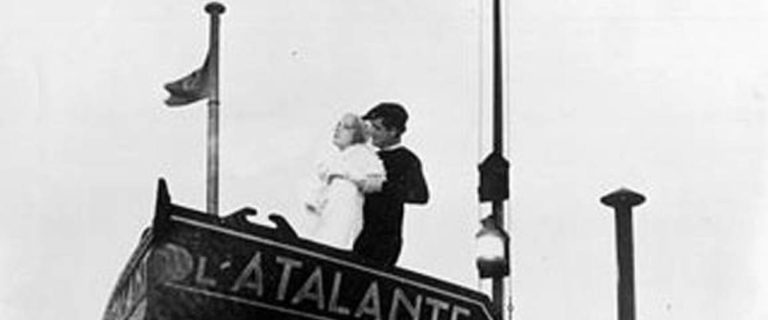
Finally, there is L’Atalante, a conventional romantic story of a new marriage that is about life on a barge and the instant issues faced because, well, they live on a barge because that’s also the husband’s workplace. It is a plain short story that Vigo and his magical mind took and converted it into a dream shot. It is a funny look at a new chapter of life but the old habits die hard, especially with two crewmen who’ve not seen a woman in a long time. When the couple gets separated, it turns into a melancholy look with a slate of Kaufman’s creative light symbolizing the anxiety of separation. The dream underwater sequence was magnificently shot intercut with the windy glow of the wife, a dreamy sequence of how a man like the captain of a barge got a beautiful woman like her.
In France, the Prix Jean Vigo was established in 1951 and awarded to a director for their achievement in originality and stylistic filmmaking. Alain Resnais and Jean Luc-Godard were among the first decade of winners; later winners include Olivier Assayas (Personal Shopper) and Mathieu Amalric (known more for acting, notably as the Bond villain Dominic Greene in Quantum of Solace). Vigo’s short life still left a major impact to historians and directors of the next generation and his work has been preserved. The total of his work is shorter than Titanic, but it is more entertaining than that – even L’Atalante – and done on the cheap. Knowing his own mortality, Vigo poured out everything he could give and showed what greatness we could have watched had he not departed.
Director: Lauren Miller Rogen Writers: Lauren Miller Rogen (screenplay by), Anders Bard (story by) Stars: Kristen Bell, Kelsey Grammer, Danielle Davenport, Kimiko Glenn
Synopsis: A workaholic woman who is left at the altar takes her honeymoon trip anyway, joined by her overachieving father, who left her mother because he believed his family was holding back his career.
[/info]
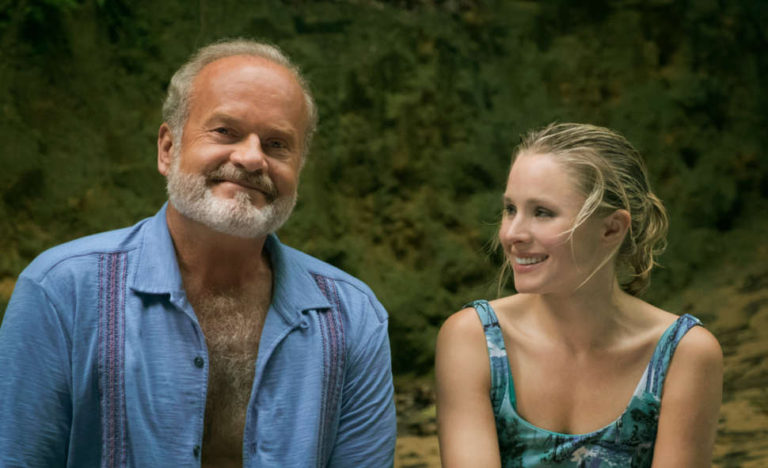
You may think you have Lauren Miller Rogen’s 2018 comedy Like Father sized up by the previews, but it has unexpected treasures in store along the way. Rogen displays talent across the board in this film as writer, director and producer. Her writing, especially, shines through.
Kristen Bell stars as Rachel, a workaholic who is left at the altar by her fiancé, Owen (Jon Foster). The opening scene of the wedding does such a great job of setting up Rachel’s character in the film. We learn so much about her character where, in lesser films, this would have simply been handled using exposition. Miller Rogen shows us rather than telling us. For instance, Rachel takes a work call as her wedding processional is commencing which actually makes her late to her own wedding. She puts her phone in her bouquet before she walks down the aisle, and when Owen realizes what happened, it brings about second thoughts in front of all their family and friends. Included in that group is Rachel’s estranged father Harry (Kelsey Grammar), who she hasn’t seen since she was five. Afterwards, Harry seeks her out to console her, and they go out to the bar together to reconnect and drown their sorrows. They drunkenly decide to accompany each other on the cruise that would have been Rachel’s honeymoon, and the film’s basic plot begins to take shape.
I resonated with Rachel on a bit of a deeper level given that I, too, work in the advertising industry. In my day job, I am an assistant account executive at an agency in my hometown. Rachel is an account executive too, but she has her sights set on a promotion to accounts director. Her position is one aimed at wining and dining clients and securing new business. While my job isn’t quite the same, I could appreciate the unique responsibilities of such a position. There’s a draw to the job, and Rachel has certainly caught the bug.
The film certainly unpacks the notion of being too tied to one’s job. This is something that many comedy films have used throughout the years, often in the form of a parent who is too focused on work at the expense of their children. Here, it is Rachel’s addiction to work that pulls her out of being present in her life. It certainly had an effect on her wedding, but we see other effects it has on her life, too. In fact, her phone is almost another character in this film, and I thought Miller Rogen’s writing handled that material well.
The film is also supported by wonderful performances from Bell and Grammar. They both had me laughing at various times, but they find the humanity in their characters that takes the film farther than one might expect.
When the film moves to its sea-faring setting, it becomes possibly the most successful product placement I’ve ever seen in a film. The Royal Caribbean logo and title appear so much in the film, it almost seems like one long commercial. It would be hard to watch this film and not want to go on a cruise afterward. The unique experience of meeting random people who then share the entire trip together has a clear effect on Rachel and Harry and aids in bringing them together.
They meet a group of other honeymooning couples who quickly find out about Rachel and Harry’s unique situation. They all encourage each other to make the most of the cruise by participating in the evening activities. One of the funniest scenes comes when Rachel and Harry play the cruise’s house game show (a spin on The Dating Game). It had me laughing hard as their answers are juxtaposed with those of actual honeymooners. At the same time, I didn’t feel like the film had quite enough for the supporting cast to do. I feel it would have been stronger if we learned a little bit more about the rest of the group and there could have been more fodder for the film’s unpacking of relationships in their various forms.
At the end of the day, though, this is a film about one relationship in particular – the one between Rachel and Harry. In most other films of this kind, we’d go through the whole thing and come to a happy ending on the other side in a basic flow. This film takes some unexpected stops and pauses that keep you on your toes, even if it eventually gets to the happy ending on the other side.
Another great moment that I must mention comes when Miller Rogen’s real-life comedian husband, Seth, joins the film in a minor role as Jeff, a man that Rachel meets at the bar. They have a fling, and Jeff thinks it is more than just a one night stand, so he tags along with their group excursion when the ship docks in Jamaica. Before he realizes that Rachel is not looking for anything serious, there’s a great self-referential bit where the tour guide passes around a joint and Jeff refuses saying that he’s never smoked marijuana. The joke was obviously written with Seth Rogen in mind, and the execution is perfect.
Though it takes some leaps of varying sizes, some of which we may not be inclined to fully believe, Like Father is an enjoyable film that brings genuine laughs, has well-acted lead performances, and unpacks our culture’s need to stay connected at the expense of the present moment. It strays from the formula just enough to keep things interesting, and it’s a comedy that is well worth your time.
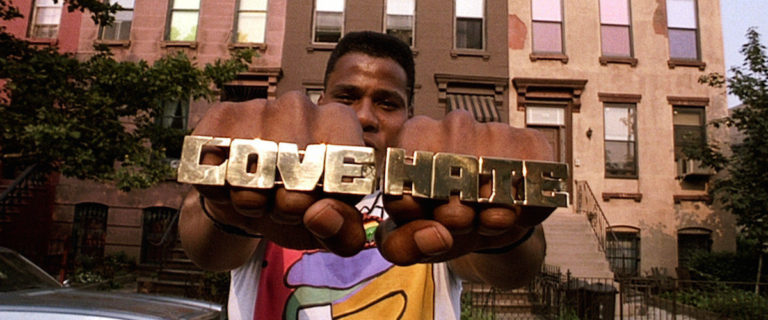
This week on Episode 286 of the InSession Film Podcast, inspired by Spike Lee’s BlackKklansman, we decided to talk about our scenes from his patent Spike Lee Joints. Lee has been an important voice for almost 30 years now, and it’s wonderful that we still have someone like him making films that are as vital today as they were in 1989. He’s made over 25 feature length films at this point, so there are plenty of great scenes to choose from that help define his career, and the man himself. Hopefully we did him justice. On that note, what scenes would make your list? Here are the one’s that made ours:
(Note: Please keep in mind that we each had different criteria for our selections)
JD:
1) Love And Hate – Do the Right Thing
2) Gym Scene / Confrontation – Chi-Raq
3) Monty Bathroom Rant – 25th Hour
Brendan:
1) Third Act – Crooklyn
2) Racial Stereotypes – Do the Right Thing
3) Be Safe – Chi-Raq
Bianca:
1) Hallway Fight – Oldboy
2) Prison Shower Conversation – Malcolm X
3) I Like Getting High – Jungle Fever
Honorable Mentions (Combined)
Various other scenes from these films – Mo’ Better Blues, Jungle Fever, Do the Right Thing, Malcolm X, Inside Man, He Got Game, 25th Hour, She’s Gotta Have It, Get on the Bus, 4 Little Girls, Chi-Raq, BLackKklansman
Hopefully you guys enjoyed our lists and if you agree or disagree with us, let us know in the comment section below. As noted above, there are many great scenes in the Spike Lee canon that we could have mentioned that perhaps would make your list. That being said, what would be your Top 3? Leave a comment in the comment section or email us at [email protected].
This week on the InSession Film Podcast, we discuss Spike Lee’s latest film BlackKklansman, starring John David Washington and Adam Driver. We are also joined by Bianca Garner from Filmotomy to talk about our Top 3 Spike Lee scenes. And since it’s the talk of the town, we give some thoughts on the changes made by The Academy this last week as well.
This summer has given us an endless barrage of great films and you can add BlackKklansman to that list. We had a lot of fun talking about what that film means for today, and why Spike Lee was the perfect voice for it. Speaking of, a huge thanks to Bianca for joining us this week as we talked about our favorite Lee moments in film. She was the perfect guest and we can’t wait to have her back on the show.
On that note, let us know what you think in the comment section and thanks for listening to the InSession Film Podcast!
– Movie Review: BlackKklansman (3:53) Director: Spike Lee Writer: Charlie Wachtel, David Rabinowitz Stars: John David Washington, Adam Driver, Laura Harrier
– Notes / Thoughts on The Academy (42:33)
As you probably heard last week, The Academy made some massive changes to the Oscars ceremony and most people were not happy about it. Well, we give our thoughts on the matter, and spoiler alert, we weren’t big fans either.
– Top 3 Spike Lee Scenes (56:08)
Spike Lee has been an important voice for almost 30 years now, and it’s wonderful that we still have someone like Mr. Lee making films that are as vital today as they were in 1989. He’s made over 25 feature length films at this point, so there are plenty of great scenes to choose from that help define his career, and the man himself. Hopefully we did him justice. That said, what would be your Top 3?
– Patreon review: Do the Right Thing
Stay tuned for our Episode 286 Bonus Content as we honor another Patreon donation by reviewing Spike Lee’s iconic masterpiece Do the Right Thing from 1989.
If you want to help support us, there are several ways you can help us and we’d absolutely appreciate it. Every penny goes directly back into supporting the show and we are truly honored and grateful. Thanks for your support and for listening to the InSession Film Podcast!
Director: Sylvain White Writers: David Birke, Victor Surge (based on a character by) Stars: Joey King, Julia Goldani Telles, Jaz Sinclair
Synopsis: In a small town in Massachusetts, a group of friends, fascinated by the internet lore of the Slender Man, attempt to prove that he doesn’t actually exist – until one of them mysteriously goes missing.
[/info]
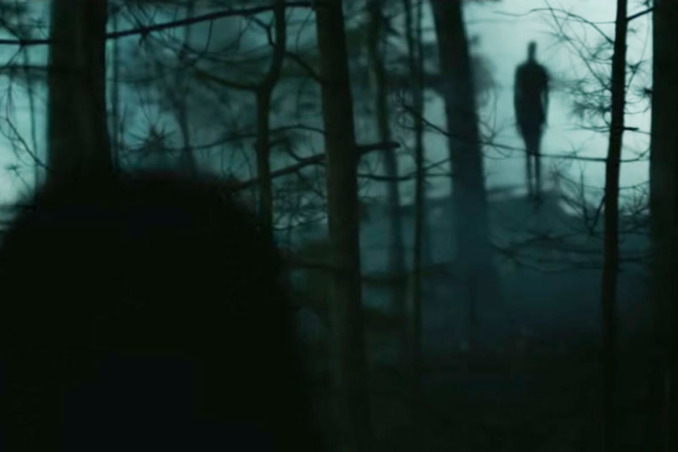
In an era of horror movies like The Witch, The Killing of a Sacred Deer, and, most recently, Hereditary, I didn’t walk into Slender Man expecting it to be anything other than a cheap thrill (it’s a far cry from an A24 release, after all). I figured it would be a throwback teen slasher in the vein of Friday the 13th or Halloween, but with a modern mythos twist. Unfortunately, this movie doesn’t even meet my very low, very basic expectations of what a lowbrow horror movie should be. It is not fun. It is not interesting. And it definitely isn’t scary.
It’s hard to talk about Slender Man in any kind of critical or analytical fashion because nothing really happens and the characters are so flat that if you look at them wrong, you don’t even really notice they’re there. Nothing anyone does makes much sense and I don’t think it’s a spoiler to say that about half the movie is some type of hallucination or dream so it doesn’t really matter what anyone does anyway. And all of this could still make for an enjoyable movie if it paid homage to the 80s teen horror movies to come before it, but it doesn’t really do that, either. It keeps a few basic cliches, like a group of teens summoning evil purposely on accident, but loses sight of why the 80s teen horror movies were popular to begin with. A good horror film plays up social fears and anxieties in interesting and often disturbing ways, and with a movie interpreting a modern Boogie Man myth, Slender Man has plenty of opportunity to symbolize modern teenage fears. Instead, the filmmakers just threw in a few blatant teen pregnancy mentions in the mix and called it a day.
Throughout Slender Man, I kind of found myself looking forward to seeing these interchangeable, unlikable, stupid, stupid teenagers get eviscerated, but even that never comes. Characters just kind of drop out of the story from time to time. I know this movie was watered down pretty significantly to go from an R rating to a PG-13 rating and, honestly, I can’t even figure out what scenes were changed. If it wasn’t for the scenes of teen drinking and a few curse words, this movie practically could have been PG. There was a kid in my theater who couldn’t have been more than eight years old and I was prepared to be pretty judgey about that but by the end of the movie, I shrugged it off and thought to myself, “He’s fine.” In fact, even he seemed underwhelmed. As I left the theater, I saw him shrug and tell his older siblings, “That was kind of a weird movie, I guess.” If the filmmakers really wanted to focus on making a PG-13 horror movie, I think it would have served them well to splice as much found footage-type scenes in as possible and make the movie more about the teenagers trying to piece together the clues to find and defeat the Slender Man rather than making the teenagers purely the object of the pursuit. But I suppose that approach would paint the internet as a positive resource and heaven forbid that be the case. The internet is an evil, evil thing, after all.
If I had to guess at this movie’s inspirations, I would say that someone read the Slender Man Wikipedia page, watched all of Darren Aronofsky’s movies, and spent a lot of time thinking about but not actually re-watching The X-Files and Buffy the Vampire Slayer. He then told his location scout, “Find me the X-Filiest forest you find. And pump that fog in good!” He then turned to his cinematographer and said, “I want ALL the SnoriCam.” The end result is this movie. To be fair, the cinematography and the locations are its strongest points by far but they’re so reminiscent of things from the 90s like The X-Files, Buffy the Vampire Slayer, and Aronofsky’s earlier films that I’d much rather just go watch those things and remember when they were original than subject myself to this derivative, nonsensical swirl of fog and forest and SnoriCam.
I don’t like giving negative reviews and I usually try to identify an audience that might like a movie even if I did not. But this is honestly not a movie anyone should see. I was consistently bored throughout. Most people were laughing in the theater. The eight-year-old kid was unimpressed, for crying out loud. I can’t think of anyone who would like this movie…maybe someone who has never seen a horror movie before?
Director: Lucrecia Martel Writers: Antonio Di Benedetto (based on the novel by), Lucrecia Martel Stars: Daniel Giménez Cacho, Lola Dueñas, Matheus Nachtergaele
Synopsis: Based on the novel by Antonio Di Benedetto written in 1956, on Don Diego de Zama, a Spanish officer of the seventeenth century settled in Asunción, who awaits his transfer to Buenos Aires.
[/info]
I have no problem with the final 30 minutes of a film being the best part, but the first hour and a half should at least give you something to keep watching. Had I not known I was going to be writing this review, I probably would have checked out of Zama.
But let’s get to the good first, shall we?
Director Lucrecia Martel certainly has a unique visual style. Here, she has no qualms about showcasing the dirty and rotten parts (both literal and figurative) of the South American towns where this story takes place. Martel is the best this film has going for it, but her skill behind the camera was not enough to redeem the entire experience for me.
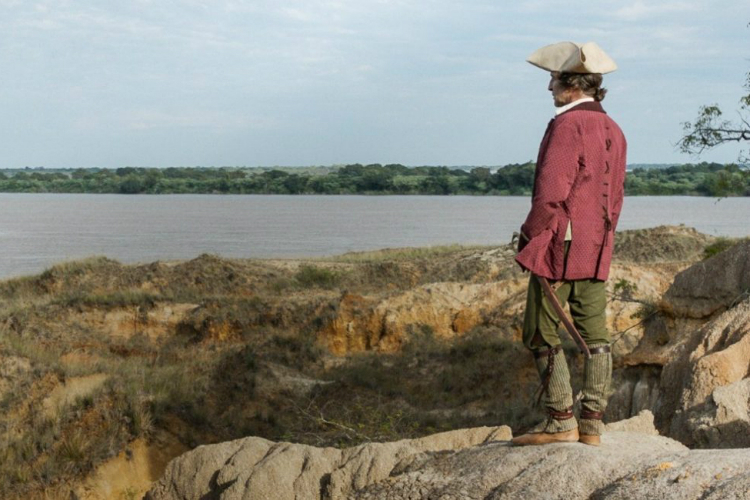
This is the story of Don Diego de Zama (Daniel Giménez Cacho), a Spanish functionary who is awaiting a transfer to a better station. At the beginning of the film, he is told that he will not have to wait long. But then the process continues to drag on, and on, and on. He is forced to wait until he can wait no longer.
At all times, this film artfully toys with the notions of class dynamics and Spanish colonialism of that day. It is a period piece depicting 17th century South America. The screenplay is adapted from a novel by Antonio Di Benedetto written in 1956. The screenplay does feel quite literary at times, something I’m usually quite fond of. There is also a dreamlike aspect to this film, another thing that usually does not bother me.
Here though, it just felt like a mishmash.
The performances are fine, but there’s nothing here that drove the story forward. The early parts of the film stagnate to a screeching halt. That the film’s closing picks up steam is not enough to redeem it, in my opinion.
Once Zama realizes that his transfer will not be coming any time soon, he decides to join up with some soldiers who are going after the notorious bandit Vicuña Porto (Matheus Nachtergaele). This is where the film has its best moments, but by that time it has kept us waiting too long.
That is surely part of the strategy, here. I must give Martel credit for her firmness in sticking to the story. But there wasn’t enough visually or thematically here in a film that focuses on a man who is…just waiting. There simply needs to be more here for us to sink our teeth into. Zama’s character is developed, but he could have been developed further. We could learn more about his history or his desires. He spends much of the film staring off into the distance or throwing furtive glances at passersby. The supporting characters certainly could have been given more to do. The few scenes with Luciana Piñares de Luenga (Lola Dueñas) are some of the most entertaining in the film. But we don’t ever really learn much about her. Maybe the transcience of the characters is supposed to serve the dreamlike quality of the film. I’m not sure, but it didn’t work for me.
I also wish that there would have been more visuals of the beautiful nature outside Zama’s doorstep, but even those shots were mostly saved for the end.
There is a shot at the very end of the film where Zama is floating in a boat with green mossy growths parting across the stern of his small vessel. This was my favorite shot in the film, but – without trying to sound like a broken record – it was a case of too little, too late.
Zama has been critically acclaimed since its release. Maybe I missed the boat on this one. All I know is that I can’t imagine ever watching this film again, and that’s usually a pretty telling sign upon finishing a film.
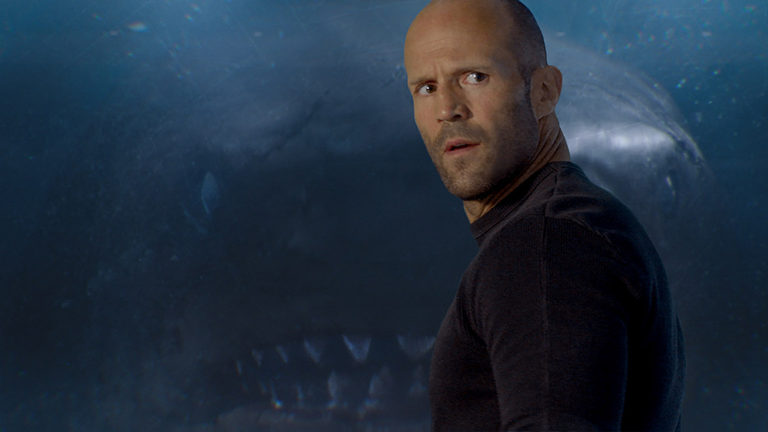
Director: Jon Turteltaub Writers: Dean Georgaris, John Hoeber, Erich Hoeber, Steve Alten (based on the novel by) Stars: Jason Statham, Bingbing Li, Rainn Wilson, Cliff Curtis, Ruby Rose
Synopsis: A team of scientists encounter a 75-foot-long prehistoric shark, Megalodon, while exploring the depths of the Mariana Trench. They must work to stop it from reaching populated areas in this man vs monster action thriller.
[/info]
Killer shark movies have been a staple in Hollywood since the huge success of Jaws in 1975. There have been attempts at serious films, and tons of straight to TV, Syfy channel, or cheesy B-movies. I am a huge fan of all of types. When I first saw a trailer for The Meg, I immediately had high hopes for the film, and prayed to the movie gods and Jon Turteltaub to not let me down.
This is Turteltaub’s first big movie since Last Vegas (2013), The Sorcerer’s Apprentice (2010), and the National Treasure films in 2004 and 2007. In interviews he’s stated he’s happy with the film and his main goal was to make a strictly “fun” movie about a giant shark. His biggest regret was having to stick to a PG-13 rating in order to reach a broader audience. Apparently he had more carnage and mayhem planned, but it was cut from the final film. Hopefully we’ll get to see it later in an extended edition or director’s cut.
The Meg focuses on a group of scientists based in a state-of-the-art facility in the Philippine Sea. Their goal is to study marine life in the Mariana Trench and determine if it’s deeper than previously documented. While exploring they encounter a giant shark, a Megalodon, which was thought to have been extinct for millions of years. After barely escaping from the ocean floor, the Meg follows them to the surface to wreak havoc on anything in its path. If you are a fan of the books (there are five, please go read them), I will warn you the movie is very different. I have read them and even though certain plot points have been changed, the movie’s modern twist to Steve Atlen’s novel is appropriate for the big screen. Many of the same events are there, just tweaked a bit, and the technology has been updated.
Jason Statham plays Jonas Taylor, an experienced deep sea rescue diver with a troubled past. I love Statham in this role. Jonas is a good balance of moody, cocky, humorous, and heroic, making him 100% tailor-made for Statham. Jonas also takes pleasure in gracefully diving off of things and swimming in dangerous waters. Statham was a professional diver for England before becoming the movie star we all know and love, so I’m betting he did many of the stunts himself. If you were unaware of this bit of trivia please make your way to YouTube and search “Jason Statham Diving”.
Bingbing Li is the female heroine of the movie. She plays Suyin, a scientist, submarine pilot, mother to the world’s most adorable kid, and daughter of the man in charge of the entire operation. If you’re not familiar with Bingbing Li, she is probably best known for her roles in Transformers: Age of Extinction and The Forbidden Kingdom. She is known for playing strong women and it suits her in The Meg. Her daughter in the movie, Meiying, is played by 10 year old Shuya Sophia Cai, who is easily the most entertaining person in the film.
I honestly liked most of the characters and the actors portraying them, save for Rainn Wilson. I don’t know why he annoys me, but it fits his character so it works. He plays the billionaire, Morris, who is funding the science station. Since he has all the money, he feels entitled to be as obnoxious as he wants, and Wilson taps into that strongly. He’s funny, but I was rooting for the shark in his case.
Other notable characters are Heller, played by Longmire’s Robert Taylor. He is the station’s doctor and has a history with Jonas. Ruby Rose plays Jaxx, the team’s edgy computer chick. Cliff Curtis is Mac who also has a history with Jonas but the film didn’t explain it (if they did I missed it.) I’m not sure what he contributed to the plot, but I like Cliff Curtis so I’m okay with the lack of character development. There’s also DJ, played by Page Kennedy, who is that guy in these types of movies who repeatedly reminds everyone “This is a bad idea”.
The shark itself was done well and appears to be almost entirely CGI. I don’t have any complaints, but I’m not an expert in prehistoric sharks. The only special effects that bothered me were in some of the underwater scenes, especially the deep sea diving. It was reminiscent of one of those 3D or IMAX underwater adventure movies they show at museums and aquariums. I was also getting major flashbacks to the underwater chase scene in Star Wars: Episode 1 – The Phantom Menace (1999). It didn’t help that the “glider” type submarines looked vaguely similar to a Naboo Starfighter. One of the biggest complaints I’ve heard so far is that there wasn’t enough blood and gore for a shark movie and that it would have been much better overall with an R rating.
Other positives include the music – Harry Gregson-Williams score was great, appropriately tense and epic when needed. The Meg takes out some shark fin poachers, so there’s poetic justice there. Don’t worry, that’s not a real spoiler, it has nothing to do with the big-picture plot, I just like that they threw it in the movie. This was also the first time in recent film and/or TV history that proper medical procedures have been followed when someone is impaled with an object, like a tree branch or screwdriver. You don’t yank it out, you leave it in and stabilize it until you can get medical attention. So kudos to the writer or consultant responsible for that.
The film pays homage to Jaws a couple times without blatantly trying to be Jaws. I thought that was a nice touch for shark movie fans to try and spot. The adorable little Yorkie seen swimming in the trailers is named Pippin, you hear the owner call its name clearly, several times. The dog playing fetch on the beach in Jaws was also named Pippin. The Meg features a beach scene where a boy argues with his mom about going in the water. When the shark chaos starts, the mom frantically searches for her son, yelling his name, and this is reminiscent of the first beach scene in Jaws with Mrs. Kintner and Alex. I believe both moms are even wearing the same yellow floppy hat. There is also a nod to a more recent movie. I won’t spoil it, but if you listen and pay attention to Jason Statham when he’s in the water, you might hear him quote a certain animated film.
There are many encounters with the Meg – an epic shark diving cage scene being one of my favorites- but the final showdown is fantastic. It’s full of ridiculous summer blockbuster action and everything I needed in a Jason Statham vs giant shark showdown. It’s, of course, absurd in every way possible, but it’s fun. Also for fans of puns, please stay until the end credits start.
It’s clear from the start that The Meg isn’t trying to win an Oscar for Best Picture, and it’s not promising to be 100% scientifically accurate. This movie is purely meant to entertain and it does. It’s exciting, intense, had just the right amount of humor, and an added bonus – you get to see Jason Statham’s abs! Thanks Jon Turteltaub, you never let me down.
This week on the InSession Film Podcast: Extra Film segment, Jay Ledbetter and Ryan McQuade join us to discuss Disney’s latest live-action remake in Christopher Robin and also the Argentine film Zama!
No JD this week, but big thanks to Jay and Ryan who were great in filling in as co-hosts. These two films could not be more different from one another, which made for some interesting banter on the show this week. Whether you’re into Disney live-action remakes or arthouse foreign language films, we hope to have something to offer.
Have fun with this week’s Extra Film segment and as always let us know what you think in the comment section below. Thanks for listening!
– Movie Review: Christopher Robin (7:25) Director: Marc Forster Writer: Alex Ross Perry, Tom McCarthy Stars: Ewan McGregor, Hayley Atwell, Bronte Carmichael
– Movie Review: Zama (38:55) Director: Lucrecia Martel Writer: Antonio Di Benedetto (based on the novel by), Lucrecia Martel Stars: Daniel Giménez Cacho, Lola Dueñas, Matheus Nachtergaele
We try to make this the best movie podcast we possibly can and we hope you enjoy them. Subscribe today on iTunes and Stitcher and please leave us a review on iTunes. You can also find us on Soundcloud, PlayerFM and TuneIn Radio as well. We really appreciate all your support of the InSession Film Podcast.
To hear this Extra Film episode and everything else we do, download our apps on the Amazon Market for Android and the Podcast Box app on IOS devices. The mobile app covers all of our main shows, bonus podcast’s and everything else relating to the InSession Film Podcast. Thanks for your wonderful support and listening to our show. It means the world to us!
[divider]
Help Support The InSession Film Podcast
If you want to help support us, we would greatly appreciate it! For more info, CLICK HERE.
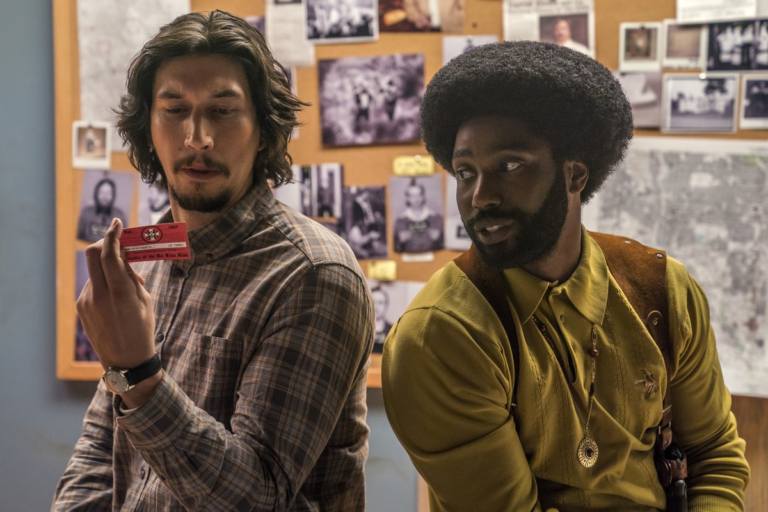
Director: Spike Lee Writers: Charlie Wachtel, David Rabinowitz Stars: John David Washington, Adam Driver, Laura Harrier
Synopsis: Ron Stallworth, an African-American police officer from Colorado, successfully managed to infiltrate the local Ku Klux Klan and became the head of the local chapter.
[/info]
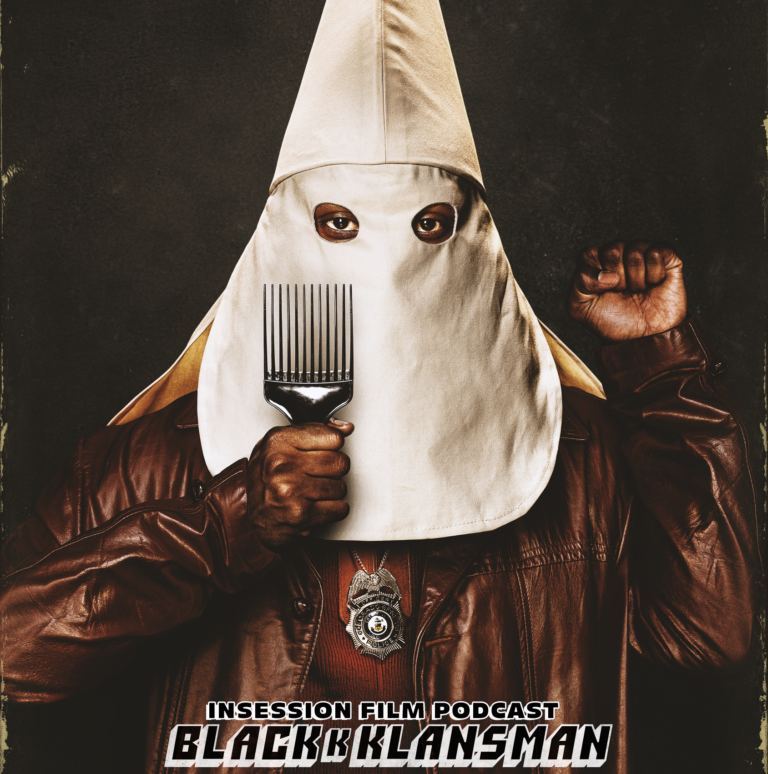
Spike Lee first sent major shockwaves in to the Hollywood scene with his wickedly entrancing 1989 outing, Do the Right Thing — which happens to be just as invigorating as it is riveting and thought-provoking. This only led Lee on to a career that included most notably films like Malcolm X, and 25th Hour. Both of which are considered some of his best material to date. But where Spike Lee has solidified himself as one of, if not the greatest filmmaker of our generation is the consistently ambitious commentary and social awareness he’s inscribed in to his projects. As well as the bold political relevance and poignancy that are infused to further extend parallels that reflect back to the current state of our real world. Which is exactly what BlacKkKlansman does, by exploring a traditional quest for racial equality and balance, and examining the ideology that sprouts from everyone’s personal motives.
Ron Stallworth (Washington) is an eager, somewhat angsty young adult who’s just joined the Colorado Springs police force. Although he thinks to a certain degree very highly of himself, he’s dismissed by his captain and sheriff quite early in the film’s slow-burning exposition. After setting up a meeting with one of the higher-ups of the local Ku Klux Klan to infiltrate and prevent a race war he sees as inevitable, they send in Flip Zimmerman (Driver) as an undercover Klan member to expose any hostile actions they might be planning. Tensions are already heating up between local African-American empowerment groups and of course the KKK. But once Driver is sent in to the battlefield, the entire spectacle of the issue is fully revitalized and displayed impeccably. Stallworth also strikes up a bond and relationship with Patrice Dumas (Harrier), who happens to be a lead president for one of those groups thats pleading for and exhibiting the idea of black power and liberation. Between both of our main protagonists, we’re able to see what’s going on from both sides of the social spectrum, as opposed to just usually being a third-party.
John David Washington, who hasn’t really been in a massive amount of projects up to this point in his career, hammers the nail on the head as our main character, Ron Stallworth. He’s an extremely talented rookie actor who portrays our stubborn and restless rookie detective. Adam Driver, our other main protagonist, is of course, just as solid as always. Yet another performance he can add to his filmography that is just as admirable as the next. What I find the most rejuvenating about this duo however, is that there’s always some kind of obstacle being hurdled at them. Whether it be Stallworth or Zimmerman. Physically or mentally, they’re constantly being beat down and challenged throughout the film, giving them hardly any time or room for error. They’re always on their feet and always have to be prepared for any last minute switch of plans. Which as you can imagine, makes it hugely investing.
Even though it’s only been about roughly three years since Lee’s last full-feature length film, Chi-Raq, a project of this scale sustaining subject matter Lee absolutely dominates in is what propels this movie forward to being the quality it deserves. As Lee puts it at the beginning, this was based upon “some fo’ real, fo’ real sh*t”, which is the basis for the exceptional screenplay penned by Lee and a few others. There’s little pockets of humor sprinkled throughout the movie that can both be dark, and even kind of satirical. The few gags I’m talking about in particular take subtle shots at referencing today’s political climate, which is something alternatively hilarious I didn’t see coming. Despite this, Lee and his group of writers nearly explore the conflict between both races to its fullest extent. The supporters from each race and organization aren’t lopsided in their beliefs. It feels as though they’re both equal in terms of their passion for power through their race. Which I think is the most accomplished aspect through that observation. In a way showing that even through all of the hatred, they’re humans, just like each other. Ron Stallworth’s character development is also one of the premier things to come from this film. He’s obviously attempting to do what’s right while simultaneously bettering the lives of not just his race, but all races. But becomes tested in a situation of what’s really right. It’s all based upon perception, and through himself he needs to figure out what he has to do. Not what he needs to do, but what he has to do. Which is just an utterly brilliant character study to me.
As intuitive as BlacKkKlansman eventually ends up being as a final product, it would be difficult to truly believe that early on in the film, I wasn’t completely on board with the inclusion of everything being presented. It feels as though for the first hour or so, Lee didn’t quite establish the film that he was so passionate on curating. There hardly ever feels like there was ever any zealous or stable sense of a focus or direction pertained towards the project, and you begin to question about which path the film is going to proceed down. It left me a bit unsatisfied with the first act, since I wasn’t completely able to immerse myself in the story. However, once the agenda begins to heat up with Driver being undercover, things immediately get better. Whether it be from the perfectly executed tension, or the immensely witty yet insightful interactions between each character.
Something else that did quite bother me also takes place in that first hour or so too. Stallworth as a character, while quite enigmatic and well-received toward audiences, receives hardly any true background in to his own motivations behind the investigation he’s conducting. Early on he confronts a somewhat self-conflict undercover, but shelves those feelings to further focus on the case. While it’s showed that he doesn’t completely agree with both races philosophies, he doesn’t want his reluctance and personal biases to ruin the case. However, had this layer of Ron Stallworth been peeled back much more extensively from when it was first introduced to throughout the rest of the film, the already potent remainder of the movie could’ve contained such a bigger fulfilling conclusion. This can go for nearly every other character too. They wait so long to be dissected and fleshed out, that by the time you want to analyze their decision-making, it’s too late. Between both of our protagonists, their motivations aren’t unraveled full circle until nearly the halfway point of the film, as we see them stop dragging their feet and accept what they need, and what they’re going to do.
This issue definitely holds the least significance out of my nitpicks, but a handful of the technical aspects attached to this film aren’t exactly up to par when compared to the standards that have been set in the industry today. The component that caught my eye the most was it’s very unpolished editing. It’s a lot easier to catch as you’re watching the film, but it’s a really unbalanced put together film. The cinematography is also another really bizarre case to me. It doesn’t tread upon being awful, but there are shots here and there that’ll cut off the top of character’s heads, or even during a non-action scene the cam is noticeably shaking. I’m not sure what the decision making was behind these aspects, but I assure you I was not the biggest fan of them.
While I ultimately did have a few minor problems with BlacKkKlansman as a whole, once the halfway point of the movie kicks in, there’s no turning back. The performances are superb, as well as the remarkable screenplay. We’re fully able to get behind our protagonists personal issues and motives they have towards everyone around them as well. It’s portrayal of a time not so long ago where the abundance of loathing and potential bloodshed amongst races is both fervent and insightful. The commentary from Lee is also gripped with a damaging call to action. Let’s just say, it’s socially applicable to the real world we live in now more than you think.
Overall Grade: B+
[divider]
Hear our podcast review on Episode 286, coming soon.
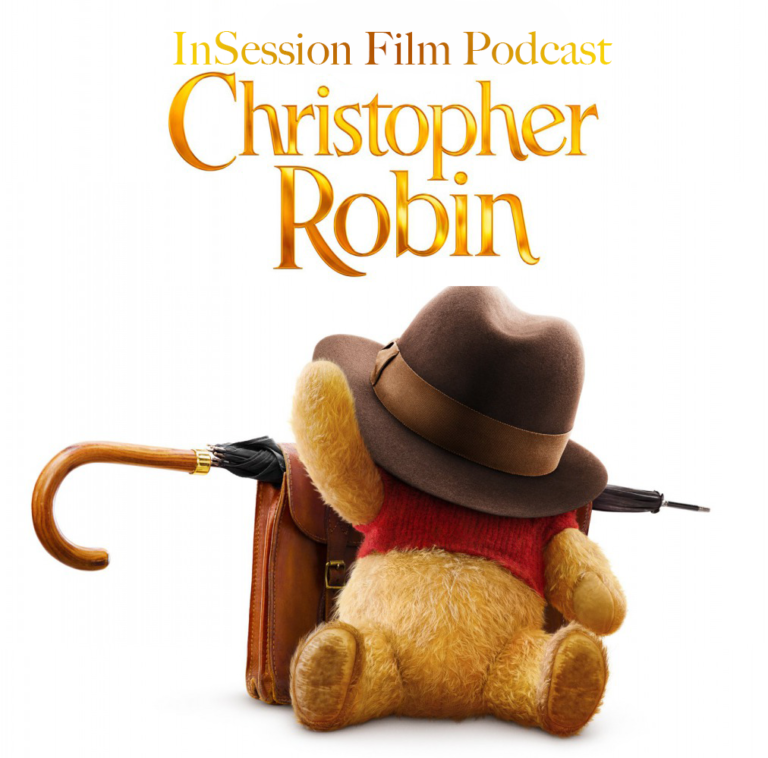
Director: Marc Forster Writers: Alex Ross Perry, Tom McCarthy, Allison Schroeder Stars: Ewan McGregor, Hayley Atwell, Bronte Carmichael
Synopsis: A working-class family man, Christopher Robin, encounters his childhood friend Winnie-the-Pooh, who helps him to rediscover the joys of life.
[/info]
Christopher Robin is a sweeter, more coherent, less exhausting version of Steven Spielberg’s Hook. Instead of Peter Pan, the protagonist here is, you guessed it, Christopher Robin (Ewan McGregor). Young Christopher enjoyed years of fun and frivolity with his famous friends from the Hundred Acre Wood. However, that is all coming to and end, as his father is sending him to boarding school. Christopher will no longer be able to climb in and out of the Wood as he pleases. The film opens with a legitimately touching picnic between friends. There is an immediate understanding of the love that Winnie the Pooh, Piglet, Eeyore, Tigger, Owl, Rabbit, Kanga, and Roo have for Christopher Robin. In front of a beautiful sunset, there are fond speeches and an indulgent meal. Immediately, you can tell that Christopher Robin is going to be far more understated than any other Pooh story put on film. The early, and perhaps best, part of the film feels inspired far more by David Lowery’s subdued Pete’s Dragon than overblown Disney live-action adaptations like Alice and Wonderland or Beauty and the Beast. This is surely due, at least in part, to the influence of indie darling Alex Ross Perry, who wrote the film’s first draft.
There is an intimacy to the early scenes that define a world that is, at times, abandoned as the film goes on. After a montage showing us that Christopher Robin has grown up to be an uptight, work-obsessed man without his furry friends, the film loses a bit of steam. When we deal exclusively with human characters, the drama feels forced and contrived. Christopher has completely forgotten how to have fun and thinks every moment of the day should be used to better oneself. When his daughter (Bronte Carmichael) asks him to read her a story, he pulls out a textbook. When his wife (a wasted Haley Atwell) breaks out in dance, he shuts his office door in her face. Christopher works for a luggage company, focusing on company efficiency. Nearly all of the scenes showing the trials and tribulations of his job counteract the genuinely sweet moments experienced when Pooh and co. are on screen. Christopher’s work life is portrayed in a way that feels too silly to be relatable for older viewers and too mundane to be interesting for younger ones. His boss is controlling in the least-interesting ways imaginable and the objective of “cut costs by twenty percent in one weekend or your department will be terminated” is so broad that it takes away much of the narrative weight.
Christopher’s overwhelming work life forces him to skip out on a family trip to the countryside, much to the dismay of his wife and daughter. When he arrives home one day, he runs into a nearby courtyard to hide from his pesky neighbor to find his old friend, Winnie the Pooh, on the hunt for his friends, who he cannot find in the foggy Hundred Acre Wood. Unsurprisingly, this is when the story picks up steam. Pooh speaks in funny, Yoda-esque phrases (“People say nothing is impossible, but I do nothing everyday”) and waddles around in a constant state of honey withdrawal. Pooh is well-meaning and sincere, but his undying thirst for honey and curiosity when it comes to the new world around him provide for sweet comedy and an overall warm, fuzzy feeling.
Christopher Robin decides that he has to make sure that Pooh returns to the Wood, which means a trip to the portal by the house in the countryside where his family is staying (it makes absolutely no sense that Christopher’s character would, according to everything we have seen of him thus far, would lose basically an entire day of work for this, but sometimes it is best not to question the logic of a film starring a talking teddy bear). After a cute train ride with Pooh, Christopher returns to the Wood and helps his crop top-wearing, honey-loving friend find his friends. The design of the characters in the Wood is something that the makers of this film can hang their hat on. Without even having spoken a word, there is an attraction to them based on sheer cuteness. These versions of the characters are, no doubt, based on the characters popularized in the cartoons of the late 1980’s, which established a style that survived through the most recent Pooh theatrical film, 2011’s Winnie the Pooh.
This is driven home by the fact that Jim Cummings, who has been with the franchise since the creation of The New Adventures of Winnie Pooh in 1988, is still the voice of both Pooh and Tigger in Christopher Robin. This is in line with the vision of these live-action adaptations that have proven to be very lucrative for Disney. They are, at their best, heavily-inspired by but not completely tied down to their cartoon source material and, at their worst, insufferable nostalgia porn for 90’s kids (*cough cough* Beauty and the Beast *cough cough*). Cummings provides a sense of home for 20-to 30-somethings like me who grew up on his rendition of the two most iconic characters in the series. There was no need to make sure there was continuity when it came to the other characters, but the exclusion of Cummings would have been too much for many to handle, even if 99% of the audience wouldn’t be able to pick him out of a lineup. His Pooh is tender and sweet, his Tigger rambunctious and brazen. Cummings makes the film work as much as anyone else.
After an utterly charming and delightful period in the Hundred Acre Wood where we are more properly introduced to the likes of Eeyore, Piglet, and Tigger (including a truly touching moment between Pooh and Christopher that brought tears to the eyes of both the viewers to my left and my right), Christopher returns home for a presentation to the board of his company that will decide the fate of his department. But, luckily, there is allot device that makes sure we get the motley crew of Pooh, Tigger, Piglet, and Eeyore sent chasing after Christopher Robin in London with the help of Christopher’s daughter. This scenario brings about the pretty great set pieces of the film that are silly, funny, and at least a little bit thrilling. Director Marc Forster presents the city as a flat, dull landscape where Pooh and his friends strikingly stand out, even with their slightly worn stitching. It is an unfortunate coincidence that the only stand out moments of the film occur when those characters are involved. The ending of the film is schmaltzy and leaves much to be desired, thematically, but at least we get a little more Pooh.
On a technical level, Christopher Robin is mostly unremarkable. Some of the visuals in the Hundred Acre are beautiful in their simplicity, but everything aside from that often feels flat. However, one cannot discount the sense of wonder that Forster is able to capture when we are exposed to Pooh’s curiosity, Eeyore’s charming melancholy, or Tigger’s fiery proclamations. The Pooh stuff really works! If only the rest of the film could have matched half the energy or inventiveness of those moments. The Hundred Acre Wood is a place of gentle wonder. The rest of the film leaves you wondering why you didn’t leave to get a refill of popcorn. It is a movie that will play better when you can skip the bad scenes and get to the “silly old bear”. You will laugh, you may cry, and then you will see yourself looking at your watch. See it for the number of great moments it has, but be prepared for the moments when you may find yourself dozing off like Pooh after one of his jars of honey.
Spike Lee has been a seminal filmmaker over the last 30 years, and his voice is as important today as it’s ever been. His new film BlackKklansman hits theaters this weekend, and by all accounts, its one of his best films in recent years. So with that as inspiration for our poll this week, we simply want to know, what is your favorite Spike Lee joint? Do the Right Thing is an all-timer, but maybe there’s another film that you love?
It has been 60 years since the release of one of his more divisive films, the hypnotic Vertigo with James Stewart and Kim Novak. I’m on the side of it being perfect, but it took me some time to warm up to it, and Psycho is still personally my favorite Hitchcock film. It was part of the golden age of his career that stitched up the title “Master of Suspense” and made him a formal auteur in Andrew Harris’ theory. But what is sometimes overlooked is his career in his native Britain. With the now-defunct Gainsborough Pictures and Gaumont-British, Hitchcock made 26 silent and sound pictures in the 1920s and 30s before his departure to the U.S. It was these pictures that started the trend of work we would see in Hollywood. Here are some of the best of early Hitchcock.
The Lodger: A Story Of London Fog (1927)
This was Hitchcock’s third film, but Hitchcock himself called it, “the first true Hitchcock movie,” because of the suspense and foreshadowing elements that would follow the rest of his career. With a Ripper-like killer on the loose, a mysterious man takes up residence in a vacant room and has some resemblance to the killer. Soon, the man becomes a suspect of interest for various reasons. The thriller showed the technical smarts Hitchcock possessed such as the “glass ceiling” shot, visual symbolism, and crafty editing that reduced the number of title cards needed for the silent picture. Scholar Donald Spoto wrote that The Lodger, ” revealed his psychological attraction to the association between sex and murder, between ecstasy and death.” Most notable of all, it was the first time he started making cameos; a shortage of extras forced him to take up a shot as an editor in a newspaper office.
The Man Who Knew Too Much (1934)
Before it was remade by Hitchcock in 1956 to the expanded 2-hour dash from Morrocco to London (which the director said was the better version of the story), it was a simple 75-minute thriller that starts from the ski lodges of Switzerland and introduced the English debut of Peter Lorre three years after his chilling performance in M. The story’s narrative is quick zig-zag of pursuits, questions, a kidnapping, and successful and unsuccessful killings. A major difference compared to the 1956 version is the shootout at the end of the film which recalls the film’s opening sequence. While some say there are flaws in the story and that it does not give enough exposition within key scenes, I see it as a straight-up convincing story that does need to get as tense as the later version did.
The 39 Steps (1935)
The following year, Hitchcock went to a common scene that would be repeated afterward: the train. It would not be the main setting, but it plays a part in the common “wrong man” plot he would continue with also. Here, a man is mistakenly accused of killing a British secret agent and has to flee to find out who did it while also trying to figure out from the dead agent what the 39 steps are. Running into a beautiful woman, he has to take her along for the journey to the Scotland Highlands and back to London where the first scene of the film also becomes the climax and answer to the man’s questions. The famous MacGuffin is utilized, a plot device which is important to the story, but irrelevant to the audience; in this case, it’s what the 39 steps are, but the main point here is what can the man do to clear his name.
Sabotage (1936)
This espionage story is loosely based on a Joseph Conrad novel about a woman who discovers that her husband works for an organization that plans on bombing London. Another 75-minute feature, it utilizes cinema has a key feature within the deepening suspense, a scene that people were not happy with when released because it features a young boy holding a can of film that has a bomb inside of it. Hitchcock acknowledged that to have a child harmed in such a manner was not a wise thing for the story and learned from that. Regardless, it was another hit for Hitchcock.
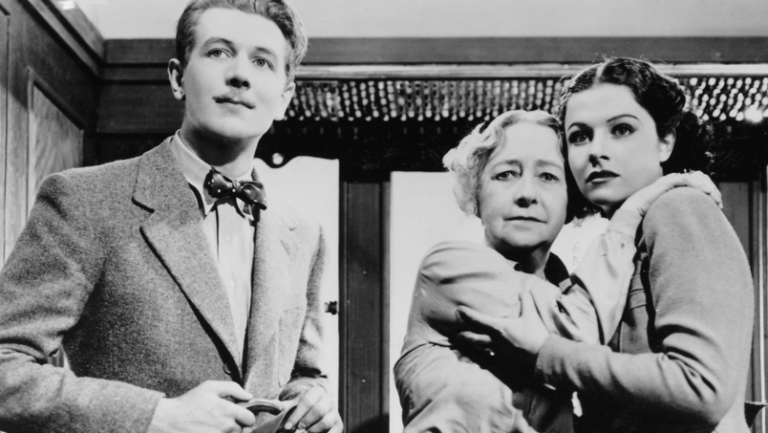
The Lady Vanishes (1938)
After The 39 Steps but before North by Northwest, Hitchcock put two individuals, a beautiful young woman, and handsome young man, on a moving locomotive where a young woman meets an older woman before boarding. When the older woman goes missing and the rest of the passengers claimed to have never seen her, she only can get help from a traveling musician and they uncover a conspiracy. Within the mystery, there is also the romantic chemistry between the two, mixing it with the international intrigue that fit the bill for the time in Britain. It was so liked that French New Wave pioneers Francois Truffaut and Eric Rohmer could not try to study the film because they were absorbed into the plot.
In 1939, David O. Selznick, who recognized the masterpieces of Hitchcock’s work, contacted him and offered a job to work in the United States, several months before the outbreak of World War II. The first two pictures he made in Hollywood would both be nominated for Best Picture, Foreign Correspondent and Rebecca, the latter ended up winning Best Picture. He would return back to his home country just once to film Frenzy in 1972. Many will remember him for his incredulous films in decades after his tenure in Britain ended, but early Hitchcock works laid the groundwork to how we remember his legacy and contribution to films.
The month of July started to bring some sunlight to the 2018 Oscar race. For this month’s Chasing the Gold, I will be looking back on the month of July, as well as the first week of August, and looking at the films, trailers, festivals and buzz surrounding this year’s Oscar race. While there were some films that could make hay in some smaller categories, it was news from the festivals and trailers galore that brought the intrigue level to where it is at today, showing us what’s going to be in play for those gold statues at the beginning of next year.
Films:
The month of July didn’t really bring the Oscar race any Best Picture contenders but it did bring a lot of candidates for Original Screenplay into the fold. There is Boot’s Riley’s wildly zany social satire Sorry to Bother You, that has a premise and a twist that makes it one of the most original and crazy screenplay’s of the year, very much making it 2018’s The Lobster, a film that didn’t get a lot of love in other categories other than original screenplay. Then there is the screenplay for Blindspotting, a film very similar in its message like Sorry to Bother You, but handles it way better in my opinion and tells it a little subtle, and with actors Daveed Digss and Rafael Casal writing the film and already doing a lot of good press for the film, they will make an interesting duo if they hang around at the end of the year. And the last original screenplay contender is Eighth Grade from first time director Bo Burnham, which is one of the more realistic screenplays written in recent memory about adolescence and what it truly means to grow up in this modern generation. Burnham could easily ride the coattails of Lady Bird from last year and land himself his first Oscar nomination. But rest assure, if these three films don’t get nominated at the Oscars, I have a feeling they will be on a lot of critics lists at the end of the year and most likely the Independent Spirit Awards as well.
The only other film of mention from this month is for Mission Impossible: Fallout, which is the sixth film in arguable the best spy series going on within the genre currently. Looks through the history of the Oscars, it is amazing that with all of the great special effects and action set pieces these films have put together, it’s really strange that the series has not been nominated for any Oscars. But with the amazing achievement Fallout is, I wouldn’t be surprised if for the first time in the series, we finally see a very well deserved Best Visual Effects nomination for the film and Ethan Hunt and the gang break into the Oscar conversation. But while there weren’t a lot of films that sparked Oscar talk, there were plenty of trailers from the fall that came out that showed extreme promise.
Trailers:
Towards the middle of the month, we were given our first looks at a couple of films starting with The Favourite (Yorgos Lanthimos). The Favourite is Lanthimos’s follow up to The Killing of a Sacred Deer and The Lobster, and tells the story of Queen Anne (Olivia Coleman) and her friendships with two women played by Rachel Weisz and Emma Stone. Lanthimos’s films are considered to be out there for a lot of people, but I quite enjoy his films, and The Favourite is supposed to be his most accessible film to a mass audience to date with powerhouse performances from all three ladies mentioned above. Think The Lobster meets Stanley Kubrick’s Barry Lyndon and that is the kind of film we will get in the fall.
Mary Queen of Scots is another film about Queens from England only in a much different vine and tone than the previous film that was discussed. The film follows Mary (Saoirse Ronan), Queen of Scots and her cousin Queen Elizabeth I (Margo Robbie) and their rivalry turned war between the two of them for control of the thrown. With both actress coming off their best performances of their young careers in Lady Bird and I, Tonya, Ronan and Robbie could be looking for Oscar gold this time around after walking away last year empty handed. But the film could be more than just the two lead actresses, it’s also being written from a screenplay by Beau Willimon, who is the creator of House of Cards and wrote the play that he later adapted into the movie The Ides of March, which landed him an Oscar nominated back in 2011. The production design of the film looks incredible as well as the make-up and costumes, which easily look like contenders even if the film is subpar. The only cause for alarm for this films is that it is being directed by a first time director Josie Rourke, but with a lot of first time director having great outings over the last couple of years at the Oscars, Rourke will get the benefit of the doubt from me till the film comes out.
Shortly after these two trailers were released, we were given another first look trailer, this one being Joel Edgerton’s coming of age drama Boy Erased. The film, which is based on a true story, follows the life of Jared Eamons (Lucas Hedges) that comes out to his very conservative, religious parents (Nicole Kidman and Russell Crowe) and is send to a gay conversion camp to avoid being shunned by everyone he knows. Edgerton, who is also in the film as the leader of the camp, adapted the screenplay, so he pulls triple duty and based on the trailer, this is a big step up from his last film The Gift. This feels like one of those films of the Oscar season that could play well considering its based on a true story and has a very timely message about the treatment of members of the gay community within our modern political era. It could very well be this year’s Lion, only much better.
And though this trailer didn’t appear in the month of July, by the time this piece comes out, we would have seen the first looks at Barry Jenkins Moonlight follow up, If Beale Street Could Talk. The film is adapted from a novel by author, civil rights activist James Baldwin and is about a woman who scrambles to prove her fiancé innocence of a crime he didn’t commit while also carrying their first child. While early buzz has been questionable about the film, I tend to not believe most of that noise and trust that Jenkins will be giving us a good if not great follow up to Moonlight. Based on the trailer, Jenkins isn’t missing a beat in terms of direction and the cinematography looks absolutely amazing. The film is leaning on a cast of mostly unknowns in the leads, with Kiki Layne playing the lead role, but her mother is being played by Regina King, who could be just like Naomie Harris and Mahershala Ali, who were supporting actors in Moonlight and end up with Oscar nominations and a win for Ali. If there is anything you can learn from the last time people underestimated a Barry Jenkins film, don’t count it out in the awards race and that’s why I expect it to be a front runner across a lot of the major categories.
Fall Film Festivals:
Within the next two to three months, we will be seeing the films above plus a plethora of others that will premiere at film festivals around the world, starting in Venice, Italy at the end of August. We know most of the slate that will be playing their, films like Paul Greengrass’ 22 July, The Coen Brothers The Ballad of Buster Scruggs, Damien Chazelle’s First Man, Alfonso Cuaron’s Netflix film Roma. Other films that are being included are The Favourite, Luca Guadagino’s Susipria, Mike Leigh’s Peterloo, Jacques Audiard’s The Sisters Brothers, and our every ones first real look at Bradley Cooper’s A Star is Born.
Telluride comes next with a slate that includes Jason Reitman’s The Front Runner, Marielle Heller’s Can You Ever Forgive Me? and David Lowery’s The Old Man & the Gun. Though most of the lineup hasn’t been announced, it’s not going to be a secret if most of the films from Venice and the next festival, Toronto, go to Telluride. In Toronto, we will get to see If Beale Street Could Talk for the first time along with Felix van Groeningen’s Beautiful Boy, Steve McQueen’s Widows, Dan Fogelman’s Life Itself, along with many more because not all the films have been announced yet. By this time next month, we are going to start getting a clear look at what’s going to be our nominees once we start getting toward the end of the year.
What’s Coming Next:
So with many trailers coming out, premiers at film festivals on the horizon, and films coming up with August that will be coming to theaters like Spike Lee’s BlackkKlansman, Oscar Watch is going to be getting really busy quick. That is why before the festivals come out, you can come back and read my early Oscar predictions article here on InSession Film and see how wrong and right I am once the dust settles at the end of the year. Look for that within the next two weeks and keep track of the Oscars and the films above because most of them are going to be around and talked about a lot at the end of the year.
This week on Episode 285 of the InSession Film Podcast, inspired by Bo Burnham’s Eighth Grade, we decided to talk about our favorite grade school movies. Why are many of us are so drawn to movies about middle and high school? Is it nostalgia? Is it for reliving the painful truths they depict? Is it the humor? Or simply all of the above? Dating even further back than the era of John Hughes, this genre continues to age (much like these films’ respective characters). For our Top 3 this week, we celebrate the best this genre has had to offer over the many years. On that note, what movies would make your list? Here are the one’s that made ours:
(Note: Please keep in mind that we each had different criteria for our selections)
JD:
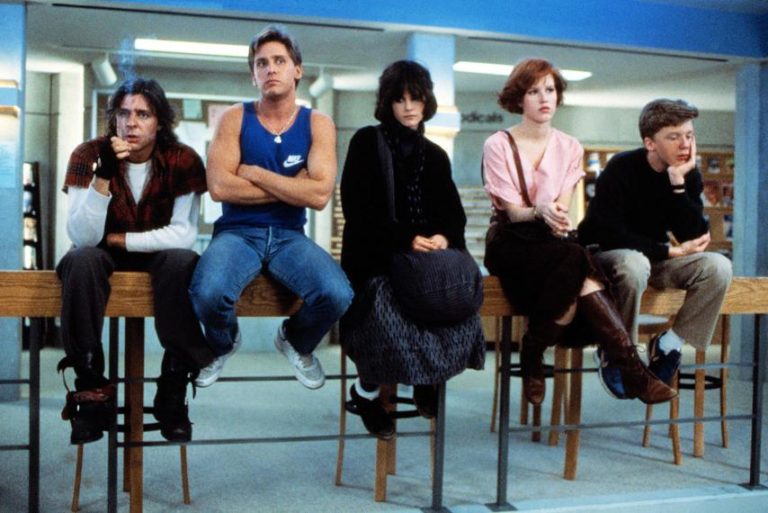
1) The Breakfast Club
2) The Edge of Seventeen
3) Back to the Future
Brendan:
1) Election
2) Back to the Future
3) Superbad
Honorable Mentions (Combined) The Last Picture Show, The 400 Blows, Dead Poets Society, Sixteen Candles, Say Anything, Carrie, Rushmore, Welcome to the Dollhouse, Juno, School of Rock, Brick, Easy A, Mr. Holland’s Opus, Grease, Mean Girls, Clueless, Billy Madison, Back to School, American Pie, American Graffiti, Lady Bird, Sing Street, Harry Potter, The Perks of Being a Wallflower, The Spectacular Now, 21 Jump Street, Me and Earl and the Dying Girl, Hoop Dreams, Hoosiers, Friday Night Lights, Remember the Titans
Hopefully you guys enjoyed our lists and if you agree or disagree with us, let us know in the comment section below. There are many great grade school movies that have been made over the years and maybe your list looks very different than ours. That being said, what would be your Top 3? Leave a comment in the comment section or email us at [email protected].
This week on the InSession Film Podcast, things finally get so gucci as we time travel back to middle school with Bo Burnham’s directorial debut Eighth Grade, starring Elsie Fisher and Josh Hamilton. We also use that as inspiration to discuss our Top 3 Grade School Movies!
Eighth Grade has already been garnering critical acclaim from the masses, as perhaps a new classic among grade school coming-of-age flicks; hopefully our conversation doesn’t come off as white noise then (spoiler alert). And what better way to celebrate this genre by looking back on the best films where middle/high school served a prominent place in those narratives. But that’s not all; how about we top things off by finally tackling one of our Patreon donations? Mr. Tim Costa from the First Time Watchers Podcast has asked for a review of Geostorm (aka The Greatest Movie of All Time), and we have obliged!
Let us know what you think in the comment section and thanks for listening to the InSession Film Podcast!
– Movie Review: Eighth Grade (3:17) Director: Bo Burnham Writer: Bo Burnham Stars: Elsie Fisher, Josh Hamilton, Emily Robinson
– Notes / Next Week (41:40)
After teasing it a few weeks ago, we are finally going to get to Eighth Grade next week on the show, so we had to have some fun with that. We also note that we are going to be doing our 2006 Retrospective on Episode 288, coming soon.
– Top 3 Grade School Movies (50:00)
Why are many of us are so drawn to movies about middle and high school? Is it nostalgia? Is it for reliving the painful truths they depict? Is it the humor? Or simply all of the above? Dating even further back than the era of John Hughes, this genre continues to age (much like these films’ respective characters). For our Top 3 this week, we celebrate the best this genre has had to offer over the many years. That said, what would be your Top 3?
– Patreon Review: Geostorm (1:29:25) Director: Dean Devlin Writer: Dean Devlin, Paul Guyot Stars: Gerald Butler, Jim Sturgess, Abbie Cornish, Daniel Wu, Alexandra Maria Lara, Zazie Beets, Andy Garcia, Ed Harris
If you want to help support us, there are several ways you can help us and we’d absolutely appreciate it. Every penny goes directly back into supporting the show and we are truly honored and grateful. Thanks for your support and for listening to the InSession Film Podcast!
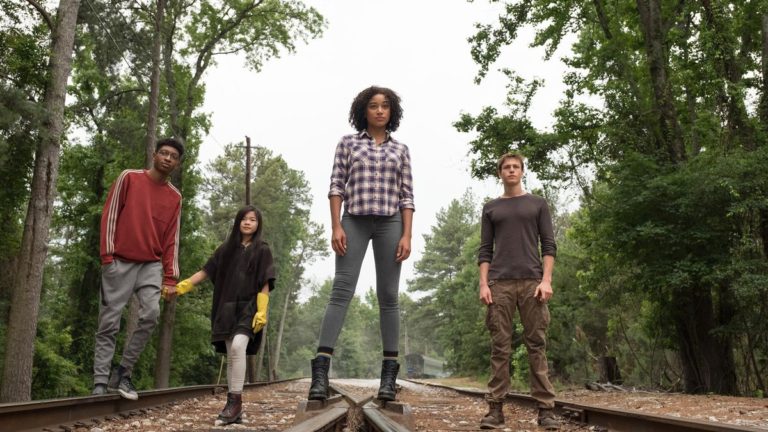
Director: Jennifer Yuh Nelson Writers: Chad Hodge (screenplay by), Alexandra Bracken (based upon the novel by) Stars: Bradley Whitford, Mandy Moore, Amandla Stenberg
Synopsis: Imprisoned by an adult world that now fears everyone under 18, a group of teens form a resistance group to fight back and reclaim control of their future.
[/info]
For a movie with “adults are scared of children” built into the premise, The Darkest Minds sure had a lot of different directions it could go regarding a social commentary, especially as members of Generation Z are in the midst of turning 18. Instead, it chose to go the predictable “rebellious teenagers find love in a hopeless place” route and totally missed the mark. That’s not to say it’s all bad, but it really could have been so much more.
I should probably admit that I have not read The Darkest Minds books by Alexandra Bracken. That said, this definitely felt like a case of the screenwriter (and likely the studio execs) trying to replicate the plot beat for beat without stopping to think what actually makes the books work. The pace is so breakneck with such an overemphasis on plot that you never really get a chance to breathe and figure out why any of it matters to the characters and, ultimately, the audience. The characters have little to no depth or arcs, the obligatory love story is shoehorned in with no genuine emotion behind it, and some of the most interesting exposition is unfortunately delivered through voiceover or, worse, awkward dialogue.
I’m not sure if the books hone in on the themes of generational divides and the youths of a nation changing the world in more precise and interesting ways (I’m betting they do), but the movie seems to completely lose its obvious message. Even worse, it manages to find a place for every bad teen movie cliche, from the forced love story to a shopping mall montage to the extravagant teenage party. If the script simply replaced some of those tropey scenes with character or theme explorations, this movie would have been infinitely stronger overall. But instead of a nuanced, socially relevant movie about teenagers overcoming adversity and changing the world, we end up with a hot mess of action set pieces, awkward teenage love, and stilted dialogue, including the most forced conversation about Harry Potter ever spoken aloud.
For all of these negatives, I have to admit that this movie was still mostly enjoyable, overall. It’s nowhere near as good as it’s obvious inspirations, like the X-Men or Hunger Games franchises, but the characters, despite the tropes and overemphasis on plot, are extremely likeable. This movie is also just visually appealing, from the stellar cinematography to the attention to detail of the set designs and props to the incredible special effects throughout. And while the acting is a bit of a mixed bag, this is easily the most diverse cast I’ve seen on screen in a long time. Despite the fact that the movie loses a lot of its message in the plot, there is something powerful about a story about a bunch of kids who all look different from each other and come from different backgrounds coming together to embrace their differences, discover their power, and take control of their own futures and, in turn, the future of the world.
The Darkest Minds is a movie I likely won’t recommend to many people. I enjoyed it but mainly because I’m a sucker for dystopian young adult fiction, and if you are, too, you might like this movie. I would also probably recommend it to most teenagers, but only if those teenagers have already seen movies like The Hunger Games quadrilogy, the X-Men franchise, or even the less well-received Ender’s Game. The Darkest Minds is not as bad as the current 19 percent Rotten Tomatoes score would lead you to believe (and I think the 80 percent audience score will attest to that), but there’s still a pecking order and when it comes to dystopian young adult fiction, this one just simply isn’t at the top.
This week on the InSession Film Podcast: Extra Film segment, Jay Ledbetter joins JD to discuss Blindspotting and the fascinating documentary Three Identical Strangers!
July has been a great month for film in 2018, and what a pair films to cap off the month. Blindspotting and Three Identical Strangers are both very good and we had a great time discussing what makes them so unique and captivating. Big thanks to Jay for joining us on the show as well, he was absolutely terrific and we look forward to having him back soon.
We hope you have fun with this week’s Extra Film segment, and as always let us know what you think in the comment section below. Thanks for listening!
– Movie Review: Blindspotting (5:31) Director: Carlos López Estrada Writer: Rafael Casal, Daveed Diggs Stars: Rafael Casal, Daveed Diggs
– Movie Review: Three Identical Strangers (57:49) Director: Tim Wardle
We try to make this the best movie podcast we possibly can and we hope you enjoy them. Subscribe today on iTunes and Stitcher and please leave us a review on iTunes. You can also find us on Soundcloud, PlayerFM and TuneIn Radio as well. We really appreciate all your support of the InSession Film Podcast.
To hear this Extra Film episode and everything else we do, download our apps on the Amazon Market for Android and the Podcast Box app on IOS devices. The mobile app covers all of our main shows, bonus podcast’s and everything else relating to the InSession Film Podcast. Thanks for your wonderful support and listening to our show. It means the world to us!
[divider]
Help Support The InSession Film Podcast
If you want to help support us, we would greatly appreciate it! For more info, CLICK HERE.