

Home Blog Page 257

Featured: Truth and Authenticity in ‘A Star is Born’

0

We ask a lot from the movies we see. We want them to entertain us – to push aside the cares of the world for a couple hours. That, in itself, is a monumental ask when you really think about it. On top of that, we also ask movies to inform our lives in some way – to help us understand the world around us. That may be an even more monumental ask. How are we to expect movies, regardless of genre, to accomplish these incredible feats? By what is undoubtedly the greatest request we make upon movies.

We ask them to be truthful.

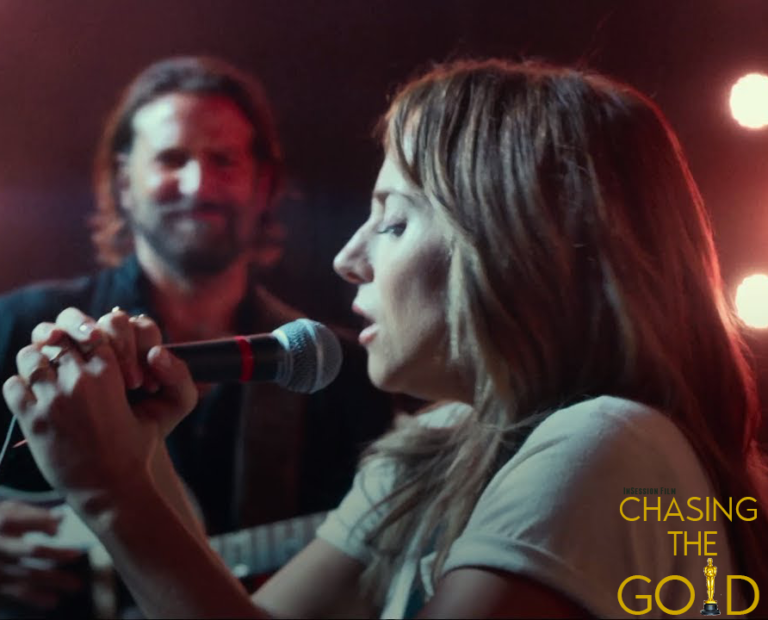
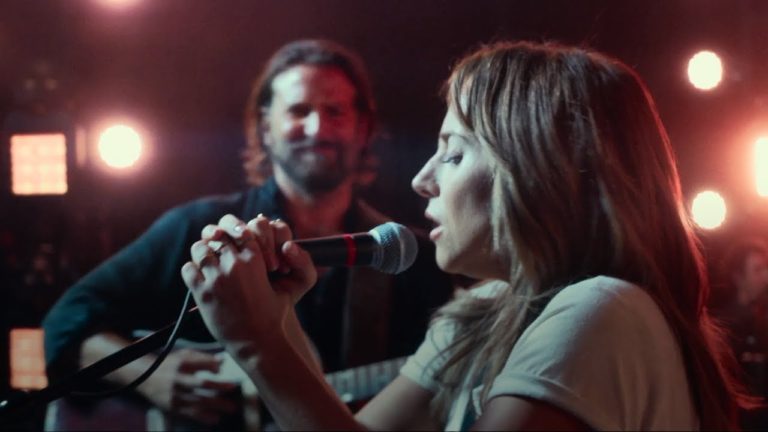
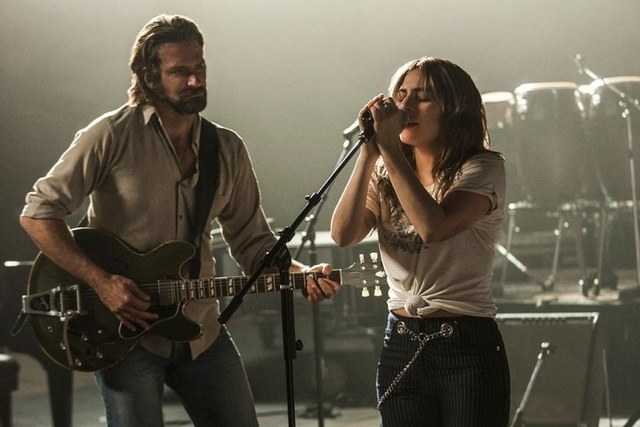
I was thinking about this after my wife and I watched the latest version of A Star is Born. Written by, directed by, and starring Bradley Cooper, this is a film that will force you to consider what it means for a movie to be truthful. And, in the spirit of truthfulness, I should amend my statement. The star of A Star is Born is without a doubt its leading lady – Lady Gaga. In her debut film role, she absolutely shines.

But if you’re looking for a full review of the film, I’d direct you to InSession Film contributor Rachel Wager-Smith who wrote up a wonderful piece on the film. If I were to write a review, I’d echo many of her sentiments, so I’ll simply save us all the time and direct you to her piece.

Instead, I’d like to focus on the acting performances in the film and, specifically, how they bring out a truthfulness that I am not used to seeing in such films as this. Full disclosure before we go any further: I have not seen any of the previous versions of A Star is Born. Even so, I must admit that I wondered why a film that has been made three times previously warrants another remake.

After seeing this film, I think I’ve found my answer – truth.

Fiction vs. “Real-Life”

Any time someone has a story to tell and they are able to stay true to that story, powerful moments can emerge. And this film is full of powerful moments. But what do we even mean when we say that someone has “stayed true” to their story?

A Star is Born certainly tells a fictional tale in that it is not a biopic and doesn’t pretend to tell a “real-life” story. But, for this discussion, I’d like to consider “real-life” tales for a moment. When we hear that a movie is based upon a true story, we still don’t expect the film to follow its story with perfect precision. At least we shouldn’t. Even documentaries are not the real thing. Any film is at least one step removed from real life. There’s always a layer of illusion over top.

On the flip side, when it comes to fictional stories, we still expect them to tell some kind of truth that will resonate in our real lives. They’re still one step removed from reality (some are farther removed than others), but that doesn’t mean that they are absolved of the expectation to tell the truth. Some of the greatest films ever made (Persona comes to mind most readily) have acknowledged and even played into this fact.

Even stories that take place in other galaxies can tell the truth. This basic fact of storytelling goes all the way back to Aristotle’s Poetics, where we learn that an impossible probability is better than an improbable possibility. Put another way, when the Millennium Falcon is pulled into the Death Star by a tractor beam, we accept it even though we know such a thing cannot be done in our world. Given what we know about the story, we take it to be probable even though we know it to be actually impossible. Such a story element, Aristotle says, is much preferable to the phenomenon in countless films where characters turn on the television or radio just in time to learn a major plot point. We know that is possible in our world. But it’s so improbable to the point of being ludicrous and, even worse, untruthful.

A Star is Born finds unique ways to unearth the truth in its story, even though we’ve seen this same story before in the previous remakes and even in other films. For that alone, it deserves all the praise it has received and then some.

A Star is Born and the Power of Truthfulness

It would have been easy for A Star is Born to fall into some timeworn clichés. The main character who struggles with alcoholism, the down-on-her-luck dreamer who finally reaches stardom, the lovers who are pulled in different directions, and the price of celebrity are all tropes that make their way into this storyline. In my mind, the film kept from falling prey to these clichés, because it never strayed from the heart of its story – the lives and loves behind the limelight.

More than any element, the film’s success in this regard is owed to its performers. We’ll start with Lady Gaga who finds the perfect notes as Ally. She knows when to be unsure of herself because Ally is an aspiring performer. At the same time, she knows that Ally is driven and fully believes in her own skill, so she finds subtle ways to show that, amid the initial fear, there is great self-assuredness that only needs to be unleashed.

Bradley Cooper also gives an incredibly-authentic performance, mainly for how he portrays a “star” collapsing in on himself. He doesn’t diverge into flailing antics for the drunk scenes. He plays it much more truthfully, showcasing a man who is driven by his demons. Yes, that’s a story we’ve seen before, but I’ve never seen it performed like Cooper does here.

When it comes to acting performances, truth can be a funny thing. While I’m acknowledging the authenticity of the performances here, I must also concede that not every truthful performance arrives at that end through being “authentic.” That may sound odd at first, but hear me out.

Take an actor like Al Pacino, for instance. He is one of the greatest actors to ever live. He has given performances like Cooper does here, in that they were authentic characters (think Sonny Wortzik in Dog Day Afternoon). But, later in his career, Pacino routinely has routinely taken on roles that called for a more musical performance (think of his roles in Glengarry Glen Ross – my personal favorite Pacino – or Scarface). Pacino still conveys truth in those roles even though some of his choices may not seem authentic on the surface. He’s loud and showy and…yet still truthful. It’s why he’s one of the greats.

I mention that because there are clearly many ways to arrive at truthfulness when it comes to films and acting performances. We should not grade everyone on whether or not they are fully authentic. Instead, we must grade them on whether or not they are truthful. I may be crazy, but I think there’s a difference.

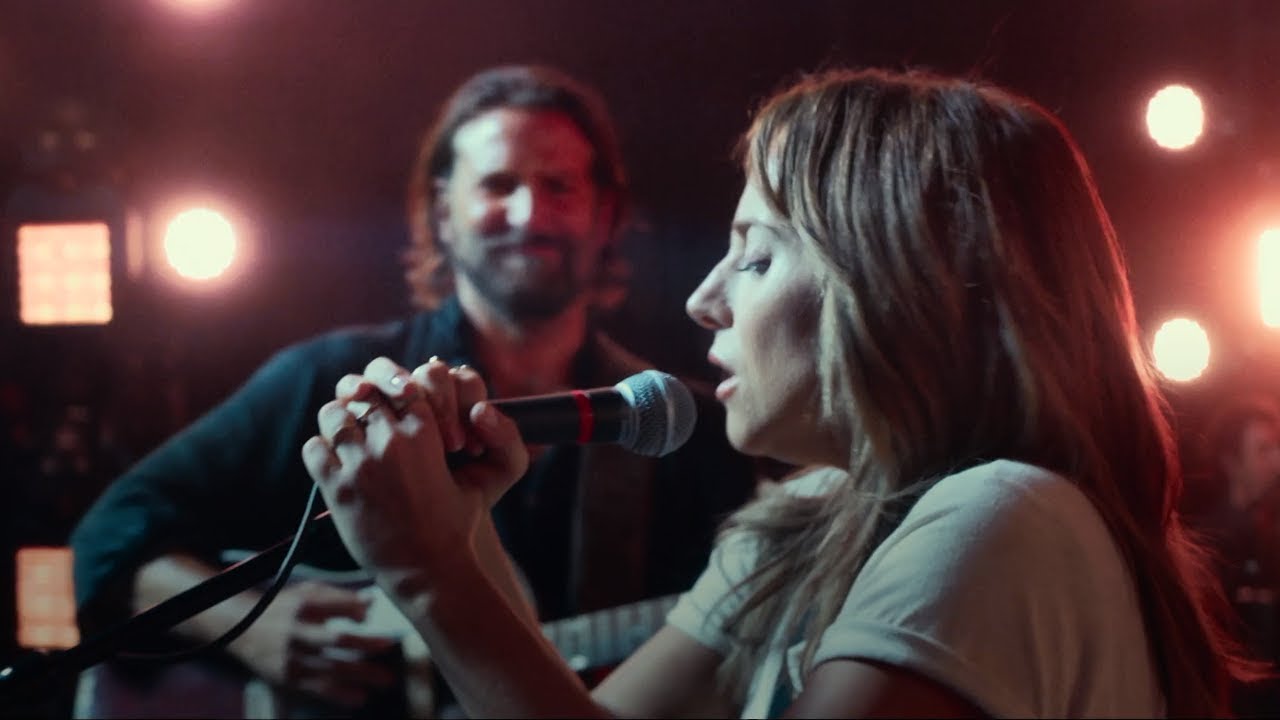
One of my favorite aspects of A Star is Born was its use of eye-contact between its main characters. There are two moments when they first meet at a bar – one where Ally makes contact with Jackson (Cooper) and another where Cooper returns the favor. Then, the final scene brings what must be one of the most emotionally-searing instances of eye contact I’ve seen in a film. These moments keep the film from getting too far adrift in its story of celebrity and ground it in the true personal story at its heart.

We ask a lot of our movies, and rightfully so. They have incredible powers to move and affect audiences and even our culture at large. That power should not be taken lightly. The best films are ones that seek, not to manipulate that power, but to acknowledge it by their pursuit of truth. Whether that is in a familiar story or one that takes place in another world, the truth is still what matters.

A Star is Born is not a perfect film. Very few are. But it walks the line of authenticity and truth beautifully, and I’d encourage anyone to go experience it for themselves.
Movie Review: Lady Gaga is a star in ‘A Star is Born’


Director: Bradley Cooper
Writers: Eric Roth (screenplay by), Bradley Cooper (screenplay by)
Stars: Lady Gaga, Bradley Cooper, Sam Elliott

Synopsis: A musician helps a young singer and actress find fame, even as age and alcoholism send his own career into a downward spiral.

[/info]

A Star is Born is the movie everyone is talking about, and everyone likely will be talking about it until at least next year’s awards season. It’s made Bradley Cooper a director. It’s made Lady Gaga a movie star. It’s a classic tale and is likely soon to be a classic movie. But is it actually a good movie? I have feelings.

Let’s start with the pros, because there are several. First and foremost (warning: obvious pun coming up), a star truly is born in Lady Gaga (sorry, I had to). She absolutely kills it in this role. We already knew she could sing, and she’s acted in both TV shows and movies before, but in A Star is Born, she really shows us what she’s made of and shifts her persona from pop star to movie star. Her performance is anything but shallow and the emotional depth she brings to the character of Ally carries this movie, 100%. She has some of the funniest and most charming line deliveries in the first act, and the performance deepens in surprising and profound ways throughout the film. Bradley Cooper’s performance is strong as well, but feels much more familiar and relatively unimpressive, plus I have a hard time believing him as a rock star. Gaga’s performance, on the other hand, feels fresh, raw, and believable. She brings a relatability and an intelligence to the character that makes the role far more interesting than the script really should allow and I think most people who see this movie will be incredibly surprised if this doesn’t make her an Academy Award nominee.

Other major pros with this movie come with the music, costumes, makeup, and hair (unsurprising, really, given the female lead). The soundtrack is a solid mix of country, rock, and pop and it steers fairly clear of Gaga’s usual style, focusing more on story and characters than Lady Gaga herself. There will most certainly be a best original song nom for Shallow at this year’s Oscars and I, for one, can’t wait to see the live performance. The costumes, makeup, and hair reflect the same blend of musical characteristics and feels unique and appropriate to this world and these characters. I also love the evolution of the character aesthetics seen throughout the movie and the fact that things never go full-blown Gaga in that department. There are elements of pop and celebrity without Ally simply being Lady Gaga.

Now for the cons. I hate the be the bearer of bad news, but the script for this movie is pretty bad. I haven’t seen the older versions of A Star is Born, but based on the amount of melodrama seeping through the frames, I would guess it borrows fairly heavily from those scripts without spending nearly enough time modernizing the story, developing the characters, or creating a plot that isn’t the most predictable movie since Titanic. There was also very little conflict throughout the film, although opportunities abounded, and it was never really clear why these two characters even wanted to spend time with each other, let alone how a romantic relationship could form. There is also a pretty major pace issue with this movie. Several scenes could have been cut entirely and most of the scenes could have been at least 25 percent shorter, in my opinion. Even a few of the musical numbers went on a little too long, which is something I never thought I’d say about a musical featuring Lady Gaga.

Another major con for me with this movie was Cooper’s directorial style. He seemed extremely preoccupied with making himself look like a rockstar and most of the scenes in which he sings are shot in handheld shaky cam extreme close ups with a million bright lights and, of course, a few obligatory dolly shot from behind with the crowd and lights in front. I understand trying to recreate the feeling of a rock concert, but it was too much, too often. I also think Cooper was likely trying to portray Jack’s life as chaotic through the camerawork, while Ally brought a stillness and a calm, which, again, would have been extremely effective in much smaller doses.

All in all, this is definitely a movie where you likely know what you’re going to get before you start watching the movie. Do you like melodramas? Do you like Bradley Cooper? Do you like Lady Gaga? Do you like movies about musicians? Do you like the older versions of this movie? Do you like the looks of the trailer? If you answered yes to several of these questions, you’ll like this movie. If you answered no to more than one or two, you should probably really stop and think if you want to sit through the hefty two hour and 15 minute runtime of this movie. As for me, the pros carried it to a passing grade and there are plenty of things I appreciated about this movie, but the cons kept it from being one I can say I truly enjoyed.

Overall Grade: B-

[divider]

Hear our podcast review on Episode 295, coming soon!

[divider]

Podcast: Lizzie / We the Animals – Extra Film

This week on the InSession Film Podcast: Extra Film segment, we discuss Craig Macneill’s latest film in Lizzie and Jeremiah Zagar’s first narrative feature in We the Animals!

For this specific episode, Ryan joined Brendan for the Lizzie review while JD hopped on the show to talk to Brendan about We the Animals. Since Brendan had been away for awhile, we decided to make him the workhorse this week. We had a lot of fun with these two reviews, and while they aren’t widely available, hopefully they’ll start to spread their wings more in the upcoming weeks.

On that note, have fun with this week’s Extra Film segment and let us know what you think in the comment section below. Thanks for listening!

– Movie Review: Lizzie (5:18)
Director: Craig Macneill
Writer: Bryce Kass
Stars: Kristen Stewart, Chloë Sevigny, Fiona Shaw

– Movie Review: We the Animals (27:46)
Director: Jeremiah Zagar
Writer: Daniel Kitrosser, Justin Torres (based on the novel by)
Stars: Sheila Vand, Raúl Castillo, Evan Rosado

– Music

Say the Words For Me – Jeff Russo
Good Graces – Nick Zammuto
The Return of the Eagle – Atli Örvarsson

We try to make this the best movie podcast we possibly can and we hope you enjoy them. Subscribe today on iTunes, Spotfiy or Stitcher, and please leave us a review on iTunes. You can also find us on Soundcloud, PlayerFM and TuneIn Radio as well. We really appreciate all your support of the InSession Film Podcast.

Subscribe to our Podcasts RSS
Subscribe to our Podcasts on iTunes
Listen on Spotify
Listen on Stitcher
Lizzie / We the Animals – Extra Film

[divider]

Mobile App

To hear this Extra Film episode and everything else we do, download our apps on the Amazon Market for Android and the Podcast Box app on IOS devices. The mobile app covers all of our main shows, bonus podcast’s and everything else relating to the InSession Film Podcast. Thanks for your wonderful support and listening to our show. It means the world to us!

[divider]

Help Support The InSession Film Podcast

If you want to help support us, we would greatly appreciate it! For more info, CLICK HERE.

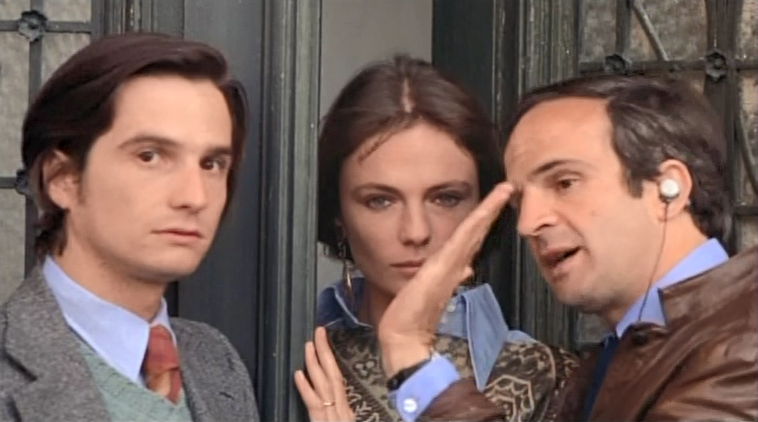
Featured: The Show Is Behind The Camera: Truffaut’s ‘Day For Night’

Francois Truffaut, trending from art house to mainstream, decided to turn the camera on himself in a composition of troubled actors, hidden loves, and technical misfires. The result is something that is very much like the title of the movie, in which day scenes are being shot at night. It is farcical and somewhat real, externally glorious and internally ugly, and it would be the ultimate movie about a movie in thanks to the genius of an ultimate cinephile. This is Day For Night and the world it presents is all neurotics and hard workers who present that scenes and sweat that goes into a basic scene for the fictitious Meet Pamela, a melodrama about a family in romantic peril – just like the cast and crew.

Love On The Go

First, there is Jean-Pierre Leaud as Alphonse, a heartthrob actor who struggles with handling love. During the film, Alphonse’s fiancée leaves him for the film’s stuntman. His neurotic ways have pushed his fiancee for another man and someone lower than him on the totem pole. An understandably heartbroken Alphonse wants to cure his pain by getting drunk and asking people in the hallway if they can give him money to get a prostitute. Instead, he has a one-night stand with Jacqueline Bisset, who plays Julie Baker, an actress being chased by a scandal with her new marriage. It results in a childish move by Alphonse and a scathing comment by the producer’s wife on why does filmmaking include everyone having affairs with each other and forcing emotions onto everyone else.

Emotions On The Fritz

With Julie Baker, her scandal involves a breakdown she has recovered from which has led to the marriage with the doctor who treated her. It takes one moment to shatter her recovery. Meanwhile, Séverine, a former diva actress, had a relationship with Alphonse, which then ended badly, and now the two are working together. It is less of love on-the-go and more of, “let’s get through with this.” In addition, she struggles to remember her lines and has a mini-breakdown on set, which is fixed by having her read the lines off-screen, similar to how Marylin Monroe had to do for Some Like It Hot. Something that kind of goes unnoticed is the respected (and only sane) Alexandre’s secret rendezvous with his young boyfriend, relaying the secrecy actors had to go through because of the risk of being exposed as gay. His sad ending is the reminder that stars are not prone to a sudden tragedy that befalls us every day.

Technical Difficulties

Truffaut pokes into the process of set-placed action with take after take on an open set with extras walking around choreographed with the camera. As the director Ferrand, Truffaut works with his script editor in making the necessary changes, speaks with Georges Delerue who plays the score for him over a growing pile of film literature and improvising to get his melancholy actors in tune. One of the funnier scenes is when he tries to have a cat on cue drink a bowl of milk. It won’t and they try to force the cat to take it, but cannot. Another scene involves Séverine, where she learns her lines perfectly but continues to open the wrong door into a closet, not the hallway. The doors look the same and they are right next to each other. But lastly, it brings up an unexpected death of the one person who brought no baggage to the screen, which then alters the movie dramatically. It is very eerie to how Heath Ledger’s death altered The Imaginarium of Doctor Parnassus and its story.

Death Of A Relationship

A coda to this movie is the complete severance of ties between Truffaut and his fellow New Wave companion, Jean-Luc Godard. Within the massive success of Day For Night, one critic of the film was Godard himself, who walked out late in the film and wrote a scathing letter to Truffaut. He called the film, “a lie,” and Truffaut responded in kind in calling Godard a hypocrite and, essentially, “a piece of shit.” The split is from the fact that Godard, as a political radical, had kept the original techniques for his politically charged works while Truffaut moved on to modern stories that made him look like a sellout to Godard’s eyes. At the time, Truffaut was a major success critically and financially that Godard could never get from when he started because of his turn to make movies about realism that was very limited in appeal. It was a split that, sadly, should have been no surprise, but the details of their nasty divorce was a mere secret until Truffaut died. They never spoke to each other again, even though Godard tried to repair the relationship before Truffaut’s death. (Check out the doc Two In The Wave which examines their friendship until that bitter end.)

Day For Night won the Academy Award for Best Foreign Film and was also nominated for Best Original Screenplay, Director, and Supporting Actress for Valentina Cortese as the diva Severine. Godard called the film a lie; if it is, then it is a great lie and a fantasy worth going into, even in those tedious and exhausting episodes of prima donnas. If it is true, then Truffaut revealed a massive portrait of the perils of making a movie with so many crazy characters. It is an international story where everything is interwoven and scandals behind-the-scenes are often too common. From film history and from his own past, Truffaut constructs a funny, bonkers, fluid set of tales all mixed up on a movie set, the ultimate home for Truffaut. Sometimes, the best show is how the movie is made and not what is on the fine celluloid, cut and print.

Follow me on Twitter:@BrianSusbielles

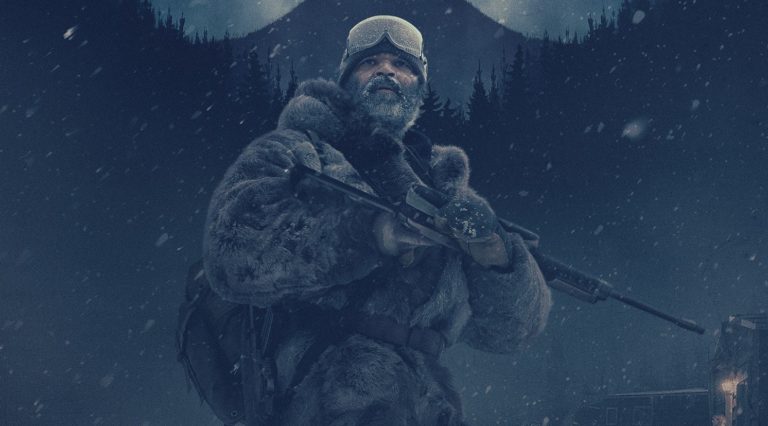
Movie Review: ‘Hold the Dark’ is a grueling, appealing act


Director: Jeremy Saulnier
Writers: Macon Blair (screenplay by), William Giraldi (based on the book by)
Stars: Jeffrey Wright, Alexander Skarsgård, James Badge Dale, Riley Keough

Synopsis: After the deaths of three children suspected to be killed by wolves, writer Russell Core is hired by the parents of a missing six-year-old boy to track down and locate their son in the Alaskan wilderness.

[/info]

Upon reading the title, in an instant you can see yourself holding a broom while something rolls in. Something unpleasant. Maybe it’s nothing beyond the shadows that cast when the sun sets, but still. If helplessness — overwhelming helplessness — is the spice author William Giraldi wants to give the most piquancy to while writing Hold the Dark, he’d be glad in knowing that is also the most pronounced element in the first-A24-then-Netflix screen adaptation. So much so, in fact, that any attempt to connect with the footage will result in two-and-a-half-degree frostbite. Oof. But in making it difficult for viewers to embrace the frame do Jeremy Saulnier and company find a way to paint “dark” rightly, and from there does one find a thriller imbued with challenging goodness.

That, on top of finishing up another set of Three Colors — if anyone, especially Saulnier, is wondering.

In an Alaskan — true Alaskan — town that bears the name of a chthonic canine-esque spirit (Keelut), a death has happened. Or should it be “another”? As housewife Medora Slone (Riley Keough, convincingly tormented) has written to wolf expert Russell Core (Jeffrey Wright, minimalist but always compelling, thanks to those weathered eyes), her son is the third child to have fallen prey to the wolves. She also implores him to exact reciprocal revenge onto the canis lupus responsible for the tragedy, a task that will see its progression thwarted and greater evils unleashed when Medora’s husband, Vernon (Alexander Skarsgård, at this point a master of the icy stare), returns from the sun-scorched fronts of Fallujah.

People and wildlife have close-to-little distinction in Hold the Dark, and writer Macon Blair (Saulnier’s friend who also has a role here) makes it his mission to keep that idea within view. Always. What begins as invasions of the primitive world will, minute by minute, grow into shadowings of the civilized’s. Beasts in the wind are said to circle humans often. Humans will don bestial masks, sometimes literally, to fulfill needs that may blister tongues if uttered. “Minute by minute” is the key phrase here, which while letting every ounce of savagery into the system — a potently and casually directed shootout at the halfway mark will have your blood curdle even more than whatever scene that does so in both Blue Ruin and Green Room — it also means the mystery will unfold in a glacial fashion. The wintry landscape will appreciate the added “oomph” in its portrayal; can’t say the same for those who by now are madly well-trained to the harsh sights and quavering talks of arctic living.

That said, Hold the Dark has devices that make the brooding chill endlessly enticing. There are Magnus Nordenhof Jønck’s photography that assumes the eyes of the hunter or the hunted (and for either case never shies away from uber-realistic gory results); Ryan Warren Smith’s isolation-marked production design and Brooke & Will Blair’s cold strings that may invoke chants not of this plane. And even though all are a testament to Saulnier’s notable technical proficiency and — if we take into account the production’s scale — readiness to adapt, again they can’t let the dossier of the investigation enters our hands. Still, benching us is the riskiest-but-most-undiluted way to have us witness, or be on a collision course with, the trappings of this world. All deadly, if not to our body then to what is within. As Vernon’s friend Cheeon (Julian Black Antelope, intense) reminds local cop Donald Marium (James Badge Dale, ever alert) in an exchange, there’s no way to stop “the call,” or the howl of death.

Let go of the broom now.

Overall Grade: B

[divider]

Hear our podcast review:

[divider]

Poll: What is the best remake that’s better than the original?

It’s finally here! We’ve all seen the trailer for A Star is Born about 200 times by now, and it’s finally hitting theaters this weekend. Bradley Cooper’s directorial debut will be a major awards player and it should make for some interesting conversation on Episode 294 this weekend. For now though, we want to know which remake stands out to you as the very best. Not all remakes are great, but several have become regarded as not just better films than their predecessors, but some of the best films of all-time.

So with that said, what is the best remake that is considered (by many) to be better than the original? Vote now!


List: Top 3 Netflix Films

This week on Episode 293 of the InSession Film Podcast, inspired by Hold the Dark, we thought it would be fun to discuss the best films on Netflix currently. The topic of Netflix “original” content has been a polarized subject over the last few years as their films have varied greatly in quality. Some are very good, others have been..well let’s just say less than stellar. But given their upcoming schedule, now is the time to discuss the best films from what could be considered “Phase 1” of Netflix original films. If their fall slate, such as Roma, 22 July and The Ballad of Buster Scruggs, is what we hope it will be, 2018 could be a major turning point for Netflix in the film community. For now though, we talk about the best films they have to this point, and we think you’ll enjoy what cultivated for our lists. That said, here are our lists:

(Note: Please keep in mind that we each had different criteria for our selections)

JD:

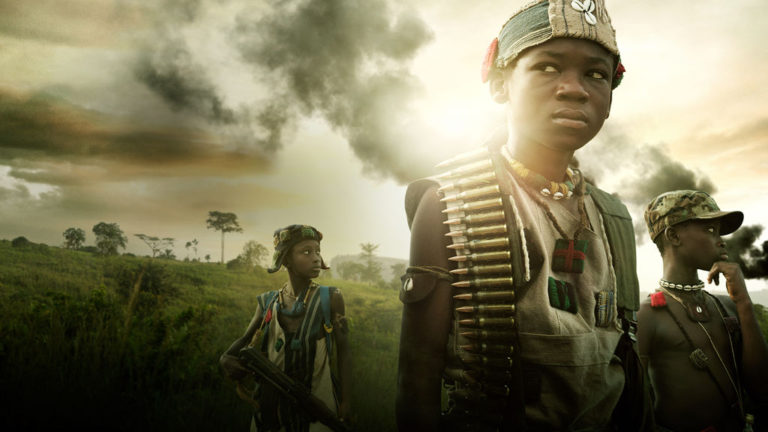
1) Beasts of No Nation
2) 13th
3) The Meyerowitz Stories (New and Selected)

Ryan:

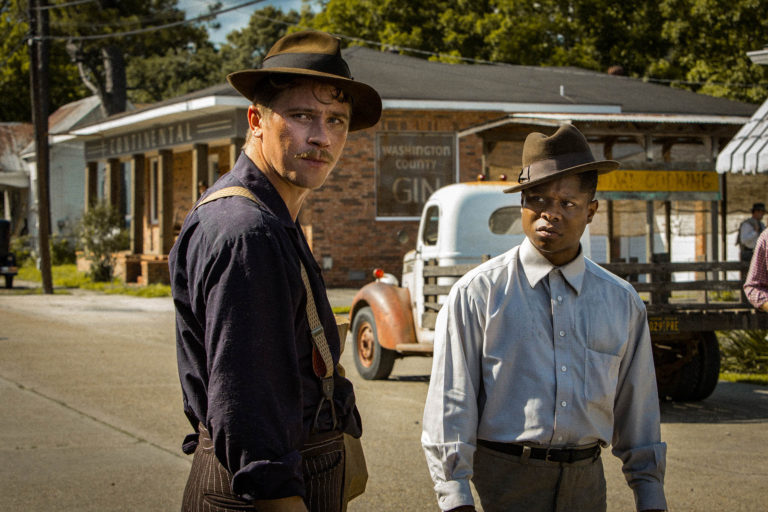
1) Mudbound
2) 13th
3) Okja

Walter:

1) The Ritual
2) Amanda Knox
3) Beasts of No Nation

Honorable Mentions (Combined)

First They Killed My Father, Hush, Win It All, The Little Prince, Tramps, First Match, Icarus, Virunga, What Happened, Miss Simone, The Fundamentals of Caring, Set it Up, To all the Boys I’ve Loved Before, On Body and Soul, I Don’t Feel At Home in this World Anymore, Hold the Dark

Hopefully you guys enjoyed our lists and if you agree or disagree with us, let us know in the comment section below. As noted above, the quality of Netflix content has been all over the place, so maybe your list looks differently than ours. That being said, what would be your Top 3? Leave a comment in the comment section or email us at [email protected].

For the entire podcast, click here or listen below.

For more lists done by the InSession Film crew and other guests, be sure see our Top 3 Movie Lists page.

Movie Review: ‘Lizzie’ is as captivating as it is horrifying


Director: Craig William Macneill
Writers: Bryce Kass
Stars: Kristen Stewart, Chloë Sevigny, Fiona Shaw

Synopsis: A psychological thriller based on the infamous 1892 murders of the Borden family.

[/info]

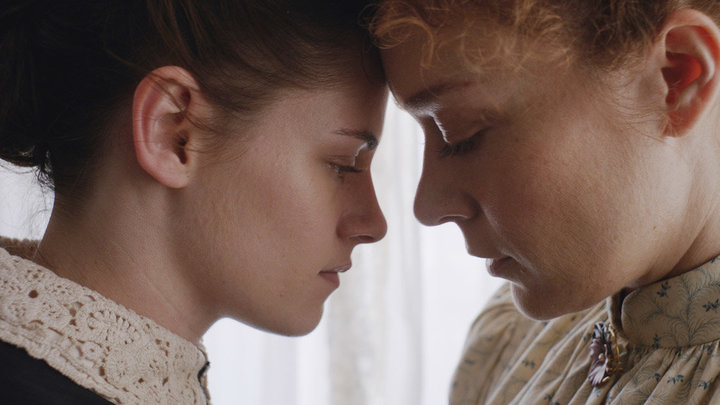
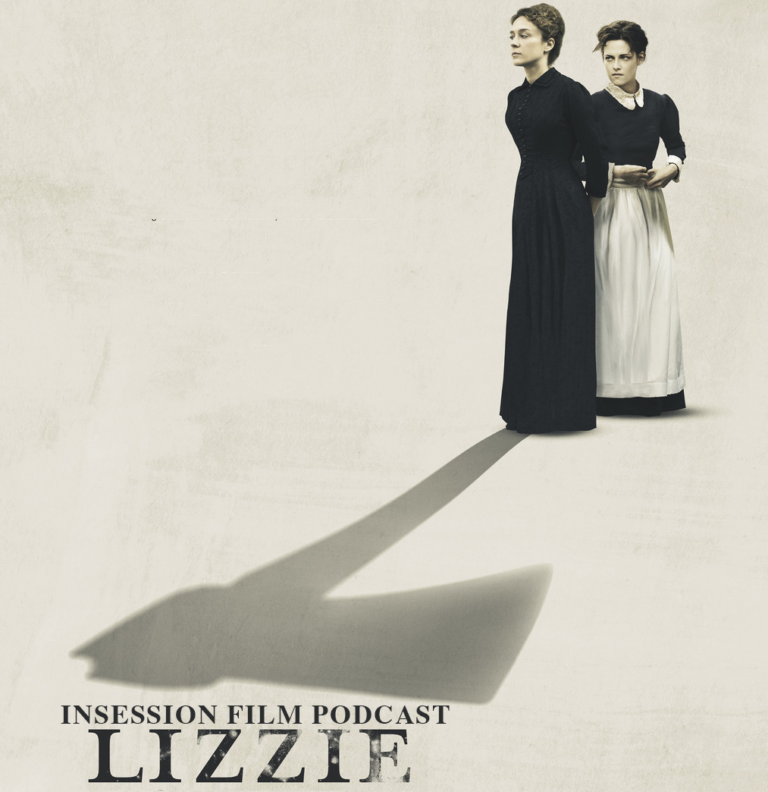
Whether or not you are familiar with the story of Lizzie Borden and the tragic double murder of her parents you should still enjoy Lizzie. Written by Bryce Kass and marvelously directed by Craig William Macneill the film is a fascinating retelling that takes the events and circumstances surrounding the deaths of Andrew and Abby Borden, played here by Jamey Sheridan and Fiona Shaw respectively, and paints a bold picture of what led to their murders. Lizzie Borden is brought to life on-screen by an absolutely phenomenal performance from Chloë Sevigny while Kristen Stewart plays Bridget Sullivan, the Borden’s Irish maid and a character involved in the true story whom I was unaware of prior to the film. Both Sevigny and Stewart give stellar performances and I must admit I have not seen many of Sevigny’s films but if Lizzie is any indication of her talent I have to wonder why she hasn’t been cast in more prominent roles.

Although the story of Lizzie Borden and the murder of her parents has been simplified through the popular children’s rhyme as well as folk tales, like any other true crime story the actual truth behind the event can be complex. Kass and Macneill take the small details and expand on them to give a very effective and compelling version. And although this take on the crime is not necessarily new it is still powerful and at the same time quite convincing. I would not be surprised if this becomes the new accepted version of the what occurred. The timing of this new version is also very relevant considering the current positive movement in women’s empowerment. In the film, there is an obvious discord between Lizzie and Andrew and every scene they are in together is charged with tension. Much of this is due to Lizzie’s tendency to question her father’s actions and to do so with no hesitance or apprehension which was likely not common during the time. Sevigny captures Lizzie’s confidence with such zeal, it is powerful to see on-screen.

Macneill’s previous work is unfamiliar to me but I was mesmerized by his style in Lizzie. The film has this beautiful texture and tone which was perfect for a period piece. The pacing fits well for this particular story and allows for both a build up of suspense and tension while at the same time establishing for the audience the deeper relationships between everyone in the household, which is important to make the final act so believable. Also, Macneill’s use of angles and lighting add emotion for certain scenes and are not too jarring as I find some filmmakers can overdo it with creative camera work. Macneill’s style in conjunction with the wondrous performances makes Lizzie a great theater experience, definitely a movie to see on a larger screen and without the at-home distractions.

While at the same time allowing the story to unfold so elegantly the film is also brutal when it comes to the murders. Not just visually, and be warned Macneill had no qualms about capturing the barbaric nature of Andrew and Abby’s deaths, but also physiologically. Much of the violence is conveyed through motion and sound but it is effective after all these were murder committed with an axe. Still, though Macneill handles it with a certain sophistication and style, there is blood and plenty of it but he somehow blends the violence of the act into a kind of visual art.

Searching for any flaws in Lizzie would be difficult but if I had to point my finger at one it would be the way the story unfolds chronologically. Macneill summons his inner Nolan by telling the story with numerous flashbacks. The audience is forced to watch a few scenes two or three times over as we move through the stories timeline and each time we are given small bits and pieces of what actually occurred the day in question. This doesn’t damage the experience for me, but it did get tiring as I was so enthralled by the story I just wanted to finally get to the reveal.

This new telling of the Borden tragedy is outstanding for so many reasons, bravo to Macneill and Kass for such a well told and fascinating story. Truly though what makes the film is the performance from Sevigny and Stewart, these two amazing actors are why Lizzie will keep your full attention. Sevigny is in top form and her performance is nothing short of amazing and deserving of a nod. Stewart has really amazed me in the last few films I’ve seen her in, so much so I find myself excited when I hear her name attached to a project, and in Lizzie she continues to impress. Although Sevigny steals the show Stewart definitely holds her own and hopefully this performance will finally quiet her persistent naysayers. Lizzie is such a great piece of filmmaking and I fully intend to do a second viewing. The story is so captivating I had to force myself to take mental notes and take a step back at times to look at the film with a critical eye. Next time I want to be able to simply sit back and just enjoy the show.

Overall Grade: B+

[divider]

Podcast: Hold the Dark / Top 3 Netflix Films – Episode 293

This week’s episode is brought to you by Casper. Get $50 off any mattress purchase today!

This week on the InSession Film Podcast, Ryan McQuade fills in for Brendan and we are joined by Walter Vinci from First Time Watchers to discuss Jeremy Saulnier’s Hold the Dark. We also discuss our Top 3 Netflix films and JD gives us his thoughts on Mandy after missing last week’s show.

Big thanks to Ryan for stepping up this week, he was absolutely wonderful and did a great job as co-host. An even bigger thank you to Walter for showing us grace, as it took way to long to finally get him on the show. As you may know, we love the guys over at FTW, but sadly we had never featured Wally on the show. So we were glad to remedy that issue and he did not disappoint. We had a lot of fun talking about Hold the Dark and Netflix, and we hope you enjoy listening to it.

On that note, check out this week’s show and let us know what you think in the comment section. Thanks for listening and for supporting the InSession Film Podcast!

– Movie Review: Hold the Dark (4:31)
Director: Jeremy Saulnier
Writer: Macon Blair
Stars: Jeffrey Wright, Alexander Skarsgård, James Badge Dale, Riley Keough

– Notes / JD Reviews Mandy (52:08)

As mentioned above, JD was absent from his co-hosting duties last week, but he did manage to see Mandy and wanted to give us his thoughts on this week’s show.

[divider]

RELATED: Listen to Episode 289 of the InSession Film Podcast where we discussed 2001: A Space Odyssey!

[divider]

Top 3 Netflix Films (1:06:42)
The topic of Netflix “original” content has been a polarized subject over the last few years as their films have varied greatly in quality. Some are very good, others have been..well let’s just say less than stellar. But given their upcoming schedule, now is the time to discuss the best films from what could be considered “Phase 1” of Netflix original films. If their fall slate, such as Roma, 22 July and The Ballad of Buster Scruggs, is what we hope it will be, 2018 could be a major turning point for Netflix in the film community. For now though, we talk about the best films they have to this point, and we think you’ll enjoy what cultivated for our lists. That said, what would be your Top 3?

Top 3 Sponsor: First Time Watchers Podcast

– Music

Hold the Dark – Brook Blair, Will Blair
Against the Odds – The Newton Brothers
Mighty River – Mary J. Blige
The Return of the Eagle – Atli Örvarsson

Subscribe to our Podcasts RSS
Subscribe to our Podcasts on iTunes
Listen on Stitcher
InSession Film Podcast – Episode 2923

[divider]

Next week on the show:

Main Review: A Star is Born
Top 3: Music Performances in Film

[divider]

Help Support The InSession Film Podcast

If you want to help support us, there are several ways you can help us and we’d absolutely appreciate it. Every penny goes directly back into supporting the show and we are truly honored and grateful. Thanks for your support and for listening to the InSession Film Podcast!

VISIT OUR DONATE PAGE HERE

Movie Review: Glenn Close’s Radiance Eclipsed in ‘The Wife’


Director: Björn Runge
Writers: Jane Anderson (screenplay by), Meg Wolitzer (based on the novel “The Wife” by)
Stars: Christian Slater, Jonathan Pryce, Glenn Close

Synopsis: A wife questions her life choices as she travels to Stockholm with her husband, where he is slated to receive the Nobel Prize for Literature.

[/info]

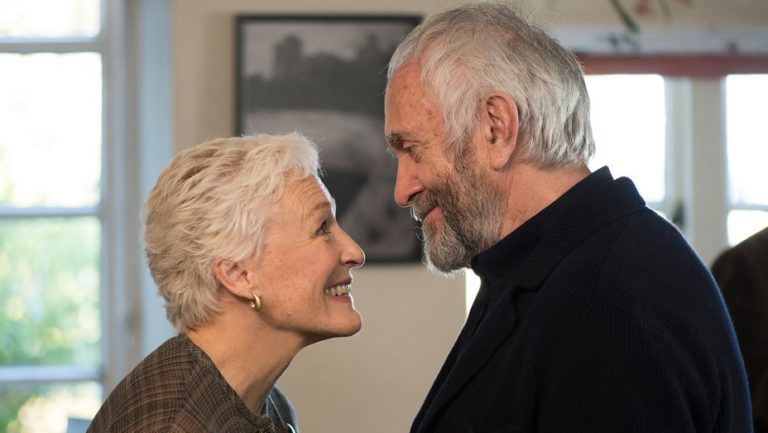
Björn Runge’s film The Wife superficially appears to be a taut drama skillfully acted by adept performers. However, once one digs a little deeper, this illusion quickly crumbles. The Wife, based on the novel by Meg Wolitzer centers on Joan Castleman (Glenn Close) as she travels to Stockholm with her husband, Joseph Castleman (Jonathan Pryce). In Sweden, Joseph is to be awarded the Nobel Prize in Literature for his brilliant body of work. Thrust into a new environment, the Castlemans begin to struggle in the unwavering spotlight. As the tension between the couple tightens, cracks begin to appear in their outwardly perfect lifestyle. Compiling the strained situation are a bothersome biographer (Christian Slater) and a whiny adult son (Max Irons) who continually add fuel to the fire by interjecting their loathsome agendas into the already loathsome circumstances.

Most importantly, the acting in this film is beyond reproach. Glenn Close shines as Joan, who struggles with her life as Joseph’s wife. Her performance reflects the wonder that is her ability and she incredibly holds this film up by herself in ways that are rare in contemporary film. Jonathan Pryce brims with swagger as the patriarchal Castleman, never losing a moment to come out of Ms. Close’s shadow and steal a scene or two. Yet with all this talent, these brilliant actors are forced to swim in a script that continually attempts to drown them. At every turn they act their way into situations and moments that never manufacture tension or interest. Their passion for their craft, especially that of Glenn Close, does shine through the murk of this film. However, that adeptness is not enough to save this dismal picture.

Acting aside, The Wife never hides its intentions from the audience. It completely forgets to keep its big twist clandestine. In fact, when the twist finally rears its ugly head, one becomes painfully aware that it arrives about 60 minutes too late. It is not just the twist that is hidden in plain sight; the scenes, the character interactions, and the dialogue flow with a predictability that would make any other film blush with supreme embarrassment. However, this film bounds on, seemingly ignorant of the contempt it is pushing on its viewers. Watching The Wife, one witnesses a story that continually insults the audience’s intelligence, while at the same time holding its plot up on a pedestal of brilliance. There is nothing worse than a film that takes itself so seriously, it is unaware of the fact that it is laughably failing at every frame. In no way does The Wife create tension that is not foreseen. In no way does The Wife allow the viewer to think for themselves. In no way does the The Wife take a step back and breathe on its own accord. The entire film is rigid and predictable, offering very little real drama. It’s as if the audience is being sold a Tiffany necklace, but instead are given a string of paperclips with a Tiffany price tag.

Regardless of whether you are looking for drama mixed with superb acting, The Wife is simply not the film to scratch that itch. It is a miscalculating, dreadful, and painfully boring way to spend one hundred minutes. For every ounce of flawless Glenn Close, there are pounds upon pounds of bad script. Ms. Close constantly struggles with an unwieldy story that relentlessly backs her into a corner. This film is perfect for a viewer that has never seen a real dramatic film. The Wife is a sheep in wolf’s clothing. It lacks both bark and bite.

Overall Grade: C-

[divider]

Podcast: Best Actor / Actress / Supporting Actor / Supporting Actress – Chasing the Gold Ep. 2

On Episode 2 of Chasing the Gold, Ryan is joined by Erik Anderson from Awards Watch and Michael Schwartz from Next Best Picture to talk about the 2019 Lead and Supporting Actor and Actress Oscar race and they reveal their Top 5 predictions as it stands right now for the Acting Awards at next year’s Oscars.

This episode did run a little on the long side, but when the discussion is this good, and you have amazing guests, it’s was hard to keep the run time down. There’s so much to talk about, and big thanks to Erik and Michael for joining us, they were really great and it lead to such great discussion.

On that note, have fun with this week’s Chasing the Gold and let us know what you think in the comment section below. Thanks for listening!

– Acting Race Discussion (3:53)

– Acting Race Predictions (1:01:47)

– Music

Oscars Theme – Richard A Whiting & Johnny Mercer
Shallow – Bradley Cooper, Lady Gaga
The Return of the Eagle – Atli Örvarsson

We try to make this the best movie podcast we possibly can and we hope you enjoy them. Subscribe today on iTunes, Spotfiy or Stitcher, and please leave us a review on iTunes. You can also find us on Soundcloud, PlayerFM and TuneIn Radio as well. We really appreciate all your support of the InSession Film Podcast.

Subscribe to our Podcasts RSS
Subscribe to our Podcasts on iTunes
Listen on Spotify
Listen on Stitcher
2019 Acting Races – Chasing the Gold

[divider]

Mobile App

To hear this Extra Film episode and everything else we do, download our apps on the Amazon Market for Android and the Podcast Box app on IOS devices. The mobile app covers all of our main shows, bonus podcast’s and everything else relating to the InSession Film Podcast. Thanks for your wonderful support and listening to our show. It means the world to us!

[divider]

Help Support The InSession Film Podcast

If you want to help support us, we would greatly appreciate it! For more info, CLICK HERE.

Podcast: Assassination Nation / Blaze – Extra Film

This week on the InSession Film Podcast: Extra Film segment, we discuss Sam Levinson’s social crime comedy Assassination Nation, as well as DIRECTOR Ethan Hawke’s music biopic on country legend Blaze Foley in Blaze.

JD and Ryan cover this week’s episode, and are also joined by frequent InSession Film writer Kate Boyle for their discussion of Assassination Nation; that discussion may have gone a bit long (especially with having three voices present), but it felt necessary given the social timeliness of Sam Levinson’s film. We also get to praise Ethan Hawke as not just an actor but also as a director for his film Blaze, however it’s Ben Dickey’s performance that stole JD’s and Ryan’s hearts in the end.

On that note, have fun with this week’s Extra Film segment and let us know what you think in the comment section below. Thanks for listening!

– Movie Review: Assassination Nation (4:32)
Director: Sam Levinson
Writer: Sam Levinson
Stars: Odessa Young, Hari Nef, Suki Waterhouse, Abra, Colman Domingo

– Movie Review: Blaze (1:02:20)
Director: Ethan Hawke
Writer: Ethan Hawke, Sybil Rosen
Stars: Ben Dickey, Alia Shawkat, Josh Hamilton

– Music

Black Wave – K.Flay
Clay Pigeons – Blaze Foley, Ben Dickey
The Return of the Eagle – Atli Örvarsson

We try to make this the best movie podcast we possibly can and we hope you enjoy them. Subscribe today on iTunes, Spotfiy or Stitcher, and please leave us a review on iTunes. You can also find us on Soundcloud, PlayerFM and TuneIn Radio as well. We really appreciate all your support of the InSession Film Podcast.

Subscribe to our Podcasts RSS
Subscribe to our Podcasts on iTunes
Listen on Spotify
Listen on Stitcher
Assassination Nation / Blaze – Extra Film

[divider]

Mobile App

To hear this Extra Film episode and everything else we do, download our apps on the Amazon Market for Android and the Podcast Box app on IOS devices. The mobile app covers all of our main shows, bonus podcast’s and everything else relating to the InSession Film Podcast. Thanks for your wonderful support and listening to our show. It means the world to us!

[divider]

Help Support The InSession Film Podcast

If you want to help support us, we would greatly appreciate it! For more info, CLICK HERE.

Movie Review: ‘Life Itself” is the most insulting, manipulating film of the year


Director: Dan Fogelman
Writers: Dan Fogelman
Stars: Oscar Isaac, Olivia Wilde, Annette Bening

Synopsis: As a young New York couple goes from college romance to marriage and the birth of their first child, the unexpected twists of their journey create reverberations that echo over continents and through lifetimes.

[/info]

Let me start by saying, before I get into reasons why I didn’t like this movie, know that I had hopes a couple of months ago about this film. When I saw the trailer, I thought it looked good and was interested in giving this movie a shot, even though the idea of taking a giant cast of characters and have them all connected by circumstances so dumb that you have to shut your brain off to even imagine it working. Then the reviews started to come out of Toronto and various critics I admire, thus leading me to worry that this film will not be good. Those reviews amounted to it being ranked as one of the worst films of the year. And after seeing Dan Fogelman’s Life Itself, and some days to think on it, I must agree with my peers and say that not only is Life Itself the worst movie of the year so far, but dare I say the most offensive film put to screen in recent memory.

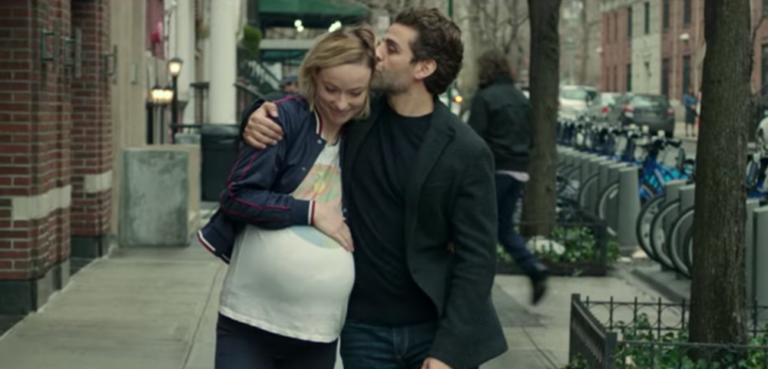
Life Itself mostly follows two shallow, meaningless stories about two families, one in New York City and the other in Spain. The Dempsey family composed of Oscar Isaac, Oliva Wilde, Mandy Patinkin, Jean Smart, and later in the film, Olivia Cooke, are the unluckiest people on the planet and yet there is nothing that is really compelling about them. Isaac and Wilde meet in college and most of their story follows their dating life, their marriage, an event that changes everyone’s life, and then towards the tail end of their story, follows Cooke’s story, who plays their daughter. Everything in this section is an eye rolling, boring exercise in what to do when writing a screenplay. From Isaac’s depressing, creepy performance as Will, to Olivia Wilde’s character being nothing but a tool for Isaac’s character to exist, to the awful stuff about Wilde’s college thesis paper, which is a think piece for another day that I will not write make you read, to finally Cooke’s sluggish performance as the daughter that lost everything that no one feels sorry for. The only saving grace in this section is Patinkin and Annette Bening as Will’s psychiatrist but that’s not saying much because he is barely in this film, kind of like my interest in this film at this point of the movie.

The second part of this film follows family and their boss in Spain, played by Sergio Peris-Mencheta, Laia Costa, Alex Monner and Antonio Banderas. This section feels like a totally different movie, with some actual interest but confusion as to why it was in the film at all. It’s a basic story of Mencheta working for Banderas, moving his family in but not wanting to do anything but do his work for Banderas due to the nature of how Banderas got his money or something like that. But when a tragic event happens to Mencheta and his family, and Banderas comes to help, the film gives off so many weird tones that you don’t know what the hell it is trying to say about this situation. Costa’s performance is mostly good, but she is given the same treatment as Wilde’s character, in that their performances are only there to serve the men they are acting opposite in the scenes with. Banderas is really good here but it’s mostly Banderas being himself, so it’s not a far stretch of a performance. The other child performance from Alex Monner is okay, but he is not given much to do, again folks, this script sucks.

But even though the second part is better than the first, the thing that makes it terrible to is that all the big twists and turns in this story are reliant upon the abysmal first act, that you wonder what the point of the film is. By the end of the second section, you feel so cheap and dirty because you have been manipulated into this other story but can’t forget that this film is one of those movies that has to connect everything, so it ruins the best parts of it. Look I’m sure Dan Fogelman really poured his heart in soul into this project, and tried to turn lemon into whatever the hell this movie was supposed to be, but all that I felt by the end of this was that feeling of never wanting to see another thing written by him. Someone who can write terrible dialogue for Samuel L. Jackson (who is in one of the most baffling, offensive openings I’ve ever seen to a movie), make me feel like Pulp Fiction might be over rated, call a dog the worst name in cinema history, and ruin Bob Dylan, makes me question why NBC is giving him a job, and why he was ever given a shot to make this massive eye roll of a movie.

Overall Grade: F

[divider]

Featured: That Special Touch From Mike Leigh

Coming soon is the British historical drama Peterloo, the latest from writer/director Mike Leigh. Leigh’s work features the aesthetic touch to social situations in contemporary Britain and real-life figures from history. Starting with televised plays, he’s built an impressive reputation for creating dynamic characters surrounding a certain narrative through improvisation rather than a normal screenplay. Historical and contemporary, Leigh goes to hit right on the emotional buttons on the vulnerable areas of society. Building up with a record up-and-coming actors who became known veterans like Alison Steadman (who he later married and then divorced), Timothy Spall, Jim Broadbent, Katlin Cartlidge, Lesley Sharp, Andy Serkis, and Lesley Manville.  Here are my personal 5 favorite films by Mike Leigh.

Meantime (1984)

Set in the middle of a Thatcherist government where the middle class is hit hard, a family in London’s East End struggles with unemployment involving a couple and their two adult sons in punctuated roles by Phil Daniels and Tim Roth. They are bored and struggle with the growing dreariness of not being able to do anything but suffer through the realism that other middle-class citizens dealt with at the time. As seen with the rest of his work, Leigh goes back and forth with the couple, their sons, and other family members who are on the other end of life as well-off and in the suburbs. They are into the known and unknown, but mainly on the dole, unable to get out of a disaffected hole. Look out for Gary Oldman’s debut as a skinhead. After multiple successful television plays, Leigh’s Meantime brought him better prominence in continuing the kitchen sink genre from twenty years before.

Naked (1993)

David Thewlis played the intelligent, yet narcissistic homeless figure Johnny who tries to outsmart everyone he encounters on a lonely day in London. It is among the darkest pieces by Leigh as it goes into the underbelly of the London night where it is both sexual and violent, if not a mix as seen in the first scene. Johnny is crazy, openly verbally abusing others who try to cross his intelligence, especially women, but others are even worse than him. He keeps friendly with his ex-girlfriend and it’s her friend who becomes the victim of the psychopathic sadist landlord. It was controversial upon release because of the misogynistic tones throughout, especially within a heavily dark comic tone that can come from a Mike Leigh film. In a story of alienation, cynicism, and social hypocrisy, the characters have been stripped down to the true emotions they all bare.

Secrets And Lies (1996)

https://www.youtube.com/watch?v=6pbJKxjk3BQ

The Palme d’Or winning film about a secret family history revealed, namely a white woman who gave birth to a black girl and gave it up for adoption, is a very emotional movie about the surprises in life that quickly upend any individual regardless of background. Hortense (Jean-Marianne Baptiste), a well-educated optometrist, decides to search for her birth mother and is stunned to discover it is a white woman, Cynthia (Brenda Blethyn), who comes from a dysfunctional family which includes her rebellious daughter and her married son who is the calmer of the clan, but is internally frustrated with what the family is turning out to be. Baptiste and Blethyn’s performances move mountains and shatter the foundations of what a family really knows about their lives and peel off the layers of the ordinary persons when meeting such an encounter.

Vera Drake (2004)

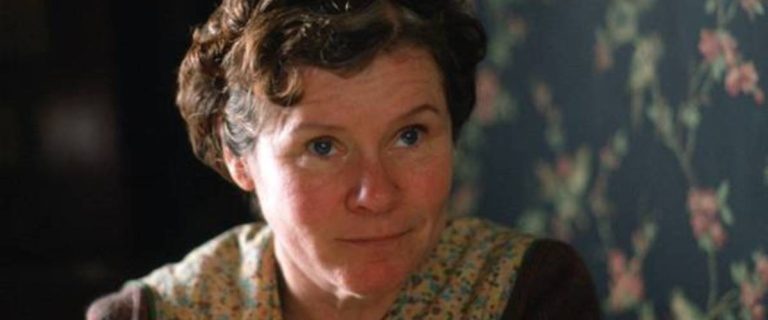
Set in the 1950s, the film directly addresses the issue of abortion and the difficulty young middle-class women had with an unwanted pregnancy. The title character is a simple housewife, played perfectly by Imelda Staunton, who is the unsuspecting abortionist that has a routine while looking over his husband and adult children. Based on his own childhood, Leigh transplants a post-war rebuilt London to the screen where the surroundings are grey but the central figures are very warm. That is with the exception of two characters: one by Sally Hawkins as a woman who is impregnated through rape but can get an abortion after stating she may kill herself, and a second woman who survives a botched abortion by Drake, leading up to the dramatic arrest during a dinner party in the family’s flat.

Happy-Go-Lucky (2008)

I first noticed Sally Hawkins as the bubbly primary school teacher Poppy who is not affected by anything negative around her and instead always tries to be optimistic. After her bike is stolen, she decides to learn how to drive and comes face-to-face with the gloomy driving instructor. Instead of showing anger to a scene of bullying at school, she shows concern for the bully, to which Poppy discovers a sad fact regarding him. Even when some think she needs to mature up, Poppy goes on with her life and dates a nice man, a social worker. Poppy is someone who tries to make everyone happy, even though she is told in the end that she can’t, yet Poppy is not fazed. It is probably Mike Leigh’s most charming work because it does not go down the dark hole his other works have gone into.

Mike Leigh is about keeping it natural with every story and every performance, not trying to stuff a story too much in which regular scripts tend to do. There are those little moments where Leigh goes into that gives a humanistic style for the misfits and frustrated working classes. He is an auteur of the human expression which came from his initial stage background and makes the acting the ultimate nucleus of his great work rather than specific camerawork and editing and keeps it all fresh and original, nothing adapted. For Leigh, it is not the flash that makes him a standout film director, but the basics of human quality and simple stories of human life that he can paint on a film canvas.

Follow me on Twitter: @BrianSusbielles

Movie Review: ‘Bel Canto’ is sprawling, drawn out and lacking depth


Director: Paul Weitz
Writers: Paul Weitz, Anthony Weintraub
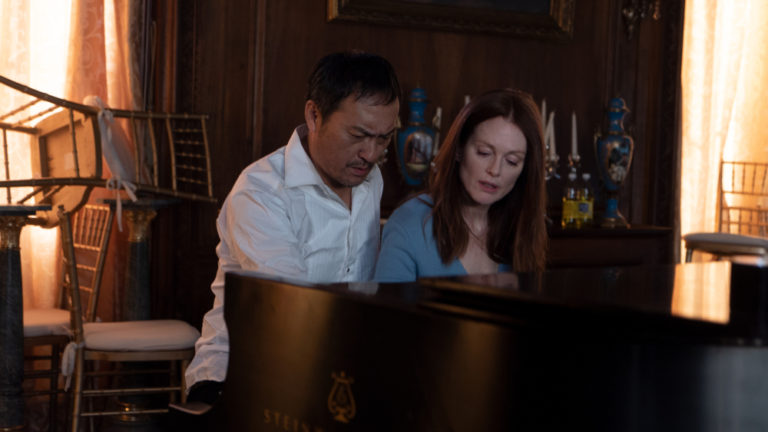
Stars: Julianne Moore, Christopher Lambert, Ken Watanabe

Synopsis: A world-renown opera singer becomes trapped in a hostage situation when she’s invited to perform for a wealthy industrialist in South America.

[/info]

When I was in junior high, my sister handed me a copy of Ann Patchett’s Bel Canto and asked me to read it. She told me I would like it, and she was right. I’m a sucker for hostage story lines, but the story went to such emotional depths and, by the end of the novel, it became something so much more than a simple hostage story. It’s been a long time since I was in junior high, so I admittedly don’t remember much about the book, but I’ve often thought about it and how much I enjoyed it and I wondered why it was never adapted into a movie. And after finally seeing the big screen take, I kind of get why we didn’t get a movie sooner – Bel Canto is a sprawling, drawn out, emotional story about several people overcoming interpersonal barriers due to politics, language, culture, morality, and the law, and that’s a lot to take on in one two-hour long movie.

I should be clear from the beginning: I liked this movie well enough and I don’t think it was a bad adaptation. I just feel that it could have pushed a little harder to get the overarching themes and emotions of the novel across. There were so many characters and the story takes place over a decent chunk of time and it all had to be condensed into a two-hour movie. This is a rare example of a movie where I think it either should have been 20 to 30 minutes longer to give all the characters and storylines time to breathe and become believable, or it should have cut out a few characters and kept the story a little more contained. The dialogue also could have used some extra attention and I would have liked to see the various examples of language barriers played out a little better, but I think it did a pretty good job with what it had, overall.

It also should be said that the weaknesses throughout the script were largely compensated by the phenomenal performances throughout, especially by the always-amazing Julianne Moore. The character of Roxanne Coss easily could have come across as stiff and borish, but Moore exudes charisma and confidence in just the right combinations to make the character interesting and enjoyable to watch, even when her character is written in an unfortunately unlikable way. The cast throughout also does a wonderful job of getting the emotions of the story across when the script, likely due to the two-hour time constraint, simply can’t.

My overall impression of Bel Canto can be summed up like this: If you have to read the book for a class or a book club but simply don’t have the time, this is a decent adaptation and, combined with the Spark Notes, will like get you where you need to go. If, however, you’re looking for something with the emotional depth of the novel, you’re not going to find it here. It’s a fine movie with a great cast that looks beautiful but it just doesn’t push the themes, character arcs, or emotional storylines nearly as far as they need to go for this story.

Overall Grade: C+

[divider]

Movie Review: ‘The House with a Clock in its Walls’ is a fine kids film


Director: Eli Roth
Writers: Eric Kripke, John Bellairs
Stars: Jack Black, Cate Blanchett, Owen Vaccaro

Synopsis: Recently orphaned Lewis Barnavelt must help his warlock uncle find and stop a clock that could bring about the end of the world.

[/info]

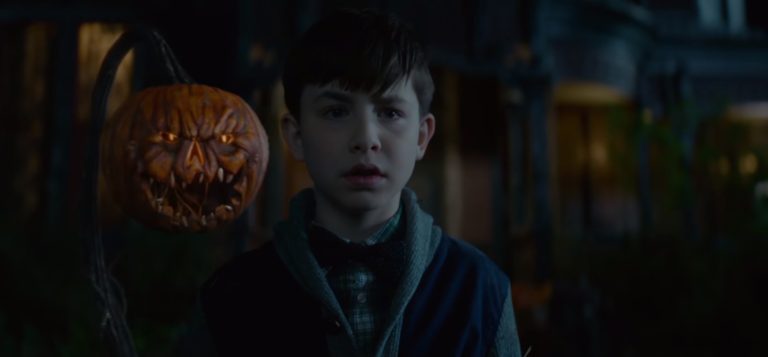
The House with the Clock in its Walls, both the original John Bellairs novel and the film, is meant to be an introduction to the horror genre for kids. I think it succeeds in this mission. It’s not too scary, but it does have enough of a spooky/ominous overtone to make it feel like a real horror film. The movie is written by Eric Kripke (creator of the Supernatural TV series), who has stated John Bellairs’ novel was one of his favorites growing up. Kripke even says he pulled inspiration from this book for Supernatural. The movie is apparently littered with references to the show- I caught a few of them, but I’ve only seen up to season 12 so there may be more.

The story centers around the recently orphaned Lewis Barnavelt (Owen Vaccaro) who is sent to live with his eccentric uncle Jonathan. Lewis is a smart kid with a love for words and his dictionary. His uncle Jonathan (Jack Black), lives in a large, creepy, old house that makes weird ticking noises at night and is filed with strange things. Lewis also meets his uncle’s neighbor and best friend Florence Zimmerman (Cate Blanchett), who spends most of her time at Jonathan’s house. Lewis soon learns that his new home is more than it seems and that his uncle and neighbor can do magic.

As far as the characters go, I really liked Jack Black in this. He’s usually hit or miss for me, but this role seemed to suit him and his character was one of the most developed. Cate Blanchett was amazing, as usual. She pulls off the quirky and mysterious Florence Zimmerman very well. You are given hints at her tragic backstory if you are paying attention. (Tip: keep an eye on her arms). The main protagonist Lewis, is portrayed by newcomer Owen Vaccaro. Vaccaro does a good job holding his own against the star power of Black and Blanchett. His character is relatable for kids his age and I felt for him and his struggles to fit in. Director Eli Roth has small cameo, so keep an eye out.

Warning to book fans; the movie is different. It’s hard to convert even a small children’s book into a two hour movie, but I think overall, the movie does the story justice. One positive note and fun fact is the same illustrator from the novel also contributed to the movie’s opening and closing credits.

Overall, this film felt a bit rushed. I wanted the movie to go into more detail about Florence’s past. She’s such a good character and we never learn a lot about her. I also wanted to know more about how magic works in this universe, and more time spent with Lewis learning magic from his uncle. These complaints are all typical for a book to movie adaptation. The major complaint I have is the villain. I don’t believe he was well defined and his portion of the movie was not enough to solidify his role as antagonist for me. There is also a scene during the third act of the film involving the antagonist and Jack Black’s character that kind of ruins the ending. I won’t give it away, but you WILL know when you see it. I haven’t finished the book so I’m not sure if it was pulled from there or if it was thrown in the movie for comedic relief. The point is, it was disturbing, bad CGI and because of it I can’t really remember what else was going on during the end of the film.

To wrap things up, I did enjoy this movies despite its faults. I think it was a good first attempt at a non-R rated movie for Eli Roth and I will definitely go finish the book (and its sequels) because I want to know more about these characters.

Overall Grade: B-

[divider]

Poll: What is the best Netflix film so far?

This week for our poll, inspired by Hold the Dark hitting Netflix this Friday, we are talking about Netflix movies. This has been a divisive topic over the course of the last few years, and for good reason. Netflix has had some great hits, such as the options listed in the poll below, but it also has many fails. Some of them massive fails. In many ways it seems Netflix is still trying to find their feet when it comes to the film game. However, this fall seems to be changing things. Netflix will release some major players in the next few weeks and months, including Hold the Dark, 22 July, The Other Side of the Wind and perhaps it’s biggest Ace yet in Roma.

So things could be changing for the better in the Netflix camp. For now though, what is the best Netflix film up to this point? Vote now!


List: Top 3 Nicolas Cage Performances

This week on Episode 292 of the InSession Film Podcast, inspired by Mandy, we thought it would be fun to talk about Nicolas Cage’s best performances. Oh Cage, how we love thee. He has been an eccentric and fascinating actor for some time now, and while his prominence in mainstream Hollywood is stifled these days, the man is still working hard and often. And his performance in Mandy is a great reminder of how truly skilled he is as an actor and why we wanted to reflect on his best performances over the years. That said, here are our lists:

(Note: Please keep in mind that we each had different criteria for our selections)

Brendan:

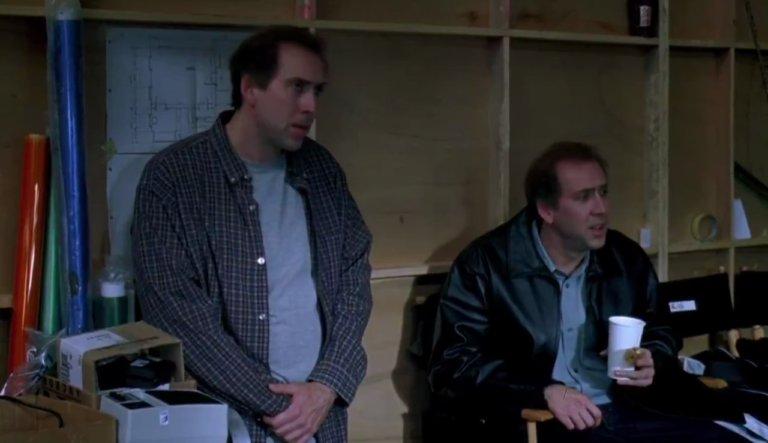
1) Charlie Kaufman / Donald Kaufman – Adaptation
2) Roy Waller – Matchstick Men
3) Frank Pierce – Bringing Out the Dead

Jay:

1) Charlie Kaufman / Donald Kaufman – Adaptation
2) Terence McDonagh – Bad Lieutenant: Port of Call New Orleans
3) Sailor Ripley – Wild at Heart

Honorable Mentions (Combined)

Ben Sanderson – Leaving Las Vegas
H.I. McDunnough – Raising Arizona
Peter Loew – Vampire’s Kiss
Edward Malus – The Wicker Man
Castor Troy – Face/Off
Rick Santoro – Snake Eyes
Memphis Raines – Gone in Sixty Seconds
Big Daddy – Kick-Ass
Joe – Joe

Hopefully you guys enjoyed our lists and if you agree or disagree with us, let us know in the comment section below. As noted above, Cage has had a pretty notable career for various reasons and maybe we didn’t touch on some of your favorite Cage performances. That being said, what would be your Top 3? Leave a comment in the comment section or email us at [email protected].

For the entire podcast, click here or listen below.

For more lists done by the InSession Film crew and other guests, be sure see our Top 3 Movie Lists page.

Interview: Making ‘The Wind’ with director Emma Tammi [Fantastic Fest]

0

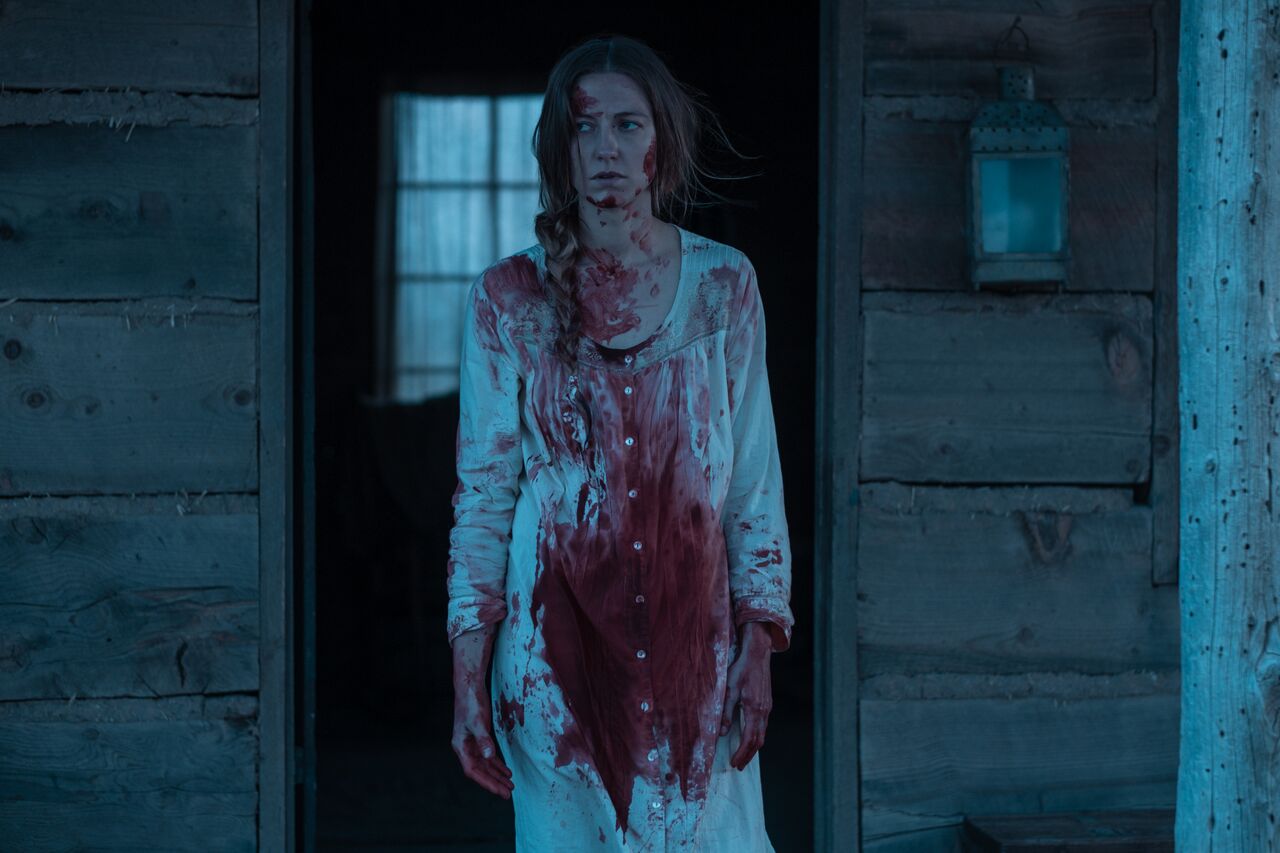
Blowing in from Toronto (International Film Festival) for its U.S. premiere is a psychological and elemental chiller set in the frontier featuring Insidious: The Last Key’s Caitlin Gerard. And five more cast members. And a demon.

After The Wind, our writer Nguyen Le howled about it as a “detailed, absorbingly acted portrayal of loneliness as a disease and as a (wicked) cure.” (If you haven’t already, follow him on Twitter now for the latest at the fest!)

We also got the chance to talk with the director, Emma Tammi, about a variety of topics including the little tug-of-war with the environment during production and the project’s inception.

Director Emma Tammi in a post-screening Q&A with Fantastic Fest attendees. Photo credit: Arnold Wells.

Nguyen Le from InSession Film: First off, I’m always happy to hear whenever a film is at a festival and gets picked up by a distributor, and for your case it was IFC Midnight…

Emma Tammi (director): That’s right.

NL: Could you tell our readers more about the moment you knew?

ET: Sure. We premiered The Wind at TIFF, almost two weeks ago now so it’s really recent. I believed [Jonathan Sehring, co-president of IFC Films] saw it the day before the premiere — there was a press and industry screening — and responded very positively to it immediately. Our sales team then took over most of the negotiations so I can’t really speak to that, but I did have a chance to speak with the IFC team before we finalized the deal. You know, it’s really the dream to have a distributor who believes in the film so, so much… and they were incredibly enthusiastic about it, not just as a genre piece but also in terms of its others qualities and elements. They saw full-picture of what the film is and who it might connect with in terms of its audience in the U.S. They are handling the U.S. distribution.

NL: Awesome.

ET: We’re really excited to be working with them. IFC has such a great history of supporting really risk-taking voices and stories that maybe aren’t always mainstream but are some of the ones that over my life has been the most impactful as a moviegoer. I’m really honored to be a part of that legacy!

NL: Thanks to IFC, I knew about The Autopsy of Jane Doe.

ET: Oh, yeah!

NL: Congratulations again! Now, looking at your IMDb credits, this is the first time you helm a ship without a co-skipper, so to speak?

ET: Right! I have done some documentaries in the past as co-director. Which is so great, especially with documentaries you’re really finding the story as you shoot and again in post. Sometimes having more hands on deck in a way is helpful, so in terms of having a directing collaborator for those previous projects, it was wonderful. But in terms of narrative, this was my first, and yes, solo directing endeavor. It was just amazing! Obviously, collaboration is a part of the process as well, regardless whether you’re doing documentary or narrative, it’s totally integral, so that spirit of things was still in play throughout the whole process for me. But in terms of having the opportunity to work with actors, I think having a one-on-one… a person at the helm of the ship is really powerful. I felt really privileged and excited to be able to do it.

Lizzy Macklin (Caitlin Gerard) in ‘The Wind.’ Photo credit: A Hendricks (Divide Conquer)

NL: Is it because of your documentarian experience that made you fascinated with the world writer Teresa Sutherland had crafted? You mentioned in the post-screening Q&A that the film is based on true stories.

ET: Yeah! I think that drew me to it because there was a nugget of history there I found fascinating. And I thought the actual people [Teresa] based some of this on, their endurance level was just so incredibly high that I was really drawn to that. But, in general, I am really drawn to narratives that are inspired by or based on truth… That being said, we jumped way off the realm of reality at points in this film and that’s equally exciting to me. It’s a mix, yeah!

NL: From hearing these stories, what was the one aspect that made you say “I have to convey it in the film — somehow, some way”?

ET: Hmmm.

NL: We can go for many!

ET: Over and over again, the journals and the essays from women of this period and homesteading experience are accounted in such detail — the harshness, the bleakness of mundane things we really take for granted now, like getting water, dealing with a flu, these things that sometimes life-or-death back then are things we cope with fairly easily now. But the terrors of the land that would just blow in on sometimes a daily basis were incredible; it was fascinating to read those accounts because visually it painted a picture of what this landscape was at that time. And it was harsh, inhospitable. This was an area that people should not have been trying to live in! Everything was telling them to “Get out!”

NL: That’s right.

ET: And then they were there by themselves so in terms of the emotional accounts the throughline was “This is the loneliest experience on the planet.” In a way that was harsher than all the environmental harshness. Those two things, the environment and the emotional loneliness… And how powerful that is. We are as human beings meant to be with other people, even with all of us who enjoy our alone time…

NL: Social creatures!

ET: We are! To draw a very extreme comparison, solitary confinement is one of the quickest and most effective ways for someone to lose [their minds], based on all of these studies done; how long it’d take for people to go to a bad place after they have been placed there and it is so quick! Anyway, those were the elements that felt like, “OK, we’re making a fun horror film at the end of the day, but it’s also a drama about a woman going through very intense experiences” and we want to make sure those elements in the actual accounts were coming through.

With a title and cover like that, not sure if this is good reading material for prairie life. Photo credit: A Hendricks (Divide Conquer)

NL: And even though we have a demonic presence in the film, I adored the way you show it in an obscure manner. Was that always the vision?

ET: I think it was the initial instinct. We talked about it at length, obviously, before shooting and again in post when we were taking into the effects side of things. For me, the horror films that have moved me most throughout my life have been the stuff you don’t see, you anticipate. [They’re] the ones that have scared me the most, especially with films that are so much about the sound, the wind, the mind playing tricks on you — thinking that you’ve seen something but is it really there, the shadows in the corner of our eyes we can remember seeing/thinking we’re seeing as a kid. Or until now. We definitely want to root it in that space, which is subtler rather than showing the “it.”

NL: Right.

ET: Also, the demonic presence in this film is such an extension of the emotional state of the character that it’s a shape-shifter in a way, a reflection of themselves so it felt like leaning into the subtleties of the environment, which we really like — shadows, smoke, fire and wind — were really authentic to the world of the movie. And again, showing it, obscuring it rather.

NL: That reminds me a lot of The Babadook.

ET: Also distributed by IFC!

NL: There we go! Now that we’ve mentioned that film, which also has a powerhouse leading-actress performance, I remembered at the Q&A someone asked you about casting Caitlin Gerard for Lizzy already… I want to shift over to the process of casting for the character Emma Harper?

ET: It’s an interesting thing. In casting Lizzy, I think we were more open to… I was more open to what that character would be. But in casting Emma I really needed to find someone who was going to be whatever Lizzy wasn’t. The chemistry of what that actress was going to bring to the table was really important. When I spoke with Julia Goldani Telles, she moved me on several levels; I think she’s a phenomenal actress, her range is insane and has yet to be seen by the world. But her interest in the story, this character — both Emma and Lizzy actually — and again with true stories they were based on, was so insightful… and yet she’s a millennial and she has taste to it, you know what I mean?

NL: (remembers birthday) Yes!

ET: It’s really an interesting journey to travel to that period of time with her and trying to make that authentic, but in a way also very Julia that brought out all the love, hate and suspicion in Lizzy. Julia and Caitlin just had an amazing dynamic. We really lucked out with that because at the end of the day they weren’t in the same room together until we did a very quick reading before we went out to New Mexico, which was like a week before we started shooting. We can predict the chemistry, but can’t always nail it. But we nailed it. We lucked out. They were both just incredible to work with.

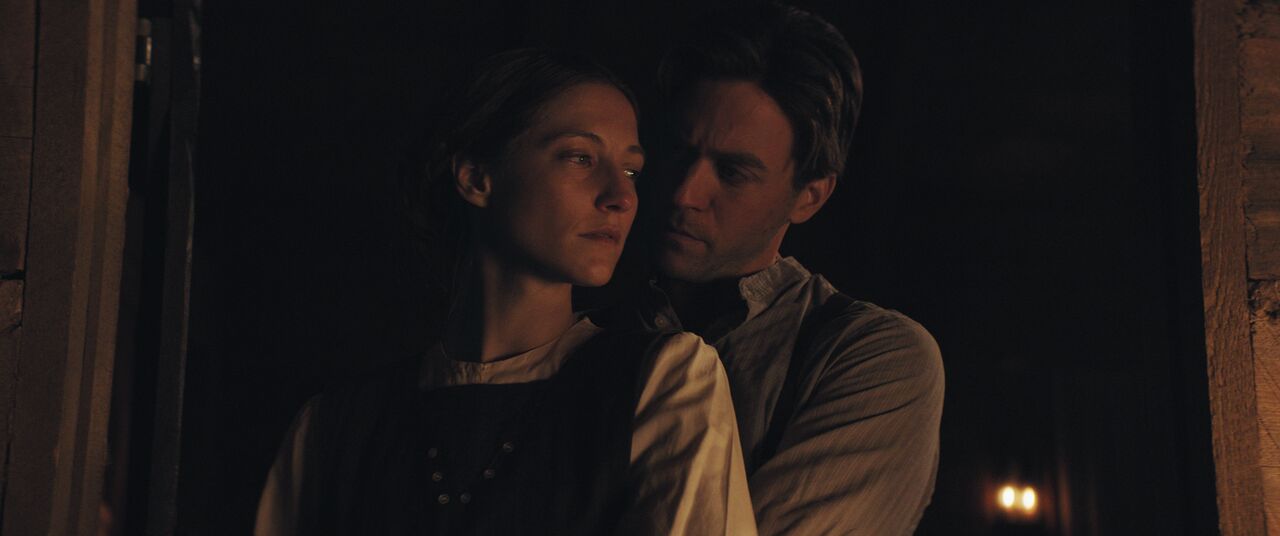
Lizzy Macklin (Caitlin Gerard) and Isaac Macklin (Ashley Zukerman) in ‘The Wind’. Photo credit: A Hendricks (Divide Conquer)

NL: Could you tell me about the characters’ backstory?

ET: Emma’s from the city and she’s really a city girl at heart, not prepared for life on the prairie. Lizzy has an immigrant background — she was originally from Germany, came over as a young girl, and there’ are some moments in the film where she actually starts to kind of speak in tongues and switches over to German. The immigrant backstory was really interesting to me and Teresa, the writer, because…  We added it at the very last minute because Caitlin actually has some German background. She speaks German fluently, so we were able to incorporate that. But in terms of Lizzy’s isolation, the distance she experiences with her husband Isaac (Ashley Zukerman), and him trying to shut down some of her suspicions, which he roots in not only religion but maybe the folklore she embodied as this little girl in Germany and brought with her, we just thought it was very interesting to add an additional element of “outsiderness” that Lizzy would have been experiencing, to the isolation she feels overall.

NL: So we have two women who have seen a lot of the outside world suddenly confined on barren, dangerous grounds.

ET: (laughs) Right?!

NL: How was the shoot? Was it grueling? It looked serene!

ET: It was great! There were long days, so grueling in that respect for Caitlin. And she’s in every scene of the movie. She’s a total champ, like a marathoner throughout the shoot — all the credit to her. What was hard is toward the end it got really cold. We didn’t wrap shooting until November and those cabins…

NL: No heat?

ET: They were uninsulated. We were a night shoot, the temperature just dropped so significantly once the sun goes down and we had placed heaters up the wazoo and they just barely made a difference. It was grueling in terms of how cold it got at the end of the day; I came home with frostbite on my toes…

NL: Oh, no!

ET: I know. But actors were, you know, they were at the front of it. But the shoot was really a joy, a special period for everyone involved. We all believed in the project, really into working with each other — that made it less grueling.

Lizzy Macklin (Caitlin Gerard) in ‘The Wind.’ Photo credit: A Hendricks (Divide Conquer)

NL: In an age where everything is instantaneous, your film is a slow-burner. That’s always been the intention?

ET: It is. The dialogue is really sparse in the script. I think we wanted to embrace the more classic Western form — long takes, letting things breathe — and the slow burn of the horror element also would also have bigger payoff if we took our time. We wanted to embrace a pace that felt a little bit more accurate to that time. But you never know if that’s gonna land with an audience watching 30 seconds of YouTube videos that have 500 cuts, including myself! What do we have patience for now? But I think it’s an interesting time to try to push slowness and quietness and sitting with that. Hopefully we have done that in a compelling way, not the boring way. Yeah, we always felt like this is going to be a slow burn and we’re gonna take our time with some of the moments.

NL: Much like A Ghost Story and It Comes at Night! They found their audiences. I’m a big fan of both.

ET: Totally. Honored to be compared to either of those!

NL: What’s next on the horizon for you?

ET: I don’t know! We finished this so recently, and I’m so excited it’s getting out in the world. Starting to reach a bunch of scripts right now. Want to find the next thing really soon and get going.

NL: Something within the genre?

ET: Maybe. Anything! I’m really drawn to magical realism, whether that is in the horror space or not that would be a fun thing to dip into, whether it’s the next door or down the line.

NL: Gotcha. Did IFC let you know when they’re going to release this?

ET: We have not set a date yet, but it will be sometime in 2019.

NL: Thank you for your time! And thank you for bringing the film to us.

[divider]

[divider]

Stay with InSession Film for more about the film as well as other interviews and reviews from Fantastic Fest!

[divider]

Podcast: Mandy / Top 3 Nicolas Cage Performances / Joe Lipsett Interview – Episode 292

This week’s episode is brought to you by GoDaddy. Sign up today and get 30% of your order!

This week on the InSession Film Podcast, Jay Ledbetter fills in for JD as we discuss Mandy and our Top 3 Nicolas Cage performances. We also feature an interview with Joe Lipsett who covered the 2018 Toronto International Film Festival for us, and he gives us his thoughts on this year’s fest.

Big thanks to Jay for stepping up this week, he was absolutely wonderful and did a great job as co-host. You could hardly tell it was his first time on the Main Show. In addition to the above, we also had fun talking about the craziest Cage performances for our poll. And let’s be honest, those are always the fun performances we love to see from Cage. So needless to say, it was an enjoyable discussion.

On that note, check out this week’s show and let us know what you think in the comment section. Thanks for listening and for supporting the InSession Film Podcast!

– Movie Review: Mandy (5:23)
Director: Panos Cosmatos
Writer: Panos Cosmatos, Aaron Stewart-Ahn
Stars: Nicolas Cage, Andrea Riseborough, Linus Roache

– Notes / Joe Lipsett Interview (33:52)

As mentioned above, JD was absent from his co-hosting duties this week, but he did manage to sit down with Joe for a few minutes to talk about this year’s TIFF and what it had to offer. After the interview, Brendan and Jay also give a few thought on the films to come out TIFF this year.

[divider]

RELATED: Listen to Episode 289 of the InSession Film Podcast where we discussed 2001: A Space Odyssey!

[divider]

Top 3 Nicolas Cage Performances (1:07:47)
Oh Nicolas Cage, how we love thee. Cage has been an eccentric and fascinating actor for some time now, and while his prominence in mainstream Hollywood is stifled these days, the man is still working hard and often. And his performance in Mandy is a great reminder of how truly skilled he is as an actor and why we wanted to reflect on his best performances over the years. That said, what would be your Top 3?

Top 3 Sponsor: First Time Watchers Podcast

– Music

Starless – King Crimson
Adaptation Versus Immutability – Carter Burwell
National Treasure – Trevor Rabin
The Return of the Eagle – Atli Örvarsson

Subscribe to our Podcasts RSS
Subscribe to our Podcasts on iTunes
Listen on Stitcher
InSession Film Podcast – Episode 292

[divider]

Next week on the show:

Main Review: Hold the Dark
Top 3: TBD

[divider]

Help Support The InSession Film Podcast

If you want to help support us, there are several ways you can help us and we’d absolutely appreciate it. Every penny goes directly back into supporting the show and we are truly honored and grateful. Thanks for your support and for listening to the InSession Film Podcast!

VISIT OUR DONATE PAGE HERE