I’m not a horror buff. Only a few films make my Top 100 favorite list that qualifies as horror – I think with just one hand I can count them – because it is a genre that isn’t my taste. I still watch horror films and find good qualities in them, but most films I find overdo it with a lot of gore, a bunch of nonsensical screaming, wooden dialogue, and stereotypical moments of random sex/nudity and the pretty girl getting the bloody end through various ways. There is Psycho and then there is other 1960 horror films which features the same shock value as a horror film of today with warning tales of nip-tuck science and how restoring beauty is a fatal flaw.
The Mad Doctor’s Agenda
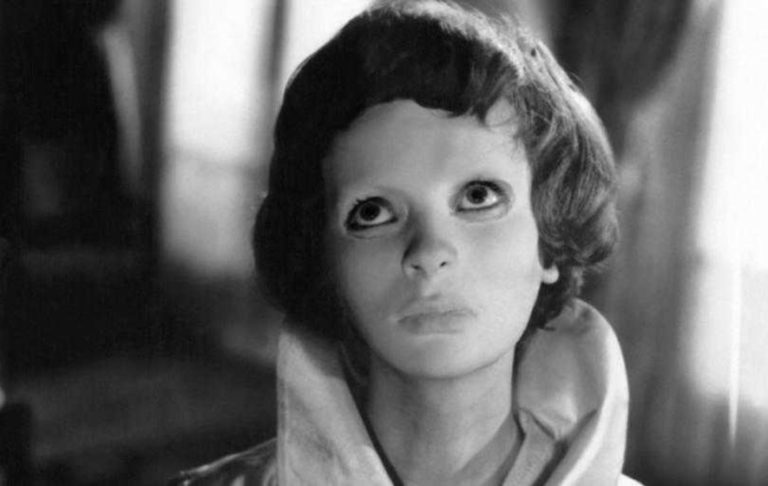
Dr. Génessier is a noted surgeon who practices skin grafts in his secluded chateau. Tragically, his daughter, Christiane, has been found dead after surviving a car crash caused by her father to which she is very badly disfigured on her face. However, the body found was not Christiane, but a woman kidnapped by Louise, Génessier’s loyal assistant who was once disfigured by had her face fixed by him, and Christiane is alive, living in the chateau, hidden from the world and wearing a mask to cover her face. Dr. Génessier, trying to fix the pain he’s caused to Christiane, goes to extreme lengths by kidnapping young, single women to graft their face and put onto Christiane. However, as much as she wants a new face, Christiane does not want to be imprisoned by her father’s desire and seeks her own reconnection to the world she once saw.
Under The Skin
https://youtu.be/AafSzyWGFH8
Dr. Génessier’s idea of a literal facelift and his intent is horrifying yet understanding. It is obsessive to right his wrong for the sake of his daughter’s beauty wrecked at his dispense. For the exception of one tremendous point-of-view shot of an unwitting victim who sees Christiane as she is, it is only a mask that represents her face, one that is plain with no marks – one that Dr. Génessier wants. She wants the new face, but cannot stand the mask, initially has animosity for the girls who are pretty and perfect but is conscious about being so separated by agreeing to be dead to others. The scene in which we see the graft is a brilliant montage of dead silence as we cut between a sweating Dr. Génessier, an equally nervous Louise, and a close-up of the kidnapped woman’s face as the scissors cut and are inserted on the edges of her face as the skin is pulled off. For one moment, right before we fade to black, we see – in black and white – a bloody surface. Equally impressive is the montage of a review on Christiane’s process: necrosis.
Aesthetics Of A Mentality
Director Georges Franju had his major works come out at the same time as the massive works of Truffaut, Godard, and the Left Bank, smothering his underrated work. He provides a simple chilling expression that demonstrates the subtle evil the lies underneath the surgical mask in order to master the improbable. But it is made at a dangerous price to where not even the detective can figure out. You can also notice the doctor’s madness through the experiments of his dogs, locked up like cows. Maurice Jarre, who would win three Oscars for his music on the David Lean epics Lawrence of Arabia, Doctor Zhivago, and A Passage To India, puts on a carnivalesque score in what was his second film. It starts as a dark melody through the trees at night into the French countryside and ends in a whimsical tone with the freedom of the (metaphorical) new skin and away from the wretched place.
Eyes Without A Face is a peek through the mask of one innocent victim, made to be her father’s guinea for the sake of her once the pretty face and his redemption. It is science run amok in a story of trading identities, something that was reproduced in Face/Off and The Skin I Live In. The nightmares are poetic. The idea and shots of them burn in the conscience long after, even in black & white. And we leave the film touching our face to see if it is there still and not sagging off for Christiane’s next look. It is a petrifying feel that Franju gives and we become wary of our obsession with looks and the distance to go and get them again.
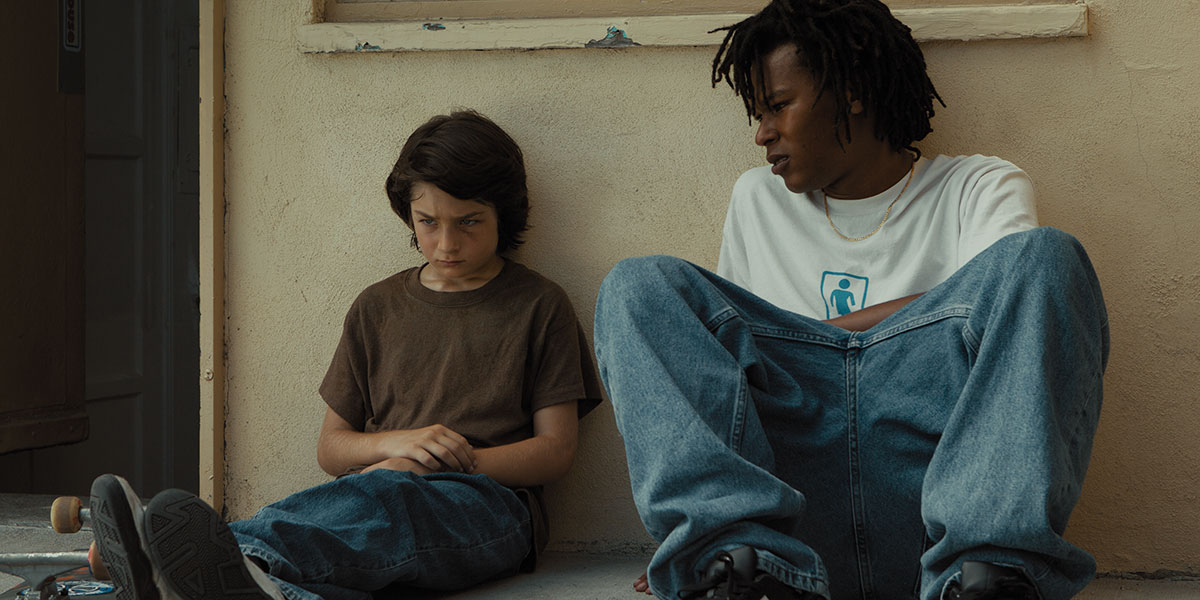
This week for our poll, inspired by Jonah Hill’s directorial debut Mid90s, we are talking about coming-of-age films from the 90’s. There are so many great films that fall under this umbrella, but we did our best to narrow it down to the dozen that we think will garner the most votes. It’s very likely that we missed out on some of your favorites, so feel free to utilize the write-in option.
That said, what is your favorite 90’s coming-of-age film? Vote now!
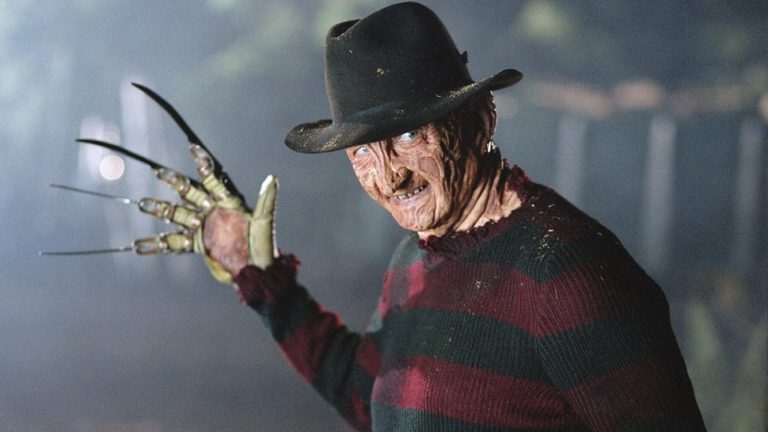
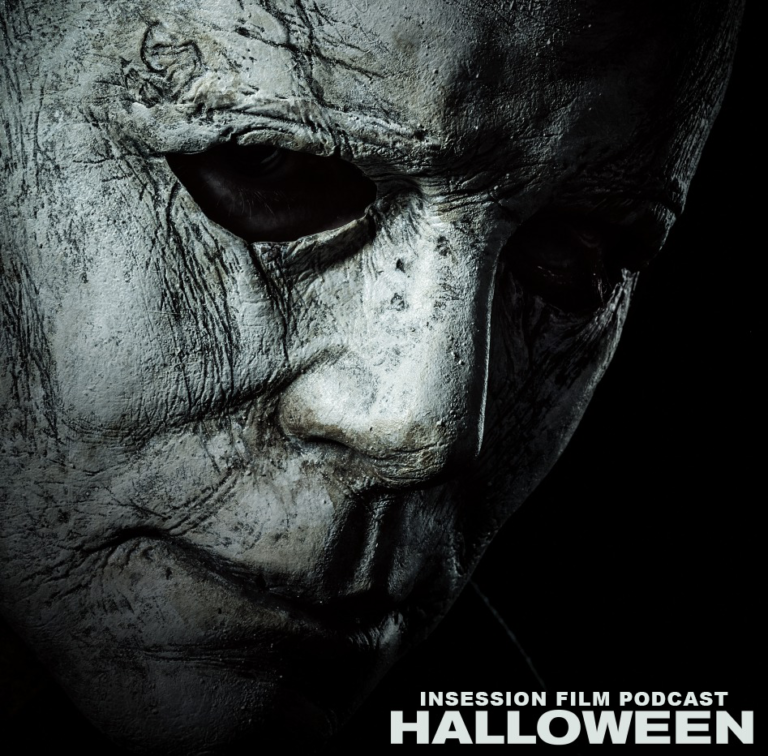
This week on Episode 296 of the InSession Film Podcast, inspired by Halloween (2018), we discussed our Top slasher films. Slasher films have been around for a long time imprinting some of the most iconic imagery and characters we’ve ever seen in film. Whether you’re talking about Michael Myers, Freddy Krueger, Norman Bates, Chucky or Leatherface, there are so many great villains in this genre. So this was not an easy exercise by any means. Of course, not all of the *films* have been great, but many of them still hold up very well. That said, here are our lists:
(Note: Please keep in mind that we each had different criteria for our selections)
Brendan:
1) A Nightmare on Elm Street
2) The Texas Chain Saw Massacre (1974)
3) Friday the 13th Part VI: Jason Lives
DJ:
1) A Nightmare on Elm Street
2) Alien
3) Scream
Honorable Mentions (Combined) Psycho, American Psycho, Sleepaway Camp, A Nightmare on Elm Street 3: Dream Warriors, Wes Craven’s New Nightmare, Deep Red, Child’s Play, Bride of Chucky, The Texas Chain Saw Massacre 2, The House of Wax
Hopefully you guys enjoyed our lists and if you agree or disagree with us, let us know in the comment section below. As noted above, slasher films have been around for a very long time and it’s likely we missed some great films that could be on your list. That being said, what would be your Top 3? Leave a comment in the comment section or email us at [email protected].
A big thank you to DJ for filling in as co-host this week. He’s always fun to be around and this time was no different. We had a lot of fun re-visiting this classic franchise and talking about the impact slasher films have had on film culture the last 40 years.
On that note, check out this week’s show and let us know what you think in the comment section. Thanks for listening and for supporting the InSession Film Podcast!
– Movie Review: Halloween (5:52) Director: David Gordon Green Writer: Jeff Fradley, Danny McBride, David Gordon Green Stars: Jamie Lee Curtis, Judy Greer, Andi Matichak, Will Patton, Virginia Gardner, Nick Castle
– Notes (29:38)
Stay tuned for some new Patreon Bonus Content as JD and Ryan will soon discuss John Carpenter’s classic original Halloween (1978). Sign up today!
– Top 3 Slasher Films (37:25)
Slasher films have been around for a long time imprinting some of the most iconic imagery and characters we’ve ever seen in film. Whether you’re talking about Michael Myers, Freddy Krueger, Norman Bates, Chucky or Leatherface, there are so many great villains in this genre. So this was not an easy exercise by any means. Of course, not all of the *films* have been great, but many of them still hold up very well. That said, what would be your Top 3?
If you want to help support us, there are several ways you can help us and we’d absolutely appreciate it. Every penny goes directly back into supporting the show and we are truly honored and grateful. Thanks for your support and for listening to the InSession Film Podcast!
Director: Drew Goddard Writers: Drew Goddard Stars: Jeff Bridges, Cynthia Erivo, Dakota Johnson
Synopsis: Circa 1968, several strangers, most with a secret to bury, meet by chance at Lake Tahoe’s El Royale, a rundown hotel with a dark past. Over the course of one night, everyone will show their true colors – before everything goes to hell.
[/info]
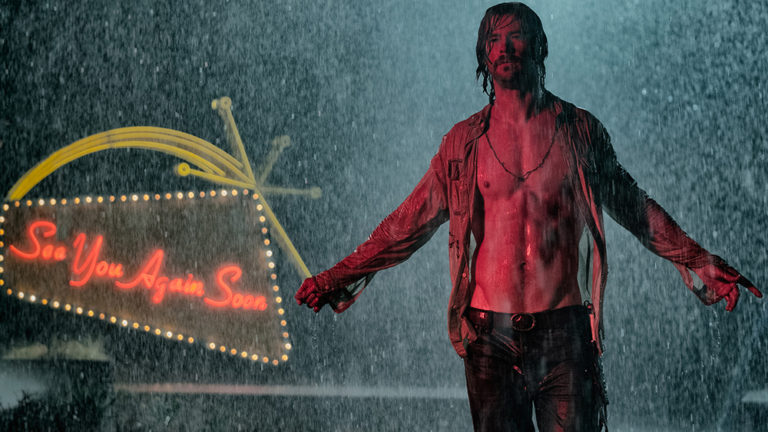
It has been 6 years since Drew Goddard’s directorial debut The Cabin In The Woods swept horror fans off their feet but since then we haven’t really heard much from him. His presence on Daredevil and other recent shows as a producer has definitely been felt but directing-wise he has been a ghost. Enter Bad Times At the El Royale, Goddard’s latest film and a stab at neo-noir and mystery. First thing, if you haven’t seen the trailer yet stop what you’re doing and give it watch. It’s brilliant editing and does a great job of setting expectations for the film and the fun ride viewers have to come. The one time I caught the trailer was all it took. I fully bought in and had no intention of missing this one at theaters. If it’s not obvious yet I loved the film, it has almost everything I enjoy about cinema and was just a pleasure to watch.
Right after I walked out of the theater for Bad Times at the El Royale I wrote four words down to help me remember what I enjoyed from the film: Music, Pacing, Style, and Performances. All of the above are Fantastic! The entire film is one delicious aural and visual feast filled with drama, mystery and head-spinning twists. It centers around an old style hotel called…you guessed it…The El Royale, situated right on the border of Nevada and California, and its peculiar and mysterious guests that all had the unfortunate luck of coming together on one ill-fated night. From the opening scene that is both puzzling and cinematically brilliant to the sometimes head-scratching and intense chaos that ensues, the film is a ride you won’t want to miss out on. It’s quick on its feet but will slow the pace right when it needs to allow the audience time to get to know the players. Stylistically it is a call back to the pulpy films we all enjoyed from the 90’s. 2 Days in the Valley, L.A Confidential, and of course, Pulp Fiction are a few that come to mind. If you enjoyed these you will definitely enjoy Bad Times at the El Royale.
When talking about the film one thing I have to mention is the music. Every single tune is placed with precision and care for each scene. And don’t expect anything modern, the whole soundtrack is one big love letter to Motown and classic old school Rhythm and Blues. When you’re not holding your breath to catch each moment on-screen, you’re tapping your feet and wiggling in your seat to the perfectly placed harmonies. Even if you don’t find the film’s story compelling you are going to have a hard time not wanting to sing along as the talented Darlene Sweet (Cynthia Erivo) belts out each beautiful note. And the emotion that the music brings to certain scenes is so soul-warming, I found myself (and I imagine everyone else in the theater) just paralyzed with a strange mix of sadness, awe, and joy. Honestly, it’s not something easy to convey with words. These scenes almost brought me to tears, they were beautiful and emotional and something we just don’t see often enough on film.
There is so much you can say about the casting for Bad Times at the El Royale and after you’ll still feel like you didn’t say enough. Every single actor gave an amazing performance, in some cases one of the best I’ve seen from them. Jeff Bridges as Father Daniel Flynn was outstanding and will go down as one of my favorites from him (His Rooster Cogburn and The Dude top that list). And we all need to start talking about Cynthia Erivo. Somehow with talents like Jeff Bridges, Jon Hamm, and Chris Hemsworth, surrounding her she managed to steal the spotlight and she handled it with proficiency and grace. Every scene with her is just brimming with emotion and her voice will leave you spellbound. Hamm is always a delight and his witty Laramie Seymour Sullivan brings some great laughs. Another new face for me was Lewis Pullman, son of Bill Pullman, who plays Miles Miller a character that at first will seem forgettable but by the film’s end had the audience from my theater whooping and clapping. Again just so many great performances.
I’ve read a few other reviews of Bad Times at the El Royale and many seem to feel the film fell short a bit. Some have compared it to Quentin Tarantino’s Pulp Fiction in that it tries too hard but never reaches the same platform the modern classic sits on but personally I think it can hold its own against other films that fit this genre. I agree that it does drag on a bit at 150 minutes and there are scenes that could be cut but at the end of the day, I really enjoyed this crazy twisty tale. From start to finish it kept my attention and I never felt bored with it and more importantly, the film has something to say. Every character in the film is flawed in some way but I found myself pulling for them and finding the humanity in their desperation and vulnerability. Each is fighting in some way for love or redemption and it’s easy to connect that with our own internal struggle. I would have loved more background for some characters but overall each is fairly well fleshed out. And I can’t say it enough, the performances were fantastic especially from Bridges and newcomer Erivo, who is an absolute star in the making, and it’s a film that has great re-watch potential. For whatever reason, there hasn’t been much buzz about Bad Times at the El Royale but trust me this is one of those films you will regret not catching at the theater.
Also, don’t blink or you might miss a Nick Offerman sighting, always a pleasure to see him on-screen.
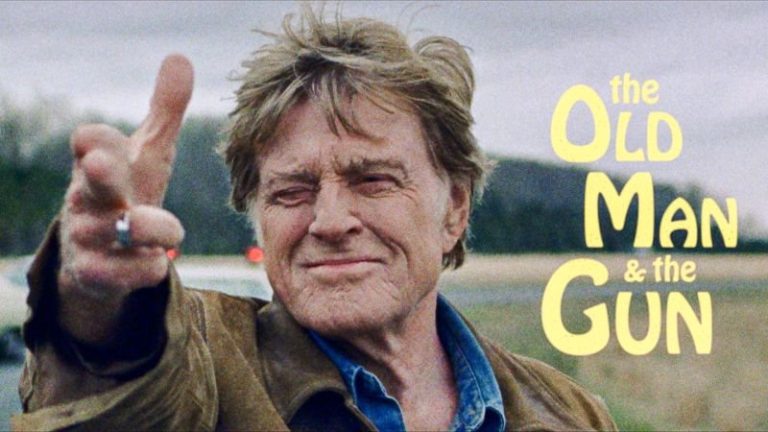
This week on the InSession Film Podcast: Extra Film segment, This week on the InSession Film Podcast: Extra Film segment, Brendan and Jay discuss David Lowery’s latest in The Old Man & the Gun, starring Robert Redford, and also the new film from Drew Goddard in Bad Times at the El Royale!
The Old Man and the Gun was supposedly Redford’s last outing as an actor before he hangs it up, but for reasons Brendan and Jay discuss on the show, that could be ironic given how Old Man plays out. Bad Times is also ironic since there are some good times to be had with that film (depending on who you ask anyway).
On that note, have fun with this week’s Extra Film segment and let us know what you think in the comment section below. Thanks for listening!
– Movie Review: The Old Man & the Gun (5:46) Director: David Lowery Writer: David Lowery, David Grann (based on the New Yorker article by) Stars: Robert Redford, Casey Affleck, Sissy Spacek
– Movie Review: Bad Times at the El Royale (27:32) Director: Drew Goddard Writer: Drew Goddard Stars: Jeff Bridges, Cynthia Erivo, Dakota Johnson
We try to make this the best movie podcast we possibly can and we hope you enjoy them. Subscribe today on iTunes, Spotfiy or Stitcher, and please leave us a review on iTunes. You can also find us on Soundcloud, PlayerFM and TuneIn Radio as well. We really appreciate all your support of the InSession Film Podcast.
To hear this Extra Film episode and everything else we do, download our apps on the Amazon Market for Android and the Podcast Box app on IOS devices. The mobile app covers all of our main shows, bonus podcast’s and everything else relating to the InSession Film Podcast. Thanks for your wonderful support and listening to our show. It means the world to us!
[divider]
Help Support The InSession Film Podcast
If you want to help support us, we would greatly appreciate it! For more info, CLICK HERE.
Director: Paul Greengrass Writers: Paul Greengrass, Åsne Seierstad (based upon the book “One of Us” by) Stars: Anders Danielsen Lie, Jonas Strand Gravli, Jon Øigarden
Synopsis: A three-part story of Norway’s worst terrorist attack in which over seventy people were killed. 22 July looks at the disaster itself, the survivors, Norway’s political system and the lawyers who worked on this horrific case.
[/info]
There may be questions in your mind after watching 22 July, the latest film from director Paul Greengrass, about whether a film like this should even be made. Is it tasteless for a film to recount in such vivid detail the traumatic experience of so many in Norway on July 22, 2011? Is such an endeavor wrong on its face?
Similar questions have been asked of other films, including another film directed by Greengrass – United 93. Just as I felt with that film, I don’t think 22 July is tasteless or wrong. I’m not sure any film can adequately provide space for us to consider and reckon with such wanton evil and hate.
But I think we must try.
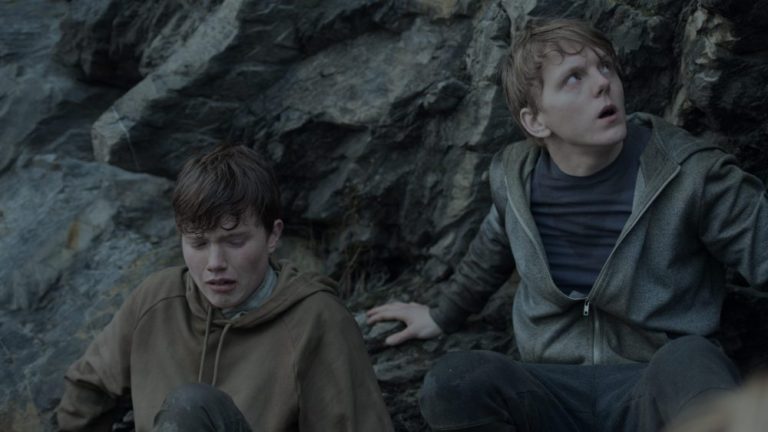
The film depicts the harrowing terror attacks in and around Oslo, Norway on that day that has become known as “22 July” by Norwegians. A man named Anders Behring Breivik filled a van with fertilizer and chemicals and detonated this makeshift bomb outside an Oslo government building. He then travelled to a nearby island where a local youth camp was being held. Impersonating a police officer with a makeshift uniform, he gathered everyone up and opened fire. By the end of the day, he had killed 77 people and injured many others.
I must say, I was not aware of these attacks, or I at least do not remember being aware of them at the time. I would have just graduated from high school – certainly old enough that I should have been aware of something like this. Maybe that’s being too hard on myself, but I lived through 9/11. I remember how other countries supported us in that time of need, and I remember taking comfort in that even as a young boy. Yet, I knew nothing of this horrible tragedy. That realization brought so much sadness as I began watching this film. And you will be confronted with the horrific nature of this attack right from the beginning. I cannot lie to you, this film is brutally graphic in its depiction of these terror attacks. It is horrific to watch. In an article from Rolling Stone, Greengrass recounts how he consulted with the families prior to filming these scenes. The families encouraged him that sanitizing the violence would be a disservice to the memory of their loved ones. At the same time, they made it clear that exploiting the violence or being gratuitous with it would be disrespectful. And so, Greengrass was left with a very fine line to tread.
Each viewer will have to decide for themselves if he succeeds in that regard. It may be an impossible task. I think this is some of the most disturbing violence I’ve ever seen in a film. Much of that goes to the performance of Anders Danielsen Lie who plays Breivik. In that same Rolling Stone article, Danielsen Lie says that he had to go into a sort of dissociative state. Survivors of the attack had told Danielsen Lie that Breivik had been incredibly calm, and I think that is part of what makes these early scenes so harrowing. There is nothing in that face. Nothing.
Again, many will wonder whether or not these scenes are necessary. That is a decision that everyone must make for themselves. What I can say after watching the film is that those early scenes are certainly necessary for the narrative that Greengrass attempts to build. For the later scenes to work, for better or worse, we must see the graphic early scenes.
Greengrass is known for his ability to direct chaos. I am, personally, a fan of his work in films like United 93, The Bourne Ultimatum, and Captain Phillips. It is United 93 that probably comes to mind most readily when watching this film, because of its similar subject matter. But there, the focus was on the heroism of the men and women in the midst of terrorism. Here, the main focus is on how the pieces are picked up afterwards and the larger context surrounding the events.
Much of the film’s storyline centers on Viljar Hanssen (Jonas Strand Gravli), a young man participating in the youth camp who survives the attack. He survives, but he is left with bullet shards near his brain stem that are a constant threat on his life. Greengrass showcases Viljar’s strenuous therapy, as he has to learn how to do everything again – even walk. It is a powerful story of resiliency and strength. The film goes to even greater depths when it seeks to unpack the idea that strength is not only found in outward displays of fortitude, but it can also be found in authentic displays of weakness. This comes in a conversation between Viljar and Lara Rachid (Seda Witt), one of his friends from the camp who also survived.
The concurrent plot line is that of Breivik. Again, some may question the amount of screen time that Greengrass gives to Breivik and his views. It seems that the reasoning here is that Greengrass is attempting to connect these terror attacks to larger cultural shifts around the globe. Those of us in America will certainly recognize some of the anti-immigrant rhetoric. As valiant as this effort may be, I think Mr. Greengrass falters when he diverts too much of his focus from the individual lives affected by this tragedy to the larger contextual issues at play. I think he had more than enough ground during the film’s final act to speak to those cultural shifts (more on that to come). But the film’s middle third slows down as Greengrass shows the government investigation into the terror attack, for instance. If some of those middle scenes had been edited down, I think this would be a much stronger film. It would also help with the film’s length, which at 143 minutes is rather long.
The final narrative component comes in the person of Breivik’s lawyer, Geir Lippestad. As a criminal defense attorney, it is his job to defend people who seemingly have no defense. Breivik specifically asks for Lippestad since he had previously defended a neo-Nazi. Lippestad’s entire life is thrown upside down as his family receives death threats and they are forced to remove their daughter from her school. The film seemingly never draws any overt conclusions about Lippestad’s actions. Are we to wonder about a system that provides so many freedoms to a man like Breivik in such court proceedings? Maybe. The film certainly gives clear references to the rights that are afforded to Breivik. While I was intrigued by Lippestad’s role in this story and I do think it brings about healthy opportunities for discussion about the justice system, this was another plot line that I did not feel ultimately served the larger film.
All these concurrent plot lines are brought together in Breivik’s trial. It is here where Breivik is given an opportunity to state his case, and it is here were Viljar sits as a witness against Breivik in the film’s most moving scene. We have watched as Viljar has worked for this moment. The way he rises to it is quite moving, indeed.
At the end of the day, I believe films like 22 July are vitally important. When we come into contact with such large-scale traumas, we must have large-scale ways to consider and deal with them. Will a film ever be able to serve as a complete salve for such situations? Will it ever offer a way to fully wrestle with the pain and loss? No, of course not. Because of that, I can certainly see why some would say that such films are unnecessary. I would disagree, but I have not been as close to such situations as others. I lived through 9/11, but there will certainly be some for whom the trauma is too visceral to watch a film like this. That is understandable.
For me? I applaud the attempt made by Mr. Greengrass here to provide not only an opportunity to wrestle with this specific attack, but also to wrestle with the larger cultural shifts that it represents. I think the film would have been stronger if he let the courtroom finale be the main way he inserted the larger cultural discussion, but he has created a strong film nonetheless.
This is a hard film, and one that will clearly not be for everyone. At the same time, it is important viewing. We need ways to process difficult events on a cultural scale. Cinema may not ever be able to fully provide that for events such as this, but I think it should still try anyways.
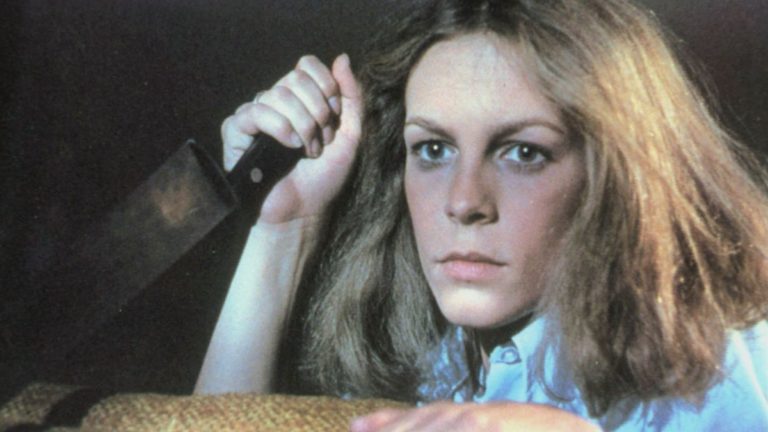
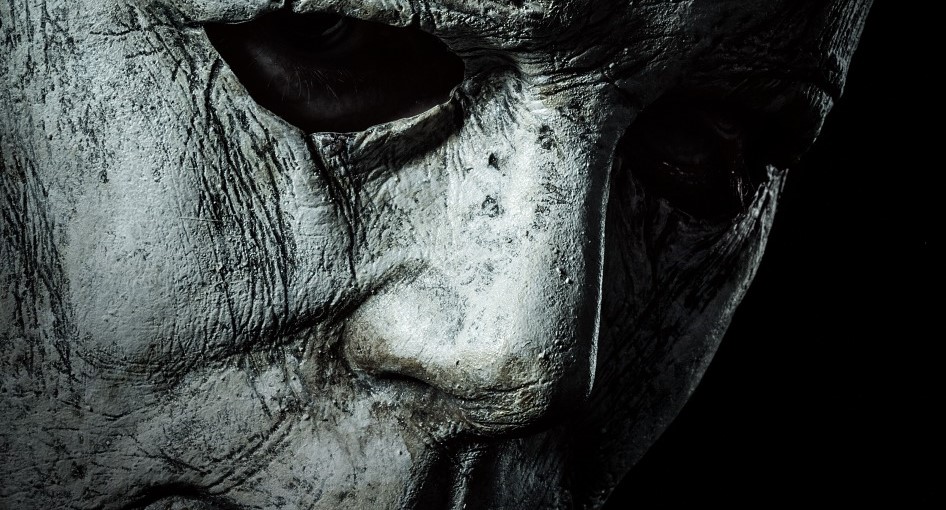
Coming out this weekend in theaters is Halloween, a sequel to the 1978 classic horror film Halloween. I’m not sure how we’re supposed to distinguish between the two, but here we are. Jamie Lee Curtis is back and it appears that Laurie Strode is out for some revenge. It should be fun. With that film as inspiration for our poll this week, we want to know which slasher film stands out to you as the best. There have been some great ones over the years and we narrowed the list down to a dozen in the poll below. However, as always, feel free to write in something we missed.
At any rate, what is the best slasher film to you? Vote now!
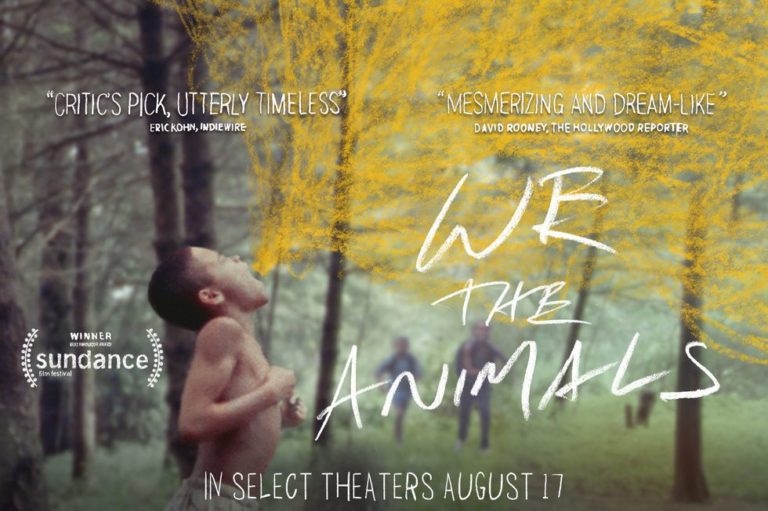
Director: Jeremiah Zagar Writers: Daniel Kitrosser, Jeremiah Zagar, Justin Torres (based on the novel by) Stars: Evan Rosado, Raúl Castillo, Sheila Vand, Josiah Gabriel, Isaiah Kristian
Synopsis: Manny, Joel, and Jonah tear their way through childhood and push against the volatile love of their parents. As Manny and Joel grow into versions of their father and Ma dreams of escape, Jonah embraces an imagined world all on his own.
[/info]
Transitioning from documentary filmmaking to your first scripted feature can sometimes be problematic, as documentaries are defined by the way they document information, usually as a means of education or for historical context. We often say how movies should show and not merely tell, but documentaries require a crucial yet unique form of telling to succeed, a tactic that doesn’t always work in fictional drama.
But with We the Animals, Jeremiah Zagar’s scripted debut, I cannot recall ever seeing a documentary filmmaker tackle his first scripted feature with this much opacity.
There is a script to be sure in We the Animals (co-written by Zagar alongside Daniel Kitrosser, based on Justin Torres’ loosely autobiographical novel), but it’s one that refuses to let you in on the film’s inner thoughts. You know what happens narratively, but maybe not-so-much thematically, a tactic that purposefully mirrors the mentality and confusion of our young central hero. Zagar understands that children are nature’s most confused beings, which makes We the Animals wildly inventive and immersive in its innocence, and a primitive and tribal visualization of family life in pastoral America.
We the Animals almost unfolds like a series of vignettes; there is an overarching story, but it’s a refreshingly simple one with very little setup. The film follows a family of five on the economic fringes of rural eastern Pennsylvania, seen through the eyes of youngest brother Jonah, played magnificently by Evan Rosado. Jonah and his brothers Joel and Manny (Josiah Gabriel and Isaiah Kristian) experience firsthand the “bipolarity” in their parents’ relationship at the hands of such economic hardships; Paps (played by Raul Castillo, in a performance that should be garnering more awards consideration) periodically takes out his abusive frustrations on Ma (a wonderful Sheila Vand), acts of violence that all three young boys are sadly present for. Time and time again, Ma and Paps resort to their own form of reclusiveness and neglect, inadvertently creating a distance between themselves and their boys; this forces Jonah, Joel, and Manny to fend for themselves among the natural Pennsylvania landscapes, where their brotherhood is all they possess to keep each other warm (a reoccurring chant where the boys whisper “Body Heat” serves as that warmth).
Ma and Paps’s actions may be flawed, but their love for their three boys is not. Zagar is equally as concerned with their mistakes as he is with their affections, and that awareness in both trickles further into Ma and Paps’ own self-awareness, knowing how their selfish acts have an effect on their children. In one of the film’s best scenes, Paps eventually returns home after a long stretch of reclusiveness, and in an instant where he briefly shows his physical affections for Ma, he neglects to see Jonah, Joel, and Manny tempting him for a game of hide-and-seek. Paps then embraces the game, only for the scene to conclude with all three boys beating their father while screaming, “You were supposed to find us.” In the short term, their screams merely reflect that moment of gameplay neglect, but their screams take on a completely different meaning when viewed in the long run. Their lashings of violence are clearly influenced by Paps and his abusiveness toward Ma (tendencies that Joel and Manny eventually grow into), but following Paps’ long stretch of selfish absence, perhaps the phrase “You were supposed to find us” actually translates to “Where were you when we needed you?” Paps has finally come home, but perhaps the boys’ father didn’t come back with him.
This is just one of many “vignettes” in We the Animals, but their narrative importance is merely secondary to Zagar’s primary intent. Zagar is more concerned with simply capturing a fragment of time in one boy’s confused youth, one that unfolds like scribbles in Jonah’s own secret notebook. These events, all seen from Jonah’s point of view, progress with fragility and uncertainty, but never lack in bright and optimistic coloration, as visualizations of Jonah’s notebook pages come to life. There’s plenty of magical realism at play here, sometimes to the point of fantasy (sequences under water and a muddy grave are standouts), but Zagar never explains them to us; his approach is clearly influenced by the likes of Terrence Malick, as well as Barry Jenkins’ masterpiece Moonlight, but Zagar’s voice is still his own. This may make for a narrative that feels too scatterbrained for some, but from the point of view of a child that’s precisely the point; if we’re confused, that’s because Jonah is confused.
However, there is a reveal of sorts in the film’s climax that does recontextualize much of Jonah’s confusion, which in truth may be more rooted in loneliness and sexual identity. At one point, while in the family truck with Ma and his brothers, Ma asks if he would like to go to the city, to which he asks, “Are there more people there like me?” While in the moment this “revelation” didn’t fully work for me (I initially found it somewhat pandering), I accepted it when I understood that Jonah himself doesn’t even realize a revelation took place at all, and perhaps these feelings of his have been there all along. For only a brief moment, Jonah seems to reach some sort of clarity, but sadly that feeling is short-lived; if anything, Jonah’s confusion and isolation only strengthens by the film’s final minutes, regressing back to that earlier lonely spirit of his. Love was once strong in his family, but now neglect feels stronger than ever, even if it’s only he who feels that way, never quite knowing why.
Initially I had little idea how much I enjoyed We the Animals, but like all primitive beings (especially children), Zagar’s approach had a way of sneaking up on me, and as such the film continued to evolve. But never once did it merely evolve into just one idea; the film remained open-minded about one’s fragmented innocence, continuously scribbling itself away like a young boy’s secret notebook. I found myself warming up to We the Animals the more I pondered on it, even as I considered my own personal biases (as a Philadelphia native, the eastern Pennsylvania setting is literally near and dear to me), but I view that warmth as synonymous with love and affection, bringing us one step closer to Jonah himself. Adoration is what warms the body and soul, and sadly our central hero leaves this story colder than before.
Find those you love and continue to keep each other warm (#BodyHeat).
This week on Episode 295 of the InSession Film Podcast, inspired by First Man, we discussed our Top 3 Ryan Gosling scenes. Gosling is one of the most formidable actors working today, and as we talked about on the show, he’s at the very top of his game right now. He’s someone who quintessentially demonstrates subtlety with powerful nuance, and it makes for some of the most evocative scenes we’ve seen in modern filmmaking. He’s also really funny too. It’s amazing the kind of range he has, and hopefully our lists are indicative of that notion. That said, here are our lists:
(Note: Please keep in mind that we each had different criteria for our selections)
JD:
1) Memory Maker / Rebellious Replicants – Blade Runner 2049
2) Crater – First Man
3) Jenga Blocks / Gym / Bathroom Call – The Big Short
Brendan:
1) “You Always Hurt the One You Love” – Blue Valentine
2) The Driver watching TV with Benicio – Drive
3) Toilet – The Nice Guys
Manish:
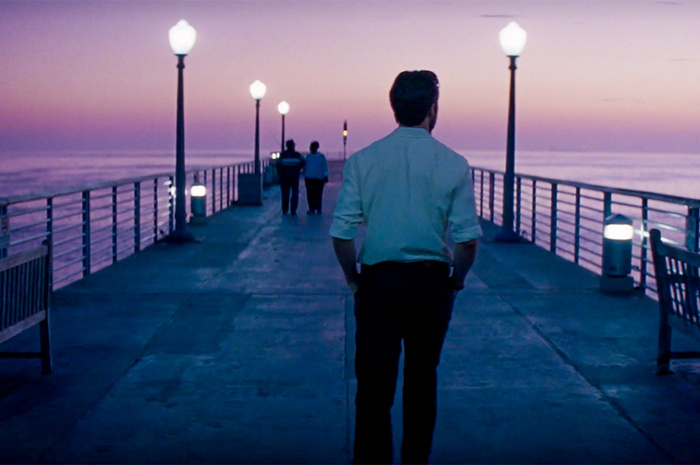
1) “City of Stars” on Pier – La La Land
2) Funeral – Lars and the Real Girl
3) Dirty Dancing – Crazy, Stupid, Love
Honorable Mentions (Combined)
Ice Cream – The Place Beyond the Pines
K / Joi Scenes – Blade Runner 2049
Ending – La La Land
Sebastian plays “City of Stars” on piano for first time – La La Land
Diner / Fight – La La Land
Elevator – Drive
Motel – Drive
Opening – Drive
I can’t do this anymore – Blue Valentine
Hospital Fight – Blue Valentine
Holland Finds Dead Body – The Nice Guys
Backyard Fight – Crazy, Stupid, Love
Shopping with Cal – Crazy, Stupid, Love
Ending – Half Nelson
Lectures on Oppression – Half Nelson
Any scene with Drey – Half Nelson
Wanna Fight – Only God Forgives
Bosley gives up spot in Championship game – Remember the Titans
Bosley plays country western songs – Remember the Titans
Hopefully you guys enjoyed our lists and if you agree or disagree with us, let us know in the comment section below. Gosling is a great actor and has been in some great films, so perhaps there’s something we are overlooking. Maybe your list is different than ours? That being said, what would be your Top 3? Leave a comment in the comment section or email us at [email protected].
This week on the InSession Film Podcast, Manish Mather from Talk Film Society joins us to discuss First Man and our Top 3 Ryan Gosling scenes! JD and Brendan also offer their thoughts on Private Life and The Sisters Brothers after missing out on Extra Film this last week.
Big thanks to Manish for joining us this week, he was an absolutely wonderful guest and it was a pleasure to finally get him on the show. We had a lot of fun talking Damien Chazelle, Gosling’s amazing stoicism and JD’s emotional state.
On that note, check out this week’s show and let us know what you think in the comment section. Thanks for listening and for supporting the InSession Film Podcast!
– Movie Review: First Man (5:27) Director: Damien Chazelle Writer: Josh Singer, James R. Hansen (based on the book by) Stars: Ryan Gosling, Claire Foy, Jason Clarke, Corey Stoll
– Notes / Reviews: Private Life, The Sisters Brothers, Monsters and Men (54:44)
As mentioned above, JD and Brendan were not on our latest Extra Film podcast, but both had a chance to see Private Life on Netflix and decided to give their thoughts on the film. JD also caught up with Jacques Audiard’s The Sisters Brothers and Reinaldo Marcus Green’s Monsters and Men, and offered up his thoughts on those two films as well.
– Top 3 Ryan Gosling Scenes (1:13:33)
Ryan Gosling is one of the most formidable actors working today, and as we talked about on the show, he’s at the very top of his game right now. He’s someone who quintessentially demonstrates subtlety with powerful nuance, and it makes for some of the most evocative scenes we’ve seen in modern filmmaking. He’s also really funny too. It’s amazing the kind of range he has, and hopefully our lists are indicative of that notion. That said, what would be your Top 3?
If you want to help support us, there are several ways you can help us and we’d absolutely appreciate it. Every penny goes directly back into supporting the show and we are truly honored and grateful. Thanks for your support and for listening to the InSession Film Podcast!
This week on the InSession Film Podcast: Extra Film segment, Ryan and Jay discuss Jacques Audiard’s latest in The Sisters Brothers and also the new film from Tamara Jenkins in Private Life!
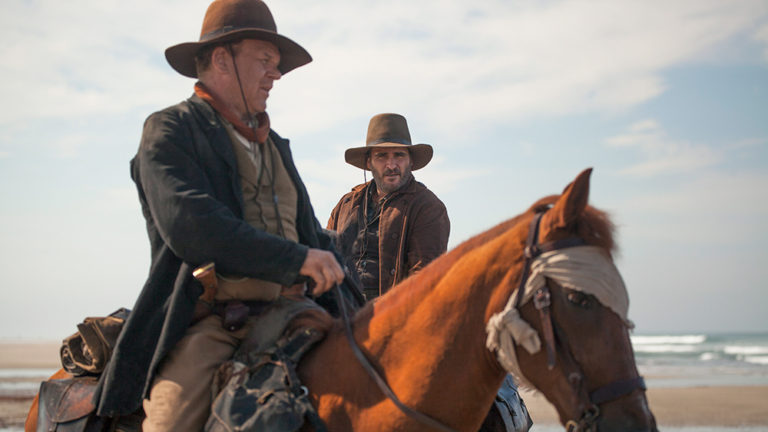
Both of these films are not only very good (for reasons talked about on the show), but they are noteworthy as it relates to their respective directors as well. Audiard is a highly regarded filmmaker, but the The Sisters Brothers is his English-language debut and he did not disappoint working with great actors like John C. Reilly and Joaquin Phoenix. As for Jenkins, Private Life is her first film since The Savages all the way back in 2007. She needs to be making films more than once a decade if you ask us.
On that note, have fun with this week’s Extra Film segment and let us know what you think in the comment section below. Thanks for listening!
– Movie Review: The Sisters Brothers (6:51) Director: Jacques Audiard Writer: Jacques Audiard, Thomas Bidegain Stars: John C. Reilly, Joaquin Phoenix, Jake Gyllenhaal
– Movie Review: Private Life (32:35) Director: Tamara Jenkins Writer: Tamara Jenkins Stars: Kathryn Hahn, Paul Giamatti, John Carroll Lync
We try to make this the best movie podcast we possibly can and we hope you enjoy them. Subscribe today on iTunes, Spotfiy or Stitcher, and please leave us a review on iTunes. You can also find us on Soundcloud, PlayerFM and TuneIn Radio as well. We really appreciate all your support of the InSession Film Podcast.
To hear this Extra Film episode and everything else we do, download our apps on the Amazon Market for Android and the Podcast Box app on IOS devices. The mobile app covers all of our main shows, bonus podcast’s and everything else relating to the InSession Film Podcast. Thanks for your wonderful support and listening to our show. It means the world to us!
[divider]
Help Support The InSession Film Podcast
If you want to help support us, we would greatly appreciate it! For more info, CLICK HERE.
Director: Ruben Fleischer Writers: Scott Rosenberg, Kelly Marcel, Jeff Pinkner, Todd McFarlane (character), David Michelinie (character) Stars: Tom Hardy, Michelle Williams, Riz Ahmed
Synopsis: Journalist Eddie Brock is trying to take down Carlton Drake, the notorious and brilliant founder of the Life Foundation. While investigating one of Drake’s experiments, Eddie’s body merges with the alien Venom — leaving him with superhuman strength and power. Twisted, dark and fueled by rage, Venom tries to control the new and dangerous abilities that Eddie finds so intoxicating.
[/info]
In May of last year, Sony caught everyone off guard by announcing out of the blue a solo Venom movie to be released in 2018. People were even more surprised to find out that Tom Hardy would portray the infamous character/villain Eddie Brock. Now that it’s finally come full-circle and to fruition, is a solo Venom film even capable of functioning on its own? Will it set the precedent(s) for future solo villain/anti-hero installments? The argument that can be made, and that I’ve seen being made with standalone comic book films centered around an antagonist have been making big waves with the release of this film. I’ve seen constant statements that all fit under the category of, “What’s the point of a Venom movie without Spider-Man?” and most recently with the announcement of Todd Phillips’ standalone Joker film, “What’s the point of a Joker film without Batman?”, have all come across as different perspectives of this new era of superhero or in this case, supervillain storytelling. With Venom being a potential door for more villain centered projects to be greenlit, does it ultimately live up to those specific standards?
The character of Eddie Brock himself is definitely one of the more notable (and clever at that) personas to be adapted to the the big screen from Marvel’s discography. After the calamity of Brock and Venom’s live-screen adaptation debut in 2007’s Spider-Man 3, Tom Hardy’s depiction of the journalist turned part alien is definitely one of the more fulfilling larger-scale successes of Venom. He fully establishes and embodies a character we don’t mind rooting for throughout the entirety of the films lackluster tale. As he maneuvers in this almost hard-headed, wiseguy attitude yet still incorporating a side of masculine charm and confidence. He’s perhaps the most superior component to have been taken from this film. While he’s not given much to go to work with in terms of storytelling and structure, himself and nearly every other relevant supporting cast member harness what minimal material they’ve been given to accentuate the film from being less of a potential disaster than what it eventually ends up being.
You would think that a team of around 2 or 3 writers would be capable of executing a fleshed out, balanced and absorbing narrative that remains intrinsic to the Venom comic. Yet in such a case, that does not seem to happen here. This lackadaisical effort of a screenplay is merely a rough outline of a Venom film that’s comprised of inept character development/study, a provisional main plot with the inclusion of essentially poor contrasting elements attached, and a last-minute rising action and a finale that rarely achieves anything redeeming about our protagonist.
While Tom Hardy gives an incredibly solid outing (as stated before) of playing the role of Eddie Brock/Venom, The character arc and evolution of Brock that’s set before him runs quite inferior to his portrayal. This is quite applicable to everyone else too. Riz Ahmed as our villain Riot, is just another joke within itself. Not to be mistaken that Ahmed isn’t skilled enough to wear the pants of a commanding antagonist, but his eventual transition into those shoes is so blatantly rushed that it seems as if it’s coming out of nowhere. The climax also has little to no effect on the audience whatsoever. The movie becomes arrayed so far off track both before and after Brock has made contact with the symbiote, that once incidents are about to transpire, it’s by far too late and they’re unprepared to attempt to rescue the mishap they’ve just set. It has no sense of direction of where it wants to head until ⅔ of the movie is over with. I also am not convinced that Brock has fully accepted the powers of Venom that continue to engulf him as the film goes on. It hardly ever feels like Brock has a fulfilled connection with the manifestation of Venom inside of him that’ll allow him to continue to grow and thrive. Additionally, the humor between the two, while quite funny at times, is also a fault of the inconsistencies between its tone and lack of fundamentally sound plot escalation and storytelling.
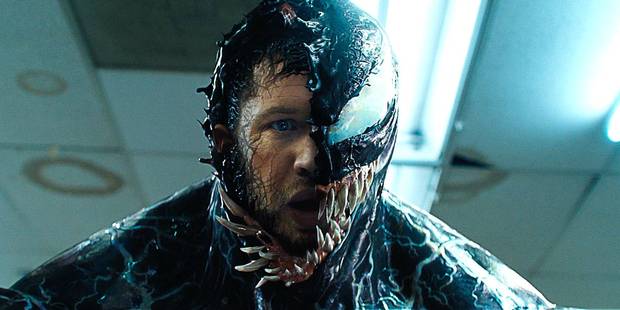
Since the initial news that was published containing an early design for the symbiote along with the first official trailer last April that ultimately unveiled the final design of Venom, left me then and more than ever now, not fond of its final appearance. Especially when taking into consideration how the character is being integrated parallel to the tasteless choreographed action sequences. Venom himself looks abundantly tacky—with an overly muscular, meathead upper body and a noticeably hysterical pair of chicken legs. It also isn’t beneficial when the CGI brinks on borderline horrid at times. The practical effects (car chases, explosions) are perhaps a nominal highlight for the film, yet everything else that’s computer generated, consisting of Venom’s look and any other ample occasion too big to be conducted in real life, is so ridiculous and unjustifiable for a project of this brand and value. Sony and the remainder of the crew could’ve done a much more affluent job in attempting to nail the efficiency of such a key aspect.
Venom easily leans more toward the negative side of the spectrum. But with that being said, this venture of a film is most certainly watchable and tolerable for something that abides by the bare minimum of filmmaking standards. It can be very irritating throughout the story when recognizing the variety of characteristics and facets that they should’ve capitalized on, that they didn’t. However, it’s definitely still a linear tale that maintains an integral origin of schlock, while also playing off of its inconsistent tonal nature. All we can hope for now is that the upcoming batch of villain centered projects don’t all fall victim to something of this similarity.
Director: Tamara Jenkins Writers: Tamara Jenkins Stars: Kathryn Hahn, Paul Giamatti, John Carroll Lynch
Synopsis: An author (Hahn) is undergoing multiple fertility therapies to get pregnant, putting her relationship with her husband (Giamatti) on edge.
[/info]
Every film has a story. Good films are built upon a good one. But even good films can be afflicted with a case of tangential stories – scenes or characters that distract from the story at the heart of the film. It’s the best films that follow their story with a single-mindedness and unflinching attention that invites us to lean into the story unfolding before our eyes. Private Life, the latest from Tamara Jenkins, is just such a film and it is surely one of the best of the year.
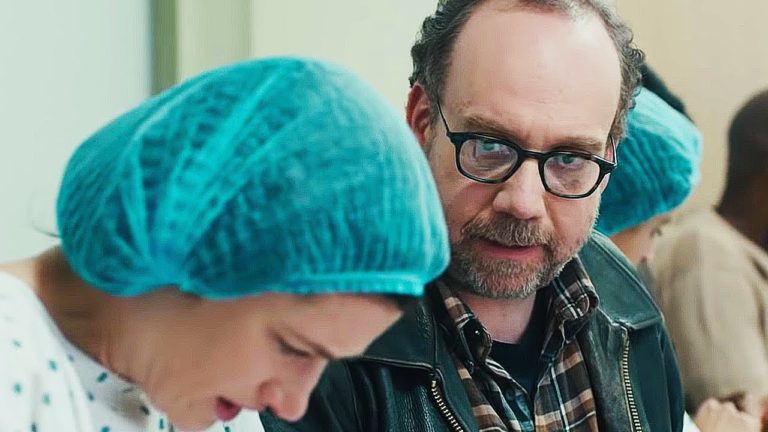
The story at hand is about Rachel (Kathryn Hahn) and Richard (Paul Giamatti), a couple struggling with infertility and the options they have to get around it. They have tried everything. We meet them in the first scene as they are attempting an IVF procedure. Time is running out. Rachel is 41 and Richard is 47. They keep reminding themselves of the mantra they’ve heard from doctors – “You only need one good egg.” – but it’s quickly becoming more wish than hope.
Giamatti is certainly one of the underappreciated treasures in cinema today. He always brings something extra to his roles. He is one of the best actors working today when it comes to depicting frustration, and he plums those depths in an aching fashion here. Hahn has long been an underappreciated actress too. She is probably most well-known for her comedic roles in film and television, but she too always elevates the material she is given. Here, I think she gives a career-high of a performance, and her work was my favorite in the film.
Despite the emotional material, this film is hilarious. Much of that is owed to Giamatti and Hahn, but the script by Jenkins finds the humor in even heavy moments. The script also does an incredible job of giving us the information we need. Most of us probably do not know the finer points of the medical procedures here, but we get all the information we need to follow the story and never too much to pull us out of it.
I was also moved by the film’s music and cinematography. The music is by Adam Bennati (coordinator), Ben Holiday (editor), and Howard Paar (supervisor) and the cinematography is by Christos Voudouris. Both elements work together in powerful ways, especially in vignettes sprinkled into various points of the film – the sun through the trees outside a window on a car ride or leaves flying into the air during seemingly mundane lawn chores. This film has surprising treasures in store that you won’t want to miss.
The film shifts when Rachel and Richard’s “niece” Sadie (Kayli Carter) comes to live with them in their New York apartment. I put niece in quotations because she is not really related to either of them. Sadie’s father Charlie (John Carroll Lynch) is Richard’s step-brother. Once again, the script does a great job of spelling out the particulars so that we don’t get confused. Sadie recently dropped out of college and is pursuing a writing career. She is excited to live with Rachel (a playwright and published author) and Richard (a former theater actor), not only because they are family to her but because of their influence on her art. Soon, Rachel and Richard become equally interested in the impact Sadie can have on their lives.
Early on in the film, a doctor mentions that they should consider third-party reproductive options. Rachel won’t consider it. That is, until they consider that Sadie could be the perfect candidate. They ask her – in a scene that cranks up the awkwardness and humor – and she, somewhat surprisingly, is interested. Her mother Cynthia (Molly Shannon), however, is not interested. She learns about this plan at their Thanksgiving dinner table – in a scene that REALLY cranks up the awkwardness and humor – and she has a…hard time adjusting.
I’ve gotten pretty far into this review without mentioning it, but I guess I should just come out and say it – yes, this is a Netflix film. And while that fact comes with a stigma for many cinephiles, don’t let it keep you from seeing a truly impressive film. I’m not sure how many year-end lists this film will end up on, but it will probably end up on mine. In any case, Netflix has been producing fine films now for at least the last year, if not longer. Mudbound, The Meyerowitz Stories, and To All the Boys I’ve Loved Before are all impressive films in their own right and that doesn’t even account for Netlix’s soon-to-be-released films like Roma, The Ballad of Buster Scruggs, and next year’s The Irishman. If names like Cuaron, Coen, and Scorsese aren’t bothered by the Netflix logo, then I don’t think we should be.
I won’t go any farther into a discussion of this film’s plot, because you really should go see it for yourself. Suffice it to say that the story takes surprising turns and emotional twists. But it never loses its humor and, on top of that, it never loses sight of the story at its heart. That is surely a testament to the fine screenplay and the impressive acting performances. I can’t say it enough – this is one of the best films of the year. Go log into your Netflix account or find someone else’s. No matter how you do it, you’ll want to see this film.
Overall Grade: A
[divider]
Hear our podcast review on Extra Film, coming soon!
One of my Top 10 Criterion films, the great German director Fritz Lang, two years before the rise of Hitler and his exile from his home, produced a stunning film that haunts viewers from the opening sequence. A group of children plays a game of “eenie, meanie, meanie, moe,” and then exit school for the day. Their mothers are preparing for their return. One child, a young girl named Elsie, is playing with a ball down the street when she is approached by a man only in a shadow whistling, “In The Hall Of The Mountain King.” He buys a balloon for Elsie and then goes missing, with the ball rolling in a field, the balloon flying into telephone lines, and Elise’s mother calling for her with no response. She is not the first child to go after multiple children have been murdered. From there, we are thrust into a horrifying place that lives on a thin electric wire.
In motion comes the high anxiety of a society who becomes increasingly paranoid and jump at the moment a suspect is apprehended. The police can do what they can but cannot control the public frenzy ready to lynch someone at a moment’s notice. Legal advancements such as fingerprints from the taunting notes are utilized, but nothing popping up. The chief of police orders the raids of underground bars run by the city’s organized crime bosses. With their business doing badly because of the raids, they decide to become vigilantes, use beggars as spies, and run their own type of court for the killer. The blind beggar who sold the balloon to Elsie recognizes the killer by whistle and the chase is on to get to him before the police do. A chase in and out of a building leads to a kangaroo court inside an abandoned brewery, reflecting the vigilantism and moral panic of a Germany in fracture over demonic killers and “loose morals” that the Nazis would pounce on.
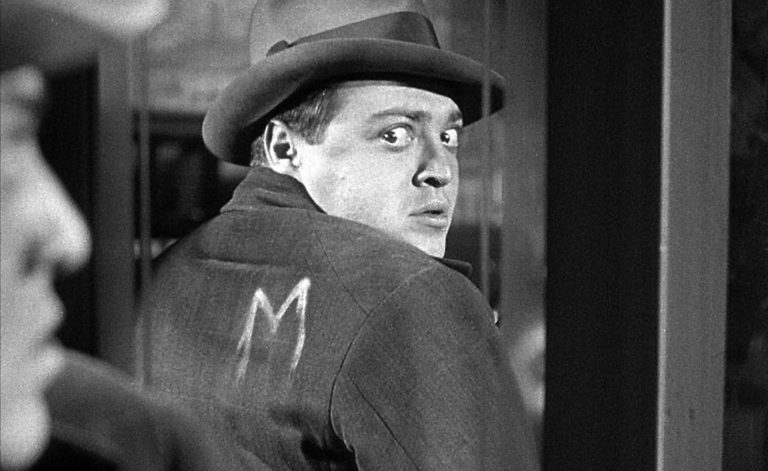
In his first film with sound, Lang does not use it too much and avoids mixing in music at all. The mood is as eerie as it can be without it; only the imagery is needed to convey the darkness of the entire mise en scene. This is the leitmotif, a recurring musical phrase that was usually seen in operas. Even the title only needs one letter to explain who is it – Mörder, “murderer” in German. Before we see the killer, Hans Beckert, we hear his whistle and his voice. Then, when we first see him in the flesh; he does not need to show us the killings because the sight of the killer himself is grotesque in nature. Again, resorting to visuals, the chalked M is put on Beckert’s overcoat by another beggar who is warned that he is the murderer. Beckert looking over his shoulder and seeing that he is, another word starting with an M, marked. This is the face of horror on a piece of horror delivered flawlessly by Peter Lorre.
This was Lorre’s first starring role after years as a vaudeville comedian. It made him an international star very much that when he also fled Germany in 1933, he was granted asylum in the UK and cast by Alfred Hitchcock in The Man Who Knew Too Much, the first of several roles as a villain that carried into Hollywood. Before his low-key sinister tone in The Maltese Falcon and Casablanca, he gave, for a killer, a monologue that draws a line between criminals of choice – the kangaroo court, as mentioned – and the criminal that lives in his mind that controls the urge to kill. As he screams out, “I can not help myself! I have no control over this evil thing that is inside me. The fire, the voices, the torment! Who knows what it is like to be me?” Hans Beckert is evil and he knows it – even if it’s beyond his control. Criminal psychology was something misunderstood back then; a killer is a killer and the Germans went on to execute their killers by the hangman’s noose or by guillotine. There was no respect of humanity such people who felt the inner beast. Yet, Lang puts out there a voice of a madman who would never have been listened to, even by the courts.
This was in the era of political and economic catastrophe from the Great Depression and the growing rise of Bolshevism. The Nazis and Adolph Hitler took the social heat at the time and turned on its head into the power they would force themselves into and blow up in a dozen years. They even took the clip of Lorre’s monologue and re-edited it into an anti-Semitic propaganda film as well as a reason to keep capital punishment as a way of weeding out society’s diseased figures. Lang’s last film, The Testament Of Dr. Mabuse, was his last film in Germany when Joseph Goebbels tried to recruit him into his Ministry of Propaganda. Lang considered M to be his favorite because of the social criticism of child neglect and the warning, in a time of serial killers in Germany’s 20s (Peter Kurten, Carl Grossman, and Freidrich Haarmann), is simplified in the film’s final line by Elsie’s mourning mother. “One has to keep closer watch over the children. All of you.”
Director: Jacques Audiard Writers: Jacques Audiard, Thomas Bidegain Stars: John C. Reilly, Joaquin Phoenix, Jake Gyllenhaal
Synopsis: In 1850s Oregon, a gold prospector is chased by the infamous duo of assassins, the Sisters brothers.
[/info]
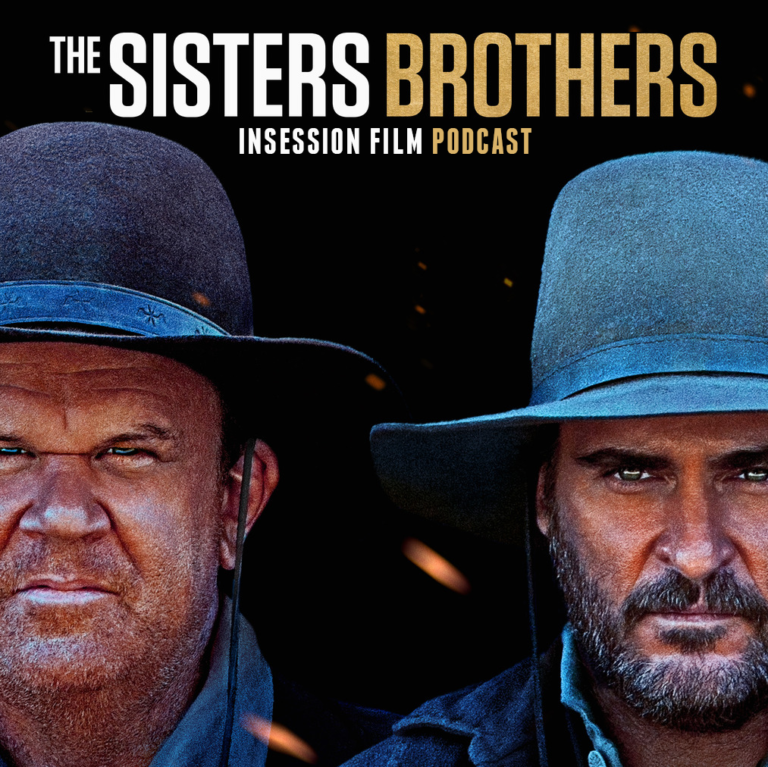
The Sister Brothers is a film that both embraces its genre roots and transcends its genre shackles. While its title sounds more like a John C. Reilly collaboration with with Ferrell than a tender meditation on the implications of the sins of the father (amongst many other things), it is one with Joaquin Phoenix that manages to flip the Western on its head and creates a personality all its own. It is 2018’s version of Unforgiven with a biting wit and a touch of the fantastical. I can’t offer many more flattering comparisons than that. Instead of a reflection on a history of lonely violence in old age, it is a reflection on a mid-life crisis in the face of violence alongside one’s brother. It manages to indulge in the mundane and the hyper-quirky. The idea of brushing teeth has never felt more cathartic than it does in The Sisters Brothers. The film’s combination of period setting with contemporary sensibilities makes for one of the most unique theatrical experiences in recent memory. There is nothing about this film that isn’t transcendently good. John C. Reilly and Joaquin Phoenix give two of the best lead performances of the year, Jake Gyllenhaal and Riz Ahmed exercise maximum efficiency in roles that would be thankless in the hands of lesser performers and Jacques Audiard practices incredibly creative filmmaking in a genre that often gets bogged down in its own tropes. It is, as of the time of this writing, my favorite film of the year. It takes a special hand at the helm of a film to combine the humor, tension, pathos, and beauty of The Sisters Brothers. Jacques Audiard possesses that special hand.
The Sisters Brothers is the story of, you guessed it, the brothers Sisters, Charlie and Eli. As different as the two are, they have managed to become one of the most feared pairs of assassins in the West. They are tasked with obtaining a secret formula that shines a literal light on the gold that so many souls traveled West for in the 1850s from a rather unassuming chemist, Hermann Kermit Warm, played by Riz Ahmed. From the film’s first scene, it is clear that The Sisters Brothers accomplish whatever violent tasks are put in front of them with relative ease, in an exchange of bullets presented with a tremendously visually enthralling sequence that sucks the viewer in from the jump. We are thrown into the film with a series of flashes of light in the dead of night provided by the ignition of Old West pistols. It immediately establishes a sense of time and place. The implied violence of that early scene becomes increasingly more explicit as the film goes on, consistently upping the anxiety with each successive shootout.
Through that violence (and the actions they both take in the aftermath of that violence), we discover so much about the lives of our exceptionally complex protagonists. Eli resents Charlie in a myriad of ways, but he feels an obligation to continue their business for reasons we find out about over the course of the film. These revelations occur gradually but result in a series of moments in the film’s final act that show Eli display several exquisite releases of emotion that left me shaking with a sense of sadness and empathy. I cannot overstate how spectacular Reilly is in this role. His career began with great performances in films from the likes of Paul Thomas Anderson, Terrence Malick, and Martin Scorsese, but most modern audience members will only know him from the comedies that have occupied his filmography over the last decade-and-a-half. We will all be better off if he continues to tackle roles like, this that utilize his impeccable comedic timing as well as his sensitive doofiness.
Reilly and Phoenix represent two of the best actors when it comes to playing pathetic characters that you can’t help but root for. In films from Magnolia to Chicago to The Sisters Brothers, Reilly has shown an innate ability to make you feel for a man who lacks the self-confidence, for one reason or another, to be himself and reach out for his dreams. Phoenix, on the other hand, has proven to be an empathetic prick, capable of getting himself on your side no matter how insufferable he seems on the surface (films like The Master and Inherent Vice immediately spring to mind). More than any of his contemporaries, Phoenix is able to make his flaws endearing. He is not naturally charming, but he may be the most earnest actor we have.
In these two spectacular lead performances, we are able to see The Sisters Brothers through a precise lens that shows the Wild West in a light that dives into the opulence of Western expansion as much as the griminess that came with the lifestyle. At one point, the brothers stay in a hotel with (relatively) modern plumbing, which provides them with a heartfelt escape from their life of murder and resentment that provides an element most modern Westerns, no matter how subversive, fail to achieve.
Audiard shines in moments where the brothers are overwhelmed by either awe or exhaustion. His ability to show modern quandaries in the context of the Old West is uncanny. Despite being set over 150 years ago, The Sisters Brothers feels like a film made for all audiences. The grit of the era may not be entirely relevant to today’s audiences, but the ideas of brotherly obligation, capitalist inclinations and a helplessness in the face of the past are timeless. The film is as funny, violent, and gorgeous as the marketing would suggest, but nothing could have prepared me for how tender the film is. You will find no film this year that presents its characters with more respect and care than The Sisters Brothers. Like our own lives, the lives of Eli and Charlie Sisters teeter from hilarious to melodramatic without any warning. Like the best of the Coen Brothers, The Sisters Brothers manages to capture reality in a heightened narrative. Even when the film verges on the ridiculous, it feels true to life.
The plot of the film is unpredictable and the B-plot, featuring Gyllenhaal and Ahmed, provides a more grounded source of drama with a wonderful flourish of fantasy that makes the story, at times, feel like a fairy tale. Whenever this happens, though, we see a violent shootout or are transported to a saloon full of debauchery of all kinds. Audiard strips down the genre by showing the traditional portrayal of the Old West before pulling the carpet out from under the audience’s feet, showing the harsh realities of the era. There is a sense of wonder attached to scientific advances, a fascinating spin on a genre that has always indulged the majesty of nature.
Toothbrushes and fancy hotels represent an escape from the lives the Sisters Brothers have led, and that is the main thematic thrust. However, the brothers may simply be too ingrained in their life of murder to ever escape. Their pasts have compounded to create a mountain of bodies preventing them from finding love or freedom. Over time, Charlie and Eli both come to yearn for a new beginning and, for the first time, it seems possible. Each of brothers coming to this conclusion is treated with an inspiring amount of care. The characters always feel like themselves, even as their worldviews change. The events of the film build on each other to create moments of catharsis, pain, and heartbreak that moved me to my very core. It is a movie that works as a character study, Wild West adventure, and a unique coming-of-age film all at once. You will be hard-pressed to find a film that walks a thin emotional and narrative line as deftly as The Sisters Brothers.
Overall Grade: A-
[divider]
Hear our podcast review on Extra Film, coming soon!
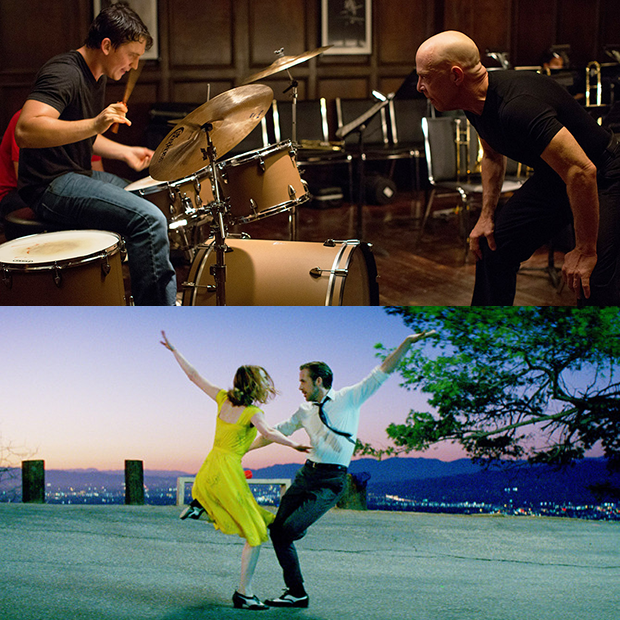
Happy First Man week everyone! Damien Chazelle is one of the best up-and-coming directors we’ve seen over the last few years, with both Whiplash and La La Land being hits with critics and audiences alike. His next film, First Man, is probably not going to be any different. So for this week’s poll, we simply wanted to ask which film of his is more your tempo. Whiplash and La La Land are very different films despite jazz music driving both of them, so it should be intersting to see how this plays out.
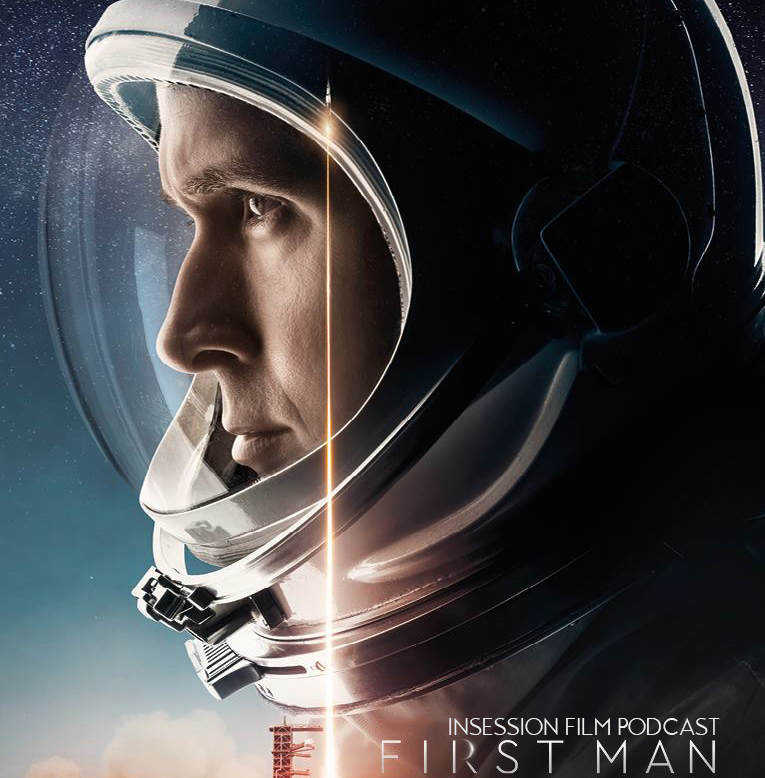
Director: Damien Chazelle Writers: Josh Singer (screenplay by), James R. Hansen (based on the book by) Stars: Ryan Gosling, Claire Foy, Jason Clarke, Kyle Chandler
Synopsis: A look at the life of the astronaut, Neil Armstrong, and the legendary space mission that led him to become the first man to walk on the Moon on July 20, 1969.
[/info]
Damien Chazelle and I have had an up and down relationship over the last couple of years. I thought his first film, Guy and Madeline on a Park Bench, was a good first effort that laid a lot of the ground work for his second film Whiplash. Whiplash was one of my favorite films of 2014 and was one of the most daring, tense films I had seen from this decade. So going two for two so far in his filmography, my anticipation was at its all-time high when 2016’s La La Land came out, and while there are aspects of the film I like, I was one of those people that found it to be over hyped and left me more empty than optimistic once the first screening reactions faded away. So a lot questions came running through my head when I found out that the youngest Academy Award winner for Best Director was making his space movie about the single biggest space moment in not just American history but space history period. One could definitely make the argument that I was very skeptical about this project but as every critic should do, I cleared out my La La Land bias, and went into the movie with an open mind. And upon walking out of my screening, I was smiling because I can say that Damien Chazelle has got back on track and made a film that is one of the immersive film going experiences of the year.
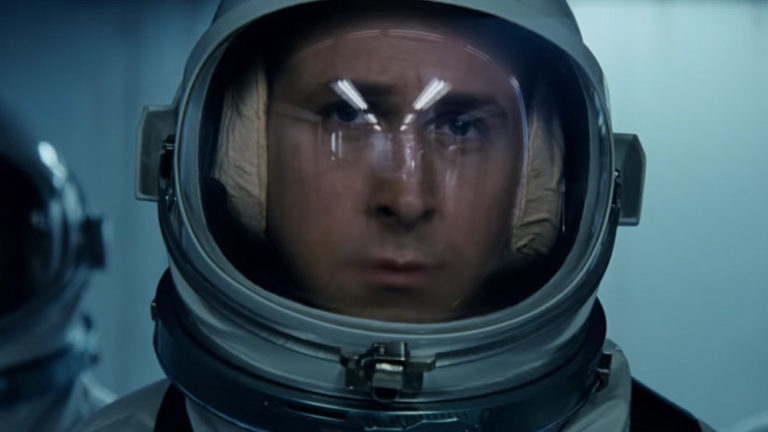
First Man follows the key moments of Neil Armstrong’s life during the 1960’s. We met Armstrong, played by La La Land alumni Ryan Gosling, at a time in his life where he and his family need to make a fresh start after a family tragedy has hit the family. His family moves to Houston where he goes to work for NASA, and with more pain that follows him on the job, and social and political pressures mounting, Armstrong and his team set out to be the first to land on the moon. But while the pressures of the job are building on a global stage, it’s his home life with his wife Janet (Claire Foy) and his sons that starts to hang in the balance. Armstrong becomes intensely focused on the task at hand, leading to obsession, and wanting nothing more than walk on the moon, for reasons you don’t find out about till the end of the film.
Obsession is something that Chazelle is not uncommon in showing within his films, with Whiplash being about a drummer’s obsession to become the best, with La La Land being about two people wanting to become famous even if that means their love has to die. But with First Man, Chazelle takes the nob and turns it to eleven, and that makes sense because the mission these characters are facing is not easy. The way that Chazelle shoots ever shot of the astronauts in the space or in the space shuttles oozes with tension and risks at an all-time high for Armstrong and his fellow astronauts. Chazelle’s attention to detail is so focused due in large part to Josh Singer writing the script and allowing Chazelle to focus on his directing strengths and thus making this film flourish.
Gosling is the perfect person to play Chazelle/Singer’s vision of Armstrong, which is quiet, calculated yet confident man that will finish his mission at all costs. His interactions with people, including his family, are cold yet not his fault because as more trauma he has continue to face, the more he throws himself into this mission and never looks back. With a performance that is a combination of his performances from Drive and Blade Runner 2049, Gosling brings Armstrong to life and makes us thoroughly invested in this journey till the very end even though we know how it’s going to end. Foy gives a small yet powerful performance and shows that she can stand toe to toe with Gosling with as he is in every scene of the film. She shows that while Neil was fighting to get to space, Janet was the real one in the relationship fighting to keep it together. She is the only one that can get to him and when she does in the end, it makes him face his fears, and no not the mission to go to the moon, but his life on earth.
The film has a decent supporting cast with Kyle Chandler, Jason Clarke and Cory Stoll but they are mostly there to help Gosling and Foy and become a little wasted. The cinematography in the film is fantastic and for his first film not about music, Chazelle gets the best score of any of his films from composer Justin Hurwitz, one that might just be my favorite score of the year so far. Along with the great score is the wonderful sound design that makes you feel like you are exactly in Armstrong’s seat and can feel ever vibration. The only complaint I would make is that the films editing does seem to be a little messy at times but that doesn’t fully ruin the experience of the film. Overall, First Man is a technical marvel and Chazelle has made one of the best films of the year. He has won be back over, for now, and I’m looking forward to seeing what he will have in store for us down the road, and hoping it continues the trend in this film and doesn’t involve more jazz.
Overall Grade: A
[divider]
Hear our podcast review on Episode 295, coming soon!
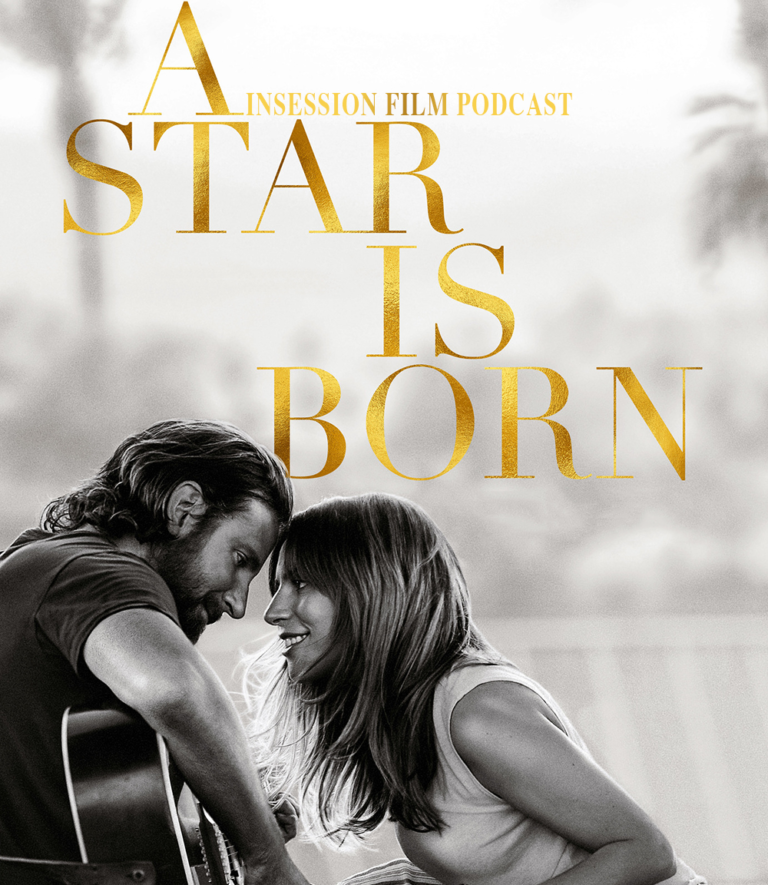
This week on Episode 294 of the InSession Film Podcast, inspired by A Star is Born, we discussed our Top 3 musical performances in film. Often times when you think about “musical performances” in movies, you think about great musicals such as Singin’ in the Rain or The Sound of Music. However, for this list, we did not consider traditional musicals in the vein of those films, but rather we considered the musical components from narrative dramas that heavily influenced its characters in one way or another. And even more specifically, we did not look at the acting performance per se (although that’s a part of it), but rather the performance of the music itself and how that drives certain scenes or sequences. So, a lot of criteria this week but it made for an interesting look at music in film. That said, here are our lists:
(Note: Please keep in mind that we each had different criteria for our selections)
JD:
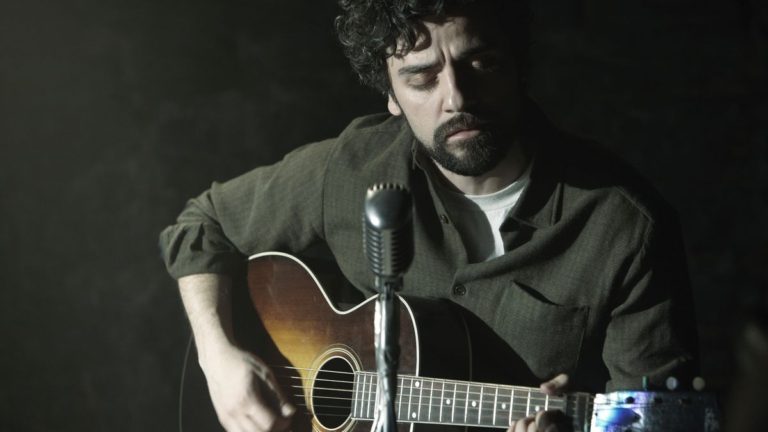
1) “Hang Me” – Inside Llewyn Davis
2) “Falling Slowly” – Once
3) Ending Sequence – Whiplash
Brendan:
1) “When Your Minds Made Up” – Once
2) “Break On Through (To The Other Side)” – The Doors
3) “Please Mr. Kennedy” – Inside Llewyn Davis
Erik:
1) “I’ve Seen It All” – Dancer in the Dark
2) “My Way” – Sid & Nancy
3) “New York, New York” – Shame
Honorable Mentions (Combined)
“Jonny B Goode” – Back to the Future
“A Waltz for a Night” – Before Sunset
“Save Me” – Magnolia
“I Love You All” – Frank
“I’ve Never Been Loved Before” – Born to Be Blue
“Drive It Like You Stole It” – Sing Street
Marcus Rap – Short Term 12
Detroit Concert – Straight Outta Compton
Battles – 8 Mile
Cocaine Blues – Walk the Line
“Speak Low” – Phoenix
Concert – School of Rock
Bohemian Rhapsody – Wayne’s World
Ballroom Blitz – Wayne’s World
Afternoon Delight – Anchorman
“Jumper” – Yes Man
The Riff-Off – Pitch Perfect
“No Dames” – Hail, Caesar
“Blood Pollution” – Rockstar
“Daisy Bell” – 2001: A Space Odyssey
“This Poem Sucks” – So I Married An Axe Murderer
“A Kiss At The End Of The Rainbow” – A Might Wind
“Here Comes Your Man” – (500) Days of Summer
“Every Sperm Is Sacred” – Monty Python’s The Meaning of Life
“Man of Constant Sorrow” – O Brother Where Art Thou
“Fallin’ and Flyin’ – Crazy Heart
“The Weary Kind” – Crazy Heart
Dracula Musical – Forgetting Sarah Marshall
“The Clap” – Get Him to the Greek
“Por Ti Vorlare” – Step Brothers Pop Star: Never Stop Never Stopping This is Spinal Tap The Commitments
Hopefully you guys enjoyed our lists and if you agree or disagree with us, let us know in the comment section below. As noted above, there are many, many options for this list depending on your criteria and how you wanted to define musical performances. That being said, what would be your Top 3? Leave a comment in the comment section or email us at [email protected].
This week on the InSession Film Podcast, Erik Anderson from Awards Watch joins us to discuss Bradley Cooper’s directorial debut in A Star is Born and our Top 3 musical performances in film! JD also gives his thoughts on The Hate U Give and we talk about movie remakes for our poll.
Hugh thanks to Erik for coming on the show this week, we are big fans of his work and he did not disappoint at all. We had a great time and look forward to getting him back soon. Regardless of how you feel about A Star is Born, we are confident (or at least hopeful) you’ll enjoy the conversation.
On that note, check out this week’s show and let us know what you think in the comment section. Thanks for listening and for supporting the InSession Film Podcast!
– Movie Review: A Star is Born (6:17) Director: Bradley Cooper Writer: Eric Roth, Bradley Cooper Stars: Lady Gaga, Bradley Cooper, Sam Elliott
– Notes / JD Reviews The Hate U Give (47:25)
One of the best surprises of 2018 is a little known film from director George Tillman Jr. called The Hate U Give. The reviews have been very positive and JD wanted to add his voice to that chorus of praise and give a few reasons for you to see it this weekend.
– Top 3 Musical Performances (1:02:16)
Often times when you think about “musical performances” in film, you think about great musicals such as Singin’ in the Rain or The Sound of Music. However, for this list, we did not consider traditional musicals in the vein of those films, but rather we considered the musical components from narrative dramas that heavily influenced its characters in one way or another. And even more specifically, we did not look at the acting performance per se (although that’s a part of it), but rather the performance of the music itself and how that drives certain scenes or sequences. So, a lot of criteria this week but it made for an interesting look at music in film. That said, what would be your Top 3?
If you want to help support us, there are several ways you can help us and we’d absolutely appreciate it. Every penny goes directly back into supporting the show and we are truly honored and grateful. Thanks for your support and for listening to the InSession Film Podcast!